US11436347B2 - Methods and systems for dynamic sampling of application events - Google Patents
Methods and systems for dynamic sampling of application events Download PDFInfo
- Publication number
- US11436347B2 US11436347B2 US15/432,753 US201715432753A US11436347B2 US 11436347 B2 US11436347 B2 US 11436347B2 US 201715432753 A US201715432753 A US 201715432753A US 11436347 B2 US11436347 B2 US 11436347B2
- Authority
- US
- United States
- Prior art keywords
- data
- instances
- usage data
- application
- store
- Prior art date
- Legal status (The legal status is an assumption and is not a legal conclusion. Google has not performed a legal analysis and makes no representation as to the accuracy of the status listed.)
- Active, expires
Links
Images


Classifications
-
- G—PHYSICS
- G06—COMPUTING OR CALCULATING; COUNTING
- G06F—ELECTRIC DIGITAL DATA PROCESSING
- G06F21/00—Security arrangements for protecting computers, components thereof, programs or data against unauthorised activity
- G06F21/60—Protecting data
- G06F21/604—Tools and structures for managing or administering access control systems
-
- G—PHYSICS
- G06—COMPUTING OR CALCULATING; COUNTING
- G06F—ELECTRIC DIGITAL DATA PROCESSING
- G06F16/00—Information retrieval; Database structures therefor; File system structures therefor
- G06F16/20—Information retrieval; Database structures therefor; File system structures therefor of structured data, e.g. relational data
- G06F16/26—Visual data mining; Browsing structured data
Definitions
- This relates generally to data sampling, including but not limited to dynamically sampling of application events.
- Software applications generate large volumes of data providing valuable insights into user behavior within the software applications themselves.
- the sheer volume of data generated by software applications can be overwhelming, even to data-analyzing computer programs. Consequently, interested parties (e.g., online service providers, advertisers, etc.) may benefit from processes that effectively use computer capabilities to analyze large volumes of data generated by users interacting with software applications.
- a method is performed at a server system having one or more processors and memory storing instructions for execution by the processors.
- the method includes receiving usage data for a plurality of applications on client devices.
- the usage data includes data for instances of each of a plurality of application events that occur in the plurality of applications in response to users interacting with the plurality of applications on the client devices.
- the method further includes storing the usage data in a first data store; determining, for respective applications of the plurality of applications, sampling rates for respective application events of the plurality of application events based at least in part on respective quantities of instances of the respective application events during a period of time; and sampling from the first data store the data for the instances of the respective application events at the sampling rates to form respective sets of usage data.
- Each set of usage data includes data samples corresponding to distinct instances of a respective application event.
- the method also includes storing the sets of usage data in a second data store and providing a report using one or more sets of the sets of usage data.
- a server system includes one or more processors/cores and memory storing one or more programs configured to be executed by the one or more processors/cores.
- the one or more programs include instructions for performing the operations of the method described above.
- a non-transitory computer-readable storage medium has stored therein instructions that when executed by one or more processors/cores of a server system, cause the server system to perform the operations of the method described above.
- FIG. 1 is a block diagram illustrating an exemplary network architecture, in accordance with some embodiments.
- FIG. 2 is a block diagram illustrating an exemplary server system, in accordance with some embodiments.
- FIGS. 3A-3F are flow diagrams illustrating a method of dynamic sampling of application events, in accordance with some embodiments.
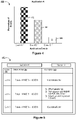
- FIG. 4 is an illustration of a report provided by the server system, in accordance with some embodiments.
- FIG. 5 is an illustration of a report provided by the server system, in accordance with some embodiments.
- first, second, etc. are, in some instances, used herein to describe various elements, these elements should not be limited by these terms. These terms are used only to distinguish one element from another.
- a first sampling rate could be termed a second sampling rate, and, similarly, a second sampling rate could be termed a first sampling rate, without departing from the scope of the various described embodiments.
- the first sampling rate and the second sampling rate are both sampling rates, but they are not the same sampling rate unless specified otherwise.
- the term “if” is, optionally, construed to mean “when” or “upon” or “in response to determining” or “in response to detecting” or “in accordance with a determination that,” depending on the context.
- the phrase “if it is determined” or “if [a stated condition or event] is detected” is, optionally, construed to mean “upon determining” or “in response to determining” or “upon detecting [the stated condition or event]” or “in response to detecting [the stated condition or event]” or “in accordance with a determination that [a stated condition or event] is detected,” depending on the context.
- exemplary is used in the sense of “serving as an example, instance, or illustration” and not in the sense of “representing the best of its kind.”
- FIG. 1 is a block diagram illustrating an exemplary network architecture in accordance with some embodiments.
- the network architecture 100 includes a number of client devices 104 - 1 , 104 - 2 , . . . 104 - n communicably connected to a social networking system 108 by one or more networks 106 .
- the client devices 104 - 1 , 104 - 2 , . . . 104 - n are computing devices such as smart watches, personal digital assistants, portable media players, smart phones, tablet computers, 2D gaming devices, 3D gaming devices, virtual reality devices, laptop computers, desktop computers, televisions with one or more processors embedded therein or coupled thereto, in-vehicle information systems (e.g., an in-car computer system that provides navigation, entertainment, and/or other information), or other appropriate computing devices that can be used to communicate with an electronic social networking system 108 and other computing devices (e.g., via the social networking system).
- computing devices such as smart watches, personal digital assistants, portable media players, smart phones, tablet computers, 2D gaming devices, 3D gaming devices, virtual reality devices, laptop computers, desktop computers, televisions with one or more processors embedded therein or coupled thereto, in-vehicle information systems (e.g., an in-car computer system that provides navigation, entertainment, and/or other information), or other appropriate computing devices that can
- the social networking system 108 is a single computing device such as a computer server, while in other embodiments, the social networking system 108 is implemented by multiple computing devices working together to perform the actions of a server system (e.g., cloud computing).
- the network 106 is a public communication network (e.g., the Internet or a cellular data network), a private communications network (e.g., private LAN or leased lines), or a combination of such communication networks.
- Users 102 - 1 , 102 - 2 , . . . 102 - n employ the client devices 104 - 1 , 104 - 2 , . . . 104 - n to execute software applications (e.g., “apps”) that are specific to third-party servers 110 and/or the social networking system 108 .
- software applications e.g., “apps”
- users 102 When employing the client devices 104 to execute software applications, users 102 generate usage data (e.g., application events) by interacting with features (e.g., selecting affordances, swiping in particular directions, etc.) displayed in the software applications.
- the various software applications may involve numerous distinct application events.
- a user may generate a first application event by completing a level within a game and may generate a second application event by obtaining a threshold score within the game.
- a user may generate a first application event by adding an item to his or her virtual shopping cart and may generate a second application event by paying or failing to complete payment for the item in the virtual shopping cart.
- a user may generate an application event by adding a player to his or her fantasy sports team.
- users may generate application events by installing an application, uninstalling an application, launching an application, and the like.
- the network architecture 100 also includes one or more third-party servers 110 .
- third-party servers 110 are associated with third-party service providers who provide services and/or features to users of a network (e.g., users of the social networking system 108 , FIG. 1 ).
- a given third-party server 110 is used to host third-party software applications that are used by client devices 104 , either directly with, in conjunction with, or independently of the social networking system 108 (e.g., the gaming, retail, and/or sports applications discussed above).
- an application executing on a client device 104 may communicate information, via the client device 104 , regarding activity (e.g., application events) in the application to the third-party server 110 .
- the third-party server 110 may in turn communicate the information to the social networking system 108 .
- the client device 104 communicates the information directly to the social networking system 108 .
- various techniques may be used to gather information regarding activity in an application executing on a client device.
- FIG. 2 is a block diagram illustrating an exemplary server system 200 in accordance with some embodiments.
- the server system 200 is an example of the social networking system 108 ( FIG. 1 ).
- the server system 200 typically includes one or more processing units (processors or cores) 202 , one or more network or other communications interfaces 204 , memory 206 , and one or more communication buses 208 for interconnecting these components.
- the communication buses 208 optionally include circuitry (sometimes called a chipset) that interconnects and controls communications between system components.
- the server system 200 optionally includes a user interface (not shown).
- the user interface if provided, may include a display device and optionally includes inputs such as a keyboard, mouse, trackpad, and/or input buttons.
- the display device includes a touch-sensitive surface, in which case the display is a touch-sensitive display.
- Memory 206 includes high-speed random access memory, such as DRAM, SRAM, DDR RAM, or other random access solid state memory devices; and may include non-volatile memory, such as one or more magnetic disk storage devices, optical disk storage devices, flash memory devices, or other non-volatile solid state storage devices. Memory 206 may optionally include one or more storage devices remotely located from the processor(s) 202 . Memory 206 , or alternately the non-volatile memory device(s) within memory 206 , includes a non-transitory computer readable storage medium. In some embodiments, memory 206 or the computer readable storage medium of memory 206 stores the following programs, modules, and data structures, or a subset or superset thereof:
- the server database 214 stores data (e.g., usage data received from a plurality of applications) in one or more types of databases, such as text, graph, dimensional, flat, hierarchical, network, object-oriented, relational, and/or XML databases.
- data e.g., usage data received from a plurality of applications
- databases such as text, graph, dimensional, flat, hierarchical, network, object-oriented, relational, and/or XML databases.
- the first data store 216 stores usage data for a plurality of applications installed on client devices.
- the usage data is received from the client devices (e.g., client devices 104 - 1 through 104 - n , FIG. 1 ).
- the usage data is received from one or more third-party servers (e.g., third-party server(s) 110 , FIG. 1 ) that collect the usage data from client devices.
- the usage data includes application events that occur in the plurality of applications in response to users interacting with the plurality of applications on the client devices (e.g., user 102 - 1 interacting with (e.g., touching, clicking, swiping, playing, etc.) an application executing on the client device 104 - 1 , FIG. 1 ).
- client devices e.g., user 102 - 1 interacting with (e.g., touching, clicking, swiping, playing, etc.) an application executing on the client device 104 - 1 , FIG. 1 ).
- the second data store 218 stores sets of usage data sampled from the usage data stored in the first data store 216 .
- Each set of usage data includes data samples corresponding to distinct instances of a respective application event (e.g., a first set of usage data includes instances of Event A in Application A, a second set of usage data includes instances of Event B in Application A, a third set of usage data includes instances of Event A in Application B, and so on).
- the usage data stored in the first data store 216 are sampled at specified sampling rates to form the sets of usage data.
- each application event has a distinct sampling rate (e.g., Event A in Application A has a first sampling rate, Event B in Application A has a second sampling rate, and so on).
- sampling rates e.g., the first sampling rate
- thresholds are used to limit (e.g., cap) an amount of samples (e.g., quantity of instances) gathered for a respective set of usage data. In this way, limits are placed on volumes of usage data stored in the second data store 218 for the respective sets of usage data.
- the one or more lists 222 include a whitelist of events.
- the server system 200 may store usage data for each instance of an application event on the whitelist in the second data store 218 .
- application installs or application uninstalls may be application events on the whitelist of events.
- the one or more lists 222 include identified users.
- the server system 200 may identify a user associated with an instance of an application event for an application and log the identified user in one of the one or more lists 222 . Identifying users is discussed in further detail below with reference to method 300 .
- the dashboards 220 are interfaces that organize and present information in a way that is easy to read and understand.
- the dashboards 220 include multiple interfaces that may be used to present information.
- One example of a dashboard is illustrated by report 400 ( FIG. 4 ), which shows numbers of instances of specific events 402 , 404 , 406 as percentages of all events for an application.
- Another example of a dashboard is illustrated by report 500 ( FIG. 5 ).
- the sample module 228 includes a rate-setting module 230 .
- the rate-setting module 230 is used for adjusting the sampling rates based on changes in received usage data (e.g., changes in rates of receiving usage data).
- FIGS. 3A-3F are flow diagrams illustrating a method 300 for dynamic sampling of application events, in accordance with some embodiments.
- the steps of the method 300 may be performed by a server system (e.g., social networking system 108 , FIG. 1 ; server system 200 , FIG. 2 ).
- FIGS. 3A-3F correspond to instructions stored in a computer memory or computer-readable storage medium (e.g., memory 206 of the server system 200 , FIG. 2 ).
- the operations of the method 300 are performed, at least in part, by the sample module 228 ( FIG. 2 ) and the report module 232 ( FIG. 2 ).
- the method 300 will be described with reference to FIG. 4 and FIG. 5 .
- the server system receives ( 302 ) usage data for a plurality of applications on client devices (e.g., client devices 104 - 1 , 104 - 2 , . . . 104 - n , FIG. 1 ).
- the usage data includes data for instances of each of a plurality of application events that occur in the plurality of applications in response to users interacting with the plurality of applications on the client devices.
- a user interacting with Application A may launch (e.g., Event A) Application A x-number of times (e.g., x-number of instances) and may select an affordance (e.g., Event B) displayed in Application A y-number of times (e.g., y-number of instances).
- Application A may provide the server system with usage data for the x-number of instances and the y-number of instances.
- the usage data further includes application identification, client type (e.g., iOS, Android, etc.), application version, event timestamp, and the like.
- a third-party server e.g., third party server 110 , FIG. 10 ) receives the usage data from the client device and provides the usage data to the server system.
- the server system stores ( 304 ) the usage data in a first data store (e.g., first data store 216 , FIG. 2 ).
- a first data store e.g., first data store 216 , FIG. 2
- the server system stores data for the x-number of instances of Event A and the y-number of instances of Event B for Application A in the first data store 216 .
- the server system determines ( 306 ), for respective applications of the plurality of applications, sampling rates for respective application events of the plurality of application events based at least in part on respective quantities of instances of the respective application events during a first period of time (e.g., a plurality of days). For example, a quantity of instances of Event B of Application A during the first period of time is the y-number of instances. As such, the server system may base the sampling rate for Event B at least in part on the y-number of instances. The server system may determine unique sampling rates for each application event occurring in each respective application of the plurality of applications. For example, referring to FIG.
- the server system determines, for Application A, a first sampling rate for Event A 402 (e.g., application launch), a second sampling rate for Event B 404 (e.g., selection of affordance), a third sampling rate for Event C 406 , and so on.
- the server system may determine, for other applications (e.g., Application B, Application C, and so on), a first sample rate for Event A of each application, a second sampling rate for Event B of each application, and so on.
- the server system determines ( 308 ) daily counts (or counts during another specified time period) of instances of the respective application event for which data are received. For example, the server system determines daily counts of instances for each day of a plurality of days (e.g., a week). Furthermore, the server system calculates ( 310 ) a statistic based on the daily counts. For example, the statistic is a median value of daily counts ( 312 ). Alternatively, in some embodiments, the statistic is a mode of daily counts, a mean of daily counts, a specified number of standard deviations from the mean of daily counts, a specified percentile of daily counts, or the like.
- the server system uses ( 314 ) the statistic to select the sampling rate. For example, referring to Event B and the y-number of instances, the server system uses the median value of daily counts of the y-number of instances as the statistic when determining the sampling rate for Event B.
- the server system samples ( 316 ), from the first data store, the data for the instances of the respective application events at the sampling rates (also referred to herein as data-store sampling rates) to form respective sets of usage data.
- Each set of usage data includes data samples corresponding to distinct instances of a respective application event.
- the server system may sample from usage data for the x-number of instances associated with Event A of Application A at the first sampling rate to form a first set of usage data and may sample from usage data for the y-number of instances associated with Event B of Application A at the second sampling rate to form a second set of usage data.
- the first and second sampling rates are the same rate (e.g., coincidentally). In some embodiments, the first and second sampling rates are different rates.
- the server system stores ( 318 ) the sets of usage data in a second data store (e.g., second data store 218 , FIG. 2 ).
- a second data store e.g., second data store 218 , FIG. 2 .
- the server system provides ( 320 , FIG. 3B ) a report (e.g., report 400 , FIG. 4 ; report 500 , FIG. 5 ) using one or more sets of the sets of usage data.
- report 500 includes an event column 502 , and sample period of time column 504 (e.g., the first period of time), and a description column 506 which includes a description (e.g., facts, statistics, etc.) of user activity in Application A during the sample period of time (e.g., the first period of time).
- the report (e.g., description column 506 ) includes one or more relevant facts such as a demographic statistic (e.g., 25% of users invoking Event B during the sample period of time were female), a peak usage statistic (e.g., users invoking Event B peaks on Jan. 19, 2016 from 4:00 pm to 6:30 pm), and an achievement statistic (e.g., 85% of users of Application A did not proceed to Event C after invoking Event B).
- a demographic statistic e.g., 25% of users invoking Event B during the sample period of time were female
- a peak usage statistic e.g., users invoking Event B peaks on Jan. 19, 2016 from 4:00 pm to 6:30 pm
- an achievement statistic e.g., 85% of users of Application A did not proceed to Event C after invoking Event B.
- the description column 506 of the report 500 is merely illustrative and one skilled in the art will appreciate that any number of descriptors could be included in the report 500 in any format, depending on the application (e.g., retail application may include a first set of descriptors in the description column 506 and a sports applications may include a second set of descriptors in the description column 506 ).
- the server system samples ( 322 ) a first set of the one or more sets of usage data from the second data store at a query sampling rate to form a subset of the first set.
- the server system may sample usage data from the first data store at the data-store sampling rates and may further sample the sets of usage data from the second data store at the query sampling rate.
- the server system may sample usage data associated with Event B from the first data store at a data-store sampling rate for Event B to form a set of usage data associated with Event B.
- the server system may further sample the set of usage data associated with Event B at a query sampling rate to form the subset.
- the server system may generate ( 324 ) the report (e.g., report 500 , FIG. 5 ) using the subset (e.g., a first subset).
- the server system further samples a second set of the one or more sets from the second data store at another query sampling rate to form a second subset of the second set (e.g., Event C of Application A).
- the server system may generate the report using the second subset either alone or in combination with the first subset.
- the server system may generate the report using one or more subsets (or sets) of usage data from each of a plurality of applications.
- a product of the query sampling rate and the data-store sampling rate for an application event that corresponds to a first set of usage data equals a predefined overall sampling rate.
- the server system detects a change in the rate at which data for instances of the first application event are received (e.g., users of Application A may invoke Event B at a reduced rate).
- the server system may change a first data-store sampling rate inversely with the change in the rate at which data for instances of the first application event are received. For example, in if users invoke an application event at a reduced (or increased) rate, the server system may increase (or decrease) the first data-store sampling rate accordingly.
- the server system changes the query sampling rate in accordance with the change to the first data-store sampling rate, to maintain the overall sampling rate.
- the server system may increase (or decrease) the first data-store sampling rate and proportionally decrease (or increase) the query sampling rate so that the product of the query sampling rate and the data-store sampling rate for the application event (e.g., Event B of Application A) continues to equal the predefined overall sampling rate.
- the server system to provide ( 320 ) the report using the one or more sets of the sets of usage data (and/or the one or more subsets), the server system generates ( 326 ) a dashboard showing information characterizing the one or more sets (and/or the one or more subsets).
- the reports 400 ( FIG. 4 ) and 500 ( FIG. 5 ) are examples of a dashboard.
- the server system maintains a whitelist of application events (e.g., maintained in one of the lists 222 , FIG. 2 ) and stores, in the second data store, all received data for instances of the application events on the whitelist.
- application launches, installs, and/or uninstalls are included in the whitelist.
- Event A is associated with launching Application A and is included on the whitelist.
- the server system designates application events to be included in the whitelist.
- a third party designates application events to be included in the whitelist. Accordingly, to provide ( 320 ) the report using one or more sets of the sets of usage data, the server system generates ( 328 ) the report using the data in the second data store for all instances of an application event on the whitelist.
- the server system determines ( 330 ), for the respective applications of the plurality of applications, updated sampling rates for the respective application events of the plurality of application events based at least in part on respective quantities of instances of the respective application events during a second period of time that overlaps with the first period of time.
- the first period of time may be a 7-day period and the second period of time may be another 7-day period that includes a number days included in the first period of time and a number of days not included in the first period of time.
- the server system may use some usage data received during the first period of time and some usage data received during the second period of time. In this way, the server system may determine trends in usage data between and within periods of time.
- the server system samples ( 332 ) usage data stored in the first data store during the second period of time at the updated sampling rates to update the respective sets of usage data and stores ( 334 ) the updated sets of usage data in the second data store.
- the server system may provide ( 336 ) another report using one or more sets of the updated sets of usage data.
- the method 300 may include method 338 ( FIG. 3C ).
- the steps of the method 338 may be performed in conjunction with the steps of the method 300 .
- the steps of the method 338 may be performed between steps 306 and 316 of the method 300 .
- the server system detects ( 340 ) a change in the rate at which data (i.e., usage data) for instances of a respective application event are received. For example, users of Application A may invoke Event B at a lesser rate as a period of time progresses. Accordingly, the server system may detect the change in the rate at which data for instances of Event B are received.
- data i.e., usage data
- the server system changes ( 342 ) the sampling rate for the respective application event inversely with the change in the rate at which data for instances of the respective application event are received. For example, if the respective application event is invoked at a lesser (or greater) rate as the period of time progresses (e.g., data for fewer instances of Event B of Application A are received during a later portion of the period of time relative to data for an amount of instances of Event B received during an earlier portion of the period of time), the server system increases (or decreases) the sampling rate of the respective application event.
- the method 300 may include method 344 ( FIG. 3D ).
- the steps of the method 344 may be performed in conjunction with the steps of the method 300 .
- the steps of the method 344 may be performed during step 316 of the method 300 .
- the server system determines ( 346 ) whether a quantity of data samples in a respective set of usage data in the second data store satisfies (e.g., is greater than, or greater than or equal to) a first threshold.
- the first threshold is specific to the respective set of usage data (e.g., specific to the set of usage data for Event B of Application A).
- the first threshold is a buffer threshold.
- the first threshold may be set to a value below a maximum threshold (e.g., set 20% below the maximum threshold).
- the server system continues ( 348 ) sampling at the sampling rate for the application event that corresponds to the respective set of usage data (e.g., continues sampling data for instances of Event B of Application A at the sampling rate for the set of usage data associated with Event B).
- the server system reduces ( 350 ) the sampling rate for the application event that corresponds to the respective set of usage data (e.g., continues sampling data for instances of Event B of Application A but does so at a reduced sampling rate for the set of usage data associated with Event B).
- the server system may determine ( 352 ) whether the quantity of data samples in the respective set of usage data in the second data store satisfies (e.g., is greater than, or greater than or equal to) a second threshold greater than the first threshold.
- the second threshold is a maximum threshold.
- the server system continues ( 354 ) sampling at the reduced sampling rate (e.g., continues sampling instances of Event B of Application A at the reduced sampling rate for the set of usage data associated with Event B).
- the server system ceases ( 356 ) sampling, from the first data store, the data for instances of the application event that corresponds to the respective set of usage data (e.g., stops sampling instances of Event B of Application A for the set of usage data associated with Event B).
- the method 300 may include method 358 ( FIG. 3E ).
- the steps of the method 358 may be performed in conjunction with the steps of the method 300 .
- the steps of the method 358 may be performed during step 316 of the method 300 .
- the server system determines ( 360 ) whether a quantity of data samples in a respective set of usage data in the second data store satisfies (e.g., is greater than, or greater than or equal to) a threshold.
- the threshold is a buffer threshold (e.g., set below a maximum threshold). In some embodiments, the threshold is a maximum threshold. If the quantity of data samples in the respective set of usage data in the second data store does not satisfy the threshold ( 360 —No), the server system continues ( 362 ) sampling at the sampling rate for the application event that corresponds to the respective set of usage data (e.g., continues sampling instances of Event B of Application A at the sampling rate for the set of usage data associated with Event B).
- the server system ceases ( 364 ) sampling, from the first data store, the data for instances of the application event that corresponds to the respective set of usage data (e.g., stops sampling instances of Event B of Application A for the set of usage data associated with Event B).
- the method 300 may include method 366 ( FIG. 3F ).
- the steps of the method 366 may be performed in conjunction with the steps of the method 300 .
- the steps of the method 366 may be performed after or during steps 302 and/or 304 of the method 300 .
- the server system identifies ( 368 ) a user associated with an instance of an application event for an application and stores data for the instance in the second data store as part of the sampling step 316 and storing step 318 .
- the server system when identifying the user, selects the user at random after receiving an instance of an application event (e.g., Event B) associated with an application (e.g., Application A).
- the server system determines ( 370 ) an account identifier of the user.
- the account identifier of the user may be an account associated with a social networking service provided by the server system.
- the account identifier of the user may be associated with the respective application event (e.g., Event B may be an event for an application in which the user has an identifiable account).
- the server system determines ( 372 ) an address of a client device of the user.
- the address of the client device of the user may be an Internet Protocol (IP) address ( 374 ).
- IP Internet Protocol
- the server system stores ( 376 ), in the second data store, all subsequent received data for instances of application events associated with the user for the application (or for multiple applications, such as all monitored applications). Accordingly, the server system may track usage data for particular users (e.g., for a single application or across multiple applications).
- stages which are not order dependent may be reordered and other stages may be combined or broken out. While some reordering or other groupings are specifically mentioned, others will be obvious to those of ordinary skill in the art, so the ordering and groupings presented herein are not an exhaustive list of alternatives. Moreover, it should be recognized that the stages could be implemented in hardware, firmware, software or any combination thereof.
Landscapes
- Engineering & Computer Science (AREA)
- Theoretical Computer Science (AREA)
- Physics & Mathematics (AREA)
- General Physics & Mathematics (AREA)
- General Engineering & Computer Science (AREA)
- Databases & Information Systems (AREA)
- Bioethics (AREA)
- Software Systems (AREA)
- Computer Security & Cryptography (AREA)
- Computer Hardware Design (AREA)
- General Health & Medical Sciences (AREA)
- Health & Medical Sciences (AREA)
- Automation & Control Theory (AREA)
- Data Mining & Analysis (AREA)
- Information Transfer Between Computers (AREA)
Abstract
Description
-
- an
operating system 210 that includes procedures for handling various basic system services and for performing hardware dependent tasks; - a
network communication module 212 that is used for connectingserver system 200 to other computers (e.g., client devices 104-1, 104-2, . . . 104-n, and/or third party server(s) 110) via the one or more communication network interfaces 204 (wired or wireless) and one or more communication networks, such as the Internet, cellular telephone networks, mobile data networks, other wide area networks, local area networks, metropolitan area networks, and so on; - a
server database 214 for storing data associated with theserver system 200, such as:- a
first data store 216; - a
second data store 218; -
dashboards 220; and - one or more lists 222.
- a
- a
sample module 228 for sampling application events stored in the first and/orsecond data stores - a
report module 230 for providing a report associated with usage data.
- an
Claims (20)
Priority Applications (3)
| Application Number | Priority Date | Filing Date | Title |
|---|---|---|---|
| US15/432,753 US11436347B2 (en) | 2017-02-14 | 2017-02-14 | Methods and systems for dynamic sampling of application events |
| US16/934,048 US11755534B2 (en) | 2017-02-14 | 2020-07-21 | Data caching method and node based on hyper-converged infrastructure |
| US17/896,305 US20220405406A1 (en) | 2017-02-14 | 2022-08-26 | Methods and Systems for Dynamic Sampling of Application Events |
Applications Claiming Priority (1)
| Application Number | Priority Date | Filing Date | Title |
|---|---|---|---|
| US15/432,753 US11436347B2 (en) | 2017-02-14 | 2017-02-14 | Methods and systems for dynamic sampling of application events |
Related Child Applications (2)
| Application Number | Title | Priority Date | Filing Date |
|---|---|---|---|
| US16/934,048 Continuation US11755534B2 (en) | 2017-02-14 | 2020-07-21 | Data caching method and node based on hyper-converged infrastructure |
| US17/896,305 Continuation US20220405406A1 (en) | 2017-02-14 | 2022-08-26 | Methods and Systems for Dynamic Sampling of Application Events |
Publications (2)
| Publication Number | Publication Date |
|---|---|
| US20180232431A1 US20180232431A1 (en) | 2018-08-16 |
| US11436347B2 true US11436347B2 (en) | 2022-09-06 |
Family
ID=63105190
Family Applications (2)
| Application Number | Title | Priority Date | Filing Date |
|---|---|---|---|
| US15/432,753 Active 2040-08-12 US11436347B2 (en) | 2017-02-14 | 2017-02-14 | Methods and systems for dynamic sampling of application events |
| US17/896,305 Abandoned US20220405406A1 (en) | 2017-02-14 | 2022-08-26 | Methods and Systems for Dynamic Sampling of Application Events |
Family Applications After (1)
| Application Number | Title | Priority Date | Filing Date |
|---|---|---|---|
| US17/896,305 Abandoned US20220405406A1 (en) | 2017-02-14 | 2022-08-26 | Methods and Systems for Dynamic Sampling of Application Events |
Country Status (1)
| Country | Link |
|---|---|
| US (2) | US11436347B2 (en) |
Families Citing this family (3)
| Publication number | Priority date | Publication date | Assignee | Title |
|---|---|---|---|---|
| CN113325997B (en) * | 2020-02-28 | 2025-04-18 | 腾讯科技(深圳)有限公司 | A data sampling method, device and computer readable storage medium |
| US12069537B2 (en) * | 2021-05-14 | 2024-08-20 | Headspin, Inc. | Systems for controlling acquisition of test data from devices |
| US20250138821A1 (en) * | 2023-10-27 | 2025-05-01 | Microsoft Technology Licensing, Llc | Optimizing telemetry volume |
Citations (3)
| Publication number | Priority date | Publication date | Assignee | Title |
|---|---|---|---|---|
| US20100114714A1 (en) * | 2008-10-31 | 2010-05-06 | James Gerard Vitek | Method and system for sharing revenue of an application platform |
| US20120143694A1 (en) * | 2010-12-03 | 2012-06-07 | Microsoft Corporation | Using behavioral data to manage computer services |
| US20160360382A1 (en) * | 2015-05-27 | 2016-12-08 | Apple Inc. | Systems and Methods for Proactively Identifying and Surfacing Relevant Content on a Touch-Sensitive Device |
-
2017
- 2017-02-14 US US15/432,753 patent/US11436347B2/en active Active
-
2022
- 2022-08-26 US US17/896,305 patent/US20220405406A1/en not_active Abandoned
Patent Citations (3)
| Publication number | Priority date | Publication date | Assignee | Title |
|---|---|---|---|---|
| US20100114714A1 (en) * | 2008-10-31 | 2010-05-06 | James Gerard Vitek | Method and system for sharing revenue of an application platform |
| US20120143694A1 (en) * | 2010-12-03 | 2012-06-07 | Microsoft Corporation | Using behavioral data to manage computer services |
| US20160360382A1 (en) * | 2015-05-27 | 2016-12-08 | Apple Inc. | Systems and Methods for Proactively Identifying and Surfacing Relevant Content on a Touch-Sensitive Device |
Also Published As
| Publication number | Publication date |
|---|---|
| US20220405406A1 (en) | 2022-12-22 |
| US20180232431A1 (en) | 2018-08-16 |
Similar Documents
| Publication | Publication Date | Title |
|---|---|---|
| US11782989B1 (en) | Correlating data based on user-specified search criteria | |
| US20220405406A1 (en) | Methods and Systems for Dynamic Sampling of Application Events | |
| US10877986B2 (en) | Obtaining performance data via an application programming interface (API) for correlation with log data | |
| US10592522B2 (en) | Correlating performance data and log data using diverse data stores | |
| TWI743458B (en) | Method, device and system for parallel execution of blockchain transactions | |
| US11119982B2 (en) | Correlation of performance data and structure data from an information technology environment | |
| US10997191B2 (en) | Query-triggered processing of performance data and log data from an information technology environment | |
| US20190303365A1 (en) | Correlating log data with performance measurements using a threshold value | |
| EP3401787B1 (en) | Analyzing resource utilization of a cloud computing resource in a cloud computing environment | |
| US20170169134A1 (en) | Gui-triggered processing of performance data and log data from an information technology environment | |
| US9244993B1 (en) | Management of application state data | |
| US20140324862A1 (en) | Correlation for user-selected time ranges of values for performance metrics of components in an information-technology environment with log data from that information-technology environment | |
| US20170364697A1 (en) | Data interworking method and data interworking device | |
| US10664317B2 (en) | Distribution of tasks for execution using correlated data in microservices environments | |
| US10127294B2 (en) | Idempotency of application state data | |
| US9514162B2 (en) | Smart polling frequency | |
| CN105263590B (en) | Method and system for game data collection | |
| CN111741046A (en) | Data reporting method, acquisition method, device, equipment and medium | |
| CN112116212A (en) | Application evaluation method and device, storage medium and electronic equipment | |
| CN111325456A (en) | Asset data processing method and apparatus, computer system, and storage medium | |
| CN111080429B (en) | Virtual resource acquisition method, device and storage medium | |
| CN113721803A (en) | Data generation method, device, equipment and storage medium | |
| US20200348840A1 (en) | System and method for event driven storage management | |
| CN110286981A (en) | The display methods and display system of the use state of virtual cloud desktop server | |
| CN115129809B (en) | Method, device, electronic device and storage medium for determining user activity |
Legal Events
| Date | Code | Title | Description |
|---|---|---|---|
| STPP | Information on status: patent application and granting procedure in general |
Free format text: DOCKETED NEW CASE - READY FOR EXAMINATION |
|
| AS | Assignment |
Owner name: FACEBOOK, INC., CALIFORNIA Free format text: ASSIGNMENT OF ASSIGNORS INTEREST;ASSIGNORS:NATARAJAN, RAMKUMAR;CAI, YIBO;JONES, LISA;SIGNING DATES FROM 20170217 TO 20180310;REEL/FRAME:045294/0650 |
|
| STPP | Information on status: patent application and granting procedure in general |
Free format text: NON FINAL ACTION MAILED |
|
| STPP | Information on status: patent application and granting procedure in general |
Free format text: RESPONSE TO NON-FINAL OFFICE ACTION ENTERED AND FORWARDED TO EXAMINER |
|
| STPP | Information on status: patent application and granting procedure in general |
Free format text: FINAL REJECTION MAILED |
|
| STCV | Information on status: appeal procedure |
Free format text: NOTICE OF APPEAL FILED |
|
| STCV | Information on status: appeal procedure |
Free format text: APPEAL BRIEF (OR SUPPLEMENTAL BRIEF) ENTERED AND FORWARDED TO EXAMINER |
|
| STCV | Information on status: appeal procedure |
Free format text: EXAMINER'S ANSWER TO APPEAL BRIEF MAILED |
|
| STCV | Information on status: appeal procedure |
Free format text: ON APPEAL -- AWAITING DECISION BY THE BOARD OF APPEALS |
|
| AS | Assignment |
Owner name: META PLATFORMS, INC., CALIFORNIA Free format text: CHANGE OF NAME;ASSIGNOR:FACEBOOK, INC.;REEL/FRAME:058520/0535 Effective date: 20211028 |
|
| STCV | Information on status: appeal procedure |
Free format text: BOARD OF APPEALS DECISION RENDERED |
|
| STPP | Information on status: patent application and granting procedure in general |
Free format text: NOTICE OF ALLOWANCE MAILED -- APPLICATION RECEIVED IN OFFICE OF PUBLICATIONS |
|
| STPP | Information on status: patent application and granting procedure in general |
Free format text: PUBLICATIONS -- ISSUE FEE PAYMENT VERIFIED |
|
| STCF | Information on status: patent grant |
Free format text: PATENTED CASE |
|
| FEPP | Fee payment procedure |
Free format text: MAINTENANCE FEE REMINDER MAILED (ORIGINAL EVENT CODE: REM.); ENTITY STATUS OF PATENT OWNER: LARGE ENTITY |