US11413255B2 - Multifunctional cytoprotectant for treatment of pathogenic processes mediated by oxidative stress and toxic electrophiles - Google Patents
Multifunctional cytoprotectant for treatment of pathogenic processes mediated by oxidative stress and toxic electrophiles Download PDFInfo
- Publication number
- US11413255B2 US11413255B2 US15/735,214 US201615735214A US11413255B2 US 11413255 B2 US11413255 B2 US 11413255B2 US 201615735214 A US201615735214 A US 201615735214A US 11413255 B2 US11413255 B2 US 11413255B2
- Authority
- US
- United States
- Prior art keywords
- alkyl
- compound
- tha
- apap
- aryl
- Prior art date
- Legal status (The legal status is an assumption and is not a legal conclusion. Google has not performed a legal analysis and makes no representation as to the accuracy of the status listed.)
- Active
Links
- 0 *C(=O)c1c(O)cc([2*])cc1O Chemical compound *C(=O)c1c(O)cc([2*])cc1O 0.000 description 18
- OYVRXEZPYBLDHR-UHFFFAOYSA-N CC(=O)Nc1cc(O)c(C(C)=O)c(O)c1.CC(=O)c1c(O)cc(N2CCN(C)CC2)cc1O.CC(=O)c1c(O)cc(N2CCNCC2)cc1O.CC(=O)c1c(O)cc(O)cc1O.CC(=O)c1c(O)cc(O)cc1O.CC(=O)c1c(O)cc(S)cc1O.CSc1cc(O)c(C(C)=O)c(O)c1.Cc1cc(O)c(CCC(=O)c2c(O)cc(O)cc2O)c(O)c1.O=C1CCCC1C(=O)c1c(O)cc(O)cc1O Chemical compound CC(=O)Nc1cc(O)c(C(C)=O)c(O)c1.CC(=O)c1c(O)cc(N2CCN(C)CC2)cc1O.CC(=O)c1c(O)cc(N2CCNCC2)cc1O.CC(=O)c1c(O)cc(O)cc1O.CC(=O)c1c(O)cc(O)cc1O.CC(=O)c1c(O)cc(S)cc1O.CSc1cc(O)c(C(C)=O)c(O)c1.Cc1cc(O)c(CCC(=O)c2c(O)cc(O)cc2O)c(O)c1.O=C1CCCC1C(=O)c1c(O)cc(O)cc1O OYVRXEZPYBLDHR-UHFFFAOYSA-N 0.000 description 1
- ZQLFQDILBUJJAN-UHFFFAOYSA-N CC(=O)Nc1cc(O)c(C(C)=O)c(O)c1.CC(=O)c1c(O)cc(N2CCN(C)CC2)cc1O.CC(=O)c1c(O)cc(N2CCNCC2)cc1O.CC(=O)c1c(O)cc(O)cc1O.CC(=O)c1c(O)cc(S)cc1O.CSc1cc(O)c(C(C)=O)c(O)c1.Cc1cc(O)c(CCC(=O)c2c(O)cc(O)cc2O)c(O)c1.O=C1CCCC1C(=O)c1c(O)cc(O)cc1O Chemical compound CC(=O)Nc1cc(O)c(C(C)=O)c(O)c1.CC(=O)c1c(O)cc(N2CCN(C)CC2)cc1O.CC(=O)c1c(O)cc(N2CCNCC2)cc1O.CC(=O)c1c(O)cc(O)cc1O.CC(=O)c1c(O)cc(S)cc1O.CSc1cc(O)c(C(C)=O)c(O)c1.Cc1cc(O)c(CCC(=O)c2c(O)cc(O)cc2O)c(O)c1.O=C1CCCC1C(=O)c1c(O)cc(O)cc1O ZQLFQDILBUJJAN-UHFFFAOYSA-N 0.000 description 1
- IWZMAXFSDLNRQN-UHFFFAOYSA-N CC(=O)Nc1cc(O)c(C(C)=O)c(O)c1.CC(=O)c1c(O)cc(O)cc1O Chemical compound CC(=O)Nc1cc(O)c(C(C)=O)c(O)c1.CC(=O)c1c(O)cc(O)cc1O IWZMAXFSDLNRQN-UHFFFAOYSA-N 0.000 description 1
- RNFIINQFYXOCKA-UHFFFAOYSA-N CC(C)(C)CCc1c(O)cc(O)cc1O Chemical compound CC(C)(C)CCc1c(O)cc(O)cc1O RNFIINQFYXOCKA-UHFFFAOYSA-N 0.000 description 1
- AVFZOVWCLRSYKC-UHFFFAOYSA-N CN1CCCC1 Chemical compound CN1CCCC1 AVFZOVWCLRSYKC-UHFFFAOYSA-N 0.000 description 1
- RXYPXQSKLGGKOL-UHFFFAOYSA-N CN1CCN(C)CC1 Chemical compound CN1CCN(C)CC1 RXYPXQSKLGGKOL-UHFFFAOYSA-N 0.000 description 1
- SJRJJKPEHAURKC-UHFFFAOYSA-N CN1CCOCC1 Chemical compound CN1CCOCC1 SJRJJKPEHAURKC-UHFFFAOYSA-N 0.000 description 1
- XQQBUAPQHNYYRS-UHFFFAOYSA-N Cc1cccs1 Chemical compound Cc1cccs1 XQQBUAPQHNYYRS-UHFFFAOYSA-N 0.000 description 1
- OXHNLMTVIGZXSG-UHFFFAOYSA-N Cn1cccc1 Chemical compound Cn1cccc1 OXHNLMTVIGZXSG-UHFFFAOYSA-N 0.000 description 1
- VGEREEWJJVICBM-UHFFFAOYSA-M O=C(CCc1ccc(O)cc1)c1c([O-])cc(O)cc1O Chemical compound O=C(CCc1ccc(O)cc1)c1c([O-])cc(O)cc1O VGEREEWJJVICBM-UHFFFAOYSA-M 0.000 description 1
- QCDYQQDYXPDABM-UHFFFAOYSA-M [O-]c1cc(O)cc(O)c1 Chemical compound [O-]c1cc(O)cc(O)c1 QCDYQQDYXPDABM-UHFFFAOYSA-M 0.000 description 1
Images


Classifications
-
- A—HUMAN NECESSITIES
- A61—MEDICAL OR VETERINARY SCIENCE; HYGIENE
- A61K—PREPARATIONS FOR MEDICAL, DENTAL OR TOILETRY PURPOSES
- A61K31/00—Medicinal preparations containing organic active ingredients
- A61K31/12—Ketones
-
- A01N1/0226—
-
- A—HUMAN NECESSITIES
- A01—AGRICULTURE; FORESTRY; ANIMAL HUSBANDRY; HUNTING; TRAPPING; FISHING
- A01N—PRESERVATION OF BODIES OF HUMANS OR ANIMALS OR PLANTS OR PARTS THEREOF; BIOCIDES, e.g. AS DISINFECTANTS, AS PESTICIDES OR AS HERBICIDES; PEST REPELLANTS OR ATTRACTANTS; PLANT GROWTH REGULATORS
- A01N1/00—Preservation of bodies of humans or animals, or parts thereof
- A01N1/10—Preservation of living parts
- A01N1/12—Chemical aspects of preservation
- A01N1/122—Preservation or perfusion media
- A01N1/126—Physiologically active agents, e.g. antioxidants or nutrients
-
- A—HUMAN NECESSITIES
- A61—MEDICAL OR VETERINARY SCIENCE; HYGIENE
- A61K—PREPARATIONS FOR MEDICAL, DENTAL OR TOILETRY PURPOSES
- A61K2300/00—Mixtures or combinations of active ingredients, wherein at least one active ingredient is fully defined in groups A61K31/00 - A61K41/00
-
- A—HUMAN NECESSITIES
- A61—MEDICAL OR VETERINARY SCIENCE; HYGIENE
- A61K—PREPARATIONS FOR MEDICAL, DENTAL OR TOILETRY PURPOSES
- A61K31/00—Medicinal preparations containing organic active ingredients
- A61K31/045—Hydroxy compounds, e.g. alcohols; Salts thereof, e.g. alcoholates
- A61K31/05—Phenols
-
- A—HUMAN NECESSITIES
- A61—MEDICAL OR VETERINARY SCIENCE; HYGIENE
- A61K—PREPARATIONS FOR MEDICAL, DENTAL OR TOILETRY PURPOSES
- A61K31/00—Medicinal preparations containing organic active ingredients
- A61K31/095—Sulfur, selenium, or tellurium compounds, e.g. thiols
-
- A—HUMAN NECESSITIES
- A61—MEDICAL OR VETERINARY SCIENCE; HYGIENE
- A61K—PREPARATIONS FOR MEDICAL, DENTAL OR TOILETRY PURPOSES
- A61K31/00—Medicinal preparations containing organic active ingredients
- A61K31/16—Amides, e.g. hydroxamic acids
- A61K31/165—Amides, e.g. hydroxamic acids having aromatic rings, e.g. colchicine, atenolol, progabide
- A61K31/167—Amides, e.g. hydroxamic acids having aromatic rings, e.g. colchicine, atenolol, progabide having the nitrogen of a carboxamide group directly attached to the aromatic ring, e.g. lidocaine, paracetamol
-
- A—HUMAN NECESSITIES
- A61—MEDICAL OR VETERINARY SCIENCE; HYGIENE
- A61K—PREPARATIONS FOR MEDICAL, DENTAL OR TOILETRY PURPOSES
- A61K31/00—Medicinal preparations containing organic active ingredients
- A61K31/33—Heterocyclic compounds
- A61K31/335—Heterocyclic compounds having oxygen as the only ring hetero atom, e.g. fungichromin
- A61K31/357—Heterocyclic compounds having oxygen as the only ring hetero atom, e.g. fungichromin having two or more oxygen atoms in the same ring, e.g. crown ethers, guanadrel
- A61K31/36—Compounds containing methylenedioxyphenyl groups, e.g. sesamin
-
- A—HUMAN NECESSITIES
- A61—MEDICAL OR VETERINARY SCIENCE; HYGIENE
- A61K—PREPARATIONS FOR MEDICAL, DENTAL OR TOILETRY PURPOSES
- A61K31/00—Medicinal preparations containing organic active ingredients
- A61K31/33—Heterocyclic compounds
- A61K31/38—Heterocyclic compounds having sulfur as a ring hetero atom
- A61K31/381—Heterocyclic compounds having sulfur as a ring hetero atom having five-membered rings
-
- A—HUMAN NECESSITIES
- A61—MEDICAL OR VETERINARY SCIENCE; HYGIENE
- A61K—PREPARATIONS FOR MEDICAL, DENTAL OR TOILETRY PURPOSES
- A61K31/00—Medicinal preparations containing organic active ingredients
- A61K31/33—Heterocyclic compounds
- A61K31/395—Heterocyclic compounds having nitrogen as a ring hetero atom, e.g. guanethidine or rifamycins
- A61K31/40—Heterocyclic compounds having nitrogen as a ring hetero atom, e.g. guanethidine or rifamycins having five-membered rings with one nitrogen as the only ring hetero atom, e.g. sulpiride, succinimide, tolmetin, buflomedil
- A61K31/402—1-aryl substituted, e.g. piretanide
-
- A—HUMAN NECESSITIES
- A61—MEDICAL OR VETERINARY SCIENCE; HYGIENE
- A61K—PREPARATIONS FOR MEDICAL, DENTAL OR TOILETRY PURPOSES
- A61K31/00—Medicinal preparations containing organic active ingredients
- A61K31/33—Heterocyclic compounds
- A61K31/395—Heterocyclic compounds having nitrogen as a ring hetero atom, e.g. guanethidine or rifamycins
- A61K31/495—Heterocyclic compounds having nitrogen as a ring hetero atom, e.g. guanethidine or rifamycins having six-membered rings with two or more nitrogen atoms as the only ring heteroatoms, e.g. piperazine or tetrazines
-
- A—HUMAN NECESSITIES
- A61—MEDICAL OR VETERINARY SCIENCE; HYGIENE
- A61K—PREPARATIONS FOR MEDICAL, DENTAL OR TOILETRY PURPOSES
- A61K31/00—Medicinal preparations containing organic active ingredients
- A61K31/33—Heterocyclic compounds
- A61K31/395—Heterocyclic compounds having nitrogen as a ring hetero atom, e.g. guanethidine or rifamycins
- A61K31/535—Heterocyclic compounds having nitrogen as a ring hetero atom, e.g. guanethidine or rifamycins having six-membered rings with at least one nitrogen and one oxygen as the ring hetero atoms, e.g. 1,2-oxazines
- A61K31/5375—1,4-Oxazines, e.g. morpholine
-
- A—HUMAN NECESSITIES
- A61—MEDICAL OR VETERINARY SCIENCE; HYGIENE
- A61P—SPECIFIC THERAPEUTIC ACTIVITY OF CHEMICAL COMPOUNDS OR MEDICINAL PREPARATIONS
- A61P39/00—General protective or antinoxious agents
- A61P39/06—Free radical scavengers or antioxidants
-
- C—CHEMISTRY; METALLURGY
- C07—ORGANIC CHEMISTRY
- C07C—ACYCLIC OR CARBOCYCLIC COMPOUNDS
- C07C233/00—Carboxylic acid amides
- C07C233/01—Carboxylic acid amides having carbon atoms of carboxamide groups bound to hydrogen atoms or to acyclic carbon atoms
- C07C233/30—Carboxylic acid amides having carbon atoms of carboxamide groups bound to hydrogen atoms or to acyclic carbon atoms having the nitrogen atom of at least one of the carboxamide groups bound to a carbon atom of a hydrocarbon radical substituted by doubly-bound oxygen atoms
- C07C233/33—Carboxylic acid amides having carbon atoms of carboxamide groups bound to hydrogen atoms or to acyclic carbon atoms having the nitrogen atom of at least one of the carboxamide groups bound to a carbon atom of a hydrocarbon radical substituted by doubly-bound oxygen atoms with the substituted hydrocarbon radical bound to the nitrogen atom of the carboxamide group by a carbon atom of a six-membered aromatic ring
-
- C—CHEMISTRY; METALLURGY
- C07—ORGANIC CHEMISTRY
- C07C—ACYCLIC OR CARBOCYCLIC COMPOUNDS
- C07C323/00—Thiols, sulfides, hydropolysulfides or polysulfides substituted by halogen, oxygen or nitrogen atoms, or by sulfur atoms not being part of thio groups
- C07C323/22—Thiols, sulfides, hydropolysulfides or polysulfides substituted by halogen, oxygen or nitrogen atoms, or by sulfur atoms not being part of thio groups containing thio groups and doubly-bound oxygen atoms bound to the same carbon skeleton
-
- C—CHEMISTRY; METALLURGY
- C07—ORGANIC CHEMISTRY
- C07C—ACYCLIC OR CARBOCYCLIC COMPOUNDS
- C07C49/00—Ketones; Ketenes; Dimeric ketenes; Ketonic chelates
- C07C49/76—Ketones containing a keto group bound to a six-membered aromatic ring
- C07C49/80—Ketones containing a keto group bound to a six-membered aromatic ring containing halogen
-
- C—CHEMISTRY; METALLURGY
- C07—ORGANIC CHEMISTRY
- C07C—ACYCLIC OR CARBOCYCLIC COMPOUNDS
- C07C49/00—Ketones; Ketenes; Dimeric ketenes; Ketonic chelates
- C07C49/76—Ketones containing a keto group bound to a six-membered aromatic ring
- C07C49/80—Ketones containing a keto group bound to a six-membered aromatic ring containing halogen
- C07C49/807—Ketones containing a keto group bound to a six-membered aromatic ring containing halogen all halogen atoms bound to the ring
-
- C—CHEMISTRY; METALLURGY
- C07—ORGANIC CHEMISTRY
- C07C—ACYCLIC OR CARBOCYCLIC COMPOUNDS
- C07C49/00—Ketones; Ketenes; Dimeric ketenes; Ketonic chelates
- C07C49/76—Ketones containing a keto group bound to a six-membered aromatic ring
- C07C49/82—Ketones containing a keto group bound to a six-membered aromatic ring containing hydroxy groups
- C07C49/825—Ketones containing a keto group bound to a six-membered aromatic ring containing hydroxy groups all hydroxy groups bound to the ring
-
- C—CHEMISTRY; METALLURGY
- C07—ORGANIC CHEMISTRY
- C07C—ACYCLIC OR CARBOCYCLIC COMPOUNDS
- C07C49/00—Ketones; Ketenes; Dimeric ketenes; Ketonic chelates
- C07C49/76—Ketones containing a keto group bound to a six-membered aromatic ring
- C07C49/84—Ketones containing a keto group bound to a six-membered aromatic ring containing ether groups, groups, groups, or groups
-
- C—CHEMISTRY; METALLURGY
- C07—ORGANIC CHEMISTRY
- C07D—HETEROCYCLIC COMPOUNDS
- C07D207/00—Heterocyclic compounds containing five-membered rings not condensed with other rings, with one nitrogen atom as the only ring hetero atom
- C07D207/02—Heterocyclic compounds containing five-membered rings not condensed with other rings, with one nitrogen atom as the only ring hetero atom with only hydrogen or carbon atoms directly attached to the ring nitrogen atom
- C07D207/04—Heterocyclic compounds containing five-membered rings not condensed with other rings, with one nitrogen atom as the only ring hetero atom with only hydrogen or carbon atoms directly attached to the ring nitrogen atom having no double bonds between ring members or between ring members and non-ring members
-
- C—CHEMISTRY; METALLURGY
- C07—ORGANIC CHEMISTRY
- C07D—HETEROCYCLIC COMPOUNDS
- C07D207/00—Heterocyclic compounds containing five-membered rings not condensed with other rings, with one nitrogen atom as the only ring hetero atom
- C07D207/02—Heterocyclic compounds containing five-membered rings not condensed with other rings, with one nitrogen atom as the only ring hetero atom with only hydrogen or carbon atoms directly attached to the ring nitrogen atom
- C07D207/30—Heterocyclic compounds containing five-membered rings not condensed with other rings, with one nitrogen atom as the only ring hetero atom with only hydrogen or carbon atoms directly attached to the ring nitrogen atom having two double bonds between ring members or between ring members and non-ring members
- C07D207/32—Heterocyclic compounds containing five-membered rings not condensed with other rings, with one nitrogen atom as the only ring hetero atom with only hydrogen or carbon atoms directly attached to the ring nitrogen atom having two double bonds between ring members or between ring members and non-ring members with only hydrogen atoms, hydrocarbon or substituted hydrocarbon radicals, directly attached to ring carbon atoms
- C07D207/325—Heterocyclic compounds containing five-membered rings not condensed with other rings, with one nitrogen atom as the only ring hetero atom with only hydrogen or carbon atoms directly attached to the ring nitrogen atom having two double bonds between ring members or between ring members and non-ring members with only hydrogen atoms, hydrocarbon or substituted hydrocarbon radicals, directly attached to ring carbon atoms with substituted hydrocarbon radicals directly attached to the ring nitrogen atom
-
- C—CHEMISTRY; METALLURGY
- C07—ORGANIC CHEMISTRY
- C07D—HETEROCYCLIC COMPOUNDS
- C07D295/00—Heterocyclic compounds containing polymethylene-imine rings with at least five ring members, 3-azabicyclo [3.2.2] nonane, piperazine, morpholine or thiomorpholine rings, having only hydrogen atoms directly attached to the ring carbon atoms
- C07D295/04—Heterocyclic compounds containing polymethylene-imine rings with at least five ring members, 3-azabicyclo [3.2.2] nonane, piperazine, morpholine or thiomorpholine rings, having only hydrogen atoms directly attached to the ring carbon atoms with substituted hydrocarbon radicals attached to ring nitrogen atoms
- C07D295/10—Heterocyclic compounds containing polymethylene-imine rings with at least five ring members, 3-azabicyclo [3.2.2] nonane, piperazine, morpholine or thiomorpholine rings, having only hydrogen atoms directly attached to the ring carbon atoms with substituted hydrocarbon radicals attached to ring nitrogen atoms substituted by doubly bound oxygen or sulphur atoms
- C07D295/112—Heterocyclic compounds containing polymethylene-imine rings with at least five ring members, 3-azabicyclo [3.2.2] nonane, piperazine, morpholine or thiomorpholine rings, having only hydrogen atoms directly attached to the ring carbon atoms with substituted hydrocarbon radicals attached to ring nitrogen atoms substituted by doubly bound oxygen or sulphur atoms with the ring nitrogen atoms and the doubly bound oxygen or sulfur atoms separated by carbocyclic rings or by carbon chains interrupted by carbocyclic rings
-
- C—CHEMISTRY; METALLURGY
- C07—ORGANIC CHEMISTRY
- C07D—HETEROCYCLIC COMPOUNDS
- C07D333/00—Heterocyclic compounds containing five-membered rings having one sulfur atom as the only ring hetero atom
- C07D333/02—Heterocyclic compounds containing five-membered rings having one sulfur atom as the only ring hetero atom not condensed with other rings
- C07D333/04—Heterocyclic compounds containing five-membered rings having one sulfur atom as the only ring hetero atom not condensed with other rings not substituted on the ring sulphur atom
- C07D333/06—Heterocyclic compounds containing five-membered rings having one sulfur atom as the only ring hetero atom not condensed with other rings not substituted on the ring sulphur atom with only hydrogen atoms, hydrocarbon or substituted hydrocarbon radicals, directly attached to the ring carbon atoms
- C07D333/22—Radicals substituted by doubly bound hetero atoms, or by two hetero atoms other than halogen singly bound to the same carbon atom
Definitions
- Oxidative stress injury and electrophile toxicities are significant pathogenic factors that impact the quality of human health.
- Numerous pathogenic conditions have oxidative stress as a common molecular etiology, such as, e.g., atherosclerosis, ischemia/reperfusion (I/R) injury, diabetes, spinal cord injury and Alzheimer disease.
- drug toxicity can occur due to administration of drugs that are electrophilic (e.g., cisplatin) or those that are transformed to a reactive electrophilic metabolite (e.g., acetaminophen).
- drugs that are electrophilic e.g., cisplatin
- those that are transformed to a reactive electrophilic metabolite e.g., acetaminophen
- certain diseases e.g., atherosclerosis, diabetes
- Oxidative stress plays a preeminent role in many pathophysiological processes and therefore development of an effective therapeutic approach would have broad impact on human health and disease prevention.
- Oxidative stress is characterized by the generation of reactive oxygen (ROS) and nitrogen (RNS) species (e.g., peroxynitrite, superoxide and hydroxyl radicals) that can damage macromolecules and cellular organelles.
- ROS reactive oxygen
- RNS nitrogen
- the reaction of these free radicals with lipid-rich membranes can also produce highly toxic unsaturated aldehyde electrophiles (e.g., acrolein, 4-hydroxy-2-nonenal) that cause cell injury by depleting glutathione (GSH) and by forming adducts with specific cysteine residues that regulate protein function.
- GSH glutathione
- the present invention addresses the need for methods and compositions for treating pathogenic processes mediated by oxidative stress and toxic electrophiles.
- compositions, filters and methods are disclosed for treating toxicity due to oxidative stress and toxic electrophiles, where the compositions comprise a compound of formula (I) as described herein and the methods comprise the use of a compound of formula (I) as described herein.
- FIG. 1 Structures of phloretin and pharmacophores 1,3,5-trihydroxybenzene (Phloroglucinol, PG), 2′,4′,6′-trihydroxyacetophenone (THA) and 4-acetyl-2,6-dihydroxy acetophenone (4-NAHA).
- FIG. 3A-3B Survival curves, THA and PG i. p. administration.
- A Survival curves showing dose-dependent effects of THA administered i. p. 20 mins prior to APAP. No lethality was associated with these doses.
- B Survival curves showing dose-dependent effects of PG administered i. p. 20 mins prior to APAP. No lethality was associated with these doses.
- Joining lines at right side of figure indicate statistically significant differences in treatment groups at ***P ⁇ 0.001 and **P ⁇ 0.01 levels of significance.
- FIG. 4A-4B Survival curves, THA and PG oral administration.
- FIG. 5A-5B Survival curves, 4-NAHA i. p. and oral administration.
- Joining lines indicate statistically significant differences in treatment groups at ***P ⁇ 0.001 and **P ⁇ 0.01 levels of significance.
- FIG. 6 Survival curves showing dose-dependent effects of NAC administered oral 20 mins prior to APAP. Joining line indicates statistically significant differences in treatment groups at ***P ⁇ 0.001 level of significance.
- FIG. 7 Effects of graded protectant concentrations (0.010-5.0 mM) on viability of APAP-exposed (1.0 mM ⁇ 4 hrs) mouse hepatocytes. Arrows indicate the first cytorprotectant concentration at which the mean viability data are significantly different from the APAP-alone data.
- FIG. 8A-8B Effects of 0.25 mM (A) or 1.0 mM (B) protectant on viability of hepatocytes exposed to graded APAP concentrations (0.25-5.0 mM ⁇ 4 hrs). Data are expressed as mean percent of control ⁇ SEM and *indicates p ⁇ 0.05.
- FIG. 9A-9D This figure is a continuation of analyses presented in FIG. 8 . Described are the respective effects of 0.25 mM or 1.0 mM protectant on ALT appearance (A and B) and changes in mitochondrial membrane potential ( ⁇ m; C and D) in isolated mouse hepatocytes exposed to APAP (1.0 mM ⁇ 4 hrs). *P ⁇ 0.05, **P ⁇ 0.01 levels of statistical significance.
- FIG. 10 Prevention of raloxifene-induced hepatocyte toxicity.
- This figure shows the relative abilities of dicarbonyl (2-ACP), thiol (NAC) and polyphenol (4-NAHA, THA) compounds to prevent raloxifene-induced hepatocyte toxicity.
- the data show that THA and 4-NAHA provide superior protection in this model of drug-induced toxicity.
- FIG. 11A-11C Effects of graded cytoprotectants concentrations (0.25-5.0 mM (A-C)) on temporal loss of viability induced by APAP exposure (1.0 mM). After 2 hrs of APAP incubation, protectant was added and viability was determined after additional 2 hrs. *P ⁇ 0.05 levels of statistical significance.
- FIG. 12A-12F This figure is a continuation of analyses presented in FIG. 11 . Described are the respective effects of 0.25, 1.0 or 5.0 mM protectant on ALT appearance (A-C) and changes in mitochondrial membrane potential ( ⁇ m; D-F) in isolated mouse hepatocytes exposed to APAP (1.0 mM ⁇ 4 hrs). Parameters were measured at 4 hrs after APAP exposure as per FIG. 9 . *P ⁇ 0.05, **P ⁇ 0.01 levels of statistical significance.
- the present invention provides a method of preventing or treating toxicity due to a therapeutic agent or an agent that causes oxidative cellular damage in a subject receiving the agent comprising administering to the subject a compound of formula (I) in an amount effective to prevent or reduce toxicity due to the agent, wherein the compound has the structure:
- R 1 and R 3 are independently alkyl, alkenyl, aryl, aralkyl, cyclic, heteroaryl, heteroaralkyl or heterocyclic;
- R 2 is OH, NH 2 , NHCOR 3 , N-alkyl, N,N-dialkyl, cyclic N,N-dialkyl, SH, S-alkyl, S-aryl, aryl, heteroaryl, or NR 4 R 5 ; and
- R 4 and R 5 are independently alkyl or N-alkyl, and R 4 and R 5 can form a ring with each other, and any ring so formed may be aromatic or heteroaromatic, and any ring so formed may contain one or more N, O and/or S atoms;
- any aryl, aralkyl, cyclic, heteroaryl, heteroaralkyl, heterocyclic or ring can be independently substituted with ⁇ O, OH, halogen, CH 3 or NH 2 ;
- any alkyl can independently be branched or unbranched
- therapeutic agents include, but are not limited to, acetaminophen, diclofenac, cyclophosphamide, valproic acid, clopidogrel, esomeprazole, atorvastatin, duloxetine, raloxifene, platinum containing antineoplatstic agents such as cisplatin, and radiation used in radiation therapy.
- agents that can cause oxidative cellular damage include, but are not limited to, tobacco smoke, acrolein, alcohol such as ethanol, and radiocontrast agents.
- the agent is a polarizable electrophile.
- the toxicity caused by the agent can be hepatotoxicity, such as acetaminophen-induced hepatotoxicity, neurotoxicity, such as cisplatin-induced neurotoxicity, or any toxicity due to oxidative cellular stress.
- the compound can be administered to the subject at the same time that the agent is administered to the subject.
- the compound and the agent can be administered in the same formulation.
- the compound can be administered to the subject before the agent is administered to the subject or after the agent is administered to the subject.
- the invention also provides a method of treating a disease or disorder that is improved through administration of N-acetylcysteine to a subject, the method comprising administering to the subject a compound of formula (I) in an amount effective to improve a sign or symptom of the disease or disorder, wherein the compound has the structure:
- R 1 and R 3 are independently alkyl, alkenyl, aryl, aralkyl, cyclic, heteroaryl, heteroaralkyl or heterocyclic;
- R 2 is OH, NH 2 , NHCOR 3 , N-alkyl, N,N-dialkyl, cyclic N,N-dialkyl, SH, S-alkyl, S-aryl, aryl, heteroaryl, or NR 4 R 5 ; and
- R 4 and R 5 are independently alkyl or N-alkyl, and R 4 and R 5 can form a ring with each other, and any ring so formed may be aromatic or heteroaromatic, and any ring so formed may contain one or more N, O and/or S atoms;
- any aryl, aralkyl, cyclic, heteroaryl, heteroaralkyl, heterocyclic or ring can be independently substituted with ⁇ O, OH, halogen, CH 3 or NH 2 ;
- any alkyl can independently be branched or unbranched
- diseases or disorders include, but are not limited to, viral infections, such as human immunodeficiency virus infection/acquired immunodeficiency syndrome (HIV/AIDS) and influenza, pulmonary diseases, such as cystic fibrosis and chronic obstructive pulmonary disease (COPD), and emotional disorders, such as obsessive-compulsive syndrome and trichotillomania.
- viral infections such as human immunodeficiency virus infection/acquired immunodeficiency syndrome (HIV/AIDS) and influenza
- pulmonary diseases such as cystic fibrosis and chronic obstructive pulmonary disease (COPD)
- emotional disorders such as obsessive-compulsive syndrome and trichotillomania.
- Signs and symptoms of various diseases and disorders are well known to those skilled in the art. Signs and symptoms of HIV/AIDS include, but are not limited to, fever, large tender lymph nodes, throat inflammation, rash, headache, sores of the mouth and genitals, neurological symptoms of peripheral neuropathy, pneumocystis pneumonia, HIV wasting syndrome, esophageal candidiasis, and recurring respiratory tract infections. Signs and symptoms of influenza include, but are not limited to, chills, fever, runny nose, sore throat, muscle pains, headache, coughing, and weakness and fatigue. Signs and symptoms of cystic fibrosis include, but are not limited to, difficulty breathing.
- Signs and symptoms of chronic obstructive pulmonary disease include, but are not limited to, shortness of breath.
- Signs and symptoms of obsessive-compulsive syndrome include, but are not limited to, uneasiness, apprehension, fear or worry, repetitive behaviors, excessive washing or cleaning, and nervous rituals.
- Signs and symptoms of trichotillomania include, but are not limited to, pulling out and eating one's own hair.
- the invention also provides a method of preventing or treating liver ischemia-reperfusion injury in a subject comprising administering to the subject a compound of formula (I) in an amount effective to prevent or reduce liver ischemia-reperfusion injury, wherein the compound has the structure:
- R 1 and R 3 are independently alkyl, alkenyl, aryl, aralkyl, cyclic, heteroaryl, heteroaralkyl or heterocyclic;
- R 2 is OH, NH 2 , NHCOR 3 , N-alkyl, N,N-dialkyl, cyclic N,N-dialkyl, SH, S-alkyl, S-aryl, aryl, heteroaryl, or NR 4 R 5 ; and
- R 4 and R 5 are independently alkyl or N-alkyl, and R 4 and R 5 can form a ring with each other, and any ring so formed may be aromatic or heteroaromatic, and any ring so formed may contain one or more N, O and/or S atoms;
- any aryl, aralkyl, cyclic, heteroaryl, heteroaralkyl, heterocyclic or ring can be independently substituted with ⁇ O, OH, halogen, CH 3 or NH 2 ;
- any alkyl can independently be branched or unbranched
- the subject can be at risk for liver ischemia-reperfusion injury, for example, because the subject is undergoing removal of at least part of the liver or because the subject is undergoing liver transplantation.
- the subject can have, for example, a disease that reduces blood flow to the liver, such as, e.g., stroke or coronary artery occlusion.
- administration of the compound of formula (I) to the subject is effective to reduce elevated serum levels of one or more of alanine aminotransferase (ALT), aspartate aminotransferase (AST) and lactate dehydrogenase (LDH).
- ALT alanine aminotransferase
- AST aspartate aminotransferase
- LDH lactate dehydrogenase
- R 1 and R 3 are independently alkyl, alkenyl, aryl, aralkyl, cyclic, heteroaryl, heteroaralkyl or heterocyclic;
- R 2 is OH, NH 2 , NHCOR 3 , N-alkyl, N,N-dialkyl, cyclic N,N-dialkyl, SH, S-alkyl, S-aryl, aryl, heteroaryl, or NR 4 R 5 ; and
- R 4 and R 5 are independently alkyl or N-alkyl, and R 4 and R 5 can form a ring with each other, and any ring so formed may be aromatic or heteroaromatic, and any ring so formed may contain one or more N, O and/or S atoms;
- any aryl, aralkyl, cyclic, heteroaryl, heteroaralkyl, heterocyclic or ring can be independently substituted with ⁇ O, OH, halogen, CH 3 or NH 2 ;
- any alkyl can independently be branched or unbranched
- to treat a subject with a disease or tissue injury mediated by cellular oxidative stress or a subject with an environmental toxicity due to an electrophilic toxicant or pollutant means to alleviate a sign or symptom associated with the disease, injury or environmental toxicity.
- Still further provided is a method of providing a nutritional supplement to a subject comprising administering to the subject a compound of formula (I)
- R 1 and R 3 are independently alkyl, alkenyl, aryl, aralkyl, cyclic, heteroaryl, heteroaralkyl or heterocyclic;
- R 2 is OH, NH 2 , NHCOR 3 , N-alkyl, N,N-dialkyl, cyclic N,N-dialkyl, SH, S-alkyl, S-aryl, aryl, heteroaryl, or NR 4 R 5 ; and
- R 4 and R 5 are independently alkyl or N-alkyl, and R 4 and R 5 can form a ring with each other, and any ring so formed may be aromatic or heteroaromatic, and any ring so formed may contain one or more N, O and/or S atoms;
- any aryl, aralkyl, cyclic, heteroaryl, heteroaralkyl, heterocyclic or ring can be independently substituted with ⁇ O, OH, halogen, CH 3 or NH 2 ;
- any alkyl can independently be branched or unbranched
- R 1 and R 3 are independently alkyl, alkenyl, aryl, aralkyl, cyclic, heteroaryl, heteroaralkyl or heterocyclic;
- R 2 is OH, NH 2 , NHCOR 3 , N-alkyl, N,N-dialkyl, cyclic N,N-dialkyl, SH, S-alkyl, S-aryl, aryl, heteroaryl, or NR 4 R 5 ; and
- R 4 and R 5 are independently alkyl or N-alkyl, and R 4 and R 5 can form a ring with each other, and any ring so formed may be aromatic or heteroaromatic, and any ring so formed may contain one or more N, O and/or S atoms;
- any aryl, aralkyl, cyclic, heteroaryl, heteroaralkyl, heterocyclic or ring can be independently substituted with ⁇ O, OH, halogen, CH 3 or NH 2 ;
- any alkyl can independently be branched or unbranched
- the subject can have mercury (Hg), lead (Pb) or arsenic (As) poisoning.
- Hg mercury
- Pb lead
- As arsenic
- An electrophile is attracted to electrons and participates in a chemical reaction by accepting an electron pair in order to bond to a nucleophile.
- a nucleophile forms a chemical bond to its reaction partner (the electrophile) by donating both bonding electrons.
- the compound can be administered to a subject, for example, by parenteral administration or by oral administration.
- the compound prevents or reduces hepatotoxicity.
- Still further provided is a method of treating the skin of a subject comprising administering to the skin of the subject a compound of formula (I)
- R 1 and R 3 are independently alkyl, alkenyl, aryl, aralkyl, cyclic, heteroaryl, heteroaralkyl or heterocyclic;
- R 2 is OH, NH 2 , NHCOR 3 , N-alkyl, N,N-dialkyl, cyclic N,N-dialkyl, SH, S-alkyl, S-aryl, aryl, heteroaryl, or NR 4 R 5 ; and
- R 4 and R 5 are independently alkyl or N-alkyl, and R 4 and R 5 can form a ring with each other, and any ring so formed may be aromatic or heteroaromatic, and any ring so formed may contain one or more N, O and/or S atoms;
- any aryl, aralkyl, cyclic, heteroaryl, heteroaralkyl, heterocyclic or ring can be independently substituted with ⁇ O, OH, halogen, CH 3 or NH 2 ;
- any alkyl can independently be branched or unbranched
- the compound can be used, for example, to prevent or treat an aging effect on the skin or to prevent or treat sun damage to the skin.
- the compound can be used to treat or prevent wrinkles.
- the invention further provides a method of increasing the viability of an organ for organ transplantation comprising adding to an organ preservation solution a compound of formula (I) in an amount effective to increase the viability of an organ for transplantation, wherein the compound has the structure:
- R 1 and R 3 are independently alkyl, alkenyl, aryl, aralkyl, cyclic, heteroaryl, heteroaralkyl or heterocyclic;
- R 2 is OH, NH 2 , NHCOR 3 , N-alkyl, N,N-dialkyl, cyclic N,N-dialkyl, SH, S-alkyl, S-aryl, aryl, heteroaryl, or NR 4 R 5 ; and
- R 4 and R 5 are independently alkyl or N-alkyl, and R 4 and R 5 can form a ring with each other, and any ring so formed may be aromatic or heteroaromatic, and any ring so formed may contain one or more N, O and/or S atoms;
- any aryl, aralkyl, cyclic, heteroaryl, heteroaralkyl, heterocyclic or ring can be independently substituted with ⁇ O, OH, halogen, CH 3 or NH 2 ;
- any alkyl can independently be branched or unbranched
- organ preservation solutions include, but are not limited to, the University of Wisconsin (UW) solution and Leeds and histidine-tryptophan-ketoglutarate (HTK) solution.
- UW University of Wisconsin
- HTK histidine-tryptophan-ketoglutarate
- the invention also provides an organ preservation solution comprising a compound of formula (I) in an amount effective to increase the viability of an organ for transplantation, wherein the compound has the structure:
- R 1 and R 3 are independently alkyl, alkenyl, aryl, aralkyl, cyclic, heteroaryl, heteroaralkyl or heterocyclic;
- R 2 is OH, NH 2 , NHCOR 3 , N-alkyl, N,N-dialkyl, cyclic N,N-dialkyl, SH, S-alkyl, S-aryl, aryl, heteroaryl, or NR 4 R 5 ; and
- R 4 and R 5 are independently alkyl or N-alkyl, and R 4 and R 5 can form a ring with each other, and any ring so formed may be aromatic or heteroaromatic, and any ring so formed may contain one or more N, O and/or S atoms;
- any aryl, aralkyl, cyclic, heteroaryl, heteroaralkyl, heterocyclic or ring can be independently substituted with ⁇ O, OH, halogen, CH 3 or NH 2 ;
- any alkyl can independently be branched or unbranched
- the invention further provides a composition for preventing and treating toxicity due to a therapeutic agent, the composition comprising the therapeutic agent and a compound of formula (I) in an amount effective to prevent or reduce toxicity due to the agent, wherein the compound has the structure:
- R 1 and R 3 are independently alkyl, alkenyl, aryl, aralkyl, cyclic, heteroaryl, heteroaralkyl or heterocyclic;
- R 2 is OH, NH 2 , NHCOR 3 , N-alkyl, N,N-dialkyl, cyclic N,N-dialkyl, SH, S-alkyl, S-aryl, aryl, heteroaryl, or NR 4 R 5 ; and
- R 4 and R 5 are independently alkyl or N-alkyl, and R 4 and R 5 can form a ring with each other, and any ring so formed may be aromatic or heteroaromatic, and any ring so formed may contain one or more N, O and/or S atoms;
- any aryl, aralkyl, cyclic, heteroaryl, heteroaralkyl, heterocyclic or ring can be independently substituted with ⁇ O, OH, halogen, CH 3 or NH 2 ;
- any alkyl can independently be branched or unbranched
- therapeutic agents include, but are not limited to, acetaminophen, diclofenac, cyclophosphamide, valproic acid, clopidogrel, atorvastatin, duloxetine, raloxifene and esomeprazole.
- the therapeutic agent is a polarizable electrophile.
- the composition is formulated with an enteric coating.
- the toxicity can be, for example, hepatotoxicity, neurotoxicity, or toxicity due to oxidative cellular stress.
- a filter comprising a compound of formula (I) in an amount effective to prevent or reduce toxicity due to an environmental agent or toxin, wherein the compound has the structure:
- R 1 and R 3 are independently alkyl, alkenyl, aryl, aralkyl, cyclic, heteroaryl, heteroaralkyl or heterocyclic;
- R 2 is OH, NH 2 , NHCOR 3 , N-alkyl, N,N-dialkyl, cyclic N,N-dialkyl, SH, S-alkyl, S-aryl, aryl, heteroaryl, or NR 4 R 5 ; and
- R 4 and R 5 are independently alkyl or N-alkyl, and R 4 and R 5 can form a ring with each other, and any ring so formed may be aromatic or heteroaromatic, and any ring so formed may contain one or more N, O and/or S atoms;
- any aryl, aralkyl, cyclic, heteroaryl, heteroaralkyl, heterocyclic or ring can be independently substituted with ⁇ O, OH, halogen, CH 3 or NH 2 ;
- any alkyl can independently be branched or unbranched
- the filter can be, for example, an air, water or breathing filter, such as used, for example, by fire fighters.
- the filter can be, for example, a filter for a cigarette, cigar or smoking pipe, wherein the compound of formula (I) is present in an amount effective to prevent or reduce toxicity due to smoke from a cigarette, cigar or smoking pipe.
- the filter can be configured, for example, for an end of a cigarette or cigar that is placed in a subject's mouth, or the filter can be configured to fit in a stem of a pipe or holder for a cigarette or cigar.
- the organ preservation solutions or compositions or filters disclosed herein can have the structure:
- the invention also provides a compound having the structure:
- R 1 and R 3 are independently alkyl, alkenyl, aryl, aralkyl, cyclic, heteroaryl, heteroaralkyl or heterocyclic;
- R 2 is NH 2 , NHCOR 3 , N-alkyl, N,N-dialkyl, cyclic N,N-dialkyl, SH, S-alkyl, S-aryl, aryl, heteroaryl, or NR 4 R 5 ; and
- R 4 and R 5 are independently alkyl or N-alkyl, and R 4 and R 5 can form a ring with each other, and any ring so formed may be aromatic or heteroaromatic, and any ring so formed may contain one or more N, O and/or S atoms;
- any aryl, aralkyl, cyclic, heteroaryl, heteroaralkyl, heterocyclic or ring can be independently substituted with ⁇ O, OH, halogen, CH 3 or NH 2 ;
- any alkyl can independently be branched or unbranched
- any alkyl can be independently C1-C6 alkyl, for example C1-C3 alkyl or CH 3 .
- any aralkyl or heteroaralkyl can independently include for example C1-C6 alkyl, for example C1-C3 alkyl or C1 alkyl.
- a ring formed between R 4 and R 5 can be a 4-12 member ring, for example a 4-7 member ring or a 5-6 member ring.
- the organ preservation solutions, compositions, filters or compounds disclosed herein can have the structure:
- salts that can be used include non-toxic salts derived from inorganic or organic acids, including, for example, the following acid salts: acetate, adipate, alginate, aspartate, benzoate, benzenesulfonate, bisulfate, butyrate, citrate, camphorate, camphorsulfonate, cyclopentanepropionate, digluconate, dodecylsulfate, ethanesulfonate, formate, fumarate, glucoheptanoate, glycerophosphate, glycolate, hemisulfate, heptanoate, hexanoate, hydrochloride, hydrobromide, hydroiodide, 2-hydroxyethanesulfonate, lactate, maleate, malonate, methanesulfonate, 2-naphthalenesulfonate, nicotinate, nitrate, oxalate, palmoate, pec
- a pharmacological composition comprising any of the compounds disclosed herein and a pharmaceutically acceptable carrier.
- the compounds can be administered to the subject in a pharmaceutical composition comprising a pharmaceutically acceptable carrier.
- acceptable pharmaceutical carriers include, but are not limited to, additive solution-3 (AS-3), saline, phosphate buffered saline, Ringer's solution, lactated Ringer's solution, Locke-Ringer's solution, Krebs Ringer's solution, Hartmann's balanced saline solution, and heparinized sodium citrate acid dextrose solution.
- AS-3 additive solution-3
- saline phosphate buffered saline
- Ringer's solution lactated Ringer's solution
- Locke-Ringer's solution Locke-Ringer's solution
- Krebs Ringer's solution Hartmann's balanced saline solution
- Hartmann's balanced saline solution Hartmann's balanced saline solution
- heparinized sodium citrate acid dextrose solution heparinized sodium citrate acid dextrose solution.
- the pharmaceutically acceptable carrier used can depend on
- the pharmaceutical composition can be formulated for administration by any method known in the art, including but not limited to, oral administration, parenteral administration, intraperitoneal administration, intravenous administration, intramuscular administration, transdermal administration, intranasal administration, and administration through an osmotic mini-pump.
- the compound or composition When the compound or composition is administered by oral administration, the compound or composition is preferably formulated with an enteric coating.
- Enteric coatings are well known in the art.
- the enteric coating can be stable at the acidic pH found in the stomach, but can break down in the alkaline environment of the small intestine.
- Materials used for enteric coatings include fatty acids, waxes and plant fibers.
- the compounds can be applied to the skin, for example, in compositions formulated as skin creams, or as sustained release formulations or patches.
- the compound can be administered to the subject at the same time that the agent is administered to the subject.
- the compound and the therapeutic agent are administered in the same formulation.
- the compound is administered to the subject before and/or after the agent is administered to the subject.
- the compound can be administered to a subject known to be at risk for liver ischemia-reperfusion injury before the onset of the ischemia, for example, before or at the start of a surgical procedure.
- the compound can also be administered to a subject during liver ischemia-reperfusion or as soon as possible after liver ischemia-reperfusion.
- TAA 2′,4′,6′-trihydroxyacetophenone
- C1-C6 alkyl includes, for example, the subset of alkyls which are 1-3 carbon atoms, the subset of alkyls which are 2-5 carbon atoms etc. as well as an alkyl which has 1 carbon atom, an alkyl which has 3 carbon atoms, an alkyl which has 6 carbon atom, etc.
- the invention involves the identification of 2′,4′,6′-trihydroxyacetophenone (THA; FIG. 1 ) as a highly efficacious cytoprotectant in animal models of oxidative stress. This is a completely unprecedented finding that became evident during studies of phytopolyphenol cytoprotection.
- the invention is expected to have a significant impact on the clinical management of many diseases and tissue injury conditions since oxidative stress is a ubiquitous pathophysiological process.
- a recently issued US patent U.S. Pat. No. 8,835,510 B2 covers 1,3-dicarbonyl derivatives of the phytopolyphenol curcumin.
- THA is a derivative of the phytopolyphehol phloretin and possess a superior capacity to prevent oxidative stress. This potency is related to the ability of THA to attack the oxidative stress process at several steps, thereby directly and effectively alleviating cell injury.
- Oxidative stress-induced cell damage is a primary pathophysiological process underlying many diseases (e.g., atherosclerosis, stroke) and traumatic injuries (e.g., spinal cord injury). Because of corresponding molecular complexity, it has been difficult to identify specific components of the oxidative stress cascade that might be relevant therapeutic targets. Given the apparent primary role of reactive oxygen (ROS) and nitrogen (RNS) species in this process, antioxidants that trap free radicals, such as ⁇ -tocopherol and ascorbic acid, were initially considered as a possible pharmacological defense. Although animal studies were encouraging, corresponding clinical trials were mostly disappointing (Head, 2009; Kamat et al., 2008).
- ROS reactive oxygen
- RNS nitrogen
- these phytopolyphenols can trap reactive oxygen and nitrogen species, chelate metal ions (Cu 2+ , Fe 2+ ) involved in the free radical-generating Fenton reaction and scavenge toxic unsaturated aldehydes (e.g., acrolein, 4-hydroxy-2-nonenal; Hatcher et al., 2008; Singh et al., 2008; Zhu et al., 2012).
- toxic unsaturated aldehydes e.g., acrolein, 4-hydroxy-2-nonenal
- Hatcher et al., 2008; Singh et al., 2008; Zhu et al., 2012 the therapeutic utility of the polyphenols is limited by toxicity, low bioavailability and chemical instability (Galati and O'Brien, 2004; Hatcher et al., 2008; Lambert et al., 2007).
- phloretin a flavonoid found in apple skins, provided significant cytoprotection at low concentrations (100-250 ⁇ M) in several cell culture models of oxidative stress and electrophile (acrolein) toxicity (LoPachin et al., 2011).
- concentration range for protection was very narrow, since higher phloretin concentrations were cytotoxic (LoPachin et al., 2011).
- APAP acetaminophen
- THA but not PG
- THA and PG can form bidentate complexes with metal ions involved in the Fenton reaction (Mammino, 2013; Zhu et al., 2012) and both compounds are nucleophiles with similar nucleophilic reactivities ( ⁇ ⁇ , Table 1; see LoPachin et al., 2012 for detailed discussion).
- ⁇ ⁇ nucleophilic reactivities
- THA and PG can potentially scavenge toxic electrophiles that mediate oxidative stress (see ahead).
- pK a values Table 1).
- the relatively high pK a of phloroglucinol (PG; 8.45) indicates that at physiological pH, 7% will be in the carbanion state.
- acrolein would be less constrained in a reaction with 2-ACP.
- the differences in respective adduct chemistries might indicate different clinical applications.
- THA might be more useful in treating drug-induced toxicities associated with potentially hindered electrophiles (see THA-electrophile sequence of FIG. 2A ).
- 2-ACP might be more effective treatment for pathogenic conditions associated with oxidative stress, where less hindered unsaturated aldehydes such as acrolein and 4-hydroxy-2-nonenal are involved (see 2-ACP-electrophile sequence of FIG. 2B ).
- Nucleophilicity ( ⁇ ⁇ ) and pK a values for phloretin and corresponding pharmacophores Nucleo- Nucleo- philicity philicity Softness with NAPQI with Acrolein ( ⁇ ⁇ 10 ⁇ 3 ( ⁇ ⁇ ⁇ ( ⁇ ⁇ ⁇ % Anion Anion ev ⁇ 1 ) 10 ⁇ 3 ev) 10 ⁇ 3 ev) pKa (pH 7.4) 2-ACP 418 485 204 7.8 28.0 NAC 367 667 316 9.5 0.80 Phloretin 494 285 105 7.3 55.0 PG 540 366 133 8.5 7.40 THA 485 325 114 7.7 33.0 Nucleophilicity ( ⁇ ⁇ ) was calculated using Hard and Soft, Acids and Bases (HSAB) parameters according to method described in LoPachin and Gavin, 2014. ⁇ ⁇ values were calculated individual reacting electrophiles: NAPQI and
- THA has physicochemical properties consistent with cytoprotection
- the majority of published research has focused on PG pharmacology and its potential clinical applications (reviewed in Singh and Bharate, 2006); e.g., prevention of ionizing radiation damage (Piao et al., 2014), antiplatelet effect and treatment of atherosclerosis (Chang et al., 2012) and attenuation of neurodegenerative conditions (Ryu et al., 2013).
- a combination of PG and trimethylphloroglucinol (SpasfonTM, Cephalon, France) is used in the treatment of irritable bowel syndrome and other spastic conditions (Chassany et al., 2007).
- PG derivative hyperforin
- St. John's Wort which is used in the treatment of depression and migraine headaches
- PG slows the progression of ⁇ -amyloid neurotoxicity and memory deficits in transgenic mouse models of Alzheimer's disease (AD; Brenn et al., 2014; Dinamarca et al., 2006; Griffith et al., 2010).
- AD Alzheimer's disease
- Brenn et al., 2014 Dinamarca et al., 2006; Griffith et al., 2010
- This suggests that PG or a derivative could be developed as a treatment for neurodegenerative diseases.
- This diversity of effects and potential medical uses has generated a significant number of patents (Singh et al., 2009).
- THA has received almost no attention as a possible cytoprotectant; a single publication (Ferreira et al., 2010) showed that THA (0.032 mmol/kg, p. o.) could completely prevent carbon tetrachloride (0.5 ml/kg; i. p.)-induced hepatotoxicity in mice. Nonetheless, the physicochemical characteristics of THA implicate cytoprotection (see above) and therefore this compound was tested in an animal model of oxidative stress: APAP overdose in mice. Results ( FIG. 3A ) indicate that THA administered i. p.
- FIG. 1 A THA derivative, 4-acetyl-2,6-dihydroxy acetophenone (4-NAHA) ( FIG. 1 ) was also tested in the APAP mouse model.
- Administration of 4-NAHA i. p. at 0.04 mmol/kg was ineffective, whereas 0.08 mmol/kg produced significant hepatoprotection ( FIG. 5A ).
- 0.12 mmol/kg oral dose was partially protective; i.e., lethality was significantly delayed, whereas the 0.04 mmol/kg dose was ineffective ( FIG. 5B ).
- These NAHA doses were not acutely toxic and all doses tested did not cause delayed toxicity (7 days).
- N-acetyl cysteine (NAC; Mucomyst®), the approved clinical treatment for APAP overdose, was an effective APAP antidote only when administered orally and at a higher dose-range (1.60-2.40 mmol/kg; FIG. 6 ).
- THA and NAHA can prevent APAP hepatotoxicity at low ⁇ mol doses. It is possible that hepatoprotection involves inhibition of APAP bioactivation (Jaeschke et al., 2012). However, Zhang et al.
- liver injury biomarkers e.g., hepatocyte unsaturated aldehyde content
- cytoprotective pharmacology To obtain a more complete definition of cytoprotective pharmacology, isolated hepatocytes were exposed to protectant (either 0.25 or 1.0 mM) and graded concentrations of APAP (0.25-5.0 mM ⁇ 4 hrs). Results show that APAP exposure caused progressive concentration-dependent loss of hepatocyte viability ( FIG. 8 ) that was associated with substantial derangement of both hepatocyte enzyme concentrations (ALT, AST and LDH) in media and mitochondrial membrane potential ( FIG. 9 ). At a lower cytoprotectant concentration (0.25 mM; FIG. 8A ), neither 2-ACP nor NAC provided cytoprotection beyond the lowest APAP concentration (0.25 mM).
- THA or PG provided full hepatocyte protection irrespective of APAP concentration. Protection was characterized by normal (THA) to near-normal (PG) toxicity measures ( FIGS. 9B and 9D ). When APAP-exposed hepatocytes were incubated with either 2-ACP or NAC at 1.0 mM, the partial cytoprotection provided ( FIG. 8B ) was accompanied by a return toward normalization of the toxicity indices ( FIGS. 9B and 9D ).
- raloxifene (Evista®) is a selective estrogen receptor modulator used in the prevention of post-menopausal osteoporosis. It is metabolized by CYP3A4 to a toxic quinone electrophile (Chen et al., 2002).
- FIG. 10 shows that raloxifene exposure produced hepatocyte toxicity at relatively low concentrations (75 ⁇ M).
- 2-ACP and NAC provided partial protection against raloxifene at 150 ⁇ M, both 4-NAHA and THA were fully protective. All tested nucleophiles were fully protective at the higher concentration (500 ⁇ M; FIG. 10 ).
- THA provided partial recovery of viability at the lowest concentration (0.25 mM; FIG. 11A ), whereas PG arrested the progression of APAP-induced toxicity ( FIG. 12A ).
- PG and THA promoted complete restoration of viability in APAP-exposed hepatocytes ( FIG. 11B ).
- the return to control viability was accompanied by normalization of the toxicity indices ( FIG. 12 ).
- the observed changes in hepatocyte viability were confirmed by parallel measurements of the liver-specific enzymes in the incubation medium: aspartate aminotransferase (ALT) and alanine aminotransferase (AST; data not shown).
- lactate dehydrogenase (LDH) activity was measured as a determinant of general cell injury (data not shown).
- Zhang et al. (2013) provided evidence that APAP metabolism was not disrupted in 1,3-dicarbonyl pretreated mice. Specifically, early transient APAP-induced changes in liver injury biomarkers (e.g., hepatocyte unsaturated aldehyde content) were evident indicating NAPQI generation and subsequent toxicological effects. Instead, mechanism studies (LoPachin et al., 2011), in conjunction with the in chemico experiments ( FIG. 2 ) and supporting HSAB analyses (Table 1), indicate that physicochemical attributes of the enolate such as nucleophilic reactivity ( ⁇ ⁇ ), acidity (indicated by pK a values) and metal ion chelation are directly involved in cytoprotection.
- ⁇ ⁇ nucleophilic reactivity
- acidity indicated by pK a values
- metal ion chelation are directly involved in cytoprotection.
- THA is a nucleophile that can scavenge electrophiles such as NAPQI (the toxic APAP metabolite; FIG. 2A ) and the unsaturated aldehydes that mediate secondary oxidative stress.
- NAPQI the toxic APAP metabolite
- THA can trap free radicals that initiate oxidative stress and can chelate metal ions that participate in the free radical generating Fenton reaction.
- THA and NAHA are substantially more potent cytoprotectants than PG and are therefore likely to have more extensive clinical utility.
- N-acetyl cysteine would be less effective in this role since the cytoprotective mechanism does not involve direct electrophile (e.g., NAPQI) scavenging, which is necessary to truncate the onset of acute hepatotoxicity.
- the present studies involve the identification of novel nucleophilic antioxidant compounds derived from a phytopolyphenol and related compounds.
- This unique chemical species can reduce cell injury associated with oxidative stress through multiple cytoprotective mechanisms; i.e., by trapping free oxygen/nitrogen radicals, chelating metal ions that catalyze the Fenton reaction and scavenging unsaturated aldehyde electrophiles. Therefore, these compounds are expected to be useful in treating pathogenic conditions that have oxidative stress as a common molecular etiology; e.g., atherosclerosis, ischemia/reperfusion (I/R) injury, diabetes, spinal cord injury and Alzheimer's disease.
- I/R ischemia/reperfusion
- these compounds can bind electrophilic toxicants and thereby prevent associated cytotoxicity. Therefore, these compounds are expected to be useful in treating toxicities due to, for example, administration of drugs that are electrophilic (e.g., cisplatin) or those that are transformed to a reactive electrophilic metabolite (e.g., acetaminophen). These compounds are also expected to be useful in treating diseases (e.g., atherosclerosis, diabetes) that can be accelerated by exposure to electrophilic environmental pollutants. Oxidative stress injury and electrophile toxicities are significant pathogenic factors that impact the quality of human health. These compounds are expected to mitigate these mechanisms and therefore have very broad pharmacotherapeutic implications.
- drugs that are electrophilic (e.g., cisplatin) or those that are transformed to a reactive electrophilic metabolite (e.g., acetaminophen).
- diseases e.g., atherosclerosis, diabetes
- Oxidative stress injury and electrophile toxicities are significant pathogenic
- THA may be used as the staring material for the Bucherer Reaction (if R 1 analogues ketones are unavailable, the Friedel-Crafts reaction can be followed by the Bucherer Reaction).
Landscapes
- Chemical & Material Sciences (AREA)
- Health & Medical Sciences (AREA)
- Organic Chemistry (AREA)
- Life Sciences & Earth Sciences (AREA)
- General Health & Medical Sciences (AREA)
- Veterinary Medicine (AREA)
- Public Health (AREA)
- Animal Behavior & Ethology (AREA)
- Medicinal Chemistry (AREA)
- Pharmacology & Pharmacy (AREA)
- Epidemiology (AREA)
- Toxicology (AREA)
- Nuclear Medicine, Radiotherapy & Molecular Imaging (AREA)
- General Chemical & Material Sciences (AREA)
- Chemical Kinetics & Catalysis (AREA)
- Pain & Pain Management (AREA)
- Biochemistry (AREA)
- Dentistry (AREA)
- Engineering & Computer Science (AREA)
- Wood Science & Technology (AREA)
- Zoology (AREA)
- Environmental Sciences (AREA)
- Acyclic And Carbocyclic Compounds In Medicinal Compositions (AREA)
- Biophysics (AREA)
- Physiology (AREA)
Abstract
Description


wherein

wherein

wherein

wherein

wherein

wherein

wherein

wherein

wherein

wherein

or a pharmaceutically acceptable salt thereof.

wherein

or a tautomer thereof; or a geometric or optical isomer thereof; or racemate thereof; or a pharmaceutically acceptable salt thereof.
| TABLE 1 |
| Nucleophilicity (ω−) and pKa values for |
| phloretin and corresponding pharmacophores. |
| Nucleo- | Nucleo- | ||||
| philicity | philicity | ||||
| Softness | with NAPQI | with Acrolein | |||
| (σ × 10−3 | (ω− × | (ω− × | % Anion | ||
| Anion | ev−1) | 10−3 ev) | 10−3 ev) | pKa | (pH 7.4) |
| 2-ACP | 418 | 485 | 204 | 7.8 | 28.0 |
| NAC | 367 | 667 | 316 | 9.5 | 0.80 |
| Phloretin | 494 | 285 | 105 | 7.3 | 55.0 |
| PG | 540 | 366 | 133 | 8.5 | 7.40 |
| THA | 485 | 325 | 114 | 7.7 | 33.0 |
| Nucleophilicity (ω−) was calculated using Hard and Soft, Acids and Bases (HSAB) parameters according to method described in LoPachin and Gavin, 2014. ω− values were calculated individual reacting electrophiles: NAPQI and acrolein. | |||||

b. Alternatively, THA may be used as the staring material for the Bucherer Reaction (if R1 analogues ketones are unavailable, the Friedel-Crafts reaction can be followed by the Bucherer Reaction).

c. It may be necessary to protect the OH groups during some synthetic transformations; for example, the following compound may be used in place of phloroglucinol (R═H):

 |
| % Anion | |||
| R | ω-(x 10−3 ev) | pKa (* estimate) | (pH = 7.4) |
 |
74 | ||
| —CF3 | 78 | ||
 |
87 | ||
| —OCOCH3 | 90 | ||
| —SH | 94 | 7.5* | 44 |
| —NHCOCH3 | 97 | 7.3* | 56 |
| —SCH3 | 98 | 7.5* | 44 |
| —F | 102 | ||
 |
105 | 7.3 | 56 |
| —H | 107 | 7.8* | 28 |
 |
121 | ||
 |
122 | 8.0* | 20 |
| —OH | 133 | 7.7 | 33 |
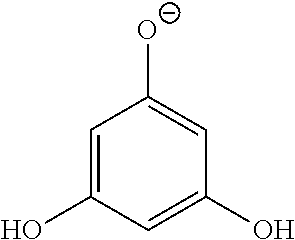 |
133 | 8.5 | 07 |
 |
135 | ||
| —NH2 | 144 | 8.0* | 20 |
- Chang M C, Chang H H, Chan C P, Chou H Y Chang B E, Yeung S Y, Wang T and Jeng J H (2012) Antiplatelet effect of phloroglucinol is related to inhibition of cyclooxygenase, reactive oxygen species, ERK/p38 signaling and thromboxane A2 production. Toxicol App Pharmacol 263: 287-295.
- Chassany O, Bonaz B, Des Varannes B., Bueno L, Cargill G, Coffin B, Ducrotte P and Grange V. (2007) Acute exacerbation of pain in irritable bowel syndrome: efficacy of phloroglucinol/trimethyphloroglucinol—a randomized double-blind, placebo-controlled study. Aliment Pharmacol. 25: 1115-1123.
- Chen Q, Ngui J S, Doss G A, Wang RWCai X, DiNinno F P, Blizzard T A, Hammond M L, Stearns R A, Evans D C, Gaillie T A and Tang W. (2002) Cytochrome P450 3A4-mediated bioactivation of raloxifene: Irreversible enzyme inhibition and thiol adduct formation. Chem Res Toxicol 15: 907-914.
- Bentes A L A, Borges R S, Monteiro W R, de Macedo L G M and Alves C N (2011) Structure of dihydrochalcones and related derivatives and their scavenging and antioxidant activity against oxygen and nitrogen radical species. Molecules 16: 1749-1760.
- Brenn A, Grube M, Jeditschky G., Fischer A, Strohmeier B, Eiden M, Kell M, Groschup M H and Vogelgesang S. (2014) St. John's Wort reduces beta-amyloid accumulation in a double transgenic Alzheimer's disease mouse model-role of P-glycoprotein. Brain Pathol 24: 1824. Epub 2013 Jun. 28.
- Dinamarca M C, Cerpa W, Garrido J, Hancke J L and Inestrosa N C (2006) Hyperforin prevents β-amyloid neurotoxicity and spatial memory impairments by disaggregation of Alzheimer's amyloid-β-deposits. Mole Physch. 11: 1032-1048.
- Ferreira E A, Gris E F, Felipe K B, Correia J F G, Cargnin-Ferreira E, Filho D W and Pedrosa C. (2010) Potent hepatoprotective effect in CCl4-induced hepatic injury in mice of phloroacetophenone from Myrcia multiflora. Libyan J Med 5: 4891-4896.
- Galati F and O'Bien P J (2004) Potential toxicity of flavonoids and other dietary phenolics: significance for the chemopreventive and anticancer properties. Free Rad. Biol. Med 37: 287-303.
- Geohagen, B., Vydyanathan, A., Kosharskyy, B., Shaparin, N, Zhang, L., Gavin, T. and LoPachin, R M. Enolate-Forming Phloretin Pharmacophores: Hepatoprotection in an Experimental Model of Drug-Induced Toxicity J. Pharmacol. Exp. Ther. 357, epub 2016.
- Griffith T N, Varela-Nallar L, K Dinamarca M C and Inestrosa N C (2010) Neurobiological effects of hyperforin and its potential in Alzheimer's disease therapy. Curr Med Chem 17: 391-406.
- Hatcher H, Planalp R, Cho J, Torti F M and Torti S V (2008) Curcumin: from ancient medicine to current clinical trials. Cell Mol. Life Sci. 65: 1631-1652.
- Head E. (2009) Oxidative damage and cognitive dysfunction: antioxidant treatments to promote healthy brain aging. Neurochem. Res. 34: 670-678. Iqbal K and Grundke-Iqbal I (2010) Alzheimer's disease: a multifunctional disorder seeking multitherapies. Alzheimer & Dementia 6: 420-424.
- Jaeschke H, Williams C D and McGill M R (2012) Caveats of using acetaminophen hepatotoxicity models for natural product testing. Tox Letters 215: 40-41.
- Kamat C D, Gadal S, Mhatre M. Williamson K S, Pye Q N and Hensley K. (2008) Antioxidants in central nervous system diseases: preclinical promise and translational challenges. J Alzheimers Dis. 15: 473-493.
- Kim M M and Kim S K (2010) Effect of phloroglucinol on oxidative stress and inflammation. Food Chem Toxicol 48: 2925-2933.
- Kim H S, Lee K, Kang K A, Lee N H, Hyun J W (2012) Phloroglucinol exerts protective effects against oxidative stress—induced cell damage in SH-SY5Y cells. J. Pharmacol Sci 119: 186-192.
- Lambert S D, Sang S and Yang C S (2007) Possible controversy over dietary polyphenols: benefits vs risks. Chem Res Toxicol 20: 583-585.
- LoPachin R M, Gavin T, Geohagen B C, Zhang L, Casper D, Lekhrag R and Barber D S (2011) β-Dicarbonyl enolates: a new class of neuroprotectants J Neurochem 116: 132-143.
- LoPachin R M, Gavin T, DeCaprio A P, Barber D S (2012) Application of the hard and soft acids and bases (HSAB) theory to toxicant-target interactions. Chem Res Toxicol 25: 239-251.
- LoPachin R M and Gavin T. (2014). Molecular mechanisms of aldehyde toxicity: a chemical perspective. Chem. Res. Toxicol. 27, 1081-1091.
- Mathiesen L, Malterud K E and Sund R B (1997) Hydrogen bond formation as basis for radical scavenging activity: a structure-activity study of C-methylated dihydrochalcones from Myrica gale and structurally related acetophenones. Free Rad Biol Med 22: 307-311.
- Mammino L (2013) Investigation of the antioxidant properties of hyperjovinol A through its Cu(II) coordination ability. J. Mol Model 19: 2127-2142.
- Piao M J, Ahn M J, Kang K A, Kim K C, Zheng J, Yao C W, et al. (2014) Phloroglucinol inhibits ultraviolet B radiation-induced oxidative stress in the mouse skin. Int J Rad Biol. 16: 1-8.
- Rezk B M, Haenen GRMM, van der Vijgh W. J. F. and Bast A. (2002) The antioxidant activity of phloretin: the disclosure of a new antioxidant pharmacophore in flavonoids. Biochem Biophys Res Comm. 295: 9-13.
- Ryu J, Zhang R, Hong B H, Yang E J, Kang K A, Choi M, Kim K C, Noh S J, Kim H S, Lee N H, Hyun J W, Kim H S (2013). Phloroglucinol attenuates motor functional deficits in an animal model of Parkinson's disease by enhancing Nrf2 activity. PLoS One 8: e71178.
- Sappington et al. (2005) The ethyl pyruvate analogues, diethy oxaloproprionate, 2-acetamidoacrylate, and methyl-2-acetamidoacrylate, exhibit anti-inflammatory properties in vivo and/or in vitro.
Biochem Pharmacol 70, 1579-1592. - Singh I P and Bharate S B (2006) Phlororglucinol compounds of natural origin. Nat. Prod. Rep. 23: 558-591.
- Singh I P, Sidana J, Bansal P and Foley W J (2009) Phloroglucinol compounds of therapeutic interest: global patent and technology status. Exp Opin. Ther Patents 19: 847-866.
- Singh M, Arseneault M, Sanderson T., Murthy V and Ramassamy C. (2008) Challenges for research on polyphenols from foods in Alzheimer's disease: bioavailability, metabolism and cellular and molecular mechanisms. J Agric Food Chem 56: 4855-4873.
- So M J and Cho E J (2014) Phloroglucinol attenuates free radical-induced oxidative stress. Prev Nutr Food Sci 19: 129-135.
- Wurglics M and Schubert-Zsilavecz M (2006) Hepericum perforatum: a modern herbal antidepressant: pharmacokinetics of active ingredients. Clin Pharmacokinet 45: 449-468.
- Youdim K A and Joseph J. A. (2001) A possible emerging role of phytochemicals in improving age-related neurological dysfunctions: a multiplicity of effects. Free Rad Biol Med. 30: 583-594.
- Zanoli P (2004) Role of hyperforin in the pharmacological activities of St. John's Wort. CNS Drug Rev. 10: 203-218.
- Zhu Q, Zhang N Q, Lau C F, Chao J, Sun Z, Chang C C, Chen F and Wang M. (2012) In vitro attenuation of acrolein-induced toxicity by phloretin, a phenolic compound from apple. Food Chem. 135: 1762-1768.
Claims (10)


Priority Applications (1)
| Application Number | Priority Date | Filing Date | Title |
|---|---|---|---|
| US15/735,214 US11413255B2 (en) | 2015-06-29 | 2016-06-27 | Multifunctional cytoprotectant for treatment of pathogenic processes mediated by oxidative stress and toxic electrophiles |
Applications Claiming Priority (3)
| Application Number | Priority Date | Filing Date | Title |
|---|---|---|---|
| US201562185801P | 2015-06-29 | 2015-06-29 | |
| PCT/US2016/039487 WO2017003902A1 (en) | 2015-06-29 | 2016-06-27 | Multifunctional cytoprotectant for treatment of pathogenic processes mediated by oxidative stress and toxic electrophiles |
| US15/735,214 US11413255B2 (en) | 2015-06-29 | 2016-06-27 | Multifunctional cytoprotectant for treatment of pathogenic processes mediated by oxidative stress and toxic electrophiles |
Related Parent Applications (1)
| Application Number | Title | Priority Date | Filing Date |
|---|---|---|---|
| PCT/US2016/039487 A-371-Of-International WO2017003902A1 (en) | 2015-06-29 | 2016-06-27 | Multifunctional cytoprotectant for treatment of pathogenic processes mediated by oxidative stress and toxic electrophiles |
Related Child Applications (1)
| Application Number | Title | Priority Date | Filing Date |
|---|---|---|---|
| US17/816,980 Continuation US20230133011A1 (en) | 2015-06-29 | 2022-08-02 | Multifunctional cytoprotectant for treatment of pathogenic processes mediated by oxidative stress and toxic electrophiles |
Publications (2)
| Publication Number | Publication Date |
|---|---|
| US20180169037A1 US20180169037A1 (en) | 2018-06-21 |
| US11413255B2 true US11413255B2 (en) | 2022-08-16 |
Family
ID=57609015
Family Applications (2)
| Application Number | Title | Priority Date | Filing Date |
|---|---|---|---|
| US15/735,214 Active US11413255B2 (en) | 2015-06-29 | 2016-06-27 | Multifunctional cytoprotectant for treatment of pathogenic processes mediated by oxidative stress and toxic electrophiles |
| US17/816,980 Pending US20230133011A1 (en) | 2015-06-29 | 2022-08-02 | Multifunctional cytoprotectant for treatment of pathogenic processes mediated by oxidative stress and toxic electrophiles |
Family Applications After (1)
| Application Number | Title | Priority Date | Filing Date |
|---|---|---|---|
| US17/816,980 Pending US20230133011A1 (en) | 2015-06-29 | 2022-08-02 | Multifunctional cytoprotectant for treatment of pathogenic processes mediated by oxidative stress and toxic electrophiles |
Country Status (2)
| Country | Link |
|---|---|
| US (2) | US11413255B2 (en) |
| WO (1) | WO2017003902A1 (en) |
Cited By (1)
| Publication number | Priority date | Publication date | Assignee | Title |
|---|---|---|---|---|
| US20230133011A1 (en) * | 2015-06-29 | 2023-05-04 | Montefiore Medical Center | Multifunctional cytoprotectant for treatment of pathogenic processes mediated by oxidative stress and toxic electrophiles |
Families Citing this family (1)
| Publication number | Priority date | Publication date | Assignee | Title |
|---|---|---|---|---|
| WO2025160106A1 (en) * | 2024-01-23 | 2025-07-31 | Amvac Chemical Corporation | Compositions and methods for inhibiting pathogen growth on plants and improving crop safety |
Citations (8)
| Publication number | Priority date | Publication date | Assignee | Title |
|---|---|---|---|---|
| US5877210A (en) * | 1994-01-31 | 1999-03-02 | Bristol-Myers Squibb Company | Phosphotyrosine phosphatase inhibitors or phosphotyrosine kinase activators for controlling cellular proliferation |
| WO2002020500A2 (en) * | 2000-09-01 | 2002-03-14 | Icos Corporation | Materials and methods to potentiate cancer treatment |
| US20080139496A1 (en) | 2001-03-06 | 2008-06-12 | Prendergast Patrick T | Combination therapy for reduction of toxicity of chemotherapeutic agents |
| US20080254130A1 (en) | 2003-08-29 | 2008-10-16 | Bioderm Research | Skin Antiaging & Brightening via Multi-function Treatment of Enzyme Dysfunction |
| US8034838B2 (en) * | 2008-05-29 | 2011-10-11 | Daryl Lee Thompson | Composition and method for the treatment of neurological disorders |
| WO2011156181A1 (en) * | 2010-06-08 | 2011-12-15 | Montefiore Medical Center | Methods and compositions for treating conditions mediated by oxidative stress or electrophilic environmental toxins |
| US20130267474A1 (en) | 2010-08-20 | 2013-10-10 | University Of Rhode Island | Novel phytochemicals from extracts of maple syrups and maple trees and uses thereof |
| WO2014179187A1 (en) | 2013-04-29 | 2014-11-06 | Montefiore Medical Center | Methods and compositions for preventing and treating electrophile-mediated toxicities |
Family Cites Families (2)
| Publication number | Priority date | Publication date | Assignee | Title |
|---|---|---|---|---|
| WO2017003902A1 (en) * | 2015-06-29 | 2017-01-05 | Montefiore Medical Center | Multifunctional cytoprotectant for treatment of pathogenic processes mediated by oxidative stress and toxic electrophiles |
| WO2020140029A1 (en) * | 2018-12-27 | 2020-07-02 | Montefiore Medical Center | Nucleophilic chemicals useful in the treatment of cisplatin-induced sensory neuropathy and ototoxicity |
-
2016
- 2016-06-27 WO PCT/US2016/039487 patent/WO2017003902A1/en not_active Ceased
- 2016-06-27 US US15/735,214 patent/US11413255B2/en active Active
-
2022
- 2022-08-02 US US17/816,980 patent/US20230133011A1/en active Pending
Patent Citations (11)
| Publication number | Priority date | Publication date | Assignee | Title |
|---|---|---|---|---|
| US5877210A (en) * | 1994-01-31 | 1999-03-02 | Bristol-Myers Squibb Company | Phosphotyrosine phosphatase inhibitors or phosphotyrosine kinase activators for controlling cellular proliferation |
| WO2002020500A2 (en) * | 2000-09-01 | 2002-03-14 | Icos Corporation | Materials and methods to potentiate cancer treatment |
| US20080139496A1 (en) | 2001-03-06 | 2008-06-12 | Prendergast Patrick T | Combination therapy for reduction of toxicity of chemotherapeutic agents |
| US20080254130A1 (en) | 2003-08-29 | 2008-10-16 | Bioderm Research | Skin Antiaging & Brightening via Multi-function Treatment of Enzyme Dysfunction |
| US8034838B2 (en) * | 2008-05-29 | 2011-10-11 | Daryl Lee Thompson | Composition and method for the treatment of neurological disorders |
| WO2011156181A1 (en) * | 2010-06-08 | 2011-12-15 | Montefiore Medical Center | Methods and compositions for treating conditions mediated by oxidative stress or electrophilic environmental toxins |
| US20130116337A1 (en) | 2010-06-08 | 2013-05-09 | Richard M. LoPachin | Methods and compositions for treating conditions mediated by oxidative stress or electrophilic environmental toxins |
| US8835510B2 (en) | 2010-06-08 | 2014-09-16 | Montefiore Medical Center | Methods and compositions for treating conditions mediated by oxidative stress or electrophilic environmental toxins |
| US20130267474A1 (en) | 2010-08-20 | 2013-10-10 | University Of Rhode Island | Novel phytochemicals from extracts of maple syrups and maple trees and uses thereof |
| WO2014179187A1 (en) | 2013-04-29 | 2014-11-06 | Montefiore Medical Center | Methods and compositions for preventing and treating electrophile-mediated toxicities |
| US20160074339A1 (en) | 2013-04-29 | 2016-03-17 | Montefiore Medical Center | Methods and compositions for preventing and treating elctrophile-mediated toxicities |
Non-Patent Citations (11)
| Title |
|---|
| Harsanyi, Kalman and Csaba Szantay Jr., "2,6-Dihydroxy-4-Pyrrolidinyl-acetophenone and its complex with pyrrolidine" Heterocyc. Comm. (2002), 8(3), pp. 255-258. (Year: 2002). * |
| Kung, P.-P. et al., "Dihydroxylphenyl amides as inhibitors of the Hsp90 molecular chaperone", Bioorg. Med. Chem. Lett. 18 (2008), pp. 6273-6278. (Year: 2002). * |
| PCT International Search Report and Written Opinion dated Nov. 4, 2016 for PCT International Patent Application No. PCT/US2016/039487, 12 pages. |
| Piyachaturawat, P., C. Tubtim, A. Chuncharunee, P. Komaratatand A. Suksamrarn, "Evaluation of the acute and subacute toxicity of a choleretic phloracetophenone in experimental animals", Toxic. Lett. (2002), 129: pp. 123-132. (Year: 2002). * |
| Schaefer, S., M. Baum, G. Eisenbrand, H. Dietrich, F. Will and C. Janzowski, "Polyphenolic apple juice extracts and their major constituents reduce oxidative damage in human colon cell lines", Mol. Nutr. Food Res. (2006), 50, pp. 24-33. (Year: 2006). * |
| STN Registry database entry: CAS RN 100942-39-0 (Entered STN: Mar. 22, 1986) (Year: 1986). * |
| STN Registry database entry: CAS RN 1610500-76-9 (Entered STN: Jun. 11, 2014) (Year: 2014). * |
| STN Registry database entry: CAS RN 206194-38-9 (Entered STN: Jun. 2, 1998). (Year: 1998). * |
| STN Registry database entry: CAS RN 266338-15-2 (Entered STN: May 24, 2000). (Year: 2000). * |
| STN Registry database entry: CAS RN 404011-08-1 (Entered STN: Apr. 4, 2002) (Year: 2002). * |
| Tyrrell et al., "The synthesis and anticancer effects of a range of natural and unnatural hop B-acids on breast cancer cells", Phytochemistry Letters 5 (2012), pp. 144-149. (Year: 2012). * |
Cited By (1)
| Publication number | Priority date | Publication date | Assignee | Title |
|---|---|---|---|---|
| US20230133011A1 (en) * | 2015-06-29 | 2023-05-04 | Montefiore Medical Center | Multifunctional cytoprotectant for treatment of pathogenic processes mediated by oxidative stress and toxic electrophiles |
Also Published As
| Publication number | Publication date |
|---|---|
| WO2017003902A1 (en) | 2017-01-05 |
| US20230133011A1 (en) | 2023-05-04 |
| US20180169037A1 (en) | 2018-06-21 |
Similar Documents
| Publication | Publication Date | Title |
|---|---|---|
| US20230133011A1 (en) | Multifunctional cytoprotectant for treatment of pathogenic processes mediated by oxidative stress and toxic electrophiles | |
| Islam et al. | Effects of nerol on paracetamol-induced liver damage in Wistar albino rats | |
| Beevers et al. | Pharmacological and clinical properties of curcumin | |
| Ali et al. | Some biological properties of curcumin: A review | |
| Vipin et al. | Protective effects of phenolics rich extract of ginger against Aflatoxin B1-induced oxidative stress and hepatotoxicity | |
| Sova | Antioxidant and antimicrobial activities of cinnamic acid derivatives | |
| Karthivashan et al. | The molecular mechanism underlying the hepatoprotective potential of Moringa oleifera leaves extract against acetaminophen induced hepatotoxicity in mice | |
| US8487128B2 (en) | Protection of normal cells | |
| JP2019521116A (en) | Methods and compositions for managing neuroinflammation and neurodegeneration | |
| Pinnen et al. | Codrugs linking L-dopa and sulfur-containing antioxidants: new pharmacological tools against Parkinson’s disease | |
| Elelaimy et al. | Genotoxicity of anticancer drug Azathioprine (Imuran): role of Omega-3 (?-3) oil as protective agent | |
| Alhusaini et al. | Mitigation of acetamiprid—Induced renotoxicity by natural antioxidants via the regulation of ICAM, NF-kB and TLR 4 pathways | |
| CN1674875A (en) | Anti-microbial compositions and methods of using same | |
| Wang et al. | Apigenin as an emerging hepatoprotective agent: current status and future perspectives | |
| US20240024344A1 (en) | Methods For The Effective Treatment Of Metastatic Cancer | |
| US10104882B2 (en) | Methods and compositions for preventing and treating electrophile-mediated toxicities | |
| Ana Gonzalez-Polo et al. | Is the modulation of autophagy the future in the treatment of neurodegenerative diseases? | |
| Hassa et al. | Role of ginger as anti-inflammatory and anti-apoptotic in protection of liver damage induced by metalaxyl fungicide in male albino rats | |
| Younis et al. | A Review on Curcumin: Pharmacological Promises and Biomedical Activities | |
| US8835510B2 (en) | Methods and compositions for treating conditions mediated by oxidative stress or electrophilic environmental toxins | |
| CN106420774A (en) | Application of tannic acid in preparation of hepatoprotective drugs | |
| Aziz et al. | A comprehensive review on the significance of cysteine in various metabolic disorders; particularly CVD, diabetes, renal dysfunction, and ischemic stroke | |
| Rateb et al. | Effect of Nigella sativa oil on paracetamol-induced renal cortical damage in rats: light and electron microscopic study | |
| Jayasree et al. | Mechanism of silver and gold nanoparticles against infectious disease-causing pathogens | |
| Eleha et al. | Anti-oxidative and hepato-protective effects of Pseudocedrela kotschyi against paracetamol induced liver damage: a biochemical and histological evaluation in rats |
Legal Events
| Date | Code | Title | Description |
|---|---|---|---|
| FEPP | Fee payment procedure |
Free format text: ENTITY STATUS SET TO UNDISCOUNTED (ORIGINAL EVENT CODE: BIG.); ENTITY STATUS OF PATENT OWNER: SMALL ENTITY |
|
| FEPP | Fee payment procedure |
Free format text: ENTITY STATUS SET TO SMALL (ORIGINAL EVENT CODE: SMAL); ENTITY STATUS OF PATENT OWNER: SMALL ENTITY |
|
| STPP | Information on status: patent application and granting procedure in general |
Free format text: RESPONSE TO NON-FINAL OFFICE ACTION ENTERED AND FORWARDED TO EXAMINER |
|
| STPP | Information on status: patent application and granting procedure in general |
Free format text: FINAL REJECTION MAILED |
|
| AS | Assignment |
Owner name: MONTEFIORE MEDICAL CENTER, NEW YORK Free format text: ASSIGNMENT OF ASSIGNORS INTEREST;ASSIGNOR:GEOHAGEN, BRIAN;REEL/FRAME:049300/0835 Effective date: 20190519 |
|
| STCB | Information on status: application discontinuation |
Free format text: ABANDONED -- FAILURE TO RESPOND TO AN OFFICE ACTION |
|
| AS | Assignment |
Owner name: MONTEFIORE MEDICAL CENTER, NEW YORK Free format text: ASSIGNMENT OF ASSIGNORS INTEREST;ASSIGNORS:LOPACHIN, RICHARD M.;GAVIN, TERRENCE;SIGNING DATES FROM 20160711 TO 20160714;REEL/FRAME:052015/0658 |
|
| STPP | Information on status: patent application and granting procedure in general |
Free format text: NON FINAL ACTION MAILED |
|
| STPP | Information on status: patent application and granting procedure in general |
Free format text: FINAL REJECTION MAILED |
|
| STPP | Information on status: patent application and granting procedure in general |
Free format text: DOCKETED NEW CASE - READY FOR EXAMINATION |
|
| STPP | Information on status: patent application and granting procedure in general |
Free format text: NON FINAL ACTION MAILED |
|
| STPP | Information on status: patent application and granting procedure in general |
Free format text: RESPONSE TO NON-FINAL OFFICE ACTION ENTERED AND FORWARDED TO EXAMINER |
|
| STPP | Information on status: patent application and granting procedure in general |
Free format text: FINAL REJECTION MAILED |
|
| STPP | Information on status: patent application and granting procedure in general |
Free format text: RESPONSE AFTER FINAL ACTION FORWARDED TO EXAMINER |
|
| STPP | Information on status: patent application and granting procedure in general |
Free format text: NOTICE OF ALLOWANCE MAILED -- APPLICATION RECEIVED IN OFFICE OF PUBLICATIONS |
|
| STPP | Information on status: patent application and granting procedure in general |
Free format text: PUBLICATIONS -- ISSUE FEE PAYMENT VERIFIED |
|
| STCF | Information on status: patent grant |
Free format text: PATENTED CASE |
|
| MAFP | Maintenance fee payment |
Free format text: PAYMENT OF MAINTENANCE FEE, 4TH YR, SMALL ENTITY (ORIGINAL EVENT CODE: M2551); ENTITY STATUS OF PATENT OWNER: SMALL ENTITY Year of fee payment: 4 |