US11412453B2 - Apparatus and method for controlling time period related to operating mode in wireless communication system - Google Patents
Apparatus and method for controlling time period related to operating mode in wireless communication system Download PDFInfo
- Publication number
- US11412453B2 US11412453B2 US16/620,243 US201816620243A US11412453B2 US 11412453 B2 US11412453 B2 US 11412453B2 US 201816620243 A US201816620243 A US 201816620243A US 11412453 B2 US11412453 B2 US 11412453B2
- Authority
- US
- United States
- Prior art keywords
- information
- duration
- electronic device
- psm
- edrx
- Prior art date
- Legal status (The legal status is an assumption and is not a legal conclusion. Google has not performed a legal analysis and makes no representation as to the accuracy of the status listed.)
- Active, expires
Links
Images



Classifications
-
- G—PHYSICS
- G06—COMPUTING OR CALCULATING; COUNTING
- G06F—ELECTRIC DIGITAL DATA PROCESSING
- G06F1/00—Details not covered by groups G06F3/00 - G06F13/00 and G06F21/00
- G06F1/26—Power supply means, e.g. regulation thereof
- G06F1/32—Means for saving power
- G06F1/3203—Power management, i.e. event-based initiation of a power-saving mode
- G06F1/3206—Monitoring of events, devices or parameters that trigger a change in power modality
- G06F1/3212—Monitoring battery levels, e.g. power saving mode being initiated when battery voltage goes below a certain level
-
- G—PHYSICS
- G06—COMPUTING OR CALCULATING; COUNTING
- G06F—ELECTRIC DIGITAL DATA PROCESSING
- G06F1/00—Details not covered by groups G06F3/00 - G06F13/00 and G06F21/00
- G06F1/26—Power supply means, e.g. regulation thereof
- G06F1/32—Means for saving power
- G06F1/3203—Power management, i.e. event-based initiation of a power-saving mode
- G06F1/3234—Power saving characterised by the action undertaken
- G06F1/325—Power saving in peripheral device
- G06F1/3278—Power saving in modem or I/O interface
-
- H—ELECTRICITY
- H04—ELECTRIC COMMUNICATION TECHNIQUE
- H04W—WIRELESS COMMUNICATION NETWORKS
- H04W52/00—Power management, e.g. Transmission Power Control [TPC] or power classes
- H04W52/02—Power saving arrangements
-
- H—ELECTRICITY
- H04—ELECTRIC COMMUNICATION TECHNIQUE
- H04W—WIRELESS COMMUNICATION NETWORKS
- H04W52/00—Power management, e.g. Transmission Power Control [TPC] or power classes
- H04W52/02—Power saving arrangements
- H04W52/0209—Power saving arrangements in terminal devices
- H04W52/0212—Power saving arrangements in terminal devices managed by the network, e.g. network or access point is leader and terminal is follower
-
- H—ELECTRICITY
- H04—ELECTRIC COMMUNICATION TECHNIQUE
- H04W—WIRELESS COMMUNICATION NETWORKS
- H04W52/00—Power management, e.g. Transmission Power Control [TPC] or power classes
- H04W52/02—Power saving arrangements
- H04W52/0209—Power saving arrangements in terminal devices
- H04W52/0261—Power saving arrangements in terminal devices managing power supply demand, e.g. depending on battery level
-
- H—ELECTRICITY
- H04—ELECTRIC COMMUNICATION TECHNIQUE
- H04W—WIRELESS COMMUNICATION NETWORKS
- H04W88/00—Devices specially adapted for wireless communication networks, e.g. terminals, base stations or access point devices
- H04W88/18—Service support devices; Network management devices
-
- Y—GENERAL TAGGING OF NEW TECHNOLOGICAL DEVELOPMENTS; GENERAL TAGGING OF CROSS-SECTIONAL TECHNOLOGIES SPANNING OVER SEVERAL SECTIONS OF THE IPC; TECHNICAL SUBJECTS COVERED BY FORMER USPC CROSS-REFERENCE ART COLLECTIONS [XRACs] AND DIGESTS
- Y02—TECHNOLOGIES OR APPLICATIONS FOR MITIGATION OR ADAPTATION AGAINST CLIMATE CHANGE
- Y02D—CLIMATE CHANGE MITIGATION TECHNOLOGIES IN INFORMATION AND COMMUNICATION TECHNOLOGIES [ICT], I.E. INFORMATION AND COMMUNICATION TECHNOLOGIES AIMING AT THE REDUCTION OF THEIR OWN ENERGY USE
- Y02D10/00—Energy efficient computing, e.g. low power processors, power management or thermal management
-
- Y—GENERAL TAGGING OF NEW TECHNOLOGICAL DEVELOPMENTS; GENERAL TAGGING OF CROSS-SECTIONAL TECHNOLOGIES SPANNING OVER SEVERAL SECTIONS OF THE IPC; TECHNICAL SUBJECTS COVERED BY FORMER USPC CROSS-REFERENCE ART COLLECTIONS [XRACs] AND DIGESTS
- Y02—TECHNOLOGIES OR APPLICATIONS FOR MITIGATION OR ADAPTATION AGAINST CLIMATE CHANGE
- Y02D—CLIMATE CHANGE MITIGATION TECHNOLOGIES IN INFORMATION AND COMMUNICATION TECHNOLOGIES [ICT], I.E. INFORMATION AND COMMUNICATION TECHNOLOGIES AIMING AT THE REDUCTION OF THEIR OWN ENERGY USE
- Y02D30/00—Reducing energy consumption in communication networks
- Y02D30/70—Reducing energy consumption in communication networks in wireless communication networks
Definitions
- the disclosure generally relates to a wireless communication system and, more particularly, to an apparatus and method for controlling a time duration related to an operation mode in a wireless communication system.
- the Internet is evolving from a human-oriented connection network, in which humans generate and consume information, to the internet of things (IoT), in which distributed elements, such as objects and the like, exchange and process information.
- IoT internet of things
- IoE internet-of-everything
- an intelligent Internet Technology (IT) service to create new value for peoples' lives may be provided.
- the IoT may be applied to fields such as those of a smart home, a smart building, a smart city, a smart car, a connected car, a smart grid, health care, a smart home appliance, or high-tech medical services through the convergence of conventional Information Technology (IT) and various industries.
- IT Information Technology
- the disclosure provides an apparatus and method for controlling a time duration related to an operation mode of an electronic device in a wireless communication system.
- the disclosure provides an apparatus and method for determination of a time duration for minimizing battery consumption by an electronic device in a wireless communication system.
- the disclosure provides an apparatus and method for displaying a notification of battery availability of an electronic device in a wireless communication system.
- An operation method of a server in a wireless communication system includes: receiving, from an electronic device, information on a battery state of the electronic device and information on a time duration related to an operation mode of the electronic device; determining a time duration for minimizing battery consumption by the electronic device based on the information on the battery state and the information on the time duration; and transmitting information on the time duration for minimizing the battery consumption by the electronic device.
- An operation method of a server in a wireless communication system includes: receiving, from another sever, information on a usable battery life of an electronic device; and displaying information indicating that the battery of the electronic device is usable based on the information on the usable battery life of the electronic device.
- a server device in a wireless communication system includes: a transceiver configured to receive, from an electronic device, information on a battery state of the electronic device and information on a time duration related to an operation mode of the electronic device; and a controller configured to determine a time duration for minimizing battery consumption by the electronic device based on the information on the battery state and the information on the time duration, wherein the transceiver transmits information on the time duration for minimizing the battery consumption by the electronic device.
- a server device in a wireless communication system includes: a transceiver configured to receive, from another server, information on a usable battery life of an electronic device; and a display unit configured to indicate that the battery of the electronic device is usable based on the information on the usable battery life of the electronic device.
- An apparatus and method may minimize power consumption by an IoT device by controlling a time duration related to an operation mode of an Internet of Things (IoT) device.
- IoT Internet of Things
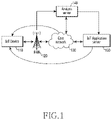
- FIG. 1 illustrates an example of a wireless communication system according to various embodiments of the disclosure
- FIG. 2 illustrates an example of a functional configuration of an analysis server in a wireless communication system according to various embodiments of the disclosure
- FIG. 3 illustrates an example of a functional configuration of an Internet of Things (IoT) application server in a wireless communication system according to various embodiments of the disclosure
- FIG. 4 illustrates an example of a functional configuration of an IoT device in a wireless communication system according to various embodiments of the disclosure.
- FIG. 5 illustrates an operation method for determination of a time duration for minimizing battery consumption in a wireless communication system according to various embodiments of the disclosure
- FIG. 6 illustrates an example of required power according to a time duration related to an operation mode of an IoT device in a wireless communication system according to various embodiments of the disclosure
- FIG. 7 illustrates an operation method for transmission of information on a battery state and information on a time duration related to an operation mode of an IoT device in a wireless communication system according to various embodiments of the disclosure
- FIG. 8 illustrates an operation method for determining a remaining battery lifetime in a wireless communication system according to various embodiments of the disclosure
- FIG. 9 illustrates a signal exchange for minimizing battery consumption in a wireless communication system according to various embodiments of the disclosure.
- FIG. 10 illustrates an operation method for providing notification of a remaining battery lifetime in a wireless communication system according to various embodiments of the disclosure.
- FIG. 11 illustrates an operation method for displaying a remaining battery lifetime in a wireless communication system according to various embodiments of the disclosure.
- the disclosure relates to an apparatus and method for controlling interference between services in a wireless communication system.
- Terms referring to a time duration related to an operation mode of an Internet of Things (IoT) device 110 e.g., terms referring to an extended discontinuous reception (eDRX) duration, an active duration, a sleep duration, and a power saving mode (PSM) duration
- terms referring to control information e.g., terms referring to network entities, terms referring to messages, terms referring to elements of a device, and the like, which are used in the disclosure, are described as an example for the convenience of explanation. Accordingly, the disclosure is not limited to the terms, and other terms having the same technical meaning may be used.
- FIG. 1 illustrates an example of a wireless communication system according to various embodiments of the disclosure.
- the wireless communication system includes an IoT device 110 , a radio access network (RAN) 120 , a core network 130 , an analysis server 140 , and an IoT application server 150 .
- RAN radio access network
- the IoT device 110 is a device for performing machine type communication (MTC), and may be of a type that is not carried by a user.
- the IoT device 110 may be a light bulb, various sensors, and a device for measuring a water, electricity, gas, or a radio wave.
- the IoT device 110 may be a terminal.
- the terminal may be a ‘user equipment (UE)’, ‘mobile station’, ‘subscriber station’, ‘remote terminal’, ‘wireless terminal’, ‘user device’, or other terms having the same technical meanings as the above-mentioned terms.
- UE user equipment
- the RAN 120 may denote a network including at least one base station and a base station controller (e.g., a radio network controller (RNC)) for controlling at least one base station.
- the RAN 120 may provide a connection between the core network 130 and the IoT device 110 .
- the core network 130 processes data of the IoT device 110 , transmitted through an access network (e.g., the RAN 120 ), so as to enable connection of the IoT device 110 with a device of another access network or connection of the IoT device 110 with another access network, or enable providing of additional services.
- an access network e.g., the RAN 120
- the core network 130 may include a mobility management entity (MME) (not shown), a serving general packet radio service support node (SGSN) (not shown), a system architecture evolution-gateway (SAE-GW) (not shown), a general packet radio service support node (GGSN) (not shown), a service capability exposure function (SCEF) (not shown), a machine type communication-inter working function (MTC-IWF) (not shown), and a service capability server (SCS) (not shown).
- MME mobility management entity
- SAE-GW system architecture evolution-gateway
- GGSN general packet radio service support node
- SCEF service capability exposure function
- MTC-IWF machine type communication-inter working function
- SCS service capability server
- the analysis server 140 may receive data from the RAN 120 , the core network 130 , and the IoT application server 150 .
- the analysis server 140 may determine a time duration for minimizing battery consumption by the IoT device 110 using the received data.
- the analysis server 140 may determine the remaining battery lifetime of the IoT device 110 using the received data.
- the IoT application server 150 may receive information on the IoT device 110 from the IoT device 110 . In addition, the IoT application server 150 may transmit or receive service data for the IoT application to or from the IoT device 110 . In some embodiments, the IoT application server 150 may transmit information on the battery state of the IoT device 110 to the IoT device 110 .
- the RAN 120 , the core network 130 , the analysis server 140 , and the IoT application server 150 illustrated in FIG. 1 are described as separate objects. However, at least two or more objects among the RAN 120 , the core network 130 , the analysis server 140 , and the IoT application server 150 may be implemented as one device. For example, two or more objects may be implemented on a general-purpose server using software. Therefore, hereinafter, for the convenience of description, the RAN 120 , the core network 130 , the analysis server 140 , and the IoT application server 150 are described as separate objects, but the disclosure is not limited thereto.
- FIG. 2 illustrates an example of a functional configuration of an analysis server in a wireless communication system according to various embodiments of the disclosure.
- the configuration exemplified in FIG. 2 may be understood as the configuration of the analysis server 140 .
- the term “ ⁇ unit” or “ ⁇ er” used hereinafter may refer to the unit for processing at least one function or operation and may be implemented in hardware, software, or a combination of hardware and software.
- the analysis server 140 may include a communication unit 210 , a storage unit 220 , and a controller 230 .
- the communication unit 210 provides an interface for performing communication with other nodes within the network. That is, the communication unit 210 converts, into a physical signal, a bit string transmitted from the analysis server 140 to another node, for example, another device in the core network 130 , the IoT application server 150 , and the like, and converts the physical signal received from the other node into the bit string. That is, the communication unit 110 may transmit or receive a signal. Accordingly, the communication unit 210 may also be referred to as a transmission unit, a reception unit, or a transceiver.
- the storage unit 220 may store data such as a basic program, an application, and configuration information for the operation of the analysis server 140 .
- the storage unit 220 may be configured as a volatile memory, a non-volatile memory, or a combination of a volatile memory and a non-volatile memory.
- the storage unit 220 may provide the stored data in response to a request from the controller 230 .
- the controller 230 controls the overall operation of the analysis server 140 .
- the controller 230 transmits or receives a signal through the communication unit 210 .
- the controller 230 records data in the storage unit 220 and reads the recorded data.
- the controller 230 may include at least one processor.
- the controller 230 according to various embodiments may include a time duration determination module 232 and a battery lifetime determination module 234 .
- the time duration determination module 232 may determine a time duration for minimizing battery consumption.
- the battery lifetime determination module 234 may determine the current remaining battery life.
- each of the time duration determination module 232 and the battery lifetime determination module 234 may be a command set or code stored in the storage unit 220 , including a command/code at least temporarily residing in the controller 230 , may be a storage space storing the command set or code, or may be a part of a circuit configuring the controller 230 .
- the controller 230 may control the analysis server 140 to perform operations according to various embodiments which will be described later.
- FIG. 2 illustrates that the analysis server 140 includes a communication unit 210 , a storage unit 220 , and a controller 230 .
- the analysis server 140 may further include other elements. Some of the communication unit 220 , the storage unit 220 , and the controller 230 may be omitted.
- FIG. 3 illustrates an example of the functional configuration of an IoT application server in a wireless communication system according to various embodiments of the disclosure.
- the configuration illustrated in FIG. 3 may be understood as the configuration of the IoT application server 150 .
- the term “ ⁇ unit” or “ ⁇ er” used hereinafter may refer to a unit for processing at least one function or operation, and may be implemented in hardware, software, or a combination of hardware and software.
- the IoT application server 150 may include a communicator 310 , a storage unit 320 , a display unit 330 , and a controller 340 .
- the communication unit 310 performs functions for transmission or reception of a signal through a wireless channel. For example, the communication unit 310 may perform conversion between a baseband signal and a bit string according to a physical layer standard of a system. For example, during data transmission, the communication unit 310 may generate complex symbols by encoding and modulating a transmission bit string. In addition, during data reception, the communication unit 310 may restore a reception bit string by demodulating and decoding a baseband signal. In addition, the communication unit 310 may up-convert the baseband signal to an RF band signal and then transmit the up-converted signal through an antenna, and may down-convert an RF band signal received through the antenna to the baseband signal.
- the communication unit 310 may include a transmission filter, a reception filter, an amplifier, a mixer, an oscillator, a DAC, an ADC, and the like.
- the communication unit 310 may include a plurality of transceiving paths.
- the communication unit 310 may include at least one antenna array including a plurality of antenna elements.
- the communication unit 310 may include a digital unit and an analog unit, and the analog unit may include a plurality of sub-units according to an operating power, an operating frequency, and the like.
- the communication unit 310 may transmit or receive a signal as described above. Accordingly, the communication unit 310 may be referred to as a ‘transmission unit’, ‘reception unit’ or ‘transceiver’. In addition, in the following description, transmission and reception performed through a wireless channel may be used to mean that the processing described above is performed by the communication unit 310 .
- the storage unit 320 may store data such as, a basic program, an application, configuration information, and the like for the operation of the IoT application server 150 .
- the storage unit 320 may be configured as a volatile memory, a non-volatile memory, or a combination of a volatile memory and a non-volatile memory.
- the storage unit 320 may provide the stored data in response to a request from the controller 340 .
- the display unit 330 may be a liquid crystal screen, a light-emitting diode display, or another screen capable of displaying text and/or images.
- the display unit 330 may display a screen corresponding to data received through the controller 340 .
- the controller 340 controls the overall operation of the IoT application server 150 .
- the controller 340 transmits or receives a signal through the communication unit 310 .
- the controller 340 records data in the storage unit 320 and reads the recorded data.
- the controller 340 may include at least one processor.
- the controller 340 according to various embodiments may include a battery lifetime notification module 332 .
- the battery lifetime notification module 332 may notify the IoT terminal 110 of the current remaining battery life.
- the battery lifetime notification module 332 may be a command set or code stored in the storage unit 320 , including a command/code at least temporarily residing in a controller 340 , may be a storage space storing the command set or code, or may be a part of a circuit configuring the controller 340 .
- the controller 340 may control the IoT application server 150 to perform operations according to various embodiments which will be described below.
- FIG. 3 illustrates an IoT application server 150 including a communication unit 310 , a storage unit 320 , a display unit 330 , and a controller 340 .
- the IoT application server 150 may further include other components. Some of the communicator 310 , the storage unit 320 , the display 330 , and the controller 340 may be omitted.
- FIG. 4 illustrates an example of a functional configuration of an IoT device in a wireless communication system according to various embodiments of the disclosure.
- the configuration illustrated in FIG. 4 may be understood as the configuration of the IoT device 110 .
- the term “ ⁇ unit” or “ ⁇ er” used hereinafter may refer to a unit for processing at least one function or operation, and may be implemented in hardware, software, or a combination of hardware and software.
- the IoT device 110 may include a communicator 410 , a storage unit 420 , a display unit 430 , and a controller 440 .
- the communication unit 410 may receive an RF signal. To this end, the communication unit 410 may include at least one antenna. The communication unit 410 may perform down-conversion of the received RF signal so as to generate an intermediate frequency (IF) or a baseband signal.
- the communication unit 410 may include a reception processing circuit that generates a baseband signal which is obtained by performing processing of filtering, decoding, and/or digitizing the baseband or IF signal. The reception processing circuit may transmit the processed baseband signal to a speaker for voice data or transmit the processed baseband signal to the controller 440 for further performing processing thereof (e.g., web browsing data).
- the communication unit 410 may include at least one transceiver.
- the at least one transceiver may receive baseband data (such as web data, e-mail, and interactive video game data) sent (outgoing) from the controller 440 .
- a transmission processing circuit may encode, multiplex, and digitize baseband data for transmission to produce a processed baseband or intermediate frequency signal.
- the communication unit 410 may up-convert the baseband or intermediate frequency signal, obtained by performing processing for transmission through the transmission processing circuit, into an RF signal that can be transmitted through an antenna.
- the storage unit 420 may store data such as a basic program, an application, configuration information, and the like for operation of the device.
- the storage unit 420 may be configured as a volatile memory, a non-volatile memory, or a combination of a volatile memory and a non-volatile memory.
- the storage unit 420 may provide stored data in response to a request from the controller 440 .
- the display unit 430 may be a liquid crystal screen, a light-emitting diode display, or another screen capable of displaying text and/or images.
- the display unit 430 may display a screen corresponding to data received through the controller 440 .
- the controller 440 may control the communication unit 410 , the storage unit 420 , and the display unit 430 , which are functionally coupled to the controller 440 .
- the controller 440 may control the reception of a forward channel signal and the transmission of a reverse channel signal, using the communication unit 410 .
- the controller 440 may include at least one microprocessor and microcontroller.
- the controller 440 may execute another process or program existing in a device.
- the controller 440 may store or retrieve data in or from the storage 420 according to a request from a running process.
- the controller 440 may be configured to execute an application in response to a received signal based on an operating system.
- the controller 440 may control the IoT device 110 to perform operations according to various embodiments described below.
- FIG. 4 illustrates an IoT device 110 including a communication unit 410 , a storage unit 420 , a display unit 430 , and a controller 230 .
- the IoT device 140 may further include other elements.
- Some of the communication unit 420 , the storage unit 420 , the display unit 430 , and the controller 440 may be omitted.
- FIG. 5 illustrates an operation method for determining a time duration for minimizing battery consumption in a wireless communication system according to various embodiments of the disclosure.
- the operations exemplified in FIG. 5 may be performed by the analysis server 140 .
- the analysis server 140 receives, from the IoT application server 150 , information on a battery state and information on a time duration related to an operation mode of the IoT device 110 .
- the information on the battery state may include the battery consumption amount of the IoT device 110 during a unit time and a remaining battery capacity of the IoT device 110 .
- the information on the battery state may include the total battery capacity of the IoT device 110 .
- the information on the time duration related to the operation mode of the IoT device 110 may include information on an active duration, a sleep duration, and a PSM duration.
- a unit time duration 601 includes at least one eDRX duration 603 .
- the eDRX duration 603 may include a paging duration 605 , a sleep duration 607 , a PSM duration 609 , and a data duration 611 .
- the paging duration 605 and the data duration 611 may configure an active duration.
- the data duration 611 may include at least one of a duration for data transmission (not shown) and a duration for data reception (not shown). That is, the unit time duration 601 may be represented by ⁇ Equation 1> as follows.
- D unit may denote a unit time duration 601
- D paging may denote a paging duration 605
- D transmit may denote a duration for data transmission
- D receive may denote a duration for data reception
- D sleep may denote a sleep duration 607
- D PSM may denote a PSM duration 609
- N may denote the number of times the IoT device 110 performs paging procedures during the unit time duration 601
- T eDR is a eDRX duration 603
- P unit_time may denote a battery consumption amount of the IoT device 110 during the unit time duration 601
- P active may denote a battery consumption amount during the paging duration 605 , a duration for data transmission, and a duration for data reception.
- P sleep may denote a battery consumption amount during the sleep duration 607
- P sleep may denote a battery consumption amount during the PSM duration 609
- the battery consumption amount may denote a power consumption amount of the IoT device 110 .
- P active , P sleep , and P PSM may indicate different values according to IoT devices.
- P active may be a function including D paging , D transmit , and D receive as parameters.
- P active may denote a power consumption amount in the case where the IoT device 110 operates in an active mode during the n th unit time duration D unit [n], D paging [n] may denote an n th paging duration, D transmit [n] may denote an n th duration for data transmission, and D recieve [n] may denote an n th duration for data reception.
- ⁇ may denote a power consumption amount of the IoT device 110 per second when the paging procedure is performed, ⁇ may denote a power consumption by the IoT device 110 per second when data transmission is performed, and ⁇ may denote a power consumption by the IoT device 110 per second when data reception is performed.
- the battery consumption amount during the sleep duration 607 and the battery consumption amount during the PSM duration 609 may correspond to a function which includes as parameters the sleep duration 607 and the PSM duration 609 .
- P sleep may denote the battery consumption amount during the sleep duration 607
- P PSM may denote the battery consumption during the PSM duration 609
- ⁇ denotes the power consumption amount of the IoT device 110 per second when the sleep procedure is performed
- ⁇ denotes the power consumption amount of the IoT device 110 per second when the PSM procedure is performed.
- past D sleep and D PSM values at the current time point may be transmitted from the core network 130 and the IoT device 110 to the analysis server 140 .
- future D sleep and D PSM optimized values thereof are determined based on P active , and are fed back to the core network 120 and the IoT device 110 from the analysis server 140 .
- future D sleep and D PSM values may be optimized D sleep and D PSM values for minimizing battery consumption.
- the first value 613 may denote the power required by the IoT device 110 for transmission or reception of data during the data duration 611 .
- the second value 615 may denote the power required for reception of a signal during the paging duration 605 .
- the signal received during the paging duration 605 may be a response to the paging signal.
- the third value 615 may denote the power required by the IoT device 110 for operating in the sleep mode during the sleep duration 607 .
- the fourth value 617 may denote the power required by the IoT device 110 for operating in the PSM mode during the PSM duration 609 .
- the analysis server 140 determines a time duration for minimizing battery consumption by the IoT device 110 .
- the analysis server 140 may determine a time duration for minimizing battery consumption based on the information on the battery state and the information on the time duration.
- the time duration for minimizing battery consumption may include an optimized eDRX duration and an optimized PSM duration.
- the optimized eDRX duration may denote an eDRX duration for minimizing battery consumption
- the optimized PSM duration may denote a PSM duration for minimizing battery consumption.
- the time duration for minimizing battery consumption may include an optimized sleep duration and an optimized PSM duration.
- D sleep may denote a sleep duration
- D PSM may denote a PSM duration
- D unit may denote a unit time duration
- D paging may denote a paging duration
- P unit_time may denote a battery consumption amount of the IoT device 110 during the unit time duration D unit
- T max_eDRX may denote a maximum value in the eDRX duration that can be maintained by the IoT device 110
- D transmit may denote a duration for data transmission
- D receive may denote a duration for data reception
- D max_sleep may denote a maximum value in a sleep duration that can be maintained by the IoT device 110
- D max_PSM may denote a maximum value in a PSM duration that can be maintained by the IoT device 110 .
- T max_eDRX may be 43.69 minutes, which is the maximum value in the eDRX duration of the IoT device 110 and is defined in the 3rd generation partnership project (3GPP), or the maximum value
- the analysis server 140 transmits information on a time duration for minimizing battery consumption by the IoT device 110 .
- the analysis server 140 may transmit information on the optimized eDRX duration to the core network 130 .
- the analysis server 140 may transmit information on the optimized PSM duration to the IoT application server 150 .
- FIG. 7 illustrates an operation method for transmission of information on a battery state and information on a time duration related to an operation mode of an IoT device in a wireless communication system according to various embodiments of the disclosure.
- the operations exemplified in FIG. 7 may be performed by the IoT application server 150 .
- the IoT application server 150 receives, from the IoT device 110 , information on a battery state and information on a time duration related to an operation mode of the IoT device 110 .
- the information on the battery state may include the battery consumption amount P unit_time of the IoT device 110 during a unit time and the remaining battery capacity P remain of the IoT device 110 .
- the information on the time duration related to the operation mode of the IoT device 110 may include information on the active duration D active , the sleep duration D sleep , and the PSM duration D PSM .
- the IoT application server 150 transmits, to the analysis server 140 , information on a battery state and information on a time duration related to an operation mode of the IoT device 110 . That is, the IoT application server 150 transmits, to the analysis server 140 , the information on the battery state and the information on the time duration related to the operation mode of the IoT device 110 , which are received from the IoT device 110 .
- FIG. 8 illustrates an operation method for determination of a remaining battery lifetime in a wireless communication system according to various embodiments of the disclosure. Operations exemplified in FIG. 8 may be performed by the analysis server 140 .
- the analysis server 140 receives, from the IoT application server 150 , information on a battery of the IoT device 110 and information on a time duration related to an operation mode of the IoT device 110 .
- the information on the battery state may include the battery consumption amount P unit_time of the IoT device 110 during a unit time and the remaining battery capacity P remain of the IoT device 110 .
- the information on the time duration related to the operation mode of the IoT device 110 may include information on the active duration D active , the sleep duration D sleep , and the PSM duration D PSM .
- the analysis server 140 determines whether the IoT device 110 supports eDRX. In some embodiments, the analysis server 140 may determine whether the IoT device 110 supports the eDRX based on whether information on the active duration D active and the sleep duration D sleep is received.
- the analysis server 140 monitors the current battery state of the IoT device 110 .
- the current battery state of the IoT device 110 may denote a current remaining battery capacity of the IoT device 110 .
- the analysis server 140 may monitor the current remaining battery capacity of the IoT device 110 by periodically receiving information on the remaining battery capacity of the IoT device 110 from the IoT device 110 .
- the analysis server 140 determines whether the IoT device 110 supports the PSM. In some embodiments, the analysis server 140 may determine whether the IoT device 110 supports the PSM based on whether the PSM duration D PSM is received.
- the analysis server 140 determines an optimized eDRX duration and an optimized PSM duration.
- the analysis server 140 may determine an optimized eDRX duration and an optimized PSM duration based on information on a battery of the IoT device 110 and information on a time duration related to an operation mode of the IoT device 110 .
- the optimized eDRX duration may denote an eDRX duration for minimizing battery consumption.
- the optimized eDRX duration may be determined based on at least one of device characteristics of the IoT device 110 and the number of times the IoT device 110 has transmitted a signal.
- the optimized PSM duration may denote a PSM duration for minimizing battery consumption.
- the optimized PSM duration may be determined based on at least one of the device characteristics of the IoT device 110 and the number of times the IoT device 110 has transmitted a signal.
- the analysis server 140 monitors the current battery state of the IoT device 110 .
- the current battery state of the IoT device 110 may denote the current remaining battery capacity of the IoT device 110 .
- the analysis server 140 may monitor the current remaining battery capacity of the IoT device 110 by periodically receiving, from the IoT device 110 , information on the remaining battery capacity of the IoT device 110 .
- the analysis server 140 determines a remaining usable battery life of the IoT device 110 using the optimized eDRX duration, the optimized PSM duration, and the current battery state of the IoT device 110 .
- the analysis server 140 may determine a unit time duration D unit by using the optimized eDRX duration and the optimized PSM duration.
- T expected battery life may denote the remaining usable battery life of the IoT device 110
- P remain may denote the current remaining battery capacity of the IoT device 110
- P unit_time may denote the battery consumption amount of the IoT device 110 during a unit time duration D unit
- D unit may denote the unit time duration.
- the analysis server 140 determines the optimized eDRX duration. That is, the analysis server 140 may include information on an eDRX duration for minimizing battery consumption by the IoT device 110 . In some embodiments, the optimized eDRX duration may be determined based on at least one of device characteristics of the IoT device 110 and the number of times the IoT device 110 has transmitted a signal.
- the analysis server 140 monitors the current battery state of the IoT device 110 .
- the current battery state of the IoT device 110 may denote the current remaining battery capacity of the IoT device 110 .
- the analysis server 140 may monitor the current remaining battery capacity of the IoT device 110 by periodically receiving, from the IoT device 110 , information on the remaining battery capacity of the IoT device 110 .
- the analysis server 140 determines a remaining usable battery life of the IoT device 110 by using the optimized eDRX duration. In some embodiments, the analysis server 140 may determine the remaining usable battery life of the IoT device 110 by using the optimized sleep duration included in the optimized eDRX duration.
- FIG. 9 illustrates a signal exchange for minimizing battery consumption in a wireless communication system according to various embodiments of the disclosure.
- the IoT device 110 may perform initial access to the core network 130 through the RAN 120 .
- the IoT device 110 may perform initial access by transmitting a request message for initial access to the core network 130 through the RAN 120 and then receiving a response message to the request message.
- the IoT device 110 performs a tracking area update (TAU) on the core network 130 .
- TAU tracking area update
- the IoT device 110 may transmit information on a TA to the core network 130 . That is, the IoT device 110 may notify the core network 130 of the location of the IoT device itself with reference to the TA.
- the IoT device 110 may perform a routing area update (RAU) on the core network 130 .
- RAU routing area update
- the IoT device 110 transmits, to the IoT application server 150 , information on a battery state of the IoT device 110 and information on a time duration related to an operation mode of the IoT device 110 .
- the information on the battery state may include a battery consumption amount of the IoT device 110 during a unit time and the remaining battery capacity of the IoT device 110 .
- the information on the battery state may include the total battery capacity of the IoT device 110 .
- the information on the time duration related to the operation mode of the IoT device 110 may include information on the active duration, the sleep duration, and the PSM duration.
- the RAN 120 transmits information on a paging count to the analysis server 140 .
- the paging count information may denote information on the number of times of paging attempts made by the IoT device 110 during a unit time (for example, 1 minute, 5 minutes, 10 minutes, 15 minutes, 30 minutes, or 60 minutes).
- the paging count information may be used to control the information on the battery state of the IoT device 110 .
- the core network 130 transmits, to the analysis server 140 , information on a paging log, information on an eDRX duration, and an identifier of the IoT device.
- the information on the paging log may include information on a time duration in which a paging attempt has been made by the IoT device 110 and information on paging details.
- the paging details may include information on signals transmitted or received to or from the IoT device 110 .
- the information on the paging log may be used to control the information on the battery state of the IoT device 110 .
- the IoT application server 150 transmits, to the analysis server 140 , the information on the battery state of the IoT device 110 , the information on the time duration related to an operation mode of the IoT device 110 , and an identifier of the IoT device 110 . That is, the IoT application server 150 transmits, to the analysis server 140 , the information on the battery state of the IoT device 110 and information on the time duration related to the operation mode of the IoT device 110 , which have been received from the IoT device 110 .
- the identifier of the IoT device 110 may be an identifier for indicating that the information on the battery state and the information on the time duration related to the operation mode of the IoT device 110 , which are transmitted by the IoT application server 150 , pertain to the IoT device 110 .
- the analysis server 140 determines an optimized eDRX duration and an optimized PSM duration.
- the optimized eDRX duration may denote an eDRX duration for minimizing battery consumption
- the optimized PSM duration may denote a PSM duration for minimizing battery consumption.
- the analysis server 140 determines an optimized eDRX duration and an optimized PSM duration based on at least one of information on a battery state of the IoT device 110 and information on a time duration related to an operation mode of the IoT device 110 .
- the analysis server 140 determines a remaining usable battery life of the IoT device 110 .
- the remaining usable battery life of the IoT device 110 may be determined based on the optimized eDRX duration and the optimized PSM duration.
- the analysis server 140 transmits, to the core network 130 , information on the optimized eDRX duration and the identifier of the IoT device 110 . Since the configuration of the eDRX duration (e.g., the length of the active duration and the length of the sleep duration) is determined by the core network 130 , the analysis server 140 may transmit information on the optimized eDRX duration to the core network 130 .
- the identifier of the IoT device 110 may be an identifier indicating that the information on the optimized eDRX duration pertains to the IoT device 110 .
- the unit time duration may be configured based on the information on the paging duration, the information on the duration for data transmission, the information on the duration for data reception, the information on the sleep duration, and the information on the PSM duration.
- the analysis server 140 may calculate an optimized sleep duration and an optimized PSM duration of a unit time duration and transmit the calculated optimized sleep duration and optimized PSM duration to the core network 130 .
- the core network 130 transmits information on the optimized eDRX duration to the IoT device 110 . That is, the core network 130 applies the optimized eDRX duration to the IoT device 110 . Accordingly, the optimized eDRX duration is adaptively applied according to the battery state of the IoT device 110 , so that the IoT device 110 may reduce battery consumption.
- the analysis server 140 transmits information on the optimized PSM duration to the IoT application server 150 . Since the configuration of the PSM duration (e.g., the length of the PSM duration) is determined by the IoT application server 150 , the analysis server 140 may transmit information on the optimized PSM duration to the IoT application server 150 .
- the unit time duration may be configured based on the information on the paging duration, the information on the duration for data transmission, the information on the duration for data reception, the information on the sleep duration, and the information on the PSM duration.
- the analysis server 140 may calculate an optimized sleep duration and an optimized PSM duration of the unit time duration and transmit the calculated optimized sleep duration and optimized PSM duration to the IoT device 110 .
- the IoT application server 150 transmits information on an optimized PSM duration to the IoT device 110 . That is, the IoT application server 150 applies the optimized PSM duration to the IoT device 110 . Accordingly, the optimized PSM duration is adaptively applied according to the battery state of the IoT device 110 , so that the IoT device 110 may reduce battery consumption.
- FIG. 10 illustrates an operation method for providing notification of a remaining battery lifetime in a wireless communication system according to various embodiments of the disclosure.
- the operations exemplified in FIG. 10 may be performed by the analysis server 140 .
- the analysis server 140 determines a remaining usable battery life of the IoT device 110 .
- the analysis server 140 determines the remaining usable battery life of the IoT device 110 using the optimized eDRX duration, the optimized PSM duration, and the current battery state of the IoT device 110 .
- the analysis server 140 transmits information on the remaining usable battery life of the IoT device 110 to the IoT application server 150 .
- the transmission may be performed for the purpose of displaying the remaining usable battery life of the IoT device 110 by the IoT application server 150 .
- FIG. 11 illustrates an operation method for displaying a remaining battery lifetime in a wireless communication system according to various embodiments of the disclosure. The operations illustrated in FIG. 11 may be performed by the IoT application server 150 or the IoT device 110 .
- the IoT application server 150 receives information on the remaining usable battery life of the IoT device 110 from the analysis server 140 .
- the remaining usable battery life of the IoT device 110 may be determined based on an optimized eDRX duration, an optimized PSM duration, and a current battery state of the IoT device 110 .
- the IoT application server 150 displays a notification of remaining battery availability of the IoT device 110 .
- the IoT application server 150 may display the remaining usable battery life of the IoT device 110 on the display of the IoT application server 150 .
- the IoT application server 150 may be a management device (e.g., a gas meter or a water meter) managed by an operator or service provider itself which provides an IoT service. Accordingly, a user who owns the management device may check the remaining usable battery life of the IoT device 110 , displayed on the display of the management device, and replace the battery of the IoT device 110 after the usable battery life has expired.
- the IoT device 110 may itself display, on the display of the IoT device 110 , a notification of remaining battery availability of the IoT device 110 .
- the notification of the remaining battery availability of the IoT device 110 may include the remaining usable battery life of the IoT device 110 .
- the user who owns the IoT device 110 may check the remaining usable battery life of the IoT device 110 , displayed on the display of the IoT device 110 , and replace the battery of the IoT device 110 after the usable battery life has expired.
- a computer-readable storage medium for storing one or more programs (software modules) may be provided.
- the one or more programs stored in the computer-readable storage medium may be configured for execution by one or more processors within the electronic device.
- the at least one program may include instructions that cause the electronic device to perform the methods according to various embodiments of the disclosure as defined by the appended claims and/or disclosed herein.
- the programs may be stored in non-volatile memories including a random access memory and a flash memory, a Read Only Memory (ROM), an Electrically Erasable Programmable Read Only Memory (EEPROM), a magnetic disc storage device, a Compact Disc-ROM (CD-ROM), Digital Versatile Discs (DVDs), or other type optical storage devices, or a magnetic cassette.
- ROM Read Only Memory
- EEPROM Electrically Erasable Programmable Read Only Memory
- CD-ROM Compact Disc-ROM
- DVDs Digital Versatile Discs
- any combination of some or all thereof may form a memory in which the program is stored.
- a plurality of such memory devices may be included in the electronic device.
- the programs may be stored in an attachable storage device which may access the electronic device through communication networks such as the Internet, Intranet, Local Area Network (LAN), Wide LAN (WLAN), and Storage Area Network (SAN) or a combination thereof.
- a storage device may access the electronic device for performing embodiments of the disclosure via an external port.
- a separate storage device on the communication network may access a portable electronic device.
- a component included in the disclosure is expressed in the singular or the plural according to the presented detailed embodiment.
- the singular form or plural form is selected for convenience of description suitable for the presented situation, and various embodiments of the disclosure are not limited to a single element or multiple elements thereof. Further, either multiple elements expressed in the description may be configured into a single element or a single element in the description may be configured as multiple elements.
Landscapes
- Engineering & Computer Science (AREA)
- Computer Networks & Wireless Communication (AREA)
- Signal Processing (AREA)
- Theoretical Computer Science (AREA)
- Physics & Mathematics (AREA)
- General Engineering & Computer Science (AREA)
- General Physics & Mathematics (AREA)
- Mobile Radio Communication Systems (AREA)
- Telephone Function (AREA)
Abstract
Description
D unit =D paging +D transmit +D receive +D sleep +D PSM =N·T eDRX P unit_time(D unit)=P active(D paging ,D transmit ,D receive)+P sleep(D sleep)+P PSM(D PSM)P remain >P unit_time Equation 1
P active(D paging[n],D transmit[n],D receive[n])=σ·D paging[n]+ρ·D transmit[n]+τ·D receive[n] Equation 2
P sleep =β·D sleep
P PSM =γ·D PSM Equation 3
min{D
T max_eDRX >D unit
D unit =D paging +D transmit +D receive +D sleep +D PSM
D max_sleep >D sleep
D max_PSM >D PSM Equation 4
T expected battery life =P remain /P unit_time(D unit) Equation 5
Claims (12)
Applications Claiming Priority (3)
| Application Number | Priority Date | Filing Date | Title |
|---|---|---|---|
| KR10-2017-0071629 | 2017-06-08 | ||
| KR1020170071629A KR102349265B1 (en) | 2017-06-08 | 2017-06-08 | Apparatus and method for controlling communication time duration in wireless communication system |
| PCT/KR2018/006284 WO2018225990A1 (en) | 2017-06-08 | 2018-06-01 | Apparatus and method for controlling time period related to operating mode in wireless communication system |
Publications (2)
| Publication Number | Publication Date |
|---|---|
| US20210084594A1 US20210084594A1 (en) | 2021-03-18 |
| US11412453B2 true US11412453B2 (en) | 2022-08-09 |
Family
ID=64566738
Family Applications (1)
| Application Number | Title | Priority Date | Filing Date |
|---|---|---|---|
| US16/620,243 Active 2038-10-09 US11412453B2 (en) | 2017-06-08 | 2018-06-01 | Apparatus and method for controlling time period related to operating mode in wireless communication system |
Country Status (4)
| Country | Link |
|---|---|
| US (1) | US11412453B2 (en) |
| EP (1) | EP3637868B1 (en) |
| KR (1) | KR102349265B1 (en) |
| WO (1) | WO2018225990A1 (en) |
Cited By (1)
| Publication number | Priority date | Publication date | Assignee | Title |
|---|---|---|---|---|
| US20230223769A1 (en) * | 2019-10-17 | 2023-07-13 | Robert Bosch Gmbh | Method for adjusting an anode overvoltage of a lithium-ion battery, method for improving a capacity state of health of the lithium-ion battery |
Families Citing this family (5)
| Publication number | Priority date | Publication date | Assignee | Title |
|---|---|---|---|---|
| FR3107970B1 (en) * | 2020-03-04 | 2022-09-09 | Psa Automobiles Sa | Method and device for communication between a vehicle and a public land mobile network |
| JP7543081B2 (en) * | 2020-10-21 | 2024-09-02 | キヤノン株式会社 | System, device, control method, article manufacturing method, control program, and recording medium |
| KR20240032568A (en) * | 2022-09-02 | 2024-03-12 | 주식회사 엘지에너지솔루션 | IoT (internet of things) DEVICE FOR DATA RETRANSMITTION AND OPERATING METHOD THEREOF |
| KR102804765B1 (en) * | 2023-01-26 | 2025-05-07 | 예영동 | Low power remote communication system for reading digital water meters |
| CN121510218A (en) * | 2024-08-07 | 2026-02-10 | 北京三星通信技术研究有限公司 | Methods and apparatus in wireless communication systems |
Citations (11)
| Publication number | Priority date | Publication date | Assignee | Title |
|---|---|---|---|---|
| KR20040103186A (en) | 2003-05-31 | 2004-12-08 | 엘지전자 주식회사 | A method and a device of saving battery current for gsm type mobile phone |
| KR20050031332A (en) | 2003-09-29 | 2005-04-06 | 삼성전자주식회사 | Device and method for displaying |
| US20120315960A1 (en) | 2011-06-07 | 2012-12-13 | Lg Electronics Inc. | Mobile terminal and battery power saving mode switching method thereof |
| US20130231894A1 (en) * | 2012-03-01 | 2013-09-05 | Nokia Corporation | Method and apparatus for providing battery information |
| JP2013201508A (en) | 2012-03-23 | 2013-10-03 | Sumitomo Electric Ind Ltd | Radio terminal device, radio base station device and communication control method |
| US20140095091A1 (en) * | 2009-03-11 | 2014-04-03 | Novatel Wireless, Inc. | METHODS AND APPARATUS FOR MODELING, MONITORING, ESTIMATING and CONTROLLING POWER CONSUMPTION IN BATTERY-OPERATED DEVICES |
| US20150077127A1 (en) | 2013-09-16 | 2015-03-19 | Shell Internet (Beijing) Security Technology Co., Ltd. | Method for determining remaining service time of battery, client device and mobile terminal |
| KR101531069B1 (en) | 2010-04-09 | 2015-06-23 | 주식회사 케이티 | method for reducing power consumption in dual band dual mode terminal and the dual band dual mode terminal |
| US20160205622A1 (en) | 2015-01-13 | 2016-07-14 | Telefonaktiebolaget L M Ericsson (Publ) | Coordination using the UE application |
| US20170164288A1 (en) * | 2014-07-14 | 2017-06-08 | Nec Corporation | Method and apparatus for communication management |
| US20200022216A1 (en) * | 2017-03-24 | 2020-01-16 | Huawei Technologies Co., Ltd. | Method And Apparatus For Configuring Power Consumption Parameter |
-
2017
- 2017-06-08 KR KR1020170071629A patent/KR102349265B1/en not_active Expired - Fee Related
-
2018
- 2018-06-01 WO PCT/KR2018/006284 patent/WO2018225990A1/en not_active Ceased
- 2018-06-01 EP EP18812725.2A patent/EP3637868B1/en not_active Not-in-force
- 2018-06-01 US US16/620,243 patent/US11412453B2/en active Active
Patent Citations (11)
| Publication number | Priority date | Publication date | Assignee | Title |
|---|---|---|---|---|
| KR20040103186A (en) | 2003-05-31 | 2004-12-08 | 엘지전자 주식회사 | A method and a device of saving battery current for gsm type mobile phone |
| KR20050031332A (en) | 2003-09-29 | 2005-04-06 | 삼성전자주식회사 | Device and method for displaying |
| US20140095091A1 (en) * | 2009-03-11 | 2014-04-03 | Novatel Wireless, Inc. | METHODS AND APPARATUS FOR MODELING, MONITORING, ESTIMATING and CONTROLLING POWER CONSUMPTION IN BATTERY-OPERATED DEVICES |
| KR101531069B1 (en) | 2010-04-09 | 2015-06-23 | 주식회사 케이티 | method for reducing power consumption in dual band dual mode terminal and the dual band dual mode terminal |
| US20120315960A1 (en) | 2011-06-07 | 2012-12-13 | Lg Electronics Inc. | Mobile terminal and battery power saving mode switching method thereof |
| US20130231894A1 (en) * | 2012-03-01 | 2013-09-05 | Nokia Corporation | Method and apparatus for providing battery information |
| JP2013201508A (en) | 2012-03-23 | 2013-10-03 | Sumitomo Electric Ind Ltd | Radio terminal device, radio base station device and communication control method |
| US20150077127A1 (en) | 2013-09-16 | 2015-03-19 | Shell Internet (Beijing) Security Technology Co., Ltd. | Method for determining remaining service time of battery, client device and mobile terminal |
| US20170164288A1 (en) * | 2014-07-14 | 2017-06-08 | Nec Corporation | Method and apparatus for communication management |
| US20160205622A1 (en) | 2015-01-13 | 2016-07-14 | Telefonaktiebolaget L M Ericsson (Publ) | Coordination using the UE application |
| US20200022216A1 (en) * | 2017-03-24 | 2020-01-16 | Huawei Technologies Co., Ltd. | Method And Apparatus For Configuring Power Consumption Parameter |
Non-Patent Citations (2)
| Title |
|---|
| Extended European Search Report dated May 28, 2020, issued in a counterpart European Application No. 18812725.2-1205 / 3637868. |
| Korean Office Action dated Jun. 19, 2021, issued in a counterpart Korean Application No. 10-2017-0071629. |
Cited By (2)
| Publication number | Priority date | Publication date | Assignee | Title |
|---|---|---|---|---|
| US20230223769A1 (en) * | 2019-10-17 | 2023-07-13 | Robert Bosch Gmbh | Method for adjusting an anode overvoltage of a lithium-ion battery, method for improving a capacity state of health of the lithium-ion battery |
| US12519324B2 (en) * | 2019-10-17 | 2026-01-06 | Robert Bosch Gmbh | Method for adjusting an anode overvoltage of a lithium-ion battery, method for improving a capacity state of health of the lithium-ion battery |
Also Published As
| Publication number | Publication date |
|---|---|
| EP3637868B1 (en) | 2022-04-27 |
| US20210084594A1 (en) | 2021-03-18 |
| EP3637868A1 (en) | 2020-04-15 |
| EP3637868A4 (en) | 2020-06-24 |
| KR20180134136A (en) | 2018-12-18 |
| KR102349265B1 (en) | 2022-01-10 |
| WO2018225990A1 (en) | 2018-12-13 |
Similar Documents
| Publication | Publication Date | Title |
|---|---|---|
| US11412453B2 (en) | Apparatus and method for controlling time period related to operating mode in wireless communication system | |
| US11463978B2 (en) | Network data analytics function, access and mobility function, and control method for UE analytics assistance for network automation and optimisation | |
| CN115314978B (en) | Control information transmission method and equipment | |
| US10085233B2 (en) | Methods for determining paging occasions in eDRX cycle and monitoring paging occasions based on CEL | |
| US11129012B2 (en) | Apparatus and method for determining timer value for changing mode in wireless communication system | |
| ES2690316T3 (en) | Terminal energy saving procedure and terminal energy saving device, and network side energy saving device | |
| JP5827359B2 (en) | Method and apparatus for machine-to-machine communication registration | |
| EP2422551B1 (en) | Wireless station connectivity information distribution | |
| CN112840693A (en) | Efficient MICO mode management method using network analysis information in 5G mobile network system | |
| US9699728B2 (en) | Method and apparatus for power saving | |
| WO2021008756A1 (en) | User equipment involved in monitoring the downlink control channel | |
| US11871350B2 (en) | Staggered extended sleep cycles, comprising on and off sleep durations, in wireless devices | |
| US20230007590A1 (en) | Communication method and apparatus | |
| JP2015514359A5 (en) | ||
| US20230016327A1 (en) | Methods and Apparatuses for Event Reporting | |
| KR102521218B1 (en) | Apparatus and method for power saving for cellular internet of things devices | |
| CN117641567A (en) | Terminal positioning method, device, terminal and network side equipment | |
| KR20170021876A (en) | Offloading of a wireless node authentication with core network | |
| US20160302147A1 (en) | Method for communication between terminal and base station in mobile communication system and apparatus therefor | |
| WO2018095336A1 (en) | Order service method and device | |
| CN110062394B (en) | Method and device for updating system messages | |
| WO2024148630A1 (en) | Wake-up signal monitoring method and apparatus, information sending method and apparatus, and computer storage medium | |
| CN117544977A (en) | Configuration method and device for extended discontinuous reception and communication equipment | |
| RU2843968C2 (en) | Information transmission method and device, communication device and information storage medium | |
| WO2024113274A1 (en) | Communication method and apparatus, and storage medium |
Legal Events
| Date | Code | Title | Description |
|---|---|---|---|
| AS | Assignment |
Owner name: SAMSUNG ELECTRONICS CO., LTD., KOREA, REPUBLIC OF Free format text: ASSIGNMENT OF ASSIGNORS INTEREST;ASSIGNORS:KIM, YOUNG-JIN;LEE, CHANGSUNG;LEE, SUWON;AND OTHERS;SIGNING DATES FROM 20191024 TO 20191105;REEL/FRAME:051204/0741 |
|
| FEPP | Fee payment procedure |
Free format text: ENTITY STATUS SET TO UNDISCOUNTED (ORIGINAL EVENT CODE: BIG.); ENTITY STATUS OF PATENT OWNER: LARGE ENTITY |
|
| STPP | Information on status: patent application and granting procedure in general |
Free format text: DOCKETED NEW CASE - READY FOR EXAMINATION |
|
| STPP | Information on status: patent application and granting procedure in general |
Free format text: NON FINAL ACTION MAILED |
|
| STPP | Information on status: patent application and granting procedure in general |
Free format text: RESPONSE TO NON-FINAL OFFICE ACTION ENTERED AND FORWARDED TO EXAMINER |
|
| STPP | Information on status: patent application and granting procedure in general |
Free format text: NON FINAL ACTION MAILED |
|
| STPP | Information on status: patent application and granting procedure in general |
Free format text: RESPONSE TO NON-FINAL OFFICE ACTION ENTERED AND FORWARDED TO EXAMINER |
|
| STPP | Information on status: patent application and granting procedure in general |
Free format text: NOTICE OF ALLOWANCE MAILED -- APPLICATION RECEIVED IN OFFICE OF PUBLICATIONS |
|
| STCF | Information on status: patent grant |
Free format text: PATENTED CASE |
|
| MAFP | Maintenance fee payment |
Free format text: PAYMENT OF MAINTENANCE FEE, 4TH YEAR, LARGE ENTITY (ORIGINAL EVENT CODE: M1551); ENTITY STATUS OF PATENT OWNER: LARGE ENTITY Year of fee payment: 4 |