US11405928B2 - Devices and methods for multi-antenna sidelink scheduling - Google Patents
Devices and methods for multi-antenna sidelink scheduling Download PDFInfo
- Publication number
- US11405928B2 US11405928B2 US16/992,807 US202016992807A US11405928B2 US 11405928 B2 US11405928 B2 US 11405928B2 US 202016992807 A US202016992807 A US 202016992807A US 11405928 B2 US11405928 B2 US 11405928B2
- Authority
- US
- United States
- Prior art keywords
- communication device
- sidelink
- sidelink communication
- neighboring
- information
- Prior art date
- Legal status (The legal status is an assumption and is not a legal conclusion. Google has not performed a legal analysis and makes no representation as to the accuracy of the status listed.)
- Active
Links
Images




Classifications
-
- H—ELECTRICITY
- H04—ELECTRIC COMMUNICATION TECHNIQUE
- H04W—WIRELESS COMMUNICATION NETWORKS
- H04W72/00—Local resource management
- H04W72/50—Allocation or scheduling criteria for wireless resources
- H04W72/54—Allocation or scheduling criteria for wireless resources based on quality criteria
- H04W72/542—Allocation or scheduling criteria for wireless resources based on quality criteria using measured or perceived quality
-
- H04W72/082—
-
- H—ELECTRICITY
- H04—ELECTRIC COMMUNICATION TECHNIQUE
- H04W—WIRELESS COMMUNICATION NETWORKS
- H04W72/00—Local resource management
- H04W72/50—Allocation or scheduling criteria for wireless resources
- H04W72/54—Allocation or scheduling criteria for wireless resources based on quality criteria
- H04W72/541—Allocation or scheduling criteria for wireless resources based on quality criteria using the level of interference
-
- H—ELECTRICITY
- H04—ELECTRIC COMMUNICATION TECHNIQUE
- H04W—WIRELESS COMMUNICATION NETWORKS
- H04W24/00—Supervisory, monitoring or testing arrangements
- H04W24/10—Scheduling measurement reports ; Arrangements for measurement reports
Definitions
- the present invention relates to the field of wireless communication. More specifically, the present invention relates to devices and methods for multi-antenna sidelink scheduling in a vehicle-to-everything (V2X) communication network, in particular a sidelink communication device and a network entity for allocating sidelink radio resources as well as corresponding methods.
- V2X vehicle-to-everything
- V2X services can be provided directly, via a so-called PC5 interface (also known as sidelink, or device-to-device (D2D) communication), and/or indirectly, via an LTE-Uu interface (also known as uplink/downlink), as specified in 3GPP TS 36.300 V14.2.0, “LTE; Evolved Universal Terrestrial Radio Access (E-UTRA) and Evolved Universal Terrestrial Radio Access Network (E-UTRAN); Overall description; Stage 2.”
- E-UTRA Evolved Universal Terrestrial Radio Access
- E-UTRAN Evolved Universal Terrestrial Radio Access Network
- Support of V2X services via the PC5 interface is provided by V2X sidelink communication, which is a communication mode in which User Equipments (UEs) such as vehicles can communicate with each other directly via the PC5 interface. This communication mode is supported when the UE is served by E-UTRAN and when the UE is outside of E-UTRA coverage.
- UEs User Equipments
- a UE supporting V2X sidelink communication can operate in two modes for sidelink radio resource allocation: in a first mode, known as scheduled resource allocation, a UE requests radio resources from a base station, and the base station allocates dedicated radio resources to the UE. In a second mode, known as autonomous resource selection, the UE on its own selects radio resources from (pre)configured resource pools.
- the UEs report their locations to the base station.
- the sidelink scheduler e.g., a base station
- the sidelink scheduler is forced to allocate orthogonal resources (in time and/or frequency) to nearby UEs, in order to prevent mutual interference.
- transmissions from nearby UEs may not need to be orthogonalized by the sidelink scheduler if the UEs have multiple antennas.
- a radio resource can be reused by nearby transmissions if the UEs can make use of multi-antenna transmission techniques to mitigate interference.
- the present disclosure describes improved devices and methods for multi-antenna sidelink communication, allowing for more spectrally efficient scheduling of sidelink transmissions.
- embodiments of the disclosure relate to a multi-antenna sidelink communication device, such as a User Equipment (UE), and a network entity, such as a base station, as well as corresponding methods for reusing sidelink radio resources and thus transmitting data efficiently and cost-effectively. More specifically, embodiments can increase sidelink radio resource reuse by allowing the sidelink scheduler (e.g., a base station) to receive information about a measure for the ability of a UE to mitigate interference to/from nearby UEs by means of multi-antenna transmission/reception.
- the sidelink scheduler e.g., a base station
- the embodiments provide a key advantage by allowing for a significant increase in sidelink radio resource reuse at low cost in terms of control signaling overhead (reporting to the base station of UE's ability to suppress interference to/from nearby UEs), compared to the overhead that would be incurred if full Channel State Information (CSI) were reported.
- control signaling overhead reporting to the base station of UE's ability to suppress interference to/from nearby UEs
- the disclosure relates to a sidelink communication device (i) which comprises: a transceiver comprising a plurality of antennas and configured to communicate using one or more of the plurality of antennas with at least one neighboring sidelink communication device (j) using one or more sidelink radio resources of a plurality of sidelink radio resources allocated by a network entity, in particular a base station; and a processor configured to determine a measure for the ability of the sidelink communication device (i) to suppress interference to and/or from at least one other neighboring sidelink communication device (k) using one or more of the plurality of antennas; wherein the transceiver is further configured to transmit to the network entity information about the measure for the ability of the sidelink communication device (i) to suppress interference to and/or from the at least one other neighboring sidelink communication device (k), in particular for allocation of the one or more sidelink radio resources by the network entity.
- an improved sidelink communication device is provided, allowing for more spectrally efficient scheduling of sidelink transmissions.
- the measure for the ability to suppress interference corresponds to a set of one or more neighboring sidelink communication devices toward which the sidelink communication device (i) can form a “null” (e.g., in its radiation pattern) when transmitting to and/or receiving from the sidelink communication device (j).
- This set of one or more neighboring sidelink communication devices is referred to herein as a “nulling set”.
- the measure for the ability to suppress interference to and/or from the at least one other neighboring sidelink communication device (k) is determined on the basis of one or more sidelink reference signals exchanged between the sidelink communication device (i) and the at least one other neighboring sidelink communication device (k).
- the transceiver is further configured to transmit to the network entity information about an identity, a signal strength and/or a location of the at least one other neighboring sidelink communication device (k).
- the transceiver is further configured to receive from the network entity information about the one or more sidelink reference signals and/or information about one or more sidelink radio resources for exchanging the one or more sidelink reference signals with the at least one other neighboring sidelink communication device (k).
- the transceiver is further configured to transmit to or receive from the at least one other neighboring sidelink communication device (k) the one or more sidelink reference signals on the basis of the information received from the network entity.
- the processor is configured to determine, on the basis of the one or more sidelink reference signals exchanged between the sidelink communication device (i) and the at least one other neighboring sidelink communication device (k), one or more physical properties of the sidelink communication channel between at least one of the plurality of antennas of the sidelink communication device (i) and at least one of a plurality of antennas of the at least one other neighboring sidelink communication device (k).
- the processor is further configured to determine the measure for the ability of the sidelink communication device (i) to suppress interference to and/or from the at least one other neighboring sidelink communication device (k) on the basis of the one or more physical properties of the sidelink communication channel, in particular by means of signal processing of one or more signals from the plurality of antennas of the sidelink communication device (i).
- the transceiver is further configured to receive from the network entity radio resource allocation information specifying one or more of the plurality of sidelink radio resources allocated by the network entity for communicating with the at least one neighboring sidelink communication device (j), on the basis of the information about the measure for the ability of the sidelink communication device (i) to suppress interference to and/or from the at least one other neighboring sidelink communication device (k).
- the disclosure relates to a method for operating a sidelink communication device (i) configured to communicate with at least one neighboring sidelink communication device (j).
- the method comprises the following steps: determining, in particular on the basis of one or more sidelink reference signals exchanged between the sidelink communication device (i) and at least one other neighboring sidelink communication device (k), a measure for the ability of the sidelink communication device (i) to suppress interference to and/or from the at least one other neighboring sidelink communication device (k) using one or more of a plurality of antennas of the sidelink communication device (i); transmitting to a network entity, in particular a base station, information about the measure for the ability of the sidelink communication device (i) to suppress interference to and/or from the at least one other neighboring sidelink communication device (k); and communicating using one or more of the plurality of antennas with the at least one neighboring sidelink communication device (j) using one or more sidelink radio resources of a plurality of sidelink radio resources allocated by the network entity.
- an improved method is provided, allowing for more spectrally efficient scheduling of sidelink transmissions.
- the disclosure relates to a network entity, in particular a base station, for allocating sidelink radio resources for sidelink communication between a sidelink communication device (i) and at least one neighboring sidelink communication device (j), wherein the network entity comprises: a transceiver configured to receive information about a measure for the ability of the sidelink communication device (i) to suppress interference to and/or from at least one other neighboring sidelink communication device (k) using one or more of a plurality of antennas of the sidelink communication device (i); and a processor configured to allocate one or more of a plurality of sidelink radio resources to the sidelink communication device (i) for communication with the at least one neighboring sidelink communication device (j) on the basis of the information about the measure for the ability of the sidelink communication device (i) to suppress interference to and/or from the at least one other neighboring sidelink communication device (k).
- a transceiver configured to receive information about a measure for the ability of the sidelink communication device (i) to suppress interference to and/or from at least one other
- an improved network entity for allocating radio resources to a sidelink communication device is provided.
- the transceiver is further configured to receive information about an identity, a signal strength and/or a location of the at least one other neighboring sidelink communication device (k).
- the processor is further configured to determine one or more sidelink reference signals and/or allocate one or more sidelink radio resources for exchanging the one or more sidelink reference signals on the basis of the identity, the signal strength and/or the location of the at least one other neighboring sidelink communication device (k).
- the transceiver is further configured to transmit to the sidelink communication device (i) information about the one or more sidelink reference signals and/or information about the one or more sidelink radio resources for exchanging the one or more sidelink reference signals with the at least one other neighboring sidelink communication device (k).
- the transceiver is further configured to transmit sidelink radio resource allocation information to the sidelink communication device (i), wherein the radio resource allocation information identifies the one or more of the plurality of sidelink radio resources allocated to the sidelink communication device (i).
- the disclosure relates to a method for allocating sidelink radio resources for sidelink communication between a sidelink communication device (i) and at least one neighboring sidelink communication device (j).
- the method comprises the following steps: receiving information about a measure for the ability of the sidelink communication device (i) to suppress interference to and/or from at least one other neighboring sidelink communication device (k) using one or more of a plurality of antennas of the sidelink communication device (i); and allocating one or more of a plurality of sidelink radio resources to the sidelink communication device (i) for communication with the at least one neighboring sidelink communication device (j) on the basis of the information about the measure for the ability of the sidelink communication device (i) to suppress interference to and/or from the at least one other neighboring sidelink communication device (k).
- the disclosure relates to a computer program comprising program code for performing the method of the second or fourth aspect when executed on a computer.
- Embodiments and implementation forms of various aspects of the disclosure can be implemented in hardware and/or software.
- FIG. 1 shows a schematic diagram illustrating a sidelink communication device according to an embodiment in communication with a network entity according to an embodiment
- FIG. 2 shows a schematic diagram illustrating a transmit nulling set and a receive nulling set formed by a sidelink communication device according to an embodiment
- FIG. 3 shows a schematic diagram summarizing a procedure for allocating sidelink radio resources according to an embodiment
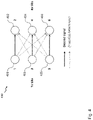
- FIG. 4 shows a schematic diagram illustrating an exemplary communication network according to an embodiment
- FIG. 5 shows a diagram illustrating a method for operating a sidelink communication device according to an embodiment
- FIG. 6 shows a diagram illustrating a method for allocating sidelink resources for sidelink communication according to an embodiment.
- a disclosure in connection with a described method may also hold true for a corresponding device or system configured to perform the method and vice versa.
- a corresponding device may include a unit to perform the described method step, even if such unit is not explicitly described or illustrated in the figures.
- embodiments relate to a V2X communication network comprising a sidelink communication device and a network entity, which allow for a significant increase in sidelink radio resource reuse.
- Multi-antenna transmission techniques such as beamforming or Multiple-Input Multiple-Output (MIMO) are powerful tools for interference mitigation and Signal-to-Interference-plus-Noise Ratio (SINR) enhancement.
- SINR Signal-to-Interference-plus-Noise Ratio
- the potential of MIMO processing scales with the number of available antennas: compared to single-antenna transmission, SINR gains of above 20 dB can be achieved by using, e.g., up to 16 transmitting and receiving antennas.
- available antennas can be used for interference mitigation, diversity and/or data multiplexing gains.
- the embodiments can combine beamforming and/or MIMO schemes with sidelink scheduling decisions taken by a network entity in the form of a sidelink scheduler: given two (or more) sidelink communication devices for data transmission, e.g., User Equipments (UEs), a sidelink scheduler such as a base station can determine whether the same radio resource (i.e., time and/or frequency channel) may be used by both UEs. Instead of reporting the full Channel State Information (CSI) to the base station, which would incur considerable control signaling overhead, the UEs can report information about their ability to use multi-antenna transmission/reception to cancel interference to/from nearby UEs, as will be described in more detail in the following.
- CSI Channel State Information
- FIG. 1 shows a schematic diagram illustrating a communication network 100 comprising a sidelink communication device (i) 101 , in particular a multi-antenna sidelink communication device, according to an embodiment, and a network entity 131 , according to an embodiment.
- the sidelink communication device (i) 101 is configured to communicate with neighboring sidelink communication devices (not shown in FIG. 1 ) via a sidelink communication channel, and with the network entity 131 via an uplink/downlink communication channel.
- the sidelink communication device (i) 101 could be implemented in the form of a user entity such as a mobile phone or a vehicle or a communication module of a vehicle.
- a user entity such as a mobile phone or a vehicle or a communication module of a vehicle.
- the network entity 131 can be, for instance, a base station.
- the sidelink communication device (i) 101 comprises a transceiver 103 comprising a plurality of antennas and configured to communicate with at least one neighboring sidelink communication device (j) using one or more sidelink radio resources of a plurality of sidelink radio resources allocated by the network entity 131 .
- the sidelink communication device (i) 101 comprises a processor 105 .
- the processor 105 is configured to determine a measure for the ability of the sidelink communication device (i) 101 to suppress interference to and/or from at least one other neighboring sidelink communication device (k) using one or more of the plurality of antennas.
- the network entity 131 comprises a transceiver 133 configured to receive information about the measure for the ability of the sidelink communication device (i) 101 to suppress interference to and/or from at least one other neighboring sidelink communication device (k) using one or more of a plurality of antennas of the sidelink communication device (i) 101 .
- the network entity 131 further comprises a processor 135 configured to allocate one or more of a plurality of sidelink radio resources to the sidelink communication device (i) 101 for communication with the at least one neighboring sidelink communication device (j) on the basis of the information about the measure for the ability of the sidelink communication device (i) 101 to suppress interference to and/or from the at least one other neighboring sidelink communication device (k).
- a processor 135 configured to allocate one or more of a plurality of sidelink radio resources to the sidelink communication device (i) 101 for communication with the at least one neighboring sidelink communication device (j) on the basis of the information about the measure for the ability of the sidelink communication device (i) 101 to suppress interference to and/or from the at least one other neighboring sidelink communication device (k).
- the transceiver 133 of the network entity 131 is configured to receive information about an identity, a signal strength and/or a location of the at least one other neighboring sidelink communication device (k) from the sidelink communication device (i) 101 .
- the processor 135 of the network entity 131 is configured to determine one or more sidelink reference signals and/or allocate one or more sidelink radio resources for exchanging the one or more sidelink reference signals on the basis of the identity, the signal strength and/or the location of the at least one other neighboring sidelink communication device (k), and the transceiver 133 is further configured to transmit to the sidelink communication device (i) 101 information about the one or more sidelink reference signals and/or information about the one or more sidelink radio resources for exchanging the one or more sidelink reference signals with the at least one other neighboring sidelink communication device (k).
- the transceiver 103 of the sidelink communication device 101 is configured to receive from the network entity 131 information about the one or more sidelink reference signals and/or information about one or more sidelink radio resources for exchanging the one or more sidelink reference signals with the at least one other neighboring sidelink communication device (k). More details about the reference signal assignment will be further discussed in the following embodiments.
- the transceiver 103 of the sidelink communication device 101 is configured to transmit the one or more sidelink reference signals on the basis of the information received from the network entity 131 to the at least one other neighboring sidelink communication device (k).
- the transceiver 103 is also configured to receive the one or more sidelink reference signals from the at least one other neighboring sidelink communication device (k).
- the processor 105 of the sidelink communication device (i) 101 can determine one or more physical properties of the sidelink communication channel between at least one of the plurality of antennas of the sidelink communication device (i) 101 and at least one of a plurality of antennas of the at least one other neighboring sidelink communication device (k).
- the processor 105 is configured to determine a measure for the ability of the sidelink communication device (i) 101 to suppress interference to and/or from the at least one other neighboring sidelink communication device (k) on the basis of the one or more physical properties of the sidelink communication channel, in particular by means of signal processing of one or more signals from the plurality of antennas of the sidelink communication device (i) 101 .
- the transceiver 103 of the sidelink communication device (i) 101 can transmit to the network entity 131 information about the measure for the ability of the sidelink communication device (i) 101 to suppress interference, in particular for allocation of the one or more sidelink radio resources by the network entity 131 .
- the network entity 131 can allocate one or more of the plurality of sidelink radio resources to the sidelink communication device (i) 101 for communication with the at least one neighboring sidelink communication device (j) on the basis of the information about the measure for the ability of the sidelink communication device (i) 101 to suppress interference to and/or from the at least one other neighboring sidelink communication device (k).
- the sidelink communication device (i) 101 can determine a measure for its ability to suppress interference to and/or from at least one other neighboring sidelink communication device (k) using one or more of the plurality of antennas and then transmit this measure to the network entity 131 for the purpose of sidelink radio resource allocation.
- the measure for the ability to suppress interference can correspond to a set of one or more neighboring sidelink communication devices toward which the sidelink communication device (i) 101 can form “nulls” (e.g., in its radiation pattern) when transmitting to and/or receiving from the sidelink communication device (j). This set of one or more neighboring sidelink communication devices is referred to herein as a “nulling set”.
- the sidelink communication device (i) 101 (herein also referred to as user equipment or UE) can inform the network entity 131 (herein also referred to as base station) about a set of one or more nearby UEs (m) 205 a - d toward which it can form nulls when transmitting to a UE (j) 203 .
- Such a set is referred to as transmit nulling set Z ij T .
- a sidelink communication device or a UE (l) 231 can inform the network entity 131 , i.e., the base station, about a set of one or more nearby UEs (n) 235 a - d toward which it can form nulls when receiving from a UE (k) 233 .
- Such a set is referred to as receive nulling set Z lk R .
- the formation of the transmit nulling set Z ij T and receive nulling set Z lk R are illustrated in FIG. 2 .
- the sets Z ij T and Z ij R may or may not be identical.
- the beamforming/MIMO capabilities of sidelink transmission can be different from those of sidelink reception, e.g., if a different number of antennas and/or precoding/postcoding schemes are available. In this case, both transmit and receive nulling sets can be reported.
- Z ij denotes the set of UEs toward which the UE (i) 101 can form nulls when transmitting/receiving to/from UE (j) 203 .
- the base station 131 acting as sidelink scheduler, can ensure sufficient physical separation between UEs transmitting/receiving on any given radio resource.
- the base station 131 may consider a set of candidate resources, wherein each candidate resource fulfills the following requirements: the UE (i) 101 is sufficiently far away from all UEs (l) 231 scheduled to receive on the given radio resource; the UE (j) 203 is sufficiently far away from all UEs (k) 233 scheduled to transmit on the given radio resource.
- the base station 131 does not take advantage of the ability of the UEs to mitigate interference by means of multi-antenna transmission/reception, which may thus result in a small set of candidate resources, especially when the network is under high load.
- the base station 131 may relax the above constraints by considering as candidate resources those resources that fulfill the following requirements: the UE (i) 101 is sufficiently far away from all UEs (l) 231 scheduled to receive on the given radio resource, excluding those toward which it can form nulls, i.e., l ⁇ Z ij , as well as those which can form nulls toward UE (i) 101 , i.e., i ⁇ Z lk ; the UE (j) 203 is sufficiently far away from all UEs (k) 233 scheduled to transmit on the given radio resource, excluding those toward which it can form nulls, i.e., k ⁇ Z ji , as well as those which can form nulls toward UE (j) 203 , i.e., j ⁇ Z kl
- the UE (i) 101 can form a null toward the UE (m) 205 a when transmitting to the UE (j) 203 , i.e., m ⁇ Z ij .
- the UE (i) 101 may be allowed to transmit on a resource on which the UE (m) 205 a is receiving, without causing interference to the UE (m) 205 a.
- the UE (l) 231 can form a null toward the UE (n) 235 a when receiving from the UE (k) 233 , i.e., n ⁇ Z lk .
- the UE (l) 231 may be allowed to receive on a resource on which the UE (n) 235 a is transmitting, without suffering interference from the UE (n) 235 a.
- FIG. 3 shows a schematic diagram summarizing a procedure 300 for allocating sidelink radio resources according to an embodiment.
- the procedure 300 shown in FIG. 3 comprises the following steps.
- a first step 301 of measurement reporting based on own measurements, the UE (i) 101 reports a list of neighbor (i.e., strongest detected) UEs (M i ) to its serving base station 131 . Together with the IDs of the UEs, location information and signal strengths observed from these UEs can also be reported if available at the UE (i) 101 .
- the UE (i) 101 receives instructions from the base station 131 about the RS scheme to use, which includes RS symbols and their allocation in time, frequency, beam and/or antenna.
- the UE (i) 101 transmits or receives RSs based on the assigned RS scheme.
- the UE (i) 101 can estimate the MIMO channel matrix H ij to UE (j) 331 , as well as the MIMO channel matrix H im to each UE (m) of a subset (N i ) 333 of active neighbor UEs (m ⁇ N i ⁇ M i ), based on the RS sequences received from UE (j) 331 , and the RS sequences received from each UE (m) of the subset (N i ) 333 of active neighbor UEs. If the UEs support beamforming, this phase also includes the selection of the best set of beams.
- the UE (i) 101 determines a nulling set Z ij for UE (j) 331 , as well as a nulling set Z im for each UE (m) of the subset (N i ) 333 of active neighbor UEs. This can be implemented via beamforming and/or MIMO precoding/postcoding in both transmitting and/or receiving direction by the UE (i) 101 .
- the UE (i) 101 reports its nulling sets (Z ij and Z im , m ⁇ N i ) to its serving base station 131 .
- This information includes the user IDs, time, frequency and spatial resources to which interference mitigation applies and may also include information about the expected interference level (including beamforming and/or precoding/postcoding), channel measurements (complex-valued or power levels), etc. In case UEs are served by different base stations, this information needs to be exchanged between the base stations (e.g., over the backhaul network).
- the sidelink scheduler i.e., the base station 131 , uses the reported nulling sets when determining candidate resources for link scheduling.
- the scheduling decision is transmitted to the UE (i) 101 via a sidelink grant.
- the UE (i) 101 transmits the sidelink data to the UE (j) 331 using beamforming/MIMO processing.
- the first term inside the brackets is the desired signal
- the second term represents interference from other transmitters (k)
- the third term represents interference caused by transmissions from the UE (i) 101 to other UEs (m).
- the procedure shown in FIG. 3 is described from the perspective of the UE (i) 101 , meaning that this is the UE measuring and reporting information to the network entity 131 and receiving instructions from the network entity 131 for transmission to another UE (j) 331 .
- the same procedure of measurement reporting is followed by the UE (j) 331 and other UEs as well, so that RS assignments and sidelink grants are assigned by the network entity 131 on the basis of the information provided by all involved UEs.
- the instructions of the network entity 131 can be provided in the following form according to an embodiment: “RS group index”, determining the group (family) of RS sets to which the UE (i) 101 and its own RS scheme belongs; and/or “RS user index”, defining the particular RS scheme of the UE (i) 101 within the group.
- the UE (i) 101 has full information about its own RS scheme, as well as the RS schemes of neighbor UEs, whose channel it needs to estimate. These are implicitly given by the remaining user indices of the RS schemes defined by the group index.
- the subset of active neighbor UEs (corresponding to the channels to be detected by the UE) is denoted by N i (N i ⁇ M i ).
- the RS index must include a sufficiently large number of different RS schemes, allowing for the estimation of a sufficiently large number of channels to different UEs. Out of these UEs, the particular UEs which will be included into the final beamforming/MIMO transmission or reception group will be selected.
- the same RS group index should be used only in sufficiently separated geographical areas. However, the areas in which different RS group indices are simultaneously used can be under certain conditions also overlapping. This implies that RSs defined by (some of the) RS group indices may coexist, e.g., if they are separated in time, frequency, beam, antenna or code.
- the UE can use the instructed RS scheme until it receives a new instruction by the base station.
- the decision updates of the base station are based on measurements (M i ) and location information provided by the UE and all other UEs to the base station.
- RS assignments can be jointly agreed by base stations before being provided to UEs.
- FIG. 4 illustrates an exemplary communication network 400 comprising three links (transmitter/receiver pairs), wherein the communication network 400 comprises three vehicles 401 , 403 , 405 as transmitters and three vehicles 402 , 404 , 406 as receivers and wherein each vehicle comprises three antennas.
- the nulling sets between these vehicles are provided as follows:
- the same radio resource can be allocated to links (1,2) and (3,4), or to links (3,4) and (5,6), but not to links (1,2) and (5,6), since the vehicle (1) 401 is unable to null the vehicle (6) 406 and vice versa.
- FIG. 5 shows a diagram illustrating a corresponding method 500 for operating a sidelink communication device (i) 101 , according to an embodiment, which is configured to communicate with at least one neighboring sidelink communication device (j).
- the method 500 comprises the following steps: determining 501 , in particular on the basis of one or more sidelink reference signals exchanged between the sidelink communication device (i) 101 and at least one other neighboring sidelink communication device (k), a measure for the ability of the sidelink communication device (i) 101 to suppress interference to and/or from the at least one other neighboring sidelink communication device (k) using one or more of a plurality of antennas of the sidelink communication device (i) 101 ; transmitting 503 to a network entity 131 , in particular a base station, information about the measure for the ability of the sidelink communication device (i) 101 to suppress interference to and/or from the at least one other neighboring sidelink communication device (k); and communicating 505 using one or more of the plurality of antennas with the at least one neighboring sidelink communication device (j) using one or more sidelink radio resources of a plurality of sidelink radio resources allocated by the network entity 131 .
- FIG. 6 shows a diagram illustrating a corresponding method 600 for allocating sidelink radio resources for sidelink communication between a sidelink communication device (i) 101 and at least one neighboring sidelink communication device (j).
- the method 600 comprises the following steps: receiving 601 information about a measure for the ability of the sidelink communication device (i) 101 to suppress interference to and/or from at least one other neighboring sidelink communication device (k) using one or more of a plurality of antennas of the sidelink communication device (i) 101 ; and allocating 603 one or more of a plurality of sidelink radio resources to the sidelink communication device (i) 101 for communication with the at least one neighboring sidelink communication device (j) on the basis of the information about the measure for the ability of the sidelink communication device (i) 101 to suppress interference to and/or from the at least one other neighboring sidelink communication device (k).
Landscapes
- Engineering & Computer Science (AREA)
- Computer Networks & Wireless Communication (AREA)
- Signal Processing (AREA)
- Quality & Reliability (AREA)
- Mobile Radio Communication Systems (AREA)
Abstract
Description
y j =W ji R(H ij W ij T s ij+Σk≠iΣl≠j H kj W kl T s kl+Σm≠j H ij W im T s im +z j +n j)
wherein Wji R denotes the beamforming/postcoding matrix (digital, analog, or hybrid) used by the UE (j) 331 to receive data from the UE (i) 101; Hij denotes the MIMO channel matrix between the UE (i) 101 and the UE (j) 331 (including small- and large-scale fading, as well as the antenna gains on transmit and receive side); Wij T denotes the beamforming/precoding matrix (digital, analog, or hybrid) used by the UE (i) 101 to transmit data to the UE (j) 331; zj denotes the out-of-cluster interference at the UE (j) 331; and nj denotes thermal noise at the UE (j) 331.
-
- Z12={4} Z21={5}
- Z34={2,6} Z43={ }
- Z56={4} Z65={ }
Claims (20)
Applications Claiming Priority (1)
| Application Number | Priority Date | Filing Date | Title |
|---|---|---|---|
| PCT/EP2018/053565 WO2019158185A1 (en) | 2018-02-13 | 2018-02-13 | Devices and methods for multi-antenna sidelink scheduling |
Related Parent Applications (1)
| Application Number | Title | Priority Date | Filing Date |
|---|---|---|---|
| PCT/EP2018/053565 Continuation WO2019158185A1 (en) | 2018-02-13 | 2018-02-13 | Devices and methods for multi-antenna sidelink scheduling |
Publications (2)
| Publication Number | Publication Date |
|---|---|
| US20200374891A1 US20200374891A1 (en) | 2020-11-26 |
| US11405928B2 true US11405928B2 (en) | 2022-08-02 |
Family
ID=61244580
Family Applications (1)
| Application Number | Title | Priority Date | Filing Date |
|---|---|---|---|
| US16/992,807 Active US11405928B2 (en) | 2018-02-13 | 2020-08-13 | Devices and methods for multi-antenna sidelink scheduling |
Country Status (3)
| Country | Link |
|---|---|
| US (1) | US11405928B2 (en) |
| EP (1) | EP3738368B1 (en) |
| WO (1) | WO2019158185A1 (en) |
Families Citing this family (4)
| Publication number | Priority date | Publication date | Assignee | Title |
|---|---|---|---|---|
| CN110138519A (en) | 2018-02-02 | 2019-08-16 | 索尼公司 | Device and method, computer readable storage medium in wireless communication system |
| CN116405902A (en) * | 2018-08-10 | 2023-07-07 | 中兴通讯股份有限公司 | Resource allocation method and device for direct link in Internet of Vehicles |
| CN114827957A (en) * | 2021-01-27 | 2022-07-29 | 展讯通信(上海)有限公司 | Method and device for determining auxiliary equipment, electronic equipment and storage medium |
| CN119183682A (en) * | 2023-04-23 | 2024-12-24 | 中兴通讯股份有限公司 | Resource allocation scheme for sidelink communication |
Citations (5)
| Publication number | Priority date | Publication date | Assignee | Title |
|---|---|---|---|---|
| WO2012162788A1 (en) | 2011-05-31 | 2012-12-06 | Research In Motion Limited | Access point for device-assisted interference management in heterogeneous wireless cellular systems |
| GB2500392A (en) | 2012-03-19 | 2013-09-25 | Renesas Mobile Corp | Allocating radio resources based on filtering capabilities of a user equipment |
| WO2017218782A1 (en) | 2016-06-16 | 2017-12-21 | Qualcomm Incorporated | Low complexity higher order mimo |
| US20180115873A1 (en) * | 2015-03-19 | 2018-04-26 | Nec Corporation | Apparatus and method for proximity-based service communication |
| US20190159174A1 (en) * | 2016-04-08 | 2019-05-23 | Lg Electronics Inc. | Method for setting resource for device-to-device communication in wireless communication system, and apparatus for same |
-
2018
- 2018-02-13 EP EP18705875.5A patent/EP3738368B1/en active Active
- 2018-02-13 WO PCT/EP2018/053565 patent/WO2019158185A1/en not_active Ceased
-
2020
- 2020-08-13 US US16/992,807 patent/US11405928B2/en active Active
Patent Citations (5)
| Publication number | Priority date | Publication date | Assignee | Title |
|---|---|---|---|---|
| WO2012162788A1 (en) | 2011-05-31 | 2012-12-06 | Research In Motion Limited | Access point for device-assisted interference management in heterogeneous wireless cellular systems |
| GB2500392A (en) | 2012-03-19 | 2013-09-25 | Renesas Mobile Corp | Allocating radio resources based on filtering capabilities of a user equipment |
| US20180115873A1 (en) * | 2015-03-19 | 2018-04-26 | Nec Corporation | Apparatus and method for proximity-based service communication |
| US20190159174A1 (en) * | 2016-04-08 | 2019-05-23 | Lg Electronics Inc. | Method for setting resource for device-to-device communication in wireless communication system, and apparatus for same |
| WO2017218782A1 (en) | 2016-06-16 | 2017-12-21 | Qualcomm Incorporated | Low complexity higher order mimo |
Non-Patent Citations (2)
| Title |
|---|
| "3rd Generation Partnership Project; Technical Specification Group Radio Access Network; Evolved Universal Terrestrial Radio Access (E-UTRA) and Evolved Universal Terrestrial Radio Access Network (E-UTRAN); Overall description; Stage 2 (Release 14)," 3GPP TS 36.300 V14.2.0, pp. 1-330, 3rd Generation Partnership Project, Valbonne, France (Mar. 2017). |
| "3rd Generation Partnership Project; Technical Specification Group Services and System Aspects; Proximity-based services (ProSe); Stage 2 (Release 14)," 3GPP TS 23.303 V14.1.0, pp. 1-124, 3rd Generation Partnership Project, Valbonne, France (Dec. 2016). |
Also Published As
| Publication number | Publication date |
|---|---|
| WO2019158185A1 (en) | 2019-08-22 |
| EP3738368A1 (en) | 2020-11-18 |
| EP3738368B1 (en) | 2024-04-10 |
| US20200374891A1 (en) | 2020-11-26 |
Similar Documents
| Publication | Publication Date | Title |
|---|---|---|
| US11405928B2 (en) | Devices and methods for multi-antenna sidelink scheduling | |
| JP6798006B2 (en) | How to send an uplink | |
| JP6174110B2 (en) | Mobile communication system, communication device, and D2D terminal | |
| US10999872B2 (en) | Random access technique in mobile communication system using beamforming | |
| EP3050397B1 (en) | Distributed processing in a centralized radio access network | |
| US8792881B2 (en) | Method and apparatus for determining cell for executing comp in multi-cell environment | |
| US8320926B2 (en) | Methods and arrangements in a wireless communication system | |
| US7965785B2 (en) | Uplink multiple-input-multiple-output (MIMO) and cooperative MIMO transmissions | |
| US10383125B2 (en) | Terminal device and wireless communication device | |
| CN102007707B (en) | Method for transmitting and receiving data in a cooperative multiple-input multiple-output mobile communication system | |
| JP5536274B2 (en) | Method and apparatus for transmitting terminal data in distributed antenna system | |
| KR101387532B1 (en) | Method of transmitting Feedback Information for performing Collaborative MIMO | |
| CN105764151B (en) | Communication method and device | |
| US20190165983A1 (en) | Base station, terminal apparatus, communication method and recording medium | |
| JP2019516329A (en) | Method, system and apparatus | |
| KR20110101033A (en) | Apparatus and method for controlling intercell interference | |
| US10477612B2 (en) | Method for accessing a network by using a virtual UE scheme | |
| EP2467965B1 (en) | A method for operating a radio station in a mobile network | |
| EP3211951A1 (en) | Device and method for wireless communications | |
| US8649796B2 (en) | Method and device for determining a cooperation area | |
| WO2012094803A1 (en) | Dynamic transmission set indication | |
| KR101515596B1 (en) | Mobile communication system for supporting multiple input and multiple output and method for allocating codebook index in the same | |
| KR101394608B1 (en) | Mobile communication system for supporting multiple input and multiple output and method for allocating precoding matrix in the same | |
| WO2024120634A1 (en) | Beam management in a reconfigurable virtual user equipment | |
| KR20140113871A (en) | Wireless communication system and data transmission method on the same |
Legal Events
| Date | Code | Title | Description |
|---|---|---|---|
| FEPP | Fee payment procedure |
Free format text: ENTITY STATUS SET TO UNDISCOUNTED (ORIGINAL EVENT CODE: BIG.); ENTITY STATUS OF PATENT OWNER: LARGE ENTITY |
|
| STPP | Information on status: patent application and granting procedure in general |
Free format text: DOCKETED NEW CASE - READY FOR EXAMINATION |
|
| AS | Assignment |
Owner name: HUAWEI TECHNOLOGIES DUESSELDORF GMBH, GERMANY Free format text: ASSIGNMENT OF ASSIGNORS INTEREST;ASSIGNORS:MEDINA, DANIEL;MANOLAKIS, KONSTANTINOS;BAZZI, SAMER;AND OTHERS;SIGNING DATES FROM 20190701 TO 20200928;REEL/FRAME:055248/0371 |
|
| STPP | Information on status: patent application and granting procedure in general |
Free format text: NON FINAL ACTION MAILED |
|
| STPP | Information on status: patent application and granting procedure in general |
Free format text: RESPONSE TO NON-FINAL OFFICE ACTION ENTERED AND FORWARDED TO EXAMINER |
|
| STPP | Information on status: patent application and granting procedure in general |
Free format text: NOTICE OF ALLOWANCE MAILED -- APPLICATION RECEIVED IN OFFICE OF PUBLICATIONS |
|
| STPP | Information on status: patent application and granting procedure in general |
Free format text: AWAITING TC RESP., ISSUE FEE NOT PAID |
|
| STPP | Information on status: patent application and granting procedure in general |
Free format text: NOTICE OF ALLOWANCE MAILED -- APPLICATION RECEIVED IN OFFICE OF PUBLICATIONS |
|
| STPP | Information on status: patent application and granting procedure in general |
Free format text: AWAITING TC RESP., ISSUE FEE NOT PAID |
|
| STPP | Information on status: patent application and granting procedure in general |
Free format text: NOTICE OF ALLOWANCE MAILED -- APPLICATION RECEIVED IN OFFICE OF PUBLICATIONS |
|
| STPP | Information on status: patent application and granting procedure in general |
Free format text: AWAITING TC RESP., ISSUE FEE NOT PAID |
|
| STPP | Information on status: patent application and granting procedure in general |
Free format text: PUBLICATIONS -- ISSUE FEE PAYMENT VERIFIED |
|
| STCF | Information on status: patent grant |
Free format text: PATENTED CASE |
|
| MAFP | Maintenance fee payment |
Free format text: PAYMENT OF MAINTENANCE FEE, 4TH YEAR, LARGE ENTITY (ORIGINAL EVENT CODE: M1551); ENTITY STATUS OF PATENT OWNER: LARGE ENTITY Year of fee payment: 4 |