US11405142B2 - Use of different data rates for polling in a multi-rate network - Google Patents
Use of different data rates for polling in a multi-rate network Download PDFInfo
- Publication number
- US11405142B2 US11405142B2 US16/909,354 US202016909354A US11405142B2 US 11405142 B2 US11405142 B2 US 11405142B2 US 202016909354 A US202016909354 A US 202016909354A US 11405142 B2 US11405142 B2 US 11405142B2
- Authority
- US
- United States
- Prior art keywords
- data rate
- node
- data
- message
- link
- Prior art date
- Legal status (The legal status is an assumption and is not a legal conclusion. Google has not performed a legal analysis and makes no representation as to the accuracy of the status listed.)
- Active, expires
Links
Images




Classifications
-
- H—ELECTRICITY
- H04—ELECTRIC COMMUNICATION TECHNIQUE
- H04L—TRANSMISSION OF DIGITAL INFORMATION, e.g. TELEGRAPHIC COMMUNICATION
- H04L1/00—Arrangements for detecting or preventing errors in the information received
- H04L1/12—Arrangements for detecting or preventing errors in the information received by using return channel
- H04L1/16—Arrangements for detecting or preventing errors in the information received by using return channel in which the return channel carries supervisory signals, e.g. repetition request signals
- H04L1/1607—Details of the supervisory signal
- H04L1/1685—Details of the supervisory signal the supervisory signal being transmitted in response to a specific request, e.g. to a polling signal
-
- H—ELECTRICITY
- H04—ELECTRIC COMMUNICATION TECHNIQUE
- H04L—TRANSMISSION OF DIGITAL INFORMATION, e.g. TELEGRAPHIC COMMUNICATION
- H04L1/00—Arrangements for detecting or preventing errors in the information received
- H04L1/20—Arrangements for detecting or preventing errors in the information received using signal quality detector
- H04L1/203—Details of error rate determination, e.g. BER, FER or WER
-
- H—ELECTRICITY
- H04—ELECTRIC COMMUNICATION TECHNIQUE
- H04L—TRANSMISSION OF DIGITAL INFORMATION, e.g. TELEGRAPHIC COMMUNICATION
- H04L1/00—Arrangements for detecting or preventing errors in the information received
- H04L1/0001—Systems modifying transmission characteristics according to link quality, e.g. power backoff
- H04L1/0002—Systems modifying transmission characteristics according to link quality, e.g. power backoff by adapting the transmission rate
-
- H—ELECTRICITY
- H04—ELECTRIC COMMUNICATION TECHNIQUE
- H04L—TRANSMISSION OF DIGITAL INFORMATION, e.g. TELEGRAPHIC COMMUNICATION
- H04L1/00—Arrangements for detecting or preventing errors in the information received
- H04L1/0001—Systems modifying transmission characteristics according to link quality, e.g. power backoff
- H04L1/0015—Systems modifying transmission characteristics according to link quality, e.g. power backoff characterised by the adaptation strategy
-
- H—ELECTRICITY
- H04—ELECTRIC COMMUNICATION TECHNIQUE
- H04L—TRANSMISSION OF DIGITAL INFORMATION, e.g. TELEGRAPHIC COMMUNICATION
- H04L1/00—Arrangements for detecting or preventing errors in the information received
- H04L1/12—Arrangements for detecting or preventing errors in the information received by using return channel
- H04L1/16—Arrangements for detecting or preventing errors in the information received by using return channel in which the return channel carries supervisory signals, e.g. repetition request signals
- H04L1/18—Automatic repetition systems, e.g. Van Duuren systems
- H04L1/1829—Arrangements specially adapted for the receiver end
- H04L1/1858—Transmission or retransmission of more than one copy of acknowledgement message
-
- H—ELECTRICITY
- H04—ELECTRIC COMMUNICATION TECHNIQUE
- H04L—TRANSMISSION OF DIGITAL INFORMATION, e.g. TELEGRAPHIC COMMUNICATION
- H04L12/00—Data switching networks
- H04L12/02—Details
- H04L12/14—Charging, metering or billing arrangements specially adapted for data communications, e.g. authentication, authorisation and accounting [AAA] framework
-
- H—ELECTRICITY
- H04—ELECTRIC COMMUNICATION TECHNIQUE
- H04L—TRANSMISSION OF DIGITAL INFORMATION, e.g. TELEGRAPHIC COMMUNICATION
- H04L12/00—Data switching networks
- H04L12/02—Details
- H04L12/14—Charging, metering or billing arrangements specially adapted for data communications, e.g. authentication, authorisation and accounting [AAA] framework
- H04L12/1403—Architecture for metering, charging or billing
-
- H—ELECTRICITY
- H04—ELECTRIC COMMUNICATION TECHNIQUE
- H04L—TRANSMISSION OF DIGITAL INFORMATION, e.g. TELEGRAPHIC COMMUNICATION
- H04L12/00—Data switching networks
- H04L12/28—Data switching networks characterised by path configuration, e.g. LAN [Local Area Networks] or WAN [Wide Area Networks]
- H04L12/40—Bus networks
- H04L12/4013—Management of data rate on the bus
- H04L12/40136—Nodes adapting their rate to the physical link properties
-
- H—ELECTRICITY
- H04—ELECTRIC COMMUNICATION TECHNIQUE
- H04L—TRANSMISSION OF DIGITAL INFORMATION, e.g. TELEGRAPHIC COMMUNICATION
- H04L12/00—Data switching networks
- H04L12/28—Data switching networks characterised by path configuration, e.g. LAN [Local Area Networks] or WAN [Wide Area Networks]
- H04L12/40—Bus networks
- H04L12/403—Bus networks with centralised control, e.g. polling
-
- H—ELECTRICITY
- H04—ELECTRIC COMMUNICATION TECHNIQUE
- H04M—TELEPHONIC COMMUNICATION
- H04M15/00—Arrangements for metering, time-control or time indication ; Metering, charging or billing arrangements for voice wireline or wireless communications, e.g. VoIP
- H04M15/80—Rating or billing plans; Tariff determination aspects
-
- H—ELECTRICITY
- H04—ELECTRIC COMMUNICATION TECHNIQUE
- H04M—TELEPHONIC COMMUNICATION
- H04M15/00—Arrangements for metering, time-control or time indication ; Metering, charging or billing arrangements for voice wireline or wireless communications, e.g. VoIP
- H04M15/80—Rating or billing plans; Tariff determination aspects
- H04M15/8016—Rating or billing plans; Tariff determination aspects based on quality of service [QoS]
-
- H—ELECTRICITY
- H04—ELECTRIC COMMUNICATION TECHNIQUE
- H04M—TELEPHONIC COMMUNICATION
- H04M15/00—Arrangements for metering, time-control or time indication ; Metering, charging or billing arrangements for voice wireline or wireless communications, e.g. VoIP
- H04M15/82—Criteria or parameters used for performing billing operations
- H04M15/8214—Data or packet based
-
- H—ELECTRICITY
- H04—ELECTRIC COMMUNICATION TECHNIQUE
- H04W—WIRELESS COMMUNICATION NETWORKS
- H04W4/00—Services specially adapted for wireless communication networks; Facilities therefor
- H04W4/24—Accounting or billing
-
- H—ELECTRICITY
- H04—ELECTRIC COMMUNICATION TECHNIQUE
- H04W—WIRELESS COMMUNICATION NETWORKS
- H04W40/00—Communication routing or communication path finding
- H04W40/02—Communication route or path selection, e.g. power-based or shortest path routing
- H04W40/12—Communication route or path selection, e.g. power-based or shortest path routing based on transmission quality or channel quality
-
- H—ELECTRICITY
- H04—ELECTRIC COMMUNICATION TECHNIQUE
- H04W—WIRELESS COMMUNICATION NETWORKS
- H04W74/00—Wireless channel access
- H04W74/04—Scheduled access
- H04W74/06—Scheduled access using polling
-
- H—ELECTRICITY
- H04—ELECTRIC COMMUNICATION TECHNIQUE
- H04W—WIRELESS COMMUNICATION NETWORKS
- H04W84/00—Network topologies
- H04W84/18—Self-organising networks, e.g. ad-hoc networks or sensor networks
Definitions
- Communication networks such as wireless mesh networks, star networks, and so on, are used to connect a variety of different devices. These communication networks often contain devices that can communicate at multiple data rates.
- a device may select a data rate for communication based at least in part on metrics associated with data rates that are available. The metrics may indicate a success of previous communications at those data rates. However, when a particular data rate is determined to be preferred, other data rates may not be exercised and evaluated very well or at all.
- FIG. 1 is a schematic diagram of an example network architecture.
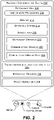
- FIG. 2 is a diagram showing details of an example network communication device.
- FIG. 3 illustrates an example process for a node to communicate with another node using a polling/communication approach and in a manner in which link quality metric data associated with at least two different data rates may be updated.
- FIG. 4 illustrates an example process for a node that receives polling and information messages from another node.
- FIG. 5 illustrates another example process for a node to communicate with another node using a polling/communication approach and in a manner in which link quality metric data associated with at least two different data rates may be updated.
- metrics associated with different data rates may be evaluated to select an appropriate data rate for a communication over a link between two nodes in a network.
- relatively little information may be available about prior communications using some of the data rates. For example, some of the data rates may not have been used frequently. This may lead to an inappropriate evaluation of communication that would result from using the data rates.
- This disclosure describes techniques directed to exercising one or more different data rates, even those data rates that have not been determined to be preferred based at least in part on metrics associated with communication using the data rates.
- Using one or more non-preferred data rates may allow for development of metrics associated with the one or more non-preferred data rates.
- the techniques may result in link quality metric data associated with a data rate that may not otherwise be used frequently. This may ultimately lead to a more robust determination of which data rate is to be preferred.
- a first node in a network communicates with a direct neighbor node by first sending a polling message to the direct neighbor node. If the first node receives a polling acknowledgement message from the direct neighbor node corresponding to the polling message, the direct neighbor node is available for communication with the first node. The first node also sends an information message to the direct neighbor node. If the first node receives an information acknowledgement message from the direct neighbor node, the direct neighbor node successfully received the information message. This exchange may be called a PADA exchange (POLL-ACK-DATA-ACK).
- PADA exchange POLL-ACK-DATA-ACK
- INFO refers to the information message sent in the PADA exchange.
- Each node can compute link quality metric data, such as an INFO success percentage (INFO %) to each of its direct neighbor nodes. For example, a node may use an exponentially weighted moving average formula. A node can make this computation whenever it sends an information message, based at least in part on whether the node receives an information acknowledgement message after sending an information message. In some examples, the node computes a separate INFO % or other link quality metric data for each data rate the node uses to send communications over the link.
- the node may use only the information messages to determine link quality metric data.
- the success (or not) of information message may favorably represent the link quality between directly connected nodes. For example, the node does not necessarily know the direct neighbor node is listening for polling messages, but the node knows that the direct neighbor node is listening for information messages (as a result of having received an acknowledgement message corresponding to a polling message).
- the node may use both the information messages and the polling messages to determine link quality metric data.
- the node may more robustly determine the link quality metric data.
- the node may utilize one data rate and determine link quality metric data associated with communication using that one data rate.
- the node may utilize another data rate and determine link quality metric data associated with communication using that other data rate.
- more link quality metrics can be developed from a single PADA exchange. Having more link quality metrics for different data rates, the node may be better able to robustly select a preferred data rate for information messages.
- the other data rate, used for polling messages may be lower than the preferred data rate, used for information messages.
- the other data rate, utilized for polling messages may be the data rate that is next slowest from the preferred data rate, utilized for information messages.
- the techniques may be implemented in the context of an advanced metering infrastructure (AMI) of a utility communication network.
- AMI advanced metering infrastructure
- the techniques described herein are not limited to use in a utility industry AMI.
- the techniques may be implemented in the context of Distribution Automation, Home Energy Management or any other type of wireless or wired network.
- the techniques described herein are applicable to any communications network, control network, and/or another type of network or system.
- the techniques may be implemented in the context of the Internet of Things (IoT).
- IoT Internet of Things
- FIG. 1 is a diagram illustrating an example networked environment or architecture 100 .
- the architecture 100 includes multiple network communication devices 102 ( 1 )- 102 (N) (collectively referred to as “network communication devices 102 ”) and a network communication device 104 , where N is any integer greater than or equal to 1.
- the network communication devices 102 and the network communication device 104 may be in communication with one another via an area network (AN) 106 .
- AN area network
- the network communication device 104 is implemented as an edge device, which serves as a connection point of the AN 106 to one or more networks 108 (e.g., a backhaul network), such as the Internet.
- networks 108 e.g., a backhaul network
- the network communication device 104 may include, but is not limited to, a field area router (FAR), a cellular relay, a cellular router, an edge router, a DODAG (Destination Oriented Directed Acyclic Graph) root, a root device or node of the AN 106 , a combination of the foregoing, or the like.
- FAR field area router
- DODAG Distination Oriented Directed Acyclic Graph
- area network refers to a defined group of devices that are in communication with one another via one or more wired or wireless links.
- area networks include, for example, local area networks (LANs), neighborhood area networks (NANs), personal area networks (PANs), home area networks (HANs), field area networks (FANs), or the like. While only one AN 106 is shown in FIG. 1 , in practice, multiple ANs may exist and may collectively define a larger network, such as an advanced metering infrastructure (AMI) of a utility communication network. At any given time, each individual device may be a member of a particular AN. Over time, however, devices may migrate from one AN to another geographically proximate or overlapping AN based on a variety of factors, such as respective loads on the ANs, battery reserves, interference, or the like.
- AMI advanced metering infrastructure
- the term “link” refers to a direct communication path between two devices (without passing through or being relayed by another device).
- a link may be over a wired or wireless communication path.
- Each link may represent a plurality of channels over which a device is able to transmit or receive data.
- Each of the plurality of channels may be defined by a frequency range which is the same or different for each of the plurality of channels.
- the plurality of channels comprises Radio Frequency (RF) channels.
- the AN 106 may implement a channel hopping sequence, such that a channel may change over time.
- the plurality of channels include a control channel that is designated for communicating messages to specify a data channel to be utilized to transfer data. Transmissions on the control channel may be shorter relative to transmissions on the data channels.
- the AN 106 may comprise a mesh network, in which the network communication devices relay data through the AN 106 .
- the AN 106 may comprise a star network, in which a central device acts as a parent to one or more children devices.
- the AN 106 may include a portion that is implemented as a mesh network and a portion that is implemented as a star network.
- the AN 106 may be implemented in whole or part by other types of networks, such as hub-and-spoke networks, mobile networks, cellular networks, etc.
- a device may be able to communicate with multiple different types of networks (e.g., a mesh network and a star network) at the same or different times.
- a device may attempt to connect to a nearby star network, mobile data collection network, or cellular network.
- individual network communication devices may communicate by wireless (e.g., radio frequency) and/or wired (e.g., power line communication, Ethernet, serial, etc.) connections.
- the service provider 110 comprises one or more central office systems that include a security service such as Authentication, Authorization and Accounting (AAA) server, a network registration service such as Dynamic Host Configuration Protocol (DHCP) server, a network management service (NMS), a collection engine (CE), a meter data management system (in the utility context), a customer relationship management system (in the sales context), a diagnostic system (in a manufacturing context), an inventory system (in a warehouse context), a patient record system (in the healthcare context), a billing system, etc.
- AAA Authentication, Authorization and Accounting
- DHCP Dynamic Host Configuration Protocol
- NMS network management service
- CE collection engine
- meter data management system in the utility context
- customer relationship management system in the sales context
- diagnostic system in a manufacturing context
- an inventory system in a warehouse context
- patient record system in the healthcare context
- billing system etc.
- Network communication devices may register or interact with some or all of these one or more central office systems.
- the one or more central office systems may implement a meter data management system to collect resource consumption data from the network communication devices of the AN 106 , process the resource consumption data, provide data regarding resource consumption to customers, utilities, and others, and/or perform a variety of other functionality.
- the service provider 110 comprises other systems to implement other functionality, such as web services, cloud services, and so on.
- the service provider 110 may be implemented as other types of devices, such as in the context of the Internet of Things (IoT) that allows a variety of devices to exchange data.
- IoT Internet of Things
- the service provider 110 may be physically located in a single central location, or it may be distributed at multiple different locations.
- the service provider 110 may be hosted privately by an entity administering all or part of the communications network (e.g., a utility company, a governmental body, distributor, a retailer, manufacturer, etc.), or may be hosted in a cloud environment, or a combination of privately hosted and cloud hosted services.
- any of the network communication devices 102 , the network communication device 104 , and/or the service provider 110 may communicate with various data rates and perform processing to determine and indicate a preferred data rate.
- Data Rate #5 is indicated by a check mark in the data structure 112 as being a preferred data rate.
- a network communication device 102 may be configured to sometimes communicate using at least one other, non-preferred, data rate, such as by sending polling messages at a next lower data rate than the preferred data rate.
- the network communication device 102 ( 4 ) may transmit and/or receive one or more information messages/transmissions (e.g., Protocol Data Units (PDUs), such as bits, frames, packets, segments, etc.) to and/or from the network communication device 102 ( 5 ) using the preferred data rate, and transmit and/or receive one or more polling messages/transmissions using at least one second, non-preferred, data rate.
- PDUs Protocol Data Units
- the network communication device 102 ( 4 ) may transmit and/or receive one or more information messages/transmissions with the network communication device 102 ( 5 ) using Data Rate #5 and transmit and/or receive one or more polling messages/transmissions with the network communication device 102 ( 5 ) using Data Rate #4.
- the second data rate may become the preferred data rate, based at least in part on link quality metrics developed during the communication of polling messages.
- the six data rates may be as follows:
- Communication metric data may include a detected/measured value, a computed value, or any other statistic, metric, or value related to communication.
- communication metric data may indicate a number of transmission attempts (e.g., a number of transmissions sent), a number of successful transmissions (e.g., a number of transmissions that are acknowledged by a receiving node), a number of unsuccessful transmissions (e.g., calculated by subtracting a number of transmission attempts by a number of acknowledgements), and so on.
- communication metric data includes an Expected Transmission (ETX) metric and/or an Expected Transmission Time (ETT) metric, as discussed in further detail below.
- ETT Expected Transmission Time
- communication metric data may include data that is specific to a particular data rate and/or to a particular link (e.g., direct communication path between devices).
- communication metric data may indicate a number of successful transmissions and a number of transmission attempts via a particular link (between a first node and a second node) with a particular data rate.
- An ETX metric may generally indicate an expected number of transmissions required to successfully send a transmission to a device.
- the ETX metric may be computed in a variety of manners.
- an ETX metric equals a total number of transmissions sent (e.g., transmission attempts) over a number of successful transmissions (e.g., transmissions acknowledged).
- Pf corresponds to a probability that a transmission successfully arrives at a recipient
- Pr corresponds to a probability that an acknowledgment transmission is successfully received by a sender.
- Pf and Pr may be calculated according to the following formulas:
- probes ) ⁇ ⁇ received ⁇ ⁇ by ⁇ ⁇ a ⁇ ⁇ sender Number ⁇ ⁇ of ⁇ ⁇ transmissions ⁇ ⁇ ( e . g . , probes ) ⁇ ⁇ sent ⁇ ⁇ by ⁇ ⁇ a ⁇ ⁇ neighbor ⁇ ⁇ ( e . g . , recipient )
- the ETX metric may be estimated as in the first example above. That is, if Pf and Pr cannot be computed separately due to a lack of information, the ETX metric may correspond to a total number of transmissions sent over a number of successful transmissions.
- An ETT metric may generally indicate an expected time required to successfully send a transmission to a device.
- the ETT metric equals a time to transmit a transmission of a given size multiplied by the ETX metric.
- Communication metric data may be used in a variety of manners.
- communication metric data is used to select a data rate for communicating.
- a network communication device may select a data rate to use for communicating on a particular link based at least in part on ETX metrics for multiple data rates that are available for the link.
- ETX metrics for multiple data rates that are available for the link.
- the first data rate may be selected.
- FIG. 2 is a diagram showing details of an example network communication device 200 , such as any of the network communication devices 102 or the network communication device 104 .
- the network communication device 200 may comprise any type of network communication device (sometimes referred to as a node, computing device, or just device), such as a router (e.g., a field area router (FAR), a cellular router, an edge router, etc.), a utility meter (e.g., electricity, water, or gas meter), a relay (e.g., a cellular relay), a repeater, a transformer, a sensor, a switch, a control device, an encoder/receiver/transmitters (ERTs), an appliance, a personal computer (e.g., a desktop computer, a laptop computer, etc.), a mobile device (e.g., a smartphone, a tablet, a personal digital assistant (PDA), an electronic reader device, etc.), a wearable computer (e.g., a smart watch, an
- the network communication device 200 comprises a Full Function Device (FFD), while in other instances the network communication device 200 comprises a Limited Function Device (LFD).
- An FFD may include more functionality/resources than an LFD, such as different processing powers, processing capabilities, power reliance, hardware components, etc.
- an FFD is implemented as a Mains Powered Device (MPD) that is connected to mains electricity (e.g., electricity meters), while an LFD is implemented as a Battery Powered Device (BPD) that is not connected to mains electricity (e.g., a water meter, gas meter, etc. that employs batteries).
- MPD Mains Powered Device
- BPD Battery Powered Device
- the MPD may remain in an active state (e.g., a state associated with consuming more than a threshold amount of power). Meanwhile, since a BPD relies on battery power, the BPD may enter a sleep state (e.g., a state associated with consuming less than a threshold amount of power) when the BPD is not communicating or otherwise performing operations.
- the BPD may use a communication schedule to determine when to enter a sleep state and/or when to enter an active state. This may allow the BPD to conserve battery life.
- components of LFDs are lower power components than the corresponding components of the FFDs.
- the example network communication device 200 includes a processing unit 202 , a transceiver(s) 204 (e.g., radio, modem, etc.), one or more metrology devices 206 , and a power supply unit 208 .
- the processing unit 202 may include one or more processors 210 and memory 212 .
- the one or more processors 210 may comprise microprocessors, central processing units, graphics processing units, or other processors usable to execute program instructions to implement the functionality described herein. Additionally, or alternatively, in some examples, some or all of the functions described may be performed in hardware, such as an application specific integrated circuit (ASIC), a gate array, or other hardware-based logic device.
- ASIC application specific integrated circuit
- the transceiver(s) 204 may comprise one or more hardware and/or software implemented radios to provide two-way RF communication with other network communication devices in the AN 106 and/or other devices via the network 108 .
- the transceiver(s) 204 may additionally or alternatively include a modem to provide power line communication (PLC) communication with other network communication devices that are connected to an electrical service grid.
- PLC power line communication
- the transceiver(s) 204 may include different characteristics depending on the type of device implementing the transceiver(s) 204 . For example, while both FFDs and LFDs have transceivers, the specific transceivers used may be different. To illustrate, an FFD transceiver may include a PLC modem while an LFD transceiver may not because the LFD is not connected to an electrical power line that could be used for PLC communications. Additionally, or alternatively, an LFD transceiver may employ a lower power RF radio to minimize energy consumption.
- the metrology device(s) 206 may comprise physical hardware and/or sensors to measure consumption data of a resource (e.g., electricity, water, or gas) at a site of the meter.
- a resource e.g., electricity, water, or gas
- the metrology device(s) 206 may include one or more Hall effect sensors, shunts, or the like.
- the metrology device(s) 206 may comprise various flow meters, pressure sensors, or the like.
- the metrology device(s) 206 may report the consumption data to a service provider via the transceiver(s) 204 .
- the consumption data may be formatted and/or packetized in a manner or protocol for transmission.
- the power supply unit 208 may provide power to the network communication device 200 .
- the power supply unit 208 comprises a mains power connector that couples to an Alternating Current (AC) or Direct Current (DC) mains power line where the network communication device 200 is installed.
- AC Alternating Current
- DC Direct Current
- the power supply unit 208 comprises a battery, such as a Lithium Thionyl Chloride battery (e.g., a 3 volt battery having an internal impedance rated at 130 Ohms), a Lithium Manganese battery (e.g., a 3 volt battery having an internal impedance rated at 15 Ohms), a Lithium Ion battery, a lead-acid battery, an alkaline battery, and so on.
- a Lithium Thionyl Chloride battery e.g., a 3 volt battery having an internal impedance rated at 130 Ohms
- Lithium Manganese battery e.g., a 3 volt battery having an internal impedance rated at 15 Ohms
- Lithium Ion battery e.g., a lead-acid battery, an alkaline battery, and so on.
- the memory 212 includes an operating system (OS) 214 and one or more applications 216 that are executable by the one or more processors 210 .
- the memory 212 may also include one or more metrology drivers 218 configured to receive, interpret, and/or otherwise process metrology data collected by the metrology device(s) 206 .
- one or more of the applications 216 may be configured to receive and/or act on data collected by the metrology device(s) 206 .
- the memory 212 may also include one or more communication stacks 220 .
- the communication stack(s) 220 may be configured to implement a 6LowPAN protocol, an 802.15.4e (TDMA CSM/CA) protocol, an 802.15.4-2015 protocol, 802.15.4 g protocol, and/or another protocol.
- TDMA CSM/CA 802.15.4e
- 802.15.4-2015 protocol 802.15.4 g protocol
- 802.15.4 g protocol 802.15.4 g protocol
- other protocols may be used, depending on the networks with which the device is intended to be compatible.
- the communication stack(s) 220 describe the functionality and rules governing how the network communication device 200 interacts with each of the specified types of networks. For instance, the communication stack(s) 220 may cause FFDs and LFDs to operate in ways that minimize the battery consumption of LFDs when they are connected to these types of networks.
- the memory 212 may also store communication metric data 222 .
- Communication metric data 222 may be updated from time to time to maintain data for multiple data rates and/or multiple communication links.
- the network communication device 200 may be configured to send or receive communications on multiple channels simultaneously.
- the transceiver(s) 204 may be configured to receive data at the same time on hundreds of channels. Additionally, or alternatively, the transceiver(s) 204 may be configured to send data at the same time on hundreds of channels.
- the memory 212 of the network communication device 200 may include software functionality configured as one or more “modules.”
- the modules are intended to represent example divisions of software for purposes of discussion, and they are not intended to represent any type of requirement or required method, manner or necessary organization. Accordingly, while various “modules” are discussed, their functionality and/or similar functionality could be arranged differently (e.g., combined into a fewer number of modules, broken into a larger number of modules, etc.).
- Computer-readable media may take the form of volatile memory, such as random access memory (RAM) and/or non-volatile memory, such as read only memory (ROM) or flash RAM.
- Computer-readable media devices include volatile and non-volatile, removable and non-removable media implemented in any method or technology for storage of information such as computer-readable instructions, data structures, program modules, or other data for execution by one or more processors of a computing device.
- Examples of computer-readable media include, but are not limited to, phase change memory (PRAM), static random-access memory (SRAM), dynamic random-access memory (DRAM), other types of random access memory (RAM), read-only memory (ROM), electrically erasable programmable read-only memory (EEPROM), flash memory or other memory technology, compact disk read-only memory (CD-ROM), digital versatile disks (DVD) or other optical storage, magnetic cassettes, magnetic tape, magnetic disk storage or other magnetic storage devices, or any other non-transitory medium that can be used to store information for access by a computing device.
- PRAM phase change memory
- SRAM static random-access memory
- DRAM dynamic random-access memory
- RAM random access memory
- ROM read-only memory
- EEPROM electrically erasable programmable read-only memory
- flash memory or other memory technology
- CD-ROM compact disk read-only memory
- DVD digital versatile disks
- magnetic cassettes magnetic tape
- magnetic disk storage magnetic disk storage devices
- a network communication device may include one or more processors and memory storing processor executable instructions to implement the functionalities they are described as performing.
- Certain network communication devices may additionally or alternatively include one or more hardware components (e.g., application specific integrated circuits, field programmable gate arrays, systems on a chip, and the like) to implement some or all of the functionalities they are described as performing.
- certain network communication devices may include one or more network interfaces to send or receive data.
- FIGS. 3, 4 and 5 illustrate example processes 300 , 400 and 500 for employing the techniques discussed herein.
- the processes 300 , 400 and 500 may be described as being performed by a device described herein, such as the network communication device 200 and/or the service provider 110 .
- the processes 300 , 400 and 500 may be performed by other devices.
- the devices may be used to perform other processes.
- the processes 300 , 400 and 500 are illustrated as logical flow graphs, each operation of which represents a sequence of operations that can be implemented in hardware, software, or a combination thereof.
- the operations represent computer-readable instructions stored on one or more computer-readable storage media that, when executed by one or more processors, perform the recited operations.
- computer-readable instructions include routines, programs, objects, components, data structures, and the like that perform particular functions or implement particular abstract data types.
- the operations may be implemented (e.g., performed) in whole or in part by hardware logic components.
- illustrative types of hardware logic components include Field-programmable Gate Arrays (FPGAs), Application-specific Integrated Circuits (ASICs), Application-specific Standard Products (ASSPs), System-on-a-chip systems (SOCs), Complex Programmable Logic Devices (CPLDs), etc.
- FPGAs Field-programmable Gate Arrays
- ASICs Application-specific Integrated Circuits
- ASSPs Application-specific Standard Products
- SOCs System-on-a-chip systems
- CPLDs Complex Programmable Logic Devices
- FIG. 3 illustrates an example process 300 for a node to communicate with another node using a polling/communication approach and in a manner in which link quality metric data associated with at least two different data rates may be separately updated.
- the node may be the network communication device 102 ( 4 ) and the other node may be the network communication device 102 ( 3 ).
- the operations of the process 300 may be performed by one or more processors of a node by executing instructions stored in a memory of the node.
- the node determines if there is a next lower data rate available than the preferred data rate. In other examples, the determination is not limited to a next lower data rate or even to any lower data rate. If there is a next lower data rate available (or, in the other examples, a lower data rate or any other data rate), at 304 , the node sends a polling message to the other node at the other available data rate, such as the next lower data rate than the preferred data rate.
- the network communication device 102 ( 4 ) may send the polling message to the network communication device 102 ( 3 ).
- the data rate indicated to be the preferred data rate may be indicated based at least in part on observed behavior of the link, such as link quality metric data associated with the link, such as associated with communication over the link at various data rates.
- the node receives an acknowledgement message, from the other node, corresponding to the polling message the node sends at 304 .
- the network communication device 102 ( 4 ) may receive an acknowledgement message from the network communication device 102 ( 3 ).
- the node updates link quality metric data for the link associated with communication over the link at the other available data rate, such as at the next lower data rate than the preferred data rate.
- the node sends an information message to the other node at the preferred data rate.
- the node updates link quality metric data associated with the communication over the link at the preferred data rate.
- the node updates link quality metric data for communication over the link at two different data rates, with a single polling/information exchange.
- the node sends a polling message to the other node at the preferred data rate.
- the node receives an acknowledgement message, from the other node, corresponding to the polling message the node sends at 314 .
- the node updates link quality metric data for the link associated with communication over the link at the preferred data rate.
- the node sends an information message to the other node at the preferred data rate.
- the node updates link quality metric data associated with the communication over the link at the preferred data rate.
- the node updates link quality metric data for communication over the link at the preferred data rate.
- FIG. 4 illustrates an example process 400 for a node that receives polling and information messages from another node.
- the node may be the network communication device 102 ( 3 ), receiving polling and information messages from the other network communication device 102 ( 4 ).
- the operations of the process 400 may be performed by one or more processors of a node by executing instructions stored in a memory of the node.
- the node receives a polling message at a first data rate.
- the polling message may be, for example, the polling message sent at 304 of the process 300 , at a next lower data rate than a preferred data rate.
- the node sends an acknowledgement message corresponding to the polling message.
- the acknowledgement message may be, for example, the acknowledgement message received at 306 of the process 300 .
- the node receives an information message at a second data rate.
- the information message may be, for example, the information message sent at 310 of the process 300 , at the preferred data rate.
- the other node may update link quality metric data for communication over the link at two different data rates, with a single polling/information exchange.
- FIG. 5 illustrates an example process 500 for a node to communicate with another node using a polling/communication approach and in a manner in which link quality metric data associated with at least two different data rates may be updated.
- the example process 500 may be carried out by the node, for example, sometime after the process 300 in a situation in which the preferred data rate of the process 300 is no longer suitable to use for communication over the link.
- the first data rate may be the next lower data rate than the no-longer-preferred data rate, at which the polling message is sent at 304 in the process 300 .
- the node may be the network communication device 102 ( 4 ) and the other node may be the network communication device 102 ( 3 ).
- the operations of the process 500 may be performed by one or more processors of a node by executing instructions stored in a memory of the node.
- the node sends a polling message at a third data rate.
- the third data rate is based at least in part on the first data rate.
- the first data rate may be the newly-preferred data rate for which link quality metrics were updated based at least in part on the transmission of polling messages, such as in the operations 304 , 306 and 308 of the process 300 .
- the first data rate may have been more robustly selected as the newly-preferred data rate based at least in part on previous updating of the link quality metrics based on transmission of polling information over the link at the first data rate.
- the third data rate may be, for example, a next lower data rate than the first data rate.
- the node receives an acknowledgement message corresponding to the polling message sent at 502 .
- the node sends an information message at the first data rate. While not shown in FIG. 5 , the node may also update link quality metrics associated with communication over the link at the third data rate, based at least in part on the sending of the polling message at the third data rate. Furthermore, the node may also update link quality metrics associated with communication over the link at the first data rate, based at least in part on the sending of the information message at the first data rate.
- This disclosure has thus described techniques directed to exercising one or more different data rates, even those that have not been determined to be preferred based at least in part on metrics associated with communication using the data rates.
- Using a non-preferred data rate may allow for development of link quality metrics associated with one or more non-preferred data rates.
- the techniques may generate link quality communication metric data for a data rate that may not otherwise be used frequently or at all, which may ultimately lead to a more robust determination of which data rate may be preferred.
Landscapes
- Engineering & Computer Science (AREA)
- Computer Networks & Wireless Communication (AREA)
- Signal Processing (AREA)
- Quality & Reliability (AREA)
- Business, Economics & Management (AREA)
- Accounting & Taxation (AREA)
- Mobile Radio Communication Systems (AREA)
Abstract
Description
-
- Data Rate 1: 50 kilobits per second (kbs);
- Data Rate 2: 100 kbs;
- Data rate 3: 200 kbps;
- Data Rate 4: 300 kbps;
- Data Rate 5: 400 kbps;
- Data Rate 6: 500 kbps.
Claims (17)
Priority Applications (4)
| Application Number | Priority Date | Filing Date | Title |
|---|---|---|---|
| US16/909,354 US11405142B2 (en) | 2020-06-23 | 2020-06-23 | Use of different data rates for polling in a multi-rate network |
| CA3121765A CA3121765C (en) | 2020-06-23 | 2021-06-09 | Use of different data rates for polling in a multi-rate network |
| AU2021203898A AU2021203898B2 (en) | 2020-06-23 | 2021-06-11 | Use of different data rates for polling in a multi-rate network |
| EP21181251.6A EP3930240A1 (en) | 2020-06-23 | 2021-06-23 | Use of different data rates for polling in a multi-rate network |
Applications Claiming Priority (1)
| Application Number | Priority Date | Filing Date | Title |
|---|---|---|---|
| US16/909,354 US11405142B2 (en) | 2020-06-23 | 2020-06-23 | Use of different data rates for polling in a multi-rate network |
Publications (2)
| Publication Number | Publication Date |
|---|---|
| US20210399835A1 US20210399835A1 (en) | 2021-12-23 |
| US11405142B2 true US11405142B2 (en) | 2022-08-02 |
Family
ID=76890796
Family Applications (1)
| Application Number | Title | Priority Date | Filing Date |
|---|---|---|---|
| US16/909,354 Active 2040-08-28 US11405142B2 (en) | 2020-06-23 | 2020-06-23 | Use of different data rates for polling in a multi-rate network |
Country Status (4)
| Country | Link |
|---|---|
| US (1) | US11405142B2 (en) |
| EP (1) | EP3930240A1 (en) |
| AU (1) | AU2021203898B2 (en) |
| CA (1) | CA3121765C (en) |
Citations (6)
| Publication number | Priority date | Publication date | Assignee | Title |
|---|---|---|---|---|
| US20040203834A1 (en) * | 1988-08-04 | 2004-10-14 | Mahany Ronald L. | Remote radio data communication system with data rate switching |
| EP1879319A1 (en) | 2005-06-03 | 2008-01-16 | Matsushita Electric Industrial Co., Ltd. | Transmitting apparatus, receiving apparatus and spatial multiplex number controlling method |
| US20090003356A1 (en) | 2007-06-15 | 2009-01-01 | Silver Spring Networks, Inc. | Node discovery and culling in wireless mesh communications networks |
| US20090092103A1 (en) * | 2007-10-06 | 2009-04-09 | Lucent Technologies Inc. | Method and apparatus for a coordinated scheduling method to avoid multiplexing of control and data for power limited users in the LTE reverse link |
| US20190191387A1 (en) * | 2017-12-19 | 2019-06-20 | Itron Global Sarl | Transmission power control for wireless communication devices |
| US20200099972A1 (en) * | 2018-09-25 | 2020-03-26 | Microsoft Technology Licensing, Llc | Increasing video bit rates while maintaining video quality |
-
2020
- 2020-06-23 US US16/909,354 patent/US11405142B2/en active Active
-
2021
- 2021-06-09 CA CA3121765A patent/CA3121765C/en active Active
- 2021-06-11 AU AU2021203898A patent/AU2021203898B2/en active Active
- 2021-06-23 EP EP21181251.6A patent/EP3930240A1/en not_active Withdrawn
Patent Citations (7)
| Publication number | Priority date | Publication date | Assignee | Title |
|---|---|---|---|---|
| US20040203834A1 (en) * | 1988-08-04 | 2004-10-14 | Mahany Ronald L. | Remote radio data communication system with data rate switching |
| EP1879319A1 (en) | 2005-06-03 | 2008-01-16 | Matsushita Electric Industrial Co., Ltd. | Transmitting apparatus, receiving apparatus and spatial multiplex number controlling method |
| US20090268621A1 (en) * | 2005-06-03 | 2009-10-29 | Masayuki Hoshino | Transmitting apparatus, receiving apparatus and multiplex number controlling method |
| US20090003356A1 (en) | 2007-06-15 | 2009-01-01 | Silver Spring Networks, Inc. | Node discovery and culling in wireless mesh communications networks |
| US20090092103A1 (en) * | 2007-10-06 | 2009-04-09 | Lucent Technologies Inc. | Method and apparatus for a coordinated scheduling method to avoid multiplexing of control and data for power limited users in the LTE reverse link |
| US20190191387A1 (en) * | 2017-12-19 | 2019-06-20 | Itron Global Sarl | Transmission power control for wireless communication devices |
| US20200099972A1 (en) * | 2018-09-25 | 2020-03-26 | Microsoft Technology Licensing, Llc | Increasing video bit rates while maintaining video quality |
Non-Patent Citations (1)
| Title |
|---|
| Extended European Search Report dated Nov. 8, 2021 for European Patent Application No. 21181251.6, 8 pages. |
Also Published As
| Publication number | Publication date |
|---|---|
| EP3930240A1 (en) | 2021-12-29 |
| AU2021203898A1 (en) | 2022-01-20 |
| US20210399835A1 (en) | 2021-12-23 |
| CA3121765A1 (en) | 2021-12-23 |
| CA3121765C (en) | 2024-06-18 |
| AU2021203898B2 (en) | 2025-06-26 |
Similar Documents
| Publication | Publication Date | Title |
|---|---|---|
| US10305669B2 (en) | Coherent link quality across multiple modulations | |
| US12425127B2 (en) | Reliable link quality estimation in multi-rate networks | |
| US11876619B2 (en) | Reliable link quality estimation in multi-rate networks | |
| WO2019005582A1 (en) | Proxy mechanism for communications to establish routes in networks | |
| CA3110537C (en) | Optimized objective function for routing determination | |
| US11456940B2 (en) | Adaptive polling based on link quality | |
| CA3121765C (en) | Use of different data rates for polling in a multi-rate network | |
| AU2020364236B2 (en) | Opportunistic use of different modulation schemes | |
| CA3155427C (en) | Opportunistic use of different modulation schemes | |
| US20250233822A1 (en) | Reliable link quality estimation in multi-rate networks | |
| AU2020364242B2 (en) | Reliable link quality estimation in multi-rate networks | |
| US20260093557A1 (en) | Automatic definition of back office jobs based on device mobile originated push schedules |
Legal Events
| Date | Code | Title | Description |
|---|---|---|---|
| FEPP | Fee payment procedure |
Free format text: ENTITY STATUS SET TO UNDISCOUNTED (ORIGINAL EVENT CODE: BIG.); ENTITY STATUS OF PATENT OWNER: LARGE ENTITY |
|
| AS | Assignment |
Owner name: ITRON GLOBAL SARL, WASHINGTON Free format text: ASSIGNMENT OF ASSIGNORS INTEREST;ASSIGNORS:BARTIER, JEROME;KHALED, YACINE;SIGNING DATES FROM 20200618 TO 20200623;REEL/FRAME:055889/0509 |
|
| STPP | Information on status: patent application and granting procedure in general |
Free format text: NON FINAL ACTION MAILED |
|
| STPP | Information on status: patent application and granting procedure in general |
Free format text: FINAL REJECTION MAILED |
|
| STPP | Information on status: patent application and granting procedure in general |
Free format text: ADVISORY ACTION MAILED |
|
| STPP | Information on status: patent application and granting procedure in general |
Free format text: DOCKETED NEW CASE - READY FOR EXAMINATION |
|
| STPP | Information on status: patent application and granting procedure in general |
Free format text: NOTICE OF ALLOWANCE MAILED -- APPLICATION RECEIVED IN OFFICE OF PUBLICATIONS |
|
| STCF | Information on status: patent grant |
Free format text: PATENTED CASE |
|
| MAFP | Maintenance fee payment |
Free format text: PAYMENT OF MAINTENANCE FEE, 4TH YEAR, LARGE ENTITY (ORIGINAL EVENT CODE: M1551); ENTITY STATUS OF PATENT OWNER: LARGE ENTITY Year of fee payment: 4 |