US11396273B2 - Package delivery method, package delivery system and delivery management device - Google Patents
Package delivery method, package delivery system and delivery management device Download PDFInfo
- Publication number
- US11396273B2 US11396273B2 US17/253,100 US201917253100A US11396273B2 US 11396273 B2 US11396273 B2 US 11396273B2 US 201917253100 A US201917253100 A US 201917253100A US 11396273 B2 US11396273 B2 US 11396273B2
- Authority
- US
- United States
- Prior art keywords
- delivery vehicle
- unmanned delivery
- user
- package
- unmanned
- Prior art date
- Legal status (The legal status is an assumption and is not a legal conclusion. Google has not performed a legal analysis and makes no representation as to the accuracy of the status listed.)
- Active, expires
Links
Images




Classifications
-
- G—PHYSICS
- G06—COMPUTING OR CALCULATING; COUNTING
- G06Q—INFORMATION AND COMMUNICATION TECHNOLOGY [ICT] SPECIALLY ADAPTED FOR ADMINISTRATIVE, COMMERCIAL, FINANCIAL, MANAGERIAL OR SUPERVISORY PURPOSES; SYSTEMS OR METHODS SPECIALLY ADAPTED FOR ADMINISTRATIVE, COMMERCIAL, FINANCIAL, MANAGERIAL OR SUPERVISORY PURPOSES, NOT OTHERWISE PROVIDED FOR
- G06Q10/00—Administration; Management
- G06Q10/08—Logistics, e.g. warehousing, loading or distribution; Inventory or stock management
- G06Q10/083—Shipping
- G06Q10/0832—Special goods or special handling procedures, e.g. handling of hazardous or fragile goods
-
- B—PERFORMING OPERATIONS; TRANSPORTING
- B60—VEHICLES IN GENERAL
- B60R—VEHICLES, VEHICLE FITTINGS, OR VEHICLE PARTS, NOT OTHERWISE PROVIDED FOR
- B60R25/00—Fittings or systems for preventing or indicating unauthorised use or theft of vehicles
- B60R25/20—Means to switch the anti-theft system on or off
-
- B—PERFORMING OPERATIONS; TRANSPORTING
- B60—VEHICLES IN GENERAL
- B60R—VEHICLES, VEHICLE FITTINGS, OR VEHICLE PARTS, NOT OTHERWISE PROVIDED FOR
- B60R25/00—Fittings or systems for preventing or indicating unauthorised use or theft of vehicles
- B60R25/01—Fittings or systems for preventing or indicating unauthorised use or theft of vehicles operating on vehicle systems or fittings, e.g. on doors, seats or windscreens
-
- B—PERFORMING OPERATIONS; TRANSPORTING
- B65—CONVEYING; PACKING; STORING; HANDLING THIN OR FILAMENTARY MATERIAL
- B65G—TRANSPORT OR STORAGE DEVICES, e.g. CONVEYORS FOR LOADING OR TIPPING, SHOP CONVEYOR SYSTEMS OR PNEUMATIC TUBE CONVEYORS
- B65G61/00—Use of pick-up or transfer devices or of manipulators for stacking or de-stacking articles not otherwise provided for
Definitions
- the present invention relates to a package delivery method, a package delivery system, and a package delivery device.
- An unmanned ground vehicle enables delivery of a package from a delivery base to a delivery destination, for example, a house.
- a delivery destination for example, a house.
- the UGV authenticates a recipient of the package, and unlocks a key of a storage storing the package.
- a plurality of UGVs may deliver packages to, for example, an apartment building, and the plurality of UGVs may wait for arrival of recipients.
- each recipient is required to find out a UGV storing his or her package, and then perform an authentication operation.
- it is difficult for the recipient to find out a UGV for which the recipient is to perform an authentication operation and thus there is a fear in that the recipient bears a burden of repeatedly performing authentication operations for the plurality of UGVs, for example.
- the present invention has been made in view of the above-mentioned problem, and has an object to provide a technology of reducing a burden of receiving a package for a recipient.
- a package delivery method including: receiving, by a first unmanned delivery vehicle, authentication information input by a user;
- a package delivery system including: a first unmanned delivery vehicle including reception means for receiving authentication information input by a user; and a second unmanned delivery vehicle including unlocking means for unlocking a key of a storage of the second unmanned delivery vehicle, which stores a package addressed to the user, based on the authentication information received by the first unmanned delivery vehicle.
- a delivery management device including: authentication means for acquiring authentication information input by a user to a first unmanned delivery vehicle and authenticating the user based on the authentication information;
- the package delivery method may further include: authenticating, by a server, when receiving the authentication information from the first unmanned delivery vehicle, the user based on the received authentication information; and transmitting, by the server, to the second unmanned delivery vehicle, an instruction to unlock the key of the storage storing the package addressed to the user when the package addressed to the user is stored in the second unmanned delivery vehicle.
- the package delivery method may further include the step of authenticating, when the second unmanned delivery vehicle has received the authentication information from the first unmanned delivery vehicle and the package addressed to the user is stored in the second unmanned delivery vehicle, the user who has input the received authentication information, and the step of unlocking may include unlocking, by the second unmanned delivery vehicle, the key of the storage storing the package addressed to the user when the user is authenticated.
- the package delivery method may further include: authenticating, by the first unmanned delivery vehicle, the user based on the authentication information; and transmitting, by the first unmanned delivery vehicle, to the second unmanned delivery vehicle, an instruction to unlock the key of the storage storing the package addressed to the user when the package addressed to the user is stored in the second unmanned delivery vehicle.
- the package delivery method may further include: transmitting, by a server, the authentication information to the user; and transmitting, by the server, to the first unmanned delivery vehicle, determination information for determining whether the authentication information for authenticating the user is appropriate, and the step of authenticating the user may include authenticating, by the first unmanned delivery vehicle, the user based on the authentication information and the determination information.
- the package delivery method may further include: authenticating, by a server, when receiving the authentication information from the first unmanned delivery vehicle, the user who has input the received authentication information; and transmitting, by the first unmanned delivery vehicle, to the second unmanned delivery vehicle, an instruction to unlock the key of the storage storing the package addressed to the user when the user is authenticated and the package addressed to the user is stored in the second unmanned delivery vehicle.
- the package delivery method may further include the step of transmitting, by the server, the authentication information to the user.
- the first unmanned delivery vehicle includes a storage
- a periphery of each of the first and second unmanned delivery vehicles includes a first surface on which a door of the storage is arranged, a second surface, which faces a direction different from a direction of the first surface, and on which a device for inputting the authentication information is arranged, and a third surface opposed to the second surface
- the package delivery method may further include the step of moving at least one of the first unmanned delivery vehicle or the second unmanned delivery vehicle so that the second surface of one of the first unmanned delivery vehicle and the second unmanned delivery vehicle is adjacent to the third surface of another of the first unmanned delivery vehicle and the second unmanned delivery vehicle.
- FIG. 1 is a diagram for illustrating an example of a configuration of a delivery system according to a first embodiment of the present invention.
- FIG. 2 is a perspective view of an example of an unmanned delivery vehicle.
- FIG. 3 is a sequence diagram for illustrating an operation of the delivery system.
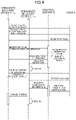
- FIG. 4 is a sequence diagram for illustrating an operation of the delivery system.
- FIG. 5 is a block diagram for illustrating functions to be implemented by the delivery system.
- FIG. 6 is a flow chart for illustrating an example of processing to be executed by an unmanned delivery vehicle and a central server at a time when the unmanned delivery vehicle goes to a delivery destination.
- FIG. 7 is a diagram for illustrating an example of arrangement of a plurality of unmanned delivery vehicles at the delivery destination.
- FIG. 8 is a flow chart for illustrating an example of processing to be executed by the unmanned delivery vehicle and the central server after the unmanned delivery vehicle has started to wait at the delivery destination.
- FIG. 9 is a flow chart for illustrating an example of processing to be executed by the unmanned delivery vehicle and the central server after the unmanned delivery vehicle has started to wait at the delivery destination.
- FIG. 10 is a diagram for illustrating an example of a screen showing an unmanned delivery vehicle from which a package can be received.
- FIG. 11 is a block diagram for illustrating functions to be implemented by a delivery system according to a second embodiment of the present invention.
- FIG. 12 is a flow chart for illustrating an example of processing to be executed by a plurality of unmanned delivery vehicles after the plurality of unmanned delivery vehicles have started to wait at the delivery destination.
- FIG. 13 is a flow chart for illustrating an example of processing to be executed by the plurality of unmanned delivery vehicles in a third embodiment of the present invention.
- FIG. 14 is a block diagram for illustrating functions to be implemented by a delivery system according to a fourth embodiment of the present invention.
- FIG. 15 is a sequence diagram for illustrating an operation of the delivery system.
- FIG. 16 is a flow chart for illustrating an example of processing to be executed at the time of passing a package.
- FIG. 1 is a diagram for illustrating an example of a configuration of a delivery system according to a first embodiment of the present invention.
- the package delivery system includes a plurality of unmanned delivery vehicles 1 , a central server 2 , and a delivery base 3 .
- the unmanned delivery vehicle 1 is a machine configured to travel on the ground to deliver a package under automatic control without accommodating a driver.
- the unmanned delivery vehicle 1 is called “unmanned ground vehicle (UGV)”.
- UUV unmanned ground vehicle
- FIG. 1 two unmanned delivery vehicles 1 a and 1 b are illustrated, but the number of unmanned delivery vehicles 1 maybe three or more.
- the unmanned delivery vehicle 1 is communicably connected to the central server 2 via wireless communication.
- the wireless communication may be based on a communication standard, for example, Long Term Evolution (LTE).
- the central server 2 is configured to communicate to/from the plurality of unmanned delivery vehicles 1 and the delivery base 3 to manage those operations.
- the delivery base 3 includes a warehouse storing packages to be delivered to users, and in the delivery base 3 , for example, an employee of the delivery base 3 stores a package addressed to a user in the unmanned delivery vehicle 1 based on an instruction from the central server 2 .
- the plurality of unmanned delivery vehicles 1 are placed in the delivery base 3 , and the unmanned delivery vehicle 1 delivers a package to a delivery destination from the delivery base 3 .
- FIG. 2 is a perspective view of an example of the unmanned delivery vehicle 1 .
- the unmanned delivery vehicle 1 includes a processor 11 , a memory 12 , a communication unit 13 , an input/output unit 14 , a sensor 15 , a plurality of storages 16 , a key controller 17 , and a drive unit (not shown).
- the processor 11 is configured to execute processing in accordance with a program or data stored in the memory 12 . Further, the processor 11 is configured to control the communication unit 13 , the input/output unit 14 , the sensor 15 , and the key controller 17 .
- the memory 12 includes a volatile memory, for example, a RAM, and a non-volatile memory, for example, a flash memory.
- the memory 12 may further include a storage device, for example, a hard disk drive.
- the memory 12 stores the above-mentioned program. Further, the memory 12 stores calculation results and information, which are input from the processor 11 , the communication unit 13 , and the input/output unit 14 .
- the above-mentioned program may be provided through, for example, the Internet, or may be stored in a storage medium capable of being read by a computer, for example, a flash memory, and provided.
- the communication unit 13 includes, for example, an integrated circuit implementing a communication interface for wireless communication.
- the communication unit 13 is configured to input, based on control by the processor 11 , information received from other apparatus to the processor 11 or the memory 12 , and transmit the information to the other apparatus.
- the input/output unit 14 includes a display output device, an input device, and interfaces with those devices.
- the input/output unit 14 is a touch panel with a display (hereinafter referred to as “input panel”), and is used for inputting a reception code for authentication.
- the input/output unit 14 may be a display and a physical button, or may be other types of the display output device and input device.
- the input/output unit 14 is configured to display, based on control by the processor 11 , an image on the display output device to acquire data input by the user on the input device.
- the sensor 15 includes a lidar and a camera configured to recognize the size and position of a peripheral obstacle.
- the plurality of storages 16 are regions for storing packages.
- a plurality of storages 16 are provided on respective side surface of the unmanned delivery vehicle 1 .
- Each storage 16 has a door, and a key is set on the door.
- the key controller 17 is a circuit configured to electrically control locking or unlocking of the key of the door.
- a sensor configured to detect presence/absence of a package in the storage 16 is arranged.
- the unmanned delivery vehicle 1 includes, on its periphery, aside surface on which the doors of the storages 16 are arranged, an end portion 18 b being a surface which faces in a direction different from that of the side surface and on which the input/output unit 14 is arranged, and an end portion 18 a being a surface opposed to the end portion 18 b .
- the lidar is provided on a top surface of the unmanned delivery vehicle 1 , and a camera (not shown) is arranged on the end portion 18 a.
- the central server 2 includes a processor 21 , a memory 22 , a communication unit 23 , and an input/output unit 24 .
- the central server 2 may be one physical server, or may include a plurality of physical servers like a so-called cloud computing system.
- the processor 21 is configured to execute processing in accordance with a program or data stored in the memory 22 . Further, the processor 21 is configured to control the communication unit 23 and the input/output unit 24 .
- the memory 22 includes a volatile memory, for example, a RAM, and a non-volatile memory, for example, a flash memory.
- the memory 22 stores the above-mentioned program. Further, the memory 22 stores information or calculation results, which are input from the processor 21 , the communication unit 23 , and the input/output unit 24 .
- the above-mentioned program may be provided through, for example, the Internet, or may be stored in a storage medium capable of being read by a computer, for example, a flash memory, and provided.
- the communication unit 23 includes, for example, an integrated circuit implementing a communication interface for wired communication.
- the communication unit 23 is configured to input, based on control by the processor 21 , information received from other apparatus to the processor 21 or the memory 22 , and transmit the information to the other apparatus.
- the communication unit 23 may communicate to/from the unmanned delivery vehicle 1 via a communication network and a wireless communication device included in the communication network.
- the input/output unit 24 includes a video controller configured to control display, and a controller configured to acquire data from an input device.
- the input device includes, for example, a touch panel, a keyboard, or a mouse.
- the input/output unit 24 is configured to output, based on control by the processor 21 , display data to the display output device, and acquire data input by the user through operation of the input device.
- FIG. 3 and FIG. 4 are each a sequence diagram for illustrating an operation of the delivery system.
- FIG. 3 is mainly an illustration of an operation until the plurality of unmanned delivery vehicles 1 a and 1 b have arrived at a standby location of the delivery destination and started to wait.
- FIG. 4 is mainly an illustration of an operation since the user has arrived until delivery of a package has finished.
- Those sequence diagrams relate to a case in which a plurality of packages addressed to a plurality of users “a” and “b” are delivered to the same delivery destination (apartment building) by the plurality of unmanned delivery vehicles 1 a and 1 b , and the unmanned delivery vehicle 1 a delivers a package addressed to the user “a”, and the unmanned delivery vehicle 1 b delivers a package addressed to the user “b”.
- the central server 2 transmits, to the unmanned delivery vehicle 1 a , an instruction (delivery information) to deliver the package to the delivery destination.
- the central server 2 transmits, to the delivery base 3 , an instruction to store the package in the unmanned delivery vehicle 1 a , and a staff member of the delivery base 3 stores the package in the storage 16 of the unmanned delivery vehicle 1 a .
- the unmanned delivery vehicle 1 a moves to the delivery destination (e.g., entrance of apartment building), and when the unmanned delivery vehicle 1 a has arrived at the standby location of the delivery destination, the unmanned delivery vehicle 1 a transmits arrival information to the central server 2 .
- the arrival information includes vehicle body information for identifying the unmanned delivery vehicle 1 and information indicating the standby location.
- the central server 2 When the central server 2 has received the arrival information, the central server 2 generates a unique reception code, transmits the generated reception code to the unmanned delivery vehicle 1 a , and further transmits an arrival notification including the reception code to the user “a” (more strictly, device owned by user “a”).
- the reception code to be transmitted to the user is, for example, a PIN code or data with a larger amount of information.
- the PIN code may be a six-digit number or alphanumeric characters, or QR code (trademark) image data obtained by encoding the reception code may be transmitted.
- the unmanned delivery vehicle 1 a receives the reception code, and waits at the standby location.
- the user “b” and the unmanned delivery vehicle 1 b also perform an operation from placement of an order to transmission of an arrival notification. Now, for example, it is assumed that the unmanned delivery vehicles 1 a and 1 b wait at the same standby location because, for example, the users “a” and “b” live in the same apartment building.
- the unmanned delivery vehicles 1 a and 1 b communicate to/from each other to exchange vehicle body information for identifying the unmanned delivery vehicles 1 .
- operations of connecting to another unmanned delivery vehicle 1 through communication and exchanging vehicle body information with the other unmanned delivery vehicle 1 are referred to as “pairing”.
- the unmanned delivery vehicle 1 a detects the fact that the user has approached, and displays a reception code input screen on the display. In this example, it is assumed that the user can operate only the input/output unit 14 of the unmanned delivery vehicle 1 a .
- the unmanned delivery vehicle 1 a transmits, to the central server 2 , the reception code and vehicle body information for identifying the own unmanned delivery vehicle 1 a.
- the central server 2 which has received the reception code and vehicle body information, confirms whether the reception code is appropriate, and authenticates the user “b”, who has input the reception code. Then, the central server 2 identifies the unmanned delivery vehicle 1 b and the storage 16 (unlocking target), which stores a package addressed to the user “b”. When the unlocking target is identified, the central server 2 transmits, to the unmanned delivery vehicle 1 b being the unlocking target, an unlocking instruction to unlock the key of the door of the identified storage 16 , and the unmanned delivery vehicle 1 b unlocks the key of the storage 16 .
- the central server 2 transmits information (unlocking target information) indicating the unlocking target to the unmanned delivery vehicle 1 a to which the reception code has been input, and the unmanned delivery vehicle 1 a displays the unlocked unmanned delivery vehicle 1 b on the display.
- the user “b” recognizes the fact that a package is stored in the unmanned delivery vehicle 1 b through display on the display and a behavior of the door of the storage 16 , and receives a package stored in the unlocked storage 16 .
- the unmanned delivery vehicle 1 b transmits, to the central server 2 , delivery completion information indicating completion of delivery, and the central server 2 transmits a delivery completion notification to the user “b”.
- the unmanned delivery vehicle 1 b cancels the communication connection (pairing) to the unmanned delivery vehicle 1 a , and returns to the delivery base 3 .
- FIG. 5 is a block diagram for illustrating functions to be implemented by the delivery system.
- the package delivery system includes, from the functional point of view, a delivery instruction module 50 , a movement control module 51 , an authentication information transmission module 52 , an association control module 53 , an authentication information reception module 55 , an authentication module 56 , an unlocking instruction module 57 , an unlocking module 58 , and a reception detection module 59 .
- the delivery instruction module 50 , the authentication information transmission module 52 , the authentication module 56 , and the unlocking instruction module 57 are implemented by the processor 21 included in the central server 2 executing programs stored in the memory 22 to control the communication unit 23 .
- Those functions may be implemented by the processors 21 included in the plurality of serves executing programs.
- the movement control module 51 , the association control module 53 , the authentication information reception module 55 , the unlocking module 58 , and the reception detection module 59 are implemented by the processor 11 included in the unmanned delivery vehicle 1 executing programs stored in the memory 12 to control the communication unit 13 , the input/output unit 14 , the sensor 15 , and the key controller 17 .
- the delivery instruction module 50 of the central server 2 is configured to instruct the delivery base 3 and the unmanned delivery vehicle 1 to deliver a package addressed to the user. More specifically, when a package (package addressed to user) including a product ordered from the user is in the delivery base 3 , the delivery instruction module 50 transmits, to the delivery base 3 , an instruction to store the package addressed to the user in the storage 16 of the unmanned delivery vehicle 1 , and further transmits, to the unmanned delivery vehicle 1 , an instruction (delivery information) to deliver the package to the delivery destination of that user.
- the movement control module 51 of the unmanned delivery vehicle 1 is configured to control, based on data acquired by the lidar or a GPS sensor of the unmanned delivery vehicle 1 , movement of the unmanned delivery vehicle 1 from the delivery base 3 to the delivery destination and movement of the unmanned delivery vehicle 1 from the delivery destination to the delivery base 3 .
- the movement control module 51 may be configured to control movement based on the data acquired by the camera.
- a part of functions of the movement control module 51 may be implemented by a server computer.
- the movement control module 51 controls at least one of the two unmanned delivery vehicles 1 to move so that one end portion 18 b (surface including input/output unit 14 ) and the other end portion 18 b are adjacent to each other among the two unmanned delivery vehicles 1 . Details thereof are described later.
- the movement control module 51 transmits arrival information to the central server 2 .
- the authentication information transmission module 52 of the central server 2 is configured to generate a reception code when the unmanned delivery vehicle 1 has arrived at the standby location of the delivery destination, and the authentication information transmission module 52 has received the arrival information notifying of arrival from the unmanned delivery vehicle 1 .
- the reception code is authentication information to be input from the user for authentication when the user receives a package.
- the authentication information transmission module 52 transmits the generated reception code to the user (more strictly, device owned by user). Further, the authentication information transmission module 52 transmits the generated reception code to the unmanned delivery vehicle 1 .
- the association control module 53 of the unmanned delivery vehicle 1 is configured to receive the reception code from the authentication information transmission module 52 of the central server 2 via the communication unit 13 , and store the reception code into the memory 12 . Further, the association control module 53 detects whether there is another unmanned delivery vehicle 1 in an area of the delivery destination at which the user is waiting, and when existence of another unmanned delivery vehicle 1 is detected, the association control module 53 connects to the unmanned delivery vehicle 1 through communication, and exchanges vehicle body information for identifying the unmanned delivery vehicle 1 . In the following, operations of connecting to another unmanned delivery vehicle 1 through communication and exchanging vehicle body information with the unmanned delivery vehicle 1 are referred to as “pairing”.
- the authentication information reception module 55 of the unmanned delivery vehicle 1 is configured to receive the reception code input from the user through the input/output unit 14 . Further, the authentication information reception module 55 is configured to transmit the received reception code to the central server 2 .
- the authentication module 56 of the central server 2 is configured to receive the reception code from the unmanned delivery vehicle 1 , and authenticate the user based on the reception code.
- the unlocking instruction module 57 of the central server 2 is configured to transmit, to the unmanned delivery vehicle 1 storing a package addressed to the authenticated user, an instruction (unlocking instruction) to unlock the key (more strictly, key of door of storage 16 ) of the storage 16 storing the package addressed to the user.
- an instruction unlocking instruction
- the unlocking instruction module 57 is configured to transmit an unlocking instruction to the unmanned delivery vehicle 1 (e.g., unmanned delivery vehicle 1 b ) storing the package addressed to the user.
- the unlocking instruction module 57 may be configured to directly transmit an unlocking instruction to the unmanned delivery vehicle 1 b storing the package addressed to the user, or may be configured to transmit an unlocking instruction to the unmanned delivery vehicle 1 b via the unmanned delivery vehicle 1 a to which the user has input the reception code.
- the unlocking module 58 of the unmanned delivery vehicle 1 is configured to receive the unlocking instruction, and unlock the key of the storage 16 storing the package addressed to the user based on the unlocking instruction.
- the reception detection module 59 of the unmanned delivery vehicle 1 is configured to detect whether a package in the storage 16 is removed (which means whether user has received package) based on output of the sensor 15 .
- the reception detection module 59 may be configured to detect whether the user has received the package based on whether the door of the storage 16 is closed.
- the reception detection module 59 When the reception detection module 59 has detected the fact that the user has received the package, the reception detection module 59 transmits, to the central server 2 , delivery completion information indicating completion of delivery of the package to the user.
- FIG. 6 is a flow chart for illustrating an example of processing to be executed by the unmanned delivery vehicle 1 going to the delivery destination and the central server 2 , and the processing illustrated in FIG. 6 is executed for each of the two unmanned delivery vehicles 1 illustrated in the sequence diagram of FIG. 3 .
- the delivery instruction module 50 of the central server 2 transmits delivery information including the delivery destination to the unmanned delivery vehicle 1 (Step S 201 ).
- the delivery instruction module 50 stores, into the memory 22 , a user, a package, and the unmanned delivery vehicle 1 storing the package in association with one another.
- the movement control module 51 of the unmanned delivery vehicle 1 acquires the delivery information (Step S 101 ). Further, the movement control module 51 of the unmanned delivery vehicle 1 confirms the fact that a package indicated by the delivery instruction is stored in the storage 16 at the delivery base 3 (Step S 102 ), and moves to a standby area (e.g., entrance of apartment building of delivery destination) of the delivery destination (Step S 103 ).
- a publicly known technology such as unmanned driving or automatic delivery, may be used for control of movement, and a detailed description of the control is omitted.
- the movement control module 51 determines whether there is another unmanned delivery vehicle 1 in the standby area (Step S 104 ).
- the movement control module 51 controls movement of the unmanned delivery vehicle 1 such that the end portion 18 b of the own unmanned delivery vehicle 1 (surface of input/output unit 14 ) and the end portion 18 a (surface on which there are no input/output unit 14 and doors of storage 16 ) of another unmanned delivery vehicle 1 are adjacent to each other (Step S 105 ).
- the movement control module 51 skips Step S 105 , and is configured to move the unmanned delivery vehicle 1 to a place of the standby area at which the unmanned delivery vehicle 1 can wait.
- FIG. 7 is a diagram for illustrating an example of arrangement of the plurality of unmanned delivery vehicles 1 at the delivery destination, which is an illustration of arrangement of the plurality of unmanned delivery vehicles 1 a and 1 b as viewed from the above.
- the end portion 18 a (surface on which there are no input/output unit 14 and doors of storage 16 ) of the unmanned delivery vehicle 1 a is adjacent to the end portion 18 b (surface of input/output unit 14 ) of the unmanned delivery vehicle 1 b .
- the unmanned delivery vehicle 1 a has arrived first at the standby area, and the unmanned delivery vehicle 1 b has arrived later.
- the movement control module 51 of the unmanned delivery vehicle 1 b which has arrived later, causes the unmanned delivery vehicle 1 b to move so that the end portion 18 a of the unmanned delivery vehicle 1 a is adjacent to the own end portion 18 b .
- the user can input information only to the input/output unit 14 of the unmanned delivery vehicle 1 a physically. With this, the user can easily recognize the unmanned delivery vehicle 1 to which the reception code is to be input, and can prevent the user from having a difficulty in choosing which unmanned delivery vehicle 1 is to be operated when there are a plurality of unmanned delivery vehicles 1 in the standby area.
- the movement control module 51 transmits, to the central server 2 , arrival information including the standby area of the delivery destination and the vehicle body information (Step S 106 ).
- the authentication information transmission module 52 of the central server 2 receives the arrival information (Step S 202 ), and generates a reception code that is unique in at least the standby area of the delivery destination based on the received arrival information (Step S 203 ).
- the authentication information transmission module 52 generates a reception code that does not overlap with another reception code generated for another user in at least the standby area.
- the authentication information transmission module 52 may generate a reception code that does not overlap with reception codes issued for the unmanned delivery vehicles 1 waiting at all the other standby areas, or may generate a reception code that does not overlap with a reception code issued for the unmanned delivery vehicle 1 waiting at another nearby standby area.
- the reception code is information that can authenticate the user even when the reception code is used alone without being used together with information for identifying the user.
- the authentication information transmission module 52 transmits the reception code to the unmanned delivery vehicle 1 , which has transmitted arrival information (Step S 204 ), and the association control module 53 of the unmanned delivery vehicle 1 receives the reception code (Step S 107 ) to store the received reception code and information for identifying the storage 16 storing the package into the memory 12 in association with each other.
- the reception code information capable of authenticating whether the reception code is appropriate, for example, a hash value of the reception code, may be transmitted and used for subsequent authentication of the user.
- the authentication information transmission module 52 transmits an arrival notification including the reception code to the user of the delivery destination (Step S 205 ).
- FIG. 8 is a flow chart for illustrating an example of processing to be executed by the unmanned delivery vehicle 1 and the central server 2 after the unmanned delivery vehicle 1 has started to wait at the delivery destination.
- processing by the unmanned delivery vehicle 1 a and the central server 2 is illustrated.
- the processing relates to input of the reception code by the user.
- FIG. 9 is a flow chart for illustrating an example of processing to be executed by the unmanned delivery vehicle 1 and the central server 2 after the unmanned delivery vehicle 1 has started to wait at the delivery destination.
- processing by the unmanned delivery vehicle 1 b and the central server 2 is illustrated.
- the processing relates to unlocking and completion of delivery.
- the association control module 53 of the unmanned delivery vehicle 1 a determines whether there is another unmanned delivery vehicle 1 in the standby area based on the result of detection by the sensor 15 , or a vehicle search using the communication unit 13 (Step S 121 ). Then, when there is another unmanned delivery vehicle 1 in the standby area (Y in Step S 121 ), the association control module 53 pairs with the existing another unmanned delivery vehicle 1 (Step S 122 ). When the association control module 53 has already paired with another unmanned delivery vehicle 1 , the association control module 53 does not pair with the existing unmanned delivery vehicle 1 , or the processing of Step S 121 and Step S 122 may be executed by the unmanned delivery vehicle 1 other than the unmanned delivery vehicle 1 a .
- Step S 121 when there is no other unmanned delivery vehicle 1 in the standby area (N in Step S 121 ), the association control module 53 skips Step S 122 .
- the authentication information reception module 55 determines whether the user is in front of a touch panel of the input/output unit 14 (Step S 123 ).
- the authentication information reception module 55 may determine whether the user is in front of the input/output unit 14 depending on whether the touch panel has been pressed, or based on the result of detection by an infrared sensor or lidar in the sensor 15 .
- the processing of from Step S 121 is repeated.
- the authentication information reception module 55 displays a reception code input screen on the display of the input/output unit 14 (Step S 124 ). Then, when the user who has recognized the reception code input screen has input a reception code, the authentication information reception module 55 acquires the reception code input on the input/output unit 14 (Step S 125 ).
- the authentication information reception module 55 may acquire a PIN code input on the touch panel as the reception code, or may acquire, for example, a decoded QR code photographed by a camera included in the input/output unit 14 as the reception code.
- the authentication information reception module 55 When the authentication information reception module 55 has acquired the reception code, the authentication information reception module 55 transmits the reception code and the vehicle body information to the central server 2 (Step S 126 ). Instead of the reception code, information (e.g., hash value) obtained by processing the reception code may be transmitted.
- information e.g., hash value
- the authentication module 56 of the central server 2 receives the reception code and the vehicle body information via the communication unit 23 (Step S 221 ).
- the authentication module 56 acquires a standby area included in arrival information previously received from the unmanned delivery vehicle 1 indicated by the received vehicle body information, and authenticates the user based on the reception code and the standby area (Step S 222 ).
- the unlocking instruction module 57 uses information on the user, the package, and the unmanned delivery vehicle 1 storing that package, which are stored in the memory 22 in association with one another, to identify, as an unlocking target, the unmanned delivery vehicle 1 and storage 16 storing a package addressed to the authenticated user (Step S 223 ).
- the unlocking instruction module 57 transmits, to the unmanned delivery vehicle 1 which has transmitted the reception code, information (unlocking target information) on the unmanned delivery vehicle 1 being the unlocking target (Step S 224 ).
- the unmanned delivery vehicle 1 receives the unlocking target information (Step S 131 ), and displays, on the display of the input/output unit 14 , a screen indicating the unmanned delivery vehicle 1 from which the package can be received (Step S 132 ).
- the unlocking instruction module 57 transmits, to the unmanned delivery vehicle 1 being the unlocking target, an unlocking instruction to unlock the storage 16 being the unlocking target (Step S 225 ).
- the unlocking instruction includes information (e.g., identification information on storage 16 or information for identifying user who is to receive package) indicating the storage 16 being the unlocking target.
- FIG. 10 is a diagram for illustrating an example of a screen representing the unmanned delivery vehicle 1 from which the package can be received.
- FIG. 10 is an example of a case in which there are three or more unmanned delivery vehicles 1 in the standby area, and shows a delivery vehicle image 31 a indicating the unmanned delivery vehicle 1 a operated by the user and a delivery vehicle image 31 b indicating the unmanned delivery vehicle 1 b storing a package addressed to the user in such a manner as to distinguish the delivery vehicle image 31 a and the delivery vehicle image 31 b from the other unmanned delivery vehicles 1 .
- the delivery vehicle image 31 b indicating the unmanned delivery vehicle 1 b storing the package addressed to the user is highlighted by an arrow or color, for example, to thereby enable the user who has viewed the screen to intuitively grasp a method of receiving the package.
- the unlocking module 58 of the unmanned delivery vehicle 1 receives an unlocking instruction (Step S 141 ). Then, the unlocking module 58 unlocks a door of the storage 16 indicated by the unlocking instruction (Step S 142 ). Then, the reception detection module 59 waits until the user receives the package
- Step S 143 the reception detection module 59 may perform such detection repeatedly until a sensor mounted to the storage 16 has detected the fact that there is no package in the storage 16 , or until a sensor mounted to the door of the storage 16 has detected the fact that the door of the storage 16 is closed.
- the reception detection module 59 transmits delivery completion information indicating completion of the delivery to the user to the central server 2 (Step S 144 ).
- the unlocking instruction module 57 of the central server 2 has received the delivery completion information
- the unlocking instruction module 57 transmits a delivery completion notification to the user (Step S 241 ).
- the association control module 53 of the unmanned delivery vehicle 1 cancels pairing with the other unmanned delivery vehicle 1 (Step S 145 ), and the movement control module 51 starts to return to the delivery base 3 , or starts to move to the next delivery destination (Step S 146 ).
- the unmanned delivery vehicle 1 to which the user inputs a reception code and the unmanned delivery vehicle 1 storing a package addressed to the user are different from each other, it is possible to unlock the storage 16 storing the package.
- the user may input a reception code into any one of the unmanned delivery vehicles 1 .
- the user is not required to repeatedly input a reception code. Further, as illustrated in FIG.
- the input/output units 14 of a part of the unmanned delivery vehicles 1 are hidden by other unmanned delivery vehicles 1 , to thereby reduce a possibility of the user having a difficulty in choosing to which input/output unit 14 of the unmanned delivery vehicle 1 the reception code is to be input. As a result, it is possible to reduce a load on the user at the time of receiving a package.
- the central server 2 authenticates the user who has input a reception code and instructs the storage 16 storing a package addressed to the user to be unlocked.
- Such authentication and unlocking instruction may be performed by the unmanned delivery vehicle 1 b storing a package.
- description is made of a delivery system in which the unmanned delivery vehicle 1 b storing a package performs such authentication and unlocking instruction. Now, description is mainly made of differences between the second embodiment and the first embodiment.
- FIG. 11 is a block diagram for illustrating functions to be implemented by a delivery system according to the second embodiment.
- the unmanned delivery vehicle l includes, from the functional point of view, an auxiliary authentication module 61 and an auxiliary unlocking instruction module 62 in addition to the functions illustrated in FIG. 5 of the first embodiment.
- the auxiliary authentication module 61 and the auxiliary unlocking instruction module 62 are implemented by the processor 11 included in the unmanned delivery vehicle 1 executing programs stored in the memory 12 to control the communication unit 13 .
- the auxiliary authentication module 61 and the auxiliary unlocking instruction module 62 are functions similar to those of the authentication module 56 and the unlocking instruction module 57 , respectively, and when the unmanned delivery vehicle 1 and the central server 2 have a difficulty in communicating to/from each other, the processing of the auxiliary authentication module 61 and the auxiliary unlocking instruction module 62 is executed.
- FIG. 12 is a flow chart for illustrating an example of processing to be executed by the plurality of unmanned delivery vehicles 1 a and 1 b after the plurality of unmanned delivery vehicles 1 a and 1 b have started to wait at the delivery destination.
- the processing illustrated in FIG. 12 is executed when the unmanned delivery vehicle 1 and the central server 2 are not communicably connected.
- the processing described with reference to FIG. 8 in the first embodiment is executed.
- the processing until the unmanned delivery vehicle arrives at the delivery destination before the processing is also similar to that of the first embodiment, and thus description thereof is omitted here.
- FIG. 12 is a flow chart for illustrating an example of processing to be executed by the plurality of unmanned delivery vehicles 1 a and 1 b after the plurality of unmanned delivery vehicles 1 a and 1 b have started to wait at the delivery destination.
- the processing illustrated in FIG. 12 is executed when the unmanned delivery vehicle 1 and the central server 2 are not communicably connected.
- the processing described with reference to FIG. 8 in the first embodiment is executed.
- a reception code that is received by the unmanned delivery vehicle 1 e.g., unmanned delivery vehicle 1 b ) storing a package addressed to the user in Step S 107 of FIG. 6 and is stored in association with the storage 16 corresponding to the memory 12 is used.
- the unmanned delivery vehicle 1 e.g., unmanned delivery vehicle 1 b
- Step S 107 of FIG. 6 a reception code that is received by the unmanned delivery vehicle 1 storing a package addressed to the user in Step S 107 of FIG. 6 and is stored in association with the storage 16 corresponding to the memory 12 is used.
- Step S 161 to Step S 165 the processing of from Step S 161 to Step S 165 is similar to those of from Step S 121 to Step S 125 illustrated in FIG. 8 , and thus description thereof is omitted here.
- the authentication information reception module 55 transmits the reception code to the other paired unmanned delivery vehicle 1 (unmanned delivery vehicle 1 b ) (Step S 166 ).
- the authentication information reception module 55 may transmit the reception code to all the other unmanned delivery vehicles 1 .
- the auxiliary authentication module 61 of the unmanned delivery vehicle 1 b receives the reception code via the communication unit 13 (Step S 171 ).
- the auxiliary authentication module 61 authenticates the input user based on the received reception code and the reception code stored in the memory 12 in Step S 107 (Step S 172 ).
- the auxiliary authentication module 61 transmits information indicating an authentication failure to the unmanned delivery vehicle 1 .
- the auxiliary unlocking instruction module 62 uses the identification information stored in the storage 16 in association with the reception code of the authenticated user to identify, as the unlocking target, the storage 16 storing a package addressed to the user, and the unlocking module 58 unlocks the key of the door of the identified storage 16 (Step S 173 ). Further, the auxiliary unlocking instruction module 62 transmits, to the unmanned delivery vehicle 1 having received the reception code, information (unlocking target information) which indicates that the own unmanned delivery vehicle 1 is unlocked (Step S 174 ).
- the unmanned delivery vehicle 1 a receives the unlocking target information (Step S 168 ), and displays, on the display of the input/output unit 14 , a screen indicating the unmanned delivery vehicle 1 b from which the package can be received (Step S 169 ).
- the processing of Step S 169 is similar to that of Step S 132 of FIG. 8 .
- the reception detection module 59 executes processing relating to completion of delivery after detecting reception of the package by the user (Step S 175 ).
- the processing of Step S 175 is similar to those of from Step S 143 to Step S 146 of FIG. 9 , and thus a detailed description thereof is omitted here.
- the user can easily receive the package.
- communication to/from the central server 2 is not indispensable when the user receives a package, and thus it is possible to receive a package even when communication between the unmanned delivery vehicle 1 and the central server 2 is unstable.
- the unmanned delivery vehicle 1 a to which the user inputs the reception code authenticates the reception code and gives an unlocking instruction.
- description is mainly made of a difference between the second embodiment and the first embodiment.
- FIG. 13 is a flow chart for illustrating an example of processing to be executed by the plurality of unmanned delivery vehicles 1 a and 1 b in the third embodiment.
- FIG. 13 is an example of an illustration of processing to be executed after the plurality of unmanned delivery vehicles 1 a and 1 b have started to wait at the delivery destination.
- the processing illustrated in FIG. 13 may be executed when the unmanned delivery vehicle 1 and the central server 2 are not communicably connected to each other. It is assumed that a reception code received by the unmanned delivery vehicle 1 (e.g., unmanned delivery vehicle 1 b ) storing a package addressed to the user in Step S 107 of FIG. 6 is stored, in advance, in the memory 12 in association with the corresponding storage 16 . Now, description is made of processing in a case in which there are the unmanned delivery vehicle 1 a to which the user inputs a reception code and the unmanned delivery vehicle 1 b storing a package to be received by the user.
- a reception code received by the unmanned delivery vehicle 1 e.
- the association control module 53 of the unmanned delivery vehicle 1 a determines whether there is another unmanned delivery vehicle 1 b in the standby area (Step S 181 ). Then, when there is another unmanned delivery vehicle 1 b in the standby area (Y in Step S 181 ), the association control module 53 pairs with the existing another unmanned delivery vehicle 1 b to receive a combination of the vehicle body information, the reception code of a package to be delivered in this standby area, and identification information on the storage 16 storing the package (Step S 182 ). In response to this, the association control module 53 of the unmanned delivery vehicle 1 b transmits a combination of the vehicle body information, the reception code, and the identification information on the storage 16 (Step S 190 ).
- the association control module 53 of the unmanned delivery vehicle la stores the vehicle body information, the identification information on the storage 16 , and the reception code into the memory 12 in association with one another (Step S 182 ). On the contrary, when there is no other unmanned delivery vehicle 1 in the standby area (N in Step S 181 ), the association control module 53 skips Step S 182 .
- Step S 181 when the user is not in front of the touch panel of the input/output unit 14 (N in Step S 183 ), the authentication information reception module 55 repeats the processing from. Step S 181 .
- the processing of Step S 181 and Step S 183 is similar to that of Step S 121 and Step S 123 of FIG. 8 of the first embodiment.
- the subsequent processing of Step S 184 and Step S 185 is similar to the processing of Step S 124 and Step S 125 of FIG. 8 , and thus description thereof is omitted here.
- Step S 185 when the reception code is acquired from the user, the auxiliary authentication module 61 authenticates the user who has input the reception code based on the acquired reception code and the reception code stored in the memory 12 in Step S 182 (Step S 186 ).
- the auxiliary authentication module 61 displays on the screen information which indicates the reception code is not appropriate.
- the auxiliary unlocking instruction module 62 of the unmanned delivery vehicle 1 a identifies, as the unlocking target, the unmanned delivery vehicle 1 b and the storage 16 storing a package addressed to the user based on the vehicle body information and the identification information on the storage 16 stored in the memory 12 in association with the reception code of the authenticated user (Step S 187 ), and transmits, to the identified unmanned delivery vehicle 1 b , an unlocking instruction to unlock the key of the door of the identified storage 16 (Step S 188 ).
- the unlocking module 58 of the unmanned delivery vehicle 1 b receives the unlocking instruction (Step S 191 ).
- the unlocking module 58 unlocks the door of the storage 16 indicated by the unlocking instruction (Step S 192 ).
- the auxiliary unlocking instruction module 62 may not identify the storage 16 .
- the auxiliary unlocking instruction module 62 may transmit the unlocking instruction including information (e.g., reception code) for identifying the user or package to the identified unmanned delivery vehicle 1 b , and the unlocking module 58 may identify the storage 16 to be unlocked based on the unlocking instruction.
- Step S 193 The processing of Step S 193 is similar to those of from Step S 143 to Step S 146 of FIG. 9 , and thus a detailed description thereof is omitted here.
- the unmanned delivery vehicle 1 to which the user inputs a reception code and the unmanned delivery vehicle 1 storing a package addressed to the user are different from each other, the user can easily receive the package. Further, communication to/from the central server 2 is not indispensable when the user receives a package, and thus it is possible to receive a package even when communication between the unmanned delivery vehicle 1 and the central server 2 is unstable.
- the unmanned delivery vehicle 1 a has acquired the reception code and the vehicle body information at the time of pairing (refer to Step S 182 ), but the unmanned delivery vehicle 1 a may acquire those pieces of information from the central server 2 separately.
- the central server 2 authenticates the user based on the reception code, and the unmanned delivery vehicle 1 a to which the user has input a reception code gives an unlocking instruction.
- FIG. 14 is a block diagram for illustrating functions to be implemented by the delivery system according to the fourth embodiment.
- the unlocking instruction module 57 is provided not in the central server 2 but in the unmanned delivery vehicle 1 .
- the unlocking instruction module 57 is implemented by the processor 11 executing a program stored in the memory 12 .
- FIG. 15 is a sequence diagram for illustrating an operation of the delivery system, which is a diagram corresponding to FIG. 4 of the first embodiment.
- the fourth embodiment is different from the first embodiment in a period after a reception code has been input until the user has received a package.
- the central server 2 confirms whether the reception code is appropriate, and authenticates the user “b”, who has input the reception code. Then, the central server 2 transmits the authentication result to the unmanned delivery vehicle 1 a .
- the unmanned delivery vehicle 1 a transmits an unlocking instruction to another unmanned delivery vehicle 1 b storing a package addressed to the user, and the unmanned delivery vehicle 1 b unlocks the storage 16 storing the package.
- the unmanned delivery vehicle 1 a displays the unlocked unmanned delivery vehicle 1 b on the display.
- FIG. 16 is a flow chart for illustrating an example of processing to be executed at the time of passing a package, which is a diagram corresponding to the processing of Step S 125 and its subsequent processing of FIG. 8 of the first embodiment. Processing similar to those of from Step S 121 to Step S 124 of FIG. 8 is executed also in the fourth embodiment, but description thereof is omitted here.
- the authentication information reception module 55 of the unmanned delivery vehicle 1 a receives a reception code from the input/output unit 14 (Step S 325 ). When the authentication information reception module 55 has acquired the reception code, the authentication information reception module 55 transmits the reception code and vehicle body information to the central server 2 (Step S 326 ). Instead of a reception code, information (e.g., hash value) obtained by processing the reception code may be transmitted, or the reception code may include information for identifying the unmanned delivery vehicle 1 storing a package.
- a reception code information (e.g., hash value) obtained by processing the reception code may be transmitted, or the reception code may include information for identifying the unmanned delivery vehicle 1 storing a package.
- the authentication module 56 of the central server 2 receives the reception code and vehicle body information via the communication unit 23 (Step S 421 ).
- the authentication module 56 acquires a standby area included in arrival information previously received from the unmanned delivery vehicle 1 indicated by the received vehicle body information, and authenticates the user based on the reception code and the standby area (Step S 422 ). Then, the authentication module 56 transmits information indicating the fact that the user is authenticated to the unmanned delivery vehicle 1 a .
- the unlocking instruction module 57 of the unmanned delivery vehicle 1 a receives the information indicating the fact that the user is authenticated (Step S 327 ), and the unlocking instruction module 57 transmits an unlocking instruction to the unmanned delivery vehicle 1 b storing the package (Step S 328 ).
- the unlocking instruction module 57 displays, on the display of the input/output unit 14 , a screen indicating the unmanned delivery vehicle 1 from which the package can be received (Step S 330 ).
- the unlocking module 58 of the unmanned delivery vehicle 1 b having received an unlocking instruction determines the storage 16 storing the package based on the unlocking instruction, and unlocks the key of the door of the identified storage 16 .
- the subsequent processing is similar to that of the first embodiment, and thus description thereof is omitted here.
- the user can easily receive the package.
- the unmanned delivery vehicle 1 a authenticates the user based on the reception code, and the central server 2 transmits an unlocking instruction to the unmanned delivery vehicle 1 b storing a package.
- the authentication module 56 is arranged in the unmanned delivery vehicle 1 .
- processing until the authentication module 56 of the unmanned delivery vehicle 1 a authenticates the user is similar to that of the third embodiment.
- the processing of the auxiliary authentication module 61 is executed by the authentication module 56 .
- the authentication module 56 transmits an authentication result to the central server 2 together with information indicating the reception code.
- the central server 2 identifies the unmanned delivery vehicle 1 b being an unlocking target based on the authentication result, transmits an unlocking instruction, and transmits information indicating the unlocking target to the unmanned delivery vehicle 1 a .
- Such processing is similar to those of the first embodiment. Also in the fifth embodiment, even when the unmanned delivery vehicle 1 to which the user inputs a reception code and the unmanned delivery vehicle 1 storing a package addressed to the user are different from each other, the user can easily receive the package.
Landscapes
- Engineering & Computer Science (AREA)
- Business, Economics & Management (AREA)
- Economics (AREA)
- Mechanical Engineering (AREA)
- Operations Research (AREA)
- Tourism & Hospitality (AREA)
- Human Resources & Organizations (AREA)
- Marketing (AREA)
- Development Economics (AREA)
- Quality & Reliability (AREA)
- Strategic Management (AREA)
- Entrepreneurship & Innovation (AREA)
- Physics & Mathematics (AREA)
- General Business, Economics & Management (AREA)
- General Physics & Mathematics (AREA)
- Theoretical Computer Science (AREA)
- Management, Administration, Business Operations System, And Electronic Commerce (AREA)
- Lock And Its Accessories (AREA)
- Supports Or Holders For Household Use (AREA)
Abstract
Description
Claims (10)
Applications Claiming Priority (1)
| Application Number | Priority Date | Filing Date | Title |
|---|---|---|---|
| PCT/JP2019/046007 WO2021106045A1 (en) | 2019-11-25 | 2019-11-25 | Package delivery method, package delivery system, and delivery management device |
Publications (2)
| Publication Number | Publication Date |
|---|---|
| US20210370869A1 US20210370869A1 (en) | 2021-12-02 |
| US11396273B2 true US11396273B2 (en) | 2022-07-26 |
Family
ID=76083863
Family Applications (1)
| Application Number | Title | Priority Date | Filing Date |
|---|---|---|---|
| US17/253,100 Active 2039-12-23 US11396273B2 (en) | 2019-11-25 | 2019-11-25 | Package delivery method, package delivery system and delivery management device |
Country Status (4)
| Country | Link |
|---|---|
| US (1) | US11396273B2 (en) |
| JP (1) | JP6880334B1 (en) |
| CN (1) | CN113179637B (en) |
| WO (1) | WO2021106045A1 (en) |
Cited By (2)
| Publication number | Priority date | Publication date | Assignee | Title |
|---|---|---|---|---|
| US12536490B2 (en) * | 2021-12-21 | 2026-01-27 | Rakuten Group, Inc. | Information processing device, content providing method, and non-transitory computer readable memory |
| US12620284B2 (en) * | 2024-05-07 | 2026-05-05 | Deliviweed LLC | System and method for drone delivery |
Families Citing this family (5)
| Publication number | Priority date | Publication date | Assignee | Title |
|---|---|---|---|---|
| JP6954005B2 (en) * | 2017-10-30 | 2021-10-27 | トヨタ自動車株式会社 | vehicle |
| US12304424B2 (en) * | 2020-03-27 | 2025-05-20 | Toyota Connected North America, Inc. | Vehicle systems for dynamic crowdsourced delivery |
| JP2021160876A (en) * | 2020-03-31 | 2021-10-11 | 本田技研工業株式会社 | Unmanned delivery machine |
| JP7517285B2 (en) * | 2021-08-27 | 2024-07-17 | トヨタ自動車株式会社 | Delivery System |
| SE547801C2 (en) * | 2022-05-09 | 2025-12-02 | Husqvarna Ab | Improved navigation for robotic work tool system by coordinated group transport |
Citations (16)
| Publication number | Priority date | Publication date | Assignee | Title |
|---|---|---|---|---|
| US20080177636A1 (en) | 2007-01-23 | 2008-07-24 | Takuya Yoshida | Shop apparatus, purchaser apparatus, purchaser identity proving apparatus, and purchaser identity verifying apparatus |
| US20140180914A1 (en) | 2007-01-12 | 2014-06-26 | Raj Abhyanker | Peer-to-peer neighborhood delivery multi-copter and method |
| US20150006005A1 (en) * | 2013-07-01 | 2015-01-01 | Steven Sounyoung Yu | Autonomous Unmanned Road Vehicle for Making Deliveries |
| US9202194B1 (en) | 2011-03-08 | 2015-12-01 | GlobalSubmit, Inc. | Tracking the distribution of a product or package through a supply chain to determine authenticity and detect breaches |
| US9256852B1 (en) | 2013-07-01 | 2016-02-09 | Google Inc. | Autonomous delivery platform |
| US20170132634A1 (en) | 2014-10-28 | 2017-05-11 | Jason James | Method and System for Generating Random Postal Codes Attached to a Credit or Debit Card to Help Prevent Fraud |
| US20170289172A1 (en) | 2016-03-29 | 2017-10-05 | Zeta (Better World Technology Pvt. Ltd.) | Request authentication from message content |
| US20180068253A1 (en) * | 2016-09-02 | 2018-03-08 | John Simms | System and method for robotic delivery |
| US20180075688A1 (en) * | 2015-08-26 | 2018-03-15 | Guangzhou Xaircraft Technology Co., Ltd. | Method and device for receiving article, and method and system for delivering article |
| US20190034858A1 (en) * | 2017-07-28 | 2019-01-31 | Nuro, Inc. | System and mechanism for upselling products on autonomous vehicles |
| US10303171B1 (en) | 2016-09-29 | 2019-05-28 | Amazon Technologies, Inc. | Autonomous ground vehicles providing ordered items in pickup areas |
| US20190202405A1 (en) | 2017-12-28 | 2019-07-04 | Toyota Jidosha Kabushiki Kaisha | Information processing system, information processing device, information processing method for information processing system, recording medium, and vehicle interior sharing system |
| US20190205966A1 (en) | 2017-12-28 | 2019-07-04 | Toyota Jidosha Kabushiki Kaisha | Mail-order system |
| US20190206170A1 (en) * | 2017-12-28 | 2019-07-04 | Toyota Jidosha Kabushiki Kaisha | Delivery system, information processing device, control method for information processing device, and non-transitory recording medium having program stored therein |
| US20190226245A1 (en) * | 2016-09-01 | 2019-07-25 | La Poste | Driverless vehicle, and method for simultaneously unlocking at least two doors of such a vehicle |
| JP2019131361A (en) * | 2018-01-31 | 2019-08-08 | トヨタ自動車株式会社 | Mobile body, load sorting support method, load sorting support program and load sorting support system |
Family Cites Families (8)
| Publication number | Priority date | Publication date | Assignee | Title |
|---|---|---|---|---|
| JP3398066B2 (en) * | 1998-09-18 | 2003-04-21 | 三洋電機株式会社 | Product order delivery equipment |
| CN104746444B (en) * | 2015-04-08 | 2017-03-01 | 万波 | A connect goods device for unmanned aerial vehicle |
| US10313339B1 (en) * | 2016-12-12 | 2019-06-04 | Amazon Technologies, Inc. | Secure activation of authentication devices based on communications received via designated communication channels |
| CN106886876B (en) * | 2017-03-16 | 2021-02-02 | 张洲杨 | Logistics distribution method |
| JP6884682B2 (en) * | 2017-03-27 | 2021-06-09 | パナソニック インテレクチュアル プロパティ コーポレーション オブ アメリカPanasonic Intellectual Property Corporation of America | Positioning device, position-fixing method, autonomous vehicle, and position-fixing system |
| JP2019131391A (en) * | 2018-02-02 | 2019-08-08 | トヨタ自動車株式会社 | Delivery system and method of controlling delivery system |
| JP6531853B1 (en) * | 2018-04-24 | 2019-06-19 | トヨタ自動車株式会社 | Authentication information issuing device and delivery system |
| CN110414889A (en) * | 2019-07-09 | 2019-11-05 | 河南省吉立达机器人有限公司 | Commodity circulation method based on unmanned dispatching |
-
2019
- 2019-11-25 CN CN201980046187.XA patent/CN113179637B/en active Active
- 2019-11-25 US US17/253,100 patent/US11396273B2/en active Active
- 2019-11-25 WO PCT/JP2019/046007 patent/WO2021106045A1/en not_active Ceased
- 2019-11-25 JP JP2020542023A patent/JP6880334B1/en active Active
Patent Citations (16)
| Publication number | Priority date | Publication date | Assignee | Title |
|---|---|---|---|---|
| US20140180914A1 (en) | 2007-01-12 | 2014-06-26 | Raj Abhyanker | Peer-to-peer neighborhood delivery multi-copter and method |
| US20080177636A1 (en) | 2007-01-23 | 2008-07-24 | Takuya Yoshida | Shop apparatus, purchaser apparatus, purchaser identity proving apparatus, and purchaser identity verifying apparatus |
| US9202194B1 (en) | 2011-03-08 | 2015-12-01 | GlobalSubmit, Inc. | Tracking the distribution of a product or package through a supply chain to determine authenticity and detect breaches |
| US20150006005A1 (en) * | 2013-07-01 | 2015-01-01 | Steven Sounyoung Yu | Autonomous Unmanned Road Vehicle for Making Deliveries |
| US9256852B1 (en) | 2013-07-01 | 2016-02-09 | Google Inc. | Autonomous delivery platform |
| US20170132634A1 (en) | 2014-10-28 | 2017-05-11 | Jason James | Method and System for Generating Random Postal Codes Attached to a Credit or Debit Card to Help Prevent Fraud |
| US20180075688A1 (en) * | 2015-08-26 | 2018-03-15 | Guangzhou Xaircraft Technology Co., Ltd. | Method and device for receiving article, and method and system for delivering article |
| US20170289172A1 (en) | 2016-03-29 | 2017-10-05 | Zeta (Better World Technology Pvt. Ltd.) | Request authentication from message content |
| US20190226245A1 (en) * | 2016-09-01 | 2019-07-25 | La Poste | Driverless vehicle, and method for simultaneously unlocking at least two doors of such a vehicle |
| US20180068253A1 (en) * | 2016-09-02 | 2018-03-08 | John Simms | System and method for robotic delivery |
| US10303171B1 (en) | 2016-09-29 | 2019-05-28 | Amazon Technologies, Inc. | Autonomous ground vehicles providing ordered items in pickup areas |
| US20190034858A1 (en) * | 2017-07-28 | 2019-01-31 | Nuro, Inc. | System and mechanism for upselling products on autonomous vehicles |
| US20190202405A1 (en) | 2017-12-28 | 2019-07-04 | Toyota Jidosha Kabushiki Kaisha | Information processing system, information processing device, information processing method for information processing system, recording medium, and vehicle interior sharing system |
| US20190205966A1 (en) | 2017-12-28 | 2019-07-04 | Toyota Jidosha Kabushiki Kaisha | Mail-order system |
| US20190206170A1 (en) * | 2017-12-28 | 2019-07-04 | Toyota Jidosha Kabushiki Kaisha | Delivery system, information processing device, control method for information processing device, and non-transitory recording medium having program stored therein |
| JP2019131361A (en) * | 2018-01-31 | 2019-08-08 | トヨタ自動車株式会社 | Mobile body, load sorting support method, load sorting support program and load sorting support system |
Non-Patent Citations (2)
| Title |
|---|
| Office Action dated Jan. 3, 2022, for related U.S. Appl. No. 17/141,163 pp. 1-22. |
| Office Action dated May 10, 2022, for related U.S. Appl. No. 17/141,163 pp. 1-25. |
Cited By (2)
| Publication number | Priority date | Publication date | Assignee | Title |
|---|---|---|---|---|
| US12536490B2 (en) * | 2021-12-21 | 2026-01-27 | Rakuten Group, Inc. | Information processing device, content providing method, and non-transitory computer readable memory |
| US12620284B2 (en) * | 2024-05-07 | 2026-05-05 | Deliviweed LLC | System and method for drone delivery |
Also Published As
| Publication number | Publication date |
|---|---|
| CN113179637A (en) | 2021-07-27 |
| CN113179637B (en) | 2022-08-05 |
| JPWO2021106045A1 (en) | 2021-12-02 |
| WO2021106045A1 (en) | 2021-06-03 |
| JP6880334B1 (en) | 2021-06-02 |
| US20210370869A1 (en) | 2021-12-02 |
Similar Documents
| Publication | Publication Date | Title |
|---|---|---|
| US11396273B2 (en) | Package delivery method, package delivery system and delivery management device | |
| US12332653B2 (en) | Delivery system, delivery method and delivery device | |
| KR102175995B1 (en) | Smart unmanned-transportation-object-used delivery completion system | |
| US12339939B2 (en) | Information processing apparatus, information processing method, and information processing system | |
| JP7089360B2 (en) | Equipment operation system | |
| US11704619B2 (en) | Package reception management system, package reception management method, and package reception management device | |
| CN112835356A (en) | Transport control system, transport control program, and transport control method | |
| JP7468456B2 (en) | Mobile body, delivery system, delivery method, and delivery program | |
| US12606417B2 (en) | Systems and methods for protecting robot tailgating in building environments | |
| US12589973B2 (en) | Method and elevator control arrangement for controlling a maintenance mode of an elevator system | |
| US20220309603A1 (en) | Home delivery device | |
| WO2019226180A1 (en) | System and method for priority actuation | |
| KR20220105115A (en) | Mining Management Platform | |
| CN114924557A (en) | Autonomous moving system, autonomous moving method, and storage medium | |
| JP2023042871A (en) | Apartment intercom system with non-touch input device | |
| US12462626B2 (en) | Methods and systems for integrating autonomous devices with an access control system | |
| JP7359923B2 (en) | Collaboration system | |
| KR101899718B1 (en) | Barcode decoding system and method using mobile phone | |
| JP2013125413A (en) | User registration system and registration server | |
| WO2015147757A1 (en) | A storage system and method of operating a storage system | |
| HK40119771A (en) | Delivery of package in buildings provided with elevators | |
| JP2023098771A (en) | Operating method and operating device for mechanical parking device | |
| JP2023130198A (en) | Conveyance control system and conveyance control method | |
| WO2023243046A1 (en) | Server device, system, server device control method, and storage medium | |
| CN120374003A (en) | Goods picking method based on wearable equipment |
Legal Events
| Date | Code | Title | Description |
|---|---|---|---|
| AS | Assignment |
Owner name: RAKUTEN, INC., JAPAN Free format text: ASSIGNMENT OF ASSIGNORS INTEREST;ASSIGNOR:TAZUME, TOSHIAKI;REEL/FRAME:054673/0990 Effective date: 20201211 |
|
| FEPP | Fee payment procedure |
Free format text: ENTITY STATUS SET TO UNDISCOUNTED (ORIGINAL EVENT CODE: BIG.); ENTITY STATUS OF PATENT OWNER: LARGE ENTITY |
|
| AS | Assignment |
Owner name: RAKUTEN GROUP, INC., JAPAN Free format text: CHANGE OF NAME;ASSIGNOR:RAKUTEN, INC.;REEL/FRAME:056845/0831 Effective date: 20210401 |
|
| STPP | Information on status: patent application and granting procedure in general |
Free format text: DOCKETED NEW CASE - READY FOR EXAMINATION |
|
| STPP | Information on status: patent application and granting procedure in general |
Free format text: NOTICE OF ALLOWANCE MAILED -- APPLICATION RECEIVED IN OFFICE OF PUBLICATIONS |
|
| STPP | Information on status: patent application and granting procedure in general |
Free format text: AWAITING TC RESP., ISSUE FEE NOT PAID |
|
| STPP | Information on status: patent application and granting procedure in general |
Free format text: PUBLICATIONS -- ISSUE FEE PAYMENT VERIFIED |
|
| STCF | Information on status: patent grant |
Free format text: PATENTED CASE |
|
| MAFP | Maintenance fee payment |
Free format text: PAYMENT OF MAINTENANCE FEE, 4TH YEAR, LARGE ENTITY (ORIGINAL EVENT CODE: M1551); ENTITY STATUS OF PATENT OWNER: LARGE ENTITY Year of fee payment: 4 |