US11374869B2 - Managing bandwidth based on user behavior - Google Patents
Managing bandwidth based on user behavior Download PDFInfo
- Publication number
- US11374869B2 US11374869B2 US16/371,346 US201916371346A US11374869B2 US 11374869 B2 US11374869 B2 US 11374869B2 US 201916371346 A US201916371346 A US 201916371346A US 11374869 B2 US11374869 B2 US 11374869B2
- Authority
- US
- United States
- Prior art keywords
- tier
- applications
- bandwidth
- user
- application
- Prior art date
- Legal status (The legal status is an assumption and is not a legal conclusion. Google has not performed a legal analysis and makes no representation as to the accuracy of the status listed.)
- Active, expires
Links
Images




Classifications
-
- H—ELECTRICITY
- H04—ELECTRIC COMMUNICATION TECHNIQUE
- H04L—TRANSMISSION OF DIGITAL INFORMATION, e.g. TELEGRAPHIC COMMUNICATION
- H04L41/00—Arrangements for maintenance, administration or management of data switching networks, e.g. of packet switching networks
- H04L41/08—Configuration management of networks or network elements
- H04L41/0896—Bandwidth or capacity management, i.e. automatically increasing or decreasing capacities
-
- H—ELECTRICITY
- H04—ELECTRIC COMMUNICATION TECHNIQUE
- H04L—TRANSMISSION OF DIGITAL INFORMATION, e.g. TELEGRAPHIC COMMUNICATION
- H04L43/00—Arrangements for monitoring or testing data switching networks
- H04L43/08—Monitoring or testing based on specific metrics, e.g. QoS, energy consumption or environmental parameters
- H04L43/0876—Network utilisation, e.g. volume of load or congestion level
-
- H—ELECTRICITY
- H04—ELECTRIC COMMUNICATION TECHNIQUE
- H04L—TRANSMISSION OF DIGITAL INFORMATION, e.g. TELEGRAPHIC COMMUNICATION
- H04L43/00—Arrangements for monitoring or testing data switching networks
- H04L43/16—Threshold monitoring
-
- H—ELECTRICITY
- H04—ELECTRIC COMMUNICATION TECHNIQUE
- H04L—TRANSMISSION OF DIGITAL INFORMATION, e.g. TELEGRAPHIC COMMUNICATION
- H04L47/00—Traffic control in data switching networks
- H04L47/10—Flow control; Congestion control
- H04L47/20—Traffic policing
-
- H—ELECTRICITY
- H04—ELECTRIC COMMUNICATION TECHNIQUE
- H04L—TRANSMISSION OF DIGITAL INFORMATION, e.g. TELEGRAPHIC COMMUNICATION
- H04L47/00—Traffic control in data switching networks
- H04L47/10—Flow control; Congestion control
- H04L47/22—Traffic shaping
-
- H—ELECTRICITY
- H04—ELECTRIC COMMUNICATION TECHNIQUE
- H04L—TRANSMISSION OF DIGITAL INFORMATION, e.g. TELEGRAPHIC COMMUNICATION
- H04L47/00—Traffic control in data switching networks
- H04L47/10—Flow control; Congestion control
- H04L47/24—Traffic characterised by specific attributes, e.g. priority or QoS
- H04L47/2475—Traffic characterised by specific attributes, e.g. priority or QoS for supporting traffic characterised by the type of applications
-
- H—ELECTRICITY
- H04—ELECTRIC COMMUNICATION TECHNIQUE
- H04L—TRANSMISSION OF DIGITAL INFORMATION, e.g. TELEGRAPHIC COMMUNICATION
- H04L47/00—Traffic control in data switching networks
- H04L47/70—Admission control; Resource allocation
- H04L47/80—Actions related to the user profile or the type of traffic
- H04L47/803—Application aware
-
- H—ELECTRICITY
- H04—ELECTRIC COMMUNICATION TECHNIQUE
- H04L—TRANSMISSION OF DIGITAL INFORMATION, e.g. TELEGRAPHIC COMMUNICATION
- H04L47/00—Traffic control in data switching networks
- H04L47/70—Admission control; Resource allocation
- H04L47/80—Actions related to the user profile or the type of traffic
- H04L47/808—User-type aware
-
- H—ELECTRICITY
- H04—ELECTRIC COMMUNICATION TECHNIQUE
- H04L—TRANSMISSION OF DIGITAL INFORMATION, e.g. TELEGRAPHIC COMMUNICATION
- H04L67/00—Network arrangements or protocols for supporting network services or applications
- H04L67/2866—Architectures; Arrangements
- H04L67/30—Profiles
- H04L67/306—User profiles
-
- H—ELECTRICITY
- H04—ELECTRIC COMMUNICATION TECHNIQUE
- H04L—TRANSMISSION OF DIGITAL INFORMATION, e.g. TELEGRAPHIC COMMUNICATION
- H04L41/00—Arrangements for maintenance, administration or management of data switching networks, e.g. of packet switching networks
- H04L41/14—Network analysis or design
- H04L41/145—Network analysis or design involving simulating, designing, planning or modelling of a network
-
- H—ELECTRICITY
- H04—ELECTRIC COMMUNICATION TECHNIQUE
- H04L—TRANSMISSION OF DIGITAL INFORMATION, e.g. TELEGRAPHIC COMMUNICATION
- H04L41/00—Arrangements for maintenance, administration or management of data switching networks, e.g. of packet switching networks
- H04L41/14—Network analysis or design
- H04L41/147—Network analysis or design for predicting network behaviour
-
- H—ELECTRICITY
- H04—ELECTRIC COMMUNICATION TECHNIQUE
- H04L—TRANSMISSION OF DIGITAL INFORMATION, e.g. TELEGRAPHIC COMMUNICATION
- H04L41/00—Arrangements for maintenance, administration or management of data switching networks, e.g. of packet switching networks
- H04L41/14—Network analysis or design
- H04L41/149—Network analysis or design for prediction of maintenance
-
- H—ELECTRICITY
- H04—ELECTRIC COMMUNICATION TECHNIQUE
- H04L—TRANSMISSION OF DIGITAL INFORMATION, e.g. TELEGRAPHIC COMMUNICATION
- H04L43/00—Arrangements for monitoring or testing data switching networks
- H04L43/08—Monitoring or testing based on specific metrics, e.g. QoS, energy consumption or environmental parameters
- H04L43/0876—Network utilisation, e.g. volume of load or congestion level
- H04L43/0894—Packet rate
Definitions
- Enterprises may use network infrastructure to provide connectivity to users, such as employees and visitors. Users on the network may run various types of applications, with the applications being directed to both business functionality and personal use. Bandwidth over the network may be provisioned to provide preferential treatment to certain types of applications, such as applications that provide business functionality. As such, certain user experiences may be affected based on how bandwidth is provisioned.
- FIG. 1 is a schematic representation of an example computing device for managing bandwidth, according to one or more examples of the disclosure.
- FIG. 2 is a table having sample data for users, according to one or more examples of the disclosure.
- FIG. 3 is a graph showing learned baseline values for the sample data from the table in FIG. 2 , according to one or more examples of the disclosure.
- FIG. 4 is a graph showing learned baseline values, according to one or more examples of the disclosure.
- FIG. 5 is a table showing a user score for users, according to one or more examples of the disclosure.
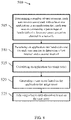
- FIG. 6 is a flowchart depicting a method for managing bandwidth, according to one or more examples of the disclosure.
- FIG. 7 is an example computing device with a hardware processor and accessible machine-readable instructions, according to one or more examples of the disclosure.
- FIG. 8 is a flowchart depicting a method for managing bandwidth, according to one or more examples of the disclosure.
- FIG. 9 is an example computing device with a hardware processor and accessible machine-readable instructions, according to one or more examples of the disclosure.
- FIG. 10 is a schematic representation of a computer processing device that may be used to implement functions and processes, according to one or more examples of the present disclosure, according to one or more examples of the disclosure.
- the article “a” is intended to have its ordinary meaning in the patent arts, namely “one or more,”
- the term “about” when applied to a value generally means within the tolerance range of the equipment used to produce the value, or in some examples, means plus or minus 10%, or plus or minus 5%, or plus or minus 1%, unless otherwise expressly specified.
- the term “substantially” as used herein means a majority, or almost all, or all, or an amount with a range of about 51% to about 100%, for example.
- examples herein are intended to be illustrative only and are presented for discussion purposes and not by way of limitation.
- the network may provision application, which are used within the business.
- Applications that are used for business functionality may include word processing, spreadsheets, presentation software, communication software, and the like. Such applications may be considered first tier, because the applications are used by employees of the business to perform business functions.
- Other applications may also be used within a business network, such as, for example, shopping applications, games, sports, and the like, and may be referred to as second tier, applications. While these second tier applications may be in use, they may cause network functionality of first tier applications to suffer due to the amount of bandwidth provided to each type of application.
- Second tier applications may be throttled, or limited. As such, the full utilization of all bandwidth may not be achieved, which may result in poor user experience for those who are using second tier applications.
- the throttling, or limiting of bandwidth, may occur for second tier applications on a global basis, thereby effecting all users similarly.
- Systems and methods disclosed herein may thereby provide the bandwidth of specific users to be adjusted based on individual user application use. As such, the user experience may be improved because bandwidth may be used more efficiently. Additionally, network functionality may be improved by limiting bandwidth to specific users or with respect to certain types of applications, thereby improving the network experience for more than just one set of users.
- FIG. 1 a schematic representation of an example computing device 100 for managing bandwidth according to one or more examples is shown.
- the computing device 100 may use software, hardware, firmware, or logic to perform functions described herein.
- Computing device 100 may include hardware and/or programming instructions configured to share information.
- the hardware may include one or more processors 105 (one shown) and memory 110 , e.g., computer-readable medium (“CRM”), machine readable medium (“MRM”), database, etc.
- processors 105 may include any set of processors capable of executing instructions stored by a memory 110 .
- Processor(s) 105 may be implemented in a single device or distributed across multiple devices.
- the program instructions e.g., computer readable instructions (“CRI”) may include instructions stored on the memory 110 and executable by the processor(s) 105 to implement a desired function.
- Memory 110 may be in communication with processor 105 .
- Memory 110 may include any set of memory components capable of storing instructions that may be executed by processor 105 .
- Memory 110 may be a non-transitory CRM or MRM.
- Memory 110 may also be integrated in a single device or distributed across multiple devices. Further, memory 110 may be fully or partially integrated in the same apparatus as processor 105 or it may be separate but accessible to that processor 105 .
- Computing device 100 may be implemented on a participant device, on a server device, on a collection of server devices, or a combination of the participant device and the server device.
- a set of modules may include CRI that when executed by the processor 105 can perform functions.
- the set of modules may be sub-modules of other modules.
- score module 120 and adjustment module 125 may be sub-modules or contained within the same computing device 100 .
- score module 120 may include additional sub-modules, such as a baseline module.
- the set of modules may include individual modules at separate and distinct locations, e.g., CRM, etc.
- Application module 115 may allow for the identification of first tier applications, e.g., applications that are used for business, and second tier applications.
- first tier applications e.g., applications that are used for business
- second tier applications e.g., applications that are used for business
- application parameters may be considered. Examples of application parameters that may be used include a user count, a number of bytes, packets, a category, a reputation, a device type, a device address, a network name, and/or a user role.
- a user count refers to the number of users using a particular application.
- the user count associated with the particular application may indicate a priority level associated with the particular application. For example, the more users use the particular application, the more likely the particular application is a first tier application (i.e., high priority application).
- a number of bytes refers to the amount of bandwidth an application uses.
- the number of bytes may correlate to the user count. For example, the greater the amount of bandwidth consumed by a particular application, the more users may be using the particular application.
- Packets refers a number of packets associated with an application that are being transmitted.
- the packet parameter may be used to identify the likelihood an application is a first tier application based on determining a number of packets correlated to the number of bytes.
- Different network traffic patterns contain different sizes of packets. Small sized packets may be control packets, while maximum transmission unit (“MTU”) size packets may be data packets. Thus, if the same network traffic is generated by a relatively large number of packets, then the traffic may be more likely to include more control information than data information.
- MTU maximum transmission unit
- a category may refer to a web category and may thereby provide one or more categories of traffic destinations, e.g., sporting, shopping, business-economic, private IP address, and the like.
- traffic destinations e.g., sporting, shopping, business-economic, private IP address, and the like.
- the application may be more likely to be a second tier application.
- the application may be more likely to be a first tier application.
- a reputation may refer to a category of trust for a site and may thereby identify second tier applications as applications where a relatively large number of bytes are consumed by less trusted sites.
- a device type may refer to a specific type of device, e.g., a cell phone, a tablet, a computing device, a network device, a server, etc., in which a number of bytes for an application is sent.
- a device address may refer to a particular media access control (“MAC”) address to which a number of bytes is directed.
- MAC media access control
- a network name may refer to a service set identifier (“SSID”) for a network, such as a wireless local-area network (“WLAN”). Traffic directed to particular network names may be used to identify whether the network is being accessed by a first or second tier application.
- SSID service set identifier
- WLAN wireless local-area network
- Traffic directed to particular network names may be used to identify whether the network is being accessed by a first or second tier application.
- a user role may allow users to be identified and may thus allow for bandwidth adjustments based on the actions of a particular user with respect to the users use of first and/or second tier applications.
- one or more application parameters may be used.
- a single application parameter may be used to identify first and second tier applications, while in other implementations, two or more application parameters may be used.
- feature selection may be performed.
- Feature selection may refer to gathering application traffic data.
- the application traffic data may include one or more of the application parameters, for each application. After the application traffic data is collected, thereby providing a database of data representative of different types of use on a network, preprocessing of the data may occur. Preprocessing may refer to assigning a relative weight to each application parameter, such that certain application parameters may have a higher value relative to an application being either a first tier or a second tier application.
- parameter transformation may occur, thereby resulting in a homogeneous type of data, e.g., all data may be converted into numerical values.
- application parameters that do not exclusively result in numerical representations e.g., a user role, a category, a reputation, and the like, may be compared with application parameters that may return a numerical value, i.e., a number of bytes or packets.
- the data Once the data is represented in a common form, the data may be divided into a training set for validation. A classification model may then be built with the training set and model accuracy subsequently validated.
- first and second tier applications may be identified using techniques including, for example, machine learning algorithms.
- application parameters specific to particular types of applications may be identified.
- the list of applications may be compared with the use data, and a model may be trained in order to classify applications as either first tier or second tier.
- Such models may be created using, for example, support vector machines (“SVM”) having logistic kernels.
- the created models may then be used to analyze use data at specific intervals to periodically identify lists of first tier applications. For example, in certain implementations, use data may be analyzed weekly, while in other implementations, use data may be analyzed monthly. Depending on the environment in which applications are used, the use data may be analyzed in other intervals.
- user scores may be generated based on a percentage of first tier application use and a percentage of bandwidth used by second tier applications.
- the use data is processed and/or provided in its original form to score module 120 . While specific examples are provided below, initially, a general explanation of generating user scores is provided.
- the user score may be a weighted combination of the percentage of first tier application use and the score of bandwidth used by second tier applications.
- the weighting may vary according to specific implementations. Examples of weighting may include having a weight multiplier that increases a user score for the percentage of bandwidth used by second tier applications. For example, in one implementation, the percentage of first tier application use may be multiplied by 0.3, while the score of bandwidth used by second tier applications may be multiplied by 0.7. As such, the more bandwidth that is used by second tier applications, the higher a user score may be assigned for a particular user.
- a range of percentage of use of bandwidth by all of a user's second tier applications within a session may be determined.
- the range may be determined by using a baselining algorithm to take all of a user's second tier application session bandwidth percent use as an input and provide a learned range as an output. Learned ranges may fall into two or three intervals, where the smallest range is considered good and the largest range is considered poor. In a three interval range, a middle range may be considered fair. Good refers to a relatively low amount of bandwidth being used by second tier applications, while poor refers to a relatively high amount of bandwidth being used by second tier applications.
- ⁇ X modifier, varies between [0, 1], with a default of 0.5
- ⁇ Y modifier, varies between [1, 50], with a default of 7.5
- X 100 times the number of sessions falling in a first interval, divided by the sum of the total number of sessions plus 1. This is repeated to calculate Y and Z, using the intervals associated therewith.
- a score of bandwidth used by second tier applications may be determined, which may thereafter allow a user score to be computed.
- ⁇ is an X modifier that allows a certain weight to be applied to session bandwidth for second tier applications. As such, the greater the value of ⁇ , the more weight is applied to second tier application bandwidth falling within the first interval.
- ⁇ is a Y modifier, that allows a certain weight to be applied to session bandwidth for second tier applications. As such, the greater the value of ⁇ , the more weight is applied to second tier application bandwidth falling within the second interval.
- the percentage of first tier applications may be determined by dividing the number of first tier applications of the user by the number of first tier applications of the user added to the number of second tier applications of the user.
- the user score may then be determined by weighting one or more of the percentage of first tier applications of the user and/or the score of bandwidth used by second tier applications of the user.
- the weighted percentage of first tier applications of the user and the score of bandwidth used by second tier applications of the user may then be added together to generate the user score.
- the user score may be adjusted to provide a score within a particular range. For example, the user score may be adjusted to provide a score between 0 and 100, where the closer to 100 indicates that the user is either using first tier applications compared to second tier applications in a bandwidth efficient manner or, little to no second tier applications may be in use. In contrast, a lower score may represent a large amount of bandwidth is being consumed relative to use of first tier applications.
- the user score may then be used to determine whether to rate limit bandwidth for a particular user.
- user scores may be defined in particular ranges.
- a four-range categorization may occur where a user score of 70-100 results in no rate limiting of bandwidth, while a user score of 50-70 may result in rate limiting the total second tier application bandwidth by 70 percent.
- the rate limiting may occur by providing a blanket rate limit for each second tier application session by 70 percent of bandwidth consumption.
- Another range may include a user score between 30 and 50, which may result in bandwidth rate limiting to 50 percent of bandwidth consumption.
- another range may include a user score below 30, which may then result in bandwidth rate limiting to 30 percent of bandwidth consumption.
- the ranges provided above are examples ranges, and as such, other ranges may also be used. In operation, fewer than four range intervals may be provided and/or the range intervals may be defined by other percentages.
- the process of user score calculation and rate limiting may be reiterated after a defined time period. For example, the user score calculation and rate limiting may be reiterated every five minutes, or for another period as may facilitate application use at a particular location. Additionally, after a bandwidth contract for a user is applied, the user score in each subsequent reiteration may improve due to less bandwidth being used by second tier applications. As such, after a number of reiterations, the user score may be high enough that no rate limiting may be applied.
- adjustment module 125 may issue a bandwidth contract commensurate with the user score, as explained above.
- Adjustment module 125 may be a standalone module or may be a sub-module of one or more of application module 115 and/or score module 120 . Accordingly, bandwidth contracts for users may be dynamically adjusted based on use of first tier applications and the bandwidth used by second tier applications.
- bandwidth may be more effectively provided to each user in a network.
- FIGS. 2-4 an example is provided below with respect to FIGS. 2-4 .
- Table 1 includes sample data for a number of users.
- Each user is identified by a particular timestamp, e.g., 1539337827, which is representative of a time period over which applications may be used.
- the timestamp may be representative of application use by a user for a 30-minute time period.
- the time period may vary according to operational requirements.
- Table 1 further includes a number of first tier applications, and a number of second tier applications.
- the percentage of bandwidth used by second tier applications is also identified and broken down into a number of sessions, a percentage bandwidth in each session, and a sum of a percentage of bandwidth in all sessions.
- a user having timestamp 1539337827 may be running 3 first tier applications and 4 second tier applications.
- the application use may occur over 8 sessions, where the bandwidth use in each session is ⁇ 0.3018, 0.0181, 0.9321, 0.5331, 0.1929, 0.0959, 0.8713, 0.2322 ⁇ .
- the sum of a percentage of bandwidth in all sessions may thereby be 3.177.
- a baseline generally refers to a method that uses heuristics, simple summary statistics, randomness, and/or machine learning to create predictions for a dataset. These predictions can be used to measure the baseline's performance (e.g., accuracy), which then can be used to compare against other machine learning mechanisms.
- Example baselines used may include, but are not limited to, classification baselines, regression baselines, etc.
- first interval and a second interval may be produced.
- FIG. 3 a graph showing learned baseline values for the sample data from the table in FIG. 2 , according to one or more examples is shown.
- the baselined data results in a first interval 201 and a second interval 202 .
- first interval 201 may be referred to as a good interval
- second interval 202 may be referred to as a poor interval.
- the baseline value 203 produced in this example is 0.395.
- first interval 201 may be bound by a percentage bandwidth between 0 and 0.395
- second interval 202 may be bound by a percentage bandwidth between 0.395 and 5.
- baselining may result in two baseline values, 204 and 205 , respectively, thereby producing a first interval 206 , a second interval 207 , and a third interval 208 .
- first interval 206 may be a good interval
- second interval 207 may be a fair interval
- third interval 208 may be a poor interval.
- baselining may result in a division of percentage of bandwidth into two or more intervals, thereby allowing a percentage bandwidth per session use by second tier applications to be analyzed to determine which percentage of session bandwidth falls within a particular interval.
- FIG. 5 a table showing a user score for users according to one or more examples is shown.
- Table 2 shows similar information as provided in Table 1, however, Table 2 also provides a score of second tier applications, and a user score.
- the score of second tier applications refers to the score of bandwidth used by second tier applications, as discussed in detail above.
- timestamp 1539337827 is continued below.
- the percentage of session bandwidth falling within the first interval, good interval, and the percentage of bandwidth falling within the second interval, poor interval may be calculated.
- baselining only returned two intervals, so the percentage of bandwidth falling in a fair interval is not calculated.
- the baseline intervals include a first interval for session bandwidth falling between 0 and 0.395, i.e., the good interval, and a second interval falling between 0.395 and 5, i.e., the poor interval.
- score of bandwidth used by second tier applications 55.5 1.5 +7.5(0/1)+33.3
- ⁇ is 0.5
- ⁇ is 7.5.
- the score of bandwidth used by second tier applications is 447.4, which may be divided by 10 to produce a final score of 44.74.
- a weighted percentage may be applied to one or more of the percentage of first tier applications and/or the score of bandwidth used by second tier applications.
- the user score may subsequently be used to adjust bandwidth for the particular user.
- the user score of 44.17 may result in a bandwidth limitation of 50 percent, which may occur by rate limiting each secondary application session by 50 percent of current bandwidth consumption.
- the rate limiting may include adjusting bandwidth by different amounts.
- the bandwidth may be rate limited on a linear scale that corresponds to the user score. In such a circumstance, the bandwidth may be rate limited by 44.17 in the current example.
- the process of user score calculation and bandwidth adjustment may occur periodically, such as every five minutes, thereby increase efficiency of bandwidth usage for one or more users.
- method 300 may include identifying (block 305 ) a first tier of applications and a second tier of applications.
- the first tier of applications may include applications that are used in business, e.g., word processing, spreadsheets, presentation software, communication software, financial software, and the like.
- the second tier applications may include other types of applications, such as mapping software, games, sports, etc.
- the identification may occur, as described above, by generating a model that identifies the first and second tier applications based on a set of application parameters that define features of application use.
- the application parameters may thus be applied through machine learning algorithms to determine, based on use data, whether the use is for first tier or second tier applications.
- the process of identifying may be repeated within a certain time period in order to account for changes in user behavior, new applications, new application types, and the like.
- method 300 may include determining (block 310 ) a number of user sessions associated with at least one application among the first tier of applications and the second tier of applications, each user session consuming a percentage of bandwidth of at least one communication channel in a network. Determining the number of user sessions may refer to collecting user data over a specific time interval, which may be identified by a timestamp. The timestamp, or interval of sessions, may include a definitive time period, such as 30 minutes. In such an example, every 30 minutes the number of sessions in which applications were used may be determined. For each session, the percentage of bandwidth may also be collected, thereby providing a percentage bandwidth use for each session within a time period. With this information, the sum of the percentage of bandwidth for all sessions in the time period may also be determined.
- method 300 may include baselining (block 315 ) a second tier application bandwidth use for each user session associated with the second tier of applications to determine a first interval and a second interval.
- the baselining may include determining, for the second tier applications, intervals, or ranges, which are defined as being good, fair, or poor.
- the baselining may thereby allow sessions of good use to be determinable from session that were not a good use of bandwidth.
- there may be a first and second interval while in other implementations there may be a first, second, and third interval.
- the intervals may be associated with the calculations, as explained in detail above.
- method 300 may include calculating (block 320 ) a second tier application usage score associated with the second tier of applications, the calculating including determining a percentage of bandwidth used by second tier applications in the first interval and determining a percentage of bandwidth used by second tier of applications in the second interval. This calculation may thereby provide a weighted determination of the percentage of bandwidth use that is occurring in each session for second tier applications.
- method 300 may include generating (block 325 ) a user score based on the second tier application usage score and a percentage of use of the first tier applications.
- the user score may use weighting in order to provide a score that allows for a determination of whether a user should be rate limited.
- the rate limiting determination may occur as a result of the user score falling within a predefined range, where the location within the range defines how much a user is rate limited, if any rate limiting occurs at all.
- a range may be defined that does not result in rate limiting.
- method 300 may include adjusting (block 330 ) a bandwidth allocation based on the user score.
- the bandwidth of a particular user may be adjusted to account for the user's behavior through use of first tier and second tier applications. As such, the bandwidth may be adjusted to allow more bandwidth for first tier applications, while decreasing bandwidth for second tier applications. Additionally, as individual users may be rate limited, the efficiency of an operation may be increased by providing more bandwidth for first tier applications, while providing less bandwidth for second tier applications.
- FIG. 7 an example computing device with a hardware processor and accessible machine-readable instructions, according to one or more examples is shown.
- FIG. 7 provides an example computing device 425 , with a hardware processor 430 , and accessible machine-readable instructions stored on a machine-readable medium 435 for generating information about a product as discussed above with respect to one or more disclosed example implementations.
- FIG. 7 illustrates computing device 425 configured to perform the flow described in blocks 305 , 310 , 315 , 320 , 325 , and 330 discussed in detail with respect to FIG. 6 .
- computing device 425 may, also be configured to perform the flow of other methods, techniques, functions, or processes described in this disclosure.
- the machine-readable storage medium may be a non-transitory storage medium, where the term “non-transitory” does not encompass transitory propagating signals.
- method 500 may include determining (block 505 ) a number of user sessions, each user session associated with at least one application in an application tier, each user session consuming a percentage of bandwidth of at least one communication channel in a network.
- the application tier may refer to, for example, application in the first tier or applications in the second tier, as discussed in detail above.
- method 500 may include baselining (block 510 ) an application tier bandwidth use for each user session to determine a first interval and a second interval.
- the application tier bandwidth use may refer to, for example, applications within the second application tier, as explained above with respect to FIG. 6 .
- the application tier may include applications that are not related to business, such as shopping applications, sports applications, entertainment applications, and the like.
- method 500 may include calculating (block 515 ) an application tier usage score.
- the application tier usage score may refer to, for example, the second tier application usage score, as discussed above.
- the application tier usage score may include a score that defines the bandwidth used by applications, and may follow the formula, or a variation of the formula, provided above.
- certain variables may have different values and/or ranges.
- an ⁇ value may not be used to determine an application tier usage score, while in other implementations a ⁇ value may not be used.
- scores may only be calculated to include certain baselined intervals.
- additional values may be included to further provide for weighting certain values.
- Z may also include a modifier that may be used to increase or decrease the weight of the Z interval.
- method 500 may include generating (block 520 ) a user score based on the application tier usage score. Additionally, in operation, method 500 may include adjusting (block 525 ) a bandwidth allocation based on the user score.
- the adjustments may include any adjustments provided above including, for example, rate limiting bandwidth for a user, rate limiting bandwidth for a specific user session, rate limiting bandwidth for the use of second tier applications, etc.
- method 500 may further include identifying the application tier and a second application tier.
- the application tier may refer to applications that are not related to business operations while the second application tier may refer to applications that are related to business operations.
- generating the user score may be based on the application tier usage score and the percentage of use of applications in the second application tier.
- FIG. 9 an example computing device with a hardware processor and accessible machine-readable instructions, according to one or more examples is shown.
- FIG. 9 provides similar structural components discussed above with respect to FIG. 7 , and as such, for purposes of clarity, only the differences in the figures will be discussed herein,
- FIG. 9 provides an example computing device 425 , with a hardware processor 430 , and accessible machine-readable instructions stored on a machine-readable medium 435 for managing data as discussed above with respect to one or more disclosed example implementations.
- FIG. 9 illustrates computing device 425 configured to perform the flow described in blocks 505 , 510 , 515 , 520 , and 525 , discussed in detail with respect to FIG. 8 .
- FIG. 10 a schematic representation of a computer processing device 700 that may be used to implement functions and processes in accordance with one or more examples of the present disclosure is shown.
- FIG. 10 illustrates a computer processing device 700 that may be used to implement the systems, methods, and processes of this disclosure.
- computing device 700 illustrated in FIG. 10 could represent a client device or a physical server device and include either hardware or virtual processor(s) depending on the level of abstraction of the computing device.
- computing device 700 and its elements, as shown in FIG. 10 each relate to physical hardware.
- one, more, or all of the elements could be implemented using emulators or virtual machines as levels of abstraction.
- computing device 700 at its lowest level may be implemented on physical hardware.
- computing device 700 may allow a subscriber to remotely access one or more data centers.
- the management tool used by the subscriber may include a software solution that runs on such a computing device 700 .
- FIG. 10 shows a computing system 700 in accordance with one or more examples of the present disclosure.
- Computing system 700 may be used to implement aspects of the present disclosure, such as an orchestrator, a gateway manager, a cloud monitor, a local storage, a cloud-based storage, or any other device that may be used implementing the systems and methods for managing data discussed herein.
- Computing system 700 may include one or more central processing units (singular “CPU” or plural “CPUs”) 705 disposed on one or more printed circuit boards (not otherwise shown).
- Each of the one or more CPUs 705 may be a single-core processor (not independently illustrated) or a multi-core processor (not independently illustrated).
- Multi-core processors typically include a plurality of processor cores (not shown) disposed on the same physical die (not shown) or a plurality of processor cores (not shown) disposed on multiple die (not shown) that are collectively disposed within the same mechanical package (not shown).
- Computing system 700 may include one or more core logic devices such as, for example, host bridge 710 and input/output (“IO”) bridge 715 .
- core logic devices such as, for example, host bridge 710 and input/output (“IO”) bridge 715 .
- CPU 705 may include an interface 708 to host bridge 710 , an interface 718 to system memory 720 , and an interface 723 to one or more IO devices, such as, for example, graphics processing unit (“GFX”) 725 .
- GFX 725 may include one or more graphics processor cores (not independently shown) and an interface 728 to display 730 .
- CPU 705 may integrate the functionality of GFX 725 and interface directly (not shown) with display 730 .
- Host bridge 710 may include an interface 708 to CPU 705 , an interface 713 to IO bridge 715 , for examples where CPU 705 does not include interface 718 to system memory 720 , an interface 716 to system memory 720 , and for examples where CPU 705 does not include integrated GFX 725 or interface 723 to GFX 725 , an interface 721 to GFX 725 .
- CPU 705 and host bridge 710 may be integrated, in whole or in part, to reduce chip count, motherboard footprint, thermal design power, and power consumption.
- IO bridge 715 may include an interface 713 to host bridge 710 , one or more interfaces 733 to one or more IO expansion devices 735 , an interface 738 to keyboard 740 , an interface 743 to mouse 745 , an interface 748 to one or more local storage devices 750 , and an interface 753 to one or more network interface devices 755 .
- Each local storage device 750 may be a solid-state memory device, a solid-state memory device array, a hard disk drive, a hard disk drive array, or any other non-transitory computer readable medium.
- Each network interface device 755 may provide one or more network interfaces including, for example, Ethernet, Fibre Channel, WiMAX, Wi-Fi®, Bluetooth®, or any other network protocol suitable to facilitate networked communications.
- Computing system 700 may include one or more network-attached storage devices 760 in addition to, or instead of, one or more local storage devices 750 .
- Network-attached storage device 760 may be a solid-state memory device, a solid-state memory device array, a hard disk drive, a hard disk drive array, or any other non-transitory computer readable medium.
- Network-attached storage device 760 may or may not be collocated with computing system 700 and may be accessible to computing system 700 via one or more network interfaces provided by one or more network interface devices 755 .
- computing system 700 may include one or more application specific integrated circuits (“ASICs”) that are configured to perform a certain function, such as, for example, hashing (not shown), in a more efficient manner.
- ASICs application specific integrated circuits
- the one or more ASICs may interface directly with an interface of CPU 705 , host bridge 760 , or IO bridge 715 .
- an application-specific computing system (not shown), sometimes referred to as mining systems, may be reduced to only those components necessary to perform the desired function, such as hashing via one or more hashing ASICs, to reduce chip count, motherboard footprint, thermal design power, and power consumption.
- the one or more CPUs 705 , host bridge 710 , IO bridge 715 , or ASICs or various sub-sets, super-sets, or combinations of functions or features thereof, may be integrated, in whole or in part, or distributed among various devices in a way that may vary based on an application, design, or form factor in accordance with one or more example examples.
- the description of computing system 700 is an example, and not intended to limit the type, kind, or configuration of components that constitute a computing system suitable for performing computing operations, including, but not limited to, hashing functions.
- computing system 700 , an application specific computing system (not shown), or combination thereof may be disposed in a standalone, desktop, server, or rack mountable form factor.
- computing system 700 may be a cloud-based server, a server, a workstation, a desktop, a laptop, a netbook, a tablet, a smartphone, a mobile device, and/or any other type of computing system in accordance with one or more example examples.
Landscapes
- Engineering & Computer Science (AREA)
- Computer Networks & Wireless Communication (AREA)
- Signal Processing (AREA)
- Environmental & Geological Engineering (AREA)
- Data Exchanges In Wide-Area Networks (AREA)
Abstract
Description
X 1+α +β*Y+Z=Score of bandwidth used by second tier applications
X=100×(5/(8+1))
Z=100×(3/(8+1))
As such, X is 55.5 and Z is 33.3.
score of bandwidth used by second tier applications=55.51.5+7.5(0/1)+33.3
In this example, α is 0.5 and β is 7.5. As such, the score of bandwidth used by second tier applications is 447.4, which may be divided by 10 to produce a final score of 44.74.
percentage of first tier applications=(100×3)/(3+4)
Accordingly, the percentage of first tier applications is 42.85. To determine the user score, a weighted percentage may be applied to one or more of the percentage of first tier applications and/or the score of bandwidth used by second tier applications.
user score=0.3*42.85+0.7*44.74
As such, the calculated user score is 44.17.
Claims (18)
Priority Applications (1)
| Application Number | Priority Date | Filing Date | Title |
|---|---|---|---|
| US16/371,346 US11374869B2 (en) | 2019-04-01 | 2019-04-01 | Managing bandwidth based on user behavior |
Applications Claiming Priority (1)
| Application Number | Priority Date | Filing Date | Title |
|---|---|---|---|
| US16/371,346 US11374869B2 (en) | 2019-04-01 | 2019-04-01 | Managing bandwidth based on user behavior |
Publications (2)
| Publication Number | Publication Date |
|---|---|
| US20200314019A1 US20200314019A1 (en) | 2020-10-01 |
| US11374869B2 true US11374869B2 (en) | 2022-06-28 |
Family
ID=72604961
Family Applications (1)
| Application Number | Title | Priority Date | Filing Date |
|---|---|---|---|
| US16/371,346 Active 2039-11-29 US11374869B2 (en) | 2019-04-01 | 2019-04-01 | Managing bandwidth based on user behavior |
Country Status (1)
| Country | Link |
|---|---|
| US (1) | US11374869B2 (en) |
Families Citing this family (4)
| Publication number | Priority date | Publication date | Assignee | Title |
|---|---|---|---|---|
| CN113193991B (en) * | 2021-04-15 | 2023-05-19 | 网宿科技股份有限公司 | A bandwidth speed limiting method, a decision-making device, and a computer-readable storage medium |
| US11620059B1 (en) * | 2021-10-04 | 2023-04-04 | International Business Machines Corporation | Optimization of file system snapshot performance in hybrid storage deployments |
| CN116261201B (en) * | 2022-12-07 | 2025-09-09 | 中国人民解放军陆军工程大学 | Bandwidth allocation and user grouping method and system based on game theory |
| CN119652763A (en) * | 2024-12-06 | 2025-03-18 | 臻乐尔科技服务(上海)有限公司 | Method, system, electronic device and storage medium for dynamic regulation of virtual network bandwidth based on user profile |
Citations (8)
| Publication number | Priority date | Publication date | Assignee | Title |
|---|---|---|---|---|
| US20010039582A1 (en) * | 2000-05-19 | 2001-11-08 | Mckinnon Martin W. | Allocating access across a shared communications medium in a carrier network |
| US20020172222A1 (en) | 2001-03-29 | 2002-11-21 | International Business Machines Corporation | Method and system for network management providing access to application bandwidth usage calculations |
| US20050052992A1 (en) | 2003-08-01 | 2005-03-10 | Cloonan Thomas J. | Method and system for dynamically managing cable data bandwidth based on channel congestion state and subscriber usage profile |
| US20100268524A1 (en) | 2009-04-17 | 2010-10-21 | Empirix Inc. | Method For Modeling User Behavior In IP Networks |
| US8661153B2 (en) | 2002-10-16 | 2014-02-25 | Rpx Corporation | System and method for dynamic bandwidth provisioning |
| US20140215061A1 (en) * | 2011-08-02 | 2014-07-31 | Tencent Technology (Shenzhen) Company Limited | Method, system and computer storage medium for bandwidth optimization of network application |
| US9559956B2 (en) | 2011-02-01 | 2017-01-31 | Google Inc. | Sharing bandwidth among multiple users of network applications |
| US20200092216A1 (en) * | 2016-09-13 | 2020-03-19 | Gogo Llc | User directed bandwidth optimization |
-
2019
- 2019-04-01 US US16/371,346 patent/US11374869B2/en active Active
Patent Citations (8)
| Publication number | Priority date | Publication date | Assignee | Title |
|---|---|---|---|---|
| US20010039582A1 (en) * | 2000-05-19 | 2001-11-08 | Mckinnon Martin W. | Allocating access across a shared communications medium in a carrier network |
| US20020172222A1 (en) | 2001-03-29 | 2002-11-21 | International Business Machines Corporation | Method and system for network management providing access to application bandwidth usage calculations |
| US8661153B2 (en) | 2002-10-16 | 2014-02-25 | Rpx Corporation | System and method for dynamic bandwidth provisioning |
| US20050052992A1 (en) | 2003-08-01 | 2005-03-10 | Cloonan Thomas J. | Method and system for dynamically managing cable data bandwidth based on channel congestion state and subscriber usage profile |
| US20100268524A1 (en) | 2009-04-17 | 2010-10-21 | Empirix Inc. | Method For Modeling User Behavior In IP Networks |
| US9559956B2 (en) | 2011-02-01 | 2017-01-31 | Google Inc. | Sharing bandwidth among multiple users of network applications |
| US20140215061A1 (en) * | 2011-08-02 | 2014-07-31 | Tencent Technology (Shenzhen) Company Limited | Method, system and computer storage medium for bandwidth optimization of network application |
| US20200092216A1 (en) * | 2016-09-13 | 2020-03-19 | Gogo Llc | User directed bandwidth optimization |
Non-Patent Citations (1)
| Title |
|---|
| Cyberoam—Managing Bandwidth—The User Based Approach, (Research Paper), 2008, Retrieved Jan. 3, 2019, 9 Pgs. |
Also Published As
| Publication number | Publication date |
|---|---|
| US20200314019A1 (en) | 2020-10-01 |
Similar Documents
| Publication | Publication Date | Title |
|---|---|---|
| Chen et al. | Latency minimization for mobile edge computing networks | |
| US10460241B2 (en) | Server and cloud computing resource optimization method thereof for cloud big data computing architecture | |
| JP6224244B2 (en) | Power balancing to increase working density and improve energy efficiency | |
| CN104038540B (en) | Method and system for automatically selecting application proxy server | |
| US20200314019A1 (en) | Managing bandwidth based on user behavior | |
| US20160203235A1 (en) | Striping of directed graphs and nodes with improved functionality | |
| CN117640634A (en) | Cloud edge end cooperation method and system for integrated management of intelligent monitoring system | |
| CN104484233B (en) | A kind of resource allocation methods | |
| US11526784B2 (en) | Real-time server capacity optimization tool using maximum predicted value of resource utilization determined based on historica data and confidence interval | |
| CN113543160A (en) | 5G slice resource allocation method, device, computing device and computer storage medium | |
| CN118233469A (en) | Computing task scheduling method and system based on delay perception and load balancing | |
| Gupta et al. | Long range dependence in cloud servers: a statistical analysis based on google workload trace | |
| CN105872082B (en) | Fine granularity resource response system based on container cluster load-balancing algorithm | |
| CN107943579A (en) | Resource bottleneck Forecasting Methodology, equipment, system and readable storage medium storing program for executing | |
| CN107566535A (en) | Adaptive load balancing strategy based on user concurrent access timing planning in a kind of web map service | |
| Sakib et al. | A Dynamic Approach to Load Balancing in Cloud Infrastructure: Enhancing Energy Efficiency and Resource Utilization | |
| CN113568759A (en) | Cloud computing-based big data processing method and system | |
| CN103825963A (en) | Virtual service transition method | |
| CN111598390B (en) | Server high availability evaluation methods, devices, equipment and readable storage media | |
| CN115396319B (en) | Data stream slicing method, device, equipment and storage medium | |
| CN105868300B (en) | Character string matching method in many-core environment | |
| CN106888237B (en) | A data scheduling method and system | |
| CN117170861A (en) | A cloud server microservice scheduling method and system | |
| Mostafaei et al. | Network-aware worker placement for wide-area streaming analytics | |
| CN112579246B (en) | Virtual machine migration processing method and device |
Legal Events
| Date | Code | Title | Description |
|---|---|---|---|
| AS | Assignment |
Owner name: HEWLETT PACKARD ENTERPRISE DEVELOPMENT LP, TEXAS Free format text: ASSIGNMENT OF ASSIGNORS INTEREST;ASSIGNORS:REHMAN, ATAUR;GUPTA, GOPAL;AGARWAL, GOPAL;SIGNING DATES FROM 20190329 TO 20190401;REEL/FRAME:048753/0420 |
|
| FEPP | Fee payment procedure |
Free format text: ENTITY STATUS SET TO UNDISCOUNTED (ORIGINAL EVENT CODE: BIG.); ENTITY STATUS OF PATENT OWNER: LARGE ENTITY |
|
| STCT | Information on status: administrative procedure adjustment |
Free format text: PROSECUTION SUSPENDED |
|
| STPP | Information on status: patent application and granting procedure in general |
Free format text: DOCKETED NEW CASE - READY FOR EXAMINATION |
|
| STPP | Information on status: patent application and granting procedure in general |
Free format text: NON FINAL ACTION MAILED |
|
| STPP | Information on status: patent application and granting procedure in general |
Free format text: RESPONSE TO NON-FINAL OFFICE ACTION ENTERED AND FORWARDED TO EXAMINER |
|
| STPP | Information on status: patent application and granting procedure in general |
Free format text: NOTICE OF ALLOWANCE MAILED -- APPLICATION RECEIVED IN OFFICE OF PUBLICATIONS |
|
| STPP | Information on status: patent application and granting procedure in general |
Free format text: PUBLICATIONS -- ISSUE FEE PAYMENT VERIFIED |
|
| STCF | Information on status: patent grant |
Free format text: PATENTED CASE |
|
| MAFP | Maintenance fee payment |
Free format text: PAYMENT OF MAINTENANCE FEE, 4TH YEAR, LARGE ENTITY (ORIGINAL EVENT CODE: M1551); ENTITY STATUS OF PATENT OWNER: LARGE ENTITY Year of fee payment: 4 |