US11358964B2 - Methods of treatment using BCN057 and BCN512 - Google Patents
Methods of treatment using BCN057 and BCN512 Download PDFInfo
- Publication number
- US11358964B2 US11358964B2 US17/001,592 US202017001592A US11358964B2 US 11358964 B2 US11358964 B2 US 11358964B2 US 202017001592 A US202017001592 A US 202017001592A US 11358964 B2 US11358964 B2 US 11358964B2
- Authority
- US
- United States
- Prior art keywords
- day
- cancer
- compound
- formula
- subject
- Prior art date
- Legal status (The legal status is an assumption and is not a legal conclusion. Google has not performed a legal analysis and makes no representation as to the accuracy of the status listed.)
- Active
Links
- 0 [1*]c1c(-c2cc3ccc([3*])cc3[nH]c2=O)nc2c([2*])cccn12 Chemical compound [1*]c1c(-c2cc3ccc([3*])cc3[nH]c2=O)nc2c([2*])cccn12 0.000 description 9
- ZIZCDUUJZYNDMX-UHFFFAOYSA-N CC(F)(F)NCCC(N)=O.CNCCC(=O)O.CNCCC(N)=O.COCCC(N)=O.CONCCC(N)=O.Cc1cccc(C(N)=O)c1.Cc1cccc(CN)c1.NCC1=CC=CC1.NCc1cccc(F)c1.NCc1ccccc1.NCc1ccccc1.NCc1ccco1.OCc1cccc(F)c1 Chemical compound CC(F)(F)NCCC(N)=O.CNCCC(=O)O.CNCCC(N)=O.COCCC(N)=O.CONCCC(N)=O.Cc1cccc(C(N)=O)c1.Cc1cccc(CN)c1.NCC1=CC=CC1.NCc1cccc(F)c1.NCc1ccccc1.NCc1ccccc1.NCc1ccco1.OCc1cccc(F)c1 ZIZCDUUJZYNDMX-UHFFFAOYSA-N 0.000 description 2
- XVYXNJOQBWSEKZ-UHFFFAOYSA-N CNCCC(=O)Oc1c(C2=Cc3ccc(OC)cc3CC2=O)nc2c(C)cccn12 Chemical compound CNCCC(=O)Oc1c(C2=Cc3ccc(OC)cc3CC2=O)nc2c(C)cccn12 XVYXNJOQBWSEKZ-UHFFFAOYSA-N 0.000 description 2
- SPICMIGHPOMFFY-UHFFFAOYSA-N COc1ccc2cc(-c3nc4c(C)cccn4c3NCc3ccccc3)c(=O)[nH]c2c1 Chemical compound COc1ccc2cc(-c3nc4c(C)cccn4c3NCc3ccccc3)c(=O)[nH]c2c1 SPICMIGHPOMFFY-UHFFFAOYSA-N 0.000 description 2
- SVEYDBXKIZTNQC-UHFFFAOYSA-N COc1ccc2cc(-c3nc4ccc(C)cn4c3NCc3ccco3)c(=O)[nH]c2c1 Chemical compound COc1ccc2cc(-c3nc4ccc(C)cn4c3NCc3ccco3)c(=O)[nH]c2c1 SVEYDBXKIZTNQC-UHFFFAOYSA-N 0.000 description 2
- ILDMEBUDUSDBQY-UHFFFAOYSA-N C.O=[N+]([O-])c1ccc(S(=O)(=O)N2CCN(c3ccccc3)CC2)cc1 Chemical compound C.O=[N+]([O-])c1ccc(S(=O)(=O)N2CCN(c3ccccc3)CC2)cc1 ILDMEBUDUSDBQY-UHFFFAOYSA-N 0.000 description 1
- KVSMDNHFSHTGMP-UHFFFAOYSA-N CC(C)S(=O)(=O)c1ccc([N+](=O)[O-])cc1 Chemical compound CC(C)S(=O)(=O)c1ccc([N+](=O)[O-])cc1 KVSMDNHFSHTGMP-UHFFFAOYSA-N 0.000 description 1
- HMUSEFOFDNTABD-UHFFFAOYSA-N CC(N)c1cccc(F)c1N1CCN(S(=O)(=O)c2ccc([N+](=O)[O-])cc2)CC1 Chemical compound CC(N)c1cccc(F)c1N1CCN(S(=O)(=O)c2ccc([N+](=O)[O-])cc2)CC1 HMUSEFOFDNTABD-UHFFFAOYSA-N 0.000 description 1
- KDXGYHWBLCZDJB-UHFFFAOYSA-N CCCCCCCCCCCCOc1ccccc1N1CCN(S(=O)(=O)c2ccc([N+](=O)[O-])cc2)CC1 Chemical compound CCCCCCCCCCCCOc1ccccc1N1CCN(S(=O)(=O)c2ccc([N+](=O)[O-])cc2)CC1 KDXGYHWBLCZDJB-UHFFFAOYSA-N 0.000 description 1
- MFMYPBVASXUSEJ-UHFFFAOYSA-N CNCCC(=O)Nc1c(-c2cc3ccc(OC)cc3[nH]c2=O)nc2c(C)cccn12 Chemical compound CNCCC(=O)Nc1c(-c2cc3ccc(OC)cc3[nH]c2=O)nc2c(C)cccn12 MFMYPBVASXUSEJ-UHFFFAOYSA-N 0.000 description 1
- UXYBXDJUUIZGMC-UHFFFAOYSA-N COCCC(=O)Nc1c(-c2cc3ccc(OC)cc3[nH]c2=O)nc2c(C)cccn12 Chemical compound COCCC(=O)Nc1c(-c2cc3ccc(OC)cc3[nH]c2=O)nc2c(C)cccn12 UXYBXDJUUIZGMC-UHFFFAOYSA-N 0.000 description 1
- YUQNTIGBYHUUDD-UHFFFAOYSA-N CONCCC(=O)Nc1c(-c2cc3ccc(OC)cc3[nH]c2=O)nc2c(C)cccn12 Chemical compound CONCCC(=O)Nc1c(-c2cc3ccc(OC)cc3[nH]c2=O)nc2c(C)cccn12 YUQNTIGBYHUUDD-UHFFFAOYSA-N 0.000 description 1
- RJXMSRQLWGPYEQ-UHFFFAOYSA-N COc1ccc2cc(-c3nc4c(C)cccn4c3CCc3cc(O)cc(O)c3)c(=O)[nH]c2c1 Chemical compound COc1ccc2cc(-c3nc4c(C)cccn4c3CCc3cc(O)cc(O)c3)c(=O)[nH]c2c1 RJXMSRQLWGPYEQ-UHFFFAOYSA-N 0.000 description 1
- MMKCYIRMJGMCDK-UHFFFAOYSA-N COc1ccc2cc(-c3nc4c(C)cccn4c3CCc3ccncc3)c(=O)[nH]c2c1 Chemical compound COc1ccc2cc(-c3nc4c(C)cccn4c3CCc3ccncc3)c(=O)[nH]c2c1 MMKCYIRMJGMCDK-UHFFFAOYSA-N 0.000 description 1
- RFRSWLXFLVZLGI-UHFFFAOYSA-N COc1ccc2cc(-c3nc4c(C)cccn4c3NC(=O)CCNC(F)(F)F)c(=O)[nH]c2c1 Chemical compound COc1ccc2cc(-c3nc4c(C)cccn4c3NC(=O)CCNC(F)(F)F)c(=O)[nH]c2c1 RFRSWLXFLVZLGI-UHFFFAOYSA-N 0.000 description 1
- GTWVVOKTEDGJPN-UHFFFAOYSA-N COc1ccc2cc(-c3nc4c(C)cccn4c3NC(=O)c3cccc(F)c3)c(=O)[nH]c2c1 Chemical compound COc1ccc2cc(-c3nc4c(C)cccn4c3NC(=O)c3cccc(F)c3)c(=O)[nH]c2c1 GTWVVOKTEDGJPN-UHFFFAOYSA-N 0.000 description 1
- FJMGJLDAJNJLAC-UHFFFAOYSA-N COc1ccc2cc(-c3nc4c(C)cccn4c3NCc3ccc(F)cc3)c(=O)[nH]c2c1 Chemical compound COc1ccc2cc(-c3nc4c(C)cccn4c3NCc3ccc(F)cc3)c(=O)[nH]c2c1 FJMGJLDAJNJLAC-UHFFFAOYSA-N 0.000 description 1
- UJLXDGZTLYUMIN-UHFFFAOYSA-N COc1ccc2cc(-c3nc4c(C)cccn4c3NCc3cccc(F)c3)c(=O)[nH]c2c1 Chemical compound COc1ccc2cc(-c3nc4c(C)cccn4c3NCc3cccc(F)c3)c(=O)[nH]c2c1 UJLXDGZTLYUMIN-UHFFFAOYSA-N 0.000 description 1
- STNILGKIGCLXFV-UHFFFAOYSA-N COc1ccc2cc(-c3nc4c(C)cccn4c3NCc3ccco3)c(=O)[nH]c2c1 Chemical compound COc1ccc2cc(-c3nc4c(C)cccn4c3NCc3ccco3)c(=O)[nH]c2c1 STNILGKIGCLXFV-UHFFFAOYSA-N 0.000 description 1
- FNMZWVDFWVPRON-UHFFFAOYSA-N COc1ccc2cc(-c3nc4c(C)cccn4c3OCc3ccc(F)cc3)c(=O)[nH]c2c1 Chemical compound COc1ccc2cc(-c3nc4c(C)cccn4c3OCc3ccc(F)cc3)c(=O)[nH]c2c1 FNMZWVDFWVPRON-UHFFFAOYSA-N 0.000 description 1
- VWCURDVNEPYEJA-UHFFFAOYSA-N COc1ccc2cc(-c3nc4ccc(C)cn4c3NCc3ccccc3)c(=O)[nH]c2c1 Chemical compound COc1ccc2cc(-c3nc4ccc(C)cn4c3NCc3ccccc3)c(=O)[nH]c2c1 VWCURDVNEPYEJA-UHFFFAOYSA-N 0.000 description 1
- ICKDUNJUCATTAB-UHFFFAOYSA-N COc1ccc2cc(-c3nc4cccc(C)n4c3CCc3ccc[nH]3)c(=O)[nH]c2c1 Chemical compound COc1ccc2cc(-c3nc4cccc(C)n4c3CCc3ccc[nH]3)c(=O)[nH]c2c1 ICKDUNJUCATTAB-UHFFFAOYSA-N 0.000 description 1
- HPPQQYAQZMTDOS-UHFFFAOYSA-N COc1ccc2cc(-c3nc4ccccn4c3OCc3ccc(F)cc3)c(=O)[nH]c2c1 Chemical compound COc1ccc2cc(-c3nc4ccccn4c3OCc3ccc(F)cc3)c(=O)[nH]c2c1 HPPQQYAQZMTDOS-UHFFFAOYSA-N 0.000 description 1
- HHVIBTZHLRERCL-UHFFFAOYSA-N CS(C)(=O)=O Chemical compound CS(C)(=O)=O HHVIBTZHLRERCL-UHFFFAOYSA-N 0.000 description 1
- MREIRINHZHQIOH-UHFFFAOYSA-N NCc1cc(F)ccc1N1CCN(S(=O)(=O)c2ccc([N+](=O)[O-])cc2)CC1 Chemical compound NCc1cc(F)ccc1N1CCN(S(=O)(=O)c2ccc([N+](=O)[O-])cc2)CC1 MREIRINHZHQIOH-UHFFFAOYSA-N 0.000 description 1
- FXJKMXSFRXCMMR-UHFFFAOYSA-N NCc1ccccc1N1CCN(S(=O)(=O)c2ccc([N+](=O)[O-])cc2)CC1 Chemical compound NCc1ccccc1N1CCN(S(=O)(=O)c2ccc([N+](=O)[O-])cc2)CC1 FXJKMXSFRXCMMR-UHFFFAOYSA-N 0.000 description 1
- RKXIQBUYEBYOEP-UHFFFAOYSA-N O=C(O)Cc1ccccc1N1CCN(S(=O)(=O)c2ccc([N+](=O)[O-])cc2)CC1 Chemical compound O=C(O)Cc1ccccc1N1CCN(S(=O)(=O)c2ccc([N+](=O)[O-])cc2)CC1 RKXIQBUYEBYOEP-UHFFFAOYSA-N 0.000 description 1
- XODLTOYHPDBTRW-UHFFFAOYSA-N O=[N+]([O-])c1ccc(S(=O)(=O)N2CCN(c3ccccc3)CC2)cc1 Chemical compound O=[N+]([O-])c1ccc(S(=O)(=O)N2CCN(c3ccccc3)CC2)cc1 XODLTOYHPDBTRW-UHFFFAOYSA-N 0.000 description 1
- NMEYUHLNOISEDV-UHFFFAOYSA-N O=[N+]([O-])c1ccc(S(=O)(=O)N2CCN(c3ccccc3CO)CC2)cc1 Chemical compound O=[N+]([O-])c1ccc(S(=O)(=O)N2CCN(c3ccccc3CO)CC2)cc1 NMEYUHLNOISEDV-UHFFFAOYSA-N 0.000 description 1
Images


Classifications
-
- C—CHEMISTRY; METALLURGY
- C07—ORGANIC CHEMISTRY
- C07D—HETEROCYCLIC COMPOUNDS
- C07D471/00—Heterocyclic compounds containing nitrogen atoms as the only ring hetero atoms in the condensed system, at least one ring being a six-membered ring with one nitrogen atom, not provided for by groups C07D451/00 - C07D463/00
- C07D471/02—Heterocyclic compounds containing nitrogen atoms as the only ring hetero atoms in the condensed system, at least one ring being a six-membered ring with one nitrogen atom, not provided for by groups C07D451/00 - C07D463/00 in which the condensed system contains two hetero rings
- C07D471/04—Ortho-condensed systems
-
- C—CHEMISTRY; METALLURGY
- C07—ORGANIC CHEMISTRY
- C07D—HETEROCYCLIC COMPOUNDS
- C07D295/00—Heterocyclic compounds containing polymethylene-imine rings with at least five ring members, 3-azabicyclo [3.2.2] nonane, piperazine, morpholine or thiomorpholine rings, having only hydrogen atoms directly attached to the ring carbon atoms
- C07D295/22—Heterocyclic compounds containing polymethylene-imine rings with at least five ring members, 3-azabicyclo [3.2.2] nonane, piperazine, morpholine or thiomorpholine rings, having only hydrogen atoms directly attached to the ring carbon atoms with hetero atoms directly attached to ring nitrogen atoms
- C07D295/26—Sulfur atoms
-
- A—HUMAN NECESSITIES
- A61—MEDICAL OR VETERINARY SCIENCE; HYGIENE
- A61P—SPECIFIC THERAPEUTIC ACTIVITY OF CHEMICAL COMPOUNDS OR MEDICINAL PREPARATIONS
- A61P35/00—Antineoplastic agents
-
- C—CHEMISTRY; METALLURGY
- C07—ORGANIC CHEMISTRY
- C07D—HETEROCYCLIC COMPOUNDS
- C07D241/00—Heterocyclic compounds containing 1,4-diazine or hydrogenated 1,4-diazine rings
- C07D241/02—Heterocyclic compounds containing 1,4-diazine or hydrogenated 1,4-diazine rings not condensed with other rings
- C07D241/04—Heterocyclic compounds containing 1,4-diazine or hydrogenated 1,4-diazine rings not condensed with other rings having no double bonds between ring members or between ring members and non-ring members
Definitions
- the invention relates novel small molecules and their therapeutic use, and more specifically, to therapeutic applications of the small molecules BCN057 and BCN512 and analogs thereof.
- Cancer can be defined as a group of diseases that involve abnormal cell growth with the potential to invade or spread to other parts of the body. Despite advances in technology, cancer continues to be a significant cause of death and incalculable suffering. Cancer is the second most common cause of death in the United States.
- Treatment can include a combination of surgery, radiation therapy, chemotherapy and targeted therapy. Despite advances in research, these treatments remained relatively unchanged in recent decades. Efforts have often focused on early diagnosis of cancer when treatments are more effective. However, the survival times afforded by early diagnosis are modest. Recent studies have provided new opportunities for cancer treatment, including the use of Wingless-type (Wnt) pathway modulators.
- Wnt Wingless-type
- the Wnt signaling pathways are a group of signal transduction pathways which begin with proteins that pass signals into a cell through cell surface receptors. Aberrant activation of the Wnt pathway is implicated in human cancers, particularly those of the gastrointestinal (GI) tract. Inhibition of aberrant Wnt pathway activity in cancer cell lines can block their growth, presenting the possibility of new therapeutics. Alternatively, activation of Wnt signaling and its downstream genes in cancer may induce apoptosis in cancer cells.
- GI gastrointestinal
- the Wnt signaling pathway is often divided into two categories: the canonical and non-canonical pathways.
- the canonical pathway is typically referred to as the ⁇ -catenin-dependent pathway.
- the non-canonical pathway does not rely on ⁇ -catenin and is responsible for controlling cell movement during morphogenesis. While both pathways have been implicated in cancer development, the canonical pathway is most commonly recognized for its implications in gastrointestinal (GI) cancer.
- GI gastrointestinal
- Wnt signal modulators There is a need for improved therapies that can be achieved with Wnt signal modulators. Modulators of Wnt/ ⁇ -catenin signaling also have potential in treating other ailments, including fibrosis, inflammatory conditions, bone growth and alopecia. Accordingly, there is a need for compounds and methods that can inhibit and/or control Wnt/ ⁇ -catenin signaling. Specifically, there is a need for an effective Wnt pathway modulator.
- BCN057 disclosed herein were previously described in U.S. patent application Ser. No. 13/813,923 and U.S. patent application Ser. No. 14/889,719.
- the present invention provides new analogs and new methods of use.
- BCN057 also called YEL002
- BCN512 and analogs of each compound are described below.
- the subject compounds are useful for, among other therapies, treating or preventing inflammatory disease and for treating or preventing cancer or other hyperproliferative conditions.
- One embodiment is a compound of Formula A or an analog thereof
- R 3 is O—CH 3
- R 2 is CH 3 or H
- R 1 is one of:
- Another embodiment is a method of treating an ailment in a subject, comprising administering to the subject a therapeutically effective amount of a compound having the structure of Formula B:
- R 1 is an alkyl, alkyl amine, or an ether
- R 2 is H or CH 3 ;
- R 3 is H or OH.
- Analogs of Formula B can include Formula II, Formula III, Formula IV, Formula V, Formula VI, Formula VII, Formula VIII, Formula IX, Formula X, Formula XII, Formula XIII, Formula XIV, Formula XV, Formula XVI, Formula XVII, Formula XVIII and Formula XIX as described herein.
- Additional embodiments include is a method of treating cancer in a subject with a therapeutically effective amount of a compound of Formula B or an analog thereof.
- the cancer can be bladder cancer, brain cancer, breast cancer, colorectal cancer, cervical cancer, gastrointestinal cancer, genitourinary cancer, head and neck cancer, lung cancer, ovarian cancer, pancreatic cancer, prostate cancer, renal cancer, rectal cancer, skin cancer, blood cancer or testicular cancer.
- the treatment can include administering one or more additional medicaments to the subject as well as chemotherapy or radiotherapy.
- Additional embodiments include a method of treating a subject with one or more side effects of chemotherapy or radiotherapy with the compound of Formula B or an analog thereof.
- Yet another embodiment is a method of preventing or treating radiation induced damage to epithelial cells by administering a therapeutically effective amount of a compound of Formula B or an analog thereof.
- the radiation induced damage to epithelial cells can be identified as radiation-induced gastrointestinal syndrome (RIGS), radiation-induced mucositis, radiation-induced oral mucositis, radiation-induced proctitis and/or radiation-induced enteritis.
- RIGS radiation-induced gastrointestinal syndrome
- Additional embodiments include a method of treating fibrosis with compound of Formula B or an analog thereof.
- the fibrosis can be pulmonary fibrosis, idiopathic pulmonary fibrosis, acute respiratory distress syndrome, cystic fibrosis, non-cystic fibrosis bronchiectasis, cirrhosis, liver fibrosis, endomyocardial fibrosis, old myocardial infarction, atrial fibrosis, mediastinal fibrosis, myelofibrosis, retroperitoneal fibrosis, progressive massive fibrosis, nephrogenic systemic fibrosis, Crohn's disease, gastrointestinal fibrosis, keloid conditions, scleroderma/systemic sclerosis, arthofibrosis, peyronie's disease, dupuytren's contracture, oral submucous fibrosis, liver fibrosis, gastrointestinal fibrosis, renal fibrosis from kidney di
- Additional embodiments include a method of treating a viral infection in a subject in need thereof with a compound of Formula B or an analog thereof.
- Embodiments also include a method of treating depression with a compound of Formula B or an analog thereof.
- BCN057 can also be referred to by its structural name: (3-[(Furan-2-ylmethyl)-amino]-2-(7-methoxy-2-oxo-1,2-dihydro-quinolin-3-yl)-6-methyl-imidazo[1,2-a]pyridin-1-ium).
- the disclosure provides a method of treating cancer in a subject in need thereof, the method comprising the step of administering to the subject a therapeutically effective amount of a compound of BCN057, or an analog thereof.
- the disclosure provides a method of treating cancer in a subject in need thereof, the method comprising the step of administering to the subject a combination of medicaments that includes a therapeutically effective amount of compound BCN057, or an analog thereof.
- the disclosure provides a method of treating side effects of chemotherapy or radiation therapy in a subject, the method comprising the step of administering to the subject a therapeutically effective amount of a compound of BCN057, or an analog thereof.
- the disclosure provides a method of treating radiation-induced gastrointestinal syndrome (RIGS) in a subject, the method comprising administering to the subject a therapeutically effective amount of compound BCN057, or an analog thereof.
- RIGS radiation-induced gastrointestinal syndrome
- a method of treating a subject with a therapeutically effective amount of the compound BCN512 is a method of treating a subject with a therapeutically effective amount of the compound BCN512.
- the structure of compound BCN512 is shown below and is also known as 1-[(4-nitrobenezene)sulfonyl]-4-phenyl piperazine. Analogs include BCN512A1 and BCN512B.
- the disclosure provides a method of modulating Wnt signaling in a subject, comprising administering a therapeutically effective amount of a compound of BCN512, or an analog thereof.
- the disclosure provides a method of treating a subject with fibrosis, the method comprising administering to the subject a combination of medicaments that includes a therapeutically effective amount of a compound of BCN512 or an analog thereof.
- the disclosure provides a method of inhibiting SFRP activity in a subject, the method comprising administering to the subject a therapeutically effective amount of a compound of BCN512 or an analog thereof.
- the disclosure provides a method of treating fibrosis in a subject in need thereof, the method comprising administering to the subject a therapeutically effective amount of a compound of BCN512 or an analog thereof.
- the fibrotic disease is pulmonary fibrosis, idiopathic pulmonary fibrosis, acute respiratory distress syndrome, cystic fibrosis, non-cystic fibrosis bronchiectasis, cirrhosis, liver fibrosis (caused, for example by chronic viral hepatitis B or C), endomyocardial fibrosis, old myocardial infarction, atrial fibrosis, mediastinal fibrosis (soft tissue of the mediastinum), myelofibrosis (bone marrow), retroperitoneal fibrosis, progressive massive fibrosis, nephrogenic systemic fibrosis, Crohn's disease, gastrointestinal fibrosis, keloid conditions, scleroderma/systemic s
- the disclosure provides a method of treating a disease of bone density or lack of bone density using BCN512 or an analog thereof.
- a disease of bone density or lack of bone density examples include, osteoporosis, aging and lack of bone density, bone fracturing or breaking.
- the disclosure provides a method of treating the lack of hair growth or balding BCN512 or an analog thereof.
- Examples include alopecia, loss of hair due to age or patterned baldness.
- the invention provides compounds represented by Formula I or a pharmaceutically acceptable salt, ester, or prodrug thereof:
- a 5 is a secondary or tertiary amine (i.e., thereby forming a sulfonamide)
- a 6 is a substituted or unsubstituted aryl or heteroaryl group, preferably wherein the aryl or heteroaryl group bears at least one substituent including a nitro substituted, e.g., disposed at a position distal to the sulfonyl.
- a 5 is a heterocyclic amine, such as a piperidine, piperazine, or morpholine ring, while in other embodiments, the amine is acyclic and/or the nitrogen atom bound to the sulfonyl is not included in any ring that may be present in A 5 .
- Embodiments include a method of modulating Wnt activity to treat an ailment in a subject, comprising administering to the subject a therapeutically effective amount of a compound having the structure of Formula Ia.
- the ailment can be radiation exposure, fibrosis, insulin sensitivity, cancer, osteoporosis, alopecia/hair growth, wound healing, low bone density and/or obesity.
- the ailment can also be one or more side effects of chemotherapy or radiotherapy.
- the invention provides compounds represented by Formula II or a pharmaceutically acceptable salt, ester or prodrug thereof:
- X is N or —C(H)—, preferably N;
- Y 1 and Y 2 are each independently lower alkyl or Y 1 and Y 2 taken together with X form a heterocyclyl ring system, such as
- X is N, C or CH; G is N, C or CH; Z is absent or selected from substituted or unsubstituted alkyl, heteroalkyl, alkenyl, or alkynyl; and R 4 is hydrogen or selected from substituted or unsubstituted aryl (e.g., phenyl) and heteroaryl, and R 5 and R 6 are each independently absent or lower alkyl.
- aryl e.g., phenyl
- R 5 and R 6 are each independently absent or lower alkyl.
- X is —C(H)—
- R 4 is selected from substituted or unsubstituted aryl (e.g.; phenyl) and heteroaryl, such as a halogen-substituted phenyl group, e.g.; 4-fluorophenyl or 3-chlorophenyl.
- Y 1 and Y 2 are each ethyl.
- Y 1 and Y 2 taken together form a piperazine ring.
- Z is absent.
- Embodiments include a method of modulating Wnt activity to treat an ailment in a subject, comprising administering to the subject a therapeutically effective amount of a compound having the structure of Formula IIa.
- the ailment can be radiation exposure, fibrosis, insulin sensitivity, cancer, osteoporosis, alopecia/hair growth, wound healing, low bone density and obesity.
- the ailment can also be one or more side effects of chemotherapy or radiotherapy.
- the fibrosis can be identified as pulmonary fibrosis, idiopathic pulmonary fibrosis, acute respiratory distress syndrome, cystic fibrosis, non-cystic fibrosis bronchiectasis, cirrhosis, liver fibrosis, endomyocardial fibrosis, old myocardial infarction, atrial fibrosis, mediastinal fibrosis, myelofibrosis, retroperitoneal fibrosis, progressive massive fibrosis, nephrogenic systemic fibrosis, Crohn's disease, gastrointestinal fibrosis, keloid conditions, scleroderma/systemic sclerosis, arthofibrosis, peyronie's disease, dupuytren's contracture, oral submucous fibrosis, liver fibrosis, gastrointestinal fibrosis, renal fibrosis from kidney dialysis or adhesive capsulitis
- Another embodiment is a compound of Formula C or an analog thereof
- R 1 a halogen, N, OH, CH 3 , OH, (CH 2 ) n —CH 3 or substituted or unsubstituted aryl
- R 2 a halogen, N, OH, CH 3 , OH, (CH 2 ) n —CH 3 or substituted or unsubstituted aryl
- R 3 a halogen, N, OH, CH 3 , OH, (CH 2 ) n —CH 3 or substituted or unsubstituted aryl
- R 4 a halogen, N, OH, CH 3 , OH, (CH 2 ) n —CH 3 or substituted or unsubstituted aryl.
- Analogs can include the compounds of Formula XXII, Formula)(XIII, Formula XXIV, Formula XXV, Formula XXVI and Formula)(XVII.
- Embodiments also include a method of treating inflammation in a subject with a compound of Formula C or an analog thereof.
- the analog can be Formula)(XII, Formula XXIII, Formula XXIV, Formula XXV, Formula XXVI and/or Formula XXVII.
- Embodiments also include a method of modulating Wnt activity to treat an ailment in a subject, comprising administering to the subject a therapeutically effective amount of a compound of Formula XXI or an analog thereof.
- the analog can be Formula XXII, Formula)(XIII, Formula)(XIV, Formula XXV, Formula XXVI and/or Formula XXVII.
- the ailment can be radiation exposure, fibrosis, insulin sensitivity, cancer, osteoporosis, alopecia/hair growth, wound healing, low bone density and/or obesity.
- the fibrosis can be pulmonary fibrosis, idiopathic pulmonary fibrosis, acute respiratory distress syndrome, cystic fibrosis, non-cystic fibrosis bronchiectasis, cirrhosis, liver fibrosis, endomyocardial fibrosis, old myocardial infarction, atrial fibrosis, mediastinal fibrosis, myelofibrosis, retroperitoneal fibrosis, progressive massive fibrosis, nephrogenic systemic fibrosis, Crohn's disease, gastrointestinal fibrosis, keloid conditions, scleroderma/systemic sclerosis, arthofibrosis, peyronie's disease, dupuytren's contracture, oral submucous fibrosis, liver fibrosis, gastrointestinal fibrosis, renal fibrosis from kidney dialysis or adhesive capsulitis.
- compounds of the invention may be prodrugs of the compounds of formula I or II, e.g., wherein a hydroxyl in the parent compound is presented as an ester or a carbonate, or carboxylic acid present in the parent compound is presented as an ester.
- the prodrug is metabolized to the active parent compound in vivo (e.g., the ester is hydrolyzed to the corresponding hydroxyl, or carboxylic acid).
- compounds of the invention may be racemic. In certain embodiments, compounds of the invention may be enriched in one enantiomer. For example, a compound of the invention may have greater than 30% ee, 40% ee, 50% ee, 60% ee, 70% ee, 80% ee, 90% ee, or even 95% or greater ee. In certain embodiments, compounds of the invention may have more than one stereocenter. In certain such embodiments, compounds of the invention may be enriched in one or more diastereomer. For example, a compound of the invention may have greater than 30% de, 40% de, 50% de, 60% de, 70% de, 80% de, 90% de, or even 95% or greater de.
- the present invention relates to methods of treatment with a compound of formula Ia, IIa, A, B, C, an analog and/or a pharmaceutically acceptable salt thereof.
- the therapeutic preparation may be enriched to provide predominantly one enantiomer of a compound (e.g., of formula Ia, IIa, A, B or C).
- the therapeutic preparation may be enriched to provide predominantly one diastereomer of a compound (e.g., of formula Ia, IIa, A, B or C).
- a diastereomerically enriched mixture may comprise, for example, at least 60 mol percent of one diastereomer, or more preferably at least 75, 90, 95, or even 99 mol percent.
- the present invention relates to methods of treatment with a compound of formula Formula Ia, IIa, A, B or C, or a pharmaceutically acceptable salt thereof.
- the therapeutic preparation may be enriched to provide predominantly one enantiomer of a compound (e.g., of formula Ia, IIa, A, B or C).
- the therapeutic preparation may be enriched to provide predominantly one diastereomer of a compound (e.g., of formula Formula Ia, IIa, A, B or C).
- the present invention provides a pharmaceutical preparation suitable for use in a human patient, comprising any of the compounds shown above (e.g., a compound of the invention, such as a compound of Formula Ia, IIa, A, B or C), and one or more pharmaceutically acceptable excipients.
- the pharmaceutical preparations may be for use in treating or preventing a condition or disease as described herein, in certain embodiments, the pharmaceutical preparations have a low enough pyrogen activity to be suitable for use in a human patient.
- Compounds of any of the above structures may be used in the manufacture of medicaments for the treatment of any diseases or conditions disclosed herein.
- FIG. 1 shows the effects of 5-FU and BCN057 on the viability of pancreatic cancer cell lines.
- FIG. 2A shows the annexin V apoptosis and necrosis assay in Panc-1 cells in a dose dependent manner.
- FIG. 2B shows the annexin V apoptosis and necrosis assay in Panc-1 cells over time.
- FIG. 3A-3F show the effects of 10 uM BCN057 on the viability of pancreatic cancer cell lines.
- FIG. 3A shows pancreatic cancer cell lines at time 0; FIG. 3B at 15 minutes; FIG. 3C at 30 minutes; FIG. 3D at 60 minutes; FIG. 3E at 120 minutes; FIG. 3F at and 240 minutes.
- FIG. 4A is a graph of the results of a viability assay on pancreatic cells
- FIG. 4B shows the data for each time point.
- FIG. 5A depicts compound H.
- FIG. 5B depicts compound K.
- FIG. 6 is a graph that depicts fibrotic lesions in untreated lung tissue sections and sections treated with BCN512.
- FIG. 7A-7F show the histopathology of lung sections stained for TGF ⁇ in C57M Male mice receiving nothing (A), 14Gy thoracic radiation (B) or radiation and BCNB512 (C). Images D, E and F are cardiac muscle stains under the same parameters from the same animals.
- references in this specification to “one embodiment/aspect” or “an embodiment/aspect” means that a particular feature, structure, or characteristic described in connection with the embodiment/aspect is included in at least one embodiment/aspect of the disclosure.
- the use of the phrase “in one embodiment/aspect” or “in another embodiment/aspect” in various places in the specification are not necessarily all referring to the same embodiment/aspect, nor are separate or alternative embodiments/aspects mutually exclusive of other embodiments/aspects.
- various features are described which may be exhibited by some embodiments/aspects and not by others.
- various requirements are described which may be requirements for some embodiments/aspects but not other embodiments/aspects.
- Embodiment and aspect can be in certain instances be used interchangeably.
- the open-ended transitional term “comprising” (and equivalent open-ended transitional phrases thereof like including, containing and having) encompasses all the expressly recited elements, limitations, steps and/or features alone or in combination with unrecited subject matter; the named elements, limitations and/or features are essential, but other unnamed elements, limitations and/or features may be added and still form a construct within the scope of the claim.
- the meaning of the open-ended transitional phrase “comprising” is being defined as encompassing all the specifically recited elements, limitations, steps and/or features as well as any optional, additional unspecified ones.
- the meaning of the closed-ended transitional phrase “consisting of” is being defined as only including those elements, limitations, steps and/or features specifically recited in the claim whereas the meaning of the closed-ended transitional phrase “consisting essentially of” is being defined as only including those elements, limitations, steps and/or features specifically recited in the claim and those elements, limitations, steps and/or features that do not materially affect the basic and novel characteristic(s) of the claimed subject matter.
- the open-ended transitional phrase “comprising” includes within its meaning, as a limiting case, claimed subject matter specified by the closed-ended transitional phrases “consisting of” or “consisting essentially of.”
- claimed subject matter specified by the closed-ended transitional phrases “consisting of” or “consisting essentially of.”
- embodiments described herein or so claimed with the phrase “comprising” are expressly or inherently unambiguously described, enabled and supported herein for the phrases “consisting essentially of” and “consisting of.”
- active agent refers to a substance, compound, or molecule, which is biologically active or otherwise, induces a biological or physiological effect on a subject to which it is administered to.
- active agent or “active ingredient” refers to a component or components of a composition to which the whole or part of the effect of the composition is attributed.
- An active agent can be a primary active agent, or in other words, the component(s) of a composition to which the whole or part of the effect of the composition is attributed.
- An active agent can be a secondary agent, or in other words, the component(s) of a composition to which an additional part and/or other effect of the composition is attributed.
- cancer can include one or more of Adenoid Cystic Carcinoma, Adrenal Gland Cancer, Amyloidosis, Anal Cancer, Ataxia-Telangiectasia, Atypical Mole Syndrome, Basal Cell Carcinoma, Bile Duct Cancer, Birt Hogg Dube Syndrome, Bladder Cancer, Bone Cancer, Brain Tumor, Breast Cancer, Breast Cancer in Men, Carcinoid Tumor, Cervical Cancer, Colorectal Cancer, Ductal Carcinoma, Endometrial Cancer, Esophageal Cancer, Gastric Cancer, Gastrontestinal Stromal Tumor (GIST), HER2-Positive Breast Cancer, Islet Cell Tumor, Juvenile Polyposis Syndrome, Kidney Cancer, Laryngeal Cancer, Leukemia—Acute Lymphoblastic Leukemia, Leukemia—Acute Lymphocytic (ALL), Leukemia—Acute Myeloid AML, Leukemia—Adult, Leukemia Childhood, Leukemia—Chronic
- derivative can refer to any compound having the same or a similar core structure to the compound but having at least one structural difference, including substituting, deleting, and/or adding one or more atoms or functional groups.
- derivative does not mean that the derivative is synthesized from the parent compound either as a starting material or intermediate, although this may be the case.
- derivative can include prodrugs, or metabolites of the parent compound. Derivatives include compounds in which carboxyl groups in the parent compound have been derivatized to form methyl and ethyl esters, or other types of esters or hydrazides.
- Derivatives include compounds in which hydroxyl groups in the parent compound have been derivatized to form O-acyl or O-alkyl derivatives.
- Derivatives include compounds in which a hydrogen bond donating group in the parent compound is replaced with another hydrogen bond donating group such as OH, NH, or SH.
- Derivatives include replacing a hydrogen bond acceptor group in the parent compound with another hydrogen bond acceptor group such as esters, ethers, ketones, carbonates, tertiary amines, imine, thiones, sulfones, tertiary amides, and sulfides.
- Derivatives can also include the salt forms, such as pharmaceutically acceptable salt forms of a parent compound or derivative thereof.
- fibrosis refers to a condition with the formation of excess fibrous connective tissue in an organ or tissue in a reparative or reactive process. This can be a reactive, benign, or pathological state.
- mitigating means reducing one or more negative symptoms of a condition, relative to a cell, organ, tissue, or organism displaying the symptom or condition for the same amount of time, but untreated.
- contacting the cell, organ, tissue, or organism the present compounds may comprise administering a therapeutically effective amount of the compound to a subject.
- a “therapeutically effective amount” is an amount sufficient to mitigate the negative symptom or condition.
- subject or “patient” refers to any single animal, more preferably a mammal (including such non-human animals as, for example, dogs, cats, horses, rabbits, zoo animals, cows, pigs, sheep, and non-human primates) for which treatment is desired. Most preferably, the patient herein is a human.
- compositions may also contain other active compounds providing supplemental, additional, or enhanced therapeutic functions.
- composition refers to a composition comprising at least one compound as disclosed herein formulated together with one or more pharmaceutically acceptable carriers.
- prodrugs as used herein represents those prodrugs of the compounds of the present disclosure that are, within the scope of sound medical judgment, suitable for use in contact with the tissues of humans and lower animals without undue toxicity, irritation, allergic response, commensurate with a reasonable benefit/risk ratio, and effective for their intended use, as well as the zwitterionic forms, where possible, of the compounds of the present disclosure.
- a discussion is provided in Higuchi et al., “Prodrugs as Novel Delivery Systems,” ACS Symposium Series, Vol. 14, and in Roche, E. B., ed. Bioreversible Carriers in Drug Design, American Pharmaceutical Association and Pergamon Press, 1987, both of which are incorporated herein by reference.
- pharmaceutically acceptable salt(s) refers to salts of acidic or basic groups that may be present in compounds used in the present compositions.
- Compounds included in the present compositions that are basic in nature are capable of forming a wide variety of salts with various inorganic and organic acids.
- the acids that may be used to prepare pharmaceutically acceptable acid addition salts of such basic compounds are those that form non-toxic acid addition salts, i.e., salts containing pharmacologically acceptable anions, including but not limited to sulfate, citrate, matate, acetate, oxalate, chloride, bromide, iodide, nitrate, sulfate, bisulfate, phosphate, acid phosphate, isonicotinate, acetate, lactate, salicylate, citrate, tartrate, oleate, tannate, pantothenate, bitartrate, ascorbate, succinate, maleate, gentisinate, fumarate, gluconate, glucaronate, saccharate, formate, benzoate, glutamate, methanesulfonate, ethanesulfonate, benzenesulfonate, p-toluenesulfonate and pamoate (i
- Compounds included in the present compositions that include an amino moiety may form pharmaceutically acceptable salts with various amino acids, in addition to the acids mentioned above.
- Compounds included in the present compositions, that are acidic in nature are capable of forming base salts with various pharmacologically acceptable cations.
- Examples of such salts include alkali metal or alkaline earth metal salts and, particularly, calcium, magnesium, sodium, lithium, zinc, potassium, and iron salts.
- chemotherapy refers to a type of cancer treatment that uses one or more anti-cancer drugs (i.e. chemotherapeutic agents).
- Chemotherapy can be given with a curative intent (typically with combinations of drugs), or it can be used to prolong life or to reduce symptoms (i.e. palliative chemotherapy).
- Conventional chemotherapeutic agents are cytotoxic by means of interfering with cell division (mitosis).
- Common side effects of chemotherapy include myelosuppression, mucositis (inflammation of the lining of the digestive tract) and alopecia.
- KRAS refers to a gene that acts as an “on/off” switch in cell signaling. When it functions normally, it controls cell proliferation. It can be allosterically activated and recruits and activates proteins necessary for the propagation of growth factors, along with other cell signaling receptors such as c-Raf and PI 3-kinase. Negative signaling can be disrupted when it is mutated causing cells to over-proliferate and develop into cancer.
- polypeptide “peptide” and “protein” are used interchangeably herein to refer to a polymer of amino acid residues.
- the terms apply to amino acid polymers in which one or more amino acid residue is an artificial chemical mimetic of a corresponding naturally occurring amino acid, as well as to naturally occurring amino acid polymers and non-naturally occurring amino acid polymer.
- Methods for obtaining (e.g., producing, isolating, purifying, synthesizing, and recombinantly manufacturing) polypeptides are well known to one of ordinary skill in the art.
- RIGS radiation-induced gastrointestinal syndrome
- RIGS results from a combination of direct cytocidal effects of irradiation on intestinal crypt cells and stromal cells with loss of the mucosal barrier and symptoms ranging from diarrhea, electrolyte imbalance, weight loss and death.
- a significant proportion of patients experience radiation-induced toxicity due to damage to normal tissue in the irradiation field.
- the use of chemical or biological approaches aimed at reducing or preventing normal tissue toxicity induced by radiotherapy is a long-held goal.
- radiation therapy refers to a therapy using ionizing radiation, generally as part of cancer treatment to control or kill malignant cells. Radiation therapy is commonly applied to the cancerous tumor because of its ability to control cell growth. Ionizing radiation works by damaging the DNA of cancerous tissue leading to cellular death.
- the main side effects are fatigue and skin irritation. Acute side effects can include nausea and vomiting, damage to the epithelial surfaces, mouth, throat and stomach sores, swelling, intestinal discomfort.
- RIGS radiation induced gastrointestinal syndrome
- SFRP soluble frizzled-related proteins
- sFRPS soluble frizzled-related proteins
- sFRPS function as modulators of Wnt signaling through direct interaction with Wnts.
- Five mammalian sFRPs have been identified (sFRP-1, sFRP-2, sFRP-3, sFRP-4 and sFRP-5). These proteins consist of approximately 300 amino acids containing a signal sequence, a Frizzled-like cysteine-rich domain (CRD), and a small hydrophilic C-terminal domain.
- CCD Frizzled-like cysteine-rich domain
- sFRPs are expressed in a variety of embryonic and adult tissues, suggesting a common mechanism for inhibiting Wnt signaling. Individual family members, however, have specific spatial and temporal expression patterns.
- Wnt signaling pathways refers to a group of signal transduction pathways which begin with proteins that pass signals into a cell through cell surface receptors.
- the canonical Wnt pathway leads to regulation of gene transcription.
- treating refers to one or more of (1) inhibiting the disease; e.g., inhibiting a disease, condition or disorder in an individual who is experiencing or displaying the pathology or symptomatology of the disease, condition or disorder (i.e., arresting further development of the pathology and/or symptomatology); and (2) ameliorating the disease; e.g., ameliorating a disease, condition or disorder in an individual who is experiencing or displaying the pathology or symptomatology of the disease, condition or disorder (i.e., reversing the pathology and/or symptomatology) such as decreasing the severity of disease.
- Treatment can be prophylactic and/or therapeutic.
- prophylactic or therapeutic treatment is art-recognized and includes administration to the host of one or more of the subject compositions. If it is administered prior to clinical manifestation of the unwanted condition (e.g., disease or other unwanted state of the host animal) then the treatment is prophylactic (i.e., it protects the host against developing the unwanted condition), whereas if it is administered after manifestation of the unwanted condition, the treatment is therapeutic (i.e., it is intended to diminish, ameliorate, or stabilize the existing unwanted condition or side effects thereof).
- the unwanted condition e.g., disease or other unwanted state of the host animal
- TOPFLASH or “TCF/LEF reporter kit” refers to a kit for monitoring the activity of Wnt/ ⁇ -catenin signaling pathway in the cultured cells.
- the kit typically includes a TCF/LEF luciferase reporter vector which is a Wnt pathway-responsive reporter.
- unit dosage form or “unit” as used herein refers to physically discrete units suitable as unitary dosages for human and animal subjects, each unit containing a predetermined quantity of the compound calculated in an amount sufficient to produce the desired effect in association with a pharmaceutically acceptable, diluent, carrier or vehicle.
- the specifications for the novel unit dosage forms of the present disclosure depend on the particular compound employed and the effect to be achieved, and the pharmacodynamics associated with each compound in the subject.
- the compounds of the disclosure may contain one or more chiral centers and/or double bonds and, therefore, exist as stereoisomers, such as geometric isomers, enantiomers or diastereomers.
- stereoisomers when used herein consist of all geometric isomers, enantiomers or diastereomers. These compounds may be designated by the symbols “R” or “S,” depending on the configuration of substituents around the stereogenic carbon atom.
- Stereoisomers include enantiomers and diastereomers. Mixtures of enantiomers or diastereomers may be designated “( ⁇ )” in nomenclature, but the skilled artisan will recognize that a structure may denote a chiral center implicitly.
- Individual stereoisomers of compounds of the present disclosure can be prepared synthetically from commercially available starting materials that contain asymmetric or stereogenic centers, or by preparation of racemic mixtures followed by resolution methods well known to those of ordinary skill in the art. These methods of resolution are exemplified by (1) attachment of a mixture of enantiomers to a chiral auxiliary, separation of the resulting mixture of diastereomers by recrystallization or chromatography and liberation of the optically pure product from the auxiliary, (2) salt formation employing an optically active resolving agent, or (3) direct separation of the mixture of optical enantiomers on chiral chromatographic columns.
- Stereoisomeric mixtures can also be resolved into their component stereoisomers by well-known methods, such as chiral-phase gas chromatography, chiral-phase high performance liquid chromatography, crystallizing the compound as a chiral salt complex, or crystallizing the compound in a chiral solvent.
- Stereoisomers can also be obtained from stereomerically-pure intermediates, reagents, and catalysts by well-known asymmetric synthetic methods.
- Geometric isomers can also exist in the compounds of the present disclosure.
- the present disclosure encompasses the various geometric isomers and mixtures thereof resulting from the arrangement of substituents around a carbon-carbon double bond or arrangement of substituents around a carbocyclic ring.
- Substituents around a carbon-carbon double bond are designated as being in the “Z” or “E” configuration wherein the terms “Z” and “E” are used in accordance with IUPAC standards.
- structures depicting double bonds encompass both the E and Z isomers.
- Substituents around a carbon-carbon double bond alternatively can be referred to as “cis” or “trans,” where “cis” represents substituents on the same side of the double bond and “trans” represents substituents on opposite sides of the double bond.
- the arrangements of substituents around a carbocyclic ring are designated as “cis” or “trans.”
- the term “cis” represents substituents on the same side of the plane of the ring and the term “trans” represents substituents on opposite sides of the plane of the ring.
- Mixtures of compounds wherein the substituents are disposed on both the same and opposite sides of plane of the ring are designated “cis/trans.”
- alkoxy represents a chemical substituent of formula —OR, where R is an optionally substituted C 1 -C 6 alkyl group, unless otherwise specified.
- the alkyl group can be substituted, e.g., the alkoxy group can have 1, 2, 3, 4, 5 or 6 substituent groups as defined herein.
- alkoxyalkyl represents a heteroalkyl group, as defined herein, that is described as an alkyl group that is substituted with an alkoxy group.
- exemplary unsubstituted alkoxyalkyl groups include between 2 to 12 carbons.
- the alkyl and the alkoxy each can be further substituted with 1, 2, 3, or 4 substituent groups as defined herein for the respective group.
- alkyl straight-chain, branched-chain and cyclic monovalent substituents, as well as combinations of these, containing only C and H when unsubstituted. Examples include methyl, ethyl, isobutyl, cyclohexyl, cyclopentylethyl, 2-propenyl, 3-butynyl, and the like.
- cycloalkyl represents a monovalent saturated or unsaturated non-aromatic cyclic alkyl group having between three to nine carbons (e.g., a C3-C9 cycloalkyl), unless otherwise specified, and is exemplified by cyclopropyl, cyclobutyl, cyclopentyl, cyclohexyl, cycloheptyl, bicyclo[2.2.1.]heptyl, and the like.
- the cycloalkyl group includes one carbon-carbon double bond, the cycloalkyl group can be referred to as a “cycloalkenyl” group.
- Exemplary cycloalkenyl groups include cyclopentenyl, cyclohexenyl, and the like.
- the alkyl, alkenyl and alkynyl groups contain 1-12 carbons (e.g., C 1 -C 12 alkyl) or 2-12 carbons (e.g., C 2 -C 12 alkenyl or C 2 -C 12 alkynyl).
- the alkyl groups are C 1 -C 8 , C 1 -C 6 , C 1 -C 4 , C 1 -C 3 , or C 1 -C 2 alkyl groups; or C 2 -C 8 , C 2 -C 6 , C 2 -C 4 , or C 2 -C 3 alkenyl or alkynyl groups.
- any hydrogen atom on one of these groups can be replaced with a substituent as described herein.
- Heteroalkyl, heteroalkenyl and heteroalkynyl are similarly defined and contain at least one carbon atom but also contain one or more O, S or N heteroatoms or combinations thereof within the backbone residue whereby each heteroatom in the heteroalkyl, heteroalkenyl or heteroalkynyl group replaces one carbon atom of the alkyl, alkenyl or alkynyl group to which the heteroform corresponds.
- the heteroalkyl, heteroalkenyl and heteroalkynyl groups have C at each terminus to which the group is attached to other groups, and the heteroatom(s) present are not located at a terminal position. As is understood in the art, these heteroforms do not contain more than three contiguous heteroatoms.
- heteroatom is O or N.
- heterocyclyl represents cyclic heteroalkyl or heteroalkenyl that is, e.g., a 3-, 4-, 5-, 6- or 7-membered ring, unless otherwise specified, containing one, two, three, or four heteroatoms independently selected from the group consisting of nitrogen, oxygen, and sulfur.
- the 5-membered ring has zero to two double bonds, and the 6- and 7-membered rings have zero to three double bonds.
- heterocyclyl also represents a heterocyclic compound having a bridged multicyclic structure in which one or more carbons and/or heteroatoms bridges two non-adjacent members of a monocyclic ring, e.g., a quinuclidinyl group.
- heterocyclyl includes bicyclic, tricyclic, and tetracyclic groups in which any of the above heterocyclic rings is fused to one, two, or three carbocyclic rings, e.g., an aryl ring, a cyclohexane ring, a cyclohexene ring, a cyclopenlane ring, a cyclopentene ring, or another monocyclic heterocyclic ring, such as indolyl, quinolyl, isoquinolyl, tetrahydroquinolyl, benzofuryl, benzothienyl and the like.
- alkylsulfonyl represents a heteroalkyl group that is described as an optionally substituted alkyl group, as described herein, that includes an —S(O) 2 — group.
- amino represents —N(R) 2 , wherein each R is, independently, H, OH, NO 2 , N(R) 2 , SO 2 OR, SO 2 R, SOR, SO 2 N(R) 2 , SON(R) 2 , an N-protecting group, alkyl, alkenyl, alkynyl, alkoxy, aryl, alkaryl, cycloalkyl, alkcycloalkyl, heterocyclyl (e.g., heteroaryl), alkheterocyclyl (e.g., alkheteroaryl), or two R combine to form a heterocyclyl or an N-protecting group, and wherein each R N2 is, independently, H, alkyl, or aryl.
- amino is —NH 2 , or —NHR, wherein R is, independently, OH, NO 2 , NH 2 , NR 2 , SO 2 OR, SO 2 R, SOR, SO 2 N(R) 2 , SON(R) 2 , alkyl, or aryl, and each R can be H, alkyl, or aryl.
- R is, independently, OH, NO 2 , NH 2 , NR 2 , SO 2 OR, SO 2 R, SOR, SO 2 N(R) 2 , SON(R) 2 , alkyl, or aryl
- each R can be H, alkyl, or aryl.
- aminoalkyl represents a heteroalkyl group, as defined herein, that is described as an alkyl group, as defined herein, substituted by an amino group, as defined herein.
- the alkyl and amino each can be further substituted with 1, 2, 3, or 4 substituent groups as described herein for the respective group.
- “Aromatic” moiety or “aryl” moiety refers to any monocyclic or fused ring bicyclic system which has the characteristics of aromaticity in terms of electron distribution throughout the ring system and includes a monocyclic or fused bicyclic moiety such as phenyl or naphthyl; “heteroaromatic” or “heteroaryl” also refers to such monocyclic or fused bicyclic ring systems containing one or more heteroatoms selected from O, S and N. The inclusion of a heteroatom permits inclusion of 5-membered rings to be considered aromatic as well as 6-membered rings.
- typical aromatic/heteroaromatic systems include pyridyl, pyrimidyl, indolyl, benzimidazolyl, benzotriazolyl, isoquinolyl, quinolyl, benzothiazolyl, benzofuranyl, thienyl, furyl, pyrrolyl, thiazolyl, oxazolyl, isoxazolyl, benzoxazolyl, benzoisoxazolyl, imidazolyl and the like. Because tautomers are theoretically possible, phthalimido is also considered aromatic.
- the ring systems contain 5-12 ring member atoms or 6-10 ring member atoms.
- the aromatic or heteroaromatic moiety is a 6-membered aromatic rings system optionally containing 1-2 nitrogen atoms. More particularly, the moiety is an optionally substituted phenyl, pyridyl, indolyl, pyrimidyl, pyridazinyl, benzothiazolyl or benzimidazolyl, pyrazolyl, imidazolyl, isoxazolyl, thiazolyl, benzothiazolyl, indolyl. Even more particularly, such moiety is phenyl, pyridyl, or pyrimidyl and even more particularly, it is phenyl.
- O-aryl or “O-heteroaryl” refers to aromatic or heteroaromatic systems which are coupled to another residue through an oxygen atom.
- a typical example of an O-aryl is phenoxy.
- arylalkyl refers to aromatic and heteroaromatic systems which are coupled to another residue through a carbon chain, saturated or unsaturated, typically of C 1 -C 2 , C 1 -C 6 , or more particularly C 1 -C 4 or C 1 -C 3 when saturated or C 2 -C 8 , C 2 -C 6 , C 2 -C 4 , or C 2 -C 3 when unsaturated, including the heteroforms thereof.
- arylalkyl thus includes an aryl or heteroaryl group as defined above connected to an alkyl, heteroalkyl, alkenyl, heteroalkenyl, alkynyl or heteroalkynyl moiety also as defined above.
- Typical arylalkyls would be an aryl(C 6 -C 12 )alkyl(C 1 -C 8 ), aryl(C 6 -C 12 )alkenyl(C 2 -C 8 ), or aryl(C 6 -C 12 )alkynyl(C 2 -C 8 ), plus the heteroforms.
- a typical example is phenylmethyl, commonly referred to as benzyl.
- Halo may be any halogen atom, especially F, Cl, Br, or I, and more particularly it is fluoro or chloro.
- haloalkyl represents an alkyl group, as defined herein, substituted by a halogen group (i.e., F, Cl, Br, or I).
- a haloalkyl may be substituted with one, two, three, or, in the case of alkyl groups of two carbons or more, four halogens.
- Haloalkyl groups include perfluoroalkyls.
- the haloalkyl group can be further substituted with 1, 2, 3, or 4 substituent groups as described herein for alkyl groups.
- hydroxy represents an —OH group.
- hydroxyalkyl represents an alkyl group, as defined herein, substituted by one to three hydroxy groups, with the proviso that no more than one hydroxy group may be attached to a single carbon atom of the alkyl group, and is exemplified by hydroxymethyl, dihydroxypropyl, and the like.
- a substituent group e.g., alkyl, alkenyl, alkynyl, or aryl (including all heteroforms defined above) may itself optionally be substituted by additional substituents.
- additional substituents e.g., alkyl, alkenyl, alkynyl, or aryl (including all heteroforms defined above
- alkyl may optionally be substituted by the remaining substituents listed as substituents where this makes chemical sense, and where this does not undermine the size limit of alkyl per se; e.g., alkyl substituted by alkyl or by alkenyl would simply extend the upper limit of carbon atoms for these embodiments, and is not included.
- substituents include, but are not limited to: C 1 -C 6 alkyl or heteroaryl, C 2 -C 6 alkenyl or heteroalkenyl, C 2 -C 6 alkynyl or heteroalkynyl, halogen; aryl, heteroaryl, azido (—N 3 ), nitro (—NO 2 ), cyano (—CN), acyloxy (—OC( ⁇ O)R′), acyl (—C( ⁇ O)R′), alkoxy (—OR′), amido (—NR′C( ⁇ O)R′′ or —C( ⁇ O)NR′R′′), amino (—NR′R′′), carboxylic acid (—CO 2 H), carboxylic ester (—CO 2 R′), carbamoyl (—OC( ⁇ O)NR′R′′ or —NRC( ⁇ O)OR′), hydroxy (—OH), iso
- Typical optional substituents include independently halo, CN, NO 2 , CF 3 , OCF 3 , COOR, CONR Y 2 , OR, SR, SOR, SO 2 R, NR 2 , NR(CO)R, NRC(O)OR, NRC(O)NR 2 , NRSO 2 NR 2 , or NRSO 2 R, wherein each R is independently H or an optionally substituted group selected from alkyl, alkenyl, alkynyl, heteroalkyl, heteroalkenyl, heteroalkynyl, heteroaryl, and aryl (all as defined above); or the substituent may be an optionally substituted group selected from alkyl, alkenyl, alkynyl, heteroalkyl, heteroalkenyl, heteroalkynyl, aryl, heteroaryl, O-aryl, O-heteroaryl and arylalkyl.
- BCN057 also known as YEL002
- YEL002 is represented by the following structure:
- the invention covers compounds of BCN057, analogues and salts thereof.
- the invention relates to compounds of BCN057 in the form of a free base.
- the invention relates to compounds of BCN057 or a pharmaceutically acceptable salt thereof.
- salts of the compound of BCN057 may be preferred as pharmaceutically acceptable salts.
- Suitable pharmaceutically acceptable salts can include acid addition salts.
- a pharmaceutically acceptable salt can be readily prepared by using a desired acid or base as appropriate. The resultant salt can precipitate from solution and be collected by filtration or recovered by evaporation of the solvent. The compound can exist as a stereoisomer, tautomer, pharmaceutical acceptable salt, or hydrate thereof.
- R 1 is an alkyl, alkyl amine, or an ether
- R 2 is H or CH 3 ;
- R 3 is H or OH.
- the compound is an analog selected from Formula II-XIX, including Compound H, Compound K, Compound BNB-1, Compound BNB-2, Compound BNB-3, Compound BNB-4 and Compound BNB-5.
- the compound is an analog selected from Formula XXII-XVII.
- a compound of Formula I-XXVIII or analogs thereof disclosed herein can be prepared according to established methodology in the art of organic synthesis. General methods of synthesizing the compound can be found in, e.g., Stuart Warren and Paul Wyatt, Workbook for Organic Synthesis: The Disconnection Approach, second Edition, Wiley, 2010. Exemplary methods of making the compound is provided in U.S. patent application Ser. No. 13/813,923 and U.S. patent application Ser. No. 14/889,719, herein incorporated by reference.
- the compounds also include pharmaceutically acceptable salts thereof, prodrugs thereof, hydrates thereof, solvates thereof and polymorphic crystals thereof.
- the compounds can be administered as pharmaceutical compositions.
- the compounds described herein are useful in the methods of the invention and, while not bound by theory, are believed to exert their desirable effects in part through their ability to modulate Wnt- ⁇ catenin signaling.
- the Wnt pathway is involved in tissue development in embryos and tissue maintenance in adults. It controls a specific set of genes that that control cell growth, movement and cell survival. Chronic activation of these genes and aberrant activation of the Wnt pathway leads to uncontrolled cell growth and survival and can consequently drive cancer formation in a range of tissues including colon, skin, liver and ovary.
- the Wnt signaling pathways are a group of signal transduction pathways which begin with proteins that pass signals into a cell through cell surface receptors. Aberrant activation of the Wnt pathway is implicated in human cancers, particularly those of the gastrointestinal (GI) tract. Inhibition of aberrant Wnt pathway activity in cancer cell lines can block their growth, presenting the possibility of new therapeutics.
- GI gastrointestinal
- Wnt ligands bind to LRP5/6 and Frizzled co-receptors present on epithelial crypt cells, leading to ⁇ -catenin stabilization and nuclear translocation where it binds to the nuclear transcription factor TCF4 to drive a gene-expression program that supports stem cell maintenance, proliferation and differentiation.
- Activation of Wnt/ ⁇ -catenin signaling is also crucial for crypt regeneration following injury.
- Respondin 1 RSPO1
- ISC growth factor and LGR5 receptor agonist activates Wnt/ ⁇ catenin pathway to repair and regenerate the intestine following chemo-radiation-induced injury.
- DKK1 a negative regulator Wnt/ ⁇ -catenin pathway, impairs the RSPO1-induced intestinal regeneration.
- the transcriptional activator ⁇ -catenin In the absence of a Wnt signal, the transcriptional activator ⁇ -catenin is actively degraded in the cell. Phosphorylated ⁇ -catenin is subsequently recognized and ubiquitinylated, resulting in its proteasomal degradation. Levels of free ⁇ -catenin consequently remain low, which allows the DNA-binding T-cell factor/lymphoid enhancer factor (Tcf/Lef) proteins to interact with transcriptional co-repressors to block target gene expression in the nucleus.
- Tcf/Lef DNA-binding T-cell factor/lymphoid enhancer factor
- therapies that control Wnt/ ⁇ -catenin signaling also potential in treating other ailments, including fibrosis, inflammatory conditions, bone growth, wound healing, osteoporosis, alopecia (i.e. hair loss), depression and viral infection. Accordingly, there is a need for compounds and methods that can inhibit and/or modulate Wnt/ ⁇ -catenin signaling.
- Wnt pathway is permanently activated in both inherited familial adenomatous polyposis and spontaneous forms of colon cancer.
- Chronic activation of the Wnt pathway in these cells drives their expansion into benign adenomas (also termed polyps), which frequently progress to invasive colon carcinoma.
- benign adenomas also termed polyps
- sporadic colon cancers show aberrant Wnt signaling activity, usually as the result of mutations in APC.
- BCN057 is an anti-neoplastic small molecular that is effective in treating cancer, particularly pancreatic and gastrointestinal (GI) cancers. It can function with dual actions. It induces apoptosis in cancer cells. Second, it can promote growth and survival of epithelial cells. BCN057 is particularly effective against pancreatic and gastrointestinal (GI) cancers. BCN057 has demonstrated antineoplastic effects against “KRAS” cancers.
- BCN057 is effective in treating cancer, particularly pancreatic and gastrointestinal (GI) cancers.
- GI radiation induced gastrointestinal syndrome
- BCN057 can mitigate RIGS and improve the therapeutic ratio for abdominal radiotherapy.
- BCN057 mitigates radiation induced mucositis, including oral mucositis, GI mucositis, e.g., of the throat, stomach and intestines, enteritis and proctitis. Further, it can prevent and treat damage to epithelial tissue from radiation and chemotherapy.
- the compounds are also useful for treating or preventing these radiation syndromes associated with radiation therapy.
- Combination therapy can be particularly effective with drugs that work by different mechanisms, thereby decreasing the likelihood that resistant cancer cells will develop.
- each drug can be used at its optimal dose, without intolerable side effects.
- BCN057 and a second medicament can be combined for therapeutic benefit.
- the second medicant can have a different mechanism.
- it can use the same mechanism as BCN057 for therapeutic benefit.
- the combination can act via a synergistic effect.
- Combination therapies can also include additional (e.g. a third, fourth, fifth, etc.) medicaments.
- BCN512 can be used in combination therapies in the same manner.
- Wnt inhibitory factor family
- SFRP secreted Fzd-related protein
- WIF Wnt inhibitory factor
- Many colon cancers carry silenced genes encoding members of the secreted Fzd-related protein (SFRP) or Wnt inhibitory factor (WIF) families, which act as natural brakes of the Wnt pathway. They can bind with Wnt ligands to block pathway activation at the cell surface. Without this inhibition, Wnt ligands produced by the cancer cells can activate the pathway at the membrane and amplify the aberrant Wnt signaling activity initiated by mutations in APC, ⁇ -catenin or Axin 2. This aberrant Wnt pathway activation can lead to cancer.
- SFRP secreted Fzd-related protein
- WIF Wnt inhibitory factor
- Wnt signaling begins when a Wnt protein binds to the N-terminal extra-cellular cysteine-rich domain of a Frizzled (Fzd) family receptor.
- Frizzled Frizzled
- sfrp's When sfrp's are inhibited or at low levels, wnt ligand is able to bind to Fzd receptors and transduce wnt related gene expression.
- sfrp's also have anti-proliferative effects on vascular cells, in vitro and in vivo. In vascular cell cycle, they delay the G1 phase and entry into the S phase. In kidney development, sFRPS inhibit tubule formation and bud growth in metanephroi.
- BCN512 can inhibit SFRP activity and disrupt its ability to bind wnt ligands.
- SFRPs act as negative regulators of wnt signaling by binding wnt ligand with a similar domain as the fzd receptor domain which wnt binds to when free to transduce canonical wnt signaling. This mechanism presents several therapeutic uses.
- BCN512 and its analogs can inhibit tissue fibrosis via inhibition SFRP's, including SRFP1.
- BCN512 and its analogs can activate bone growth through inhibition of SRFP's.
- BCN512 and its analogs can activate hair growth through inhibition of SRFP's.
- BCN512 and related structures inhibit the activity of SRFPs, BCN512 can allow more free Wnt ligand from epithelial cells. Free Wnt ligands are secreted and transported through exosomes.
- exosomes were purified from organoid conditioned medium. Purified exosomes were tested for Wnt activity by the TOPFLASH assay. It was observed that exosomal Wnt activity is several folds higher in samples prepared from irradiated organoids treated with BCN512 compared to irradiated control.
- Wnt ⁇ -catenin signaling plays a critical role in restitution of broncho-epithelial stem cell pool.
- a previous study demonstrated that Wnt ligands were secreted and transported through exosome. It has been demonstrated that exosome derived from mice ex-vivo lung organoids contained Wnt ligands and demonstrated Wnt activity in response to BCN512 treated. Wnt activity has also been examined in exosomes derived from human lung organoids.
- exosome were purified from organoid conditioned medium. Purified exosomes were tested for Wnt activity by TOPFLASH assay. It was observed that exosomal Wnt activity is several folds high in samples prepared from irradiated organoids (4-6 Gy) treated with BCN512 compared to irradiated control. These results suggest that BCN512 also induces the endogenous Wnt release from human pulmonary epithelium.
- BCN512 can be used to treat inflammatory diseases or conditions.
- Inflammatory skin diseases include, conditions associated with cell proliferation, such as psoriasis, eczema and dermatitis, (e.g., eczematous dermatitides, topic and seborrheic dermatitis, allergic or irritant contact dermatitis, eczema craquelee, photoallergic dermatitis, phototoxic dermatitis, phytophotodermatitis, radiation dermatitis, and stasis dermatitis).
- psoriasis eczema and dermatitis
- dermatitis e.g., eczematous dermatitides, topic and seborrheic dermatitis, allergic or irritant contact dermatitis, eczema craquelee, photoallergic dermatitis, phototoxic dermatitis, phytophotodermatitis, radiation dermatitis, and stasis dermatitis.
- inflammatory skin diseases include, but are not limited to, scleroderma, ulcers and erosions resulting from trauma, burns, bullous disorders, or ischemia of the skin or mucous membranes, several forms of ichthyoses, epidermolysis bullosae, hypertrophic scars, keloids, cutaneous changes of intrinsic aging, photoaging, frictional blistering caused by mechanical shearing of the skin and cutaneous atrophy resulting from the topical use of corticosteroids.
- Additional inflammatory skin conditions include inflammation of mucous membranes, such as cheilitis, chapped lips, nasal irritation, mucositis and vulvovaginitis.
- Inflammatory disorders of the endocrine system include, but are not limited to, autoimmune thyroiditis (Hashimoto's disease), Type I diabetes, and acute and chronic inflammation of the adrenal cortex.
- Inflammatory conditions of the cardiovascular system include, but are not limited to, coronary infarct damage, peripheral vascular disease, myocarditis, vasculitis, revascularization of stenosis, artherosclerosis, and vascular disease associated with Type II diabetes.
- Inflammatory condition of the kidney include glomerulonephritis, interstitial nephritis, lupus nephritis, nephritis secondary to Wegener's disease, acute renal failure secondary to acute nephritis, Goodpasture's syndrome, post-obstructive syndrome, tubular ischemia, irritable bowel disorder, or inflammation induced colon malignancies.
- Inflammatory conditions of the central nervous system include multiple sclerosis and neurodegenerative diseases such as Alzheimer's disease, Parkinson's disease, or dementia associated with HIV infection.
- inflammatory conditions include periodontal disease, tissue necrosis in chronic inflammation, endotoxin shock, smooth muscle proliferation disorders, graft versus host disease, tissue damage following ischemia reperfusion injury, idiopathic pulmonary fibrosis, and tissue rejection following transplant surgery
- Additional embodiments include the use of BCN057 and analogs of BCN057 for treatment of viral infections.
- a viral disease infection occurs when the body is invaded by pathogenic viruses, and infectious virus particles attach to and enter susceptible cells.
- the host immune response can mediate disease and excessive inflammation.
- the stimulation of the innate and adaptive immune system in response to viral infections destroys infected cells, which can lead to severe pathological consequences to the host (i.e. virus-induced immunopathology).
- immunopathology is caused by the excessive release of antibodies, interferons and pro-inflammatory cytokines, activation of the complement system, or hyperactivity of cytotoxic T cells. Secretion of interferons and other cytokines can trigger cell damage, fever and flu-like symptoms.
- aberrant induction of the host immune response can elicit a flaring release of cytokines known as a cytokine storm.
- Wnt signaling is important for the innate immune response to viruses.
- Pathogenic viruses suppress b-catenin downstream expression of critical genes to evade the first line of defense in the immune system.
- b-catenin is essential to the expression of IFN- ⁇ / ⁇ and the subsequent transcriptional activation of interferon-stimulated genes.
- IFN- ⁇ induces in an auto- and paracrine expression of antiviral-acting genes.
- BCN057 and analogs of BCN057 can prevent pathological consequences such as virus-induced immunopathology.
- Additional embodiments include the use of BCN057 and analogs of BCN057 for treatment of depression. Wnt signaling is also important for treating depression. Since the 1950s Lithium carbonate and other salts have been used similarly to treat depression. Lithium works by inhibiting GSK3b in the wnt downstream signaling pathway and transcribing the b-catenin downstream genes.
- BCN057 and analogs of BCN057 can be used to treat depression and mood disorders.
- FIG. 1 depicts the Effects of 5-FU and BCN057 on the viability of pancreatic cancer cell lines.
- the Percent Phosphorylation was calculated by dividing the average value for each condition by the average value of the control cells (V) at each time point.
- FIGS. 2A and 2B depict the Annexin V Apoptosis and Necrosis Assay in Panc-1 cells.
- Panc-1 cells were exposed to serial dilutions of 057 in the presence or absence of the RealTime-GloTM Annexin V Apoptosis and Necrosis Assay Reagent. The plate was incubated at 37° C./5% CO 2 and luminescence (Annexin V binding) was measured over a period of 6 hours. No change was observed in fluorescence over the same time period. Apoptosis appeared to increase with increasing concentrations of BCN057.
- FIG. 2A shows apoptosis as observed at 10 minutes (dose dependent).
- FIG. 2B shows apoptosis observed at 10 minutes, 30 minutes, 1 hour and 6 hours.
- FIG. 3 depicts the Effects of 10 uM BCN057 on the viability of pancreatic cancer cell lines.
- the images show pancreatic cancer cell lines at time 0 ( FIG. 3A ), 15 minutes ( FIG. 3B ), 30 minutes ( FIG. 3C ), 60 minutes ( FIG. 3D ), 120 minutes ( FIG. 3E ) and 240 minutes ( FIG. 3F ). Morphological changes and apoptosis are particularly apparent at 240 minutes.
- FIGS. 4A and 4B show Compound H, Compound K and the results of a Viability Assay on Pancreatic Cells.
- FIG. 5A depicts Compound H and FIG. 5B depicts Compound K.
- BCN057 has potent antineoplastic activity and inhibits the proliferation of the tumor cell line. This activity is complementary to chemotherapy such as 5-fluoro uracil.
- BCN057 restores apoptosis in pancreatic cancer cells. Conversely, BCN057 allows for survival of stem cells and therefore prevents damage from chemotherapy induced damage to the epithelial tissue lining alimentary canal and digestive tract.
- Fibrosis is generally defined as a pathological wound healing in which connective tissue replaces normal parenchymal tissue to the extent that it goes unchecked, leading to considerable tissue remodelling and the formation of permanent scar tissue.
- Pulmonary fibrosis is a lung disease that occurs when lung tissue becomes damaged and scarred. As explained in the specification (par. 095), every organ of the body can mount a repair response that generally results in a fibrotic lesion. Lung fibrosis as a result of chronic obstructive pulmonary disease and liver fibrosis because of hepatitis infection are two examples.
- alveolar type II cells function as progenitor cells that repair the injured alveolar epithelium.
- damaged epithelial cells also become major source of inflammatory cytokines. Therefore, mitigation of injury and progenitor/stem related re-building of the epithelium is critical to preventing or treating fibrosis
- FIG. 6 shows the number of fibrotic lesions in lung sections (untreated and treated with BCN512).
- Transforming growth factor ⁇ is a central mediator of fibrogenesis.
- TGF- ⁇ is upregulated and activated in fibrotic diseases and modulates fibroblast phenotype and function, inducing myofibroblast transdifferentiation while promoting matrix preservation.
- FIG. 7 shows the histopathology of lung sections stained for TGF ⁇ in C57M Male mice receiving nothing (A), 14Gy thoracic radiation (B) or radiation and BCNB512 (C) and assessed on day 90 respectively.
- TGF ⁇ is reduced when treated for the first 20 days post radiation with BCN512 at 5 mg/kg.
- Images D-F are cardiac muscle stains under the identical parameters above from the same animals. We noted significant reduction in staining for TGF ⁇ . This shows TGF ⁇ staining is lower in tissues from radiation damage when treated with the BCN512. We expect the same results using non-radiation induced stimuli including LPS and cytotoxic drugs.
- Modulation of macrophage function is also modulated.
- the absence of late effects in fibrosis from animals from long term radiation (observing from long term studies of the total body irradiation studies) along with the reduction of fibroblasts indicate these drugs are effective at preventing fibrosis and inflammation from both radiation or chemical means (LPS).
- fibroblast proliferation is macrophage dependent and BCN512 inhibits this macrophage function.
- the results described above demonstrate that the compound BCN512 can be administered to preserve stem cells and progenitor cells. This prevents connective tissue from replacing normal parenchymal tissue, thus preventing fibrosis.
- the present methods may prevent a disease or condition or one or more symptoms of a disease or condition.
- a therapeutic that “prevents” a disorder or condition refers to a compound that, in a statistical sample, reduces the occurrence of the disorder or condition in the treated sample relative to an untreated control sample, or delays the onset or reduces the severity of one or more symptoms of the disorder or condition relative to the untreated control sample.
- compositions and methods of the present disclosure may be utilized to treat an individual in need thereof.
- the individual is a mammal such as a human, or a non-human mammal.
- the composition or the compound When administered to an animal, such as a human, is preferably administered or used as a pharmaceutical composition comprising, for example, a compound of the disclosure and a pharmaceutically acceptable carrier.
- aqueous solutions such as water or physiologically buffered saline or other solvents or vehicles such as glycols, glycerol, oils such as olive oil, or injectable organic esters.
- aqueous solutions such as water or physiologically buffered saline or other solvents or vehicles such as glycols, glycerol, oils such as olive oil, or injectable organic esters.
- the aqueous solution is pyrogen-free, or substantially pyrogen-free.
- the excipients can be chosen, for example, to effect delayed release of an agent or to selectively target one or more cells, tissues or organs.
- the pharmaceutical composition can be in dosage unit form such as tablet, capsule (including sprinkle capsule and gelatin capsule), granule, lyophilized for reconstitution, powder, solution, syrup, suppository, injection or the like.
- the composition can also be present in a transdermal delivery system, e.g., a skin patch.
- a pharmaceutical composition disclosed herein may comprise a therapeutic compound in an amount sufficient to allow customary administration to an individual.
- a pharmaceutical composition disclosed herein may comprise, e.g., at least 5 mg, at least 10 mg, at least 15 mg, at least 20 mg, at least 25 mg, at least 30 mg, at least 35 mg, at least 40 mg, at least 45 mg, at least 50 mg, at least 55 mg, at least 60 mg, at least 65 mg, at least 70 mg, at least 75 mg, at least 80 mg, at least 85 mg, at least 90 mg, at least 95 mg, or at least 100 mg of a therapeutic compound.
- a pharmaceutical composition disclosed herein may comprise, e.g., at least 5 mg, at least 10 mg, at least 20 mg, at least 25 mg, at least 50 mg, at least 75 mg, at least 100 mg, at least 200 mg, at least 300 mg, at least 400 mg, at least 500 mg, at least 600 mg, at least 700 mg, at least 800 mg, at least 900 mg, at least 1,000 mg, at least 1,100 mg, at least 1,200 mg, at least 1,300 mg, at least 1,400 mg, or at least 1,500 mg of a therapeutic compound.
- a pharmaceutical composition disclosed herein may comprise in the range of, e.g., about 5 mg to about 100 mg, about 10 mg to about 100 mg, about 50 mg to about 150 mg, about 100 mg to about 250 mg, about 150 mg to about 350 mg, about 250 mg to about 500 mg, about 350 mg to about 600 mg, about 500 mg to about 750 mg, about 600 mg to about 900 mg, about 750 mg to about 1,000 mg, about 850 mg to about 1,200 mg, or about 1,000 mg to about 1,500 mg.
- a pharmaceutical composition disclosed herein may comprise in the range of, e.g., about 10 mg to about 250 mg, about 10 mg to about 500 mg, about 10 mg to about 750 mg, about 10 mg to about 1,000 mg, about 10 mg to about 1,500 mg, about 50 mg to about 250 mg, about 50 mg to about 500 mg, about 50 mg to about 750 mg, about 50 mg to about 1,000 mg, about 50 mg to about 1,500 mg, about 100 mg to about 250 mg, about 100 mg to about 500 mg, about 100 mg to about 750 mg, about 100 mg to about 1,000 mg, about 100 mg to about 1,500 mg, about 200 mg to about 500 mg, about 200 mg to about 750 mg, about 200 mg to about 1,000 mg, about 200 mg to about 1,500 mg, about 5 mg to about 1,500 mg, about 5 mg to about 1,000 mg, or about 5 mg to about 250 mg.
- a pharmaceutical composition disclosed herein may comprise a solvent, emulsion or other diluent in an amount sufficient to dissolve a therapeutic compound disclosed herein.
- a pharmaceutical composition disclosed herein may comprise a solvent, emulsion or a diluent in an amount of, e.g., less than about 90% (v/v), less than about 80% (v/v), less than about 70% (v/v), less than about 65% (v/v), less than about 60% (v/v), less than about 55% (v/v), less than about 50% (v/v), less than about 45% (v/v), less than about 40% (v/v), less than about 35% (v/v), less than about 30% (v/v), less than about 25% (v/v), less than about 20% (v/v), less than about 15% (v/v), less than about 10% (v/v), less than about 5% (v/v), or less than about 1% (v/v).
- a pharmaceutical composition disclosed herein may comprise a solvent, emulsion or other diluent in an amount in a range of, e.g., about 1% (v/v) to 90% (v/v), about 1% (v/v) to 70% (v/v), about 1% (v/v) to 60% (v/v), about 1% (v/v) to 50% (v/v), about 1% (v/v) to 40% (v/v), about 1% (v/v) to 30% (v/v), about 1% (v/v) to 20% (v/v), about 1% (v/v) to 10% (v/v), about 2% (v/v) to 50% (v/v), about 2% (v/v) to 40% (v/v), about 2% (v/v) to 30% (v/v), about 2% (v/v) to 20% (v/v), about 2% (v/v) to 10% (v/v), about 4% (v/v) to 50% (v/v), about 4% (v
- the final concentration of a therapeutic compound disclosed herein in a pharmaceutical composition disclosed herein may be of any suitable concentration.
- the final concentration of a therapeutic compound in a pharmaceutical composition may be a therapeutically effective amount.
- the final concentration of a therapeutic compound in a pharmaceutical composition may be, e.g., at least 0.00001 mg/mL, at least 0.0001 mg/mL, at least 0.001 mg/mL, at least 0.01 mg/mL, at least 0.1 mg/mL, at least 1 mg/mL, at least 10 mg/mL, at least 25 mg/mL, at least 50 mg/mL, at least 100 mg/mL, at least 200 mg/mL, at least 500 mg/mL, at least 700 mg/mL, at least 1,000 mg/mL, or at least 1,200 mg/mL.
- the concentration of a therapeutic compound disclosed herein in the solution may be, e.g., at most 1,000 mg/mL, at most 1,100 mg/mL, at most 1,200 mg/mL, at most 1,300 mg/mL, at most 1,400 mg/mL, at most 1,500 mg/mL, at most 2,000 mg/mL, at most 2,000 mg/mL, or at most 3,000 mg/mL.
- the final concentration of a therapeutic compound in a pharmaceutical composition may be in a range of, e.g., about 0.00001 mg/mL to about 3,000 mg/mL, about 0.0001 mg/mL to about 3,000 mg/mL, about 0.01 mg/mL to about 3,000 mg/mL, about 0.1 mg/mL to about 3,000 mg/mL, about 1 mg/mL to about 3,000 mg/mL, about 250 mg/mL to about 3,000 mg/mL, about 500 mg/mL to about 3,000 mg/mL, about 750 mg/mL to about 3,000 mg/mL, about 1,000 mg/mL to about 3,000 mg/mL, about 100 mg/mL to about 2,000 mg/mL, about 250 mg/mL to about 2,000 mg/mL, about 500 mg/mL to about 2,000 mg/mL, about 750 mg/mL to about 2,000 mg/mL, about 1,000 mg/mL to about 2,000 mg/mL, about 100 mg/mL to about
- a therapeutically effective amount of a therapeutic compound disclosed herein generally is in the range of about 0.001 mg/kg/day to about 100 mg/kg/day.
- an effective amount of a therapeutic compound disclosed herein may be, e.g., at least 0.001 mg/kg/day, at least 0.01 mg/kg/day, at least 0.1 mg/kg/day, at least 1.0 mg/kg/day, at least 5.0 mg/kg/day, at least 10 mg/kg/day, at least 15 mg/kg/day, at least 20 mg/kg/day, at least 25 mg/kg/day, at least 30 mg/kg/day, at least 35 mg/kg/day, at least 40 mg/kg/day, at least 45 mg/kg/day, or at least 50 mg/kg/day.
- an effective amount of a therapeutic compound disclosed herein may be in the range of, e.g., about 0.001 mg/kg/day to about 10 mg/kg/day, about 0.001 mg/kg/day to about 15 mg/kg/day, about 0.001 mg/kg/day to about 20 mg/kg/day, about 0.001 mg/kg/day to about 25 mg/kg/day, about 0.001 mg/kg/day to about 30 mg/kg/day, about 0.001 mg/kg/day to about 35 mg/kg/day, about 0.001 mg/kg/day to about 40 mg/kg/day, about 0.001 mg/kg/day to about 45 mg/kg/day, about 0.001 mg/kg/day to about 50 mg/kg/day, about 0.001 mg/kg/day to about 75 mg/kg/day, about 0.001 mg/kg/day to about 100 mg/kg/day, about 0.001 mg/kg/day to about 150 mg/kg/day, about 0.001 mg/kg/day to
- an effective amount of a therapeutic compound disclosed herein may be in the range of, e.g., about 0.01 mg/kg/day to about 10 mg/kg/day, about 0.01 mg/kg/day to about 15 mg/kg/day, about 0.01 mg/kg/day to about 20 mg/kg/day, about 0.01 mg/kg/day to about 25 mg/kg/day, about 0.01 mg/kg/day to about 30 mg/kg/day, about 0.01 mg/kg/day to about 35 mg/kg/day, about 0.01 mg/kg/day to about 40 mg/kg/day, about 0.01 mg/kg/day to about 45 mg/kg/day, about 0.01 mg/kg/day to about 50 mg/kg/day, about 0.01 mg/kg/day to about 75 mg/kg/day, about 0.01 mg/kg/day to about 100 mg/kg/day, about 0.01 mg/kg/day to about 150 mg/kg/day, about 0.01 mg/kg/day to about 200 mg/kg/day, about 0.01 mg/kg/day to
- an effective amount of a therapeutic compound disclosed herein may be in the range of, e.g., about 0.1 mg/kg/day to about 10 mg/kg/day, about 0.1 mg/kg/day to about 15 mg/kg/day, about 0.1 mg/kg/day to about 20 mg/kg/day, about 0.1 mg/kg/day to about 25 mg/kg/day, about 0.1 mg/kg/day to about 30 mg/kg/day, about 0.1 mg/kg/day to about 35 mg/kg/day, about 0.1 mg/kg/day to about 40 mg/kg/day, about 0.1 mg/kg/day to about 45 mg/kg/day, about 0.1 mg/kg/day to about 50 mg/kg/day, about 0.1 mg/kg/day to about 75 mg/kg/day, about 0.1 mg/kg/day to about 100 mg/kg/day, about 0.1 mg/kg/day to about 150 mg/kg/day, about 0.1 mg/kg/day to about 200 mg/kg/day, about 0.1 mg/kg/day to
- an effective amount of a therapeutic compound disclosed herein may be in the range of, e.g., about 10 mg/kg/day to about 15 mg/kg/day, about 10 mg/kg/day to about 20 mg/kg/day, about 10 mg/kg/day to about 25 mg/kg/day, about 10 mg/kg/day to about 30 mg/kg/day, about 10 mg/kg/day to about 35 mg/kg/day, about 10 mg/kg/day to about 40 mg/kg/day, about 10 mg/kg/day to about 45 mg/kg/day, about 10 mg/kg/day to about 50 mg/kg/day, about 10 mg/kg/day to about 75 mg/kg/day, about 10 mg/kg/day to about 100 mg/kg/day, about 10 mg/kg/day to about 150 mg/kg/day, about 10 mg/kg/day to about 200 mg/kg/day, about 10 mg/kg/day to about 250 mg/kg/day, about 10 mg/kg/day to about 300 mg/kg/day, about 10 mg/kg/
- an effective amount of a therapeutic compound disclosed herein may be in the range of, e.g., about 1 mg/kg/day to about 10 mg/kg/day, about 1 mg/kg/day to about 15 mg/kg/day, about 1 mg/kg/day to about 20 mg/kg/day, about 1 mg/kg/day to about 25 mg/kg/day, about 1 mg/kg/day to about 30 mg/kg/day, about 1 mg/kg/day to about 35 mg/kg/day, about 1 mg/kg/day to about 40 mg/kg/day, about 1 mg/kg/day to about 45 mg/kg/day, about 1 mg/kg/day to about 50 mg/kg/day, about 1 mg/kg/day to about 75 mg/kg/day, or about 1 mg/kg/day to about 100 mg/kg/day.
- an effective amount of a therapeutic compound disclosed herein may be in the range of, e.g., about 5 mg/kg/day to about 10 mg/kg/day, about 5 mg/kg/day to about 15 mg/kg/day, about 5 mg/kg/day to about 20 mg/kg/day, about 5 mg/kg/day to about 25 mg/kg/day, about 5 mg/kg/day to about 30 mg/kg/day, about 5 mg/kg/day to about 35 mg/kg/day, about 5 mg/kg/day to about 40 mg/kg/day, about 5 mg/kg/day to about 45 mg/kg/day, about 5 mg/kg/day to about 50 mg/kg/day, about 5 mg/kg/day to about 75 mg/kg/day, or about 5 mg/kg/day to about 100 mg/kg/day.
- a concentration of a therapeutic compound disclosed herein typically may be between about 50 mg/mL to about 1,000 mg/m L.
- a therapeutically effective amount of a therapeutic disclosed herein may be from, e.g., about 50 mg/mL to about 100 mg/mL, about 50 mg/mL to about 200 mg/mL, about 50 mg/mL to about 300 mg/mL, about 50 mg/mL to about 400 mg/mL, about 50 mg/mL to about 500 mg/mL, about 50 mg/mL to about 600 mg/mL, about 50 mg/mL to about 700 mg/mL, about 50 mg/mL to about 800 mg/mL, about 50 mg/mL to about 900 mg/mL, about 50 mg/mL to about 1,000 mg/mL, about 100 mg/mL to about 200 mg/mL, about 100 mg/mL to about 300 mg/mL, about 100 mg/mL to about 400 mg/mL, about 100 mg/mL
- the subject may be a human, rat, mouse, cat, dog, horse, sheep, cow, monkey, avian, or amphibian.
- the cell is in vivo or in vitro.
- Typical subjects to which compounds of the disclosure may be administered will be mammals, particularly primates, especially humans.
- livestock such as cattle, sheep, goats, cows, swine and the like; poultry such as chickens, ducks, geese, turkeys, and the like; and domesticated animals particularly pets such as dogs and cats.
- rodents e.g.
- mice, rats, hamsters), rabbits, primates, and swine such as inbred pigs and the like.
- body fluids and cell samples of the above subjects will be suitable for use such as mammalian, particularly primate such as human, blood, urine or tissue samples, or blood urine or tissue samples of the animals mentioned for veterinary applications.
- the compound When administering to an organism, the compound may be administered by any suitable means. In some embodiments, the compounds or formulations are administered orally. In some embodiments, the compounds or formulations are administered by injection, e.g. subcutaneous, parenteral, or intravenous, injections.
- the compound may be administered in combination with other potential mitigators.
- the composition may be administered with growth factors, NSAIDs, chemotherapeutics, anti-inflammatories, antibiotics, Metformin (Glucophage, Glumetza, others), Sulfonylureas, Meglitinides, Thiazolidinediones, DPP-4 inhibitors, GLP-1 receptor agonists, SGLT2 inhibitors, and/or Insulin therapy, for the treatment of the above conditions.
- the growth factor can be G-CSF (aka filgrastim, NEUPOGEN®) or erythropoietin (aka EPOGEN®).
- the compositions may comprise an effective amount of a modulator and/or other pharmaceutically active agent in a physiologically-acceptable carrier.
- the carrier may take a wide variety of forms depending on the form of preparation desired for a particular route of administration. Suitable carriers and their formulation are described, for example, in Remington's Pharmaceutical Sciences by E. W. Martin.
- the compound may be contained in any appropriate amount in any suitable carrier substance, and is generally present in an amount of 1-95% by weight of the total weight of the composition.
- the composition may be provided in a dosage form that is suitable for parenteral (e.g., subcutaneously, intravenously, intramuscularly, or intraperitoneally) or oral administration route.
- compositions may be formulated according to conventional pharmaceutical practice (see, e.g., Remington: The Science and Practice of Pharmacy (20th ed.), ed. A. R. Gennaro, Lippincott Williams & Wilkins, 2000 and Encyclopedia of Pharmaceutical Technology, eds. J. Swarbrick and J. C. Boylan, 1988-1999, Marcel Dekker, New York).
- the compositions may be in a form suitable for administration by sterile injection.
- the compositions(s) are dissolved or suspended in a parenterally acceptable liquid vehicle.
- acceptable vehicles and solvents that may be employed are water, water adjusted to a suitable pH by addition of an appropriate amount of hydrochloric acid, sodium hydroxide or a suitable buffer, 1,3-butanediol, Ringer's solution, and isotonic sodium chloride solution and dextrose solution.
- the aqueous formulation may also contain one or more preservatives (e.g., methyl, ethyl or n-propyl p-hydroxybenzoate).
- the carrier will usually comprise sterile water, though other ingredients, for example, ingredients that aid solubility or for preservation, may be included. Injectable solutions may also be prepared in which case appropriate stabilizing agents may be employed.
- the formulation includes at least one or more of methanesulfonic acid, povidone, benzyl alcohol, n-Methyl pyrrolidone, ethaonol, Poloxamer 188, lactic acid, Captisol (SBE-beta-CD), or Vitamin E, such as TPGS (d-alpha tocopheryl polyethylene glycol 1000 succinate).
- Formulations suitable for parenteral administration usually comprise a sterile aqueous preparation of the compound, which may be isotonic with the blood of the recipient (e.g., physiological saline solution).
- Such formulations may include suspending agents and thickening agents and liposomes or other microparticulate systems which are designed to target the compound to blood components or one or more organs.
- the formulations may be presented in unit-dose or multi-dose form.
- Parenteral administration may comprise any suitable form of systemic delivery or localized delivery.
- Administration may for example be intravenous, intra-arterial, intrathecal, intramuscular, subcutaneous, intramuscular, intra-abdominal (e.g., intraperitoneal), etc., and may be effected by infusion pumps (external or implantable) or any other suitable means appropriate to the desired administration modality.
- compositions may be in a form suitable for oral administration.
- any of the usual pharmaceutical media may be employed.
- suitable carriers and additives include water, glycols, oils, alcohols, flavoring agents, preservatives, coloring agents and the like.
- suitable carriers and additives include starches, sugars, diluents, granulating agents, lubricants, binders, disintegrating agents and the like. If desired, tablets may be sugar coated or enteric coated by standard techniques.
- compositions suitable for oral administration may be presented as discrete units such as capsules, cachets, tablets, or lozenges, each containing a predetermined amount of the active ingredient as a powder or granules.
- a suspension in an aqueous liquor or a non-aqueous liquid may be employed, such as a syrup, an elixir, an emulsion, or a draught.
- Formulations for oral use include tablets containing active ingredient(s) in a mixture with pharmaceutically acceptable excipients. Such formulations are known to the skilled artisan.
- Excipients may be, for example, inert diluents or fillers (e.g., sucrose, sorbitol, sugar, mannitol, microcrystalline cellulose, starches including potato starch, calcium carbonate, sodium chloride, lactose, calcium phosphate, calcium sulfate, or sodium phosphate); granulating and disintegrating agents (e.g., cellulose derivatives including microcrystalline cellulose, starches including potato starch, croscarmellose sodium, alginates, or alginic acid); binding agents (e.g., sucrose, glucose, sorbitol, acacia, alginic acid, sodium alginate, gelatin, starch, pregelatinized starch, microcrystalline cellulose, magnesium aluminum silicate, carboxymethylcellulose sodium, methylcellulose, hydroxypropyl methylcellulose, ethylcellulose, polyvinylpyrrolidone, or polyethylene glycol); and lubricating agents, glidants, and antiad
- a syrup can be made by adding the compound to a concentrated aqueous solution of a sugar, for example sucrose, to which may also be added any accessory ingredient(s).
- a sugar for example sucrose
- Such accessory ingredient(s) may include flavorings, suitable preservative, agents to retard crystallization of the sugar, and agents to increase the solubility of any other ingredient, such as a polyhydroxy alcohol, for example glycerol or sorbitol.
- the composition can be in a form of nasal or other mucosal spray formulations (e.g. inhalable forms).
- nasal or other mucosal spray formulations e.g. inhalable forms.
- These formulations can include purified aqueous solutions of the active compounds with preservative agents and isotonic agents.
- Such formulations can be adjusted to a pH and isotonic state compatible with the nasal or other mucous membranes.
- they can be in the form of finely divided solid powders suspended in a gas carrier.
- Such formulations may be delivered by any suitable means or method, e.g., by nebulizer, atomizer, metered dose inhaler, or the like.
- the composition may be in a form suitable for rectal administration.
- These formulations may be presented as a suppository with a suitable carrier such as cocoa butter, hydrogenated fats, or hydrogenated fatty carboxylic acids.
- the composition may be in a form suitable for transdermal administration.
- These formulations may be prepared, for example, by incorporating the active compound in a thixotropic or gelatinous carrier such as a cellulosic medium, e.g., methyl cellulose or hydroxyethyl cellulose, with the resulting formulation then being packed in a transdermal device adapted to be secured in dermal contact with the skin of a wearer.
- a thixotropic or gelatinous carrier such as a cellulosic medium, e.g., methyl cellulose or hydroxyethyl cellulose
- compositions of the disclosure may further include one or more accessory ingredient(s) selected from encapsulants, diluents, buffers, flavoring agents, binders, disintegrants, surface active agents, thickeners, lubricants, preservatives (including antioxidants), and the like.
- accessory ingredient(s) selected from encapsulants, diluents, buffers, flavoring agents, binders, disintegrants, surface active agents, thickeners, lubricants, preservatives (including antioxidants), and the like.
- compositions may be formulated for immediate release, sustained release, delayed-onset release or any other release profile known to one skilled in the art.
- the pharmaceutical composition may be formulated to release the active compound substantially immediately upon administration or at any predetermined time or time period after administration.
- compositions are generally known as controlled release formulations, which include (i) formulations that create a substantially constant concentration of the drug within the body over an extended period of time; (ii) formulations that after a predetermined lag time create a substantially constant concentration of the drug within the body over an extended period of time; (iii) formulations that sustain action during a predetermined time period by maintaining a relatively constant, effective level in the body with concomitant minimization of undesirable side effects associated with fluctuations in the plasma level of the active substance (sawtooth kinetic pattern); (iv) formulations that localize action by, e.g., spatial placement of a controlled release composition adjacent to or in the central nervous system or cerebrospinal fluid; (v) formulations that allow for convenient dosing, such that doses are administered, for example, once every one or two weeks; and (vi) formulations that target the site of a pathology.
- controlled release formulations obviate the need for frequent dosing to sustain activity at a medically advantageous level.
- controlled release is obtained by appropriate selection of various formulation parameters and ingredients, including, e.g., various types of controlled release compositions and coatings.
- the compound is formulated with appropriate excipients into a pharmaceutical composition that, upon administration, releases the compound in a controlled manner. Examples include single or multiple unit tablet or capsule compositions, oil solutions, suspensions, emulsions, microcapsules, microspheres, molecular complexes, nanoparticles, patches, and liposomes.
- the composition may comprise a “vectorized” form, such as by encapsulation of the compound in a liposome or other encapsulate medium, or by fixation of the compound, e.g., by covalent bonding, chelation, or associative coordination, on a suitable biomolecule, such as those selected from proteins, lipoproteins, glycoproteins, and polysaccharides.
- a suitable biomolecule such as those selected from proteins, lipoproteins, glycoproteins, and polysaccharides.
- the composition can be incorporated into microspheres, microcapsules, nanoparticles, liposomes, or the like for controlled release.
- the composition may include suspending, solubilizing, stabilizing, pH-adjusting agents, tonicity adjusting agents, and/or dispersing, agents.
- the compound may be incorporated in biocompatible carriers, implants, or infusion devices.
- Biodegradable/bioerodible polymers such as polygalactin, poly-(isobutyl cyanoacrylate), poly(2-hydroxyethyl-L-glutamine) and, poly(lactic acid).
- Biocompatible carriers that may be used when formulating a controlled release parenteral formulation are carbohydrates (e.g., dextrans), proteins (e.g., albumin), lipoproteins, or antibodies.
- Materials for use in implants can be non-biodegradable (e.g., polydimethyl siloxane) or biodegradable (e.g., poly(caprolactone), poly(lactic acid), poly(glycolic acid) or poly(ortho esters) or combinations thereof).
- biodegradable e.g., poly(caprolactone), poly(lactic acid), poly(glycolic acid) or poly(ortho esters) or combinations thereof.
- the compound or other active compounds may be present as pharmaceutically acceptable salts or other derivatives, such as ether derivatives, ester derivatives, acid derivatives, and aqueous solubility altering derivatives of the active compound.
- Derivatives include all individual enantiomers, diastereomers, racemates, and other isomers of the compounds.
- Derivatives also include all polymorphs and solvates, such as hydrates and those formed with organic solvents, of the compounds. Such isomers, polymorphs, and solvates may be prepared by methods known in the art, such as by regiospecific and/or enantioselective synthesis and resolution.
- salts of the compounds include, but are not limited to, acid addition salts, such as those made with hydrochloric, hydrobromic, hydroiodic, perchloric, sulfuric, nitric, phosphoric, acetic, propionic, glycolic, lactic pyruvic, malonic, succinic, maleic, fumaric, malic, tartaric, citric, benzoic, carbonic, cinnamic, mandelic, methanesulfonic, ethanesulfonic, hydroxyethanesulfonic, benezenesulfonic, p-toluene sulfonic, cyclohexanesulfamic, salicyclic, p-aminosalicylic, 2-phenoxybenzoic, and 2-acetoxybenzoic acid; salts made with saccharin; alkali metal salts, such as sodium and potassium salts; alkaline earth metal salts; salts made with saccharin; alkali metal salts, such as
- Additional suitable salts include, but are not limited to, acetate, benzenesulfonate, benzoate, bicarbonate, bisulfate, bitartrate, borate, bromide, calcium edetate, camsylate, carbonate, chloride, clavulanate, citrate, dihydrochloride, edetate, edisylate, estolate, esylate, fumarate, gluceptate, gluconate, glutamate, glycollylarsanilate, hexylresorcinate, hydrabamine, hydrobromide, hydrochloride, hydroxynaphthoate, iodide, isothionate, lactate, lactobionate, laurate, malate, maleate, mandelate, mesylate, methylbromide, methylnitrate, methylsulfate, mucate, napsylate, nitrate, N-methylglucamine ammonium salt, oleate
- the pharmaceutically acceptable acid addition salts can also exist as various solvates, such as with water, methanol, ethanol, dimethylformamide, and the like. Mixtures of such solvates can also be prepared.
- the source of such solvate can be from the solvent of crystallization, inherent in the solvent of preparation or crystallization, or adventitious to such solvent.
- wetting agents such as sodium lauryl sulfate and magnesium stearate, as well as coloring agents, release agents, coating agents, sweetening, flavoring and perfuming agents, preservatives and antioxidants can also be present in the compositions.
- antioxidants examples include: (1) water-soluble antioxidants, such as ascorbic acid, cysteine hydrochloride, sodium bisulfate, sodium metabisulfite, sodium sulfite and the like; (2) oil-soluble antioxidants, such as ascorbyl palmitate, butylated hydroxyanisole (BHA), butylated hydroxytoluene (BHT), lecithin, propyl gallate, alpha-tocopherol, and the like; and (3) metal-chelating agents, such as citric acid, ethylenediamine tetraacetic acid (EDTA), sorbitol, tartaric acid, phosphoric acid, and the like.
- water-soluble antioxidants such as ascorbic acid, cysteine hydrochloride, sodium bisulfate, sodium metabisulfite, sodium sulfite and the like
- oil-soluble antioxidants such as ascorbyl palmitate, butylated hydroxyanisole (BHA), butylated hydroxytoluene (BHT), le
- compositions of all embodiments can comprise various pharmaceutically acceptable salts, or other derivatives described above.
- the amount of the compound employed in the present disclosure to be used varies according to the condition, the patient/subject, and the extent of the condition.
- Actual dosage levels of the active ingredients in the pharmaceutical compositions may be varied so as to obtain an amount of the active ingredient that is effective to achieve the desired therapeutic response for a particular patient, composition, and mode of administration, without being toxic to the patient.
- the selected dosage level will depend upon a variety of factors including the activity of the particular compound or combination of compounds employed, or the ester, salt or amide thereof, the route of administration, the time of administration, the rate of excretion of the particular compound(s) being employed, the duration of the treatment, other drugs, compounds and/or materials used in combination with the particular compound(s) employed, the age, sex, weight, condition, general health and prior medical history of the patient being treated, and like factors well known in the medical arts.
- a physician or veterinarian having ordinary skill in the art can readily determine and prescribe the therapeutically effective amount of the pharmaceutical composition required.
- the physician or veterinarian could start doses of the pharmaceutical composition or compound at levels lower than that required in order to achieve the desired therapeutic effect and gradually increase the dosage until the desired effect is achieved.
- therapeutically effective amount is meant the concentration of a compound that is sufficient to elicit the desired therapeutic effect. It is generally understood that the effective amount of the compound will vary according to the weight, sex, age, and medical history of the subject. Other factors which influence the effective amount may include, but are not limited to, the severity of the patient's condition, the disorder being treated, the stability of the compound, and, if desired, another type of therapeutic agent being administered with the compound of the disclosure.
- a larger total dose can be delivered by multiple administrations of the agent.
- Methods to determine efficacy and dosage are known to those skilled in the art (Isselbacher et al. (1996) Harrison's Principles of Internal Medicine 13 ed., 1814-1882, herein incorporated by reference).
- a suitable daily dose of an active compound used in the compositions and methods of the disclosure will be that amount of the compound that is the lowest dose effective to produce a therapeutic effect. Such an effective dose will generally depend upon the factors described above.
- Dosing can be single dosage or cumulative (serial dosing), and can be readily determined by one skilled in the art.
- treatment may comprise a one-time administration of an effective dose of a pharmaceutical composition disclosed herein.
- treatment may comprise multiple administrations of an effective dose of a pharmaceutical composition carried out over a range of time periods, such as, e.g., once daily, twice daily, thrice daily, once every few days, or once weekly.
- the timing of administration can vary from individual to individual, depending upon such factors as the severity of an individual's symptoms.
- an effective dose of a pharmaceutical composition disclosed herein can be administered to an individual once daily for an indefinite period of time, or until the individual no longer requires therapy.
- a person of ordinary skill in the art will recognize that the condition of the individual can be monitored throughout the course of treatment and that the effective amount of a pharmaceutical composition disclosed herein that is administered can be adjusted accordingly.
- the effective daily dose of the active compound may be administered as one, two, three, four, five, six or more sub-doses administered separately at appropriate intervals throughout the day, optionally, in unit dosage forms.
- the active compound may be administered two or three times daily. In preferred embodiments, the active compound will be administered once daily.
- the period of administration of a therapeutic compound is for 1 day, 2 days, 3 days, 4 days, 5 days, 6 days, 7 days, 8 days, 9 days, 10 days, 11 days, 12 days, 13 days, 14 days, 3 weeks, 4 weeks, 5 weeks, 6 weeks, 7 weeks, 8 weeks, 9 weeks, 10 weeks, 11 weeks, 12 weeks, 4 months, 5 months, 6 months, 7 months, 8 months, 9 months, 10 months, 11 months, 12 months, or more.
- a treatment regimen may comprise a period during which administration is stopped for 1 day, 2 days, 3 days, 4 days, 5 days, 6 days, 7 days, 8 days, 9 days, 10 days, 11 days, 12 days, 13 days, 14 days, 3 weeks, 4 weeks, 5 weeks, 6 weeks, 7 weeks, 8 weeks, 9 weeks, 10 weeks, 11 weeks, 12 weeks, 4 months, 5 months, 6 months, 7 months, 8 months, 9 months, 10 months, 11 months, 12 months, or more.
- the patient receiving this treatment is any animal in need, including primates, in particular humans, and other mammals such as equines, cattle, swine and sheep; and poultry and pets in general.
- the compounds described herein may be provided with the one or more additional therapeutic agents in a kit, e.g., as separate pharmaceutical formulations capable of being used together in a conjoint therapy as discussed herein, either together in a single container or in separate containers.
- the kit may further include instructions for the conjoint administration of the pharmaceutical formulations, e.g., for treating or preventing any of the conditions discussed above.
- Such combination products may employ compounds of this disclosure, or pharmaceutically acceptable salts thereof, within the dosage range described hereinbefore and the other pharmaceutically-active agent within its approved dosage range.
- the compound may be administered after the predicate event, such as after exposure to ionizing radiation, or after the initiation of exposure to radiation including accidental or therapeutic radiation.
- the compound is administered immediately after the exposure.
- the compound is administered within 12 hours of the exposure.
- the compound is administered within 24 hours of the exposure.
- the compound is administered at 24 hours after the exposure.
- the compound is administered after 24 hours of exposure.
- the compound is administered after 36 hours of exposure.
- the compound is administered within 48 hours of exposure.
- the compound is administered within 60 hours of exposure.
- the compound is administered within 72 hours of the exposure.
- the compound is administered within 84 hours of the exposure.
- Yel002/BCN057 was solubalized in aqueous solution at physiologically compatible pHs using 100 mM methanesulfonic acid (MSA)/10% povidone (PVP); 100 mM MSA/2% benzyl alcohol/2% N-methylpyrrolidone (NMP); and, 100 mM MSA/10% ethanol/1% Poloxamer 188.
- MSA methanesulfonic acid
- PVP povidone
- NMP N-methylpyrrolidone
- Poloxamer 188 100 mM lactic acid was added and also improved solubility for these mixtures.
- a formulation comprising Yel002 and 30 wt % Captisol (SBE-beta-CD) and 100 mM MSA yielded excellent solubility at up to pH 4.1 or higher.
- formulation for intravenous, subcutaneous and oral delivery of therapeutic levels of Yel002/BCN057 comprising 30 wt % Captisol (SBE-beta-CD) and 100 mM MSA at pH 4.1 or higher (adjusted with 1.0 N NaOH).
- a molecule disclosed herein reduces the severity of a disease by, e.g., at least 10%, at least 15%, at least 20%, at least 25%, at least 30%, at least 35%, at least 40%, at least 45%, at least 50%, at least 55%, at least 60%, at least 65%, at least 70%, at least 75%, at least 80%, at least 85%, at least 90% or at least 95%.
- a fusion protein or chimeric molecule disclosed herein reduces the severity of a disease from, e.g., about 5% to about 100%, about 10% to about 100%, about 20% to about 100%, about 30% to about 100%, about 40% to about 100%, about 50% to about 100%, about 60% to about 100%, about 70% to about 100%, about 80% to about 100%, about 10% to about 90%, about 20% to about 90%, about 30% to about 90%, about 40% to about 90%, about 50% to about 90%, about 60% to about 90%, about 70% to about 90%, about 10% to about 80%, about 20% to about 80%, about 30% to about 80%, about 40% to about 80%, about 50% to about 80%, or about 60% to about 80%, about 10% to about 70%, about 20% to about 70%, about 30% to about 70%, about 40% to about 70%, or about 50% to about 70%.
Landscapes
- Chemical & Material Sciences (AREA)
- Organic Chemistry (AREA)
- Health & Medical Sciences (AREA)
- Chemical Kinetics & Catalysis (AREA)
- General Chemical & Material Sciences (AREA)
- Medicinal Chemistry (AREA)
- Nuclear Medicine, Radiotherapy & Molecular Imaging (AREA)
- Pharmacology & Pharmacy (AREA)
- Life Sciences & Earth Sciences (AREA)
- Animal Behavior & Ethology (AREA)
- General Health & Medical Sciences (AREA)
- Public Health (AREA)
- Veterinary Medicine (AREA)
- Pharmaceuticals Containing Other Organic And Inorganic Compounds (AREA)
- Nitrogen Condensed Heterocyclic Rings (AREA)
- Medicines That Contain Protein Lipid Enzymes And Other Medicines (AREA)
- Acyclic And Carbocyclic Compounds In Medicinal Compositions (AREA)
Abstract
Description


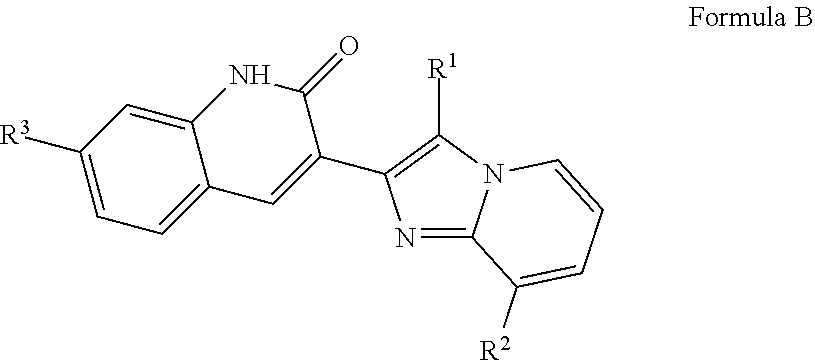
wherein:


wherein:
A5 is a secondary or tertiary amine (i.e., thereby forming a sulfonamide), and
A6 is a substituted or unsubstituted aryl or heteroaryl group, preferably wherein the aryl or heteroaryl group bears at least one substituent including a nitro substituted, e.g., disposed at a position distal to the sulfonyl. In certain embodiments, A5 is a heterocyclic amine, such as a piperidine, piperazine, or morpholine ring, while in other embodiments, the amine is acyclic and/or the nitrogen atom bound to the sulfonyl is not included in any ring that may be present in A5.

wherein:
X is N or —C(H)—, preferably N;
Y1 and Y2 are each independently lower alkyl or Y1 and Y2 taken together with X form a heterocyclyl ring system, such as

wherein
X is N, C or CH;
G is N, C or CH;
Z is absent or selected from substituted or unsubstituted alkyl, heteroalkyl, alkenyl, or alkynyl; and
R4 is hydrogen or selected from substituted or unsubstituted aryl (e.g., phenyl) and heteroaryl, and
R5 and R6 are each independently absent or lower alkyl.

wherein X is —C(H)—, and
R4 is selected from substituted or unsubstituted aryl (e.g.; phenyl) and heteroaryl, such as a halogen-substituted phenyl group, e.g.; 4-fluorophenyl or 3-chlorophenyl.
In certain embodiments, Y1 and Y2 are each ethyl.
In certain preferred embodiments, Y1 and Y2 taken together form a piperazine ring.
In certain preferred embodiments; Z is absent.

R1=a halogen, N, OH, CH3, OH, (CH2)n—CH3 or substituted or unsubstituted aryl;
R2=a halogen, N, OH, CH3, OH, (CH2)n—CH3 or substituted or unsubstituted aryl;
R3=a halogen, N, OH, CH3, OH, (CH2)n—CH3 or substituted or unsubstituted aryl;
R4=a halogen, N, OH, CH3, OH, (CH2)n—CH3 or substituted or unsubstituted aryl.
Analogs can include the compounds of Formula XXII, Formula)(XIII, Formula XXIV, Formula XXV, Formula XXVI and Formula)(XVII.

It can also be described as (3-[(Furan-2-ylmethyl)-amino]-2-(7-methoxy-2-oxo-1,2-dihydro-quinolin-3-yl)-6-methyl-imidazo[1,2-a]pyridin-1-ium). It will be appreciated that the invention covers compounds of BCN057, analogues and salts thereof. In one embodiment, the invention relates to compounds of BCN057 in the form of a free base. In another embodiment, the invention relates to compounds of BCN057 or a pharmaceutically acceptable salt thereof.

wherein:
| BCN057 (Formula I) Analogs | Name |
 | Formula II |
 | Formula III |
 | Formula IV |
 | Formula V |
 | Formula VI |
 | Formula VII |
 | Formula VIII |
 | Formula IX |
 | Formula X |
 | Formula XI |
 | Formula XII |
 | Formula XIII (Compound H) |
 | Formula XIV (Compound K) |
 | Formula XV (Compound BNB-1) |
 | Formula XVI (Compound BNB-2) |
 | Formula XVII (Compound BNB-3) |
 | Formula XVIII (Compound BNB-4) |
 | Formula XIX (Compound BNB-5) |
BCN512 and Analogs

| BCN512 Analogs | Name |
 |
Formula XXII (BCN52A1) |
 |
Formula XXIII |
 |
Formula XXIV |
 |
Formula XXV |
 |
Formula XXVI |
 |
Formula XXVII |
 |
Formula XXVIII |
Claims (8)


Priority Applications (2)
| Application Number | Priority Date | Filing Date | Title |
|---|---|---|---|
| US17/001,592 US11358964B2 (en) | 2019-08-24 | 2020-08-24 | Methods of treatment using BCN057 and BCN512 |
| US17/839,199 US12435081B2 (en) | 2019-08-24 | 2022-06-13 | Methods of treatment using BCN057 and BCN512 |
Applications Claiming Priority (2)
| Application Number | Priority Date | Filing Date | Title |
|---|---|---|---|
| US201962891338P | 2019-08-24 | 2019-08-24 | |
| US17/001,592 US11358964B2 (en) | 2019-08-24 | 2020-08-24 | Methods of treatment using BCN057 and BCN512 |
Related Child Applications (1)
| Application Number | Title | Priority Date | Filing Date |
|---|---|---|---|
| US17/839,199 Continuation US12435081B2 (en) | 2019-08-24 | 2022-06-13 | Methods of treatment using BCN057 and BCN512 |
Publications (2)
| Publication Number | Publication Date |
|---|---|
| US20210053968A1 US20210053968A1 (en) | 2021-02-25 |
| US11358964B2 true US11358964B2 (en) | 2022-06-14 |
Family
ID=74647168
Family Applications (2)
| Application Number | Title | Priority Date | Filing Date |
|---|---|---|---|
| US17/001,592 Active US11358964B2 (en) | 2019-08-24 | 2020-08-24 | Methods of treatment using BCN057 and BCN512 |
| US17/839,199 Active US12435081B2 (en) | 2019-08-24 | 2022-06-13 | Methods of treatment using BCN057 and BCN512 |
Family Applications After (1)
| Application Number | Title | Priority Date | Filing Date |
|---|---|---|---|
| US17/839,199 Active US12435081B2 (en) | 2019-08-24 | 2022-06-13 | Methods of treatment using BCN057 and BCN512 |
Country Status (6)
| Country | Link |
|---|---|
| US (2) | US11358964B2 (en) |
| EP (1) | EP4017493A4 (en) |
| JP (2) | JP2022545287A (en) |
| CN (1) | CN114728001A (en) |
| AU (2) | AU2020337892B2 (en) |
| WO (1) | WO2021041347A1 (en) |
Families Citing this family (3)
| Publication number | Priority date | Publication date | Assignee | Title |
|---|---|---|---|---|
| CN118541368A (en) * | 2021-09-03 | 2024-08-23 | 比西恩生物科学有限责任公司 | Treatment methods using BCN057, BCN077 and analogs |
| US20240122916A1 (en) * | 2022-10-08 | 2024-04-18 | Radmit, Inc. | Effect of YEL002 on Conditions and Diseases |
| US20240325375A1 (en) * | 2023-04-01 | 2024-10-03 | Radmit, Inc. | Effect of YEL002 on Psychological and Psychiatric Factors in Health and Disease |
Citations (1)
| Publication number | Priority date | Publication date | Assignee | Title |
|---|---|---|---|---|
| US8227603B2 (en) * | 2006-08-01 | 2012-07-24 | Cytokinetics, Inc. | Modulating skeletal muscle |
Family Cites Families (5)
| Publication number | Priority date | Publication date | Assignee | Title |
|---|---|---|---|---|
| US4159331A (en) * | 1978-05-05 | 1979-06-26 | The Upjohn Company | Antihypertensive 4-aminoquinolines |
| US20100173930A1 (en) * | 2006-08-01 | 2010-07-08 | Alex Muci | Certain Chemical Entities, Compositions and Methods |
| US20180104233A1 (en) * | 2016-10-16 | 2018-04-19 | BCN Biosciences L.L.C. | Methods of treatment and pharmaceutical compositions using bcn057 or bcn512 |
| AU2018316185A1 (en) * | 2017-08-08 | 2020-03-26 | BCN Biosciences L.L.C. | Methods of treating radiation induced gastrointestinal syndrome (RIGS) and related disease states using compound 512 |
| AU2018346962A1 (en) * | 2017-10-12 | 2020-05-28 | BCN Biosciences L.L.C. | Methods of treating radiation induced gastrointestinal syndrome |
-
2020
- 2020-08-24 EP EP20857259.4A patent/EP4017493A4/en active Pending
- 2020-08-24 AU AU2020337892A patent/AU2020337892B2/en active Active
- 2020-08-24 JP JP2022512449A patent/JP2022545287A/en active Pending
- 2020-08-24 US US17/001,592 patent/US11358964B2/en active Active
- 2020-08-24 CN CN202080074897.6A patent/CN114728001A/en active Pending
- 2020-08-24 WO PCT/US2020/047692 patent/WO2021041347A1/en not_active Ceased
-
2022
- 2022-06-13 US US17/839,199 patent/US12435081B2/en active Active
-
2024
- 2024-12-05 JP JP2024212337A patent/JP2025032222A/en active Pending
-
2025
- 2025-11-15 AU AU2025267506A patent/AU2025267506A1/en active Pending
Patent Citations (1)
| Publication number | Priority date | Publication date | Assignee | Title |
|---|---|---|---|---|
| US8227603B2 (en) * | 2006-08-01 | 2012-07-24 | Cytokinetics, Inc. | Modulating skeletal muscle |
Also Published As
| Publication number | Publication date |
|---|---|
| JP2022545287A (en) | 2022-10-26 |
| WO2021041347A1 (en) | 2021-03-04 |
| EP4017493A4 (en) | 2023-08-23 |
| US12435081B2 (en) | 2025-10-07 |
| AU2020337892A1 (en) | 2022-05-19 |
| US20230035771A1 (en) | 2023-02-02 |
| CN114728001A (en) | 2022-07-08 |
| AU2020337892B2 (en) | 2025-08-14 |
| US20210053968A1 (en) | 2021-02-25 |
| EP4017493A1 (en) | 2022-06-29 |
| AU2025267506A1 (en) | 2025-12-11 |
| JP2025032222A (en) | 2025-03-11 |
Similar Documents
| Publication | Publication Date | Title |
|---|---|---|
| US12435081B2 (en) | Methods of treatment using BCN057 and BCN512 | |
| KR20160113287A (en) | Heteroarly amides as inhibitors of protein aggregation | |
| US20180162827A1 (en) | Radiomitigating pharmaceutical formulations | |
| BRPI0712938A2 (en) | Method for modulating neurite outgrowth by use of a galanin-3 receptor antagonist | |
| US20220160701A1 (en) | Methods of treatment and pharmaceutical compositions using bcn057 or bcn512 | |
| US11364231B2 (en) | Methods of treating radiation induced gastrointestinal syndrome (RIGS) and related disease states using YEL002/BCN057 | |
| US20240376098A1 (en) | Methods of treatment using bcn057, bcn077 and analogs | |
| US20190046524A1 (en) | Methods of treating radiation induced gastrointestinal syndrome (rigs) and related disease states using compound 512 | |
| US11534437B2 (en) | Methods of treating radiation induced gastrointestinal syndrome (RIGS) and related disease states using compound 512 | |
| WO2017156222A1 (en) | Radiomitigating compounds, compositions and methods related thereto |
Legal Events
| Date | Code | Title | Description |
|---|---|---|---|
| FEPP | Fee payment procedure |
Free format text: ENTITY STATUS SET TO UNDISCOUNTED (ORIGINAL EVENT CODE: BIG.); ENTITY STATUS OF PATENT OWNER: SMALL ENTITY |
|
| FEPP | Fee payment procedure |
Free format text: ENTITY STATUS SET TO SMALL (ORIGINAL EVENT CODE: SMAL); ENTITY STATUS OF PATENT OWNER: SMALL ENTITY |
|
| STPP | Information on status: patent application and granting procedure in general |
Free format text: APPLICATION DISPATCHED FROM PREEXAM, NOT YET DOCKETED |
|
| STPP | Information on status: patent application and granting procedure in general |
Free format text: DOCKETED NEW CASE - READY FOR EXAMINATION |
|
| STPP | Information on status: patent application and granting procedure in general |
Free format text: NON FINAL ACTION MAILED |
|
| STPP | Information on status: patent application and granting procedure in general |
Free format text: RESPONSE TO NON-FINAL OFFICE ACTION ENTERED AND FORWARDED TO EXAMINER |
|
| STPP | Information on status: patent application and granting procedure in general |
Free format text: NOTICE OF ALLOWANCE MAILED -- APPLICATION RECEIVED IN OFFICE OF PUBLICATIONS |
|
| STPP | Information on status: patent application and granting procedure in general |
Free format text: PUBLICATIONS -- ISSUE FEE PAYMENT VERIFIED |
|
| STCF | Information on status: patent grant |
Free format text: PATENTED CASE |
|
| FEPP | Fee payment procedure |
Free format text: SURCHARGE FOR LATE PAYMENT, SMALL ENTITY (ORIGINAL EVENT CODE: M2554); ENTITY STATUS OF PATENT OWNER: SMALL ENTITY |
|
| MAFP | Maintenance fee payment |
Free format text: PAYMENT OF MAINTENANCE FEE, 4TH YR, SMALL ENTITY (ORIGINAL EVENT CODE: M2551); ENTITY STATUS OF PATENT OWNER: SMALL ENTITY Year of fee payment: 4 |