US11334053B2 - Failure prediction model generating apparatus and method thereof - Google Patents
Failure prediction model generating apparatus and method thereof Download PDFInfo
- Publication number
- US11334053B2 US11334053B2 US17/165,544 US202117165544A US11334053B2 US 11334053 B2 US11334053 B2 US 11334053B2 US 202117165544 A US202117165544 A US 202117165544A US 11334053 B2 US11334053 B2 US 11334053B2
- Authority
- US
- United States
- Prior art keywords
- failure prediction
- data
- model
- plant
- failure
- Prior art date
- Legal status (The legal status is an assumption and is not a legal conclusion. Google has not performed a legal analysis and makes no representation as to the accuracy of the status listed.)
- Active
Links
Images




Classifications
-
- G—PHYSICS
- G05—CONTROLLING; REGULATING
- G05B—CONTROL OR REGULATING SYSTEMS IN GENERAL; FUNCTIONAL ELEMENTS OF SUCH SYSTEMS; MONITORING OR TESTING ARRANGEMENTS FOR SUCH SYSTEMS OR ELEMENTS
- G05B19/00—Programme-control systems
- G05B19/02—Programme-control systems electric
- G05B19/418—Total factory control, i.e. centrally controlling a plurality of machines, e.g. direct or distributed numerical control [DNC], flexible manufacturing systems [FMS], integrated manufacturing systems [IMS] or computer integrated manufacturing [CIM]
- G05B19/4184—Total factory control, i.e. centrally controlling a plurality of machines, e.g. direct or distributed numerical control [DNC], flexible manufacturing systems [FMS], integrated manufacturing systems [IMS] or computer integrated manufacturing [CIM] characterised by fault tolerance, reliability of production system
-
- G—PHYSICS
- G05—CONTROLLING; REGULATING
- G05B—CONTROL OR REGULATING SYSTEMS IN GENERAL; FUNCTIONAL ELEMENTS OF SUCH SYSTEMS; MONITORING OR TESTING ARRANGEMENTS FOR SUCH SYSTEMS OR ELEMENTS
- G05B23/00—Testing or monitoring of control systems or parts thereof
- G05B23/02—Electric testing or monitoring
- G05B23/0205—Electric testing or monitoring by means of a monitoring system capable of detecting and responding to faults
- G05B23/0218—Electric testing or monitoring by means of a monitoring system capable of detecting and responding to faults characterised by the fault detection method dealing with either existing or incipient faults
- G05B23/0224—Process history based detection method, e.g. whereby history implies the availability of large amounts of data
- G05B23/024—Quantitative history assessment, e.g. mathematical relationships between available data; Functions therefor; Principal component analysis [PCA]; Partial least square [PLS]; Statistical classifiers, e.g. Bayesian networks, linear regression or correlation analysis; Neural networks
-
- G—PHYSICS
- G05—CONTROLLING; REGULATING
- G05B—CONTROL OR REGULATING SYSTEMS IN GENERAL; FUNCTIONAL ELEMENTS OF SUCH SYSTEMS; MONITORING OR TESTING ARRANGEMENTS FOR SUCH SYSTEMS OR ELEMENTS
- G05B19/00—Programme-control systems
- G05B19/02—Programme-control systems electric
- G05B19/418—Total factory control, i.e. centrally controlling a plurality of machines, e.g. direct or distributed numerical control [DNC], flexible manufacturing systems [FMS], integrated manufacturing systems [IMS] or computer integrated manufacturing [CIM]
- G05B19/4183—Total factory control, i.e. centrally controlling a plurality of machines, e.g. direct or distributed numerical control [DNC], flexible manufacturing systems [FMS], integrated manufacturing systems [IMS] or computer integrated manufacturing [CIM] characterised by data acquisition, e.g. workpiece identification
-
- G—PHYSICS
- G05—CONTROLLING; REGULATING
- G05B—CONTROL OR REGULATING SYSTEMS IN GENERAL; FUNCTIONAL ELEMENTS OF SUCH SYSTEMS; MONITORING OR TESTING ARRANGEMENTS FOR SUCH SYSTEMS OR ELEMENTS
- G05B19/00—Programme-control systems
- G05B19/02—Programme-control systems electric
- G05B19/418—Total factory control, i.e. centrally controlling a plurality of machines, e.g. direct or distributed numerical control [DNC], flexible manufacturing systems [FMS], integrated manufacturing systems [IMS] or computer integrated manufacturing [CIM]
- G05B19/41885—Total factory control, i.e. centrally controlling a plurality of machines, e.g. direct or distributed numerical control [DNC], flexible manufacturing systems [FMS], integrated manufacturing systems [IMS] or computer integrated manufacturing [CIM] characterised by modeling, simulation of the manufacturing system
-
- G—PHYSICS
- G05—CONTROLLING; REGULATING
- G05B—CONTROL OR REGULATING SYSTEMS IN GENERAL; FUNCTIONAL ELEMENTS OF SUCH SYSTEMS; MONITORING OR TESTING ARRANGEMENTS FOR SUCH SYSTEMS OR ELEMENTS
- G05B23/00—Testing or monitoring of control systems or parts thereof
- G05B23/02—Electric testing or monitoring
- G05B23/0205—Electric testing or monitoring by means of a monitoring system capable of detecting and responding to faults
- G05B23/0218—Electric testing or monitoring by means of a monitoring system capable of detecting and responding to faults characterised by the fault detection method dealing with either existing or incipient faults
- G05B23/0243—Electric testing or monitoring by means of a monitoring system capable of detecting and responding to faults characterised by the fault detection method dealing with either existing or incipient faults model based detection method, e.g. first-principles knowledge model
- G05B23/0254—Electric testing or monitoring by means of a monitoring system capable of detecting and responding to faults characterised by the fault detection method dealing with either existing or incipient faults model based detection method, e.g. first-principles knowledge model based on a quantitative model, e.g. mathematical relationships between inputs and outputs; functions: observer, Kalman filter, residual calculation, Neural Networks
-
- Y—GENERAL TAGGING OF NEW TECHNOLOGICAL DEVELOPMENTS; GENERAL TAGGING OF CROSS-SECTIONAL TECHNOLOGIES SPANNING OVER SEVERAL SECTIONS OF THE IPC; TECHNICAL SUBJECTS COVERED BY FORMER USPC CROSS-REFERENCE ART COLLECTIONS [XRACs] AND DIGESTS
- Y02—TECHNOLOGIES OR APPLICATIONS FOR MITIGATION OR ADAPTATION AGAINST CLIMATE CHANGE
- Y02P—CLIMATE CHANGE MITIGATION TECHNOLOGIES IN THE PRODUCTION OR PROCESSING OF GOODS
- Y02P90/00—Enabling technologies with a potential contribution to greenhouse gas [GHG] emissions mitigation
- Y02P90/02—Total factory control, e.g. smart factories, flexible manufacturing systems [FMS] or integrated manufacturing systems [IMS]
Definitions
- Apparatuses and methods consistent with exemplary embodiments relate to a failure prediction model generating apparatus and method thereof, and more particularly, to a failure prediction model generating apparatus which selects an optimal failure prediction model among a plurality of failure prediction models by using data collected from a plant and generates a new failure prediction model through a result of prediction of the failure of the plant by using the selected optimal failure prediction model, and to a method thereof.
- a monitoring device for detecting whether main parts constituting the plant are damaged in real time and for generating an alarm to a driver when the signs of abnormalities are detected in the parts is being used.
- a failure of a process in the plant causes undesired performance due to damage to the plant. Further, when the plant is destroyed, it may cause injury or death of people, and also cause environmental problems. Therefore, an early warning system capable of detecting failures early is indispensable.
- Prediction of the failure of the plant for the early warning system is performed by using a failure prediction model.
- degradation may occur as the plant is operated, and characteristics of the plant may change due to replacement of parts through maintenance. Accordingly, the failure prediction model generated initially decreases in accuracy over time.
- the prediction of the failure of the plant for the early warning system is performed based on domain-knowledge.
- the failure of the plant cannot be accurately predicted due to the complexity of the plant, lack of good quality data and failure data, and incomplete use of failure detection/diagnosis information.
- aspects of one or more exemplary embodiments provide a failure prediction model generating apparatus which selects an optimal failure prediction model from among a plurality of failure prediction models by using data collected from a plant and generates a new failure prediction model through the result of the prediction of the failure of the plant by using the selected optimal failure prediction model, and a method thereof.
- aspects of one or more exemplary embodiments also provide a plant failure prediction apparatus which selects one failure prediction model from among a physics-based failure prediction model and a data-based failure prediction model based on data collected from the plant and predicts the failure of the plant by using the selected failure prediction model.
- a failure prediction method for a plant including: storing a plurality of failure prediction models derived previously in a memory, collecting data measured from the plant, selecting at least one failure prediction model from among the plurality of failure prediction models using the collected data, and predicting a failure of the plant using the selected failure prediction model.
- a failure prediction apparatus for a plant including: a memory configured to store a plurality of failure prediction models derived previously and a processor configured to predict a failure of the plant.
- the processor is configured to collect data measured from the plant, select at least one failure prediction model from among the plurality of failure prediction models using the collected data, and predict a failure of the plant using the selected failure prediction model.
- the failure prediction model generating apparatus and method thereof can predict the failure of the plant using an optimal failure prediction model.
- FIG. 1 is a view showing a configuration of a failure prediction system according to an exemplary embodiment
- FIG. 2 is a diagram showing a configuration of a failure prediction apparatus according to an exemplary embodiment
- FIG. 3 is a view showing an example of obtaining an output value from the failure prediction model to select an optimal failure prediction model according to a first exemplary embodiment
- FIG. 4 is a view showing an example of comparing output values of the failure prediction models with output data to select an optimal failure prediction model in accordance with the first exemplary embodiment
- FIG. 5 is a view showing a residual as a result of comparing the output values of the failure prediction models with the output data to select the optimal failure prediction model in accordance with the first exemplary embodiment
- FIG. 6 is a view showing an example of selecting an optimal failure prediction model based on the residual between the output values of the failure prediction models and the output data in accordance with the first exemplary embodiment
- FIG. 7 is a view showing an example of previously derived failure prediction models stored in a memory to select an optimal failure prediction model according to a second exemplary embodiment
- FIG. 8 is a view showing an example of selecting a model group based on a number of data collected from a plant in accordance with the second exemplary embodiment
- FIG. 9 is a view showing an example of a result of selecting a model group based on the number of data collected from the plant in accordance with the second exemplary embodiment
- FIG. 10 is a view showing an example of comparing output values of the failure prediction models of the selected failure prediction group with data collected from the plant to select the optimal failure prediction model in accordance with the second exemplary embodiment
- FIG. 11 is a view showing an example of selecting the optimal failure prediction model in accordance with the second exemplary embodiment
- FIG. 12 is a view showing evaluating a performance of the optimal failure prediction model according to an exemplary embodiment
- FIG. 13 is a view showing a failure prediction method according to a third exemplary embodiment.
- FIG. 14 is a view showing a failure prediction method according to a fourth exemplary embodiment.
- a module performs at least one function or operation, and these elements may be implemented as hardware, such as a processor or integrated circuit, software that is executed by a processor, or a combination thereof.
- a plurality of “modules,” a plurality of “units,” or a plurality of “parts” may be integrated into at least one module or chip and may be implemented as at least one processor except for “modules,” “units” or “parts” that should be implemented in a specific hardware.
- the expression, “at least one of a, b, and c,” should be understood as including only a, only b, only c, both a and b, both a and c, both b and c, all of a, b, and c, or any variations of the aforementioned examples.
- FIG. 1 is a view showing a configuration of a failure prediction system according to an exemplary embodiment.
- the failure prediction system 1000 may include a plant 100 and a failure prediction apparatus 200 .
- the failure prediction apparatus 200 may select an optimal failure prediction model from among a plurality of failure prediction models using data collected from the plant 100 , and predict a failure of the plant 100 using the selected optimal failure prediction model.
- the failure prediction apparatus 200 may select the optimal failure prediction model from among the plurality of failure prediction models including a physical failure prediction model and a data-based failure prediction model using the data collected from the plant 100 , and predict the failure of the plant 100 using the selected optimal failure prediction model.
- the data collected from the plant 100 may include a temperature, pressure and humidity, NOx, SOx, O2, displacement, efficiency, and power generation output for components included in the plant 100 .
- the data collected from the plant 100 is related to the state of the plant 100 , and may include data collected from the plant 100 at a previous time point and data collected from the plant 100 at a current time point.
- the failure prediction apparatus 200 may determine when and where a failure occurs in the plant 100 , and determine a cause of the failure in the plant, an expected alarm level, a predicted value, and a trend, using the optimal prediction model selected based on the data collected from the plant 100 . Accordingly, the failure prediction apparatus 200 may predict the failure of the plant 100 more accurately by detecting the failure and using diagnosis information.
- the failure prediction apparatus 200 generates a new failure prediction model based on a result of the prediction of the failure of the plant 100 . Then, when a failure of the plant 100 is predicted, the failure prediction apparatus 200 may increase the reliability of the result of the failure prediction by additionally using a new failure prediction model.
- FIG. 2 is a diagram showing a configuration of a failure prediction apparatus according to an exemplary embodiment.
- the failure prediction apparatus 200 may include a memory 210 and a processor 220 .
- the memory 210 may store the failure prediction model.
- the failure prediction model may include an existing failure prediction model used to predict the failure of the plant 100 and a failure prediction model newly generated using the result of the prediction of the failure of the plant 100 .
- the failure prediction model may include a first model group that is a physics-based model and a second model group that is a data-based model.
- the first model group is a group of first models based on laws of physics and may be a model that outputs a determined value for a specific value.
- the second model group is a group of second models based on data and may be a model that analyzes and outputs stored data for a specific value.
- the processor 220 may collect data from the plant 100 and analyze the collected data.
- the data collected from the plant 100 may include a temperature, pressure and humidity, NOx, SOx, O2, displacement, efficiency, and power generation output for components included in the plant 100 .
- the data collected from the plant 100 is related to the state of the plant 100 , and may include data collected from the plant 100 at a previous time point and data collected from the plant 100 at a current time point.
- the processor 220 may generate new feature data based on the collected data. For example, the processor 220 may generate feature data for an average value, a minimum/maximum value, etc., based on the collected data. Also, the processor 220 may analyze a correlation between the collected data and the generated data to analyze changes and trends in data.
- the processor 220 may classify the data collected from the plant 100 into an input data and an output data.
- the power generation output may vary according to the temperature, pressure, and humidity for specific components included in the plant 100 , and the processor 220 may collect the temperature, pressure, humidity, and power generation output for the specific components.
- the power generation output may be a final result and may be a parameter that can determine whether a specific component has failed.
- the power generation output may be an index for determining whether a failure has occurred, such as determining that a failure has occurred in the specific component.
- the processor 220 may classify the data for the power generation output as an output data.
- the temperature, pressure, and humidity for the specific component may be a parameter that affects the final result.
- the power generation output i.e., the final result
- the processor 220 may classify the temperature, pressure, and humidity for the specific component as an input data.
- the processor 220 may select the optimal failure prediction model from among a plurality of failure prediction models using the data collected from the plant 100 .
- the processor 220 may obtain the plurality of failure prediction models from the memory 210 .
- the processor 220 may select a failure prediction model having a value most similar to the collected data among output values of the obtained failure prediction models as the optimal failure prediction model.
- the processor 220 may select the optimal failure prediction model using a result of dividing the data collected from the plant 100 into the input data and the output data.
- the processor 220 may set the input data as input values of the failure prediction models and compare the output values output from the failure prediction models by the input value with the output data.
- the processor 220 may select a failure prediction model having the smallest residual as the optimal failure prediction model.
- FIG. 3 is a view showing an example of obtaining an output value from the failure prediction model to select the optimal failure prediction model according to a first exemplary embodiment.
- the memory 210 may store a previously derived failure prediction model.
- the processor 220 may collect data from the plant 100 and classify the collected data into an input data and an output data based on characteristics of the data.
- the output data may be data that can determine a failure of a specific component of the plant 100
- the input data may be data that affects the output data.
- the processor 220 may obtain failure prediction models Model 1 to Model 5 stored in the memory 210 .
- the processor 220 may input an input data to each of the obtained failure prediction models Model 1 to Model 5 .
- the obtained failure prediction models Model 1 to Model 5 may output an output value for the input data.
- the first failure prediction model Model 1 may output an output value 1 for the input data
- the second failure prediction model Model 2 may output an output value 2 for the input data
- the third failure prediction model Model 3 may output an output value 3 for the input data
- the fourth failure prediction model Model 4 may output an output value 4 for the input data
- the fifth failure prediction model Model 5 may output an output value 5 for the input data.
- FIG. 4 is a view showing an example of comparing output values of the failure prediction models with output data to select the optimal failure prediction model in accordance with the first exemplary embodiment.
- the processor 220 may compare the output value output from each of the failure prediction models Model 1 to Model 5 with the output data.
- the processor 220 may compare the output value 1 output from the first failure prediction model Model 1 with the output data, compare the output value 2 output from the second failure prediction model Model 2 with the output data, compare the output value 3 output from the third failure prediction model Model 3 with the output data, compare the output value 4 output from the fourth failure prediction model
- Model 4 with the output data, and compare the output value 5 output from the fifth failure prediction model Model 5 with the output data.
- FIG. 5 is a view showing a residual as a result of comparing the output values of the failure prediction models with the output data to select the optimal failure prediction model in accordance with the first exemplary embodiment.
- the processor 220 may compare each of the output values output from the failure prediction models Model 1 to Model 5 with the output data, and calculate a residual between each of the output values output from the failure prediction models Model 1 to Model 5 and the output data.
- a residual between the output data and the output value 1 output from the first failure prediction model Model 1 may be 10
- a residual between the output data and the output value 2 output from the second failure prediction model Model 2 may be 8
- a residual between the output data and the output value 3 output from the third failure prediction model Model 3 may be 2
- a residual between the output data and the output value 4 output from the fourth failure prediction model Model 4 may be 3
- a residual between the output data and the output value 5 output from the fifth failure prediction model Model 5 may be 6.
- FIG. 6 is a view showing an example of selecting the optimal failure prediction model based on the residual between the output values of the failure prediction models and the output data in accordance with the first exemplary embodiment.
- the processor 220 may select the optimal failure prediction model based on a result of comparing the output data and the output value output from each of the failure prediction models Model 1 to Model 5 .
- the processor 220 may select the third failure prediction model Model 3 having the smallest residual with the output data among the output values output from the failure prediction models Model 1 to Model 5 as the optimal failure prediction model.
- the selected optimal failure prediction model is the most similar to the current state of the plant 100 . By using this, it is possible to more accurately predict the failure of the plant 100 .
- FIG. 7 is a view showing an example of previously derived failure prediction models stored in a memory to select an optimal failure prediction model according to a second exemplary embodiment.
- the processor 220 may select a model group for predicting the failure of the plant 100 from among a first model group and a second model group based on the collected data. For example, the processor 220 may select a model group from among the first model group and the second model group in accordance with the number of collected data. For example, the processor 220 may select the second model group when the number of data collected from the plant 100 is equal to or greater than a pre-determined number, and select the first model group when the number of data collected from the plant 100 is less than the pre-determined number.
- the processor 220 may predict the failure of the plant 100 using the collected data. That is, the processor 220 may select the second model group for predicting the failure of the plant 100 based on the data.
- the processor 220 may predict the failure of the plant 100 using the laws of physics. That is, the processor 220 may select the first model group for predicting the failure of the plant 100 based on the laws of physics.
- the processor 220 may select at least one second model from among the second models included in the second model group in accordance with the number of data. For example, each of the second models included in the second model group may match the number of data. The processor 220 may select the second model corresponding to the number of data collected from the plant 100 as the failure prediction model.
- the second models in which the number of data matched to the second model is less than the number of data collected from the plant 100 may be selected as the failure prediction model by the processor 220 .
- the number of data matched to the second model may be the number of data required to use the corresponding model. Accordingly, since the number of data matched to each model means the minimum number of data, the failure prediction can be performed in the case of the second model in which the number of data collected from the plant 100 is greater than the number of matched data. That is, the processor 220 may select all second models in which the number of matched data is less than the number of data collected from the plant 100 as the failure prediction model.
- the processor 220 may select at least one first model from among the first models included in the first model group using the data collected from the plant 100 .
- the processor 220 may select at least one first model from among the first models included in the first model group using the result of dividing the data collected from the plant 100 into the input data and the output data.
- the processor 220 may set the input data as input values of the first models, and compare the output values output from the first models by the input values with the output data.
- the processor 220 may select a first model having the smallest residual between the output value and the output data as the failure prediction model.
- the processor 220 may select at least one model from the first model group and the second model group, respectively, and derive a new model through a combination of the first model group and the second model group.
- the processor 220 may select one first model from among the models included in the first model group and select one second model from among the models included in the second model group.
- the processor 220 may derive a new failure prediction model through a combination of the selected first model and the second model.
- the number of models to be combined is not limited thereto.
- the number of the models selected for each model group may not be the same.
- the memory 210 may store the first model group 212 and the second model group 214 .
- the first model is a model based on the laws of physics, and the first models based on the laws of physics are grouped and stored as the first model group 212 in the memory 210 .
- the second model is a data-based model, and the second models based on data are grouped and stored as the second model group 214 in the memory 210 .
- the first model may output a value determined for a specific value, and the second model may analyze stored data for the specific value and output a value.
- FIG. 8 is a view showing an example of selecting a model group based on the number of data collected from the plant 100 in accordance with the second exemplary embodiment.
- the processor 220 may select a prediction model group for predicting the failure of the plant 100 from among the first model group 212 or the second model group 214 in accordance with the number of data collected from the plant 100 .
- the processor 220 may determine whether the number of data collected from the plant 100 is greater than or equal to a pre-determined number and select the first model group 212 or the second model group 214 in accordance with the determination result.
- the processor 220 may select the second model group 214 when the number of data collected from the plant 100 is greater than the pre-determined number and select the first model group 212 when the number of data collected from the plant 100 is less than the pre-determined number. If the pre-determined number is N and the number of data collected from the plant 100 is N+1000, it is determined that the number of data collected from the plant 100 is equal to or greater than the pre-determined number, and the second model group 214 may be selected. If the pre-determined number is N and the number of data collected from the plant 100 is N ⁇ 100, it is determined that the number of data collected from the plant 100 is less than the pre-determined number, and the first model group 212 may be selected.
- FIG. 9 is a view showing an example of a result of selecting a model group based on the number of data collected from the plant 100 in accordance with the second exemplary embodiment.
- the processor 220 may predict the failure of the plant 100 using the collected data, and select the second model group 214 for predicting the failure of the plant 100 based on the data.
- the processor 220 may predict the failure of the plant 100 using the laws of physics, and select the first model group 212 for predicting the failure of the plant 100 based on the laws of physics.
- the number of data collected from the plant 100 is greater than or equal to a pre-determined number, and the processor 220 determines that the failure of the plant 100 can be predicted by using the collected data and may select the second model group 214 that predicts the failure of the plant 100 based on the data.
- FIG. 10 is a view showing an example of comparing the output values of the failure prediction models of the selected failure prediction group with the data collected from the plant to select the optimal failure prediction model in accordance with the second exemplary embodiment.
- the processor 220 may obtain failure prediction models included in the selected model group from the memory 210 . For example, if the number of data collected from the plant 100 is N+100, because the number of data collected from the plant 100 is greater than the pre-determined number N, the processor 220 may select the second model group 214 and obtain the second models included in the second model group 214 from the memory 210 .
- the processor 220 may select at least one second model from among the second models included in the second model group 214 in accordance with the number of data. For example, each of the second models included in the second model group 214 is matched to the number of data and is stored in the memory 210 . The processor 220 may compare the data collected from the plant 100 with the number of data matched to each of the second models.
- FIG. 11 is a view showing an example of selecting the optimal failure prediction model in accordance with the second exemplary embodiment.
- the processor 220 may select at least one model from among the models included in the selected model group. If the second model group 214 is selected, the processor 220 may select at least one second model from among the second models included in the second model group 214 in accordance with the number of data.
- the second model 1 (Mdel 2 - 1 ) may be matched to the number of data N ⁇ 1000 and stored in the memory 210
- the second model 2 (Model 2 - 2 ) may be matched to the number of data N ⁇ 500 and stored in the memory 210
- the second model 3 (Model 2 - 3 ) may be matched to the number of data N and stored in the memory 210
- the second model 4 (Model 2 - 4 ) may be matched to the number of data N+500 and stored in the memory 210
- the second model 5 (Model 2 - 5 ) may be matched to the number of data N+1000 and stored in the memory 210 .
- the processor 220 may select a model corresponding to the number of data collected from the plant 100 as the failure prediction model. For example, if the number of data collected from the plant 100 is N, the processor 220 may select the second model 3 (Model 2 - 3 ) including the number of data N as the failure prediction model.
- the processor 220 may select a model matching the number of data less than the number of data collected from the plant 100 as the failure prediction model. For example, if the number of data collected from the plant 100 is N, the second model 3 (Model 2 - 3 ) including the number of data N collected from the plant 100 , and the second model 1 (Model 2 - 1 ) and the second model 2 (Model 2 - 2 ) which match the number of data less than the number of data N collected from the plant 100 may be selected as a failure prediction model by the processor 220 .
- the processor 220 may select the first model.
- the processor 220 may obtain the first models included in the first model group 212 from the memory 210 .
- the processor 220 may select at least one of the first models included in the selected first model group 212 as the optimal failure prediction model.
- the processor 220 may select the optimal failure prediction model according to the method described in the first exemplary embodiment. For example, the processor 220 may select at least one first model from among the first models included in the first model group 212 using the result of dividing the data collected from the plant 100 into the input data and the output data. The processor 220 may set the input data as input values of the first models, and compare the output values output from the first models by the input values with the output data.
- the processor 220 may select a first model having the smallest residual between the output value and the output data as the failure prediction model.
- the processor 220 may verify the performance of the selected failure prediction model using a previously collected and stored data set.
- the data set may be data collected from the plant 100 in the past, and the input data and the output data may be matched and stored in the data set.
- the processor 220 may input the input data of the data set to the selected failure prediction model, and compare the output value output from the selected failure prediction model and the output data matching the input data. As a result of comparing the output value output from the selected failure prediction model and the output data, if the residual between the output value and the output data is greater than or equal to a certain value, the processor 220 may determine that the performance of the selected failure prediction model is low, and if the residual between the output value and the output data is less than the certain value, the processor 220 may determine that the performance of the selected failure prediction model is high.
- the selected failure prediction model if the residual between the output value and the output data is less than the certain value, the selected failure prediction model outputs a value similar to the output data, and the processor 220 may determine that the selected failure prediction model has a good performance. If the residual between the output value and the output data is greater than or equal to the certain value, the selected failure prediction model outputs a value which is not similar to the output data, and the processor 220 may determine that the performance of the selected failure prediction model is not good.
- the processor 220 may reselect a failure prediction model using the data collected from the plant 100 .
- the processor 220 may select the corresponding failure prediction model as the optimal failure prediction model.
- the processor 220 may predict the failure of the plant 100 using the selected optimal failure prediction model in accordance with the first exemplary embodiment or the second exemplary embodiment.
- the processor 220 may predict a prediction value and a trend for a specific point in time, when and where a failure is expected to occur, a cause of the failure, and an alarm level. That is, the processor 220 may predict an output value at a specific time point in the future by inputting input data for a future time point as an input value to the optimal failure prediction model according to the current state of the plant 100 .
- the engine RPM at a specific time in the future may be estimated based on the degree of increase.
- the processor 220 may input the estimated engine RPM as an input value of the selected failure prediction model, and predict the failure of the plant based on the output value.
- the processor 220 may evaluate the performance of the optimal failure prediction model by using the result of the prediction of the failure of the plant 100 .
- the processor 220 may evaluate how accurate the result of the prediction of the failure is by using the optimal failure prediction model.
- the processor 220 may compare a predicted value predicting data to be collected from the plant 100 at a specific time point by using the optimal failure prediction model and a measured value collected from the plant 100 at a real specific time point. That is, the processor 220 may compare the predicted value and the measured value and calculate a residual between the predicted value and the measured value. If the calculated residual is greater than or equal to a certain value, the performance of the optimal failure prediction model may be evaluated as low by the processor 220 . If the residual between the predicted value and the measured value is less than the certain value, the performance of the optimal failure prediction model may be evaluated as high by the processor 220 .
- the processor 220 may evaluate that the optimal failure prediction model has a good performance. If the residual between the predicted value and the measured value is greater than or equal to the certain value, because the optimal failure prediction model predicts a value that is not similar to the measured value, the processor 220 may evaluate that the performance of the optimal failure prediction model is not good.
- the processor 220 may process the data to update the failure prediction model based on the result of evaluating the failure prediction model. As a result of predicting by the failure prediction model, the processor 220 may process the data that can be used to generate the failure prediction model among the data collected from the plant 100 . That is, the processor 220 may process only reliable data, excluding noise data, as data that can be used to generate the failure prediction model.
- the processor 220 may store the data that can be used for learning the failure prediction model in the memory 210 .
- the storage space of the memory 210 has a certain size, and there may be no more space to be stored in the memory 210 .
- the processor 220 may sequentially delete data in the order of the oldest data stored in the memory 210 , and data that can be used for learning the failure prediction model is stored in a remaining storage space due to the deletion of the data.
- the data that can be used for learning the failure prediction model may be sequentially stored in the order in which they are stored.
- the processor 220 may set a structure of a new failure prediction model to be generated.
- the processor 220 may set an order of an equation, a parameter, and whether it is linear or nonlinear, and may set whether to consider time delay. In other words, the processor 220 may set values for generating the new failure prediction model.
- the processor 220 may generate the failure prediction model based on the set values of the failure prediction model. That is, the processor 220 may generate the failure prediction model by reflecting the set structure, the order of the equation, the parameter, whether it is linear or nonlinear, and whether to consider time delay, etc.
- the processor 220 may verify the performance of the generated failure prediction model by using the result of dividing the data collected from the plant 100 into the input data and the output data.
- the processor 220 may set the input data as an input value of the generated failure prediction model and compare the output value output from the generated failure prediction model by the input value with the output data.
- the processor 220 may verify that the performance of the generated failure prediction model is low, and if the residual between the output value of the generated failure prediction model and the output data is less than the certain value, the processor 220 may verify that the performance of the generated failure prediction model is high.
- the generated failure prediction model outputs a value similar to the output data, and the processor 220 may verify that the generated failure prediction model has a good performance. If the residual between the output value and the output data is greater than or equal to the certain value, the generated failure prediction model outputs a value which is not similar to the output data, and the processor 220 may verify that the performance of the generated failure prediction model is not good.
- the processor 220 may determine whether to store a new failure prediction model based on the result of evaluating the performance of the new failure prediction model. As a result of evaluating the performance of the new failure prediction model, if the performance is evaluated as good, the processor 220 may store the new failure prediction model. If the performance is evaluated as poor, the processor 220 may not store the new failure prediction model. Accordingly, the processor 220 may update the failure prediction model stored in the memory 210 as a failure prediction model with a good performance. As a result, the failure of the plant 100 can be predicted by using the failure prediction model suitable for the current state of the plant 100 .
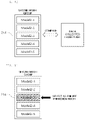
- the failure prediction model generating apparatus 200 selects an optimal failure prediction model from among the plurality of failure prediction models using the data collected from the plant 100 and generates a new failure prediction model through the result of the prediction of the failure of the plant 100 using the selected optimal failure prediction model.
- FIG. 12 is a view showing evaluating the performance of the optimal failure prediction model according to an exemplary embodiment.
- the processor 220 may evaluate the performance of the optimal failure prediction model.
- the processor 220 may predict data to be collected from the plant 100 at a specific time point by using the optimal failure prediction model.
- the processor 220 may compare the predicted value predicted by the optimal failure prediction model with the measured value collected from the plant 100 at a specific time point. For example, the processor 220 may compare the predicted value and the measured value and calculate the residual between the predicted value and the measured value. If the calculated residual is greater than or equal to a certain value, the performance of the optimal failure prediction model may be evaluated as low by the processor 220 . If the residual between the predicted value and the measured value is less than the certain value, the performance of the optimal failure prediction model may be evaluated as high by the processor 220 .
- the data measured from the plant 100 may be collected by the processor 220 at a certain time interval. That is, the processor 220 may collect data at “k”, i.e., at a current time point, and may have collected data at “k ⁇ 1” which is earlier than “k” for a certain period of time. Also, the processor 220 may have collected data at “k ⁇ 2” which is earlier than “k ⁇ 1” for a certain period of time. According to this, values from “k ⁇ 7” to “k ⁇ 1” may be measured from the plant 100 at the corresponding time point.
- the optimal failure prediction model may predict, at the time point “k ⁇ 1”, the data to be measured at the time point “k” in the plant 100 .
- the processor 220 may predict a predicted value 10 at the time point “k” by using the optimal failure prediction model and compare the predicted value 10 at the time point “k” with a measured value 20 of the plant 100 at the time point “k”.
- the processor 220 may calculate a residual r(k) between the predicted value 10 at the time point “k” and the measured value 20 at the time point “k”. If the calculated residual is greater than or equal to a certain value, the performance of the optimal failure prediction model may be evaluated as low by the processor 220 . If the calculated residual is less than the certain value, the performance of the optimal failure prediction model may be evaluated as high by the processor 220 .
- the processor 220 may not generate a new failure prediction model, and if the performance of the optimum failure prediction model is evaluated as poor, the processor 220 may process the data collected to generate the failure prediction model and set the structure of the failure prediction model to be generated.
- FIG. 13 is a view showing a failure prediction method according to a third exemplary embodiment.
- the processor 220 may collect data from the plant 100 (operation S 1310 ).
- the data collected from the plant 100 may include a temperature, pressure and humidity, NOx, SOx, O2, displacement, efficiency, and power generation output for specific components included in the plant 100 .
- the data collected from the plant 100 is related to the state of the plant 100 , and may include data collected from the plant 100 at a previous time point and data collected from the plant 100 at a current time point.
- the processor 220 may classify the data collected from the plant 100 into an input data and an output data.
- the output data may be a final result and may be a parameter that can determine a failure of the specific component.
- the input data may be a parameter that affects the final result for a specific component.
- the processor 220 may select the optimal failure prediction model from among the stored failure prediction models by using the collected data (operation S 1320 ).
- the processor 220 may select the optimal failure prediction model by using the result of dividing the data collected from the plant 100 into the input data and the output data.
- the processor 220 may set the input data as input values of the failure prediction models and compare the output values output from the failure prediction models by the input value with the output data.
- the processor 220 may select a failure prediction model having the smallest residual as the optimal failure prediction model.
- the processor 220 may predict the failure of the plant 100 by using the selected optimal failure prediction model (operation S 1330 ).
- the processor 220 may predict a prediction value and a trend for a specific time point, when and where a failure is expected to occur, a cause of the failure, and an alarm level. That is, the processor 220 may predict an output value at a specific time point in the future by inputting input data for a future time point as an input value to the optimal failure prediction model according to the current state of the plant 100 .
- the processor 220 may evaluate a performance of the optimal failure prediction model based on the result of the prediction of the failure (operation S 1340 ).
- the processor 220 may compare a predicted value predicting data to be collected from the plant 100 at a specific time point by using the optimal failure prediction model and a measured value collected from the plant 100 at a real specific time point. That is, the processor 220 may compare the predicted value and the measured value and calculate a residual between the predicted value and the measured value. If the calculated residual is greater than or equal to a certain value, the performance of the optimal failure prediction model may be evaluated as low by the processor 220 . If the residual between the predicted value and the measured value is less than the certain value, the performance of the optimal failure prediction model may be evaluated as high by the processor 220 .
- the processor 220 may generate a new failure prediction model in accordance with the result of evaluating the performance of the optimal failure prediction model (operation S 1350 ). As a result of evaluating the performance of the optimal failure prediction model, if the performance of the optimal failure prediction model is evaluated as high, the processor 220 does not generate a new failure prediction model. If the performance of the optimal failure prediction model is evaluated as low, the processor 220 may generate a new failure prediction model.
- the processor 220 may verify a performance of the newly generated failure prediction model (operation S 1360 ).
- the processor 220 may verify the performance of the new failure prediction model by using the result of dividing the data collected from the plant 100 into the input data and the output data.
- the processor 220 may set the input data as an input value of the new failure prediction model and compare the output value output from the new failure prediction model by the input value with the output data.
- the processor 220 may verify that the performance of the new failure prediction model is low, and if the residual between the output value of the new failure prediction model and the output data is less than the certain value, the processor 220 may verify that the performance of the new failure prediction model is high.
- FIG. 14 is a view showing a failure prediction method according to a fourth exemplary embodiment.
- the processor 220 may collect data from the plant 100 (operation S 1410 ).
- the data collected from the plant 100 may include a temperature, pressure and humidity, NOx, SOx, O2, displacement, efficiency, and power generation output for specific components included in the plant 100 .
- the data collected from the plant 100 is related to the state of the plant 100 , and may include data collected from the plant 100 at a previous time point and data collected from the plant 100 at a current time point.
- the processor 220 may classify the data collected from the plant 100 into an input data and an output data.
- the output data may be a final result and may be a parameter that can determine a failure of the specific component.
- the input data may be a parameter that affects the final result for a specific component.
- the processor 220 may select a model group for failure prediction from among a first model group and a second model group based on the collected data (operation S 1420 ).
- the failure prediction model may include the first model group that is a physics-based model and the second model group that is a data-based model.
- the first model group is a group of first models based on laws of physics and may be a model that outputs a determined value for a specific value.
- the second model group is a group of second models based on data and may be a model that analyzes and outputs data stored for a specific value.
- the processor 220 may select the second model group if the number of data collected from the plant 100 is equal to or greater than a pre-determined number, and may select the first model group if the number of data collected from the plant 100 is less than the pre-determined number.
- the processor 220 may select at least one of the models included in the selected model group as the failure prediction model (operation S 1430 ).
- the processor 220 may select at least one second model from among the second models included in the second model group in accordance with the number of data. For example, each of the second models included in the second model group may match the number of data. The processor 220 may select the second model corresponding to the number of data collected from the plant 100 as the failure prediction model. Also, the processor 220 may select the second model matching the number of data less than the number of the collected data as the failure prediction model.
- the processor 220 may select at least one first model from among the first models included in the first model group by using the data collected from the plant 100 .
- the processor 220 may select at least one first model from among the first models included in the first model group by using the result of dividing the data collected from the plant 100 into the input data and the output data.
- the processor 220 may set the input data as input values of the first models, and compare the output values output from the first models by the input values with the output data.
- the processor 220 may select a first model having the smallest residual between the output value and the output data as the failure prediction model.
- the processor 220 may verify a performance of the selected failure prediction model (operation S 1440 ).
- the processor 220 may verify the performance of the selected failure prediction model by using a previously collected and stored data set.
- the data set may be data collected from the plant 100 in the past, and the input data and the output data may be matched and stored in the data set.
- the processor 220 may input the input data of the data set to the selected failure prediction model, and compare the output value output from the selected failure prediction model and the output data matching the input data. As a result of comparing the output value output from the selected failure prediction model and the output data, if a residual between the output value and the output data is greater than or equal to a certain value, the processor 220 may verify that the performance of the selected failure prediction model is low, and if the residual between the output value and the output data is less than the certain value, the processor 220 may verify that the performance of the selected failure prediction model is high.
- the processor 220 may predict the failure of the plant 100 based on the result of verifying the performance of the selected failure prediction model (operation S 1450 ).
- the processor 220 may not predict a failure of the plant 100 by using the selected failure prediction model. If the performance of the selected failure prediction model is not good, the processor 220 may reselect a failure prediction model by using the data collected from the plant 100 .
- the processor 220 may predict the failure of the plant 100 by using the selected failure prediction model.
- the failure prediction method shown in FIG. 13 and the failure prediction method shown in FIG. 14 may be used interchangeably.
- operation S 1320 of FIG. 13 and operations S 1420 and S 1430 of FIG. 14 may be applied interchangeably.
- operations S 1350 and S 1360 of FIG. 13 may be applied interchangeably with operation S 1450 of FIG. 14 .
- an exemplary embodiment can be embodied as computer-readable codes on a computer-readable recording medium.
- the computer-readable recording medium is any data storage device that can store data that can be thereafter read by a computer system. Examples of the computer-readable recording medium include read-only memory (ROM), random-access memory (RAM), CD-ROMs, magnetic tapes, floppy disks, and optical data storage devices.
- the computer-readable recording medium can also be distributed over network-coupled computer systems so that the computer-readable code is stored and executed in a distributed fashion.
- an exemplary embodiment may be written as a computer program transmitted over a computer-readable transmission medium, such as a carrier wave, and received and implemented in general-use or special-purpose digital computers that execute the programs.
- one or more units of the above-described apparatuses and devices may include or be implemented by circuitry, a processor, a microprocessor, etc., and may execute a computer program stored in a computer-readable medium.
- the failure prediction model generating apparatus which selects the optimal failure prediction model from among the plurality of failure prediction models using the data collected from the plant and generates a new failure prediction model through the result of the prediction of the failure of the plant using the selected optimal failure prediction model, and to implement a method thereof.
Landscapes
- Engineering & Computer Science (AREA)
- Physics & Mathematics (AREA)
- General Physics & Mathematics (AREA)
- Automation & Control Theory (AREA)
- Manufacturing & Machinery (AREA)
- General Engineering & Computer Science (AREA)
- Quality & Reliability (AREA)
- Artificial Intelligence (AREA)
- Evolutionary Computation (AREA)
- Mathematical Physics (AREA)
- Testing And Monitoring For Control Systems (AREA)
Abstract
Description
Claims (18)
Applications Claiming Priority (4)
| Application Number | Priority Date | Filing Date | Title |
|---|---|---|---|
| KR1020200016461A KR102350637B1 (en) | 2020-02-11 | 2020-02-11 | Apparatus and method of fault prediction model generation |
| KR10-2020-0016461 | 2020-02-11 | ||
| KR1020200019860A KR102350636B1 (en) | 2020-02-18 | 2020-02-18 | Apparatus and method of plant failure prediction |
| KR10-2020-0019860 | 2020-02-18 |
Publications (2)
| Publication Number | Publication Date |
|---|---|
| US20210247742A1 US20210247742A1 (en) | 2021-08-12 |
| US11334053B2 true US11334053B2 (en) | 2022-05-17 |
Family
ID=77177208
Family Applications (1)
| Application Number | Title | Priority Date | Filing Date |
|---|---|---|---|
| US17/165,544 Active US11334053B2 (en) | 2020-02-11 | 2021-02-02 | Failure prediction model generating apparatus and method thereof |
Country Status (1)
| Country | Link |
|---|---|
| US (1) | US11334053B2 (en) |
Families Citing this family (2)
| Publication number | Priority date | Publication date | Assignee | Title |
|---|---|---|---|---|
| CN117213894B (en) * | 2023-11-08 | 2024-01-26 | 青岛船研深海技术有限公司 | Abnormal operation monitoring system for ocean engineering equipment |
| CN119475129B (en) * | 2024-10-29 | 2025-10-10 | 重庆大学 | A decision-making method for selecting neural network models for mechanical fault diagnosis based on sampling inspection and failure loss |
-
2021
- 2021-02-02 US US17/165,544 patent/US11334053B2/en active Active
Non-Patent Citations (1)
| Title |
|---|
| Salfner et al., "Using Hidden Semi-Markov Models for Effective Online Failure Prediction", IEEE 2007 (Year: 2007). * |
Also Published As
| Publication number | Publication date |
|---|---|
| US20210247742A1 (en) | 2021-08-12 |
Similar Documents
| Publication | Publication Date | Title |
|---|---|---|
| EP3515039A1 (en) | Decision system and method for separating faults from attacks | |
| KR101955305B1 (en) | Gas turbine sensor failure detection utilizing a sparse coding methodology | |
| US9379951B2 (en) | Method and apparatus for detection of anomalies in integrated parameter systems | |
| US8275735B2 (en) | Diagnostic system | |
| JP6875179B2 (en) | System analyzer and system analysis method | |
| US20200258057A1 (en) | Repair management and execution | |
| US20080091630A1 (en) | System and method for defining normal operating regions and identifying anomalous behavior of units within a fleet, operating in a complex, dynamic environment | |
| JP6280862B2 (en) | Event analysis system and method | |
| US20200204428A1 (en) | System and method of automated fault correction in a network environment | |
| Jin et al. | Accurate anomaly detection using correlation-based time-series analysis in a core router system | |
| US11334053B2 (en) | Failure prediction model generating apparatus and method thereof | |
| US20250272177A1 (en) | Methods, devices, and electronic devices for locating anomaly root causes | |
| CN120256178A (en) | A storage hard disk remote diagnosis system and method based on the Internet of Things | |
| CN120104421A (en) | Loongson Kirin automated fault diagnosis method and system | |
| CN111555899B (en) | Alarm rule configuration method, equipment state monitoring method, device and storage medium | |
| CN116523722A (en) | Environment monitoring analysis system with machine learning capability | |
| JP2007257184A (en) | Obstacle factor estimation system, method and program | |
| US20050138493A1 (en) | Systems and methods for analyzing the selection of measurements of a communication network | |
| EP4134872A1 (en) | Method for automatically detecting anomalies in log files | |
| Jin et al. | Data-driven resiliency solutions for boards and systems | |
| CN119414198A (en) | Automatic fault detection method for power devices in electric tricycle controller | |
| CN119847862A (en) | Computer data processing method and system | |
| CN119887161A (en) | Root cause analysis implementation method in intelligent operation and maintenance system and intelligent operation and maintenance system | |
| KR102350636B1 (en) | Apparatus and method of plant failure prediction | |
| KR102350637B1 (en) | Apparatus and method of fault prediction model generation |
Legal Events
| Date | Code | Title | Description |
|---|---|---|---|
| AS | Assignment |
Owner name: DOOSAN HEAVY INDUSTRIES & CONSTRUCTION CO., LTD., KOREA, REPUBLIC OF Free format text: ASSIGNMENT OF ASSIGNORS INTEREST;ASSIGNORS:PARK, JEE HUN;KIM, HYUN SIK;NA, SANG GUN;AND OTHERS;REEL/FRAME:055206/0272 Effective date: 20210125 |
|
| FEPP | Fee payment procedure |
Free format text: ENTITY STATUS SET TO UNDISCOUNTED (ORIGINAL EVENT CODE: BIG.); ENTITY STATUS OF PATENT OWNER: LARGE ENTITY |
|
| STPP | Information on status: patent application and granting procedure in general |
Free format text: APPLICATION DISPATCHED FROM PREEXAM, NOT YET DOCKETED |
|
| STPP | Information on status: patent application and granting procedure in general |
Free format text: DOCKETED NEW CASE - READY FOR EXAMINATION |
|
| STPP | Information on status: patent application and granting procedure in general |
Free format text: NON FINAL ACTION MAILED |
|
| STPP | Information on status: patent application and granting procedure in general |
Free format text: RESPONSE TO NON-FINAL OFFICE ACTION ENTERED AND FORWARDED TO EXAMINER |
|
| STPP | Information on status: patent application and granting procedure in general |
Free format text: NOTICE OF ALLOWANCE MAILED -- APPLICATION RECEIVED IN OFFICE OF PUBLICATIONS |
|
| STPP | Information on status: patent application and granting procedure in general |
Free format text: PUBLICATIONS -- ISSUE FEE PAYMENT VERIFIED |
|
| STCF | Information on status: patent grant |
Free format text: PATENTED CASE |
|
| MAFP | Maintenance fee payment |
Free format text: PAYMENT OF MAINTENANCE FEE, 4TH YEAR, LARGE ENTITY (ORIGINAL EVENT CODE: M1551); ENTITY STATUS OF PATENT OWNER: LARGE ENTITY Year of fee payment: 4 |