US11331304B2 - YAP1 inhibitors and methods - Google Patents
YAP1 inhibitors and methods Download PDFInfo
- Publication number
- US11331304B2 US11331304B2 US16/300,140 US201716300140A US11331304B2 US 11331304 B2 US11331304 B2 US 11331304B2 US 201716300140 A US201716300140 A US 201716300140A US 11331304 B2 US11331304 B2 US 11331304B2
- Authority
- US
- United States
- Prior art keywords
- tetramethyl
- bis
- methoxycarbonyl
- dodecaen
- tetraazahexacyclo
- Prior art date
- Legal status (The legal status is an assumption and is not a legal conclusion. Google has not performed a legal analysis and makes no representation as to the accuracy of the status listed.)
- Active
Links
- UUAMWEOCXXKNJW-PTXPWMFFSA-N C=Cc1c(C)c2cc3nc(cc4[nH]c(cc5nc(cc1[nH]2)C(C)=C5CCC(=O)NCCN(C)C)c(CCC(=O)NCCN(C)C)c4C)[C@@]1(C)C3=CC=C(C(=O)OC)[C@H]1C(=O)OC Chemical compound C=Cc1c(C)c2cc3nc(cc4[nH]c(cc5nc(cc1[nH]2)C(C)=C5CCC(=O)NCCN(C)C)c(CCC(=O)NCCN(C)C)c4C)[C@@]1(C)C3=CC=C(C(=O)OC)[C@H]1C(=O)OC UUAMWEOCXXKNJW-PTXPWMFFSA-N 0.000 description 5
- WMQVZEQOMISRAY-MUCONLFGSA-N C=CC1=C(C)c2cc3[nH]c(cc4nc(cc5[nH]c(cc1n2)c(C)c5CCC(=O)N(C)CCN(C)C)C(CCC(=O)OC)C4C)c(C)c3C=C Chemical compound C=CC1=C(C)c2cc3[nH]c(cc4nc(cc5[nH]c(cc1n2)c(C)c5CCC(=O)N(C)CCN(C)C)C(CCC(=O)OC)C4C)c(C)c3C=C WMQVZEQOMISRAY-MUCONLFGSA-N 0.000 description 4
- XAUIUHUAGLCLPN-OJWCNENXSA-N C=CC1=C(C)c2cc3[nH]c(cc4nc(cc5[nH]c(cc1n2)c(C)c5CCC(=O)NCCC(=O)N[C@@H](CC(=O)O)C(=O)O)C(CCC(=O)OC)C4C)c(C)c3C=C Chemical compound C=CC1=C(C)c2cc3[nH]c(cc4nc(cc5[nH]c(cc1n2)c(C)c5CCC(=O)NCCC(=O)N[C@@H](CC(=O)O)C(=O)O)C(CCC(=O)OC)C4C)c(C)c3C=C XAUIUHUAGLCLPN-OJWCNENXSA-N 0.000 description 4
- SZQXELZHEBYCSR-RCSKJNRISA-N C=CC1=C(C)c2cc3[nH]c(cc4nc(cc5[nH]c(cc1n2)c(C)c5CCC(=O)NCCCC[C@H](N)C(=O)O)C(CCC(=O)NCCCC[C@H](N)C(=O)O)C4C)c(C)c3C=C Chemical compound C=CC1=C(C)c2cc3[nH]c(cc4nc(cc5[nH]c(cc1n2)c(C)c5CCC(=O)NCCCC[C@H](N)C(=O)O)C(CCC(=O)NCCCC[C@H](N)C(=O)O)C4C)c(C)c3C=C SZQXELZHEBYCSR-RCSKJNRISA-N 0.000 description 4
- WRSCNSUHFIHESW-KISLHDHTSA-N C=CC1=C(C)c2cc3[nH]c(cc4nc(cc5[nH]c(cc1n2)c(C)c5CCC(=O)NCCCC[C@H](N)C(=O)O)C(CCC(=O)OC)C4C)c(C)c3C=C Chemical compound C=CC1=C(C)c2cc3[nH]c(cc4nc(cc5[nH]c(cc1n2)c(C)c5CCC(=O)NCCCC[C@H](N)C(=O)O)C(CCC(=O)OC)C4C)c(C)c3C=C WRSCNSUHFIHESW-KISLHDHTSA-N 0.000 description 4
- MCTGXLOEFSKABB-OJKAWOKHSA-N C=CC1=C(C)c2cc3[nH]c(cc4nc(cc5[nH]c(cc1n2)c(C)c5CCC(=O)NCCN(C)C)C(CCC(=O)NCCN(C)C)C4C)c(C)c3C=C Chemical compound C=CC1=C(C)c2cc3[nH]c(cc4nc(cc5[nH]c(cc1n2)c(C)c5CCC(=O)NCCN(C)C)C(CCC(=O)NCCN(C)C)C4C)c(C)c3C=C MCTGXLOEFSKABB-OJKAWOKHSA-N 0.000 description 4
- DFICJHVDUCVBMS-XLSCQNIZSA-N C=CC1=C(C)c2cc3[nH]c(cc4nc(cc5[nH]c(cc1n2)c(C)c5CCC(=O)NCCN(C)C)C(CCC(=O)OC)C4C)c(C)c3C=C Chemical compound C=CC1=C(C)c2cc3[nH]c(cc4nc(cc5[nH]c(cc1n2)c(C)c5CCC(=O)NCCN(C)C)C(CCC(=O)OC)C4C)c(C)c3C=C DFICJHVDUCVBMS-XLSCQNIZSA-N 0.000 description 4
- NWDXYPFCCOTMMB-OSIVZBAGSA-N C=CC1=C(C)c2cc3[nH]c(cc4nc(cc5[nH]c(cc1n2)c(C)c5CCC(=O)N[C@@H](CC(=O)O)C(=O)O)C(CCC(=O)CC(CC(=O)O)C(=O)O)C4C)c(C)c3C=C Chemical compound C=CC1=C(C)c2cc3[nH]c(cc4nc(cc5[nH]c(cc1n2)c(C)c5CCC(=O)N[C@@H](CC(=O)O)C(=O)O)C(CCC(=O)CC(CC(=O)O)C(=O)O)C4C)c(C)c3C=C NWDXYPFCCOTMMB-OSIVZBAGSA-N 0.000 description 4
- OFVXRKQBMCASOT-OJKAWOKHSA-N C=CC1=C(C)c2cc3[nH]c(cc4nc(cc5[nH]c(cc1n2)c(C)c5CCC(=O)OCCOCCOCCOC)C(CCC(=O)OC)C4C)c(C)c3C=C Chemical compound C=CC1=C(C)c2cc3[nH]c(cc4nc(cc5[nH]c(cc1n2)c(C)c5CCC(=O)OCCOCCOCCOC)C(CCC(=O)OC)C4C)c(C)c3C=C OFVXRKQBMCASOT-OJKAWOKHSA-N 0.000 description 4
- QVYLOQSYEPVMPZ-IQANFZKESA-N C=CC1=C(C)c2cc3[nH]c(cc4nc(cc5[nH]c(cc1n2)c(C)c5CCC(=O)OCCOCCOCCOC)C(CCC(=O)OCCOCCOCCOC)C4C)c(C)c3C=C Chemical compound C=CC1=C(C)c2cc3[nH]c(cc4nc(cc5[nH]c(cc1n2)c(C)c5CCC(=O)OCCOCCOCCOC)C(CCC(=O)OCCOCCOCCOC)C4C)c(C)c3C=C QVYLOQSYEPVMPZ-IQANFZKESA-N 0.000 description 4
- BIQSGGDPSLVNBV-IVXSMFDYSA-N C=CC1=C(C)c2cc3[nH]c(cc4nc(cc5[nH]c(cc1n2)c(C)c5CCC(=O)OCCOCCOCCOCCOCCOCCOCCOC)C(CCC(=O)OC)C4C)c(C)c3C=C Chemical compound C=CC1=C(C)c2cc3[nH]c(cc4nc(cc5[nH]c(cc1n2)c(C)c5CCC(=O)OCCOCCOCCOCCOCCOCCOCCOC)C(CCC(=O)OC)C4C)c(C)c3C=C BIQSGGDPSLVNBV-IVXSMFDYSA-N 0.000 description 4
- HXWWVTHTYHQWQE-RRFHTYGNSA-N C=Cc1c(C)c2cc3nc(cc4[nH]c(cc5nc(cc1[nH]2)C(C)=C5CCC(=O)N(C)CCN(C)C)c(CCC(=O)N(C)CCN(C)C)c4C)[C@@]1(C)C3=CC=C(C(=O)OC)[C@H]1C(=O)OC Chemical compound C=Cc1c(C)c2cc3nc(cc4[nH]c(cc5nc(cc1[nH]2)C(C)=C5CCC(=O)N(C)CCN(C)C)c(CCC(=O)N(C)CCN(C)C)c4C)[C@@]1(C)C3=CC=C(C(=O)OC)[C@H]1C(=O)OC HXWWVTHTYHQWQE-RRFHTYGNSA-N 0.000 description 4
- PSOVMVMFRRRFNY-ANJHILKLSA-N C=Cc1c(C)c2cc3nc(cc4[nH]c(cc5nc(cc1[nH]2)C(C)=C5CCC(=O)N(C)CCN(C)C)c(CCC(=O)OC)c4C)[C@@]1(C)C3=CC=C(C(=O)OC)[C@H]1C(=O)OC Chemical compound C=Cc1c(C)c2cc3nc(cc4[nH]c(cc5nc(cc1[nH]2)C(C)=C5CCC(=O)N(C)CCN(C)C)c(CCC(=O)OC)c4C)[C@@]1(C)C3=CC=C(C(=O)OC)[C@H]1C(=O)OC PSOVMVMFRRRFNY-ANJHILKLSA-N 0.000 description 4
- SXQSOFJWJGNVHH-LMHBQTDHSA-N C=Cc1c(C)c2cc3nc(cc4[nH]c(cc5nc(cc1[nH]2)C(C)=C5CCC(=O)NCCC(=O)N[C@@H](CC(=O)O)C(=O)O)c(CCC(=O)OC)c4C)[C@@]1(C)C3=CC=C(C(=O)OC)[C@H]1C(=O)OC Chemical compound C=Cc1c(C)c2cc3nc(cc4[nH]c(cc5nc(cc1[nH]2)C(C)=C5CCC(=O)NCCC(=O)N[C@@H](CC(=O)O)C(=O)O)c(CCC(=O)OC)c4C)[C@@]1(C)C3=CC=C(C(=O)OC)[C@H]1C(=O)OC SXQSOFJWJGNVHH-LMHBQTDHSA-N 0.000 description 4
- MRAQMZNKZMHSLX-OUMIOOHMSA-N C=Cc1c(C)c2cc3nc(cc4[nH]c(cc5nc(cc1[nH]2)C(C)=C5CCC(=O)NCCCC[C@H](N)C(=O)O)c(CCC(=O)NCCCC[C@H](N)C(=O)O)c4C)[C@@]1(C)C3=CC=C(C(=O)OC)[C@H]1C(=O)OC Chemical compound C=Cc1c(C)c2cc3nc(cc4[nH]c(cc5nc(cc1[nH]2)C(C)=C5CCC(=O)NCCCC[C@H](N)C(=O)O)c(CCC(=O)NCCCC[C@H](N)C(=O)O)c4C)[C@@]1(C)C3=CC=C(C(=O)OC)[C@H]1C(=O)OC MRAQMZNKZMHSLX-OUMIOOHMSA-N 0.000 description 4
- SFLHLMUSFSIXIU-JPWZWMFVSA-N C=Cc1c(C)c2cc3nc(cc4[nH]c(cc5nc(cc1[nH]2)C(C)=C5CCC(=O)NCCCC[C@H](N)C(=O)O)c(CCC(=O)O)c4C)[C@@]1(C)C3=CC=C(C(=O)OC)[C@H]1C(=O)OC Chemical compound C=Cc1c(C)c2cc3nc(cc4[nH]c(cc5nc(cc1[nH]2)C(C)=C5CCC(=O)NCCCC[C@H](N)C(=O)O)c(CCC(=O)O)c4C)[C@@]1(C)C3=CC=C(C(=O)OC)[C@H]1C(=O)OC SFLHLMUSFSIXIU-JPWZWMFVSA-N 0.000 description 4
- SYHWVPDUZHIUJH-ALNGCRAFSA-N C=Cc1c(C)c2cc3nc(cc4[nH]c(cc5nc(cc1[nH]2)C(C)=C5CCC(=O)NCCCC[C@H](N)C(=O)O)c(CCC(=O)OC)c4C)[C@@]1(C)C3=CC=C(C(=O)OC)[C@H]1C(=O)OC Chemical compound C=Cc1c(C)c2cc3nc(cc4[nH]c(cc5nc(cc1[nH]2)C(C)=C5CCC(=O)NCCCC[C@H](N)C(=O)O)c(CCC(=O)OC)c4C)[C@@]1(C)C3=CC=C(C(=O)OC)[C@H]1C(=O)OC SYHWVPDUZHIUJH-ALNGCRAFSA-N 0.000 description 4
- YDBUVDYPNPGURQ-CUFIPODPSA-N C=Cc1c(C)c2cc3nc(cc4[nH]c(cc5nc(cc1[nH]2)C(C)=C5CCC(=O)NCCN(C)C)c(CCC(=O)O)c4C)[C@@]1(C)C3=CC=C(C(=O)OC)[C@H]1C(=O)OC Chemical compound C=Cc1c(C)c2cc3nc(cc4[nH]c(cc5nc(cc1[nH]2)C(C)=C5CCC(=O)NCCN(C)C)c(CCC(=O)O)c4C)[C@@]1(C)C3=CC=C(C(=O)OC)[C@H]1C(=O)OC YDBUVDYPNPGURQ-CUFIPODPSA-N 0.000 description 4
- WWUROPLDYIGAEF-NUEMEVQDSA-N C=Cc1c(C)c2cc3nc(cc4[nH]c(cc5nc(cc1[nH]2)C(C)=C5CCC(=O)NCCN(C)C)c(CCC(=O)OC)c4C)[C@@]1(C)C3=CC=C(C(=O)OC)[C@H]1C(=O)OC Chemical compound C=Cc1c(C)c2cc3nc(cc4[nH]c(cc5nc(cc1[nH]2)C(C)=C5CCC(=O)NCCN(C)C)c(CCC(=O)OC)c4C)[C@@]1(C)C3=CC=C(C(=O)OC)[C@H]1C(=O)OC WWUROPLDYIGAEF-NUEMEVQDSA-N 0.000 description 4
- WJWZEFVIOWHPEY-ZRABGJGCSA-N C=Cc1c(C)c2cc3nc(cc4[nH]c(cc5nc(cc1[nH]2)C(C)=C5CCC(=O)N[C@@H](CC(=O)O)C(=O)O)c(CCC(=O)N[C@@H](CC(=O)O)C(=O)O)c4C)[C@@]1(C)C3=CC=C(C(=O)OC)[C@H]1C(=O)OC Chemical compound C=Cc1c(C)c2cc3nc(cc4[nH]c(cc5nc(cc1[nH]2)C(C)=C5CCC(=O)N[C@@H](CC(=O)O)C(=O)O)c(CCC(=O)N[C@@H](CC(=O)O)C(=O)O)c4C)[C@@]1(C)C3=CC=C(C(=O)OC)[C@H]1C(=O)OC WJWZEFVIOWHPEY-ZRABGJGCSA-N 0.000 description 4
- GNVAANVJHHTYKE-HOPMICEHSA-N C=Cc1c(C)c2cc3nc(cc4[nH]c(cc5nc(cc1[nH]2)C(C)=C5CCC(=O)N[C@@H](CC(=O)O)C(=O)O)c(CCC(=O)O)c4C)[C@@]1(C)C3=CC=C(C(=O)OC)[C@H]1C(=O)OC Chemical compound C=Cc1c(C)c2cc3nc(cc4[nH]c(cc5nc(cc1[nH]2)C(C)=C5CCC(=O)N[C@@H](CC(=O)O)C(=O)O)c(CCC(=O)O)c4C)[C@@]1(C)C3=CC=C(C(=O)OC)[C@H]1C(=O)OC GNVAANVJHHTYKE-HOPMICEHSA-N 0.000 description 4
- XGJBYRXUQPLWAW-MLBVUCFCSA-N C=Cc1c(C)c2cc3nc(cc4[nH]c(cc5nc(cc1[nH]2)C(C)=C5CCC(=O)N[C@@H](CC(=O)O)C(=O)O)c(CCC(=O)OC)c4C)[C@@]1(C)C3=CC=C(C(=O)OC)[C@H]1C(=O)OC Chemical compound C=Cc1c(C)c2cc3nc(cc4[nH]c(cc5nc(cc1[nH]2)C(C)=C5CCC(=O)N[C@@H](CC(=O)O)C(=O)O)c(CCC(=O)OC)c4C)[C@@]1(C)C3=CC=C(C(=O)OC)[C@H]1C(=O)OC XGJBYRXUQPLWAW-MLBVUCFCSA-N 0.000 description 4
- VKUQKDBANYQECY-PTXPWMFFSA-N C=Cc1c(C)c2cc3nc(cc4[nH]c(cc5nc(cc1[nH]2)C(C)=C5CCC(=O)OCCOCCOCCOC)c(CCC(=O)OC)c4C)[C@@]1(C)C3=CC=C(C(=O)OC)[C@H]1C(=O)OC Chemical compound C=Cc1c(C)c2cc3nc(cc4[nH]c(cc5nc(cc1[nH]2)C(C)=C5CCC(=O)OCCOCCOCCOC)c(CCC(=O)OC)c4C)[C@@]1(C)C3=CC=C(C(=O)OC)[C@H]1C(=O)OC VKUQKDBANYQECY-PTXPWMFFSA-N 0.000 description 4
- SWBYHTRDJHNJHI-JMOWLBQOSA-N C=Cc1c(C)c2cc3nc(cc4[nH]c(cc5nc(cc1[nH]2)C(C)=C5CCC(=O)OCCOCCOCCOC)c(CCC(=O)OCCOCCOCCOC)c4C)[C@@]1(C)C3=CC=C(C(=O)OC)[C@H]1C(=O)OC Chemical compound C=Cc1c(C)c2cc3nc(cc4[nH]c(cc5nc(cc1[nH]2)C(C)=C5CCC(=O)OCCOCCOCCOC)c(CCC(=O)OCCOCCOCCOC)c4C)[C@@]1(C)C3=CC=C(C(=O)OC)[C@H]1C(=O)OC SWBYHTRDJHNJHI-JMOWLBQOSA-N 0.000 description 4
- NMBJZYHCLCMXSA-XMOQGZKSSA-N C=Cc1c(C)c2cc3nc(cc4[nH]c(cc5nc(cc1[nH]2)C(C)=C5CCC(=O)OCCOCCOCCOCCOCCOCCOCCOC)c(CCC(=O)OC)c4C)[C@@]1(C)C3=CC=C(C(=O)OC)[C@H]1C(=O)OC Chemical compound C=Cc1c(C)c2cc3nc(cc4[nH]c(cc5nc(cc1[nH]2)C(C)=C5CCC(=O)OCCOCCOCCOCCOCCOCCOCCOC)c(CCC(=O)OC)c4C)[C@@]1(C)C3=CC=C(C(=O)OC)[C@H]1C(=O)OC NMBJZYHCLCMXSA-XMOQGZKSSA-N 0.000 description 4
- CTVQPWIFIMMBSV-XNMMHJANSA-N C=CC1=C(C)c2cc3[nH]c(cc4nc(cc5[nH]c(cc1n2)c(C)c5CCC(=O)N(C)CCN(C)C)C(CCC(=O)NCCN(C)C)C4C)c(C)c3C=C Chemical compound C=CC1=C(C)c2cc3[nH]c(cc4nc(cc5[nH]c(cc1n2)c(C)c5CCC(=O)N(C)CCN(C)C)C(CCC(=O)NCCN(C)C)C4C)c(C)c3C=C CTVQPWIFIMMBSV-XNMMHJANSA-N 0.000 description 3
- JHZLOTYZZZRSPG-XHMVUGHTSA-N C=CC1=C(C)c2cc3[nH]c(cc4nc(cc5[nH]c(cc1n2)c(C)c5CCC(=O)N[C@@H](CC(=O)O)C(=O)O)C(CCC(=O)O)C4C)c(C)c3C=C Chemical compound C=CC1=C(C)c2cc3[nH]c(cc4nc(cc5[nH]c(cc1n2)c(C)c5CCC(=O)N[C@@H](CC(=O)O)C(=O)O)C(CCC(=O)O)C4C)c(C)c3C=C JHZLOTYZZZRSPG-XHMVUGHTSA-N 0.000 description 3
- ZAAYOPHEQDYIPL-SOOOCCDUSA-N C=CC1=C(C)c2cc3[nH]c(cc4nc(cc5[nH]c(cc1n2)c(C)c5CCC(=O)N[C@@H](CC(=O)O)C(=O)O)C(CCC(=O)OC)C4C)c(C)c3C=C Chemical compound C=CC1=C(C)c2cc3[nH]c(cc4nc(cc5[nH]c(cc1n2)c(C)c5CCC(=O)N[C@@H](CC(=O)O)C(=O)O)C(CCC(=O)OC)C4C)c(C)c3C=C ZAAYOPHEQDYIPL-SOOOCCDUSA-N 0.000 description 3
- MOYANIXQJDAXEI-UHFFFAOYSA-L C=CC1c2cc3n4->[Zn]56([Zn+])n7c(cc4C(CC)=C3C)c(C)c3c7c(c4n->5c(cc([n-]->62)C1C)C(C)C4CCC(=O)OC)CC3=O.C=Cc1c(C)c2cc3n4->[Zn]56([Zn+])n7c(cc8n->5c(cc1[n-]->62)C(C)=C8CC)c(C)c1c7c(c4C(CCC(=O)OC)C3C)CC1=O Chemical compound C=CC1c2cc3n4->[Zn]56([Zn+])n7c(cc4C(CC)=C3C)c(C)c3c7c(c4n->5c(cc([n-]->62)C1C)C(C)C4CCC(=O)OC)CC3=O.C=Cc1c(C)c2cc3n4->[Zn]56([Zn+])n7c(cc8n->5c(cc1[n-]->62)C(C)=C8CC)c(C)c1c7c(c4C(CCC(=O)OC)C3C)CC1=O MOYANIXQJDAXEI-UHFFFAOYSA-L 0.000 description 2
- 0 C=Cc1c(C)c2cc3nc(cc4[nH]c(cc5nc(cc1[nH]2)C(C)=C5CCC(=O)O)c(CCC(=O)O)c4C)[C@@]1(C)C3=CC=C(C(=O)OC)[C@H]1C(=O)OC.C=Cc1c(C)c2cc3nc(cc4[nH]c(cc5nc(cc1[nH]2)C(C)=C5CCC(=O)OC1C(=O)CCC1=O)c(CCC(=O)OC1C(=O)CCC1=O)c4C)[C@@]1(C)C3=CC=C(C(=O)OC)[C@H]1C(=O)OC.O=C1CCC(=O)N1O.[1*]N([2*])C(=O)CCC1=C(C)c2cc3[nH]c(cc4nc(cc5[nH]c(cc1n2)c(CCC(=O)N([1*])[2*])c5C)[C@@]1(C)C4=CC=C(C(=O)OC)[C@H]1C(=O)OC)c(C)c3C=C.[1*]N([2*])N Chemical compound C=Cc1c(C)c2cc3nc(cc4[nH]c(cc5nc(cc1[nH]2)C(C)=C5CCC(=O)O)c(CCC(=O)O)c4C)[C@@]1(C)C3=CC=C(C(=O)OC)[C@H]1C(=O)OC.C=Cc1c(C)c2cc3nc(cc4[nH]c(cc5nc(cc1[nH]2)C(C)=C5CCC(=O)OC1C(=O)CCC1=O)c(CCC(=O)OC1C(=O)CCC1=O)c4C)[C@@]1(C)C3=CC=C(C(=O)OC)[C@H]1C(=O)OC.O=C1CCC(=O)N1O.[1*]N([2*])C(=O)CCC1=C(C)c2cc3[nH]c(cc4nc(cc5[nH]c(cc1n2)c(CCC(=O)N([1*])[2*])c5C)[C@@]1(C)C4=CC=C(C(=O)OC)[C@H]1C(=O)OC)c(C)c3C=C.[1*]N([2*])N 0.000 description 2
- VYBNIPAUENLNTJ-QZLGFLQOSA-N *.*.CCC1=C(C)c2cc3[nH]c(cc4nc(cc5[nH]c(cc1n2)c(C)c5CCCOS(C)(=O)=O)C(CCCOS(C)(=O)=O)=C4C)c(C)c3CC.CCCC1=C(C)C2=NC1Cc1[nH]c(c(C)c1CCC)/C=C1\N=C(/C=c3\[nH]/c(c(C)c3CC)=C\2)[C@@H](C)[C@@H]1CC.CCCC1=C(C)c2cc3[nH]c(cc4nc(cc5[nH]c(cc1n2)c(CCC)c5C)[C@@H](C)[C@@H]4CC)c(C)c3CC.CCCc1c(C)c2cc3nc(cc4[nH]c(cc5nc(cc1[nH]2)[C@@H](CCC)[C@@H]5C)c(CC)c4C)C(CC)=C3C.CCCc1c2[nH]c(c1C)/C=C1\N=C(CC3N/C(=C\C4=N/C(=C\2)[C@H](CCC)[C@H]4C)C(C)=C3CC)C(C)=C1CC Chemical compound *.*.CCC1=C(C)c2cc3[nH]c(cc4nc(cc5[nH]c(cc1n2)c(C)c5CCCOS(C)(=O)=O)C(CCCOS(C)(=O)=O)=C4C)c(C)c3CC.CCCC1=C(C)C2=NC1Cc1[nH]c(c(C)c1CCC)/C=C1\N=C(/C=c3\[nH]/c(c(C)c3CC)=C\2)[C@@H](C)[C@@H]1CC.CCCC1=C(C)c2cc3[nH]c(cc4nc(cc5[nH]c(cc1n2)c(CCC)c5C)[C@@H](C)[C@@H]4CC)c(C)c3CC.CCCc1c(C)c2cc3nc(cc4[nH]c(cc5nc(cc1[nH]2)[C@@H](CCC)[C@@H]5C)c(CC)c4C)C(CC)=C3C.CCCc1c2[nH]c(c1C)/C=C1\N=C(CC3N/C(=C\C4=N/C(=C\2)[C@H](CCC)[C@H]4C)C(C)=C3CC)C(C)=C1CC VYBNIPAUENLNTJ-QZLGFLQOSA-N 0.000 description 1
- SKGSIJSKRNLLAU-DHTQPJGBSA-N C.C=CC1=C(C)c2cc3[nH]c(cc4nc(cc5[nH]c(cc1n2)C1(C)C5=CCC(C(=O)OC)=C1C(=O)OC)C(C)=C4CCC(C)=O)c(CCC(C)=O)c3C.C=Cc1c(C)c2cc3nc(cc4[nH]c(cc5nc(cc1[nH]2)C(C)=C5CCC(C)=O)c(CCC(C)=O)c4C)C1(C)C3=CCC(C(=O)OC)=C1C(=O)OC Chemical compound C.C=CC1=C(C)c2cc3[nH]c(cc4nc(cc5[nH]c(cc1n2)C1(C)C5=CCC(C(=O)OC)=C1C(=O)OC)C(C)=C4CCC(C)=O)c(CCC(C)=O)c3C.C=Cc1c(C)c2cc3nc(cc4[nH]c(cc5nc(cc1[nH]2)C(C)=C5CCC(C)=O)c(CCC(C)=O)c4C)C1(C)C3=CCC(C(=O)OC)=C1C(=O)OC SKGSIJSKRNLLAU-DHTQPJGBSA-N 0.000 description 1
- HLYGKTJWOXZEJH-YLQTUEJUSA-L C/C=C1/c2cc3n4->[Zn]56([Zn+])n7c(cc4C(CC)=C3C)c(C)c3c7c(c4n->5c(cc([n-]->62)C1C)C(C)C4CCC(=O)OC)CC3=O.C/C=C1/c2cc3nc(cc4[nH]c5c(c6nc(cc([nH]2)C1C)C(C)C6CCC(=O)OC)CC(=O)c5c4C)C(CC)=C3C.C=CC1c2cc3nc(cc4[nH]c5c(c6nc(cc([nH]2)C1C)C(C)C6CCC(=O)OC)CC(=O)c5c4C)C(CC)=C3C.C=Cc1c(C)c2cc3n4->[Zn]56([Zn+])n7c(cc8n->5c(cc1[n-]->62)C(C)=C8CC)c(C)c1c7c(c4C(CCC(=O)OC)C3C)CC1=O Chemical compound C/C=C1/c2cc3n4->[Zn]56([Zn+])n7c(cc4C(CC)=C3C)c(C)c3c7c(c4n->5c(cc([n-]->62)C1C)C(C)C4CCC(=O)OC)CC3=O.C/C=C1/c2cc3nc(cc4[nH]c5c(c6nc(cc([nH]2)C1C)C(C)C6CCC(=O)OC)CC(=O)c5c4C)C(CC)=C3C.C=CC1c2cc3nc(cc4[nH]c5c(c6nc(cc([nH]2)C1C)C(C)C6CCC(=O)OC)CC(=O)c5c4C)C(CC)=C3C.C=Cc1c(C)c2cc3n4->[Zn]56([Zn+])n7c(cc8n->5c(cc1[n-]->62)C(C)=C8CC)c(C)c1c7c(c4C(CCC(=O)OC)C3C)CC1=O HLYGKTJWOXZEJH-YLQTUEJUSA-L 0.000 description 1
- KQKGWQLOXYXCDE-CFGGVJFQSA-N C=C(C(C)CC(=C)[C@@H](CC(=O)C(CC(=O)[C@@H](C/C(C)=C(/CC(C)C)OC(=O)/C(OCC)=C(/CNCc1ccc(O)cc1)C(C)C)CC1COc2ccccc21)OCCN)CC(C)C(O)O)C(C)[C@@H](CC(C)C(O)O)C(=C)CC(CO)C(C)C(C)C(Cc1ccccc1)C(=O)CC(CC)C(=O)C[C@@H](Cc1ccccc1)C(=O)C[C@H](C(N)O)[C@@H](C)OC.C=C(C(C)CC(=C)[C@H](CC(=O)C(CC(=O)[C@H](C/C(C)=C(/CC(C)C)OC(=O)C1=C(C(C)C)CN(Cc2ccc(O)cc2)C(C)O1)CC1COc2ccccc21)OCCN)CC(C)C(O)O)C(C)[C@H](CC(C)C(O)O)C(=C)CC.C=CC1=C(C)c2cc3[nH]c(cc4nc(cc5[nH]c(cc1n2)c(C)c5CCC(=O)O)C(CCC(=O)O)=C4C)c(C)c3C=C.C=CC1=C(C)c2cc3[nH]c(cc4nc(cc5[nH]c(cc1n2)c(C)c5CCC1OCCC(C(C)C)C2CCC(CC(C(C)C(CCCC(=C)C(C)C(C)C(C)C(C)OO)c5ccccc5)CCCCC5=CC(=O)N(CCO1)C5=O)C(Cc1ccccc1)C2C)C(CCC(=O)O)=C4C)c(C)c3C=C.N.N.NCCN1C(=O)C=CC1=O.O=C(O)C(F)(F)F Chemical compound C=C(C(C)CC(=C)[C@@H](CC(=O)C(CC(=O)[C@@H](C/C(C)=C(/CC(C)C)OC(=O)/C(OCC)=C(/CNCc1ccc(O)cc1)C(C)C)CC1COc2ccccc21)OCCN)CC(C)C(O)O)C(C)[C@@H](CC(C)C(O)O)C(=C)CC(CO)C(C)C(C)C(Cc1ccccc1)C(=O)CC(CC)C(=O)C[C@@H](Cc1ccccc1)C(=O)C[C@H](C(N)O)[C@@H](C)OC.C=C(C(C)CC(=C)[C@H](CC(=O)C(CC(=O)[C@H](C/C(C)=C(/CC(C)C)OC(=O)C1=C(C(C)C)CN(Cc2ccc(O)cc2)C(C)O1)CC1COc2ccccc21)OCCN)CC(C)C(O)O)C(C)[C@H](CC(C)C(O)O)C(=C)CC.C=CC1=C(C)c2cc3[nH]c(cc4nc(cc5[nH]c(cc1n2)c(C)c5CCC(=O)O)C(CCC(=O)O)=C4C)c(C)c3C=C.C=CC1=C(C)c2cc3[nH]c(cc4nc(cc5[nH]c(cc1n2)c(C)c5CCC1OCCC(C(C)C)C2CCC(CC(C(C)C(CCCC(=C)C(C)C(C)C(C)C(C)OO)c5ccccc5)CCCCC5=CC(=O)N(CCO1)C5=O)C(Cc1ccccc1)C2C)C(CCC(=O)O)=C4C)c(C)c3C=C.N.N.NCCN1C(=O)C=CC1=O.O=C(O)C(F)(F)F KQKGWQLOXYXCDE-CFGGVJFQSA-N 0.000 description 1
- MTXGDBVLIHVWDB-KTZXJFIVSA-K C=CC1=C(C)/C2=C/c3c(C)c(CCC(=O)O)c4n3[Fe+3]35(Cl)<-N2=C1/C=c1/c(C)c(C=C)/c(n13)=C/C1=N->5/C(=C\4)C(CCC(=O)O)=C1C.C=CC1=C(C)c2cc3[nH]c(cc4nc(cc5[nH]c(cc1n2)c(C)c5C=C)C(C)=C4CCC(=O)O)c(CCC(=O)O)c3C.C=CC1=C(C)c2cc3[nH]c(cc4nc(cc5[nH]c(cc1n2)c(C)c5C=C)C(C)=C4CCC(C)=O)c(CCC(C)=O)c3C.COC(=O)C#CC(=O)OC Chemical compound C=CC1=C(C)/C2=C/c3c(C)c(CCC(=O)O)c4n3[Fe+3]35(Cl)<-N2=C1/C=c1/c(C)c(C=C)/c(n13)=C/C1=N->5/C(=C\4)C(CCC(=O)O)=C1C.C=CC1=C(C)c2cc3[nH]c(cc4nc(cc5[nH]c(cc1n2)c(C)c5C=C)C(C)=C4CCC(=O)O)c(CCC(=O)O)c3C.C=CC1=C(C)c2cc3[nH]c(cc4nc(cc5[nH]c(cc1n2)c(C)c5C=C)C(C)=C4CCC(C)=O)c(CCC(C)=O)c3C.COC(=O)C#CC(=O)OC MTXGDBVLIHVWDB-KTZXJFIVSA-K 0.000 description 1
- KWZQEQRPYDKBQY-DFPZQGSSSA-N C=CC1=C(C)c2cc3[nH]c(cc4nc(cc5[nH]c(cc1n2)C1(C)C5=CCC(C(=O)OCC)=C1C(=O)OCC)C(C)=C4CCC(=O)OC)c(CCC(=O)OC)c3C.C=CC1=C(C)c2cc3[nH]c(cc4nc(cc5[nH]c(cc1n2)c(C)c5CCC(=O)OC)C(CCC(=O)OC)=C4C)C1(C)C3=CCC(C(=O)OCC)=C1C(=O)OCC.C=CC1=C(C)c2cc3[nH]c(cc4nc(cc5[nH]c(cc1n2)c(C)c5CCC(=O)OC)C(CCC(=O)OC)=C4C)c(C)c3C=C.CCOC(=O)C#CC(=O)OCC Chemical compound C=CC1=C(C)c2cc3[nH]c(cc4nc(cc5[nH]c(cc1n2)C1(C)C5=CCC(C(=O)OCC)=C1C(=O)OCC)C(C)=C4CCC(=O)OC)c(CCC(=O)OC)c3C.C=CC1=C(C)c2cc3[nH]c(cc4nc(cc5[nH]c(cc1n2)c(C)c5CCC(=O)OC)C(CCC(=O)OC)=C4C)C1(C)C3=CCC(C(=O)OCC)=C1C(=O)OCC.C=CC1=C(C)c2cc3[nH]c(cc4nc(cc5[nH]c(cc1n2)c(C)c5CCC(=O)OC)C(CCC(=O)OC)=C4C)c(C)c3C=C.CCOC(=O)C#CC(=O)OCC KWZQEQRPYDKBQY-DFPZQGSSSA-N 0.000 description 1
- WKSIPCHTIQZGKI-FVXHWUGFSA-N C=CC1=C(C)c2cc3[nH]c(cc4nc(cc5[nH]c(cc1n2)c(C)c5C=C)C(C)=C4CCC(=O)OC)c(CCC(=O)NCC(=O)C[C@@H](Cc1cn(C)cn1)C(=O)OC)c3C.C=CC1=C(C)c2cc3[nH]c(cc4nc(cc5[nH]c(cc1n2)c(C)c5CCC(=O)O)C(CCC(=O)O)=C4C)c(C)c3C=C.CO.COC(=O)[C@H](Cc1cn(C)cn1)NC(=O)CN Chemical compound C=CC1=C(C)c2cc3[nH]c(cc4nc(cc5[nH]c(cc1n2)c(C)c5C=C)C(C)=C4CCC(=O)OC)c(CCC(=O)NCC(=O)C[C@@H](Cc1cn(C)cn1)C(=O)OC)c3C.C=CC1=C(C)c2cc3[nH]c(cc4nc(cc5[nH]c(cc1n2)c(C)c5CCC(=O)O)C(CCC(=O)O)=C4C)c(C)c3C=C.CO.COC(=O)[C@H](Cc1cn(C)cn1)NC(=O)CN WKSIPCHTIQZGKI-FVXHWUGFSA-N 0.000 description 1
- FBOZNAFUBIGCBS-XNMMHJANSA-N C=CC1=C(C)c2cc3[nH]c(cc4nc(cc5[nH]c(cc1n2)c(C)c5CCC(=O)N(C)CCN(C)C)C(CCC(O)NCCN(C)C)C4C)c(C)c3C=C Chemical compound C=CC1=C(C)c2cc3[nH]c(cc4nc(cc5[nH]c(cc1n2)c(C)c5CCC(=O)N(C)CCN(C)C)C(CCC(O)NCCN(C)C)C4C)c(C)c3C=C FBOZNAFUBIGCBS-XNMMHJANSA-N 0.000 description 1
- HBAIXQHFEZPTMG-JGIUJOMTSA-N C=CC1=C(C)c2cc3[nH]c(cc4nc(cc5[nH]c(cc1n2)c(C)c5CCC(=O)NCCCC[C@H](N)C(=O)O)C(CCC(=O)O)C4C)c(C)c3C=C Chemical compound C=CC1=C(C)c2cc3[nH]c(cc4nc(cc5[nH]c(cc1n2)c(C)c5CCC(=O)NCCCC[C@H](N)C(=O)O)C(CCC(=O)O)C4C)c(C)c3C=C HBAIXQHFEZPTMG-JGIUJOMTSA-N 0.000 description 1
- VKWMDRMGJGPCFD-LHPWBCDESA-N C=CC1=C(C)c2cc3[nH]c(cc4nc(cc5[nH]c(cc1n2)c(C)c5CCC(=O)NCCN(C)C)C(CCC(=O)O)C4C)c(C)c3C=C Chemical compound C=CC1=C(C)c2cc3[nH]c(cc4nc(cc5[nH]c(cc1n2)c(C)c5CCC(=O)NCCN(C)C)C(CCC(=O)O)C4C)c(C)c3C=C VKWMDRMGJGPCFD-LHPWBCDESA-N 0.000 description 1
- MCPVWNBDBKKVBV-BHPZMMQKSA-N C=CC1=C(C)c2cc3[nH]c(cc4nc(cc5[nH]c(cc1n2)c(C)c5CCC(=O)O)C(CCC(=O)O)=C4C)C1(C)C3=CC=C(C(=O)O)C1C(=O)O.C=CC1=C(C)c2cc3[nH]c(cc4nc(cc5[nH]c(cc1n2)c(C)c5CCC(=O)O)C(CCC(=O)O)=C4C)C1=CC=C(C(=O)O)C(C(=O)O)C13C.C=CC1=C(C)c2cc3[nH]c(cc4nc(cc5[nH]c(cc1n2)c(C)c5CCC(=O)OC)C(CCC(=O)OC)=C4C)C1=CC=C(C(=O)OCC)C(C(=O)OCC)C13C.C=CC1=C(C)c2cc3[nH]c(cc4nc(cc5[nH]c(cc1n2)c(C)c5CCC(=O)OC)C(CCC(=O)OC)=C4C)c(C)c3C=C.CCOC(=O)C#CC(=O)OCC Chemical compound C=CC1=C(C)c2cc3[nH]c(cc4nc(cc5[nH]c(cc1n2)c(C)c5CCC(=O)O)C(CCC(=O)O)=C4C)C1(C)C3=CC=C(C(=O)O)C1C(=O)O.C=CC1=C(C)c2cc3[nH]c(cc4nc(cc5[nH]c(cc1n2)c(C)c5CCC(=O)O)C(CCC(=O)O)=C4C)C1=CC=C(C(=O)O)C(C(=O)O)C13C.C=CC1=C(C)c2cc3[nH]c(cc4nc(cc5[nH]c(cc1n2)c(C)c5CCC(=O)OC)C(CCC(=O)OC)=C4C)C1=CC=C(C(=O)OCC)C(C(=O)OCC)C13C.C=CC1=C(C)c2cc3[nH]c(cc4nc(cc5[nH]c(cc1n2)c(C)c5CCC(=O)OC)C(CCC(=O)OC)=C4C)c(C)c3C=C.CCOC(=O)C#CC(=O)OCC MCPVWNBDBKKVBV-BHPZMMQKSA-N 0.000 description 1
- GBZYWHXWFPLXDV-NTOFABQPSA-N C=CC1=C(C)c2cc3[nH]c(cc4nc(cc5[nH]c(cc1n2)c(C)c5CCC(=O)O)C(CCC(=O)O)=C4C)c(C)c3C=C.C=CC1=C(C)c2cc3[nH]c(cc4nc(cc5[nH]c(cc1n2)c(C)c5CCC(=O)O)C(CCC(=O)OC(C)(C)C)=C4C)c(C)c3C=C.C=CC1=C(C)c2cc3[nH]c(cc4nc(cc5[nH]c(cc1n2)c(C)c5CCC(=O)OC(C)(C)C)C(CCC(=O)O)=C4C)c(C)c3C=C.CC(C)(C)OC(=O)OC(=O)OC(C)(C)C Chemical compound C=CC1=C(C)c2cc3[nH]c(cc4nc(cc5[nH]c(cc1n2)c(C)c5CCC(=O)O)C(CCC(=O)O)=C4C)c(C)c3C=C.C=CC1=C(C)c2cc3[nH]c(cc4nc(cc5[nH]c(cc1n2)c(C)c5CCC(=O)O)C(CCC(=O)OC(C)(C)C)=C4C)c(C)c3C=C.C=CC1=C(C)c2cc3[nH]c(cc4nc(cc5[nH]c(cc1n2)c(C)c5CCC(=O)OC(C)(C)C)C(CCC(=O)O)=C4C)c(C)c3C=C.CC(C)(C)OC(=O)OC(=O)OC(C)(C)C GBZYWHXWFPLXDV-NTOFABQPSA-N 0.000 description 1
- WPYIEJWMBACOPI-YSZKDVMUSA-N C=CC1=C(C)c2cc3[nH]c(cc4nc(cc5[nH]c(cc1n2)c(C)c5CCC(=O)O)C(CCC(=O)O)=C4C)c(C)c3C=C.C=CC1=C(C)c2cc3[nH]c(cc4nc(cc5[nH]c(cc1n2)c(C)c5CCC(=O)OC(C)(C)C)C(CCC(=O)O)=C4C)c(C)c3C=C.CC(C)(C)O Chemical compound C=CC1=C(C)c2cc3[nH]c(cc4nc(cc5[nH]c(cc1n2)c(C)c5CCC(=O)O)C(CCC(=O)O)=C4C)c(C)c3C=C.C=CC1=C(C)c2cc3[nH]c(cc4nc(cc5[nH]c(cc1n2)c(C)c5CCC(=O)OC(C)(C)C)C(CCC(=O)O)=C4C)c(C)c3C=C.CC(C)(C)O WPYIEJWMBACOPI-YSZKDVMUSA-N 0.000 description 1
- JTXWXSQPCGEBTO-WAFLDIFKSA-N C=CC1=C(C)c2cc3[nH]c(cc4nc(cc5[nH]c(cc1n2)c(C)c5CCC(=O)O)C(CCC(=O)O)=C4C)c(C)c3C=C.C=CC1=C(C)c2cc3[nH]c(cc4nc(cc5[nH]c(cc1n2)c(C)c5CCC(=O)OC)C(CCC(=O)OC)=C4C)c(C)c3C=C Chemical compound C=CC1=C(C)c2cc3[nH]c(cc4nc(cc5[nH]c(cc1n2)c(C)c5CCC(=O)O)C(CCC(=O)O)=C4C)c(C)c3C=C.C=CC1=C(C)c2cc3[nH]c(cc4nc(cc5[nH]c(cc1n2)c(C)c5CCC(=O)OC)C(CCC(=O)OC)=C4C)c(C)c3C=C JTXWXSQPCGEBTO-WAFLDIFKSA-N 0.000 description 1
- PPKVPDBZGFJNDJ-KXOKFFTDSA-N C=CC1=C(C)c2cc3[nH]c(cc4nc(cc5[nH]c(cc1n2)c(C)c5CCC(=O)O)C(CCC(=O)O)=C4C)c(C)c3C=C.C=CC1=C(C)c2cc3[nH]c(cc4nc(cc5[nH]c(cc1n2)c(C)c5CCC(=O)OCCOCCOCCN=[N+]=[N-])C(CCC(=O)O)=C4C)c(C)c3C=C.[N-]=[N+]=NCCOCCOCCO Chemical compound C=CC1=C(C)c2cc3[nH]c(cc4nc(cc5[nH]c(cc1n2)c(C)c5CCC(=O)O)C(CCC(=O)O)=C4C)c(C)c3C=C.C=CC1=C(C)c2cc3[nH]c(cc4nc(cc5[nH]c(cc1n2)c(C)c5CCC(=O)OCCOCCOCCN=[N+]=[N-])C(CCC(=O)O)=C4C)c(C)c3C=C.[N-]=[N+]=NCCOCCOCCO PPKVPDBZGFJNDJ-KXOKFFTDSA-N 0.000 description 1
- XKWKUXMLXKUXHP-FGYOGEENSA-N C=CC1=C(C)c2cc3[nH]c(cc4nc(cc5[nH]c(cc1n2)c(C)c5CCC(=O)O)C(CCC(=O)OC(C)(C)C)=C4C)c(C)c3C=C.C=CC1=C(C)c2cc3[nH]c(cc4nc(cc5[nH]c(cc1n2)c(C)c5CCC(=O)OC(C)(C)C)C(CCC(=O)NCCCCOCCOCCOCCCCNC(=O)OC(C)(C)C)=C4C)c(C)c3C=C.C=CC1=C(C)c2cc3[nH]c(cc4nc(cc5[nH]c(cc1n2)c(C)c5CCC(=O)OC(C)(C)C)C(CCC(=O)NCCCCOCCOCCOCCCCNC(=O)OC(C)(C)C)=C4C)c(C)c3C=C.C=CC1=C(C)c2cc3[nH]c(cc4nc(cc5[nH]c(cc1n2)c(C)c5CCC(=O)OC(C)(C)C)C(CCC(=O)O)=C4C)c(C)c3C=C.CC(C)(C)OC(=O)CCCCOCCOCCOCCCN Chemical compound C=CC1=C(C)c2cc3[nH]c(cc4nc(cc5[nH]c(cc1n2)c(C)c5CCC(=O)O)C(CCC(=O)OC(C)(C)C)=C4C)c(C)c3C=C.C=CC1=C(C)c2cc3[nH]c(cc4nc(cc5[nH]c(cc1n2)c(C)c5CCC(=O)OC(C)(C)C)C(CCC(=O)NCCCCOCCOCCOCCCCNC(=O)OC(C)(C)C)=C4C)c(C)c3C=C.C=CC1=C(C)c2cc3[nH]c(cc4nc(cc5[nH]c(cc1n2)c(C)c5CCC(=O)OC(C)(C)C)C(CCC(=O)NCCCCOCCOCCOCCCCNC(=O)OC(C)(C)C)=C4C)c(C)c3C=C.C=CC1=C(C)c2cc3[nH]c(cc4nc(cc5[nH]c(cc1n2)c(C)c5CCC(=O)OC(C)(C)C)C(CCC(=O)O)=C4C)c(C)c3C=C.CC(C)(C)OC(=O)CCCCOCCOCCOCCCN XKWKUXMLXKUXHP-FGYOGEENSA-N 0.000 description 1
- AQKMLUPVALCUEE-YAUWQDGISA-N C=Cc1c(C)/c2[nH]/c1=C\C1=N/C(=C\c3[nH]c(c(C)c3CCC(=O)N[C@@H](CC(=O)O)C(=O)O)/C=C3\NC(/C=2)C2=CC=C(C(=O)OC)[C@@H](C(=O)OC)[C@]23C)C(CCC(=O)N[C@@H](CC(=O)O)C(=O)O)=C1C Chemical compound C=Cc1c(C)/c2[nH]/c1=C\C1=N/C(=C\c3[nH]c(c(C)c3CCC(=O)N[C@@H](CC(=O)O)C(=O)O)/C=C3\NC(/C=2)C2=CC=C(C(=O)OC)[C@@H](C(=O)OC)[C@]23C)C(CCC(=O)N[C@@H](CC(=O)O)C(=O)O)=C1C AQKMLUPVALCUEE-YAUWQDGISA-N 0.000 description 1
- NQJYGAIKKBUDOC-ISKQTQSESA-L C=Cc1c(C)c2cc3n4->[Mg]56n7c(cc8n->5c(cc1[n-]->62)C(C)=C8CC)c(C)c1c7c(c4C(CCC(=O)O)=C3)C(C(=O)OC)C1=O.C=Cc1c(C)c2cc3n4->[Mg]56n7c(cc8n->5c(cc1[n-]->62)C(C)=C8CC)c(C)c1c7c(c4C(CCC(=O)O)C3)C(C(=O)OC)C1=O.[H+].[H+].[MgH+].[MgH+] Chemical compound C=Cc1c(C)c2cc3n4->[Mg]56n7c(cc8n->5c(cc1[n-]->62)C(C)=C8CC)c(C)c1c7c(c4C(CCC(=O)O)=C3)C(C(=O)OC)C1=O.C=Cc1c(C)c2cc3n4->[Mg]56n7c(cc8n->5c(cc1[n-]->62)C(C)=C8CC)c(C)c1c7c(c4C(CCC(=O)O)C3)C(C(=O)OC)C1=O.[H+].[H+].[MgH+].[MgH+] NQJYGAIKKBUDOC-ISKQTQSESA-L 0.000 description 1
- MKUSBCTZBHGWTL-BTRJVKSPSA-N C=Cc1c(C)c2cc3nc(cc4[nH]c(cc5nc(cc1[nH]2)C(C)=C5CCC(=O)N(C)CCCCN(C)C)c(CCC(=O)N(C)CCN(C)C)c4C)[C@@]1(C)C3=CC=C(C(=O)OC)C1C(=O)OC.C=Cc1c(C)c2cc3nc(cc4[nH]c(cc5nc(cc1[nH]2)C(C)=C5CCC(=O)NCCCC[C@H](N)C(=O)O)c(CCC(=O)NCCCC[C@H](N)C(=O)O)c4C)[C@@]1(C)C3=CC=C(C(=O)OC)C1C(=O)OC.C=Cc1c(C)c2cc3nc(cc4[nH]c(cc5nc(cc1[nH]2)C(C)=C5CCC(=O)NCCN(C)C)c(CCC(=O)NCCN(C)C)c4C)[C@@]1(C)C3=CC=C(C(=O)OC)C1C(=O)OC.C=Cc1c(C)c2cc3nc(cc4[nH]c(cc5nc(cc1[nH]2)C(C)=C5CCC(=O)N[C@@H](CC(=O)O)C(=O)O)c(CCC(=O)N[C@@H](CC(=O)O)C(=O)O)c4C)[C@@]1(C)C3=CC=C(C(=O)OC)C1C(=O)OC.[3HH].[3HH].[3HH].[3HH].[3H][3H].[3H][3H].[3H][3H].[3H][3H].[3H][3H].[3H][3H].[3H][3H].[3H][3H].[3H][3H].[3H][3H].[3H][3H].[3H][3H].[3H][3H].[3H][3H].[3H][3H].[3H][3H].[3H][3H] Chemical compound C=Cc1c(C)c2cc3nc(cc4[nH]c(cc5nc(cc1[nH]2)C(C)=C5CCC(=O)N(C)CCCCN(C)C)c(CCC(=O)N(C)CCN(C)C)c4C)[C@@]1(C)C3=CC=C(C(=O)OC)C1C(=O)OC.C=Cc1c(C)c2cc3nc(cc4[nH]c(cc5nc(cc1[nH]2)C(C)=C5CCC(=O)NCCCC[C@H](N)C(=O)O)c(CCC(=O)NCCCC[C@H](N)C(=O)O)c4C)[C@@]1(C)C3=CC=C(C(=O)OC)C1C(=O)OC.C=Cc1c(C)c2cc3nc(cc4[nH]c(cc5nc(cc1[nH]2)C(C)=C5CCC(=O)NCCN(C)C)c(CCC(=O)NCCN(C)C)c4C)[C@@]1(C)C3=CC=C(C(=O)OC)C1C(=O)OC.C=Cc1c(C)c2cc3nc(cc4[nH]c(cc5nc(cc1[nH]2)C(C)=C5CCC(=O)N[C@@H](CC(=O)O)C(=O)O)c(CCC(=O)N[C@@H](CC(=O)O)C(=O)O)c4C)[C@@]1(C)C3=CC=C(C(=O)OC)C1C(=O)OC.[3HH].[3HH].[3HH].[3HH].[3H][3H].[3H][3H].[3H][3H].[3H][3H].[3H][3H].[3H][3H].[3H][3H].[3H][3H].[3H][3H].[3H][3H].[3H][3H].[3H][3H].[3H][3H].[3H][3H].[3H][3H].[3H][3H].[3H][3H] MKUSBCTZBHGWTL-BTRJVKSPSA-N 0.000 description 1
- LVLIEFJGVCBZKX-ZPSQXTTQSA-N C=Cc1c(C)c2cc3nc(cc4[nH]c(cc5nc(cc1[nH]2)C(C)=C5CCC(=O)N(C)CCN(C)C)c(CCC(O)N(C)CCN(C)C)c4C)[C@@]1(C)C3=CC=C(C(=O)OC)[C@H]1C(=O)OC Chemical compound C=Cc1c(C)c2cc3nc(cc4[nH]c(cc5nc(cc1[nH]2)C(C)=C5CCC(=O)N(C)CCN(C)C)c(CCC(O)N(C)CCN(C)C)c4C)[C@@]1(C)C3=CC=C(C(=O)OC)[C@H]1C(=O)OC LVLIEFJGVCBZKX-ZPSQXTTQSA-N 0.000 description 1
- SQOOGAFNTKVEFB-VTNKEZJCSA-N C=Cc1c(C)c2cc3nc(cc4[nH]c(cc5nc(cc1[nH]2)C(C)=C5CCC(=O)O)c(CCC(=O)O)c4C)[C@@]1(C)C3=CCC(C(=O)OC)=C1C(=O)OC Chemical compound C=Cc1c(C)c2cc3nc(cc4[nH]c(cc5nc(cc1[nH]2)C(C)=C5CCC(=O)O)c(CCC(=O)O)c4C)[C@@]1(C)C3=CCC(C(=O)OC)=C1C(=O)OC SQOOGAFNTKVEFB-VTNKEZJCSA-N 0.000 description 1
- PHQOETQMGIFIFS-JLCBNKSGSA-N C=Cc1c(C)c2cc3nc(cc4[nH]c(cc5nc(cc1[nH]2)C(C)=C5CCC(C)=O)c(CCC(C)=O)c4C)C1(C)C3=CCC(C(=O)OC)=C1C(=O)OC.C=Cc1c(C)c2cc3nc(cc4[nH]c(cc5nc(cc1[nH]2)C(C)=C5CCC(C)=O)c(CCC(C)=O)c4C)[C@@]1(C)C3=CCC(C(=O)OC)=C1C(=O)OC.C=Cc1c(C)c2cc3nc(cc4[nH]c(cc5nc(cc1[nH]2)C(C)=C5CCC(C)=O)c(CCC(C)=O)c4C)[C@@]1(C)C3=CCC(C(=O)OC)=C1C(=O)OC.O=CC(F)(F)F.[2H]B[U] Chemical compound C=Cc1c(C)c2cc3nc(cc4[nH]c(cc5nc(cc1[nH]2)C(C)=C5CCC(C)=O)c(CCC(C)=O)c4C)C1(C)C3=CCC(C(=O)OC)=C1C(=O)OC.C=Cc1c(C)c2cc3nc(cc4[nH]c(cc5nc(cc1[nH]2)C(C)=C5CCC(C)=O)c(CCC(C)=O)c4C)[C@@]1(C)C3=CCC(C(=O)OC)=C1C(=O)OC.C=Cc1c(C)c2cc3nc(cc4[nH]c(cc5nc(cc1[nH]2)C(C)=C5CCC(C)=O)c(CCC(C)=O)c4C)[C@@]1(C)C3=CCC(C(=O)OC)=C1C(=O)OC.O=CC(F)(F)F.[2H]B[U] PHQOETQMGIFIFS-JLCBNKSGSA-N 0.000 description 1
- PABLUECDEWTXLI-COQKJWBRSA-N CCC1=C(C)c2nc1cc1[nH]c(c(C)c1CC)c(CC(C)CCCC(C)CCCC(C)CCCC(C)C)c1nc(cc3[nH]c(c(C)c3CC)c2CCCc2cc(O)ccc2O)C(CC)=C1C.CCC1=C(C)c2nc1cc1[nH]c(c(C)c1CC)c(CCCC1=CC(=O)C=CC1=O)c1nc(cc3[nH]c(c(C)c3CC)c2CC(C)CCCC(C)CCCC(C)CCCC(C)C)C(CC)C1C Chemical compound CCC1=C(C)c2nc1cc1[nH]c(c(C)c1CC)c(CC(C)CCCC(C)CCCC(C)CCCC(C)C)c1nc(cc3[nH]c(c(C)c3CC)c2CCCc2cc(O)ccc2O)C(CC)=C1C.CCC1=C(C)c2nc1cc1[nH]c(c(C)c1CC)c(CCCC1=CC(=O)C=CC1=O)c1nc(cc3[nH]c(c(C)c3CC)c2CC(C)CCCC(C)CCCC(C)CCCC(C)C)C(CC)C1C PABLUECDEWTXLI-COQKJWBRSA-N 0.000 description 1
- ZKHQWZAMYRWXGA-KQYNXXCUSA-N Nc1ncnc2c1ncn2[C@@H]1O[C@H](COP(=O)(O)OP(=O)(O)OP(=O)(O)O)[C@@H](O)[C@H]1O Chemical compound Nc1ncnc2c1ncn2[C@@H]1O[C@H](COP(=O)(O)OP(=O)(O)OP(=O)(O)O)[C@@H](O)[C@H]1O ZKHQWZAMYRWXGA-KQYNXXCUSA-N 0.000 description 1
Images


Classifications
-
- A—HUMAN NECESSITIES
- A61—MEDICAL OR VETERINARY SCIENCE; HYGIENE
- A61K—PREPARATIONS FOR MEDICAL, DENTAL OR TOILETRY PURPOSES
- A61K31/00—Medicinal preparations containing organic active ingredients
- A61K31/33—Heterocyclic compounds
- A61K31/395—Heterocyclic compounds having nitrogen as a ring hetero atom, e.g. guanethidine or rifamycins
- A61K31/40—Heterocyclic compounds having nitrogen as a ring hetero atom, e.g. guanethidine or rifamycins having five-membered rings with one nitrogen as the only ring hetero atom, e.g. sulpiride, succinimide, tolmetin, buflomedil
- A61K31/409—Heterocyclic compounds having nitrogen as a ring hetero atom, e.g. guanethidine or rifamycins having five-membered rings with one nitrogen as the only ring hetero atom, e.g. sulpiride, succinimide, tolmetin, buflomedil having four such rings, e.g. porphine derivatives, bilirubin, biliverdine
-
- A—HUMAN NECESSITIES
- A61—MEDICAL OR VETERINARY SCIENCE; HYGIENE
- A61K—PREPARATIONS FOR MEDICAL, DENTAL OR TOILETRY PURPOSES
- A61K45/00—Medicinal preparations containing active ingredients not provided for in groups A61K31/00 - A61K41/00
- A61K45/06—Mixtures of active ingredients without chemical characterisation, e.g. antiphlogistics and cardiaca
-
- A—HUMAN NECESSITIES
- A61—MEDICAL OR VETERINARY SCIENCE; HYGIENE
- A61K—PREPARATIONS FOR MEDICAL, DENTAL OR TOILETRY PURPOSES
- A61K9/00—Medicinal preparations characterised by special physical form
- A61K9/0012—Galenical forms characterised by the site of application
- A61K9/0019—Injectable compositions; Intramuscular, intravenous, arterial, subcutaneous administration; Compositions to be administered through the skin in an invasive manner
-
- A—HUMAN NECESSITIES
- A61—MEDICAL OR VETERINARY SCIENCE; HYGIENE
- A61P—SPECIFIC THERAPEUTIC ACTIVITY OF CHEMICAL COMPOUNDS OR MEDICINAL PREPARATIONS
- A61P35/00—Antineoplastic agents
-
- C—CHEMISTRY; METALLURGY
- C07—ORGANIC CHEMISTRY
- C07D—HETEROCYCLIC COMPOUNDS
- C07D403/00—Heterocyclic compounds containing two or more hetero rings, having nitrogen atoms as the only ring hetero atoms, not provided for by group C07D401/00
- C07D403/14—Heterocyclic compounds containing two or more hetero rings, having nitrogen atoms as the only ring hetero atoms, not provided for by group C07D401/00 containing three or more hetero rings
-
- C—CHEMISTRY; METALLURGY
- C07—ORGANIC CHEMISTRY
- C07D—HETEROCYCLIC COMPOUNDS
- C07D487/00—Heterocyclic compounds containing nitrogen atoms as the only ring hetero atoms in the condensed system, not provided for by groups C07D451/00 - C07D477/00
- C07D487/22—Heterocyclic compounds containing nitrogen atoms as the only ring hetero atoms in the condensed system, not provided for by groups C07D451/00 - C07D477/00 in which the condensed system contains four or more hetero rings
Definitions
- This disclosure relates to novel YAP1 inhibitors and use of same in treating a subject having a cancer.
- This disclosure further relates to cancer therapy with verteporfin and verteporfin derivative compounds.
- cancers including, for example, certain types of medulloblastoma, a common pediatric brain tumor, have poor prognoses. Additional means to identify the effectors of such cancers and methods of treating them are needed.
- this disclosure describes verteporfin derivative compounds.
- the verteporfin derivative compounds inhibit a Yes-associated protein 1 (referred to herein as YAP1, Yap 1, or YAP).
- compositions that include a verteporfin derivative compound and a pharmaceutically acceptable excipient.
- pharmaceutical compositions that include verteporfin and a pharmaceutically acceptable excipient.
- this disclosure describes methods of treating a cancer in a subject using pharmaceutical compositions that include a verteporfin, or a verteporfin derivative compound, or both.
- the cancer includes a cell expressing YAP1.
- the cancer includes a medulloblastoma.
- FIG. 1 (A-E) shows YAP1 expression and deletion.
- FIG. 1A YAP1 expression in two independent patient-derived SHH medulloblastoma xenografts and one G3 tumor shows YAP1 expression in the SHH subgroup tumors but not G3 subgroup tumor.
- FIG. 1B YAP expression in SMO-M2;GFAP-cre mouse medulloblastoma detected by immunohistochemistry.
- FIG. 1C Western blot analysis showing increased YAP1 protein levels in SMO-GFAP-cre tumors compared to YAP1 protein levels in the cerebellum of a wildtype littermate.
- FIG. 1A YAP1 expression in two independent patient-derived SHH medulloblastoma xenografts and one G3 tumor shows YAP1 expression in the SHH subgroup tumors but not G3 subgroup tumor.
- FIG. 1B YAP expression in SMO-M2;GFAP-cre mouse medulloblast
- FIG. 1D Schematic of mouse strains used to generate YAPI ff Smo-M2;GFAP-cre mice.
- FIG. 1E Kaplan-Meier survival curve for YAP wildtype (+/+), YAP heterozygous (f/+ or +/ ⁇ ), and YAP null (f/f or ⁇ / ⁇ ) SMO-M2;GFAP-cre mice.
- Smo-M2 mutated mouse smoothened homolog ( Drosophila ) gene; GFAP-cre: cre recombinase expression directed by the mouse glial fibrillary acidic protein (GFAP) promoter; YAP 1 ff : YAP1 flox/flox, that is, YAP1 flanked by two cre recombinase recognition sites.
- ROSA Gt(ROSA)26Sor locus.
- FIG. 2 shows YAP1 is necessary for tumor maintenance but not initiation.
- FIG. 2A Hematoxylin and Eosin (H&E) staining of cerebella from wildtype, SMO-M2;GFAP-cre, and YAP 1 ff ;Smo-M2;GFAP-cre mice at postnatal days 3, 9, and 20 (p3, p9, and p20).
- FIG. 2B Immunohistochemical analysis of proliferation marker KI67 in wildtype, SMO-M2;GFAP-cre, and YAP 1 ff ;Smo-M2;GFAP-cre mice at p9.
- FIG. 3 (A-E) shows YAP1 is aberrantly activated in SHH medulloblastomas.
- FIG. 3A A schematic of known transcription factors that are expressed at different maturation stages of cerebellar precursor maturation.
- FIG. 3B YAP1 antibody staining in embryonic day 14.5 (E14.5) wildtype cerebellum in the ventricular zone (VZ); EGL indicates that external germinal/granule layer.
- FIG. 3C Double immunofluorescence analysis of YAP1 (red) and KI67 (green) in E14.5 wildtype cerebellum.
- FIG. 3D Double immunofluorescence analysis of YAP1 (red) and PAX6 (green) in E14.5 wildtype cerebellum.
- FIG. 3A A schematic of known transcription factors that are expressed at different maturation stages of cerebellar precursor maturation.
- FIG. 3B YAP1 antibody staining in embryonic day 14.5 (E14.5) wildtype cerebellum in the ventricular zone (VZ); EGL indicates
- FIG. 4 (A-F) shows YAP1 is required for medulloblastoma stem cell self-renewal but not neural stem cell (NSC) self-renewal.
- FIG. 4A Sphere formation in SMO-M2;GFAP-cre and YAP 1 ff ;Smo-M2;GFAP-cre tumors and wild type cells.
- FIG. 4B Images of secondary spheres after 1 week of clonal density culture from SMO-M2;GFAP-cre and YAP 1 ff ;Smo-M2;GFAP-cre tumorsphere lines.
- FIG. 4A Sphere formation in SMO-M2;GFAP-cre and YAP 1 ff ;Smo-M2;GFAP-cre tumorsphere lines.
- FIG. 4C Secondary sphere formation in SMO-M2;GFAP-cre and YAP 1 ff ;Smo-M2;GFAP-cre neural stem cells isolated from the SVZ from p20 pup brains.
- FIG. 4D Gross pictures of adult brains from wildtype and YAP;GFAP-cre littermates.
- FIG. 4E H&E analysis of control and YAP-null cerebellum.
- FIG. 4F YAP expression in primary cells isolated from Smo-M2; GFAP-cre medulloblastomas.
- FIG. 5 shows that verteporfin (VP), a YAP1 inhibitor and an FDA approved drug for treating macular degeneration, inhibits self-renewal in SHH-induced medulloblastoma cells and growth of medulloblastoma tissue.
- FIG. 5B The effect of VP treatment and treatment of SHH-inhibitor LDE 225 (LDE) on tumor growth ex vivo was measured using tumor slice cultures from Smo-M2;GFAP-cre medulloblastomas.
- FIG. 5C VP treatment on MED311 human patient-derived xenograft (PDX) SHH medulloblastoma cells induces morphological changes consistent with apoptosis.
- PDX human patient-derived xenograft
- FIG. 6 (A-D) shows elevated YAP1 protein levels, but not RNA levels, in SHH inhibitor-resistant SHH tumors.
- FIG. 6A RT-PCR analysis of control and LDE-treated tumors, harvested when they became resistant to LDE-225 (LDE) treatment.
- FIG. 6B Western blot analysis showing increased YAP1 protein levels in tumors treated with SHH inhibitors, LDE225- and GDC-0449, compared to control treated tumors.
- FIG. 6C Immunohistochemistry showing increased YAP1 expression in LDE225-resistant tumors (right panel), compared to control-treated tumors (left panel).
- 6D Immunofluorescence analysis showing nuclei (DAPI, bottom panels) and YAP1 expression (top panels) in cells isolated from LDE225-treated tumors (right panels), compared to cells isolated from control treated tumors (left panels). YAP1 expression is increased in cells isolated from LDE225-treated tumors (right panels), compared to cells isolated from control treated tumors (left panels).
- FIG. 7 shows the structure of verteporfin (3-[(23S,24R)-14-ethenyl-5-(3-methoxy-3-oxopropyl)-22,23-bis(methoxycarbonyl)-4,10,15,24-tetramethyl-25,26,27,28-tetraazahexacyclo[16.6.1.13,6.18,11.113,16.019,24]octacosa-1,3,5,7,9,11(27), 12,14,16,18(25),19,21-dodecaen-9-yl]propanoic acid) regioisomers.
- FIG. 8A shows structures of verteporfin derivative compounds T1-T4.
- FIG. 8B shows structures of verteporfin derivative compounds T5-T8.
- FIG. 8C shows structures of verteporfin derivative compounds T9-T12.
- FIG. 8D shows structures of verteporfin derivative compounds T13-T16.
- FIG. 8E shows structures of verteporfin derivative compounds T17-T20.
- FIG. 8F shows structures of verteporfin derivative compounds T21-T24.
- FIG. 8G shows structures of verteporfin derivative compounds T25-T28.
- FIG. 8H shows structures of verteporfin derivative compounds T29-T30.
- FIG. 9 (A-B) shows testing of exemplary verteporfin derivative compounds.
- FIG. 9B IC 50 in a mouse medulloblastoma tumorsphere cell line treated with verteporfin or a verteporfin derivative compound (T10, T11, T13, T14, or T15). DMSO was used as a control.
- FIG. 10 shows the effect on SMO-M2;GFAP-cre tumor cells of treatment with DMSO (control), 10 ⁇ M of a verteporfin derivative compound (T13), 10 ⁇ M verteporfin, or 10 ⁇ M LDE-225 (LDE).
- FIG. 11A shows the results of an exemplary self-renewal assay using a mouse medulloblastoma cell line, comparing verteporfin or a verteporfin derivative compound (T3, T7, T9, T13, or T15) to DMSO control. 1 micromolar ( ⁇ M) concentration of verteporfin (VP) or a verteporfin derivative compound were added at day 1.
- YAP1 (yes-associated protein 1), also known as YAP or YAP65, is a protein that acts as a transcriptional regulator by activating the transcription of genes involved in cell proliferation and suppressing apoptotic genes. YAP1 is inhibited in the Hippo signaling pathway, a pathway that may be involved in the cellular control of organ size and tumor suppression. YAP1 was first identified by virtue of its ability to associate with the SH3 domain of Yes and Src protein tyrosine kinases, and it is an oncogene.
- vereporfin refers to a compound having IUPAC name of (3-[(23 S,24R)-14-ethenyl-5-(3-methoxy-3-oxopropyl)-22,23-bis(methoxycarbonyl)-4,10,15,24-tetramethyl-25,26,27,28-tetraazahexacyclo[16.6.1.13,6.18,11.113,16.019,24]octacosa-1,3,5,7,9,11(27),12,14,16,18(25), 19,21-dodecaen-9-yl]propanoic acid).
- verteporfin As a benzoporphyrin derivative, verteporfin has a trade name of Visudyne, and it is a medication used as a photosensitizer for photodynamic therapy to eliminate the abnormal blood vessels in the eye associated with conditions such as the wet form of macular degeneration.
- a “verteporfin derivative compound” refers to one or more of the compounds shown in FIG. 8 . Anywhere in the present application where a name of a compound may not correctly describe the structure of the compound, the structure supersedes the name and governs.
- cancer includes all types of cancers and precancerous conditions including those which can be evidenced by tumor formation.
- the term encompasses cancer localized in tumors, as well as cancer not localized in tumors, such as, for instance, cancer cells which expand from a tumor locally by invasion.
- the cancer can involve any tissue or organ, such as bone, brain, breast, cervix, larynx, lung, pancreas, prostate, skin, spine, stomach, uterus or blood.
- the cancer can be bone cancer, brain cancer, breast cancer, cervical cancer, cancer of the larynx, lung cancer, pancreatic cancer, prostate cancer, skin cancer, cancer of the spine, stomach cancer, uterine cancer, or blood cancer.
- the cancer can be a metastatic cancer.
- a tumor may include a solid tumor.
- a tumor may be a fast growing tumor.
- biological sample refers to material from any living organism.
- a biological sample preferably includes a cell.
- an “effective amount” of an agent is an amount that results in a reduction of at least one pathological parameter.
- an effective amount is an amount that is effective to achieve a reduction of at least 10%, at least 15%, at least 20%, or at least 25%, at least 30%, at least 35%, at least 40%, at least 45%, at least 50%, at least 55%, at least 60%, at least 65%, at least 70%, at least 75%, at least 80%, at least 85%, at least 90%, or at least 95%, compared to the expected reduction in the parameter in an individual not treated with the agent.
- treating can include at least one of therapeutic treatment and prophylactic treatment.
- Treating a disorder is not intended to be an absolute term. Treatment may lead to an improved prognosis or a reduction in the frequency or severity of symptoms. Desirable effects of treatment include preventing occurrence or recurrence of disease, alleviation of symptoms, diminishment of any direct or indirect pathological consequences of the disease, decreasing the rate of disease progression, amelioration or palliation of the disease state, and remission or improved prognosis.
- the term “preventing,” as used herein is not intended as an absolute term. Instead, prevention refers to delay of onset, reduced frequency of symptoms, or reduced severity of symptoms associated with a disorder.
- a subject includes, but is not limited to, humans and non-human vertebrates.
- a subject is a mammal, particularly a human.
- a subject may be an individual.
- a subject may be an “individual,” “patient,” or “host.”
- Non-human vertebrates include livestock animals, companion animals, and laboratory animals.
- Non-human subjects also include non-human primates as well as rodents such as, but not limited to, a rat or a mouse.
- Non-human subjects also include, without limitation, chickens, horses, cows, pigs, goats, dogs, cats, guinea pigs, hamsters, mink, and rabbits.
- in vitro is in cell culture and “in vivo” is within the body of a subject.
- isolated refers to material that has been either removed from its natural environment (e.g., the natural environment if it is naturally occurring), produced using recombinant techniques, or chemically or enzymatically synthesized, and thus is altered “by the hand of man” from its natural state.
- a,” “an,” “the,” and “at least one” are used interchangeably and mean one or more than one.
- the steps may be conducted in any feasible order. And, as appropriate, any combination of two or more steps may be conducted simultaneously.
- the present disclosure provides methods of treating and diagnosing cancer including, for example, certain types of medulloblastoma.
- Yes-associated protein 1 (YAP1, Yap1, or YAP; used herein interchangeable) is over-expressed in many human cancers, and YAP1 may provide a vehicle for treating or diagnosing certain types of cancers.
- the present disclosure further provides compounds, compositions, and methods relating to a YAP1 inhibitor and the use of these compounds, compositions, and methods as a therapeutic agent to, for example, prevent or treat the growth of cancers.
- the present disclosure also includes methods of making and using the YAP1 inhibitors, conjugates and compositions described herein.
- YAP1 is a transcriptional effector of the Hippo signaling pathway, a developmental signaling pathway that controls organ size.
- a critical step in the Hippo signaling pathway is the regulation of nuclear localization of YAP1 and its paralogue, WWtr1/TAZ.
- Activation of the Hippo signaling pathway leads to phosphorylation of YAP1 by kinases LATS1/2, which results in either sequestration of YAP1(S127) in the cytoplasm or degradation of YAP1(S381).
- Inhibition of the Hippo signaling pathway allows un-phosphorylated YAP1 to enter the nucleus and provide a transcriptional activation domain to its various binding partners, including (TEA domain family member) TEAD proteins. While TEAD proteins (for example, TEAD1-TEAD4) can bind to DNA, they do not have a transcriptional activation domain, requiring YAP1 or WWtr1/TAZ, to regulate downstream target genes, many of which promote proliferation and survival.
- YAP is over-expressed in many human cancers. While mutations are rare, translocations involving YAP and amplifications including YAP have been observed in multiple cancer types.
- Steinhardt et al. Human Pathology, 2008, 39(11): 1582-1589; Seton-Rogers, Nature Reviews Cancer, 2014, 14:514-515.
- SHH subgroup tumors express high levels of SHH pathway genes.
- YAP1 is highly expressed in a SHH-induced medulloblastoma mouse model, and high-levels of YAP1 expression promote therapy-resistance and genomic instability in murine medulloblastoma cells. YAP1 overexpression can also be responsible for acquired therapy resistance to targeted therapies that inhibit multiple components in the MAPK pathway.
- compositions including one or more YAP1 inhibitors; a method of using a YAP 1 inhibitor; a method of treating a subject with cancer wherein the method includes administering a YAP1 inhibitor; a method for determining responsiveness to a YAP1 inhibitor in a subject; a method for diagnosing cancer in a subject; and a composition and a method of using the composition for treating a subject with cancer.
- the cancer includes at least one of a YAP 1-expressing cell, a brain tumor, a SHH-expressing cell, a pediatric tumor, and a medulloblastoma.
- the present disclosure includes a method of using a YAP1 inhibitor and compositions including one or more of the YAP1 inhibitors described herein.
- a composition may be a pharmaceutical composition that includes a pharmaceutically acceptable carrier.
- the pharmaceutical carrier may be selected with regard to the intended route of administration and standard pharmaceutical practice.
- a pharmaceutically acceptable carrier includes one or more compatible solid or liquid fillers, excipients, diluents, or encapsulating substances which are suitable for administration to a human or other vertebrate animal. Suitable carriers are well known in the art. Such a carrier may be pyrogen free. A carrier may be non-naturally occurring.
- the pharmaceutical composition may be formulated to increase the solubility of a YAP 1 inhibitor including, for example, verteporfin or a verteporfin derivative compound.
- Verteporfin is relatively insoluble in water (exhibiting low water solubility), and, the verteporfin derivative compounds may also exhibit low water solubility.
- the therapeutic use of verteporfin derivative compounds can be enhanced by increasing the solubility or bioavailability or both.
- An increase in bioavailability can mean, for example, that a larger amount of the administered compound reaches a relevant target site or achieves a therapeutically effective amount or both.
- the pharmaceutical composition may be formulated to increase bioavailability of a verteporfin derivative compound.
- a suitable formulation strategy to increase bioavailability of a verteporfin derivative compound may be used including, for example, complexation with cyclodextrins; formulation of polymeric conjugates; use of nanoparticles, solid lipid nanoparticles, permeation enhancers, polymers, surfactants, etc.
- a pharmaceutically acceptable carrier may be selected to increase bioavailability of a verteporfin derivative compound.
- a pharmaceutical composition may be adapted to the chosen route of administration.
- One of skill will understand that the composition will vary depending on mode of administration and dosage unit.
- isotonic saline can be used for parenteral administration.
- a cream including a carrier such as dimethylsulfoxide (DMSO), or other agents typically found in topical creams that do not block or inhibit activity of the peptide, can be used.
- DMSO dimethylsulfoxide
- suitable carriers include, but are not limited to, alcohol, phosphate buffered saline, and other balanced salt solutions.
- the compounds can be administered in a variety of ways including, but not limited to, intravenous, topical, oral, subcutaneous, intraperitoneal, and intramuscular delivery. In some aspects, the compounds may be formulated for controlled or sustained release.
- a formulation for controlled or sustained release is suitable for subcutaneous implantation.
- a formulation for controlled or sustained release includes a patch.
- a compound may be formulated for enteral administration.
- a compound may be, for example, formulated as a capsule or tablet.
- a pharmaceutical composition may be adapted to increase the bioavailability of verteporfin or a verteporfin derivative compound, or both.
- a composition may be selected by an artisan to enhance the absorption of a verteporfin derivative compound including, for example, via the intestinal wall.
- it can also desirable to provide a formulation suitable for oral administration of verteporfin or a verteporfin derivative compound, or both that increases the solubility of the compound in an aqueous environment.
- Administration may be as a single dose or in multiple doses.
- the dose is an effective amount as determined by the standard methods including, but not limited to, those described herein. Those skilled in the art of clinical trials will be able to optimize dosages of particular compounds through standard studies. Additionally, proper dosages of the compositions can be determined without undue experimentation using standard dose-response protocols.
- Administration includes, but is not limited to, any of the dosages and dosing schedules, dosing intervals, and dosing patterns described in the examples included herewith.
- the YAP1 inhibitor includes a verteporfin derivative. In some embodiments, the YAP1 inhibitor includes at least one of the compounds of FIG. 8 . In some embodiments, the YAP1 inhibitor may be present in a composition including, for example, a pharmaceutical preparation.
- the compounds of FIG. 8 include T1-T30:
- T11 Metal 3-[(23 S,24R)-14-ethenyl-9-[3-[2-(dimethylamino)ethylamino]-3-oxo-propyl]-22,23-bis(methoxycarbonyl)-4,10,15,24-tetramethyl-25,26,27,28-tetraazahexacyclo[16.6.1.13,6.18,11.113,16.019,24]octacosa-1,3,5,7,9,11(27), 12,14,16,18(25), 19,21-dodecaen-5-yl]propanoate)
- T12 (3-[(23 S,24R)-14-ethenyl-9-[3-[2-(dimethylamino)ethylamino]-3-oxo-propyl]-22,23-bis(methoxycarbonyl)-4,10,15,24-tetramethyl-25,26,27,28-tetraazahexacyclo[16.6.1.13,6.18,11.113,16.019,24]octacosa-1,3,5,7,9,11(27), 12,14,16,18(25), 19,21-dodecaen-5-yl]propanoic acid)
- T14 (Methyl 3-[(23S,24R)-14-ethenyl-9-[3-[2-(dimethylamino)ethyl-methyl-amino]-3-oxo-propyl]-22,23-bis(methoxycarbonyl)-4,10,15,24-tetramethyl-25,26,27,28-tetraazahexacyclo[16.6.1.13,6.18,11.113,16.019,24]octacosa-1,3,5,7,9,11(27), 12,14,16,18(25), 19,21-dodecaen-5-yl]propanoate)
- T16 ((3-(7-(3-methoxy-3-oxopropyl)-2,8,12,17-tetramethyl-13,18-divinyl-7H,8H-porphyrin-3-yl)propanoyl)-L-aspartic acid)
- T17 ((3-(7-(2-carboxyethyl)-2,8,12,17-tetramethyl-13,18-divinyl-7H,8H-porphyrin-3-yl)propanoyl)-L-aspartic acid)
- T18 ((3-(7-(5,6-dicarboxy-3-oxohexyl)-2,8,12,17-tetramethyl-13,18-divinyl-7H,8H-porphyrin-3-yl)propanoyl)-L-aspartic acid)
- T20 N6-(3-(7-(3-methoxy-3-oxopropyl)-2,8,12,17-tetramethyl-13,18-divinyl-7H,8H-porphyrin-3-yl)propanoyl)-L-lysine
- T22 ((2 S,2'S)-6,6′-((3,3′-(2,8,12,17-tetramethyl-13,18-divinyl-7H,8H-porphyrin-3,7-diyl)bis(propanoyl))bis(azanediyl))bis(2-aminohexanoic acid))
- T26 (methyl 3-(3-(3-((2-(dimethylamino)ethyl)amino)-3-oxopropyl)-2,8,12,17-tetramethyl-13,18-divinyl-7H,8H-porphyrin-7-yl) propanoate)
- T27 (3-(3-(3-((2-(dimethylamino)ethyl)amino)-3-oxopropyl)-2,8,12,17-tetramethyl-13,18-divinyl-7H,8H-porphyrin-7-yl)propanoic acid)
- T29 (methyl 3-(3-(3-((2-(dimethylamino)ethyl)(methyl)amino)-3-oxopropyl)-2,8,12,17-tetramethyl-13,18-divinyl-7H,8H-porphyrin-7-yl)propanoate)
- a YAP1 inhibitor can be administered by any suitable means or any effective route including, but not limited to, for example, oral, rectal, nasal, topical (including transdermal, aerosol, buccal, and/or sublingual), vaginal, parenteral (including subcutaneous, intramuscular, and/or intravenous), intradermal, intravesical, intra-joint, intra-arteriole, intraventricular, intraspinal, intracranial, intraperitoneal, intranasal, by inhalation, or intralesional (for example, by injection into or around a tumor).
- oral administration of a YAP1 inhibitor may be preferred.
- injection of a YAP 1 inhibitor into the spinal canal may be preferred.
- a YAP1 inhibitor may be applied as an oral or nasal mucosal spray.
- aqueous solutions For parenteral administration in an aqueous solution, for example, the solution should be suitably buffered if necessary and the liquid diluent first rendered isotonic with sufficient saline or glucose.
- aqueous solutions are especially suitable for intravenous, intramuscular, subcutaneous, and intraperitoneal administration.
- sterile aqueous media that can be employed will be known to those of skill in the art. Some variation in dosage will necessarily occur depending on the condition of the subject being treated. The person responsible for administration will, in any event, determine the appropriate dose for the individual subject.
- preparations should meet sterility, pyrogenicity, and general safety and purity standards as required by the FDA. Such preparation may be pyrogen-free.
- the inhibitor may be administered in a tablet or capsule, which may be enteric coated, or in a formulation for controlled or sustained release.
- a formulation for controlled or sustained release Many suitable formulations are known, including polymeric or protein microparticles encapsulating drug to be released, ointments, gels, or solutions which can be used topically or locally to administer drug, and even patches, which provide controlled release over a prolonged period of time. These can also take the form of implants. Such an implant may be implanted within a tumor.
- the compounds can also be provided in a lyophilized form.
- Such compositions may include a buffer, e.g., bicarbonate, for reconstitution prior to administration, or the buffer may be included in the lyophilized composition for reconstitution with, e.g., water.
- the lyophilized composition may further comprise a suitable vasoconstrictor, e.g., epinephrine.
- the lyophilized composition can be provided in a syringe, optionally packaged in combination with the buffer for reconstitution, such that the reconstituted composition can be immediately administered to a patient.
- Therapeutically effective concentrations and amounts may be determined for each application herein empirically by testing the compounds in known in vitro and in vivo systems, such as those described herein, dosages for humans or other animals may then be extrapolated therefrom.
- Toxicity and therapeutic efficacy of the compounds and compositions can be determined by standard pharmaceutical procedures in cell cultures or experimental animals, for example, for determining the LD 50 (the dose lethal to 50% of the population) and the ED 50 (the dose therapeutically effective in 50% of the population).
- the dose ratio between toxic and therapeutic effects is the therapeutic index and it can be expressed as the ratio between LD 50 and ED 50 .
- Compounds that exhibit high therapeutic indices are preferred.
- the data obtained from cell culture assays and animal studies can be used in formulating a range of dosage for use in humans.
- the dosage of such compounds lies preferably within a range of circulating concentrations that include the ED 50 with little or no toxicity.
- the dosage can vary within this range depending upon the dosage form employed and the route of administration utilized. The exact formulation, route of administration and dosage can be chosen by the individual physician in view of the patient's condition.
- An agent as described herein may be administered at once, or may be divided into a number of smaller doses to be administered at intervals of time.
- compounds may be administered repeatedly, e.g., at least 2, at least 3, at least 4, at least 5, at least 6, at least 7, at least 8, or more times, or may be administered by continuous infusion.
- dosage and duration of treatment is a function of the disease being treated and may be determined empirically using known testing protocols or by extrapolation from in vivo or in vitro test data. It is to be noted that concentrations and dosage values may also vary with the severity of the condition to be alleviated.
- a method further includes the administration of one or more additional therapeutic agents.
- One or more additional therapeutic agents may be administered before, after, and/or coincident to the administration of a YAP1 inhibitor as described herein.
- a YAP1 inhibitor and additional therapeutic agents may be administered separately or as part of a mixture or cocktail.
- the administration of YAP1 inhibitor may allow for the effectiveness of a lower dosage of other therapeutic modalities when compared to the administration of the other therapeutic modalities alone, providing relief from the toxicity observed with the administration of higher doses of the other modalities.
- the YAP1 inhibitor may be administered in combination with other treatments for medulloblastoma.
- the YAP1 inhibitor may be administered in combination with a SMO inhibitor, a MAP Kinase inhibitor, or a SHH pathway inhibitor.
- the administration a compound as described herein and the at least one additional therapeutic agent demonstrate therapeutic synergy.
- a measurement of response to treatment observed after administering both a YAP1 inhibitor as described herein and the additional therapeutic agent is improved over the same measurement of response to treatment observed after administering either the YAP1 inhibitor or the additional therapeutic agent alone.
- an additional therapeutic agent may be an agent whose use for the treatment of cancer is known to the skilled artisan. Additional therapeutic treatments include, but are not limited to, surgery and/or surgical resection, radiation therapy, hormone therapy, targeted therapy, vaccines, antibody based therapies, whole body irradiation, bone marrow transplantation, peripheral blood stem cell transplantation, the administration of chemotherapeutic agents (also referred to herein as “antineoplastic chemotherapy agent,” “antineoplastic agents,” or “antineoplastic chemotherapeutic agents”), cytokines, antiviral agents, immune enhancers, tyrosine kinase inhibitors, protein kinase C (PKC) modulator (such as, for example, the PKC activator ingenol 3-angelate (PEP005) or the PKC inhibitor bisindolylmaleimid (enzastaurin), signal transduction inhibitors, antibiotics, antimicrobial agents, a TLR agonist (such as, for example, bacterial lipopolysacc
- a targeted therapy may be, for example, a monoclonal antibody drug or a small molecule drug.
- a targeted therapy may target a single abnormal protein in a cancer or multiple different proteins in a cancer.
- a targeted therapy may include, for example, a signal transduction inhibitor including, for example, a MAPK inhibitor; a SHH pathway inhibitor; a SMO inhibitor; an EGFR inhibitor, such as cetuximab or erlotinib; a HER2 inhibitor, such as trastuzumab or pertuzumab; a BCR-ABL inhibitor, such as imatinib or dasatinib; an ALK inhibitor, such as crizotinib or ceritinib; and a BRAF inhibitor, such as vemurafenib or dabrafenib.
- a targeted therapy may include, for example, an angiogenesis inhibitor, an apoptosis-inducing drug, and an immunotherapy.
- a chemotherapeutic agent may be, for example, a cytotoxic chemotherapy agent such as, for example, epidophyllotoxin, procarbazine, mitoxantrone, platinum coordination complexes such as cisplatin and carboplatin, leucovorin, tegafur, paclitaxel, docetaxol, vincristine, vinblastine, methotrexate, cyclophosphamide, gemcitabine, estramustine, carmustine, adriamycin (doxorubicin), etoposide, arsenic trioxide, irinotecan, epothilone derivatives, navelbene, CPT-11, anastrazole, letrazole, capecitabine, reloxafine, ifosamide, and droloxafine.
- a cytotoxic chemotherapy agent such as, for example, epidophyllotoxin, procarbazine, mitoxantrone, platinum coordination
- a chemotherapeutic agent may be, for example, an alkylating agent such as, for example, irofulven, nitrogen mustards (such as chlorambucil, cyclophosphamide, ifosfamide, mechlorethamine, melphalan, and uracil mustard), aziridines (such as thiotepa), methanesulphonate esters (such as busulfan), nitroso ureas (such as carmustine, lomustine, and streptozocin), platinum complexes (such as cisplatin and carboplatin), and bioreductive alkylators (such as mitomycin, procarbazine, dacarbazine and altretamine), ethylenimine derivatives, alkyl sulfonates, triazenes, pipobroman, temozolomide, triethylene-melamine, and triethylenethiophosphoramine.
- an alkylating agent such as, for example, i
- a chemotherapeutic agent may be an antimetabolite such as, for example, a folate antagonist (such as methotrexate and trimetrexate), a pyrimidine antagonist (such as fluorouracil, fluorodeoxyuridine, CB3717, azacitidine, cytarabine, gemcitabine, and floxuridine), a purine antagonist (such as mercaptopurine, 6-thioguanine, fludarabine, and pentostatin), a ribonucleotide reductase inhibitor (such as hydroxyurea), and an adenosine deaminase inhibitor.
- a folate antagonist such as methotrexate and trimetrexate
- a pyrimidine antagonist such as fluorouracil, fluorodeoxyuridine, CB3717, azacitidine, cytarabine, gemcitabine, and floxuridine
- a purine antagonist such as mercaptopurine, 6-thio
- a chemotherapeutic agent may be a DNA strand-breakage agent (such as, for example, bleomycin), a topoisomerase II inhibitor (such as, for example, amsacrine, dactinomycin, daunorubicin, idarubicin, mitoxantrone, doxorubicin, etoposide, and teniposide), a DNA minor groove binding agent (such as, for example, plicamydin), a tubulin interactive agent (such as, for example, vincristine, vinblastine, and paclitaxel), a hormonal agent (such as, for example, estrogens, conjugated estrogens, ethinyl estradiol, diethyl stilbesterol, chlortrianisen, idenestrol, progestins (such as hydroxyprogesterone caproate, medroxyprogesterone, and megestrol), and androgens (such as testosterone, testosterone propionate, fluoxymesterone
- At least one additional therapeutic agent includes radiation therapy.
- radiation therapy includes localized radiation therapy delivered to the tumor.
- radiation therapy includes total body irradiation.
- Cytokines include, but are not limited to, IL-1 ⁇ , IL-1 ⁇ , IL-2, IL-3, IL-4, IL-6, IL-8, IL-9, IL-10, IL-12, IL-13, IL-15, IL-18, IL-19, IL-20, IFN- ⁇ , IFN- ⁇ , tumor necrosis factor (TNF), transforming growth factor- ⁇ (TGF- ⁇ ), granulocyte colony stimulating factor (G-CSF), macrophage colony stimulating factor (M-CSF), granulocyte-macrophage colony stimulating factor (GM-CSF), and or Flt-3 ligand.
- Antibody therapeutics include, for example, trastuzumab (Herceptin) and antibodies to cytokines, such as IL-10 and TGF-3.
- a measurement of response to treatment observed after administering both a YAP1 inhibitor as described herein and the additional therapeutic agent is improved over the same measurement of response to treatment observed after administering either the YAP1 inhibitor or the additional therapeutic agent alone.
- the administration a YAP1 inhibitor as described herein and the at least one additional therapeutic agent demonstrate therapeutic synergy.
- a combination may demonstrate therapeutic synergy if it is therapeutically superior to one or other of the constituents used at its optimum dose (Corbett et al., 1982 , Cancer Treatment Reports; 66:1187).
- a combination demonstrates therapeutic synergy if the efficacy of a combination is characterized as more than the additive actions of each constituent.
- the present disclosure provides a method of treating a subject with cancer wherein the method includes administering a YAP1 inhibitor.
- the present disclosure provides administering a YAP1 inhibitor prophylactically, to prevent or delay the development of cancer (including a precancerous condition) in a subject.
- the subject is a human.
- Treatment that is prophylactic can be initiated before a subject develops cancer or manifests cancer symptoms.
- An example of a subject that is at particular risk of developing cancer is a person having a risk factor, such as a genetic marker, that is associated with the disease.
- genetic markers indicating a subject has a predisposition to develop certain cancers include alterations in the BRCA1 and/or BRCA2 genes (breast, prostate, or colon cancer) and HPC1 (prostate cancer).
- Treatment can be performed before, during, or after the occurrence of cancer. Treatment initiated after the development of cancer may result in decreasing the severity of the symptoms of one of the conditions, or completely removing the symptoms.
- a YAP 1 inhibitor can be introduced into the mammal either systemically or at the site of a cancer including, for example, at the site of a tumor.
- the cancer includes at least one of a YAP 1-expressing cell, a brain tumor, a pediatric tumor, a medulloblastoma, and a SHH-expressing cell.
- the cancer is preferably a YAP1-expressing cancer.
- a YAP1 expressing cancer may be identified by, for example, measuring the level of YAP 1 in a cell of the cancer, measuring the level of SHH in the a cell of the cancer, or measuring the level of a gene of the SHH pathway in a cell of the cancer.
- the medulloblastoma includes any of the four main subgroups of medulloblastoma: Wnt, SHH, Group 3, and Group 4. While medulloblastoma patients having a tumor from the Wnt subgroup generally respond to existing therapies, the prognosis of patients in the SHH subgroup is mixed; yet the underlying differences among patients with good and poor prognoses was previously unknown. As shown in the present disclosure, however, YAP1 plays a role in SHH-induced medulloblastoma. Thus, in some embodiments, it is preferred that the cancer includes at least one of a Sonic Hedgehog (SHH)-subgroup medulloblastoma and a SHH-expressing cell.
- SHH Sonic Hedgehog
- a SHH-expressing cancer cell may include a cell from, for example, a pancreatic tumor, a basal cell carcinoma, an adenoma, an adenocarcinoma, a breast tumor, etc.
- the cancer comprises a cancer treated with at least one of a MAP Kinase inhibitor, a SHH inhibitor, and a SMO inhibitor.
- the cancer may have been previously treated with at least one of a MAP Kinase inhibitor, a SHH inhibitor, and a SMO inhibitor.
- the cancer includes at least one of a MAP Kinase inhibitor resistant tumor, a SMO inhibitor resistant tumor, and a SHH inhibitor resistant tumor.
- the YAP1 inhibitor includes verteporfin. In some embodiments, the YAP1 inhibitor includes a verteporfin derivative compound. In some embodiments, the Yap1 inhibitor includes one or more of the compounds shown in FIG. 7 or 8 or a derivative thereof. In some embodiments, it is preferred that the YAP1 inhibitor is soluble in an aqueous solution, bioavailable, or both. In some embodiments, the degree of solubility in an aqueous solution may correlate with bioavailability.
- a method of treating a subject with a cancer further includes determining activation of the Sonic Hedgehog (SHH) signaling pathway in a biological sample.
- the biological sample may be from a subject.
- the biological sample may include a cell.
- the cell is a tumor cell.
- determining the activation of the SHH pathway includes determining the expression of a gene of the Sonic Hedgehog (SHH) signaling pathway in the cell.
- a gene of the SHH signaling pathway can include, for example, SMO, PTCH1, PTCH2, GAS1, CDON, BOC, SUFU, GLI1, GLI2, SPHK1, SHROOM2, PDLIM3, OTX2, etc.
- determining the activation of the SHH pathway includes determining the expression of a protein of the SHH signaling pathway. Determining the protein expression of a protein of the SHH signaling pathway can include at least one of quantifying the expression of the protein, comparing the level of expression of the protein to the level of expression in a reference sample, and comparing the level of expression of the protein to the level of expression in a subject without a cancer. In some embodiments, determining the activation of the SHH pathway includes determining the localization of a protein of the SHH signaling pathway. In some embodiments, determining the localization of a protein of the SHH signaling pathway can include, for example, determining the localization of the protein to the nucleus of a cell. In some embodiments, the YAP1 inhibitor can be administered to the subject based on the activity of the SHH signaling pathway.
- a method of treating a subject with a cancer further includes determining activation of the Hippo signaling pathway in a biological sample.
- the biological sample may be from a subject.
- the biological sample may include a cell.
- the cell is a tumor cell.
- determining the activation of the Hippo signaling pathway includes determining the expression of a gene of the Hippo signaling pathway in the cell.
- a gene of the Hippo signaling pathway can include, for example, YAP1, MST1/2, SAV1, LATS1/2, TAZ, TEAD1-4, CTGF, CCND1, BIRC5/Survivin, etc.
- determining the activation of the Hippo signaling pathway includes determining the expression of a protein of the Hippo signaling pathway. In some embodiments, determining the expression of a protein of the Hippo signaling pathway can include at least one of quantifying the expression of the protein, comparing the level of expression of the protein to the level of expression in a reference sample, and comparing the level of expression of the protein to the level of expression in a subject without a cancer. In some embodiments, determining the activation of the Hippo signaling pathway includes determining the localization of a protein of the Hippo signaling pathway. Determining the localization of a protein of the Hippo signaling pathway can include, for example, determining the localization of the protein to the nucleus of a cell. In some embodiments, the YAP1 inhibitor can be administered to the subject based on the activity of the Hippo signaling pathway.
- the expression of a protein may be determined by any suitable method including, for example, Western blot, ELISA, RT-PCT, etc.
- the expression of a gene may be determined by any suitable method including, for example, Northern blot, PCR, serial analysis of gene expression (SAGE), etc.
- the present disclosure provides a method for determining responsiveness to a YAP1 inhibitor in a subject.
- the method includes assaying a biological sample for the activation of at least one of the Sonic Hedgehog (SHH) signaling pathway and the Hippo signaling pathway and determining responsiveness to a treatment based on results from the assay.
- the biological sample may be from a subject including, for example, a human.
- the biological sample can include a cell.
- the cell is a cancer cell including, for example, a tumor cell.
- the treatment includes administration of verteporfin or a verteporfin derivative compound.
- the treatment may be in vitro or ex vivo.
- the present disclosure provides a method for diagnosing a cancer in a subject including obtaining a biological sample from the subject and determining the level of YAP 1 protein expression in the sample.
- the biological sample may preferably include a cancer cell from the subject.
- the biological sample may be from a tumor.
- the sample includes at least one of a medulloblastoma cell and a SHH-expressing cell.
- the medulloblastoma can be a Sonic Hedgehog (SHH)-subgroup tumor.
- SHH Sonic Hedgehog
- the cancer can include a cancer treated with at least one of a MAP Kinase inhibitor, a SHH inhibitor, and a SMO inhibitor.
- the cancer may be at least one of a MAP kinase inhibitor resistant cancer, a SMO inhibitor resistant cancer, and a SHH inhibitor resistant cancer.
- the cancer may include at least one of a MAP kinase-inhibitor resistant cell, a SMO-inhibitor resistant cell, and a SHH-inhibitor-resistant cell.
- the present disclosure provides the structure of YAP1 inhibitors, including the compounds shown in FIG. 8 , and methods of synthesizing such YAP 1 inhibitors.
- the synthesis of molecules shown in FIG. 8 is described in Example 2.
- this disclosure describes a method of treating a subject having a cancer, the method comprising administering a YAP1 inhibitor.
- the cancer comprises a YAP 1-expressing cell.
- the cancer comprises a tumor including, for example, a brain tumor.
- the cancer comprises a medulloblastoma including, for example, an SHH subgroup medulloblastoma.
- the cancer comprises a pediatric tumor.
- the cancer comprises a Sonic Hedgehog (SHH)-expressing cell.
- the cancer comprises a cancer treated with at least one of a MAP Kinase inhibitor, a SHH inhibitor, and a SMO inhibitor. The cancer may have been previously treated with at least one of a MAP Kinase inhibitor, a SHH inhibitor, and a SMO inhibitor.
- the cancer may be at least one of a MAP kinase inhibitor resistant cancer, a SMO inhibitor resistant cancer, and a SHH inhibitor resistant cancer. In some embodiments, the cancer comprises at least one of a MAP Kinase-inhibitor resistant cell, a SMO-inhibitor resistant cell, and a SHH inhibitor-resistant cell.
- the YAP1 inhibitor comprises verteporfin. In some embodiments, the YAP1 inhibitor comprises at least one verteporfin derivative compound.
- the method comprises at least one of intravenous administration, oral administration, intraperitoneal injection, and administration via injection into the spinal canal or into the ventricular compartment.
- the YAP1 inhibitor or a composition including the YAP1 inhibitor may be administered.
- the method comprises administration of the YAP 1 inhibitor in combination with at least one of surgery, radiation therapy, targeted therapy, or a chemotherapeutic agent.
- the method comprises administration of the YAP1 inhibitor in combination with at least one of a SMO inhibitor, a MAP Kinase inhibitor, or a SHH pathway inhibitor.
- the subject is a human.
- the methods further comprises determining activity of the Sonic Hedgehog (SHH) signaling pathway in a biological sample from a subject; and administering the YAP1 inhibitor to the subject based on activity of the SHH signaling pathway.
- a gene of the Sonic Hedgehog (SHH) signaling pathway may comprise at least one of SMO, PTCH1, PTCH2, GAS1, CDON, BOC, SUFU, GLI1, GLI2, SPHK1, SHROOM2, PDLIM3, and OTX2.
- Determining activity of the Sonic Hedgehog (SHH) signaling pathway may comprise at least one of determining the protein localization of a member of the SHH signaling pathway and determining the protein expression of a member of the SHH signaling pathway.
- the method comprises determining activity of the Hippo signaling pathway in a biological sample from a subject and administering the YAP1 inhibitor to the subject based on activity of the Hippo signaling pathway.
- the YAP1 inhibitor may be administered to the subject if activity of the Hippo signaling pathway is determined to be increased.
- Determining activity of the Hippo signaling pathway may comprise determining the expression of a gene of the Hippo signaling pathway.
- a gene of the Hippo signaling pathway may comprise at least one of YAP1, MST1/2, SAV1, LATS1/2, TAZ, TEAD1-4, CTGF, CCND1, and BIRC5/Survivin.
- Determining activity of the Hippo signaling pathway may comprise at least one of determining the protein localization of a member of the Hippo signaling pathway and determining the protein expression of a member of the Hippo signaling pathway.
- this disclosure describes a method for determining responsiveness to a YAP1 inhibitor in a subject, the method comprising: assaying a biological sample from the subject for activity of the Sonic Hedgehog (SHH) signaling pathway; and determining responsiveness of the subject to a treatment based on results from the assay.
- SHH Sonic Hedgehog
- this disclosure describes a method for determining responsiveness to a YAP1 inhibitor in a subject, the method comprising: assaying a biological sample from the subject for activity of the Hippo signaling pathway; and determining responsiveness of the subject to a treatment based on results from the assay.
- this disclosure describes a method for determining responsiveness to a YAP1 inhibitor in a subject, the method comprising: assaying a biological sample from the subject for activity of the Sonic Hedgehog (SHH) signaling pathway and the Hippo signaling pathway; and determining responsiveness of the subject to a treatment based on results from the assay.
- SHH Sonic Hedgehog
- the YAP 1 inhibitor may be administered to the subject if activity of the SHH signaling pathway or the Hippo signaling pathway or both is determined to be increased.
- Determining activity of the Sonic Hedgehog (SHH) signaling pathway may comprise at least one of determining the expression of a gene of the Sonic Hedgehog (SHH) signaling pathway and determining the protein localization of a member of the SHH signaling pathway.
- a gene of the Sonic Hedgehog (SHH) signaling pathway may comprise at least one of SMO, PTCH1, PTCH2, GAS1, CDON, BOC, SUFU, GLI1, GLI2, SPHK1, SHROOM2, PDLIM3, and OTX2.
- Determining activity of the Hippo signaling pathway may comprise at least one of determining the expression of a gene of the Hippo signaling pathway and determining the protein localization of a member of the Hippo signaling pathway.
- a gene of the Hippo signaling pathway may comprise at least one of YAP1, MST1/2, SAV1, LATS1/2, TAZ, TEAD1-4, CTGF, CCND1, and BIRC5/Survivin.
- determining activity of the Hippo signaling pathway may comprise at least one of determining the protein expression of a member of the SHH signaling pathway and determining the protein localization of a member of the SHH signaling pathway.
- the YAP1 inhibitor comprises verteporfin. In some embodiments, the YAP1 inhibitor comprises at least one verteporfin derivative compound.
- this disclosure describes a method for diagnosing a cancer in a subject, the method comprising: obtaining a biological sample from the subject; and determining the level of YAP1 expression in the biological sample.
- the biological sample is from a cancer including, for example, a tumor.
- the tumor comprises a medulloblastoma.
- the tumor comprises a brain tumor.
- the tumor comprises a pediatric tumor.
- the method further comprises typing the medulloblastoma as a Sonic Hedgehog (SHH)-subgroup tumor or a non-SHH-subgroup tumor based on the level of YAP1 expression.
- SHH Sonic Hedgehog
- compositions including at least one verteporfin derivative compound.
- the composition is a pharmaceutical composition including the verteporfin derivative compound and a pharmaceutically acceptable excipient.
- the method includes administering the composition to a subject with cancer.
- the cancer comprises a cell expressing YAP1. In some embodiments, the cancer comprises a tumor. In some embodiments, the cancer comprises a brain tumor. In some embodiments, the cancer comprises a medulloblastoma including, for example, a SHH group medulloblastoma. In some embodiments, the cancer comprises a pediatric tumor. In some embodiments, the cancer comprises a Sonic Hedgehog (SHH)-expressing cell. In some embodiments, the cancer comprises a cancer treated with at least one of a MAP Kinase inhibitor, a SHH inhibitor, and a SMO inhibitor. The cancer may have been previously treated with at least one of a MAP Kinase inhibitor, a SHH inhibitor, and a SMO inhibitor. In some embodiments, the cancer comprises a MAP Kinase inhibitor resistant cell. In some embodiments, the cancer comprises a SHH inhibitor resistant cell. In some embodiments, the cancer comprises a SMO inhibitor resistant cell.
- the method includes intravenous administration of the composition. In some embodiments, the method includes oral administration of the composition. In some embodiments, the method includes intraperitoneal injection of the composition. In some embodiments, the method includes administration of the composition via injection into the spinal canal. In some embodiments, the method includes administration of the composition into the ventricular compartment.
- the method comprises administration of the composition in combination with at least one of surgery, radiation therapy, targeted therapy, or a chemotherapeutic agent. In some embodiments, the method comprises administration of the composition in combination with at least one of a SMO inhibitor, a MAP Kinase inhibitor, and a SHH pathway inhibitor. The SMO inhibitor, MAP Kinase inhibitor, or SHH pathway inhibitor may be administered in the same or an additional pharmaceutical composition. In some embodiments, the method comprises administration of the composition in combination with verteporfin.
- the subject is a human.
- the method further comprises determining the activity of the Sonic Hedgehog (SHH) signaling pathway in a biological sample from a subject; and administering the composition to the subject based on the activation of the SHH signaling pathway.
- Determining the activation of the SHH signaling pathway may comprise at least one of determining the activity of a gene of the SHH signaling pathway, determining the protein localization of a member of the SHH signaling pathway, and determining the protein expression of a member of the SHH signaling pathway.
- a gene of the SHH signaling pathway may comprise at least one of SMO, PTCH1, PTCH2, GAS1, CDON, BOC, SUFU, GLI1, GLI2, SPHK1, SHROOM2, PDLIM3, and OTX2.
- the method further comprises determining the activity of the Hippo signaling pathway in the tumor and administering the composition based on the activity of the Hippo signaling pathway.
- Determining the activity of the Hippo signaling pathway may comprise at least one of determining the activity of a gene of the Hippo signaling pathway, determining the protein localization of a member of the Hippo signaling pathway, and determining the protein expression of a member of the Hippo signaling pathway.
- a gene of the Hippo signaling pathway may comprise at least one of YAP1, MST1/2, SAV1, LATS1/2, TAZ, TEAD1-4, CTGF, CCND1, and BIRC5/Survivin.
- this Example shows that YAP is required for SHH-induced medulloblastoma and the maintenance of cancer stem cells.
- This Example also shows that YAP is aberrantly activated independent of cell of origin, indicating that YAP activation is a common event in SHH-induced tumors.
- YAP protein, but not RNA is elevated in SHH-induced tumors that acquire resistance to SHH-inhibitors (GDC-0449 and LDE 225), indicating that YAP is involved in therapy resistance to SHH inhibitors as well as MAPK inhibitors.
- GDC-0449 and LDE 225 SHH-inhibitors
- YAP1 is a target for treating not only SHH-induced tumors but also others that are undergoing targeted therapy treatment.
- Verteporfin can inhibit YAP:TEAD binding (Liu-Chittenden et al., Genes and Development, 2012, 26(12):1300-5); however, VP is highly insoluble and may be unsuitable for many oncology applications. Therefore compounds with more drug-like properties are needed.
- Example 1A YAP is Expressed in the SHH Subgroup but not G3 Subgroup of Human Medulloblastoma
- YAP expression in patient derived xenografts of medulloblastoma was analyzed. YAP expression was observed in both SHH subgroup models while no YAP expression was observed in a G3 subgroup model ( FIG. 1A ). This observation is consistent with previously published large scale genomics analysis (Northcott et al., Nature, 2012, 488(7409): 49-56; Fernandez et al., Genes and Development, 2009, 23(23):2729-41) and indicates that the models used are consistent with human disease.
- Example 1B YAP is Necessary for SHH Induced Medulloblastoma Formation
- YAP1 was genetically deleted in the neural stem/progenitor cells that activate the SHH pathway. To do this, expression of YAP by Smo-M2;GFAP-Cre medulloblastomas, which express activated form of SMO in developing neural stem cells, was confirmed ( FIG. 1B , FIG. 1C ). A floxed allele of YAP1 ( FIG. 1B ) was intercrossed with Smo-M2;hGFAP-Cre ( FIG. 1D ) to generate YAP 1 ff ;Smo-M2;GFAP-cre and control littermate mice.
- Example 1C YAP is Necessary for Tumor Maintenance but not Initiation
- YAP 1 ff ;Smo-M2;GFAP-cre triple transgenic mice were analyzed along with brains from their littermates.
- YAP 1 ff ;Smo-M2;GFAP-cre cerebellum is similar to YAP1 +/+ ;Smo-M2;GFAP-cre brains, as indicated by thickened external germinal/granule layer (EGL) layer with KI67+ dividing cells (arrows in FIG. 2A ).
- Markers of apoptosis e.g., cleaved Casp3 and proliferation (e.g., KI67) show that in the triple mutant brain, there is no increase in apoptosis at postnatal day 3 (p3) or p9.
- apoptosis e.g., cleaved Casp3
- proliferation e.g., KI67
- FIG. 2B shows that in the triple mutant brain, there is no increase in apoptosis at postnatal day 3 (p3) or p9.
- KI67 e.g., KI67
- FIG. 2B shows that in the triple mutant brain, there is no increase in apoptosis at postnatal day 3 (p3) or p9.
- KI67+ cells in the triple transgenic brain accompanied by normalization of histology and increased number of neurons, compared to Smo-M2;GFAP-cre brains.
- Example 1D YAP is Expressed in Neural Stem Cells in the Ventricular Zone but not in EGL Progenitors in the Developing Cerebellum
- YAP1 expression patterns in developing wildtype cerebellum were analyzed. Using previously characterized markers of different neural stem and progenitor cells ( FIG. 3A ), which populations express YAP1 at detectable levels was determined. Strong YAP expression in the ventricular zone ( FIG. 3B ), containing SRY (sex determining region Y)-box 2 (SOX2)-positive neural stem cells was observed, and YAP was both nuclear and cytoplasmic. Most of paired box 6 (PAX6)-positive stem/progenitor cells had downregulated YAP expression and few showed detectable levels of YAP1 by embryonic day 14.5 ( FIG. 3C , FIG. 3D ).
- PAX6 paired box 6
- oligodendrocyte lineage transcription factor 2 (OLIG2)-positive or (atonal bHLH transcription factor 1) MATH1/ATOH1-positive external germinal/granule layer (EGL) progenitor cells was detected, indicating that committed EGL neural progenitor cells down-regulate YAP1 expression in the developing brain.
- OLIG2 oligodendrocyte lineage transcription factor 2
- EGL germinal/granule layer
- Example 1F YAP is Required for Cancer Cell Self-Renewal but not Normal Neural Stem Cells
- YAP has a well-established role in homeostasis of multiple adult tissue stem cell compartments. To determine whether YAP expression is necessary for self-renewal of SHH medulloblastoma cells, secondary sphere formation assays were performed. All SMO-M2;GFAP-cre tumors generated sphere-forming cultures that could be passaged when dissociated into single cells in serum-free stem cell medium. When plated at a clonal density (1 cell/microliter (cell/ ⁇ L)) at passage 1 and passage 2, 15 percent (%) to 20% of cells consistently formed secondary spheres ( FIG. 4A ).
- NSCs neural stem cell (NSC) self-renewal
- SMO-M2;GFAP-cre subventricular zone
- YAP 1 ff ;Smo-M2;GFAP-cre mice significant reduction in self-renewal ability of NSCs from YAP 1 ff ;Smo-M2;GFAP-cre mice was not observed ( FIG. 4C ).
- YAP 1 ff ; GFAP-cre and YAP 1 ff ;Emx-cre mice were generated and analyzed. Interestingly, 100% of YAP 1 ff ; GFAP-cre and YAP 1 ff ;Emx-cre mice were viable, indicating that YAP1 is not absolutely necessary for brain development. A minor reduction in the number of cortical neurons that form in YAP 1 ff ;Emx-cre mice was observed, but the mutant brains were grossly normal ( FIG. 4D , FIG. 4E ).
- YAP function blocks SHH medulloblastoma growth while minimally affecting normal brain development
- inhibiting YAP function has therapeutic potential.
- the therapeutic potential of a small molecule inhibitor of YAP, verteporfin (VP), an inhibitor of YAP:TEAD interaction was tested.
- VP treatment of multiple mouse SHH subgroup tumorspheres suppressed self-renewal at 100 nanomolar (nM) and completely suppressed self-renewal at 1 micromolar ( ⁇ M) in vitro ( FIG. 5A ).
- Smo;GFAP-cre tumor tissue explants grown as intact tumor slices ex vivo showed significant response to VP treatment ( FIG. 5B ), indicating that VP is a potent inhibitor of SHH-induced medulloblastoma cells and tissue.
- primary cells from a SHH subgroup PDX model (MED311) were isolated and treated with VP.
- MED311 cells showed a significant morphology change at 24 hours post-VP treatment ( FIG. 5C ) and reduced proliferation upon VP treatment.
- Example 1H YAP is Over-Expressed in SMO Inhibitor Resistant SHH Tumors
- Established PDX models were purchased from the Brain Tumor Resource Laboratory, Fred Hutchinson Cancer Research Center, Seattle, Wash. Frozen PDX cells were thawed and orthotopically injected into NOD scid gamma (NSG) (JAX#5557) mouse cerebella to propagate the models.
- NSG NOD scid gamma
- IC50 values 3000 mouse medulloblastoma cells were plated in 96 wells and treated varying concentrations of verteporfin and new derivatives were synthesized, in triplicate, and viability was measured using Cell Titer Blue assay (Promega, Madison, Wis.) 3 days after drug treatment.
- Fresh tumor tissues were dissected and cut into 250 micrometer ( ⁇ m) thick slices and cultured at air-media interface in serum-free medium (DMEM/F12, B27, pen/strep) for 8-12 days. Tissue viability was measured by Cell Titer Blue assay (Promega, Madison, Wis.) at 2-4 days intervals. DMSO or drugs were added after each viability reading.
- serum-free medium DMEM/F12, B27, pen/strep
- Prism 6 software (GraphPad Software, La Jolla, Calif.) was used to generate Kaplan-Meier survival curves and perform t-tests.
- Reactants 1, Reagents: 2, Solvents: 2, Steps: 1, Stages: 2, Most stages in any one step: 2
- protoporphyrin IX dimethyl ester 26 (100 mg, 0.169 mmol) was dissolved in a solution of potassium hydroxide (3.02 g, 53.8 mmol) and methanol (35 ml) and heated at reflux under N2 gas in the dark overnight. Upon cooling, the solution was extracted with ethyl acetate. The combined ethyl acetate layers were extracted with hydrochloric acid (3 M, 2 ⁇ 50 ml). The aqueous layers were combined, adjusted to pH 4 with sodium hydroxide (3 M) and extracted into ethyl acetate (3 ⁇ 100 ml).
- Benzoporphyrin tetraacid isomer mixture 7 ⁇ 8 (C 38 H 36 N 4 O 3 .3HCl) 121 mg (0.16 mmol) of 3 ⁇ 4 were stirred in 100 cm 3 of 25% HCl for 20 h at 80° C. Then, the solvent was removed by freeze-drying under high vacuum. Isomers 7; Isomers 6. Yield quantitative. 7 ⁇ 8: C 38 H 38 N 4 O 8 .3HCl.
- Example 7 Protoporphyrin IX (400 mg, 0.71 mmol) was dissolved in 40 mL pyridine and it was stirred at room temperature for 10 minutes. Then BOP (840 mg, 1.9 mmol) was added and stirred for an additional 10 minutes. Glycyl-L-(1-methyl)histidinemethyl ester (136 mg, 0.57 mmol) was dissolved in 15 mL of DMF, it was slowly added dropwise to the reaction solution using a dropping funnel, stirred in the dark for 2.5 hours at room temperature, 5 mL methanol was added, and stirring was continued for further 18 hours.
- Protoporphyrin IX 50 mg, 0.09 mmol
- HOSu N-hydroxysuccinimide
- EDC.HCl 1-ethyl-3-(3-dimethyl-aminopropyl) carbodiimide hydrochloride
- verteporfin is a FDA approved drug for treating macular degeneration, it has poor solubility, which may render it suboptimal for certain oncology application.
- previous studies showing in vivo efficacy of VP in mouse models report that VP crystals were present in large quantities at the site of injection. Nevertheless, VP treatment can increase survival in SMO-M2;GFAP-cre mice ( FIG. 11B ). Therefore, new inhibitors with better solubility and potency are greatly desired.
- verteporfin derivative compounds T1-T30 were developed (Example 2 & FIG. 8 ).
- FIG. 9A Cellular uptake ( FIG. 9A ), the concentration of an inhibitor where the response (or binding) is reduced by half (IC 50 ) ( FIG. 9B ), solubility (Table 2), and the effect on self-renewal ( FIG. 11A ) of selected verteporfin derivative compounds were tested.
Landscapes
- Health & Medical Sciences (AREA)
- Chemical & Material Sciences (AREA)
- Organic Chemistry (AREA)
- Life Sciences & Earth Sciences (AREA)
- General Health & Medical Sciences (AREA)
- Veterinary Medicine (AREA)
- Public Health (AREA)
- Pharmacology & Pharmacy (AREA)
- Medicinal Chemistry (AREA)
- Animal Behavior & Ethology (AREA)
- Epidemiology (AREA)
- Chemical Kinetics & Catalysis (AREA)
- General Chemical & Material Sciences (AREA)
- Nuclear Medicine, Radiotherapy & Molecular Imaging (AREA)
- Gastroenterology & Hepatology (AREA)
- Dermatology (AREA)
- Pharmaceuticals Containing Other Organic And Inorganic Compounds (AREA)
Abstract
Description
| TABLE 1 | ||
| Antibody | Host | Catalog # |
| YAP | mouse | SC-101199 (Santa Cruz Biotechnology, Inc., |
| Dallas, TX) | ||
| YAP | mouse | wh0010413m1 (Sigma Aldrich, St. Louis, MO) |
| YAP | rabbit | 14074 (Cell Signaling Technology, Danvers, MA) |
| YAP | rabbit | NB110-5838 (Novus Biologicals LLC, Littleton, |
| CO) | ||
| KI67 | rabbit | AB15580 (Abcam plc, Cambridge, UK) |
| KI67 | mouse | 14-5699 (Affymetrix/ebioscience, Inc., San |
| (human) | Diego, CA) | |
| PAX6 | rabbit | PRB-278P (Covance Inc., Princeton, NJ) |
| Actin-HRP | mouse | A00730 (GenScript Biotech Corp., Piscataway |
| Township, NJ) | ||
Tissue Culture:
- Pangka et al., Journal of Organic Chemistry, 1986, 51(7), 1094-1100.
- Brunner et al., Monatshefte fuer Chemie, 2002, 133(5), 679-705.
Common Intermediate forTarget List 1


Desired Intermediate Column Separation to Remove


Overview
Steps/Stages
1.1 R: Zn, S: HCO2H, 110° C.; 1 h, reflux; reflux→rt
1.2 R: NaOH, S: H2O, pH 4-5
Notes
- Cui, Qiao-Li, et al., Synthesis and catalytic application of Co(II)-3,8-diethyl deuteroporphyrin dimethyl ester to the oxidation of cyclohexane, Gaodeng Xuexiao Huaxue Xuebao (Chemical Journal of Chinese Universities—Chinese Edition), 2011, 32(10), 2311-2315.

Overview
Steps/Stages
1.1 R: KOH, S: MeOH, overnight, reflux; cooled
Notes
- Crossley, Max, et al., Porphyrin linked metronidazole for treatment of gum disease caused by Porphyromonas gingivalis, PCT Int. Appl., WO/2006/005137
Experimental Procedure

Overview
Steps/Stages
1.1 R: H2SO4, 120 min, rt
1.2 R NH3, S: H2O, cooled, neutralized
Notes
- Hu, Bingcheng et al., A facile synthesis of deuteroporphyrins derivatives under ultrasound irradiation, Ultrasonics Sonochemistry, 2010, 17(2), 288-291.
1. Single Step

Overview
Steps/Stages
1.1 S: PhMe
Notes
- Brunner et al., Benzoporphyrins and acetylene-substituted porphyrins as improved photosensitizers in the photodynamic tumor therapy with porphyrin platinum conjugates, Monatshefte fuer Chemie, 2002, 133(5), 679-705.
Experimental Procedure
Benzoporphyrin Isomers

Overview
Steps/Stages
1.1 S: PhMe
2.1 R: DBU, S: CH2Cl2
2.2 R: HCl, S: H2O
1.1 S: PhMe
2.1 R: DBU, S: CH2Cl2
2.2 R: HCl, S: H2O
3.1 R: HCl, S: H2O
Notes
- Brunner et al., Benzoporphyrins and acetylene-substituted porphyrins as improved photosensitizers in the photodynamic tumor therapy with porphyrin platinum conjugates, Monatshefte fuer Chemie, 2002, 133(5), 679-705.
Sequence 1
Step 1
Benzoporphyrin Isomers 1 and 2 (C44H48N4O8)

Overview
Steps/Stages
1.1 R:4-DMAP, R: (Boc)2O, S: C5H5N
1.2 S: t-BuOH, rt
Notes
- Kitagishi et al., Self-assembly of one- and two-dimensional hemoprotein systems by polymerization through heme-heme pocket interactions, Angewandte Chemie, International Edition, 2009, 48(7), 1271-1274.

Steps/Stages
1.1 R: 4-DMAP, S: C5H5N, rt; 6 h, rt
1.2 R:
-
- t-BuOH, 1 h, rt
Notes
- t-BuOH, 1 h, rt
- Wan et al., Fabrication of a Thermoresponsive Biohybrid Double Hydrophilic Block Copolymer by a Cofactor Reconstitution Approach, Macromolecular Rapid Communications, 2010, 31(23), 2070-2076.
3. Single Step

Overview
Steps/Stages
1.1 R:4-DMAP, R: EtN═C═N(CH2)3NMe2.HCl, S: DMF, 0° C.→rt; overnight, rt
Notes
- Chrominski et al., Protoporphyrin IX/Cobyrinate Derived Hybrids—Novel Activators of Soluble Guanylyl Cyclase, European Journal of Organic Chemistry, 2013, 2013(8), 1530-1537.

Overview
Steps/Stages
1.1 R: Et3N, R: (PhO)2P(═O)N3, S: DMF, <rt; 4 h, rt; 2 h, rt
Notes
- Kitagishi et al., Supramolecular Hemoprotein Linear Assembly by Successive Interprotein Heme-Heme Pocket Interactions, Journal of the American Chemical Society, 2007, 129(34), 10326-10327.
Experimental Procedure

Overview
Steps/Stages
1.1 R: C5H5N, S: C5H5N, 10 min, rt
1.2 R: BOP reagent, 10 min, rt
1.3 S: DMF, rt; 2.5 h, rt
1.4 18 h, rt
Notes
- Tsuchida et al., Preparation of 1-methylhistidine-substituted porphyrins and their complexes, and use of the complexes for artificial oxygen carriers, Jpn. Kokai Tokkyo Koho, 2008031103, 14 Feb. 2008.
Experimental Procedure

Overview
Steps/Stages
1.1 R: N-Hydroxysuccinimide, S: DMF, 10 min, 0° C.
1.2 R: EtN═C═N(CH2)3NMe2.HCl, 0° C.; 4 h, rt
1.3 5 h, rt
2.1 R: EtN(Pr-l)2, S: DMSO, overnight, rt
Notes
1) 43% combined yield of regioisomers, Reactants: 3, Reagents: 3, Solvents: 2, Steps: 2, Stages: 4, Most stages in any one step: 3
- Liu et al., Lipopolysaccharide Neutralizing Peptide-Porphyrin Conjugates for Effective Photoinactivation and Intracellular Imaging of Gram-Negative Bacteria Strains, Bioconjugate Chemistry, 2012, 23(8), 1639-1647.
Experimental Procedure
Step 1
Monomeric PplX-Maleimide Derivative 4.

Overview
Steps/Stages
1.1 R: LiAlH4, S:THF
2.1 R: FeCl2, S: MeCN, S: CHCl3
2.2 R: O2
2.3 R: KOH, S: H2O, S: MeOH
3.1 R: Na, S: CHMe2CH2CH2OH
3.2 R: FeSO4, R: HCl, S: AcOH
3.3 R: H2SO4, R: MeOH, S: MeOH
Notes
3) 54% overall, Reactants: 1, Reagents: 9, Solvents: 7, Steps: 3, Stages: 7, Most stages in any one step: 3
- Burns et al., Synthesis of chlorins from unsymmetrically substituted iron porphyrins, Journal of the Chemical Society, Perkin Transactions 1: Organic and Bio-Organic Chemistry (1972-1999), (12), 3119-31; 1988.

Overview
Steps/Stages
1.1 R: PbO2, S: CH2Cl2
Notes
Reactants: 1, Reagents: 1, Solvents: 1, Steps: 1, Stages: 1, Most stages in any one step: 1
- Sakata et al., Synthesis of Photosynthetic model compound with a long alkyl chain and its incorporation into bovine serum albumin, Tetrahedron, 1989, 45(15), 4717-27.

Overview
Steps/Stages
1.1 R: Dabco, R: (L)-Ascorbic acid
2.1 R: H2, C: Pd
3.1 R: F3CCO2H
Notes
1) Photochem., Reactants: 1, Reagents: 4, Catalysts: 1, Steps: 3, Stages: 3, Most stages in any one step: 1
- Smith et al., Site-specific reduction of unsymmetrically substituted porphyrins to give isomerically pure chlorins, Journal of the Chemical Society, Chemical Communications, 1987, (8), 613-14.

Overview
Steps/Stages
1.1 R: Dabco, R: (L)-Ascorbic acid
2.1 R: F3CCO2H
Notes
1) Photochem., Reactants: 1, Reagents: 3, Steps: 2, Stages: 2, Most stages in any one step: 1
- Smith et al., Site-specific reduction of unsymmetrically substituted porphyrins to give isomerically pure chlorins, Journal of the Chemical Society, Chemical Communications, 1987, (8), 613-14.

Notes
1) Photochem., Reactants: 1, Reagents: 3, Catalysts: 1, Steps: 2, Stages: 2, Most stages in any one step: 1
- Smith et al., Site-specific reduction of unsymmetrically substituted porphyrins to give isomerically pure chlorins, Journal of the Chemical Society, Chemical Communications, 1987, (8), 613-14.

Overview
Stages/Steps
1.1 R: Dabco, R: (L)-Ascorbic acid, S: EtOH, S: Benzene
Notes
Photochem., Reactants: 1, Reagents: 2, Solvents: 2, Steps: 1, Stages: 1, Most stages in any one step: 1
- Iakovides et al., Regioselective photoreduction of zinc(II) porphyrins to give chlorins, Photochemistry and Photobiology, 1991, 54(3), 335-43.

Overview
Steps/Stages
1.1 R: Dabco, R: (L)-Ascorbic acid
Notes
Photochem., Reactants: 1, Reagents: 2, Steps: 1, Stages: 1, Most stages in any one step: 1
- Smith et al., Site-specific reduction of unsymmetrically substituted porphyrins to give isomerically pure chlorins, Journal of the Chemical Society, Chemical Communications, 1987, (8), 613-14.

Overview
Steps/Stages
1.1 R: Dabco, R: (L)-Ascorbic acid, S: EtOH, S: Benzene
Notes
Photochem., Reactants: 1, Reagents: 2, Solvents: 2, Steps: 1, Stages: 1, Most stages in any one step: 1
- Iakovides et al., Regioselective photoreduction of zinc(II) porphyrins to give chlorins, Photochemistry and Photobiology, 1991, 54(3), 335-43.

Overview
Steps/Stages
1.1 R: MgCl2, R: Clelands's reagent
-
- R:

R: Na2(S2O4), R: NaCl, S: H2O, 1 h, 34° C., pH 7.5
Notes
- Kiesel et al., Iron-Sulfur Cluster-dependent Catalysis of Chlorophyllide a Oxidoreductase from Roseobacter denitrificans, Journal of Biological Chemistry, 2015, 290(2), 1141-1154.

Overview
Steps/Stages
1.1 R: (L)-Ascorbic acid, R: Dabco, S: EtOH, S: Benzene
2.1 R: F3CCO2H
Notes
1) Photochem., Reactants: 2, Reagents: 3, Solvents: 2, Steps: 2, Most stages in any one step: 1

Overview
Steps/Stages
1.1 R: (L)-Ascorbic acid, R: Dabco, S: EtOH, S: Benzene
Notes
Photochem., Reactants: 1, Reagents: 2, Solvents: 2, Steps: 1, Stages: 1, Most stages in any one step: 1
- Simpson et al., Ascorbic acid photoreductions of zing(II) chlorophyll derivatives: access to metal-free isobacteriochlorins, Journal of the American Chemical Society, 1988, 110(9), 2854-61.

Overview
Steps/Stages
1.1 R: DDQ
Notes
Reactants: 1, Reagents: 1, Steps: 1, Stages: 1, Most stages in any one step: 1
- Smith et al., Isobacteriochlorophyll b analogs from photoreduction of metallochlorins, Journal of the American Chemical Society, 1986, 108(21), 6834-5.
| TABLE 2 |
| Solubility of verteporfin derivative compounds |
| Water | Buffer (pH = 2) |
| Compound | mg/mL | result | mg/ | result |
| Verteporfin | ||||
| 1 mg/3 mL | insoluble | 1 mg/3 mL | | |
| T3 | ||||
| 1 mg/3 mL | insoluble | 1 mg/3 mL | | |
| T7 | ||||
| 1 mg/0.5 mL | soluble | 1 mg/0.5 mL | soluble | |
| dark green | dark green | |||
| | solution | |||
| T15 | ||||
| 1 mg/0.5 mL | soluble | 1 mg/0.5 mL | soluble | |
| dark green | dark green | |||
| | solution | |||
| T1 | ||||
| 1 mg/3 mL | insoluble | 1 mg/3 mL | ~20% | |
| dissolved | ||||
| T4 | 0.5 mg/3 mL | insoluble | 0.6 mg/2 mL | ~80% |
| dissolved | ||||
| |
1 mg/2 mL | soluble | 1 mg/1 mL | |
| T8 | ||||
| 1 mg/3 mL | insoluble | 1 mg/3 mL | | |
| T10 | ||||
| 1 mg/3 mL | insoluble | 1 mg/3 mL | | |
| T11 | ||||
| 1 mg/1 mL | insoluble | 1 mg/3 mL | ~70% | |
| dissolved | ||||
| | ||||
| solution | ||||
| T14 | ||||
| 1 mg/1 mL | insoluble | 1 mg/3 mL | soluble | |
| dark green | ||||
| solution | ||||
| Preparation of Buffer (pH = 2): | ||||
| 1. 16.6 mL of H3PO4 (85.5%) solution was diluted to 1000 mL by adding water; | ||||
| 2. Take 72.5 mL of above solution and mix with 27.5 mL of Na2HPO4 (0.2M) solution. | ||||
Claims (22)


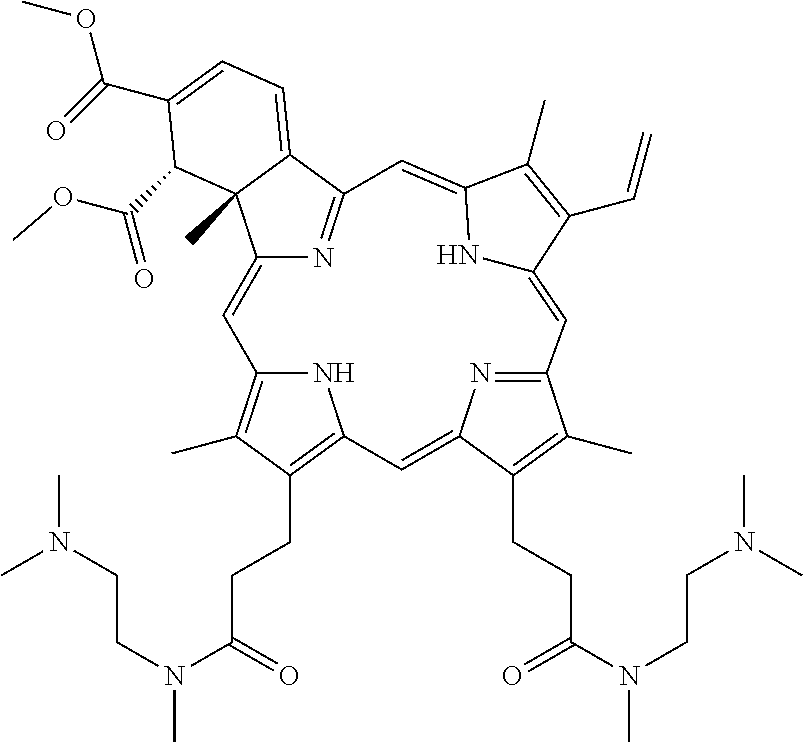


Priority Applications (1)
| Application Number | Priority Date | Filing Date | Title |
|---|---|---|---|
| US16/300,140 US11331304B2 (en) | 2016-05-11 | 2017-05-11 | YAP1 inhibitors and methods |
Applications Claiming Priority (3)
| Application Number | Priority Date | Filing Date | Title |
|---|---|---|---|
| US201662334868P | 2016-05-11 | 2016-05-11 | |
| PCT/US2017/032147 WO2017197104A1 (en) | 2016-05-11 | 2017-05-11 | Yap1 inhibitors and methods |
| US16/300,140 US11331304B2 (en) | 2016-05-11 | 2017-05-11 | YAP1 inhibitors and methods |
Publications (2)
| Publication Number | Publication Date |
|---|---|
| US20190298693A1 US20190298693A1 (en) | 2019-10-03 |
| US11331304B2 true US11331304B2 (en) | 2022-05-17 |
Family
ID=60266766
Family Applications (1)
| Application Number | Title | Priority Date | Filing Date |
|---|---|---|---|
| US16/300,140 Active US11331304B2 (en) | 2016-05-11 | 2017-05-11 | YAP1 inhibitors and methods |
Country Status (2)
| Country | Link |
|---|---|
| US (1) | US11331304B2 (en) |
| WO (1) | WO2017197104A1 (en) |
Families Citing this family (8)
| Publication number | Priority date | Publication date | Assignee | Title |
|---|---|---|---|---|
| WO2020006215A1 (en) | 2018-06-28 | 2020-01-02 | Ascentgene, Inc. | Compositions and methods for the diagnosis, treatment and prevention of neoplastic and neurological disorders |
| TW202214854A (en) * | 2019-01-31 | 2022-04-16 | 美商Ionis製藥公司 | Modulators of yap1 expression |
| JP7588289B2 (en) * | 2019-02-15 | 2024-11-22 | ニュートリエン・エージー・ソリューションズ・(カナダ)・インコーポレイテッド | Protoporphyrin IX derivatives for promoting plant health and uses thereof |
| WO2020214650A1 (en) * | 2019-04-15 | 2020-10-22 | Trustees Of Boston University | Methods and compositions for modulating the immune system |
| CN114146086A (en) * | 2022-01-21 | 2022-03-08 | 北京市肿瘤防治研究所 | Application of verteporfin in preparation of anti-cancer pain medicine |
| EP4695258A1 (en) * | 2023-04-14 | 2026-02-18 | Nira Biosciences, Inc. | Benzoporphyrin analogs, conjugates, and methods of use thereof |
| WO2025092703A1 (en) * | 2023-10-30 | 2025-05-08 | 同宜医药(苏州)有限公司 | Photosensitizer conjugate compound, pharmaceutical composition thereof, and use thereof |
| CN119912458B (en) * | 2025-03-31 | 2025-07-29 | 上海光声制药有限公司 | Monosubstituted amide porphyrin derivatives, preparation method thereof and use thereof as photosensitizer |
Citations (5)
| Publication number | Priority date | Publication date | Assignee | Title |
|---|---|---|---|---|
| WO2006005137A1 (en) | 2004-07-15 | 2006-01-19 | The Unversity Of Sydney | Porphyrin linked metronidazole against gum disease: porphyromonas gingivalis |
| JP2008031103A (en) | 2006-07-28 | 2008-02-14 | Hidetoshi Tsuchida | Porphyrin compound having histidine derivative bonded thereto and artificial oxygen carrier comprising the same |
| WO2011017809A1 (en) | 2009-08-11 | 2011-02-17 | The University Of British Columbia | Autophagy inhibitor compounds, compositions and methods for the use thereof in the treatment of cancer |
| EP1755676B1 (en) | 2004-06-09 | 2012-11-28 | QLT, Inc. | Photodynamic therapy for the treatment of hyperactive sebaceous gland disorders using topically applied verteporfin and/or lemuteporfin |
| WO2015130944A1 (en) | 2014-02-28 | 2015-09-03 | Massachusetts Eye & Ear Infirmary | Methods for cross-linking corneal collagen with verteporfin for the treatment of disorders of the eye |
-
2017
- 2017-05-11 US US16/300,140 patent/US11331304B2/en active Active
- 2017-05-11 WO PCT/US2017/032147 patent/WO2017197104A1/en not_active Ceased
Patent Citations (5)
| Publication number | Priority date | Publication date | Assignee | Title |
|---|---|---|---|---|
| EP1755676B1 (en) | 2004-06-09 | 2012-11-28 | QLT, Inc. | Photodynamic therapy for the treatment of hyperactive sebaceous gland disorders using topically applied verteporfin and/or lemuteporfin |
| WO2006005137A1 (en) | 2004-07-15 | 2006-01-19 | The Unversity Of Sydney | Porphyrin linked metronidazole against gum disease: porphyromonas gingivalis |
| JP2008031103A (en) | 2006-07-28 | 2008-02-14 | Hidetoshi Tsuchida | Porphyrin compound having histidine derivative bonded thereto and artificial oxygen carrier comprising the same |
| WO2011017809A1 (en) | 2009-08-11 | 2011-02-17 | The University Of British Columbia | Autophagy inhibitor compounds, compositions and methods for the use thereof in the treatment of cancer |
| WO2015130944A1 (en) | 2014-02-28 | 2015-09-03 | Massachusetts Eye & Ear Infirmary | Methods for cross-linking corneal collagen with verteporfin for the treatment of disorders of the eye |
Non-Patent Citations (29)
| Title |
|---|
| Brunner et al., "Benzoporphyrins and Acetylene-Substituted Porphyrins as Improved Photosensitizers in the Photodynamic Tumor Therapy with Porphyrin Platinum Conjugates." Monatshefte fuer Chemie, 2002, 133(5), 679-705. |
| Burns et al., "Syntheses of chlorins from unsymmetrically substituted iron porphyrins." Journal of the Chemical Society, Perkin Transaction 1, 1988, 3119-3131. |
| Cancer-Prevention, 2021, https://www.cancerresearchuk.org/about-cancer/causes-of-cancer/can-cancer-be-prevented-0. * |
| Chang et al., 2012, caplus an 2012:919168. * |
| Chow et al., "Epigenetic States of Cells of Origin and Tumor Evolution Drive Tumor-Initiating Cell Phenotype and Tumor Heterogeneity." Cancer Research (2014), 74(17): 4864-4874. |
| Chrominski et al., "Protoporphyrin IX/Cobyrinate Derived Hybrids—Novel Activators of Soluble Guanylyl Cyclase." European Journal of Organic Chemistry, 2013, 2013(8), 1530-1537. |
| Corbett et al., "Response of transplantable tumors of mice to anthracenedione derivatives alone and in combination with clinically useful agents." Cancer Treatment Reports (1982), 66(5): 1187-1200. |
| Cui, Qiao-Li et al., Synthesis and catalytic application of Co(II)-3, 8-diethyl deuteroporphyrin dimethyl ester to the oxidation of cyclohexane. Chemical Journal of Chinese Universities 2011, 32(10), 2311-2315, English Abstract attached. |
| Fernandez et al., "YAP1 is amplified and up-regulated in hedgehog-associated medulloblastomas and mediates Sonic hedgehog-driven neural precursor proliferation." Genes and Development, 2009, 23: 2729-2741. |
| Hu et al., "A facile synthesis of deuteroporphyrins derivatives under ultrasound irradiation." Ultrasonics Sonochemistry, 2010 17(2), 288-291. |
| Iakovides et al., "Regioselective photoreduction of zinc(II) porphyrins to give chlorins." Photochemistry and Photobiology, 1991, 54(3), 335-343. |
| International Search Report of The International Searching Authority dated Aug. 4, 2017 from corresponding International Patent Application No. PCT/US2017/032147 filed on May 11, 2017. |
| Kiesel et al., "Iron-Sulfur Cluster-dependent Catalysis of Chlorophyllide a Oxidoreductase from Roseobacter denitrificans." Journal of Biological Chemistry, 2015, 290(2), 1141-1154. |
| Kitagishi et al., "Self-Assembly of One-and Two-Dimensional Hemoprotein Systems by Polymerization through Heme-Heme Pocket Interactions." Angewandte International Edition, Chemie, (2009) 48(7): 1271-1274. |
| Kitagishi et al., "Supramolecular Hemoprotein Linear Assembly by Successive interprotein Heme-Heme Pocket Interactions." Journal of the American Chemical Society, 2007, 129(34), 10326-10327. |
| Liu et al., "Lipopolysaccharide Neutralizing Peptide-Porphyrin Conjugates for Effective Photoinactivation and intracellular Imaging of Gram-Negative Bacteria Strains." Bioconjugate Chemistry, 2012, 23(8), 1639-1647. |
| Liu-Chittenden et al., "Genetic and Pharmacological disruption of the TEAD-YAP complex suppresses the oncogenic activity of YAP." Genes and Development, 2012, 26: 1300-1305. |
| Northcott et al., "Subgroup-specific structural variation across 1,000 medulloblastoma genomes." Nature, 2012, 488: 49-56. |
| Pangka et al., "Diels-Ader Reactions of Protoporphyrin IX Dimethyl Ester with Electron-Deficient Alkynes." Journal of Organic Chemistry, 1986, 51, 1094-1100. |
| RN 126261-98-1, registry database compound, entry date Apr. 6, 1990, 1990. * |
| RN149753-99-1, registry database compound, entry date Sep. 3, 1993, 1993. * |
| Sakata et al., "Synthesis of Photosynthetic model compound with a long alkyl chain and its incorporation into bovine serum albumin." Tetrahedron, 1989, 45(15), 4717-4727. |
| Seton-Rogers, "All eyes on YAP1." Nature Reviews Cancer, 2014, 14:514-515. |
| Simpson et al., "Ascorbic acid photoreductions of zinc(II) chlorophyll derivatives: access to metal-free isobacteriochlorins." Journal of the American Chemical Society, 1988, 110(9), 2854-2861. |
| Smith et al., "Isobacteriochlorophyll b analogs from photoreduction of metallochlorins." Journal of the American Chemical Society. 1986, 108(21), 6834-6835. |
| Smith et al., "Site-specific reduction of unsymmetrically substituted porphyrins to give isomerically pur chlorins." Journal of the Chemical Society, Chemical Communications, 1987, (8), 613-614. |
| Steinhardt et al., "Expression of Yes-Associated Protein, YAP, in Common Solid Tumors." Human Pathology, 2008, 39(11): 1582-1589. |
| Wan et al., "Fabrication of a Thermoresponsive Biohybrid Double Hydrophilic Block Copolymer by a Cofactor Reconstitution Approach," Macromolecular Rapid Commumications, 2010, 31(23), 2070-2076. |
| Written Opinion of The International Searching Authority dated Aug. 4, 2017 from corresponding International Patent. Application No. PCT/US2017/032147 filed on May 11, 2017. |
Also Published As
| Publication number | Publication date |
|---|---|
| WO2017197104A1 (en) | 2017-11-16 |
| US20190298693A1 (en) | 2019-10-03 |
Similar Documents
| Publication | Publication Date | Title |
|---|---|---|
| US20190298693A1 (en) | Yap1 inhibitors and methods | |
| US20240043390A1 (en) | Compositions and methods for treating cancer | |
| JP6769982B2 (en) | How to treat cancer associated with RAS mutations | |
| US12485174B2 (en) | HDAC6-activated macrophages, compositions, and uses thereof | |
| EP2431366B1 (en) | New chlorin e6-folic acid conjugated compound, preparation method thereof, and pharmaceutical composition containing the same for treatment of cancer | |
| US20130143902A1 (en) | Compositions and methods of treating a proliferative disease with a quinazolinone derivative | |
| CN113811333A (en) | Compounds targeting anti-cancer nuclear hormone receptors | |
| US20250082764A1 (en) | Drug for treating triple negative breast cancer | |
| JP2020512343A (en) | Compounds and compositions for treating blood disorders | |
| KR20180054793A (en) | Methods for the treatment of small cell carcinoma of the malignant squamous cell carcinoma or hypercalcemic type ovary | |
| CN103501785A (en) | Csf-1r inhibitors for treatment of brain tumors | |
| US9873670B2 (en) | Arylquinoline and analog compounds and use thereof to treat cancer | |
| JP2019527231A (en) | Combinations for treating cancer | |
| Zhong et al. | Mitochondria-targeted manganese-based mesoporous silica nanoplatforms trigger cGAS-STING activation and sensitize anti PD-L1 therapy in triple-negative breast cancer | |
| KR20200144116A (en) | Methods for preventing or treating side effects of cancer treatment | |
| US9446048B2 (en) | Methods for treating leukemia and disorders mediated by CBFβ and RUNX1 proteins | |
| US20220047573A1 (en) | Methods for treating vascular malformations | |
| WO2022063134A1 (en) | Csf1r kinase inhibitor and use thereof | |
| JP2020515582A (en) | Folate conjugates for use in the treatment of tumor-associated macrophages | |
| KR20220062363A (en) | Phospholipid Ether Conjugates as Cancer Targeting Drug Carriers | |
| US20170202847A1 (en) | Methods for the treatment of tumors | |
| US12521394B2 (en) | Therapeutic compositions and methods for treating cancers | |
| WO2021154976A1 (en) | Methods of treating brain cancer with panobinostat | |
| US10266490B2 (en) | Radioprotector compounds | |
| US20230405132A1 (en) | Antitumor pharmaceutical composition and use thereof |
Legal Events
| Date | Code | Title | Description |
|---|---|---|---|
| FEPP | Fee payment procedure |
Free format text: ENTITY STATUS SET TO UNDISCOUNTED (ORIGINAL EVENT CODE: BIG.); ENTITY STATUS OF PATENT OWNER: SMALL ENTITY |
|
| AS | Assignment |
Owner name: THE JACKSON LABORATORY, MAINE Free format text: ASSIGNMENT OF ASSIGNORS INTEREST;ASSIGNORS:YUN, KYUSON;ZHAI, HAI-XIAO;SIGNING DATES FROM 20181106 TO 20181203;REEL/FRAME:047690/0680 |
|
| FEPP | Fee payment procedure |
Free format text: ENTITY STATUS SET TO SMALL (ORIGINAL EVENT CODE: SMAL); ENTITY STATUS OF PATENT OWNER: SMALL ENTITY |
|
| STPP | Information on status: patent application and granting procedure in general |
Free format text: NON FINAL ACTION MAILED |
|
| STPP | Information on status: patent application and granting procedure in general |
Free format text: RESPONSE TO NON-FINAL OFFICE ACTION ENTERED AND FORWARDED TO EXAMINER |
|
| STPP | Information on status: patent application and granting procedure in general |
Free format text: FINAL REJECTION MAILED |
|
| STPP | Information on status: patent application and granting procedure in general |
Free format text: ADVISORY ACTION MAILED |
|
| STPP | Information on status: patent application and granting procedure in general |
Free format text: RESPONSE TO NON-FINAL OFFICE ACTION ENTERED AND FORWARDED TO EXAMINER |
|
| STPP | Information on status: patent application and granting procedure in general |
Free format text: FINAL REJECTION MAILED |
|
| STPP | Information on status: patent application and granting procedure in general |
Free format text: RESPONSE AFTER FINAL ACTION FORWARDED TO EXAMINER |
|
| STPP | Information on status: patent application and granting procedure in general |
Free format text: FINAL REJECTION MAILED |
|
| STPP | Information on status: patent application and granting procedure in general |
Free format text: RESPONSE AFTER FINAL ACTION FORWARDED TO EXAMINER |
|
| STPP | Information on status: patent application and granting procedure in general |
Free format text: NOTICE OF ALLOWANCE MAILED -- APPLICATION RECEIVED IN OFFICE OF PUBLICATIONS |
|
| STPP | Information on status: patent application and granting procedure in general |
Free format text: PUBLICATIONS -- ISSUE FEE PAYMENT VERIFIED |
|
| STCF | Information on status: patent grant |
Free format text: PATENTED CASE |
|
| MAFP | Maintenance fee payment |
Free format text: PAYMENT OF MAINTENANCE FEE, 4TH YR, SMALL ENTITY (ORIGINAL EVENT CODE: M2551); ENTITY STATUS OF PATENT OWNER: SMALL ENTITY Year of fee payment: 4 |