US11326263B2 - Photoelectrochemical devices, methods, and systems with a cupric oxide/cuprous oxide coated electrode - Google Patents
Photoelectrochemical devices, methods, and systems with a cupric oxide/cuprous oxide coated electrode Download PDFInfo
- Publication number
- US11326263B2 US11326263B2 US16/353,183 US201916353183A US11326263B2 US 11326263 B2 US11326263 B2 US 11326263B2 US 201916353183 A US201916353183 A US 201916353183A US 11326263 B2 US11326263 B2 US 11326263B2
- Authority
- US
- United States
- Prior art keywords
- cuo
- photocathode
- photocatalyst
- electrolyte solution
- various embodiments
- Prior art date
- Legal status (The legal status is an assumption and is not a legal conclusion. Google has not performed a legal analysis and makes no representation as to the accuracy of the status listed.)
- Expired - Fee Related, expires
Links
Images




Classifications
-
- C—CHEMISTRY; METALLURGY
- C25—ELECTROLYTIC OR ELECTROPHORETIC PROCESSES; APPARATUS THEREFOR
- C25B—ELECTROLYTIC OR ELECTROPHORETIC PROCESSES FOR THE PRODUCTION OF COMPOUNDS OR NON-METALS; APPARATUS THEREFOR
- C25B3/00—Electrolytic production of organic compounds
- C25B3/20—Processes
- C25B3/25—Reduction
-
- B—PERFORMING OPERATIONS; TRANSPORTING
- B01—PHYSICAL OR CHEMICAL PROCESSES OR APPARATUS IN GENERAL
- B01D—SEPARATION
- B01D69/00—Semi-permeable membranes for separation processes or apparatus characterised by their form, structure or properties; Manufacturing processes specially adapted therefor
- B01D69/12—Composite membranes; Ultra-thin membranes
-
- B—PERFORMING OPERATIONS; TRANSPORTING
- B01—PHYSICAL OR CHEMICAL PROCESSES OR APPARATUS IN GENERAL
- B01D—SEPARATION
- B01D71/00—Semi-permeable membranes for separation processes or apparatus characterised by the material; Manufacturing processes specially adapted therefor
- B01D71/02—Inorganic material
- B01D71/022—Metals
-
- B—PERFORMING OPERATIONS; TRANSPORTING
- B01—PHYSICAL OR CHEMICAL PROCESSES OR APPARATUS IN GENERAL
- B01J—CHEMICAL OR PHYSICAL PROCESSES, e.g. CATALYSIS OR COLLOID CHEMISTRY; THEIR RELEVANT APPARATUS
- B01J23/00—Catalysts comprising metals or metal oxides or hydroxides, not provided for in group B01J21/00
- B01J23/70—Catalysts comprising metals or metal oxides or hydroxides, not provided for in group B01J21/00 of the iron group metals or copper
- B01J23/72—Copper
-
- B01J35/0013—
-
- B01J35/002—
-
- B01J35/0033—
-
- B01J35/004—
-
- B01J35/026—
-
- B—PERFORMING OPERATIONS; TRANSPORTING
- B01—PHYSICAL OR CHEMICAL PROCESSES OR APPARATUS IN GENERAL
- B01J—CHEMICAL OR PHYSICAL PROCESSES, e.g. CATALYSIS OR COLLOID CHEMISTRY; THEIR RELEVANT APPARATUS
- B01J35/00—Catalysts, in general, characterised by their form or physical properties
- B01J35/30—Catalysts, in general, characterised by their form or physical properties characterised by their physical properties
- B01J35/33—Electric or magnetic properties
-
- B—PERFORMING OPERATIONS; TRANSPORTING
- B01—PHYSICAL OR CHEMICAL PROCESSES OR APPARATUS IN GENERAL
- B01J—CHEMICAL OR PHYSICAL PROCESSES, e.g. CATALYSIS OR COLLOID CHEMISTRY; THEIR RELEVANT APPARATUS
- B01J35/00—Catalysts, in general, characterised by their form or physical properties
- B01J35/30—Catalysts, in general, characterised by their form or physical properties characterised by their physical properties
- B01J35/39—Photocatalytic properties
-
- B—PERFORMING OPERATIONS; TRANSPORTING
- B01—PHYSICAL OR CHEMICAL PROCESSES OR APPARATUS IN GENERAL
- B01J—CHEMICAL OR PHYSICAL PROCESSES, e.g. CATALYSIS OR COLLOID CHEMISTRY; THEIR RELEVANT APPARATUS
- B01J37/00—Processes, in general, for preparing catalysts; Processes, in general, for activation of catalysts
- B01J37/34—Irradiation by, or application of, electric, magnetic or wave energy, e.g. ultrasonic waves ; Ionic sputtering; Flame or plasma spraying; Particle radiation
- B01J37/341—Irradiation by, or application of, electric, magnetic or wave energy, e.g. ultrasonic waves ; Ionic sputtering; Flame or plasma spraying; Particle radiation making use of electric or magnetic fields, wave energy or particle radiation
- B01J37/342—Irradiation by, or application of, electric, magnetic or wave energy, e.g. ultrasonic waves ; Ionic sputtering; Flame or plasma spraying; Particle radiation making use of electric or magnetic fields, wave energy or particle radiation of electric, magnetic or electromagnetic fields, e.g. for magnetic separation
-
- C—CHEMISTRY; METALLURGY
- C25—ELECTROLYTIC OR ELECTROPHORETIC PROCESSES; APPARATUS THEREFOR
- C25B—ELECTROLYTIC OR ELECTROPHORETIC PROCESSES FOR THE PRODUCTION OF COMPOUNDS OR NON-METALS; APPARATUS THEREFOR
- C25B11/00—Electrodes; Manufacture thereof not otherwise provided for
- C25B11/04—Electrodes; Manufacture thereof not otherwise provided for characterised by the material
- C25B11/051—Electrodes formed of electrocatalysts on a substrate or carrier
-
- C—CHEMISTRY; METALLURGY
- C25—ELECTROLYTIC OR ELECTROPHORETIC PROCESSES; APPARATUS THEREFOR
- C25B—ELECTROLYTIC OR ELECTROPHORETIC PROCESSES FOR THE PRODUCTION OF COMPOUNDS OR NON-METALS; APPARATUS THEREFOR
- C25B11/00—Electrodes; Manufacture thereof not otherwise provided for
- C25B11/04—Electrodes; Manufacture thereof not otherwise provided for characterised by the material
- C25B11/051—Electrodes formed of electrocatalysts on a substrate or carrier
- C25B11/054—Electrodes comprising electrocatalysts supported on a carrier
-
- C—CHEMISTRY; METALLURGY
- C25—ELECTROLYTIC OR ELECTROPHORETIC PROCESSES; APPARATUS THEREFOR
- C25B—ELECTROLYTIC OR ELECTROPHORETIC PROCESSES FOR THE PRODUCTION OF COMPOUNDS OR NON-METALS; APPARATUS THEREFOR
- C25B11/00—Electrodes; Manufacture thereof not otherwise provided for
- C25B11/04—Electrodes; Manufacture thereof not otherwise provided for characterised by the material
- C25B11/051—Electrodes formed of electrocatalysts on a substrate or carrier
- C25B11/055—Electrodes formed of electrocatalysts on a substrate or carrier characterised by the substrate or carrier material
- C25B11/057—Electrodes formed of electrocatalysts on a substrate or carrier characterised by the substrate or carrier material consisting of a single element or compound
-
- C—CHEMISTRY; METALLURGY
- C25—ELECTROLYTIC OR ELECTROPHORETIC PROCESSES; APPARATUS THEREFOR
- C25B—ELECTROLYTIC OR ELECTROPHORETIC PROCESSES FOR THE PRODUCTION OF COMPOUNDS OR NON-METALS; APPARATUS THEREFOR
- C25B11/00—Electrodes; Manufacture thereof not otherwise provided for
- C25B11/04—Electrodes; Manufacture thereof not otherwise provided for characterised by the material
- C25B11/051—Electrodes formed of electrocatalysts on a substrate or carrier
- C25B11/073—Electrodes formed of electrocatalysts on a substrate or carrier characterised by the electrocatalyst material
- C25B11/075—Electrodes formed of electrocatalysts on a substrate or carrier characterised by the electrocatalyst material consisting of a single catalytic element or catalytic compound
- C25B11/077—Electrodes formed of electrocatalysts on a substrate or carrier characterised by the electrocatalyst material consisting of a single catalytic element or catalytic compound the compound being a non-noble metal oxide
-
- C—CHEMISTRY; METALLURGY
- C25—ELECTROLYTIC OR ELECTROPHORETIC PROCESSES; APPARATUS THEREFOR
- C25B—ELECTROLYTIC OR ELECTROPHORETIC PROCESSES FOR THE PRODUCTION OF COMPOUNDS OR NON-METALS; APPARATUS THEREFOR
- C25B11/00—Electrodes; Manufacture thereof not otherwise provided for
- C25B11/04—Electrodes; Manufacture thereof not otherwise provided for characterised by the material
- C25B11/051—Electrodes formed of electrocatalysts on a substrate or carrier
- C25B11/073—Electrodes formed of electrocatalysts on a substrate or carrier characterised by the electrocatalyst material
- C25B11/075—Electrodes formed of electrocatalysts on a substrate or carrier characterised by the electrocatalyst material consisting of a single catalytic element or catalytic compound
- C25B11/087—Photocatalytic compound
-
- C—CHEMISTRY; METALLURGY
- C25—ELECTROLYTIC OR ELECTROPHORETIC PROCESSES; APPARATUS THEREFOR
- C25B—ELECTROLYTIC OR ELECTROPHORETIC PROCESSES FOR THE PRODUCTION OF COMPOUNDS OR NON-METALS; APPARATUS THEREFOR
- C25B11/00—Electrodes; Manufacture thereof not otherwise provided for
- C25B11/04—Electrodes; Manufacture thereof not otherwise provided for characterised by the material
- C25B11/051—Electrodes formed of electrocatalysts on a substrate or carrier
- C25B11/073—Electrodes formed of electrocatalysts on a substrate or carrier characterised by the electrocatalyst material
- C25B11/091—Electrodes formed of electrocatalysts on a substrate or carrier characterised by the electrocatalyst material consisting of at least one catalytic element and at least one catalytic compound; consisting of two or more catalytic elements or catalytic compounds
-
- C—CHEMISTRY; METALLURGY
- C25—ELECTROLYTIC OR ELECTROPHORETIC PROCESSES; APPARATUS THEREFOR
- C25B—ELECTROLYTIC OR ELECTROPHORETIC PROCESSES FOR THE PRODUCTION OF COMPOUNDS OR NON-METALS; APPARATUS THEREFOR
- C25B13/00—Diaphragms; Spacing elements
- C25B13/04—Diaphragms; Spacing elements characterised by the material
- C25B13/08—Diaphragms; Spacing elements characterised by the material based on organic materials
-
- C—CHEMISTRY; METALLURGY
- C25—ELECTROLYTIC OR ELECTROPHORETIC PROCESSES; APPARATUS THEREFOR
- C25B—ELECTROLYTIC OR ELECTROPHORETIC PROCESSES FOR THE PRODUCTION OF COMPOUNDS OR NON-METALS; APPARATUS THEREFOR
- C25B15/00—Operating or servicing cells
- C25B15/08—Supplying or removing reactants or electrolytes; Regeneration of electrolytes
-
- C—CHEMISTRY; METALLURGY
- C25—ELECTROLYTIC OR ELECTROPHORETIC PROCESSES; APPARATUS THEREFOR
- C25B—ELECTROLYTIC OR ELECTROPHORETIC PROCESSES FOR THE PRODUCTION OF COMPOUNDS OR NON-METALS; APPARATUS THEREFOR
- C25B15/00—Operating or servicing cells
- C25B15/08—Supplying or removing reactants or electrolytes; Regeneration of electrolytes
- C25B15/083—Separating products
-
- C—CHEMISTRY; METALLURGY
- C25—ELECTROLYTIC OR ELECTROPHORETIC PROCESSES; APPARATUS THEREFOR
- C25B—ELECTROLYTIC OR ELECTROPHORETIC PROCESSES FOR THE PRODUCTION OF COMPOUNDS OR NON-METALS; APPARATUS THEREFOR
- C25B15/00—Operating or servicing cells
- C25B15/08—Supplying or removing reactants or electrolytes; Regeneration of electrolytes
- C25B15/087—Recycling of electrolyte to electrochemical cell
-
- C—CHEMISTRY; METALLURGY
- C25—ELECTROLYTIC OR ELECTROPHORETIC PROCESSES; APPARATUS THEREFOR
- C25B—ELECTROLYTIC OR ELECTROPHORETIC PROCESSES FOR THE PRODUCTION OF COMPOUNDS OR NON-METALS; APPARATUS THEREFOR
- C25B3/00—Electrolytic production of organic compounds
- C25B3/01—Products
- C25B3/03—Acyclic or carbocyclic hydrocarbons
-
- C—CHEMISTRY; METALLURGY
- C25—ELECTROLYTIC OR ELECTROPHORETIC PROCESSES; APPARATUS THEREFOR
- C25B—ELECTROLYTIC OR ELECTROPHORETIC PROCESSES FOR THE PRODUCTION OF COMPOUNDS OR NON-METALS; APPARATUS THEREFOR
- C25B3/00—Electrolytic production of organic compounds
- C25B3/01—Products
- C25B3/07—Oxygen containing compounds
-
- C—CHEMISTRY; METALLURGY
- C25—ELECTROLYTIC OR ELECTROPHORETIC PROCESSES; APPARATUS THEREFOR
- C25B—ELECTROLYTIC OR ELECTROPHORETIC PROCESSES FOR THE PRODUCTION OF COMPOUNDS OR NON-METALS; APPARATUS THEREFOR
- C25B3/00—Electrolytic production of organic compounds
- C25B3/20—Processes
- C25B3/25—Reduction
- C25B3/26—Reduction of carbon dioxide
-
- H—ELECTRICITY
- H01—ELECTRIC ELEMENTS
- H01G—CAPACITORS; CAPACITORS, RECTIFIERS, DETECTORS, SWITCHING DEVICES, LIGHT-SENSITIVE OR TEMPERATURE-SENSITIVE DEVICES OF THE ELECTROLYTIC TYPE
- H01G9/00—Electrolytic capacitors, rectifiers, detectors, switching devices, light-sensitive or temperature-sensitive devices; Processes of their manufacture
- H01G9/20—Light-sensitive devices
- H01G9/2004—Light-sensitive devices characterised by the electrolyte, e.g. comprising an organic electrolyte
-
- H—ELECTRICITY
- H01—ELECTRIC ELEMENTS
- H01M—PROCESSES OR MEANS, e.g. BATTERIES, FOR THE DIRECT CONVERSION OF CHEMICAL ENERGY INTO ELECTRICAL ENERGY
- H01M14/00—Electrochemical current or voltage generators not provided for in groups H01M6/00 - H01M12/00; Manufacture thereof
- H01M14/005—Photoelectrochemical storage cells
-
- B—PERFORMING OPERATIONS; TRANSPORTING
- B01—PHYSICAL OR CHEMICAL PROCESSES OR APPARATUS IN GENERAL
- B01D—SEPARATION
- B01D2325/00—Details relating to properties of membranes
- B01D2325/10—Catalysts being present on the surface of the membrane or in the pores
-
- B—PERFORMING OPERATIONS; TRANSPORTING
- B01—PHYSICAL OR CHEMICAL PROCESSES OR APPARATUS IN GENERAL
- B01D—SEPARATION
- B01D2325/00—Details relating to properties of membranes
- B01D2325/38—Hydrophobic membranes
-
- B—PERFORMING OPERATIONS; TRANSPORTING
- B01—PHYSICAL OR CHEMICAL PROCESSES OR APPARATUS IN GENERAL
- B01D—SEPARATION
- B01D2325/00—Details relating to properties of membranes
- B01D2325/42—Ion-exchange membranes
-
- B—PERFORMING OPERATIONS; TRANSPORTING
- B01—PHYSICAL OR CHEMICAL PROCESSES OR APPARATUS IN GENERAL
- B01D—SEPARATION
- B01D69/00—Semi-permeable membranes for separation processes or apparatus characterised by their form, structure or properties; Manufacturing processes specially adapted therefor
- B01D69/02—Semi-permeable membranes for separation processes or apparatus characterised by their form, structure or properties; Manufacturing processes specially adapted therefor characterised by their properties
-
- B—PERFORMING OPERATIONS; TRANSPORTING
- B01—PHYSICAL OR CHEMICAL PROCESSES OR APPARATUS IN GENERAL
- B01D—SEPARATION
- B01D71/00—Semi-permeable membranes for separation processes or apparatus characterised by the material; Manufacturing processes specially adapted therefor
- B01D71/06—Organic material
- B01D71/30—Polyalkenyl halides
- B01D71/32—Polyalkenyl halides containing fluorine atoms
- B01D71/36—Polytetrafluoroethylene
-
- B—PERFORMING OPERATIONS; TRANSPORTING
- B01—PHYSICAL OR CHEMICAL PROCESSES OR APPARATUS IN GENERAL
- B01D—SEPARATION
- B01D71/00—Semi-permeable membranes for separation processes or apparatus characterised by the material; Manufacturing processes specially adapted therefor
- B01D71/06—Organic material
- B01D71/76—Macromolecular material not specifically provided for in a single one of groups B01D71/08 - B01D71/74
- B01D71/80—Block polymers
-
- Y—GENERAL TAGGING OF NEW TECHNOLOGICAL DEVELOPMENTS; GENERAL TAGGING OF CROSS-SECTIONAL TECHNOLOGIES SPANNING OVER SEVERAL SECTIONS OF THE IPC; TECHNICAL SUBJECTS COVERED BY FORMER USPC CROSS-REFERENCE ART COLLECTIONS [XRACs] AND DIGESTS
- Y02—TECHNOLOGIES OR APPLICATIONS FOR MITIGATION OR ADAPTATION AGAINST CLIMATE CHANGE
- Y02E—REDUCTION OF GREENHOUSE GAS [GHG] EMISSIONS, RELATED TO ENERGY GENERATION, TRANSMISSION OR DISTRIBUTION
- Y02E10/00—Energy generation through renewable energy sources
- Y02E10/50—Photovoltaic [PV] energy
- Y02E10/542—Dye sensitized solar cells
-
- Y—GENERAL TAGGING OF NEW TECHNOLOGICAL DEVELOPMENTS; GENERAL TAGGING OF CROSS-SECTIONAL TECHNOLOGIES SPANNING OVER SEVERAL SECTIONS OF THE IPC; TECHNICAL SUBJECTS COVERED BY FORMER USPC CROSS-REFERENCE ART COLLECTIONS [XRACs] AND DIGESTS
- Y02—TECHNOLOGIES OR APPLICATIONS FOR MITIGATION OR ADAPTATION AGAINST CLIMATE CHANGE
- Y02P—CLIMATE CHANGE MITIGATION TECHNOLOGIES IN THE PRODUCTION OR PROCESSING OF GOODS
- Y02P20/00—Technologies relating to chemical industry
- Y02P20/10—Process efficiency
- Y02P20/133—Renewable energy sources, e.g. sunlight
Definitions
- the invention generally concerns methods, devices, and systems using an electrode having a CuO/Cu 2 O array as well as methods, devices, and systems related to continuous flow solar reactors.
- Hydrocarbons are essential in modern life. Hydrocarbons are used as fuel and raw material in various fields, including the chemical, petrochemical, plastics, and rubber industries.
- Fossil fuels such as coal, oil and gas, are composed of hydrocarbons with varying ratios of carbon and hydrogen, and are non-renewably used when combusted, forming carbon dioxide and water.
- fossil fuels present a number of disadvantages, including the finite reserve, irreversible combustion and contribution to air pollution and global warming. Considering these disadvantages, and the increasing demand for energy, alternative sources of energy are needed.
- CO 2 an actual by-product of fossil fuel combustion.
- transportation fuel such as methanol or ethanol
- the present application offers a solution to the current problems associated with generating alcohols, such as methanol, ethanol, and propanol, with CO 2 in an energy efficient and/or cost efficient manner, especially one with lower toxicity.
- the solution is premised on a photoelectrochemical device comprising a photocathode having a CuO/Cu 2 O nanorod array.
- Photoelectrochemical cells in accordance with the present disclosure can be used to convert CO 2 and water into one or more alcohols.
- a combination of solar energy and electricity can drive the reaction, and thus, it is referred to as a “photoelectrochemical” (PEC) process.
- PEC photoelectrochemical
- the devices, systems, and methods in accordance with the present invention can be used to produce reaction products, like CO 2 , on a continuous basis.
- a nanostructure comprising: an elongated CuO core having a lateral surface and a top surface and a plurality of Cu 2 O particles deposited on at least a portion of the lateral surface.
- the elongated CuO core is a nanorod.
- the CuO core comprises a width dimension of between 40 nm and 200 nm.
- the CuO core comprises a length between 0.5 and 15 ⁇ m.
- the Cu 2 O particles form a discontinuous coating on the lateral surface of the elongated CuO core.
- the Cu 2 O particles form a continuous coating on at least a portion of the lateral surface of the elongated CuO core.
- the coating has a thickness of between 30 nm and 100 nm. In various embodiments, at least a portion of the top surface does not have Cu 2 O particles deposited thereon. In various embodiments, the Cu 2 O particles are crystallites.
- a metal oxide nanoarray comprising a plurality of the above described nanostructures.
- a photocatalyst can comprise a conducting substrate and a photoactive layer comprising a plurality of the above described nanostructures, where a majority of the nanostructures project from the conducting substrate.
- the substrate is copper.
- an electrode can comprise this photocatalyst.
- a photoelectrochemical device comprising: a cathode chamber comprising a substantially transparent cover, a first inlet, a first outlet, a photocathode comprising the above described photocatalyst, and a first channel partially defined by the transparent cover and partially defined by the photocathode and in fluid communication with the first inlet and the first outlet; an anode chamber comprising a conducting member, a second inlet, a second channel, and a second outlet; and a proton conducting membrane separating and partially defining a section of the first channel and a section of the second channel.
- the substantially transparent cover and the photocathode form two opposing surfaces.
- the photocathode comprises a first surface, a second surface and at least one aperture at or near an end opposite from the first inlet, and the first channel is at least partially defined by both the first surface and the second surface.
- a first section of the first channel is partially defined by two opposing surfaces of the substantially transparent cover and the first surface of the photocathode and a second section of the first channel is partially defined by two opposing surfaces of the proton conducting membrane and the second surface of the photocathode.
- the first inlet is configured for gaseous CO 2 inflow; the first outlet is configured for gaseous outflow comprising one or more alcohols; and the photocathode is porous and extends alongside the proton conducting membrane.
- the first channel is partially defined by a first surface opposing a second surface; the substantially transparent cover comprises the first surface and the photocathode; and the proton conducting membrane comprises the second surface.
- the photocathode is in contact with the proton conducting membrane.
- the first inlet is configured for a first electrolyte solution inflow comprising CO 2 ; the first outlet is configured for a first electrolyte solution outflow comprising one or more alcohols; and the photocathode is porous and extends alongside the proton conducting membrane.
- the second channel is partially defined by two opposing surfaces of the conducting member and the proton conducting membrane.
- the CuO core is exposed to the first channel at a tip of a majority of nanorods of the nanorod array.
- the width of the first channel is between 30 ⁇ m and 100 ⁇ m.
- the width of the second channel is less than 150 ⁇ m or less than 100 ⁇ m.
- a spacer body defining an opening is disposed between the substantially transparent cover and the photocathode.
- the conducting substrate is copper.
- the conducting substrate is supported by a base plate.
- the substantially transparent cover is a thin sheet.
- the substantially transparent cover is less than 5 mm.
- the substantially transparent cover comprises quartz, glass, or a plastic material.
- the proton conducting membrane comprises an ionomer.
- the proton conducting membrane comprises a persulfonic acid/polytetrafluoroethylene copolymer.
- Yet another aspect of the disclosure relates to a system comprising a dual chamber photoelectrochemical device comprising: a cathode chamber comprising: a photocathode having a photocatalyst according to the present disclosure, a substantially transparent cover configured to permit the photocathode to be irradiated with light during use, and an anode chamber comprising an anode that is electrically connected to the photocathode, the anode chamber separated from the cathode chamber by a proton conducting membrane; a power supply configured to apply an electric potential across the photocathode and the anode; and a storage tank for storing a reaction product generated in the photoelectrochemical device.
- the system can further comprise an alcohol isolation unit for extracting one or more alcohols from a first electrolyte solution.
- the system can further comprise a gas transfer unit for transferring CO 2 into the first electrolyte solution.
- the system can further comprise a first pump configured to pump the first electrolyte solution through the gas transfer unit, the cathode chamber, and the alcohol isolation unit.
- the gas transfer unit comprises a hydrophobic membrane disposed between a first channel through which the first electrolyte solution flows and a second channel through which CO 2 flows.
- the system can further comprise a first electrolyte return conduit to transfer the first electrolyte solution from the alcohol isolation unit to the gas transfer unit.
- the system can further comprise a second pump configured to pump a second electrolyte solution through the anode chamber.
- the system can further comprise a gas isolation unit for extracting O 2 from the second electrolyte solution where the second pump is configured to pump the second electrolyte solution from the anode chamber to the gas isolation unit.
- the system can further comprise a second electrolyte return conduit to transfer the second electrolyte solution to the anode chamber.
- Another aspect of the disclosure relates to a method of converting carbon dioxide to one or more alcohols comprising dissolving CO 2 into a first electrolyte solution; pumping the first electrolyte solution with dissolved CO2 into a cathode chamber, where the cathode chamber comprises a photocathode having a photocatalyst in accordance with the present disclosure and the photocathode being irradiated with light; and pumping a second electrolyte solution into an anode chamber, where the cathode chamber and the anode chamber are separated by a proton conducting membrane and the anode chamber comprises an anode that is electrically connected to the photocathode.
- the method can further comprise pumping the first electrolyte solution into an alcohol isolation unit and substantially isolating the alcohol from the electrolyte solution, where the alcohol isolation unit comprises a fractional distillation column. In various embodiments, the method further comprises transferring isolated alcohol to an alcohol storage tank. In various embodiments, the method further comprises pumping the first electrolyte solution from the alcohol isolation unit to the CO 2 transfer unit. In various embodiments, dissolving the CO 2 into the first electrolyte solution comprises the first electrolyte solution flowing through a gas transfer unit, and the CO 2 is transferred through a hydrophobic membrane. In various embodiments, the hydrophobic membrane has a water contact angle greater than 100° and a thickness less than 15 ⁇ m.
- the hydrophobic membrane comprises polytetrafluoroethylene.
- a section of the first channel extends through the cathode chamber and is partially defined by a substantially transparent cover and the photocathode.
- a section of the first channel is partially defined by the proton conducting membrane, where the proton conducting membrane comprises a persulfonic acid/polytetrafluoroethylene copolymer.
- an electric potential is applied across the photocathode and anode, where the electric potential of between ⁇ 0.2 V and ⁇ 0.85 V as compared to a standard hydrogen electrode is applied across the photocathode and anode.
- the method can further comprise pumping a second electrolyte solution through the anode chamber, where a third channel, through which the second electrolyte solution flows, is partially defined by the proton conducting membrane.
- the third channel is partially defined by two opposing surfaces of the proton conducting membrane and the anode.
- the second electrolyte solution comprises between 0.01M to 0.5M sodium bicarbonate.
- the method can further comprise pumping the second electrolyte solution from the anode chamber into gas isolation unit to remove O 2 from the second electrolyte solution.
- a pressure in the first channel, the second channel, and the third channel is between 0.7 atm and 1.2 atm.
- the flow rate of the first electrolyte solution is between 0.2 mL/hr*cm 2 and 20 mL/hr*cm 2 , such as 0.4, 0.6, 0.8, 1, 2, 3, 4, 5, 6, 7, 8, 10, 12, 14, 16, or 18, or any other value therebetween.
- the first electrolyte solution comprises between 0.01M to 0.5M sodium bicarbonate.
- the first electrolyte solution has a temperature between 15° C. and 50° C.
- the anode comprises at least one of platinum, gold, graphite, aluminum, and stainless steel.
- the method can further comprise electrodepositing Cu 2 O onto the photocathode to regenerate the photocathode after a period of use.
- a solution of CuSO 4 is pumped into the cathode chamber during the electrodeposition.
- Yet another aspect of the present disclosure relates to method of converting CO 2 to one or more alcohols comprising pumping CO 2 into a cathode chamber, where the cathode chamber comprises a photocathode having a photocatalyst in accordance with the present disclosure and a first electrolyte solution, and the cathode chamber comprises a transparent cover configured to allow the photocathode to be irradiated with light during use; and pumping a second electrolyte solution into a anode chamber, where the anode chamber and the cathode chamber are separated by a proton conducting membrane.
- substantially all of the plurality of nanostructures of the photocatalyst comprises a CuO core and Cu 2 O shell.
- the method can further comprise pumping a gas from the cathode chamber, where the gas comprises one or more alcohols. In various embodiments, the method can further comprise transferring the one or more alcohols to a storage tank.
- the cathode chamber further comprises: a gas inlet configured for CO 2 inflow to the first channel; and a gas outlet configured for gas outflow comprising one or more alcohols from the first channel; where the photocathode is porous and extends alongside the proton conducting membrane.
- the first channel is partially defined by a first surface opposing a second surface, the transparent cover comprises the first surface, and the photocathode and the proton conducting membrane comprise the second surface.
- the photocathode is in contact with the proton conducting membrane.
- the anode chamber comprises a second channel that is partially defined by two opposing surfaces of the conducting member and the proton conducting membrane, through which the second electrolyte solution flows.
- the CO 2 is in a gaseous phase.
- the temperature in the first channel is between 70° C. and 100° C.
- an electrolytic bath comprising a basic aqueous solution of cupric ions, a conducting substrate, and a plurality of elongated CuO nanostructures projecting from the substrate.
- the solution further comprises an additive, such as a brightener or stabilizing agent, e.g., lactic acid, tartaric acid, malic acid, and/or boric acid, and is at a pH of between 7 and 12.
- Another aspect of the disclosure comprises a method of making the nanostructure array comprising cleaning a surface of a Cu component; forming CuO nanostructures on the surface, such as by a sol-gel technique followed by thermal treatment; and electrodepositing Cu 2 O particles on the CuO nanostructures.
- forming the CuO nanostructures comprises heating the Cu component to a temperature between 150° C. and 700° C. and isothermally heating at the temperature.
- forming the CuO nanostructures comprises forming Cu(OH) 2 nanostructures on the surface and then heating the Cu component to a temperature between 150° C. and 400° C.
- electrodepositing Cu 2 O particles on the CuO nanostructures comprises placing the Cu component in an electrolytic bath comprising cupric ions.
- forming CuO nanostructures comprises forming Cu(OH) 2 nanoarray on the surface and then heating to convert to CuO.
- the forming of CuOH(2) nanoarray comprises contacting the surface, such as by soaking it, with a solution comprises NaOH and (NH 4 ) 2 S 2 O 8 or other suitable compounds.
- the contact time can be greater than 20, 40, 60, 80, 100, 120, 140, 160, or 180 min.
- nanostructure refers to an object or material in which at least one dimension of the object or material is equal to or less than 100 nm (e.g., one dimension is 1 to 100 nm in size).
- the nanostructure includes at least two dimensions that are equal to or less than 200 nm (e.g., a first dimension is 1 to 200 nm in size and a second dimension is 1 to 200 nm in size).
- the nanostructure includes three dimensions that are equal to or less than 200 nm (e.g., a first dimension is 1 to 200 nm in size, a second dimension is 1 to 200 nm in size, and a third dimension is 1 to 200 nm in size).
- the shape of the nanostructure can be of a wire, whisker, fiber, a tube, a particle, a sphere, a rod, a tetrapod, a hyperbranched structure, or mixtures thereof.
- the preposition “between,” when used to define a range of values means that the range includes the end points (e.g., x and y) of the given range and the values between the end points.
- substantially is defined as being largely but not necessarily wholly what is specified (and include wholly what is specified) as understood by one of ordinary skill in the art. In any disclosed embodiment, the term “substantially” may be substituted with “within [a percentage] of” what is specified, where the percentage includes 0.1, 1, 5, and 10 percent.
- a structure that is capable performing a function or that is configured in a certain way is capable or configured in at least that way, but may also be capable or configured in ways that are not listed.
- any method or system of the present invention can consist of or consist essentially of—rather than comprise/include/contain/have-any of the described elements and/or features and/or steps.
- the term “consisting of” or “consisting essentially of” can be substituted for any of the open-ended linking verbs recited above, in order to change the scope of a given claim from what it would otherwise be using the open-ended linking verb.
- FIG. 1A is a schematic representation of a CuO/Cu 2 O nanorod.
- FIG. 1B is a schematic representation of a CuO/Cu 2 O nanorod array.
- FIG. 1C is an energy band diagram of hybrid CuO/Cu 2 O nanorod arrays for solar photoelectrosynthesis of CH 3 OH from CO 2 .
- Semiconductor band edges and redox potentials are shown vs. standard hydrogen electrode (SHE).
- SHE standard hydrogen electrode
- CB indicates conduction band
- VB indicates valence band.
- FIGS. 2A, 2B (i), and 2 C are schematic cross-section of various embodiments of a photoelectrochemical device.
- FIG. 2B (ii) is a schematic, exploded view of the embodiment shown in FIG. 2B (i).
- FIG. 3 is a schematic representation of an embodiment of a photoelectrochemical system.
- FIG. 3A is a schematic cross-section of an embodiment of a gas transfer unit
- FIG. 4 is a schematic representation of an embodiment of a photoelectrochemical system.
- FIG. 5 is a schematic representation of an embodiment of a photoelectrochemical system.
- FIGS. 6A-6E are SEM images of CuO/Cu 2 O nanorods arrays obtained by a Cu 2 O electrodeposition coating on thermally grown CuO nanorods for 1 min. (a), 10 min. (b) and 30 min. (c), respectively.
- Thermally grown CuO nanorods (indicated as TH) were used as substrate for the preparation of the respective hybrids (d).
- Electrodeposited Cu 2 O (indicated as ED) on Cu foil without a pre-thermal treatment is included for comparison (e). In all cases, CuO nanorods were grown isothermally (400° C., 4 h.).
- FIG. 7 shows the charge evolution during 30 min. electrodeposition of Cu 2 O on freshly polished Cu foil (ED30) and on thermally oxidized Cu foil (TH/ED30) at ⁇ 0.20 V vs. SHE using a solution containing 0.4 M CuSO 4 and 3 M lactic acid adjusted to pH 9.
- FIG. 8 shows a comparison of PEC activity for TH/ED30 nanorod film (A trace) vs. an electrodeposited ED30 electrode (B trace) in CO 2 -saturated 0.1M Na 2 SO 4 aqueous solution.
- the PEC activity for electrodeposited (ED30) in N 2 -saturated solution (C trace) is also included for comparison.
- FIG. 9A shows photocurrent transients at ⁇ 0.1 V (vs. SHE) of Cu 2 O/CuO hybrid nanorod arrays under manually-chopped simulated AM1.5 illumination (70 mW cm 2 ) for TH/ED10 and TH/ED30 electrodes in N 2 — (B traces) and CO 2 — saturated (A traces) aqueous solution containing 0.1 M Na 2 SO 4 as electrolyte.
- FIG. 9B is a comparative bar diagram of transient, stationary and net photocurrent for TH, TH/ED10, TH/ED30 and ED30 photocathodes in CO 2 -saturated 0.1 M Na 2 SO 4 as electrolyte.
- Applied potential ⁇ 0.1 V vs. SHE.
- Illumination AM1.5 solar simulator. The inset clarifies the nomenclature for transient, stationary, and net photocurrent.
- FIG. 9C is a comparative plot of stationary photocurrent for TH, TH/ED10, TH/ED30 and ED30 under N 2 (dash line) and CO 2 (solid line), respectively.
- FIGS. 10A-10B show current/time (a) and charge/time (b) profiles under continuous solar irradiation at ⁇ 0.2 V vs. SHE in a sealed dual-chamber photoelectrochemical cell containing a TH/ED10 nanorod photocathode. Electrolyte was 0.1 M NaHCO 3 saturated with CO 2 and maintained at room temperature.
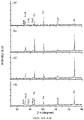
- FIGS. 11A-11D show XRD spectras of a TH/ED10 CuO/Cu 2 O hybrid nanorod film before (a) and after being subjected to photoelectrolysis at ⁇ 0.2 V vs. SHE in a CO 2 -saturated aqueous solution for 30 min. (b), 60 min. (c), and 120 min. (d).
- the Cu/Cu 2 O nanorod array was prepared on a copper foil whose XRD peaks are clearly discernible before and after photoelectrolysis.
- FIGS. 12A-12B are SEM images of CuO nanorod arrays subject to soaking times of 50 min. (left) and 80 min. (right).
- FIGS. 13A-13F are SEM images of nanorod arrays.
- FIG. 13A shows a CuO nanorod array formed from an 80 minute soak.
- FIG. 13B shows a CuO/Cu 2 O nanorod array formed from an 80 minute soak and a 15 minute deposition time.
- FIG. 13C shows a CuO/Cu 2 O nanorod array formed from an 80 minute soak and a 20 minute deposition time.
- FIG. 13D shows a CuO/Cu 2 O nanorod array formed from an 80 minute soak and a 30 minute deposition time.
- FIG. 13E shows a CuO/Cu 2 O nanorod array formed from a 50 minute soak.
- FIG. 13F shows a CuO/Cu 2 O nanorod array formed from a 50 minute soak and a 10 minute deposition time.
- FIG. 14 is a schematic diagram of the Ex. 8 set-up. (1) CO 2 tank, (2) Syringe pump, (3) Gas mixing chamber, (4) Reference electrode, (5) the continuous flow reactor of Ex. 8, (6) Solar simulator, (7) Fresh anolyte, (8) Pump, (9) Used anolyte, (10) Electrochemical work station.
- FIG. 15 is an XRD pattern of samples CH 15 (top) and CH 15/ED 10 (bottom). XRD reference patterns for Cu, Cu 2 O and CuO are shown at the top of the figure.
- FIGS. 16A-16C ( 16 A) Comparison of photocurrent/potential profiles for CH 15/ED 10 electrode in 0.1 M NaHCO 3 in N 2 and CO 2 saturated solutions respectively. ( 16 B) Comparison of photocurrent/potential profiles for three samples in 0.1 M NaHCO 3 saturated with CO 2 , and ( 16 C) Photocurrent density of CH 15/ED 10 sample in reactor of Ex. 8 and conventional reactor in CO 2 -saturated 0.1 M NaHCO 3 solution.
- FIG. 18 is a graph of a normalized product distribution in the flow reactor of Example 8 as a function of irradiation time for irradiated CH 15/ED 10 sample at ⁇ 0.3 V. Each bar corresponds to the partial amount of alcohol generated per hour. Other conditions provided in FIG. 17 description above.
- the nanostructure 125 can comprise a CuO portion 126 and a Cu 2 O portion 127 .
- CuO portion 126 is the core portion, i.e., disposed underneath or at least partially coated or encased by a Cu 2 O layer 127 .
- CuO core 126 comprises a lateral surface and a top surface and the Cu 2 O layer 127 can comprise a substantially complete or partial and/or a substantially continuous or discontinuous coating of Cu 2 O particles or crystallites on at least a portion of the lateral surface of core 126 .
- the shape of nanostructure 125 can be spherical, cylindrical, whisker-like, wire-like, tubular, branched, or prismoidal.
- the shape of nanostructure 125 is elongated, e.g., a nanorod or nanowire.
- the aspect ratio of an elongated nanostructure 125 can be at least 5, 10, 15, 20, 25, 30, 35, 40, 45, 50, or any amount or range therebetween.
- nanostructure 125 comprises a width or diameter of about 40 nm up to about 200 nm.
- the height of nanostructure 125 can range between about 0.5 ⁇ m to 20 ⁇ m or more, such as 2 ⁇ m, 4 ⁇ m, 6 ⁇ m, 8 ⁇ m, 10 ⁇ m, 12 ⁇ m, 14 ⁇ m, 16 ⁇ m, 18 m, or any value or range therebetween.
- the thickness of Cu 2 O layer 127 can be between about 30 nm and 100 nm, such as 35 nm, 40 nm, 45 nm, 50 nm, 55 nm, 60 nm, 65 nm, 70 nm, 75 nm, 80 nm, 85 nm, 90 nm, 95 nm, or any value or range therebetween.
- process conditions can be varied to vary the shape of nanostructure 125 .
- the length of core 126 can be varied by varying the time and temperature of thermal treatment.
- varying the thermal treatment temperature e.g., a treatment temperature between 100° C.
- the thickness of layer 127 can be increased by increasing the process time.
- the Cu 2 O electrodeposition time can be between about 0.1 min. to 60 min.
- the electrodeposition time is about 5 min. to about 15 min or between about 8 min and about 12 min.
- Layer 127 can also be varied by the concentrations of copper salts, additives, free acid, temperature, cathode current density, type and area of substrate, roughness of substrate, ratio of anode to cathode area, and degree of agitation. Further information regarding electrodeposition solutions and conditions can be found in Modern Electroplating, J. Wiley and Sons, p. 33-78: “2: Electrodeposition of Copper” by Dini and Snyder (2010), which is hereby incorporated by reference in its entirety.
- the photoreduction reaction such as one converting CO 2 to one or more alcohols
- the photoreduction reaction is assisted by the favorable band edge alignment of the two oxide phases of nanostructure 125 , as depicted in FIG. 1C .
- the valence band of CuO is located positive to the corresponding level in Cu 2 O.
- the differences in band edges of the two oxides translate to a vectorial transfer of photogenerated electrons from the Cu 2 O shell to the CuO core.
- the photogenerated electrons in the Cu 2 O shell are able to be directly transferred to CO 2 .
- CuO core 126 can be exposed to first channel 114 at a tip 128 of at least a majority of nanorods 125 of nanorod array 122 .
- a metal oxide nanoarray 122 comprises a plurality of nanostructures 125 .
- nanoarray 122 is disposed on or projecting from at least a portion of a substrate 124 , e.g. a conducting substrate.
- the base of nanostructure 125 can attached to substrate 124 .
- the substrate is copper.
- Other substrates can include other conducting materials or non-conducting materials, such as ceramic.
- Substrate can be provided by a piece of foil, sheet, plate, rod, or any other suitable component.
- the thickness of the substrate can be between about 50 ⁇ m and 1000 ⁇ m, such as 100, 150, 200, 250, 300, 350, 400, 450, 500, 550, 600, 650, 700, 750, 800, 850, 900, or 950 ⁇ m, or any other value therebetween.
- conducting substrate 124 is supported by a base plate 129 .
- a photocatalyst can comprise conducting substrate 124 and a photoactive layer comprising an array of nanostructures 125 .
- the photocatalyst can be utilized as part of an electrode.
- FIGS. 2A to 2C depict various embodiments of a PEC device 100 comprising a cathode chamber 110 , an anode chamber 130 , and a proton conducting membrane 150 separating the two.
- Cathode chamber 110 comprises: a substantially transparent cover 111 , a first inlet 112 , a first outlet 113 , a photocathode 120 ; and a first channel 114 in fluid communication with first inlet 112 and first outlet 113 .
- Photocathode 120 comprises a nanorod array 122 disposed on a conducting substrate 124 .
- Anode chamber 130 comprises: a conducting member/anode 131 , a second inlet 132 , a second channel 133 , and a second outlet 134 ; and a proton conducting membrane 150 separating and partially defining a section of first channel 114 and a section of second channel 133 .
- photocathode 120 can comprise any suitable width and length for irradiation.
- the area of a portion of photocathode 120 intended to be exposed to radiation comprises 1 cm 2 to 1 m 2 or more.
- anode 131 comprises a conducting material.
- anode 131 can comprise platinum, gold, graphite, aluminum, stainless steel, or any other suitable material.
- anode 131 can also comprise a photoactive material.
- water in the electrolyte is oxidized to O 2 in anode chamber 130 .
- transparent cover 111 extends the same approximate area of photocathode 120 and nanorod array 122 or a portion thereof faces transparent cover 111 .
- transparent cover 111 is a thin sheet.
- transparent cover 111 can be less than about 10 mm, about 5 mm, about 4 mm, about 3 mm, about 2 mm, about 1 mm, about 0.5 mm, about 0.1 mm, or any amount therebetween.
- transparent cover 111 comprises any material through which radiation, such as sunlight, can pass through, e.g., quartz, glass, a transparent plastic material such as poly(methyl methacrylate), polycarbonate, or the like.
- a spacer body 117 (illustrated in FIG. 2B (ii)) is configured to space-apart the components that partially define a channel, such as a first channel 114 or second channel 133 .
- spacer body 117 is disposed between transparent cover 111 and photocathode 120 and/or a base plate 129 .
- spacer body 117 is disposed between photocathode 120 and membrane 150 and/or between membrane 150 and conducting member/anode 131 .
- spacer body 117 defines an opening 118 in alignment with and/or coextensive with a portion of first channel 114 .
- first channel 114 is at least partially defined transparent cover 111 and photocathode 120 .
- first channel 114 is at least partially defined by one or more spacer bodies 117 , transparent cover 111 and photocathode 120 .
- transparent cover 111 and photocathode 120 can be two opposing surfaces between which first channel 114 extends.
- conducting member 131 and proton conducting membrane 150 form two opposing surfaces that partially define second channel 133 .
- the width of second channel 133 can be any suitable width to facilitate proton transfer through membrane 150 .
- the width of second channel 133 is between 80 to 120 ⁇ m. In some embodiments, the width of second channel 133 is less than 100, 90, 80, 70, 60, 50, 40, or 30 ⁇ m.
- proton conducting membrane 150 comprises a semipermeable membrane that conducts protons while being substantially impermeable to gases, such as oxygen.
- proton conducting membrane 150 comprises an ionomer.
- proton conducting membrane 150 comprises a perfluorosulfonic acid (H + form)/polytetrafluoroethylene copolymer (Nafion®).
- Other proton conducting membrane 150 can comprise polyethylene-tetra-fluoroethylene grafted sulphonyls, such as by suppliers Solvay (Tradename: CRA-08), tetra-fluoroethylene grafted poly(styrene sulfonic acid) such as by Pall (Tradename: IonClad® R1010), and sulfonated poly(ether ether ketone) (SPEEK).
- Other proton conducting membranes or guidelines for selecting or designing membranes can be found in the following article: Viswanathan & Helen, “Is Nafion, the only choice?”, Bulletin of the Catalysis Society of India, 6 (2007) 50-66, which is hereby incorporated by reference in its entirety.
- Embodiments of PEC device 100 can be utilized to convert CO 2 to one or more alcohols by introducing CO 2 dissolved in an electrolyte solution into cathode chamber 110 . Some of these embodiments can also be utilized to convert CO 2 to one or more alcohols by introducing CO 2 into cathode chamber 110 in a gaseous state.
- FIG. 3 depicts a system 300 , in accordance with the present disclosure, involving a reactant, such as CO 2 , dissolved in an electrolyte solution and comprising: a gas transfer unit 160 ; a dual chamber PEC device comprising a cathode chamber 110 and an anode chamber 130 ; an alcohol isolation unit 170 for extracting alcohol from the first electrolyte solution; a first pump 180 configured to pump a first electrolyte solution through gas transfer unit 160 , cathode chamber 110 , and alcohol isolation unit 170 ; a second pump 185 configured to pump a second electrolyte solution through anode chamber 130 ; a power source 00 to supply an electric potential across the photocathode and the anode; and optionally, an alcohol storage tank (not shown) for storing the alcohol isolated by alcohol isolation unit 170 .
- a reactant such as CO 2
- some embodiments can further comprise a gas isolation unit 190 downstream from anode chamber 130 to isolate the generated O 2 from the second electrolyte solution.
- second pump can be configured to pump the second electrolyte solution from anode chamber 130 to O 2 isolation unit 190 , and upon extraction of O 2 , recycle the second electrolyte solution back to anode chamber 130 via a second electrolyte return conduit 194 .
- system 300 can further comprise a first electrolyte return conduit 196 to recycle the first electrolyte solution from alcohol isolation unit 170 to gas transfer unit 160 .
- FIG. 2A depicts cathode chamber 110 and anode chamber 130 where anode chamber 130 is disposed downstream and to the side of or away from photocathode 120 .
- gas transfer unit 160 can comprise two channels separated by a hydrophobic membrane 165 .
- first channel 114 the first electrolyte solution can flow, and through second channel 162 , CO 2 in a gaseous state can flow.
- Hydrophobic membrane 165 is designed to prevent or impede transfer of water from first channel 114 into second channel 162 but allow CO 2 to do the converse.
- hydrophobic membrane 165 has a water contact angle greater than 100°, 110°, 120°, 130°, 140°, 150°, 160°, or any amount up to 180°.
- hydrophobic membrane 165 can be thin porous material.
- membrane 165 can comprise a thickness less than 15 ⁇ m.
- hydrophobic membrane 165 comprise expanded polytetrafluoroethylene, or other porous material with a water contact angle greater than 100° and maximum pore size less than 50 ⁇ m.
- Other types of gas transfer units may also be utilized, preferably providing for continuous flow during the transfer.
- a second electrolyte flows past anode 131 .
- Water present in the electrolyte is oxidized to form O 2 .
- the system can comprise gas isolation unit 190 to separate O 2 from the liquid electrolyte. Any standard method or device for performing this separation could be used, preferably one in a continuous fashion.
- unit 190 can comprise a liquid-gas separation column that allows gas bubbles to rise to the top and form a gas head space and vented through a valve while liquids flow down through a bottom valve. The vented gas, O 2 , can be captured in this manner.
- alcohol isolation unit 170 can comprise a fractional distillation column. From here, the alcohol products can be transferred and stored in a storage tank and the electrolyte can be recycled back to gas transfer unit 160 .
- FIG. 4 depicts a system essentially the same as that described above and depicted in FIG. 3 .
- cathode chamber 110 and anode chamber 130 and/or a section of the proton conducting membrane 150 are stacked or disposed beneath a section of photocathode 120 .
- the flow direction of the first channel must pass through a section of photocathode 120 .
- PEC device can comprise photocathode 120 as described herein comprising a first surface, a second surface, and one or more openings 116 spaced apart from first inlet 112 , such as located at or near an end opposite from first inlet 112 .
- first channel 114 is at least partially defined by both the first surface and the second surface. Furthermore, a first section of first channel 114 can be partially defined by two opposing surfaces of transparent cover 111 and the first surface of photocathode 120 , and a second section of first channel 114 can be partially defined by two opposing surfaces of proton conducting membrane 150 and the second surface of photocathode 120 .
- photocathode 120 can comprise a plurality of openings 116 dispersed across its area, such as a screen or mesh, with proton conducting membrane 150 disposed beneath photocathode 120 .
- a method of converting carbon dioxide to one or more alcohols can comprise a continuously flowing system, e.g., a system as depicted in FIG. 3 or FIG. 4 and described herein.
- the initial steps comprise dissolving CO 2 into a first electrolyte solution and then pumping the first electrolyte solution with the dissolved CO 2 into cathode chamber 110 with photocathode 120 , in accordance with the present disclosure, while at least a portion of photocathode 120 is being irradiated.
- the solution pumped into cathode chamber 110 is a CO 2 -saturated electrolyte solution.
- a second electrolyte solution is being pumped into anode chamber 130 , and as described herein, cathode chamber 110 and anode chamber 130 are separated by proton conducting membrane 150 .
- the first electrolyte solution can be pumped into alcohol isolation unit 170 .
- alcohol isolation unit 170 a substantial portion of the alcohol is extracted from the electrolyte solution. Once extracted, the recovered first electrolyte solution can recycle to gas transfer unit 160 where CO 2 can again be dissolved therein.
- the second electrolyte solution can be pumped from anode chamber 130 into O 2 isolation unit 190 .
- O 2 isolation unit 190 a substantial portion of the O 2 generated in the anode chamber 130 is extracted from the second electrolyte solution. Once extracted, the recovered second electrolyte solution can recycle to the anode chamber 130 .
- an electric potential is applied across photocathode 120 and anode 131 .
- the electric potential can be between about ⁇ 0.2V and ⁇ 0.85V as compared to a SHE; preferably, in some embodiments, the electric potential can be between about ⁇ 0.35 V and ⁇ 0.55V.
- the flow rate of the first electrolyte solution can be between about 0.2 mL/hr*cm 2 and 20 mL/hr*cm 2 .
- the flow rate of the second electrolyte solution can also be between about 0.2 mL/hr*cm 2 and 20 mL/hr*cm 2 .
- the first electrolyte solution and the second electrolyte solution can comprise an aqueous solution of sodium bicarbonate.
- Other electrolytes include sodium sulfate, potassium sulfate, potassium bicarbonate, and/or calcium bicarbonate.
- concentrations of the electrolyte are between 0.01M to 1M, and preferably of 0.1M to 0.5M.
- the system can be operated at ambient temperature and pressure. For example, the system can operate at a temperature between 15° C. and 50° C., such as about 20, 25, 30, 35, 40, or 45° C., or any other value therebetween.
- the system absolute pressure can be between 0.7 atm and 7 atm, such as 1, 2, 3, 4, 5, or 6 atm, or any other value therebetween.
- FIG. 5 depicts a system where gaseous CO 2 flows into the cathode chamber.
- a gas transfer unit can be omitted.
- the system can comprise: a dual-chamber PEC device 100 comprising a cathode chamber and an anode chamber; a power source 00 to supply an electric potential across the photocathode and the anode; and optionally, an alcohol storage tank (not shown) for storing the generated alcohol.
- some embodiments can further comprise gas isolation unit 190 downstream from the anode chamber to isolate the generated O 2 from the second electrolyte solution.
- pump can be configured to pump the second electrolyte solution from the anode chamber to gas isolation unit 190 and upon extraction of O 2 , recycle the second electrolyte solution back to the anode chamber via a second electrolyte return conduit 8 .
- cathode chamber 110 can comprise first inlet 112 through which gaseous CO 2 flows into first channel 114 and first outlet 113 , through which one or more alcohols, e.g., gaseous methanol, ethanol, propanol, and/or butanol, flows out of first channel 114 .
- one or more alcohols e.g., gaseous methanol, ethanol, propanol, and/or butanol
- photocathode 120 is porous, such as a screen or mesh, and extends alongside and is disposed near proton conducting membrane 150 .
- photocathode 120 and proton conducting membrane 150 are in direct contact with each other.
- Liquid proton conducting material such as Liquid Nafion®
- first channel 114 is partially defined by two opposing surfaces, namely, transparent cover 111 comprising the first surface and photocathode 120 and proton conducting membrane 150 comprising the second surface.
- cathode chamber 110 can be configured such that generated alcohol products are isolated from the vapor phase.
- the vapor phase comprising MeOH and H 2 O can be directed from the reactor to a two stage condenser, the first stage removing the water and the second stage will condense the MeOH.
- the vapor phase comprising H 2 O and one or more of MeOH, EtOH, and PrOH can be directed from the reactor to a two stage condenser, the first stage removing the water and the second stage will condense the one or more of MeOH, EtOH, and PrOH.
- a method of converting carbon dioxide to alcohol can comprise introducing gaseous CO 2 into a continuously flowing system, e.g., a system as depicted in FIG. 5 and described herein.
- the initial steps comprise pumping CO 2 , e.g., CO 2 in a gaseous state, into cathode chamber 110 with photocathode 120 .
- At least a portion of photocathode 120 is covered in a shallow bath of a first electrolyte solution and is being irradiated.
- a second electrolyte solution is being pumped into anode chamber 130 , and as described herein, cathode chamber 110 and anode chamber 130 are separated by a proton conducting membrane.
- the vapor phase with generated alcohol can be pumped into an alcohol isolation unit from cathode chamber 110 .
- the alcohol isolation unit a substantial portion of the alcohol is extracted from the water. Once extracted, the recovered water can optionally recycle into cathode chamber 110 to maintain the electrolyte concentration.
- cathode chamber 110 is configured such that the gaseous/vapor product that flows out the first outlet 113 is a high percentage of alcohol, e.g., greater than 50%, 60%, 70%, 80%, 90%, 95%, or more, and does not require a subsequent process to further purify the reaction product.
- the second electrolyte solution can be pumped from anode chamber 130 into a gas isolation unit.
- a substantial portion of the O 2 generated in anode chamber 130 is extracted from the second electrolyte solution. Once extracted, the recovered second electrolyte solution can recycle to anode chamber 130 .
- an electric potential is applied across an electrical connection between the photocathode and the anode.
- the electric potential can be between about ⁇ 0.2 V and ⁇ 0.85V as compared to a standard hydrogen electrode; preferably, in some embodiments, the electric potential can be between about ⁇ 0.35 V and ⁇ 0.55V, such as 0.4, 0.45, or 0.5V, or any other value therebetween.
- the flow rate of the second electrolyte solution is between about 0.2 mL/hr*cm 2 and 20 mL/hr*cm 2 .
- the first electrolyte solution and the second electrolyte solution can comprise an aqueous solution of sodium bicarbonate.
- Other electrolytes include sodium sulfate, potassium sulfate, potassium bicarbonate, and/or calcium bicarbonate.
- concentrations of the electrolyte are between 0.01M to 1M, and preferably of 0.1M to 0.5M.
- the system can be operated at ambient temperature and pressure. For example, the system can operate at a temperature greater than 70° C. but less than 100° C. In addition, the system pressure is between 0.7 atm and 10 atm.
- Another aspect of the disclosure involves regenerating an electrode as described herein, because the Cu 2 O/CuO photocathode 120 performance may degrade with time.
- the degradation may be due to, at least in part, the loss of Cu 2 O by photo corrosion.
- the nanostructure of CuO does not significantly change over the course of use.
- a method can comprise replenishing the CuO 2 on the nanorod array by repeating the electrodeposition of the Cu 2 O. This can be done in situ without having to disassemble the cell.
- an electrolyte containing copper sulfate can be pumped continuously into the cell. A potential is applied to the cell to drive the electro deposition process. Electric potential values are similar to the original deposition process.
- a masking agent can be used.
- the copper electrode surface that faces away from the light source can be coated with a non-conducting layer (like a paint or film of some kind) to prevent deposition on that side and force the deposition on the side facing the light.
- electrodeposition to replenish is performed during low light hours or periods of nonuse, such as at night when no sunlight is available to drive the reaction.
- While the present disclosure is described with reference to CO 2 to generate alcohols, such as methanol, ethanol, propanol, butanol or various combinations thereof. It is to be understood that other redox reactions can be performed with PEC devices in accordance with the present disclosure. For example, other reactions for which the presently described invention can be useful for includes converting CO 2 to formate (HCOO ⁇ ), CO 2 to methane (CH 4 ), CO 2 to ethane (C 2 H 4 ), and CO 2 to propane (C 3 H 8 ).
- a nanostructure array can be prepared forming or applying CuO nanostructures on a surface and electrodepositing Cu 2 O particles on the CuO nanostructures. The surface can be cleaned before applying or forming the CuO nanostructures.
- CuO nanostructures are formed by heating the Cu component to a temperature between 150° C. and 500° C., such as 160, 170, 180, 190, 200, 210, 220, 230, 240, 250, 260, 270, 280, 290, 300, 320, 340, 350, 360, 380, 400, 420, 440, 460, 480, or 490, or any value other therebetween.
- the CuO nanostructures can be formed by first forming Cu(OH) 2 nanostructures on the surface and then heating the Cu component to a temperature between 150° C. and 250° C., such as 160, 170, 180, 190, 200, 210, 220, 230, or 240, or any other value therebetween.
- the Cu 2 O particles can be electrodeposited on the CuO nanostructures by placing the Cu component in an electrolytic bath comprising cupric ions.
- a time for electrodepositing Cu 2 O particles on the CuO nanostructures is less than 15 minutes.
- the electrolytic bath can comprise a basic aqueous solution of cupric ions with a stabilizing agent.
- the stabilizing agent can be an organic acid, e.g., lactic acid, tartaric acid, malic acid, citric acid, oxalic acid, polyethylene glycols (PEGs), boric acid, sulfonic acid, and thiourea.
- the pH of the solution can be between 7 and 12, preferably 8 to 10. Other additives can also be added. Further information regarding electrodeposition solutions and conditions can be found in Modern Electroplating, J. Wiley and Sons, p. 33-78: “2: Electrodeposition of Copper” by Dini and Snyder (2010).
- Example 1 Preparation of a CuO & Cu 2 O Nanorod Array Photocathode by a Thermal Procedure to Form CuO Array
- a CuO nanorod array was formed by a thermal procedure. Specifically, the CuO rods were grown on a copper foil substrate. First, Cu foil was cut to size and was cleaned by immersing in a 1.0M H 2 SO 4 solution, then sonicated in isopropanol, acetone, and deionized water, respectively, and finally, dried under nitrogen gas.
- the CuO nanorods were then grown on the freshly cleaned Cu substrate by a thermal procedure in accordance with the reference: X. Jiang, T. Herricks, and Y. Xia, Nano Letters, 2002, 2, 1333, which is hereby incorporated by reference in its entirety.
- the copper foil was isothermally heated at 400° C. for 4 hours.
- a temperature program was used and comprised first heating the sample up to 400° C. (at 25° C./min). After 4 hours of isothermal heating, the sample was allowed to return naturally to room temperature.
- the Cu 2 O shell was formed by cathodic electrodeposition on the CuO array using a potentiostat (CH electrochemical workstation 720 C) at ⁇ 0.2V vs. SHE in 0.4M CuSO 4 +3M lactic acid, pH 9 (through addition of a concentrated NaOH solution) at 60° C. for 1 min., 5, min., 10 min., 15 min., 25 min., or 30 min.
- the thickness of the Cu 2 O generally increased with an increase in electrodeposition time.
- the average nanorod diameter for the deposition time of 10 min. was 0.8-1.0 ⁇ m and for 30 min. was 1.5-2.0 ⁇ m.
- the nanorod arrays provided a surface aspect ratio enhancement factor of 7-8. Table 1 below provides the nomenclature of the types of films prepared:
- FIGS. 6A to 6C are SEM images of CuO/Cu 2 O nanorod arrays obtained by a Cu 2 O electrodeposition coating on thermally grown CuO nanorods for 1 min., 10 min., and 30 min, respectively.
- FIG. 6D is an SEM image of thermally grown CuO nanorods used as a substrate for the preparation of the CuO/Cu 2 O nanorod arrays.
- FIG. 6E is an SEM image of Cu 2 O electrodeposited on a Cu foil without a pre-thermal treatment (hereinafter “ED30”). As depicted, the larger surface area of the CuO nanorod array (depicted in FIG. 6D ) as compared to Cu foil allows for much more Cu 2 O to be electrodeposited. Cf FIG. 6A to 6C to FIG. 6E .
- the corresponding profile for an electrodeposited ED30 film in N 2 saturated solution under the same conditions is included as a control (Trace C).
- the CuO/Cu 2 O nanorod film outperformed the ED30 film throughout the tested potential range.
- the photocurrent onset potential was ⁇ 0.25V more positive for the CuO/Cu 2 O nanorod film than for the Cu 2 O-only film in the presence of CO 2 .
- the photocurrent/potential profiles of a Cu 2 O-only film also show a significant increase of photocurrent in the presence of CO 2 and also a positive shift of the photocurrent onset potential threshold.
- the photocurrent in the presence of CO 2 was approximately 3.2 times higher than in the presence of N 2 , and was reaching factors of 6-7 at less negative potentials, thus indicating that CO 2 is a much better electron scavenger (capturing the photoelectrons from Cu 2 O) than water.
- FIGS. 9A-9C compare the PEC performance of the various photocathodes at ⁇ 0.1V vs. SHE under manually chopped AM1.5 simulated solar illuminations in CO 2 — and N 2 -saturated solutions.
- a Pt foil and a Ag/AgCl (satd. KCl) were used as the anode and reference electrode respectively.
- FIG. 9A compares CuO/Cu 2 O photocathodes prepared with different electrodeposition times (10 min. v. 30 min.). As shown, the photocurrent transients for the CuO/Cu 2 O nanorod films in the presence of CO 2 (Trace A) are ⁇ 3 times greater than those in the presence of N 2 (Trace B). The photocathode with an electrodeposition time of 10 minutes was found to be the best performing for the photoelectroreduction of CO 2 , although the photocurrent transients have relatively higher spikes than the photocathode with an electrodeposition time of 30 minutes.
- FIG. 9B is a comparative bar diagram of transient, stationary and net photocurrent (presented left to right) for TH, TH/ED10, TH/ED30 and ED30 photocathodes in a CO 2 -saturated environment.
- the CuO/Cu 2 O nanorod arrays show enhanced photocurrent in CO 2 saturated solutions with respect to the TH film, pointing to efficient removal of photogenerated electrons from Cu 2 O to the CuO core.
- the thermal film performs the best and specially at negative applied potentials (data not shown).
- FIG. 9C compares stationary photocurrent at ⁇ 0.1 V for CO and H+ photoelectrochemical reduction: the TH films yielded higher photocurrent than any of the TH/ED t (t varied between 1 and 30 min.) counterparts for H 2 evolution, but the TH films progressively deteriorated in their PEC performance as the CuO nanorods became covered by electrodeposited Cu 2 O.
- the CuO/Cu 2 O nanorod arrays were fabricated by a two-step process performed on freshly cleaned copper as described in Example 1. However, this procedure deviates from Example 1.
- the first step freshly cleaned Cu substrates were immersed in the mix solution 8.0 mL of the NaOH solution (10 M), 4.0 mL of a (NH 4 ) 2 S 2 O 8 solution (1.0 M), and 18.0 mL of water.
- a blue color appeared on the copper foil surface, and the solution became increasingly blue.
- a light-blue film covered the copper foil surface.
- the copper foil was taken out of the solution, rinsed with water, and dried in air.
- the Cu(OH) 2 fibers and scrolls were converted CuO by thermal oxidation in presence of air using a box furnace for 1 h. at 200° C. (at 25°/min.), the temperature was allowed to return naturally to room temperature. Longer soaking times in the solution were also performed (50 min. and 80 min.) and produced the denser CuO nanorod structures shown in FIGS. 12A and 12B . Thus, longer soaking times may be preferred.
- Cu 2 O crystallites were electrodeposited on the thermally grown CuO nanowires from a basic solution of lactate stabilized copper sulfate using a potentiostat (CH electrochemical workstation 720° C.) at constant potential [ ⁇ 0.4 V vs Ag/AgCl (satd. KCl)].
- the electrolytic bath was prepared with deionized (DI) water and contained 0.4 M cupric sulfate and 3 M lactic acid.
- DI deionized
- the bath pH was adjusted to 9 by addition of concentrated NaOH solution; the temperature of the bath was maintained at 60° C. during electrodeposition. Deposition times should be selected to deposit the desired amount of crystallites on the nanorod without degrading or destroying the nanorod structure.
- DI deionized
- FIG. 13A to 13E show a CuO nanorod array formed from an 80 minute soak, as described above ( FIG. 13A ); a CuO/Cu 2 O nanorod array formed from an 80 minute soak and a 15 minute deposition time ( FIG. 13B ); a CuO/Cu 2 O nanorod array formed from an 80 minute soak and a 20 minute deposition time ( FIG. 13C ); a CuO/Cu 2 O nanorod array formed from an 80 minute soak and a 30 minute deposition time ( FIG. 13D ); a CuO/Cu 2 O nanorod array formed from an 50 minute soak ( FIG. 13E ); and a CuO/Cu 2 O nanorod array formed from an 50 minute soak and a 10 minute deposition time ( FIG. 13F ).
- the photoelectrode was placed in 100 mL electrolyte solution saturated with CO 2 , polarized at ⁇ 0.2 V vs. SHE, and continually irradiated with visible light provided by a AM1.5 solar simulator.
- the irradiated electrode area was approximately 3 cm 2 .
- Representative photocurrent/time and charge/time profiles recorded during the photoelectrolysis are shown in FIGS. 10A and 10B respectively.
- To analyze the photoelectrogenerated product liquid samples were periodically withdrawn from the photoelectrochemical cell. A gas chromatograph equipped with a mass spectrometer (GC-MS) was used to detect methanol.
- GC-MS mass spectrometer
- a potential of ⁇ 0.2 V vs. SHE represents an “underpotential” greater than at least 150 mV given that the standard potential for the CO 2 /CH 3 OH redox process lies at ⁇ 0.38 V vs. SHE at pH 7.
- FIG. 10A depicts that the photocurrent decreases during the first 30 min. and then recovers to reach a constant value of 1.05 mA at ⁇ 2 h of irradiation. Even if some photocorrosion had occurred leading to formation of metallic copper on the electrode surface, this process did not diminish the performance of the CuO/Cu 2 O photoelectrodes. Note, that dark current values at least an order of magnitude lower (0.10 mA) than the photocurrent level corroborate that the electrode remained photoactive throughout the photoelectrolysis duration.
- a microchannel gas transfer unit was constructed with the configuration shown in the cross section view in FIG. 3A .
- the gas transfer unit was composed of a thin polymer membrane sandwiched between two plastic plates that contain microchannels with 250 ⁇ m depth and 500 ⁇ m width. These plates are referred to as membrane contactors.
- the membrane was prepared by taking a raw PTFE sheet and stretching it over a membrane contactor until it becomes very thin (nearly transparent). The thickness was estimated to be 10 ⁇ m or less.
- the membrane was hydrophobic with a water contact angle greater than 130°. These properties (very thin but hydrophobic) allowed the CO 2 to move rapidly to the electrolyte but prevent the electrolyte from flowing into the CO 2 gas channel. Thus, this construct rapidly transferred CO 2 to the flowing liquid stream with a small reactor volume.
- a cathode reactor was constructed with the configuration of the cathode chamber is shown in FIG. 2A .
- the cathode reactor consisted of a transparent cover of quartz.
- the channel was formed using a Kapton spacer (50 ⁇ m thick) with a diamond shaped cutout.
- the electrode was composed of a copper foil coated with Cu 2 O layer as described in Example 1 and shown in FIG. 2A .
- the area of the photoelectrode was 3.5 cm 2 .
- the electrode is connected to the positive terminal of the power supply as indicated in FIG. 3 .
- the anode chamber was configured to allow protons to move from the counter electrode to the working electrode stream but impede the transfer of MeOH to the counter electrode stream.
- a Pt foil was used as the anode.
- An H-cell was used for the test, where the Pt foil anode was placed on one side while the outlet of the cathode reactor fed into the other side. The two half-cells were separated by a glass frit to prevent the diffusion of the alcohol product to the anode.
- the reference electrode was placed in the side with the outlet from the cathode reactor. The electrode was connected to the negative terminal of the power supply as indicated in FIG. 3 . (In another construction, a Nafion® membrane may be positioned between two membrane contactor plates to separate the working electrode stream and the counter electrode stream. The reference electrode would be placed in the cathode chamber or channel.)
- a constant potential of ⁇ 0.3V was applied to the photoelectrode.
- the electrolyte was composed of a 0.1M NaHCO 3 aqueous solution, and was pumped at the rate of 5 mL/hr.
- Light was provided by a solar simulator with the power of 2 suns.
- the process operated at the mild process conditions of 25° C. and 1.0 atm absolute pressure. The experiment was run for around 4 hours.
- Methanol was collected using u-tube glassware with a glass frit separating the cells. Samples of the product were taken and tested by GC to determine the concentration of MeOH. The calculated MeOH production rate was 0.015 mL/hr*m 2 .
- the photoelectrochemical device for this example was constructed similarly to that in Example 4. However, the device was constructed with a configuration as shown in FIG. 2B (i) and used a copper foil with a 2 mm through-hole for the photocathode.
- the preparation of the photocathode was made in accordance with Example 2. Again, the area of the photoelectrode was 3.5 cm 2 .
- the anode was composed of graphite.
- the transparent cover was a 1/16′′ thick piece of Lexan®. In this case, the reference electrode was placed in the inlet to the working electrode channel.
- Example 4 The same process conditions as described in Example 4 were used to test the constructed system, except the experiment was run for around 1 hour. Samples of the product were taken and tested by GC to determine the concentration of MeOH. The calculated MeOH production rate was 1.95 mL/hr*m 2 .
- FIG. 11A shows that before photoelectrolysis, three distinguished crystalline structure are clearly discernible: CuO, Cu2O and Cu.
- the hybrid photoelectrode was prepared from a copper foil, the Cu metal diffractions, associated with the underlying substrate are also seen in the pattern.
- the Cu2O and CuO peaks remain unchanged while the CuO diffraction peaks at 43.2° and 74.1° are higher. This points to incipient formation of metallic Cu from self-reduction of the photoelectrode surface.
- the Cu peak located at 74.1° shows the largest variation at times of 60 min. and 120 min. of photoelectrolysis, respectively
- This peak shows a temporal evolution quite similar to the photocurrent evolution in FIG. 10A .
- the photoelectrode is covered by Cu (due to photocorrosion) but then a “self-healing” process counters metal accumulation; i.e., the metal phase undergoes chemical corrosion to regenerate the oxide phases.
- the photocurrent-time profile over a 2 hour time frame ( FIG. 10A ) is also diagnostic of possible slow self-healing of the photocathode assembly as the oxide phases are regenerated when the photoelectrons exit the interfacial phase boundary to CO2. The photogenerated electrons presumably are rapidly transferred to CO2 before they have an opportunity to appreciably photoreduce Cu(I) or Cu(II) in the oxides to the metallic state.
- the photocurrent-potential profiles were recorded under solar irradiation (AM1.5) from a solar simulator (Newport 91160-1000).
- the radiation was interrupted (with a manual chopper) at 0.2 Hz.
- Bulk photoelectrolysis was also performed in a two-compartment sealed electrochemical cell under continuous light irradiation.
- the electrolyte used was 0.1M Na2SO4, the solution was saturated with N2 and CO2 bubbling through the cell.
- the CH electrochemical workstation 600C was used to apply a constant potential of ⁇ 0.2V.
- Light irradiation (AM 1.5) was provided by the full output of the Newport solar simulator specified and with illumination power of 70 mW cm-2.
- FIG. 9 Long term photoelectrolysis ( FIG. 9 ) was carried out using a CH electrochemical workstation 600C instrument (www.chinstruments.com), in a custom-designed two-compartment, three-electrode electrochemical cell. Ag/AgCl (satd. KCl) and Pt foil were used as reference electrode and counterelectrode respectively although all potentials are quoted with respect to the SHE reference scale.
- the electrolyte used were 0.1 M NaHCO 3 (saturated with CO2) and 0.1 M Na2SO4 (saturated with N2) as control experiment.
- the surface morphology of the various film samples was characterized using a Hitachi S-5000H field emission scanning electron microscope (SEM) operated at an acceleration voltage of 20.0 kV.
- Raman spectra were recorded with a HORIBA Jobin Yvon LabRam ARAMIS instrument (incident power ⁇ 300 mW) using an excitation wavelength of 532 nm and an 1800 line/mm grating. In all the cases the slit width was 10 ⁇ m, and 32 scans were accumulated for each spectrum.
- X-ray diffraction (XRD) patterns were obtained on a Siemens D-500 powder diffractometer using CuK ⁇ as the source radiation.
- Liquid aliquots were periodically taken during the photoelectrolysis to be analyzed in a gas chromatograph equipped with a mass spectrometer as detector (GC-MS). The aliquots were subjected to supporting electrolyte removal by shaking overnight with Amberlite IRN-150 ion-exchange resin (cleaned and vacuum dried just before use) and then injected into the Shimadzu GC-MS 2010SE chromatograph coupled with a MS QP2010 detector and a AOC-20S sampler. Head space sampling was also used for GC-MS analyses to confirm the photoelectrosynthesis of methanol from CO 2 by heating the sealed vial at 75° C. water bath for 45 min. to let the liquid and volatile organics equilibrate.
- GC-MS mass spectrometer as detector
- the chromatographic column was Shimadzu SHRX105MS (30 m length and 0.25 mm inner diameter, part #220-94764-02) set at 45° C.
- the hybrid CuO/Cu 2 O photocathodes were fabricated by a three-step process on freshly cleaned copper foil similar to that of Example 2 with some variation.
- the cleaning procedure consisted of first pretreating these foils with 1.0 M H2SO4 (Sigma-Aldrich), then subjecting them to successive sonication in isopropanol, acetone and deionized water respectively, and finally drying them under nitrogen gas.
- the first step for formation of CuO/Cu2O nanorod arrays included the colloidal formation of Cu(OH)2 nanoribbons, in accordance with the references: X. Wen, W. Zhang, and S. Yang, Langmuir, 19, 5898 (2003); W. Zhang, X. Wen, S. Yang, Y. Berta, and Z. L. Wang, Adv. Matter, 15, 822 (2003); X. Wen, Y. Xie, C. L. Choi, K. C. Wan, X-Y. Li, and S. Yang, Langmuir, 21, 4729 (2005); and X. Chen, L. Kong, D. Dong, G. Yang, L. Yu, J. Chen, and P. Zhang, J. Phys. Chem. C, 113, 5396 (2009), which are hereby incorporated by reference in their entirety.
- the Cu(OH) 2 fibers and scrolls were converted to CuO nanoribbons by thermal dehydration in air inside a box furnace for 1-2 h at 200° C. (at 10°/min) followed by natural convective cool-down to room temperature.
- the copper foil color turned to black.
- Cu2O nanocrystallites were electrodeposited on the above-formed CuO nanoribbons by using constant potential [ ⁇ 0.4 V vs Ag/AgCl (satd. KCl)] in a copper sulfate-lactic acid bath. [All potentials are quoted with respect to this reference electrode scale.]
- the electrolytic bath was prepared with deionized (DI) water and contained 0.4 M copper(II) sulfate (Sigma-Aldrich, 99.9% metals basis) and 3 M lactic acid (Sigma-Aldrich).
- the bath pH was adjusted to 9 by addition of controlled amounts of conc. NaOH solution; the temperature of the bath was maintained at 60° C. during electrodeposition.
- a Pt foil and a Ag/AgCl (satd. KCl) were used as the counter- and reference electrodes respectively.
- the electrodeposition time was nominally kept at 10 min.
- CH 15/ED 10 denotes a sample prepared from sol-gel+ thermal anneal (15 min) followed by electrodeposition for 10 min.
- SEM Scanning electron microscopy
- XRD X-ray diffraction
- FIG. 14 A schematic diagram of the complete set-up for photoelectrochemical conversion of CO 2 to fuels is shown in FIG. 14 .
- the photocathode was prepared according to Example 7.
- the supporting electrolyte was sodium bicarbonate (0.1 M) and was pumped to a membrane-based microchannel gas exchanger where the electrolyte was saturated with CO 2 .
- the CO 2 gas was delivered at 1 atm from a pressurized tank at room temperature, and was dissolved in the electrolyte to a concentration of 0.034 M, corresponding to the maximum solubility of CO 2 in water.
- a 35 ml syringe was used to deliver the fluid at a 5 ml per hour flow rate via a syringe pump (KD Scientific, Model 200).
- the CO 2 saturated electrolyte was delivered to the cathode compartment located at the top of the microreactor and irradiated with sunlight (AM 1.5) from a solar simulator (Newport Model 91160).
- KCl reference electrode also was located at the input to the cathode side and the CuO/Cu 2 O hybrid nanorod array supported on copper foil was placed in the cathode compartment.
- the cathode and anode compartments in the flow cell were separated by an ion exchange membrane (Nafion NER-212), and the flowing electrolyte was collected via sampling ports.
- the anode was made of stainless steel 378. Electrolyte for the anode side was pumped to the bottom of the reactor where the anode was located and then delivered to the anolyte collector. The anolyte flow rate was also 5 ml per hour.
- the photoelectrochemical performance of the hybrid CuO/Cu 2 O nanorod arrays prepared in Example 7 and utilized in Example 8 was evaluated using a CH Instruments electrochemical workstation Model 600C instrument, in a custom-designed two-compartment, three-electrode electrochemical cell.
- the reference electrode and counterelectrode respectively in these experiments were Ag/AgCl (satd. KCl) and Pt foil; the electrolyte was 0.1 M NaHCO 3 . Solutions were saturated with N 2 or CO 2 as needed by continual bubbling through the sealed cell.
- the photocurrent-potential profiles were recorded under simulated solar irradiation (AM 1.5) using the same set-up described earlier. The radiation was interrupted (with a manual chopper) at 0.2 Hz.
- GC-MS Gas chromatography-mass spectrometry
- the temperature of the ion source (electron ionization mode, 70 eV) was 250° C.
- the MS detector was set at 250° C.
- Samples were run in the SCAN mode over a mass-to-charge (m/z) ratio range of 29-150. Detection at m/z 31 and 45 was used for methanol and ethanol respectively, while fragments at m/z 45, 59, and 60 were analyzed for isopropanol.
- the CH step was chosen instead of the conventional thermal growth of CuO nanowires from copper foil.
- the necessity for thick and robust nanoribbons to withstand mechanical stress from electrolyte flow (and subsequent peel-off from the substrate) is all the more critical.
- the resulting hybrid CuO/Cu2O nanorod arrays in this study were more densely packed and with each entity having an average diameter in the range 0.3-0.5 ⁇ m and a length 6-8 ⁇ m.
- FIG. 15 shows the XRD lines for the CuO/Cu2O hybrid nanorod arrays atop the support CH 15 substrate.
- the JCPDS reference patterns for CuO (80-1917), Cu2O (78-2076), and Cu (04-0836) are also provided for comparison in this figure.
- the characteristic peaks located at 35.6° and 38.7° can be assigned to reflections from the CuO phase in the dense array of nanoribbons.
- the XRD pattern of a CuO/Cu2O hybrid sample (CH 15/ED 10), prepared by post 10 min Cu2O electrodeposition on a CH 15 film, presented two compounds: Cu2O and CuO, in addition to signals from the Cu substrate; thus corresponding to electrodeposited Cu2O nanocrystallites on CuO nanorods.
- the XRD data thus corroborate the notion from SEM images that the nanocrystallites dispersed on the nanorods are made up of Cu2O.
- FIGS. 16A and 16B contains representative photocurrent density/potential (i ph /V) profiles under chopped AM 1.5 simulated solar illumination of the CuO/Cu 2 O hybrid films. These profiles depicting photocurrents of cathodic polarity are clearly diagnostic of a p-type photoelectrode behavior in the potential range extending from ⁇ 0.2 V to ⁇ 0.7 V.
- FIG. 16A compares the photoelectrochemical performance of a CH 15/ED 10 film in 0.1 M NaHCO 3 saturated with CO 2 or in N 2 saturated solution respectively. Note that in the presence of CO 2 , the photocurrent was almost double in the whole potential range ( FIG. 16A ) pointing to the rather unique capability of CO 2 to channel photoelectrons toward it. Specifically, these data confirm that CO 2 is a much better electron scavenger than water despite the drastic difference in concentration [ ⁇ 0.03 M for CO 2 (see above) vs. 55 M for water)].
- FIG. 16B The efficacy of our new three-step process for preparation of the hybrid films is clearly shown in FIG. 16B in which the performance of three photocathodes in CO 2 -saturated 0.1 M NaHCO 3 is compared: the hybrid CuO/Cu 2 O film, chemically synthesized+ thermal annealed sample (CH 15), and an electrodeposited (ED 10) film.
- the hybrid CuO/Cu 2 O sample was found to perform the best for the phototoelectroreduction of CO 2 in agreement with the band-edge alignment of both oxide phases.
- the stabilization role of electrodeposited Cu 2 O is also clearly seen in FIG. 16B and is likely rooted in the capability of Cu 2 O to adsorb CO 2 on its surface. Additionally, these nanorod arrays grown on CuO nanoribbons were more robust and provided higher surface area than those thermally grown on CuO nanowires resulting in their better photoelectrochemical performance.
- FIG. 16C visually depicts the solar performance of the reactor relative to the batch-type counterpart.
- the photocurrent was normalized by the respective geometric area of the photocathodes, the photocurrent levels in the reactor was not only superior but also more stable over the course of 5 h, indicating that the performance depended not only on the efficiency of the photoelectrode itself but also on the photoreactor configuration and electrode assembly as a whole.
- both electric field distribution as well as the incoming excitation light flux must be optimized in the photoreactor design (see below).
- the enhanced performance of the reactor design of Ex. 8 is also associated with the close spacing ( ⁇ 100 ⁇ m) of the electrodes that decreases the voltage drop between them. By contrast, in a conventional (static) electrochemical cell this distance is about a few centimeters.
- the Ex. 8 reactor incorporates many of the design paradigms inherent in an electrochemical flow detector for liquid chromatography (LC-EC).
- FIG. 17 shows formation of three main alcohols: methanol, ethanol and isopropanol, with dominant formation of ethanol as the photoelectrolysis time increases.
- the same photocathode formulation but performing in a conventional photoelectrochemical cell i.e., without microchannel flow
- the Faradaic efficiency (FE) values (moles formed/charge passed) for two types of hybrid CuO/Cu 2 O (TH/ED10 and CH15/ED10) photoelectrodes can be compared under identical photoelectrolysis conditions: the TH/ED10 sample (prepared by thermal formation of CuO nanorods) yielded 85 ⁇ M of methanol with a FE of ⁇ 94-96% after 90 min of solar irradiation while the new hybrid CH15/ED10 sample generated 160 ⁇ M of methanol after 90 min but with a FE of ca. 92%. Even higher performance was found for the Ex. 7 photocathodes and the Ex. 8 reactor for irradiation times of 3 h. The higher performance of CH15/ED10 can be attributed to the higher photoelectrochemically active area associated with more numerous CuO/Cu2O nanorods per unit area (geometric) in this type of electrode vs. the TH/ED10 configuration.
- the CH15/ED10 photocathode also showed methanol generation in amounts as high as 550 ⁇ M after 180 min of irradiation.
- the higher photocurrent in the Ex. 8 reactor ( FIG. 16C ) nicely correlated with the higher amount of photogenerated products totaling ⁇ 5-6 times higher than in the conventional photoelectrochemical cell. This corroborates the electrochemical dictum of current flow being tantamount to reaction rate.
- FIG. 18 presents a bar diagram of the liquid products (alcohols) formed on a CH15/ED10 film used in the reactor. Note that these data are “dynamic” (rather than cumulative) in that the product is shown in each case as a flux in the flowing electrolyte flow. Also note that the product distribution leads mostly to ethanol and isopropanol as the photoelectrolysis time increases, suggestive of a different photoelectroreduction mechanism takes place in the reactor vis-à-vis the conventional photoelectrochemical cell.
- the product distribution was found to change as a function of irradiation time. For example, methanol, ethanol and isopropanol were formed in the first two hours of photoelectrolysis but the photoreaction was driven to preferential formation of higher carbon products for times longer than 3 h. This product distribution shift away from methanol toward longer chain hydrocarbons is rooted, significantly enough, in the formation of C—C bonds.
Landscapes
- Chemical & Material Sciences (AREA)
- Chemical Kinetics & Catalysis (AREA)
- Engineering & Computer Science (AREA)
- Organic Chemistry (AREA)
- Materials Engineering (AREA)
- Electrochemistry (AREA)
- Metallurgy (AREA)
- Physics & Mathematics (AREA)
- Power Engineering (AREA)
- Health & Medical Sciences (AREA)
- Optics & Photonics (AREA)
- Plasma & Fusion (AREA)
- Toxicology (AREA)
- General Chemical & Material Sciences (AREA)
- Electromagnetism (AREA)
- Inorganic Chemistry (AREA)
- Microelectronics & Electronic Packaging (AREA)
- Life Sciences & Earth Sciences (AREA)
- Sustainable Development (AREA)
- Dispersion Chemistry (AREA)
- Electrolytic Production Of Non-Metals, Compounds, Apparatuses Therefor (AREA)
- Catalysts (AREA)
Abstract
Description
| TABLE 1 |
| CuO/Cu2O nanorod photoelectrodes prepared by a |
| two-step strategy, (TH and ED) along with the respective |
| parent materials |
| 2) Electrodeposition | ||
| of Cu2O (ED) for | ||
| Photoelectrode | selected periods of | |
| name | 1) Thermal oxidation (TH) | time |
| TH/ED1 | Cu foil heated at 400 C. 4 h | Cu2O electrodeposited |
| for 1 min | ||
| TH/ED5 | Cu foil heated at 400 C. 4 h | Cu2O electrodeposited |
| for 5 min | ||
| TH/ED10 | Cu foil heated at 400 C. 4 h | Cu2O electrodeposited |
| for 10 min | ||
| TH/ED15 | Cu foil heated at 400 C. 4 h | Cu2O electrodeposited |
| for 15 min | ||
| TH/ED25 | Cu foil heated at 400 C. 4 h | Cu2O electrodeposited |
| for 25 min | ||
| TH/ED30 | Cu foil heated at 400 C. 4 h | Cu2O electrodeposited |
| for 30 min | ||
| TH | Cu foil heated at 400 C. 4 h | N/A |
| ED30 | N/A | Cu2O electrodeposited |
| for 30 min | ||
CO2+2e −+1H+→HCOO− (1)
HCOO−+2e −+2H+→H2CO+OH− (2)
H2CO+2e −+2H+→CH3OH (3)
HCOO−+CH3OH→CH3COO−+H2O (4)
Claims (13)
Priority Applications (1)
| Application Number | Priority Date | Filing Date | Title |
|---|---|---|---|
| US16/353,183 US11326263B2 (en) | 2014-01-17 | 2019-03-14 | Photoelectrochemical devices, methods, and systems with a cupric oxide/cuprous oxide coated electrode |
Applications Claiming Priority (3)
| Application Number | Priority Date | Filing Date | Title |
|---|---|---|---|
| US201461928700P | 2014-01-17 | 2014-01-17 | |
| PCT/US2015/011877 WO2015109269A1 (en) | 2014-01-17 | 2015-01-17 | Photoelectrochemical electrode with cupric/cuprous oxide coating |
| US16/353,183 US11326263B2 (en) | 2014-01-17 | 2019-03-14 | Photoelectrochemical devices, methods, and systems with a cupric oxide/cuprous oxide coated electrode |
Related Parent Applications (2)
| Application Number | Title | Priority Date | Filing Date |
|---|---|---|---|
| US15/111,621 Division US10280525B2 (en) | 2014-01-17 | 2015-01-17 | Photoelectrochemical devices, methods, and systems with a cupric oxide/cuprous oxide coated electrode |
| PCT/US2015/011877 Division WO2015109269A1 (en) | 2014-01-17 | 2015-01-17 | Photoelectrochemical electrode with cupric/cuprous oxide coating |
Publications (2)
| Publication Number | Publication Date |
|---|---|
| US20190211461A1 US20190211461A1 (en) | 2019-07-11 |
| US11326263B2 true US11326263B2 (en) | 2022-05-10 |
Family
ID=53543523
Family Applications (2)
| Application Number | Title | Priority Date | Filing Date |
|---|---|---|---|
| US15/111,621 Active 2035-11-22 US10280525B2 (en) | 2014-01-17 | 2015-01-17 | Photoelectrochemical devices, methods, and systems with a cupric oxide/cuprous oxide coated electrode |
| US16/353,183 Expired - Fee Related US11326263B2 (en) | 2014-01-17 | 2019-03-14 | Photoelectrochemical devices, methods, and systems with a cupric oxide/cuprous oxide coated electrode |
Family Applications Before (1)
| Application Number | Title | Priority Date | Filing Date |
|---|---|---|---|
| US15/111,621 Active 2035-11-22 US10280525B2 (en) | 2014-01-17 | 2015-01-17 | Photoelectrochemical devices, methods, and systems with a cupric oxide/cuprous oxide coated electrode |
Country Status (2)
| Country | Link |
|---|---|
| US (2) | US10280525B2 (en) |
| WO (1) | WO2015109269A1 (en) |
Families Citing this family (14)
| Publication number | Priority date | Publication date | Assignee | Title |
|---|---|---|---|---|
| CN105214476B (en) * | 2015-08-21 | 2018-04-27 | 浙江工商大学 | The microorganism electrochemical reactor and method of fixed carbon dioxide in waste gas generation organic matter product while treated sewage |
| JP6559515B2 (en) * | 2015-09-14 | 2019-08-14 | 株式会社東芝 | Electrolyzer |
| US10626508B2 (en) * | 2016-05-23 | 2020-04-21 | Ohio State Innovation Foundation | Catalytic materials and methods of making and using thereof |
| WO2018136323A1 (en) * | 2017-01-23 | 2018-07-26 | Sabic Global Technologies B.V. | Electrochemical apparatus and its use for screening of nanostructure catalysts |
| US10696614B2 (en) * | 2017-12-29 | 2020-06-30 | Uchicago Argonne, Llc | Photocatalytic reduction of carbon dioxide to methanol or carbon monoxide using cuprous oxide |
| CN109052612B (en) * | 2018-07-18 | 2020-12-18 | 东华大学 | Flat-plate membrane reactor for laboratory |
| CN108855081A (en) * | 2018-07-19 | 2018-11-23 | 刘青 | A kind of preparation method of copper oxide-cuprous oxide composite catalyst |
| CN110970630B (en) * | 2019-11-22 | 2022-10-04 | 华南理工大学 | CuO nanosheet and top-down preparation method and application thereof |
| CN110849953B (en) * | 2019-11-22 | 2022-10-25 | 曲阜师范大学 | Loaded Cu 2 Biosensor made of O-CuO nanowire array composite material and application of biosensor |
| CN111636074B (en) * | 2020-06-10 | 2021-08-24 | 大连大学 | Preparation and application of a copper electrode for electrochemical reduction of carbon dioxide |
| CN113046782B (en) * | 2021-03-10 | 2022-04-15 | 中山大学 | Preparation of foam nickel-loaded cuprous oxide octahedral catalyst and application of foam nickel-loaded cuprous oxide octahedral catalyst in seawater electrolysis hydrogen production |
| CN114577883B (en) * | 2022-01-11 | 2023-10-20 | 湖南圣测生物科技有限公司 | Construction method of multichannel-chip type self-powered sensor for high-throughput detection of porcine diarrhea coronaviruses |
| US20250346492A1 (en) * | 2022-06-06 | 2025-11-13 | The Regents Of The University Of Michigan | Photocatalytic co2 reduction with co-catalyst decorated nanostructures |
| CN116870920B (en) * | 2023-09-07 | 2023-11-21 | 内蒙古工业大学 | Preparation method and application of cuprous oxide-vanadium dioxide/vanadium pentoxide photocatalyst |
Citations (3)
| Publication number | Priority date | Publication date | Assignee | Title |
|---|---|---|---|---|
| US20070218095A1 (en) | 2006-03-14 | 2007-09-20 | 3M Innovative Properties Company | Photocatalytic substrate with biocidal coating |
| US20130168228A1 (en) | 2011-04-12 | 2013-07-04 | Geoffrey A. Ozin | Photoactive Material Comprising Nanoparticles of at Least Two Photoactive Constituents |
| US20140291163A1 (en) | 2011-07-26 | 2014-10-02 | The Board Of Trustees Of The Leland Stanford Junior University | Catalysts for low temperature electrolytic co2 reduction |
-
2015
- 2015-01-17 US US15/111,621 patent/US10280525B2/en active Active
- 2015-01-17 WO PCT/US2015/011877 patent/WO2015109269A1/en not_active Ceased
-
2019
- 2019-03-14 US US16/353,183 patent/US11326263B2/en not_active Expired - Fee Related
Patent Citations (3)
| Publication number | Priority date | Publication date | Assignee | Title |
|---|---|---|---|---|
| US20070218095A1 (en) | 2006-03-14 | 2007-09-20 | 3M Innovative Properties Company | Photocatalytic substrate with biocidal coating |
| US20130168228A1 (en) | 2011-04-12 | 2013-07-04 | Geoffrey A. Ozin | Photoactive Material Comprising Nanoparticles of at Least Two Photoactive Constituents |
| US20140291163A1 (en) | 2011-07-26 | 2014-10-02 | The Board Of Trustees Of The Leland Stanford Junior University | Catalysts for low temperature electrolytic co2 reduction |
Non-Patent Citations (2)
| Title |
|---|
| International Preliminary Report on Patentability issued in Application No. PCT/US2015/011877, dated Jul. 28, 2016. |
| International Search Report and Written Opinion issued in Application No. PCT/US2015/011877, dated Apr. 17, 2015. |
Also Published As
| Publication number | Publication date |
|---|---|
| US20190211461A1 (en) | 2019-07-11 |
| US20160348256A1 (en) | 2016-12-01 |
| WO2015109269A1 (en) | 2015-07-23 |
| US10280525B2 (en) | 2019-05-07 |
Similar Documents
| Publication | Publication Date | Title |
|---|---|---|
| US20190211461A1 (en) | Photoelectrochemical devices, methods, and systems with a cupric oxide/cuprous oxide coated electrode | |
| Yang et al. | Highly enhanced chloride adsorption mediates efficient neutral CO2 electroreduction over a dual-phase copper catalyst | |
| Huang et al. | Boosting CH3OH production in electrocatalytic CO2 reduction over partially oxidized 5 nm cobalt nanoparticles dispersed on single-layer nitrogen-doped graphene | |
| Li et al. | Recent progress in ammonia synthesis based on photoelectrocatalysis | |
| JP2022515169A (en) | A method of converting carbon dioxide (CO2) into CO by an electrolytic reaction | |
| Suguro et al. | Photocatalytic hydrogen production under water vapor feeding─ A minireview | |
| US9255335B2 (en) | Catalysts for low temperature electrolytic CO2 reduction | |
| Stoll et al. | Solar fuel production in a novel polymeric electrolyte membrane photoelectrochemical (PEM-PEC) cell with a web of titania nanotube arrays as photoanode and gaseous reactants | |
| Haryński et al. | Scalable route toward superior photoresponse of UV-laser-treated TiO2 nanotubes | |
| Homayoni et al. | Continuous flow photoelectrochemical reactor for solar conversion of carbon dioxide to alcohols | |
| KR20110084225A (en) | Catalytic materials, photoanodes and photoelectrochemical cells and other electrochemical techniques for the electrolysis of water | |
| KR20110033212A (en) | Catalytic materials, electrodes and systems for the electrolysis of water, and other electrochemical techniques | |
| KR20200078844A (en) | Electrochemical Ammonia Synthesis Method Using Recycling Process | |
| Shi et al. | Triple‐Phase Interface Engineered Hierarchical Porous Electrode for CO2 Electroreduction to Formate | |
| Irikura et al. | Direct synthesis of Ru3 (BTC) 2 metal-organic framework on a Ti/TiO2NT platform for improved performance in the photoelectroreduction of CO2 | |
| Bharath et al. | Self-Assembled Co3O4 Nanospheres on N‑Doped Reduced Graphene Oxide (Co3O4/N-RGO) Bifunctional Electrocatalysts for Cathodic Reduction of CO2 and Anodic Oxidation of Organic Pollutants | |
| Chen et al. | Lanthanide–titanium oxo cluster and BiVO4 Z-scheme photocatalyst sheets for carbon dioxide reduction | |
| CN116615577A (en) | Water electrolyser system | |
| Liu et al. | Enhance water electrolysis for green hydrogen production with material engineering: a review | |
| KR101695622B1 (en) | Method for electrochemical ammonia synthesis using alcohol-based electrolyte | |
| Liu et al. | Ultrafast fabrication of nanostructure WO3 photoanodes by hybrid microwave annealing with enhanced photoelectrochemical and photoelectrocatalytic activities | |
| Lyu et al. | Fabrication of Ti/black TiO2-PbO2 micro/nanostructures with tunable hydrophobic/hydrophilic characteristics and their photoelectrocatalytic performance | |
| Zhao et al. | Regulation of three-dimensional hydrophobic state of copper dendrite adjusts the distribution of liquid products from electrochemical reduction of CO2 | |
| Cao et al. | Microflower-like NiFe layered double hydroxide@ g-C3N4 electrocatalysts for enhanced photo-assisted OER and overall water splitting performance | |
| Zhang et al. | Photoelectrocatalytic reduction of CO2 to CO via Cu2O/C/PTFE nanowires photocathodes |
Legal Events
| Date | Code | Title | Description |
|---|---|---|---|
| FEPP | Fee payment procedure |
Free format text: ENTITY STATUS SET TO UNDISCOUNTED (ORIGINAL EVENT CODE: BIG.); ENTITY STATUS OF PATENT OWNER: SMALL ENTITY |
|
| FEPP | Fee payment procedure |
Free format text: ENTITY STATUS SET TO SMALL (ORIGINAL EVENT CODE: SMAL); ENTITY STATUS OF PATENT OWNER: SMALL ENTITY |
|
| AS | Assignment |
Owner name: THE BOARD OF REGENTS OF THE UNIVERSITY OF TEXAS SYSTEM, TEXAS Free format text: ASSIGNMENT OF ASSIGNORS INTEREST;ASSIGNORS:DENNIS, BRIAN;RAJESHWAR, KRISHNAN;TACCONI, NORMA;AND OTHERS;SIGNING DATES FROM 20160718 TO 20160902;REEL/FRAME:049501/0198 Owner name: THE BOARD OF REGENTS OF THE UNIVERSITY OF TEXAS SY Free format text: ASSIGNMENT OF ASSIGNORS INTEREST;ASSIGNORS:DENNIS, BRIAN;RAJESHWAR, KRISHNAN;TACCONI, NORMA;AND OTHERS;SIGNING DATES FROM 20160718 TO 20160902;REEL/FRAME:049501/0198 |
|
| STPP | Information on status: patent application and granting procedure in general |
Free format text: NON FINAL ACTION MAILED |
|
| STPP | Information on status: patent application and granting procedure in general |
Free format text: RESPONSE TO NON-FINAL OFFICE ACTION ENTERED AND FORWARDED TO EXAMINER |
|
| STPP | Information on status: patent application and granting procedure in general |
Free format text: NON FINAL ACTION MAILED |
|
| STPP | Information on status: patent application and granting procedure in general |
Free format text: RESPONSE TO NON-FINAL OFFICE ACTION ENTERED AND FORWARDED TO EXAMINER |
|
| STPP | Information on status: patent application and granting procedure in general |
Free format text: NOTICE OF ALLOWANCE MAILED -- APPLICATION RECEIVED IN OFFICE OF PUBLICATIONS |
|
| STPP | Information on status: patent application and granting procedure in general |
Free format text: PUBLICATIONS -- ISSUE FEE PAYMENT VERIFIED |
|
| STCF | Information on status: patent grant |
Free format text: PATENTED CASE |
|
| FEPP | Fee payment procedure |
Free format text: MAINTENANCE FEE REMINDER MAILED (ORIGINAL EVENT CODE: REM.); ENTITY STATUS OF PATENT OWNER: SMALL ENTITY |
|
| LAPS | Lapse for failure to pay maintenance fees |
Free format text: PATENT EXPIRED FOR FAILURE TO PAY MAINTENANCE FEES (ORIGINAL EVENT CODE: EXP.); ENTITY STATUS OF PATENT OWNER: SMALL ENTITY |
|
| STCH | Information on status: patent discontinuation |
Free format text: PATENT EXPIRED DUE TO NONPAYMENT OF MAINTENANCE FEES UNDER 37 CFR 1.362 |
|
| FP | Lapsed due to failure to pay maintenance fee |
Effective date: 20260510 |