US11318133B2 - Modulators of integrated stress response pathway - Google Patents
Modulators of integrated stress response pathway Download PDFInfo
- Publication number
- US11318133B2 US11318133B2 US16/899,521 US202016899521A US11318133B2 US 11318133 B2 US11318133 B2 US 11318133B2 US 202016899521 A US202016899521 A US 202016899521A US 11318133 B2 US11318133 B2 US 11318133B2
- Authority
- US
- United States
- Prior art keywords
- alkyl
- haloalkyl
- compound
- salt
- formula
- Prior art date
- Legal status (The legal status is an assumption and is not a legal conclusion. Google has not performed a legal analysis and makes no representation as to the accuracy of the status listed.)
- Active, expires
Links
- 0 **C1C([3*])([4*])C([1*])([2*])C(NC(=O)c2cn([11*])c3cc([9*])c([10*])cc3c2=O)C([7*])([8*])C1([5*])[6*] Chemical compound **C1C([3*])([4*])C([1*])([2*])C(NC(=O)c2cn([11*])c3cc([9*])c([10*])cc3c2=O)C([7*])([8*])C1([5*])[6*] 0.000 description 95
- CSZZMFWKAQEMPB-UHFFFAOYSA-N CCC(O)COC Chemical compound CCC(O)COC CSZZMFWKAQEMPB-UHFFFAOYSA-N 0.000 description 3
- CSZZMFWKAQEMPB-RXMQYKEDSA-N CC[C@@H](O)COC Chemical compound CC[C@@H](O)COC CSZZMFWKAQEMPB-RXMQYKEDSA-N 0.000 description 3
- CSZZMFWKAQEMPB-YFKPBYRVSA-N CC[C@H](O)COC Chemical compound CC[C@H](O)COC CSZZMFWKAQEMPB-YFKPBYRVSA-N 0.000 description 3
- MVOJLNWJOCBJLC-UHFFFAOYSA-N O=C(NC1CCN(CCCOc2ccc(Cl)c(F)c2)CC1)c1cn(C2CC2)c2cc(Cl)c(F)cc2c1=O Chemical compound O=C(NC1CCN(CCCOc2ccc(Cl)c(F)c2)CC1)c1cn(C2CC2)c2cc(Cl)c(F)cc2c1=O MVOJLNWJOCBJLC-UHFFFAOYSA-N 0.000 description 3
- KGSLIBHGRMGUJN-ZYQMGXLGSA-N Cc1ccc(OC[C@@H](O)CN2CCC(NC(=O)c3cn(C4CC4)c4cc(Cl)c(F)cc4c3=O)CC2)cc1F.Cc1ccc(OC[C@@H](O)CN2CCN(NC(=O)c3cn(C4CC4)c4cc(Cl)c(F)cc4c3=O)CC2)cc1F.Cc1ccc(OC[C@H](O)CN2CCC(NC(=O)c3cn(C4CC4)c4cc(Cl)c(F)cc4c3=O)CC2)cc1F.Cc1ccc(OC[C@H](O)CN2CCN(NC(=O)c3cn(C4CC4)c4cc(Cl)c(F)cc4c3=O)CC2)cc1F Chemical compound Cc1ccc(OC[C@@H](O)CN2CCC(NC(=O)c3cn(C4CC4)c4cc(Cl)c(F)cc4c3=O)CC2)cc1F.Cc1ccc(OC[C@@H](O)CN2CCN(NC(=O)c3cn(C4CC4)c4cc(Cl)c(F)cc4c3=O)CC2)cc1F.Cc1ccc(OC[C@H](O)CN2CCC(NC(=O)c3cn(C4CC4)c4cc(Cl)c(F)cc4c3=O)CC2)cc1F.Cc1ccc(OC[C@H](O)CN2CCN(NC(=O)c3cn(C4CC4)c4cc(Cl)c(F)cc4c3=O)CC2)cc1F KGSLIBHGRMGUJN-ZYQMGXLGSA-N 0.000 description 2
- WLVWUPBNZURPPI-WKILWMFISA-N O=C(COc1ccc(Cl)c(F)c1)C[C@H]1CC[C@H](NC(=O)c2cn(C3CC3)c3cc(Cl)c(F)cc3c2=O)CC1 Chemical compound O=C(COc1ccc(Cl)c(F)c1)C[C@H]1CC[C@H](NC(=O)c2cn(C3CC3)c3cc(Cl)c(F)cc3c2=O)CC1 WLVWUPBNZURPPI-WKILWMFISA-N 0.000 description 2
- PKMSMSPWBCLUTP-UHFFFAOYSA-N O=C(NC1CCN(CC(O)COc2ccc(Cl)c(F)c2)CC1)c1cn(C2CC2)c2cc(Cl)c(F)cc2c1=O Chemical compound O=C(NC1CCN(CC(O)COc2ccc(Cl)c(F)c2)CC1)c1cn(C2CC2)c2cc(Cl)c(F)cc2c1=O PKMSMSPWBCLUTP-UHFFFAOYSA-N 0.000 description 2
- UQDQKCUHLUBSHG-UHFFFAOYSA-N O=C(NC1CCN(CC(O)COc2ccc(Cl)c(F)c2)CC1)c1cn(C2CC2)c2cc(Cl)c(F)cc2c1=O.O=C(NN1CCN(CC(O)COc2ccc(Cl)c(F)c2)CC1)c1cn(C2CC2)c2cc(Cl)c(F)cc2c1=O Chemical compound O=C(NC1CCN(CC(O)COc2ccc(Cl)c(F)c2)CC1)c1cn(C2CC2)c2cc(Cl)c(F)cc2c1=O.O=C(NN1CCN(CC(O)COc2ccc(Cl)c(F)c2)CC1)c1cn(C2CC2)c2cc(Cl)c(F)cc2c1=O UQDQKCUHLUBSHG-UHFFFAOYSA-N 0.000 description 2
- PKMSMSPWBCLUTP-QGZVFWFLSA-N O=C(NC1CCN(C[C@@H](O)COc2ccc(Cl)c(F)c2)CC1)c1cn(C2CC2)c2cc(Cl)c(F)cc2c1=O Chemical compound O=C(NC1CCN(C[C@@H](O)COc2ccc(Cl)c(F)c2)CC1)c1cn(C2CC2)c2cc(Cl)c(F)cc2c1=O PKMSMSPWBCLUTP-QGZVFWFLSA-N 0.000 description 2
- PKMSMSPWBCLUTP-KRWDZBQOSA-N O=C(NC1CCN(C[C@H](O)COc2ccc(Cl)c(F)c2)CC1)c1cn(C2CC2)c2cc(Cl)c(F)cc2c1=O Chemical compound O=C(NC1CCN(C[C@H](O)COc2ccc(Cl)c(F)c2)CC1)c1cn(C2CC2)c2cc(Cl)c(F)cc2c1=O PKMSMSPWBCLUTP-KRWDZBQOSA-N 0.000 description 2
- ALXIKJFPKKZMNO-UHFFFAOYSA-N O=C(NN1CCN(CC(O)COc2ccc(Cl)c(F)c2)CC1)c1cn(C2CC2)c2cc(Cl)c(F)cc2c1=O Chemical compound O=C(NN1CCN(CC(O)COc2ccc(Cl)c(F)c2)CC1)c1cn(C2CC2)c2cc(Cl)c(F)cc2c1=O ALXIKJFPKKZMNO-UHFFFAOYSA-N 0.000 description 2
- ALXIKJFPKKZMNO-MRXNPFEDSA-N O=C(NN1CCN(C[C@@H](O)COc2ccc(Cl)c(F)c2)CC1)c1cn(C2CC2)c2cc(Cl)c(F)cc2c1=O Chemical compound O=C(NN1CCN(C[C@@H](O)COc2ccc(Cl)c(F)c2)CC1)c1cn(C2CC2)c2cc(Cl)c(F)cc2c1=O ALXIKJFPKKZMNO-MRXNPFEDSA-N 0.000 description 2
- ALXIKJFPKKZMNO-INIZCTEOSA-N O=C(NN1CCN(C[C@H](O)COc2ccc(Cl)c(F)c2)CC1)c1cn(C2CC2)c2cc(Cl)c(F)cc2c1=O Chemical compound O=C(NN1CCN(C[C@H](O)COc2ccc(Cl)c(F)c2)CC1)c1cn(C2CC2)c2cc(Cl)c(F)cc2c1=O ALXIKJFPKKZMNO-INIZCTEOSA-N 0.000 description 2
- ZTBUFPIISGOMNT-ANPICFFASA-N *.CC(C)(C)OC(=O)N1CCC(N)CC1.CC(C)(C)OC(=O)N1CCC(NC(=O)c2cn(C3CC3)c3cc(Cl)c(F)cc3c2=O)CC1.Fc1cc(OC[C@H]2CO2)ccc1Cl.O=C(NC1CCN(C[C@@H](O)COc2ccc(Cl)c(F)c2)CC1)c1cn(C2CC2)c2cc(Cl)c(F)cc2c1=O.O=C(NC1CCNCC1)c1cn(C2CC2)c2cc(Cl)c(F)cc2c1=O.O=C(NC1CCNCC1)c1cn(C2CC2)c2cc(Cl)c(F)cc2c1=O.O=C(O)C(F)(F)F.O=C(O)C(F)(F)F.O=C(O)c1cn(C2CC2)c2cc(Cl)c(F)cc2c1=O Chemical compound *.CC(C)(C)OC(=O)N1CCC(N)CC1.CC(C)(C)OC(=O)N1CCC(NC(=O)c2cn(C3CC3)c3cc(Cl)c(F)cc3c2=O)CC1.Fc1cc(OC[C@H]2CO2)ccc1Cl.O=C(NC1CCN(C[C@@H](O)COc2ccc(Cl)c(F)c2)CC1)c1cn(C2CC2)c2cc(Cl)c(F)cc2c1=O.O=C(NC1CCNCC1)c1cn(C2CC2)c2cc(Cl)c(F)cc2c1=O.O=C(NC1CCNCC1)c1cn(C2CC2)c2cc(Cl)c(F)cc2c1=O.O=C(O)C(F)(F)F.O=C(O)C(F)(F)F.O=C(O)c1cn(C2CC2)c2cc(Cl)c(F)cc2c1=O ZTBUFPIISGOMNT-ANPICFFASA-N 0.000 description 1
- YCXBKXNLSWHBEZ-NNUYIQJDSA-N *.CC(C)(C)OC(=O)N1CCN(N)CC1.CC(C)(C)OC(=O)N1CCN(NC(=O)c2cn(C3CC3)c3cc(Cl)c(F)cc3c2=O)CC1.Fc1cc(OC[C@H]2CO2)ccc1Cl.O=C(NN1CCN(C[C@@H](O)COc2ccc(Cl)c(F)c2)CC1)c1cn(C2CC2)c2cc(Cl)c(F)cc2c1=O.O=C(NN1CCNCC1)c1cn(C2CC2)c2cc(Cl)c(F)cc2c1=O.O=C(NN1CCNCC1)c1cn(C2CC2)c2cc(Cl)c(F)cc2c1=O.O=C(O)C(F)(F)F.O=C(O)C(F)(F)F.O=C(O)c1cn(C2CC2)c2cc(Cl)c(F)cc2c1=O Chemical compound *.CC(C)(C)OC(=O)N1CCN(N)CC1.CC(C)(C)OC(=O)N1CCN(NC(=O)c2cn(C3CC3)c3cc(Cl)c(F)cc3c2=O)CC1.Fc1cc(OC[C@H]2CO2)ccc1Cl.O=C(NN1CCN(C[C@@H](O)COc2ccc(Cl)c(F)c2)CC1)c1cn(C2CC2)c2cc(Cl)c(F)cc2c1=O.O=C(NN1CCNCC1)c1cn(C2CC2)c2cc(Cl)c(F)cc2c1=O.O=C(NN1CCNCC1)c1cn(C2CC2)c2cc(Cl)c(F)cc2c1=O.O=C(O)C(F)(F)F.O=C(O)C(F)(F)F.O=C(O)c1cn(C2CC2)c2cc(Cl)c(F)cc2c1=O YCXBKXNLSWHBEZ-NNUYIQJDSA-N 0.000 description 1
- XGGXOEVFDAXKEK-UHFFFAOYSA-N C#Cc1ccc(C(=O)CC2CCN(NC(=O)c3cn(C4CC4)c4cc(Cl)c(F)cc4c3=O)CC2)cc1.C#Cc1ccc(C(=O)CN2CCC(NC(=O)c3cn(C4CC4)c4cc(Cl)c(F)cc4c3=O)CC2)cc1.CC(F)(F)Oc1ccc(C(=O)CC2CCN(NC(=O)c3cn(C4CC4)c4cc(Cl)c(F)cc4c3=O)CC2)cc1.CC(F)(F)Oc1ccc(C(=O)CN2CCC(NC(=O)c3cn(C4CC4)c4cc(Cl)c(F)cc4c3=O)CC2)cc1 Chemical compound C#Cc1ccc(C(=O)CC2CCN(NC(=O)c3cn(C4CC4)c4cc(Cl)c(F)cc4c3=O)CC2)cc1.C#Cc1ccc(C(=O)CN2CCC(NC(=O)c3cn(C4CC4)c4cc(Cl)c(F)cc4c3=O)CC2)cc1.CC(F)(F)Oc1ccc(C(=O)CC2CCN(NC(=O)c3cn(C4CC4)c4cc(Cl)c(F)cc4c3=O)CC2)cc1.CC(F)(F)Oc1ccc(C(=O)CN2CCC(NC(=O)c3cn(C4CC4)c4cc(Cl)c(F)cc4c3=O)CC2)cc1 XGGXOEVFDAXKEK-UHFFFAOYSA-N 0.000 description 1
- CDBFEJOSOOVCSR-ORRSPWGESA-N C#Cc1ccc(C(=O)C[C@H]2CC[C@H](NC(=O)c3cn(C4CC4)c4cc(Cl)c(F)cc4c3=O)CC2)cc1.CC(F)(F)Oc1ccc(C(=O)C[C@H]2CC[C@H](NC(=O)c3cn(C4CC4)c4cc(Cl)c(F)cc4c3=O)CC2)cc1.CC(F)(F)Oc1ccc(C(=O)NC[C@H]2CC[C@H](NC(=O)c3cn(C4CC4)c4cc(Cl)c(F)cc4c3=O)CC2)cc1.CC(F)(F)c1ccc(OCC(=O)C[C@H]2CC[C@H](NC(=O)c3cn(C4CC4)c4cc(Cl)c(F)cc4c3=O)CC2)cc1.CC(F)(F)c1ccc(OCC(=O)NC[C@H]2CC[C@H](NC(=O)c3cn(C4CC4)c4cc(Cl)c(F)cc4c3=O)CC2)cc1 Chemical compound C#Cc1ccc(C(=O)C[C@H]2CC[C@H](NC(=O)c3cn(C4CC4)c4cc(Cl)c(F)cc4c3=O)CC2)cc1.CC(F)(F)Oc1ccc(C(=O)C[C@H]2CC[C@H](NC(=O)c3cn(C4CC4)c4cc(Cl)c(F)cc4c3=O)CC2)cc1.CC(F)(F)Oc1ccc(C(=O)NC[C@H]2CC[C@H](NC(=O)c3cn(C4CC4)c4cc(Cl)c(F)cc4c3=O)CC2)cc1.CC(F)(F)c1ccc(OCC(=O)C[C@H]2CC[C@H](NC(=O)c3cn(C4CC4)c4cc(Cl)c(F)cc4c3=O)CC2)cc1.CC(F)(F)c1ccc(OCC(=O)NC[C@H]2CC[C@H](NC(=O)c3cn(C4CC4)c4cc(Cl)c(F)cc4c3=O)CC2)cc1 CDBFEJOSOOVCSR-ORRSPWGESA-N 0.000 description 1
- ZNMYWFQLBGZNBJ-KLARZQDCSA-N C#Cc1ccc(C(=O)NC[C@H]2CC[C@H](NC(=O)c3cn(C4CC4)c4cc(Cl)c(F)cc4c3=O)CC2)cc1.Cc1cc(OCCC[C@H]2CC[C@H](NC(=O)c3cn(C4CC4)c4cc(Cl)c(F)cc4c3=O)CC2)ccc1Cl.Cc1cc(OCCNC[C@H]2CC[C@H](NC(=O)c3cn(C4CC4)c4cc(Cl)c(F)cc4c3=O)CC2)ccc1Cl.Cc1ccc(OCCC(=O)C[C@H]2CC[C@H](NC(=O)c3cn(C4CC4)c4cc(Cl)c(F)cc4c3=O)CC2)cc1F.Cc1ccc(OCNC(=O)[C@H]2CC[C@H](NC(=O)c3cn(C4CC4)c4cc(Cl)c(F)cc4c3=O)CC2)cc1F Chemical compound C#Cc1ccc(C(=O)NC[C@H]2CC[C@H](NC(=O)c3cn(C4CC4)c4cc(Cl)c(F)cc4c3=O)CC2)cc1.Cc1cc(OCCC[C@H]2CC[C@H](NC(=O)c3cn(C4CC4)c4cc(Cl)c(F)cc4c3=O)CC2)ccc1Cl.Cc1cc(OCCNC[C@H]2CC[C@H](NC(=O)c3cn(C4CC4)c4cc(Cl)c(F)cc4c3=O)CC2)ccc1Cl.Cc1ccc(OCCC(=O)C[C@H]2CC[C@H](NC(=O)c3cn(C4CC4)c4cc(Cl)c(F)cc4c3=O)CC2)cc1F.Cc1ccc(OCNC(=O)[C@H]2CC[C@H](NC(=O)c3cn(C4CC4)c4cc(Cl)c(F)cc4c3=O)CC2)cc1F ZNMYWFQLBGZNBJ-KLARZQDCSA-N 0.000 description 1
- NWSIWLHGHTYKRG-AMXJHVLVSA-N C#Cc1ccc(OCC(O)CN2CCC(NC(=O)c3cn(C4CC4)c4cc(Cl)c(F)cc4c3=O)CC2)cc1.C#Cc1ccc(OC[C@H](O)CN2CCC(NC(=O)c3cn(C4CC4)c4cc(Cl)c(F)cc4c3=O)CC2)cc1.CC(F)(F)c1ccc(OC[C@@H](O)CN2CCC(NC(=O)c3cn(C4CC4)c4cc(Cl)c(F)cc4c3=O)CC2)cc1.CC(F)(F)c1ccc(OC[C@H](O)CN2CCC(NC(=O)c3cn(C4CC4)c4cc(Cl)c(F)cc4c3=O)CC2)cc1 Chemical compound C#Cc1ccc(OCC(O)CN2CCC(NC(=O)c3cn(C4CC4)c4cc(Cl)c(F)cc4c3=O)CC2)cc1.C#Cc1ccc(OC[C@H](O)CN2CCC(NC(=O)c3cn(C4CC4)c4cc(Cl)c(F)cc4c3=O)CC2)cc1.CC(F)(F)c1ccc(OC[C@@H](O)CN2CCC(NC(=O)c3cn(C4CC4)c4cc(Cl)c(F)cc4c3=O)CC2)cc1.CC(F)(F)c1ccc(OC[C@H](O)CN2CCC(NC(=O)c3cn(C4CC4)c4cc(Cl)c(F)cc4c3=O)CC2)cc1 NWSIWLHGHTYKRG-AMXJHVLVSA-N 0.000 description 1
- JYFJONHCRXQPTL-FCXQHQNUSA-N C#Cc1ccc(OCC(O)CN2CCN(NC(=O)c3cn(C4CC4)c4cc(Cl)c(F)cc4c3=O)CC2)cc1.C#Cc1ccc(OC[C@@H](O)CN2CCN(NC(=O)c3cn(C4CC4)c4cc(Cl)c(F)cc4c3=O)CC2)cc1.C#Cc1ccc(OC[C@H](O)CN2CCN(NC(=O)c3cn(C4CC4)c4cc(Cl)c(F)cc4c3=O)CC2)cc1.CC(F)(F)Oc1ccc(C(O)CN2CCN(NC(=O)c3cn(C4CC4)c4cc(Cl)c(F)cc4c3=O)CC2)cc1 Chemical compound C#Cc1ccc(OCC(O)CN2CCN(NC(=O)c3cn(C4CC4)c4cc(Cl)c(F)cc4c3=O)CC2)cc1.C#Cc1ccc(OC[C@@H](O)CN2CCN(NC(=O)c3cn(C4CC4)c4cc(Cl)c(F)cc4c3=O)CC2)cc1.C#Cc1ccc(OC[C@H](O)CN2CCN(NC(=O)c3cn(C4CC4)c4cc(Cl)c(F)cc4c3=O)CC2)cc1.CC(F)(F)Oc1ccc(C(O)CN2CCN(NC(=O)c3cn(C4CC4)c4cc(Cl)c(F)cc4c3=O)CC2)cc1 JYFJONHCRXQPTL-FCXQHQNUSA-N 0.000 description 1
- AQFDKOPSGDEWPE-OVOBBIRASA-N C#Cc1ccc(OC[C@@H](O)CN2CCC(NC(=O)c3cn(C4CC4)c4cc(Cl)c(F)cc4c3=O)CC2)cc1.CC(F)(F)Oc1ccc(C(O)CN2CCC(NC(=O)c3cn(C4CC4)c4cc(Cl)c(F)cc4c3=O)CC2)cc1.CC(F)(F)Oc1ccc([C@@H](O)CN2CCC(NC(=O)c3cn(C4CC4)c4cc(Cl)c(F)cc4c3=O)CC2)cc1.CC(F)(F)Oc1ccc([C@H](O)CN2CCC(NC(=O)c3cn(C4CC4)c4cc(Cl)c(F)cc4c3=O)CC2)cc1 Chemical compound C#Cc1ccc(OC[C@@H](O)CN2CCC(NC(=O)c3cn(C4CC4)c4cc(Cl)c(F)cc4c3=O)CC2)cc1.CC(F)(F)Oc1ccc(C(O)CN2CCC(NC(=O)c3cn(C4CC4)c4cc(Cl)c(F)cc4c3=O)CC2)cc1.CC(F)(F)Oc1ccc([C@@H](O)CN2CCC(NC(=O)c3cn(C4CC4)c4cc(Cl)c(F)cc4c3=O)CC2)cc1.CC(F)(F)Oc1ccc([C@H](O)CN2CCC(NC(=O)c3cn(C4CC4)c4cc(Cl)c(F)cc4c3=O)CC2)cc1 AQFDKOPSGDEWPE-OVOBBIRASA-N 0.000 description 1
- QXAWBJVUMWOQEA-MRAQFTDSSA-N C=CC1CC1n1cc(C(=O)NC2CCN(CC(O)COc3ccc(C)c(F)c3)CC2)c(=O)c2cc(F)c(Cl)cc21.C=CC1CC1n1cc(C(=O)NC2CCN(C[C@@H](O)COc3ccc(C)c(F)c3)CC2)c(=O)c2cc(F)c(Cl)cc21.C=CC1CC1n1cc(C(=O)NC2CCN(C[C@H](O)COc3ccc(C)c(F)c3)CC2)c(=O)c2cc(F)c(Cl)cc21.Cc1ccc(OCC(O)CN2CCC(NC(=O)c3cn(C4CC4F)c4cc(Cl)c(F)cc4c3=O)CC2)cc1F Chemical compound C=CC1CC1n1cc(C(=O)NC2CCN(CC(O)COc3ccc(C)c(F)c3)CC2)c(=O)c2cc(F)c(Cl)cc21.C=CC1CC1n1cc(C(=O)NC2CCN(C[C@@H](O)COc3ccc(C)c(F)c3)CC2)c(=O)c2cc(F)c(Cl)cc21.C=CC1CC1n1cc(C(=O)NC2CCN(C[C@H](O)COc3ccc(C)c(F)c3)CC2)c(=O)c2cc(F)c(Cl)cc21.Cc1ccc(OCC(O)CN2CCC(NC(=O)c3cn(C4CC4F)c4cc(Cl)c(F)cc4c3=O)CC2)cc1F QXAWBJVUMWOQEA-MRAQFTDSSA-N 0.000 description 1
- HSCKXTRGLMBWDQ-UHFFFAOYSA-N C=CC1CC1n1cc(C(=O)NC2CCN(CC(O)COc3ccc(Cl)c(F)c3)CC2)c(=O)c2cc(F)c(Cl)cc21 Chemical compound C=CC1CC1n1cc(C(=O)NC2CCN(CC(O)COc3ccc(Cl)c(F)c3)CC2)c(=O)c2cc(F)c(Cl)cc21 HSCKXTRGLMBWDQ-UHFFFAOYSA-N 0.000 description 1
- HSCKXTRGLMBWDQ-GEMSZAEKSA-N C=CC1CC1n1cc(C(=O)NC2CCN(C[C@@H](O)COc3ccc(Cl)c(F)c3)CC2)c(=O)c2cc(F)c(Cl)cc21 Chemical compound C=CC1CC1n1cc(C(=O)NC2CCN(C[C@@H](O)COc3ccc(Cl)c(F)c3)CC2)c(=O)c2cc(F)c(Cl)cc21 HSCKXTRGLMBWDQ-GEMSZAEKSA-N 0.000 description 1
- HSCKXTRGLMBWDQ-XLHPYRBISA-N C=CC1CC1n1cc(C(=O)NC2CCN(C[C@H](O)COc3ccc(Cl)c(F)c3)CC2)c(=O)c2cc(F)c(Cl)cc21 Chemical compound C=CC1CC1n1cc(C(=O)NC2CCN(C[C@H](O)COc3ccc(Cl)c(F)c3)CC2)c(=O)c2cc(F)c(Cl)cc21 HSCKXTRGLMBWDQ-XLHPYRBISA-N 0.000 description 1
- LRRQKUKEXGEGQD-OTZMPPEXSA-N C=CC1CC1n1cc(C(=O)NN2CCN(CC(O)COc3ccc(C)c(F)c3)CC2)c(=O)c2cc(F)c(Cl)cc21.C=CC1CC1n1cc(C(=O)NN2CCN(C[C@@H](O)COc3ccc(C)c(F)c3)CC2)c(=O)c2cc(F)c(Cl)cc21.Cc1ccc(OCC(O)CN2CCN(NC(=O)c3cn(C4(N)CC4)c4cc(Cl)c(F)cc4c3=O)CC2)cc1F.Cc1ccc(OC[C@@H](O)CN2CCN(NC(=O)c3cn(C4(N)CC4)c4cc(Cl)c(F)cc4c3=O)CC2)cc1F.Cc1ccc(OC[C@H](O)CN2CCN(NC(=O)c3cn(C4(N)CC4)c4cc(Cl)c(F)cc4c3=O)CC2)cc1F Chemical compound C=CC1CC1n1cc(C(=O)NN2CCN(CC(O)COc3ccc(C)c(F)c3)CC2)c(=O)c2cc(F)c(Cl)cc21.C=CC1CC1n1cc(C(=O)NN2CCN(C[C@@H](O)COc3ccc(C)c(F)c3)CC2)c(=O)c2cc(F)c(Cl)cc21.Cc1ccc(OCC(O)CN2CCN(NC(=O)c3cn(C4(N)CC4)c4cc(Cl)c(F)cc4c3=O)CC2)cc1F.Cc1ccc(OC[C@@H](O)CN2CCN(NC(=O)c3cn(C4(N)CC4)c4cc(Cl)c(F)cc4c3=O)CC2)cc1F.Cc1ccc(OC[C@H](O)CN2CCN(NC(=O)c3cn(C4(N)CC4)c4cc(Cl)c(F)cc4c3=O)CC2)cc1F LRRQKUKEXGEGQD-OTZMPPEXSA-N 0.000 description 1
- PIOWNCCQPWPTIO-UHFFFAOYSA-N C=CC1CC1n1cc(C(=O)NN2CCN(CC(O)COc3ccc(Cl)c(F)c3)CC2)c(=O)c2cc(F)c(Cl)cc21 Chemical compound C=CC1CC1n1cc(C(=O)NN2CCN(CC(O)COc3ccc(Cl)c(F)c3)CC2)c(=O)c2cc(F)c(Cl)cc21 PIOWNCCQPWPTIO-UHFFFAOYSA-N 0.000 description 1
- PIOWNCCQPWPTIO-JHZJELJQSA-N C=CC1CC1n1cc(C(=O)NN2CCN(C[C@@H](O)COc3ccc(Cl)c(F)c3)CC2)c(=O)c2cc(F)c(Cl)cc21 Chemical compound C=CC1CC1n1cc(C(=O)NN2CCN(C[C@@H](O)COc3ccc(Cl)c(F)c3)CC2)c(=O)c2cc(F)c(Cl)cc21 PIOWNCCQPWPTIO-JHZJELJQSA-N 0.000 description 1
- ULTRKUVXIWMQFY-FQCWNWADSA-N C=CC1CC1n1cc(C(=O)NN2CCN(C[C@H](O)COc3ccc(C)c(F)c3)CC2)c(=O)c2cc(F)c(Cl)cc21.Cc1ccc(OCC(O)CN2CCN(NC(=O)c3cn(C4CC4F)c4cc(Cl)c(F)cc4c3=O)CC2)cc1F.Cc1ccc(OC[C@@H](O)CN2CCN(NC(=O)c3cn(C4CC4F)c4cc(Cl)c(F)cc4c3=O)CC2)cc1F.Cc1ccc(OC[C@H](O)CN2CCN(NC(=O)c3cn(C4CC4F)c4cc(Cl)c(F)cc4c3=O)CC2)cc1F Chemical compound C=CC1CC1n1cc(C(=O)NN2CCN(C[C@H](O)COc3ccc(C)c(F)c3)CC2)c(=O)c2cc(F)c(Cl)cc21.Cc1ccc(OCC(O)CN2CCN(NC(=O)c3cn(C4CC4F)c4cc(Cl)c(F)cc4c3=O)CC2)cc1F.Cc1ccc(OC[C@@H](O)CN2CCN(NC(=O)c3cn(C4CC4F)c4cc(Cl)c(F)cc4c3=O)CC2)cc1F.Cc1ccc(OC[C@H](O)CN2CCN(NC(=O)c3cn(C4CC4F)c4cc(Cl)c(F)cc4c3=O)CC2)cc1F ULTRKUVXIWMQFY-FQCWNWADSA-N 0.000 description 1
- PIOWNCCQPWPTIO-SFFMRIQBSA-N C=CC1CC1n1cc(C(=O)NN2CCN(C[C@H](O)COc3ccc(Cl)c(F)c3)CC2)c(=O)c2cc(F)c(Cl)cc21 Chemical compound C=CC1CC1n1cc(C(=O)NN2CCN(C[C@H](O)COc3ccc(Cl)c(F)c3)CC2)c(=O)c2cc(F)c(Cl)cc21 PIOWNCCQPWPTIO-SFFMRIQBSA-N 0.000 description 1
- YSZRCNNSICSDMF-UHFFFAOYSA-N CC(C)(C)OC(=O)N1CCC(N)CC1.CC(C)(C)OC(=O)N1CCC(NC(=O)c2cn(C3CC3)c3cc(Cl)c(F)cc3c2=O)CC1.Fc1cc(OCCCBr)ccc1Cl.O=C(NC1CCN(CCCOc2ccc(Cl)c(F)c2)CC1)c1cn(C2CC2)c2cc(Cl)c(F)cc2c1=O.O=C(NC1CCNCC1)c1cn(C2CC2)c2cc(Cl)c(F)cc2c1=O.O=C(NC1CCNCC1)c1cn(C2CC2)c2cc(Cl)c(F)cc2c1=O.O=C(O)C(F)(F)F.O=C(O)C(F)(F)F.O=C(O)c1cn(C2CC2)c2cc(Cl)c(F)cc2c1=O Chemical compound CC(C)(C)OC(=O)N1CCC(N)CC1.CC(C)(C)OC(=O)N1CCC(NC(=O)c2cn(C3CC3)c3cc(Cl)c(F)cc3c2=O)CC1.Fc1cc(OCCCBr)ccc1Cl.O=C(NC1CCN(CCCOc2ccc(Cl)c(F)c2)CC1)c1cn(C2CC2)c2cc(Cl)c(F)cc2c1=O.O=C(NC1CCNCC1)c1cn(C2CC2)c2cc(Cl)c(F)cc2c1=O.O=C(NC1CCNCC1)c1cn(C2CC2)c2cc(Cl)c(F)cc2c1=O.O=C(O)C(F)(F)F.O=C(O)C(F)(F)F.O=C(O)c1cn(C2CC2)c2cc(Cl)c(F)cc2c1=O YSZRCNNSICSDMF-UHFFFAOYSA-N 0.000 description 1
- FEKZIAULJVUVPZ-TVYWHUEYSA-N CC(F)(F)Oc1ccc([C@@H](O)CN2CCN(NC(=O)c3cn(C4CC4)c4cc(Cl)c(F)cc4c3=O)CC2)cc1.CC(F)(F)Oc1ccc([C@H](O)CN2CCN(NC(=O)c3cn(C4CC4)c4cc(Cl)c(F)cc4c3=O)CC2)cc1.Cc1ccc(OCC(=O)CC2CCN(NC(=O)c3cn(C4CC4)c4cc(Cl)c(F)cc4c3=O)CC2)cc1F.Cc1ccc(OCC(=O)CN2CCC(NC(=O)c3cn(C4CC4)c4cc(Cl)c(F)cc4c3=O)CC2)cc1F Chemical compound CC(F)(F)Oc1ccc([C@@H](O)CN2CCN(NC(=O)c3cn(C4CC4)c4cc(Cl)c(F)cc4c3=O)CC2)cc1.CC(F)(F)Oc1ccc([C@H](O)CN2CCN(NC(=O)c3cn(C4CC4)c4cc(Cl)c(F)cc4c3=O)CC2)cc1.Cc1ccc(OCC(=O)CC2CCN(NC(=O)c3cn(C4CC4)c4cc(Cl)c(F)cc4c3=O)CC2)cc1F.Cc1ccc(OCC(=O)CN2CCC(NC(=O)c3cn(C4CC4)c4cc(Cl)c(F)cc4c3=O)CC2)cc1F FEKZIAULJVUVPZ-TVYWHUEYSA-N 0.000 description 1
- GNCJXTYUGGLUOL-RJXFCZBCSA-N CC(F)(F)c1ccc(OCC(=O)CC2CCN(NC(=O)c3cn(C4CC4)c4cc(Cl)c(F)cc4c3=O)CC2)cc1.CC(F)(F)c1ccc(OCC(=O)CN2CCC(NC(=O)c3cn(C4CC4)c4cc(Cl)c(F)cc4c3=O)CC2)cc1.Cc1ccc(OCC(O)CCN2CCC(NC(=O)c3cn(C4CC4)c4cc(Cl)c(F)cc4c3=O)CC2)cc1F.Cc1ccc(OC[C@@H](O)CCN2CCC(NC(=O)c3cn(C4CC4)c4cc(Cl)c(F)cc4c3=O)CC2)cc1F.Cc1ccc(OC[C@H](O)CCN2CCC(NC(=O)c3cn(C4CC4)c4cc(Cl)c(F)cc4c3=O)CC2)cc1F Chemical compound CC(F)(F)c1ccc(OCC(=O)CC2CCN(NC(=O)c3cn(C4CC4)c4cc(Cl)c(F)cc4c3=O)CC2)cc1.CC(F)(F)c1ccc(OCC(=O)CN2CCC(NC(=O)c3cn(C4CC4)c4cc(Cl)c(F)cc4c3=O)CC2)cc1.Cc1ccc(OCC(O)CCN2CCC(NC(=O)c3cn(C4CC4)c4cc(Cl)c(F)cc4c3=O)CC2)cc1F.Cc1ccc(OC[C@@H](O)CCN2CCC(NC(=O)c3cn(C4CC4)c4cc(Cl)c(F)cc4c3=O)CC2)cc1F.Cc1ccc(OC[C@H](O)CCN2CCC(NC(=O)c3cn(C4CC4)c4cc(Cl)c(F)cc4c3=O)CC2)cc1F GNCJXTYUGGLUOL-RJXFCZBCSA-N 0.000 description 1
- IKJXQBCTPAVEPO-PCOYMWRFSA-N CC(F)(F)c1ccc(OCC(O)CN2CCC(NC(=O)c3cn(C4CC4)c4cc(Cl)c(F)cc4c3=O)CC2)cc1.Cc1ccc(OCCCN2CCC(NC(=O)c3cn(C4CC4)c4cc(Cl)c(F)cc4c3=O)CC2)cc1F.Cc1ccc(OC[C@@H](O)CN2CCC(NC(=O)c3cn(C4CC4F)c4cc(Cl)c(F)cc4c3=O)CC2)cc1F.Cc1ccc(OC[C@H](O)CN2CCC(NC(=O)c3cn(C4CC4F)c4cc(Cl)c(F)cc4c3=O)CC2)cc1F Chemical compound CC(F)(F)c1ccc(OCC(O)CN2CCC(NC(=O)c3cn(C4CC4)c4cc(Cl)c(F)cc4c3=O)CC2)cc1.Cc1ccc(OCCCN2CCC(NC(=O)c3cn(C4CC4)c4cc(Cl)c(F)cc4c3=O)CC2)cc1F.Cc1ccc(OC[C@@H](O)CN2CCC(NC(=O)c3cn(C4CC4F)c4cc(Cl)c(F)cc4c3=O)CC2)cc1F.Cc1ccc(OC[C@H](O)CN2CCC(NC(=O)c3cn(C4CC4F)c4cc(Cl)c(F)cc4c3=O)CC2)cc1F IKJXQBCTPAVEPO-PCOYMWRFSA-N 0.000 description 1
- VJFBYEKJSDNORX-DZXWATMVSA-N CC(F)(F)c1ccc(OCC(O)CN2CCN(NC(=O)c3cn(C4CC4)c4cc(Cl)c(F)cc4c3=O)CC2)cc1.CC(F)(F)c1ccc(OC[C@@H](O)CN2CCN(NC(=O)c3cn(C4CC4)c4cc(Cl)c(F)cc4c3=O)CC2)cc1.CC(F)(F)c1ccc(OC[C@H](O)CN2CCN(NC(=O)c3cn(C4CC4)c4cc(Cl)c(F)cc4c3=O)CC2)cc1.Cc1ccc(OCCCN2CCN(NC(=O)c3cn(C4CC4)c4cc(Cl)c(F)cc4c3=O)CC2)cc1F Chemical compound CC(F)(F)c1ccc(OCC(O)CN2CCN(NC(=O)c3cn(C4CC4)c4cc(Cl)c(F)cc4c3=O)CC2)cc1.CC(F)(F)c1ccc(OC[C@@H](O)CN2CCN(NC(=O)c3cn(C4CC4)c4cc(Cl)c(F)cc4c3=O)CC2)cc1.CC(F)(F)c1ccc(OC[C@H](O)CN2CCN(NC(=O)c3cn(C4CC4)c4cc(Cl)c(F)cc4c3=O)CC2)cc1.Cc1ccc(OCCCN2CCN(NC(=O)c3cn(C4CC4)c4cc(Cl)c(F)cc4c3=O)CC2)cc1F VJFBYEKJSDNORX-DZXWATMVSA-N 0.000 description 1
- OSSHZKVQUNWDIY-TTZJNSINSA-N CCC(=O)COC.CCC(C)=O.CCC(C)O.CCC(O)COC.CCCC(C)O.CCCC(O)COC.CCCCCOC.CCCCOC.CCCCOC.CCCOC.CCC[C@@H](C)O.CCC[C@@H](O)COC.CCC[C@H](C)O.CCC[C@H](O)COC.CCNC(=O)COC.CCNC(C)=O.CCNCC(C)O.CCNCC(O)COC.CCNCCCOC.CCNCCOC.CCNC[C@@H](O)COC.CCNC[C@H](C)O.CCNC[C@H](O)COC.CC[C@@H](C)O.CC[C@@H](O)COC.CC[C@H](C)O.CC[C@H](O)COC Chemical compound CCC(=O)COC.CCC(C)=O.CCC(C)O.CCC(O)COC.CCCC(C)O.CCCC(O)COC.CCCCCOC.CCCCOC.CCCCOC.CCCOC.CCC[C@@H](C)O.CCC[C@@H](O)COC.CCC[C@H](C)O.CCC[C@H](O)COC.CCNC(=O)COC.CCNC(C)=O.CCNCC(C)O.CCNCC(O)COC.CCNCCCOC.CCNCCOC.CCNC[C@@H](O)COC.CCNC[C@H](C)O.CCNC[C@H](O)COC.CC[C@@H](C)O.CC[C@@H](O)COC.CC[C@H](C)O.CC[C@H](O)COC OSSHZKVQUNWDIY-TTZJNSINSA-N 0.000 description 1
- GXEQGKHMKUIDCR-QPOWOIKHSA-N CCC(=O)COC.CCC(C)=O.CCC(C)O.CCC(O)COC.CCCC(C)O.CCCC(O)COC.CCCCCOC.CCCCOC.CCCCOC.CCCOC.CCC[C@@H](C)O.CCC[C@@H](O)COC.CCC[C@H](C)O.CCC[C@H](O)COC.CC[C@@H](C)O.CC[C@@H](O)COC.CC[C@H](C)O.CC[C@H](O)COC Chemical compound CCC(=O)COC.CCC(C)=O.CCC(C)O.CCC(O)COC.CCCC(C)O.CCCC(O)COC.CCCCCOC.CCCCOC.CCCCOC.CCCOC.CCC[C@@H](C)O.CCC[C@@H](O)COC.CCC[C@H](C)O.CCC[C@H](O)COC.CC[C@@H](C)O.CC[C@@H](O)COC.CC[C@H](C)O.CC[C@H](O)COC GXEQGKHMKUIDCR-QPOWOIKHSA-N 0.000 description 1
- COGQOFXLMGZSDV-OCVXCWHWSA-N CCC(=O)COC.CCC(C)=O.CCCC(C)O.CCCC(O)COC.CCCCCOC.CCCCOC.CCC[C@@H](C)O.CCC[C@@H](O)COC.CCC[C@H](C)O.CCC[C@H](O)COC.CCNCC(O)COC.CCNC[C@@H](O)COC Chemical compound CCC(=O)COC.CCC(C)=O.CCCC(C)O.CCCC(O)COC.CCCCCOC.CCCCOC.CCC[C@@H](C)O.CCC[C@@H](O)COC.CCC[C@H](C)O.CCC[C@H](O)COC.CCNCC(O)COC.CCNC[C@@H](O)COC COGQOFXLMGZSDV-OCVXCWHWSA-N 0.000 description 1
- QEYTXCDXVBFIMQ-JGEYHORVSA-N CCNC(=O)COC.CCNC(C)=O.CCNCC(C)O.CCNCCCOC.CCNCCOC.CCNC[C@@H](C)O.CCNC[C@H](C)O.CCNC[C@H](O)COC Chemical compound CCNC(=O)COC.CCNC(C)=O.CCNCC(C)O.CCNCCCOC.CCNCCOC.CCNC[C@@H](C)O.CCNC[C@H](C)O.CCNC[C@H](O)COC QEYTXCDXVBFIMQ-JGEYHORVSA-N 0.000 description 1
- UCYJVNBJCIZMTJ-RXMQYKEDSA-N CCNC[C@@H](C)O Chemical compound CCNC[C@@H](C)O UCYJVNBJCIZMTJ-RXMQYKEDSA-N 0.000 description 1
- AFEVXAQUWZWXQI-UHFFFAOYSA-N Cc1cc(OCC(=O)CN2CCC(NC(=O)c3cn(C4CC4)c4cc(Cl)c(F)cc4c3=O)CC2)ccc1Cl.Cc1cc(OCCCC2CCN(NC(=O)c3cn(C4CC4)c4cc(Cl)c(F)cc4c3=O)CC2)ccc1Cl.Cc1ccc(OCC(=O)NCC2CCN(NC(=O)c3cn(C4CC4)c4cc(Cl)c(F)cc4c3=O)CC2)cc1F.Cc1ccc2oc(C(=O)CC3CCN(NC(=O)c4cn(C5CC5)c5cc(Cl)c(F)cc5c4=O)CC3)cc2c1.Cc1ccc2oc(C(=O)CN3CCC(NC(=O)c4cn(C5CC5)c5cc(Cl)c(F)cc5c4=O)CC3)cc2c1 Chemical compound Cc1cc(OCC(=O)CN2CCC(NC(=O)c3cn(C4CC4)c4cc(Cl)c(F)cc4c3=O)CC2)ccc1Cl.Cc1cc(OCCCC2CCN(NC(=O)c3cn(C4CC4)c4cc(Cl)c(F)cc4c3=O)CC2)ccc1Cl.Cc1ccc(OCC(=O)NCC2CCN(NC(=O)c3cn(C4CC4)c4cc(Cl)c(F)cc4c3=O)CC2)cc1F.Cc1ccc2oc(C(=O)CC3CCN(NC(=O)c4cn(C5CC5)c5cc(Cl)c(F)cc5c4=O)CC3)cc2c1.Cc1ccc2oc(C(=O)CN3CCC(NC(=O)c4cn(C5CC5)c5cc(Cl)c(F)cc5c4=O)CC3)cc2c1 AFEVXAQUWZWXQI-UHFFFAOYSA-N 0.000 description 1
- RMOHPEFXTHWKNL-UHFFFAOYSA-N Cc1cc2cc(Cl)c(F)cc2o1.Cc1cc2ccccc2o1.Cc1ccc(C)nc1.Cc1ccc(C)nc1.Cc1ccc(C)nc1.Cc1ccc2ccc(Cl)cc2n1.Cc1ccc2cccnc2c1.Cc1ccc2nc(C)[nH]c2c1.Cc1ccc2nc(C)ccc2c1.Cc1ccc2oc(C)cc2c1.Cc1ccc2sc(C)nc2c1.Cc1cnc(C(F)F)cn1.Cc1nc2cc(C)c(F)cc2o1 Chemical compound Cc1cc2cc(Cl)c(F)cc2o1.Cc1cc2ccccc2o1.Cc1ccc(C)nc1.Cc1ccc(C)nc1.Cc1ccc(C)nc1.Cc1ccc2ccc(Cl)cc2n1.Cc1ccc2cccnc2c1.Cc1ccc2nc(C)[nH]c2c1.Cc1ccc2nc(C)ccc2c1.Cc1ccc2oc(C)cc2c1.Cc1ccc2sc(C)nc2c1.Cc1cnc(C(F)F)cn1.Cc1nc2cc(C)c(F)cc2o1 RMOHPEFXTHWKNL-UHFFFAOYSA-N 0.000 description 1
- PMRJGKIFWDTGKJ-WOVKCPJGSA-N Cc1ccc(OCC(=O)C[C@H]2CC[C@H](NC(=O)c3cn(C4CC4)c4cc(Cl)c(F)cc4c3=O)CC2)cc1.Cc1ccc2nc(C(=O)CC3CCN(NC(=O)c4cn(C5CC5)c5cc(Cl)c(F)cc5c4=O)CC3)ccc2c1.Cc1ccc2nc(C(=O)CN3CCC(NC(=O)c4cn(C5CC5)c5cc(Cl)c(F)cc5c4=O)CC3)ccc2c1 Chemical compound Cc1ccc(OCC(=O)C[C@H]2CC[C@H](NC(=O)c3cn(C4CC4)c4cc(Cl)c(F)cc4c3=O)CC2)cc1.Cc1ccc2nc(C(=O)CC3CCN(NC(=O)c4cn(C5CC5)c5cc(Cl)c(F)cc5c4=O)CC3)ccc2c1.Cc1ccc2nc(C(=O)CN3CCC(NC(=O)c4cn(C5CC5)c5cc(Cl)c(F)cc5c4=O)CC3)ccc2c1 PMRJGKIFWDTGKJ-WOVKCPJGSA-N 0.000 description 1
- PDLIJGZEODYWKA-YFVOBTHYSA-N Cc1ccc(OCC(=O)C[C@H]2CC[C@H](NC(=O)c3cn(C4CC4)c4cc(Cl)c(F)cc4c3=O)CC2)cc1F.Cc1ccc(OCC(=O)NC[C@H]2CC[C@H](NC(=O)c3cn(C4CC4)c4cc(Cl)c(F)cc4c3=O)CC2)cc1F.Cc1ccc(OCC(O)CC[C@H]2CC[C@H](NC(=O)c3cn(C4CC4)c4cc(Cl)c(F)cc4c3=O)CC2)cc1F.Cc1ccc(OC[C@@H](O)CC[C@H]2CC[C@H](NC(=O)c3cn(C4CC4)c4cc(Cl)c(F)cc4c3=O)CC2)cc1F.Cc1ccc(OC[C@H](O)CC[C@H]2CC[C@H](NC(=O)c3cn(C4CC4)c4cc(Cl)c(F)cc4c3=O)CC2)cc1F Chemical compound Cc1ccc(OCC(=O)C[C@H]2CC[C@H](NC(=O)c3cn(C4CC4)c4cc(Cl)c(F)cc4c3=O)CC2)cc1F.Cc1ccc(OCC(=O)NC[C@H]2CC[C@H](NC(=O)c3cn(C4CC4)c4cc(Cl)c(F)cc4c3=O)CC2)cc1F.Cc1ccc(OCC(O)CC[C@H]2CC[C@H](NC(=O)c3cn(C4CC4)c4cc(Cl)c(F)cc4c3=O)CC2)cc1F.Cc1ccc(OC[C@@H](O)CC[C@H]2CC[C@H](NC(=O)c3cn(C4CC4)c4cc(Cl)c(F)cc4c3=O)CC2)cc1F.Cc1ccc(OC[C@H](O)CC[C@H]2CC[C@H](NC(=O)c3cn(C4CC4)c4cc(Cl)c(F)cc4c3=O)CC2)cc1F PDLIJGZEODYWKA-YFVOBTHYSA-N 0.000 description 1
- CPVNHMWRACUSMN-VZNWRGHUSA-N Cc1ccc(OCC(O)CCC2CCN(NC(=O)c3cn(C4CC4)c4cc(Cl)c(F)cc4c3=O)CC2)cc1F.Cc1ccc(OCCCC2CCN(NC(=O)c3cn(C4CC4)c4cc(Cl)c(F)cc4c3=O)CC2)cc1F.Cc1ccc(OCCCN2CCC(NC(=O)c3cn(C4CC4)c4cc(Cl)c(F)cc4c3=O)CC2)cc1F.Cc1ccc(OC[C@@H](O)CCC2CCN(NC(=O)c3cn(C4CC4)c4cc(Cl)c(F)cc4c3=O)CC2)cc1F.Cc1ccc(OC[C@H](O)CCC2CCN(NC(=O)c3cn(C4CC4)c4cc(Cl)c(F)cc4c3=O)CC2)cc1F Chemical compound Cc1ccc(OCC(O)CCC2CCN(NC(=O)c3cn(C4CC4)c4cc(Cl)c(F)cc4c3=O)CC2)cc1F.Cc1ccc(OCCCC2CCN(NC(=O)c3cn(C4CC4)c4cc(Cl)c(F)cc4c3=O)CC2)cc1F.Cc1ccc(OCCCN2CCC(NC(=O)c3cn(C4CC4)c4cc(Cl)c(F)cc4c3=O)CC2)cc1F.Cc1ccc(OC[C@@H](O)CCC2CCN(NC(=O)c3cn(C4CC4)c4cc(Cl)c(F)cc4c3=O)CC2)cc1F.Cc1ccc(OC[C@H](O)CCC2CCN(NC(=O)c3cn(C4CC4)c4cc(Cl)c(F)cc4c3=O)CC2)cc1F CPVNHMWRACUSMN-VZNWRGHUSA-N 0.000 description 1
- RBGXQXBQPQZPJT-NJLYYJLNSA-N Cc1ccc(OCC(O)CN2CCC(NC(=O)c3cn(C4(N)CC4)c4cc(Cl)c(F)cc4c3=O)CC2)cc1F.Cc1ccc(OC[C@@H](O)CN2CCC(NC(=O)c3cn(C4(N)CC4)c4cc(Cl)c(F)cc4c3=O)CC2)cc1F.Cc1ccc(OC[C@@H](O)CN2CCC(NC(=O)c3cn(C4CCCC4)c4cc(Cl)c(F)cc4c3=O)CC2)cc1F.Cc1ccc(OC[C@H](O)CN2CCC(NC(=O)c3cn(C4(N)CC4)c4cc(Cl)c(F)cc4c3=O)CC2)cc1F.Cc1ccc(OC[C@H](O)CN2CCC(NC(=O)c3cn(C4CCCC4)c4cc(Cl)c(F)cc4c3=O)CC2)cc1F Chemical compound Cc1ccc(OCC(O)CN2CCC(NC(=O)c3cn(C4(N)CC4)c4cc(Cl)c(F)cc4c3=O)CC2)cc1F.Cc1ccc(OC[C@@H](O)CN2CCC(NC(=O)c3cn(C4(N)CC4)c4cc(Cl)c(F)cc4c3=O)CC2)cc1F.Cc1ccc(OC[C@@H](O)CN2CCC(NC(=O)c3cn(C4CCCC4)c4cc(Cl)c(F)cc4c3=O)CC2)cc1F.Cc1ccc(OC[C@H](O)CN2CCC(NC(=O)c3cn(C4(N)CC4)c4cc(Cl)c(F)cc4c3=O)CC2)cc1F.Cc1ccc(OC[C@H](O)CN2CCC(NC(=O)c3cn(C4CCCC4)c4cc(Cl)c(F)cc4c3=O)CC2)cc1F RBGXQXBQPQZPJT-NJLYYJLNSA-N 0.000 description 1
- IXSBMYLFVLHQKQ-TUADZSFDSA-N Cc1ccc(OCC(O)CN2CCC(NC(=O)c3cn(C4CC4)c4cc(Cl)c(F)cc4c3=O)CC2)cc1F.Cc1ccc(OCC(O)CN2CCN(NC(=O)c3cn(C4CC4)c4cc(Cl)c(F)cc4c3=O)CC2)cc1F.Cc1ccc(OC[C@@H](O)CN2CCC(NC(=O)c3cn(C4CC4)c4cc(Cl)c(F)cc4c3=O)CC2)cc1F.Cc1ccc(OC[C@H](O)CN2CCC(NC(=O)c3cn(C4CC4)c4cc(Cl)c(F)cc4c3=O)CC2)cc1F.Cc1ccc(OC[C@H](O)CN2CCN(NC(=O)c3cn(C4CC4)c4cc(Cl)c(F)cc4c3=O)CC2)cc1F Chemical compound Cc1ccc(OCC(O)CN2CCC(NC(=O)c3cn(C4CC4)c4cc(Cl)c(F)cc4c3=O)CC2)cc1F.Cc1ccc(OCC(O)CN2CCN(NC(=O)c3cn(C4CC4)c4cc(Cl)c(F)cc4c3=O)CC2)cc1F.Cc1ccc(OC[C@@H](O)CN2CCC(NC(=O)c3cn(C4CC4)c4cc(Cl)c(F)cc4c3=O)CC2)cc1F.Cc1ccc(OC[C@H](O)CN2CCC(NC(=O)c3cn(C4CC4)c4cc(Cl)c(F)cc4c3=O)CC2)cc1F.Cc1ccc(OC[C@H](O)CN2CCN(NC(=O)c3cn(C4CC4)c4cc(Cl)c(F)cc4c3=O)CC2)cc1F IXSBMYLFVLHQKQ-TUADZSFDSA-N 0.000 description 1
- JFZZWNLHGQGCIO-JJMABFBJSA-N Cc1ccc(OCC(O)CN2CCC(NC(=O)c3cn(C4CCC4)c4cc(Cl)c(F)cc4c3=O)CC2)cc1F.Cc1ccc(OCC(O)CN2CCC(NC(=O)c3cn(C4CCCC4)c4cc(Cl)c(F)cc4c3=O)CC2)cc1F.Cc1ccc(OC[C@@H](O)CN2CCC(NC(=O)c3cn(C4CCC4)c4cc(Cl)c(F)cc4c3=O)CC2)cc1F.Cc1ccc(OC[C@@H](O)CN2CCN(NC(=O)c3cn(C4CC4)c4cc(Cl)c(F)cc4c3=O)CC2)cc1F.Cc1ccc(OC[C@H](O)CN2CCC(NC(=O)c3cn(C4CCC4)c4cc(Cl)c(F)cc4c3=O)CC2)cc1F Chemical compound Cc1ccc(OCC(O)CN2CCC(NC(=O)c3cn(C4CCC4)c4cc(Cl)c(F)cc4c3=O)CC2)cc1F.Cc1ccc(OCC(O)CN2CCC(NC(=O)c3cn(C4CCCC4)c4cc(Cl)c(F)cc4c3=O)CC2)cc1F.Cc1ccc(OC[C@@H](O)CN2CCC(NC(=O)c3cn(C4CCC4)c4cc(Cl)c(F)cc4c3=O)CC2)cc1F.Cc1ccc(OC[C@@H](O)CN2CCN(NC(=O)c3cn(C4CC4)c4cc(Cl)c(F)cc4c3=O)CC2)cc1F.Cc1ccc(OC[C@H](O)CN2CCC(NC(=O)c3cn(C4CCC4)c4cc(Cl)c(F)cc4c3=O)CC2)cc1F JFZZWNLHGQGCIO-JJMABFBJSA-N 0.000 description 1
- CBTWZBMPPAOVIO-LNEJTYOFSA-N Cc1ccc(OCC(O)CN2CCN(NC(=O)c3cn(C4CCC4)c4cc(Cl)c(F)cc4c3=O)CC2)cc1F.Cc1ccc(OC[C@H](O)CN2CCN(NC(=O)c3cn(C4CCC4)c4cc(Cl)c(F)cc4c3=O)CC2)cc1F.Cc1ccc2nc(C(=O)C[C@H]3CC[C@H](NC(=O)c4cn(C5CC5)c5cc(Cl)c(F)cc5c4=O)CC3)ccc2c1.Cc1ccc2nc(C(=O)NC[C@H]3CC[C@H](NC(=O)c4cn(C5CC5)c5cc(Cl)c(F)cc5c4=O)CC3)ccc2c1.Cc1ccc2sc(C(=O)NC[C@H]3CC[C@H](NC(=O)c4cn(C5CC5)c5cc(Cl)c(F)cc5c4=O)CC3)nc2c1 Chemical compound Cc1ccc(OCC(O)CN2CCN(NC(=O)c3cn(C4CCC4)c4cc(Cl)c(F)cc4c3=O)CC2)cc1F.Cc1ccc(OC[C@H](O)CN2CCN(NC(=O)c3cn(C4CCC4)c4cc(Cl)c(F)cc4c3=O)CC2)cc1F.Cc1ccc2nc(C(=O)C[C@H]3CC[C@H](NC(=O)c4cn(C5CC5)c5cc(Cl)c(F)cc5c4=O)CC3)ccc2c1.Cc1ccc2nc(C(=O)NC[C@H]3CC[C@H](NC(=O)c4cn(C5CC5)c5cc(Cl)c(F)cc5c4=O)CC3)ccc2c1.Cc1ccc2sc(C(=O)NC[C@H]3CC[C@H](NC(=O)c4cn(C5CC5)c5cc(Cl)c(F)cc5c4=O)CC3)nc2c1 CBTWZBMPPAOVIO-LNEJTYOFSA-N 0.000 description 1
- FGHGHJOQLIEKGN-NFOGCODXSA-N Cc1ccc(OCC(O)CN2CCN(NC(=O)c3cn(C4CCCC4)c4cc(Cl)c(F)cc4c3=O)CC2)cc1F.Cc1ccc(OC[C@@H](O)CN2CCN(NC(=O)c3cn(C4CCC4)c4cc(Cl)c(F)cc4c3=O)CC2)cc1F.Cc1ccc(OC[C@@H](O)CN2CCN(NC(=O)c3cn(C4CCCC4)c4cc(Cl)c(F)cc4c3=O)CC2)cc1F.Cc1ccc(OC[C@H](O)CN2CCN(NC(=O)c3cn(C4CCCC4)c4cc(Cl)c(F)cc4c3=O)CC2)cc1F Chemical compound Cc1ccc(OCC(O)CN2CCN(NC(=O)c3cn(C4CCCC4)c4cc(Cl)c(F)cc4c3=O)CC2)cc1F.Cc1ccc(OC[C@@H](O)CN2CCN(NC(=O)c3cn(C4CCC4)c4cc(Cl)c(F)cc4c3=O)CC2)cc1F.Cc1ccc(OC[C@@H](O)CN2CCN(NC(=O)c3cn(C4CCCC4)c4cc(Cl)c(F)cc4c3=O)CC2)cc1F.Cc1ccc(OC[C@H](O)CN2CCN(NC(=O)c3cn(C4CCCC4)c4cc(Cl)c(F)cc4c3=O)CC2)cc1F FGHGHJOQLIEKGN-NFOGCODXSA-N 0.000 description 1
- LNLQOJCIQLYLKM-MKDQIPIYSA-N Cc1ccc(OCC(O)CNC[C@H]2CC[C@H](NC(=O)c3cn(C4CC4)c4cc(Cl)c(F)cc4c3=O)CC2)cc1F.Cc1ccc(OCCC[C@H]2CC[C@H](NC(=O)c3cn(C4CC4)c4cc(Cl)c(F)cc4c3=O)CC2)cc1F.Cc1ccc(OCCNC[C@H]2CC[C@H](NC(=O)c3cn(C4CC4)c4cc(Cl)c(F)cc4c3=O)CC2)cc1F.Cc1ccc(OC[C@@H](O)CNC[C@H]2CC[C@H](NC(=O)c3cn(C4CC4)c4cc(Cl)c(F)cc4c3=O)CC2)cc1F.Cc1ccc(OC[C@H](O)CNC[C@H]2CC[C@H](NC(=O)c3cn(C4CC4)c4cc(Cl)c(F)cc4c3=O)CC2)cc1F Chemical compound Cc1ccc(OCC(O)CNC[C@H]2CC[C@H](NC(=O)c3cn(C4CC4)c4cc(Cl)c(F)cc4c3=O)CC2)cc1F.Cc1ccc(OCCC[C@H]2CC[C@H](NC(=O)c3cn(C4CC4)c4cc(Cl)c(F)cc4c3=O)CC2)cc1F.Cc1ccc(OCCNC[C@H]2CC[C@H](NC(=O)c3cn(C4CC4)c4cc(Cl)c(F)cc4c3=O)CC2)cc1F.Cc1ccc(OC[C@@H](O)CNC[C@H]2CC[C@H](NC(=O)c3cn(C4CC4)c4cc(Cl)c(F)cc4c3=O)CC2)cc1F.Cc1ccc(OC[C@H](O)CNC[C@H]2CC[C@H](NC(=O)c3cn(C4CC4)c4cc(Cl)c(F)cc4c3=O)CC2)cc1F LNLQOJCIQLYLKM-MKDQIPIYSA-N 0.000 description 1
- FLMABNROROSAKK-UHFFFAOYSA-N Cc1ccc2c(c1)CC(C(=O)CC1CCN(NC(=O)c3cn(C4CC4)c4cc(Cl)c(F)cc4c3=O)CC1)O2.Cc1ccc2c(c1)CC(C(=O)CN1CCC(NC(=O)c3cn(C4CC4)c4cc(Cl)c(F)cc4c3=O)CC1)O2.Cc1ccc2sc(C(=O)CC3CCN(NC(=O)c4cn(C5CC5)c5cc(Cl)c(F)cc5c4=O)CC3)nc2c1.Cc1ccc2sc(C(=O)CN3CCC(NC(=O)c4cn(C5CC5)c5cc(Cl)c(F)cc5c4=O)CC3)nc2c1 Chemical compound Cc1ccc2c(c1)CC(C(=O)CC1CCN(NC(=O)c3cn(C4CC4)c4cc(Cl)c(F)cc4c3=O)CC1)O2.Cc1ccc2c(c1)CC(C(=O)CN1CCC(NC(=O)c3cn(C4CC4)c4cc(Cl)c(F)cc4c3=O)CC1)O2.Cc1ccc2sc(C(=O)CC3CCN(NC(=O)c4cn(C5CC5)c5cc(Cl)c(F)cc5c4=O)CC3)nc2c1.Cc1ccc2sc(C(=O)CN3CCC(NC(=O)c4cn(C5CC5)c5cc(Cl)c(F)cc5c4=O)CC3)nc2c1 FLMABNROROSAKK-UHFFFAOYSA-N 0.000 description 1
- KOJBPOFALLCKOI-LFRMNSRHSA-N Cc1ccc2c(c1)CC(C(=O)C[C@H]1CC[C@H](NC(=O)c3cn(C4CC4)c4cc(Cl)c(F)cc4c3=O)CC1)O2.Cc1ccc2c(c1)CC(C(=O)NC[C@H]1CC[C@H](NC(=O)c3cn(C4CC4)c4cc(Cl)c(F)cc4c3=O)CC1)O2.Cc1ccc2oc(C(=O)C[C@H]3CC[C@H](NC(=O)c4cn(C5CC5)c5cc(Cl)c(F)cc5c4=O)CC3)cc2c1.Cc1ccc2oc(C(=O)NC[C@H]3CC[C@H](NC(=O)c4cn(C5CC5)c5cc(Cl)c(F)cc5c4=O)CC3)cc2c1.Cc1ccc2sc(C(=O)C[C@H]3CC[C@H](NC(=O)c4cn(C5CC5)c5cc(Cl)c(F)cc5c4=O)CC3)nc2c1 Chemical compound Cc1ccc2c(c1)CC(C(=O)C[C@H]1CC[C@H](NC(=O)c3cn(C4CC4)c4cc(Cl)c(F)cc4c3=O)CC1)O2.Cc1ccc2c(c1)CC(C(=O)NC[C@H]1CC[C@H](NC(=O)c3cn(C4CC4)c4cc(Cl)c(F)cc4c3=O)CC1)O2.Cc1ccc2oc(C(=O)C[C@H]3CC[C@H](NC(=O)c4cn(C5CC5)c5cc(Cl)c(F)cc5c4=O)CC3)cc2c1.Cc1ccc2oc(C(=O)NC[C@H]3CC[C@H](NC(=O)c4cn(C5CC5)c5cc(Cl)c(F)cc5c4=O)CC3)cc2c1.Cc1ccc2sc(C(=O)C[C@H]3CC[C@H](NC(=O)c4cn(C5CC5)c5cc(Cl)c(F)cc5c4=O)CC3)nc2c1 KOJBPOFALLCKOI-LFRMNSRHSA-N 0.000 description 1
- PZAVISIIDMSYMY-RROMNQLBSA-N Fc1cc(OC[C@@H]2CO2)ccc1Cl.O=C(NC1CCN(C[C@H](O)COc2ccc(Cl)c(F)c2)CC1)c1cn(C2CC2)c2cc(Cl)c(F)cc2c1=O.O=C(NC1CCNCC1)c1cn(C2CC2)c2cc(Cl)c(F)cc2c1=O.O=C(O)C(F)(F)F.S Chemical compound Fc1cc(OC[C@@H]2CO2)ccc1Cl.O=C(NC1CCN(C[C@H](O)COc2ccc(Cl)c(F)c2)CC1)c1cn(C2CC2)c2cc(Cl)c(F)cc2c1=O.O=C(NC1CCNCC1)c1cn(C2CC2)c2cc(Cl)c(F)cc2c1=O.O=C(O)C(F)(F)F.S PZAVISIIDMSYMY-RROMNQLBSA-N 0.000 description 1
- QHKHRITVEFYNHG-YPRPTQKOSA-N Fc1cc(OC[C@@H]2CO2)ccc1Cl.O=C(NN1CCN(C[C@H](O)COc2ccc(Cl)c(F)c2)CC1)c1cn(C2CC2)c2cc(Cl)c(F)cc2c1=O.O=C(NN1CCNCC1)c1cn(C2CC2)c2cc(Cl)c(F)cc2c1=O.O=C(O)C(F)(F)F.S Chemical compound Fc1cc(OC[C@@H]2CO2)ccc1Cl.O=C(NN1CCN(C[C@H](O)COc2ccc(Cl)c(F)c2)CC1)c1cn(C2CC2)c2cc(Cl)c(F)cc2c1=O.O=C(NN1CCNCC1)c1cn(C2CC2)c2cc(Cl)c(F)cc2c1=O.O=C(O)C(F)(F)F.S QHKHRITVEFYNHG-YPRPTQKOSA-N 0.000 description 1
- QFLPBUMCCNRPQB-UHFFFAOYSA-N N#Cc1ccc(C(=O)CC2CCN(NC(=O)c3cn(C4CC4)c4cc(Cl)c(F)cc4c3=O)CC2)cc1 Chemical compound N#Cc1ccc(C(=O)CC2CCN(NC(=O)c3cn(C4CC4)c4cc(Cl)c(F)cc4c3=O)CC2)cc1 QFLPBUMCCNRPQB-UHFFFAOYSA-N 0.000 description 1
- GVVSBWJQJSVZCB-UHFFFAOYSA-N N#Cc1ccc(C(=O)CN2CCC(NC(=O)c3cn(C4CC4)c4cc(Cl)c(F)cc4c3=O)CC2)cc1 Chemical compound N#Cc1ccc(C(=O)CN2CCC(NC(=O)c3cn(C4CC4)c4cc(Cl)c(F)cc4c3=O)CC2)cc1 GVVSBWJQJSVZCB-UHFFFAOYSA-N 0.000 description 1
- IJPBZHJMBKWOFO-RUCARUNLSA-N N#Cc1ccc(C(=O)C[C@H]2CC[C@H](NC(=O)c3cn(C4CC4)c4cc(Cl)c(F)cc4c3=O)CC2)cc1 Chemical compound N#Cc1ccc(C(=O)C[C@H]2CC[C@H](NC(=O)c3cn(C4CC4)c4cc(Cl)c(F)cc4c3=O)CC2)cc1 IJPBZHJMBKWOFO-RUCARUNLSA-N 0.000 description 1
- QGJYFKWEBUOZNO-UAPYVXQJSA-N N#Cc1ccc(C(=O)NC[C@H]2CC[C@H](NC(=O)c3cn(C4CC4)c4cc(Cl)c(F)cc4c3=O)CC2)cc1 Chemical compound N#Cc1ccc(C(=O)NC[C@H]2CC[C@H](NC(=O)c3cn(C4CC4)c4cc(Cl)c(F)cc4c3=O)CC2)cc1 QGJYFKWEBUOZNO-UAPYVXQJSA-N 0.000 description 1
- RUFJPWZEOQOEFR-UHFFFAOYSA-N N#Cc1ccc(OCC(O)CN2CCC(NC(=O)c3cn(C4CC4)c4cc(Cl)c(F)cc4c3=O)CC2)cc1 Chemical compound N#Cc1ccc(OCC(O)CN2CCC(NC(=O)c3cn(C4CC4)c4cc(Cl)c(F)cc4c3=O)CC2)cc1 RUFJPWZEOQOEFR-UHFFFAOYSA-N 0.000 description 1
- HSYFOXOLGYTRQT-UHFFFAOYSA-N N#Cc1ccc(OCC(O)CN2CCN(NC(=O)c3cn(C4CC4)c4cc(Cl)c(F)cc4c3=O)CC2)cc1 Chemical compound N#Cc1ccc(OCC(O)CN2CCN(NC(=O)c3cn(C4CC4)c4cc(Cl)c(F)cc4c3=O)CC2)cc1 HSYFOXOLGYTRQT-UHFFFAOYSA-N 0.000 description 1
- RUFJPWZEOQOEFR-FQEVSTJZSA-N N#Cc1ccc(OC[C@@H](O)CN2CCC(NC(=O)c3cn(C4CC4)c4cc(Cl)c(F)cc4c3=O)CC2)cc1 Chemical compound N#Cc1ccc(OC[C@@H](O)CN2CCC(NC(=O)c3cn(C4CC4)c4cc(Cl)c(F)cc4c3=O)CC2)cc1 RUFJPWZEOQOEFR-FQEVSTJZSA-N 0.000 description 1
- HSYFOXOLGYTRQT-IBGZPJMESA-N N#Cc1ccc(OC[C@@H](O)CN2CCN(NC(=O)c3cn(C4CC4)c4cc(Cl)c(F)cc4c3=O)CC2)cc1 Chemical compound N#Cc1ccc(OC[C@@H](O)CN2CCN(NC(=O)c3cn(C4CC4)c4cc(Cl)c(F)cc4c3=O)CC2)cc1 HSYFOXOLGYTRQT-IBGZPJMESA-N 0.000 description 1
- RUFJPWZEOQOEFR-HXUWFJFHSA-N N#Cc1ccc(OC[C@H](O)CN2CCC(NC(=O)c3cn(C4CC4)c4cc(Cl)c(F)cc4c3=O)CC2)cc1 Chemical compound N#Cc1ccc(OC[C@H](O)CN2CCC(NC(=O)c3cn(C4CC4)c4cc(Cl)c(F)cc4c3=O)CC2)cc1 RUFJPWZEOQOEFR-HXUWFJFHSA-N 0.000 description 1
- HSYFOXOLGYTRQT-LJQANCHMSA-N N#Cc1ccc(OC[C@H](O)CN2CCN(NC(=O)c3cn(C4CC4)c4cc(Cl)c(F)cc4c3=O)CC2)cc1 Chemical compound N#Cc1ccc(OC[C@H](O)CN2CCN(NC(=O)c3cn(C4CC4)c4cc(Cl)c(F)cc4c3=O)CC2)cc1 HSYFOXOLGYTRQT-LJQANCHMSA-N 0.000 description 1
- QVHIXMRJNDOQGV-UHFFFAOYSA-N NC1(n2cc(C(=O)NC3CCN(CC(O)COc4ccc(Cl)c(F)c4)CC3)c(=O)c3cc(F)c(Cl)cc32)CC1 Chemical compound NC1(n2cc(C(=O)NC3CCN(CC(O)COc4ccc(Cl)c(F)c4)CC3)c(=O)c3cc(F)c(Cl)cc32)CC1 QVHIXMRJNDOQGV-UHFFFAOYSA-N 0.000 description 1
- QVHIXMRJNDOQGV-MRXNPFEDSA-N NC1(n2cc(C(=O)NC3CCN(C[C@@H](O)COc4ccc(Cl)c(F)c4)CC3)c(=O)c3cc(F)c(Cl)cc32)CC1 Chemical compound NC1(n2cc(C(=O)NC3CCN(C[C@@H](O)COc4ccc(Cl)c(F)c4)CC3)c(=O)c3cc(F)c(Cl)cc32)CC1 QVHIXMRJNDOQGV-MRXNPFEDSA-N 0.000 description 1
- QVHIXMRJNDOQGV-INIZCTEOSA-N NC1(n2cc(C(=O)NC3CCN(C[C@H](O)COc4ccc(Cl)c(F)c4)CC3)c(=O)c3cc(F)c(Cl)cc32)CC1 Chemical compound NC1(n2cc(C(=O)NC3CCN(C[C@H](O)COc4ccc(Cl)c(F)c4)CC3)c(=O)c3cc(F)c(Cl)cc32)CC1 QVHIXMRJNDOQGV-INIZCTEOSA-N 0.000 description 1
- YQXVOBMKOXXUCZ-UHFFFAOYSA-N NC1(n2cc(C(=O)NN3CCN(CC(O)COc4ccc(Cl)c(F)c4)CC3)c(=O)c3cc(F)c(Cl)cc32)CC1 Chemical compound NC1(n2cc(C(=O)NN3CCN(CC(O)COc4ccc(Cl)c(F)c4)CC3)c(=O)c3cc(F)c(Cl)cc32)CC1 YQXVOBMKOXXUCZ-UHFFFAOYSA-N 0.000 description 1
- YQXVOBMKOXXUCZ-OAHLLOKOSA-N NC1(n2cc(C(=O)NN3CCN(C[C@@H](O)COc4ccc(Cl)c(F)c4)CC3)c(=O)c3cc(F)c(Cl)cc32)CC1 Chemical compound NC1(n2cc(C(=O)NN3CCN(C[C@@H](O)COc4ccc(Cl)c(F)c4)CC3)c(=O)c3cc(F)c(Cl)cc32)CC1 YQXVOBMKOXXUCZ-OAHLLOKOSA-N 0.000 description 1
- YQXVOBMKOXXUCZ-HNNXBMFYSA-N NC1(n2cc(C(=O)NN3CCN(C[C@H](O)COc4ccc(Cl)c(F)c4)CC3)c(=O)c3cc(F)c(Cl)cc32)CC1 Chemical compound NC1(n2cc(C(=O)NN3CCN(C[C@H](O)COc4ccc(Cl)c(F)c4)CC3)c(=O)c3cc(F)c(Cl)cc32)CC1 YQXVOBMKOXXUCZ-HNNXBMFYSA-N 0.000 description 1
- DEKLSKWKJVZIQI-UHFFFAOYSA-N NC1CCN(CC(O)COc2ccc(Cl)c(F)c2)CC1.O=C(NC1CCN(CC(O)COc2ccc(Cl)c(F)c2)CC1)c1cn(C2CC2)c2cc(Cl)c(F)cc2c1=O.O=C(O)C(F)(F)F.O=C(O)c1cn(C2CC2)c2cc(Cl)c(F)cc2c1=O Chemical compound NC1CCN(CC(O)COc2ccc(Cl)c(F)c2)CC1.O=C(NC1CCN(CC(O)COc2ccc(Cl)c(F)c2)CC1)c1cn(C2CC2)c2cc(Cl)c(F)cc2c1=O.O=C(O)C(F)(F)F.O=C(O)c1cn(C2CC2)c2cc(Cl)c(F)cc2c1=O DEKLSKWKJVZIQI-UHFFFAOYSA-N 0.000 description 1
- SEWHFFPPMORSEB-SSLDWUOSSA-N N[C@H]1CC[C@H](CC(=O)COc2ccc(Cl)c(F)c2)CC1.O=C(COc1ccc(Cl)c(F)c1)C[C@H]1CC[C@H](NC(=O)c2cn(C3CC3)c3cc(Cl)c(F)cc3c2=O)CC1.O=C(O)C(F)(F)F.O=C(O)c1cn(C2CC2)c2cc(Cl)c(F)cc2c1=O Chemical compound N[C@H]1CC[C@H](CC(=O)COc2ccc(Cl)c(F)c2)CC1.O=C(COc1ccc(Cl)c(F)c1)C[C@H]1CC[C@H](NC(=O)c2cn(C3CC3)c3cc(Cl)c(F)cc3c2=O)CC1.O=C(O)C(F)(F)F.O=C(O)c1cn(C2CC2)c2cc(Cl)c(F)cc2c1=O SEWHFFPPMORSEB-SSLDWUOSSA-N 0.000 description 1
- MSTKEMIXDMEWLO-KAYYMKDUSA-N N[C@H]1CC[C@H](CC(=O)COc2ccc(Cl)cc2)CC1.O=C(COc1ccc(Cl)cc1)C[C@H]1CC[C@H](NC(=O)c2cn(C3CC3)c3cc(Cl)c(F)cc3c2=O)CC1.O=C(O)C(F)(F)F.O=C(O)c1cn(C2CC2)c2cc(Cl)c(F)cc2c1=O Chemical compound N[C@H]1CC[C@H](CC(=O)COc2ccc(Cl)cc2)CC1.O=C(COc1ccc(Cl)cc1)C[C@H]1CC[C@H](NC(=O)c2cn(C3CC3)c3cc(Cl)c(F)cc3c2=O)CC1.O=C(O)C(F)(F)F.O=C(O)c1cn(C2CC2)c2cc(Cl)c(F)cc2c1=O MSTKEMIXDMEWLO-KAYYMKDUSA-N 0.000 description 1
- CZGGDGPQRYBQEV-UHFFFAOYSA-N O=C(CC1CCN(NC(=O)c2cn(C3CC3)c3cc(Cl)c(F)cc3c2=O)CC1)c1cc2cc(Cl)ccc2o1 Chemical compound O=C(CC1CCN(NC(=O)c2cn(C3CC3)c3cc(Cl)c(F)cc3c2=O)CC1)c1cc2cc(Cl)ccc2o1 CZGGDGPQRYBQEV-UHFFFAOYSA-N 0.000 description 1
- RFMWTNGMUDQUQX-UHFFFAOYSA-N O=C(CC1CCN(NC(=O)c2cn(C3CC3)c3cc(Cl)c(F)cc3c2=O)CC1)c1ccc(OC(F)(F)F)cc1 Chemical compound O=C(CC1CCN(NC(=O)c2cn(C3CC3)c3cc(Cl)c(F)cc3c2=O)CC1)c1ccc(OC(F)(F)F)cc1 RFMWTNGMUDQUQX-UHFFFAOYSA-N 0.000 description 1
- MMVNLHLLANTKFK-UHFFFAOYSA-N O=C(CC1CCN(NC(=O)c2cn(C3CC3)c3cc(Cl)c(F)cc3c2=O)CC1)c1ccc2cc(Cl)ccc2n1 Chemical compound O=C(CC1CCN(NC(=O)c2cn(C3CC3)c3cc(Cl)c(F)cc3c2=O)CC1)c1ccc2cc(Cl)ccc2n1 MMVNLHLLANTKFK-UHFFFAOYSA-N 0.000 description 1
- VVLHYSZPTZIWFJ-UHFFFAOYSA-N O=C(CC1CCN(NC(=O)c2cn(C3CC3)c3cc(Cl)c(F)cc3c2=O)CC1)c1nc2cc(Cl)ccc2s1 Chemical compound O=C(CC1CCN(NC(=O)c2cn(C3CC3)c3cc(Cl)c(F)cc3c2=O)CC1)c1nc2cc(Cl)ccc2s1 VVLHYSZPTZIWFJ-UHFFFAOYSA-N 0.000 description 1
- LFPUMNKYJKMTNB-QAQDUYKDSA-N O=C(CCOc1ccc(Cl)c(F)c1)C[C@H]1CC[C@H](NC(=O)c2cn(C3CC3)c3cc(Cl)c(F)cc3c2=O)CC1 Chemical compound O=C(CCOc1ccc(Cl)c(F)c1)C[C@H]1CC[C@H](NC(=O)c2cn(C3CC3)c3cc(Cl)c(F)cc3c2=O)CC1 LFPUMNKYJKMTNB-QAQDUYKDSA-N 0.000 description 1
- LJFZHKSLKMEECV-UHFFFAOYSA-N O=C(CN1CCC(NC(=O)c2cn(C3CC3)c3cc(Cl)c(F)cc3c2=O)CC1)c1cc2cc(Cl)ccc2o1 Chemical compound O=C(CN1CCC(NC(=O)c2cn(C3CC3)c3cc(Cl)c(F)cc3c2=O)CC1)c1cc2cc(Cl)ccc2o1 LJFZHKSLKMEECV-UHFFFAOYSA-N 0.000 description 1
- NVYNSPOHBWOHBT-UHFFFAOYSA-N O=C(CN1CCC(NC(=O)c2cn(C3CC3)c3cc(Cl)c(F)cc3c2=O)CC1)c1ccc(OC(F)(F)F)cc1 Chemical compound O=C(CN1CCC(NC(=O)c2cn(C3CC3)c3cc(Cl)c(F)cc3c2=O)CC1)c1ccc(OC(F)(F)F)cc1 NVYNSPOHBWOHBT-UHFFFAOYSA-N 0.000 description 1
- MGDHYNNTVANCJZ-UHFFFAOYSA-N O=C(CN1CCC(NC(=O)c2cn(C3CC3)c3cc(Cl)c(F)cc3c2=O)CC1)c1ccc2cc(Cl)ccc2n1 Chemical compound O=C(CN1CCC(NC(=O)c2cn(C3CC3)c3cc(Cl)c(F)cc3c2=O)CC1)c1ccc2cc(Cl)ccc2n1 MGDHYNNTVANCJZ-UHFFFAOYSA-N 0.000 description 1
- ZSBUAPVZEZTLEW-UHFFFAOYSA-N O=C(CN1CCC(NC(=O)c2cn(C3CC3)c3cc(Cl)c(F)cc3c2=O)CC1)c1nc2cc(Cl)ccc2s1 Chemical compound O=C(CN1CCC(NC(=O)c2cn(C3CC3)c3cc(Cl)c(F)cc3c2=O)CC1)c1nc2cc(Cl)ccc2s1 ZSBUAPVZEZTLEW-UHFFFAOYSA-N 0.000 description 1
- VXDOWLOPEQKNEX-UHFFFAOYSA-N O=C(COc1ccc(C(F)(F)F)cc1)CC1CCN(NC(=O)c2cn(C3CC3)c3cc(Cl)c(F)cc3c2=O)CC1 Chemical compound O=C(COc1ccc(C(F)(F)F)cc1)CC1CCN(NC(=O)c2cn(C3CC3)c3cc(Cl)c(F)cc3c2=O)CC1 VXDOWLOPEQKNEX-UHFFFAOYSA-N 0.000 description 1
- LUJCKQXGUPSCLD-UHFFFAOYSA-N O=C(COc1ccc(C(F)(F)F)cc1)CN1CCC(NC(=O)c2cn(C3CC3)c3cc(Cl)c(F)cc3c2=O)CC1 Chemical compound O=C(COc1ccc(C(F)(F)F)cc1)CN1CCC(NC(=O)c2cn(C3CC3)c3cc(Cl)c(F)cc3c2=O)CC1 LUJCKQXGUPSCLD-UHFFFAOYSA-N 0.000 description 1
- LCYAVIPFHSACFA-SAABIXHNSA-N O=C(COc1ccc(C(F)(F)F)cc1)C[C@H]1CC[C@H](NC(=O)c2cn(C3CC3)c3cc(Cl)c(F)cc3c2=O)CC1 Chemical compound O=C(COc1ccc(C(F)(F)F)cc1)C[C@H]1CC[C@H](NC(=O)c2cn(C3CC3)c3cc(Cl)c(F)cc3c2=O)CC1 LCYAVIPFHSACFA-SAABIXHNSA-N 0.000 description 1
- NLPORINFCZCDJP-SAABIXHNSA-N O=C(COc1ccc(C(F)(F)F)cc1)NC[C@H]1CC[C@H](NC(=O)c2cn(C3CC3)c3cc(Cl)c(F)cc3c2=O)CC1 Chemical compound O=C(COc1ccc(C(F)(F)F)cc1)NC[C@H]1CC[C@H](NC(=O)c2cn(C3CC3)c3cc(Cl)c(F)cc3c2=O)CC1 NLPORINFCZCDJP-SAABIXHNSA-N 0.000 description 1
- RHTRMOMTHLQQEK-UHFFFAOYSA-N O=C(COc1ccc(Cl)c(F)c1)CC1CCN(NC(=O)c2cn(C3CC3)c3cc(Cl)c(F)cc3c2=O)CC1 Chemical compound O=C(COc1ccc(Cl)c(F)c1)CC1CCN(NC(=O)c2cn(C3CC3)c3cc(Cl)c(F)cc3c2=O)CC1 RHTRMOMTHLQQEK-UHFFFAOYSA-N 0.000 description 1
- SJDJVXUGAHSREV-UHFFFAOYSA-N O=C(COc1ccc(Cl)c(F)c1)CN1CCC(NC(=O)c2cn(C3CC3)c3cc(Cl)c(F)cc3c2=O)CC1 Chemical compound O=C(COc1ccc(Cl)c(F)c1)CN1CCC(NC(=O)c2cn(C3CC3)c3cc(Cl)c(F)cc3c2=O)CC1 SJDJVXUGAHSREV-UHFFFAOYSA-N 0.000 description 1
- NWUDHPCERLVKSE-UHFFFAOYSA-N O=C(COc1ccc(Cl)c(F)c1)NCC1CCN(NC(=O)c2cn(C3CC3)c3cc(Cl)c(F)cc3c2=O)CC1 Chemical compound O=C(COc1ccc(Cl)c(F)c1)NCC1CCN(NC(=O)c2cn(C3CC3)c3cc(Cl)c(F)cc3c2=O)CC1 NWUDHPCERLVKSE-UHFFFAOYSA-N 0.000 description 1
- UXKPLKSIRHRQKP-WKILWMFISA-N O=C(COc1ccc(Cl)c(F)c1)NC[C@H]1CC[C@H](NC(=O)c2cn(C3CC3)c3cc(Cl)c(F)cc3c2=O)CC1 Chemical compound O=C(COc1ccc(Cl)c(F)c1)NC[C@H]1CC[C@H](NC(=O)c2cn(C3CC3)c3cc(Cl)c(F)cc3c2=O)CC1 UXKPLKSIRHRQKP-WKILWMFISA-N 0.000 description 1
- YGDDERCVBWJDES-UHFFFAOYSA-N O=C(COc1ccc(Cl)c([N+](=O)[O-])c1)CN1CCC(NC(=O)c2cn(C3CC3)c3cc(Cl)c(F)cc3c2=O)CC1 Chemical compound O=C(COc1ccc(Cl)c([N+](=O)[O-])c1)CN1CCC(NC(=O)c2cn(C3CC3)c3cc(Cl)c(F)cc3c2=O)CC1 YGDDERCVBWJDES-UHFFFAOYSA-N 0.000 description 1
- MQNMHXVYYMYTKO-SAABIXHNSA-N O=C(COc1ccc(Cl)cc1)C[C@H]1CC[C@H](NC(=O)c2cn(C3CC3)c3cc(Cl)c(F)cc3c2=O)CC1 Chemical compound O=C(COc1ccc(Cl)cc1)C[C@H]1CC[C@H](NC(=O)c2cn(C3CC3)c3cc(Cl)c(F)cc3c2=O)CC1 MQNMHXVYYMYTKO-SAABIXHNSA-N 0.000 description 1
- UTHKZOSABXKBQD-RZDIXWSQSA-N O=C(C[C@H]1CC[C@H](NC(=O)c2cn(C3CC3)c3cc(Cl)c(F)cc3c2=O)CC1)c1cc2cc(Cl)ccc2o1 Chemical compound O=C(C[C@H]1CC[C@H](NC(=O)c2cn(C3CC3)c3cc(Cl)c(F)cc3c2=O)CC1)c1cc2cc(Cl)ccc2o1 UTHKZOSABXKBQD-RZDIXWSQSA-N 0.000 description 1
- HQSCWSLRGTUTLS-JCNLHEQBSA-N O=C(C[C@H]1CC[C@H](NC(=O)c2cn(C3CC3)c3cc(Cl)c(F)cc3c2=O)CC1)c1ccc(OC(F)(F)F)cc1 Chemical compound O=C(C[C@H]1CC[C@H](NC(=O)c2cn(C3CC3)c3cc(Cl)c(F)cc3c2=O)CC1)c1ccc(OC(F)(F)F)cc1 HQSCWSLRGTUTLS-JCNLHEQBSA-N 0.000 description 1
- DHBQCNQYIOCTDZ-RUCARUNLSA-N O=C(C[C@H]1CC[C@H](NC(=O)c2cn(C3CC3)c3cc(Cl)c(F)cc3c2=O)CC1)c1ccc2cc(Cl)ccc2n1 Chemical compound O=C(C[C@H]1CC[C@H](NC(=O)c2cn(C3CC3)c3cc(Cl)c(F)cc3c2=O)CC1)c1ccc2cc(Cl)ccc2n1 DHBQCNQYIOCTDZ-RUCARUNLSA-N 0.000 description 1
- ATCWZHLPBOSRPI-KOMQPUFPSA-N O=C(C[C@H]1CC[C@H](NC(=O)c2cn(C3CC3)c3cc(Cl)c(F)cc3c2=O)CC1)c1nc2cc(Cl)ccc2s1 Chemical compound O=C(C[C@H]1CC[C@H](NC(=O)c2cn(C3CC3)c3cc(Cl)c(F)cc3c2=O)CC1)c1nc2cc(Cl)ccc2s1 ATCWZHLPBOSRPI-KOMQPUFPSA-N 0.000 description 1
- XQSWQILLYOFJPA-UHFFFAOYSA-N O=C(NC1CCN(CC(=O)C2Cc3cc(Cl)ccc3O2)CC1)c1cn(C2CC2)c2cc(Cl)c(F)cc2c1=O Chemical compound O=C(NC1CCN(CC(=O)C2Cc3cc(Cl)ccc3O2)CC1)c1cn(C2CC2)c2cc(Cl)c(F)cc2c1=O XQSWQILLYOFJPA-UHFFFAOYSA-N 0.000 description 1
- UEUDEEJCZIYUCS-UHFFFAOYSA-N O=C(NC1CCN(CC(O)COc2ccc(C(F)(F)F)cc2)CC1)c1cn(C2CC2)c2cc(Cl)c(F)cc2c1=O Chemical compound O=C(NC1CCN(CC(O)COc2ccc(C(F)(F)F)cc2)CC1)c1cn(C2CC2)c2cc(Cl)c(F)cc2c1=O UEUDEEJCZIYUCS-UHFFFAOYSA-N 0.000 description 1
- SSBYZUGEKWNONQ-UHFFFAOYSA-N O=C(NC1CCN(CC(O)COc2ccc(Cl)c(F)c2)CC1)c1cn(C2CC2F)c2cc(Cl)c(F)cc2c1=O Chemical compound O=C(NC1CCN(CC(O)COc2ccc(Cl)c(F)c2)CC1)c1cn(C2CC2F)c2cc(Cl)c(F)cc2c1=O SSBYZUGEKWNONQ-UHFFFAOYSA-N 0.000 description 1
- OTOBJBHEZOOSAN-UHFFFAOYSA-N O=C(NC1CCN(CC(O)COc2ccc(Cl)c(F)c2)CC1)c1cn(C2CCC2)c2cc(Cl)c(F)cc2c1=O Chemical compound O=C(NC1CCN(CC(O)COc2ccc(Cl)c(F)c2)CC1)c1cn(C2CCC2)c2cc(Cl)c(F)cc2c1=O OTOBJBHEZOOSAN-UHFFFAOYSA-N 0.000 description 1
- UYFOERGPXQACJP-UHFFFAOYSA-N O=C(NC1CCN(CC(O)COc2ccc(Cl)c(F)c2)CC1)c1cn(C2CCCC2)c2cc(Cl)c(F)cc2c1=O Chemical compound O=C(NC1CCN(CC(O)COc2ccc(Cl)c(F)c2)CC1)c1cn(C2CCCC2)c2cc(Cl)c(F)cc2c1=O UYFOERGPXQACJP-UHFFFAOYSA-N 0.000 description 1
- GOUXFEUADKYXGI-UHFFFAOYSA-N O=C(NC1CCN(CC(O)c2ccc(OC(F)(F)F)cc2)CC1)c1cn(C2CC2)c2cc(Cl)c(F)cc2c1=O Chemical compound O=C(NC1CCN(CC(O)c2ccc(OC(F)(F)F)cc2)CC1)c1cn(C2CC2)c2cc(Cl)c(F)cc2c1=O GOUXFEUADKYXGI-UHFFFAOYSA-N 0.000 description 1
- ODNGYTBEZUNPFV-UHFFFAOYSA-N O=C(NC1CCN(CCC(O)COc2ccc(Cl)c(F)c2)CC1)c1cn(C2CC2)c2cc(Cl)c(F)cc2c1=O Chemical compound O=C(NC1CCN(CCC(O)COc2ccc(Cl)c(F)c2)CC1)c1cn(C2CC2)c2cc(Cl)c(F)cc2c1=O ODNGYTBEZUNPFV-UHFFFAOYSA-N 0.000 description 1
- ODNGYTBEZUNPFV-GOSISDBHSA-N O=C(NC1CCN(CC[C@@H](O)COc2ccc(Cl)c(F)c2)CC1)c1cn(C2CC2)c2cc(Cl)c(F)cc2c1=O Chemical compound O=C(NC1CCN(CC[C@@H](O)COc2ccc(Cl)c(F)c2)CC1)c1cn(C2CC2)c2cc(Cl)c(F)cc2c1=O ODNGYTBEZUNPFV-GOSISDBHSA-N 0.000 description 1
- ODNGYTBEZUNPFV-SFHVURJKSA-N O=C(NC1CCN(CC[C@H](O)COc2ccc(Cl)c(F)c2)CC1)c1cn(C2CC2)c2cc(Cl)c(F)cc2c1=O Chemical compound O=C(NC1CCN(CC[C@H](O)COc2ccc(Cl)c(F)c2)CC1)c1cn(C2CC2)c2cc(Cl)c(F)cc2c1=O ODNGYTBEZUNPFV-SFHVURJKSA-N 0.000 description 1
- UEUDEEJCZIYUCS-LJQANCHMSA-N O=C(NC1CCN(C[C@@H](O)COc2ccc(C(F)(F)F)cc2)CC1)c1cn(C2CC2)c2cc(Cl)c(F)cc2c1=O Chemical compound O=C(NC1CCN(C[C@@H](O)COc2ccc(C(F)(F)F)cc2)CC1)c1cn(C2CC2)c2cc(Cl)c(F)cc2c1=O UEUDEEJCZIYUCS-LJQANCHMSA-N 0.000 description 1
- SSBYZUGEKWNONQ-YZJYNBPASA-N O=C(NC1CCN(C[C@@H](O)COc2ccc(Cl)c(F)c2)CC1)c1cn(C2CC2F)c2cc(Cl)c(F)cc2c1=O Chemical compound O=C(NC1CCN(C[C@@H](O)COc2ccc(Cl)c(F)c2)CC1)c1cn(C2CC2F)c2cc(Cl)c(F)cc2c1=O SSBYZUGEKWNONQ-YZJYNBPASA-N 0.000 description 1
- OTOBJBHEZOOSAN-GOSISDBHSA-N O=C(NC1CCN(C[C@@H](O)COc2ccc(Cl)c(F)c2)CC1)c1cn(C2CCC2)c2cc(Cl)c(F)cc2c1=O Chemical compound O=C(NC1CCN(C[C@@H](O)COc2ccc(Cl)c(F)c2)CC1)c1cn(C2CCC2)c2cc(Cl)c(F)cc2c1=O OTOBJBHEZOOSAN-GOSISDBHSA-N 0.000 description 1
- UYFOERGPXQACJP-LJQANCHMSA-N O=C(NC1CCN(C[C@@H](O)COc2ccc(Cl)c(F)c2)CC1)c1cn(C2CCCC2)c2cc(Cl)c(F)cc2c1=O Chemical compound O=C(NC1CCN(C[C@@H](O)COc2ccc(Cl)c(F)c2)CC1)c1cn(C2CCCC2)c2cc(Cl)c(F)cc2c1=O UYFOERGPXQACJP-LJQANCHMSA-N 0.000 description 1
- GOUXFEUADKYXGI-XMMPIXPASA-N O=C(NC1CCN(C[C@@H](O)c2ccc(OC(F)(F)F)cc2)CC1)c1cn(C2CC2)c2cc(Cl)c(F)cc2c1=O Chemical compound O=C(NC1CCN(C[C@@H](O)c2ccc(OC(F)(F)F)cc2)CC1)c1cn(C2CC2)c2cc(Cl)c(F)cc2c1=O GOUXFEUADKYXGI-XMMPIXPASA-N 0.000 description 1
- UEUDEEJCZIYUCS-IBGZPJMESA-N O=C(NC1CCN(C[C@H](O)COc2ccc(C(F)(F)F)cc2)CC1)c1cn(C2CC2)c2cc(Cl)c(F)cc2c1=O Chemical compound O=C(NC1CCN(C[C@H](O)COc2ccc(C(F)(F)F)cc2)CC1)c1cn(C2CC2)c2cc(Cl)c(F)cc2c1=O UEUDEEJCZIYUCS-IBGZPJMESA-N 0.000 description 1
- SSBYZUGEKWNONQ-RAXNKPOUSA-N O=C(NC1CCN(C[C@H](O)COc2ccc(Cl)c(F)c2)CC1)c1cn(C2CC2F)c2cc(Cl)c(F)cc2c1=O Chemical compound O=C(NC1CCN(C[C@H](O)COc2ccc(Cl)c(F)c2)CC1)c1cn(C2CC2F)c2cc(Cl)c(F)cc2c1=O SSBYZUGEKWNONQ-RAXNKPOUSA-N 0.000 description 1
- OTOBJBHEZOOSAN-SFHVURJKSA-N O=C(NC1CCN(C[C@H](O)COc2ccc(Cl)c(F)c2)CC1)c1cn(C2CCC2)c2cc(Cl)c(F)cc2c1=O Chemical compound O=C(NC1CCN(C[C@H](O)COc2ccc(Cl)c(F)c2)CC1)c1cn(C2CCC2)c2cc(Cl)c(F)cc2c1=O OTOBJBHEZOOSAN-SFHVURJKSA-N 0.000 description 1
- UYFOERGPXQACJP-IBGZPJMESA-N O=C(NC1CCN(C[C@H](O)COc2ccc(Cl)c(F)c2)CC1)c1cn(C2CCCC2)c2cc(Cl)c(F)cc2c1=O Chemical compound O=C(NC1CCN(C[C@H](O)COc2ccc(Cl)c(F)c2)CC1)c1cn(C2CCCC2)c2cc(Cl)c(F)cc2c1=O UYFOERGPXQACJP-IBGZPJMESA-N 0.000 description 1
- GOUXFEUADKYXGI-DEOSSOPVSA-N O=C(NC1CCN(C[C@H](O)c2ccc(OC(F)(F)F)cc2)CC1)c1cn(C2CC2)c2cc(Cl)c(F)cc2c1=O Chemical compound O=C(NC1CCN(C[C@H](O)c2ccc(OC(F)(F)F)cc2)CC1)c1cn(C2CC2)c2cc(Cl)c(F)cc2c1=O GOUXFEUADKYXGI-DEOSSOPVSA-N 0.000 description 1
- YKZADDQTQZGZCF-RZDIXWSQSA-N O=C(NC[C@H]1CC[C@H](NC(=O)c2cn(C3CC3)c3cc(Cl)c(F)cc3c2=O)CC1)c1cc2cc(Cl)ccc2o1 Chemical compound O=C(NC[C@H]1CC[C@H](NC(=O)c2cn(C3CC3)c3cc(Cl)c(F)cc3c2=O)CC1)c1cc2cc(Cl)ccc2o1 YKZADDQTQZGZCF-RZDIXWSQSA-N 0.000 description 1
- BYYYQGQMFHYUKO-JCNLHEQBSA-N O=C(NC[C@H]1CC[C@H](NC(=O)c2cn(C3CC3)c3cc(Cl)c(F)cc3c2=O)CC1)c1ccc(OC(F)(F)F)cc1 Chemical compound O=C(NC[C@H]1CC[C@H](NC(=O)c2cn(C3CC3)c3cc(Cl)c(F)cc3c2=O)CC1)c1ccc(OC(F)(F)F)cc1 BYYYQGQMFHYUKO-JCNLHEQBSA-N 0.000 description 1
- KCJDGIDIYRCFSG-RUCARUNLSA-N O=C(NC[C@H]1CC[C@H](NC(=O)c2cn(C3CC3)c3cc(Cl)c(F)cc3c2=O)CC1)c1ccc2cc(Cl)ccc2n1 Chemical compound O=C(NC[C@H]1CC[C@H](NC(=O)c2cn(C3CC3)c3cc(Cl)c(F)cc3c2=O)CC1)c1ccc2cc(Cl)ccc2n1 KCJDGIDIYRCFSG-RUCARUNLSA-N 0.000 description 1
- OLORLHHSXZJJGT-KOMQPUFPSA-N O=C(NC[C@H]1CC[C@H](NC(=O)c2cn(C3CC3)c3cc(Cl)c(F)cc3c2=O)CC1)c1nc2cc(Cl)ccc2s1 Chemical compound O=C(NC[C@H]1CC[C@H](NC(=O)c2cn(C3CC3)c3cc(Cl)c(F)cc3c2=O)CC1)c1nc2cc(Cl)ccc2s1 OLORLHHSXZJJGT-KOMQPUFPSA-N 0.000 description 1
- UVISRIMAQSVGGA-UHFFFAOYSA-N O=C(NN1CCC(CC(=O)C2Cc3cc(Cl)ccc3O2)CC1)c1cn(C2CC2)c2cc(Cl)c(F)cc2c1=O Chemical compound O=C(NN1CCC(CC(=O)C2Cc3cc(Cl)ccc3O2)CC1)c1cn(C2CC2)c2cc(Cl)c(F)cc2c1=O UVISRIMAQSVGGA-UHFFFAOYSA-N 0.000 description 1
- PZFTVXCFXBWDAE-UHFFFAOYSA-N O=C(NN1CCC(CCC(O)COc2ccc(Cl)c(F)c2)CC1)c1cn(C2CC2)c2cc(Cl)c(F)cc2c1=O Chemical compound O=C(NN1CCC(CCC(O)COc2ccc(Cl)c(F)c2)CC1)c1cn(C2CC2)c2cc(Cl)c(F)cc2c1=O PZFTVXCFXBWDAE-UHFFFAOYSA-N 0.000 description 1
- IJTMVYXWWONTJW-UHFFFAOYSA-N O=C(NN1CCC(CCCOc2ccc(Cl)c(F)c2)CC1)c1cn(C2CC2)c2cc(Cl)c(F)cc2c1=O Chemical compound O=C(NN1CCC(CCCOc2ccc(Cl)c(F)c2)CC1)c1cn(C2CC2)c2cc(Cl)c(F)cc2c1=O IJTMVYXWWONTJW-UHFFFAOYSA-N 0.000 description 1
- KHFDFLMGXDGUJN-UHFFFAOYSA-N O=C(NN1CCC(CCCOc2ccc(Cl)c([N+](=O)[O-])c2)CC1)c1cn(C2CC2)c2cc(Cl)c(F)cc2c1=O Chemical compound O=C(NN1CCC(CCCOc2ccc(Cl)c([N+](=O)[O-])c2)CC1)c1cn(C2CC2)c2cc(Cl)c(F)cc2c1=O KHFDFLMGXDGUJN-UHFFFAOYSA-N 0.000 description 1
- PZFTVXCFXBWDAE-GOSISDBHSA-N O=C(NN1CCC(CC[C@@H](O)COc2ccc(Cl)c(F)c2)CC1)c1cn(C2CC2)c2cc(Cl)c(F)cc2c1=O Chemical compound O=C(NN1CCC(CC[C@@H](O)COc2ccc(Cl)c(F)c2)CC1)c1cn(C2CC2)c2cc(Cl)c(F)cc2c1=O PZFTVXCFXBWDAE-GOSISDBHSA-N 0.000 description 1
- PZFTVXCFXBWDAE-SFHVURJKSA-N O=C(NN1CCC(CC[C@H](O)COc2ccc(Cl)c(F)c2)CC1)c1cn(C2CC2)c2cc(Cl)c(F)cc2c1=O Chemical compound O=C(NN1CCC(CC[C@H](O)COc2ccc(Cl)c(F)c2)CC1)c1cn(C2CC2)c2cc(Cl)c(F)cc2c1=O PZFTVXCFXBWDAE-SFHVURJKSA-N 0.000 description 1
- QNHOIQVOJLTPPZ-UHFFFAOYSA-N O=C(NN1CCN(CC(O)COc2ccc(C(F)(F)F)cc2)CC1)c1cn(C2CC2)c2cc(Cl)c(F)cc2c1=O Chemical compound O=C(NN1CCN(CC(O)COc2ccc(C(F)(F)F)cc2)CC1)c1cn(C2CC2)c2cc(Cl)c(F)cc2c1=O QNHOIQVOJLTPPZ-UHFFFAOYSA-N 0.000 description 1
- YQAMHCMALDIMMT-UHFFFAOYSA-N O=C(NN1CCN(CC(O)COc2ccc(Cl)c(F)c2)CC1)c1cn(C2CC2F)c2cc(Cl)c(F)cc2c1=O Chemical compound O=C(NN1CCN(CC(O)COc2ccc(Cl)c(F)c2)CC1)c1cn(C2CC2F)c2cc(Cl)c(F)cc2c1=O YQAMHCMALDIMMT-UHFFFAOYSA-N 0.000 description 1
- GUNAGZHZHKMOLU-UHFFFAOYSA-N O=C(NN1CCN(CC(O)COc2ccc(Cl)c(F)c2)CC1)c1cn(C2CCC2)c2cc(Cl)c(F)cc2c1=O Chemical compound O=C(NN1CCN(CC(O)COc2ccc(Cl)c(F)c2)CC1)c1cn(C2CCC2)c2cc(Cl)c(F)cc2c1=O GUNAGZHZHKMOLU-UHFFFAOYSA-N 0.000 description 1
- LYKLGTHVJKYHBE-UHFFFAOYSA-N O=C(NN1CCN(CC(O)COc2ccc(Cl)c(F)c2)CC1)c1cn(C2CCCC2)c2cc(Cl)c(F)cc2c1=O Chemical compound O=C(NN1CCN(CC(O)COc2ccc(Cl)c(F)c2)CC1)c1cn(C2CCCC2)c2cc(Cl)c(F)cc2c1=O LYKLGTHVJKYHBE-UHFFFAOYSA-N 0.000 description 1
- XJCASWUEOHFEBN-UHFFFAOYSA-N O=C(NN1CCN(CC(O)c2ccc(OC(F)(F)F)cc2)CC1)c1cn(C2CC2)c2cc(Cl)c(F)cc2c1=O Chemical compound O=C(NN1CCN(CC(O)c2ccc(OC(F)(F)F)cc2)CC1)c1cn(C2CC2)c2cc(Cl)c(F)cc2c1=O XJCASWUEOHFEBN-UHFFFAOYSA-N 0.000 description 1
- CSXPWQSJQNZXPM-UHFFFAOYSA-N O=C(NN1CCN(CCCOc2ccc(Cl)c(F)c2)CC1)c1cn(C2CC2)c2cc(Cl)c(F)cc2c1=O Chemical compound O=C(NN1CCN(CCCOc2ccc(Cl)c(F)c2)CC1)c1cn(C2CC2)c2cc(Cl)c(F)cc2c1=O CSXPWQSJQNZXPM-UHFFFAOYSA-N 0.000 description 1
- QNHOIQVOJLTPPZ-GOSISDBHSA-N O=C(NN1CCN(C[C@@H](O)COc2ccc(C(F)(F)F)cc2)CC1)c1cn(C2CC2)c2cc(Cl)c(F)cc2c1=O Chemical compound O=C(NN1CCN(C[C@@H](O)COc2ccc(C(F)(F)F)cc2)CC1)c1cn(C2CC2)c2cc(Cl)c(F)cc2c1=O QNHOIQVOJLTPPZ-GOSISDBHSA-N 0.000 description 1
- YQAMHCMALDIMMT-LAIWUVPNSA-N O=C(NN1CCN(C[C@@H](O)COc2ccc(Cl)c(F)c2)CC1)c1cn(C2CC2F)c2cc(Cl)c(F)cc2c1=O Chemical compound O=C(NN1CCN(C[C@@H](O)COc2ccc(Cl)c(F)c2)CC1)c1cn(C2CC2F)c2cc(Cl)c(F)cc2c1=O YQAMHCMALDIMMT-LAIWUVPNSA-N 0.000 description 1
- GUNAGZHZHKMOLU-QGZVFWFLSA-N O=C(NN1CCN(C[C@@H](O)COc2ccc(Cl)c(F)c2)CC1)c1cn(C2CCC2)c2cc(Cl)c(F)cc2c1=O Chemical compound O=C(NN1CCN(C[C@@H](O)COc2ccc(Cl)c(F)c2)CC1)c1cn(C2CCC2)c2cc(Cl)c(F)cc2c1=O GUNAGZHZHKMOLU-QGZVFWFLSA-N 0.000 description 1
- LYKLGTHVJKYHBE-GOSISDBHSA-N O=C(NN1CCN(C[C@@H](O)COc2ccc(Cl)c(F)c2)CC1)c1cn(C2CCCC2)c2cc(Cl)c(F)cc2c1=O Chemical compound O=C(NN1CCN(C[C@@H](O)COc2ccc(Cl)c(F)c2)CC1)c1cn(C2CCCC2)c2cc(Cl)c(F)cc2c1=O LYKLGTHVJKYHBE-GOSISDBHSA-N 0.000 description 1
- XJCASWUEOHFEBN-HSZRJFAPSA-N O=C(NN1CCN(C[C@@H](O)c2ccc(OC(F)(F)F)cc2)CC1)c1cn(C2CC2)c2cc(Cl)c(F)cc2c1=O Chemical compound O=C(NN1CCN(C[C@@H](O)c2ccc(OC(F)(F)F)cc2)CC1)c1cn(C2CC2)c2cc(Cl)c(F)cc2c1=O XJCASWUEOHFEBN-HSZRJFAPSA-N 0.000 description 1
- QNHOIQVOJLTPPZ-SFHVURJKSA-N O=C(NN1CCN(C[C@H](O)COc2ccc(C(F)(F)F)cc2)CC1)c1cn(C2CC2)c2cc(Cl)c(F)cc2c1=O Chemical compound O=C(NN1CCN(C[C@H](O)COc2ccc(C(F)(F)F)cc2)CC1)c1cn(C2CC2)c2cc(Cl)c(F)cc2c1=O QNHOIQVOJLTPPZ-SFHVURJKSA-N 0.000 description 1
- YQAMHCMALDIMMT-NMAFOVJBSA-N O=C(NN1CCN(C[C@H](O)COc2ccc(Cl)c(F)c2)CC1)c1cn(C2CC2F)c2cc(Cl)c(F)cc2c1=O Chemical compound O=C(NN1CCN(C[C@H](O)COc2ccc(Cl)c(F)c2)CC1)c1cn(C2CC2F)c2cc(Cl)c(F)cc2c1=O YQAMHCMALDIMMT-NMAFOVJBSA-N 0.000 description 1
- GUNAGZHZHKMOLU-KRWDZBQOSA-N O=C(NN1CCN(C[C@H](O)COc2ccc(Cl)c(F)c2)CC1)c1cn(C2CCC2)c2cc(Cl)c(F)cc2c1=O Chemical compound O=C(NN1CCN(C[C@H](O)COc2ccc(Cl)c(F)c2)CC1)c1cn(C2CCC2)c2cc(Cl)c(F)cc2c1=O GUNAGZHZHKMOLU-KRWDZBQOSA-N 0.000 description 1
- LYKLGTHVJKYHBE-SFHVURJKSA-N O=C(NN1CCN(C[C@H](O)COc2ccc(Cl)c(F)c2)CC1)c1cn(C2CCCC2)c2cc(Cl)c(F)cc2c1=O Chemical compound O=C(NN1CCN(C[C@H](O)COc2ccc(Cl)c(F)c2)CC1)c1cn(C2CCCC2)c2cc(Cl)c(F)cc2c1=O LYKLGTHVJKYHBE-SFHVURJKSA-N 0.000 description 1
- XJCASWUEOHFEBN-QHCPKHFHSA-N O=C(NN1CCN(C[C@H](O)c2ccc(OC(F)(F)F)cc2)CC1)c1cn(C2CC2)c2cc(Cl)c(F)cc2c1=O Chemical compound O=C(NN1CCN(C[C@H](O)c2ccc(OC(F)(F)F)cc2)CC1)c1cn(C2CC2)c2cc(Cl)c(F)cc2c1=O XJCASWUEOHFEBN-QHCPKHFHSA-N 0.000 description 1
- PVKGFPQJNQXGOL-SHTZXODSSA-N O=C(N[C@H]1CC[C@H](C(=O)NCOc2ccc(Cl)c(F)c2)CC1)c1cn(C2CC2)c2cc(Cl)c(F)cc2c1=O Chemical compound O=C(N[C@H]1CC[C@H](C(=O)NCOc2ccc(Cl)c(F)c2)CC1)c1cn(C2CC2)c2cc(Cl)c(F)cc2c1=O PVKGFPQJNQXGOL-SHTZXODSSA-N 0.000 description 1
- SZYILLBKZYTQKA-SASDHJIKSA-N O=C(N[C@H]1CC[C@H](CC(=O)C2Cc3cc(Cl)ccc3O2)CC1)c1cn(C2CC2)c2cc(Cl)c(F)cc2c1=O Chemical compound O=C(N[C@H]1CC[C@H](CC(=O)C2Cc3cc(Cl)ccc3O2)CC1)c1cn(C2CC2)c2cc(Cl)c(F)cc2c1=O SZYILLBKZYTQKA-SASDHJIKSA-N 0.000 description 1
- CIISEFBCNVYEKG-JHNFVTJISA-N O=C(N[C@H]1CC[C@H](CCC(O)COc2ccc(Cl)c(F)c2)CC1)c1cn(C2CC2)c2cc(Cl)c(F)cc2c1=O Chemical compound O=C(N[C@H]1CC[C@H](CCC(O)COc2ccc(Cl)c(F)c2)CC1)c1cn(C2CC2)c2cc(Cl)c(F)cc2c1=O CIISEFBCNVYEKG-JHNFVTJISA-N 0.000 description 1
- PFCVYMPAJVAVSR-QAQDUYKDSA-N O=C(N[C@H]1CC[C@H](CCCOc2ccc(Cl)c(F)c2)CC1)c1cn(C2CC2)c2cc(Cl)c(F)cc2c1=O Chemical compound O=C(N[C@H]1CC[C@H](CCCOc2ccc(Cl)c(F)c2)CC1)c1cn(C2CC2)c2cc(Cl)c(F)cc2c1=O PFCVYMPAJVAVSR-QAQDUYKDSA-N 0.000 description 1
- SGPNRAWUQAHRSU-QAQDUYKDSA-N O=C(N[C@H]1CC[C@H](CCCOc2ccc(Cl)c([N+](=O)[O-])c2)CC1)c1cn(C2CC2)c2cc(Cl)c(F)cc2c1=O Chemical compound O=C(N[C@H]1CC[C@H](CCCOc2ccc(Cl)c([N+](=O)[O-])c2)CC1)c1cn(C2CC2)c2cc(Cl)c(F)cc2c1=O SGPNRAWUQAHRSU-QAQDUYKDSA-N 0.000 description 1
- CIISEFBCNVYEKG-ZHALLVOQSA-N O=C(N[C@H]1CC[C@H](CC[C@@H](O)COc2ccc(Cl)c(F)c2)CC1)c1cn(C2CC2)c2cc(Cl)c(F)cc2c1=O Chemical compound O=C(N[C@H]1CC[C@H](CC[C@@H](O)COc2ccc(Cl)c(F)c2)CC1)c1cn(C2CC2)c2cc(Cl)c(F)cc2c1=O CIISEFBCNVYEKG-ZHALLVOQSA-N 0.000 description 1
- CIISEFBCNVYEKG-LNLFQRSKSA-N O=C(N[C@H]1CC[C@H](CC[C@H](O)COc2ccc(Cl)c(F)c2)CC1)c1cn(C2CC2)c2cc(Cl)c(F)cc2c1=O Chemical compound O=C(N[C@H]1CC[C@H](CC[C@H](O)COc2ccc(Cl)c(F)c2)CC1)c1cn(C2CC2)c2cc(Cl)c(F)cc2c1=O CIISEFBCNVYEKG-LNLFQRSKSA-N 0.000 description 1
- DFTSNYOTLSEINZ-NSQRFCFRSA-N O=C(N[C@H]1CC[C@H](CNC(=O)C2Cc3cc(Cl)ccc3O2)CC1)c1cn(C2CC2)c2cc(Cl)c(F)cc2c1=O Chemical compound O=C(N[C@H]1CC[C@H](CNC(=O)C2Cc3cc(Cl)ccc3O2)CC1)c1cn(C2CC2)c2cc(Cl)c(F)cc2c1=O DFTSNYOTLSEINZ-NSQRFCFRSA-N 0.000 description 1
- ANHBONOMJGYIPO-JHNFVTJISA-N O=C(N[C@H]1CC[C@H](CNCC(O)COc2ccc(Cl)c(F)c2)CC1)c1cn(C2CC2)c2cc(Cl)c(F)cc2c1=O Chemical compound O=C(N[C@H]1CC[C@H](CNCC(O)COc2ccc(Cl)c(F)c2)CC1)c1cn(C2CC2)c2cc(Cl)c(F)cc2c1=O ANHBONOMJGYIPO-JHNFVTJISA-N 0.000 description 1
- OXXAMVZSEVYLNW-QAQDUYKDSA-N O=C(N[C@H]1CC[C@H](CNCCOc2ccc(Cl)c(F)c2)CC1)c1cn(C2CC2)c2cc(Cl)c(F)cc2c1=O Chemical compound O=C(N[C@H]1CC[C@H](CNCCOc2ccc(Cl)c(F)c2)CC1)c1cn(C2CC2)c2cc(Cl)c(F)cc2c1=O OXXAMVZSEVYLNW-QAQDUYKDSA-N 0.000 description 1
- LAISCIQCMGBLDF-QAQDUYKDSA-N O=C(N[C@H]1CC[C@H](CNCCOc2ccc(Cl)c([N+](=O)[O-])c2)CC1)c1cn(C2CC2)c2cc(Cl)c(F)cc2c1=O Chemical compound O=C(N[C@H]1CC[C@H](CNCCOc2ccc(Cl)c([N+](=O)[O-])c2)CC1)c1cn(C2CC2)c2cc(Cl)c(F)cc2c1=O LAISCIQCMGBLDF-QAQDUYKDSA-N 0.000 description 1
- ANHBONOMJGYIPO-ZHALLVOQSA-N O=C(N[C@H]1CC[C@H](CNC[C@@H](O)COc2ccc(Cl)c(F)c2)CC1)c1cn(C2CC2)c2cc(Cl)c(F)cc2c1=O Chemical compound O=C(N[C@H]1CC[C@H](CNC[C@@H](O)COc2ccc(Cl)c(F)c2)CC1)c1cn(C2CC2)c2cc(Cl)c(F)cc2c1=O ANHBONOMJGYIPO-ZHALLVOQSA-N 0.000 description 1
- ANHBONOMJGYIPO-LNLFQRSKSA-N O=C(N[C@H]1CC[C@H](CNC[C@H](O)COc2ccc(Cl)c(F)c2)CC1)c1cn(C2CC2)c2cc(Cl)c(F)cc2c1=O Chemical compound O=C(N[C@H]1CC[C@H](CNC[C@H](O)COc2ccc(Cl)c(F)c2)CC1)c1cn(C2CC2)c2cc(Cl)c(F)cc2c1=O ANHBONOMJGYIPO-LNLFQRSKSA-N 0.000 description 1
Images


Classifications
-
- A—HUMAN NECESSITIES
- A61—MEDICAL OR VETERINARY SCIENCE; HYGIENE
- A61K—PREPARATIONS FOR MEDICAL, DENTAL OR TOILETRY PURPOSES
- A61K31/00—Medicinal preparations containing organic active ingredients
- A61K31/33—Heterocyclic compounds
- A61K31/395—Heterocyclic compounds having nitrogen as a ring hetero atom, e.g. guanethidine or rifamycins
- A61K31/495—Heterocyclic compounds having nitrogen as a ring hetero atom, e.g. guanethidine or rifamycins having six-membered rings with two or more nitrogen atoms as the only ring heteroatoms, e.g. piperazine or tetrazines
- A61K31/496—Non-condensed piperazines containing further heterocyclic rings, e.g. rifampin, thiothixene or sparfloxacin
-
- A—HUMAN NECESSITIES
- A61—MEDICAL OR VETERINARY SCIENCE; HYGIENE
- A61K—PREPARATIONS FOR MEDICAL, DENTAL OR TOILETRY PURPOSES
- A61K31/00—Medicinal preparations containing organic active ingredients
- A61K31/33—Heterocyclic compounds
- A61K31/395—Heterocyclic compounds having nitrogen as a ring hetero atom, e.g. guanethidine or rifamycins
- A61K31/435—Heterocyclic compounds having nitrogen as a ring hetero atom, e.g. guanethidine or rifamycins having six-membered rings with one nitrogen as the only ring hetero atom
- A61K31/47—Quinolines; Isoquinolines
-
- A—HUMAN NECESSITIES
- A01—AGRICULTURE; FORESTRY; ANIMAL HUSBANDRY; HUNTING; TRAPPING; FISHING
- A01N—PRESERVATION OF BODIES OF HUMANS OR ANIMALS OR PLANTS OR PARTS THEREOF; BIOCIDES, e.g. AS DISINFECTANTS, AS PESTICIDES OR AS HERBICIDES; PEST REPELLANTS OR ATTRACTANTS; PLANT GROWTH REGULATORS
- A01N43/00—Biocides, pest repellants or attractants, or plant growth regulators containing heterocyclic compounds
- A01N43/34—Biocides, pest repellants or attractants, or plant growth regulators containing heterocyclic compounds having rings with one nitrogen atom as the only ring hetero atom
- A01N43/40—Biocides, pest repellants or attractants, or plant growth regulators containing heterocyclic compounds having rings with one nitrogen atom as the only ring hetero atom six-membered rings
- A01N43/42—Biocides, pest repellants or attractants, or plant growth regulators containing heterocyclic compounds having rings with one nitrogen atom as the only ring hetero atom six-membered rings condensed with carbocyclic rings
-
- A—HUMAN NECESSITIES
- A01—AGRICULTURE; FORESTRY; ANIMAL HUSBANDRY; HUNTING; TRAPPING; FISHING
- A01N—PRESERVATION OF BODIES OF HUMANS OR ANIMALS OR PLANTS OR PARTS THEREOF; BIOCIDES, e.g. AS DISINFECTANTS, AS PESTICIDES OR AS HERBICIDES; PEST REPELLANTS OR ATTRACTANTS; PLANT GROWTH REGULATORS
- A01N43/00—Biocides, pest repellants or attractants, or plant growth regulators containing heterocyclic compounds
- A01N43/48—Biocides, pest repellants or attractants, or plant growth regulators containing heterocyclic compounds having rings with two nitrogen atoms as the only ring hetero atoms
- A01N43/60—1,4-Diazines; Hydrogenated 1,4-diazines
-
- A—HUMAN NECESSITIES
- A61—MEDICAL OR VETERINARY SCIENCE; HYGIENE
- A61K—PREPARATIONS FOR MEDICAL, DENTAL OR TOILETRY PURPOSES
- A61K31/00—Medicinal preparations containing organic active ingredients
- A61K31/33—Heterocyclic compounds
- A61K31/395—Heterocyclic compounds having nitrogen as a ring hetero atom, e.g. guanethidine or rifamycins
- A61K31/435—Heterocyclic compounds having nitrogen as a ring hetero atom, e.g. guanethidine or rifamycins having six-membered rings with one nitrogen as the only ring hetero atom
- A61K31/47—Quinolines; Isoquinolines
- A61K31/4709—Non-condensed quinolines and containing further heterocyclic rings
-
- A—HUMAN NECESSITIES
- A61—MEDICAL OR VETERINARY SCIENCE; HYGIENE
- A61K—PREPARATIONS FOR MEDICAL, DENTAL OR TOILETRY PURPOSES
- A61K45/00—Medicinal preparations containing active ingredients not provided for in groups A61K31/00 - A61K41/00
- A61K45/06—Mixtures of active ingredients without chemical characterisation, e.g. antiphlogistics and cardiaca
-
- C—CHEMISTRY; METALLURGY
- C07—ORGANIC CHEMISTRY
- C07D—HETEROCYCLIC COMPOUNDS
- C07D215/00—Heterocyclic compounds containing quinoline or hydrogenated quinoline ring systems
- C07D215/02—Heterocyclic compounds containing quinoline or hydrogenated quinoline ring systems having no bond between the ring nitrogen atom and a non-ring member or having only hydrogen atoms or carbon atoms directly attached to the ring nitrogen atom
- C07D215/04—Heterocyclic compounds containing quinoline or hydrogenated quinoline ring systems having no bond between the ring nitrogen atom and a non-ring member or having only hydrogen atoms or carbon atoms directly attached to the ring nitrogen atom with only hydrogen atoms or radicals containing only hydrogen and carbon atoms, directly attached to the ring carbon atoms
- C07D215/06—Heterocyclic compounds containing quinoline or hydrogenated quinoline ring systems having no bond between the ring nitrogen atom and a non-ring member or having only hydrogen atoms or carbon atoms directly attached to the ring nitrogen atom with only hydrogen atoms or radicals containing only hydrogen and carbon atoms, directly attached to the ring carbon atoms having only hydrogen atoms, hydrocarbon or substituted hydrocarbon radicals, attached to the ring nitrogen atom
-
- C—CHEMISTRY; METALLURGY
- C07—ORGANIC CHEMISTRY
- C07D—HETEROCYCLIC COMPOUNDS
- C07D401/00—Heterocyclic compounds containing two or more hetero rings, having nitrogen atoms as the only ring hetero atoms, at least one ring being a six-membered ring with only one nitrogen atom
- C07D401/02—Heterocyclic compounds containing two or more hetero rings, having nitrogen atoms as the only ring hetero atoms, at least one ring being a six-membered ring with only one nitrogen atom containing two hetero rings
- C07D401/12—Heterocyclic compounds containing two or more hetero rings, having nitrogen atoms as the only ring hetero atoms, at least one ring being a six-membered ring with only one nitrogen atom containing two hetero rings linked by a chain containing hetero atoms as chain links
-
- C—CHEMISTRY; METALLURGY
- C07—ORGANIC CHEMISTRY
- C07K—PEPTIDES
- C07K14/00—Peptides having more than 20 amino acids; Gastrins; Somatostatins; Melanotropins; Derivatives thereof
- C07K14/435—Peptides having more than 20 amino acids; Gastrins; Somatostatins; Melanotropins; Derivatives thereof from animals; from humans
-
- C—CHEMISTRY; METALLURGY
- C07—ORGANIC CHEMISTRY
- C07K—PEPTIDES
- C07K14/00—Peptides having more than 20 amino acids; Gastrins; Somatostatins; Melanotropins; Derivatives thereof
- C07K14/435—Peptides having more than 20 amino acids; Gastrins; Somatostatins; Melanotropins; Derivatives thereof from animals; from humans
- C07K14/46—Peptides having more than 20 amino acids; Gastrins; Somatostatins; Melanotropins; Derivatives thereof from animals; from humans from vertebrates
- C07K14/47—Peptides having more than 20 amino acids; Gastrins; Somatostatins; Melanotropins; Derivatives thereof from animals; from humans from vertebrates from mammals
- C07K14/4701—Peptides having more than 20 amino acids; Gastrins; Somatostatins; Melanotropins; Derivatives thereof from animals; from humans from vertebrates from mammals not used
- C07K14/4702—Regulators; Modulating activity
- C07K14/4705—Regulators; Modulating activity stimulating, promoting or activating activity
-
- C—CHEMISTRY; METALLURGY
- C07—ORGANIC CHEMISTRY
- C07K—PEPTIDES
- C07K2319/00—Fusion polypeptide
- C07K2319/40—Fusion polypeptide containing a tag for immunodetection, or an epitope for immunisation
- C07K2319/41—Fusion polypeptide containing a tag for immunodetection, or an epitope for immunisation containing a Myc-tag
-
- C—CHEMISTRY; METALLURGY
- C07—ORGANIC CHEMISTRY
- C07K—PEPTIDES
- C07K2319/00—Fusion polypeptide
- C07K2319/61—Fusion polypeptide containing an enzyme fusion for detection (lacZ, luciferase)
Definitions
- the present disclosure relates generally to therapeutic agents that may be useful as modulators of Integrated Stress Response (ISR) pathway.
- ISR Integrated Stress Response
- Plants can be modified to express an increased amount of essential amino acids, to achieve greater yields of the plants or the proteins express therein, or to produce recombinant proteins such as biopolymers, industrial proteins/enzymes, and therapeutic proteins.
- recombinant proteins such as biopolymers, industrial proteins/enzymes, and therapeutic proteins.
- ISR Integrated Stress Response
- eIF2B-mediated exchange of GDP for GTP i.e., a guanine nucleotide exchange factor (GEF) activity
- GTP guanine nucleotide exchange factor
- eIF2 ⁇ phosphorylation also increases translation of a subset of mRNAs that contain one or more upstream open reading frames (uORFs) in their 5′ untranslated region (UTR).
- uORFs upstream open reading frames
- UTR upstream open reading frames
- These transcripts include the transcriptional modulator activating transcription factor 4 (ATF4), the transcription factor CHOP, the growth arrest and DNA damage-inducible protein GADD34 and the ⁇ -secretase BACE-1.
- compounds useful in modulating the ISR pathway may also be useful in treating a large number of diseases.
- the ISR pathway modulates a broad translational and transcriptional program involved in diverse processes such as learning memory, immunity, intermediary metabolism, insulin production and resistance to unfolded protein stress in the endoplasmic reticulum, among others.
- Activation of the ISR pathway has also been associated with numerous pathological conditions including cancer, neurodegenerative diseases, metabolic diseases (metabolic syndrome), autoimmune diseases, inflammatory diseases, musculoskeletal diseases (such as myopathy), vascular diseases, ocular diseases, and genetic disorders.
- Aberrant protein synthesis through eIF2 ⁇ phosphorylation is also characteristic of several other human genetic disorders, cystic fibrosis, amyotrophic lateral sclerosis, Huntington disease and prion disease.
- ISR Integrated Stress Response
- FIG. 1 shows percent of protein synthesis in tibialis anterior of each mouse from fed or fasted animals treated with vehicle or compound 3.
- FIG. 2 shows relative fluorescence intensity (RFU) of GFP treated with either vehicle or compound 3 in a cell-free expression system.
- FIG. 3 shows percent of secreted Ig kappa light chain by ARH cells treated with vehicle or with compounds 1 or 3.
- FIG. 4 shows the amount of secreted human EGF protein by Saccharomyces cerevisiae stable expressing the recombinant human EGF protein treated with either vehicle or with 1 ⁇ M of compounds 1, 2, or 3.
- FIG. 5A shows GFP expression in transiently-transfected CHO cells treated with vehicle or with 1 ⁇ M or 5 ⁇ M of compounds 2 or 3.
- FIG. 5B shows percent of GFP expression in transiently-transfected CHO cells treated with vehicle or with 1 ⁇ M or 5 ⁇ M of compounds 2 or 3.
- references to “about” a value or parameter herein includes (and describes) embodiments that are directed to that value or parameter per se. For example, description referring to “about X” includes description of “X”.
- Alkyl refers to and includes, unless otherwise stated, a saturated linear (i.e., unbranched) or branched univalent hydrocarbon chain or combination thereof, having the number of carbon atoms designated (i.e., C 1 -C 10 means one to ten carbon atoms).
- Particular alkyl groups are those having 1 to 20 carbon atoms (a “C 1 -C 20 alkyl”), having 1 to 10 carbon atoms (a “C 1 -C 10 alkyl”), having 6 to 10 carbon atoms (a “C 6 -C 10 alkyl”), having 1 to 6 carbon atoms (a “C 1 -C 6 alkyl”), having 2 to 6 carbon atoms (a “C 2 -C 6 alkyl”), or having 1 to 4 carbon atoms (a “C 1 -C 4 alkyl”).
- alkyl groups include, but are not limited to, groups such as methyl, ethyl, n-propyl, isopropyl, n-butyl, t-butyl, isobutyl, sec-butyl, n-pentyl, n-hexyl, n-heptyl, n-octyl, n-nonyl, n-decyl, and the like.
- Alkylene refers to the same residues as alkyl, but having bivalency. Particular alkylene groups are those having 1 to 20 carbon atoms (a “C 1 -C 20 alkylene”), having 1 to 10 carbon atoms (a “C 1 -C 10 alkylene”), having 6 to 10 carbon atoms (a “C 6 -C 10 alkylene”), having 1 to 6 carbon atoms (a “C 1 -C 6 alkylene”), 1 to 5 carbon atoms (a “C 1 -C 5 alkylene”), 1 to 4 carbon atoms (a “C 1 -C 4 alkylene”) or 1 to 3 carbon atoms (a “C 1 -C 3 alkylene”).
- alkylene examples include, but are not limited to, groups such as methylene (—CH 2 —), ethylene (—CH 2 CH 2 —), propylene (—CH 2 CH 2 CH 2 —), isopropylene (—CH 2 CH(CH 3 )—), butylene (—CH 2 (CH 2 ) 2 CH 2 —), isobutylene (—CH 2 CH(CH 3 )CH 2 —), pentylene (—CH 2 (CH 2 ) 3 CH 2 —), hexylene (—CH 2 (CH 2 ) 4 CH 2 —), heptylene (—CH 2 (CH 2 ) 5 CH 2 —), octylene (—CH 2 (CH 2 ) 6 CH 2 —), and the like.
- groups such as methylene (—CH 2 —), ethylene (—CH 2 CH 2 —), propylene (—CH 2 CH 2 CH 2 —), isopropylene (—CH 2 CH(CH 3 )—), butylene (—CH 2 (
- Alkenyl refers to and includes, unless otherwise stated, an unsaturated linear (i.e., unbranched) or branched univalent hydrocarbon chain or combination thereof, having at least one site of olefinic unsaturation (i.e., having at least one moiety of the formula C ⁇ C) and having the number of carbon atoms designated (i.e., C 2 -C 10 means two to ten carbon atoms).
- An alkenyl group may have “cis” or “trans” configurations, or alternatively have “E” or “Z” configurations.
- Particular alkenyl groups are those having 2 to 20 carbon atoms (a “C 2 -C 20 alkenyl”), having 6 to 10 carbon atoms (a “C 6 -C 10 alkenyl”), having 2 to 8 carbon atoms (a “C 2 -C 8 alkenyl”), having 2 to 6 carbon atoms (a “C 2 -C 6 alkenyl”), or having 2 to 4 carbon atoms (a “C 2 -C 4 alkenyl”).
- alkenyl group examples include, but are not limited to, groups such as ethenyl (or vinyl), prop-1-enyl, prop-2-enyl (or allyl), 2-methylprop-1-enyl, but-1-enyl, but-2-enyl, but-3-enyl, buta-1,3-dienyl, 2-methylbuta-1,3-dienyl, pent-1-enyl, pent-2-enyl, hex-1-enyl, hex-2-enyl, hex-3-enyl, and the like.
- groups such as ethenyl (or vinyl), prop-1-enyl, prop-2-enyl (or allyl), 2-methylprop-1-enyl, but-1-enyl, but-2-enyl, but-3-enyl, buta-1,3-dienyl, 2-methylbuta-1,3-dienyl, pent-1-enyl, pent-2-enyl, hex
- alkenylene refers to the same residues as alkenyl, but having bivalency. Particular alkenylene groups are those having 2 to 20 carbon atoms (a “C 2 -C 20 alkenylene”), having 2 to 10 carbon atoms (a “C 2 -C 10 alkenylene”), having 6 to 10 carbon atoms (a “C 6 -C 10 alkenylene”), having 2 to 6 carbon atoms (a “C 2 -C 6 alkenylene”), 2 to 4 carbon atoms (a “C 2 -C 4 alkenylene”) or 2 to 3 carbon atoms (a “C 2 -C 3 alkenylene”).
- alkenylene examples include, but are not limited to, groups such as ethenylene (or vinylene) (—CH ⁇ CH—), propenylene (—CH ⁇ CHCH 2 —), 1,4-but-1-enylene (—CH ⁇ CH—CH 2 CH 2 —), 1,4-but-2-enylene (—CH 2 CH ⁇ CHCH 2 —), 1,6-hex-1-enylene (—CH ⁇ CH—(CH 2 ) 3 CH 2 —), and the like.
- groups such as ethenylene (or vinylene) (—CH ⁇ CH—), propenylene (—CH ⁇ CHCH 2 —), 1,4-but-1-enylene (—CH ⁇ CH—CH 2 CH 2 —), 1,4-but-2-enylene (—CH 2 CH ⁇ CHCH 2 —), 1,6-hex-1-enylene (—CH ⁇ CH—(CH 2 ) 3 CH 2 —), and the like.
- Alkynyl refers to and includes, unless otherwise stated, an unsaturated linear (i.e., unbranched) or branched univalent hydrocarbon chain or combination thereof, having at least one site of acetylenic unsaturation (i.e., having at least one moiety of the formula C ⁇ C) and having the number of carbon atoms designated (i.e., C 2 -C 10 means two to ten carbon atoms).
- Particular alkynyl groups are those having 2 to 20 carbon atoms (a “C 2 -C 20 alkynyl”), having 6 to 10 carbon atoms (a “C 6 -C 10 alkynyl”), having 2 to 8 carbon atoms (a “C 2 -C 8 alkynyl”), having 2 to 6 carbon atoms (a “C 2 -C 6 alkynyl”), or having 2 to 4 carbon atoms (a “C 2 -C 4 alkynyl”).
- alkynyl group examples include, but are not limited to, groups such as ethynyl (or acetylenyl), prop-1-ynyl, prop-2-ynyl (or propargyl), but-1-ynyl, but-2-ynyl, but-3-ynyl, and the like.
- Alkynylene refers to the same residues as alkynyl, but having bivalency. Particular alkynylene groups are those having 2 to 20 carbon atoms (a “C 2 -C 20 alkynylene”), having 2 to 10 carbon atoms (a “C 2 -C 10 alkynylene”), having 6 to 10 carbon atoms (a “C 1 -C 10 alkynylene”), having 2 to 6 carbon atoms (a “C 2 -C 6 alkynylene”), 2 to 4 carbon atoms (a “C 2 -C 4 alkynylene”) or 2 to 3 carbon atoms (a “C 2 -C 3 alkynylene”). Examples of alkynylene include, but are not limited to, groups such as ethynylene (or acetylenylene) (—C ⁇ C—), propynylene (—C ⁇ CCH 2 —), and the like.
- Cycloalkyl refers to and includes, unless otherwise stated, saturated cyclic univalent hydrocarbon structures, having the number of carbon atoms designated (i.e., C 3 -C 10 means three to ten carbon atoms). Cycloalkyl can consist of one ring, such as cyclohexyl, or multiple rings, such as adamantyl. A cycloalkyl comprising more than one ring may be fused, spiro or bridged, or combinations thereof. Particular cycloalkyl groups are those having from 3 to 12 annular carbon atoms.
- a preferred cycloalkyl is a cyclic hydrocarbon having from 3 to 8 annular carbon atoms (a “C 3 -C 8 cycloalkyl”), having 3 to 6 carbon atoms (a “C 3 -C 6 cycloalkyl”), or having from 3 to 4 annular carbon atoms (a “C 3 -C 4 cycloalkyl”).
- Examples of cycloalkyl include, but are not limited to, cyclopropyl, cyclobutyl, cyclopentyl, cyclohexyl, cycloheptyl, norbornyl, and the like.
- Cycloalkylene refers to the same residues as cycloalkyl, but having bivalency. Cycloalkylene can consist of one ring or multiple rings which may be fused, spiro or bridged, or combinations thereof. Particular cycloalkylene groups are those having from 3 to 12 annular carbon atoms.
- a preferred cycloalkylene is a cyclic hydrocarbon having from 3 to 8 annular carbon atoms (a “C 3 -C 8 cycloalkylene”), having 3 to 6 carbon atoms (a “C 3 -C 6 cycloalkylene”), or having from 3 to 4 annular carbon atoms (a “C 3 -C 4 cycloalkylene”).
- cycloalkylene examples include, but are not limited to, cyclopropylene, cyclobutylene, cyclopentylene, cyclohexylene, cycloheptylene, norbornylene, and the like.
- a cycloalkylene may attach to the remaining structures via the same ring carbon atom or different ring carbon atoms. When a cycloalkylene attaches to the remaining structures via two different ring carbon atoms, the connecting bonds may be cis- or trans- to each other.
- cyclopropylene may include 1,1-cyclopropylene and 1,2-cyclopropylene (e.g., cis-1,2-cyclopropylene or trans-1,2-cyclopropylene), or a mixture thereof.
- Cycloalkenyl refers to and includes, unless otherwise stated, an unsaturated cyclic non-aromatic univalent hydrocarbon structure, having at least one site of olefinic unsaturation (i.e., having at least one moiety of the formula C ⁇ C) and having the number of carbon atoms designated (i.e., C 2 -C 10 means two to ten carbon atoms).
- Cycloalkenyl can consist of one ring, such as cyclohexenyl, or multiple rings, such as norbornenyl.
- a preferred cycloalkenyl is an unsaturated cyclic hydrocarbon having from 3 to 8 annular carbon atoms (a “C 3 -C 8 cycloalkenyl”). Examples of cycloalkenyl groups include, but are not limited to, cyclopropenyl, cyclobutenyl, cyclopentenyl, cyclohexenyl, norbornenyl, and the like.
- Cycloalkenylene refers to the same residues as cycloalkenyl, but having bivalency.
- Aryl or “Ar” as used herein refers to an unsaturated aromatic carbocyclic group having a single ring (e.g., phenyl) or multiple condensed rings (e.g., naphthyl or anthryl) which condensed rings may or may not be aromatic.
- Particular aryl groups are those having from 6 to 14 annular carbon atoms (a “C 6 -C 14 aryl”).
- An aryl group having more than one ring where at least one ring is non-aromatic may be connected to the parent structure at either an aromatic ring position or at a non-aromatic ring position.
- an aryl group having more than one ring where at least one ring is non-aromatic is connected to the parent structure at an aromatic ring position.
- arylene refers to the same residues as aryl, but having bivalency. Particular arylene groups are those having from 6 to 14 annular carbon atoms (a “C 6 -C 14 arylene”).
- Heteroaryl refers to an unsaturated aromatic cyclic group having from 1 to 14 annular carbon atoms and at least one annular heteroatom, including but not limited to heteroatoms such as nitrogen, oxygen, and sulfur.
- a heteroaryl group may have a single ring (e.g., pyridyl, furyl) or multiple condensed rings (e.g., indolizinyl, benzothienyl) which condensed rings may or may not be aromatic.
- Particular heteroaryl groups are 5 to 14-membered rings having 1 to 12 annular carbon atoms and 1 to 6 annular heteroatoms independently selected from nitrogen, oxygen, and sulfur, 5 to 10-membered rings having 1 to 8 annular carbon atoms and 1 to 4 annular heteroatoms independently selected from nitrogen, oxygen, and sulfur, or 5, 6 or 7-membered rings having 1 to 5 annular carbon atoms and 1 to 4 annular heteroatoms independently selected from nitrogen, oxygen, and sulfur.
- particular heteroaryl groups are monocyclic aromatic 5-, 6- or 7-membered rings having from 1 to 6 annular carbon atoms and 1 to 4 annular heteroatoms independently selected from nitrogen, oxygen and sulfur.
- particular heteroaryl groups are polycyclic aromatic rings having from 1 to 12 annular carbon atoms and 1 to 6 annular heteroatoms independently selected from nitrogen, oxygen, and sulfur.
- a heteroaryl group having more than one ring where at least one ring is non-aromatic may be connected to the parent structure at either an aromatic ring position or at a non-aromatic ring position.
- a heteroaryl group having more than one ring where at least one ring is non-aromatic is connected to the parent structure at an aromatic ring position.
- a heteroaryl group may be connected to the parent structure at a ring carbon atom or a ring heteroatom.
- Heteroarylene refers to the same residues as heteroaryl, but having bivalency.
- Heterocycle refers to a saturated or an unsaturated non-aromatic cyclic group having a single ring or multiple condensed rings, and having from 1 to 14 annular carbon atoms and from 1 to 6 annular heteroatoms, such as nitrogen, sulfur or oxygen, and the like.
- a heterocycle comprising more than one ring may be fused, bridged or spiro, or any combination thereof, but excludes heteroaryl.
- the heterocyclyl group may be optionally substituted independently with one or more substituents described herein.
- Particular heterocyclyl groups are 3 to 14-membered rings having 1 to 13 annular carbon atoms and 1 to 6 annular heteroatoms independently selected from nitrogen, oxygen and sulfur, 3 to 12-membered rings having 1 to 11 annular carbon atoms and 1 to 6 annular heteroatoms independently selected from nitrogen, oxygen and sulfur, 3 to 10-membered rings having 1 to 9 annular carbon atoms and 1 to 4 annular heteroatoms independently selected from nitrogen, oxygen and sulfur, 3 to 8-membered rings having 1 to 7 annular carbon atoms and 1 to 4 annular heteroatoms independently selected from nitrogen, oxygen and sulfur, or 3 to 6-membered rings having 1 to 5 annular carbon atoms and 1 to 4 annular heteroatoms independently selected from nitrogen, oxygen and sulfur.
- heterocyclyl includes monocyclic 3-, 4-, 5-, 6- or 7-membered rings having from 1 to 2, 1 to 3, 1 to 4, 1 to 5, or 1 to 6 annular carbon atoms and 1 to 2, 1 to 3, or 1 to 4 annular heteroatoms independently selected from nitrogen, oxygen and sulfur.
- heterocyclyl includes polycyclic non-aromatic rings having from 1 to 12 annular carbon atoms and 1 to 6 annular heteroatoms independently selected from nitrogen, oxygen and sulfur.
- Heterocyclylene refers to the same residues as heterocyclyl, but having bivalency.
- Halo or “halogen” refers to elements of the Group 17 series having atomic number 9 to 85.
- Preferred halo groups include the radicals of fluorine, chlorine, bromine and iodine. Where a residue is substituted with more than one halogen, it may be referred to by using a prefix corresponding to the number of halogen moieties attached, e.g., dihaloaryl, dihaloalkyl, trihaloaryl etc. refer to aryl and alkyl substituted with two (“di”) or three (“tri”) halo groups, which may be but are not necessarily the same halogen; thus 4-chloro-3-fluorophenyl is within the scope of dihaloaryl.
- perhaloalkyl An alkyl group in which each hydrogen is replaced with a halo group is referred to as a “perhaloalkyl.”
- a preferred perhaloalkyl group is trifluoromethyl (—CF 3 ).
- perhaloalkoxy refers to an alkoxy group in which a halogen takes the place of each H in the hydrocarbon making up the alkyl moiety of the alkoxy group.
- An example of a perhaloalkoxy group is trifluoromethoxy (—OCF 3 ).
- Carbonyl refers to the group C ⁇ O.
- Thiocarbonyl refers to the group C ⁇ S.
- Oxo refers to the moiety ⁇ O.
- Optionally substituted unless otherwise specified means that a group may be unsubstituted or substituted by one or more (e.g., 1, 2, 3, 4 or 5) of the substituents listed for that group in which the substituents may be the same of different.
- an optionally substituted group has one substituent.
- an optionally substituted group has two substituents.
- an optionally substituted group has three substituents.
- an optionally substituted group has four substituents.
- an optionally substituted group has 1 to 2, 1 to 3, 1 to 4, 1 to 5, 2 to 3, 2 to 4, or 2 to 5 substituents.
- an optionally substituted group is unsubstituted.
- an individual intends a mammal, including but not limited to a primate, human, bovine, horse, feline, canine, or rodent. In one variation, the individual is a human.
- treatment is an approach for obtaining beneficial or desired results including clinical results.
- beneficial or desired results include, but are not limited to, one or more of the following: decreasing one more symptoms resulting from the disease, diminishing the extent of the disease, stabilizing the disease (e.g., preventing or delaying the worsening of the disease), preventing or delaying the spread of the disease, delaying the occurrence or recurrence of the disease, delay or slowing the progression of the disease, ameliorating the disease state, providing a remission (whether partial or total) of the disease, decreasing the dose of one or more other medications required to treat the disease, enhancing effect of another medication, delaying the progression of the disease, increasing the quality of life, and/or prolonging survival.
- the methods of the present disclosure contemplate any one or more of these aspects of treatment.
- an agriculturally effective amount refers to an amount of a compound or salt thereof sufficient to produce a desired agricultural outcome in a plant. Accordingly, in some embodiments, an agriculturally effective amount may increase protein expression, increase growth, and/or alter the microbial environment adjacent to the plant.
- an effective amount intends such amount of a compound of the invention which should be effective in a given therapeutic form.
- an effective amount may be in one or more doses, i.e., a single dose or multiple doses may be required to achieve the desired treatment endpoint.
- An effective amount may be considered in the context of administering one or more therapeutic agents (e.g., a compound, or pharmaceutically acceptable salt thereof), and a single agent may be considered to be given in an effective amount if, in conjunction with one or more other agents, a desirable or beneficial result may be or is achieved.
- Suitable doses of any of the co-administered compounds may optionally be lowered due to the combined action (e.g., additive or synergistic effects) of the compounds.
- a “therapeutically effective amount” refers to an amount of a compound or salt thereof sufficient to produce a desired therapeutic outcome.
- unit dosage form refers to physically discrete units, suitable as unit dosages, each unit containing a predetermined quantity of active ingredient calculated to produce the desired therapeutic effect in association with the required pharmaceutical carrier.
- Unit dosage forms may contain a single or a combination therapy.
- pharmaceutically acceptable or “pharmacologically acceptable” is meant a material that is not biologically or otherwise undesirable, e.g., the material may be incorporated into a pharmaceutical composition administered to a patient without causing any significant undesirable biological effects or interacting in a deleterious manner with any of the other components of the composition in which it is contained.
- Pharmaceutically acceptable carriers or excipients have preferably met the required standards of toxicological and manufacturing testing and/or are included on the Inactive Ingredient Guide prepared by the U.S. Food and Drug administration.
- “Pharmaceutically acceptable salts” are those salts which retain at least some of the biological activity of the free (non-salt) compound and which can be administered as drugs or pharmaceuticals to an individual.
- Such salts include: (1) acid addition salts, formed with inorganic acids such as hydrochloric acid, hydrobromic acid, sulfuric acid, nitric acid, phosphoric acid, and the like; or formed with organic acids such as acetic acid, oxalic acid, propionic acid, succinic acid, maleic acid, tartaric acid and the like; (2) salts formed when an acidic proton present in the parent compound either is replaced by a metal ion, e.g., an alkali metal ion, an alkaline earth ion, or an aluminum ion; or coordinates with an organic base.
- a metal ion e.g., an alkali metal ion, an alkaline earth ion, or an aluminum ion
- coordinates with an organic base e.
- Acceptable organic bases include ethanolamine, diethanolamine, triethanolamine and the like.
- Acceptable inorganic bases include aluminum hydroxide, calcium hydroxide, potassium hydroxide, sodium carbonate, sodium hydroxide, and the like.
- Pharmaceutically acceptable salts can be prepared in situ in the manufacturing process, or by separately reacting a purified compound of the present disclosure in its free acid or base form with a suitable organic or inorganic base or acid, respectively, and isolating the salt thus formed during subsequent purification.
- agriculturally acceptable salt refers to a salt which retains at least some of the biological activity of the free (non-salt) compound and which can be administered to plants.
- Such salts include: (1) acid addition salts, formed with inorganic acids such as hydrochloric acid, hydrobromic acid, sulfuric acid, nitric acid, phosphoric acid, and the like; or formed with organic acids such as acetic acid, oxalic acid, propionic acid, succinic acid, maleic acid, tartaric acid and the like; (2) salts formed when an acidic proton present in the parent compound either is replaced by a metal ion, e.g., an alkali metal ion, an alkaline earth ion, or an aluminum ion; or coordinates with an organic base.
- a metal ion e.g., an alkali metal ion, an alkaline earth ion, or an aluminum ion
- Acceptable organic bases include ethanolamine, diethanolamine, triethanolamine and the like.
- Acceptable inorganic bases include aluminum hydroxide, calcium hydroxide, potassium hydroxide, sodium carbonate, sodium hydroxide, and the like.
- Agriculturally acceptable salts can be prepared in situ in the manufacturing process, or by separately reacting a purified compound of the present disclosure in its free acid or base form with a suitable organic or inorganic base or acid, respectively, and isolating the salt thus formed during subsequent purification.
- excipient means an inert or inactive substance that may be used in the production of a drug or pharmaceutical, such as a tablet containing a compound of the present disclosure as an active ingredient.
- a drug or pharmaceutical such as a tablet containing a compound of the present disclosure as an active ingredient.
- Various substances may be embraced by the term excipient, including without limitation any substance used as a binder, disintegrant, coating, compression/encapsulation aid, cream or lotion, lubricant, solutions for parenteral administration, materials for chewable tablets, sweetener or flavoring, suspending/gelling agent, or wet granulation agent.
- composition When a composition is described as “consisting essentially of” the listed components, the composition contains the components expressly listed, and may contain other components which do not substantially affect the disease or condition being treated such as trace impurities. However, the composition either does not contain any other components which do substantially affect the disease or condition being treated other than those components expressly listed; or, if the composition does contain extra components other than those listed which substantially affect the disease or condition being treated, the composition does not contain a sufficient concentration or amount of those extra components to substantially affect the disease or condition being treated.
- the method contains the steps listed, and may contain other steps that do not substantially affect the disease or condition being treated, but the method does not contain any other steps which substantially affect the disease or condition being treated other than those steps expressly listed.
- the compound of formula (I), or the salt thereof is a compound of formula (II):
- R 1 , R 2 , R 3 , R 4 , R 5 , R 6 , R 7 , R 8 , R 9 , R 10 , R 11 , X 1 , L, and A are as defined in compounds of formula (I); provided that L is a linker selected from the group consisting of @-C 1 -C 6 alkylene-#, @—NR N —(C 1 -C 6 alkylene)-#, @—NR N —(C 1 -C 6 alkylene)-O-#, and @—(C 1 -C 6 alkylene)-O-#.
- the compound of formula (I), or the salt thereof is a compound of formula (III):
- R 1 , R 2 , R 3 , R 4 , R 5 , R 6 , R 7 , R 8 , R 9 , R 10 , R 11 , R X1 , L, and A are as defined in compounds of formula (I); provided that L is a linker selected from the group consisting of @-C 1 -C 6 alkylene-#, @—NR N —(C 1 -C 6 alkylene)-#, @—NR N —(C 1 -C 6 alkylene)-O-#, and @—(C 1 -C 6 alkylene)-O-#.
- the compound of formula (I), or the salt thereof is a compound of formula (IV):
- R 1 , R 2 , R 3 , R 4 , R 5 , R 6 , R 7 , R 8 , R 9 , R 10 , R 11 , L, and A are as defined in compounds of formula (I); provided that L is a linker selected from the group consisting of @-C 1 -C 6 alkylene-#, @—NR N —(C 1 -C 6 alkylene)-#, @—NR N —(C 1 -C 6 alkylene)-O-#, and @—(C 1 -C 6 alkylene)-O-#.
- the compound of formula (I), or the salt thereof is a compound of formula (V):
- R 1 , R 2 , R 3 , R 4 , R 5 , R 6 , R 7 , R 8 , R 9 , R 10 , R 11 , L, and A are as defined in compounds of formula (I).
- the compound of formula (I), or the salt thereof is a compound of formula (V):
- R 1 , R 2 , R 3 , R 4 , R 5 , R 6 , R 7 , R 8 , R 9 , R 10 , R 11 , L, and A are as defined in compounds of formula (I).
- the compound of formula (I), or the salt thereof is a compound of formula (VII):
- R 1 , R 2 , R 3 , R 4 , R 5 , R 6 , R 7 , R 8 , R 9 , R 10 , R 11 , R X2 , L, and A are as defined in compounds of formula (I).
- the compound of formula (I), or the salt thereof is a compound of formula (VIII):
- R 1 , R 2 , R 3 , R 4 , R 5 , R 6 , R 7 , R 8 , R 9 , R 10 , R 11 , L, and A are as defined in compounds of formula (I).
- R 1 , R 2 , R 3 , R 4 , R 5 , R 6 , R 7 , and R 8 are each hydrogen.
- the compound of formula (I), or the salt thereof is a compound of formula (IX), or a salt thereof.
- the compound of formula (II), or the salt thereof is a compound of formula (X), or a salt thereof.
- the compound of formula (III), or the salt thereof is a compound of formula (XI), or a salt thereof.
- the compound of formula (IV), or the salt thereof is a compound of formula (XII), or a salt thereof.
- the compound of formula (V), or the salt thereof is a compound of formula (XIII), or a salt thereof.
- the compound of formula (VI), or the salt thereof is a compound of formula (XIV), or a salt thereof.
- the compound of formula (VII), or the salt thereof is a compound of formula (XV), or a salt thereof.
- the compound of formula (VIII), or the salt thereof is a compound of formula (XVI), or a salt thereof.
- the compound of formula (XI), or the salt thereof is a compound of formula (XV):
- R 11 is selected from the group consisting of R 11 is C 3 -C 10 cycloalkyl optionally substituted with 1 to 17 R 12 substituents. In some embodiments, R 11 is unsubstituted C 3 -C 10 cycloalkyl. In some embodiments, R 11 is C 3 -C 10 cycloalkyl substituted with 1 to 17 R 12 substituents.
- R 11 is selected from the group consisting of cyclopropyl, cyclobutyl, and cyclopentyl, wherein each of the cyclopropyl, cyclobutyl, and cyclopentyl is optionally substituted by 1 to 4 R 12 substituents. In some embodiments, R 11 is cyclopropyl optionally substituted by 1 to 4 R 12 substituents. In some embodiments, R 11 is cyclopropyl. In some embodiments, R 11 is cyclopropyl substituted by 1 to 4 R 12 substituents. In some embodiments, R 11 is cyclopropyl substituted by —NH 2 . In some embodiments, R 11 is 1-aminocycloprop-1-yl.
- R 11 is cyclopropyl optionally substituted by —CH ⁇ CH 2 . In some embodiments, R 11 is 2-vinylcycloprop-1-yl. In some embodiments, R 11 is cyclopropyl optionally substituted by a halogen substituent. In some embodiments, R 11 is cyclopropyl optionally substituted by a fluoro substituent. In some embodiments, R 11 is 2-fluorocycloprop-1-yl. In some embodiments, R 11 is cyclobutyl optionally substituted by 1 to 4 R 12 substituents. In some embodiments, R 11 is cyclopentyl optionally substituted by 1 to 4 R 12 substituents.
- R 11 is selected from the group consisting of R 11 is 3-10 membered heterocycloalkyl optionally substituted with 1 to 17 R 12 substituents.
- R 11 is cyclopropyl.
- the compound of formula (I), or the salt thereof is a compound of formula (I-1), or a salt thereof.
- the compound of formula (II) is a compound of formula (II-1), or a salt thereof.
- the compound of formula (III) is a compound of formula (II-1), or a salt thereof.
- the compound of formula (IV), or the salt thereof is a compound of formula (IV-1), or a salt thereof.
- the compound of formula (V), or the salt thereof is a compound of formula (V-1), or a salt thereof.
- the compound of formula (VI), or the salt thereof is a compound of formula (VI-1), or a salt thereof.
- the compound of formula (VII), or the salt thereof is a compound of formula (VII-1), or a salt thereof.
- the compound of formula (VIII), or the salt thereof is a compound of formula (VIII-1), or a salt thereof.
- the compound of formula (IX), or the salt thereof is a compound of formula (IX-1), or a salt thereof.
- the compound of formula (X), or the salt thereof is a compound of formula (X-1), or a salt thereof.
- the compound of formula (XI), or the salt thereof is a compound of formula (XI-1), or a salt thereof.
- the compound of formula (XII), or the salt thereof is a compound of formula (XII-1), or a salt thereof.
- the compound of formula (XIII), or the salt thereof is a compound of formula (XIII-1), or a salt thereof.
- the compound of formula (XIV), or the salt thereof is a compound of formula (XIV-1), or a salt thereof.
- the compound of formula (XV), or the salt thereof is a compound of formula (XV-1), or a salt thereof.
- the compound of formula (XVI), or the salt thereof is a compound of formula (XVI-1), or a salt thereof.
- the compound of formula (XVII), or the salt thereof is a compound of formula (XVII-1), or a salt thereof.
- L is selected from the group consisting of
- # represents the attachment point to A and @ represents the attachment point to the remainder of the molecule.
- L is selected from the group consisting of
- # represents the attachment point to A and @ represents the attachment point to the remainder of the molecule.
- L is selected from the group consisting of
- # represents the attachment point to A and @ represents the attachment point to the remainder of the molecule.
- the compound of formula (I-1), or the salt thereof is a compound of formula (I-2), or a salt thereof.
- the compound of formula (II-1) is a compound of formula (II-2), or a salt thereof.
- the compound of formula (III-1) is a compound of formula (III-2), or a salt thereof.
- the compound of formula (IV-1), or the salt thereof is a compound of formula (IV-2), or a salt thereof.
- the compound of formula (V-1), or the salt thereof is a compound of formula (V-2), or a salt thereof.
- the compound of formula (VI-1), or the salt thereof is a compound of formula (VI-2), or a salt thereof.
- the compound of formula (VII-1), or the salt thereof is a compound of formula (VII-2), or a salt thereof.
- the compound of formula (VIII-1), or the salt thereof is a compound of formula (VIII-2), or a salt thereof.
- the compound of formula (IX-1), or the salt thereof is a compound of formula (IX-2), or a salt thereof.
- the compound of formula (X-1), or the salt thereof is a compound of formula (X-2), or a salt thereof.
- the compound of formula (XI-1), or the salt thereof is a compound of formula (XI-2), or a salt thereof.
- the compound of formula (XII-1), or the salt thereof is a compound of formula (XII-2), or a salt thereof.
- the compound of formula (XIII-1), or the salt thereof is a compound of formula (XIII-2), or a salt thereof.
- the compound of formula (XIV-1), or the salt thereof is a compound of formula (XIV-2), or a salt thereof.
- the compound of formula (XV-1), or the salt thereof is a compound of formula (XV-2), or a salt thereof.
- the compound of formula (XVI-1), or the salt thereof is a compound of formula (XVI-2), or a salt thereof.
- the compound of formula (XVII-1), or the salt thereof is a compound of formula (XVII-2), or a salt thereof.
- the compound of formula (I-1), or the salt thereof is a compound of formula (I-3), or a salt thereof.
- the compound of formula (II-1) is a compound of formula (II-3), or a salt thereof.
- the compound of formula (III-1) is a compound of formula (II-3), or a salt thereof.
- the compound of formula (IV-1), or the salt thereof is a compound of formula (IV-3), or a salt thereof.
- the compound of formula (V-1), or the salt thereof is a compound of formula (V-3), or a salt thereof.
- the compound of formula (VI-1), or the salt thereof is a compound of formula (VI-3), or a salt thereof.
- the compound of formula (VII-1), or the salt thereof is a compound of formula (VII-3), or a salt thereof.
- the compound of formula (VIII-1), or the salt thereof is a compound of formula (VIII-3), or a salt thereof.
- the compound of formula (IX-1), or the salt thereof is a compound of formula (IX-3), or a salt thereof.
- the compound of formula (X-1), or the salt thereof is a compound of formula (X-3), or a salt thereof.
- the compound of formula (XI-1), or the salt thereof is a compound of formula (XI-3), or a salt thereof.
- the compound of formula (XII-1), or the salt thereof is a compound of formula (XII-3), or a salt thereof.
- the compound of formula (XIII-1), or the salt thereof is a compound of formula (XIII-3), or a salt thereof.
- the compound of formula (XIV-1), or the salt thereof is a compound of formula (XIV-3), or a salt thereof.
- the compound of formula (XV-1), or the salt thereof is a compound of formula (XV-3), or a salt thereof.
- the compound of formula (XVI-1), or the salt thereof is a compound of formula (XVI-3), or a salt thereof.
- the compound of formula (XVII-1), or the salt thereof is a compound of formula (XVII-3), or a salt thereof.
- the compound of formula (I-1), or the salt thereof is a compound of formula (I-4), or a salt thereof.
- the compound of formula (II-1) is a compound of formula (II-4), or a salt thereof.
- the compound of formula (III-1) is a compound of formula (III-4), or a salt thereof.
- the compound of formula (IV-1), or the salt thereof is a compound of formula (IV-4), or a salt thereof.
- the compound of formula (V-1), or the salt thereof is a compound of formula (V-4), or a salt thereof.
- the compound of formula (VI-1), or the salt thereof is a compound of formula (VI-4), or a salt thereof.
- the compound of formula (VII-1), or the salt thereof is a compound of formula (VII-4), or a salt thereof.
- the compound of formula (VIII-1), or the salt thereof is a compound of formula (VIII-4), or a salt thereof.
- the compound of formula (IX-1), or the salt thereof is a compound of formula (IX-4), or a salt thereof.
- the compound of formula (X-1), or the salt thereof is a compound of formula (X-4), or a salt thereof.
- the compound of formula (XI-1), or the salt thereof is a compound of formula (XI-4), or a salt thereof.
- the compound of formula (XII-1), or the salt thereof is a compound of formula (XII-4), or a salt thereof.
- the compound of formula (XIII-1), or the salt thereof is a compound of formula (XIII-4), or a salt thereof.
- the compound of formula (XIV-1), or the salt thereof is a compound of formula (XIV-4), or a salt thereof.
- the compound of formula (XV-1), or the salt thereof is a compound of formula (XV-4), or a salt thereof.
- the compound of formula (XVI-1), or the salt thereof is a compound of formula (XVI-4), or a salt thereof.
- the compound of formula (XVII-1), or the salt thereof is a compound of formula (XVII-4), or a salt thereof.
- R 9 is selected from the group consisting of fluoro, chloro, bromo, and iodo. In some embodiments, R 9 is fluoro. In some embodiments, R 9 is chloro. In some embodiments, R 9 is bromo. In some embodiments, R 9 is iodo. In some embodiments, R 10 is selected from the group consisting of fluoro, chloro, bromo, and iodo. In some embodiments, R 10 is fluoro. In some embodiments, R 10 is chloro. In some embodiments, R 10 is bromo. In some embodiments, R 10 is iodo. In some embodiments, R 9 and R 10 , independently of each other, are selected from the group consisting of fluoro, chloro, bromo, and iodo. In some embodiments, R 9 is chloro and R 10 is fluoro.
- W 2 is selected from the group consisting of —C(R W2-1 R W2-2 )—, —N(R W2-2 )—, —C(R W2-1 R W2-1 )N(R W2-2 )—, —N(R W2-1 )C(R W2-1 R W2-2 )—, —C(R W2-1 ) ⁇ N—, —N ⁇ C(R W2-1 ), —O—, —C(R W2-1 R W2-1 )O—, —OC(R W2-1 R W2-2 )—, —S—, —C(R W2-1 R W2-1 )S—, —SC(R W2-1 R W2-2 )—, —C(R W2-1 R W2-1 )C(R W2-1 R W2-2 )—, and —CR W2-1 ⁇ CR W2-1 —,
- R W2-1 is H or R A
- R W2-2 is H or R A ;
- W 3 is selected from the group consisting of —C(R W3-1 R W3-2 )—, —N(R W3-2 )—, —C(R W3-1 R W3-1 )N(R W3-2 )—, —N(R W3-1 )C(R W3-1 R W3-2 )—, —C(R W3-1 ) ⁇ N—, —N ⁇ C(R W3-1 )—, —O—, —C(R W3-1 R W3-1 )O—, —OC(R W3-1 R W3-2 )—, —S—, —C(R W3-1 R W3-1 )S—, —SC(R W3-1 R W3-2 )—, —C(R W3-1 R W3-1 )C(R W3-1 R W3-2 )—, and —CR W3-1 ⁇ CR W3-1 —,
- R W3-1 is H or R A
- R W3-2 is H or R A ;
- W 4 independently at each occurrence, is CR W4 or N, wherein R W4 is H or R A ;
- R W1 is hydrogen or R A , or R W1 and R W2-2 are taken together to form a double bond between the carbon atom bearing R W1 and the atom bearing R W2-2 , or R W1 and R W3-2 are taken together to form a double bond between the carbon atom bearing R W1 and the atom bearing R W3-2 .
- (A-1) is selected from the group consisting of
- (A-1) is
- (A-1) is
- (A-1) is
- (A-1) is
- (A-1) is
- (A-1) is
- (A-1) is
- (A-1) is
- (A-1) is
- (A-1) is
- (A-1) is
- (A-1) is
- (A-1) is
- (A-1) is
- (A-1) is
- (A-1) is
- A is phenyl optionally substituted with 1, 2, 3, 4, or 5 R A substituents. In some embodiments, A is phenyl substituted with two R A substituents. In some embodiments, A is phenyl substituted with two R A substituents and R A , independently at each occurrence, is halogen. In embodiments, A is phenyl substituted with two R A substituents and R A , independently at each occurrence, is selected from the group consisting of fluoro, chloro, bromo, and iodo. In some embodiments, A is phenyl substituted with two R A substituents and one R A is fluoro and the other R A is chloro. In some embodiments, A is 1-chloro-2-fluoro-benz-4-yl. In some embodiments, A is selected from the group consisting of
- A is
- A is
- A is
- A is
- A is
- A is
- A is
- A is
- A is
- each of R 14 , R 15 , R 16 , R 17 , and R 18 , independently of each other is hydrogen or R A .
- each of R 14 , R 15 , R 16 , R 17 , and R 18 , independently of each other is hydrogen or halogen.
- R 14 is hydrogen
- R 15 is halogen
- R 16 is halogen
- R 17 is hydrogen
- R 18 is hydrogen.
- (A-2) is selected from the group consisting of
- (A-2) is
- (A-2) is
- (A-2) is
- (A-2) is
- (A-2) is
- (A-2) is
- (A-2) is
- A is pyridyl optionally substituted with 1, 2, 3, 4, or 5 R A substituents. In some embodiments, A is pyrazinyl optionally substituted with 1, 2, 3, 4, or 5 R A substituents. In some embodiments, A is quinolinyl optionally substituted with 1, 2, 3, 4, or 5 R A substituents. In some embodiments, A is selected from the group consisting of
- A is
- A is
- A is
- A is
- A is
- A is
- A is
- A is
- A is
- A is
- A is
- A is
- A is
- every description, variation, embodiment or aspect of a moiety may be combined with every description, variation, embodiment or aspect of other moieties the same as if each and every combination of descriptions is specifically and individually listed.
- every description, variation, embodiment or aspect provided herein with respect to A of formula (I) may be combined with every description, variation, embodiment or aspect of X 1 , X 2 , L, R 1 , R 2 , R 3 , R 4 , R 5 , R 6 , R 7 , R, R 9 , R 10 , and R 11 , the same as if each and every combination were specifically and individually listed.
- salts of compounds referred to herein such as pharmaceutically acceptable salts and agriculturally acceptable salts.
- the present disclosure also includes any or all of the stereochemical forms, including any enantiomeric or diastereomeric forms, and any tautomers or other forms of the compounds described.
- a particular stereochemical form such as a specific enantiomeric form or diastereomeric form
- any or all stereochemical forms, including any enantiomeric or diastereomeric forms, and any tautomers or other forms of any of that same compound are herein described and embraced by the invention.
- compositions comprising a compound as detailed herein are provided, such as compositions of substantially pure compounds.
- a composition containing a compound as detailed herein or a salt thereof is in substantially pure form.
- substantially pure intends a composition that contains no more than 35% impurity, wherein the impurity denotes a compound other than the compound comprising the majority of the composition or a salt thereof.
- a composition of substantially pure compound or a salt thereof is provided wherein the composition contains no more than 25%, 20%, 15%, 10%, or 5% impurity.
- a composition of substantially pure compound or a salt thereof is provided wherein the composition contains or no more than 3%, 2%, 1% or 0.5% impurity.
- Table 1 certain compounds described in Table 1 are presented as specific stereoisomers and/or in a non-stereochemical form, it is understood that any or all stereochemical forms, including any enantiomeric or diastereomeric forms, and any tautomers or other forms of any of the compounds of Table 1 are herein described.
- compositions of any of the compounds detailed herein are embraced by this disclosure.
- the present disclosure includes agricultural compositions comprising a compound as detailed herein or a agriculturally acceptable salt thereof and a agriculturally acceptable carrier or excipient.
- the agriculturally acceptable salt is an acid addition salt, such as a salt formed with an inorganic or organic acid.
- Agricultural compositions may take a form suitable for applying to a plant, such as a for suitable for spraying, chemigation (applying the composition through an irrigation system), granular application, or applying to fertilizer.
- Agricultural compositions disclosed herein may comprise excipients or adjuvants, such as solvents, anti-caking agents, stabilizers, defoamers, slip agents, humectants, dispersants, wetting agents, thickening agents, emulsifiers, and preservatives.
- the agricultural composition may be a concentrated formulation or a ready-to-use formulation.
- compositions of any of the compounds detailed herein are embraced by this disclosure.
- the present disclosure includes pharmaceutical compositions comprising a compound as detailed herein or a pharmaceutically acceptable salt thereof and a pharmaceutically acceptable carrier or excipient.
- the pharmaceutically acceptable salt is an acid addition salt, such as a salt formed with an inorganic or organic acid.
- Pharmaceutical compositions may take a form suitable for oral, buccal, parenteral, nasal, topical or rectal administration or a form suitable for administration by inhalation.
- compositions comprising a compound in purified forms are detailed herein.
- Compositions comprising a compound as detailed herein or a pharmaceutically acceptable salt thereof are provided, such as compositions of substantially pure compounds.
- a composition containing a compound as detailed herein or a pharmaceutically acceptable salt thereof is in substantially pure form.
- the compounds herein are synthetic compounds prepared for administration to an individual.
- compositions are provided containing a compound in substantially pure form.
- the present disclosure embraces pharmaceutical compositions comprising a compound detailed herein and a pharmaceutically acceptable carrier.
- methods of administering a compound are provided. The purified forms, pharmaceutical compositions and methods of administering the compounds are suitable for any compound or form thereof detailed herein.
- a compound detailed herein or pharmaceutically acceptable salt thereof may be formulated for any available delivery route, including an oral, mucosal (e.g., nasal, sublingual, vaginal, buccal or rectal), parenteral (e.g., intramuscular, subcutaneous or intravenous), topical or transdermal delivery form.
- oral, mucosal e.g., nasal, sublingual, vaginal, buccal or rectal
- parenteral e.g., intramuscular, subcutaneous or intravenous
- topical or transdermal delivery form e.g., topical or transdermal delivery form.
- a compound or pharmaceutically acceptable salt thereof may be formulated with suitable carriers to provide delivery forms that include, but are not limited to, tablets, caplets, capsules (such as hard gelatin capsules or soft elastic gelatin capsules), cachets, troches, lozenges, gums, dispersions, suppositories, ointments, cataplasms (poultices), pastes, powders, dressings, creams, solutions, patches, aerosols (e.g., nasal spray or inhalers), gels, suspensions (e.g., aqueous or non-aqueous liquid suspensions, oil-in-water emulsions or water-in-oil liquid emulsions), solutions and elixirs.
- suitable carriers include, but are not limited to, tablets, caplets, capsules (such as hard gelatin capsules or soft elastic gelatin capsules), cachets, troches, lozenges, gums, dispersions, suppositories, ointments, cataplasms (
- One or several compounds described herein or a pharmaceutically acceptable salt thereof can be used in the preparation of a formulation, such as a pharmaceutical formulation, by combining the compound or compounds, or a pharmaceutically acceptable salt thereof, as an active ingredient with a pharmaceutically acceptable carrier, such as those mentioned above.
- a pharmaceutically acceptable carrier such as those mentioned above.
- the carrier may be in various forms.
- pharmaceutical formulations may contain preservatives, solubilizers, stabilizers, re-wetting agents, emulgators, sweeteners, dyes, adjusters, and salts for the adjustment of osmotic pressure, buffers, coating agents or antioxidants.
- Formulations comprising the compound may also contain other substances which have valuable therapeutic properties.
- Pharmaceutical formulations may be prepared by known pharmaceutical methods. Suitable formulations can be found, e.g., in Remington's Pharmaceutical Sciences , Mack Publishing Company, Philadelphia, Pa., 20 th ed. (2000), which is incorporated herein by reference.
- Compounds as described herein may be administered to individuals in a form of generally accepted oral compositions, such as tablets, coated tablets, and gel capsules in a hard or in soft shell, emulsions or suspensions.
- carriers which may be used for the preparation of such compositions, are lactose, corn starch or its derivatives, talc, stearate or its salts, etc.
- Acceptable carriers for gel capsules with soft shell are, for instance, plant oils, wax, fats, semisolid and liquid poly-ols, and so on.
- pharmaceutical formulations may contain preservatives, solubilizers, stabilizers, re-wetting agents, emulgators, sweeteners, dyes, adjusters, and salts for the adjustment of osmotic pressure, buffers, coating agents or antioxidants.
- any of the compounds described herein can be formulated in a tablet in any dosage form described, for example, a compound as described herein or a pharmaceutically acceptable salt thereof can be formulated as a 10 mg tablet.
- compositions comprising a compound provided herein are also described.
- the composition comprises a compound or pharmaceutically acceptable salt thereof and a pharmaceutically acceptable carrier or excipient.
- a composition of substantially pure compound is provided.
- the composition is for use as a human or veterinary medicament.
- the composition is for use in a method described herein.
- the composition is for use in the treatment of a disease or disorder described herein.
- Compounds and compositions detailed herein such as a pharmaceutical composition containing a compound of any formula provided herein or a salt thereof and a pharmaceutically acceptable carrier or excipient, may be used in methods of administration and treatment as provided herein.
- the compounds and compositions may also be used in in vitro methods, such as in vitro methods of administering a compound or composition to cells for screening purposes and/or for conducting quality control assays.
- a method of treating a disease or disorder in an individual in need thereof comprising administering a compound describes herein or any embodiment, variation, or aspect thereof, or a pharmaceutically acceptable salt thereof.
- the compound, pharmaceutically acceptable salt thereof, or composition is administered to the individual according to a dosage and/or method of administration described herein.
- a compound or salt thereof described herein or a composition described herein may be used in a method of treating a disease or disorder mediated by an integrated stress response (ISR) pathway.
- ISR integrated stress response
- the disease or disorder is mediated by eukaryotic translation initiation factor 2 ⁇ (eIF2 ⁇ ) or eukaryotic translation initiation factor 2B (eIF2B).
- the disease or disorder is mediated by phosphorylation of eIF2 ⁇ and/or the guanine nucleotide exchange factor (GEF) activity of eIF2B.
- a compound or salt thereof described herein or a composition described herein may be used in a method of treating a disease or disorder, wherein the disease or disorder is a neurodegenerative disease, an inflammatory disease, an autoimmune disease, a metabolic syndrome, a cancer, a vascular disease, a musculoskeletal disease (such as a myopathy), an ocular disease, or a genetic disorder.
- the disease or disorder is a neurodegenerative disease, an inflammatory disease, an autoimmune disease, a metabolic syndrome, a cancer, a vascular disease, a musculoskeletal disease (such as a myopathy), an ocular disease, or a genetic disorder.
- the disease or disorder is a neurodegenerative disease.
- the neurodegenerative disease is vanishing white matter disease, childhood ataxia with CNS hypomyelination, intellectual disability syndrome, Alzheimer's disease, prion disease, Creutzfeldt-Jakob disease, Parkinson's disease, amyotrophic lateral sclerosis (ALS) disease, Pelizaeus-Merzbacher disease, a cognitive impairment, a traumatic brain injury, a postoperative cognitive dysfunction (PCD), a neuro-otological syndrome, hearing loss, Huntington's disease, stroke, chronic traumatic encephalopathy, spinal cord injury, dementia, frontotemporal dementia (FTD), depression, or a social behavior impairment.
- ALS amyotrophic lateral sclerosis
- PCD postoperative cognitive dysfunction
- FTD frontotemporal dementia
- the cognitive impairment is triggered by ageing, radiation, sepsis, seizure, heart attack, heart surgery, liver failure, hepatic encephalopathy, anesthesia, brain injury, brain surgery, ischemia, chemotherapy, cancer treatment, critical illness, concussion, fibromyalgia, or depression.
- the neurodegenerative disease is Alzheimer's disease.
- the neurodegenerative disease is ageing-related cognitive impairment.
- the neurodegenerative disease is a traumatic brain injury.
- a compound or salt thereof described herein or a composition described herein may be used in a method of treating Alzheimer's disease.
- neurodegeneration, cognitive impairment, and/or amyloidogenesis is decreased.
- the disease or disorder is an inflammatory disease.
- the inflammatory disease is arthritis, psoriatic arthritis, psoriasis, juvenile idiopathic arthritis, asthma, allergic asthma, bronchial asthma, tuberculosis, chronic airway disorder, cystic fibrosis, glomerulonephritis, membranous nephropathy, sarcoidosis, vasculitis, ichthyosis, transplant rejection, interstitial cystitis, atopic dermatitis, or inflammatory bowel disease.
- the inflammatory bowel disease is Crohn' disease, ulcerative colitis, or celiac disease.
- the disease or disorder is an autoimmune disease.
- the autoimmune disease is systemic lupus erythematosus, type 1 diabetes, multiple sclerosis, or rheumatoid arthritis.
- the disease or disorder is a metabolic syndrome.
- the metabolic syndrome is acute pancreatitis, chronic pancreatitis, alcoholic liver steatosis, obesity, glucose intolerance, insulin resistance, hyperglycemia, fatty liver, dyslipidemia, hyperlipidemia, hyperhomocysteinemia, or type 2 diabetes.
- the metabolic syndrome is alcoholic liver steatosis, obesity, glucose intolerance, insulin resistance, hyperglycemia, fatty liver, dyslipidemia, hyperlipidemia, hyperhomocysteinemia, or type 2 diabetes.
- the disease or disorder is a cancer.
- the cancer is pancreatic cancer, breast cancer, kidney cancer, bladder cancer, prostate cancer, testicular cancer, urothelial cancer, endometrial cancer, ovarian cancer, cervical cancer, renal cancer, esophageal cancer, gastrointestinal stromal tumor (GIST), multiple myeloma, cancer of secretory cells, thyroid cancer, gastrointestinal carcinoma, chronic myeloid leukemia, hepatocellular carcinoma, colon cancer, melanoma, malignant glioma, glioblastoma, glioblastoma multiforme, astrocytoma, dysplastic gangliocytoma of the cerebellum, Ewing's sarcoma, rhabdomyosarcoma, ependymoma, medulloblastoma, ductal adenocarcinoma, adenosquamous carcinoma, nephroblastoma, acina
- the cancer of secretory cells is non-Hodgkin's lymphoma, Burkitt's lymphoma, chronic lymphocytic leukemia, monoclonal gammopathy of undetermined significance (MGUS), plasmacytoma, lymphoplasmacytic lymphoma or acute lymphoblastic leukemia.
- the disease or disorder is a musculoskeletal disease (such as a myopathy).
- the musculoskeletal disease is a myopathy, a muscular dystrophy, a muscular atrophy, a muscular wasting, or sarcopenia.
- the muscular dystrophy is Duchenne muscular dystrophy (DMD), Becker's disease, myotonic dystrophy, X-linked dilated cardiomyopathy, spinal muscular atrophy (SMA), or metaphyseal chondrodysplasia, Schmid type (MCDS).
- the myopathy is a skeletal muscle atrophy.
- the musculoskeletal disease (such as the skeletal muscle atrophy) is triggered by ageing, chronic diseases, stroke, malnutrition, bedrest, orthopedic injury, bone fracture, cachexia, starvation, heart failure, obstructive lung disease, renal failure, Acquired Immunodeficiency Syndrome (AIDS), sepsis, an immune disorder, a cancer, ALS, a burn injury, denervation, diabetes, muscle disuse, limb immobilization, mechanical unload, myositis, or a dystrophy.
- ageing chronic diseases, stroke, malnutrition, bedrest, orthopedic injury, bone fracture, cachexia, starvation, heart failure, obstructive lung disease, renal failure, Acquired Immunodeficiency Syndrome (AIDS), sepsis, an immune disorder, a cancer, ALS, a burn injury, denervation, diabetes, muscle disuse, limb immobilization, mechanical unload, myositis, or a dystrophy.
- the disease or disorder is a genetic disorder, such as Down syndrome or MEHMO syndrome (Mental retardation, Epileptic seizures, Hypogenitalism, Microcephaly, and Obesity).
- a compound or salt thereof described herein or a composition described herein may be used in a method of treating musculoskeletal disease.
- skeletal muscle mass, quality and/or strength are increased.
- synthesis of muscle proteins is increased.
- skeletal muscle fiber atrophy is inhibited.
- the disease or disorder is a vascular disease.
- the vascular disease is atherosclerosis, abdominal aortic aneurism, carotid artery disease, deep vein thrombosis, Buerger's disease, chronic venous hypertension, vascular calcification, telangiectasia or lymphoedema.
- the disease or disorder is an ocular disease.
- the ocular disease is glaucoma, age-related macular degeneration, inflammatory retinal disease, retinal vascular disease, diabetic retinopathy, uveitis, rosacea, Sjogren's syndrome, or neovascularization in proliferative retinopathy.
- a method of modulating an ISR pathway comprises modulating the ISR pathway in a cell by administering or delivering to the cell a compound described herein, or a pharmaceutically acceptable salt thereof, or a pharmaceutical composition described herein.
- the method of modulating an ISR pathway comprises modulating the ISR pathway in an individual by administering to the individual a compound described herein, or a pharmaceutically acceptable salt thereof, or a pharmaceutical composition described herein. modulating of the ISR pathway can be determined by methods known in the art, such as western blot, immunohistochemistry, or reporter cell line assays.
- the modulation of the ISR pathway comprises binding eIF2B. In some embodiments, the modulation of the ISR pathway comprises increasing protein translation, increasing guanine nucleotide exchange factor (GEF) activity of eIF2B, delaying or preventing apoptosis in a cell, and/or modulating translation of one or more mRNAs comprising a 5′ untranslated region (5′UTR) comprising at least one upstream open reading frame (uORF).
- GEF guanine nucleotide exchange factor
- protein production is increased relative to the same condition without the compound or salt.
- Protein production can be increased either in vivo or in vitro.
- protein production can be increased in vivo by administering the compound or salt to an individual.
- protein production is increased in vitro using the compound or salt with a cell-free protein synthesis system (CFPS) or a cell-based protein expression system.
- CFPS cell-free protein synthesis system
- the protein produced can be a heterologous protein (e.g., a recombinant protein) or a native protein. Heterologous protein production can be achieved using a recombinant nucleic acid encoding the protein.
- the protein produced is an antibody or a fragment thereof.
- exemplary proteins can include, but are not limited to, enzymes, allergenic peptides or proteins (for example, for use as a vaccine), recombinant protein, cytokines, peptides, hormones, erythropoietin (EPO), interferons, granulocyte-colony stimulating factor (G-CSF), anticoagulants, and clotting factors.
- the increase in protein production can be determined by methods known in the art, such as western blot or immunohistochemistry.
- CFPS Cell-free protein synthesis
- the CFPS system includes a cellular extract (such as a eukaryotic cellular extract), which includes protein expression machinery.
- the cellular machinery in the CFPS system comprises eukaryotic cellular machinery, such as eukaryotic initiation factor 2 (eIF2) and/or eukaryotic initiation factor 2B (eIF2B), or one or more subunits thereof.
- eIF2 eukaryotic initiation factor 2
- eIF2B eukaryotic initiation factor 2B
- a cell-free protein synthesis (CFPS) system comprising eukaryotic initiation factor 2 (eIF2) and a nucleic acid encoding a protein with a compound or salt as described herein.
- the protein is an antibody or a fragment thereof.
- Other exemplary proteins can include, but are not limited to, enzymes, allergenic peptides or proteins (for example, for use as a vaccine), recombinant protein, cytokines, peptides, hormones, erythropoietin (EPO), interferons, granulocyte-colony stimulating factor (G-CSF), anticoagulants, and clotting factors.
- the CFPS system comprises a cell extract comprising the eIF2.
- the CFPS system further comprises eIF2B.
- a method of producing a protein comprising contacting a cell-free protein synthesis (CFPS) system comprising eukaryotic initiation factor 2 (eIF2) and a nucleic acid encoding a protein with a compound or salt thereof as described herein.
- the protein is an antibody or a fragment thereof.
- Other exemplary proteins can include, but are not limited to, enzymes, allergenic peptides or proteins (for example, for use as a vaccine), recombinant protein, cytokines, peptides, hormones, erythropoietin (EPO), interferons, granulocyte-colony stimulating factor (G-CSF), anticoagulants, and clotting factors.
- the CFPS system comprises a cell extract comprising the eIF2.
- the CFPS system further comprises eIF2B.
- the method comprises purifying the protein.
- a method of producing a protein comprising contacting a eukaryotic cell comprising a nucleic acid encoding the protein with a compound or salt as described herein.
- the method comprises culturing the cell in an in vitro culture medium comprising the compound or salt.
- the nucleic acid encoding the protein is a recombinant nucleic acid.
- the eukaryotic cell is a human embryonic kidney (HEK) cell or a Chinese hamster ovary (CHO) cell.
- the eukaryotic cell is a yeast cell (such as Saccharomyces cerevisiae or Pichia pastoris ), a wheat germ cell, an insect cell, a rabbit reticulocyte, a cervical cancer cell (such as a HeLa cell), a baby hamster kidney cell (such as BHK21 cells), a murine myeloma cell (such as NSO or Sp2/0 cells), an HT-1080 cell, a PER.C6 cell, a plant cell, a hybridoma cell, or a human blood derived leukocyte.
- the protein is an antibody or a fragment thereof.
- exemplary proteins can include, but are not limited to, enzymes, allergenic peptides or proteins (for example, for use as a vaccine), recombinant protein, cytokines, peptides, hormones, erythropoietin (EPO), interferons, granulocyte-colony stimulating factor (G-CSF), anticoagulants, and clotting factors.
- the method comprises purifying the protein.
- a method of culturing a eukaryotic cell comprising a nucleic acid encoding a protein comprising contacting the eukaryotic cell with an in vitro culture medium comprising a compound or salt as described herein.
- the nucleic acid encoding the protein is a recombinant nucleic acid.
- the eukaryotic cell is a human embryonic kidney (HEK) cell or a Chinese hamster ovary (CHO) cell.
- the eukaryotic cell is a yeast cell (such as Saccharomyces cerevisiae or Pichia pastoris ), a wheat germ cell, an insect cell, a rabbit reticulocyte, a cervical cancer cell (such as a HeLa cell), a baby hamster kidney cell (such as BHK21 cells), a murine myeloma cell (such as NSO or Sp2/0 cells), an HT-1080 cell, a PER.C6 cell, a plant cell, a hybridoma cell, or a human blood derived leukocyte.
- the protein is an antibody or a fragment thereof.
- exemplary proteins can include, but are not limited to, enzymes, allergenic peptides or proteins (for example, for use as a vaccine), recombinant protein, cytokines, peptides, hormones, erythropoietin (EPO), interferons, granulocyte-colony stimulating factor (G-CSF), anticoagulants, and clotting factors.
- the method comprises purifying the protein.
- the culture medium comprises a eukaryotic cell comprising a nucleic acid encoding a protein.
- the culture medium further comprises a compound for inducing protein expression.
- the nucleic acid encoding the protein is a recombinant nucleic acid.
- the protein is an antibody or a fragment thereof.
- exemplary proteins can include, but are not limited to, enzymes, allergenic peptides or proteins (for example, for use as a vaccine), recombinant protein, cytokines, peptides, hormones, erythropoietin (EPO), interferons, granulocyte-colony stimulating factor (G-CSF), anticoagulants, and clotting factors.
- the eukaryotic cell is a human embryonic kidney (HEK) cell or a Chinese hamster ovary (CHO) cell.
- the eukaryotic cell is a yeast cell (such as Saccharomyces cerevisiae or Pichia pastoris ), a wheat germ cell, an insect cell, a rabbit reticulocyte, a cervical cancer cell (such as a HeLa cell), a baby hamster kidney cell (such as BHK21 cells), a murine myeloma cell (such as NSO or Sp2/0 cells), an HT-1080 cell, a PER.C6 cell, a plant cell, a hybridoma cell, or a human blood derived leukocyte.
- yeast cell such as Saccharomyces cerevisiae or Pichia pastoris
- a wheat germ cell such as an insect cell, a rabbit reticulocyte, a cervical cancer cell (such as a HeLa cell), a baby hamster kidney cell (such as BHK21 cells), a murine myeloma cell (such as NSO or Sp2/0 cells), an HT-1080 cell, a PER.C6 cell,
- provided herein is a method of increasing protein translation in a cell or cell free expression system.
- the cell was stressed prior to administration of the compound, salt thereof, or composition.
- protein translation is increased by at least about 10%, 20%, 30%, 40%, 50%, 60%, 70%, 80%, 90%, 95%, 98%, 100%, 125%, 150%, 175%, 200%, 250%, or 300% or more.
- protein translation is increased by about 10% to about 300% (such as about 10% to about 20%, about 20% to about 30%, about 30% to about 40%, about 40% to about 50%, about 50% to about 60%, about 60% to about 70%, about 70% to about 80%, about 80% to about 90%, about 90% to about 100%, about 100% to about 125%, about 125% to about 150%, about 150% to about 175%, about 175% to about 200%, about 200% to about 250%, or about 250% to about 300%)
- protein translation is increased as compared to prior to the administration of the compounds, salt thereof, or composition.
- protein translation is increased as compared to an unstressed cell, a basal condition where cells are not subjected to a specific stress that activates the ISR. In some embodiments, protein translation is increased as compared to a stressed cell where ISR is active.
- the compounds described herein increase protein synthesis in a cell without full inhibition of ATF4 translation, under ISR-stressed or non-ISR stressed conditions.
- ATF4 participation in various pathologies, the ATF4 protein is an important factor for restoring cellular homeostasis in stressed cells, for example during oxidative stress response, cholesterol metabolism, protein folding amino acid synthesis, and autophagy. Thus, for certain treatments, it may be preferable to limit or avoid ATF4 inhibition.
- the compound is used to increase protein synthesis by about 10% or more, about 20% or more, about 30% or more, about 40% or more, about 50% or more, about 60% or more, about 70% or more, about 80% or more, about 90% or more, about 100% or more, about 125% or more, about 150% or more, about 175% or more, about 200% or more, about 250% or more, or about 300% or more wherein ATF4 protein expression is not substantially inhibited or is inhibited by about 75% or less, about 50% or less, about 40% or less, about 30% or less, about 20% or less, about 10% or less, or about 5% or less.
- the compound is used to increase protein synthesis by about 10% to about 1000% (such as about 10% to about 20%, about 20% to about 30%, about 30% to about 40%, about 40% to about 50%, about 50% to about 60%, about 60% to about 70%, about 70% to about 80%, about 80% to about 90%, about 90% to about 100%, about 100% to about 125%, about 125% to about 150%, about 150% to about 175%, about 175% to about 200%, about 200% to about 250%, about 250% to about 300%, about 300% to about 350%, about 350% to about 400%, about 400% to about 450%, about 450% to about 500%, about 500% to about 600%, about 600% to about 700%, about 700% to about 800%, about 800% to about 900%, or about 900% to about 1000%), wherein ATF4 protein expression is not substantially inhibited or is inhibited by about 75% or less (such as about 50% or less, about 40% or less, about 30% or less, about 20% or less, about 10% or less, or about 5%
- protein translation is increased by at least about 10%, 20%, 30%, 40%, 50%, 60%, 70%, 80%, 90%, 95%, 98%, 100%, 125%, 150%, 175%, 200%, 250%, or 300% or more.
- protein translation is increased as compared to prior to the administration of the compounds, salt thereof, or composition.
- protein translation is increased as compared to an unstressed cell, a basal condition where cells are not subjected to a specific stress that activates the ISR.
- protein translation is increased as compared to a stressed cell where ISR is active.
- provided herein is a method of increasing guanine nucleotide exchange factor (GEF) activity of eIF2B in cells. In some embodiments, provided herein is a method of delaying or preventing apoptosis in a cell. In some embodiments, provided herein is a method of inhibiting translation of one or more mRNAs comprising a 5′ untranslated region (5′UTR) that contains at least one upstream open reading frame (uORF), encoding proteins with translational preferences, including but not limited to ATF4, ATF2, ATF5, ATF3, FGF-21, CHOP, GADD34, BACE-1, C/EBP ⁇ , or MAP1LC3B.
- GEF guanine nucleotide exchange factor
- the mRNA encodes ATF4, ATF3, FGF-21, BACE-1, GADD34, or CHOP. In some embodiments, the mRNA encodes ATF4, ATF2, ATF5, CHOP, GADD34, BACE-1, C/EBP ⁇ , or MAP1LC3B. In some embodiments, the mRNA encodes ATF4, BACE-1, GADD34, or CHOP. In some embodiments, the mRNA encodes ATF4.
- expression of ATF4, BACE-1, GADD34 or CHOP is inhibited.
- expression of ATF4 is inhibited.
- expression of A ⁇ is inhibited.
- ATF4 increases expression of, among others, GADD45A, CDKN1A, and EIF4EBP1, which encode DDIT-1, p21, and 4E-BP1, respectively. These proteins induce musculoskeletal disease (such as skeletal muscle atrophy), and can be modulated by inhibiting expression of ATF4. Accordingly, in some embodiments, expression of one or more of CDKN1A, GADD45A, or EIF4EBP1 is inhibited.
- the compound, salt thereof, or composition inhibits translation of one or more mRNAs comprising a 5′ untranslated region (5′UTR) comprising at least one upstream open reading frame (uORF) with an IC 50 of less than about 100 ⁇ M, such as less than about 75 ⁇ M, about 50 ⁇ M, about 25 ⁇ M, about 20 ⁇ M, about 10 ⁇ M, about 5 ⁇ M, about 1 ⁇ M, about 750 nM, 600 nM, 500 nM, 300 nM, 200 nM, 100 nM, 80 nM, 60 nM, 40 nM, 25 nM, or less.
- 5′UTR 5′ untranslated region
- UORF upstream open reading frame
- the compound, salt thereof, or composition inhibits translation of one or more mRNAs comprising a 5′ untranslated region (5′UTR) comprising at least one upstream open reading frame (uORF) with an IC 50 between about 1 nM and 100 ⁇ M, such as between about 10 nM and 600 nM, 15 nM and 200 nM, or 20 nM and 180 nM.
- 5′UTR 5′ untranslated region
- UORF upstream open reading frame
- the compound, salt thereof, or composition inhibits expression of ATF4 with an IC 50 of less than about 100 ⁇ M, such as less than about 75 ⁇ M, about 50 ⁇ M, about 25 ⁇ M, about 20 ⁇ M, about 10 ⁇ M, about 5 ⁇ M, about 1 ⁇ M, about 750 nM, 600 nM, 500 nM, 300 nM, 200 nM, 100 nM, 80 nM, 60 nM, 40 nM, 25 nM, or less.
- an IC 50 of less than about 100 ⁇ M, such as less than about 75 ⁇ M, about 50 ⁇ M, about 25 ⁇ M, about 20 ⁇ M, about 10 ⁇ M, about 5 ⁇ M, about 1 ⁇ M, about 750 nM, 600 nM, 500 nM, 300 nM, 200 nM, 100 nM, 80 nM, 60 nM, 40 nM, 25 nM, or less.
- the compound, salt thereof, or composition inhibits expression of ATF4 with an IC 50 between about 1 nM and 100 ⁇ M, such as between about 2 nM and 800 nM, 10 nM and 600 nM, 15 nM and 200 nM, or 20 nM and 180 nM.
- the half maximal inhibitory concentration is a measure of the effectiveness of a substance in inhibiting a specific biological or biochemical function.
- the IC 50 is a quantitative measure that indicates how much of an inhibitor is needed to inhibit a given biological process or component of a process such as an enzyme, cell, cell receptor or microorganism by half. Methods of determining IC 50 in vitro and in vivo are known in the art.
- the individual is a mammal. In some embodiments, the individual is a primate, bovine, ovine, porcine, equine, canine, feline, rabbit, or rodent. In some embodiments, the individual is a human. In some embodiments, the individual has any of the diseases or disorders disclosed herein. In some embodiments, the individual is a risk for developing any of the diseases or disorders disclosed herein.
- the individual is human.
- the human is at least about or is about any of 21, 25, 30, 35, 40, 45, 50, 55, 60, 65, 70, 75, 80, or 85 years old.
- the human is a child.
- the human is less than about or about any of 21, 18, 15, 12, 10, 8, 6, 5, 4, 3, 2, or 1 years old.
- the manufacture of a medicament is for the treatment of a disorder or disease described herein.
- the manufacture of a medicament is for the prevention and/or treatment of a disorder or disease mediated by an ISR pathway.
- the manufacture of a medicament is for the prevention and/or treatment of a disorder or disease mediated by eIF2 ⁇ or eIF2B.
- the manufacture of a medicament is for the prevention and/or treatment of a disorder or disease mediated by phosphorylation of eIF2 ⁇ and/or the GEF activity of eIF2B.
- the living organism is selected from the group consisting of a cell suspension, a hairy root culture, moss protonema, an aquatic plant (including but not limited to duckweed and microalgae), and a terrestrial plant.
- the living organism is a terrestrial plant.
- the terrestrial plant is selected from soybean, sunflower, grain legume, rice, wheat germ, maize, tobacco, a cereal, and a lupin crop.
- the terrestrial plant is tobacco.
- a method for producing a protein in a living organism comprising contacting the living organism with a compound described herein or a salt thereof (such as an agriculturally acceptable salt thereof), and wherein the protein is selected from the group consisting of a biopolymer, an industrial protein, an industrial enzyme, and a therapeutic protein.
- the living organism is selected from the group consisting of a cell suspension, a hairy root culture, moss protonema, an aquatic plant (including but not limited to duckweed and microalgae), and a terrestrial plant.
- the living organism is a terrestrial plant.
- the terrestrial plant is tobacco.
- the protein is an industrial protein selected from the group consisting of a hydrolase, a glycosidase (such as a cellulase, and ⁇ -amylase, a ⁇ -glucuronidase, and the likes), a protease (such as trypsin), and the likes.
- the protein is a therapeutic protein selected from the group consisting of an antibody, a vaccine, a human growth-factor, a cytokine, and the likes.
- the plant is an aquatic plant.
- the plant is a terrestrial plant.
- the terrestrial plant is selected from soybean, sunflower, grain legume, rice, wheat germ, maize, tobacco, a cereal, and a lupin crop.
- the terrestrial plant is tobacco.
- the plant is an aquatic plant.
- the plant is a terrestrial plant.
- the terrestrial plant is selected from soybean, sunflower, grain legume, rice, wheat germ, maize, tobacco, a cereal, and a lupin crop.
- the terrestrial plant is tobacco.
- a compound described herein is administered to an individual for treatment of a disease in combination with one or more additional pharmaceutical agents that can treat the disease.
- an effective amount of the compound is administered to an individual for the treatment of cancer in combination with one or more additional anticancer agents.
- activity of the additional pharmaceutical agent is inhibited by an activated ISR pathway.
- An ISR inhibitor such as one of the compounds described herein, can inhibit the ISR pathway to enhance functionality of the additional pharmaceutical agent.
- certain BRAF inhibitors e.g., vemurafenib or dabrafenib
- BRAF-mutated melanoma cells e.g., BRAF with a V600F mutation
- there is a method of treating cancer comprising administering to an individual with cancer an effective amount of a compound described herein in combination with an effective amount of a BRAF inhibitor.
- there is a method of treating a BRAF-mutated melanoma comprising administering to an individual with a BRAF-mutated melanoma an effective amount of a compound described herein in combination with an effective amount of a BRAF inhibitor. In some embodiments, there is a method of treating a BRAF-mutated melanoma comprising administering to an individual with a BRAF-mutated melanoma an effective amount of a compound described herein in combination with an effective amount of vemurafenib or dabrafenib.
- certain anticancer agents such as ubiquitin-proteasome pathway inhibitors (such as bortezomib), Cox-2 inhibitors (e.g., celecoxib), platinum-based antineoplastic drugs (e.g., cisplatin), anthracyclines (e.g. doxorubicin), or topoisomerase inhibitors (e.g., etoposide)) are used to treat cancer, but may have limited functionality against solid tumors. Resistance in certain solid tumors (e.g., breast cancers) has been associated with ATF4 stabilization and induction of autophagy.
- an effective amount of an ISR inhibitor compound as described herein is administered to an individual with cancer to increase sensitivity to one or more anticancer agents.
- a method of treating a refractory cancer comprising administering to the individual an effective amount of a compound described herein in combination with an effective amount of an anticancer agent.
- a method of treating a refractory cancer comprising administering to the individual an effective amount of a compound described herein in combination with an effective amount of an ubiquitin-proteasome pathway inhibitor (e.g., bortezomib), a Cox-2 inhibitor (e.g., celecoxib), a platinum-based antineoplastic drug (e.g., cisplatin), an anthracycline (e.g. doxorubicin), or a topoisomerase inhibitor (e.g., etoposide).
- the refractory cancer is breast cancer.
- the refractory cancer is melanoma.
- a compound described herein is used to treat cancer in combination with one or more anti-cancer agents, such as an anti-neoplastic agent, an immune checkpoint inhibitor, or any other suitable anti-cancer agent.
- anti-cancer agents such as an anti-neoplastic agent, an immune checkpoint inhibitor, or any other suitable anti-cancer agent.
- immune checkpoint inhibitors include anti-PD-1, anti-PD-L1, anti GITR, anti-OX-40, anti-LAG3, anti-TIM-3, anti-41BB, anti-CTLA-4 antibodies.
- anti-neoplastic agents can include, for example, anti-microtubule agents, platinum coordination complexes, alkylating agents, topoisomerase II inhibitors, topoisomerase I inhibitors, antimetabolites, antibiotic agents, hormones and hormonal analogs, signal transduction pathway inhibitors, non-receptor tyrosine kinase angiogenesis inhibitors, proteasome inhibitors, and inhibitors of cancer metabolism.
- anti-cancer agents can include one or more of an immuno-stimulant, an antibody or fragment thereof (e.g., an anti-CD20, anti-HER2, anti-CD52, or anti-VEGF antibody or fragment thereof), or an immunotoxin (e.g., an anti-CD33 antibody or fragment thereof, an anti-CD22 antibody or fragment thereof, a calicheamicin conjugate, or a pseudomonas exotoxin conjugate).
- an immuno-stimulant e.g., an anti-CD20, anti-HER2, anti-CD52, or anti-VEGF antibody or fragment thereof
- an immunotoxin e.g., an anti-CD33 antibody or fragment thereof, an anti-CD22 antibody or fragment thereof, a calicheamicin conjugate, or a pseudomonas exotoxin conjugate.
- ATF4-mediated expression of CHOP has also been shown to regulate the function and accumulation of myeloid-derived suppressor cells (MDSCs) in tumors. MDSCs in tumors reduce the ability to prime T cell function and reduce antitumoral or anticancer responses. Certain immunotherapeutic agents (such as anti-PD-1, anti PD-L, anti-GITR, anti-OX-40, anti-LAG3, anti-TIM-3, anti-41BB, or anti-CTLA-4 antibodies) have been used to boost the immune response against cancer. ATF4-mediated expression of AXL has been associated with poor response to anti-PD1 therapy in melanoma.
- an effective amount of an ISR inhibitor compound as described herein is administered to an individual with cancer to increase sensitivity to one or more immunotherapeutic agents.
- a method of treating a refractory cancer such as a melanoma in an individual, comprising administering to the individual an effective amount of a compound described herein in combination with an effective amount of an immunotherapeutic agent (e.g. anti-PD-1, anti PD-L1, anti-GITR, anti-OX-40, anti-LAG3, anti-TIM-3, anti-41BB, or anti-CTLA-4 antibodies).
- an immunotherapeutic agent e.g. anti-PD-1, anti PD-L1, anti-GITR, anti-OX-40, anti-LAG3, anti-TIM-3, anti-41BB, or anti-CTLA-4 antibodies.
- the refractory cancer is melanoma.
- the dose of a compound administered to an individual may vary with the particular compound or salt thereof, the method of administration, and the particular disease, such as type and stage of cancer, being treated.
- the amount of the compound or salt thereof is a therapeutically effective amount.
- the effective amount of the compound may in one aspect be a dose of between about 0.01 and about 100 mg/kg.
- Effective amounts or doses of the compounds of the present disclosure may be ascertained by routine methods, such as modeling, dose escalation, or clinical trials, taking into account routine factors, e.g., the mode or route of administration or drug delivery, the pharmacokinetics of the agent, the severity and course of the disease to be treated, the subject's health status, condition, and weight.
- An exemplary dose is in the range of about from about 0.7 mg to 7 g daily, or about 7 mg to 350 mg daily, or about 350 mg to 1.75 g daily, or about 1.75 to 7 g daily.
- Any of the methods provided herein may in one aspect comprise administering to an individual a pharmaceutical composition that contains an effective amount of a compound provided herein or a salt thereof and a pharmaceutically acceptable excipient.
- a compound or composition provided herein may be administered to an individual in accordance with an effective dosing regimen for a desired period of time or duration, such as at least about one month, at least about 2 months, at least about 3 months, at least about 6 months, or at least about 12 months or longer, which in some variations may be for the duration of the individual's life.
- the compound is administered on a daily or intermittent schedule.
- the compound can be administered to an individual continuously (for example, at least once daily) over a period of time.
- the dosing frequency can also be less than once daily, e.g., about a once weekly dosing.
- the dosing frequency can be more than once daily, e.g., twice or three times daily.
- the dosing frequency can also be intermittent, including a ‘drug holiday’ (e.g., once daily dosing for 7 days followed by no doses for 7 days, repeated for any 14 day time period, such as about 2 months, about 4 months, about 6 months or more). Any of the dosing frequencies can employ any of the compounds described herein together with any of the dosages described herein.
- a drug holiday e.g., once daily dosing for 7 days followed by no doses for 7 days, repeated for any 14 day time period, such as about 2 months, about 4 months, about 6 months or more.
- the present disclosure further provides articles of manufacture comprising a compound described herein or a salt thereof, a composition described herein, or one or more unit dosages described herein in suitable packaging.
- the article of manufacture is for use in any of the methods described herein.
- suitable packaging is known in the art and includes, for example, vials, vessels, ampules, bottles, jars, flexible packaging and the like.
- An article of manufacture may further be sterilized and/or sealed.
- kits for carrying out the methods of the present disclosure which comprises one or more compounds described herein or a composition comprising a compound described herein.
- the kits may employ any of the compounds disclosed herein.
- the kit employs a compound described herein or a salt thereof.
- the kits may be used for any one or more of the uses described herein, and, accordingly, may contain instructions for the treatment of any disease or described herein, for example for the treatment of cancer.
- Kits generally comprise suitable packaging.
- the kits may comprise one or more containers comprising any compound described herein.
- Each component if there is more than one component
- kits may be in unit dosage forms, bulk packages (e.g., multi-dose packages) or sub-unit doses.
- kits may be provided that contain sufficient dosages of a compound as disclosed herein and/or an additional pharmaceutically active compound useful for a disease detailed herein to provide effective treatment of an individual for an extended period, such as any of a week, 2 weeks, 3 weeks, 4 weeks, 6 weeks, 8 weeks, 3 months, 4 months, 5 months, 7 months, 8 months, 9 months, or more.
- Kits may also include multiple unit doses of the compounds and instructions for use and be packaged in quantities sufficient for storage and use in pharmacies (e.g., hospital pharmacies and compounding pharmacies).
- kits may optionally include a set of instructions, generally written instructions, although electronic storage media (e.g., magnetic diskette or optical disk) containing instructions are also acceptable, relating to the use of component(s) of the methods of the present disclosure.
- the instructions included with the kit generally include information as to the components and their administration to an individual.
- enantiomer of a compound may be accomplished from a corresponding mixture of enantiomers using any suitable conventional procedure for separating or resolving enantiomers.
- diastereomeric derivatives may be produced by reaction of a mixture of enantiomers, e.g., a racemate, and an appropriate chiral compound. The diastereomers may then be separated by any convenient means, for example by crystallization and the desired enantiomer recovered. In another resolution process, a racemate may be separated using chiral High-Performance Liquid Chromatography. Alternatively, if desired a particular enantiomer may be obtained by using an appropriate chiral intermediate in one of the processes described.
- Chromatography, recrystallization and other conventional separation procedures may also be used with intermediates or final products where it is desired to obtain a particular isomer of a compound or to otherwise purify a product of a reaction.
- Solvates and/or polymorphs of a compound provided herein or a salt thereof are also contemplated.
- Solvates contain either stoichiometric or non-stoichiometric amounts of a solvent, and are often formed during the process of crystallization. Hydrates are formed when the solvent is water, or alcoholates are formed when the solvent is alcohol.
- Polymorphs include the different crystal packing arrangements of the same elemental composition of a compound. Polymorphs usually have different X-ray diffraction patterns, infrared spectra, melting points, density, hardness, crystal shape, optical and electrical properties, stability, and/or solubility. Various factors such as the recrystallization solvent, rate of crystallization, and storage temperature may cause a single crystal form to dominate.
- Chromatography, recrystallization and other conventional separation procedures may also be used with intermediates or final products where it is desired to obtain a particular isomer of a compound or to otherwise purify a product of a reaction.
- Embodiment 1 A compound of formula (I):
- Embodiment 2 The compound of embodiment 1, or a salt thereof, wherein the compound of formula (I) is a compound of formula (II):
- R 1 , R 2 , R 3 , R 4 , R 5 , R 6 , R 7 , R 8 , R 9 , R 10 , R 11 , X 1 , L, and A are as defined in embodiment 1.
- Embodiment 3 The compound of embodiment 1, or a salt thereof, wherein the compound of formula (I) is a compound of formula (III):
- R 1 , R 2 , R 3 , R 4 , R 5 , R 6 , R 7 , R 8 , R 9 , R 10 , R 11 , CR X1 , L, and A are as defined in embodiment 1.
- Embodiment 4 The compound of embodiment 1, or a salt thereof, wherein the compound of formula (I) is a compound of formula (IV):
- R 1 , R 2 , R 3 , R 4 , R 5 , R 6 , R 7 , R 8 , R 9 , R 10 , R 11 , L, and A are as defined in embodiment 1.
- Embodiment 5 The compound of embodiment 1, or a salt thereof, wherein the compound of formula (I) is a compound of formula (V):
- R 1 , R 2 , R 3 , R 4 , R 5 , R 6 , R 7 , R 8 , R 9 , R 10 , R 11 , L, and A are as defined in embodiment 1.
- Embodiment 6 The compound of embodiment 1, or a salt thereof, wherein the compound of formula (I) is a compound of formula (VI):
- R 1 , R 2 , R 3 , R 4 , R 5 , R 6 , R 7 , R 8 , R 9 , R 10 , R 11 , L, and A are as defined in embodiment 1.
- Embodiment 7 The compound of embodiment 1, or a salt thereof, wherein the compound of formula (I) is a compound of formula (VII):
- R 1 , R 2 , R 3 , R 4 , R 5 , R 6 , R 7 , R 8 , R 9 , R 10 , R 11 , CR X2 , L, and A are as defined in embodiment 1.
- Embodiment 8 The compound of embodiment 1, or a salt thereof, wherein the compound of formula (I) is a compound of formula (VIII):
- R 1 , R 2 , R 3 , R 4 , R 5 , R 6 , R 7 , R 8 , R 9 , R 10 , R 11 , L, and A are as defined in embodiment 1.
- Embodiment 9 The compound of any of the preceding embodiments, or a salt thereof, wherein L is
- Embodiment 10 The compound of embodiment 9, or a salt thereof, wherein L is
- Embodiment 11 The compound of embodiment 9, or a salt thereof, wherein L is
- Embodiment 12 The compound of any of the preceding embodiments, or a salt thereof, wherein R 1 , R 2 , R 3 , R 4 , R 5 , R 6 , R 7 , and R 8 are each hydrogen.
- Embodiment 13 The compound of any of the preceding embodiments, or a salt thereof, wherein R 9 and R 10 are each halogen.
- Embodiment 14 The compound of any of the preceding embodiments, or a salt thereof, wherein R 9 is chloro and R 10 is fluoro.
- Embodiment 15 The compound of any of the preceding embodiments, or a salt thereof, wherein A is *
- Embodiment 16 A compound selected from the group consisting of:
- Embodiment 17 A compound selected from the group consisting of:
- Embodiment 18 A compound selected from the group consisting of a compound of Table 1, or a salt thereof.
- Embodiment 19 A pharmaceutical composition comprising a compound of any one of the preceding embodiments, or a pharmaceutically acceptable salt thereof, and a pharmaceutically acceptable carrier.
- Embodiment 20 A method for enhancing protein synthesis in a living organism, comprising administering to the living organism an effective amount of a compound of any one of embodiments 1-13, or a salt thereof.
- Embodiment 21 A method for accelerating growth of a plant, comprising administering to the plant an effective amount of a compound of any one of embodiments 1-18, or a salt thereof.
- Embodiment 22 A method for improving protein yield or quality in a plant, comprising administering to the plant an effective amount of a compound of any one of embodiments 1-18, or a salt thereof.
- Embodiment 23 The method of embodiment 22, wherein the plant is selected from soybean, sunflower, grain legume, rice, wheat germ, maize, tobacco, a cereal, and a lupin crop.
- Embodiment 24 A method of treating a disease or disorder mediated by an integrated stress response (ISR) pathway in an individual in need thereof comprising administering to the individual a therapeutically effective amount of a compound of any one of embodiments 1-18, or a pharmaceutically acceptable salt thereof, or a therapeutically effective amount of a pharmaceutical composition of embodiment 10.
- ISR integrated stress response
- Embodiment 25 The method of embodiment 24, wherein the compound, the pharmaceutically acceptable salt, or the pharmaceutical composition is administered in combination with a therapeutically effective amount of one or more additional anti-cancer agents.
- Embodiment 26 The method of embodiment 24, wherein the disease or disorder is mediated by phosphorylation of eIF2 ⁇ and/or the guanine nucleotide exchange factor (GEF) activity of eIF2B.
- GEF guanine nucleotide exchange factor
- Embodiment 27 The method of any one of embodiments 24-26, wherein the disease or disorder is mediated by a decrease in protein synthesis.
- Embodiment 28 The method of any one of embodiments 25-27, wherein the disease or disorder is mediated by the expression of ATF4, CHOP or BACE-1.
- Embodiment 29 The method of any of embodiments 24-28, wherein the disease or disorder is a neurodegenerative disease, an inflammatory disease, an autoimmune disease, a metabolic syndrome, a cancer, a vascular disease, an ocular disease, a musculoskeletal disease, or a genetic disorder.
- the disease or disorder is a neurodegenerative disease, an inflammatory disease, an autoimmune disease, a metabolic syndrome, a cancer, a vascular disease, an ocular disease, a musculoskeletal disease, or a genetic disorder.
- Embodiment 30 The method of embodiment 29, wherein the disease is vanishing white matter disease, childhood ataxia with CNS hypomyelination, intellectual disability syndrome, Alzheimer's disease, prion disease, Creutzfeldt-Jakob disease, Parkinson's disease, amyotrophic lateral sclerosis (ALS) disease, cognitive impairment, frontotemporal dementia (FTD), traumatic brain injury, postoperative cognitive dysfunction (PCD), neuro-otological syndromes, hearing loss, Huntington's disease, stroke, chronic traumatic encephalopathy, spinal cord injury, dementias or cognitive impairment, arthritis, psoriatic arthritis, psoriasis, juvenile idiopathic arthritis, asthma, allergic asthma, bronchial asthma, tuberculosis, chronic airway disorder, cystic fibrosis, glomerulonephritis, membranous nephropathy, sarcoidosis, vasculitis, ichthyosis, transplant rejection, interstitial cystitis, atopic dermatitis
- Embodiment 31 A method of producing a protein, comprising contacting a eukaryotic cell comprising a nucleic acid encoding the protein with the compound or salt of any one of embodiments 1-18.
- Embodiment 32 The method of embodiment 31, comprising culturing the cell in an in vitro culture medium comprising the compound or salt.
- Embodiment 33 A method of culturing a eukaryotic cell comprising a nucleic acid encoding a protein, comprising contacting the eukaryotic cell with an in vitro culture medium comprising a compound or salt of any one of embodiments 1-18.
- Embodiment 34 The method of any one of embodiments 31-33, wherein the nucleic acid encoding the protein is a recombinant nucleic acid.
- Embodiment 35 The method of any one of embodiments 31-34, wherein the cell is a human embryonic kidney (HEK) cell or a Chinese hamster ovary (CHO) cell.
- HEK human embryonic kidney
- CHO Chinese hamster ovary
- Embodiment 36 A method of producing a protein, comprising contacting a cell-free protein synthesis (CFPS) system comprising eukaryotic initiation factor 2 (eIF2) and a nucleic acid encoding a protein with the compound or salt of any one of embodiments 1-18.
- CFPS cell-free protein synthesis
- eIF2 eukaryotic initiation factor 2
- Embodiment 37 The method of any one of embodiments 31-36, wherein the protein is an antibody or a fragment thereof.
- Embodiment 38 The method of any one of embodiments 31-37, comprising purifying the protein.
- Embodiment 39 An in vitro cell culture medium, comprising the compound or salt of any one of embodiments 1-18 and nutrients for cellular growth.
- Embodiment 40 The cell culture medium of embodiment 39, comprising a eukaryotic cell comprising a nucleic acid encoding a protein.
- Embodiment 41 The cell culture medium of embodiment 39 or 40, further comprising a compound for inducing protein expression.
- Embodiment 42 The cell culture medium of any one of embodiments 39-41, wherein the nucleic acid encoding the protein is a recombinant nucleic acid.
- Embodiment 43 The cell culture medium of any one of embodiments 39-42, wherein the protein is an antibody or a fragment thereof.
- Embodiment 44 The cell culture medium of any one of embodiments 39-43, wherein the eukaryotic cell is a human embryonic kidney (HEK) cell or a Chinese hamster ovary (CHO) cell.
- HEK human embryonic kidney
- CHO Chinese hamster ovary
- Embodiment 45 A cell-free protein synthesis (CFPS) system comprising eukaryotic initiation factor 2 (eIF2) and a nucleic acid encoding a protein with the compound or salt of any one of embodiments 1-18.
- CFPS cell-free protein synthesis
- Embodiment 46 The CFPS system of embodiment 45, comprising a eukaryotic cell extract comprising eIF2.
- Embodiment 47 The CFPS system of embodiment 45 or 46, further comprising eIF2B.
- Embodiment 48 The CFPS system of any one of embodiments 45-47, wherein the protein is an antibody or a fragment thereof.
- stereoisomers are separated to give single enantiomers or diastereomers as single, unknown stereoisomers, and are arbitrarily drawn as single isomers. Where appropriate, information is given on separation method and elution time and order.
- compounds tested were prepared in accordance to the synthetic procedures described therein. For any given compound of unknown absolute stereochemistry for which specific rotation is available, biological data for that compound was obtained using the enantiomer or diastereoisomer associated with said specific rotation.
- optical rotation was determined on Jasco DIP-360 digital polarimeter at a wavelength of 589 nm (sodium D line) and are reported as [ ⁇ ] D T for a given temperature T (expressed in ° C.). Where appropriate, information is given on solvent and concentration (expressed as g/100 mL).
- Step 1 Synthesis of tert-butyl 4-(7-chloro-1-cyclopropyl-6-fluoro-4-oxo-1,4-dihydroquinoline-3-carboxamido)piperidine-1-carboxylate
- reaction mixture was diluted with water (50 mL) and extracted with EtOAc (50 mL ⁇ 2). The combined organic layer was washed with water (30 mL ⁇ 4), dried over anhydrous sodium sulfate and concentrated under reduced pressure.
- reaction mixture was diluted with water (50 mL) and extracted with EtOAc (50 mL ⁇ 2). The combined organic layer was washed with water (30 mL ⁇ 4), dried over anhydrous sodium sulfate and concentrated under reduced pressure.
- Step 1 Synthesis of tert-butyl 4-(7-chloro-1-cyclopropyl-6-fluoro-4-oxo-1,4-dihydroquinoline-3-carboxamido)piperazine-1-carboxylate
- reaction mixture was concentrated under reduced pressure to obtain crude product which was crystallized in diethyl ether to obtain 7-chloro-1-cyclopropyl-6-fluoro-4-oxo-N-(piperazin-1-yl)-1,4-dihydroquinoline-3-carboxamide 2,2,2-trifluoroacetate (0.150 g, 97% Yield) as an off-white solid.
- reaction mixture was diluted with water (50 mL) and extracted with EtOAc (50 mL ⁇ 2). The combined organic layer was washed with water (30 mL ⁇ 4), dried over anhydrous sodium sulfate and concentrated under reduced pressure.
- Step 1 Synthesis of tert-butyl 4-(7-chloro-1-cyclopropyl-6-fluoro-4-oxo-1,4-dihydroquinoline-3-carboxamido)piperidine-1-carboxylate
- reaction mixture was stirred for 10 minutes and then DIPEA (0.5 mL, 3.19 mmol, 3.0 equiv) was added.
- DIPEA 0.5 mL, 3.19 mmol, 3.0 equiv
- the resultant reaction mixture was allowed to stir at RT for overnight. Progress of the reaction was monitored by LCMS.
- the reaction mixture was diluted with water (30 mL) and extracted with ethyl acetate (100 mL ⁇ 2).
- reaction mixture was stirred for 10 minutes and then DIPEA (0.13 mL, 0.800 mmol, 3.0 equiv) was added.
- the resultant reaction mixture was allowed to stir at RT for overnight. Progress of the reaction was monitored by LCMS.
- the reaction mixture was diluted with water (30 mL) and extracted with ethyl acetate (100 mL ⁇ 2).
- the ATF4 reporter was prepared by fusing the human full length 5′UTR of ATF4 (NCBI Accession No. BC022088.2) upstream of the firefly luciferase coding sequence lacking the initiator methionine.
- the fused sequence was cloned into pLenti-EF1a-C-Myc-DDK-IRES-Puro cloning vector (Origen #PS100085) using standard methods.
- Virus production was carried out by using Lenti-XTM Packaging Single Shots Protocol (Clonetech #631276).
- Viral particles were used to transduce HEK293T cells (ATCC #CRL-3216, ATCC Manassas, Va.), which were subsequently selected with puromycin to generate stable cell line.
- Cells were maintained at 37° C. and 5% CO 2 in DMEM-F12 (Hyclone #SH30023.02) supplemented with 10% heat-inactivated fetal bovine serum (Gibco #16000-044), 2 mM L-glutamine (Gibco #25030-081), 100 U/ml penicillin, and 100 ⁇ g/ml streptomycin (Gibco #15140-122).
- HEK293T cells carrying the ATF4 luciferase reporter were plated on 96-well plates (Nunc) at 10,000 cells per well. Cells were treated two days after seeding with 100 nM thapsigargin (Tg) (Sigma-Aldrich #T9033) in the presence of different concentrations of selected compounds ranging from 1 nM to 10 M. Cells without treatment or cells treated with Tg alone were used as controls. Assay plates containing cells were incubated for 3 hours at 37° C.
- Tg thapsigargin
- Luciferase reactions were performed using Luciferase Assay System (Promega #E1501) as specified by the manufacturer. Luminescence was read with an integration time of 1 s and a gain of 110 using a Cytation-5 multi-mode microplate reader (BioTek). Relative luminescence units were normalized to Tg treatment (0% inhibition) and untreated cells (100% inhibition) and the percentage of ATF4 inhibition was calculated.
- IC 50 half-maximal inhibitory concentration
- CHO cells were maintained at 37° C. and 5% CO 2 in Dulbecco's Modified Eagle's Media (DMEM) supplemented with 10% fetal bovine serum, 2 mM L-glutamine, 100 U/ml penicillin, and 100 ⁇ g/ml streptomycin. After reaching 80% of confluence, cells were detached and seeded on 6 well plates in complete media, allowed to recover overnight and treated for 2 hours with 1 ⁇ M of the test compound (to assess protein synthesis levels in unstressed condition), or for 2 hours with 300 nM Tg in the presence of 1 ⁇ M of the test compound (to assess the recovery of protein synthesis in a stressed condition). Cells with Tg alone were used as controls.
- DMEM Dulbecco's Modified Eagle's Media
- Puromycin (12D10) (Merck #MABE343) and 3-actin (Sigma Aldrich #A5441) antibodies were used as primary antibody.
- a HRP-conjugated secondary antibody (Rockland) was employed to detect immune-reactive bands using enhanced chemiluminescence (ECL Western Blotting Substrate, Pierce). Quantification of protein bands was done by densitometry using ImageJ software.
- Percent increase of protein synthesis in unstressed cells (without Tg treatment) in the presence of media alone or certain test compounds is shown in Table 3. The percentage levels were normalized to the media alone condition, which correspond to 100% protein synthesis. Certain compounds stimulated protein synthesis above baseline, indicating that these test compounds result in increased protein synthesis in unstressed cells.
- Percent recovery of protein synthesis in stressed cells (with Tg treatment) due to the test compounds at 1 ⁇ M is also shown in Table 3. The levels were normalized to the media alone and Tg alone conditions, which correspond to 100% and 0% respectively.
- mice obtained from the vivarium Fundaciön Ciencia & Vida Chile (Santiago, Chile) are used. Mice were housed in independent plastic cages in a room maintained at 25° C. with a 12-h:12-h light:dark cycle.
- mice received oral administration via feeding tubes (15 gauge) of vehicle (50% Polyethylene glycol 400 (Sigma-Aldrich P3265) in distilled water or 10 mg/kg of test compound formulated in vehicle solution. After 2 days of fasting the animals were sacrificed and muscles were removed from both hindlimbs. Mice with feed and water ad libitum were used as control. During muscle atrophy, protein synthesis was reduced and protein degradation was increased as known in the art.
- vehicle 50% Polyethylene glycol 400 (Sigma-Aldrich P3265) in distilled water or 10 mg/kg of test compound formulated in vehicle solution.
- mice were sacrificed and muscles were removed from both hindlimbs. Mice with feed and water ad libitum were used as control. During muscle atrophy, protein synthesis was reduced and protein degradation was increased as known in the art.
- puromycin (Sigma-Aldrich, P8833) was prepared at 0.04 ⁇ mol/g body weight in a volume of 200 ⁇ L of PBS, and subsequently administered into the animals via IP injection, 30 min prior to muscle collection.
- Puromycin (12D10) Merck Millipore, and ⁇ -actin (Sigma-Aldrich) antibodies were used as primary antibodies.
- a HRP-conjugated secondary antibody (Rockland) was employed to detect immune-reactive bands using enhanced chemiluminescence (ECL Western Blotting Substrate, Pierce). Quantification of protein bands was done by densitometry using ImageJ software.
- FIG. 1 Percent of protein synthesis in tibialis anterior of each mouse from fed or fasted animals treated with vehicle or compound 3 is shown in FIG. 1 .
- the levels were normalized to ⁇ -actin expression and percentage was calculated as the percent relative to protein synthesis levels from control mice (Fed) which correspond to 100%.
- Treatment of fasted mice with compound 3 resulted in an improvement in protein synthesis in muscles compared to vehicle-treated fasted mice suggesting a reduction in muscle atrophy.
- the expression of the green fluorescence protein (GFP) was evaluated using the 1-Step Human In vitro Protein Expression Kit based on HeLa cell lysates (ThermoFisher Scientific). HeLa lysate, accessory proteins, reaction mix and pCFE-GFP plasmid from the kit are thawed in ice. Reactions were prepared at room temperature in a 96-well optical plate by adding 12.5 ⁇ L of HeLa lysate, 2.5 ⁇ L accessory proteins, 5 ⁇ L reaction mix, 1 ⁇ g of pCFE-GFP plasmid and 1 ⁇ M of test compound in 5 ⁇ L or vehicle (distilled H 2 O).
- Relative fluorescence intensity (RFU) of GFP treated with either vehicle or test compound is shown in FIG. 2 .
- the addition of tested compound to the kit's reaction mix increased the expression of GFP and hence its fluorescence compared to the expression obtained using the kit's reagents alone.
- ARH cells were maintained at 37° C. and 5% CO 2 and seeded at a density of 500,000 cell/well in RPMI supplemented with, 100 U/ml penicillin, and 100 ⁇ g/ml streptomycin in a 12-well culture plate. Cells were treated either with vehicle (0.1% DMSO) or 1 ⁇ M of test compounds for 24 hours. Then, culture media with cells were recovered in microtubes and centrifuged at 500 g for 5 minutes. Supernatants (SN) which contain secreted proteins were extracted and protease and phosphatase inhibitors (Roche) were added to each sample.
- SN Supernatants
- SN were centrifuged at 2,000 g for 10 min to discard any cellular debris and 900 ⁇ L SN were transferred to empty microtubes with 400 ⁇ L methanol by mixing well. 200 ⁇ L of chloroform was added to the mix and then samples were centrifuged at 14,000 g for 2 minutes. Top aqueous layer was discarded by pipetting off and 400 ⁇ L methanol was added to each sample by mixing well. Samples were then centrifuged at 17,000 g for 8 minutes and methanol was discarded by pipetting off without disturbing the protein pellet. Samples were left dry at room temperature and pellets were resuspended with SDS-PAGE sample buffer. Secreted proteins were loaded on SDS-PAGE gels.
- Proteins were transferred onto 0.2 ⁇ m PVDF membranes (BioRad) and probed with anti Ig-kappa light chain (Abcam) primary antibody diluted in Tris-buffered saline supplemented with 0.1% Tween 20 and 3% bovine serum albumin.
- a HRP-conjugated secondary antibody (Rockland) was employed to detect immune-reactive bands using enhanced chemiluminescence (ECL Western Blotting Substrate, Pierce). Quantification of protein bands was done by densitometry using ImageJ software.
- Percent of secreted Ig kappa light chain by ARH cells treated with vehicle or test compounds is shown in FIG. 3 . Percentage was calculated as the percent relative to Ig kappa secretion levels from ARH cells treated with vehicle which correspond to 100%. Tested compounds increased the secretion of the immunoglobulin light chain kappa in the lymphoblastic ARH cell line.
- Example B6 Secretion of EGF in Yeast
- Saccharomyces cerevisiae stable expressing the recombinant human EGF protein were obtained from ANGO Inc.
- S.c-EGF were cultured in 50 mL flask in SD-Leu-Glu medium (Sunrise Science Products) in agitation and at 30° C.
- 100 ⁇ L inocula were seeded in 48-well plates in 1 mL of complete medium with vehicle (0.1% DMSO) or 1 ⁇ M test compounds and incubated in continuous agitation (200 rpm) for 72° C. at 30° C. using a microplate spectrophotometer reader (Epoch, BioTek).
- Tested compounds increased the secretion of a recombinant protein (hEGF) expressed in yeast.
- Example B7 Expression of a Recombinant Intracellular Protein in CHO
- CHO cells were maintained at 37° C. and 5% CO2 in DMEM supplemented with 10% fetal bovine serum (FBS), 2 mM L-glutamine, 100 U/ml penicillin, and 100 ⁇ g/ml streptomycin. After reaching 80% of confluence, cells were detached and seeded on 6-well plates in complete media, allowed to recover for 48 h. Cells were transfected with 1 ⁇ g DNA of the plasmid pIRES2-AcGFP1 (Clontech) using Lipofectamine LTX (Thermo Fisher Scientific) according to manufacturer instructions and test compounds were added to the medium at 1 or 5 ⁇ M concentration.
- FBS fetal bovine serum
- 2 mM L-glutamine 100 U/ml penicillin
- streptomycin 100 ⁇ g/ml streptomycin
- Proteins were transferred onto 0.2 ⁇ m PVDF membranes (BioRad) and probed with primary antibodies diluted in Tris-buffered saline supplemented with 0.1% Tween 20 (Merck #S6996184 505) and 3% bovine serum albumin (Rockland #BSA-50).
- GFP Cell Signaling #2956
- ⁇ -actin Sigma Aldrich #A5441 antibodies were used as primary antibody.
- a HRP-conjugated secondary antibody (Rockland) was employed to detect immune-reactive bands using enhanced chemiluminescence (ECL Western Blotting Substrate, Pierce). Quantification of protein bands was done by densitometry using ImageJ software.
- Photographs of the gels were taken in a gel imaging system (Chemidoc—BioRad) and are shown in FIG. 5A . Dotted lines indicate that pictures of the same gel was cut in order to plot the lanes corresponding to control lanes and test compound-treatments one beside the other. Percent of GFP expression in CHO cells treated with vehicle or tested compounds is shown in FIG. 5B . Percentage was calculated as the percent relative to GFP levels from CHO cells treated with vehicle which correspond to 100%. Tested compounds increased the expression of an intracellular protein expressed in CHO cells.
Landscapes
- Health & Medical Sciences (AREA)
- Chemical & Material Sciences (AREA)
- Life Sciences & Earth Sciences (AREA)
- Organic Chemistry (AREA)
- General Health & Medical Sciences (AREA)
- Medicinal Chemistry (AREA)
- Pharmacology & Pharmacy (AREA)
- Epidemiology (AREA)
- Animal Behavior & Ethology (AREA)
- Public Health (AREA)
- Veterinary Medicine (AREA)
- Zoology (AREA)
- Plant Pathology (AREA)
- Agronomy & Crop Science (AREA)
- Environmental Sciences (AREA)
- Wood Science & Technology (AREA)
- Dentistry (AREA)
- Engineering & Computer Science (AREA)
- Pest Control & Pesticides (AREA)
- Molecular Biology (AREA)
- Proteomics, Peptides & Aminoacids (AREA)
- Toxicology (AREA)
- Gastroenterology & Hepatology (AREA)
- Genetics & Genomics (AREA)
- Biophysics (AREA)
- Biochemistry (AREA)
- Pharmaceuticals Containing Other Organic And Inorganic Compounds (AREA)
- Preparation Of Compounds By Using Micro-Organisms (AREA)
- Micro-Organisms Or Cultivation Processes Thereof (AREA)
- Agricultural Chemicals And Associated Chemicals (AREA)
Abstract
Description

or a salt thereof,
wherein:
-
- X1 is N or CRX1;
- X2 is N or CRX2.
- when present, RX1 is selected from the group consisting of hydrogen, C1-C6 alkyl, C1-C6 haloalkyl, —C(O)OH, —C(O)O(C1-C6 alkyl), —C(O)O(C1-C6 haloalkyl), and halogen;
- when present, RX2 is selected from the group consisting of hydrogen, C1-C6 alkyl, C1-C6 haloalkyl, —C(O)OH, —C(O)O(C1-C6 alkyl), —C(O)O(C1-C6 haloalkyl), and halogen; R1, R2, R3, R4, R5, R6, R7, and R8, independently from each other, are selected from the group consisting of hydrogen, C1-C6 alkyl, C1-C6 haloalkyl, —C(O)OH, —C(O)O(C1-C6 alkyl), —C(O)O(C1-C6 haloalkyl), and halogen;
- or, one of R1, R2, R3, R4, R5, R6, R7, and R8, and another one of R1, R2, R3, R4, R5, R6, R7, and R8, are taken together to form a C1-C6 alkylene moiety;
- or, two geminal substituents selected from the group consisting of R1, R2, R3, R4, R5, R6, R7, and R8 are taken together to form an oxo group;
- or, one of R1, R2, R3, R4, R5, R6, R7, and R8, and RX1, when present, are taken together to form a C1-C6 alkylene moiety;
- R9 and R10, independently from each other, are selected from the group consisting of hydrogen, halogen, NO2, C1-C6 alkyl, C2-C6 alkenyl, C2-C6 alkynyl, C1-C6 haloalkyl, —OH, —O(C1-C6 alkyl), —O(C1-C6 haloalkyl), —SH, —S(C1-C6 alkyl), —S(C1-C6 haloalkyl), —NH2, —NH(C1-C6 alkyl), —NH(C1-C6 haloalkyl), —N(C1-C6 alkyl)2, —N(C1-C6 haloalkyl)2, —NRB-aRB-b, —CN, —C(O)OH, —C(O)O(C1-C6 alkyl), —C(O)O(C1-C6 haloalkyl), —C(O)NH2, —C(O)NH(C1-C6 alkyl), —C(O)NH(C1-C6 haloalkyl), —C(O)N(C1-C6 alkyl)2, —C(O)N(C1-C6 haloalkyl)2, —C(O)NRB-aRB-b, —S(O)2OH, —S(O)2O(C1-C6 alkyl), —S(O)2O(C1-C6 haloalkyl), —S(O)2NH2, —S(O)2NH(C1-C6 alkyl), —S(O)2NH(C1-C6 haloalkyl), —S(O)2N(C1-C6 alkyl)2, —S(O)2N(C1-C6 haloalkyl)2, —S(O)2NRB-aRB-b, —OC(O)H, —OC(O)(C1-C6 alkyl), —OC(O)(C1-C6 haloalkyl), —N(H)C(O)H, —N(H)C(O)(C1-C6 alkyl), —N(H)C(O)(C1-C6 haloalkyl), —N(C1-C6 alkyl)C(O)H, —N(C1-C6 alkyl)C(O)(C1-C6 alkyl), —N(C1-C6 alkyl)C(O)(C1-C6 haloalkyl), —N(C1-C6 haloalkyl)C(O)H, —N(C1-C6 haloalkyl)C(O)(C1-C6 alkyl), —N(C1-C6 haloalkyl)C(O)(C1-C6 haloalkyl), —OS(O)2(C1-C6 alkyl), —OS(O)2(C1-C6 haloalkyl), —N(H)S(O)2(C1-C6 alkyl), —N(H)S(O)2(C1-C6 haloalkyl), —N(C1-C6 alkyl)S(O)2(C1-C6 alkyl), —N(C1-C6 alkyl)S(O)2(C1-C6 haloalkyl), —N(C1-C6 haloalkyl)S(O)2(C1-C6 alkyl), and —N(C1-C6 haloalkyl)S(O)2(C1-C6 haloalkyl);
- wherein RB-a and RB-b are taken together with the nitrogen atom to which they are attached to form a 3-10 membered heterocycle;
- R11 is selected from the group consisting of C3-C10 cycloalkyl optionally substituted with 1 to 17 R12 substituents and 3-10 membered heterocycloalkyl optionally substituted with 1 to 17 R12 substituents;
- R12, independently at each occurrence, is selected from the group consisting of oxo, halogen, C1-C6 alkyl, C2-C6 alkenyl, C2-C6 alkynyl, C1-C6 haloalkyl, —OH, —O(C1-C6 alkyl), —O(C1-C6 haloalkyl), —SH, —S(C1-C6 alkyl), —S(C1-C6 haloalkyl), —NH2, —NH(C1-C6 alkyl), —NH(C1-C6 haloalkyl), —N(C1-C6 alkyl)2, —N(C1-C6 haloalkyl)2, —NRC-aRC-b, —CN, —C(O)OH, —C(O)O(C1-C6 alkyl), —C(O)O(C1-C6 haloalkyl), —C(O)NH2, —C(O)NH(C1-C6 alkyl), —C(O)NH(C1-C6 haloalkyl), —C(O)N(C1-C6 alkyl)2, —C(O)N(C1-C6 haloalkyl)2, —C(O)NRC-aRC-b, —S(O)2OH, —S(O)2O(C1-C6 alkyl), —S(O)2O(C1-C6 haloalkyl), —S(O)2NH2, —S(O)2NH(C1-C6 alkyl), —S(O)2NH(C1-C6 haloalkyl), —S(O)2N(C1-C6 alkyl)2, —S(O)2N(C1-C6 haloalkyl)2, —S(O)2NRC-aRC-b, —OC(O)H, —OC(O)(C1-C6 alkyl), —OC(O)(C1-C6 haloalkyl), —N(H)C(O)H, —N(H)C(O)(C1-C6 alkyl), —N(H)C(O)(C1-C6 haloalkyl), —N(C1-C6 alkyl)C(O)H, —N(C1-C6 alkyl)C(O)(C1-C6 alkyl), —N(C1-C6 alkyl)C(O)(C1-C6 haloalkyl), —N(C1-C6 haloalkyl)C(O)H, —N(C1-C6 haloalkyl)C(O)(C1-C6 alkyl), —N(C1-C6 haloalkyl)C(O)(C1-C6 haloalkyl), —OS(O)2(C1-C6 alkyl), —OS(O)2(C1-C6 haloalkyl), —N(H)S(O)2(C1-C6 alkyl), —N(H)S(O)2(C1-C6 haloalkyl), —N(C1-C6 alkyl)S(O)2(C1-C6 alkyl), —N(C1-C6 alkyl)S(O)2(C1-C6 haloalkyl), —N(C1-C6 haloalkyl)S(O)2(C1-C6 alkyl), and —N(C1-C6 haloalkyl)S(O)2(C1-C6 haloalkyl);
- wherein RC-a and RC-b are taken together with the nitrogen atom to which they are attached to form a 3-10 membered heterocycle;
- R12, independently at each occurrence, is selected from the group consisting of oxo, halogen, C1-C6 alkyl, C2-C6 alkenyl, C2-C6 alkynyl, C1-C6 haloalkyl, —OH, —O(C1-C6 alkyl), —O(C1-C6 haloalkyl), —SH, —S(C1-C6 alkyl), —S(C1-C6 haloalkyl), —NH2, —NH(C1-C6 alkyl), —NH(C1-C6 haloalkyl), —N(C1-C6 alkyl)2, —N(C1-C6 haloalkyl)2, —NRC-aRC-b, —CN, —C(O)OH, —C(O)O(C1-C6 alkyl), —C(O)O(C1-C6 haloalkyl), —C(O)NH2, —C(O)NH(C1-C6 alkyl), —C(O)NH(C1-C6 haloalkyl), —C(O)N(C1-C6 alkyl)2, —C(O)N(C1-C6 haloalkyl)2, —C(O)NRC-aRC-b, —S(O)2OH, —S(O)2O(C1-C6 alkyl), —S(O)2O(C1-C6 haloalkyl), —S(O)2NH2, —S(O)2NH(C1-C6 alkyl), —S(O)2NH(C1-C6 haloalkyl), —S(O)2N(C1-C6 alkyl)2, —S(O)2N(C1-C6 haloalkyl)2, —S(O)2NRC-aRC-b, —OC(O)H, —OC(O)(C1-C6 alkyl), —OC(O)(C1-C6 haloalkyl), —N(H)C(O)H, —N(H)C(O)(C1-C6 alkyl), —N(H)C(O)(C1-C6 haloalkyl), —N(C1-C6 alkyl)C(O)H, —N(C1-C6 alkyl)C(O)(C1-C6 alkyl), —N(C1-C6 alkyl)C(O)(C1-C6 haloalkyl), —N(C1-C6 haloalkyl)C(O)H, —N(C1-C6 haloalkyl)C(O)(C1-C6 alkyl), —N(C1-C6 haloalkyl)C(O)(C1-C6 haloalkyl), —OS(O)2(C1-C6 alkyl), —OS(O)2(C1-C6 haloalkyl), —N(H)S(O)2(C1-C6 alkyl), —N(H)S(O)2(C1-C6 haloalkyl), —N(C1-C6 alkyl)S(O)2(C1-C6 alkyl), —N(C1-C6 alkyl)S(O)2(C1-C6 haloalkyl), —N(C1-C6 haloalkyl)S(O)2(C1-C6 alkyl), and —N(C1-C6 haloalkyl)S(O)2(C1-C6 haloalkyl);
- L is a linker selected from the group consisting of @-C1-C6 alkylene-#, @—NRN—(C1-C6 alkylene)-#, @—NRN—NRN—(C1-C6 alkylene)-#, @-CH2—NRN—(C1-6 alkylene)-#, @-CH2—NRN—NRN—(C1-6 alkylene)-#, @—NRN—(C1-C6 alkylene)-O-#, @—NRN—NRN—(C1-C6 alkylene)-O-#, @-CH2—NRN—(C1-C6 alkylene)-O-#, @-CH2—NRN—NRN—(C1-C6 alkylene)-O-#, and @—(C1-C6 alkylene)-O-#;
- wherein @ represents the attachment point to X2 and # represents the attachment point to A;
- the C1-C6 alkylene moiety of each of the @-C1-C6 alkylene-#, @—NRN—(C1-C6 alkylene)-#, @—NRN—NRN—(C1-C6 alkylene)-#, @-CH2—NRN—(C1-C6 alkylene)-#, @-CH2—NRN—NRN—(C1-6 alkylene)-#, @—NRN—(C1-C6 alkylene)-O-#, @—NRN—NRN—(C1-C6 alkylene)-O-#, @-CH2—NRN—(C1-C6 alkylene)-O-#, @-CH2—NRN—NRN—(C1-C6 alkylene)-O-#, and @—(C1-C6 alkylene)-O-# is optionally substituted with 1 to 12 R13;
- RN, independently at each occurrence, is selected from the group consisting of hydrogen, C1-C6 alkyl, and C1-C6 haloalkyl,
- R13, independently at each occurrence, is selected from the group consisting of oxo, halogen, C1-C6 alkyl, C2-C6 alkenyl, C2-C6 alkynyl, C1-C6 haloalkyl, —OH, —O(C1-C6 alkyl), —O(C1-C6 haloalkyl), —SH, —S(C1-C6 alkyl), —S(C1-C6 haloalkyl), —NH2, —NH(C1-C6 alkyl), —NH(C1-C6 haloalkyl), —N(C1-C6 alkyl)2, —N(C1-C6 haloalkyl)2, —NRL-aRL-b, —CN, —C(O)OH, —C(O)O(C1-C6 alkyl), —C(O)O(C1-C6 haloalkyl), —C(O)NH2, —C(O)NH(C1-C6 alkyl), —C(O)NH(C1-C6 haloalkyl), —C(O)N(C1-C6 alkyl)2, —C(O)N(C1-C6 haloalkyl)2, —C(O)NRL-aRL-b, —S(O)2OH, —S(O)2O(C1-C6 alkyl), —S(O)2O(C1-C6 haloalkyl), —S(O)2NH2, —S(O)2NH(C1-C6 alkyl), —S(O)2NH(C1-C6 haloalkyl), —S(O)2N(C1-C6 alkyl)2, —S(O)2N(C1-C6 haloalkyl)2, —S(O)2NRL-aRL-b, —OC(O)H, —OC(O)(C1-C6 alkyl), —OC(O)(C1-C6 haloalkyl), —N(H)C(O)H, —N(H)C(O)(C1-C6 alkyl), —N(H)C(O)(C1-C6 haloalkyl), —N(C1-C6 alkyl)C(O)H, —N(C1-C6 alkyl)C(O)(C1-C6 alkyl), —N(C1-C6 alkyl)C(O)(C1-C6 haloalkyl), —N(C1-C6 haloalkyl)C(O)H, —N(C1-C6 haloalkyl)C(O)(C1-C6 alkyl), —N(C1-C6 haloalkyl)C(O)(C1-C6 haloalkyl), —OS(O)2(C1-C6 alkyl), —OS(O)2(C1-C6 haloalkyl), —N(H)S(O)2(C1-C6 alkyl), —N(H)S(O)2(C1-C6 haloalkyl), —N(C1-C6 alkyl)S(O)2(C1-C6 alkyl), —N(C1-C6 alkyl)S(O)2(C1-C6 haloalkyl), —N(C1-C6 haloalkyl)S(O)2(C1-C6 alkyl), and —N(C1-C6 haloalkyl)S(O)2(C1-C6 haloalkyl);
- wherein RL-a and RL-b are taken together with the nitrogen atom to which they are attached to form a 3-10 membered heterocycle;
- A is selected from the group consisting of:
- a substituent of formula (A-1)

-
-
-
- W2 is selected from the group consisting of —C(RW2-1RW2-2)—, —N(RW2-2)—, —C(RW2-1RW2-1)N(RW2-2)—, —N(RW2-1)C(RW2-1RW2-2)—, —C(RW2-1)═N—, —N═C(RW2-1)—, —O—, —C(RW2-1RW2-1)O—, —OC(RW2-1RW2-2)—, —S—, —C(RW2-1RW2-1)S—, —SC(RW2-1RW2-2)—, —C(RW2-1RW2-1)C(RW2-1RW2-2)—, and —CRW2-1═CRW2-1—,
- wherein RW2-1 is H or RA, and RW2-2 is H or RA;
- W3 is selected from the group consisting of —C(RW3-1RW3-2)—, —N(RW3-2)—, —C(RW3-1RW3-1)N(R3-2)—, —N(RW3-1)C(RW3-1RW3-2)—, —C(RW3-1)═N—, —N═C(RW3-1), —O—, —C(RW3-1RW3-1)O—, —OC(RW3-1R3-2)—, —S—, —C(RW3-1RW3-1)S—, —SC(RW3-1RW3-2)—, —C(RW3-1RW3-1)C(RW3-1RW3-2)—, and —CRW3-1═CRW3-1—,
- wherein RW3-1 is H or RA, and RW3-2 is H or RA;
- W4, independently at each occurrence, is CRW4 or N, wherein RW4 is H or RA;
- RW1 is hydrogen or RA, or RW1 and RW2-2 are taken together to form a double bond between the carbon atom bearing RW1 and the atom bearing RW2-2, or RW1 and RW3-2 are taken together to form a double bond between the carbon atom bearing RW1 and the atom bearing RW3-2;
- W2 is selected from the group consisting of —C(RW2-1RW2-2)—, —N(RW2-2)—, —C(RW2-1RW2-1)N(RW2-2)—, —N(RW2-1)C(RW2-1RW2-2)—, —C(RW2-1)═N—, —N═C(RW2-1)—, —O—, —C(RW2-1RW2-1)O—, —OC(RW2-1RW2-2)—, —S—, —C(RW2-1RW2-1)S—, —SC(RW2-1RW2-2)—, —C(RW2-1RW2-1)C(RW2-1RW2-2)—, and —CRW2-1═CRW2-1—,
- C6-C14 aryl optionally substituted with 1, 2, 3, 4, 5, 6, 7, 8, or 9 RA substituents; and
- 5-14 membered heteroaryl optionally substituted with 1, 2, 3, 4, 5, 6, 7, 8, or 9 RA substituents;
-
- RA, independently at each occurrence, is selected from the group consisting of halogen, NO2, C1-C6 alkyl, C2-C6 alkenyl, C2-C6 alkynyl, C1-C6 haloalkyl, —OH, —O(C1-C6 alkyl), —O(C1-C6 haloalkyl), —SH, —S(C1-C6 alkyl), —S(C1-C6 haloalkyl), —NH2, —NH(C1-C6 alkyl), —NH(C1-C6 haloalkyl), —N(C1-C6 alkyl)2, —N(C1-C6 haloalkyl)2, —NRA-aRA-b, —CN, —C(O)OH, —C(O)O(C1-C6 alkyl), —C(O)O(C1-C6 haloalkyl), —C(O)NH2, —C(O)NH(C1-C6 alkyl), —C(O)NH(C1-C6 haloalkyl), —C(O)N(C1-C6 alkyl)2, —C(O)N(C1-C6 haloalkyl)2, —C(O)NRA-aRA-b, —S(O)2H, —S(O)2O(C1-C6 alkyl), —S(O)2O(C1-C6 haloalkyl), —S(O)2NH2, —S(O)2NH(C1-C6 alkyl), —S(O)2NH(C1-C6 haloalkyl), —S(O)2N(C1-C6 alkyl)2, —S(O)2N(C1-C6 haloalkyl)2, —S(O)2NRA-aRA-b, —OC(O)H, —OC(O)(C1-C6 alkyl), —OC(O)(C1-C6 haloalkyl), —N(H)C(O)H, —N(H)C(O)(C1-C6 alkyl), —N(H)C(O)(C1-C6 haloalkyl), —N(C1-C6 alkyl)C(O)H, —N(C1-C6 alkyl)C(O)(C1-C6 alkyl), —N(C1-C6 alkyl)C(O)(C1-C6 haloalkyl), —N(C1-C6 haloalkyl)C(O)H, —N(C1-C6 haloalkyl)C(O)(C1-C6 alkyl), —N(C1-C6 haloalkyl)C(O)(C1-C6 haloalkyl), —OS(O)2(C1-C6 alkyl), —OS(O)2(C1-C6 haloalkyl), —N(H)S(O)2(C1-C6 alkyl), —N(H)S(O)2(C1-C6 haloalkyl), —N(C1-C6 alkyl)S(O)2(C1-C6 alkyl), —N(C1-C6 alkyl)S(O)2(C1-C6 haloalkyl), —N(C1-C6 haloalkyl)S(O)2(C1-C6 alkyl), and —N(C1-C6 haloalkyl)S(O)2(C1-C6 haloalkyl);
- wherein RA-a and RA-b are taken together with the nitrogen atom to which they are attached to form a 3-10 membered heterocycle;
- provided that when X2 is N, then L is a linker selected from the group consisting of @-C1-C6 alkylene-#, @—NRN—(C1-C6 alkylene)-#, @—NRN—(C1-C6 alkylene)-O-#, and @—(C1-C6 alkylene)-O-#.
-

or a salt thereof,
wherein R1, R2, R3, R4, R5, R6, R7, R8, R9, R10, R11, X1, L, and A are as defined in compounds of formula (I); provided that L is a linker selected from the group consisting of @-C1-C6 alkylene-#, @—NRN—(C1-C6 alkylene)-#, @—NRN—(C1-C6 alkylene)-O-#, and @—(C1-C6 alkylene)-O-#.

or a salt thereof,
wherein R1, R2, R3, R4, R5, R6, R7, R8, R9, R10, R11, RX1, L, and A are as defined in compounds of formula (I); provided that L is a linker selected from the group consisting of @-C1-C6 alkylene-#, @—NRN—(C1-C6 alkylene)-#, @—NRN—(C1-C6 alkylene)-O-#, and @—(C1-C6 alkylene)-O-#.

or a salt thereof,
wherein R1, R2, R3, R4, R5, R6, R7, R8, R9, R10, R11, L, and A are as defined in compounds of formula (I); provided that L is a linker selected from the group consisting of @-C1-C6 alkylene-#, @—NRN—(C1-C6 alkylene)-#, @—NRN—(C1-C6 alkylene)-O-#, and @—(C1-C6 alkylene)-O-#.

or a salt thereof,
wherein R1, R2, R3, R4, R5, R6, R7, R8, R9, R10, R11, L, and A are as defined in compounds of formula (I).

or a salt thereof,
wherein R1, R2, R3, R4, R5, R6, R7, R8, R9, R10, R11, L, and A are as defined in compounds of formula (I).

or a salt thereof,
wherein R1, R2, R3, R4, R5, R6, R7, R8, R9, R10, R11, RX2, L, and A are as defined in compounds of formula (I).

or a salt thereof,
wherein R1, R2, R3, R4, R5, R6, R7, R8, R9, R10, R11, L, and A are as defined in compounds of formula (I).


or a salt thereof,
wherein R9, R10, R11, L, and A are as defined in compounds of formula (XI).


wherein # represents the attachment point to A and @ represents the attachment point to the remainder of the molecule.


wherein # represents the attachment point to A and @ represents the attachment point to the remainder of the molecule.

wherein # represents the attachment point to A and @ represents the attachment point to the remainder of the molecule.

wherein # represents the attachment point to A and @ represents the attachment point to the remainder of the molecule. In such embodiments, the compound of formula (I-1), or the salt thereof, is a compound of formula (I-2), or a salt thereof. In such embodiments, the compound of formula (II-1) is a compound of formula (II-2), or a salt thereof. In such embodiments, the compound of formula (III-1) is a compound of formula (III-2), or a salt thereof. In such embodiments, the compound of formula (IV-1), or the salt thereof, is a compound of formula (IV-2), or a salt thereof. In such embodiments, the compound of formula (V-1), or the salt thereof, is a compound of formula (V-2), or a salt thereof. In such embodiments, the compound of formula (VI-1), or the salt thereof, is a compound of formula (VI-2), or a salt thereof. In such embodiments, the compound of formula (VII-1), or the salt thereof, is a compound of formula (VII-2), or a salt thereof. In such embodiments, the compound of formula (VIII-1), or the salt thereof, is a compound of formula (VIII-2), or a salt thereof. In such embodiments, the compound of formula (IX-1), or the salt thereof, is a compound of formula (IX-2), or a salt thereof. In such embodiments, the compound of formula (X-1), or the salt thereof, is a compound of formula (X-2), or a salt thereof. In such embodiments, the compound of formula (XI-1), or the salt thereof, is a compound of formula (XI-2), or a salt thereof. In such embodiments, the compound of formula (XII-1), or the salt thereof, is a compound of formula (XII-2), or a salt thereof. In such embodiments, the compound of formula (XIII-1), or the salt thereof, is a compound of formula (XIII-2), or a salt thereof. In such embodiments, the compound of formula (XIV-1), or the salt thereof, is a compound of formula (XIV-2), or a salt thereof. In such embodiments, the compound of formula (XV-1), or the salt thereof, is a compound of formula (XV-2), or a salt thereof. In such embodiments, the compound of formula (XVI-1), or the salt thereof, is a compound of formula (XVI-2), or a salt thereof. In such embodiments, the compound of formula (XVII-1), or the salt thereof, is a compound of formula (XVII-2), or a salt thereof.


wherein # represents the attachment point to A and @ represents the attachment point to the remainder of the molecule. In such embodiments, the compound of formula (I-1), or the salt thereof, is a compound of formula (I-3), or a salt thereof. In such embodiments, the compound of formula (II-1) is a compound of formula (II-3), or a salt thereof. In such embodiments, the compound of formula (III-1) is a compound of formula (II-3), or a salt thereof. In such embodiments, the compound of formula (IV-1), or the salt thereof, is a compound of formula (IV-3), or a salt thereof. In such embodiments, the compound of formula (V-1), or the salt thereof, is a compound of formula (V-3), or a salt thereof. In such embodiments, the compound of formula (VI-1), or the salt thereof, is a compound of formula (VI-3), or a salt thereof. In such embodiments, the compound of formula (VII-1), or the salt thereof, is a compound of formula (VII-3), or a salt thereof. In such embodiments, the compound of formula (VIII-1), or the salt thereof, is a compound of formula (VIII-3), or a salt thereof. In such embodiments, the compound of formula (IX-1), or the salt thereof, is a compound of formula (IX-3), or a salt thereof. In such embodiments, the compound of formula (X-1), or the salt thereof, is a compound of formula (X-3), or a salt thereof. In such embodiments, the compound of formula (XI-1), or the salt thereof, is a compound of formula (XI-3), or a salt thereof. In such embodiments, the compound of formula (XII-1), or the salt thereof, is a compound of formula (XII-3), or a salt thereof. In such embodiments, the compound of formula (XIII-1), or the salt thereof, is a compound of formula (XIII-3), or a salt thereof. In such embodiments, the compound of formula (XIV-1), or the salt thereof, is a compound of formula (XIV-3), or a salt thereof. In such embodiments, the compound of formula (XV-1), or the salt thereof, is a compound of formula (XV-3), or a salt thereof. In such embodiments, the compound of formula (XVI-1), or the salt thereof, is a compound of formula (XVI-3), or a salt thereof. In such embodiments, the compound of formula (XVII-1), or the salt thereof, is a compound of formula (XVII-3), or a salt thereof.


wherein # represents the attachment point to A and @ represents the attachment point to the remainder of the molecule. In such embodiments, the compound of formula (I-1), or the salt thereof, is a compound of formula (I-4), or a salt thereof. In such embodiments, the compound of formula (II-1) is a compound of formula (II-4), or a salt thereof. In such embodiments, the compound of formula (III-1) is a compound of formula (III-4), or a salt thereof. In such embodiments, the compound of formula (IV-1), or the salt thereof, is a compound of formula (IV-4), or a salt thereof. In such embodiments, the compound of formula (V-1), or the salt thereof, is a compound of formula (V-4), or a salt thereof. In such embodiments, the compound of formula (VI-1), or the salt thereof, is a compound of formula (VI-4), or a salt thereof. In such embodiments, the compound of formula (VII-1), or the salt thereof, is a compound of formula (VII-4), or a salt thereof. In such embodiments, the compound of formula (VIII-1), or the salt thereof, is a compound of formula (VIII-4), or a salt thereof. In such embodiments, the compound of formula (IX-1), or the salt thereof, is a compound of formula (IX-4), or a salt thereof. In such embodiments, the compound of formula (X-1), or the salt thereof, is a compound of formula (X-4), or a salt thereof. In such embodiments, the compound of formula (XI-1), or the salt thereof, is a compound of formula (XI-4), or a salt thereof. In such embodiments, the compound of formula (XII-1), or the salt thereof, is a compound of formula (XII-4), or a salt thereof. In such embodiments, the compound of formula (XIII-1), or the salt thereof, is a compound of formula (XIII-4), or a salt thereof. In such embodiments, the compound of formula (XIV-1), or the salt thereof, is a compound of formula (XIV-4), or a salt thereof. In such embodiments, the compound of formula (XV-1), or the salt thereof, is a compound of formula (XV-4), or a salt thereof. In such embodiments, the compound of formula (XVI-1), or the salt thereof, is a compound of formula (XVI-4), or a salt thereof. In such embodiments, the compound of formula (XVII-1), or the salt thereof, is a compound of formula (XVII-4), or a salt thereof.


wherein W2 is selected from the group consisting of —C(RW2-1RW2-2)—, —N(RW2-2)—, —C(RW2-1RW2-1)N(RW2-2)—, —N(RW2-1)C(RW2-1RW2-2)—, —C(RW2-1)═N—, —N═C(RW2-1), —O—, —C(RW2-1RW2-1)O—, —OC(RW2-1RW2-2)—, —S—, —C(RW2-1RW2-1)S—, —SC(RW2-1RW2-2)—, —C(RW2-1RW2-1)C(RW2-1RW2-2)—, and —CRW2-1═CRW2-1—,


wherein * represents the attachment point to the remainder of the molecule. In some embodiments, (A-1) is

wherein * represents the attachment point to the remainder of the molecule. In some embodiments, (A-1) is

wherein * represents the attachment point to the remainder of the molecule. In some embodiments, (A-1) is

wherein * represents the attachment point to the remainder of the molecule. In some embodiments, (A-1) is

wherein * represents the attachment point to the remainder of the molecule. In some embodiments, (A-1) is

wherein * represents the attachment point to the remainder of the molecule. In some embodiments, (A-1) is

wherein * represents the attachment point to the remainder of the molecule. In some embodiments, (A-1) is

wherein * represents the attachment point to the remainder of the molecule. In some embodiments, (A-1) is

wherein * represents the attachment point to the remainder of the molecule. In some embodiments, (A-1) is

wherein * represents the attachment point to the remainder of the molecule. In some embodiments, (A-1) is

wherein * represents the attachment point to the remainder of the molecule. In some embodiments, (A-1) is

wherein * represents the attachment point to the remainder of the molecule. In some embodiments, (A-1) is

wherein * represents the attachment point to the remainder of the molecule. In some embodiments, (A-1) is

wherein * represents the attachment point to the remainder of the molecule. In some embodiments, (A-1) is

wherein * represents the attachment point to the remainder of the molecule. In some embodiments, (A-1) is

wherein * represents the attachment point to the remainder of the molecule. In some embodiments, (A-1) is

wherein * represents the attachment point to the remainder of the molecule.

wherein * represents the attachment point to the remainder of the molecule. In some embodiments, A is

wherein * represents the attachment point to the remainder of the molecule. In some embodiments, A is

wherein * represents the attachment point to the remainder of the molecule. In some embodiments, A is

wherein * represents the attachment point to the remainder of the molecule. In some embodiments, A is

wherein * represents the attachment point to the remainder of the molecule. In some embodiments, A is

wherein * represents the attachment point to the remainder of the molecule. In some embodiments, A is

wherein * represents the attachment point to the remainder of the molecule. In some embodiments, A is

wherein * represents the attachment point to the remainder of the molecule. In some embodiments, A is

wherein * represents the attachment point to the remainder of the molecule. In some embodiments, A is

wherein * represents the attachment point to the remainder of the molecule.

wherein * represents the attachment point to the remainder of the molecule, and each of R14, R15, R16, R17, and R18, independently of each other is hydrogen or RA. In some embodiments, each of R14, R15, R16, R17, and R18, independently of each other is hydrogen or halogen. In some embodiments, R14 is hydrogen, R15 is halogen, R16 is halogen, R17 is hydrogen, and R18 is hydrogen. In some embodiments, (A-2) is selected from the group consisting of

wherein * represents the attachment point to the remainder of the molecule. In some embodiments, (A-2) is

wherein * represents the attachment point to the remainder of the molecule. In some embodiments, (A-2) is

wherein * represents the attachment point to the remainder of the molecule. In some embodiments, (A-2) is

wherein * represents the attachment point to the remainder of the molecule. In some embodiments, (A-2) is

wherein * represents the attachment point to the remainder of the molecule. In some embodiments, (A-2) is

wherein * represents the attachment point to the remainder of the molecule. In some embodiments, (A-2) is

wherein*represents the attachment point to the remainder of the molecule. In some embodiments, (A-2) is

wherein * represents the attachment point to the remainder of the molecule.

wherein * represents the attachment point to the remainder of the molecule. In some embodiments, A is

wherein * represents the attachment point to the remainder of the molecule. In some embodiments, A is

wherein * represents the attachment point to the remainder of the molecule. In some embodiments, A is

wherein * represents the attachment point to the remainder of the molecule. In some embodiments, A is

wherein * represents the attachment point to the remainder of the molecule. In some embodiments, A is

wherein * represents the attachment point to the remainder of the molecule. In some embodiments, A is

wherein * represents the attachment point to the remainder of the molecule. In some embodiments, A is

wherein * represents the attachment point to the remainder of the molecule. In some embodiments, A is

wherein * represents the attachment point to the remainder of the molecule. In some embodiments, A is

wherein * represents the attachment point to the remainder of the molecule. In some embodiments, A is

wherein * represents the attachment point to the remainder of the molecule. In some embodiments, A is

wherein * represents the attachment point to the remainder of the molecule. In some embodiments, A is

wherein * represents the attachment point to the remainder of the molecule. In some embodiments, A is

wherein * represents the attachment point to the remainder of the molecule.
| TABLE 1 | |
| Cpd No. | |
| 1 |
 |
| 2 |
 |
| 3 |
 |
| 4 |
 |
| 5 |
 |
| 6 |
 |
| 7 |
 |
| 8 |
 |
| 9 |
 |
| 10 |
 |
| 11 |
 |
| 12 |
 |
| 13 |
 |
| 14 |
 |
| 15 |
 |
| 16 |
 |
| 17 |
 |
| 18 |
 |
| 19 |
 |
| 20 |
 |
| 21 |
 |
| 22 |
 |
| 23 |
 |
| 24 |
 |
| 25 |
 |
| 26 |
 |
| 27 |
 |
| 28 |
 |
| 29 |
 |
| 30 |
 |
| 31 |
 |
| 32 |
 |
| 33 |
 |
| 34 |
 |
| 35 |
 |
| 36 |
 |
| 37 |
 |
| 38 |
 |
| 39 |
 |
| 40 |
 |
| 41 |
 |
| 42 |
 |
| 43 |
 |
| 44 |
 |
| 45 |
 |
| 46 |
 |
| 47 |
 |
| 48 |
 |
| 49 |
 |
| 50 |
 |
| 51 |
 |
| 52 |
 |
| 53 |
 |
| 54 |
 |
| 55 |
 |
| 56 |
 |
| 57 |
 |
| 58 |
 |
| 59 |
 |
| 60 |
 |
| 61 |
 |
| 62 |
 |
| 63 |
 |
| 64 |
 |
| 65 |
 |
| 66 |
 |
| 67 |
 |
| 68 |
 |
| 69 |
 |
| 70 |
 |
| 71 |
 |
| 72 |
 |
| 73 |
 |
| 74 |
 |
| 75 |
 |
| 76 |
 |
| 77 |
 |
| 78 |
 |
| 79 |
 |
| 80 |
 |
| 81 |
 |
| 82 |
 |
| 83 |
 |
| 84 |
 |
| 85 |
 |
| 86 |
 |
| 87 |
 |
| 88 |
 |
| 89 |
 |
| 90 |
 |
| 91 |
 |
| 92 |
 |
| 93 |
 |
| 94 |
 |
| 95 |
 |
| 96 |
 |
| 97 |
 |
| 98 |
 |
| 99 |
 |
| 100 |
 |
| 101 |
 |
| 102 |
 |
| 103 |
 |
| 104 |
 |
| 105 |
 |
| 106 |
 |
| 107 |
 |
| 108 |
 |
| 109 |
 |
| 110 |
 |
| 111 |
 |
| 112 |
 |

or a salt thereof,
wherein:
-
- X1 is N or CRX1;
- X2 is N or CRX2;
- when present, RX1 is selected from the group consisting of hydrogen, C1-C6 alkyl, C1-C6 haloalkyl, —C(O)OH, —C(O)O(C1-C6 alkyl), —C(O)O(C1-C6 haloalkyl), and halogen;
- when present, RX2 is selected from the group consisting of hydrogen, C1-C6 alkyl, C1-C6 haloalkyl, —C(O)OH, —C(O)O(C1-C6 alkyl), —C(O)O(C1-C6 haloalkyl), and halogen;
- R1, R2, R3, R4, R5, R6, R7, and R8, independently from each other, are selected from the group consisting of hydrogen, C1-C6 alkyl, C1-C6 haloalkyl, —C(O)OH, —C(O)O(C1-C6 alkyl), —C(O)O(C1-C6 haloalkyl), and halogen;
- or, one of R1, R2, R3, R4, R5, R6, R7, and R8, and another one of R1, R2, R3, R4, R5, R6, R7, and R8, are taken together to form a C1-C6 alkylene moiety;
- or, two geminal substituents selected from the group consisting of R1, R2, R3, R4, R5, R6, R7, and R8 are taken together to form an oxo group;
- or, one of R1, R2, R3, R4, R5, R6, R7, and R8, and RX1, when present, are taken together to form a C1-C6 alkylene moiety;
- R9 and R10, independently from each other, are selected from the group consisting of hydrogen, halogen, NO2, C1-C6 alkyl, C2-C6 alkenyl, C2-C6 alkynyl, C1-C6 haloalkyl, —OH, —O(C1-C6 alkyl), —O(C1-C6 haloalkyl), —SH, —S(C1-C6 alkyl), —S(C1-C6 haloalkyl), —NH2, —NH(C1-C6 alkyl), —NH(C1-C6 haloalkyl), —N(C1-C6 alkyl)2, —N(C1-C6 haloalkyl)2, —NRB-aRB-b, —CN, —C(O)OH, —C(O)O(C1-C6 alkyl), —C(O)O(C1-C6 haloalkyl), —C(O)NH2, —C(O)NH(C1-C6 alkyl), —C(O)NH(C1-C6 haloalkyl), —C(O)N(C1-C6 alkyl)2, —C(O)N(C1-C6 haloalkyl)2, —C(O)NRB-aRB-b, —S(O)2OH, —S(O)2O(C1-C6 alkyl), —S(O)2O(C1-C6 haloalkyl), —S(O)2NH2, —S(O)2NH(C1-C6 alkyl), —S(O)2NH(C1-C6 haloalkyl), —S(O)2N(C1-C6 alkyl)2, —S(O)2N(C1-C6 haloalkyl)2, —S(O)2NRB-aRB-b, —OC(O)H, —OC(O)(C1-C6 alkyl), —OC(O)(C1-C6 haloalkyl), —N(H)C(O)H, —N(H)C(O)(C1-C6 alkyl), —N(H)C(O)(C1-C6 haloalkyl), —N(C1-C6 alkyl)C(O)H, —N(C1-C6 alkyl)C(O)(C1-C6 alkyl), —N(C1-C6 alkyl)C(O)(C1-C6 haloalkyl), —N(C1-C6 haloalkyl)C(O)H, —N(C1-C6 haloalkyl)C(O)(C1-C6 alkyl), —N(C1-C6 haloalkyl)C(O)(C1-C6 haloalkyl), —OS(O)2(C1-C6 alkyl), —OS(O)2(C1-C6 haloalkyl), —N(H)S(O)2(C1-C6 alkyl), —N(H)S(O)2(C1-C6 haloalkyl), —N(C1-C6 alkyl)S(O)2(C1-C6 alkyl), —N(C1-C6 alkyl)S(O)2(C1-C6 haloalkyl), —N(C1-C6 haloalkyl)S(O)2(C1-C6 alkyl), and —N(C1-C6 haloalkyl)S(O)2(C1-C6 haloalkyl);
- wherein RB-a and RB-b are taken together with the nitrogen atom to which they are attached to form a 3-10 membered heterocycle;
- R11 is selected from the group consisting of C3-C10 cycloalkyl optionally substituted with 1 to 17 R12 substituents and 3-10 membered heterocycloalkyl optionally substituted with 1 to 17 R12 substituents;
- R12, independently at each occurrence, is selected from the group consisting of oxo, halogen, C1-C6 alkyl, C2-C6 alkenyl, C2-C6 alkynyl, C1-C6 haloalkyl, —OH, —O(C1-C6 alkyl), —O(C1-C6 haloalkyl), —SH, —S(C1-C6 alkyl), —S(C1-C6 haloalkyl), —NH2, —NH(C1-C6 alkyl), —NH(C1-C6 haloalkyl), —N(C1-C6 alkyl)2, —N(C1-C6 haloalkyl)2, —NRC-aRC-b, —CN, —C(O)OH, —C(O)O(C1-C6 alkyl), —C(O)O(C1-C6 haloalkyl), —C(O)NH2, —C(O)NH(C1-C6 alkyl), —C(O)NH(C1-C6 haloalkyl), —C(O)N(C1-C6 alkyl)2, —C(O)N(C1-C6 haloalkyl)2, —C(O)NRC-aRC-b, —S(O)2OH, —S(O)2O(C1-C6 alkyl), —S(O)2O(C1-C6 haloalkyl), —S(O)2NH2, —S(O)2NH(C1-C6 alkyl), —S(O)2NH(C1-C6 haloalkyl), —S(O)2N(C1-C6 alkyl)2, —S(O)2N(C1-C6 haloalkyl)2, —S(O)2NRC-aRC-b, —OC(O)H, —OC(O)(C1-C6 alkyl), —OC(O)(C1-C6 haloalkyl), —N(H)C(O)H, —N(H)C(O)(C1-C6 alkyl), —N(H)C(O)(C1-C6 haloalkyl), —N(C1-C6 alkyl)C(O)H, —N(C1-C6 alkyl)C(O)(C1-C6 alkyl), —N(C1-C6 alkyl)C(O)(C1-C6 haloalkyl), —N(C1-C6 haloalkyl)C(O)H, —N(C1-C6 haloalkyl)C(O)(C1-C6 alkyl), —N(C1-C6 haloalkyl)C(O)(C1-C6 haloalkyl), —OS(O)2(C1-C6 alkyl), —OS(O)2(C1-C6 haloalkyl), —N(H)S(O)2(C1-C6 alkyl), —N(H)S(O)2(C1-C6 haloalkyl), —N(C1-C6 alkyl)S(O)2(C1-C6 alkyl), —N(C1-C6 alkyl)S(O)2(C1-C6 haloalkyl), —N(C1-C6 haloalkyl)S(O)2(C1-C6 alkyl), and —N(C1-C6 haloalkyl)S(O)2(C1-C6 haloalkyl);
- wherein RC-a and RC-b are taken together with the nitrogen atom to which they are attached to form a 3-10 membered heterocycle;
- R12, independently at each occurrence, is selected from the group consisting of oxo, halogen, C1-C6 alkyl, C2-C6 alkenyl, C2-C6 alkynyl, C1-C6 haloalkyl, —OH, —O(C1-C6 alkyl), —O(C1-C6 haloalkyl), —SH, —S(C1-C6 alkyl), —S(C1-C6 haloalkyl), —NH2, —NH(C1-C6 alkyl), —NH(C1-C6 haloalkyl), —N(C1-C6 alkyl)2, —N(C1-C6 haloalkyl)2, —NRC-aRC-b, —CN, —C(O)OH, —C(O)O(C1-C6 alkyl), —C(O)O(C1-C6 haloalkyl), —C(O)NH2, —C(O)NH(C1-C6 alkyl), —C(O)NH(C1-C6 haloalkyl), —C(O)N(C1-C6 alkyl)2, —C(O)N(C1-C6 haloalkyl)2, —C(O)NRC-aRC-b, —S(O)2OH, —S(O)2O(C1-C6 alkyl), —S(O)2O(C1-C6 haloalkyl), —S(O)2NH2, —S(O)2NH(C1-C6 alkyl), —S(O)2NH(C1-C6 haloalkyl), —S(O)2N(C1-C6 alkyl)2, —S(O)2N(C1-C6 haloalkyl)2, —S(O)2NRC-aRC-b, —OC(O)H, —OC(O)(C1-C6 alkyl), —OC(O)(C1-C6 haloalkyl), —N(H)C(O)H, —N(H)C(O)(C1-C6 alkyl), —N(H)C(O)(C1-C6 haloalkyl), —N(C1-C6 alkyl)C(O)H, —N(C1-C6 alkyl)C(O)(C1-C6 alkyl), —N(C1-C6 alkyl)C(O)(C1-C6 haloalkyl), —N(C1-C6 haloalkyl)C(O)H, —N(C1-C6 haloalkyl)C(O)(C1-C6 alkyl), —N(C1-C6 haloalkyl)C(O)(C1-C6 haloalkyl), —OS(O)2(C1-C6 alkyl), —OS(O)2(C1-C6 haloalkyl), —N(H)S(O)2(C1-C6 alkyl), —N(H)S(O)2(C1-C6 haloalkyl), —N(C1-C6 alkyl)S(O)2(C1-C6 alkyl), —N(C1-C6 alkyl)S(O)2(C1-C6 haloalkyl), —N(C1-C6 haloalkyl)S(O)2(C1-C6 alkyl), and —N(C1-C6 haloalkyl)S(O)2(C1-C6 haloalkyl);
- L is a linker selected from the group consisting of @-C1-C6 alkylene-#, @—NRN—(C1-C6 alkylene)-#, @—NRN—NRN—(C1-C6 alkylene)-#, @-CH2—NRN—(C1-C6 alkylene)-#, @-CH2—NRN—NRN—(C1-C6 alkylene)-#, @—NRN—(C1-C6 alkylene)-O-#, @—NRN—NRN—(C1-C6 alkylene)-O-#, @-CH2—NRN—(C1-C6 alkylene)-O-#, @-CH2—NRN—NRN—(C1-C6 alkylene)-O-#, and @—(C1-C6 alkylene)-O-#;
- wherein @ represents the attachment point to X2 and # represents the attachment point to A;
- the C1-C6 alkylene moiety of each of the @-C1-C6 alkylene-#, @—NRN—(C1_C6 alkylene)-#, @—NRN—NRN—(C1-C6 alkylene)-#, @-CH2—NRN—(C1-C6 alkylene)-#, @-CH2—NRN—NRN—(C1-C6 alkylene)-#, @—NRN—(C1-C6 alkylene)-O-#, @—NRN—NRN—(C1-C6 alkylene)-O-#, @-CH2—NRN—(C1-C6 alkylene)-O-#, @-CH2—NRN—NRN—(C1-C6 alkylene)-O-#, and @—(C1-C6 alkylene)-O-# is optionally substituted with 1 to 12 R13;
- RN, independently at each occurrence, is selected from the group consisting of hydrogen, C1-C6 alkyl, and C1-C6 haloalkyl,
- R13, independently at each occurrence, is selected from the group consisting of oxo, halogen, C1-C6 alkyl, C2-C6 alkenyl, C2-C6 alkynyl, C1-C6 haloalkyl, —OH, —O(C1-C6 alkyl), —O(C1-C6 haloalkyl), —SH, —S(C1-C6 alkyl), —S(C1-C6 haloalkyl), —NH2, —NH(C1-C6 alkyl), —NH(C1-C6 haloalkyl), —N(C1-C6 alkyl)2, —N(C1-C6 haloalkyl)2, —NRL-aRL-b, —CN, —C(O)OH, —C(O)O(C1-C6 alkyl), —C(O)O(C1-C6 haloalkyl), —C(O)NH2, —C(O)NH(C1-C6 alkyl), —C(O)NH(C1-C6 haloalkyl), —C(O)N(C1-C6 alkyl)2, —C(O)N(C1-C6 haloalkyl)2, —C(O)NRL-aRL-b, —S(O)2OH, —S(O)2O(C1-C6 alkyl), —S(O)2O(C1-C6 haloalkyl), —S(O)2NH2, —S(O)2NH(C1-C6 alkyl), —S(O)2NH(C1-C6 haloalkyl), —S(O)2N(C1-C6 alkyl)2, —S(O)2N(C1-C6 haloalkyl)2, —S(O)2NRL-aRL-b, —OC(O)H, —OC(O)(C1-C6 alkyl), —OC(O)(C1-C6 haloalkyl), —N(H)C(O)H, —N(H)C(O)(C1-C6 alkyl), —N(H)C(O)(C1-C6 haloalkyl), —N(C1-C6 alkyl)C(O)H, —N(C1-C6 alkyl)C(O)(C1-C6 alkyl), —N(C1-C6 alkyl)C(O)(C1-C6 haloalkyl), —N(C1-C6 haloalkyl)C(O)H, —N(C1-C6 haloalkyl)C(O)(C1-C6 alkyl), —N(C1-C6 haloalkyl)C(O)(C1-C6 haloalkyl), —OS(O)2(C1-C6 alkyl), —OS(O)2(C1-C6 haloalkyl), —N(H)S(O)2(C1-C6 alkyl), —N(H)S(O)2(C1-C6 haloalkyl), —N(C1-C6 alkyl)S(O)2(C1-C6 alkyl), —N(C1-C6 alkyl)S(O)2(C1-C6 haloalkyl), —N(C1-C6 haloalkyl)S(O)2(C1-C6 alkyl), and —N(C1-C6 haloalkyl)S(O)2(C1-C6 haloalkyl);
- wherein RL-a and RL-b are taken together with the nitrogen atom to which they are attached to form a 3-10 membered heterocycle;
- A is selected from the group consisting of:
- a substituent of formula (A-1)

-
-
-
- W2 is selected from the group consisting of —C(RW2-1RW2-2)—, —N(RW2-2)—, —C(RW2-1RW2-1)N(RW2-2)—, —N(RW2-1)C(RW2-1RW2-2)—, —C(RW2-1)═N—, —N═C(RW2-1)—, —O—, —C(RW2-1RW2-1)O—, —OC(RW2-1RW2-2)—, —S—, —C(RW2-1RW2-1)S—, —SC(RW2-1RW2-2)—, —C(RW2-1RW2-1)C(RW2-1RW2-2)—, and —CRW2-1═CRW2-1—,
- wherein RW2-1 is H or RA, and RW2-2 is H or RA;
- W3 is selected from the group consisting of —C(RW3-1RW3-2)—, —N(RW3-2)—, —C(RW3-1RW3-1)N(R3-2)—, —N(RW3-1)C(RW3-1RW3-2)—, —C(RW3-1)═N—, —N═C(RW3-1)—, —O—, —C(RW3-1RW3-1)O—, —OC(RW3-1RW3-2)—, —S—, —C(RW3-1RW3-1)S—, —SC(RW3-1RW3-2)—, —C(RW3-1RW3-1)C(RW3-1RW3-2)—, and —CRW3-1═CRW3-1—,
- wherein RW3-1 is H or RA, and RW3-2 is H or RA;
- W4, independently at each occurrence, is CRW4 or N, wherein RW4 is H or RA;
- RW1 is hydrogen or RA, or RW1 and RW2-2 are taken together to form a double bond between the carbon atom bearing RW1 and the atom bearing RW2-2, or RW1 and RW3-2 are taken together to form a double bond between the carbon atom bearing RW1 and the atom bearing RW3-2;
- W2 is selected from the group consisting of —C(RW2-1RW2-2)—, —N(RW2-2)—, —C(RW2-1RW2-1)N(RW2-2)—, —N(RW2-1)C(RW2-1RW2-2)—, —C(RW2-1)═N—, —N═C(RW2-1)—, —O—, —C(RW2-1RW2-1)O—, —OC(RW2-1RW2-2)—, —S—, —C(RW2-1RW2-1)S—, —SC(RW2-1RW2-2)—, —C(RW2-1RW2-1)C(RW2-1RW2-2)—, and —CRW2-1═CRW2-1—,
- C6-C14 aryl optionally substituted with 1, 2, 3, 4, 5, 6, 7, 8, or 9 RA substituents; and 5-14 membered heteroaryl optionally substituted with 1, 2, 3, 4, 5, 6, 7, 8, or 9 RA substituents;
-
- RA, independently at each occurrence, is selected from the group consisting of halogen, NO2, C1-C6 alkyl, C2-C6 alkenyl, C2-C6 alkynyl, C1-C6 haloalkyl, —OH, —O(C1-C6 alkyl), —O(C1-C6 haloalkyl), —SH, —S(C1-C6 alkyl), —S(C1-C6 haloalkyl), —NH2, —NH(C1-C6 alkyl), —NH(C1-C6 haloalkyl), —N(C1-C6 alkyl)2, —N(C1-C6 haloalkyl)2, —NRA-aRA-b, —CN, —C(O)OH, —C(O)O(C1-C6 alkyl), —C(O)O(C1-C6 haloalkyl), —C(O)NH2, —C(O)NH(C1-C6 alkyl), —C(O)NH(C1-C6 haloalkyl), —C(O)N(C1-C6 alkyl)2, —C(O)N(C1-C6 haloalkyl)2, —C(O)NRA-aRA-b, —S(O)2H, —S(O)2O(C1-C6 alkyl), —S(O)2O(C1-C6 haloalkyl), —S(O)2NH2, —S(O)2NH(C1-C6 alkyl), —S(O)2NH(C1-C6 haloalkyl), —S(O)2N(C1-C6 alkyl)2, —S(O)2N(C1-C6 haloalkyl)2, —S(O)2NRA-aRA-b, —OC(O)H, —OC(O)(C1-C6 alkyl), —OC(O)(C1-C6 haloalkyl), —N(H)C(O)H, —N(H)C(O)(C1-C6 alkyl), —N(H)C(O)(C1-C6 haloalkyl), —N(C1-C6 alkyl)C(O)H, —N(C1-C6 alkyl)C(O)(C1-C6 alkyl), —N(C1-C6 alkyl)C(O)(C1-C6 haloalkyl), —N(C1-C6 haloalkyl)C(O)H, —N(C1-C6 haloalkyl)C(O)(C1-C6 alkyl), —N(C1-C6 haloalkyl)C(O)(C1-C6 haloalkyl), —OS(O)2(C1-C6 alkyl), —OS(O)2(C1-C6 haloalkyl), —N(H)S(O)2(C1-C6 alkyl), —N(H)S(O)2(C1-C6 haloalkyl), —N(C1-C6 alkyl)S(O)2(C1-C6 alkyl), —N(C1-C6 alkyl)S(O)2(C1-C6 haloalkyl), —N(C1-C6 haloalkyl)S(O)2(C1-C6 alkyl), and —N(C1-C6 haloalkyl)S(O)2(C1-C6 haloalkyl);
- wherein RA-a and RA-b are taken together with the nitrogen atom to which they are attached to form a 3-10 membered heterocycle;
- provided that when X2 is N, then L is a linker selected from the group consisting of @-C1-C6 alkylene-#, @—NRN—(C1-C6 alkylene)-#, @—NRN—(C1-C6 alkylene)-O-#, and @—(C1-C6 alkylene)-O-#.
-

or a salt thereof,
wherein R1, R2, R3, R4, R5, R6, R7, R8, R9, R10, R11, X1, L, and A are as defined in

or a salt thereof,
wherein R1, R2, R3, R4, R5, R6, R7, R8, R9, R10, R11, CRX1, L, and A are as defined in

or a salt thereof,
wherein R1, R2, R3, R4, R5, R6, R7, R8, R9, R10, R11, L, and A are as defined in

or a salt thereof,
wherein R1, R2, R3, R4, R5, R6, R7, R8, R9, R10, R11, L, and A are as defined in

or a salt thereof,
wherein R1, R2, R3, R4, R5, R6, R7, R8, R9, R10, R11, L, and A are as defined in

or a salt thereof,
wherein R1, R2, R3, R4, R5, R6, R7, R8, R9, R10, R11, CRX2, L, and A are as defined in

or a salt thereof,
wherein R1, R2, R3, R4, R5, R6, R7, R8, R9, R10, R11, L, and A are as defined in

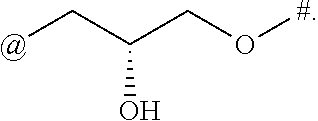


wherein * represents that attachment point to the remainder of the molecule.

or a salt thereof.

or a salt thereof.
-
- br. s. Broad singlet
- chloroform-d Deuterated chloroform
- methanol-d4 Deuterated methanol
- DIAD Diisopropyl azodicarboxylate
- DCM Dichloromethane
- DEA Diethylamine
- DIPEA Diisopropylethylamine
- DMF N,N-Dimethylformamide
- DMSO-d6 Deuterated dimethylsulfoxide
- d Doublet
- EDC.HCl 1-Ethyl-3-(3-dimethylaminopropyl)carbodiimide hydrochloric acid
- EtOAc Ethyl acetate
- EtOH Ethanol
- g Gram
- HATU (O-(7-azabenzotriazol-1-yl)-N,N,N′,N′-tetramethyluronium hexafluorophosphate)
- HOBT Hydroxybenzotriazole
- HPLC High Performance Liquid Chromatography
- L Litre
- LCMS Liquid Chromatography Mass Spectrometry
- MeCN Acetonitrile
- MeOH Methanol
- mg Milligram
- mL Millilitre
- mmol Millimoles
- m multiplet
- NMR Nuclear Magnetic Resonance
- iPrOH Isopropanol
- q quartet
- RT Room temperature
- s singlet
- SFC Supercritical Fluid Chromatography
- TFA trifluoroacetic acid
- THF Tetrahydrofuran
- TLC Thin layer chromatography
- t triplet


| TABLE 2 | |||
| ATF4 inhibition | |||
| IC50 | |||
| Compound No. | (nM) | ||
| 1 | >10,000 | ||
| 2 | >10,000 | ||
| 3 | >10,000 | ||
| 5 | >10,000 | ||
| 6 | >10,000 | ||
| TABLE 3 | ||
| % Protein synthesis in | % Recovery of protein | |
| Compound | unstressed cells | synthesis |
| No. | (1 μM test compound) | (1 μM test compound) |
| 1 | 336.9 | 351.1 |
| 2 | 336.3 | 306.9 |
| 3 | 397.3 | 324 |
| 5 | 173.2 | 116.9 |
| 6 | 244.5 | 140.4 |
Claims (45)


Priority Applications (1)
| Application Number | Priority Date | Filing Date | Title |
|---|---|---|---|
| US16/899,521 US11318133B2 (en) | 2019-06-12 | 2020-06-11 | Modulators of integrated stress response pathway |
Applications Claiming Priority (2)
| Application Number | Priority Date | Filing Date | Title |
|---|---|---|---|
| US201962860683P | 2019-06-12 | 2019-06-12 | |
| US16/899,521 US11318133B2 (en) | 2019-06-12 | 2020-06-11 | Modulators of integrated stress response pathway |
Publications (2)
| Publication Number | Publication Date |
|---|---|
| US20200390759A1 US20200390759A1 (en) | 2020-12-17 |
| US11318133B2 true US11318133B2 (en) | 2022-05-03 |
Family
ID=73745706
Family Applications (1)
| Application Number | Title | Priority Date | Filing Date |
|---|---|---|---|
| US16/899,521 Active 2040-07-04 US11318133B2 (en) | 2019-06-12 | 2020-06-11 | Modulators of integrated stress response pathway |
Country Status (6)
| Country | Link |
|---|---|
| US (1) | US11318133B2 (en) |
| EP (1) | EP3982965A4 (en) |
| JP (1) | JP2022536663A (en) |
| CN (1) | CN114466654A (en) |
| CA (1) | CA3142748A1 (en) |
| WO (1) | WO2020252207A1 (en) |
Families Citing this family (8)
| Publication number | Priority date | Publication date | Assignee | Title |
|---|---|---|---|---|
| WO2019118785A2 (en) | 2017-12-13 | 2019-06-20 | Praxis Biotech LLC | Inhibitors of integrated stress response pathway |
| WO2019236710A1 (en) | 2018-06-05 | 2019-12-12 | Praxis Biotech LLC | Inhibitors of integrated stress response pathway |
| JP2022536663A (en) | 2019-06-12 | 2022-08-18 | プラクシス バイオテック エルエルシー | Modulators of integrated stress response pathways |
| MX2022011143A (en) | 2020-03-11 | 2022-10-13 | Evotec Int Gmbh | Modulators of the integrated stress response pathway. |
| US20230391763A1 (en) | 2020-10-22 | 2023-12-07 | Evotec International Gmbh | Modulators of the integrated stress response pathway |
| JP2023546224A (en) | 2020-10-22 | 2023-11-01 | エヴォテック・インターナショナル・ゲゼルシャフト・ミット・ベシュレンクテル・ハフツング | Modulators of integrated stress response pathways |
| MX2023004623A (en) | 2020-10-22 | 2023-05-12 | Evotec Int Gmbh | Modulators of the integrated stress response pathway. |
| TW202304421A (en) * | 2021-04-02 | 2023-02-01 | 美商普拉西斯生物技術有限責任公司 | Modulators of integrated stress response pathway |
Citations (52)
| Publication number | Priority date | Publication date | Assignee | Title |
|---|---|---|---|---|
| US5096901A (en) | 1989-10-14 | 1992-03-17 | John Wyeth & Brother Limited | Pharmacologically active amides and esters containing an azabicycloalkane moiety |
| WO1999006387A2 (en) | 1997-07-31 | 1999-02-11 | F. Hoffmann-La Roche Ag | O-substituted hydroxycumaranone derivatives as antitumor and antimetastatic agents |
| US20040138286A1 (en) | 2001-06-12 | 2004-07-15 | Naonori Imazaki | Rho kinase inhibitors |
| US20050197350A1 (en) | 2003-03-31 | 2005-09-08 | Taisho Pharmaceutical Co., Ltd. | Novel quinoline, tetrahydroquinazoline, and pyrimidine derivatives and methods of treatment related to the use thereof |
| US20100035898A1 (en) | 2008-08-07 | 2010-02-11 | David Beattie | Organic compounds |
| WO2010068881A1 (en) | 2008-12-12 | 2010-06-17 | Forest Laboratories Holdings Limited | Novel benzodioxane and benzoxazine derivatives useful as cc chemokine receptor ligands |
| US20110039860A1 (en) | 2008-05-07 | 2011-02-17 | Cangming Yang | Soluble epoxide hydrolase inhibitors, compositions containing such compounds and methods of treatment |
| WO2011095450A1 (en) | 2010-02-02 | 2011-08-11 | Novartis Ag | Cyclohexyl amide derivatives as crf receptor antagonists |
| US20110300575A1 (en) | 2004-11-17 | 2011-12-08 | Riken | Cell-free system for synthesis of proteins derived from cultured mammalian cells |
| WO2014144952A2 (en) | 2013-03-15 | 2014-09-18 | Peter Walter | Modulators of the eif2alpha pathway |
| US20150314018A1 (en) | 2012-11-09 | 2015-11-05 | Biontech Ag | Method for cellular rna expression |
| US9382232B2 (en) * | 2011-12-30 | 2016-07-05 | Shenyang Pharmaceutical University | Quinoline and cinnoline derivatives and their applications |
| US20160318931A1 (en) | 2004-06-24 | 2016-11-03 | Vertex Pharmaceuticals Incorporated | Modulators of atp-binding cassette transporters |
| WO2017193034A1 (en) | 2016-05-05 | 2017-11-09 | Calico Life Sciences | Modulators of the integrated stress pathway |
| WO2017193030A1 (en) | 2016-05-05 | 2017-11-09 | Calico Life Sciences | Modulators of the integrated stress pathway |
| WO2017193063A1 (en) | 2016-05-05 | 2017-11-09 | Calico Life Sciences | Modulators of the integrated stress pathway |
| WO2017193041A1 (en) | 2016-05-05 | 2017-11-09 | Calico Life Sciences | Modulators of the integrated stress pathway |
| WO2017212425A1 (en) | 2016-06-08 | 2017-12-14 | Glaxosmithkline Intellectual Property Development Limited | Chemical compounds as atf4 pathway inhibitors |
| WO2017212423A1 (en) | 2016-06-08 | 2017-12-14 | Glaxosmithkline Intellectual Property Development Limited | Chemcical compounds |
| WO2018225093A1 (en) | 2017-06-07 | 2018-12-13 | Glaxosmithkline Intellectual Property Development Limited | Chemical compounds as atf4 pathway inhibitors |
| WO2019008507A1 (en) | 2017-07-03 | 2019-01-10 | Glaxosmithkline Intellectual Property Development Limited | 2-(4-chlorophenoxy)-n-((1 -(2-(4-chlorophenoxy)ethynazetidin-3-yl)methyl)acetamide derivatives and related compounds as atf4 inhibitors for treating cancer and other diseases |
| WO2019008506A1 (en) | 2017-07-03 | 2019-01-10 | Glaxosmithkline Intellectual Property Development Limited | N-(3-(2-(4-chlorophenoxy)acetamido)bicyclo[1.1.1]pentan-1-yl)-2-cyclobutane-1-carboxamide derivatives and related compounds as atf4 inhibitors for treating cancer and other diseases |
| WO2019032743A1 (en) | 2017-08-09 | 2019-02-14 | Denali Therapeutics Inc. | Compounds, compositions and methods |
| WO2019046779A1 (en) | 2017-09-01 | 2019-03-07 | Denali Therapeutics Inc. | Compounds, compositions and methods |
| WO2019090076A1 (en) | 2017-11-02 | 2019-05-09 | Calico Life Sciences Llc | Modulators of the integrated stress pathway |
| WO2019090090A1 (en) | 2017-11-02 | 2019-05-09 | Calico Life Sciences Llc | Modulators of the integrated stress pathway |
| WO2019090085A1 (en) | 2017-11-02 | 2019-05-09 | Calico Life Sciences Llc | Modulators of the integrated stress pathway |
| WO2019090069A1 (en) | 2017-11-02 | 2019-05-09 | Calico Life Sciences Llc | Modulators of the integrated stress pathway |
| WO2019090078A1 (en) | 2017-11-02 | 2019-05-09 | Calico Life Sciences Llc | Modulators of the integrated stress pathway |
| WO2019090074A1 (en) | 2017-11-02 | 2019-05-09 | Calico Life Sciences Llc | Modulators of the integrated stress pathway |
| WO2019090082A1 (en) | 2017-11-02 | 2019-05-09 | Calico Life Sciences Llc | Modulators of the integrated stress pathway |
| WO2019090081A1 (en) | 2017-11-02 | 2019-05-09 | Calico Life Sciences Llc | Modulators of the integrated stress pathway |
| WO2019090088A1 (en) | 2017-11-02 | 2019-05-09 | Calico Life Sciences Llc | Modulators of the integrated stress pathway |
| US20190177310A1 (en) | 2017-12-13 | 2019-06-13 | Praxis Biotech LLC | Inhibitors of integrated stress response pathway |
| WO2019183589A1 (en) | 2018-03-23 | 2019-09-26 | Denali Therapeutics Inc. | Modulators of eukaryotic initiation factor 2 |
| WO2019193540A1 (en) | 2018-04-06 | 2019-10-10 | Glaxosmithkline Intellectual Property Development Limited | Heteroaryl derivatives of formula (i) as atf4 inhibitors |
| WO2019193541A1 (en) | 2018-04-06 | 2019-10-10 | Glaxosmithkline Intellectual Property Development Limited | Bicyclic aromatic ring derivatives of formula (i) as atf4 inhibitors |
| WO2020012339A1 (en) | 2018-07-09 | 2020-01-16 | Glaxosmithkline Intellectual Property Development Limited | Chemical compounds |
| WO2020031107A1 (en) | 2018-08-08 | 2020-02-13 | Glaxosmithkline Intellectual Property Development Limited | Chemical compounds |
| US20200101047A1 (en) | 2018-06-05 | 2020-04-02 | Praxis Biotech LLC | Inhibitors of integrated stress response pathway |
| WO2020077217A1 (en) | 2018-10-11 | 2020-04-16 | Calico Life Sciences Llc | Prodrug modulators of the integrated stress pathway |
| US10683278B2 (en) * | 2015-08-18 | 2020-06-16 | Shanghai Haihe Pharmaceutical Co., Ltd. | Substituted quinolone derivatives, or pharmaceutically acceptable salts or stereoisomers thereof, and pharmaceutical compositions and use thereof |
| WO2020168011A1 (en) | 2019-02-13 | 2020-08-20 | Denali Therapeutics Inc. | Compounds, compositions and methods |
| WO2020167994A1 (en) | 2019-02-13 | 2020-08-20 | Denali Therapeutics Inc. | Compounds, compositions and methods |
| US20200270232A1 (en) | 2019-02-25 | 2020-08-27 | Praxis Biotech LLC | Inhibitors of integrated stress response pathway |
| WO2020181247A1 (en) | 2019-03-06 | 2020-09-10 | Denali Therapeutics Inc. | Compounds, compositions and methods |
| WO2020216766A1 (en) | 2019-04-23 | 2020-10-29 | Evotec International Gmbh | Modulators of the integrated stress response pathway |
| WO2020216764A1 (en) | 2019-04-23 | 2020-10-29 | Evotec International Gmbh | Modulators of the integrated stress response pathway |
| WO2020223538A1 (en) | 2019-04-30 | 2020-11-05 | Calico Life Sciences Llc | Substituted cycloalkyls as modulators of the integrated stress pathway |
| WO2020223536A1 (en) | 2019-04-30 | 2020-11-05 | Calico Life Sciences Llc | Substituted cyclolakyls as modulators of the integrated stress pathway |
| WO2020252205A1 (en) | 2019-06-12 | 2020-12-17 | Praxis Biotech LLC | Inhibitors of integrated stress response pathway |
| WO2020252207A1 (en) | 2019-06-12 | 2020-12-17 | Praxis Biotech LLC | Modulators of integrated stress response pathway |
Family Cites Families (1)
| Publication number | Priority date | Publication date | Assignee | Title |
|---|---|---|---|---|
| GB8923209D0 (en) * | 1989-10-14 | 1989-11-29 | Wyeth John & Brother Ltd | Heterocyclic compounds |
-
2020
- 2020-06-11 JP JP2021573326A patent/JP2022536663A/en active Pending
- 2020-06-11 CN CN202080053343.8A patent/CN114466654A/en active Pending
- 2020-06-11 US US16/899,521 patent/US11318133B2/en active Active
- 2020-06-11 WO PCT/US2020/037311 patent/WO2020252207A1/en not_active Ceased
- 2020-06-11 CA CA3142748A patent/CA3142748A1/en active Pending
- 2020-06-11 EP EP20822086.3A patent/EP3982965A4/en not_active Withdrawn
Patent Citations (57)
| Publication number | Priority date | Publication date | Assignee | Title |
|---|---|---|---|---|
| US5096901A (en) | 1989-10-14 | 1992-03-17 | John Wyeth & Brother Limited | Pharmacologically active amides and esters containing an azabicycloalkane moiety |
| WO1999006387A2 (en) | 1997-07-31 | 1999-02-11 | F. Hoffmann-La Roche Ag | O-substituted hydroxycumaranone derivatives as antitumor and antimetastatic agents |
| US20040138286A1 (en) | 2001-06-12 | 2004-07-15 | Naonori Imazaki | Rho kinase inhibitors |
| US20050197350A1 (en) | 2003-03-31 | 2005-09-08 | Taisho Pharmaceutical Co., Ltd. | Novel quinoline, tetrahydroquinazoline, and pyrimidine derivatives and methods of treatment related to the use thereof |
| US20160318931A1 (en) | 2004-06-24 | 2016-11-03 | Vertex Pharmaceuticals Incorporated | Modulators of atp-binding cassette transporters |
| US20110300575A1 (en) | 2004-11-17 | 2011-12-08 | Riken | Cell-free system for synthesis of proteins derived from cultured mammalian cells |
| US20110039860A1 (en) | 2008-05-07 | 2011-02-17 | Cangming Yang | Soluble epoxide hydrolase inhibitors, compositions containing such compounds and methods of treatment |
| US20100035898A1 (en) | 2008-08-07 | 2010-02-11 | David Beattie | Organic compounds |
| WO2010068881A1 (en) | 2008-12-12 | 2010-06-17 | Forest Laboratories Holdings Limited | Novel benzodioxane and benzoxazine derivatives useful as cc chemokine receptor ligands |
| WO2011095450A1 (en) | 2010-02-02 | 2011-08-11 | Novartis Ag | Cyclohexyl amide derivatives as crf receptor antagonists |
| US9382232B2 (en) * | 2011-12-30 | 2016-07-05 | Shenyang Pharmaceutical University | Quinoline and cinnoline derivatives and their applications |
| US20150314018A1 (en) | 2012-11-09 | 2015-11-05 | Biontech Ag | Method for cellular rna expression |
| WO2014144952A2 (en) | 2013-03-15 | 2014-09-18 | Peter Walter | Modulators of the eif2alpha pathway |
| US20170342020A1 (en) | 2013-03-15 | 2017-11-30 | The Regents Of The University Of California | Modulators of the eif2alpha pathway |
| US10683278B2 (en) * | 2015-08-18 | 2020-06-16 | Shanghai Haihe Pharmaceutical Co., Ltd. | Substituted quinolone derivatives, or pharmaceutically acceptable salts or stereoisomers thereof, and pharmaceutical compositions and use thereof |
| WO2017193063A1 (en) | 2016-05-05 | 2017-11-09 | Calico Life Sciences | Modulators of the integrated stress pathway |
| WO2017193041A1 (en) | 2016-05-05 | 2017-11-09 | Calico Life Sciences | Modulators of the integrated stress pathway |
| WO2017193030A1 (en) | 2016-05-05 | 2017-11-09 | Calico Life Sciences | Modulators of the integrated stress pathway |
| WO2017193034A1 (en) | 2016-05-05 | 2017-11-09 | Calico Life Sciences | Modulators of the integrated stress pathway |
| WO2017212425A1 (en) | 2016-06-08 | 2017-12-14 | Glaxosmithkline Intellectual Property Development Limited | Chemical compounds as atf4 pathway inhibitors |
| WO2017212423A1 (en) | 2016-06-08 | 2017-12-14 | Glaxosmithkline Intellectual Property Development Limited | Chemcical compounds |
| WO2018225093A1 (en) | 2017-06-07 | 2018-12-13 | Glaxosmithkline Intellectual Property Development Limited | Chemical compounds as atf4 pathway inhibitors |
| WO2019008507A1 (en) | 2017-07-03 | 2019-01-10 | Glaxosmithkline Intellectual Property Development Limited | 2-(4-chlorophenoxy)-n-((1 -(2-(4-chlorophenoxy)ethynazetidin-3-yl)methyl)acetamide derivatives and related compounds as atf4 inhibitors for treating cancer and other diseases |
| WO2019008506A1 (en) | 2017-07-03 | 2019-01-10 | Glaxosmithkline Intellectual Property Development Limited | N-(3-(2-(4-chlorophenoxy)acetamido)bicyclo[1.1.1]pentan-1-yl)-2-cyclobutane-1-carboxamide derivatives and related compounds as atf4 inhibitors for treating cancer and other diseases |
| WO2019032743A1 (en) | 2017-08-09 | 2019-02-14 | Denali Therapeutics Inc. | Compounds, compositions and methods |
| WO2019046779A1 (en) | 2017-09-01 | 2019-03-07 | Denali Therapeutics Inc. | Compounds, compositions and methods |
| WO2019090069A1 (en) | 2017-11-02 | 2019-05-09 | Calico Life Sciences Llc | Modulators of the integrated stress pathway |
| WO2019090088A1 (en) | 2017-11-02 | 2019-05-09 | Calico Life Sciences Llc | Modulators of the integrated stress pathway |
| WO2019090090A1 (en) | 2017-11-02 | 2019-05-09 | Calico Life Sciences Llc | Modulators of the integrated stress pathway |
| WO2019090078A1 (en) | 2017-11-02 | 2019-05-09 | Calico Life Sciences Llc | Modulators of the integrated stress pathway |
| WO2019090074A1 (en) | 2017-11-02 | 2019-05-09 | Calico Life Sciences Llc | Modulators of the integrated stress pathway |
| WO2019090082A1 (en) | 2017-11-02 | 2019-05-09 | Calico Life Sciences Llc | Modulators of the integrated stress pathway |
| WO2019090081A1 (en) | 2017-11-02 | 2019-05-09 | Calico Life Sciences Llc | Modulators of the integrated stress pathway |
| WO2019090085A1 (en) | 2017-11-02 | 2019-05-09 | Calico Life Sciences Llc | Modulators of the integrated stress pathway |
| WO2019090076A1 (en) | 2017-11-02 | 2019-05-09 | Calico Life Sciences Llc | Modulators of the integrated stress pathway |
| WO2019118785A2 (en) | 2017-12-13 | 2019-06-20 | Praxis Biotech LLC | Inhibitors of integrated stress response pathway |
| US20190177310A1 (en) | 2017-12-13 | 2019-06-13 | Praxis Biotech LLC | Inhibitors of integrated stress response pathway |
| WO2019183589A1 (en) | 2018-03-23 | 2019-09-26 | Denali Therapeutics Inc. | Modulators of eukaryotic initiation factor 2 |
| WO2019193540A1 (en) | 2018-04-06 | 2019-10-10 | Glaxosmithkline Intellectual Property Development Limited | Heteroaryl derivatives of formula (i) as atf4 inhibitors |
| WO2019193541A1 (en) | 2018-04-06 | 2019-10-10 | Glaxosmithkline Intellectual Property Development Limited | Bicyclic aromatic ring derivatives of formula (i) as atf4 inhibitors |
| US20200101047A1 (en) | 2018-06-05 | 2020-04-02 | Praxis Biotech LLC | Inhibitors of integrated stress response pathway |
| US11166942B2 (en) | 2018-06-05 | 2021-11-09 | Praxis Biotech LLC | Inhibitors of integrated stress response pathway |
| WO2020012339A1 (en) | 2018-07-09 | 2020-01-16 | Glaxosmithkline Intellectual Property Development Limited | Chemical compounds |
| WO2020031107A1 (en) | 2018-08-08 | 2020-02-13 | Glaxosmithkline Intellectual Property Development Limited | Chemical compounds |
| WO2020077217A1 (en) | 2018-10-11 | 2020-04-16 | Calico Life Sciences Llc | Prodrug modulators of the integrated stress pathway |
| WO2020168011A1 (en) | 2019-02-13 | 2020-08-20 | Denali Therapeutics Inc. | Compounds, compositions and methods |
| WO2020167994A1 (en) | 2019-02-13 | 2020-08-20 | Denali Therapeutics Inc. | Compounds, compositions and methods |
| US20200270232A1 (en) | 2019-02-25 | 2020-08-27 | Praxis Biotech LLC | Inhibitors of integrated stress response pathway |
| WO2020176428A1 (en) | 2019-02-25 | 2020-09-03 | Praxis Biotech LLC | Inhibitors of integrated stress response pathway |
| WO2020181247A1 (en) | 2019-03-06 | 2020-09-10 | Denali Therapeutics Inc. | Compounds, compositions and methods |
| WO2020216766A1 (en) | 2019-04-23 | 2020-10-29 | Evotec International Gmbh | Modulators of the integrated stress response pathway |
| WO2020216764A1 (en) | 2019-04-23 | 2020-10-29 | Evotec International Gmbh | Modulators of the integrated stress response pathway |
| WO2020223538A1 (en) | 2019-04-30 | 2020-11-05 | Calico Life Sciences Llc | Substituted cycloalkyls as modulators of the integrated stress pathway |
| WO2020223536A1 (en) | 2019-04-30 | 2020-11-05 | Calico Life Sciences Llc | Substituted cyclolakyls as modulators of the integrated stress pathway |
| WO2020252205A1 (en) | 2019-06-12 | 2020-12-17 | Praxis Biotech LLC | Inhibitors of integrated stress response pathway |
| WO2020252207A1 (en) | 2019-06-12 | 2020-12-17 | Praxis Biotech LLC | Modulators of integrated stress response pathway |
| US20210317102A1 (en) | 2019-06-12 | 2021-10-14 | Praxis Biotech LLC | Inhibitors of integrated stress response pathway |
Non-Patent Citations (182)
Also Published As
| Publication number | Publication date |
|---|---|
| US20200390759A1 (en) | 2020-12-17 |
| WO2020252207A1 (en) | 2020-12-17 |
| EP3982965A1 (en) | 2022-04-20 |
| CA3142748A1 (en) | 2020-12-17 |
| JP2022536663A (en) | 2022-08-18 |
| EP3982965A4 (en) | 2023-01-25 |
| CN114466654A (en) | 2022-05-10 |
Similar Documents
| Publication | Publication Date | Title |
|---|---|---|
| US11318133B2 (en) | Modulators of integrated stress response pathway | |
| US11230542B2 (en) | Inhibitors of integrated stress response pathway | |
| US11166942B2 (en) | Inhibitors of integrated stress response pathway | |
| US20200270232A1 (en) | Inhibitors of integrated stress response pathway | |
| US20210317102A1 (en) | Inhibitors of integrated stress response pathway | |
| US20230083885A1 (en) | Modulators of integrated stress response pathway | |
| US9169271B2 (en) | BACE inhibitors | |
| JP6754828B2 (en) | Pyridine and pyrimidine derivatives | |
| US20230042881A1 (en) | Modulators of integrated stress response pathway | |
| HK40074323A (en) | Modulators of integrated stress response pathway |
Legal Events
| Date | Code | Title | Description |
|---|---|---|---|
| FEPP | Fee payment procedure |
Free format text: ENTITY STATUS SET TO UNDISCOUNTED (ORIGINAL EVENT CODE: BIG.); ENTITY STATUS OF PATENT OWNER: SMALL ENTITY |
|
| FEPP | Fee payment procedure |
Free format text: ENTITY STATUS SET TO SMALL (ORIGINAL EVENT CODE: SMAL); ENTITY STATUS OF PATENT OWNER: SMALL ENTITY |
|
| STPP | Information on status: patent application and granting procedure in general |
Free format text: APPLICATION DISPATCHED FROM PREEXAM, NOT YET DOCKETED |
|
| AS | Assignment |
Owner name: PRAXIS BIOTECH LLC, CALIFORNIA Free format text: ASSIGNMENT OF ASSIGNORS INTEREST;ASSIGNOR:INTEGRAL BIOSCIENCES PVT. LTD.;REEL/FRAME:056812/0043 Effective date: 20200701 Owner name: PRAXIS BIOTECH LLC, CALIFORNIA Free format text: ASSIGNMENT OF ASSIGNORS INTEREST;ASSIGNOR:MERKEN BIOTECH SPA;REEL/FRAME:056812/0040 Effective date: 20200708 Owner name: INTEGRAL BIOSCIENCES PVT. LTD., INDIA Free format text: ASSIGNMENT OF ASSIGNORS INTEREST;ASSIGNORS:PUJALA, BRAHMAM;PANPATIL, DAYANAND;REEL/FRAME:056812/0036 Effective date: 20200701 Owner name: MERKEN BIOTECH SPA, CHILE Free format text: ASSIGNMENT OF ASSIGNORS INTEREST;ASSIGNORS:DELGADO OYARZO, LUZ MARINA;URETA DIAZ, GONZALO ANDRES;REEL/FRAME:056812/0027 Effective date: 20200630 Owner name: PRAXIS BIOTECH LLC, CALIFORNIA Free format text: ASSIGNMENT OF ASSIGNORS INTEREST;ASSIGNOR:BERNALES, SEBASTIAN;REEL/FRAME:056812/0024 Effective date: 20200708 |
|
| STPP | Information on status: patent application and granting procedure in general |
Free format text: DOCKETED NEW CASE - READY FOR EXAMINATION |
|
| STPP | Information on status: patent application and granting procedure in general |
Free format text: NON FINAL ACTION MAILED |
|
| STPP | Information on status: patent application and granting procedure in general |
Free format text: RESPONSE TO NON-FINAL OFFICE ACTION ENTERED AND FORWARDED TO EXAMINER |
|
| STPP | Information on status: patent application and granting procedure in general |
Free format text: NOTICE OF ALLOWANCE MAILED -- APPLICATION RECEIVED IN OFFICE OF PUBLICATIONS |
|
| STPP | Information on status: patent application and granting procedure in general |
Free format text: PUBLICATIONS -- ISSUE FEE PAYMENT VERIFIED |
|
| STCF | Information on status: patent grant |
Free format text: PATENTED CASE |
|
| FEPP | Fee payment procedure |
Free format text: MAINTENANCE FEE REMINDER MAILED (ORIGINAL EVENT CODE: REM.); ENTITY STATUS OF PATENT OWNER: SMALL ENTITY |