US11315564B2 - Wireless device - Google Patents
Wireless device Download PDFInfo
- Publication number
- US11315564B2 US11315564B2 US16/798,461 US202016798461A US11315564B2 US 11315564 B2 US11315564 B2 US 11315564B2 US 202016798461 A US202016798461 A US 202016798461A US 11315564 B2 US11315564 B2 US 11315564B2
- Authority
- US
- United States
- Prior art keywords
- voice
- action
- sending
- wireless device
- voice data
- Prior art date
- Legal status (The legal status is an assumption and is not a legal conclusion. Google has not performed a legal analysis and makes no representation as to the accuracy of the status listed.)
- Active, expires
Links
Images



Classifications
-
- G—PHYSICS
- G10—MUSICAL INSTRUMENTS; ACOUSTICS
- G10L—SPEECH ANALYSIS TECHNIQUES OR SPEECH SYNTHESIS; SPEECH RECOGNITION; SPEECH OR VOICE PROCESSING TECHNIQUES; SPEECH OR AUDIO CODING OR DECODING
- G10L15/00—Speech recognition
- G10L15/22—Procedures used during a speech recognition process, e.g. man-machine dialogue
-
- H—ELECTRICITY
- H04—ELECTRIC COMMUNICATION TECHNIQUE
- H04M—TELEPHONIC COMMUNICATION
- H04M3/00—Automatic or semi-automatic exchanges
- H04M3/42—Systems providing special services or facilities to subscribers
- H04M3/50—Centralised arrangements for answering calls; Centralised arrangements for recording messages for absent or busy subscribers ; Centralised arrangements for recording messages
- H04M3/53—Centralised arrangements for recording incoming messages, i.e. mailbox systems
- H04M3/5307—Centralised arrangements for recording incoming messages, i.e. mailbox systems for recording messages comprising any combination of audio and non-audio components
-
- G—PHYSICS
- G06—COMPUTING OR CALCULATING; COUNTING
- G06F—ELECTRIC DIGITAL DATA PROCESSING
- G06F3/00—Input arrangements for transferring data to be processed into a form capable of being handled by the computer; Output arrangements for transferring data from processing unit to output unit, e.g. interface arrangements
- G06F3/16—Sound input; Sound output
- G06F3/167—Audio in a user interface, e.g. using voice commands for navigating, audio feedback
-
- H—ELECTRICITY
- H04—ELECTRIC COMMUNICATION TECHNIQUE
- H04M—TELEPHONIC COMMUNICATION
- H04M3/00—Automatic or semi-automatic exchanges
- H04M3/42—Systems providing special services or facilities to subscribers
- H04M3/42221—Conversation recording systems
-
- G—PHYSICS
- G10—MUSICAL INSTRUMENTS; ACOUSTICS
- G10L—SPEECH ANALYSIS TECHNIQUES OR SPEECH SYNTHESIS; SPEECH RECOGNITION; SPEECH OR VOICE PROCESSING TECHNIQUES; SPEECH OR AUDIO CODING OR DECODING
- G10L15/00—Speech recognition
- G10L15/22—Procedures used during a speech recognition process, e.g. man-machine dialogue
- G10L2015/223—Execution procedure of a spoken command
-
- H—ELECTRICITY
- H04—ELECTRIC COMMUNICATION TECHNIQUE
- H04M—TELEPHONIC COMMUNICATION
- H04M2207/00—Type of exchange or network, i.e. telephonic medium, in which the telephonic communication takes place
- H04M2207/18—Type of exchange or network, i.e. telephonic medium, in which the telephonic communication takes place wireless networks
-
- H—ELECTRICITY
- H04—ELECTRIC COMMUNICATION TECHNIQUE
- H04M—TELEPHONIC COMMUNICATION
- H04M2242/00—Special services or facilities
- H04M2242/04—Special services or facilities for emergency applications
Definitions
- the present application relates to a wireless device having an action mode that automatically repeats, at a fixed temporal interval, a sending action of sending a voice and a receiving action of receiving a voice.
- a wireless device including a push-to-talk (PTT) switch is known.
- the wireless device of this type awaits a reception of a voice from another wireless device in a state where the PTT switch is not turned on, and can send a voice input from a microphone to the other wireless device when the PTT switch is turned on.
- Some wireless devices of this type include an emergency call function. Such wireless devices can automatically and alternately repeat a sending action of voice and a receiving action of voice at a preset temporal interval, and enable a user to send a voice without turning on the PTT switch during the sending action of voice, so as to perform conversation.
- Japanese Laid-open Patent Publication No. 2000-312266 and No. 6-30158 describe a technique that sends a voice recorded in advance at a time of an emergency call on an assumption that a sender is unable to speak in a case of emergency.
- a wireless device is disclosed.
- a wireless device having an action mode that automatically repeats, at a fixed temporal interval, a sending action of sending a voice and a receiving action of receiving the voice comprising: a voice recorder configured to record the voice therein when the voice is input from a microphone during execution of the action mode; a sending controller configured to send the voice input in the sending action during the execution of the action mode; and a recording controller configured to control recording in the voice recorder, wherein the sending controller is further configured to send the voice recorded in the voice recorder when the voice is not input from the microphone in the sending action.
- FIG. 1 is a schematic configuration diagram illustrating a wireless communication system including wireless devices according to a first embodiment of the present application
- FIG. 2 is a functional block diagram illustrating the wireless device
- FIG. 3 is a diagram schematically illustrating a basic action of the wireless device in a case of emergency call mode
- FIG. 4 is a diagram schematically illustrating an action of the wireless device when a voice is input
- FIG. 5 is a diagram schematically illustrating voice data stored in a voice recorder
- FIG. 6 is a diagram schematically illustrating voice data stored in the voice recorder
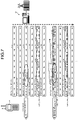
- FIG. 7 is a diagram schematically illustrating an action of a wireless device according to a second embodiment of the present application.
- FIG. 8 is a diagram schematically illustrating voice date recorded in the voice recorder.
- FIG. 9 is a diagram schematically illustrating voice data recorded in the voice recorder.
- FIG. 1 is a schematic configuration diagram illustrating a wireless communication system 1 including wireless devices 10 according to a first embodiment of the present application.
- FIG. 2 is a functional block diagram illustrating the wireless device 10 .
- the wireless communication system 1 includes the wireless devices 10 (three in FIG. 1 ) and a base station (external apparatus) 30 that is connected to the wireless devices 10 .
- the wireless communication system 1 may include a relay station (not illustrated) that performs relaying between the wireless devices 10 and the base station 30 .
- the base station 30 sends a signal including voice data received from any one of the wireless devices 10 to another one of the wireless devices 10 which is present in a communication range A.
- the base station 30 can also send a signal for controlling an action of the wireless device 10 to the wireless devices 10 present in the communication range A.
- the wireless device 10 performs, for example, half-duplex wireless communication via the base station 30 .
- the half-duplex wireless communication is a form of wireless communication in which a data sending action and a data receiving action cannot simultaneously be performed and only either thereof can be performed in a time dividing manner.
- the wireless communication system 1 includes the three wireless devices 10 , the number of wireless devices 10 included in the wireless communication system 1 is not limited to three but may be any desired number.
- FIG. 1 illustrates an example in which the wireless devices 10 communicate with one another via the base station 30 or the relay station, the example includes a form in which the wireless devices 10 directly communicate with one another not via the base station 30 or the relay station.
- the wireless device 10 is a mobile wireless device, and a user of the wireless device 10 can move within the communication range A while the user is communicating.
- the wireless device 10 includes a controller 11 , a wireless communication circuit 12 , a storage 13 , a voice recorder 14 , a PTT switch 15 , an emergency switch 16 , a microphone 17 , and a speaker 18 .
- the wireless device 10 according to the first embodiment awaits reception of a voice from another wireless device 10 in a state where the PTT switch 15 is not turned on.
- the wireless device 10 is configured to execute a normal action mode in which the wireless device 10 sends an input voice to the other wireless device 10 when the PTT switch 15 is turned on, and an emergency call mode in which, when the emergency switch 16 is turned on, an action of sending a voice and an action of receiving a voice are automatically repeated at a fixed temporal interval.
- the emergency call mode the PTT switch 15 does not need to be turned on each time of sending, thereby making it possible to easily and reliably transmit a sender's emergency situation to the receiver.
- the controller 11 can be composed of a microprocessor or microcomputer.
- the controller 11 has, as a functional internal configuration, a central processing unit 20 , a communication controller (sending controller) 21 , a recording controller 22 , and a voice input determination unit 23 .
- the central processing unit 20 , the communication controller 21 , the recording controller 22 , and the voice input determination unit 23 may be configured by software (computer program) or hardware. Further, these units 20 to 23 may be configured by software and hardware in combination.
- the central processing unit 20 controls an overall action of the wireless device 10 .
- the communication controller 21 controls an action of the wireless communication circuit 12 .
- the communication controller 21 controls the wireless communication circuit 12 to automatically repeat, at a fixed temporal interval, a sending action of sending a voice and a receiving action of receiving a voice.
- the recording controller 22 controls an action of recording (storing) a voice input from the microphone 17 in the voice recorder 14 or an action of deleting a voice input from the microphone 17 from the voice recorder 14 .
- the voice input determination unit 23 determines whether the voice is input from the microphone 17 . Specifically, when detecting a voice having level equal to or larger than a predetermined threshold, the voice input determination unit 23 determines that the voice is input from the microphone 17 .
- the wireless communication circuit 12 is a circuit that processes wireless sending and receiving of voice data with respect to the base station 30 and is connected to an antenna 12 A to send and receive the voice data.
- the storage 13 stores various types of data and action programs.
- the storage 13 stores a normal action mode program and an emergency call mode program.
- the voice recorder 14 records therein (stores) a voice input from the microphone 17 .
- the storage 13 and the voice recorder 14 can use semiconductor memory devices such as flash memories, the storage 13 and the voice recorder 14 may also use storage devices such as hard disk drives (HDD).
- the storage 13 and the voice recorder 14 may be separately formed or may be integrally formed with the mode programs and the voice being stored in separate areas.
- the PTT switch 15 is a push button with which the wireless device 10 enters a sending state for communicating with the other wireless device 10 .
- the emergency switch 16 is a push button with which the wireless device 10 enters the emergency call mode that automatically repeats, at a fixed temporal interval, the sending action of sending the voice and the receiving action of receiving the voice data to and from the base station 30 .
- the emergency switch 16 is provided to a location in which the emergency switch 16 is not operated at normal times mistakenly.
- the emergency switch 16 is disposed in parallel with the antenna 12 A on a top surface of the wireless device 10 illustrated in FIG. 1 .
- the microphone 17 transduces the input voice into an electric signal.
- the speaker 18 transduces the received electric signal into a voice and outputs the voice.
- FIG. 3 is a diagram schematically illustrating a basic action of the wireless device 10 in the emergency call mode.
- FIG. 4 is a diagram schematically illustrating an action of the wireless device 10 when a voice is input to the wireless device 10 .
- FIGS. 5 and 6 are diagram schematically illustrating pieces of voice data stored in the voice recorder 14 .
- a user of the wireless device 10 is, for example, a police officer, and an emergency situation is assumed to be a situation in which the police officer was shot and injured.
- the central processing unit 20 executes the emergency call mode program stored in the storage 13 to enter the emergency call mode, and controls the action of the wireless device 10 .
- the wireless device 10 (communication controller 21 ) automatically and alternately repeats a sending action SA that sends a voice to the base station 30 for n seconds (fixed time) and a receiving action RA that receives a voice from the base station 30 or from the other wireless device 10 ( FIG. 1 ) via the base station 30 for n seconds (fixed time).
- the sending action SA and the receiving action RA are alternately repeated, the sending action SA is periodically started at an interval of n seconds.
- the time (n seconds) for implementing the sending action SA and the time for implementing the receiving action RA can respectively be set to any desired seconds.
- the time of the sending action SA may be set to be longer than the time of the receiving action RA.
- Execution of the emergency call mode allows the voice input determination unit 23 to monitor whether a voice is input from the microphone 17 at the timing (during the time) of the sending action SA. Specifically, when detecting a voice having level equal to or larger than a predetermined threshold, the voice input determination unit 23 determines that the voice is input from the microphone 17 . With this configuration, noise around the wireless device 10 can be prevented from being mistakenly input, thereby making it possible to determine whether a voice is input from the user.
- the wireless device 10 sends voice data 41 of the input voice “SOS! I WAS SHOT NEAR XXX” to the base station 30 .
- the wireless device 10 recording controller 22 ) records the voice data 41 of the input voice “SOS! I WAS SHOT NEAR XXX” in the voice recorder 14 .
- the voice data 41 is repeatedly played back and sent until the sending action SA ends.
- the user only needs to speak toward the microphone 17 at least once, thereby making it possible to easily transmit the situation of the user to the receiver while reducing a load on the user in an emergency state.
- the wireless device 10 (recording controller 22 ) records new voice data 42 of the new input voice “CRIMINAL RAN AWAY FOR ⁇ ” in the voice recorder 14 to replace (overwrite) the previously recorded voice data 41 ( FIG. 5 ).
- the wireless device 10 (communication controller 21 ) also sends the new voice data 42 recorded in the voice recorder 14 .
- the new voice data 42 is repeatedly played back and sent until the sending action SA ends.
- the wireless device 10 when the wireless device 10 (recording controller 22 ) receives a predetermined action signal from the base station 30 (external apparatus), based on the received predetermined action signal, the wireless device 10 (recording controller 22 ) deletes at least a part of the voice data recorded in the voice recorder 14 or stops recording new voice data in the voice recorder 14 .
- This configuration can prevent the same voice data from being repeatedly played back for a long time, or prevent the voice data recorded in the voice recorder 14 from being replaced, for example, by a loud sound occurred around the wireless device 10 .
- an environment around the wireless device 10 can be confirmed.
- the emergency call mode is turned off to enter the normal mode.
- voice data input from the microphone 17 at the timing of the sending action SA is recorded in the voice recorder 14
- voice data input from the microphone 17 at the timing of the receiving action RA may be recorded in the voice recorder 14 .
- voice data of a voice from the user at the timing of the receiving action RA can be recorded and sent to the base station 30 . This makes it possible to reliably transmit a sender's situation to a receiver.
- FIG. 7 is a diagram schematically illustrating the action of the wireless device 10 according to the second embodiment in the emergency call mode.
- FIG. 8 is a diagram schematically illustrating voice data recorded in the voice recorder.
- FIG. 9 is a diagram schematically illustrating voice data recorded in the voice recorder.
- the user of the wireless device 10 is a police officer, and an emergency situation is assumed to be a situation in which the police officer was shot and injured. Since the wireless device 10 according to the second embodiment has a configuration identical to the configuration of the first embodiment, its description is omitted. The second embodiment differs from the first embodiment in handling the voice data recorded in the voice recorder 14 .
- the wireless device 10 By turning on the emergency switch 16 of the wireless device 10 , similarly to the first embodiment, the wireless device 10 (communication controller 21 ) automatically and alternately repeats the sending action SA that sends a voice to the base station 30 for n seconds (fixed time) and the receiving action RA that receives a voice from the other wireless device 10 ( FIG. 1 ) via the base station 30 .
- the voice input determination unit 23 monitors whether a voice is input from the microphone 17 at the timing of the sending action SA.
- the wireless device 10 when the voice “SOS! I WAS SHOT NEAR XXX” is input from the microphone 17 at the timing of the sending action SA, the wireless device 10 (communication controller 21 ) sends voice data 41 of the input voice “SOS! I WAS SHOT NEAR XXX” to the base station 30 .
- the wireless device 10 recording controller 22 ) records, in the voice recorder 14 , voice data 41 of the voice “SOS! I WAS SHOT NEAR XXX” and time data 50 of the time “3/25/2018 13:25:40” at which the voice data 41 was input, which are associated with each other.
- the wireless device 10 (communication controller 21 ) may send the time data 50 in a form of text data to the base station 30 .
- the wireless device 10 (communication controller 21 ) sends the voice data 41 recorded in the voice recorder 14 .
- the voice data 41 is repeatedly played back and sent until the sending action SA ends.
- the wireless device 10 records voice data 43 of the new voice “REQUEST FOR AMBULANCE IMMEDIATELY” in the voice recorder 14 by adding the voice data 43 to the previously recorded voice data 41 .
- the voice data 43 of the new voice “REQUEST FOR AMBULANCE IMMEDIATELY” is recorded also in the voice recorder 14 , with the voice data 43 being associated with time data 51 of the time “3/25/2018 13:30:10” at which the voice data 43 was input.
- the wireless device 10 When the voice data 43 , which is new data, is recorded in the voice recorder 14 , the wireless device 10 (communication controller 21 ) sends the voice data 41 previously recorded in the voice recorder 14 and the new voice data 43 . In this case, the wireless device 10 (communication controller 21 ) sequentially sends the voice data in the recorded order based on the time data. With this configuration, the voice data is sent in time series, thereby making it possible to easily transmit a change in the sender's situation to a receiver.
- the wireless device 10 (communication controller 21 ) can play back and send the previously recorded voice data 41 and the new voice data 43 until the sending action SA ends.
- a change in the sender's situation can reliably be transmitted to the receiver.
- the wireless device 10 (communication controller 21 ) may send the pieces of the voice data without the voice data at the oldest time. With this configuration, relatively recent voice data can be sent, thereby making it possible to transmit the sender's relatively recent situation to the receiver.
- the wireless device 10 when receiving a predetermined action signal from the base station 30 (external apparatus), deletes at least a part of the voice data recorded in the voice recorder 14 or stops recording new voice data in the voice recorder 14 based on the received action signal.
- the wireless device 10 in the configuration in which multiple pieces of the voice data is repeatedly sent, by deleting the old voice data, the sender's recent situation can be shared.
- the emergency call mode may be turned off to allow the wireless device 10 to enter the normal mode.
- the voice data which is input from the microphone 17 at the timing of the receiving action RA and which is associated with the time data may be recorded in the voice recorder 14 .
- every piece of voice data after the emergency switch 16 is turned on can be recorded and sent to the base station 30 , thus making it possible to reliably transmit a change in the sender's situation to a receiver.
- the wireless device 10 is configured to be able to perform the emergency call mode that automatically repeats, at a fixed temporal interval, the sending action SA of sending the voice and the receiving action RA of receiving the voice.
- the wireless device 10 includes the voice recorder 14 that records the input voice in a case where the voice is input from the microphone 17 during execution of the emergency call mode, the communication controller 21 that sends the voice input in the sending action SA during the execution of the emergency call mode, and the recording controller 22 that controls the action of the voice recorder 14 .
- the communication controller 21 sends the voice data recorded in the voice recorder 14 in a case where the voice is not input from the microphone 17 at the following sending action SA.
- the wireless device 10 can transmit the situation of the user serving as the sender to a receiver while reducing a load on the user in a case of emergency.
- the recording controller 22 since the recording controller 22 records new voice data input from the microphone 17 to replace the voice data previously recorded in the voice recorder 14 , the recording controller 22 can always send the latest voice data, thereby making it possible to transmit the latest situation of the sender to a receiver.
- the recording controller 22 since the recording controller 22 records new voice data input from the microphone 17 by adding the new voice data to the voice data previously recorded in the voice recorder 14 , the recording controller 22 can send pieces of voice data, thereby making it possible to transmit a change in the sender's situation to a receiver.
- the communication controller 21 since the communication controller 21 sequentially sends the voice data recorded in the voice recorder 14 in the recorded order, the communication controller 21 can send the voice data in time series. This makes it possible to easily and reliably transmit a change in the sender's situation to a receiver.
- the recording controller 22 records data of the input voice in the voice recorder 14 .
- the status of the sender other than the sending action SA can be transmitted to a receiver.
- the wireless device 10 includes the voice input determination unit 23 that determines, when detecting a voice having a level equal to or larger than a predetermined threshold is input from the microphone 17 , that the voice is input from the microphone 17 .
- the voice input determination unit 23 determines, when detecting a voice having a level equal to or larger than a predetermined threshold is input from the microphone 17 , that the voice is input from the microphone 17 .
- the recording controller 22 deletes at least a part of the voice data recorded in the voice recorder 14 or stops recording new voice data in the voice recorder 14 .
- this makes it possible to prevent the same voice data from being repeatedly played back for a long time, or prevent the voice data recorded in the voice recorder 14 from being replaced, for example, by a loud sound occurred around the wireless device 10 .
- the central processing unit 20 cancels the emergency call mode to enter the normal mode in accordance with an operation signal received from the base station 30 , thereby improving the operability of the wireless device 10 .
- a wireless device has an action mode that automatically repeats, at a fixed temporal interval, a sending action of sending a voice and a receiving action of receiving the voice.
- the wireless device can transmit a status of a sender to a receiver, while reducing a load on the sender in a case of emergency.
Landscapes
- Engineering & Computer Science (AREA)
- Multimedia (AREA)
- Theoretical Computer Science (AREA)
- Health & Medical Sciences (AREA)
- Physics & Mathematics (AREA)
- Audiology, Speech & Language Pathology (AREA)
- Human Computer Interaction (AREA)
- General Engineering & Computer Science (AREA)
- General Health & Medical Sciences (AREA)
- General Physics & Mathematics (AREA)
- Signal Processing (AREA)
- Acoustics & Sound (AREA)
- Computational Linguistics (AREA)
- Telephonic Communication Services (AREA)
- Alarm Systems (AREA)
- Telephone Function (AREA)
- Transceivers (AREA)
- Transmitters (AREA)
Abstract
Description
Claims (8)
Applications Claiming Priority (3)
| Application Number | Priority Date | Filing Date | Title |
|---|---|---|---|
| JPJP2019-045366 | 2019-03-13 | ||
| JP2019-045366 | 2019-03-13 | ||
| JP2019045366A JP7120090B2 (en) | 2019-03-13 | 2019-03-13 | wireless device |
Publications (2)
| Publication Number | Publication Date |
|---|---|
| US20200294501A1 US20200294501A1 (en) | 2020-09-17 |
| US11315564B2 true US11315564B2 (en) | 2022-04-26 |
Family
ID=72423461
Family Applications (1)
| Application Number | Title | Priority Date | Filing Date |
|---|---|---|---|
| US16/798,461 Active 2040-06-03 US11315564B2 (en) | 2019-03-13 | 2020-02-24 | Wireless device |
Country Status (2)
| Country | Link |
|---|---|
| US (1) | US11315564B2 (en) |
| JP (1) | JP7120090B2 (en) |
Families Citing this family (2)
| Publication number | Priority date | Publication date | Assignee | Title |
|---|---|---|---|---|
| JP7559666B2 (en) | 2021-04-26 | 2024-10-02 | 株式会社Jvcケンウッド | Wireless communication device and wireless communication method |
| JP2024120405A (en) * | 2023-02-24 | 2024-09-05 | 株式会社Jvcケンウッド | Wireless communication terminal, communication method and program |
Citations (10)
| Publication number | Priority date | Publication date | Assignee | Title |
|---|---|---|---|---|
| JPH0630158A (en) | 1992-04-14 | 1994-02-04 | Akira Kaneko | Message system |
| JP2000312266A (en) | 1999-04-27 | 2000-11-07 | Alpine Electronics Inc | Voice communication unit in communication system |
| JP2003346252A (en) * | 2002-05-28 | 2003-12-05 | Kochi Tsushinki:Kk | Intermittent voice replay emergency alerting device with cancel time in malfunction |
| US20040203622A1 (en) * | 2002-12-03 | 2004-10-14 | Brian Esque | Automatic notification of personal emergency contacts from a wireless communications device |
| US6941161B1 (en) * | 2001-09-13 | 2005-09-06 | Plantronics, Inc | Microphone position and speech level sensor |
| US20110230161A1 (en) * | 2010-03-22 | 2011-09-22 | Fredric Mark Newman | Smartphone emergency alarm |
| US20120282884A1 (en) * | 2011-05-05 | 2012-11-08 | Nicholas Sun | System and method for the emergency voice and image e-mail transmitter device |
| US20150379849A1 (en) * | 2012-06-28 | 2015-12-31 | Fike Corporation | Emergency communication system |
| US20180158311A1 (en) * | 2015-04-23 | 2018-06-07 | Zte Corporation | Terminal alarm method and appartus |
| US20190297180A1 (en) * | 2018-03-23 | 2019-09-26 | Hongfujin Precision Electronics (Zhengzhou) Co., Ltd. | Voice chat amelioration system and method |
Family Cites Families (8)
| Publication number | Priority date | Publication date | Assignee | Title |
|---|---|---|---|---|
| JP3791235B2 (en) * | 1999-04-15 | 2006-06-28 | トヨタ自動車株式会社 | In-vehicle communication device |
| JP2002111520A (en) * | 2000-10-03 | 2002-04-12 | Matsushita Electric Ind Co Ltd | Transceiver equipment |
| JP2003008746A (en) * | 2001-06-26 | 2003-01-10 | Matsushita Electric Works Ltd | Call center system |
| US7245940B2 (en) * | 2004-10-19 | 2007-07-17 | Kyocera Wireless Corp. | Push to talk voice buffering systems and methods in wireless communication calls |
| KR100700568B1 (en) * | 2004-12-29 | 2007-03-28 | 엘지전자 주식회사 | Retransmission method of voice data in PET terminal |
| JP2010130058A (en) * | 2008-11-25 | 2010-06-10 | Nec Corp | Radio telephone set, method for controlling radio telephone set, and program |
| JP2011166660A (en) * | 2010-02-15 | 2011-08-25 | Nec Access Technica Ltd | Voice recording device, voice recording method, and voice recording program |
| JP2016100766A (en) * | 2014-11-21 | 2016-05-30 | 株式会社Jvcケンウッド | COMMUNICATION TERMINAL DEVICE, COMMUNICATION SYSTEM, COMMUNICATION METHOD |
-
2019
- 2019-03-13 JP JP2019045366A patent/JP7120090B2/en active Active
-
2020
- 2020-02-24 US US16/798,461 patent/US11315564B2/en active Active
Patent Citations (10)
| Publication number | Priority date | Publication date | Assignee | Title |
|---|---|---|---|---|
| JPH0630158A (en) | 1992-04-14 | 1994-02-04 | Akira Kaneko | Message system |
| JP2000312266A (en) | 1999-04-27 | 2000-11-07 | Alpine Electronics Inc | Voice communication unit in communication system |
| US6941161B1 (en) * | 2001-09-13 | 2005-09-06 | Plantronics, Inc | Microphone position and speech level sensor |
| JP2003346252A (en) * | 2002-05-28 | 2003-12-05 | Kochi Tsushinki:Kk | Intermittent voice replay emergency alerting device with cancel time in malfunction |
| US20040203622A1 (en) * | 2002-12-03 | 2004-10-14 | Brian Esque | Automatic notification of personal emergency contacts from a wireless communications device |
| US20110230161A1 (en) * | 2010-03-22 | 2011-09-22 | Fredric Mark Newman | Smartphone emergency alarm |
| US20120282884A1 (en) * | 2011-05-05 | 2012-11-08 | Nicholas Sun | System and method for the emergency voice and image e-mail transmitter device |
| US20150379849A1 (en) * | 2012-06-28 | 2015-12-31 | Fike Corporation | Emergency communication system |
| US20180158311A1 (en) * | 2015-04-23 | 2018-06-07 | Zte Corporation | Terminal alarm method and appartus |
| US20190297180A1 (en) * | 2018-03-23 | 2019-09-26 | Hongfujin Precision Electronics (Zhengzhou) Co., Ltd. | Voice chat amelioration system and method |
Also Published As
| Publication number | Publication date |
|---|---|
| US20200294501A1 (en) | 2020-09-17 |
| JP2020150382A (en) | 2020-09-17 |
| JP7120090B2 (en) | 2022-08-17 |
Similar Documents
| Publication | Publication Date | Title |
|---|---|---|
| US4468813A (en) | Digital voice storage system | |
| CN105117211B (en) | The method and device of prompting message | |
| US11315564B2 (en) | Wireless device | |
| US6597895B1 (en) | Radio terminal and method for controlling the same | |
| CN103747511A (en) | Message broadcasting method and system | |
| US20220365743A1 (en) | Method for serving radio communications to users through mobile radios | |
| US20040117859A1 (en) | Multiple channel data recorder and method for recording data on multiple channels | |
| JP6798399B2 (en) | Wireless communication device | |
| CN105580397B (en) | Dispose of preempted communications | |
| ES2382668T3 (en) | Telephone terminal, server, and conversation system that has telephone terminals and the server | |
| JPH0257751B2 (en) | ||
| JP6866828B2 (en) | Wireless communication device | |
| JPH04502691A (en) | Voice storage type two-way radio device | |
| US9439239B2 (en) | Selective transmission storage and playback for communication device | |
| KR100853648B1 (en) | Wireless communication unit and method of operation thereof | |
| JP2006339712A (en) | Communications system | |
| US11770872B2 (en) | Radio apparatus, radio communication system, and radio communication method | |
| US12323251B2 (en) | Wireless communication device, wireless communication base station, and wireless communication method | |
| US20240056118A1 (en) | Wireless communication device and wireless communication method | |
| US10904716B1 (en) | Wireless audio and communication system | |
| JP7516859B2 (en) | Radio and wireless communication systems | |
| JP7544539B2 (en) | Display System | |
| JP2005244484A (en) | Wireless communication system | |
| KR100366659B1 (en) | Apparatus and method of voice recording calls through switching | |
| EP3216197B1 (en) | Method for handling an emergency request in a communication device |
Legal Events
| Date | Code | Title | Description |
|---|---|---|---|
| AS | Assignment |
Owner name: JVCKENWOOD CORPORATION, JAPAN Free format text: ASSIGNMENT OF ASSIGNORS INTEREST;ASSIGNOR:FUKAZAWA, MASAOMI;REEL/FRAME:051896/0271 Effective date: 20200121 |
|
| FEPP | Fee payment procedure |
Free format text: ENTITY STATUS SET TO UNDISCOUNTED (ORIGINAL EVENT CODE: BIG.); ENTITY STATUS OF PATENT OWNER: LARGE ENTITY |
|
| STPP | Information on status: patent application and granting procedure in general |
Free format text: DOCKETED NEW CASE - READY FOR EXAMINATION |
|
| STPP | Information on status: patent application and granting procedure in general |
Free format text: NON FINAL ACTION MAILED |
|
| STPP | Information on status: patent application and granting procedure in general |
Free format text: RESPONSE TO NON-FINAL OFFICE ACTION ENTERED AND FORWARDED TO EXAMINER |
|
| STPP | Information on status: patent application and granting procedure in general |
Free format text: NOTICE OF ALLOWANCE MAILED -- APPLICATION RECEIVED IN OFFICE OF PUBLICATIONS |
|
| STPP | Information on status: patent application and granting procedure in general |
Free format text: PUBLICATIONS -- ISSUE FEE PAYMENT RECEIVED |
|
| STPP | Information on status: patent application and granting procedure in general |
Free format text: PUBLICATIONS -- ISSUE FEE PAYMENT VERIFIED |
|
| STCF | Information on status: patent grant |
Free format text: PATENTED CASE |
|
| MAFP | Maintenance fee payment |
Free format text: PAYMENT OF MAINTENANCE FEE, 4TH YEAR, LARGE ENTITY (ORIGINAL EVENT CODE: M1551); ENTITY STATUS OF PATENT OWNER: LARGE ENTITY Year of fee payment: 4 |