US11312677B2 - Synthesis of building blocks and feedstocks for manufacturing renewable polymers - Google Patents
Synthesis of building blocks and feedstocks for manufacturing renewable polymers Download PDFInfo
- Publication number
- US11312677B2 US11312677B2 US16/621,555 US201816621555A US11312677B2 US 11312677 B2 US11312677 B2 US 11312677B2 US 201816621555 A US201816621555 A US 201816621555A US 11312677 B2 US11312677 B2 US 11312677B2
- Authority
- US
- United States
- Prior art keywords
- lactone
- derived lactone
- derived
- hydrogenated
- vial
- Prior art date
- Legal status (The legal status is an assumption and is not a legal conclusion. Google has not performed a legal analysis and makes no representation as to the accuracy of the status listed.)
- Active, expires
Links
- 0 C/C=C(/CCCCC)C(=O)O.C/C=C1\CCC(CC)OC1=O.CCC1CCC(C)(C(C)S*SC)C(=O)O1.CCCCCC(C)(C(=O)O)C(C)S*SC.S*S Chemical compound C/C=C(/CCCCC)C(=O)O.C/C=C1\CCC(CC)OC1=O.CCC1CCC(C)(C(C)S*SC)C(=O)O1.CCCCCC(C)(C(=O)O)C(C)S*SC.S*S 0.000 description 13
- HWMUBIHKNRPSOP-ICCUXULGSA-N C/C=C1\CCC(/C=C/C2CC/C(=C\C)C(=O)O2)OC1=O.C/C=C1\CCC(CC)OC1=O.C=CC1CC/C(=C2\CCC(C=C)OC2=O)C(=O)O1.C=CC1CC/C(=C\C)C(=O)O1.C=CC1CC/C(=C\C2CC/C(=C\C)C(=O)O2)C(=O)O1.CCC1CC/C(=C2\CCC(CC)OC2=O)C(=O)O1 Chemical compound C/C=C1\CCC(/C=C/C2CC/C(=C\C)C(=O)O2)OC1=O.C/C=C1\CCC(CC)OC1=O.C=CC1CC/C(=C2\CCC(C=C)OC2=O)C(=O)O1.C=CC1CC/C(=C\C)C(=O)O1.C=CC1CC/C(=C\C2CC/C(=C\C)C(=O)O2)C(=O)O1.CCC1CC/C(=C2\CCC(CC)OC2=O)C(=O)O1 HWMUBIHKNRPSOP-ICCUXULGSA-N 0.000 description 2
- SBJLGHWKRHITKV-HKBKDPHUSA-N C/C=C1\CCC(CC)OC1=O.C=CC1CC/C(=C\C)C(=O)O1 Chemical compound C/C=C1\CCC(CC)OC1=O.C=CC1CC/C(=C\C)C(=O)O1 SBJLGHWKRHITKV-HKBKDPHUSA-N 0.000 description 2
- GIXKOKVIOZNYOK-IUNWUOTFSA-N C/C=C(/CCCCC)C(=O)O.C/C=C1\CCC(CC)OC1=O.CCCCCC(CC)C(=O)O.CCCCCC(CC)CO.[HH].[HH] Chemical compound C/C=C(/CCCCC)C(=O)O.C/C=C1\CCC(CC)OC1=O.CCCCCC(CC)C(=O)O.CCCCCC(CC)CO.[HH].[HH] GIXKOKVIOZNYOK-IUNWUOTFSA-N 0.000 description 1
- XULSFVLPZMLWKL-ZONCGMMESA-N C/C=C(/CCCCC)C(=O)O.CCC1CCC(CC)C(=O)O1.CCCCCC(CC)C(C)=O.CCCCCC(CC)CO.[HH].[HH] Chemical compound C/C=C(/CCCCC)C(=O)O.CCC1CCC(CC)C(=O)O1.CCCCCC(CC)C(C)=O.CCCCCC(CC)CO.[HH].[HH] XULSFVLPZMLWKL-ZONCGMMESA-N 0.000 description 1
- BTNJKUFTRGHEKE-MGXXHNKXSA-N C/C=C(\CCC=CCC(=O)OC)C(=O)OC.C/C=C(\CCC=CCC(=O)OC)C(=O)OC.C/C=C(\CCC=CCC(=O)OC)C(=O)OC.C/C=C(\CCCCCC(=O)OC)C(=O)OC.CCC(CCCCCC(=O)OC)C(=O)OC.CCC(CO)CCCCCCO Chemical compound C/C=C(\CCC=CCC(=O)OC)C(=O)OC.C/C=C(\CCC=CCC(=O)OC)C(=O)OC.C/C=C(\CCC=CCC(=O)OC)C(=O)OC.C/C=C(\CCCCCC(=O)OC)C(=O)OC.CCC(CCCCCC(=O)OC)C(=O)OC.CCC(CO)CCCCCCO BTNJKUFTRGHEKE-MGXXHNKXSA-N 0.000 description 1
- JQXLQGGRCVGNPA-FGXQBQNNSA-N C/C=C(\CCC=CCC(=O)OC)C(=O)OC.C/C=C(\CCCCCC(=O)OC)C(=O)OC.[HH] Chemical compound C/C=C(\CCC=CCC(=O)OC)C(=O)OC.C/C=C(\CCCCCC(=O)OC)C(=O)OC.[HH] JQXLQGGRCVGNPA-FGXQBQNNSA-N 0.000 description 1
- UGSKMNPEHIOWJO-RHYRWCBPSA-N C/C=C(\CCC=CCC(=O)OC)C(=O)OC.C=CC1CC/C(=C\C)C(=O)O1.O Chemical compound C/C=C(\CCC=CCC(=O)OC)C(=O)OC.C=CC1CC/C(=C\C)C(=O)O1.O UGSKMNPEHIOWJO-RHYRWCBPSA-N 0.000 description 1
- QGFVLLQZMMHBRW-ONNFQVAWSA-N C/C=C(\CCCCCC(=O)OC)C(=O)OC Chemical compound C/C=C(\CCCCCC(=O)OC)C(=O)OC QGFVLLQZMMHBRW-ONNFQVAWSA-N 0.000 description 1
- KHNRTNOUGMJWBG-BABLKGGBSA-N C=CC1CC/C(=C\C)C(=O)O1.C=CC=C.O=C=O Chemical compound C=CC1CC/C(=C\C)C(=O)O1.C=CC=C.O=C=O KHNRTNOUGMJWBG-BABLKGGBSA-N 0.000 description 1
- CWQKDKHZVKZZKC-UHFFFAOYSA-N CCC(CCCCCC(=O)OC)C(=O)OC Chemical compound CCC(CCCCCC(=O)OC)C(=O)OC CWQKDKHZVKZZKC-UHFFFAOYSA-N 0.000 description 1
- YWVLWWQBNGSTHI-UHFFFAOYSA-N CCC(CO)CCCCCCO Chemical compound CCC(CO)CCCCCCO YWVLWWQBNGSTHI-UHFFFAOYSA-N 0.000 description 1
Images



Classifications
-
- C—CHEMISTRY; METALLURGY
- C07—ORGANIC CHEMISTRY
- C07C—ACYCLIC OR CARBOCYCLIC COMPOUNDS
- C07C51/00—Preparation of carboxylic acids or their salts, halides or anhydrides
- C07C51/09—Preparation of carboxylic acids or their salts, halides or anhydrides from carboxylic acid esters or lactones
-
- C—CHEMISTRY; METALLURGY
- C07—ORGANIC CHEMISTRY
- C07C—ACYCLIC OR CARBOCYCLIC COMPOUNDS
- C07C29/00—Preparation of compounds having hydroxy or O-metal groups bound to a carbon atom not belonging to a six-membered aromatic ring
- C07C29/132—Preparation of compounds having hydroxy or O-metal groups bound to a carbon atom not belonging to a six-membered aromatic ring by reduction of an oxygen containing functional group
- C07C29/136—Preparation of compounds having hydroxy or O-metal groups bound to a carbon atom not belonging to a six-membered aromatic ring by reduction of an oxygen containing functional group of >C=O containing groups, e.g. —COOH
- C07C29/147—Preparation of compounds having hydroxy or O-metal groups bound to a carbon atom not belonging to a six-membered aromatic ring by reduction of an oxygen containing functional group of >C=O containing groups, e.g. —COOH of carboxylic acids or derivatives thereof
- C07C29/149—Preparation of compounds having hydroxy or O-metal groups bound to a carbon atom not belonging to a six-membered aromatic ring by reduction of an oxygen containing functional group of >C=O containing groups, e.g. —COOH of carboxylic acids or derivatives thereof with hydrogen or hydrogen-containing gases
-
- C—CHEMISTRY; METALLURGY
- C07—ORGANIC CHEMISTRY
- C07C—ACYCLIC OR CARBOCYCLIC COMPOUNDS
- C07C51/00—Preparation of carboxylic acids or their salts, halides or anhydrides
- C07C51/347—Preparation of carboxylic acids or their salts, halides or anhydrides by reactions not involving formation of carboxyl groups
- C07C51/36—Preparation of carboxylic acids or their salts, halides or anhydrides by reactions not involving formation of carboxyl groups by hydrogenation of carbon-to-carbon unsaturated bonds
-
- C—CHEMISTRY; METALLURGY
- C07—ORGANIC CHEMISTRY
- C07C—ACYCLIC OR CARBOCYCLIC COMPOUNDS
- C07C67/00—Preparation of carboxylic acid esters
- C07C67/30—Preparation of carboxylic acid esters by modifying the acid moiety of the ester, such modification not being an introduction of an ester group
- C07C67/303—Preparation of carboxylic acid esters by modifying the acid moiety of the ester, such modification not being an introduction of an ester group by hydrogenation of unsaturated carbon-to-carbon bonds
-
- C—CHEMISTRY; METALLURGY
- C07—ORGANIC CHEMISTRY
- C07C—ACYCLIC OR CARBOCYCLIC COMPOUNDS
- C07C67/00—Preparation of carboxylic acid esters
- C07C67/36—Preparation of carboxylic acid esters by reaction with carbon monoxide or formates
- C07C67/38—Preparation of carboxylic acid esters by reaction with carbon monoxide or formates by addition to an unsaturated carbon-to-carbon bond
-
- B—PERFORMING OPERATIONS; TRANSPORTING
- B01—PHYSICAL OR CHEMICAL PROCESSES OR APPARATUS IN GENERAL
- B01J—CHEMICAL OR PHYSICAL PROCESSES, e.g. CATALYSIS OR COLLOID CHEMISTRY; THEIR RELEVANT APPARATUS
- B01J23/00—Catalysts comprising metals or metal oxides or hydroxides, not provided for in group B01J21/00
- B01J23/38—Catalysts comprising metals or metal oxides or hydroxides, not provided for in group B01J21/00 of noble metals
- B01J23/40—Catalysts comprising metals or metal oxides or hydroxides, not provided for in group B01J21/00 of noble metals of the platinum group metals
- B01J23/44—Palladium
-
- Y—GENERAL TAGGING OF NEW TECHNOLOGICAL DEVELOPMENTS; GENERAL TAGGING OF CROSS-SECTIONAL TECHNOLOGIES SPANNING OVER SEVERAL SECTIONS OF THE IPC; TECHNICAL SUBJECTS COVERED BY FORMER USPC CROSS-REFERENCE ART COLLECTIONS [XRACs] AND DIGESTS
- Y02—TECHNOLOGIES OR APPLICATIONS FOR MITIGATION OR ADAPTATION AGAINST CLIMATE CHANGE
- Y02P—CLIMATE CHANGE MITIGATION TECHNOLOGIES IN THE PRODUCTION OR PROCESSING OF GOODS
- Y02P20/00—Technologies relating to chemical industry
- Y02P20/141—Feedstock
Definitions
- the inventors have recognized the need for methods or processes of synthesizing building blocks and feedstocks for producing a broader range of polymers, including renewable polymers, from renewable resources such as CO 2 .
- a process of manufacturing a renewable feedstock for polymer production comprises preparing a CO 2 derived lactone and processing the CO 2 derived lactone to form the renewable feedstock.
- processing the CO 2 derived lactone comprises hydrogenating the CO 2 derived lactone to form a hydrogenated CO 2 derived lactone.
- a process of manufacturing a renewable feedstock for polymer production comprises preparing a CO 2 derived lactone and alkoxycarbonylating the CO 2 derived lactone to form a diester. In one embodiment, the process further comprises hydrogenating the diester to form the renewable feedstock.
- FIG. 1 shows 1 H NMR (400 MHz, C 6 D 6 ) of ⁇ -lactone 1.
- FIG. 2 shows 13 C NMR (125 MHz, C 6 D 6 ) of ⁇ -lactone 1.
- FIG. 3 shows 1 H NMR (300 MHz, CDCl 3 ) of dimethyl 2-ethylideneoctanedioate 3.
- FIG. 4 shows 13 C NMR (75 MHz, CDCl 3 ) of dimethyl 2-ethylideneoctanedioate 3.
- FIG. 5 shows 1 H NMR (300 MHz, CDCl 3 ) of dimethyl 2-ethyloctanedioate 4.
- FIG. 6 shows 13 C NMR (75 MHz, CDCl 3 ) of dimethyl 2-ethyloctanedioate 4.
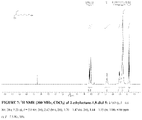
- FIG. 7 shows 1 H NMR (300 MHz, CDCl 3 ) of 2-ethyloctane-1,8-diol 5.
- FIG. 8 shows 13 C NMR (75 MHz, CDCl 3 ) of 2-ethyloctane-1,8-diol 5.
- the present disclosure provides methods or processes of synthesizing building blocks and feedstocks for producing a broader range of polymers, including renewable polymers, from renewable resources such as CO 2 .
- the inventors have surprisingly discovered a successful catalytic system for the alkoxycarbonylation of ⁇ -lactone 1 derived from the telomerization of CO 2 and butadiene and further synthesis of valuable unsaturated diesters 2 from CO 2 derived ⁇ -lactone 1.
- the inventors have developed a high yielding one pot procedure for the synthesis of C 10 unsaturated diesters from such ⁇ -lactone according to an embodiment.
- the inventors have also investigated the catalytic hydrogenation of such obtained diesters to their saturated form and to diol, where the diesters and diol derived from the reaction are relevant building blocks for the synthesis of polyesters according to an embodiment.
- a regioselective hydrogenation of ⁇ -lactone 1 with the retention of the lactone ring structure and synthesis of valuable polymer building blocks therefrom is further provided according to an embodiment. The following provides further description of the present disclosure according to an embodiment.
- a regioselective hydrogenation of ⁇ -lactone 1 with the retention of lactone ring structure is described.
- the following describes examples and embodiments directed to such a regioselective hydrogenation of ⁇ -lactone 1 and synthesis of valuable polymer building blocks therefrom.
- ⁇ -lactone 1 can be selectively hydrogenated with 100% region-selective control for the terminal carbon-carbon bonds. Such a regioselective hydrogenation for ⁇ -lactone 1 is unprecedented with the retentions of lactone ring structure.
- such reactions are performed under an atmosphere of dry, oxygen-free, nitrogen-filled glove box (Innovative Technology).
- the solvents including deuterated
- the solvents are dried and stored over molecular sieves (4 ⁇ pellets, 3.2 mm diameter) under a nitrogen atmosphere before use.
- B(C 6 F 5 ) 3 was commercially available from Boulder Scientific Chemicals.
- the H 2 (grade 5.0) is purchased from Linde and dried through a Nanochem Weldassure purifier column prior to use.
- the nuclear magnetic resonance (NMR) spectroscopy spectra are recorded on a Bruker Avance III 400 MHz or Agilent DD2 500 MHz spectrometer.
- a Perkin-Elmer analyzer is used for carbon, hydrogen, and nitrogen elemental analysis.
- compound 1 (219 mg, 1.44 mmol) is weighed into 2 dram vial.
- B(C 6 F 5 ) 3 (36.8 mg, 0.072 mmol) dissolved in 3 mL of diethyl ether is added to the vial.
- the reaction vessel is equipped with a stirbar, loosely capped and placed inside a Parr pressure reactor.
- the reactor is purged ten times at 15 atm with hydrogen gas.
- the reactor is sealed, removed from the glove box and attached to a purged hydrogen gas line.
- the reactor is then pressurized with 60 atm hydrogen gas and placed in an oil bath for 12 h at 70° C. and 540 rpm.
- FIGS. 1-2 shows complete regioselective conversion of the starting lactone 1 to lactone 1a (Scheme 2).
- the partially hydrogenated ⁇ -lactone can be transformed to C8 to C14-Building Blocks, Carbonyl Compounds, esters, amino building blocks, Chemical reagent, Polyols, Esters, Organic Building Blocks, monomers, food additives, Graft Co-polymerisation, Dendrimers, Coating for Biomedical Devices, Polyurethane building blocks.
- the hydrogenated ⁇ -lactone can be transformed to 2-ethylideneheptanoic acid using homogeneous and/or heterogeneous hydrogenation system (Scheme 3). Similar reactions using Rh/phosphine biphasic hydrogenation systems can obtain opening of the ring structure in more than 92% overall yield with formation of multiple isomers.
- the hydrogenated ⁇ -lactone can be transformed to building block molecules and polymers using amination and Hydroaminomethylation methodologies.
- the hydrogenated ⁇ -lactone can be regioselectively polymerised using the retention and/or cleavage of the ring structure.
- the hydrogenated ⁇ -lactone can be regioselectively polymerised using thiol click reaction (Thiol-Michael Addition) to produce regioselective polymers with tailored properties (Scheme 4).
- the thiol co-monomer can be taken from a group of an appropriate with one, two, three and/or four —SH containing monomers.
- the ⁇ -lactone can be transformed to novel molecules using alkene metathesis catalysts and related processes, example of which include: a) self-metathesis of ⁇ -lactone (Scheme 5) and b) cross metathesis of ⁇ -lactone (Scheme 6) as shown below.
- the ⁇ -lactone can be transformed to novel lactam molecules via metal catalysed transformation of lactones, examples of which are shown below in scheme 7.
- ⁇ -lactone has been studied in a variety of reactions such as hydrogenation, hydroformylation, hydroaminometylation, hydroamination, alcoholysis and hydrolysis to produce carboxylic acids and esters, diols as well as functionalised lactones. Some of these compounds are of interest to produce polymers and polymer related materials.
- diols and hydroxy-carboxylic acids are potential monomers for polyester and polyurethane chemistry while both mono-carboxylic acid and alcohols can be used in plasticizers production.
- ⁇ -lactone can undergo carbonylation reactions, and di- or tri-esters derived from carbonylation of ⁇ -lactone result in building blocks that should be of high potential interest for the polymer industry.
- attempts of alkoxycarbonylation of ⁇ -lactone using Pd(OAc) 2 /triphenylphosphine as the catalyst and p-toluenesulfonic acid (PTSA) as promoter unexpectedly, resulted only in its alcoholysis, but no carbonylation product.
- the opening of the lactone to yield different esters may not be avoided without acidic promoter if a palladium/phosphine catalyst is present. This may be because of the general reactivity of ⁇ -lactone with H-Y type substrates, such as water, alcohols, amines or silanes. It is not easy to suppress non-selective alcoholysis of ⁇ -lactone. For example, when ⁇ -lactone is heated in toluene in the presence of a primary alcohol and an acid, alcoholysis to a mixture of non-cyclic isomeric products may take place in the absence of palladium.
- the inventors have developed a straightforward procedure for the synthesis of diesters from selective alcoholysis of ⁇ -lactone including the synthesis of valuable unsaturated diesters 2 from ⁇ -lactone 1 as described below in further detail according to an embodiment.
- Key to success for the selective esterification/allylic substitution/alkoxycarbonylation domino sequence of ⁇ -lactone 1 is the use of specific palladium catalysts based on PdCl 2 and chelating diphosphines substituted with electron-withdrawing groups.
- the resulting unsaturated diesters can be selectively hydrogenated under mild conditions to mono-unsaturated diesters or to saturated diesters, both of which are relevant building blocks for the synthesis of functional materials or plasticizers.
- diesters can be also hydrogenated to 2-ethyloctane-1,8-diol 5 that offers new possibilities for the synthesis of polymers.
- the overall process constitutes a new way to building blocks from ⁇ -lactone 1 derived from CO 2 and butadiene, thus a new step towards renewable polymers.
- catalytic hydroesterification reactions of ⁇ -lactone are performed using a palladium compound (such as Pd(OAc) 2 , PdCl 2 , Pd(dba) 2 ) in combination with a mono- or diphosphine, an alcohol and/or an acidic promoter.
- a palladium compound such as Pd(OAc) 2 , PdCl 2 , Pd(dba) 2
- the diester may be synthesized through a domino alcoholysis/allylic substitution/carbonylation reaction.
- alcoholysis of ⁇ -lactone and subsequent allylic substitution may yield a mixture of esters bearing an allylic ether moiety that can be carbonylated further on to the unsaturated diester.
- different phosphines for example, L1-L17 in Scheme 9, are used in combination with PdCl 2 as precatalyst and PTSA as acidic promoter.
- the reaction takes place even in the absence of a phosphine.
- metallic palladium may be present at the end, and therefore, a ligand may be needed to stabilize the catalytic system.
- monodentate phosphines such as (L1 and L2), resulted in 20%-39% yield of 2a, but only a small amount palladium black was detected at the end of the reaction.
- bisphosphines such as L3-L8, resulted in 20%-39% yield of 2a.
- the large bite-angle ligand Xantphos such as L10
- the 2a yield decreases upon prolonging the reaction time to 20 h, maybe due to further carbonylation of the double bonds of 2a.
- phosphines of the Xantphos families such as L9-L13, and of NaPhos families, such as L14-L17, are used. The ones substituted with electron-withdrawing groups, such as L12, L15 and L17, resulted in yields over 70%.
- IPhos such as L15, resulted in a yield of 83% in a short reaction time. Notably, in this case, even prolonging the reaction to 20 h, the 2a yield did not decrease and can be 85%.
- the methoxycarbonylation of ⁇ -lactone is conducted using L15 as ligand under different conditions.
- the conditions and results of some examples are shown in Table 1.
- PTSA is used.
- methanesulfonic acid (MSA) is used.
- MSA methanesulfonic acid
- hydrochloric acid is used.
- sulfuric acid is used.
- 5 mol % of sulfuric acid is used, and the yield is 89%.
- several commonly used palladium(0) and (II) precursors are used, for example, in entries 8-10, [Pd(dba) 2 ], Pd(OAc) 2 , and PdCl 2 (CH 3 CN) 2 are used instead of PdCl 2 .
- the results are shown in Table 1.
- the presence of chloride ion may be helpful to ensure the formation of a sufficiently stable catalytically active species.
- the reaction medium may include toluene, an aprotic polar solvent, or a protic polar solvent.
- the temperature of the reaction may be between 110° C. and 130° C.
- the CO pressure may be between 20 and 40 bar.
- increasing the amounts of both sulfuric acid and methanol can result in a 91% yield.
- the amounts of lactone and MeOH are increased, a good catalyst activity can still be achieved at 0.17 mol % loading.
- different alcohols are used. Some examples are shown in Table 2.
- primary aliphatic alcohols are used, giving yields of 90% or greater, such as in entries 1-2.
- 2-ethylhexanol gave the diester 2c in essentially quantitative yield.
- benzyl and isopropyl alcohol are used providing the corresponding diesters (such as 2d and 2e in entries 3-4) in yields of 73% and 64%.
- tert-butanol and phenol did not afford the desired product at all (such as in entries 5-6). The lack of selectivity in these cases is not surprising considering that the first step of the process involves an alcoholysis reaction which often proceeds sluggishly with tertiary alcohols or phenols.
- alkoxycarbonylation on 1-3 mmol scale is performed in a 4 mL vial placed inside a 300 mL stainless steel Parr autoclave. Molar ratios and experimental conditions used in some embodiments are shown in Scheme 8, Table 1, and Table 2.
- palladium precursor (0.01 mmol, 1 mol %)
- ligand 0.2 mmol, 2 mol %)
- ⁇ -lactone 152 mg, 1.0 mmol
- a magnetic stirring bar are placed in a 4 mL vial.
- catalyst loading is lower than 1 mol %
- a stock solution of PdCl 2 and L15 is prepared by mixing them in toluene and stirring the mixture overnight.
- the vial is then sealed, connected to the atmosphere with a needle and evacuated and refilled with argon for three times.
- solvent for example, 2.0 mL
- a solution of the acidic promoter in the appropriate alcohol are injected into the vial by syringe.
- the alcohol and the acid are added by weight.
- the autoclave is flushed three times with CO, pressurised to the required pressure, and then placed in a preheated aluminium block.
- the autoclave is cooled with ice water to room temperature, and the pressure was carefully released.
- the reaction mixture is analysed by gas-chromatography using hexadecane as the internal standard.
- the resultant products are isolated from the reaction mixture by column chromatography and analyzed.
- the reaction is performed in a Hastelloy-C 100 mL Parr autoclave.
- PdCl 2 (16.1 mg, 9.1 ⁇ 10 ⁇ 2 mmol), L15 (215 mg, 0.18 mmol) and ⁇ -lactone (9.11 g, 60 mmol) are weighed in a Schlenk flask.
- the flask is purged with argon.
- toluene 40 mL
- a solution of H 2 SO 4 95 mg
- the mixture is stirred for 1 h under argon and then transferred to the autoclave previously purged with argon.
- the autoclave is flushed three times with CO, pressurised to 50 bar and then the heated to 120° C. for 7 h. In some embodiments, the autoclave is then cooled with ice water and vented. In some embodiments, the volatiles are evaporated under rotary evaporation and the crude was distilled under vacuum (0.25-0.20 mbar) collecting the fraction between 80-85° C. In some embodiments, purity is checked by gas-chromatography. In some embodiments, 2a is obtained in 81% yield.
- the commercial reagents are from Alfa Aesar, Aldrich, TCI or Strem. Unless otherwise stated, commercial reagents are used without purification.
- ⁇ -lactone is synthesised as previously reported and kept under Ar atmosphere after distillation.
- PTSA is used as monohydrate.
- Pd/C 10 wt % is from Aldrich (product n. 205699).
- [Ru(Triphos)(TMM)] is synthesized as previously reported in the literature.
- toluene, THF and methanol are collected from The Solvent Purification System by M BRAUN is used under standard Schlenk technique.
- acetonitrile, n-butanol, 2-ethylhexanol, benzyl alcohol and i-propanol are dried using standard techniques and kept under Ar atmosphere.
- Analytical data of literature known compounds are in accord with reported data.
- NMR spectra are recorded on Bruker AV-300, Bruker Fourier 300 or Bruker AV-400 NMR spectrometers. Multiplets are assigned as s (singlet), d (doublet), t (triplet), dd (doublet of doublet), m (multiplet) and br. s (broad singlet).
- FIGS. 3-8 show the NMR data of the resultant diesters from ⁇ -lactone 1.
- measurements are carried out at room temperature.
- mass spectra are recorded on an Agilent 6890/5973 GC-MS.
- HRMS high resolution mass spectra
- HRMS high resolution mass spectra
- ESI electrospray ionization
- GC gas-chromatography
- Agilent HP-7890A chromatograph equipped with a FID instrument and a HP-5 column (polydimethylsiloxane with 5% phenyl groups, 30 m, 0.32 mm i.d., 0.25 ⁇ m film thickness) is used.
- GC analyses are performed according to Table 3 using the following methods: oven temperature program: 50° C.; 15° C./min to 260° C., 6 min; injection volume 1 ⁇ L with a split of 50:1; and inlet temperature 200° C.
- the scalability of the process is demonstrated.
- Unsaturated esters obtained by alkoxycarbonylation of ⁇ -lactone 1 are valuable platform chemicals, and the corresponding saturated esters and the resultant diols are also of interest for a variety of different applications according to an embodiment.
- catalytic hydrogenations are performed.
- commercial Pd/C (10 wt %) is used as catalyst to hydrogenate the unsaturated diester 2a.
- mild reaction conditions (10 bar Hz, 60° C.) for the reduction of ⁇ -lactone 1 to 3,6-diethyltetrahydro-2H-pyran-2-one, are used.
- diesters such as dimethyl 7-ethylideneoct-3-enedioate 2a derived from ⁇ -lactone 1 can be chemo-selectively hydrogenated in toluene in high yields to produce partially hydrogenated to diesters 3 with the retention of a double bonds at C-2 carbon (Scheme 11A).
- Pd/C 10 wt % (2.8 mg), dimethyl 7-ethylideneoct-3-enedioate 2a (113 mg 0.5 mmol) and a magnetic stirring bar were added to a 4 mL vial.
- the vial is then sealed with Septa (PTFE-faced styrene-butadiene rubber) and phenolic cap.
- the vial is connected to the atmosphere with a needle.
- the vial is evacuated and refilled with argon for three times.
- toluene (2.0 mL) is injected into the vial by syringe.
- the vial is placed inside a 300 mL stainless steel Parr autoclave.
- the autoclave is flushed three times with nitrogen, pressurised with hydrogen to 10 bar and then heated to 60° C. for 3 h.
- the autoclave is cooled with an ice bath and vented.
- complete conversion is checked by GC analysis.
- the partially hydrogenated diesters 3 can be considered as analogues of acrylates (Scheme 12).
- Examples of such polymerization processes include the synthesis of long and short chain polymerization products using Chain Transfer Polymeraion (CTP), controlled radical polymerization such as ATRP, RAFT, and NMP methodologies.
- the diester 3 may also be used as a co-monomer for the co-polymerization processes using ethylene, propylene or alpha-olefins (Scheme 13).
- the diester 3 may also be used as a feedstock for the metathesis reactions to produce polyesters and polyols (Scheme 14).
- diesters such as dimethyl 7-ethylideneoct-3-enedioate 2a derived from ⁇ -lactone 1 can be chemo-selectively hydrogenated in THF in high yields to produce fully hydrogenated to diesters 4 (Scheme 11B).
- Pd/C 10 wt % (3.1 mg), dimethyl 7-ethylideneoct-3-enedioate 2a (1.4 mmol) and a magnetic stirring bar were added to a 4 mL vial.
- the vial is then sealed with Septa (PTFE-faced styrene-butadiene rubber) and phenolic cap.
- the vial is connected to the atmosphere with a needle.
- the vial is evacuated and refilled with argon for three times.
- THF (3 mL) is added and the vial placed inside a 300 mL stainless steel Parr autoclave.
- the autoclave is flushed three times with nitrogen, pressurised with hydrogen to 10 bar and then heated to 60° C. for 2.5 h. In some embodiments, the autoclave is cooled with an ice bath and vented. In some embodiments, complete conversion is checked by GC analysis. In some embodiments, the reaction mixture is filtered through Celite and the solvent evaporated affording pure dimethyl 2-ethyloctanedioate 4 as a colorless liquid in >99% yield.
- the reaction is performed in toluene, and reduction of the di-substituted double bond is attained within 3 h.
- the conjugated tri-substituted double bond is not reduced even after 16 h, such as in Scheme 11A.
- complete reduction of olefinic bonds of 2a to yield 4 is accomplished in 2.5 h using THF as the solvent, such as in Scheme 11B.
- the diester 4 is of potential industrial interest for plasticizer applications and as co-monomer in combination with diamines and diols to yield respectively polyamides and polyesters.
- the presence of a single unsaturation makes 3 comparable to ⁇ , ⁇ -unsaturated esters, e.g. acrylic and tiglic acid derivatives which are of interest for the preparation of different functional materials.
- the inventors investigated homogenous catalyzed hydrogenation of dimethyl 7-ethylideneoct-3-enedioate 2a, which can be used a valuable platform chemical for diols for application in polymer industry either as a feedstock for polymer production or as plasticiser alcohols.
- two different commercially available ruthenium based catalysts are used in the reduction of 2a to 5.
- a Noyori type ruthenium catalyst for the hydrogenation of esters (c1, Table 3) and the tetrahydroborato form of the ruthenium PNP pincer complex named Ru-MACHOTM (c2, Table 3) are used in entries 1 and 2. Unfortunately, even after 22 hours, only traces of diol were present using c1 as the catalyst and just 8% yield was obtained using c2.
- metal complex or catalyst precursor and ligand for example, [Ru(acac) 3 ] (for example, 4.0 mg, 0.01 mmol), Triphos (for example, 12.5 mg, 0.02 mmol) and zinc (for example, 1.6 mg, 2.5 ⁇ 10 ⁇ 2 mmol), are quickly weighed in a 4 mL vial in the air.
- the vial is then sealed, connected to the atmosphere with a needle and evacuated and refilled with argon for three times.
- 2a for example, 0.5 mmol
- a stock solution of the solvent containing the appropriate additive for example, HNTf 2 (7.0 mg, 2.5 ⁇ 10 ⁇ 2 mmol) in methanol, are added.
- the vial is placed inside a 300 mL stainless steel Parr autoclave, and the autoclave is flushed three times with nitrogen, pressurized with hydrogen and heated. In some embodiments, after the reaction time, the autoclave is cooled with ice water and vented. In some embodiments, the crude is analyzed by gas-chromatography. In some embodiments, isolated yield is obtained by purification on silica gel (gradient elution from CH 2 Cl 2 to CH 2 Cl 2 /MeOH 9:1).
- c4 in combination with MSA in methanol (entry 4, Table 4) is used.
- c3 in THF in absence of any additive (entry 3, Table 4) is used.
- the former yielded 35% of diol 5 while the latter afforded mainly a mixture of the esters 3 and 4.
- sodium methoxide is used as the solvent, and bis(trifluoromethane)sulfonimide (HNTf 2 ) is used as an additive.
- HNTf 2 bis(trifluoromethane)sulfonimide
- the use of HNTf 2 (10 mol %) afforded 69% yield of 5 (entry 5, Table 4).
- the desired full reduction of 2a to diol 5 is obtained under relatively mild conditions in 91% yield (80% isolated) upon reduction of the amount of HNTf 2 to 5 mol % and addition of 5 mol % of metallic zinc, for example, in entry 7, Table 4.
- the vial was placed in an alloy plate, which was transferred into an autoclave (300 mL) of the 4760 series from Parr Instruments under argon atmosphere. After flushing the autoclave three times with nitrogen, the pressure of hydrogen was increased to 50 bar at room temperature. The reaction was performed for 22 h at 120° C. After the reaction time, the autoclave was cooled to room temperature and the pressure was carefully released. Then hexadecane (0.100 mL,) was injected as the internal standard. Yield was measured by GC analysis.
- the vial was placed in an alloy plate, which was transferred into an autoclave (300 mL) of the 4760 series from Parr Instruments under argon atmosphere. After flushing the autoclave three times with nitrogen, the pressure of hydrogen was increased to 70 bar at room temperature. The reaction was performed for 22 h at 150° C. After the reaction time, the autoclave was cooled to room temperature and the pressure was carefully released. Then hexadecane (0.100 mL,) was injected as the internal standard. Yield was measured by GC analysis.
- Entry 7 A 4 mL vial was charged with Ru(acac) 3 (4.0 mg, 0.01 mmol), 1,1,1-tris(diphenylphosphinomethyl)ethane (11.5 mg, 0.02 mmol), metallic zinc powder (1.7 mg, 0.025 mmol, 5 mol %) and a magnetic stirring bar. The vial was then sealed with Septa (PTFE-faced styrene-butadiene rubber) and phenolic cap. The vial was connected to the atmosphere with a needle. The vial was evacuated and refilled with argon for three times.
- the vial was placed in an alloy plate, which was transferred into an autoclave (300 mL) of the 4760 series from Parr Instruments under argon atmosphere. After flushing the autoclave three times with nitrogen, the pressure of hydrogen was increased to 70 bar at room temperature. The reaction was performed for 22 h at 150° C. After the reaction time, the autoclave was cooled to room temperature and the pressure was carefully released. Then hexadecane (0.100 mL,) was injected as the internal standard. Yield was measured by GC analysis.
- Entry 9 A 4 mL vial was charged with Ru(acac) 3 (4.0 mg, 0.01 mmol), 1,1,1-tris(diphenylphosphinomethyl)ethane (11.5 mg, 0.02 mmol) and a magnetic stirring bar. The vial was then sealed with Septa (PTFE-faced styrene-butadiene rubber) and phenolic cap. The vial was connected to the atmosphere with a needle. The vial was evacuated and refilled with argon for three times.
Landscapes
- Chemical & Material Sciences (AREA)
- Organic Chemistry (AREA)
- Engineering & Computer Science (AREA)
- Oil, Petroleum & Natural Gas (AREA)
- Chemical Kinetics & Catalysis (AREA)
- Organic Low-Molecular-Weight Compounds And Preparation Thereof (AREA)
- Polyesters Or Polycarbonates (AREA)
- Addition Polymer Or Copolymer, Post-Treatments, Or Chemical Modifications (AREA)
Abstract
Description

Regioselective Hydrogenation of δ-Lactone and Synthesis of Polymer Building Blocks Therefrom


Synthesis of Polymer Building Blocks from Alkoxycarbonylation of δ-Lactone and Hydrogenation of Products Thereof


| TABLE 1 |
| Palladium-catalysed methoxycarbonylation of δ- |
| 1 to 2a: optimization of the reaction conditions.a |
| Precatalyst | Acid | CO | t | Yb | ||
| Entry | (mol %) | Solvent | (mol %) | (bar) | (h) | (%) |
| 1 | PdCl2 (1) | toluene | PTSA (1) | 40 | 5 | 58 |
| 2 | PdCl2 (1) | toluene | PTSA (5) | 40 | 5 | 83 |
| 3 | PdCl2 (1) | toluene | PTSA (10) | 40 | 5 | 89 |
| 4 | PdCl2 (1) | toluene | PTSA (15) | 40 | 5 | 90 |
| 5 | PdCl2 (1) | toluene | MSA (5) | 40 | 5 | 84 |
| 6 | PdCl2 (1) | toluene | HCl (5) | 40 | 5 | 33 |
| 7 | PdCl2 (1) | toluene | H2SO4 (5) | 40 | 5 | 89 |
| 8 | PdCl2(CH3CN)2 (1) | toluene | H2SO4 (5) | 40 | 5 | 88 |
| 9 | Pd(dba)2 (1) | toluene | H2SO4 (5) | 40 | 5 | 16 |
| 10 | Pd(OAc)2 (1) | toluene | H2SO4 (5) | 40 | 5 | 19 |
| 11 | PdCl2 (1) | CH3CN | H2SO4 (5) | 40 | 5 | 37 |
| 12 | PdCl2 (1) | THF | H2SO4 (5) | 40 | 5 | 45 |
| 13 | PdCl2 (1) | MeOH | H2SO4 (5) | 40 | 5 | 39 |
| 14c | PdCl2 (0.5) | toluene | H2SO4 (5) | 40 | 3 | 86 |
| 15 | PdCl2 (0.5) | toluene | H2SO4 (5) | 40 | 3 | 89 |
| 16d | PdCl2 (0.5) | toluene | H2SO4 (5) | 40 | 3 | 87 |
| 17 | PdCl2 (0.5) | toluene | H2SO4 (5) | 30 | 3 | 89 |
| 18 | PdCl2 (0.5) | toluene | H2SO4 (5) | 20 | 3 | 87 |
| 19e | PdCl2 (0.5) | toluene | H2SO4 (7.5) | 30 | 3 | 91f |
| 20g | PdCl2 (0.17) | toluene | H2SO4 (1.7) | 30 | 5 | 80 |
| aReactions conditions: 1 (1.0 mmol), [Pd] (x mol %), L15 (2x mol %), solvent (2 mL), MeOH (0.25 mL, 6 mmol), CO. | ||||||
| bDetermined by GC analysis using hexadecane as the internal standard. Yield is given as sum of E and Z isomers. E/Z ratio ranges from 3.6 to 4.2. | ||||||
| c130° C. | ||||||
| d110° C. | ||||||
| fMeOH (0.50 mL, 12 mmol), isolated yield 90%. | ||||||
| g1 (3.0 mmol), MeOH (0.75 mL, 18 mmol). | ||||||
| TABLE 2 |
| Palladium-catalysed alkoxycarbonylation of δ- |
| 1 to 2 using different alcohols.a |
 |
| Entry | Alcohol | Acid (mol %) | Product | Yield (%)b |
| 1 | nBuOH | H2SO4 (5) | 2b | 90 (E/Z = 3.8) |
| 2 | 2-Ethylhexanol | H2SO4 (5) | 2c | 99 (E/Z = 4.2) |
| 3 | PhCH2OH | PTSA (10) | 2d | 73 (E/Z = 4.5) |
| 4 | iPrOH | H2SO4 (5) | 2e | 64 (E/Z = 2.3) |
| 5 | iBuOH | PTSA (10) | 2f | — |
| 6 | PhOH | PTSA (10) | 2g | — |
| aReactions conditions: 1 (1.0 mmol), [Pd] (0.5 mol %), L15 (1 mol %), ROH (6 mmol), 30 bar CO in toluene (2 mL) for 5h. | ||||
| bDetermined by GC analysis using hexadecane as the internal standard. | ||||
| Yield is given as sum of E and Z isomers. | ||||
| TABLE 3 | ||
| RetTime | ||
| Entry | Compound | (min) |
| 1 |
 |
11.20 |
| 2 |
 |
10.68 |
| 3 |
 |
10.31 |


| TABLE 4 |
 |
 |
| Entry | Catalyst | Solvent | Additive (mol %) | CO (bar) | T (° C.) | t (h) | 6 Yield (%) |
| 1 | c1 | THF | MeONa (10) | 50 | 120 | 22 | |
| 2 | c2 | THF | — | 50 | 120 | 22 | 8 |
| 3 | c3 | THF | — | 70 | 150 | 22 | 2 |
| 4 | c4 | MeOH | MSA (10) | 70 | 150 | 22 | 35 |
| 5 | c4 | MeOH | HNTf2 (10) | 70 | 150 | 22 | 69 |
| 6 | c4 | MeOH | MSA (5)/Zn (5) | 70 | 150 | 24 | 42 |
| 7 | c4 | MeOH | HNTf2 (5)/Zn (5) | 70 | 150 | 24 | 91 |
| 8 | c4 | MeOH | MeONa (10) | 70 | 150 | 22 | 17 |
| 9 | c4 | dioxane | HNTf2 (5) | 70 | 150 | 22 | 24 |
| aReactions conditions: 3 (0.5 mmol), metal complex (0.01 mmol), ligand when added (0.02 mmol), solvent (2 mL). | |||||||
| Conversion of 3 was complete in all cases. | |||||||
| Yields were determined by GC analysis using hexadecane as internal standard. | |||||||
| MSA = methanesulfonic acid. | |||||||
| HNTf2 = bis(trifluoromethane)sulfonimide. | |||||||
Claims (19)


Priority Applications (1)
| Application Number | Priority Date | Filing Date | Title |
|---|---|---|---|
| US16/621,555 US11312677B2 (en) | 2017-06-12 | 2018-06-07 | Synthesis of building blocks and feedstocks for manufacturing renewable polymers |
Applications Claiming Priority (3)
| Application Number | Priority Date | Filing Date | Title |
|---|---|---|---|
| US201762518400P | 2017-06-12 | 2017-06-12 | |
| PCT/QA2018/050003 WO2018231082A2 (en) | 2017-06-12 | 2018-06-07 | Synthesis of building blocks and feedstocks for manufacturing renewable polymers |
| US16/621,555 US11312677B2 (en) | 2017-06-12 | 2018-06-07 | Synthesis of building blocks and feedstocks for manufacturing renewable polymers |
Publications (2)
| Publication Number | Publication Date |
|---|---|
| US20210292266A1 US20210292266A1 (en) | 2021-09-23 |
| US11312677B2 true US11312677B2 (en) | 2022-04-26 |
Family
ID=64658665
Family Applications (1)
| Application Number | Title | Priority Date | Filing Date |
|---|---|---|---|
| US16/621,555 Active 2038-10-23 US11312677B2 (en) | 2017-06-12 | 2018-06-07 | Synthesis of building blocks and feedstocks for manufacturing renewable polymers |
Country Status (3)
| Country | Link |
|---|---|
| US (1) | US11312677B2 (en) |
| EP (1) | EP3679005A4 (en) |
| WO (1) | WO2018231082A2 (en) |
Families Citing this family (2)
| Publication number | Priority date | Publication date | Assignee | Title |
|---|---|---|---|---|
| CN117980371A (en) * | 2021-03-03 | 2024-05-03 | 明尼苏达大学董事会 | Incorporating carbon dioxide into bio-derived polymer scaffolds |
| WO2023164219A1 (en) * | 2022-02-25 | 2023-08-31 | The University Of Akron | Polyamides made from carbon dioxide, olefin, and amine and corresponding composites |
Citations (5)
| Publication number | Priority date | Publication date | Assignee | Title |
|---|---|---|---|---|
| US20030176737A1 (en) | 2000-08-24 | 2003-09-18 | Arno Behr | Process for the catalytic cleavage of lactones |
| RU2217428C2 (en) | 2002-02-18 | 2003-11-27 | ГУ Институт нефтехимии и катализа АН РБ и УНЦ РАН | Method for preparing lactones |
| US20140194648A1 (en) | 2011-06-21 | 2014-07-10 | Evonik Degussa Gmbh | Process for producing 2-ethylheptanoic acid |
| CN105622560A (en) | 2016-01-18 | 2016-06-01 | 大连理工大学 | A kind of preparation method of δ-lactone |
| WO2017202644A1 (en) | 2016-05-26 | 2017-11-30 | Qatar Foundation For Education, Science And Community Development | Method for preparing delta-lactones |
-
2018
- 2018-06-07 WO PCT/QA2018/050003 patent/WO2018231082A2/en not_active Ceased
- 2018-06-07 US US16/621,555 patent/US11312677B2/en active Active
- 2018-06-07 EP EP18817086.4A patent/EP3679005A4/en not_active Withdrawn
Patent Citations (5)
| Publication number | Priority date | Publication date | Assignee | Title |
|---|---|---|---|---|
| US20030176737A1 (en) | 2000-08-24 | 2003-09-18 | Arno Behr | Process for the catalytic cleavage of lactones |
| RU2217428C2 (en) | 2002-02-18 | 2003-11-27 | ГУ Институт нефтехимии и катализа АН РБ и УНЦ РАН | Method for preparing lactones |
| US20140194648A1 (en) | 2011-06-21 | 2014-07-10 | Evonik Degussa Gmbh | Process for producing 2-ethylheptanoic acid |
| CN105622560A (en) | 2016-01-18 | 2016-06-01 | 大连理工大学 | A kind of preparation method of δ-lactone |
| WO2017202644A1 (en) | 2016-05-26 | 2017-11-30 | Qatar Foundation For Education, Science And Community Development | Method for preparing delta-lactones |
Non-Patent Citations (8)
| Title |
|---|
| Behr et al., Aqueous biphasic catalysis as a powerful tool for catalyst recycling in telomerization and hydrogenation chemistry. Green Chemistry, vol. 5, Feb. 28, 2003, pp. 198-204. |
| Behr et al., Bimetallic-Catalyzed Reduction of Carboxylic Acids and Lactones to Alcohols and Diols, Adv. Synth. Catal., vol. 344, No. 5, 2002, pp. 525-532. |
| Ferretti et al., Selective palladium-catalysed synthesis of diesters: alkoxycarbonylation of a CO2-butadiene derived 6-lactone, Green Chemistry, vol. 19, Jun. 26, 2017 (retrieved on Apr. 24, 2020]. Retrieved from the Internet: <URL: https://pubs.rsc.org/en/content/articlelanding/2017/gc/c7gc01366c#!divAbstract>. see Abstract. |
| International Preliminary Report on Patentability for related International Application No. PCT/QA/2018/050003; report dated Jun. 2, 2020; (4 pages). |
| International Search Report for related International Application No. PCT/QA/2018/050003; report dated May 28, 2020; (2 pages). |
| Office Action for related Russian Application No. 2020100077; action dated Oct. 8, 2021; (16 pages). |
| Search Report for related Russian Application No. 2020100077; action dated Oct. 8, 2021; (4 pages). |
| Written Opinion for related International Application No. PCT/QA/2018/050003; report dated May 28, 2020; (3 pages). |
Also Published As
| Publication number | Publication date |
|---|---|
| US20210292266A1 (en) | 2021-09-23 |
| WO2018231082A2 (en) | 2018-12-20 |
| EP3679005A4 (en) | 2022-06-08 |
| EP3679005A2 (en) | 2020-07-15 |
| RU2020100077A3 (en) | 2021-10-08 |
| RU2020100077A (en) | 2021-07-14 |
| WO2018231082A3 (en) | 2020-06-25 |
Similar Documents
| Publication | Publication Date | Title |
|---|---|---|
| Furst et al. | Polymer precursors from catalytic reactions of natural oils | |
| US5214220A (en) | Process for the preparation of alcohols | |
| Ferretti et al. | Selective palladium-catalysed synthesis of diesters: alkoxycarbonylation of a CO 2-butadiene derived δ-lactone | |
| US11312677B2 (en) | Synthesis of building blocks and feedstocks for manufacturing renewable polymers | |
| Behr et al. | Bimetallic‐catalyzed reduction of carboxylic acids and lactones to alcohols and diols | |
| EP3222610A1 (en) | Method for selective palladium-catalyzed telomerization of substituted dienes | |
| US4017550A (en) | Manufacture of 1,4-butanediol | |
| EP0553205A1 (en) | Carbonylation of allylic alcohols and synthesis of an ambergris fragrance compound. | |
| US4232170A (en) | Process for homogeneous hydrogenation of esters | |
| Kalck et al. | Hydroxy-and alkoxycarbonylations of alkenes and alkynes | |
| CA1237443A (en) | Preparation of pure monoesters of adipic acid | |
| US9850194B2 (en) | Process for double carbonylation of allyl alcohols to corresponding diesters | |
| US11267833B2 (en) | Compounds and process for preparation of the same from cashew nut shell liquid (CNSL) | |
| RU2799800C2 (en) | Synthesis of building blocks and starting substances for obtaining renewable polymers | |
| US6300515B1 (en) | Process for the isomerization of allylic compounds | |
| Stolyarov et al. | Catalytic hydroallylation of norbornadiene with allyl formate | |
| RU2732499C1 (en) | Catalysed by metal alkoxycarbonylation of lactone | |
| US6037506A (en) | Hydroformylation process | |
| EP0867427B1 (en) | Process for producing branched aldehydes | |
| US6790987B2 (en) | Process for the catalytic cleavage of lactones | |
| US20140128631A1 (en) | Process for the preparation of alkanoic acid esters in a carbonylation process using palladium bidentate biphosphate ligands | |
| US4123444A (en) | 2-Alkoxy-tetrahydrofurans via hydroformylation of allylic alcohols | |
| US6465680B2 (en) | Process for preparing malonate derivatives or β-keto esters from epoxide derivatives | |
| US4533742A (en) | Preparation of 2-hydroxytetrahydrofuran by hydroformylation of allyl alcohol using ketone solvents | |
| DE69408571T2 (en) | CARBOXYLATION PROCEDURE OF UNSATURATED ACETYL COMPOUNDS |
Legal Events
| Date | Code | Title | Description |
|---|---|---|---|
| FEPP | Fee payment procedure |
Free format text: ENTITY STATUS SET TO UNDISCOUNTED (ORIGINAL EVENT CODE: BIG.); ENTITY STATUS OF PATENT OWNER: SMALL ENTITY |
|
| FEPP | Fee payment procedure |
Free format text: ENTITY STATUS SET TO SMALL (ORIGINAL EVENT CODE: SMAL); ENTITY STATUS OF PATENT OWNER: SMALL ENTITY |
|
| AS | Assignment |
Owner name: QATAR FOUNDATION FOR EDUCATION, SCIENCE AND COMMUNITY DEVELOPMENT, QATAR Free format text: ASSIGNMENT OF ASSIGNORS INTEREST;ASSIGNORS:DASTGIR, SARIM;FERRETTI, FRANCESCO;JACKSTELL, RALF;AND OTHERS;SIGNING DATES FROM 20210409 TO 20210412;REEL/FRAME:056656/0957 |
|
| STPP | Information on status: patent application and granting procedure in general |
Free format text: NON FINAL ACTION MAILED |
|
| STPP | Information on status: patent application and granting procedure in general |
Free format text: RESPONSE TO NON-FINAL OFFICE ACTION ENTERED AND FORWARDED TO EXAMINER |
|
| STPP | Information on status: patent application and granting procedure in general |
Free format text: NOTICE OF ALLOWANCE MAILED -- APPLICATION RECEIVED IN OFFICE OF PUBLICATIONS |
|
| AS | Assignment |
Owner name: QATAR FOUNDATION FOR EDUCATION, SCIENCE AND COMMUNITY DEVELOPMENT, QATAR Free format text: ASSIGNMENT OF ASSIGNORS INTEREST;ASSIGNOR:SHARIF, MUHAMMAD;REEL/FRAME:059037/0134 Effective date: 20220216 |
|
| STPP | Information on status: patent application and granting procedure in general |
Free format text: AWAITING TC RESP., ISSUE FEE NOT PAID |
|
| STPP | Information on status: patent application and granting procedure in general |
Free format text: NOTICE OF ALLOWANCE MAILED -- APPLICATION RECEIVED IN OFFICE OF PUBLICATIONS |
|
| STPP | Information on status: patent application and granting procedure in general |
Free format text: PUBLICATIONS -- ISSUE FEE PAYMENT VERIFIED |
|
| STCF | Information on status: patent grant |
Free format text: PATENTED CASE |
|
| AS | Assignment |
Owner name: HAMAD BIN KHALIFA UNIVERSITY, QATAR Free format text: ASSIGNMENT OF ASSIGNORS INTEREST;ASSIGNOR:QATAR FOUNDATION FOR EDUCATION, SCIENCE & COMMUNITY DEVELOPMENT;REEL/FRAME:069936/0656 Effective date: 20240430 |
|
| MAFP | Maintenance fee payment |
Free format text: PAYMENT OF MAINTENANCE FEE, 4TH YR, SMALL ENTITY (ORIGINAL EVENT CODE: M2551); ENTITY STATUS OF PATENT OWNER: SMALL ENTITY Year of fee payment: 4 |