US11304105B2 - System information sending method, network device and terminal device - Google Patents
System information sending method, network device and terminal device Download PDFInfo
- Publication number
- US11304105B2 US11304105B2 US16/619,241 US201716619241A US11304105B2 US 11304105 B2 US11304105 B2 US 11304105B2 US 201716619241 A US201716619241 A US 201716619241A US 11304105 B2 US11304105 B2 US 11304105B2
- Authority
- US
- United States
- Prior art keywords
- information
- cell
- system information
- terminal device
- type system
- Prior art date
- Legal status (The legal status is an assumption and is not a legal conclusion. Google has not performed a legal analysis and makes no representation as to the accuracy of the status listed.)
- Active
Links
Images


Classifications
-
- H—ELECTRICITY
- H04—ELECTRIC COMMUNICATION TECHNIQUE
- H04W—WIRELESS COMMUNICATION NETWORKS
- H04W36/00—Hand-off or reselection arrangements
- H04W36/06—Reselecting a communication resource in the serving access point
-
- H—ELECTRICITY
- H04—ELECTRIC COMMUNICATION TECHNIQUE
- H04L—TRANSMISSION OF DIGITAL INFORMATION, e.g. TELEGRAPHIC COMMUNICATION
- H04L5/00—Arrangements affording multiple use of the transmission path
- H04L5/003—Arrangements for allocating sub-channels of the transmission path
- H04L5/0053—Allocation of signalling, i.e. of overhead other than pilot signals
-
- H—ELECTRICITY
- H04—ELECTRIC COMMUNICATION TECHNIQUE
- H04L—TRANSMISSION OF DIGITAL INFORMATION, e.g. TELEGRAPHIC COMMUNICATION
- H04L5/00—Arrangements affording multiple use of the transmission path
- H04L5/14—Two-way operation using the same type of signal, i.e. duplex
- H04L5/1469—Two-way operation using the same type of signal, i.e. duplex using time-sharing
-
- H—ELECTRICITY
- H04—ELECTRIC COMMUNICATION TECHNIQUE
- H04W—WIRELESS COMMUNICATION NETWORKS
- H04W36/00—Hand-off or reselection arrangements
- H04W36/04—Reselecting a cell layer in multi-layered cells
-
- H—ELECTRICITY
- H04—ELECTRIC COMMUNICATION TECHNIQUE
- H04W—WIRELESS COMMUNICATION NETWORKS
- H04W48/00—Access restriction; Network selection; Access point selection
- H04W48/16—Discovering, processing access restriction or access information
-
- H04W72/005—
-
- H—ELECTRICITY
- H04—ELECTRIC COMMUNICATION TECHNIQUE
- H04W—WIRELESS COMMUNICATION NETWORKS
- H04W72/00—Local resource management
- H04W72/30—Resource management for broadcast services
-
- H—ELECTRICITY
- H04—ELECTRIC COMMUNICATION TECHNIQUE
- H04W—WIRELESS COMMUNICATION NETWORKS
- H04W76/00—Connection management
- H04W76/10—Connection setup
- H04W76/11—Allocation or use of connection identifiers
-
- H—ELECTRICITY
- H04—ELECTRIC COMMUNICATION TECHNIQUE
- H04W—WIRELESS COMMUNICATION NETWORKS
- H04W48/00—Access restriction; Network selection; Access point selection
- H04W48/08—Access restriction or access information delivery, e.g. discovery data delivery
-
- H—ELECTRICITY
- H04—ELECTRIC COMMUNICATION TECHNIQUE
- H04W—WIRELESS COMMUNICATION NETWORKS
- H04W48/00—Access restriction; Network selection; Access point selection
- H04W48/08—Access restriction or access information delivery, e.g. discovery data delivery
- H04W48/10—Access restriction or access information delivery, e.g. discovery data delivery using broadcasted information
-
- H—ELECTRICITY
- H04—ELECTRIC COMMUNICATION TECHNIQUE
- H04W—WIRELESS COMMUNICATION NETWORKS
- H04W48/00—Access restriction; Network selection; Access point selection
- H04W48/08—Access restriction or access information delivery, e.g. discovery data delivery
- H04W48/12—Access restriction or access information delivery, e.g. discovery data delivery using downlink control channel
-
- H—ELECTRICITY
- H04—ELECTRIC COMMUNICATION TECHNIQUE
- H04W—WIRELESS COMMUNICATION NETWORKS
- H04W84/00—Network topologies
- H04W84/02—Hierarchically pre-organised networks, e.g. paging networks, cellular networks, WLAN [Wireless Local Area Network] or WLL [Wireless Local Loop]
- H04W84/04—Large scale networks; Deep hierarchical networks
- H04W84/042—Public Land Mobile systems, e.g. cellular systems
Definitions
- the present disclosure relates to the field of communications, and more particularly to a method for transmitting system information, a network device and a terminal device.
- cells in a network may be classified into a standalone cell which can be camped and a non-standalone cell which cannot be camped (e.g., a Barred Cell, a non-independent working cell, etc.).
- a network device sends the same system information for both kinds of cells.
- Implementations of the present disclosure provide a method for transmitting system information, a network device, and a terminal device.
- the implementation of the present disclosure provides a method for transmitting system information, including:
- first type system information used by a terminal device to perform cell detection, wherein the first type system information is system information for a non-standalone cell which cannot be camped.
- the method further includes:
- the terminal device sends second type system information for the terminal device to perform cell access, wherein the second type system information is system information for a standalone cell which can be camped.
- the method before sending at least one of the first type system information and the second type system information, the method further includes:
- the indication information is used for indicating whether the system information to be sent is at least one of first type system information or second type system information, or
- the indication information is used for indicating whether the cell corresponding to the system information to be sent is at least one of a non-standalone cell or a standalone cell.
- sending the indication information to the terminal device includes:
- the first type system information includes at least one type of public land mobile communication network PLMN information, tracking area TA information, radio access network area RAN AREA information, a cell identification ID, whether the cell is barred, and whether intrafrequency cell reselection is allowed.
- the second type system information includes at least one type of PLMN information, TA information, RAN AREA information, a cell ID, whether the cell is barred, whether intrafrequency cell reselection is allowed, time division duplex TDD configuration, cell selection information, and scheduling information of other system information.
- the implementation of the present disclosure provides a method for transmitting system information, including:
- the indication information is used for indicating whether each system information to be received in the at least one system information to be received is first type system information or second type system information, or the indication information is used for indicating whether each cell in the at least one cell is a standalone cell or a non-standalone cell;
- first type system information includes information for performing cell detection by a terminal device
- second type system information includes information for performing cell access by a terminal device
- system information for the non-standalone cell is first type system information
- system information for the standalone cell is second type system information
- the method further includes:
- each system information to be received corresponds to one cell
- the first type system information includes at least one type of public land mobile communication network PLMN information, tracking area TA information, radio access network area RAN AREA information, a cell identification ID, whether the cell is barred, and whether intrafrequency cell reselection is allowed.
- the second type system information includes at least one type of PLMN information, TA information, RAN AREA information, a cell ID, whether the cell is barred, whether intrafrequency cell reselection is allowed, time division duplex TDD configuration, cell selection information, and scheduling information of other system information.
- receiving the indication information sent by the network device includes:
- the implementation of the present disclosure provides a network device, including can modules or units which can perform the method in the first aspect or any optional implementation of the first aspect.
- the implementation of the present disclosure provides a terminal device, including can modules or units which can perform the method in the second aspect or any optional implementation of the second aspect.
- a network device in a fifth aspect, includes a processor, a memory, and a communication interface.
- the processor is coupled to the memory and communication interface.
- the memory is for storing instructions for the processor to execute, and the communication interface is for communicating with other network elements under the control of the processor.
- the processor executes the instructions stored in the memory, the execution causes the processor to perform the method of the first aspect or any of the possible implementations of the first aspect.
- a terminal device in a sixth aspect, includes a processor, a memory, and a communication interface.
- the processor is coupled to the memory and communication interface.
- the memory is for storing instructions for the processor to execute, and the communication interface is for communicating with other network elements under the control of the processor.
- the processor executes the instructions stored in the memory, the execution causes the processor to perform the method of the second aspect or any of the possible implementations of the second aspect.
- a computer storage medium storing program codes for instructing a computer to perform instructions of the method of the first aspect or any of the possible implementations of the first aspect.
- a computer storage medium storing program codes for instructing a computer to perform instructions of the method of the second aspect or any of the possible implementations of the second aspect.
- a computer program product including instructions that, when executed on a computer, cause a computer to perform the methods described in the various aspects above.
- FIG. 1 is a schematic diagram of an application scenario of an implementation of the present disclosure.
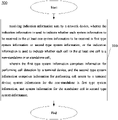
- FIG. 2 is a schematic flowchart of a method for transmitting system information according to an implementation of the present disclosure.
- FIG. 3 is a schematic flowchart of another method for transmitting system information according to an implementation of the present disclosure.
- FIG. 4 is a schematic block diagram of a network device according to an implementation of the present disclosure.
- FIG. 5 is a schematic block diagram of a terminal device according to an implementation of the present disclosure.
- FIG. 6 is a schematic block diagram of a device for transmitting system information provided by an implementation of the present disclosure.
- FIG. 7 is a schematic block diagram of a system chip according to an implementation of the present disclosure.
- GSM Global System of Mobile communication
- CDMA Code Division Multiple Access
- WCDMA Wideband Code Division Multiple Access
- GPRS General Packet Radio Service
- LTE Long Term Evolution
- FDD Frequency Division Duplex
- TDD Time Division Duplex
- UMTS Universal Mobile Telecommunication System
- WiMAX Worldwide Interoperability for Microwave Access
- the technical solutions of the implementations of the present disclosure can be applied to various communication systems based on non-orthogonal multiple access technologies, such as a sparse code multiple access (SCMA) system, and a low density signature (LDS) system, etc.
- SCMA sparse code multiple access
- LDS low density signature
- SCMA system and the LDS system may also be referred to as other names in the communication field.
- the technical solutions of the implementations of the present disclosure can be applied to a multi-carrier transmission system using non-orthogonal multiple access technology, for example, Orthogonal Frequency Division Multiplexing (OFDM), Filter Bank Multi-Carrier (FBMC), Generalized Frequency Division Multiplexing (GFDM), a Filtered Orthogonal Frequency Division Multiplexing (Filtered-OFDM, F-OFDM) system using non-orthogonal multiple access technology, and the like.
- OFDM Orthogonal Frequency Division Multiplexing
- FBMC Filter Bank Multi-Carrier
- GFDM Generalized Frequency Division Multiplexing
- Filtered-OFDM, F-OFDM Filtered-OFDM system using non-orthogonal multiple access technology
- the terminal device in the implementations of the present disclosure can also refer to a user equipment (UE), an access terminal, a subscriber unit, a subscriber station, a mobile station, a mobile platform, a remote station, a remote terminal, a mobile device, a user terminal, a terminal, a wireless communication device, and a user agent or a user device.
- UE user equipment
- the access terminal can be a cellular phone, a cordless phone, a Session Initiation Protocol (SIP) phone, a Wireless Local Loop (WLL) station, a Personal Digital Assistant (PDA), a handheld device with wireless communication functions, a computing device or other processing device connected to a wireless modem, an in-vehicle device, a wearable device, a terminal device in a future 5G network, a terminal device in a future evolved public land mobile network (PLMN) or the like, which is not limited in the implementations of the present disclosure.
- SIP Session Initiation Protocol
- WLL Wireless Local Loop
- PDA Personal Digital Assistant
- the network device in the implementations of the present disclosure can be a device for communicating with a terminal device.
- the network device can be a base station (Base Transceiver Station, BTS) in a GSM or CDMA system, or can be a base station (NodeB, NB) in a WCDMA system, or can be an evolved base station (Evolutional Node, eNB or eNodeB) in an LTE system, or may be a wireless controller in a cloud radio access network (CRAN) scenario, or the network device can be a relay station, an access point, an in-vehicle device, a wearable device, and a network device in a future 5G network, a network device in a future evolved PLMN network or the like, which is not limited in the implementations of the present disclosure.
- BTS Base Transceiver Station
- NodeB, NB base station
- Evolutional Node, eNB or eNodeB evolved base station
- the network device can be a relay station
- FIG. 1 is a schematic diagram of an application scenario of an implementation of the present disclosure.
- the communication system in FIG. 1 may include a terminal device 10 and a network device 20 .
- the network device 20 is configured to provide communication services for the terminal device 10 and provide access to the core network for the terminal device 10 .
- the terminal device 10 accesses the network by searching for synchronization signals, broadcast signals, and the like transmitted by the network device 20 , thereby performing communication with the network.
- the arrows shown in FIG. 1 may represent uplink/downlink transmissions by a cellular link between the terminal device 10 and the network device 20 .
- the network device 20 may cover a plurality of cells at the same time, and the plurality of cells may include standalone cells for the terminal device 10 , and may include non-standalone cells for the terminal device 10 .
- the network device 20 may send first type system information to the terminal device 10 in a non-standalone cell which cannot be camped.
- the first type system information includes at least one type of public land mobile network (PLMN) information, tracking area (TA) information, and radio access network area (Radio Access Network AREA, RAN AREA) information, a cell identity (Identity, ID), whether the cell is barred, and whether intrafrequency cell reselection is allowed.
- PLMN public land mobile network
- TA tracking area
- RAN AREA radio access network area
- ID cell identity
- ID whether the cell is barred, and whether intrafrequency cell reselection is allowed.
- the information included in the first type system information may be any one of the following information or combined information:
- ⁇ PLMN information ⁇ ⁇ TA information ⁇ , ⁇ RAN AREA information ⁇ , ⁇ cell ID ⁇ , ⁇ whether the cell is barred ⁇ , ⁇ whether intrafrequency cell reselection is allowed ⁇ ,
- ⁇ PLMN information TA information ⁇ , ⁇ PLMN information, RAN AREA information ⁇ , ⁇ PLMN information, cell ID ⁇ , ⁇ PLMN information, whether the cell is barred ⁇ , ⁇ PLMN information, whether intrafrequency cell reselection is allowed ⁇ ,
- ⁇ TA information RAN AREA information ⁇ , ⁇ TA information, cell ID ⁇ , ⁇ TA information, whether the cell is barred ⁇ , ⁇ TA information, whether intrafrequency cell reselection is allowed ⁇ ,
- ⁇ RAN AREA information cell ID ⁇
- ⁇ RAN AREA information whether the cell is barred ⁇
- ⁇ RAN AREA information whether intrafrequency cell reselection is allowed ⁇
- ⁇ PLMN information TA information, RAN AREA information ⁇ , ⁇ PLMN information, TA information, cell ID ⁇ , ⁇ PLMN information, TA information, whether the cell is barred ⁇ , ⁇ PLMN information, TAinformation, whether intrafrequency cell reselection is allowed ⁇ ,
- ⁇ PLMN information RAN AREA information, cell ID ⁇ , ⁇ PLMN information, RAN AREA information, whether the cell is barred ⁇ , ⁇ PLMN information, RAN AREA information, whether intrafrequency cell reselection is allowed ⁇ ,
- ⁇ PLMN information cell ID, whether the cell is barred ⁇
- ⁇ PLMN information cell ID, whether intrafrequency cell reselection is allowed ⁇
- ⁇ TA information RAN AREA information, cell ID ⁇ , ⁇ TA information, RAN AREA information, whether the cell is barred ⁇ , ⁇ TA information, RAN AREA information, whether intrafrequency cell reselection is allowed ⁇ ,
- ⁇ TA information cell ID, whether the cell is barred ⁇
- ⁇ TA information cell ID, whether intrafrequency cell reselection is allowed ⁇
- ⁇ RAN AREA information cell ID, whether the cell is barred ⁇
- ⁇ RAN AREA information cell ID, whether intrafrequency cell reselection is allowed ⁇
- ⁇ PLMN information TA information, RAN AREA information, cell ID ⁇ , ⁇ PLMN information, TA information, RAN AREA information, whether the cell is barred ⁇ , ⁇ PLMN information, TA information, RAN AREA information, whether intrafrequency cell reselection is allowed ⁇ ,
- ⁇ PLMN information RAN AREA information, cell ID, whether the cell is barred ⁇ , ⁇ PLMN information, RAN AREA information, cell ID, whether intrafrequency cell reselection is allowed ⁇ ,
- ⁇ TA information RAN AREA information, cell ID, whether the cell is barred ⁇ , ⁇ TA information, RAN AREA information, cell ID, whether intrafrequency cell reselection is allowed ⁇ ,
- ⁇ PLMN information TA information, RAN AREA information, cell ID, whether the cell is barred ⁇ , ⁇ PLMN information, TA information, RAN AREA information, cell ID, whether intrafrequency cell reselection is allowed ⁇ ,
- ⁇ PLMN information TA information, RAN AREA information, cell ID, whether the cell is barred, whether intrafrequency cell reselection is allowed ⁇ .
- the network device 20 may send second type system information to the terminal device 10 in the standalone cell which can be camped.
- the second type system information includes at least one type of public land mobile network (PLMN) information, tracking area (TA) information, and radio access network area (Radio Access Network AREA, RAN AREA) information, cell identifier (Identity, ID), whether the cell is barred, whether intrafrequency cell reselection is allowed, time division duplex (TDD) configuration, cell selection information and scheduling information of other system information.
- PLMN public land mobile network
- TA tracking area
- RAN AREA radio access network area
- Cell identifier Identity, ID
- TDD time division duplex
- the second type system information may further include a configuration or threshold of cell selection.
- the information included in the second type system information may be information or combination of information generated in the same manner as the first type system information.
- the information included in the second type system information may be information or combination of information generated in the same manner as the first type system information.
- the method for transmitting system information provided by the implementation of the present disclosure may be applied to a terminal device including a hardware layer, an operating system layer running on the hardware layer, and an application layer running on the operating system layer.
- the hardware layer includes hardware such as a central processing unit (CPU), a memory management unit (MMU), and a memory (also referred to as main memory).
- the operating system may be any one or more computer operating systems that implement business processing through a process, such as a Linux operating system, a Unix operating system, an Android operating system, an iOS operating system, a Windows operating system or the like.
- the application layer includes applications such as a browser, a contact list, word processing software, and instant messaging software.
- the method for transmitting system information provided by the implementation of the present disclosure may be applied to a network device which may be an access network device or a data network, that is, a core network.
- the term “article of manufacture” as used in this disclosure encompasses a computer program accessible from any computer-readable device, carrier, or media.
- the computer readable medium may include, but is not limited to, a magnetic storage device (e.g., a hard disk, a floppy disk, or a magnetic tape, etc.), such as a compact disc (CD), a digital versatile disc (Digital Versatile Disc, DVD), etc., a smart card and a flash memory device (e.g., an Erasable Programmable Read-Only Memory (EPROM) card, stick or key driver, etc.).
- a magnetic storage device e.g., a hard disk, a floppy disk, or a magnetic tape, etc.
- CD compact disc
- DVD digital versatile disc
- smart card e.g., an Erasable Programmable Read-Only Memory (EPROM) card, stick or key driver, etc.
- various storage media described herein can represent one or more devices and/or other machine readable media for storing information.
- the term “machine readable medium” may include, but is not limited to, a variety of media capable of storing, containing, and/or carrying instructions and/or data.
- system and “network” are used interchangeably herein.
- network is used interchangeably herein.
- the term “and/or” in this context is merely an association describing the associated object, indicating that there may be three relationships, for example, A and/or B, which may indicate three situations that only A exists, only B exists, and both A and B exist, respectively.
- the character “/” herein generally indicates that the contextual object is an “or” relationship.
- FIG. 2 is a schematic flowchart of a method 200 for transmitting system information according to an implementation of the present disclosure.
- the method 200 may be performed by a network device, which may be a network device as shown in FIG. 1 .
- the terminal device in the method 200 may be a terminal device as shown in FIG. 1 .
- the method 200 includes the following.
- first type system information used by the terminal device to perform cell detection is sent, wherein the first type system information is system information for a non-standalone cell which cannot be camped.
- each cell corresponds to one system information.
- the terminal device can perform cell detection in the non-standalone cell, for example, to obtain an Auto Neighbor Relationship (ANR).
- ANR Auto Neighbor Relationship
- the network device can distinguish a standalone cell which can be camped from a non-standalone cell which cannot be camped.
- the network device sends the first type system information to the terminal device.
- the network device sends the first type system information to the terminal device through the terminal device non-standalone cell.
- the network device may send the first type system information to the terminal device through a Physical Downlink Shared Channel (PDSCH).
- PDSCH Physical Downlink Shared Channel
- the first type system information includes at least one type of PLMN information, TA information, RAN AREA information, a cell ID, whether the cell is barred, and whether intrafrequency cell reselection is allowed.
- the cell ID may be a Global Cellular Identity (GCI).
- GCI Global Cellular Identity
- the method 200 further includes:
- the terminal device sends second type system information for the terminal device to perform cell access, wherein the second type system information is system information for a standalone cell which can be camped.
- the terminal device may access to a cell in a standalone cell.
- the terminal device may directly switch to the standalone cell.
- the network device sends the second type system information to the terminal device.
- the network device may send the second type system information to the terminal device through a PDSCH.
- the second type system information includes at least one type of PLMN information, TA information, RAN AREA information, a cell ID, whether the cell is barred, whether intrafrequency cell reselection is allowed, TDD configuration, cell selection information, and scheduling information of other system information.
- the second type system information may further include a configuration or threshold of cell selection.
- the method 200 before the network device sends the first type system information and/or the second type system information to the terminal device, the method 200 further includes:
- the indication information is used for indicating whether the system information to be sent is first type system information and/or second type system information.
- the method 200 before the network device sends the first type system information and/or the second type system information to the terminal device, the method 200 further includes:
- the indication information is used for indicating whether the cell corresponding to the system information to be sent is a non-standalone cell and/or a standalone cell.
- system information sent by the network device may include only the first type system information, or may include only the second type system information, and may also include both of the first type system information and the second type system information.
- the cell corresponding to the system information sent by the network device may include only the non-standalone cell, or may include only the standalone cell, and may also include both of the non-standalone cell and the standalone cell.
- the terminal device may determine, from the indication information, whether the system information that is subsequently sent by the network device in each cell is first type system information or second type system information, and further, may be actively obtain suitable system information of a cell.
- the indication information may be integrated in the main system information sent through a physical broadcast channel.
- the indication information is sent to the terminal device through a Physical Broadcast Channel (PBCH).
- PBCH Physical Broadcast Channel
- the network device sends the first type system information for implementing the cell detection by the terminal device in the non-standalone cell of the terminal device, and thus, in the first type system information, it only contains the necessary information for cell detection, and can avoids unnecessary signaling overhead during the transmission of system information.
- the network device can send the second type system information for implementing the cell access by the terminal device in the standalone cell, so that different system information can be configured for the standalone cell which can be camped and the non-standalone cell which cannot be camped, which can optimize system information.
- the network device sends the indication information to the terminal device to indicate whether the system information sent by the cell is first type system information or second type system information, so that the terminal device can determine the type of the system information of each cell in advance according to the indication information, and thus, can receive system information in a targeted manner, which can reduce the signaling overhead generated during the reception of system information.
- FIG. 3 is a schematic flowchart of another method 300 for transmitting system information according to an implementation of the present disclosure.
- the method 300 may be performed by a terminal device, which may be a terminal device as shown in FIG. 1 .
- the network device in the method 300 may be a network device as shown in FIG. 1 .
- the method 300 includes the following.
- indication information sent by the network device is received, wherein the indication information is used for indicating whether each system information to be received in the at least one system information to be received is first type system information or second type system information, or the indication information is used for indicating whether each cell in the at least one cell is a standalone cell or a non-standalone cell.
- the first type system information includes information for performing cell detection by the terminal device
- the second type system information includes information for performing cell access by the terminal device.
- System information for the non-standalone cell is first type system information
- system information for the standalone cell is second type system information.
- the first type system information includes at least one type of PLMN information, TA information, RAN AREA information, a cell ID, whether the cell is barred, and whether intrafrequency cell reselection is allowed.
- the second type system information includes at least one type of PLMN information, TA information, RAN AREA information, a cell ID, whether the cell is barred, whether intrafrequency cell reselection is allowed, TDD configuration, cell selection information, and scheduling information of other system information.
- the method 300 also includes:
- each system information to be received corresponds to one cell
- the terminal device receives the indication information sent by the network device through the PBCH.
- steps in the method 300 for transmitting system information may refer to the description of the corresponding steps in the method 200 for transmitting system information, and for brevity, no further details are provided herein.
- the terminal device receives indication information sent by the network device, which indicates whether the system information sent by the cell is first type system information or second type system information, so that the terminal device can determine the type of the system information of each cell in advance according to the indication information and thus can receive system information in a targeted manner, which can reduce the signaling overhead generated during the reception of system information.
- FIG. 4 is a schematic block diagram of a network device 400 according to an implementation of the present disclosure. As shown in FIG. 4 , the network device 400 includes:
- a sending unit 410 configured to send first type system information used by the terminal device to perform cell detection, wherein the first type system information is system information for a non-standalone cell which cannot be camped.
- the sending unit 410 is further configured to send second type system information used by the terminal device to perform cell access, wherein the second type system information is system information for a standalone cell which can be camped.
- the sending unit 410 before the sending unit 410 sends the first type system information and/or the second type system information, the sending unit 410 is further configured to send, to the terminal device, indication information, wherein the indication information is used for indicating whether the system information to be sent is first type system information and/or second type system information, or the indication information is used for indicating that the cell corresponding to the system information to be sent is a non-standalone cell and/or a standalone cell.
- the sending unit 410 is further configured to send the indication information to the terminal device through a physical broadcast channel PBCH.
- the first type system information includes at least one type of public land mobile communication network PLMN information, tracking area TA information, radio access network area RAN AREA information, a cell identification ID, whether the cell is barred, and whether intrafrequency cell reselection is allowed.
- the second type system information includes at least one type of PLMN information, TA information, RAN AREA information, a cell ID, whether the cell is barred, whether intrafrequency cell reselection is allowed, time division duplex TDD configuration, cell selection information, and scheduling of other system information.
- FIG. 5 is a schematic block diagram of a terminal device 500 according to an implementation of the present disclosure. As shown in FIG. 5 , the terminal device 500 includes:
- a receiving unit 510 configured to receive indication information sent by the network device, wherein the indication information is used for indicating whether each system information to be received in the at least one system information to be received is first type system information or second type system information, or the indication information is used for indicating whether each cell in the at least one cell is a standalone cell or a non-standalone cell;
- first type system information includes information for performing cell detection by the terminal device
- second type system information includes information for performing cell access by the terminal device
- system information for a standalone cell is first type system information
- system information for a non-standalone cell is second type system information
- the terminal device 500 further includes:
- the receiving unit 510 further configured to receive the at least one system information to be received sent by the network device, wherein each system information to be received corresponds to one cell;
- a determining unit 520 configured to determine, according to the indication information, whether the system information to be received corresponding to each cell is first type system information or second type system information.
- the first type system information includes at least one of public land mobile communication network PLMN information, tracking area TA information, radio access network area RAN AREA information, a cell identification ID, whether the cell is barred, and whether intrafrequency cell reselection is allowed.
- the second type system information includes at least one of PLMN information, TA information, RAN AREA information, a cell ID, whether the cell is barred, whether intrafrequency cell reselection is allowed, time division duplex TDD configuration, cell selection information, and scheduling of other system information.
- the receiving unit 510 is further configured to receive the indication information sent by the network device through a physical broadcast channel PBCH.
- FIG. 6 is a schematic block diagram of a device 600 for transmitting system information provided by an implementation of the present disclosure.
- the device 600 includes:
- a memory 610 configured to store a program, wherein the program includes codes
- transceiver 620 configured to communicate with other devices
- a processor 630 configured to execute the program codes in the memory 610 .
- the processor 630 when the codes are executed, can implement various operations performed by the network device in the method 200 in FIG. 2 , which will not be described herein for brevity.
- the device 600 may be an access network device or a core network device.
- the transceiver 620 is configured to perform specific signal transmission and reception under the driving of the processor 630 .
- the processor 630 can also implement various operations performed by the terminal device in the method 300 in FIG. 3 , which will not be described herein for brevity.
- the device 600 can be a terminal device, such as a mobile phone.
- the processor 630 may be a central processing unit (CPU), and the processor 630 may also be other general-purpose processor, a digital signal processor (DSP), and an application specific integrated circuit (ASIC), a field programmable gate array (FPGA) or other programmable logic device, a discrete gate or transistor logic device, a discrete hardware component, and the like.
- the general purpose processor may be a microprocessor or the processor may be any conventional processor or the like.
- the memory 610 can include a read only memory and a random access memory and provides instructions and data to the processor 630 .
- a portion of the memory 610 may also include a non-volatile random access memory.
- the memory 610 can also store information of the device type.
- the transceiver 620 can be configured to implement signal transmission and reception functions, such as frequency modulation and demodulation functions or up conversion and down conversion functions.
- the device 600 for transmitting system information can be a chip or a chip set.
- the steps of the method disclosed in the implementations of the present disclosure may be directly implemented as a hardware processor, or may be performed by a combination of hardware and software modules in the processor.
- the software module can be located in a conventional storage medium such as a random access memory, a flash memory, a read only memory, a programmable read only memory or an electrically erasable programmable memory, a register, and the like.
- the storage medium is located in the memory, and the processor 630 reads the information in the memory and completes the steps of the above method in combination with the hardware thereof. To avoid repetition, it will not be described in detail here.
- FIG. 7 is a schematic structural diagram of a system chip 700 according to an implementation of the present disclosure.
- the system chip 700 of FIG. 7 includes an input interface 701 , an output interface 702 , a processor 703 , and a memory 704 that can be connected by an internal communication connection line.
- the processor 703 is configured to execute codes in the memory 704 .
- the processor 703 when the codes are executed, the processor 703 implements the method performed by the network device in the method implementation, which will not be described for the sake of brevity.
- the processor 703 when the codes are executed, the processor 703 implements the method performed by the terminal device in the method implementation, which will not be described for the sake of brevity.
- the computer can be a general purpose computer, a special purpose computer, a computer network, or other programmable device.
- the computer instructions can be stored in a computer readable storage medium or transferred from one computer readable storage medium to another computer readable storage medium, for example, the computer instructions can be transmitted from a website site, a computer, a server or a data center to another website site, computer, server or data center in a wired manner (for example, through coaxial cables optic fibers, digital subscriber lines (DSL)) or in a wireless manner (e.g. through infrared, wireless, microwave, etc.).
- the computer readable storage medium can be any available media that can be accessed by a computer or a data storage device such as a server, a data center, or the like that includes one or more available media.
- the usable medium can be a magnetic medium (e.g., a floppy disk, a hard disk, a magnetic tape), an optical medium (e.g., a DVD), or a semiconductor medium (such as a Solid State Disk (SSD)).
- a magnetic medium e.g., a floppy disk, a hard disk, a magnetic tape
- an optical medium e.g., a DVD
- a semiconductor medium such as a Solid State Disk (SSD)
- the size of the sequence numbers of the above processes does not mean the order of execution sequence, and the order of execution of each process should be determined by its function and internal logic, and should not be constitute any limitation on the implementation process of the implementation of the present disclosure.
Landscapes
- Engineering & Computer Science (AREA)
- Signal Processing (AREA)
- Computer Networks & Wireless Communication (AREA)
- Computer Security & Cryptography (AREA)
- Mobile Radio Communication Systems (AREA)
Abstract
Description
Claims (19)
Applications Claiming Priority (1)
| Application Number | Priority Date | Filing Date | Title |
|---|---|---|---|
| PCT/CN2017/094884 WO2019019140A1 (en) | 2017-07-28 | 2017-07-28 | System information sending method, network device and terminal device |
Publications (2)
| Publication Number | Publication Date |
|---|---|
| US20200169929A1 US20200169929A1 (en) | 2020-05-28 |
| US11304105B2 true US11304105B2 (en) | 2022-04-12 |
Family
ID=65039659
Family Applications (1)
| Application Number | Title | Priority Date | Filing Date |
|---|---|---|---|
| US16/619,241 Active US11304105B2 (en) | 2017-07-28 | 2017-07-28 | System information sending method, network device and terminal device |
Country Status (7)
| Country | Link |
|---|---|
| US (1) | US11304105B2 (en) |
| EP (1) | EP3614738B1 (en) |
| JP (1) | JP7010971B2 (en) |
| KR (1) | KR102358234B1 (en) |
| CN (2) | CN111526562B (en) |
| TW (1) | TWI762687B (en) |
| WO (1) | WO2019019140A1 (en) |
Families Citing this family (13)
| Publication number | Priority date | Publication date | Assignee | Title |
|---|---|---|---|---|
| US11304105B2 (en) * | 2017-07-28 | 2022-04-12 | Guangdong Oppo Mobile Telecommunications Corp., Ltd. | System information sending method, network device and terminal device |
| CA3091559C (en) * | 2018-02-16 | 2023-05-16 | Telefonaktiebolaget Lm Ericsson (Publ) | Method for enabling new radio (nr) integrated access and backhaul (iab) nodes to operate in non-standalone (nsa) cells |
| AU2018417124B2 (en) | 2018-04-05 | 2021-03-11 | Nokia Technologies Oy | Improving cell access procedure |
| CN113573371B (en) * | 2020-04-29 | 2023-07-25 | 中国移动通信有限公司研究院 | System information transmission method, device, related equipment and storage medium |
| WO2021222942A1 (en) | 2020-05-01 | 2021-11-04 | Apple Inc. | Standalone mode plmn selection |
| EP4128998A1 (en) | 2020-05-07 | 2023-02-08 | Apple Inc. | Public land mobile network support for a stand-alone non-public access network |
| US11490306B2 (en) * | 2020-06-29 | 2022-11-01 | Apple Inc. | Reducing RNA update procedures and improving RACH efficiency |
| WO2022099520A1 (en) * | 2020-11-11 | 2022-05-19 | 北京小米移动软件有限公司 | Access control information processing method and apparatus, communication device and storage medium |
| WO2022120544A1 (en) * | 2020-12-07 | 2022-06-16 | 北京小米移动软件有限公司 | Communication method and device, and wireless access network, terminal and storage medium |
| WO2022151454A1 (en) * | 2021-01-17 | 2022-07-21 | 华为技术有限公司 | Method for cell selection or reselection, terminal device, and network device |
| WO2022183413A1 (en) * | 2021-03-03 | 2022-09-09 | 华为技术有限公司 | Communication method and apparatus |
| CN116828635A (en) * | 2021-08-19 | 2023-09-29 | 荣耀终端有限公司 | Business processing methods and devices |
| CN119922661A (en) * | 2023-10-30 | 2025-05-02 | 华为技术有限公司 | Communication method and communication device |
Citations (32)
| Publication number | Priority date | Publication date | Assignee | Title |
|---|---|---|---|---|
| US20090298497A1 (en) * | 2008-05-30 | 2009-12-03 | Samsung Electronics Co., Ltd. | Multiband mobile terminal and cell search method thereof |
| KR20100080919A (en) | 2007-10-02 | 2010-07-13 | 콸콤 인코포레이티드 | System search for full service while on a cell with limited service |
| CN101902800A (en) | 2009-05-26 | 2010-12-01 | 大唐移动通信设备有限公司 | Method and device for transmitting and receiving system information |
| US20110117951A1 (en) * | 2009-11-19 | 2011-05-19 | Samsung Electronics Co. Ltd. | Apparatus and method for camping on in mobile communication terminal |
| CN102246582A (en) | 2009-08-17 | 2011-11-16 | 华为技术有限公司 | Method and device for cell access control |
| US20130094424A1 (en) | 2011-04-08 | 2013-04-18 | Qualcomm Incorporated | Signaling whether a network has broadcast system information |
| CN103220655A (en) | 2012-01-19 | 2013-07-24 | 华为技术有限公司 | Cell reselection method and user equipment |
| US20140086173A1 (en) | 2012-09-26 | 2014-03-27 | Interdigital Patent Holdings, Inc. | Methods, systems and apparatuses for operation in long-term evolution systems |
| US20140126508A1 (en) * | 2011-06-15 | 2014-05-08 | Sca Ipla Holdings Inc. | Method and apparatus for controlling carrier selection in wireless communications systems |
| US20140169238A1 (en) | 2012-12-19 | 2014-06-19 | Research In Motion Limited | Method and apparatus for hybrid automatic repeat request operation in a heterogeneous network architecture |
| CN103957577A (en) | 2007-01-31 | 2014-07-30 | Lg电子株式会社 | Method for transmitting and receiving system information |
| TW201503732A (en) | 2013-04-22 | 2015-01-16 | Alcatel Lucent | A method for allocation of frequency resources of different operators to user terminals, and a base station and a user terminal therefor |
| CN104412657A (en) | 2012-06-28 | 2015-03-11 | 夏普株式会社 | Terminal device, base station device, communication system, cell selection method, and integrated circuit |
| WO2015111484A1 (en) | 2014-01-22 | 2015-07-30 | 株式会社Nttドコモ | User terminal, wireless base station, and wireless communication method |
| JP2015216471A (en) | 2014-05-08 | 2015-12-03 | 株式会社Nttドコモ | Communication method, and communication system |
| CN105323808A (en) | 2014-07-24 | 2016-02-10 | 宏碁股份有限公司 | Method for performing cell selection in a wireless communication system |
| US20160219625A1 (en) * | 2015-01-27 | 2016-07-28 | Electronics And Telecommunications Research Institute | Method for detecting camp-on and camp-off of mobile terminal for zone based service in mobile communication system |
| CN105873136A (en) | 2014-10-24 | 2016-08-17 | 宏碁股份有限公司 | Method, base station and user equipment for processing serving cell becoming blocking state |
| WO2016130354A1 (en) | 2015-02-10 | 2016-08-18 | Qualcomm Incorporated | Incremental transmission of system information |
| CN105992168A (en) | 2015-03-06 | 2016-10-05 | 中兴通讯股份有限公司 | Cell selection method and automatic neighbor cell relation configuration method and equipment |
| CN106211268A (en) | 2015-03-20 | 2016-12-07 | 联发科技(新加坡)私人有限公司 | District staying method, the update method of service cell information list and mobile terminal |
| WO2016195617A1 (en) | 2015-05-29 | 2016-12-08 | Intel IP Corporation | Minimized system information transmission in wireless communication systems |
| US20170006447A1 (en) | 2015-06-30 | 2017-01-05 | Verizon Patent And Licensing Inc. | Access class barring and redirecting of emerency calls |
| WO2017063661A1 (en) | 2015-10-12 | 2017-04-20 | Nokia Solutions And Networks Oy | Discovery signal transmission in cellular system |
| CN106954235A (en) | 2016-01-07 | 2017-07-14 | 中兴通讯股份有限公司 | A kind of cell selecting method, apparatus and system |
| CN106954238A (en) | 2016-01-06 | 2017-07-14 | 中兴通讯股份有限公司 | A kind of cell selecting method, apparatus and system |
| WO2017122751A1 (en) | 2016-01-15 | 2017-07-20 | 株式会社Nttドコモ | User terminal, wireless base station and wireless communication method |
| US20180132168A1 (en) * | 2016-11-04 | 2018-05-10 | Samsung Electronics Co., Ltd. | Method and user equipment (ue) for provisioning minimum system information (msi) in wireless communication system |
| US20180324660A1 (en) * | 2015-11-04 | 2018-11-08 | Lg Electronics Inc. | Cell selection/re-selection method for inter-frequency sidelink operation executed by terminal in wireless communication system, and terminal using said method |
| US20190289531A1 (en) * | 2016-11-02 | 2019-09-19 | Ntt Docomo, Inc. | User equipment and access control method |
| US20190319686A1 (en) * | 2016-07-20 | 2019-10-17 | Wei CHEN, IV | Mobility for radio devices using beamforming and selection |
| US20200367150A1 (en) * | 2016-03-30 | 2020-11-19 | Lg Electronics Inc. | System information transmission method and base station, and system information reception method and user equipment |
Family Cites Families (5)
| Publication number | Priority date | Publication date | Assignee | Title |
|---|---|---|---|---|
| KR20060014631A (en) * | 2004-08-11 | 2006-02-16 | 삼성전자주식회사 | Cell selection / reselection method and system considering congestion of target cell in mobile communication system |
| CN101998701A (en) * | 2009-08-10 | 2011-03-30 | 中兴通讯股份有限公司 | Method for reading system message in neighboring cell and user equipment |
| EP2675220B1 (en) * | 2012-06-14 | 2018-08-08 | BlackBerry Limited | Method, device and computer readable medium for identifying channels prohibited for camping |
| CN105519188A (en) * | 2013-06-09 | 2016-04-20 | 华为技术有限公司 | Cell selection method, user equipment and base station |
| US11304105B2 (en) * | 2017-07-28 | 2022-04-12 | Guangdong Oppo Mobile Telecommunications Corp., Ltd. | System information sending method, network device and terminal device |
-
2017
- 2017-07-28 US US16/619,241 patent/US11304105B2/en active Active
- 2017-07-28 CN CN202010295535.1A patent/CN111526562B/en active Active
- 2017-07-28 WO PCT/CN2017/094884 patent/WO2019019140A1/en not_active Ceased
- 2017-07-28 CN CN201780088289.9A patent/CN110393023B/en active Active
- 2017-07-28 KR KR1020197034332A patent/KR102358234B1/en active Active
- 2017-07-28 EP EP17919613.4A patent/EP3614738B1/en active Active
- 2017-07-28 JP JP2019564540A patent/JP7010971B2/en active Active
-
2018
- 2018-07-27 TW TW107126247A patent/TWI762687B/en active
Patent Citations (34)
| Publication number | Priority date | Publication date | Assignee | Title |
|---|---|---|---|---|
| CN103957577A (en) | 2007-01-31 | 2014-07-30 | Lg电子株式会社 | Method for transmitting and receiving system information |
| KR20100080919A (en) | 2007-10-02 | 2010-07-13 | 콸콤 인코포레이티드 | System search for full service while on a cell with limited service |
| US20090298497A1 (en) * | 2008-05-30 | 2009-12-03 | Samsung Electronics Co., Ltd. | Multiband mobile terminal and cell search method thereof |
| CN101902800A (en) | 2009-05-26 | 2010-12-01 | 大唐移动通信设备有限公司 | Method and device for transmitting and receiving system information |
| CN102246582A (en) | 2009-08-17 | 2011-11-16 | 华为技术有限公司 | Method and device for cell access control |
| US20110117951A1 (en) * | 2009-11-19 | 2011-05-19 | Samsung Electronics Co. Ltd. | Apparatus and method for camping on in mobile communication terminal |
| US20130094424A1 (en) | 2011-04-08 | 2013-04-18 | Qualcomm Incorporated | Signaling whether a network has broadcast system information |
| US20140126508A1 (en) * | 2011-06-15 | 2014-05-08 | Sca Ipla Holdings Inc. | Method and apparatus for controlling carrier selection in wireless communications systems |
| CN103220655A (en) | 2012-01-19 | 2013-07-24 | 华为技术有限公司 | Cell reselection method and user equipment |
| CN104412657A (en) | 2012-06-28 | 2015-03-11 | 夏普株式会社 | Terminal device, base station device, communication system, cell selection method, and integrated circuit |
| US20140086173A1 (en) | 2012-09-26 | 2014-03-27 | Interdigital Patent Holdings, Inc. | Methods, systems and apparatuses for operation in long-term evolution systems |
| JP2015536097A (en) | 2012-09-26 | 2015-12-17 | インターデイジタル パテント ホールディングス インコーポレイテッド | Method, system and apparatus for operation in a long term evolution (LTE) system |
| US20140169238A1 (en) | 2012-12-19 | 2014-06-19 | Research In Motion Limited | Method and apparatus for hybrid automatic repeat request operation in a heterogeneous network architecture |
| TW201503732A (en) | 2013-04-22 | 2015-01-16 | Alcatel Lucent | A method for allocation of frequency resources of different operators to user terminals, and a base station and a user terminal therefor |
| WO2015111484A1 (en) | 2014-01-22 | 2015-07-30 | 株式会社Nttドコモ | User terminal, wireless base station, and wireless communication method |
| JP2015216471A (en) | 2014-05-08 | 2015-12-03 | 株式会社Nttドコモ | Communication method, and communication system |
| CN105323808A (en) | 2014-07-24 | 2016-02-10 | 宏碁股份有限公司 | Method for performing cell selection in a wireless communication system |
| CN105873136A (en) | 2014-10-24 | 2016-08-17 | 宏碁股份有限公司 | Method, base station and user equipment for processing serving cell becoming blocking state |
| US20160219625A1 (en) * | 2015-01-27 | 2016-07-28 | Electronics And Telecommunications Research Institute | Method for detecting camp-on and camp-off of mobile terminal for zone based service in mobile communication system |
| WO2016130354A1 (en) | 2015-02-10 | 2016-08-18 | Qualcomm Incorporated | Incremental transmission of system information |
| CN105992168A (en) | 2015-03-06 | 2016-10-05 | 中兴通讯股份有限公司 | Cell selection method and automatic neighbor cell relation configuration method and equipment |
| CN106211268A (en) | 2015-03-20 | 2016-12-07 | 联发科技(新加坡)私人有限公司 | District staying method, the update method of service cell information list and mobile terminal |
| JP2018521525A (en) | 2015-05-29 | 2018-08-02 | インテル アイピー コーポレイション | Minimum system information transmission in wireless communication systems |
| WO2016195617A1 (en) | 2015-05-29 | 2016-12-08 | Intel IP Corporation | Minimized system information transmission in wireless communication systems |
| US20170006447A1 (en) | 2015-06-30 | 2017-01-05 | Verizon Patent And Licensing Inc. | Access class barring and redirecting of emerency calls |
| WO2017063661A1 (en) | 2015-10-12 | 2017-04-20 | Nokia Solutions And Networks Oy | Discovery signal transmission in cellular system |
| US20180324660A1 (en) * | 2015-11-04 | 2018-11-08 | Lg Electronics Inc. | Cell selection/re-selection method for inter-frequency sidelink operation executed by terminal in wireless communication system, and terminal using said method |
| CN106954238A (en) | 2016-01-06 | 2017-07-14 | 中兴通讯股份有限公司 | A kind of cell selecting method, apparatus and system |
| CN106954235A (en) | 2016-01-07 | 2017-07-14 | 中兴通讯股份有限公司 | A kind of cell selecting method, apparatus and system |
| WO2017122751A1 (en) | 2016-01-15 | 2017-07-20 | 株式会社Nttドコモ | User terminal, wireless base station and wireless communication method |
| US20200367150A1 (en) * | 2016-03-30 | 2020-11-19 | Lg Electronics Inc. | System information transmission method and base station, and system information reception method and user equipment |
| US20190319686A1 (en) * | 2016-07-20 | 2019-10-17 | Wei CHEN, IV | Mobility for radio devices using beamforming and selection |
| US20190289531A1 (en) * | 2016-11-02 | 2019-09-19 | Ntt Docomo, Inc. | User equipment and access control method |
| US20180132168A1 (en) * | 2016-11-04 | 2018-05-10 | Samsung Electronics Co., Ltd. | Method and user equipment (ue) for provisioning minimum system information (msi) in wireless communication system |
Non-Patent Citations (16)
| Title |
|---|
| Chen et al., "Analyse and Optimize on Algorithm of SIB Decoder in WCDMA System", Electronic Test, Jan. 2011. |
| CNIPA, First Office Action for CN Application No. 202010295535.1, dated Jun. 3, 2021. |
| CNIPA, Notification to Grant Patent Right for Invention for CN Application No. 202010295535.1, dated Sep. 23, 2021. |
| EPO, Office Action for EP Application No. 17919613.4, dated May 27, 2020. |
| Ericsson, "ANR for NSA NR," 3GPP TSG-RAN WG2 #98, Tdoc R2-1704108, May 2017, 5 pages. |
| Huawei et al., "Automatic Neighbour Relation in NR," 3GPP TSG-RAN WG2 #98, R2-1704865, May 2017, 3 pages. |
| Huawei et al., "Cell selection for NR non-standalone and NR standalone UE operation," 3GPP TSG-RAN WG2 Meeting #96, R2-168569, Nov. 2016, 4 pages. |
| Huawei, HiSilicon, "SIB for Rel-13 Low Complexity MTC", 3GPP TSG-RAN WG2 #89bis, R2-151389, Apr. 2015. |
| IPO, Office Action for IN Application No. 201917050621, dated May 25, 2021. |
| JPO, Office Action for JP Application No. 2019-564540, dated May 7, 2021. |
| KIPO, Office Action for KR Application No. 10-2019-7034332, dated May 14, 2021. |
| KIPO, Office Action for KR Application No. 10-2019-7034332, dated Nov. 9, 2021. |
| Nokia et al., "Cell global identity and ANR functionality," 3GPP TSG-RAN WG2 Meeting #98, R2-1704331, May 2017, 4 pages. |
| Samsung, "Initial overview on new carrier," 3GPP TSG RAN WG2#78, R2-122887, May 2012, 2 pages. |
| TIPO, First Office Action for TW Application No. 107126247, dated Sep. 14, 2021. |
| WIPO, ISR for PCT/CN2017/094884, Apr. 13, 2018. |
Also Published As
| Publication number | Publication date |
|---|---|
| US20200169929A1 (en) | 2020-05-28 |
| CN110393023A (en) | 2019-10-29 |
| CN111526562B (en) | 2021-11-19 |
| KR102358234B1 (en) | 2022-02-04 |
| CN111526562A (en) | 2020-08-11 |
| EP3614738A1 (en) | 2020-02-26 |
| KR20200029386A (en) | 2020-03-18 |
| CN110393023B (en) | 2025-02-14 |
| JP7010971B2 (en) | 2022-01-26 |
| TWI762687B (en) | 2022-05-01 |
| WO2019019140A1 (en) | 2019-01-31 |
| EP3614738B1 (en) | 2021-12-15 |
| TW201911922A (en) | 2019-03-16 |
| JP2020532151A (en) | 2020-11-05 |
| EP3614738A4 (en) | 2020-06-24 |
Similar Documents
| Publication | Publication Date | Title |
|---|---|---|
| US11304105B2 (en) | System information sending method, network device and terminal device | |
| RU2721359C1 (en) | Method of transmitting downlink control information, terminal and network device | |
| US11758568B2 (en) | Method and device for transmitting physical downlink control channel based on configuration information | |
| US11140643B2 (en) | Wireless communication method, terminal device and network device | |
| EP3621236B1 (en) | Time slot indication method, access network device and user equipment | |
| CN111615215B (en) | Communication method, terminal device and network device | |
| US11246129B2 (en) | Method for transmitting signal, network device and terminal device | |
| KR20200119813A (en) | Transmission method and terminal device of physical uplink shared channel | |
| WO2019033396A1 (en) | Wireless communication method and device | |
| RU2730936C1 (en) | Method and device for transmitting data | |
| CN113475134B (en) | Wireless communication method and terminal device | |
| CN108401294A (en) | Control method of sending and receiving, access network equipment and the terminal device of information | |
| US11032042B2 (en) | Candidate control channel resource determining method and apparatus | |
| KR20140102435A (en) | Method and apparatus for connecting wifi network using ranked list of connection in a wireless communication system | |
| RU2736778C1 (en) | Method for transmitting a reference signal, a terminal and a network device | |
| CN118056464A (en) | Control information transmission method, device, equipment and storage medium | |
| HK40015066A (en) | System information sending method, network device and terminal device |
Legal Events
| Date | Code | Title | Description |
|---|---|---|---|
| AS | Assignment |
Owner name: GUANGDONG OPPO MOBILE TELECOMMUNICATIONS CORP., LTD., CHINA Free format text: ASSIGNMENT OF ASSIGNORS INTEREST;ASSIGNOR:YANG, NING;REEL/FRAME:051175/0739 Effective date: 20191129 |
|
| FEPP | Fee payment procedure |
Free format text: ENTITY STATUS SET TO UNDISCOUNTED (ORIGINAL EVENT CODE: BIG.); ENTITY STATUS OF PATENT OWNER: LARGE ENTITY |
|
| STPP | Information on status: patent application and granting procedure in general |
Free format text: NON FINAL ACTION MAILED |
|
| STPP | Information on status: patent application and granting procedure in general |
Free format text: RESPONSE TO NON-FINAL OFFICE ACTION ENTERED AND FORWARDED TO EXAMINER |
|
| STPP | Information on status: patent application and granting procedure in general |
Free format text: FINAL REJECTION MAILED |
|
| STPP | Information on status: patent application and granting procedure in general |
Free format text: RESPONSE AFTER FINAL ACTION FORWARDED TO EXAMINER |
|
| STPP | Information on status: patent application and granting procedure in general |
Free format text: ADVISORY ACTION MAILED |
|
| STPP | Information on status: patent application and granting procedure in general |
Free format text: DOCKETED NEW CASE - READY FOR EXAMINATION |
|
| STPP | Information on status: patent application and granting procedure in general |
Free format text: NOTICE OF ALLOWANCE MAILED -- APPLICATION RECEIVED IN OFFICE OF PUBLICATIONS |
|
| STPP | Information on status: patent application and granting procedure in general |
Free format text: AWAITING TC RESP., ISSUE FEE NOT PAID |
|
| STPP | Information on status: patent application and granting procedure in general |
Free format text: NOTICE OF ALLOWANCE MAILED -- APPLICATION RECEIVED IN OFFICE OF PUBLICATIONS |
|
| STPP | Information on status: patent application and granting procedure in general |
Free format text: PUBLICATIONS -- ISSUE FEE PAYMENT VERIFIED |
|
| STCF | Information on status: patent grant |
Free format text: PATENTED CASE |
|
| MAFP | Maintenance fee payment |
Free format text: PAYMENT OF MAINTENANCE FEE, 4TH YEAR, LARGE ENTITY (ORIGINAL EVENT CODE: M1551); ENTITY STATUS OF PATENT OWNER: LARGE ENTITY Year of fee payment: 4 |