US11294386B2 - Device and method for determining U-turn strategy of autonomous vehicle - Google Patents
Device and method for determining U-turn strategy of autonomous vehicle Download PDFInfo
- Publication number
- US11294386B2 US11294386B2 US16/595,626 US201916595626A US11294386B2 US 11294386 B2 US11294386 B2 US 11294386B2 US 201916595626 A US201916595626 A US 201916595626A US 11294386 B2 US11294386 B2 US 11294386B2
- Authority
- US
- United States
- Prior art keywords
- turn
- autonomous driving
- driving vehicle
- strategy
- group data
- Prior art date
- Legal status (The legal status is an assumption and is not a legal conclusion. Google has not performed a legal analysis and makes no representation as to the accuracy of the status listed.)
- Active, expires
Links
Images




Classifications
-
- B—PERFORMING OPERATIONS; TRANSPORTING
- B60—VEHICLES IN GENERAL
- B60W—CONJOINT CONTROL OF VEHICLE SUB-UNITS OF DIFFERENT TYPE OR DIFFERENT FUNCTION; CONTROL SYSTEMS SPECIALLY ADAPTED FOR HYBRID VEHICLES; ROAD VEHICLE DRIVE CONTROL SYSTEMS FOR PURPOSES NOT RELATED TO THE CONTROL OF A PARTICULAR SUB-UNIT
- B60W60/00—Drive control systems specially adapted for autonomous road vehicles
- B60W60/001—Planning or execution of driving tasks
- B60W60/0015—Planning or execution of driving tasks specially adapted for safety
-
- B—PERFORMING OPERATIONS; TRANSPORTING
- B60—VEHICLES IN GENERAL
- B60W—CONJOINT CONTROL OF VEHICLE SUB-UNITS OF DIFFERENT TYPE OR DIFFERENT FUNCTION; CONTROL SYSTEMS SPECIALLY ADAPTED FOR HYBRID VEHICLES; ROAD VEHICLE DRIVE CONTROL SYSTEMS FOR PURPOSES NOT RELATED TO THE CONTROL OF A PARTICULAR SUB-UNIT
- B60W60/00—Drive control systems specially adapted for autonomous road vehicles
- B60W60/001—Planning or execution of driving tasks
- B60W60/0011—Planning or execution of driving tasks involving control alternatives for a single driving scenario, e.g. planning several paths to avoid obstacles
-
- G—PHYSICS
- G05—CONTROLLING; REGULATING
- G05D—SYSTEMS FOR CONTROLLING OR REGULATING NON-ELECTRIC VARIABLES
- G05D1/00—Control of position, course, altitude or attitude of land, water, air or space vehicles, e.g. using automatic pilots
- G05D1/02—Control of position or course in two dimensions
- G05D1/021—Control of position or course in two dimensions specially adapted to land vehicles
- G05D1/0212—Control of position or course in two dimensions specially adapted to land vehicles with means for defining a desired trajectory
- G05D1/0214—Control of position or course in two dimensions specially adapted to land vehicles with means for defining a desired trajectory in accordance with safety or protection criteria, e.g. avoiding hazardous areas
-
- B—PERFORMING OPERATIONS; TRANSPORTING
- B60—VEHICLES IN GENERAL
- B60R—VEHICLES, VEHICLE FITTINGS, OR VEHICLE PARTS, NOT OTHERWISE PROVIDED FOR
- B60R21/00—Arrangements or fittings on vehicles for protecting or preventing injuries to occupants or pedestrians in case of accidents or other traffic risks
- B60R21/34—Protecting non-occupants of a vehicle, e.g. pedestrians
-
- B—PERFORMING OPERATIONS; TRANSPORTING
- B60—VEHICLES IN GENERAL
- B60W—CONJOINT CONTROL OF VEHICLE SUB-UNITS OF DIFFERENT TYPE OR DIFFERENT FUNCTION; CONTROL SYSTEMS SPECIALLY ADAPTED FOR HYBRID VEHICLES; ROAD VEHICLE DRIVE CONTROL SYSTEMS FOR PURPOSES NOT RELATED TO THE CONTROL OF A PARTICULAR SUB-UNIT
- B60W30/00—Purposes of road vehicle drive control systems not related to the control of a particular sub-unit, e.g. of systems using conjoint control of vehicle sub-units
- B60W30/08—Active safety systems predicting or avoiding probable or impending collision or attempting to minimise its consequences
- B60W30/095—Predicting travel path or likelihood of collision
-
- B—PERFORMING OPERATIONS; TRANSPORTING
- B60—VEHICLES IN GENERAL
- B60W—CONJOINT CONTROL OF VEHICLE SUB-UNITS OF DIFFERENT TYPE OR DIFFERENT FUNCTION; CONTROL SYSTEMS SPECIALLY ADAPTED FOR HYBRID VEHICLES; ROAD VEHICLE DRIVE CONTROL SYSTEMS FOR PURPOSES NOT RELATED TO THE CONTROL OF A PARTICULAR SUB-UNIT
- B60W30/00—Purposes of road vehicle drive control systems not related to the control of a particular sub-unit, e.g. of systems using conjoint control of vehicle sub-units
- B60W30/14—Adaptive cruise control
-
- B—PERFORMING OPERATIONS; TRANSPORTING
- B60—VEHICLES IN GENERAL
- B60W—CONJOINT CONTROL OF VEHICLE SUB-UNITS OF DIFFERENT TYPE OR DIFFERENT FUNCTION; CONTROL SYSTEMS SPECIALLY ADAPTED FOR HYBRID VEHICLES; ROAD VEHICLE DRIVE CONTROL SYSTEMS FOR PURPOSES NOT RELATED TO THE CONTROL OF A PARTICULAR SUB-UNIT
- B60W40/00—Estimation or calculation of non-directly measurable driving parameters for road vehicle drive control systems not related to the control of a particular sub unit, e.g. by using mathematical models
- B60W40/10—Estimation or calculation of non-directly measurable driving parameters for road vehicle drive control systems not related to the control of a particular sub unit, e.g. by using mathematical models related to vehicle motion
- B60W40/107—Longitudinal acceleration
-
- B—PERFORMING OPERATIONS; TRANSPORTING
- B60—VEHICLES IN GENERAL
- B60W—CONJOINT CONTROL OF VEHICLE SUB-UNITS OF DIFFERENT TYPE OR DIFFERENT FUNCTION; CONTROL SYSTEMS SPECIALLY ADAPTED FOR HYBRID VEHICLES; ROAD VEHICLE DRIVE CONTROL SYSTEMS FOR PURPOSES NOT RELATED TO THE CONTROL OF A PARTICULAR SUB-UNIT
- B60W40/00—Estimation or calculation of non-directly measurable driving parameters for road vehicle drive control systems not related to the control of a particular sub unit, e.g. by using mathematical models
- B60W40/10—Estimation or calculation of non-directly measurable driving parameters for road vehicle drive control systems not related to the control of a particular sub unit, e.g. by using mathematical models related to vehicle motion
- B60W40/114—Yaw movement
-
- G—PHYSICS
- G05—CONTROLLING; REGULATING
- G05D—SYSTEMS FOR CONTROLLING OR REGULATING NON-ELECTRIC VARIABLES
- G05D1/00—Control of position, course, altitude or attitude of land, water, air or space vehicles, e.g. using automatic pilots
- G05D1/0088—Control of position, course, altitude or attitude of land, water, air or space vehicles, e.g. using automatic pilots characterized by the autonomous decision making process, e.g. artificial intelligence, predefined behaviours
-
- G—PHYSICS
- G05—CONTROLLING; REGULATING
- G05D—SYSTEMS FOR CONTROLLING OR REGULATING NON-ELECTRIC VARIABLES
- G05D1/00—Control of position, course, altitude or attitude of land, water, air or space vehicles, e.g. using automatic pilots
- G05D1/08—Control of attitude, i.e. control of roll, pitch, or yaw
- G05D1/0891—Control of attitude, i.e. control of roll, pitch, or yaw specially adapted for land vehicles
-
- G06K9/00798—
-
- G06K9/00805—
-
- G—PHYSICS
- G06—COMPUTING OR CALCULATING; COUNTING
- G06N—COMPUTING ARRANGEMENTS BASED ON SPECIFIC COMPUTATIONAL MODELS
- G06N3/00—Computing arrangements based on biological models
- G06N3/02—Neural networks
- G06N3/04—Architecture, e.g. interconnection topology
- G06N3/044—Recurrent networks, e.g. Hopfield networks
- G06N3/0442—Recurrent networks, e.g. Hopfield networks characterised by memory or gating, e.g. long short-term memory [LSTM] or gated recurrent units [GRU]
-
- G—PHYSICS
- G06—COMPUTING OR CALCULATING; COUNTING
- G06N—COMPUTING ARRANGEMENTS BASED ON SPECIFIC COMPUTATIONAL MODELS
- G06N3/00—Computing arrangements based on biological models
- G06N3/02—Neural networks
- G06N3/04—Architecture, e.g. interconnection topology
- G06N3/0464—Convolutional networks [CNN, ConvNet]
-
- G—PHYSICS
- G06—COMPUTING OR CALCULATING; COUNTING
- G06N—COMPUTING ARRANGEMENTS BASED ON SPECIFIC COMPUTATIONAL MODELS
- G06N3/00—Computing arrangements based on biological models
- G06N3/02—Neural networks
- G06N3/04—Architecture, e.g. interconnection topology
- G06N3/0475—Generative networks
-
- G—PHYSICS
- G06—COMPUTING OR CALCULATING; COUNTING
- G06N—COMPUTING ARRANGEMENTS BASED ON SPECIFIC COMPUTATIONAL MODELS
- G06N3/00—Computing arrangements based on biological models
- G06N3/02—Neural networks
- G06N3/08—Learning methods
-
- G—PHYSICS
- G06—COMPUTING OR CALCULATING; COUNTING
- G06V—IMAGE OR VIDEO RECOGNITION OR UNDERSTANDING
- G06V10/00—Arrangements for image or video recognition or understanding
- G06V10/70—Arrangements for image or video recognition or understanding using pattern recognition or machine learning
- G06V10/764—Arrangements for image or video recognition or understanding using pattern recognition or machine learning using classification, e.g. of video objects
-
- G—PHYSICS
- G06—COMPUTING OR CALCULATING; COUNTING
- G06V—IMAGE OR VIDEO RECOGNITION OR UNDERSTANDING
- G06V10/00—Arrangements for image or video recognition or understanding
- G06V10/70—Arrangements for image or video recognition or understanding using pattern recognition or machine learning
- G06V10/77—Processing image or video features in feature spaces; using data integration or data reduction, e.g. principal component analysis [PCA] or independent component analysis [ICA] or self-organising maps [SOM]; Blind source separation
- G06V10/774—Generating sets of training patterns; Bootstrap methods, e.g. bagging or boosting
-
- G—PHYSICS
- G06—COMPUTING OR CALCULATING; COUNTING
- G06V—IMAGE OR VIDEO RECOGNITION OR UNDERSTANDING
- G06V10/00—Arrangements for image or video recognition or understanding
- G06V10/70—Arrangements for image or video recognition or understanding using pattern recognition or machine learning
- G06V10/82—Arrangements for image or video recognition or understanding using pattern recognition or machine learning using neural networks
-
- G—PHYSICS
- G06—COMPUTING OR CALCULATING; COUNTING
- G06V—IMAGE OR VIDEO RECOGNITION OR UNDERSTANDING
- G06V20/00—Scenes; Scene-specific elements
- G06V20/50—Context or environment of the image
- G06V20/56—Context or environment of the image exterior to a vehicle by using sensors mounted on the vehicle
- G06V20/58—Recognition of moving objects or obstacles, e.g. vehicles or pedestrians; Recognition of traffic objects, e.g. traffic signs, traffic lights or roads
-
- G—PHYSICS
- G06—COMPUTING OR CALCULATING; COUNTING
- G06V—IMAGE OR VIDEO RECOGNITION OR UNDERSTANDING
- G06V20/00—Scenes; Scene-specific elements
- G06V20/50—Context or environment of the image
- G06V20/56—Context or environment of the image exterior to a vehicle by using sensors mounted on the vehicle
- G06V20/588—Recognition of the road, e.g. of lane markings; Recognition of the vehicle driving pattern in relation to the road
-
- G—PHYSICS
- G08—SIGNALLING
- G08G—TRAFFIC CONTROL SYSTEMS
- G08G1/00—Traffic control systems for road vehicles
- G08G1/01—Detecting movement of traffic to be counted or controlled
- G08G1/0104—Measuring and analyzing of parameters relative to traffic conditions
- G08G1/0108—Measuring and analyzing of parameters relative to traffic conditions based on the source of data
- G08G1/0112—Measuring and analyzing of parameters relative to traffic conditions based on the source of data from the vehicle, e.g. floating car data [FCD]
-
- G—PHYSICS
- G08—SIGNALLING
- G08G—TRAFFIC CONTROL SYSTEMS
- G08G1/00—Traffic control systems for road vehicles
- G08G1/01—Detecting movement of traffic to be counted or controlled
- G08G1/0104—Measuring and analyzing of parameters relative to traffic conditions
- G08G1/0125—Traffic data processing
- G08G1/0129—Traffic data processing for creating historical data or processing based on historical data
-
- G—PHYSICS
- G08—SIGNALLING
- G08G—TRAFFIC CONTROL SYSTEMS
- G08G1/00—Traffic control systems for road vehicles
- G08G1/01—Detecting movement of traffic to be counted or controlled
- G08G1/0104—Measuring and analyzing of parameters relative to traffic conditions
- G08G1/0137—Measuring and analyzing of parameters relative to traffic conditions for specific applications
- G08G1/0145—Measuring and analyzing of parameters relative to traffic conditions for specific applications for active traffic flow control
-
- G—PHYSICS
- G08—SIGNALLING
- G08G—TRAFFIC CONTROL SYSTEMS
- G08G1/00—Traffic control systems for road vehicles
- G08G1/16—Anti-collision systems
- G08G1/166—Anti-collision systems for active traffic, e.g. moving vehicles, pedestrians, bikes
-
- B—PERFORMING OPERATIONS; TRANSPORTING
- B60—VEHICLES IN GENERAL
- B60R—VEHICLES, VEHICLE FITTINGS, OR VEHICLE PARTS, NOT OTHERWISE PROVIDED FOR
- B60R21/00—Arrangements or fittings on vehicles for protecting or preventing injuries to occupants or pedestrians in case of accidents or other traffic risks
- B60R2021/003—Arrangements or fittings on vehicles for protecting or preventing injuries to occupants or pedestrians in case of accidents or other traffic risks characterised by occupant or pedestian
- B60R2021/0032—Position of passenger
- B60R2021/0037—Position of passenger standing
-
- B—PERFORMING OPERATIONS; TRANSPORTING
- B60—VEHICLES IN GENERAL
- B60W—CONJOINT CONTROL OF VEHICLE SUB-UNITS OF DIFFERENT TYPE OR DIFFERENT FUNCTION; CONTROL SYSTEMS SPECIALLY ADAPTED FOR HYBRID VEHICLES; ROAD VEHICLE DRIVE CONTROL SYSTEMS FOR PURPOSES NOT RELATED TO THE CONTROL OF A PARTICULAR SUB-UNIT
- B60W50/00—Details of control systems for road vehicle drive control not related to the control of a particular sub-unit, e.g. process diagnostic or vehicle driver interfaces
- B60W2050/0062—Adapting control system settings
- B60W2050/0075—Automatic parameter input, automatic initialising or calibrating means
- B60W2050/0083—Setting, resetting, calibration
- B60W2050/0088—Adaptive recalibration
-
- B—PERFORMING OPERATIONS; TRANSPORTING
- B60—VEHICLES IN GENERAL
- B60W—CONJOINT CONTROL OF VEHICLE SUB-UNITS OF DIFFERENT TYPE OR DIFFERENT FUNCTION; CONTROL SYSTEMS SPECIALLY ADAPTED FOR HYBRID VEHICLES; ROAD VEHICLE DRIVE CONTROL SYSTEMS FOR PURPOSES NOT RELATED TO THE CONTROL OF A PARTICULAR SUB-UNIT
- B60W2520/00—Input parameters relating to overall vehicle dynamics
- B60W2520/06—Direction of travel
-
- B—PERFORMING OPERATIONS; TRANSPORTING
- B60—VEHICLES IN GENERAL
- B60W—CONJOINT CONTROL OF VEHICLE SUB-UNITS OF DIFFERENT TYPE OR DIFFERENT FUNCTION; CONTROL SYSTEMS SPECIALLY ADAPTED FOR HYBRID VEHICLES; ROAD VEHICLE DRIVE CONTROL SYSTEMS FOR PURPOSES NOT RELATED TO THE CONTROL OF A PARTICULAR SUB-UNIT
- B60W2520/00—Input parameters relating to overall vehicle dynamics
- B60W2520/10—Longitudinal speed
- B60W2520/105—Longitudinal acceleration
-
- B—PERFORMING OPERATIONS; TRANSPORTING
- B60—VEHICLES IN GENERAL
- B60W—CONJOINT CONTROL OF VEHICLE SUB-UNITS OF DIFFERENT TYPE OR DIFFERENT FUNCTION; CONTROL SYSTEMS SPECIALLY ADAPTED FOR HYBRID VEHICLES; ROAD VEHICLE DRIVE CONTROL SYSTEMS FOR PURPOSES NOT RELATED TO THE CONTROL OF A PARTICULAR SUB-UNIT
- B60W2520/00—Input parameters relating to overall vehicle dynamics
- B60W2520/14—Yaw
-
- B—PERFORMING OPERATIONS; TRANSPORTING
- B60—VEHICLES IN GENERAL
- B60W—CONJOINT CONTROL OF VEHICLE SUB-UNITS OF DIFFERENT TYPE OR DIFFERENT FUNCTION; CONTROL SYSTEMS SPECIALLY ADAPTED FOR HYBRID VEHICLES; ROAD VEHICLE DRIVE CONTROL SYSTEMS FOR PURPOSES NOT RELATED TO THE CONTROL OF A PARTICULAR SUB-UNIT
- B60W2554/00—Input parameters relating to objects
- B60W2554/40—Dynamic objects, e.g. animals, windblown objects
- B60W2554/402—Type
- B60W2554/4029—Pedestrians
-
- B—PERFORMING OPERATIONS; TRANSPORTING
- B60—VEHICLES IN GENERAL
- B60W—CONJOINT CONTROL OF VEHICLE SUB-UNITS OF DIFFERENT TYPE OR DIFFERENT FUNCTION; CONTROL SYSTEMS SPECIALLY ADAPTED FOR HYBRID VEHICLES; ROAD VEHICLE DRIVE CONTROL SYSTEMS FOR PURPOSES NOT RELATED TO THE CONTROL OF A PARTICULAR SUB-UNIT
- B60W2554/00—Input parameters relating to objects
- B60W2554/40—Dynamic objects, e.g. animals, windblown objects
- B60W2554/404—Characteristics
- B60W2554/4041—Position
-
- B—PERFORMING OPERATIONS; TRANSPORTING
- B60—VEHICLES IN GENERAL
- B60W—CONJOINT CONTROL OF VEHICLE SUB-UNITS OF DIFFERENT TYPE OR DIFFERENT FUNCTION; CONTROL SYSTEMS SPECIALLY ADAPTED FOR HYBRID VEHICLES; ROAD VEHICLE DRIVE CONTROL SYSTEMS FOR PURPOSES NOT RELATED TO THE CONTROL OF A PARTICULAR SUB-UNIT
- B60W2554/00—Input parameters relating to objects
- B60W2554/40—Dynamic objects, e.g. animals, windblown objects
- B60W2554/404—Characteristics
- B60W2554/4042—Longitudinal speed
-
- B—PERFORMING OPERATIONS; TRANSPORTING
- B60—VEHICLES IN GENERAL
- B60W—CONJOINT CONTROL OF VEHICLE SUB-UNITS OF DIFFERENT TYPE OR DIFFERENT FUNCTION; CONTROL SYSTEMS SPECIALLY ADAPTED FOR HYBRID VEHICLES; ROAD VEHICLE DRIVE CONTROL SYSTEMS FOR PURPOSES NOT RELATED TO THE CONTROL OF A PARTICULAR SUB-UNIT
- B60W2554/00—Input parameters relating to objects
- B60W2554/40—Dynamic objects, e.g. animals, windblown objects
- B60W2554/404—Characteristics
- B60W2554/4044—Direction of movement, e.g. backwards
-
- G05D2201/0213—
-
- G—PHYSICS
- G06—COMPUTING OR CALCULATING; COUNTING
- G06N—COMPUTING ARRANGEMENTS BASED ON SPECIFIC COMPUTATIONAL MODELS
- G06N3/00—Computing arrangements based on biological models
- G06N3/02—Neural networks
- G06N3/04—Architecture, e.g. interconnection topology
- G06N3/044—Recurrent networks, e.g. Hopfield networks
-
- G—PHYSICS
- G06—COMPUTING OR CALCULATING; COUNTING
- G06N—COMPUTING ARRANGEMENTS BASED ON SPECIFIC COMPUTATIONAL MODELS
- G06N3/00—Computing arrangements based on biological models
- G06N3/02—Neural networks
- G06N3/04—Architecture, e.g. interconnection topology
- G06N3/045—Combinations of networks
-
- G—PHYSICS
- G06—COMPUTING OR CALCULATING; COUNTING
- G06N—COMPUTING ARRANGEMENTS BASED ON SPECIFIC COMPUTATIONAL MODELS
- G06N3/00—Computing arrangements based on biological models
- G06N3/02—Neural networks
- G06N3/04—Architecture, e.g. interconnection topology
- G06N3/047—Probabilistic or stochastic networks
Definitions
- the present disclosure relates to a technology for determining a U-turn strategy of an autonomous vehicle based on a deep learning.
- a deep learning or deep neural network is a kind of a machine learning.
- the deep neural network is composed of Artificial Neural Network (ANN) having several layers between an input layer and an output layer.
- ANN Artificial Neural Network
- Such an artificial neural network may include a convolution neural network (CNN) or a recurrent neural network (RNN) based on a structure and a problem to be solved, a purpose, or the like.
- the deep learning is used to solve various problems such as classification, regression, localization, detection, segmentation, or the like. Especially, in an autonomous driving system, semantic segmentation and object detection that may identify locations and types of dynamic and static obstacles are significantly used.
- the semantic segmentation refers to segmentation of an image into pixels having the same meaning, by performing a classification prediction on a pixel basis, to find an object in the image. Thus, not only an object existing in the image but also positions of pixels having the same meaning (same object) may be precisely identified.
- the object detection refers to classifying and predicting types of objects in the image and performing a regress prediction on a bounding box to find position information of the objects.
- the simple classification not only the types of the objects in the image but also the position information of the objects may be identified.
- An aspect of the present disclosure provides a device and a method for determining a U-turn strategy of an autonomous driving vehicle that may perform a deep learning by dividing various situation information to be considered for safety during a U-turn of the autonomous driving vehicle into groups and determine a U-turn strategy of the autonomous driving vehicle based on such learned result, thereby generating an optimal travel route in the U-turn process of the autonomous driving vehicle.
- a device for determining a U-turn strategy of an autonomous driving vehicle includes: a learning device that learns a U-turn strategy for each situation by dividing situation information to be considered in a U-turn of the autonomous driving vehicle into groups, and a controller that determines the U-turn strategy of the autonomous driving vehicle based on the U-turn strategy for each situation learned by the learning device.
- the device may further include storage configured to store a plurality of U-turn strategies for each situation.
- the plurality of U-turn strategies may be matched with scores corresponding to the learning result, respectively, and stored.
- the plurality of U-turn strategies may include at least two U-turn strategies among a first U-turn strategy of a U-turn with a first radius, a second U-turn strategy of a U-turn with a second radius, a third U-turn strategy of a U-turn following after a U-turn of a preceding vehicle, a fourth U-turn strategy of a U-turn restarted after a short stop during the U-turn, and a fifth U-turn strategy of a U-turn restarted after reversing during the U-turn.
- the controller may determine a U-turn strategy having a highest score among the plurality of U-turn strategies corresponding to a current situation as the U-turn strategy of the autonomous driving vehicle.
- the controller may adjust a score of each U-turn strategy corresponding to a current situation based on a risk obtained during the U-turn of the autonomous driving vehicle.
- the risk may be the number of warnings of a collision with a surrounding obstacle (vehicle, object, or the like).
- the device may further include an input device that inputs data for each group for situation information at a current time point.
- the input device may include at least one of data extracting device among: a first data extracting device configured to extract first group data for inhibiting a collision with a preceding vehicle U-turning ahead in front of the autonomous driving vehicle when the autonomous driving vehicle is U-turning, a second data extracting device configured to extract second group data for inhibiting a collision with a neighboring vehicle during the U-turn of the autonomous driving vehicle, a third data extracting device configured to extract third group data for inhibiting a collision with a pedestrian during the U-turn of the autonomous driving vehicle, a fourth data extracting device configured to extract, as fourth group data, lighting states of various traffic lights located in front of the autonomous driving vehicle during the U-turn of the autonomous driving vehicle, a fifth data extracting device configured to extract a drivable region based on a distribution of static objects, a drivable region based on a construction section, and a drivable region based on an accident section as fifth group data, a sixth data extracting device configured to extract a drivable
- the first group data may include at least one of a lighting state of a traffic light, a yaw rate, and/or a cumulative value of a longitudinal acceleration over time
- the second group data may include at least one of a position, a speed, an acceleration, a yaw rate, and/or a direction of traveling of the neighboring vehicle
- the third group data may include at least one of a location, a speed, a direction of traveling, and/or a precise map of surroundings of the pedestrian.
- a method for determining a U-turn strategy of an autonomous driving vehicle includes learning, by a learning device, a U-turn strategy for each situation by dividing situation information to be considered in a U-turn of the autonomous driving vehicle into groups, and determining, by a controller, the U-turn strategy of the autonomous driving vehicle based on the U-turn strategy for each situation learned by the learning device.
- the method may further include storing, by storage, a plurality of U-turn strategies for each situation.
- the plurality of U-turn strategies may be matched with scores corresponding to the learning result, respectively, and stored.
- the plurality of U-turn strategies may include at least two of a first U-turn strategy of a U-turn with a first radius, a second U-turn strategy of a U-turn with a second radius, a third U-turn strategy of a U-turn following after a U-turn of a preceding vehicle, a fourth U-turn strategy of a U-turn restarted after a short stop during the U-turn, and/or a fifth U-turn strategy of a U-turn restarted after reversing during the U-turn.
- the determining of the U-turn strategy of the autonomous driving vehicle may include determining a U-turn strategy having a highest score among a plurality of U-turn strategies corresponding to a current situation as the U-turn strategy of the autonomous driving vehicle.
- the method may further include adjusting, by the controller, a score of each U-turn strategy corresponding to a current situation based on a risk obtained during the U-turn of the autonomous driving vehicle.
- the risk may be the number of collision warnings.
- the method may further include inputting, by an input device, data for each group for situation information at a current time point.
- the inputting of the data for each group may include extracting first group data for inhibiting a collision with a preceding vehicle U-turning ahead in front of the autonomous driving vehicle when the autonomous driving vehicle is U-turning, extracting second group data for inhibiting a collision with a neighboring vehicle during the U-turn of the autonomous driving vehicle, extracting third group data for inhibiting a collision with a pedestrian during the U-turn of the autonomous driving vehicle, extracting, as fourth group data, lighting states of various traffic lights located in front of the autonomous driving vehicle during the U-turn of the autonomous driving vehicle, extracting a drivable region based on a distribution of static objects, a drivable region based on a construction section, and a drivable region based on an accident section as fifth group data, extracting a drivable region based on a structure of a road as sixth group data, and extracting an overlapping region of the drivable region of the fifth group data and the drivable region of the sixth group data as seventh group data.
- the first group data may include at least one of a lighting state of a traffic light, a yaw rate, and/or a cumulative value of a longitudinal acceleration over time
- the second group data may include at least one of a position, a speed, an acceleration, a yaw rate, and/or a direction of traveling of the neighboring vehicle
- the third group data may include at least one of a location, a speed, a direction of traveling, and/or a precise map of surroundings of the pedestrian.
- FIG. 1 is a block diagram of a U-turn strategy determining device of an autonomous driving vehicle
- FIGS. 2A to 2E are exemplary diagrams of U-turn strategies that are learned for each situation by a U-turn strategy determining device of an autonomous driving vehicle;
- FIG. 3 is a detailed block diagram of a U-turn strategy determining device of an autonomous driving vehicle
- FIG. 4 illustrates a situation in which a first data extracting device, which is included in a U-turn strategy determining device of an autonomous driving vehicle, extracts first group data
- FIGS. 5A to 5C illustrate situations in which a second data extracting device, which is included in a U-turn strategy determining device of an autonomous driving vehicle, extracts second group data
- FIGS. 6A to 6C illustrate situations in which a third data extracting device, which is included in a U-turn strategy determining device of an autonomous driving vehicle, extracts third group data
- FIG. 7 illustrates a situation in which a fourth data extracting device, which is included in a U-turn strategy determining device of an autonomous driving vehicle, extracts lighting states of traffic lights as fourth group data;
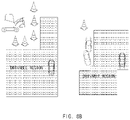
- FIGS. 8A to 8B illustrate drivable regions extracted by a fifth data extracting device included in a U-turn strategy determining device of an autonomous driving vehicle as fifth group data;
- FIGS. 9A to 9B illustrate drivable regions extracted by a sixth data extracting device included in a U-turn strategy determining device of an autonomous driving vehicle as sixth group data;
- FIG. 10 illustrates a final drivable region extracted by a seventh data extracting device included in a U-turn strategy determining device of an autonomous driving vehicle as seventh group data;
- FIG. 11 illustrates a process of determining a risk by a risk determining device included in a U-turn strategy determining device of an autonomous driving vehicle
- FIG. 12 is a flowchart of a U-turn strategy determination method of an autonomous driving vehicle.
- FIG. 13 is a block diagram illustrating a computing system for implementing a method for determining a U-turn strategy of an autonomous driving vehicle.
- information is used as a concept including data.
- FIG. 1 is a block diagram of a U-turn strategy determining device of an autonomous driving vehicle according to one form of the present disclosure.
- a U-turn strategy determining device 100 of an autonomous driving vehicle may include storage 10 , an input device 20 , a learning device 30 , and a controller 40 .
- each component may be combined with each other to be implemented as one component or some components may be omitted.
- the learning device 30 may be implemented to be included in the controller 40 as one functional block of the controller 40 .
- the storage 10 may store various logic, algorithms, and programs required for a process of performing a deep learning by dividing various situation information to be considered for safety during U-turn of the autonomous driving vehicle into groups and a process of determining a U-turn strategy of the autonomous driving vehicle based on such learned result.
- the storage 10 may store, in one example, a U-turn strategy model for each situation as a result of learning by the learning device 30 .
- the storage 10 may store a plurality of U-turn strategies for each situation.
- each U-turn strategy may have a score corresponding to the learning result.
- the score represents a possibility of being selected as the U-turn strategy.
- the U-turn strategy in the specific situation may be determined as the first U-turn strategy with the highest score.
- the storage 10 may include at least one type of a storage medium of at least one type of memory such as a flash memory type, a hard disk type, a micro type, and a card type (for example, an SD card (Secure Digital Card) or an XD card (eXtream Digital Card)), and the like, and a RAM (Random Access Memory), SRAM (Static RAM), ROM (Read Only Memory), PROM (Programmable ROM), EEPROM (Electrically Erasable PROM), MRAM (Magnetic RAM), a magnetic disk, and an optical disk type memory.
- a storage medium of at least one type of memory such as a flash memory type, a hard disk type, a micro type, and a card type (for example, an SD card (Secure Digital Card) or an XD card (eXtream Digital Card)), and the like, and a RAM (Random Access Memory), SRAM (Static RAM), ROM (Read Only Memory), PROM (Programmable ROM),
- the input device 20 may input (provide) data (training data) required in a process of learning an optimal U-turn strategy for each situation to the learning device 30 .
- the input device 20 may perform a function of inputting, to the controller 40 , data at a current time point desired in the process of determining the U-turn strategy of the autonomous driving vehicle.
- the learning device 30 learns the training data input via the input device 20 based on the deep learning.
- the training data has a form in which various situation information to be considered for the safety during the U-turn of the autonomous driving vehicle is divided into the groups. That is, the learning device 30 learns the optimal U-turn strategy for each situation.
- the U-turn strategy is as shown in FIGS. 2A to 2E .
- FIGS. 2A to 2E are exemplary diagrams of U-turn strategies that are learned for each situation by a U-turn strategy determining device of an autonomous driving vehicle according to one form of the present disclosure.
- FIG. 2A illustrates a type of U-turn with a small radius (a first radius, for example within 3 m) as the first U-turn strategy.
- FIG. 2B illustrates a type of U-turn with a large radius (a second radius, for example larger than 3 m) as the second U-turn strategy.
- FIG. 2C illustrates a type of U-turn that follows after a U-turn of a preceding vehicle, as the third U-turn strategy.
- FIG. 2D illustrates a type of a U-turn restarted after a short stop (after a neighboring vehicle passes) during the U-turn.
- FIG. 2E illustrates a type of a U-turn restarted after reversing during the U-turn.
- U-turn strategies Although one form of the present disclosure has been described using five U-turn strategies as an example, the number of U-turn strategies may vary depending on an intention of a designer, but does not affect the present disclosure.
- the learning device 30 may perform the learning in various manners. In one example, the learning device 30 may perform the learning based on a simulation in an early stage when the learning is not performed at all. In a middle stage of the learning when the learning has been performed some extent, the learning device 30 may perform the learning based on a cloud server (not shown). After the learning is completed, the learning device 30 may perform additional learning based on an individual's U-turn propensity.
- the cloud server collects various situation information from a plurality of vehicles performing U-turns and infrastructures, and provides the collected situation information to the autonomous driving vehicle as the training data.
- the controller 40 performs overall control such that the respective components may normally perform functions thereof.
- the controller 40 may be implemented in hardware or software, or in a combination thereof.
- the controller 40 may be implemented in a microprocessor, but is not limited thereto.
- the controller 40 may perform the deep learning by dividing the various situation information to be considered for the safety during the U-turn of the autonomous driving vehicle into the groups and perform the various controls desired in the process of determining the U-turn strategy of the autonomous driving vehicle based on such learned result.
- the controller 40 may determine the U-turn strategy of the autonomous driving vehicle by applying data about a surrounding situation at the current time point input via the input device 20 to the learning result of the learning device 30 .
- the controller 40 may adjust the score of each U-turn strategy for each situation stored in the storage 10 based on a risk (e.g., the number of collision warnings) acquired in the U-turn process of the autonomous driving vehicle.
- a risk e.g., the number of collision warnings
- the score of the first U-turn strategy when the score of the first U-turn strategy is 80%, the score of the second U-turn strategy is 10%, the score of the third U-turn strategy is 5%, the score of the fourth U-turn strategy is 3%, and the score of the fifth U-turn strategy is 2%, the score of the first U-turn strategy may be reduced from 80% to 70% and the score of the second U-turn strategy may be increased from 10% to 20% based on the number of risks occurred in a process of a U-turn based on the first U-turn strategy.
- the score of the second U-turn strategy may become greater than the score of the first U-turn strategy.
- FIG. 3 is a detailed block diagram of a U-turn strategy determining device of an autonomous driving vehicle according to one form of the present disclosure.
- the input device 20 may include a LiDAR (Light Detection And Ranging) sensor 211 , a camera 212 , a RaDAR (Radio Detecting And Ranging) sensor 213 , a V2X module 214 , a precise map 215 , a global positioning system (GPS) receiving device 216 , and a vehicle network 217 .
- LiDAR Light Detection And Ranging
- camera 212 the input device 20 may include a LiDAR (Light Detection And Ranging) sensor 211 , a camera 212 , a RaDAR (Radio Detecting And Ranging) sensor 213 , a V2X module 214 , a precise map 215 , a global positioning system (GPS) receiving device 216 , and a vehicle network 217 .
- GPS global positioning system
- the LiDAR sensor 211 which is a type of an environment recognition sensor, measures a position coordinate and the like of a reflector based on a time in which the LiDAR sensor shoots a laser in all directions while being mounted on the autonomous vehicle and rotating and then the laser is reflected and returned.
- the camera 212 is mounted on a rear face of an interior room mirror of the autonomous driving vehicle to shoot an image including a lane, vehicle, people, and the like located around the vehicle.
- the RaDAR sensor 213 receives an electromagnetic wave reflected from an object after the electromagnetic wave is emitted, and measures a distance to the object, a direction of the object, and the like.
- the RaDAR sensor 213 may be mounted on a front bumper and a rear and side of the autonomous driving vehicle, and may recognize an object at a long distance and are hardly affected by a weather.
- the V2X module 214 may include a V2V module (Vehicle to Vehicle, not shown) and a V2I module (Vehicle to Infrastructure, not shown).
- the V2V module may communicate with neighboring vehicles to obtain a position, a speed, an acceleration, a yaw rate, a direction of travel, and the like. Further, the V2I module may obtain a shape of a road, a surrounding structure, and traffic light information (location and lighting state (red, yellow, green, or the like)) from the infrastructure.
- the precise map 215 which is a map for autonomous driving, may include lanes, traffic lights, sign information, and the like for accurate positioning of the vehicle and enhanced safety of the autonomous driving.
- the GPS receiving device 216 receives GPS signals from at least three GPS satellites.
- the input device 20 may include an object information detecting device 221 , an infrastructure information detecting device 222 , and a location information detecting device 223 .
- the object information detecting device 221 detects information of an object around the autonomous driving vehicle based on the LiDAR sensor 211 , the camera 212 , the RaDAR sensor 213 , and the V2X module 214 .
- the object includes a vehicle, a person, and an object located on a road.
- the object information which is information about the object, may include the vehicle speed, the acceleration, the yaw rate, a cumulative value of longitudinal acceleration over time, and the like.
- the infrastructure information detecting device 222 detects infrastructure information around the autonomous driving vehicle based on the LiDAR sensor 211 , the camera 212 , the RaDAR sensor 213 , the V2X module 214 , and the precise map 215 .
- the infrastructure information includes the shape of the road (lanes, central divider, or the like), the surrounding structure, the traffic light lighting state, an outline of the crosswalk, a boundary face of the road, and the like.
- the location information detecting device 223 detects the location information of the autonomous driving vehicle based on the precise map 215 , the GPS receiving device 216 , and the vehicle network 217 .
- the input device 20 may include a first data extracting device 231 , a second data extracting device 232 , a third data extracting device 233 , a fourth data extracting device 234 , a fifth data extracting device 235 , a sixth data extracting device 236 , and a seventh data extracting device 237 .
- the first data extracting device 231 extracts, from the object information and the infrastructure information, first group data for inhibiting a collision with a preceding vehicle that is U-turning ahead in front of the autonomous driving vehicle when the autonomous driving vehicle is U-turning.
- the first group data which is data related to a behavior of the preceding vehicle, may include the lighting state of the traffic light, the yaw rate, and the cumulative value of the longitudinal acceleration over time.
- the second data extracting device 232 extracts, from the object information and the infrastructure information, second group data for inhibiting a collision with a neighboring vehicle during the U-turn of the autonomous driving vehicle.
- the second group data may include position, speed, acceleration, yaw rate, direction of traveling, and the like of the neighboring vehicle.
- FIG. 5A illustrates a case in which a collision with a right-turning vehicle, which is as the neighboring vehicle, occurs.
- FIG. 5B illustrates a case in which a collision with a left-turning vehicle, which is as the neighboring vehicle, occurs.
- FIG. 5C illustrates a case in which a collision with a vehicle traveling straight in a direction of the autonomous driving vehicle, which is as the neighboring vehicle, occurs.
- the third data extracting device 233 extracts, from the object information and the infrastructure information, third group data for inhibiting a collision with a pedestrian during the U-turn of the autonomous driving vehicle.
- the third group data may include location, speed, traveling direction, precise map of surroundings, and the like of the pedestrian.
- FIG. 6A illustrates a case in which a pedestrian is crossing a crosswalk.
- FIG. 6B illustrates a case in which a pedestrian is crossing a road.
- FIG. 6C illustrates a case in which pedestrians are hanging around a boundary face of a road.
- the fourth data extracting device 234 acquires a lighting state of each traffic light located around the autonomous driving vehicle based on the infrastructure information and the location information and extracts a lighting state of a traffic light associated with the U-turn of the autonomous driving vehicle from the acquired lighting state of each traffic light as fourth group data.
- the traffic light may include a vehicle traffic light and a pedestrian traffic light associated with the U-turn of the autonomous driving vehicle.
- the fifth data extracting device 235 extracts a drivable region based on a distribution of static objects, a drivable region based on a construction section, and a drivable region based on an accident section as fifth group data based on the object information.
- the drivable region means a region on a lane opposite to a lane where the autonomous driving vehicle is located.
- the opposite lane means a lane for traveling from the other direction to one direction.
- the sixth data extracting device 236 extracts a drivable region based on a structure of the road as sixth group data based on the infrastructure information.
- the sixth data extracting device 236 may extract the drivable region from the image captured by the camera or extract the drivable region based on a position of the autonomous driving vehicle on the precise map.
- the drivable region means a region on the lane opposite to the lane where the autonomous driving vehicle is located.
- the seventh data extracting device 237 extracts an overlapping region (final drivable region) of the drivable region extracted by the fifth data extracting device 235 and the drivable region extracted by the sixth data extracting device 236 as seventh group data.
- the learning device 30 learns, based on the deep learning, the U-turn strategy for each situation using the data extracted by the first data extracting device 231 , the data extracted by the second data extracting device 232 , the data extracted by the third data extracting device 233 , the data extracted by the fourth data extracting device 234 , and the data extracted by the seventh data extracting device 237 .
- Such result learned by the learning device 30 may be used by a strategy determining device 41 to determine the U-turn strategy.
- the learning device 30 may use, as an artificial neural network, at least one of a convolutional neural network (CNN), a recurrent neural network (RNN), a restricted boltzmann machine (RBM), a deep belief network (DBN), deep Q-networks, a generative adversarial network (GAN), and/or a softmax.
- CNN convolutional neural network
- RNN recurrent neural network
- RBM restricted boltzmann machine
- DNN deep belief network
- GAN generative adversarial network
- softmax the number of hidden layers of the artificial neural network is at least 10.
- the number of hidden nodes in the hidden layer may be at least 500, but is not limited thereto.
- the controller 40 may include the strategy determining device 41 and a risk determining device 42 as function blocks.
- the strategy determining device 41 may determine the U-turn strategy of the autonomous driving vehicle by applying the data extracted by the first data extracting device 231 , the data extracted by the second data extracting device 232 , the data extracted by the third data extracting device 233 , the data extracted by the fourth data extracting device 234 , and the data extracted by the seventh data extracting device 237 to the result learned by the learning device 30 .
- the strategy determining device 41 may adjust the score of each U-turn strategy for each situation stored in the storage 10 based on a risk (e.g., the number of collision warnings) determined by the risk determining device 42 in a process of U-turning based on the determined U-turn strategy.
- a risk e.g., the number of collision warnings
- the risk determining device 42 may determine the risk in various ways such as a time to collision (TTC), a driving prediction route, a grid map, or the like.
- TTC time to collision
- driving prediction route a grid map
- the risk determining device 420 may determine the risk by counting the number of times that the TTC falls equal to or below a threshold (the number of warnings). For example, it may be determined that there is a risk even when the warning occurs once and it may be determined that the risk is high as the number of warnings increases.
- the risk determining device 42 determines the risk based on the TTC, it is desirable to determine the risk in consideration of a transverse TTC as well as a longitudinal TTC as shown in FIG. 11 .
- FIG. 12 is a flowchart of a U-turn strategy determination method of an autonomous driving vehicle according to one form of the present disclosure.
- the learning device 30 learns the U-turn strategy for each situation by dividing the situation information to be considered in the U-turn of the autonomous driving vehicle into the groups ( 1201 ).
- the controller 30 determines the U-turn strategy of the autonomous driving vehicle based on the U-turn strategy for each situation learned by the learning device 30 ( 1202 ).
- FIG. 13 is a block diagram illustrating a computing system for implementing a method for determining a U-turn strategy of an autonomous driving vehicle according to one form of the present disclosure.
- a computing system 1000 may include at least one processor 1100 , a memory 1300 , a user interface input device 1400 , a user interface output device 1500 , storage 1600 , and a network interface 1700 connected via a system bus 1200 .
- the processor 1100 may be a central processing unit (CPU) or a semiconductor device that performs processing on instructions stored in the memory 1300 and/or the storage 1600 .
- the memory 1300 and the storage 1600 may include various types of volatile or non-volatile storage media.
- the memory 1300 may include a ROM (Read Only Memory) and a RAM (Random Access Memory).
- the operations of the method or the algorithm described in connection with the forms disclosed herein may be embodied directly in hardware or a software module executed by the processor 1100 , or in a combination thereof.
- the software module may reside on a storage medium that is, the memory 1300 and/or the storage 1600 such as a RAM, a flash memory, a ROM, an EPROM, an EEPROM, a register, a hard disk, a removable disk, a CD-ROM.
- the exemplary storage medium is coupled to the processor 1100 , which may read information from, and write information to, the storage medium.
- the storage medium may be integral with the processor 1100 .
- the processor and the storage medium may reside within an application specific integrated circuit (ASIC).
- the ASIC may reside within the user terminal.
- the processor and the storage medium may reside as individual components in the user terminal.
- the device and the method for determining the U-turn strategy of the autonomous driving vehicle of one form of the present disclosure perform the deep learning by dividing the various situation information to be considered for the safety during the U-turn of the autonomous driving vehicle into the groups and determine the U-turn strategy of the autonomous driving vehicle based on such learned result, thereby generating the optimal travel route in the U-turn process of the autonomous driving vehicle and greatly reducing accidents that may occur in the U-turn process of the autonomous driving vehicle.
Landscapes
- Engineering & Computer Science (AREA)
- Physics & Mathematics (AREA)
- Theoretical Computer Science (AREA)
- General Physics & Mathematics (AREA)
- Evolutionary Computation (AREA)
- Health & Medical Sciences (AREA)
- Artificial Intelligence (AREA)
- Automation & Control Theory (AREA)
- Computing Systems (AREA)
- General Health & Medical Sciences (AREA)
- Software Systems (AREA)
- Multimedia (AREA)
- Mechanical Engineering (AREA)
- Transportation (AREA)
- Mathematical Physics (AREA)
- Medical Informatics (AREA)
- Databases & Information Systems (AREA)
- Computer Vision & Pattern Recognition (AREA)
- Computational Linguistics (AREA)
- Biomedical Technology (AREA)
- Biophysics (AREA)
- Life Sciences & Earth Sciences (AREA)
- Data Mining & Analysis (AREA)
- Molecular Biology (AREA)
- General Engineering & Computer Science (AREA)
- Radar, Positioning & Navigation (AREA)
- Aviation & Aerospace Engineering (AREA)
- Remote Sensing (AREA)
- Chemical & Material Sciences (AREA)
- Analytical Chemistry (AREA)
- Human Computer Interaction (AREA)
- Business, Economics & Management (AREA)
- Game Theory and Decision Science (AREA)
- Traffic Control Systems (AREA)
- Control Of Driving Devices And Active Controlling Of Vehicle (AREA)
Abstract
Description
Claims (20)
Applications Claiming Priority (2)
| Application Number | Priority Date | Filing Date | Title |
|---|---|---|---|
| KR10-2019-0080541 | 2019-07-04 | ||
| KR1020190080541A KR20210005395A (en) | 2019-07-04 | 2019-07-04 | Apparatus for determining u-turn strategy of autonomous vehicle and method thereof |
Publications (2)
| Publication Number | Publication Date |
|---|---|
| US20210004011A1 US20210004011A1 (en) | 2021-01-07 |
| US11294386B2 true US11294386B2 (en) | 2022-04-05 |
Family
ID=74065203
Family Applications (1)
| Application Number | Title | Priority Date | Filing Date |
|---|---|---|---|
| US16/595,626 Active 2040-06-05 US11294386B2 (en) | 2019-07-04 | 2019-10-08 | Device and method for determining U-turn strategy of autonomous vehicle |
Country Status (3)
| Country | Link |
|---|---|
| US (1) | US11294386B2 (en) |
| KR (1) | KR20210005395A (en) |
| DE (1) | DE102019216206A1 (en) |
Families Citing this family (10)
| Publication number | Priority date | Publication date | Assignee | Title |
|---|---|---|---|---|
| US11650072B2 (en) * | 2019-11-26 | 2023-05-16 | International Business Machines Corporation | Portable lane departure detection |
| KR102302132B1 (en) * | 2021-02-02 | 2021-09-14 | 한국자동차연구원 | System and method for tracking lane object based on edge computing |
| CN113581205B (en) * | 2021-08-03 | 2023-01-31 | 京东鲲鹏(江苏)科技有限公司 | Method and device for adjusting vehicle posture |
| CN113895463B (en) * | 2021-11-25 | 2023-06-06 | 北京航空航天大学 | A U-turn Path Planning Method for Autonomous Driving Vehicles |
| JP2023135487A (en) * | 2022-03-15 | 2023-09-28 | 株式会社Subaru | Vehicle travel control device |
| KR20230138808A (en) * | 2022-03-24 | 2023-10-05 | 현대자동차주식회사 | Apparatus and method for controlling vehicle |
| US20230306849A1 (en) * | 2022-03-28 | 2023-09-28 | Qualcomm Incorporated | Network based sensor sharing for communications systems |
| US12525030B1 (en) | 2022-06-20 | 2026-01-13 | Zoox, Inc. | Flashing traffic light state detection |
| US12412402B1 (en) * | 2022-06-20 | 2025-09-09 | Zoox, Inc. | Yawed traffic light determination |
| KR20240177614A (en) * | 2023-06-20 | 2024-12-27 | 현대자동차주식회사 | System and method for generating driving path in vehicle |
Citations (5)
| Publication number | Priority date | Publication date | Assignee | Title |
|---|---|---|---|---|
| US20170336218A1 (en) * | 2014-12-10 | 2017-11-23 | Here Global B.V. | Apparatus and associated method for providing u-turn guidance |
| US20180362035A1 (en) | 2015-12-09 | 2018-12-20 | Ford Global Technologies, Llc | U-turn assistance |
| US20190113351A1 (en) * | 2017-10-12 | 2019-04-18 | Uber Technologies, Inc. | Turn Based Autonomous Vehicle Guidance |
| US20200324763A1 (en) * | 2019-04-15 | 2020-10-15 | Peloton Technology, Inc. | Systems and methods for managing tractor-trailers |
| US20200348676A1 (en) * | 2019-04-30 | 2020-11-05 | Baidu Usa Llc | Neural network approach for parameter learning to speed up planning for complex driving scenarios |
-
2019
- 2019-07-04 KR KR1020190080541A patent/KR20210005395A/en not_active Ceased
- 2019-10-08 US US16/595,626 patent/US11294386B2/en active Active
- 2019-10-22 DE DE102019216206.1A patent/DE102019216206A1/en active Pending
Patent Citations (5)
| Publication number | Priority date | Publication date | Assignee | Title |
|---|---|---|---|---|
| US20170336218A1 (en) * | 2014-12-10 | 2017-11-23 | Here Global B.V. | Apparatus and associated method for providing u-turn guidance |
| US20180362035A1 (en) | 2015-12-09 | 2018-12-20 | Ford Global Technologies, Llc | U-turn assistance |
| US20190113351A1 (en) * | 2017-10-12 | 2019-04-18 | Uber Technologies, Inc. | Turn Based Autonomous Vehicle Guidance |
| US20200324763A1 (en) * | 2019-04-15 | 2020-10-15 | Peloton Technology, Inc. | Systems and methods for managing tractor-trailers |
| US20200348676A1 (en) * | 2019-04-30 | 2020-11-05 | Baidu Usa Llc | Neural network approach for parameter learning to speed up planning for complex driving scenarios |
Also Published As
| Publication number | Publication date |
|---|---|
| US20210004011A1 (en) | 2021-01-07 |
| KR20210005395A (en) | 2021-01-14 |
| DE102019216206A1 (en) | 2021-01-07 |
Similar Documents
| Publication | Publication Date | Title |
|---|---|---|
| US11294386B2 (en) | Device and method for determining U-turn strategy of autonomous vehicle | |
| KR102869076B1 (en) | Apparatus for controlling lane change of autonomous vehicle and method thereof | |
| US11442456B2 (en) | Apparatus for determining lane change path of autonomous vehicle and method thereof | |
| CN113313154B (en) | Integrated fusion multi-sensor autonomous driving intelligent perception device | |
| CN112133089B (en) | Vehicle track prediction method, system and device based on surrounding environment and behavior intention | |
| US11137766B2 (en) | State machine for traversing junctions | |
| KR102869077B1 (en) | Apparatus for determining lane change strategy of autonomous vehicle and method thereof | |
| CN110667578B (en) | Lateral decision making system and lateral decision making determination method for automatic driving vehicle | |
| CN115704898A (en) | Correlation of camera images and radar data in autonomous vehicle applications | |
| CN114245885A (en) | Top-down scene prediction based on motion data | |
| US20220066459A1 (en) | Using machine learning models for generating human-like trajectories | |
| US10839680B2 (en) | Vehicle control device, vehicle control method, and storage medium | |
| US20220383646A1 (en) | Mobile object control device, mobile object control method, and storage medium | |
| US11507093B2 (en) | Behavior control device and behavior control method for autonomous vehicles | |
| US12136273B2 (en) | Identification of real and image sign detections in driving applications | |
| Damerow et al. | Risk-based driver assistance for approaching intersections of limited visibility | |
| Guo et al. | Humanlike behavior generation in urban environment based on learning-based potentials with a low-cost lane graph | |
| US10777077B2 (en) | Vehicle control device, vehicle control method, and storage medium | |
| CN114743175A (en) | Method, system, vehicle and storage medium for constructing road boundary for autonomous driving | |
| KR20210005393A (en) | Apparatus for controlling u-turn of autonomous vehicle and method thereof | |
| CN113734191A (en) | Artificially spoofing sensor data to initiate safety actions for autonomous vehicles | |
| CN117152715A (en) | A panoramic driving perception system and method based on improved YOLOP | |
| US12304528B2 (en) | Autonomous driving method for avoiding stopped vehicle and apparatus for the same | |
| US10796570B2 (en) | Vehicle control device, vehicle control method, and storage medium | |
| US20220396290A1 (en) | Apparatus for Controlling Vehicle, System Including Same and Method Thereof |
Legal Events
| Date | Code | Title | Description |
|---|---|---|---|
| FEPP | Fee payment procedure |
Free format text: ENTITY STATUS SET TO UNDISCOUNTED (ORIGINAL EVENT CODE: BIG.); ENTITY STATUS OF PATENT OWNER: LARGE ENTITY |
|
| AS | Assignment |
Owner name: HYUNDAI MOTOR COMPANY, KOREA, REPUBLIC OF Free format text: ASSIGNMENT OF ASSIGNORS INTEREST;ASSIGNOR:OH, TAE DONG;REEL/FRAME:051922/0951 Effective date: 20190920 Owner name: KIA MOTORS CORPORATION, KOREA, REPUBLIC OF Free format text: ASSIGNMENT OF ASSIGNORS INTEREST;ASSIGNOR:OH, TAE DONG;REEL/FRAME:051922/0951 Effective date: 20190920 |
|
| STPP | Information on status: patent application and granting procedure in general |
Free format text: DOCKETED NEW CASE - READY FOR EXAMINATION |
|
| STPP | Information on status: patent application and granting procedure in general |
Free format text: NON FINAL ACTION MAILED |
|
| STPP | Information on status: patent application and granting procedure in general |
Free format text: RESPONSE TO NON-FINAL OFFICE ACTION ENTERED AND FORWARDED TO EXAMINER |
|
| STPP | Information on status: patent application and granting procedure in general |
Free format text: NOTICE OF ALLOWANCE MAILED -- APPLICATION RECEIVED IN OFFICE OF PUBLICATIONS |
|
| STPP | Information on status: patent application and granting procedure in general |
Free format text: PUBLICATIONS -- ISSUE FEE PAYMENT VERIFIED |
|
| STCF | Information on status: patent grant |
Free format text: PATENTED CASE |
|
| MAFP | Maintenance fee payment |
Free format text: PAYMENT OF MAINTENANCE FEE, 4TH YEAR, LARGE ENTITY (ORIGINAL EVENT CODE: M1551); ENTITY STATUS OF PATENT OWNER: LARGE ENTITY Year of fee payment: 4 |