US11289654B2 - Polymers containing furanyl crosslinkable groups and uses thereof - Google Patents
Polymers containing furanyl crosslinkable groups and uses thereof Download PDFInfo
- Publication number
- US11289654B2 US11289654B2 US16/472,701 US201716472701A US11289654B2 US 11289654 B2 US11289654 B2 US 11289654B2 US 201716472701 A US201716472701 A US 201716472701A US 11289654 B2 US11289654 B2 US 11289654B2
- Authority
- US
- United States
- Prior art keywords
- group
- deuterated
- organic
- polymer
- carbon atoms
- Prior art date
- Legal status (The legal status is an assumption and is not a legal conclusion. Google has not performed a legal analysis and makes no representation as to the accuracy of the status listed.)
- Active, expires
Links
- 0 C.CC.CC.CC.CC.[1*].[2*]c1c(C)oc([4*])c1[3*].[Ar].[Ar].[Ar] Chemical compound C.CC.CC.CC.CC.[1*].[2*]c1c(C)oc([4*])c1[3*].[Ar].[Ar].[Ar] 0.000 description 34
- BJURWZBIJTZDMV-UHFFFAOYSA-N [Ar].[Ar].[Ar] Chemical compound [Ar].[Ar].[Ar] BJURWZBIJTZDMV-UHFFFAOYSA-N 0.000 description 24
- XKRFYHLGVUSROY-UHFFFAOYSA-N [Ar] Chemical compound [Ar] XKRFYHLGVUSROY-UHFFFAOYSA-N 0.000 description 10
- XMPZLAQHPIBDSO-UHFFFAOYSA-N [Ar].[Ar] Chemical compound [Ar].[Ar] XMPZLAQHPIBDSO-UHFFFAOYSA-N 0.000 description 10
- MBBKMPGBGPFDJP-UHFFFAOYSA-N C1=CC2=C(C1)CC=C2.C1=CC2=C(C=CC2)C1.C1=CCC=C1.C1=Cc2ccccc2C1.C1=c2ccccc2=CC1.c1ccc2c(c1)Cc1ccccc1-2.c1ccc2ccccc2c1.c1ccccc1 Chemical compound C1=CC2=C(C1)CC=C2.C1=CC2=C(C=CC2)C1.C1=CCC=C1.C1=Cc2ccccc2C1.C1=c2ccccc2=CC1.c1ccc2c(c1)Cc1ccccc1-2.c1ccc2ccccc2c1.c1ccccc1 MBBKMPGBGPFDJP-UHFFFAOYSA-N 0.000 description 2
- JHVRCPHYKPDDKG-UHFFFAOYSA-N C1=CCC=C1.c1ccc(-c2ncnc(-c3ccccc3)n2)cc1.c1ccc2c(c1)ccc1ccccc12.c1ccc2cc3ccccc3cc2c1.c1ccc2ncccc2c1.c1ccc2nccnc2c1.c1ccc2occc2c1.c1ccc2sccc2c1.c1ccncc1.c1ccoc1.c1ccsc1.c1cnccn1.c1cncnc1.c1ncncn1 Chemical compound C1=CCC=C1.c1ccc(-c2ncnc(-c3ccccc3)n2)cc1.c1ccc2c(c1)ccc1ccccc12.c1ccc2cc3ccccc3cc2c1.c1ccc2ncccc2c1.c1ccc2nccnc2c1.c1ccc2occc2c1.c1ccc2sccc2c1.c1ccncc1.c1ccoc1.c1ccsc1.c1cnccn1.c1cncnc1.c1ncncn1 JHVRCPHYKPDDKG-UHFFFAOYSA-N 0.000 description 2
- LVJZBGBYGLXZBM-UHFFFAOYSA-N CC1(C)c2ccccc2-c2cc3c(cc21)-c1ccccc1C3(C)C.CC1(C)c2ccccc2-c2cc3c(cc21)-c1ccccc1C3(c1ccccc1)c1ccccc1.CC1(C)c2ccccc2-c2cc3c(cc21)C(C)(C)c1ccccc1-3.CC1(C)c2ccccc2-c2cc3c4ccccc4n(-c4ccccc4)c3cc21.CC1(C)c2ccccc2-c2ccc3c(c21)C(C)(C)c1ccccc1-3.CC1(C)c2ccccc2-c2ccccc21.CC1(C)c2ccccc2-c2ccccc2C1(C)C.Cc1c(C)c2ccccc2c2ccccc12.O=c1oc2ccccc2c2ccccc12.c1cc2sc3ccsc3c2s1.c1ccc(-n2c3ccccc3c3cc4c5ccccc5n(-c5ccccc5)c4cc32)cc1.c1ccc2c(c1)-c1ccccc1C21c2ccccc2-c2ccccc21.c1ccc2c(c1)oc1ccccc12.c1ccc2c(c1)sc1ccccc12 Chemical compound CC1(C)c2ccccc2-c2cc3c(cc21)-c1ccccc1C3(C)C.CC1(C)c2ccccc2-c2cc3c(cc21)-c1ccccc1C3(c1ccccc1)c1ccccc1.CC1(C)c2ccccc2-c2cc3c(cc21)C(C)(C)c1ccccc1-3.CC1(C)c2ccccc2-c2cc3c4ccccc4n(-c4ccccc4)c3cc21.CC1(C)c2ccccc2-c2ccc3c(c21)C(C)(C)c1ccccc1-3.CC1(C)c2ccccc2-c2ccccc21.CC1(C)c2ccccc2-c2ccccc2C1(C)C.Cc1c(C)c2ccccc2c2ccccc12.O=c1oc2ccccc2c2ccccc12.c1cc2sc3ccsc3c2s1.c1ccc(-n2c3ccccc3c3cc4c5ccccc5n(-c5ccccc5)c4cc32)cc1.c1ccc2c(c1)-c1ccccc1C21c2ccccc2-c2ccccc21.c1ccc2c(c1)oc1ccccc12.c1ccc2c(c1)sc1ccccc12 LVJZBGBYGLXZBM-UHFFFAOYSA-N 0.000 description 2
- ZNWHPKQLJAAMKU-UHFFFAOYSA-N COc1cc2c(cc1OC)C1(c3ccccc3-c3ccccc31)c1cc(OC)c(OC)cc1-2.Cc1ccc(C)cc1.Cn1cnc2c3ccccc3c3ccccc3c21.c1ccc(-c2cccc(-c3ccccc3)c2)cc1.c1ccc(-n2c3ccccc3c3ccccc32)cc1.c1ccc(N(c2ccccc2)c2ccccc2)cc1.c1ccc2c(c1)Cc1c-2ccc2c1Cc1ccccc1-2.c1ccc2c(c1)Cc1cc3c(cc1-2)[nH]c1ccccc13.c1ccc2c(c1)c1ccccc1c1ccccc21.c1ccc2c(c1)c1ccccc1c1occc21.c1ccc2c(c1)c1ccccc1c1ocnc21.c1ccc2c(c1)c1ccccc1c1sccc21.c1ccc2c(c1)c1ccccc1c1scnc21.c1ccc2ccccc2c1 Chemical compound COc1cc2c(cc1OC)C1(c3ccccc3-c3ccccc31)c1cc(OC)c(OC)cc1-2.Cc1ccc(C)cc1.Cn1cnc2c3ccccc3c3ccccc3c21.c1ccc(-c2cccc(-c3ccccc3)c2)cc1.c1ccc(-n2c3ccccc3c3ccccc32)cc1.c1ccc(N(c2ccccc2)c2ccccc2)cc1.c1ccc2c(c1)Cc1c-2ccc2c1Cc1ccccc1-2.c1ccc2c(c1)Cc1cc3c(cc1-2)[nH]c1ccccc13.c1ccc2c(c1)c1ccccc1c1ccccc21.c1ccc2c(c1)c1ccccc1c1occc21.c1ccc2c(c1)c1ccccc1c1ocnc21.c1ccc2c(c1)c1ccccc1c1sccc21.c1ccc2c(c1)c1ccccc1c1scnc21.c1ccc2ccccc2c1 ZNWHPKQLJAAMKU-UHFFFAOYSA-N 0.000 description 2
- CUMADLLJWIRABN-PWFUKTJUSA-N Bc1cc(C)c(Br)cc1C.BrCCCOc1ccc(Br)cc1.BrCCCOc1ccc(N(c2ccc(Br)cc2)c2ccc(Br)cc2)cc1.BrCCCOc1ccc(N(c2ccccc2)c2ccccc2)cc1.Brc1ccc(N(c2ccc(Br)cc2)c2ccc(OCCCOCc3ccco3)cc2)cc1.CCCCCCCCC1(CCCCCCCC)c2cc(B(OC)OC)ccc2-c2cc3c(cc21)-c1ccc(B(OC)OC)cc1C3(CCCCCCCC)CCCCCCCC.CCCCCCCCC1(CCCCCCCC)c2cc(Br)ccc2-c2cc3c(cc21)-c1ccc(Br)cc1C3(CCCCCCCC)CCCCCCCC.CCCCCCCCC1(CCCCCCCC)c2ccccc2-c2cc3c(cc21)-c1ccccc1C3(CCCCCCCC)CCCCCCCC.Cc1cc(-c2ccccc2)c(C)cc1-c1ccccc1.O=COc1cc(-c2ccccc2)c(C(=O)O)cc1-c1ccccc1.O=c1c2ccccc2c2cc3c(=O)c4ccccc4c3cc12.OB(O)c1ccccc1.Oc1ccc(Br)cc1.[2H]B(I)OF.c1ccc2c(c1)Cc1cc3c(cc1-2)Cc1ccccc1-3 Chemical compound Bc1cc(C)c(Br)cc1C.BrCCCOc1ccc(Br)cc1.BrCCCOc1ccc(N(c2ccc(Br)cc2)c2ccc(Br)cc2)cc1.BrCCCOc1ccc(N(c2ccccc2)c2ccccc2)cc1.Brc1ccc(N(c2ccc(Br)cc2)c2ccc(OCCCOCc3ccco3)cc2)cc1.CCCCCCCCC1(CCCCCCCC)c2cc(B(OC)OC)ccc2-c2cc3c(cc21)-c1ccc(B(OC)OC)cc1C3(CCCCCCCC)CCCCCCCC.CCCCCCCCC1(CCCCCCCC)c2cc(Br)ccc2-c2cc3c(cc21)-c1ccc(Br)cc1C3(CCCCCCCC)CCCCCCCC.CCCCCCCCC1(CCCCCCCC)c2ccccc2-c2cc3c(cc21)-c1ccccc1C3(CCCCCCCC)CCCCCCCC.Cc1cc(-c2ccccc2)c(C)cc1-c1ccccc1.O=COc1cc(-c2ccccc2)c(C(=O)O)cc1-c1ccccc1.O=c1c2ccccc2c2cc3c(=O)c4ccccc4c3cc12.OB(O)c1ccccc1.Oc1ccc(Br)cc1.[2H]B(I)OF.c1ccc2c(c1)Cc1cc3c(cc1-2)Cc1ccccc1-3 CUMADLLJWIRABN-PWFUKTJUSA-N 0.000 description 1
- VJJGEUGLFZRANK-UHFFFAOYSA-N Brc1ccc(N(c2ccc(Br)cc2)c2ccc(OCCCOCc3ccco3)cc2)cc1.Brc1ccc2c(c1)Cc1cc(Br)ccc1-2.CCCCCCCCC1(CCCCCCCC)c2cc(B3OC(C)(C)C(C)(C)O3)ccc2-c2ccc(B3OC(C)(C)C(C)(C)O3)cc21.CCCCCCCCC1(CCCCCCCC)c2cc(B3OC(C)(C)C(C)(C)O3)ccc2-c2ccc(B3OC(C)(C)C(C)(C)O3)cc21.CCCCCCCCC1(CCCCCCCC)c2cc(Br)ccc2-c2ccc(Br)cc21.c1ccc2c(c1)Cc1ccccc1-2 Chemical compound Brc1ccc(N(c2ccc(Br)cc2)c2ccc(OCCCOCc3ccco3)cc2)cc1.Brc1ccc2c(c1)Cc1cc(Br)ccc1-2.CCCCCCCCC1(CCCCCCCC)c2cc(B3OC(C)(C)C(C)(C)O3)ccc2-c2ccc(B3OC(C)(C)C(C)(C)O3)cc21.CCCCCCCCC1(CCCCCCCC)c2cc(B3OC(C)(C)C(C)(C)O3)ccc2-c2ccc(B3OC(C)(C)C(C)(C)O3)cc21.CCCCCCCCC1(CCCCCCCC)c2cc(Br)ccc2-c2ccc(Br)cc21.c1ccc2c(c1)Cc1ccccc1-2 VJJGEUGLFZRANK-UHFFFAOYSA-N 0.000 description 1
- IGHRGYFLYPMRQF-JLMMQWLNSA-N Brc1ccc(N(c2ccc(Br)cc2)c2ccc(OCCCOCc3ccco3)cc2)cc1.CCCCCCCCC1(CCCCCCCC)c2cc(C)ccc2-c2cc3c(cc21)-c1ccc(-c2ccc(N(c4ccc(C)cc4)c4ccc(OCCCOCc5ccco5)cc4)cc2)cc1C3(CCCCCCCC)CCCCCCCC.P.[2H]B(I)OF.[CH2+]OB(OC)c1ccc2c(c1)C(CCCCCCCC)(CCCCCCCC)c1cc3c(cc1-2)C(CCCCCCCC)(CCCCCCCC)c1cc(B(OC)OC)ccc1-3 Chemical compound Brc1ccc(N(c2ccc(Br)cc2)c2ccc(OCCCOCc3ccco3)cc2)cc1.CCCCCCCCC1(CCCCCCCC)c2cc(C)ccc2-c2cc3c(cc21)-c1ccc(-c2ccc(N(c4ccc(C)cc4)c4ccc(OCCCOCc5ccco5)cc4)cc2)cc1C3(CCCCCCCC)CCCCCCCC.P.[2H]B(I)OF.[CH2+]OB(OC)c1ccc2c(c1)C(CCCCCCCC)(CCCCCCCC)c1cc3c(cc1-2)C(CCCCCCCC)(CCCCCCCC)c1cc(B(OC)OC)ccc1-3 IGHRGYFLYPMRQF-JLMMQWLNSA-N 0.000 description 1
- ZLGAVRMWWVQUII-MJCKVQKWSA-N C(=C/c1ccc(N(c2ccc3ccccc3c2)c2ccc3ccccc3c2)cc1)\c1ccc(N(c2ccc3ccccc3c2)c2ccc3ccccc3c2)cc1.CC1(C)c2cc(N(c3ccccc3)c3ccccc3)ccc2-c2cc3c(cc21)-c1c(cc(N(c2ccccc2)c2ccccc2)c2ccccc12)C3(C)C.Cc1ccc(N(c2ccc(C)c(C)c2)c2cc3c(cc(N(c4ccc(C)c(C)c4)c4ccc(C)c(C)c4)c4ccccc43)c3c2=CCCC=3)cc1C.c1ccc(-c2c3ccc(N(c4ccccc4)c4ccccc4)cc3c(-c3ccccc3)c3ccc(N(c4ccccc4)c4ccccc4)cc23)cc1.c1ccc(-c2cc(-c3ccccc3)c3ccc4c(-c5ccccc5)cc(-c5ccccc5)c5ccc2c3c54)cc1 Chemical compound C(=C/c1ccc(N(c2ccc3ccccc3c2)c2ccc3ccccc3c2)cc1)\c1ccc(N(c2ccc3ccccc3c2)c2ccc3ccccc3c2)cc1.CC1(C)c2cc(N(c3ccccc3)c3ccccc3)ccc2-c2cc3c(cc21)-c1c(cc(N(c2ccccc2)c2ccccc2)c2ccccc12)C3(C)C.Cc1ccc(N(c2ccc(C)c(C)c2)c2cc3c(cc(N(c4ccc(C)c(C)c4)c4ccc(C)c(C)c4)c4ccccc43)c3c2=CCCC=3)cc1C.c1ccc(-c2c3ccc(N(c4ccccc4)c4ccccc4)cc3c(-c3ccccc3)c3ccc(N(c4ccccc4)c4ccccc4)cc23)cc1.c1ccc(-c2cc(-c3ccccc3)c3ccc4c(-c5ccccc5)cc(-c5ccccc5)c5ccc2c3c54)cc1 ZLGAVRMWWVQUII-MJCKVQKWSA-N 0.000 description 1
- GZKQAMMACMPORT-UHFFFAOYSA-N C.C.C.C.CCN(C)CC Chemical compound C.C.C.C.CCN(C)CC GZKQAMMACMPORT-UHFFFAOYSA-N 0.000 description 1
- MFDQQDDDWJNQOD-UHFFFAOYSA-N C.C.CCN(C)CC Chemical compound C.C.CCN(C)CC MFDQQDDDWJNQOD-UHFFFAOYSA-N 0.000 description 1
- YKFUJERPCVHCRH-UHFFFAOYSA-N C1=CCC=C1.C1=CCC=C1.C1=Cc2ccccc2C1.C1=c2ccccc2=CC1.C1=c2ccccc2=NC1.c1ccc2[nH]ccc2c1.c1ccc2[nH]cnc2c1.c1ccc2c(c1)Cc1ccccc1-2.c1ccc2c(c1)Cc1ccccc1-2.c1ccc2c(c1)Cc1ncccc1-2.c1ccc2c(c1)oc1ccccc12.c1ccc2c(c1)sc1ccccc12.c1ccc2ccccc2c1.c1ccc2cocc2c1.c1ccc2cscc2c1.c1ccc2n[nH]cc2c1.c1ccc2ncccc2c1.c1ccc2nccnc2c1.c1ccc2ncncc2c1.c1ccc2nscc2c1.c1ccc2occc2c1.c1ccc2ocnc2c1.c1ccc2sccc2c1.c1ccc2scnc2c1.c1ccccc1.c1ccncc1.c1ccnnc1.c1ccoc1.c1ccsc1.c1cnccn1 Chemical compound C1=CCC=C1.C1=CCC=C1.C1=Cc2ccccc2C1.C1=c2ccccc2=CC1.C1=c2ccccc2=NC1.c1ccc2[nH]ccc2c1.c1ccc2[nH]cnc2c1.c1ccc2c(c1)Cc1ccccc1-2.c1ccc2c(c1)Cc1ccccc1-2.c1ccc2c(c1)Cc1ncccc1-2.c1ccc2c(c1)oc1ccccc12.c1ccc2c(c1)sc1ccccc12.c1ccc2ccccc2c1.c1ccc2cocc2c1.c1ccc2cscc2c1.c1ccc2n[nH]cc2c1.c1ccc2ncccc2c1.c1ccc2nccnc2c1.c1ccc2ncncc2c1.c1ccc2nscc2c1.c1ccc2occc2c1.c1ccc2ocnc2c1.c1ccc2sccc2c1.c1ccc2scnc2c1.c1ccccc1.c1ccncc1.c1ccnnc1.c1ccoc1.c1ccsc1.c1cnccn1 YKFUJERPCVHCRH-UHFFFAOYSA-N 0.000 description 1
- RZQDAGIELVSCKC-UHFFFAOYSA-N CC(C)(C)c1cc2-c3ccccn3->[Ir]3(c4ccc(F)c5c4-c4c6c(cccc6ccn->34)C5(C)C)n2n1.Cc1cc2c(s1)-c1cccc3n1->[Pt]21<-n2c(cccc2-c2sc(C)cc21)C3.Cc1ccc2[Ir]3(c4ccc(F)c5c4-c4c6c(cccc6ccn->34)C5(C)C)<-n3ccc(C)cc3-c2c1.c1cc2n3->[Pt]4(<-n5c(cccc5-c5ocnc54)C2)c2ncoc2-c3c1.c1ccc(-c2cn3->[Ir]c4ccccc4-c3c3ccccc23)cc1.c1ccc2[Ir]3(c4ccccc4-c4c5ccccc5ccn->34)<-n3ccccc3-c2c1 Chemical compound CC(C)(C)c1cc2-c3ccccn3->[Ir]3(c4ccc(F)c5c4-c4c6c(cccc6ccn->34)C5(C)C)n2n1.Cc1cc2c(s1)-c1cccc3n1->[Pt]21<-n2c(cccc2-c2sc(C)cc21)C3.Cc1ccc2[Ir]3(c4ccc(F)c5c4-c4c6c(cccc6ccn->34)C5(C)C)<-n3ccc(C)cc3-c2c1.c1cc2n3->[Pt]4(<-n5c(cccc5-c5ocnc54)C2)c2ncoc2-c3c1.c1ccc(-c2cn3->[Ir]c4ccccc4-c3c3ccccc23)cc1.c1ccc2[Ir]3(c4ccccc4-c4c5ccccc5ccn->34)<-n3ccccc3-c2c1 RZQDAGIELVSCKC-UHFFFAOYSA-N 0.000 description 1
- HZYNQGBBIREXDO-DWXAKWDBSA-L CC(C)(C)c1cc2-c3ccccn3->[Ir]3(c4ccccc4-c4c5ccccc5ncn->34)n2n1.CC1/C=C(/C)O[Ir]2(<-O=1)c1cccc3c1-c1c4c(cccc4ccn->21)C3(C)C.CC1/C=C(/C)O[Ir]2(<-O=1)c1ccccc1-c1c3ccccc3ccn->21.c1ccc(N(c2ccccc2)c2ccc3[Ir]<-n4ccccc4-c3c2)cc1.c1ccc2-c3c4ccccc4ccn3->[Ir]c2c1.c1ccc2[Ir]3(c4ccccc4-c4c5ccccc5ccn->34)<-n3ccccc3-c2c1.c1ccn2->[Ir]c3ccc4ccccc4c3-c2c1 Chemical compound CC(C)(C)c1cc2-c3ccccn3->[Ir]3(c4ccccc4-c4c5ccccc5ncn->34)n2n1.CC1/C=C(/C)O[Ir]2(<-O=1)c1cccc3c1-c1c4c(cccc4ccn->21)C3(C)C.CC1/C=C(/C)O[Ir]2(<-O=1)c1ccccc1-c1c3ccccc3ccn->21.c1ccc(N(c2ccccc2)c2ccc3[Ir]<-n4ccccc4-c3c2)cc1.c1ccc2-c3c4ccccc4ccn3->[Ir]c2c1.c1ccc2[Ir]3(c4ccccc4-c4c5ccccc5ccn->34)<-n3ccccc3-c2c1.c1ccn2->[Ir]c3ccc4ccccc4c3-c2c1 HZYNQGBBIREXDO-DWXAKWDBSA-L 0.000 description 1
- MSIJWSGIXSHGCR-XUPCHFCUSA-M CC(C)(C)c1ccc(-c2nnc(-c3ccc4c(c3)-c3ccccc3[Ir]4)o2)cc1.CC1/C=C(/C)O[Ir]2(<-O=1)c1ccc3ccccc3c1-c1cc(C)c3ccccc3n->21.Fc1cc(F)c2-c3ccccn3->[Ir]c2c1.Fc1ccc2-c3ccccc3[Ir]<-n2c1.c1ccc2c(c1)-c1ccccc1C21c2cccc3n2->[Pt]2(<-n4c(cccc41)-c1ccccc12)c1ccccc1-3.c1ccc2c(c1)NC1[Ir]c3ccccc3N21.c1ccn2->[Ir]c3ccc(-n4c5ccccc5c5ccccc54)cc3-c2c1 Chemical compound CC(C)(C)c1ccc(-c2nnc(-c3ccc4c(c3)-c3ccccc3[Ir]4)o2)cc1.CC1/C=C(/C)O[Ir]2(<-O=1)c1ccc3ccccc3c1-c1cc(C)c3ccccc3n->21.Fc1cc(F)c2-c3ccccn3->[Ir]c2c1.Fc1ccc2-c3ccccc3[Ir]<-n2c1.c1ccc2c(c1)-c1ccccc1C21c2cccc3n2->[Pt]2(<-n4c(cccc41)-c1ccccc12)c1ccccc1-3.c1ccc2c(c1)NC1[Ir]c3ccccc3N21.c1ccn2->[Ir]c3ccc(-n4c5ccccc5c5ccccc54)cc3-c2c1 MSIJWSGIXSHGCR-XUPCHFCUSA-M 0.000 description 1
- MVYVZDXXSVENSD-UHFFFAOYSA-N CC(C)(C)c1ccc2c(c1)c1cc(C(C)(C)C)ccc1n2-c1ccc(S(=O)(=O)c2ccc(-n3c4ccc(C(C)(C)C)cc4c4cc(C(C)(C)C)ccc43)cc2)cc1.CC(C)(C)c1ccc2c(c1)c1cc(C(C)(C)C)ccc1n2-c1ccc2c(c1)-c1cc(-n3c4ccc(C(C)(C)C)cc4c4cc(C(C)(C)C)ccc43)ccc1S2(=O)=O.c1ccc(-c2nc(-c3ccc(N4c5ccccc5Oc5ccccc54)cc3)nc(-c3ccc(N4c5ccccc5Oc5ccccc54)cc3)n2)cc1.c1ccc(-c2nc(-c3ccccc3)nc(-c3ccc(N4c5ccccc5Oc5ccccc54)cc3)n2)cc1.c1ccc(-c2nnc(-c3ccc(N4c5ccccc5Oc5ccccc54)cc3)o2)cc1 Chemical compound CC(C)(C)c1ccc2c(c1)c1cc(C(C)(C)C)ccc1n2-c1ccc(S(=O)(=O)c2ccc(-n3c4ccc(C(C)(C)C)cc4c4cc(C(C)(C)C)ccc43)cc2)cc1.CC(C)(C)c1ccc2c(c1)c1cc(C(C)(C)C)ccc1n2-c1ccc2c(c1)-c1cc(-n3c4ccc(C(C)(C)C)cc4c4cc(C(C)(C)C)ccc43)ccc1S2(=O)=O.c1ccc(-c2nc(-c3ccc(N4c5ccccc5Oc5ccccc54)cc3)nc(-c3ccc(N4c5ccccc5Oc5ccccc54)cc3)n2)cc1.c1ccc(-c2nc(-c3ccccc3)nc(-c3ccc(N4c5ccccc5Oc5ccccc54)cc3)n2)cc1.c1ccc(-c2nnc(-c3ccc(N4c5ccccc5Oc5ccccc54)cc3)o2)cc1 MVYVZDXXSVENSD-UHFFFAOYSA-N 0.000 description 1
- YZKIGVXQQAWZOQ-UHFFFAOYSA-N CC(C)c1cc(C(C)C)c(B2c3ccccc3Oc3cc(N4c5ccccc5C(C)(C)c5ccccc54)ccc32)c(C(C)C)c1.O=S(=O)(c1ccc(-n2c3ccccc3c3ccccc32)cc1)c1ccc(-n2c3ccccc3c3ccccc32)cc1.[C-]#[N+]c1cccc(-n2c3ccccc3c3cc(-c4ccc5c(c4)c4ccccc4n5-c4cccc(C#N)c4)ccc32)c1.c1ccc(N(c2ccccc2)c2ccc3c(c2)c2cc(N(c4ccccc4)c4ccccc4)ccc2n3-c2ccc(-c3cnc4ccccc4n3)cc2)cc1.c1ccc2c(c1)Oc1ccccc1N2c1ccc(-c2cnc3ccccc3n2)cc1 Chemical compound CC(C)c1cc(C(C)C)c(B2c3ccccc3Oc3cc(N4c5ccccc5C(C)(C)c5ccccc54)ccc32)c(C(C)C)c1.O=S(=O)(c1ccc(-n2c3ccccc3c3ccccc32)cc1)c1ccc(-n2c3ccccc3c3ccccc32)cc1.[C-]#[N+]c1cccc(-n2c3ccccc3c3cc(-c4ccc5c(c4)c4ccccc4n5-c4cccc(C#N)c4)ccc32)c1.c1ccc(N(c2ccccc2)c2ccc3c(c2)c2cc(N(c4ccccc4)c4ccccc4)ccc2n3-c2ccc(-c3cnc4ccccc4n3)cc2)cc1.c1ccc2c(c1)Oc1ccccc1N2c1ccc(-c2cnc3ccccc3n2)cc1 YZKIGVXQQAWZOQ-UHFFFAOYSA-N 0.000 description 1
- SISDRLMMLQYJOZ-UHFFFAOYSA-N CC1(C)c2cc(N(c3ccccc3)c3ccccc3)ccc2-c2cc3c(cc21)-c1ccc(N(c2ccccc2)c2ccccc2)cc1C3(C)C.CC1(C)c2ccccc2-c2ccc(N(c3ccc(-c4ccccc4)cc3)c3ccc(-c4ccc5c(c4)c4ccccc4n5-c4ccccc4)cc3)cc21.Cc1cccc(N(c2ccccc2)c2ccc(C(c3ccc(N(c4ccccc4)c4cccc(C)c4)cc3)c3ccc(N(c4ccccc4)c4cccc(C)c4)cc3)cc2)c1.c1ccc(N(c2ccc(-c3ccc(N(c4ccccc4)c4cccc5ccccc45)cc3)cc2)c2cccc3ccccc23)cc1 Chemical compound CC1(C)c2cc(N(c3ccccc3)c3ccccc3)ccc2-c2cc3c(cc21)-c1ccc(N(c2ccccc2)c2ccccc2)cc1C3(C)C.CC1(C)c2ccccc2-c2ccc(N(c3ccc(-c4ccccc4)cc3)c3ccc(-c4ccc5c(c4)c4ccccc4n5-c4ccccc4)cc3)cc21.Cc1cccc(N(c2ccccc2)c2ccc(C(c3ccc(N(c4ccccc4)c4cccc(C)c4)cc3)c3ccc(N(c4ccccc4)c4cccc(C)c4)cc3)cc2)c1.c1ccc(N(c2ccc(-c3ccc(N(c4ccccc4)c4cccc5ccccc45)cc3)cc2)c2cccc3ccccc23)cc1 SISDRLMMLQYJOZ-UHFFFAOYSA-N 0.000 description 1
- SIIOXKPRFPVIJQ-UHFFFAOYSA-N CC1(C)c2cc3c(cc2-c2c1ccc1ccccc21)C(C)(C)c1cc2ccc4cccc5ccc(c1-3)c2c45 Chemical compound CC1(C)c2cc3c(cc2-c2c1ccc1ccccc21)C(C)(C)c1cc2ccc4cccc5ccc(c1-3)c2c45 SIIOXKPRFPVIJQ-UHFFFAOYSA-N 0.000 description 1
- BQMJSZVURCKQLH-UHFFFAOYSA-N CC1(C)c2ccccc2-c2cc(-c3ccco3)ccc21.CC1(C)c2ccccc2-c2ccc(-c3ccco3)cc21.C[Si]1(C)c2ccccc2-c2ccc(-c3ccco3)cc21.c1ccc(C2(c3ccccc3)c3ccccc3-c3cc(-c4ccco4)ccc32)cc1.c1ccc(C2(c3ccccc3)c3ccccc3-c3ccc(-c4ccco4)cc32)cc1.c1coc(-c2ccc3c(c2)-c2ccccc2C32c3ccccc3-c3ccccc32)c1.c1coc(-c2ccc3c(c2)C2(c4ccccc4-c4ccccc42)c2ccccc2-3)c1 Chemical compound CC1(C)c2ccccc2-c2cc(-c3ccco3)ccc21.CC1(C)c2ccccc2-c2ccc(-c3ccco3)cc21.C[Si]1(C)c2ccccc2-c2ccc(-c3ccco3)cc21.c1ccc(C2(c3ccccc3)c3ccccc3-c3cc(-c4ccco4)ccc32)cc1.c1ccc(C2(c3ccccc3)c3ccccc3-c3ccc(-c4ccco4)cc32)cc1.c1coc(-c2ccc3c(c2)-c2ccccc2C32c3ccccc3-c3ccccc32)c1.c1coc(-c2ccc3c(c2)C2(c4ccccc4-c4ccccc42)c2ccccc2-3)c1 BQMJSZVURCKQLH-UHFFFAOYSA-N 0.000 description 1
- GFYLIZUXFMZOMW-UHFFFAOYSA-N CC1(C)c2ccccc2N(c2ccc(S(=O)(=O)c3ccc(N4c5ccccc5C(C)(C)c5ccccc54)cc3)cc2)c2ccccc21.c1ccc(-c2nnc(-c3ccc(N4c5ccccc5N(c5ccccc5)c5ccccc54)cc3)n2-c2ccccc2)cc1.c1ccc(-c2nnc(-c3ccc(N4c5ccccc5N(c5ccccc5)c5ccccc54)cc3)o2)cc1.c1ccc(-c2nnc(-c3ccccc3)n2-c2ccc(N3c4ccccc4N(c4ccccc4)c4ccccc43)cc2)cc1 Chemical compound CC1(C)c2ccccc2N(c2ccc(S(=O)(=O)c3ccc(N4c5ccccc5C(C)(C)c5ccccc54)cc3)cc2)c2ccccc21.c1ccc(-c2nnc(-c3ccc(N4c5ccccc5N(c5ccccc5)c5ccccc54)cc3)n2-c2ccccc2)cc1.c1ccc(-c2nnc(-c3ccc(N4c5ccccc5N(c5ccccc5)c5ccccc54)cc3)o2)cc1.c1ccc(-c2nnc(-c3ccccc3)n2-c2ccc(N3c4ccccc4N(c4ccccc4)c4ccccc43)cc2)cc1 GFYLIZUXFMZOMW-UHFFFAOYSA-N 0.000 description 1
- VMBPMPWNVFWPTM-UHFFFAOYSA-N CC1(C)c2ccccc2N(c2ccc3c(c2)C(=O)c2ccc(N4c5ccccc5C(C)(C)c5ccccc54)cc2C3=O)c2ccccc21.O=C1c2ccc(N(c3ccccc3)c3ccccc3)cc2C(=O)c2ccc(N(c3ccccc3)c3ccccc3)cc21.O=S(=O)(c1ccc(N2c3ccccc3N(c3ccccc3)c3ccccc32)cc1)c1ccc(N2c3ccccc3N(c3ccccc3)c3ccccc32)cc1.O=S(=O)(c1ccc(N2c3ccccc3Oc3ccccc32)cc1)c1ccc(N2c3ccccc3Oc3ccccc32)cc1.c1ccc(-c2nnc(-c3ccc(N4c5ccccc5Oc5ccccc54)cc3)n2-c2ccccc2)cc1.c1ccc2c(c1)Oc1ccccc1N2c1ccc(-c2nnc(-c3ccc(N4c5ccccc5Oc5ccccc54)cc3)o2)cc1 Chemical compound CC1(C)c2ccccc2N(c2ccc3c(c2)C(=O)c2ccc(N4c5ccccc5C(C)(C)c5ccccc54)cc2C3=O)c2ccccc21.O=C1c2ccc(N(c3ccccc3)c3ccccc3)cc2C(=O)c2ccc(N(c3ccccc3)c3ccccc3)cc21.O=S(=O)(c1ccc(N2c3ccccc3N(c3ccccc3)c3ccccc32)cc1)c1ccc(N2c3ccccc3N(c3ccccc3)c3ccccc32)cc1.O=S(=O)(c1ccc(N2c3ccccc3Oc3ccccc32)cc1)c1ccc(N2c3ccccc3Oc3ccccc32)cc1.c1ccc(-c2nnc(-c3ccc(N4c5ccccc5Oc5ccccc54)cc3)n2-c2ccccc2)cc1.c1ccc2c(c1)Oc1ccccc1N2c1ccc(-c2nnc(-c3ccc(N4c5ccccc5Oc5ccccc54)cc3)o2)cc1 VMBPMPWNVFWPTM-UHFFFAOYSA-N 0.000 description 1
- DAEIVUHLFFSKCT-UHFFFAOYSA-N CC1(C)c2ccccc2N(c2ccc3oc4ccccc4c(=O)c3c2)c2ccccc21.N#Cc1cc(-n2c3ccccc3c3ccccc32)c(C#N)cc1-n1c2ccccc2c2ccccc21.O=C(c1ccc(-n2c3ccccc3c3ccccc32)cc1)c1ccc(-n2c3ccccc3c3ccccc32)cc1.O=C(c1ccc(N2c3ccccc3Oc3ccccc32)cc1)c1ccc(N2c3ccccc3Oc3ccccc32)cc1.[C-]#[N+]c1ccc(-n2c3ccccc3c3cc(-c4ccc5c(c4)c4ccccc4n5-c4ccc(C#N)cc4)ccc32)cc1.c1ccc(-c2nc(-c3ccccc3)nc(-c3cc(-n4c5ccccc5c5ccccc54)cc(-n4c5ccccc5c5ccccc54)c3)n2)cc1 Chemical compound CC1(C)c2ccccc2N(c2ccc3oc4ccccc4c(=O)c3c2)c2ccccc21.N#Cc1cc(-n2c3ccccc3c3ccccc32)c(C#N)cc1-n1c2ccccc2c2ccccc21.O=C(c1ccc(-n2c3ccccc3c3ccccc32)cc1)c1ccc(-n2c3ccccc3c3ccccc32)cc1.O=C(c1ccc(N2c3ccccc3Oc3ccccc32)cc1)c1ccc(N2c3ccccc3Oc3ccccc32)cc1.[C-]#[N+]c1ccc(-n2c3ccccc3c3cc(-c4ccc5c(c4)c4ccccc4n5-c4ccc(C#N)cc4)ccc32)cc1.c1ccc(-c2nc(-c3ccccc3)nc(-c3cc(-n4c5ccccc5c5ccccc54)cc(-n4c5ccccc5c5ccccc54)c3)n2)cc1 DAEIVUHLFFSKCT-UHFFFAOYSA-N 0.000 description 1
- OSSTYNAJZXWDFE-GMZSLKRTSA-K CC1/C=C(/C)O[Ir]2(<-O=1)c1ccc(C)cc1-c1ccc3ccc(C)cc3n->21.CC1/C=C(/C)O[Ir]2(<-O=1)c1ccccc1-c1c(C)cc3ccccc3n->21.CC1/C=C(/C)O[Ir]2(<-O=1)c1ccccc1-c1n(-c3ccccc3)c3ccccc3n->21.CN1C=CN2c3ccccc3[Ir]C12.c1cc2c3c(-c4c5ccccc5ccn4->[Pt]34<-n3ccc5ccccc5c3-c3cccc(c34)C2)c1.c1ccc(-c2ccc(N3c4cccc5-c6ccccn6->[Pt]6(<-n7ccccc7-c7cccc3c76)c54)cc2)cc1 Chemical compound CC1/C=C(/C)O[Ir]2(<-O=1)c1ccc(C)cc1-c1ccc3ccc(C)cc3n->21.CC1/C=C(/C)O[Ir]2(<-O=1)c1ccccc1-c1c(C)cc3ccccc3n->21.CC1/C=C(/C)O[Ir]2(<-O=1)c1ccccc1-c1n(-c3ccccc3)c3ccccc3n->21.CN1C=CN2c3ccccc3[Ir]C12.c1cc2c3c(-c4c5ccccc5ccn4->[Pt]34<-n3ccc5ccccc5c3-c3cccc(c34)C2)c1.c1ccc(-c2ccc(N3c4cccc5-c6ccccn6->[Pt]6(<-n7ccccc7-c7cccc3c76)c54)cc2)cc1 OSSTYNAJZXWDFE-GMZSLKRTSA-K 0.000 description 1
- MZKIOSXAWWZICR-QDHXLBDISA-M CC1/C=C(/C)O[Ir]2(<-O=1)c1ccccc1-c1c3ccccc3c3ccccc3n->21.Fc1cc(F)c2-c3ccccn3->[Ir]3(c2c1)<-N1=NN=NC1c1ccccn->31.Fc1cc(F)c2-c3ccccn3->[Ir]c2c1.c1ccc(N2c3cccc4n3->[Pt]3(<-n5c(cccc52)-c2ccccc23)c2ccccc2-4)cc1.c1ccc2-c3ccccn3->[Ir]c2c1.c1ccc2c(c1)-c1ccccc1C21c2cccc3n2->[Pt]2(<-n4c(cccc41)-c1ccccc12)c1ccccc1-3.c1ccc2c(c1)NC1[Ir]c3ccccc3N21.c1ccn2->[Ir]c3ccc(-n4c5ccccc5c5ccccc54)cc3-c2c1 Chemical compound CC1/C=C(/C)O[Ir]2(<-O=1)c1ccccc1-c1c3ccccc3c3ccccc3n->21.Fc1cc(F)c2-c3ccccn3->[Ir]3(c2c1)<-N1=NN=NC1c1ccccn->31.Fc1cc(F)c2-c3ccccn3->[Ir]c2c1.c1ccc(N2c3cccc4n3->[Pt]3(<-n5c(cccc52)-c2ccccc23)c2ccccc2-4)cc1.c1ccc2-c3ccccn3->[Ir]c2c1.c1ccc2c(c1)-c1ccccc1C21c2cccc3n2->[Pt]2(<-n4c(cccc41)-c1ccccc12)c1ccccc1-3.c1ccc2c(c1)NC1[Ir]c3ccccc3N21.c1ccn2->[Ir]c3ccc(-n4c5ccccc5c5ccccc54)cc3-c2c1 MZKIOSXAWWZICR-QDHXLBDISA-M 0.000 description 1
- IJDNQMDRQITEOD-UHFFFAOYSA-N CCCC Chemical compound CCCC IJDNQMDRQITEOD-UHFFFAOYSA-N 0.000 description 1
- CYSTUAGCDKPGEJ-UHFFFAOYSA-N CCCCCCCCC1(CCCCCCCC)c2cc(C)ccc2-c2cc3c(cc21)-c1ccc(-c2ccc(N(c4ccc(C)cc4)c4ccc(OCCCOCc5ccco5)cc4)cc2)cc1C3(CCCCCCCC)CCCCCCCC.CCCCCCCCC1(CCCCCCCC)c2cc(C)ccc2-c2ccc(-c3ccc(N(c4ccc(C)cc4)c4ccc(OCCCOCc5ccco5)cc4)cc3)cc21.P.PP Chemical compound CCCCCCCCC1(CCCCCCCC)c2cc(C)ccc2-c2cc3c(cc21)-c1ccc(-c2ccc(N(c4ccc(C)cc4)c4ccc(OCCCOCc5ccco5)cc4)cc2)cc1C3(CCCCCCCC)CCCCCCCC.CCCCCCCCC1(CCCCCCCC)c2cc(C)ccc2-c2ccc(-c3ccc(N(c4ccc(C)cc4)c4ccc(OCCCOCc5ccco5)cc4)cc3)cc21.P.PP CYSTUAGCDKPGEJ-UHFFFAOYSA-N 0.000 description 1
- CBPLRCMWELQDKS-UHFFFAOYSA-N CCCCCCCCC1(CCCCCCCC)c2cc(C)ccc2-c2ccc(-c3ccc(N(c4ccc(C)cc4)c4ccc(OCCCOCc5ccco5)cc4)cc3)cc21.PP Chemical compound CCCCCCCCC1(CCCCCCCC)c2cc(C)ccc2-c2ccc(-c3ccc(N(c4ccc(C)cc4)c4ccc(OCCCOCc5ccco5)cc4)cc3)cc21.PP CBPLRCMWELQDKS-UHFFFAOYSA-N 0.000 description 1
- DWAPFSNBOOQTRG-UHFFFAOYSA-N CCCCCCCCCCCCCc1ccco1.CCCCCCCCCCCCc1ccco1.CCCCCCCCCCCc1ccco1.CCCCCCCCCCc1ccco1.CCCCCCCCCc1ccco1.CCCCCCCCc1ccco1.CCCCCCCc1ccco1.CCCCCCc1ccco1.CCCOCCOCCOCc1ccco1.CCOCCOCCOCc1ccco1.CCOCCOCCc1ccco1.CCOCCOCc1ccco1.COCCOCCOCc1ccco1.COCCOCc1ccco1 Chemical compound CCCCCCCCCCCCCc1ccco1.CCCCCCCCCCCCc1ccco1.CCCCCCCCCCCc1ccco1.CCCCCCCCCCc1ccco1.CCCCCCCCCc1ccco1.CCCCCCCCc1ccco1.CCCCCCCc1ccco1.CCCCCCc1ccco1.CCCOCCOCCOCc1ccco1.CCOCCOCCOCc1ccco1.CCOCCOCCc1ccco1.CCOCCOCc1ccco1.COCCOCCOCc1ccco1.COCCOCc1ccco1 DWAPFSNBOOQTRG-UHFFFAOYSA-N 0.000 description 1
- GLNGJLFGEMTFFG-UHFFFAOYSA-N CCCCCc1ccco1.CCCCc1ccco1.CCCc1ccco1.CCc1ccco1.Cc1ccco1.c1cc(-c2ccco2)cc(-n2c3ccccc3c3ccccc32)c1.c1ccc(-c2ccc3c(c2)c2ccccc2n3-c2ccc(-c3ccco3)cc2)cc1.c1coc(-c2ccc(-n3c4ccccc4c4ccccc43)cc2)c1 Chemical compound CCCCCc1ccco1.CCCCc1ccco1.CCCc1ccco1.CCc1ccco1.Cc1ccco1.c1cc(-c2ccco2)cc(-n2c3ccccc3c3ccccc32)c1.c1ccc(-c2ccc3c(c2)c2ccccc2n3-c2ccc(-c3ccco3)cc2)cc1.c1coc(-c2ccc(-n3c4ccccc4c4ccccc43)cc2)c1 GLNGJLFGEMTFFG-UHFFFAOYSA-N 0.000 description 1
- LQZOJJHIXPAJAO-UHFFFAOYSA-N CCOCCOCCOCCOCc1ccco1.COCCOCCOCCOCc1ccco1.Cc1ccc(-c2c3ccccc3cc3ccccc23)o1.Cc1ccc(-c2cc3[se]ccc3[se]2)o1.Cc1ccc(-c2cc3occc3o2)o1.Cc1ccc(-c2cc3sccc3s2)o1.Cc1ccc(-c2ccc[se]2)o1.Cc1ccc(-c2ccccc2)o1 Chemical compound CCOCCOCCOCCOCc1ccco1.COCCOCCOCCOCc1ccco1.Cc1ccc(-c2c3ccccc3cc3ccccc23)o1.Cc1ccc(-c2cc3[se]ccc3[se]2)o1.Cc1ccc(-c2cc3occc3o2)o1.Cc1ccc(-c2cc3sccc3s2)o1.Cc1ccc(-c2ccc[se]2)o1.Cc1ccc(-c2ccccc2)o1 LQZOJJHIXPAJAO-UHFFFAOYSA-N 0.000 description 1
- IUMXUXUTWCPXLR-UHFFFAOYSA-N CN(C)CCN(C)C.CN(C)CN(C)C Chemical compound CN(C)CCN(C)C.CN(C)CN(C)C IUMXUXUTWCPXLR-UHFFFAOYSA-N 0.000 description 1
- ASMXMZDISVICHH-UHFFFAOYSA-N C[Si]1(C)c2ccccc2-c2cc(-c3ccco3)ccc21.c1ccc([Si]2(c3ccccc3)c3ccccc3-c3cc(-c4ccco4)ccc32)cc1.c1ccc([Si]2(c3ccccc3)c3ccccc3-c3ccc(-c4ccco4)cc32)cc1.c1coc(-c2ccc3c(c2)-c2ccccc2[Si]32c3ccccc3-c3ccccc32)c1.c1coc(-c2ccc3c(c2)[Si]2(c4ccccc4-c4ccccc42)c2ccccc2-3)c1.c1coc(-c2ccc3c(c2)oc2ccccc23)c1.c1coc(-c2ccc3oc4ccccc4c3c2)c1 Chemical compound C[Si]1(C)c2ccccc2-c2cc(-c3ccco3)ccc21.c1ccc([Si]2(c3ccccc3)c3ccccc3-c3cc(-c4ccco4)ccc32)cc1.c1ccc([Si]2(c3ccccc3)c3ccccc3-c3ccc(-c4ccco4)cc32)cc1.c1coc(-c2ccc3c(c2)-c2ccccc2[Si]32c3ccccc3-c3ccccc32)c1.c1coc(-c2ccc3c(c2)[Si]2(c4ccccc4-c4ccccc42)c2ccccc2-3)c1.c1coc(-c2ccc3c(c2)oc2ccccc23)c1.c1coc(-c2ccc3oc4ccccc4c3c2)c1 ASMXMZDISVICHH-UHFFFAOYSA-N 0.000 description 1
- WHDVASHHCCNUCT-UHFFFAOYSA-N Cc1ccc(C(=O)c2cc(-c3ccc(N4c5ccccc5C(C)(C)c5ccccc54)cc3)c(C(=O)c3ccc(C)cc3)cc2-c2ccc(N3c4ccccc4C(C)(C)c4ccccc43)cc2)cc1.Cc1ccc(C(=O)c2cc(-c3ccc(N4c5ccccc5Oc5ccccc54)cc3)c(C(=O)c3ccc(C)cc3)cc2-c2ccc(N3c4ccccc4Cc4ccccc43)cc2)cc1 Chemical compound Cc1ccc(C(=O)c2cc(-c3ccc(N4c5ccccc5C(C)(C)c5ccccc54)cc3)c(C(=O)c3ccc(C)cc3)cc2-c2ccc(N3c4ccccc4C(C)(C)c4ccccc43)cc2)cc1.Cc1ccc(C(=O)c2cc(-c3ccc(N4c5ccccc5Oc5ccccc54)cc3)c(C(=O)c3ccc(C)cc3)cc2-c2ccc(N3c4ccccc4Cc4ccccc43)cc2)cc1 WHDVASHHCCNUCT-UHFFFAOYSA-N 0.000 description 1
- YJKOOUJLOFFMJB-UHFFFAOYSA-N Cc1ccc(C)c(-c2ccc3[Ir]<-n4ccccc4-c3c2)c1.c1ccc(-c2cccc(-n3c4ccccc4c4cc(-c5ccc6c(c5)c5ccccc5n6-c5cccc6c5oc5ccccc56)ccc43)c2)cc1.c1ccc2c(c1)-c1ccccc1C2(c1ccc(-c2ccc3c(c2)C2(c4ccccc4-c4ccccc42)c2ccccc2-3)cc1)c1ccc(-c2ccc3c(c2)C2(c4ccccc4-c4ccccc42)c2ccccc2-3)cc1 Chemical compound Cc1ccc(C)c(-c2ccc3[Ir]<-n4ccccc4-c3c2)c1.c1ccc(-c2cccc(-n3c4ccccc4c4cc(-c5ccc6c(c5)c5ccccc5n6-c5cccc6c5oc5ccccc56)ccc43)c2)cc1.c1ccc2c(c1)-c1ccccc1C2(c1ccc(-c2ccc3c(c2)C2(c4ccccc4-c4ccccc42)c2ccccc2-3)cc1)c1ccc(-c2ccc3c(c2)C2(c4ccccc4-c4ccccc42)c2ccccc2-3)cc1 YJKOOUJLOFFMJB-UHFFFAOYSA-N 0.000 description 1
- LVYJBTHSDKJVTH-UHFFFAOYSA-N Cc1ccc(C)cc1.Cn1c2ccccc2c2ccccc21.c1ccc(-c2cccc(-c3ccccc3)c2)cc1.c1ccc2c(c1)Cc1ccccc1-2.c1ccc2c(c1)c1ccccc1c1ccccc21.c1ccc2c(c1)ccc1ccccc12.c1ccc2c(c1)oc1ccccc12.c1ccc2c(c1)sc1ccccc12.c1ccc2cc3ccccc3cc2c1.c1ccc2ccccc2c1 Chemical compound Cc1ccc(C)cc1.Cn1c2ccccc2c2ccccc21.c1ccc(-c2cccc(-c3ccccc3)c2)cc1.c1ccc2c(c1)Cc1ccccc1-2.c1ccc2c(c1)c1ccccc1c1ccccc21.c1ccc2c(c1)ccc1ccccc12.c1ccc2c(c1)oc1ccccc12.c1ccc2c(c1)sc1ccccc12.c1ccc2cc3ccccc3cc2c1.c1ccc2ccccc2c1 LVYJBTHSDKJVTH-UHFFFAOYSA-N 0.000 description 1
- WLVKBNIUQIRDGX-UHFFFAOYSA-N Cc1ccc2c(c1)c1cccc3[Ir]<-n4cc(-c5c(C)cccc5C)n2c4c31.Fc1cc(F)c2-c3ccccn3->[Ir]3(c2c1)<-N1=NN=NC1c1ccccn->31.Fc1cc(F)c2-c3ccccn3->[Ir]c2c1 Chemical compound Cc1ccc2c(c1)c1cccc3[Ir]<-n4cc(-c5c(C)cccc5C)n2c4c31.Fc1cc(F)c2-c3ccccn3->[Ir]3(c2c1)<-N1=NN=NC1c1ccccn->31.Fc1cc(F)c2-c3ccccn3->[Ir]c2c1 WLVKBNIUQIRDGX-UHFFFAOYSA-N 0.000 description 1
- JKRIARNMBAZFTQ-UHFFFAOYSA-N Cn1c2ccccc2c2cc(-c3ccco3)ccc21.Cn1c2ccccc2c2ccc(-c3ccco3)cc21.c1ccc(-n2c3ccccc3c3cc(-c4ccco4)ccc32)cc1.c1ccc(-n2c3ccccc3c3ccc(-c4ccco4)cc32)cc1.c1coc(-c2ccc3c(c2)sc2ccccc23)c1.c1coc(-c2ccc3oc4ccccc4c3c2)c1.c1coc(-c2ccc3sc4ccccc4c3c2)c1 Chemical compound Cn1c2ccccc2c2cc(-c3ccco3)ccc21.Cn1c2ccccc2c2ccc(-c3ccco3)cc21.c1ccc(-n2c3ccccc3c3cc(-c4ccco4)ccc32)cc1.c1ccc(-n2c3ccccc3c3ccc(-c4ccco4)cc32)cc1.c1coc(-c2ccc3c(c2)sc2ccccc23)c1.c1coc(-c2ccc3oc4ccccc4c3c2)c1.c1coc(-c2ccc3sc4ccccc4c3c2)c1 JKRIARNMBAZFTQ-UHFFFAOYSA-N 0.000 description 1
- NHADQEMFOFVBST-UHFFFAOYSA-N Cn1c2ccccc2c2cc(-c3ccco3)ccc21.Cn1c2ccccc2c2ccc(-c3ccco3)cc21.c1ccc(-n2c3ccccc3c3cc(-c4ccco4)ccc32)cc1.c1ccc(-n2c3ccccc3c3ccc(-c4ccco4)cc32)cc1.c1coc(-c2ccc3c(c2)sc2ccccc23)c1.c1coc(-c2ccc3sc4ccccc4c3c2)c1.c1coc(-n2c3ccccc3c3ccccc32)c1 Chemical compound Cn1c2ccccc2c2cc(-c3ccco3)ccc21.Cn1c2ccccc2c2ccc(-c3ccco3)cc21.c1ccc(-n2c3ccccc3c3cc(-c4ccco4)ccc32)cc1.c1ccc(-n2c3ccccc3c3ccc(-c4ccco4)cc32)cc1.c1coc(-c2ccc3c(c2)sc2ccccc23)c1.c1coc(-c2ccc3sc4ccccc4c3c2)c1.c1coc(-n2c3ccccc3c3ccccc32)c1 NHADQEMFOFVBST-UHFFFAOYSA-N 0.000 description 1
- FQTDGNWJHPYXIU-UHFFFAOYSA-N O=C1c2ccccc2C2(c3ccccc31)c1ccccc1N(c1ccccc1)c1ccccc12.[C-]#[N+]c1ccc2c(c1)C1(c3cc(C#N)ccc3-2)c2cc(N(c3ccc(C)cc3)c3ccc(C)cc3)ccc2-c2ccc(N(c3ccc(C)cc3)c3ccc(C)cc3)cc21.c1ccc(-c2nc(-c3ccccc3)nc(-c3ccccc3-c3ccccc3-c3ccc4c(c3)c3ccccc3n4-c3ccccc3)n2)cc1.c1ccc(-c2nc(-c3ccccc3)nc(-n3c4ccccc4c4cc(-c5ccc6c(c5)c5ccccc5n6-c5ccccc5)ccc43)n2)cc1 Chemical compound O=C1c2ccccc2C2(c3ccccc31)c1ccccc1N(c1ccccc1)c1ccccc12.[C-]#[N+]c1ccc2c(c1)C1(c3cc(C#N)ccc3-2)c2cc(N(c3ccc(C)cc3)c3ccc(C)cc3)ccc2-c2ccc(N(c3ccc(C)cc3)c3ccc(C)cc3)cc21.c1ccc(-c2nc(-c3ccccc3)nc(-c3ccccc3-c3ccccc3-c3ccc4c(c3)c3ccccc3n4-c3ccccc3)n2)cc1.c1ccc(-c2nc(-c3ccccc3)nc(-n3c4ccccc4c4cc(-c5ccc6c(c5)c5ccccc5n6-c5ccccc5)ccc43)n2)cc1 FQTDGNWJHPYXIU-UHFFFAOYSA-N 0.000 description 1
- KXZTVYSHCPHNBL-UHFFFAOYSA-N O=C1c2ccccc2S(=O)(=O)c2ccc(-c3ccc4c(c3)c3ccccc3n4-c3ccccc3)cc21 Chemical compound O=C1c2ccccc2S(=O)(=O)c2ccc(-c3ccc4c(c3)c3ccccc3n4-c3ccccc3)cc21 KXZTVYSHCPHNBL-UHFFFAOYSA-N 0.000 description 1
- YZYRDEHWNWVTLQ-UHFFFAOYSA-N O=S(=O)(c1ccc(N(c2ccccc2)c2ccccc2)cc1)c1ccc(N(c2ccccc2)c2ccccc2)cc1.c1ccc(-c2ccc(-c3nc(-n4c5ccccc5c5ccc6c7ccccc7n(-c7ccccc7)c6c54)nc(-n4c5ccccc5c5ccc6c7ccccc7n(-c7ccccc7)c6c54)n3)cc2)cc1.c1ccc(-c2nc(-c3ccccc3)nc(-n3c4ccccc4c4ccc5c(c6ccccc6n5-c5ccccc5)c43)n2)cc1.c1ccc(-c2nc(-n3c4ccccc4c4cc(-n5c6ccccc6c6ccccc65)ccc43)nc(-n3c4ccccc4c4cc(-n5c6ccccc6c6ccccc65)ccc43)n2)cc1 Chemical compound O=S(=O)(c1ccc(N(c2ccccc2)c2ccccc2)cc1)c1ccc(N(c2ccccc2)c2ccccc2)cc1.c1ccc(-c2ccc(-c3nc(-n4c5ccccc5c5ccc6c7ccccc7n(-c7ccccc7)c6c54)nc(-n4c5ccccc5c5ccc6c7ccccc7n(-c7ccccc7)c6c54)n3)cc2)cc1.c1ccc(-c2nc(-c3ccccc3)nc(-n3c4ccccc4c4ccc5c(c6ccccc6n5-c5ccccc5)c43)n2)cc1.c1ccc(-c2nc(-n3c4ccccc4c4cc(-n5c6ccccc6c6ccccc65)ccc43)nc(-n3c4ccccc4c4cc(-n5c6ccccc6c6ccccc65)ccc43)n2)cc1 YZYRDEHWNWVTLQ-UHFFFAOYSA-N 0.000 description 1
- QJPMVPWXIXLORT-UHFFFAOYSA-N [C-]#[N+]c1c(-n2c3ccccc3c3ccccc32)c(C#N)c(-n2c3ccccc3c3ccccc32)c(-n2c3ccccc3c3ccccc32)c1-n1c2ccccc2c2ccccc21.[C-]#[N+]c1c(C#N)c(-n2c3ccccc3c3ccccc32)c(-n2c3ccccc3c3ccccc32)c(-n2c3ccccc3c3ccccc32)c1-n1c2ccccc2c2ccccc21.[C-]#[N+]c1cc(-n2c3ccccc3c3ccccc32)c(-n2c3ccccc3c3ccccc32)cc1C#N.[C-]#[N+]c1ccc2c(c1)C1(c3cc(C)ccc3-2)c2ccccc2N(c2ccccc2)c2ccccc21.c1ccc2c(c1)c1ccccc1n2-c1cc(-n2c3ccccc3c3ccccc32)c(-n2c3ccccc3c3ccccc32)cc1-n1c2ccccc2c2ccccc21 Chemical compound [C-]#[N+]c1c(-n2c3ccccc3c3ccccc32)c(C#N)c(-n2c3ccccc3c3ccccc32)c(-n2c3ccccc3c3ccccc32)c1-n1c2ccccc2c2ccccc21.[C-]#[N+]c1c(C#N)c(-n2c3ccccc3c3ccccc32)c(-n2c3ccccc3c3ccccc32)c(-n2c3ccccc3c3ccccc32)c1-n1c2ccccc2c2ccccc21.[C-]#[N+]c1cc(-n2c3ccccc3c3ccccc32)c(-n2c3ccccc3c3ccccc32)cc1C#N.[C-]#[N+]c1ccc2c(c1)C1(c3cc(C)ccc3-2)c2ccccc2N(c2ccccc2)c2ccccc21.c1ccc2c(c1)c1ccccc1n2-c1cc(-n2c3ccccc3c3ccccc32)c(-n2c3ccccc3c3ccccc32)cc1-n1c2ccccc2c2ccccc21 QJPMVPWXIXLORT-UHFFFAOYSA-N 0.000 description 1
- NDTQLDIRNMTFAO-UHFFFAOYSA-N c1cc(-c2ccco2)cc(-n2c3ccccc3c3ccccc32)c1.c1ccc(N(c2ccccc2)c2cccc(-c3cc4[se]c(-c5ccco5)cc4[se]3)c2)cc1.c1ccc(N(c2ccccc2)c2cccc(-c3cc4oc(-c5ccco5)cc4o3)c2)cc1.c1coc(-c2ccc(-n3c4ccccc4c4ccccc43)cc2)c1.c1coc(-c2ccc3c(c2)oc2ccccc23)c1 Chemical compound c1cc(-c2ccco2)cc(-n2c3ccccc3c3ccccc32)c1.c1ccc(N(c2ccccc2)c2cccc(-c3cc4[se]c(-c5ccco5)cc4[se]3)c2)cc1.c1ccc(N(c2ccccc2)c2cccc(-c3cc4oc(-c5ccco5)cc4o3)c2)cc1.c1coc(-c2ccc(-n3c4ccccc4c4ccccc43)cc2)c1.c1coc(-c2ccc3c(c2)oc2ccccc23)c1 NDTQLDIRNMTFAO-UHFFFAOYSA-N 0.000 description 1
- IDCFIKGNIVPJRV-UHFFFAOYSA-N c1ccc(-c2ccc(-c3ccc(N(c4ccccc4)c4ccc(-c5ccc(N(c6ccc(-c7ccccc7)cc6)c6ccc(-c7ccccc7)cc6)cc5)cc4)cc3)cc2)cc1.c1ccc(-c2ccc(N(c3ccc(-c4ccccc4)cc3)c3ccc(-c4ccc(N(c5ccc(-c6ccccc6)cc5)c5ccc(-c6ccccc6)cc5)cc4)cc3)cc2)cc1.c1ccc(N(c2ccccc2)c2ccc3c(c2)C2(c4cc(N(c5ccccc5)c5ccccc5)ccc4-3)c3cc(N(c4ccccc4)c4ccccc4)ccc3-c3ccc(N(c4ccccc4)c4ccccc4)cc32)cc1.c1ccc2c(c1)c1ccccc1n2-c1ccc(N(c2ccc(-n3c4ccccc4c4ccccc43)cc2)c2ccc(-n3c4ccccc4c4ccccc43)cc2)cc1 Chemical compound c1ccc(-c2ccc(-c3ccc(N(c4ccccc4)c4ccc(-c5ccc(N(c6ccc(-c7ccccc7)cc6)c6ccc(-c7ccccc7)cc6)cc5)cc4)cc3)cc2)cc1.c1ccc(-c2ccc(N(c3ccc(-c4ccccc4)cc3)c3ccc(-c4ccc(N(c5ccc(-c6ccccc6)cc5)c5ccc(-c6ccccc6)cc5)cc4)cc3)cc2)cc1.c1ccc(N(c2ccccc2)c2ccc3c(c2)C2(c4cc(N(c5ccccc5)c5ccccc5)ccc4-3)c3cc(N(c4ccccc4)c4ccccc4)ccc3-c3ccc(N(c4ccccc4)c4ccccc4)cc32)cc1.c1ccc2c(c1)c1ccccc1n2-c1ccc(N(c2ccc(-n3c4ccccc4c4ccccc43)cc2)c2ccc(-n3c4ccccc4c4ccccc43)cc2)cc1 IDCFIKGNIVPJRV-UHFFFAOYSA-N 0.000 description 1
- YICHBZQPWTZYJW-UHFFFAOYSA-N c1ccc(-c2ccco2)cc1.c1coc(-c2c3ccccc3cc3ccccc23)c1.c1coc(-c2cc3[se]ccc3[se]2)c1.c1coc(-c2cc3occc3o2)c1.c1coc(-c2cc3sccc3s2)c1.c1coc(-c2ccc[se]2)c1.c1coc(-c2cccc3ccccc23)c1.c1coc(-c2ccco2)c1.c1coc(-c2cccs2)c1 Chemical compound c1ccc(-c2ccco2)cc1.c1coc(-c2c3ccccc3cc3ccccc23)c1.c1coc(-c2cc3[se]ccc3[se]2)c1.c1coc(-c2cc3occc3o2)c1.c1coc(-c2cc3sccc3s2)c1.c1coc(-c2ccc[se]2)c1.c1coc(-c2cccc3ccccc23)c1.c1coc(-c2ccco2)c1.c1coc(-c2cccs2)c1 YICHBZQPWTZYJW-UHFFFAOYSA-N 0.000 description 1
- RLAJVTUOQDCOTI-UHFFFAOYSA-N c1ccc(-c2nc3ccccc3n2-c2ccc(-c3c4ccccc4c(-c4ccc5ccccc5c4)c4ccccc34)cc2)cc1.c1ccc(-n2c(-c3ccc(-c4c5ccccc5c(-c5ccc6ccccc6c5)c5ccccc45)cc3)nc3ccccc32)cc1.c1ccc(-n2c(-c3ccc(-c4ccc5c(-c6ccc7ccccc7c6)c6ccccc6c(-c6ccc7ccccc7c6)c5c4)cc3)nc3ccccc32)cc1 Chemical compound c1ccc(-c2nc3ccccc3n2-c2ccc(-c3c4ccccc4c(-c4ccc5ccccc5c4)c4ccccc34)cc2)cc1.c1ccc(-n2c(-c3ccc(-c4c5ccccc5c(-c5ccc6ccccc6c5)c5ccccc45)cc3)nc3ccccc32)cc1.c1ccc(-n2c(-c3ccc(-c4ccc5c(-c6ccc7ccccc7c6)c6ccccc6c(-c6ccc7ccccc7c6)c5c4)cc3)nc3ccccc32)cc1 RLAJVTUOQDCOTI-UHFFFAOYSA-N 0.000 description 1
- XECRQSUEHYFKPQ-UHFFFAOYSA-N c1ccc(N(c2ccc(-c3ccco3)cc2)c2c3ccccc3cc3ccccc23)cc1.c1ccc(N(c2cccc(-c3ccco3)c2)c2cccc3ccccc23)cc1.c1ccc(N(c2ccccc2)c2c3ccccc3c(-c3ccco3)c3ccccc23)cc1.c1ccc(N(c2ccccc2)c2c3ccccc3cc3cc(-c4ccco4)ccc23)cc1.c1ccc(N(c2ccccc2)c2cccc(-c3ccco3)c2)cc1 Chemical compound c1ccc(N(c2ccc(-c3ccco3)cc2)c2c3ccccc3cc3ccccc23)cc1.c1ccc(N(c2cccc(-c3ccco3)c2)c2cccc3ccccc23)cc1.c1ccc(N(c2ccccc2)c2c3ccccc3c(-c3ccco3)c3ccccc23)cc1.c1ccc(N(c2ccccc2)c2c3ccccc3cc3cc(-c4ccco4)ccc23)cc1.c1ccc(N(c2ccccc2)c2cccc(-c3ccco3)c2)cc1 XECRQSUEHYFKPQ-UHFFFAOYSA-N 0.000 description 1
- XYIRQMNDBMAZDZ-UHFFFAOYSA-N c1ccc(N(c2ccc(-c3ccco3)cc2)c2cccc3ccccc23)cc1.c1ccc(N(c2ccccc2)c2ccc(-c3ccco3)cc2)cc1.c1coc(-c2c3ccccc3cc3ccccc23)c1.c1coc(-c2cc3[se]ccc3[se]2)c1.c1coc(-c2cc3occc3o2)c1.c1coc(-c2cc3sccc3s2)c1.c1coc(-c2ccc[se]2)c1.c1coc(-c2ccco2)c1.c1coc(-c2cccs2)c1 Chemical compound c1ccc(N(c2ccc(-c3ccco3)cc2)c2cccc3ccccc23)cc1.c1ccc(N(c2ccccc2)c2ccc(-c3ccco3)cc2)cc1.c1coc(-c2c3ccccc3cc3ccccc23)c1.c1coc(-c2cc3[se]ccc3[se]2)c1.c1coc(-c2cc3occc3o2)c1.c1coc(-c2cc3sccc3s2)c1.c1coc(-c2ccc[se]2)c1.c1coc(-c2ccco2)c1.c1coc(-c2cccs2)c1 XYIRQMNDBMAZDZ-UHFFFAOYSA-N 0.000 description 1
- JRTDKVNZAZMULS-UHFFFAOYSA-N c1ccc(N(c2cccc(-c3ccco3)c2)c2c3ccccc3cc3ccccc23)cc1.c1ccc(N(c2ccccc2)c2c3ccccc3cc3c(-c4ccco4)cccc23)cc1.c1ccc(N(c2ccccc2)c2ccc(-c3ccc(-c4ccco4)cc3)cc2)cc1.c1ccc(N(c2ccccc2)c2ccc(-c3cccc(-c4ccco4)c3)cc2)cc1.c1ccc(N(c2ccccc2)c2cccc3c(-c4ccco4)cccc23)cc1 Chemical compound c1ccc(N(c2cccc(-c3ccco3)c2)c2c3ccccc3cc3ccccc23)cc1.c1ccc(N(c2ccccc2)c2c3ccccc3cc3c(-c4ccco4)cccc23)cc1.c1ccc(N(c2ccccc2)c2ccc(-c3ccc(-c4ccco4)cc3)cc2)cc1.c1ccc(N(c2ccccc2)c2ccc(-c3cccc(-c4ccco4)c3)cc2)cc1.c1ccc(N(c2ccccc2)c2cccc3c(-c4ccco4)cccc23)cc1 JRTDKVNZAZMULS-UHFFFAOYSA-N 0.000 description 1
- NACOYBKADVFKEZ-UHFFFAOYSA-N c1ccc(N(c2ccccc2)c2cc(-c3ccco3)cc3ccccc23)cc1.c1ccc(N(c2ccccc2)c2ccc(-c3ccc(-c4ccco4)o3)cc2)cc1.c1ccc(N(c2ccccc2)c2cccc(-c3ccc(-c4ccco4)[se]3)c2)cc1.c1ccc(N(c2ccccc2)c2cccc(-c3ccc(-c4ccco4)s3)c2)cc1.c1ccc(N(c2ccccc2)c2cccc3cc(-c4ccco4)ccc23)cc1 Chemical compound c1ccc(N(c2ccccc2)c2cc(-c3ccco3)cc3ccccc23)cc1.c1ccc(N(c2ccccc2)c2ccc(-c3ccc(-c4ccco4)o3)cc2)cc1.c1ccc(N(c2ccccc2)c2cccc(-c3ccc(-c4ccco4)[se]3)c2)cc1.c1ccc(N(c2ccccc2)c2cccc(-c3ccc(-c4ccco4)s3)c2)cc1.c1ccc(N(c2ccccc2)c2cccc3cc(-c4ccco4)ccc23)cc1 NACOYBKADVFKEZ-UHFFFAOYSA-N 0.000 description 1
- ATJSCPSGINUHCM-UHFFFAOYSA-N c1ccc(N(c2ccccc2)c2ccc(-c3cc4[se]c(-c5ccco5)cc4[se]3)cc2)cc1.c1ccc(N(c2ccccc2)c2ccc(-c3cc4oc(-c5ccco5)cc4o3)cc2)cc1.c1ccc(N(c2ccccc2)c2ccc(-c3cc4sc(-c5ccco5)cc4s3)cc2)cc1.c1ccc(N(c2ccccc2)c2cccc(-c3cc4sc(-c5ccco5)cc4s3)c2)cc1.c1ccc(N(c2ccccc2)c2cccc(-c3ccc(-c4ccco4)o3)c2)cc1 Chemical compound c1ccc(N(c2ccccc2)c2ccc(-c3cc4[se]c(-c5ccco5)cc4[se]3)cc2)cc1.c1ccc(N(c2ccccc2)c2ccc(-c3cc4oc(-c5ccco5)cc4o3)cc2)cc1.c1ccc(N(c2ccccc2)c2ccc(-c3cc4sc(-c5ccco5)cc4s3)cc2)cc1.c1ccc(N(c2ccccc2)c2cccc(-c3cc4sc(-c5ccco5)cc4s3)c2)cc1.c1ccc(N(c2ccccc2)c2cccc(-c3ccc(-c4ccco4)o3)c2)cc1 ATJSCPSGINUHCM-UHFFFAOYSA-N 0.000 description 1
- VEAYTZZNTUJMQT-UHFFFAOYSA-N c1ccc(N(c2ccccc2)c2ccc(-c3ccc(-c4ccco4)[se]3)cc2)cc1.c1ccc(N(c2ccccc2)c2ccc(-c3ccc(-c4ccco4)s3)cc2)cc1.c1ccc(N(c2ccccc2)c2ccc(-c3ccco3)c3ccccc23)cc1.c1ccc(N(c2ccccc2)c2cccc(-c3ccc(-c4ccco4)cc3)c2)cc1.c1ccc(N(c2ccccc2)c2cccc(-c3cccc(-c4ccco4)c3)c2)cc1 Chemical compound c1ccc(N(c2ccccc2)c2ccc(-c3ccc(-c4ccco4)[se]3)cc2)cc1.c1ccc(N(c2ccccc2)c2ccc(-c3ccc(-c4ccco4)s3)cc2)cc1.c1ccc(N(c2ccccc2)c2ccc(-c3ccco3)c3ccccc23)cc1.c1ccc(N(c2ccccc2)c2cccc(-c3ccc(-c4ccco4)cc3)c2)cc1.c1ccc(N(c2ccccc2)c2cccc(-c3cccc(-c4ccco4)c3)c2)cc1 VEAYTZZNTUJMQT-UHFFFAOYSA-N 0.000 description 1
- HLKXTFXEWOEUKT-UHFFFAOYSA-N c1ccc(N(c2ccccc2)c2ccc(CCCCCCCc3ccco3)cc2)cc1.c1ccc(N(c2ccccc2)c2ccc(OCCCCCCc3ccco3)cc2)cc1.c1ccc(N(c2ccccc2)c2ccc(OCCCCCc3ccco3)cc2)cc1.c1ccc(N(c2ccccc2)c2ccc(OCCCCc3ccco3)cc2)cc1.c1ccc(N(c2ccccc2)c2ccc(OCCCc3ccco3)cc2)cc1.c1ccc(N(c2ccccc2)c2ccc(OCCc3ccco3)cc2)cc1.c1ccc(N(c2ccccc2)c2ccc(OCc3ccco3)cc2)cc1 Chemical compound c1ccc(N(c2ccccc2)c2ccc(CCCCCCCc3ccco3)cc2)cc1.c1ccc(N(c2ccccc2)c2ccc(OCCCCCCc3ccco3)cc2)cc1.c1ccc(N(c2ccccc2)c2ccc(OCCCCCc3ccco3)cc2)cc1.c1ccc(N(c2ccccc2)c2ccc(OCCCCc3ccco3)cc2)cc1.c1ccc(N(c2ccccc2)c2ccc(OCCCc3ccco3)cc2)cc1.c1ccc(N(c2ccccc2)c2ccc(OCCc3ccco3)cc2)cc1.c1ccc(N(c2ccccc2)c2ccc(OCc3ccco3)cc2)cc1 HLKXTFXEWOEUKT-UHFFFAOYSA-N 0.000 description 1
- HPMABEBDJOVTQH-UHFFFAOYSA-N c1ccc(N(c2ccccc2)c2ccc(CCCCCCc3ccco3)cc2)cc1.c1ccc(N(c2ccccc2)c2ccc(CCCCCc3ccco3)cc2)cc1.c1ccc(N(c2ccccc2)c2ccc(CCCCc3ccco3)cc2)cc1.c1ccc(N(c2ccccc2)c2ccc(CCCc3ccco3)cc2)cc1.c1ccc(N(c2ccccc2)c2ccc(CCc3ccco3)cc2)cc1.c1ccc(N(c2ccccc2)c2ccc(Cc3ccco3)cc2)cc1.c1coc(-n2c3ccccc3c3ccccc32)c1 Chemical compound c1ccc(N(c2ccccc2)c2ccc(CCCCCCc3ccco3)cc2)cc1.c1ccc(N(c2ccccc2)c2ccc(CCCCCc3ccco3)cc2)cc1.c1ccc(N(c2ccccc2)c2ccc(CCCCc3ccco3)cc2)cc1.c1ccc(N(c2ccccc2)c2ccc(CCCc3ccco3)cc2)cc1.c1ccc(N(c2ccccc2)c2ccc(CCc3ccco3)cc2)cc1.c1ccc(N(c2ccccc2)c2ccc(Cc3ccco3)cc2)cc1.c1coc(-n2c3ccccc3c3ccccc32)c1 HPMABEBDJOVTQH-UHFFFAOYSA-N 0.000 description 1
- NIHNNTQXNPWCJQ-UHFFFAOYSA-N c1ccc2c(c1)Cc1ccccc1-2 Chemical compound c1ccc2c(c1)Cc1ccccc1-2 NIHNNTQXNPWCJQ-UHFFFAOYSA-N 0.000 description 1
- XOAXIUVMGGVADH-UHFFFAOYSA-N c1coc(-c2c3cc[se]c3cc3cc[se]c23)c1.c1coc(-c2c3ccoc3cc3ccoc23)c1.c1coc(-c2c3ccsc3cc3ccsc23)c1.c1coc(-c2cc3cc4[se]ccc4cc3[se]2)c1.c1coc(-c2cc3cc4occc4cc3o2)c1.c1coc(-c2cc3cc4sccc4cc3s2)c1.c1coc(-c2ccc3cc4ccccc4cc3c2)c1 Chemical compound c1coc(-c2c3cc[se]c3cc3cc[se]c23)c1.c1coc(-c2c3ccoc3cc3ccoc23)c1.c1coc(-c2c3ccsc3cc3ccsc23)c1.c1coc(-c2cc3cc4[se]ccc4cc3[se]2)c1.c1coc(-c2cc3cc4occc4cc3o2)c1.c1coc(-c2cc3cc4sccc4cc3s2)c1.c1coc(-c2ccc3cc4ccccc4cc3c2)c1 XOAXIUVMGGVADH-UHFFFAOYSA-N 0.000 description 1
- VWABJNIPSFNDMF-UHFFFAOYSA-N c1coc(-c2cc3ccccc3[se]2)c1.c1coc(-c2cc3ccccc3o2)c1.c1coc(-c2cc3ccccc3s2)c1.c1coc(-c2cc[se]c2)c1.c1coc(-c2ccc3ccccc3c2)c1.c1coc(-c2cccc3cc4ccccc4cc23)c1.c1coc(-c2ccoc2)c1.c1coc(-c2ccsc2)c1 Chemical compound c1coc(-c2cc3ccccc3[se]2)c1.c1coc(-c2cc3ccccc3o2)c1.c1coc(-c2cc3ccccc3s2)c1.c1coc(-c2cc[se]c2)c1.c1coc(-c2ccc3ccccc3c2)c1.c1coc(-c2cccc3cc4ccccc4cc23)c1.c1coc(-c2ccoc2)c1.c1coc(-c2ccsc2)c1 VWABJNIPSFNDMF-UHFFFAOYSA-N 0.000 description 1
Images


Classifications
-
- C—CHEMISTRY; METALLURGY
- C08—ORGANIC MACROMOLECULAR COMPOUNDS; THEIR PREPARATION OR CHEMICAL WORKING-UP; COMPOSITIONS BASED THEREON
- C08F—MACROMOLECULAR COMPOUNDS OBTAINED BY REACTIONS ONLY INVOLVING CARBON-TO-CARBON UNSATURATED BONDS
- C08F234/00—Copolymers of cyclic compounds having no unsaturated aliphatic radicals in a side chain and having one or more carbon-to-carbon double bonds in a heterocyclic ring
- C08F234/02—Copolymers of cyclic compounds having no unsaturated aliphatic radicals in a side chain and having one or more carbon-to-carbon double bonds in a heterocyclic ring in a ring containing oxygen
-
- H01L51/0039—
-
- H—ELECTRICITY
- H10—SEMICONDUCTOR DEVICES; ELECTRIC SOLID-STATE DEVICES NOT OTHERWISE PROVIDED FOR
- H10K—ORGANIC ELECTRIC SOLID-STATE DEVICES
- H10K85/00—Organic materials used in the body or electrodes of devices covered by this subclass
- H10K85/10—Organic polymers or oligomers
- H10K85/111—Organic polymers or oligomers comprising aromatic, heteroaromatic, or aryl chains, e.g. polyaniline, polyphenylene or polyphenylene vinylene
- H10K85/115—Polyfluorene; Derivatives thereof
-
- C—CHEMISTRY; METALLURGY
- C08—ORGANIC MACROMOLECULAR COMPOUNDS; THEIR PREPARATION OR CHEMICAL WORKING-UP; COMPOSITIONS BASED THEREON
- C08G—MACROMOLECULAR COMPOUNDS OBTAINED OTHERWISE THAN BY REACTIONS ONLY INVOLVING UNSATURATED CARBON-TO-CARBON BONDS
- C08G61/00—Macromolecular compounds obtained by reactions forming a carbon-to-carbon link in the main chain of the macromolecule
- C08G61/12—Macromolecular compounds containing atoms other than carbon in the main chain of the macromolecule
- C08G61/121—Macromolecular compounds containing atoms other than carbon in the main chain of the macromolecule derived from organic halides
-
- H01L51/0043—
-
- H—ELECTRICITY
- H10—SEMICONDUCTOR DEVICES; ELECTRIC SOLID-STATE DEVICES NOT OTHERWISE PROVIDED FOR
- H10K—ORGANIC ELECTRIC SOLID-STATE DEVICES
- H10K85/00—Organic materials used in the body or electrodes of devices covered by this subclass
- H10K85/10—Organic polymers or oligomers
- H10K85/151—Copolymers
-
- C—CHEMISTRY; METALLURGY
- C08—ORGANIC MACROMOLECULAR COMPOUNDS; THEIR PREPARATION OR CHEMICAL WORKING-UP; COMPOSITIONS BASED THEREON
- C08G—MACROMOLECULAR COMPOUNDS OBTAINED OTHERWISE THAN BY REACTIONS ONLY INVOLVING UNSATURATED CARBON-TO-CARBON BONDS
- C08G2261/00—Macromolecular compounds obtained by reactions forming a carbon-to-carbon link in the main chain of the macromolecule
- C08G2261/10—Definition of the polymer structure
- C08G2261/12—Copolymers
- C08G2261/124—Copolymers alternating
-
- C—CHEMISTRY; METALLURGY
- C08—ORGANIC MACROMOLECULAR COMPOUNDS; THEIR PREPARATION OR CHEMICAL WORKING-UP; COMPOSITIONS BASED THEREON
- C08G—MACROMOLECULAR COMPOUNDS OBTAINED OTHERWISE THAN BY REACTIONS ONLY INVOLVING UNSATURATED CARBON-TO-CARBON BONDS
- C08G2261/00—Macromolecular compounds obtained by reactions forming a carbon-to-carbon link in the main chain of the macromolecule
- C08G2261/10—Definition of the polymer structure
- C08G2261/14—Side-groups
- C08G2261/142—Side-chains containing oxygen
- C08G2261/1424—Side-chains containing oxygen containing ether groups, including alkoxy
-
- C—CHEMISTRY; METALLURGY
- C08—ORGANIC MACROMOLECULAR COMPOUNDS; THEIR PREPARATION OR CHEMICAL WORKING-UP; COMPOSITIONS BASED THEREON
- C08G—MACROMOLECULAR COMPOUNDS OBTAINED OTHERWISE THAN BY REACTIONS ONLY INVOLVING UNSATURATED CARBON-TO-CARBON BONDS
- C08G2261/00—Macromolecular compounds obtained by reactions forming a carbon-to-carbon link in the main chain of the macromolecule
- C08G2261/10—Definition of the polymer structure
- C08G2261/14—Side-groups
- C08G2261/148—Side-chains having aromatic units
-
- C—CHEMISTRY; METALLURGY
- C08—ORGANIC MACROMOLECULAR COMPOUNDS; THEIR PREPARATION OR CHEMICAL WORKING-UP; COMPOSITIONS BASED THEREON
- C08G—MACROMOLECULAR COMPOUNDS OBTAINED OTHERWISE THAN BY REACTIONS ONLY INVOLVING UNSATURATED CARBON-TO-CARBON BONDS
- C08G2261/00—Macromolecular compounds obtained by reactions forming a carbon-to-carbon link in the main chain of the macromolecule
- C08G2261/30—Monomer units or repeat units incorporating structural elements in the main chain
- C08G2261/31—Monomer units or repeat units incorporating structural elements in the main chain incorporating aromatic structural elements in the main chain
- C08G2261/312—Non-condensed aromatic systems, e.g. benzene
-
- C—CHEMISTRY; METALLURGY
- C08—ORGANIC MACROMOLECULAR COMPOUNDS; THEIR PREPARATION OR CHEMICAL WORKING-UP; COMPOSITIONS BASED THEREON
- C08G—MACROMOLECULAR COMPOUNDS OBTAINED OTHERWISE THAN BY REACTIONS ONLY INVOLVING UNSATURATED CARBON-TO-CARBON BONDS
- C08G2261/00—Macromolecular compounds obtained by reactions forming a carbon-to-carbon link in the main chain of the macromolecule
- C08G2261/30—Monomer units or repeat units incorporating structural elements in the main chain
- C08G2261/31—Monomer units or repeat units incorporating structural elements in the main chain incorporating aromatic structural elements in the main chain
- C08G2261/314—Condensed aromatic systems, e.g. perylene, anthracene or pyrene
- C08G2261/3142—Condensed aromatic systems, e.g. perylene, anthracene or pyrene fluorene-based, e.g. fluorene, indenofluorene, or spirobifluorene
-
- C—CHEMISTRY; METALLURGY
- C08—ORGANIC MACROMOLECULAR COMPOUNDS; THEIR PREPARATION OR CHEMICAL WORKING-UP; COMPOSITIONS BASED THEREON
- C08G—MACROMOLECULAR COMPOUNDS OBTAINED OTHERWISE THAN BY REACTIONS ONLY INVOLVING UNSATURATED CARBON-TO-CARBON BONDS
- C08G2261/00—Macromolecular compounds obtained by reactions forming a carbon-to-carbon link in the main chain of the macromolecule
- C08G2261/40—Polymerisation processes
- C08G2261/41—Organometallic coupling reactions
-
- C—CHEMISTRY; METALLURGY
- C08—ORGANIC MACROMOLECULAR COMPOUNDS; THEIR PREPARATION OR CHEMICAL WORKING-UP; COMPOSITIONS BASED THEREON
- C08G—MACROMOLECULAR COMPOUNDS OBTAINED OTHERWISE THAN BY REACTIONS ONLY INVOLVING UNSATURATED CARBON-TO-CARBON BONDS
- C08G2261/00—Macromolecular compounds obtained by reactions forming a carbon-to-carbon link in the main chain of the macromolecule
- C08G2261/50—Physical properties
- C08G2261/51—Charge transport
- C08G2261/512—Hole transport
-
- C—CHEMISTRY; METALLURGY
- C08—ORGANIC MACROMOLECULAR COMPOUNDS; THEIR PREPARATION OR CHEMICAL WORKING-UP; COMPOSITIONS BASED THEREON
- C08G—MACROMOLECULAR COMPOUNDS OBTAINED OTHERWISE THAN BY REACTIONS ONLY INVOLVING UNSATURATED CARBON-TO-CARBON BONDS
- C08G2261/00—Macromolecular compounds obtained by reactions forming a carbon-to-carbon link in the main chain of the macromolecule
- C08G2261/50—Physical properties
- C08G2261/51—Charge transport
- C08G2261/514—Electron transport
-
- C—CHEMISTRY; METALLURGY
- C08—ORGANIC MACROMOLECULAR COMPOUNDS; THEIR PREPARATION OR CHEMICAL WORKING-UP; COMPOSITIONS BASED THEREON
- C08G—MACROMOLECULAR COMPOUNDS OBTAINED OTHERWISE THAN BY REACTIONS ONLY INVOLVING UNSATURATED CARBON-TO-CARBON BONDS
- C08G2261/00—Macromolecular compounds obtained by reactions forming a carbon-to-carbon link in the main chain of the macromolecule
- C08G2261/70—Post-treatment
- C08G2261/76—Post-treatment crosslinking
-
- C—CHEMISTRY; METALLURGY
- C08—ORGANIC MACROMOLECULAR COMPOUNDS; THEIR PREPARATION OR CHEMICAL WORKING-UP; COMPOSITIONS BASED THEREON
- C08G—MACROMOLECULAR COMPOUNDS OBTAINED OTHERWISE THAN BY REACTIONS ONLY INVOLVING UNSATURATED CARBON-TO-CARBON BONDS
- C08G2261/00—Macromolecular compounds obtained by reactions forming a carbon-to-carbon link in the main chain of the macromolecule
- C08G2261/90—Applications
- C08G2261/91—Photovoltaic applications
-
- H01L51/5056—
-
- H01L51/5072—
-
- H—ELECTRICITY
- H10—SEMICONDUCTOR DEVICES; ELECTRIC SOLID-STATE DEVICES NOT OTHERWISE PROVIDED FOR
- H10K—ORGANIC ELECTRIC SOLID-STATE DEVICES
- H10K50/00—Organic light-emitting devices
- H10K50/10—OLEDs or polymer light-emitting diodes [PLED]
- H10K50/14—Carrier transporting layers
- H10K50/15—Hole transporting layers
-
- H—ELECTRICITY
- H10—SEMICONDUCTOR DEVICES; ELECTRIC SOLID-STATE DEVICES NOT OTHERWISE PROVIDED FOR
- H10K—ORGANIC ELECTRIC SOLID-STATE DEVICES
- H10K50/00—Organic light-emitting devices
- H10K50/10—OLEDs or polymer light-emitting diodes [PLED]
- H10K50/14—Carrier transporting layers
- H10K50/16—Electron transporting layers
-
- Y—GENERAL TAGGING OF NEW TECHNOLOGICAL DEVELOPMENTS; GENERAL TAGGING OF CROSS-SECTIONAL TECHNOLOGIES SPANNING OVER SEVERAL SECTIONS OF THE IPC; TECHNICAL SUBJECTS COVERED BY FORMER USPC CROSS-REFERENCE ART COLLECTIONS [XRACs] AND DIGESTS
- Y02—TECHNOLOGIES OR APPLICATIONS FOR MITIGATION OR ADAPTATION AGAINST CLIMATE CHANGE
- Y02E—REDUCTION OF GREENHOUSE GAS [GHG] EMISSIONS, RELATED TO ENERGY GENERATION, TRANSMISSION OR DISTRIBUTION
- Y02E10/00—Energy generation through renewable energy sources
- Y02E10/50—Photovoltaic [PV] energy
- Y02E10/549—Organic PV cells
Definitions
- the present disclosure relates to the field of organic optoelectronic materials, in particular to a polymer containing a furanyl crosslinkable group and use thereof.
- organic light-emitting diodes can be classified into two different types: one is small molecule organic light-emitting diodes that use organic dyes, pigments and the like as a light-emitting material; the other is polymer organic light-emitting diodes (PLEDs) that use a conjugated polymer as a light-emitting material. Since the invention of organic light-emitting diodes, there is a great potential for organic light-emitting diodes to be applied in photovoltaic devices such as plat panel display and lighting, due to the diversity in synthesis, relatively low manufacturing cost, and excellent optical and electrical properties of small organic molecules and polymer semiconductor materials.
- the device comprises at least one hole transport/hole injection layer or electron transport/electron injection layer in addition to a light emitting layer.
- polymer optoelectronic materials have a similar solubility properties, e.g., polymer light-emitting materials, hole injection/transporting materials, electron injection/transporting materials have a good solubility properties in toluene, chloroform, chlorobenzene, o-dichlorobenzene, o-xylene, tetrahydrofuran, thus, when a solution processing method is used to prepare a multi-layer, complicated polymer light-emitting diode, there are problems such as interface miscibility and interface corrosion. For example, when the solution process is used to prepare a polymer light-emitting layer, the solvent used will dissolve the underlying hole transporting layer, causing problems such as interface miscibility and interface corrosion.
- x and y represent repeating units, respectively, and x and y are both positive integers.
- aryl group containing 5 to 40 ring atoms are each independently one selected from an aryl group containing 5 to 40 ring atoms and a heteroaryl group containing 5 to 40 ring atoms;
- alkyl group is one selected from the group consisting of an alkyl group, an alkoxy group, an amino group, an alkenyl group, an alkynyl group, an aralkyl group, and a heteroalkyl group;
- R 2 , R 3 and R 4 are each independently one selected from the group consisting of H, D, F, CN, an alkyl group, a fluoroalkyl group, an aryl group, a heteroaryl group, amino, Si, germyl, an alkoxy group, an arylox group, a fluoroalkoxy group, a siloxane, a siloxy group, a deuterated alkyl group, a deuterated fluoroalkyl group, a deuterated aryl group, a deuterated heteroaryl group, deuterated amino, deuterated silicon, deuterated germyl, a deuterated alkoxy group, a deuterated aryloxy group, a deuterated fluoroalkoxy group, deuterated siloxane, a deuterated siloxy group and crosslinkable groups; adjacent R 2 , R 3 and R 4 may form a monocyclic or polycyclic aliphatic or aromatic ring system with each other or with
- the above-mentioned polymer containing a furanyl crosslinkable group is a conjugated polymer, and the conjugated backbone structure of the above polymer containing a furanyl crosslinkable group imparts rich optical properties such as photoluminescence, electroluminescence, photovoltaic effects and the like, and electrical properties such as semiconductor characteristics, carrier transport characteristics, and the like, thus is suitable for the fabrication of complicated multilayer organic electronic devices.
- the furanyl crosslinkable group of the above polymer containing a furanyl crosslinkable group also has a crosslinkable function.
- the above-mentioned polymer containing a furanyl crosslinkable group will produce a chemical reaction to form an insoluble and infusible three-dimensional interpenetrating network polymer film, which has excellent solvent resistance.
- the solution processing characteristics of the conjugated polymer can be utilized to prepare polymer photoelectric devices by solution processing such as by inkjet printing, screen printing, spin coating, etc.; the polymer can also form the insoluble and infusible three-dimensional interpenetrating network polymer film by a way of crosslinking, the insoluble and infusible three-dimensional interpenetrating network polymer film has excellent solvent resistance which facilitating the solution processing of multilayer polymer photoelectric devices.
- a mixture comprises the above-mentioned polymer containing a furanyl crosslinkable group, and an organic functional material that is at least one selecting from the group consisting of a hole injection material, a hole transporting material, an electron transporting material, an electron injection material, an electron blocking material, a hole blocking material, an emitter and a host material.
- a formulation comprises the above polymer containing a furanyl crosslinkable group, and at least one organic solvent.
- An organic electronic device comprises the above-described polymer containing a furanyl crosslinkable group. It has excellent light-emitting intensity and light-emitting efficiency.
- FIG. 1 is an absorbance curve graph of an embodiment, showing that a film comprising the polymer containing a furanyl crosslinkable group changes before and after of elution with a toluene solution;
- FIG. 2 is 1 H NMR of indenofluorene in an embodiment:
- FIG. 3 is 1 HNMR of 2,7-dibromo-6,6,6,12,12-tetraoctylfluorene in an embodiment.
- the present disclosure provides a polymer containing a furanyl crosslinkable group and the application in an organic electronic device.
- a polymer containing a furanyl crosslinkable group and the application in an organic electronic device.
- the present embodiment relates to small molecule materials or polymer materials.
- small molecule refers to a molecule that is not a polymer, oligomer, dendrimer, or blend. There are no repeating structures in small molecules.
- Polymer includes homopolymer, copolymer, and block copolymer, additionally in the present embodiment, the polymer also includes a dendrimer.
- the synthesis and application of dendrimers can be found in Dendrimers and Dendrons, Wiley-VCH Verlag GmbH & Co. KGaA, 2002, Ed. George R. Newkome, Charles N. Moorefield, Fritz Vogtle.
- Conjugated polymer is a polymer whose backbone is primarily formed by the sp2 hybrid orbital of C atoms, such as polyacetylene and poly (phenylene vinylene), the C atoms on the backbones of conjugated polymer may also be substituted by other non-C atoms, and which are still considered to be conjugated polymers when the sp2 hybridization on the backbones is spaced by some natural defects.
- the conjugated polymer in the present embodiment may optionally comprise heteroaromatic, aryl amine, aryl phosphine on the backbone, and may optionally comprise organometallic complexes on the backbone.
- x and y represent repeating units, respectively, and x and y are both positive integers;
- aryl group containing 5 to 40 ring atoms are each independently selected from an aryl group containing 5 to 40 ring atoms and a heteroaryl group containing 5 to 40 ring atoms;
- alkyl group is one selected from the group consisting of an alkyl group, an alkoxy group, an amino group, an alkenyl group, an alkynyl group, an aralkyl group, and a heteroalkyl group;
- R 2 , R 3 and R 4 are each independently one selected from the group consisting of H, D, F, CN, an alkyl group, a fluoroalkyl group, an aryl group, a heteroaryl group, amino, Si, germyl, an alkoxy group, an aryloxy group, a fluoroalkoxy group, a siloxane, a siloxy group, a deuterated alkyl group, a deuterated fluoroalkyl group, a deuterated aryl group, a deuterated heteroaryl group, deuterated amino, deuterated silicon, deuterated germyl, a deuterated alkoxy group, a deuterated aryloxy group, a deuterated fluoroalkoxy group, deuterated siloxane, a deuterated siloxy group and crosslinkable groups, adjacent R 2 , R 3 and R 4 may form a monocyclic or polycyclic aliphatic or aromatic ring to system with each other
- aryl group containing 5 to 35 ring atoms are each independently selected from an aryl group containing 5 to 35 ring atoms and a heteroaryl group containing 5 to 35 ring atoms.
- aryl group containing 5 to 30 ring atoms are each independently selected from an aryl group containing 5 to 30 ring atoms and a heteroaryl group containing 5 to 30 ring atoms.
- aryl group containing 5 to 20 ring atoms are each independently selected from an aryl group containing 5 to 20 ring atoms and a heteroaryl group containing 5 to 20 ring atoms.
- aryl group containing 6 to 10 ring atoms are each independently selected from an aryl group containing 6 to 10 ring atoms and a heteroaryl group containing 6 to 10 ring atoms.
- Si is at least one selected from the group consisting of Si, N, P, O, S, and Ge.
- the aryl group or aromatic ring system refers to the hydrocarbyl comprising at least one aromatic ring, including monocyclic group and polycyclic ring system.
- the heteroaromatic ring system or heteroaryl group refers to hydrocarbyl group (containing heteroatoms) comprising at least one heteroaromatic ring, including monocyclic group and polycyclic ring system.
- Such polycyclic rings may have two or more rings, and two carbon atoms in the polycyclic ring system are shared by two adjacent rings, i.e., fused ring. At least one ring of such polycyclic rings is aromatic or heteroaromatic.
- the aromatic or heteroaromatic ring system not only includes a system of aryl group or heteroaryl group, but also includes a plurality of aryl groups or a plurality of heteroaryl groups which may be spaced by short non-aromatic units with the atomic number ratio of less than 10%. Further, a plurality of aryl groups or a plurality of heteroaryl groups is spaced by non-H atoms with the atomic number ratio of less than 5%.
- the non-H atoms comprise at least one of C, N, and O.
- aryl group is selected from one of the following compounds: 9,9′-spirobifluorene, 9,9-diarylfluorene.
- heteroaryl group is selected from one of the following compounds: triarylamine, diaryl ether.
- the aryl group is selected from the group consisting of benzene, derivatives of benzene, naphthalene, derivatives of naphthalene, anthracene, derivatives of anthracene, phenanthrene, derivatives of phenanthrene, peylene, derivatives of peylene, tetracene, derivatives of tetracene, pyrene, derivatives of pyrene, benzopyrene, derivatives of benzopyrene, benzophenanthrene, derivatives of benzophenanthrene, acenaphthene, derivatives of acenaphthene, fluorene, and derivatives of fluorene.
- heteroaryl group is selected from the group consisting of furan, derivatives of furan, benzofuran, derivatives of benzofuran, thiophene, derivatives of thiophene, benzothiophene, derivatives of benzothiophene, pyrrole, derivatives of pyrrole, pyrazole, derivatives of pyrazole, triazole, derivatives of triazole, imidazole, derivatives of imidazole, oxazole, derivatives of oxazole, oxadiazole, derivatives of oxadiazole, thiazole, derivatives of thiazole, tetrazole, derivatives of tetrazole, indole, derivatives of indole, carbazole, derivatives of carbazole, pyrroloimidazole, derivatives of pyrroloimidazole, pyrrolopyrrole, derivatives of pyrrolopyrrole, thienopyrrole, derivatives, derivative
- a 1 , A 2 , A 3 , A 4 , A 5 , A 6 , A 7 and A 8 are independently CR 5 or N;
- Y 1 is one selected from CR 6 R 7 , SiR 8 R 9 , NR 10 , C( ⁇ O), S and O;
- R 5 to R 10 are each independently selected from one of the group consisting of H, D, a linear alkyl group containing 1 to 20 C atoms, an alkoxy group containing 1 to 20 C atoms, a thioalkoxy group containing 1 to 20 C atoms, a branched alkyl group containing 3 to 20 C atoms, a cyclic alkyl group containing 3 to 20 C atoms, an alkoxy group containing 3 to 20 C atoms, a thioalkoxy group containing 3 to 20 C atoms, a silyl group containing 3 to 20 C atoms, a substituted keto group containing 1 to 20 C atoms, an alkoxycarbonyl group containing 2 to 20 C atoms, an aryloxycarbonyl group containing 7 to 20 C atoms, cyano (—CN), carbamoyl (—C( ⁇ O)NH2), halocarbonyl (C( ⁇ O)—X, wherein X
- benzene is each independently selected from one of the group consisting of benzene, biphenyl, phenanthrene, benzophenanthrene, fluorene, indenofluorene and a derivative thereof.
- ⁇ are each independently selected from one of the group consisting of triphenylamine, dibenzothiophene, dibenzofuran, dibenzoselenophene, furan, thiophene, benzofuran, benzothiophene, benzoselenophene, carbazole, indolocarbazole, pyridinoindole, pyrrolodipyridine, pyrazole, imidazole, triazoles, oxazole, thiazole, oxadiazole, oxatriazole, dioxazole, thiadiazole, pyridine, pyridazine, pyrimidine, pyrazine, triazines, oxazine, oxathiazine, oxadiazines, indole, benzimidazoles, indazole, indoxazine, bisbenzoxazole, isoxazole, benzothiazole, quinoline,
- u is a integer from 1 to 4.
- a substituent that is one selected from the group consisting of hydrogen, deuterium, an alkyl group, an alkoxy group, an amino group, an alkenyl group, an alkynyl group, an aralkyl group, a heteroalkyl group, an aryl group and a heteroaryl group.
- the conjugated polymer includes at least one backbone structural unit.
- the backbone structural unit generally has a ⁇ -conjugated structural unit with larger energy gap, and it is also called a backbone unit.
- Backbone unit may be one selected from monocyclic aryl, polycyclic aryl, monocyclic heteroaryl or polycyclic heteroaryl.
- the conjugated polymer includes at least two backbone structural units.
- the molar percentage of the backbone structural unit in the conjugated polymer is ⁇ 40%.
- the molar percentage of the backbone structural unit in the conjugated polymer is ⁇ 50%.
- the molar percentage of the backbone structural unit in the conjugated polymer is ⁇ 55%.
- the molar percentage of the backbone structural unit is in the conjugated polymer ⁇ 60%.
- a chain having the largest number of links or a chain having the largest number of repeating units is called a backbone.
- benzene is one selected from the group consisting of benzene, biphenyl, triphenyl, benzo, fluorene, indenofluorene, carbazole, indolecarbazole, dibenzosilole, dithienocyclopentadiene, dithienosilole, thiophene, anthracene, naphthalene, benzodithiophene, benzofuran, benzothiophene, benzoselenophene, and derivatives thereof.
- the polymers of the present embodiments have hole transport property.
- aryl amine is one selected from the group consisting of aryl amine, triphenylamine, naphthylamine, thiophene, carbazole, dibenzothiophene, dithienocyclopentadiene, dithienothiol, dibenzoselenophene, furan, thiophene, benzofuran, benzothiophene, benzoselenophene, carbazole, indolocarbazole, and derivatives thereof.
- Ar 1 , Ar 2 and Ar 3 may be same or different in multiple occurrences.
- Ar 1 — is a single bond, a mononuclear aryl group, a polynuclear aryl group, a mononuclear heteroaryl group, or a polynuclear heteroaryl group, the aryl group or heteroaryl group may be substituted with other side chains.
- Ar 2 is a mononuclear aryl group, a polynuclear aryl group or a mononuclear heteroaryl group, or a polynuclear heteroaryl group, the aryl group or heteroaryl group may be substituted with other side chains.
- Ar 3 is a mononuclear aryl group, a polynuclear aryl group or a mononuclear heteroaryl group, or a polynuclear heteroaryl group, the aryl group or heteroaryl group may be substituted with other side chains.
- Ar 3 may also be linked to other moieties in the chemical formula 1 via a bridging group.
- n is an integer from 1 to 5.
- the structural unit represented by the chemical formula 1 is one of the following chemical formula 2(a) and 2(b):
- Ar 4 , Ar 6 , Ar 7 , Ar 10 , Ar 11 , Ar 13 and Ar 14 each are a mononuclear aryl group, a polynuclear aryl group or a mononuclear heteroaryl group, or a polynuclear heteroaryl group, the aryl group or heteroaryl group may be substituted with other side chains.
- Ar 5 , Ar 8 , Ar 9 and Ar 12 are each a mononuclear aryl group, a polynuclear aryl group or a mononuclear heteroaryl group, or a polynuclear heteroaryl group, the aryl group or heteroaryl group may be substituted with other side chains.
- a 5 , Ar 8 , Ar 9 and Ar 12 are also optionally linked to other moieties in the chemical formula 2 via a bridging group.
- Ar 1 to Ar 14 of the chemical formula 1 and chemical formula 2 are each independently one selected from the group consisting of benzene, naphthalene, anthracene, fluorene, spirobifluorene, indenofuorene, phenanthrene, thiophene, pyrrole, carbazole, binaphthalene and dehydrophenanthrene.
- Chemical Formula 1 and chemical formula 2 each independently have one of the following structures:
- R is a substituent
- D 1 and D 2 are each independently selected from one of the group consisting of thiophene, selenophene, thieno[2,3b]thiophene, thieno[3,2b]thiophene, dithienothiophene, pyrrole and aniline.
- all of the above compounds may be optionally substituted by the following groups: halogen, —CN, —NC, NCO—, NCS—, —OCN, —SCN, —C( ⁇ O)NR 0 R 00 , —C( ⁇ O)X, —C( ⁇ O)R 0 , —NH 2 , —NR 0 R 00 , —SH, —SR 0 , —SO 3 H, —SO 2 R 0 , —OH, —NO 2 , —CF 3 , —SF 5 , silyl containing 1 to 40 C atoms, divalent carbyl containing 1 to 40 C atoms, and hydrocarbyl containing 1 to 40 C atoms, wherein R 0 , R 00 are a substituted group.
- Ar 15 and Ar 16 are each independently selected from a mononuclear aryl group, a polynuclear aryl group or a mononuclear heteroaryl group, or a polynuclear heteroaryl group. They may optionally be fused to their respective adjacent D 1 and D 2 .
- Ar 15 and Ar 16 are each independently selected from one of the group consisting of phenylene, naphthalene, anthracene, fluorene, spirobifluorene, indenofuorene, phenanthrene, thiophene, pyrrole, carbazole, binaphthalene, and dehydrophenanthrene.
- n1 to n4 are an integer, and each independently selected from 0 to 4.
- suitable units having hole transport property correspond to small molecule hole transport materials (HTM).
- HTM materials include at least one of the compounds having the following structural units: phthalocyanine, porphyrine, amine, thiophene, fused thiophene (such as dithienothiophene and dibenzothiphene), pyrrole, aniline, carbazole, indolocarbazole, derivatives of phthalocyanine, derivatives of porphyrin, derivatives of an amine, derivatives of thiophene, derivatives of fused thiophene (such as derivatives of dithienothiophene and derivatives of dibenzothiphene), derivatives of pyrrole, derivatives of carbazole, and derivatives of indolocarbazole.
- cyclic aromatic amine-derived compound which is used as HTM includes at least one of the following structures:
- Ar 1 to Ar 9 are each independently a cyclic aromatic hydrocarbon group or heteroaromatic group.
- Ar 1 to Ar 9 are each independently selected from one of the group consisting of phenyl, biphenyl, triphenyl, benzo, naphthyl, anthracenyl, phenylene, phenanthryl, fluorenyl, pyrenyl, chrysenyl, perylenyl and azulenyl.
- Ar 1 to Ar 9 are each independently selected from one of the group consisting of dibenzothiophene, dibenzofuran, furan, thiophene, benzofuran, benzothiophene, carbazole, pyrazole, imidazole, triazole, isoxazole, thiazole, oxadiazole, oxatriazole, dioxazole, thiadiazole, pyridine, pyridazine, pyrimidine, pyrazine, triazine, oxazine, oxathiazine, oxadiazines, indole, benzimidazole, indazole, indoxazine, benzooxazole, benzisoxazole, benzothiazole, quinoline, isoquinoline, o-diaza(hetero)naphthalene, quinazoline, quinoxaline, naphthalene, phthalein, pter
- each of Ar 1 to Ar 9 may be further substituted with substituent that is one selected from the group consisting of hydrogen, an alkyl group, an alkoxy group, amino, an alkenyl group, an alkynyl group, an aralkyl group, a heteroalkyl group, an aryl group and a heteroaryl group.
- Ar 1 to Ar 9 each independently comprise at least one of the following groups:
- n5 is an integer from 1 to 20.
- X 1 to X 8 is CH or N.
- cyclic aromatic amine-derived compound which can be used as the HTM is one selected from U.S. Pat. Nos. 3,567,450, 4,720,432, 5,061,569, 3,615,404 and 5,061,569.
- HTM is one selected from the following compounds:
- HTMs can be incorporated into the polymer of the present embodiment as a hole transport structural unit.
- the polymers of the present embodiments have electron transport property.
- pyrazole is selected from the group consisting of pyrazole, imidazole, triazoles, oxazole, thiazole, oxadiazole, oxatriazole, thiadiazole, pyridine, pyridazine, pyrimidine, pyrazine, triazines, oxazine, oxathiazine, oxadiazines, indole, benzimidazoles, indazole, indoxazine, bisbenzoxazole, isoxazole, benzothiazole, quinoline, isoquinoline, cinnoline, quinazoline, quinoxaline, naphthalene, phthalein, pteridine, xanthene, acridine, phenazine, phenothiazine, phenoxazine, benzofuropyridine, furodipyridine, benzothienopyridine, thienod
- the units having the electron transport property corresponds to the electron transport material (ETM).
- ETM is sometimes referred to as an n-type organic semiconductor material.
- suitable ETM material are not particularly limited, and any metal clathrate or organic compound may be used as the EIM/ETM as long as it can transport electrons.
- the ETM material may be selected from the group consisting of tris(8-hydroxyquinoline)aluminum (AlQ3), phenazine, phenanthroline, anthracene, phenanthrene, fluorene, bifluorene, spiro-bifluorene, phenylene-vinylene, triazine, triazole, imidazole, pyrene, perylene, trans-indenofluorene, cis-indenonfluorene, dibenzol-indenofluorene, indenonaphthalene, benzanthracene, and derivatives of the above compounds.
- AlQ3 tris(8-hydroxyquinoline)aluminum
- phenazine phenanthroline
- anthracene phenanthrene
- fluorene bifluorene
- spiro-bifluorene phenylene-vinylene
- triazine triazole
- the compound which can be used as the ETM comprises at least one of the following groups:
- R 1 is one selected from the group consisting of hydrogen, an alkyl group, an alkoxy group, amino, an alkenyl group, an alkynyl group, an aralkyl group, a heteroalkyl group, an aryl group and a heteroaryl group.
- R 1 is an aryl group or a heteroaryl group
- R 1 has the same meaning as Ar 1 in the above HTM
- Ar 1 to Ar 5 have the same meaning as Ar 1 described in HTM.
- X 1 to X 8 are each independently CR 1 or N.
- ETM is one selected from the following compounds:
- the optoelectronic functional group can be referred to the corresponding organic functional materials, including a hole injection or transport material (HIM/HTM), a hole blocking material (HBM), an electron injection or transport material (EIM/ETM), an electron blocking material (EBM), an organic host material (Host), a singlet emitter (a fluorescent emitter), a triplet emitter (a phosphorescent emitter). Further, the optoelectronic functional group is light-emitting organometallic complex.
- Various organic functional materials are described in detail, for example, in WO2010135519A1, US20090134784A1, and WO2011110277A1.
- the optoelectronic functional group may be selected from one of the following functional groups: a hole (also called a hole) injection functional group or a hole transport functional group, a hole blocking functional group, an electron injection functional group or an electron transport functional group, an electron blocking functional group, an organic host functional group, a singlet light emitting functional group, a triplet light emitting functional group, and a thermally activated delayed fluorescent functional group.
- a singlet light emitting functional group is one selected from a singlet light emitting functional group, a triplet light emitting functional group, and a thermally activated delayed fluorescent functional group.
- c is from 1% to 30%, still further, c is from 2% to 20%, and even further, c is from 3% to 15%.
- alkyl group containing 2 to 30 carbon atoms is an alkyl group containing 2 to 30 carbon atoms, an alkoxy group, amino, an alkenyl group, an alkynyl group, an aralkyl group, a heteroalkyl group, an aryl group and a heteroaryl group.
- alkyl group is an alkyl group, an alkoxy group, an amino group, an alkenyl group, an alkynyl group, an aralkyl group or a heteroalkyl group.
- aryl group containing 5 to 60 ring atoms is an aryl group containing 5 to 60 ring atoms or a heteroaryl group containing 5 to 60 ring atoms.
- R 2 , R 3 and R 4 are each independently selected from one of the group consisting of D, a halogen hetero atom (for example, including F, Cl, Br, and I), a nitrile group, a nitro group, a hydroxymethyl group, aldehyde, amino, a C1-C30 alkyl group, a C1-C30 alkoxy group, phenyl, biphenyl, triphenyl, benzo, thiophene, anthracene, naphthalene, benzodithiophene, aromatic amines, triphenylamine, naphthalene amines, carbazole, dibenzothiophene, dithienocyclopentadiene, dithienosilole, dibenzoselenophene, benzofuran, benzothiophene, benzoselenophene and furan.
- a halogen hetero atom for example, including F, Cl, Br, and I
- furanyl crosslinkable group is one selected from the group consisting of
- the furanyl crosslinkable group is one selected from the following compounds:
- the mole percentage of the furanyl crosslinkable group is y ⁇ 50%, and further, the mole percentage of the furanyl crosslinkable group is y ⁇ 40%, and further, the mole percentage of the furanyl crosslinkable group is y ⁇ 30%, and even further, the mole percentage of the furanyl crosslinkable group is y ⁇ 20%.
- the synthesis method differs depending on the structure and substituent of the polymer containing a furanyl crosslinkable group, and the structure of the polymer containing a furanyl crosslinkable group will be further described below.
- the polymerization reaction includes transition metal catalytic coupling (Suzuki Polymerization, Heck Polymerization, Sonogashira Polymerization, Still Polymerization), and Witting reaction.
- the molecular weight and dispersion coefficient of the polymer can be controlled by controlling parameters such as reaction time, reaction temperature, monomer ratio, reaction pressure, solubility, amount of catalyst, ratio of ligand, phase transfer catalyst and the like.
- the synthetic route of the polymer containing a furanyl crosslinkable group is as follows:
- the synthesis method is first synthesizing an organic conjugated monomer containing a furanyl crosslinkable group and then polymerizing a variety of (three or more kinds of) organic conjugated monomer containing a furanyl crosslinkable group to obtain the above-mentioned polymer containing a furanyl crosslinkable group.
- the molecular weight and dispersion coefficient of the polymer can be controlled by controlling parameters such as reaction time, reaction temperature, monomer ratio, reaction pressure, solubility, amount of catalyst, ratio of ligand, phase transfer catalyst and the like.
- the synthetic route of conjugated polymer containing multiple (ternary or more) furanyl group is as follows:
- R 1 is an aryl or heteroaryl ring
- the synthetic route of the conjugated organic monomer containing furanyl crosslinkable group is as follows:
- the starting material A (commercial chemical reagent) is subjected to an electrophilic substitution reaction (for example, a halogenation reaction such as chlorination, bromination, iodization, etc.) to obtain a compound B, which produces a cross-coupling reaction over a Pd—Cu co-catalyst to obtain a target compound.
- X in compound B is Cl, Br or I.
- the cross-coupling reaction includes CSuzuki, Stile, Grignard reaction, Heck, Sonogashira.
- the reagent in the cross-coupling reaction further includes M, M is one selected from the group consisting of furan boronic acid, furan tin reagent, Grignard reagent, furylethenyl group, furan ethylene, and derivatives thereof.
- R 1 is an alkyl group or an alkoxy group
- the synthetic route of the conjugated organic monomer containing furanyl crosslinkable group is as follows:
- the starting material D (commercial chemical reagent or chemically synthesized) is obtained by a nucleophilic substitution reaction (such as williamson aethrization reaction) to obtain compound E, which is subjected to a williamson ether reaction or a Grignard reaction with the furan derivative to obtain the target compound F.
- Y in the furan derivative is a hydroxyl group, a methylol group or a group formed by Grignard reagent.
- X in the compound E is Cl, Br or I.
- the synthetic route of the conjugated organic monomer containing furanyl crosslinkable group is not limited to the above route.
- a mixture comprises the above polymer containing a furanyl crosslinkable group, and at least another organic functional material.
- the organic functional materials include: a hole (also known as electronic hole) injection or transport material (HIM/HTM), a hole blocking material (HBM), an electron injection or transport material (EIM/ETM), an electron blocking material (EBM), an organic matrix material (Host), a singlet emitter (a fluorescent emitter), and a triplet emitter(a phosphorescent emitters), particularly a light-emitting organometallic complex.
- organic functional materials are described in detail in WO2010135519A1, US20090134784A1 and WO2011110277A1. It can be understood that the organic functional material may be a small molecular material or a polymer material.
- the mixture also includes a fluorescent emitter (or singlet emitter).
- a fluorescent emitter or singlet emitter.
- the above-mentioned polymer containing a furanyl crosslinkable group is used as a host, and the weight percentage of the fluorescent emitter in the mixture is ⁇ 15 wt/%. Further, the weight percentage of the fluorescent emitter in the mixture is ⁇ 12 wt %, and further, the weight percentage of the fluorescent emitter in the mixture is ⁇ 9 wt %. Further, the weight percentage of the fluorescent emitter in the mixture is ⁇ 8 wt %, and further, the weight percentage of the fluorescent emitter in the mixture is ⁇ 7 wt %.
- the singlet emitter has a longer conjugated ⁇ -electron system, for example, styrylamine and derivatives thereof disclosed in JP 2913116 B and WO 2001021729 A1, indenofluorene and derivatives thereof disclosed in WO 2008/006449 and WO 2007/140847.
- the singlet emitter is one selected from the group consisting of monostyrylamine, -di-styrylamine, tri-styrylamine, tetra-styrylamine, styryl phosphine, styryl ether and arylamine.
- the monostyrylamine is a compound comprising one styryl group and at least one amine group. Further, the monostyrylamine is an aromatic amine.
- the di-styrylamine is a compound comprising two styryl groups and at least one amine group. Further, the di-styrylamine is an aromatic amine.
- the tri-styrylamine is a compound comprising three styryl groups and at least one amine group. Further, the tri-styrylamine is an aromatic amine.
- the tetra-styrylamine is a compound comprising four styryl groups and at least one amine group. Further, the tetra-styrylamine is an aromatic amine.
- styrene is stilbene.
- An aryl amine or aromatic amine refers to a compound which comprises three aromatic ring or heterocyclic ring systems directly attached to nitrogen. Further, these aromatic ring or a heterocyclic ring systems comprise a fused ring, further, the aromatic amine comprises at least 14 carbon atoms.
- aromatic amine is selected from the group consisting of aromatic anthramine, aromatic anthradiamine, aromatic pyrenamine, aromatic pyrenediamine, aromatic chrysenamine and aromatic chrysenediamine.
- the aromatic anthramine is a compound in which a diarylamino group is directly coupled to anthracene.
- diarylamino group is directly coupled to anthracene at position 9.
- the aromatic anthradiamine is a compound in which two diarylamino groups is directly coupled to anthracene.
- diarylamino groups are directly coupled to anthracene at positions 9 and 10.
- aromatic pyrenamine, aromatic pyrenediamine, aromatic chrysenamine and aromatic chrysenediamine are similarly defined to the aromatic anthramine.
- diarylamino group is directly coupled to pyrene at position 1, or the diarylamino groups are directly coupled to pyrene at positions 1 and 6.
- the singlet emitters based on vinylamine and aromatic amine are identical to singlet emitters in the following patent documents: WO 2006/000388, WO 2006/058737, WO 2006/000389, WO 2007/065549, WO 2007/115610, U.S. Pat. No. 7,250,532 B2, DE 102005058557 A1, CN 1583691 A, JP 08053397 A, U.S. Pat. No. 6,251,531 B1, US 2006/210830 A, EP 1957606 A1 and US 2008/0113101 A1.
- the singlet emitter may be indenofluorene-amine, indenofluorene-diamine, benzoindenofluorene-amine, benzoindenofluorene-diamine, dibenzoindenofluorene-amine or dibenzoindenofluorenone-diamine.
- the singlet emitter is a polycyclic aromatic hydrocarbon compound.
- the singlet emitter is one selected from derivatives of anthracene, naphthalene, tetracene, xanthene, phenanthrene, pyrene, indenopyrene, phenylene, periflanthene, decacyclene, coronene, fluorene, spirobifluorene, arylpyrene, arylenevinylene, cyclopentadiene, rubrene, coumarine, rhodamine, quinacridone, pyrane, thiapyran, bis(azinyl)imine-boron, bis(azinyl)methene, carbostyryl, oxazone, benzoxazole, benzothiazole, benzimidazole and diketopyrrolopyrrole.
- the singlet emitter is one selected from derivatives of anthracene, naphthalene, tetracene, xanthene, phenanthrene, pyrene, indenopyrene, phenylene, periflanthene, decacyclene, coronene, fluorene, spirobifluorene, arlpyrene, arylenevinylene, cyclopentadiene, rubrene, coumarine, rhodamine, quinacridone, pyrane, thiapyran, bis(azinyl)imine-boron compound, bis(azinyl)methane compound, carbostyryl compound, oxazone, benzoxazole, benzothiazole, benzimidazole and diketopyrrolopyrrole.
- singlet emitter is one selected from derivatives of 9,10-di(2-naphthanthracene), 2,5,8,11-tetra-t-butylperylene, 4,4′-bis(9-ethyl-3-carbazovinylene)-1,1′-biphenyl and 4-(dicyanomethylene)-6-(4-dimethylaminostyryl-2-methyl)-4H-pyrane (DCM).
- the singlet emitter is selected from at least one of the following patent documents: US20070252517 A1, U.S. Pat. Nos. 4,769,292, 6,020,078, US2007/0252517 A1 and US2007/0252517 A1.
- the singlet emitter is one of the following structures:
- the mixture includes the above-described polymer containing a furanyl crosslinkable group and thermally activated delayed fluorescent (TADF) material.
- TADF thermally activated delayed fluorescent
- a traditional organic fluorescent material can only emit light using 25% singlet exciton formed by electric excitation, and the device has a low internal quantum efficiency (up to 25%). Since the intersystem crossing is enhanced due to the strong spin-orbit coupling of the heavy atom center, the phosphorescent material can emit light using the singlet exciton and triplet exciton formed by the electric excitation effectively, to achieve 100% internal quantum efficiency of the device.
- OLEDs organic light emitting diodes
- Thermally activated delayed fluorescent materials are the third generation of organic luminescent materials developed after organic fluorescent materials and organic phosphorescent materials.
- This type of material generally has a small singlet-triplet excited state energy level difference ( ⁇ Est), and triplet exciton can emit light through converted to singlet excitons by intersystem crossing. This can fully use singlet exciton and triplet exciton formed under electric excitation.
- the device can achieve 100% internal quantum efficiency.
- the material is controllable in structure, stable in property, low cost, unnecessary to use precious metals, and have a promising application prospect in the OLED field.
- the TADF materials need to have a smaller singlet-triplet excited state energy level difference, further, ⁇ Est ⁇ 0.3 eV, still further, ⁇ Est ⁇ 0.2 eV, and even further, ⁇ Est ⁇ 0.1 eV.
- the TADF material is the same as those in the following patent documents: CN103483332(A), TW201309696(A), TW201309778(A), TW201343874(A), TW201350558(A), US20120217869(A1), WO2013133359(A1), WO2013154064(A1), Adachi, et.al. Adv. Mater., 21, 2009, 4802, Adachi, et.al. Appl. Phys. Lett., 98, 2011, 083302, Adachi, et.al. Appl. Phys. Lett., 101, 2012, 093306, Adachi, et.al. Chem.
- the TADF material is one of the following compounds:
- the mixture includes the above-described polymer containing a furanyl crosslinkable group and a phosphorescent emitter (or triplet emitter).
- the above-mentioned polymer containing a furanyl crosslinkable group is used as a host, the weight percentage of the phosphorescent emitter in the mixture is ⁇ 30 wt %, further, the weight percentage of the phosphorescent emitter in the mixture is ⁇ 25 wt %, and further, the weight percentage of the phosphorescent emitter in the mixture is ⁇ 20 wt %. Still further, the weight percentage of the phosphorescent emitter in the mixture is ⁇ 18 wt %.
- the triplet emitter is also known as phosphorescent emitter.
- the triplet emitter has a metal complex of the formula M(L)w, wherein M is a metal atom, L is an organic ligand, and the organic ligand L is bonded to the metal atom M by position or coordination, w is an integer greater than 1, further, w is an integer from 1 to 6.
- M is a metal atom
- L is an organic ligand
- w is an integer greater than 1
- w is an integer from 1 to 6.
- the metal complex M(L)w is bonded to the above-mentioned polymer containing a furanyl crosslinkable group via position
- the metal complex M(L)w is bonded to the above-mentioned polymer containing a furanyl crosslinkable group via organic ligand.
- the metal atom M is a transition metal element, still further, the metal atom M is a lanthanide element or an actinide element, still further, the metal atom M is Ir, Pt, Pd, Au, Rh, Ru, Os, Sm, Eu, Gd, Tb, Dy, Re, Cu or Ag, and even further, the metal atom M is Os, Ir, Ru, Rh, Re, Pd or Pt.
- the triplet emitter comprises a chelating ligand (i.e., a ligand) that coordinates with the metal through at least two binding sites.
- a chelating ligand i.e., a ligand
- the chelating ligands are helpful to improve the stability of the metal complexes.
- the triplet emitter comprises a bidentate ligand having two ligands, wherein the two ligands may be the same ligand or different ligands.
- the triplet emitter comprises a multidentate ligand having three ligands, wherein the three ligands may be the same ligand or different ligands.
- the organic ligand L is selected from the group consisting of phenylpyridine derivatives, 7,8-benzoquinoline derivatives, 2-(2-thienyl)pyridine derivatives, 2-(1-naphthyl)pyridine derivatives or 2-phenylquinoline derivatives.
- all of these organic ligands may be substituted, for example, substituted by fluoromethyl or trifluoromethyl.
- the ancillary ligand is acetone acetate or picric acid.
- the metal complex of the triplet emitter has the following formula:
- M is a metal atom
- M is a transition metal atom
- Ar 11 is a cyclic group and comprises at least one donor atom (i.e., an atom having one lone pair of electrons, such as nitrogen or phosphorus). A 11 is coordinately coupled with metal by its cyclic group.
- Ar 21 is a cyclic group and comprises at least one carbon atom. And, A 21 is coupled with metal by its cyclic group.
- Ar 11 and Ar 21 are bonded together by a covalent bond.
- Ar 11 and Ar 21 each carry a substituent group, also, Ar 11 and Ar 21 may be bonded together by a substituent group.
- L is an auxiliary ligand, further, the auxiliary ligand is a bidentate chelate ligand, even further, the auxiliary ligand is a monoanionic bidentate chelate ligand.
- q is 1, 2 or 3. Further, q is 2 or 3. Still further, q is 3.
- p is 0, 1, or 2. Further, p is 0 or 1. Still further, p is 0.
- triplet emitter and its application are the same as those in the following patents and documents: WO 200070655, WO 200141512, WO 200202714, WO 200215645, EP 1191613. EP 1191612, EP 1191614, WO 2005033244, WO 2005019373. US 2005/0258742, WO 2009146770, WO 2010015307, WO 2010031485, WO 2010054731, WO 2010054728, WO 2010086089, WO 2010099852, WO 2010102709, US 20070087219 A1, US 20090061681 A1, US 20010053462 A1, Baldo, Thompson et al.
- the triplet emitter is one selected from the following structures:
- the mixture includes the above polymer containing a furanyl crosslinkable group and HTM.
- the relative molecular mass of the above-mentioned polymer containing a furanyl crosslinkable group is ⁇ 100 kg/mol.
- the relative molecular mass of the above-mentioned polymer containing a furanyl crosslinkable group is ⁇ 150 kg/mol.
- the relative molecular mass of the above-mentioned polymer containing a furanyl crosslinkable group is ⁇ 180 kg/mol, and even further, the relative molecular mass of the above-mentioned polymer containing a furanyl crosslinkable group is ⁇ 200 kg/mol.
- the solubility of the above-mentioned polymer containing a furanyl crosslinkable group in toluene is ⁇ 5 mg/ml at 25° C.
- the solubility in toluene is ⁇ 7 mg/ml at 25° C.
- in toluene solubility ⁇ 10 mg/ml at 25° C.
- a formulation used as an ink for printing an OLED comprises the above-described polymer containing a furanyl crosslinkable group, and at least one organic solvent.
- the viscosity and surface tension of ink are important parameters when the ink is used in printing process.
- the surface tension parameters of suitable ink are suitable for a particular substrate and a particular printing method.
- the surface tension of the formulation of the present embodiment at working temperature or at 25° C. is in the range of 19 dyne/cm to 50 dyne/cm, still further, the surface tension of the formulation of the present embodiment at working temperature or at 25° C. is in the range of 22 dyne/cm to 35 dyne/cm, and even further the surface tension of the formulation of the present embodiment at working temperature or at 25° C. is in the range of 25 dyne/cm to 33 dyne/cm.
- the viscosity of the formulation of the present embodiment at working temperature or at 25° C. is in the range of 1 cps to 100 cps, still further in the range of 1 cps to 50 cps, even further in the range of 1.5 cps to 20 cps, and still even further in the range of 4.0 cps to 20 cps.
- the formulation so formulated will be suitable for inkjet printing.
- the viscosity can be adjusted by different methods, such as by selection of the appropriate solvent and the concentration of functional materials in the ink.
- the ink comprising the polymer can facilitate the adjustment of the printing ink in an appropriate range according to the printing method used.
- the weight ratio of the functional material contained in the ink is in the range of 0.3 wt % to 30 wt %, further in the range of 0.5 wt % to 20 wt %, still further in the range of 0.5 wt % to 15 wt %, even further in the range of 0.5 wt % to 10 wt %, still even further in the range of 1 wt % to 5 wt %.
- organic solvent in the formulation is an aromatic solvent or a heteroaromatic solvent.
- the organic solvent is at least one selected from the group consisting of an aliphatic chain aromatic solvent, a ring-substituted aromatic solvent, a ketone solvent, an ester solvent, and an ether solvent.
- the aromatic solvent or the heteroaromatic solvent is one selected from the group consisting of p-diisopropylbenzene, pentylbenzene, tetrahydronaphthalene, cyclohexyl benzene, chloronaphthalene, 1,4-dimethylnaphthalene, 3-isopropylbiphenyl, p-cymene, dipentylbenzene, tripentylbenzene, pentyltoluene, o-xylene, m-xylene, p-xylene, o-diethylbenzene, m-diethylbenzene, p-diethylbenzene, 1,2,3,4-tetramethylbenzene, 1,2,3,5-tetramethylbenzene, 1,2,4,5-tetramethylbenzene, butylbenzene, dodecylbenzene, dihexylbenzene, dibutylbenzen
- the ketone solvent is one selected from the group consisting of 1-tetralone, 2-tetralone, 2-(phenylepoxy)tetralone, 6-(methyloxy)tetralone, acetophenone, propiophenone, benzophenone, 4-methylacetophenone, 3-methylacetophenone, 2-methylacetophenone, 4-methylpropiophenone, 3-methylpropiophenone, 2-methylpropiophenone, isophorone, 2,6,8-trimethyl-4-nonanone, fenchone, 2-nonanone, 3-nonanone, 5-nonanone, 2-decanone, 2,5-hexanedione, phorone and 6-undecanone.
- the ether solvent is selected from the group consisting of 3-phenoxytoluene, butoxybenzene, benzylbutylbenzene, p-anisaldehyde dimethyl acetal, tetrahydro-2-phenoxy-2H-pyran, 1,2-dimethoxy-4-(1-propenyl)benzene, 1,4-benzodioxane, 1,3-dipropylbenzene, 2,5-dimethoxytoluene, 4-ethylphenetole, 1,2,4-trimethoxybenzene, 4-(1-propenyl)-1,2-dimethoxybenzene, 1,3-dimethoxybenzene, glycidyl phenyl ether, dibenzyl ether, 4-tert-butylanisole, trans-p-propenylanisole, 1,2-dimethoxybenzene, 1-methoxynaphthalene, diphenyl ether, 2-phenoxymethyl
- Ester solvents at least one of alkyl octoate, alkyl sebacate, alkyl stearate, alkyl benzoate, alkyl phenylacetate, alkyl cinnamate, alkyl oxalate, alkyl maleate, alkyl lactone and alkyl oleate.
- the organic solvent is selected from aliphatic ketones, particularly the aliphatic ketone is at least one selected from the group consisting of 2-nonanone, 3-nonanone, 5-nonanone, 2-decanone, 2,5-hexanedione, 2,6,8-trimethyl-4-nonanone, phorone, 6-undecanone, and the like; or aliphatic ethers, such as pentyl ether, hexyl ether, dioctyl ether, ethylene glycol dibutyl ether, diethylene glycol diethyl ether, diethylene glycol butyl methyl ether, diethylene glycol dibutyl ether, triethylene glycol dimethyl ether, triethylene glycol ethyl methyl ether, triethylene glycol butyl methyl ether, tripropylene glycol dimethyl ether, tetraethylene glycol dimethyl ether.
- aliphatic ketones particularly the aliphatic ketone is at least one selected
- the formulation further comprises at least one of the following organic solvents: methanol, ethanol, 2-methoxyethanol, dichloromethane, trichloromethane, chlorobenzene, o-dichlorobenzene, tetrahydrofuran, anisole, morpholine, toluene, o-xylene, m-xylene, p-xylene, 1,4-dioxane, acetone, methyl ethyl ketone, 1,2-dichloroethane, 3-phenoxy toluene, 1,1,1-trichloroethane, 1,1,2,2-tetrachloroethane, ethyl acetate, butyl acetate, dimethylformamide, dimethylacetamide, dimethyl sulfoxide, tetrahydronaphthalene, decalin and indene.
- organic solvents methanol, ethanol, 2-methoxyethanol, dichloromethane, trichlor
- the solution or suspension may additionally comprise other components, such as surface-active compounds, further as lubricant, wetting agent, dispersant, hydrophobic agent, binder, etc. for adjusting viscosity and film forming property, enhancing adhesion, and the like.
- surface-active compounds such as lubricant, wetting agent, dispersant, hydrophobic agent, binder, etc. for adjusting viscosity and film forming property, enhancing adhesion, and the like.
- the application of the formulation in the preparation of organic electronic devices is provided, and further, a method for preparing an organic electronic device by printing or coating the formulation is provided.
- the printing or coating techniques include inkjet printing, nozzle printing, letterpress printing, screen printing, dip coating, spin coating, blade coating, roller printing, torsion roll printing, lithography, flexography, rotary printing, spraying, brushing or pad printing, nozzle printing, and slot die coating.
- the printing or coating technique is selected from inkjet printing, slot die coating, nozzle printing and intaglio printing.
- a method for preparing a three-dimensional network cross-linked polymer comprising: the polymer containing furanyl crosslinking group is chemically reacted under acid-initiated and heating conditions (or under additional light conditions) to cause a chemical reaction of the furan group to form a crosslinked three-dimensional network polymer film.
- the acid used in the crosslinking process is one selected from the group consisting of sulfuric acid, hydrochloric acid, nitric acid, acetic acid, oxalic acid (ethanedioic acid), maleic acid, sulfurous acid, phosphoric acid, pyruvic acid, malonic acid, chloroacetic acid, phthalic acid, salicylic acid, tartaric acid, nitrous acid, fumaric acid, citric acid, hydrofluoric acid, malic acid, gluconic acid, formic acid, lactic acid, benzoic acid, acrylic acid, methacrylic acid, butenoic acid, propionic acid, oleic acid, stearic acid, benzenesulfonic acid, sulfonic acid derivatives, sulfonic acid polymer, polystyrolsulfon acid, photo-acid generator, tert-butyl pentacene-N-sulfinyl-carbamate, triphenylsulfon
- the furanyl crosslinkable group is linked to the polymer via a chemical bond to obtain a multifunctional polymer optoelectronic material having carrier transport characteristics, luminescent properties, and crosslinking properties. Not only these materials have adjustable energy level structure, excellent carrier transport properties, but also the furan groups can react with each other under conditions of illumination, acid initiation, heating, etc. to form a three-dimensional interpenetrating network structure with excellent solvent resistance and morphological thermal stability, which makes it possible to prepare a highly efficient multilayer organic electroluminescent device by solution method, which is more conducive to the realization of organic electroluminescent device by printing.
- the organic electronic device may be an organic light-emitting diode (OLED), an organic photovoltaic cell (OPV), an organic light-emitting electrochemical cell (OLEEC), an organic field effect transistor (OFET), an organic light-emitting field effect transistor, an organic laser, an organic spintronic device, an quantum dot light emitting diode, an perovskite battery, an organic sensor, or an organic plasmon emitting diode.
- OLED organic light-emitting diode
- OCV organic photovoltaic cell
- OEEC organic light-emitting electrochemical cell
- OFET organic field effect transistor
- an organic light-emitting field effect transistor an organic laser, an organic spintronic device, an quantum dot light emitting diode, an perovskite battery, an organic sensor, or an organic plasmon emitting diode.
- OLED organic light-emitting diode
- OLED organic photovoltaic cell
- OEEC organic light-emitting electrochemical cell
- an organic electronic device comprises the above-mentioned polymer containing a furanyl crosslinkable group.
- the organic electronic device further comprises at least one functional layer.
- the above-mentioned polymer containing a furanyl crosslinkable group is used for a hole transport layer, a hole injection layer or a light-emitting layer of an organic electronic device.
- An organic electronic device comprises a cathode, an anode, and a functional layer between the cathode and the anode, wherein the functional layer comprises the above-mentioned polymer containing a furanyl crosslinkable group.
- the organic electronic device is an electroluminescent device comprising a substrate, an anode, a light-emitting layer, and a cathode.
- the substrate may be opaque or transparent.
- a transparent substrate can be used to fabricate a transparent light-emitting device. See, for example, Bulovic et al., Nature 1996, 380, p 29, and Gu et al., Appl. Phys. Lett. 1996, 68, p 2606.
- the substrate can be rigid or elastic.
- the substrate is a plastic, metal, semiconductor wafer or glass.
- the substrate has a smooth surface.
- the substrate is flexible, and further is made of a polymer film or plastic. Still further, the substrate is made of poly(ethylene terephthalate) (PET) and polyethylene glycol (2,6-naphthalene) (PEN).
- PET poly(ethylene terephthalate)
- PEN polyethylene glycol (2,6-naphthalene)
- the substrate has a glass transition temperature Tg greater than or equal to 150° C. further greater than 200° C., still further greater than 250° C., and even further greater than 300° C.
- the anode material is one of a conductive metal, a metallic oxide and a conductive polymer.
- the anode can inject holes easily into the hole injection layer (HIL), or the hole transport layer (HTL), or the light-emitting layer.
- HIL hole injection layer
- HTL hole transport layer
- the absolute value of the difference between the work function of the anode and the HOMO energy level or the valence band energy level of the emitter in the light-emitting layer or of the p-type semiconductor material as the HIL or HTL or the electron blocking layer (EBL) is less than 0.5 eV, further less than 0.3 eV, still further less than 0.2 eV.
- the material of anode is at least one selected from the group consisting of Al, Cu, Au, Ag, Mg, Fe, Co, Ni, Mn, Pd, Pt, ITO and aluminum-doped zinc oxide (AZO).
- AZO aluminum-doped zinc oxide
- the material of anode may be deposited by any suitable technologies, such as a physical vapor deposition method including radio frequency magnetron sputtering, vacuum thermal evaporation, e-beam, and the like.
- Patterned ITO conductive substrates are commercially available and can be used to prepare the organic electronic device.
- the material of the cathode is a conductive metal or metal oxide.
- the cathode can inject electrons easily into the EIL or ETL, or directly injected into the light-emitting layer.
- the absolute value of the difference between the work function of the cathode and the LUMO energy level or the valence band energy level of the emitter in the light-emitting layer or of the n type semiconductor material as the electron injection layer (EIL) or the electron transport layer (ETL) or the hole blocking layer (HBL) is smaller than 0.5 eV, still further smaller than 0.3 eV, even further smaller than 0.2 eV.
- EIL electron injection layer
- ETL electron transport layer
- HBL hole blocking layer
- the cathode material is at least one selected from the group consisting of Al, Au, Ag, Ca, Ba, Mg, LiF/Al, MgAg alloy, BaF2/Al, Cu, Fe, Co, Ni, Mn, Pd, Pt and ITO.
- the cathode material may be deposited by any suitable technologies, such as physical vapor deposition method including radio frequency magnetron sputtering, vacuum thermal evaporation, electron beam, and the like.
- the electroluminescent device further comprises at least one of a hole injection layer (HIL), a hole transport layer (HTL), an electron blocking layer (EBL), an electron injection layer (EIL), an electron transport layer (ETL), and a hole blocking layer (HBL).
- HIL hole injection layer
- HTL hole transport layer
- EBL electron blocking layer
- EIL electron injection layer
- ETL electron transport layer
- HBL hole blocking layer
- HIL hole injection layer
- HTL hole transport layer
- the hole transport layer comprises the above-mentioned polymer containing a furanyl crosslinkable group
- its light emitting layer (104) comprises a small molecule host material and a small molecule light emitting material.
- the small molecule light emitting material is a fluorescent light emitting material or a phosphorescent light emitting material.
- the light emitting layer comprises a polymer light emitting material. Even further, the light emitting layer is prepared by printing the above formulation.
- the above electroluminescent device has an emission wavelength of 300 nm to 1000 nm, further 350 nm to 900 nm, and still further 400 nm to 800 nm.
- An electronic equipment including the above organic electronic device such as display equipment, lighting equipment, light source, and sensor and the like are provided.
- a 250 ml long neck three-neck round bottom flask is equipped with a rotor.
- the middle neck of the long neck three-neck round bottom flask was plugged with a high vacuum plug, and another two side necks were plugged with an aboral plugs, and the flask was heated with a fan while vacuuming the flask with an oil pump.
- 2,8-dibromo-6,6,12,12-tetraoctyindenofluorene (4.31 g, 5 mmol) was dissolved in THF (120 ml) which was added to the flask through a syringe and stirred at ⁇ 78° C. for 20 min.
- N-butyllithium (2.87 M, 6 ml, 17.22 mmol) was added dropwise to the flask.
- the reaction was kept under nitrogen protection for 2 h, then 2-isopropyl-4,4,5,5-tetramethyl-1,3,2-dioxaborane (5 ml) was added through a syringe.
- the reaction was kept at ⁇ 78° C. for 2 h, then naturally warmed to room temperature and kept overnight.
- Water (30 ml) was added to the flask to quench the reaction.
- the reaction solution was extracted with petroleum ether (50 ml ⁇ 4). The organic phase was combined and dried over anhydrous Na 2 SO 4 .
- reaction solution was poured into ice water, extracted with dichloromethane, and the oil layer was washed with water and a saturated aqueous solution of sodium chloride, and concentrated.
- the concentrate was separated by a silica gel column (200-300 mesh) and the eluent was petroleum ether. The result was recrystallized from ethanol and dried in vacuo to obtain 17.5 g of 2,7-dibromo-9,9-dioctylfluorene as a white solid (yield: 80%).
- reaction was performed at a constant temperature for 1.5 hours, and then the reaction solution was gradually warmed to room temperature and reacted overnight. After the reaction, the reaction solution was poured into ice water and extracted with dichloromethane. The oil layer was washed with water and a saturated aqueous solution of sodium chloride and was concentrated to obtain a crude product. The crude product was recrystallized from n-hexane and dried in vacuo to obtain 10.4 g of compound 17 as a white solid (yield: 64%).
- H1 is a co-host material, and its synthesis is referred to the Chinese patent of CN201510889328.8;
- H2 is a co-host material, and its synthesis is referred to the patent WO201034125A1;
- E1 is a phosphorescent guest, and its synthesis is referred to the patent CN102668152;
- the OLED device preparation steps are as follows:
- PEDOT:PSS (CleviosTM PEDOT:PSS A14083) was spin-coated on the oxygen plasma-treated glass substrate to obtain an 80-nm thin film which was annealed in air at 150° C. for 20 minutes; the polymers P1 and P2 synthesized in Example 1 and 2 was dissolved in a tolune respectively, and the concentration of solution is 5 mg/ml, the polymers P1 or P2 was spin-coated on the PEDOT:PSS film with a thickness of 20 nm, respectively. The film was heated on a hot plate at 100° C. for reaction for 0 min to 40 min to allow the polymers P1 and P2 to produce a crosslinking reaction. The polymer P1 and P2 films were then rinsed with toluene and measured to be between 18 nm and 19 nm in length, indicating that the crosslinking reaction was effective and the polymer P1 and P2 films were relatively completely cured.
- H1, H2, E1 were dissolved in toluene at a weight ratio of 40:40:20, and the concentration of the solution is 20 mg/mL. This solution was spin-coated in a nitrogen glove box to obtain a 60-nm thin film and was then annealed at 120° C. for 10 minutes.
- the device was encapsulated in a nitrogen glove box using an ultraviolet curing resin and a glass cover.
- the polymers P1 and P2 prepared in Examples 1 and 2 were respectively applied to OLED-1 and OLED-2.
- PEDOT:PSS aqueous dispersion (about 1%) CleviosTM PEDOT:PSS A14083 was high speed spin-coated on a quartz plate as a buffer layer with a homogenizer (KW-4A). The thickness is determined by the solution concentration and speed, and is monitored by a surface profilometer (Tritek Alpha-Tencor-500). After film formation, the residual solvent was driven off in a constant temperature vacuum oven. The film thickness of PEDOT:PSS on the quartz substrate was 80 nm.
- the polymers P1 and P2 synthesized in Examples 1 and 2 were each dissolved in toluene to obtain a polymer P1 solution and a polymer P2 solution at a concentration of 5 mg/ml.
- the polymer P1 solution and the polymer P2 solution were spin-coated on the PEDOT:PSS film to a thickness of 20 nm, and heated on a hot plate to 100° C. for 30 min to crosslink the polymer P1 or P2 to obtain a polymer P1 film or a polymer P2 film.
- the polymer P1 film and the polymer P2 film were then rinsed with toluene.
- the degree of change in absorbance before and after elution of the toluene solvent was tested, which was used to determine the anti-solvent property of the crosslinking of the polymer film. The more the absorbance decreases, the poorer the solvent resistance of the polymer. On the contrary, the decrease of the absorbance of the polymer is relatively small after elution with toluene, indicating that the solvent resistance of the polymer is relatively good.
Landscapes
- Chemical & Material Sciences (AREA)
- Health & Medical Sciences (AREA)
- Chemical Kinetics & Catalysis (AREA)
- Medicinal Chemistry (AREA)
- Polymers & Plastics (AREA)
- Organic Chemistry (AREA)
- Engineering & Computer Science (AREA)
- Materials Engineering (AREA)
- Electroluminescent Light Sources (AREA)
- Polyoxymethylene Polymers And Polymers With Carbon-To-Carbon Bonds (AREA)
- Compositions Of Macromolecular Compounds (AREA)
Abstract

-
- wherein x and y each represent a repeating unit, and both x and y are positive integers; formula
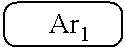
and formula

are each independently selected from the group consisting of an aryl containing 5-40 ring atoms and a heteroaryl containing 5-40 ring atoms; formula

is a linking group, and formula

is selected from the group consisting of alkyl, alkoxy, amino, alkenyl, alkynyl, aralkyl, and heteroalkyl;
-
- and R2, R3 and R4 are each independently selected from the group consisting of H, D, F, CN, alkyl, fluoroalkyl, aryl, heteroaryl, amino, Si, germyl, alkoxy, aryloxy, fluoroalkoxy, siloxane, siloxy, deuterated alkyl, deuterated fluoroalkyl, deuterated aryl, deuterated heteroaryl, deuterated amino, deuterated silyl, deuterated germyl, deuterated alkoxy, deuterated aryloxy, deuterated fluoroalkoxy, deuterated siloxane, and deuterated siloxy.
Description


are each independently one selected from an aryl group containing 5 to 40 ring atoms and a heteroaryl group containing 5 to 40 ring atoms;

is a linking group, and

is one selected from the group consisting of an alkyl group, an alkoxy group, an amino group, an alkenyl group, an alkynyl group, an aralkyl group, and a heteroalkyl group;


are each independently selected from an aryl group containing 5 to 40 ring atoms and a heteroaryl group containing 5 to 40 ring atoms;

is a linking group, and

is one selected from the group consisting of an alkyl group, an alkoxy group, an amino group, an alkenyl group, an alkynyl group, an aralkyl group, and a heteroalkyl group;

are each independently selected from an aryl group containing 5 to 35 ring atoms and a heteroaryl group containing 5 to 35 ring atoms.

are each independently selected from an aryl group containing 5 to 30 ring atoms and a heteroaryl group containing 5 to 30 ring atoms.

are each independently selected from an aryl group containing 5 to 20 ring atoms and a heteroaryl group containing 5 to 20 ring atoms.

are each independently selected from an aryl group containing 6 to 10 ring atoms and a heteroaryl group containing 6 to 10 ring atoms.

are each independently selected from an aryl group containing 6 to 20 ring atoms.

are each independently selected from an aryl group containing 6 to 15 ring atoms.

are each independently selected from an aryl group containing 6 to 10 ring atoms.

has a ring system containing 5 to 15 carbon atoms.

has a ring system containing 5 to 10 carbon atoms.

has a ring system containing 2 to 15 carbon atoms.

has a ring system containing 2 to 10 carbon atoms and at least one heteroatom, provided that the total number of carbon atoms and heteroatoms is at least 4.

is at least one selected from the group consisting of Si, N, P, O, S, and Ge.

is at least one selected from the group consisting of Si, N, P, O, and S.

is at least one selected from the group consisting of N, O, and S.

are each independently selected from one of the group consisting of:


are each independently selected from one of the group consisting of:


are each independently cyclic aryl group.

are each independently selected from one of the group consisting of benzene, biphenyl, phenanthrene, benzophenanthrene, fluorene, indenofluorene and a derivative thereof.

are each independently selected from one of the group consisting of triphenylamine, dibenzothiophene, dibenzofuran, dibenzoselenophene, furan, thiophene, benzofuran, benzothiophene, benzoselenophene, carbazole, indolocarbazole, pyridinoindole, pyrrolodipyridine, pyrazole, imidazole, triazoles, oxazole, thiazole, oxadiazole, oxatriazole, dioxazole, thiadiazole, pyridine, pyridazine, pyrimidine, pyrazine, triazines, oxazine, oxathiazine, oxadiazines, indole, benzimidazoles, indazole, indoxazine, bisbenzoxazole, isoxazole, benzothiazole, quinoline, isoquinoline, cinnoline, quinazoline, quinoxaline, naphthalene, phthalein, pteridine, xanthene, acridine, phenazine, phenothiazine, phenoxazine, benzofuropyridine, furodipyridine, benzothienopyridine, thienodipyridine, benzoselenohydroxyquinoline, and selenohydroxyquinoline.

are each independently selected from one of the group consisting of:


wherein u is a integer from 1 to 4.

may be further substituted with a substituent that is one selected from the group consisting of hydrogen, deuterium, an alkyl group, an alkoxy group, an amino group, an alkenyl group, an alkynyl group, an aralkyl group, a heteroalkyl group, an aryl group and a heteroaryl group.

is backbone structural units, and

is one selected from the group consisting of benzene, biphenyl, triphenyl, benzo, fluorene, indenofluorene, carbazole, indolecarbazole, dibenzosilole, dithienocyclopentadiene, dithienosilole, thiophene, anthracene, naphthalene, benzodithiophene, benzofuran, benzothiophene, benzoselenophene, and derivatives thereof.

is a group having hole transport property.

is a group having hole transport property, and

is one selected from the group consisting of aryl amine, triphenylamine, naphthylamine, thiophene, carbazole, dibenzothiophene, dithienocyclopentadiene, dithienothiol, dibenzoselenophene, furan, thiophene, benzofuran, benzothiophene, benzoselenophene, carbazole, indolocarbazole, and derivatives thereof.

has a structure represented by chemical formula 1:


has a structure represented by chemical formula 3:


is selected from groups having electron transport property.

is selected from the group consisting of pyrazole, imidazole, triazoles, oxazole, thiazole, oxadiazole, oxatriazole, thiadiazole, pyridine, pyridazine, pyrimidine, pyrazine, triazines, oxazine, oxathiazine, oxadiazines, indole, benzimidazoles, indazole, indoxazine, bisbenzoxazole, isoxazole, benzothiazole, quinoline, isoquinoline, cinnoline, quinazoline, quinoxaline, naphthalene, phthalein, pteridine, xanthene, acridine, phenazine, phenothiazine, phenoxazine, benzofuropyridine, furodipyridine, benzothienopyridine, thienodipyridine, benzoselenohydroxyquinoline, and selenohydroxyquinoline.


has the same meaning as


is selected from optoelectronic functional groups different from


is one selected from a singlet light emitting functional group, a triplet light emitting functional group, and a thermally activated delayed fluorescent functional group.

is a linking group.

is an alkyl group containing 2 to 30 carbon atoms, an alkoxy group, amino, an alkenyl group, an alkynyl group, an aralkyl group, a heteroalkyl group, an aryl group and a heteroaryl group.

is an alkyl group, an alkoxy group, an amino group, an alkenyl group, an alkynyl group, an aralkyl group or a heteroalkyl group.

is an alkyl group containing 1 to 30 carbon atoms, an alkoxy group containing 1 to 30 carbon atoms, benzene, biphenyl, triphenyl, benzo, thiophene, anthracene, naphthalene, benzodithiophene, aromatic amine, dibenzothiophene, dithienocyclopentadiene, dithienothiole, dibenzoselenophene, benzofuran, benzothiophene, benzoselenophene, carbazole or furan.

is an aryl group containing 5 to 60 ring atoms or a heteroaryl group containing 5 to 60 ring atoms.

and the furanyl crosslinkable group is one selected from the group consisting of


| TABLE 1 | ||||
| Device name | Efficiency (cd/A) @1000 nits | colour | ||
| OLED-1 | 41.5 | green | ||
| OLED-2 | 46.7 | green | ||
Claims (16)


Applications Claiming Priority (3)
| Application Number | Priority Date | Filing Date | Title |
|---|---|---|---|
| CN201611200093 | 2016-12-22 | ||
| CN201611200093.8 | 2016-12-22 | ||
| PCT/CN2017/118067 WO2018113785A1 (en) | 2016-12-22 | 2017-12-22 | Polymer containing furan crosslinking group and use thereof |
Publications (2)
| Publication Number | Publication Date |
|---|---|
| US20190372008A1 US20190372008A1 (en) | 2019-12-05 |
| US11289654B2 true US11289654B2 (en) | 2022-03-29 |
Family
ID=62624573
Family Applications (1)
| Application Number | Title | Priority Date | Filing Date |
|---|---|---|---|
| US16/472,701 Active 2038-04-01 US11289654B2 (en) | 2016-12-22 | 2017-12-22 | Polymers containing furanyl crosslinkable groups and uses thereof |
Country Status (4)
| Country | Link |
|---|---|
| US (1) | US11289654B2 (en) |
| EP (1) | EP3560917B1 (en) |
| CN (1) | CN109790136B (en) |
| WO (1) | WO2018113785A1 (en) |
Families Citing this family (8)
| Publication number | Priority date | Publication date | Assignee | Title |
|---|---|---|---|---|
| US11404644B2 (en) | 2016-12-22 | 2022-08-02 | Guangzhou Chinaray Optoelectronic Materials Ltd. | Organic functional compounds, mixtures, formulations, organic functional thin films and preparation methods therefor and organic electronic devices |
| CN108948865B (en) * | 2017-12-18 | 2020-07-10 | 广东聚华印刷显示技术有限公司 | Electroluminescent material ink and electroluminescent device thereof |
| CN109456252A (en) * | 2018-10-26 | 2019-03-12 | 苏州欧谱科显示科技有限公司 | Hole mobile material and light emitting diode with quantum dots |
| TWI742943B (en) * | 2020-11-26 | 2021-10-11 | 位速科技股份有限公司 | Aromatic amine polymer and perovskite photoelectric element |
| CN113285031B (en) * | 2021-04-30 | 2023-04-25 | 香港理工大学深圳研究院 | A method for regulating the stress of perovskite thin films using chemical cross-linking agents and perovskite solar cells |
| CN115677901B (en) * | 2021-10-21 | 2026-04-21 | 广东聚华印刷显示技术有限公司 | Prepolymers, crosslinked copolymers, quantum dot composites, their preparation methods, and quantum dot light-emitting diodes |
| CN116283945A (en) * | 2023-03-03 | 2023-06-23 | 瑞红(苏州)电子化学品股份有限公司 | Imide sulfonate photoacid generator, resist composition, application thereof and electronic component |
| CN117106483B (en) * | 2023-09-02 | 2024-12-17 | 江苏创新石化有限公司 | Residual oil hydrogenation anti-coking scale inhibitor and preparation method thereof |
Citations (87)
| Publication number | Priority date | Publication date | Assignee | Title |
|---|---|---|---|---|
| US3178440A (en) | 1960-03-01 | 1965-04-13 | Ciba Ltd | New 1:3:4-thiadiazoles |
| US3567450A (en) | 1968-02-20 | 1971-03-02 | Eastman Kodak Co | Photoconductive elements containing substituted triarylamine photoconductors |
| US3615404A (en) | 1968-04-25 | 1971-10-26 | Scott Paper Co | 1 3-phenylenediamine containing photoconductive materials |
| US4720432A (en) | 1987-02-11 | 1988-01-19 | Eastman Kodak Company | Electroluminescent device with organic luminescent medium |
| US4769292A (en) | 1987-03-02 | 1988-09-06 | Eastman Kodak Company | Electroluminescent device with modified thin film luminescent zone |
| US5061569A (en) | 1990-07-26 | 1991-10-29 | Eastman Kodak Company | Electroluminescent device with organic electroluminescent medium |
| US5121029A (en) | 1987-12-11 | 1992-06-09 | Idemitsu Kosan Co., Ltd. | Electroluminescence device having an organic electroluminescent element |
| JP2913116B2 (en) | 1990-11-20 | 1999-06-28 | 株式会社リコー | EL device |
| US6020078A (en) | 1998-12-18 | 2000-02-01 | Eastman Kodak Company | Green organic electroluminescent devices |
| WO2000070655A2 (en) | 1999-05-13 | 2000-11-23 | The Trustees Of Princeton University | Very high efficiency organic light emitting devices based on electrophosphorescence |
| WO2001021729A1 (en) | 1999-09-21 | 2001-03-29 | Idemitsu Kosan Co., Ltd. | Organic electroluminescence and organic luminous medium |
| WO2001041512A1 (en) | 1999-12-01 | 2001-06-07 | The Trustees Of Princeton University | Complexes of form l2mx as phosphorescent dopants for organic leds |
| US6251531B1 (en) | 1995-02-25 | 2001-06-26 | Toyo Ink Manufacturing Co., Ltd. | Light-emitting material for organic electroluminescence device, and organic electroluminescence device for which the light-emitting material is adapted |
| US20010053462A1 (en) | 2000-05-02 | 2001-12-20 | Masayuki Mishima | Light-emitting device |
| WO2002002714A2 (en) | 2000-06-30 | 2002-01-10 | E.I. Du Pont De Nemours And Company | Electroluminescent iridium compounds with fluorinated phenylpyridines, phenylpyrimidines, and phenylquinolines and devices made with such compounds |
| WO2002015645A1 (en) | 2000-08-11 | 2002-02-21 | The Trustees Of Princeton University | Organometallic compounds and emission-shifting organic electrophosphorescence |
| US6355673B1 (en) | 1997-05-09 | 2002-03-12 | Aventis Pharma Deutschland Gmbh | Substituted diaminocarboxylic acids |
| WO2003033496A1 (en) | 2001-10-19 | 2003-04-24 | Transtech Pharma, Inc. | Beta-carbolin derivatives as ptp-inhibitors |
| WO2003082278A1 (en) | 2002-03-28 | 2003-10-09 | Applied Research Systems Ars Holding N.V. | Thiazolidine carboxamide derivatives as modulators of the prostaglandin f receptor |
| WO2003097610A1 (en) | 2002-05-17 | 2003-11-27 | Pharmacia Italia S.P.A. | Aminoindazole derivatives active as kinase inhibitors, process for their preparation and pharmaceutical compositions comprising them |
| US6824895B1 (en) | 2003-12-05 | 2004-11-30 | Eastman Kodak Company | Electroluminescent device containing organometallic compound with tridentate ligand |
| US6830828B2 (en) | 1998-09-14 | 2004-12-14 | The Trustees Of Princeton University | Organometallic complexes as phosphorescent emitters in organic LEDs |
| US6835469B2 (en) | 2001-10-17 | 2004-12-28 | The University Of Southern California | Phosphorescent compounds and devices comprising the same |
| CN1583691A (en) | 2004-06-04 | 2005-02-23 | 友达光电股份有限公司 | Anthracene compound and organic electroluminescent device comprising the anthracene compound |
| WO2005019373A2 (en) | 2003-08-19 | 2005-03-03 | Basf Aktiengesellschaft | Transition metal complexes comprising carbene ligands serving as emitters for organic light-emitting diodes (oled's) |
| WO2005033244A1 (en) | 2003-09-29 | 2005-04-14 | Covion Organic Semiconductors Gmbh | Metal complexes |
| US20050258742A1 (en) | 2004-05-18 | 2005-11-24 | Yui-Yi Tsai | Carbene containing metal complexes as OLEDs |
| WO2006000388A1 (en) | 2004-06-26 | 2006-01-05 | Merck Patent Gmbh | Organic electroluminescent device |
| WO2006000389A1 (en) | 2004-06-26 | 2006-01-05 | Merck Patent Gmbh | Compounds for organic electronic devices |
| EP1191613B1 (en) | 2000-09-26 | 2006-03-29 | Canon Kabushiki Kaisha | Luminescence device, display apparatus and metal coordination compound |
| US7029766B2 (en) | 2003-12-05 | 2006-04-18 | Eastman Kodak Company | Organic element for electroluminescent devices |
| WO2006058737A1 (en) | 2004-12-01 | 2006-06-08 | Merck Patent Gmbh | Compounds for organic electronic devices |
| US20060210830A1 (en) | 2005-03-15 | 2006-09-21 | Idemitsu Kosan Co., Ltd. | Aromatic amine derivative and organic electroluminescence device using the same |
| US20070087219A1 (en) | 2005-10-19 | 2007-04-19 | Eastman Kodak Company | Electroluminescent device |
| WO2007065549A1 (en) | 2005-12-08 | 2007-06-14 | Merck Patent Gmbh | Organic electroluminescent devices |
| DE102005058557A1 (en) | 2005-12-08 | 2007-06-14 | Merck Patent Gmbh | Organic electroluminescent device |
| US7250532B2 (en) | 2001-03-16 | 2007-07-31 | Idemitsu Kosan Co., Ltd. | Method for producing aromatic amino compound |
| WO2007095118A2 (en) | 2006-02-10 | 2007-08-23 | Universal Display Corporation | METAL COMPLEXES OF CYCLOMETALLATED IMIDAZO[1,2-f]PHENANTHRIDINE AND DIIMIDAZO[1,2-A:1',2'-C]QUINAZOLINE LIGANDS AND ISOELECTRONIC AND BENZANNULATED ANALOGS THEREOF |
| WO2007115610A1 (en) | 2006-04-01 | 2007-10-18 | Merck Patent Gmbh | Materials for organic electroluminescent devices |
| US20070249800A1 (en) | 2006-04-20 | 2007-10-25 | New Span Opto-Technology Inc. | Emitting Color Controllable Polymers for Organic Light Emitting Diode Display Based on Partially Conjugated PPV Copolymers |
| US20070252517A1 (en) | 2006-04-27 | 2007-11-01 | Eastman Kodak Company | Electroluminescent device including an anthracene derivative |
| WO2007140847A1 (en) | 2006-06-02 | 2007-12-13 | Merck Patent Gmbh | Materials for organic electroluminescent devices |
| WO2008006449A1 (en) | 2006-07-11 | 2008-01-17 | Merck Patent Gmbh | Novel materials for organic electroluminescent devices |
| US20080027220A1 (en) | 2004-07-16 | 2008-01-31 | Merck Patent Gmbh | Metal Complexes |
| US20080048254A1 (en) | 2006-08-24 | 2008-02-28 | Kikuo Saka | Semiconductor device and manufacturing method of the semiconductor device |
| US20080113101A1 (en) | 2006-11-09 | 2008-05-15 | Idemitsu Kosan Co., Ltd. | Organic-electroluminescence-material-containing solution, method for forming thin film of organic electroluminescence material, thin film of organic electroluminescence material and organic electroluminescence device |
| US20090061681A1 (en) | 2007-09-05 | 2009-03-05 | Mcmunigal Tom | Electrical receptacle assembly |
| EP1191614B1 (en) | 2000-09-26 | 2009-05-06 | Canon Kabushiki Kaisha | Luminescence device and metal coordination compound therefor |
| US20090134784A1 (en) | 2004-10-21 | 2009-05-28 | Universal Display Corporation | Carbazole-containing materials in phosphorescent light emitting diodes |
| WO2009078587A2 (en) | 2007-12-14 | 2009-06-25 | Korea Research Institute Of Bioscience And Biotechnology | Composition for prevention and treatment of cancer containing triazolyl-thio-ethanone derivatives inhibiting activity of protein phosphatases or pharmaceutically acceptable salts thereof as an active ingredient |
| EP1191612B1 (en) | 2000-09-26 | 2009-09-09 | Canon Kabushiki Kaisha | Luminescence device and display apparatus |
| WO2009118087A1 (en) | 2008-03-25 | 2009-10-01 | Merck Patent Gmbh | Metal complexes |
| WO2009146770A2 (en) | 2008-06-05 | 2009-12-10 | Merck Patent Gmbh | Electronic device comprising metal complexes |
| WO2010015307A1 (en) | 2008-08-04 | 2010-02-11 | Merck Patent Gmbh | Electronic devices comprising metal complexes having isonitrile ligands |
| WO2010031485A1 (en) | 2008-09-22 | 2010-03-25 | Merck Patent Gmbh | Materials for organic electroluminescence devices |
| WO2010034125A1 (en) | 2008-09-29 | 2010-04-01 | Toronto Rehabilitation Institute | Hand hygiene compliance system |
| WO2010054731A1 (en) | 2008-11-13 | 2010-05-20 | Merck Patent Gmbh | Materials for organic electroluminescent devices |
| WO2010054728A1 (en) | 2008-11-13 | 2010-05-20 | Merck Patent Gmbh | Materials for organic electroluminescent devices |
| WO2010086089A1 (en) | 2009-02-02 | 2010-08-05 | Merck Patent Gmbh | Metal complexes |
| WO2010099852A1 (en) | 2009-03-02 | 2010-09-10 | Merck Patent Gmbh | Metal complexes having azaborol ligands and electronic device having the same |
| WO2010102709A1 (en) | 2009-03-13 | 2010-09-16 | Merck Patent Gmbh | Materials for organic electroluminescence devices |
| WO2010135519A1 (en) | 2009-05-20 | 2010-11-25 | Universal Display Corporation | Metal complexes with boron-nitrogen heterocycle containing ligands for use in organic light emitting devices |
| CN102076729A (en) | 2008-08-29 | 2011-05-25 | 默克专利有限公司 | Electroluminescent polymers, method for the production thereof, and use thereof |
| WO2011110277A1 (en) | 2010-03-11 | 2011-09-15 | Merck Patent Gmbh | Fibers in therapy and cosmetics |
| WO2011157339A1 (en) | 2010-06-15 | 2011-12-22 | Merck Patent Gmbh | Metal complexes |
| WO2012007087A1 (en) | 2010-07-16 | 2012-01-19 | Merck Patent Gmbh | Metal complexes |
| WO2012007086A1 (en) | 2010-07-16 | 2012-01-19 | Merck Patent Gmbh | Metal complexes |
| WO2012007088A1 (en) | 2010-07-16 | 2012-01-19 | Merck Patent Gmbh | Metal complexes |
| US20120217869A1 (en) | 2011-02-28 | 2012-08-30 | Kyushu University National University Corporation | Delayed fluorescence material and organic electroluminescence device |
| CN102668152A (en) | 2009-12-23 | 2012-09-12 | 默克专利有限公司 | Composition including polymeric binder |
| TW201309696A (en) | 2011-07-15 | 2013-03-01 | Univ Kyushu Nat Univ Corp | Delayed fluorescent material and organic electroluminescence element using same |
| TW201309778A (en) | 2011-07-15 | 2013-03-01 | Univ Kyushu Nat Univ Corp | Organic electroluminescence element and compound used therefor |
| WO2013063458A2 (en) | 2011-10-27 | 2013-05-02 | Mayo Foundation For Medical Education And Research | Inhibiting g protein coupled receptor 6 kinase polypeptides |
| WO2013133359A1 (en) | 2012-03-09 | 2013-09-12 | 国立大学法人九州大学 | Light-emitting material, and organic light-emitting element |
| WO2013154064A1 (en) | 2012-04-09 | 2013-10-17 | 国立大学法人九州大学 | Organic light emitting element, and light emitting material and compound used in same |
| TW201343874A (en) | 2012-04-25 | 2013-11-01 | Univ Kyushu Nat Univ Corp | Luminescence material and organic luminescence device |
| TW201350558A (en) | 2012-05-17 | 2013-12-16 | Univ Kyushu Nat Univ Corp | Compound, luminescence material and organic luminescence device |
| CN103483332A (en) | 2013-09-11 | 2014-01-01 | 中山大学 | Novel piezoluminescence material with thermal activation delayed fluorescence and aggregation-induced emission properties and synthetic method and application of novel piezoluminescence material |
| CN103985822A (en) | 2014-05-30 | 2014-08-13 | 广州华睿光电材料有限公司 | Organic mixture, composition comprising same, organic electronic device and application |
| WO2016046077A1 (en) | 2014-09-25 | 2016-03-31 | Cynora Gmbh | Crosslinkable host materials |
| US20160293847A1 (en) | 2015-03-30 | 2016-10-06 | Samsung Display Co., Ltd. | Compound and organic light-emitting device including the same |
| WO2017092476A1 (en) | 2015-12-04 | 2017-06-08 | 广州华睿光电材料有限公司 | Spirocyclic derivative, high polymer, mixture, composition and organic electronic device |
| WO2018113784A1 (en) | 2016-12-22 | 2018-06-28 | 广州华睿光电材料有限公司 | Organic functional compound, mixture, composition, organic functional thin film and preparation method therefor and organic electronic device |
| US20180312522A1 (en) | 2016-01-07 | 2018-11-01 | Guangzhou Chinaray Optoelectronic Materials Ltd. | Sulfone-containing fused heterocyclic compound and application thereof |
| US20180312531A1 (en) | 2016-01-07 | 2018-11-01 | Guangzhou Chinaray Optoelectronic Materials Ltd. | Silicon-containing organic compound and applications thereof |
| US20180354934A1 (en) | 2015-12-04 | 2018-12-13 | Guangzhou Chinaray Optoelectronic Materials Ltd. | Terbenzocyclopentadiene compound, high polymer, mixture, composition and organic electronic device |
| US20190006609A1 (en) | 2016-01-07 | 2019-01-03 | Guangzhou Chinaray Optoelectronic Materials Ltd. | Organic functional compound for preparing organic electronic device and application thereof |
Family Cites Families (1)
| Publication number | Priority date | Publication date | Assignee | Title |
|---|---|---|---|---|
| JP2686418B2 (en) | 1994-08-12 | 1997-12-08 | 東洋インキ製造株式会社 | Diarylamine derivative, production method and use thereof |
-
2017
- 2017-12-22 CN CN201780059560.6A patent/CN109790136B/en active Active
- 2017-12-22 EP EP17885049.1A patent/EP3560917B1/en active Active
- 2017-12-22 US US16/472,701 patent/US11289654B2/en active Active
- 2017-12-22 WO PCT/CN2017/118067 patent/WO2018113785A1/en not_active Ceased
Patent Citations (102)
| Publication number | Priority date | Publication date | Assignee | Title |
|---|---|---|---|---|
| US3178440A (en) | 1960-03-01 | 1965-04-13 | Ciba Ltd | New 1:3:4-thiadiazoles |
| US3567450A (en) | 1968-02-20 | 1971-03-02 | Eastman Kodak Co | Photoconductive elements containing substituted triarylamine photoconductors |
| US3615404A (en) | 1968-04-25 | 1971-10-26 | Scott Paper Co | 1 3-phenylenediamine containing photoconductive materials |
| US4720432A (en) | 1987-02-11 | 1988-01-19 | Eastman Kodak Company | Electroluminescent device with organic luminescent medium |
| US4769292A (en) | 1987-03-02 | 1988-09-06 | Eastman Kodak Company | Electroluminescent device with modified thin film luminescent zone |
| US5121029A (en) | 1987-12-11 | 1992-06-09 | Idemitsu Kosan Co., Ltd. | Electroluminescence device having an organic electroluminescent element |
| US5061569A (en) | 1990-07-26 | 1991-10-29 | Eastman Kodak Company | Electroluminescent device with organic electroluminescent medium |
| JP2913116B2 (en) | 1990-11-20 | 1999-06-28 | 株式会社リコー | EL device |
| US6251531B1 (en) | 1995-02-25 | 2001-06-26 | Toyo Ink Manufacturing Co., Ltd. | Light-emitting material for organic electroluminescence device, and organic electroluminescence device for which the light-emitting material is adapted |
| US6355673B1 (en) | 1997-05-09 | 2002-03-12 | Aventis Pharma Deutschland Gmbh | Substituted diaminocarboxylic acids |
| US6830828B2 (en) | 1998-09-14 | 2004-12-14 | The Trustees Of Princeton University | Organometallic complexes as phosphorescent emitters in organic LEDs |
| US6020078A (en) | 1998-12-18 | 2000-02-01 | Eastman Kodak Company | Green organic electroluminescent devices |
| WO2000070655A2 (en) | 1999-05-13 | 2000-11-23 | The Trustees Of Princeton University | Very high efficiency organic light emitting devices based on electrophosphorescence |
| WO2001021729A1 (en) | 1999-09-21 | 2001-03-29 | Idemitsu Kosan Co., Ltd. | Organic electroluminescence and organic luminous medium |
| WO2001041512A1 (en) | 1999-12-01 | 2001-06-07 | The Trustees Of Princeton University | Complexes of form l2mx as phosphorescent dopants for organic leds |
| US20010053462A1 (en) | 2000-05-02 | 2001-12-20 | Masayuki Mishima | Light-emitting device |
| WO2002002714A2 (en) | 2000-06-30 | 2002-01-10 | E.I. Du Pont De Nemours And Company | Electroluminescent iridium compounds with fluorinated phenylpyridines, phenylpyrimidines, and phenylquinolines and devices made with such compounds |
| WO2002015645A1 (en) | 2000-08-11 | 2002-02-21 | The Trustees Of Princeton University | Organometallic compounds and emission-shifting organic electrophosphorescence |
| EP1191614B1 (en) | 2000-09-26 | 2009-05-06 | Canon Kabushiki Kaisha | Luminescence device and metal coordination compound therefor |
| EP1191613B1 (en) | 2000-09-26 | 2006-03-29 | Canon Kabushiki Kaisha | Luminescence device, display apparatus and metal coordination compound |
| EP1191612B1 (en) | 2000-09-26 | 2009-09-09 | Canon Kabushiki Kaisha | Luminescence device and display apparatus |
| US7250532B2 (en) | 2001-03-16 | 2007-07-31 | Idemitsu Kosan Co., Ltd. | Method for producing aromatic amino compound |
| US6835469B2 (en) | 2001-10-17 | 2004-12-28 | The University Of Southern California | Phosphorescent compounds and devices comprising the same |
| WO2003033496A1 (en) | 2001-10-19 | 2003-04-24 | Transtech Pharma, Inc. | Beta-carbolin derivatives as ptp-inhibitors |
| WO2003082278A1 (en) | 2002-03-28 | 2003-10-09 | Applied Research Systems Ars Holding N.V. | Thiazolidine carboxamide derivatives as modulators of the prostaglandin f receptor |
| WO2003097610A1 (en) | 2002-05-17 | 2003-11-27 | Pharmacia Italia S.P.A. | Aminoindazole derivatives active as kinase inhibitors, process for their preparation and pharmaceutical compositions comprising them |
| WO2005019373A2 (en) | 2003-08-19 | 2005-03-03 | Basf Aktiengesellschaft | Transition metal complexes comprising carbene ligands serving as emitters for organic light-emitting diodes (oled's) |
| WO2005033244A1 (en) | 2003-09-29 | 2005-04-14 | Covion Organic Semiconductors Gmbh | Metal complexes |
| US7029766B2 (en) | 2003-12-05 | 2006-04-18 | Eastman Kodak Company | Organic element for electroluminescent devices |
| US6824895B1 (en) | 2003-12-05 | 2004-11-30 | Eastman Kodak Company | Electroluminescent device containing organometallic compound with tridentate ligand |
| US20050258742A1 (en) | 2004-05-18 | 2005-11-24 | Yui-Yi Tsai | Carbene containing metal complexes as OLEDs |
| CN1583691A (en) | 2004-06-04 | 2005-02-23 | 友达光电股份有限公司 | Anthracene compound and organic electroluminescent device comprising the anthracene compound |
| WO2006000389A1 (en) | 2004-06-26 | 2006-01-05 | Merck Patent Gmbh | Compounds for organic electronic devices |
| WO2006000388A1 (en) | 2004-06-26 | 2006-01-05 | Merck Patent Gmbh | Organic electroluminescent device |
| US20080027220A1 (en) | 2004-07-16 | 2008-01-31 | Merck Patent Gmbh | Metal Complexes |
| US20090134784A1 (en) | 2004-10-21 | 2009-05-28 | Universal Display Corporation | Carbazole-containing materials in phosphorescent light emitting diodes |
| WO2006058737A1 (en) | 2004-12-01 | 2006-06-08 | Merck Patent Gmbh | Compounds for organic electronic devices |
| US20060210830A1 (en) | 2005-03-15 | 2006-09-21 | Idemitsu Kosan Co., Ltd. | Aromatic amine derivative and organic electroluminescence device using the same |
| US20070087219A1 (en) | 2005-10-19 | 2007-04-19 | Eastman Kodak Company | Electroluminescent device |
| US20080303423A1 (en) | 2005-12-08 | 2008-12-11 | Merck Patent Gmbh | Novel Materials For Organic Electroluminescent Devices |
| DE102005058557A1 (en) | 2005-12-08 | 2007-06-14 | Merck Patent Gmbh | Organic electroluminescent device |
| EP1957606A1 (en) | 2005-12-08 | 2008-08-20 | Merck Patent GmbH | Novel materials for organic electroluminiescent devices |
| US20080297037A1 (en) | 2005-12-08 | 2008-12-04 | Merck Patent Gmbh | Organic Electroluminescent Devices |
| WO2007065549A1 (en) | 2005-12-08 | 2007-06-14 | Merck Patent Gmbh | Organic electroluminescent devices |
| WO2007095118A2 (en) | 2006-02-10 | 2007-08-23 | Universal Display Corporation | METAL COMPLEXES OF CYCLOMETALLATED IMIDAZO[1,2-f]PHENANTHRIDINE AND DIIMIDAZO[1,2-A:1',2'-C]QUINAZOLINE LIGANDS AND ISOELECTRONIC AND BENZANNULATED ANALOGS THEREOF |
| WO2007115610A1 (en) | 2006-04-01 | 2007-10-18 | Merck Patent Gmbh | Materials for organic electroluminescent devices |
| US20070249800A1 (en) | 2006-04-20 | 2007-10-25 | New Span Opto-Technology Inc. | Emitting Color Controllable Polymers for Organic Light Emitting Diode Display Based on Partially Conjugated PPV Copolymers |
| US20070252517A1 (en) | 2006-04-27 | 2007-11-01 | Eastman Kodak Company | Electroluminescent device including an anthracene derivative |
| WO2007140847A1 (en) | 2006-06-02 | 2007-12-13 | Merck Patent Gmbh | Materials for organic electroluminescent devices |
| WO2008006449A1 (en) | 2006-07-11 | 2008-01-17 | Merck Patent Gmbh | Novel materials for organic electroluminescent devices |
| US20080048254A1 (en) | 2006-08-24 | 2008-02-28 | Kikuo Saka | Semiconductor device and manufacturing method of the semiconductor device |
| JP2008053397A (en) | 2006-08-24 | 2008-03-06 | Ricoh Co Ltd | Semiconductor device and manufacturing method thereof |
| US20080113101A1 (en) | 2006-11-09 | 2008-05-15 | Idemitsu Kosan Co., Ltd. | Organic-electroluminescence-material-containing solution, method for forming thin film of organic electroluminescence material, thin film of organic electroluminescence material and organic electroluminescence device |
| US20090061681A1 (en) | 2007-09-05 | 2009-03-05 | Mcmunigal Tom | Electrical receptacle assembly |
| WO2009078587A2 (en) | 2007-12-14 | 2009-06-25 | Korea Research Institute Of Bioscience And Biotechnology | Composition for prevention and treatment of cancer containing triazolyl-thio-ethanone derivatives inhibiting activity of protein phosphatases or pharmaceutically acceptable salts thereof as an active ingredient |
| WO2009118087A1 (en) | 2008-03-25 | 2009-10-01 | Merck Patent Gmbh | Metal complexes |
| WO2009146770A2 (en) | 2008-06-05 | 2009-12-10 | Merck Patent Gmbh | Electronic device comprising metal complexes |
| WO2010015307A1 (en) | 2008-08-04 | 2010-02-11 | Merck Patent Gmbh | Electronic devices comprising metal complexes having isonitrile ligands |
| CN102076729A (en) | 2008-08-29 | 2011-05-25 | 默克专利有限公司 | Electroluminescent polymers, method for the production thereof, and use thereof |
| WO2010031485A1 (en) | 2008-09-22 | 2010-03-25 | Merck Patent Gmbh | Materials for organic electroluminescence devices |
| WO2010034125A1 (en) | 2008-09-29 | 2010-04-01 | Toronto Rehabilitation Institute | Hand hygiene compliance system |
| WO2010054728A1 (en) | 2008-11-13 | 2010-05-20 | Merck Patent Gmbh | Materials for organic electroluminescent devices |
| WO2010054731A1 (en) | 2008-11-13 | 2010-05-20 | Merck Patent Gmbh | Materials for organic electroluminescent devices |
| WO2010086089A1 (en) | 2009-02-02 | 2010-08-05 | Merck Patent Gmbh | Metal complexes |
| CN102282150A (en) | 2009-02-02 | 2011-12-14 | 默克专利有限公司 | Metal complexes |
| US20110284799A1 (en) | 2009-02-02 | 2011-11-24 | Merck Patent Gmbh | Metal complexes |
| US20120004407A1 (en) | 2009-03-02 | 2012-01-05 | Merck Patent Gmbh | Metal complexes having azaborol ligands and electronic device having the same |
| WO2010099852A1 (en) | 2009-03-02 | 2010-09-10 | Merck Patent Gmbh | Metal complexes having azaborol ligands and electronic device having the same |
| WO2010102709A1 (en) | 2009-03-13 | 2010-09-16 | Merck Patent Gmbh | Materials for organic electroluminescence devices |
| WO2010135519A1 (en) | 2009-05-20 | 2010-11-25 | Universal Display Corporation | Metal complexes with boron-nitrogen heterocycle containing ligands for use in organic light emitting devices |
| US20120273736A1 (en) | 2009-12-23 | 2012-11-01 | Merck Patent Gmbh | Compositions comprising polymeric binders |
| CN102668152A (en) | 2009-12-23 | 2012-09-12 | 默克专利有限公司 | Composition including polymeric binder |
| WO2011110277A1 (en) | 2010-03-11 | 2011-09-15 | Merck Patent Gmbh | Fibers in therapy and cosmetics |
| WO2011157339A1 (en) | 2010-06-15 | 2011-12-22 | Merck Patent Gmbh | Metal complexes |
| WO2012007087A1 (en) | 2010-07-16 | 2012-01-19 | Merck Patent Gmbh | Metal complexes |
| WO2012007086A1 (en) | 2010-07-16 | 2012-01-19 | Merck Patent Gmbh | Metal complexes |
| WO2012007088A1 (en) | 2010-07-16 | 2012-01-19 | Merck Patent Gmbh | Metal complexes |
| US20120217869A1 (en) | 2011-02-28 | 2012-08-30 | Kyushu University National University Corporation | Delayed fluorescence material and organic electroluminescence device |
| TW201309696A (en) | 2011-07-15 | 2013-03-01 | Univ Kyushu Nat Univ Corp | Delayed fluorescent material and organic electroluminescence element using same |
| TW201309778A (en) | 2011-07-15 | 2013-03-01 | Univ Kyushu Nat Univ Corp | Organic electroluminescence element and compound used therefor |
| US20140138669A1 (en) | 2011-07-15 | 2014-05-22 | Kyushu University National University Corporation | Delayed-fluorescence material and organic electroluminescence element using same |
| US20140138670A1 (en) | 2011-07-15 | 2014-05-22 | Kyushu University National University Corporation | Organic electroluminescence element and compound used therein |
| WO2013063458A2 (en) | 2011-10-27 | 2013-05-02 | Mayo Foundation For Medical Education And Research | Inhibiting g protein coupled receptor 6 kinase polypeptides |
| WO2013133359A1 (en) | 2012-03-09 | 2013-09-12 | 国立大学法人九州大学 | Light-emitting material, and organic light-emitting element |
| WO2013154064A1 (en) | 2012-04-09 | 2013-10-17 | 国立大学法人九州大学 | Organic light emitting element, and light emitting material and compound used in same |
| TW201343874A (en) | 2012-04-25 | 2013-11-01 | Univ Kyushu Nat Univ Corp | Luminescence material and organic luminescence device |
| US20150141642A1 (en) | 2012-04-25 | 2015-05-21 | Kyushu University National University Corporation | Light-emitting material and organic light-emitting device |
| TW201350558A (en) | 2012-05-17 | 2013-12-16 | Univ Kyushu Nat Univ Corp | Compound, luminescence material and organic luminescence device |
| US20150041784A1 (en) | 2012-05-17 | 2015-02-12 | Kyushu University National University Corporation | Compound, light-emitting material, and organic light-emitting device |
| CN103483332A (en) | 2013-09-11 | 2014-01-01 | 中山大学 | Novel piezoluminescence material with thermal activation delayed fluorescence and aggregation-induced emission properties and synthetic method and application of novel piezoluminescence material |
| US20170194585A1 (en) | 2014-05-30 | 2017-07-06 | Guangzhou Chinaray Optoelectronic Materials Ltd. | Organic mixture, formulation and organic electronic device comprising thereof, and their applications |
| CN103985822A (en) | 2014-05-30 | 2014-08-13 | 广州华睿光电材料有限公司 | Organic mixture, composition comprising same, organic electronic device and application |
| WO2016046077A1 (en) | 2014-09-25 | 2016-03-31 | Cynora Gmbh | Crosslinkable host materials |
| US20160293847A1 (en) | 2015-03-30 | 2016-10-06 | Samsung Display Co., Ltd. | Compound and organic light-emitting device including the same |
| CN106008420A (en) | 2015-03-30 | 2016-10-12 | 三星显示有限公司 | Compound and organic light-emitting device including the same |
| WO2017092476A1 (en) | 2015-12-04 | 2017-06-08 | 广州华睿光电材料有限公司 | Spirocyclic derivative, high polymer, mixture, composition and organic electronic device |
| US20180354934A1 (en) | 2015-12-04 | 2018-12-13 | Guangzhou Chinaray Optoelectronic Materials Ltd. | Terbenzocyclopentadiene compound, high polymer, mixture, composition and organic electronic device |
| US20180312522A1 (en) | 2016-01-07 | 2018-11-01 | Guangzhou Chinaray Optoelectronic Materials Ltd. | Sulfone-containing fused heterocyclic compound and application thereof |
| US20180312531A1 (en) | 2016-01-07 | 2018-11-01 | Guangzhou Chinaray Optoelectronic Materials Ltd. | Silicon-containing organic compound and applications thereof |
| US20190006609A1 (en) | 2016-01-07 | 2019-01-03 | Guangzhou Chinaray Optoelectronic Materials Ltd. | Organic functional compound for preparing organic electronic device and application thereof |
| WO2018113784A1 (en) | 2016-12-22 | 2018-06-28 | 广州华睿光电材料有限公司 | Organic functional compound, mixture, composition, organic functional thin film and preparation method therefor and organic electronic device |
| US20190363258A1 (en) | 2016-12-22 | 2019-11-28 | Guangzhou Chinaray Optoelectronic Materials Ltd. | Organic functional compounds, mixtures, formulations, organic functional thin films and preparation methods therefor and organic electronic devices |
Non-Patent Citations (36)
| Title |
|---|
| Adachi et al., "High-efficiency red electrophosphorescence devices," Applied Physics Letters, vol. 78, No. 11, pp. 1622-1624, 2001, (4 pages). |
| Baldo et al., "High-efficiency fluorescent organic light-emitting devices using a phosphorescent sensitizer," Nature, vol. 403, pp. 750-753, 2000, (4 pages). |
| Bulovic et al., "Transparent light-emitting devices," Nature, vol. 380, p. 29, 1996, (1 page). |
| Dias et al., "Triplet Harvesting with 100% Efficiency by Way of Thermally Activated Delayed Fluorescence in Charge Transfer OLED Emitters," Advanced Materials, 25(27), pp. 3707-3714, 2013, (8 pages). |
| Endo et al., "Efficient up-conversion of triplet excitons into a singlet state and its application for organic light emitting diodes", Applied Physics Letters, 98, pp. 083302-1-083302-3, 2011, (4 pages). |
| Endo et al., "Thermally Activated Delayed Fluorescence from Sn4-Porphyrin Complexes and Their Application to Organic Light-Emitting Diodes—A Novel Mechanism for Electroluminescence", Advanced Materials, 21, pp. 4802-4806, 2009, (5 pages). |
| Extended European Search Report for European Application No. 17885049.1, dated Oct. 17, 2019, (10 pages). |
| Extended European Search Report for European Application No. 17885049.1, dated Oct. 17, 2019, (9 pages). |
| Goushi et al., "Organic light-emitting diodes employing efficient reverse intersystem crossing for triplet-to-singlet state conversion", Nature Photonics, vol. 6, pp. 253-258, 2012, (6 pages). |
| Gu et al., "Transparent organic light emitting devices," Applied Physics Letters, 68(19), pp. 2606-2608, 1996, (4 pages). |
| International Search Report, and English Translation thereof, for International Application No. PCT/CN2017/118067, dated Mar. 22, 2018 (3 pages). |
| Ishimatsu et al., "Solvent Effect on Thermally Activated Delayed Fluorescence by 1,2,3,5-Tetrakis(carbazol-9-yl)-4,6-dicyanobenzene," Journal of Physical Chemistry A, 117, pp. 5607-5612, 2013, (6 pages). |
| Johnson et al., "Luminescent Iridium(I), Rhodium(I), and Platinum(II) Dithiolate Complexes," Journal of the American Chemical Society, vol. 105, No. 7, pp. 1795-1802, 1983, (8 pages). |
| Kido et al., "Bright red light-emitting organic electroluminescent devices having a europium complex as an emitter," Applied Physics Letters, 65(17), pp. 2124-2126, 1994, (4 pages). |
| Kido et al., "Electroluminescence in a Terbium Complex," Chemistry Letters, pp. 657-660, vol. 19, Issue 4, 1990, (4 pages). |
| Kipphan, "Handbook of Print Media: Technologies and Production Methods," pp. 40-67, 117-144, and 711-730, 2004, (76 pages). |
| Komino et al., "Suppression of Efficiency Roll-Off Characteristics in Thermally Activated Delayed Fluorescence Based Organic Light-Emitting Diodes Using Randomly Oriented Host Molecules," Chemistry of Materials, 25, pp. 3038-3047, 2013, (10 pages). |
| Lee et al., "High-efficiency organic light-emitting diodes utilizing thermally activated delayed fluorescence from triazine-based donor-acceptor hybrid molecules", Applied Physics Letters,101, pp. 093306-1-093306-4, 2012, (5 pages). |
| Lee et al., "Oxadiazole- and triazole-based highly-efficient thermally activated delayed fluorescence emitters for organic light-emitting diodes," Journal of Materials Chemistry C., 1(30), pp. 4599-4604, 2013, (6 pages). |
| Li et al., "Highly Efficient Organic Light-Emitting Diode Based on a Hidden Thermally Activated Delayed Fluorescence Channel in a Heptazine Derivative," Advanced Materials, 25(24), pp. 3319-3323, 2013, (5 pages). |
| Ma et al., "Electroluminescence from triplet metal-ligand charge-transfer excited state of transition metal complexes," Synthetic Metals, 94, pp. 245-248, 1998, (4 pages). |
| Mehes et al., "Enhanced Electroluminescence Efficiency in a Spiro-Acridine Derivative through Thermally Activated Delayed Fluorescence", Angewandte Chemie International Edition, 51, pp. 11311-11315, 2012, (5 pages). |
| Nakagawa et al., "Electroluminescence based on thermally activated delayed fluorescence generated by a spirobifluorene donor—acceptor structure," Chem. Commun., 48, pp. 9580-9582, 2012, (4 pages). |
| Nasu et al., "A highly luminescent spiro-anthracenone-based organic light-emitting diode exhibiting thermally activated delayed fluorescence," Chem. Commun., 49(88), pp. 10385-10387, 2013, (3 pages). |
| Newkome et al., "Chiral Dendritic Macromolecules", Dendrimers and Dendrons: Concepts, Syntheses, Applications, Chapter 7, pp. 395-455, 2001, (62 pages). |
| Newkome et al., "Convergent Methodologies", Dendrimers and Dendrons: Concepts, Syntheses, Applications, Chapter 5, pp. 191-309, 2001, (63 pages). |
| Newkome et al., "Dendrimers Derived by Divergent Procedures Using 1→2 Branching Motifs", Dendrimers and Dendrons: Concepts, Syntheses, Applications, Chapter 3, pp. 51-118, 2001, (70 pages). |
| Newkome et al., "Hyperbranched Materials", Dendrimers and Dendrons: Concepts, Syntheses, Applications, Chapter 6, pp. 331-392, 2001, (63 pages). |
| Newkome et al., "Masses, Sizes, and Shapes of Macromolecules from Multifunctional Monomers", Dendrimers and Dendrons: Concepts, Syntheses, Applications, Chapter 1, pp. 1-21, 2001, (21 pages). |
| Patel et al., "A Diels-Alder crosslinkable host polymer for improved PLED performance: the impact on solution processed doped device and multilayer device performance", Journal of Materials Chemistry, 22, pp. 3004-3014, 2012, (11 pages). |
| Tanaka et al., "Efficient green thermally activated delayed fluorescence (TADF) from a phenoxazine-triphenyltriazine (PXZ-TRZ) derivative", Chemical Communications, vol. 48. No. 93, pp. 11392-11394, 2012, (4 pages). |
| Tanaka et al., "Twisted Intramolecular Charge Transfer State for Long-Wavelength Thermally Activated Delayed Fluorescence," Chemistry of Materials, 25, pp. 3766-3771, 2013, (6 pages). |
| Uoyama et al., "Highly efficient organic light-emitting diodes from delayed fluorescence", Nature, vol. 492, pp. 234-238, 2012, (7 pages). |
| Wang et al., "A simple and efficient one step synthesis of 1,3,4-oxadiazoles utilizing polymer-supported reagents and microwave heating", Tetrahedron Letters, 47, pp. 105-108, 2006, (4 pages). |
| Wrighton et al., "The Nature of the Lowest Excited State in Tricarbonylchloro-1, 10-phenanthrolinerhenium(I) and Related Complexes," Journal of the American Chemical Society, 96(4), pp. 998-1003, 1974, (6 pages). |
| Zhang et al., "Design of Efficient Thermally Activated Delayed Fluorescence Materials for Pure Blue Organic Light Emitting Diodes", Journal of the American Chemical Society, 134, pp. 14706-14709, 2012, (4 pages). |
Also Published As
| Publication number | Publication date |
|---|---|
| WO2018113785A1 (en) | 2018-06-28 |
| CN109790136A (en) | 2019-05-21 |
| EP3560917A1 (en) | 2019-10-30 |
| US20190372008A1 (en) | 2019-12-05 |
| EP3560917B1 (en) | 2023-12-20 |
| EP3560917A4 (en) | 2019-11-20 |
| CN109790136B (en) | 2024-01-12 |
Similar Documents
| Publication | Publication Date | Title |
|---|---|---|
| US11292875B2 (en) | Cross-linkable polymer based on Diels-Alder reaction and use thereof in organic electronic device | |
| CN108003365B (en) | Organic compound film and its application in organic electronic device | |
| EP3560917B1 (en) | Polymer containing furan crosslinking group and use thereof | |
| US10323180B2 (en) | Deuterated organic compound, mixture and composition containing said compound, and organic electronic device | |
| US10364316B2 (en) | Conjugated polymer containing ethynyl crosslinking group, mixture, formulation, organic electronic device containing the same and application therof | |
| CN107001380A (en) | Compound, the mixture comprising it, composition and organic electronic device | |
| US11594690B2 (en) | Organometallic complex, and polymer, mixture and formulation comprising same, and use thereof in electronic device | |
| CN110760056B (en) | Polymer containing condensed ring aromatic hydrocarbon group and application thereof in organic electronic device | |
| US20190378991A1 (en) | Organic mixture, composition, and organic electronic component | |
| EP3492509A1 (en) | Polymer or oligomer, hole transport material composition, and organic electronic element using same | |
| CN109705107A (en) | Condensed ring organic compound, mixture and organic electronic device comprising it | |
| CN110760164B (en) | Organic mixture, composition containing organic mixture, organic electronic device and application | |
| US20180312522A1 (en) | Sulfone-containing fused heterocyclic compound and application thereof | |
| CN111278892B (en) | Polymers, mixtures, compositions containing amide bond groups and uses thereof | |
| US20200185615A1 (en) | Organic chemical compound, organic mixture, and organic electronic component | |
| US11161933B2 (en) | Conjugated polymer and use thereof in organic electronic device | |
| CN109369891B (en) | Polymers containing basic groups and their use | |
| US20200109235A1 (en) | Conjugated polymer and use thereof in organic electronic device | |
| US10804470B2 (en) | Organic compound | |
| CN119955052A (en) | High polymer and application thereof in photoelectric field | |
| US20240343715A1 (en) | Organic compounds, mixtures and formulations comprising same, organic electronic devices, and applications of compounds | |
| US20250185508A1 (en) | Organic electroluminescent devices and polymers, formulations, mixtures, and organic compounds for preparing same |
Legal Events
| Date | Code | Title | Description |
|---|---|---|---|
| AS | Assignment |
Owner name: GUANGZHOU CHINARAY OPTOELECTRONIC MATERIALS LTD., CHINA Free format text: ASSIGNMENT OF ASSIGNORS INTEREST;ASSIGNORS:PAN, JUNYOU;LIU, SHENGJIAN;HUANG, FEI;AND OTHERS;SIGNING DATES FROM 20190603 TO 20190604;REEL/FRAME:049554/0230 Owner name: GUANGZHOU CHINARAY OPTOELECTRONIC MATERIALS LTD., Free format text: ASSIGNMENT OF ASSIGNORS INTEREST;ASSIGNORS:PAN, JUNYOU;LIU, SHENGJIAN;HUANG, FEI;AND OTHERS;SIGNING DATES FROM 20190603 TO 20190604;REEL/FRAME:049554/0230 |
|
| FEPP | Fee payment procedure |
Free format text: ENTITY STATUS SET TO UNDISCOUNTED (ORIGINAL EVENT CODE: BIG.); ENTITY STATUS OF PATENT OWNER: LARGE ENTITY |
|
| STPP | Information on status: patent application and granting procedure in general |
Free format text: RESPONSE TO NON-FINAL OFFICE ACTION ENTERED AND FORWARDED TO EXAMINER |
|
| STPP | Information on status: patent application and granting procedure in general |
Free format text: NON FINAL ACTION MAILED |
|
| STPP | Information on status: patent application and granting procedure in general |
Free format text: RESPONSE TO NON-FINAL OFFICE ACTION ENTERED AND FORWARDED TO EXAMINER |
|
| STPP | Information on status: patent application and granting procedure in general |
Free format text: FINAL REJECTION MAILED |
|
| STPP | Information on status: patent application and granting procedure in general |
Free format text: ADVISORY ACTION MAILED |
|
| STPP | Information on status: patent application and granting procedure in general |
Free format text: NOTICE OF ALLOWANCE MAILED -- APPLICATION RECEIVED IN OFFICE OF PUBLICATIONS |
|
| STPP | Information on status: patent application and granting procedure in general |
Free format text: PUBLICATIONS -- ISSUE FEE PAYMENT VERIFIED |
|
| STCF | Information on status: patent grant |
Free format text: PATENTED CASE |
|
| MAFP | Maintenance fee payment |
Free format text: PAYMENT OF MAINTENANCE FEE, 4TH YEAR, LARGE ENTITY (ORIGINAL EVENT CODE: M1551); ENTITY STATUS OF PATENT OWNER: LARGE ENTITY Year of fee payment: 4 |