US11285155B2 - Pharmaceutical combinations for treating cancer - Google Patents
Pharmaceutical combinations for treating cancer Download PDFInfo
- Publication number
- US11285155B2 US11285155B2 US16/307,860 US201716307860A US11285155B2 US 11285155 B2 US11285155 B2 US 11285155B2 US 201716307860 A US201716307860 A US 201716307860A US 11285155 B2 US11285155 B2 US 11285155B2
- Authority
- US
- United States
- Prior art keywords
- cancer
- alkyl
- pharmaceutically acceptable
- ppar
- cycloalkyl
- Prior art date
- Legal status (The legal status is an assumption and is not a legal conclusion. Google has not performed a legal analysis and makes no representation as to the accuracy of the status listed.)
- Active
Links
- 0 [1*][W]c1cc2c(cn1)C=C(CC)C(=C)N2[3*].[1*][W]c1cc2nc(N([8*])[9*])c(CC)cc2cn1 Chemical compound [1*][W]c1cc2c(cn1)C=C(CC)C(=C)N2[3*].[1*][W]c1cc2nc(N([8*])[9*])c(CC)cc2cn1 0.000 description 4
- IHSBNPPGVPOHRE-QWRGUYRKSA-N C[C@H](O)Cn1c(=O)c(Oc2ccc(F)cc2F)cc2cnc(N[C@@H](C)CO)nc21 Chemical compound C[C@H](O)Cn1c(=O)c(Oc2ccc(F)cc2F)cc2cnc(N[C@@H](C)CO)nc21 IHSBNPPGVPOHRE-QWRGUYRKSA-N 0.000 description 2
- JYYLVUFNAHSSFE-UHFFFAOYSA-N Cn1c(=O)c(Oc2ccc(F)cc2F)cc2cnc(NC(CCO)CCO)nc21 Chemical compound Cn1c(=O)c(Oc2ccc(F)cc2F)cc2cnc(NC(CCO)CCO)nc21 JYYLVUFNAHSSFE-UHFFFAOYSA-N 0.000 description 2
- LGBHHDOUGQOLIS-UHFFFAOYSA-N CC(C)(C)Cn1c(N)nc2ccc(C3=C(c4ccc(F)cc4)N=C(C(C)(C)C)C3)nc21.CS(=O)(=O)O.CS(=O)(=O)O Chemical compound CC(C)(C)Cn1c(N)nc2ccc(C3=C(c4ccc(F)cc4)N=C(C(C)(C)C)C3)nc21.CS(=O)(=O)O.CS(=O)(=O)O LGBHHDOUGQOLIS-UHFFFAOYSA-N 0.000 description 1
- UQOLGTYRGGWMLL-UHFFFAOYSA-N CC(C)CN1NCc2cc(Oc3ccc(F)cc3F)c(C(=O)NCCN(C)C)cc21 Chemical compound CC(C)CN1NCc2cc(Oc3ccc(F)cc3F)c(C(=O)NCCN(C)C)cc21 UQOLGTYRGGWMLL-UHFFFAOYSA-N 0.000 description 1
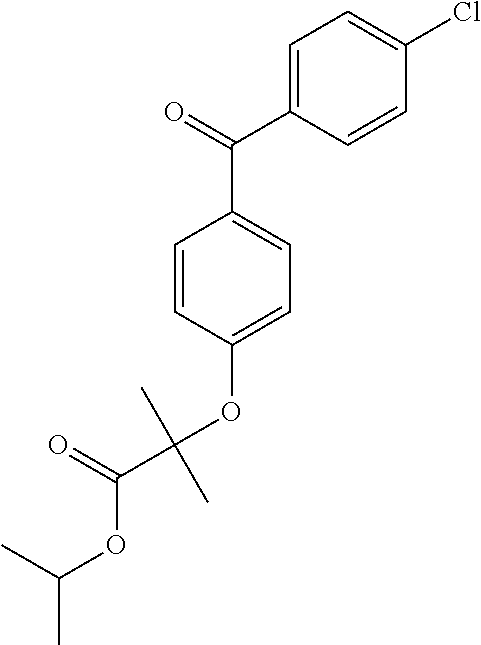
- YMTINGFKWWXKFG-UHFFFAOYSA-N CC(C)OC(=O)C(C)(C)Oc1ccc(C(=O)c2ccc(Cl)cc2)cc1 Chemical compound CC(C)OC(=O)C(C)(C)Oc1ccc(C(=O)c2ccc(Cl)cc2)cc1 YMTINGFKWWXKFG-UHFFFAOYSA-N 0.000 description 1
- XUKVLXOQGYNWQU-UHFFFAOYSA-N CCC(=O)c1ccc(C)c(-n2c(C)cc(OCc3ccc(F)cc3F)c(Br)c2=O)c1 Chemical compound CCC(=O)c1ccc(C)c(-n2c(C)cc(OCc3ccc(F)cc3F)c(Br)c2=O)c1 XUKVLXOQGYNWQU-UHFFFAOYSA-N 0.000 description 1
- SEOCIGTXFVMJHB-UHFFFAOYSA-N CCCNC(=O)c1cn2ncnc(Nc3cc(C(=O)CC4CC4)ccc3C)c2c1C Chemical compound CCCNC(=O)c1cn2ncnc(Nc3cc(C(=O)CC4CC4)ccc3C)c2c1C SEOCIGTXFVMJHB-UHFFFAOYSA-N 0.000 description 1
- KNHUKKLJHYUCFP-UHFFFAOYSA-N CCOC(=O)C(C)(C)Oc1ccc(Cl)cc1 Chemical compound CCOC(=O)C(C)(C)Oc1ccc(Cl)cc1 KNHUKKLJHYUCFP-UHFFFAOYSA-N 0.000 description 1
- WMUIIGVAWPWQAW-DEOSSOPVSA-N CCO[C@@H](Cc1ccc(OCCN2c3ccccc3Oc3ccccc32)cc1)C(=O)O Chemical compound CCO[C@@H](Cc1ccc(OCCN2c3ccccc3Oc3ccccc32)cc1)C(=O)O WMUIIGVAWPWQAW-DEOSSOPVSA-N 0.000 description 1
- RQLWBJPJEBTEMF-IBGZPJMESA-N CCO[C@@H](Cc1ccc(OCCc2ccc(S(C)(=O)=O)cc2)cc1)C(=O)O Chemical compound CCO[C@@H](Cc1ccc(OCCc2ccc(S(C)(=O)=O)cc2)cc1)C(=O)O RQLWBJPJEBTEMF-IBGZPJMESA-N 0.000 description 1
- MRWFZSLZNUJVQW-DEOSSOPVSA-N CCO[C@@H](Cc1ccc(OCCn2c(C)ccc2-c2ccc(SC)cc2)cc1)C(=O)O Chemical compound CCO[C@@H](Cc1ccc(OCCn2c(C)ccc2-c2ccc(SC)cc2)cc1)C(=O)O MRWFZSLZNUJVQW-DEOSSOPVSA-N 0.000 description 1
- HYAFETHFCAUJAY-UHFFFAOYSA-N CCc1ccc(CCOc2ccc(CC3SC(=O)NC3=O)cc2)nc1 Chemical compound CCc1ccc(CCOc2ccc(CC3SC(=O)NC3=O)cc2)nc1 HYAFETHFCAUJAY-UHFFFAOYSA-N 0.000 description 1
- YASAKCUCGLMORW-UHFFFAOYSA-N CN(CCOc1ccc(CC2SC(=O)NC2=O)cc1)c1ccccn1 Chemical compound CN(CCOc1ccc(CC2SC(=O)NC2=O)cc1)c1ccccn1 YASAKCUCGLMORW-UHFFFAOYSA-N 0.000 description 1
- OKJHGOPITGTTIM-UHFFFAOYSA-N COC(Cc1ccc(OCCCOc2ccc(Oc3ccccc3)cc2)cc1)C(=O)O Chemical compound COC(Cc1ccc(OCCCOc2ccc(Oc3ccccc3)cc2)cc1)C(=O)O OKJHGOPITGTTIM-UHFFFAOYSA-N 0.000 description 1
- DAYKLWSKQJBGCS-NRFANRHFSA-N CO[C@@H](Cc1ccc(OCCc2nc(-c3ccccc3)oc2C)c2ccsc12)C(=O)O Chemical compound CO[C@@H](Cc1ccc(OCCc2nc(-c3ccccc3)oc2C)c2ccsc12)C(=O)O DAYKLWSKQJBGCS-NRFANRHFSA-N 0.000 description 1
- IRLWJILLXJGJTD-UHFFFAOYSA-N COc1ccc(OC(=O)N(CC(=O)O)Cc2ccc(OCCc3nc(-c4ccccc4)oc3C)cc2)cc1 Chemical compound COc1ccc(OC(=O)N(CC(=O)O)Cc2ccc(OCCc3nc(-c4ccccc4)oc3C)cc2)cc1 IRLWJILLXJGJTD-UHFFFAOYSA-N 0.000 description 1
- AFLFKFHDSCQHOL-IZZDOVSWSA-N CSc1ccc(C(=O)/C=C/c2cc(C)c(OC(C)(C)C(=O)O)c(C)c2)cc1 Chemical compound CSc1ccc(C(=O)/C=C/c2cc(C)c(OC(C)(C)C(=O)O)c(C)c2)cc1 AFLFKFHDSCQHOL-IZZDOVSWSA-N 0.000 description 1
- ZMELOYOKMZBMRB-DLBZAZTESA-N C[C@H]1CN(C(=O)c2cc3c(C(=O)C(=O)N(C)C)cn(C)c3cc2Cl)[C@H](C)CN1Cc1ccc(F)cc1 Chemical compound C[C@H]1CN(C(=O)c2cc3c(C(=O)C(=O)N(C)C)cn(C)c3cc2Cl)[C@H](C)CN1Cc1ccc(F)cc1 ZMELOYOKMZBMRB-DLBZAZTESA-N 0.000 description 1
- GXPHKUHSUJUWKP-UHFFFAOYSA-N Cc1c(C)c2c(c(C)c1O)CCC(C)(COc1ccc(CC3SC(=O)NC3=O)cc1)O2 Chemical compound Cc1c(C)c2c(c(C)c1O)CCC(C)(COc1ccc(CC3SC(=O)NC3=O)cc1)O2 GXPHKUHSUJUWKP-UHFFFAOYSA-N 0.000 description 1
- KKYABQBFGDZVNQ-UHFFFAOYSA-N Cc1c(F)cc(C(=O)NC2CC2)cc1-c1ccc(C(=O)NCC(C)(C)C)cn1 Chemical compound Cc1c(F)cc(C(=O)NC2CC2)cc1-c1ccc(C(=O)NCC(C)(C)C)cn1 KKYABQBFGDZVNQ-UHFFFAOYSA-N 0.000 description 1
- XGJSSBRNUCTQAS-UHFFFAOYSA-N Cc1cc(F)ccc1-c1nc(CC(CO)CO)nc2c1ccc(=O)n2-c1c(F)cccc1F Chemical compound Cc1cc(F)ccc1-c1nc(CC(CO)CO)nc2c1ccc(=O)n2-c1c(F)cccc1F XGJSSBRNUCTQAS-UHFFFAOYSA-N 0.000 description 1
- HGUQDBCBYTYOGS-UHFFFAOYSA-N Cc1ccc(-n2nc(C)cc2NC(=O)Nc2ccc(OCCN3CCOCC3)c3ccccc23)cc1 Chemical compound Cc1ccc(-n2nc(C)cc2NC(=O)Nc2ccc(OCCN3CCOCC3)c3ccccc23)cc1 HGUQDBCBYTYOGS-UHFFFAOYSA-N 0.000 description 1
- HEMJJKBWTPKOJG-UHFFFAOYSA-N Cc1ccc(C)c(OCCCC(C)(C)C(=O)O)c1 Chemical compound Cc1ccc(C)c(OCCCC(C)(C)C(=O)O)c1 HEMJJKBWTPKOJG-UHFFFAOYSA-N 0.000 description 1
- FYSRKRZDBHOFAY-UHFFFAOYSA-N NC(=O)c1ccc(N(C(N)=O)c2c(F)cccc2F)nc1-c1ccc(F)cc1F Chemical compound NC(=O)c1ccc(N(C(N)=O)c2c(F)cccc2F)nc1-c1ccc(F)cc1F FYSRKRZDBHOFAY-UHFFFAOYSA-N 0.000 description 1
- NMRWDFUZLLQSBN-UHFFFAOYSA-N O=S(=O)(Nc1cc(Cl)c(Oc2cnc3ccccc3c2)c(Cl)c1)c1ccc(Cl)cc1Cl Chemical compound O=S(=O)(Nc1cc(Cl)c(Oc2cnc3ccccc3c2)c(Cl)c1)c1ccc(Cl)cc1Cl NMRWDFUZLLQSBN-UHFFFAOYSA-N 0.000 description 1
- VEPKQEUBKLEPRA-UHFFFAOYSA-N O=c1ncn2nc(Sc3ccc(F)cc3F)ccc2c1-c1c(Cl)cccc1Cl Chemical compound O=c1ncn2nc(Sc3ccc(F)cc3F)ccc2c1-c1c(Cl)cccc1Cl VEPKQEUBKLEPRA-UHFFFAOYSA-N 0.000 description 1
- YQZAJGQPRSJARM-WKILWMFISA-N OCc1nccc(-c2c(-c3ccc(F)cc3)ncn2[C@H]2CC[C@H](O)CC2)n1 Chemical compound OCc1nccc(-c2c(-c3ccc(F)cc3)ncn2[C@H]2CC[C@H](O)CC2)n1 YQZAJGQPRSJARM-WKILWMFISA-N 0.000 description 1
- VGFJOXCCMIBCDN-UHFFFAOYSA-N Oc1ccc(C2=NC(c3ccc(F)cc3)=C(c3ccncc3)C2)cc1 Chemical compound Oc1ccc(C2=NC(c3ccc(F)cc3)=C(c3ccncc3)C2)cc1 VGFJOXCCMIBCDN-UHFFFAOYSA-N 0.000 description 1
Images


Classifications
-
- A—HUMAN NECESSITIES
- A61—MEDICAL OR VETERINARY SCIENCE; HYGIENE
- A61K—PREPARATIONS FOR MEDICAL, DENTAL OR TOILETRY PURPOSES
- A61K45/00—Medicinal preparations containing active ingredients not provided for in groups A61K31/00 - A61K41/00
- A61K45/06—Mixtures of active ingredients without chemical characterisation, e.g. antiphlogistics and cardiaca
-
- A—HUMAN NECESSITIES
- A61—MEDICAL OR VETERINARY SCIENCE; HYGIENE
- A61K—PREPARATIONS FOR MEDICAL, DENTAL OR TOILETRY PURPOSES
- A61K31/00—Medicinal preparations containing organic active ingredients
- A61K31/33—Heterocyclic compounds
- A61K31/395—Heterocyclic compounds having nitrogen as a ring hetero atom, e.g. guanethidine or rifamycins
- A61K31/41—Heterocyclic compounds having nitrogen as a ring hetero atom, e.g. guanethidine or rifamycins having five-membered rings with two or more ring hetero atoms, at least one of which being nitrogen, e.g. tetrazole
- A61K31/425—Thiazoles
- A61K31/427—Thiazoles not condensed and containing further heterocyclic rings
-
- A—HUMAN NECESSITIES
- A61—MEDICAL OR VETERINARY SCIENCE; HYGIENE
- A61K—PREPARATIONS FOR MEDICAL, DENTAL OR TOILETRY PURPOSES
- A61K31/00—Medicinal preparations containing organic active ingredients
- A61K31/33—Heterocyclic compounds
- A61K31/395—Heterocyclic compounds having nitrogen as a ring hetero atom, e.g. guanethidine or rifamycins
- A61K31/435—Heterocyclic compounds having nitrogen as a ring hetero atom, e.g. guanethidine or rifamycins having six-membered rings with one nitrogen as the only ring hetero atom
- A61K31/44—Non condensed pyridines; Hydrogenated derivatives thereof
- A61K31/4427—Non condensed pyridines; Hydrogenated derivatives thereof containing further heterocyclic ring systems
- A61K31/4439—Non condensed pyridines; Hydrogenated derivatives thereof containing further heterocyclic ring systems containing a five-membered ring with nitrogen as a ring hetero atom, e.g. omeprazole
-
- A—HUMAN NECESSITIES
- A61—MEDICAL OR VETERINARY SCIENCE; HYGIENE
- A61K—PREPARATIONS FOR MEDICAL, DENTAL OR TOILETRY PURPOSES
- A61K31/00—Medicinal preparations containing organic active ingredients
- A61K31/33—Heterocyclic compounds
- A61K31/395—Heterocyclic compounds having nitrogen as a ring hetero atom, e.g. guanethidine or rifamycins
- A61K31/495—Heterocyclic compounds having nitrogen as a ring hetero atom, e.g. guanethidine or rifamycins having six-membered rings with two or more nitrogen atoms as the only ring heteroatoms, e.g. piperazine or tetrazines
- A61K31/505—Pyrimidines; Hydrogenated pyrimidines, e.g. trimethoprim
- A61K31/519—Pyrimidines; Hydrogenated pyrimidines, e.g. trimethoprim ortho- or peri-condensed with heterocyclic rings
-
- A—HUMAN NECESSITIES
- A61—MEDICAL OR VETERINARY SCIENCE; HYGIENE
- A61P—SPECIFIC THERAPEUTIC ACTIVITY OF CHEMICAL COMPOUNDS OR MEDICINAL PREPARATIONS
- A61P35/00—Antineoplastic agents
-
- A—HUMAN NECESSITIES
- A61—MEDICAL OR VETERINARY SCIENCE; HYGIENE
- A61P—SPECIFIC THERAPEUTIC ACTIVITY OF CHEMICAL COMPOUNDS OR MEDICINAL PREPARATIONS
- A61P35/00—Antineoplastic agents
- A61P35/02—Antineoplastic agents specific for leukemia
-
- A—HUMAN NECESSITIES
- A61—MEDICAL OR VETERINARY SCIENCE; HYGIENE
- A61P—SPECIFIC THERAPEUTIC ACTIVITY OF CHEMICAL COMPOUNDS OR MEDICINAL PREPARATIONS
- A61P35/00—Antineoplastic agents
- A61P35/04—Antineoplastic agents specific for metastasis
-
- A—HUMAN NECESSITIES
- A61—MEDICAL OR VETERINARY SCIENCE; HYGIENE
- A61K—PREPARATIONS FOR MEDICAL, DENTAL OR TOILETRY PURPOSES
- A61K2300/00—Mixtures or combinations of active ingredients, wherein at least one active ingredient is fully defined in groups A61K31/00 - A61K41/00
Definitions
- the present invention relates to pharmaceutical combinations comprising a PPAR agonist and a P38 inhibitor for use in a method for the prevention, delay of progression or treatment of cancer in a subject.
- cancer is still the third most common cause of death worldwide after cardiovascular diseases and infectious/parasitic diseases; in absolute numbers, this corresponds to 7.6 million deaths (ca. 13% of all deaths) in any given year.
- the WHO estimates deaths due to cancer to increase to 13.1 million by 2030, while the American Cancer Society expects over 1,685,210 new cancer cases diagnosed and 595,690 cancer deaths in the US in 2016.
- a 2012 survey by McMillan Cancer Support in the UK has revealed that the median survival time of cancer patients overall has increased from 1 year to 6 years since the 1970's.
- median survival has barely improved, remaining less than one year.
- a combination comprising a PPAR agonist, such as pioglitazone and a P38 inhibitor, such as pamapimod is useful for the prevention, delay of progression or treatment of cancer, in particular lung cancer, ovarian cancer, prostate cancer, breast cancer, bladder cancer, liver cancer, cancer of the gastrointestinal tract, hematological cancer or kidney cancer.
- a P38 inhibitor such as pamapimod
- the present invention provides a pharmaceutical combination comprising:
- the present invention provides a pharmaceutical combination as described herein, for use as a medicament.
- the present invention provides a pharmaceutical combination as described herein, for use in a method for the prevention, delay of progression or treatment of cancer in a subject.
- the present invention provides a pharmaceutical combination comprising:
- FIG. 1 Primary tumor volumes measures after necropsy performed on day 46 of the study in a subcutaneous xenograft A549 lung carcinoma model described in Example 1. Pioglitazone HCL and pamapimod were administered both alone (Groups 2 and 3, respectively) and in combination (Group 4). Data are displayed versus the Vehicle Control (Group 1). Data are depicted both as means+SEM (A) and as individual data points together with their corresponding median values and interquartile ranges (B). P-values were calculated compared to the Vehicle Control (Group 1) by two methods: using the Mann Whitney test and the unpaired t-test (in parentheses).
- FIG. 2 Primary tumor weights measured at necropsy performed on day 46 of the study in a subcutaneous xenograft A549 lung carcinoma model described in Example 1. Pioglitazone HCL and pamapimod were administered both alone (Groups 2 and 3, respectively) and in combination (Group 4). Data are displayed versus the Vehicle Control (Group 1). Data are depicted both as means+SEM (A) and as individual data points together with their corresponding median values and interquartile ranges (B). P-values were calculated compared to the Vehicle Control (Group 1) by two methods using the Mann Whitney test and the unpaired t-test (in parentheses).
- FIG. 3 Primary tumor volumes measures after necropsy on day 20 of the study in an orthotopic syngeneic colon cancer model described in Example 2. Pioglitazone HCL and pamapimod were administered both alone (Groups 2 and 3, respectively) and in combination (Group 4). Data are displayed versus the Vehicle Control (Group 1). Data are depicted both as means+SEM (A) and as individual data points together with their corresponding median values and interquartile ranges (B). P-values were calculated compared to the Vehicle Control (Group 1) by two methods: using the Mann Whitney test and the unpaired t-test (in parentheses).
- FIG. 4 Primary tumor weight measures after necropsy on day 20 of the study in an orthotopic syngeneic colon cancer model described in Example 2. Pioglitazone HCL and pamapimod were administered both alone (Groups 2 and 3, respectively) and in combination (Group 4). Data are displayed versus the Vehicle Control (Group 1). Data are depicted both as means+SEM (A) and as individual data points together with their corresponding median values and interquartile ranges (B). P-values were calculated compared to the Vehicle Control (Group 1) by two methods using the Mann Whitney test and the unpaired t-test (in parentheses).
- the present invention provides pharmaceutical combinations comprising a PPAR agonist, such as pioglitazone and a P38 inhibitor, such as pamapimod, which are useful for the prevention, delay of progression, or treatment of cancer.
- a PPAR agonist such as pioglitazone
- a P38 inhibitor such as pamapimod
- the present invention provides a pharmaceutical combination comprising:
- the terms “individual,” “subject” or “patient” are used herein interchangeably.
- the subject is a mammal. Mammals include, but are not limited to primates (including human and non-human primates). In a preferred embodiment, the subject is a human.
- cancer and “cancerous” as used herein refer to or describe the physiological condition in mammals that is typically characterized by unregulated cell growth.
- a “tumor” comprises one or more cancerous cells. Examples of cancer include, but are not limited to, carcinoma, lymphoma, blastoma, sarcoma, and leukemia or lymphoid malignancies.
- cancers include squamous cell cancer (e.g., epithelial squamous cell cancer), lung cancer including small-cell lung cancer, non-small cell lung cancer (“NSCLC”), adenocarcinoma of the lung and squamous carcinoma of the lung, cancer of the peritoneum, hepatocellular cancer, gastric or stomach cancer including gastrointestinal cancer, pancreatic cancer, glioblastoma, cervical cancer, ovarian cancer, liver cancer, bladder cancer, hepatoma, breast cancer, cancer of the gastrointestinal (GI) tract, endometrial or uterine carcinoma, salivary gland carcinoma, kidney or renal cancer, prostate cancer, vulval cancer, thyroid cancer, hepatic carcinoma, anal carcinoma, penile carcinoma, as well as head and neck cancer.
- GI gastrointestinal
- metastatic cancer as used herein means the state of cancer, e.g. the state of lung cancer or cancer of the gastrointestinal (GI) tract where the cancer cells are transmitted from the original site to one or more sites elsewhere in the body, by the blood vessels or lymphatics, to form one or more secondary tumors at one or more sites or organs besides the original site or organ.
- GI gastrointestinal
- PPAR agonist refers to a drug that is activating peroxisome proliferator activated receptor (PPAR) such as PPAR gamma receptor, PPAR alpha receptor, PPAR delta receptor or combinations thereof.
- PPAR peroxisome proliferator activated receptor
- the PPAR agonist according to the invention is activating PPAR gamma.
- said PPAR agonist is a PPAR gamma agonist selected from a list comprising pioglitazone, troglitazone and rosiglitazone or a pharmaceutically acceptable salt thereof; or a PPAR alpha agonist selected from a list comprising fibrates such as fenofibrate (fenofibric acid), clofibrate or gemfibrozil or a pharmaceutically acceptable salt thereof; or a PPAR dual agonist (PPAR alpha/gamma or PPAR alpha/delta agonists) selected from a list comprising aleglitazar, muraglitazar, tesaglitazar, ragaglitazar, saroglitazar, GFT505 and naveglitazar or a pharmaceutically acceptable salt thereof; or a PPAR delta agonist such as GW501516 or a pharmaceutically acceptable salt thereof; or a PPAR pan agonists (PPAR alpha/delta/gamma agonist selected
- PPAR gamma agonists PPAR modulators, PPAR alpha agonists and/or PPAR alpha/gamma dual agonists are used in the context of the present invention.
- PPAR gamma agonists PPAR alpha agonists and/or PPAR alpha/gamma dual agonists
- more particular PPAR gamma agonists are used in the context of the present invention.
- the PPAR agonist according to the invention is a PPAR gamma agonist or modulator selected from the group consisting of pioglitazone, rosiglitazone, troglitazone, INT131 or a pharmaceutically acceptable salt thereof.
- said PPAR agonist is a PPAR gamma agonist selected from the group consisting of pioglitazone, rosiglitazone and troglitazone or a pharmaceutically acceptable salt thereof.
- said PPAR agonist is pioglitazone or a pharmaceutically acceptable salt thereof, e.g. pioglitazone hydrochloride.
- said PPAR agonist is a PPAR alpha agonist selected from the group consisting of fenofibrate (fenofibric acid), clofibrate and gemfibrozil, preferably fenofibrate (fenofibric acid) or a pharmaceutically acceptable salt thereof.
- said PPAR agonist is a PPAR alpha/gamma dual agonist selected from the group consisting of aleglitazar, muraglitazar, tesaglitazar, ragaglitazar, saroglitazar, GFT505 and naveglitazar or a pharmaceutically acceptable salt thereof, preferably muraglitazar or tesaglitazar or a pharmaceutically acceptable salt thereof.
- Pioglitazone is described e.g. in U.S. Pat. No. 4,687,777 or in Dormandy J A, Charbonnel B, Eckland D J, Erdmann E, Massi-Benedetti M, Moules I K, Skene A M, Tan M H, Lefèbvre PJ, Murray G D, Standl E, Wilcox R G, Wilhelmsen L, Betteridge J, Birkeland K, Golay A, Heine R J, Korányi L, Laakso M, Mokán M, Norkus A, Pirags V, Podar T, Scheen A, Scherbaum W, Schernthaner G, Schmitz O, Skrha J, Smith U, Taton J; PROactive investigators. Lancet. 2005 Oct. 8; 366(9493): 1279-89, and is represented by the structural formula indicated below:
- Troglitazone is described e.g. in Florez J C, Jablonski K A, Sun M W, Bayley N, Kahn S E, Shamoon H, Hamman R F, Knowler W C, Nathan D M, Altshuler D; Diabetes Prevention Program Research Group. J Clin Endocrinol Metab. 2007 April; 92(4):1502-9 and is represented by the structural formula indicated below:
- Rosiglitazone is described e.g. in Nissen S E, Wolski K. N Engl J Med. 2007 Jun. 14; 356(24):2457-71. Erratum in: N Engl J Med. 2007 Jul. 5; 357(1):100.
- Fenofibrate is described e.g. in Bonds D E, Craven T E, Buse J, Crouse J R, Cuddihy R, Elam M, Ginsberg H N, Kirchner K, Marcovina S, Mychaleckyj J C, O'Connor P J, Sperl-Hillen J A. Diabetologia. 2012 June; 55(6):1641-50 and is represented by the structural formula indicated below:
- Clofibrate is described e.g. in Rabkin S W, Hayden M, Frohlich J. Atherosclerosis. 1988 October; 73(2-3):233-40 and is represented by the structural formula indicated below:
- Fenofibrate (fenofibric acid) is described e.g. in Schima S M, Maciejewski S R, Hilleman D E, Williams M A, Mohiuddin S M. Expert Opin Pharmacother. 2010 April; 11(5):731-8 and is represented by the structural formula indicated below:
- Gemfibrozil is described e.g. in Adabag A S, Mithani S, Al Aloul B, Collins D, Bertog S, Bloomfield H E; Veterans Affairs High-Density Lipoprotein Cholesterol Intervention Trial Study Group. Am Heart J. 2009 May; 157(5):913-8 and is represented by the structural formula indicated below:
- Aleglitazar is described e.g. in Lincoff A M, Tardif J C, Schwartz G G, Nicholls S J, Rydén L, Neal B, Malmberg K, Wedel H, Buse J B, Henry R R, Weichert A, Cannata R, Svensson A, Volz D, Grobbee D E; AleCardio Investigators. JAMA. 2014 Apr. 16; 311(15):1515-25 and is represented by the structural formula indicated below:
- Muraglitazar is described e.g. in Fernandez M, Gastaldelli A, Triplitt C, Hardies J, Casolaro A, Petz R, Tantiwong P, Musi N, Cersosimo E, Ferrannini E, DeFronzo R A. Diabetes Obes Metab. 2011 October; 13(10):893-902 and is represented by the structural formula indicated below:
- Tesaglitazar is described e.g. in Bays H, McElhattan J, Bryzinski B S; GALLANT 6 Study Group. Diab Vasc Dis Res. 2007 September; 4(3):181-93 and is represented by the structural formula indicated below:
- Saroglitazar is described e.g. in Agrawal R. Curr Drug Targets. 2014 February; 15(2): 151-5. and is represented by the structural formula indicated below:
- Naveglitazar is described e.g. in Ahlawat P, Srinivas N R. Eur J Drug Metab Pharmacokinet. 2008 July-September; 33(3):187-90.
- GW501516 is described e.g. in Wang X, Sng M K, Foo S, Chong H C, Lee W L, Tang M B, Ng K W, Luo B, Choong C, Wong M T, Tong B M, Chiba S, Loo S C, Zhu P, Tan N S. J Control Release. 2015 Jan. 10; 197:138-47 and is represented by the structural formula indicated below:
- GFT505 is described e.g. in Cariou B, Staels B. Expert Opin Investig Drugs. 2014 October; 23(10): 1441-8 and is represented by the structural formula indicated below:
- INT131 is described e.g. in. Taygerly J P, McGee L R, Rubenstein S M, Houze J B, Cushing T D, Li Y, Motani A, Chen J L, Frankmoelle W, Ye G, Learned M R, Jaen J, Miao S, Timmermans P B, Thoolen M, Keamey P, Flygare J, Beckmann H, Weiszmann J, Lindstrom M, Walker N, Liu J, Biermann D, Wang Z, Hagiwara A, Iida T, Aramaki H, Kitao Y, Shinkai H, Furukawa N, Nishiu J, Nakamura M. Bioorg Med Chem. 2013 Feb. 15; 21(4):979-92 and is represented by the structural formula indicated below:
- PPAR activation by the PPAR agonist is usually strong in the low nanomolar range to low micromolar range, e.g in a range of 0.1 nM to 100 ⁇ M.
- the PPAR activation is weak or partial, i.e. a PPAR agonist is used in the methods of the present invention which yields maximal activation of PPAR-receptor in a reporter assay system of 10% to 100% compared to a reference PPAR agonist which is known to causes a maximum PPAR activation.
- p38 inhibitor refers to a drug that is inhibiting a p38 mitogen-activated protein (MAP) kinase, such as p38- ⁇ (MAPK14), p38- ⁇ (MAPK11), p38- ⁇ (MAPK12/ERK6), and/or p38- ⁇ (MAPK13/SAPK4).
- MAP mitogen-activated protein
- p38 inhibitor includes p38 inhibitors such as the compounds of formulae I and II
- the p38 inhibitor according to the invention is a compound of formula I
- the p38 inhibitor according to the invention is a compound of formula I wherein X 1 is NR 4 and X 2 is NR 7 or X 1 and X 2 are each 0, wherein R 4 and R 7 are as defined above.
- the p38 inhibitor according to the invention is a compound of formula I wherein W is NR 2 , wherein R 2 is hydrogen, alkyl, acyl or alkoxycarbonyl, preferably hydrogen or alkyl, more preferably hydrogen.
- the p38 inhibitor according to the invention is a compound of formula I wherein R 1 is hydrogen, alkyl, haloalkyl, cycloalkyl, cycloalkylalkyl, heteroalkylsubstituted cycloalkyl, heterosubstituted cycloalkyl, heteroalkyl, cyanoalkyl, heterocyclyl, heterocyclylalkyl or (heterocyclyl)(cycloalkyl)alkyl.
- the p38 inhibitor according to the invention is a compound of formula I wherein R 1 is hydrogen, alkyl, haloalkyl, heteroalkyl or cyanoalkyl.
- the p38 inhibitor according to the invention is a compound of formula I wherein R 1 is cycloalkyl, cycloalkylalkyl, heteroalkylsubstituted cycloalkyl, heterosubstituted cycloalkyl, heterocyclyl, heterocyclylalkyl or (heterocyclyl)(cycloalkyl)alkyl.
- the p38 inhibitor according to the invention is a compound of formula I wherein R 3 is hydrogen, alkyl, cycloalkyl, cycloalkylalkyl, haloalkyl, heteroalkyl, cyanoalkyl, alkylene-C(O)—R 31 (where R 31 is hydrogen, alkyl, hydroxy, alkoxy, amino, monoalkylamino or dialkylamino) or acyl.
- the p38 inhibitor according to the invention is a compound of formula I wherein R 3 is hydrogen, alkyl, haloalkyl, heteroalkyl, cyanoalkyl, cycloalkyl or cycloalkylalkyl.
- the p38 inhibitor according to the invention is a compound of formula I wherein R 3 is hydrogen, alkyl, haloalkyl, heteroalkyl or cyanoalkyl.
- the p38 inhibitor according to the invention is a compound of formula I wherein R 3 is cycloalkyl or cycloalkylalkyl.
- the p38 inhibitor according to the invention is a compound of formula I wherein X 1 and X 2 are both O.
- the p38 inhibitor according to the invention is a compound of formula I wherein R 1 is alkyl or heteroalkyl.
- the p38 inhibitor according to the invention is a compound of formula I wherein R 1 is heteroalkyl, preferably 3-hydroxy-1-(2-hydroxyethyl)-propyl or 2-hydroxy-1-methylethyl.
- the p38 inhibitor according to the invention is a compound of formula I wherein R 3 is alkyl or heteroalkyl.
- the p38 inhibitor according to the invention is a compound of formula I wherein R 3 is alkyl, preferably methyl.
- the p38 inhibitor according to the invention is a compound of formula I wherein R 3 is heteroalkyl, preferably 2-hydroxy-propyl.
- the p38 inhibitor according to the invention is a compound of formula I wherein W is NH.
- the p38 inhibitor according to the invention is a compound of formula I wherein Z is N.
- the p38 inhibitor according to the invention is a compound of formula I wherein Ar 1 is aryl, preferably substituted aryl, more preferably aryl substituted with two halo substituents, most preferably aryl substituted with two halo substituents in ortho and para position.
- the p38 inhibitor according to the invention is a compound of formula I wherein X 1 is NR 4 and X 2 is NR 7 or X 1 and X 2 are each 0, wherein R 4 and R 7 are as defined above; and wherein
- the p38 inhibitor according to the invention is a compound of formula I wherein X 1 and X 2 are each O and wherein Z is N and wherein W is NH and wherein Ar 1 is substituted aryl and wherein R 1 is heteroalkyl and wherein R 3 is alkyl or heteroalkyl.
- the p38 inhibitor according to the invention is pamapimod, having the chemical name 6-(2,4-Difluorophenoxy)-2-[3-hydroxy-1-(2-hydroxyethyl)-propylamino]-8-methyl-8H-pyrido[2,3-d]pyrimidin-7-one and the chemical formula III or a pharmaceutically acceptable salt thereof.
- the p38 inhibitor according to the invention is R9111, having the chemical name 6-(2,4-Difluorophenoxy)-2-[(S)-2-hydroxy-1-methyl-ethylamino]-8-[(S)-2-hydroxy-propyl]-8H-pyrido[2,3-d]pyrimidin-7-one and the chemical formula IV or a pharmaceutically acceptable salt thereof.
- the p38 inhibitor according to the invention is selected from the group consisting of pamapimod, losmapimod, dilmapimod, AZD7624, ARRY-371797, LY2228820, R9111, PH-797804, BIRB 796, VX-702, VX-745 SB 239063, SB202190, SCIO 469, and BMS 582949 or a pharmaceutically acceptable salt thereof.
- the p38 inhibitor according to the invention is selected from the group consisting of pamapimod, losmapimod, dilmapimod, ARRY-371797, LY2228820, R9111, PH-797804, BIRB 796, VX-702, VX-745 SB 239063, SB202190, SCIO 469, and BMS 582949 or a pharmaceutically acceptable salt thereof.
- Pamapimod and its synthesis are described e.g. in WO2008/151992 and in WO2002/064594 and in e.g. Hill R J, Dabbagh K, Phippard D, Li C, Suttmann R T, Welch M, Papp E, Song K W, Chang K C, Leaffer D, Kim Y-N, Roberts R T, Zabka T S, Aud D, Dal Porto J, Manning A M, Peng S L, Goldstein D M, and Wong B R; Pamapimod, a Novel p38 Mitogen-Activated Protein Kinase Inhibitor: Preclinical Analysis of Efficacy and Selectivity J Pharmacol Exp Ther. December 2008 327:610-619.
- Losmapimod is described in e.g. Cheriyan J, Webb A J, Sarov-Blat L, Elkhawad M, Wallace S M, Switzerland-Petäjä KM, Collier D J, Morgan J, Fang Z, Willette R N, Lepore J J, Cockcroft J R, Sprecher D L, Wilkinson I B. Inhibition of p38 mitogen-activated protein kinase improves nitric oxide-mediated vasodilatation and reduces inflammation in hypercholesterolemia.
- Dilmapimod is described in e.g. Christie J D, Vaslef S, Chang P K, May A K, Gunn S R, Yang S, Hardes K, Kahl L, Powley W M, Lipson D A, Bayliffe A I, Lazaar A L.
- LY2228820 is described in e.g. Campbell R M, Anderson B D, Brooks N A, Brooks H B, Chan E M, De Dios A, Gilmour R, Graff J R, Jambrina E, Mader M, McCann D, Na S, Parsons S H, Pratt S E, Shih C, Stancato L F, Starling J J, Tate C, Velasco J A, Wang Y, Ye X S. Characterization of LY2228820 dimesylate, a potent and selective inhibitor of p38 MAPK with antitumor activity. Mol Cancer Ther. 2014 February; 13(2):364-74, and is represented by the structural formula indicated below:
- AZD7624 is described in Patel N, Cunoosamy D, Hegelund-Myrback T, Pehrson R, Taib Z, Jansson P, Lundin S, Greenaway S, Clarke G, Siew L. AZD7624, an inhaled p38 inhibitor for COPD, attenuates lung and systemic inflammation after LPS Challenge in humans. Eur Resp J. DOI: 10.1183/13993003.1 September 2015.
- ARRY-371797 is described in e.g. Muchir A, Wu W, Choi J C, Iwata S, Morrow J, Homma S, Worman H J. Abnormal p38a mitogen-activated protein kinase signaling in dilated cardiomyopathy caused by lamin A/C gene mutation. Hum Mol Genet. 2012 Oct. 1; 21(19):4325-33 and is represented by the structural formula indicated below:
- PH-797804 is described in e.g. Xing L, Devadas B, Devraj R V, Selness S R, Shieh H, Walker J K, Mao M, Messing D, Samas B, Yang J Z, Anderson G D, Webb E G, Monahan J B. Discovery and characterization of atropisomer PH-797804, a p38 MAP kinase inhibitor, as a clinical drug candidate. ChemMedChem. 2012 Feb. 6; 7(2):273-80, and is represented by the structural formula indicated below:
- BIRB 796 is described in e.g. Dietrich J, Hulme C, Hurley L H. The design, synthesis, and evaluation of 8 hybrid DFG-out allosteric kinase inhibitors: a structural analysis of the binding interactions of Gleevec, Nexavar, and BIRB-796. Bioorg Med Chem. 2010 Aug. 1; 18(15):5738-48, and is represented by the structural formula indicated below:
- VX-702 is described in e.g. Damjanov N, Kauffman R S, Spencer-Green G T. Efficacy, pharmacodynamics, and safety of VX-702, a novel p38 MAPK inhibitor, in rheumatoid arthritis: results of two randomized, double-blind, placebo-controlled clinical studies. Arthritis Rheum. 2009 May; 60(5): 1232-41, and is represented by the structural formula indicated below:
- VX-745 is described in e.g. Duffy J P, Harrington E M, Salituro F G, Cochran J E, Green J, Gao H, Bemis G W, Evindar G, Galullo V P, Ford P J, Germann U A, Wilson K P, Bellon S F, Chen G, Taslimi P, Jones P, Huang C, Pazhanisamy S, Wang Y M, Murcko M A, Su M S.
- SB239063 is described in e.g. Strassburger M, Braun H, Reymann K G. Anti-inflammatory treatment with the p38 mitogen-activated protein kinase inhibitor SB239063 is neuroprotective, decreases the number of activated microglia and facilitates neurogenesis in oxygen-glucose-deprived hippocampal slice cultures. Eur J Pharmacol. 2008 Sep. 11; 592 (1-3):55-61, and is represented by the structural formula indicated below:
- SB202190 is described in e.g. Hirosawa M, Nakahara M, Otosaka R, Imoto A, Okazaki T, Takahashi S.
- the p38 pathway inhibitor SB202190 activates MEK/MAPK to stimulate the growth of leukemia cells. Leuk Res. 2009 May; 33(5):693-9, and is represented by the structural formula indicated below:
- SCIO469 is described in e.g. Sokol L, Cripe L, Kantarjian H, Sekeres M A, Parmar S, Greenberg P, Goldberg S L, Bhushan V, Shammo J, Hohl R, Verma A, Garcia-Manero G, Li Y P, Lowe A, Zhu J, List A F. Randomized, dose-escalation study of the p38 ⁇ MAPK inhibitor SCIO-469 in patients with myelodysplastic syndrome. Leukemia. 2013 April; 27(4):977-80, and is represented by the structural formula indicated below:
- BMS 582949 is described in e.g. Liu C, Lin J, Wrobleski S T, Lin S, Hynes J, Wu H, Dyckman A J, Li T, Wityak J, Gillooly K M, Pitt S, Shen D R, Zhang R F, McIntyre K W, Salter-Cid L, Shuster D J, Zhang H, Marathe P H, Doweyko A M, Sack J S, Kiefer S E, Kish K F, Newitt J A, McKinnon M, Dodd J H, Barrish J C, Schieven G L, Leftheris K.
- composition according to the invention comprising
- composition comprising
- composition comprising
- composition comprising
- composition comprising
- composition comprising
- composition comprising
- composition comprising
- the invention relates to a pharmaceutical combination
- a pharmaceutical combination comprising a PPAR agonist, such as pioglitazone or a pharmaceutically acceptable salt thereof and a p38 inhibitor, such as pamapimod or a pharmaceutically acceptable salt thereof.
- a pharmaceutical combination according to the invention is for example a combined preparation or a pharmaceutical composition, for simultaneous, separate or sequential use.
- combined preparation as used herein defines especially a “kit of parts” in the sense that said PPAR agonist and said p38 inhibitor can be dosed independently, either in separate form or by use of different fixed combinations with distinguished amounts of the active ingredients.
- the ratio of the amount of PPAR agonist to the amount of p38 inhibitor to be administered in the combined preparation can be varied, e.g. in order to cope with the needs of a patient sub-population to be treated or the needs of a single patient, which needs can be different due to age, sex, body weight, etc. of a patient.
- the individual parts of the combined preparation (kit of parts) can be administered simultaneously or sequentially, i.e. chronologically staggered, e.g. at different time points and with equal or different time intervals for any part of the kit of parts.
- composition refers to a fixed-dose combination (FDC) that includes the PPAR agonist and the p38 inhibitor combined in a single dosage form, having a predetermined combination of respective dosages.
- FDC fixed-dose combination
- additive-on or “add-on therapy” means an assemblage of reagents for use in therapy, the subject receiving the therapy begins a first treatment regimen of one or more reagents prior to beginning a second treatment regimen of one or more different reagents in addition to the first treatment regimen, so that not all of the reagents used in the therapy are started at the same time. For example, adding p38 inhibitor therapy to a patient already receiving PPAR agonist therapy.
- the pharmaceutical combination according to the invention is a pharmaceutical composition, i.e. a fixed-dose combination.
- the pharmaceutical combination according to the invention is a combined preparation.
- the amount of the PPAR agonist and the p38 inhibitor to be administered will vary depending upon factors such as the particular compound, disease condition and its severity, according to the particular circumstances surrounding the case, including, e.g., the specific PPAR agonist being administered, the route of administration, the condition being treated, the target area being treated, and the subject or host being treated.
- the invention provides a pharmaceutical combination comprising a PPAR agonist and a compound of the formula I or II, wherein said PPAR agonist and said compound of the formula I or II are present in a therapeutically effective amount.
- an amount capable of invoking one or more of the following effects in a subject receiving the combination of the present invention refers to an amount capable of invoking one or more of the following effects in a subject receiving the combination of the present invention: (i) inhibition or arrest of tumor growth, including, reducing the rate of tumor growth or causing complete growth arrest; (ii) reduction in the number of tumor cells; (iii) reduction in tumor size; (iv) reduction in tumor number; (v) inhibition of metastasis (i.e., reduction, slowing down or complete stopping) of tumor cell infiltration into peripheral organs; (vi) enhancement of antitumor immune response, which may, but does not have to, result in the regression or elimination of the tumor; (vii) relief, to some extent, of one or more symptoms associated with cancer; (viii) increase in progression-free survival (PFS) and/or; overall survival (OS) of the subject receiving the combination.
- PFS progression-free survival
- OS overall survival
- the invention provides a pharmaceutical combination comprising a PPAR agonist and a compound of the formula I or II, wherein said PPAR agonist and said compound of the formula I or II are present in an amount producing an additive therapeutic effect.
- additive means that the effect achieved with the pharmaceutical combinations of this invention is approximately the sum of the effects that result from using the anti-cancer agents, namely the PPAR agonist and the p38 inhibitor, as a monotherapy.
- an additive effect provides for greater efficacy at the same doses, and may lead to longer duration of response to the therapy.
- the invention provides a pharmaceutical combination comprising a PPAR agonist and a compound of the formula I or II, wherein said PPAR agonist and said compound of the formula I or II are present in an amount producing a synergistic therapeutic effect.
- the term “synergistic” means that the effect achieved with the pharmaceutical combinations of this invention is greater than the sum of the effects that result from using the anti-cancer agents, namely the PPAR agonist and the p38 inhibitor, as a monotherapy.
- synergy provides for greater efficacy at the same doses, and may lead to longer duration of response to the therapy.
- the invention provides a pharmaceutical combination comprising a p38 inhibitor and a PPAR agonist, wherein the amount of said PPAR agonist in the combination is from about 0.1 to about 50 mg or from about 0.1 to about 45 mg or from about 0.1 to about 30 mg or from about 0.1 to about 15 mg or from about 0.8 to about 10 mg or from about 0.1 to about 5 mg.
- the invention provides a pharmaceutical combination comprising a p38 inhibitor and a PPAR agonist, wherein the amount of said PPAR agonist in the combination is about 1 mg, about 2 mg, about 3 mg, about 4 mg, about 5 mg, about 6 mg, about 7 mg, about 8 mg, about 9 mg or about 10 mg.
- the invention provides a pharmaceutical combination comprising a p38 inhibitor and pioglitazone, wherein the amount of pioglitazone in the combination is about 1 mg, about 2 mg, about 3 mg, about 4 mg, about 5 mg, about 6 mg, about 7 mg, about 8 mg, about 9 mg or about 10 mg.
- the PPAR agonist is administered to the subject at a dose that is below the dose needed for the treatment of diabetes using a PPAR agonist.
- the PPAR agonist is administered to the subject at a dose that is a factor of 8-20 fold lower than the top dose approved for the treatment of diabetes, in particular a factor of 8-20 fold lower than the top dose evaluated and tested for the treatment of diabetes in human.
- the top dose evaluated and tested for the treatment of diabetes in human e.g for a PPAR gamma agonist such as pioglitazone is usually in the range from about 30-45 mg/day.
- at the PPAR dose used common side effects seen at doses used in the treatment of diabetes are reduced or not detected.
- the PPAR agonist is administered to the subject at a dose that is below the active dose for antidiabetic or anti-dyslipidemic effect of said PPAR agonist, in particular a dose that is below the active dose for antidiabetic or anti-dyslipidemic effect of the PPAR agonist in human.
- the invention provides a pharmaceutical combination comprising a p38 inhibitor and pioglitazone, wherein the amount of pioglitazone in the combination is below the dose typically needed for the treatment of diabetes with pioglitazone.
- a typical dosing regimen of pioglitazone in the treatment of diabetes is 15 to 45 mg pioglitazone once-daily.
- the invention provides a pharmaceutical combination comprising a p38 inhibitor and pioglitazone, wherein the amount of pioglitazone in the combination is about 5 mg.
- the invention provides a pharmaceutical combination comprising a p38 inhibitor and pioglitazone, wherein the amount of pioglitazone in the combination is about 2 mg.
- the invention provides a pharmaceutical combination comprising a p38 inhibitor and a PPAR agonist, wherein the amount of said p38 inhibitor in the combination is from about 1 to about 500 mg or from about 1 to about 450 mg or from about 1 to about 400 mg or from about 1 to about 350 mg or from about 1 to about 300 mg or from about 1 to about 250 mg or from about 1 to about 200 mg or from about 1 to about 150 mg or from about 1 to about 125 mg or from about 10 to about 125 mg or from about 10 to about 100 mg or from about 20 to about 100 mg or from about 30 to about 100 mg or from about 40 to about 100 mg or from about 50 to about 100 mg.
- the invention provides a pharmaceutical combination comprising a p38 inhibitor and a PPAR agonist, wherein the amount of said p38 inhibitor in the combination is about 25 mg, about 50 mg, about 75 mg, about 125 mg, about 150 mg or about 300 mg.
- the invention provides a pharmaceutical combination comprising a p38 inhibitor and a PPAR agonist, wherein the amount of said p38 inhibitor in the combination is about 50 mg, about 75 mg, about 100 mg, or about 150 mg.
- the invention provides a pharmaceutical combination comprising a p38 inhibitor and a PPAR agonist, wherein the amount of said p38 inhibitor in the combination is about 75 mg.
- the invention provides a pharmaceutical combination comprising a p38 inhibitor and a PPAR agonist, wherein the amount of said PPAR agonist in the combination is from about 0.1 to about 50 mg or from about 0.1 to about 45 mg or from about 0.1 to about 30 mg or from about 0.1 to about 15 mg or from about 0.8 to about 10 mg; and wherein the amount of said p38 inhibitor in the combination is from about 1 to about 500 mg or from about 1 to about 450 mg or from about 1 to about 400 mg or from about 1 to about 350 mg or from about 1 to about 300 mg or from about 1 to about 250 mg or from about 1 to about 200 mg or from about 1 to about 150 mg or from about 1 to about 125 mg or from about 10 to about 125 mg or from about 10 to about 100 mg or from about 20 to about 100 mg or from about 30 to about 100 mg or from about 40 to about 100 mg or from about 50 to about 100 mg.
- the invention provides a pharmaceutical combination comprising a p38 inhibitor and a PPAR agonist, wherein the amount of said PPAR agonist in the combination is about 1 mg, about 2 mg, about 3 mg, about 4 mg, about 5 mg, about 6 mg, about 7 mg, about 8 mg, about 9 mg or about 10 mg; and wherein the amount of said p38 inhibitor in the combination is about 50 mg, about 75 mg, about 100 mg, or about 150 mg.
- the invention provides a pharmaceutical combination comprising pamapimod and pioglitazone, wherein the amount of pamapimod in the combination is about 75 mg and wherein the amount of pioglitazone in the combination is from about 2 mg to about 5 mg.
- the invention also relates to a pharmaceutical composition
- a pharmaceutical composition comprising a PPAR agonist such as pioglitazone and a p38 inhibitor such as pamapimod and at least one pharmaceutically acceptable carrier.
- pharmaceutically acceptable carrier refers to a carrier or excipient or diluent that is suitable for use with humans and/or animals without undue adverse side effects (such as toxicity, irritation, and allergic response) commensurate with a reasonable benefit/risk ratio. It can be a pharmaceutically acceptable solvent, suspending agent or vehicle, for delivering the instant compounds to the subject.
- a pharmaceutical combination according to the invention is, preferably, suitable for enteral administration, such as oral or rectal administration to a subject and comprises a therapeutically effective amount of the active ingredients and one or more suitable pharmaceutically acceptable carrier.
- a pharmaceutical combination according to the invention is prepared in a manner known per se, e.g. by means of conventional mixing, granulating, coating, dissolving or lyophilizing processes.
- any of the usual pharmaceutical media may be employed, for example water, glycols, oils, alcohols, carriers, such as starches, sugars, or microcrystalline cellulose, diluents, granulating agents, lubricants, binders, disintegrating agents and the like. Because of their ease of administration, tablets and capsules represent the most advantageous oral dosage unit forms, in which case solid pharmaceutical carriers are obviously employed.
- the pharmaceutical combination according to the invention is a combination for enteral administration.
- said pharmaceutical combination is preferably a pharmaceutical composition, i.e. fixed-dose combination.
- a pharmaceutical combination for enteral administration is, for example, a unit dosage form, such as a tablet, a capsule or a suppository.
- the invention provides a pharmaceutical composition
- a pharmaceutical composition comprising a PPAR agonist, such as pioglitazone and a p38 inhibitor, such as pamapimod and at least one pharmaceutically acceptable carrier, wherein the composition is a tablet or a capsule, preferably a tablet.
- the invention provides a pharmaceutical composition
- a pharmaceutical composition comprising a PPAR agonist, such as pioglitazone and a p38 inhibitor, such as pamapimod and at least one pharmaceutically acceptable carrier, wherein the composition is a sustained release tablet.
- the pharmaceutical composition according to the invention is for oral administration, wherein the composition is adapted to provide sustained release of the active pharmaceutical ingredients (API).
- the composition may increase T max or reduce C max , or both increase T max and reduce C max , as compared to an immediate release composition.
- C max means the peak concentration of the drug in the plasma.
- T max means the time from administration to reach C max .
- a sustained release composition as compared to an immediate release composition comprises one or more agents which act to prolong release of the API; for example, the API may be embedded in a matrix and/or surrounded by a membrane which, in either case, controls (reduces) the rate of diffusion of the API into the GI tract.
- hydrophobic polymers for example ethyl cellulose or a methacrylic acid polymer, or a combination thereof.
- Such polymers may be comprised in a coating or may be included in admixture with the API (i.e. may be used as a matrix-former), or may be present both in a coating and in admixture with the API.
- insoluble erodible materials for example a wax or a hydrogenated vegetable oil, or a combination thereof.
- Such materials may be comprised in a coating or may be included in admixture with the API (i.e. may be used as a matrix-former), or may be present both in a coating and in admixture with the API.
- composition according to the invention may contain, e.g., from about 10% to about 100% of the therapeutically effective amount of the active ingredients.
- said PPAR agonist need not be administered in the same dosage form as said p38 inhibitor.
- An exemplary treatment regime entails administration once daily, twice daily, three times daily, every second day, twice per week, once per week.
- the combination of the invention is usually administered on multiple occasions. Intervals between single dosages can be, for example, less than a day, daily, every second day, twice per week, or weekly.
- the combination of the invention may be given as a continuous uninterrupted treatment.
- the combination of the invention may also be given in a regime in which the subject receives cycles of treatment interrupted by a drug holiday or period of non-treatment.
- the combination of the invention may be administered according to the selected intervals above for a continuous period of one week or a part thereof, for two weeks, for three weeks for four weeks, for five weeks or for six weeks and then stopped for a period of one week, or a part thereof, for two weeks, for three weeks, for four weeks, for five weeks, or for six weeks.
- the combination of the treatment interval and the non-treatment interval is called a cycle.
- the cycle may be repeated one or more times. Two or more different cycles may be used in combination for repeating the treatment one or more times. Intervals can also be irregular as indicated by measuring blood levels of said PPAR agonist and/or said p38 inhibitor in the patient.
- the pharmaceutical combination according to the invention is administered once daily.
- the PPAR agonist can be administered from 0.1-100 mg per day and the P38 inhibitor can be administered from 1-300 mg per day.
- the present invention provides a pharmaceutical combination as described herein, for use as a medicament.
- the present invention provides a pharmaceutical combination as described herein, for use in a method for the prevention, delay of progression or treatment of cancer in a subject.
- treatment includes: (1) delaying the appearance of clinical symptoms of the state, disorder or condition developing in an animal, particularly a mammal and especially a human, that may be afflicted with or predisposed to the state, disorder or condition but does not yet experience or display clinical or subclinical symptoms of the state, disorder or condition; (2) inhibiting the state, disorder or condition (e.g. arresting, reducing or delaying the development of the disease, or a relapse thereof in case of maintenance treatment, of at least one clinical or subclinical symptom thereof); and/or (3) relieving the condition (i.e. causing regression of the state, disorder or condition or at least one of its clinical or subclinical symptoms).
- the benefit to a patient to be treated is either statistically significant or at least perceptible to the patient or to the physician. However, it will be appreciated that when a medicament is administered to a patient to treat a disease, the outcome may not always be effective treatment.
- delay of progression means increasing the time to appearance of a symptom of a cancer or a mark associated with a cancer or slowing the increase in severity of a symptom of a cancer. Further, “delay of progression” as used herein includes reversing or inhibition of disease progression. “Inhibition” of disease progression or disease complication in a subject means preventing or reducing the disease progression and/or disease complication in the subject.
- Preventive treatments comprise prophylactic treatments.
- the pharmaceutical combination of the invention is administered to a subject suspected of having, or at risk for developing cancer.
- the pharmaceutical combination is administered to a subject such as a patient already suffering from cancer, in an amount sufficient to cure or at least partially arrest the symptoms of the disease. Amounts effective for this use will depend on the severity and course of the disease, previous therapy, the subject's health status and response to the drugs, and the judgment of the treating physician.
- the pharmaceutical combination of the invention may be administered chronically, which is, for an extended period of time, including throughout the duration of the subject's life in order to ameliorate or otherwise control or limit the symptoms of the subject's disease or condition.
- the pharmaceutical combination may be administered continuously; alternatively, the dose of drugs being administered may be temporarily reduced or temporarily suspended for a certain length of time (i.e., a “drug holiday”).
- a maintenance dose of the pharmaceutical combination of the invention is administered if necessary. Subsequently, the dosage or the frequency of administration, or both, is optionally reduced, as a function of the symptoms, to a level at which the improved disease is retained.
- a pharmaceutical combination according to the invention for use in a method for the prevention, delay of progression or treatment of cancer in a subject, wherein the cancer is selected from the group consisting of lung cancer, ovarian cancer, prostate cancer, breast cancer, bladder cancer, liver cancer, cancer of the gastrointestinal (GI) tract, hematological cancer and kidney cancer.
- the cancer is selected from the group consisting of lung cancer, ovarian cancer, prostate cancer, breast cancer, bladder cancer, liver cancer, cancer of the gastrointestinal (GI) tract, hematological cancer and kidney cancer.
- GI gastrointestinal
- a pharmaceutical combination according to the invention for use in a method for the prevention, delay of progression or treatment of lung cancer in a subject.
- a pharmaceutical combination according to the invention for use in a method for the prevention, delay of progression or treatment of lung cancer, ovarian cancer or of cancer of the gastrointestinal (GI) tract in a subject.
- GI gastrointestinal
- a pharmaceutical combination according to the invention for use in a method for the prevention, delay of progression or treatment of lung cancer, ovarian cancer or of cancer of the gastrointestinal (GI) tract in a subject, wherein said lung cancer is selected from non-small-cell lung carcinoma and small-cell lung carcinoma and is preferably non-small-cell lung carcinoma, wherein said ovarian cancer is preferably epithelial-derived ovarian cancer and wherein said cancer of the GI tract is selected from esophageal cancer, gastric cancer, intestinal cancer, colorectal cancer, and anal cancer, and is preferably colorectal cancer.
- GI gastrointestinal
- a pharmaceutical combination according to the invention for use in a method for the prevention, delay of progression or treatment of lung cancer or of cancer of the gastrointestinal (GI) tract in a subject.
- GI gastrointestinal
- a pharmaceutical combination according to the invention for use in a method for the prevention, delay of progression or treatment of lung cancer or of cancer of the gastrointestinal (GI) tract in a subject, wherein said lung cancer is selected from non-small-cell lung carcinoma and small-cell lung carcinoma and is preferably non-small-cell lung carcinoma and wherein said cancer of the GI tract is selected from esophageal cancer, gastric cancer, intestinal cancer, colorectal cancer, and anal cancer, and is preferably colorectal cancer.
- GI gastrointestinal
- a pharmaceutical combination according to the invention for use in a method for the prevention, delay of progression or treatment of breast cancer in a subject.
- a pharmaceutical combination according to the invention for use in a method for the prevention, delay of progression or treatment of bladder cancer in a subject.
- a pharmaceutical combination according to the invention for use in a method for the prevention, delay of progression or treatment of liver cancer in a subject.
- a pharmaceutical combination according to the invention for use in a method for the prevention, delay of progression or treatment of cancer of the GI tract in a subject.
- a pharmaceutical combination according to the invention for use in a method for the prevention, delay of progression or treatment of hematological cancer in a subject.
- a pharmaceutical combination according to the invention for use in a method for the prevention, delay of progression or treatment of kidney cancer in a subject.
- a pharmaceutical combination according to the invention for use in a method for the prevention, delay of progression or treatment of lung cancer in a subject, wherein said lung cancer is selected from non-small-cell lung carcinoma and small-cell lung carcinoma.
- said lung cancer is non-small-cell lung carcinoma.
- a pharmaceutical combination according to the invention for use in a method for the prevention, delay of progression or treatment of ovarian cancer in a subject, wherein said ovarian cancer is preferably epithelial-derived ovarian cancer.
- a pharmaceutical combination according to the invention for use in a method for the prevention, delay of progression or treatment of prostate cancer in a subject, wherein said prostate cancer is preferably acinar adenocarcinoma.
- a pharmaceutical combination according to the invention for use in a method for the prevention, delay of progression or treatment of breast cancer in a subject, wherein said breast cancer is selected from ductal carcinoma in situ, invasive ductal carcinoma and invasive lobular carcinoma.
- a pharmaceutical combination according to the invention for use in a method for the prevention, delay of progression or treatment of bladder cancer in a subject, wherein said bladder cancer is selected from transitional cell carcinoma, squamous cell carcinoma, small cell carcinoma, adenocarcinoma and sarcoma.
- a pharmaceutical combination according to the invention for use in a method for the prevention, delay of progression or treatment of liver cancer in a subject, wherein said liver cancer is selected from hepatocellular carcinoma, hepatoblastoma and cholangiocarcinoma.
- a pharmaceutical combination according to the invention for use in a method for the prevention, delay of progression or treatment of cancer of the GI tract in a subject, wherein said cancer of the GI tract is selected from esophageal cancer, gastric cancer, intestinal cancer, colorectal cancer, and anal cancer.
- said cancer of the GI tract is colorectal cancer.
- a pharmaceutical combination according to the invention for use in a method for the prevention, delay of progression or treatment of hematological cancer in a subject, wherein said hematological cancer is selected from acute myeloid leukemia (AML), acute lymphoblastic leukemia (ALL), chronic myeloid leukemia (CML), chronic lymphocytic leukemia (CLL), lymphoma, myelodysplastic syndrome (MDS) and multiple myeloma.
- AML acute myeloid leukemia
- ALL acute lymphoblastic leukemia
- CML chronic myeloid leukemia
- CLL chronic lymphocytic leukemia
- MDS myelodysplastic syndrome
- a pharmaceutical combination according to the invention for use in a method for the prevention, delay of progression or treatment of kidney cancer in a subject, wherein said kidney cancer is renal cell adenocarcinoma.
- a pharmaceutical combination according to the invention for use in a method for the prevention, delay of progression or treatment of lung cancer or ovarian cancer in a subject.
- a pharmaceutical combination according to the invention for use in a method for the prevention, delay of progression or treatment of cancer in a subject, wherein the cancer is selected from the group consisting of cancer of the GI tract, hematological cancer and kidney cancer.
- a pharmaceutical combination according to the invention for use in a method for the prevention, delay of progression or treatment of metastatic cancer, preferably metastatic cancer selected from the group consisting of metastatic lung cancer, metastatic ovarian cancer, metastatic prostate cancer, metastatic breast cancer, metastatic bladder cancer, metastatic liver cancer, metastatic cancer of the gastrointestinal (GI) tract, and metastatic kidney cancer, more preferably metastatic cancer of the GI tract, metastatic ovarian cancer or metastatic lung cancer, even more preferably metastatic cancer of the GI tract or metastatic lung cancer, most preferably metastatic cancer of the GI tract selected from metastatic esophageal cancer, metastatic gastric cancer, metastatic intestinal cancer, metastatic colorectal cancer, and metastatic anal cancer, in particular metastatic colorectal cancer, or metastatic lung cancer selected from metastatic non-small-cell lung carcinoma and metastatic small-cell lung carcinoma, in particular metastatic non-small-cell lung carcinoma, in a subject.
- metastatic cancer selected from the group consisting of metastatic lung cancer, metastatic ova
- the present invention provides a pharmaceutical combination comprising:
- PPAR agonists are as defined above.
- said PPAR agonist is a PPAR gamma agonist, in particular pioglitazone or a pharmaceutically acceptable salt thereof.
- Useful p38 kinase inhibitors are p38 kinase inhibitors inhibiting P38-alpha, P38-beta, P38-gamma or P38-delta or combinations thereof, preferably inhibiting P38-alpha and/or P38-beta, more preferably inhibiting P38-alpha.
- Further useful p38 kinase inhibitors are compounds of the formula I or II as defined supra.
- p38 kinase inhibitors selected from the group consisting of pamapimod, losmapimod, dilmapimod, AZD7624, ARRY-371797, LY2228820, R9111, PH-797804, BIRB 796, VX-702, VX-745 SB 239063, SB202190, SCIO 469, and BMS 582949, or p38 kinase inhibitors selected from the group consisting of pamapimod, losmapimod, dilmapimod, ARRY-371797, LY2228820, R9111, PH-797804, BIRB 796, VX-702, VX-745 SB 239063, SB202190, SCIO 469, and BMS 582949, in particular pamapimod and/or R9111, more particular pamapimod or a pharmaceutically acceptable salt thereof.
- Lung cancers or ovarian cancers are as defined as above.
- Preferred lung cancers are non-small-cell lung carcinoma or small-cell lung carcinoma and more preferably non-small-cell lung carcinoma and preferred ovarian cancer is epithelial-derived ovarian cancer.
- a pharmaceutical combination comprising:
- said p38 kinase inhibitor is preferably inhibiting P38-alpha, P38-beta, P38-gamma or P38-delta or combinations thereof; more preferably inhibiting P38-alpha and/or P38-beta.
- a pharmaceutical combination comprising:
- said p38 kinase inhibitor is selected from the group consisting of pamapimod, losmapimod, dilmapimod, AZD7624, ARRY-371797, LY2228820, R9111, PH-797804, BIRB 796, VX-702, VX-745 SB 239063, SB202190, SCIO 469, and BMS 582949 or a pharmaceutically acceptable salt thereof, or wherein said p38 kinase inhibitor is selected from the group consisting of pamapimod, losmapimod, dilmapimod, ARRY-371797, LY2228820, R9111, PH-797804, BIRB 796, VX-702, VX-745 SB 239063, SB202190, SCIO 469, and BMS 582949 or a pharmaceutically acceptable salt thereof.
- a pharmaceutical combination comprising:
- a pharmaceutical combination comprising:
- a pharmaceutical combination comprising:
- PPAR agonist for use in a method for the prevention, delay of progression or treatment of lung cancer or ovarian cancer in a subject, wherein said PPAR agonist is activating PPAR alpha, PPAR gamma or PPAR delta or combinations thereof.
- a pharmaceutical combination comprising:
- PPAR agonist for use in a method for the prevention, delay of progression or treatment of lung cancer or ovarian cancer in a subject, wherein said PPAR agonist is activating PPAR gamma.
- a pharmaceutical combination comprising:
- PPAR agonist for use in a method for the prevention, delay of progression or treatment of lung cancer or ovarian cancer in a subject, wherein said PPAR agonist is selected from pioglitazone, troglitazone, rosiglitazone, fenofibrate, clofibrate, gemfibrozil, aleglitazar, muraglitazar, tesaglitazar, ragaglitazar, saroglitazar, GFT505, naveglitazar, GW501516 and INT131 or a pharmaceutically acceptable salt thereof.
- a pharmaceutical combination comprising:
- PPAR agonist for use in a method for the prevention, delay of progression or treatment of lung cancer or ovarian cancer in a subject, wherein said PPAR agonist is pioglitazone or a pharmaceutically acceptable salt thereof.
- a pharmaceutical combination comprising:
- a pharmaceutical combination comprising:
- the present invention provides a pharmaceutical combination comprising:
- PPAR agonists are as defined above.
- said PPAR agonist is a PPAR gamma agonist, in particular pioglitazone or a pharmaceutically acceptable salt thereof.
- Useful p38 kinase inhibitors are p38 kinase inhibitors inhibiting P38-alpha, P38-beta, P38-gamma or P38-delta or combinations thereof, preferably inhibiting P38-alpha and/or P38-beta, more preferably inhibiting P38-alpha.
- Further useful p38 kinase inhibitors are compounds of the formula I or II as defined supra.
- p38 kinase inhibitors selected from the group consisting of pamapimod, losmapimod, dilmapimod, AZD7624, ARRY-371797, LY2228820, R9111, PH-797804, BIRB 796, VX-702, VX-745 SB 239063, SB202190, SCIO 469, and BMS 582949, or p38 kinase inhibitors selected from the group consisting of pamapimod, losmapimod, dilmapimod, ARRY-371797, LY2228820, R9111, PH-797804, BIRB 796, VX-702, VX-745 SB 239063, SB202190, SCIO 469, and BMS 582949, in particular pamapimod and/or R9111, more particular pamapimod or a pharmaceutically acceptable salt thereof.
- Lung cancers or cancers of the GI tract are as defined as above.
- Preferred lung cancers are non-small-cell lung carcinoma or small-cell lung carcinoma, and more preferably non-small-cell lung carcinoma and preferred cancers of the GI tract are selected from esophageal cancer, gastric cancer, intestinal cancer, colorectal cancer, and anal cancer, and more preferably colorectal cancer.
- a pharmaceutical combination comprising:
- said p38 kinase inhibitor is preferably inhibiting P38-alpha, P38-beta, P38-gamma or P38-delta or combinations thereof; more preferably inhibiting P38-alpha and/or P38-beta.
- a pharmaceutical combination comprising:
- p38 kinase inhibitor for use in a method for the prevention, delay of progression or treatment of lung cancer or cancer of the GI tract in a subject, wherein said p38 kinase inhibitor is selected from the group consisting of pamapimod, losmapimod, dilmapimod, AZD7624, ARRY-371797, LY2228820, R9111, PH-797804, BIRB 796, VX-702, VX-745 SB 239063, SB202190, SCIO 469, and BMS 582949 or a pharmaceutically acceptable salt thereof, or p38 kinase inhibitor selected from the group consisting of pamapimod, losmapimod, dilmapimod, ARRY-371797, LY2228820, R9111, PH-797804, BIRB 796, VX-702, VX-745 SB 239063, SB202190, SCIO 469, and BMS 582949 or a pharmaceutically acceptable salt thereof.
- a pharmaceutical combination comprising:
- a pharmaceutical combination comprising:
- a pharmaceutical combination comprising:
- PPAR agonist for use in a method for the prevention, delay of progression or treatment of lung cancer or cancer of the GI tract in a subject, wherein said PPAR agonist is activating PPAR alpha, PPAR gamma or PPAR delta or combinations thereof.
- a pharmaceutical combination comprising:
- PPAR agonist for use in a method for the prevention, delay of progression or treatment of lung cancer or cancer of the GI tract in a subject, wherein said PPAR agonist is activating PPAR gamma.
- a pharmaceutical combination comprising:
- PPAR agonist for use in a method for the prevention, delay of progression or treatment of lung cancer or cancer of the GI tract in a subject, wherein said PPAR agonist is selected from pioglitazone, troglitazone, rosiglitazone, fenofibrate, clofibrate, gemfibrozil, aleglitazar, muraglitazar, tesaglitazar, ragaglitazar, saroglitazar, GFT505, naveglitazar, GW501516 and INT131 or a pharmaceutically acceptable salt thereof.
- a pharmaceutical combination comprising:
- PPAR agonist for use in a method for the prevention, delay of progression or treatment of lung cancer or cancer of the GI tract in a subject, wherein said PPAR agonist is pioglitazone or a pharmaceutically acceptable salt thereof.
- a pharmaceutical combination comprising:
- a pharmaceutical combination comprising:
- Pioglitazone HCL (10 mg/kg) and pamapimod (100 mg/kg) were administered both alone (Groups 2 and 3, respectively) and in combination (Group 4) once daily p.o. on days 22-45.
- Animals of Group 1 were treated with 10 ml/kg Vehicle Control (0.9% NaCl, 0.5% Methyl Cellulose, 0.4% polysorbate 80, 0.9% benzyl alcohol, pH 4.8) once daily p.o. for the same time period.
- A549 cells were grown in DMEM high Glutamax 1 with 10% FCS, 100 units penicillin/ml, and 100 ⁇ g of streptomycin/ml. A549 cells were cultured in a humidified atmosphere of 90% air and 10% carbon dioxide at 37° C. Media were routinely changed every 3 days.
- tumor-bearing animals were block-randomized into 4 groups of 10 animals each according to the latest primary tumor measurements (block of four after ranking). For block randomization, a robust automated random number generation within individual blocks was used (MS-Excel 2003). On the following day (day 22), treatment was initiated in all groups (see Table 1 for details).
- MS-Excel 2016 a robust automated random number generation within individual blocks was used (MS-Excel 2016). Thereby, detected luciferase signals served as randomization criteria.
- day 3 treatment was initiated in all groups (see Table 1 for details). All treatments were performed at 10 ml/kg 1 ⁇ daily p.o. on days 3-20.
- Pioglitazone HCL 25 mg/kg and pamapimod (100 mg/kg) were administered both alone (Groups 2 and 3, respectively) and in combination (Group 4) once daily p.o.
- Animals of Group 1 were treated with 10 ml/kg Vehicle Control (0.9% NaCl, 0.5% Methyl Cellulose, 0.4% polysorbate 80, 0.9% benzyl alcohol, pH 4.8) once daily p.o.
- CT26 wt tumor cells were previously transfected in order to generate the firefly luciferase expressing cell line CT26 wt_LLN.
- CT26 wt_LLN cells were grown in RPMI-1640 Glutamax 1, supplemented with 10% FCS, 100 units penicillin/ml and 100 ⁇ g of streptomycin/ml. Cells were routinely split every 3 days.
- animal weights were measured three times weekly (Monday, Wednesday and Friday; balance: Mettler Toledo PB602-L). Primary tumor growth was monitored once weekly on days 2, 9, 15 and 20 using in vivo bioluminescence imaging. On day 2, 48 animals were randomized into 4 groups of 12 animals each according to the current in vivo bioluminescence imaging results (block of four after ranking). For block randomization, a robust automated random number generation within individual blocks was used (MS-Excel 2016). Thereby, detected luciferase signals served as randomization criteria. On the following day (day 3), treatment was initiated in all groups (see Table 2 for details).
Landscapes
- Health & Medical Sciences (AREA)
- Life Sciences & Earth Sciences (AREA)
- Animal Behavior & Ethology (AREA)
- General Health & Medical Sciences (AREA)
- Public Health (AREA)
- Veterinary Medicine (AREA)
- Chemical & Material Sciences (AREA)
- Medicinal Chemistry (AREA)
- Pharmacology & Pharmacy (AREA)
- Epidemiology (AREA)
- Organic Chemistry (AREA)
- Chemical Kinetics & Catalysis (AREA)
- General Chemical & Material Sciences (AREA)
- Nuclear Medicine, Radiotherapy & Molecular Imaging (AREA)
- Oncology (AREA)
- Hematology (AREA)
- Pharmaceuticals Containing Other Organic And Inorganic Compounds (AREA)
- Medicines That Contain Protein Lipid Enzymes And Other Medicines (AREA)
- Acyclic And Carbocyclic Compounds In Medicinal Compositions (AREA)
- Medicinal Preparation (AREA)
Abstract
Description

or pharmaceutically acceptable salts thereof, wherein
-
- Z is N or CH;
- W is NR2;
- X1 is O, NR4 (where R4 is hydrogen or alkyl), S, or CR5R6 (where R5 and R6 are independently hydrogen or alkyl) or C═O;
- X2 is O or NR7;
- Ar1 is aryl or heteroaryl;
- R2 is hydrogen, alkyl, acyl, alkoxycarbonyl, aryloxycarbonyl, heteroalkylcarbonyl, heteroalkyloxycarbonyl or —R21-R22 where R21 is alkylene or —C(═O)— and R22 is alkyl or alkoxy;
- R1 is hydrogen, alkyl, haloalkyl, aryl, aralkyl, heteroaryl, heteroalkyl, heteroaralkyl, cycloalkyl, cycloalkylalkyl, heteroalkylsubstituted cycloalkyl, heterosubstituted cycloalkyl, cyanoalkyl, heterocyclyl, heterocyclylalkyl, R12—SO2-heterocycloamino (where R12 is haloalkyl, aryl, aralkyl, heteroaryl or heteroaralkyl), —Y1—C(O)—Y2—R11 (where Y1 and Y2 are independently either absent or an alkylene group and R11 is hydrogen, alkyl, haloalkyl, hydroxy, alkoxy, amino, monoalkylamino or dialkylamino), (heterocyclyl)(cycloalkyl)alkyl or (heterocyclyl)(heteroaryl)alkyl;
- R3 is hydrogen, alkyl, cycloalkyl, cycloalkylalkyl, aryl, aralkyl, haloalkyl, heteroalkyl, cyanoalkyl, alkylene-C(O)—R31 (where R31 is hydrogen, alkyl, hydroxy, alkoxy, amino, monoalkylamino or dialkylamino), amino, monoalkylamino, dialkylamino or NR32—Y3—R33 (where Y3 is —C(O), —C(O)O—, —C(O)NR34, S(O)2 or S(O)2NR35; R32, R34 and R35 are independently hydrogen or alkyl; and R33 is hydrogen, alkyl, cycloalkyl, cycloalkylalkyl, heteroalkyl or optionally substituted phenyl) or acyl;
- R7 is hydrogen or alkyl; and
- R8 and R9 are independently hydrogen, alkyl, aryl, aralkyl, cycloalkyl, cycloalkylalkyl, heteroalkyl, alkylsulfonyl, arylsulfonyl, —C(O)—R81 (where R81 is alkyl, aryl, aralkyl, cycloalkyl, cycloalkylalkyl, heteroalkyl, alkoxy, aryloxy, amino, mono- or dialkylamino, arylamino or aryl(alkyl)amino) or R8 and R9 together form ═CR82R83 (where R82 and R83 are independently hydrogen, alkyl, cycloalkyl, cycloalkylalkyl or optionally substituted phenyl);
and optionally
(c) one or more pharmaceutically acceptable diluents, excipients or carriers.

or pharmaceutically acceptable salts thereof, wherein
-
- Z is N or CH;
- W is NR2;
- X1 is O, NR4 (where R4 is hydrogen or alkyl), S, or CR5R6 (where R5 and R6 are independently hydrogen or alkyl) or C═O;
- X2 is O or NR7;
- Ar1 is aryl or heteroaryl;
- R2 is hydrogen, alkyl, acyl, alkoxycarbonyl, aryloxycarbonyl, heteroalkylcarbonyl, heteroalkyloxycarbonyl or —R21-R22 where R21 is alkylene or —C(═O)— and R22 is alkyl or alkoxy;
- R1 is hydrogen, alkyl, haloalkyl, aryl, aralkyl, heteroaryl, heteroaralkyl, cycloalkyl, cycloalkylalkyl, heteroalkylsubstituted cycloalkyl, heterosubstituted cycloalkyl, heteroalkyl, cyanoalkyl, heterocyclyl, heterocyclylalkyl, R12—SO2-heterocycloamino (where R12 is haloalkyl, aryl, aralkyl, heteroaryl or heteroaralkyl), —Y1—C(O)—Y2—R11 (where Y1 and Y2 are independently either absent or an alkylene group and R11 is hydrogen, alkyl, haloalkyl, hydroxy, alkoxy, amino, monoalkylamino or dialkylamino), (heterocyclyl)(cycloalkyl)alkyl or (heterocyclyl)(heteroaryl)alkyl;
- R3 is hydrogen, alkyl, cycloalkyl, cycloalkylalkyl, aryl, aralkyl, haloalkyl, heteroalkyl, cyanoalkyl, alkylene-C(O)—R31 (where R31 is hydrogen, alkyl, hydroxy, alkoxy, amino, monoalkylamino or dialkylamino), amino, monoalkylamino, dialkylamino or NR32—Y3—R33 (where Y3 is —C(O), —C(O)O—, —C(O)NR34, S(O)2 or S(O)2NR35; R32, R34 and R35 are independently hydrogen or alkyl; and R33 is hydrogen, alkyl, cycloalkyl, cycloalkylalkyl, heteroalkyl or optionally substituted phenyl) or acyl;
- R7 is hydrogen or alkyl; and
- R8 and R9 are independently hydrogen, alkyl, aryl, aralkyl, cycloalkyl, cycloalkylalkyl, heteroalkyl, alkylsulfonyl, arylsulfonyl, —C(O)—R81 (where R81 is alkyl, aryl, aralkyl, cycloalkyl, cycloalkylalkyl, heteroalkyl, alkoxy, aryloxy, amino, mono- or dialkylamino, arylamino or aryl(alkyl)amino) or R8 and R9 together form ═CR82R83 (where R82 and R83 are independently hydrogen, alkyl, cycloalkyl, cycloalkylalkyl or optionally substituted phenyl);
and optionally
(c) one or more pharmaceutically acceptable diluents, excipients or carriers.




or pharmaceutically acceptable salts thereof, wherein
-
- Z is N or CH;
- W is NR2;
- X1 is O, NR4 (where R4 is hydrogen or alkyl), S, or CR5R6 (where R5 and R6 are independently hydrogen or alkyl) or C═O;
- X2 is O or NR7;
- Ar1 is aryl or heteroaryl;
- R2 is hydrogen, alkyl, acyl, alkoxycarbonyl, aryloxycarbonyl, heteroalkylcarbonyl, heteroalkyloxycarbonyl or —R21-R22 where R21 is alkylene or —C(═O)— and R22 is alkyl or alkoxy;
- R1 is hydrogen, alkyl, haloalkyl, aryl, aralkyl, heteroaryl, heteroaralkyl, cycloalkyl, cycloalkylalkyl, heteroalkylsubstituted cycloalkyl, heterosubstituted cycloalkyl, heteroalkyl, cyanoalkyl, heterocyclyl, heterocyclylalkyl, R12—SO2-heterocycloamino (where R12 is haloalkyl, aryl, aralkyl, heteroaryl or heteroaralkyl), —Y1—C(O)—Y2—R11 (where Y1 and Y2 are independently either absent or an alkylene group and R11 is hydrogen, alkyl, haloalkyl, hydroxy, alkoxy, amino, monoalkylamino or dialkylamino), (heterocyclyl)(cycloalkyl)alkyl or (heterocyclyl)(heteroaryl)alkyl;
- R3 is hydrogen, alkyl, cycloalkyl, cycloalkylalkyl, aryl, aralkyl, haloalkyl, heteroalkyl, cyanoalkyl, alkylene-C(O)—R31 (where R31 is hydrogen, alkyl, hydroxy, alkoxy, amino, monoalkylamino or dialkylamino), amino, monoalkylamino, dialkylamino or NR32—Y3—R33 (where Y3 is —C(O), —C(O)O—, —C(O)NR34, S(O)2 or S(O)2NR35; R32, R34 and R35 are independently hydrogen or alkyl; and R33 is hydrogen, alkyl, cycloalkyl, cycloalkylalkyl, heteroalkyl or optionally substituted phenyl) or acyl;
- R7 is hydrogen or alkyl; and
- R8 and R9 are independently hydrogen, alkyl, aryl, aralkyl, cycloalkyl, cycloalkylalkyl, heteroalkyl, alkylsulfonyl, arylsulfonyl, —C(O)—R81 (where R81 is alkyl, aryl, aralkyl, cycloalkyl, cycloalkylalkyl, heteroalkyl, alkoxy, aryloxy, amino, mono- or dialkylamino, arylamino or aryl(alkyl)amino) or R8 and R9 together form ═CR82R83 (where R82 and R83 are independently hydrogen, alkyl, cycloalkyl, cycloalkylalkyl or optionally substituted phenyl).
-
- “Acyl” means a radical —C(O)R, where R is hydrogen, alkyl, cycloalkyl, cycloalkylalkyl, phenyl or phenylalkyl wherein alkyl, cycloalkyl, cycloalkylalkyl, and phenylalkyl are as defined herein. Representative examples include, but are not limited to formyl, acetyl, cylcohexylcarbonyl, cyclohexylmethylcarbonyl, benzoyl, benzylcarbonyl, and the like.
- “Acylamino” means a radical-NR′C(O)R, where R′ is hydrogen or alkyl, and R is hydrogen, alkyl, cycloalkyl, cycloalkylalkyl, phenyl or phenylalkyl wherein alkyl, cycloalkyl, cycloalkylalkyl, and phenylalkyl are as defined herein. Representative examples include, but are not limited to formylamino, acetylamino, cylcohexylcarbonylamino, cyclohexylmethyl-carbonylamino, benzoylamino, benzylcarbonylamino, and the like.
- “Alkoxy” means a radical —OR where R is an alkyl as defined herein. Examples are methoxy, ethoxy, propoxy, butoxy and the like.
- “Alkyl” means a linear saturated monovalent hydrocarbon radical of one to six carbon atoms or a branched saturated monovalent hydrocarbon radical of three to six carbon atoms. Examples are methyl, ethyl, propyl, 2-propyl, n-butyl, iso-butyl, tert-butyl, pentyl, and the like.
- “Alkylene” means a linear saturated divalent hydrocarbon radical of one to six carbon atoms or a branched saturated divalent hydrocarbon radical of three to six carbon atoms. Examples are methylene, ethylene, 2,2-dimethylethylene, propylene, 2-methylpropylene, butylen, pentylene, and the like.
- “Aryl” means a monovalent monocyclic or bicyclic aromatic hydrocarbon radical which is optionally substituted independently with one or more substituents, preferably one, two or three substituents preferably selected from the group consisting of alkyl, hydroxy, alkoxy, haloalkyl, haloalkoxy, Y—C(O)—R (where Y is absent or an alkylene group and R is hydrogen, alkyl, haloalkyl, haloalkoxy, hydroxy, alkoxy, amino, monoalkylamino or dialkylamino), heteroalkyl, heteroalkyloxy, heteroalkylamino, halo, nitro, cyano, amino, monoalkylamino, dialkylamino, alkylsulfonylamino, heteroalkylsulfonylamino, sulfonamido, methylenedioxy, ethylenedioxy, heterocyclyl or heterocyclylalkyl. More specifically the term aryl includes, but is not limited to, phenyl, chlorophenyl, methoxyphenyl, 2-fluorophenyl, 2,4-difluorophenyl, 1-naphthyl, 2-naphthyl, and the derivatives thereof. In a preferred embodiment, the term aryl refers to 2,4-difluorophenyl.
- “Aryloxy” means a radical —OR where R is an aryl as defined herein, e. g. phenoxy.
- “Aryloxycarbonyl” means a radical R—C(═O)— where R is aryloxy, e.g. phenoxycarbonyl.
- “Cycloalkyl” refers to a saturated monovalent cyclic hydrocarbon radical of three to seven ring carbons or more specifically those of the specific compounds listed in the enclosed tables or being described in the examples. It is understand that these radicals can be grouped also in a group covering only such radicals but of the first or the second priority application or of both priority applications e. g., cyclopropyl, cyclobutyl, cyclohexyl, 4-methyl-cyclohexyl, and the like.
- “Cycloalkylalkyl” means a radical —RaRb where Ra is an alkylene group and Rb is cycloalkyl group as defined herein, e. g., cyclohexylmethyl, and the like.
- “Substituted cycloalkyl” means a cycloalkyl radical as defined herein with one, two or three (preferably one) ring hydrogen atoms independently replaced by cyano or —Y—C(O)R (where Y is absent or an alkylene group and R is hydrogen, alkyl, haloalkyl, hydroxy, alkoxy, amino, monoalkylamino, dialkylamino, or optionally substituted phenyl) or more specifically those of the specific compounds listed in the enclosed tables or being described in the examples.
- “Dialkylamino” means a radical —NRR′ where R and R′ independently represent an alkyl, hydroxyalkyl, cycloalkyl, or cycloalkylalkyl group as defined herein. Representative examples include, but are not limited to dimethylamino, methylethylamino, di(1-methylethyl)amino, (methyl)(hydroxymethyl)amino, (cyclohexyl)(methyl)amino, (cyclohexyl)(ethyl)amino, (cyclohexyl)(propyl)amino, (cyclohexylmethyl)(methyl)amino, (cyclohexylmethyl)(ethyl)amino, and the like.
- “Halo” means fluoro, chloro, bromo, or iodo, preferably fluoro and chloro.
- “Haloalkyl” means alkyl substituted with one or more same or different halo atoms, e. g. —CH2Cl, —CF3, —CH2CF3, —CH2CCl3, and the like.
- “Heteroalkyl” means an alkyl radical as defined herein wherein one, two or three hydrogen atoms have been replaced with a substituent independently selected from the group consisting of —ORa, —N(O)nRbRc (where n is 0 or 1 if Rb and Rc are both independently alkyl, cycloalkyl or cycloalkylalkyl, and 0 if not) and —S(O)nRd (where n is an integer from 0 to 2), with the understanding that the point of attachment of the heteroalkyl radical is through a carbon atom, wherein Ra is hydrogen, acyl, alkoxycarbonyl, alkyl, cycloalkyl, or cycloalkylalkyl; Rb and Rc are independently of each other hydrogen, acyl, alkoxycarbonyl, alkyl, cycloalkyl, cycloalkylalkyl, alkylsulfonyl, aminosulfonyl, mono- or dialkylaminosulfonyl, aminoalkyl, mono- or di-alkylaminoalkyl, hydroxyalkyl, alkoxyalkyl, hydroxyalkylsulfonyl or alkoxyalkylsulfonyl; and when n is 0, Rd is hydrogen, alkyl, cycloalkyl, cycloalkylalkyl or optionally substituted phenyl, and when n is 1 or 2, Rd is alkyl, cycloalkyl, cycloalkylalkyl, optionally substituted phenyl, amino, acylamino, monoalkylamino, or dialkylamino. Representative examples include, but are not limited to, 2-hydroxyethyl, 2-hydroxy-propyl, 3-hydroxypropyl, 2-hydroxy-1-hydroxymethylethyl, 2-hydroxy-1-methylethyl, 2,3-dihydroxypropyl, 1-hydroxymethylethyl, 3-hydroxybutyl, 2,3-dihydroxybutyl, 2-hydroxy-1-methylpropyl, 3-hydroxy-1-(2-hydroxyethyl)-propyl, 2-aminoethyl, 3-aminopropyl, 2-methylsulfonylethyl, aminosulfonylmethyl, aminosulfonylethyl, aminosulfonylpropyl, methylaminosulfonylmethyl, methylaminosulfonylethyl, methylaminosulfonylpropyl, and the like, preferably 2-hydroxy-propyl, 3-hydroxy-1-(2-hydroxyethyl)-propyl or 2-hydroxy-1-methylethyl.
- “Heteroalkylcarbonyl” means the group Ra—C(═O)—, where Ra is a heteroalkyl group. Representative examples include acetyloxymethylcarbonyl, aminomethylcarbonyl, 4-acetyloxy-2,2-dimethyl-butan-2-oyl, 2-amino-4-methyl-pentan-2-oyl, and the like.
- “Heteroalkyloxy” means the group Ra—O—, where Ra is a heteroalkyl group. Representative examples include (Me-C(═O)—O—CH2—O—, and the like.
- “Heteroalkyloxycarbonyl” means the group Ra—C(═O), where Ra is heteroalkyloxy. Representative examples include 1-acetyloxy-methoxycarbonyl (Me-C(═O)—OCH2—O—C(═O)—) and the like.
- “Heteroaryl” means a monovalent monocyclic or bicyclic radical of 5 to 12 ring atoms having at least one aromatic ring containing one, two, or three ring heteroatoms selected from N, O, or S, the remaining ring atoms being C, with the understanding that the attachment point of the heteroaryl radical will be on an aromatic ring. The heteroaryl ring is optionally substituted independently with one or more substituents, preferably one or two substituents, selected from alkyl, haloalkyl, heteroalkyl, hydroxy, alkoxy, halo, nitro or cyano. More specifically the term heteroaryl includes, but is not limited to, pyridyl, furanyl, thienyl, thiazolyl, isothiazolyl, triazolyl, imidazolyl, isoxazolyl, pyrrolyl, pyrazolyl, pyrimidinyl, benzofuranyl, tetrahydrobenzofuranyl, isobenzofuranyl, benzothiazolyl, benzoisothiazolyl, benzotriazolyl, indolyl, isoindolyl, benzoxazolyl, quinolyl, tetrahydroquinolinyl, isoquinolyl, benzimidazolyl, benzisoxazolyl or benzothienyl, imidazo[1,2-a]-pyridinyl, imidazo[2,1-b]thiazolyl, and the derivatives thereof.
- “Heteroaralkyl” means a radical —RaRb where Ra is an alkylene group and Rb is a heteroaryl group, e. g. pyridin-3-ylmethyl, imidazolylethyl, pyridinylethyl, 3-(benzofuran-2-yl)propyl, and the like.
- “Heteroalkylsubstituted cycloalkyl” means a cycloalkyl radical as defined herein wherein one, two or three hydrogen atoms in the cycloalkyl radical have been replaced with a heteroalkyl group with the understanding that the heteroalkyl radical is attached to the cycloalkyl radical via a carbon-carbon bond. Representative examples include, but are not limited to, 1-hydroxymethylcyclopentyl, 2-hydroxymethylcyclohexyl, and the like.
- “Heterosubstituted cycloalkyl” means a cycloalkyl radical as defined herein wherein one, two or three hydrogen atoms in the cycloalkyl radical have been replaced with a substituent independently selected from the group consisting of hydroxy, alkoxy, amino, acylamino, monoalkylamino, dialkylamino, oxo(C═O), imino, hydroximino (═NOH), NR′SO2Rd (where R′ is hydrogen or alkyl and Rd is alkyl, cycloalkyl, hydroxyalkyl, amino, monoalkylamino or dialkylamino), —X—Y—C(O)R (where X is O or NR′, Y is alkylene or absent, R is hydrogen, alkyl, haloalkyl, alkoxy, amino, monoalkylamino, dialkylamino, or optionally substituted phenyl, and R′ is H or alkyl), or —S(O)nR (where n is an integer from 0 to 2) such that when n is 0, R is hydrogen, alkyl, cycloalkyl, cycloalkylalkyl optionally substituted phenyl or thienyl, and when n is 1 or 2, R is alkyl, cycloalkyl, cycloalkylalkyl, optionally substituted phenyl, thienyl, amino, acylamino, monoalkylamino or dialkylamino. Representative examples include, but are not limited to, 2-, 3-, or 4-hydroxycyclohexyl, 2-, 3-, or 4-aminocyclohexyl, 2-, 3-, or 4-methanesulfonamido-cyclohexyl, and the like, preferably 4-hydroxycyclohexyl, 2-aminocyclohexyl or 4-methanesulfonamido-cyclohexyl.
- “Heterosubstituted cycloalkyl-alkyl” means a radical RaRb— where Ra is a heterosubstituted cycloalkyl radical and Rb is an alkylene radical.
- “Heterocycloamino” means a saturated monovalent cyclic group of 4 to 8 ring atoms, wherein one ring atom is N and the remaining ring atoms are C. Representative examples include piperidine and pyrrolidine.
- “Heterocyclyl” means a saturated or unsaturated non-aromatic cyclic radical of 3 to 8 ring atoms in which one or two ring atoms are heteroatoms selected from N, O, or S(O)n (where n is an integer from 0 to 2), the remaining ring atoms being C, where one or two C atoms may optionally be replaced by a carbonyl group. The heterocyclyl ring may be optionally substituted independently with one, two, or three substituents selected from alkyl, haloalkyl, heteroalkyl, halo, nitro, cyano, cyanoalkyl, hydroxy, alkoxy, amino, monoalkylamino, dialkylamino, aralkyl, —(X)n—C(O)R (where X is O or NR′, n is 0 or 1, R is hydrogen, alkyl, haloalkyl, hydroxy (when n is 0), alkoxy, amino, monoalkylamino, dialkylamino, or optionally substituted phenyl, and R′ is H or alkyl), -alkylene-C(O)Ra (where Ra is alkyl, OR or NR′R″ and R is hydrogen, alkyl or haloalkyl, and R′ and R″ are independently hydrogen or alkyl), or —S(O)nR (where n is an integer from 0 to 2) such that when n is 0, R is hydrogen, alkyl, cycloalkyl, or cycloalkylalkyl, and when n is 1 or 2, R is alkyl, cycloalkyl, cycloalkylalkyl, amino, acylamino, monoalkylamino, dialkylamino or heteroalkyl. More specifically the term heterocyclyl includes, but is not limited to, tetrahydropyranyl, piperidino, N-methylpiperidin-3-yl, piperazino, N-methylpyrrolidin-3-yl, 3-pyrrolidino, morpholino, thiomorpholino, thiomorpholino-1-oxide, thiomorpholino-1,1-dioxide, 4-(1,1-dioxo-tetrahydro-2H-thiopyranyl), pyrrolinyl, imidazolinyl, N-methanesulfonyl-piperidin-4-yl, and the derivatives thereof.
- “Heterocyclylalkyl” means a radical —RaRb where Ra is an alkylene group and Rb is a heterocyclyl group as defined above, e. g. tetrahydropyran-2-ylmethyl, 2- or 3-piperidinylmethyl, 3-(4-methyl-piperazin-1-yl)propyl and the like.
- “(Heterocyclyl)(cycloalkyl)alkyl” means an alkyl radical wherein two hydrogen atoms have been replaced with a heterocyclyl group and a cycloalkyl group.
- “(Heterocyclyl)(heteroaryl)alkyl” means an alkyl radical wherein two hydrogen atoms have been replaced with a heterocycyl group and a heteroaryl group.
- “Heterocyclyl spiro cycloalkyl” means a spiro radical consisting of a cycloalkyl ring and a heterocyclic ring with each ring having 5 to 8 ring atoms and the two rings having only one carbon atom in common, with the understanding that the point of attachment of the heterocyclyl spiro cycloalkyl radical is via the cycloalkyl ring. The spiro radical is formed when two hydrogen atoms from the same carbon atom of the cycloalkyl radical are replaced with a heterocyclyl group as defined herein, and may be optionally substituted with alkyl, hydroxy, hydroxyalkyl, or oxo. Examples include, but are not limited to, 1,4-dioxaspiro[4.5]decan-8-yl, 1,3-diazaspiro[4.5]decan-8-yl, 2,4-dione-1,3diaza-spiro[4.5]decan-8-yl, 1,5-dioxa-spiro [5.5]undecan-9-yl, (3-hydroxymethyl-3-methyl)-1,5-dioxa-spiro[5.5]undecan-9-yl, and the like.
- “Hydroxyalkyl” means an alkyl radical as defined herein, substituted with one or more, preferably one, two or three hydroxy groups, provided that the same carbon atom does not carry more than one hydroxy group. Representative examples include, but are not limited to, hydroxymethyl, 2-hydroxyethyl, 2-hydroxypropyl, 3-hydroxypropyl, 1-(hydroxymethyl)-2-methylpropyl, 2-hydroxybutyl, 3-hydroxybutyl, 4-hydroxybutyl, 2,3-dihydroxypropyl, 2-hydroxy-1-hydroxymethylethyl, 2,3-dihydroxybutyl, 3,4-dihydroxybutyl and 2-(hydroxymethyl)-3-hydroxypropyl, preferably 2-hydroxyethyl, 2,3-dihydroxypropyl and 1-(hydroxymethyl)2-hydroxyethyl. Accordingly, as used herein, the term “hydroxyalkyl” is used to define a subset of heteroalkyl groups.
- “Monoalkylamino” means a radical —NHR where R is an alkyl, hydroxyalkyl, cycloalkyl, or cycloalkylalkyl group as defined above, e. g. methylamino, (1-methylethyl) amino, hydroxymethylamino, cyclohexylamino, cyclohexylmethylamino, cyclohexylethylamino, and the like.
- “Optionally substituted phenyl” means a phenyl ring which is optionally substituted independently with one or more substituents, preferably one or two substituents selected from the group consisting of alkyl, hydroxy, alkoxy, haloalkyl, haloalkoxy, heteroalkyl, halo, nitro, cyano, amino, methylenedioxy, ethylenedioxy, and acyl.
- “Pharmaceutically acceptable salt” of a compound means a salt that is pharmaceutically acceptable and that possesses the desired pharmacological activity of the parent compound. Such salts include: (1) acid addition salts, formed with inorganic acids such as hydrochloric acid, hydrobromic acid, sulfuric acid, nitric acid, phosphoric acid, and the like; or formed with organic acids such as acetic acid, propionic acid, hexanoic acid, cyclopentanepropionic acid, glycolic acid, pyruvic acid, lactic acid, malonic acid, succinic acid, malic acid, maleic acid, fumaric acid, tartaric acid, citric acid, benzoic acid, 3-(4-hydroxy-benzoyl)benzoic acid, cinnamic acid, mandelic acid, methanesulfonic acid, ethanesulfonic acid, 1,2-ethane-disulfonic acid, 2-hydroxyethanesulfonic acid, benzenesulfonic acid, 4-chlorobenzenesulfonic acid, 2-naphthalenesulfonic acid, 4-toluenesulfonic acid, camphorsulfonic acid, 4-methylbicyclo[2.2.2]-oct-2-enel-carboxylic acid, glucoheptonic acid, 3-phenylpropionic acid, trimethylacetic acid, tertiary butylacetic acid, lauryl sulfuric acid, gluconic acid, glutamic acid, hydroxynaphthoic acid, salicylic acid, stearic acid, muconic acid, and the like; or (2) salts formed when an acidic proton present in the parent compound either is replaced by a metal ion, e. g. an alkaline metal ion, an alkaline earth metal ion, or an aluminum ion; or coordinates with an organic base such as ethanolamine, diethanolamine, triethanolamine, tromethamine, N-methylglucamine, and the like.

or pharmaceutically acceptable salts thereof, wherein
-
- Z is N or CH;
- W is NR2;
- X1 is O, NR4 (where R4 is hydrogen or alkyl), S, or CR5R6 (where R5 and R6 are independently hydrogen or alkyl) or C═O;
- X2 is O or NR7;
- Ar1 is aryl or heteroaryl;
- R2 is hydrogen, alkyl, acyl, alkoxycarbonyl, aryloxycarbonyl, heteroalkylcarbonyl, heteroalkyloxycarbonyl or —R21-R22 where R21 is alkylene or —C(═O)— and R22 is alkyl or alkoxy;
- R1 is hydrogen, alkyl, haloalkyl, aryl, aralkyl, heteroaryl, heteroaralkyl, cycloalkyl, cycloalkylalkyl, heteroalkylsubstituted cycloalkyl, heterosubstituted cycloalkyl, heteroalkyl, cyanoalkyl, heterocyclyl, heterocyclylalkyl, R12—SO2-heterocycloamino (where R12 is haloalkyl, aryl, aralkyl, heteroaryl or heteroaralkyl), —Y1—C(O)—Y2—R11 (where Y1 and Y2 are independently either absent or an alkylene group and R11 is hydrogen, alkyl, haloalkyl, hydroxy, alkoxy, amino, monoalkylamino or dialkylamino), (heterocyclyl)(cycloalkyl)alkyl or (heterocyclyl)(heteroaryl)alkyl;
- R3 is hydrogen, alkyl, cycloalkyl, cycloalkylalkyl, aryl, aralkyl, haloalkyl, heteroalkyl, cyanoalkyl, alkylene-C(O)—R31 (where R31 is hydrogen, alkyl, hydroxy, alkoxy, amino, monoalkylamino or dialkylamino), amino, monoalkylamino, dialkylamino or NR32—Y3—R33 (where Y3 is —C(O), —C(O)O—, —C(O)NR34, S(O)2 or S(O)2NR35; R32, R34 and R35 are independently hydrogen or alkyl; and R33 is hydrogen, alkyl, cycloalkyl, cycloalkylalkyl, heteroalkyl or optionally substituted phenyl) or acyl; and
- R7 is hydrogen or alkyl
and optionally one or more pharmaceutically acceptable diluents, excipients or carriers.
-
- R1 is hydrogen, alkyl, haloalkyl, cycloalkyl, cycloalkylalkyl, heteroalkylsubstituted cycloalkyl, heterosubstituted cycloalkyl, heteroalkyl, cyanoalkyl, heterocyclyl, heterocyclylalkyl or (heterocyclyl)(cycloalkyl)alkyl; and wherein
- R3 is hydrogen, alkyl, cycloalkyl, cycloalkylalkyl, haloalkyl, heteroalkyl, cyanoalkyl, alkylene-C(O)—R31 (where R31 is hydrogen, alkyl, hydroxy, alkoxy, amino, monoalkylamino or dialkylamino) or acyl; and wherein
- W is NR2, wherein R2 is hydrogen, alkyl, acyl or alkoxycarbonyl; and wherein
- Ar1 is aryl; and wherein
- Z is N.


-
- (a) a PPAR agonist;
- (b) a compound of formula I as defined herein; and optionally
- (c) one or more pharmaceutically acceptable diluents, excipients or carriers.
-
- (a) a PPAR agonist;
- (b) a compound of formula II as defined herein; and optionally
- (c) one or more pharmaceutically acceptable diluents, excipients or carriers.
-
- (a) a PPAR gamma agonist;
- (b) a compound of formula I as defined herein; and optionally
- (c) one or more pharmaceutically acceptable diluents, excipients or carriers.
-
- (a) a PPAR gamma agonist;
- (b) a compound of formula II as defined herein; and optionally
- (c) one or more pharmaceutically acceptable diluents, excipients or carriers.
-
- (a) a PPAR gamma agonist;
- (b) a compound of formula I as defined herein; and optionally
- (c) one or more pharmaceutically acceptable diluents, excipients or carriers;
wherein said PPAR gamma agonist is selected from the group consisting of pioglitazone, rosiglitazone, troglitazone and INT131 or a pharmaceutically acceptable salt thereof; and
wherein X1 and X2 in said compound of formula I are each 0; and
wherein Z in said compound of formula I is N; and
wherein W in said compound of formula I is NH; and
wherein Ar1 in said compound of formula I is aryl; and
wherein R1 in said compound of formula I is heteroalkyl; and
wherein R3 in said compound of formula I is alkyl.
-
- (a) a PPAR gamma agonist;
- (b) pamapimod or a pharmaceutically acceptable salt thereof or R9111 or a pharmaceutically acceptable salt thereof, preferably pamapimod or a pharmaceutically acceptable salt thereof; and optionally
- (c) one or more pharmaceutically acceptable diluents, excipients or carriers;
wherein said PPAR gamma agonist is selected from the group consisting of pioglitazone, rosiglitazone and troglitazone or a pharmaceutically acceptable salt thereof.
-
- (a) pioglitazone or a pharmaceutically acceptable salt thereof;
- (b) pamapimod or a pharmaceutically acceptable salt thereof; and optionally
- (c) one or more pharmaceutically acceptable diluents, excipients or carriers.
-
- (a) pioglitazone hydrochloride;
- (b) pamapimod or a pharmaceutically acceptable salt thereof; and optionally
- (c) one or more pharmaceutically acceptable diluents, excipients or carriers.
Combinations:
| TABLE 1 |
| Study design |
| Number | |||||
| Group | Compound | Dose | Route | Scheme | of |
| 1 | | 10 ml/kg | p.o. | 1x daily | 10 |
| on days | |||||
| 22-45 | |||||
| 2 | pioglitazone | 10 mg/kg | p.o. | 1x daily | 10 |
| on days | |||||
| 22-45 | |||||
| 3 | | 100 mg/kg | p.o. | 1x daily | 10 |
| on days | |||||
| 22-45 | |||||
| 4 | pioglitazone HCl + | 10 mg/kg + | p.o. | 1x daily | 10 |
| pamapimod | 100 mg/kg | on days | |||
| 22-45 | |||||
| 1)0.9% NaCl, 0.5% Methyl Cellulose, 0.4% polysorbate 80, 0.9% benzyl alcohol, pH 4.8 | |||||
Test Animals:
| Strain | female athymic nude (Crl:NU(NCr)-Foxn1nu) |
| Source | Charles River GmbH |
| Sandhofer Weg 7; 97633 Sulzfeld; Germany | |
| Total number of animals | 54 (40 after randomization) |
| Age at delivery | 4-5 weeks |
| Identification | Labeling by |
| Acclimatization | |
| 11 days | |
Target Cells (Tumor Cells for Implantation):
| Cell Line: | A549 |
| CPQ #: | 011 |
| Origin: | originated from a human Caucasian lung carcinoma |
| Incubation: | at 37° C. with 10% CO2 |
| Storage: | 94% FCS/6% DMSO |
| Conditions | Optimum hygienic conditions, air-conditioned with 10-15 air |
| changes per hour, and continually monitored environment | |
| with target ranges for temperature 22 ± 3° C. and for relative | |
| humidity 45-65%, 12 hours artificial fluorescent light/12 | |
| hours dark. | |
| Accom- | max. 4 animals per individual ventilated cage (IVC) |
| modation | |
| Diet | M-Zucht |
| ssniff Spezialdiäten GmbH | |
| Ferdinand Gabriel Weg 16; D-59494 Soest | |
| Water | Community tap water (autoclaved) |
Vehicle Control:
| Identification | Vehicle |
| Description | 0.9% NaCl, 0.5% Methyl Cellulose, 0.4% polysorbate |
| 80, 0.9% benzyl alcohol, pH 4.8 | |
| Storage | Formulations were prepared freshly every two weeks |
| conditions | and stored protected from light at 2°-8° C. |
Formulation
| Method | p.o. | ||
| Frequency of | 1x daily on days 22-45 | ||
| | |||
| Dose volume | |||
| 10 ml/kg (volumes were adjusted according | |||
| to individual animal weights) | |||
| Dose levels | see Table 1 | ||
Observations:
| Viability/Mortality | Daily | ||
| Clinical signs | Daily | ||
| Body weights | Three times weekly (Monday, Wednesday | ||
| and Friday) | |||
| Tumor volume | Twice weekly (Monday and Friday) by | ||
| caliper measurement | |||
Necropsy:
-
- Following necropsy, the primary tumors were excised and tumor volumes and wet weights were determined (
FIGS. 1 and 2 ). - Pioglitazone HCL administered alone (Group 2), caused a noticeable reduction in both tumor volumes and tumor weights compared to control which approached statistical significance.
- Pamapimod administered alone (Group 3) also produced a noticeable decrease in both tumor volumes and tumor weights which was significant for tumor volume and nearly significant for tumor weight.
- The combination of pioglitazone HCl and pamapimod (Group 4) significantly decreased both tumor volume and tumor weight compared to the vehicle control. Moreover, the magnitude of the effect to decrease tumor volume and weight of the combination of pioglitazone HCl and pamapimod was greater than the effect of either agent alone. These data indicate that the antitumoral efficacy of the two test compounds pioglitazone HCL and pamapimod is clearly greater when administered in combination, compared to single administration.
- Following necropsy, the primary tumors were excised and tumor volumes and wet weights were determined (
| TABLE 2 |
| Study design |
| Number | |||||
| Group | Compound | Dose | Route | Scheme | of |
| 1 | | 10 ml/kg | p.o. | 1x daily | 12 |
| on days | |||||
| 3-20 | |||||
| 2 | pioglitazone HCl | 25 mg/kg | p.o. | 1x daily | 12 |
| on days | |||||
| 3-20 | |||||
| 3 | | 100 mg/kg | p.o. | 1x daily | 12 |
| on days | |||||
| 3-20 | |||||
| 4 | pioglitazone HCl + | 25 mg/kg + | p.o. + | both: | 12 |
| | 100 mg/kg | p.o. | 1x daily | ||
| on days | |||||
| 3-20 | |||||
| 1) All animals listed here share the common suffix/16; | |||||
| 2)0.9% NaCl, 0.5% Methyl Cellulose, 0.4% polysorbate 80, 0.9% benzyl alcohol, pH 4.8 | |||||
Test Animals:
| Strain | female BALB/c (BALB/cAnNCrl) |
| Source | Charles River GmbH |
| Sandhofer Weg 7; 97633 Sulzfeld; Germany | |
| Total number of animals | 60 (48 after randomization) |
| Age at delivery | 4-5 weeks |
| Identification | Labeling by tattoo |
| Acclimatization | Nov., 18th to 22nd 2016 |
Target Cells (Tumor Cells for Implantation)
| Cell Line: | CT26wt_LLN |
| CPQ#: | 364 |
| Origin: | originated from a colon cancer of a BALB/c mouse |
| Parental cell line: | CPQ #238 |
| Incubation: | at 37° C. with 5% CO2 |
| Storage: | 94% FCS/6% DMSO |
| Conditions | Optimum hygienic conditions, air-conditioned with 10- |
| 15 air changes per hour, and continually monitored | |
| environment with target ranges for temperature 22 ± | |
| 2° C. and for relative humidity 45-65%, 12 hours | |
| artificial fluorescent light/12 hours dark. | |
| Accommodation | max. 4 animals per individual ventilated cage (IVC) |
| Diet | M-Zucht |
| ssniff Spezialdiäten GmbH | |
| Ferdinand Gabriel Weg 16; D-59494 Soest | |
| Water | Community tap water (autoclaved) |
Vehicle Control:
| Identification | Vehicle |
| Description | 0.9% NaCl, 0.5% Methyl Cellulose, 0.4% polysorbate |
| 80, 0.9% benzyl alcohol, pH 4.8 | |
| Storage | Formulations were prepared freshly every two weeks |
| conditions | and stored protected from light at 2°-8° C. |
Formulations:
| Method | p.o. | ||
| Frequency of | 1x daily on days 3-20 | ||
| | |||
| Dose volume | |||
| 10 ml/kg (volumes were adjusted according | |||
| to individual animal weights) | |||
| Dose levels | see Table 2 | ||
Observations:
| Viability/Mortality | Daily | ||
| Clinical signs | Daily | ||
| Body weights | Three times weekly (Monday, Wednesday | ||
| and Friday) | |||
| Monitoring of | Once weekly on | ||
| tumor growth: | using in vivo bioluminescence imaging | ||
In Vivo Bioluminescence Imaging:
-
- Following necropsy, the primary tumors were excised and tumor volumes and wet weights were determined (
FIGS. 3 and 4 ). - Whereas no antitumoral efficacy could be observed for pioglitazone HCL alone (Group 2), pamapimod alone (Group 3) as well as for the combined treatment of both compounds (Group 4), noticeable and comparable antitumoral efficacies could be observed, which were significant in case of primary tumor volumes (
FIG. 3 ) and just beyond significance in case of primary tumor weights (FIG. 4 ). - Metastases were found in six animals in the control vehicle group, four animals of the pioglitazone group, 2 animals in the pamapimod group and one animal in the piglitazone/pamapimod group. The metastases were located predominantly in the abdominal wall and also in the mesentery.
- The combination of pioglitazone HCl and pamapimod (Group 4) showed greater decreases in both tumor volume and tumor weight compared to either agent alone suggesting that pioglitazone potentiates the effect of pamapimod in this particular tumor model. Surprisingly, the number of animals with identifiable metastases was lowest in the combined group compared to either agent alone or the vehicle control, providing for a synergistic effect of the combination. These data indicate that the antitumoral efficacy of the two test compounds pioglitazone HCL and pamapimod is greater when administered in combination, compared to single administration.
- Following necropsy, the primary tumors were excised and tumor volumes and wet weights were determined (
Claims (4)

Applications Claiming Priority (4)
| Application Number | Priority Date | Filing Date | Title |
|---|---|---|---|
| EP16173443 | 2016-06-08 | ||
| EP16173443.9 | 2016-06-08 | ||
| EP16173443 | 2016-06-08 | ||
| PCT/EP2017/063714 WO2017211830A1 (en) | 2016-06-08 | 2017-06-06 | Pharmaceutical combinations for treating cancer |
Related Parent Applications (1)
| Application Number | Title | Priority Date | Filing Date |
|---|---|---|---|
| PCT/EP2017/063714 A-371-Of-International WO2017211830A1 (en) | 2016-06-08 | 2017-06-06 | Pharmaceutical combinations for treating cancer |
Related Child Applications (1)
| Application Number | Title | Priority Date | Filing Date |
|---|---|---|---|
| US17/677,180 Continuation US20220175786A1 (en) | 2016-06-08 | 2022-02-22 | Pharmaceutical combinations for treating cancer |
Publications (2)
| Publication Number | Publication Date |
|---|---|
| US20190160072A1 US20190160072A1 (en) | 2019-05-30 |
| US11285155B2 true US11285155B2 (en) | 2022-03-29 |
Family
ID=56132777
Family Applications (2)
| Application Number | Title | Priority Date | Filing Date |
|---|---|---|---|
| US16/307,860 Active US11285155B2 (en) | 2016-06-08 | 2017-06-06 | Pharmaceutical combinations for treating cancer |
| US17/677,180 Abandoned US20220175786A1 (en) | 2016-06-08 | 2022-02-22 | Pharmaceutical combinations for treating cancer |
Family Applications After (1)
| Application Number | Title | Priority Date | Filing Date |
|---|---|---|---|
| US17/677,180 Abandoned US20220175786A1 (en) | 2016-06-08 | 2022-02-22 | Pharmaceutical combinations for treating cancer |
Country Status (26)
| Country | Link |
|---|---|
| US (2) | US11285155B2 (en) |
| EP (1) | EP3468604B1 (en) |
| JP (2) | JP7349790B2 (en) |
| KR (1) | KR102437685B1 (en) |
| CN (2) | CN109414506B (en) |
| AU (1) | AU2017277478B2 (en) |
| BR (1) | BR112018075135A2 (en) |
| CA (1) | CA3023392C (en) |
| CL (1) | CL2018003509A1 (en) |
| CO (1) | CO2018013020A2 (en) |
| CY (1) | CY1124123T1 (en) |
| DK (1) | DK3468604T3 (en) |
| EA (1) | EA201892287A1 (en) |
| ES (1) | ES2866883T3 (en) |
| HU (1) | HUE053648T2 (en) |
| IL (1) | IL263407B (en) |
| MX (1) | MX379026B (en) |
| MY (1) | MY195671A (en) |
| PE (1) | PE20190376A1 (en) |
| PH (1) | PH12018550186A1 (en) |
| PL (1) | PL3468604T3 (en) |
| PT (1) | PT3468604T (en) |
| SG (1) | SG11201809882XA (en) |
| UA (1) | UA123914C2 (en) |
| WO (1) | WO2017211830A1 (en) |
| ZA (1) | ZA201900052B (en) |
Families Citing this family (8)
| Publication number | Priority date | Publication date | Assignee | Title |
|---|---|---|---|---|
| EA201791982A1 (en) | 2015-03-09 | 2020-02-17 | Интекрин Терапьютикс, Инк. | METHODS FOR TREATING A NON-ALCOHOLIC FAT LIVER DISEASE AND / OR LIPODYSTROPHY |
| ES2866883T3 (en) * | 2016-06-08 | 2021-10-20 | Support Venture Gmbh | Pharmaceutical combinations for the treatment of cancer |
| BR112019003006A2 (en) * | 2016-08-17 | 2019-05-14 | Support-Venture Gmbh | use of a pharmaceutical combination and kit to prevent or treat hearing loss |
| WO2018035446A1 (en) * | 2016-08-18 | 2018-02-22 | Intekrin Therapeutics, Inc. | PPARγ AGONIST FOR TREATMENT OF BLOOD CANCERS |
| JP2020515639A (en) | 2017-04-03 | 2020-05-28 | コヒラス・バイオサイエンシズ・インコーポレイテッド | PPARγ agonists for the treatment of progressive supranuclear palsy |
| BR112020006677A2 (en) | 2017-10-05 | 2020-10-06 | Fulcrum Therapeutics, Inc. | use of p38 inhibitors to reduce dux4 expression |
| US10342786B2 (en) | 2017-10-05 | 2019-07-09 | Fulcrum Therapeutics, Inc. | P38 kinase inhibitors reduce DUX4 and downstream gene expression for the treatment of FSHD |
| KR20210031909A (en) * | 2018-07-13 | 2021-03-23 | 키나루스 아게 | Combination of PPAR agonist and P38 kinase inhibitor for preventing or treating fibrotic disease |
Citations (6)
| Publication number | Priority date | Publication date | Assignee | Title |
|---|---|---|---|---|
| WO2002064594A2 (en) | 2001-02-12 | 2002-08-22 | F. Hoffmann-La Roche Ag | 6-substituted pyrido-pyrimidines |
| WO2003059294A2 (en) * | 2002-01-14 | 2003-07-24 | Pharmacia Corporation | Combinations of peroxisome proliferator-activated receptor-alpha agonists and cyclooxygenase-2 selective inhibitors and therapeutic uses therefor |
| WO2006127678A2 (en) | 2005-05-23 | 2006-11-30 | Smithkline Beecham Corporation | Inhibition of p38 mark for treatment of obesity |
| WO2007146712A2 (en) | 2006-06-09 | 2007-12-21 | Kemia, Inc. | Therapy using cytokine inhibitors |
| WO2010071583A1 (en) | 2008-12-18 | 2010-06-24 | Astrazeneca Ab | Pharmaceutical product comprising a p38 kinase inhibitor and a second active ingredient |
| WO2011100769A2 (en) * | 2010-02-15 | 2011-08-18 | Synovo Gmbh | Kinase modulators for the treatment of cancer |
Family Cites Families (6)
| Publication number | Priority date | Publication date | Assignee | Title |
|---|---|---|---|---|
| AR240698A1 (en) | 1985-01-19 | 1990-09-28 | Takeda Chemical Industries Ltd | Process for the preparation of 5-(4-(2-(5-ethyl-2-pyridil)-ethoxy)benzyl)-2,4-thiazolodinedione and their salts |
| US6852141B2 (en) * | 2001-06-06 | 2005-02-08 | Donaldson Company, Inc. | Filter element having center piece and methods |
| CN1771034A (en) * | 2002-01-14 | 2006-05-10 | 法马西亚公司 | Combinations of peroxisome proliferators-activated receptor-alpha agonists and cyclooxygenase-2 selective inhibitors and therapeutic uses therefor |
| RU2348632C2 (en) | 2003-11-13 | 2009-03-10 | Ф.Хоффманн-Ля Рош Аг | Hydroxyalkyl-substituted pyrido-7-pyrimidine-7ons |
| WO2008151992A2 (en) | 2007-06-15 | 2008-12-18 | F. Hoffmann-La Roche Ag | A novel process for the preparation of 3-amino-pentan-1,5-diol |
| ES2866883T3 (en) * | 2016-06-08 | 2021-10-20 | Support Venture Gmbh | Pharmaceutical combinations for the treatment of cancer |
-
2017
- 2017-06-06 ES ES17726974T patent/ES2866883T3/en active Active
- 2017-06-06 CA CA3023392A patent/CA3023392C/en active Active
- 2017-06-06 EP EP17726974.3A patent/EP3468604B1/en active Active
- 2017-06-06 CN CN201780035298.1A patent/CN109414506B/en not_active Expired - Fee Related
- 2017-06-06 BR BR112018075135-9A patent/BR112018075135A2/en not_active Application Discontinuation
- 2017-06-06 WO PCT/EP2017/063714 patent/WO2017211830A1/en not_active Ceased
- 2017-06-06 MY MYPI2018001959A patent/MY195671A/en unknown
- 2017-06-06 PE PE2018003179A patent/PE20190376A1/en unknown
- 2017-06-06 CN CN202210619102.6A patent/CN115105601A/en active Pending
- 2017-06-06 JP JP2018564408A patent/JP7349790B2/en active Active
- 2017-06-06 UA UAA201811166A patent/UA123914C2/en unknown
- 2017-06-06 EA EA201892287A patent/EA201892287A1/en unknown
- 2017-06-06 AU AU2017277478A patent/AU2017277478B2/en not_active Ceased
- 2017-06-06 DK DK17726974.3T patent/DK3468604T3/en active
- 2017-06-06 US US16/307,860 patent/US11285155B2/en active Active
- 2017-06-06 PT PT177269743T patent/PT3468604T/en unknown
- 2017-06-06 MX MX2018014938A patent/MX379026B/en unknown
- 2017-06-06 KR KR1020187034097A patent/KR102437685B1/en active Active
- 2017-06-06 PL PL17726974T patent/PL3468604T3/en unknown
- 2017-06-06 HU HUE17726974A patent/HUE053648T2/en unknown
- 2017-06-06 SG SG11201809882XA patent/SG11201809882XA/en unknown
-
2018
- 2018-11-14 PH PH12018550186A patent/PH12018550186A1/en unknown
- 2018-11-30 CO CONC2018/0013020A patent/CO2018013020A2/en unknown
- 2018-12-02 IL IL263407A patent/IL263407B/en unknown
- 2018-12-06 CL CL2018003509A patent/CL2018003509A1/en unknown
-
2019
- 2019-01-04 ZA ZA2019/00052A patent/ZA201900052B/en unknown
-
2021
- 2021-04-07 CY CY20211100295T patent/CY1124123T1/en unknown
- 2021-12-10 JP JP2021200752A patent/JP2022046526A/en active Pending
-
2022
- 2022-02-22 US US17/677,180 patent/US20220175786A1/en not_active Abandoned
Patent Citations (6)
| Publication number | Priority date | Publication date | Assignee | Title |
|---|---|---|---|---|
| WO2002064594A2 (en) | 2001-02-12 | 2002-08-22 | F. Hoffmann-La Roche Ag | 6-substituted pyrido-pyrimidines |
| WO2003059294A2 (en) * | 2002-01-14 | 2003-07-24 | Pharmacia Corporation | Combinations of peroxisome proliferator-activated receptor-alpha agonists and cyclooxygenase-2 selective inhibitors and therapeutic uses therefor |
| WO2006127678A2 (en) | 2005-05-23 | 2006-11-30 | Smithkline Beecham Corporation | Inhibition of p38 mark for treatment of obesity |
| WO2007146712A2 (en) | 2006-06-09 | 2007-12-21 | Kemia, Inc. | Therapy using cytokine inhibitors |
| WO2010071583A1 (en) | 2008-12-18 | 2010-06-24 | Astrazeneca Ab | Pharmaceutical product comprising a p38 kinase inhibitor and a second active ingredient |
| WO2011100769A2 (en) * | 2010-02-15 | 2011-08-18 | Synovo Gmbh | Kinase modulators for the treatment of cancer |
Non-Patent Citations (5)
| Title |
|---|
| Barger et al.,"p38 Mitogen-activated Protein Kinase Activates Peroxisome Proliferator-activated Receptor α," J. Biol. Chem. 276(48) 48:44495-44501 (2001). |
| Elrod et al., "PPARγ and Apoptosis in Cancer," PPAR Research (2008), Article ID 704165, pp. 1-12. |
| Huoyan et al., "PPARγ agonist pioglitazone inhibits microglia inflammation by blocking p38 mitogen-activated protein kinase signaling pathways," Inflamm. Res. 59:921-929 (2010). |
| International Search Report issued in International Application No. PCT/EP2017/063714, dated Jun. 8, 2016. |
| Jung et al., "Role of mitogen-activated protein kinase (MAPK) in troglitazone-induced osteoblastic cell death," Toxicology 234:73-82 (2007). |
Also Published As
Similar Documents
| Publication | Publication Date | Title |
|---|---|---|
| US20220175786A1 (en) | Pharmaceutical combinations for treating cancer | |
| US9161927B2 (en) | Drug combinations containing PDE4 inhibitors and NSAIDs | |
| CN104507474B (en) | The drug regimen of CDK4/6 inhibitor and B Raf inhibitor | |
| JP6855243B2 (en) | Apilimod composition for cancer treatment | |
| AU2017200232A1 (en) | Combination therapy | |
| EP2303329A1 (en) | Antifungal combination therapy | |
| WO2013053833A1 (en) | 2 - carboxamide cycloamino urea derivatives in combination with hsp90 inhibitors for the treatment of proliferative diseases | |
| CA2868954A1 (en) | Administration of a raf inhibitor and a mek inhibitor in the treatment of melanoma | |
| US20190374536A1 (en) | Methods of using fasn inhibitors | |
| US11576916B2 (en) | Methods of preventing or treating ophthalmic diseases | |
| HK40007504B (en) | Pharmaceutical combinations for treating cancer | |
| HK40007504A (en) | Pharmaceutical combinations for treating cancer | |
| US20230263803A1 (en) | Methods of preventing or treating covid-19 and related viral diseases or disorders | |
| US20210267983A1 (en) | Combinations of ppar agonists and p38 kinase inhibitors for preventing or treating fibrotic diseases | |
| US20190209568A1 (en) | Method of preventing or treating hearing loss | |
| CN121013721A (en) | Combination therapy including KRAS inhibitors and SPH2 inhibitors | |
| EA040689B1 (en) | PHARMACEUTICAL COMBINATION FOR CANCER TREATMENT | |
| TW201825092A (en) | Methods for treating small cell lung cancers by using pharmaceutical compositions or combinations comprising indolizino[6,7-b]indole derivatives | |
| HK1210721B (en) | Pharmaceutical combinations of a cdk4/6 inhibitor and a b-raf inhibitor |
Legal Events
| Date | Code | Title | Description |
|---|---|---|---|
| AS | Assignment |
Owner name: SUPPORT-VENTURE GMBH, SWITZERLAND Free format text: ASSIGNMENT OF ASSIGNORS INTEREST;ASSIGNOR:BAUSCH, ALEXANDER;REEL/FRAME:047698/0691 Effective date: 20181205 |
|
| FEPP | Fee payment procedure |
Free format text: ENTITY STATUS SET TO UNDISCOUNTED (ORIGINAL EVENT CODE: BIG.); ENTITY STATUS OF PATENT OWNER: SMALL ENTITY |
|
| FEPP | Fee payment procedure |
Free format text: ENTITY STATUS SET TO SMALL (ORIGINAL EVENT CODE: SMAL); ENTITY STATUS OF PATENT OWNER: SMALL ENTITY |
|
| AS | Assignment |
Owner name: SUPPORT-VENTURE GMBH, SWITZERLAND Free format text: ASSIGNMENT OF ASSIGNORS INTEREST;ASSIGNOR:SUPPORT-VENTURE GMBH;REEL/FRAME:048271/0454 Effective date: 20190207 |
|
| STPP | Information on status: patent application and granting procedure in general |
Free format text: DOCKETED NEW CASE - READY FOR EXAMINATION |
|
| STPP | Information on status: patent application and granting procedure in general |
Free format text: NON FINAL ACTION MAILED |
|
| STPP | Information on status: patent application and granting procedure in general |
Free format text: RESPONSE TO NON-FINAL OFFICE ACTION ENTERED AND FORWARDED TO EXAMINER |
|
| STPP | Information on status: patent application and granting procedure in general |
Free format text: FINAL REJECTION MAILED |
|
| STPP | Information on status: patent application and granting procedure in general |
Free format text: DOCKETED NEW CASE - READY FOR EXAMINATION |
|
| STPP | Information on status: patent application and granting procedure in general |
Free format text: NOTICE OF ALLOWANCE MAILED -- APPLICATION RECEIVED IN OFFICE OF PUBLICATIONS |
|
| STPP | Information on status: patent application and granting procedure in general |
Free format text: PUBLICATIONS -- ISSUE FEE PAYMENT VERIFIED |
|
| STCF | Information on status: patent grant |
Free format text: PATENTED CASE |
|
| MAFP | Maintenance fee payment |
Free format text: PAYMENT OF MAINTENANCE FEE, 4TH YR, SMALL ENTITY (ORIGINAL EVENT CODE: M2551); ENTITY STATUS OF PATENT OWNER: SMALL ENTITY Year of fee payment: 4 |