US11282385B2 - System and method of object-based navigation - Google Patents
System and method of object-based navigation Download PDFInfo
- Publication number
- US11282385B2 US11282385B2 US15/961,829 US201815961829A US11282385B2 US 11282385 B2 US11282385 B2 US 11282385B2 US 201815961829 A US201815961829 A US 201815961829A US 11282385 B2 US11282385 B2 US 11282385B2
- Authority
- US
- United States
- Prior art keywords
- user
- field
- view
- neural network
- salient object
- Prior art date
- Legal status (The legal status is an assumption and is not a legal conclusion. Google has not performed a legal analysis and makes no representation as to the accuracy of the status listed.)
- Expired - Fee Related, expires
Links
Images




Classifications
-
- G—PHYSICS
- G01—MEASURING; TESTING
- G01C—MEASURING DISTANCES, LEVELS OR BEARINGS; SURVEYING; NAVIGATION; GYROSCOPIC INSTRUMENTS; PHOTOGRAMMETRY OR VIDEOGRAMMETRY
- G01C21/00—Navigation; Navigational instruments not provided for in groups G01C1/00 - G01C19/00
- G01C21/26—Navigation; Navigational instruments not provided for in groups G01C1/00 - G01C19/00 specially adapted for navigation in a road network
- G01C21/34—Route searching; Route guidance
- G01C21/36—Input/output arrangements for on-board computers
- G01C21/3626—Details of the output of route guidance instructions
- G01C21/3644—Landmark guidance, e.g. using POIs or conspicuous other objects
-
- G—PHYSICS
- G01—MEASURING; TESTING
- G01C—MEASURING DISTANCES, LEVELS OR BEARINGS; SURVEYING; NAVIGATION; GYROSCOPIC INSTRUMENTS; PHOTOGRAMMETRY OR VIDEOGRAMMETRY
- G01C21/00—Navigation; Navigational instruments not provided for in groups G01C1/00 - G01C19/00
- G01C21/26—Navigation; Navigational instruments not provided for in groups G01C1/00 - G01C19/00 specially adapted for navigation in a road network
- G01C21/34—Route searching; Route guidance
- G01C21/3453—Special cost functions, i.e. other than distance or default speed limit of road segments
-
- G—PHYSICS
- G01—MEASURING; TESTING
- G01C—MEASURING DISTANCES, LEVELS OR BEARINGS; SURVEYING; NAVIGATION; GYROSCOPIC INSTRUMENTS; PHOTOGRAMMETRY OR VIDEOGRAMMETRY
- G01C21/00—Navigation; Navigational instruments not provided for in groups G01C1/00 - G01C19/00
- G01C21/26—Navigation; Navigational instruments not provided for in groups G01C1/00 - G01C19/00 specially adapted for navigation in a road network
- G01C21/34—Route searching; Route guidance
- G01C21/36—Input/output arrangements for on-board computers
- G01C21/3602—Input other than that of destination using image analysis, e.g. detection of road signs, lanes, buildings, real preceding vehicles using a camera
-
- G—PHYSICS
- G06—COMPUTING OR CALCULATING; COUNTING
- G06F—ELECTRIC DIGITAL DATA PROCESSING
- G06F18/00—Pattern recognition
- G06F18/20—Analysing
- G06F18/24—Classification techniques
- G06F18/241—Classification techniques relating to the classification model, e.g. parametric or non-parametric approaches
- G06F18/2413—Classification techniques relating to the classification model, e.g. parametric or non-parametric approaches based on distances to training or reference patterns
- G06F18/24133—Distances to prototypes
- G06F18/24143—Distances to neighbourhood prototypes, e.g. restricted Coulomb energy networks [RCEN]
-
- G—PHYSICS
- G06—COMPUTING OR CALCULATING; COUNTING
- G06F—ELECTRIC DIGITAL DATA PROCESSING
- G06F3/00—Input arrangements for transferring data to be processed into a form capable of being handled by the computer; Output arrangements for transferring data from processing unit to output unit, e.g. interface arrangements
- G06F3/01—Input arrangements or combined input and output arrangements for interaction between user and computer
- G06F3/011—Arrangements for interaction with the human body, e.g. for user immersion in virtual reality
- G06F3/013—Eye tracking input arrangements
-
- G06K9/00791—
-
- G06K9/00845—
-
- G—PHYSICS
- G06—COMPUTING OR CALCULATING; COUNTING
- G06N—COMPUTING ARRANGEMENTS BASED ON SPECIFIC COMPUTATIONAL MODELS
- G06N3/00—Computing arrangements based on biological models
- G06N3/02—Neural networks
-
- G—PHYSICS
- G06—COMPUTING OR CALCULATING; COUNTING
- G06N—COMPUTING ARRANGEMENTS BASED ON SPECIFIC COMPUTATIONAL MODELS
- G06N3/00—Computing arrangements based on biological models
- G06N3/02—Neural networks
- G06N3/04—Architecture, e.g. interconnection topology
- G06N3/044—Recurrent networks, e.g. Hopfield networks
-
- G—PHYSICS
- G06—COMPUTING OR CALCULATING; COUNTING
- G06N—COMPUTING ARRANGEMENTS BASED ON SPECIFIC COMPUTATIONAL MODELS
- G06N3/00—Computing arrangements based on biological models
- G06N3/02—Neural networks
- G06N3/04—Architecture, e.g. interconnection topology
- G06N3/045—Combinations of networks
-
- G—PHYSICS
- G06—COMPUTING OR CALCULATING; COUNTING
- G06N—COMPUTING ARRANGEMENTS BASED ON SPECIFIC COMPUTATIONAL MODELS
- G06N3/00—Computing arrangements based on biological models
- G06N3/02—Neural networks
- G06N3/04—Architecture, e.g. interconnection topology
- G06N3/0464—Convolutional networks [CNN, ConvNet]
-
- G—PHYSICS
- G06—COMPUTING OR CALCULATING; COUNTING
- G06N—COMPUTING ARRANGEMENTS BASED ON SPECIFIC COMPUTATIONAL MODELS
- G06N3/00—Computing arrangements based on biological models
- G06N3/02—Neural networks
- G06N3/08—Learning methods
- G06N3/084—Backpropagation, e.g. using gradient descent
-
- G—PHYSICS
- G06—COMPUTING OR CALCULATING; COUNTING
- G06N—COMPUTING ARRANGEMENTS BASED ON SPECIFIC COMPUTATIONAL MODELS
- G06N3/00—Computing arrangements based on biological models
- G06N3/02—Neural networks
- G06N3/08—Learning methods
- G06N3/09—Supervised learning
-
- G—PHYSICS
- G06—COMPUTING OR CALCULATING; COUNTING
- G06T—IMAGE DATA PROCESSING OR GENERATION, IN GENERAL
- G06T7/00—Image analysis
- G06T7/20—Analysis of motion
- G06T7/246—Analysis of motion using feature-based methods, e.g. the tracking of corners or segments
-
- G—PHYSICS
- G06—COMPUTING OR CALCULATING; COUNTING
- G06V—IMAGE OR VIDEO RECOGNITION OR UNDERSTANDING
- G06V10/00—Arrangements for image or video recognition or understanding
- G06V10/40—Extraction of image or video features
- G06V10/44—Local feature extraction by analysis of parts of the pattern, e.g. by detecting edges, contours, loops, corners, strokes or intersections; Connectivity analysis, e.g. of connected components
- G06V10/443—Local feature extraction by analysis of parts of the pattern, e.g. by detecting edges, contours, loops, corners, strokes or intersections; Connectivity analysis, e.g. of connected components by matching or filtering
- G06V10/449—Biologically inspired filters, e.g. difference of Gaussians [DoG] or Gabor filters
- G06V10/451—Biologically inspired filters, e.g. difference of Gaussians [DoG] or Gabor filters with interaction between the filter responses, e.g. cortical complex cells
- G06V10/454—Integrating the filters into a hierarchical structure, e.g. convolutional neural networks [CNN]
-
- G—PHYSICS
- G06—COMPUTING OR CALCULATING; COUNTING
- G06V—IMAGE OR VIDEO RECOGNITION OR UNDERSTANDING
- G06V10/00—Arrangements for image or video recognition or understanding
- G06V10/70—Arrangements for image or video recognition or understanding using pattern recognition or machine learning
- G06V10/764—Arrangements for image or video recognition or understanding using pattern recognition or machine learning using classification, e.g. of video objects
-
- G—PHYSICS
- G06—COMPUTING OR CALCULATING; COUNTING
- G06V—IMAGE OR VIDEO RECOGNITION OR UNDERSTANDING
- G06V10/00—Arrangements for image or video recognition or understanding
- G06V10/70—Arrangements for image or video recognition or understanding using pattern recognition or machine learning
- G06V10/82—Arrangements for image or video recognition or understanding using pattern recognition or machine learning using neural networks
-
- G—PHYSICS
- G06—COMPUTING OR CALCULATING; COUNTING
- G06V—IMAGE OR VIDEO RECOGNITION OR UNDERSTANDING
- G06V20/00—Scenes; Scene-specific elements
- G06V20/50—Context or environment of the image
- G06V20/56—Context or environment of the image exterior to a vehicle by using sensors mounted on the vehicle
-
- G—PHYSICS
- G06—COMPUTING OR CALCULATING; COUNTING
- G06V—IMAGE OR VIDEO RECOGNITION OR UNDERSTANDING
- G06V20/00—Scenes; Scene-specific elements
- G06V20/50—Context or environment of the image
- G06V20/59—Context or environment of the image inside of a vehicle, e.g. relating to seat occupancy, driver state or inner lighting conditions
- G06V20/597—Recognising the driver's state or behaviour, e.g. attention or drowsiness
-
- G—PHYSICS
- G08—SIGNALLING
- G08G—TRAFFIC CONTROL SYSTEMS
- G08G1/00—Traffic control systems for road vehicles
- G08G1/09—Arrangements for giving variable traffic instructions
- G08G1/0962—Arrangements for giving variable traffic instructions having an indicator mounted inside the vehicle, e.g. giving voice messages
- G08G1/0968—Systems involving transmission of navigation instructions to the vehicle
- G08G1/096805—Systems involving transmission of navigation instructions to the vehicle where the transmitted instructions are used to compute a route
- G08G1/096811—Systems involving transmission of navigation instructions to the vehicle where the transmitted instructions are used to compute a route where the route is computed offboard
- G08G1/096816—Systems involving transmission of navigation instructions to the vehicle where the transmitted instructions are used to compute a route where the route is computed offboard where the complete route is transmitted to the vehicle at once
-
- G—PHYSICS
- G08—SIGNALLING
- G08G—TRAFFIC CONTROL SYSTEMS
- G08G1/00—Traffic control systems for road vehicles
- G08G1/09—Arrangements for giving variable traffic instructions
- G08G1/0962—Arrangements for giving variable traffic instructions having an indicator mounted inside the vehicle, e.g. giving voice messages
- G08G1/0968—Systems involving transmission of navigation instructions to the vehicle
- G08G1/096855—Systems involving transmission of navigation instructions to the vehicle where the output is provided in a suitable form to the driver
- G08G1/096872—Systems involving transmission of navigation instructions to the vehicle where the output is provided in a suitable form to the driver where instructions are given per voice
-
- G—PHYSICS
- G06—COMPUTING OR CALCULATING; COUNTING
- G06N—COMPUTING ARRANGEMENTS BASED ON SPECIFIC COMPUTATIONAL MODELS
- G06N20/00—Machine learning
- G06N20/10—Machine learning using kernel methods, e.g. support vector machines [SVM]
-
- G—PHYSICS
- G06—COMPUTING OR CALCULATING; COUNTING
- G06N—COMPUTING ARRANGEMENTS BASED ON SPECIFIC COMPUTATIONAL MODELS
- G06N3/00—Computing arrangements based on biological models
- G06N3/004—Artificial life, i.e. computing arrangements simulating life
- G06N3/006—Artificial life, i.e. computing arrangements simulating life based on simulated virtual individual or collective life forms, e.g. social simulations or particle swarm optimisation [PSO]
-
- G—PHYSICS
- G06—COMPUTING OR CALCULATING; COUNTING
- G06N—COMPUTING ARRANGEMENTS BASED ON SPECIFIC COMPUTATIONAL MODELS
- G06N3/00—Computing arrangements based on biological models
- G06N3/02—Neural networks
- G06N3/04—Architecture, e.g. interconnection topology
- G06N3/047—Probabilistic or stochastic networks
Definitions
- Certain aspects of the present disclosure generally relate to machine learning and, more particularly, to improving systems and methods of providing navigational instructions using salient objects.
- An artificial neural network which may include an interconnected group of artificial neurons (e.g., neuron models), is a computational device or represents a method to be performed by a computational device.
- Convolutional neural networks are a type of feed-forward artificial neural network.
- Convolutional neural networks may include collections of neurons that each has a receptive field and that collectively tile an input space.
- Convolutional neural networks have numerous applications. In particular, CNNs have broadly been used in the area of pattern recognition and classification.
- Deep learning architectures such as deep belief networks and deep convolutional networks
- Deep neural networks are layered neural networks architectures in which the output of a first layer of neurons becomes an input to a second layer of neurons, the output of a second layer of neurons becomes and input to a third layer of neurons, and so on.
- Deep neural networks may be trained to recognize a hierarchy of features and so they have increasingly been used in object recognition applications.
- computation in these deep learning architectures may be distributed over a population of processing nodes, which may be configured in one or more computational chains.
- These multi-layered architectures may be trained one layer at a time and may be fine-tuned using back propagation.
- support vector machines are learning tools that can be applied for classification.
- Support vector machines include a separating hyperplane (e.g., decision boundary) that categorizes data.
- the hyperplane is defined by supervised learning.
- a desired hyperplane increases the margin of the training data. In other words, the hyperplane should have the greatest minimum distance to the training examples.
- Navigational systems are ubiquitous across systems and devices. Often, these navigational systems are integrated within personal electronic devices (e.g., smartphones), vehicle computer systems, and so forth. Conventional navigation systems may rely on map-based navigation. With map-based navigation, navigational instructions are provided to a user with reference to a road name. Further, such map-based navigation typically provides a user with an absolute different between the position of the user and a road to which a user is to navigate (e.g., “turn right in 500 feet”). In some cases, a user may have difficulty resolving a road name and/or a distance, for example, when street signs are missing or occluded, when a road is circuitous, etc. Therefore, conventional navigation systems may prove difficult for users in various situations.
- a system may be provided that provides navigational instructions using salient objects, such as landmarks, vehicles, etc.
- a method, a computer readable medium, and apparatus for operating a computational network includes a memory and at least one processor coupled to the memory.
- the at least one processor may be configured to obtain a set of navigational instructions describing a route to a destination.
- the at least one processor may be configured to obtain first image data through a first camera that is oriented toward the route, the first image data depicting a first scene associated with the route.
- the at least one processor may be configured to determine a first field of view associated with a user that is navigating the route to the destination based on a first sensor that is oriented toward the user.
- the at least one processor may be configured to identify at least one salient object represented in the first scene based on the first field of view.
- the at least one processor may be configured to output instructional information describing a first navigational instruction of the set of navigational instructions with reference to the at least one salient object.
- the first sensor comprises a second camera that is oriented toward the user.
- the at least one processor is further configured to obtain second image data that is captured through the second camera; determine a second field of view associated with the user based on the second image data; and store field-of-view information based on the second field of view, wherein the determination of the first field of view associated with the user that is navigating the route is based on the field-of-view information.
- the storage of the field-of-view information based on the second field of view comprises to store the field-of-view information based on the second field of view before the obtainment of the set of navigational instructions describing the route to the destination.
- the at least one processor is further configured to process the first image data using a first deep neural network (DNN) for identification of a set of objects represented in the first scene, wherein the identification of the at least one salient object represented in the first scene based on the first field of view is further based on the set of objects represented in the first scene.
- the identification of the at least one salient object represented in the first scene based on the first field of view comprises to process the set of objects using a second DNN for identification of the at least one salient object that is estimated to be at least partially within the first field of view.
- the at least one processor may be further configured to adjust one or more weights associated with the second DNN based on the first field of view.
- the one or more weights are adjusted based at least in part on a profile associated with the user, the profile being based on at least one of an age associated with the user, a sex associated with the user, a driving experience level associated with the user, a preference associated with the user, historical information associated with the user, or a location associated with the user.
- the instructional information is configured to be output through at least one of audio presentation or visual presentation.
- the first image data depicts the first scene over a plurality of time steps, and the at least one salient object is in motion over the plurality of time steps.
- the at least one processor is further configured to determine the at least one salient object is in motion, wherein the instructional information describing the first navigational instruction of the set of navigational instructions with reference to the at least one salient object is based on the motion of the at least one salient object.
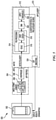
- FIG. 1 illustrates an example implementation of designing a neural network using a system-on-a-chip (SOC), including a general-purpose processor, in accordance with certain aspects of the present disclosure.
- SOC system-on-a-chip
- FIG. 2 illustrates an example implementation of a system, in accordance with aspects of the present disclosure.
- FIG. 3A is a diagram illustrating a neural network, in accordance with aspects of the present disclosure.
- FIG. 3B is a block diagram illustrating an exemplary deep convolutional network (DCN), in accordance with aspects of the present disclosure.
- DCN deep convolutional network
- FIG. 4 is a block diagram illustrating an exemplary software architecture that may modularize artificial intelligence (AI) functions, in accordance with aspects of the present disclosure.
- AI artificial intelligence
- FIG. 5 is a block diagram illustrating the run-time operation of an AI application on a smartphone, in accordance with aspects of the present disclosure.
- FIG. 6 is a display provided by a navigational system, in accordance with aspects of the present disclosure.
- FIG. 7 is a set of navigational instructions, in accordance with aspects of the present disclosure.
- FIG. 8 is an environment in which a user navigating a vehicle may be provided object-based navigational instructions, in accordance with aspects of the present disclosure.
- FIG. 9 is an example system architecture for providing object-based navigational instructions, in accordance with aspects of the present disclosure.
- FIGS. 11A and 11B are a flowchart illustrating a method for providing object-based navigational instructions, in accordance with aspects of the present disclosure.
- the SOC 100 may also include additional processing blocks tailored to specific functions, such as a GPU 104 , a DSP 106 , a connectivity block 110 , which may include fourth generation long term evolution (4G LTE) connectivity, unlicensed Wi-Fi connectivity, USB connectivity, Bluetooth connectivity, and the like, and a multimedia processor 112 that may, for example, detect and recognize gestures.
- the NPU is implemented in the CPU, DSP, and/or GPU.
- the SOC 100 may also include a sensor processor 114 , image signal processors (ISPs), and/or navigation 120 , which may include a global positioning system.
- ISPs image signal processors
- the first sensor comprises a second camera that is oriented toward the user.
- the instructions may include code to obtain second image data that is captured through the second camera; determine a second field of view associated with the user based on the second image data; and store field-of-view information based on the second field of view, wherein the determination of the first field of view associated with the user that is navigating the route is based on the field-of-view information.
- the storage of the field-of-view information based on the second field of view comprises to store the field-of-view information based on the second field of view before the obtainment of the set of navigational instructions describing the route to the destination.
- the one or more weights are adjusted based at least in part on a profile associated with the user, the profile being based on at least one of an age associated with the user, a sex associated with the user, a driving experience level associated with the user, a preference associated with the user, historical information associated with the user, or a location associated with the user.
- the instructional information is configured to be output through at least one of audio presentation or visual presentation.
- the first image data depicts the first scene over a plurality of time steps, and the at least one salient object is in motion over the plurality of time steps.
- the instructions may include code to determine the at least one salient object is in motion, wherein the instructional information describing the first navigational instruction of the set of navigational instructions with reference to the at least one salient object is based on the motion of the at least one salient object.
- FIG. 2 illustrates an example implementation of a system 200 in accordance with certain aspects of the present disclosure.
- the system 200 may have one or more local processing units 202 that may perform various operations of methods described herein.
- Each local processing unit 202 may include a local state memory 204 and a local parameter memory 206 that may store parameters of a neural network.
- the local processing unit 202 may have a local (neuron) model program (LMP) memory 208 for storing a local model program, a local learning program (LLP) memory 210 for storing a local learning program, and a local connection memory 212 .
- LMP local (neuron) model program
- LLP local learning program
- each local processing unit 202 may interface with a configuration processor unit 214 for providing configurations for local memories of the local processing unit, and with a routing connection processing unit 216 that provides routing between the local processing units 202 .
- Deep learning architectures may perform an object recognition task by learning to represent inputs at successively higher levels of abstraction in each layer, thereby building up a useful feature representation of the input data. In this way, deep learning addresses a major bottleneck of traditional machine learning.
- a shallow classifier may be a two-class linear classifier, for example, in which a weighted sum of the feature vector components may be compared with a threshold to predict to which class the input belongs.
- Human engineered features may be templates or kernels tailored to a specific problem domain by engineers with domain expertise. Deep learning architectures, in contrast, may learn to represent features that are similar to what a human engineer might design, but through training. Furthermore, a deep network may learn to represent and recognize new types of features that a human might not have considered.
- a deep learning architecture may learn a hierarchy of features. If presented with visual data, for example, the first layer may learn to recognize relatively simple features, such as edges, in the input stream. In another example, if presented with auditory data, the first layer may learn to recognize spectral power in specific frequencies. The second layer, taking the output of the first layer as input, may learn to recognize combinations of features, such as simple shapes for visual data or combinations of sounds for auditory data. For instance, higher layers may learn to represent complex shapes in visual data or words in auditory data. Still higher layers may learn to recognize common visual objects or spoken phrases.
- Deep learning architectures may perform especially well when applied to problems that have a natural hierarchical structure.
- the classification of motorized vehicles may benefit from first learning to recognize wheels, windshields, and other features. These features may be combined at higher layers in different ways to recognize cars, trucks, and airplanes.
- Neural networks may be designed with a variety of connectivity patterns.
- feed-forward networks information is passed from lower to higher layers, with each neuron in a given layer communicating to neurons in higher layers.
- a hierarchical representation may be built up in successive layers of a feed-forward network, as described above.
- Neural networks may also have recurrent or feedback (also called top-down) connections.
- a recurrent connection the output from a neuron in a given layer may be communicated to another neuron in the same layer.
- a recurrent architecture may be helpful in recognizing patterns that span more than one of the input data chunks that are delivered to the neural network in a sequence.
- a connection from a neuron in a given layer to a neuron in a lower layer is called a feedback (or top-down) connection.
- a network with many feedback connections may be helpful when the recognition of a high-level concept may aid in discriminating the particular low-level features of an input.
- the connections between layers of a neural network may be fully connected 302 or locally connected 304 .
- a neuron in a first layer may communicate its output to every neuron in a second layer, so that each neuron in the second layer will receive input from every neuron in the first layer.
- a neuron in a first layer may be connected to a limited number of neurons in the second layer.
- a convolutional network 306 may be locally connected, and is further configured such that the connection strengths associated with the inputs for each neuron in the second layer are shared (e.g., 308 ).
- a locally connected layer of a network may be configured so that each neuron in a layer will have the same or a similar connectivity pattern, but with connections strengths that may have different values (e.g., 310 , 312 , 314 , and 316 ).
- the locally connected connectivity pattern may give rise to spatially distinct receptive fields in a higher layer, because the higher layer neurons in a given region may receive inputs that are tuned through training to the properties of a restricted portion of the total input to the network.
- Locally connected neural networks may be well suited to problems in which the spatial location of inputs is meaningful.
- a network 300 designed to recognize visual features from a car-mounted camera may develop high layer neurons with different properties depending on their association with the lower versus the upper portion of the image.
- Neurons associated with the lower portion of the image may learn to recognize lane markings, for example, while neurons associated with the upper portion of the image may learn to recognize traffic lights, traffic signs, and the like.
- a deep convolutional network may be a network of convolutional network(s), configured with additional pooling and normalization layers. DCNs have achieved state-of-the-art performance on many tasks. DCNs can be trained using supervised learning in which both the input and output targets are known for many exemplars and are used to modify the weights of the network by use of gradient descent methods.
- DCNs may be feed-forward networks.
- connections from a neuron in a first layer of a DCN to a group of neurons in the next higher layer are shared across the neurons in the first layer.
- the feed-forward and shared connections of DCNs may be exploited for fast processing.
- the computational burden of a DCN may be much less, for example, than that of a similarly sized neural network that includes recurrent or feedback connections.
- a DCN may be trained with supervised learning.
- a DCN may be presented with an image, such as a cropped image of a speed limit sign 326 , and a “forward pass” may then be computed to produce an output 322 .
- the output 322 may be a vector of values corresponding to features such as “sign,” “60,” and “100.”
- the network designer may want the DCN to output a high score for some of the neurons in the output feature vector, for example the ones corresponding to “sign” and “60” as shown in the output 322 for a network 300 that has been trained.
- the output produced by the DCN is likely to be incorrect, and so an error may be calculated between the actual output and the target output.
- the weights of the DCN may then be adjusted so that the output scores of the DCN are more closely aligned with the target.
- a learning algorithm may compute a gradient vector for the weights.
- the gradient may indicate an amount that an error would increase or decrease if the weight were adjusted slightly.
- the gradient may correspond directly to the value of a weight connecting an activated neuron in the penultimate layer and a neuron in the output layer.
- the gradient may depend on the value of the weights and on the computed error gradients of the higher layers.
- the weights may then be adjusted so as to reduce the error. This manner of adjusting the weights may be referred to as “back propagation” as it involves a “backward pass” through the neural network.
- the error gradient of weights may be calculated over a small number of examples, so that the calculated gradient approximates the true error gradient.
- This approximation method may be referred to as stochastic gradient descent. Stochastic gradient descent may be repeated until the achievable error rate of the entire system has stopped decreasing or until the error rate has reached a target level.
- the DCN may be presented with new images 326 and a forward pass through the network may yield an output 322 that may be considered an inference or a prediction of the DCN.
- Deep belief networks are probabilistic models comprising multiple layers of hidden nodes. DBNs may be used to extract a hierarchical representation of training data sets. A DBN may be obtained by stacking up layers of Restricted Boltzmann Machines (RBMs).
- RBM Restricted Boltzmann Machines
- An RBM is a type of artificial neural network that can learn a probability distribution over a set of inputs. Because RBMs can learn a probability distribution in the absence of information about the class to which each input should be categorized, RBMs are often used in unsupervised learning.
- the bottom RBMs of a DBN may be trained in an unsupervised manner and may serve as feature extractors
- the top RBM may be trained in a supervised manner (on a joint distribution of inputs from the previous layer and target classes) and may serve as a classifier.
- each layer of a convolutional network may be considered a spatially invariant template or basis projection. If the input is first decomposed into multiple channels, such as the red, green, and blue channels of a color image, then the convolutional network trained on that input may be considered three-dimensional, with two spatial dimensions along the axes of the image and a third dimension capturing color information.
- the outputs of the convolutional connections may be considered to form a feature map in the subsequent layer 318 and 320 , with each element of the feature map (e.g., 320 ) receiving input from a range of neurons in the previous layer (e.g., 318 ) and from each of the multiple channels.
- the values in the feature map may be further processed with a non-linearity, such as a rectification, max(0,x). Values from adjacent neurons may be further pooled, which corresponds to down sampling, and may provide additional local invariance and dimensionality reduction. Normalization, which corresponds to whitening, may also be applied through lateral inhibition between neurons in the feature map.
- a non-linearity such as a rectification, max(0,x).
- Values from adjacent neurons may be further pooled, which corresponds to down sampling, and may provide additional local invariance and dimensionality reduction. Normalization, which corresponds to whitening, may also be applied through lateral inhibition between neurons in the feature map.
- the performance of deep learning architectures may increase as more labeled data points become available or as computational power increases.
- Modern DNNs are routinely trained with computing resources that are thousands of times greater than what was available to a typical researcher just fifteen years ago.
- New architectures and training paradigms may further boost the performance of deep learning. Rectified linear units may reduce a training issue known as vanishing gradients.
- New training techniques may reduce over-fitting and thus enable larger models to achieve better generalization.
- Encapsulation techniques may abstract data in a given receptive field and further boost overall performance.
- FIG. 3B is a block diagram illustrating an exemplary deep convolutional network 350 .
- the deep convolutional network 350 may include multiple different types of layers based on connectivity and weight sharing.
- the exemplary deep convolutional network 350 includes multiple convolution blocks (e.g., C 1 and C 2 ).
- Each of the convolution blocks may be configured with a convolution layer, a normalization layer (LNorm), and a pooling layer.
- the convolution layers may include one or more convolutional filters, which may be applied to the input data to generate a feature map. Although only two convolution blocks are shown, the present disclosure is not so limiting, and instead, any number of convolutional blocks may be included in the deep convolutional network 350 according to design preference.
- the normalization layer may be used to normalize the output of the convolution filters. For example, the normalization layer may provide whitening or lateral inhibition.
- the pooling layer may provide down sampling aggregation over space for local invariance and dimensionality reduction.
- the parallel filter banks for example, of a deep convolutional network may be loaded on a CPU 102 or GPU 104 of an SOC 100 , optionally based on an ARM instruction set, to achieve high performance and low power consumption.
- the parallel filter banks may be loaded on the DSP 106 or an ISP 116 of an SOC 100 .
- the DCN may access other processing blocks that may be present on the SOC, such as processing blocks dedicated to sensors 114 and navigation 120 .
- the deep convolutional network 350 may also include one or more fully connected layers (e.g., FC 1 and FC 2 ).
- the deep convolutional network 350 may further include a logistic regression (LR) layer. Between each layer of the deep convolutional network 350 are weights (not shown) that are to be updated. The output of each layer may serve as an input of a succeeding layer in the deep convolutional network 350 to learn hierarchical feature representations from input data (e.g., images, audio, video, sensor data and/or other input data) supplied at the first convolution block C 1 .
- input data e.g., images, audio, video, sensor data and/or other input data
- FIG. 4 is a block diagram illustrating an exemplary software architecture 400 that may modularize artificial intelligence (AI) functions.
- applications 402 may be designed that may cause various processing blocks of an SOC 420 (for example a CPU 422 , a DSP 424 , a GPU 426 and/or an NPU 428 ) to perform supporting computations during run-time operation of the application 402 .
- SOC 420 for example a CPU 422 , a DSP 424 , a GPU 426 and/or an NPU 428 .
- the AI application 402 may be configured to call functions defined in a user space 404 that may, for example, provide for the detection and recognition of a scene indicative of the location in which the device currently operates.
- the AI application 402 may, for example, configure a microphone and a camera differently depending on whether the recognized scene is an office, a lecture hall, a restaurant, or an outdoor setting such as a lake.
- the AI application 402 may make a request to compiled program code associated with a library defined in a SceneDetect application programming interface (API) 406 to provide an estimate of the current scene. This request may ultimately rely on the output of a deep neural network configured to provide scene estimates based on video and positioning data, for example.
- API application programming interface
- a run-time engine 408 which may be compiled code of a Runtime Framework, may be further accessible to the AI application 402 .
- the AI application 402 may cause the run-time engine, for example, to request a scene estimate at a particular time interval or triggered by an event detected by the user interface of the application.
- the run-time engine may in turn send a signal to an operating system 410 , such as a Linux Kernel 412 , running on the SOC 420 .
- the operating system 410 may cause a computation to be performed on the CPU 422 , the DSP 424 , the GPU 426 , the NPU 428 , or some combination thereof.
- the CPU 422 may be accessed directly by the operating system, and other processing blocks may be accessed through a driver, such as a driver 414 - 418 for a DSP 424 , for a GPU 426 , or for an NPU 428 .
- the deep neural network may be configured to run on a combination of processing blocks, such as a CPU 422 and a GPU 426 , or may be run on an NPU 428 , if present.
- FIG. 5 is a block diagram illustrating the run-time operation 500 of an AI application on a smartphone 502 .
- the AI application may include a pre-process unit 504 that may be configured (using for example, the JAVA programming language) to convert the format of an image 506 and then crop and/or resize the image 508 .
- the pre-processed image may then be communicated to a classify application 510 that contains a SceneDetect Backend Engine 512 that may be configured (using for example, the C programming language) to detect and classify scenes based on visual input.
- the SceneDetect Backend Engine 512 may be configured to further preprocess 514 the image by scaling 516 and cropping 518 .
- the image may be scaled and cropped so that the resulting image is 224 pixels by 224 pixels. These dimensions may map to the input dimensions of a neural network.
- the neural network may be configured by a deep neural network block 520 to cause various processing blocks of the SOC 100 to further process the image pixels with a deep neural network.
- the results of the deep neural network may then be thresholded 522 and passed through an exponential smoothing block 524 in the classify application 510 .
- the smoothed results may then cause a change of the settings and/or the display of the smartphone 502 .
- FIG. 6 illustrates a display 600 of a navigation system.
- the navigation system associated with the display 600 may be based on a map, as shown in the map display 606 .
- map-based navigation a navigational instruction 604 are provided to a user with reference to a road name.
- map-based navigation typically provides a user with an absolute different between the position of the user and a road to which a user is to navigate, as shown in the navigational instruction 604 (e.g., “turn right in 600 feet”).
- a user may have difficulty resolving a road name and/or a distance, for example, when street signs are missing or occluded, when a road is circuitous, etc.
- aspects of the present disclosure may provide a system and method for providing navigational instructions using salient objects, such as landmarks, vehicles, etc.
- salient objects such as landmarks, vehicles, etc.
- FIG. 7 illustrates an example of a set of navigational instructions 700 .
- the set of navigational instructions 700 may be provided by a navigation system.
- a navigation system may allow a user to input a destination (e.g., a street address of a destination, a specific location, a general location, etc.).
- the navigational system may calculate a route between a beginning point (e.g., the user's current location) and a destination.
- the navigational system may separate the route into discrete steps, as shown by each navigational instruction 702 a - e .
- the set of navigational instructions 700 is intended to be illustrative. Other configurations for sets of navigational instructions are comprehended by the present disclosure.
- the set of navigational instructions 700 illustrate a text output that may be comprehensible by a user, but the set of navigational instructions 700 may be stored as vector data or another type of data.
- FIG. 8 illustrates an environment 800 in which a user in a vehicle 802 is navigating a route.
- the user in the vehicle 802 may have access to a navigational system as described herein.
- the vehicle 802 may be approaching an intersection.
- a set of navigational instructions 700 may guide a user along a route to a destination.
- the vehicle 802 may be traveling along a first road, and may be intended to turn right at the intersection onto a second road 810 .
- a first navigational instruction 702 a may instruct the user to turn the vehicle 802 right at the second road 810 .
- the field of view 814 is intended to be illustrative, and the user may have a different field of view in order to view more or fewer objects (e.g., the person 804 , the courthouse 806 , the sign 812 , etc.).
- a set of objects 804 , 806 , 808 , 812 may be proximately disposed to the vehicle 802 .
- a person 804 may be located at a near left corner of the intersection with the second road 810 , relative to a field of view 814 of the user of the user in the vehicle 802 .
- a courthouse 806 may be located at a far left corner of the intersection with the second road 810 , relative to the field of view 814 of the user in the vehicle 802 .
- a car 808 may be traveling along the second road 810 in the direction consistent with the first navigational instruction 702 a.
- one or more of the aforementioned objects 804 , 806 , 808 , 812 may be used to describe the first navigational instruction 702 a . Accordingly, the user of the vehicle 802 may be provided with a navigational instruction that indicates a salient object at least partially within the field of view 814 of the user of the vehicle 802 .
- FIG. 9 illustrates an example system architecture 900 for providing object-based navigational instructions.
- the example system architecture 900 may be at least partially integrated with and/or communicatively coupled with a computer system of the vehicle 802 .
- the example system architecture 900 may be at least partially integrated with and/or communicatively coupled with a personal electronic device (e.g., smartphone) of a user of the vehicle 802 .
- the example system architecture 900 may be at least partially integrated within and/or communicatively coupled with a cloud-based computing system.
- the example system architecture 900 may include and/or may be communicatively coupled with a navigation planner 920 .
- the navigation planner 920 may be configured to generate a set of navigational instructions 700 .
- the navigation planner 920 may include a global navigation satellite system (GNSS)-based navigation system, such as a program at least partially implemented as software and including and/or communicatively coupled with a GNSS-positioning component.
- GNSS global navigation satellite system
- An example of a GNSS-based navigation system may include a global-position system (GPS) navigation system that includes a GPS-positioning component.
- GPS global-position system
- the navigation planner 920 may be configured to determine a set of navigational instructions 700 .
- the navigation planner 920 may be provided a destination (e.g., via user input). Based on the destination, the navigation planner 920 may determine a route between a starting point (e.g., the current location of the vehicle) and the destination. The navigation planner 920 may determine the route as the set of navigational instructions 700 .
- the set of navigational instructions 700 may be communicated by the navigation planner 920 , e.g., via a wired or wireless connection.
- the example system architecture 900 may include and/or may be communicatively coupled with an exterior vehicle camera 922 .
- the exterior vehicle camera 922 may be oriented to toward the route; that is, the exterior vehicle camera 922 may be oriented toward to road in order to capture image data outside the vehicle 802 that occurs along the route.
- the exterior vehicle camera 922 may be configured to capture first image data 930 that depicts a first scene associated with the route.
- the exterior vehicle camera 922 may capture first image data 930 that includes at least a portion of the second road 810 , the person 804 , the courthouse 806 , and/or the car 808 .
- the first image data 930 may be at least one of a static image, a moving image, a video, a plurality of images, and the like. In various aspects, the first image data 930 may depict the first scene over a plurality of time steps (e.g., quarter seconds, half seconds, seconds, minutes, etc.). For example, the first image data 930 may include a plurality of images captured over a plurality of time steps.
- the example system architecture 900 may further include and/or be communicatively coupled with an interior vehicle camera 924 .
- the interior vehicle camera 924 may be oriented toward a user (e.g., a driver of the vehicle 802 ).
- the interior vehicle camera 924 may be configured to capture second image data 944 .
- the interior vehicle camera 924 may be configured to capture second image data 944 that depicts a gaze of the user, such as a direction of a gaze of the user. Accordingly, a field of view 814 associated with the user may be based on the direction of the gaze of the user, as depicted in the second image data 944 .
- the second image data 944 may be at least one of a static image, a moving image, a video, a plurality of images, and the like. While the example system architecture 900 illustrates an interior vehicle camera 924 , other sensors may be used in order to determine a direction in which the user is gazing. For example, a sensor may be configured to detect an orientation of the user's head, a height of the user's head within the vehicle 802 , etc. from which a direction of the user's gaze may be determined.
- the example system architecture 900 may further include and/or be communicatively coupled with an object detector 902 .
- the object detector 902 may be configured to identify a set of objects from image data.
- the object detector 902 may obtain the first image data 930 captured by the exterior vehicle camera 922 . Based on the first image data 930 , the object detector 902 may detect (e.g., identify) one or more objects disposed along the route that is being navigated. For example, the object detector 902 may detect a set of objects that includes the person 804 , the courthouse 806 , and/or the car 808 .
- the object detector 902 may be configured to classify each object of the set of objects 804 , 806 , 808 , 812 .
- the object detector 902 may be configured to classify the person 804 as a person.
- the object detector 902 may be configured to classify the courthouse 806 as a building or courthouse.
- the object detector 902 may be configured to classify the car 808 as a vehicle or a car.
- the object detector 902 may be configured to identify one or more visual attributes of each object of the set of objects 804 , 806 , 808 , 812 .
- the object detector 902 may be configured to detect that the person 804 is of a certain sex (e.g., male or female), to detect that the person 804 has certain hair color (e.g., brown), to detect that the person 804 is wearing certain items of clothing (e.g., blue suit), etc.
- the object detector 902 may be configured to detect that the courthouse 806 includes one or more physical features (e.g., several columns), to detect that the courthouse 806 includes a sign 812 (e.g., the scales of justice), to detect that the courthouse 806 has a flag, etc.
- the object detector 902 may be configured to detect that the car 808 is a certain type (e.g., car, sport-utility vehicle, van, truck, etc.), to detect that the car 808 is of a certain color (e.g., blue), to detect that the car 808 is of a certain make and/or model (e.g., Mercedes E400), etc.
- the object detector 902 may be configured to determine one or more dynamic attributes about one or more of the objects 804 , 806 , 808 , 812 .
- a dynamic attribute may change over time.
- the first image data 930 may depict the first scene over a plurality of time steps. Over the plurality of time steps, one or more of the person 804 and/or the car 808 may be in motion.
- the object detector 902 may be configured to determine the motion of the person 804 and/or the car 808 . For example, when the car 808 turns right onto the second road 810 , the object detector 902 may be configured to determine that the car 808 has turned right onto the second road 810 .
- the object detector 902 may include or may be communicatively coupled with a DNN and/or other machine-learning model.
- the object detector 902 may include one or more reinforcement-learning models, a CNN, an RNN, or another object-detection system.
- the object detector 902 may include one or more neural networks that implement a Single Shot Multibox Detector (SSD) and/or You Only Look Once (YOLO) for object detection (e.g., real-time object detection).
- object detector 902 may identify each object of the set of objects 804 , 806 , 808 , 812 disposed along the route by processing the first image data 930 using a DNN or other model/neural network.
- the attention detector 908 may determine or estimate a second field of view 814 that is associated with the user. For example, the attention detector 908 may determine that the second field of view 814 is includes at least a portion of the environment 800 , and the at least the portion may be based on the orientation of the detected gaze of the user. In one aspect, the attention detector 908 may determine an orientation of the user's gaze as a first angle in the azimuthal plane and a second angle in the elevational plane. The attention detector 908 may output field-of-view information 946 indicating a second field of view 814 that is associated with the user.
- the attention detector 908 may store the field-of-view information 946 .
- the field-of-view information 946 may be stored before obtaining the set of navigational instructions 700 .
- the attention detector 908 may store field-of-view information 946 that indicates one or more patterns of the user to gaze in a certain orientation. Accordingly, the field-of-view information 946 may be used in future navigations along future routes. In other words, the attention detector 908 does not necessarily determine a second field of view 814 associated with a user for each navigational route; rather, stored field-of-view information from the past may be referenced for other navigational routes.
- the attention detector 908 may include or may be communicatively coupled with a DNN and/or other machine-learning model.
- the attention detector 908 may include one or more reinforcement-learning models, a CNN, an RNN, or another detection system.
- the attention detector 908 may detect the gaze orientation of the user and/or determine the second field of view 814 that is associated with the user by processing the second image data 944 using a DNN or other model/neural network.
- the example system architecture 900 may further include an information store component 904 .
- the information store component 904 may include or may be communicatively coupled with a DNN and/or other machine-learning model.
- the information store component 904 may include one or more reinforcement-learning models, a CNN, an RNN, or another system.
- the information store component 904 may include information associated with a profile of a user of the vehicle 802 .
- the information store component 904 may include profile information indicating an age of the user, a sex of the user, a driving experience level of the user, a preference of the user, and/or a location of the user.
- the information store component 904 may obtain profile information associated with a user using one or more of various techniques. For example, the information store component 904 may obtain profile information associated with a user through input from the user. In another example, the information store component 904 may obtain profile information based on the second image data 944 . For example, the information store component 904 may determine or estimate an age, sex, experience level, and/or preference associated with the user based on the second image data 944 .
- the information store component 904 may provide the profile information 942 to a saliency information component 906 . Additionally or alternatively, the attention detector 908 may provide field-of-view information 946 associated with the gaze of a user of the vehicle 802 to the saliency information component 906 .
- the saliency information component 906 may include or may be communicatively coupled with a DNN and/or other machine-learning model.
- the saliency information component 906 may be configured to aggregate saliency information 940 that is associated with the user of the vehicle 802 .
- the saliency information component 906 may aggregate information associated with the field-of-view information 946 and the profile information 942 .
- the saliency information component 906 may provide saliency information 940 to the salient objects selection component 910 .
- the salient objects selection component 910 may obtain the set of identified objects 932 and the saliency information 940 . Based on the set of identified objects 932 and the saliency information 940 , the salient objects selection component 910 may be configured to identify at least one salient object represented in the first scene.
- a salient object may be an object of the set of objects 804 , 806 , 808 , 812 that is estimated to be noticed by the user navigating the route in the vehicle 802 .
- the salient objects selection component 910 may be configured to identify at least one of the object 804 , 806 , 808 that is estimated to be at least partially in the second field of view 814 that is associated with the user of the vehicle 802 .
- the salient objects selection component 910 may identify a portion of the first scene depicted in the first image data 930 that corresponds to the field-of-view information 946 . For example, the salient objects selection component 910 may select a right portion of the first scene depicted in the first image data 930 when the field-of-view information 946 indicates that the user of the vehicle 802 is gazing to the right. In another example, the salient objects selection component 910 may select a lower portion of the first scene depicted in the first image data 930 when the field-of-view information 946 indicates that the user of the vehicle 802 is gazing downward and/or indicates that the user is sitting relatively low in the driver's seat of vehicle 802 .
- the salient objects selection component 910 may determine that objects depicted in the identified portion of the first scene that corresponds to the field-of-view information 946 are salient to the user of the vehicle 802 and, therefore, are more likely to be noticed by the user as the user is navigating the route.
- the first image data 930 may depict the first scene over a plurality of times steps.
- the first image data 930 may depict the first scene over a plurality of time steps in which the car 808 has turned right onto the second road 810 .
- the salient objects selection component 910 may determine that the car 808 is the most salient object, and the motion of the car 808 over the plurality of time steps may influence the saliency of the car 808 .
- the salient objects selection component 910 may be configured to select salient objects based at least in part on the motion of those salient objects over a plurality of time steps.
- the salient objects selection component 910 may determine objects that may be salient to the user of the vehicle 802 based on the profile information 942 that is indicated in the saliency information 940 .
- the salient objects selection component 910 may determine a relative saliency of an object based on at least one of an age associated with the user, a sex associated with the user, a driving experience level associated with the user, a preference associated with the user, historical information associated with the user, a location associated with the user, or other profile information that is associated with the user.
- the profile information 942 may indicate that the user is associated with a certain demographic, e.g., based on the age associated with the user, sex associated with the user, etc. Due to the certain demographic, the user may be inclined to find some objects more salient than other objects. For example, a user of one demographic may be more inclined to recognize certain signs (e.g., store logos, restaurant signs, etc.) rather than other signs. Illustratively, a first user may be more inclined to recognize a store logo for a youth clothing store, whereas a second user may be more inclined to recognize a restaurant sign for a nationwide restaurant.
- certain signs e.g., store logos, restaurant signs, etc.
- the profile information 942 may indicate a preference associated with the user.
- the user may indicate a preference of signs (e.g., the sign 812 ) as salient objects
- the user may indicate a preference of other vehicles (e.g., the car 808 ) as salient objects
- the salient objects selection component 910 may identify objects as salient based on the preference associated with the user.
- the profile information 942 may indicate historical information associated with the user.
- the historical information may indicate that the user has found a certain classification of object(s) salient in the past.
- the historical information may indicate that the user has frequented a certain type of establishment (e.g., a nationwide restaurant chain, a youth clothing store, etc.) and so may find objects (e.g., signs, logos, etc.) associated with that certain type to be more salient than other objects.
- the salient objects selection component 910 may identify objects as salient based on the historical information associated with the user.
- the alignment component 912 may determine the instructional information to describe the first navigational instruction 702 a as a right turn at the intersection consistent with the motion of the car 808 (e.g., “follow the blue Mercedes right at the intersection,” “turn right on Nansen Road where the red car in front of you has turned,” etc.).
- the alignment component 912 may include and/or may be communicatively coupled with a DNN and/or other machine-learning model.
- the alignment component 912 may include one or more reinforcement-learning models, a CNN, an RNN, or another system.
- the alignment component 912 may output the instructional information 936 describing at least one navigational instruction (e.g., the first navigational instruction 702 a ) with reference to at least one salient object (e.g., the car 808 ).
- An object instruction component 914 may obtain the instructional information 936 , and the object instruction component 914 may generate an output instruction 938 that indicates the at least one navigational instruction with reference to the at least one salient object.
- a user interface 926 may provide the output instruction 938 to a user of the vehicle in order to describe at least one navigational instruction with reference to at least one salient object.
- the user interface 926 may be included in an on-board computer of the vehicle 802 .
- the user interface 926 may be included in a smartphone of a user of the vehicle 802 .
- the user interface 926 may be included in a same system as the navigation planner 920 .
- the object instruction component 914 may provide the output instruction 938 to the user interface 926 over a connection (e.g., wired or wireless network, computer-bus connection, etc.).
- the object detector 902 may include and/or may be communicatively coupled with a first DNN and/or machine-learning model
- the salient objects selection component 910 may include and/or may be communicatively coupled with a different DNN and/or machine-learning model
- the salient objects selection component 910 and the alignment component 912 may include and/or may be communicatively coupled with a same DNN and/or machine-learning model.
- FIG. 10 is a call flow diagram illustrating a method 1000 for operating at least one neural network 1002 .
- the at least one neural network 1002 may include one or more DNNs and/or other machine-learning models.
- the at least one neural network 1002 may be an aspect of one or more components 902 , 904 , 906 , 908 , 910 , 912 , 914 , and/or 920 described with respect to the example system architecture 900 of FIG. 9 .
- the at least one neural network 1002 may obtain a set of navigational instructions 1020 describing a route to a destination from a navigational system 1008 (e.g., GPS or other map-based navigational system and/or software). In the context of FIG. 7 , the at least one neural network 1002 may obtain the set of navigational instructions 700 .
- a navigational system 1008 e.g., GPS or other map-based navigational system and/or software.
- a first image capture device 1004 (e.g., a first camera) may be oriented toward the route that the vehicle is navigating toward the destination.
- the first image capture device 1004 may capture first image data 1022 that depicts a first scene associated with the route.
- the first image capture device 1004 may capture at least a portion of the environment 800 .
- the at least one neural network 1002 may obtain, from the first image capture device 1004 , the first image data 1022 that depicts the first scene associated with the route.
- the at least one neural network 1002 may identify 1024 one or more objects that are represented in the first scene.
- the at least one neural network 1002 may process the first image data 1022 using a first DNN and/or other machine-learning model for identification of a set of objects represented in the first scene.
- the at least one neural network 1002 may identify the person 804 , the courthouse 806 , the sign 812 , and/or the car 808 .
- a first sensor 1006 may capture gaze data 1026 (e.g., gaze data or other information indicating a gaze of a user of a vehicle).
- a second image capture device may capture image data indicating an orientation of a user's head and/or gaze (e.g., in an azimuthal and/or elevational plane).
- the first sensor 1006 may capture gaze data 1026 indicating a gaze of a user (e.g., driver) the vehicle 802 .
- the at least one neural network 1002 may process the gaze data 1026 for identification of a field of view of the user, e.g., based on an orientation of the user's head and/or eyes. In the context of FIG. 8 , the at least one neural network 1002 may determine 1028 field-of-view information associated with the second field of view 814 of the user of the vehicle 802 .
- the at least one neural network 1002 may identify 1030 one or more salient object represented in the first scene that is depicted in the first image data 1022 .
- the at least one neural network 1002 may identify at least a portion of the first scene that is estimated to be within a field of view of the user.
- the at least one neural network 1002 may then identify one or more salient objects represented in the first scene.
- the at least one neural network 1002 may identify one or more salient objects that are estimated to be near a center of the user's field of view.
- the at least one neural network 1002 may identify one or more salient objects near a next navigational instruction (e.g., next turn) that are estimated to be within the user's field of view.
- the at least one neural network 1002 may identify 1030 the car 808 as a salient object, e.g., because the car 808 is estimated to be at least partially within the user's field of view and/or is near a first navigational instruction 702 a.
- the at least one neural network 1002 may identify 1030 the one or more salient objects from the set of objects identified in the first scene by processing the field-of-view information and the set of objects identified in the first scene using a third DNN and/or other machine-learning model.
- the field-of-view information and information indicating the set of objects may be provided to an input layer of a DNN.
- One or more neurons of the input layer may be communicatively coupled with one or more hidden layers of the DNN, and at least one neuron of the hidden layer may be communicatively coupled with at least one neuron of an output layer of the DNN.
- Inputs provided to neurons may be influenced by a respective weight.
- the respective weights may be the same or different across neurons of the same layer and/or neurons of different layers.
- the weights may be configured for and/or by the at least one neural network 1002 through reinforcement learning or another machine-learning technique.
- the at least one neural network 1002 may determine instructional information 1032 that describes a first navigational instruction of the set of navigational instructions with reference to the one or more salient objects. For example, the at least one neural network 1002 may generate instructional information 1032 that indicates a distance and/or direction of travel in the context of the one or more identified salient objects. In one aspect, the at least one neural network 1002 may output the instructional information 1032 in order to be output through one of audio and/or visual presentation. In the context of FIGS.
- the at least one neural network 1002 may output instructional information 1032 in order to be output to a user of the vehicle 802 , and the instructional information may describe the first navigational instruction 702 a with reference to at least one of the objects 804 , 806 , 808 , 812 (e.g., the car 808 ).
- the at least one neural network 1002 may be configured to determine the instructional information 1032 describing the first navigational instruction with reference to the motion of the at least one salient object over a plurality of time steps. For example, the at least one neural network 1002 may be configured to determine that the motion of the at least one salient object corresponds to a first navigational instruction (e.g., a vehicle has turned right onto a road that is consistent with the turn and/or road indicated by the first navigational instruction). The at least one neural network 1002 may determine the instructional information 1032 to indicate the motion of the at least one salient object. Accordingly, the at least one neural network 1002 may determine the instructional information 1032 based on the motion of the at least one salient object. In the context of FIGS.
- the at least one neural network 1002 may identify the car 808 turning right onto the second road 810 is a salient object, and the at least one neural network 1002 may determine the instructional information 1032 describing the first navigational instruction 702 a with reference to the right turn onto the second road 810 by the car 808 (e.g., “follow the car right at the upcoming intersection”).
- FIGS. 11A and 11B illustrate a method 1100 for determining navigational instructions with reference to at least one salient object, in accordance with various aspects of the present disclosure.
- the method may be practiced in one or more neural networks and/or other-machine-learning models, such as the vehicle 802 of FIG. 8 , the example system architecture 900 of FIG. 9 , and/or the at least one neural network 1002 of FIG. 10 .
- One or more of the illustrated operations may be transposed, omitted, and/or contemporaneously performed. Operations illustrated with dashed lines may be optional.
- the at least one neural network may identify one or more portions of a first navigational instruction of the set of navigational instructions, such as a first portion indicating a next direction to be navigated (e.g., left, right, straight, etc.), a second portion indicating a distance to the next direction (e.g., 400 feet, 0.5 miles, etc.), and/or a third portion indicating an identifier of a road (e.g., street name, highway number, etc.).
- a first navigational instruction of the set of navigational instructions such as a first portion indicating a next direction to be navigated (e.g., left, right, straight, etc.), a second portion indicating a distance to the next direction (e.g., 400 feet, 0.5 miles, etc.), and/or a third portion indicating an identifier of a road (e.g., street name, highway number, etc.).
- the navigation planner 920 may provide a set of navigational instructions 700 describing a route to a destination through the environment 800 to an alignment component 912 .
- the at least one neural network 1002 may obtain, from the navigational system 1008 , a set of navigational instructions 1020 .
- the at least one neural network may process the first image data using a first DNN for identification of a set of objects represented in the first scene.
- the at least one neural network may provide the first image data to an input layer of a first DNN (e.g., a CNN).
- the first DNN may detect one or more objects depicted in the first scene, and may identify (e.g., classify) the one or more objects.
- An output layer of the first DNN may provide information indicating a set of objects depicted in the first scene that is identified by the first DNN.
- the at least one neural network may obtain second image data through a first sensor (e.g., a second camera, an image capture device, etc.) that is oriented toward a user.
- a first sensor e.g., a second camera, an image capture device, etc.
- the at least one neural network may request gaze data (e.g., second image data) from a first sensor that is oriented toward a user (e.g., a driver of a vehicle).
- the at least one neural network may obtain the gaze data (e.g., based on the request), and the at least one neural network may store the gaze data.
- the at least one neural network may determine a second field of view associated with the user based on the second image data. For example, the at least one neural network may determine an orientation of the user's head and/or eyes. In one aspect, the at least one neural network may measure an azimuthal angle and/or may measure an elevational angle of the user's head and/or eyes. Based on the orientation (e.g., measured angles of azimuth and elevation), the at least one neural network may estimate a second field of view that is associated with the user.
- the attention detector 908 may determine a second field of view (e.g., the field of view 814 ) that is associated with a user of the vehicle 802 based on the second image data 944 .
- the at least one neural network 1002 may determine a second field of view, e.g., based on the gaze data 1026 obtained from the first sensor 1006 .
- the at least one neural network may store field-of-view information based on the second field of view.
- the at least one neural network may provide a data structure that includes the field-of-view information to a memory, and the at least one neural network may cause (e.g., instruct) the memory to store the data structure that includes the field-of-view information.
- the at least one neural network may store the field-of-view information before obtaining the set of navigational instructions (operation 1102 ). Accordingly, the field-of-view information may be used for future and/or a plurality of navigations along one or more routes.
- the attention detector 908 may store field-of-view information 946 .
- the attention detector 908 may cause the information store component 904 to store the field-of-view information.
- the at least one neural network 1002 may store field-of-view information, e.g., based on gaze data 1026 obtained from the first sensor 1006 .
- the at least one neural network may determine a first field of view associated with the user that is navigating the route to the destination.
- the at least one neural network may determine the first field of view based on a first sensor that is oriented toward the user (e.g., based on gaze data that is obtained from the first sensor).
- the at least one neural network may determine the first field of view associated with the user by accessing stored field-of-view information (e.g., that was obtained from the first sensor), and identifying the first field of view based on the accessed field-of-view information.
- the at least one neural network may estimate that the at least the portion of the first scene corresponds to a relatively elevated (e.g., relatively higher) portion of the first scene and/or corresponds to a relatively right portion of the first scene.
- the at least the portion may be a fractional section (e.g., quadrant, etc.).
- the at least one neural network may determine that the at least the portion corresponds to the first field of view associated with the user and, accordingly, at least one salient object may be estimated to be within the at least the portion of the first scene.
- the attention detector 908 may determine a field of view 814 that is associated with a user of the vehicle 802 .
- the attention detector 908 may provide field-of-view information 946 to the saliency information component 906 .
- the saliency information component 906 may provide saliency information 940 to the salient objects selection component 910 .
- the salient objects selection component 910 may further obtain the set of identified objects 932 from the object detector 902 , which may include at least a portion of the first image data 930 .
- the salient objects selection component 910 may identify a portion of the first scene depicted in the first image data 930 that corresponds to the field-of-view information 946 .
- the at least one neural network 1002 may determine 1028 a field of view associated with a user. For example, the at least one neural network 1002 may identify at least a portion of the scene that corresponds to the first scene depicted in the first image data 1022 , e.g., based on a gaze of the user indicated by the gaze data 1026 .
- the at least one neural network may identify at least one salient object represented in the first scene.
- the at least one neural network may identify the at least one salient object based on the first field of view associated with the user. For example, the at least one neural network may determine one or more objects of the set of identified objects, and the at least one neural network may select at least one salient object that is estimated to be at least partially within the user's field of view.
- the salient objects selection component 910 may identify at least one salient object (e.g., the car 808 ) based on the set of identified objects 932 , which may indicate the person 804 , the courthouse 806 , the car 808 , and/or the sign 812 .
- the at least one neural network 1002 may identify 1030 at least one salient object based on the determination 1028 of the user's field of view and based on the identification 1024 of the set of objects depicted in the first scene represented in the first image data 1022 .
- operation 1116 may include operation 1140 and operation 1142 .
- the at least one neural network may adjust one or more weights associated with a second DNN.
- the at least one neural network may adjust the one or more weights associated with the second DNN based on the first field of view.
- the at least one neural network may adjust the one or more weights based at least in part on a profile that is associated with the user.
- the profile may be based on, for example, at least one of an age associated with the user, a sex associated with the user, a driving experience level associated with the user, a preference associated with the user, historical information associated with the user, and/or a location associated with the user.
- the salient objects selection component 910 may set and/or may have set one or more weights based on the saliency information 940 .
- the salient objects selection component 910 may set one or more weights based on the field-of-view information 946 and/or the profile information 942 , which may be indicated in the saliency information 940 .
- the at least one neural network 1002 may set and/or may have set one or more weights based on the determination 1030 of the user's field of view (e.g., based on the gaze data 1026 ) and/or based on stored profile information that is associated with the user.
- the at least one neural network may process the set of objects using a second DNN for identification of the at least one salient object that is estimated to be at least partially within the first field of view.
- the at least one neural network may provide the set of identified objects to one or more neurons of an input layer of the second DNN.
- the set of identified objects may cause activation of one or more neurons of one or more layers of the second DNN.
- a respective weight of the weights may be connected to a neuron and may influence activation of that neuron.
- the at least one neural network may obtain an output, from an output layer of the second DNN, that indicates at least one salient object that is estimated to be at least partially within the user's field of view.
- the salient objects selection component 910 may provide the set of identified objects 932 to a second DNN.
- the second DNN may process the set of identified objects 932 in order to identify at least one salient object (e.g., the car 808 ) that is estimated to be at least partially within the field of view 814 of the user of the vehicle 802 .
- the at least one neural network 1002 may process the set of identified objects using a second DNN in order to identify 1030 that at least one salient object that is estimated to be at least partially within the user's field of view.
- the at least one neural network may output instructional information that describes a first navigational instruction of the set of navigational instructions with reference to the at least one salient object.
- the at least one neural network may generate instructional information that indicates a distance and/or direction of travel in the context of the at least one salient object.
- the at least one neural network may output the instructional information in order to be output through one of audio and/or visual presentation. Accordingly, the at least one neural network may facilitate provision to the user of the first navigational instruction with reference to at least one object that the user is estimated to find salient.
- the at least one neural network may be configured to determine the instructional information describing the first navigational instruction with reference to the motion of the at least one salient object over a plurality of time steps. For example, the at least one neural network may be configured to determine that the motion of the at least one salient object corresponds to the first navigational instruction (e.g., a vehicle has turned right onto a road that is consistent with the turn and/or road indicated by the first navigational instruction). The at least one neural network may determine the instructional information to indicate the motion of the at least one salient object. Accordingly, the at least one neural network may output the instructional information based on the motion of the at least one salient object.
- the at least one neural network may be configured to determine the instructional information describing the first navigational instruction with reference to the motion of the at least one salient object over a plurality of time steps. For example, the at least one neural network may be configured to determine that the motion of the at least one salient object corresponds to the first navigational instruction (e.g., a vehicle has turned right onto
- the alignment component 912 may obtain the salient object information, e.g., from the salient objects selection component 910 .
- the alignment component 912 may obtain a first navigational instruction 702 a from the navigation planner 920 .
- the alignment component 912 may determine instructional information 936 that describes the first navigational instruction 702 a with reference to at least one salient object (e.g., the car 808 ).
- the alignment component 912 may determine the instructional information 936 describing the first navigational instruction 702 a with reference to the motion of the at least one salient object over a plurality of time steps (e.g., the motion of the car 808 as the car 808 turns right on the second road 810 ).
- the alignment component 912 may provide the instructional information 936 to an object instruction component 914 , and the object instruction component 914 may generate an output instruction 938 that describes the first navigational instruction 702 a with reference to the at least one salient object (e.g., the car 808 ).
- the object instruction component 914 may provide the output instruction 938 to a user interface 926 so that the output instruction 938 may be provided to the user through at least one of audio presentation and/or visual presentation.
- the at least one neural network 1002 may output instructional information 1032 in order to be output to a user, and the instructional information 1032 may describe a first navigational instruction of the set of navigational instructions 1020 with reference to at least salient object.
- At least one neural network may be configured to provide navigational instruction information to a user by identifying a salient object and describing a navigational instruction with reference to the salient object.
- At least one neural network and/or machine-learning model may be configured to obtain a set of navigational instructions describing a route to a destination.
- the at least one neural network and/or machine-learning model may be configured to obtain first image data through a first camera that is oriented toward the route, the first image data depicting a first scene associated with the route.
- the at least one neural network and/or machine-learning model may be configured to determine a first field of view associated with a user that is navigating the route to the destination based on a first sensor that is oriented toward the user.
- the at least one neural network and/or machine-learning model may be configured to identify at least one salient object represented in the first scene based on the first field of view.
- the at least one neural network and/or machine-learning model to output instructional information describing a first navigational instruction of the set of navigational instructions with reference to the at least one salient object.
- the at least one neural network and/or machine-learning model may include means for obtaining a set of navigational instructions describing a route to a destination.
- the means for obtaining a set of navigational instructions describing a route to a destination may be the general-purpose processor 102 , program memory associated with the general-purpose processor 102 , memory block 118 , local processing units 202 , and or the routing connection processing units 216 configured to perform the functions recited.
- the means for obtaining a set of navigational instructions describing a route to a destination may include the alignment component 912 and/or the navigation planner 920 .
- the means for obtaining a set of navigational instructions describing a route to a destination may be any component, any module, and/or any apparatus configured to perform the functions recited by the aforementioned means.
- the at least one neural network and/or machine-learning model may include means for obtaining first image data through a first camera that is oriented toward the route.
- the means for obtaining first image data through a first camera that is oriented toward the route may be the general-purpose processor 102 , program memory associated with the general-purpose processor 102 , memory block 118 , local processing units 202 , and or the routing connection processing units 216 configured to perform the functions recited.
- the means for obtaining first image data through a first camera that is oriented toward the route may include the attention detector 908 and/or the interior vehicle camera 924 .
- the means for obtaining a set of navigational instructions describing a route to a destination may be any component, any module, and/or any apparatus configured to perform the functions recited by the aforementioned means.
- the at least one neural network and/or machine-learning model may include means for determining a first field of view associated with a user that is navigating the route to the destination based on a first sensor that is oriented toward the user.
- the means for determining a first field of view associated with a user that is navigating the route to the destination based on a first sensor that is oriented toward the user may be the general-purpose processor 102 , program memory associated with the general-purpose processor 102 , memory block 118 , local processing units 202 , and or the routing connection processing units 216 configured to perform the functions recited.
- the means for determining a first field of view associated with a user that is navigating the route to the destination based on a first sensor that is oriented toward the user may include the interior vehicle camera 924 , the attention detector 908 , and/or the saliency information component 906 .
- the means for determining a first field of view associated with a user that is navigating the route to the destination based on a first sensor that is oriented toward the user may be any component, any module, or any apparatus configured to perform the functions recited by the aforementioned means.
- the at least one neural network and/or machine-learning model may include means for identifying at least one salient object represented in the first scene based on the first field of view.
- the means for identifying at least one salient object represented in the first scene based on the first field of view may be the general-purpose processor 102 , program memory associated with the general-purpose processor 102 , memory block 118 , local processing units 202 , and or the routing connection processing units 216 configured to perform the functions recited.
- the means for identifying at least one salient object represented in the first scene based on the first field of view may include the object detector 902 and/or the salient objects selection component 910 .
- the means for identifying at least one salient object represented in the first scene based on the first field of view may be any component, any module, or any apparatus configured to perform the functions recited by the aforementioned means.
- the means for outputting instructional information describing a first navigational instruction of the set of navigational instructions with reference to the at least one salient object may include the alignment component 912 , the object instruction component 914 , and/or the user interface 926 .
- the means for outputting instructional information describing a first navigational instruction of the set of navigational instructions with reference to the at least one salient object may be any component, any module, or any apparatus configured to perform the functions recited by the aforementioned means.
- the at least one neural network and/or machine-learning model may further include means for obtaining second image data that is captured through the second camera.
- the means for obtaining second image data that is captured through the second camera may be the general-purpose processor 102 , program memory associated with the general-purpose processor 102 , memory block 118 , local processing units 202 , and or the routing connection processing units 216 configured to perform the functions recited.
- the means for obtaining second image data that is captured through the second camera may include the attention detector 908 , the information store component 904 , the saliency information component 906 , and/or the interior vehicle camera 924 .
- the means for obtaining second image data that is captured through the second camera may be any component, any module, or any apparatus configured to perform the functions recited by the aforementioned means.
- the at least one neural network and/or machine-learning model may further include means for determining a second field of view associated with the user based on the second image data.
- the means for determining a second field of view associated with the user based on the second image data may be the general-purpose processor 102 , program memory associated with the general-purpose processor 102 , memory block 118 , local processing units 202 , and or the routing connection processing units 216 configured to perform the functions recited.
- the means for determining a second field of view associated with the user based on the second image data may include the attention detector 908 , the information store component 904 , the saliency information component 906 , and/or the salient objects selection component 910 .
- the means for obtaining second image data that is captured through the second camera may be any component, any module, or any apparatus configured to perform the functions recited by the aforementioned means.
- the method 1000 ( FIG. 10 ) and/or the method 1100 ( FIG. 11 ) may be performed by the SOC 100 ( FIG. 1 ) or the system 200 ( FIG. 2 ). That is, each of the elements of methods 1000 and 1100 may, for example, but without limitation, be performed by the SOC 100 or the system 200 or one or more processors (e.g., CPU 102 and local processing unit 202 ) and/or other components included therein.
- processors e.g., CPU 102 and local processing unit 202
- determining encompasses a wide variety of actions. For example, “determining” may include calculating, computing, processing, deriving, investigating, looking up (e.g., looking up in a table, a database or another data structure), ascertaining and the like. Additionally, “determining” may include receiving (e.g., receiving information), accessing (e.g., accessing data in a memory) and the like. Furthermore, “determining” may include resolving, selecting, choosing, establishing and the like.
- the processor may be responsible for managing the bus and general processing, including the execution of software stored on the machine-readable media.
- the processor may be implemented with one or more general-purpose and/or special-purpose processors. Examples include microprocessors, microcontrollers, DSP processors, and other circuitry that can execute software.
- Software shall be construed broadly to mean instructions, data, or any combination thereof, whether referred to as software, firmware, middleware, microcode, hardware description language, or otherwise.
- the processing system may be configured as a general-purpose processing system with one or more microprocessors providing the processor functionality and external memory providing at least a portion of the machine-readable media, all linked together with other supporting circuitry through an external bus architecture.
- the processing system may include one or more neuromorphic processors for implementing the neuron models and models of neural systems described herein.
- the processing system may be implemented with an application specific integrated circuit (ASIC) with the processor, the bus interface, the user interface, supporting circuitry, and at least a portion of the machine-readable media integrated into a single chip, or with one or more field programmable gate arrays (FPGAs), programmable logic devices (PLDs), controllers, state machines, gated logic, discrete hardware components, or any other suitable circuitry, or any combination of circuits that can perform the various functionality described throughout this disclosure.
- ASIC application specific integrated circuit
- FPGAs field programmable gate arrays
- PLDs programmable logic devices
- controllers state machines, gated logic, discrete hardware components, or any other suitable circuitry, or any combination of circuits that can perform the various functionality described throughout this disclosure.
- the machine-readable media may include a number of software modules.
- the software modules include instructions that, when executed by the processor, cause the processing system to perform various functions.
- the software modules may include a transmission module and a receiving module.
- Each software module may reside in a single storage device or be distributed across multiple storage devices.
- a software module may be loaded into RAM from a hard drive when a triggering event occurs.
- the processor may load some of the instructions into cache to increase access speed.
- One or more cache lines may then be loaded into a general register file for execution by the processor.
- Computer-readable media include both computer storage media and communication media including any medium that facilitates transfer of a computer program from one place to another.
- a storage medium may be any available medium that can be accessed by a computer.
- such computer-readable media can include RAM, ROM, EEPROM, CD-ROM or other optical disk storage, magnetic disk storage or other magnetic storage devices, or any other medium that can be used to carry or store desired program code in the form of instructions or data structures and that can be accessed by a computer. Additionally, any connection is properly termed a computer-readable medium.
- Disk and disc include compact disc (CD), laser disc, optical disc, digital versatile disc (DVD), floppy disk, and Blu-ray® disc where disks usually reproduce data magnetically, while discs reproduce data optically with lasers.
- computer-readable media may include non-transitory computer-readable media (e.g., tangible media).
- computer-readable media may include transitory computer-readable media (e.g., a signal). Combinations of the above should also be included within the scope of computer-readable media.
- certain aspects may include a computer program product for performing the operations presented herein.
- a computer program product may include a computer-readable medium having instructions stored (and/or encoded) thereon, the instructions being executable by one or more processors to perform the operations described herein.
- the computer program product may include packaging material.
- modules and/or other appropriate means for performing the methods and techniques described herein can be downloaded and/or otherwise obtained by a user terminal and/or base station as applicable.
- a user terminal and/or base station can be coupled to a server to facilitate the transfer of means for performing the methods described herein.
- various methods described herein can be provided via storage means (e.g., RAM, ROM, a physical storage medium such as a compact disc (CD) or floppy disk, etc.), such that a user terminal and/or base station can obtain the various methods upon coupling or providing the storage means to the device.
- storage means e.g., RAM, ROM, a physical storage medium such as a compact disc (CD) or floppy disk, etc.
- CD compact disc
- floppy disk etc.
- any other suitable technique for providing the methods and techniques described herein to a device can be utilized.
Landscapes
- Engineering & Computer Science (AREA)
- Physics & Mathematics (AREA)
- Theoretical Computer Science (AREA)
- General Physics & Mathematics (AREA)
- Radar, Positioning & Navigation (AREA)
- Remote Sensing (AREA)
- Evolutionary Computation (AREA)
- Artificial Intelligence (AREA)
- General Health & Medical Sciences (AREA)
- Health & Medical Sciences (AREA)
- General Engineering & Computer Science (AREA)
- Multimedia (AREA)
- Software Systems (AREA)
- Computing Systems (AREA)
- Computer Vision & Pattern Recognition (AREA)
- Life Sciences & Earth Sciences (AREA)
- Biomedical Technology (AREA)
- Data Mining & Analysis (AREA)
- Molecular Biology (AREA)
- Computational Linguistics (AREA)
- Automation & Control Theory (AREA)
- Biophysics (AREA)
- Mathematical Physics (AREA)
- Medical Informatics (AREA)
- Databases & Information Systems (AREA)
- Biodiversity & Conservation Biology (AREA)
- Human Computer Interaction (AREA)
- Bioinformatics & Cheminformatics (AREA)
- Bioinformatics & Computational Biology (AREA)
- Evolutionary Biology (AREA)
- Image Analysis (AREA)
- Traffic Control Systems (AREA)
Abstract
Description
Claims (25)
Priority Applications (2)
| Application Number | Priority Date | Filing Date | Title |
|---|---|---|---|
| US15/961,829 US11282385B2 (en) | 2018-04-24 | 2018-04-24 | System and method of object-based navigation |
| PCT/US2019/027728 WO2019209583A1 (en) | 2018-04-24 | 2019-04-16 | System and method of object-based navigation |
Applications Claiming Priority (1)
| Application Number | Priority Date | Filing Date | Title |
|---|---|---|---|
| US15/961,829 US11282385B2 (en) | 2018-04-24 | 2018-04-24 | System and method of object-based navigation |
Publications (2)
| Publication Number | Publication Date |
|---|---|
| US20190325746A1 US20190325746A1 (en) | 2019-10-24 |
| US11282385B2 true US11282385B2 (en) | 2022-03-22 |
Family
ID=66324018
Family Applications (1)
| Application Number | Title | Priority Date | Filing Date |
|---|---|---|---|
| US15/961,829 Expired - Fee Related US11282385B2 (en) | 2018-04-24 | 2018-04-24 | System and method of object-based navigation |
Country Status (2)
| Country | Link |
|---|---|
| US (1) | US11282385B2 (en) |
| WO (1) | WO2019209583A1 (en) |
Cited By (4)
| Publication number | Priority date | Publication date | Assignee | Title |
|---|---|---|---|---|
| US20200065711A1 (en) * | 2018-08-21 | 2020-02-27 | Lyft, Inc. | Systems and methods for detecting and recording anomalous vehicle events |
| US20210398541A1 (en) * | 2020-06-22 | 2021-12-23 | Rovi Guides, Inc. | Systems and methods for determining traits based on voice analysis |
| US20220223037A1 (en) * | 2021-01-14 | 2022-07-14 | Baidu Usa Llc | Machine learning model to fuse emergency vehicle audio and visual detection |
| US12269511B2 (en) | 2021-01-14 | 2025-04-08 | Baidu Usa Llc | Emergency vehicle audio and visual detection post fusion |
Families Citing this family (11)
| Publication number | Priority date | Publication date | Assignee | Title |
|---|---|---|---|---|
| JP7437397B2 (en) * | 2018-11-20 | 2024-02-22 | コーニンクレッカ フィリップス エヌ ヴェ | Diffusion magnetic resonance imaging using spherical neural network |
| US11537811B2 (en) * | 2018-12-04 | 2022-12-27 | Tesla, Inc. | Enhanced object detection for autonomous vehicles based on field view |
| US11635299B2 (en) * | 2020-02-06 | 2023-04-25 | Mitsubishi Electric Research Laboratories, Inc. | Method and system for scene-aware interaction |
| WO2021187121A1 (en) * | 2020-03-19 | 2021-09-23 | ソニーセミコンダクタソリューションズ株式会社 | Solid‐state image pickup device |
| US11783591B2 (en) * | 2020-06-11 | 2023-10-10 | Toyota Research Institute, Inc. | Using a multimode neural network to determine a representation of a spatial structure objects in an image |
| WO2022224173A1 (en) * | 2021-04-21 | 2022-10-27 | Cipia Vision Ltd. | Systems and methods for determining driver control over a vehicle |
| US11989888B2 (en) * | 2021-08-04 | 2024-05-21 | Sony Semiconductor Solutions Corporation | Image sensor with integrated efficient multiresolution hierarchical deep neural network (DNN) |
| US12505671B2 (en) * | 2023-08-18 | 2025-12-23 | Prime Focus Technologies Ltd. | Method and system for automatically reframing and transforming videos of different aspect ratios |
| US20250201121A1 (en) * | 2023-12-19 | 2025-06-19 | Niosense Inc. | System and method to improve interactive guidance of heavy vehicles in urban areas |
| CN117589177B (en) * | 2024-01-18 | 2024-04-05 | 青岛创新奇智科技集团股份有限公司 | Autonomous navigation method based on industrial large model |
| WO2026072518A1 (en) * | 2024-09-27 | 2026-04-02 | Apple Inc. | Systems and methods involving presenting navigation instructions based on image data |
Citations (27)
| Publication number | Priority date | Publication date | Assignee | Title |
|---|---|---|---|---|
| EP1378724A1 (en) | 2002-07-01 | 2004-01-07 | Mazda Motor Corporation | Route guidance system based on visual activity of the driver |
| US20070219720A1 (en) * | 2006-03-16 | 2007-09-20 | The Gray Insurance Company | Navigation and control system for autonomous vehicles |
| US20100315215A1 (en) * | 2008-03-27 | 2010-12-16 | Panasonic Corporation | Blind spot display apparatus |
| US7912637B2 (en) * | 2007-06-25 | 2011-03-22 | Microsoft Corporation | Landmark-based routing |
| US8620570B2 (en) * | 2007-11-29 | 2013-12-31 | Microsoft Corporation | Location-to-landmark |
| US20150160033A1 (en) * | 2013-12-09 | 2015-06-11 | Harman International Industries, Inc. | Eye gaze enabled navigation system |
| US20160016663A1 (en) * | 2014-07-16 | 2016-01-21 | Ford Global Technologies, Llc | Automotive Drone Deployment System |
| US9417069B2 (en) * | 2013-07-25 | 2016-08-16 | Honda Motor Co., Ltd. | Familiarity modeling |
| US20160283864A1 (en) * | 2015-03-27 | 2016-09-29 | Qualcomm Incorporated | Sequential image sampling and storage of fine-tuned features |
| US20160349059A1 (en) * | 2014-08-06 | 2016-12-01 | Walc Inc. | Method And System For Real-Time Sensory-Based Navigation |
| US9586525B2 (en) * | 2011-11-28 | 2017-03-07 | Robert Bosch Gmbh | Camera-assisted blind spot detection |
| US20170206440A1 (en) * | 2016-01-15 | 2017-07-20 | Ford Global Technologies, Llc | Fixation generation for machine learning |
| US20170314954A1 (en) * | 2016-05-02 | 2017-11-02 | Google Inc. | Systems and Methods for Using Real-Time Imagery in Navigation |
| US20180086336A1 (en) * | 2016-09-29 | 2018-03-29 | The Charles Stark Draper Laboratory, Inc. | Autonomous vehicle: modular architecture |
| US20180087907A1 (en) * | 2016-09-29 | 2018-03-29 | The Charles Stark Draper Laboratory, Inc. | Autonomous vehicle: vehicle localization |
| US20180233048A1 (en) * | 2015-08-20 | 2018-08-16 | Scania Cv Ab | Method, control unit and system for avoiding collision with vulnerable road users |
| US20180267558A1 (en) * | 2017-03-14 | 2018-09-20 | Starsky Robotics, Inc. | Vehicle sensor system and method of use |
| US20180372875A1 (en) * | 2017-06-27 | 2018-12-27 | Uber Technologies, Inc. | Sensor configuration for an autonomous semi-truck |
| US20190118814A1 (en) * | 2017-10-23 | 2019-04-25 | Uber Technologies, Inc. | Cargo trailer sensor assembly |
| US20190179320A1 (en) * | 2017-12-07 | 2019-06-13 | Ouster, Inc. | Telematics using a light ranging system |
| US20190199457A1 (en) * | 2017-12-22 | 2019-06-27 | At&T Intellectual Property I, L.P. | Radio-based channel sounding using phased array antennas |
| US20190213290A1 (en) * | 2018-01-09 | 2019-07-11 | The Charles Stark Draper Laboratory, Inc. | Deployable Development Platform For Autonomous Vehicle (DDPAV) |
| US20190235504A1 (en) * | 2018-01-30 | 2019-08-01 | Uber Technologies, Inc. | Fused sensor view for self-driving truck |
| US20190377086A1 (en) * | 2018-06-08 | 2019-12-12 | Ford Global Technologies, Llc | Object tracking in blind-spot |
| US20190381999A1 (en) * | 2018-06-15 | 2019-12-19 | Pony.ai, Inc. | Systems and methods for implementing a preemptive control for an autonomous vehicle to improve ride quality |
| US20200042001A1 (en) * | 2018-07-31 | 2020-02-06 | GM Global Technology Operations LLC | Autonomous vehicle control using prior radar space map |
| US20210247201A1 (en) * | 2020-02-06 | 2021-08-12 | Mitsubishi Electric Research Laboratories, Inc. | Method and System for Scene-Aware Interaction |
-
2018
- 2018-04-24 US US15/961,829 patent/US11282385B2/en not_active Expired - Fee Related
-
2019
- 2019-04-16 WO PCT/US2019/027728 patent/WO2019209583A1/en not_active Ceased
Patent Citations (27)
| Publication number | Priority date | Publication date | Assignee | Title |
|---|---|---|---|---|
| EP1378724A1 (en) | 2002-07-01 | 2004-01-07 | Mazda Motor Corporation | Route guidance system based on visual activity of the driver |
| US20070219720A1 (en) * | 2006-03-16 | 2007-09-20 | The Gray Insurance Company | Navigation and control system for autonomous vehicles |
| US7912637B2 (en) * | 2007-06-25 | 2011-03-22 | Microsoft Corporation | Landmark-based routing |
| US8620570B2 (en) * | 2007-11-29 | 2013-12-31 | Microsoft Corporation | Location-to-landmark |
| US20100315215A1 (en) * | 2008-03-27 | 2010-12-16 | Panasonic Corporation | Blind spot display apparatus |
| US9586525B2 (en) * | 2011-11-28 | 2017-03-07 | Robert Bosch Gmbh | Camera-assisted blind spot detection |
| US9417069B2 (en) * | 2013-07-25 | 2016-08-16 | Honda Motor Co., Ltd. | Familiarity modeling |
| US20150160033A1 (en) * | 2013-12-09 | 2015-06-11 | Harman International Industries, Inc. | Eye gaze enabled navigation system |
| US20160016663A1 (en) * | 2014-07-16 | 2016-01-21 | Ford Global Technologies, Llc | Automotive Drone Deployment System |
| US20160349059A1 (en) * | 2014-08-06 | 2016-12-01 | Walc Inc. | Method And System For Real-Time Sensory-Based Navigation |
| US20160283864A1 (en) * | 2015-03-27 | 2016-09-29 | Qualcomm Incorporated | Sequential image sampling and storage of fine-tuned features |
| US20180233048A1 (en) * | 2015-08-20 | 2018-08-16 | Scania Cv Ab | Method, control unit and system for avoiding collision with vulnerable road users |
| US20170206440A1 (en) * | 2016-01-15 | 2017-07-20 | Ford Global Technologies, Llc | Fixation generation for machine learning |
| US20170314954A1 (en) * | 2016-05-02 | 2017-11-02 | Google Inc. | Systems and Methods for Using Real-Time Imagery in Navigation |
| US20180087907A1 (en) * | 2016-09-29 | 2018-03-29 | The Charles Stark Draper Laboratory, Inc. | Autonomous vehicle: vehicle localization |
| US20180086336A1 (en) * | 2016-09-29 | 2018-03-29 | The Charles Stark Draper Laboratory, Inc. | Autonomous vehicle: modular architecture |
| US20180267558A1 (en) * | 2017-03-14 | 2018-09-20 | Starsky Robotics, Inc. | Vehicle sensor system and method of use |
| US20180372875A1 (en) * | 2017-06-27 | 2018-12-27 | Uber Technologies, Inc. | Sensor configuration for an autonomous semi-truck |
| US20190118814A1 (en) * | 2017-10-23 | 2019-04-25 | Uber Technologies, Inc. | Cargo trailer sensor assembly |
| US20190179320A1 (en) * | 2017-12-07 | 2019-06-13 | Ouster, Inc. | Telematics using a light ranging system |
| US20190199457A1 (en) * | 2017-12-22 | 2019-06-27 | At&T Intellectual Property I, L.P. | Radio-based channel sounding using phased array antennas |
| US20190213290A1 (en) * | 2018-01-09 | 2019-07-11 | The Charles Stark Draper Laboratory, Inc. | Deployable Development Platform For Autonomous Vehicle (DDPAV) |
| US20190235504A1 (en) * | 2018-01-30 | 2019-08-01 | Uber Technologies, Inc. | Fused sensor view for self-driving truck |
| US20190377086A1 (en) * | 2018-06-08 | 2019-12-12 | Ford Global Technologies, Llc | Object tracking in blind-spot |
| US20190381999A1 (en) * | 2018-06-15 | 2019-12-19 | Pony.ai, Inc. | Systems and methods for implementing a preemptive control for an autonomous vehicle to improve ride quality |
| US20200042001A1 (en) * | 2018-07-31 | 2020-02-06 | GM Global Technology Operations LLC | Autonomous vehicle control using prior radar space map |
| US20210247201A1 (en) * | 2020-02-06 | 2021-08-12 | Mitsubishi Electric Research Laboratories, Inc. | Method and System for Scene-Aware Interaction |
Non-Patent Citations (1)
| Title |
|---|
| International Search Report and Written Opinion—PCT/US2019/027728—ISA/EPO—dated Jul. 22, 2019. |
Cited By (10)
| Publication number | Priority date | Publication date | Assignee | Title |
|---|---|---|---|---|
| US20200065711A1 (en) * | 2018-08-21 | 2020-02-27 | Lyft, Inc. | Systems and methods for detecting and recording anomalous vehicle events |
| US11861458B2 (en) * | 2018-08-21 | 2024-01-02 | Lyft, Inc. | Systems and methods for detecting and recording anomalous vehicle events |
| US20210398541A1 (en) * | 2020-06-22 | 2021-12-23 | Rovi Guides, Inc. | Systems and methods for determining traits based on voice analysis |
| US11699447B2 (en) * | 2020-06-22 | 2023-07-11 | Rovi Guides, Inc. | Systems and methods for determining traits based on voice analysis |
| US20230306969A1 (en) * | 2020-06-22 | 2023-09-28 | Rovi Guides, Inc. | Systems and methods for determining traits based on voice analysis |
| US12112758B2 (en) * | 2020-06-22 | 2024-10-08 | Rovi Guides, Inc. | Systems and methods for determining traits based on voice analysis |
| US20240428802A1 (en) * | 2020-06-22 | 2024-12-26 | Rovi Guides, Inc. | Systems and methods for determining traits based on voice analysis |
| US20220223037A1 (en) * | 2021-01-14 | 2022-07-14 | Baidu Usa Llc | Machine learning model to fuse emergency vehicle audio and visual detection |
| US11620903B2 (en) * | 2021-01-14 | 2023-04-04 | Baidu Usa Llc | Machine learning model to fuse emergency vehicle audio and visual detection |
| US12269511B2 (en) | 2021-01-14 | 2025-04-08 | Baidu Usa Llc | Emergency vehicle audio and visual detection post fusion |
Also Published As
| Publication number | Publication date |
|---|---|
| US20190325746A1 (en) | 2019-10-24 |
| WO2019209583A1 (en) | 2019-10-31 |
Similar Documents
| Publication | Publication Date | Title |
|---|---|---|
| US20190325746A1 (en) | System and method of object-based navigation | |
| US11899411B2 (en) | Hybrid reinforcement learning for autonomous driving | |
| US10691952B2 (en) | Adapting to appearance variations when tracking a target object in video sequence | |
| US10740654B2 (en) | Failure detection for a neural network object tracker | |
| US10964033B2 (en) | Decoupled motion models for object tracking | |
| US11334789B2 (en) | Feature selection for retraining classifiers | |
| CN108431826B (en) | Automatic detection of objects in video images | |
| US10878320B2 (en) | Transfer learning in neural networks | |
| US10275719B2 (en) | Hyper-parameter selection for deep convolutional networks | |
| CN108027899B (en) | Method for improving performance of trained machine learning model | |
| US20170039469A1 (en) | Detection of unknown classes and initialization of classifiers for unknown classes | |
| US12260651B2 (en) | Machine-learned architecture for efficient object attribute and/or intention classification | |
| US20160283864A1 (en) | Sequential image sampling and storage of fine-tuned features | |
| JP2018518740A (en) | Incorporating top-down information into deep neural networks via bias terms | |
| US12576859B1 (en) | Object classification with out-of-distribution detection |
Legal Events
| Date | Code | Title | Description |
|---|---|---|---|
| FEPP | Fee payment procedure |
Free format text: ENTITY STATUS SET TO UNDISCOUNTED (ORIGINAL EVENT CODE: BIG.); ENTITY STATUS OF PATENT OWNER: LARGE ENTITY |
|
| STPP | Information on status: patent application and granting procedure in general |
Free format text: DOCKETED NEW CASE - READY FOR EXAMINATION |
|
| AS | Assignment |
Owner name: QUALCOMM INCORPORATED, CALIFORNIA Free format text: ASSIGNMENT OF ASSIGNORS INTEREST;ASSIGNORS:LEWIS, M ANTHONY;CALLE, RICHARD ANTHONY;BERGAN, CHARLES;SIGNING DATES FROM 20180518 TO 20180726;REEL/FRAME:046528/0281 |
|
| STPP | Information on status: patent application and granting procedure in general |
Free format text: FINAL REJECTION MAILED |
|
| STPP | Information on status: patent application and granting procedure in general |
Free format text: ADVISORY ACTION MAILED |
|
| STPP | Information on status: patent application and granting procedure in general |
Free format text: DOCKETED NEW CASE - READY FOR EXAMINATION |
|
| STPP | Information on status: patent application and granting procedure in general |
Free format text: NON FINAL ACTION MAILED |
|
| STPP | Information on status: patent application and granting procedure in general |
Free format text: RESPONSE TO NON-FINAL OFFICE ACTION ENTERED AND FORWARDED TO EXAMINER |
|
| STPP | Information on status: patent application and granting procedure in general |
Free format text: FINAL REJECTION MAILED |
|
| STPP | Information on status: patent application and granting procedure in general |
Free format text: RESPONSE AFTER FINAL ACTION FORWARDED TO EXAMINER |
|
| STPP | Information on status: patent application and granting procedure in general |
Free format text: ADVISORY ACTION MAILED |
|
| STPP | Information on status: patent application and granting procedure in general |
Free format text: DOCKETED NEW CASE - READY FOR EXAMINATION |
|
| STPP | Information on status: patent application and granting procedure in general |
Free format text: NOTICE OF ALLOWANCE MAILED -- APPLICATION RECEIVED IN OFFICE OF PUBLICATIONS |
|
| STCF | Information on status: patent grant |
Free format text: PATENTED CASE |
|
| FEPP | Fee payment procedure |
Free format text: MAINTENANCE FEE REMINDER MAILED (ORIGINAL EVENT CODE: REM.); ENTITY STATUS OF PATENT OWNER: LARGE ENTITY |
|
| LAPS | Lapse for failure to pay maintenance fees |
Free format text: PATENT EXPIRED FOR FAILURE TO PAY MAINTENANCE FEES (ORIGINAL EVENT CODE: EXP.); ENTITY STATUS OF PATENT OWNER: LARGE ENTITY |
|
| STCH | Information on status: patent discontinuation |
Free format text: PATENT EXPIRED DUE TO NONPAYMENT OF MAINTENANCE FEES UNDER 37 CFR 1.362 |