US11279716B2 - Nitrogen-containing cyclic compound, color conversion film comprising same, and backlight unit and display device comprising same - Google Patents
Nitrogen-containing cyclic compound, color conversion film comprising same, and backlight unit and display device comprising same Download PDFInfo
- Publication number
- US11279716B2 US11279716B2 US16/321,348 US201716321348A US11279716B2 US 11279716 B2 US11279716 B2 US 11279716B2 US 201716321348 A US201716321348 A US 201716321348A US 11279716 B2 US11279716 B2 US 11279716B2
- Authority
- US
- United States
- Prior art keywords
- group
- compound
- substituted
- unsubstituted
- present specification
- Prior art date
- Legal status (The legal status is an assumption and is not a legal conclusion. Google has not performed a legal analysis and makes no representation as to the accuracy of the status listed.)
- Active, expires
Links
- XTVMZZBLCLWBPM-UHFFFAOYSA-N CC(C)(C)C1CCCCC1 Chemical compound CC(C)(C)C1CCCCC1 XTVMZZBLCLWBPM-UHFFFAOYSA-N 0.000 description 160
- MKBTUKQACGWWSN-KVZVIFLMSA-N CC.C[C@H]1CCCC[C@H]1C Chemical compound CC.C[C@H]1CCCC[C@H]1C MKBTUKQACGWWSN-KVZVIFLMSA-N 0.000 description 39
- 0 [1*]C1=N2C(=C([4*])C3=C([5*])C([6*])=C([7*])N3B2(C)C)C([3*])=C1[2*] Chemical compound [1*]C1=N2C(=C([4*])C3=C([5*])C([6*])=C([7*])N3B2(C)C)C([3*])=C1[2*] 0.000 description 39
- MKBTUKQACGWWSN-SCLLHFNJSA-N CC.C[C@@H]1CCCC[C@H]1C Chemical compound CC.C[C@@H]1CCCC[C@H]1C MKBTUKQACGWWSN-SCLLHFNJSA-N 0.000 description 38
- BCKRBCNEFQYOCE-ZDGBYWQASA-N CC(C)(C)C1C[C@@H]2CC[C@H]1C2 Chemical compound CC(C)(C)C1C[C@@H]2CC[C@H]1C2 BCKRBCNEFQYOCE-ZDGBYWQASA-N 0.000 description 35
- MGMHZDLQFRHOSZ-SCLLHFNJSA-N CC.CO[C@@H]1CCCC[C@H]1C Chemical compound CC.CO[C@@H]1CCCC[C@H]1C MGMHZDLQFRHOSZ-SCLLHFNJSA-N 0.000 description 35
- DVUKAROOLHKKBC-UHFFFAOYSA-N CC(C)(C)C1CCOCC1 Chemical compound CC(C)(C)C1CCOCC1 DVUKAROOLHKKBC-UHFFFAOYSA-N 0.000 description 33
- MGMHZDLQFRHOSZ-WLYNEOFISA-N CC.CO[C@H]1CCCC[C@H]1C Chemical compound CC.CO[C@H]1CCCC[C@H]1C MGMHZDLQFRHOSZ-WLYNEOFISA-N 0.000 description 33
- XDAXQADRJVPUAA-UHFFFAOYSA-N CC(C)(C)C1CCCCCC1 Chemical compound CC(C)(C)C1CCCCCC1 XDAXQADRJVPUAA-UHFFFAOYSA-N 0.000 description 25
- WXFSIOMJEOLCMD-UHFFFAOYSA-N CC(C)(C)C1CCCCCCC1 Chemical compound CC(C)(C)C1CCCCCCC1 WXFSIOMJEOLCMD-UHFFFAOYSA-N 0.000 description 23
- BFWVYBVSRYIDHI-UHFFFAOYSA-N CC(C)(C)C1CCCC1 Chemical compound CC(C)(C)C1CCCC1 BFWVYBVSRYIDHI-UHFFFAOYSA-N 0.000 description 20
- LOQXCYHRPYSEAD-UHFFFAOYSA-N CC(C)(C)C1C2CCC(C2)C1C1=CC=CC=C1 Chemical compound CC(C)(C)C1C2CCC(C2)C1C1=CC=CC=C1 LOQXCYHRPYSEAD-UHFFFAOYSA-N 0.000 description 14
- LCFOWGHEWNQMPJ-UHFFFAOYSA-N CC(C)(C)C12CC3CC(CC(C3)C1)C2 Chemical compound CC(C)(C)C12CC3CC(CC(C3)C1)C2 LCFOWGHEWNQMPJ-UHFFFAOYSA-N 0.000 description 13
- AEHWUTUWTNJUHE-UHFFFAOYSA-N CCC1CCCCC1C(C)(C)C Chemical compound CCC1CCCCC1C(C)(C)C AEHWUTUWTNJUHE-UHFFFAOYSA-N 0.000 description 11
- QDLQQFYNFWYKPM-SFYZADRCSA-N C[C@H](CCCC1)[C@H]1OC Chemical compound C[C@H](CCCC1)[C@H]1OC QDLQQFYNFWYKPM-SFYZADRCSA-N 0.000 description 8
- VHAMEZDBTNFIIU-RGURZIINSA-N C[C@H]1CCCCC1C(C)(C)C Chemical compound C[C@H]1CCCCC1C(C)(C)C VHAMEZDBTNFIIU-RGURZIINSA-N 0.000 description 5
- PYTAAWPAINBENE-UHFFFAOYSA-N CC(C)(C)C1=C(C2=CC=CC=C2)C=CC=C1C1=CC=CC=C1 Chemical compound CC(C)(C)C1=C(C2=CC=CC=C2)C=CC=C1C1=CC=CC=C1 PYTAAWPAINBENE-UHFFFAOYSA-N 0.000 description 4
- HHEIMYAXCOIQCJ-UHFFFAOYSA-N CCOC(=O)C(C)(C)C Chemical compound CCOC(=O)C(C)(C)C HHEIMYAXCOIQCJ-UHFFFAOYSA-N 0.000 description 4
- RIDOCOLYIBIAKM-UHFFFAOYSA-N CC(C)(C)C1=C(C#N)C=CC=C1 Chemical compound CC(C)(C)C1=C(C#N)C=CC=C1 RIDOCOLYIBIAKM-UHFFFAOYSA-N 0.000 description 3
- JFTCNGBUEXGKNZ-UHFFFAOYSA-N CC(C)(C)C1=C(C(F)(F)F)C=CC=C1 Chemical compound CC(C)(C)C1=C(C(F)(F)F)C=CC=C1 JFTCNGBUEXGKNZ-UHFFFAOYSA-N 0.000 description 3
- SEYVXKNLOLHDRF-UHFFFAOYSA-N CC(C)(C)C1=CC(F)=CC=C1 Chemical compound CC(C)(C)C1=CC(F)=CC=C1 SEYVXKNLOLHDRF-UHFFFAOYSA-N 0.000 description 3
- OWOLIQXOOMFSJE-UHFFFAOYSA-N CC(C)C1=CC=CC(C(C)(C)C)=C1 Chemical compound CC(C)C1=CC=CC(C(C)(C)C)=C1 OWOLIQXOOMFSJE-UHFFFAOYSA-N 0.000 description 3
- FZSPYHREEHYLCB-UHFFFAOYSA-N CC1=CC(C)=CC(C(C)(C)C)=C1 Chemical compound CC1=CC(C)=CC(C(C)(C)C)=C1 FZSPYHREEHYLCB-UHFFFAOYSA-N 0.000 description 3
- FYUGIEMMGZXLBS-UHFFFAOYSA-N COC(=O)C1=C(C(C)(C)C)C=CC=C1 Chemical compound COC(=O)C1=C(C(C)(C)C)C=CC=C1 FYUGIEMMGZXLBS-UHFFFAOYSA-N 0.000 description 3
- SEOMMYGICIHJHP-UHFFFAOYSA-N CC(C)(C)C1=C(F)C=CC=C1 Chemical compound CC(C)(C)C1=C(F)C=CC=C1 SEOMMYGICIHJHP-UHFFFAOYSA-N 0.000 description 2
- IWTHGPTVKBEURV-UHFFFAOYSA-N CC(C)(C)C1=C([N+](=O)[O-])C=CC=C1 Chemical compound CC(C)(C)C1=C([N+](=O)[O-])C=CC=C1 IWTHGPTVKBEURV-UHFFFAOYSA-N 0.000 description 2
- YDWBCSZHGGMJAB-UHFFFAOYSA-N CC(C)(C)C1=CC(C#N)=CC=C1 Chemical compound CC(C)(C)C1=CC(C#N)=CC=C1 YDWBCSZHGGMJAB-UHFFFAOYSA-N 0.000 description 2
- OKPOBWCIKZZZJG-UHFFFAOYSA-N CC(C)(C)C1=CC(C(F)(F)F)=CC=C1 Chemical compound CC(C)(C)C1=CC(C(F)(F)F)=CC=C1 OKPOBWCIKZZZJG-UHFFFAOYSA-N 0.000 description 2
- IZRHKQPUZVPUBW-UHFFFAOYSA-N CC(C)(C)C1=CC(C2=CC=CC=C2)=CC(C2=CC=CC=C2)=C1 Chemical compound CC(C)(C)C1=CC(C2=CC=CC=C2)=CC(C2=CC=CC=C2)=C1 IZRHKQPUZVPUBW-UHFFFAOYSA-N 0.000 description 2
- ZKRDQLBHUZNPGZ-UHFFFAOYSA-N CC(C)(C)C1=CC([N+](=O)[O-])=CC=C1 Chemical compound CC(C)(C)C1=CC([N+](=O)[O-])=CC=C1 ZKRDQLBHUZNPGZ-UHFFFAOYSA-N 0.000 description 2
- IIZURLNRIMKEDL-UHFFFAOYSA-N CC(C)(C)C1=CC=C(C#N)C=C1 Chemical compound CC(C)(C)C1=CC=C(C#N)C=C1 IIZURLNRIMKEDL-UHFFFAOYSA-N 0.000 description 2
- AAHQWGQDFWPRNY-UHFFFAOYSA-N CC(C)(C)C1=CC=C(C(F)(F)F)C=C1 Chemical compound CC(C)(C)C1=CC=C(C(F)(F)F)C=C1 AAHQWGQDFWPRNY-UHFFFAOYSA-N 0.000 description 2
- ISXPXFQBHNIYCU-UHFFFAOYSA-N CC(C)(C)C1=CC=C(F)C=C1 Chemical compound CC(C)(C)C1=CC=C(F)C=C1 ISXPXFQBHNIYCU-UHFFFAOYSA-N 0.000 description 2
- XSCPVQNNFLHGHY-UHFFFAOYSA-N CC(C)(C)C1=CC=C([N+](=O)[O-])C=C1 Chemical compound CC(C)(C)C1=CC=C([N+](=O)[O-])C=C1 XSCPVQNNFLHGHY-UHFFFAOYSA-N 0.000 description 2
- YTZKOQUCBOVLHL-UHFFFAOYSA-N CC(C)(C)C1=CC=CC=C1 Chemical compound CC(C)(C)C1=CC=CC=C1 YTZKOQUCBOVLHL-UHFFFAOYSA-N 0.000 description 2
- KNCZPLRYWQLPQT-UHFFFAOYSA-N CC(C)C1=C(C(C)(C)C)C=CC=C1 Chemical compound CC(C)C1=C(C(C)(C)C)C=CC=C1 KNCZPLRYWQLPQT-UHFFFAOYSA-N 0.000 description 2
- QLPNXSSDHYYKBS-UHFFFAOYSA-N CC(C)C1=CC=C(C(C)(C)C)C=C1 Chemical compound CC(C)C1=CC=C(C(C)(C)C)C=C1 QLPNXSSDHYYKBS-UHFFFAOYSA-N 0.000 description 2
- LXIHKQBEYYQZJW-WSZWBAFRSA-N CC.CC1[C@@H](C)CCC[C@@H]1C Chemical compound CC.CC1[C@@H](C)CCC[C@@H]1C LXIHKQBEYYQZJW-WSZWBAFRSA-N 0.000 description 2
- LXIHKQBEYYQZJW-HGOFDQBOSA-N CC.C[C@H]1CCC[C@@H](C)[C@H]1C Chemical compound CC.C[C@H]1CCC[C@@H](C)[C@H]1C LXIHKQBEYYQZJW-HGOFDQBOSA-N 0.000 description 2
- AXHVNJGQOJFMHT-UHFFFAOYSA-N CC1=C(C(C)(C)C)C=CC=C1 Chemical compound CC1=C(C(C)(C)C)C=CC=C1 AXHVNJGQOJFMHT-UHFFFAOYSA-N 0.000 description 2
- HNFXFZXMYPEGNS-UHFFFAOYSA-N CC1=CC(C)=C(C(C)(C)C)C(C)=C1 Chemical compound CC1=CC(C)=C(C(C)(C)C)C(C)=C1 HNFXFZXMYPEGNS-UHFFFAOYSA-N 0.000 description 2
- QCWXDVFBZVHKLV-UHFFFAOYSA-N CC1=CC=C(C(C)(C)C)C=C1 Chemical compound CC1=CC=C(C(C)(C)C)C=C1 QCWXDVFBZVHKLV-UHFFFAOYSA-N 0.000 description 2
- JTIAYWZZZOZUTK-UHFFFAOYSA-N CC1=CC=CC(C(C)(C)C)=C1 Chemical compound CC1=CC=CC(C(C)(C)C)=C1 JTIAYWZZZOZUTK-UHFFFAOYSA-N 0.000 description 2
- UPIJOAFHOIWPLT-UHFFFAOYSA-N COC(=O)C1=CC=C(C(C)(C)C)C=C1 Chemical compound COC(=O)C1=CC=C(C(C)(C)C)C=C1 UPIJOAFHOIWPLT-UHFFFAOYSA-N 0.000 description 2
- LPGQRCJRGVXWDV-UHFFFAOYSA-N COC(=O)C1=CC=CC(C(C)(C)C)=C1 Chemical compound COC(=O)C1=CC=CC(C(C)(C)C)=C1 LPGQRCJRGVXWDV-UHFFFAOYSA-N 0.000 description 2
- YIQUTYFGUKCQCY-UHFFFAOYSA-N COC1=C(C(C)(C)C)C=CC=C1 Chemical compound COC1=C(C(C)(C)C)C=CC=C1 YIQUTYFGUKCQCY-UHFFFAOYSA-N 0.000 description 2
- MCUPBIBNSTXCPQ-UHFFFAOYSA-N COC1=CC=C(C(C)(C)C)C=C1 Chemical compound COC1=CC=C(C(C)(C)C)C=C1 MCUPBIBNSTXCPQ-UHFFFAOYSA-N 0.000 description 2
- IPGSPXKLIPOGON-UHFFFAOYSA-N COC1=CC=CC(C(C)(C)C)=C1 Chemical compound COC1=CC=CC(C(C)(C)C)=C1 IPGSPXKLIPOGON-UHFFFAOYSA-N 0.000 description 2
- ZZGZMOXJDXLWRM-UHFFFAOYSA-N COC1CCCCC1C(C)(C)C Chemical compound COC1CCCCC1C(C)(C)C ZZGZMOXJDXLWRM-UHFFFAOYSA-N 0.000 description 2
- XXZASZWOZSBXGN-UHFFFAOYSA-N B=NS.CC1=C(B(O)O)C=CC=C1.O=C(OCC(F)(F)C(F)(F)C(F)(F)F)C1=C(C2CCCCC2)C2=C(C3=CC=CC=C3)C3=C(C4CCCCC4)C=C(C4CCCCC4)N3B(F)(F)N2=C1C1CCCCC1.[C-5].[C-6].[C-]#[N+]B1(C#N)N2C(=C(C3CCCCC3)C(Br)=C2C2CCCCC2)C(C2=CC=CC=C2)=C2C(C3CCCCC3)=C(C(=O)OCC(F)(F)C(F)(F)C(F)(F)F)C(C3CCCCC3)=N21.[C-]#[N+]B1(C#N)N2C(=C(C3CCCCC3)C(C3=CC=CC=C3F)=C2C2CCCCC2)C(C2=CC=CC=C2)=C2C(C3CCCCC3)=C(C(=O)OCC(F)(F)C(F)(F)C(F)(F)F)C(C3CCCCC3)=N21.[C-]#[N+]B1(C#N)N2C(C3CCCCC3)=CC(C3CCCCC3)=C2C(C2=CC=CC=C2)=C2C(C3CCCCC3)=C(C(=O)OCC(F)(F)C(F)(F)C(F)(F)F)C(C3CCCCC3)=N21 Chemical compound B=NS.CC1=C(B(O)O)C=CC=C1.O=C(OCC(F)(F)C(F)(F)C(F)(F)F)C1=C(C2CCCCC2)C2=C(C3=CC=CC=C3)C3=C(C4CCCCC4)C=C(C4CCCCC4)N3B(F)(F)N2=C1C1CCCCC1.[C-5].[C-6].[C-]#[N+]B1(C#N)N2C(=C(C3CCCCC3)C(Br)=C2C2CCCCC2)C(C2=CC=CC=C2)=C2C(C3CCCCC3)=C(C(=O)OCC(F)(F)C(F)(F)C(F)(F)F)C(C3CCCCC3)=N21.[C-]#[N+]B1(C#N)N2C(=C(C3CCCCC3)C(C3=CC=CC=C3F)=C2C2CCCCC2)C(C2=CC=CC=C2)=C2C(C3CCCCC3)=C(C(=O)OCC(F)(F)C(F)(F)C(F)(F)F)C(C3CCCCC3)=N21.[C-]#[N+]B1(C#N)N2C(C3CCCCC3)=CC(C3CCCCC3)=C2C(C2=CC=CC=C2)=C2C(C3CCCCC3)=C(C(=O)OCC(F)(F)C(F)(F)C(F)(F)F)C(C3CCCCC3)=N21 XXZASZWOZSBXGN-UHFFFAOYSA-N 0.000 description 1
- LXEXEKLQAMDHEH-MBDJGAHPSA-K C.CC(=O)O[Mn](OC(C)=O)OC(C)=O.FB(F)(F)C1CCCCC1.FB1(F)N2C(C3CCCCC3)=CC(C3CCCCC3)=C2C(C2=CC=CC=C2)=C2C(C3CCCCC3)=C(I)C(C3CCCCC3)=N21.FB1(F)N2C(C3CCCCC3)=CC(C3CCCCC3)=C2C(C2=CC=CC=C2)=C2C(C3CCCCC3)=CC(C3CCCCC3)=N21.FB1(F)N2C=CC=C2C(C2=CC=CC=C2)=C2C=CC=N21.SN=[IH].[2H-].[CH3-].[K+] Chemical compound C.CC(=O)O[Mn](OC(C)=O)OC(C)=O.FB(F)(F)C1CCCCC1.FB1(F)N2C(C3CCCCC3)=CC(C3CCCCC3)=C2C(C2=CC=CC=C2)=C2C(C3CCCCC3)=C(I)C(C3CCCCC3)=N21.FB1(F)N2C(C3CCCCC3)=CC(C3CCCCC3)=C2C(C2=CC=CC=C2)=C2C(C3CCCCC3)=CC(C3CCCCC3)=N21.FB1(F)N2C=CC=C2C(C2=CC=CC=C2)=C2C=CC=N21.SN=[IH].[2H-].[CH3-].[K+] LXEXEKLQAMDHEH-MBDJGAHPSA-K 0.000 description 1
- BSHNPSBXWBUMGC-HKGSKNIWSA-K C.CC(=O)O[Mn](OC(C)=O)OC(C)=O.FB(F)(F)C1CCCCC1.O=CC1=CC=CC=C1.[2H][2H].[C-]#[N+]C1=C(C2CCCCC2)N2C(=C1C1CCCCC1)C(C1=CC=CC=C1)=C1C(C3CCCCC3)=C(C#N)C(C3CCCCC3)=N1B2(F)F.[C-]#[N+]C1=CN2C(=C1)C(C1=CC=CC=C1)=C1C=C(C#N)C=N1B2(F)F.[C-]#[N+]C1=CNC=C1.[CH3-].[K+] Chemical compound C.CC(=O)O[Mn](OC(C)=O)OC(C)=O.FB(F)(F)C1CCCCC1.O=CC1=CC=CC=C1.[2H][2H].[C-]#[N+]C1=C(C2CCCCC2)N2C(=C1C1CCCCC1)C(C1=CC=CC=C1)=C1C(C3CCCCC3)=C(C#N)C(C3CCCCC3)=N1B2(F)F.[C-]#[N+]C1=CN2C(=C1)C(C1=CC=CC=C1)=C1C=C(C#N)C=N1B2(F)F.[C-]#[N+]C1=CNC=C1.[CH3-].[K+] BSHNPSBXWBUMGC-HKGSKNIWSA-K 0.000 description 1
- IREPLKTZPHBZDO-UHFFFAOYSA-N C1=CC2=C(C=C1)C1(CCCC1)/C1=C/C=C/C=C\21.C1=CC=C(C2(C3=CC=CC=C3)C3=C(C=CC=C3)C3=C/C=C/C=C\32)C=C1.C1=CC=C2C(=C1)C1=C(C=CC=C1)C21C2=C(C=CC=C2)C2=C/C=C/C=C\21.CC1(C)C2=C(C=CC=C2)C2=C\C=C/C=C\21 Chemical compound C1=CC2=C(C=C1)C1(CCCC1)/C1=C/C=C/C=C\21.C1=CC=C(C2(C3=CC=CC=C3)C3=C(C=CC=C3)C3=C/C=C/C=C\32)C=C1.C1=CC=C2C(=C1)C1=C(C=CC=C1)C21C2=C(C=CC=C2)C2=C/C=C/C=C\21.CC1(C)C2=C(C=CC=C2)C2=C\C=C/C=C\21 IREPLKTZPHBZDO-UHFFFAOYSA-N 0.000 description 1
- JQOFKEWBVFTWOW-UHFFFAOYSA-N CC(=O)C(C)(C)C.CC(C)(C)C(=O)C1=CC=CC=C1.CC(C)(C)C(=O)C1CCCC1.CC(C)(C)C(=O)CC1=CC=CC=C1.CC(C)C(=O)C(C)(C)C.CCC(=O)C(C)(C)C.[H]C(=O)C(C)(C)C Chemical compound CC(=O)C(C)(C)C.CC(C)(C)C(=O)C1=CC=CC=C1.CC(C)(C)C(=O)C1CCCC1.CC(C)(C)C(=O)CC1=CC=CC=C1.CC(C)C(=O)C(C)(C)C.CCC(=O)C(C)(C)C.[H]C(=O)C(C)(C)C JQOFKEWBVFTWOW-UHFFFAOYSA-N 0.000 description 1
- NLRUXYIWARRWGF-UHFFFAOYSA-N CC(=O)N(C(C)=O)C(C)(C)C.CC(=O)N(C)C(=O)C(C)(C)C.CCC(=O)N(CC)C(=O)C(C)(C)C.CN(C(=O)C1=CC=CC=C1)C(=O)C(C)(C)C.CN(C(=O)C1CCCC1)C(=O)C(C)(C)C Chemical compound CC(=O)N(C(C)=O)C(C)(C)C.CC(=O)N(C)C(=O)C(C)(C)C.CCC(=O)N(CC)C(=O)C(C)(C)C.CN(C(=O)C1=CC=CC=C1)C(=O)C(C)(C)C.CN(C(=O)C1CCCC1)C(=O)C(C)(C)C NLRUXYIWARRWGF-UHFFFAOYSA-N 0.000 description 1
- JCNQVISWNFBHTE-UHFFFAOYSA-N CC(=O)OC(C)(C)C.CC(C)(C)C(=O)OC1=CC=CC=C1.CC(C)(C)C(=O)OC1CCCC1.CC(C)(C)C(=O)OCC(F)(F)C(F)(F)C(F)(F)C(F)(F)F.CC(C)(C)C(=O)OCC(F)(F)C(F)(F)C(F)(F)F.CC(C)(C)OC(=O)C1=CC=CC=C1.CC(C)(C)OC(=O)C1CCCC1.CC(C)C(=O)OC(C)(C)C.CC(C)OC(=O)C(C)(C)C.CCC(=O)OC(C)(C)C.CCCCCCOC(=O)C(C)(C)C.CCOC(=O)C(C)(C)C.COC(=O)C(C)(C)C Chemical compound CC(=O)OC(C)(C)C.CC(C)(C)C(=O)OC1=CC=CC=C1.CC(C)(C)C(=O)OC1CCCC1.CC(C)(C)C(=O)OCC(F)(F)C(F)(F)C(F)(F)C(F)(F)F.CC(C)(C)C(=O)OCC(F)(F)C(F)(F)C(F)(F)F.CC(C)(C)OC(=O)C1=CC=CC=C1.CC(C)(C)OC(=O)C1CCCC1.CC(C)C(=O)OC(C)(C)C.CC(C)OC(=O)C(C)(C)C.CCC(=O)OC(C)(C)C.CCCCCCOC(=O)C(C)(C)C.CCOC(=O)C(C)(C)C.COC(=O)C(C)(C)C JCNQVISWNFBHTE-UHFFFAOYSA-N 0.000 description 1
- MEDDCTVNIIXSGE-UHFFFAOYSA-H CC(=O)O[Mn](OC(C)=O)OC(C)=O.CC(=O)O[Mn](OC(C)=O)OC(C)=O.FB(F)(F)C1CCCCC1.FB(F)(F)C1CCCCCC1.FB1(F)N2C(=CC=C2C2CCCCCC2)C(C2=CC=CC=C2)=C2C=CC(C3CCCCCC3)=N21.FB1(F)N2C(C3CCCCCC3)=CC(C3CCCCC3)=C2C(C2=CC=CC=C2)=C2C(C3CCCCC3)=CC(C3CCCCCC3)=N21.FB1(F)N2C=CC=C2C(C2=CC=CC=C2)=C2C=CC=N21.N#CC1=C(C2CCCCC2)C2=C(C3=CC=CC=C3)C3=C(C4CCCCC4)C=C(C4CCCCCC4)N3B(F)(F)N2=C1C1CCCCCC1.[CH3-].[K+].[K+] Chemical compound CC(=O)O[Mn](OC(C)=O)OC(C)=O.CC(=O)O[Mn](OC(C)=O)OC(C)=O.FB(F)(F)C1CCCCC1.FB(F)(F)C1CCCCCC1.FB1(F)N2C(=CC=C2C2CCCCCC2)C(C2=CC=CC=C2)=C2C=CC(C3CCCCCC3)=N21.FB1(F)N2C(C3CCCCCC3)=CC(C3CCCCC3)=C2C(C2=CC=CC=C2)=C2C(C3CCCCC3)=CC(C3CCCCCC3)=N21.FB1(F)N2C=CC=C2C(C2=CC=CC=C2)=C2C=CC=N21.N#CC1=C(C2CCCCC2)C2=C(C3=CC=CC=C3)C3=C(C4CCCCC4)C=C(C4CCCCCC4)N3B(F)(F)N2=C1C1CCCCCC1.[CH3-].[K+].[K+] MEDDCTVNIIXSGE-UHFFFAOYSA-H 0.000 description 1
- CRSOQBOWXPBRES-UHFFFAOYSA-N CC(C)(C)C Chemical compound CC(C)(C)C CRSOQBOWXPBRES-UHFFFAOYSA-N 0.000 description 1
- BBGKUTWBWCVYDA-UHFFFAOYSA-N CC(C)(C)C(=O)N1CCCC1.CC(C)(C)C(=O)NC1=CC=CC=C1.CC(C)(C)C(=O)NC1CCCC1.CC(C)(C)C(=O)NCC1=CC=CC=C1.CC(C)(C)C(N)=O.CC(C)NC(=O)C(C)(C)C.CCNC(=O)C(C)(C)C.CN(C)C(=O)C(C)(C)C.CNC(=O)C(C)(C)C Chemical compound CC(C)(C)C(=O)N1CCCC1.CC(C)(C)C(=O)NC1=CC=CC=C1.CC(C)(C)C(=O)NC1CCCC1.CC(C)(C)C(=O)NCC1=CC=CC=C1.CC(C)(C)C(N)=O.CC(C)NC(=O)C(C)(C)C.CCNC(=O)C(C)(C)C.CN(C)C(=O)C(C)(C)C.CNC(=O)C(C)(C)C BBGKUTWBWCVYDA-UHFFFAOYSA-N 0.000 description 1
- LPEPLYQGJKTYDQ-UHFFFAOYSA-N CC(C)(C)C(=O)OCC(F)(F)C(F)(F)C(F)(F)F Chemical compound CC(C)(C)C(=O)OCC(F)(F)C(F)(F)C(F)(F)F LPEPLYQGJKTYDQ-UHFFFAOYSA-N 0.000 description 1
- BCMVRJFMSTWBPT-UHFFFAOYSA-N CCC1CCCCC1C1=CC(C2CCCCC2CC)=C2C(C3=CC=CC=C3)=C3C(C4CCCCC4CC)=C(C#N)C(C4CCCCC4CC)=N3B(F)(F)N12 Chemical compound CCC1CCCCC1C1=CC(C2CCCCC2CC)=C2C(C3=CC=CC=C3)=C3C(C4CCCCC4CC)=C(C#N)C(C4CCCCC4CC)=N3B(F)(F)N12 BCMVRJFMSTWBPT-UHFFFAOYSA-N 0.000 description 1
- PDBKVCVOOSTYEJ-UHFFFAOYSA-N FB1(F)N2C(C3CCCCC3)=CC(C3CCCCC3)=C2C(C2=CC=CC=C2)=C2C(C3CCCCC3)=C(I)C(C3CCCCC3)=N21 Chemical compound FB1(F)N2C(C3CCCCC3)=CC(C3CCCCC3)=C2C(C2=CC=CC=C2)=C2C(C3CCCCC3)=C(I)C(C3CCCCC3)=N21 PDBKVCVOOSTYEJ-UHFFFAOYSA-N 0.000 description 1
- KFPFGODDIVFTNV-UHFFFAOYSA-N FB1(F)N2C(C3CCCCC3)=CC(C3CCCCC3)=C2C(C2=CC=CC=C2)=C2C(C3CCCCC3)=CC(C3CCCCC3)=N21.N#CC1=C(C2CCCCC2)C2=C(C3=CC=CC=C3)C3=C(C4CCCCC4)C=C(C4CCCCC4)N3B(F)(F)N2=C1C1CCCCC1.[C-]#[N+]C1=C(C2CCCCC2)N2C(=C1C1CCCCC1)C(C1=CC=CC=C1)=C1C(C3CCCCC3)=C(C#N)C(C3CCCCC3)=N1B2(F)F Chemical compound FB1(F)N2C(C3CCCCC3)=CC(C3CCCCC3)=C2C(C2=CC=CC=C2)=C2C(C3CCCCC3)=CC(C3CCCCC3)=N21.N#CC1=C(C2CCCCC2)C2=C(C3=CC=CC=C3)C3=C(C4CCCCC4)C=C(C4CCCCC4)N3B(F)(F)N2=C1C1CCCCC1.[C-]#[N+]C1=C(C2CCCCC2)N2C(=C1C1CCCCC1)C(C1=CC=CC=C1)=C1C(C3CCCCC3)=C(C#N)C(C3CCCCC3)=N1B2(F)F KFPFGODDIVFTNV-UHFFFAOYSA-N 0.000 description 1
- GTVGEQADJCKBHQ-UHFFFAOYSA-N N#CC1=C(C2CCCCC2)C2=C(C3=CC=CC=C3)C3=C(C4CCCCC4)C=C(C4CCCCC4)N3B(F)(F)N2=C1C1CCCCC1 Chemical compound N#CC1=C(C2CCCCC2)C2=C(C3=CC=CC=C3)C3=C(C4CCCCC4)C=C(C4CCCCC4)N3B(F)(F)N2=C1C1CCCCC1 GTVGEQADJCKBHQ-UHFFFAOYSA-N 0.000 description 1
- QGWUEIMQPRJJEF-UHFFFAOYSA-N N#CC1=C(C2CCCCC2)C2=C(C3=CC=CC=C3)C3=C(C4CCCCC4)C=C(C4CCCCCC4)N3B(F)(F)N2=C1C1CCCCCC1 Chemical compound N#CC1=C(C2CCCCC2)C2=C(C3=CC=CC=C3)C3=C(C4CCCCC4)C=C(C4CCCCCC4)N3B(F)(F)N2=C1C1CCCCCC1 QGWUEIMQPRJJEF-UHFFFAOYSA-N 0.000 description 1
- YGJRMUHKYJRLSY-UHFFFAOYSA-N N#CC1=C(C2CCOCC2)C2=C(C3=CC=CC=C3)C3=C(C4CCOCC4)C=C(C4CCOCC4)N3B(F)(F)N2=C1C1CCOCC1 Chemical compound N#CC1=C(C2CCOCC2)C2=C(C3=CC=CC=C3)C3=C(C4CCOCC4)C=C(C4CCOCC4)N3B(F)(F)N2=C1C1CCOCC1 YGJRMUHKYJRLSY-UHFFFAOYSA-N 0.000 description 1
- XTCVJJMNWBOQNV-UHFFFAOYSA-N O=C(OCC(F)(F)C(F)(F)C(F)(F)F)C1=C(C2CCCCC2)C2=C(C3=CC=CC=C3)C3=C(C4CCCCC4)C(C(=O)OCC(F)(F)C(F)(F)C(F)(F)F)=C(C4CCCCC4)N3B(F)(F)N2=C1C1CCCCC1.O=C(OCC(F)(F)C(F)(F)C(F)(F)F)C1=C(C2CCCCC2)C2=C(C3=CC=CC=C3)C3=C(C4CCCCC4)C(C4=CC=CC=C4F)=C(C4CCCCC4)N3B(F)(F)N2=C1C1CCCCC1.O=C(OCC(F)(F)C(F)(F)C(F)(F)F)C1=C(C2CCCCC2)C2=C(C3=CC=CC=C3)C3=C(C4CCCCC4)C=C(C4CCCCC4)N3B(F)(F)N2=C1C1CCCCC1 Chemical compound O=C(OCC(F)(F)C(F)(F)C(F)(F)F)C1=C(C2CCCCC2)C2=C(C3=CC=CC=C3)C3=C(C4CCCCC4)C(C(=O)OCC(F)(F)C(F)(F)C(F)(F)F)=C(C4CCCCC4)N3B(F)(F)N2=C1C1CCCCC1.O=C(OCC(F)(F)C(F)(F)C(F)(F)F)C1=C(C2CCCCC2)C2=C(C3=CC=CC=C3)C3=C(C4CCCCC4)C(C4=CC=CC=C4F)=C(C4CCCCC4)N3B(F)(F)N2=C1C1CCCCC1.O=C(OCC(F)(F)C(F)(F)C(F)(F)F)C1=C(C2CCCCC2)C2=C(C3=CC=CC=C3)C3=C(C4CCCCC4)C=C(C4CCCCC4)N3B(F)(F)N2=C1C1CCCCC1 XTCVJJMNWBOQNV-UHFFFAOYSA-N 0.000 description 1
- MGVXGTMJKBNORB-UHFFFAOYSA-N SSCC1(CC(C2)C3)CC3CC2C1 Chemical compound SSCC1(CC(C2)C3)CC3CC2C1 MGVXGTMJKBNORB-UHFFFAOYSA-N 0.000 description 1
- DRSSLDIQOCJBPO-UHFFFAOYSA-N [C-]#[N+]B1(C#N)N2C(=C(C3CCCCC3)C(C(=O)OCC(F)(F)C(F)(F)C(F)(F)F)=C2C2CCCCC2)C(C2=CC=CC=C2)=C2C(C3CCCCC3)=C(C(=O)OCC(F)(F)C(F)(F)C(F)(F)F)C(C3CCCCC3)=N21 Chemical compound [C-]#[N+]B1(C#N)N2C(=C(C3CCCCC3)C(C(=O)OCC(F)(F)C(F)(F)C(F)(F)F)=C2C2CCCCC2)C(C2=CC=CC=C2)=C2C(C3CCCCC3)=C(C(=O)OCC(F)(F)C(F)(F)C(F)(F)F)C(C3CCCCC3)=N21 DRSSLDIQOCJBPO-UHFFFAOYSA-N 0.000 description 1
- QKGUEBQLRNLPLW-UHFFFAOYSA-N [C-]#[N+]B1(C#N)N2C(=C(C3CCCCC3)C(C3=CC=CC=C3F)=C2C2CCCCC2)C(C2=CC=CC=C2)=C2C(C3CCCCC3)=C(C(=O)OCC(F)(F)C(F)(F)C(F)(F)F)C(C3CCCCC3)=N21 Chemical compound [C-]#[N+]B1(C#N)N2C(=C(C3CCCCC3)C(C3=CC=CC=C3F)=C2C2CCCCC2)C(C2=CC=CC=C2)=C2C(C3CCCCC3)=C(C(=O)OCC(F)(F)C(F)(F)C(F)(F)F)C(C3CCCCC3)=N21 QKGUEBQLRNLPLW-UHFFFAOYSA-N 0.000 description 1
- CMADZOUNJTWJGX-UHFFFAOYSA-N [C-]#[N+]B1(C#N)N2C(C3CCCCC3)=CC(C3CCCCC3)=C2C(C2=CC=CC=C2)=C2C(C3CCCCC3)=C(C#N)C(C3CCCCC3)=N21 Chemical compound [C-]#[N+]B1(C#N)N2C(C3CCCCC3)=CC(C3CCCCC3)=C2C(C2=CC=CC=C2)=C2C(C3CCCCC3)=C(C#N)C(C3CCCCC3)=N21 CMADZOUNJTWJGX-UHFFFAOYSA-N 0.000 description 1
- ZBSVUZBFYQOXFF-UHFFFAOYSA-N [C-]#[N+]B1(C#N)N2C(C3CCCCC3)=CC(C3CCCCC3)=C2C(C2=CC=CC=C2)=C2C(C3CCCCC3)=C(C(=O)OCC(F)(F)C(F)(F)C(F)(F)F)C(C3CCCCC3)=N21 Chemical compound [C-]#[N+]B1(C#N)N2C(C3CCCCC3)=CC(C3CCCCC3)=C2C(C2=CC=CC=C2)=C2C(C3CCCCC3)=C(C(=O)OCC(F)(F)C(F)(F)C(F)(F)F)C(C3CCCCC3)=N21 ZBSVUZBFYQOXFF-UHFFFAOYSA-N 0.000 description 1
- CLKSHIJAXPXNRC-UHFFFAOYSA-N [C-]#[N+]C1=C(C2CCCCC2)N2C(=C1C1CCCCC1)C(C1=CC=CC=C1)=C1C(C3CCCCC3)=C(C#N)C(C3CCCCC3)=N1B2(F)F Chemical compound [C-]#[N+]C1=C(C2CCCCC2)N2C(=C1C1CCCCC1)C(C1=CC=CC=C1)=C1C(C3CCCCC3)=C(C#N)C(C3CCCCC3)=N1B2(F)F CLKSHIJAXPXNRC-UHFFFAOYSA-N 0.000 description 1
Images


Classifications
-
- C—CHEMISTRY; METALLURGY
- C07—ORGANIC CHEMISTRY
- C07F—ACYCLIC, CARBOCYCLIC OR HETEROCYCLIC COMPOUNDS CONTAINING ELEMENTS OTHER THAN CARBON, HYDROGEN, HALOGEN, OXYGEN, NITROGEN, SULFUR, SELENIUM OR TELLURIUM
- C07F5/00—Compounds containing elements of Groups 3 or 13 of the Periodic Table
- C07F5/02—Boron compounds
- C07F5/022—Boron compounds without C-boron linkages
-
- C—CHEMISTRY; METALLURGY
- C07—ORGANIC CHEMISTRY
- C07F—ACYCLIC, CARBOCYCLIC OR HETEROCYCLIC COMPOUNDS CONTAINING ELEMENTS OTHER THAN CARBON, HYDROGEN, HALOGEN, OXYGEN, NITROGEN, SULFUR, SELENIUM OR TELLURIUM
- C07F5/00—Compounds containing elements of Groups 3 or 13 of the Periodic Table
- C07F5/02—Boron compounds
-
- C—CHEMISTRY; METALLURGY
- C09—DYES; PAINTS; POLISHES; NATURAL RESINS; ADHESIVES; COMPOSITIONS NOT OTHERWISE PROVIDED FOR; APPLICATIONS OF MATERIALS NOT OTHERWISE PROVIDED FOR
- C09K—MATERIALS FOR MISCELLANEOUS APPLICATIONS, NOT PROVIDED FOR ELSEWHERE
- C09K11/00—Luminescent materials, e.g. electroluminescent or chemiluminescent
- C09K11/06—Luminescent materials, e.g. electroluminescent or chemiluminescent containing organic luminescent materials
-
- F—MECHANICAL ENGINEERING; LIGHTING; HEATING; WEAPONS; BLASTING
- F21—LIGHTING
- F21K—NON-ELECTRIC LIGHT SOURCES USING LUMINESCENCE; LIGHT SOURCES USING ELECTROCHEMILUMINESCENCE; LIGHT SOURCES USING CHARGES OF COMBUSTIBLE MATERIAL; LIGHT SOURCES USING SEMICONDUCTOR DEVICES AS LIGHT-GENERATING ELEMENTS; LIGHT SOURCES NOT OTHERWISE PROVIDED FOR
- F21K9/00—Light sources using semiconductor devices as light-generating elements, e.g. using light-emitting diodes [LED] or lasers
- F21K9/60—Optical arrangements integrated in the light source, e.g. for improving the colour rendering index or the light extraction
- F21K9/64—Optical arrangements integrated in the light source, e.g. for improving the colour rendering index or the light extraction using wavelength conversion means distinct or spaced from the light-generating element, e.g. a remote phosphor layer
-
- G—PHYSICS
- G02—OPTICS
- G02B—OPTICAL ELEMENTS, SYSTEMS OR APPARATUS
- G02B26/00—Optical devices or arrangements for the control of light using movable or deformable optical elements
-
- G—PHYSICS
- G02—OPTICS
- G02B—OPTICAL ELEMENTS, SYSTEMS OR APPARATUS
- G02B26/00—Optical devices or arrangements for the control of light using movable or deformable optical elements
- G02B26/007—Optical devices or arrangements for the control of light using movable or deformable optical elements the movable or deformable optical element controlling the colour, i.e. a spectral characteristic, of the light
-
- G—PHYSICS
- G02—OPTICS
- G02B—OPTICAL ELEMENTS, SYSTEMS OR APPARATUS
- G02B5/00—Optical elements other than lenses
- G02B5/20—Filters
- G02B5/22—Absorbing filters
-
- G—PHYSICS
- G02—OPTICS
- G02B—OPTICAL ELEMENTS, SYSTEMS OR APPARATUS
- G02B5/00—Optical elements other than lenses
- G02B5/20—Filters
- G02B5/22—Absorbing filters
- G02B5/223—Absorbing filters containing organic substances, e.g. dyes, inks or pigments
-
- G—PHYSICS
- G02—OPTICS
- G02B—OPTICAL ELEMENTS, SYSTEMS OR APPARATUS
- G02B6/00—Light guides; Structural details of arrangements comprising light guides and other optical elements, e.g. couplings
- G02B6/0001—Light guides; Structural details of arrangements comprising light guides and other optical elements, e.g. couplings specially adapted for lighting devices or systems
- G02B6/0011—Light guides; Structural details of arrangements comprising light guides and other optical elements, e.g. couplings specially adapted for lighting devices or systems the light guides being planar or of plate-like form
- G02B6/0033—Means for improving the coupling-out of light from the light guide
- G02B6/005—Means for improving the coupling-out of light from the light guide provided by one optical element, or plurality thereof, placed on the light output side of the light guide
-
- G—PHYSICS
- G02—OPTICS
- G02F—OPTICAL DEVICES OR ARRANGEMENTS FOR THE CONTROL OF LIGHT BY MODIFICATION OF THE OPTICAL PROPERTIES OF THE MEDIA OF THE ELEMENTS INVOLVED THEREIN; NON-LINEAR OPTICS; FREQUENCY-CHANGING OF LIGHT; OPTICAL LOGIC ELEMENTS; OPTICAL ANALOGUE/DIGITAL CONVERTERS
- G02F1/00—Devices or arrangements for the control of the intensity, colour, phase, polarisation or direction of light arriving from an independent light source, e.g. switching, gating or modulating; Non-linear optics
- G02F1/01—Devices or arrangements for the control of the intensity, colour, phase, polarisation or direction of light arriving from an independent light source, e.g. switching, gating or modulating; Non-linear optics for the control of the intensity, phase, polarisation or colour
- G02F1/13—Devices or arrangements for the control of the intensity, colour, phase, polarisation or direction of light arriving from an independent light source, e.g. switching, gating or modulating; Non-linear optics for the control of the intensity, phase, polarisation or colour based on liquid crystals, e.g. single liquid crystal display cells
- G02F1/133—Constructional arrangements; Operation of liquid crystal cells; Circuit arrangements
- G02F1/1333—Constructional arrangements; Manufacturing methods
- G02F1/1335—Structural association of cells with optical devices, e.g. polarisers or reflectors
-
- H01L51/00—
-
- H—ELECTRICITY
- H10—SEMICONDUCTOR DEVICES; ELECTRIC SOLID-STATE DEVICES NOT OTHERWISE PROVIDED FOR
- H10H—INORGANIC LIGHT-EMITTING SEMICONDUCTOR DEVICES HAVING POTENTIAL BARRIERS
- H10H20/00—Individual inorganic light-emitting semiconductor devices having potential barriers, e.g. light-emitting diodes [LED]
- H10H20/80—Constructional details
- H10H20/85—Packages
- H10H20/851—Wavelength conversion means
- H10H20/8511—Wavelength conversion means characterised by their material, e.g. binder
- H10H20/8512—Wavelength conversion materials
-
- H—ELECTRICITY
- H10—SEMICONDUCTOR DEVICES; ELECTRIC SOLID-STATE DEVICES NOT OTHERWISE PROVIDED FOR
- H10K—ORGANIC ELECTRIC SOLID-STATE DEVICES
- H10K85/00—Organic materials used in the body or electrodes of devices covered by this subclass
- H10K85/30—Coordination compounds
- H10K85/321—Metal complexes comprising a group IIIA element, e.g. Tris (8-hydroxyquinoline) gallium [Gaq3]
- H10K85/322—Metal complexes comprising a group IIIA element, e.g. Tris (8-hydroxyquinoline) gallium [Gaq3] comprising boron
-
- H—ELECTRICITY
- H10—SEMICONDUCTOR DEVICES; ELECTRIC SOLID-STATE DEVICES NOT OTHERWISE PROVIDED FOR
- H10K—ORGANIC ELECTRIC SOLID-STATE DEVICES
- H10K99/00—Subject matter not provided for in other groups of this subclass
-
- B—PERFORMING OPERATIONS; TRANSPORTING
- B32—LAYERED PRODUCTS
- B32B—LAYERED PRODUCTS, i.e. PRODUCTS BUILT-UP OF STRATA OF FLAT OR NON-FLAT, e.g. CELLULAR OR HONEYCOMB, FORM
- B32B2457/00—Electrical equipment
- B32B2457/20—Displays, e.g. liquid crystal displays, plasma displays
-
- B—PERFORMING OPERATIONS; TRANSPORTING
- B32—LAYERED PRODUCTS
- B32B—LAYERED PRODUCTS, i.e. PRODUCTS BUILT-UP OF STRATA OF FLAT OR NON-FLAT, e.g. CELLULAR OR HONEYCOMB, FORM
- B32B2457/00—Electrical equipment
- B32B2457/20—Displays, e.g. liquid crystal displays, plasma displays
- B32B2457/202—LCD, i.e. liquid crystal displays
-
- B—PERFORMING OPERATIONS; TRANSPORTING
- B32—LAYERED PRODUCTS
- B32B—LAYERED PRODUCTS, i.e. PRODUCTS BUILT-UP OF STRATA OF FLAT OR NON-FLAT, e.g. CELLULAR OR HONEYCOMB, FORM
- B32B2457/00—Electrical equipment
- B32B2457/20—Displays, e.g. liquid crystal displays, plasma displays
- B32B2457/206—Organic displays, e.g. OLED
-
- C—CHEMISTRY; METALLURGY
- C09—DYES; PAINTS; POLISHES; NATURAL RESINS; ADHESIVES; COMPOSITIONS NOT OTHERWISE PROVIDED FOR; APPLICATIONS OF MATERIALS NOT OTHERWISE PROVIDED FOR
- C09K—MATERIALS FOR MISCELLANEOUS APPLICATIONS, NOT PROVIDED FOR ELSEWHERE
- C09K2211/00—Chemical nature of organic luminescent or tenebrescent compounds
- C09K2211/10—Non-macromolecular compounds
- C09K2211/1018—Heterocyclic compounds
- C09K2211/1025—Heterocyclic compounds characterised by ligands
- C09K2211/1029—Heterocyclic compounds characterised by ligands containing one nitrogen atom as the heteroatom
-
- C—CHEMISTRY; METALLURGY
- C09—DYES; PAINTS; POLISHES; NATURAL RESINS; ADHESIVES; COMPOSITIONS NOT OTHERWISE PROVIDED FOR; APPLICATIONS OF MATERIALS NOT OTHERWISE PROVIDED FOR
- C09K—MATERIALS FOR MISCELLANEOUS APPLICATIONS, NOT PROVIDED FOR ELSEWHERE
- C09K2211/00—Chemical nature of organic luminescent or tenebrescent compounds
- C09K2211/18—Metal complexes
- C09K2211/186—Metal complexes of the light metals other than alkali metals and alkaline earth metals, i.e. Be, Al or Mg
-
- C—CHEMISTRY; METALLURGY
- C09—DYES; PAINTS; POLISHES; NATURAL RESINS; ADHESIVES; COMPOSITIONS NOT OTHERWISE PROVIDED FOR; APPLICATIONS OF MATERIALS NOT OTHERWISE PROVIDED FOR
- C09K—MATERIALS FOR MISCELLANEOUS APPLICATIONS, NOT PROVIDED FOR ELSEWHERE
- C09K2323/00—Functional layers of liquid crystal optical display excluding electroactive liquid crystal layer characterised by chemical composition
- C09K2323/03—Viewing layer characterised by chemical composition
-
- C—CHEMISTRY; METALLURGY
- C09—DYES; PAINTS; POLISHES; NATURAL RESINS; ADHESIVES; COMPOSITIONS NOT OTHERWISE PROVIDED FOR; APPLICATIONS OF MATERIALS NOT OTHERWISE PROVIDED FOR
- C09K—MATERIALS FOR MISCELLANEOUS APPLICATIONS, NOT PROVIDED FOR ELSEWHERE
- C09K2323/00—Functional layers of liquid crystal optical display excluding electroactive liquid crystal layer characterised by chemical composition
- C09K2323/03—Viewing layer characterised by chemical composition
- C09K2323/031—Polarizer or dye
-
- F—MECHANICAL ENGINEERING; LIGHTING; HEATING; WEAPONS; BLASTING
- F21—LIGHTING
- F21Y—INDEXING SCHEME ASSOCIATED WITH SUBCLASSES F21K, F21L, F21S and F21V, RELATING TO THE FORM OR THE KIND OF THE LIGHT SOURCES OR OF THE COLOUR OF THE LIGHT EMITTED
- F21Y2115/00—Light-generating elements of semiconductor light sources
- F21Y2115/10—Light-emitting diodes [LED]
-
- G—PHYSICS
- G02—OPTICS
- G02F—OPTICAL DEVICES OR ARRANGEMENTS FOR THE CONTROL OF LIGHT BY MODIFICATION OF THE OPTICAL PROPERTIES OF THE MEDIA OF THE ELEMENTS INVOLVED THEREIN; NON-LINEAR OPTICS; FREQUENCY-CHANGING OF LIGHT; OPTICAL LOGIC ELEMENTS; OPTICAL ANALOGUE/DIGITAL CONVERTERS
- G02F1/00—Devices or arrangements for the control of the intensity, colour, phase, polarisation or direction of light arriving from an independent light source, e.g. switching, gating or modulating; Non-linear optics
- G02F1/01—Devices or arrangements for the control of the intensity, colour, phase, polarisation or direction of light arriving from an independent light source, e.g. switching, gating or modulating; Non-linear optics for the control of the intensity, phase, polarisation or colour
- G02F1/13—Devices or arrangements for the control of the intensity, colour, phase, polarisation or direction of light arriving from an independent light source, e.g. switching, gating or modulating; Non-linear optics for the control of the intensity, phase, polarisation or colour based on liquid crystals, e.g. single liquid crystal display cells
- G02F1/133—Constructional arrangements; Operation of liquid crystal cells; Circuit arrangements
- G02F1/1333—Constructional arrangements; Manufacturing methods
- G02F1/1335—Structural association of cells with optical devices, e.g. polarisers or reflectors
- G02F1/133509—Filters, e.g. light shielding masks
- G02F1/133514—Colour filters
-
- G—PHYSICS
- G02—OPTICS
- G02F—OPTICAL DEVICES OR ARRANGEMENTS FOR THE CONTROL OF LIGHT BY MODIFICATION OF THE OPTICAL PROPERTIES OF THE MEDIA OF THE ELEMENTS INVOLVED THEREIN; NON-LINEAR OPTICS; FREQUENCY-CHANGING OF LIGHT; OPTICAL LOGIC ELEMENTS; OPTICAL ANALOGUE/DIGITAL CONVERTERS
- G02F1/00—Devices or arrangements for the control of the intensity, colour, phase, polarisation or direction of light arriving from an independent light source, e.g. switching, gating or modulating; Non-linear optics
- G02F1/01—Devices or arrangements for the control of the intensity, colour, phase, polarisation or direction of light arriving from an independent light source, e.g. switching, gating or modulating; Non-linear optics for the control of the intensity, phase, polarisation or colour
- G02F1/13—Devices or arrangements for the control of the intensity, colour, phase, polarisation or direction of light arriving from an independent light source, e.g. switching, gating or modulating; Non-linear optics for the control of the intensity, phase, polarisation or colour based on liquid crystals, e.g. single liquid crystal display cells
- G02F1/133—Constructional arrangements; Operation of liquid crystal cells; Circuit arrangements
- G02F1/1333—Constructional arrangements; Manufacturing methods
- G02F1/1335—Structural association of cells with optical devices, e.g. polarisers or reflectors
- G02F1/1336—Illuminating devices
- G02F1/133602—Direct backlight
Definitions
- the present specification relates to a cyclic compound containing nitrogen, and a color conversion film, a backlight unit, and a display apparatus including the same.
- the existing light emitting diodes are obtained by mixing a green phosphor and a red phosphor with a blue light emitting diode or mixing a yellow phosphor and a blue-green phosphor with a light emitting diode emitting UV light.
- LEDs light emitting diodes
- the present specification provides a cyclic compound containing nitrogen, and a color conversion film, a backlight unit, and a display apparatus including the same.
- An exemplary embodiment of the present specification provides a compound represented by the following Chemical Formula 1.
- R2 is a cyano group; a nitro group; an imide group; an amide group; a carbonyl group; an ester group; a substituted or unsubstituted fluoroalkyl group; a substituted or unsubstituted sulfonyl group; or a substituted or unsubstituted sulfonamide group,
- R6 is hydrogen; deuterium; a substituted or unsubstituted alkyl group; a substituted or unsubstituted cycloalkyl group; a substituted or unsubstituted alkoxy group; or a substituted or unsubstituted aryloxy group,
- R1, R3 to R5, and R7 are the same as or different from each other, and are each independently hydrogen; deuterium; a nitro group; a substituted or unsubstituted ester group; a substituted or unsubstituted alkyl group; a substituted or unsubstituted fluoroalkyl group; a substituted or unsubstituted cycloalkyl group; a substituted or unsubstituted alkoxy group; a substituted or unsubstituted aryloxy group; a substituted or unsubstituted aryl group; a substituted or unsubstituted heteroaryl group; or a substituted or unsubstituted aliphatic heterocyclic group, and
- X1 and X2 are the same as or different from each other, and are each independently a halogen group; a cyano group; a nitro group; an imide group; an amide group; a carbonyl group; an ester group; a substituted or unsubstituted fluoroalkyl group; a substituted or unsubstituted sulfonyl group; a substituted or unsubstituted sulfonamide group; a substituted or unsubstituted alkoxy group; a substituted or unsubstituted aryloxy group; or a substituted or unsubstituted aryl group, or X1 and X2 are bonded to each other to form a substituted or unsubstituted ring.
- Another exemplary embodiment of the present specification provides a color conversion film including: a resin matrix; and the compound represented by Chemical Formula 1, which is dispersed in the resin matrix.
- Still another exemplary embodiment of the present specification provides a backlight unit including the color conversion film.
- Yet another exemplary embodiment of the present specification provides a display apparatus including the backlight unit.
- a compound according to an exemplary embodiment of the present specification is a green light-emitting material having high fluorescence efficiency in a short wavelength region and excellent light fastness. Therefore, by using the compound described in the present specification as a fluorescent material of a color conversion film, it is possible to provide a color conversion film which has excellent brightness and color gamut and excellent light fastness.
- FIG. 1 is a schematic view in which a color conversion film according to an exemplary embodiment of the present specification is applied to a backlight unit.
- An exemplary embodiment of the present specification provides the compound represented by Chemical Formula 1.
- the compound according to an exemplary embodiment of the present specification is characterized by emitting green light in a short wavelength region, and particularly, an asymmetric compound in which an electron-withdrawing group is bonded to R2 and hydrogen is bonded to R6 emits green light in a shorter wavelength region than a symmetric compound in which both R2 and R6 are an electron-withdrawing group. Accordingly, when a color conversion film includes the compound, a color conversion film having excellent color gamut may be manufactured.
- the case where R6 is hydrogen has a shorter conjugation of a BODIPY structure than the case where R6 has another substituent such as aryl, and thus emits light in a shorter wavelength region
- the case where R6 is hydrogen has an effect of emitting light in a short wavelength region while an energy level is stabilized by lowering an electron density in the BODIPY than the case where R2 has a substituent such as halogen by substituting the electron-withdrawing group of the present invention, and the durability is improved.
- substitution means that a hydrogen atom bonded to a carbon atom of a compound is changed into another substituent, and a position to be substituted is not limited as long as the position is a position at which the hydrogen atom is substituted, that is, a position at which the substituent may be substituted, and when two or more are substituted, the two or more substituents may be the same as or different from each other.
- substituted or unsubstituted means being substituted with one or two or more substituents selected from the group consisting of deuterium; a halogen group; a cyano group; a nitro group; a carbonyl group; a carboxyl group (—COOH); an ether group; an ester group; a hydroxy group; a substituted or unsubstituted alkyl group; a substituted or unsubstituted cycloalkyl group; a substituted or unsubstituted alkoxy group; a substituted or unsubstituted aryloxy group; a substituted or unsubstituted aryl group; and a substituted or unsubstituted heterocyclic group or being substituted with a substituent to which two or more substituents are linked among the substituents exemplified above, or having no substituent.
- the substituent to which two or more substituents are linked may be a biphenyl group. That is, the biphenyl group may also be an aryl group, and may be interpreted as a substituent to which two phenyl groups are linked.
- halogen group means a moiety bonded to another substituent or a bonding portion.
- a halogen group may be fluoro, chlorine, bromine, or iodine.
- the number of carbon atoms of an imide group is not particularly limited, but is preferably 1 to 30.
- the imide group may be a compound having the following structures, but is not limited thereto.
- the nitrogen of the amide group may be substituted with hydrogen, a straight, branched, or cyclic alkyl group having 1 to 30 carbon atoms, or an aryl group having 6 to 30 carbon atoms.
- the amide group may be a compound having the following structural formulae, but is not limited thereto.
- the number of carbon atoms of a carbonyl group is not particularly limited, but is preferably 1 to 30.
- the carbonyl group may be a compound having the following structures, but is not limited thereto.
- the oxygen of the ether may be substituted with a straight, branched, or cyclic alkyl group having 1 to 25 carbon atoms, or a monocyclic or polycyclic aryl group having 6 to 30 carbon atoms.
- the carbon of the ester group may be substituted with one or two substituents from the group consisting of a straight, branched, or cyclic alkyl group having 1 to 25 carbon atoms; a straight or branched fluoroalkyl group having 1 to 20 carbon atoms; and a monocyclic or polycyclic aryl group having 6 to 30 carbon atoms.
- the ester group may be a compound having the following structural formulae, but is not limited thereto.
- a fluoroalkyl group may be straight or branched, and the number of carbon atoms thereof is not particularly limited, but is preferably 1 to 30.
- examples of the fluoroalkyl group include a trifluoromethyl group, a perfluoroethyl group, and the like, but are not limited thereto.
- a sulfonyl group may be —SO 2 R 100 , and R 100 may be selected from the group consisting of hydrogen; deuterium; a halogen group; a nitrile group; a substituted or unsubstituted monocyclic or polycyclic cycloalkyl group having 3 to 30 carbon atoms; a substituted or unsubstituted straight or branched alkyl group having 1 to 30 carbon atoms; a substituted or unsubstituted monocyclic or polycyclic aryl group having 6 to 30 carbon atoms; and a substituted or unsubstituted monocyclic or polycyclic heteroaryl group having 2 to 30 carbon atoms.
- a sulfonamide group may be —SO 2 NR 101 R 102 or —NR 101 SO 2 R 102 , and R 101 and R 102 are the same as or different from each other, and may be each independently selected from the group consisting of hydrogen; deuterium; a halogen group; a nitrile group; a substituted or unsubstituted monocyclic or polycyclic cycloalkyl group having 3 to 30 carbon atoms; a substituted or unsubstituted straight or branched alkyl group having 1 to 30 carbon atoms; a substituted or unsubstituted monocyclic or polycyclic aryl group having 6 to 30 carbon atoms; and a substituted or unsubstituted monocyclic or polycyclic heteroaryl group having 2 to 30 carbon atoms.
- the alkyl group may be straight or branched, and the number of carbon atoms thereof is not particularly limited, but is preferably 1 to 30. Specific examples thereof include methyl, ethyl, propyl, n-propyl, isopropyl, butyl, n-butyl, isobutyl, tert-butyl, sec-butyl, 1-methyl-butyl, 1-ethylbutyl, pentyl, n-pentyl, isopentyl, neopentyl, tert-pentyl, hexyl, n-hexyl, 1-methylpentyl, 2-methylpentyl, 4-methyl-2-pentyl, 3,3-dimethylbutyl, 2-ethylbutyl, heptyl, n-heptyl, 1-methylhexyl, cyclopentylmethyl, cyclohexylmethyl, octyl,
- a cycloalkyl group is not particularly limited, but has preferably 3 to 30 carbon atoms, and specific examples thereof include cyclopropyl, cyclobutyl, cyclopentyl, 3-methylcyclopentyl, 2,3-dimethylcyclopentyl, cyclohexyl, 3-methylcyclohexyl, 4-methylcyclohexyl, 2,3-dimethylcyclohexyl, 3,4,5-trimethylcyclohexyl, 4-tert-butylcyclohexyl, cycloheptyl, cyclooctyl, and the like, but are not limited thereto.
- the alkoxy group may be straight, branched, or cyclic.
- the number of carbon atoms of the alkoxy group is not particularly limited, but is preferably 1 to 30. Specific examples thereof include methoxy, ethoxy, n-propoxy, isopropoxy, n-butoxy, isobutoxy, tert-butoxy, sec-butoxy, n-pentyloxy, neopentyloxy, isopentyloxy, n-hexyloxy, 3,3-dimethylbutyloxy, 2-ethylbutyloxy, n-octyloxy, n-nonyloxy, n-decyloxy, benzyloxy, p-methylbenzyloxy, and the like, but are not limited thereto.
- an aryl group is not particularly limited, but has preferably 6 to 30 carbon atoms, and the aryl group may be monocyclic or polycyclic.
- the aryl group is a monocyclic aryl group
- the number of carbon atoms thereof is not particularly limited, but is preferably 6 to 30.
- Specific examples of the monocyclic aryl group include a phenyl group, a biphenyl group, a terphenyl group, and the like, but are not limited thereto.
- the aryl group is a polycyclic aryl group
- the number of carbon atoms thereof is not particularly limited, but is preferably 10 to 30.
- Specific examples of the polycyclic aryl group include a naphthyl group, an anthracenyl group, a phenanthryl group, a triphenyl group, a pyrenyl group, a perylenyl group, a chrysenyl group, a fluorenyl group, and the like, but are not limited thereto.
- the fluorenyl group may be substituted, and adjacent substituents may be bonded to each other to form a ring.
- the fluorenyl group when the fluorenyl group is substituted, the fluorenyl group may be any fluorenyl group.
- fluorenyl group is not limited thereto.
- an aryl group of an aryloxy group is the same as the above-described examples of the aryl group.
- examples of the aryloxy group include a phenoxy group, a p-tolyloxy group, an m-tolyloxy group, a 3,5-dimethyl-phenoxy group, a 2,4,6-trimethylphenoxy group, a p-tert-butylphenoxy group, a 3-biphenyloxy group, a 4-biphenyloxy group, a 1-naphthyloxy group, a 2-naphthyloxy group, a 4-methyl-1-naphthyloxy group, a 5-methyl-2-naphthyloxy group, a 1-anthryloxy group, a 2-anthryloxy group, a 9-anthryloxy group, a 1-phenanthryloxy group, a 3-phenanthryloxy group, a 9-phenanthryloxy group, and the like
- a heteroaryl group includes one or more atoms other than carbon, that is, one or more heteroatoms, and specifically, the heteroatom may include one or more atoms selected from the group consisting of O, N, Se, and S, and the like.
- the number of carbon atoms thereof is not particularly limited, but is preferably 2 to 30, and the heteroaryl group may be monocyclic or polycyclic.
- Examples of a heterocyclic group include a thiophene group, a furanyl group, a pyrrole group, an imidazolyl group, a triazolyl group, an oxazolyl group, an oxadiazolyl group, a pyridyl group, a bipyridyl group, a pyrimidyl group, a triazinyl group, a triazolyl group, an acridyl group, a pyridazinyl group, a pyrazinyl group, a qinolinyl group, a quinazolinyl group, a quinoxalinyl group, a phthalazinyl group, a pyridopyrimidyl group, a pyridopyrazinyl group, a pyrazinopyrazinyl group, an isoquinolinyl group, an indolyl group, a carbazolyl group
- a heterocyclic group may be monocyclic or polycyclic, may be an aromatic ring, an aliphatic ring, or a fused ring of the aromatic ring and the aliphatic ring, and may be selected from the examples of the heteroaryl group.
- an aliphatic heterocyclic group may be monocyclic or polycyclic, and specifically, may be a tetrahydropyran group, but is not limited thereto.
- R4 is hydrogen; a substituted or unsubstituted alkyl group; a substituted or unsubstituted aryl group; or a substituted or unsubstituted cycloalkyl group.
- R4 is hydrogen; an alkyl group; an aryl group unsubstituted or substituted with a cyano group, a halogen group, a nitro group, a fluoroalkyl group, an ester group, an alkoxy group, an alkyl group, or an aryl group; or a cycloalkyl group.
- R4 is hydrogen; an alkyl group; a phenyl group unsubstituted or substituted with a cyano group, a halogen group, a nitro group, a fluoroalkyl group, an ester group, an alkoxy group, an alkyl group, or an aryl group; or a cyclohexyl group.
- R4 is hydrogen; a methyl group; a phenyl group unsubstituted or substituted with a cyano group, F, a nitro group, a fluoromethyl group, an ester group, a methoxy group, a methyl group, a propyl group, or a phenyl group; or a cyclohexyl group.
- R4 is a substituted or unsubstituted aryl group; or a substituted or unsubstituted cycloalkyl group.
- R4 is an aryl group; or a cycloalkyl group.
- R4 is a substituted or unsubstituted phenyl group; a substituted or unsubstituted biphenyl group; a substituted or unsubstituted terphenyl group; a substituted or unsubstituted naphthyl group; a substituted or unsubstituted cyclohexyl group; a substituted or unsubstituted cyclopentyl group; a substituted or unsubstituted cycloheptyl group; a substituted or unsubstituted bicycloheptyl group; or a substituted or unsubstituted cyclooctyl group.
- R4 is a phenyl group; a terphenyl group; a biphenyl group; a naphthyl group; a cyclohexyl group; a cyclopentyl group; a cycloheptyl group; a bicycloheptyl group; or a cyclooctyl group.
- R4 is a substituted or unsubstituted phenyl group; a substituted or unsubstituted terphenyl group; or a substituted or unsubstituted cyclohexyl group.
- R4 is a phenyl group unsubstituted or substituted with a cyano group, a nitro group, a halogen group, an alkyl group, a fluoroalkyl group, an ester group, or an alkoxy group; a terphenyl group unsubstituted or substituted with a cyano group, a nitro group, a halogen group, an alkyl group, a fluoroalkyl group, an ester group, or an alkoxy group; or a cyclohexyl group unsubstituted or substituted with a cyano group, a nitro group, a halogen group, an alkyl group, a fluoroalkyl group, an ester group, or an alkoxy group.
- R4 is a phenyl group unsubstituted or substituted with a cyano group, a nitro group, F, a methyl group, a propyl group, a trifluoromethyl group,
- a terphenyl group unsubstituted or substituted with a cyano group, a nitro group, F, a methyl group, a propyl group, a trifluoromethyl group,
- R4 is a phenyl group unsubstituted or substituted with a cyano group, a nitro group, F, a methyl group, a propyl group, a trifluoromethyl group,
- R4 is a phenyl group or a terphenyl group.
- R4 is a phenyl group.
- R1, R3, R5, and R7 are the same as or different from each other, and are each independently hydrogen; a substituted or unsubstituted alkyl group; a substituted or unsubstituted cycloalkyl group; a substituted or unsubstituted aryl group; a substituted or unsubstituted heteroaryl group; or a substituted or unsubstituted aliphatic heterocyclic group.
- R1, R3, R5, and R7 are the same as or different from each other, and are each independently hydrogen; a substituted or unsubstituted methyl group; a substituted or unsubstituted cyclohexyl group; a substituted or unsubstituted cyclopentyl group; a substituted or unsubstituted cycloheptyl group; a substituted or unsubstituted cyclooctyl group; a substituted or unsubstituted bicycloheptyl group; a substituted or unsubstituted bicyclooctyl group; a substituted or unsubstituted adamantane group; or a substituted or unsubstituted tetrahydropyran group.
- R1, R3, R5, and R7 are the same as or different from each other, and are each independently hydrogen; a methyl group; a cyclohexyl group unsubstituted or substituted with an alkyl group or an alkoxy group; a cyclopentyl group; a cycloheptyl group; a cyclooctyl group; a bicycloheptyl group unsubstituted or substituted with an aryl group; a bicyclooctyl group; an adamantane group; or a tetrahydropyran group.
- R1, R3, R5, and R7 are the same as or different from each other, and are each independently hydrogen; a methyl group; a cyclohexyl group unsubstituted or substituted with a methyl group, an ethyl group or a methoxy group; a cyclopentyl group; a cycloheptyl group; a cyclooctyl group; a bicycloheptyl group unsubstituted or substituted with a phenyl group; an adamantane group; or a tetrahydropyran group.
- R1, R3, R5, and R7 are a cyclohexyl group
- the compound becomes bulky, and as a result, the stability of the compound is enhanced
- the case where R1, R3, R5, and R7 are a cyclohexyl group substituted with an alkyl group such as a methyl group and an ethyl group has a more enhanced stability of the compound, and thus has an excellent effect in terms of durability when used for a color conversion film.
- R2 is a cyano group; a nitro group; an ester group; an amide group; a sulfonyl group, or a fluoroalkyl group.
- R2 is —CN; —NO 2 ; —COOC 2 H 5 ; —CON(CH 3 ) 2 ; —CONH(C 2 H 5 ); —CF 3 ; —SO 3 C 2 H 5 ; or —COOCH 2 CF 2 CF 2 CF 3 .
- R2 is —CN; or —COOCH 2 CF 2 CF 2 CF 3 .
- R2 is a cyano group; or a fluoroalkyl group.
- R2 is a cyano group; or —CF 3 .
- R2 is a cyano group.
- R6 is hydrogen or deuterium.
- R6 is hydrogen
- X1 and X2 are the same as or different from each other, and are each —F, a nitro group, a cyano group, —CO 2 CH 3 , —OCOCH 3 , —SO 3 H, —CF 3 , —OCH 3 , or —OC 6 H 5 .
- X1 and X2 are the same as or different from each other, and are each F or CN.
- X1 and X2 are F or CN.
- R1, R3, R5, and R7 may be selected from 1A to 83A of the following Table 1
- R2 and R6 may be selected from 1B to 8B of the following Table 2
- R4 may be selected from 1C to 32C of the following Table 3
- X1 and X2 are selected from 1D to 10D of Table 4.
- the compound of Chemical Formula 1 is a compound having a substituent of 2A or 3A of Table 1, 1B or 2B of Table 2, any one of 1C, 2C, and 3C of Table 3, and 1D of Table 4.
- the compound of Chemical Formula 1 is a compound having a substituent of 2A, 1B, 1C, and 1D.
- the compound of Chemical Formula 1 is a compound having a substituent of 2A, 1B, 2C, and 1D.
- the compound of Chemical Formula 1 is a compound having a substituent of 2A, 1B, 3C, and 1D.
- the compound of Chemical Formula 1 is a compound having a substituent of 2A, 1B, 1C, and 2D.
- the compound of Chemical Formula 1 is a compound having a substituent of 2A, 1B, 2C, and 2D.
- the compound of Chemical Formula 1 is a compound having a substituent of 2A, 1B, 3C, and 2D.
- the compound of Chemical Formula 1 is a compound having a substituent of 3A, 1B, 1C, and 1D.
- the compound of Chemical Formula 1 is a compound having a substituent of 3A, 1B, 2C, and 1D.
- the compound of Chemical Formula 1 is a compound having a substituent of 3A, 1B, 3C, and 1D.
- the compound of Chemical Formula 1 is a compound having a substituent of 3A, 1B, 1C, and 2D.
- the compound of Chemical Formula 1 is a compound having a substituent of 3A, 1B, 2C, and 2D.
- the compound of Chemical Formula 1 is a compound having a substituent of 3A, 1B, 3C, and 2D.
- the compound of Chemical Formula 1 has a maximum absorption peak which is 1 nm to 30 nm lower than that of a compound in which R1, R3 to R5, R7, X1, and X2 are the same as each other, except that R6 is the same as R2.
- the compound of the present invention in which R2 is a cyano group and R6 is hydrogen has a maximum absorption peak which is 1 nm to 30 nm lower than that of a compound in which both R2 and R6 are a cyano group, and R1, R3 to R5, R7, X1, and X2 are the same as each other.
- the compound of Chemical Formula 1 has a maximum absorption peak which is 1 nm to 30 nm lower than that of a compound in which R1, R3 to R5, R7, X1, and X2 are the same as each other, except that R6 is the same as R2.
- the compound of the present invention in which R2 is a cyano group and R6 is hydrogen has a maximum light emission peak which is 1 nm to 30 nm lower than that of a compound in which both R2 and R6 are a cyano group, and R1, R3 to R5, R7, X1, and X2 are the same as each other.
- An exemplary embodiment of the present specification provides a color conversion film including: a resin matrix; and the compound represented by Chemical Formula 1, which is dispersed in the resin matrix.
- the content of the compound represented by Chemical Formula 1 in the color conversion film may be within a range of 0.001 to 10 wt %.
- the color conversion film may also include one or two or more of the compounds represented by Chemical Formula 1.
- the color conversion film may further include an additional fluorescent material in addition to the compound represented by Chemical Formula 1.
- the color conversion film includes both a fluorescent material which emits green light and a fluorescent material which emits red light.
- the color conversion film may include only a fluorescent material which emits red light.
- the color conversion film is not limited thereto, and even when a light source which emits blue light is used, the color conversion film may include only a compound which emits red light in the case where a separate film including a fluorescent material which emits green light is stacked. Conversely, even when a light source which emits blue light is used, the color conversion film may include only a compound which emits green light in the case where a separate film including a fluorescent material which emits red light is stacked.
- the color conversion film may further include a resin matrix; and an additional layer including a compound which is dispersed in the resin matrix and emits light having a wavelength different from that of the compound represented by Chemical Formula 1.
- the compound which emits light having a wavelength different from that of the compound represented by Chemical Formula 1 may also be the compound expressed as Chemical Formula 1, and may also be another publicly-known fluorescent material.
- a material for the resin matrix is a thermoplastic polymer or a thermosetting polymer.
- a poly(meth)acrylic material such as polymethylmethacrylate (PMMA), a polycarbonate (PC)-based material, a polystyrene (PS)-based material, a polyarylene (PAR)-based material, a polyurethane (TPU)-based material, a styrene-acrylonitrile (SAN)-based material, a polyvinylidenefluoride (PVDF)-based material, a modified-polyvinylidenefluoride (modified-PVDF)-based material, and the like.
- PMMA polymethylmethacrylate
- PC polycarbonate
- PS polystyrene
- PAR polyarylene
- TPU polyurethane
- SAN styrene-acrylonitrile
- PVDF polyvinylidenefluoride
- modified-PVDF modified-polyvinylidene
- the color conversion film according to the above-described exemplary embodiment additionally includes light diffusion particles.
- a light diffusion film used in the related art in order to improve brightness, an attaching process may be omitted, and higher brightness may be exhibited as compared to the case where a separate light diffusion film is used.
- particles having a high refractive index with a resin matrix may be used, and it is possible to use, for example, TiO 2 , silica, borosilicate, alumina, sapphire, air or another gas, air- or gas-filled hollow beads or particles (for example, air/gas-filled glass or polymer); polymer particles including polystyrene, polycarbonate, polymethylmethacrylate, acryl, methyl methacrylate, styrene, a melamine resin, a formaldehyde resin, or a melamine and formaldehyde resin, or any suitable combination thereof.
- the particle diameter of the light diffusion particle may be within a range of 0.1 ⁇ m to 5 ⁇ m, for example, within a range of 0.3 ⁇ m to 1 ⁇ m.
- the content of the light diffusion particle may be determined, if necessary, and may be, for example, within a range of about 1 to 30 parts by weight based on 100 parts by weight of the resin matrix.
- the color conversion film according to the above-described exemplary embodiment may have a thickness of 2 ⁇ m to 200 ⁇ m.
- the color conversion film may exhibit high brightness even in a small thickness of 2 ⁇ m to 20 ⁇ m. This is because the content of the fluorescent material molecule included in a unit volume is higher than that of a quantum dot.
- a substrate may be provided on one surface of the color conversion film.
- the substrate may function as a support when preparing the color conversion film.
- the kind of substrate is not particularly limited, and the material or thickness of the substrate is not limited as long as the substrate is transparent and may function as the support.
- transparency means that the transmittance of visible light is 70% or more.
- a PET film may be used as the substrate.
- the above-described color conversion film may be prepared by coating a resin solution, in which the above-described compound represented by Chemical Formula 1 is dissolved, on a substrate and drying the resin solution, or extruding the above-described compound represented by Chemical Formula 1 together with the resin to produce a film.
- the preparation method of the resin solution in which the compound represented by Chemical Formula 1 is dissolved is not particularly limited as long as the above-described compound represented by Chemical Formula 1 is present in a state where the resin is dissolved in the solution.
- the resin solution in which the compound represented by Chemical Formula 1 is dissolved may be prepared by a method including: dissolving the compound represented by Chemical Formula 1 in a solvent to prepare a first solution, dissolving a resin in a solvent to prepare a second solution, and mixing the first solution with the second solution.
- a method including: dissolving the compound represented by Chemical Formula 1 in a solvent to prepare a first solution, dissolving a resin in a solvent to prepare a second solution, and mixing the first solution with the second solution.
- the method is not limited thereto, and it is possible to use a method of simultaneously adding a compound represented by Chemical Formula 1 and a resin to a solvent to dissolve the compound and the resin, a method of dissolving the compound represented by Chemical Formula 1 in a solvent, and subsequently adding the resin thereto to dissolve the resin, a method of dissolving the resin in a solvent, and subsequently adding the compound represented by Chemical Formula 1 thereto to dissolve the compound, and the like.
- the resin included in the solution it is possible to use the above-described resin matrix material, a monomer which is curable by the resin matrix resin, or a mixture thereof.
- the monomer which is curable by the resin matrix resin include a (meth)acrylic monomer, and the monomer may be formed as a resin matrix material by UV curing.
- an initiator required for curing may be further added, if necessary.
- the solvent is not particularly limited, and is not particularly limited as long as the solvent may be removed by a subsequent drying while not adversely affecting the coating process.
- the solvent it is possible to use toluene, xylene, acetone, chloroform, various alcohol-based solvents, methyl ethyl ketone (MEK), methyl isobutyl ketone (MIBK), ethyl acetate (EA), butyl acetate, dimethylformamide (DMF), dimethylacetamide (DMAc), dimethylsulfoxide (DMSO), N-methyl-pyrrolidone (NMP), and the like, and one or a mixture of two or more thereof may be used.
- MEK methyl ethyl ketone
- MIBK methyl isobutyl ketone
- EA ethyl acetate
- DMF dimethylformamide
- DMAc dimethylacetamide
- DMSO dimethylsulfoxide
- NMP N-
- the solvents included in each of the solutions may also be the same as or different from each other. Even when different solvents are used in the first solution and the second solution, it is preferred that these solvents have compatibility so as to be mixed with each other.
- a roll-to-roll process may be used for the process of coating the resin solution, in which the compound represented by Chemical Formula 1 is dissolved, on a substrate.
- the process may be performed by a process of unwinding a substrate from a roll on which the substrate is wound, coating the resin solution, in which the compound represented by Chemical Formula 1 is dissolved, on one surface of the substrate, drying the resin solution, and then winding the substrate again on the roll.
- the viscosity of the resin solution is determined within a range in which the process may be implemented, and the viscosity may be determined within a range of, for example, 200 to 2,000 cps.
- various publicly-known methods may be used, and for example, a die coater may also be used, and various bar-coating methods such as a comma coater and a reverse comma coater may also be used.
- the drying process may be performed under conditions required for removing the solvent. For example, it is possible to obtain a color conversion film including a fluorescent material including the compound represented by Chemical Formula 1, which has desired thickness and concentration, on a substrate by carrying out the drying in an oven located close to a coater under a condition to sufficiently evaporate a solvent, in a direction in which the substrate progresses during the coating process.
- curing for example, UV curing may be performed before the drying or simultaneously with the drying.
- a color conversion film may be prepared by extruding the compound represented by Chemical Formula 1 with a resin such as a polycarbonate (PC)-based resin, a poly(meth)acrylic resin, and a styrene-acrylonitrile (SAN)-based resin.
- a resin such as a polycarbonate (PC)-based resin, a poly(meth)acrylic resin, and a styrene-acrylonitrile (SAN)-based resin.
- a protective film or a barrier film may be provided on at least one surface of the color conversion film.
- films known in the art may be used as the protective film and the barrier film.
- FIG. 1 illustrates a schematic view of a backlight unit structure according to an example.
- the backlight unit according to FIG. 1 includes a side chain-type light source 101 , a reflective plate 102 which surrounds the light source, a light guide plate 103 which guides light directly emitted from the light source, or reflected from the reflective plate, a reflective layer 104 which is provided on one surface of the light guide plate, and a color conversion film 105 which is provided on a surface opposite to a surface facing the reflective layer of the light guide plate.
- the light incident inside the light guide plate has an irregular light distribution due to the repetition of an optical process such as reflection, total reflection, refraction, and transmission, and a 2-dimensional light dispersion pattern may be used in order to guide the irregular light distribution to have a uniform brightness.
- an optical process such as reflection, total reflection, refraction, and transmission
- a 2-dimensional light dispersion pattern may be used in order to guide the irregular light distribution to have a uniform brightness.
- the scope of the present invention is not limited by FIG. 1 , and not only a side chain-type light source but also a direct-type light source may also be used as the light source, and the reflective plate or the reflective layer may be omitted or may also be replaced with another configuration, if necessary, and an additional film, for example, a light diffusion film, a light collecting film, a brightness enhancement film, and the like may be further provided, if necessary.
- An exemplary embodiment of the present specification provides a display apparatus including the backlight unit.
- the display apparatus is not particularly limited as long as the apparatus is a display apparatus including a backlight unit, and may be included in a TV, a monitor of a computer, a laptop computer, a mobile phone, and the like.
- the prepared [Compound A] was used for preparing a green light emitting color conversion film. Specifically, [Compound A] being a green light emitting material was added thereto at a ratio of 0.3 wt % compared to 100 wt % of a SAN polymer, diffuser particles were put thereinto at a ratio of 3 wt %, and coating was performed on a PET film using a solution having a solid content level of 30% in a normal-butyl acetate solvent, thereby preparing a green light emitting color conversion film. A blue LED light source was used from the prepared green color conversion film, thereby preparing a backlight unit with a size of 160 mm ⁇ 90 mm. From the prepared backlight unit, optical properties were confirmed.
- B-2 was prepared using B-1, except that A-1 was used when Compound A was prepared in Preparation Method A.
- the prepared [Compound B] was used for preparing a green light emitting color conversion film. Specifically, [Compound B] being a green light emitting material was added thereto at a ratio of 0.3 wt % compared to 100 wt % of a SAN polymer, diffuser particles were put thereinto at a ratio of 3 wt %, and coating was performed on a PET film using a solution having a solid content level of 30% in a normal-butyl acetate solvent, thereby preparing a green light emitting color conversion film. A blue LED light source was used from the prepared green color conversion film, thereby preparing a backlight unit with a size of 160 mm ⁇ 90 mm. From the prepared backlight unit, optical properties were confirmed.
- the prepared [Compound C] was used for preparing a green light emitting color conversion film. Specifically, [Compound C] being a green light emitting material was added thereto at a ratio of 0.4 wt % compared to 100 wt % of a SAN polymer, diffuser particles were put thereinto at a ratio of 3 wt %, and coating was performed on a PET film using a solution having a solid content level of 30% in a normal-butyl acetate solvent, thereby preparing a green light emitting color conversion film. A blue LED light source was used from the prepared green color conversion film, thereby preparing a backlight unit with a size of 160 mm ⁇ 90 mm. From the prepared backlight unit, optical properties were confirmed.
- the method for preparing D-1 was the same as the method for preparing Compound A, and D-1 was prepared using C-1 instead of A-1.
- N-iodosuccinimide (NIS)(0.4 g, 1.9 mmol) was put thereinto, and the resulting mixture was stirred at room temperature for 4 hours. After the mixture was cooled to room temperature, the organic layer was extracted using water and chloroform. The extracted organic layer was dried over anhydrous magnesium sulfate and then concentrated, and then Compound D was secured using silica gel column chromatography.
- a green light emitting color conversion film was prepared in the same manner as in Comparative Example 1, except that [Compound D] was used instead of [Compound A] in Comparative Example 1 using the prepared [Compound D], and a blue LED light source was used from the prepared green conversion film, thereby preparing a backlight unit with a size of 160 mm ⁇ 90 mm. From the prepared backlight unit, optical properties were confirmed.
- the prepared [Compound 1] was used for preparing a green light emitting color conversion film. Specifically, [Compound 1] being a green light emitting material was added thereto at a ratio of 0.4 wt % compared to 100 wt % of a SAN polymer, diffuser particles were put thereinto at a ratio of 3 wt %, and coating was performed on a PET film using a solution having a solid content level of 30% in a normal-butyl acetate solvent, thereby preparing a green light emitting color conversion film. A blue LED light source was used from the prepared green color conversion film, thereby preparing a backlight unit with a size of 160 mm ⁇ 90 mm. From the prepared backlight unit, optical properties were confirmed.
- a green light emitting color conversion film was prepared in the same manner as in Example 1, except that [Compound 2] was used instead of [Compound 1] in Example 1 using the prepared [Compound 2], and a blue LED light source was used from the prepared green conversion film, thereby preparing a backlight unit with a size of 160 mm ⁇ 90 mm. From the prepared backlight unit, optical properties were confirmed.
- Compound 3 was prepared by using Compound 1 instead of C-5 by using the method for preparing [Compound 4] in Preparation Method C.
- a green light emitting color conversion film was prepared in the same manner as in Example 1, except that [Compound 3] was used instead of [Compound 1] in Example 1 using the prepared [Compound 3], and a blue LED light source was used from the prepared green conversion film, thereby preparing a backlight unit with a size of 160 mm ⁇ 90 mm. From the prepared backlight unit, optical properties were confirmed.
- a green light emitting color conversion film was prepared in the same manner as in Example 1, except that [Compound 4] was used instead of [Compound 1] in Example 1 using the prepared [Compound 4], and a blue LED light source was used from the prepared green conversion film, thereby preparing a backlight unit with a size of 160 mm ⁇ 90 mm. From the prepared backlight unit, optical properties were confirmed.
- a green light emitting color conversion film was prepared in the same manner as in Example 1, except that [Compound 5] was used instead of [Compound 1] in Example 1 using the prepared [Compound 5], and a blue LED light source was used from the prepared green conversion film, thereby preparing a backlight unit with a size of 160 mm ⁇ 90 mm. From the prepared backlight unit, optical properties were confirmed.
- a green light emitting color conversion film was prepared in the same manner as in Example 1, except that [Compound 6] was used instead of [Compound 1] in Example 1 using the prepared [Compound 6], and a blue LED light source was used from the prepared green conversion film, thereby preparing a backlight unit with a size of 160 mm ⁇ 90 mm. From the prepared backlight unit, optical properties were confirmed.
- Comparative Examples 1 to 4 and Examples 1 to 6 were dissolved in toluene, optical properties of each of the solutions prepared at 10 ⁇ 5 [M] were measured by UV-vis and fluorescence, and the measured values are shown in the following Table 4.
- a backlight unit with a size of 160 mm ⁇ 90 mm was prepared using a blue LED light source. Optical properties of a green conversion film prepared from the prepared backlight unit were confirmed, and the prepared backlight unit was continuously driven in a chamber at a temperature of 60° C., thereby evaluating light fastness of the green light emitting film.
- the durability of the compounds in Comparative Examples 1 to 4 and the compounds in Examples 1 to 6 are all excellent, but the light emitting wavelengths of the compounds in Comparative Examples 1 to 4 are in a long wavelength region, so that it is difficult to apply the compounds to a high color gamut display.
- R1, R3, R5, and R7 were a cycloalkyl group, an aryl group, or a heteroaryl group
- the bulkiness was increased, so that the durability is enhanced, but since the light emitting wavelength was in a long wavelength region, there is a disadvantage in that it is difficult to apply the compound to a high color gamut display, and in the case of an asymmetric compound, the light emitting wavelength is shifted to the short wavelength region
- the dipole moment values of the following compounds E, A, 1 , B, 5 , and C were calculated using a DMol3 program in order to quantify the asymmetry, and the values are shown in the following Table 7.
- Compounds 1 and 5 are the compound of Chemical Formula 1 of the present invention, and E, A, B, and C are the compounds in the Comparative Examples. It could be confirmed that the dipole moment value of Compound 1 was significantly increased as compared to those of Compounds E and A, and it could be confirmed that the dipole moment value of Compound 5 was also increased as compared to that of Compound B.
Landscapes
- Physics & Mathematics (AREA)
- Chemical & Material Sciences (AREA)
- Optics & Photonics (AREA)
- Organic Chemistry (AREA)
- General Physics & Mathematics (AREA)
- Engineering & Computer Science (AREA)
- Nonlinear Science (AREA)
- Materials Engineering (AREA)
- Crystallography & Structural Chemistry (AREA)
- Mathematical Physics (AREA)
- Inorganic Chemistry (AREA)
- Astronomy & Astrophysics (AREA)
- Spectroscopy & Molecular Physics (AREA)
- Microelectronics & Electronic Packaging (AREA)
- General Engineering & Computer Science (AREA)
- Liquid Crystal (AREA)
- Planar Illumination Modules (AREA)
- Optical Filters (AREA)
- Compositions Of Macromolecular Compounds (AREA)
- Electroluminescent Light Sources (AREA)
Abstract
Description


means a moiety bonded to another substituent or a bonding portion.
In the present specification, a halogen group may be fluoro, chlorine, bromine, or iodine.


and the like. However, the fluorenyl group is not limited thereto.

or a methoxy group; a terphenyl group unsubstituted or substituted with a cyano group, a nitro group, F, a methyl group, a propyl group, a trifluoromethyl group,

or a methoxy group; or a cyclohexyl group unsubstituted or substituted with a cyano group, a nitro group, F, a methyl group, a propyl group, a trifluoromethyl group,

or a methoxy group.

or a methoxy group, or terphenyl group.
| TABLE 1 | ||||
| Combination | R1 | R3 | R5 | R7 |
| 1A |
 |
 |
 |
 |
| 2A |
 |
 |
 |
 |
| 3A |
 |
 |
 |
 |
| 4A |
 |
 |
 |
 |
| 5A |
 |
 |
 |
 |
| 6A |
 |
 |
 |
 |
| 7A |
 |
 |
 |
 |
| 8A |
 |
 |
 |
 |
| 9A |
 |
 |
 |
 |
| 10A |
 |
—CH3 | —CH3 |
 |
| 11A |
 |
—CH3 | —CH3 |
 |
| 12A |
 |
—CH3 | —CH3 |
 |
| 13A |
 |
—CH3 | —CH3 |
 |
| 14A |
 |
 |
 |
 |
| 15A |
 |
 |
 |
 |
| 16A |
 |
 |
 |
 |
| 17A |
 |
 |
 |
 |
| 18A |
 |
 |
 |
 |
| 19A |
 |
 |
 |
 |
| 20A |
 |
 |
 |
 |
| 21A |
 |
 |
 |
 |
| 22A |
 |
 |
 |
 |
| 23A |
 |
 |
 |
 |
| 24A |
 |
 |
 |
 |
| 25A |
 |
 |
 |
 |
| 26A |
 |
 |
 |
 |
| 27A |
 |
 |
 |
 |
| 28A |
 |
 |
 |
 |
| 29A |
 |
 |
 |
 |
| 30A |
 |
 |
 |
 |
| 31A |
 |
 |
 |
 |
| 32A |
 |
 |
 |
 |
| 33A |
 |
 |
 |
 |
| 34A |
 |
 |
 |
 |
| 35A |
 |
 |
 |
 |
| 36A |
 |
 |
 |
 |
| 37A |
 |
 |
 |
 |
| 38A |
 |
—CH3 | —CH3 |
 |
| 39A |
 |
—CH3 |
 |
 |
| 40A |
 |
 |
 |
 |
| 41A |
 |
 |
 |
 |
| 42A |
 |
 |
 |
 |
| 43A |
 |
 |
 |
 |
| 44A |
 |
 |
 |
 |
| 45A |
 |
 |
 |
 |
| 46A |
 |
 |
 |
 |
| 47A |
 |
 |
 |
 |
| 48A |
 |
 |
 |
 |
| 49A |
 |
 |
 |
 |
| 50A |
 |
 |
 |
 |
| 51A |
 |
 |
 |
 |
| 52A |
 |
 |
 |
 |
| 53A |
 |
 |
 |
 |
| 54A |
 |
 |
 |
 |
| 55A |
 |
 |
 |
 |
| 58A |
 |
—H | —H |
 |
| 59A |
 |
—H | —H |
 |
| 60A |
 |
—H | —H |
 |
| 61A |
 |
—H | —H |
 |
| 62A |
 |
—H | —H |
 |
| 63A |
 |
—H | —H |
 |
| 64A |
 |
—H | —H |
 |
| 65A |
 |
—H | —H |
 |
| 66A |
 |
—H | —H |
 |
| 67A |
 |
—H | —H |
 |
| 68A |
 |
—H | —H |
 |
| 69A |
 |
—H | —H |
 |
| 70A |
 |
—H | —H |
 |
| 71A |
 |
—H | —H |
 |
| 72A |
 |
—H | —H |
 |
| 73A |
 |
—H | —H |
 |
| 74A |
 |
—H | —H |
 |
| 75A |
 |
—H | —H |
 |
| 76A |
 |
—H | —H |
 |
| 77A |
 |
—H | —H |
 |
| 78A |
 |
—H | —H |
 |
| 79A |
 |
—H | —H |
 |
| 80A |
 |
—H | —H |
 |
| 81A |
 |
—H | —H |
 |
| 82A |
 |
 |
 |
 |
| 83A |
 |
 |
 |
 |
| TABLE 2 | ||
| Combination | R2 | R6 |
| 1B | —CN | —H |
| 2B | —COOC2H5 | —H |
| 3B | —CON(CH3)2 | —H |
| 4B | —CONH(C2H5) | H |
| 5B | —CF3 | —H |
| 6B | —SO3C2H5 | —H |
| 7B | —NO2 | —H |
| 8B |
 |
—H |
| TABLE 3 | |
| Combination | R4 |
| 1C | —H |
| 2C | —Me |
| 3C |
 |
| 4C |
 |
| 5C |
 |
| 6C |
 |
| 7C |
 |
| 8C |
 |
| 9C |
 |
| 10C |
 |
| 11C |
 |
| 12C |
 |
| 13C |
 |
| 14C |
 |
| 15C |
 |
| 16C |
 |
| 17C |
 |
| 18C |
 |
| 19C |
 |
| 20C |
 |
| 21C |
 |
| 22C |
 |
| 23C |
 |
| 24C |
 |
| 25C |
 |
| 26C |
 |
| 27C |
 |
| 28C |
 |
| 29C |
 |
| 30c |
 |
| 31C |
 |
| 32C |
 |
| TABLE 4 | ||
| Combination | X1 | X2 |
| 1D | —F | —F |
| 2D | —CN | —CN |
| 3D | —F | —CN |
| 4D | —NO2 | —NO2 |
| 5D | —CO2CH3 | —CO2CH3 |
| 6D | —OCOCH3 | —OCOCH3 |
| 7D | —CF3 | —CF3 |
| 8D | —SO3C2H5 | —SO3C2H5 |
| 9D | —OCH3 | —OCH3 |
| 10D | —OC6H5 | —OC6H5 |


| TABLE 4 | |||||||||||
| Comparative | Comparative | Comparetive | Comparative | Example | Example | Example | Example | Example | Example | ||
| Example 1 | Example 2 | Example 3 | Example 4 | 1 | 2 | 3 | 4 | 5 | 6 | ||
| Maximum | 513 | 520 | 519 | 544 | 504 | 510 | 508 | 505 | 512 | 506 |
| absorption | ||||||||||
| wavelength | ||||||||||
| [nm] | ||||||||||
| Maximum | 525 | 531 | 530 | 557 | 517 | 522 | 521 | 523 | 523 | 519 |
| light emitting | ||||||||||
| wavelength | ||||||||||
| [nm] | ||||||||||
| TABLE 5 | ||||||||||
| Comparative | Comparative | Comparative | Comparative | Example | Example | Example | Example | Example | Example | |
| Film | Example 1 | Example 2 | Example 3 | Example 4 | 1 | 2 | 3 | 4 | 5 | 6 |
| Maximum | 539 | 545 | 544 | 568 | 533 | 537 | 536 | 533 | 540 | 534 |
| light emitting | ||||||||||
| wavelength | ||||||||||
| [nm] | ||||||||||
| TABLE 6 | ||
| % Green Intensity (% compared to the initial value) | ||
| Comparative | Comparative | Comparative | Comparative | Example | Example | Example | Example | Example | Example | |
| Film | Example 1 | Example 2 | Example 3 | Example 4 | 1 | 2 | 3 | 4 | 5 | 6 |
| 500 | 89% | 90% | 89% | 83% | 90% | 90% | 92% | 92% | 91% | 91% |
| hours | ||||||||||


| TABLE 7 | ||||||
| Compound | E | A | 1 | B | 5 | C |
| Dipole moment | 4.1 | 4.76 | 7.32 | 4.72 | 5.45 | 5.62 |
-
- 101: Side chain-type light source
- 102: Reflective plate
- 103: Light guide plate
- 104: Reflective layer
- 105: Color conversion film
- 106: Light dispersion pattern
Claims (10)


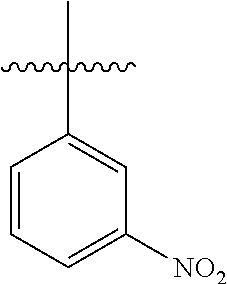


Applications Claiming Priority (3)
| Application Number | Priority Date | Filing Date | Title |
|---|---|---|---|
| KR10-2016-0097208 | 2016-07-29 | ||
| KR20160097208 | 2016-07-29 | ||
| PCT/KR2017/008151 WO2018021866A1 (en) | 2016-07-29 | 2017-07-28 | Nitrogen-containing cyclic compound, color conversion film comprising same, and backlight unit and display device comprising same |
Publications (2)
| Publication Number | Publication Date |
|---|---|
| US20190263836A1 US20190263836A1 (en) | 2019-08-29 |
| US11279716B2 true US11279716B2 (en) | 2022-03-22 |
Family
ID=61017054
Family Applications (1)
| Application Number | Title | Priority Date | Filing Date |
|---|---|---|---|
| US16/321,348 Active 2038-02-21 US11279716B2 (en) | 2016-07-29 | 2017-07-28 | Nitrogen-containing cyclic compound, color conversion film comprising same, and backlight unit and display device comprising same |
Country Status (6)
| Country | Link |
|---|---|
| US (1) | US11279716B2 (en) |
| JP (1) | JP6795223B2 (en) |
| KR (1) | KR102130194B1 (en) |
| CN (1) | CN109563405B (en) |
| TW (1) | TWI638822B (en) |
| WO (1) | WO2018021866A1 (en) |
Families Citing this family (11)
| Publication number | Priority date | Publication date | Assignee | Title |
|---|---|---|---|---|
| JP6962520B2 (en) * | 2017-04-13 | 2021-11-05 | エルジー・ケム・リミテッド | Nitrogen-containing ring compound and color conversion film containing it |
| JP6693578B2 (en) * | 2018-01-26 | 2020-05-13 | 東レ株式会社 | Pyrromethene boron complex, color conversion composition, color conversion film, light source unit, display, lighting device and light emitting element |
| JP6891381B2 (en) * | 2018-04-30 | 2021-06-18 | エルジー・ケム・リミテッド | Compounds, color conversion films containing them, backlight units and display devices |
| JP7325885B2 (en) | 2018-06-22 | 2023-08-15 | ベーアーエスエフ・エスエー | Photostable Cyano-Substituted Boron-Dipyrromethene Dyes as Green Emitters for Display and Lighting Applications |
| KR20210060438A (en) * | 2018-09-13 | 2021-05-26 | 도레이 카부시키가이샤 | Color conversion composition, color conversion layer, wavelength conversion substrate, manufacturing method and display of wavelength conversion substrate |
| KR102443865B1 (en) | 2018-10-15 | 2022-09-16 | 주식회사 엘지화학 | A compound, a color conversion composition and a color conversion film comprising the same, a backlight unit comprising the same, a display device including the same, and a method for manufacturing a color conversion film |
| TWI728500B (en) * | 2018-10-15 | 2021-05-21 | 南韓商Lg化學股份有限公司 | Compound, color conversion film compri sing the same, backlight unit and display apparatus |
| CN112996880B (en) * | 2019-02-28 | 2025-01-07 | 株式会社Lg化学 | Color conversion composition, color conversion film including the same, backlight unit and display device |
| KR102359605B1 (en) * | 2020-04-14 | 2022-02-07 | 도레이첨단소재 주식회사 | Color change sheet and backlight unit comprising the same |
| KR102575018B1 (en) * | 2020-04-29 | 2023-09-04 | 삼성에스디아이 주식회사 | Compound, antireflection film comprising the same and display device |
| KR102414880B1 (en) | 2020-06-12 | 2022-06-30 | 전북대학교산학협력단 | Reactive cholesteric liquid crystal composition comprising dispersed quantum dots and the optical film thereof |
Citations (28)
| Publication number | Priority date | Publication date | Assignee | Title |
|---|---|---|---|---|
| US4774339A (en) | 1987-08-10 | 1988-09-27 | Molecular Probes, Inc. | Chemically reactive dipyrrometheneboron difluoride dyes |
| JPH086245A (en) | 1994-06-23 | 1996-01-12 | Mitsubishi Chem Corp | Photopolymerizable composition |
| US20080076044A1 (en) | 2006-09-27 | 2008-03-27 | Fujifilm Corporation | Compound or its tautomer, metal complex compound, colored photosensitive curing composition, color filter, and production |
| US20080102534A1 (en) * | 2005-02-15 | 2008-05-01 | Gilles Ulrich | Unsaturated Dipyrromethene-Boron Borocarbons |
| JP2009031713A (en) | 2006-09-27 | 2009-02-12 | Fujifilm Corp | Dipyromethene-based boron complex compound and its compatible isomer, photosensitive colored curable composition, color filter, and production method thereof |
| KR20110126637A (en) | 2009-02-27 | 2011-11-23 | 이데미쓰 고산 가부시키가이샤 | Pyromethene boron complex compound and organic electroluminescent device using the same |
| JP2011241160A (en) | 2010-05-17 | 2011-12-01 | Yamamoto Chem Inc | Color conversion material, composition including the material, color conversion optical part using the composition, and light-emitting element using the color conversion optical part |
| US20120070836A1 (en) | 2010-06-08 | 2012-03-22 | Millipore Corporation | Methods of detecting residual amounts of polymers used in the purification of biomolecules |
| US20130088684A1 (en) | 2011-08-05 | 2013-04-11 | Brett T. Harding | Optical Element for Correcting Color Blindness |
| KR20150020297A (en) | 2012-05-15 | 2015-02-25 | 더 리젠츠 오브 더 유니버시티 오브 미시간 | Dipyrrin based materials for photovoltaics, compounds capable of undergoing symmetry breaking intramolecular charge transfer in a polarizing medium and organic photovoltaic devices comprising the same |
| JP2015163676A (en) | 2014-01-31 | 2015-09-10 | 日本化薬株式会社 | Optical wavelength conversion element containing ionic liquid, and article equipped with said optical wavelength conversion element |
| US20150303377A1 (en) | 2011-08-02 | 2015-10-22 | Mark E. Thompson | Compounds capable of undergoing symmetry breaking intramolecular charge transfer in a polarizing medium and organic photovoltaic devices comprising the same |
| US20150303378A1 (en) | 2014-04-17 | 2015-10-22 | Samsung Electronics Co., Ltd. | Compound and organic photoelectronic device and image sensor |
| KR101590299B1 (en) | 2015-01-27 | 2016-02-01 | 주식회사 엘지화학 | Metal complex and color conversion film comprising the same |
| KR20160051148A (en) | 2014-10-31 | 2016-05-11 | 한국과학기술연구원 | Novel compound, composition for labelling a protein or a cell, and method for labelling a protein or a cell |
| CN105684180A (en) | 2014-10-07 | 2016-06-15 | 出光兴产株式会社 | Organic electroluminescent element and electronic device |
| WO2016108411A1 (en) | 2014-12-29 | 2016-07-07 | 주식회사 엘지화학 | Metal complex and color conversion film comprising same |
| US20160312113A1 (en) | 2013-12-13 | 2016-10-27 | Nippon Kayaku Kabushikikaisha | Optical Wavelength Conversion Element Containing Ionic Liquid, And Article Equipped With Said Optical Wavelength Conversion Element |
| WO2016190283A1 (en) | 2015-05-26 | 2016-12-01 | 東レ株式会社 | Pyrromethene-boron complex, color-changing composition, color-changing film, light source unit including same, display, and lighting |
| WO2017057074A1 (en) | 2015-09-29 | 2017-04-06 | 東レ株式会社 | Phosphor composition, phosphor sheet, and molded article using same, led chip, led package, light-emitting device, backlight unit, display, and method for manufacturing led package |
| WO2017073923A1 (en) * | 2015-10-27 | 2017-05-04 | 주식회사 엘지화학 | Compound and color conversion film comprising same |
| CN107849065A (en) | 2015-10-27 | 2018-03-27 | 株式会社Lg化学 | Compound and color conversion film comprising same |
| JP2018081250A (en) | 2016-11-18 | 2018-05-24 | 東レ株式会社 | Light source unit, and display and luminaire including the same |
| WO2018101129A1 (en) | 2016-11-30 | 2018-06-07 | 東レ株式会社 | Pyrromethene-boron complex, color conversion composition, color conversion film, light source unit, display, and illumination device |
| US20190093008A1 (en) * | 2016-04-18 | 2019-03-28 | Lg Chem, Ltd. | Color conversion film, and backlight unit and display apparatus comprising same |
| US20200040011A1 (en) * | 2017-04-13 | 2020-02-06 | Lg Chem, Ltd. | Nitrogen-containing cyclic compound and color-changing film comprising same |
| US20200199158A1 (en) * | 2015-09-25 | 2020-06-25 | Lg Chem, Ltd. | Nitrogen-containing cyclic compound and color conversion film comprising same |
| US10703768B2 (en) * | 2016-03-08 | 2020-07-07 | Lg Chem, Ltd. | Compound and color conversion film comprising same |
Family Cites Families (5)
| Publication number | Priority date | Publication date | Assignee | Title |
|---|---|---|---|---|
| TW406442B (en) | 1998-07-09 | 2000-09-21 | Sumitomo Electric Industries | White colored LED and intermediate colored LED |
| CN105744842A (en) * | 2013-11-26 | 2016-07-06 | 洲际大品牌有限责任公司 | Systems and methods for controlling the temperature of chewing gum |
| CN105838353B (en) * | 2015-01-31 | 2021-03-26 | Lg化学株式会社 | Color conversion film, and backlight unit and display device including the same |
| WO2017052279A1 (en) * | 2015-09-25 | 2017-03-30 | 주식회사 엘지화학 | Nitrogen-containing cyclic compound and color conversion film comprising same |
| WO2018044120A1 (en) * | 2016-09-02 | 2018-03-08 | 주식회사 엘지화학 | Compound and color conversion film comprising same |
-
2017
- 2017-07-28 CN CN201780046269.5A patent/CN109563405B/en active Active
- 2017-07-28 JP JP2019500652A patent/JP6795223B2/en active Active
- 2017-07-28 WO PCT/KR2017/008151 patent/WO2018021866A1/en not_active Ceased
- 2017-07-28 KR KR1020170096104A patent/KR102130194B1/en active Active
- 2017-07-28 TW TW106125573A patent/TWI638822B/en active
- 2017-07-28 US US16/321,348 patent/US11279716B2/en active Active
Patent Citations (38)
| Publication number | Priority date | Publication date | Assignee | Title |
|---|---|---|---|---|
| US4774339A (en) | 1987-08-10 | 1988-09-27 | Molecular Probes, Inc. | Chemically reactive dipyrrometheneboron difluoride dyes |
| JPH086245A (en) | 1994-06-23 | 1996-01-12 | Mitsubishi Chem Corp | Photopolymerizable composition |
| US20080102534A1 (en) * | 2005-02-15 | 2008-05-01 | Gilles Ulrich | Unsaturated Dipyrromethene-Boron Borocarbons |
| US20080076044A1 (en) | 2006-09-27 | 2008-03-27 | Fujifilm Corporation | Compound or its tautomer, metal complex compound, colored photosensitive curing composition, color filter, and production |
| JP2009031713A (en) | 2006-09-27 | 2009-02-12 | Fujifilm Corp | Dipyromethene-based boron complex compound and its compatible isomer, photosensitive colored curable composition, color filter, and production method thereof |
| KR20110126637A (en) | 2009-02-27 | 2011-11-23 | 이데미쓰 고산 가부시키가이샤 | Pyromethene boron complex compound and organic electroluminescent device using the same |
| US20120037890A1 (en) | 2009-02-27 | 2012-02-16 | Mitsui Chemicals, Inc. | Pyrromethene-boron complex compounds and organic electroluminescent elements using same |
| JP2011241160A (en) | 2010-05-17 | 2011-12-01 | Yamamoto Chem Inc | Color conversion material, composition including the material, color conversion optical part using the composition, and light-emitting element using the color conversion optical part |
| US20120070836A1 (en) | 2010-06-08 | 2012-03-22 | Millipore Corporation | Methods of detecting residual amounts of polymers used in the purification of biomolecules |
| JP2013533738A (en) | 2010-06-08 | 2013-08-29 | イー・エム・デイー・ミリポア・コーポレイシヨン | Method for detecting residual amount of polymer used for purification of biomolecules |
| US20150303377A1 (en) | 2011-08-02 | 2015-10-22 | Mark E. Thompson | Compounds capable of undergoing symmetry breaking intramolecular charge transfer in a polarizing medium and organic photovoltaic devices comprising the same |
| US20130088684A1 (en) | 2011-08-05 | 2013-04-11 | Brett T. Harding | Optical Element for Correcting Color Blindness |
| JP2014527645A (en) | 2011-08-05 | 2014-10-16 | 日東電工株式会社 | Optical element for correcting color blindness |
| KR20150020297A (en) | 2012-05-15 | 2015-02-25 | 더 리젠츠 오브 더 유니버시티 오브 미시간 | Dipyrrin based materials for photovoltaics, compounds capable of undergoing symmetry breaking intramolecular charge transfer in a polarizing medium and organic photovoltaic devices comprising the same |
| US20160312113A1 (en) | 2013-12-13 | 2016-10-27 | Nippon Kayaku Kabushikikaisha | Optical Wavelength Conversion Element Containing Ionic Liquid, And Article Equipped With Said Optical Wavelength Conversion Element |
| JP2015163676A (en) | 2014-01-31 | 2015-09-10 | 日本化薬株式会社 | Optical wavelength conversion element containing ionic liquid, and article equipped with said optical wavelength conversion element |
| US20150303378A1 (en) | 2014-04-17 | 2015-10-22 | Samsung Electronics Co., Ltd. | Compound and organic photoelectronic device and image sensor |
| CN105684180A (en) | 2014-10-07 | 2016-06-15 | 出光兴产株式会社 | Organic electroluminescent element and electronic device |
| US20160190469A1 (en) | 2014-10-07 | 2016-06-30 | Idemitsu Kosan Co., Ltd. | Organic electroluminescence device and electronic device |
| KR20160051148A (en) | 2014-10-31 | 2016-05-11 | 한국과학기술연구원 | Novel compound, composition for labelling a protein or a cell, and method for labelling a protein or a cell |
| WO2016108411A1 (en) | 2014-12-29 | 2016-07-07 | 주식회사 엘지화학 | Metal complex and color conversion film comprising same |
| US20170260212A1 (en) | 2014-12-29 | 2017-09-14 | Lg Chem, Ltd. | Metal complex and color conversion film comprising same |
| KR101590299B1 (en) | 2015-01-27 | 2016-02-01 | 주식회사 엘지화학 | Metal complex and color conversion film comprising the same |
| US20170349822A1 (en) | 2015-01-27 | 2017-12-07 | Lg Chem, Ltd. | Metal complex and color conversion film comprising same |
| EP3305870A1 (en) | 2015-05-26 | 2018-04-11 | Toray Industries, Inc. | Pyrromethene-boron complex, color-changing composition, color-changing film, light source unit including same, display, and lighting |
| WO2016190283A1 (en) | 2015-05-26 | 2016-12-01 | 東レ株式会社 | Pyrromethene-boron complex, color-changing composition, color-changing film, light source unit including same, display, and lighting |
| US20200199158A1 (en) * | 2015-09-25 | 2020-06-25 | Lg Chem, Ltd. | Nitrogen-containing cyclic compound and color conversion film comprising same |
| WO2017057074A1 (en) | 2015-09-29 | 2017-04-06 | 東レ株式会社 | Phosphor composition, phosphor sheet, and molded article using same, led chip, led package, light-emitting device, backlight unit, display, and method for manufacturing led package |
| CN107849065A (en) | 2015-10-27 | 2018-03-27 | 株式会社Lg化学 | Compound and color conversion film comprising same |
| US20180186817A1 (en) | 2015-10-27 | 2018-07-05 | Lg Chem, Ltd. | Compound and color conversion film comprising same |
| US10544166B2 (en) * | 2015-10-27 | 2020-01-28 | Lg Chem, Ltd. | Compound and color conversion film comprising same |
| WO2017073923A1 (en) * | 2015-10-27 | 2017-05-04 | 주식회사 엘지화학 | Compound and color conversion film comprising same |
| US10703768B2 (en) * | 2016-03-08 | 2020-07-07 | Lg Chem, Ltd. | Compound and color conversion film comprising same |
| US20190093008A1 (en) * | 2016-04-18 | 2019-03-28 | Lg Chem, Ltd. | Color conversion film, and backlight unit and display apparatus comprising same |
| JP2018081250A (en) | 2016-11-18 | 2018-05-24 | 東レ株式会社 | Light source unit, and display and luminaire including the same |
| WO2018101129A1 (en) | 2016-11-30 | 2018-06-07 | 東レ株式会社 | Pyrromethene-boron complex, color conversion composition, color conversion film, light source unit, display, and illumination device |
| EP3550206A1 (en) | 2016-11-30 | 2019-10-09 | Toray Industries, Inc. | Pyrromethene-boron complex, color conversion composition, color conversion film, light source unit, display, and illumination device |
| US20200040011A1 (en) * | 2017-04-13 | 2020-02-06 | Lg Chem, Ltd. | Nitrogen-containing cyclic compound and color-changing film comprising same |
Non-Patent Citations (17)
Also Published As
| Publication number | Publication date |
|---|---|
| JP2019524717A (en) | 2019-09-05 |
| WO2018021866A1 (en) | 2018-02-01 |
| TWI638822B (en) | 2018-10-21 |
| CN109563405A (en) | 2019-04-02 |
| JP6795223B2 (en) | 2020-12-02 |
| KR20180013798A (en) | 2018-02-07 |
| CN109563405B (en) | 2022-06-17 |
| US20190263836A1 (en) | 2019-08-29 |
| TW201817736A (en) | 2018-05-16 |
| KR102130194B1 (en) | 2020-07-06 |
Similar Documents
| Publication | Publication Date | Title |
|---|---|---|
| US11279716B2 (en) | Nitrogen-containing cyclic compound, color conversion film comprising same, and backlight unit and display device comprising same | |
| US10150911B2 (en) | Metal complex and color conversion film comprising same | |
| US10112959B2 (en) | Metal complex and color conversion film comprising same | |
| US10544166B2 (en) | Compound and color conversion film comprising same | |
| US11993619B2 (en) | Nitrogen-containing compound, color conversion film including same, and backlight unit and display device including same | |
| US11479566B1 (en) | Compound and color conversion film comprising same | |
| US10766910B2 (en) | Nitrogen-containing compound and color conversion film comprising same | |
| US10954227B2 (en) | Nitrogen-containing cyclic compound and color conversion film comprising same | |
| US10988486B2 (en) | Nitrogen-containing cyclic compound and color conversion film comprising same | |
| US10858375B2 (en) | Nitrogenous cyclic compound and color changing film comprising same | |
| US10961260B2 (en) | Nitrogenous compound and color conversion film comprising same | |
| US11214580B2 (en) | Compound, color conversion film comprising same, back-light unit, and display device | |
| US11091503B2 (en) | Compound and color conversion film comprising the same | |
| US12091600B2 (en) | Compound and color conversion film comprising same, backlight unit, and display device | |
| US11479567B2 (en) | Compound and color conversion film comprising same, backlight unit, and display device |
Legal Events
| Date | Code | Title | Description |
|---|---|---|---|
| AS | Assignment |
Owner name: LG CHEM, LTD., KOREA, REPUBLIC OF Free format text: ASSIGNMENT OF ASSIGNORS INTEREST;ASSIGNORS:OH, HYE MI;SHIN, DONG MOK;REEL/FRAME:048159/0056 Effective date: 20170913 |
|
| FEPP | Fee payment procedure |
Free format text: ENTITY STATUS SET TO UNDISCOUNTED (ORIGINAL EVENT CODE: BIG.); ENTITY STATUS OF PATENT OWNER: LARGE ENTITY |
|
| STPP | Information on status: patent application and granting procedure in general |
Free format text: DOCKETED NEW CASE - READY FOR EXAMINATION |
|
| STPP | Information on status: patent application and granting procedure in general |
Free format text: NON FINAL ACTION MAILED |
|
| STPP | Information on status: patent application and granting procedure in general |
Free format text: RESPONSE TO NON-FINAL OFFICE ACTION ENTERED AND FORWARDED TO EXAMINER |
|
| STPP | Information on status: patent application and granting procedure in general |
Free format text: FINAL REJECTION MAILED |
|
| STPP | Information on status: patent application and granting procedure in general |
Free format text: DOCKETED NEW CASE - READY FOR EXAMINATION |
|
| STPP | Information on status: patent application and granting procedure in general |
Free format text: NON FINAL ACTION MAILED |
|
| STPP | Information on status: patent application and granting procedure in general |
Free format text: RESPONSE TO NON-FINAL OFFICE ACTION ENTERED AND FORWARDED TO EXAMINER |
|
| STPP | Information on status: patent application and granting procedure in general |
Free format text: NOTICE OF ALLOWANCE MAILED -- APPLICATION RECEIVED IN OFFICE OF PUBLICATIONS |
|
| STCF | Information on status: patent grant |
Free format text: PATENTED CASE |
|
| MAFP | Maintenance fee payment |
Free format text: PAYMENT OF MAINTENANCE FEE, 4TH YEAR, LARGE ENTITY (ORIGINAL EVENT CODE: M1551); ENTITY STATUS OF PATENT OWNER: LARGE ENTITY Year of fee payment: 4 |