US11273431B2 - Biologically applicable water-soluble heterogeneous catalysts for para-hydrogen induced polarization - Google Patents
Biologically applicable water-soluble heterogeneous catalysts for para-hydrogen induced polarization Download PDFInfo
- Publication number
- US11273431B2 US11273431B2 US15/799,498 US201715799498A US11273431B2 US 11273431 B2 US11273431 B2 US 11273431B2 US 201715799498 A US201715799498 A US 201715799498A US 11273431 B2 US11273431 B2 US 11273431B2
- Authority
- US
- United States
- Prior art keywords
- nanoparticles
- ligand
- organic ligands
- ligands
- composition
- Prior art date
- Legal status (The legal status is an assumption and is not a legal conclusion. Google has not performed a legal analysis and makes no representation as to the accuracy of the status listed.)
- Active
Links
- RMLUXLQRJAXJJN-UHFFFAOYSA-N B.B.CC(=O)NC(CS)C(=O)O.NC(CS)C(=O)O.[NaH].[NaH] Chemical compound B.B.CC(=O)NC(CS)C(=O)O.NC(CS)C(=O)O.[NaH].[NaH] RMLUXLQRJAXJJN-UHFFFAOYSA-N 0.000 description 1
Images



Classifications
-
- B—PERFORMING OPERATIONS; TRANSPORTING
- B01—PHYSICAL OR CHEMICAL PROCESSES OR APPARATUS IN GENERAL
- B01J—CHEMICAL OR PHYSICAL PROCESSES, e.g. CATALYSIS OR COLLOID CHEMISTRY; THEIR RELEVANT APPARATUS
- B01J31/00—Catalysts comprising hydrides, coordination complexes or organic compounds
- B01J31/16—Catalysts comprising hydrides, coordination complexes or organic compounds containing coordination complexes
- B01J31/1616—Coordination complexes, e.g. organometallic complexes, immobilised on an inorganic support, e.g. ship-in-a-bottle type catalysts
- B01J31/1625—Coordination complexes, e.g. organometallic complexes, immobilised on an inorganic support, e.g. ship-in-a-bottle type catalysts immobilised by covalent linkages, i.e. pendant complexes with optional linking groups
-
- A—HUMAN NECESSITIES
- A61—MEDICAL OR VETERINARY SCIENCE; HYGIENE
- A61K—PREPARATIONS FOR MEDICAL, DENTAL OR TOILETRY PURPOSES
- A61K49/00—Preparations for testing in vivo
- A61K49/06—Nuclear magnetic resonance [NMR] contrast preparations; Magnetic resonance imaging [MRI] contrast preparations
- A61K49/08—Nuclear magnetic resonance [NMR] contrast preparations; Magnetic resonance imaging [MRI] contrast preparations characterised by the carrier
- A61K49/10—Organic compounds
-
- B—PERFORMING OPERATIONS; TRANSPORTING
- B01—PHYSICAL OR CHEMICAL PROCESSES OR APPARATUS IN GENERAL
- B01J—CHEMICAL OR PHYSICAL PROCESSES, e.g. CATALYSIS OR COLLOID CHEMISTRY; THEIR RELEVANT APPARATUS
- B01J23/00—Catalysts comprising metals or metal oxides or hydroxides, not provided for in group B01J21/00
- B01J23/38—Catalysts comprising metals or metal oxides or hydroxides, not provided for in group B01J21/00 of noble metals
- B01J23/40—Catalysts comprising metals or metal oxides or hydroxides, not provided for in group B01J21/00 of noble metals of the platinum group metals
- B01J23/42—Platinum
-
- B—PERFORMING OPERATIONS; TRANSPORTING
- B01—PHYSICAL OR CHEMICAL PROCESSES OR APPARATUS IN GENERAL
- B01J—CHEMICAL OR PHYSICAL PROCESSES, e.g. CATALYSIS OR COLLOID CHEMISTRY; THEIR RELEVANT APPARATUS
- B01J29/00—Catalysts comprising molecular sieves
- B01J29/03—Catalysts comprising molecular sieves not having base-exchange properties
- B01J29/0308—Mesoporous materials not having base exchange properties, e.g. Si-MCM-41
-
- B—PERFORMING OPERATIONS; TRANSPORTING
- B01—PHYSICAL OR CHEMICAL PROCESSES OR APPARATUS IN GENERAL
- B01J—CHEMICAL OR PHYSICAL PROCESSES, e.g. CATALYSIS OR COLLOID CHEMISTRY; THEIR RELEVANT APPARATUS
- B01J29/00—Catalysts comprising molecular sieves
- B01J29/04—Catalysts comprising molecular sieves having base-exchange properties, e.g. crystalline zeolites
- B01J29/06—Crystalline aluminosilicate zeolites; Isomorphous compounds thereof
- B01J29/08—Crystalline aluminosilicate zeolites; Isomorphous compounds thereof of the faujasite type, e.g. type X or Y
- B01J29/084—Y-type faujasite
-
- B—PERFORMING OPERATIONS; TRANSPORTING
- B01—PHYSICAL OR CHEMICAL PROCESSES OR APPARATUS IN GENERAL
- B01J—CHEMICAL OR PHYSICAL PROCESSES, e.g. CATALYSIS OR COLLOID CHEMISTRY; THEIR RELEVANT APPARATUS
- B01J29/00—Catalysts comprising molecular sieves
- B01J29/04—Catalysts comprising molecular sieves having base-exchange properties, e.g. crystalline zeolites
- B01J29/06—Crystalline aluminosilicate zeolites; Isomorphous compounds thereof
- B01J29/40—Crystalline aluminosilicate zeolites; Isomorphous compounds thereof of the pentasil type, e.g. types ZSM-5, ZSM-8 or ZSM-11, as exemplified by patent documents US3702886, GB1334243 and US3709979, respectively
-
- B—PERFORMING OPERATIONS; TRANSPORTING
- B01—PHYSICAL OR CHEMICAL PROCESSES OR APPARATUS IN GENERAL
- B01J—CHEMICAL OR PHYSICAL PROCESSES, e.g. CATALYSIS OR COLLOID CHEMISTRY; THEIR RELEVANT APPARATUS
- B01J29/00—Catalysts comprising molecular sieves
- B01J29/04—Catalysts comprising molecular sieves having base-exchange properties, e.g. crystalline zeolites
- B01J29/06—Crystalline aluminosilicate zeolites; Isomorphous compounds thereof
- B01J29/40—Crystalline aluminosilicate zeolites; Isomorphous compounds thereof of the pentasil type, e.g. types ZSM-5, ZSM-8 or ZSM-11, as exemplified by patent documents US3702886, GB1334243 and US3709979, respectively
- B01J29/42—Crystalline aluminosilicate zeolites; Isomorphous compounds thereof of the pentasil type, e.g. types ZSM-5, ZSM-8 or ZSM-11, as exemplified by patent documents US3702886, GB1334243 and US3709979, respectively containing iron group metals, noble metals or copper
- B01J29/44—Noble metals
-
- B—PERFORMING OPERATIONS; TRANSPORTING
- B01—PHYSICAL OR CHEMICAL PROCESSES OR APPARATUS IN GENERAL
- B01J—CHEMICAL OR PHYSICAL PROCESSES, e.g. CATALYSIS OR COLLOID CHEMISTRY; THEIR RELEVANT APPARATUS
- B01J29/00—Catalysts comprising molecular sieves
- B01J29/04—Catalysts comprising molecular sieves having base-exchange properties, e.g. crystalline zeolites
- B01J29/06—Crystalline aluminosilicate zeolites; Isomorphous compounds thereof
- B01J29/70—Crystalline aluminosilicate zeolites; Isomorphous compounds thereof of types characterised by their specific structure not provided for in groups B01J29/08 - B01J29/65
- B01J29/7007—Zeolite Beta
-
- B—PERFORMING OPERATIONS; TRANSPORTING
- B01—PHYSICAL OR CHEMICAL PROCESSES OR APPARATUS IN GENERAL
- B01J—CHEMICAL OR PHYSICAL PROCESSES, e.g. CATALYSIS OR COLLOID CHEMISTRY; THEIR RELEVANT APPARATUS
- B01J29/00—Catalysts comprising molecular sieves
- B01J29/04—Catalysts comprising molecular sieves having base-exchange properties, e.g. crystalline zeolites
- B01J29/06—Crystalline aluminosilicate zeolites; Isomorphous compounds thereof
- B01J29/80—Mixtures of different zeolites
-
- B—PERFORMING OPERATIONS; TRANSPORTING
- B01—PHYSICAL OR CHEMICAL PROCESSES OR APPARATUS IN GENERAL
- B01J—CHEMICAL OR PHYSICAL PROCESSES, e.g. CATALYSIS OR COLLOID CHEMISTRY; THEIR RELEVANT APPARATUS
- B01J29/00—Catalysts comprising molecular sieves
- B01J29/89—Silicates, aluminosilicates or borosilicates of titanium, zirconium or hafnium
-
- B01J35/0013—
-
- B01J35/002—
-
- B01J35/008—
-
- B01J35/08—
-
- B01J35/1019—
-
- B01J35/1038—
-
- B01J35/1061—
-
- B—PERFORMING OPERATIONS; TRANSPORTING
- B01—PHYSICAL OR CHEMICAL PROCESSES OR APPARATUS IN GENERAL
- B01J—CHEMICAL OR PHYSICAL PROCESSES, e.g. CATALYSIS OR COLLOID CHEMISTRY; THEIR RELEVANT APPARATUS
- B01J35/00—Catalysts, in general, characterised by their form or physical properties
- B01J35/30—Catalysts, in general, characterised by their form or physical properties characterised by their physical properties
- B01J35/396—Distribution of the active metal ingredient
- B01J35/397—Egg shell like
-
- B—PERFORMING OPERATIONS; TRANSPORTING
- B01—PHYSICAL OR CHEMICAL PROCESSES OR APPARATUS IN GENERAL
- B01J—CHEMICAL OR PHYSICAL PROCESSES, e.g. CATALYSIS OR COLLOID CHEMISTRY; THEIR RELEVANT APPARATUS
- B01J35/00—Catalysts, in general, characterised by their form or physical properties
- B01J35/40—Catalysts, in general, characterised by their form or physical properties characterised by dimensions, e.g. grain size
- B01J35/45—Nanoparticles
-
- B—PERFORMING OPERATIONS; TRANSPORTING
- B01—PHYSICAL OR CHEMICAL PROCESSES OR APPARATUS IN GENERAL
- B01J—CHEMICAL OR PHYSICAL PROCESSES, e.g. CATALYSIS OR COLLOID CHEMISTRY; THEIR RELEVANT APPARATUS
- B01J35/00—Catalysts, in general, characterised by their form or physical properties
- B01J35/50—Catalysts, in general, characterised by their form or physical properties characterised by their shape or configuration
- B01J35/51—Spheres
-
- B—PERFORMING OPERATIONS; TRANSPORTING
- B01—PHYSICAL OR CHEMICAL PROCESSES OR APPARATUS IN GENERAL
- B01J—CHEMICAL OR PHYSICAL PROCESSES, e.g. CATALYSIS OR COLLOID CHEMISTRY; THEIR RELEVANT APPARATUS
- B01J35/00—Catalysts, in general, characterised by their form or physical properties
- B01J35/60—Catalysts, in general, characterised by their form or physical properties characterised by their surface properties or porosity
- B01J35/61—Surface area
- B01J35/615—100-500 m2/g
-
- B—PERFORMING OPERATIONS; TRANSPORTING
- B01—PHYSICAL OR CHEMICAL PROCESSES OR APPARATUS IN GENERAL
- B01J—CHEMICAL OR PHYSICAL PROCESSES, e.g. CATALYSIS OR COLLOID CHEMISTRY; THEIR RELEVANT APPARATUS
- B01J35/00—Catalysts, in general, characterised by their form or physical properties
- B01J35/60—Catalysts, in general, characterised by their form or physical properties characterised by their surface properties or porosity
- B01J35/63—Pore volume
- B01J35/633—Pore volume less than 0.5 ml/g
-
- B—PERFORMING OPERATIONS; TRANSPORTING
- B01—PHYSICAL OR CHEMICAL PROCESSES OR APPARATUS IN GENERAL
- B01J—CHEMICAL OR PHYSICAL PROCESSES, e.g. CATALYSIS OR COLLOID CHEMISTRY; THEIR RELEVANT APPARATUS
- B01J35/00—Catalysts, in general, characterised by their form or physical properties
- B01J35/60—Catalysts, in general, characterised by their form or physical properties characterised by their surface properties or porosity
- B01J35/64—Pore diameter
- B01J35/647—2-50 nm
-
- B—PERFORMING OPERATIONS; TRANSPORTING
- B01—PHYSICAL OR CHEMICAL PROCESSES OR APPARATUS IN GENERAL
- B01J—CHEMICAL OR PHYSICAL PROCESSES, e.g. CATALYSIS OR COLLOID CHEMISTRY; THEIR RELEVANT APPARATUS
- B01J37/00—Processes, in general, for preparing catalysts; Processes, in general, for activation of catalysts
- B01J37/0009—Use of binding agents; Moulding; Pressing; Powdering; Granulating; Addition of materials ameliorating the mechanical properties of the product catalyst
- B01J37/0018—Addition of a binding agent or of material, later completely removed among others as result of heat treatment, leaching or washing,(e.g. forming of pores; protective layer, desintegrating by heat)
-
- B—PERFORMING OPERATIONS; TRANSPORTING
- B01—PHYSICAL OR CHEMICAL PROCESSES OR APPARATUS IN GENERAL
- B01J—CHEMICAL OR PHYSICAL PROCESSES, e.g. CATALYSIS OR COLLOID CHEMISTRY; THEIR RELEVANT APPARATUS
- B01J37/00—Processes, in general, for preparing catalysts; Processes, in general, for activation of catalysts
- B01J37/02—Impregnation, coating or precipitation
- B01J37/0215—Coating
- B01J37/0221—Coating of particles
-
- B—PERFORMING OPERATIONS; TRANSPORTING
- B01—PHYSICAL OR CHEMICAL PROCESSES OR APPARATUS IN GENERAL
- B01J—CHEMICAL OR PHYSICAL PROCESSES, e.g. CATALYSIS OR COLLOID CHEMISTRY; THEIR RELEVANT APPARATUS
- B01J37/00—Processes, in general, for preparing catalysts; Processes, in general, for activation of catalysts
- B01J37/02—Impregnation, coating or precipitation
- B01J37/03—Precipitation; Co-precipitation
- B01J37/031—Precipitation
-
- B—PERFORMING OPERATIONS; TRANSPORTING
- B01—PHYSICAL OR CHEMICAL PROCESSES OR APPARATUS IN GENERAL
- B01J—CHEMICAL OR PHYSICAL PROCESSES, e.g. CATALYSIS OR COLLOID CHEMISTRY; THEIR RELEVANT APPARATUS
- B01J37/00—Processes, in general, for preparing catalysts; Processes, in general, for activation of catalysts
- B01J37/16—Reducing
-
- C—CHEMISTRY; METALLURGY
- C07—ORGANIC CHEMISTRY
- C07C—ACYCLIC OR CARBOCYCLIC COMPOUNDS
- C07C67/00—Preparation of carboxylic acid esters
- C07C67/30—Preparation of carboxylic acid esters by modifying the acid moiety of the ester, such modification not being an introduction of an ester group
- C07C67/303—Preparation of carboxylic acid esters by modifying the acid moiety of the ester, such modification not being an introduction of an ester group by hydrogenation of unsaturated carbon-to-carbon bonds
-
- B—PERFORMING OPERATIONS; TRANSPORTING
- B01—PHYSICAL OR CHEMICAL PROCESSES OR APPARATUS IN GENERAL
- B01J—CHEMICAL OR PHYSICAL PROCESSES, e.g. CATALYSIS OR COLLOID CHEMISTRY; THEIR RELEVANT APPARATUS
- B01J2229/00—Aspects of molecular sieve catalysts not covered by B01J29/00
- B01J2229/10—After treatment, characterised by the effect to be obtained
- B01J2229/18—After treatment, characterised by the effect to be obtained to introduce other elements into or onto the molecular sieve itself
- B01J2229/186—After treatment, characterised by the effect to be obtained to introduce other elements into or onto the molecular sieve itself not in framework positions
-
- B—PERFORMING OPERATIONS; TRANSPORTING
- B01—PHYSICAL OR CHEMICAL PROCESSES OR APPARATUS IN GENERAL
- B01J—CHEMICAL OR PHYSICAL PROCESSES, e.g. CATALYSIS OR COLLOID CHEMISTRY; THEIR RELEVANT APPARATUS
- B01J2231/00—Catalytic reactions performed with catalysts classified in B01J31/00
- B01J2231/60—Reduction reactions, e.g. hydrogenation
- B01J2231/64—Reductions in general of organic substrates, e.g. hydride reductions or hydrogenations
- B01J2231/641—Hydrogenation of organic substrates, i.e. H2 or H-transfer hydrogenations, e.g. Fischer-Tropsch processes
- B01J2231/645—Hydrogenation of organic substrates, i.e. H2 or H-transfer hydrogenations, e.g. Fischer-Tropsch processes of C=C or C-C triple bonds
-
- B—PERFORMING OPERATIONS; TRANSPORTING
- B01—PHYSICAL OR CHEMICAL PROCESSES OR APPARATUS IN GENERAL
- B01J—CHEMICAL OR PHYSICAL PROCESSES, e.g. CATALYSIS OR COLLOID CHEMISTRY; THEIR RELEVANT APPARATUS
- B01J2235/00—Indexing scheme associated with group B01J35/00, related to the analysis techniques used to determine the catalysts form or properties
-
- B—PERFORMING OPERATIONS; TRANSPORTING
- B01—PHYSICAL OR CHEMICAL PROCESSES OR APPARATUS IN GENERAL
- B01J—CHEMICAL OR PHYSICAL PROCESSES, e.g. CATALYSIS OR COLLOID CHEMISTRY; THEIR RELEVANT APPARATUS
- B01J2235/00—Indexing scheme associated with group B01J35/00, related to the analysis techniques used to determine the catalysts form or properties
- B01J2235/05—Nuclear magnetic resonance [NMR]
-
- B—PERFORMING OPERATIONS; TRANSPORTING
- B01—PHYSICAL OR CHEMICAL PROCESSES OR APPARATUS IN GENERAL
- B01J—CHEMICAL OR PHYSICAL PROCESSES, e.g. CATALYSIS OR COLLOID CHEMISTRY; THEIR RELEVANT APPARATUS
- B01J2235/00—Indexing scheme associated with group B01J35/00, related to the analysis techniques used to determine the catalysts form or properties
- B01J2235/30—Scanning electron microscopy; Transmission electron microscopy
-
- B—PERFORMING OPERATIONS; TRANSPORTING
- B01—PHYSICAL OR CHEMICAL PROCESSES OR APPARATUS IN GENERAL
- B01J—CHEMICAL OR PHYSICAL PROCESSES, e.g. CATALYSIS OR COLLOID CHEMISTRY; THEIR RELEVANT APPARATUS
- B01J2531/00—Additional information regarding catalytic systems classified in B01J31/00
- B01J2531/02—Compositional aspects of complexes used, e.g. polynuclearity
- B01J2531/0213—Complexes without C-metal linkages
- B01J2531/0222—Metal clusters, i.e. complexes comprising 3 to about 1000 metal atoms with metal-metal bonds to provide one or more all-metal (M)n rings, e.g. Rh4(CO)12
-
- B—PERFORMING OPERATIONS; TRANSPORTING
- B01—PHYSICAL OR CHEMICAL PROCESSES OR APPARATUS IN GENERAL
- B01J—CHEMICAL OR PHYSICAL PROCESSES, e.g. CATALYSIS OR COLLOID CHEMISTRY; THEIR RELEVANT APPARATUS
- B01J2531/00—Additional information regarding catalytic systems classified in B01J31/00
- B01J2531/02—Compositional aspects of complexes used, e.g. polynuclearity
- B01J2531/0269—Complexes comprising ligands derived from the natural chiral pool or otherwise having a characteristic structure or geometry
- B01J2531/0275—Complexes comprising ligands derived from the natural chiral pool or otherwise having a characteristic structure or geometry derived from amino acids
-
- B—PERFORMING OPERATIONS; TRANSPORTING
- B01—PHYSICAL OR CHEMICAL PROCESSES OR APPARATUS IN GENERAL
- B01J—CHEMICAL OR PHYSICAL PROCESSES, e.g. CATALYSIS OR COLLOID CHEMISTRY; THEIR RELEVANT APPARATUS
- B01J2531/00—Additional information regarding catalytic systems classified in B01J31/00
- B01J2531/80—Complexes comprising metals of Group VIII as the central metal
- B01J2531/82—Metals of the platinum group
- B01J2531/828—Platinum
Definitions
- This disclosure generally relates to heterogeneous catalysts that are water-soluble and can yield high polarization of substrate molecules.
- Nuclear magnetic resonance (NMR) hyperpolarization aims to overcome a low signal of NMR by increasing spin polarization up to four orders of magnitude compared to thermal polarizations from state-of-the-art superconducting magnets.
- Hyperpolarization techniques include spin exchange optical pumping, the more established technique of dynamic nuclear polarization (DNP), and the use of para-hydrogen induced polarization (PHIP) or Signal Amplification by Reversible Exchange (SABRE). Polarization techniques depend on the context and application. Each technique can potentially lead to the development of promising contrast agents for biomedical imaging, with an example of dissolution DNP for which in vivo human use has been demonstrated.
- a para-enriched spin state of hydrogen is first created by passing hydrogen over a catalyst at low temperatures, generating close to 100% para-state below about 25 K.
- the nearly pure stable singlet spin state of para-hydrogen can subsequently be utilized to hyperpolarize a molecule of interest by an addition reaction or by a catalyst-mediated, reversible exchange process.
- PHIP hyperpolarized substrates have been proposed as contrast agents for angiography or cancer detection.
- a major drawback is that the generation of sufficiently high nuclear spin polarization in biocompatible solvents is obtained using a homogeneous catalyst.
- homogeneous catalysts raise biotoxicity concerns, since the homogeneous catalysts cannot be readily separated from a solution. Without sufficient separation, a hyperpolarized molecule is mixed with a homogeneous catalyst, and the presence of the catalyst in solution can pose toxicity issues, particularly if heavy metals are used, such as rhodium.
- a catalyst can be separated from a potential molecular imaging agent.
- One such approach is a phase separation technique in which a nuclear-spin polarization is generated in water followed by extraction of a substrate of interest. The extraction process, however, represents a stage during which the generated polarization inevitably decays and a loss in polarization results.
- Attempts have been made to develop heterogeneous catalysts, but these typically operate in non-biocompatible solvents, yield low polarizations in water, and suffer from leaching problems where immobilized ligands leach in solution.
- Embodiments of this disclosure are directed to nanoparticle-based catalysts that are water-soluble and can yield high polarization of substrate molecules via PHIP.
- cysteine-capped platinum nanoparticles serve as a heterogeneous catalyst which yields large polarization by PHIP in water.
- the use of water as a solvent promotes biocompatibility.
- the use of a heterogeneous catalyst also promotes biocompatibility: ligand-capped nanoparticles can be immobilized on a solid support, and the nanoparticles also can be filtered using, for example, a filtration membrane.
- Ligand-capped nanoparticles of embodiments of this disclosure can be used to generate nuclear-spin polarized molecules for in vivo biological applications, such as medical imaging applications for magnetic resonance imaging (MRI) detection.
- MRI magnetic resonance imaging
- ligand-capped nanoparticles of embodiments of this disclosure can be used to generate high polarization under conditions that favor biocompatibility and water solubility. Specifically, a selection of ligands renders the nanoparticles water-soluble or dispersible in water. Also, a relatively high surface coverage of the nanoparticles by the ligands favors pair-wise hydrogenation, which is a condition for generating strong nuclear-spin polarization by PHIP. Further, the use of the ligand-capped nanoparticles as a heterogeneous catalyst addresses a separation issue: polarized molecules can be readily separated from the heterogeneous catalyst through a filtration stage to remove the catalyst.
- the nanoparticles can be immobilized on a solid support (e.g., silica or alumina), and the solid support can remain in a reactor and does not flow with a liquid phase.
- the nanoparticles can be bound to larger sized water-soluble or dispersible particles.
- the larger sized particles can be polystyrene beads (or other polymeric beads) having sizes of about 500 nm and which are dispersible in water or heavy water.
- the larger sized particles can have sizes (e.g., in terms of a diameter or another lateral dimension) in a range of about 200 nm to about 10 ⁇ m, about 200 nm to about 5 ⁇ m, or about 200 nm to about 1 ⁇ m.
- a heterogeneous catalyst composition for PHIP includes nanoparticles that are capped or surface functionalized with ligands.
- the nanoparticles are metal nanoparticles which are formed of, or include, a metal, such as a platinum group metal (platinum, rhodium, ruthenium, iridium, osmium, or palladium), or another transition metal.
- a metal such as a platinum group metal (platinum, rhodium, ruthenium, iridium, osmium, or palladium)
- Metal nanoparticles which are formed of, or include, a combination of two or more different metals, such as in the form of an alloy or a mixture, are also encompassed by this disclosure.
- the nanoparticles have sizes (e.g., in terms of a diameter or another lateral dimension) in a range of about 0.5 nm to about 100 nm, about 0.5 nm to about 80 nm, about 0.5 nm to about 50 nm, about 0.5 nm to about 30 nm, about 0.5 nm to about 10 nm, or about 0.5 nm to about 5 nm.
- At least one of the nanoparticles has a size (e.g., in terms of a diameter or another lateral dimension) in a range of about 0.5 nm to about 100 nm, about 0.5 nm to about 80 nm, about 0.5 nm to about 50 nm, about 0.5 nm to about 30 nm, about 0.5 nm to about 10 nm, or about 0.5 nm to about 5 nm.
- the nanoparticles have an average size (e.g., in terms of an average diameter or another lateral dimension) in a range of about 0.5 nm to about 100 nm, about 0.5 nm to about 80 nm, about 0.5 nm to about 50 nm, about 0.5 nm to about 30 nm, about 0.5 nm to about 10 nm, about 0.8 nm to about 10 nm, about 0.5 nm to about 5 nm, about 0.8 nm to about 5 nm, about 0.8 nm to about 4 nm, about 0.8 nm to about 3 nm, about 0.8 nm to about 2.5 nm, or about 0.8 nm to about 2 nm.
- an average size e.g., in terms of an average diameter or another lateral dimension
- the nanoparticles are generally spherical or spheroidal with aspect ratios of about 3 or less, about 2 or less, or about 1.5 or less, although nanostructures having other shapes and aspect ratios are also encompassed by this disclosure, such as aspect ratios greater than about 3.
- the ligands are organic ligands. In some embodiments, the ligands are homogeneous with respect to one another, although the use of different ligands is also encompassed by this disclosure.
- the ligands are hydrophilic, and each includes at least one hydrophilic moiety. Examples of suitable hydrophilic moieties include carboxyl group, hydroxyl group, carbonyl group, sulfhydryl (or thiol) group, amino group, phosphate group, and charged forms thereof. In some embodiments, the ligands each includes multiple (e.g., two or more) binding moieties as coordinates sites for binding to a nanoparticle surface.
- binding moieties include sulfhydryl (or thiol) group, amino group, and charged forms thereof.
- the ligands each includes sulfhydryl (or thiol) group and amino group as binding moieties, and further includes at least one hydrophilic moiety.
- the ligands are, or include, amino acids.
- the ligands each consists of, or consists essentially of, an amino acid.
- the ligands are, or include, cysteine, such as L-cysteine.
- the composition includes a weight content of the ligands of at least about 5 wt. % relative to a combined weight of the nanoparticles and the ligands, such as about 8 wt. % or greater, about 10 wt. % or greater, about 12 wt. % or greater, about 14 wt. % or greater, or about 16 wt. % or greater, and up to about 24 wt. % or greater.
- a surface coverage of the nanoparticles by the ligands is at least about 4.2 ligands per nm 2 , such as about 4.4 ligands per nm 2 or higher, about 4.6 ligands per nm 2 or higher, about 4.8 ligands per nm 2 or higher, about 5 ligands per nm 2 or higher, about 5.5 ligands per nm 2 or higher, about 6 ligands per nm 2 or higher, about 6.5 ligands per nm 2 or higher, about 7 ligands per nm 2 or higher, about 7.5 ligands per nm 2 or higher, or about 8 ligands per nm 2 or higher, and up to about 8.4 ligands per nm 2 or higher.
- a surface coverage of the nanoparticles by the ligands is at least about 0.8 mol/g in terms of moles of the ligands relative to a combined weight of the nanoparticles and the ligands, such as about 0.85 mol/g or higher, about 0.9 mol/g or higher, about 0.95 mol/g or higher, about 1 mol/g or higher, about 1.05 mol/g or higher, about 1.1 mol/g or higher, about 1.15 mol/g or higher, about 1.2 mol/g or higher, about 1.25 mol/g or higher, about 1.3 mol/g or higher, or about 1.35 mol/g or higher, and up to about 1.5 mol/g or higher.
- a molecular weight of the ligands is no greater than about 300 g/mol, such as about 280 g/mol or less, about 250 g/mol or less, about 230 g/mol or less, about 200 g/mol or less, about 180 g/mol or less, about 150 g/mol or less, or about 130 g/mol or less.
- the composition includes a solvent, and the ligand-capped nanoparticles are dispersed in the solvent.
- the solvent is water.
- the solvent is heavy water or D 2 O.
- a concentration of the ligand-capped nanoparticles is in a range of about 1 mg/mL to about 20 mg/mL, about 2 mg/mL to about 15 mg/mL, about 5 mg/mL to about 15 mg/mL, or about 10 mg/mL.
- the composition serves as a reagent for medical imaging.
- an organic substrate (including substrate molecules) is also included, either in a same container or compartment along with the ligand-capped nanoparticles dispersed in the solvent, or in a separate container or compartment of a medical imaging kit.
- the organic substrate is, or includes, hydroxyethyl acrylate.
- a method for medical imaging includes combining ligand-capped nanoparticles and an organic substrate in a solvent, followed by hydrogenation and polarization of the organic substrate, in the presence of the ligand-capped nanoparticles, by flowing or pressurizing para-hydrogen gas, followed by removing the ligand-capped nanoparticles by filtration or in another manner, and followed by conveying the polarized organic substrate to a patient for medical imaging, such as in vivo MM.
- a method for synthesis of ligand-capped nanoparticles includes combining a metal-containing precursor and ligands in a solvent, followed by reduction of the metal-containing precursor in the presence of a reducing agent.
- the metal-containing precursor is a platinum group metal-containing precursor, such as hexachloroplatinic acid hexahydrate, and the ligands are, or include, cysteine, such as L-cysteine.
- the reducing agent is, or includes, sodium borohydride.
- a molar ratio of the metal-containing precursor to the ligands is in a range of about 1:2 to about 2:1, about 1:2 to about 1.5:1, about 1:1.5 to about 1.5:1, or about 1:1.
- FIG. 1 (a) Para-hydrogen (circles with arrows represent hydrogen with quantum correlation) that adsorbs onto a surface of a bare platinum nanoparticle is prone to randomization processes leading to the loss of quantum correlation. (b) If ligands are attached to the surface of the nanoparticle (wavy lines), the randomization can be reduced, resulting in preservation of the singlet state between the two protons. (c) As a result of the preserved singlet state on the surface of the capped nanoparticle, para-hydrogen can be used to generate hyperpolarized products in water.
- HOA hydroxyethyl acrylate
- HEP hydroxyethyl propionate
- FIG. 3 (a) Schematic of cysteine coordination to a platinum particle. (b) Schematic of acetylcysteine coordination to a platinum particle. Due to a higher amount of coordination in Cys@Pt, less randomization process of the para-spin state of hydrogen on the particles surface can occur, leading to higher polarization.
- FIG. 4 (a) Transmission electron microscopy (TEM) image of Cys1@Pt particles. (b) TEM image of Cys1.1@Pt particles. (c) TEM image of NAC@Pt particles. (d) Ultraviolet/visible (UV/vis) absorbance in water of hexachloroplatinic acid (top curve at origin), Cys1.1@Pt (2 nd topmost curve at origin), NAC@Pt (3 rd topmost curve at origin) and Cys1@Pt (bottom curve at origin). The absence of an absorbance peak at about 260 nm for the nanoparticle suspensions shows that substantially no platinum ions are present to catalyze a reaction.
- TEM Transmission electron microscopy
- FIG. 5 Nanoparticle size distribution of NAC@Pt.
- FIG. 6 Nanoparticle size distribution of Cys1@Pt.
- FIG. 7 Nanoparticle size distribution of Cys1.1@Pt.
- FIG. 8 Thermogravimetric analysis of NAC@Pt.
- FIG. 9 Thermogravimetric analysis of Cys1@Pt.
- FIG. 10 Thermogravimetric analysis of Cys1.1@Pt.
- FIG. 11 1 H NMR spectra of (a) NAC@Pt and (b) N-acetylcysteine both in D 2 O.
- the line broadening in (a) shows that the ligand is coordinated to the particles' surfaces.
- FIG. 12 1 H NMR spectra of (a) Cys1@Pt, (b) Cys1.1@Pt and (c) cysteine in D 2 O.
- the line broadening in (a) and (b) shows that the ligand is coordinated to the particles' surfaces.
- FIG. 13 Mercury poisoning test of NAC@Pt. Without mercury the reaction progresses (squares) whereas the reaction stops upon addition of mercury (circles).
- FIG. 14 Mercury poisoning test of Cys1@Pt. Without mercury the reaction progresses (squares) whereas the reaction stops upon addition of mercury (circles).
- FIG. 15 Mercury poisoning test of Cys1.1@Pt. Without mercury the reaction progresses (squares) whereas the reaction stops upon addition of mercury (circles).
- FIG. 16 Polarization as a function of particle concentration: NAC@Pt (left bars), Cys1@Pt (middle bars) and Cys1.1@Pt (right bars).
- FIG. 17 Thermal polarized signal of 13 C enriched HEP after 256 scans (top curve) and hyperpolarized signal (bottom curve, ten times magnified).
- FIG. 18 Particle recycling experiments with Cys1.1@Pt (inverted triangles), Cys1@Pt (circles) and NAC@Pt (squares). The added lines represent the average polarization values achieved with each particle.
- heterogeneous PHIP or SABRE catalyst is a desirable strategy to generate a highly pure substrate, since the catalyst can be readily filtered or immobilized to avoid contamination.
- biocompatible solvents such as water in combination with a heterogeneous catalyst is desirable.
- glutathione-capped platinum nanoparticles dispersed in water can be used to generate hyperpolarization.
- HEP hydroxyethyl propionate
- Higher polarization can be achieved by capped nanoparticles based on an insight that the mobility of hydrogen atoms is reduced by ligands, thereby favoring a pair-wise addition mechanism (see FIG. 1 ).
- the heterogeneous catalyst is competitive with state-of-the-art homogeneous catalyst for hyperpolarization in water.
- these nanoparticles can be used 5 times (or more) without noticeable loss of polarization.
- the properties of the ligands for capping the nanoparticles and the nanoparticles' surface coverage are particular factors for achieving high levels of polarization; indeed, these factors can be more important than achieving small particle sizes.
- two types of nanoparticles investigated are synthesized based on a platinum core capped with L-cysteine (Cys), and N-acetyl-L-cysteine (NAC) ligands, respectively.
- Cys L-cysteine
- NAC N-acetyl-L-cysteine
- NAC@Pt N-acetyl-L-cysteine
- L-cysteine L-cysteine
- the molar ratio was about 1:1 or about 1:1.1 (Cys1@Pt and Cys1.1@Pt).
- cysteine concentration particles with two different average sizes were isolated: about 2.4 nm and about 1.4 nm.
- the average size for NAC@Pt was found to be about 1.9 nm as confirmed by transmission electron microscopy (TEM) (see Example section).
- GSH@Pt glutathione-capped platinum nanoparticles
- a homogeneous catalyst is used under identical conditions and a proton polarization of about 1.26% is obtained, merely a factor of about two greater than the polarization achieved with the Cys@Pt particles. Typical conversions in the proton experiments were about 1% of the starting material.
- Particle characteristics are summarized in Table 1. Due to the generally spherical shape of the nanoparticles, a cubo-octahedral structure can be assumed for which the amount of surface atoms can be estimated. The amount of ligands covering the surface was found to be the highest for Cys1@Pt, followed by NAC@Pt, Cys1.1@Pt and GSH@Pt.
- cysteine has two potential coordination sites to a particle's surface: a thiol group and an amino group.
- NAC is a derivative of cysteine with the amino group protected; thus, the amino group does not coordinate to the particle's surface and just the thiol group binds to the surface to stabilize the particle ( FIG. 3 ).
- a major advantage of heterogeneous catalysts over homogeneous catalysts is their recyclability. Particles can be filtered and reused if an achieved polarization remains substantially constant following repeated experiments.
- a particle concentration of about 15 mg/mL was used to produce hyperpolarized HEA five times. After each stage, the particles were centrifuged, and the supernatant solvent was removed. Subsequently, the particles were re-suspended in water and re-used to generate hyperpolarized HEP. For all three synthesized particles, the polarization measured was reproduced in consecutive experiments (see Example section).
- synthesis is performed for two types of nanoparticles that are dispersible in water and highly effective in inducing hyperpolarization from para-hydrogen. Due to the optimization of ligand coverage and ligand-particle interaction, an increase in HEP polarization greater than about 2-fold was achieved in water compared to GSH@Pt particles. Experiments with two different sized nanoparticles indicate that the ligand coordinated to the particle's surface may play a more important role in generating hyperpolarization than the particle size itself. PHIP itself may therefore provide a method to investigate surface properties of ligand-capped nanoparticles. Additionally, the recyclability of the particles was successfully demonstrated through five consecutive uses without noticeable loss in polarization strength.
- the cysteine-based particles represent heterogeneous alternatives; their desired ability to mitigate toxicity issues makes them desirable candidates for a variety of clinical molecular imaging applications.
- Hexachloroplatinic acid, sodium borohydride, absolute ethanol, cysteine and acetylcysteine were purchased from Sigma-Aldrich. D 2 O was purchased from Cambridge isotopes and all chemicals were used without further purification.
- NMR spectra were recorded on a Bruker AV600 or on a Bruker 94/20 Biospec with about 9.4 T.
- Transmission electron microscopy (TEM) was performed on a FEI Tecnai T12.
- Thermogravimetric analysis (TGA) was conducted using a Perkin Elmer Pyris Diamond TG/DTA from about 25° C. to about 650° C.
- UV/vis characterization was performed on an Agilent 8453 UV-vis spectrophotometer.
- each synthetic stage was performed under inert gas atmosphere.
- the ethanol was decanted and the particles dried under vacuum.
- the particles were centrifuged for about 30 minutes and the supernatant decanted followed by drying under vacuum. Further purification can be achieved by re-suspending the particles in water, centrifuging the suspension at about 109000 rpm for about 5 hours in an ultracentrifuge and removing the supernatant solvent followed by drying in vacuum.
- the ethanol was decanted and the particles dried under vacuum. Alternatively, the particles were centrifuged for about 30 minutes and the supernatant decanted followed by drying under vacuum. If a platinum precursor to cysteine molar ratio of about 1:1 was used, Cys1@Pt platinum particles were yielded and if a molar ratio of about 1:1.1 was used, Cys1.1@Pt particles were obtained.
- FIG. 4 shows TEM images of Cys1@Pt particles, Cys1.1@Pt particles, and NAC@Pt particles, and UV/vis characterization of the particles.
- Particle size distributions were determined for the three different particles. For NAC@Pt, Cys1@Pt and Cys1.1@Pt, 169, 187 and 134 particles were chosen at random. Sizes for the different particles of 1.9 ⁇ 0.4 nm, 2.4 ⁇ 0.5 nm and 1.4 ⁇ 0.3 nm were found. The given deviation corresponds to the standard deviation derived from a Gaussian fit over the particle size distribution. Histograms of the size distributions are shown in FIGS. 5-7 .
- Thermogravimetric analysis was performed from about 25° C. to about 650° C. under argon.
- the TGA curves for the three particles are depicted in FIGS. 8-10 and show that the surfaces of all the particles are about 16 wt. % covered.
- a mercury poisoning test was performed for the nanoparticles. In this experiment, added mercury forms amalgams with the platinum nanoparticles which results in catalytic deactivation. If the reaction is catalyzed by platinum ions rather than the particles, the reaction would progress since no deactivated amalgam is formed.
- about 2.0 mg of particles were suspended in about 4 mL of water that contained an internal potassium acetate standard and about 0.4 mL hydroxyethyl acrylate was added. Half of the solution was used for the poisoning test and half of it was used to run a control experiment without mercury. In both solutions, hydrogen was bubbled over about 60 minutes with a flow rate of about 100 mL/minute.
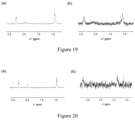
- FIG. 18 Over the course of the five performed experiments no significant loss in polarization was observed ( FIG. 18 ). To ensure that no significant amount of platinum has leached into the supernatant or that no significant platinum ions dissolved in the solvent were causing the hyperpolarized signal, hyperpolarization experiments with the supernatant solvent were performed. To the supernatant from the polarization experiments, about 2 mg HEA were added and a hyperpolarization experiment performed as above was conducted. FIGS. 19-21 show that no hyperpolarized signal could be observed. Therefore, it can be concluded that the polarization was indeed generated due to the platinum nanoparticle catalyst and that no significant leaching has occurred.
- a set refers to a collection of one or more objects.
- a set of objects can include a single object or multiple objects.
- the terms “substantially” and “about” are used to describe and account for small variations.
- the terms can refer to instances in which the event or circumstance occurs precisely as well as instances in which the event or circumstance occurs to a close approximation.
- the terms can refer to a range of variation of less than or equal to ⁇ 10% of that numerical value, such as less than or equal to ⁇ 5%, less than or equal to ⁇ 4%, less than or equal to ⁇ 3%, less than or equal to ⁇ 2%, less than or equal to ⁇ 1%, less than or equal to ⁇ 0.5%, less than or equal to ⁇ 0.1%, or less than or equal to ⁇ 0.05%.
- a first numerical value can be “substantially” or “about” the same as a second numerical value if the first numerical value is within a range of variation of less than or equal to ⁇ 10% of the second numerical value, such as less than or equal to ⁇ 5%, less than or equal to ⁇ 4%, less than or equal to ⁇ 3%, less than or equal to ⁇ 2%, less than or equal to ⁇ 1%, less than or equal to ⁇ 0.5%, less than or equal to ⁇ 0.1%, or less than or equal to ⁇ 0.05%.
- range format is used for convenience and brevity and should be understood flexibly to include numerical values explicitly specified as limits of a range, but also to include all individual numerical values or sub-ranges encompassed within that range as if each numerical value and sub-range is explicitly specified.
- a range of about 1 to about 200 should be understood to include the explicitly recited limits of about 1 and about 200, but also to include individual values such as about 2, about 3, and about 4, and sub-ranges such as about 10 to about 50, about 20 to about 100, and so forth.
Landscapes
- Chemical & Material Sciences (AREA)
- Organic Chemistry (AREA)
- Engineering & Computer Science (AREA)
- Materials Engineering (AREA)
- Chemical Kinetics & Catalysis (AREA)
- Crystallography & Structural Chemistry (AREA)
- Health & Medical Sciences (AREA)
- Dispersion Chemistry (AREA)
- Radiology & Medical Imaging (AREA)
- Nuclear Medicine, Radiotherapy & Molecular Imaging (AREA)
- Medicinal Chemistry (AREA)
- Epidemiology (AREA)
- Life Sciences & Earth Sciences (AREA)
- Animal Behavior & Ethology (AREA)
- General Health & Medical Sciences (AREA)
- Public Health (AREA)
- Veterinary Medicine (AREA)
- Inorganic Chemistry (AREA)
- Organic Low-Molecular-Weight Compounds And Preparation Thereof (AREA)
- Nanotechnology (AREA)
Abstract
Description

| TABLE 1 |
| Summary of particle characteristics. |
| Ligands/ | Ligands/ | Diameter/ | P/ | Ligands/nm2 | surface atoms/ | TOF/h−2 | |
| Particle | wt % | mol/g | nm | % | (sphere) | per particle | (80° C.) |
| |
16 | 0.98 | 1.9 ± 0.4 | 0.1 | 4.8 | 138 | 3.0 |
| Cys1@Pt | 16 | 1.32 | 2.4 ± 0.5 | 0.65 | 8.4 | 255 | 31.8 |
| Cys1.1@Pt | 16 | 1.32 | 1.4 ± 0.3 | 0.65 | 4.7 | 67 | 11.0 |
| GSH@PtM | 23 | 0.75 | 2.0 | 0.25 | 4.1 | 155 | 87.8 |
Claims (17)
Priority Applications (2)
| Application Number | Priority Date | Filing Date | Title |
|---|---|---|---|
| US15/799,498 US11273431B2 (en) | 2016-11-01 | 2017-10-31 | Biologically applicable water-soluble heterogeneous catalysts for para-hydrogen induced polarization |
| US17/694,560 US12564829B2 (en) | 2016-11-01 | 2022-03-14 | Biologically applicable water-soluble heterogeneous catalysts for para-hydrogen induced polarization |
Applications Claiming Priority (2)
| Application Number | Priority Date | Filing Date | Title |
|---|---|---|---|
| US201662415986P | 2016-11-01 | 2016-11-01 | |
| US15/799,498 US11273431B2 (en) | 2016-11-01 | 2017-10-31 | Biologically applicable water-soluble heterogeneous catalysts for para-hydrogen induced polarization |
Related Child Applications (1)
| Application Number | Title | Priority Date | Filing Date |
|---|---|---|---|
| US17/694,560 Continuation US12564829B2 (en) | 2016-11-01 | 2022-03-14 | Biologically applicable water-soluble heterogeneous catalysts for para-hydrogen induced polarization |
Publications (2)
| Publication Number | Publication Date |
|---|---|
| US20180117576A1 US20180117576A1 (en) | 2018-05-03 |
| US11273431B2 true US11273431B2 (en) | 2022-03-15 |
Family
ID=62020878
Family Applications (2)
| Application Number | Title | Priority Date | Filing Date |
|---|---|---|---|
| US15/799,498 Active US11273431B2 (en) | 2016-11-01 | 2017-10-31 | Biologically applicable water-soluble heterogeneous catalysts for para-hydrogen induced polarization |
| US17/694,560 Active 2038-08-29 US12564829B2 (en) | 2016-11-01 | 2022-03-14 | Biologically applicable water-soluble heterogeneous catalysts for para-hydrogen induced polarization |
Family Applications After (1)
| Application Number | Title | Priority Date | Filing Date |
|---|---|---|---|
| US17/694,560 Active 2038-08-29 US12564829B2 (en) | 2016-11-01 | 2022-03-14 | Biologically applicable water-soluble heterogeneous catalysts for para-hydrogen induced polarization |
Country Status (1)
| Country | Link |
|---|---|
| US (2) | US11273431B2 (en) |
Cited By (1)
| Publication number | Priority date | Publication date | Assignee | Title |
|---|---|---|---|---|
| US20220323946A1 (en) * | 2016-11-01 | 2022-10-13 | The Regents Of The University Of California | Biologically applicable water-soluble heterogeneous catalysts for para-hydrogen induced polarization |
Citations (1)
| Publication number | Priority date | Publication date | Assignee | Title |
|---|---|---|---|---|
| US20140125334A1 (en) * | 2012-11-06 | 2014-05-08 | Bruker Uk Ltd. | Method of hyperpolarization applying Brute Force using particulate acceleration agents |
Family Cites Families (1)
| Publication number | Priority date | Publication date | Assignee | Title |
|---|---|---|---|---|
| US11273431B2 (en) * | 2016-11-01 | 2022-03-15 | The Regents Of The University Of California | Biologically applicable water-soluble heterogeneous catalysts for para-hydrogen induced polarization |
-
2017
- 2017-10-31 US US15/799,498 patent/US11273431B2/en active Active
-
2022
- 2022-03-14 US US17/694,560 patent/US12564829B2/en active Active
Patent Citations (1)
| Publication number | Priority date | Publication date | Assignee | Title |
|---|---|---|---|---|
| US20140125334A1 (en) * | 2012-11-06 | 2014-05-08 | Bruker Uk Ltd. | Method of hyperpolarization applying Brute Force using particulate acceleration agents |
Non-Patent Citations (7)
| Title |
|---|
| Abraham et al.J. Phys. Chem B. 2012, 116, 7771-7775. * |
| Cappallari et al. Journal of Colloid and Interface Science 441 (2015) 17-24. * |
| Gloeggler, S. et al. (2015) "A Nanoparticle Catalyst for Heterogeneous Phase Para-Hydrogen-Induced Polarization in Water," Angew. Chem. Int. Ed. 54:2452-2456. |
| Gloeggler, S. et al. (2016) "Surface ligand-directed pair-wise hydrogenation for heterogeneous phase hyperpolarization," Chem. Commun. 52:605-608. |
| Lee et al. Langmuir 2012, 28, 15958-15965. * |
| Liang et al. Int J. Nanomedicine, 2015; 10:2325-2333. * |
| We et al. Anal. Chem. 2014, 86, 10955-10960. * |
Cited By (2)
| Publication number | Priority date | Publication date | Assignee | Title |
|---|---|---|---|---|
| US20220323946A1 (en) * | 2016-11-01 | 2022-10-13 | The Regents Of The University Of California | Biologically applicable water-soluble heterogeneous catalysts for para-hydrogen induced polarization |
| US12564829B2 (en) * | 2016-11-01 | 2026-03-03 | The Regents Of The University Of California | Biologically applicable water-soluble heterogeneous catalysts for para-hydrogen induced polarization |
Also Published As
| Publication number | Publication date |
|---|---|
| US20220323946A1 (en) | 2022-10-13 |
| US12564829B2 (en) | 2026-03-03 |
| US20180117576A1 (en) | 2018-05-03 |
Similar Documents
| Publication | Publication Date | Title |
|---|---|---|
| Yang et al. | Multienzyme‐mimic ultrafine alloyed nanoparticles in metal organic frameworks for enhanced chemodynamic therapy | |
| Khan et al. | Green synthesis of zero-valent Fe-nanoparticles: Catalytic degradation of rhodamine B, interactions with bovine serum albumin and their enhanced antimicrobial activities | |
| Fan et al. | A Ligand‐Exchange Route to Nobel Metal Nanocrystals with a Clean Surface for Enhanced Optical and Catalytic Properties | |
| Socas-Rodríguez et al. | Core–shell polydopamine magnetic nanoparticles as sorbent in micro-dispersive solid-phase extraction for the determination of estrogenic compounds in water samples prior to high-performance liquid chromatography–mass spectrometry analysis | |
| Shi et al. | Rescuing nucleus pulposus cells from ROS toxic microenvironment via mitochondria‐targeted carbon dot‐supported Prussian blue to alleviate intervertebral disc degeneration | |
| Cao et al. | Intelligent Janus nanoparticles for intracellular real-time monitoring of dual drug release | |
| Fischer et al. | Poly (lactic acid) nanoparticles of the lead anticancer ruthenium compound KP1019 and its surfactant-mediated activation | |
| CN114405479B (en) | Magnetic covalent organic framework nano material, preparation method and application | |
| Male et al. | Synthesis and stability of fluorescent gold nanoparticles by sodium borohydride in the presence of mono-6-deoxy-6-pyridinium-β-cyclodextrin chloride | |
| US9067181B2 (en) | Separation of nanoparticles | |
| US12564829B2 (en) | Biologically applicable water-soluble heterogeneous catalysts for para-hydrogen induced polarization | |
| CN102012372A (en) | Method for detecting medicinal molecules by magnetic imprinting surface enhanced Raman spectroscopy technology | |
| Glöggler et al. | Surface ligand-directed pair-wise hydrogenation for heterogeneous phase hyperpolarization | |
| Luo et al. | Water dispersible cobalt single-atom catalysts with efficient chemiluminescence enhancement for sensitive bioassay | |
| US10154628B2 (en) | Coating metal oxide particles | |
| Jakob et al. | Chirality transfer from organic ligands to silver nanostructures via chiral polarisation of the electric field | |
| CN103550776B (en) | A kind of hydrophobic drug nano-particle, its preparation method and application | |
| Abdolmohammad-Zadeh et al. | Nickel oxide/chitosan nano-composite as a magnetic adsorbent for pre-concentration of Zn (II) ions | |
| Li et al. | Screening and analysis of cyclooxygenase-2 inhibitors from the complex matrix: A case study to illustrate the important effect of immobilized enzyme activity in magnetic ligand fishing | |
| Ozsoy et al. | Activities of gallic acid and Fe doped, and glucose oxidase or gold modified ZIF-8 based drug delivery systems in triple negative breast cancer | |
| Wang et al. | On the encapsulation and assembly of anticancer drugs in a cooperative fashion | |
| Liu et al. | Selective removal of hemoglobin from blood using hierarchical copper shells anchored to magnetic nanoparticles | |
| Nadimifar et al. | Synthesis of bioactive hemoglobin-based oxygen carrier nanoparticles via metal-phenolic complexation | |
| Vedarethinam et al. | Magnetic nanoparticles for protein separation and purification | |
| CN106565837B (en) | A kind of metal chelating function serum albumin and preparation method and application in inhibiting β-amyloid aggregation |
Legal Events
| Date | Code | Title | Description |
|---|---|---|---|
| FEPP | Fee payment procedure |
Free format text: ENTITY STATUS SET TO UNDISCOUNTED (ORIGINAL EVENT CODE: BIG.); ENTITY STATUS OF PATENT OWNER: SMALL ENTITY |
|
| FEPP | Fee payment procedure |
Free format text: ENTITY STATUS SET TO SMALL (ORIGINAL EVENT CODE: SMAL); ENTITY STATUS OF PATENT OWNER: SMALL ENTITY |
|
| AS | Assignment |
Owner name: THE REGENTS OF THE UNIVERSITY OF CALIFORNIA, CALIFORNIA Free format text: ASSIGNMENT OF ASSIGNORS INTEREST;ASSIGNORS:BOUCHARD, LOUIS;GLOEGGLER, STEFAN;SIGNING DATES FROM 20180809 TO 20180817;REEL/FRAME:047108/0602 Owner name: THE REGENTS OF THE UNIVERSITY OF CALIFORNIA, CALIF Free format text: ASSIGNMENT OF ASSIGNORS INTEREST;ASSIGNORS:BOUCHARD, LOUIS;GLOEGGLER, STEFAN;SIGNING DATES FROM 20180809 TO 20180817;REEL/FRAME:047108/0602 Owner name: CEDARS-SINAI MEDICAL CENTER, CALIFORNIA Free format text: ASSIGNMENT OF ASSIGNORS INTEREST;ASSIGNOR:WAGNER, SHAWN;REEL/FRAME:047108/0789 Effective date: 20171103 |
|
| STPP | Information on status: patent application and granting procedure in general |
Free format text: NON FINAL ACTION MAILED |
|
| STPP | Information on status: patent application and granting procedure in general |
Free format text: RESPONSE TO NON-FINAL OFFICE ACTION ENTERED AND FORWARDED TO EXAMINER |
|
| STPP | Information on status: patent application and granting procedure in general |
Free format text: FINAL REJECTION MAILED |
|
| STPP | Information on status: patent application and granting procedure in general |
Free format text: RESPONSE AFTER FINAL ACTION FORWARDED TO EXAMINER |
|
| STPP | Information on status: patent application and granting procedure in general |
Free format text: ADVISORY ACTION MAILED |
|
| STPP | Information on status: patent application and granting procedure in general |
Free format text: NON FINAL ACTION MAILED |
|
| STPP | Information on status: patent application and granting procedure in general |
Free format text: ADVISORY ACTION MAILED |
|
| STPP | Information on status: patent application and granting procedure in general |
Free format text: NON FINAL ACTION MAILED |
|
| STPP | Information on status: patent application and granting procedure in general |
Free format text: RESPONSE TO NON-FINAL OFFICE ACTION ENTERED AND FORWARDED TO EXAMINER |
|
| STPP | Information on status: patent application and granting procedure in general |
Free format text: FINAL REJECTION MAILED |
|
| STPP | Information on status: patent application and granting procedure in general |
Free format text: RESPONSE AFTER FINAL ACTION FORWARDED TO EXAMINER |
|
| STPP | Information on status: patent application and granting procedure in general |
Free format text: NOTICE OF ALLOWANCE MAILED -- APPLICATION RECEIVED IN OFFICE OF PUBLICATIONS |
|
| STCF | Information on status: patent grant |
Free format text: PATENTED CASE |
|
| MAFP | Maintenance fee payment |
Free format text: PAYMENT OF MAINTENANCE FEE, 4TH YR, SMALL ENTITY (ORIGINAL EVENT CODE: M2551); ENTITY STATUS OF PATENT OWNER: SMALL ENTITY Year of fee payment: 4 |