US11270710B2 - Encoder and encoding method - Google Patents
Encoder and encoding method Download PDFInfo
- Publication number
- US11270710B2 US11270710B2 US16/640,708 US201816640708A US11270710B2 US 11270710 B2 US11270710 B2 US 11270710B2 US 201816640708 A US201816640708 A US 201816640708A US 11270710 B2 US11270710 B2 US 11270710B2
- Authority
- US
- United States
- Prior art keywords
- channel
- coding mode
- signal
- dominant
- unit
- Prior art date
- Legal status (The legal status is an assumption and is not a legal conclusion. Google has not performed a legal analysis and makes no representation as to the accuracy of the status listed.)
- Expired - Fee Related
Links
Images




Classifications
-
- G—PHYSICS
- G10—MUSICAL INSTRUMENTS; ACOUSTICS
- G10L—SPEECH ANALYSIS TECHNIQUES OR SPEECH SYNTHESIS; SPEECH RECOGNITION; SPEECH OR VOICE PROCESSING TECHNIQUES; SPEECH OR AUDIO CODING OR DECODING
- G10L19/00—Speech or audio signals analysis-synthesis techniques for redundancy reduction, e.g. in vocoders; Coding or decoding of speech or audio signals, using source filter models or psychoacoustic analysis
- G10L19/008—Multichannel audio signal coding or decoding using interchannel correlation to reduce redundancy, e.g. joint-stereo, intensity-coding or matrixing
-
- G—PHYSICS
- G10—MUSICAL INSTRUMENTS; ACOUSTICS
- G10L—SPEECH ANALYSIS TECHNIQUES OR SPEECH SYNTHESIS; SPEECH RECOGNITION; SPEECH OR VOICE PROCESSING TECHNIQUES; SPEECH OR AUDIO CODING OR DECODING
- G10L19/00—Speech or audio signals analysis-synthesis techniques for redundancy reduction, e.g. in vocoders; Coding or decoding of speech or audio signals, using source filter models or psychoacoustic analysis
- G10L19/04—Speech or audio signals analysis-synthesis techniques for redundancy reduction, e.g. in vocoders; Coding or decoding of speech or audio signals, using source filter models or psychoacoustic analysis using predictive techniques
- G10L19/16—Vocoder architecture
- G10L19/18—Vocoders using multiple modes
- G10L19/22—Mode decision, i.e. based on audio signal content versus external parameters
Definitions
- the present disclosure relates to an encoder and an encoding method.
- EVS Enhanced Voice Services
- 3GPP 3rd Generation Partnership Project
- NPL 3rd Generation Partnership Project
- the EVS codec does not support input and output of a stereo signal. However, if each of channels (the left channel (L channel) and the right channel (R channel)) of a stereo signal is processed by using the EVS codec (monaural encoding), the EVS codec can be used in a stereo rendering system. However, if a stereo signal is encoded by using a multi-mode monaural codec that performs encoding by switching among a plurality of coding modes like the EVS codec (the monaural encoding performed separately for the L channel signal and the R channel signal of the stereo signal is also referred to as “dual mono encoding”), different coding modes may be used for the L channel and the R channel of the stereo signal. Consequently, the sound quality in stereo reproduction may deteriorate.
- One aspect of the present disclosure provides an encoder and an encoding method capable of preventing a decrease in sound quality in stereo reproduction even when a stereo signal is encoded by using a multi-mode codec.
- an encoder includes a signal analysis circuit that performs signal analysis on a left channel signal and a right channel signal that constitute a stereo signal and generates a parameter used to determine a coding mode for each of a left channel and a right channel and an encoding circuit that encodes the left channel signal and the right channel signal by using a coding mode common to the left channel signal and the right channel signal.
- the encoding circuit determines the common coding mode by selecting, out of the left channel and the right channel, the one that has a lower ratio of energy of an environmental sound component to the entire energy of the channel and using the parameter of the selected channel.
- FIG. 1 is a diagram illustrating an example of an EVS codec.
- FIG. 2 is a diagram illustrating an example of a correspondence relationship between a signal analysis parameter and a coding mode.
- FIG. 3 is a diagram illustrating a configuration example of dual mono encoding.
- FIG. 4 is a block diagram illustrating a configuration example of part of an encoder according to a first embodiment.
- FIG. 5 is a block diagram illustrating a configuration example of the encoder according to the first embodiment.
- FIG. 6 is a block diagram illustrating a configuration example of a signal analysis unit and a DMA stereo encoding unit according to the first embodiment.
- FIG. 7 is a flowchart illustrating the flow of coding mode selection processing according to the first embodiment.
- FIG. 8 is a diagram illustrating an example of the relationship between an inter-channel correlation and the environmental sound component energy of a non-dominant channel signal according to the first embodiment.
- FIG. 9 is a block diagram illustrating a configuration example of a signal analysis unit and a DMA stereo encoding unit according to a second embodiment.
- FIG. 10 is a flowchart illustrating the flow of coding mode determination correction processing according to the second embodiment.
- FIG. 11 is a block diagram illustrating a configuration example of an encoder according to a third embodiment.
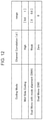
- FIG. 12 is a diagram illustrating an example of a correspondence relationship between the range of an inter-channel correlation value and a coding mode according to the third embodiment.
- FIG. 13 is a block diagram illustrating a configuration example of a signal analysis unit and an inter-channel correlation calculation unit according to a fourth embodiment.
- FIG. 14 is a diagram illustrating an operation example performed by the signal analysis unit and the inter-channel correlation calculation unit according to the fourth embodiment.
- FIG. 15 is a block diagram illustrating a configuration example of a signal analysis unit and an inter-channel correlation calculation unit according to Modification 2 of the fourth embodiment.
- a 3GPP EVS encoding system is briefly described first as an example of a multi-mode monaural encoding system (refer to, for example, NPL 1).
- the EVS codec employs a plurality of encoding techniques (coding modes) (refer to, for example, FIG. 1 ).
- the plurality of encoding techniques employed in the EVS codec are basically based on the following two principles.
- One is a linear prediction (LP) based approach, and the other is a frequency domain approach.
- LP linear prediction
- a coding mode for example, ACELP (Algebraic CELP)
- CELP Code Excited Linear Prediction
- the HQ MDCT High Quality Modified Discrete Cosine Transform
- TCX Transformed Code Excitation
- the most suitable coding mode is selected from among, for example, ACELP, HQ MDCT, and TCX in accordance with an input speech/audio signal.
- Each of the coding modes is designed and adjusted such that various signals can be efficiently coded.
- the coding mode selection in the EVS codec is made on the basis of, for example, the bit rate, the bandwidth of the audio signal, the speech/music classification, the selected coding mode, or other parameters (the features).
- FIG. 2 illustrates, as an example, a correspondence between each of parameters indicating the bit rate ([kbps]), bandwidth (SWB (super wideband), FB (fullband)), and input signal type (speech/audio) and one of the coding modes (ACELP, GSC, TCX, and HQ MDCT) to be selected according to the parameter.
- the EVS codec is a monaural codec.
- the EVS codec can be employed in a stereo rendering system.
- FIG. 3 illustrates an example of a configuration example of dual mono encoding (a dual mono encoder) for processing each of the channels (L channel and R channel) of a stereo signal by using a monaural codec.
- the left channel signal (hereinafter referred to as an “L channel signal”) and the right channel signal (hereinafter referred to as an “R channel signal”) of a stereo signal are individually encoded by using a monaural codec.
- L channel signal left channel signal
- R channel signal right channel signal
- different coding modes may be selected for the L channel and the R channel of the stereo signal, and the stereo signal may be encoded.
- the ratio of the environmental sound (ambient noise) level (the environmental sound component energy) to the input signal level of the L channel of the stereo signal differs from that of the R channel and if the two channel signals are separately processed using a multi-mode codec, such as the EVS codec, signal analysis and selection of a coding mode are independently performed on each of the channel signals. Accordingly, different coding modes may be selected for the two channels. If different coding modes are selected for the two channels, the subjective quality of the decoded signal may deteriorate, which causes abnormal sound and/or distortion in stereo reproduction or causes an inadequate stereo soundstage.
- a multi-mode codec such as the EVS codec
- a method for preventing deterioration of the sound quality in stereo reproduction (preventing abnormal sound and/or distortion and an inadequate stereo soundstage) even when dual mono encoding using a multi-mode codec is performed on a stereo signal having a difference in environmental sound component energy ratio between the two channels.
- a communication system includes an encoder 100 and a decoder (not illustrated).
- FIG. 4 is a block diagram illustrating a partial configuration of the encoder 100 according to the present embodiment.
- the signal analysis unit 101 performs signal analysis on the L channel signal and R channel signal that constitute the stereo signal and generates a parameter (an analysis parameter, the feature) for determining the coding mode of each of the L channel and R channel.
- a DMA stereo encoding unit 104 encodes each of the L channel signal and R channel signal by using a coding mode common to the L channel signal and R channel signal.
- the DMA stereo encoding unit 104 determines the common coding mode by selecting, out of the L channel and the R channel, the one that has a lower ratio of energy of an environmental sound component to the entire energy of the channel and using the parameter of the selected channel.
- FIG. 5 is a block diagram illustrating a configuration example of the encoder 100 according to the present embodiment.
- the encoder 100 includes a signal analysis unit 101 , the inter-channel correlation calculation unit 102 , a selector switch 103 , the DMA (Dual Mono with mode alignment) stereo encoding unit 104 , and the DM (Dual Mono) stereo encoding unit 105 , and a multiplexing unit 106 .
- the DMA Dual Mono with mode alignment
- DM Digital Mono
- the L channel signal (Left channel) and the R channel signal (Right channel) that constitute a stereo signal are input to the signal analysis unit 101 , the inter-channel correlation calculation unit 102 , and the selector switch 103 .
- the signal analysis unit 101 performs signal analysis on the input L channel signal and R channel signal and obtains parameters necessary for determining the coding mode for each of the L channel and the R channel (for example, the features, such as the type of the input signal (e.g., speech/music), the bandwidth, the estimated segmental S/N ratio, long-term prediction parameters, voiced scale, spectral noise floor, high-frequency energy, voiced determination, high-frequency sparseness, average energy, and peak-to-average ratio).
- the signal analysis unit 101 outputs the obtained analysis parameters to the selector switch 103 . For example, during the signal analysis, the signal analysis unit 101 performs frequency domain transform processing and energy calculation processing on the channel signals, for example.
- the inter-channel correlation calculation unit 102 calculates the inter-channel correlation (a normalized correlation coefficient (hereinafter simply referred to as a “correlation coefficient”)) ⁇ between the L channel and the R channel on the basis of the input L channel signal and R channel signal by using, for example, the following equation (1):
- R 11 represents the auto-correlation coefficient (the energy) of the L channel signal
- R 22 represents the auto-correlation coefficient (the energy) of the R channel signal
- R 12 represents the correlation coefficient (the cross-spectrum) between the L channel signal and the R channel signal.
- Frame length represents the number of frequency spectrum parameters (the spectral coefficient) in the frame
- I(k) represents the kth spectral coefficient in the L channel signal
- R(k) represents the kth spectral coefficient in the R channel signal.
- the inter-channel correlation calculation unit 102 determines a stereo coding mode for the stereo signal (the L channel signal and R channel signal) on the basis of the calculated correlation coefficient ⁇ .
- examples of the stereo coding mode include a mode in which the coding mode is individually selected for the L channel signal and the R channel signal (hereinafter referred to as a “dual mono encoding mode” or a “DM stereo coding mode”) and, as is described later, a mode in which a common coding mode is selected for the L channel signal and the R channel signal, and the signals are encoded (hereinafter referred to as a “common dual mono encoding mode” or a “DMA stereo coding mode”).
- the inter-channel correlation calculation unit 102 selects the DM stereo coding mode if the correlation coefficient ⁇ is less than or equal to a threshold value and selects the DMA stereo coding mode if the correlation coefficient ⁇ is greater than the threshold value.
- the inter-channel correlation calculation unit 102 may select the DM stereo coding mode if the correlation coefficient ⁇ is 0 (that is, if there is no correlation between the L channel signal and the R channel signal) and may select the DMA stereo coding mode if the correlation coefficient ⁇ is greater than 0 ( ⁇ >0).
- the inter-channel correlation calculation unit 102 outputs, to the selector switch 103 , the correlation coefficient ⁇ and a stereo mode decision flag (stereo mode decision) that is a determination result of the stereo coding mode.
- the selector switch 103 If the stereo mode decision flag input from the inter-channel correlation calculation unit 102 indicates the DMA stereo coding mode, the selector switch 103 outputs, to the DMA stereo encoding unit 104 , the input L channel signal, the R channel signal, the analysis parameters input from the signal analysis unit 101 , and the correlation coefficient ⁇ input from the correlation calculation unit 101 . However, if the stereo mode decision flag indicates the DM stereo coding mode, the selector switch 103 outputs, to the DM stereo encoding unit 105 , the L channel signal, the R channel signal, and the analysis parameters.
- the DMA stereo encoding unit 104 determines (selects) a common coding mode for the L channel signal and the R channel signal by using the correlation coefficient ⁇ and the analysis parameters. Thereafter, the DMA stereo encoding unit 104 encodes the L channel signal and the R channel signal by using the determined common coding mode and outputs the generated encoded bit streams to the multiplexing unit 106 .
- a method for selecting the coding mode performed by the DMA stereo encoding unit 104 is described in more detail below.
- the DM stereo encoding unit 105 determines (selects) a coding mode for each of the L channel signal and the R channel signal by using the analysis parameters. Thereafter, the DM stereo encoding unit 105 encodes each of the L channel signal and the R channel signal by using the determined coding mode and outputs the generated encoded bit stream to the multiplexing unit 106 (refer to, for example, FIG. 3 ).
- the multiplexing unit 106 multiplexes the encoded bit streams input from the DMA stereo encoding unit 104 or the DM stereo encoding unit 105 .
- the multiplexed bit stream is transmitted to a decoder (not illustrated).
- the encoder 100 illustrated in FIG. 5 may be configured to include an encoding unit (not illustrated) having a function of these constituent units. That is, the encoding unit is only required to determine a stereo coding mode (the DMA stereo encoding or the DM stereo encoding) in accordance with the inter-channel correlation (the correlation coefficient ⁇ ) received from the inter-channel correlation calculation unit 102 and encode each of the L channel signal and R channel signal that constitute the stereo signal by using the determined stereo coding mode.
- the encoding unit is only required to determine a stereo coding mode (the DMA stereo encoding or the DM stereo encoding) in accordance with the inter-channel correlation (the correlation coefficient ⁇ ) received from the inter-channel correlation calculation unit 102 and encode each of the L channel signal and R channel signal that constitute the stereo signal by using the determined stereo coding mode.
- the method for selecting a coding mode in the DMA stereo encoding unit 104 is described in detail below.
- FIG. 6 is a block diagram illustrating the configuration of the signal separating unit 101 and the DMA stereo encoding unit 104 illustrated in FIG. 5 .
- the DMA stereo encoding unit 104 is configured to include an adaptive mixing unit 141 , a coding mode selection unit 142 , an Lch encoding unit 143 , an Rch encoding unit 144 , and a bit stream generation unit 145 .
- the adaptive mixing unit 141 receives the Lch analysis parameters (Left channel parameters) obtained by performing signal analysis on the L channel signal in the signal analysis unit 101 (an Lch signal analysis unit) via the selector switch 103 (not illustrated). Similarly, as illustrated in FIG. 6 , the adaptive mixing unit 141 receives the Rch analysis parameters (Right channel parameters) obtained by performing signal analysis on the R channel signal in the signal analysis unit 101 (an Rch signal analysis unit) via the selector switch 103 (not illustrated).
- the adaptive mixing unit 141 performs mixing on the Lch analysis parameters and Rch analysis parameters input from the signal analysis unit 101 on the basis of the correlation coefficient ⁇ input from the inter-channel correlation calculation unit 102 (refer to FIG. 5 ) and outputs the analysis parameters after the mixing (Mixed channel parameters) to the coding mode selection unit 142 . That is, the analysis parameters after the mixing represent common parameters (characteristics) for determining the coding mode for each of the L channel signal and the R channel signal.
- the coding mode selection unit 142 uses the analysis parameters after the mixing, input from the adaptive mixing unit 141 and selects a coding mode to be commonly applied to both the L channel signal and R channel signal.
- the method for selecting a coding mode in the coding mode selection unit 142 may be the same as the selection method employed in the EVS codec (monaural encoding) illustrated in FIG. 2 in accordance with the analysis parameters after the mixing, for example.
- the coding mode selection unit 142 outputs coding mode information (coding mode decision) indicating the selected coding mode to the Lch encoding unit 143 and the Rch encoding unit 144 .
- the Lch encoding unit 143 encodes the L channel signal by using the coding mode indicated by the coding mode information input from the coding mode selection unit 142 and outputs a generated encoded bit stream to the bit stream generation unit 145 .
- the Rch encoding unit 144 encodes the R channel signal by using the coding mode indicated by the coding mode information input from the coding mode selection unit 142 and outputs a generated encoded bit stream to the bit stream generation unit 145 .
- the bit stream generation unit 145 generates a stereo encoded bit stream by using the encoded bit stream input from the Lch encoding unit 143 and the encoded bit stream input from the Rch encoding unit 144 and outputs the stereo encoded bit stream to the multiplexing unit 106 (refer FIG. 5 ).
- FIG. 7 is a flowchart illustrating a main flow of the coding mode selection processing in the DMA stereo coding mode according to the present embodiment.
- the signal analysis unit 101 calculates the energy of the L channel signal and the energy of the R channel signal (ST 101 ). Subsequently, the adaptive mixing unit 141 calculates inter-channel energy difference ⁇ by using the energy of each of the channels calculated in ST 101 (ST 102 ).
- the adaptive mixing unit 141 identifies a dominant channel and a non-dominant channel for the L channel signal and the R channel signal (ST 103 ).
- the adaptive mixing unit 141 may identify the dominant channel and the non-dominant channel on the basis of the inter-channel energy difference ⁇ calculated in ST 102 .
- the adaptive mixing unit 141 identifies the dominant channel and the non-dominant channel in accordance with the sign of the inter-channel energy difference ⁇ . More specifically, if the energy difference ⁇ is positive ( ⁇ >0, that is, R 11 >R 22 ), the adaptive mixing unit 141 identifies that the L channel is the dominant channel, and the R channel is the non-dominant channel. However, if the energy difference ⁇ is negative ( ⁇ 0, that is, R 1 ⁇ R 22 ), the adaptive mixing unit 141 identifies that the L channel is a non-dominant channel, and the R channel is a dominant channel.
- the adaptive mixing unit 141 may identify either the L channel or the R channel as the dominant channel. For example, if the energy difference ⁇ is positive, the adaptive mixing unit 141 may identify the L channel as the dominant channel. However, if the energy difference ⁇ is less than or equal to 0 ( ⁇ 0), the adaptive mixing unit 141 may identify the R channel as the dominant channel. Alternatively, if the energy difference ⁇ is negative, the adaptive mixing unit 141 may identify the R channel as the dominant channel. However, if the energy difference ⁇ is greater than or equal to 0 ( ⁇ 0), the adaptive mixing unit 141 may identify the L channel as the dominant channel.
- the technique for identifying the dominant channel and the non-dominant channel is not limited to the above-described technique.
- the adaptive mixing unit 141 determines a weighting coefficient (a weight) for each of the analysis parameter of the dominant channel and the analysis parameter of the non-dominant channel identified in ST 103 on the basis of the correlation coefficient ⁇ and the level difference between the channels (the energy difference) (ST 104 ). That is, the adaptive mixing unit 141 calculates the weighting coefficient for the analysis parameter of each of the channels on the basis of the ratio of the energy of the environmental sound component to the entire energy of each of the channels (the details are described below).
- the adaptive mixing unit 141 performs mixing (adaptive mixing) of the analysis parameters by calculating the weighted sum of the analysis parameter of the dominant channel and the analysis parameter of the non-dominant channel by using the weighting coefficients determined in ST 104 (ST 105 ).
- D p represents an analysis parameter for determining the coding mode of the dominant channel
- ND p represents an analysis parameter for determining the coding mode of the non-dominant channel
- W 1 represents a weighting coefficient for the analysis parameter of the dominant channel
- W 2 represents a weighting coefficient for the analysis parameter of the non-dominant channel.
- the coding mode selection unit 142 selects a coding mode common to both the L channel signal and the R channel signal by using the analysis parameter M p obtained in ST 105 (ST 106 ).
- the method for selecting a coding mode employed by the coding mode selection unit 142 may be the same as the selection method in the EVS codec (monaural encoding) illustrated in FIG. 2 .
- each of the input signals input to the encoder 100 consists of an environmental sound component common to the two channels (components having the same level and having no correlation with each other) and a component other than the environmental sound component (components common to the two channels but having different amplitudes and phases).
- the adaptive mixing unit 141 obtains the energy A of the environmental sound component estimated from the input signals of the two channels (that is, the L channel and R channel) by using the following equation (4):
- A P X L + P X R - ( P X L + P X R ) 2 - 4 ⁇ ( 1 - ⁇ 2 ) ⁇ P X L ⁇ P X R 2 . ( 4 )
- Equation (4) P XL represents the energy of the L channel signal, P XR represents the energy of the R channel signal, and a represents the inter-channel correlation (the normalized correlation coefficient) given by equation (1).
- the energy A of the environmental sound component given by equation (4) can be calculated even before the process of identifying the dominant channel and the non-dominant channel (the process in ST 103 ). That is, either the process of calculating the energy A or the process of identifying the dominant channel and the non-dominant channel) may be performed first.
- the adaptive mixing unit 141 calculates the environmental sound component energy ratio AE ND (the ratio of the energy of the environmental sound component to the entire energy of the non-dominant channel identified in ST 103 ) by using the following equation (5):
- P ND represents the energy of the non-dominant channel signal.
- P ND is the same as P XL or P XR .
- FIG. 8 illustrates an example of the relationship between the inter-channel correlation (the correlation coefficient) a and the environmental sound component energy (estimated environmental sound component energy) ratio AE ND for the non-dominant channel.
- the environmental sound component energy ratio AE ND decreases from 1 to 0 with increasing a.
- the environmental sound component energy ratio of the dominant channel is lower than the environmental sound component energy ratio AE ND of the non-dominant channel under the above-described assumption that the environmental sound component is common to the channels. That is, the reliability of the coding mode selected using the dominant channel signal (the analysis parameter) is higher than at least the reliability of the coding mode selected using the non-dominant channel signal (the analysis parameter).
- the ratio of principal component signals, such as speech/audio signals, in the non-dominant channel decreases with increasing environmental sound component energy ratio AE ND of the non-dominant channel. Therefore, the reliability of the coding mode selected using the non-dominant channel signal (the analysis parameter) decreases with increasing environmental sound component energy ratio AE ND of the non-dominant channel.
- the adaptive mixing unit 141 preferentially uses the analysis parameter of the dominant channel (the L channel or R channel) that has a lower ratio of the energy of the environmental sound component to the entire energy of the channel. In addition, when determining a common coding mode, the adaptive mixing unit 141 decreases the degree of enhancement of the analysis parameter of the non-dominant channel with increasing environmental sound component energy ratio AE ND of the non-dominant channel.
- the adaptive mixing unit 141 calculates a weighting coefficient for the analysis parameter used to determine the coding mode on the basis of the environmental sound component energy ratio AE ND of the non-dominant channel. For example, the adaptive mixing unit 141 obtains a weighting coefficient W 1 for the analysis parameter of the dominant channel by using the following equation (6) and obtains a weighting coefficient W 2 for the analysis parameter of the non-dominant channel by using the following equation (7):
- the weighting coefficient W 1 for the analysis parameter of the dominant channel 1
- the weighting coefficient W 1 is in the range of 0.5 to 1
- the weighting coefficient W 2 is in the range of 0.5 to 0.
- the weighting coefficient W 1 ⁇ the weighting coefficient W 2 .
- the adaptive mixing unit 141 determines the analysis parameter M P by setting the weighting coefficient W 1 of the analysis parameter of the dominant channel to a value greater than or equal to the weighting coefficient W 2 of the analysis parameter of the non-dominant channel.
- the analysis parameter M p used to determine the common coding mode is easily set to a value that emphasizes the analysis parameter of the dominant channel more.
- the encoder 100 can appropriately select the common coding mode by preferentially using the analysis parameter of the dominant channel with higher reliability (the channel with a lower environmental sound component energy ratio). Thus, deterioration of the sound quality during stereo reproduction can be reduced.
- the encoder 100 since the reliability of the coding mode determined using the analysis parameter of the non-dominant channel decreases with increasing environmental sound component energy ratio AE ND of the non-dominant channel, the encoder 100 performs weighting so as to prioritize (emphasize) the dominant channel more. In this way, the encoder 100 ensures that a higher weight is given to the analysis parameter of the dominant channel having high reliability. In addition, the encoder 100 adjusts the weighting emphasis level for the analysis parameter of each of the channels in accordance with the environmental sound component energy ratio AE ND of the non-dominant channel and, thus, appropriately selects the common coding mode. In this manner, deterioration of the sound quality during stereo reproduction can be reduced.
- the environmental sound component energy ratio AE ND of the non-dominant channel given by the equation (5) can be expressed as the following equation (8) using a level ratio (a level difference) k between the L channel and the R channel:
- Equation (8) P D represents the energy of the dominant channel signal, and P ND represents the energy of the non-dominant channel signal.
- the level difference k (P D /P ND ).
- a D is the energy of the environmental sound component.
- the L channel signal energy P XL and the R channel signal energy P XR that appear in equation (4) are replaced by the dominant channel signal energy P D and the non-dominant channel signal energy P ND .
- the adaptive mixing unit 141 uses an inter-channel correlation ⁇ between the L channel and the R channel and the level difference k between the L channel and the R channel and calculates the environmental sound component energy ratio AE ND of the non-dominant channel. That is, as can be seen from equation (8), the environmental sound component energy ratio AE ND of the non-dominant channel can be expressed as a function of the level difference k between the channels and the correlation coefficient ⁇ .
- FIG. 8 illustrates the relationship between the correlation coefficient ⁇ and the energy ratio AE ND of the non-dominant channel signal when the level difference k between the channels is denoted as ILD (Inter-channel Level Difference) [dB].
- ILD Inter-channel Level Difference
- the energy ratio AE ND increases with increasing level difference (ILD) between the dominant channel and the non-dominant channel. That is, for the same correlation coefficient ⁇ , as the level difference between the channels increases, the weighting coefficient W 1 for the analysis parameter of the dominant channel increases and the weighting coefficient W 2 for the analysis parameter of the non-dominant channel decreases.
- the energy ratio AE ND is 1 or 0 regardless of the level difference. Accordingly, as illustrated in FIG. 8 , the graph denoting the relationship between the correlation coefficient ⁇ and the energy ratio AE ND has a shape that protrudes upward as the level difference increases.
- the level of the principal component signal, such as a speech/audio signal, of the dominant channel increases with increasing level difference k between the channels, as compared with the level of the principal component signal, such as a speech/audio signal, of the non-dominant channel. That is, the reliability of the coding mode determined using the dominant channel signal increases with increasing level difference k between the channels, as compared with the reliability of the coding mode determined using the non-dominant channel signal.
- weighting is performed such that the dominant channel is more prioritized (emphasized) over the non-dominant channel by increasing the weighting coefficient W 1 and decreasing the weighting coefficient W 2 with increasing level difference k between the channels.
- the encoder 100 can appropriately select a common coding mode by using the analysis parameter of the dominant channel having high reliability when determining the common coding mode. As a result, deterioration of the sound quality at the time of stereo reproduction can be reduced.
- the encoder 100 commonalizes the coding mode used for encoding each of the channel signals if there is an inter-channel correlation for the stereo signal. In this manner, even when the subjective quality of the decoded signal deteriorates under the condition that different coding modes are selected for the two channels of the stereo signal, the encoder 100 can prevent the deterioration of the subjective quality of the decoded signal by performing encoding using the common coding mode for the two channels of the stereo signal.
- the encoder 100 adjusts the weights assigned to the dominant channel and non-dominant channel on the basis of the environmental sound component energy ratio of the non-dominant channel (the correlation coefficient ⁇ and the level difference between the channels) and mixes the analysis parameters. More specifically, the encoder 100 preferentially uses the analysis parameter of the channel having a low environmental sound component energy ratio (the dominant channel) and adjusts the degree of enhancement of the analysis parameter of each of the channels (the weighting coefficient of each of the channels) in accordance with the environmental sound component energy ratio of the non-dominant channel. In this manner, the encoder 100 can appropriately select a common coding mode in consideration of the reliability of the coding mode determined using the analysis parameter of the non-dominant channel.
- each of the channel signals can be encoded by using an appropriate coding mode and, thus, deterioration of the sound quality during stereo reproduction can be reduced.
- Equation (5) it is assumed that to calculate the environmental sound component energy ratio AE ND of the non-dominant channel given by Equation (5), the energy (the power) per frequency unit (for example, frequency bin unit) is used.
- the adaptive mixing unit 141 may use P ND , P XL , and P XR for each of the sub-bands and calculate the environmental sound component energy ratio AE ND of the non-dominant channel for each of the sub-bands by using the following equation (9), instead of using equation (5):
- i represents a sub-band index.
- N bands the total number of sub-bands.
- the adaptive mixing unit 141 can calculate the weighting coefficient for the analysis parameter of each of the dominant channel and the non-dominant channel by using equation (7) and the following equation (10):
- the adaptive mixing unit 141 obtains a weighting coefficient from the sum of energy ratios AE ND calculated for all of the sub-bands.
- calculation of the energy (P ND , P XL , P XR ) of the channel signal for each of the sub-band may be performed in a process other than the analysis parameter mixing process in the coding mode determination (for example, the signal analysis process).
- the adaptive mixing unit 141 can calculate the weighting coefficient by using the energy (P ND , P XL , P XR ) of the channel signal obtained in other processing. That is, the adaptive mixing unit 141 need not calculate the channel signal energy (P ND , P XL , P XR ) again to calculate the weighting coefficient.
- Modification 1 the amount of calculation for obtaining the weighting coefficient can be reduced.
- the adaptive mixing unit 141 calculates the environmental sound component energy ratio AE ND of the non-dominant channel for each of the sub-bands by using the correlation coefficient ⁇ in addition to P ND , P XL , P XR for each of the sub-bands as follows:
- the adaptive mixing unit 141 can calculate the weighting coefficient for the analysis parameter of each of the dominant channel and the non-dominant channel by using equation (10) and equation (7).
- the adaptive mixing unit 141 obtains a weighting coefficient from the sum of energy ratios AE ND calculated for all of the sub-bands.
- the adaptive mixing unit 141 uses the channel signal energy (P ND , P XL , P XR ) obtained in other processes and, thus, need not calculate the channel signal energy (P ND , P XL , P XR ) to calculate the weighting coefficients. For this reason, according to Modification 2, the amount of calculation for obtaining the weighting coefficients can be reduced.
- the weighting coefficient is calculated from the average value of the energy ratios AE ND calculated for all of the sub-bands.
- the weighting coefficients may also be calculated for each of the sub-bands. For example, if the encoder 100 supports a codec that switches the coding mode for each of the sub-bands, a coding mode for each of the sub-bands can be appropriately selected on the basis of the energy ratio AE ND calculated for the sub-band.
- the determination result (the selection result) of the coding mode is frequently switched between frames, the subjective quality of the decoded signal may deteriorate. Therefore, according to the present embodiment, a method is described for preventing frequent switching of the coding mode determination result between frames.
- An encoder according to the present embodiment has the same basic configuration as the encoder 100 according to the first embodiment and, thus, is described with reference to FIG. 5 .
- the encoder 100 includes a DMA stereo encoding unit 150 illustrated in FIG. 9 instead of the DMA stereo encoding unit 104 illustrated in FIG. 5 .
- FIG. 9 is a block diagram illustrating a configuration example of the DMA stereo encoding unit 150 according to the present embodiment.
- the DMA stereo encoding unit 150 illustrated in FIG. 9 further includes a determination correction unit 151 , as compared with the configuration of the first embodiment ( FIG. 6 ).
- the signal analysis unit 101 (the Lch signal analysis unit) outputs, to the determination correction unit 151 , an Lch coding mode determination result (Left channel coding mode decision) indicating the coding mode determined on the basis of the Lch analysis parameter (refer to, for example, FIG. 2 ).
- the signal analysis unit 101 (the Rch signal analysis unit) outputs, to the determination correction unit 151 , an Rch coding mode determination result (Right channel coding mode decision) indicating the coding mode determined on the basis of the Rch analysis parameter (refer to, for example, FIG. 2 ).
- the determination correction unit 151 determines whether the coding mode determination result input from the coding mode selection unit 142 is to be corrected on the basis of the coding mode applied to the previous frame and the Lch coding mode determination result and the Rch coding mode determination result input from the signal analysis unit 101 .
- the coding mode input to the determination correction unit 151 is referred to as “decision 1”, and the coding mode output from the determination correction unit 151 is referred to as “decision 2”.
- the determination correction unit 151 determines that correction of the coding mode determination result is not needed, the determination correction unit 151 outputs the coding mode determination result to the Lch encoding unit 143 and the Rch encoding unit 144 without any correction. However, if the determination correction unit 151 determines that correction of the coding mode determination result is needed, the determination correction unit 151 corrects the coding mode determination result and outputs the corrected coding mode determination result to each of the Lch encoding unit 143 and the Rch encoding unit 144 .
- FIG. 10 is a flowchart illustrating an example of the coding mode determination correction process performed by the determination correction unit 151 .
- the determination correction unit 151 determines whether the coding mode determination result (decision 1) of the current frame in the coding mode selection unit 142 is the same as the coding mode applied to a previous frame (for example, the immediately previous frame) (ST 151 ).
- the determination correction unit 151 completes the processing without performing the correction process on the coding mode determination result (decision 1) (ST 152 ).
- the determination correction unit 151 determines whether the coding mode used in the previous frame (for example, the immediately previous frame) is the same as one of the Lch coding mode determination result of the current frame and the Rch coding mode determination result of the current frame (ST 153 ).
- the determination correction unit 151 completes the processing without performing the correction process on the coding mode determination result (decision 1) (ST 152 ).
- the determination correction unit 151 performs a correction process (a smoothing process) on the coding mode determination result (decision 1) by using the coding mode determination result of the current frame and the coding mode of the previous frame (ST 154 ).
- the determination correction unit 151 reselects (corrects) the common coding mode for the current frame.
- the previous frame to be subjected to the smoothing process is not limited to the immediately previous frame as indicated by equation (12). For example, the smoothing process may be performed on a plurality of previous frames.
- the determination correction unit 151 performs reselection (redetermination) of the coding mode by using the corrected analysis parameter M p (ST 155 ). Note that a method for selecting the coding mode at the time of reselecting the coding mode may be the same as that performed by the coding mode selection unit 142 .
- the analysis parameter M p is smoothened over the immediately previous frame and the current frame.
- the corrected analysis parameter M p is more influenced by the analysis parameter M p [ ⁇ 1] of the previous frame with increasing smoothing coefficient W. That is, in reselection of the coding mode based on the corrected analysis parameter M p , the coding mode used in the previous frame is more frequently selected with increasing smoothing coefficient W.
- FIG. 11 is a block diagram illustrating the configuration of an encoder 200 according to the present embodiment.
- the encoder 200 illustrated in FIG. 11 further includes a DM-M/S (Mid/Side) conversion unit 202 and an M/S stereo encoding unit 204 .
- an inter-channel correlation calculation unit 201 selects, from among DM stereo encoding, DMA stereo encoding, and added M/S stereo encoding, one of the stereo encoding modes on the basis of the calculated inter-channel correlation (the correlation coefficient ⁇ ).
- the inter-channel correlation calculation unit 201 outputs a stereo mode decision flag indicating the selection result to the DM-M/S conversion unit 202 , a selector switch 203 , and the multiplexing unit 106 .
- the inter-channel correlation calculation unit 201 may determine that the DM stereo coding mode is to be selected if the correlation coefficient ⁇ is 0, may determine that the DMA stereo coding mode is to be selected if the correlation coefficient ⁇ is greater than 0 and less than or equal to 0.6, and may determine that the M/S stereo coding mode is to be selected if the correlation coefficient ⁇ is greater than 0.6.
- the DM-M/S conversion unit 202 converts the L/R channel signal into an M/S signal as described below. Thereafter, the DM-M/S conversion unit 202 outputs the M/S signal to the signal analysis unit 101 and the selector switch 203 . If the stereo mode decision flag indicates the DM stereo coding mode or the DMA stereo coding mode, the DM-M/S conversion unit 202 directly outputs the L/R channel signal to the signal analysis unit 101 and the selector switch 203 .
- the selector switch 203 If the stereo mode decision flag input from the inter-channel correlation calculation unit 201 indicates the M/S stereo coding mode, the selector switch 203 outputs the input L channel signal and R channel signal and the analysis parameters to the M/S stereo encoding unit 204 in addition to performing the operation of the first embodiment (the selector switch 103 ).
- the M/S stereo encoding unit 204 performs M/S stereo encoding by using the L/R sum signal, the L/R difference signal, and the analysis parameters for each of the signals, which are input from the selector switch 203 .
- the M/S stereo coding is performed, the L channel signal and R channel signal of the stereo signal are converted into a Mid channel, which is the sum of the two channels, and a Side channel, which is the difference between the two channels in the DM-M/S conversion unit 202 .
- the technique described in NPL 2 may be employed, for example.
- the M/S stereo coding is more efficient than the DM stereo coding. More specifically, if the inter-channel correlation is high, the side channel, which is the difference between the two channels, has a value close to zero. Consequently, the amount of encoded information can be reduced. However, if the inter-channel correlation is low, the amount of the encoded information can be reduced by the dual mono encoding, as compared with the M/S stereo encoding. In addition, if the inter-channel correlation is high, it is highly likely that the sound source is a single point sound source (e.g., the case where one person is speaking). In such a case, if L and R channel signals are generated by using a monauralized signal (the Mid channel signal) and the Side channel signal, a more stable stereo soundstage can be obtained.
- decoding related units decode a to-be-decoded signal on the basis of the coding information (the sum and difference) for each of the frames). That is, the sum of the Mid channel signal, which is the sum signal, and the Side channel signal, which is the difference signal, provides the R channel signal, and the difference between the sum signal (the Mid channel signal) and the difference signal (the Side channel signal) provides the L channel signal.
- both the signals are reflected in each of the L channel and the R channel and, thus, it is not always necessary to apply the same coding mode. That is, if the M/S stereo coding is used, deterioration of the subjective quality of the decoded signal caused by different coding modes between channels can be prevented.
- the encoder 200 switches between the dual mono encoding (DMA stereo encoding or DM stereo encoding) and the M/S stereo encoding in accordance with the inter-channel correlation (the correlation coefficient ⁇ ). In this manner, the encoder 200 can select an appropriate coding mode and encode a stereo signal in accordance with the inter-channel correlation. As a result, the subjective quality of the decoded signal can be improved. Furthermore, the encoding information can be reduced.
- the encoder according to the present embodiment has the same basic configuration as that of the encoder 100 according to the first embodiment. For this reason, the encoder is described below with reference to FIG. 5 .
- the encoder 100 includes an inter-channel correlation calculation unit 301 illustrated in FIG. 13 instead of the inter-channel correlation calculation unit 102 illustrated in FIG. 5 .
- the correlation coefficient ⁇ is separated into a cross-spectrum component (the numerator term “Cross-Spectrum”) and L and R channel energy components (“Left Channel Energy” and “Right Channel Energy” in the denominator term).
- the correlation coefficient ⁇ when the correlation coefficient ⁇ is calculated, instead of using all of the frequency spectrum parameters (the spectral coefficients) of the L channel and the R channel, the frequency spectrum parameters of some bands are used. In this manner, the amount of calculation of the cross-correlation coefficient ⁇ is reduced.
- FIG. 13 is a block diagram illustrating a configuration example of a signal analysis unit 101 and the inter-channel correlation calculation unit 301 according to the present embodiment.
- the signal analysis unit 101 employs a configuration including an Lch frequency domain transform unit 111 , an Lch spectrum band energy calculation unit 112 , an Rch frequency domain transform unit 113 , and an Rch spectrum band energy calculation unit 114 .
- the inter-channel correlation calculation unit 301 employs a configuration including an energy threshold value calculation unit 311 , a main band identifying unit 312 , an Lch main band energy calculation unit 313 , an Lch main band spectrum acquisition unit 314 , an Rch main band energy calculation unit 315 , an Rch main band spectrum acquisition unit 316 , a cross-spectrum calculation unit 317 , and a correlation calculation unit 318 .
- the Lch frequency domain transform unit 111 performs frequency domain transform on the input L channel signal and outputs Lch frequency spectrum parameters to the Lch spectrum band energy calculation unit 112 and the Lch main band spectrum acquisition unit 314 .
- the Lch spectrum band energy calculation unit 112 groups the Lch frequency spectrum parameters input from the Lch frequency domain transform unit 111 into a plurality of spectrum bands and calculates the energy of each of the spectrum bands.
- the Lch spectrum band energy calculation unit 112 outputs the calculated Lch band energy values to the energy threshold value calculation unit 311 , the main band identifying unit 312 , and the Lch main band energy calculation unit 313 .
- the Rch frequency domain transform unit 113 performs frequency domain transform on the input R channel signal and outputs the Rch frequency spectrum parameters to the Rch spectrum band energy calculation unit 114 and the Rch main band spectrum acquisition unit 316 .
- the Rch spectrum band energy calculation unit 114 groups the Rch frequency spectrum parameters input from the Rch frequency domain transform unit 113 into a plurality of spectrum bands and calculates the energy of each of the spectrum bands.
- the Rch spectrum band energy calculation unit 114 outputs the calculated Rch band energy values to the energy threshold value calculation unit 311 , the main band identifying unit 312 , and the Rch main band energy calculation unit 315 .
- the frequency domain transform and spectrum band energy calculation in the signal analysis unit 101 illustrated in FIG. 13 are performed in the codec which is a target of application of the inter-channel correlation calculation unit.
- the constituent elements of the signal analysis unit 101 illustrated in FIG. 13 do not have configurations additionally provided for the inter-channel correlation calculation according to the present embodiment. That is, the amount of processing performed by the signal analysis unit 101 does not increase.
- the energy threshold value calculation unit 311 calculates an Lch energy threshold value and an Rch energy threshold value by using the Lch band energy values input from the Lch spectrum band energy calculation unit 112 and the Rch band energy values input from the Rch spectrum band energy calculation unit 114 , respectively.
- the energy threshold value calculation unit 311 outputs the calculated Lch and Rch energy threshold values to the main band identifying unit 312 .
- the main band identifying unit 312 identifies, as the Lch main band, a spectrum band having an energy value that is one of the energy values input from the Lch spectrum band energy calculation unit 112 and that is greater than the Lch energy threshold value input from the energy threshold value calculation unit 311 .
- the main band identifying unit 312 identifies, as the Rch main band, a spectrum band having an energy value that is one of the energy values input from the Rch spectrum band energy calculation unit 114 and that is greater than the Rch energy threshold value input from the energy threshold value calculation unit 311 .
- the main band identifying unit 312 outputs, as a “main band”, the total sum of the identified Lch main band and R main band, that is, a band corresponding to either the Lch main band or the Rch main band to the Lch main band energy calculation unit 313 , the Lch main band spectrum acquisition unit 314 , the Rch main band energy calculation unit 315 , and the Rch main band spectrum acquisition unit 316 .
- the Lch main band energy calculation unit 313 calculates the sum of the band energy values that are input from the Lch spectrum band energy calculation unit 112 and that correspond to the main band input from the main band identifying unit 312 and outputs, as the Lch main band energy, the sum to the correlation calculation unit 318 .
- the Lch main band spectrum acquisition unit 314 extracts the Lch frequency spectrum parameter corresponding to the main band input from the main band identifying unit 312 from the Lch frequency spectrum parameters input from the Lch frequency domain transform unit 111 and outputs, as the Lch main band spectrum, the Lch frequency spectrum parameter to the cross-spectrum calculation unit 317 .
- the Rch main band energy calculation unit 315 calculates the sum of the band energy values that are input from the Rch spectrum band energy calculation unit 114 and that correspond to the main band input from the main band identifying unit 312 and outputs, as the Rch main band energy, the sum to the correlation calculation unit 318 .
- the Rch main band spectrum acquisition unit 316 extracts the Rch frequency spectrum parameter corresponding to the main band input from the main band identifying unit 312 from the Rch frequency spectrum parameters input from the Rch frequency domain transform unit 113 and outputs, as the Rch main band spectrum, the Rch frequency spectrum parameter to the cross-spectrum calculation unit 317 .
- the cross-spectrum calculation unit 317 uses the Lch main band spectrum input from the Lch main band spectrum acquisition unit 314 and the Rch main band spectrum input from the Rch main band spectrum acquisition unit 316 to calculate a cross-spectrum (the numerator term of equation (13)).
- the cross-spectrum calculation unit 317 outputs the calculated cross-spectrum to the correlation calculation unit 318 .
- the correlation calculation unit 318 uses the Lch main band energy input from the Lch main band energy calculation unit 313 and the Rch main band energy input from the Rch main band energy calculation unit 315 to calculate the energy values of the L channel and the R channel (the denominator term of equation (13)). Thereafter, the correlation calculation unit 318 uses the calculated energy values (the denominator term of equation (13)) and the cross-spectrum (the numerator term of equation (13)) input from the cross-spectrum calculation unit 317 to calculate the inter-channel correlation (the cross-correlation coefficient ⁇ in equation (13)).
- FIG. 14 illustrates an example of the processing related to the inter-channel correlation calculation process performed on the L channel signal by the signal analysis unit 101 and the inter-channel correlation calculation unit 301 .
- the energy threshold value calculation unit 311 calculates an Lch energy threshold value l ⁇ by using the Lch band energy Lband end (k b ).
- the energy threshold value calculation unit 311 may define the Lch energy threshold value l ⁇ by using the average value of the Lch band energy Lband end (k b ) or by using the average value and standard deviation of the Lch band energy Lband end (k b ) as described in NPL 1.
- the Lch main band energy calculation unit 313 calculates the sum of the band energy values of the main bands l idx as Lch energy (Left channel energy). Since the Lch band energy Lband end (k b ) has already been calculated by the signal analysis unit 101 , the Lch main band energy calculation unit 313 may calculate the total energy of all the bands k b as Lch energy as illustrated in FIG. 14 .
- the Lch main band spectrum acquisition unit 314 acquires, among the Lch frequency spectrum parameters l, the Lch frequency spectrum parameter L(l idx ) included in the Lch main band l idx .
- the process for Lch has been described above.
- the process for the R channel signal in the signal analysis unit 101 and the inter-channel correlation calculation unit 301 can be performed in the same manner as in FIG. 14 (not illustrated). In this way, the Rch energy (Right channel energy) and the Rch frequency spectrum parameter R(r idx ) included in the Rch main band r idx are obtained for the R channel signal.
- the cross-spectrum calculation unit 317 uses the Lch frequency spectrum parameter L(l idx ) of the Lch main band and the Rch frequency spectrum parameter R(r idx ) of the Rch main band to calculate a cross-spectrum (Cross-Spectrum).
- the correlation calculation unit 318 uses the Lch energy (Left channel energy), the Rch energy (Right channel energy), and the cross-spectrum (Cross-Spectrum) to calculate the inter-channel correlation ( ⁇ ) by using equation (13).
- the inter-channel correlation calculation unit 301 calculates the inter-channel correlation by using some of the spectrum bands.
- the inter-channel correlation calculation unit 301 uses, as some of the spectrum bands, the main bands having band energy greater than the energy threshold value.
- the target of the cross-spectrum calculation can be limited to the frequency spectrum parameters of the main bands. In this manner, according to the present embodiment, the amount of calculation can be reduced while maintaining the accuracy of inter-channel correlation.
- the main band identifying unit 312 may select a dominant channel out of Lch and Rch and identify the main band of each of Lch and Rch by using the band energy of the selected dominant channel.
- the fourth embodiment has been described with reference to the inter-channel correlation calculation unit 301 that uses the frequency spectrum parameters included in the spectrum band (the main band) selected by the main band identifying unit 312 to obtain the inter-channel correlation.
- the case is described in which the main spectral components are further selected from the main bands to obtain the inter-channel correlation.
- FIG. 15 is a block diagram illustrating a configuration example of an inter-channel correlation calculation unit 401 according to Modification 2. Note that the same reference numerals are used in FIG. 15 to describe those configurations that are identical to the configurations in FIG. 13 , and the description of the configurations are not repeated.
- an energy threshold value calculation unit 311 and a main band identifying unit 312 are provided for each of Lch and Rch.
- an Lch main band analysis unit 411 calculates the amplitude (the energy) of the frequency spectrum parameter in the Lch main band input from a main band identifying unit 312 - 1 among the Lch frequency spectrum parameters input from the Lch frequency domain transform unit 111 .
- the Lch main band analysis unit 411 outputs the amplitude to an Lch amplitude threshold value calculation unit 412 .
- the Lch amplitude threshold value calculation unit 412 calculates the average amplitude by using the amplitude values of the Lch frequency spectrum parameters in the spectrum band that is identified as the main band and that is input from the Lch main band analysis unit 411 .
- the Lch amplitude threshold value calculation unit 412 outputs, as the Lch amplitude threshold value, the calculated average amplitude value to an Lch/Rch main band spectrum acquisition unit 415 .
- an Rch main band analysis unit 413 and an Rch amplitude threshold value calculation unit 414 perform, on the Rch, processing the same as the processing performed by the Lch main band analysis unit 411 and the Lch amplitude threshold value calculation unit 412 .
- the Lch/Rch main band spectrum acquisition unit 415 selects, from among the Lch frequency spectrum parameters input from the Lch frequency domain transform unit 111 , one that is included in the main band and that has an amplitude (energy) greater than the Lch amplitude threshold value input from the Lch amplitude threshold value calculation unit 412 .
- the Lch/Rch main band spectrum acquisition unit 415 selects, from among the Rch frequency spectrum parameters input from the Rch frequency domain transform unit 113 , one that is included in the main band and that has an amplitude (energy) greater than the Rch amplitude threshold input from the Rch amplitude threshold value calculation unit 414 .
- the Lch/Rch main band spectrum acquisition unit 415 selects a frequency component for which a frequency spectrum parameter of at least one of Lch and Rch is selected as a frequency component common to Lch and Rch used for correlation calculation.
- the Lch/Rch main band spectrum acquisition unit 415 outputs the Lch frequency spectrum parameter and the Rch frequency spectrum parameter of the selected frequency component to a correlation calculation unit 417 .
- the correlation calculation unit 417 uses the Lch frequency spectrum parameter and Rch frequency spectrum parameter input from Lch/Rch main band spectrum acquisition section 415 to calculate a cross-spectrum (the numerator term of equation (13)).
- a cross-spectrum the numerator term of equation (13)
- the frequency spectrum parameters used for the calculation of the cross-spectrum are limited to particularly high energy components in the Lch main band and the Rch main band, the amount of calculation is reduced, as compared with the case of using all of the frequency spectrum parameters in the Lch main band and the Rch main band.
- the correlation calculation unit 417 further calculates the denominator term of equation (13) and calculates the correlation coefficient ⁇ given by equation (13).
- the amount of calculation of the cross-spectrum can be further reduced.
- the method for identifying the main band described in the present embodiment can be applied to various encoding methods for encoding the spectrum parameter.
- various encoding methods for encoding the spectrum parameter For example, by adapting to parametric stereo coding using the principle of BCC (Binaural Cue Coding) as described in NPL 3, it is possible to reduce the bit rate and the amount of computation.
- parametric stereo coding encoding is performed for each of the spectrum bands by using, as the side information, the parameters such as the inter-channel level difference (ICLD), inter-channel time difference (ICTD), and inter-channel coherence (ICC).
- ICLD inter-channel level difference
- ICTD inter-channel time difference
- ICC inter-channel coherence
- the amount of calculation required to calculate the side information can be reduced.
- the environmental sound component energy ratio AE ND of the non-dominant channel is calculated by using, for example, equation (5)
- a method for calculating the environmental sound component energy ratio AE ND of the non-dominant channel is not limited thereto.
- the energy ratio AE ND is calculated.
- the encoder 100 may calculate the energy ratio AE ND without identifying the dominant channel and the non-dominant channel.
- the encoder 100 calculate each of the environmental sound component energy ratio of the L channel (denoted as, for example, “AE L ”) and the environmental sound component energy ratio of the R channel (denoted as, for example, “AE R ”). Thereafter, the encoder 100 may calculate a weighting coefficient for the analysis parameter of each of the channels by using the higher one of the energy ratio AE L and the energy ratio AE R .
- the long-term average of the channel energy may be used, instead of using the instantaneous value of the channel energy (the channel energy for the current frame), to stable the determination result of the dominant channel.
- the encoder may determine the dominant channel or obtain the weighting coefficient by obtaining the inter-channel energy difference ⁇ in accordance with the following equation (16) and using the obtained inter-channel energy difference ⁇ :
- N represents the number of frames subjected to long-term average calculation of channel energy
- frameno cur represents the current frame index. That is, (frameno cur ⁇ m) represents a frame m frames before the current frame.
- the encoder 200 according to the third embodiment may be provided with the DMA stereo encoding unit 150 ( FIG. 9 ) according to the second embodiment instead of the DMA stereo encoding unit 104 .
- the encoder 200 according to the third embodiment may be provided with the inter-channel correlation calculation unit 301 ( FIG. 13 ) or the inter-channel correlation calculation unit 401 ( FIG. 15 ) according to the fourth embodiment instead of the inter-channel correlation calculation unit 102 .
- the coding mode is not limited thereto.
- each of the functional blocks used in the description of the above embodiments is partially or entirely implemented in the form of an LSI, which is an integrated circuit, and each of the processes described in the above embodiment may be partially or entirely controlled by a single LSI or a combination of LSIs.
- the LSI may be configured from individual chips or may be configured from a single chip so as to include some or all of the functional blocks.
- the LSI may have a data input and a data output.
- the LSI is also referred to as an “IC”, a “system LSI”, a “super LSI” or an “ultra LSI” in accordance with the level of integration.
- the method for circuit integration is not limited to LSI, and the circuit integration may be achieved by dedicated circuitry, a general-purpose processor, or a dedicated processor.
- an FPGA Field Programmable Gate Array
- a reconfigurable processor which allows reconfiguration of connections and settings of circuit cells in LSI may be used.
- the present disclosure may be implemented as digital processing or analog processing.
- the functional blocks could be integrated using such a technology. Another possibility is the application of biotechnology, for example.
- an encoder includes a signal analysis circuit that performs signal analysis on a left channel signal and a right channel signal that constitute a stereo signal and generates a parameter used to determine a coding mode for each of a left channel and a right channel, and an encoding circuit that encodes the left channel signal and the right channel signal by using a coding mode common to the left channel signal and the right channel signal.
- the encoding circuit determines the common coding mode by selecting, out of the left channel and the right channel, the one that has a lower ratio of energy of an environmental sound component to the entire energy of the channel and using the parameter of the selected channel.
- the encoding circuit identifies a dominant channel and a non-dominant channel for the left channel and the right channel, calculates a first weighting coefficient corresponding to a first parameter used to determine the coding mode of the dominant channel and a second weighting coefficient corresponding to a second parameter used to determine the coding mode of the non-dominant channel on the basis of the ratio for the non-dominant channel, calculates a weighted sum of the first parameter and the second parameter by using the first weighting coefficient and the second weighting coefficient, and selects the common coding mode on the basis of a weighted parameter obtained through the weighted sum calculation.
- the first weighting coefficient increases, and the second weighting coefficient decreases with increasing ratio for the non-dominant channel.
- the encoding circuit calculates the ratio by using an inter-channel correlation between the left channel and the right channel and a level difference between the left channel and the right channel.
- the first weighting coefficient increases, and the second weighting coefficient decreases with decreasing inter-channel correlation.
- the first weighting coefficient increases, and the second weighting coefficient decreases with increasing level difference with respect to the same inter-channel correlation.
- an encoding method includes performing signal analysis on a left channel signal and a right channel signal that constitute a stereo signal and generating a parameter used to determine a coding mode for each of a left channel and a right channel, encoding the left channel signal and the right channel signal by using a coding mode common to the left channel signal and the right channel signal, and determining the common coding mode by selecting, out of the left channel and the right channel, the one that has a lower ratio of energy of an environmental sound component to the entire energy of the channel and using the parameter of the selected channel.
- An aspect of the present disclosure is useful for a voice communication system using a multi-mode encoding technique.
Landscapes
- Engineering & Computer Science (AREA)
- Physics & Mathematics (AREA)
- Computational Linguistics (AREA)
- Signal Processing (AREA)
- Health & Medical Sciences (AREA)
- Audiology, Speech & Language Pathology (AREA)
- Human Computer Interaction (AREA)
- Acoustics & Sound (AREA)
- Multimedia (AREA)
- Mathematical Physics (AREA)
- Stereophonic System (AREA)
- Compression, Expansion, Code Conversion, And Decoders (AREA)
Abstract
Description
- NPL 1: 3GPP TS 26.445 V14.0.0, “Codec for Enhanced Voice services (EVS); Detailed algorithmic description (Release 14)”, 2017 March
- NPL 2: J. D. Johnston, A. J. Ferreira, “SUM-DIFFERENCE STEREO TRANSFORM CODING,” proc. IEEE ICASSP1992, pp. 11-560-11-572, 1992
- NPL 3: E. Schuijers, W. Oomen, B. Brinker, and J. Breebaart, “Advances in Parametric Coding for High-Quality Audio”, in Preprint 5852, 114th AES convention, Amsterdam, March 2003.
- NPL 4: C. Faller, “Multiple-loudspeaker playback of stereo signals”, Journal of the Audio Engineering Society volume 54,
issue 11, pp. 1051-1064, November 2006. - NPL 5: Yue Lang et al. “Novel low complexity coherence estimation and systhesis algorithms for parametric stereo coding”, EUSIPCO, August 2012, pp. 2427-2431.
- NPL 6: J. Merimaa et al., “Correlation based ambience extraction from stereo recodings”, in Preprint 7282, 123rd AES convention, October 2007.
where 0<α<1.
[Formula 2]
Δ=R 11 −R 22 (2).
[Formula 3]
M p =W 1 D p +W n ND p (3).
[Formula 12]
M p =WM P [−1]+(1−W)M p (12).
[Formula 14]
thr=Avgene+σband
In this way, the encoder can make determination of a dominant channel or acquisition of a weighting coefficient with high accuracy.
-
- 100, 200 encoder
- 101 signal analysis unit
- 102, 201, 301, 401 inter-channel correlation calculation unit
- 103, 203 selector switch
- 104, 150 DMA stereo encoding unit
- 105 DM stereo encoding unit
- 106 multiplexing unit
- 141 adaptive mixing unit
- 142 coding mode selection unit
- 143 Lch encoding unit
- 144 Rch encoding unit
- 145 bit stream generation unit
- 151 determination correction unit
- 202 DM-M/S conversion unit
- 204 M/S stereo encoding unit
- 311 energy threshold value calculation unit
- 312 main band identifying unit
- 313 Lch main band energy calculation unit
- 314 Lch main band spectrum acquisition unit
- 315 Rch main band energy calculation unit
- 316 Rch main band spectrum acquisition unit
- 317 cross-spectrum calculation unit
- 318, 417 correlation calculation unit
- 411 Lch main band analysis unit
- 412 Lch amplitude threshold value calculation unit
- 413 Rch main band analysis unit
- 414 Rch amplitude threshold value calculation unit
- 415 Lch/Rch main band spectrum acquisition unit
Claims (10)
Applications Claiming Priority (4)
| Application Number | Priority Date | Filing Date | Title |
|---|---|---|---|
| JP2017-183360 | 2017-09-25 | ||
| JPJP2017-183360 | 2017-09-25 | ||
| JP2017183360 | 2017-09-25 | ||
| PCT/JP2018/032309 WO2019058927A1 (en) | 2017-09-25 | 2018-08-31 | Encoding device and encoding method |
Publications (2)
| Publication Number | Publication Date |
|---|---|
| US20200357417A1 US20200357417A1 (en) | 2020-11-12 |
| US11270710B2 true US11270710B2 (en) | 2022-03-08 |
Family
ID=65811314
Family Applications (1)
| Application Number | Title | Priority Date | Filing Date |
|---|---|---|---|
| US16/640,708 Expired - Fee Related US11270710B2 (en) | 2017-09-25 | 2018-08-31 | Encoder and encoding method |
Country Status (3)
| Country | Link |
|---|---|
| US (1) | US11270710B2 (en) |
| JP (1) | JP6909301B2 (en) |
| WO (1) | WO2019058927A1 (en) |
Families Citing this family (10)
| Publication number | Priority date | Publication date | Assignee | Title |
|---|---|---|---|---|
| GB2574667A (en) * | 2018-06-15 | 2019-12-18 | Nokia Technologies Oy | Spatial audio capture, transmission and reproduction |
| EP3719799A1 (en) | 2019-04-04 | 2020-10-07 | FRAUNHOFER-GESELLSCHAFT zur Förderung der angewandten Forschung e.V. | A multi-channel audio encoder, decoder, methods and computer program for switching between a parametric multi-channel operation and an individual channel operation |
| EP4211683B1 (en) * | 2020-09-09 | 2026-04-01 | VoiceAge Corporation | Method and device for classification of uncorrelated stereo content, cross-talk detection, and stereo mode selection in a sound codec |
| CN117501361A (en) * | 2021-06-15 | 2024-02-02 | 瑞典爱立信有限公司 | Improved stability of inter-channel time difference (ITD) estimator for coincident stereo capture |
| US20250024216A1 (en) * | 2021-12-03 | 2025-01-16 | Beijing Xiaomi Mobile Software Co., Ltd. | Stereo audio signal processing method, encoding device, and storage medium |
| US20250191596A1 (en) * | 2022-02-08 | 2025-06-12 | Panasonic Intellectual Property Corporation Of America | Encoding device and encoding method |
| US20240017166A1 (en) * | 2022-07-12 | 2024-01-18 | Tim Hoar | Systems and methods for generating real-time directional haptic output |
| WO2024202997A1 (en) * | 2023-03-29 | 2024-10-03 | パナソニック インテレクチュアル プロパティ コーポレーション オブ アメリカ | Inter-channel time difference estimation device and inter-channel time difference estimation method |
| WO2024202972A1 (en) * | 2023-03-29 | 2024-10-03 | パナソニック インテレクチュアル プロパティ コーポレーション オブ アメリカ | Inter-channel time difference estimation device and inter-channel time difference estimation method |
| GB2630636A (en) * | 2023-06-01 | 2024-12-04 | Nokia Technologies Oy | Apparatus, methods and computer program for selecting a mode for an input format of an audio stream |
Citations (4)
| Publication number | Priority date | Publication date | Assignee | Title |
|---|---|---|---|---|
| US20040230423A1 (en) * | 2003-05-16 | 2004-11-18 | Divio, Inc. | Multiple channel mode decisions and encoding |
| JP2006267943A (en) * | 2005-03-25 | 2006-10-05 | Toshiba Corp | Stereo audio signal encoding method and stereo audio signal encoding apparatus |
| US20090092258A1 (en) * | 2007-10-04 | 2009-04-09 | Creative Technology Ltd | Correlation-based method for ambience extraction from two-channel audio signals |
| WO2016184958A1 (en) | 2015-05-20 | 2016-11-24 | Telefonaktiebolaget Lm Ericsson (Publ) | Coding of multi-channel audio signals |
Family Cites Families (1)
| Publication number | Priority date | Publication date | Assignee | Title |
|---|---|---|---|---|
| JP2006337767A (en) * | 2005-06-02 | 2006-12-14 | Matsushita Electric Ind Co Ltd | Low-computation parametric multi-channel decoding apparatus and method |
-
2018
- 2018-08-31 US US16/640,708 patent/US11270710B2/en not_active Expired - Fee Related
- 2018-08-31 JP JP2019543519A patent/JP6909301B2/en not_active Expired - Fee Related
- 2018-08-31 WO PCT/JP2018/032309 patent/WO2019058927A1/en not_active Ceased
Patent Citations (5)
| Publication number | Priority date | Publication date | Assignee | Title |
|---|---|---|---|---|
| US20040230423A1 (en) * | 2003-05-16 | 2004-11-18 | Divio, Inc. | Multiple channel mode decisions and encoding |
| JP2006267943A (en) * | 2005-03-25 | 2006-10-05 | Toshiba Corp | Stereo audio signal encoding method and stereo audio signal encoding apparatus |
| US20090092258A1 (en) * | 2007-10-04 | 2009-04-09 | Creative Technology Ltd | Correlation-based method for ambience extraction from two-channel audio signals |
| WO2016184958A1 (en) | 2015-05-20 | 2016-11-24 | Telefonaktiebolaget Lm Ericsson (Publ) | Coding of multi-channel audio signals |
| US20180358024A1 (en) * | 2015-05-20 | 2018-12-13 | Telefonaktiebolaget Lm Ericsson (Publ) | Coding of multi-channel audio signals |
Non-Patent Citations (7)
| Title |
|---|
| 3GPP TS 26.445 V14.0.0, "3rd Generation Partnership Project; Technical Specification Group Services and System Aspects; Codec for Enhanced Voice services (EVS); Detailed Algorithmic Description (Release 14)", Mar. 2017. |
| Christof Faller, "Multiple-Loudspeaker Playback of Stereo Signals", Journal of the Audio Engineering Society vol. 54, No. 11, Nov. 11, 2006, pp. 1051-1064 and 431. |
| Erik Schuijers et al., "Advances in Parametric Coding for High-Quality Audio", Audio Engineering Society 114th Convention, Mar. 2003. |
| International Search Report of PCT application No. PCT/JP2018/032309 dated Oct. 9, 2018. |
| J. D. Johnston et al., "Sum-Difference Stereo Transform Coding", proc. IEEE ICASSP1992, pp. II-569-II-572, Apr. 1992. |
| Juha Merimaa et al., "Correlation-Based Ambience Extraction from Stereo Recodings", Audio Engineering Society 123rd Convention, Oct. 2007. |
| Yue Lang et al., "Novel low complexity coherence estimation and synthesis algorithms for parametric stereo coding", 20th European Signal Processing Conference (EUSIPCO 2012), Aug. 2012, pp. 2427-2431. |
Also Published As
| Publication number | Publication date |
|---|---|
| JPWO2019058927A1 (en) | 2020-09-10 |
| US20200357417A1 (en) | 2020-11-12 |
| WO2019058927A1 (en) | 2019-03-28 |
| JP6909301B2 (en) | 2021-07-28 |
Similar Documents
| Publication | Publication Date | Title |
|---|---|---|
| US11270710B2 (en) | Encoder and encoding method | |
| US10984806B2 (en) | Method and system for encoding a stereo sound signal using coding parameters of a primary channel to encode a secondary channel | |
| US12367886B2 (en) | Apparatus for encoding or decoding an encoded multichannel signal using a filling signal generated by a broad band filter | |
| EP1768107B1 (en) | Audio signal decoding device | |
| US11145316B2 (en) | Encoder and encoding method for selecting coding mode for audio channels based on interchannel correlation | |
| JP5793675B2 (en) | Encoding device and decoding device | |
| KR101452722B1 (en) | Method and apparatus for signal encoding and decoding | |
| US9514757B2 (en) | Stereo signal encoding device, stereo signal decoding device, stereo signal encoding method, and stereo signal decoding method | |
| JP7712050B2 (en) | Bitrate Allocation for Immersive Voice and Audio Services | |
| US9280974B2 (en) | Audio decoding device, audio decoding method, audio decoding program, audio encoding device, audio encoding method, and audio encoding program | |
| RU2011141881A (en) | ADVANCED STEREOPHONIC ENCODING BASED ON THE COMBINATION OF ADAPTIVELY SELECTED LEFT / RIGHT OR MID / SIDE STEREOPHONIC ENCODING AND PARAMETRIC STEREOPHONY CODE | |
| EP4358083A2 (en) | Time-domain stereo encoding and decoding method and related product | |
| WO2010082471A1 (en) | Audio signal decoding device and method of balance adjustment | |
| EP3657498A1 (en) | Coding method for time-domain stereo parameter, and related product | |
| KR20070041336A (en) | Method for encoding and decoding audio signals, and apparatus for implementing the same |
Legal Events
| Date | Code | Title | Description |
|---|---|---|---|
| FEPP | Fee payment procedure |
Free format text: ENTITY STATUS SET TO UNDISCOUNTED (ORIGINAL EVENT CODE: BIG.); ENTITY STATUS OF PATENT OWNER: LARGE ENTITY |
|
| AS | Assignment |
Owner name: PANASONIC INTELLECTUAL PROPERTY CORPORATION OF AMERICA, CALIFORNIA Free format text: ASSIGNMENT OF ASSIGNORS INTEREST;ASSIGNORS:NAGISETTY, SRIKANTH;EHARA, HIROYUKI;SIGNING DATES FROM 20200204 TO 20200212;REEL/FRAME:052983/0689 |
|
| STPP | Information on status: patent application and granting procedure in general |
Free format text: APPLICATION DISPATCHED FROM PREEXAM, NOT YET DOCKETED |
|
| STPP | Information on status: patent application and granting procedure in general |
Free format text: DOCKETED NEW CASE - READY FOR EXAMINATION |
|
| STPP | Information on status: patent application and granting procedure in general |
Free format text: NON FINAL ACTION MAILED |
|
| STPP | Information on status: patent application and granting procedure in general |
Free format text: RESPONSE TO NON-FINAL OFFICE ACTION ENTERED AND FORWARDED TO EXAMINER |
|
| STPP | Information on status: patent application and granting procedure in general |
Free format text: FINAL REJECTION MAILED |
|
| STPP | Information on status: patent application and granting procedure in general |
Free format text: RESPONSE AFTER FINAL ACTION FORWARDED TO EXAMINER |
|
| STPP | Information on status: patent application and granting procedure in general |
Free format text: NOTICE OF ALLOWANCE MAILED -- APPLICATION RECEIVED IN OFFICE OF PUBLICATIONS |
|
| STCF | Information on status: patent grant |
Free format text: PATENTED CASE |
|
| FEPP | Fee payment procedure |
Free format text: MAINTENANCE FEE REMINDER MAILED (ORIGINAL EVENT CODE: REM.); ENTITY STATUS OF PATENT OWNER: LARGE ENTITY |
|
| LAPS | Lapse for failure to pay maintenance fees |
Free format text: PATENT EXPIRED FOR FAILURE TO PAY MAINTENANCE FEES (ORIGINAL EVENT CODE: EXP.); ENTITY STATUS OF PATENT OWNER: LARGE ENTITY |
|
| STCH | Information on status: patent discontinuation |
Free format text: PATENT EXPIRED DUE TO NONPAYMENT OF MAINTENANCE FEES UNDER 37 CFR 1.362 |