US11267831B2 - EF-Tu-binding metal-containing antibiotic - Google Patents
EF-Tu-binding metal-containing antibiotic Download PDFInfo
- Publication number
- US11267831B2 US11267831B2 US16/629,044 US201816629044A US11267831B2 US 11267831 B2 US11267831 B2 US 11267831B2 US 201816629044 A US201816629044 A US 201816629044A US 11267831 B2 US11267831 B2 US 11267831B2
- Authority
- US
- United States
- Prior art keywords
- substituted
- unsubstituted
- branched
- linear
- complex
- Prior art date
- Legal status (The legal status is an assumption and is not a legal conclusion. Google has not performed a legal analysis and makes no representation as to the accuracy of the status listed.)
- Expired - Fee Related, expires
Links
- 0 [1*]N1C2=C(C([4*])=C([6*])C([5*])=C2[3*])N([2*])C1[Re](C)(C)(C)(C)C Chemical compound [1*]N1C2=C(C([4*])=C([6*])C([5*])=C2[3*])N([2*])C1[Re](C)(C)(C)(C)C 0.000 description 13
- QRPCYMPVQUZUOR-UHFFFAOYSA-N CC1=CC(C)=C(CC(C)C)C(C)=C1 Chemical compound CC1=CC(C)=C(CC(C)C)C(C)=C1 QRPCYMPVQUZUOR-UHFFFAOYSA-N 0.000 description 12
- TXNLQUKVUJITMX-UHFFFAOYSA-N CC(C)(C)C1=CC(C2=NC=CC(C(C)(C)C)=C2)=NC=C1 Chemical compound CC(C)(C)C1=CC(C2=NC=CC(C(C)(C)C)=C2)=NC=C1 TXNLQUKVUJITMX-UHFFFAOYSA-N 0.000 description 6
- DHDHJYNTEFLIHY-UHFFFAOYSA-N C1=CC=C(C2=C3/C=C\C4=C(C5=CC=CC=C5)C=CN=C4C3=NC=C2)C=C1 Chemical compound C1=CC=C(C2=C3/C=C\C4=C(C5=CC=CC=C5)C=CN=C4C3=NC=C2)C=C1 DHDHJYNTEFLIHY-UHFFFAOYSA-N 0.000 description 5
- ROFVEXUMMXZLPA-UHFFFAOYSA-N C1=CN=C(C2=NC=CC=C2)C=C1 Chemical compound C1=CN=C(C2=NC=CC=C2)C=C1 ROFVEXUMMXZLPA-UHFFFAOYSA-N 0.000 description 5
- DGEZNRSVGBDHLK-UHFFFAOYSA-N C1=CN=C2C(=C1)/C=C\C1=CC=CN=C12 Chemical compound C1=CN=C2C(=C1)/C=C\C1=CC=CN=C12 DGEZNRSVGBDHLK-UHFFFAOYSA-N 0.000 description 5
- NBPGPQJFYXNFKN-UHFFFAOYSA-N CC1=CC(C2=NC=CC(C)=C2)=NC=C1 Chemical compound CC1=CC(C2=NC=CC(C)=C2)=NC=C1 NBPGPQJFYXNFKN-UHFFFAOYSA-N 0.000 description 5
- HBUDRZCEZBMURT-BNPKDMMRSA-N C/N=C(C)/C(C)=N/C.C/N=C(\C)C1=NC(C)=C(C)C(C)=C1C.CC1=C(C)C(C)=C(C)C(C2=NC(C)=C(C)C(C)=C2C)=N1.CC1=C(C)C(C)=C2C(=N1)C1=NC(C)=C(C)C(C)=C1/C(C)=C\2C Chemical compound C/N=C(C)/C(C)=N/C.C/N=C(\C)C1=NC(C)=C(C)C(C)=C1C.CC1=C(C)C(C)=C(C)C(C2=NC(C)=C(C)C(C)=C2C)=N1.CC1=C(C)C(C)=C2C(=N1)C1=NC(C)=C(C)C(C)=C1/C(C)=C\2C HBUDRZCEZBMURT-BNPKDMMRSA-N 0.000 description 4
- WSUUIBFWOTWHJE-UHFFFAOYSA-N C1=CC=C(C2=C3/C=C\C4=C(C5=CC=CC=C5)C=CN=C4C3=NC=C2)C=C1.C1=CN=C(C2=NC=CC=C2)C=C1.C1=CN=C2C(=C1)/C=C\C1=CC=CN=C12.CC(C)(C)C1=CC(C2=NC=CC(C(C)(C)C)=C2)=NC=C1.CC1=CC(C2=NC=CC(C)=C2)=NC=C1 Chemical compound C1=CC=C(C2=C3/C=C\C4=C(C5=CC=CC=C5)C=CN=C4C3=NC=C2)C=C1.C1=CN=C(C2=NC=CC=C2)C=C1.C1=CN=C2C(=C1)/C=C\C1=CC=CN=C12.CC(C)(C)C1=CC(C2=NC=CC(C(C)(C)C)=C2)=NC=C1.CC1=CC(C2=NC=CC(C)=C2)=NC=C1 WSUUIBFWOTWHJE-UHFFFAOYSA-N 0.000 description 3
- NTSQCLOKBNUSJO-KKUMJFAQSA-N [H][C@]12CC(=O)N[C@@]1([H])CS[C@H]2CCCCC(=O)NCC#CC(C)C Chemical compound [H][C@]12CC(=O)N[C@@]1([H])CS[C@H]2CCCCC(=O)NCC#CC(C)C NTSQCLOKBNUSJO-KKUMJFAQSA-N 0.000 description 3
- DZWWFVZZZZRIAK-GJIHGTPVSA-N C.C/N=C(C)/C(C)=N/C.C/N=C(\C)C1=NC(C)=C(C)C(C)=C1C.CC1=C(C)C(C)=C(C)C(C2=NC(C)=C(C)C(C)=C2C)=N1.CC1=C(C)C(C)=C2C(=N1)C1=N\C(C)=C(C)/C(C)=C\1C(/C)=C\2C Chemical compound C.C/N=C(C)/C(C)=N/C.C/N=C(\C)C1=NC(C)=C(C)C(C)=C1C.CC1=C(C)C(C)=C(C)C(C2=NC(C)=C(C)C(C)=C2C)=N1.CC1=C(C)C(C)=C2C(=N1)C1=N\C(C)=C(C)/C(C)=C\1C(/C)=C\2C DZWWFVZZZZRIAK-GJIHGTPVSA-N 0.000 description 2
- ZCLDWNADRPPXBF-UHFFFAOYSA-N C.C[Re](C)(C)(C)C=O Chemical compound C.C[Re](C)(C)(C)C=O ZCLDWNADRPPXBF-UHFFFAOYSA-N 0.000 description 2
- ZHZHVLCXWWMLEF-UHFFFAOYSA-N C[Re](C)(C)(C)(C)C=O Chemical compound C[Re](C)(C)(C)(C)C=O ZHZHVLCXWWMLEF-UHFFFAOYSA-N 0.000 description 1
Images


Classifications
-
- C—CHEMISTRY; METALLURGY
- C07—ORGANIC CHEMISTRY
- C07F—ACYCLIC, CARBOCYCLIC OR HETEROCYCLIC COMPOUNDS CONTAINING ELEMENTS OTHER THAN CARBON, HYDROGEN, HALOGEN, OXYGEN, NITROGEN, SULFUR, SELENIUM OR TELLURIUM
- C07F13/00—Compounds containing elements of Groups 7 or 17 of the Periodic Table
-
- A—HUMAN NECESSITIES
- A61—MEDICAL OR VETERINARY SCIENCE; HYGIENE
- A61K—PREPARATIONS FOR MEDICAL, DENTAL OR TOILETRY PURPOSES
- A61K47/00—Medicinal preparations characterised by the non-active ingredients used, e.g. carriers or inert additives; Targeting or modifying agents chemically bound to the active ingredient
- A61K47/50—Medicinal preparations characterised by the non-active ingredients used, e.g. carriers or inert additives; Targeting or modifying agents chemically bound to the active ingredient the non-active ingredient being chemically bound to the active ingredient, e.g. polymer-drug conjugates
- A61K47/51—Medicinal preparations characterised by the non-active ingredients used, e.g. carriers or inert additives; Targeting or modifying agents chemically bound to the active ingredient the non-active ingredient being chemically bound to the active ingredient, e.g. polymer-drug conjugates the non-active ingredient being a modifying agent
- A61K47/54—Medicinal preparations characterised by the non-active ingredients used, e.g. carriers or inert additives; Targeting or modifying agents chemically bound to the active ingredient the non-active ingredient being chemically bound to the active ingredient, e.g. polymer-drug conjugates the non-active ingredient being a modifying agent the modifying agent being an organic compound
- A61K47/547—Chelates, e.g. Gd-DOTA or Zinc-amino acid chelates; Chelate-forming compounds, e.g. DOTA or ethylenediamine being covalently linked or complexed to the pharmacologically- or therapeutically-active agent
-
- A—HUMAN NECESSITIES
- A61—MEDICAL OR VETERINARY SCIENCE; HYGIENE
- A61P—SPECIFIC THERAPEUTIC ACTIVITY OF CHEMICAL COMPOUNDS OR MEDICINAL PREPARATIONS
- A61P31/00—Antiinfectives, i.e. antibiotics, antiseptics, chemotherapeutics
- A61P31/04—Antibacterial agents
-
- C—CHEMISTRY; METALLURGY
- C07—ORGANIC CHEMISTRY
- C07D—HETEROCYCLIC COMPOUNDS
- C07D235/00—Heterocyclic compounds containing 1,3-diazole or hydrogenated 1,3-diazole rings, condensed with other rings
- C07D235/02—Heterocyclic compounds containing 1,3-diazole or hydrogenated 1,3-diazole rings, condensed with other rings condensed with carbocyclic rings or ring systems
- C07D235/04—Benzimidazoles; Hydrogenated benzimidazoles
-
- G—PHYSICS
- G01—MEASURING; TESTING
- G01N—INVESTIGATING OR ANALYSING MATERIALS BY DETERMINING THEIR CHEMICAL OR PHYSICAL PROPERTIES
- G01N33/00—Investigating or analysing materials by specific methods not covered by groups G01N1/00 - G01N31/00
- G01N33/48—Biological material, e.g. blood, urine; Haemocytometers
- G01N33/50—Chemical analysis of biological material, e.g. blood, urine; Testing involving biospecific ligand binding methods; Immunological testing
- G01N33/53—Immunoassay; Biospecific binding assay; Materials therefor
- G01N33/543—Immunoassay; Biospecific binding assay; Materials therefor with an insoluble carrier for immobilising immunochemicals
- G01N33/544—Immunoassay; Biospecific binding assay; Materials therefor with an insoluble carrier for immobilising immunochemicals the carrier being organic
-
- G—PHYSICS
- G01—MEASURING; TESTING
- G01N—INVESTIGATING OR ANALYSING MATERIALS BY DETERMINING THEIR CHEMICAL OR PHYSICAL PROPERTIES
- G01N33/00—Investigating or analysing materials by specific methods not covered by groups G01N1/00 - G01N31/00
- G01N33/48—Biological material, e.g. blood, urine; Haemocytometers
- G01N33/50—Chemical analysis of biological material, e.g. blood, urine; Testing involving biospecific ligand binding methods; Immunological testing
- G01N33/68—Chemical analysis of biological material, e.g. blood, urine; Testing involving biospecific ligand binding methods; Immunological testing involving proteins, peptides or amino acids
Definitions
- the present invention is in the field of medicinal chemistry, and in particular relates to an N-heterocyclic carbene (NHC) Re(I) complexes.
- NHC N-heterocyclic carbene
- Re(I) complexes can exhibit antibacterial activity.
- the already described antibacterial compounds are very large and consist of a peptide nucleic acid scaffold with an alkyne side chain substituted with a cymantrene, a (dipicolyl)Re(CO) 3 unit and either a ferrocene (FcPNA) or a ruthenocene (RcPNA).
- a molecule with a lower molecular weight would be desirable.
- N-heterocyclic carbene (NHC) Re(I) complex with an unsubstituted or substituted benzimidazol-2-ylidene ligand, as described herein, has a high antimicrobial effect against Gram-positive bacteria. Furthermore, it was found that the complexes described herein have a different mode of action compared to other antibiotics targeting the same target, such as nocathiacin I, GE2270 A and kirromycin. These properties allow for the use of structurally and mechanistically new antibiotics and increase the probability that the development of resistances to the complexes will be very delayed.
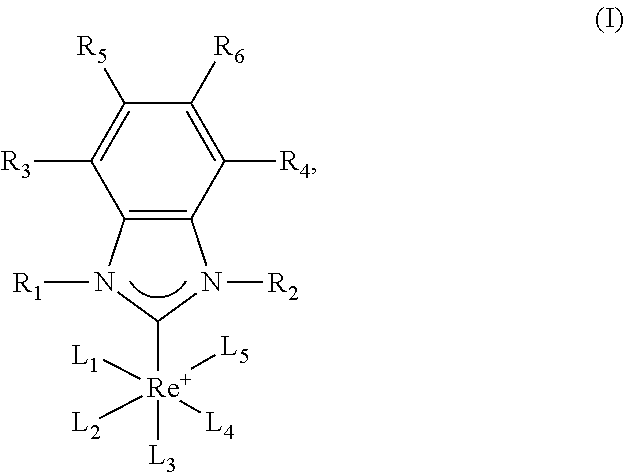
- a complex may have the structure of formula (I)
- L 1 , L 2 , L 3 , L 4 , and L 5 are independently metal-coordinating ligands selected from the group consisting of neutral ligands, anionic ligands and mixed ligands.
- L 1 , L 2 , L 3 , L 4 and L 5 are independently selected from the group consisting of halo, carbonyl, C 1 -C 10 alkyl, C 1 -C 10 alkoxy, sulfide, thiocyanate, nitrate, azide, fluoride, hydroxide ion, H 2 O, nitrite, isothiocyanate, acetonitrile, pyridine, ammonia, triphenylphosphine, cyanide, carbon monoxide, linear or branched, substituted or unsubstituted alkene having up to 20 carbon atoms, benzene, cyclopentadienyl, nitrosyl, oxoligand, sulfites, tricyclohexylphosphane, trimethylphosphane, tri(o-tolyl)phosphane, cycloheptatriene, carbon dioxide; or b) two or three of L 1 , L, L
- each X is independently H or a linear or branched alkyl having up to 20 carbon atoms
- L 1 , L 2 , L 3 , L 4 , and L 5 which are not linked to other metal-coordinating ligands, are as defined in a).
- L 4 and L 5 are linked to form a molecule and are selected from the group consisting of
- each X is independently H or a linear or branched alkyl having up to 20 carbon atoms.
- L 4 and L 5 are selected from the group consisting of
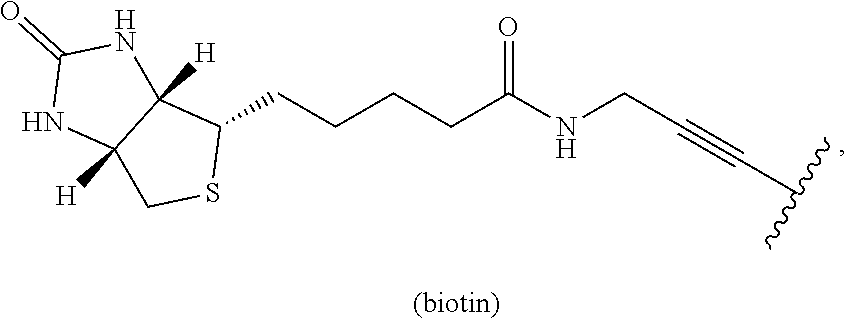
- R 1 is H, CH 2 -phenyl, or
- R 2 is H.
- R 3 -R 6 are H; and/or L 1 -L 3 are CO.
- the complex may include the following:
- R 1 is H, CH 2 -phenyl or
- R 1 is H, CH 2 -phenyl or
- R 1 is H
- R 1 is H, CH 2 -phenyl or
- R 1 is H
- a second aspect is directed to a pharmaceutical composition
- a pharmaceutical composition comprising an inventive and a pharmaceutically acceptable carrier or excipient.
- the complex may be used as a medicament.
- a fourth aspect is directed to an inventive complex for use in the treatment of a bacterial infection or bacterial infestation, wherein the bacterial infection or bacterial infestation is caused by a Gram-positive bacterium.
- the Gram-positive bacterium is selected from the group consisting of Bacillus or Staphylococcus.
- a method for the preparation of a complex having the structure of formula (II) may include
- R 1 , R 3 , R 4 , R 5 and R 6 are independently selected from the group consisting of H, linear or branched, substituted or unsubstituted alkyl, linear or branched, substituted or unsubstituted heteroalkyl, linear or branched, substituted or unsubstituted alkenyl, linear or branched, substituted or unsubstituted heteroalkenyl, linear or branched, substituted or unsubstituted alkynyl, substituted or unsubstituted heteroalkynyl, substituted or unsubstituted cycloalkyl, substituted or unsubstituted heterocycloalkyl, substituted or unsubstituted aryl, substituted or unsubstituted heteroaryl, linear or branched, substituted or unsubstituted alkylaryl, linear or branched, substituted or unsubstituted heteroalkylaryl, each of these groups having up to 20 carbon
- L 1 , L 2 , L 3 , L 4 and L 5 are independently metal-coordinating ligands selected from the group consisting of neutral ligands, anionic ligands and mixed ligands;
- a sixth aspect is directed to a method for identifying a molecule, which interacts with a complex, comprising
- FIG. 2 Possible mechanism of formation of the Re(I) carbene complex 3a.
- FIG. 3 Ligand exchange reactions of complexes 3a, 3b and 3c.
- FIG. 4 ORTEP representation of compounds 3a (a) and 3c (b) (ellipsoids are represented with 50% probability of residence).
- FIG. 7 Normalized absorption (left) and emission spectra (right) of compounds 4a, 5a, 6a, and 7a in acetonitrile.
- FIG. 8 Minimum inhibitory concentrations (MHK) of 3a and the complex series 4, 5, and 7 against Gram-positive strains. Values are given in ⁇ M. The complexes show no antimicrobial activity against Gram-negative strains.
- FIG. 9 Antibacterial activity of DS50 and biotin-DS50.
- the minimum inhibitory concentration ( ⁇ M) of both compounds was determined against a selection of Gram-positive and Gram-negative bacteria in Mueller-Hinton medium in a microtiter plate assay.
- FIG. 10 The elongation factor Tu of B. subtilis binds to immobilized biotin DS50.
- Biotin-DS50 was immobilized with Strep-Tactin® Sepharose and incubated with protein extract of B. subtilis . Unbound proteins (flow-through) were discarded and the sepharose was washed (wash fraction) before proteins bound to biotin DS50 were eluted by heating in SDS-PAGE sample buffers.
- Strep-Tactin® Sepharose was incubated with biotin, DS50 or without complex (w/o) for control. Proteins that specifically bind to biotin-DS50 were identified by mass spectrometry.
- FIG. 12 Proteome profile of B. subtilis after treatment with DS50 or biotin-DS50.
- Logarithmically growing cells of B. subtilis were subjected to stress by treatment with antibiotics or grown untreated as a control.
- Newly synthesized proteins were radioactively labelled and the proteins were separated by 2D polyacrylamide gel electrophoresis.
- Radioactively labelled proteins were detected using phosphoscreens and phosphoscanners, and the digitalized gel images of the untreated controls (green) were superimposed with gel images of the antibiotic treatment (red). Up, down and non-regulated proteins appear in red, green and yellow, respectively.
- Marker proteins that have been upregulated at least twice in all biological replicas in response to antibiotic treatment and identified by mass spectrometry are indicated by arrows.
- rhenium or “Re”, as herein used interchangeably, means a chemical element with an atomic number of 75. In the periodic table of the elements, rhenium is in the 7th subgroup (group 7) or manganese group. It is a very rare, silver-white shiny, heavy transition metal.
- saturated hydrocarbon radicals include, but are not limited to, groups such as methyl, ethyl, n-propyl, isopropyl, n-butyl, t-butyl, isobutyl, sec-butyl, cyclohexyl, (cyclohexyl) methyl, cyclopropylmethyl, homologues and isomers of, for example, n-pentyl, n-hexyl, n-heptyl, n-octyl and the like.
- heteroalkyl denotes, unless stated otherwise, a stable linear or branched or cyclic hydrocarbon radical or combinations thereof consisting of at least one carbon atom and at least one heteroatom selected from the group consisting of O, N, P, Si and S, and wherein the nitrogen and sulfur atoms can optionally be oxidized and the nitrogen heteroatom can optionally be quaternized.
- the heteroatom(s) O, N, P and S and Si may be placed at any inner position of the heteroalkyl group or at the position where the alkyl group is attached to the remainder of the molecule.
- Examples include, but are not limited to, —CH 2 —CH 2 —O—CH 3 , —CH 2 —CH 2 —NH—CH 3 , —CH 2 —CH 2 —N(CH 3 ) 2 , —CH 2 —S—CH 2 —CH 3 , —CH 2 —CH 2 , —SCHO—CH 2 —S(O) 2 —CH 3 , —CH ⁇ CH—O—CH 3 , —Si(CH 3 ) 3 , —CH 2 —CH ⁇ N—OCH 3 , —CH ⁇ CH—N(CH 3 ) 2 , O—CH 3 , —O—CH 2 —CH 3 and —CN.
- heteroalkyl When “heteroalkyl” is recited followed by recitations of specific heteroalkyl groups such as —NR′R′′ or the like, it is understood that the terms heteroalkyl and —NR′R′′ are not redundant or mutually exclusive. Rather, the specific heteroalkyl groups are cited for clarity. The term “heteroalkyl” should therefore not be interpreted herein as specific exclusive heteroalkyl groups, such as —NR′R′′ or the like.
- halogen or “halo”, alone or as part of another substituent, refer to, unless stated otherwise, a fluorine, chlorine, bromine or iodine atom.
- terms such as “haloalkyl” shall include monohaloalkyl and polyhaloalkyl.
- halo(C 1 -C 4 )alkyl refers to, but is not limited to, trifluoromethyl, 2,2,2-trifluoroethyl, 4-chlorobutyl, 3-bromopropyl and the like.
- aryl refers to, unless stated otherwise, a polyunsaturated aromatic hydrocarbon substituent, which may be a single ring or a plurality of rings (such as 1 to 3 rings) fused or covalently linked together.
- heteroaryl refers to aryl groups (or rings) containing one to four heteroatoms selected from N, O and S, wherein the nitrogen and sulfur atoms are optionally oxidized and the nitrogen atom(s) are optionally quaternized.
- a heteroaryl group may be attached to the remainder of the molecule by a carbon or heteroatom.
- Non-restrictive examples of aryl and heteroaryl groups comprise phenyl, 1-naphthyl, 2-naphthyl, 4-biphenyl, 1-pyrrolyl, 2-pyrrolyl, 3-pyrrolyl, 3-pyrazolyl, 2-imidazolyl, 4-imidazolyl, pyrazinyl, 2-oxazolyl, 4-oxazolyl, 2-phenyl-4-oxazolyl, 5-oxazolyl, 3-isoxazolyl, 4-isoxazolyl, 5-Isoxazolyl, 2-thiazolyl, 4-thiazolyl, 5-thiazolyl, 2-furyl, 3-furyl, 2-thienyl, 3-thienyl, 2-pyridyl, 3-pyridyl, 4-pyridyl, 2-pyrimidyl, 4-pyrimidyl, 5-benzothiazolyl, purinyl, 2-benzimidazolyl, 5-indolyl, 1-is
- aryl and heteroaryl ring systems are selected from the group of acceptable substituents described below.
- “Arylene” and “heteroarylene” refers to a divalent radical derived from an aryl and heteroaryl.
- arylalkyl is intended to include those radicals, in which an aryl group is attached to an alkyl group (e.g. benzyl, phenethyl, pyridylmethyl and the like).
- alkyl group e.g. benzyl, phenethyl, pyridylmethyl and the like.
- heteroarylalkyl includes the above-described groups, wherein one or more carbon atoms of the alkyl or aryl moiety (e.g. a methylene group) are substituted for example by an oxygen atom (e.g. phenoxymethyl, 2-pyridyloxymethyl, 3-(1-naphthyloxy)propyl and the like).
- oxo refers to an oxygen atom that is doubly bonded to a carbon atom.
- alkyl e.g. “alkyl”, “heteroalkyl”, “aryl” and “heteroaryl” is intended to include both substituted and unsubstituted forms of the given radical.
- Non-limiting substituents for each type of radical are given below.
- Substituents for the alkyl, heteroalkyl, alkylene, alkenyl, heteroalkylene, heteroalkenyl, alkynyl, cycloalkyl, heterocycloalkyl, cycloalkenyl and heterocycloalkenyl radicals may be one or more of a plurality of groups selected from, but not limited to: —OR′, ⁇ O, ⁇ NR′, ⁇ N—OR′, —NR′R′′, —SR′, -halogen, —SiR′R′′R′′′, —OC(O)R′, —C(O)R′, —CO 2 R′, —CONR′R′′, —OC(O)NR′R′′, —NR′′C(O)R′, —NR′—C(O)NRR′′, —NR′′C(O)R′, —S(O)R′, —S(O)R′, —S—(O)R′, —S
- R′, R′′ and R′′′ are each independently hydrogen, substituted or unsubstituted heteroalkyl, substituted or unsubstituted cycloalkyl, substituted or unsubstituted heterocycloalkyl, substituted or unsubstituted aryl (e.g. aryl substituted with 1-3 halogens), substituted or unsubstituted alkyl, alkoxy or thioalkoxy groups, or arylalkyl groups.
- each of the R groups is independently selected from e.g. R′, R′′, R′′′ and R′′′′ groups, respectively.
- R′ and R′′ When R′ and R′′ are bonded to the same nitrogen atom, they can be combined with the nitrogen atom to form a 4-, 5-, 6- or 7-membered ring.
- —NR′R′′ shall include, but not be limited to, 1-pyrrolidinyl and 4-morpholinyl.
- alkyl shall include groups that include carbon groups bound to groups other than hydrogen groups, such as haloalkyl (e.g. —CF 3 and —CH 2 CF 3 ) and acyl (e.g. —C(O)CH 3 , —C(O)CF 3 , —C(O)CH 2 OCH 3 and the like).
- the substituents for the aryl and heteroaryl groups may vary and are selected, for example, from halogen, —OR′, —NR′R′′, —SR′, -halogen, —SiR′R′′R′′′, —OC(O)R′, —C(O)R′, —CO 2 R′, —CONR′R′′, —OC(O)NR′R′′, —NR′′C(O)R′, —NR′—C(O)NR′′R′′′, —NR′′C(O) 2 R′, —NR—C(NR′R′′R′′′) ⁇ NR′′′′, —NR—C(NR′R′′) ⁇ NR′′′, —S(O)R′, —S(O) 2 R′, —S(O) 2 NR′R′′, —NRSO 2 R′, —CN and —NO 2 , —R′, —N 3 ,
- two substituents on adjacent ring atoms may be combined to form a cyclic group, which may be saturated, unsaturated or aromatic and is selected from aryl, heteroaryl, cycloalkyl, cycloheteroalkyl, all of which may be substituted as defined above for the respective groups.
- heteroatom or “ring heteroatom” refers to oxygen (O), nitrogen (N), sulphur (S), phosphorus (P) and silicon (Si).
- alkenyl is a hydrocarbon group having 2 to 20 carbon atoms with a structural formula containing at least one carbon-carbon double bond.
- Asymmetric structures such as (A1A2)C ⁇ C(A3A4) shall include both E- and Z-isomers.
- the alkenyl group may be substituted with one or more groups including, but not limited to, alkyl, cycloalkyl, alkoxy, alkenyl, cycloalkenyl, alkynyl, aryl, heteroaryl, aldehyde, amino, carboxylic acid, ester, ether, halide, hydroxy, ketone, azide, nitro, silyl, sulfoxo or thiol as described herein.
- cycloalkenyl as used herein is a non-aromatic carbon-based ring composed of at least three carbon atoms and containing at least one carbon-carbon double bond, i.e. C ⁇ C.
- Examples of cycloalkenyl groups include, but are not limited to, cyclopropenyl, cyclobutenyl, cyclopentenyl, cyclopentadienyl, cyclohexenyl, cyclohexadienyl, norbornenyl and the like.
- the cycloalkenyl group may be substituted or unsubstituted.
- the cycloalkenyl group may be substituted with one or more groups including, but not limited to, alkyl, cycloalkyl, alkoxy, alkenyl, cycloalkenyl, alkynyl, aryl, heteroaryl, aldehyde, amino, carboxylic acid, ester, ether, halide, hydroxy, ketone, azide, nitro, silyl, sulfoxo or thiol, as described herein.
- alkynyl is a hydrocarbon group having 2 to 20 carbon atoms with a structural formula containing at least one carbon-carbon triple bond.
- the alkynyl group may be unsubstituted or substituted with one or more groups including, but not limited to, alkyl, cycloalkyl, alkoxy, alkenyl, cycloalkenyl, alkynyl, aryl, heteroaryl, aldehyde, amino, carboxylic acid, ester, ether, halide, hydroxy, ketone, azide, nitro, silyl, sulfoxo or thiol, as described herein.
- ligand or “metal-coordinating ligand”, as interchangeably used herein, is an atom or molecule, which can bind (“coordinate”) to a central metal ion via a coordinate bond (obsolete also “dative bond”).
- the coordinative bond is formed due to the Lewis character of the binding partners involved: ligands are Lewis bases (electron pair donors), metal ions are Lewis acids (electron pair acceptors).
- Ligands are classified according to their charge: negatively charged ligands are abbreviated as X-type or anionic ligands (e.g. halides), while neutral ligands are abbreviated as L-type (e.g. phosphanes).
- Ligands containing both a negative charged part and a neutral part are referred to as mixed ligands or mixed charged ligands.
- the denticity indicates how many bonds to the central atom a ligand can form.
- Ligands that form only one bond to the central atom are called monodentate.
- L 1 , L 2 , L 3 , L 4 , and L 5 are each to be understood as one ligand.
- the coordination environment of the rhenium atom in the complexes can be varied by different combinations of monodentate ligands and/or chelating ligands.
- the following ligand combinations are possible without being limited thereto: five monodentate ligands; one bidentate ligand and three monodentate ligands; one tridentate ligand and two monodentate ligands; one tetradentate ligand and one monodentate ligand; one pentadentate ligand; one bidentate ligand and one tridentate ligand; and two bidentate ligand and one monodentate ligand.
- the combination of a bidentate ligand and three monodentate ligands may be included in the complex in a non-limiting embodiment.
- L 1 , L 2 , L 3 , L 4 , and L 5 are linked to form a molecule selected from the group consisting of oxalate, ethylenediamine, 2,2′ bipyridine, 1,10-phenanthroline, acetylacetonate, aminopolycarboxylic acids, 1,2-bis(diphenylphosphino)ethane, 1,1-bis(diphenylphosphino)methane, diethylenetriamine, dimethylglyoximate, glycine, iminodiacetic acid, nitrilotriacetic acid, pyrazine, scorpion ligands, 2,2′;6′,2′′-terpyridine, triazacyclononane, di-(2-picolyl)amine, 2,2′-dipyridylamine, tris(2-pyridylmethyl)amine, N,N,N′,N′-tetramethylethyleneediamine (TMEDA), N-propyl(2-
- each X is independently H or a linear or branched alkyl having up to 20 carbon atoms
- linked to form a molecule denotes the compound that provides at least two of the five ligands at the coordinated rhenium atom.
- these linked ligands are indirectly connected by one or more atoms, all of which are linked by covalent bonds to form a molecule.
- two ligands may be tertiary nitrogen atoms, each linked to the carbon atoms C x and C y by double bonds, wherein C x and C y are linked directly by a single bond.
- the atoms C x and C y can be part of an aryl system described above.
- L 4 and L 5 are linked to form a molecule and are selected from the group consisting of
- R 1 is H, CH 2 -phenyl, or
- R 3 -R 6 are H; and/or L 1 -L 3 are CO.
- R 1 is H, CH 2 -phenyl or
- R 1 is H
- R 1 is H, CH 2 -phenyl or
- R 1 is H
- a second aspect is directed to a pharmaceutical composition
- a pharmaceutical composition comprising an inventive and a pharmaceutically acceptable carrier or excipient.
- a “pharmaceutical composition” refers to a mixture of one or more of the compounds described herein or physiologically/pharmaceutically acceptable salts or prodrugs thereof with other chemical components, such as physiologically/pharmaceutically acceptable carriers and excipients/adjuvants.
- the purpose of a pharmaceutical composition is to facilitate the administration of a compound to an organism.
- a “physiologically/pharmaceutically acceptable carrier” refers to a carrier or diluent that does not cause significant irritation to an organism and does not reverse the biological activity and properties of the compound administered.
- a “pharmaceutically acceptable excipient/adjuvant” refers to an inert substance added to a pharmaceutical composition to further facilitate the administration of a compound.
- examples include calcium carbonate, calcium phosphate, various sugars and types of starch, cellulose derivatives, gelatin, vegetable oils and polyethylene glycols.
- salts refers to those salts that maintain the biological activity and properties of the initial compound.
- Such salts include, but are not limited to: (1) an acid addition salt obtained by reacting the free base of the starting compound with inorganic acids such as hydrochloric acid, hydrobromic acid, nitric acid, phosphoric acid, sulphuric acid and perchloric acid and the like, or with organic acids such as acetic acid, oxalic acid, (D) or (L) malic acid, maleic acid, methanesulfonic acid, ethanesulfonic acid, p-toluenesulfonic acid, salicylic acid, tartaric acid, citric acid, succinic acid or malonic acid and the like, such as hydrochloric acid or (L)-lactic acid; or (2) salts that are formed when an acid proton present in the starting compound is either replaced by a metal ion, such as an alkali metal ion, such as sodium or
- compounds are metabolized by enzymes in the body of the organism, such as a human, to produce a metabolite that has the desired functionality.
- metabolites are within the scope.
- Treatment and “treat” refer to a method of alleviating or eliminating a disease or disorder and/or its associated symptoms.
- Organism refers to any living being consisting of at least one cell.
- a living organism can be as simple as a single eukaryotic cell or as complex as a mammal, including a human.
- “Therapeutically effective amount” refers to the amount of compound administered, which, to some extent, will relieve one or more of the symptoms of the disorder to be treated.
- the complex may be used as a medicament.
- the term “medicament” or “drug” as used herein interchangeably shall include any substance (i.e. a compound or composition of matter), which, when administered to an organism (human or animal), has a desired pharmacological and/or physiological effect by local injection and/or systemic action.
- the term therefore includes substances traditionally considered as active substances, drugs and bioactive agents as well as biopharmaceuticals (e.g. peptides, hormones, nucleic acids, gene constructs, etc.) typically used to treat a number of conditions that are broadly defined as diseases, disorders, infections and the like.
- a fourth aspect is directed to the complex for use in the treatment of a bacterial infection or bacterial infestation, wherein the bacterial infection or bacterial infestation is caused by a Gram-positive bacterium.
- infection refers to the presence of bacteria in or on a subject, whose inhibition would lead to a benefit for the subject.
- the term “infection” also refers to the normal bacterial flora whose inhibition is undesirable.
- infection or “bacterial infection” also includes infections caused by Gram-positive and Gram-negative bacteria. An infection can also be understood as an accumulation of bacteria in a subject, where such an accumulation of bacteria is not present in a healthy reference subject or is present in a significantly reduced amount.
- bacterial infestation refers to an accumulation of bacteria on or in the body of a subject without directly altering the tissue or body part, on or in which the bacterial accumulation is located, or allowing the bacteria to enter that tissue or body part.
- tissue or part of the body for example, may be hair, skin or teeth.
- the Gram-positive bacterium is selected from the group consisting of Bacillus or Staphylococcus.
- Gram-positive bacteria or also “Firmicutes”, “genuine bacteria” (Bacteria, Eubacteria), are bacteria, which have a Gram-positive cell wall (bacterial cell wall, Gram staining) or are related to each other as determined by molecular genetic examinations (16S-rRNA).
- 2 main lineages can be distinguished: 1) the forms with low G+C content in the DNA ( Bacillus/Clostridium group with the subgroups: Bacillus/Lactobacillus/Streptococcus, Heliobacterium, Mollicutes (bacteria not having a cell wall, and related ones) as well as the Synthrophomonas/Thermoanaerobacter lineage and 2) the forms with high G+C content.
- most unicellular, coccoidal, cell wall-less bacteria are classified as well as the non-spore-forming rod-shaped species and the spore-forming species ( Clostridiaceae ).
- the 2nd main lineage includes actinomycetes and related organisms, including coryneform bacteria, mycobacteria and nocardias.
- Gram-positive bacteria comprise, but are not limited to, the following classes: Staphylococci, Streptococci, Pneumococci, Enterococci, Bacilli, Clostridia, Corynebacterium, Listeria and Actinomyces.
- a method for the preparation of a complex may have the structure of formula (II)
- R 1 , R 3 , R 4 , R 5 , and R 6 are independently selected from the group consisting of H, linear or branched, substituted or unsubstituted alkyl, linear or branched, substituted or unsubstituted heteroalkyl, linear or branched, substituted or unsubstituted alkenyl, linear or branched, substituted or unsubstituted heteroalkenyl, linear or branched, substituted or unsubstituted alkynyl, substituted or unsubstituted heteroalkynyl, substituted or unsubstituted cycloalkyl, substituted or unsubstituted heterocycloalkyl, substituted or unsubstituted aryl, substituted or unsubstituted heteroaryl, linear or branched, substituted or unsubstituted alkylaryl, linear or branched, substituted or unsubstituted heteroalkylaryl, each of these groups having up to 20
- L 1 , L 2 , L 3 , L 4 , and L 5 are independently metal-coordinating ligands selected from the group consisting of neutral ligands, anionic ligands and mixed ligands;
- contacting or “bringing into contact” as used interchangeably herein generally refers to access from one component, reagent, analyte or sample to another.
- contacting may involve mixing a solution.
- This solution which includes a component, reagent, analyte or sample, may also include another component or reagent such as dimethyl sulfoxide (DMSO), a detergent or human serum albumin, which facilitates mixing, interaction, uptake or any other physical or chemical phenomenon that is beneficial.
- DMSO dimethyl sulfoxide
- a detergent or human serum albumin a detergent or human serum albumin
- a sixth aspect is directed to a method for identifying a molecule, which interacts with the complex, comprising
- Solid support refers to any solid surface, to which the compounds may be bonded, such as latex beads, dextran beads, polystyrene surfaces, polypropylene surfaces, polyacrylamide gel, gold surfaces, glass surfaces and silicon discs.
- linker group refers to any agent or molecule connecting the inventive compounds and the solid support.
- all molecular bonds, i.e. within the linker group, to the inventive compounds as well as the solid support, are covalent and stable under the conditions of the identification process.
- avidin refers to any biotin-binding compound, such as avidin, streptavidin, any modified or mutated avidin produced by laboratory techniques, which is capable of binding biotin or a functional equivalent of biotin.
- Streptavidin is a special subtype of avidin.
- streptavidin comprises wild type streptavidin, streptavidin muteins, and streptavidin-like polypeptides, unless otherwise specified.
- Wild type streptavidin (wt streptavidin) is the amino acid sequence as defined by Argarana et al., Nucleic Acids Res. 14 (1986) 1871-1882.
- Streptavidin muteins are polypeptides, which differ from the sequence of wild-type streptavidin by one or more amino acid substitutions, deletions or additions and which retain the binding properties of wt streptavidin.
- streptavidin also includes streptavidin tetramers and streptavidin dimers, in particular streptavidin homotetramers, streptavidin homodimers, streptavidin heterotetramers, and strepavidin heterodimers. Each subunit usually has a binding site for biotin or biotin analogues or for streptavidin-binding peptides.
- streptavidin or streptavidin muteins are disclosed in WO 86/02077, DE 19641876 A1, U.S. Pat. No. 6,022,951, WO 98/40396, and WO 96/24606.
- At least 1 refers to 1 or more, 2 or more, 3 or more, 4 or more, 5 or more, 6 or more, 7 or more, 8 or more, 9 or more, 10 or more, 100 or more or 1000 or more.
- Solvent peaks of deuterated solvents were used as a secondary reference. The following abbreviations for multiplicity are used: s (singlet), d (doublet), dd (doublet of doublets), t (triplet), m (multiplet), br (wide).
- IR spectra were recorded on a Bruker Tensor 27 FT-IR spectrometer equipped with an ATR (attenuated total reflection) unit. Mass spectra were recorded on a Bruker Esquire 6000 spectrometer using an electrospray ionization source (ESI).
- Luminescence lifetime was determined using a FluoTime 200 TCSPC system consisting of an LDH-P-C-405 laser diode with a PDL 800-B laser driver and an air-cooled PMT detector (PMA series, PicoQuant).
- ⁇ X ⁇ Ref ⁇ G X G Ref ⁇ ( ⁇ X ⁇ Ref ) 2
- indices “X” and “Ref” indicate the compound to be examined and the references.
- ⁇ is the quantum yield, ⁇ stands for the refractive index of the solvent.
- G is determined by plotting the absorption of a series of dilutions (absorption ⁇ 0.1) against the integrated emission intensity. G is obtained as the gradient of a linear approximation of the plotted data.
- Serial dilution was performed with a Tecan Freedom Evo 75 Liquid Handling Workstation (final concentrations 0.5 to 512 ⁇ g/ml). Serial dilutions were inoculated with 5 ⁇ 10 5 bacteria/ml from late exponential cultures (total volume 200 ⁇ l per well). Cells were incubated at 37° C. for 16-18 h. The lowest concentration that prevents visible bacterial growth is indicated as MHK.
- 2-Azidoaniline was synthesized from aniline via a mild copper-catalyzed azidation reaction according to Jiao and collaborators.
- the analytical data obtained correspond to literature values.
- Cells were harvested by centrifugation, resuspended in 3 ml lysis buffer (100 mM Tris/HCl, pH 8.1 mM dithiotreitol (DTT), 1 mM ⁇ -mercaptoethanol, 0.2 mg/ml DNase, 0.2 mg/ml RNase, 0.35 mg/ml lysozyme) and disrupted by a French press (9,000 psi, eight passages, SLM Amico, SLM Instruments Inc.).
- the material was mixed with 500 ⁇ l cell lysate and either no additional compound, 200 ⁇ M biotin or 200 ⁇ M DS50 as controls, and with 200 ⁇ M biotin-DS50, respectively. After incubation on ice for 3 h, the cell lysate was removed by centrifugation and the material washed four times with wash buffer. Specifically bound proteins were eluted with 50 ⁇ l SDS-PAGE sample buffer (50 mM Tris/HCl, pH 6.8, 2% sodium dodecyl sulfate (SDS), 10% glycerol, 0.1% bromophenol blue) at 96° C. for 15 min. Proteins were separated using 12% SDS gels according to standard protocols and visualized via ruthenium(II)tris (4,7-diphenyl-1,10-phenantrolinedisulfonate) staining (RuBPS).
- RuBPS ruthenium(II)tris (4,7-diphenyl-1,10-
- Logarithmically growing cells of Bacillus subtilis 168 were aerobically grown in BMM with 0.78 mM tryptophan at 37° C., harvested by centrifugation and washed (0.02 M Tris/HCl pH 7.5, 0.2 M NaCl). The cells were resuspended in 10 ml lysis buffer (20 mM Tris/HCl, pH 7.5, 0.2 mg/ml DNase, 0.2 mg/ml RNase, 0.2 mg/ml lysozyme, 1 mM DTT, 1 mM ⁇ -mercaptoethanol), disrupted with a French press (900 psi, 4° C.), and cell debris was separated via centrifugation (43,000 ⁇ g, 30 min, 4° C.).
- the supernatant was concentrated using Amicon® Ultra centrifuge filters (3 kDa exclusion size, Sigma Aldrich), adjusted to a protein concentration of 21.6 mg/ml in 50% glycerol, and stored as aliquots of 300 ⁇ l at ⁇ 80° C.
- a low salt buffer (buffer A; 13.7 mM Tris, 500 ⁇ M DTT, 0.01% NaN 3 , 1 M HCl, 5% glycerol in A. dest .) and a high salt buffer (buffer B; buffer A, with 1.5 M NaCl) were used for elution with the following gradient: initial, 0% buffer B; 5 min, 0% buffer B; 20 min, 10% buffer B; 40 min, 35% buffer B; 90 min, 60% buffer B; 95 min, 100% buffer B; 115 min, 100% buffer B; 120 min, 0% buffer B; 125 min, 0% buffer B with a flow rate of 0.25 ml/min. Fractions were collected in 96 well microtiter plates for 96 min (1 min/fraction).
- buffer B (0.1% formic acid in acetonitrile) were used as eluents for chromatography.
- the UPLC was operated with a flow rate of 5 ⁇ l/min and a column temperature of 40° C. using the following gradients: initial, 5% buffer B; 15 min, 99% B; 16 min, 99% B; 17 min, 5% B; 25 min, 5% B.
- Spectra were recorded in positive sensitivity mode with the following settings: Capillary voltage, 3 kV; cone voltage, 30 V; source temperature, 100° C.; cone gas flow, 50 L/h; desolvation flow, 500 L/h; desolvation temperature, 150° C.
- MSMS spectra of the precursor mass 571.1 were recorded in the mass range 50-1200 m/z with a scanning time of 1 s and a collision energy of 10-35 eV.
- Leucine-enkephalin was injected as attractant with a capillary voltage of 3 kV.
- the data were recorded using the program MassLynxTM (Waters).
- TargetLynxTM was used to quantify DS50 with the following settings: Quantification fragment, 543.1010; retention time, 13.0215 min; retention time window, ⁇ 1 min. Serial dilutions of DS50 in methanol were used as quantification standard.
- protein concentrations were first determined using the Bradford assay. The proteins were precipitated with 10% (v/v) ice-cold trichloroacetic acid overnight at 4° C. and then centrifuged (16,100 ⁇ g, 20 min, 4° C.). The protein pellets were incubated with 0.3 ml ice cold acetone at ⁇ 20° C. for 30 min, centrifuged again and the supernatant was discarded. The pellets were briefly washed two times with acetone, allowed to dry, and resuspended in 50 mM triethyl ammonium bicarbonate buffer. The protein concentration was adjusted to 1 mg/ml using the highest concentrated fraction.
- the proteins Prior to tryptic digestion, the proteins were reduced with 10 mM dithiotreitol (1 h, 60° C.) and alkylated with 5 mM iodoacetamide (15 min, 25° C.). Trypsin (Promega) was added in an enzyme to substrate ratio of 1:100 and the proteins were digested overnight at 37° C. while shaken lightly. The tryptic digestion was terminated with 1 ⁇ l trifluoric acid and a Hi3 quantification standard was added (PhosB peptides, waters, final concentration 12.5 fmol/ ⁇ 1). Protein identification by mass spectrometry was performed as described below.
- B. subtilis was grown to an OD 500 of 0.35 in BMM and treated with 3 ⁇ g/ml DS50 or 12 ⁇ g/ml biotin-DS50 for 15 min or left untreated as control.
- concentrations were used for the reference antibiotics: 0.15 ⁇ g/ml nocathiacin I, 8 ⁇ g/ml GE2270 A or 50 ⁇ g/ml kirromycin.
- Radioactive labelling of newly synthesized proteins during antibiotic treatment with 35 S-methionine and 2D-PAGE analysis were essentially performed as described 38 .
- Suitable single crystals for X-ray structure analysis of the neutral complexes 3a and 3c were obtained via slow evaporation of solutions in DCM. ORTEP representations of the complexes are shown in FIG. 4 . Both complexes assume a distorted octadric structure while maintaining facial coordination geometry, which underlines the selective attack of the phosphinimine on the carbonyl ligands.
- the rhenium-carbene bond lengths are in the range between 2.169 and 2.179 ⁇ , while the Re—CO bond lengths vary between 1.915 and 2.024 ⁇ . This is in line with previously published Re(I) carbene complexes. 7-8 Interestingly, the additional aromatic unit in 3c leads to a more pronounced distortion of the octahedral rhenium environment as compared to 3a.
- Crystals of cationic complexes 4a, 5a, 6a, 4b, and 4c were obtained by slowly evaporating a solution of the complexes in a mixture of dichloromethane and hexane or via slow diffusion of ether into a methanolic solution.
- the molecular structures of the complexes containing bipyridine are shown in FIG. 5 .
- the structures obtained prove the facial arrangement of the CO ligands in the reaction with the corresponding bisimine ligands.
- the former Re bound bromide atom is found as counterion of the cationic complexes. All complexes show distorted octahedral geometry.
- the antimicrobial activity of complexes with either bipyridine, phenanthroline or badophenanthroline ligands was investigated by determining the minimum inhibitory concentration (MHK) against a representative selection of Gram-positive and Gram-negative bacterial strains.
- B. subtilis and two strains of S. aureus (WT and MRSA) served as Gram-positive test strains, while E. coli, A. baumannii and P. aeruginosa were selected as Gram-negative strains.
- Serial dilutions of the complexes were prepared in Mueller Hinton liquid medium, inoculated with 5 ⁇ 10 5 bacteria per ml and incubated at 37° C. for 18 h. The lowest concentration that inhibits visible growth was defined as the minimum inhibitory concentration.
- the MHK values obtained are summarized in FIG. 8 .
- DS50 was selected as an example to address the mechanism of action of the substances.
- a biotinylated derivative of DS50 (biotin-DS50) was prepared and used for the analysis of interaction partners. First, it was determined whether the biotinylation has an effect on the antibacterial activity of DS50. The lowest concentration of a compound that inhibits the visible growth of bacteria is defined as minimum inhibitory concentration (MHK) and is a measure of the antibacterial activity of a compound. The MHK of DS50 and its biotinylated derivative was measured against a set of Gram-negative and Gram-positive bacteria using a standardized microplate assay.
- MHK minimum inhibitory concentration
- DS50 showed weak or no activity against Gram-negative bacteria, but was effective against Gram-positive bacteria with MHKs in the low ⁇ g/ml range ( FIG. 9 ).
- MHK against methicillin-resistant Staphylococcus aureus (MRSA) was 4 ⁇ g/ml.
- Biotinylation of DS50 for target identification studies via immobilization leads to a slight decrease in antimicrobial activity, but this compound was still active against Gram-positive bacteria (16-32 ⁇ g/ml). Therefore, biotin-DS50 was used for target identification experiments. Whether the slight decrease in antibacterial activity is caused by reduced uptake of biotin-DS50 or by interference with target interaction remains uninvestigated.
- Biotinylated DS50 was immobilized using Strep-Tactin® Sepharose material and incubated with cytosolic cell extract of the Gram-positive bacterium Bacillus subtilis . Unbound proteins were removed by washing and proteins bound to biotin-DS50 were eluted by boiling in SDS-PAGE sample buffer. Strep-Tactin® Sepharose was incubated with biotin, with non-biotinylated DS50 or without compound as controls. The elution fractions were separated by SDS-PAGE and the proteins were visualized by RuBPs staining ( FIG. 10 ).
- EF-Tu elongation factor Tu
- Two bands that co-eluded to a lesser extent and that could be additional target proteins or interaction partners of EF-Tu are the chaperone subunit GroEL and the elongation factor Ts (EF-Ts). It is known that the nucleotide exchange factor EF-Ts interacts with EF-Tu. A direct interaction between GroEL and EF-Tu has not yet been demonstrated. Additional bands that occur in all samples are likely to be naturally biotinylated proteins that can bind directly to the material.
- DS50 was incubated with a cytosolic protein extract of B. subtilis and with buffer, respectively. Both samples were separated by native ion exchange chromatography and 96 fractions were collected for each run. DS50 was quantified in the collected fractions using LC-MS to identify protein-bound (DS50+cell extract) and free DS50 (incubated with buffer). Incubation of DS50 with the cell lysate led to a shift in retention time compared to the free agent ( FIG. 11 ).
- the proteome of a cell In response to stress, such as the addition of antibiotics, the proteome of a cell is specifically adapted to counteract and survive stress.
- the upregulated proteins are very specific to the mode of action of the antibiotic used 39 . Therefore, the comparison of the proteome profile of B. subtilis after treatment with DS50 or biotin-DS50 can reveal whether the mode of action is altered by biotinylation.
- B. subtilis was treated with DS50 or left untreated as a control. Newly synthesized proteins were radioactively labelled and separated by 2D gel electrophoresis using the isoelectric point and the molecular weight in the first and second dimension, respectively.
- Radioactively labelled proteins were visualized and false color images of the gels of a control sample and a sample obtained after antibiotic treatment were superimposed ( FIG. 12 ).
- Software-based analyses were used to define marker proteins for both substances, which were upregulated by a factor of at least two in all biological replicas after antibiotic treatment, and identified by mass spectrometry. Although more marker proteins are upregulated after treatment with biotin-DS50, both substances show a high congruence with regard to marker proteins. Furthermore, many of the marker proteins are also upregulated for DS50 after biotin-DS50 treatment, but do not reach the strict threshold value. This indicates that biotinylation, in principle, preserves the mode of action.
- GE2270 A inhibits the binding of EF-Tu to Phe-tRNA Phe 41 , and the formation of a complex of kirromycin with EF-Tu ⁇ GDP ⁇ aatRNA blocks the detachment of the elongation factor from the ribosome 42 .
- proteome analyses were performed as described above.
- the proteome response to DS50 was compared with the response to antibiotics known to interfere with EF-Tu activity ( FIG. 13 ).
- DS50, nocathiacin I, GE2270 A and kirromycin show very different proteome profiles, reflecting different modes of action.
- protein biosynthesis decreases to ⁇ 15% (data not shown) compared to control conditions, and many ribosomal proteins and elongation factors such as EF-Tu (TufA) and EF-G (FusA) are upregulated.
- GE2270 A protein biosynthesis is reduced to ⁇ 65% and only a few marker proteins are upregulated, of which only the enzyme QueF is associated with translation.
- Protein biosynthesis was not affected by kirromycin and the proteome profile mainly shows the induction of proteins involved in protein quality control, such as the chaperones DnaK and GrpE or the protease subunits ClpC and ClpP.
- B. subtilis Treatment of B. subtilis with DS50 reduces protein biosynthesis to ⁇ 67% and 21 marker proteins are induced. Like kirromycin, DS50 induces marker proteins necessary for protein quality control, but the induced proteins are different and include the chaperone system GroESL and the protease subunits ClpY and ClpP. Overall, the proteome profile of DS50 does not match that of the reference antibiotics, indicating that the mode of action is different. In addition, only DS50 treatment induces PspA, a marker protein for membrane stress, and YuaE, which is upregulated in response to membrane-active antibiotics. In addition, DS50 has lytic effects on B. subtilis cells in higher concentrations (data not shown).
Landscapes
- Health & Medical Sciences (AREA)
- Chemical & Material Sciences (AREA)
- Life Sciences & Earth Sciences (AREA)
- Organic Chemistry (AREA)
- Engineering & Computer Science (AREA)
- Immunology (AREA)
- Urology & Nephrology (AREA)
- Biomedical Technology (AREA)
- Hematology (AREA)
- Molecular Biology (AREA)
- General Health & Medical Sciences (AREA)
- Medicinal Chemistry (AREA)
- Analytical Chemistry (AREA)
- Microbiology (AREA)
- Physics & Mathematics (AREA)
- Cell Biology (AREA)
- Biochemistry (AREA)
- Biotechnology (AREA)
- General Physics & Mathematics (AREA)
- Pathology (AREA)
- Food Science & Technology (AREA)
- Public Health (AREA)
- Veterinary Medicine (AREA)
- Pharmacology & Pharmacy (AREA)
- Animal Behavior & Ethology (AREA)
- Epidemiology (AREA)
- Bioinformatics & Cheminformatics (AREA)
- Communicable Diseases (AREA)
- Oncology (AREA)
- Chemical Kinetics & Catalysis (AREA)
- General Chemical & Material Sciences (AREA)
- Nuclear Medicine, Radiotherapy & Molecular Imaging (AREA)
- Proteomics, Peptides & Aminoacids (AREA)
- Pharmaceuticals Containing Other Organic And Inorganic Compounds (AREA)
Abstract
Description


and/or
R2 is H.

and
-
- R2 is H; and
- R3-R6 are H; and
- L1-L3 are CO; and
- L4 and L5 are linked to form

or

and
-
- R2 is H; and
- R3-R6 are H; and
- L1-L3 are CO; and
- L4 and L5 are linked to form

or
-
- R2 is H; and
- R3-R6 are H; and
- L1-L3 are CO; and
- L4 and L5 are linked to form

or

and
-
- R2 is H; and
- R3-R6 are H; and
- L1-L3 are CO; and
- L4 and L5 are linked to form

or
-
- R2 is H; and
- R3-R6 are H; and
- L1-L3 are CO; and
- L4 and L5 are linked to form


and the solid carrier comprises avidin and/or streptavidin.


and/or
R2 is H.

and
-
- R2 is H; and
- R3-R6 are H; and
- L1-L3 are CO; and
- L4 and L5 are linked to form

or

and
-
- R2 is H; and
- R3-R6 are H; and
- L1-L3 are CO; and
- L4 and L5 are linked to form

or
-
- R2 is H; and
- R3-R6 are H; and
- L1-L3 are CO; and
- L4 and L5 are linked to form

or

and
-
- R2 is H; and
- R3-R6 are H; and
- L1-L3 are CO; and
- L4 and L5 are linked to form

or
-
- R2 is H; and
- R3-R6 are H; and
- L1-L3 are CO; and
- L4 and L5 are linked to form


and the solid carrier comprises avidin and/or streptavidin.
- 1 S. Diez-Gonzalez, N. Marion and S. P. Nolan, Chem. Rev., 2009, 109, 3612-3676.
- 2 M. N. Hopkinson, C. Richter, M. Schedler and F. Glorius, Nature, 2014, 510, 485-496.
- 3 R. Visbal and M. Concepcion Gimeno, Chem. Soc. Rev., 2014, 43, 3551-3574.
- 4 L. Oehninger, R. Rubbiani and I. Ott, Dalton Trans., 2013, 42, 3269-3284.
- 5 M.-L. Teyssot, A.-S. Jarrousse, M. Manin, A. Chevry, S. Roche, F. Norre, C. Beaudoin, L. Morel, D. Boyer, R. Mahiou and A. Gautier, Dalton Trans, 2009, 6894-6902.
- 6 K. M. Hindi, M. J. Panzner, C. A. Tessier, C. L. Cannon and W. J. Youngs, Chem. Rev. 2009, 109, 3859-3884.
- 7 C.-Y. Liu, D.-Y. Chen, G.-H. Lee, S.-M. Peng and S.-T. Liu, Organometallics, 1996, 15, 1055-1061.
- 8 W.-M. Xue, M. C.-W. Chan, Z.-M. Su, K.-K. Cheung, S.-T. Liu and C.-M. Che, Organometallics, 1998, 17, 1622-1630.
- 9 C.-H. Chen, Y.-H. Liu, S.-M. Peng, J.-T. Chen and S.-T. Liu, Dalton Trans., 2012, 41, 2747-2754.
- 10 C.-O. Ng, S.-M. Yiu and C.-H. Ko, Inorg Chem., 2014, 53, 3022-3031.
- 11 O. Hiltner, E. Herdtweck, M. Drees, W. A. Herrmann and F. E. Kuhn, Eur. J. Inorg. Chem. 2009, 1825-1831.
- 12 M. A. Huertos, J. Perez, L. Riera, J. Diaz and R. Lopez, Chem. Eur. J., 2010, 16, 8495-8507.
- 13 V. Blase, T. Pape and F. E. Hahn, J. Organomet. Chem., 2011, 696, 3337-3342.
- 14 T. A. Martin, C. E. Ellul, M. F. Mahon, M. E. Warren, D. Allan and M. K. Whittlesey, Organometallics, 2011, 30, 2200-2211.
- 15 W. A. Herrmann, D. Mihalios, K. Ofele, P. Kiprof and F. Belmedjahed, Chem. Ber. 1992, 125, 1795-1799.
- 16 D. Canella, S. J. Hock, O. Hiltner, E. Herdtweck, W. A. Herrmann and F. E. Kuhn, Dalton Trans., 2012, 41, 2110-2121.
- 17 S. J. Hock, L.-A. Schaper, A. Pothig, M. Drees, E. Herdtweck, O. Hiltner, W. A. Herrmann and F. E. Kuhn, Dalton Trans. 2014, 43, 2259-2271.
- 18 C. Y. Chan and P. J. Barnard, Dalton Trans., 2015, 44, 19126-19140.
- 19 A. J. Huckaba, E. A. Sharpe and J. H. Delcamp, Inorg. Chem., 2016, 55, 682-690.
- 20 L. A. Casson, S. Muzzioli, P. Raiteri, B. W. Skelton, S. Stagni, M. Massi and D. H. Brown, Dalton Trans., 2011, 40, 11960-11967.
- 21 X.-W. L1, H.-Y. L1, G.-F. Wang, F. Chen, Y.-Z. L1, X.-T. Chen, Y.-X. Zheng and Z.-L. Xue, Organometallics, 2012, 31, 3829-3835.
- 22 C. Hille and F. E. Kuhn, Dalton Trans. 2016, 45, 15-31.
- 23 S. J. Hock, L.-A. Schaper, W. A. Herrmann and F. E. Kuhn, Chem. Soc. Rev. 2013, 42, 5073.
- 24 A. Leonidova and G. Gasser, ACS Chem. Biol. 2014, 9, 2180-2193.
- 25 K. K.-W. Lo, K. Y. Zhang and S. P.-Y. L1 , Eur. J Inorg. Chem. 2011, 3551-3568.
- 26 S. Jurgens, W. A. Herrmann and F. E. Kuhn, J. organomet. Chem., 2014, 751, 83-89.
- 27 M. Wenzel, M. Patra, C. H. R. Senges, I. Ott, J. J. Stepanek, A. Pinto, P. Prochnow, C. Vuong, S. Langklotz, N. Metzler-Nolte and J. E. Bandow, ACS Chem. Biol., 2013, 8(7), 1442-1450.
- 28 M. Patra, G. Gasser and N. Metzler-Nolte, Dalton Trans., 2012, 41, 6350-6358.
- 29 Y. Gothe, T. Marzo, L. Messori and N. Metzler-Nolte, Chem. Eur. J., 2016, 22(35), 12487-12494.
- 30 Y. Gothe, T. Marzo, L. Messori and N. Metzler-Nolte, Chem. Commun., 2015, 51(15), 3151-3153.
- 31 F. E. Hahn and M. C. Jahnke, Angew. Chem. Int. Ed. 2008, 47, 3122-3172.
- 32 A. Flores-Figueroa, O. Kaufhold, K. O. Feldmann and F. E. Hahn, Dalton Trans., 2009, 9334-9342.
- 33 F. E. Hahn, V. Langenhahn, N. Meier, T. Lugger and W. P. Fehlhammer, Chem. Eur. J., 2003, 9(3), 704-712.
- 34 M. C. Jahnke and F. E. Hahn, Chem. Lett., 2015, 44, 226-237.
- 35 C.-C. Ko, C.-O. Ng and S.-M. Yiu, Organometallics, 2012, 31, 7074-7084.
- 36 A. W.-Y. Cheung, L. T.-L. Lo, C.-C. Ko and S.-M. Yiu, Inorg. Chem., 2011, 50, 4798-4810.
- 37 J. N. Y. Chan et al, 2012, Mol Cell Proteomics
- 38 M. Wenzel et al. Antimicrobial Agents and
Chemotherapy 55, 2590-2596 (2011) - 39 J. E. Bandow et al. Antimicrobial Agents and Chemotherapy 47, 948-955 (2003)
- 40 M. J. Pucci et al. Antimicrobial Agents and Chemotherapy 48, 3697-3701 (2004)
- 41 P. H. Anborgh and A. Parmeggiani, The Journal of biological chemistry 268, 24622-24628 (1993)
- 42 H. Wolf, G. Chinali and A. Parmeggiani, European Journal of Biochemistry 75, 67-75 (1977))
Claims (11)


Applications Claiming Priority (3)
| Application Number | Priority Date | Filing Date | Title |
|---|---|---|---|
| DE102017115215.6 | 2017-07-07 | ||
| DE102017115215.6A DE102017115215A1 (en) | 2017-07-07 | 2017-07-07 | EF-TU BINDING METAL-BASED ANTIBIOTIC |
| PCT/EP2018/066100 WO2019007664A1 (en) | 2017-07-07 | 2018-06-18 | EF-TU BINDING METAL-BASED ANTIBIOTIC |
Publications (2)
| Publication Number | Publication Date |
|---|---|
| US20200199162A1 US20200199162A1 (en) | 2020-06-25 |
| US11267831B2 true US11267831B2 (en) | 2022-03-08 |
Family
ID=62712976
Family Applications (1)
| Application Number | Title | Priority Date | Filing Date |
|---|---|---|---|
| US16/629,044 Expired - Fee Related US11267831B2 (en) | 2017-07-07 | 2018-06-18 | EF-Tu-binding metal-containing antibiotic |
Country Status (4)
| Country | Link |
|---|---|
| US (1) | US11267831B2 (en) |
| EP (1) | EP3649140A1 (en) |
| DE (1) | DE102017115215A1 (en) |
| WO (1) | WO2019007664A1 (en) |
Citations (1)
| Publication number | Priority date | Publication date | Assignee | Title |
|---|---|---|---|---|
| EP2109669B1 (en) | 2006-11-15 | 2015-01-07 | Life Technologies AS | Methods for reversibly binding a biotin compound to a support |
Family Cites Families (6)
| Publication number | Priority date | Publication date | Assignee | Title |
|---|---|---|---|---|
| EP0198015B2 (en) | 1984-10-02 | 1995-07-19 | Biogen, Inc. | Production of streptavidin-like polypeptides |
| AU708375B2 (en) | 1995-02-09 | 1999-08-05 | University Of Washington | Modified-affinity streptavidin |
| US6022951A (en) | 1995-04-11 | 2000-02-08 | Univ Boston | Streptavidin mutants |
| DE19641876B4 (en) | 1996-10-10 | 2011-09-29 | Iba Gmbh | streptavidin muteins |
| EP0977770A4 (en) | 1997-03-14 | 2000-04-05 | Univ Boston | Multiflavor streptavidin |
| EP2226329B1 (en) | 2009-03-02 | 2013-07-10 | Ruhr-Universität Bochum | Metal-containing platensimycin analogues |
-
2017
- 2017-07-07 DE DE102017115215.6A patent/DE102017115215A1/en not_active Withdrawn
-
2018
- 2018-06-18 US US16/629,044 patent/US11267831B2/en not_active Expired - Fee Related
- 2018-06-18 EP EP18733554.2A patent/EP3649140A1/en not_active Withdrawn
- 2018-06-18 WO PCT/EP2018/066100 patent/WO2019007664A1/en not_active Ceased
Patent Citations (1)
| Publication number | Priority date | Publication date | Assignee | Title |
|---|---|---|---|---|
| EP2109669B1 (en) | 2006-11-15 | 2015-01-07 | Life Technologies AS | Methods for reversibly binding a biotin compound to a support |
Non-Patent Citations (34)
| Title |
|---|
| Blase et al., "Template synthesis of a macrocycle with a mixed NHC/phosphine donor set", Journal of Organometallic Chemistry, 2011, pp. 3337-3342, vol. 696, Elsevier B.V. |
| Canella et al., "Synthesis and characterization of propylene and butylene bridged fac-tricarbonylrhenium(I) biscarbene complexes", Dalton Transactions, 2012, pp. 2110-2121, vol. 41, The Royal Society of Chemistry. |
| Casson et al., "N-Heterocyclic carbenes as π-acceptors in luminescent Re(I) triscarbonyl complexes", Dalton Transactions, 2011, pp. 11960-11967, vol. 40, The Royal Society of Chemistry. |
| Cetinkaya et al., "Antimicrobial Activity of Carbene Complexes of Rhodium(I) and Ruthenium(II)", Arzneimittel-Forschung/Drug Research, 1996, 4 pages, vol. 46. |
| Chan et al., "Rhenium complexes of bidentate, bis-bidentate and tridentate N-heterocyclic carbene ligands", Dalton Transactions, 2015, pp. 19126-19140, vol. 44, The Royal Society of Chemistry. |
| Chen et al., "Synthesis of N-heterocyclic carbene rhenium(I) carbonyl complexes", Dalton Transactions, 2012, pp. 2747-2754, vol. 41. |
| Hahn et al., "Template Synthesis of Benzannulated N-Heterocyclic Carbene Ligands", Chemistry—A European Journal, 2003, pp. 704-712, vol. 9, No. 3. |
| Herrmann et al., "Einfache Synthese eines präparativ nützlichen Alkoxy(carbonyl)metallats", Chemische Berichte, 1992, pp. 1795-1799, including an English abstract on p. 1795, vol. 125, VCH Verlagsgesellschaft mbH, Weinheim. |
| Hille et al., "Cationic rhenium complexes ligated with N-heterocyclic carbenes—an overview", Dalton Transactions, 2016, pp. 15-31, vol. 45, The Royal Society of Chemistry. |
| Hiltner et al., "Synthesis and Characterization of Two New fac-Tricarbonylrhenium(I) Biscarbene Complexes", European Journal of Inorganic Chemistry, 2009, 22 pages, vol. 2009, Issue 13, John Wiley & Sons, Inc. |
| Hindi et al., "The Medicinal Applications of Imidazolium Carbene-Metal Complexes", Chemical Reviews, 2009, pp. 3859-3884, vol. 109, American Chemical Society. |
| Hock et al., "Group 7 transition metal complexes with N-heterocyclic carbenes", Chemical Society Reviews, 2013, pp. 5073-5089, vol. 42, The Royal Society of Chemistry. |
| Hock et al., "Synthesis and characterisation of chelated cationic Rel(CO)3bis(NHC)(WCA) complexes", Dalton Transactions, 2014, pp. 2259-2271, vol. 43, The Royal Society of Chemistry. |
| Huckaba et al., "Photocatalytic Reduction of CO2 with Re-Pyridyl-NHCs", Inorganic Chemistry, 2016, pp. 682-690, vol. 55, American Chemical Society. |
| Huertos et al., "Effect of the Nature of the Substituent in N-Alkylimidazole Ligands on the Outcome of Deprotonation: Ring Opening versus the Formation of N-Heterocyclic Carbene Complexes", Chemistry—A European Journal, 2010, pp. 8495-8507, vol. 16, Wiley-VCH Verlag GmbH & Co. KGaA, Weinheim. |
| Jürgens et al., "Rhenium and technetium based radiopharmaceuticals: Development and recent advances", Journal of Organometallic Chemistry, 2014, pp. 83-89, vol. 751, Elsevier B.V. |
| Kaloglu et al., "Synthesis and antimicrobial activity of bulky 3,5-di-tert-butyl substituent-containing silver-N-heterocyclic carbene complexes", Applied Organometallic Chemistry, 2017, 10 pages, vol. 31. |
| Lecina et al., "New rhenium complexes with ciprofloxacin as useful models for understanding the properties of [99mTc]-ciprofloxacin radiopharmaceutical", Bioorganic & Medicinal Chemistry, 2014, pp. 3262-3269, vol. 22. |
| Leonidova et al., "Underestimated Potential of Organometallic Rhenium Complexes as Anticancer Agents", ACS Chemical Biology, 2014, pp. 2180-2193, vol. 9, American Chemical Society. |
| Li et al., Blue-Green Luminescent Rhenium(I) Tricarbonyl Complexes with Pyridine-Functionalized N-Heterocyclic Carbene Ligands, Organometallics, 2012, pp. 3829-3835, vol. 31, American Chemical Society. |
| Liu et al., "Synthesis of Cyclic Diamino-Substituted Metal Carbene Complexes", Organometallics, 1996, pp. 1055-1061, vol. 15, American Chemical Society. |
| Lo et al., "Design of Rhenium(I) Polypyridine Biotin Complexes as a New Class of Luminescent Probes for Avidin", Inorganic Chemistry, 2005, pp. 1992-2002, vol. 44, No. 6. |
| Lo et al., "Recent Exploitation of Luminescent Rhenium(I) Tricarbonyl Polypyridine Complexes as Biomolecular and Cellular Probes", European Journal of Inorganic Chemistry, 2011, pp. 3551-3568, Wiley-VCH Verlag GmbH & Co. KGaA, Weinheim. |
| Martin et al., "Neutral and Cationic Mono- and Bis-N-heterocyclic Carbene Complexes Derived From Manganese and Rhenium Carbonyl Precursors", Organometallics, 2011, pp. 2200-2211, vol. 30, American Chemical Society. |
| Ng et al., "Synthesis, Characterization, and Photophysical Study of Luminescent Rhenium(I) Diimine Complexes with Various Types of N-Heterocyclic Carbene Ligands", Inorganic Chemistry, 2014, pp. 3022-3031, vol. 53, American Chemical Society. |
| Oehninger et al., "N-Heterocyclic carbene metal complexes in medicinal chemistry", Dalton Transactions, 2013, pp. 3269-3284, vol. 42, The Royal Society of Chemistry. |
| Patra et al., "Small organometallic compounds as antibacterial agents", Dalton Transactions, 2012, 10 pages, vol. 41, The Royal Society of Chemistry. |
| Search report issued for corresponding German patent application 10 2017 115 215.6 dated Mar. 12, 2018, 9 pages (for information purpose only). |
| Search report issued for corresponding International patent application PCT/EP2018/066100 dated Sep. 7, 2018, 8 pages (for information purpose only). |
| Siegmund et al. "Benzannulated Re(i)-NHC complexes: synthesis, photophysical properties and antimicrobial activity" Dalton Transactions, 2017, vol. 46, pp. 15269-15279. * |
| Siegmund, "Rhenium(I) N-Heterocyclic Carbene Complexes as Novel Organometallic Antibacterial Agents", 2017, 196 pages, Ruhr-Universität Bochum. |
| Teyssot et al., "Metal-NHC complexes: a survey of anti-cancer properties", Dalton Transactions, 2009, 10 pages, The Royal Society of Chemistry. |
| Wenzel et al., "Analysis of the Mechanism of Action of Potent Antibacterial Hetero-tri-organometallic Compounds: A Structurally New Class of Antibiotics", ACS Chemical Biology, 2013, pp. 1442-1450, vol. 8, American Chemical Society. |
| Xue et al., "Spectroscopic and Excited-State Properties of Luminescent Rhenium(I) N-Heterocyclic Carbene Complexes Containing Aromatic Diimine Ligands", Organometallics, 1998, pp. 1622-1630, vol. 17, American Chemical Society. |
Also Published As
| Publication number | Publication date |
|---|---|
| US20200199162A1 (en) | 2020-06-25 |
| WO2019007664A1 (en) | 2019-01-10 |
| EP3649140A1 (en) | 2020-05-13 |
| DE102017115215A1 (en) | 2019-01-10 |
Similar Documents
| Publication | Publication Date | Title |
|---|---|---|
| JP7097880B2 (en) | Compounds for MALT1 degradation | |
| JP7260521B2 (en) | Compounds of tau proteolysis | |
| Ali et al. | Anti-leishmanial activity of heteroleptic organometallic Sb (V) compounds | |
| Devi et al. | Synthesis, interaction with DNA, cytotoxicity, cell cycle arrest and apoptotic inducing properties of ruthenium (II) molecular “light switch” complexes | |
| JP5223391B2 (en) | Sensitization assay method using fluorescent cysteine derivative and fluorescent cysteine derivative | |
| Tejchman et al. | Highly efficient microwave synthesis of rhodanine and 2-thiohydantoin derivatives and determination of relationships between their chemical structures and antibacterial activity | |
| WO2021247634A1 (en) | Inhibitors of transcriptional enhanced associate domain (tead) and uses thereof | |
| AU2019362788A1 (en) | Transcriptional enhanced associate domain (TEAD) transcription factor inhibitors and uses thereof | |
| Gibadullina et al. | New 2, 6-diaminopyridines containing a sterically hindered benzylphosphonate moiety in the aromatic core as potential antioxidant and anti-cancer drugs | |
| Prasad et al. | Nitric oxide releasing acridone carboxamide derivatives as reverters of doxorubicin resistance in MCF7/Dx cancer cells | |
| Parker et al. | A novel platinum complex of the histone deacetylase inhibitor belinostat: rational design, development and in vitro cytotoxicity | |
| Zayed et al. | Spectroscopic, thermal, biological activity, molecular docking and density functional theoretical investigation of novel bis Schiff base complexes | |
| Nakahata et al. | Crystal structure, spectroscopic characterization and antibacterial activities of a silver complex with sulfameter | |
| WO2015089639A1 (en) | Excimer forming compounds | |
| US11267831B2 (en) | EF-Tu-binding metal-containing antibiotic | |
| Phonsri et al. | Spin crossover in mixed ligand iron (III) complexes | |
| WO2011006908A2 (en) | Metal complexes having dual histone deacetylase inhibitory and dna-binding activity | |
| JP2024517183A (en) | Transcription enhancer associate domain (TEAD) transcription factor inhibitors and uses thereof | |
| Bernardo et al. | Synthesis of a rhodanine-based compound library targeting Bcl-XL and Mcl-1 | |
| EP1984734B1 (en) | Sigma-2 receptor, method of screening of specific ligands and use of the same in diagnostic or therapeutic methods | |
| de Sousa et al. | Oxidation of Zn (N2S2) complexes to disulfonates: relevance to zinc-finger oxidation under oxidative stress | |
| Chilukuri et al. | N-(3-Aminoalkyl) proline derivatives with potent antigycation activity | |
| Wehner et al. | S-Fluorenylmethyl protection of the cysteine side chain upon Nα-Fmoc deprotection | |
| CN110627727B (en) | A kind of Pseudomonas aeruginosa metabolite and its derivative, synthesis method and application | |
| Qu et al. | A red fluorescent BODIPY probe for iridium (III) ion and its application in living cells |
Legal Events
| Date | Code | Title | Description |
|---|---|---|---|
| FEPP | Fee payment procedure |
Free format text: ENTITY STATUS SET TO UNDISCOUNTED (ORIGINAL EVENT CODE: BIG.); ENTITY STATUS OF PATENT OWNER: SMALL ENTITY |
|
| AS | Assignment |
Owner name: RUHR-UNIVERSITAET BOCHUM, GERMANY Free format text: ASSIGNMENT OF ASSIGNORS INTEREST;ASSIGNORS:METZLER-NOLTE, NILS;SIEGMUND, DANIEL;BANDOW, JULIA;AND OTHERS;SIGNING DATES FROM 20200113 TO 20200130;REEL/FRAME:051943/0328 |
|
| FEPP | Fee payment procedure |
Free format text: ENTITY STATUS SET TO SMALL (ORIGINAL EVENT CODE: SMAL); ENTITY STATUS OF PATENT OWNER: SMALL ENTITY |
|
| STPP | Information on status: patent application and granting procedure in general |
Free format text: APPLICATION DISPATCHED FROM PREEXAM, NOT YET DOCKETED |
|
| STPP | Information on status: patent application and granting procedure in general |
Free format text: DOCKETED NEW CASE - READY FOR EXAMINATION |
|
| STPP | Information on status: patent application and granting procedure in general |
Free format text: NON FINAL ACTION MAILED |
|
| STPP | Information on status: patent application and granting procedure in general |
Free format text: RESPONSE TO NON-FINAL OFFICE ACTION ENTERED AND FORWARDED TO EXAMINER |
|
| STPP | Information on status: patent application and granting procedure in general |
Free format text: FINAL REJECTION MAILED |
|
| STPP | Information on status: patent application and granting procedure in general |
Free format text: RESPONSE AFTER FINAL ACTION FORWARDED TO EXAMINER |
|
| STPP | Information on status: patent application and granting procedure in general |
Free format text: NOTICE OF ALLOWANCE MAILED -- APPLICATION RECEIVED IN OFFICE OF PUBLICATIONS |
|
| STCF | Information on status: patent grant |
Free format text: PATENTED CASE |
|
| FEPP | Fee payment procedure |
Free format text: MAINTENANCE FEE REMINDER MAILED (ORIGINAL EVENT CODE: REM.); ENTITY STATUS OF PATENT OWNER: SMALL ENTITY |
|
| LAPS | Lapse for failure to pay maintenance fees |
Free format text: PATENT EXPIRED FOR FAILURE TO PAY MAINTENANCE FEES (ORIGINAL EVENT CODE: EXP.); ENTITY STATUS OF PATENT OWNER: SMALL ENTITY |
|
| STCH | Information on status: patent discontinuation |
Free format text: PATENT EXPIRED DUE TO NONPAYMENT OF MAINTENANCE FEES UNDER 37 CFR 1.362 |