US11242331B2 - Analogs of yohimbine and uses thereof - Google Patents
Analogs of yohimbine and uses thereof Download PDFInfo
- Publication number
- US11242331B2 US11242331B2 US16/097,167 US201716097167A US11242331B2 US 11242331 B2 US11242331 B2 US 11242331B2 US 201716097167 A US201716097167 A US 201716097167A US 11242331 B2 US11242331 B2 US 11242331B2
- Authority
- US
- United States
- Prior art keywords
- substituted
- unsubstituted
- certain embodiments
- alkyl
- compound
- Prior art date
- Legal status (The legal status is an assumption and is not a legal conclusion. Google has not performed a legal analysis and makes no representation as to the accuracy of the status listed.)
- Active
Links
- 0 CC.CC.[1*]N1CCC2=C3N(C4=CC=CC=C4COC3([H])C[C@]3([H])[C@@H](C(=O)O[3*])[C@@H](C)CC[C@@]3([H])C1)C1=C2C=CC=C1 Chemical compound CC.CC.[1*]N1CCC2=C3N(C4=CC=CC=C4COC3([H])C[C@]3([H])[C@@H](C(=O)O[3*])[C@@H](C)CC[C@@]3([H])C1)C1=C2C=CC=C1 0.000 description 61
- QWTDNUCVQCZILF-UHFFFAOYSA-N CCC(C)C Chemical compound CCC(C)C QWTDNUCVQCZILF-UHFFFAOYSA-N 0.000 description 5
- SYBYTAAJFKOIEJ-UHFFFAOYSA-N CC(=O)C(C)C Chemical compound CC(=O)C(C)C SYBYTAAJFKOIEJ-UHFFFAOYSA-N 0.000 description 3
- DQRVSMMMJCBONX-UHFFFAOYSA-N CC.CC(C)CC1=CC=CC=C1 Chemical compound CC.CC(C)CC1=CC=CC=C1 DQRVSMMMJCBONX-UHFFFAOYSA-N 0.000 description 3
- SIIYXUXRCNXMOA-VLSWYUHTSA-N O=C=O.[H][C@@]12C[C@@]3([H])[C@@]([H])(CC[C@]([H])(O)[C@]3([H])C)CN1CCC1=C2NC2=CC=CC=C21 Chemical compound O=C=O.[H][C@@]12C[C@@]3([H])[C@@]([H])(CC[C@]([H])(O)[C@]3([H])C)CN1CCC1=C2NC2=CC=CC=C21 SIIYXUXRCNXMOA-VLSWYUHTSA-N 0.000 description 3
- KSEXHEPYAOQXDA-KKQVGBDCSA-N [H][C@@]1(C(=O)NCC2=CN(CC[C@]3([C@]4([H])C[C@]5([H])[C@@H](C(=O)OC)[C@@H](O)CC[C@@]5([H])CN4[N+]#[C-])C(=O)NC4=CC=CC=C43)N=N2)CCCN1C(=O)OC(C)(C)C Chemical compound [H][C@@]1(C(=O)NCC2=CN(CC[C@]3([C@]4([H])C[C@]5([H])[C@@H](C(=O)OC)[C@@H](O)CC[C@@]5([H])CN4[N+]#[C-])C(=O)NC4=CC=CC=C43)N=N2)CCCN1C(=O)OC(C)(C)C KSEXHEPYAOQXDA-KKQVGBDCSA-N 0.000 description 3
- WLUMFBAEZFMRLW-RJOPBHBASA-N [H][C@@]12CC[C@H](O)[C@H](C(=O)OC)[C@@]1([H])C[C@@H](OC)C1=C(CCN(C#N)C2)C2=C(C=CC=C2)N1 Chemical compound [H][C@@]12CC[C@H](O)[C@H](C(=O)OC)[C@@]1([H])C[C@@H](OC)C1=C(CCN(C#N)C2)C2=C(C=CC=C2)N1 WLUMFBAEZFMRLW-RJOPBHBASA-N 0.000 description 3
- BUTOJPVSWWRYMI-RTBHYRKDSA-N [H][C@@]12CC[C@H](O)[C@H](C(=O)OC)[C@@]1([H])C[C@@H](OCC1=C(I)C=CC=C1)C1=C(CCN(C#N)C2)C2=C(C=CC=C2)N1 Chemical compound [H][C@@]12CC[C@H](O)[C@H](C(=O)OC)[C@@]1([H])C[C@@H](OCC1=C(I)C=CC=C1)C1=C(CCN(C#N)C2)C2=C(C=CC=C2)N1 BUTOJPVSWWRYMI-RTBHYRKDSA-N 0.000 description 3
- BUTOJPVSWWRYMI-YJIVHAETSA-N [H][C@]1(OCC2=C(I)C=CC=C2)C[C@]2([H])[C@@H](C(=O)OC)[C@@H](O)CC[C@@]2([H])CN(C#N)CCC2=C1NC1=C2C=CC=C1 Chemical compound [H][C@]1(OCC2=C(I)C=CC=C2)C[C@]2([H])[C@@H](C(=O)OC)[C@@H](O)CC[C@@]2([H])CN(C#N)CCC2=C1NC1=C2C=CC=C1 BUTOJPVSWWRYMI-YJIVHAETSA-N 0.000 description 3
- VDHOUCDAGGFMGP-LEPVWOIJSA-N C.C.C.C.C.C.[H][C@@]12CC[C@H](O)[C@H](C(=O)OC)[C@@]1([H])C[C@@H](OC1=CC=CC=C1)C1=C(CCN(C#N)C2)C2=C(C=CC=C2)N1 Chemical compound C.C.C.C.C.C.[H][C@@]12CC[C@H](O)[C@H](C(=O)OC)[C@@]1([H])C[C@@H](OC1=CC=CC=C1)C1=C(CCN(C#N)C2)C2=C(C=CC=C2)N1 VDHOUCDAGGFMGP-LEPVWOIJSA-N 0.000 description 2
- OATXHPSUCOJZCF-UHFFFAOYSA-N CC(C)OCC1=CC(F)=CC=C1.CC(C)OCC1=CC=C(C(C)(C)C)C=C1.CC(C)OCC1=CC=CC=C1.CC1=CC(C)=C(COC(C)C)C=C1.CC1=CC(COC(C)C)=CC(C(F)(F)F)=C1.CC1=CC(Cl)=C(COC(C)C)C=C1.CC1=CC=C(COC(C)C)C=C1.CC1=CC=CC(COC(C)C)=C1 Chemical compound CC(C)OCC1=CC(F)=CC=C1.CC(C)OCC1=CC=C(C(C)(C)C)C=C1.CC(C)OCC1=CC=CC=C1.CC1=CC(C)=C(COC(C)C)C=C1.CC1=CC(COC(C)C)=CC(C(F)(F)F)=C1.CC1=CC(Cl)=C(COC(C)C)C=C1.CC1=CC=C(COC(C)C)C=C1.CC1=CC=CC(COC(C)C)=C1 OATXHPSUCOJZCF-UHFFFAOYSA-N 0.000 description 2
- FGUYMZBAAIUDFG-UHFFFAOYSA-N CC.CC(C)OCC1=CC=CC=C1 Chemical compound CC.CC(C)OCC1=CC=CC=C1 FGUYMZBAAIUDFG-UHFFFAOYSA-N 0.000 description 2
- GSQMEILAPFYTOG-IWFVUWAUSA-N CC.CC.[H][C@@]12C[C@]3([H])[C@@H](C(=O)OC)[C@@H](C)CC[C@@]3([H])CN1CC[C@@]21C(=O)N(CC)C2=CC=CC=C21.[H][C@@]12C[C@]3([H])[C@@H](C(=O)OC)[C@@H](C)CC[C@@]3([H])CN1CC[C@@]21C(=O)NC2=CC=CC=C21.[H][C@@]12C[C@]3([H])[C@@H](C(=O)OC)[C@@H](OCC4=CC=CC=C4)CC[C@@]3([H])CN1CC[C@@]21C(=O)N(CC2=CC=CC=C2)C2=CC=CC=C21 Chemical compound CC.CC.[H][C@@]12C[C@]3([H])[C@@H](C(=O)OC)[C@@H](C)CC[C@@]3([H])CN1CC[C@@]21C(=O)N(CC)C2=CC=CC=C21.[H][C@@]12C[C@]3([H])[C@@H](C(=O)OC)[C@@H](C)CC[C@@]3([H])CN1CC[C@@]21C(=O)NC2=CC=CC=C21.[H][C@@]12C[C@]3([H])[C@@H](C(=O)OC)[C@@H](OCC4=CC=CC=C4)CC[C@@]3([H])CN1CC[C@@]21C(=O)N(CC2=CC=CC=C2)C2=CC=CC=C21 GSQMEILAPFYTOG-IWFVUWAUSA-N 0.000 description 2
- XRPPXEGOXWYINU-XCDRICNHSA-N C[C@H]1[C@@H](O)CC[C@H]2CN3CC[C@@]4(C(=O)NC5=C4C=CC=C5)[C@@H]3C[C@@H]21.O=C=O Chemical compound C[C@H]1[C@@H](O)CC[C@H]2CN3CC[C@@]4(C(=O)NC5=C4C=CC=C5)[C@@H]3C[C@@H]21.O=C=O XRPPXEGOXWYINU-XCDRICNHSA-N 0.000 description 2
- UPGDUPLFTFYKBW-TUQBCQCFSA-N O=C=O.O=C=O.O=C=O.O=C=O.O=C=O.[H][C@@]1(C2=C(CCBr)C3=CC=CC=C3N2)C[C@]2([H])[C@@H](C)[C@@H](O)CC[C@@]2([H])CN1[N+]#[C-].[H][C@@]1(C2=C(CCN3C=C(C4=CC=C(N(C)C)C=C4)N=N3)C3=CC=CC=C3N2)C[C@]2([H])[C@@H](C)[C@@H](O)CC[C@@]2([H])CN1[N+]#[C-].[H][C@@]1(C2=C(CCN3C=C(C4=CC=CC=C4)N=N3)C3=CC=CC=C3N2)C[C@]2([H])[C@@H](C)[C@@H](O)CC[C@@]2([H])CN1[N+]#[C-].[H][C@@]1(C2=C(CCN3C=C(C4CCCC4)N=N3)C3=CC=CC=C3N2)C[C@]2([H])[C@@H](C)[C@@H](O)CC[C@@]2([H])CN1[N+]#[C-].[H][C@@]1(C2=C(CCN=[N+]=[N-])C3=CC=CC=C3N2)C[C@]2([H])[C@@H](C)[C@@H](O)CC[C@@]2([H])CN1[N+]#[C-] Chemical compound O=C=O.O=C=O.O=C=O.O=C=O.O=C=O.[H][C@@]1(C2=C(CCBr)C3=CC=CC=C3N2)C[C@]2([H])[C@@H](C)[C@@H](O)CC[C@@]2([H])CN1[N+]#[C-].[H][C@@]1(C2=C(CCN3C=C(C4=CC=C(N(C)C)C=C4)N=N3)C3=CC=CC=C3N2)C[C@]2([H])[C@@H](C)[C@@H](O)CC[C@@]2([H])CN1[N+]#[C-].[H][C@@]1(C2=C(CCN3C=C(C4=CC=CC=C4)N=N3)C3=CC=CC=C3N2)C[C@]2([H])[C@@H](C)[C@@H](O)CC[C@@]2([H])CN1[N+]#[C-].[H][C@@]1(C2=C(CCN3C=C(C4CCCC4)N=N3)C3=CC=CC=C3N2)C[C@]2([H])[C@@H](C)[C@@H](O)CC[C@@]2([H])CN1[N+]#[C-].[H][C@@]1(C2=C(CCN=[N+]=[N-])C3=CC=CC=C3N2)C[C@]2([H])[C@@H](C)[C@@H](O)CC[C@@]2([H])CN1[N+]#[C-] UPGDUPLFTFYKBW-TUQBCQCFSA-N 0.000 description 2
- WGQYDHBLJPJIMC-STKZMAOQSA-N O=C=O.O=C=O.O=C=O.O=C=O.[H][C@@]1(C2=C(CCN3C=C(C4=CC(Cl)=CC=C4)N=N3)C3=CC=CC=C3N2)C[C@]2([H])[C@@H](C)[C@@H](O)CC[C@@]2([H])CN1[N+]#[C-].[H][C@@]1(C2=C(CCN3C=C(C4=CC=C(C)C=C4)N=N3)C3=CC=CC=C3N2)C[C@]2([H])[C@@H](C)[C@@H](O)CC[C@@]2([H])CN1[N+]#[C-].[H][C@@]1(C2=C(CCN3C=C(C4=CC=CC=N4)N=N3)C3=CC=CC=C3N2)C[C@]2([H])[C@@H](C)[C@@H](C)CC[C@@]2([H])CN1[N+]#[C-] Chemical compound O=C=O.O=C=O.O=C=O.O=C=O.[H][C@@]1(C2=C(CCN3C=C(C4=CC(Cl)=CC=C4)N=N3)C3=CC=CC=C3N2)C[C@]2([H])[C@@H](C)[C@@H](O)CC[C@@]2([H])CN1[N+]#[C-].[H][C@@]1(C2=C(CCN3C=C(C4=CC=C(C)C=C4)N=N3)C3=CC=CC=C3N2)C[C@]2([H])[C@@H](C)[C@@H](O)CC[C@@]2([H])CN1[N+]#[C-].[H][C@@]1(C2=C(CCN3C=C(C4=CC=CC=N4)N=N3)C3=CC=CC=C3N2)C[C@]2([H])[C@@H](C)[C@@H](C)CC[C@@]2([H])CN1[N+]#[C-] WGQYDHBLJPJIMC-STKZMAOQSA-N 0.000 description 2
- FTDIJOUILSPKHL-DSWXEHFQSA-N O=C=O.[H]C1([H])[C@@H]2CC[C@H](O)[C@H](C)[C@H]2C[C@@H]([C@@]2(CCBr)C(=O)NC3=C2C=CC=C3)N1[N+]#[C-] Chemical compound O=C=O.[H]C1([H])[C@@H]2CC[C@H](O)[C@H](C)[C@H]2C[C@@H]([C@@]2(CCBr)C(=O)NC3=C2C=CC=C3)N1[N+]#[C-] FTDIJOUILSPKHL-DSWXEHFQSA-N 0.000 description 2
- HZPBWQZQWMHUJY-DSWXEHFQSA-N O=C=O.[H]C1([H])[C@@H]2CC[C@H](O)[C@H](C)[C@H]2C[C@@H]([C@@]2(CCN=[N+]=[N-])C(=O)NC3=C2C=CC=C3)N1[N+]#[C-] Chemical compound O=C=O.[H]C1([H])[C@@H]2CC[C@H](O)[C@H](C)[C@H]2C[C@@H]([C@@]2(CCN=[N+]=[N-])C(=O)NC3=C2C=CC=C3)N1[N+]#[C-] HZPBWQZQWMHUJY-DSWXEHFQSA-N 0.000 description 2
- GFFHVDADEPMGGA-DSWXEHFQSA-N O=C=O.[H]O[C@@]1([H])CC[C@@]2([H])CN3CC[C@@]4(C(OC)=NC5=C4C=CC=C5)[C@]3([H])C[C@]2([H])[C@@]1([H])C Chemical compound O=C=O.[H]O[C@@]1([H])CC[C@@]2([H])CN3CC[C@@]4(C(OC)=NC5=C4C=CC=C5)[C@]3([H])C[C@]2([H])[C@@]1([H])C GFFHVDADEPMGGA-DSWXEHFQSA-N 0.000 description 2
- KDWSXZJWZUQMTK-CHPHZNQYSA-N O=C=O.[H][C@@]12C[C@]3([H])[C@@H](C)[C@@H](O)CC[C@@]3([H])CN1CC[C@@]21C(=O)N(C2=CC=C(C)C=C2)C2=C1C=CC=C2 Chemical compound O=C=O.[H][C@@]12C[C@]3([H])[C@@H](C)[C@@H](O)CC[C@@]3([H])CN1CC[C@@]21C(=O)N(C2=CC=C(C)C=C2)C2=C1C=CC=C2 KDWSXZJWZUQMTK-CHPHZNQYSA-N 0.000 description 2
- WVDDGKGOMKODPV-UHFFFAOYSA-N OCc1ccccc1 Chemical compound OCc1ccccc1 WVDDGKGOMKODPV-UHFFFAOYSA-N 0.000 description 2
- CNIRWKDJLQOIIP-UDFHEBDOSA-N [H][C@@]1(C(=O)CCC2=CN(CC[C@]3([C@]4([H])C[C@]5([H])[C@@H](C(=O)OC)[C@@H](O)CC[C@@]5([H])CN4[N+]#[C-])C(=O)NC4=CC=CC=C43)N=N2)CCCN1C(=O)OC(C)(C)C.[H][C@@]1([C@@]2(CCN3C=C(CCC(=O)C4=CC=CO4)N=N3)C(=O)NC3=CC=CC=C32)C[C@]2([H])[C@@H](C(=O)OC)[C@@H](O)CC[C@@]2([H])CN1[N+]#[C-].[H][C@@]1([C@@]2(CCN3C=C(CCC(=O)CCCCCCC)N=N3)C(=O)NC3=CC=CC=C32)C[C@]2([H])[C@@H](C(=O)OC)[C@@H](O)CC[C@@]2([H])CN1[N+]#[C-].[H][C@@]1([C@@]2(CCN3C=C(CON4C(=O)C5=C(C=CC=C5)C4=O)N=N3)C(=O)NC3=CC=CC=C32)C[C@]2([H])[C@@H](C(=O)OC)[C@@H](O)CC[C@@]2([H])CN1[N+]#[C-] Chemical compound [H][C@@]1(C(=O)CCC2=CN(CC[C@]3([C@]4([H])C[C@]5([H])[C@@H](C(=O)OC)[C@@H](O)CC[C@@]5([H])CN4[N+]#[C-])C(=O)NC4=CC=CC=C43)N=N2)CCCN1C(=O)OC(C)(C)C.[H][C@@]1([C@@]2(CCN3C=C(CCC(=O)C4=CC=CO4)N=N3)C(=O)NC3=CC=CC=C32)C[C@]2([H])[C@@H](C(=O)OC)[C@@H](O)CC[C@@]2([H])CN1[N+]#[C-].[H][C@@]1([C@@]2(CCN3C=C(CCC(=O)CCCCCCC)N=N3)C(=O)NC3=CC=CC=C32)C[C@]2([H])[C@@H](C(=O)OC)[C@@H](O)CC[C@@]2([H])CN1[N+]#[C-].[H][C@@]1([C@@]2(CCN3C=C(CON4C(=O)C5=C(C=CC=C5)C4=O)N=N3)C(=O)NC3=CC=CC=C32)C[C@]2([H])[C@@H](C(=O)OC)[C@@H](O)CC[C@@]2([H])CN1[N+]#[C-] CNIRWKDJLQOIIP-UDFHEBDOSA-N 0.000 description 2
- ZRDOZBAAVWNAIR-ZJMQVSIXSA-N [H][C@@]1([C@@]2(CCBr)C(=O)NC3=CC=CC=C32)C[C@]2([H])[C@@H](C(=O)OC)[C@@H](O)CC[C@@]2([H])CN1[N+]#[C-].[H][C@@]1([C@@]2(CCN3C=C(C4CC4)N=N3)C(=O)NC3=CC=CC=C32)C[C@]2([H])[C@@H](C(=O)OC)[C@@H](O)CC[C@@]2([H])CN1[N+]#[C-].[H][C@@]1([C@@]2(CCN3C=C(C4CCCC4)N=N3)C(=O)NC3=CC=CC=C32)C[C@]2([H])[C@@H](C(=O)OC)[C@@H](O)CC[C@@]2([H])CN1[N+]#[C-].[H][C@@]1([C@@]2(CCN3C=C(CCCCO)N=N3)C(=O)NC3=CC=CC=C32)C[C@]2([H])[C@@H](C(=O)OC)[C@@H](O)CC[C@@]2([H])CN1[N+]#[C-].[H][C@@]1([C@@]2(CCN=[N+]=[N-])C(=O)NC3=CC=CC=C32)C[C@]2([H])[C@@H](C(=O)OC)[C@@H](O)CC[C@@]2([H])CN1[N+]#[C-] Chemical compound [H][C@@]1([C@@]2(CCBr)C(=O)NC3=CC=CC=C32)C[C@]2([H])[C@@H](C(=O)OC)[C@@H](O)CC[C@@]2([H])CN1[N+]#[C-].[H][C@@]1([C@@]2(CCN3C=C(C4CC4)N=N3)C(=O)NC3=CC=CC=C32)C[C@]2([H])[C@@H](C(=O)OC)[C@@H](O)CC[C@@]2([H])CN1[N+]#[C-].[H][C@@]1([C@@]2(CCN3C=C(C4CCCC4)N=N3)C(=O)NC3=CC=CC=C32)C[C@]2([H])[C@@H](C(=O)OC)[C@@H](O)CC[C@@]2([H])CN1[N+]#[C-].[H][C@@]1([C@@]2(CCN3C=C(CCCCO)N=N3)C(=O)NC3=CC=CC=C32)C[C@]2([H])[C@@H](C(=O)OC)[C@@H](O)CC[C@@]2([H])CN1[N+]#[C-].[H][C@@]1([C@@]2(CCN=[N+]=[N-])C(=O)NC3=CC=CC=C32)C[C@]2([H])[C@@H](C(=O)OC)[C@@H](O)CC[C@@]2([H])CN1[N+]#[C-] ZRDOZBAAVWNAIR-ZJMQVSIXSA-N 0.000 description 2
- BLNILRJOGMYILU-RWBFGVDWSA-N [H][C@@]1([C@@]2(CCN3C=C(C4=CC(C)=C(C)C=C4C)N=N3)C(=O)NC3=CC=CC=C32)C[C@]2([H])[C@@H](C(=O)OC)[C@@H](C)CC[C@@]2([H])CN1[N+]#[C-].[H][C@@]1([C@@]2(CCN3C=C(C4=CC=C(Br)C=C4)N=N3)C(=O)NC3=CC=CC=C32)C[C@]2([H])[C@@H](C(=O)OC)[C@@H](O)CC[C@@]2([H])CN1[N+]#[C-].[H][C@@]1([C@@]2(CCN3C=C(C4=CC=C(N(C)C)C=C4)N=N3)C(=O)NC3=CC=CC=C32)C[C@]2([H])[C@@H](C(=O)OC)[C@@H](O)CC[C@@]2([H])CN1[N+]#[C-] Chemical compound [H][C@@]1([C@@]2(CCN3C=C(C4=CC(C)=C(C)C=C4C)N=N3)C(=O)NC3=CC=CC=C32)C[C@]2([H])[C@@H](C(=O)OC)[C@@H](C)CC[C@@]2([H])CN1[N+]#[C-].[H][C@@]1([C@@]2(CCN3C=C(C4=CC=C(Br)C=C4)N=N3)C(=O)NC3=CC=CC=C32)C[C@]2([H])[C@@H](C(=O)OC)[C@@H](O)CC[C@@]2([H])CN1[N+]#[C-].[H][C@@]1([C@@]2(CCN3C=C(C4=CC=C(N(C)C)C=C4)N=N3)C(=O)NC3=CC=CC=C32)C[C@]2([H])[C@@H](C(=O)OC)[C@@H](O)CC[C@@]2([H])CN1[N+]#[C-] BLNILRJOGMYILU-RWBFGVDWSA-N 0.000 description 2
- DOMZMRLVYUBKTB-XKIGHOITSA-N [H][C@@]1([C@@]2(CCN3C=C(C4=CC(Cl)=CC=C4)N=N3)C(=O)NC3=CC=CC=C32)C[C@]2([H])[C@@H](C(=O)OC)[C@@H](O)CC[C@@]2([H])CN1[N+]#[C-].[H][C@@]1([C@@]2(CCN3C=C(C4=CC=C(OC)C=C4)N=N3)C(=O)NC3=CC=CC=C32)C[C@]2([H])[C@@H](C(=O)OC)[C@@H](O)CC[C@@]2([H])CN1[N+]#[C-].[H][C@@]1([C@@]2(CCN3C=C(C4=CC=CC=C4)N=N3)C(=O)NC3=CC=CC=C32)C[C@]2([H])[C@@H](C(=O)OC)[C@@H](O)CC[C@@]2([H])CN1[N+]#[C-].[H][C@@]1([C@@]2(CCN3C=C(C4=CC=CS4)N=N3)C(=O)NC3=CC=CC=C32)C[C@]2([H])[C@@H](C(=O)OC)[C@@H](O)CC[C@@]2([H])CN1[N+]#[C-] Chemical compound [H][C@@]1([C@@]2(CCN3C=C(C4=CC(Cl)=CC=C4)N=N3)C(=O)NC3=CC=CC=C32)C[C@]2([H])[C@@H](C(=O)OC)[C@@H](O)CC[C@@]2([H])CN1[N+]#[C-].[H][C@@]1([C@@]2(CCN3C=C(C4=CC=C(OC)C=C4)N=N3)C(=O)NC3=CC=CC=C32)C[C@]2([H])[C@@H](C(=O)OC)[C@@H](O)CC[C@@]2([H])CN1[N+]#[C-].[H][C@@]1([C@@]2(CCN3C=C(C4=CC=CC=C4)N=N3)C(=O)NC3=CC=CC=C32)C[C@]2([H])[C@@H](C(=O)OC)[C@@H](O)CC[C@@]2([H])CN1[N+]#[C-].[H][C@@]1([C@@]2(CCN3C=C(C4=CC=CS4)N=N3)C(=O)NC3=CC=CC=C32)C[C@]2([H])[C@@H](C(=O)OC)[C@@H](O)CC[C@@]2([H])CN1[N+]#[C-] DOMZMRLVYUBKTB-XKIGHOITSA-N 0.000 description 2
- YZUYRTJFDDIBEO-BBBSKICVSA-N [H][C@@]12CC[C@H](C)[C@H](CO)[C@@]1([H])C[C@@H](OCC1=CC=CC=C1)C1=C(CCN(C(C)=O)C2)C2=CC=CC=C2N1.[H][C@@]12CC[C@H](O)[C@H](C(=O)OC)[C@@]1([H])C[C@@H](OCC1=C(I)C=CC=C1)C1=C(CCN([N+]#[C-])C2)C2=CC=CC=C2N1.[H][C@@]12CC[C@H](O)[C@H](C(=O)OC)[C@@]1([H])C[C@H](OCC1=C(I)C=CC=C1)C1=C(CCN([N+]#[C-])C2)C2=CC=CC=C2N1.[H][C@@]12CC[C@H](O)[C@H](CO)[C@@]1([H])C[C@@H](OC)C1=C(CCN(C(C)=O)C2)C2=CC=CC=C2N1 Chemical compound [H][C@@]12CC[C@H](C)[C@H](CO)[C@@]1([H])C[C@@H](OCC1=CC=CC=C1)C1=C(CCN(C(C)=O)C2)C2=CC=CC=C2N1.[H][C@@]12CC[C@H](O)[C@H](C(=O)OC)[C@@]1([H])C[C@@H](OCC1=C(I)C=CC=C1)C1=C(CCN([N+]#[C-])C2)C2=CC=CC=C2N1.[H][C@@]12CC[C@H](O)[C@H](C(=O)OC)[C@@]1([H])C[C@H](OCC1=C(I)C=CC=C1)C1=C(CCN([N+]#[C-])C2)C2=CC=CC=C2N1.[H][C@@]12CC[C@H](O)[C@H](CO)[C@@]1([H])C[C@@H](OC)C1=C(CCN(C(C)=O)C2)C2=CC=CC=C2N1 YZUYRTJFDDIBEO-BBBSKICVSA-N 0.000 description 2
- NZAKQLNMFSDUQS-KAHQMDNRSA-N [H][C@@]12CC[C@H](O)[C@H](C(=O)OC)[C@@]1([H])C[C@@H](O)C1=C(CCN([N+]#[C-])C2)C2=CC=CC=C2N1.[H][C@@]12CC[C@H](O)[C@H](C(=O)OC)[C@@]1([H])C[C@@H](OC(C)C)C1=C(CCN([N+]#[C-])C2)C2=CC=CC=C2N1.[H][C@@]12CC[C@H](O)[C@H](C(=O)OC)[C@@]1([H])C[C@@H](OC)C1=C(CCN([N+]#[C-])C2)C2=CC=CC=C2N1.[H][C@@]12CC[C@H](O)[C@H](C(=O)OC)[C@@]1([H])C[C@@H](OCC)C1=C(CCN([N+]#[C-])C2)C2=CC=CC=C2N1.[H][C@@]12CC[C@H](O)[C@H](C(=O)OC)[C@@]1([H])C[C@H](OC(C)C)C1=C(CCN([N+]#[C-])C2)C2=CC=CC=C2N1 Chemical compound [H][C@@]12CC[C@H](O)[C@H](C(=O)OC)[C@@]1([H])C[C@@H](O)C1=C(CCN([N+]#[C-])C2)C2=CC=CC=C2N1.[H][C@@]12CC[C@H](O)[C@H](C(=O)OC)[C@@]1([H])C[C@@H](OC(C)C)C1=C(CCN([N+]#[C-])C2)C2=CC=CC=C2N1.[H][C@@]12CC[C@H](O)[C@H](C(=O)OC)[C@@]1([H])C[C@@H](OC)C1=C(CCN([N+]#[C-])C2)C2=CC=CC=C2N1.[H][C@@]12CC[C@H](O)[C@H](C(=O)OC)[C@@]1([H])C[C@@H](OCC)C1=C(CCN([N+]#[C-])C2)C2=CC=CC=C2N1.[H][C@@]12CC[C@H](O)[C@H](C(=O)OC)[C@@]1([H])C[C@H](OC(C)C)C1=C(CCN([N+]#[C-])C2)C2=CC=CC=C2N1 NZAKQLNMFSDUQS-KAHQMDNRSA-N 0.000 description 2
- QKBKKWVYDFBDML-YHTCGYDNSA-N [H][C@@]12CC[C@H](O)[C@H](C(=O)OC)[C@@]1([H])C[C@@H](OC1=CC=C(OC)C=C1)C1=C(CCN(C#N)C2)C2=C(C=CC=C2)N1 Chemical compound [H][C@@]12CC[C@H](O)[C@H](C(=O)OC)[C@@]1([H])C[C@@H](OC1=CC=C(OC)C=C1)C1=C(CCN(C#N)C2)C2=C(C=CC=C2)N1 QKBKKWVYDFBDML-YHTCGYDNSA-N 0.000 description 2
- GWJACXRKIISMCE-AMSWGDAHSA-N [H][C@@]12CC[C@H](O)[C@H](C(=O)OC)[C@@]1([H])C[C@@H](OC1=CC=C(OC)C=C1)C1=C(CCN([N+]#[C-])C2)C2=CC=CC=C2N1.[H][C@@]12CC[C@H](O)[C@H](C(=O)OC)[C@@]1([H])C[C@@H](OC1=CC=CC=C1)C1=C(CCN([N+]#[C-])C2)C2=CC=CC=C2N1.[H][C@@]12CC[C@H](O)[C@H](C(=O)OC)[C@@]1([H])C[C@H](OC1=CC=C(OC)C=C1)C1=C(CCN([N+]#[C-])C2)C2=CC=CC=C2N1.[H][C@@]12CC[C@H](O)[C@H](C(=O)OC)[C@@]1([H])C[C@H](OC1=CC=CC=C1)C1=C(CCN([N+]#[C-])C2)C2=CC=CC=C2N1 Chemical compound [H][C@@]12CC[C@H](O)[C@H](C(=O)OC)[C@@]1([H])C[C@@H](OC1=CC=C(OC)C=C1)C1=C(CCN([N+]#[C-])C2)C2=CC=CC=C2N1.[H][C@@]12CC[C@H](O)[C@H](C(=O)OC)[C@@]1([H])C[C@@H](OC1=CC=CC=C1)C1=C(CCN([N+]#[C-])C2)C2=CC=CC=C2N1.[H][C@@]12CC[C@H](O)[C@H](C(=O)OC)[C@@]1([H])C[C@H](OC1=CC=C(OC)C=C1)C1=C(CCN([N+]#[C-])C2)C2=CC=CC=C2N1.[H][C@@]12CC[C@H](O)[C@H](C(=O)OC)[C@@]1([H])C[C@H](OC1=CC=CC=C1)C1=C(CCN([N+]#[C-])C2)C2=CC=CC=C2N1 GWJACXRKIISMCE-AMSWGDAHSA-N 0.000 description 2
- YEXROCGIGLCSFG-CASCRWFCSA-N [H][C@@]12CC[C@H](O)[C@H](C(=O)OC)[C@@]1([H])C[C@@H](OCC#C)C1=C(CCN([N+]#[C-])C2)C2=CC=CC=C2N1.[H][C@@]12CC[C@H](O)[C@H](C(=O)OC)[C@@]1([H])C[C@@H](OCCCC)C1=C(CCN([N+]#[C-])C2)C2=CC=CC=C2N1.[H][C@@]12CC[C@H](O)[C@H](C(=O)OC)[C@@]1([H])C[C@H](OCC#C)C1=C(CCN([N+]#[C-])C2)C2=CC=CC=C2N1.[H][C@@]12CC[C@H](O)[C@H](C(=O)OC)[C@@]1([H])C[C@H](OCCCC)C1=C(CCN([N+]#[C-])C2)C2=CC=CC=C2N1 Chemical compound [H][C@@]12CC[C@H](O)[C@H](C(=O)OC)[C@@]1([H])C[C@@H](OCC#C)C1=C(CCN([N+]#[C-])C2)C2=CC=CC=C2N1.[H][C@@]12CC[C@H](O)[C@H](C(=O)OC)[C@@]1([H])C[C@@H](OCCCC)C1=C(CCN([N+]#[C-])C2)C2=CC=CC=C2N1.[H][C@@]12CC[C@H](O)[C@H](C(=O)OC)[C@@]1([H])C[C@H](OCC#C)C1=C(CCN([N+]#[C-])C2)C2=CC=CC=C2N1.[H][C@@]12CC[C@H](O)[C@H](C(=O)OC)[C@@]1([H])C[C@H](OCCCC)C1=C(CCN([N+]#[C-])C2)C2=CC=CC=C2N1 YEXROCGIGLCSFG-CASCRWFCSA-N 0.000 description 2
- HNLIWKBRNRFBBL-RBAKVMJGSA-N [H][C@@]12CC[C@H](O)[C@H](C(=O)OC)[C@@]1([H])C[C@@H](OCC1=CC=C(Br)C=C1)C1=C(CCN([N+]#[C-])C2)C2=CC=CC=C2N1.[H][C@@]12CC[C@H](O)[C@H](C(=O)OC)[C@@]1([H])C[C@@H](OCC1=CC=CC=C1)C1=C(CCN([N+]#[C-])C2)C2=CC=CC=C2N1.[H][C@@]12CC[C@H](O)[C@H](C(=O)OC)[C@@]1([H])C[C@H](OCC1=CC=C(Br)C=C1)C1=C(CCN([N+]#[C-])C2)C2=CC=CC=C2N1.[H][C@@]12CC[C@H](O)[C@H](C(=O)OC)[C@@]1([H])C[C@H](OCC1=CC=CC=C1)C1=C(CCN([N+]#[C-])C2)C2=CC=CC=C2N1 Chemical compound [H][C@@]12CC[C@H](O)[C@H](C(=O)OC)[C@@]1([H])C[C@@H](OCC1=CC=C(Br)C=C1)C1=C(CCN([N+]#[C-])C2)C2=CC=CC=C2N1.[H][C@@]12CC[C@H](O)[C@H](C(=O)OC)[C@@]1([H])C[C@@H](OCC1=CC=CC=C1)C1=C(CCN([N+]#[C-])C2)C2=CC=CC=C2N1.[H][C@@]12CC[C@H](O)[C@H](C(=O)OC)[C@@]1([H])C[C@H](OCC1=CC=C(Br)C=C1)C1=C(CCN([N+]#[C-])C2)C2=CC=CC=C2N1.[H][C@@]12CC[C@H](O)[C@H](C(=O)OC)[C@@]1([H])C[C@H](OCC1=CC=CC=C1)C1=C(CCN([N+]#[C-])C2)C2=CC=CC=C2N1 HNLIWKBRNRFBBL-RBAKVMJGSA-N 0.000 description 2
- CCRDLNVEPQNCPJ-MALQFLDISA-N [H][C@@]12CC[C@H](O)[C@H](C(=O)OC)[C@@]1([H])C[C@@H](OCC1=CC=CC=C1)C1=C(CCN(C#N)C2)C2=C(C=CC=C2)N1 Chemical compound [H][C@@]12CC[C@H](O)[C@H](C(=O)OC)[C@@]1([H])C[C@@H](OCC1=CC=CC=C1)C1=C(CCN(C#N)C2)C2=C(C=CC=C2)N1 CCRDLNVEPQNCPJ-MALQFLDISA-N 0.000 description 2
- UHKRZJUOPUNBAJ-NGVXDUQMSA-N [H][C@@]12CC[C@H](O)[C@H](C(=O)OC)[C@@]1([H])C[C@H](OCC#C)C1=C(CCN(C#N)C2)C2=CC=CC=C2N1 Chemical compound [H][C@@]12CC[C@H](O)[C@H](C(=O)OC)[C@@]1([H])C[C@H](OCC#C)C1=C(CCN(C#N)C2)C2=CC=CC=C2N1 UHKRZJUOPUNBAJ-NGVXDUQMSA-N 0.000 description 2
- CCRDLNVEPQNCPJ-UVCDWSHASA-N [H][C@@]12CC[C@H](O)[C@H](C(=O)OC)[C@@]1([H])C[C@H](OCC1=CC=CC=C1)C1=C(CCN(C#N)C2)C2=CC=CC=C2N1 Chemical compound [H][C@@]12CC[C@H](O)[C@H](C(=O)OC)[C@@]1([H])C[C@H](OCC1=CC=CC=C1)C1=C(CCN(C#N)C2)C2=CC=CC=C2N1 CCRDLNVEPQNCPJ-UVCDWSHASA-N 0.000 description 2
- NMACANRSCPAFQU-JMBFTXQYSA-N [H][C@@]12C[C@]3([H])[C@@H](C(=O)OC)[C@@H](O)CC[C@@]3([H])CN1CC[C@@]21C(=O)N(C2=CC=C(C(F)(F)F)C=C2)C2=CC=CC=C21.[H][C@@]12C[C@]3([H])[C@@H](C(=O)OC)[C@@H](O)CC[C@@]3([H])CN1CC[C@@]21C(=O)N(C2=CC=C(OC)C=C2)C2=CC=CC=C21.[H][C@@]12C[C@]3([H])[C@@H](C(=O)OC)[C@@H](O)CC[C@@]3([H])CN1CC[C@@]21C(=O)N(C2=CC=C([N+](=O)[O-])C=C2)C2=CC=CC=C21.[H][C@@]12C[C@]3([H])[C@@H](C(=O)OC)[C@@H](O)CC[C@@]3([H])CN1CC[C@@]21C(=O)N(C2=CC=CC=C2)C2=CC=CC=C21 Chemical compound [H][C@@]12C[C@]3([H])[C@@H](C(=O)OC)[C@@H](O)CC[C@@]3([H])CN1CC[C@@]21C(=O)N(C2=CC=C(C(F)(F)F)C=C2)C2=CC=CC=C21.[H][C@@]12C[C@]3([H])[C@@H](C(=O)OC)[C@@H](O)CC[C@@]3([H])CN1CC[C@@]21C(=O)N(C2=CC=C(OC)C=C2)C2=CC=CC=C21.[H][C@@]12C[C@]3([H])[C@@H](C(=O)OC)[C@@H](O)CC[C@@]3([H])CN1CC[C@@]21C(=O)N(C2=CC=C([N+](=O)[O-])C=C2)C2=CC=CC=C21.[H][C@@]12C[C@]3([H])[C@@H](C(=O)OC)[C@@H](O)CC[C@@]3([H])CN1CC[C@@]21C(=O)N(C2=CC=CC=C2)C2=CC=CC=C21 NMACANRSCPAFQU-JMBFTXQYSA-N 0.000 description 2
- RDPLZYQFTHKIMA-CRGNZQNUSA-N [H][C@@]12C[C@]3([H])[C@@H](C(=O)OC)[C@@H](O)CC[C@@]3([H])CN1CC[C@@]21C(=O)N(C2=CC=C(OC3=CC=CC=C3)C=C2)C2=CC=CC=C21.[H][C@@]12C[C@]3([H])[C@@H](C(=O)OC)[C@@H](O)CC[C@@]3([H])CN1CC[C@@]21C(=O)N(C2=CN=C(Cl)C=C2)C2=CC=CC=C21.[H][C@@]12C[C@]3([H])[C@@H](C(=O)OC)[C@@H](O)CC[C@@]3([H])CN1CC[C@@]21C(=O)N(C2=CN=C(F)C=C2)C2=CC=CC=C21.[H][C@@]12C[C@]3([H])[C@@H](C(=O)OC)[C@@H](O)CC[C@@]3([H])CN1CC[C@@]21C(=O)N(C2=NC(C)=CN=C2)C2=CC=CC=C21 Chemical compound [H][C@@]12C[C@]3([H])[C@@H](C(=O)OC)[C@@H](O)CC[C@@]3([H])CN1CC[C@@]21C(=O)N(C2=CC=C(OC3=CC=CC=C3)C=C2)C2=CC=CC=C21.[H][C@@]12C[C@]3([H])[C@@H](C(=O)OC)[C@@H](O)CC[C@@]3([H])CN1CC[C@@]21C(=O)N(C2=CN=C(Cl)C=C2)C2=CC=CC=C21.[H][C@@]12C[C@]3([H])[C@@H](C(=O)OC)[C@@H](O)CC[C@@]3([H])CN1CC[C@@]21C(=O)N(C2=CN=C(F)C=C2)C2=CC=CC=C21.[H][C@@]12C[C@]3([H])[C@@H](C(=O)OC)[C@@H](O)CC[C@@]3([H])CN1CC[C@@]21C(=O)N(C2=NC(C)=CN=C2)C2=CC=CC=C21 RDPLZYQFTHKIMA-CRGNZQNUSA-N 0.000 description 2
- MUDUPXUTDZLIID-RTBHYRKDSA-N [H][C@]1(O)CC[C@@]2([H])CN(C#N)CC/C3=C4/N(C5=CC=CC=C5CO[C@]4([H])C[C@]2([H])[C@@]1([H])C(=O)OC)C1=C3C=CC=C1 Chemical compound [H][C@]1(O)CC[C@@]2([H])CN(C#N)CC/C3=C4/N(C5=CC=CC=C5CO[C@]4([H])C[C@]2([H])[C@@]1([H])C(=O)OC)C1=C3C=CC=C1 MUDUPXUTDZLIID-RTBHYRKDSA-N 0.000 description 2
- RRDZMWDEPASSLQ-DEVXDHJNSA-N BrCC1=CC=CC=C1.C.C.C.CC.CC.CC.O=C=O.O=C=O.[H][C@@]12C[C@]3([H])[C@@H](C)[C@@H](O)CC[C@@]3([H])CN1CC[C@@]21C(=O)NC2=C1C=CC=C2.[H][C@@]12C[C@]3([H])[C@@H](C)[C@@H](OCC4=CC=CC=C4)CC[C@@]3([H])CN1CC[C@@]21C(=O)N(CC2=CC=CC=C2)C2=C1C=CC=C2 Chemical compound BrCC1=CC=CC=C1.C.C.C.CC.CC.CC.O=C=O.O=C=O.[H][C@@]12C[C@]3([H])[C@@H](C)[C@@H](O)CC[C@@]3([H])CN1CC[C@@]21C(=O)NC2=C1C=CC=C2.[H][C@@]12C[C@]3([H])[C@@H](C)[C@@H](OCC4=CC=CC=C4)CC[C@@]3([H])CN1CC[C@@]21C(=O)N(CC2=CC=CC=C2)C2=C1C=CC=C2 RRDZMWDEPASSLQ-DEVXDHJNSA-N 0.000 description 1
- MWWATHDPGQKSAR-UHFFFAOYSA-N C#CC Chemical compound C#CC MWWATHDPGQKSAR-UHFFFAOYSA-N 0.000 description 1
- ILSBQHAPINGYIJ-UHFFFAOYSA-N C#CCOC(C)C Chemical compound C#CCOC(C)C ILSBQHAPINGYIJ-UHFFFAOYSA-N 0.000 description 1
- CNUSKSRGYVNDPS-DOXZYTNZSA-N C(CN(C1)[C@H]2C[C@H]3[C@H]1CCCCC3)c1c2[nH]c2c1cccc2 Chemical compound C(CN(C1)[C@H]2C[C@H]3[C@H]1CCCCC3)c1c2[nH]c2c1cccc2 CNUSKSRGYVNDPS-DOXZYTNZSA-N 0.000 description 1
- ROPIUJYMGGKAON-RKBOYNJVSA-N C.C.C.C.C.C.C.O=C=O.[H][C@@]12C[C@]3([H])[C@@H](C)[C@@H](O)CC[C@@]3([H])CN1CCC1=C2NC2=C1C=CC=C2 Chemical compound C.C.C.C.C.C.C.O=C=O.[H][C@@]12C[C@]3([H])[C@@H](C)[C@@H](O)CC[C@@]3([H])CN1CCC1=C2NC2=C1C=CC=C2 ROPIUJYMGGKAON-RKBOYNJVSA-N 0.000 description 1
- QDBQZGGGCITAKP-ROSNDSQNSA-N C.C.C.C.C.C.[H][C@@]12CC[C@H](O)[C@H](C(=O)OC)[C@@]1([H])C[C@H](OCC1=CC=CC=C1)C1=C(CCN(C#N)C2)C2=C(C=CC=C2)N1 Chemical compound C.C.C.C.C.C.[H][C@@]12CC[C@H](O)[C@H](C(=O)OC)[C@@]1([H])C[C@H](OCC1=CC=CC=C1)C1=C(CCN(C#N)C2)C2=C(C=CC=C2)N1 QDBQZGGGCITAKP-ROSNDSQNSA-N 0.000 description 1
- PLUDFVLTADQCFX-HCUAYDMASA-N C.C.C.C.C.O.[H][C@@]12CC[C@H](O)[C@H](C(=O)OC)[C@@]1([H])C[C@@H](OC)C1=C(CCN(C#N)C2)C2=C(C=CC=C2)N1 Chemical compound C.C.C.C.C.O.[H][C@@]12CC[C@H](O)[C@H](C(=O)OC)[C@@]1([H])C[C@@H](OC)C1=C(CCN(C#N)C2)C2=C(C=CC=C2)N1 PLUDFVLTADQCFX-HCUAYDMASA-N 0.000 description 1
- KHFZYLPZQMJTKL-NRDYEBBHSA-N C.C.N#CBr.O=C=O.O=C=O.[H][C@@]1([C@@]2(CCBr)C(=O)NC3=C2C=CC=C3)C[C@]2([H])[C@@H](C)[C@@H](O)CC[C@@]2([H])CN1[N+]#[C-].[H][C@@]12C[C@]3([H])[C@@H](C)[C@@H](O)CC[C@@]3([H])CN1CC[C@@]21C(=O)NC2=C1C=CC=C2 Chemical compound C.C.N#CBr.O=C=O.O=C=O.[H][C@@]1([C@@]2(CCBr)C(=O)NC3=C2C=CC=C3)C[C@]2([H])[C@@H](C)[C@@H](O)CC[C@@]2([H])CN1[N+]#[C-].[H][C@@]12C[C@]3([H])[C@@H](C)[C@@H](O)CC[C@@]3([H])CN1CC[C@@]21C(=O)NC2=C1C=CC=C2 KHFZYLPZQMJTKL-NRDYEBBHSA-N 0.000 description 1
- KFZVVRKWXXRYGU-BYTFLSLPSA-N C.C.O=C=O.O=C=O.O=C=O.[H][C@@]12C[C@]3([H])[C@@H](C)[C@@H](O)CC[C@@]3([H])CN1CCC1(Cl)=C2NC2=CC=CC=C21.[H][C@@]12C[C@]3([H])[C@@H](C)[C@@H](O)CC[C@@]3([H])CN1CCC1=C2NC2=CC=CC=C21.[H][C@@]12C[C@]3([H])[C@@H](C)[C@@H](O)CC[C@@]3([H])CN1CC[C@@]21C(OC)=NC2=C1C=CC=C2.[Y] Chemical compound C.C.O=C=O.O=C=O.O=C=O.[H][C@@]12C[C@]3([H])[C@@H](C)[C@@H](O)CC[C@@]3([H])CN1CCC1(Cl)=C2NC2=CC=CC=C21.[H][C@@]12C[C@]3([H])[C@@H](C)[C@@H](O)CC[C@@]3([H])CN1CCC1=C2NC2=CC=CC=C21.[H][C@@]12C[C@]3([H])[C@@H](C)[C@@H](O)CC[C@@]3([H])CN1CC[C@@]21C(OC)=NC2=C1C=CC=C2.[Y] KFZVVRKWXXRYGU-BYTFLSLPSA-N 0.000 description 1
- ISYMELOZOPWUNR-ZUVYRRFVSA-N C.C.O=C=O.O=C=O.[H][C@@]1(C2=C(CCBr)C3=CC=CC=C3N2)C[C@]2([H])[C@@H](C)[C@@H](O)CC[C@@]2([H])CN1[N+]#[C-].[H][C@@]1(C2=C(CCN=[N+]=[N-])C3=CC=CC=C3N2)C[C@]2([H])[C@@H](C)[C@@H](O)CC[C@@]2([H])CN1[N+]#[C-].[N-]=[N+]=N[Na] Chemical compound C.C.O=C=O.O=C=O.[H][C@@]1(C2=C(CCBr)C3=CC=CC=C3N2)C[C@]2([H])[C@@H](C)[C@@H](O)CC[C@@]2([H])CN1[N+]#[C-].[H][C@@]1(C2=C(CCN=[N+]=[N-])C3=CC=CC=C3N2)C[C@]2([H])[C@@H](C)[C@@H](O)CC[C@@]2([H])CN1[N+]#[C-].[N-]=[N+]=N[Na] ISYMELOZOPWUNR-ZUVYRRFVSA-N 0.000 description 1
- WKEWOXHQYWLYRA-SWLYCFDPSA-N C.C.O=C=O.O=C=O.[H][C@@]1([C@@]2(CCBr)C(=O)NC3=C2C=CC=C3)C[C@]2([H])[C@@H](C)[C@@H](O)CC[C@@]2([H])CN1[N+]#[C-].[H][C@@]1([C@@]2(CCN=[N+]=[N-])C(=O)NC3=C2C=CC=C3)C[C@]2([H])[C@@H](C)[C@@H](O)CC[C@@]2([H])CN1[N+]#[C-].[N-]=[N+]=N[Na] Chemical compound C.C.O=C=O.O=C=O.[H][C@@]1([C@@]2(CCBr)C(=O)NC3=C2C=CC=C3)C[C@]2([H])[C@@H](C)[C@@H](O)CC[C@@]2([H])CN1[N+]#[C-].[H][C@@]1([C@@]2(CCN=[N+]=[N-])C(=O)NC3=C2C=CC=C3)C[C@]2([H])[C@@H](C)[C@@H](O)CC[C@@]2([H])CN1[N+]#[C-].[N-]=[N+]=N[Na] WKEWOXHQYWLYRA-SWLYCFDPSA-N 0.000 description 1
- YJDQJGDGIBZCEN-FEKGAPKBSA-N C.C.O=C=O.O=C=O.[H][C@@]12C[C@]3([H])[C@@H](C)[C@@H](O)CC[C@@]3([H])CN1CC[C@@]21C(=O)NC2=C1C=CC=C2.[H][C@@]12C[C@]3([H])[C@@H](C)[C@@H](O)CC[C@@]3([H])CN1CC[C@@]21C(OC)=NC2=C1C=CC=C2 Chemical compound C.C.O=C=O.O=C=O.[H][C@@]12C[C@]3([H])[C@@H](C)[C@@H](O)CC[C@@]3([H])CN1CC[C@@]21C(=O)NC2=C1C=CC=C2.[H][C@@]12C[C@]3([H])[C@@H](C)[C@@H](O)CC[C@@]3([H])CN1CC[C@@]21C(OC)=NC2=C1C=CC=C2 YJDQJGDGIBZCEN-FEKGAPKBSA-N 0.000 description 1
- WBVBQFDNSYIGKA-UHFFFAOYSA-N C.CC(C)CC1=CC(F)=CC=C1.CC(C)CC1=CC=C(Br)C=C1.CC(C)CC1=CC=C(C(C)(C)C)C=C1.CC(C)CC1=CC=CC=C1.CC1=C(CC(C)C)C=CC(F)=C1.CC1=CC(CC(C)C)=CC(C(F)(F)F)=C1.COC1=CC(Cl)=C(CC(C)C)C=C1.COC1=CC=CC(CC(C)C)=C1 Chemical compound C.CC(C)CC1=CC(F)=CC=C1.CC(C)CC1=CC=C(Br)C=C1.CC(C)CC1=CC=C(C(C)(C)C)C=C1.CC(C)CC1=CC=CC=C1.CC1=C(CC(C)C)C=CC(F)=C1.CC1=CC(CC(C)C)=CC(C(F)(F)F)=C1.COC1=CC(Cl)=C(CC(C)C)C=C1.COC1=CC=CC(CC(C)C)=C1 WBVBQFDNSYIGKA-UHFFFAOYSA-N 0.000 description 1
- HGCMMUXSGOVUAL-UHFFFAOYSA-N C.CC.CC.CC.CC.CC.CC(C)C1=CC=CC=N1.CC(C)C1=CC=NC=C1.CC(C)C1=CN=CC=C1.CC(C)C1=CN=CC=N1.CC(C)C1=NC=CC=N1 Chemical compound C.CC.CC.CC.CC.CC.CC(C)C1=CC=CC=N1.CC(C)C1=CC=NC=C1.CC(C)C1=CN=CC=C1.CC(C)C1=CN=CC=N1.CC(C)C1=NC=CC=N1 HGCMMUXSGOVUAL-UHFFFAOYSA-N 0.000 description 1
- DLRVXQWQZKIIGN-GAWXIOFYSA-N C.CC.CC.IC1=CC=CC=[Y]1.O=C=O.O=C=O.[H][C@@]12C[C@]3([H])[C@@H](C)[C@@H](O)CC[C@@]3([H])CN1CC[C@@]21C(=O)N(C2=CC=CC=[Y]2)C2=C1C=CC=C2.[H][C@@]12C[C@]3([H])[C@@H](C)[C@@H](O)CC[C@@]3([H])CN1CC[C@@]21C(=O)NC2=C1C=CC=C2 Chemical compound C.CC.CC.IC1=CC=CC=[Y]1.O=C=O.O=C=O.[H][C@@]12C[C@]3([H])[C@@H](C)[C@@H](O)CC[C@@]3([H])CN1CC[C@@]21C(=O)N(C2=CC=CC=[Y]2)C2=C1C=CC=C2.[H][C@@]12C[C@]3([H])[C@@H](C)[C@@H](O)CC[C@@]3([H])CN1CC[C@@]21C(=O)NC2=C1C=CC=C2 DLRVXQWQZKIIGN-GAWXIOFYSA-N 0.000 description 1
- ARQTWQRXGUINAF-WHBVRWRASA-N C.O=C=O.O=C=O.[H][C@@]1(C2=C(CCBr)C3=CC=CC=C3N2)C[C@]2([H])[C@@H](C)[C@@H](O)CC[C@@]2([H])CN1[N+]#[C-].[H][C@@]12C[C@]3([H])[C@@H](C)[C@@H](O)CC[C@@]3([H])CN1CCC1=C2NC2=CC=CC=C21.[Y] Chemical compound C.O=C=O.O=C=O.[H][C@@]1(C2=C(CCBr)C3=CC=CC=C3N2)C[C@]2([H])[C@@H](C)[C@@H](O)CC[C@@]2([H])CN1[N+]#[C-].[H][C@@]12C[C@]3([H])[C@@H](C)[C@@H](O)CC[C@@]3([H])CN1CCC1=C2NC2=CC=CC=C21.[Y] ARQTWQRXGUINAF-WHBVRWRASA-N 0.000 description 1
- VPUYMIQQSYVAJO-HXWDVGDGSA-N C.O=C=O.[H][C@@]12CC[C@H](O)[C@H](C(=O)OC)[C@@]1([H])C[C@@H](O)/C1=C(\CCN(C#N)C2)C2=C(C=CC=C2)N1.[H][C@@]12C[C@]3([H])[C@@H](C)[C@@H](O)CC[C@@]3([H])CN1CCC1=C2NC2=CC=CC=C21.[Y] Chemical compound C.O=C=O.[H][C@@]12CC[C@H](O)[C@H](C(=O)OC)[C@@]1([H])C[C@@H](O)/C1=C(\CCN(C#N)C2)C2=C(C=CC=C2)N1.[H][C@@]12C[C@]3([H])[C@@H](C)[C@@H](O)CC[C@@]3([H])CN1CCC1=C2NC2=CC=CC=C21.[Y] VPUYMIQQSYVAJO-HXWDVGDGSA-N 0.000 description 1
- JHCXCJCPJQKLEW-UHFFFAOYSA-N CC(=O)C(C)C.CC(=O)C(C)C Chemical compound CC(=O)C(C)C.CC(=O)C(C)C JHCXCJCPJQKLEW-UHFFFAOYSA-N 0.000 description 1
- AEDUNAWPUFJVMY-UHFFFAOYSA-N CC(=O)C(C)C.CCC(C)C.CCC(C)C Chemical compound CC(=O)C(C)C.CCC(C)C.CCC(C)C AEDUNAWPUFJVMY-UHFFFAOYSA-N 0.000 description 1
- QFXSDMKHMDUCTH-MZXUTJTDSA-N CC(C)(C)OC(N(CCC1)[C@@H]1C(NCc1c[n](CCC(Nc2c([C@H](C[C@@H]([C@@H](CC[C@@H]3O)C4)[C@H]3C(OC)=O)N4C#N)cccc2)=O)nn1)=O)=O Chemical compound CC(C)(C)OC(N(CCC1)[C@@H]1C(NCc1c[n](CCC(Nc2c([C@H](C[C@@H]([C@@H](CC[C@@H]3O)C4)[C@H]3C(OC)=O)N4C#N)cccc2)=O)nn1)=O)=O QFXSDMKHMDUCTH-MZXUTJTDSA-N 0.000 description 1
- IWZQJGHJDHBTBS-UHFFFAOYSA-N CC(C)C1=CC=C(C(F)(F)F)C=C1.CC(C)C1=CC=C(OC2=CC=CC=C2)C=C1.CC(C)C1=CC=C([N+](=O)[O-])C=C1.CC(C)C1=CC=CC=C1.CC(C)C1=CN=C(Cl)C=C1.CC(C)C1=CN=C(F)C=C1.CC1=CN=C(C(C)C)N=C1.COC1=CC=C(C(C)C)C=C1.COC1=NC(C(C)C)=CN=C1 Chemical compound CC(C)C1=CC=C(C(F)(F)F)C=C1.CC(C)C1=CC=C(OC2=CC=CC=C2)C=C1.CC(C)C1=CC=C([N+](=O)[O-])C=C1.CC(C)C1=CC=CC=C1.CC(C)C1=CN=C(Cl)C=C1.CC(C)C1=CN=C(F)C=C1.CC1=CN=C(C(C)C)N=C1.COC1=CC=C(C(C)C)C=C1.COC1=NC(C(C)C)=CN=C1 IWZQJGHJDHBTBS-UHFFFAOYSA-N 0.000 description 1
- QDEULRJALFRJAF-UHFFFAOYSA-N CC(C)C1=CC=CC=C1.CC1=CC=C(C(C)C)C=C1.CC1=CC=C(C(C)C)C=C1.CC1=CC=C(C(C)C)C=C1.CC1=CC=C(C(C)C)C=C1.CC1=CN=C(C(C)C)N=C1.CC1=NC=C(C(C)C)C=C1.CC1=NC=C(C(C)C)C=C1.COC1=NC(C(C)C)=CN=C1 Chemical compound CC(C)C1=CC=CC=C1.CC1=CC=C(C(C)C)C=C1.CC1=CC=C(C(C)C)C=C1.CC1=CC=C(C(C)C)C=C1.CC1=CC=C(C(C)C)C=C1.CC1=CN=C(C(C)C)N=C1.CC1=NC=C(C(C)C)C=C1.CC1=NC=C(C(C)C)C=C1.COC1=NC(C(C)C)=CN=C1 QDEULRJALFRJAF-UHFFFAOYSA-N 0.000 description 1
- SMYRHRFGKYUCFB-UHFFFAOYSA-N CC(C)C1OCCO1 Chemical compound CC(C)C1OCCO1 SMYRHRFGKYUCFB-UHFFFAOYSA-N 0.000 description 1
- MGQAYEUUGNDMBE-UHFFFAOYSA-N CC(C)CC1=CC(C(F)(F)F)=CC(C(F)(F)F)=C1.CC(C)CC1=CC(F)=CC=C1.CC(C)CC1=CC=C(C(C)(C)C)C=C1.CC(C)CC1=CC=CC=C1.CC1=CC(C)=C(CC(C)C)C=C1.CC1=CC(Cl)=C(CC(C)C)C=C1.CC1=CC=C(CC(C)C)C=C1.COC1=CC=CC(CC(C)C)=C1 Chemical compound CC(C)CC1=CC(C(F)(F)F)=CC(C(F)(F)F)=C1.CC(C)CC1=CC(F)=CC=C1.CC(C)CC1=CC=C(C(C)(C)C)C=C1.CC(C)CC1=CC=CC=C1.CC1=CC(C)=C(CC(C)C)C=C1.CC1=CC(Cl)=C(CC(C)C)C=C1.CC1=CC=C(CC(C)C)C=C1.COC1=CC=CC(CC(C)C)=C1 MGQAYEUUGNDMBE-UHFFFAOYSA-N 0.000 description 1
- HDQSWKIGSYCCAU-UHFFFAOYSA-N CC(C)CCBr.CC(C)CCN=[N+]=[N-] Chemical compound CC(C)CCBr.CC(C)CCN=[N+]=[N-] HDQSWKIGSYCCAU-UHFFFAOYSA-N 0.000 description 1
- PCGKRAOQYWZDTI-WNBVBMLKSA-N CC(C)CCN1C=C(C2=CC(Cl)=CC=C2)N=N1.CC(C)CCN1C=C(C2=CC=CC=C2)N=N1.CC(C)CCN1C=C(C2=CC=CS2)N=N1.CC(C)CCN1C=C(C2CC2)N=N1.CC(C)CCN1C=C(C2CCCC2)N=N1.CC(C)CCN1C=C(CCCCO)N=N1.CC(C)CCN1C=C(CNC(=O)C2=CC=CO2)N=N1.CC(C)CCN1C=C(CON2C(=O)C3=C(C=CC=C3)C2=O)N=N1.CCCCCCC(=O)NCC1=CN(CCC(C)C)N=N1.[H][C@@]1(C(=O)NCC2=CN(CCC(C)C)N=N2)CCCC1C(=O)OC(C)(C)C Chemical compound CC(C)CCN1C=C(C2=CC(Cl)=CC=C2)N=N1.CC(C)CCN1C=C(C2=CC=CC=C2)N=N1.CC(C)CCN1C=C(C2=CC=CS2)N=N1.CC(C)CCN1C=C(C2CC2)N=N1.CC(C)CCN1C=C(C2CCCC2)N=N1.CC(C)CCN1C=C(CCCCO)N=N1.CC(C)CCN1C=C(CNC(=O)C2=CC=CO2)N=N1.CC(C)CCN1C=C(CON2C(=O)C3=C(C=CC=C3)C2=O)N=N1.CCCCCCC(=O)NCC1=CN(CCC(C)C)N=N1.[H][C@@]1(C(=O)NCC2=CN(CCC(C)C)N=N2)CCCC1C(=O)OC(C)(C)C PCGKRAOQYWZDTI-WNBVBMLKSA-N 0.000 description 1
- KKYUYTZBTBYGQN-UHFFFAOYSA-N CC(C)CCN1C=C(C2=CC=C(Br)C=C2)N=N1.CC1=CC(C)=C(C)C=C1C1=CN(CCC(C)C)N=N1.CC1=CC=C(C2=CN(CCC(C)C)N=N2)C=C1 Chemical compound CC(C)CCN1C=C(C2=CC=C(Br)C=C2)N=N1.CC1=CC(C)=C(C)C=C1C1=CN(CCC(C)C)N=N1.CC1=CC=C(C2=CN(CCC(C)C)N=N2)C=C1 KKYUYTZBTBYGQN-UHFFFAOYSA-N 0.000 description 1
- SMVXZSRJROYFOP-UHFFFAOYSA-N CC(C)CO.CCC(C)C Chemical compound CC(C)CO.CCC(C)C SMVXZSRJROYFOP-UHFFFAOYSA-N 0.000 description 1
- DINLAQPVJHEUME-UHFFFAOYSA-N CC(C)N1C=C(C2=CC(Cl)=CC=C2)N=N1.CC(C)N1C=C(C2=CC=CC=C2)N=N1.CC(C)N1C=C(C2=CC=CC=N2)N=N1.CC(C)N1C=C(C2CCCC2)N=N1.CC1=CC=C(C2=CN(C(C)C)N=N2)C=C1.CC1=CC=C(C2=CN(C(C)C)N=N2)C=C1.O=C=O Chemical compound CC(C)N1C=C(C2=CC(Cl)=CC=C2)N=N1.CC(C)N1C=C(C2=CC=CC=C2)N=N1.CC(C)N1C=C(C2=CC=CC=N2)N=N1.CC(C)N1C=C(C2CCCC2)N=N1.CC1=CC=C(C2=CN(C(C)C)N=N2)C=C1.CC1=CC=C(C2=CN(C(C)C)N=N2)C=C1.O=C=O DINLAQPVJHEUME-UHFFFAOYSA-N 0.000 description 1
- IFAXLOSKYOXNQN-UHFFFAOYSA-N CC(C)OC1=CC=CC=C1.CC(C)OCC1=CC=CC=C1.CC(C)OCC1=CC=CC=C1I.CC1=CC=C(COC(C)C)C=C1.CC1=CC=C(OC(C)C)C=C1 Chemical compound CC(C)OC1=CC=CC=C1.CC(C)OCC1=CC=CC=C1.CC(C)OCC1=CC=CC=C1I.CC1=CC=C(COC(C)C)C=C1.CC1=CC=C(OC(C)C)C=C1 IFAXLOSKYOXNQN-UHFFFAOYSA-N 0.000 description 1
- ZKYXUKCVBYGMID-UHFFFAOYSA-N CC(C)OCC1=CC(F)=CC=C1.CC(C)OCC1=CC=C(C(C)(C)C)C=C1.CC(C)OCC1=CC=CC=C1.CC1=CC(C)=C(COC(C)C)C=C1.CC1=CC(COC(C)C)=CC(C(F)(F)F)=C1.CC1=CC(Cl)=C(COC(C)C)C=C1.CC1=CC=C(COC(C)C)C=C1.COC1=CC=CC(COC(C)C)=C1 Chemical compound CC(C)OCC1=CC(F)=CC=C1.CC(C)OCC1=CC=C(C(C)(C)C)C=C1.CC(C)OCC1=CC=CC=C1.CC1=CC(C)=C(COC(C)C)C=C1.CC1=CC(COC(C)C)=CC(C(F)(F)F)=C1.CC1=CC(Cl)=C(COC(C)C)C=C1.CC1=CC=C(COC(C)C)C=C1.COC1=CC=CC(COC(C)C)=C1 ZKYXUKCVBYGMID-UHFFFAOYSA-N 0.000 description 1
- VNBGBXUJXFIUST-UHFFFAOYSA-N CC.CC(=O)C(C)C.CC(=O)C(C)C.CC(C)C1OCCO1.CCC(C)C.CCC(C)C Chemical compound CC.CC(=O)C(C)C.CC(=O)C(C)C.CC(C)C1OCCO1.CCC(C)C.CCC(C)C VNBGBXUJXFIUST-UHFFFAOYSA-N 0.000 description 1
- SHQHRDPILKDALG-UHFFFAOYSA-N CC.CC(C)C1=CC=CC=C1 Chemical compound CC.CC(C)C1=CC=CC=C1 SHQHRDPILKDALG-UHFFFAOYSA-N 0.000 description 1
- FDRJJIFEVOAGHQ-UHFFFAOYSA-N CC.CC(C)CC1=CC=CC=C1.[Y] Chemical compound CC.CC(C)CC1=CC=CC=C1.[Y] FDRJJIFEVOAGHQ-UHFFFAOYSA-N 0.000 description 1
- DQSUYZWSCVCTDI-UHFFFAOYSA-N CC.CC(C)CCN1C=CN=N1 Chemical compound CC.CC(C)CCN1C=CN=N1 DQSUYZWSCVCTDI-UHFFFAOYSA-N 0.000 description 1
- FJJISZXLNHYMAV-UHFFFAOYSA-N CC.CC(C)N1C=CN=N1 Chemical compound CC.CC(C)N1C=CN=N1 FJJISZXLNHYMAV-UHFFFAOYSA-N 0.000 description 1
- KTTZGLCUCLWVKZ-UHFFFAOYSA-N CC.CC(C)OCC1=CC=CC=C1.[Y] Chemical compound CC.CC(C)OCC1=CC=CC=C1.[Y] KTTZGLCUCLWVKZ-UHFFFAOYSA-N 0.000 description 1
- KUCUKQZQCPILLY-UHFFFAOYSA-N CC.CC.CC.CC.CC.CC(C)C1=CC=CC=N1.CC(C)C1=CC=NC=C1.CC(C)C1=CN=CC=C1.CC(C)C1=CN=CC=N1.CC(C)C1=NC=CC=N1 Chemical compound CC.CC.CC.CC.CC.CC(C)C1=CC=CC=N1.CC(C)C1=CC=NC=C1.CC(C)C1=CN=CC=C1.CC(C)C1=CN=CC=N1.CC(C)C1=NC=CC=N1 KUCUKQZQCPILLY-UHFFFAOYSA-N 0.000 description 1
- CIUWDAOEWXOZHV-UHFFFAOYSA-N CC.CC.CC.CC.CC.CC.CC(C)C1=CC=CC=N1.CC(C)C1=CC=NC=C1.CC(C)C1=CN=CC=C1.CC(C)C1=CN=CC=N1.CC(C)C1=NC=CC=N1.CC(C)CC1=CC=CC=C1 Chemical compound CC.CC.CC.CC.CC.CC.CC(C)C1=CC=CC=N1.CC(C)C1=CC=NC=C1.CC(C)C1=CN=CC=C1.CC(C)C1=CN=CC=N1.CC(C)C1=NC=CC=N1.CC(C)CC1=CC=CC=C1 CIUWDAOEWXOZHV-UHFFFAOYSA-N 0.000 description 1
- MNSFUFQGHCNFFW-OORGREFLSA-N CC.CC.CN.CN.IC1=CC=CC=[Y]1.O=C=O.O=C=O.O=C=O.O=C=O.[H][C@@]12C[C@]3([H])[C@@H](C)[C@@H](O)CC[C@@]3([H])CN1CC[C@@]21C(=O)N(C2=CC=C(C)C=C2)C2=C1C=CC=C2.[H][C@@]12C[C@]3([H])[C@@H](C)[C@@H](O)CC[C@@]3([H])CN1CC[C@@]21C(=O)N(C2=CC=CC=C2)C2=C1C=CC=C2.[H][C@@]12C[C@]3([H])[C@@H](C)[C@@H](O)CC[C@@]3([H])CN1CC[C@@]21C(=O)N(C2=CC=CC=[Y]2)C2=C1C=CC=C2.[H][C@@]12C[C@]3([H])[C@@H](C)[C@@H](O)CC[C@@]3([H])CN1CC[C@@]21C(=O)NC2=C1C=CC=C2 Chemical compound CC.CC.CN.CN.IC1=CC=CC=[Y]1.O=C=O.O=C=O.O=C=O.O=C=O.[H][C@@]12C[C@]3([H])[C@@H](C)[C@@H](O)CC[C@@]3([H])CN1CC[C@@]21C(=O)N(C2=CC=C(C)C=C2)C2=C1C=CC=C2.[H][C@@]12C[C@]3([H])[C@@H](C)[C@@H](O)CC[C@@]3([H])CN1CC[C@@]21C(=O)N(C2=CC=CC=C2)C2=C1C=CC=C2.[H][C@@]12C[C@]3([H])[C@@H](C)[C@@H](O)CC[C@@]3([H])CN1CC[C@@]21C(=O)N(C2=CC=CC=[Y]2)C2=C1C=CC=C2.[H][C@@]12C[C@]3([H])[C@@H](C)[C@@H](O)CC[C@@]3([H])CN1CC[C@@]21C(=O)NC2=C1C=CC=C2 MNSFUFQGHCNFFW-OORGREFLSA-N 0.000 description 1
- SDHYGAUOCHFYSR-UHFFFAOYSA-N CC1=CC=CC(CC(C)C)=C1 Chemical compound CC1=CC=CC(CC(C)C)=C1 SDHYGAUOCHFYSR-UHFFFAOYSA-N 0.000 description 1
- RUFKLMFJFLCEFE-UHFFFAOYSA-N CC1=CC=CC(COC(C)C)=C1 Chemical compound CC1=CC=CC(COC(C)C)=C1 RUFKLMFJFLCEFE-UHFFFAOYSA-N 0.000 description 1
- QVGLDPPIMKSVBG-UHFFFAOYSA-N CCC(C)C.CCC(C)C Chemical compound CCC(C)C.CCC(C)C QVGLDPPIMKSVBG-UHFFFAOYSA-N 0.000 description 1
- MWPXZXNSPREZMX-GDRBHIKQSA-N CCCCC(CC1)([C@H]1[C@@H](CN([C@H](CCCCS)Cc1c2[nH]c3ccccc13)C#N)[C@@H]1/C=C2/OC)C(CCC)[C@]1(CCCC)C(OC)=O Chemical compound CCCCC(CC1)([C@H]1[C@@H](CN([C@H](CCCCS)Cc1c2[nH]c3ccccc13)C#N)[C@@H]1/C=C2/OC)C(CCC)[C@]1(CCCC)C(OC)=O MWPXZXNSPREZMX-GDRBHIKQSA-N 0.000 description 1
- BTCROTCJGMSXMS-DWILYSIZSA-N CCC[C@]([C@H]([C@@H](C[C@H]1C[IH]CC)CN([C@@H](Cc2c3[nH]c4ccccc24)I)C#N)[IH][C@H]3OC2(c3ccccc3I)N[IH]CN2)(C(OC)=O)[IH]1(C)O Chemical compound CCC[C@]([C@H]([C@@H](C[C@H]1C[IH]CC)CN([C@@H](Cc2c3[nH]c4ccccc24)I)C#N)[IH][C@H]3OC2(c3ccccc3I)N[IH]CN2)(C(OC)=O)[IH]1(C)O BTCROTCJGMSXMS-DWILYSIZSA-N 0.000 description 1
- NITVEBJTUQLJCU-UHFFFAOYSA-O CCCc1c(C(CC2C(C[NH3+])CCCC2)OC(C)C)[nH]c2c1C=CCC2 Chemical compound CCCc1c(C(CC2C(C[NH3+])CCCC2)OC(C)C)[nH]c2c1C=CCC2 NITVEBJTUQLJCU-UHFFFAOYSA-O 0.000 description 1
- FEXQLBQZXVUIGR-UHFFFAOYSA-N CCc1c[n](CC)nn1 Chemical compound CCc1c[n](CC)nn1 FEXQLBQZXVUIGR-UHFFFAOYSA-N 0.000 description 1
- DABWQYAYOWKSEW-ZICDSQSHSA-N COC([C@H]([C@@H](C1)[C@@H](CC2)CN(CC3)[C@@H]1[C@]3(c(cccc1)c1N1Cc3cc(C(F)(F)F)cc(C(F)(F)F)c3)C1=O)[C@H]2OCc1cc(C(F)(F)F)cc(C(F)(F)F)c1)=O Chemical compound COC([C@H]([C@@H](C1)[C@@H](CC2)CN(CC3)[C@@H]1[C@]3(c(cccc1)c1N1Cc3cc(C(F)(F)F)cc(C(F)(F)F)c3)C1=O)[C@H]2OCc1cc(C(F)(F)F)cc(C(F)(F)F)c1)=O DABWQYAYOWKSEW-ZICDSQSHSA-N 0.000 description 1
- WIZUTXSMJMZFPY-APGSTXCDSA-N COC([C@H]([C@@H](C1)[C@@H](CC2)CN(CC3)[C@@H]1[C@]3(c(cccc1)c1N1c(cc3)cnc3Cl)C1=O)[C@H]2O)=O Chemical compound COC([C@H]([C@@H](C1)[C@@H](CC2)CN(CC3)[C@@H]1[C@]3(c(cccc1)c1N1c(cc3)cnc3Cl)C1=O)[C@H]2O)=O WIZUTXSMJMZFPY-APGSTXCDSA-N 0.000 description 1
- MYHQEYXNJWBJNN-INMVJWASSA-N COC([C@H]([C@@H](C[C@H]1[C@](CC[n]2nnc(C3CC3)c2)(c2ccccc2N2)C2=O)[C@@H](CC2)CN1C#N)[C@H]2[O]#C)=O Chemical compound COC([C@H]([C@@H](C[C@H]1[C@](CC[n]2nnc(C3CC3)c2)(c2ccccc2N2)C2=O)[C@@H](CC2)CN1C#N)[C@H]2[O]#C)=O MYHQEYXNJWBJNN-INMVJWASSA-N 0.000 description 1
- DKDJDFLTMWPAPJ-VRZNGFDMSA-N C[C@@H]([C@H](CC1)O)[C@@H](C[C@H](c2c(CC3)c(cccc4)c4[nH]2)OCc(cccc2)c2I)[C@@H]1CN3C#N Chemical compound C[C@@H]([C@H](CC1)O)[C@@H](C[C@H](c2c(CC3)c(cccc4)c4[nH]2)OCc(cccc2)c2I)[C@@H]1CN3C#N DKDJDFLTMWPAPJ-VRZNGFDMSA-N 0.000 description 1
- UJSOJAKSXHNSSA-NCATZBRASA-N C[C@@H]([C@H](CC1)O)[C@@H](C[C@H](c2c(CC3)c4ccccc4[nH]2)OCc(cc2)ccc2Br)[C@@H]1CN3C#N Chemical compound C[C@@H]([C@H](CC1)O)[C@@H](C[C@H](c2c(CC3)c4ccccc4[nH]2)OCc(cc2)ccc2Br)[C@@H]1CN3C#N UJSOJAKSXHNSSA-NCATZBRASA-N 0.000 description 1
- JWAWEQBUZOGIBZ-UHFFFAOYSA-N C[n]1nncc1 Chemical compound C[n]1nncc1 JWAWEQBUZOGIBZ-UHFFFAOYSA-N 0.000 description 1
- KMTDMTZBNYGUNX-UHFFFAOYSA-N Cc1ccc(CO)cc1 Chemical compound Cc1ccc(CO)cc1 KMTDMTZBNYGUNX-UHFFFAOYSA-N 0.000 description 1
- DBYQBEHVCHTHKK-WGAWZBTKSA-N O=C=O.O=C=O.O=C=O.O=C=O.[H][C@@]1(C2=C(CCN3C=C(C4=CC(Cl)=CC=C4)N=N3)C3=CC=CC=C3N2)C[C@]2([H])[C@@H](C)[C@@H](O)CC[C@@]2([H])CN1[N+]#[C-].[H][C@@]1(C2=C(CCN3C=C(C4=CC=C(N(C)C)C=C4)N=N3)C3=CC=CC=C3N2)C[C@]2([H])[C@@H](C)[C@@H](O)CC[C@@]2([H])CN1[N+]#[C-].[H][C@@]1(C2=C(CCN3C=C(C4=CC=CC=C4)N=N3)C3=CC=CC=C3N2)C[C@]2([H])[C@@H](C)[C@@H](O)CC[C@@]2([H])CN1[N+]#[C-].[H][C@@]1(C2=C(CCN3C=C(C4CCCC4)N=N3)C3=CC=CC=C3N2)C[C@]2([H])[C@@H](C)[C@@H](O)CC[C@@]2([H])CN1[N+]#[C-] Chemical compound O=C=O.O=C=O.O=C=O.O=C=O.[H][C@@]1(C2=C(CCN3C=C(C4=CC(Cl)=CC=C4)N=N3)C3=CC=CC=C3N2)C[C@]2([H])[C@@H](C)[C@@H](O)CC[C@@]2([H])CN1[N+]#[C-].[H][C@@]1(C2=C(CCN3C=C(C4=CC=C(N(C)C)C=C4)N=N3)C3=CC=CC=C3N2)C[C@]2([H])[C@@H](C)[C@@H](O)CC[C@@]2([H])CN1[N+]#[C-].[H][C@@]1(C2=C(CCN3C=C(C4=CC=CC=C4)N=N3)C3=CC=CC=C3N2)C[C@]2([H])[C@@H](C)[C@@H](O)CC[C@@]2([H])CN1[N+]#[C-].[H][C@@]1(C2=C(CCN3C=C(C4CCCC4)N=N3)C3=CC=CC=C3N2)C[C@]2([H])[C@@H](C)[C@@H](O)CC[C@@]2([H])CN1[N+]#[C-] DBYQBEHVCHTHKK-WGAWZBTKSA-N 0.000 description 1
- LPRSZXWWDSDTSW-OMBSAKKJSA-N O=C=O.O=C=O.O=C=O.O=C=O.[H][C@@]12C[C@]3([H])[C@@H](C)[C@@H](O)CC[C@@]3([H])CN1CC[C@@]21C(=O)N(C2=CC=C(C)C=C2)C2=C1C=CC=C2.[H][C@@]12C[C@]3([H])[C@@H](C)[C@@H](O)CC[C@@]3([H])CN1CC[C@@]21C(=O)N(C2=CC=C(OC3=CC=CC=C3)C=C2)C2=C1C=CC=C2.[H][C@@]12C[C@]3([H])[C@@H](C)[C@@H](O)CC[C@@]3([H])CN1CC[C@@]21C(=O)N(C2=CC=C([N+](=O)[O-])C=C2)C2=C1C=CC=C2.[H][C@@]12C[C@]3([H])[C@@H](C)[C@@H](O)CC[C@@]3([H])CN1CC[C@@]21C(=O)N(C2=CN=C(F)C=C2)C2=C1C=CC=C2 Chemical compound O=C=O.O=C=O.O=C=O.O=C=O.[H][C@@]12C[C@]3([H])[C@@H](C)[C@@H](O)CC[C@@]3([H])CN1CC[C@@]21C(=O)N(C2=CC=C(C)C=C2)C2=C1C=CC=C2.[H][C@@]12C[C@]3([H])[C@@H](C)[C@@H](O)CC[C@@]3([H])CN1CC[C@@]21C(=O)N(C2=CC=C(OC3=CC=CC=C3)C=C2)C2=C1C=CC=C2.[H][C@@]12C[C@]3([H])[C@@H](C)[C@@H](O)CC[C@@]3([H])CN1CC[C@@]21C(=O)N(C2=CC=C([N+](=O)[O-])C=C2)C2=C1C=CC=C2.[H][C@@]12C[C@]3([H])[C@@H](C)[C@@H](O)CC[C@@]3([H])CN1CC[C@@]21C(=O)N(C2=CN=C(F)C=C2)C2=C1C=CC=C2 LPRSZXWWDSDTSW-OMBSAKKJSA-N 0.000 description 1
- WYUQJNNXIWBAFN-PTHUUSJOSA-N O=C=O.O=C=O.O=C=O.[H][C@@]1(C2=C(CCN3C=C(C4=CC=C(C)C=C4)N=N3)C3=CC=CC=C3N2)C[C@]2([H])[C@@H](C)[C@@H](O)CC[C@@]2([H])CN1[N+]#[C-].[H][C@@]1(C2=C(CCN3C=C(C4=CC=CC=N4)N=N3)C3=CC=CC=C3N2)C[C@]2([H])[C@@H](C)[C@@H](O)CC[C@@]2([H])CN1[N+]#[C-] Chemical compound O=C=O.O=C=O.O=C=O.[H][C@@]1(C2=C(CCN3C=C(C4=CC=C(C)C=C4)N=N3)C3=CC=CC=C3N2)C[C@]2([H])[C@@H](C)[C@@H](O)CC[C@@]2([H])CN1[N+]#[C-].[H][C@@]1(C2=C(CCN3C=C(C4=CC=CC=N4)N=N3)C3=CC=CC=C3N2)C[C@]2([H])[C@@H](C)[C@@H](O)CC[C@@]2([H])CN1[N+]#[C-] WYUQJNNXIWBAFN-PTHUUSJOSA-N 0.000 description 1
- NZDFZAUUEWAHHG-AUVSQDRISA-N O=C=O.O=C=O.O=C=O.[H][C@@]12C[C@]3([H])[C@@H](C)[C@@H](O)CC[C@@]3([H])CN1CC[C@@]21C(=O)N(C2=CN=C(Cl)C=C2)C2=C1C=CC=C2.[H][C@@]12C[C@]3([H])[C@@H](C)[C@@H](O)CC[C@@]3([H])CN1CC[C@@]21C(=O)N(C2=NC(C)=CN=C2)C2=C1C=CC=C2.[H][C@@]12C[C@]3([H])[C@@H](C)[C@@H](O)CC[C@@]3([H])CN1CC[C@@]21C(=O)N(C2=NC=C(Br)C=N2)C2=C1C=CC=C2 Chemical compound O=C=O.O=C=O.O=C=O.[H][C@@]12C[C@]3([H])[C@@H](C)[C@@H](O)CC[C@@]3([H])CN1CC[C@@]21C(=O)N(C2=CN=C(Cl)C=C2)C2=C1C=CC=C2.[H][C@@]12C[C@]3([H])[C@@H](C)[C@@H](O)CC[C@@]3([H])CN1CC[C@@]21C(=O)N(C2=NC(C)=CN=C2)C2=C1C=CC=C2.[H][C@@]12C[C@]3([H])[C@@H](C)[C@@H](O)CC[C@@]3([H])CN1CC[C@@]21C(=O)N(C2=NC=C(Br)C=N2)C2=C1C=CC=C2 NZDFZAUUEWAHHG-AUVSQDRISA-N 0.000 description 1
- UPSFJSHLVCEUGP-PYTDWCOKSA-N O=C=O.O=C=O.[H][C@@]1(C2=C(CCN3C=C(C4=CC=C(C)C=C4)N=N3)C3=CC=CC=C3N2)C[C@]2([H])[C@@H](C)[C@@H](O)CC[C@@]2([H])CN1[N+]#[C-] Chemical compound O=C=O.O=C=O.[H][C@@]1(C2=C(CCN3C=C(C4=CC=C(C)C=C4)N=N3)C3=CC=CC=C3N2)C[C@]2([H])[C@@H](C)[C@@H](O)CC[C@@]2([H])CN1[N+]#[C-] UPSFJSHLVCEUGP-PYTDWCOKSA-N 0.000 description 1
- KANAPSLWUHBPQU-PGXJLIDSSA-N O=C=O.[C-]#[N+]N1C[C@@H]2CC[C@H](O)[C@H](C)[C@H]2C[C@H]1C1=C(CCBr)C2=CC=CC=C2N1 Chemical compound O=C=O.[C-]#[N+]N1C[C@@H]2CC[C@H](O)[C@H](C)[C@H]2C[C@H]1C1=C(CCBr)C2=CC=CC=C2N1 KANAPSLWUHBPQU-PGXJLIDSSA-N 0.000 description 1
- YUNUZTJYWJAQJD-RWJZUFDLSA-N O=C=O.[C-]#[N+]N1C[C@@H]2CC[C@H](O)[C@H](C)[C@H]2C[C@H]1[C@@]1(CCN2C=C(CNC(=O)C3CCCN3C(=O)OC(C)(C)C)N=N2)C(=O)NC2=CC=CC=C21 Chemical compound O=C=O.[C-]#[N+]N1C[C@@H]2CC[C@H](O)[C@H](C)[C@H]2C[C@H]1[C@@]1(CCN2C=C(CNC(=O)C3CCCN3C(=O)OC(C)(C)C)N=N2)C(=O)NC2=CC=CC=C21 YUNUZTJYWJAQJD-RWJZUFDLSA-N 0.000 description 1
- CXKIGFVGZLYZSU-STUWTTRWSA-N O=C=O.[H][C@@]1(/C2=C(\CCBr)C3=C(C=CC=C3)N2)C[C@]2([H])[C@@H](C)[C@@H](O)CC[C@@]2(C)CN1C#N Chemical compound O=C=O.[H][C@@]1(/C2=C(\CCBr)C3=C(C=CC=C3)N2)C[C@]2([H])[C@@H](C)[C@@H](O)CC[C@@]2(C)CN1C#N CXKIGFVGZLYZSU-STUWTTRWSA-N 0.000 description 1
- BNXDKRFOCHADBY-PGXJLIDSSA-N O=C=O.[H][C@@]1(C2=C(CCBr)C3=CC=CC=C3N2)C[C@@]2([H])[C@@]([H])(CC[C@]([H])(O)[C@]2([H])C)CN1C#N Chemical compound O=C=O.[H][C@@]1(C2=C(CCBr)C3=CC=CC=C3N2)C[C@@]2([H])[C@@]([H])(CC[C@]([H])(O)[C@]2([H])C)CN1C#N BNXDKRFOCHADBY-PGXJLIDSSA-N 0.000 description 1
- GFPHVQFGXQSPIN-TVVSPTDCSA-N O=C=O.[H][C@@]1(C2=C(CCN3C=C(C)N=N3)C3=CC=CC=C3N2)C[C@]2([H])[C@@H](C)[C@@H](C)CC[C@@]2([H])CN1[N+]#[C-] Chemical compound O=C=O.[H][C@@]1(C2=C(CCN3C=C(C)N=N3)C3=CC=CC=C3N2)C[C@]2([H])[C@@H](C)[C@@H](C)CC[C@@]2([H])CN1[N+]#[C-] GFPHVQFGXQSPIN-TVVSPTDCSA-N 0.000 description 1
- SCZXTJCNRAXJNT-KJHLAIKASA-N O=C=O.[H][C@@]1(C2=C(CCN3C=C(C4=CC=C(N(C)C)C=C4)N=N3)C3=CC=CC=C3N2)C[C@]2([H])[C@@H](C)[C@@H](O)CC[C@@]2([H])CN1[N+]#[C-] Chemical compound O=C=O.[H][C@@]1(C2=C(CCN3C=C(C4=CC=C(N(C)C)C=C4)N=N3)C3=CC=CC=C3N2)C[C@]2([H])[C@@H](C)[C@@H](O)CC[C@@]2([H])CN1[N+]#[C-] SCZXTJCNRAXJNT-KJHLAIKASA-N 0.000 description 1
- FVMSWAUPGIEHGJ-SHQDESTASA-N O=C=O.[H][C@@]1(C2=C(CCN3C=C(C4=CC=CC(Cl)=C4)N=N3)C3=CC=CC=C3N2)C[C@]2([H])[C@@H](C)[C@@H](O)CC[C@@]2([H])CN1[N+]#[C-] Chemical compound O=C=O.[H][C@@]1(C2=C(CCN3C=C(C4=CC=CC(Cl)=C4)N=N3)C3=CC=CC=C3N2)C[C@]2([H])[C@@H](C)[C@@H](O)CC[C@@]2([H])CN1[N+]#[C-] FVMSWAUPGIEHGJ-SHQDESTASA-N 0.000 description 1
- PYOGQTCLSYTIKG-LAVSOPSJSA-N O=C=O.[H][C@@]1(C2=C(CCN3C=C(C4=CC=CC=C4)N=N3)C3=CC=CC=C3N2)C[C@]2([H])[C@@H](C)[C@@H](O)CC[C@@]2([H])CN1[N+]#[C-] Chemical compound O=C=O.[H][C@@]1(C2=C(CCN3C=C(C4=CC=CC=C4)N=N3)C3=CC=CC=C3N2)C[C@]2([H])[C@@H](C)[C@@H](O)CC[C@@]2([H])CN1[N+]#[C-] PYOGQTCLSYTIKG-LAVSOPSJSA-N 0.000 description 1
- BMBPOXHHUANTET-UGQDQJIUSA-N O=C=O.[H][C@@]1(C2=C(CCN3C=C(C4=NC=CC=C4)N=N3)C3=CC=CC=C3N2)C[C@]2([H])[C@@H](C)[C@@H](O)CC[C@@]2([H])CN1[N+]#[C-] Chemical compound O=C=O.[H][C@@]1(C2=C(CCN3C=C(C4=NC=CC=C4)N=N3)C3=CC=CC=C3N2)C[C@]2([H])[C@@H](C)[C@@H](O)CC[C@@]2([H])CN1[N+]#[C-] BMBPOXHHUANTET-UGQDQJIUSA-N 0.000 description 1
- LOLLWJQMPOIIFB-YEJDUFDZSA-N O=C=O.[H][C@@]1(C2=C(CCN3C=C(C4CCCC4)N=N3)C3=CC=CC=C3N2)C[C@]2([H])[C@@H](C)[C@@H](O)CC[C@@]2([H])CN1[N+]#[C-] Chemical compound O=C=O.[H][C@@]1(C2=C(CCN3C=C(C4CCCC4)N=N3)C3=CC=CC=C3N2)C[C@]2([H])[C@@H](C)[C@@H](O)CC[C@@]2([H])CN1[N+]#[C-] LOLLWJQMPOIIFB-YEJDUFDZSA-N 0.000 description 1
- OXUKSUAMFIBEJJ-CUXWJTAUSA-N O=C=O.[H][C@@]1(C2=C(CCN=[N+]=[N-])C3=CC=CC=C3N2)C[C@]2([H])[C@@H](C)[C@@H](C)CC[C@@]2([H])CN1[N+]#[C-] Chemical compound O=C=O.[H][C@@]1(C2=C(CCN=[N+]=[N-])C3=CC=CC=C3N2)C[C@]2([H])[C@@H](C)[C@@H](C)CC[C@@]2([H])CN1[N+]#[C-] OXUKSUAMFIBEJJ-CUXWJTAUSA-N 0.000 description 1
- LNXQZURGWKYLRF-BSAYTMFTSA-N O=C=O.[H][C@@]1([C@@]2(CCBr)C(=O)NC3=C2C=CC=C3)C[C@]2([H])[C@@H](C)[C@@H](C)CC[C@@]2([H])CN1[N+]#[C-] Chemical compound O=C=O.[H][C@@]1([C@@]2(CCBr)C(=O)NC3=C2C=CC=C3)C[C@]2([H])[C@@H](C)[C@@H](C)CC[C@@]2([H])CN1[N+]#[C-] LNXQZURGWKYLRF-BSAYTMFTSA-N 0.000 description 1
- SQQUMITZCLZFFK-HVZQVCSISA-N O=C=O.[H][C@@]1([C@@]2(CCN3C=C(C)N=N3)C(=O)NC3=C2C=CC=C3)C[C@]2([H])[C@@H](C)[C@@H](C)CC[C@@]2([H])CN1[N+]#[C-] Chemical compound O=C=O.[H][C@@]1([C@@]2(CCN3C=C(C)N=N3)C(=O)NC3=C2C=CC=C3)C[C@]2([H])[C@@H](C)[C@@H](C)CC[C@@]2([H])CN1[N+]#[C-] SQQUMITZCLZFFK-HVZQVCSISA-N 0.000 description 1
- BSUDWRFCWAGBAF-BSAYTMFTSA-N O=C=O.[H][C@@]1([C@@]2(CCN=[N+]=[N-])C(=O)NC3=C2C=CC=C3)C[C@]2([H])[C@@H](C)[C@@H](C)CC[C@@]2([H])CN1[N+]#[C-] Chemical compound O=C=O.[H][C@@]1([C@@]2(CCN=[N+]=[N-])C(=O)NC3=C2C=CC=C3)C[C@]2([H])[C@@H](C)[C@@H](C)CC[C@@]2([H])CN1[N+]#[C-] BSUDWRFCWAGBAF-BSAYTMFTSA-N 0.000 description 1
- HHPNEBZOSADKNI-MSHLEOHQSA-N O=C=O.[H][C@@]12C[C@]3([H])[C@@H](C)[C@@H](C)CC[C@@]3([H])CN1CC[C@@]21C(=O)NC2=C1C=CC=C2 Chemical compound O=C=O.[H][C@@]12C[C@]3([H])[C@@H](C)[C@@H](C)CC[C@@]3([H])CN1CC[C@@]21C(=O)NC2=C1C=CC=C2 HHPNEBZOSADKNI-MSHLEOHQSA-N 0.000 description 1
- IZVRRNDZDOLIGL-DSWXEHFQSA-N O=C=O.[H][C@@]12C[C@]3([H])[C@@H](C)[C@@H](O)CC[C@@]3([H])CN1CC[C@@]21C(=O)N(C)C2=C1C=CC=C2 Chemical compound O=C=O.[H][C@@]12C[C@]3([H])[C@@H](C)[C@@H](O)CC[C@@]3([H])CN1CC[C@@]21C(=O)N(C)C2=C1C=CC=C2 IZVRRNDZDOLIGL-DSWXEHFQSA-N 0.000 description 1
- AMPXJKYRMZTRFT-NFFNGHSESA-N O=C=O.[H][C@@]12C[C@]3([H])[C@@H](C)[C@@H](O)CC[C@@]3([H])CN1CC[C@@]21C(=O)N(C2=CC=C(F)N=C2)C2=C1C=CC=C2 Chemical compound O=C=O.[H][C@@]12C[C@]3([H])[C@@H](C)[C@@H](O)CC[C@@]3([H])CN1CC[C@@]21C(=O)N(C2=CC=C(F)N=C2)C2=C1C=CC=C2 AMPXJKYRMZTRFT-NFFNGHSESA-N 0.000 description 1
- YQNFXVLEBFCFSN-OXVUEYLTSA-N O=C=O.[H][C@@]12C[C@]3([H])[C@@H](C)[C@@H](O)CC[C@@]3([H])CN1CC[C@@]21C(=O)N(C2=CC=C(OC3=CC=CC=C3)C=C2)C2=C1C=CC=C2 Chemical compound O=C=O.[H][C@@]12C[C@]3([H])[C@@H](C)[C@@H](O)CC[C@@]3([H])CN1CC[C@@]21C(=O)N(C2=CC=C(OC3=CC=CC=C3)C=C2)C2=C1C=CC=C2 YQNFXVLEBFCFSN-OXVUEYLTSA-N 0.000 description 1
- PZMPELXUNCQNGP-VRNMDVLUSA-N O=C=O.[H][C@@]12C[C@]3([H])[C@@H](C)[C@@H](O)CC[C@@]3([H])CN1CC[C@@]21C(=O)N(C2=CC=C([N+](=O)[O-])C=C2)C2=C1C=CC=C2 Chemical compound O=C=O.[H][C@@]12C[C@]3([H])[C@@H](C)[C@@H](O)CC[C@@]3([H])CN1CC[C@@]21C(=O)N(C2=CC=C([N+](=O)[O-])C=C2)C2=C1C=CC=C2 PZMPELXUNCQNGP-VRNMDVLUSA-N 0.000 description 1
- NHOYDCLWVZFWOQ-BCSIGMSSSA-N O=C=O.[H][C@@]12C[C@]3([H])[C@@H](C)[C@@H](O)CC[C@@]3([H])CN1CC[C@@]21C(=O)N(C2=CC=CC=C2)C2=C1C=CC=C2 Chemical compound O=C=O.[H][C@@]12C[C@]3([H])[C@@H](C)[C@@H](O)CC[C@@]3([H])CN1CC[C@@]21C(=O)N(C2=CC=CC=C2)C2=C1C=CC=C2 NHOYDCLWVZFWOQ-BCSIGMSSSA-N 0.000 description 1
- MBMIBNIMMBZQAI-NFFNGHSESA-N O=C=O.[H][C@@]12C[C@]3([H])[C@@H](C)[C@@H](O)CC[C@@]3([H])CN1CC[C@@]21C(=O)N(C2=CN=C(Cl)C=C2)C2=C1C=CC=C2 Chemical compound O=C=O.[H][C@@]12C[C@]3([H])[C@@H](C)[C@@H](O)CC[C@@]3([H])CN1CC[C@@]21C(=O)N(C2=CN=C(Cl)C=C2)C2=C1C=CC=C2 MBMIBNIMMBZQAI-NFFNGHSESA-N 0.000 description 1
- HCOKSMHNHUDFSM-CPBMUWOCSA-N O=C=O.[H][C@@]12C[C@]3([H])[C@@H](C)[C@@H](O)CC[C@@]3([H])CN1CC[C@@]21C(=O)N(C2=NC(C)=CN=C2)C2=C1C=CC=C2 Chemical compound O=C=O.[H][C@@]12C[C@]3([H])[C@@H](C)[C@@H](O)CC[C@@]3([H])CN1CC[C@@]21C(=O)N(C2=NC(C)=CN=C2)C2=C1C=CC=C2 HCOKSMHNHUDFSM-CPBMUWOCSA-N 0.000 description 1
- DLRFBBLETVGJJB-BXBKDBGZSA-N O=C=O.[H][C@@]12C[C@]3([H])[C@@H](C)[C@@H](O)CC[C@@]3([H])CN1CC[C@@]21C(=O)N(C2=NC=C(Br)C=N2)C2=C1C=CC=C2 Chemical compound O=C=O.[H][C@@]12C[C@]3([H])[C@@H](C)[C@@H](O)CC[C@@]3([H])CN1CC[C@@]21C(=O)N(C2=NC=C(Br)C=N2)C2=C1C=CC=C2 DLRFBBLETVGJJB-BXBKDBGZSA-N 0.000 description 1
- NHPSZSSJMMOWPI-LIBVCZRDSA-N O=C=O.[H][C@@]12C[C@]3([H])[C@@H](C)[C@@H](O)CC[C@@]3([H])CN1CC[C@@]21C(=O)N(CCCC)C2=C1C=CC=C2 Chemical compound O=C=O.[H][C@@]12C[C@]3([H])[C@@H](C)[C@@H](O)CC[C@@]3([H])CN1CC[C@@]21C(=O)N(CCCC)C2=C1C=CC=C2 NHPSZSSJMMOWPI-LIBVCZRDSA-N 0.000 description 1
- NZGWMFOAEVQHIN-HGMZVVNKSA-N O=C=O.[H][C@@]12C[C@]3([H])[C@@H](C)[C@@H](OCC4=C(C(F)(F)F)C=C(F)C=C4)CC[C@@]3([H])CN1CC[C@@]21C(=O)N(CC2=CC=C(F)C=C2C(F)(F)F)C2=C1C=CC=C2 Chemical compound O=C=O.[H][C@@]12C[C@]3([H])[C@@H](C)[C@@H](OCC4=C(C(F)(F)F)C=C(F)C=C4)CC[C@@]3([H])CN1CC[C@@]21C(=O)N(CC2=CC=C(F)C=C2C(F)(F)F)C2=C1C=CC=C2 NZGWMFOAEVQHIN-HGMZVVNKSA-N 0.000 description 1
- OSHYRKXFPXOVKJ-SQHUCOGJSA-N O=C=O.[H][C@@]12C[C@]3([H])[C@@H](C)[C@@H](OCC4=C(Cl)C=C(OC)C=C4)CC[C@@]3([H])CN1CC[C@@]21C(=O)N(CC2=CC=C(C)C=C2Cl)C2=C1C=CC=C2 Chemical compound O=C=O.[H][C@@]12C[C@]3([H])[C@@H](C)[C@@H](OCC4=C(Cl)C=C(OC)C=C4)CC[C@@]3([H])CN1CC[C@@]21C(=O)N(CC2=CC=C(C)C=C2Cl)C2=C1C=CC=C2 OSHYRKXFPXOVKJ-SQHUCOGJSA-N 0.000 description 1
- LLHXIICKOKDQKU-UVUCXSCXSA-N O=C=O.[H][C@@]12C[C@]3([H])[C@@H](C)[C@@H](OCC4=CC=C(Br)C=C4)CC[C@@]3([H])CN1CC[C@@]21C(=O)N(CC2=CC=C(Br)C=C2)C2=C1C=CC=C2 Chemical compound O=C=O.[H][C@@]12C[C@]3([H])[C@@H](C)[C@@H](OCC4=CC=C(Br)C=C4)CC[C@@]3([H])CN1CC[C@@]21C(=O)N(CC2=CC=C(Br)C=C2)C2=C1C=CC=C2 LLHXIICKOKDQKU-UVUCXSCXSA-N 0.000 description 1
- QFBRFACAXKBLDZ-DSJMMSGMSA-N O=C=O.[H][C@@]12C[C@]3([H])[C@@H](C)[C@@H](OCC4=CC=C(C(C)(C)C)C=C4)CC[C@@]3([H])CN1CC[C@@]21C(=O)N(CC2=CC=C(C(C)(C)C)C=C2)C2=C1C=CC=C2 Chemical compound O=C=O.[H][C@@]12C[C@]3([H])[C@@H](C)[C@@H](OCC4=CC=C(C(C)(C)C)C=C4)CC[C@@]3([H])CN1CC[C@@]21C(=O)N(CC2=CC=C(C(C)(C)C)C=C2)C2=C1C=CC=C2 QFBRFACAXKBLDZ-DSJMMSGMSA-N 0.000 description 1
- GNIOHTJLAXVZRU-NBIIUYCZSA-N O=C=O.[H][C@@]12C[C@]3([H])[C@@H](C)[C@@H](OCC4=CC=CC(C)=C4)CC[C@@]3([H])CN1CC[C@@]21C(=O)N(CC2=CC(C)=CC=C2)C2=C1C=CC=C2 Chemical compound O=C=O.[H][C@@]12C[C@]3([H])[C@@H](C)[C@@H](OCC4=CC=CC(C)=C4)CC[C@@]3([H])CN1CC[C@@]21C(=O)N(CC2=CC(C)=CC=C2)C2=C1C=CC=C2 GNIOHTJLAXVZRU-NBIIUYCZSA-N 0.000 description 1
- ZMFIOOQNFADRNV-UVUCXSCXSA-N O=C=O.[H][C@@]12C[C@]3([H])[C@@H](C)[C@@H](OCC4=CC=CC(F)=C4)CC[C@@]3([H])CN1CC[C@@]21C(=O)N(CC2=CC(F)=CC=C2)C2=C1C=CC=C2 Chemical compound O=C=O.[H][C@@]12C[C@]3([H])[C@@H](C)[C@@H](OCC4=CC=CC(F)=C4)CC[C@@]3([H])CN1CC[C@@]21C(=O)N(CC2=CC(F)=CC=C2)C2=C1C=CC=C2 ZMFIOOQNFADRNV-UVUCXSCXSA-N 0.000 description 1
- DOSRLGBJLXNVJY-GZRFYFMJSA-N O=C=O.[H][C@@]12C[C@]3([H])[C@@H](C)[C@@H](OCC4=CC=CC=C4)CC[C@@]3([H])CN1CC[C@@]21C(=O)N(CC2=CC=CC=C2)C2=C1C=CC=C2 Chemical compound O=C=O.[H][C@@]12C[C@]3([H])[C@@H](C)[C@@H](OCC4=CC=CC=C4)CC[C@@]3([H])CN1CC[C@@]21C(=O)N(CC2=CC=CC=C2)C2=C1C=CC=C2 DOSRLGBJLXNVJY-GZRFYFMJSA-N 0.000 description 1
- FSBQFBXQCIOZAD-HPUQCJOBSA-N O=C=O.[H][C@]1(O)CC[C@@]2([H])CN(C#N)CCC3=C(NC4=C3C=CC=C4)[C@]([H])(OCC3=C(I)C=CC=C3)C[C@]2([H])[C@@]1([H])C Chemical compound O=C=O.[H][C@]1(O)CC[C@@]2([H])CN(C#N)CCC3=C(NC4=C3C=CC=C4)[C@]([H])(OCC3=C(I)C=CC=C3)C[C@]2([H])[C@@]1([H])C FSBQFBXQCIOZAD-HPUQCJOBSA-N 0.000 description 1
- FSBQFBXQCIOZAD-APDBXCLHSA-N O=C=O.[H][C@]1(OCC2=C(I)C=CC=C2)C[C@@]2([H])[C@@]([H])(CC[C@]([H])(O)[C@]2([H])C)CN(C#N)CCC2=C1NC1=C2C=CC=C1 Chemical compound O=C=O.[H][C@]1(OCC2=C(I)C=CC=C2)C[C@@]2([H])[C@@]([H])(CC[C@]([H])(O)[C@]2([H])C)CN(C#N)CCC2=C1NC1=C2C=CC=C1 FSBQFBXQCIOZAD-APDBXCLHSA-N 0.000 description 1
- WBYOUADDQOQCEL-NEBHOPDHSA-N [AlH3].[H][C@@]12C[C@]3([H])[C@@H](C(=O)OC)[C@@H](O)CC[C@@]3([H])CN(C#N)CC/C3=C\1N(C1=CC=CC=C1CO2)C1=C3C=CC=C1.[H][C@@]12C[C@]3([H])[C@@H](CO)[C@@H](O)CC[C@@]3([H])CCCC/C3=C\1N(C1=CC=CC=C1CO2)C1=C3C=CC=C1.[LiH] Chemical compound [AlH3].[H][C@@]12C[C@]3([H])[C@@H](C(=O)OC)[C@@H](O)CC[C@@]3([H])CN(C#N)CC/C3=C\1N(C1=CC=CC=C1CO2)C1=C3C=CC=C1.[H][C@@]12C[C@]3([H])[C@@H](CO)[C@@H](O)CC[C@@]3([H])CCCC/C3=C\1N(C1=CC=CC=C1CO2)C1=C3C=CC=C1.[LiH] WBYOUADDQOQCEL-NEBHOPDHSA-N 0.000 description 1
- WBYOUADDQOQCEL-VAMZQODBSA-N [AlH3].[H][C@]12C[C@]3([H])[C@@H](C(=O)OC)[C@@H](O)CC[C@@]3([H])CN(C#N)CCC3=C1N(C1=CC=CC=C1CO2)C1=C3C=CC=C1.[H][C@]12C[C@]3([H])[C@@H](CO)[C@@H](O)CC[C@@]3([H])CCCCC3=C1N(C1=CC=CC=C1CO2)C1=C3C=CC=C1.[LiH] Chemical compound [AlH3].[H][C@]12C[C@]3([H])[C@@H](C(=O)OC)[C@@H](O)CC[C@@]3([H])CN(C#N)CCC3=C1N(C1=CC=CC=C1CO2)C1=C3C=CC=C1.[H][C@]12C[C@]3([H])[C@@H](CO)[C@@H](O)CC[C@@]3([H])CCCCC3=C1N(C1=CC=CC=C1CO2)C1=C3C=CC=C1.[LiH] WBYOUADDQOQCEL-VAMZQODBSA-N 0.000 description 1
- MUDUPXUTDZLIID-YJIVHAETSA-N [H]C1([H])O[C@H]2C[C@H]3[C@@H](CC[C@H](O)[C@@H]3C(=O)OC)CN(C#N)CCC3=C2N(C2=CC=CC=C21)C1=C3C=CC=C1 Chemical compound [H]C1([H])O[C@H]2C[C@H]3[C@@H](CC[C@H](O)[C@@H]3C(=O)OC)CN(C#N)CCC3=C2N(C2=CC=CC=C21)C1=C3C=CC=C1 MUDUPXUTDZLIID-YJIVHAETSA-N 0.000 description 1
- USQODCGEMAJLPK-CZXDTAFSSA-N [H]C12C[C@]3([H])[C@@H](C(=O)OC)[C@@H](C)CC[C@@]3([H])CN(C#N)CCC3=C1N(C1=CC=CC=C1CO2)C1=CC=CC=C13 Chemical compound [H]C12C[C@]3([H])[C@@H](C(=O)OC)[C@@H](C)CC[C@@]3([H])CN(C#N)CCC3=C1N(C1=CC=CC=C1CO2)C1=CC=CC=C13 USQODCGEMAJLPK-CZXDTAFSSA-N 0.000 description 1
- DVISAMCJUPQJLJ-XIHKVXOPSA-N [H]N1CCC2=C3[N@](C4=CC=CC=C42)C2=C(C=CC=C2)CO[C@@]3([H])C[C@]2([H])[C@@H](C)[C@@H](C)CC[C@@]2([H])C1.[H]N1CCC2=C3[N@](C4=CC=CC=C42)C2=C(C=CC=C2)CO[C@@]3([H])C[C@]2([H])[C@@H](CC)[C@@H](C)CC[C@@]2([H])C1.[H][C@]12C[C@]3([H])[C@@H](C)[C@@H](C)CC[C@@]3([H])CN([N+]#[C-])CCC3=C1[N@](C1=CC=CC=C13)C1=C(C=CC=C1)CO2.[H][C@]12C[C@]3([H])[C@@H](CC)[C@@H](C)CC[C@@]3([H])CN([N+]#[C-])CCC3=C1[N@](C1=CC=CC=C13)C1=C(C=CC=C1)CO2 Chemical compound [H]N1CCC2=C3[N@](C4=CC=CC=C42)C2=C(C=CC=C2)CO[C@@]3([H])C[C@]2([H])[C@@H](C)[C@@H](C)CC[C@@]2([H])C1.[H]N1CCC2=C3[N@](C4=CC=CC=C42)C2=C(C=CC=C2)CO[C@@]3([H])C[C@]2([H])[C@@H](CC)[C@@H](C)CC[C@@]2([H])C1.[H][C@]12C[C@]3([H])[C@@H](C)[C@@H](C)CC[C@@]3([H])CN([N+]#[C-])CCC3=C1[N@](C1=CC=CC=C13)C1=C(C=CC=C1)CO2.[H][C@]12C[C@]3([H])[C@@H](CC)[C@@H](C)CC[C@@]3([H])CN([N+]#[C-])CCC3=C1[N@](C1=CC=CC=C13)C1=C(C=CC=C1)CO2 DVISAMCJUPQJLJ-XIHKVXOPSA-N 0.000 description 1
- KFXHAFRGSVYCSE-VUMJRMNMSA-N [H][C@@]1(C(=O)CCC2=CN(CC[C@]3([C@]4([H])C[C@]5([H])[C@@H](C(=O)OC)[C@@H](O)CC[C@@]5([H])CN4[N+]#[C-])C(=O)NC4=CC=CC=C43)N=N2)CCCN1C(=O)OC(C)(C)C Chemical compound [H][C@@]1(C(=O)CCC2=CN(CC[C@]3([C@]4([H])C[C@]5([H])[C@@H](C(=O)OC)[C@@H](O)CC[C@@]5([H])CN4[N+]#[C-])C(=O)NC4=CC=CC=C43)N=N2)CCCN1C(=O)OC(C)(C)C KFXHAFRGSVYCSE-VUMJRMNMSA-N 0.000 description 1
- WHUBUDKEGSHXHV-KHVURAIUSA-N [H][C@@]1(C(=O)CCC2=CN(CC[C@]3([C@]4([H])C[C@]5([H])[C@@H](C(=O)OC)[C@@H](O)CC[C@@]5([H])CN4[N+]#[C-])C(=O)NC4=CC=CC=C43)N=N2)CCCN1C(=O)OC(C)(C)C.[H][C@@]1([C@@]2(CCN3C=C(C4=CC=CS4)N=N3)C(=O)NC3=CC=CC=C32)C[C@]2([H])[C@@H](C(=O)OC)[C@@H](O)CC[C@@]2([H])CN1[N+]#[C-].[H][C@@]1([C@@]2(CCN3C=C(CCC(=O)C4=CC=CO4)N=N3)C(=O)NC3=CC=CC=C32)C[C@]2([H])[C@@H](C(=O)OC)[C@@H](O)CC[C@@]2([H])CN1[N+]#[C-].[H][C@@]1([C@@]2(CCN3C=C(CON4C(=O)C5=C(C=CC=C5)C4=O)N=N3)C(=O)NC3=CC=CC=C32)C[C@]2([H])[C@@H](C(=O)OC)[C@@H](O)CC[C@@]2([H])CN1[N+]#[C-] Chemical compound [H][C@@]1(C(=O)CCC2=CN(CC[C@]3([C@]4([H])C[C@]5([H])[C@@H](C(=O)OC)[C@@H](O)CC[C@@]5([H])CN4[N+]#[C-])C(=O)NC4=CC=CC=C43)N=N2)CCCN1C(=O)OC(C)(C)C.[H][C@@]1([C@@]2(CCN3C=C(C4=CC=CS4)N=N3)C(=O)NC3=CC=CC=C32)C[C@]2([H])[C@@H](C(=O)OC)[C@@H](O)CC[C@@]2([H])CN1[N+]#[C-].[H][C@@]1([C@@]2(CCN3C=C(CCC(=O)C4=CC=CO4)N=N3)C(=O)NC3=CC=CC=C32)C[C@]2([H])[C@@H](C(=O)OC)[C@@H](O)CC[C@@]2([H])CN1[N+]#[C-].[H][C@@]1([C@@]2(CCN3C=C(CON4C(=O)C5=C(C=CC=C5)C4=O)N=N3)C(=O)NC3=CC=CC=C32)C[C@]2([H])[C@@H](C(=O)OC)[C@@H](O)CC[C@@]2([H])CN1[N+]#[C-] WHUBUDKEGSHXHV-KHVURAIUSA-N 0.000 description 1
- UTZRMRZGHAZINX-JXPIIXENSA-N [H][C@@]1([C@@]2(CCBr)C(=O)NC3=C2C=CC=C3)C[C@@]2([H])[C@@]([H])(CC[C@]([H])(O)[C@]2([H])C(=O)OC)CN1[N+]#[C-] Chemical compound [H][C@@]1([C@@]2(CCBr)C(=O)NC3=C2C=CC=C3)C[C@@]2([H])[C@@]([H])(CC[C@]([H])(O)[C@]2([H])C(=O)OC)CN1[N+]#[C-] UTZRMRZGHAZINX-JXPIIXENSA-N 0.000 description 1
- DWDHOKIRXRKJPF-UIBASETJSA-N [H][C@@]1([C@@]2(CCN3C=C(C4=CC(C)=C(C)C=C4C)N=N3)C(=O)NC3=CC=CC=C32)C[C@]2([H])[C@@H](C(=O)OC)[C@@H](O)CC[C@@]2([H])CN1[N+]#[C-] Chemical compound [H][C@@]1([C@@]2(CCN3C=C(C4=CC(C)=C(C)C=C4C)N=N3)C(=O)NC3=CC=CC=C32)C[C@]2([H])[C@@H](C(=O)OC)[C@@H](O)CC[C@@]2([H])CN1[N+]#[C-] DWDHOKIRXRKJPF-UIBASETJSA-N 0.000 description 1
- YGDCRTUEWILSDF-KQNBQZFKSA-N [H][C@@]1([C@@]2(CCN3C=C(C4=CC(C)=C(C)C=C4C)N=N3)C(=O)NC3=CC=CC=C32)C[C@]2([H])[C@@H](C(=O)OC)[C@@H](O)CC[C@@]2([H])CN1[N+]#[C-].[H][C@@]1([C@@]2(CCN3C=C(C4=CC=C(N(C)C)C=C4)N=N3)C(=O)NC3=CC=CC=C32)C[C@]2([H])[C@@H](C(=O)OC)[C@@H](O)CC[C@@]2([H])CN1[N+]#[C-] Chemical compound [H][C@@]1([C@@]2(CCN3C=C(C4=CC(C)=C(C)C=C4C)N=N3)C(=O)NC3=CC=CC=C32)C[C@]2([H])[C@@H](C(=O)OC)[C@@H](O)CC[C@@]2([H])CN1[N+]#[C-].[H][C@@]1([C@@]2(CCN3C=C(C4=CC=C(N(C)C)C=C4)N=N3)C(=O)NC3=CC=CC=C32)C[C@]2([H])[C@@H](C(=O)OC)[C@@H](O)CC[C@@]2([H])CN1[N+]#[C-] YGDCRTUEWILSDF-KQNBQZFKSA-N 0.000 description 1
- QLYCVKORZGMYEN-JCDWLMSFSA-N [H][C@@]1([C@@]2(CCN3C=C(C4=CC(Cl)=CC=C4)N=N3)C(=O)NC3=CC=CC=C32)C[C@]2([H])[C@@H](C(=O)OC)[C@@H](O)CC[C@@]2([H])CN1[N+]#[C-] Chemical compound [H][C@@]1([C@@]2(CCN3C=C(C4=CC(Cl)=CC=C4)N=N3)C(=O)NC3=CC=CC=C32)C[C@]2([H])[C@@H](C(=O)OC)[C@@H](O)CC[C@@]2([H])CN1[N+]#[C-] QLYCVKORZGMYEN-JCDWLMSFSA-N 0.000 description 1
- KKNWLMFTYFKHHS-ZQKUTOMTSA-N [H][C@@]1([C@@]2(CCN3C=C(C4=CC(Cl)=CC=C4)N=N3)C(=O)NC3=CC=CC=C32)C[C@]2([H])[C@@H](C(=O)OC)[C@@H](O)CC[C@@]2([H])CN1[N+]#[C-].[H][C@@]1([C@@]2(CCN3C=C(C4=CC=C(Br)C=C4)N=N3)C(=O)NC3=CC=CC=C32)C[C@]2([H])[C@@H](C(=O)OC)[C@@H](O)CC[C@@]2([H])CN1[N+]#[C-].[H][C@@]1([C@@]2(CCN3C=C(C4=CC=C(OC)C=C4)N=N3)C(=O)NC3=CC=CC=C32)C[C@]2([H])[C@@H](C(=O)OC)[C@@H](O)CC[C@@]2([H])CN1[N+]#[C-].[H][C@@]1([C@@]2(CCN3C=C(C4=CC=CC=C4)N=N3)C(=O)NC3=CC=CC=C32)C[C@]2([H])[C@@H](C(=O)OC)[C@@H](O)CC[C@@]2([H])CN1[N+]#[C-] Chemical compound [H][C@@]1([C@@]2(CCN3C=C(C4=CC(Cl)=CC=C4)N=N3)C(=O)NC3=CC=CC=C32)C[C@]2([H])[C@@H](C(=O)OC)[C@@H](O)CC[C@@]2([H])CN1[N+]#[C-].[H][C@@]1([C@@]2(CCN3C=C(C4=CC=C(Br)C=C4)N=N3)C(=O)NC3=CC=CC=C32)C[C@]2([H])[C@@H](C(=O)OC)[C@@H](O)CC[C@@]2([H])CN1[N+]#[C-].[H][C@@]1([C@@]2(CCN3C=C(C4=CC=C(OC)C=C4)N=N3)C(=O)NC3=CC=CC=C32)C[C@]2([H])[C@@H](C(=O)OC)[C@@H](O)CC[C@@]2([H])CN1[N+]#[C-].[H][C@@]1([C@@]2(CCN3C=C(C4=CC=CC=C4)N=N3)C(=O)NC3=CC=CC=C32)C[C@]2([H])[C@@H](C(=O)OC)[C@@H](O)CC[C@@]2([H])CN1[N+]#[C-] KKNWLMFTYFKHHS-ZQKUTOMTSA-N 0.000 description 1
- MSAKVQWLJZMIOZ-JCDWLMSFSA-N [H][C@@]1([C@@]2(CCN3C=C(C4=CC=C(Br)C=C4)N=N3)C(=O)NC3=CC=CC=C32)C[C@]2([H])[C@@H](C(=O)OC)[C@@H](O)CC[C@@]2([H])CN1[N+]#[C-] Chemical compound [H][C@@]1([C@@]2(CCN3C=C(C4=CC=C(Br)C=C4)N=N3)C(=O)NC3=CC=CC=C32)C[C@]2([H])[C@@H](C(=O)OC)[C@@H](O)CC[C@@]2([H])CN1[N+]#[C-] MSAKVQWLJZMIOZ-JCDWLMSFSA-N 0.000 description 1
- FZUVFWTVQVXRQJ-LDDBWYLGSA-N [H][C@@]1([C@@]2(CCN3C=C(C4=CC=C(N(C)C)C=C4)N=N3)C(=O)NC3=CC=CC=C32)C[C@]2([H])[C@@H](C(=O)OC)[C@@H](O)CC[C@@]2([H])CN1[N+]#[C-] Chemical compound [H][C@@]1([C@@]2(CCN3C=C(C4=CC=C(N(C)C)C=C4)N=N3)C(=O)NC3=CC=CC=C32)C[C@]2([H])[C@@H](C(=O)OC)[C@@H](O)CC[C@@]2([H])CN1[N+]#[C-] FZUVFWTVQVXRQJ-LDDBWYLGSA-N 0.000 description 1
- PCYIERGWYOGZRY-IEUXIPHDSA-N [H][C@@]1([C@@]2(CCN3C=C(C4=CC=C(OC)C=C4)N=N3)C(=O)NC3=CC=CC=C32)C[C@]2([H])[C@@H](C(=O)OC)[C@@H](O)CC[C@@]2([H])CN1[N+]#[C-] Chemical compound [H][C@@]1([C@@]2(CCN3C=C(C4=CC=C(OC)C=C4)N=N3)C(=O)NC3=CC=CC=C32)C[C@]2([H])[C@@H](C(=O)OC)[C@@H](O)CC[C@@]2([H])CN1[N+]#[C-] PCYIERGWYOGZRY-IEUXIPHDSA-N 0.000 description 1
- MDXYHELNQNBIAT-DIDWOGMYSA-N [H][C@@]1([C@@]2(CCN3C=C(C4=CC=CC=C4)N=N3)C(=O)NC3=CC=CC=C32)C[C@]2([H])[C@@H](C(=O)OC)[C@@H](O)CC[C@@]2([H])CN1[N+]#[C-] Chemical compound [H][C@@]1([C@@]2(CCN3C=C(C4=CC=CC=C4)N=N3)C(=O)NC3=CC=CC=C32)C[C@]2([H])[C@@H](C(=O)OC)[C@@H](O)CC[C@@]2([H])CN1[N+]#[C-] MDXYHELNQNBIAT-DIDWOGMYSA-N 0.000 description 1
- AHNBOHGVNAYKSP-UJIQFQNYSA-N [H][C@@]1([C@@]2(CCN3C=C(C4=CC=CS4)N=N3)C(=O)NC3=CC=CC=C32)C[C@]2([H])[C@@H](C(=O)OC)[C@@H](O)CC[C@@]2([H])CN1[N+]#[C-] Chemical compound [H][C@@]1([C@@]2(CCN3C=C(C4=CC=CS4)N=N3)C(=O)NC3=CC=CC=C32)C[C@]2([H])[C@@H](C(=O)OC)[C@@H](O)CC[C@@]2([H])CN1[N+]#[C-] AHNBOHGVNAYKSP-UJIQFQNYSA-N 0.000 description 1
- LAEOHNVQPJRFRU-NPFXWWOOSA-N [H][C@@]1([C@@]2(CCN3C=C(C4CC4)N=N3)C(=O)NC3=CC=CC=C32)C[C@]2([H])[C@@H](C(=O)OC)[C@@H](O)CC[C@@]2([H])CN1[N+]#[C-] Chemical compound [H][C@@]1([C@@]2(CCN3C=C(C4CC4)N=N3)C(=O)NC3=CC=CC=C32)C[C@]2([H])[C@@H](C(=O)OC)[C@@H](O)CC[C@@]2([H])CN1[N+]#[C-] LAEOHNVQPJRFRU-NPFXWWOOSA-N 0.000 description 1
- OISUXFAITGIODD-UWEKDLHZSA-N [H][C@@]1([C@@]2(CCN3C=C(C4CC4)N=N3)C(=O)NC3=CC=CC=C32)C[C@]2([H])[C@@H](C(=O)OC)[C@@H](O)CC[C@@]2([H])CN1[N+]#[C-].[H][C@@]1([C@@]2(CCN3C=C(C4CCCC4)N=N3)C(=O)NC3=CC=CC=C32)C[C@]2([H])[C@@H](C(=O)OC)[C@@H](O)CC[C@@]2([H])CN1[N+]#[C-].[H][C@@]1([C@@]2(CCN3C=C(CCC(=O)CCCCCCC)N=N3)C(=O)NC3=CC=CC=C32)C[C@]2([H])[C@@H](C(=O)OC)[C@@H](O)CC[C@@]2([H])CN1[N+]#[C-].[H][C@@]1([C@@]2(CCN3C=C(CCCCO)N=N3)C(=O)NC3=CC=CC=C32)C[C@]2([H])[C@@H](C(=O)OC)[C@@H](O)CC[C@@]2([H])CN1[N+]#[C-] Chemical compound [H][C@@]1([C@@]2(CCN3C=C(C4CC4)N=N3)C(=O)NC3=CC=CC=C32)C[C@]2([H])[C@@H](C(=O)OC)[C@@H](O)CC[C@@]2([H])CN1[N+]#[C-].[H][C@@]1([C@@]2(CCN3C=C(C4CCCC4)N=N3)C(=O)NC3=CC=CC=C32)C[C@]2([H])[C@@H](C(=O)OC)[C@@H](O)CC[C@@]2([H])CN1[N+]#[C-].[H][C@@]1([C@@]2(CCN3C=C(CCC(=O)CCCCCCC)N=N3)C(=O)NC3=CC=CC=C32)C[C@]2([H])[C@@H](C(=O)OC)[C@@H](O)CC[C@@]2([H])CN1[N+]#[C-].[H][C@@]1([C@@]2(CCN3C=C(CCCCO)N=N3)C(=O)NC3=CC=CC=C32)C[C@]2([H])[C@@H](C(=O)OC)[C@@H](O)CC[C@@]2([H])CN1[N+]#[C-] OISUXFAITGIODD-UWEKDLHZSA-N 0.000 description 1
- WBOYTNSFFSEHJT-BBFIIYMISA-N [H][C@@]1([C@@]2(CCN3C=C(C4CCCC4)N=N3)C(=O)NC3=CC=CC=C32)C[C@]2([H])[C@@H](C(=O)OC)[C@@H](O)CC[C@@]2([H])CN1[N+]#[C-] Chemical compound [H][C@@]1([C@@]2(CCN3C=C(C4CCCC4)N=N3)C(=O)NC3=CC=CC=C32)C[C@]2([H])[C@@H](C(=O)OC)[C@@H](O)CC[C@@]2([H])CN1[N+]#[C-] WBOYTNSFFSEHJT-BBFIIYMISA-N 0.000 description 1
- PDZNTMRZSQYOPR-XOYGRPGOSA-N [H][C@@]1([C@@]2(CCN3C=C(CCC(=O)C4=CC=CO4)N=N3)C(=O)NC3=CC=CC=C32)C[C@]2([H])[C@@H](C(=O)OC)[C@@H](O)CC[C@@]2([H])CN1[N+]#[C-] Chemical compound [H][C@@]1([C@@]2(CCN3C=C(CCC(=O)C4=CC=CO4)N=N3)C(=O)NC3=CC=CC=C32)C[C@]2([H])[C@@H](C(=O)OC)[C@@H](O)CC[C@@]2([H])CN1[N+]#[C-] PDZNTMRZSQYOPR-XOYGRPGOSA-N 0.000 description 1
- YMEDKBFFFSFYDH-KOIMYUQPSA-N [H][C@@]1([C@@]2(CCN3C=C(CCC(=O)CCCCCCC)N=N3)C(=O)NC3=CC=CC=C32)C[C@]2([H])[C@@H](C(=O)OC)[C@@H](O)CC[C@@]2([H])CN1[N+]#[C-] Chemical compound [H][C@@]1([C@@]2(CCN3C=C(CCC(=O)CCCCCCC)N=N3)C(=O)NC3=CC=CC=C32)C[C@]2([H])[C@@H](C(=O)OC)[C@@H](O)CC[C@@]2([H])CN1[N+]#[C-] YMEDKBFFFSFYDH-KOIMYUQPSA-N 0.000 description 1
- UEFDLXHJRCZQIM-MIUREPARSA-N [H][C@@]1([C@@]2(CCN3C=C(CCCCO)N=N3)C(=O)NC3=CC=CC=C32)C[C@]2([H])[C@@H](C(=O)OC)[C@@H](O)CC[C@@]2([H])CN1[N+]#[C-] Chemical compound [H][C@@]1([C@@]2(CCN3C=C(CCCCO)N=N3)C(=O)NC3=CC=CC=C32)C[C@]2([H])[C@@H](C(=O)OC)[C@@H](O)CC[C@@]2([H])CN1[N+]#[C-] UEFDLXHJRCZQIM-MIUREPARSA-N 0.000 description 1
- XVCGXJLNFILDOG-GTRQBSHUSA-N [H][C@@]1([C@@]2(CCN3C=C(CON4C(=O)C5=C(C=CC=C5)C4=O)N=N3)C(=O)NC3=CC=CC=C32)C[C@]2([H])[C@@H](C(=O)OC)[C@@H](O)CC[C@@]2([H])CN1[N+]#[C-] Chemical compound [H][C@@]1([C@@]2(CCN3C=C(CON4C(=O)C5=C(C=CC=C5)C4=O)N=N3)C(=O)NC3=CC=CC=C32)C[C@]2([H])[C@@H](C(=O)OC)[C@@H](O)CC[C@@]2([H])CN1[N+]#[C-] XVCGXJLNFILDOG-GTRQBSHUSA-N 0.000 description 1
- PFEOLFGCZHFCMZ-JXPIIXENSA-N [H][C@@]1([C@@]2(CCN=[N+]=[N-])C(=O)NC3=C2C=CC=C3)C[C@@]2([H])[C@@]([H])(CC[C@]([H])(O)[C@]2([H])C(=O)OC)CN1[N+]#[C-] Chemical compound [H][C@@]1([C@@]2(CCN=[N+]=[N-])C(=O)NC3=C2C=CC=C3)C[C@@]2([H])[C@@]([H])(CC[C@]([H])(O)[C@]2([H])C(=O)OC)CN1[N+]#[C-] PFEOLFGCZHFCMZ-JXPIIXENSA-N 0.000 description 1
- UMOGVOYWSHDRDW-LSRDTEODSA-N [H][C@@]12CC[C@H](C)[C@H](C(=O)OC)[C@@]1([H])C[C@H](OC1=CC=CC=C1)C1=C(CCN(C#N)C2)C2=CC=CC=C2N1 Chemical compound [H][C@@]12CC[C@H](C)[C@H](C(=O)OC)[C@@]1([H])C[C@H](OC1=CC=CC=C1)C1=C(CCN(C#N)C2)C2=CC=CC=C2N1 UMOGVOYWSHDRDW-LSRDTEODSA-N 0.000 description 1
- BBJFTTCSGBOMBN-PLZJSVLISA-N [H][C@@]12CC[C@H](O)[C@H](C(=O)OC)[C@@]1([H])C[C@@H](O)C1=C(CCN(C#N)C2)C2=C(C=CC=C2)N1.[H][C@@]12CC[C@H](O)[C@H](C(=O)OC)[C@@]1([H])C[C@@H](OC(C)C)C1=C(CCN(C#N)C2)C2=C(C=CC=C2)N1.[H][C@@]12CC[C@H](O)[C@H](C(=O)OC)[C@@]1([H])C[C@@H](OC)C1=C(CCN(C#N)C2)C2=C(C=CC=C2)N1.[H][C@@]12CC[C@H](O)[C@H](C(=O)OC)[C@@]1([H])C[C@@H](OCC)C1=C(CCN(C#N)C2)C2=C(C=CC=C2)N1 Chemical compound [H][C@@]12CC[C@H](O)[C@H](C(=O)OC)[C@@]1([H])C[C@@H](O)C1=C(CCN(C#N)C2)C2=C(C=CC=C2)N1.[H][C@@]12CC[C@H](O)[C@H](C(=O)OC)[C@@]1([H])C[C@@H](OC(C)C)C1=C(CCN(C#N)C2)C2=C(C=CC=C2)N1.[H][C@@]12CC[C@H](O)[C@H](C(=O)OC)[C@@]1([H])C[C@@H](OC)C1=C(CCN(C#N)C2)C2=C(C=CC=C2)N1.[H][C@@]12CC[C@H](O)[C@H](C(=O)OC)[C@@]1([H])C[C@@H](OCC)C1=C(CCN(C#N)C2)C2=C(C=CC=C2)N1 BBJFTTCSGBOMBN-PLZJSVLISA-N 0.000 description 1
- KHPUDGUYTSSFHM-JWPNJBJBSA-N [H][C@@]12CC[C@H](O)[C@H](C(=O)OC)[C@@]1([H])C[C@@H](OC(C)C)C1=C(CCN(C#N)C2)C2=C(C=CC=C2)N1 Chemical compound [H][C@@]12CC[C@H](O)[C@H](C(=O)OC)[C@@]1([H])C[C@@H](OC(C)C)C1=C(CCN(C#N)C2)C2=C(C=CC=C2)N1 KHPUDGUYTSSFHM-JWPNJBJBSA-N 0.000 description 1
- LQGBQDXSPKYNRI-YVOQVIRESA-N [H][C@@]12CC[C@H](O)[C@H](C(=O)OC)[C@@]1([H])C[C@@H](OC1=CC=C(OC)C=C1)C1=C(CCN(C#N)C2)C2=C(C=CC=C2)N1.[H][C@@]12CC[C@H](O)[C@H](C(=O)OC)[C@@]1([H])C[C@@H](OC1=CC=CC=C1)C1=C(CCN(C#N)C2)C2=C(C=CC=C2)N1.[H][C@@]12CC[C@H](O)[C@H](C(=O)OC)[C@@]1([H])C[C@H](OC1=CC=CC=C1)C1=C(CCN(C#N)C2)C2=C(C=CC=C2)N1.[H][C@@]12CC[C@H](O)[C@H](C(=O)OC)[C@@]1([H])C[C@H](OCCCC)C1=C(CCN(C#N)C2)C2=C(C=CC=C2)N1 Chemical compound [H][C@@]12CC[C@H](O)[C@H](C(=O)OC)[C@@]1([H])C[C@@H](OC1=CC=C(OC)C=C1)C1=C(CCN(C#N)C2)C2=C(C=CC=C2)N1.[H][C@@]12CC[C@H](O)[C@H](C(=O)OC)[C@@]1([H])C[C@@H](OC1=CC=CC=C1)C1=C(CCN(C#N)C2)C2=C(C=CC=C2)N1.[H][C@@]12CC[C@H](O)[C@H](C(=O)OC)[C@@]1([H])C[C@H](OC1=CC=CC=C1)C1=C(CCN(C#N)C2)C2=C(C=CC=C2)N1.[H][C@@]12CC[C@H](O)[C@H](C(=O)OC)[C@@]1([H])C[C@H](OCCCC)C1=C(CCN(C#N)C2)C2=C(C=CC=C2)N1 LQGBQDXSPKYNRI-YVOQVIRESA-N 0.000 description 1
- ZJPHJMAJQUNRGD-AIMPAOEWSA-N [H][C@@]12CC[C@H](O)[C@H](C(=O)OC)[C@@]1([H])C[C@@H](OC1=CC=CC=C1)C1=C(CCN(C#N)C2)C2=C(C=CC=C2)N1 Chemical compound [H][C@@]12CC[C@H](O)[C@H](C(=O)OC)[C@@]1([H])C[C@@H](OC1=CC=CC=C1)C1=C(CCN(C#N)C2)C2=C(C=CC=C2)N1 ZJPHJMAJQUNRGD-AIMPAOEWSA-N 0.000 description 1
- UHKRZJUOPUNBAJ-JWPNJBJBSA-N [H][C@@]12CC[C@H](O)[C@H](C(=O)OC)[C@@]1([H])C[C@@H](OCC#C)C1=C(CCN(C#N)C2)C2=C(C=CC=C2)N1 Chemical compound [H][C@@]12CC[C@H](O)[C@H](C(=O)OC)[C@@]1([H])C[C@@H](OCC#C)C1=C(CCN(C#N)C2)C2=C(C=CC=C2)N1 UHKRZJUOPUNBAJ-JWPNJBJBSA-N 0.000 description 1
- BLNZABZYWWAMIK-LXZIUTNISA-N [H][C@@]12CC[C@H](O)[C@H](C(=O)OC)[C@@]1([H])C[C@@H](OCC#C)C1=C(CCN(C#N)C2)C2=C(C=CC=C2)N1.[H][C@@]12CC[C@H](O)[C@H](C(=O)OC)[C@@]1([H])C[C@@H](OCCCC)C1=C(CCN(C#N)C2)C2=C(C=CC=C2)N1.[H][C@@]12CC[C@H](O)[C@H](C(=O)OC)[C@@]1([H])C[C@H](OC(C)C)C1=C(CCN(C#N)C2)C2=C(C=CC=C2)N1.[H][C@@]12CC[C@H](O)[C@H](C(=O)OC)[C@@]1([H])C[C@H](OCC#C)C1=C(CCN(C#N)C2)C2=C(C=CC=C2)N1 Chemical compound [H][C@@]12CC[C@H](O)[C@H](C(=O)OC)[C@@]1([H])C[C@@H](OCC#C)C1=C(CCN(C#N)C2)C2=C(C=CC=C2)N1.[H][C@@]12CC[C@H](O)[C@H](C(=O)OC)[C@@]1([H])C[C@@H](OCCCC)C1=C(CCN(C#N)C2)C2=C(C=CC=C2)N1.[H][C@@]12CC[C@H](O)[C@H](C(=O)OC)[C@@]1([H])C[C@H](OC(C)C)C1=C(CCN(C#N)C2)C2=C(C=CC=C2)N1.[H][C@@]12CC[C@H](O)[C@H](C(=O)OC)[C@@]1([H])C[C@H](OCC#C)C1=C(CCN(C#N)C2)C2=C(C=CC=C2)N1 BLNZABZYWWAMIK-LXZIUTNISA-N 0.000 description 1
- KCYWQZSCFYPIAM-IKRQRYTESA-N [H][C@@]12CC[C@H](O)[C@H](C(=O)OC)[C@@]1([H])C[C@@H](OCC)C1=C(CCN(C#N)C2)C2=C(C=CC=C2)N1 Chemical compound [H][C@@]12CC[C@H](O)[C@H](C(=O)OC)[C@@]1([H])C[C@@H](OCC)C1=C(CCN(C#N)C2)C2=C(C=CC=C2)N1 KCYWQZSCFYPIAM-IKRQRYTESA-N 0.000 description 1
- UYCSSTNVBMEWHG-AGRDLHFESA-N [H][C@@]12CC[C@H](O)[C@H](C(=O)OC)[C@@]1([H])C[C@@H](OCC1=C(I)C=CC=C1)/C1=C(\CCN(C#N)C2)C2=C(C=CC=C2)N1.[H][C@@]12C[C@]3([H])[C@@H](C(=O)OC)[C@@H](O)CC[C@@]3([H])CN(C#N)CC/C3=C\1N(C1=CC=CC=C1CO2)C1=C3C=CC=C1 Chemical compound [H][C@@]12CC[C@H](O)[C@H](C(=O)OC)[C@@]1([H])C[C@@H](OCC1=C(I)C=CC=C1)/C1=C(\CCN(C#N)C2)C2=C(C=CC=C2)N1.[H][C@@]12C[C@]3([H])[C@@H](C(=O)OC)[C@@H](O)CC[C@@]3([H])CN(C#N)CC/C3=C\1N(C1=CC=CC=C1CO2)C1=C3C=CC=C1 UYCSSTNVBMEWHG-AGRDLHFESA-N 0.000 description 1
- KWOGGTMAWGLQLX-LUSVUDKNSA-N [H][C@@]12CC[C@H](O)[C@H](C(=O)OC)[C@@]1([H])C[C@@H](OCC1=C(I)C=CC=C1)C1=C(CCN(C#N)C2)C2=C(C=CC=C2)N1.[H][C@@]12CC[C@H](O)[C@H](C(=O)OC)[C@@]1([H])C[C@H](OCC1=C(I)C=CC=C1)C1=C(CCN(C#N)C2)C2=C(C=CC=C2)N1.[H][C@@]12CC[C@H](O)[C@H](C(=O)OC)[C@@]1([H])C[C@H](OCC1=CC=C(Br)C=C1)C1=C(CCN(C#N)C2)C2=C(C=CC=C2)N1 Chemical compound [H][C@@]12CC[C@H](O)[C@H](C(=O)OC)[C@@]1([H])C[C@@H](OCC1=C(I)C=CC=C1)C1=C(CCN(C#N)C2)C2=C(C=CC=C2)N1.[H][C@@]12CC[C@H](O)[C@H](C(=O)OC)[C@@]1([H])C[C@H](OCC1=C(I)C=CC=C1)C1=C(CCN(C#N)C2)C2=C(C=CC=C2)N1.[H][C@@]12CC[C@H](O)[C@H](C(=O)OC)[C@@]1([H])C[C@H](OCC1=CC=C(Br)C=C1)C1=C(CCN(C#N)C2)C2=C(C=CC=C2)N1 KWOGGTMAWGLQLX-LUSVUDKNSA-N 0.000 description 1
- PORCWYGYBFXAHK-JWRODKNGSA-N [H][C@@]12CC[C@H](O)[C@H](C(=O)OC)[C@@]1([H])C[C@@H](OCC1=CC=C(Br)C=C1)C1=C(CCN(C#N)C2)C2=C(C=CC=C2)N1 Chemical compound [H][C@@]12CC[C@H](O)[C@H](C(=O)OC)[C@@]1([H])C[C@@H](OCC1=CC=C(Br)C=C1)C1=C(CCN(C#N)C2)C2=C(C=CC=C2)N1 PORCWYGYBFXAHK-JWRODKNGSA-N 0.000 description 1
- WAPICJGKCZUZCR-LUWBZNJTSA-N [H][C@@]12CC[C@H](O)[C@H](C(=O)OC)[C@@]1([H])C[C@@H](OCC1=CC=C(Br)C=C1)C1=C(CCN(C#N)C2)C2=C(C=CC=C2)N1.[H][C@@]12CC[C@H](O)[C@H](C(=O)OC)[C@@]1([H])C[C@@H](OCC1=CC=CC=C1)C1=C(CCN(C#N)C2)C2=C(C=CC=C2)N1.[H][C@@]12CC[C@H](O)[C@H](C(=O)OC)[C@@]1([H])C[C@H](OC1=CC=C(OC)C=C1)C1=C(CCN(C#N)C2)C2=C(C=CC=C2)N1.[H][C@@]12CC[C@H](O)[C@H](C(=O)OC)[C@@]1([H])C[C@H](OCC1=CC=CC=C1)C1=C(CCN(C#N)C2)C2=C(C=CC=C2)N1 Chemical compound [H][C@@]12CC[C@H](O)[C@H](C(=O)OC)[C@@]1([H])C[C@@H](OCC1=CC=C(Br)C=C1)C1=C(CCN(C#N)C2)C2=C(C=CC=C2)N1.[H][C@@]12CC[C@H](O)[C@H](C(=O)OC)[C@@]1([H])C[C@@H](OCC1=CC=CC=C1)C1=C(CCN(C#N)C2)C2=C(C=CC=C2)N1.[H][C@@]12CC[C@H](O)[C@H](C(=O)OC)[C@@]1([H])C[C@H](OC1=CC=C(OC)C=C1)C1=C(CCN(C#N)C2)C2=C(C=CC=C2)N1.[H][C@@]12CC[C@H](O)[C@H](C(=O)OC)[C@@]1([H])C[C@H](OCC1=CC=CC=C1)C1=C(CCN(C#N)C2)C2=C(C=CC=C2)N1 WAPICJGKCZUZCR-LUWBZNJTSA-N 0.000 description 1
- ANRATWRACXEUQF-IDBUMCPWSA-N [H][C@@]12CC[C@H](O)[C@H](C(=O)OC)[C@@]1([H])C[C@@H](OCCCC)C1=C(CCN(C#N)C2)C2=C(C=CC=C2)N1 Chemical compound [H][C@@]12CC[C@H](O)[C@H](C(=O)OC)[C@@]1([H])C[C@@H](OCCCC)C1=C(CCN(C#N)C2)C2=C(C=CC=C2)N1 ANRATWRACXEUQF-IDBUMCPWSA-N 0.000 description 1
- KHPUDGUYTSSFHM-NGVXDUQMSA-N [H][C@@]12CC[C@H](O)[C@H](C(=O)OC)[C@@]1([H])C[C@H](OC(C)C)C1=C(CCN(C#N)C2)C2=CC=CC=C2N1 Chemical compound [H][C@@]12CC[C@H](O)[C@H](C(=O)OC)[C@@]1([H])C[C@H](OC(C)C)C1=C(CCN(C#N)C2)C2=CC=CC=C2N1 KHPUDGUYTSSFHM-NGVXDUQMSA-N 0.000 description 1
- QKBKKWVYDFBDML-OWVGOPOLSA-N [H][C@@]12CC[C@H](O)[C@H](C(=O)OC)[C@@]1([H])C[C@H](OC1=CC=C(OC)C=C1)C1=C(CCN(C#N)C2)C2=CC=CC=C2N1 Chemical compound [H][C@@]12CC[C@H](O)[C@H](C(=O)OC)[C@@]1([H])C[C@H](OC1=CC=C(OC)C=C1)C1=C(CCN(C#N)C2)C2=CC=CC=C2N1 QKBKKWVYDFBDML-OWVGOPOLSA-N 0.000 description 1
- UYCSSTNVBMEWHG-ROUZOJKFSA-N [H][C@@]12CC[C@H](O)[C@H](C(=O)OC)[C@@]1([H])C[C@H](OCC1=C(I)C=CC=C1)/C1=C(\CCN(C#N)C2)C2=C(C=CC=C2)N1.[H][C@]12C[C@]3([H])[C@@H](C(=O)OC)[C@@H](O)CC[C@@]3([H])CN(C#N)CCC3=C1N(C1=CC=CC=C1CO2)C1=C3C=CC=C1 Chemical compound [H][C@@]12CC[C@H](O)[C@H](C(=O)OC)[C@@]1([H])C[C@H](OCC1=C(I)C=CC=C1)/C1=C(\CCN(C#N)C2)C2=C(C=CC=C2)N1.[H][C@]12C[C@]3([H])[C@@H](C(=O)OC)[C@@H](O)CC[C@@]3([H])CN(C#N)CCC3=C1N(C1=CC=CC=C1CO2)C1=C3C=CC=C1 UYCSSTNVBMEWHG-ROUZOJKFSA-N 0.000 description 1
- PORCWYGYBFXAHK-NYWCCXIWSA-N [H][C@@]12CC[C@H](O)[C@H](C(=O)OC)[C@@]1([H])C[C@H](OCC1=CC=C(Br)C=C1)C1=C(CCN(C#N)C2)C2=CC=CC=C2N1 Chemical compound [H][C@@]12CC[C@H](O)[C@H](C(=O)OC)[C@@]1([H])C[C@H](OCC1=CC=C(Br)C=C1)C1=C(CCN(C#N)C2)C2=CC=CC=C2N1 PORCWYGYBFXAHK-NYWCCXIWSA-N 0.000 description 1
- ANRATWRACXEUQF-HIEASQCPSA-N [H][C@@]12CC[C@H](O)[C@H](C(=O)OC)[C@@]1([H])C[C@H](OCCCC)C1=C(CCN(C#N)C2)C2=CC=CC=C2N1 Chemical compound [H][C@@]12CC[C@H](O)[C@H](C(=O)OC)[C@@]1([H])C[C@H](OCCCC)C1=C(CCN(C#N)C2)C2=CC=CC=C2N1 ANRATWRACXEUQF-HIEASQCPSA-N 0.000 description 1
- FDVDCSXYRCPTPN-CVFFNHBXSA-N [H][C@@]12CC[C@H](O)[C@H](CO)[C@@]1([H])C[C@@H](OC)C1=C(CCN(C(C)=O)C2)C2=C(C=CC=C2)N1 Chemical compound [H][C@@]12CC[C@H](O)[C@H](CO)[C@@]1([H])C[C@@H](OC)C1=C(CCN(C(C)=O)C2)C2=C(C=CC=C2)N1 FDVDCSXYRCPTPN-CVFFNHBXSA-N 0.000 description 1
- VBCYMCFSYRUEKW-SRHNDFAOSA-N [H][C@@]12CC[C@H](O)[C@H](CO)[C@@]1([H])C[C@@H](OCC1=CC=CC=C1)C1=C(CCN(C(C)=O)C2)C2=C(C=CC=C2)N1 Chemical compound [H][C@@]12CC[C@H](O)[C@H](CO)[C@@]1([H])C[C@@H](OCC1=CC=CC=C1)C1=C(CCN(C(C)=O)C2)C2=C(C=CC=C2)N1 VBCYMCFSYRUEKW-SRHNDFAOSA-N 0.000 description 1
- BXYVMCIJXXHBOT-CNQHRJAXSA-N [H][C@@]12C[C@]3([H])[C@@H](C(=O)OC)[C@@H](O)CC[C@@]3([H])CN([N+]#[C-])CC/C3=C\1[N@](C1=CC=CC=C13)C1=C(C=CC=C1)CO2.[H][C@@]12C[C@]3([H])[C@@H](CO)[C@@H](O)CC[C@@]3([H])CCCC/C3=C\1[N@](C1=CC=CC=C13)C1=C(C=CC=C1)CO2.[H][C@]12C[C@@]3([H])[C@@H](C(=O)OC)[C@@H](O)CC[C@@]3([H])CN([N+]#[C-])CCC3=C1N(C1=CC=CC=C13)C1=C(C=CC=C1)CO2.[H][C@]12C[C@@]3([H])[C@@H](CO)[C@@H](C)CC[C@@]3([H])CCCCC3=C1N(C1=CC=CC=C13)C1=C(C=CC=C1)CO2 Chemical compound [H][C@@]12C[C@]3([H])[C@@H](C(=O)OC)[C@@H](O)CC[C@@]3([H])CN([N+]#[C-])CC/C3=C\1[N@](C1=CC=CC=C13)C1=C(C=CC=C1)CO2.[H][C@@]12C[C@]3([H])[C@@H](CO)[C@@H](O)CC[C@@]3([H])CCCC/C3=C\1[N@](C1=CC=CC=C13)C1=C(C=CC=C1)CO2.[H][C@]12C[C@@]3([H])[C@@H](C(=O)OC)[C@@H](O)CC[C@@]3([H])CN([N+]#[C-])CCC3=C1N(C1=CC=CC=C13)C1=C(C=CC=C1)CO2.[H][C@]12C[C@@]3([H])[C@@H](CO)[C@@H](C)CC[C@@]3([H])CCCCC3=C1N(C1=CC=CC=C13)C1=C(C=CC=C1)CO2 BXYVMCIJXXHBOT-CNQHRJAXSA-N 0.000 description 1
- GMTHHLQNRNYSHY-BCFKPWQYSA-N [H][C@@]12C[C@]3([H])[C@@H](C(=O)OC)[C@@H](O)CC[C@@]3([H])CN([N+]#[C-])CCC3=C1[N@](C1=CC=CC=C13)C1=C(C=CC=C1)CO2.[H][C@@]12C[C@]3([H])[C@@H](CO)[C@@H](C)CC[C@@]3([H])CCCCC3=C1[N@](C1=CC=CC=C13)C1=C(C=CC=C1)CO2.[H][C@]12C[C@@]3([H])[C@@H](C(=O)OC)[C@@H](C)CC[C@@]3([H])CN([N+]#[C-])CC/C3=C\1N(C1=CC=CC=C13)C1=C(C=CC=C1)CO2.[H][C@]12C[C@@]3([H])[C@@H](CO)[C@@H](C)CC[C@@]3([H])CCCC/C3=C\1N(C1=CC=CC=C13)C1=C(C=CC=C1)CO2 Chemical compound [H][C@@]12C[C@]3([H])[C@@H](C(=O)OC)[C@@H](O)CC[C@@]3([H])CN([N+]#[C-])CCC3=C1[N@](C1=CC=CC=C13)C1=C(C=CC=C1)CO2.[H][C@@]12C[C@]3([H])[C@@H](CO)[C@@H](C)CC[C@@]3([H])CCCCC3=C1[N@](C1=CC=CC=C13)C1=C(C=CC=C1)CO2.[H][C@]12C[C@@]3([H])[C@@H](C(=O)OC)[C@@H](C)CC[C@@]3([H])CN([N+]#[C-])CC/C3=C\1N(C1=CC=CC=C13)C1=C(C=CC=C1)CO2.[H][C@]12C[C@@]3([H])[C@@H](CO)[C@@H](C)CC[C@@]3([H])CCCC/C3=C\1N(C1=CC=CC=C13)C1=C(C=CC=C1)CO2 GMTHHLQNRNYSHY-BCFKPWQYSA-N 0.000 description 1
- KDHFYTFMYDEERO-UAUNDVKTSA-N [H][C@@]12C[C@]3([H])[C@@H](C(=O)OC)[C@@H](O)CC[C@@]3([H])CN1CC[C@@]21C(=O)N(C)C2=CC=CC=C21.[H][C@@]12C[C@]3([H])[C@@H](C(=O)OC)[C@@H](O)CC[C@@]3([H])CN1CC[C@@]21C(=O)N(C2=NC=C(Br)C=N2)C2=CC=CC=C21.[H][C@@]12C[C@]3([H])[C@@H](C(=O)OC)[C@@H](O)CC[C@@]3([H])CN1CC[C@@]21C(=O)N(CCCC)C2=CC=CC=C21.[H][C@@]12C[C@]3([H])[C@@H](C(=O)OC)[C@@H](O)CC[C@@]3([H])CN1CC[C@@]21C(=O)NC2=CC=CC=C21.[H][C@@]12C[C@]3([H])[C@@H](C(=O)OC)[C@@H](O)CC[C@@]3([H])CN1CC[C@]21C2=CC=CC=C2/N=C\1OC.[H][C@@]12C[C@]3([H])[C@@H](C(=O)OC)[C@@H](OCC4=CC=CC=C4)CC[C@@]3([H])CN1CC[C@@]21C(=O)N(CC2=CC=CC=C2)C2=CC=CC=C21 Chemical compound [H][C@@]12C[C@]3([H])[C@@H](C(=O)OC)[C@@H](O)CC[C@@]3([H])CN1CC[C@@]21C(=O)N(C)C2=CC=CC=C21.[H][C@@]12C[C@]3([H])[C@@H](C(=O)OC)[C@@H](O)CC[C@@]3([H])CN1CC[C@@]21C(=O)N(C2=NC=C(Br)C=N2)C2=CC=CC=C21.[H][C@@]12C[C@]3([H])[C@@H](C(=O)OC)[C@@H](O)CC[C@@]3([H])CN1CC[C@@]21C(=O)N(CCCC)C2=CC=CC=C21.[H][C@@]12C[C@]3([H])[C@@H](C(=O)OC)[C@@H](O)CC[C@@]3([H])CN1CC[C@@]21C(=O)NC2=CC=CC=C21.[H][C@@]12C[C@]3([H])[C@@H](C(=O)OC)[C@@H](O)CC[C@@]3([H])CN1CC[C@]21C2=CC=CC=C2/N=C\1OC.[H][C@@]12C[C@]3([H])[C@@H](C(=O)OC)[C@@H](OCC4=CC=CC=C4)CC[C@@]3([H])CN1CC[C@@]21C(=O)N(CC2=CC=CC=C2)C2=CC=CC=C21 KDHFYTFMYDEERO-UAUNDVKTSA-N 0.000 description 1
- RTZGFOSPXFVSSM-BIIBCGNISA-N [H][C@@]12C[C@]3([H])[C@@H](C(=O)OC)[C@@H](O)CC[C@@]3([H])CN1CC[C@@]21C(=O)N(C)C2=CC=CC=C21.[H][C@@]12C[C@]3([H])[C@@H](C(=O)OC)[C@@H](O)CC[C@@]3([H])CN1CC[C@@]21C(=O)N(C2=NC=C(Br)C=N2)C2=CC=CC=C21.[H][C@@]12C[C@]3([H])[C@@H](C(=O)OC)[C@@H](O)CC[C@@]3([H])CN1CC[C@@]21C(=O)N(CCCC)C2=CC=CC=C21.[H][C@@]12C[C@]3([H])[C@@H](C(=O)OC)[C@@H](O)CC[C@@]3([H])CN1CC[C@@]21C(=O)NC2=CC=CC=C21.[H][C@@]12C[C@]3([H])[C@@H](C(=O)OC)[C@@H](O)CC[C@@]3([H])CN1CC[C@]21C2=CC=CC=C2N=C1OC Chemical compound [H][C@@]12C[C@]3([H])[C@@H](C(=O)OC)[C@@H](O)CC[C@@]3([H])CN1CC[C@@]21C(=O)N(C)C2=CC=CC=C21.[H][C@@]12C[C@]3([H])[C@@H](C(=O)OC)[C@@H](O)CC[C@@]3([H])CN1CC[C@@]21C(=O)N(C2=NC=C(Br)C=N2)C2=CC=CC=C21.[H][C@@]12C[C@]3([H])[C@@H](C(=O)OC)[C@@H](O)CC[C@@]3([H])CN1CC[C@@]21C(=O)N(CCCC)C2=CC=CC=C21.[H][C@@]12C[C@]3([H])[C@@H](C(=O)OC)[C@@H](O)CC[C@@]3([H])CN1CC[C@@]21C(=O)NC2=CC=CC=C21.[H][C@@]12C[C@]3([H])[C@@H](C(=O)OC)[C@@H](O)CC[C@@]3([H])CN1CC[C@]21C2=CC=CC=C2N=C1OC RTZGFOSPXFVSSM-BIIBCGNISA-N 0.000 description 1
- PDIAEVOOCXJFTI-NPXWJGRMSA-N [H][C@@]12C[C@]3([H])[C@@H](C(=O)OC)[C@@H](O)CC[C@@]3([H])CN1CC[C@@]21C(=O)N(C)C2=CC=CC=C21.[H][C@@]12C[C@]3([H])[C@@H](C(=O)OC)[C@@H](O)CC[C@@]3([H])CN1CC[C@@]21C(=O)N(CCCC)C2=CC=CC=C21.[H][C@@]12C[C@]3([H])[C@@H](C(=O)OC)[C@@H](OCC4=CC=CC=C4)CC[C@@]3([H])CN1CC[C@@]21C(=O)N(CC2=CC=CC=C2)C2=CC=CC=C21 Chemical compound [H][C@@]12C[C@]3([H])[C@@H](C(=O)OC)[C@@H](O)CC[C@@]3([H])CN1CC[C@@]21C(=O)N(C)C2=CC=CC=C21.[H][C@@]12C[C@]3([H])[C@@H](C(=O)OC)[C@@H](O)CC[C@@]3([H])CN1CC[C@@]21C(=O)N(CCCC)C2=CC=CC=C21.[H][C@@]12C[C@]3([H])[C@@H](C(=O)OC)[C@@H](OCC4=CC=CC=C4)CC[C@@]3([H])CN1CC[C@@]21C(=O)N(CC2=CC=CC=C2)C2=CC=CC=C21 PDIAEVOOCXJFTI-NPXWJGRMSA-N 0.000 description 1
- JQMZKAPKBJUMQB-IXZDYJAASA-N [H][C@@]12C[C@]3([H])[C@@H](C(=O)OC)[C@@H](O)CC[C@@]3([H])CN1CC[C@@]21C(=O)N(C2=CC=C(C(F)(F)F)C=C2)C2=CC=CC=C21.[H][C@@]12C[C@]3([H])[C@@H](C(=O)OC)[C@@H](O)CC[C@@]3([H])CN1CC[C@@]21C(=O)N(C2=CC=C(OC3=CC=CC=C3)C=C2)C2=CC=CC=C21.[H][C@@]12C[C@]3([H])[C@@H](C(=O)OC)[C@@H](O)CC[C@@]3([H])CN1CC[C@@]21C(=O)N(C2=CN=C(F)C=C2)C2=CC=CC=C21 Chemical compound [H][C@@]12C[C@]3([H])[C@@H](C(=O)OC)[C@@H](O)CC[C@@]3([H])CN1CC[C@@]21C(=O)N(C2=CC=C(C(F)(F)F)C=C2)C2=CC=CC=C21.[H][C@@]12C[C@]3([H])[C@@H](C(=O)OC)[C@@H](O)CC[C@@]3([H])CN1CC[C@@]21C(=O)N(C2=CC=C(OC3=CC=CC=C3)C=C2)C2=CC=CC=C21.[H][C@@]12C[C@]3([H])[C@@H](C(=O)OC)[C@@H](O)CC[C@@]3([H])CN1CC[C@@]21C(=O)N(C2=CN=C(F)C=C2)C2=CC=CC=C21 JQMZKAPKBJUMQB-IXZDYJAASA-N 0.000 description 1
- YODFUHWQUZKFNF-IZHRPIFQSA-N [H][C@@]12C[C@]3([H])[C@@H](C(=O)OC)[C@@H](O)CC[C@@]3([H])CN1CC[C@@]21C(=O)N(C2=CC=C(OC)C=C2)C2=CC=CC=C21.[H][C@@]12C[C@]3([H])[C@@H](C(=O)OC)[C@@H](O)CC[C@@]3([H])CN1CC[C@@]21C(=O)N(C2=CC=C([N+](=O)[O-])C=C2)C2=CC=CC=C21.[H][C@@]12C[C@]3([H])[C@@H](C(=O)OC)[C@@H](O)CC[C@@]3([H])CN1CC[C@@]21C(=O)N(C2=CC=CC=C2)C2=CC=CC=C21 Chemical compound [H][C@@]12C[C@]3([H])[C@@H](C(=O)OC)[C@@H](O)CC[C@@]3([H])CN1CC[C@@]21C(=O)N(C2=CC=C(OC)C=C2)C2=CC=CC=C21.[H][C@@]12C[C@]3([H])[C@@H](C(=O)OC)[C@@H](O)CC[C@@]3([H])CN1CC[C@@]21C(=O)N(C2=CC=C([N+](=O)[O-])C=C2)C2=CC=CC=C21.[H][C@@]12C[C@]3([H])[C@@H](C(=O)OC)[C@@H](O)CC[C@@]3([H])CN1CC[C@@]21C(=O)N(C2=CC=CC=C2)C2=CC=CC=C21 YODFUHWQUZKFNF-IZHRPIFQSA-N 0.000 description 1
- WVPQMFWWRKWMCC-OHBXPOHBSA-N [H][C@@]12C[C@]3([H])[C@@H](C(=O)OC)[C@@H](O)CC[C@@]3([H])CN1CC[C@@]21C(=O)N(C2=CN=C(Cl)C=C2)C2=CC=CC=C21.[H][C@@]12C[C@]3([H])[C@@H](C(=O)OC)[C@@H](O)CC[C@@]3([H])CN1CC[C@@]21C(=O)N(C2=NC(C)=CN=C2)C2=CC=CC=C21.[H][C@@]12C[C@]3([H])[C@@H](C(=O)OC)[C@@H](O)CC[C@@]3([H])CN1CC[C@@]21C(=O)N(C2=NC=C(Br)C=N2)C2=CC=CC=C21 Chemical compound [H][C@@]12C[C@]3([H])[C@@H](C(=O)OC)[C@@H](O)CC[C@@]3([H])CN1CC[C@@]21C(=O)N(C2=CN=C(Cl)C=C2)C2=CC=CC=C21.[H][C@@]12C[C@]3([H])[C@@H](C(=O)OC)[C@@H](O)CC[C@@]3([H])CN1CC[C@@]21C(=O)N(C2=NC(C)=CN=C2)C2=CC=CC=C21.[H][C@@]12C[C@]3([H])[C@@H](C(=O)OC)[C@@H](O)CC[C@@]3([H])CN1CC[C@@]21C(=O)N(C2=NC=C(Br)C=N2)C2=CC=CC=C21 WVPQMFWWRKWMCC-OHBXPOHBSA-N 0.000 description 1
- IPFOATRLBKWRRG-XBJXBKHTSA-N [H][C@@]12C[C@]3([H])[C@@H](C(=O)OC)[C@@H](OCC4=C(C(F)(F)F)C=C(F)C=C4)CC[C@@]3([H])CN1CC[C@@]21C(=O)N(CC2=CC=C(F)C=C2C(F)(F)F)C2=CC=CC=C21.[H][C@@]12C[C@]3([H])[C@@H](C(=O)OC)[C@@H](OCC4=C(Cl)C=C(OC)C=C4)CC[C@@]3([H])CN1CC[C@@]21C(=O)N(CC2=CC=C(C)C=C2Cl)C2=CC=CC=C21.[H][C@@]12C[C@]3([H])[C@@H](C(=O)OC)[C@@H](OCC4=CC(C)=CC(C)=C4)CC[C@@]3([H])CN1CC[C@@]21C(=O)N(CC2=CC(C)=CC(C(F)(F)F)=C2)C2=CC=CC=C21 Chemical compound [H][C@@]12C[C@]3([H])[C@@H](C(=O)OC)[C@@H](OCC4=C(C(F)(F)F)C=C(F)C=C4)CC[C@@]3([H])CN1CC[C@@]21C(=O)N(CC2=CC=C(F)C=C2C(F)(F)F)C2=CC=CC=C21.[H][C@@]12C[C@]3([H])[C@@H](C(=O)OC)[C@@H](OCC4=C(Cl)C=C(OC)C=C4)CC[C@@]3([H])CN1CC[C@@]21C(=O)N(CC2=CC=C(C)C=C2Cl)C2=CC=CC=C21.[H][C@@]12C[C@]3([H])[C@@H](C(=O)OC)[C@@H](OCC4=CC(C)=CC(C)=C4)CC[C@@]3([H])CN1CC[C@@]21C(=O)N(CC2=CC(C)=CC(C(F)(F)F)=C2)C2=CC=CC=C21 IPFOATRLBKWRRG-XBJXBKHTSA-N 0.000 description 1
- BOZROKDOFIIBLU-GZLSIMLTSA-N [H][C@@]12C[C@]3([H])[C@@H](C(=O)OC)[C@@H](OCC4=C(C(F)(F)F)C=C(F)C=C4)CC[C@@]3([H])CN1CC[C@@]21C(=O)N(CC2=CC=C(F)C=C2C(F)(F)F)C2=CC=CC=C21.[H][C@@]12C[C@]3([H])[C@@H](C(=O)OC)[C@@H](OCC4=C(Cl)C=C(OC)C=C4)CC[C@@]3([H])CN1CC[C@@]21C(=O)N(CC2=CC=C(C)C=C2Cl)C2=CC=CC=C21.[H][C@@]12C[C@]3([H])[C@@H](C(=O)OC)[C@@H](OCC4=CC=C(C(C)(C)C)C=C4)CC[C@@]3([H])CN1CC[C@@]21C(=O)N(CC2=CC=C(C(C)(C)C)C=C2)C2=CC=CC=C21 Chemical compound [H][C@@]12C[C@]3([H])[C@@H](C(=O)OC)[C@@H](OCC4=C(C(F)(F)F)C=C(F)C=C4)CC[C@@]3([H])CN1CC[C@@]21C(=O)N(CC2=CC=C(F)C=C2C(F)(F)F)C2=CC=CC=C21.[H][C@@]12C[C@]3([H])[C@@H](C(=O)OC)[C@@H](OCC4=C(Cl)C=C(OC)C=C4)CC[C@@]3([H])CN1CC[C@@]21C(=O)N(CC2=CC=C(C)C=C2Cl)C2=CC=CC=C21.[H][C@@]12C[C@]3([H])[C@@H](C(=O)OC)[C@@H](OCC4=CC=C(C(C)(C)C)C=C4)CC[C@@]3([H])CN1CC[C@@]21C(=O)N(CC2=CC=C(C(C)(C)C)C=C2)C2=CC=CC=C21 BOZROKDOFIIBLU-GZLSIMLTSA-N 0.000 description 1
- BDWBQCCADYTMEU-NXJVIHOOSA-N [H][C@@]12C[C@]3([H])[C@@H](C(=O)OC)[C@@H](OCC4=C(C(F)(F)F)C=C(F)C=C4)CC[C@@]3([H])CN1CC[C@@]21C(=O)N(CC2=CC=C(F)C=C2C(F)(F)F)C2=CC=CC=C21.[H][C@@]12C[C@]3([H])[C@@H](C(=O)OC)[C@@H](OCC4=CC(C)=CC(C)=C4)CC[C@@]3([H])CN1CC[C@@]21C(=O)N(CC2=CC(C)=CC(C(F)(F)F)=C2)C2=CC=CC=C21 Chemical compound [H][C@@]12C[C@]3([H])[C@@H](C(=O)OC)[C@@H](OCC4=C(C(F)(F)F)C=C(F)C=C4)CC[C@@]3([H])CN1CC[C@@]21C(=O)N(CC2=CC=C(F)C=C2C(F)(F)F)C2=CC=CC=C21.[H][C@@]12C[C@]3([H])[C@@H](C(=O)OC)[C@@H](OCC4=CC(C)=CC(C)=C4)CC[C@@]3([H])CN1CC[C@@]21C(=O)N(CC2=CC(C)=CC(C(F)(F)F)=C2)C2=CC=CC=C21 BDWBQCCADYTMEU-NXJVIHOOSA-N 0.000 description 1
- UIFNADYWPNNDMV-DAGLJNAISA-N [H][C@@]12C[C@]3([H])[C@@H](C(=O)OC)[C@@H](OCC4=C(Cl)C=C(OC)C=C4)CC[C@@]3([H])CN1CC[C@@]21C(=O)N(CC2=CC=C(C)C=C2Cl)C2=CC=CC=C21.[H][C@@]12C[C@]3([H])[C@@H](C(=O)OC)[C@@H](OCC4=CC=C(C(C)(C)C)C=C4)CC[C@@]3([H])CN1CC[C@@]21C(=O)N(CC2=CC=C(C(C)(C)C)C=C2)C2=CC=CC=C21 Chemical compound [H][C@@]12C[C@]3([H])[C@@H](C(=O)OC)[C@@H](OCC4=C(Cl)C=C(OC)C=C4)CC[C@@]3([H])CN1CC[C@@]21C(=O)N(CC2=CC=C(C)C=C2Cl)C2=CC=CC=C21.[H][C@@]12C[C@]3([H])[C@@H](C(=O)OC)[C@@H](OCC4=CC=C(C(C)(C)C)C=C4)CC[C@@]3([H])CN1CC[C@@]21C(=O)N(CC2=CC=C(C(C)(C)C)C=C2)C2=CC=CC=C21 UIFNADYWPNNDMV-DAGLJNAISA-N 0.000 description 1
- DLKXQEIXNPYHOT-AZOVLBLISA-N [H][C@@]12C[C@]3([H])[C@@H](C(=O)OC)[C@@H](OCC4=CC(C)=CC(C)=C4)CC[C@@]3([H])CN1CC[C@@]21C(=O)N(CC2=CC(C)=CC(C(F)(F)F)=C2)C2=CC=CC=C21 Chemical compound [H][C@@]12C[C@]3([H])[C@@H](C(=O)OC)[C@@H](OCC4=CC(C)=CC(C)=C4)CC[C@@]3([H])CN1CC[C@@]21C(=O)N(CC2=CC(C)=CC(C(F)(F)F)=C2)C2=CC=CC=C21 DLKXQEIXNPYHOT-AZOVLBLISA-N 0.000 description 1
- SIZVVECZBRAOAY-WEDTYHAUSA-N [H][C@@]12C[C@]3([H])[C@@H](C(=O)OC)[C@@H](OCC4=CC=C(Br)C=C4)CC[C@@]3([H])CN1CC[C@@]21C(=O)N(CC2=CC=C(Br)C=C2)C2=CC=CC=C21.[H][C@@]12C[C@]3([H])[C@@H](C(=O)OC)[C@@H](OCC4=CC=C(C(C)(C)C)C=C4)CC[C@@]3([H])CN1CC[C@@]21C(=O)N(CC2=CC=C(C(C)(C)C)C=C2)C2=CC=CC=C21.[H][C@@]12C[C@]3([H])[C@@H](C(=O)OC)[C@@H](OCC4=CC=CC(C)=C4)CC[C@@]3([H])CN1CC[C@@]21C(=O)N(CC2=CC(C)=CC=C2)C2=CC=CC=C21.[H][C@@]12C[C@]3([H])[C@@H](C(=O)OC)[C@@H](OCC4=CC=CC(F)=C4)CC[C@@]3([H])CN1CC[C@@]21C(=O)N(CC2=CC(F)=CC=C2)C2=CC=CC=C21 Chemical compound [H][C@@]12C[C@]3([H])[C@@H](C(=O)OC)[C@@H](OCC4=CC=C(Br)C=C4)CC[C@@]3([H])CN1CC[C@@]21C(=O)N(CC2=CC=C(Br)C=C2)C2=CC=CC=C21.[H][C@@]12C[C@]3([H])[C@@H](C(=O)OC)[C@@H](OCC4=CC=C(C(C)(C)C)C=C4)CC[C@@]3([H])CN1CC[C@@]21C(=O)N(CC2=CC=C(C(C)(C)C)C=C2)C2=CC=CC=C21.[H][C@@]12C[C@]3([H])[C@@H](C(=O)OC)[C@@H](OCC4=CC=CC(C)=C4)CC[C@@]3([H])CN1CC[C@@]21C(=O)N(CC2=CC(C)=CC=C2)C2=CC=CC=C21.[H][C@@]12C[C@]3([H])[C@@H](C(=O)OC)[C@@H](OCC4=CC=CC(F)=C4)CC[C@@]3([H])CN1CC[C@@]21C(=O)N(CC2=CC(F)=CC=C2)C2=CC=CC=C21 SIZVVECZBRAOAY-WEDTYHAUSA-N 0.000 description 1
- OGLLJCDCCRFDEY-WIMANFFPSA-N [H][C@@]12C[C@]3([H])[C@@H](C(=O)OC)[C@@H](OCC4=CC=C(Br)C=C4)CC[C@@]3([H])CN1CC[C@@]21C(=O)N(CC2=CC=C(Br)C=C2)C2=CC=CC=C21.[H][C@@]12C[C@]3([H])[C@@H](C(=O)OC)[C@@H](OCC4=CC=CC(C)=C4)CC[C@@]3([H])CN1CC[C@@]21C(=O)N(CC2=CC(C)=CC=C2)C2=CC=CC=C21.[H][C@@]12C[C@]3([H])[C@@H](C(=O)OC)[C@@H](OCC4=CC=CC(F)=C4)CC[C@@]3([H])CN1CC[C@@]21C(=O)N(CC2=CC(F)=CC=C2)C2=CC=CC=C21 Chemical compound [H][C@@]12C[C@]3([H])[C@@H](C(=O)OC)[C@@H](OCC4=CC=C(Br)C=C4)CC[C@@]3([H])CN1CC[C@@]21C(=O)N(CC2=CC=C(Br)C=C2)C2=CC=CC=C21.[H][C@@]12C[C@]3([H])[C@@H](C(=O)OC)[C@@H](OCC4=CC=CC(C)=C4)CC[C@@]3([H])CN1CC[C@@]21C(=O)N(CC2=CC(C)=CC=C2)C2=CC=CC=C21.[H][C@@]12C[C@]3([H])[C@@H](C(=O)OC)[C@@H](OCC4=CC=CC(F)=C4)CC[C@@]3([H])CN1CC[C@@]21C(=O)N(CC2=CC(F)=CC=C2)C2=CC=CC=C21 OGLLJCDCCRFDEY-WIMANFFPSA-N 0.000 description 1
- NUSNNPAQDRJYJZ-DUTJOJPOSA-N [H][C@@]12C[C@]3([H])[C@@H](C(=O)OC)[C@@H](OCC4=CC=C(Br)C=C4)CC[C@@]3([H])CN1CC[C@@]21C(=O)N(CC2=CC=C(Br)C=C2)C2=CC=CC=C21.[H][C@@]12C[C@]3([H])[C@@H](C(=O)OC)[C@@H](OCC4=CC=CC(C)=C4)CC[C@@]3([H])CN1CC[C@@]21C(=O)N(CC2=CC(C)=CC=C2)C2=CC=CC=C21.[H][C@@]12C[C@]3([H])[C@@H](C(=O)OC)[C@@H](OCC4=CC=CC(F)=C4)CC[C@@]3([H])CN1CC[C@@]21C(=O)N(CC2=CC(F)=CC=C2)C2=CC=CC=C21.[H][C@@]12C[C@]3([H])[C@@H](C(=O)OC)[C@@H](OCC4=CC=CC=C4)CC[C@@]3([H])CN1CC[C@@]21C(=O)N(CC2=CC=CC=C2)C2=CC=CC=C21 Chemical compound [H][C@@]12C[C@]3([H])[C@@H](C(=O)OC)[C@@H](OCC4=CC=C(Br)C=C4)CC[C@@]3([H])CN1CC[C@@]21C(=O)N(CC2=CC=C(Br)C=C2)C2=CC=CC=C21.[H][C@@]12C[C@]3([H])[C@@H](C(=O)OC)[C@@H](OCC4=CC=CC(C)=C4)CC[C@@]3([H])CN1CC[C@@]21C(=O)N(CC2=CC(C)=CC=C2)C2=CC=CC=C21.[H][C@@]12C[C@]3([H])[C@@H](C(=O)OC)[C@@H](OCC4=CC=CC(F)=C4)CC[C@@]3([H])CN1CC[C@@]21C(=O)N(CC2=CC(F)=CC=C2)C2=CC=CC=C21.[H][C@@]12C[C@]3([H])[C@@H](C(=O)OC)[C@@H](OCC4=CC=CC=C4)CC[C@@]3([H])CN1CC[C@@]21C(=O)N(CC2=CC=CC=C2)C2=CC=CC=C21 NUSNNPAQDRJYJZ-DUTJOJPOSA-N 0.000 description 1
- VNIKRHQEGLTWHF-ZQCVIMGFSA-N [H][C@@]12C[C@]3([H])[C@@H](C(C)=O)[C@@H](O)CC[C@@]3([H])CN1CCC1=C2NC2=CC=CC=C21 Chemical compound [H][C@@]12C[C@]3([H])[C@@H](C(C)=O)[C@@H](O)CC[C@@]3([H])CN1CCC1=C2NC2=CC=CC=C21 VNIKRHQEGLTWHF-ZQCVIMGFSA-N 0.000 description 1
- BBKUFJBVLNBUIG-RENMCCNSSA-N [H][C@]1(O)CC[C@@]2([H])CN3CC[C@@]4(C(=O)NC5=C4C=CC=C5)[C@]3([H])C[C@]2([H])[C@H]1C(=O)OC Chemical compound [H][C@]1(O)CC[C@@]2([H])CN3CC[C@@]4(C(=O)NC5=C4C=CC=C5)[C@]3([H])C[C@]2([H])[C@H]1C(=O)OC BBKUFJBVLNBUIG-RENMCCNSSA-N 0.000 description 1
- WLUMFBAEZFMRLW-BTSRZBPPSA-N [H][C@]1(OC)C[C@@]2([H])[C@@]([H])(CC[C@]([H])(O)[C@]2([H])C(=O)OC)CN(C#N)CCC2=C1NC1=C2C=CC=C1 Chemical compound [H][C@]1(OC)C[C@@]2([H])[C@@]([H])(CC[C@]([H])(O)[C@]2([H])C(=O)OC)CN(C#N)CCC2=C1NC1=C2C=CC=C1 WLUMFBAEZFMRLW-BTSRZBPPSA-N 0.000 description 1
- ZJPHJMAJQUNRGD-GIWAMGSCSA-N [H][C@]1(OC2=CC=CC=C2)C[C@@]2([H])[C@@]([H])(CC[C@]([H])(O)[C@]2([H])C(=O)OC)CN(C#N)CCC2=C1NC1=C2C=CC=C1 Chemical compound [H][C@]1(OC2=CC=CC=C2)C[C@@]2([H])[C@@]([H])(CC[C@]([H])(O)[C@]2([H])C(=O)OC)CN(C#N)CCC2=C1NC1=C2C=CC=C1 ZJPHJMAJQUNRGD-GIWAMGSCSA-N 0.000 description 1
- USQODCGEMAJLPK-LLEJAMQHSA-N [H][C@]12C[C@]3([H])[C@@H](C(=O)OC)[C@@H](C)CC[C@@]3([H])CN(C#N)CCC3=C1N(C1=CC=CC=C1CO2)C1=C3C=CC=C1 Chemical compound [H][C@]12C[C@]3([H])[C@@H](C(=O)OC)[C@@H](C)CC[C@@]3([H])CN(C#N)CCC3=C1N(C1=CC=CC=C1CO2)C1=C3C=CC=C1 USQODCGEMAJLPK-LLEJAMQHSA-N 0.000 description 1
- HQMUTOAEOLVNIB-TWBZTKRESA-N [H][C@]12C[C@]3([H])[C@@H](C)[C@@H](C)CC[C@@]3([H])CN([N+]#[C-])CCC3=C1N(C1=CC=CC=C13)C1=C(C=CC=C1)CO2.[H][C@]12C[C@]3([H])[C@@H](CC)[C@@H](C)CC[C@@]3([H])CN([N+]#[C-])CCC3=C1N(C1=CC=CC=C13)C1=C(C=CC=C1)CO2 Chemical compound [H][C@]12C[C@]3([H])[C@@H](C)[C@@H](C)CC[C@@]3([H])CN([N+]#[C-])CCC3=C1N(C1=CC=CC=C13)C1=C(C=CC=C1)CO2.[H][C@]12C[C@]3([H])[C@@H](CC)[C@@H](C)CC[C@@]3([H])CN([N+]#[C-])CCC3=C1N(C1=CC=CC=C13)C1=C(C=CC=C1)CO2 HQMUTOAEOLVNIB-TWBZTKRESA-N 0.000 description 1
- MUDUPXUTDZLIID-ZPYWGYSESA-N [H][C@]12C[C@]3([H])[C@@]([H])(CC[C@]([H])(O)[C@]3([H])C(=O)OC)CN(C#N)CC/C3=C\1N(C1=CC=CC=C1CO2)C1=C3C=CC=C1 Chemical compound [H][C@]12C[C@]3([H])[C@@]([H])(CC[C@]([H])(O)[C@]3([H])C(=O)OC)CN(C#N)CC/C3=C\1N(C1=CC=CC=C1CO2)C1=C3C=CC=C1 MUDUPXUTDZLIID-ZPYWGYSESA-N 0.000 description 1
Images


Classifications
-
- A—HUMAN NECESSITIES
- A61—MEDICAL OR VETERINARY SCIENCE; HYGIENE
- A61K—PREPARATIONS FOR MEDICAL, DENTAL OR TOILETRY PURPOSES
- A61K31/00—Medicinal preparations containing organic active ingredients
- A61K31/33—Heterocyclic compounds
- A61K31/395—Heterocyclic compounds having nitrogen as a ring hetero atom, e.g. guanethidine or rifamycins
- A61K31/435—Heterocyclic compounds having nitrogen as a ring hetero atom, e.g. guanethidine or rifamycins having six-membered rings with one nitrogen as the only ring hetero atom
- A61K31/47—Quinolines; Isoquinolines
- A61K31/4738—Quinolines; Isoquinolines ortho- or peri-condensed with heterocyclic ring systems
- A61K31/4745—Quinolines; Isoquinolines ortho- or peri-condensed with heterocyclic ring systems condensed with ring systems having nitrogen as a ring hetero atom, e.g. phenantrolines
-
- A—HUMAN NECESSITIES
- A61—MEDICAL OR VETERINARY SCIENCE; HYGIENE
- A61P—SPECIFIC THERAPEUTIC ACTIVITY OF CHEMICAL COMPOUNDS OR MEDICINAL PREPARATIONS
- A61P29/00—Non-central analgesic, antipyretic or antiinflammatory agents, e.g. antirheumatic agents; Non-steroidal antiinflammatory drugs [NSAID]
-
- A—HUMAN NECESSITIES
- A61—MEDICAL OR VETERINARY SCIENCE; HYGIENE
- A61P—SPECIFIC THERAPEUTIC ACTIVITY OF CHEMICAL COMPOUNDS OR MEDICINAL PREPARATIONS
- A61P35/00—Antineoplastic agents
-
- C—CHEMISTRY; METALLURGY
- C07—ORGANIC CHEMISTRY
- C07D—HETEROCYCLIC COMPOUNDS
- C07D401/00—Heterocyclic compounds containing two or more hetero rings, having nitrogen atoms as the only ring hetero atoms, at least one ring being a six-membered ring with only one nitrogen atom
- C07D401/02—Heterocyclic compounds containing two or more hetero rings, having nitrogen atoms as the only ring hetero atoms, at least one ring being a six-membered ring with only one nitrogen atom containing two hetero rings
- C07D401/04—Heterocyclic compounds containing two or more hetero rings, having nitrogen atoms as the only ring hetero atoms, at least one ring being a six-membered ring with only one nitrogen atom containing two hetero rings directly linked by a ring-member-to-ring-member bond
-
- C—CHEMISTRY; METALLURGY
- C07—ORGANIC CHEMISTRY
- C07D—HETEROCYCLIC COMPOUNDS
- C07D401/00—Heterocyclic compounds containing two or more hetero rings, having nitrogen atoms as the only ring hetero atoms, at least one ring being a six-membered ring with only one nitrogen atom
- C07D401/14—Heterocyclic compounds containing two or more hetero rings, having nitrogen atoms as the only ring hetero atoms, at least one ring being a six-membered ring with only one nitrogen atom containing three or more hetero rings
-
- C—CHEMISTRY; METALLURGY
- C07—ORGANIC CHEMISTRY
- C07D—HETEROCYCLIC COMPOUNDS
- C07D405/00—Heterocyclic compounds containing both one or more hetero rings having oxygen atoms as the only ring hetero atoms, and one or more rings having nitrogen as the only ring hetero atom
- C07D405/14—Heterocyclic compounds containing both one or more hetero rings having oxygen atoms as the only ring hetero atoms, and one or more rings having nitrogen as the only ring hetero atom containing three or more hetero rings
-
- C—CHEMISTRY; METALLURGY
- C07—ORGANIC CHEMISTRY
- C07D—HETEROCYCLIC COMPOUNDS
- C07D409/00—Heterocyclic compounds containing two or more hetero rings, at least one ring having sulfur atoms as the only ring hetero atoms
- C07D409/14—Heterocyclic compounds containing two or more hetero rings, at least one ring having sulfur atoms as the only ring hetero atoms containing three or more hetero rings
-
- C—CHEMISTRY; METALLURGY
- C07—ORGANIC CHEMISTRY
- C07D—HETEROCYCLIC COMPOUNDS
- C07D471/00—Heterocyclic compounds containing nitrogen atoms as the only ring hetero atoms in the condensed system, at least one ring being a six-membered ring with one nitrogen atom, not provided for by groups C07D451/00 - C07D463/00
- C07D471/12—Heterocyclic compounds containing nitrogen atoms as the only ring hetero atoms in the condensed system, at least one ring being a six-membered ring with one nitrogen atom, not provided for by groups C07D451/00 - C07D463/00 in which the condensed system contains three hetero rings
- C07D471/14—Ortho-condensed systems
-
- C—CHEMISTRY; METALLURGY
- C07—ORGANIC CHEMISTRY
- C07D—HETEROCYCLIC COMPOUNDS
- C07D471/00—Heterocyclic compounds containing nitrogen atoms as the only ring hetero atoms in the condensed system, at least one ring being a six-membered ring with one nitrogen atom, not provided for by groups C07D451/00 - C07D463/00
- C07D471/12—Heterocyclic compounds containing nitrogen atoms as the only ring hetero atoms in the condensed system, at least one ring being a six-membered ring with one nitrogen atom, not provided for by groups C07D451/00 - C07D463/00 in which the condensed system contains three hetero rings
- C07D471/16—Peri-condensed systems
-
- C—CHEMISTRY; METALLURGY
- C07—ORGANIC CHEMISTRY
- C07D—HETEROCYCLIC COMPOUNDS
- C07D471/00—Heterocyclic compounds containing nitrogen atoms as the only ring hetero atoms in the condensed system, at least one ring being a six-membered ring with one nitrogen atom, not provided for by groups C07D451/00 - C07D463/00
- C07D471/12—Heterocyclic compounds containing nitrogen atoms as the only ring hetero atoms in the condensed system, at least one ring being a six-membered ring with one nitrogen atom, not provided for by groups C07D451/00 - C07D463/00 in which the condensed system contains three hetero rings
- C07D471/20—Spiro-condensed systems
-
- C—CHEMISTRY; METALLURGY
- C07—ORGANIC CHEMISTRY
- C07D—HETEROCYCLIC COMPOUNDS
- C07D487/00—Heterocyclic compounds containing nitrogen atoms as the only ring hetero atoms in the condensed system, not provided for by groups C07D451/00 - C07D477/00
- C07D487/02—Heterocyclic compounds containing nitrogen atoms as the only ring hetero atoms in the condensed system, not provided for by groups C07D451/00 - C07D477/00 in which the condensed system contains two hetero rings
- C07D487/04—Ortho-condensed systems
-
- C—CHEMISTRY; METALLURGY
- C07—ORGANIC CHEMISTRY
- C07D—HETEROCYCLIC COMPOUNDS
- C07D498/00—Heterocyclic compounds containing in the condensed system at least one hetero ring having nitrogen and oxygen atoms as the only ring hetero atoms
- C07D498/12—Heterocyclic compounds containing in the condensed system at least one hetero ring having nitrogen and oxygen atoms as the only ring hetero atoms in which the condensed system contains three hetero rings
- C07D498/16—Peri-condensed systems
Definitions
- Indole-containing compounds span an array of chemical space from complex natural products to very simple compounds ( FIG. 5 , indoles 1-9).
- simple and complex indole-containing compounds demonstrate diverse biological activities due to the numerous biological targets that bind various indoles, making the indole nucleus a privileged scaffold that occupies an interesting and biologically relevant chemical space.
- Yohimbine is a complex indole alkaloid isolated from the bark of Pausinystalia trees and the Rauwolfia root that acts as an ⁇ 2 -adrenergic receptor antagonist. (Friesen, K.; Palatnick, W.; Tenebein, M. J. Emerg. Med. 1993, 11, 287-288).
- the alkaloid yohimbine is highly abundant and sold over-the-counter for its fat-burning, stimulatory, and aphrodisiac properties.
- Yohimbine has a highly complex ring system fused to an indole nucleus. This provides an opportunity to develop an innovative ring distortion strategy involving the basic reactivity of the indole heterocycle to rapidly generate complex and diverse small molecules for biological screening in diverse disease areas (e.g., cancer, inflammation, drug-resistant bacteria).
- New compounds based on or derived from yohimbine may be useful as potential antibacterial, anticancer, or antimalarial agents. These compounds may also be useful in other therapeutic areas.
- the disclosed synthetic strategy is useful for rapidly creating and screening structurally diverse small molecules for various biological activities and uses, including as treatment for proliferative disease (e.g., cancers, inflammatory diseases, autoimmune diseases), and infectious disease (e.g., bacterial infection (e.g., infections involving drug-resistant bacteria)).
- proliferative disease e.g., cancers, inflammatory diseases, autoimmune diseases
- infectious disease e.g., bacterial infection (e.g., infections involving drug-resistant bacteria)).
- Described herein are compounds of Formulae (I-A), (II′), (III-A), (IV′), and (V-A).
- the compounds of Formulae (I-A), (II′), (III-A), (IV′), (V-A) are derived from or based on yohimbine.
- the compounds described herein may be useful in treating and/or preventing a disease or condition, e.g., in treating and/or preventing a proliferative disease (e.g., cancers, inflammatory diseases, autoimmune diseases), or infectious disease, in a subject in need thereof.
- compositions and kits including a compound described herein.
- the present disclosure provides compounds of Formula (I-A):
- the present invention provides compounds of Formula (I):
- Exemplary compounds of Formulae (I-A) and (I) include, but are not limited to:
- R 2A , R 3A , R 4 , and R A1 are as defined herein.
- Exemplary compounds of Formulae (II′) and (II) include, but are not limited to:
- Exemplary compounds of Formulae (III-A) and (III) include, but are not limited to:
- Exemplary compounds of Formulae (IV′) and (IV) include, but are not limited to:
- Exemplary compounds of Formulae (V-A) and (V) include, but are not limited to:
- the invention provides the synthesis of compounds of Formulae (I-A), (II′), (III-A), (IV′), and (V-A), and salts, solvates, hydrates, polymorphs, co-crystals, tautomers, stereoisomers, isotopically labeled derivatives, and prodrugs thereof.
- FIGS. 1-10 illustrate the synthesis of compounds of Formulae (I-A), (II′), (III-A), (IV′), and (V-A), and salts, solvates, hydrates, polymorphs, co-crystals, tautomers, stereoisomers, isotopically labeled derivatives, and prodrugs thereof.
- 1-4 depict exemplary syntheses of compounds of the present invention, i.e., compounds of Formulae (I-A), (II′), (III-A), (IV′), and (V-A), and salts, solvates, hydrates, polymorphs, co-crystals, tautomers, stereoisomers, isotopically labeled derivatives, and prodrugs thereof, and mixtures thereof.
- the present invention provides synthetic intermediates useful in preparing the compounds described herein and useful in the synthetic methods described herein.
- compositions including a compound described herein, and optionally a pharmaceutically acceptable excipient.
- a pharmaceutical composition described herein includes an effective amount (e.g., therapeutically effective amount or prophylactically effective amount) of a compound described herein.
- the compounds may be useful in treating and/or preventing inflammatory diseases, treating and/or preventing proliferative diseases (e.g., cancer), treating and/or preventing autoimmune diseases, treating and/or preventing infections in a subject in need thereof (e.g., bacterial infections), or treating and/or preventing infectious diseases (e.g., malaria) in a subject in need thereof.
- the disease being treated and/or prevented is an inflammatory disease. In certain embodiments, the disease being treated and/or prevented is an autoimmune disease. In certain embodiments, the disease being treated and/or prevented is a proliferative disease. In certain embodiments, the disease is a proliferative disease (e.g., cancer or inflammatory disease). In certain embodiments, the disease is cancer. In certain embodiments, the disease being treated and/or prevented is an infectious disease. In certain embodiments, the disease being treated and/or prevented is a plasmodial infection. In certain embodiments, the disease being treated and/or prevented is malaria.
- the subject being administered a compound or pharmaceutical composition described herein is a human. In certain embodiments, the subject being administered a compound or pharmaceutical composition described herein is a non-human animal.
- kits including a container with a compound or pharmaceutical composition described herein.
- a kit described herein may include a single dose or multiple doses of the compound or pharmaceutical composition.
- the described kits may be useful in treating a disease (e.g., proliferative disease or infectious disease) in a subject in need thereof, and/or in preventing a disease (e.g., proliferative disease or infectious disease) in a subject in need thereof.
- a kit described herein further includes instructions for using the kit.
- Another aspect of the present disclosure relates to methods of treating and/or preventing a disease in a subject in need thereof.
- the methods of the present disclosure include administering to the subject an effective amount of a compound or pharmaceutical composition described herein.
- the effective amount is a therapeutically effective amount.
- the effective amount is a prophylactically effective amount.
- the present disclosure provides compounds and pharmaceutical compositions described herein for use in a method of the disclosure (e.g., a method of treating and/or preventing a disease (e.g., a proliferative or infectious disease)).
- a disease e.g., a proliferative or infectious disease
- the present disclosure provides compounds and pharmaceutical compositions described herein for use in treating and/or preventing a proliferative disease.
- the present disclosure provides compounds and pharmaceutical compositions described herein for use in treating and/or preventing an infectious disease.
- Compounds described herein can comprise one or more asymmetric centers, and thus can exist in various stereoisomeric forms, e.g., enantiomers and/or diastereomers.
- the compounds described herein can be in the form of an individual enantiomer, diastereomer or geometric isomer, or can be in the form of a mixture of stereoisomers, including racemic mixtures and mixtures enriched in one or more stereoisomer.
- Isomers can be isolated from mixtures by methods known to those skilled in the art, including chiral high pressure liquid chromatography (HPLC) and the formation and crystallization of chiral salts; or preferred isomers can be prepared by asymmetric syntheses.
- HPLC high pressure liquid chromatography
- structures depicted herein are also meant to include compounds that differ only in the presence of one or more isotopically enriched atoms.
- compounds having the present structures except for the replacement of hydrogen by deuterium or tritium, replacement of 19 F with 18 F, or the replacement of a carbon by a 13 C- or 14 C-enriched carbon are within the scope of the disclosure.
- Such compounds are useful, for example, as analytical tools or probes in biological assays.
- C 1-6 alkyl is intended to encompass, C 1 , C 2 , C 3 , C 4 , C 5 , C 6 , C 1-6 , C 1-5 , C 1-4 , C 1-3 , C 1-2 , C 2-6 , C 2-5 , C 2-4 , C 2-3 , C 3-6 , C 3-5 , C 3-4 , C 4-6 , C 4-5 , and C 5-6 alkyl.
- alkyl refers to a radical of a straight-chain or branched saturated hydrocarbon group having from 1 to 10 carbon atoms (“C 1-10 alkyl”). In some embodiments, an alkyl group has 1 to 9 carbon atoms (“C 1-9 alkyl”). In some embodiments, an alkyl group has 1 to 8 carbon atoms (“C 1-8 alkyl”). In some embodiments, an alkyl group has 1 to 7 carbon atoms (“C 1-7 alkyl”). In some embodiments, an alkyl group has 1 to 6 carbon atoms (“C 1-6 alkyl”). In some embodiments, an alkyl group has 1 to 5 carbon atoms (“C 1-5 alkyl”).
- an alkyl group has 1 to 4 carbon atoms (“C 1-4 alkyl”). In some embodiments, an alkyl group has 1 to 3 carbon atoms (“C 1-3 alkyl”). In some embodiments, an alkyl group has 1 to 2 carbon atoms (“C 1-2 alkyl”). In some embodiments, an alkyl group has 1 carbon atom (“C 1 alkyl”). In some embodiments, an alkyl group has 2 to 6 carbon atoms (“C 2-6 alkyl”).
- C 1-6 alkyl groups include methyl (C 1 ), ethyl (C 2 ), n-propyl (C 3 ), isopropyl (C 3 ), n-butyl (C 4 ), tert-butyl (C 4 ), sec-butyl (C 4 ), iso-butyl (C 4 ), n-pentyl (C 5 ), 3-pentanyl (C 5 ), amyl (C 5 ), neopentyl (C 5 ), 3-methyl-2-butanyl (C 5 ), tertiary amyl (C 5 ), and n-hexyl (C 6 ).
- alkyl groups include n-heptyl (C 7 ), n-octyl (C 8 ) and the like. Unless otherwise specified, each instance of an alkyl group is independently unsubstituted (an “unsubstituted alkyl”) or substituted (a “substituted alkyl”) with one or more substituents. In certain embodiments, the alkyl group is an unsubstituted C 1-10 alkyl (e.g., —CH 3 ). In certain embodiments, the alkyl group is a substituted C 1-10 alkyl.
- haloalkyl is a substituted alkyl group as defined herein wherein one or more of the hydrogen atoms are independently replaced by a halogen, e.g., fluoro, bromo, chloro, or iodo.
- Perhaloalkyl is a subset of haloalkyl, and refers to an alkyl group wherein all of the hydrogen atoms are independently replaced by a halogen, e.g., fluoro, bromo, chloro, or iodo.
- the haloalkyl moiety has 1 to 8 carbon atoms (“C 1-8 haloalkyl”).
- the haloalkyl moiety has 1 to 6 carbon atoms (“C 1-6 haloalkyl”). In some embodiments, the haloalkyl moiety has 1 to 4 carbon atoms (“C 1-4 haloalkyl”). In some embodiments, the haloalkyl moiety has 1 to 3 carbon atoms (“C 1-3 haloalkyl”). In some embodiments, the haloalkyl moiety has 1 to 2 carbon atoms (“C 1-2 haloalkyl”). In some embodiments, all of the haloalkyl hydrogen atoms are replaced with fluoro to provide a perfluoroalkyl group.
- haloalkyl hydrogen atoms are replaced with chloro to provide a “perchloroalkyl” group.
- haloalkyl groups include —CF 3 , —CF 2 CF 3 , —CF 2 CF 2 CF 3 , —CCl 3 , —CFCl 2 , —CF 2 Cl, and the like.
- alkenyl refers to a radical of a straight-chain or branched hydrocarbon group having from 2 to 10 carbon atoms and one or more carbon-carbon double bonds (e.g., 1, 2, 3, or 4 double bonds).
- an alkenyl group has 2 to 9 carbon atoms (“C 2-9 alkenyl”).
- an alkenyl group has 2 to 8 carbon atoms (“C 2-8 alkenyl”).
- an alkenyl group has 2 to 7 carbon atoms (“C 2-7 alkenyl”).
- an alkenyl group has 2 to 6 carbon atoms (“C 2-6 alkenyl”).
- an alkenyl group has 2 to 5 carbon atoms (“C 2-5 alkenyl”). In some embodiments, an alkenyl group has 2 to 4 carbon atoms (“C 2-4 alkenyl”). In some embodiments, an alkenyl group has 2 to 3 carbon atoms (“C 2-3 alkenyl”). In some embodiments, an alkenyl group has 2 carbon atoms (“C 2 alkenyl”).
- the one or more carbon-carbon double bonds can be internal (such as in 2-butenyl) or terminal (such as in 1-butenyl).
- Examples of C 2-4 alkenyl groups include ethenyl (C 2 ), 1-propenyl (C 3 ), 2-propenyl (C 3 ), 1-butenyl (C 4 ), 2-butenyl (C 4 ), butadienyl (C 4 ), and the like.
- Examples of C 2-6 alkenyl groups include the aforementioned C 2-4 alkenyl groups as well as pentenyl (C 5 ), pentadienyl (C 5 ), hexenyl (C 6 ), and the like. Additional examples of alkenyl include heptenyl (C 7 ), octenyl (C 8 ), octatrienyl (C 8 ), and the like.
- each instance of an alkenyl group is independently unsubstituted (an “unsubstituted alkenyl”) or substituted (a “substituted alkenyl”) with one or more substituents.
- the alkenyl group is an unsubstituted C 2-10 alkenyl.
- the alkenyl group is a substituted C 2-10 alkenyl.
- alkynyl refers to a radical of a straight-chain or branched hydrocarbon group having from 2 to 10 carbon atoms and one or more carbon-carbon triple bonds (e.g., 1, 2, 3, or 4 triple bonds) (“C 2-10 alkynyl”). In some embodiments, an alkynyl group has 2 to 9 carbon atoms (“C 2-9 alkynyl”). In some embodiments, an alkynyl group has 2 to 8 carbon atoms (“C 2-8 alkynyl”). In some embodiments, an alkynyl group has 2 to 7 carbon atoms (“C 2-7 alkynyl”).
- an alkynyl group has 2 to 6 carbon atoms (“C 2-6 alkynyl”). In some embodiments, an alkynyl group has 2 to 5 carbon atoms (“C 2-5 alkynyl”). In some embodiments, an alkynyl group has 2 to 4 carbon atoms (“C 2-4 alkynyl”). In some embodiments, an alkynyl group has 2 to 3 carbon atoms (“C 2-3 alkynyl”). In some embodiments, an alkynyl group has 2 carbon atoms (“C 2 alkynyl”). The one or more carbon-carbon triple bonds can be internal (such as in 2-butynyl) or terminal (such as in 1-butynyl).
- Examples of C 2-4 alkynyl groups include, without limitation, ethynyl (C 2 ), 1-propynyl (C 3 ), 2-propynyl (C 3 ), 1-butynyl (C 4 ), 2-butynyl (C 4 ), and the like.
- Examples of C 2-6 alkenyl groups include the aforementioned C 2-4 alkynyl groups as well as pentynyl (C 5 ), hexynyl (C 6 ), and the like. Additional examples of alkynyl include heptynyl (C 7 ), octynyl (C 8 ), and the like.
- each instance of an alkynyl group is independently unsubstituted (an “unsubstituted alkynyl”) or substituted (a “substituted alkynyl”) with one or more substituents.
- the alkynyl group is an unsubstituted C 2-10 alkynyl.
- the alkynyl group is a substituted C 2-10 alkynyl.
- heteroalkyl refers to an alkyl group as defined herein which further includes at least one heteroatom (e.g., 1, 2, 3, or 4 heteroatoms) selected from oxygen, nitrogen, or sulfur within (i.e., inserted between adjacent carbon atoms of) and/or placed at one or more terminal position(s) of the parent chain.
- a heteroalkyl group refers to a saturated group having from 1 to 10 carbon atoms and 1 or more heteroatoms within the parent chain (“heteroC 1-10 alkyl”).
- a heteroalkyl group is a saturated group having 1 to 9 carbon atoms and 1 or more heteroatoms within the parent chain (“heteroC 1-9 alkyl”).
- a heteroalkyl group is a saturated group having 1 to 8 carbon atoms and 1 or more heteroatoms within the parent chain (“heteroC 1-8 alkyl”). In some embodiments, a heteroalkyl group is a saturated group having 1 to 7 carbon atoms and 1 or more heteroatoms within the parent chain (“heteroC 1-7 alkyl”). In some embodiments, a heteroalkyl group is a saturated group having 1 to 6 carbon atoms and 1 or more heteroatoms within the parent chain (“heteroC 1-6 alkyl”). In some embodiments, a heteroalkyl group is a saturated group having 1 to 5 carbon atoms and 1 or 2 heteroatoms within the parent chain (“heteroC 1-5 alkyl”).
- a heteroalkyl group is a saturated group having 1 to 4 carbon atoms and 1 or 2 heteroatoms within the parent chain (“heteroC 1-4 alkyl”). In some embodiments, a heteroalkyl group is a saturated group having 1 to 3 carbon atoms and 1 heteroatom within the parent chain (“heteroC 1-3 alkyl”). In some embodiments, a heteroalkyl group is a saturated group having 1 to 2 carbon atoms and 1 heteroatom within the parent chain (“heteroC 1-2 alkyl”). In some embodiments, a heteroalkyl group is a saturated group having 1 carbon atom and 1 heteroatom (“heteroC 1 alkyl”).
- a heteroalkyl group is a saturated group having 2 to 6 carbon atoms and 1 or 2 heteroatoms within the parent chain (“heteroC 2-6 alkyl”). Unless otherwise specified, each instance of a heteroalkyl group is independently unsubstituted (an “unsubstituted heteroalkyl”) or substituted (a “substituted heteroalkyl”) with one or more substituents. In certain embodiments, the heteroalkyl group is an unsubstituted heteroC 1-10 alkyl. In certain embodiments, the heteroalkyl group is a substituted heteroC 1-10 alkyl.
- heteroalkenyl refers to an alkenyl group as defined herein which further includes at least one heteroatom (e.g., 1, 2, 3, or 4 heteroatoms) selected from oxygen, nitrogen, or sulfur within (i.e., inserted between adjacent carbon atoms of) and/or placed at one or more terminal position(s) of the parent chain.
- a heteroalkenyl group refers to a group having from 2 to 10 carbon atoms, at least one double bond, and 1 or more heteroatoms within the parent chain (“heteroC 2-10 alkenyl”).
- a heteroalkenyl group has 2 to 9 carbon atoms at least one double bond, and 1 or more heteroatoms within the parent chain (“heteroC 2-9 alkenyl”). In some embodiments, a heteroalkenyl group has 2 to 8 carbon atoms, at least one double bond, and 1 or more heteroatoms within the parent chain (“heteroC 2-8 alkenyl”). In some embodiments, a heteroalkenyl group has 2 to 7 carbon atoms, at least one double bond, and 1 or more heteroatoms within the parent chain (“heteroC 2-7 alkenyl”).
- a heteroalkenyl group has 2 to 6 carbon atoms, at least one double bond, and 1 or more heteroatoms within the parent chain (“heteroC 2-6 alkenyl”). In some embodiments, a heteroalkenyl group has 2 to 5 carbon atoms, at least one double bond, and 1 or 2 heteroatoms within the parent chain (“heteroC 2-5 alkenyl”). In some embodiments, a heteroalkenyl group has 2 to 4 carbon atoms, at least one double bond, and 1 or 2 heteroatoms within the parent chain (“heteroC 2-4 alkenyl”).
- a heteroalkenyl group has 2 to 3 carbon atoms, at least one double bond, and 1 heteroatom within the parent chain (“heteroC 2-3 alkenyl”). In some embodiments, a heteroalkenyl group has 2 to 6 carbon atoms, at least one double bond, and 1 or 2 heteroatoms within the parent chain (“heteroC 2-6 alkenyl”). Unless otherwise specified, each instance of a heteroalkenyl group is independently unsubstituted (an “unsubstituted heteroalkenyl”) or substituted (a “substituted heteroalkenyl”) with one or more substituents. In certain embodiments, the heteroalkenyl group is an unsubstituted heteroC 2-10 alkenyl. In certain embodiments, the heteroalkenyl group is a substituted heteroC 2-10 alkenyl.
- heteroalkynyl refers to an alkynyl group as defined herein which further includes at least one heteroatom (e.g., 1, 2, 3, or 4 heteroatoms) selected from oxygen, nitrogen, or sulfur within (i.e., inserted between adjacent carbon atoms of) and/or placed at one or more terminal position(s) of the parent chain.
- a heteroalkynyl group refers to a group having from 2 to 10 carbon atoms, at least one triple bond, and 1 or more heteroatoms within the parent chain (“heteroC 2-10 alkynyl”).
- a heteroalkynyl group has 2 to 9 carbon atoms, at least one triple bond, and 1 or more heteroatoms within the parent chain (“heteroC 2-9 alkynyl”). In some embodiments, a heteroalkynyl group has 2 to 8 carbon atoms, at least one triple bond, and 1 or more heteroatoms within the parent chain (“heteroC 2-8 alkynyl”). In some embodiments, a heteroalkynyl group has 2 to 7 carbon atoms, at least one triple bond, and 1 or more heteroatoms within the parent chain (“heteroC 2-7 alkynyl”).
- a heteroalkynyl group has 2 to 6 carbon atoms, at least one triple bond, and 1 or more heteroatoms within the parent chain (“heteroC 2-6 alkynyl”). In some embodiments, a heteroalkynyl group has 2 to 5 carbon atoms, at least one triple bond, and 1 or 2 heteroatoms within the parent chain (“heteroC 5 alkynyl”). In some embodiments, a heteroalkynyl group has 2 to 4 carbon atoms, at least one triple bond, and 1 or 2 heteroatoms within the parent chain (“heteroC 2-4 alkynyl”).
- a heteroalkynyl group has 2 to 3 carbon atoms, at least one triple bond, and 1 heteroatom within the parent chain (“heteroC 2-3 alkynyl”). In some embodiments, a heteroalkynyl group has 2 to 6 carbon atoms, at least one triple bond, and 1 or 2 heteroatoms within the parent chain (“heteroC 2-6 alkynyl”). Unless otherwise specified, each instance of a heteroalkynyl group is independently unsubstituted (an “unsubstituted heteroalkynyl”) or substituted (a “substituted heteroalkynyl”) with one or more substituents. In certain embodiments, the heteroalkynyl group is an unsubstituted heteroC 2-10 alkynyl. In certain embodiments, the heteroalkynyl group is a substituted heteroC 2-10 alkynyl.
- “carbocyclyl” or “carbocyclic” refers to a radical of a non-aromatic cyclic hydrocarbon group having from 3 to 14 ring carbon atoms (“C 3-14 carbocyclyl”) and zero heteroatoms in the non-aromatic ring system.
- a carbocyclyl group has 3 to 8 ring carbon atoms (“C 3-10 carbocyclyl”).
- a carbocyclyl group has 3 to 8 ring carbon atoms (“C 3-8 carbocyclyl”).
- a carbocyclyl group has 3 to 7 ring carbon atoms (“C 3-7 carbocyclyl”).
- a carbocyclyl group has 3 to 6 ring carbon atoms (“C 3-4 carbocyclyl”). In some embodiments, a carbocyclyl group has 4 to 6 ring carbon atoms (“C 4-6 carbocyclyl”). In some embodiments, a carbocyclyl group has 5 to 6 ring carbon atoms (“C 5-6 carbocyclyl”). In some embodiments, a carbocyclyl group has 5 to 10 ring carbon atoms (“C 5-10 carbocyclyl”).
- Exemplary C 3-6 carbocyclyl groups include, without limitation, cyclopropyl (C 3 ), cyclopropenyl (C 3 ), cyclobutyl (C 4 ), cyclobutenyl (C 4 ), cyclopentyl (C 5 ), cyclopentenyl (C 5 ), cyclohexyl (C 6 ), cyclohexenyl (C 6 ), cyclohexadienyl (C 6 ), and the like.
- Exemplary C 3-8 carbocyclyl groups include, without limitation, the aforementioned C 3-6 carbocyclyl groups as well as cycloheptyl (C 7 ), cycloheptenyl (C 7 ), cycloheptadienyl (C 7 ), cycloheptatrienyl (C 7 ), cyclooctyl (C 8 ), cyclooctenyl (C 8 ), bicyclo[2.2.1]heptanyl (C 7 ), bicyclo[2.2.2]octanyl (C 8 ), and the like.
- Exemplary C 3-10 carbocyclyl groups include, without limitation, the aforementioned C 3-8 carbocyclyl groups as well as cyclononyl (C 9 ), cyclononenyl (C 9 ), cyclodecyl (C 10 ), cyclodecenyl (C 10 ), octahydro-1H-indenyl (C 9 ), decahydronaphthalenyl (C 10 ), spiro[4.5]decanyl (C 10 ), and the like.
- the carbocyclyl group is either monocyclic (“monocyclic carbocyclyl”) or polycyclic (e.g., containing a fused, bridged or spiro ring system such as a bicyclic system (“bicyclic carbocyclyl”) or tricyclic system (“tricyclic carbocyclyl”)) and can be saturated or can contain one or more carbon-carbon double or triple bonds.
- Carbocyclyl also includes ring systems wherein the carbocyclyl ring, as defined above, is fused with one or more aryl or heteroaryl groups wherein the point of attachment is on the carbocyclyl ring, and in such instances, the number of carbons continue to designate the number of carbons in the carbocyclic ring system.
- each instance of a carbocyclyl group is independently unsubstituted (an “unsubstituted carbocyclyl”) or substituted (a “substituted carbocyclyl”) with one or more substituents.
- the carbocyclyl group is an unsubstituted C 3-14 carbocyclyl.
- the carbocyclyl group is a substituted C 3-14 carbocyclyl.
- “carbocyclyl” is a monocyclic, saturated carbocyclyl group having from 3 to 14 ring carbon atoms (“C 3-14 cycloalkyl”). In some embodiments, “carbocyclyl” is a monocyclic, saturated carbocyclyl group having from 3 to 10 ring carbon atoms (“C 3-10 cycloalkyl”). In some embodiments, a cycloalkyl group has 3 to 8 ring carbon atoms (“C 3-8 cycloalkyl”). In some embodiments, a cycloalkyl group has 3 to 6 ring carbon atoms (“C 3-4 cycloalkyl”).
- a cycloalkyl group has 4 to 6 ring carbon atoms (“C 4-6 cycloalkyl”). In some embodiments, a cycloalkyl group has 5 to 6 ring carbon atoms (“C 5-6 cycloalkyl”). In some embodiments, a cycloalkyl group has 5 to 10 ring carbon atoms (“C 5-10 cycloalkyl”). Examples of C 5-6 cycloalkyl groups include cyclopentyl (C 5 ) and cyclohexyl (C 5 ).
- C 3-6 cycloalkyl groups include the aforementioned C 5-6 cycloalkyl groups as well as cyclopropyl (C 3 ) and cyclobutyl (C 4 ).
- Examples of C 3-8 cycloalkyl groups include the aforementioned C 3-4 cycloalkyl groups as well as cycloheptyl (C 7 ) and cyclooctyl (C 8 ).
- each instance of a cycloalkyl group is independently unsubstituted (an “unsubstituted cycloalkyl”) or substituted (a “substituted cycloalkyl”) with one or more substituents.
- the cycloalkyl group is an unsubstituted C 3-44 cycloalkyl.
- the cycloalkyl group is a substituted C 3-14 cycloalkyl.
- heterocyclyl or “heterocyclic” refers to a radical of a 3- to 14-membered non-aromatic ring system having ring carbon atoms and 1 to 4 ring heteroatoms, wherein each heteroatom is independently selected from nitrogen, oxygen, and sulfur (“3-14 membered heterocyclyl”).
- the point of attachment can be a carbon or nitrogen atom, as valency permits.
- a heterocyclyl group can either be monocyclic (“monocyclic heterocyclyl”) or polycyclic (e.g., a fused, bridged or spiro ring system such as a bicyclic system (“bicyclic heterocyclyl”) or tricyclic system (“tricyclic heterocyclyl”)), and can be saturated or can contain one or more carbon-carbon double or triple bonds.
- Heterocyclyl polycyclic ring systems can include one or more heteroatoms in one or both rings.
- Heterocyclyl also includes ring systems wherein the heterocyclyl ring, as defined above, is fused with one or more carbocyclyl groups wherein the point of attachment is either on the carbocyclyl or heterocyclyl ring, or ring systems wherein the heterocyclyl ring, as defined above, is fused with one or more aryl or heteroaryl groups, wherein the point of attachment is on the heterocyclyl ring, and in such instances, the number of ring members continue to designate the number of ring members in the heterocyclyl ring system.
- each instance of heterocyclyl is independently unsubstituted (an “unsubstituted heterocyclyl”) or substituted (a “substituted heterocyclyl”) with one or more substituents.
- the heterocyclyl group is an unsubstituted 3-14 membered heterocyclyl. In certain embodiments, the heterocyclyl group is a substituted 3-14 membered heterocyclyl.
- a heterocyclyl group is a 5-10 membered non-aromatic ring system having ring carbon atoms and 1-4 ring heteroatoms, wherein each heteroatom is independently selected from nitrogen, oxygen, and sulfur (“5-10 membered heterocyclyl”).
- a heterocyclyl group is a 5-8 membered non-aromatic ring system having ring carbon atoms and 1-4 ring heteroatoms, wherein each heteroatom is independently selected from nitrogen, oxygen, and sulfur (“5-8 membered heterocyclyl”).
- a heterocyclyl group is a 5-6 membered non-aromatic ring system having ring carbon atoms and 1-4 ring heteroatoms, wherein each heteroatom is independently selected from nitrogen, oxygen, and sulfur (“5-6 membered heterocyclyl”).
- the 5-6 membered heterocyclyl has 1-3 ring heteroatoms selected from nitrogen, oxygen, and sulfur.
- the 5-6 membered heterocyclyl has 1-2 ring heteroatoms selected from nitrogen, oxygen, and sulfur.
- the 5-6 membered heterocyclyl has 1 ring heteroatom selected from nitrogen, oxygen, and sulfur.
- Exemplary 3-membered heterocyclyl groups containing 1 heteroatom include, without limitation, azirdinyl, oxiranyl, and thiiranyl.
- Exemplary 4-membered heterocyclyl groups containing 1 heteroatom include, without limitation, azetidinyl, oxetanyl and thietanyl.
- Exemplary 5-membered heterocyclyl groups containing 1 heteroatom include, without limitation, tetrahydrofuranyl, dihydrofuranyl, tetrahydrothiophenyl, dihydrothiophenyl, pyrrolidinyl, dihydropyrrolyl, and pyrrolyl-2,5-dione.
- Exemplary 5-membered heterocyclyl groups containing 2 heteroatoms include, without limitation, dioxolanyl, oxathiolanyl and dithiolanyl.
- Exemplary 5-membered heterocyclyl groups containing 3 heteroatoms include, without limitation, triazolinyl, oxadiazolinyl, and thiadiazolinyl.
- Exemplary 6-membered heterocyclyl groups containing 1 heteroatom include, without limitation, piperidinyl, tetrahydropyranyl, dihydropyridinyl, and thianyl.
- Exemplary 6-membered heterocyclyl groups containing 2 heteroatoms include, without limitation, piperazinyl, morpholinyl, dithianyl, and dioxanyl.
- Exemplary 6-membered heterocyclyl groups containing 3 heteroatoms include, without limitation, triazinanyl.
- Exemplary 7-membered heterocyclyl groups containing 1 heteroatom include, without limitation, azepanyl, oxepanyl and thiepanyl.
- Exemplary 8-membered heterocyclyl groups containing 1 heteroatom include, without limitation, azocanyl, oxecanyl and thiocanyl.
- bicyclic heterocyclyl groups include, without limitation, indolinyl, isoindolinyl, dihydrobenzofuranyl, dihydrobenzothienyl, tetrahydrobenzothienyl, tetrahydrobenzofuranyl, tetrahydroindolyl, tetrahydroquinolinyl, tetrahydroisoquinolinyl, decahydroquinolinyl, decahydroisoquinolinyl, octahydrochromenyl, octahydroisochromenyl, decahydronaphthyridinyl, decahydro-1,8-naphthyridinyl, octahydropyrrolo[3,2-b]pyrrole, indolinyl, phthalimidyl, naphthalimidyl, chromanyl, chromenyl, 1H-benzo[e][1,4-
- aryl refers to a radical of a monocyclic or polycyclic (e.g., bicyclic or tricyclic) 4n+2 aromatic ring system (e.g., having 6, 10, or 14 ⁇ electrons shared in a cyclic array) having 6-14 ring carbon atoms and zero heteroatoms provided in the aromatic ring system (“C 6-14 aryl”).
- an aryl group has 6 ring carbon atoms (“C 6 aryl”; e.g., phenyl).
- an aryl group has 10 ring carbon atoms (“C 10 aryl”; e.g., naphthyl such as 1-naphthyl and 2-naphthyl).
- an aryl group has 14 ring carbon atoms (“C 14 aryl”; e.g., anthracyl).
- Aryl also includes ring systems wherein the aryl ring, as defined above, is fused with one or more carbocyclyl or heterocyclyl groups wherein the radical or point of attachment is on the aryl ring, and in such instances, the number of carbon atoms continue to designate the number of carbon atoms in the aryl ring system.
- each instance of an aryl group is independently unsubstituted (an “unsubstituted aryl”) or substituted (a “substituted aryl”) with one or more substituents.
- the aryl group is an unsubstituted C 6-14 aryl.
- the aryl group is a substituted C 6-14 aryl.
- heteroaryl refers to a radical of a 5-14 membered monocyclic or polycyclic (e.g., bicyclic, tricyclic) 4n+2 aromatic ring system (e.g., having 6, 10, or 14 ⁇ electrons shared in a cyclic array) having ring carbon atoms and 1-4 ring heteroatoms provided in the aromatic ring system, wherein each heteroatom is independently selected from nitrogen, oxygen, and sulfur (“5-14 membered heteroaryl”).
- the point of attachment can be a carbon or nitrogen atom, as valency permits.
- Heteroaryl polycyclic ring systems can include one or more heteroatoms in one or both rings.
- Heteroaryl includes ring systems wherein the heteroaryl ring, as defined above, is fused with one or more carbocyclyl or heterocyclyl groups wherein the point of attachment is on the heteroaryl ring, and in such instances, the number of ring members continue to designate the number of ring members in the heteroaryl ring system. “Heteroaryl” also includes ring systems wherein the heteroaryl ring, as defined above, is fused with one or more aryl groups wherein the point of attachment is either on the aryl or heteroaryl ring, and in such instances, the number of ring members designates the number of ring members in the fused polycyclic (aryl/heteroaryl) ring system.
- Polycyclic heteroaryl groups wherein one ring does not contain a heteroatom e.g., indolyl, quinolinyl, carbazolyl, and the like
- the point of attachment can be on either ring, i.e., either the ring bearing a heteroatom (e.g., 2-indolyl) or the ring that does not contain a heteroatom (e.g., 5-indolyl).
- a heteroaryl group is a 5-10 membered aromatic ring system having ring carbon atoms and 1-4 ring heteroatoms provided in the aromatic ring system, wherein each heteroatom is independently selected from nitrogen, oxygen, and sulfur (“5-10 membered heteroaryl”).
- a heteroaryl group is a 5-8 membered aromatic ring system having ring carbon atoms and 1-4 ring heteroatoms provided in the aromatic ring system, wherein each heteroatom is independently selected from nitrogen, oxygen, and sulfur (“5-8 membered heteroaryl”).
- a heteroaryl group is a 5-6 membered aromatic ring system having ring carbon atoms and 1-4 ring heteroatoms provided in the aromatic ring system, wherein each heteroatom is independently selected from nitrogen, oxygen, and sulfur (“5-6 membered heteroaryl”).
- the 5-6 membered heteroaryl has 1-3 ring heteroatoms selected from nitrogen, oxygen, and sulfur.
- the 5-6 membered heteroaryl has 1-2 ring heteroatoms selected from nitrogen, oxygen, and sulfur.
- the 5-6 membered heteroaryl has 1 ring heteroatom selected from nitrogen, oxygen, and sulfur.
- each instance of a heteroaryl group is independently unsubstituted (an “unsubstituted heteroaryl”) or substituted (a “substituted heteroaryl”) with one or more substituents.
- the heteroaryl group is an unsubstituted 5-14 membered heteroaryl.
- the heteroaryl group is a substituted 5-14 membered heteroaryl.
- Exemplary 5-membered heteroaryl groups containing 1 heteroatom include, without limitation, pyrrolyl, furanyl and thiophenyl.
- Exemplary 5-membered heteroaryl groups containing 2 heteroatoms include, without limitation, imidazolyl, pyrazolyl, oxazolyl, isoxazolyl, thiazolyl, and isothiazolyl.
- Exemplary 5-membered heteroaryl groups containing 3 heteroatoms include, without limitation, triazolyl, oxadiazolyl, and thiadiazolyl.
- Exemplary 5-membered heteroaryl groups containing 4 heteroatoms include, without limitation, tetrazolyl.
- Exemplary 6-membered heteroaryl groups containing 1 heteroatom include, without limitation, pyridinyl.
- Exemplary 6-membered heteroaryl groups containing 2 heteroatoms include, without limitation, pyridazinyl, pyrimidinyl, and pyrazinyl.
- Exemplary 6-membered heteroaryl groups containing 3 or 4 heteroatoms include, without limitation, triazinyl and tetrazinyl, respectively.
- Exemplary 7-membered heteroaryl groups containing 1 heteroatom include, without limitation, azepinyl, oxepinyl, and thiepinyl.
- Exemplary 5,6-bicyclic heteroaryl groups include, without limitation, indolyl, isoindolyl, indazolyl, benzotriazolyl, benzothiophenyl, isobenzothiophenyl, benzofuranyl, benzoisofuranyl, benzimidazolyl, benzoxazolyl, benzisoxazolyl, benzoxadiazolyl, benzthiazolyl, benzisothiazolyl, benzthiadiazolyl, indolizinyl, and purinyl.
- Exemplary 6,6-bicyclic heteroaryl groups include, without limitation, naphthyridinyl, pteridinyl, quinolinyl, isoquinolinyl, cinnolinyl, quinoxalinyl, phthalazinyl, and quinazolinyl.
- Exemplary tricyclic heteroaryl groups include, without limitation, phenanthridinyl, dibenzofuranyl, carbazolyl, acridinyl, phenothiazinyl, phenoxazinyl and phenazinyl.
- partially unsaturated refers to a ring moiety that includes at least one double or triple bond.
- partially unsaturated is intended to encompass rings having multiple sites of unsaturation, but is not intended to include aromatic groups (e.g., aryl or heteroaryl moieties) as herein defined.
- saturated refers to a ring moiety that does not contain a double or triple bond, i.e., the ring contains all single bonds.
- alkyl, alkenyl, alkynyl, heteroalkyl, heteroalkenyl, heteroalkynyl, carbocyclyl, heterocyclyl, aryl, and heteroaryl groups, as defined herein, are, in certain embodiments, substituted or unsubstituted.
- Substituted or unsubstituted refers to a group which may be substituted or unsubstituted (e.g., “substituted” or “unsubstituted” alkyl, “substituted” or “unsubstituted” alkenyl, “substituted” or “unsubstituted” alkynyl, “substituted” or “unsubstituted” heteroalkyl, “substituted” or “unsubstituted” heteroalkenyl, “substituted” or “unsubstituted” heteroalkynyl, “substituted” or “unsubstituted” carbocyclyl, “substituted” or “unsubstituted” heterocyclyl, “substituted” or “unsubstituted” aryl or “substituted” or “unsubstituted” heteroaryl group).
- substituted means that at least one hydrogen present on a group is replaced with a permissible substituent, e.g., a substituent which upon substitution results in a stable compound, e.g., a compound which does not spontaneously undergo transformation such as by rearrangement, cyclization, elimination, or other reaction.
- a “substituted” group has a substituent at one or more substitutable positions of the group, and when more than one position in any given structure is substituted, the substituent is either the same or different at each position.
- heteroatoms such as nitrogen may have hydrogen substituents and/or any suitable substituent as described herein which satisfy the valencies of the heteroatoms and results in the formation of a stable moiety.
- Exemplary carbon atom substituents include, but are not limited to, halogen, —CN, —NO 2 , —N 3 , —SO 2 H, —SO 3 H, —OH, —OR aa , —ON(R bb ) 2 , —N(R bb ) 2 , —N(R bb ) 3 + X ⁇ , —N(OR cc )R bb , —SH, —SR aa , —SSR cc , —C( ⁇ O)R aa , —CO 2 H, —CHO, —C(OR cc ) 2 , —CO 2 R aa , —OC( ⁇ O)R aa , —OCO 2 R aa , —C( ⁇ O)N(R bb ) 2 , —OC( ⁇ O)N(R bb ) 2 , —NR bb C
- each instance of R aa is, independently, selected from C 1-10 alkyl, C 1-10 perhaloalkyl, C 2-10 alkenyl, C 2-10 alkynyl, heteroC 1-10 alkyl, heteroC 2-10 alkenyl, heteroC 2-10 alkynyl, C 3-10 carbocyclyl, 3-14 membered heterocyclyl, C 6-14 aryl, and 5-14 membered heteroaryl, or two R aa groups are joined to form a 3-14 membered heterocyclyl or 5-14 membered heteroaryl ring, wherein each alkyl, alkenyl, alkynyl, heteroalkyl, heteroalkenyl, heteroalkynyl, carbocyclyl, heterocyclyl, aryl, and heteroaryl is independently substituted with 0, 1, 2, 3, 4, or 5 R dd groups;
- each instance of R bb is, independently, selected from hydrogen, —OH, —OR aa , —N(R cc ) 2 , —CN, —C( ⁇ O)R aa , —C( ⁇ O)N(R cc ) 2 , —CO 2 R aa , —SO 2 R aa , —C( ⁇ NR cc )OR aa , —C( ⁇ NR cc )N(R cc ) 2 , —SO 2 N(R cc ) 2 , —SO 2 R cc , —SO 2 OR cc , —SOR aa , —C( ⁇ S)N(R cc ) 2 , —C( ⁇ O)SR cc , —C( ⁇ S)SR cc , —P( ⁇ O)(R aa ) 2 , —P( ⁇ O)(OR cc ) 2
- each instance of R cc is, independently, selected from hydrogen, C 1-10 alkyl, C 1-10 perhaloalkyl, C 2-10 alkenyl, C 2-10 alkynyl, heteroC 1-10 alkyl, heteroC 2-10 alkenyl, heteroC 2-10 alkynyl, C 3-10 carbocyclyl, 3-14 membered heterocyclyl, C 6 i 4 aryl, and 5-14 membered heteroaryl, or two R cc groups are joined to form a 3-14 membered heterocyclyl or 5-14 membered heteroaryl ring, wherein each alkyl, alkenyl, alkynyl, heteroalkyl, heteroalkenyl, heteroalkynyl, carbocyclyl, heterocyclyl, aryl, and heteroaryl is independently substituted with 0, 1, 2, 3, 4, or 5 R dd groups;
- each instance of R dd is, independently, selected from halogen, —CN, —NO 2 , —N 3 , —SO 2 H, —SO 3 H, —OH, —OR ee , —ON(R ee ) 2 , —N(R ff ) 2 , —N(R ff ) 3 + X ⁇ , —N(OR ee )R ff , —SH, —SR ee , —SSR ee , —C( ⁇ O)R ee , —CO 2 H, —CO 2 R ee , —OC( ⁇ O)R ee , —OCO 2 R ee , —C( ⁇ O)N(R ff ) 2 , —OC( ⁇ O)N(R ff ) 2 , —NR ff C( ⁇ O)R ee , —NR ff CO 2 R
- each instance of R ff is, independently, selected from C 1-6 alkyl, C 1-6 perhaloalkyl, C 2-6 alkenyl, C 2-6 alkynyl, heteroC 1-6 alkyl, heteroC 2-6 alkenyl, heteroC 2-6 alkynyl, C 3-10 carbocyclyl, C 6-10 aryl, 3-10 membered heterocyclyl, and 5-10 membered heteroaryl, wherein each alkyl, alkenyl, alkynyl, heteroalkyl, heteroalkenyl, heteroalkynyl, carbocyclyl, heterocyclyl, aryl, and heteroaryl is independently substituted with 0, 1, 2, 3, 4, or 5 R gg groups;
- each instance of R ff is, independently, selected from hydrogen, C 1-6 alkyl, C 1-6 perhaloalkyl, C 2-6 alkenyl, C 2-6 alkynyl, heteroC 1-6 alkyl, heteroC 2-6 alkenyl, heteroC 2-6 alkynyl, C 3-10 carbocyclyl, 3-10 membered heterocyclyl, C 6-10 aryl and 5-10 membered heteroaryl, or two R ff groups are joined to form a 3-10 membered heterocyclyl or 5-10 membered heteroaryl ring, wherein each alkyl, alkenyl, alkynyl, heteroalkyl, heteroalkenyl, heteroalkynyl, carbocyclyl, heterocyclyl, aryl, and heteroaryl is independently substituted with 0, 1, 2, 3, 4, or 5 R L - groups; and
- each instance of R gg is, independently, halogen, —CN, —NO 2 , —N 3 , —SO 2 H, —SO 3 H, —OH, —OC 1-6 alkyl, —ON(C 1-6 alkyl) 2 , —N(C 1-6 alkyl) 2 , —N(C 1-6 alkyl) 3 + X ⁇ , —NH(C 1-6 alkyl) 2 + X ⁇ , —NH 2 (C 1-6 alkyl) + X ⁇ , —NH 3 + X ⁇ , —N(OC 1-6 alkyl)(C 1-6 alkyl), —N(OH)(C 1-6 alkyl), —NH(OH), —SH, —SC 1-6 alkyl, —SS(C 1-6 alkyl), —C( ⁇ O)(C 1-6 alkyl), —CO 2 H, —CO 2 (C 1-6 alkyl), —OC( ⁇ O)
- Exemplary carbon atom substituents include, but are not limited to, halogen, —CN, —NO 2 , —N 3 , —SO 2 H, —SO 3 H, —OH, —OR aa , —ON(R bb ) 2 , —N(R bb ) 2 , —N(OR cc )R bb , —SH, —SR aa , —C( ⁇ O)R aa , —CO 2 H, —CHO, —C(OR cc ) 2 , —CO 2 R aa , —OC( ⁇ O)R aa , —OCO 2 R aa , —C( ⁇ O)N(R bb ) 2 , —OC( ⁇ O)N(R bb ) 2 , —NR bb C( ⁇ O)R aa , —NR bb CO 2 R aa , —NR
- halo refers to fluorine (fluoro, —F), chlorine (chloro, —Cl), bromine (bromo, —Br), or iodine (iodo, —I).
- a “counterion” or “anionic counterion” is a negatively charged group associated with a positively charged group in order to maintain electronic neutrality.
- An anionic counterion may be monovalent (i.e., including one formal negative charge).
- An anionic counterion may also be multivalent (i.e., including more than one formal negative charge), such as divalent or trivalent.
- Exemplary counterions include halide ions (e.g., F ⁇ , Cl ⁇ , Br ⁇ , I ⁇ ), NO 3 ⁇ , ClO 4 ⁇ , OH ⁇ , H 2 PO 4 ⁇ , HCO 3 ⁇ , HSO 4 ⁇ , sulfonate ions (e.g., methansulfonate, trifluoromethanesulfonate, p-toluenesulfonate, benzenesulfonate, 10-camphor sulfonate, naphthalene-2-sulfonate, naphthalene-1-sulfonic acid-5-sulfonate, ethan-1-sulfonic acid-2-sulfonate, and the like), carboxylate ions (e.g., acetate, propanoate, benzoate, glycerate, lactate, tartrate, glycolate, gluconate, and the like), BF 4
- Exemplary counterions which may be multivalent include CO 3 2 ⁇ , HPO 4 2 ⁇ , PO 4 3 ⁇ , B 4 O 7 2 ⁇ , SO 4 2 ⁇ , S 2 O 3 2 ⁇ , carboxylate anions (e.g., tartrate, citrate, fumarate, maleate, malate, malonate, gluconate, succinate, glutarate, adipate, pimelate, suberate, azelate, sebacate, salicylate, phthalates, aspartate, glutamate, and the like), and carboranes.
- carboxylate anions e.g., tartrate, citrate, fumarate, maleate, malate, malonate, gluconate, succinate, glutarate, adipate, pimelate, suberate, azelate, sebacate, salicylate, phthalates, aspartate, glutamate, and the like
- carboranes e.g., tartrate, citrate, fumarate, maleate, mal
- Nitrogen atoms can be substituted or unsubstituted as valency permits, and include primary, secondary, tertiary, and quaternary nitrogen atoms.
- Exemplary nitrogen atom substituents include, but are not limited to, hydrogen, —OH, —OR aa , —N(R cc ) 2 , —CN, —C( ⁇ O)R aa , —C( ⁇ O)N(R cc ) 2 , —CO 2 R aa , —SO 2 R aa , —C( ⁇ NR bb )R aa , —C( ⁇ NR cc )OR aa , —C( ⁇ NR cc )N(R cc ) 2 , —SO 2 N(R cc ) 2 , —SO 2 R cc , —SO 2 OR aa , —SOR aa , —C( ⁇ S)N(R
- the substituent present on the nitrogen atom is a nitrogen protecting group (also referred to herein as an “amino protecting group”).
- Nitrogen protecting groups include, but are not limited to, —OH, —OR aa , —N(R cc ) 2 , —C( ⁇ O)R aa , —C( ⁇ O)N(R cc ) 2 , —CO 2 R aa , —SO 2 R aa , —C( ⁇ NR cc )R aa , —C( ⁇ NR cc )OR aa , —C( ⁇ NR cc )N(R cc ) 2 , —SO 2 N(R cc ) 2 , —SO 2 R cc , —SO 2 OR cc , —SOR aa , —C( ⁇ S)N(R cc ) 2 , —C( ⁇ O)SR cc ,
- Nitrogen protecting groups are well known in the art and include those described in detail in Protecting Groups in Organic Synthesis , T. W. Greene and P. G. M. Wuts, 3 rd edition, John Wiley & Sons, 1999, incorporated herein by reference.
- nitrogen protecting groups such as amide groups (e.g., —C( ⁇ O)R aa ) include, but are not limited to, formamide, acetamide, chloroacetamide, trichloroacetamide, trifluoroacetamide, phenylacetamide, 3-phenylpropanamide, picolinamide, 3-pyridylcarboxamide, N-benzoylphenylalanyl derivative, benzamide, p-phenylbenzamide, o-nitophenylacetamide, o-nitrophenoxyacetamide, acetoacetamide, (N′-dithiobenzyloxyacylamino)acetamide, 3-(p-hydroxyphenyl)propanamide, 3-(o-nitrophenyl)propanamide, 2-methyl-2-(o-nitrophenoxy)propanamide, 2-methyl-2-(o-phenylazophenoxy)propanamide, 4-chlorobutanamide, 3-methyl-3-nitrobutanamide, o-nitro
- Nitrogen protecting groups such as carbamate groups include, but are not limited to, methyl carbamate, ethyl carbamate, 9-fluorenylmethyl carbamate (Fmoc), 9-(2-sulfo)fluorenylmethyl carbamate, 9-(2,7-dibromo)fluoroenylmethyl carbamate, 2,7-di-t-butyl-[9-(10,10-dioxo-10,10,10,10-tetrahydrothioxanthyl)]methyl carbamate (DBD-Tmoc), 4-methoxyphenacyl carbamate (Phenoc), 2,2,2-trichloroethyl carbamate (Troc), 2-trimethylsilylethyl carbamate (Teoc), 2-phenylethyl carbamate (hZ), 1-(1-adamantyl)-1-methylethyl carbamate
- Nitrogen protecting groups such as sulfonamide groups include, but are not limited to, p-toluenesulfonamide (Ts), benzenesulfonamide, 2,3,6,-trimethyl-4-methoxybenzenesulfonamide (Mtr), 2,4,6-trimethoxybenzenesulfonamide (Mtb), 2,6-dimethyl-4-methoxybenzenesulfonamide (Pme), 2,3,5,6-tetramethyl-4-methoxybenzenesulfonamide (Mte), 4-methoxybenzenesulfonamide (Mbs), 2,4,6-trimethylbenzenesulfonamide (Mts), 2,6-dimethoxy-4-methylbenzenesulfonamide (iMds), 2,2,5,7,8-pentamethylchroman-6-sulfonamide (Pmc), methanesulfonamide
- Ts p-toluenesulfonamide
- nitrogen protecting groups include, but are not limited to, phenothiazinyl-(10)-acyl derivative, N′-p-toluenesulfonylaminoacyl derivative, N′-phenylaminothioacyl derivative, N-benzoylphenylalanyl derivative, N-acetylmethionine derivative, 4,5-diphenyl-3-oxazolin-2-one, N-phthalimide, N-dithiasuccinimide (Dts), N-2,3-diphenylmaleimide, N-2,5-dimethylpyrrole, N-1,1,4,4-tetramethyldisilylazacyclopentane adduct (STABASE), 5-substituted 1,3-dimethyl-1,3,5-triazacyclohexan-2-one, 5-substituted 1,3-dibenzyl-1,3,5-triazacyclohexan-2-one, 1-substituted 3,5-dinitro-4
- the substituent present on an oxygen atom is an oxygen protecting group (also referred to herein as an “hydroxyl protecting group”).
- Oxygen protecting groups include, but are not limited to, —R aa , —N(R bb ) 2 , —C( ⁇ O)SR aa , —C( ⁇ O)R aa , —CO 2 R aa , —C( ⁇ O)N(R bb ) 2 , —C( ⁇ NR bb )R aa , —C( ⁇ NR bb )OR aa , —C( ⁇ NR bb )N(R bb ) 2 , —S( ⁇ O)R aa , —SO 2 R aa , —Si(R aa ) 3 , —P(R cc ) 2 , —P(R cc ) 3 + X ⁇ , —P(OR cc
- Oxygen protecting groups are well known in the art and include those described in detail in Protecting Groups in Organic Synthesis , T. W. Greene and P. G. M. Wuts, 3 rd edition, John Wiley & Sons, 1999, incorporated herein by reference.
- oxygen protecting groups include, but are not limited to, methyl, methoxylmethyl (MOM), methylthiomethyl (MTM), t-butylthiomethyl, (phenyldimethylsilyl)methoxymethyl (SMOM), benzyloxymethyl (BOM), p-methoxybenzyloxymethyl (PMBM), (4-methoxyphenoxy)methyl (p-AOM), guaiacolmethyl (GUM), t-butoxymethyl, 4-pentenyloxymethyl (POM), siloxymethyl, 2-methoxyethoxymethyl (MEM), 2,2,2-trichloroethoxymethyl, bis(2-chloroethoxy)methyl, 2-(trimethylsilyl)ethoxymethyl (SEMOR), tetrahydropyranyl (THP), 3-bromotetrahydropyranyl, tetrahydrothiopyranyl, 1-methoxycyclohexyl, 4-methoxytetrahydropyranyl (MTHP), 4-meth
- the substituent present on a sulfur atom is a sulfur protecting group (also referred to as a “thiol protecting group”).
- Sulfur protecting groups include, but are not limited to, —Raa, —N(Rbb)2, —C( ⁇ O)SRaa, —C( ⁇ O)Raa, —CO2Raa, —C( ⁇ O)N(Rbb)2, —C( ⁇ NRbb)Raa, —C( ⁇ NRbb)ORaa, —C( ⁇ NRbb)N(Rbb)2, —S( ⁇ O)Raa, —SO2Raa, —Si(Raa)3, —P(Rcc)2, —P(Rcc)3+X—, —P(ORcc)2, —P(ORcc)3+X—, —P( ⁇ O)(Raa)2, —P( ⁇ O)(ORcc)2, and —P( ⁇ ( ⁇
- Sulfur protecting groups are well known in the art and include those described in detail in Protecting Groups in Organic Synthesis, T. W. Greene and P. G. M. Wuts, 3rd edition, John Wiley & Sons, 1999, incorporated herein by reference.
- pharmaceutically acceptable salt refers to those salts which are, within the scope of sound medical judgment, suitable for use in contact with the tissues of humans and lower animals without undue toxicity, irritation, allergic response and the like, and are commensurate with a reasonable benefit/risk ratio.
- Pharmaceutically acceptable salts are well known in the art. For example, Berge et al., describes pharmaceutically acceptable salts in detail in J. Pharmaceutical Sciences (1977) 66:1-19.
- Pharmaceutically acceptable salts of the compounds of this invention include those derived from suitable inorganic and organic acids and bases.
- Examples of pharmaceutically acceptable, nontoxic acid addition salts are salts of an amino group formed with inorganic acids such as hydrochloric acid, hydrobromic acid, phosphoric acid, sulfuric acid and perchloric acid or with organic acids such as acetic acid, oxalic acid, maleic acid, tartaric acid, citric acid, succinic acid or malonic acid or by using other methods used in the art such as ion exchange.
- inorganic acids such as hydrochloric acid, hydrobromic acid, phosphoric acid, sulfuric acid and perchloric acid
- organic acids such as acetic acid, oxalic acid, maleic acid, tartaric acid, citric acid, succinic acid or malonic acid or by using other methods used in the art such as ion exchange.
- salts include adipate, alginate, ascorbate, aspartate, benzenesulfonate, benzoate, bisulfate, borate, butyrate, camphorate, camphorsulfonate, citrate, cyclopentanepropionate, digluconate, dodecylsulfate, ethanesulfonate, formate, fumarate, glucoheptonate, glycerophosphate, gluconate, hemisulfate, heptanoate, hexanoate, hydroiodide, 2-hydroxy-ethanesulfonate, lactobionate, lactate, laurate, lauryl sulfate, malate, maleate, malonate, methanesulfonate, 2-naphthalenesulfonate, nicotinate, nitrate, oleate, oxalate, palmitate, pamoate, pectinate,
- Pharmaceutically acceptable salts derived from appropriate bases include alkali metal, alkaline earth metal, ammonium and N + (C 1-4 alkyl) 4 salts.
- Representative alkali or alkaline earth metal salts include sodium, lithium, potassium, calcium, magnesium, and the like.
- Further pharmaceutically acceptable salts include, when appropriate, nontoxic ammonium, quaternary ammonium, and amine cations formed using counterions such as halide, hydroxide, carboxylate, sulfate, phosphate, nitrate, lower alkyl sulfonate, and aryl sulfonate.
- solvate refers to forms of the compound, or a salt thereof, that are associated with a solvent, usually by a solvolysis reaction. This physical association may include hydrogen bonding.
- Conventional solvents include water, methanol, ethanol, acetic acid, DMSO, THF, diethyl ether, and the like.
- the compounds described herein may be prepared, e.g., in crystalline form, and may be solvated.
- Suitable solvates include pharmaceutically acceptable solvates and further include both stoichiometric solvates and non-stoichiometric solvates. In certain instances, the solvate will be capable of isolation, for example, when one or more solvent molecules are incorporated in the crystal lattice of a crystalline solid.
- “Solvate” encompasses both solution-phase and isolatable solvates. Representative solvates include hydrates, ethanolates, and methanolates.
- hydrate refers to a compound that is associated with water.
- the number of the water molecules contained in a hydrate of a compound is in a definite ratio to the number of the compound molecules in the hydrate. Therefore, a hydrate of a compound may be represented, for example, by the general formula R.x H 2 O, wherein R is the compound, and x is a number greater than 0.
- a given compound may form more than one type of hydrate, including, e.g., monohydrates (x is 1), lower hydrates (x is a number greater than 0 and smaller than 1, e.g., hemihydrates (R.0.5H 2 O)), and polyhydrates (x is a number greater than 1, e.g., dihydrates (R.2H 2 O) and hexahydrates (R.6H 2 O)).
- monohydrates x is 1
- lower hydrates x is a number greater than 0 and smaller than 1, e.g., hemihydrates (R.0.5H 2 O)
- polyhydrates x is a number greater than 1, e.g., dihydrates (R.2H 2 O) and hexahydrates (R.6H 2 O)
- tautomers or “tautomeric” refers to two or more interconvertible compounds resulting from at least one formal migration of a hydrogen atom and at least one change in valency (e.g., a single bond to a double bond, a triple bond to a single bond, or vice versa).
- the exact ratio of the tautomers depends on several factors, including temperature, solvent, and pH. Tautomerizations (i.e., the reaction providing a tautomeric pair) may catalyzed by acid or base.
- Exemplary tautomerizations include keto-to-enol, amide-to-imide, lactam-to-lactim, enamine-to-imine, and enamine-to-(a different enamine) tautomerizations.
- stereoisomers that are not mirror images of one another are termed “diastereomers” and those that are non-superimposable mirror images of each other are termed “enantiomers”.
- enantiomers When a compound has an asymmetric center, for example, it is bonded to four different groups, a pair of enantiomers is possible.
- An enantiomer can be characterized by the absolute configuration of its asymmetric center and is described by the R- and S-sequencing rules of Cahn and Prelog, or by the manner in which the molecule rotates the plane of polarized light and designated as dextrorotatory or levorotatory (i.e., as (+) or ( ⁇ )-isomers respectively).
- a chiral compound can exist as either individual enantiomer or as a mixture thereof. A mixture containing equal proportions of the enantiomers is called a “racemic mixture”.
- polymorphs refers to a crystalline form of a compound (or a salt, hydrate, or solvate thereof). All polymorphs have the same elemental composition. Different crystalline forms usually have different X-ray diffraction patterns, infrared spectra, melting points, density, hardness, crystal shape, optical and electrical properties, stability, and solubility. Recrystallization solvent, rate of crystallization, storage temperature, and other factors may cause one crystal form to dominate. Various polymorphs of a compound can be prepared by crystallization under different conditions.
- prodrugs refers to compounds that have cleavable groups and become by solvolysis or under physiological conditions the compounds described herein, which are pharmaceutically active in vivo. Such examples include, but are not limited to, choline ester derivatives and the like, N-alkylmorpholine esters and the like. Other derivatives of the compounds described herein have activity in both their acid and acid derivative forms, but in the acid sensitive form often offer advantages of solubility, tissue compatibility, or delayed release in the mammalian organism (see, Bundgard, H., Design of Prodrugs , pp. 7-9, 21-24, Elsevier, Amsterdam 1985).
- Prodrugs include acid derivatives well known to practitioners of the art, such as, for example, esters prepared by reaction of the parent acid with a suitable alcohol, or amides prepared by reaction of the parent acid compound with a substituted or unsubstituted amine, or acid anhydrides, or mixed anhydrides. Simple aliphatic or aromatic esters, amides, and anhydrides derived from acidic groups pendant on the compounds described herein are particular prodrugs. In some cases it is desirable to prepare double ester type prodrugs such as (acyloxy)alkyl esters or ((alkoxycarbonyl)oxy)alkylesters.
- C 1 -C 8 alkyl, C 2 -C 8 alkenyl, C 2 -C 8 alkynyl, aryl, C 7 -C 12 substituted aryl, and C 7 -C 12 arylalkyl esters of the compounds described herein may be preferred.
- the “molecular weight” of a monovalent moiety —R is calculated by subtracting 1 from the molecular weight of the compound R—H.
- the “molecular weight” of a divalent moiety -L- is calculated by subtracting 2 from the molecular weight of the compound H-L-H.
- composition and “formulation” are used interchangeably.
- a “subject” to which administration is contemplated includes, but is not limited to, humans (i.e., a male or female of any age group, e.g., a pediatric subject (e.g., infant, child, adolescent) or adult subject (e.g., young adult, middle-aged adult, or senior adult)) and/or other non-human animals, for example, mammals (e.g., primates (e.g., cynomolgus monkeys, rhesus monkeys); commercially relevant mammals such as cattle, pigs, horses, sheep, goats, cats, and/or dogs) and birds (e.g., commercially relevant birds such as chickens, ducks, geese, and/or turkeys).
- mammals e.g., primates (e.g., cynomolgus monkeys, rhesus monkeys); commercially relevant mammals such as cattle, pigs, horses, sheep, goats, cats, and/or dogs) and birds (
- the animal is a mammal.
- the animal may be a male or female at any stage of development.
- the animal may be a transgenic animal or genetically engineered animal.
- the subject is a non-human animal.
- the animal is a fish or reptile.
- a “patient” refers to a human subject in need of treatment of a disease.
- administer refers to implanting, absorbing, ingesting, injecting, inhaling, or otherwise introducing a compound described herein, or a composition thereof, in or on a subject.
- treatment refers to reversing, alleviating, delaying the onset of, or inhibiting the progress of a disease described herein.
- treatment may be administered after one or more signs or symptoms of the disease have developed or have been observed.
- treatment may be administered in the absence of signs or symptoms of the disease.
- treatment may be administered to a susceptible subject prior to the onset of symptoms (e.g., in light of a history of symptoms and/or in light of exposure to a pathogen). Treatment may also be continued after symptoms have resolved, for example, to delay and/or prevent recurrence.
- prevent refers to a prophylactic treatment of a subject who is not and was not with a disease but is at risk of developing the disease or who was with a disease, is not with the disease, but is at risk of regression of the disease.
- the subject is at a higher risk of developing the disease or at a higher risk of regression of the disease than an average healthy member of a population.
- an “effective amount” of a compound described herein refers to an amount sufficient to elicit the desired biological response.
- An effective amount of a compound described herein may vary depending on such factors as the desired biological endpoint, the pharmacokinetics of the compound, the condition being treated, the mode of administration, and the age and health of the subject.
- an effective amount is a therapeutically effective amount.
- an effective amount is a prophylactic treatment.
- an effective amount is the amount of a compound described herein in a single dose.
- an effective amount is the combined amounts of a compound described herein in multiple doses.
- a “therapeutically effective amount” of a compound described herein is an amount sufficient to provide a therapeutic benefit in the treatment of a condition or to delay or minimize one or more symptoms associated with the condition.
- a therapeutically effective amount of a compound means an amount of therapeutic agent, alone or in combination with other therapies, which provides a therapeutic benefit in the treatment of the condition.
- the term “therapeutically effective amount” can encompass an amount that improves overall therapy, reduces or avoids symptoms, signs, or causes of the condition, and/or enhances the therapeutic efficacy of another therapeutic agent.
- a “prophylactically effective amount” of a compound described herein is an amount sufficient to prevent a condition, or one or more symptoms associated with the condition or prevent its recurrence.
- a prophylactically effective amount of a compound means an amount of a therapeutic agent, alone or in combination with other agents, which provides a prophylactic benefit in the prevention of the condition.
- the term “prophylactically effective amount” can encompass an amount that improves overall prophylaxis or enhances the prophylactic efficacy of another prophylactic agent.
- proliferative disease refers to a disease that occurs due to abnormal growth or extension by the multiplication of cells (Walker, Cambridge Dictionary of Biology ; Cambridge University Press: Cambridge, UK, 1990).
- a proliferative disease may be associated with: 1) the pathological proliferation of normally quiescent cells; 2) the pathological migration of cells from their normal location (e.g., metastasis of neoplastic cells); 3) the pathological expression of proteolytic enzymes such as the matrix metalloproteinases (e.g., collagenases, gelatinases, and elastases); or 4) pathological angiogenesis as in proliferative retinopathy and tumor metastasis.
- Exemplary proliferative diseases include cancers (i.e., “malignant neoplasms”), benign neoplasms, angiogenesis, inflammatory diseases, and autoimmune diseases.
- neoplasm and “tumor” are used herein interchangeably and refer to an abnormal mass of tissue wherein the growth of the mass surpasses and is not coordinated with the growth of a normal tissue.
- a neoplasm or tumor may be “benign” or “malignant,” depending on the following characteristics: degree of cellular differentiation (including morphology and functionality), rate of growth, local invasion, and metastasis.
- a “benign neoplasm” is generally well differentiated, has characteristically slower growth than a malignant neoplasm, and remains localized to the site of origin.
- a benign neoplasm does not have the capacity to infiltrate, invade, or metastasize to distant sites.
- Exemplary benign neoplasms include, but are not limited to, lipoma, chondroma, adenomas, acrochordon, senile angiomas, seborrheic keratoses, lentigos, and sebaceous hyperplasias.
- certain “benign” tumors may later give rise to malignant neoplasms, which may result from additional genetic changes in a subpopulation of the tumor's neoplastic cells, and these tumors are referred to as “pre-malignant neoplasms.”
- An exemplary pre-malignant neoplasm is a teratoma.
- a “malignant neoplasm” is generally poorly differentiated (anaplasia) and has characteristically rapid growth accompanied by progressive infiltration, invasion, and destruction of the surrounding tissue. Furthermore, a malignant neoplasm generally has the capacity to metastasize to distant sites.
- the term “metastasis,” “metastatic,” or “metastasize” refers to the spread or migration of cancerous cells from a primary or original tumor to another organ or tissue and is typically identifiable by the presence of a “secondary tumor” or “secondary cell mass” of the tissue type of the primary or original tumor and not of that of the organ or tissue in which the secondary (metastatic) tumor is located.
- a prostate cancer that has migrated to bone is said to be metastasized prostate cancer and includes cancerous prostate cancer cells growing in bone tissue.
- cancer refers to a class of diseases characterized by the development of abnormal cells that proliferate uncontrollably and have the ability to infiltrate and destroy normal body tissues. See, e.g., Stedman's Medical Dictionary, 25th ed.; Hensyl ed.; Williams & Wilkins: Philadelphia, 1990.
- Exemplary cancers include, but are not limited to, acoustic neuroma; adenocarcinoma; adrenal gland cancer; anal cancer; angiosarcoma (e.g., lymphangiosarcoma, lymphangioendotheliosarcoma, hemangiosarcoma); appendix cancer; benign monoclonal gammopathy; biliary cancer (e.g., cholangiocarcinoma); bladder cancer; breast cancer (e.g., adenocarcinoma of the breast, papillary carcinoma of the breast, mammary cancer, medullary carcinoma of the breast); brain cancer (e.g., meningioma, glioblastomas, glioma (e.g., astrocytoma, oligodendroglioma), medulloblastoma); bronchus cancer; carcinoid tumor; cervical cancer (e.g., cervical adenocarcinoma); choriocar
- liver cancer e.g., hepatocellular cancer (HCC), malignant hepatoma
- lung cancer e.g., bronchogenic carcinoma, small cell lung cancer (SCLC), non-small cell lung cancer (NSCLC), adenocarcinoma of the lung
- leiomyosarcoma LMS
- mastocytosis e.g., systemic mastocytosis
- muscle cancer myelodysplastic syndrome (MDS); mesothelioma; myeloproliferative disorder (MPD) (e.g., polycythemia vera (PV), essential thrombocytosis (ET), agnogenic myeloid metaplasia (AMM) a.k.a.
- myelofibrosis MF
- chronic idiopathic myelofibrosis chronic myelocytic leukemia (CML), chronic neutrophilic leukemia (CNL), hypereosinophilic syndrome (HES)
- neuroblastoma e.g., neurofibromatosis (NF) type 1 or type 2, schwannomatosis
- neuroendocrine cancer e.g., gastroenteropancreatic neuroendoctrine tumor (GEP-NET), carcinoid tumor
- osteosarcoma e.g., bone cancer
- ovarian cancer e.g., cystadenocarcinoma, ovarian embryonal carcinoma, ovarian adenocarcinoma
- papillary adenocarcinoma pancreatic cancer
- pancreatic cancer e.g., pancreatic andenocarcinoma, intraductal papillary mucinous neoplasm (IPMN), Islet cell tumors
- inflammatory disease refers to a disease caused by, resulting from, or resulting in inflammation.
- inflammatory disease may also refer to a dysregulated inflammatory reaction that causes an exaggerated response by macrophages, granulocytes, and/or T-lymphocytes leading to abnormal tissue damage and/or cell death.
- An inflammatory disease can be either an acute or chronic inflammatory condition and can result from infections or non-infectious causes.
- Inflammatory diseases include, without limitation, atherosclerosis, arteriosclerosis, autoimmune disorders, multiple sclerosis, systemic lupus erythematosus, polymyalgia rheumatica (PMR), Crohn's disease, rheumatoid arthritis, psoriatic arthritis, ulcerative colitis, gouty arthritis, degenerative arthritis, tendonitis, bursitis, psoriasis, cystic fibrosis, arthrosteitis, inflammatory arthritis, Sjogren's syndrome, giant cell arteritis, progressive systemic sclerosis (scleroderma), ankylosing spondylitis, polymyositis, dermatomyositis, pemphigus, pemphigoid, diabetes (e.g., Type I), myasthenia gravis, Hashimoto's thyroiditis, Graves' disease, Goodpasture's disease, mixed connective tissue disease, sclerosing cholangitis,
- autoimmune disease refers to a disease arising from an inappropriate immune response of the body of a subject against substances and tissues normally present in the body. In other words, the immune system mistakes some part of the body as a pathogen and attacks its own cells. This may be restricted to certain organs (e.g., in autoimmune thyroiditis) or involve a particular tissue in different places (e.g., Goodpasture's disease which may affect the basement membrane in both the lung and kidney).
- the treatment of autoimmune diseases is typically with immunosuppression, e.g., medications which decrease the immune response.
- Exemplary autoimmune diseases include, but are not limited to, glomerulonephritis, Goodpasture's syndrome, necrotizing vasculitis, lymphadenitis, peri-arteritis nodosa, systemic lupus erythematosis, rheumatoid arthritis, psoriatic arthritis, systemic lupus erythematosis, psoriasis, ulcerative colitis, systemic sclerosis, dermatomyositis/polymyositis, anti-phospholipid antibody syndrome, scleroderma, pemphigus vulgaris, ANCA-associated vasculitis (e.g., Wegener's granulomatosis, microscopic polyangiitis), uveitis, Sjogren's syndrome, Crohn's disease, Reiter's syndrome, ankylosing spondylitis, Lyme disease, Guillain-Barré syndrome, Hashimoto's thyroiditis, and cardio
- infectious disease refers to an infection with a microorganism, such as a protozoa, fungus, bacteria or virus.
- the infection is an infection with a protozoan parasite, i.e., a protozoan infection.
- the infection is an infection with a plasmodium protozoan parasite, e.g., a plasmodial infection.
- the infectious disease is malaria.
- Various infections include, but are not limited to, skin infections, GI infections, urinary tract infections, genito-urinary infections, sepsis, blood infections, and systemic infections.
- a “plasmodium” refers to a protozoan parasite of host organisms, such as mammals.
- FIG. 1 shows an exemplary method of preparing a compound of Formula (I-A) and synthetic intermediates (I-B-i), (I-B-ii), (V-B), (V-B-i), and (V-B-ii), from yohimbine (compound 1).
- FIG. 1 also shows an exemplary method of preparing a compound of Formula (V-A) and synthetic intermediate (V-B).
- FIG. 2 shows an exemplary method of preparing a compound of Formula (III-A) and synthetic intermediates (II-A) and (III-B), from yohimbine (compound 1).
- FIG. 2 also shows an exemplary method of preparing a compound of Formula (II′) and synthetic intermediates (II-A), from yohimbine (compound 1).
- FIG. 3 shows an exemplary method of preparing a compound of Formula (III-A) and synthetic intermediates (III-C) and (III-D) from synthetic intermediate (II-A).
- FIG. 4 shows an exemplary method of preparing a compound of Formula (IV′) and synthetic intermediates (IV-A), (IV-C), and (IV-D), from yohimbine (compound 1).
- FIG. 5 shows biologically active and therapeutic indole-containing and indole-related molecules.
- FIG. 6 shows an exemplary tryptoline ring distortion strategy applied to the indole alkaloid yohimbine.
- FIG. 6 shows an exemplary ring distortion strategy based on two structural features connected through the tryptoline 9 sub-structure of yohimbine 1, where the ring distortion strategy involves: 1) the centrally positioned basic nitrogen with three C—N bonds indicated by dashed arrows drawn through the C—N bonds B, C and D, useful for diverse ring cleavage reactions to afford compounds 10-12; and 2) oxidative rearrangement of the 2,3-disubstituted indole nucleus to give ring-rearranged product Y7b (via bond A). As shown by dashed arrows in FIG. 6 , C—N ring cleavage reactions of C—N bonds B, C, and D are used to afford compounds 10-12.
- FIG. 7 shows an exemplary scheme for rapid synthesis of complex and diverse small molecules from yohimbine.
- ring cleavage step G from yohimbine 1 yields Y1 derivatives (compounds of Formula (IV′)) in 3 steps.
- step H via ring rearrangement and ring cleavage from yohimbine 1 yields Y2 derivatives (compounds of Formula (III-A)) in 6 steps.
- step J via ring rearrangement from yohimbine 1 yields Y3 or Y7 derivatives (compounds of Formula (II′)) in 4 steps.
- FIG. 7 shows an exemplary scheme for rapid synthesis of complex and diverse small molecules from yohimbine.
- step L via ring cleavage and ring fusion from yohimbine 1 yields Y4 derivatives (compounds of Formula (I-A)) in 2-3 steps.
- step M via ring cleavage and ring fusion from yohimbine 1 yields Y5 derivatives (compounds of Formula (I-A)) in 2-3 steps.
- step P indicates diastereomeric ring fusions.
- step N via ring cleavage from yohimbine 1 yields Y6 derivatives (compounds of Formula (V-A)) in 2-3 steps.
- FIG. 8 shows exemplary selective C—N ring cleavage pathways under solvent control using cyanogen bromide.
- FIG. 9A shows the exemplary synthesis of topologically diverse compounds Y4a and Y5a (compounds of Formula (I-A)) from yohimbine through ring cleavage and ring fusion.
- FIG. 9B shows an exemplary synthetic scheme to provide compounds Y2a, a compound of Formula (III-A), and compound Y7a, a compound of Formula (II′), in an exemplary synthetic pathway from yohimbine involving ring rearrangement and ring cleavage.
- FIG. 10 shows the exemplary synthesis of yohimbine derivatives via ring distortion, C—N coupling, alkylation, or click reactions of intermediates derived from yohimbine.
- FIG. 11B HIF-dependent anticancer activity.
- FIG. 11C NO production and cell viability. Production of NO and cell viability of RAW264.7 cells were determined after 24 h exposure using Griess reagent and MTT assay, respectively (p-values: ⁇ 0.01 **, ⁇ 0.05 *; pairwise student t-test comparing relative NO production and viability of RAW264.7 cells at a given concentration).
- FIG. 11D shows that
- MDA-231-ARE-luc cell ARE activity and FIG. 11E .
- LNCaP cell ARE activity ARE inhibition in MDA-MB-231-ARE-luc and ARE activation in LNCaP cells after 24 h exposure were validated by effects on endogenous NQO1 transcript levels measured by RT-qPCR. ACBT expression was used as an internal control for normalization. All validation data are presented relative to vehicle control (0.5% DMSO). Brusatol (125 nM) and sulforaphane (10 ⁇ M) served as positive controls for MDA-MB-231-ARE-luc ARE inhibition and LNCaP ARE activation assays, respectively.
- FIG. 12A Analysis of the stereochemical complexity of the yohimbine ring distortion library (Y Series) compared to FDA Drugs and a ChemBridge library.
- FIG. 12B Comparison of the Fsp 3 character of the yohimbine library (Y Series), FDA Drugs and a ChemBridge library.
- FIG. 12C Structure of selected compounds used in biological screening for HIF-Dependent anticancer activity & nitric oxide inhibition; Nrf2-ARE inhibition; and Nrf2-ARE activation.
- FIG. 13 Diverse and Complex Small Molecules Derived from Yohimbine
- FIG. 14 Ring Distortion of Yohimbine.
- FIG. 15A Ring Distortion Strategy for Yohimbine.
- FIG. 15B additional Ring Distortion Strategy for Yohimbine.
- FIG. 16 Mechanism for Yohimbine Ring Rearrangement
- FIG. 17 Complex to Diversity (CtD) Strategy: Approach & Application
- FIG. 18A Indole Natural Products and Drug Molecules.
- FIG. 18B Spirooxindole Small Molecules from Yohimbine
- FIG. 19 Spirooxindole Small Molecules from Yohimbine
- FIG. 20A Ring Cleavage and Diversification from Yohimbine.
- FIG. 20B Stereochemistry of ether derivatives; ring fusion; and derivative synthesis.
- FIG. 21 Exemplary compounds of Formulae (I-A), (I), (II′), (II), (III-A), (III), (IV′), (IV), (V-A), or (V).
- FIG. 22 Exemplary compounds of Formulae (I-A), (I), (II′), (II), (III-A), (III), (IV′), (IV), (V-A), or (V).
- FIG. 23 Exemplary compounds Formulae (I-A), (I), (II′), (II), (III-A), (III), (IV′), (IV), (V-A), or (V).
- FIG. 24 Molecular models of compounds Y4a and Y5a highlighting diverse diastereomeric ring fused systems
- FIG. 25A Compound Y6s crystallized from CDCl3 in an NMR tube after 12 hours at room temperature.
- FIG. 25B Raw crystal data and atomic numbering for compound Y6S.
- FIG. 25C Refined crystal image of Y6s. Refined images were generated from Ortep3 and POV-Ray v3.7 programs from the raw X-Ray CIF file. X-ray crystals were obtained by dissolving 518 mg of Y6s in 450 ⁇ L of deuterated chloroform. The solution was kept at room temperature in an NMR tube for 12 hours which precipitated colorless crystals of suitable quality for x-ray diffraction analysis.
- FIG. 26 Initial screening results of an assay for anti-malarial (anti-plasmodial) activity for exemplary compounds.
- the anti-plasmodial assay was conducted with the following standard assay conditions in a SYBR Green I-Based Fluorescence Assay to test for anti-plasmodial activity, and drug-resistant Dd2 P. falciparum strain (resistant against chloroquine, pyrimethamine, mefloquine) was used to obtain EC 50 values for the exemplary compounds. See Assessment and Continued Validation of the Malaria SYBR Green I-Based Fluorescence Assay for Use in Malaria Drug Screening, Antimicrob. Agents Chemother., 2007 June; 51(6): 1926-1933, incorporated herein by reference.
- FIG. 27 Retest from dry stocks for EC 50 values and identification of two compound scaffolds with anti-plasmodial activity (EC 50 values), with top 5 hits from a single compound scaffold.
- FIG. 28 EC 50 values for active exemplary compounds retested in EC 50 assays.
- Described herein are compounds of Formulae (I-A), (II′), (III-A), (IV′), (V-A), and pharmaceutically acceptable salts, solvates, hydrates, polymorphs, co-crystals, tautomers, stereoisomers, isotopically labeled derivatives, and prodrugs thereof.
- the compounds of Formulae (I-A), (II′), (III-A), (IV′), (V-A) are derived from or based on yohimbine. Certain compounds described herein may be useful in treating and/or preventing a disease (e.g., proliferative disease or infectious disease) in a subject in need thereof.
- a disease e.g., proliferative disease or infectious disease
- the present invention also provides methods of preparing compounds of Formulae (I-A), (II′), (III-A), (IV′), and (V-A), and salts, solvates, hydrates, polymorphs, co-crystals, tautomers, stereoisomers, isotopically labeled derivatives, and prodrugs thereof, or mixtures thereof. Also provided are pharmaceutical compositions and kits including a compound described herein.
- the present disclosure provides compounds of Formula (I-A):
- R 1 is hydrogen, —CN, substituted or unsubstituted acyl, substituted or unsubstituted alkyl, substituted or unsubstituted alkenyl, substituted or unsubstituted alkynyl, substituted or unsubstituted carbocyclyl, substituted or unsubstituted heterocyclyl, substituted or unsubstituted aryl, substituted or unsubstituted heteroaryl, or a nitrogen protecting group;
- R 2A is hydrogen, substituted or unsubstituted acyl, substituted or unsubstituted alkyl, substituted or unsubstituted alkenyl, substituted or unsubstituted alkynyl, substituted or unsubstituted carbocyclyl, substituted or unsubstituted heterocyclyl, substituted or unsubstituted aryl, substituted or unsubstituted heteroaryl, —OR a , —N(R b ) 2 , or —SR a ;
- R 3A is hydrogen, substituted or unsubstituted acyl, substituted or unsubstituted alkyl, substituted or unsubstituted alkenyl, substituted or unsubstituted alkynyl, substituted or unsubstituted carbocyclyl, substituted or unsubstituted heterocyclyl, substituted or unsubstituted aryl, substituted or unsubstituted heteroaryl, —OR 1 , —N(R b ) 2 , or —SR a ; and
- each instance of R A1 is independently hydrogen, halogen, —CN, —SCN, —NO 2 , —N 3 , substituted or unsubstituted alkyl, substituted or unsubstituted acyl, substituted or unsubstituted alkenyl, substituted or unsubstituted alkynyl, substituted or unsubstituted carbocyclyl, substituted or unsubstituted heterocyclyl, substituted or unsubstituted aryl, substituted or unsubstituted heteroaryl, substituted or unsubstituted sulfonyl, —OR a , —N(R b ) 2 , or —SR a ;
- each instance of R BI is independently hydrogen, halogen, —CN, —SCN, —NO 2 , —N 3 , substituted or unsubstituted alkyl, substituted or unsubstituted acyl, substituted or unsubstituted alkenyl, substituted or unsubstituted alkynyl, substituted or unsubstituted carbocyclyl, substituted or unsubstituted heterocyclyl, substituted or unsubstituted aryl, substituted or unsubstituted heteroaryl, substituted or unsubstituted sulfonyl, —OR 1 , —N(R b ) 2 , or —SR a ;
- each instance of R a is independently hydrogen, substituted or unsubstituted acyl, substituted or unsubstituted alkyl, substituted or unsubstituted alkenyl, substituted or unsubstituted alkynyl, substituted or unsubstituted carbocyclyl, substituted or unsubstituted heterocyclyl, substituted or unsubstituted aryl, substituted or unsubstituted heteroaryl, an oxygen protecting group when attached to an oxygen atom, or a sulfur protecting group when attached to a sulfur atom; and
- each instance of R b is independently hydrogen, substituted or unsubstituted acyl, substituted or unsubstituted alkyl, substituted or unsubstituted alkenyl, substituted or unsubstituted alkynyl, substituted or unsubstituted carbocyclyl, substituted or unsubstituted heterocyclyl, substituted or unsubstituted aryl, substituted or unsubstituted heteroaryl, or a nitrogen protecting group; or optionally two R b are joined together with the intervening atoms to form substituted or unsubstituted heterocyclyl or substituted or unsubstituted heteroaryl;
- a 0, 1, 2, 3, or 4;
- b 0, 1, 2, 3, or 4.
- R 1 is hydrogen, optionally substituted acyl, optionally substituted alkyl, optionally substituted alkenyl, optionally substituted alkynyl, optionally substituted carbocyclyl, optionally substituted heterocyclyl, optionally substituted aryl, optionally substituted heteroaryl, or a nitrogen protecting group, or —CN;
- R 2 is hydrogen, optionally substituted acyl, optionally substituted alkyl, optionally substituted alkenyl, optionally substituted alkynyl, optionally substituted carbocyclyl, optionally substituted heterocyclyl, optionally substituted aryl, optionally substituted heteroaryl, or an oxygen protecting group;
- R 3 is hydrogen, optionally substituted acyl, optionally substituted alkyl, optionally substituted alkenyl, optionally substituted alkynyl, optionally substituted carbocyclyl, optionally substituted heterocyclyl, optionally substituted aryl, optionally substituted heteroaryl, or an oxygen protecting group; and
- each instance of R is independently hydrogen, halogen, —CN, —SCN, —NO 2 , —N 3 , optionally substituted alkyl, optionally substituted acyl, optionally substituted alkenyl, optionally substituted alkynyl, optionally substituted carbocyclyl, optionally substituted heterocyclyl, optionally substituted aryl, optionally substituted heteroaryl, optionally substituted acyl, optionally substituted sulfonyl, —OR a , —N(R b ) 2 , or —SR a ;
- each instance of R a is independently hydrogen, optionally substituted acyl, optionally substituted alkyl, optionally substituted alkenyl, optionally substituted alkynyl, optionally substituted carbocyclyl, optionally substituted heterocyclyl, optionally substituted aryl, optionally substituted heteroaryl, an oxygen protecting group when attached to an oxygen atom, or a sulfur protecting group when attached to a sulfur atom; and
- each instance of R b is independently hydrogen, optionally substituted acyl, optionally substituted alkyl, optionally substituted alkenyl, optionally substituted alkynyl, optionally substituted carbocyclyl, optionally substituted heterocyclyl, optionally substituted aryl, optionally substituted heteroaryl, or a nitrogen protecting group; or optionally two R b are joined together with the intervening atoms to form optionally substituted heterocyclyl or optionally substituted heteroaryl;
- a is 1, 2, 3, or 4;
- b is 1, 2, 3, or 4.
- Formula (I-A), (I), (V-A), (V) include substituent R 1 .
- R 1 is hydrogen.
- R 1 is substituted or unsubstituted acyl.
- R 1 is —C( ⁇ O)(substituted or unsubstituted alkyl) (e.g., —C( ⁇ O)(substituted or unsubstituted C 1-6 alkyl)).
- R 1 is —C( ⁇ O)Me.
- R 1 is substituted or unsubstituted alkyl (e.g., substituted or unsubstituted C 1-6 alkyl).
- R 1 is substituted or unsubstituted methyl. In certain embodiments, R 1 is substituted or unsubstituted ethyl. In certain embodiments, R 1 is substituted or unsubstituted propyl. In certain embodiments, R 1 is substituted or unsubstituted alkenyl (e.g., substituted or unsubstituted C 2-6 alkenyl). In certain embodiments, R 1 is substituted or unsubstituted alkynyl (e.g., substituted or unsubstituted C 2-6 alkynyl).
- R 1 is substituted or unsubstituted carbocyclyl (e.g., substituted or unsubstituted, 3- to 7-membered, monocyclic carbocyclyl comprising zero, one, or two double bonds in the carbocyclic ring system).
- R 1 is substituted or unsubstituted heterocyclyl (e.g., substituted or unsubstituted, 5- to 10-membered monocyclic or bicyclic heterocyclic ring, wherein one or two atoms in the heterocyclic ring are independently nitrogen, oxygen, or sulfur).
- R 1 is substituted or unsubstituted aryl (e.g., substituted or unsubstituted, 6- to 10-membered aryl). In certain embodiments, R 1 is substituted benzyl. In certain embodiments, R 1 is unsubstituted benzyl. In certain embodiments, R 1 is substituted phenyl. In certain embodiments, R 1 is unsubstituted phenyl.
- R 1 is substituted or unsubstituted heteroaryl (e.g., substituted or unsubstituted, 5- to 6-membered, monocyclic heteroaryl, wherein one, two, three, or four atoms in the heteroaryl ring system are independently nitrogen, oxygen, or sulfur; or substituted or unsubstituted, 9- to 10-membered, bicyclic heteroaryl, wherein one, two, three, or four atoms in the heteroaryl ring system are independently nitrogen, oxygen, or sulfur).
- heteroaryl e.g., substituted or unsubstituted, 5- to 6-membered, monocyclic heteroaryl, wherein one, two, three, or four atoms in the heteroaryl ring system are independently nitrogen, oxygen, or sulfur
- R 1 is an nitrogen protecting group (e.g., benzyl (Bn), t-butyl carbonate (BOC or Boc), benzyl carbamate (Cbz), 9-fluorenylmethyl carbonate (Fmoc), trifluoroacetyl, triphenylmethyl, acetyl, or p-toluenesulfonamide (Ts)).
- R 1 is —CN.
- Formula (I-A) includes substituent R 2A .
- Substituent R 2A is described in the Detailed Description for Formula (II′) below.
- R 2 is hydrogen.
- R 2 is substituted or unsubstituted acyl.
- R 2 is —C( ⁇ O)(substituted or unsubstituted alkyl) (e.g., —C( ⁇ O)(substituted or unsubstituted C 1-6 alkyl)).
- R 2 is substituted or unsubstituted alkyl (e.g., substituted or unsubstituted C 1-6 alkyl).
- R 2 is substituted or unsubstituted methyl.
- R 2 is substituted or unsubstituted ethyl. In certain embodiments, R 2 is substituted or unsubstituted propyl. In certain embodiments, R 2 is substituted or unsubstituted alkenyl (e.g., substituted or unsubstituted C 2-6 alkenyl). In certain embodiments, R 2 is substituted or unsubstituted alkynyl (e.g., substituted or unsubstituted C 2-6 alkynyl).
- R 2 is substituted or unsubstituted carbocyclyl (e.g., substituted or unsubstituted, 3- to 7-membered, monocyclic carbocyclyl comprising zero, one, or two double bonds in the carbocyclic ring system).
- R 2 is substituted or unsubstituted heterocyclyl (e.g., substituted or unsubstituted, 5- to 10-membered monocyclic or bicyclic heterocyclic ring, wherein one or two atoms in the heterocyclic ring are independently nitrogen, oxygen, or sulfur).
- R 2 is substituted or unsubstituted aryl (e.g., substituted or unsubstituted, 6- to 10-membered aryl). In certain embodiments, R 2 is substituted benzyl. In certain embodiments, R 2 is unsubstituted benzyl. In certain embodiments, R 2 is substituted phenyl. In certain embodiments, R 2 is unsubstituted phenyl.
- R 2 is substituted or unsubstituted heteroaryl (e.g., substituted or unsubstituted, 5- to 6-membered, monocyclic heteroaryl, wherein one, two, three, or four atoms in the heteroaryl ring system are independently nitrogen, oxygen, or sulfur; or substituted or unsubstituted, 9- to 10-membered, bicyclic heteroaryl, wherein one, two, three, or four atoms in the heteroaryl ring system are independently nitrogen, oxygen, or sulfur).
- R 2 is an oxygen protecting group (e.g., t-butyloxycarbonyl (BOC or Boc), methoxylmethyl (MOM) or methylthiomethyl (MTM)).
- Formula (I-A) includes substituent R 3A .
- R 3A is hydrogen.
- R 3A is substituted or unsubstituted acyl.
- R 3A is —C( ⁇ O)(substituted or unsubstituted alkyl) (e.g., —C( ⁇ O)(substituted or unsubstituted C 1-6 alkyl)).
- R 3A is of formula
- R a3 is hydrogen or substituted or unsubstituted C 1-6 alkyl; and R a4 is hydrogen, substituted or unsubstituted C 1-6 alkyl, or nitrogen protecting group.
- R a3 is hydrogen.
- R a3 is substituted or unsubstituted C 1-6 alkyl (e.g., substituted or unsubstituted methyl, substituted or unsubstituted ethyl, or substituted or unsubstituted propyl).
- R a4 is hydrogen.
- R a4 is substituted or unsubstituted C 1-6 alkyl (e.g., substituted or unsubstituted methyl, substituted or unsubstituted ethyl, or substituted or unsubstituted propyl).
- R a4 is nitrogen protecting group (e.g., benzyl (Bn), t-butyl carbonate (BOC or Boc), benzyl carbamate (Cbz), 9-fluorenylmethyl carbonate (Fmoc), trifluoroacetyl, triphenylmethyl, acetyl, or p-toluenesulfonamide (Ts)).
- R 3A is of formula
- R 3A is —C( ⁇ O)Me.
- R 3A is substituted or unsubstituted alkyl (e.g., substituted or unsubstituted C 1-6 alkyl).
- R 3A is substituted or unsubstituted methyl.
- R 3A is substituted methyl.
- R 3A is —CF 3 .
- R 3A is unsubstituted methyl.
- R 3A is of formula
- R a3 is hydrogen or substituted or unsubstituted C 1-6 alkyl; and R a4 is hydrogen, substituted or unsubstituted C 1-6 alkyl, or nitrogen protecting group.
- R 3A is of formula
- R 3A is substituted or unsubstituted ethyl. In certain embodiments, R 3A is substituted ethyl. In certain embodiments, R 3A is unsubstituted ethyl. In certain embodiments, R 3A is substituted or unsubstituted propyl. In certain embodiments, R 3A is substituted or unsubstituted alkenyl (e.g., substituted or unsubstituted C 2-6 alkenyl). In certain embodiments, R 3A is substituted or unsubstituted alkynyl (e.g., substituted or unsubstituted C 2-6 alkynyl).
- R 3A is substituted or unsubstituted carbocyclyl (e.g., substituted or unsubstituted, 3- to 7-membered, monocyclic carbocyclyl comprising zero, one, or two double bonds in the carbocyclic ring system).
- R 3A is substituted or unsubstituted heterocyclyl (e.g., substituted or unsubstituted, 5- to 10-membered monocyclic or bicyclic heterocyclic ring, wherein one or two atoms in the heterocyclic ring are independently nitrogen, oxygen, or sulfur).
- R 3A is
- R 3A is substituted or unsubstituted aryl (e.g., substituted or unsubstituted, 6- to 10-membered aryl). In certain embodiments, R 3A is substituted benzyl. In certain embodiments, R 3A is unsubstituted benzyl. In certain embodiments, R 3A is substituted phenyl. In certain embodiments, R 3A is unsubstituted phenyl.
- R 3A is substituted or unsubstituted heteroaryl (e.g., substituted or unsubstituted, 5- to 6-membered, monocyclic heteroaryl, wherein one, two, three, or four atoms in the heteroaryl ring system are independently nitrogen, oxygen, or sulfur; or
- R 3 is —OR a , wherein R a is hydrogen, substituted or unsubstituted acyl, substituted or unsubstituted alkyl, substituted or unsubstituted alkenyl, substituted or unsubstituted alkynyl, substituted or unsubstituted carbocyclyl, substituted or unsubstituted heterocyclyl, substituted or unsubstituted aryl, substituted or unsubstituted heteroaryl, an oxygen protecting group (e.g., —OH or —OMe).
- R a is hydrogen, substituted or unsubstituted acyl, substituted or unsubstituted alkyl, substituted or unsubstituted alkenyl, substituted or unsubstituted alkynyl, substituted or unsubstituted carbocyclyl, substituted or unsubstituted heterocyclyl, substituted or unsubstituted aryl, substituted
- R 3A is —O(R a ), and R a is hydrogen or substituted or unsubstituted C 1-6 alkyl.
- R 3A is —OMe.
- R 3A is —OEt.
- R 3A is —O(Pr).
- R 3A is —O(iPr).
- R 3A is —N(R b ) 2 (e.g., —NH 2 or —NMe 2 ).
- R 3A is —SR a (e.g., —SMe).
- R 3A is an oxygen protecting group (e.g., t-butyloxycarbonyl (BOC or Boc), methoxylmethyl (MOM) or methylthiomethyl (MTM)).
- R 3 is hydrogen.
- R 3 is substituted or unsubstituted acyl.
- R 3 is —C( ⁇ O)(substituted or unsubstituted alkyl) (e.g., —C( ⁇ O)(substituted or unsubstituted C 1-6 alkyl)).
- R 3 is substituted or unsubstituted alkyl (e.g., substituted or unsubstituted C 1-6 alkyl).
- R 3 is substituted or unsubstituted methyl.
- R 3 is substituted or unsubstituted ethyl. In certain embodiments, R 3 is substituted or unsubstituted propyl. In certain embodiments, R 3 is substituted or unsubstituted alkenyl (e.g., substituted or unsubstituted C 2-6 alkenyl). In certain embodiments, R 3 is substituted or unsubstituted alkynyl (e.g., substituted or unsubstituted C 2-6 alkynyl).
- R 3 is substituted or unsubstituted carbocyclyl (e.g., substituted or unsubstituted, 3- to 7-membered, monocyclic carbocyclyl comprising zero, one, or two double bonds in the carbocyclic ring system).
- R 3 is substituted or unsubstituted heterocyclyl (e.g., substituted or unsubstituted, 5- to 10-membered monocyclic or bicyclic heterocyclic ring, wherein one or two atoms in the heterocyclic ring are independently nitrogen, oxygen, or sulfur).
- R 3 is substituted or unsubstituted aryl (e.g., substituted or unsubstituted, 6- to 10-membered aryl). In certain embodiments, R 3 is substituted benzyl. In certain embodiments, R 3 is unsubstituted benzyl. In certain embodiments, R 3 is substituted phenyl. In certain embodiments, R 3 is unsubstituted phenyl.
- R 3 is substituted or unsubstituted heteroaryl (e.g., substituted or unsubstituted, 5- to 6-membered, monocyclic heteroaryl, wherein one, two, three, or four atoms in the heteroaryl ring system are independently nitrogen, oxygen, or sulfur; or substituted or unsubstituted, 9- to 10-membered, bicyclic heteroaryl, wherein one, two, three, or four atoms in the heteroaryl ring system are independently nitrogen, oxygen, or sulfur).
- R 3 is an oxygen protecting group (e.g., t-butyloxycarbonyl (BOC or Boc), methoxylmethyl (MOM) or methylthiomethyl (MTM)).
- Formula (I-A) includes substituent R 4 .
- Substituent R 4 is described in the Detailed Description for Formula (II′) below.
- Formula (I-A) includes one or more instances of substituent R A1 .
- a is 1. In certain embodiments, a is 2. In certain embodiments, a is 3. In certain embodiments, a is 4. In certain embodiments, b is 1. In certain embodiments, b is 2. In certain embodiments, b is 3. In certain embodiments, b is 4. In certain embodiments, at least one instance of R A1 is hydrogen. In certain embodiments, at least one instance of R A1 is substituted or unsubstituted acyl.
- At least one instance of R A1 is —C( ⁇ O)(substituted or unsubstituted alkyl) (e.g., —C( ⁇ O)(substituted or unsubstituted C 1-6 alkyl)). In certain embodiments, at least one instance of R A1 is —C( ⁇ O)Me. In certain embodiments, at least one instance of R A1 is substituted or unsubstituted alkyl (e.g., substituted or unsubstituted C 1-6 alkyl). In certain embodiments, at least one instance of R A1 is substituted or unsubstituted methyl.
- At least one instance of R A1 is substituted or unsubstituted ethyl. In certain embodiments, at least one instance of R A1 is substituted or unsubstituted propyl. In certain embodiments, at least one instance of R A1 is substituted or unsubstituted alkenyl (e.g., substituted or unsubstituted C 2-6 alkenyl). In certain embodiments, at least one instance of R A1 is substituted or unsubstituted alkynyl (e.g., substituted or unsubstituted C 2-6 alkynyl).
- At least one instance of R A1 is substituted or unsubstituted carbocyclyl (e.g., substituted or unsubstituted, 3- to 7-membered, monocyclic carbocyclyl comprising zero, one, or two double bonds in the carbocyclic ring system).
- at least one instance of R A1 is substituted or unsubstituted heterocyclyl (e.g., substituted or unsubstituted, 5- to 10-membered monocyclic or bicyclic heterocyclic ring, wherein one or two atoms in the heterocyclic ring are independently nitrogen, oxygen, or sulfur).
- At least one instance of R A1 is substituted or unsubstituted aryl (e.g., substituted or unsubstituted, 6- to 10-membered aryl). In certain embodiments, at least one instance of R A1 is substituted benzyl. In certain embodiments, at least one instance of R A1 is unsubstituted benzyl. In certain embodiments, at least one instance of R A1 is substituted phenyl. In certain embodiments, at least one instance of R A1 is unsubstituted phenyl.
- At least one instance of R A1 is substituted or unsubstituted heteroaryl (e.g., substituted or unsubstituted, 5- to 6-membered, monocyclic heteroaryl, wherein one, two, three, or four atoms in the heteroaryl ring system are independently nitrogen, oxygen, or sulfur; or substituted or unsubstituted, 9- to 10-membered, bicyclic heteroaryl, wherein one, two, three, or four atoms in the heteroaryl ring system are independently nitrogen, oxygen, or sulfur).
- heteroaryl e.g., substituted or unsubstituted, 5- to 6-membered, monocyclic heteroaryl, wherein one, two, three, or four atoms in the heteroaryl ring system are independently nitrogen, oxygen, or sulfur
- substituted or unsubstituted, 9- to 10-membered, bicyclic heteroaryl wherein one, two, three, or four atoms in the heteroaryl ring system are independently nitrogen, oxygen,
- At least one instance of R A1 is an nitrogen protecting group (e.g., benzyl (Bn), t-butyl carbonate (BOC or Boc), benzyl carbamate (Cbz), 9-fluorenylmethyl carbonate (Fmoc), trifluoroacetyl, triphenylmethyl, acetyl, or p-toluenesulfonamide (Ts)).
- at least one instance of R A1 is —CN.
- at least one instance of R A1 is —SCN.
- at least one instance of R A1 is —NO 2 .
- at least one instance of R A1 is —N 3 .
- At least one instance of R A1 is —OR a (e.g., —OH, —O(substituted or unsubstituted C 1-6 alkyl) (e.g., —OMe, —OCF 3 , —OEt, —OPr, or —OBu).
- at least one instance of R A1 is —N(R b ) 2 (e.g., —NMe 2 ).
- R A1 is —SR a (e.g., —SH, —S(substituted or unsubstituted C 1-6 alkyl) (e.g., —SMe, —SEt, —SPr, or —SBu).
- SR a e.g., —SH, —S(substituted or unsubstituted C 1-6 alkyl) (e.g., —SMe, —SEt, —SPr, or —SBu).
- Substituent R A1 includes one or more instances of R a .
- Substituent R B1 includes one or more instances of R a .
- at least one instance of R a is hydrogen.
- at least one instance of R a is substituted or unsubstituted acyl.
- at least one instance of R a is —C( ⁇ O)(substituted or unsubstituted alkyl) (e.g., —C( ⁇ O)(substituted or unsubstituted C 1-6 alkyl)).
- at least one instance of R a is —C( ⁇ O)Me.
- At least one instance of R a is substituted or unsubstituted alkyl (e.g., substituted or unsubstituted C 1-6 alkyl). In certain embodiments, at least one instance of R a is substituted or unsubstituted methyl. In certain embodiments, at least one instance of R a is substituted or unsubstituted ethyl. In certain embodiments, at least one instance of R a is substituted or unsubstituted propyl. In certain embodiments, at least one instance of R a is substituted or unsubstituted alkenyl (e.g., substituted or unsubstituted C 2-6 alkenyl).
- At least one instance of R a is substituted or unsubstituted alkynyl (e.g., substituted or unsubstituted C 2-6 alkynyl). In certain embodiments, at least one instance of R a is substituted or unsubstituted carbocyclyl (e.g., substituted or unsubstituted, 3- to 7-membered, monocyclic carbocyclyl comprising zero, one, or two double bonds in the carbocyclic ring system).
- At least one instance of R a is substituted or unsubstituted heterocyclyl (e.g., substituted or unsubstituted, 5- to 10-membered monocyclic or bicyclic heterocyclic ring, wherein one or two atoms in the heterocyclic ring are independently nitrogen, oxygen, or sulfur).
- at least one instance of R a is substituted or unsubstituted aryl (e.g., substituted or unsubstituted, 6- to 10-membered aryl).
- at least one instance of R a is substituted benzyl.
- at least one instance of R a is unsubstituted benzyl.
- At least one instance of R a is substituted phenyl. In certain embodiments, at least one instance of R a is unsubstituted phenyl. In certain embodiments, at least one instance of R a is substituted or unsubstituted heteroaryl (e.g., substituted or unsubstituted, 5- to 6-membered, monocyclic heteroaryl, wherein one, two, three, or four atoms in the heteroaryl ring system are independently nitrogen, oxygen, or sulfur; or substituted or unsubstituted, 9- to 10-membered, bicyclic heteroaryl, wherein one, two, three, or four atoms in the heteroaryl ring system are independently nitrogen, oxygen, or sulfur).
- heteroaryl e.g., substituted or unsubstituted, 5- to 6-membered, monocyclic heteroaryl, wherein one, two, three, or four atoms in the heteroaryl ring system are independently nitrogen, oxygen, or sulfur; or substituted or unsub
- At least one instance of R a is an oxygen protecting group (e.g., t-butyloxycarbonyl (BOC or Boc), methoxylmethyl (MOM) or methylthiomethyl (MTM)) when attached to an oxygen atom.
- at least one instance of R a is an sulfur protecting group.
- Substituent RAI includes one or more instances of R b .
- Substituent R BI includes one or more instances of R b .
- at least one instance of R b is hydrogen.
- at least one instance of R b is substituted or unsubstituted acyl.
- at least one instance of R b is —C( ⁇ O)(substituted or unsubstituted alkyl) (e.g., —C( ⁇ O)(substituted or unsubstituted C 1-6 alkyl)).
- at least one instance of R b is —C( ⁇ O)Me.
- At least one instance of R b is substituted or unsubstituted alkyl (e.g., substituted or unsubstituted C 1-6 alkyl). In certain embodiments, at least one instance of R b is substituted or unsubstituted methyl. In certain embodiments, at least one instance of R b is substituted or unsubstituted ethyl. In certain embodiments, at least one instance of R b is substituted or unsubstituted propyl. In certain embodiments, at least one instance of R b is substituted or unsubstituted alkenyl (e.g., substituted or unsubstituted C 2-6 alkenyl).
- At least one instance of R b is substituted or unsubstituted alkynyl (e.g., substituted or unsubstituted C 2-6 alkynyl). In certain embodiments, at least one instance of R b is substituted or unsubstituted carbocyclyl (e.g., substituted or unsubstituted, 3- to 7-membered, monocyclic carbocyclyl comprising zero, one, or two double bonds in the carbocyclic ring system).
- At least one instance of R b is substituted or unsubstituted heterocyclyl (e.g., substituted or unsubstituted, 5- to 10-membered monocyclic or bicyclic heterocyclic ring, wherein one or two atoms in the heterocyclic ring are independently nitrogen, oxygen, or sulfur).
- at least one instance of R b is substituted or unsubstituted aryl (e.g., substituted or unsubstituted, 6- to 10-membered aryl).
- at least one instance of R b is substituted benzyl.
- at least one instance of R b is unsubstituted benzyl.
- At least one instance of R b is substituted phenyl. In certain embodiments, at least one instance of R b is unsubstituted phenyl. In certain embodiments, at least one instance of R a is substituted or unsubstituted heteroaryl (e.g., substituted or unsubstituted, 5- to 6-membered, monocyclic heteroaryl, wherein one, two, three, or four atoms in the heteroaryl ring system are independently nitrogen, oxygen, or sulfur; or substituted or unsubstituted, 9- to 10-membered, bicyclic heteroaryl, wherein one, two, three, or four atoms in the heteroaryl ring system are independently nitrogen, oxygen, or sulfur).
- heteroaryl e.g., substituted or unsubstituted, 5- to 6-membered, monocyclic heteroaryl, wherein one, two, three, or four atoms in the heteroaryl ring system are independently nitrogen, oxygen, or sulfur; or substituted or unsub
- At least one instance of R b is an nitrogen protecting group (e.g., benzyl (Bn), t-butyl carbonate (BOC or Boc), benzyl carbamate (Cbz), 9-fluorenylmethyl carbonate (Fmoc), trifluoroacetyl, triphenylmethyl, acetyl, or p-toluenesulfonamide (Ts)).
- nitrogen protecting group e.g., benzyl (Bn), t-butyl carbonate (BOC or Boc), benzyl carbamate (Cbz), 9-fluorenylmethyl carbonate (Fmoc), trifluoroacetyl, triphenylmethyl, acetyl, or p-toluenesulfonamide (Ts)
- two R b are joined together with the intervening atoms to form substituted or unsubstituted heterocyclyl (e.g., substituted or unsubstituted, 5- to 10-membered monocyclic or bicyclic heterocyclic ring, wherein one or two atoms in the heterocyclic ring are independently nitrogen, oxygen, or sulfur).
- substituted or unsubstituted heterocyclyl e.g., substituted or unsubstituted, 5- to 10-membered monocyclic or bicyclic heterocyclic ring, wherein one or two atoms in the heterocyclic ring are independently nitrogen, oxygen, or sulfur.
- two R b are joined together with the intervening atoms to form substituted or unsubstituted heteroaryl (e.g., substituted or unsubstituted, 5- to 6-membered, monocyclic heteroaryl, wherein one, two, three, or four atoms in the heteroaryl ring system are independently nitrogen, oxygen, or sulfur; or substituted or unsubstituted, 9- to 10-membered, bicyclic heteroaryl, wherein one, two, three, or four atoms in the heteroaryl ring system are independently nitrogen, oxygen, or sulfur).
- substituted or unsubstituted heteroaryl e.g., substituted or unsubstituted, 5- to 6-membered, monocyclic heteroaryl, wherein one, two, three, or four atoms in the heteroaryl ring system are independently nitrogen, oxygen, or sulfur; or substituted or unsubstituted, 9- to 10-membered, bicyclic heteroaryl, wherein one, two, three, or four
- Formulae (I), (II), (III), (IV), and (V) include one or more instances of substituent R.
- at least one instance of R is hydrogen.
- at least one instance of R is substituted or unsubstituted acyl.
- at least one instance of R is —C( ⁇ O)(substituted or unsubstituted alkyl) (e.g., —C( ⁇ O)(substituted or unsubstituted C 1-6 alkyl)).
- at least one instance of R is —C( ⁇ O)Me.
- At least one instance of R is substituted or unsubstituted alkyl (e.g., substituted or unsubstituted C 1-6 alkyl). In certain embodiments, at least one instance of R is substituted or unsubstituted methyl. In certain embodiments, at least one instance of R is substituted or unsubstituted ethyl. In certain embodiments, at least one instance of R is substituted or unsubstituted propyl. In certain embodiments, at least one instance of R is substituted or unsubstituted alkenyl (e.g., substituted or unsubstituted C 2-6 alkenyl).
- At least one instance of R is substituted or unsubstituted alkynyl (e.g., substituted or unsubstituted C 2-6 alkynyl).
- at least one instance of R is substituted or unsubstituted carbocyclyl (e.g., substituted or unsubstituted, 3- to 7-membered, monocyclic carbocyclyl comprising zero, one, or two double bonds in the carbocyclic ring system).
- At least one instance of R is substituted or unsubstituted heterocyclyl (e.g., substituted or unsubstituted, 5- to 10-membered monocyclic or bicyclic heterocyclic ring, wherein one or two atoms in the heterocyclic ring are independently nitrogen, oxygen, or sulfur).
- at least one instance of R is substituted or unsubstituted aryl (e.g., substituted or unsubstituted, 6- to 10-membered aryl).
- at least one instance of R A R 1 is substituted benzyl.
- at least one instance of R is unsubstituted benzyl.
- At least one instance of R is substituted phenyl. In certain embodiments, at least one instance of R is unsubstituted phenyl. In certain embodiments, at least one instance of R is substituted or unsubstituted heteroaryl (e.g., substituted or unsubstituted, 5- to 6-membered, monocyclic heteroaryl, wherein one, two, three, or four atoms in the heteroaryl ring system are independently nitrogen, oxygen, or sulfur; or substituted or unsubstituted, 9- to 10-membered, bicyclic heteroaryl, wherein one, two, three, or four atoms in the heteroaryl ring system are independently nitrogen, oxygen, or sulfur).
- heteroaryl e.g., substituted or unsubstituted, 5- to 6-membered, monocyclic heteroaryl, wherein one, two, three, or four atoms in the heteroaryl ring system are independently nitrogen, oxygen, or sulfur; or substituted or unsubstituted, 9
- At least one instance of R is an nitrogen protecting group (e.g., benzyl (Bn), t-butyl carbonate (BOC or Boc), benzyl carbamate (Cbz), 9-fluorenylmethyl carbonate (Fmoc), trifluoroacetyl, triphenylmethyl, acetyl, or p-toluenesulfonamide (Ts)).
- at least one instance of R is —CN.
- at least one instance of R is —SCN.
- at least one instance of R is —NO 2 .
- at least one instance of R is —N 3 .
- At least one instance of R is —OR a (e.g., —OH, —O(substituted or unsubstituted C 1-6 alkyl) (e.g., —OMe, —OCF 3 , —OEt, —OPr, or —OBu).
- at least one instance of R is —N(R b ) 2 (e.g., —NMe 2 ).
- At least one instance of R is —SR a (e.g., —SH, —S(substituted or unsubstituted C 1-6 alkyl) (e.g., —SMe, —SEt, —SPr, or —SBu).
- SR a e.g., —SH, —S(substituted or unsubstituted C 1-6 alkyl) (e.g., —SMe, —SEt, —SPr, or —SBu).
- the compound of Formula (I-A) is of the formula:
- the compound of Formula (I-A) is of the formula:
- the compound of Formula (I-A) is of the formula
- exemplary compounds of Formulae (I-A) and (I) include, but are not limited to:
- the present disclosure provides compounds of Formula (II′):
- R 2A is hydrogen, substituted or unsubstituted acyl, substituted or unsubstituted alkyl, substituted or unsubstituted alkenyl, substituted or unsubstituted alkynyl, substituted or unsubstituted carbocyclyl, substituted or unsubstituted heterocyclyl, substituted or unsubstituted aryl, substituted or unsubstituted heteroaryl, —OR a , —N(R b ) 2 , or —SR a ;
- R 3A is hydrogen, substituted or unsubstituted acyl, substituted or unsubstituted alkyl, substituted or unsubstituted alkenyl, substituted or unsubstituted alkynyl, substituted or unsubstituted carbocyclyl, substituted or unsubstituted heterocyclyl, substituted or unsubstituted aryl, substituted or unsubstituted heteroaryl, —OR a , —N(R b ) 2 , or —SR a ;
- R 4 is hydrogen, —CN, substituted or unsubstituted acyl, substituted or unsubstituted alkyl, substituted or unsubstituted alkenyl, substituted or unsubstituted alkynyl, substituted or unsubstituted carbocyclyl, substituted or unsubstituted heterocyclyl, substituted or unsubstituted aryl, substituted or unsubstituted heteroaryl, or a nitrogen protecting group;
- each instance of R A1 is independently hydrogen, halogen, —CN, —SCN, —NO 2 , —N 3 , substituted or unsubstituted alkyl, substituted or unsubstituted acyl, substituted or unsubstituted alkenyl, substituted or unsubstituted alkynyl, substituted or unsubstituted carbocyclyl, substituted or unsubstituted heterocyclyl, substituted or unsubstituted aryl, substituted or unsubstituted heteroaryl, substituted or unsubstituted sulfonyl, —OR a , —N(R b ) 2 , or —SR a ;
- each instance of R a is independently hydrogen, substituted or unsubstituted acyl, substituted or unsubstituted alkyl, substituted or unsubstituted alkenyl, substituted or unsubstituted alkynyl, substituted or unsubstituted carbocyclyl, substituted or unsubstituted heterocyclyl, substituted or unsubstituted aryl, substituted or unsubstituted heteroaryl, an oxygen protecting group when attached to an oxygen atom, or a sulfur protecting group when attached to a sulfur atom; and
- each instance of R b is independently hydrogen, substituted or unsubstituted acyl, substituted or unsubstituted alkyl, substituted or unsubstituted alkenyl, substituted or unsubstituted alkynyl, substituted or unsubstituted carbocyclyl, substituted or unsubstituted heterocyclyl, substituted or unsubstituted aryl, substituted or unsubstituted heteroaryl, or a nitrogen protecting group; or optionally two R b are joined together with the intervening atoms to form substituted or unsubstituted heterocyclyl or substituted or unsubstituted heteroaryl; and
- c 0, 1, 2, 3, or 4.
- R 2 is hydrogen, optionally substituted acyl, optionally substituted alkyl, optionally substituted alkenyl, optionally substituted alkynyl, optionally substituted carbocyclyl, optionally substituted heterocyclyl, optionally substituted aryl, optionally substituted heteroaryl, or an oxygen protecting group;
- R 3 is hydrogen, optionally substituted acyl, optionally substituted alkyl, optionally substituted alkenyl, optionally substituted alkynyl, optionally substituted carbocyclyl, optionally substituted heterocyclyl, optionally substituted aryl, optionally substituted heteroaryl, or an oxygen protecting group;
- R 4 is hydrogen, optionally substituted acyl, optionally substituted alkyl, optionally substituted alkenyl, optionally substituted alkynyl, optionally substituted carbocyclyl, optionally substituted heterocyclyl, optionally substituted aryl, optionally substituted heteroaryl, or a nitrogen protecting group;
- each instance of R is independently hydrogen, halogen, —CN, —SCN, —NO 2 , —N 3 , optionally substituted alkyl, optionally substituted acyl, optionally substituted alkenyl, optionally substituted alkynyl, optionally substituted carbocyclyl, optionally substituted heterocyclyl, optionally substituted aryl, optionally substituted heteroaryl, optionally substituted acyl, optionally substituted sulfonyl, —OR a , —N(R b ) 2 , or —SR a ;
- each instance of R a is independently hydrogen, optionally substituted acyl, optionally substituted alkyl, optionally substituted alkenyl, optionally substituted alkynyl, optionally substituted carbocyclyl, optionally substituted heterocyclyl, optionally substituted aryl, optionally substituted heteroaryl, an oxygen protecting group when attached to an oxygen atom, or a sulfur protecting group when attached to a sulfur atom; and
- each instance of R b is independently hydrogen, optionally substituted acyl, optionally substituted alkyl, optionally substituted alkenyl, optionally substituted alkynyl, optionally substituted carbocyclyl, optionally substituted heterocyclyl, optionally substituted aryl, optionally substituted heteroaryl, or a nitrogen protecting group; or optionally two R b are joined together with the intervening atoms to form optionally substituted heterocyclyl or optionally substituted heteroaryl; and
- c is 1, 2, 3, or 4.
- Formula (II′) includes substituent R 2A .
- R 2A is hydrogen.
- R 2A is substituted or unsubstituted acyl.
- R 2A is —C( ⁇ O)(substituted or unsubstituted alkyl) (e.g., —C( ⁇ O)(substituted or unsubstituted C 1-6 alkyl)).
- R 2 is substituted or unsubstituted alkyl (e.g., substituted or unsubstituted C 1-6 alkyl).
- R 2A is substituted or unsubstituted methyl.
- R 2A is substituted or unsubstituted ethyl. In certain embodiments, R 2A is substituted or unsubstituted propyl. In certain embodiments, R 2 is substituted or unsubstituted alkenyl (e.g., substituted or unsubstituted C 2-6 alkenyl). In certain embodiments, R 2A is substituted or unsubstituted alkynyl (e.g., substituted or unsubstituted C 2-6 alkynyl).
- R 2A is substituted or unsubstituted carbocyclyl (e.g., substituted or unsubstituted, 3- to 7-membered, monocyclic carbocyclyl comprising zero, one, or two double bonds in the carbocyclic ring system).
- R 2A is substituted or unsubstituted heterocyclyl (e.g., substituted or unsubstituted, 5- to 10-membered monocyclic or bicyclic heterocyclic ring, wherein one or two atoms in the heterocyclic ring are independently nitrogen, oxygen, or sulfur).
- R 2A is substituted or unsubstituted aryl (e.g., substituted or unsubstituted, 6- to 10-membered aryl). In certain embodiments, R 2A is substituted benzyl. In certain embodiments, R 2A is unsubstituted benzyl. In certain embodiments, R 2A is substituted phenyl. In certain embodiments, R 2A is unsubstituted phenyl.
- R 2A is substituted or unsubstituted heteroaryl (e.g., substituted or unsubstituted, 5- to 6-membered, monocyclic heteroaryl, wherein one, two, three, or four atoms in the heteroaryl ring system are independently nitrogen, oxygen, or sulfur; or substituted or unsubstituted, 9- to 10-membered, bicyclic heteroaryl, wherein one, two, three, or four atoms in the heteroaryl ring system are independently nitrogen, oxygen, or sulfur).
- R 2A is an oxygen protecting group (e.g., t-butyloxycarbonyl (BOC or Boc), methoxylmethyl (MOM) or methylthiomethyl (MTM)).
- R 2A is —OR a , —N(R b ) 2 , or —SR a .
- R 2A is —OR a , wherein R a is hydrogen, substituted or unsubstituted acyl, substituted or unsubstituted alkyl, substituted or unsubstituted alkenyl, substituted or unsubstituted alkynyl, substituted or unsubstituted carbocyclyl, substituted or unsubstituted heterocyclyl, substituted or unsubstituted aryl, substituted or unsubstituted heteroaryl, an oxygen protecting group (e.g., —OH or —OMe).
- R a is hydrogen, substituted or unsubstituted acyl, substituted or unsubstituted alkyl, substituted or unsubstituted alkenyl, substituted or unsubstituted alkynyl, substituted or unsubstituted carb
- R 2A is —O(R a ), and R a is hydrogen or substituted or unsubstituted C 1-6 alkyl.
- R 2 is —OMe.
- R 2A is —OEt.
- R 2A is —O(Pr).
- R 2A is —O(iPr).
- R 2A is of the formula: —O(CH 2 ) z R 6b , wherein: R 6b is substituted or unsubstituted C 1-6 alkyl, substituted or unsubstituted heterocyclyl, substituted or unsubstituted aryl, or substituted or unsubstituted heteroaryl; and z is 0, 1, 2, 3, or 4. In certain embodiments, z is 0. In certain embodiments, z is 1. In certain embodiments, z is 2. In certain embodiments, z is 3. In certain embodiments, z is 4.
- R 6b is substituted or unsubstituted C 1-6 alkyl (e.g., substituted or unsubstituted methyl, ethyl, or propyl).
- R 6b is substituted or unsubstituted heterocyclyl (e.g., substituted or unsubstituted, 5- to 10-membered monocyclic or bicyclic heterocyclic ring, wherein one or two atoms in the heterocyclic ring are independently nitrogen, oxygen, or sulfur).
- R 6b is substituted or unsubstituted aryl (e.g., substituted or unsubstituted, 6- to 10-membered aryl).
- R 6b is substituted benzyl.
- R 2A is of the formula:
- R is H, halogen, substituted or unsubstituted C 1-6 alkyl, or —OR a ;
- R a is substituted or unsubstituted C 1-6 alkyl;
- z is 0 or 1; and
- g is 1, 2, 3, 4, or 5.
- R 6b is unsubstituted benzyl.
- R 6b is substituted phenyl.
- R 6b is unsubstituted phenyl.
- z is 0.
- z is 1.
- g is 1.
- g is 2.
- g is 3.
- g is 4.
- g is 5.
- At least one instance of R is H. In certain embodiments, at least one instance of R is halogen (e.g., F, Cl, Br, or I). In certain embodiments, at least one instance of R is F. In certain embodiments, at least one instance of R is Cl. In certain embodiments, at least one instance of R is Br. In certain embodiments, at least one instance of R is I. In certain embodiments, at least one instance of R is substituted or unsubstituted C 1-6 alkyl (e.g., substituted or unsubstituted methyl, ethyl, or propyl). In certain embodiments, at least one instance of R is —CF 3 .
- R is —OR a , and R a is substituted or unsubstituted C 1-6 alkyl. In certain embodiments, at least one instance of R is —OMe. In certain embodiments, R is —OEt. In certain embodiments, R 2A is of the formula:
- R 2A is of the formula:
- R 2A is of the formula:
- R 6b is substituted or unsubstituted heteroaryl e.g., substituted or unsubstituted, 5- to 6-membered, monocyclic heteroaryl, wherein one, two, three, or four atoms in the heteroaryl ring system are independently nitrogen, oxygen, or sulfur; or substituted or unsubstituted, 9- to 10-membered, bicyclic heteroaryl, wherein one, two, three, or four atoms in the heteroaryl ring system are independently nitrogen, oxygen, or sulfur).
- heteroaryl e.g., substituted or unsubstituted, 5- to 6-membered, monocyclic heteroaryl, wherein one, two, three, or four atoms in the heteroaryl ring system are independently nitrogen, oxygen, or sulfur; or substituted or unsubstituted, 9- to 10-membered, bicyclic heteroaryl, wherein one, two, three, or four atoms in the heteroaryl ring system are independently nitrogen, oxygen, or sulfur).
- R 2A is —N(R b ) 2 (e.g., —NH 2 or —NMe 2 ). In certain embodiments, R 2A is —SR a (e.g., —SMe).
- Formula (II′) includes substituents R 3A and R A . Substituents R 3A and R A1 are described in the Detailed Description for Formula (I-A) above. Formula (II′) includes one or more instances of substituent R A1 . In certain embodiments, c is 1. In certain embodiments, c is 2. In certain embodiments, c is 3. In certain embodiments, c is 4.
- Formula (II′) includes substituent R 4 .
- R 4 is hydrogen.
- R 4 is substituted or unsubstituted acyl.
- R 4 is —C( ⁇ O)(substituted or unsubstituted alkyl) (e.g., —C( ⁇ O)(substituted or unsubstituted C 1-6 alkyl)).
- R 4 is —C( ⁇ O)Me.
- R 4 is substituted or unsubstituted alkyl (e.g., substituted or unsubstituted C 1-6 alkyl).
- R 4 is substituted or unsubstituted methyl.
- R 4 is unsubstituted methyl. In certain embodiments, R 4 is substituted or unsubstituted ethyl. In certain embodiments, R 4 is substituted ethyl. In certain embodiments, R 4 is unsubstituted ethyl. In certain embodiments, R 4 is substituted or unsubstituted propyl. In certain embodiments, R 4 is of the formula:
- R 9 is H, halogen, substituted or unsubstituted C 1-6 alkyl, —OR a , or —NO 2 ;
- R a is substituted or unsubstituted C 1-6 alkyl or substituted or unsubstituted aryl;
- Y is 0 or 1;
- d is 1, 2, 3, or 4;
- g is 1, 2, 3, 4, or 5.
- Y is 0.
- Y is 1.
- g is 1.
- g is 2.
- g is 3.
- g is 4.
- g is 5.
- at least one instance of R 9a is H.
- At least one instance of R 9a is halogen (e.g., F, Cl, Br, or I). In certain embodiments, at least one instance of R 9a is F. In certain embodiments, at least one instance of R 9a is Cl. In certain embodiments, at least one instance R 9a R is Br. In certain embodiments, at least one instance of R 9a is I. In certain embodiments, at least one instance of R 9a is substituted or unsubstituted C 1-6 alkyl (e.g., substituted or unsubstituted methyl, ethyl, or propyl). In certain embodiments, at least one instance of R 9a is —CF 3 .
- R 9a R is —OR a , and R a is substituted or unsubstituted C 1-6 alkyl or substituted or unsubstituted aryl. In certain embodiments, at least one instance of R 9a is —OMe. In certain embodiments, R 9a is —OEt. In certain embodiments, at least one instance of R 9a is —OPh. In certain embodiments, at least one instance of R 9a is —NO 2 . In certain embodiments, R 4 is —CN. In certain embodiments, R 4 is of the formula:
- R 4 is of the formula:
- R 4 is of the formula:
- R 4 is of the formula:
- R 4 is of the formula:
- R 4 is of the formula:
- R 4 is of the formula:
- R 4 is of the formula:
- R 4 is substituted or unsubstituted alkenyl (e.g., substituted or unsubstituted C 2-6 alkenyl). In certain embodiments, R 4 is substituted or unsubstituted alkynyl (e.g., substituted or unsubstituted C 2-6 alkynyl). In certain embodiments, R 4 is substituted or unsubstituted carbocyclyl (e.g., substituted or unsubstituted, 3- to 7-membered, monocyclic carbocyclyl comprising zero, one, or two double bonds in the carbocyclic ring system).
- R 4 is substituted or unsubstituted heterocyclyl (e.g., substituted or unsubstituted, 5- to 10-membered monocyclic or bicyclic heterocyclic ring, wherein one or two atoms in the heterocyclic ring are independently nitrogen, oxygen, or sulfur).
- R 4 is substituted or unsubstituted aryl (e.g., substituted or unsubstituted, 6- to 10-membered aryl).
- R 4 is substituted benzyl.
- R 4 is unsubstituted benzyl.
- R 4 is substituted phenyl.
- R 4 is of the formula:
- R 4 is unsubstituted phenyl.
- R 4 is substituted or unsubstituted heteroaryl (e.g., substituted or unsubstituted, 5- to 6-membered, monocyclic heteroaryl, wherein one, two, three, or four atoms in the heteroaryl ring system are independently nitrogen, oxygen, or sulfur; or substituted or unsubstituted, 9- to 10-membered, bicyclic heteroaryl, wherein one, two, three, or four atoms in the heteroaryl ring system are independently nitrogen, oxygen, or sulfur).
- R 4 is substituted or unsubstituted, 5- to 6-membered, monocyclic heteroaryl, wherein one, two, three, or four atoms in the heteroaryl ring system are independently nitrogen, oxygen, or sulfur.
- R 4 is substituted or unsubstituted pyridine.
- R 4 is substituted or unsubstituted pyrimidine.
- R 4 is substituted or unsubstituted pyrazine.
- R 4 is of the formula:
- R 9a is H, halogen, substituted or unsubstituted C 1-6 alkyl, —OR a , or —NO 2 ;
- R a is substituted or unsubstituted C 1-6 alkyl or substituted or unsubstituted aryl;
- Y is 0 or 1;
- d is 1, 2, 3, or 4; and
- g is 1, 2, 3, 4, or 5.
- R 4 is of the formula:
- R 4 is of the formula:
- R 4 is of the formula:
- R 4 is of the formula:
- R 4 is of the formula:
- R 4 is of the formula:
- R 4 is an oxygen protecting group (e.g., t-butyloxycarbonyl (BOC or Boc), methoxylmethyl (MOM) or methylthiomethyl (MTM)).
- BOC or Boc t-butyloxycarbonyl
- MOM methoxylmethyl
- MTM methylthiomethyl
- the compound of Formula (II′) is of the formula:
- the compound of Formula (II′) is of the formula:
- a1 is 0, 1, 2, or 3; or a pharmaceutically acceptable salt, solvate, hydrate, polymorph, co-crystal, tautomer, stereoisomer, isotopically labeled derivative, or prodrug thereof.
- the compound of Formula (II′) is of the formula:
- the compound of Formula (II′) is of the formula:
- exemplary compounds of Formulae (II′) and (II) include, but are not limited to:
- the compound is of Formula (III-A):
- R 2A is hydrogen, substituted or unsubstituted acyl, substituted or unsubstituted alkyl, substituted or unsubstituted alkenyl, substituted or unsubstituted alkynyl, substituted or unsubstituted carbocyclyl, substituted or unsubstituted heterocyclyl, substituted or unsubstituted aryl, substituted or unsubstituted heteroaryl, or an oxygen protecting group; and
- R 3A is hydrogen, substituted or unsubstituted acyl, substituted or unsubstituted alkyl, substituted or unsubstituted alkenyl, substituted or unsubstituted alkynyl, substituted or unsubstituted carbocyclyl, substituted or unsubstituted heterocyclyl, substituted or unsubstituted aryl, substituted or unsubstituted heteroaryl, or an oxygen protecting group;
- R 4 is hydrogen, substituted or unsubstituted acyl, substituted or unsubstituted alkyl, substituted or unsubstituted alkenyl, substituted or unsubstituted alkynyl, substituted or unsubstituted carbocyclyl, substituted or unsubstituted heterocyclyl, substituted or unsubstituted aryl, substituted or unsubstituted heteroaryl, or a nitrogen protecting group;
- R 5 is hydrogen, —CN, substituted or unsubstituted acyl, substituted or unsubstituted alkyl, substituted or unsubstituted alkenyl, substituted or unsubstituted alkynyl, substituted or unsubstituted carbocyclyl, substituted or unsubstituted heterocyclyl, substituted or unsubstituted aryl, substituted or unsubstituted heteroaryl, or a nitrogen protecting group;
- R 6 is hydrogen, halogen, —CN, —SCN, —NO 2 , —N 3 , substituted or unsubstituted alkyl, substituted or unsubstituted acyl, substituted or unsubstituted alkenyl, substituted or unsubstituted alkynyl, substituted or unsubstituted carbocyclyl, substituted or unsubstituted heterocyclyl, substituted or unsubstituted aryl, substituted or unsubstituted heteroaryl, substituted or unsubstituted acyl, substituted or unsubstituted sulfonyl, —OR a , —N(R b ) 2 , or —SR a ;
- each instance of R is independently hydrogen, halogen, —CN, —SCN, —NO 2 , —N 3 , substituted or unsubstituted alkyl, substituted or unsubstituted acyl, substituted or unsubstituted alkenyl, substituted or unsubstituted alkynyl, substituted or unsubstituted carbocyclyl, substituted or unsubstituted heterocyclyl, substituted or unsubstituted aryl, substituted or unsubstituted heteroaryl, substituted or unsubstituted sulfonyl, —OR a , —N(R b ) 2 , or —SR a ;
- each instance of R a is independently hydrogen, substituted or unsubstituted acyl, substituted or unsubstituted alkyl, substituted or unsubstituted alkenyl, substituted or unsubstituted alkynyl, substituted or unsubstituted carbocyclyl, substituted or unsubstituted heterocyclyl, substituted or unsubstituted aryl, substituted or unsubstituted heteroaryl, an oxygen protecting group when attached to an oxygen atom, or a sulfur protecting group when attached to a sulfur atom; and
- each instance of R b is independently hydrogen, substituted or unsubstituted acyl, substituted or unsubstituted alkyl, substituted or unsubstituted alkenyl, substituted or unsubstituted alkynyl, substituted or unsubstituted carbocyclyl, substituted or unsubstituted heterocyclyl, substituted or unsubstituted aryl, substituted or unsubstituted heteroaryl, or a nitrogen protecting group; or optionally two R b are joined together with the intervening atoms to form substituted or unsubstituted heterocyclyl or substituted or unsubstituted heteroaryl; and
- d is 1, 2, 3, or 4.
- the compound is of Formula (III):
- R 2 is hydrogen, optionally substituted acyl, optionally substituted alkyl, optionally substituted alkenyl, optionally substituted alkynyl, optionally substituted carbocyclyl, optionally substituted heterocyclyl, optionally substituted aryl, optionally substituted heteroaryl, or an oxygen protecting group; and
- R 3 is hydrogen, optionally substituted acyl, optionally substituted alkyl, optionally substituted alkenyl, optionally substituted alkynyl, optionally substituted carbocyclyl, optionally substituted heterocyclyl, optionally substituted aryl, optionally substituted heteroaryl, or an oxygen protecting group;
- R 4 is hydrogen, optionally substituted acyl, optionally substituted alkyl, optionally substituted alkenyl, optionally substituted alkynyl, optionally substituted carbocyclyl, optionally substituted heterocyclyl, optionally substituted aryl, optionally substituted heteroaryl, or a nitrogen protecting group;
- R 5 is hydrogen, optionally substituted acyl, optionally substituted alkyl, optionally substituted alkenyl, optionally substituted alkynyl, optionally substituted carbocyclyl, optionally substituted heterocyclyl, optionally substituted aryl, optionally substituted heteroaryl, or a nitrogen protecting group;
- R 6 is hydrogen, halogen, —CN, —SCN, —NO 2 , —N 3 , optionally substituted alkyl, optionally substituted acyl, optionally substituted alkenyl, optionally substituted alkynyl, optionally substituted carbocyclyl, optionally substituted heterocyclyl, optionally substituted aryl, optionally substituted heteroaryl, optionally substituted acyl, optionally substituted sulfonyl, —OR a , —N(R b ) 2 , or —SR a ;
- each instance of R is independently hydrogen, halogen, —CN, —SCN, —NO 2 , —N 3 , optionally substituted alkyl, optionally substituted acyl, optionally substituted alkenyl, optionally substituted alkynyl, optionally substituted carbocyclyl, optionally substituted heterocyclyl, optionally substituted aryl, optionally substituted heteroaryl, optionally substituted acyl, optionally substituted sulfonyl, —OR a , —N(R b ) 2 , or —SR a ;
- each instance of R a is independently hydrogen, optionally substituted acyl, optionally substituted alkyl, optionally substituted alkenyl, optionally substituted alkynyl, optionally substituted carbocyclyl, optionally substituted heterocyclyl, optionally substituted aryl, optionally substituted heteroaryl, an oxygen protecting group when attached to an oxygen atom, or a sulfur protecting group when attached to a sulfur atom; and
- each instance of R b is independently hydrogen, optionally substituted acyl, optionally substituted alkyl, optionally substituted alkenyl, optionally substituted alkynyl, optionally substituted carbocyclyl, optionally substituted heterocyclyl, optionally substituted aryl, optionally substituted heteroaryl, or a nitrogen protecting group; or optionally two R b are joined together with the intervening atoms to form optionally substituted heterocyclyl or optionally substituted heteroaryl; and
- d is 1, 2, 3, or 4.
- Formulae (III-A), (III), and (IV′) include substituent R 5 .
- R 5 is hydrogen.
- R 5 is substituted or unsubstituted acyl.
- R 5 is —C( ⁇ O)(substituted or unsubstituted alkyl) (e.g., —C( ⁇ O)(substituted or unsubstituted C 1-6 alkyl)).
- R 5 is —C( ⁇ O)Me.
- R 5 is substituted or unsubstituted alkyl (e.g., substituted or unsubstituted C 1-6 alkyl).
- R 5 is substituted or unsubstituted methyl. In certain embodiments, R 5 is substituted or unsubstituted ethyl. In certain embodiments, R 5 is substituted or unsubstituted propyl. In certain embodiments, R 5 is substituted or unsubstituted alkenyl (e.g., substituted or unsubstituted C 2-6 alkenyl). In certain embodiments, R 5 is substituted or unsubstituted alkynyl (e.g., substituted or unsubstituted C 2-6 alkynyl).
- R 5 is substituted or unsubstituted carbocyclyl (e.g., substituted or unsubstituted, 3- to 7-membered, monocyclic carbocyclyl comprising zero, one, or two double bonds in the carbocyclic ring system).
- R 5 is substituted or unsubstituted heterocyclyl (e.g., substituted or unsubstituted, 5- to 10-membered monocyclic or bicyclic heterocyclic ring, wherein one or two atoms in the heterocyclic ring are independently nitrogen, oxygen, or sulfur).
- R 5 is substituted or unsubstituted aryl (e.g., substituted or unsubstituted, 6- to 10-membered aryl). In certain embodiments, R 5 is substituted benzyl. In certain embodiments, R 5 is unsubstituted benzyl. In certain embodiments, R 5 is substituted phenyl. In certain embodiments, R 5 is unsubstituted phenyl.
- R 5 is substituted or unsubstituted heteroaryl (e.g., substituted or unsubstituted, 5- to 6-membered, monocyclic heteroaryl, wherein one, two, three, or four atoms in the heteroaryl ring system are independently nitrogen, oxygen, or sulfur; or substituted or unsubstituted, 9- to 10-membered, bicyclic heteroaryl, wherein one, two, three, or four atoms in the heteroaryl ring system are independently nitrogen, oxygen, or sulfur).
- heteroaryl e.g., substituted or unsubstituted, 5- to 6-membered, monocyclic heteroaryl, wherein one, two, three, or four atoms in the heteroaryl ring system are independently nitrogen, oxygen, or sulfur
- R 5 is an nitrogen protecting group (e.g., benzyl (Bn), t-butyl carbonate (BOC or Boc), benzyl carbamate (Cbz), 9-fluorenylmethyl carbonate (Fmoc), trifluoroacetyl, triphenylmethyl, acetyl, or p-toluenesulfonamide (Ts)).
- R 5 is —CN.
- Formula (III-A) includes substituent R 6 .
- R 6 is hydrogen.
- R 6 is substituted or unsubstituted acyl.
- R 6 is —C( ⁇ O)(substituted or unsubstituted alkyl) (e.g., —C( ⁇ O)(substituted or unsubstituted C 1-6 alkyl)).
- R 6 is —C( ⁇ O)Me.
- R 6 is substituted or unsubstituted alkyl (e.g., substituted or unsubstituted C 1-6 alkyl).
- R 6 is of formula —(CH 2 ) n R 6A , wherein: R 6A is halogen, —CN, —SCN, —NO 2 , —N 3 , substituted or unsubstituted acyl, substituted or unsubstituted alkyl, substituted or unsubstituted alkenyl, substituted or unsubstituted alkynyl, substituted or unsubstituted carbocyclyl, substituted or unsubstituted heterocyclyl, substituted or unsubstituted aryl, substituted or unsubstituted heteroaryl, —OR a , —N(R b ) 2 , or —SR a ; each instance of R a is independently hydrogen, substituted or unsubstituted acyl, substituted or unsubstituted alkyl, substituted or unsubstituted alkenyl, substituted or unsubstituted alkyn
- R 6 is of formula:
- R 6B is halogen, substituted or unsubstituted C 1-6 alkyl, substituted or unsubstituted carbocyclyl, substituted or unsubstituted phenyl, substituted or unsubstituted C 3-6 heteroaryl; and y is 0, 1, or 2.
- R 6B is halogen (e.g., F, Cl, Br, or I).
- R 6B is substituted or unsubstituted C 1-6 alkyl (e.g., substituted or unsubstituted C 1-6 alkyl).
- R 6B is substituted or unsubstituted carbocyclyl (e.g., substituted or unsubstituted, 3- to 7-membered, monocyclic carbocyclyl comprising zero, one, or two double bonds in the carbocyclic ring system).
- R 6B is substituted or unsubstituted phenyl.
- R 6B is substituted or unsubstituted C 3-6 heteroaryl.
- y is 0. In certain embodiments, y is 1. In certain embodiments, y is 2.
- R 6 is of formula:
- R 6 is of formula —(CH 2 ) z OR 6b or —(CH 2 ) z NHC( ⁇ O)R 6c , wherein: R 6b is H, substituted or unsubstituted C 1-6 alkyl, substituted or unsubstituted heterocyclyl, or substituted or unsubstituted heteroaryl; R 6c is substituted or unsubstituted C 1-6 alkyl; substituted or unsubstituted heterocyclyl, or substituted or unsubstituted heteroaryl;
- R 6b is H.
- R 6b is substituted or unsubstituted C 1-6 alkyl (e.g., Me, Et, or Pr).
- R 6b is substituted or unsubstituted heterocyclyl (e.g., substituted or unsubstituted, 5- to 10-membered monocyclic or bicyclic heterocyclic ring, wherein one or two atoms in the heterocyclic ring are independently nitrogen, oxygen, or sulfur).
- R 6b is substituted or unsubstituted heteroaryl (e.g., substituted or unsubstituted, 5- to 6-membered, monocyclic heteroaryl, wherein one, two, three, or four atoms in the heteroaryl ring system are independently nitrogen, oxygen, or sulfur; or substituted or unsubstituted, 9- to 10-membered, bicyclic heteroaryl, wherein one, two, three, or four atoms in the heteroaryl ring system are independently nitrogen, oxygen, or sulfur).
- R 6c is substituted or unsubstituted C 1-6 alkyl (e.g., Me, Et, or Pr).
- R 6c is substituted or unsubstituted heterocyclyl (e.g., substituted or unsubstituted, 5- to 10-membered monocyclic or bicyclic heterocyclic ring, wherein one or two atoms in the heterocyclic ring are independently nitrogen, oxygen, or sulfur).
- heterocyclyl e.g., substituted or unsubstituted, 5- to 10-membered monocyclic or bicyclic heterocyclic ring, wherein one or two atoms in the heterocyclic ring are independently nitrogen, oxygen, or sulfur.
- R 6c is substituted or unsubstituted heteroaryl (e.g., substituted or unsubstituted, 5- to 6-membered, monocyclic heteroaryl, wherein one, two, three, or four atoms in the heteroaryl ring system are independently nitrogen, oxygen, or sulfur; or substituted or unsubstituted, 9- to 10-membered, bicyclic heteroaryl, wherein one, two, three, or four atoms in the heteroaryl ring system are independently nitrogen, oxygen, or sulfur).
- R 6 is of formula
- R 6 is substituted or unsubstituted methyl. In certain embodiments, R 6 is substituted or unsubstituted ethyl. In certain embodiments, R 6 is substituted or unsubstituted propyl. In certain embodiments, R 6 is substituted or unsubstituted alkenyl (e.g., substituted or unsubstituted C 2-6 alkenyl). In certain embodiments, R 6 is substituted or unsubstituted alkynyl (e.g., substituted or unsubstituted C 2-6 alkynyl).
- R 6 is substituted or unsubstituted carbocyclyl (e.g., substituted or unsubstituted, 3- to 7-membered, monocyclic carbocyclyl comprising zero, one, or two double bonds in the carbocyclic ring system).
- R 6 is substituted or unsubstituted heterocyclyl (e.g., substituted or unsubstituted, 5- to 10-membered monocyclic or bicyclic heterocyclic ring, wherein one or two atoms in the heterocyclic ring are independently nitrogen, oxygen, or sulfur).
- R 6 is substituted or unsubstituted aryl (e.g., substituted or unsubstituted, 6- to 10-membered aryl). In certain embodiments, R 6 is substituted benzyl. In certain embodiments, R 6 is unsubstituted benzyl. In certain embodiments, R 6 is substituted phenyl. In certain embodiments, R 6 is unsubstituted phenyl.
- R 6 is substituted or unsubstituted heteroaryl (e.g., substituted or unsubstituted, 5- to 6-membered, monocyclic heteroaryl, wherein one, two, three, or four atoms in the heteroaryl ring system are independently nitrogen, oxygen, or sulfur; or
- R 6 is an nitrogen protecting group (e.g., benzyl (Bn), t-butyl carbonate (BOC or Boc), benzyl carbamate (Cbz), 9-fluorenylmethyl carbonate (Fmoc), trifluoroacetyl, triphenylmethyl, acetyl, or p-toluenesulfonamide (Ts)).
- nitrogen protecting group e.g., benzyl (Bn), t-butyl carbonate (BOC or Boc), benzyl carbamate (Cbz), 9-fluorenylmethyl carbonate (Fmoc), trifluoroacetyl, triphenylmethyl, acetyl, or p-toluenesulfonamide (Ts)).
- the compound of Formula (III-A) is of the formula:
- the compound of Formula (III-A) is of the formula:
- the compound of Formula (III-A) is of the formula:
- the compound of Formula (III-A) is of the formula:
- the compound of Formula (III-A) is of the formula:
- exemplary compounds of Formulae (III-A) and (III) include, but are not limited to:
- R 2A is hydrogen, substituted or unsubstituted acyl, substituted or unsubstituted alkyl, substituted or unsubstituted alkenyl, substituted or unsubstituted alkynyl, substituted or unsubstituted carbocyclyl, substituted or unsubstituted heterocyclyl, substituted or unsubstituted aryl, substituted or unsubstituted heteroaryl, —OR a , —N(R b ) 2 , or —SR a ; and
- R 3A is hydrogen, substituted or unsubstituted acyl, substituted or unsubstituted alkyl, substituted or unsubstituted alkenyl, substituted or unsubstituted alkynyl, substituted or unsubstituted carbocyclyl, substituted or unsubstituted heterocyclyl, substituted or unsubstituted aryl, substituted or unsubstituted heteroaryl, —OR a , —N(R b ) 2 , or —SR a ;
- R 4 is hydrogen, —CN, substituted or unsubstituted acyl, substituted or unsubstituted alkyl, substituted or unsubstituted alkenyl, substituted or unsubstituted alkynyl, substituted or unsubstituted carbocyclyl, substituted or unsubstituted heterocyclyl, substituted or unsubstituted aryl, substituted or unsubstituted heteroaryl, or a nitrogen protecting group;
- R 7 is hydrogen, halogen, —CN, —SCN, —NO 2 , —N 3 , substituted or unsubstituted alkyl, substituted or unsubstituted acyl, substituted or unsubstituted alkenyl, substituted or unsubstituted alkynyl, substituted or unsubstituted carbocyclyl, substituted or unsubstituted heterocyclyl, substituted or unsubstituted aryl, substituted or unsubstituted heteroaryl, substituted or unsubstituted acyl, substituted or unsubstituted sulfonyl, —OR a , —N(R b ) 2 , or —SR a R 5 is hydrogen, —CN, substituted or unsubstituted acyl, substituted or unsubstituted alkyl, substituted or unsubstituted alkenyl, substituted or unsubstituted al
- each instance of R A1 is independently hydrogen, halogen, —CN, —SCN, —NO 2 , —N 3 , substituted or unsubstituted alkyl, substituted or unsubstituted acyl, substituted or unsubstituted alkenyl, substituted or unsubstituted alkynyl, substituted or unsubstituted carbocyclyl, substituted or unsubstituted heterocyclyl, substituted or unsubstituted aryl, substituted or unsubstituted heteroaryl, substituted or unsubstituted sulfonyl, —OR a , —N(R b ) 2 , or —SR a ;
- each instance of R a is independently hydrogen, substituted or unsubstituted acyl, substituted or unsubstituted alkyl, substituted or unsubstituted alkenyl, substituted or unsubstituted alkynyl, substituted or unsubstituted carbocyclyl, substituted or unsubstituted heterocyclyl, substituted or unsubstituted aryl, substituted or unsubstituted heteroaryl, an oxygen protecting group when attached to an oxygen atom, or a sulfur protecting group when attached to a sulfur atom;
- each instance of R b is independently hydrogen, substituted or unsubstituted acyl, substituted or unsubstituted alkyl, substituted or unsubstituted alkenyl, substituted or unsubstituted alkynyl, substituted or unsubstituted carbocyclyl, substituted or unsubstituted heterocyclyl, substituted or unsubstituted aryl, substituted or unsubstituted heteroaryl, or a nitrogen protecting group; or optionally two R b are joined together with the intervening atoms to form substituted or unsubstituted heterocyclyl or substituted or unsubstituted heteroaryl; and
- e 0, 1, 2, 3, or 4.
- R 2 is hydrogen, optionally substituted acyl, optionally substituted alkyl, optionally substituted alkenyl, optionally substituted alkynyl, optionally substituted carbocyclyl, optionally substituted heterocyclyl, optionally substituted aryl, optionally substituted heteroaryl, or an oxygen protecting group; and
- R 3 is hydrogen, optionally substituted acyl, optionally substituted alkyl, optionally substituted alkenyl, optionally substituted alkynyl, optionally substituted carbocyclyl, optionally substituted heterocyclyl, optionally substituted aryl, optionally substituted heteroaryl, or an oxygen protecting group;
- R 4 is hydrogen, optionally substituted acyl, optionally substituted alkyl, optionally substituted alkenyl, optionally substituted alkynyl, optionally substituted carbocyclyl, optionally substituted heterocyclyl, optionally substituted aryl, optionally substituted heteroaryl, or a nitrogen protecting group;
- R 7 is hydrogen, halogen, —CN, —SCN, —NO 2 , —N 3 , optionally substituted alkyl, optionally substituted acyl, optionally substituted alkenyl, optionally substituted alkynyl, optionally substituted carbocyclyl, optionally substituted heterocyclyl, optionally substituted aryl, optionally substituted heteroaryl, optionally substituted acyl, optionally substituted sulfonyl, —OR a , —N(R b ) 2 , or —SR a ;
- R 8 is hydrogen, optionally substituted acyl, optionally substituted alkyl, optionally substituted alkenyl, optionally substituted alkynyl, optionally substituted carbocyclyl, optionally substituted heterocyclyl, optionally substituted aryl, optionally substituted heteroaryl, or a nitrogen protecting group;
- each instance of R is independently hydrogen, halogen, —CN, —SCN, —NO 2 , —N 3 , optionally substituted alkyl, optionally substituted acyl, optionally substituted alkenyl, optionally substituted alkynyl, optionally substituted carbocyclyl, optionally substituted heterocyclyl, optionally substituted aryl, optionally substituted heteroaryl, optionally substituted acyl, optionally substituted sulfonyl, —OR a , —N(R b ) 2 , or —SR a ;
- each instance of R a is independently hydrogen, optionally substituted acyl, optionally substituted alkyl, optionally substituted alkenyl, optionally substituted alkynyl, optionally substituted carbocyclyl, optionally substituted heterocyclyl, optionally substituted aryl, optionally substituted heteroaryl, an oxygen protecting group when attached to an oxygen atom, or a sulfur protecting group when attached to a sulfur atom;
- each instance of R b is independently hydrogen, optionally substituted acyl, optionally substituted alkyl, optionally substituted alkenyl, optionally substituted alkynyl, optionally substituted carbocyclyl, optionally substituted heterocyclyl, optionally substituted aryl, optionally substituted heteroaryl, or a nitrogen protecting group; or optionally two R b are joined together with the intervening atoms to form optionally substituted heterocyclyl or optionally substituted heteroaryl; and
- d is 1, 2, 3, or 4.
- Formula (IV′) includes substituents R 2A , R 3A , R 4 , R 5 , R 7 , R 9 , and R A1 .
- Substituents R 2A , R 3A , and R A1 are described in the Detailed Description for Formula (I-A) above.
- Formula (IV′) includes zero or more instances of substituent R A1 .
- e is 0.
- e is 1.
- e is 2.
- e is 3.
- e is 4.
- Substituent R 4 is described in the Detailed Description for Formula (II′) above.
- Substituent R 5 is described in the Detailed Description for Formula (III-A) above.
- Formula (IV′) and (IV) include substituent R 7 .
- R 7 is hydrogen.
- R 7 is halogen (e.g., F, Cl, Br, or I).
- R 7 is —Br.
- R 7 is substituted or unsubstituted acyl.
- R 7 is —C( ⁇ O)(substituted or unsubstituted alkyl) (e.g., —C( ⁇ O)(substituted or unsubstituted C 1-6 alkyl)).
- R 7 is —C( ⁇ O)Me.
- R 7 is substituted or unsubstituted alkyl (e.g., substituted or unsubstituted C 1-6 alkyl). In certain embodiments, R 7 is substituted or unsubstituted methyl. In certain embodiments, R 7 is substituted or unsubstituted ethyl. In certain embodiments, R 7 is substituted or unsubstituted propyl. In certain embodiments, R 7 is substituted or unsubstituted alkenyl (e.g., substituted or unsubstituted C 2-6 alkenyl).
- R 7 is substituted or unsubstituted alkynyl (e.g., substituted or unsubstituted C 2-6 alkynyl).
- R 7 is substituted or unsubstituted carbocyclyl (e.g., substituted or unsubstituted, 3- to 7-membered, monocyclic carbocyclyl comprising zero, one, or two double bonds in the carbocyclic ring system).
- R 7 is substituted or unsubstituted cyclopropyl.
- R 7 is substituted or unsubstituted cyclobutyl.
- R 7 is substituted or unsubstituted cyclopentyl.
- R 7 is substituted or unsubstituted cyclohexyl.
- R 7 is substituted or unsubstituted heterocyclyl (e.g., substituted or unsubstituted, 5- to 10-membered monocyclic or bicyclic heterocyclic ring, wherein one or two atoms in the heterocyclic ring are independently nitrogen, oxygen, or sulfur).
- R 7 is substituted or unsubstituted aryl (e.g., substituted or unsubstituted, 6- to 10-membered aryl).
- R 7 is substituted benzyl.
- R 7 is unsubstituted benzyl.
- R 7 is substituted phenyl.
- R 7 is unsubstituted phenyl.
- R 7 is of formula:
- R is H, halogen, substituted or unsubstituted alkyl, substituted or unsubstituted acyl, or —N(R b ) 2 ; each instance of R b is independently hydrogen, substituted or unsubstituted acyl, substituted or unsubstituted alkyl, substituted or unsubstituted alkenyl, substituted or unsubstituted alkynyl, substituted or unsubstituted carbocyclyl, or substituted or unsubstituted heterocyclyl; and g is 1, 2, 3, 4, or 5. In certain embodiments, g is 1. In certain embodiments, g is 2. In certain embodiments, g is 3. In certain embodiments, g is 4. In certain embodiments, g is 5.
- R 7 is substituted or unsubstituted heteroaryl (e.g., substituted or unsubstituted, 5- to 6-membered, monocyclic heteroaryl, wherein one, two, three, or four atoms in the heteroaryl ring system are independently nitrogen, oxygen, or sulfur; or substituted or unsubstituted, 9- to 10-membered, bicyclic heteroaryl, wherein one, two, three, or four atoms in the heteroaryl ring system are independently nitrogen, oxygen, or sulfur).
- R 7 is substituted or unsubstituted C 3-6 heteroaryl.
- R 7 is of formula
- R 6B is substituted or unsubstituted C 1-6 alkyl, substituted or unsubstituted C 3-6 carbocyclyl, substituted or unsubstituted phenyl, or substituted or unsubstituted C 3-6 heteroaryl; and y is 0, 1, or 2.
- R 7 includes zero or more instances of R 6B .
- y is 0.
- y is 1.
- y is 2.
- R 6B is substituted or unsubstituted C 1-6 alkyl (e.g., substituted or unsubstituted C 1-6 alkyl).
- R 6B is substituted or unsubstituted C 3-6 carbocyclyl. In certain embodiments, R 6B is unsubstituted cyclopentyl. In certain embodiments, R 6B is substituted or unsubstituted phenyl. In certain embodiments, R 6B is unsubstituted phenyl. In certain embodiments, R 6B is substituted phenyl. In certain embodiments, R 6B is substituted or unsubstituted C 3-6 heteroaryl. In certain embodiments, R 6B is substituted or unsubstituted pyridyl. In certain embodiments, R 6B is unsubstituted pyridyl.
- R 7 is of formula
- R is H, halogen, substituted or unsubstituted alkyl, substituted or unsubstituted acyl, or —N(R b ) 2 ; each instance of R b is independently hydrogen, substituted or unsubstituted acyl, substituted or unsubstituted alkyl, substituted or unsubstituted alkenyl, substituted or unsubstituted alkynyl, substituted or unsubstituted carbocyclyl, or substituted or unsubstituted heterocyclyl; and d is 1, 2, 3, or 4. In certain embodiments, d is 1. In certain embodiments, d is 2. In certain embodiments, d is 3. In certain embodiments, d is 4. In certain embodiments, R 7 is of formula
- R 7 is an nitrogen protecting group (e.g., benzyl (Bn), t-butyl carbonate (BOC or Boc), benzyl carbamate (Cbz), 9-fluorenylmethyl carbonate (Fmoc), trifluoroacetyl, triphenylmethyl, acetyl, or p-toluenesulfonamide (Ts)).
- R 7 is —CN.
- R 7 is —SCN.
- R 7 is —NO 2 .
- R 7 is —N 3 .
- R 7 is —OR a (e.g., —OH, —O(substituted or unsubstituted C 1-6 alkyl) (e.g., —OMe, —OCF 3 , —OEt, —OPr, or —OBu).
- R 7 is —N(R b ) 2 (e.g., —NMe 2 ).
- R 7 is —SR a (e.g., —SH, —S(substituted or unsubstituted C 1-6 alkyl) (e.g., —SMe, —SEt, —SPr, or —SBu).
- Formula (IV) includes substituent R 8 .
- R 8 is hydrogen.
- R 8 is substituted or unsubstituted acyl.
- R 8 is —C( ⁇ O)(substituted or unsubstituted alkyl) (e.g., —C( ⁇ O)(substituted or unsubstituted C 1-6 alkyl)).
- R 8 is substituted or unsubstituted alkyl (e.g., substituted or unsubstituted C 1-6 alkyl).
- R 8 is substituted or unsubstituted methyl.
- R 8 is substituted or unsubstituted ethyl. In certain embodiments, R 8 is substituted or unsubstituted propyl. In certain embodiments, R 8 is substituted or unsubstituted alkenyl (e.g., substituted or unsubstituted C 2-6 alkenyl). In certain embodiments, R 8 is substituted or unsubstituted alkynyl (e.g., substituted or unsubstituted C 2-6 alkynyl).
- R 8 is substituted or unsubstituted carbocyclyl (e.g., substituted or unsubstituted, 3- to 7-membered, monocyclic carbocyclyl comprising zero, one, or two double bonds in the carbocyclic ring system).
- R 8 is substituted or unsubstituted heterocyclyl (e.g., substituted or unsubstituted, 5- to 10-membered monocyclic or bicyclic heterocyclic ring, wherein one or two atoms in the heterocyclic ring are independently nitrogen, oxygen, or sulfur).
- R 8 is substituted or unsubstituted aryl (e.g., substituted or unsubstituted, 6- to 10-membered aryl). In certain embodiments, R 8 is substituted benzyl. In certain embodiments, R 8 is unsubstituted benzyl. In certain embodiments, R 8 is substituted phenyl. In certain embodiments, R 8 is unsubstituted phenyl.
- R 8 is substituted or unsubstituted heteroaryl (e.g., substituted or unsubstituted, 5- to 6-membered, monocyclic heteroaryl, wherein one, two, three, or four atoms in the heteroaryl ring system are independently nitrogen, oxygen, or sulfur; or substituted or unsubstituted, 9- to 10-membered, bicyclic heteroaryl, wherein one, two, three, or four atoms in the heteroaryl ring system are independently nitrogen, oxygen, or sulfur).
- heteroaryl e.g., substituted or unsubstituted, 5- to 6-membered, monocyclic heteroaryl, wherein one, two, three, or four atoms in the heteroaryl ring system are independently nitrogen, oxygen, or sulfur
- R 8 is an nitrogen protecting group (e.g., benzyl (Bn), t-butyl carbonate (BOC or Boc), benzyl carbamate (Cbz), 9-fluorenylmethyl carbonate (Fmoc), trifluoroacetyl, triphenylmethyl, acetyl, or p-toluenesulfonamide (Ts)).
- nitrogen protecting group e.g., benzyl (Bn), t-butyl carbonate (BOC or Boc), benzyl carbamate (Cbz), 9-fluorenylmethyl carbonate (Fmoc), trifluoroacetyl, triphenylmethyl, acetyl, or p-toluenesulfonamide (Ts)
- the compound of Formula (IV′) is of the formula:
- the compound of Formula (IV′) is of the formula:
- the compound of Formula (IV′) is of the formula:
- the compound of Formula (IV′) is of the formula:
- exemplary compounds of Formulae (IV′) and (IV) include, but are not limited to:
- the present disclosure provides compounds of Formula (V-A):
- R 1 is hydrogen, —CN, substituted or unsubstituted acyl, substituted or unsubstituted alkyl, substituted or unsubstituted alkenyl, substituted or unsubstituted alkynyl, substituted or unsubstituted carbocyclyl, substituted or unsubstituted heterocyclyl, substituted or unsubstituted aryl, substituted or unsubstituted heteroaryl, or a nitrogen protecting group;
- R 2A is hydrogen, substituted or unsubstituted acyl, substituted or unsubstituted alkyl, substituted or unsubstituted alkenyl, substituted or unsubstituted alkynyl, substituted or unsubstituted carbocyclyl, substituted or unsubstituted heterocyclyl, substituted or unsubstituted aryl, substituted or unsubstituted heteroaryl, —OR a , —N(R b ) 2 , or —SR a ; and
- R 3A is hydrogen, substituted or unsubstituted acyl, substituted or unsubstituted alkyl, substituted or unsubstituted alkenyl, substituted or unsubstituted alkynyl, substituted or unsubstituted carbocyclyl, substituted or unsubstituted heterocyclyl, substituted or unsubstituted aryl, substituted or unsubstituted heteroaryl, —OR a , —N(R b ) 2 , or —SR a ;
- R 4 is hydrogen, —CN, substituted or unsubstituted acyl, substituted or unsubstituted alkyl, substituted or unsubstituted alkenyl, substituted or unsubstituted alkynyl, substituted or unsubstituted carbocyclyl, substituted or unsubstituted heterocyclyl, substituted or unsubstituted aryl, substituted or unsubstituted heteroaryl, or a nitrogen protecting group;
- R 9 is hydrogen, substituted or unsubstituted acyl, substituted or unsubstituted alkyl, substituted or unsubstituted alkenyl, substituted or unsubstituted alkynyl, substituted or unsubstituted carbocyclyl, substituted or unsubstituted heterocyclyl, substituted or unsubstituted aryl, substituted or unsubstituted heteroaryl, —OR a , —N(R b ) 2 , or —SR a ;
- each instance of R A1 is independently hydrogen, halogen, —CN, —SCN, —NO 2 , —N 3 , substituted or unsubstituted alkyl, substituted or unsubstituted acyl, substituted or unsubstituted alkenyl, substituted or unsubstituted alkynyl, substituted or unsubstituted carbocyclyl, substituted or unsubstituted heterocyclyl, substituted or unsubstituted aryl, substituted or unsubstituted heteroaryl, substituted or unsubstituted sulfonyl, —OR a , —N(R b ) 2 , or —SR a ;
- each instance of R a is independently hydrogen, substituted or unsubstituted acyl, substituted or unsubstituted alkyl, substituted or unsubstituted alkenyl, substituted or unsubstituted alkynyl, substituted or unsubstituted carbocyclyl, substituted or unsubstituted heterocyclyl, substituted or unsubstituted aryl, substituted or unsubstituted heteroaryl, an oxygen protecting group when attached to an oxygen atom, or a sulfur protecting group when attached to a sulfur atom;
- each instance of R b is independently hydrogen, substituted or unsubstituted acyl, substituted or unsubstituted alkyl, substituted or unsubstituted alkenyl, substituted or unsubstituted alkynyl, substituted or unsubstituted carbocyclyl, substituted or unsubstituted heterocyclyl, substituted or unsubstituted aryl, substituted or unsubstituted heteroaryl, or a nitrogen protecting group; or optionally two R b are joined together with the intervening atoms to form substituted or unsubstituted heterocyclyl or substituted or unsubstituted heteroaryl; and
- f 0, 1, 2, 3, or 4.
- R 1 is hydrogen, optionally substituted acyl, optionally substituted alkyl, optionally substituted alkenyl, optionally substituted alkynyl, optionally substituted carbocyclyl, optionally substituted heterocyclyl, optionally substituted aryl, optionally substituted heteroaryl, or a nitrogen protecting group, or —CN;
- R 2 is hydrogen, optionally substituted acyl, optionally substituted alkyl, optionally substituted alkenyl, optionally substituted alkynyl, optionally substituted carbocyclyl, optionally substituted heterocyclyl, optionally substituted aryl, optionally substituted heteroaryl, or an oxygen protecting group; and
- R 3 is hydrogen, optionally substituted acyl, optionally substituted alkyl, optionally substituted alkenyl, optionally substituted alkynyl, optionally substituted carbocyclyl, optionally substituted heterocyclyl, optionally substituted aryl, optionally substituted heteroaryl, or an oxygen protecting group;
- R 4 is hydrogen, optionally substituted acyl, optionally substituted alkyl, optionally substituted alkenyl, optionally substituted alkynyl, optionally substituted carbocyclyl, optionally substituted heterocyclyl, optionally substituted aryl, optionally substituted heteroaryl, or a nitrogen protecting group;
- R 9 is hydrogen, optionally substituted acyl, optionally substituted alkyl, optionally substituted alkenyl, optionally substituted alkynyl, optionally substituted carbocyclyl, optionally substituted heterocyclyl, optionally substituted aryl, optionally substituted heteroaryl, or an oxygen protecting group;
- each instance of R is independently hydrogen, halogen, —CN, —SCN, —NO 2 , —N 3 , optionally substituted alkyl, optionally substituted acyl, optionally substituted alkenyl, optionally substituted alkynyl, optionally substituted carbocyclyl, optionally substituted heterocyclyl, optionally substituted aryl, optionally substituted heteroaryl, optionally substituted acyl, optionally substituted sulfonyl, —OR a , —N(R b ) 2 , or —SR a ;
- each instance of R a is independently hydrogen, optionally substituted acyl, optionally substituted alkyl, optionally substituted alkenyl, optionally substituted alkynyl, optionally substituted carbocyclyl, optionally substituted heterocyclyl, optionally substituted aryl, optionally substituted heteroaryl, an oxygen protecting group when attached to an oxygen atom, or a sulfur protecting group when attached to a sulfur atom;
- each instance of R b is independently hydrogen, optionally substituted acyl, optionally substituted alkyl, optionally substituted alkenyl, optionally substituted alkynyl, optionally substituted carbocyclyl, optionally substituted heterocyclyl, optionally substituted aryl, optionally substituted heteroaryl, or a nitrogen protecting group; or optionally two R b are joined together with the intervening atoms to form optionally substituted heterocyclyl or optionally substituted heteroaryl; and
- f 1, 2, 3, or 4.
- Formula (V-A) includes substituents R 1 , R 2A , R 3A , R 4 , R 9 , and R A1 .
- Substituents R 1 , R 2A , R 3A , and R A1 are described in the Detailed Description for Formula (I-A) above.
- Substituent R 4 is described in the Detailed Description for Formula (II′) above.
- Formula (V-A) includes zero or more instances of substituent R A1 .
- f is 0.
- f is 1.
- f is 2.
- f is 3.
- f is 4.
- Formula (V-A) and Formula (V) include substituent R 9 .
- R 9 is hydrogen.
- R 9 is substituted or unsubstituted acyl.
- R 9 is substituted or unsubstituted alkyl (e.g., substituted or unsubstituted C 1-6 alkyl).
- R 9 is —OR a , and R a is H, substituted or unsubstituted C 1-6 alkyl, substituted or unsubstituted alkenyl, substituted or unsubstituted alkynyl, substituted or unsubstituted carbocyclyl, substituted or unsubstituted heterocyclyl, substituted or unsubstituted aryl, or substituted or unsubstituted heteroaryl.
- R 9 is —OH.
- R 9 is —OMe.
- R 9 is —OEt.
- R 9 is —O(iPr).
- R 9 is —O(Bu).
- R 9 is of formula
- R 9 is of formula:
- R 9a is H, halogen, substituted or unsubstituted acyl, substituted or unsubstituted alkyl, substituted or unsubstituted alkenyl, substituted or unsubstituted alkynyl, substituted or unsubstituted carbocyclyl, substituted or unsubstituted heterocyclyl, substituted or unsubstituted aryl, substituted or unsubstituted heteroaryl, —OR c , —N(R d ) 2 , or —SR c ; R c is H, substituted or unsubstituted C 1-6 alkyl, or an oxygen protecting group when attached to an oxygen atom, or a sulfur protecting group when attached to a sulfur atom; R d is H, substituted or unsubstituted C 1-6 alkyl, or a nitrogen protecting group; Y is 0, 1, 2, 3, 4, 5, or 6; and g is 0, 1, 2, 3, 4, or 5.
- Y is 0. In certain embodiments, Y is 1. In certain embodiments, Y is 2. In certain embodiments, Y is 3. In certain embodiments, Y is 4. In certain embodiments, Y is 5. In certain embodiments, Y is 6. In certain embodiments, R 9 includes zero or more instances of R. In certain embodiments, g is 0. In certain embodiments, g is 1. In certain embodiments, g is 2. In certain embodiments, g is 3. In certain embodiments, g is 4. In certain embodiments, g is 5. In certain embodiments, R 9a is H. In certain embodiments, R 9a is halogen (e.g., F, Cl, Br, or I). In certain embodiments, R 9a is F. In certain embodiments, R 9a is Cl.
- R 9a is Br. In certain embodiments, R 9a is I. In certain embodiments, R 9a is substituted or unsubstituted acyl (e.g., —C( ⁇ O)Me). In certain embodiments, R 9a is substituted or unsubstituted alkyl (e.g., substituted or unsubstituted C 1-6 alkyl). In certain embodiments, R 9a is substituted or unsubstituted alkenyl (e.g., substituted or unsubstituted C 2-6 alkenyl).
- acyl e.g., —C( ⁇ O)Me
- R 9a is substituted or unsubstituted alkyl (e.g., substituted or unsubstituted C 1-6 alkyl).
- R 9a is substituted or unsubstituted alkenyl (e.g., substituted or unsubstituted C 2-6 alkenyl).
- R 9a is substituted or unsubstituted alkynyl (e.g., substituted or unsubstituted C 2-6 alkynyl).
- R 9a is substituted or unsubstituted carbocyclyl (e.g., substituted or unsubstituted, 3- to 7-membered, monocyclic carbocyclyl comprising zero, one, or two double bonds in the carbocyclic ring system).
- R 9a is substituted or unsubstituted heterocyclyl (e.g., substituted or unsubstituted, 5- to 10-membered monocyclic or bicyclic heterocyclic ring, wherein one or two atoms in the heterocyclic ring are independently nitrogen, oxygen, or sulfur).
- R 9a is substituted or unsubstituted aryl (e.g., substituted or unsubstituted, 6- to 10-membered aryl).
- R 9a is benzyl.
- R 9a is substituted or unsubstituted phenyl.
- R 9a is substituted or unsubstituted heteroaryl (e.g., substituted or unsubstituted, 5- to 6-membered, monocyclic heteroaryl, wherein one, two, three, or four atoms in the heteroaryl ring system are independently nitrogen, oxygen, or sulfur; or substituted or unsubstituted, 9- to 10-membered, bicyclic heteroaryl, wherein one, two, three, or four atoms in the heteroaryl ring system are independently nitrogen, oxygen, or sulfur).
- R 9a is —ORC (e.g., —OMe).
- R 9a is —OMe.
- R 9a is —N(R d ) 2 (e.g., —NMe 2 ). In certain embodiments, R 9a is —SR c (e.g., —SMe). In certain embodiments, R 9 is of formula:
- R 9 is substituted or unsubstituted alkenyl (e.g., substituted or unsubstituted C 2-6 alkenyl). In certain embodiments, R 9 is substituted or unsubstituted alkynyl (e.g., substituted or unsubstituted C 2-6 alkynyl). In certain embodiments, R 9 is substituted or unsubstituted carbocyclyl (e.g., substituted or unsubstituted, 3- to 7-membered, monocyclic carbocyclyl comprising zero, one, or two double bonds in the carbocyclic ring system).
- R 9 is substituted or unsubstituted heterocyclyl (e.g., substituted or unsubstituted, 5- to 10-membered monocyclic or bicyclic heterocyclic ring, wherein one or two atoms in the heterocyclic ring are independently nitrogen, oxygen, or sulfur).
- heterocyclyl e.g., substituted or unsubstituted, 5- to 10-membered monocyclic or bicyclic heterocyclic ring, wherein one or two atoms in the heterocyclic ring are independently nitrogen, oxygen, or sulfur.
- R 9 is substituted or unsubstituted aryl (e.g., substituted or unsubstituted, 6- to 10-membered aryl). In certain embodiments, R 9 is benzyl. In certain embodiments, R 9 is substituted or unsubstituted phenyl.
- R 9 is substituted or unsubstituted heteroaryl (e.g., substituted or unsubstituted, 5- to 6-membered, monocyclic heteroaryl, wherein one, two, three, or four atoms in the heteroaryl ring system are independently nitrogen, oxygen, or sulfur; or substituted or unsubstituted, 9- to 10-membered, bicyclic heteroaryl, wherein one, two, three, or four atoms in the heteroaryl ring system are independently nitrogen, oxygen, or sulfur).
- R 9 is —OR a (e.g., —OH or —OMe).
- R 9 is —N(R b ) 2 or —SR a .
- the compound of Formula (V-A) is of the formula:
- the compound of Formula (V-A) is of the formula:
- the compound of Formula (V-A) is of the formula:
- the compound of Formula (V-A) is of the formula:
- the compound of Formula (V-A) is of the formula:
- exemplary compounds of Formulae (V-A) and (V) include, but are not limited to:
- the present invention further provides methods of preparing compounds of the present invention, e.g., compounds of Formulae (I-A), (II′), (III-A), (IV′), and (V-A), and salts, solvates, hydrates, polymorphs, co-crystals, tautomers, stereoisomers, isotopically labeled derivatives, and prodrugs thereof, or mixtures thereof, as described herein.
- the compounds of Formulae (I-A), (II′), (III-A), (IV′), (V-A) are derived from or based on yohimbine. Exemplary methods of preparing the compounds are depicted in FIGS. 1-4 and 6-10.
- R 1 is hydrogen, —CN, substituted or unsubstituted acyl, substituted or unsubstituted alkyl, substituted or unsubstituted alkenyl, substituted or unsubstituted alkynyl, substituted or unsubstituted carbocyclyl, substituted or unsubstituted heterocyclyl, substituted or unsubstituted aryl, substituted or unsubstituted heteroaryl, or a nitrogen protecting group;
- R 2A is hydrogen, substituted or unsubstituted acyl, substituted or unsubstituted alkyl, substituted or unsubstituted alkenyl, substituted or unsubstituted alkynyl, substituted or unsubstituted carbocyclyl, substituted or unsubstituted heterocyclyl, substituted or unsubstituted aryl, substituted or unsubstituted heteroaryl, —OR a , —N(R b ) 2 , or —SR a ;
- R 3A is hydrogen, substituted or unsubstituted acyl, substituted or unsubstituted alkyl, substituted or unsubstituted alkenyl, substituted or unsubstituted alkynyl, substituted or unsubstituted carbocyclyl, substituted or unsubstituted heterocyclyl, substituted or unsubstituted aryl, substituted or unsubstituted heteroaryl, —OR a , —N(R b ) 2 , or —SR a ; and
- each instance of R A1 is independently hydrogen, halogen, —CN, —SCN, —NO 2 , —N 3 , substituted or unsubstituted alkyl, substituted or unsubstituted acyl, substituted or unsubstituted alkenyl, substituted or unsubstituted alkynyl, substituted or unsubstituted carbocyclyl, substituted or unsubstituted heterocyclyl, substituted or unsubstituted aryl, substituted or unsubstituted heteroaryl, substituted or unsubstituted sulfonyl, —OR a , —N(R b ) 2 , or —SR a ;
- each instance of R B1 is independently hydrogen, halogen, —CN, —SCN, —NO 2 , —N 3 , substituted or unsubstituted alkyl, substituted or unsubstituted acyl, substituted or unsubstituted alkenyl, substituted or unsubstituted alkynyl, substituted or unsubstituted carbocyclyl, substituted or unsubstituted heterocyclyl, substituted or unsubstituted aryl, substituted or unsubstituted heteroaryl, substituted or unsubstituted sulfonyl, —OR a , —N(R b ) 2 , or —SR a ;
- each instance of R a is independently hydrogen, substituted or unsubstituted acyl, substituted or unsubstituted alkyl, substituted or unsubstituted alkenyl, substituted or unsubstituted alkynyl, substituted or unsubstituted carbocyclyl, substituted or unsubstituted heterocyclyl, substituted or unsubstituted aryl, substituted or unsubstituted heteroaryl, an oxygen protecting group when attached to an oxygen atom, or a sulfur protecting group when attached to a sulfur atom; and
- each instance of R b is independently hydrogen, substituted or unsubstituted acyl, substituted or unsubstituted alkyl, substituted or unsubstituted alkenyl, substituted or unsubstituted alkynyl, substituted or unsubstituted carbocyclyl, substituted or unsubstituted heterocyclyl, substituted or unsubstituted aryl, substituted or unsubstituted heteroaryl, or a nitrogen protecting group; or optionally two R b are joined together with the intervening atoms to form substituted or unsubstituted heterocyclyl or substituted or unsubstituted heteroaryl;
- a 0, 1, 2, 3, or 4;
- b 0, 1, 2, 3, or 4;
- R 1 is hydrogen, —CN, substituted or unsubstituted acyl, substituted or unsubstituted alkyl, substituted or unsubstituted alkenyl, substituted or unsubstituted alkynyl, substituted or unsubstituted carbocyclyl, substituted or unsubstituted heterocyclyl, substituted or unsubstituted aryl, substituted or unsubstituted heteroaryl, or a nitrogen protecting group;
- R 2A is hydrogen, substituted or unsubstituted acyl, substituted or unsubstituted alkyl, substituted or unsubstituted alkenyl, substituted or unsubstituted alkynyl, substituted or unsubstituted carbocyclyl, substituted or unsubstituted heterocyclyl, substituted or unsubstituted aryl, substituted or unsubstituted heteroaryl, —OR a , —N(R b ) 2 , or —SR a ; and
- R 3A is hydrogen, substituted or unsubstituted acyl, substituted or unsubstituted alkyl, substituted or unsubstituted alkenyl, substituted or unsubstituted alkynyl, substituted or unsubstituted carbocyclyl, substituted or unsubstituted heterocyclyl, substituted or unsubstituted aryl, substituted or unsubstituted heteroaryl, —OR a , —N(R b ) 2 , or —SR a ;
- R 4 is hydrogen, —CN, substituted or unsubstituted acyl, substituted or unsubstituted alkyl, substituted or unsubstituted alkenyl, substituted or unsubstituted alkynyl, substituted or unsubstituted carbocyclyl, substituted or unsubstituted heterocyclyl, substituted or unsubstituted aryl, substituted or unsubstituted heteroaryl, or a nitrogen protecting group;
- R 9 is hydrogen, substituted or unsubstituted acyl, substituted or unsubstituted alkyl, substituted or unsubstituted alkenyl, substituted or unsubstituted alkynyl, substituted or unsubstituted carbocyclyl, substituted or unsubstituted heterocyclyl, substituted or unsubstituted aryl, substituted or unsubstituted heteroaryl, —OR a , —N(R b ) 2 , or —SR a ;
- each instance of R A1 is independently hydrogen, halogen, —CN, —SCN, —NO 2 , —N 3 , substituted or unsubstituted alkyl, substituted or unsubstituted acyl, substituted or unsubstituted alkenyl, substituted or unsubstituted alkynyl, substituted or unsubstituted carbocyclyl, substituted or unsubstituted heterocyclyl, substituted or unsubstituted aryl, substituted or unsubstituted heteroaryl, substituted or unsubstituted sulfonyl, —OR a , —N(R b ) 2 , or —SR a ;
- each instance of R a is independently hydrogen, substituted or unsubstituted acyl, substituted or unsubstituted alkyl, substituted or unsubstituted alkenyl, substituted or unsubstituted alkynyl, substituted or unsubstituted carbocyclyl, substituted or unsubstituted heterocyclyl, substituted or unsubstituted aryl, substituted or unsubstituted heteroaryl, an oxygen protecting group when attached to an oxygen atom, or a sulfur protecting group when attached to a sulfur atom;
- each instance of R b is independently hydrogen, substituted or unsubstituted acyl, substituted or unsubstituted alkyl, substituted or unsubstituted alkenyl, substituted or unsubstituted alkynyl, substituted or unsubstituted carbocyclyl, substituted or unsubstituted heterocyclyl, substituted or unsubstituted aryl, substituted or unsubstituted heteroaryl, or a nitrogen protecting group; or optionally two R b are joined together with the intervening atoms to form substituted or unsubstituted heterocyclyl or substituted or unsubstituted heteroaryl; R; and
- f 0, 1, 2, 3, or 4;
- the modification of the compound of Formula (V-B) to provide a compound of Formula (V-A) comprises modification of the CN group in Formula (V-B) into hydrogen, substituted or unsubstituted acyl, substituted or unsubstituted alkyl, substituted or unsubstituted alkenyl, substituted or unsubstituted alkynyl, substituted or unsubstituted carbocyclyl, substituted or unsubstituted heterocyclyl, substituted or unsubstituted aryl, substituted or unsubstituted heteroaryl, or a nitrogen protecting group as the R 1 substituent in Formula (V-A).
- the modification of the compound of Formula (V-B) to provide a compound of Formula (V-A) comprises modification of the —OH group in Formula (V-B) into hydrogen, substituted or unsubstituted acyl, substituted or unsubstituted alkyl, substituted or unsubstituted alkenyl, substituted or unsubstituted alkynyl, substituted or unsubstituted carbocyclyl, substituted or unsubstituted heterocyclyl, substituted or unsubstituted aryl, substituted or unsubstituted heteroaryl, —OR a , —N(R b ) 2 , or —SR a as the R 2A substituent in Formula (V-A).
- the modification of the compound of Formula (V-B) to provide a compound of Formula (V-A) comprises reduction of the —CO 2 Me ester group in Formula (V-B) to form
- the modification of the compound of Formula (V-B) to provide a compound of Formula (V-A) comprises conversion of the —CO 2 Me ester group in Formula (V-B) into hydrogen, substituted or unsubstituted acyl, substituted or unsubstituted alkyl, substituted or unsubstituted alkenyl, substituted or unsubstituted alkynyl, substituted or unsubstituted carbocyclyl, substituted or unsubstituted heterocyclyl, substituted or unsubstituted aryl, substituted or unsubstituted heteroaryl, —OR a , —N(R b ) 2 , or —SR a as the R 3A substituent in Formula (V-A).
- the modification of the compound of Formula (V-B) to provide a compound of Formula (V-A) comprises modification of the O(R Y ) group in Formula (V-B) into a hydrogen, substituted or unsubstituted acyl, substituted or unsubstituted alkyl, substituted or unsubstituted alkenyl, substituted or unsubstituted alkynyl, substituted or unsubstituted carbocyclyl, substituted or unsubstituted heterocyclyl, substituted or unsubstituted aryl, substituted or unsubstituted heteroaryl, —OR a , —N(R b ) 2 , or —SR a as the R 9 substituent in Formula (V-A).
- the copper iodide-catalyzed intramolecular C—N coupling to provide a compound of Formula (I-B) is catalyzed by copper (I) iodide.
- a compound of Formula (V-B) is modified to provide a compound of Formula (V-A):
- the methyl ester substituent on the cyclohexyl ring of a compound of Formula (V-B) is reduced to an alcohol substituent to provide a compound of Formula (V-A), wherein R 3A is
- R a3 is hydrogen or substituted or unsubstituted C 1-6 alkyl.
- the copper iodide-catalyzed intramolecular C—N coupling of a compound of Formula (V-A) to provide a compound of Formula (I-B) is catalyzed by copper (I) iodide.
- copper iodide-catalyzed intramolecular C—N coupling of a compound of Formula (V-A) is performed using microwave irradiation.
- copper (I) iodide-catalyzed intramolecular C—N coupling of a compound of Formula (V-A) is performed using microwave irradiation.
- the modification of the compound of Formula (I-B) to provide a compound of Formula (I-A) comprises modification of the CN group in Formula (I-B) into hydrogen, substituted or unsubstituted acyl, substituted or unsubstituted alkyl, substituted or unsubstituted alkenyl, substituted or unsubstituted alkynyl, substituted or unsubstituted carbocyclyl, substituted or unsubstituted heterocyclyl, substituted or unsubstituted aryl, substituted or unsubstituted heteroaryl, or a nitrogen protecting group as the R 1 substituent in Formula (I-A).
- the modification of the compound of Formula (I-B) to provide a compound of Formula (I-A) comprises modification of the —OH group in Formula (I-B) into hydrogen, substituted or unsubstituted acyl, substituted or unsubstituted alkyl, substituted or unsubstituted alkenyl, substituted or unsubstituted alkynyl, substituted or unsubstituted carbocyclyl, substituted or unsubstituted heterocyclyl, substituted or unsubstituted aryl, substituted or unsubstituted heteroaryl, —OR a , —N(R b ) 2 , or —SR a as the R 2A substituent in Formula (I-A).
- the modification of the compound of Formula (I-B) to provide a compound of Formula (I-A) comprises reduction of the —CO 2 Me ester group in Formula (I-B) to form
- the modification of the compound of Formula (I-B) to provide a compound of Formula (I-A) comprises conversion of the —CO 2 Me ester group in Formula (I-B) into hydrogen, substituted or unsubstituted acyl, substituted or unsubstituted alkyl, substituted or unsubstituted alkenyl, substituted or unsubstituted alkynyl, substituted or unsubstituted carbocyclyl, substituted or unsubstituted heterocyclyl, substituted or unsubstituted aryl, substituted or unsubstituted heteroaryl, —OR a , —N(R b ) 2 , or —SR a as the R 3A substituent in Formula (I-A).
- a compound of Formula (I-B) is a compound of Formula (I-B-i):
- R 2A is hydrogen, substituted or unsubstituted acyl, substituted or unsubstituted alkyl, substituted or unsubstituted alkenyl, substituted or unsubstituted alkynyl, substituted or unsubstituted carbocyclyl, substituted or unsubstituted heterocyclyl, substituted or unsubstituted aryl, substituted or unsubstituted heteroaryl, —OR a , —N(R b ) 2 , or —SR a ;
- R 3A is hydrogen, substituted or unsubstituted acyl, substituted or unsubstituted alkyl, substituted or unsubstituted alkenyl, substituted or unsubstituted alkynyl, substituted or unsubstituted carbocyclyl, substituted or unsubstituted heterocyclyl, substituted or unsubstituted aryl, substituted or unsubstituted heteroaryl, —OR a , —N(R b ) 2 , or —SR a ;
- R 4 is hydrogen, —CN, substituted or unsubstituted acyl, substituted or unsubstituted alkyl, substituted or unsubstituted alkenyl, substituted or unsubstituted alkynyl, substituted or unsubstituted carbocyclyl, substituted or unsubstituted heterocyclyl, substituted or unsubstituted aryl, substituted or unsubstituted heteroaryl, or a nitrogen protecting group;
- each instance of R A1 is independently hydrogen, halogen, —CN, —SCN, —N 02 , —N 3 , substituted or unsubstituted alkyl, substituted or unsubstituted acyl, substituted or unsubstituted alkenyl, substituted or unsubstituted alkynyl, substituted or unsubstituted carbocyclyl, substituted or unsubstituted heterocyclyl, substituted or unsubstituted aryl, substituted or unsubstituted heteroaryl, substituted or unsubstituted sulfonyl, —OR a , —N(R b ) 2 , or —SR a ;
- each instance of R a is independently hydrogen, substituted or unsubstituted acyl, substituted or unsubstituted alkyl, substituted or unsubstituted alkenyl, substituted or unsubstituted alkynyl, substituted or unsubstituted carbocyclyl, substituted or unsubstituted heterocyclyl, substituted or unsubstituted aryl, substituted or unsubstituted heteroaryl, an oxygen protecting group when attached to an oxygen atom, or a sulfur protecting group when attached to a sulfur atom; and
- each instance of R b is independently hydrogen, substituted or unsubstituted acyl, substituted or unsubstituted alkyl, substituted or unsubstituted alkenyl, substituted or unsubstituted alkynyl, substituted or unsubstituted carbocyclyl, substituted or unsubstituted heterocyclyl, substituted or unsubstituted aryl, substituted or unsubstituted heteroaryl, or a nitrogen protecting group; or optionally two R b are joined together with the intervening atoms to form substituted or unsubstituted heterocyclyl or substituted or unsubstituted heteroaryl; and
- c 0, 1, 2, 3, or 4;
- the chlorinating agent is N-chlorosuccinimide (NCS).
- NCS N-chlorosuccinimide
- the base does not affect the —CO 2 Me ester group or the c proton in Formula (II′).
- the base is sodium methoxide (NaOMe).
- the base is sodium hydride or sodium tert-butoxide.
- the acid is trifluoroacetic acid (TFA).
- R 2A is hydrogen, substituted or unsubstituted acyl, substituted or unsubstituted alkyl, substituted or unsubstituted alkenyl, substituted or unsubstituted alkynyl, substituted or unsubstituted carbocyclyl, substituted or unsubstituted heterocyclyl, substituted or unsubstituted aryl, substituted or unsubstituted heteroaryl, —OR a , —N(R b ) 2 , or —SR a ; and
- R 3A is hydrogen, substituted or unsubstituted acyl, substituted or unsubstituted alkyl, substituted or unsubstituted alkenyl, substituted or unsubstituted alkynyl, substituted or unsubstituted carbocyclyl, substituted or unsubstituted heterocyclyl, substituted or unsubstituted aryl, substituted or unsubstituted heteroaryl, —OR a , —N(R b ) 2 , or —SR a ;
- R 4 is hydrogen, —CN, substituted or unsubstituted acyl, substituted or unsubstituted alkyl, substituted or unsubstituted alkenyl, substituted or unsubstituted alkynyl, substituted or unsubstituted carbocyclyl, substituted or unsubstituted heterocyclyl, substituted or unsubstituted aryl, substituted or unsubstituted heteroaryl, or a nitrogen protecting group;
- R 5 is hydrogen, —CN, substituted or unsubstituted acyl, substituted or unsubstituted alkyl, substituted or unsubstituted alkenyl, substituted or unsubstituted alkynyl, substituted or unsubstituted carbocyclyl, substituted or unsubstituted heterocyclyl, substituted or unsubstituted aryl, substituted or unsubstituted heteroaryl, or a nitrogen protecting group;
- R 6 is hydrogen, halogen, substituted or unsubstituted alkyl, substituted or unsubstituted acyl, substituted or unsubstituted alkenyl, substituted or unsubstituted alkynyl, substituted or unsubstituted carbocyclyl, substituted or unsubstituted heterocyclyl, substituted or unsubstituted aryl, substituted or unsubstituted heteroaryl, substituted or unsubstituted acyl, substituted or unsubstituted sulfonyl, —OR a , —N(R b ) 2 , or —SR a ;
- each instance of R A1 is independently hydrogen, halogen, —CN, —SCN, —NO 2 , —N 3 , substituted or unsubstituted alkyl, substituted or unsubstituted acyl, substituted or unsubstituted alkenyl, substituted or unsubstituted alkynyl, substituted or unsubstituted carbocyclyl, substituted or unsubstituted heterocyclyl, substituted or unsubstituted aryl, substituted or unsubstituted heteroaryl, substituted or unsubstituted sulfonyl, —OR a , —N(R b ) 2 , or —SR a ;
- each instance of R a is independently hydrogen, substituted or unsubstituted acyl, substituted or unsubstituted alkyl, substituted or unsubstituted alkenyl, substituted or unsubstituted alkynyl, substituted or unsubstituted carbocyclyl, substituted or unsubstituted heterocyclyl, substituted or unsubstituted aryl, substituted or unsubstituted heteroaryl, an oxygen protecting group when attached to an oxygen atom, or a sulfur protecting group when attached to a sulfur atom; and
- each instance of R b is independently hydrogen, substituted or unsubstituted acyl, substituted or unsubstituted alkyl, substituted or unsubstituted alkenyl, substituted or unsubstituted alkynyl, substituted or unsubstituted carbocyclyl, substituted or unsubstituted heterocyclyl, substituted or unsubstituted aryl, substituted or unsubstituted heteroaryl, or a nitrogen protecting group; or optionally two R b are joined together with the intervening atoms to form substituted or unsubstituted heterocyclyl or substituted or unsubstituted heteroaryl; and
- d 0, 1, 2, 3, or 4;
- R z is substituted or unsubstituted alkyl, substituted or unsubstituted carbocyclyl, substituted or unsubstituted heterocyclyl, substituted or unsubstituted aryl, or substituted or unsubstituted heteroaryl; to provide a compound of Formula (III-C),
- the modification of the compound of Formula (III-C) to provide a compound of Formula (III-A) comprises modification of the CN group in Formula (III-C) into hydrogen, substituted or unsubstituted acyl, substituted or unsubstituted alkyl, substituted or unsubstituted alkenyl, substituted or unsubstituted alkynyl, substituted or unsubstituted carbocyclyl, substituted or unsubstituted heterocyclyl, substituted or unsubstituted aryl, substituted or unsubstituted heteroaryl, or a nitrogen protecting group as the R 5 substituent in Formula (III-A).
- the modification of the compound of Formula (III-C) to provide a compound of Formula (III-A) comprises modification of the —OH group in Formula (III-C) into hydrogen, substituted or unsubstituted acyl, substituted or unsubstituted alkyl, substituted or unsubstituted alkenyl, substituted or unsubstituted alkynyl, substituted or unsubstituted carbocyclyl, substituted or unsubstituted heterocyclyl, substituted or unsubstituted aryl, substituted or unsubstituted heteroaryl, —OR a , —N(R b ) 2 , or —SR a as the R 2A substituent in Formula (III-A).
- the modification of the compound of Formula (I-B) to provide a compound of Formula (I-A) comprises reduction of the —CO 2 Me ester group in Formula (III-C) to form
- the modification of the compound of Formula (I-B) to provide a compound of Formula (III-A) comprises conversion of the —CO 2 Me ester group in Formula (I-B) into hydrogen, substituted or unsubstituted acyl, substituted or unsubstituted alkyl, substituted or unsubstituted alkenyl, substituted or unsubstituted alkynyl, substituted or unsubstituted carbocyclyl, substituted or unsubstituted heterocyclyl, substituted or unsubstituted aryl, substituted or unsubstituted heteroaryl, —OR a , —N(R b ) 2 , or —SR a as the R 3A substituent in Formula (III-A).
- the Click reaction is catalyzed by copper (I) iodide.
- the method comprising adding to yohimbine, cyanogen bromide and using microwave irradiation to provide a compound of Formula (IV-A), or a pharmaceutically acceptable salt thereof.
- R 2A is hydrogen, substituted or unsubstituted acyl, substituted or unsubstituted alkyl, substituted or unsubstituted alkenyl, substituted or unsubstituted alkynyl, substituted or unsubstituted carbocyclyl, substituted or unsubstituted heterocyclyl, substituted or unsubstituted aryl, substituted or unsubstituted heteroaryl, —OR a , —N(R b ) 2 , or —SR a ; and
- R 3A is hydrogen, substituted or unsubstituted acyl, substituted or unsubstituted alkyl, substituted or unsubstituted alkenyl, substituted or unsubstituted alkynyl, substituted or unsubstituted carbocyclyl, substituted or unsubstituted heterocyclyl, substituted or unsubstituted aryl, substituted or unsubstituted heteroaryl, —OR a , —N(R b ) 2 , or —SR a ;
- R 4 is hydrogen, —CN, substituted or unsubstituted acyl, substituted or unsubstituted alkyl, substituted or unsubstituted alkenyl, substituted or unsubstituted alkynyl, substituted or unsubstituted carbocyclyl, substituted or unsubstituted heterocyclyl, substituted or unsubstituted aryl, substituted or unsubstituted heteroaryl, or a nitrogen protecting group;
- R 7 is hydrogen, halogen, —CN, —SCN, —NO 2 , —N 3 , substituted or unsubstituted alkyl, substituted or unsubstituted acyl, substituted or unsubstituted alkenyl, substituted or unsubstituted alkynyl, substituted or unsubstituted carbocyclyl, substituted or unsubstituted heterocyclyl, substituted or unsubstituted aryl, substituted or unsubstituted heteroaryl, substituted or unsubstituted acyl, substituted or unsubstituted sulfonyl, —OR a , —N(R b ) 2 , or —SR a ;
- R 5 is hydrogen, —CN, substituted or unsubstituted acyl, substituted or unsubstituted alkyl, substituted or unsubstituted alkenyl, substituted or unsubstituted alkynyl, substituted or unsubstituted carbocyclyl, substituted or unsubstituted heterocyclyl, substituted or unsubstituted aryl, substituted or unsubstituted heteroaryl, or a nitrogen protecting group;
- each instance of R A1 is independently hydrogen, halogen, —CN, —SCN, —NO 2 , —N 3 , substituted or unsubstituted alkyl, substituted or unsubstituted acyl, substituted or unsubstituted alkenyl, substituted or unsubstituted alkynyl, substituted or unsubstituted carbocyclyl, substituted or unsubstituted heterocyclyl, substituted or unsubstituted aryl, substituted or unsubstituted heteroaryl, substituted or unsubstituted sulfonyl, —OR a , —N(R b ) 2 , or —SR a ;
- each instance of R a is independently hydrogen, substituted or unsubstituted acyl, substituted or unsubstituted alkyl, substituted or unsubstituted alkenyl, substituted or unsubstituted alkynyl, substituted or unsubstituted carbocyclyl, substituted or unsubstituted heterocyclyl, substituted or unsubstituted aryl, substituted or unsubstituted heteroaryl, an oxygen protecting group when attached to an oxygen atom, or a sulfur protecting group when attached to a sulfur atom;
- each instance of R b is independently hydrogen, substituted or unsubstituted acyl, substituted or unsubstituted alkyl, substituted or unsubstituted alkenyl, substituted or unsubstituted alkynyl, substituted or unsubstituted carbocyclyl, substituted or unsubstituted heterocyclyl, substituted or unsubstituted aryl, substituted or unsubstituted heteroaryl, or a nitrogen protecting group; or optionally two R b are joined together with the intervening atoms to form substituted or unsubstituted heterocyclyl or substituted or unsubstituted heteroaryl; and
- e 0, 1, 2, 3, or 4;
- the modification of the compound of Formula (IV-C) to provide a compound of Formula (IV′) comprises modification of the CN group in Formula (III-C) into hydrogen, substituted or unsubstituted acyl, substituted or unsubstituted alkyl, substituted or unsubstituted alkenyl, substituted or unsubstituted alkynyl, substituted or unsubstituted carbocyclyl, substituted or unsubstituted heterocyclyl, substituted or unsubstituted aryl, substituted or unsubstituted heteroaryl, or a nitrogen protecting group as the R 5 substituent in Formula (IV′).
- the modification of the compound of Formula (IV-C) to provide a compound of Formula (IV′) comprises modification of the —OH group in Formula (IV-C) into hydrogen, substituted or unsubstituted acyl, substituted or unsubstituted alkyl, substituted or unsubstituted alkenyl, substituted or unsubstituted alkynyl, substituted or unsubstituted carbocyclyl, substituted or unsubstituted heterocyclyl, substituted or unsubstituted aryl, substituted or unsubstituted heteroaryl, —OR a , —N(R b ) 2 , or —SR a as the R 2A substituent in Formula (IV′).
- the modification of the compound of Formula (IV-C) to provide a compound of Formula (IV′) comprises reduction of the —CO 2 Me ester group in Formula (IV-C) to form
- the modification of the compound of Formula (IV-C) to provide a compound of Formula (IV′) comprises conversion of the —CO 2 Me ester group in Formula (IV-C) into hydrogen, substituted or unsubstituted acyl, substituted or unsubstituted alkyl, substituted or unsubstituted alkenyl, substituted or unsubstituted alkynyl, substituted or unsubstituted carbocyclyl, substituted or unsubstituted heterocyclyl, substituted or unsubstituted aryl, substituted or unsubstituted heteroaryl, —OR a , —N(R b ) 2 , or —SR a as the R 3A substituent in Formula (IV′).
- the Click reaction is catalyzed by copper (I) iodide.
- compositions comprising a compound of Formulae (I-A), (II′), (III-A), (IV′), and (V-A), or a pharmaceutically acceptable salt, solvate, hydrate, polymorph, co-crystal, tautomer, stereoisomer, isotopically labeled derivative, or prodrug thereof, and optionally a pharmaceutically acceptable excipient.
- the pharmaceutical composition described herein comprises a compound of Formulae (I-A), (II′), (III-A), (IV′), and (V-A), or a pharmaceutically acceptable salt thereof, and a pharmaceutically acceptable excipient.
- the compound described herein is provided in an effective amount in the pharmaceutical composition.
- the effective amount is a therapeutically effective amount.
- the effective amount is a prophylactically effective amount.
- the effective amount is an amount effective for treating a proliferative disease in a subject in need thereof.
- the effective amount is an amount effective for preventing a proliferative disease in a subject in need thereof.
- the subject being administered a compound or composition described herein is an animal.
- the animal may be of either sex and may be at any stage of development.
- the subject described herein is a human.
- the subject is a non-human animal.
- the subject is a mammal.
- the subject is a non-human mammal.
- the subject is a domesticated animal, such as a dog, cat, cow, pig, horse, sheep, or goat.
- the subject is a companion animal such as a dog or cat.
- the subject is a livestock animal such as a cow, pig, horse, sheep, or goat.
- the subject is a zoo animal.
- the subject is a research animal such as a rodent (e.g., mouse, rat), dog, pig, or non-human primate.
- the animal is a genetically engineered animal.
- the animal is a transgenic animal (e.g., transgenic mice and transgenic pigs).
- the subject is a fish or reptile.
- the cell being contacted with a compound or composition described herein is present in vitro. In certain embodiments, the cell being contacted with a compound or composition described herein is present in vivo.
- an effective amount of a compound described herein may vary from about 0.001 mg/kg to about 1000 mg/kg in one or more dose administrations for one or several days (depending on the mode of administration), wherein mg/kg is mg of compound to kg weight of the subject.
- the effective amount per dose varies from about 0.001 mg/kg to about 1000 mg/kg, from about 0.01 mg/kg to about 750 mg/kg, from about 0.1 mg/kg to about 500 mg/kg, from about 1.0 mg/kg to about 250 mg/kg, and from about 10.0 mg/kg to about 150 mg/kg.
- compositions described herein can be prepared by any method known in the art of pharmacology.
- preparatory methods include bringing the compound described herein (i.e., the “active ingredient”) into association with a carrier or excipient, and/or one or more other accessory ingredients, and then, if necessary and/or desirable, shaping, and/or packaging the product into a desired single- or multi-dose unit.
- compositions can be prepared, packaged, and/or sold in bulk, as a single unit dose, and/or as a plurality of single unit doses.
- a “unit dose” is a discrete amount of the pharmaceutical composition comprising a predetermined amount of the active ingredient.
- the amount of the active ingredient is generally equal to the dosage of the active ingredient which would be administered to a subject and/or a convenient fraction of such a dosage, such as one-half or one-third of such a dosage.
- Relative amounts of the active ingredient, the pharmaceutically acceptable excipient, and/or any additional ingredients in a pharmaceutical composition described herein will vary, depending upon the identity, size, and/or condition of the subject treated and further depending upon the route by which the composition is to be administered.
- the composition may comprise between 0.1% and 100% (w/w) active ingredient.
- compositions used in the manufacture of provided pharmaceutical compositions include inert diluents, dispersing and/or granulating agents, surface active agents and/or emulsifiers, disintegrating agents, binding agents, preservatives, buffering agents, lubricating agents, and/or oils. Excipients such as cocoa butter and suppository waxes, coloring agents, coating agents, sweetening, flavoring, and perfuming agents may also be present in the composition.
- Exemplary diluents include calcium carbonate, sodium carbonate, calcium phosphate, dicalcium phosphate, calcium sulfate, calcium hydrogen phosphate, sodium phosphate lactose, sucrose, cellulose, microcrystalline cellulose, kaolin, mannitol, sorbitol, inositol, sodium chloride, dry starch, cornstarch, powdered sugar, and mixtures thereof.
- Exemplary granulating and/or dispersing agents include potato starch, corn starch, tapioca starch, sodium starch glycolate, clays, alginic acid, guar gum, citrus pulp, agar, bentonite, cellulose, and wood products, natural sponge, cation-exchange resins, calcium carbonate, silicates, sodium carbonate, cross-linked poly(vinyl-pyrrolidone) (crospovidone), sodium carboxymethyl starch (sodium starch glycolate), carboxymethyl cellulose, cross-linked sodium carboxymethyl cellulose (croscarmellose), methylcellulose, pregelatinized starch (starch 1500), microcrystalline starch, water insoluble starch, calcium carboxymethyl cellulose, magnesium aluminum silicate (Veegum), sodium lauryl sulfate, quaternary ammonium compounds, and mixtures thereof.
- crospovidone cross-linked poly(vinyl-pyrrolidone)
- sodium carboxymethyl starch sodium starch glycolate
- Exemplary surface active agents and/or emulsifiers include natural emulsifiers (e.g., acacia, agar, alginic acid, sodium alginate, tragacanth, chondrux, cholesterol, xanthan, pectin, gelatin, egg yolk, casein, wool fat, cholesterol, wax, and lecithin), colloidal clays (e.g., bentonite (aluminum silicate) and Veegum (magnesium aluminum silicate)), long chain amino acid derivatives, high molecular weight alcohols (e.g., stearyl alcohol, cetyl alcohol, oleyl alcohol, triacetin monostearate, ethylene glycol distearate, glyceryl monostearate, and propylene glycol monostearate, polyvinyl alcohol), carbomers (e.g., carboxy polymethylene, polyacrylic acid, acrylic acid polymer, and carboxyvinyl polymer), carrageenan, cellulos
- Exemplary binding agents include starch (e.g., cornstarch and starch paste), gelatin, sugars (e.g., sucrose, glucose, dextrose, dextrin, molasses, lactose, lactitol, mannitol, etc.), natural and synthetic gums (e.g., acacia, sodium alginate, extract of Irish moss, panwar gum, ghatti gum, mucilage of isapol husks, carboxymethylcellulose, methylcellulose, ethylcellulose, hydroxyethylcellulose, hydroxypropyl cellulose, hydroxypropyl methylcellulose, microcrystalline cellulose, cellulose acetate, poly(vinyl-pyrrolidone), magnesium aluminum silicate (Veegum®), and larch arabogalactan), alginates, polyethylene oxide, polyethylene glycol, inorganic calcium salts, silicic acid, polymethacrylates, waxes, water, alcohol, and/or mixtures
- Exemplary preservatives include antioxidants, chelating agents, antimicrobial preservatives, antifungal preservatives, antiprotozoan preservatives, alcohol preservatives, acidic preservatives, and other preservatives.
- the preservative is an antioxidant.
- the preservative is a chelating agent.
- antioxidants include alpha tocopherol, ascorbic acid, acorbyl palmitate, butylated hydroxyanisole, butylated hydroxytoluene, monothioglycerol, potassium metabisulfite, propionic acid, propyl gallate, sodium ascorbate, sodium bisulfite, sodium metabisulfite, and sodium sulfite.
- Exemplary chelating agents include ethylenediaminetetraacetic acid (EDTA) and salts and hydrates thereof (e.g., sodium edetate, disodium edetate, trisodium edetate, calcium disodium edetate, dipotassium edetate, and the like), citric acid and salts and hydrates thereof (e.g., citric acid monohydrate), fumaric acid and salts and hydrates thereof, malic acid and salts and hydrates thereof, phosphoric acid and salts and hydrates thereof, and tartaric acid and salts and hydrates thereof.
- EDTA ethylenediaminetetraacetic acid
- salts and hydrates thereof e.g., sodium edetate, disodium edetate, trisodium edetate, calcium disodium edetate, dipotassium edetate, and the like
- citric acid and salts and hydrates thereof e.g., citric acid mono
- antimicrobial preservatives include benzalkonium chloride, benzethonium chloride, benzyl alcohol, bronopol, cetrimide, cetylpyridinium chloride, chlorhexidine, chlorobutanol, chlorocresol, chloroxylenol, cresol, ethyl alcohol, glycerin, hexetidine, imidurea, phenol, phenoxyethanol, phenylethyl alcohol, phenylmercuric nitrate, propylene glycol, and thimerosal.
- antifungal preservatives include butyl paraben, methyl paraben, ethyl paraben, propyl paraben, benzoic acid, hydroxybenzoic acid, potassium benzoate, potassium sorbate, sodium benzoate, sodium propionate, and sorbic acid.
- Exemplary alcohol preservatives include ethanol, polyethylene glycol, phenol, phenolic compounds, bisphenol, chlorobutanol, hydroxybenzoate, and phenylethyl alcohol.
- Exemplary acidic preservatives include vitamin A, vitamin C, vitamin E, beta-carotene, citric acid, acetic acid, dehydroacetic acid, ascorbic acid, sorbic acid, and phytic acid.
- preservatives include tocopherol, tocopherol acetate, deteroxime mesylate, cetrimide, butylated hydroxyanisol (BHA), butylated hydroxytoluened (BHT), ethylenediamine, sodium lauryl sulfate (SLS), sodium lauryl ether sulfate (SLES), sodium bisulfite, sodium metabisulfite, potassium sulfite, potassium metabisulfite, Glydant® Plus, Phenonip®, methylparaben, Germall® 115, Germaben® II, Neolone®, Kathon®, and Euxyl®.
- Exemplary buffering agents include citrate buffer solutions, acetate buffer solutions, phosphate buffer solutions, ammonium chloride, calcium carbonate, calcium chloride, calcium citrate, calcium glubionate, calcium gluceptate, calcium gluconate, D-gluconic acid, calcium glycerophosphate, calcium lactate, propanoic acid, calcium levulinate, pentanoic acid, dibasic calcium phosphate, phosphoric acid, tribasic calcium phosphate, calcium hydroxide phosphate, potassium acetate, potassium chloride, potassium gluconate, potassium mixtures, dibasic potassium phosphate, monobasic potassium phosphate, potassium phosphate mixtures, sodium acetate, sodium bicarbonate, sodium chloride, sodium citrate, sodium lactate, dibasic sodium phosphate, monobasic sodium phosphate, sodium phosphate mixtures, tromethamine, magnesium hydroxide, aluminum hydroxide, alginic acid, pyrogen-free water, isotonic saline, Ringer
- Exemplary lubricating agents include magnesium stearate, calcium stearate, stearic acid, silica, talc, malt, glyceryl behanate, hydrogenated vegetable oils, polyethylene glycol, sodium benzoate, sodium acetate, sodium chloride, leucine, magnesium lauryl sulfate, sodium lauryl sulfate, and mixtures thereof.
- Exemplary natural oils include almond, apricot kernel, avocado, babassu, bergamot, black current seed, borage, cade, camomile, canola, caraway, carnauba, castor, cinnamon, cocoa butter, coconut, cod liver, coffee, corn, cotton seed, emu, eucalyptus, evening primrose, fish, flaxseed, geraniol, gourd, grape seed, hazel nut, hyssop, isopropyl myristate, jojoba, kukui nut, lavandin, lavender, lemon, Litsea cubeba , macademia nut, mallow, mango seed, meadowfoam seed, mink, nutmeg, olive, orange, orange roughy, palm, palm kernel, peach kernel, peanut, poppy seed, pumpkin seed, rapeseed, rice bran, rosemary, safflower, sandalwood, sasquana, savoury, sea buck
- Exemplary synthetic oils include, but are not limited to, butyl stearate, caprylic triglyceride, capric triglyceride, cyclomethicone, diethyl sebacate, dimethicone 360, isopropyl myristate, mineral oil, octyldodecanol, oleyl alcohol, silicone oil, and mixtures thereof.
- Liquid dosage forms for oral and parenteral administration include pharmaceutically acceptable emulsions, microemulsions, solutions, suspensions, syrups and elixirs.
- the liquid dosage forms may comprise inert diluents commonly used in the art such as, for example, water or other solvents, solubilizing agents and emulsifiers such as ethyl alcohol, isopropyl alcohol, ethyl carbonate, ethyl acetate, benzyl alcohol, benzyl benzoate, propylene glycol, 1,3-butylene glycol, dimethylformamide, oils (e.g., cottonseed, groundnut, corn, germ, olive, castor, and sesame oils), glycerol, tetrahydrofurfuryl alcohol, polyethylene glycols and fatty acid esters of sorbitan, and mixtures thereof.
- inert diluents commonly used in the art such as, for example, water or other solvents, so
- the oral compositions can include adjuvants such as wetting agents, emulsifying and suspending agents, sweetening, flavoring, and perfuming agents.
- adjuvants such as wetting agents, emulsifying and suspending agents, sweetening, flavoring, and perfuming agents.
- the conjugates described herein are mixed with solubilizing agents such as Cremophor®, alcohols, oils, modified oils, glycols, polysorbates, cyclodextrins, polymers, and mixtures thereof.
- sterile injectable aqueous or oleaginous suspensions can be formulated according to the known art using suitable dispersing or wetting agents and suspending agents.
- the sterile injectable preparation can be a sterile injectable solution, suspension, or emulsion in a nontoxic parenterally acceptable diluent or solvent, for example, as a solution in 1,3-butanediol.
- acceptable vehicles and solvents that can be employed are water, Ringer's solution, U.S.P., and isotonic sodium chloride solution.
- sterile, fixed oils are conventionally employed as a solvent or suspending medium.
- any bland fixed oil can be employed including synthetic mono- or di-glycerides.
- fatty acids such as oleic acid are used in the preparation of injectables.
- the injectable formulations can be sterilized, for example, by filtration through a bacterial-retaining filter, or by incorporating sterilizing agents in the form of sterile solid compositions which can be dissolved or dispersed in sterile water or other sterile injectable medium prior to use.
- compositions for rectal or vaginal administration are typically suppositories which can be prepared by mixing the conjugates described herein with suitable non-irritating excipients or carriers such as cocoa butter, polyethylene glycol, or a suppository wax which are solid at ambient temperature but liquid at body temperature and therefore melt in the rectum or vaginal cavity and release the active ingredient.
- suitable non-irritating excipients or carriers such as cocoa butter, polyethylene glycol, or a suppository wax which are solid at ambient temperature but liquid at body temperature and therefore melt in the rectum or vaginal cavity and release the active ingredient.
- Solid dosage forms for oral administration include capsules, tablets, pills, powders, and granules.
- the active ingredient is mixed with at least one inert, pharmaceutically acceptable excipient or carrier such as sodium citrate or dicalcium phosphate and/or (a) fillers or extenders such as starches, lactose, sucrose, glucose, mannitol, and silicic acid, (b) binders such as, for example, carboxymethylcellulose, alginates, gelatin, polyvinylpyrrolidinone, sucrose, and acacia, (c) humectants such as glycerol, (d) disintegrating agents such as agar, calcium carbonate, potato or tapioca starch, alginic acid, certain silicates, and sodium carbonate, (e) solution retarding agents such as paraffin, (f) absorption accelerators such as quaternary ammonium compounds, (g) wetting agents such as, for example, cetyl alcohol and glycerol mono
- Solid compositions of a similar type can be employed as fillers in soft and hard-filled gelatin capsules using such excipients as lactose or milk sugar as well as high molecular weight polyethylene glycols and the like.
- the solid dosage forms of tablets, dragees, capsules, pills, and granules can be prepared with coatings and shells such as enteric coatings and other coatings well known in the art of pharmacology. They may optionally comprise opacifying agents and can be of a composition that they release the active ingredient(s) only, or preferentially, in a certain part of the intestinal tract, optionally, in a delayed manner.
- encapsulating compositions which can be used include polymeric substances and waxes.
- Solid compositions of a similar type can be employed as fillers in soft and hard-filled gelatin capsules using such excipients as lactose or milk sugar as well as high molecular weight polyethylene glycols and the like.
- the active ingredient can be in a micro-encapsulated form with one or more excipients as noted above.
- the solid dosage forms of tablets, dragees, capsules, pills, and granules can be prepared with coatings and shells such as enteric coatings, release controlling coatings, and other coatings well known in the pharmaceutical formulating art.
- the active ingredient can be admixed with at least one inert diluent such as sucrose, lactose, or starch.
- Such dosage forms may comprise, as is normal practice, additional substances other than inert diluents, e.g., tableting lubricants and other tableting aids such a magnesium stearate and microcrystalline cellulose.
- the dosage forms may comprise buffering agents. They may optionally comprise opacifying agents and can be of a composition that they release the active ingredient(s) only, or preferentially, in a certain part of the intestinal tract, optionally, in a delayed manner.
- encapsulating agents which can be used include polymeric substances and waxes.
- Dosage forms for topical and/or transdermal administration of a compound described herein may include ointments, pastes, creams, lotions, gels, powders, solutions, sprays, inhalants, and/or patches.
- the active ingredient is admixed under sterile conditions with a pharmaceutically acceptable carrier or excipient and/or any needed preservatives and/or buffers as can be required.
- the present disclosure contemplates the use of transdermal patches, which often have the added advantage of providing controlled delivery of an active ingredient to the body.
- Such dosage forms can be prepared, for example, by dissolving and/or dispensing the active ingredient in the proper medium.
- the rate can be controlled by either providing a rate controlling membrane and/or by dispersing the active ingredient in a polymer matrix and/or gel.
- Suitable devices for use in delivering intradermal pharmaceutical compositions described herein include short needle devices.
- Intradermal compositions can be administered by devices which limit the effective penetration length of a needle into the skin.
- conventional syringes can be used in the classical mantoux method of intradermal administration.
- Jet injection devices which deliver liquid formulations to the dermis via a liquid jet injector and/or via a needle which pierces the stratum corneum and produces a jet which reaches the dermis are suitable.
- Ballistic powder/particle delivery devices which use compressed gas to accelerate the compound in powder form through the outer layers of the skin to the dermis are suitable.
- Formulations suitable for topical administration include, but are not limited to, liquid and/or semi-liquid preparations such as liniments, lotions, oil-in-water and/or water-in-oil emulsions such as creams, ointments, and/or pastes, and/or solutions and/or suspensions.
- Topically administrable formulations may, for example, comprise from about 1% to about 10% (w/w) active ingredient, although the concentration of the active ingredient can be as high as the solubility limit of the active ingredient in the solvent.
- Formulations for topical administration may further comprise one or more of the additional ingredients described herein.
- a pharmaceutical composition described herein can be prepared, packaged, and/or sold in a formulation suitable for pulmonary administration via the buccal cavity.
- a formulation may comprise dry particles which comprise the active ingredient and which have a diameter in the range from about 0.5 to about 7 nanometers, or from about 1 to about 6 nanometers.
- Such compositions are conveniently in the form of dry powders for administration using a device comprising a dry powder reservoir to which a stream of propellant can be directed to disperse the powder and/or using a self-propelling solvent/powder dispensing container such as a device comprising the active ingredient dissolved and/or suspended in a low-boiling propellant in a sealed container.
- Such powders comprise particles wherein at least 98% of the particles by weight have a diameter greater than 0.5 nanometers and at least 95% of the particles by number have a diameter less than 7 nanometers. Alternatively, at least 95% of the particles by weight have a diameter greater than 1 nanometer and at least 90% of the particles by number have a diameter less than 6 nanometers.
- Dry powder compositions may include a solid fine powder diluent such as sugar and are conveniently provided in a unit dose form.
- Low boiling propellants generally include liquid propellants having a boiling point of below 65° F. at atmospheric pressure. Generally the propellant may constitute 50 to 99.9% (w/w) of the composition, and the active ingredient may constitute 0.1 to 20% (w/w) of the composition.
- the propellant may further comprise additional ingredients such as a liquid non-ionic and/or solid anionic surfactant and/or a solid diluent (which may have a particle size of the same order as particles comprising the active ingredient).
- compositions described herein formulated for pulmonary delivery may provide the active ingredient in the form of droplets of a solution and/or suspension.
- Such formulations can be prepared, packaged, and/or sold as aqueous and/or dilute alcoholic solutions and/or suspensions, optionally sterile, comprising the active ingredient, and may conveniently be administered using any nebulization and/or atomization device.
- Such formulations may further comprise one or more additional ingredients including, but not limited to, a flavoring agent such as saccharin sodium, a volatile oil, a buffering agent, a surface active agent, and/or a preservative such as methylhydroxybenzoate.
- the droplets provided by this route of administration may have an average diameter in the range from about 0.1 to about 200 nanometers.
- Formulations described herein as being useful for pulmonary delivery are useful for intranasal delivery of a pharmaceutical composition described herein.
- Another formulation suitable for intranasal administration is a coarse powder comprising the active ingredient and having an average particle from about 0.2 to 500 micrometers. Such a formulation is administered by rapid inhalation through the nasal passage from a container of the powder held close to the nares.
- Formulations for nasal administration may, for example, comprise from about as little as 0.1% (w/w) to as much as 100% (w/w) of the active ingredient, and may comprise one or more of the additional ingredients described herein.
- a pharmaceutical composition described herein can be prepared, packaged, and/or sold in a formulation for buccal administration.
- Such formulations may, for example, be in the form of tablets and/or lozenges made using conventional methods, and may contain, for example, 0.1 to 20% (w/w) active ingredient, the balance comprising an orally dissolvable and/or degradable composition and, optionally, one or more of the additional ingredients described herein.
- formulations for buccal administration may comprise a powder and/or an aerosolized and/or atomized solution and/or suspension comprising the active ingredient.
- Such powdered, aerosolized, and/or aerosolized formulations when dispersed, may have an average particle and/or droplet size in the range from about 0.1 to about 200 nanometers, and may further comprise one or more of the additional ingredients described herein.
- a pharmaceutical composition described herein can be prepared, packaged, and/or sold in a formulation for ophthalmic administration.
- Such formulations may, for example, be in the form of eye drops including, for example, a 0.1-1.0% (w/w) solution and/or suspension of the active ingredient in an aqueous or oily liquid carrier or excipient.
- Such drops may further comprise buffering agents, salts, and/or one or more other of the additional ingredients described herein.
- Other ophthalmically-administrable formulations which are useful include those which comprise the active ingredient in microcrystalline form and/or in a liposomal preparation. Ear drops and/or eye drops are also contemplated as being within the scope of this disclosure.
- compositions suitable for administration to humans are principally directed to pharmaceutical compositions which are suitable for administration to humans, it will be understood by the skilled artisan that such compositions are generally suitable for administration to animals of all sorts. Modification of pharmaceutical compositions suitable for administration to humans in order to render the compositions suitable for administration to various animals is well understood, and the ordinarily skilled veterinary pharmacologist can design and/or perform such modification with ordinary experimentation.
- compositions described herein are typically formulated in dosage unit form for ease of administration and uniformity of dosage. It will be understood, however, that the total daily usage of the compositions described herein will be decided by a physician within the scope of sound medical judgment.
- the specific therapeutically effective dose level for any particular subject or organism will depend upon a variety of factors including the disease being treated and the severity of the disorder; the activity of the specific active ingredient employed; the specific composition employed; the age, body weight, general health, sex, and diet of the subject; the time of administration, route of administration, and rate of excretion of the specific active ingredient employed; the duration of the treatment; drugs used in combination or coincidental with the specific active ingredient employed; and like factors well known in the medical arts.
- the compounds and compositions provided herein can be administered by any route, including enteral (e.g., oral), parenteral, intravenous, intramuscular, intra-arterial, intramedullary, intrathecal, subcutaneous, intraventricular, transdermal, interdermal, rectal, intravaginal, intraperitoneal, topical (as by powders, ointments, creams, and/or drops), mucosal, nasal, bucal, sublingual; by intratracheal instillation, bronchial instillation, and/or inhalation; and/or as an oral spray, nasal spray, and/or aerosol.
- enteral e.g., oral
- parenteral intravenous, intramuscular, intra-arterial, intramedullary
- intrathecal subcutaneous, intraventricular, transdermal, interdermal, rectal, intravaginal, intraperitoneal
- topical as by powders, ointments, creams, and/or drops
- mucosal nasal,
- Specifically contemplated routes are oral administration, intravenous administration (e.g., systemic intravenous injection), regional administration via blood and/or lymph supply, and/or direct administration to an affected site.
- intravenous administration e.g., systemic intravenous injection
- regional administration via blood and/or lymph supply e.g., via blood and/or lymph supply
- direct administration e.g., direct administration to an affected site.
- the most appropriate route of administration will depend upon a variety of factors including the nature of the agent (e.g., its stability in the environment of the gastrointestinal tract), and/or the condition of the subject (e.g., whether the subject is able to tolerate oral administration).
- the compound or pharmaceutical composition described herein is suitable for topical administration to the eye of a subject.
- any two doses of the multiple doses include different or substantially the same amounts of a compound described herein.
- the frequency of administering the multiple doses to the subject or applying the multiple doses to the tissue or cell is three doses a day, two doses a day, one dose a day, one dose every other day, one dose every third day, one dose every week, one dose every two weeks, one dose every three weeks, or one dose every four weeks.
- the frequency of administering the multiple doses to the subject or applying the multiple doses to the tissue or cell is one dose per day. In certain embodiments, the frequency of administering the multiple doses to the subject or applying the multiple doses to the tissue or cell is two doses per day.
- the frequency of administering the multiple doses to the subject or applying the multiple doses to the tissue or cell is three doses per day.
- the duration between the first dose and last dose of the multiple doses is one day, two days, four days, one week, two weeks, three weeks, one month, two months, three months, four months, six months, nine months, one year, two years, three years, four years, five years, seven years, ten years, fifteen years, twenty years, or the lifetime of the subject, tissue, or cell.
- the duration between the first dose and last dose of the multiple doses is three months, six months, or one year.
- the duration between the first dose and last dose of the multiple doses is the lifetime of the subject, tissue, or cell.
- a dose (e.g., a single dose, or any dose of multiple doses) described herein includes independently between 0.1 ⁇ g and 1 ⁇ g, between 0.001 mg and 0.01 mg, between 0.01 mg and 0.1 mg, between 0.1 mg and 1 mg, between 1 mg and 3 mg, between 3 mg and 10 mg, between 10 mg and 30 mg, between 30 mg and 100 mg, between 100 mg and 300 mg, between 300 mg and 1,000 mg, or between 1 g and 10 g, inclusive, of a compound described herein.
- a dose described herein includes independently between 1 mg and 3 mg, inclusive, of a compound described herein. In certain embodiments, a dose described herein includes independently between 3 mg and 10 mg, inclusive, of a compound described herein. In certain embodiments, a dose described herein includes independently between 10 mg and 30 mg, inclusive, of a compound described herein. In certain embodiments, a dose described herein includes independently between 30 mg and 100 mg, inclusive, of a compound described herein.
- Dose ranges as described herein provide guidance for the administration of provided pharmaceutical compositions to an adult.
- the amount to be administered to, for example, a child or an adolescent can be determined by a medical practitioner or person skilled in the art and can be lower or the same as that administered to an adult.
- a dose described herein is a dose to an adult human whose body weight is 70 kg.
- a compound or composition, as described herein, can be administered in combination with one or more additional pharmaceutical agents (e.g., therapeutically and/or prophylactically active agents).
- the compounds or compositions can be administered in combination with additional pharmaceutical agents that improve their activity (e.g., activity (e.g., potency and/or efficacy) in treating a disease in a subject in need thereof, in preventing a disease in a subject in need thereof, and/or in inhibiting the activity of a protein kinase (e.g., SIK) in a subject or cell), improve bioavailability, improve safety, reduce drug resistance, reduce and/or modify metabolism, inhibit excretion, and/or modify distribution in a subject or cell.
- additional pharmaceutical agents e.g., therapeutically and/or prophylactically active agents.
- additional pharmaceutical agents that improve their activity (e.g., activity (e.g., potency and/or efficacy) in treating a disease in a subject in need thereof, in preventing a disease in
- a pharmaceutical composition described herein including a compound described herein and an additional pharmaceutical agent shows a synergistic effect that is absent in a pharmaceutical composition including one of the compound and the additional pharmaceutical agent, but not both.
- the compound or composition can be administered concurrently with, prior to, or subsequent to one or more additional pharmaceutical agents, which are different from the compound or composition and may be useful as, e.g., combination therapies.
- Pharmaceutical agents include therapeutically active agents.
- Pharmaceutical agents also include prophylactically active agents.
- Pharmaceutical agents include small organic molecules such as drug compounds (e.g., compounds approved for human or veterinary use by the U.S.
- the additional pharmaceutical agent is a pharmaceutical agent useful for treating and/or preventing a disease (e.g., proliferative disease).
- Each additional pharmaceutical agent may be administered at a dose and/or on a time schedule determined for that pharmaceutical agent.
- the additional pharmaceutical agents may also be administered together with each other and/or with the compound or composition described herein in a single dose or administered separately in different doses.
- the particular combination to employ in a regimen will take into account compatibility of the compound described herein with the additional pharmaceutical agent(s) and/or the desired therapeutic and/or prophylactic effect to be achieved.
- it is expected that the additional pharmaceutical agent(s) in combination be utilized at levels that do not exceed the levels at which they are utilized individually. In some embodiments, the levels utilized in combination will be lower than those utilized individually.
- the additional pharmaceutical agents include, but are not limited to, anti-proliferative agents, anti-musculoskeletal disease agents, anti-cancer agents, cytotoxic agents, anti-angiogenesis agents, anti-inflammatory agents, immunosuppressants, anti-bacterial agents, anti-viral agents, cardiovascular agents, cholesterol-lowering agents, anti-diabetic agents, anti-allergic agents, contraceptive agents, and pain-relieving agents.
- the additional pharmaceutical agent is an anti-proliferative agent.
- the additional pharmaceutical agent is an anti-musculoskeletal disease agent.
- the additional pharmaceutical agent is an anti-cancer agent.
- the additional pharmaceutical agent is an anti-viral agent.
- the additional pharmaceutical agent is an binder or inhibitor of a protein kinase.
- the additional pharmaceutical agent is selected from the group consisting of epigenetic or transcriptional modulators (e.g., DNA methyltransferase inhibitors, histone deacetylase inhibitors (HDAC inhibitors), lysine methyltransferase inhibitors), antimitotic drugs (e.g., taxanes and vinca alkaloids), hormone receptor modulators (e.g., estrogen receptor modulators and androgen receptor modulators), cell signaling pathway inhibitors (e.g., tyrosine protein kinase inhibitors), modulators of protein stability (e.g., proteasome inhibitors), Hsp90 inhibitors, glucocorticoids, all-trans retinoic acids, and other agents that promote differentiation.
- epigenetic or transcriptional modulators e.g., DNA methyltransferase inhibitors, histone deacetylase inhibitors (HDAC inhibitors), lysine methyltransfera
- the compounds described herein or pharmaceutical compositions can be administered in combination with an anti-cancer therapy including, but not limited to, surgery, radiation therapy, transplantation (e.g., stem cell transplantation, bone marrow transplantation), immunotherapy, and chemotherapy.
- an anti-cancer therapy including, but not limited to, surgery, radiation therapy, transplantation (e.g., stem cell transplantation, bone marrow transplantation), immunotherapy, and chemotherapy.
- kits e.g., pharmaceutical packs.
- the kits provided may comprise a pharmaceutical composition or compound described herein and a container (e.g., a vial, ampule, bottle, syringe, and/or dispenser package, or other suitable container).
- a container e.g., a vial, ampule, bottle, syringe, and/or dispenser package, or other suitable container.
- provided kits may optionally further include a second container comprising a pharmaceutical excipient for dilution or suspension of a pharmaceutical composition or compound described herein.
- the pharmaceutical composition or compound described herein provided in the first container and the second container are combined to form one unit dosage form.
- kits including a first container comprising a compound or pharmaceutical composition described herein.
- the kits are useful for treating a disease (e.g., proliferative disease, cancers, inflammatory diseases, and infectious diseases) in a subject in need thereof.
- the kits are useful for preventing a disease (e.g., proliferative disease, cancers, inflammatory diseases, and infectious diseases) in a subject in need thereof.
- kits described herein further includes instructions for using the compound or pharmaceutical composition included in the kit.
- a kit described herein may also include information as required by a regulatory agency such as the U.S. Food and Drug Administration (FDA).
- the information included in the kits is prescribing information.
- the kits and instructions provide for treating a disease (e.g., proliferative disease, cancers, inflammatory diseases, and infectious diseases) in a subject in need thereof.
- the kits and instructions provide for preventing a disease (e.g., proliferative disease, cancers, inflammatory diseases, and infectious diseases) in a subject in need thereof.
- a kit described herein may include one or more additional pharmaceutical agents described herein as a separate composition.
- the present disclosure provides methods for the treatment of a wide range of diseases, such as proliferative diseases, inflammatory diseases, autoimmune diseases, cancers, and infectious diseases in a subject in need thereof.
- the disease is a proliferative disease.
- the disease is cancer.
- the disease is a benign neoplasm.
- the disease is associated with pathological angiogenesis.
- the disease is an inflammatory disease.
- the disease is an autoimmune disease.
- the disease is an infectious disease.
- the disease is a bacterial infection.
- the disease is a plasmodial infection.
- the disease is malaria.
- the methods of the disclosure include administering to a subject in need thereof an effective amount of a compound or pharmaceutical composition described herein.
- the subject being administered a compound or pharmaceutical composition described herein is a human.
- the subject being administered a compound or pharmaceutical composition described herein is a non-human animal.
- the methods of the disclosure include administering to a subject in need thereof a therapeutically effective amount of a compound or pharmaceutical composition described herein. In certain embodiments, the methods of the disclosure include administering to a subject in need thereof a prophylactically effective amount of a compound or pharmaceutical composition described herein. In certain embodiments, the methods of the disclosure include contacting a cell with an effective amount of a compound or pharmaceutical composition described herein.
- the present disclosure provides the compounds described herein for use in a method described herein, such as a method of treating a disease (e.g., proliferative disease, cancers, inflammatory diseases, and infectious diseases), or a method of preventing a disease (e.g., proliferative disease, cancers, inflammatory diseases, and infectious diseases).
- a disease e.g., proliferative disease, cancers, inflammatory diseases, and infectious diseases
- a disease e.g., proliferative disease, cancers, inflammatory diseases, and infectious diseases.
- the present disclosure provides the pharmaceutical compositions described herein for use in a method described herein such as a method of treating a disease (e.g., proliferative disease, cancers, inflammatory diseases, autoimmune diseases, and infectious diseases), or a method of preventing a disease (e.g., proliferative disease, cancers, inflammatory diseases, autoimmune diseases, and infectious diseases).
- a disease e.g., proliferative disease, cancers, inflammatory diseases, autoimmune diseases, and infectious diseases
- the present disclosure provides the pharmaceutical compositions described herein for use in treating a disease (e.g., proliferative disease, cancers, inflammatory diseases, autoimmune diseases, and infectious diseases).
- the present disclosure provides the pharmaceutical compositions described herein for use as a medicament in treating a disease.
- the disease is a proliferative disease, cancer, inflammatory disease, autoimmune disease, or an infectious disease.
- the present disclosure provides the compounds described herein for use in a method described herein, such as a method of treating and/or preventing a disease (e.g., proliferative disease, cancers, inflammatory diseases, autoimmune diseases, and infectious diseases), the use comprising administering to the subject an effective amount of a compound of Formulae (I-A), (II′), (III-A), (IV′), and (V-A) described herein.
- a disease e.g., proliferative disease, cancers, inflammatory diseases, autoimmune diseases, and infectious diseases
- Yohimbine and yohimbine-derived compounds were dissolved as 20 mM DMSO stock solutions in 96-well plates for primary biological screening. Each biological screen was performed in three independent experiments at concentrations of 1, 10, 100 or 200 ⁇ M. All hit compounds identified in primary screens were then evaluated in follow-up assays to validate/confirm the initial screening results.
- Selected compounds of Formulas (I-A), (II′), (III-A), (IV′), and (V-A) of the library of compounds derived from yohimbine were screened in several phenotypic and focused pathway-specific screens related to cancer and inflammation as well as pathogenic bacteria ( FIG. 11 ).
- the screen aimed to identify selective antiproliferative agents that preferentially act on cancer cells with functional hypoxia-inducible factors (HIF) pathways.
- HIF transcription factor mediated signaling is known to be activated in cancer and linked to angiogenesis, cell growth, survival and metastasis.
- HCT116 colorectal cancer cell lines were employed, including parental HCT116 and HCT116 double knockout cells lacking HIF-1 ⁇ and HIF-2 ⁇ , 36,37 and the library was screened for differential antiproliferative activity.
- Y7g stood out as the most selective antiproliferative agent upon dose-response analysis ( FIG. 11B ), suggesting that this compound could be a starting point for the development of selective and more potent HIF inhibitors.
- Chronic inflammation is a known factor in the etiology of colorectal cancer and, interestingly, the same compound (Y7g) also showed the most selective anti-inflammatory activity in RAW264.7 macrophage cells based on the inhibition of nitric oxide (NO) production ( FIG. 2C ). Cell viability was almost unaffected in this cell type, further supporting the cancer cell selectivity of Y7g.
- Nrf2 NF-E2-related factor 2
- ARE antioxidant response element
- MDA-MB-231 breast cancer cells (a model for invasive, triple negative breast cancer) stably transfected with the ARE-luciferase reporter were used, where the promoter region is derived from the human NQO1 gene.
- cell viability was monitored to ensure the identification of false positives in the reporter gene assay that are a result of concomitant reduced cell viability.
- Y3e, Y6q and Y1f were selected for validation by RT-qPCR, assessing the effects of the compounds on the transcription of the endogenous Nrf2 target gene, NQO1, in comparison with brusatol. 46 All three compounds downregulated NQO1 transcription ( FIG. 11D ).
- the yohimbine derivative library was also screened against Staphylococcus aureus (Gram-positive pathogen) and Acinetobacter baumannii (Gram-negative); however, only a few compounds demonstrated weak antibacterial activities (i.e., partial growth inhibition) against A. baumannii at 200 ⁇ M.
- the antibacterial screen was insightful to cross-reference activity profiles of validated hit compounds with selective antiproliferative, NO inhibition and Nrf2-ARE modulation.
- Y7g, Y6q, Y3e, Y1f, Y5b, Y6u; FIG. 2 only Y1f and Y6q demonstrated slight ( ⁇ 20%) growth inhibition activities at 200 ⁇ M against S.
- yohimbine 1 does not possess any of these activities inherently, illustrating the potential for yohimbine, and other natural products, to reach beyond their own biological capabilities using this ring distortion approach.
- yohimbine ring-distorted small molecules cover a biologically relevant chemical space as evident by the diverse array of active compounds identified in a library of 70 compounds.
- the antioxidant response element (ARE) expression induction assay with LNCaP cells was performed as previously described. 6
- the ARE expression inhibition assay was performed with MDA-MB-231-ARE-Luc cells that stably express the ARE reporter construct.7
- MDA-MB-231-ARE-Luc cells were seeded in 96 well plates at 1.5 ⁇ 10 4 cells/well in DMEM medium (GIBCO) containing 10% FCS and 1% antibiotic-antimycotic (GIBCO), and allowed to attach overnight.
- Test compounds were screened in triplicate at three concentrations (100, 10 and 1 ⁇ M) and ARE expression was quantified on the EnVision plate reader (Perkin-Elmer) using the BriteLite plus luciferase reporter assay system (Perkin-Elmer) after 24 h exposure in a humidified incubator at 37° C. with 5% CO 2 . In both cell line assays the luciferase expression for compound-treated wells was expressed relative the 0.5% DMSO carrier solvent control. A parallel viability assay was performed with the Cell Titer 96 Non-radioactive Cell Proliferation Assay (Promega) and the data expressed in the same manner as above.
- the expression of the target Nrf2 target gene, Ngo1 was quantified by RT-qPCR.
- LNCaP and MDA-MB-231-ARE-Luc cells were seeded in 6 well plates at 5 ⁇ 10 5 and 7 ⁇ 10 5 cells per well, in EMEM and DMEM media containing 10% FCS and 1% antibiotic-antimycotic (GIBCO) respectively. Cells were allowed to attach overnight before the addition of test compounds. After 24 h exposure in a humidified incubator at 37° C. with 5% CO 2 , RNA was isolated using the RNeasy kit (Qiagen) and quantified using a NanoDrop spectrophotometer (Thermo Fisher Scientific).
- cDNA was synthesized from 2 ⁇ g of RNA using Oligo(dT)12-18 (Life Technologies) primer and SuperScript II (Thermo Fisher Scientific) on the Mastercycler Gradient PCR machine (Eppendorf) for 1 h at 42° C. following a 10 min denaturation at 65° C. Gene expression was quantified on the 7300 Real Time PCR machine (Applied Biosystems) using TaqMan Gene Expression Master Mix (Thermo Fisher Scientific) and probes for the target gene Nqo1 (Hs02512143_s1, Thermo Fisher Scientific) and reference gene ActB (Hs99999903_m1, Thermo Fisher Scientific). Real time PCR was performed with the following thermal cycle: 1. 50° C. for 2 min; 2. 95° C. for 10 min; 3. 40 cycles of 95° C. for 15 sec followed by 60° C. for 1 min.
- Human colorectal cancer cell lines HCT116, HCT116 HIF-1 ⁇ / ⁇ HIF-2 ⁇ / ⁇ , and HCT 116 WT KRAS were cultured in Dulbecco's Modified Eagle Medium (DMEM) supplemented with 10% fetal bovine serum and maintained in 5% CO 2 at 37° C. The cells were seeded in a 96-well plate (10,000 cells/well) and treated with different concentrations of test compounds or solvent control (0.5% DMSO) after 24 h. Cell viability was measured 48 h following treatment with MTT dye using the manufacturer's protocol (Promega).
- DMEM Dulbecco's Modified Eagle Medium
- solvent control 0.5% DMSO
- Mouse macrophage, RAW264.7 cells were cultured in Dulbecco's Modified Eagle Medium (DMEM) supplemented with 10% fetal bovine serum and maintained in 5% C 02 at 37° C. Cells were seeded in 96-well plates (20,000 cells/well) and after 24 h pretreated for 1 hour with different concentrations of test compounds in triplicate or solvent control (0.5% DMSO) before adding LPS (1 ⁇ g/mL in PBS). Nitric oxide (NO) production in culture supernatant was assessed after 24 h following treatment by measuring nitrite concentration, an oxidative product of NO.
- DMEM Dulbecco's Modified Eagle Medium
- Nitrite production was measured by mixing 50 mL of culture supernatant with 50 mL of Griess reagent (Promega), absorbance measured at 540 nm and NO % calculated against a calibration curve generated for fresh sodium nitrite standard. Cells were used for measuring viability (24 h) as above.
- Bacterial growth inhibition was determined by screening all yohimbine-derived compounds at 200 ⁇ M in 96-well plates. Briefly, 2 ⁇ L of a 20 mM DMSO stock solution (test compound) was added to 98 ⁇ L of media (tryptic soy broth with 0.5% glucose for S. aureus ; LB for A. baumannii ) before each well was treated with an additional 100 ⁇ L of inoculated media (giving ⁇ 10 5 colony forming units per milliliter) prepared from a fresh log-phase culture (OD 600 of 0.8 to 1.0). The inoculated 96-well plates were then covered and placed in a humidifying chamber and allowed to incubate at 37° C. for 16-18 hours.
- FIG. 8 shows exemplary selective C—N Ring cleavage pathways under solvent control using cyanogen bromide.
- cyanogen bromide BrCN
- the basic nitrogen of yohimbine 1 was activated to give intermediate 13 ( FIG. 8 ), from which numerous diverted ring-distorted compounds were generated.
- Two of the C—N bonds of 1 could be selectively cleaved with cyanogen bromide through careful selection of solvent.
- the table in FIG. 8 indicates the R group of the alcohol solvent used during cyanogen bromide cleavage, the diastereomeric ratio (dr), and percentage and amount yield of the product after treatment with a 3:1 chloroform:alcohol solvent mixture.
- Cyanogen bromide C—N ring cleavage of yohimbine 1 proceeds through an S N 2 pathway in dimethylformamide (DMF; FIG. 8 ).
- the liberated bromide anion generated upon formation of intermediate 13 attacks the most accessible “b” carbon adjacent to the activated central nitrogen of intermediate 13 in only 3 minutes using microwave irradiation resulting in compound Y1a (a compound of Formula (IV′)) as the only observed product.
- This reaction was carried out on a 985 milligram scale (45% yield), which was useful for subsequent analogue synthesis.
- This ring-cleavage reaction proceeded in 14-63% yield (11 examples yielded 19 ethers) and the major diastereomers were isolated on scales between 6.9 and 576 milligrams, which is useful for additional ring distortion reactions, analogue synthesis and biological screening.
- the diastereomeric mixture was readily separated and each diastereomer was taken forward and subjected to copper(I) iodide-catalyzed intramolecular C—N coupling between the aryl iodide and indole nitrogen to give diverted ring fusion products Y4a (70%) and Y5a (73%) on a 163-222 milligram scale.
- Indole heterocycles can undergo oxidation with subsequent alkyl migration, translating to a ring rearrangement of 1.
- An oxidative rearrangement such as this allows use of the intrinsic reactivity of the indole ring, which was a critical aspect of the tryptoline ring distortion strategy.
- a three-step, oxidative-rearrangement of yohimbine to afford ring-rearranged spirooxindole Y7b ( FIG. 9B ) was previously reported. 41 As shown in FIG. 9B , using N-chlorosuccinimide (NCS) afforded clean chlorination at the 3-position of the indole of yohimbine 1.
- NCS N-chlorosuccinimide
- Ring-rearrangement product Y7b was subjected to cyanogen bromide ring cleavage in DMF to afford Y2a as a single product in 52% yield (233 milligrams; FIG. 9B ).
- the propensity of bromide to cleave attack the “b” carbon of Y7b can be rationalized by an S N 2 attack, but is not limited by this theory, of the least sterically encumbered carbon atom of the respective cyanamide intermediate (not shown).
- multiple ring-cleaved compounds contained primary bromides (Y1a and Y2a) which were subjected to sodium azide displacement (S N 2 ) to yield azides Y1b and Y2b, respectively ( FIG. 10 ).
- S N 2 sodium azide displacement
- Each azide was then subjected to copper(I)-catalyzed click reactions with a diverse panel of available terminal alkynes to generate two diverse triazole sub-libraries (Y1c-Y1h, 6 examples, 61% average yield; Y2c-Y2p, 14 examples, 69% average yield).
- Ring-rearranged compound Y7b was very useful in diverted library synthesis due to the amide and hydroxyl functional groups readily available as synthetic handles.
- Ten mono- or dialkylated products of Y7b were synthesized with available alkyl halides (Y7c-Y7l, 47% average yield; Scheme 2).
- Y7b was also diversified using copper(I)-catalyzed C—N coupling between the amide nitrogen and nine diverse (hetero)aryl iodides (29% average yield).
- Y1a Procedure for the synthesis of Y1a: Y (435 mg, 1.23 mmol) was added to a flame-dried microwave flask and subsequently dissolved in N,N-dimethylformamide (17 mL). A 3M solution of cyanogen bromide in dichloromethane (1.23 mL, 3.68 mmol) was added drop wise to the resulting solution. The reaction was subjected to microwave irradiation at 100° C. for two minutes and forty-five seconds. The reaction was cooled to room temperature, diluted with ethyl acetate and quenched by addition of brine (3 ⁇ 100 mL). The ethyl acetate layer was dried with sodium sulfate, filtered and concentrated under reduced pressure.
- Y1a (243 mg, 0.53 mmol) was added to a round-bottom flask and dissolved in N,N-dimethylformamide (9 mL). Sodium azide (86 mg, 1.32 mmol) was added and the reaction was stirred at room temperature and slowly warmed to 75° C. for 22 hours. The reaction was cooled to room temperature, diluted with ethyl acetate and quenched with brine (3 ⁇ 100 mL). The organic layer was dried with sodium sulfate, filtered and concentrated.
- Y7a (760 mg, 1.98 mmol) was added to a round-bottom flask and dissolved in a 10% aqueous trifluoroacetic acid solution (44 mL). The resulting solution was refluxed for 1 hour. The reaction was then cooled to room temperature and basified to pH 10 via slow addition of concentrated ammonium hydroxide. The basified solution was transferred to a separatory funnel and ethyl acetate was used to extract the product. The ethyl acetate layer was then dried with sodium sulfate, filtered and concentrated under reduced pressure.
- Y7b (351 mg, 0.95 mmol) was added to a flame-dried round-bottom flask and dissolved in N,N-dimethylformamide (14 mL). To the resulting solution was added a 3M solution of cyanogen bromide (0.95 mL, 2.84 mmol) in dichloromethane at room temperature. The reaction stirred at room temperature and slowly warmed to 60° C. for 22 hours. Upon completion of the reaction, as determined by TLC analysis, the reaction was quenched with brine and ethyl acetate was used to extract the product. The ethyl acetate layer was subsequently washed with additional H 2 O (4 ⁇ ).
- Y2a 172 mg, 0.36 mmol was added to a round-bottom flask and dissolved in N,N-dimethylformamide (5 mL). Sodium azide (70.4 mg, 1.08 mmol) was added and the reaction was stirred at room temperature for 30 minutes, then slowly warmed to 80° C. for 16.5 hours. The reaction was cooled to room temperature, diluted with ethyl acetate and quenched with brine (4 ⁇ 50 mL). The organic layer was collected, dried with sodium sulfate, filtered and concentrated.
- alkynyl amides N-(prop-2-yn-1-yl)-octanamide, 2 Boc-N-propargylamino-proline, 3 and N-(prop-2-yn-1-yl)-furan-2-carboxamide 4 used for synthesizing derivatives Y2f, Y2g, Y2h, respectively, matched previously reported spectral data.
- Y6k 120 mg, 0.20 mmol was added to a flame-dried microwave vial and dissolved in dry acetonitrile (4 mL). Potassium carbonate (40.6 mg, 0.29 mmol), N,N′-dimethylethylenediamine (7 ⁇ L, 0.14 mmol), and copper(I) iodide (13.1 mg, 0.07 mmol) were added and the reaction was subjected to microwave irradiation at 160° C. for 13 minutes. The reaction was cooled to room temperature, diluted with ethyl acetate and quenched with brine (2 ⁇ 50 mL). The organic layers were collected, dried with sodium sulfate, filtered and concentrated.
- Y4a 113 mg, 0.23 mmol was added to a round-bottom flask and dissolved in tetrahydrofuran (4 mL). The reaction was added a 1M solution of lithium aluminum hydride in tetrahydrofuran (1.4 mL, 1.40 mmol) at room temperature. The reaction was stirred for 1.5 hours and subsequently quenched by slow addition of water (3 mL), then 1M NaOH (1 mL) and celite. The slurry was allowed to stir for 30 minutes before being filtered through a plug of celite and washed with hot ethyl acetate. The filtrate was collected, dried with sodium sulfate, filtered and concentrated.
- Y6l (292 mg, 0.48 mmol) was added to a flame-dried microwave vial and dissolved in dry acetonitrile (8 mL). Potassium carbonate (98.8 mg, 0.72 mmol), N,N′-dimethylethylenediamine (36 ⁇ L, 0.33 mmol), and copper(I) iodide (31.8 mg, 0.17 mmol) were added and the reaction was subjected to microwave irradiation at 160° C. for 13 minutes. The reaction was cooled to room temperature, diluted with ethyl acetate and quenched with brine (2 ⁇ 50 mL). The organic layers were collected, dried with sodium sulfate, filtered and concentrated.
- Y5a (117 mg, 0.24 mmol) was added to a round-bottom flask and dissolved in tetrahydrofuran (5 mL). The reaction was added a 1M solution of lithium aluminum hydride in tetrahydrofuran (1.4 mL, 1.44 mmol) at room temperature. The reaction was stirred for 2 hours and subsequently quenched by slow addition of water (3 mL), then 1M NaOH (1 mL) and celite. The slurry was allowed to stir for 30 minutes before being filtered through a plug of celite and washed with hot ethyl acetate. The filtrate was collected, dried with sodium sulfate, filtered and concentrated.
- X-ray crystallographic data for Y6s Crystallographic data for Y6s have been deposited with the Cambridge Crystallographic Data Centre as supplementary publication no. CCDC 1497688-1497689.
Landscapes
- Chemical & Material Sciences (AREA)
- Organic Chemistry (AREA)
- Health & Medical Sciences (AREA)
- Life Sciences & Earth Sciences (AREA)
- General Health & Medical Sciences (AREA)
- Veterinary Medicine (AREA)
- Public Health (AREA)
- Pharmacology & Pharmacy (AREA)
- Medicinal Chemistry (AREA)
- Animal Behavior & Ethology (AREA)
- Chemical Kinetics & Catalysis (AREA)
- General Chemical & Material Sciences (AREA)
- Nuclear Medicine, Radiotherapy & Molecular Imaging (AREA)
- Pain & Pain Management (AREA)
- Rheumatology (AREA)
- Epidemiology (AREA)
- Pharmaceuticals Containing Other Organic And Inorganic Compounds (AREA)
Abstract

Description

and pharmaceutically acceptable salts, solvates, hydrates, polymorphs, co-crystals, tautomers, stereoisomers, isotopically labeled derivatives, and prodrugs thereof, wherein a, b, R1, RA1, R2A, R3A, and RB1 are as defined herein.

and pharmaceutically acceptable salts, solvates, hydrates, polymorphs, co-crystals, tautomers, stereoisomers, isotopically labeled derivatives, and prodrugs thereof, wherein a, b, R, R1, R2, and R3 are as defined herein.

and pharmaceutically acceptable salts, solvates, hydrates, polymorphs, co-crystals, tautomers, stereoisomers, isotopically labeled derivatives, and prodrugs thereof.
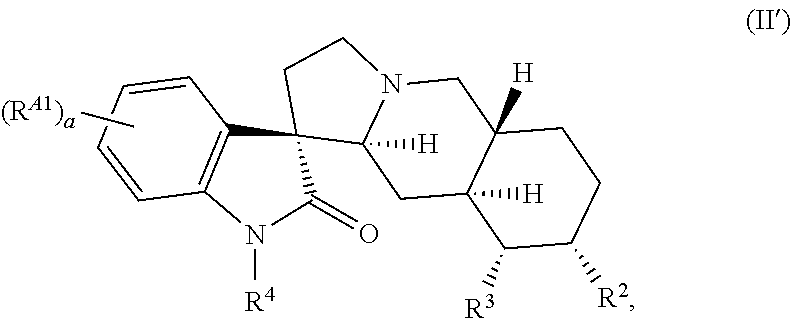
and pharmaceutically acceptable salts, solvates, hydrates, polymorphs, co-crystals, tautomers, stereoisomers, isotopically labeled derivatives, and prodrugs thereof, wherein a, R2A, R3A, R4, and RA1 are as defined herein.

and pharmaceutically acceptable salts, solvates, hydrates, polymorphs, co-crystals, tautomers, stereoisomers, isotopically labeled derivatives, and prodrugs thereof, wherein c, R, R2, R3, and R4 are as defined herein.


and pharmaceutically acceptable salts, solvates, hydrates, polymorphs, co-crystals, tautomers, stereoisomers, isotopically labeled derivatives, and prodrugs thereof.

and pharmaceutically acceptable salts, solvates, hydrates, polymorphs, co-crystals, tautomers, stereoisomers, isotopically labeled derivatives, and prodrugs thereof, wherein d, R2A, R3A, R4, R5, R6, and RAI are as defined herein.

and pharmaceutically acceptable salts, solvates, hydrates, polymorphs, co-crystals, tautomers, stereoisomers, isotopically labeled derivatives, and prodrugs thereof, wherein d, R2, R3, R4, R5, R5, and R are as defined herein.


and pharmaceutically acceptable salts, solvates, hydrates, polymorphs, co-crystals, tautomers, stereoisomers, isotopically labeled derivatives, and prodrugs thereof.

and pharmaceutically acceptable salts, solvates, hydrates, polymorphs, co-crystals, tautomers, stereoisomers, isotopically labeled derivatives, and prodrugs thereof, wherein e, R2A, R3A, R4, R5, R7, and RA1 are as defined herein.

and pharmaceutically acceptable salts, solvates, hydrates, polymorphs, co-crystals, tautomers, stereoisomers, isotopically labeled derivatives, and prodrugs thereof, wherein e, R2, R3, R4, R7, R8, and R are as defined herein.


and pharmaceutically acceptable salts, solvates, hydrates, polymorphs, co-crystals, tautomers, stereoisomers, isotopically labeled derivatives, and prodrugs thereof.

and pharmaceutically acceptable salts, solvates, hydrates, polymorphs, co-crystals, tautomers, stereoisomers, isotopically labeled derivatives, and prodrugs thereof, wherein f, R1, R2A, R3A, R4, R9, and RA1, are as defined herein.

and pharmaceutically acceptable salts, solvates, hydrates, polymorphs, co-crystals, tautomers, stereoisomers, isotopically labeled derivatives, and prodrugs thereof, wherein f, R1, R2, R3, R4, R9, R, Rx, and Ry are as defined herein.


and pharmaceutically acceptable salts, solvates, hydrates, polymorphs, co-crystals, tautomers, stereoisomers, isotopically labeled derivatives, and prodrugs thereof.

and pharmaceutically acceptable salts, solvates, hydrates, polymorphs, co-crystals, tautomers, stereoisomers, isotopically labeled derivatives, and prodrugs thereof, wherein:


or —C(═O)NRa4, wherein Ra3 is hydrogen or substituted or unsubstituted C1-6 alkyl; and Ra4 is hydrogen, substituted or unsubstituted C1-6 alkyl, or nitrogen protecting group. In certain embodiments, Ra3 is hydrogen. In certain embodiments, Ra3 is substituted or unsubstituted C1-6 alkyl (e.g., substituted or unsubstituted methyl, substituted or unsubstituted ethyl, or substituted or unsubstituted propyl). In certain embodiments, Ra4 is hydrogen. In certain embodiments, Ra4 is substituted or unsubstituted C1-6 alkyl (e.g., substituted or unsubstituted methyl, substituted or unsubstituted ethyl, or substituted or unsubstituted propyl). In certain embodiments, Ra4 is nitrogen protecting group (e.g., benzyl (Bn), t-butyl carbonate (BOC or Boc), benzyl carbamate (Cbz), 9-fluorenylmethyl carbonate (Fmoc), trifluoroacetyl, triphenylmethyl, acetyl, or p-toluenesulfonamide (Ts)). In certain embodiments, R3A is of formula

or —C(═O)NMe. In certain embodiments, R3A is —C(═O)Me. In certain embodiments, R3A is substituted or unsubstituted alkyl (e.g., substituted or unsubstituted C1-6 alkyl). In certain embodiments, R3A is substituted or unsubstituted methyl. In certain embodiments, R3A is substituted methyl. In certain embodiments, R3A is —CF3. In certain embodiments, R3A is unsubstituted methyl. In certain embodiments, R3A is of formula

wherein Ra3 is hydrogen or substituted or unsubstituted C1-6 alkyl; and Ra4 is hydrogen, substituted or unsubstituted C1-6 alkyl, or nitrogen protecting group. In certain embodiments, R3A is of formula

In certain embodiments, R3A is substituted or unsubstituted ethyl. In certain embodiments, R3A is substituted ethyl. In certain embodiments, R3A is unsubstituted ethyl. In certain embodiments, R3A is substituted or unsubstituted propyl. In certain embodiments, R3A is substituted or unsubstituted alkenyl (e.g., substituted or unsubstituted C2-6 alkenyl). In certain embodiments, R3A is substituted or unsubstituted alkynyl (e.g., substituted or unsubstituted C2-6 alkynyl). In certain embodiments, R3A is substituted or unsubstituted carbocyclyl (e.g., substituted or unsubstituted, 3- to 7-membered, monocyclic carbocyclyl comprising zero, one, or two double bonds in the carbocyclic ring system). In certain embodiments, R3A is substituted or unsubstituted heterocyclyl (e.g., substituted or unsubstituted, 5- to 10-membered monocyclic or bicyclic heterocyclic ring, wherein one or two atoms in the heterocyclic ring are independently nitrogen, oxygen, or sulfur). In certain embodiments, R3A is

In certain embodiments, R3A is substituted or unsubstituted aryl (e.g., substituted or unsubstituted, 6- to 10-membered aryl). In certain embodiments, R3A is substituted benzyl. In certain embodiments, R3A is unsubstituted benzyl. In certain embodiments, R3A is substituted phenyl. In certain embodiments, R3A is unsubstituted phenyl. In certain embodiments, R3A is substituted or unsubstituted heteroaryl (e.g., substituted or unsubstituted, 5- to 6-membered, monocyclic heteroaryl, wherein one, two, three, or four atoms in the heteroaryl ring system are independently nitrogen, oxygen, or sulfur; or

or a pharmaceutically acceptable salt, solvate, hydrate, polymorph, co-crystal, tautomer, stereoisomer, isotopically labeled derivative, or prodrug thereof.

or a pharmaceutically acceptable salt, solvate, hydrate, polymorph, co-crystal, tautomer, stereoisomer, isotopically labeled derivative, or prodrug thereof.


or a pharmaceutically acceptable salt, solvate, hydrate, polymorph, co-crystal, tautomer, stereoisomer, isotopically labeled derivative, or prodrug thereof.

or a pharmaceutically acceptable salt, solvate, hydrate, polymorph, co-crystal, tautomer, stereoisomer, isotopically labeled derivative, or prodrug thereof.
Compounds of Formula (II′) and Formula (II)

and pharmaceutically acceptable salts, solvates, hydrates, polymorphs, co-crystals, tautomers, stereoisomers, isotopically labeled derivatives, and prodrugs thereof, wherein:

and pharmaceutically acceptable salts, solvates, hydrates, polymorphs, co-crystals, tautomers, stereoisomers, isotopically labeled derivatives, and prodrugs thereof, wherein:

wherein: R is H, halogen, substituted or unsubstituted C1-6 alkyl, or —ORa; Ra is substituted or unsubstituted C1-6 alkyl; z is 0 or 1; and g is 1, 2, 3, 4, or 5. In certain embodiments, R6b is unsubstituted benzyl. In certain embodiments, R6b is substituted phenyl. In certain embodiments, R6b is unsubstituted phenyl. In certain embodiments, z is 0. In certain embodiments, z is 1. In certain embodiments, g is 1. In certain embodiments, g is 2. In certain embodiments, g is 3. In certain embodiments, g is 4. In certain embodiments, g is 5. In certain embodiments, at least one instance of R is H. In certain embodiments, at least one instance of R is halogen (e.g., F, Cl, Br, or I). In certain embodiments, at least one instance of R is F. In certain embodiments, at least one instance of R is Cl. In certain embodiments, at least one instance of R is Br. In certain embodiments, at least one instance of R is I. In certain embodiments, at least one instance of R is substituted or unsubstituted C1-6 alkyl (e.g., substituted or unsubstituted methyl, ethyl, or propyl). In certain embodiments, at least one instance of R is —CF3. In certain embodiments, at least one instance of R is —ORa, and Ra is substituted or unsubstituted C1-6 alkyl. In certain embodiments, at least one instance of R is —OMe. In certain embodiments, R is —OEt. In certain embodiments, R2A is of the formula:

In certain embodiments, R2A is of the formula:

In certain embodiments, R2A is of the formula:


wherein: R9 is H, halogen, substituted or unsubstituted C1-6 alkyl, —ORa, or —NO2; Ra is substituted or unsubstituted C1-6 alkyl or substituted or unsubstituted aryl; Y is 0 or 1; d is 1, 2, 3, or 4; and g is 1, 2, 3, 4, or 5. In certain embodiments, Y is 0. In certain embodiments, Y is 1. In certain embodiments, g is 1. In certain embodiments, g is 2. In certain embodiments, g is 3. In certain embodiments, g is 4. In certain embodiments, g is 5. In certain embodiments, at least one instance of R9a is H. In certain embodiments, at least one instance of R9a is halogen (e.g., F, Cl, Br, or I). In certain embodiments, at least one instance of R9a is F. In certain embodiments, at least one instance of R9a is Cl. In certain embodiments, at least one instance R9a R is Br. In certain embodiments, at least one instance of R9a is I. In certain embodiments, at least one instance of R9a is substituted or unsubstituted C1-6 alkyl (e.g., substituted or unsubstituted methyl, ethyl, or propyl). In certain embodiments, at least one instance of R9a is —CF3. In certain embodiments, at least one instance of R9a R is —ORa, and Ra is substituted or unsubstituted C1-6 alkyl or substituted or unsubstituted aryl. In certain embodiments, at least one instance of R9a is —OMe. In certain embodiments, R9a is —OEt. In certain embodiments, at least one instance of R9a is —OPh. In certain embodiments, at least one instance of R9a is —NO2. In certain embodiments, R4 is —CN. In certain embodiments, R4 is of the formula:

In certain embodiments, R4 is of the formula:

In certain embodiments R4 is of the formula:

In certain embodiments, R4 is of the formula:

In certain embodiments, R4 is of the formula:


In certain embodiments, R4 is of the formula:

In certain embodiments, R4 is of the formula:


In certain embodiments, R4 is unsubstituted phenyl. In certain embodiments, R4 is substituted or unsubstituted heteroaryl (e.g., substituted or unsubstituted, 5- to 6-membered, monocyclic heteroaryl, wherein one, two, three, or four atoms in the heteroaryl ring system are independently nitrogen, oxygen, or sulfur; or substituted or unsubstituted, 9- to 10-membered, bicyclic heteroaryl, wherein one, two, three, or four atoms in the heteroaryl ring system are independently nitrogen, oxygen, or sulfur). In certain embodiments, R4 is substituted or unsubstituted, 5- to 6-membered, monocyclic heteroaryl, wherein one, two, three, or four atoms in the heteroaryl ring system are independently nitrogen, oxygen, or sulfur. In certain embodiments, R4 is substituted or unsubstituted pyridine. In certain embodiments, R4 is substituted or unsubstituted pyrimidine. In certain embodiments, R4 is substituted or unsubstituted pyrazine. In certain embodiments, R4 is of the formula:

wherein: R9a is H, halogen, substituted or unsubstituted C1-6 alkyl, —ORa, or —NO2; Ra is substituted or unsubstituted C1-6 alkyl or substituted or unsubstituted aryl; Y is 0 or 1; d is 1, 2, 3, or 4; and g is 1, 2, 3, 4, or 5. In certain embodiments, R4 is of the formula:

In certain embodiments, R4 is of the formula:

In certain embodiments, R4 is of the formula:

In certain embodiments, R4 is of the formula:

In certain embodiments, R4 is of the formula:

In certain embodiments, R4 is of the formula:

In certain embodiments, R4 is an oxygen protecting group (e.g., t-butyloxycarbonyl (BOC or Boc), methoxylmethyl (MOM) or methylthiomethyl (MTM)).

or a pharmaceutically acceptable salt, solvate, hydrate, polymorph, co-crystal, tautomer, stereoisomer, isotopically labeled derivative, or prodrug thereof.


wherein a1 is 0, 1, 2, or 3; or a pharmaceutically acceptable salt, solvate, hydrate, polymorph, co-crystal, tautomer, stereoisomer, isotopically labeled derivative, or prodrug thereof.

or a pharmaceutically acceptable salt, solvate, hydrate, polymorph, co-crystal, tautomer, stereoisomer, isotopically labeled derivative, or prodrug thereof.

or a pharmaceutically acceptable salt, solvate, hydrate, polymorph, co-crystal, tautomer, stereoisomer, isotopically labeled derivative, or prodrug thereof.


or a pharmaceutically acceptable salt, solvate, hydrate, polymorph, co-crystal, tautomer, stereoisomer, isotopically labeled derivative, or prodrug thereof. Compounds of Formula (III-A) and Formula (III)

and pharmaceutically acceptable salts, solvates, hydrates, polymorphs, co-crystals, tautomers, stereoisomers, isotopically labeled derivatives, and prodrugs thereof, wherein:

and pharmaceutically acceptable salts, solvates, hydrates, polymorphs, co-crystals, tautomers, stereoisomers, isotopically labeled derivatives, and prodrugs thereof, wherein:

wherein R6B is halogen, substituted or unsubstituted C1-6 alkyl, substituted or unsubstituted carbocyclyl, substituted or unsubstituted phenyl, substituted or unsubstituted C3-6 heteroaryl; and y is 0, 1, or 2. In certain embodiments, R6B is halogen (e.g., F, Cl, Br, or I). In certain embodiments, R6B is substituted or unsubstituted C1-6 alkyl (e.g., substituted or unsubstituted C1-6 alkyl). In certain embodiments, R6B is substituted or unsubstituted carbocyclyl (e.g., substituted or unsubstituted, 3- to 7-membered, monocyclic carbocyclyl comprising zero, one, or two double bonds in the carbocyclic ring system). In certain embodiments, R6B is substituted or unsubstituted phenyl. In certain embodiments, R6B is substituted or unsubstituted C3-6 heteroaryl. In certain embodiments, y is 0. In certain embodiments, y is 1. In certain embodiments, y is 2.


or a pharmaceutically acceptable salt, solvate, hydrate, polymorph, co-crystal, tautomer, stereoisomer, isotopically labeled derivative, or prodrug thereof.

or a pharmaceutically acceptable salt, solvate, hydrate, polymorph, co-crystal, tautomer, stereoisomer, isotopically labeled derivative, or prodrug thereof.

or a pharmaceutically acceptable salt, solvate, hydrate, polymorph, co-crystal, tautomer, stereoisomer, isotopically labeled derivative, or prodrug thereof.

or a pharmaceutically acceptable salt, solvate, hydrate, polymorph, co-crystal, tautomer, stereoisomer, isotopically labeled derivative, or prodrug thereof.

or a pharmaceutically acceptable salt, solvate, hydrate, polymorph, co-crystal, tautomer, stereoisomer, isotopically labeled derivative, or prodrug thereof.


or a pharmaceutically acceptable salt, solvate, hydrate, polymorph, co-crystal, tautomer, stereoisomer, isotopically labeled derivative, or prodrug thereof.
Compounds of Formula (IV′) and Formula (IV)

and pharmaceutically acceptable salts, solvates, hydrates, polymorphs, co-crystals, tautomers, stereoisomers, isotopically labeled derivatives, and prodrugs thereof, wherein:


wherein R is H, halogen, substituted or unsubstituted alkyl, substituted or unsubstituted acyl, or —N(Rb)2; each instance of Rb is independently hydrogen, substituted or unsubstituted acyl, substituted or unsubstituted alkyl, substituted or unsubstituted alkenyl, substituted or unsubstituted alkynyl, substituted or unsubstituted carbocyclyl, or substituted or unsubstituted heterocyclyl; and g is 1, 2, 3, 4, or 5. In certain embodiments, g is 1. In certain embodiments, g is 2. In certain embodiments, g is 3. In certain embodiments, g is 4. In certain embodiments, g is 5.

wherein: R6B is substituted or unsubstituted C1-6 alkyl, substituted or unsubstituted C3-6 carbocyclyl, substituted or unsubstituted phenyl, or substituted or unsubstituted C3-6 heteroaryl; and y is 0, 1, or 2. In certain embodiments, R7 includes zero or more instances of R6B. In certain embodiments, y is 0. In certain embodiments, y is 1. In certain embodiments, y is 2. In certain embodiments, R6B is substituted or unsubstituted C1-6 alkyl (e.g., substituted or unsubstituted C1-6 alkyl). In certain embodiments, R6B is substituted or unsubstituted C3-6 carbocyclyl. In certain embodiments, R6B is unsubstituted cyclopentyl. In certain embodiments, R6B is substituted or unsubstituted phenyl. In certain embodiments, R6B is unsubstituted phenyl. In certain embodiments, R6B is substituted phenyl. In certain embodiments, R6B is substituted or unsubstituted C3-6 heteroaryl. In certain embodiments, R6B is substituted or unsubstituted pyridyl. In certain embodiments, R6B is unsubstituted pyridyl.

wherein R is H, halogen, substituted or unsubstituted alkyl, substituted or unsubstituted acyl, or —N(Rb)2; each instance of Rb is independently hydrogen, substituted or unsubstituted acyl, substituted or unsubstituted alkyl, substituted or unsubstituted alkenyl, substituted or unsubstituted alkynyl, substituted or unsubstituted carbocyclyl, or substituted or unsubstituted heterocyclyl; and d is 1, 2, 3, or 4. In certain embodiments, d is 1. In certain embodiments, d is 2. In certain embodiments, d is 3. In certain embodiments, d is 4. In certain embodiments, R7 is of formula

In certain embodiments, R7 is an nitrogen protecting group (e.g., benzyl (Bn), t-butyl carbonate (BOC or Boc), benzyl carbamate (Cbz), 9-fluorenylmethyl carbonate (Fmoc), trifluoroacetyl, triphenylmethyl, acetyl, or p-toluenesulfonamide (Ts)). In certain embodiments, R7 is —CN. In certain embodiments, R7 is —SCN. In certain embodiments, R7 is —NO2. In certain embodiments, R7 is —N3. In certain embodiments, R7 is —ORa (e.g., —OH, —O(substituted or unsubstituted C1-6 alkyl) (e.g., —OMe, —OCF3, —OEt, —OPr, or —OBu). In certain embodiments, R7 is —N(Rb)2 (e.g., —NMe2). In certain embodiments, R7 is —SRa (e.g., —SH, —S(substituted or unsubstituted C1-6 alkyl) (e.g., —SMe, —SEt, —SPr, or —SBu).

or a pharmaceutically acceptable salt, solvate, hydrate, polymorph, co-crystal, tautomer, stereoisomer, isotopically labeled derivative, or prodrug thereof.

or a pharmaceutically acceptable salt, solvate, hydrate, polymorph, co-crystal, tautomer, stereoisomer, isotopically labeled derivative, or prodrug thereof.

or a pharmaceutically acceptable salt, solvate, hydrate, polymorph, co-crystal, tautomer, stereoisomer, isotopically labeled derivative, or prodrug thereof.

or a pharmaceutically acceptable salt, solvate, hydrate, polymorph, co-crystal, tautomer, stereoisomer, isotopically labeled derivative, or prodrug thereof.


Compounds of Formula (V-A) and Formula (V)

and pharmaceutically acceptable salts, solvates, hydrates, polymorphs, co-crystals, tautomers, stereoisomers, isotopically labeled derivatives, and prodrugs thereof, wherein:

and pharmaceutically acceptable salts, solvates, hydrates, polymorphs, co-crystals, tautomers, stereoisomers, isotopically labeled derivatives, and prodrugs thereof, wherein:


wherein: R9a is H, halogen, substituted or unsubstituted acyl, substituted or unsubstituted alkyl, substituted or unsubstituted alkenyl, substituted or unsubstituted alkynyl, substituted or unsubstituted carbocyclyl, substituted or unsubstituted heterocyclyl, substituted or unsubstituted aryl, substituted or unsubstituted heteroaryl, —ORc, —N(Rd)2, or —SRc; Rc is H, substituted or unsubstituted C1-6 alkyl, or an oxygen protecting group when attached to an oxygen atom, or a sulfur protecting group when attached to a sulfur atom; Rd is H, substituted or unsubstituted C1-6 alkyl, or a nitrogen protecting group; Y is 0, 1, 2, 3, 4, 5, or 6; and g is 0, 1, 2, 3, 4, or 5. In certain embodiments, Y is 0. In certain embodiments, Y is 1. In certain embodiments, Y is 2. In certain embodiments, Y is 3. In certain embodiments, Y is 4. In certain embodiments, Y is 5. In certain embodiments, Y is 6. In certain embodiments, R9 includes zero or more instances of R. In certain embodiments, g is 0. In certain embodiments, g is 1. In certain embodiments, g is 2. In certain embodiments, g is 3. In certain embodiments, g is 4. In certain embodiments, g is 5. In certain embodiments, R9a is H. In certain embodiments, R9a is halogen (e.g., F, Cl, Br, or I). In certain embodiments, R9a is F. In certain embodiments, R9a is Cl. In certain embodiments, R9a is Br. In certain embodiments, R9a is I. In certain embodiments, R9a is substituted or unsubstituted acyl (e.g., —C(═O)Me). In certain embodiments, R9a is substituted or unsubstituted alkyl (e.g., substituted or unsubstituted C1-6 alkyl). In certain embodiments, R9a is substituted or unsubstituted alkenyl (e.g., substituted or unsubstituted C2-6 alkenyl). In certain embodiments, R9a is substituted or unsubstituted alkynyl (e.g., substituted or unsubstituted C2-6 alkynyl). In certain embodiments, R9a is substituted or unsubstituted carbocyclyl (e.g., substituted or unsubstituted, 3- to 7-membered, monocyclic carbocyclyl comprising zero, one, or two double bonds in the carbocyclic ring system). In certain embodiments, R9a is substituted or unsubstituted heterocyclyl (e.g., substituted or unsubstituted, 5- to 10-membered monocyclic or bicyclic heterocyclic ring, wherein one or two atoms in the heterocyclic ring are independently nitrogen, oxygen, or sulfur). In certain embodiments, R9a is substituted or unsubstituted aryl (e.g., substituted or unsubstituted, 6- to 10-membered aryl). In certain embodiments, R9a is benzyl. In certain embodiments, R9a is substituted or unsubstituted phenyl. In certain embodiments, R9a is substituted or unsubstituted heteroaryl (e.g., substituted or unsubstituted, 5- to 6-membered, monocyclic heteroaryl, wherein one, two, three, or four atoms in the heteroaryl ring system are independently nitrogen, oxygen, or sulfur; or substituted or unsubstituted, 9- to 10-membered, bicyclic heteroaryl, wherein one, two, three, or four atoms in the heteroaryl ring system are independently nitrogen, oxygen, or sulfur). In certain embodiments, R9a is —ORC (e.g., —OMe). In certain embodiments, R9a is —OMe. In certain embodiments, R9a is —N(Rd)2 (e.g., —NMe2). In certain embodiments, R9a is —SRc (e.g., —SMe). In certain embodiments, R9 is of formula:


or a pharmaceutically acceptable salt, solvate, hydrate, polymorph, co-crystal, tautomer, stereoisomer, isotopically labeled derivative, or prodrug thereof.

or a pharmaceutically acceptable salt, solvate, hydrate, polymorph, co-crystal, tautomer, stereoisomer, isotopically labeled derivative, or prodrug thereof.

or a pharmaceutically acceptable salt, solvate, hydrate, polymorph, co-crystal, tautomer, stereoisomer, isotopically labeled derivative, or prodrug thereof.


or a pharmaceutically acceptable salt, solvate, hydrate, polymorph, co-crystal, tautomer, stereoisomer, isotopically labeled derivative, or prodrug thereof.


or a pharmaceutically acceptable salt, solvate, hydrate, polymorph, co-crystal, tautomer, stereoisomer, isotopically labeled derivative, or prodrug thereof.


or a pharmaceutically acceptable salt, solvate, hydrate, polymorph, co-crystal, tautomer, stereoisomer, isotopically labeled derivative, or prodrug thereof.
Methods of Preparation

or a pharmaceutically acceptable salt thereof, wherein:

or a pharmaceutically acceptable salt thereof;

or a pharmaceutically acceptable salt thereof, wherein:

followed by subsequent modification to provide a compound of Formula (I-A), or a pharmaceutically acceptable salt thereof.

as the R3A substituent in Formula (V-A). In certain embodiments, the modification of the compound of Formula (V-B) to provide a compound of Formula (V-A) comprises conversion of the —CO2Me ester group in Formula (V-B) into hydrogen, substituted or unsubstituted acyl, substituted or unsubstituted alkyl, substituted or unsubstituted alkenyl, substituted or unsubstituted alkynyl, substituted or unsubstituted carbocyclyl, substituted or unsubstituted heterocyclyl, substituted or unsubstituted aryl, substituted or unsubstituted heteroaryl, —ORa, —N(Rb)2, or —SRa as the R3A substituent in Formula (V-A).

or a pharmaceutically acceptable salt thereof, is a compound of Formula (V-B-i):

or a compound of Formula (V-B-ii):

In certain embodiments, a compound of Formula (V-B) is modified to provide a compound of Formula (V-A):

In certain embodiments, the methyl ester substituent on the cyclohexyl ring of a compound of Formula (V-B) is reduced to an alcohol substituent to provide a compound of Formula (V-A), wherein R3A is

and Ra3 is hydrogen or substituted or unsubstituted C1-6 alkyl.

or a pharmaceutically acceptable salt thereof, is prepared by copper iodide-catalyzed intramolecular C—N coupling of a compound of Formula (V-A):

to provide a compound of Formula (I-B):

followed by subsequent modification to provide a compound of Formula (I-A), or a pharmaceutically acceptable salt thereof.

as the R3A substituent in Formula (I-A). In certain embodiments, the modification of the compound of Formula (I-B) to provide a compound of Formula (I-A) comprises conversion of the —CO2Me ester group in Formula (I-B) into hydrogen, substituted or unsubstituted acyl, substituted or unsubstituted alkyl, substituted or unsubstituted alkenyl, substituted or unsubstituted alkynyl, substituted or unsubstituted carbocyclyl, substituted or unsubstituted heterocyclyl, substituted or unsubstituted aryl, substituted or unsubstituted heteroaryl, —ORa, —N(Rb)2, or —SRa as the R3A substituent in Formula (I-A).

or a compound of Formula (I-B-i)


or a pharmaceutically acceptable salt thereof, wherein:

or a pharmaceutically acceptable salt thereof; and

or a pharmaceutically acceptable salt thereof; the method comprising adding to a compound of Formula (II-A) cyanogen bromide and using microwave irradiation to provide a compound of Formula (III-B), or a pharmaceutically acceptable salt thereof.

or a pharmaceutically acceptable salt thereof, wherein:

or a pharmaceutically acceptable salt thereof;

wherein

or a pharmaceutically acceptable salt thereof;

as the R3A substituent in Formula (I-A). In certain embodiments, the modification of the compound of Formula (I-B) to provide a compound of Formula (III-A) comprises conversion of the —CO2Me ester group in Formula (I-B) into hydrogen, substituted or unsubstituted acyl, substituted or unsubstituted alkyl, substituted or unsubstituted alkenyl, substituted or unsubstituted alkynyl, substituted or unsubstituted carbocyclyl, substituted or unsubstituted heterocyclyl, substituted or unsubstituted aryl, substituted or unsubstituted heteroaryl, —ORa, —N(Rb)2, or —SRa as the R3A substituent in Formula (III-A). In certain embodiments, the Click reaction is catalyzed by copper (I) iodide.

or a pharmaceutically acceptable salt thereof,

or a pharmaceutically acceptable salt thereof, wherein:

or a pharmaceutically acceptable salt thereof;

or a pharmaceutically acceptable salt thereof;

as the R3A substituent in Formula (IV′). In certain embodiments, the modification of the compound of Formula (IV-C) to provide a compound of Formula (IV′) comprises conversion of the —CO2Me ester group in Formula (IV-C) into hydrogen, substituted or unsubstituted acyl, substituted or unsubstituted alkyl, substituted or unsubstituted alkenyl, substituted or unsubstituted alkynyl, substituted or unsubstituted carbocyclyl, substituted or unsubstituted heterocyclyl, substituted or unsubstituted aryl, substituted or unsubstituted heteroaryl, —ORa, —N(Rb)2, or —SRa as the R3A substituent in Formula (IV′). In certain embodiments, the Click reaction is catalyzed by copper (I) iodide.
Pharmaceutical Compositions, Kits, and Administration


Yohimbine (Y): Tabulated Data with Key 1H and 13C Signals Labeled for Reference:

| Key signals and correlations for Y |
 |
 |
 |
 |

| Key signals for Y1a |
 |
 |
 |


| Key 1H signals for Y7a |
 |
| Key COSY correlations for Y7a |
 |

| Key 1H signals for Y7b |
 |
 |
 |

| Key signals for Y2a |
 |
 |
 |

| Key signals for Y2b |
 |
 |
 |


| Key signals for Y2g |
 |
 |
 |
 |


| Key 1H signals for Y4a |
 |
| Key COSY correlations for Y4a |
 |


| Key 1H signals for Y5a |
 |
| Key COSY correlations for Y5a |
 |


| Key signals for Y6b |
 |
 |
 |
 |


| Key signals for Y6J |
 |
 |
 |


 |
 |
 |


| Key signals for Y6r |
 |
 |
 |

| Key signals for Y6s |
 |
 |
 |
| TABLE 1 |
| Crystal data and structure refinement for Y6s. |
| Identification code | huig1 | |
| Empirical formula | C30 H33 Cl3.07 I0.93 N3 O4 | |
| Formula weight | 726.44 | |
| Temperature | 243(2) K | |
| Wavelength | 0.71073 Å | |
| Crystal system | Orthorhombic | |
| | P2 | 12121 |
| Unit cell dimensions | a = 10.1661(6) Å α = 90°. | |
| b = 12.3608(8) Å β = 90°. | ||
| c = 25.4845(17) Å γ = 90°. | ||
| Volume | 3202.4(4) Å3 | |
| Z | 4 | |
| Density (calculated) | 1.507 Mg/m3 | |
| Absorption coefficient | 1.227 mm−1 | |
| F(000) | 1470 | |
| Crystal size | 0.428 × 0.282 × 0.180 mm3 | |
| Theta range for data collection | 1.598 to 27.499°. | |
| Index ranges | −13 ≤ h ≤ 13, −16 ≤ k ≤ 16, −33 ≤ | |
| l ≤ 33 | ||
| Reflections collected | 40732 | |
| Independent reflections | 7349 [R(int) = 0.0210] | |
| Completeness to theta = 25.242° | 99.8% | |
| Absorption correction | Analytical | |
| Max. and min. transmission | 0.8536 and 0.7346 | |
| Refinement method | Full-matrix least-squares on F2 | |
| Data/restraints/parameters | 7349/15/410 | |
| Goodness-of-fit on F2 | 1.024 | |
| Final R indices [I > 2sigma(I)] | R1 = 0.0334, wR2 = 0.0815 [6714] | |
| R indices (all data) | R1 = 0.0385, wR2 = 0.0858 | |
| Absolute structure parameter | −0.024(3) | |
| Extinction coefficient | n/a | |
| Largest diff. peak and hole | 0.755 and −0.480 e · Å−3 | |


- 1. Newman, D. J.; Cragg, G. M. J. Nat. Prod. 2012, 75, 311-335.
- 2. Swinney, D. C.; Anthony, J. Nat. Rev. Drug Discov. 2011, 10, 507-519.
- 3. Payne, D. J.; Gwynn, M. N.; Holmes, D. J.; Pompliano, D. L. Nat. Rev. Drug Discov. 2007, 6, 29-40.
- 4. Dömling, A. Curr. Opin. Chem. Biol. 2008, 12, 281-291.
- 5. Villoutreix, B. O.; Kuenemann, M. A.; Poyet, J. L.; Bruzzoni-Giovanelli, H.; Labbé, C.; Lagorce, D.; Sperandio, O.; Miteva, M. A. Mol. Inform. 2014, 33, 414-437.
- 6. Corbi-Verge, C.; Kim, P. M. Cell Commun. Signal. 2016, 14, p. 12.
- 7. Grivas, P. D.; Kiaris, H.; Papavassiliou, A. G. Trends Mol. Med. 2011, 17, 537-538.
- 8. Grivas, P. D.; Papavassiliou, A. G. Cancer 2013, 119, 1120-1128.
- 9. Schreiber, S. L. Nature 2009, 457, 153-154.
- 10. Bauer, R. A.; Wurst, J. M.; Tan, D. S. Curr. Opin. Chem. Biol. 2010, 14, 308-314.
- 11. Dandapani, S.; Marcaurelle, L. A. Nat. Chem. Biol. 2010, 6, 861-863.
- 12. Schreiber, S. L. Science 2000, 287, 1964-1969.
- 13. Hung, A. W.; Ramek, A.; Wang, Y.; Kaya, T.; Wilson, J. A.; Clemons, P. A.; Young, D. W. Proc. Natl. Acad. Sci. 2011, 108, 6799-6804.
- 14. Kopp, F.; Stratton, C. F.; Akella, L. B.; Tan, D. S. Nat. Chem. Biol. 2012, 8, 358-365.
- 15. Bauer, R. A.; Wenderski, T. A.; Tan, D. S. Nat. Chem. Biol. 2013, 9, 21-29.
- 16. Beckmann, H. S.; Nie, F.; Hagerman, C. E.; Johansson, H.; Tan, Y. S.; Wilcke, D.;
- 17. Grossmann, A.; Bartlett, S.; Janecek, M.; Hodgkinson, J. T.; Spring, D. R. Angew. Chem. Int. Ed. 2014, 53, 13093-13097.
- 18. Antonchick, A. P.; Gerding-Reimers, C.; Catarinella, M.; Schurmann, M.; Preut, H.; Ziegler, S.; Rauh, D.; Waldmann, H. Nat. Chem. 2010, 2, 735-740.
- 19. Wetzel, S.; Bon, R. S.; Kumar, K.; Waldmann, H. Angew. Chem. Int. Ed. 2011, 50, 10800-10826.
- 20. Basu, S.; Ellinger, B.; Rizzo, S.; Deraeve, C.; Schurmann, M.; Preut, H.; Arndt, H. D.; Waldmann, H. Proc. Natl. Acad. Sci. 2011, 108, 6805-6810.
- 21. van Hattum, H.; Waldmann, H. J. Am. Chem. Soc. 2014, 136, 11853-11859.
- 22. Antonchick, A. P.; López-Tosco, S.; Parga, J.; Sievers, S.; Schurmann, M.; Preut, H.; Hing, S.; Schöler, H. R.; Sterneckert, J.; Rauh, D.; Waldmann, H. Chem. Biol. 2013, 20, 500-509.
- 23. § venda, J.; Sheremet, M.; Kremer, L.; Maier, L.; Bauer, J. O.; Strohmann, C.; Ziegler, S.; Kumar, K.; Waldmann, H. Angew. Chem. Int. Ed. 2015, 54, 5596-5602.
- 24. Balthaser, B. R.; Maloney, M. C.; Beeler, A. B.; Porco, J. A.; Snyder, J. K. Nat. Chem. 2011, 3, 969-973.
- 25. McLeod, M. C.; Singh, G.; Plampin III, J. N.; Rane, D.; Wang, J. L.; Day, V. W.; Aubé, J. Nat. Chem. 2014, 6, 133-140.
- 26. Aquino, C.; Sarkar, M.; Chalmers, M. J.; Mendes, K.; Kodadek, T.; Micalizio, G. C. Nat. Chem. 2012, 4, 99-104.
- 27. Tan, D. S. Nat. Chem. Biol. 2005, 1, 74-84.
- 28. Goess, B. C.; Hannoush, R. N.; Chan, L. K.; Kirchhausen, T.; Shair, M. D. J. Am. Chem. Soc. 2006, 128, 5391-5403.
- 29. Collins, I.; Jones, A. M.
Molecules 2014, 19, 17221-17255. - 30. Huigens III, R. W.; Morrison, K. C.; Hicklin, R. W.; Flood, T. A.; Richer, M. F.; Hergenrother, P. J. Nat. Chem. 2013, 5, 195-202.
- 31. Rafferty, R. J.; Hicklin, R. W.; Maloof, K. A.; Hergenrother, P. J. Angew. Chem. Int. Ed. 2014, 53, 220-224.
- 32. Hicklin, R. W.; López Sliva, T. L.; Hergenrother, P. J. Angew. Chem. Int. Ed. 2014, 53, 9880-9883.
- 33. Friesen, K.; Palatnick, W.; Tenebein, M. J. Emerg. Med. 1993, 11, 287-288.
- 34. Albright, J. D.; Goldman, L., J. Org. Chem. 1965, 30, 1107-1110.
- 35. N. Kagawa, J. Malerich, V. Rawal, Org. Lett. 2008, 10, 2381-2384.
- 36. U. G. Bhat, M. A. Winter, H. L. Pearce, W. T. Beck, Mol. Pharm. 1995, 48, 682-689.
- 37. M. Somei, K. Noguchi, F., Yamada, Heterocycles. 2001, 55, 1237-1240.
- 38. M. Somei, K. Noguchi, K. Yoshino, K. Mori, M. Asada, F. Yamada, Y. Tanaka, K. Shigenobu, K. Koike Heterocycles, 2006, 69, 259-269.
- 39. H. Takayama, K. Misawa, N. Okada, H. Ishikawa, M. Kitajima, Y. Hatori, T. Murayama, S. Wongseripipatana, K. Tashima, K. Matsumoto, S. Horie, Org. Lett. 2006, 8, 5705-5708.
- 40. J. D. Albright, L. Goldman, J. Am. Chem. Soc. 1969, 91, 4317-4318.
- 41. Stahl, R.; Borschberg, H. J. Helv. Chim. Acta 1996, 79, 1361-1378.
- 42. Burkitt, K.; Chun, S. Y.; Dang, D. T.; Dang, L. H. Mol. Cancer Ther. 2009, 8, 1148-1156.
- 43. Bousquet, M. S.; Ma, J. J.; Ratnayake, R.; Havre, P. A.; Yao, J.; Dang, N. H.; Paul, V. J.; Carney, T. J.; Dang, L. H.; Luesch, H. ACS Chem. Biol. 2016, 11, 1322-1331.
- 44. Lau, A.; Villeneuve, N. F.; Sun, Z.; Wong, P. K.; Zhang, D. D. Pharmacol. Res. 2008, 58, 262-270.
- 45. Du, Y.; Villeneuve, N. F.; Wang, X. J.; Sun, Z.; Chen, W.; Li, J.; Lou, H.; Wong, P. K.; Zhang, D. D. Environ. Health Perspect. 2008, 116, 1154-1161.
- 46. Ren, D.; Villeneuve, N. F.; Jiang, T.; Wu, T.; Lau, A.; Toppin, H. A.; Zhang D. D. Proc. Natl. Acad. Sci. 2011, 108, 1433-1438.
- 47. Yates M. S.; Tauchi, M.; Katsuoka, F.; Flanders, K. C.; Liby, K. T.; Honda, T.; Gribble, G. W.; Johnson, D. A.; Johnson, J. A.; Burton, N. C.; Guilarte, T. R.; Yamamoto, M.; Sporn, M. B.; Kensler, T. W. Mol. Cancer Ther. 2007, 6, 154-162.
- 48. Moehlenkamp J. D.; Johnson J. A. Arch. Biochem. Biophys. 1999, 363, 98-106.
- 49. Ratnayake, R.; Liu, Y.; Paul, V. J.; Luesch, H. Cancer Prev. Res. 2013, 6, 989-999.
- 50. O'Connor, S. E., Maresh, J. J. Nat. Prod. Rep. 2006, 23, 532-547.
- 51. Kaushik, N. K.; Kaushik, N.; Attri, P.; Kumar, N.; Kim, C. H.; Verma, A. K.; Choi, E. H.
Molecules 2013, 18, 6620-6662. - 52. Woodward, R. B.; Bader, F. E.; Bickel, H.; Frey, A. J.; Kierstead, R. W. J. Am. Chem. Soc. 1956, 78, 2023-2025.
- 53. Yang, Y.; Bai, Y.; Sun, S.; Dai, M. Org. Lett. 2014, 16, 6216-6219.
- 54. Rajapaksa, N. S.; McGowan, M. A.; Rienzo, M.; Jacobsen, E. N. Org. Lett. 2013, 15, 706-709.
- 55. Podoll, J. D.; Liu, Y.; Chang, L.; Walls, S.; Wang, W.; Wang, X. Proc. Natl. Acad. Sci. 2013, 110, 15573-15578.
- 56. Xu, W.; Wang, W.; Wang, X. Angew. Chem. Int. Ed. 2015, 54, 9546-9549.
Claims (30)


Priority Applications (1)
| Application Number | Priority Date | Filing Date | Title |
|---|---|---|---|
| US16/097,167 US11242331B2 (en) | 2016-04-29 | 2017-04-28 | Analogs of yohimbine and uses thereof |
Applications Claiming Priority (4)
| Application Number | Priority Date | Filing Date | Title |
|---|---|---|---|
| US201662329518P | 2016-04-29 | 2016-04-29 | |
| US201662427772P | 2016-11-29 | 2016-11-29 | |
| PCT/US2017/030171 WO2017190038A1 (en) | 2016-04-29 | 2017-04-28 | Analogs of yohimbine and uses thereof |
| US16/097,167 US11242331B2 (en) | 2016-04-29 | 2017-04-28 | Analogs of yohimbine and uses thereof |
Publications (2)
| Publication Number | Publication Date |
|---|---|
| US20190256490A1 US20190256490A1 (en) | 2019-08-22 |
| US11242331B2 true US11242331B2 (en) | 2022-02-08 |
Family
ID=60161139
Family Applications (1)
| Application Number | Title | Priority Date | Filing Date |
|---|---|---|---|
| US16/097,167 Active US11242331B2 (en) | 2016-04-29 | 2017-04-28 | Analogs of yohimbine and uses thereof |
Country Status (3)
| Country | Link |
|---|---|
| US (1) | US11242331B2 (en) |
| EP (1) | EP3448857A4 (en) |
| WO (1) | WO2017190038A1 (en) |
Families Citing this family (1)
| Publication number | Priority date | Publication date | Assignee | Title |
|---|---|---|---|---|
| US12269821B2 (en) | 2018-07-27 | 2025-04-08 | Univeristy Of Sharjah | Discovery of novel first in class nature-inspired compounds targeting the mitochondrial function and pharmaceutical composition thereof |
Citations (3)
| Publication number | Priority date | Publication date | Assignee | Title |
|---|---|---|---|---|
| US3219661A (en) * | 1962-12-14 | 1965-11-23 | Warner Lambert Pharmaceutical | Spirooxindole and spirodehydroindole alkaloids and process therefor |
| US3576004A (en) | 1968-09-09 | 1971-04-20 | American Cyanamid Co | Novel ring-e substituted 4-cyano-3-secoyohimbanes |
| EP0200436A2 (en) | 1985-04-19 | 1986-11-05 | Richter Gedeon Vegyeszeti Gyar R.T. | 12b-Substituted 1-hydroxymethyl-octahydroindolo[2,3-a]quinolizine derivatives |
-
2017
- 2017-04-28 WO PCT/US2017/030171 patent/WO2017190038A1/en not_active Ceased
- 2017-04-28 EP EP17790565.0A patent/EP3448857A4/en not_active Withdrawn
- 2017-04-28 US US16/097,167 patent/US11242331B2/en active Active
Patent Citations (3)
| Publication number | Priority date | Publication date | Assignee | Title |
|---|---|---|---|---|
| US3219661A (en) * | 1962-12-14 | 1965-11-23 | Warner Lambert Pharmaceutical | Spirooxindole and spirodehydroindole alkaloids and process therefor |
| US3576004A (en) | 1968-09-09 | 1971-04-20 | American Cyanamid Co | Novel ring-e substituted 4-cyano-3-secoyohimbanes |
| EP0200436A2 (en) | 1985-04-19 | 1986-11-05 | Richter Gedeon Vegyeszeti Gyar R.T. | 12b-Substituted 1-hydroxymethyl-octahydroindolo[2,3-a]quinolizine derivatives |
Non-Patent Citations (20)
| Title |
|---|
| Albright et al., Alkaloid Studies, V. Reaction of Tertiary Amines with Cyanogen Bromide under Solvolytic Conditions. Journal of the American Chemical Society. 1969;91:4317-8. |
| Bhandari. Infectious Diseases and Therapy, 2014, 3, 159-174 (Year: 2014). * |
| Bhat et al., A structure-function relationship among reserpine and yohimbine analogues in their ability to increase expression of mdr1 and P-glycoprotein in a human colon carcinoma cell line. Mol Pharmacol. Oct. 1995;48(4):682-9. |
| Extended European Search Report dated Sep. 23, 2019, in connection with Application No. 17790565.0. |
| Greene. Protective Groups in Organic Synthesis, Third Edition, 1999, pp. 494-503 (Year: 1999). * |
| Huang. Journal of Nutritional Biochemistry, 2015, 26, 1401-1413 (Year: 2015). * |
| Huigens et al., A ring-distortion strategy to construct stereochemically complex and structurally diverse compounds from natural products. Nat Chem. Mar. 2013;5(3):195-202. DOI: 10.1038/nchem.1549. |
| International Preliminary Report on Patentability, dated Nov. 8, 2018, in connection with International Application No. PCT/US2017/030171. |
| International Search Report and Written Opinion, dated Sep. 7, 2017, in connection with International Application No. PCT/US2017/030171. |
| Kaushik et al., Biomedical importance of indoles. Molecules. Jun. 6, 2013;18(6):6620-62. DOI: 10.3390/molecules18066620. |
| O'Connor et al., Chemistry and biology of monoterpene indole alkaloid biosynthesis. Nat Prod Rep. Aug. 2006;23(4):532-47. DOI: 10.1039/B512615K. |
| Olagnier. PLos Pathogens,.2011, 7(9), 1-14) (Year: 2011). * |
| Paciaroni. Chemistry—A European Journal, 2017, 23, 4327-35 (Year: 2017). * |
| Sheludko. Plant Cell Reports, 1999, 18, 911-18 (Year: 1999). * |
| Somei et al., 1-Hydroxyyohimbine and Its Derivatives: New Potent α2-Blockers for the Treatment of Erectile Dysfunction. Heterocycles. 2006;69(1):259-269. DOI: 10.3987/COM-06-S(O)26. |
| Somei et al., Synthesis of 1-Hydroxyyohimbine and Its Novel Skeletal Rearrangement Reaction into Oxindole Derivatives. Heterocycles. 2001;55(7):1237-1240. DOI: 10.3987/COM-01-9226. |
| Stahl et al., A Reinvestigation of the Oxidative Rearrangement of Yohimbane-Type Alkaloids. Part B. Formation of Oxindol (= 1,3-Dihydro-2H-indol-2-one) Derivatives. Helvetica Chimica Acta. 1996;79(5):1361-1378. DOI: 10.1002/hlca.19960790510. |
| Takayama. Heterocycles, 1992, 33(1), 121-125 (Year: 1992). * |
| Yang et al., Biosynthetically inspired divergent approach to monoterpene indole alkaloids: total synthesis of mersicarpine, leuconodines B and D, leuconoxine, melodinine E, leuconolam, and rhazinilam. Org Lett. Dec. 5, 2014;16(23):6216-9. DOI: 10.1021/ol503150c. |
| Zinnes et al., Yohimbane Derivatives. III. The Oxidative Rearrangement of Indole Alkaloids to Their Spirooxindole Analogs. Journal of Organic Chemistry. 1966;31:1765-1771. |
Also Published As
| Publication number | Publication date |
|---|---|
| WO2017190038A1 (en) | 2017-11-02 |
| US20190256490A1 (en) | 2019-08-22 |
| EP3448857A4 (en) | 2019-10-23 |
| EP3448857A1 (en) | 2019-03-06 |
Similar Documents
| Publication | Publication Date | Title |
|---|---|---|
| US10508121B2 (en) | Cortistatin analogues and syntheses and uses thereof | |
| US9975896B2 (en) | Inhibitors of transcription factors and uses thereof | |
| US9365555B2 (en) | PRMT5 inhibitors and uses thereof | |
| US10723753B2 (en) | Ras inhibitors and uses thereof | |
| US20170198006A1 (en) | Prmt5 inhibitors and uses thereof | |
| US11697640B2 (en) | Compounds for treating proliferative diseases | |
| EP4709372A1 (en) | Small molecule inhibitors of glutaminase | |
| US20230174523A1 (en) | Benzenesulfonamide derivatives as trap1 modulators and uses thereof | |
| WO2025059538A1 (en) | Yap degraders as potential anticancer drugs | |
| US12552830B2 (en) | Steroidal compound derivatives as therapeutic agents | |
| WO2024249763A2 (en) | Prmt5 synthetic lethal inhibitors targeting mtap deleted cancers | |
| US20190256490A1 (en) | Analogs of yohimbine and uses thereof | |
| US20230159509A1 (en) | Pyridinesulfonamide derivatives as trap1 modulators and uses thereof | |
| EP4329880A1 (en) | Small molecule modulators of glucocerebrosidase activity and uses thereof | |
| US10273264B2 (en) | Cortistatin analogues and syntheses and uses thereof | |
| US11919886B2 (en) | 4,9-dioxo-4,9-dihydronaphtho[2,3-B]furan-3-carboxamide derivatives and uses thereof for treating proliferative diseases and infectious diseases | |
| WO2025024550A1 (en) | Rev-erb antagonists | |
| WO2025024605A1 (en) | Rev-erb antagonists | |
| US20230218632A1 (en) | Cyclic sulfonamide derivatives as trap1 modulators and uses thereof | |
| EP4648762A2 (en) | Pparg modulators | |
| US20200062776A1 (en) | Hedgehog acyltransferase inhibitors and uses thereof | |
| WO2026006655A1 (en) | Combination of yap protacs and sorafenib for use in the treatment of cancer | |
| EP4027994A1 (en) | Kdm inhibitors and uses thereof |
Legal Events
| Date | Code | Title | Description |
|---|---|---|---|
| FEPP | Fee payment procedure |
Free format text: ENTITY STATUS SET TO UNDISCOUNTED (ORIGINAL EVENT CODE: BIG.); ENTITY STATUS OF PATENT OWNER: SMALL ENTITY |
|
| AS | Assignment |
Owner name: UNIVERSITY OF FLORIDA RESEARCH FOUNDATION, INCORPORATED, FLORIDA Free format text: ASSIGNMENT OF ASSIGNORS INTEREST;ASSIGNORS:HUIGENS, III, ROBERT WILLIAM;PACIARONI, NICHOLAS G.;REEL/FRAME:049138/0883 Effective date: 20170719 Owner name: UNIVERSITY OF FLORIDA RESEARCH FOUNDATION, INCORPO Free format text: ASSIGNMENT OF ASSIGNORS INTEREST;ASSIGNORS:HUIGENS, III, ROBERT WILLIAM;PACIARONI, NICHOLAS G.;REEL/FRAME:049138/0883 Effective date: 20170719 |
|
| FEPP | Fee payment procedure |
Free format text: ENTITY STATUS SET TO SMALL (ORIGINAL EVENT CODE: SMAL); ENTITY STATUS OF PATENT OWNER: SMALL ENTITY |
|
| AS | Assignment |
Owner name: UNIVERSITY OF FLORIDA RESEARCH FOUNDATION, INCORPORATED, FLORIDA Free format text: ASSIGNMENT OF ASSIGNORS INTEREST;ASSIGNOR:LUESCH, HENDRIK;REEL/FRAME:049833/0334 Effective date: 20190627 Owner name: UNIVERSITY OF FLORIDA RESEARCH FOUNDATION, INCORPO Free format text: ASSIGNMENT OF ASSIGNORS INTEREST;ASSIGNOR:LUESCH, HENDRIK;REEL/FRAME:049833/0334 Effective date: 20190627 |
|
| STPP | Information on status: patent application and granting procedure in general |
Free format text: NON FINAL ACTION MAILED |
|
| STPP | Information on status: patent application and granting procedure in general |
Free format text: RESPONSE TO NON-FINAL OFFICE ACTION ENTERED AND FORWARDED TO EXAMINER |
|
| STPP | Information on status: patent application and granting procedure in general |
Free format text: NON FINAL ACTION MAILED |
|
| STPP | Information on status: patent application and granting procedure in general |
Free format text: RESPONSE TO NON-FINAL OFFICE ACTION ENTERED AND FORWARDED TO EXAMINER |
|
| STPP | Information on status: patent application and granting procedure in general |
Free format text: FINAL REJECTION MAILED |
|
| STPP | Information on status: patent application and granting procedure in general |
Free format text: RESPONSE AFTER FINAL ACTION FORWARDED TO EXAMINER |
|
| STPP | Information on status: patent application and granting procedure in general |
Free format text: RESPONSE TO NON-FINAL OFFICE ACTION ENTERED AND FORWARDED TO EXAMINER |
|
| STPP | Information on status: patent application and granting procedure in general |
Free format text: FINAL REJECTION MAILED |
|
| STPP | Information on status: patent application and granting procedure in general |
Free format text: RESPONSE AFTER FINAL ACTION FORWARDED TO EXAMINER |
|
| STPP | Information on status: patent application and granting procedure in general |
Free format text: NOTICE OF ALLOWANCE MAILED -- APPLICATION RECEIVED IN OFFICE OF PUBLICATIONS |
|
| STPP | Information on status: patent application and granting procedure in general |
Free format text: PUBLICATIONS -- ISSUE FEE PAYMENT VERIFIED |
|
| STCF | Information on status: patent grant |
Free format text: PATENTED CASE |
|
| CC | Certificate of correction | ||
| MAFP | Maintenance fee payment |
Free format text: PAYMENT OF MAINTENANCE FEE, 4TH YR, SMALL ENTITY (ORIGINAL EVENT CODE: M2551); ENTITY STATUS OF PATENT OWNER: SMALL ENTITY Year of fee payment: 4 |