US11240005B2 - Method and system for querying a secure database located on an untrusted device - Google Patents
Method and system for querying a secure database located on an untrusted device Download PDFInfo
- Publication number
- US11240005B2 US11240005B2 US16/665,609 US201916665609A US11240005B2 US 11240005 B2 US11240005 B2 US 11240005B2 US 201916665609 A US201916665609 A US 201916665609A US 11240005 B2 US11240005 B2 US 11240005B2
- Authority
- US
- United States
- Prior art keywords
- item
- block
- indirect
- leaf
- tree
- Prior art date
- Legal status (The legal status is an assumption and is not a legal conclusion. Google has not performed a legal analysis and makes no representation as to the accuracy of the status listed.)
- Active, expires
Links
Images




Classifications
-
- H—ELECTRICITY
- H04—ELECTRIC COMMUNICATION TECHNIQUE
- H04L—TRANSMISSION OF DIGITAL INFORMATION, e.g. TELEGRAPHIC COMMUNICATION
- H04L9/00—Cryptographic mechanisms or cryptographic arrangements for secret or secure communications; Network security protocols
- H04L9/32—Cryptographic mechanisms or cryptographic arrangements for secret or secure communications; Network security protocols including means for verifying the identity or authority of a user of the system or for message authentication, e.g. authorization, entity authentication, data integrity or data verification, non-repudiation, key authentication or verification of credentials
- H04L9/3236—Cryptographic mechanisms or cryptographic arrangements for secret or secure communications; Network security protocols including means for verifying the identity or authority of a user of the system or for message authentication, e.g. authorization, entity authentication, data integrity or data verification, non-repudiation, key authentication or verification of credentials using cryptographic hash functions
- H04L9/3239—Cryptographic mechanisms or cryptographic arrangements for secret or secure communications; Network security protocols including means for verifying the identity or authority of a user of the system or for message authentication, e.g. authorization, entity authentication, data integrity or data verification, non-repudiation, key authentication or verification of credentials using cryptographic hash functions involving non-keyed hash functions, e.g. modification detection codes [MDCs], MD5, SHA or RIPEMD
-
- H—ELECTRICITY
- H04—ELECTRIC COMMUNICATION TECHNIQUE
- H04L—TRANSMISSION OF DIGITAL INFORMATION, e.g. TELEGRAPHIC COMMUNICATION
- H04L9/00—Cryptographic mechanisms or cryptographic arrangements for secret or secure communications; Network security protocols
- H04L9/06—Cryptographic mechanisms or cryptographic arrangements for secret or secure communications; Network security protocols the encryption apparatus using shift registers or memories for block-wise or stream coding, e.g. DES systems or RC4; Hash functions; Pseudorandom sequence generators
- H04L9/0643—Hash functions, e.g. MD5, SHA, HMAC or f9 MAC
-
- G—PHYSICS
- G06—COMPUTING OR CALCULATING; COUNTING
- G06F—ELECTRIC DIGITAL DATA PROCESSING
- G06F16/00—Information retrieval; Database structures therefor; File system structures therefor
- G06F16/20—Information retrieval; Database structures therefor; File system structures therefor of structured data, e.g. relational data
- G06F16/22—Indexing; Data structures therefor; Storage structures
- G06F16/2228—Indexing structures
- G06F16/2246—Trees, e.g. B+trees
-
- G—PHYSICS
- G06—COMPUTING OR CALCULATING; COUNTING
- G06F—ELECTRIC DIGITAL DATA PROCESSING
- G06F16/00—Information retrieval; Database structures therefor; File system structures therefor
- G06F16/20—Information retrieval; Database structures therefor; File system structures therefor of structured data, e.g. relational data
- G06F16/22—Indexing; Data structures therefor; Storage structures
- G06F16/2228—Indexing structures
- G06F16/2255—Hash tables
-
- G—PHYSICS
- G06—COMPUTING OR CALCULATING; COUNTING
- G06F—ELECTRIC DIGITAL DATA PROCESSING
- G06F16/00—Information retrieval; Database structures therefor; File system structures therefor
- G06F16/20—Information retrieval; Database structures therefor; File system structures therefor of structured data, e.g. relational data
- G06F16/27—Replication, distribution or synchronisation of data between databases or within a distributed database system; Distributed database system architectures therefor
-
- H—ELECTRICITY
- H04—ELECTRIC COMMUNICATION TECHNIQUE
- H04L—TRANSMISSION OF DIGITAL INFORMATION, e.g. TELEGRAPHIC COMMUNICATION
- H04L9/00—Cryptographic mechanisms or cryptographic arrangements for secret or secure communications; Network security protocols
- H04L9/32—Cryptographic mechanisms or cryptographic arrangements for secret or secure communications; Network security protocols including means for verifying the identity or authority of a user of the system or for message authentication, e.g. authorization, entity authentication, data integrity or data verification, non-repudiation, key authentication or verification of credentials
- H04L9/3247—Cryptographic mechanisms or cryptographic arrangements for secret or secure communications; Network security protocols including means for verifying the identity or authority of a user of the system or for message authentication, e.g. authorization, entity authentication, data integrity or data verification, non-repudiation, key authentication or verification of credentials involving digital signatures
-
- H—ELECTRICITY
- H04—ELECTRIC COMMUNICATION TECHNIQUE
- H04L—TRANSMISSION OF DIGITAL INFORMATION, e.g. TELEGRAPHIC COMMUNICATION
- H04L9/00—Cryptographic mechanisms or cryptographic arrangements for secret or secure communications; Network security protocols
- H04L9/50—Cryptographic mechanisms or cryptographic arrangements for secret or secure communications; Network security protocols using hash chains, e.g. blockchains or hash trees
Definitions
- Computing devices may include any number of internal components such as processors, memory, and persistent storage. Data sent between computing devices may be subject to undesired exposure to additional computing devices. Computing devices may implement security measures in an attempt to reduce the undesired exposure.
- embodiments of the invention relates to a method for managing data, the method includes obtaining, by an untrusted device and from a querying system, an item query, identifying a leaf block of a hierarchical block tree associated with the item query, identifying a plurality of indirect blocks that allow the querying system to calculate a top hash of the hierarchical block tree, and sending an item query response to the querying system, wherein the item query response specifies the leaf block, the plurality of indirect hashes corresponding to the plurality of indirect blocks, and a signature of the top hash, wherein the signature is obtained from a trusted system.
- embodiments of the invention relates to non-transitory computer readable medium comprising computer readable program code, which when executed by a computer processor enables the computer processor to perform a method for managing data, the method comprising obtaining, by an untrusted device and from a querying system, an item query; identifying a leaf block of a hierarchical block tree associated with the item query; identifying a plurality of indirect blocks that allow the querying system to calculate a top hash of the hierarchical block tree; and sending an item query response to the querying system, wherein the item query response specifies the leaf block, the plurality of indirect hashes corresponding to the plurality of indirect blocks, and a signature of the top hash, wherein the signature is obtained from a trusted system.
- embodiments of the invention relates to an untrusted device, comprising: a processor; memory comprising instructions, which when executed by the processor cause the untrusted device to perform a method, the method comprising: obtaining, by an untrusted device and from a querying system, an item query; identifying a leaf block of a hierarchical block tree associated with the item query; identifying a plurality of indirect blocks that allow the querying system to calculate a top hash of the hierarchical block tree; and sending an item query response to the querying system, wherein the item query response specifies the leaf block, the plurality of indirect hashes corresponding to the plurality of indirect blocks, and a signature of the top hash, wherein the signature is obtained from a trusted system.
- FIG. 1 shows a diagram of a system in accordance with one or more embodiments of the invention.
- FIG. 2A shows a diagram of a hierarchical block tree in accordance with one or more embodiments of the invention.
- FIG. 2B shows a second diagram of a hierarchical block tree in accordance with one or more embodiments of the invention.
- FIG. 2C shows a diagram of components in the hierarchical block tree in accordance with one or more embodiments of the invention.
- FIG. 3A shows a flowchart for verifying an item query response in accordance with one or more embodiments of the invention.
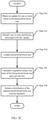
- FIG. 3B shows a flowchart for servicing an item query in accordance with one or more embodiments of the invention.
- FIG. 3C shows a flowchart for updating a hierarchical block tree in accordance with one or more embodiments of the invention.
- FIGS. 4A-4B show an example in accordance with one or more embodiments of the invention.
- FIG. 5 shows a diagram of a computing device in accordance with one or more embodiments of the invention.
- any component described with regard to a figure in various embodiments of the invention, may be equivalent to one or more like-named components described with regard to any other figure.
- descriptions of these components will not be repeated with regard to each figure.
- each and every embodiment of the components of each figure is incorporated by reference and assumed to be optionally present within every other figure having one or more like-named components.
- any description of the components of a figure is to be interpreted as an optional embodiment, which may be implemented in addition to, in conjunction with, or in place of the embodiments described with regard to a corresponding like-named component in any other figure.
- embodiments of the invention relate to a method and system for verifying responses to item queries.
- Embodiments of the invention include obtaining a response, from an untrusted device, to a query that requests specifying whether an item (represented by an item identifier or a hashed item identifier) is included in a data structure (e.g., a list).
- the response may include portions of a hierarchical block tree that are used to rebuild a top hash of the hierarchical block tree.
- the querying device may use the portions (which may be hashes of other portions of the hierarchical block tree) to verify the response.
- the database on the untrusted device is implemented using a hierarchical block tree (see e.g., FIGS. 2A-2C ) that includes hash values as well as a signature of the top block of the hierarchical block tree.
- the signature is provided by a trusted system.
- the request when the request is generated by the untrusted device, the request includes a result of the request (e.g., a leaf block) along with a subset of the hash values from the hierarchical block tree and the signature.
- the querying system may then use the subset of hash values along with the signature to verify that the result is an actual result from the database. If the verification fails, then the querying device determines that the result in the response is not a valid result and, as such, does not rely on the result.
- embodiments of the invention enable a querying device to utilize a relatively small set of data (e.g., the subset of hash values and the signature) to verify the result and at the same time decrease the resources utilized by the untrusted device to provide a response that can be verified by the querying device.
- a relatively small set of data e.g., the subset of hash values and the signature
- embodiments of the invention may include hashes of values instead of the values themselves within the database.
- the hierarchical block tree is organized based on the hash values instead of the values from the hash values are generated.
- the use of hash value further secures the contents of the database as the untrusted device only has access to the hash values and not the underlying values.
- the use of hash values may further obfuscate the contents of the database thereby preventing a malicious querying device from enumerating the values stored in the database as the database only stores hash values.
- FIG. 1 shows a diagram of a system in accordance with one or more embodiments of the invention.
- the system includes a trusted system ( 102 ), one or more untrusted devices ( 100 ), and a querying device ( 104 ).
- Each component of the system may be operably connected via any combination of wired and/or wireless connections.
- Each component of the system illustrated in FIG. 1 is discussed below.
- Various embodiments of the invention are described below with respect to a list; however, the invention may be implemented using data structures other than a list without departing from the invention.
- the trusted system ( 100 ) includes information about items, which may be represented as item identifiers or hashed item identifiers.
- the item identifiers may each specify an item that belongs in the list.
- the list may be associated with a category (e.g., a list of excluded items, a list of verified items, a list of deleted items, etc.).
- the content of the list i.e., which items are specified in the list
- the items may be, for example, signed documents, files, a data set, and/or any other individual groupings of data without departing from the invention.
- the trusted system ( 102 ) provides accurate representation of the content of the list. Said another way, the content of the list may not be modified by a malicious entity with the intent of deceiving other entities about the inclusion or exclusion of items in the list.
- the trusted system may utilize encryption, block chain ledgers, and/or security measures on the list to prevent the list from being undesirably manipulated.
- the list (or more specifically the content of the list) may be stored using a hierarchical block tree.
- a hierarchical block tree is a data structure that specifies multiple leaf blocks and a hierarchy of indirect blocks associated with the leaf blocks and the other indirect blocks.
- the hierarchical block tree may be used by a device analyzing the list to verify whether a leaf block that specifies a portion of the items on the list is valid. For additional details regarding a hierarchical block tree, see, e.g., FIGS. 2A-2C .
- the trusted system ( 102 ) distributes the hierarchical block tree to each untrusted device ( 100 A, 100 B).
- the trusted system ( 102 ) may further generate a signature of the top hash of the hierarchical block tree using a private key and distribute the signature to the untrusted devices ( 100 ) to be used by the querying device ( 104 ) for verification.
- the private key is not shared by the trusted system ( 102 ) with the untrusted devices ( 100 A, 100 B).
- the signature cannot be replicated by the untrusted devices ( 100 ), which prevents the untrusted device ( 100 A, 100 B) from replicating the signature using a top hash of a maliciously modified (i.e., modified without the trusted system's approval) hierarchical block tree.
- a maliciously modified i.e., modified without the trusted system's approval
- the trusted system ( 102 ) is implemented as a computing device (see, e.g., FIG. 5 ).
- a computing device may be, for example, a mobile phone, tablet computer, laptop computer, desktop computer, server, or cloud resource.
- the computing device may include one or more processors, memory (e.g., random access memory), and persistent storage (e.g., disk drives, solid state drives, etc.).
- the persistent storage may store computer instructions, e.g., computer code, that when executed by the processor(s) of the computing device cause the computing device to perform the functions of the trusted system ( 102 ) described throughout this application.
- the trusted system ( 102 ) may be implemented as a logical device without departing from the invention.
- the logical device utilizes computing resources of any number of physical computing devices to provide the functionality of the trusted system ( 102 ) described throughout this application.
- the untrusted devices ( 100 ) store copies of the aforementioned list.
- the untrusted devices ( 100 A, 100 B) each obtain the list from the trusted system ( 102 ) (e.g., as a hierarchical block tree) and utilize the list to service item queries from the querying device ( 104 ).
- an untrusted device may store accurate or inaccurate versions of the list.
- the list stored in the untrusted device may be outdated (i.e., the list does not contain the most recent information) and/or maliciously manipulated (i.e., items were added or removed without the trusted system's approval).
- each untrusted device ( 100 A, 100 B) is implemented as a computing device (see e.g., FIG. 5 ).
- the computing device may be, for example, a mobile phone, a tablet computer, a laptop computer, a desktop computer, a server, a distributed computing system, or a cloud resource.
- the computing device may include one or more processors, memory (e.g., random access memory), and persistent storage (e.g., disk drives, solid state drives, etc.).
- the computing device may include instructions, stored on the persistent storage, that when executed by the processor(s) of the computing device cause the untrusted device ( 100 A, 100 B) to perform the functionality of the untrusted device ( 100 A, 100 B) described throughout this application and/or all, or a portion thereof, of the method illustrated in FIGS. 2B-2C .
- Each untrusted device ( 100 A, 100 B) may be implemented as a logical device without departing from the invention.
- the logical device utilizes computing resources of any number of physical computing devices to provide the functionality of the untrusted device ( 100 A, 100 B) described throughout this application and/or all, or a portion thereof, of the method illustrated in FIGS. 2B-2C .
- the querying device ( 104 ) utilizes the information of the list managed by the trusted system ( 102 ).
- the querying device ( 104 ) may request to identify whether a specified item is included in the list.
- the request may be sent to an untrusted device ( 100 ) as an item query.
- the item query may be serviced in the form of an item query response.
- the querying device ( 104 ) may verify the validity of the item query response via the method illustrated in FIG. 2A . While the system shown in FIG. 1 only includes a single querying device, the system may be implemented using multiple querying devices without departing from the invention.
- the querying device ( 104 ) is implemented as a computing device (see e.g., FIG. 5 ).
- the computing device may be, for example, a mobile phone, a tablet computer, a laptop computer, a desktop computer, a server, a distributed computing system, or a cloud resource.
- the computing device may include one or more processors, memory (e.g., random access memory), and persistent storage (e.g., disk drives, solid state drives, etc.).
- the computing device may include instructions, stored on the persistent storage, that when executed by the processor(s) of the computing device cause the computing device to perform the functionality of the querying device ( 104 ) described throughout this application and/or all, or a portion thereof, of the method illustrated in FIG. 2A .
- the querying device ( 104 ) may be implemented as a logical device without departing from the invention.
- the logical device utilizes computing resources of any number of physical computing devices to provide the functionality of the querying device ( 104 ) described throughout this application and/or all, or a portion thereof, of the method illustrated in FIG. 2A .
- FIG. 2A shows a diagram of a hierarchical block tree in accordance with one or more embodiments of the invention.
- the hierarchical block tree ( 200 ) includes a top block ( 202 ), two or more indirect blocks ( 204 ), and two or more leaf blocks ( 206 ).
- the hierarchical block tree may be implemented as a binary tree or a non-binary tree. Each portion of the hierarchical block tree is discussed below.
- the top block is a data structure that is generated based on the indirect blocks ( 204 ).
- the top block may include a covered range of hashed item identifiers (discussed in FIG. 2C ) and/or a hash of two or more indirect blocks.
- the top block does include a covered range; rather, the top block includes N ⁇ 1 values that may be used by the untrusted device to traverse the hierarchical block tree, where N is the number of indirect blocks directly connected to the top block. In this scenario the top block may be logically associated with a covered range but does not itself store the covered range.
- the indirect blocks ( 204 ) are each data structures that are part of hierarchical block tree, where each indirect block may be based on one or more indirect blocks or one or more leaf blocks.
- the leaf blocks ( 206 ) are data structures that each specify a portion of a list and where collectively, the leaf blocks ( 206 ) specify all of the items in the list.
- the items in the list may be distributed among the leaf blocks ( 206 ) based on a hash of the identifiers.
- each leaf block may be associated with a range of items in such a way that, collectively, the leaf blocks are associated with the covered range of the top block ( 202 ).
- the range of items is a range of hash values. An embodiment of the hierarchical block tree is discussed in FIGS. 2B-2C .
- FIG. 2B shows a second diagram of the hierarchical block tree in accordance with one or more embodiments of the invention.
- the hierarchical block tree shown in FIG. 2B is not intended to limit the scope of the invention.
- the diagram of FIG. 2B may be an embodiment of the hierarchical block tree ( 200 , FIG. 1 ) discussed above.
- the hierarchical block tree of FIG. 2B may be stored in the trusted system ( 102 , FIG. 1 ) and/or any untrusted device ( 100 A, 10 B, FIG. 1 ) discussed above.
- the hierarchical block tree may include a top block ( 210 ), six indirect blocks ( 212 , 214 , 216 , 218 , 220 , and 222 ), and four leaf blocks ( 224 , 226 , 228 , 230 ).
- the leaf block includes the information useful to the querying system (and/or any other entity of FIG. 1 ).
- the leaf blocks may specify a portion of the list of hashed item identifiers included in the list.
- each indirect block ( 216 , 218 , 220 , 222 ) connected to a leaf block ( 224 , 226 , 228 , 230 ) is generated based on the respective leaf block (discussed below in FIG. 2C ).
- each indirect block ( 212 , 214 ) is connected to two indirect blocks ( 216 , 218 , 220 , 222 ) and is generated based on the two aforementioned indirect blocks (discussed below in FIG. 2C ).
- the top block ( 210 ) is generated based on the two connected indirect blocks ( 212 , 214 ).
- the top block ( 210 ) may be used along with a private key to generate a signature to be used for verification by the querying system.
- the two indirect blocks (e.g., 216 , 218 ) associated with a higher level indirect block (e.g., 212 ) are deemed to be sibling blocks of each other.
- An indirect block is a sibling block of a second indirect block if the two indirect blocks are used to generate the same block.
- indirect blocks 2 A and 2 B ( 212 , 214 ) are sibling blocks
- indirect blocks 1 A and 1 B ( 216 , 218 ) are sibling blocks
- indirect blocks 1 C and 1 D ( 228 , 230 ) are sibling blocks. Further discussion about the content of each block is discussed in FIG. 2C .
- FIG. 2C shows a diagram of the blocks of FIG. 2B .
- FIG. 2C includes a diagram of leaf block A ( 224 ), a diagram of indirect block 1 A ( 216 ), a diagram of indirect block 2 A ( 212 ), and a diagram of the top block ( 210 ). Each block illustrated in FIG. 2C is discussed below.
- the leaf block ( 224 ) includes an item range ( 224 A) and a list of hashed item identifiers ( 224 B).
- Each hashed item identifier in the list of item identifiers ( 224 B) is within the item range ( 224 A). More specifically, a hash function is applied to each item in the list or to an identifier associated with each item in the list. The result of a set of hash item identifier. The hashed item identifiers are then distributed across the leaf blocks in the hierarchical block tree. The specific hashed item identifiers associated with leaf block A ( 224 ) are stored in the list of hashed item identifiers ( 224 B).
- the item range ( 224 A) of hash item identifiers is a contiguous range of hashed item identifiers, where the specific hash item identifiers associated with leaf block A ( 224 ) are part of the aforementioned range.
- the item range for each leaf block is predetermined at the time the hierarchical block tree is created.
- the leaf block ( 224 ) may include other content without departing from the invention.
- indirect block 1 A ( 216 ) includes a covered range of block 1 A ( 216 A) and a hash of leaf block A ( 216 B).
- the block 1 A covered range ( 216 A) specifies the same range as the item range ( 224 A) of leaf block A ( 224 ).
- the hash of leaf block A ( 216 B) is generated by applying a hash function on all or a portion of leaf block A ( 224 ).
- the indirect block 1 A ( 216 ) may include other content without departing from the invention.
- indirect block 2 A ( 212 ) includes a covered range ( 212 A), a hash of indirect block 1 A ( 212 B) and a hash of indirect block 1 B ( 212 C).
- the covered range ( 212 A) of indirect block 2 A ( 212 ) may be a range that includes the ranges of indirect blocks 1 A ( 216 ) and 1 B ( 218 ). For example, if indirect block 1 A covers range 1-100 and indirect block 1 B covers ranges 100-200, then indirect block 2 A ( 212 ) covers ranges 1-200.
- the hash of indirect block 1 A ( 212 B) is generated by applying a hash function on all or a portion of indirect block 1 A ( 216 ). Further, the hash of indirect block 1 B ( 212 C) is generated by applying a hash function on all or a portion of indirect block 1 B ( 218 ).
- the indirect block 2 A ( 212 ) may include other content without departing from the invention.
- the top block ( 210 ) includes a top block covered range ( 210 A), a hash of indirect block 2 A ( 210 B) and a hash of indirect block 2 B ( 210 C).
- the covered range ( 210 A) of the top block ( 210 ) may be a range that includes the ranges of indirect blocks 2 A ( 212 ) and 2 B ( 214 ).
- the hash of indirect block 2 A ( 210 B) is generated by applying a hash function on all or a portion of indirect block 2 A ( 212 ). Further, the hash of indirect block 2 B ( 210 C) is generated by applying a hash function on all or a portion of indirect block 2 B ( 214 ).
- a top hash may be a hash of a combination of the hash of indirect block 2 A ( 210 B) and the hash of indirect block 2 B ( 210 C). The top hash may be used to generate a signature to be used for verification. The signature may be generated using the top hash (or any portion thereof) in combination with a private key associated with the trust system and one (or more) functions.
- top block ( 210 ) may include other content without departing from the invention.
- FIG. 2C describes the indirect blocks ( 212 , 216 ) and the top block ( 210 ) as including the covered ranges
- the aforementioned blocks do not include covered ranges. More specifically, while each of the blocks in the hierarchical block tree may be logically associated with a covered range, the specific content in the top block and indirect blocks does not include the covered range; rather, the top block includes N ⁇ 1 values that may be used by the untrusted device to traverse the hierarchical block tree, where N is the number of indirect blocks directly connected to the top block and the values are based on the covered ranges logically associated with the N ⁇ 1 indirect blocks.
- each indirect block includes M ⁇ 1 values that may be used by the untrusted device to traverse the hierarchical block tree, where M is the number of indirect blocks or leaf blocks directly connected to the indirect block and the values are based on the covered ranges logically associated with the M blocks.
- M is the number of indirect blocks or leaf blocks directly connected to the indirect block and the values are based on the covered ranges logically associated with the M blocks.
- the leaf blocks may include an item range ( 224 A)
- the other blocks in the hierarchical block tree only include values that are used by the untrusted system to efficiently traverse the hierarchical block tree to the appropriate leaf block.
- the aforementioned N ⁇ 1 values and M ⁇ 1 values may be collectively referred to as traversal values.
- the top block is logically associated with a covered range of 0-200 is directly connected to two indirect blocks, A and B.
- indirect block A is logically associated with a covered range of 0-80
- indirect block B is logically associated with covered range 81-200.
- the top block may include the value 81.
- a comparison may be made between the hash item identifier and the value 80 to determine whether to traverse to indirect block A or B. If the hash item identifier has a value less than or equal to 80, then traversal proceeds to indirect block A; otherwise, the traversal proceeds to indirect block B.
- the above example is not intended to limit the scope of the invention.
- FIGS. 3A-3C show flowcharts in accordance with one or more embodiments of the invention. While the various steps in the flowcharts are presented and described sequentially, one of ordinary skill in the relevant art will appreciate that some or all of the steps may be executed in different orders, may be combined or omitted, and some or all steps may be executed in parallel. In one embodiment of the invention, the steps shown in FIGS. 3A-3C may be performed in parallel with any other steps shown in FIGS. 3A-3C without departing from the scope of the invention.
- FIG. 3A shows a flowchart for verifying an item query response in accordance with one or more embodiments of the invention.
- the method shown in FIG. 3A may be performed by, for example, a querying system ( 104 , FIG. 1 ).
- Other components of the system illustrated in FIG. 1 may perform the method of FIG. 3A without departing from the invention.
- an item query is sent to an untrusted device.
- the item query may be used to determine whether a given item (represented by an item identifier or a hashed item identifier) is present or not present in the hierarchical block tree.
- each of the untrusted devices includes a hierarchical block tree, which it represents as being the same hierarchical block tree that it obtained from the trusted system.
- the item query may be sent to any of the untrusted devices. By having multiple untrusted devices, each with a copy of the hierarchical block tree, the system is scalable.
- the number of item queries issued by the query device(s) increases, then the number of untrusted devices that may be used to service the item query may also increase to meet the aforementioned demand.
- the specific untrusted device to which the item query is sent may be selected using any known (e.g., round-robin selection, arbitrary selection, etc.) or later discovered mechanism.
- the item query may include an item identifier or a hashed item identifier.
- the hash item identifier is an obtained by applying a hash function to an item identifier or to the content of the item.
- the item identifier may include any combination of numbers, letters, and/or symbols.
- an item query response is obtained from the untrusted device.
- the item query response may include a leaf block, one or more indirect hashes associated with one or more indirect blocks, and a signature.
- the leaf block may specify a portion of the item identifiers of the list (which may or may not include the requested item identifier) and an item range associated with the leaf block.
- the item query response further includes an assertion about whether the queried item (i.e., the item that was specified using the item identifier or hashed item identifier in the query request) is in the list.
- the querying device may confirm this assertion by analyzing the obtained hashed item identifiers and determining whether any of the obtained hashed item identifiers is (or corresponds to) with the queried item. If none of the obtained hashed item identifiers are associated with the queried item, the querying device determines that the queried item is not on the list. This may be true even when the hashed item identifier (if present) is in the item range of the leaf block. Conversely, if one of the obtained hashed item identifiers is associated with the queried item, the querying device determines that the queried item is on the list.
- steps 304 - 312 may be performed to verify the validity of the item query response.
- the verification may be justified due to the possibility that the untrusted device may provide a malicious, outdated, or otherwise inaccurate item query response.
- the queried item may use the leaf block, the indirect blocks, and/or the signature to perform this verification.
- a top hash is generated using the leaf block and the indirect blocks.
- the top block is generated by performing a function (e.g., the hash function) on the leaf blocks and the obtained indirect hashes based on the hierarchical block tree in a manner associated with the structure in which the list is stored in the untrusted device.
- a function e.g., the hash function
- the hash function is performed on the leaf block(s) to generate an indirect hash.
- a hash function is then applied to the generated indirect hash along with at least one sibling indirect hash to generate a second indirect hash. This process is repeated for each level in the hierarchical block tree until a top hash is generated using the aforementioned indirect hashes.
- a top hash is obtained from the signature using a public key associated with the trusted system and accessed by the querying system.
- the querying system performs an algorithmic function on the signature using the public key to decrypt, or otherwise obtain, the top hash from the signature.
- step 308 a determination is made about whether the obtained top hash of step 306 matches the generated top hash of step 304 . If the obtained top hash of step 306 matches the generated top hash of step 304 , the method proceeds to step 312 ; otherwise, the method proceeds to step 310 .
- step 310 the queried system determines that the item query is invalid. Based on this determination, the queried system is unable to determine whether the queried item is truly included in the list, and, subsequently, may not take any action based on the item query response.
- step 312 following the determination that the two top hashes match, the queried system determines that the item query response is valid.
- an action is performed based on the item query response.
- the action may be based on the type of list that was analyzed.
- the list may include a list of valid electronically signed documents. If the querying device determines that an identifier associated with a given electronically signed document is on the list, then the querying device may use the electronically signed document.
- the list may include a list of invalid electronically signed documents. If the querying device determines that an identifier associated with a given electronically signed document is on the list, then the querying device may determine that the electronically signed document is invalid and then not use this electronically signed document.
- the invention is not limited to the aforementioned examples.
- FIG. 3B shows a flowchart for servicing an item query in accordance with one or more embodiments of the invention.
- the method shown in FIG. 3B may be performed by, for example, an untrusted device ( 100 A, 100 B, FIG. 1 ).
- Other components of the system illustrated in FIG. 1 may perform the method of FIG. 3B without departing from the invention.
- the method shown in FIG. 3B may be performed in response to a step 300 being performed by a querying device.
- an item query for an item identifier or a hashed item identifier is obtained.
- the item query may be obtained from the querying system.
- the untrusted device may apply a hash function to the item identifier to obtain a hashed item identifier.
- a leaf block associated with the item identifier is identified using a hierarchical block tree.
- the leaf block is identified by traversing the indirect blocks using the covered ranges and/or other information in to the indirect blocks (e.g., the traversal values) until a leaf block is identified that specifies a range in which the hashed item identifier is associated.
- the leaf block may be identified by identifying a covered range of the top block of the hierarchical block tree.
- Each of the indirect blocks associated with the top block is then analyzed to identify which of the indirect blocks includes a covered range in which the hashed item identifier is located. The aforementioned process is repeated until an indirect block that references a leaf block that includes an item range in which the hashed item identifier is included is identified.
- the invention is not limited to traversing the hierarchical block trees using covered ranges.
- the hierarchical block tree may be traversed using the traversal values.
- the untrusted system further analyzes the identified leaf block to determine whether the hashed item identifier is included in the list of hashed item identifiers in the leaf block. Alternatively, this analysis may be omitted. If this analysis is omitted, the querying system may, itself, make the determination about whether the hashed item identifier is included in the list of hashed item identifiers.
- an item query response is sent to the querying system.
- the item query response includes the identified leaf block, indirect hashes of indirect blocks that may be used to recreate a top hash, and a signature associated with the top hash.
- the signature is a signature of the top hash generated using a private key of a trusted system.
- the item query response further includes an assertion about whether the item is included in the list. Whether the statement is included is based on whether the untrusted device analyzed the leaf block to search for the hashed item identifier of the item query.
- FIG. 3C shows a flowchart for updating a hierarchical block tree in accordance with one or more embodiments of the invention.
- the method shown in FIG. 3C may be performed by, for example, a trusted system ( 102 , FIG. 1 ).
- Other components of the system illustrated in FIG. 1 may perform the method of FIG. 3C without departing from the invention.
- an update is obtained for one or more items in the hierarchical block tree.
- the update may be obtained from, for example, a secondary trusted source.
- the update may specify that one or more items are to be removed and/or deleted from the list.
- the update may include item identifiers for each item that is to be removed and/or deleted from the list.
- hierarchical block tree stores hashed item identifiers and the item identifiers are not hashed item identifiers, the trusted system applies a hash function on the item identifiers to obtain hashed item identifiers.
- one or more leaf blocks associated with the update are identified.
- the leaf blocks are identified by identifying an item range in which each hashed item identifier is within.
- the leaf blocks associated with the identified item range(s) are identified.
- the identified leaf blocks may be updated by removing and/or including the hashed item identifiers in accordance with the update.
- the updated hierarchical block tree is updated.
- the updating includes hashing all updated leaf blocks to obtain hashes associated with the updated leaf blocks.
- the hashes associated with the updated leaf blocks are then used to generate updated indirect blocks.
- the updated indirect blocks are then hashed to generate updated indirect hashes, which are then used to generate other indirect blocks or the top block.
- the calculation of updated hash values continues until an updated top hash is calculated.
- a signature is calculated using the top hash and a private key of the trusted system.
- the signature is calculated by performing an encryption algorithm to the top hash using the private key.
- a distribution of the hierarchical block tree and the signature is initiated.
- the distribution is initiated by sending a copy of the updated hierarchical block tree and the signature to one or more untrusted devices to be stored and used to service item query responses.
- the trusted system may send this data to all untrusted devices in a distributed system.
- the trusted system sends the updated hierarchical block tree and the signature to one untrusted device and prompts the untrusted device to distribute the data to the other untrusted device. In this manner, the data is consistent throughout the untrusted devices.
- FIGS. 4A-4B The following section describes an example.
- the example, illustrated in FIGS. 4A-4B is not intended to limit the invention.
- a querying system would like to know whether an item is included in a whitelist to verify its validity.
- FIG. 4A shows a diagram of an example system in accordance with one or more embodiments of the invention.
- the example system includes a trusted system ( 402 ), an untrusted device ( 400 ), and a querying system ( 402 ).
- the trusted system ( 402 ) generates a hierarchical block tree for the valid list and distributes the list, and a signature of a top block of the hierarchical block tree, to the untrusted device ( 400 ) [ 1 ].
- the untrusted device ( 400 ) stores the hierarchical block tree [ 2 ].
- the querying system ( 404 ) sends an item query to the untrusted device ( 400 ) to specify whether a hashed item identifier is included in the list [ 3 ].
- the hashed item identifier may be the number 114 .
- the hashed item identifier is included in the item query.
- the untrusted device ( 400 ) performs the method of FIG. 3B to identify a leaf block that may include the hashed item identifier [ 4 ].
- FIG. 4B shows a diagram of the hierarchical block tree stored in the untrusted device of FIG. 4A .
- the hierarchical block tree may include a top block ( 410 ), indirect blocks AA, AB, BA, BB, BC, and BD, and leaf blocks A, B, C, and D.
- the untrusted device identifies the leaf block that includes the item range that is within the hashed item identifier (i.e., 114 ) by identifying the covered range of the top block ( 410 ).
- the top block ( 410 ) is logically associated with a covered range of 1-400.
- the untrusted device further analyzes the hierarchical block tree by identifying the indirect block associated with 114 .
- Indirect block AA is logically associated with a covered range of 1-200
- indirect block AB is logically associated with a covered range of 200-400.
- the untrusted device analyzes the indirect blocks (i.e., BA, BB) associated with indirect block AA.
- the untrusted device identifies the covered ranges of each of indirect block BA and BB.
- Indirect block BA is logically associated with a covered range of 1-100
- indirect block BB is logically associated with a covered range of 100-200.
- the untrusted device identifies the leaf block (i.e., B) associated with indirect block BB.
- the untrusted device does not analyze the leaf block B to verify whether hashed item identifier 114 is specified in leaf block B.
- the hashes associated with sibling blocks of each indirect block that was used to identify the leaf block are identified (i.e. a hash from indirect block BA and a hash indirect block AB).
- the leaf block, the aforementioned hashes associated with the sibling blocks (also referred to as sibling hashes), and the signature are sent to the querying system as an item query response [ 5 ].
- the blocks (or hash of blocks) that are included in the item query response are denoted by the dashed boxes in FIG. 4B .
- the querying system After the querying system ( 404 ) obtains the item query response, the querying system further performs the method of FIG. 3A to verify the validity of the item query response [ 6 ].
- the method may include using the leaf block and the sibling hashes to generate a top hash, and calculating a second top hash using the obtained signature and a public key, and comparing the two top hashes. More specifically, the hash of indirect block BA may be used with a hash of leaf block B to calculate indirect block AA. The calculated hash of indirect block AA may be used with a hash of block AB to calculate the top hash.
- the querying system determines that the item query response is valid, and that the queried item is included in the list. Based on this determination, the queried system accepts the item as valid.
- FIG. 5 shows a diagram of a computing device in accordance with one or more embodiments of the invention.
- the computing device ( 500 ) may include one or more computer processors ( 502 ), non-persistent storage ( 504 ) (e.g., volatile memory, such as random access memory (RAM), cache memory), persistent storage ( 506 ) (e.g., a hard disk, an optical drive such as a compact disk (CD) drive or digital versatile disk (DVD) drive, a flash memory, etc.), a communication interface ( 512 ) (e.g., Bluetooth interface, infrared interface, network interface, optical interface, etc.), input devices ( 510 ), output devices ( 508 ), and numerous other elements (not shown) and functionalities. Each of these components is described below.
- non-persistent storage e.g., volatile memory, such as random access memory (RAM), cache memory
- persistent storage e.g., a hard disk, an optical drive such as a compact disk (CD) drive or digital versatile disk (
- the computer processor(s) ( 502 ) may be an integrated circuit for processing instructions.
- the computer processor(s) may be one or more cores or micro-cores of a processor.
- the computing device ( 500 ) may also include one or more input devices ( 510 ), such as a touchscreen, keyboard, mouse, microphone, touchpad, electronic pen, or any other type of input device.
- the communication interface ( 512 ) may include an integrated circuit for connecting the computing device ( 500 ) to a network (not shown) (e.g., a local area network (LAN), a wide area network (WAN) such as the Internet, mobile network, or any other type of network) and/or to another device, such as another computing device.
- a network not shown
- LAN local area network
- WAN wide area network
- the computing device ( 500 ) may include one or more output devices ( 508 ), such as a screen (e.g., a liquid crystal display (LCD), a plasma display, touchscreen, cathode ray tube (CRT) monitor, projector, or other display device), a printer, external storage, or any other output device.
- a screen e.g., a liquid crystal display (LCD), a plasma display, touchscreen, cathode ray tube (CRT) monitor, projector, or other display device
- One or more of the output devices may be the same or different from the input device(s).
- the input and output device(s) may be locally or remotely connected to the computer processor(s) ( 502 ), non-persistent storage ( 504 ), and persistent storage ( 506 ).
- One or more embodiments of the invention may be implemented using instructions executed by one or more processors of the data management device. Further, such instructions may correspond to computer readable instructions that are stored on one or more non-transitory computer readable mediums.
- One or more embodiments of the invention may improve the operation of one or more computing devices in a distributed environment. More specifically, embodiments of the invention improve a system that verifies validity of an item query response from an untrusted source.
- the query may be sent to a trustworthy source or to a scalable database, but not both.
- Embodiments of the invention incorporate the trustworthiness of a device with a private key used for verification with the scalability of using multiple devices (which may be on-line) in a database for easier access and storage of larger-scale lists.
- Embodiments of the invention implement the large scale database by including untrusted devices that store the list in a hierarchical block tree generated by the trusted entities.
- Each untrusted device can communicate with the querying devices to provide item query responses that specify whether an item is included in the list in addition to means for the querying device to verify the validity of the item query response.
- Embodiments of the invention implement the trustworthiness of the system by using a trusted entity that generates signatures of the hierarchical block trees that cannot be replicated by the untrusted devices.
- the signatures are included in each item query response to allow the querying system to verify whether the blocks in the hierarchical block tree that are sent to the querying device are modified or otherwise inaccurate.
Landscapes
- Engineering & Computer Science (AREA)
- Theoretical Computer Science (AREA)
- Databases & Information Systems (AREA)
- General Engineering & Computer Science (AREA)
- Data Mining & Analysis (AREA)
- Physics & Mathematics (AREA)
- General Physics & Mathematics (AREA)
- Computer Security & Cryptography (AREA)
- Software Systems (AREA)
- Signal Processing (AREA)
- Computer Networks & Wireless Communication (AREA)
- Power Engineering (AREA)
- Computing Systems (AREA)
- Information Retrieval, Db Structures And Fs Structures Therefor (AREA)
Abstract
Description
Claims (18)
Priority Applications (1)
| Application Number | Priority Date | Filing Date | Title |
|---|---|---|---|
| US16/665,609 US11240005B2 (en) | 2019-10-28 | 2019-10-28 | Method and system for querying a secure database located on an untrusted device |
Applications Claiming Priority (1)
| Application Number | Priority Date | Filing Date | Title |
|---|---|---|---|
| US16/665,609 US11240005B2 (en) | 2019-10-28 | 2019-10-28 | Method and system for querying a secure database located on an untrusted device |
Publications (2)
| Publication Number | Publication Date |
|---|---|
| US20210126773A1 US20210126773A1 (en) | 2021-04-29 |
| US11240005B2 true US11240005B2 (en) | 2022-02-01 |
Family
ID=75586330
Family Applications (1)
| Application Number | Title | Priority Date | Filing Date |
|---|---|---|---|
| US16/665,609 Active 2040-02-25 US11240005B2 (en) | 2019-10-28 | 2019-10-28 | Method and system for querying a secure database located on an untrusted device |
Country Status (1)
| Country | Link |
|---|---|
| US (1) | US11240005B2 (en) |
Families Citing this family (3)
| Publication number | Priority date | Publication date | Assignee | Title |
|---|---|---|---|---|
| US11468030B2 (en) * | 2019-10-31 | 2022-10-11 | Hewlett Packard Enterprise Development Lp | Indirect block containing references to blocks of a persistent fingerprint index |
| US12386976B2 (en) * | 2022-10-04 | 2025-08-12 | Lenovo (Singapore) Pte. Ltd. | Transparent web content validation tree |
| US12395354B1 (en) * | 2025-01-13 | 2025-08-19 | Au10Tix Ltd. | Multi-layered verification of digital appearances |
Citations (5)
| Publication number | Priority date | Publication date | Assignee | Title |
|---|---|---|---|---|
| US8706701B1 (en) * | 2010-11-18 | 2014-04-22 | Emc Corporation | Scalable cloud file system with efficient integrity checks |
| US20170139985A1 (en) * | 2015-11-12 | 2017-05-18 | Sap Se | Poly-Logarithmic Range Queries on Encrypted Data |
| US20180013567A1 (en) * | 2016-07-08 | 2018-01-11 | Mastercard International Incorporated | Method and system for verification of identity attribute information |
| US20180089041A1 (en) * | 2016-09-28 | 2018-03-29 | Mcafee, Inc | Query optimized distributed ledger system |
| US20200076571A1 (en) * | 2018-08-29 | 2020-03-05 | International Business Machines Corporation | Checkpointing for increasing efficiency of a blockchain |
-
2019
- 2019-10-28 US US16/665,609 patent/US11240005B2/en active Active
Patent Citations (5)
| Publication number | Priority date | Publication date | Assignee | Title |
|---|---|---|---|---|
| US8706701B1 (en) * | 2010-11-18 | 2014-04-22 | Emc Corporation | Scalable cloud file system with efficient integrity checks |
| US20170139985A1 (en) * | 2015-11-12 | 2017-05-18 | Sap Se | Poly-Logarithmic Range Queries on Encrypted Data |
| US20180013567A1 (en) * | 2016-07-08 | 2018-01-11 | Mastercard International Incorporated | Method and system for verification of identity attribute information |
| US20180089041A1 (en) * | 2016-09-28 | 2018-03-29 | Mcafee, Inc | Query optimized distributed ledger system |
| US20200076571A1 (en) * | 2018-08-29 | 2020-03-05 | International Business Machines Corporation | Checkpointing for increasing efficiency of a blockchain |
Also Published As
| Publication number | Publication date |
|---|---|
| US20210126773A1 (en) | 2021-04-29 |
Similar Documents
| Publication | Publication Date | Title |
|---|---|---|
| US12547980B2 (en) | System or method of verifying an asset using blockchain and collected asset and device information | |
| US11782904B2 (en) | Advanced smart contract with decentralized ledger in a multi-tenant environment | |
| US11080247B2 (en) | Field-based peer permissions in a blockchain network | |
| US10867062B2 (en) | Adaptive permission token | |
| US11868321B2 (en) | Cryptographically secure multi-tenant data exchange platform | |
| US10909222B1 (en) | Origin and ownership verification of a digital object in a digital object architecture | |
| US9961053B2 (en) | Detecting compromised credentials | |
| US10848323B2 (en) | Efficient certificate revocation list validation in multi-tenant cloud services | |
| US20110302277A1 (en) | Methods and apparatus for web-based migration of data in a multi-tenant database system | |
| US11240005B2 (en) | Method and system for querying a secure database located on an untrusted device | |
| US20130024907A1 (en) | Integrating sudo rules with entities represented in an ldap directory | |
| US11500943B2 (en) | Method and system for cached early-binding document search | |
| US11290276B2 (en) | Method and system for a signed document validity service | |
| US11615168B2 (en) | Method and system for generating and verifying licenses with multiple signatures | |
| US11645103B2 (en) | Method and system for securing the movement of virtual machines between hosts | |
| US20240232420A9 (en) | System and method of dynamic search result permission checking | |
| US12483544B2 (en) | Method and system for performing authentication and object discovery for on-premises cloud service providers | |
| US11321206B2 (en) | Cluster feature activation and update system | |
| US12554474B1 (en) | Probabilistic code rollout with reproducible results | |
| US20240232259A1 (en) | Just-in-time materialization of cloned users in computing environments within a database system | |
| US12229022B2 (en) | Method and system for generating incremental approximation backups of limited access cloud data | |
| US20210026832A1 (en) | Method and system for deriving metadata characteristics of derivative assets | |
| US20220345523A1 (en) | Method and system for establishing trust between nodes in a network based on recommendations |
Legal Events
| Date | Code | Title | Description |
|---|---|---|---|
| FEPP | Fee payment procedure |
Free format text: ENTITY STATUS SET TO UNDISCOUNTED (ORIGINAL EVENT CODE: BIG.); ENTITY STATUS OF PATENT OWNER: LARGE ENTITY |
|
| AS | Assignment |
Owner name: EMC IP HOLDING COMPANY LLC, MASSACHUSETTS Free format text: ASSIGNMENT OF ASSIGNORS INTEREST;ASSIGNORS:PERLMAN, RADIA JOY;KAUFMAN, CHARLES WILLIAM;REEL/FRAME:050883/0922 Effective date: 20191023 |
|
| AS | Assignment |
Owner name: THE BANK OF NEW YORK MELLON TRUST COMPANY, N.A., AS COLLATERAL AGENT, TEXAS Free format text: PATENT SECURITY AGREEMENT (NOTES);ASSIGNORS:DELL PRODUCTS L.P.;EMC IP HOLDING COMPANY LLC;WYSE TECHNOLOGY L.L.C.;AND OTHERS;REEL/FRAME:051302/0528 Effective date: 20191212 |
|
| AS | Assignment |
Owner name: CREDIT SUISSE AG, CAYMAN ISLANDS BRANCH, NORTH CAROLINA Free format text: SECURITY AGREEMENT;ASSIGNORS:DELL PRODUCTS L.P.;EMC IP HOLDING COMPANY LLC;WYSE TECHNOLOGY L.L.C.;AND OTHERS;REEL/FRAME:051449/0728 Effective date: 20191230 |
|
| AS | Assignment |
Owner name: THE BANK OF NEW YORK MELLON TRUST COMPANY, N.A., TEXAS Free format text: SECURITY AGREEMENT;ASSIGNORS:CREDANT TECHNOLOGIES INC.;DELL INTERNATIONAL L.L.C.;DELL MARKETING L.P.;AND OTHERS;REEL/FRAME:053546/0001 Effective date: 20200409 |
|
| AS | Assignment |
Owner name: THE BANK OF NEW YORK MELLON TRUST COMPANY, N.A., AS COLLATERAL AGENT, TEXAS Free format text: SECURITY INTEREST;ASSIGNORS:DELL PRODUCTS L.P.;EMC CORPORATION;EMC IP HOLDING COMPANY LLC;REEL/FRAME:053311/0169 Effective date: 20200603 |
|
| STPP | Information on status: patent application and granting procedure in general |
Free format text: NON FINAL ACTION MAILED |
|
| STPP | Information on status: patent application and granting procedure in general |
Free format text: RESPONSE TO NON-FINAL OFFICE ACTION ENTERED AND FORWARDED TO EXAMINER |
|
| STPP | Information on status: patent application and granting procedure in general |
Free format text: NOTICE OF ALLOWANCE MAILED -- APPLICATION RECEIVED IN OFFICE OF PUBLICATIONS |
|
| AS | Assignment |
Owner name: EMC CORPORATION, MASSACHUSETTS Free format text: RELEASE OF SECURITY INTEREST AT REEL 051449 FRAME 0728;ASSIGNOR:CREDIT SUISSE AG, CAYMAN ISLANDS BRANCH;REEL/FRAME:058002/0010 Effective date: 20211101 Owner name: SECUREWORKS CORP., DELAWARE Free format text: RELEASE OF SECURITY INTEREST AT REEL 051449 FRAME 0728;ASSIGNOR:CREDIT SUISSE AG, CAYMAN ISLANDS BRANCH;REEL/FRAME:058002/0010 Effective date: 20211101 Owner name: WYSE TECHNOLOGY L.L.C., CALIFORNIA Free format text: RELEASE OF SECURITY INTEREST AT REEL 051449 FRAME 0728;ASSIGNOR:CREDIT SUISSE AG, CAYMAN ISLANDS BRANCH;REEL/FRAME:058002/0010 Effective date: 20211101 Owner name: EMC IP HOLDING COMPANY LLC, TEXAS Free format text: RELEASE OF SECURITY INTEREST AT REEL 051449 FRAME 0728;ASSIGNOR:CREDIT SUISSE AG, CAYMAN ISLANDS BRANCH;REEL/FRAME:058002/0010 Effective date: 20211101 Owner name: DELL PRODUCTS L.P., TEXAS Free format text: RELEASE OF SECURITY INTEREST AT REEL 051449 FRAME 0728;ASSIGNOR:CREDIT SUISSE AG, CAYMAN ISLANDS BRANCH;REEL/FRAME:058002/0010 Effective date: 20211101 |
|
| STPP | Information on status: patent application and granting procedure in general |
Free format text: PUBLICATIONS -- ISSUE FEE PAYMENT VERIFIED |
|
| STCF | Information on status: patent grant |
Free format text: PATENTED CASE |
|
| AS | Assignment |
Owner name: EMC IP HOLDING COMPANY LLC, TEXAS Free format text: RELEASE OF SECURITY INTEREST IN PATENTS PREVIOUSLY RECORDED AT REEL/FRAME (053311/0169);ASSIGNOR:THE BANK OF NEW YORK MELLON TRUST COMPANY, N.A., AS NOTES COLLATERAL AGENT;REEL/FRAME:060438/0742 Effective date: 20220329 Owner name: EMC CORPORATION, MASSACHUSETTS Free format text: RELEASE OF SECURITY INTEREST IN PATENTS PREVIOUSLY RECORDED AT REEL/FRAME (053311/0169);ASSIGNOR:THE BANK OF NEW YORK MELLON TRUST COMPANY, N.A., AS NOTES COLLATERAL AGENT;REEL/FRAME:060438/0742 Effective date: 20220329 Owner name: DELL PRODUCTS L.P., TEXAS Free format text: RELEASE OF SECURITY INTEREST IN PATENTS PREVIOUSLY RECORDED AT REEL/FRAME (053311/0169);ASSIGNOR:THE BANK OF NEW YORK MELLON TRUST COMPANY, N.A., AS NOTES COLLATERAL AGENT;REEL/FRAME:060438/0742 Effective date: 20220329 Owner name: SECUREWORKS CORP., DELAWARE Free format text: RELEASE OF SECURITY INTEREST IN PATENTS PREVIOUSLY RECORDED AT REEL/FRAME (051302/0528);ASSIGNOR:THE BANK OF NEW YORK MELLON TRUST COMPANY, N.A., AS NOTES COLLATERAL AGENT;REEL/FRAME:060438/0593 Effective date: 20220329 Owner name: DELL MARKETING CORPORATION (SUCCESSOR-IN-INTEREST TO WYSE TECHNOLOGY L.L.C.), TEXAS Free format text: RELEASE OF SECURITY INTEREST IN PATENTS PREVIOUSLY RECORDED AT REEL/FRAME (051302/0528);ASSIGNOR:THE BANK OF NEW YORK MELLON TRUST COMPANY, N.A., AS NOTES COLLATERAL AGENT;REEL/FRAME:060438/0593 Effective date: 20220329 Owner name: EMC IP HOLDING COMPANY LLC, TEXAS Free format text: RELEASE OF SECURITY INTEREST IN PATENTS PREVIOUSLY RECORDED AT REEL/FRAME (051302/0528);ASSIGNOR:THE BANK OF NEW YORK MELLON TRUST COMPANY, N.A., AS NOTES COLLATERAL AGENT;REEL/FRAME:060438/0593 Effective date: 20220329 Owner name: DELL PRODUCTS L.P., TEXAS Free format text: RELEASE OF SECURITY INTEREST IN PATENTS PREVIOUSLY RECORDED AT REEL/FRAME (051302/0528);ASSIGNOR:THE BANK OF NEW YORK MELLON TRUST COMPANY, N.A., AS NOTES COLLATERAL AGENT;REEL/FRAME:060438/0593 Effective date: 20220329 Owner name: DELL MARKETING L.P. (ON BEHALF OF ITSELF AND AS SUCCESSOR-IN-INTEREST TO CREDANT TECHNOLOGIES, INC.), TEXAS Free format text: RELEASE OF SECURITY INTEREST IN PATENTS PREVIOUSLY RECORDED AT REEL/FRAME (053546/0001);ASSIGNOR:THE BANK OF NEW YORK MELLON TRUST COMPANY, N.A., AS NOTES COLLATERAL AGENT;REEL/FRAME:071642/0001 Effective date: 20220329 Owner name: DELL INTERNATIONAL L.L.C., TEXAS Free format text: RELEASE OF SECURITY INTEREST IN PATENTS PREVIOUSLY RECORDED AT REEL/FRAME (053546/0001);ASSIGNOR:THE BANK OF NEW YORK MELLON TRUST COMPANY, N.A., AS NOTES COLLATERAL AGENT;REEL/FRAME:071642/0001 Effective date: 20220329 Owner name: DELL PRODUCTS L.P., TEXAS Free format text: RELEASE OF SECURITY INTEREST IN PATENTS PREVIOUSLY RECORDED AT REEL/FRAME (053546/0001);ASSIGNOR:THE BANK OF NEW YORK MELLON TRUST COMPANY, N.A., AS NOTES COLLATERAL AGENT;REEL/FRAME:071642/0001 Effective date: 20220329 Owner name: DELL USA L.P., TEXAS Free format text: RELEASE OF SECURITY INTEREST IN PATENTS PREVIOUSLY RECORDED AT REEL/FRAME (053546/0001);ASSIGNOR:THE BANK OF NEW YORK MELLON TRUST COMPANY, N.A., AS NOTES COLLATERAL AGENT;REEL/FRAME:071642/0001 Effective date: 20220329 Owner name: EMC CORPORATION, MASSACHUSETTS Free format text: RELEASE OF SECURITY INTEREST IN PATENTS PREVIOUSLY RECORDED AT REEL/FRAME (053546/0001);ASSIGNOR:THE BANK OF NEW YORK MELLON TRUST COMPANY, N.A., AS NOTES COLLATERAL AGENT;REEL/FRAME:071642/0001 Effective date: 20220329 Owner name: DELL MARKETING CORPORATION (SUCCESSOR-IN-INTEREST TO FORCE10 NETWORKS, INC. AND WYSE TECHNOLOGY L.L.C.), TEXAS Free format text: RELEASE OF SECURITY INTEREST IN PATENTS PREVIOUSLY RECORDED AT REEL/FRAME (053546/0001);ASSIGNOR:THE BANK OF NEW YORK MELLON TRUST COMPANY, N.A., AS NOTES COLLATERAL AGENT;REEL/FRAME:071642/0001 Effective date: 20220329 Owner name: EMC IP HOLDING COMPANY LLC, TEXAS Free format text: RELEASE OF SECURITY INTEREST IN PATENTS PREVIOUSLY RECORDED AT REEL/FRAME (053546/0001);ASSIGNOR:THE BANK OF NEW YORK MELLON TRUST COMPANY, N.A., AS NOTES COLLATERAL AGENT;REEL/FRAME:071642/0001 Effective date: 20220329 |
|
| MAFP | Maintenance fee payment |
Free format text: PAYMENT OF MAINTENANCE FEE, 4TH YEAR, LARGE ENTITY (ORIGINAL EVENT CODE: M1551); ENTITY STATUS OF PATENT OWNER: LARGE ENTITY Year of fee payment: 4 |