US11238476B2 - Blockchain-based platform for monetizing social media following - Google Patents
Blockchain-based platform for monetizing social media following Download PDFInfo
- Publication number
- US11238476B2 US11238476B2 US16/221,349 US201816221349A US11238476B2 US 11238476 B2 US11238476 B2 US 11238476B2 US 201816221349 A US201816221349 A US 201816221349A US 11238476 B2 US11238476 B2 US 11238476B2
- Authority
- US
- United States
- Prior art keywords
- fan
- game
- content
- interactions
- virtual asset
- Prior art date
- Legal status (The legal status is an assumption and is not a legal conclusion. Google has not performed a legal analysis and makes no representation as to the accuracy of the status listed.)
- Expired - Fee Related
Links
Images




Classifications
-
- G—PHYSICS
- G06—COMPUTING OR CALCULATING; COUNTING
- G06Q—INFORMATION AND COMMUNICATION TECHNOLOGY [ICT] SPECIALLY ADAPTED FOR ADMINISTRATIVE, COMMERCIAL, FINANCIAL, MANAGERIAL OR SUPERVISORY PURPOSES; SYSTEMS OR METHODS SPECIALLY ADAPTED FOR ADMINISTRATIVE, COMMERCIAL, FINANCIAL, MANAGERIAL OR SUPERVISORY PURPOSES, NOT OTHERWISE PROVIDED FOR
- G06Q10/00—Administration; Management
- G06Q10/40—Business processes related to social networking or social networking services
-
- G—PHYSICS
- G06—COMPUTING OR CALCULATING; COUNTING
- G06K—GRAPHICAL DATA READING; PRESENTATION OF DATA; RECORD CARRIERS; HANDLING RECORD CARRIERS
- G06K19/00—Record carriers for use with machines and with at least a part designed to carry digital markings
- G06K19/06—Record carriers for use with machines and with at least a part designed to carry digital markings characterised by the kind of the digital marking, e.g. shape, nature, code
- G06K19/06009—Record carriers for use with machines and with at least a part designed to carry digital markings characterised by the kind of the digital marking, e.g. shape, nature, code with optically detectable marking
- G06K19/06037—Record carriers for use with machines and with at least a part designed to carry digital markings characterised by the kind of the digital marking, e.g. shape, nature, code with optically detectable marking multi-dimensional coding
-
- G—PHYSICS
- G06—COMPUTING OR CALCULATING; COUNTING
- G06N—COMPUTING ARRANGEMENTS BASED ON SPECIFIC COMPUTATIONAL MODELS
- G06N20/00—Machine learning
-
- G—PHYSICS
- G06—COMPUTING OR CALCULATING; COUNTING
- G06Q—INFORMATION AND COMMUNICATION TECHNOLOGY [ICT] SPECIALLY ADAPTED FOR ADMINISTRATIVE, COMMERCIAL, FINANCIAL, MANAGERIAL OR SUPERVISORY PURPOSES; SYSTEMS OR METHODS SPECIALLY ADAPTED FOR ADMINISTRATIVE, COMMERCIAL, FINANCIAL, MANAGERIAL OR SUPERVISORY PURPOSES, NOT OTHERWISE PROVIDED FOR
- G06Q30/00—Commerce
- G06Q30/02—Marketing; Price estimation or determination; Fundraising
- G06Q30/0207—Discounts or incentives, e.g. coupons or rebates
- G06Q30/0209—Incentive being awarded or redeemed in connection with the playing of a video game
-
- G—PHYSICS
- G06—COMPUTING OR CALCULATING; COUNTING
- G06Q—INFORMATION AND COMMUNICATION TECHNOLOGY [ICT] SPECIALLY ADAPTED FOR ADMINISTRATIVE, COMMERCIAL, FINANCIAL, MANAGERIAL OR SUPERVISORY PURPOSES; SYSTEMS OR METHODS SPECIALLY ADAPTED FOR ADMINISTRATIVE, COMMERCIAL, FINANCIAL, MANAGERIAL OR SUPERVISORY PURPOSES, NOT OTHERWISE PROVIDED FOR
- G06Q30/00—Commerce
- G06Q30/02—Marketing; Price estimation or determination; Fundraising
- G06Q30/0241—Advertisements
- G06Q30/0251—Targeted advertisements
- G06Q30/0269—Targeted advertisements based on user profile or attribute
-
- G06Q50/01—
-
- G—PHYSICS
- G06—COMPUTING OR CALCULATING; COUNTING
- G06T—IMAGE DATA PROCESSING OR GENERATION, IN GENERAL
- G06T19/00—Manipulating three-dimensional [3D] models or images for computer graphics
- G06T19/006—Mixed reality
-
- H—ELECTRICITY
- H04—ELECTRIC COMMUNICATION TECHNIQUE
- H04L—TRANSMISSION OF DIGITAL INFORMATION, e.g. TELEGRAPHIC COMMUNICATION
- H04L9/00—Cryptographic mechanisms or cryptographic arrangements for secret or secure communications; Network security protocols
- H04L9/06—Cryptographic mechanisms or cryptographic arrangements for secret or secure communications; Network security protocols the encryption apparatus using shift registers or memories for block-wise or stream coding, e.g. DES systems or RC4; Hash functions; Pseudorandom sequence generators
- H04L9/0618—Block ciphers, i.e. encrypting groups of characters of a plain text message using fixed encryption transformation
- H04L9/0637—Modes of operation, e.g. cipher block chaining [CBC], electronic codebook [ECB] or Galois/counter mode [GCM]
-
- H—ELECTRICITY
- H04—ELECTRIC COMMUNICATION TECHNIQUE
- H04L—TRANSMISSION OF DIGITAL INFORMATION, e.g. TELEGRAPHIC COMMUNICATION
- H04L9/00—Cryptographic mechanisms or cryptographic arrangements for secret or secure communications; Network security protocols
- H04L9/32—Cryptographic mechanisms or cryptographic arrangements for secret or secure communications; Network security protocols including means for verifying the identity or authority of a user of the system or for message authentication, e.g. authorization, entity authentication, data integrity or data verification, non-repudiation, key authentication or verification of credentials
- H04L9/3236—Cryptographic mechanisms or cryptographic arrangements for secret or secure communications; Network security protocols including means for verifying the identity or authority of a user of the system or for message authentication, e.g. authorization, entity authentication, data integrity or data verification, non-repudiation, key authentication or verification of credentials using cryptographic hash functions
- H04L9/3239—Cryptographic mechanisms or cryptographic arrangements for secret or secure communications; Network security protocols including means for verifying the identity or authority of a user of the system or for message authentication, e.g. authorization, entity authentication, data integrity or data verification, non-repudiation, key authentication or verification of credentials using cryptographic hash functions involving non-keyed hash functions, e.g. modification detection codes [MDCs], MD5, SHA or RIPEMD
-
- H—ELECTRICITY
- H04—ELECTRIC COMMUNICATION TECHNIQUE
- H04L—TRANSMISSION OF DIGITAL INFORMATION, e.g. TELEGRAPHIC COMMUNICATION
- H04L9/00—Cryptographic mechanisms or cryptographic arrangements for secret or secure communications; Network security protocols
- H04L9/50—Cryptographic mechanisms or cryptographic arrangements for secret or secure communications; Network security protocols using hash chains, e.g. blockchains or hash trees
-
- H04L2209/38—
Definitions
- This disclosure generally relates to data processing and, more particularly, to a blockchain-based platform for monetizing social media following.
- social media influencers i.e., persons that have established credibility in a specific field and won the trust of their social media followers.
- marketers e.g., brands
- the social media influencers can monetize their influence in social network in multiple ways, such as by writing social media sponsored posts, becoming a brand ambassador, conducting webinars or creating podcasts and charging consumers to access the content, co-creating physical products in collaboration with marketers, becoming a referral partner and receiving a percentage of a sale of a product, and so forth.
- social network users e.g., fans of a social media influencer
- social network users are conventionally not involved in a revenue distribution plan. Therefore, even though social network users may learn information on brands and new products that are helpful to form an opinion with regard to a particular marketer or product, no income is gained from following the social media influencers and being active in the social media.
- An example platform may include a content aggregation module configured to receive content associated with an object of a social media following.
- the content may be received from at least one content source.
- the content aggregation module can be configured to aggregate the content received from the at least one content source.
- the platform may include a gamifying module configured to gamify the aggregated content to facilitate interactions of at least one fan of the object of the social media following with the aggregated content.
- the platform may include an award module configured to award at least one virtual asset to the at least one fan based on the interactions with the aggregated content.
- the award module can be further configured to facilitate exchange of the at least one virtual asset for a currency.
- the platform can also include a blockchain configured to securely store transactions associated with the at least one virtual asset.
- An example blockchain-based method for monetizing a social media following may commence with receiving content associated with an object of a social media following.
- the content may be received from at least one content source.
- the method may then proceed with aggregating the content received from the at least one content source and gamifying the aggregated content to facilitate interactions of at least one fan of the object of the social media following with the aggregated content.
- the method may award at least one virtual asset to the at least one fan based on the interactions with the aggregated content.
- the method may continue with securely storing transactions associated with the at least one virtual asset to a blockchain and facilitating exchange of the at least one virtual asset for a currency.
- FIG. 1 illustrates an environment within which blockchain-based platforms and methods for monetizing a social media following can be implemented, in accordance with some embodiments.
- FIG. 2 is a block diagram showing various modules of a blockchain-based platform for monetizing a social media following, in accordance with certain embodiments.
- FIG. 3 is a flow chart illustrating a blockchain-based method for monetizing a social media following, in accordance with an example embodiment.
- FIG. 4 is a flow diagram illustrating a location-specific interaction of a user with gamified content in real world and awarding a virtual asset to the user, according to an example embodiment.
- FIG. 5 is a flow diagram illustrating a location-specific interaction of a user with gamified content in a gamified environment and awarding a virtual asset to the user, according to an example embodiment.
- FIG. 6 is a flow diagram illustrating time-sensitive interactions of a user with gamified content in a gamified environment and awarding a virtual asset to the user, according to an example embodiment.
- FIG. 7 is a flow diagram illustrating a location-specific interaction of a user with gamified content and awarding a virtual asset to the user, according to an example embodiment.
- FIG. 8 is a block diagram illustrating a process for facilitating interactions of the user with the gamified content, according to an example embodiment.
- FIG. 9 shows a blockchain-based method for monetizing a social media following, according to an example embodiment.
- FIG. 10 shows a computing system that can be used to implement a method for executing a case based on a barcode detected in a video feed, according to an example embodiment.
- Embodiments of this disclosure generally relate to a blockchain-based platform for monetizing a social media following.
- the platform is a fandom management and engagement platform that combines an object of social media following and a community of users within an analytic environment and provides a fully customized, icon-branded, and reward-driven experience enabling better monetization of the social media currency of the object of social media following.
- the object of social media following may include an icon or an influencer, for example, athletes, musicians, TV stars, movie actors, authors, celebrities, and the like.
- the icon may be a famous person considered to represent a set of beliefs or a way of life.
- the platform may combine content associated with the object of social media following, a community of fans of the object of social media following, and experience of the fans. Specifically, the platform may collect all content related to the object of social media following.
- the content may include aggregated content, i.e. existing content that is pulled in or repurposed from external sources, such as television (TV) channels, radio channels, newspapers, and the like.
- the collected content may further include original content, i.e., content created by either administrators of the platform or users that may be unique to the platform.
- the content may further include icon original content, i.e., content created by the icon that may be unique to the platform.
- the content may include social media content, i.e., existing content that is pulled in or repurposed from social media platforms.
- the platform may use the collected content to create interactive gamified experience for users of the platform, namely for the fans of the object of social media following.
- the platform may gamify the aggregated content to facilitate interactions of the fan of the object of the social media following with the aggregated content.
- the gamification may include, for example, creation of icon-based trivia, digital scavenger hunts, digital challenges and contests, e.g., in form of microgames, based on the aggregated content.
- the user may interact with the gamified content, for example, by playing games. Based on the interactions of the user with the aggregated content, the platform may award a virtual asset to the user.
- the virtual asset also referred to herein as a digital asset, may include collectibles earned by the user in the gamified environment.
- the platform may utilize a blockchain and adaptive logic, machine learning, and AR technologies to further engage and award the user in the gamified environment.
- the platform may further facilitate exchange of the virtual asset for a currency.
- the currency may include a virtual currency, in-application currency, in-game currency, social media currency, real world currency, and so forth.
- the platform can be combined with an existing social platform of the object of social media following and enable a more engaging community through which a better relationship with the fan base may be provided for the object of social media following.
- the platform may be bilateral and provide direct lines of communications between the object of social media following and the fans, as well as prohibiting undesirable users, such as trolls, bullies, and haters to provide a positive community experience for the users and the object of social media following.
- the platform may further analyze natural traffic consumption and user engagement.
- the engagement metrics can be tracked to measure consumer usage.
- the platform may have the ability to change variables or metrics on the fly, via machine learning, artificial intelligence (AI), adaptive logic, and so forth. For example, if nobody is playing an in-application trivia quiz about the object of the social media following, the analysis may show that no one is playing because the rewards provided by the platform are too low.
- the platform may be automated so that the reward structure can change automatically, depending on the situation (i.e., based upon demand/traffic/engagement), similar to the “dynamic” or “flex” pricing model, so that more users can be incentivized to interact with the gamified content.
- a transparent blockchain ledger can be provided for virtual assets legitimately existing on the platform. This can facilitate an accurate assessment of scarcity of a virtual assets existing versus virtual assets owned. This metric may be presented in a news ticker, or by other methods, to show the user how many virtual assets there are in real time. Moreover, an accurate valuation of the virtual assets may be frequently updated by the platform.
- FIG. 1 illustrates an environment 100 within which a blockchain-based platform for monetizing a social media following can be implemented, in accordance with some embodiments.
- the environment 100 may include a user 102 , a user device 104 , a blockchain-based platform 200 for monetizing a social media following (also referred to as a platform 200 ), a content source 106 , and a data network 110 (e.g., the Internet or a computing cloud).
- the user device 104 and the platform 200 can be connected via the data network 110 .
- the user 102 may be associated with the user device 104 .
- the user device 104 may include a personal computer (PC), a laptop, a smartphone, a tablet PC, a television set, a smartphone, an Internet phone, a netbook, a network appliance, and so forth.
- the user device 104 may include an augmented reality (AR) enabled user device.
- the user 102 may be a fan of an object of social media following.
- the object of social media following may be an icon, an influencer, an athlete, a musician, a TV star, a movie actor, an author, a celebrity, a fictional character, and so forth.
- the data network 110 may include a computing cloud, the Internet, or any other network capable of communicating data between devices. Suitable networks may include or interface with any one or more of, for instance, a local intranet, a corporate data network, a data center network, a home data network, a Personal Area Network, a Local Area Network (LAN), a Wide Area Network (WAN), a Metropolitan Area Network, a virtual private network, a storage area network, a frame relay connection, an Advanced Intelligent Network connection, a synchronous optical network connection, a digital T1, T3, E1 or E3 line, Digital Data Service connection, Digital Subscriber Line connection, an Ethernet connection, an Integrated Services Digital Network line, a dial-up port such as a V.90, V.34 or V.34bis analog modem connection, a cable modem, an Asynchronous Transfer Mode connection, or a Fiber Distributed Data Interface or Copper Distributed Data Interface connection.
- a local intranet a corporate data network, a data center network, a home data network, a Personal Area Network, a Local Area
- communications may also include links to any of a variety of wireless networks, including Wireless Application Protocol, General Packet Radio Service, Global System for Mobile Communication, Code Division Multiple Access or Time Division Multiple Access, cellular phone networks, Global Positioning System, cellular digital packet data, Research in Motion, Limited duplex paging network, Bluetooth radio, or an IEEE 802.11-based radio frequency network.
- the data network can further include or interface with any one or more of a Recommended Standard 232 (RS-232) serial connection, an IEEE-1394 (FireWire) connection, a Fiber Channel connection, an IrDA (infrared) port, a Small Computer Systems Interface connection, a Universal Serial Bus (USB) connection or other wired or wireless, digital or analog interface or connection, mesh or Digi® networking.
- the platform 200 may collect content 108 from a plurality of content sources 106 .
- the collected content 108 may relate to the object of the social media following.
- the platform 200 may aggregate and gamify all collected content and provide gamified aggregated content 112 to the user device 104 .
- the gamified aggregated content 112 may be intended to facilitate interactions of the user 102 with the aggregated content related to the object of the social media following.
- the platform 200 may further track the interaction of the user 102 with the gamified aggregated content 112 and reward the user 102 based on the interaction of the user 102 .
- FIG. 2 is a block diagram showing various modules of a blockchain-based platform 200 for monetizing a social media following in accordance with certain embodiments.
- the platform 200 may include a content aggregation module 210 , a gamifying module 220 , an award module 230 , a blockchain 240 , and, optionally, an AI module 250 and a machine learning module 260 .
- any of the content aggregation module 210 , the gamifying module 220 , the award module 230 , the blockchain 240 , the AI module 250 , and the machine learning module 260 may include a programmable processor, such as a microcontroller, central processing unit (CPU), or an application-specific integrated circuit or programmable logic array, such as a field programmable gate array, designed to implement the functions performed by the platform 200 .
- the platform 200 may be installed on a user device or may be provided as a cloud service residing in a cloud storage.
- the content aggregation module 210 may be configured to receive content associated with an object of a social media following.
- the content may be received from at least one content source.
- the content aggregation module 210 may be further configured to aggregate the content received from the at least one content source.
- the at least one content source may include one or more of the following: an external source, original content associated with the object of the social media following, a platform administrator, social media, and so forth.
- the object of the social media following may include at least one of the following: an icon, an influencer, an athlete, a musician, a TV star, a movie actor, an author, a celebrity, a fictional character, and so forth.
- the object of the social media following may acknowledge the content by providing feedback with regard to content posted on social media, take an action with regard to a comment (such as likes or shares), or repost the content.
- the content provided by the object of the social media or by an administrator of the platform can be considered validated and/or acknowledged. Therefore, the platform 200 may act as an immersive community of fans with ongoing notoriety, which can be validated and acknowledged by the icon via social interactions both within the platform 200 and outside of the platform 200 (e.g., by a mention on in the Instagram account of the icon).
- the community architecture may include a collective building of guilds (i.e., sub-communities): either leading guilds, structure guilds, or just being part of the guild.
- the gamifying module 220 may be configured to gamify the aggregated content to facilitate interactions of at least one fan of the object of the social media following with the aggregated content.
- the interactions may include a bilateral connection between the at least one fan and the object of the social media following.
- the interactions may be measured based on consumer usage.
- the gamification of the aggregated content may include engaging the at least one fan in at least one game activity.
- the gamification of the aggregated content may include customizing an environment of the at least one fan based on personal data and historical interaction data.
- the interaction with the gamified content may include a scavenger hunt for mystery boxes associated with digital collectibles or virtual assets. Some of the mystery boxes can be built on the blockchain. These digital collectibles and virtual assets may be tokenized. The tokenization may include substituting the virtual asset with an equivalent, referred to as a token having no extrinsic or exploitable meaning or value.
- the mystery boxes can be accessed through a visible code or an embedded QR code read via the user device.
- the codes can be viewed through the BLOCKv platform.
- the BLOCKv platform is a development platform that enables the creation and distribution of vAtoms, a virtual asset of the BLOCKv platform.
- the BLOCKv platform can be fully integrated into the platform 200 and connected directly to the award module 230 .
- the QR codes may exist as physical real world objects or may exist as digital or virtual objects.
- the in-application virtual assets may be dynamic and interactive virtual goods that can be individually owned, shared, traded, sold, redeemed, gifted, collected, or just admired. Designed for discovery, the virtual assets can be digitally dropped onto a map, captured in augmented reality, moved into virtual reality, stored, and transferred (i.e., moved seamlessly and instantly between users and across any smart devices).
- the virtual assets may be limited in nature, making virtual assets sought-after collectibles the value of which may increase over time as supply and demand dictate the market value.
- a fan may collect awards based on performance of the at least one game activity.
- a game activity may include one or more of the following: a digital scavenger hunt, answering trivia questions, participating in a digital challenge, in-application purchases, in-application subscriptions, in-application advertising, collection of digital collectibles, sponsorships, in-application challenges, head-to-head competitions, check-in streaks, trivia, sweepstakes, contests, content creation judged by other users, content creation judged by the object of the social media following, leaderboards, and so forth.
- the award module 230 may be configured to award at least one virtual asset to the at least one fan based on the interactions with the aggregated content.
- the award module 230 may be further configured to facilitate exchange of the at least one virtual asset for a currency.
- the at least one virtual asset may include one or more of the following: a digital status symbol, an experience point, a reputation point, a ticket, a coin, a digital image, a video, a text, a code, a booster, a badge, a reputation score, a leaderboards, a digital collectible, a mystery box, a real world award, and so forth.
- the at least one virtual asset may be configured for access via a visible code or an embedded Quick Response (QR) code viewed via an application associated with the platform 200 .
- the visible code or the embedded QR code can be associated with physical real world objects or virtual objects.
- the at least one virtual asset can be obtained by capturing physical objects via an AR application running on the AR enabled device of the at least one fan.
- the blockchain 240 may be configured to securely store transactions associated with the at least one virtual asset.
- the transactions include trading, sharing, buying, selling, redeeming, gifting, storing, and transferring of the at least one virtual asset.
- the at least one virtual asset may be acquired incrementally before the at least one virtual asset is available for an exchange.
- the at least one virtual asset may be part of a set. In this case, the at least one virtual asset may increase in value once the set is collected by the at least one fan.
- the at least one virtual asset may be geo-cached, thereby limiting the ability to collect the at least one virtual asset to specific locations so that the only way to obtain a certain virtual asset is to be in a certain region, city, block, building, and the like. Additionally, the at least one virtual asset may be digitally associated with map locations.
- the virtual assets may be built using a blockchain technology, so that the virtual assets are unique, registered, and limited in quantity.
- the creation, existence, and authenticity of any virtual asset on the platform 200 can be verified at any time.
- the virtual asset may hold digital value redeemedable for real world value.
- the virtual assets may be network aware and can listen and react to real-world events.
- the platform 200 may include an AR enabled user device associated with the at least one fan.
- the AR enabled user device may be configured to run an AR application and enable the at least one fan to capture physical objects via the AR application to obtain the at least one virtual asset.
- the AI module 250 and the machine learning module 260 may be configured to be trained on historical data associated with a fan and an object of the social media following.
- FIG. 3 is a flow chart illustrating a blockchain-based method 300 for monetizing a social media following, in accordance with an example embodiment.
- the operations may be combined, performed in parallel, or performed in a different order.
- the method 300 may also include additional or fewer operations than those illustrated.
- the method 300 may be performed by processing logic that comprises hardware (e.g., decision making logic, dedicated logic, programmable logic, and microcode), software (such as software run on a general-purpose computer system or a dedicated machine), or a combination of both.
- the method 300 may commence with receiving content associated with an object of a social media following at operation 302 .
- the content may be received from at least one content source.
- the method 300 may continue with aggregating the content received from the at least one content source at operation 304 .
- the method 300 may further include gamifying the aggregated content at operation 306 to facilitate interactions of at least one fan of the object of the social media following with the aggregated content.
- the method 300 may then continue with awarding at least one virtual asset to the at least one fan based on the interactions with the aggregated content at operation 308 .
- the method 300 may include incentivizing the interactions by dynamically increasing awards for the interactions with underperforming content.
- the method 300 may further include awarding the at least one fan with an in-application currency.
- the in-application currency may be redeemable for activities, actions, lockers, and virtual assets.
- the method 300 may further include securely storing transactions associated with the at least one virtual asset to a blockchain at operation 310 .
- the method 300 may continue with facilitating exchange of the at least one virtual asset for a currency at operation 312 .
- the method 300 may include allowing redemption of the at least one virtual asset for real world value.
- the method 300 may include limiting a number of the at least one virtual asset to create scarcity and increase demand.
- the method 300 may include providing a valuation of the at least one virtual asset based on the scarcity of the at least one virtual asset as verified via a blockchain transaction ledger.
- the method 300 may further include allowing authentication of the at least one virtual asset on the blockchain by proving access to a blockchain transaction ledger.
- the method 300 may include providing feedback based on adaptive logic, machine learning, and artificial intelligence (AI) trained on historical data.
- the method 300 may further include collecting user data associated with the at least one fan and selling the user data to third party marketers.
- FIG. 4 is a flow diagram 400 illustrating a location-specific interaction of a user with gamified content in a real world and awarding a virtual asset to the user, according to an example embodiment.
- a real world setting with geo-fenced proximity technology e.g., a Global Positioning System (GPS) and beacons, can be used.
- GPS Global Positioning System
- the user may arrive at a designated location.
- an AR application may be running on the user device and provide prompts for the user to go to the designated location.
- the user may check-in at the designated location automatically, for example, using a GPS, beacons, and the like.
- the user may check-in at the designated location manually, for example, via a GUI of the AR application.
- the user may be told where to find virtual assets. Specifically, at step 410 , the user may be notified directly, by the AR application, where to find the virtual asset. Alternatively, at step 412 , the user may be notified indirectly, for example, by describing a general area of where the virtual asset may be. At step 414 , the user may find the virtual asset based on notifications provided in previous steps.
- the user may receive access to the virtual asset through a gesture such as a tap, a swipe, and the like.
- the user may receive access to the virtual asset through completion of a challenge, for example, by accomplishing a task.
- the user may receive access to the virtual asset through a payment, for example, by using the in-application currency.
- the user may perform a transaction 422 in order to access a virtual asset.
- the virtual asset may be assigned to a digital wallet of the user.
- the user may have several options with regard to the asset. For example, at step 426 , the user may sell the virtual asset to other users via an in-application marketplace. The transaction 428 may be performed to sell the virtual asset. Alternatively, at step 430 , the user may trade the asset to other users, for example, via the in-application marketplace. The transaction 432 for the virtual asset can be performed to trade the virtual asset.
- the user can track the value of the virtual asset, for example, by using in-application analysis and monitoring of other users trading or selling their virtual assets of a similar nature. Based on the results of the monitoring, the user may perform the transaction 428 to sell the virtual asset or the transaction 432 to trade the virtual asset.
- branding 436 may be added to the process 400 , for example, by providing advertisements to the user.
- FIG. 5 is a flow diagram 500 illustrating a location-specific interaction of a user with gamified content in a gamified environment and awarding a virtual asset to the user, according to an example embodiment.
- a digital setting of the gamified environment with embedded hidden trigger images e.g., QR codes
- the user may open the AR application on the user device and view digital content, for example, through a camera of the user device.
- the user may scan the hidden QR code.
- the QR code may be embedded in an image posted to social media.
- the user may find the virtual asset based on the scanning of the QR code.
- the method 500 is similar to the method 400 .
- the user may receive access to the virtual asset through a gesture provided by the user via the GUI, e.g., a tap, a swipe, and the like.
- the user may receive access to the virtual asset through completion of a challenge, for example, by accomplishing a task.
- the user may receive access to the virtual asset through a payment, for example, by using the in-application currency.
- the user may perform a transaction 522 for credit to access the virtual asset.
- the virtual asset may be assigned to a digital wallet of the user.
- the user may have several options on how to use the asset.
- the user may sell the virtual asset to other users via an in-application marketplace.
- the transaction 528 for cash and/or credit may be performed to sell the virtual asset.
- the user may trade the asset to other users, for example, via the in-application marketplace.
- the transaction 532 for the virtual asset may be performed to trade the virtual asset.
- the user can track the value of the virtual asset, for example, via in-application analysis and by monitoring whether other users trade or sell their virtual assets of a similar nature. Based on the results of the monitoring, the user may perform the transaction 528 to sell the virtual asset or the transaction 532 to trade the virtual asset. Furthermore, at steps 502 , 514 , and 524 , branding 536 may be added to the process 500 , for example, by providing advertisements to the user.
- FIG. 6 is a flow diagram 600 illustrating a time-sensitive interaction of a user with gamified content in a gamified environment and awarding a virtual asset to the user, according to an example embodiment.
- tasks may be run at set or random intervals throughout a defined length of time.
- the user may open the AR application on the user device at designated time or within a specified timeframe.
- the user may trigger the augmented content, for examples, by locating the user device flat over a surface.
- the user may find a virtual asset.
- the method 600 is also similar to the method 500 .
- the user may receive access to the virtual asset through a gesture provided via the GUI, e.g., a tap, a swipe, and the like.
- the user may receive access to the virtual asset through completion of a challenge, for example, the user may need to accomplish a task.
- the user may receive access to the virtual asset through payment, for example using the in-application currency.
- the user may perform a transaction 622 for credit to access the virtual asset.
- the virtual asset may be assigned to a digital wallet of the user.
- the user may have several options on how to use the asset.
- the user may sell the virtual asset to other users, for example, via an in-application marketplace.
- the transaction 628 for cash and/or credit may be performed to sell the virtual asset.
- the user may trade the asset to other users, for example, via the in-application marketplace.
- the transaction 632 for the virtual asset may be performed to trade the virtual asset.
- the user can track the value of the virtual asset, for example, via in-application analysis and by monitoring whether other users trade or sell their virtual assets or a similar nature. Based on the results of the monitoring, the user may perform the transaction 628 to sell the virtual asset or the transaction 632 to trade the virtual asset.
- branding 636 can be added to the process 600 , for example, by providing advertisements to the user.
- FIG. 7 is a flow diagram 700 illustrating a location-specific interaction of a user with gamified content and awarding a virtual asset to the user, according to an example embodiment.
- the virtual assets are limited in quantity to increase the demand and drive the value of the virtual assets up.
- the user may be told that there are only a set number of virtual assets available.
- an AR application may be running on the user device and provide a notification to the user.
- the user may be made aware of the quantity. For example, the user may be informed of the exact number of virtual assets available. Alternatively, at step 706 , the user may be not told of the quantity of the virtual assets. Thus, the user may be unsure of how many virtual assets are available in total.
- the method 700 can then proceed similarly to the method 400 .
- the user may be told where to find virtual assets.
- the user may be told directly, by providing a notification by the AR application showing or informing the user of where to find the virtual asset.
- the user may be told indirectly, for example, by providing a notification describing a general area of where the virtual asset may be.
- the user may find the virtual asset based on notifications provided to the user at previous steps.
- the user may receive access to the virtual asset through a gesture provided by the user via the GUI, e.g., a tap, a swipe, and the like.
- the user may receive access to the virtual asset through completion of a challenge, for example, the user may need to accomplish a task.
- the user may receive access to the virtual asset through payment, for example, by using the in-application currency. Specifically, the user may perform a transaction 722 for credit to access the virtual asset.
- the virtual asset may be assigned to a digital wallet of the user.
- the user may have several options on how to use the asset. For example, at step 726 , the user may sell the virtual asset to other users via an in-application marketplace. The transaction 728 for cash and/or credit may be performed to sell the virtual asset.
- the user may trade the asset to other users, for example, via the in-application marketplace.
- the transaction 732 for the virtual asset may be performed to trade the virtual asset.
- the user can track the value of the virtual asset, for example, via in-application analysis and by monitoring other users trading or selling their virtual assets of a similar nature. Based on the results of the monitoring, the user may perform the transaction 728 to sell the virtual asset or the transaction 732 to trade the virtual asset.
- branding 736 may be added to the process 700 , for example, by providing advertisements to the user.
- a hybrid experience may be provided to the user by combining elements of methods 400 , 500 , 600 , and 700 , such as specific location, designated time, limited quantity, and so forth.
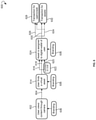
- FIG. 8 is a block diagram illustrating a process 800 for facilitating interactions of the user with the gamified content, according to an example embodiment.
- the process 800 may apply a gaming model that is a modified version of the Octalysis gaming model, with the monetization opportunities available at each step.
- the Octalysis gaming model is a human-centric gamification design framework that lays out eight core drives for motivation of a user. Some steps may be monetized solely through branding, while other steps may be monetized via in-application transaction (i.e., paying to purchase in-application currency which can then be used to acquire virtual assets).
- Step 802 relates to the purpose, or the goal, which is the underlying reason why the user is involved in the gamified environment, namely, to obtain the virtual assets.
- the user may be motivated by the fondness for the affiliated icon and the sense of belonging to a community built around the icon.
- Step 804 relates to the achievement, or the objective, which is how the user gets to the goal, i.e., various steps to unlocking the virtual assets.
- the user is further motivated by the desire to “Level Up” or unlock otherwise hidden or inaccessible content, as well as earn rewards to be used on product discounts.
- Steps 802 and 804 of the process 800 provide the following monetization opportunities.
- the affiliated brand, marketer, agency, or influencer may pay to feature the branding on the introductory screens shown to the user, and the user may be introduced to the purpose of the platform, namely, to acquire virtual assets that are of meaning to the user because of the association of the virtual asset with an icon (athlete, musician, actor, author, celebrity, etc.).
- Step 806 relates to the demand, or the value, which is how the limiting availability of the virtual assets drives the value of the virtual assets.
- the user may be ultimately motivated by the limited availability of the virtual assets so that the supply/demand dynamics may drive the user to seek out the virtual assets to first acquire the virtual assets, and then use the scarcity of the virtual assets to trade/sell the virtual assets via an in-application marketplace.
- the affiliated brand, marketer, agency, or influencer may pay to feature their products in the form of the virtual assets (in limited quantities/distributed over great distances/at a high cost of acquisition/some other manner to drive up initial value and user interest), which can then be collected, traded, and sold by the user within the platform.
- Step 808 relates to the mystery, or the uncertainty, that provides a level of intrigue to the user experience to make the user experience not so straightforward or boring for the user.
- the user may be unsure exactly what virtual asset the user is unlocking, so there is a sense of mystery about the process as the user tries to acquire all virtual assets without knowing for sure where and/or when to find the virtual assets.
- the affiliated brand, marketer, agency, or influencer may pay to feature the branding on the introductory screens, where the user may be introduced to the purpose of the platform, namely, to acquire virtual assets that are of meaning to the user because of their association with an icon.
- Step 810 includes the competition, or the gameplay, though which the user may be matched against one another to challenge for the virtual asset.
- the user may be driven by what other users are doing. For example, there may be a level of competitive nature built into acquiring limited virtual assets when the user may want to acquire all available virtual assets.
- the affiliated brand, marketer, agency, or influencer may also pay to feature the products and iconography throughout the quest of the user to obtain the virtual assets.
- Step 812 relates to the acquisition, or the transaction, by which the user may either receive the virtual assets with little to no effort, the user may be required to earn the virtual assets by completing the gameplay, or the user may purchase the virtual assets by using in-application currency (which may be paid for with real-world currency).
- in-application currency which may be paid for with real-world currency.
- the user may be additionally motivated by the want to acquire the sought-after virtual assets, made even more desirable because of the limited availability of the virtual assets.
- the user may contribute payment at this stage, in order to acquire the virtual assets through payment of in-application currency, which the user can either pay for using real world cash or earn through in-app challenges.
- Step 814 includes the customization, or the interaction, which means how the user engages with the virtual asset once the user has acquired the virtual asset.
- the user may be empowered to create and customize the personalized experience of the user using the available virtual assets.
- the affiliated brand, marketer, agency, or influencer may pay for various features and/or options from which the user can select or which the user can use to customize the user experience.
- Step 816 relates to the protection, or the maintenance, of the virtual assets that enables the user to ensure that the value of the virtual asset remains steady, or even increases over time.
- the user is driven by the unwillingness to lose the virtual asset. Therefore, once the user acquires the virtual asset, the user may do everything the user can to ensure the user holds on to the virtual asset until the user is ready to sell the virtual asset.
- the user can increase the value of the virtual assets the longer the user holds the virtual asset because the market demand increases.
- In-application tools may be used to maintain the integrity of the virtual assets.
- the gaming model illustrated by the process 800 provides the gamified user experience and activates all revenue streams, such as in-application purchases, in-application subscriptions, in-application advertising, digital collectibles (virtual assets), sponsorships, and the like.
- the process 800 further includes providing in-application competitions to facilitate interactions of the user with the gamified content, such as head-to-head competitions (activities that pit users against other users in direct competition), check-in streaks (where users who repeatedly check-in may be rewarded for doing so), trivia (answering questions related to the icon or other game related aspects), and so forth.
- the process 800 further involves sweepstakes and contests, such as content creation judged by other users, content creation judged by the icon, leaderboards (where individual achievements are ranked and the top performers are rewarded), and so forth.
- the process 800 may further include providing digital scavenger hunts that may require users to locate virtual assets hidden in the real world, e.g., on store signage, or hidden in the digital world, e.g., in an Instagram post.
- the user experience may be driven by a reward system that may perpetuate activity loops and desired actions and offer users in-application purchases, in-application advertising, in-application subscriptions, as well as other revenue streams.
- the reward system may provide a plurality of reward to the user.
- the rewards may include digital status symbols (e.g., experience points, badges, reputation score, subsequently leaderboards), digital collectibles, real world rewards, validation and acceptance from the icon (measured based on tracking of the interaction, correspondence, and other exchanges between the user and the icon), and so forth.
- the access to these rewards can be increased and improved upon utilizing a gaming mechanism, for example, through in-application earned power boosts (via continued engagement/gameplay) or through in-application paid purchases (via acquisitions made with digital currencies).
- the virtual assets may have a plurality of options.
- experience points the user can accumulate the experience points in order to increase the level of the user in the application (higher levels provide additional benefits and features).
- reputation points in order to increase the social status of the user in the application (higher reputation provides access to the icon). Tickets may be used to access certain features of the application (if the user does not possess enough tickets, the user cannot engage with the particular feature or content). The users may be able to earn in-application currency in the form of tickets, which can be redeemed for certain activities and actions within the application.
- Coins may be the in-application currency, with which the user can acquire other virtual assets (coins can be purchased with real world currency). Therefore, the user can also earn in-application currency in the form of coins (or other to-be-named digital currency), which can be redeemed for acquiring lockers and virtual assets.
- Both forms of in-application currency can be earned by performing a certain task within the application, by achieving a set of objectives, or through purchase (using real world legal tender).
- the real world currency may not be used within the application except to purchase in-application currency.
- the virtual assets may further include digital still images, for example, photographs, digital illustrations, three-dimensional (3D) renderings, AR content, and so forth.
- the virtual assets may further include digital moving images, for example, videos, animations, 3D content, AR content, and so forth.
- the virtual assets may further include audio, for example, voiceovers, music, or other sounds, and text, for example, informative copy, educational content, descriptions, captions, AR content, and so forth.
- the virtual assets may further include codes, with which the user can acquire other virtual assets or which may be redeemed towards purchase of real world items.
- the virtual assets may also include boosters that are add-ons that can increase the other rewards earned by the user (experience points, reputation points, tickets, coins, and so forth).
- the virtual assets may be available in whole or in part.
- the user may need to acquire the virtual asset incrementally, so the user may need to acquire all the fragments (also referred herein as ‘shards’) of the asset before the asset is available or unlocked.
- shards also referred herein as ‘shards’
- the shard model i.e., incremental accumulation of the virtual asset
- the progress of the user can be indicated through a progress bar, tick marks, percentage, and so forth.
- the blockchain-based platform for monetizing a social media following may be licensed to icons, influencers, celebrities, fictional characters, athletes, gamers, musicians, movie stars, TV stars, and to anyone who has fandom, i.e. a passionate and dedicated fan base.
- FIG. 9 shows a blockchain-based method 900 for monetizing a social media following, according to an example embodiment.
- the process 900 starts at step 1 with a user opening an application on a user devices and seeing a home page/landing page.
- the user can perform any team-based/guild-based activity. Based on the activity, the user can earn reputation at step 3 , which increases standing of the user within the community. As the reputation of the user increases, the user may be provided with more and more opportunities to interact/meet with the icon at step 4 .
- Each meeting/interaction of the user with the icon may conclude with the icon presenting the user with a physical giveaway (e.g., a souvenir) at step 5 .
- a physical giveaway e.g., a souvenir
- the user may also receive experience for the user activity. Gaining the experience enables the user to level up to higher levels at step 7 . This may result in rewarding new high-level frames for a photo of the user in an in-application user profile at step 8 or rewarding high-level content to the user at step 9 .
- the user has an option to engage with/consume in-application content (e.g., read articles, watch videos, etc.).
- content e.g., read articles, watch videos, etc.
- the user may gain experience, as in step 6 , and the experience can be used to level up, as in step 7 .
- other users can react to the activity of the user (likes, shares, and/or comments). The user can gain credit for the reactions from other users at step 13 .
- these credits can be used to purchase mystery lockers within the application.
- the mystery lockers can contain boosters, which can increase the output of certain processes at step 15 : gaining experience, earning credit, receiving tickets, gaining reputation, accessing competitions, receiving mystery lockers, and so forth.
- boosters can increase the output of certain processes at step 15 : gaining experience, earning credit, receiving tickets, gaining reputation, accessing competitions, receiving mystery lockers, and so forth.
- level X a certain level
- premium content and exclusive features may be unlocked for the user.
- the user may receive the ability to create and post content.
- the user may gain credits as in step 13 .
- the credits may be used to purchase mystery lockers, as in step 14 , in order to gain boosters as in step 15 .
- the user may gain reputation, as in step 3 . The higher the reputation is, the greater the opportunity to interact directly with the icon is, as in step 4 , so that the user can receive the exclusive assets directly from the icon in person, as in step 5 .
- the user may also open a daily locker, which may provide access to a daily booster similar to step 15 .
- opening of the daily locker may provide the user with more tickets of a random number, but no more than the stack capacity of tickets.
- the user may use the tickets to create content, which may gain a booster for the user, as in step 15 .
- the user may use the tickets to like, share, and/or comment existing content, which may gain the user a booster, as in step 15 .
- the user may engage in a competition through in-application challenges (some of the challenges may be with other users in team challenges, or against other users in head-to-head challenges).
- the user may gain avatar frames which can be used by the user to dress up the profile photo at step 23 .
- the user can gain mystery lockers at step 24 .
- the mystery lockers can contain items relayed to the current level of the user (higher levels may unlock higher tier items).
- the mystery lockers can contain unique virtual assets, which the user can gain at step 26 .
- the user can enhance the profile aura at step 27 .
- the user can store the virtual asset in the virtual bank/wallet and track the value of the virtual asset within the application community at step 28 (as similar assets are sold and/or traded by other users).
- the user may exchange the in-application currency (e.g., credits) at step 29 or exchange the real world legal tender (e.g., USD, $) at step 30 to purchase virtual assets at step 31 .
- the user can also sell the assets the user has acquired.
- the user can trade the virtual assets with each other in an in-application marketplace at step 33 . Performing any of steps 30 , 31 , or 32 will return the user to step 26 , where the user can gain unique virtual assets.
- the mystery lockers can contain themed digital collectibles so that the user may gain themed collections at step 34 . These themed collectibles may also provide the user with a badge to display and a frame for the avatar of the user at step 35 .
- the mystery lockers can contain a 100% token replenish booster so that the user can gain 100% ticket replenishment at step 36 . This may automatically restore the token capacity of the user to the maximum value at step 37 when the booster is used.
- the maximum token value is referred to as the stack capacity and the replenish speed is a restriction on how long it takes before the user can replenish the depleted token stash at step 38 .
- the stack capacity, along with the replenish speed, may both increase at step 39 each time the user levels up.
- the user can receive tickets by engaging with sponsored offers.
- the user can also receive tickets by watching advertised videos.
- the tickets received at steps 38 , 40 , and 41 can be combined with the tickets received at step 19 for opening a daily locker as in step 18 .
- the user may be required to check in within a certain geographic area at step 43 .
- the user may be required to access the application at a specific time (or within a dedicated timeframe) at step 44 .
- FIG. 10 illustrates an exemplary computing system 1000 that may be used to implement embodiments described herein.
- the exemplary computing system 1000 of FIG. 10 may include one or more processors 1010 and memory 1020 .
- Memory 1020 may store, in part, instructions and data for execution by the one or more processors 1010 .
- Memory 1020 can store the executable code when the exemplary computing system 1000 is in operation.
- the exemplary computing system 1000 of FIG. 10 may further include a mass storage 1030 , portable storage 1040 , one or more output devices 1050 , one or more input devices 1060 , a network interface 1070 , and one or more peripheral devices 1080 .
- the components shown in FIG. 10 are depicted as being connected via a single bus 1090 .
- the components may be connected through one or more data transport means.
- the one or more processors 1010 and memory 1020 may be connected via a local microprocessor bus, and the mass storage 1030 , one or more peripheral devices 1080 , portable storage 1040 , and network interface 1070 may be connected via one or more input/output buses.
- Mass storage 1030 which may be implemented with a magnetic disk drive or an optical disk drive, is a non-volatile storage device for storing data and instructions for use by a magnetic disk or an optical disk drive, which in turn may be used by one or more processors 1010 . Mass storage 1030 can store the system software for implementing embodiments described herein for purposes of loading that software into memory 1020 .
- Portable storage 1040 may operate in conjunction with a portable non-volatile storage medium, such as a compact disk (CD) or digital video disc (DVD), to input and output data and code to and from the computing system 1000 of FIG. 10 .
- a portable non-volatile storage medium such as a compact disk (CD) or digital video disc (DVD)
- CD compact disk
- DVD digital video disc
- the system software for implementing embodiments described herein may be stored on such a portable medium and input to the computing system 1000 via the portable storage 1040 .
- One or more input devices 1060 provide a portion of a user interface.
- the one or more input devices 1060 may include an alphanumeric keypad, such as a keyboard, for inputting alphanumeric and other information, or a pointing device, such as a mouse, a trackball, a stylus, or cursor direction keys.
- the computing system 1000 as shown in FIG. 10 includes one or more output devices 1050 .
- Suitable one or more output devices 1050 include speakers, printers, network interfaces, and monitors.
- Network interface 1070 can be utilized to communicate with external devices, external computing devices, servers, and networked systems via one or more communications networks such as one or more wired, wireless, or optical networks including, for example, the Internet, intranet, LAN, WAN, cellular phone networks (e.g., Global System for Mobile communications network, packet switching communications network, circuit switching communications network), Bluetooth radio, and an IEEE 802.11-based radio frequency network, among others.
- Network interface 1070 may be a network interface card, such as an Ethernet card, optical transceiver, radio frequency transceiver, or any other type of device that can send and receive information.
- Other examples of such network interfaces may include Bluetooth®, 3G, 4G, and WiFi® radios in mobile computing devices as well as a USB.
- One or more peripheral devices 1080 may include any type of computer support device to add additional functionality to the computing system.
- the one or more peripheral devices 1080 may include a modem or a router.
- the components contained in the exemplary computing system 1000 of FIG. 10 are those typically found in computing systems that may be suitable for use with embodiments described herein and are intended to represent a broad category of such computer components that are well known in the art.
- the exemplary computing system 1000 of FIG. 10 can be a personal computer, hand held computing device, telephone, mobile computing device, workstation, server, minicomputer, mainframe computer, or any other computing device.
- the computer can also include different bus configurations, networked platforms, multi-processor platforms, and so forth.
- Various operating systems (OS) can be used including UNIX, Linux, Windows, Macintosh OS, Palm OS, and other suitable operating systems.
- Some of the above-described functions may be composed of instructions that are stored on storage media (e.g., computer-readable medium).
- the instructions may be retrieved and executed by the processor.
- Some examples of storage media are memory devices, tapes, disks, and the like.
- the instructions are operational when executed by the processor to direct the processor to operate in accord with the example embodiments. Those skilled in the art are familiar with instructions, processor(s), and storage media.
- Non-volatile media include, for example, optical or magnetic disks, such as a fixed disk.
- Volatile media include dynamic memory, such as RAM.
- Transmission media include coaxial cables, copper wire, and fiber optics, among others, including the wires that include one embodiment of a bus. Transmission media can also take the form of acoustic or light waves, such as those generated during radio frequency and infrared data communications.
- Computer-readable media include, for example, a floppy disk, a flexible disk, a hard disk, magnetic tape, any other magnetic medium, a CD-read-only memory (ROM) disk, DVD, any other optical medium, any other physical medium with patterns of marks or holes, a RAM, a PROM, an EPROM, an EEPROM, a FLASHEPROM, any other memory chip or cartridge, a carrier wave, or any other medium from which a computer can read.
- a bus carries the data to system RAM, from which a CPU retrieves and executes the instructions.
- the instructions received by system RAM can optionally be stored on a fixed disk either before or after execution by a CPU.
Landscapes
- Engineering & Computer Science (AREA)
- Business, Economics & Management (AREA)
- Theoretical Computer Science (AREA)
- General Physics & Mathematics (AREA)
- Physics & Mathematics (AREA)
- Strategic Management (AREA)
- Development Economics (AREA)
- Finance (AREA)
- Accounting & Taxation (AREA)
- Economics (AREA)
- Marketing (AREA)
- Entrepreneurship & Innovation (AREA)
- General Business, Economics & Management (AREA)
- Software Systems (AREA)
- Game Theory and Decision Science (AREA)
- Computer Security & Cryptography (AREA)
- Signal Processing (AREA)
- General Engineering & Computer Science (AREA)
- Computer Networks & Wireless Communication (AREA)
- Computing Systems (AREA)
- Computer Hardware Design (AREA)
- Computer Graphics (AREA)
- Human Resources & Organizations (AREA)
- Tourism & Hospitality (AREA)
- Quality & Reliability (AREA)
- Artificial Intelligence (AREA)
- Computer Vision & Pattern Recognition (AREA)
- Data Mining & Analysis (AREA)
- Evolutionary Computation (AREA)
- Medical Informatics (AREA)
- Operations Research (AREA)
- Mathematical Physics (AREA)
- Management, Administration, Business Operations System, And Electronic Commerce (AREA)
Abstract
Description
Claims (30)
Priority Applications (1)
| Application Number | Priority Date | Filing Date | Title |
|---|---|---|---|
| US16/221,349 US11238476B2 (en) | 2018-12-14 | 2018-12-14 | Blockchain-based platform for monetizing social media following |
Applications Claiming Priority (1)
| Application Number | Priority Date | Filing Date | Title |
|---|---|---|---|
| US16/221,349 US11238476B2 (en) | 2018-12-14 | 2018-12-14 | Blockchain-based platform for monetizing social media following |
Publications (2)
| Publication Number | Publication Date |
|---|---|
| US20200193464A1 US20200193464A1 (en) | 2020-06-18 |
| US11238476B2 true US11238476B2 (en) | 2022-02-01 |
Family
ID=71071711
Family Applications (1)
| Application Number | Title | Priority Date | Filing Date |
|---|---|---|---|
| US16/221,349 Expired - Fee Related US11238476B2 (en) | 2018-12-14 | 2018-12-14 | Blockchain-based platform for monetizing social media following |
Country Status (1)
| Country | Link |
|---|---|
| US (1) | US11238476B2 (en) |
Cited By (2)
| Publication number | Priority date | Publication date | Assignee | Title |
|---|---|---|---|---|
| US20240005370A1 (en) * | 2021-07-14 | 2024-01-04 | Forever Fan Corporation | Certification of fan status and corresponding marketplace for digital collectibles |
| US12380417B2 (en) | 2023-01-17 | 2025-08-05 | Target Brands, Inc. | Method and system of providing metaverse digital asset based on retailer desired purchase, participation or action |
Families Citing this family (6)
| Publication number | Priority date | Publication date | Assignee | Title |
|---|---|---|---|---|
| US20200258099A1 (en) * | 2019-02-13 | 2020-08-13 | Mansour Alghamdi | Systems And Methods For Verifiable Peer To Peer Communication |
| US20230044901A1 (en) * | 2021-04-19 | 2023-02-09 | Erich Lawson Spangenberg | System and method for non-fungible tokenization of intellectual property |
| US20230169615A1 (en) * | 2021-11-27 | 2023-06-01 | Curtis Hutten | Real Estate Associated Tokens |
| WO2024112281A1 (en) * | 2022-11-22 | 2024-05-30 | Goart Teknoloji̇ Anoni̇m Şi̇rketi̇ | A system enabling loyalty programs to be used more effectively |
| US20240249369A1 (en) * | 2023-01-24 | 2024-07-25 | The Verse Social Club LLC | Systems and methods for providing a social network |
| WO2025180586A1 (en) * | 2024-02-29 | 2025-09-04 | Анна ЗОЙКИНА | Social network with advertising-entertainment contests, use of artificial intelligence and original dynamic tokenization |
Citations (14)
| Publication number | Priority date | Publication date | Assignee | Title |
|---|---|---|---|---|
| US20120150759A1 (en) * | 2010-12-09 | 2012-06-14 | Yahoo! Inc. | Non-gaming on-line achievement awards |
| US20120150695A1 (en) * | 2010-12-09 | 2012-06-14 | Maureen Fan | Apparatuses, Methods and Systems for an Online Rewards Incentive Program |
| US20130143670A1 (en) * | 2006-05-08 | 2013-06-06 | William H. JUNKIN | Regulated game asset driven economy |
| US20130262203A1 (en) * | 2012-03-27 | 2013-10-03 | Sirqul, Inc. | Location-based task and game functionality |
| US20140297469A1 (en) * | 2013-03-29 | 2014-10-02 | John Nicholas Dukellis | Consumer Monetization of Pre-existing Internet Usage Data |
| US20140365572A1 (en) * | 2013-06-05 | 2014-12-11 | Brabble TV.com LLC | System and Method for Media-Centric and Monetizable Social Networking |
| US20150242755A1 (en) * | 2014-02-25 | 2015-08-27 | John Nicholas And Kristin Gross Trust U/A/D April 13, 2010 | Social Content Connection System & Method |
| US20160342977A1 (en) * | 2015-05-20 | 2016-11-24 | Vennd.io Pty Ltd | Device, method and system for virtual asset transactions |
| US20170239577A1 (en) * | 2011-06-07 | 2017-08-24 | Nike, Inc. | Virtual Performance System |
| US9833694B1 (en) * | 2012-08-28 | 2017-12-05 | Zynga Inc. | Providing rewards to players based on activity of associated players |
| US10105608B1 (en) * | 2015-12-18 | 2018-10-23 | Amazon Technologies, Inc. | Applying participant metrics in game environments |
| US20180349478A1 (en) * | 2017-03-24 | 2018-12-06 | Inmentis, Llc | Social media system with navigable, artificial-intelligence-based graphical user interface |
| WO2019023659A1 (en) * | 2017-07-28 | 2019-01-31 | Magical Technologies, Llc | Systems, methods and apparatuses of seamless integration of augmented, alternate, virtual, and/or mixed realities with physical realities for enhancement of web, mobile and/or other digital experiences |
| US10229561B2 (en) * | 2012-09-04 | 2019-03-12 | Linq3 Technologies Llc | Processing of a user device game-playing transaction based on location |
-
2018
- 2018-12-14 US US16/221,349 patent/US11238476B2/en not_active Expired - Fee Related
Patent Citations (14)
| Publication number | Priority date | Publication date | Assignee | Title |
|---|---|---|---|---|
| US20130143670A1 (en) * | 2006-05-08 | 2013-06-06 | William H. JUNKIN | Regulated game asset driven economy |
| US20120150695A1 (en) * | 2010-12-09 | 2012-06-14 | Maureen Fan | Apparatuses, Methods and Systems for an Online Rewards Incentive Program |
| US20120150759A1 (en) * | 2010-12-09 | 2012-06-14 | Yahoo! Inc. | Non-gaming on-line achievement awards |
| US20170239577A1 (en) * | 2011-06-07 | 2017-08-24 | Nike, Inc. | Virtual Performance System |
| US20130262203A1 (en) * | 2012-03-27 | 2013-10-03 | Sirqul, Inc. | Location-based task and game functionality |
| US9833694B1 (en) * | 2012-08-28 | 2017-12-05 | Zynga Inc. | Providing rewards to players based on activity of associated players |
| US10229561B2 (en) * | 2012-09-04 | 2019-03-12 | Linq3 Technologies Llc | Processing of a user device game-playing transaction based on location |
| US20140297469A1 (en) * | 2013-03-29 | 2014-10-02 | John Nicholas Dukellis | Consumer Monetization of Pre-existing Internet Usage Data |
| US20140365572A1 (en) * | 2013-06-05 | 2014-12-11 | Brabble TV.com LLC | System and Method for Media-Centric and Monetizable Social Networking |
| US20150242755A1 (en) * | 2014-02-25 | 2015-08-27 | John Nicholas And Kristin Gross Trust U/A/D April 13, 2010 | Social Content Connection System & Method |
| US20160342977A1 (en) * | 2015-05-20 | 2016-11-24 | Vennd.io Pty Ltd | Device, method and system for virtual asset transactions |
| US10105608B1 (en) * | 2015-12-18 | 2018-10-23 | Amazon Technologies, Inc. | Applying participant metrics in game environments |
| US20180349478A1 (en) * | 2017-03-24 | 2018-12-06 | Inmentis, Llc | Social media system with navigable, artificial-intelligence-based graphical user interface |
| WO2019023659A1 (en) * | 2017-07-28 | 2019-01-31 | Magical Technologies, Llc | Systems, methods and apparatuses of seamless integration of augmented, alternate, virtual, and/or mixed realities with physical realities for enhancement of web, mobile and/or other digital experiences |
Non-Patent Citations (1)
| Title |
|---|
| "Understanding Location Based Information Sharing in a Mobile Human Computation Game" 2011 IEE Conferences on Internet of Things and Cyber, Physical and Social Computing. * |
Cited By (3)
| Publication number | Priority date | Publication date | Assignee | Title |
|---|---|---|---|---|
| US20240005370A1 (en) * | 2021-07-14 | 2024-01-04 | Forever Fan Corporation | Certification of fan status and corresponding marketplace for digital collectibles |
| US12462283B2 (en) | 2021-07-14 | 2025-11-04 | Forever Fan Corporation | Certification of fan status and corresponding marketplace for digital collectibles |
| US12380417B2 (en) | 2023-01-17 | 2025-08-05 | Target Brands, Inc. | Method and system of providing metaverse digital asset based on retailer desired purchase, participation or action |
Also Published As
| Publication number | Publication date |
|---|---|
| US20200193464A1 (en) | 2020-06-18 |
Similar Documents
| Publication | Publication Date | Title |
|---|---|---|
| US20200193464A1 (en) | Blockchain-based platform for monetizing social media following | |
| US20210049627A1 (en) | System and method for evaluating and optimizing media content | |
| US11195375B2 (en) | Computer program, method, and system for providing redeemable promotional-valued credits | |
| US11455694B2 (en) | System and methods for building a digital asset based social media application and reward platform | |
| US20230128945A1 (en) | Systems And Methods for Monetization of Time and Activity on a Digital Ledger | |
| US9886720B2 (en) | Platform for providing customizable user brand experiences, sponsorship junctions, and conversion attribution | |
| US12400245B2 (en) | Platform for providing customizable user brand experiences, sponsorship junctions, and conversion attribution | |
| US20130231999A1 (en) | Method and apparatus for personalized marketing | |
| US20210174220A1 (en) | Prediction processing system and method of use and method of doing business | |
| US20140236750A1 (en) | Method and system for selling products and services via crowdsourcing and reality tv show | |
| US20130073359A1 (en) | System and method for receiving and apportioning fees in an online environment | |
| US20170109716A1 (en) | User directed donation system and method | |
| US20150088624A1 (en) | Location-based task and game functionality | |
| US11636520B1 (en) | Blockchain-based digital advertising and marketing system and method | |
| CN111415179B (en) | User rights and interests information processing method and device and electronic equipment | |
| US20170017978A1 (en) | Computer platform for managing third party interactions and generating analytics therefore | |
| US12340426B2 (en) | System and methods for building a digital asset based social media application and reward platform | |
| US12462277B2 (en) | Gamified digital commerce marketplace | |
| KR102440532B1 (en) | Blockchain-based content activity reward platform device and content activity reward method using the same | |
| US20130073360A1 (en) | System and method for presenting video content in an online environment | |
| KR102242206B1 (en) | Operating method of competition platform and participating method of competition | |
| US20130132177A1 (en) | System and method for providing sharing rewards | |
| WO2025144464A1 (en) | System and method for reward generation on social media platform | |
| US20240330971A1 (en) | Methods, systems, apparatuses, and devices for provisioning experiences for enhancing engagements | |
| US20200380549A1 (en) | Incented platform for long-form content including e-books, audiobook, podcasts, and the like |
Legal Events
| Date | Code | Title | Description |
|---|---|---|---|
| FEPP | Fee payment procedure |
Free format text: ENTITY STATUS SET TO UNDISCOUNTED (ORIGINAL EVENT CODE: BIG.); ENTITY STATUS OF PATENT OWNER: SMALL ENTITY |
|
| FEPP | Fee payment procedure |
Free format text: ENTITY STATUS SET TO SMALL (ORIGINAL EVENT CODE: SMAL); ENTITY STATUS OF PATENT OWNER: SMALL ENTITY |
|
| STPP | Information on status: patent application and granting procedure in general |
Free format text: DOCKETED NEW CASE - READY FOR EXAMINATION |
|
| STPP | Information on status: patent application and granting procedure in general |
Free format text: NON FINAL ACTION MAILED |
|
| STPP | Information on status: patent application and granting procedure in general |
Free format text: FINAL REJECTION MAILED |
|
| STPP | Information on status: patent application and granting procedure in general |
Free format text: NON FINAL ACTION MAILED |
|
| STPP | Information on status: patent application and granting procedure in general |
Free format text: RESPONSE TO NON-FINAL OFFICE ACTION ENTERED AND FORWARDED TO EXAMINER |
|
| STPP | Information on status: patent application and granting procedure in general |
Free format text: FINAL REJECTION MAILED |
|
| STCV | Information on status: appeal procedure |
Free format text: NOTICE OF APPEAL FILED |
|
| STPP | Information on status: patent application and granting procedure in general |
Free format text: RESPONSE TO NON-FINAL OFFICE ACTION ENTERED AND FORWARDED TO EXAMINER |
|
| STPP | Information on status: patent application and granting procedure in general |
Free format text: NOTICE OF ALLOWANCE MAILED -- APPLICATION RECEIVED IN OFFICE OF PUBLICATIONS |
|
| STPP | Information on status: patent application and granting procedure in general |
Free format text: PUBLICATIONS -- ISSUE FEE PAYMENT VERIFIED |
|
| STCF | Information on status: patent grant |
Free format text: PATENTED CASE |
|
| FEPP | Fee payment procedure |
Free format text: MAINTENANCE FEE REMINDER MAILED (ORIGINAL EVENT CODE: REM.); ENTITY STATUS OF PATENT OWNER: SMALL ENTITY |
|
| LAPS | Lapse for failure to pay maintenance fees |
Free format text: PATENT EXPIRED FOR FAILURE TO PAY MAINTENANCE FEES (ORIGINAL EVENT CODE: EXP.); ENTITY STATUS OF PATENT OWNER: SMALL ENTITY |
|
| STCH | Information on status: patent discontinuation |
Free format text: PATENT EXPIRED DUE TO NONPAYMENT OF MAINTENANCE FEES UNDER 37 CFR 1.362 |
|
| FP | Lapsed due to failure to pay maintenance fee |
Effective date: 20260201 |