US11230711B2 - Inhibition of LET7I as a means to enhance the protective effect of progesterone against stroke - Google Patents
Inhibition of LET7I as a means to enhance the protective effect of progesterone against stroke Download PDFInfo
- Publication number
- US11230711B2 US11230711B2 US16/639,139 US201816639139A US11230711B2 US 11230711 B2 US11230711 B2 US 11230711B2 US 201816639139 A US201816639139 A US 201816639139A US 11230711 B2 US11230711 B2 US 11230711B2
- Authority
- US
- United States
- Prior art keywords
- bdnf
- stroke
- expression
- progesterone
- brain
- Prior art date
- Legal status (The legal status is an assumption and is not a legal conclusion. Google has not performed a legal analysis and makes no representation as to the accuracy of the status listed.)
- Active, expires
Links
Images




Classifications
-
- C—CHEMISTRY; METALLURGY
- C12—BIOCHEMISTRY; BEER; SPIRITS; WINE; VINEGAR; MICROBIOLOGY; ENZYMOLOGY; MUTATION OR GENETIC ENGINEERING
- C12N—MICROORGANISMS OR ENZYMES; COMPOSITIONS THEREOF; PROPAGATING, PRESERVING, OR MAINTAINING MICROORGANISMS; MUTATION OR GENETIC ENGINEERING; CULTURE MEDIA
- C12N15/00—Mutation or genetic engineering; DNA or RNA concerning genetic engineering, vectors, e.g. plasmids, or their isolation, preparation or purification; Use of hosts therefor
- C12N15/09—Recombinant DNA-technology
- C12N15/11—DNA or RNA fragments; Modified forms thereof; Non-coding nucleic acids having a biological activity
- C12N15/113—Non-coding nucleic acids modulating the expression of genes, e.g. antisense oligonucleotides; Antisense DNA or RNA; Triplex- forming oligonucleotides; Catalytic nucleic acids, e.g. ribozymes; Nucleic acids used in co-suppression or gene silencing
-
- A—HUMAN NECESSITIES
- A61—MEDICAL OR VETERINARY SCIENCE; HYGIENE
- A61K—PREPARATIONS FOR MEDICAL, DENTAL OR TOILETRY PURPOSES
- A61K31/00—Medicinal preparations containing organic active ingredients
- A61K31/56—Compounds containing cyclopenta[a]hydrophenanthrene ring systems; Derivatives thereof, e.g. steroids
- A61K31/57—Compounds containing cyclopenta[a]hydrophenanthrene ring systems; Derivatives thereof, e.g. steroids substituted in position 17 beta by a chain of two carbon atoms, e.g. pregnane or progesterone
-
- A—HUMAN NECESSITIES
- A61—MEDICAL OR VETERINARY SCIENCE; HYGIENE
- A61K—PREPARATIONS FOR MEDICAL, DENTAL OR TOILETRY PURPOSES
- A61K31/00—Medicinal preparations containing organic active ingredients
- A61K31/70—Carbohydrates; Sugars; Derivatives thereof
- A61K31/7088—Compounds having three or more nucleosides or nucleotides
-
- A—HUMAN NECESSITIES
- A61—MEDICAL OR VETERINARY SCIENCE; HYGIENE
- A61K—PREPARATIONS FOR MEDICAL, DENTAL OR TOILETRY PURPOSES
- A61K31/00—Medicinal preparations containing organic active ingredients
- A61K31/70—Carbohydrates; Sugars; Derivatives thereof
- A61K31/7088—Compounds having three or more nucleosides or nucleotides
- A61K31/7105—Natural ribonucleic acids, i.e. containing only riboses attached to adenine, guanine, cytosine or uracil and having 3'-5' phosphodiester links
-
- A—HUMAN NECESSITIES
- A61—MEDICAL OR VETERINARY SCIENCE; HYGIENE
- A61K—PREPARATIONS FOR MEDICAL, DENTAL OR TOILETRY PURPOSES
- A61K31/00—Medicinal preparations containing organic active ingredients
- A61K31/70—Carbohydrates; Sugars; Derivatives thereof
- A61K31/7088—Compounds having three or more nucleosides or nucleotides
- A61K31/713—Double-stranded nucleic acids or oligonucleotides
-
- A—HUMAN NECESSITIES
- A61—MEDICAL OR VETERINARY SCIENCE; HYGIENE
- A61K—PREPARATIONS FOR MEDICAL, DENTAL OR TOILETRY PURPOSES
- A61K38/00—Medicinal preparations containing peptides
- A61K38/16—Peptides having more than 20 amino acids; Gastrins; Somatostatins; Melanotropins; Derivatives thereof
- A61K38/17—Peptides having more than 20 amino acids; Gastrins; Somatostatins; Melanotropins; Derivatives thereof from animals; from humans
- A61K38/18—Growth factors; Growth regulators
- A61K38/185—Nerve growth factor [NGF]; Brain derived neurotrophic factor [BDNF]; Ciliary neurotrophic factor [CNTF]; Glial derived neurotrophic factor [GDNF]; Neurotrophins, e.g. NT-3
-
- A—HUMAN NECESSITIES
- A61—MEDICAL OR VETERINARY SCIENCE; HYGIENE
- A61P—SPECIFIC THERAPEUTIC ACTIVITY OF CHEMICAL COMPOUNDS OR MEDICINAL PREPARATIONS
- A61P25/00—Drugs for disorders of the nervous system
- A61P25/28—Drugs for disorders of the nervous system for treating neurodegenerative disorders of the central nervous system, e.g. nootropic agents, cognition enhancers, drugs for treating Alzheimer's disease or other forms of dementia
-
- C—CHEMISTRY; METALLURGY
- C12—BIOCHEMISTRY; BEER; SPIRITS; WINE; VINEGAR; MICROBIOLOGY; ENZYMOLOGY; MUTATION OR GENETIC ENGINEERING
- C12N—MICROORGANISMS OR ENZYMES; COMPOSITIONS THEREOF; PROPAGATING, PRESERVING, OR MAINTAINING MICROORGANISMS; MUTATION OR GENETIC ENGINEERING; CULTURE MEDIA
- C12N2310/00—Structure or type of the nucleic acid
- C12N2310/10—Type of nucleic acid
- C12N2310/11—Antisense
-
- C—CHEMISTRY; METALLURGY
- C12—BIOCHEMISTRY; BEER; SPIRITS; WINE; VINEGAR; MICROBIOLOGY; ENZYMOLOGY; MUTATION OR GENETIC ENGINEERING
- C12N—MICROORGANISMS OR ENZYMES; COMPOSITIONS THEREOF; PROPAGATING, PRESERVING, OR MAINTAINING MICROORGANISMS; MUTATION OR GENETIC ENGINEERING; CULTURE MEDIA
- C12N2310/00—Structure or type of the nucleic acid
- C12N2310/10—Type of nucleic acid
- C12N2310/11—Antisense
- C12N2310/113—Antisense targeting other non-coding nucleic acids, e.g. antagomirs
-
- C—CHEMISTRY; METALLURGY
- C12—BIOCHEMISTRY; BEER; SPIRITS; WINE; VINEGAR; MICROBIOLOGY; ENZYMOLOGY; MUTATION OR GENETIC ENGINEERING
- C12N—MICROORGANISMS OR ENZYMES; COMPOSITIONS THEREOF; PROPAGATING, PRESERVING, OR MAINTAINING MICROORGANISMS; MUTATION OR GENETIC ENGINEERING; CULTURE MEDIA
- C12N2310/00—Structure or type of the nucleic acid
- C12N2310/10—Type of nucleic acid
- C12N2310/14—Type of nucleic acid interfering nucleic acids [NA]
- C12N2310/141—MicroRNAs, miRNAs
-
- C—CHEMISTRY; METALLURGY
- C12—BIOCHEMISTRY; BEER; SPIRITS; WINE; VINEGAR; MICROBIOLOGY; ENZYMOLOGY; MUTATION OR GENETIC ENGINEERING
- C12N—MICROORGANISMS OR ENZYMES; COMPOSITIONS THEREOF; PROPAGATING, PRESERVING, OR MAINTAINING MICROORGANISMS; MUTATION OR GENETIC ENGINEERING; CULTURE MEDIA
- C12N2320/00—Applications; Uses
- C12N2320/30—Special therapeutic applications
- C12N2320/31—Combination therapy
Definitions
- Stroke is the fourth leading cause of death and a major cause of disability in the US [14], costing approximately $34 Billion annually (according to the Center for Disease Control).
- the risk of ischemic stroke dramatically increases with age.
- the incidence of ischemic stroke is relatively rare among pre-menopausal women [1].
- middle aged women have a lower risk of stroke than men, stroke becomes more prevalent in post-menopausal women compared to men of the same age [1].
- With increasing age circulating gonadal hormone levels decline in both males and females, however, such age-associated decreases are much more dramatic in women, and is a function of the menopause.
- glia may be an equally important target underlying P4's protective effects on the brain has only been studied minimally. Indeed, astrocytes have been considered as an important component in the post-ischemic recovery, as these cells are critical for regeneration and remodeling of neural circuits following stroke [9].
- BDNF brain-derived neurotrophic factor
- a deficit in BDNF has been linked to stroke pathophysiology [16, 17].
- CNS central nervous system
- BDNF also has an established role in promoting neuronal differentiation, survival, synaptic plasticity [6-8] and synaptogenesis [18-20].
- Synaptogenesis occurring in the penumbra is known to strongly contribute to enhanced functional recovery from stroke [21-24]. Based on these observations, it is plausible that the P4/BDNF signaling-mediated enhanced synaptogenesis and neuroprotection may contribute to P4's protective effects during post stroke brain repair.
- let-7i negatively regulates expression of both Pgrmc1 and BDNF in glia, leading to suppression of P4-induced BDNF release from glia and attenuation of P4's beneficial effects on neuroprotection and synaptogenesis in the ischemic brain.
- let-7i negatively regulates expression of both Pgrmc1 and BDNF in glia, leading to suppression of P4-induced BDNF release from glia and attenuation of P4's beneficial effects on neuroprotection and synaptogenesis in the ischemic brain.
- let-7i with stroke may explain why post stroke therapy may not be so effective.
- TBI traumatic brain injury
- the subject invention provides methods of treating neurological disease or disorder, such as brain injuries, such as stroke, traumatic brain injury (TBI), or other ischemic events that cause brain injury by inhibiting or down-regulating Let-7i activity or function.
- the disclosed methods may have the potential to extend the “window of opportunity” for treatment of such injuries and enhance the efficacy of existing treatments for such injuries.
- FIGS. 1A-1B Conditioned medium derived from P4 (10 nM)-treated astrocytes (P4-ACM, 18 hrs) and BDNF (50 ng/ml, 18 hrs) increased expression of Synaptophysin and Gap-43 in primary cortical neurons.
- FIG. 1A represents immune-staining of Gap43 (green) and Synaptophysin (red).
- FIG. 1B represents qRT-PCR analysis of Gap43 (left) and Synaptophysin (right) mRNA levels. Data are presented as a percentage of control (non-treated group) (*: p ⁇ 0.05, **:p ⁇ 0.01).
- FIGS. 2A-2B Over-Expression of Let-7i down-regulated Pgrmc1 and BDNF mRNA in primary astrocytes.
- Cells were transfected with let-7i or let-7f mimic or a negative control 48 hrs prior to RNA isolation for qRT-PCR.
- Quantification of Pgrmc1 and BDNF mRNA levels was normalized to GAPDH ( FIG. 2A ).
- Quantification of let-7 levels was normalized to U6 snRNA ( FIG. 2B ). Data are presented as a percentage of control (***:p ⁇ 0.001, n.s: non-significant).
- FIG. 3 Let-7i attenuates P4-induced BDNF release from primary cortical astrocytes, measured by in-situ BDNF ELISA (***:p ⁇ 0.001, n.s: non-significant).
- FIG. 4 Age-related decrease of Pgrmc1 expression correlated with decrease of BDNF in mouse hippocampus. mRNA levels were measured by qRT-PCR (young: 6-mo old; middle-aged: 12-mo old; old: 24-mo old. Data presented as a percentage of young group (*: p ⁇ 0.05, **: p ⁇ 0.01, n.s: non-significant).
- FIGS. 5A-5B A decrease of Pgrmc1 expression correlates with an increase of Let-7i in cortex at day 7 post-stroke.
- Total RNA was measured by qRT-PCR.
- Pgrmc1 mRNA was normalized to GAPDH ( FIG. 5A ).
- Let-7i expression was normalized to U6 snRNA ( FIG. 5B ) (*: p ⁇ 0.05).
- FIG. 6 Ischemic injury is greatly reduced in animals receiving P4 and the Let-7i inhibitor.
- FIG. 7 Functional recovery (grip strength) is greatly enhanced in animals receiving ICV injections of the Let-7i inhibitor.
- FIGS. 8A-8B Oxygen-Glucose Deprivation results in an increase in let-7i expression and suppresses progesterone (P4)-induced BDNF release from primary cortical astrocytes.
- FIG. 9 let-7i prevents progesterone (P4)-induced neuroprotection against oxygen-glucose-deprivation (OGD).
- P4 progesterone
- OGD oxygen-glucose-deprivation
- Conditioned-media derived from hormone or control-treated astrocytes were applied to primary cortical neurons (DIV 14) after one-hour exposure to OGD.
- BDNF 50 ng/ml
- FIGS. 10A-10C let-7i inhibits progesterone (P4) induces synaptophysin (SYP) expression in primary cortical neurons.
- FIGS. 11A-11E Combined treatment with progesterone (P4) and the let-7i inhibitor reversed ischemia-induced suppression of Pgrmc1 and BDNF expressions in the penumbra.
- FIG. 11A Representative immunoblots probed for Pgrmc1, pro- and mature-BDNF.
- FIG. 11A Representative immunoblots probed for Pgrmc1, pro- and mature-BDNF.
- FIG. 11C Quantitation graph of relative pro-BDNF protein ratio to Gapdh
- FIGS. 12A-12B Co-administration of let-7i antagomir (anti-let-7i) and progesterone (P4) reduces ischemic injury.
- FIG. 12A Representative images of serial coronal brain sections stained with triphenyltetrazolium chloride (TTC).
- TTC triphenyltetrazolium chloride
- FIG. 13 Co-administration of let-7i antagomir (anti-let-7i) and progesterone (P4) enhances recovery of motor function/grip strength following stroke.
- Results of wire suspension test at day 3, 7 and 14 post stroke (n 15-20 per group). n.s: not significant, ***P ⁇ 0.001 and ** P ⁇ 0.01 compared to sham, ### P ⁇ 0.001, ##P ⁇ 0.01 compared to P4+scrambled, and $$P ⁇ 0.01 compared to cholesterol+scrambled. Data are presented as the mean ⁇ SEM.
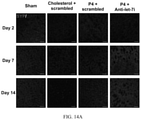
- FIGS. 14A-14D Inhibition of let-7i enhances progesterone (P4)'s effect on the expression of synaptophysin in the penumbra.
- FIG. 14C Representative immunoblots probed for SYP protein.
- “about” or “approximately” means within an acceptable error range for the particular value as determined by one of ordinary skill in the art, which will depend in part on how the value is measured or determined, i.e., the limitations of the measurement system. For example, “about” can mean within 1 or more than 1 standard deviation, per the practice in the art. Alternatively, “about” can mean a range of up to 20%, preferably up to 10%, more preferably up to 5%, and more preferably still up to 1% of a given value.
- Let-7i As used herein, the “Let-7i” sequence comprises:
- the let-7i-5p sequence is identical for both the human (MIMAT0000415) and murine (MIMAT0000122) miRNA.
- the full length human and murine let-7i sequences, including the stem loop can be obtained at the miRBase database (mirbase.org) as accession numbers MI0000434 (human, SEQ ID NO: 2) and MI0000138 (murine, SEQ ID NO: 3).
- antisense oligonucleotides or “antisense compound” is meant an RNA or DNA molecule that binds to another RNA or DNA (target RNA, DNA). For example, if it is an RNA oligonucleotide it binds to another RNA target by means of RNA-RNA interactions and alters the activity of the target RNA.
- An antisense oligonucleotide can upregulate or downregulate expression and/or function of a particular polynucleotide. The definition is meant to include any foreign RNA or DNA molecule which is useful from a therapeutic, diagnostic, or other viewpoint.
- Such molecules include, for example, antisense RNA or DNA molecules, interference RNA (RNAi), short hairpin RNA (shRNA), and silencing RNA (siRNA).
- RNAi interference RNA
- shRNA short hairpin RNA
- siRNA silencing RNA
- Inhibitory oligonucleotides and vectors for delivering inhibitory oligonucleotides for Let-7i are commercially available from vendors such as Vigene Biosciences, Inc. (Rockville, Md. 20850 USA), OriGene Technologies, Inc. (Rockville, Md. 20850 USA), and Santa Cruz Biotechnology, Inc. (Dallas, Tex. 75220 USA).
- oligonucleotide refers to an oligomer or polymer of ribonucleic acid (RNA) or deoxyribonucleic acid (DNA) or mimetics thereof.
- oligonucleotide also includes linear or circular oligomers of natural and/or modified monomers or linkages, including deoxyribonucleosides, ribonucleosides, substituted and alpha-anomeric forms thereof, peptide nucleic acids (PNA), locked nucleic acids (LNA), phosphorothioate, methylphosphonate, and the like.
- Oligonucleotides are capable of specifically binding to a target polynucleotide by way of a regular pattern of monomer-to-monomer interactions, such as Watson-Crick type of base pairing, Hoogsteen or reverse Hoogsteen types of base pairing, or the like.
- oligonucleotide may be “chimeric”, that is, composed of different regions.
- “chimeric” compounds are oligonucleotides, which contain two or more chemical regions, for example, DNA region(s), RNA region(s), PNA region(s) etc. Each chemical region is made up of at least one monomer unit, i.e., a nucleotide in the case of an oligonucleotides compound.
- These oligonucleotides typically comprise at least one region wherein the oligonucleotide is modified in order to exhibit one or more desired properties.
- the desired properties of the oligonucleotide include, but are not limited, for example, to increased resistance to nuclease degradation, increased cellular uptake, and/or increased binding affinity for the target nucleic acid. Different regions of the oligonucleotide may therefore have different properties.
- the chimeric oligonucleotides of the present invention can be formed as mixed structures of two or more oligonucleotides, modified oligonucleotides, oligonucleosides and/or oligonucleotide analogs as described above.
- the oligonucleotide can be composed of regions that can be linked in “register”, that is, when the monomers are linked consecutively, as in native DNA, or linked via spacers.
- the spacers are intended to constitute a covalent “bridge” between the regions and have in preferred cases a length not exceeding about 100 carbon atoms.
- the spacers may carry different functionalities, for example, having positive or negative charge, carry special nucleic acid binding properties (intercalators, groove binders, toxins, fluorophores, etc.), being lipophilic, inducing special secondary structures like, for example, alanine containing peptides that induce alpha-helices.
- BDNF Brain derived neurotrophic factor
- Brain derived neurotrophic factor and “Brain derived neurotrophic factor” are inclusive of all family members, mutants, alleles, fragments, species, coding and noncoding sequences, sense and antisense polynucleotide strands, etc.
- the terms “Brain derived neurotrophic factor”, “Brain-derived neurotrophic factor” and BDNF, are considered the same in the literature and are used interchangeably in the present application.
- Progesterone includes all natural forms of progesterone as well as chemically synthesized analogs of progesterone.
- oligonucleotide specific for or “oligonucleotide which targets” refers to an oligonucleotide having a sequence (i) capable of forming a stable complex with a portion of the targeted gene (in this case let-7i), or (ii) capable of forming a stable duplex with a portion of a mRNA transcript of the targeted gene. Stability of the complexes and duplexes can be determined by theoretical calculations and/or in vitro assays. Exemplary assays for determining stability of hybridization complexes and duplexes are described in the Examples below.
- RNA interference “RNAi” is mediated by double stranded RNA (dsRNA) molecules that have sequence-specific homology to their “target” nucleic acid sequences (in this case let-7i).
- the mediators are 5-25 nucleotide “small interfering” RNA duplexes (siRNAs).
- siRNAs are derived from the processing of dsRNA by an RNase enzyme known as Dicer. siRNA duplex products are recruited into a multi-protein siRNA complex termed RISC (RNA Induced Silencing Complex).
- a RISC is then believed to be guided to a target nucleic acid (suitably mRNA), where the siRNA duplex interacts in a sequence-specific way to mediate cleavage in a catalytic fashion.
- mRNA target nucleic acid
- Small interfering RNAs that can be used in accordance with the present invention can be synthesized and used according to procedures that are well known in the art and that will be familiar to the ordinarily skilled artisan.
- Small interfering RNAs for use in the methods of the present invention suitably comprise between about 1 to about 50 nucleotides (nt).
- siRNAs can comprise about 5 to about 40 nt, about 5 to about 30 nt, about 10 to about 30 nt, about 15 to about 25 nt, or about 20-25 nucleotides.
- oligonucleotides are facilitated by using computer programs that automatically align nucleic acid sequences and indicate regions of identity or homology. Such programs are used to compare nucleic acid sequences obtained, for example, by searching databases such as GenBank or by sequencing PCR products. Comparison of nucleic acid sequences from a range of species allows the selection of nucleic acid sequences that display an appropriate degree of identity between species. In the case of genes that have not been sequenced, Southern blots are performed to allow a determination of the degree of identity between genes in target species and other species. By performing Southern blots at varying degrees of stringency, as is well known in the art, it is possible to obtain an approximate measure of identity.
- nucleotide covers naturally occurring nucleotides as well as non-naturally occurring nucleotides. It should be clear to the person skilled in the art that various nucleotides which previously have been considered “non-naturally occurring” have subsequently been found in nature. Thus, “nucleotides” includes not only the known purine and pyrimidine heterocycles-containing molecules, but also heterocyclic analogues and tautomers thereof.
- nucleotides are molecules containing adenine, guanine, thymine, cytosine, uracil, purine, xanthine, diaminopurine, 8-oxo-N6-methyladenine, 7-deazaxanthine, 7-deazaguanine, N4,N4-ethanocytosin, N6,N6-ethano-2,6-diaminopurine, 5-methylcytosine, 5-(C3-C6)-alkynylcytosine, 5-fluorouracil, 5-bromouracil, pseudoisocytosine, 2-hydroxy-5-methyl-4-triazolopyridin, isocytosine, isoguanin, inosine and the “non-naturally occurring” nucleotides described in Benner et al., U.S.
- nucleotide is intended to cover every and all of these examples as well as analogues and tautomers thereof.
- Especially interesting nucleotides are those containing adenine, guanine, thymine, cytosine, and uracil, which are considered as the naturally occurring nucleotides in relation to therapeutic and diagnostic application in humans.
- Nucleotides include the natural 2′-deoxy and 2′-hydroxyl sugars, e.g., as described in Komberg and Baker, DNA Replication, 2nd Ed. (Freeman, San Francisco, 1992) as well as their analogs.
- “Analogs” in reference to nucleotides includes synthetic nucleotides having modified base moieties and/or modified sugar moieties (see e.g., described generally by Scheit, Nucleotide Analogs, John Wiley, New York, 1980; Freier & Altmann, (1997) Nucl. Acid. Res., 25(22), 4429-4443, Toulme, J. J., (2001) Nature Biotechnology 19:17-18; Manoharan M., (1999) Biochemica et Biophysica Acta, 1489:117-139; Freier S.
- Such analogs include synthetic nucleotides designed to enhance binding properties, e.g., duplex or triplex stability, specificity, or the like.
- hybridization means the pairing of substantially complementary strands of oligomeric compounds.
- One mechanism of pairing involves hydrogen bonding, which may be Watson-Crick, Hoogsteen or reversed Hoogsteen hydrogen bonding, between complementary nucleoside or nucleotide bases (nucleotides) of the strands of oligomeric compounds.
- hydrogen bonding may be Watson-Crick, Hoogsteen or reversed Hoogsteen hydrogen bonding
- complementary nucleoside or nucleotide bases nucleotides
- adenine and thymine are complementary nucleotides which pair through the formation of hydrogen bonds.
- Hybridization can occur under varying circumstances.
- An antisense compound is “specifically hybridizable” when binding of the compound to the target nucleic acid interferes with the normal function of the target nucleic acid to cause a modulation of function and/or activity, and there is a sufficient degree of complementarity to avoid non-specific binding of the antisense compound to non-target nucleic acid sequences under conditions in which specific binding is desired, i.e., under physiological conditions in the case of in vivo assays or therapeutic treatment, and under conditions in which assays are performed in the case of in vitro assays.
- stringent hybridization conditions refers to conditions under which a compound of the invention will hybridize to its target sequence, but to a minimal number of other sequences. Stringent conditions are sequence-dependent and will be different in different circumstances and in the context of this invention, “stringent conditions” under which oligomeric compounds hybridize to a target sequence are determined by the nature and composition of the oligomeric compounds and the assays in which they are being investigated. In general, stringent hybridization conditions comprise low concentrations ( ⁇ 0.15M) of salts with inorganic cations such as Na+ or K+ (i.e., low ionic strength), temperature higher than 20° C.-25° C.
- the hybridization rate decreases 1.1% for each 1% formamide.
- An example of a high stringency hybridization condition is 0.1.times. sodium chloride-sodium citrate buffer (SSC)/0.1% (w/v) SDS at 60° C. for 30 minutes.
- “Complementary,” as used herein, refers to the capacity for precise pairing between two nucleotides on one or two oligomeric strands. For example, if a nucleobase at a certain position of an antisense compound is capable of hydrogen bonding with a nucleobase at a certain position of a target nucleic acid, said target nucleic acid being a DNA, RNA, or oligonucleotide molecule, then the position of hydrogen bonding between the oligonucleotide and the target nucleic acid is considered to be a complementary position.
- oligomeric compound and the further DNA, RNA, or oligonucleotide molecule are complementary to each other when a sufficient number of complementary positions in each molecule are occupied by nucleotides which can hydrogen bond with each other.
- “specifically hybridizable” and “complementary” are terms which are used to indicate a sufficient degree of precise pairing or complementarity over a sufficient number of nucleotides such that stable and specific binding occurs between the oligomeric compound and a target nucleic acid.
- an oligomeric compound need not be 100% complementary to that of its target nucleic acid to be specifically hybridizable.
- an oligonucleotide may hybridize over one or more segments such that intervening or adjacent segments are not involved in the hybridization event (e.g., a loop structure, mismatch or hairpin structure).
- the oligomeric compounds of the present invention comprise at least about 70%, or at least about 75%, or at least about 80%, or at least about 85%, or at least about 90%, or at least about 95%, or at least about 99% sequence complementarity to a target region within the target nucleic acid sequence to which they are targeted.
- an antisense compound in which 18 of 20 nucleotides of the antisense compound are complementary to a target region, and would therefore specifically hybridize would represent 90 percent complementarity.
- the remaining non-complementary nucleotides may be clustered or interspersed with complementary nucleotides and need not be contiguous to each other or to complementary nucleotides.
- an antisense compound which is 18 nucleotides in length having 4 (four) non-complementary nucleotides which are flanked by two regions of complete complementarity with the target nucleic acid would have 77.8% overall complementarity with the target nucleic acid and would thus fall within the scope of the present invention.
- Percent complementarity of an antisense compound with a region of a target nucleic acid can be determined routinely using BLAST programs (basic local alignment search tools) and PowerBLAST programs known in the art. Percent homology, sequence identity or complementarity, can be determined by, for example, the Gap program (Wisconsin Sequence Analysis Package, Version 8 for Unix, Genetics Computer Group, University Research Park, Madison, Wis.), using default settings, which uses the algorithm of Smith and Waterman (Adv. Appl. Math., 1981, Vol. 2, pp. 482-489).
- Thermal Melting Point refers to the temperature, under defined ionic strength, pH, and nucleic acid concentration, at which 50% of the oligonucleotides complementary to the target sequence hybridize to the target sequence at equilibrium.
- stringent conditions will be those in which the salt concentration is at least about 0.01 to 1.0 M Na ion concentration (or other salts) at pH 7.0 to 8.3 and the temperature is at least about 30° C. for short oligonucleotides (e.g., 10 to 50 nucleotide).
- Stringent conditions may also be achieved with the addition of destabilizing agents such as formamide.
- mammal covers warm blooded mammals that are typically under medical care (e.g., humans and domesticated animals). Examples include feline, canine, equine, bovine, and human, as well as only human.
- Treating covers the treatment of a disease-state in a mammal, and includes: (a) preventing the disease-state from occurring in a mammal, in particular, when such mammal is predisposed to the disease-state but has not yet been diagnosed as having it; (b) inhibiting the disease-state, e.g., arresting it development; and/or (c) relieving the disease-state, e.g., causing regression of the disease state until a desired endpoint is reached. Treating also includes the amelioration of a symptom of a disease (e.g., lessen the pain or discomfort), wherein such amelioration may or may not be directly affecting the disease (e.g., cause, transmission, expression, etc.).
- a symptom of a disease e.g., lessen the pain or discomfort
- compositions disclosed herein can be administered by a number of routes including, but not limited to: oral, intravenous, intracranial, intracerebro-ventricular, intraperitoneal, intramuscular, transdermal, subcutaneous, topical, sublingual, or rectal means.
- the disclosed compositions can also be administered via liposomes or other nanoparticles (e.g., packaged microsomes).
- Such administration routes and appropriate formulations are generally known to those of skill in the art.
- the subject invention provides methods of treating neurological disease or disorder comprising administering an antagonist of Let-7i to a subject having a neurological disease or disorder.
- the neurological disease or disorder is selected from: severance of nerves or nerve damage, severance of cerebrospinal nerve cord (CNS) or CNS damage, damage to brain or nerve cells, traumatic brain injury, spinal cord injury, stroke, hypoxia, ischemia, brain injury, diabetic neuropathy, aging, neurodegenerative disease (such as Alzheimer's disease, Parkinson's disease or dementia), peripheral neuropathy, or peripheral nerve injury.
- Antagonists of Let-7i include antisense oligonucleotides, siRNA, shRNA, or interfering RNA that down-regulate or inhibit Let-7i activity or function.
- the inhibition of Let-7i function or activity can be mediated by degradation of the Let-7i miRNA when antisense oligonucleotides, siRNA, shRNA, or interfering RNA specifically hybridize with Let-7i.
- the disclosed methods of treatment can, optionally, include the method the administration of progesterone or a composition thereof to said subject.
- the subject method can also further comprise the administration of BDNF to said subject.
- Antagonists of Let-7i, progesterone, BDNF and compositions thereof can be administered to a subject as independent compositions sequentially (e.g., a composition comprising one of more Let-7i antagonist, a composition comprising progesterone and/or a composition comprising BDNF) or as a combined composition (i.e., a compositions comprising one or more antagonist of Let-7i, progesterone, and/or BDNF).
- cognitivos disorders for example, cognitive, behavioral and functional consequences of aging in the nervous system are to be treated. These include, and are not limited to: (a) changes in memory, (b) alterations of language function, (c) visual-perceptual changes, (d) slowing of reaction time, and/or (e) decreased balance and coordination.
- cognitive, behavioral and functional consequences of aging in the nervous system are to be treated. These include, and are not limited to: (a) changes in memory, (b) alterations of language function, (c) visual-perceptual changes, (d) slowing of reaction time, and/or (e) decreased balance and coordination.
- cognitive, behavioral and functional consequences of aging in the nervous system are to be treated. These include, and are not limited to: (a) changes in memory, (b) alterations of language function, (c) visual-perceptual changes, (d) slowing of reaction time, and/or (e) decreased balance and coordination.
- mice The use of animals for the purpose of generating primary cultures was approved by the Institutional Animal Care and Use Committee at the University of North Texas Health Science Center. All mice will be handled according to the Guide for the Care and Use of Laboratory Animals. Primary cultures of cortex and hippocampal neurons will be prepared from neonatal murine pups (C57BL/6 mice, Jackson Laboratory) as described by Sarkar et al. with modifications [22, 41]. Briefly, cortical tissues isolated from newborn mice (postnatal days 2-4, mixed gender) will be then dissociated with trypsin and DNase I for 10 min at 37° C., and wash twice with Neurobasal-A medium containing B-27 and further dissociated by gentle titration using a graded series of fine polished Pasteur pipettes.
- dissociated cells will be resuspended in Neurobasal-AB-27 medium, passed through a cell strainer with 70 ⁇ m mesh, and plated at 1.0 ⁇ 105 cells/cm2 on culture dishes precoated with poly-D-lysine.
- the culture dishes were kept at 37° C. in humidified 95% air and 5% CO2.
- For primary neuron-enriched culture the initial culture medium was replaced after 5 h; subsequently, half of the medium was changed every 3 days.
- DIV 1- ⁇ -arabinofuranosylcytosine
- Treatments of the primary neuronal cultures started at DIV 14.
- confluent mixed glial cultures were placed on the shaker for 48 hrs to dislodge microglia, resulting in cultures enriched with astrocyte population.
- microRNA Quantitative RT-PCR
- RNA was isolated from primary astrocytes and mouse brains using the MiRNeasy Mini Kit (QIAGEN, Valencia, Calif.) according to the manufacturer's instructions. Concentrations of extracted RNA were determined using absorbance values at 260 nm. The purity of RNA was assessed by ratios of absorbance values at 260 and 280 nm (A260/A280 ratios of 1.9-2.0 were considered acceptable).
- Total RNA (10 ng) was reverse transcribed into cDNA in a total volume of 15 ⁇ l using the High-Capacity DNA Archive Kit (Roche Applied Science, Indianapolis, Ind.) according to the manufacturer's instructions.
- the reaction mixture contained water, 2 ⁇ quantitative PCR Master Mix (Eurogentec, Freemont, Calif.), and 20 ⁇ Assay-On-Demand for each target gene.
- a separate reaction mixture was prepared for the endogenous control, U6.
- the reaction mixture was aliquoted in a 96-well plate, and cDNA added to give a final volume of 20 ⁇ L. Each sample was analyzed in triplicate.
- the comparative cycle threshold (Ct) method (2- ⁇ Ct) was used to calculate the relative changes in target gene expression.
- HRP anti-IgY-horseradish peroxidase
- BDNF levels were normalized to protein and are reported as a percentage of vehicle control. This method allowed detection of as little as 2 pg/ml BDNF release in control cultures to ⁇ 250 pg/ml in P4-treated cultures.
- Mice will receive bilateral ovariectomy (OVX) using a dorsal approach under isoflurane anesthesia. A small cut is made through skin and abdominal muscles in left and right lateral abdomen. The arteries to left and right ovaries will be ligated, and ovaries will be cut. The muscles and skin will be sutured with 4-0 Vicryl absorbable suture.
- OVX bilateral ovariectomy
- Fused steroid pellets will be made using the flash-melt method described by Ratka and Simpkins [40].
- the pellets (containing P4 or control) will be implanted subcutaneously into abdominal area.
- MCAo Transient Middle Cerebral Artery Occlusion
- MCAo will be used to induce transient focal cerebral ischemia (as previously described [41]). Briefly, under isoflurane anesthesia, a mid line incision will be made on the neck. Common carotid artery (CCA), external carotid artery (ECA) and internal carotid artery (ICA) will be dissected from the connective tissue. A silicon coated 6-0 nylon monofilament will be inserted into the left ECA and advanced till it occludes the origin of MCA. The MCA will be occluded for 60 minutes and then reperfusion attained by withdrawing the suture.
- CCA Common carotid artery
- ECA external carotid artery
- ICA internal carotid artery
- mice will be anaesthetized and affixed with a cannula ipsilateral to the side of surgery (coordinates from Bregma: AP1/4_0.4 mm, L1/4_1.15 mm, V1/4_2.0 mm). Mice will receive a 0.5 uL infusion of Let-7i-silencing antagomir (Exiqon, Vedbaek, Denmark) or scrambled antagomir (5 ug), in artificial cerebrospinal fluid (Harvard Apparatus).
- mice will be trained 2 days before MCAo procedure and will be tested on day 3, 7, and 14 post stroke. Training will be achieved by placing animals facing downward on the pole and allow them to descend. After repeating this training 5 times, animals will then be trained in the regular turning and descending procedure. Mice will be placed on the rod facing upward. Normally, animals will turn around and start descending themselves. Those that do not, however, can be encouraged to turn by gently pushing to a side. After each trial, mice will be allowed to explore the cage for 15 s and then returned to their home cage. An interval of at least 5 min will be allowed between trials. Mice will tested 3 trials and average performance is recorded.
- mice will be trained 2 days before MCAo procedure and will be tested on day 3, 7, and 14 post stroke. Animals will be allow to suspend their bodies on a single wire stretched between 2 posts 50 cm above the ground. Between the posts, a soft pillow will be placed to avoid injury in case of a fall. Training will be achieved simply with several rounds of habituation and trials. In the actual testing phase, mice will be tested 3 times and average performance is recorded as final values.
- Data densitometric analysis for Western blotting, or numerical data from cell viability assays and from synapse quantification assays
- ANOVA analyses of variance
- Relative abundance of miRNA and mRNA transcripts will be evaluated using the 2 ⁇ circumflex over ( ) ⁇ ( ⁇ Ct) method [43]. Resulting data will be analyzed using Dunnett's test to compare fold change in the experimental groups relative to the control group.
- Synaptogenesis has been considered as an important mechanism for functional recovery after stroke [21, 29, 30].
- P4 has been shown to induce synaptogenesis in various brain locations, including cortex and hippocampus [4, 31, 32]. Although the underlying mechanism remains unclear, one potential mediator for P4-induced synaptogenesis is BDNF [33].
- FIG. 3 demonstrates that overexpression of let-7i abolished P4-induced BDNF release from primary cortical astrocytes.
- P4 triggered significant release from glia by acting via Pgrmc1 [10].
- FIGS. 2A-2B and 3 they support our experimental model that states that let-7i inhibits P4-induced BDNF release from glia by down-regulating expression of both Pgrmc1 and BDNF.
- a decreased expression of Pgrmc1 correlates with an increased expression of let-7i in the cerebral cortex following an experimentally-induced ischemic stroke:
- MCAo middle cerebral artery occlusion
- let-7i negatively regulates expression of Pgrmc1 and BDNF in primary astrocytes and there is an inverse correlation between let-7i and BDNF/Pgrmc1 in the ischemic brain. Therefore, we anticipated that BDNF and Pgrmc1 will be elevated following intracerebro-ventricular (ICV) injection of anti-let-7i, relative to the scrambled control.
- ICV intracerebro-ventricular
- mice exposed to P4 will show an increase in synaptogenesis in the penumbra, smaller ischemic lesion and hence, a positive functional recovery (demonstrated by measures of motor function, to include the wire-hanging test).
- ICV injection of the Let-7i antagomir under conditions of stroke was thus, expected to reverse the suppression of glial Pgrmc1/BDNF pathway, thereby, contributing to an enhanced P4-induced upregulation of synaptogenesis, smaller ischemic lesion and enhanced motor function.
- the scientific literature suggests that synaptogenesis in the penumbra significantly increases within hours of stroke and can last for several weeks [23, 24, 38]. Therefore, we examined a window of 0-14 day post MCAo to monitor synaptogenesis both acute and intermediate time points.
- FIG. 6 shows the effect of co-administration of the Let-7i antagomir and P4 on the stroke-induced lesion size. Areas of damaged/dead cells appear white, whereas live tissue appears red, as a function of metabolism of the TTC stain. Compared to animals that were not subject to sham surgery (i.e., all aspects of the surgery were conducted, except the occlusion of middle cerebral artery—1 st column of sections representing rostral (top most) to caudal (bottom most) aspects of the brain), the induction of stroke (2 nd column of sections) showed obvious ischemic damage. P4 had no statistically significant effect. Remarkably, the co-application of Let-7i and P4 led to a near complete protection from the ischemic stroke.
- FIG. 7 shows the functional recovery in the same four groups of animals depicted in FIG. 6 .
- Functional recovery of motor function as defined by an assessment of grip strength, revealed that the combination of both the Let-7i antagomir and P4 led to complete functional recovery 7 days post treatment.
- Dissociated cortical neurons were prepared and maintained as previously described (44). Briefly, cortices were removed from neonatal mouse brains (postnatal day 2-4, mixed gender) and dissociated with 0.25% trypsin. Cortical neurons were then plated on glass coverslip or plastic culture dishes coated with poly-D-lysine (Sigma). The culture medium used was Neurobasal (ThermoFisher Scientific), supplemented with Glutamax and B27 serum-free supplement (ThermoFisher Scientific). At day in vitro (DIV) 3, 5 ⁇ M final concentration of 1- ⁇ -arabinofuranosylcytosine (45) (Sigma) was added to the neuronal cultures to prevent glial proliferation. Half of the medium was replaced with fresh medium every four days.
- cortical neurons were plated onto 96-well plates (Corning) at the concentration of 1.2 ⁇ 10 5 cells/cm 2 .
- cortical neurons were plated onto 12 mm glass coverslip (Neuvitro) at the density of 4 ⁇ 10 4 cells/cm 2 .
- Treatments of primary cortical neurons started at DIV12.
- DMEM Dulbecco's modified Eagle's medium
- FBS fetal bovine serum
- Penicillin-Streptomycin ThermoFisher Scientific
- miRNA mimics and inhibitors were transfected into these cells for 48 hrs. After transfection, total RNA and proteins were isolated for gene and protein expression analysis. Mock transfection was used as the control for these experiments.
- BDNF in-situ ELISA were performed. Expression of miRNA was first manipulated by transfection as described above. 24 h after transfection, 10 nM P4 was added to primary cortical astrocytes for additional 24 h without changing media containing transfection complexes. Vehicle controls were performed in parallel such that control cultures were exposed to 0.1% dimethylsulfoxide (DMSO). The 10 nM concentration of P4 used in studies described here was chosen because it has been reported to elicit a maximal release of BDNF from astrocytes (10).
- DMSO dimethylsulfoxide
- astrocytes-conditioned-media were added to primary cortical neurons with prior exposure to one hour of oxygen-glucose-deprivation (OGD), an in-vitro model of ischemic-like insult. Based on our experience, 1 h of OGD was enough to induce 50% neuronal cell death.
- BDNF 50 ng/ml was directly added to different groups after OGD to serve as positive control. Neuronal cultures exposed to normoxia were used as the control for these data sets. 24 h after the applications of BDNF or conditioned-media, CellTiter-Glo Luminescent cell viability assay (Promega) was performed to measure neuroprotection.
- BDNF and astrocytes-derived-conditioned-media were directly added to primary cortical neurons for 24 hrs.
- Synaptophysin expression and number of synaptophysin puncta in these neuronal cultures were assessed by immunocytochemistry, followed by confocal imaging and analyzed using ImageJ (National Institutes of Health) software (47).
- Transfection of miRNA mimics and inhibitors was performed using the Hiperfect transfection reagent (Qiagen) according to manufacturer's instructions. Cells were transfected with miRNA mimics and inhibitors for 48 h. This duration was chosen since it resulted in an optimal effect on targets-of-interest.
- Synthetic miRNA mimics Syn-mmu-let-7i-5p, Syn-mmu-let-7f-5p
- inhibitors Anti-mmu-let-7i-5p, Anti-mmu-let-7f-5p
- RNA total RNA (10 ng) was reverse transcribed into cDNA in a total volume of 15 ⁇ l using the microRNA cDNA Archive Kit (ThermoFisher Scientific) according to the manufacturer's instructions.
- the reaction mixture contained water, 2 ⁇ quantitative PCR Master Mix (Eurogentec), and 20 ⁇ Assay-On-Demand for each target gene.
- a separate reaction mixture was prepared for the endogenous control, U6.
- the reaction mixture was aliquoted in a 96-well plate, and cDNA added to give a final volume of 20 ⁇ l. Each sample was analyzed in triplicate.
- the comparative cycle threshold (Ct) method (2 ⁇ Ct ) was used to calculate the relative changes in target miRNA expression.
- RNA total RNA (1.6 ⁇ g) was reverse transcribed into cDNA in a total volume of 20 ⁇ l using the High-Capacity cDNA Archive Kit (ThermoFisher Scientific) according to the manufacturer's instructions.
- the reaction mixture contained water, 2 ⁇ quantitative PCR Master Mix (Eurogentec), and 20 ⁇ Assay-On-Demand for each target gene.
- a separate reaction mixture was prepared for the endogenous control, GAPDH.
- the reaction mixture was aliquoted in a 96-well plate, and cDNA (30 ng RNA converted to cDNA) was added to give a final volume of 30 ⁇ l. Each sample was analyzed in triplicate.
- the comparative cycle threshold (Ct) method (2 ⁇ Ct ) was used to calculate the relative changes in target gene expression.
- PCR primers were purchased as Assay-On-Demand from ThermoFisher Scientific.
- the assays were supplied as a 20 mix of PCR primers (900 nM) and TaqMan probes (200 nM).
- the let-7i (002221), U6 (001973), BDNF (Mm00432069_m1), GAP-43 (Mm00500404_m1), GAPDH (Mm99999915_g1), PSD-95 (Mm00492193 ml), Pgrmc1 (Mm00443985_m1) and SYP (Mm00436850_m1) assays contain FAM (6-carboxy-fluorescein phosphoramidite) dye label at the 5′ end of the probes and minor groove binder and nonfluorescent quencher at the 3′ end of the probes.
- FAM 6-carboxy-fluorescein phosphoramidite
- This assay uses the level of adenosine triphosphate (48) as an indicator of metabolically active cells and is directly proportional to the number of living cells (49, 50).
- the assay was performed according to manufacture's instruction. In brief, cell plate was first equilibrated to room temperature for 30 minutes. A volume of the kit reagent equal to the volume of cell culture present was then added to each well. The plate was then placed on an orbital shaker for 2 minutes to induce cell lysis, followed by 10 minutes of incubation at room temperature. Luminescence was recorded using a plate reader.
- BDNF endogenous BDNF released with P4 treatment
- ELISA in situ assay a 96-well Nunc MaxiSorp surface polystyrene flat-bottom immunoplate was precoated with an anti-BDNF monoclonal antibody [diluted 1:1,000 in coating buffer (25 mM sodium bicarbonate and 25 mM sodium carbonate, pH 9.7). After blocking nonspecific binding, primary cortical astrocytes were then plated, followed by appropriate treatments application. BDNF standards, ranging in concentration from 1.95 to 500 pg/ml, was added to parallel wells. At the end of hormone treatment, cells were carefully washed with TBST.
- the plate was then incubated with the polyclonal anti-human BDNF antibody.
- the amount of specifically bound polyclonal antibody was then detected through the use of the anti-IgY-horseradish peroxidase (HRP) tertiary antibody, which when exposed to the chromogenic substrate (TMB reagent, Promega), changes color in proportion to the amount of BDNF present in the sample.
- the color intensity was quantified by measuring the absorbance at 450 nm with a Viktor3 ELISA plate reader (Perkin Elmer). Only values within the linear range of the standard curve, and above the lowest standard, were considered valid. This method allowed detection of as little as 2 pg/ml BDNF release in control cultures to ⁇ 250 pg/ml in P4-treated cultures.
- Oxygen-Glucose Deprivation (OGD):
- OGD OGD was performed according to an established protocol, as described elsewhere, with minor modifications (51). Briefly, primary cortical neurons were carefully washed five times with Hank's balanced salt solution (HBSS, ThermoFisher Scientific) to remove residual glucose. Glucose-free DMEM (ThermoFisher Scientific) was then added to the cultures, and the plates were transferred into a hypoxic chamber (0.1% oxygen) for 1 h. At the end of hypoxia, glucose-free DMEM was replaced with regular maintaining media. Reoxygenation was initiated by transferring the cells to normoxic 5% CO2 cell culture incubator.
- HBSS Hank's balanced salt solution
- Glucose-free DMEM ThermoFisher Scientific
- Membranes were blocked with 5% skim milk in tris-buffered saline containing 0.2% Tween 20 (TBS-T) for 1 h at room temperature, followed by overnight incubations of primary antibodies at 4° C.
- the following primary antibodies were used: rabbit polyclonal anti-PSD 95 (1:1000, ab18258, Abcam), rabbit polyclonal anti-Synaptophysin (1:1000, ab14692, Abcam), rabbit monoclonal anti-GAP43 (1:200000, ab75810, Abcam), rabbit monoclonal anti-GAPDH (1:1000, 14C10, Cell Signaling), rabbit polyclonal anti-BDNF (1:300, sc546, Santa Cruz) and goat polyclonal anti-Pgrmc1 (1:500, ab48012, Abcam).
- the cortical neurons were fixed in 4% paraformaldehyde (45) for 15 min, followed by incubation in 0.2% Triton X-100 in Tris-buffered saline (TBS) for 15 min at room temperature for permeabilization. Cultures were then blocked with 5% donkey serum/1% bovine serum albumin (BSA) in TBS for 1 h at room temperature and incubated with rabbit monoclonal anti-Synaptophysin (1:500, ab32127, Abcam) for 48 h at 4° C. After extensive rinsing with TBS-Tween 20, cultures were incubated with Alexa Fluor 647-conjugated secondary antibody (1:500, Jackson ImmunoResearch Laboratories) for 2 h at room temperature.
- BSA bovine serum albumin
- coverslips were mounted onto glass slides (VWR Scientific) using Vectashield mounting medium with DAPI (Vector Laboratories). The slides were observed under a confocal fluorescence microscope (FV1200, Olympus) with a 60 ⁇ objective.
- Mouse brains were fixed in 4% PFA overnight at 4° C. and subsequently cryoprotected in 30% sucrose solution. The brains were then sectioned into 40- ⁇ m thick coronal slices and subjected to immunostaining using an established protocol described elsewhere, with some modifications (52). In brief, brain sections were blocked in 5% donkey serum/1% BSA/TBS solution for 2 h at room temperature. In staining using mouse primary antibody, sections were subsequently blocked in F(ab) fragment donkey anti-mouse IgG (50 ug/ml, Jackson ImmunoResearch Laboratories) for 2 h at room temp to reduce background caused by secondary antibody binding to endogenous mouse IgG in the tissue.
- F(ab) fragment donkey anti-mouse IgG 50 ug/ml, Jackson ImmunoResearch Laboratories
- mice were then incubated in primary antibody solution at 4° C. for 72 h.
- Primary antibodies used were as follow: mouse monoclonal anti-NeuN (1:500, ab104224, Abcam); rabbit polyclonal anti-GFAP (1:1000, ab7260, Abcam); rabbit monoclonal anti-Synaptophysin (1:500, ab32127, Abcam) and goat polyclonal anti-Pgrmc1 (1:200, ab48012, Abcam).
- Alexa Fluor 647, Alexa Fluor 594 or Rhodamine Red-conjugated secondary antibodies were used at 1:500 dilution.
- sections were mounted onto microscope slides with Vectashield mounting medium (Vector Laboratories) and observed under a confocal fluorescence microscope (FV1200, Olympus) with a 63 ⁇ objective.
- mice All procedures with animals were reviewed and approved by the Institutional Animal Care and Use Committee of the University of North Texas Health Science Center. All institutional and federal guidelines for the care and the use of animals were followed. Female C57BL/6J mice (18-week-old) were purchased from Jackson Laboratory. Animals were habituated to housing conditions one week before experiments.
- mice All mice were first ovariectomized to deplete endogenous ovarian hormone levels. Two weeks after ovariectomy (OVX), P4 pellets were subcutaneously implanted into these animals to replenish their progesterone levels. In parallel, different groups received cholesterol pellet implantations to serve as vehicle control. One week after pellet implantation, stroke was induced in these mice using middle cerebral artery occlusion (MCAo) procedure. In parallel, different groups received sham operation (non-stroke). 30 min after MCAo, 5 ⁇ g of either scrambled or let-7i inhibitor was injected into each animal brain via intracerebroventricular (ICV) injection.
- ICV intracerebroventricular
- mice with cholesterol pellet implantation sham
- stroked mice with cholesterol pellet implantation and scrambled ICV injection cholesterol+scrambled
- stroked mice with P4 pellet implantation and scrambled ICV injection P4+scrambled
- stroked mice with P4 pellet implantation and let-7i inhibitor ICV injection P4+anti-let-7i
- Bilateral ovariectomy was performed using a dorsal approach under isoflurane anesthesia, as described elsewhere (53). Briefly, small incisions were made bilaterally to expose ovaries. The arteries adjacent to ovaries were ligated before ovaries removal. Incisions were then closed using 4-0 Vicryl absorbable suture.
- MCAo Transient Middle Cerebral Artery Occlusion
- MCAo was performed to induce transient focal cerebral ischemia, as previously described (54).
- mice were anesthetized with isoflurane inhalation. A mid-line incision was made on the neck.
- Left common carotid artery (CCA), external carotid artery (55) and internal carotid artery (ICA) were dissected from the connective tissue.
- the left MCA was occluded by a 6-0 monofilament suture (Doccol Corporation) introduced via internal carotid artery. After 45 minutes occlusion, the suture was withdrawn for reperfusion. In sham-operated animals, monofilament was advanced to MCA region and withdraw immediately without MCA occlusion.
- Intracerebroventricular (ICV) injection is a method for injecting ISV.
- TTC 2,3,5-Triphenyltetrazolium Chloride
- TTC staining was performed to assess ischemic injury among groups, as described in an established protocol (57). Briefly, 24 h after MCAo, mouse brains were harvested and sectioned into 2-mm thick coronal sections. These sections were immersed in 2% TTC solution for 30 min at 37° C. and then fixed in 10% formalin. The stained slices were photographed and subsequently measured for the surface area of the slices and the ischemic lesion (Image-Pro Plus 3.0.1, Silver Springs, Md., U.S.A.). Imaged of stained sections were captured and infarct sizes were analyzed using ImageJ (National Institutes of Health) software (47).
- wire suspension test In ordered to assess motor function recovery with different treatments, wire suspension test, a test of grip strength and endurance, was used, as described elsewhere (58). In brief, mice were allowed to suspend their bodies on a single wire that was elevated above a padded platform. The latency for animals to fall off the wire was recorded. Mice were trained two days prior to MCAo to establish a baseline across groups. Training was achieved with several rounds of habituation and trials. In the actual testing phase, each mouse was tested 3 times, and average performance was taken as final values. Performances of these mice was evaluated at day 3, 7 and 14 post stroke.
- Synaptophysin (SYP) Optical Density Analysis and Puncta Quantification:
- Oxygen glucose deprivation used in the primary cortical astrocytes as an in vitro model of ischemia, revealed an increase in let-7i expression. Importantly, the data also verified the effectiveness of the let-7i antagomir to attenuate the OGD-induced increase in let-7i expression ( FIG. 8A ). The data in FIG. 8B demonstrate that OGD (which increases let-7i expression) compromised the ability of progesterone (P4)-induced BDNF release from primary cortical astrocytes, similar to what was noted when let-7i was specifically over-expressed.
- OGD which increases let-7i expression
- let-7i in P4's neuroprotective effects, we manipulated miRNA expression in primary cortical astrocytes, then treated them with either vehicle (DMSO) or P4, following which astrocyte-derived conditioned media (ACM) was collected. The conditioned media was then applied to primary cortical neurons (days in vitro (DIV)14) that had been exposed to oxygen-glucose deprivation (OGD). The neurons were then assessed for cell viability to ascertain if conditioned media from P4-treated astrocytes elicited greater neuroprotection relative to neurons treated with conditioned media from DMSO-treated astrocytes ( FIG. 9 ).
- conditioned media collected from P4-treated astrocytes conferred similar neuroprotection as seen in the positive control group (consisting of direct administration of BDNF (50 ng/ml) to the neuronal cultures).
- conditioned media collected from P4-treated astrocytes that overexpressed let-7i failed to promote the protection of neurons from OGD.
- conditioned media from the different experimental groups represented in FIGS. 10A-10C resulted in changes in expression of synaptophysin, a presynaptic marker closely linked to synaptogenesis (4).
- P4-ACM conditioned media derived from P4-treated astrocytes
- SYP green immunofluorescence
- FIG. 10B Quantitative analysis revealed that P4-ACM significantly increased both SYP protein level ( FIG. 10C ) and the number of SYP puncta ( FIG. 10B ).
- let-7i in the middle cerebral artery occlusion model of ischemic stroke, focusing on changes in the penumbra.
- Assessments of let-7i expression were conducted at different time points—2, 7 and 14 days following stroke. Representative images of immunoblots probed for Pgrmc1, along with pro- and mature-BDNF, are shown in FIG. 11A .
- ischemic injury resulted in an up-regulation of let-7i expression ( FIG. 11E ), starting at day 7 and remained elevated up to 14 days following stroke.
- P4 treatment alone did not attenuate the stroke-induced increase in Let-7i.
- ischemia-induced-increase in let-7i expression was repressed in the group receiving combined treatment P4 and let-7i inhibition (P4+anti-7i) ( FIG. 11E ).
- ischemia also resulted in a reduction of Pgrmc1 protein level observed at day 7 and day 14 ( FIG. 11B ).
- P4 treatment alone did not restore Pgrmc1 level at either of the two time points.
- Combined treatment (P4+anti-let-7i) however, reversed ischemia-induced suppression of Pgrmc1 protein levels.
- expression of mature BDNF was reduced as a consequence of stroke at the 14 days post stroke evaluation period ( FIG. 11D ), while pro-BDNF levels ( FIG.
- TTC 2,3,5-Triphenyltetrazolium chloride
- Synaptic plasticity in the ischemic penumbra region has long been known to influence the functional recovery after stroke (21, 23, 38). Therefore, to determine whether synaptogenesis occurring in the penumbra could be a factor contributing to functional recovery observed in FIG. 13 , we extended our in vitro findings, to evaluate the expression of synaptophysin (SYP), a synaptogenic marker, in the penumbra of stroked mice. To do so, we performed immunofluorescence to visualize SYP expression (red) ( FIG. 14A ) and quantified the relative number of SYP puncta, which is an indication of potential synapses ( FIG. 14B ). In parallel, Western blot analysis was performed to evaluate total SYP protein levels.
- SYP synaptophysin
- FIG. 14C Representative immunoblots probed for SYP are shown in FIG. 14C , and its relative quantification of protein level is depicted in FIG. 14D .
Landscapes
- Health & Medical Sciences (AREA)
- Life Sciences & Earth Sciences (AREA)
- Chemical & Material Sciences (AREA)
- Engineering & Computer Science (AREA)
- Biomedical Technology (AREA)
- General Health & Medical Sciences (AREA)
- Genetics & Genomics (AREA)
- Bioinformatics & Cheminformatics (AREA)
- Molecular Biology (AREA)
- Animal Behavior & Ethology (AREA)
- Public Health (AREA)
- Veterinary Medicine (AREA)
- Pharmacology & Pharmacy (AREA)
- Medicinal Chemistry (AREA)
- Epidemiology (AREA)
- Zoology (AREA)
- Organic Chemistry (AREA)
- Biochemistry (AREA)
- General Engineering & Computer Science (AREA)
- Biotechnology (AREA)
- Wood Science & Technology (AREA)
- Neurology (AREA)
- Neurosurgery (AREA)
- Plant Pathology (AREA)
- Psychology (AREA)
- Biophysics (AREA)
- Proteomics, Peptides & Aminoacids (AREA)
- Physics & Mathematics (AREA)
- Immunology (AREA)
- Microbiology (AREA)
- Gastroenterology & Hepatology (AREA)
- General Chemical & Material Sciences (AREA)
- Hospice & Palliative Care (AREA)
- Nuclear Medicine, Radiotherapy & Molecular Imaging (AREA)
- Psychiatry (AREA)
- Chemical Kinetics & Catalysis (AREA)
- Pharmaceuticals Containing Other Organic And Inorganic Compounds (AREA)
Abstract
Description
- 1. Lisabeth, L. and C. Bushnell, Stroke risk in women: the role of menopause and hormone therapy. Lancet Neurol, 2012. 11(1): p. 82-91.
- 2. Atif, F., et al., Combination treatment with progesterone and vitamin D hormone is more effective than monotherapy in ischemic stroke: the role of BDNF/TrkB/Erk1/2 signaling in neuroprotection. Neuropharmacology, 2013. 67: p. 78-87.
- 3. Ishrat, T., et al., Effects of progesterone administration on infarct volume and functional deficits following permanent focal cerebral ischemia in rats. Brain Res, 2009. 1257: p. 94-101.
- 4. Zhao, Y., et al., Progesterone influences postischemic synaptogenesis in the CA1 region of the hippocampus in rats. Synapse, 2011. 65(9): p. 880-91.
- 5. Kaur, P., et al., Progesterone increases brain-derived neuroptrophic factor expression and protects against glutamate toxicity in a mitogen-activated protein kinase-and phosphoinositide-3 kinase-dependent manner in cerebral cortical explants. J Neurosci Res, 2007. 85(11): p. 2441-9.
- 6. Causing, C. G., et al., Synaptic innervation density is regulated by neuron-derived BDNF. Neuron, 1997. 18(2): p. 257-67.
- 7. Coffey, E. T., K. E. Akerman, and M. J. Courtney, Brain derived neurotrophic factor induces a rapid upregulation of synaptophysin and tau proteins via the neurotrophin receptor TrkB in rat cerebellar granule cells. Neurosci Lett, 1997. 227(3): p. 177-80.
- 8. Heldt, S. A., et al., Hippocampus-specific deletion of BDNF in adult mice impairs spatial memory and extinction of aversive memories. Mol Psychiatry, 2007. 12(7): p. 656-70.
- 9. Franke, H., et al., Pathophysiology of astroglial purinergic signalling. Purinergic Signal, 2012. 8(3): p. 629-57.
- 10. Su, C., et al., Progesterone increases the release of brain-derived neurotrophic factor from glia via progesterone receptor membrane component 1 (Pgrmc1)-dependent ERK5 signaling. Endocrinology, 2012. 153(9): p. 4389-400.
- 11. Intlekofer, K. A. and S. L. Petersen, Distribution of mRNAs encoding classical progestin receptor,
progesterone membrane components mRNA binding protein 1, and progestin and ADIPOQreceptor family members 7 and 8 in rat forebrain. Neuroscience, 2011. 172: p. 55-65. - 12. Qin, Y., et al., Progesterone attenuates Abeta25-35-induced neuronal toxicity via JNK inactivation and progesterone receptor membrane component 1-dependent inhibition of mitochondrial apoptotic pathway. J Steroid Biochem Mol Biol, 2015. 154: p. 302-11.
- 13. Wessel, L., et al., Long-term incubation with mifepristone (MLTI) increases the spine density in developing Purkinje cells: new insights into progesterone receptor mechanisms. Cell Mol Life Sci, 2014. 71(9): p. 1723-40.
- 14. Mozaffarian, D., et al., Heart disease and stroke statistics—2015 update: a report from the American Heart Association. Circulation, 2015. 131(4): p. e29-322.
- 15. Jodhka, P. K., et al., The differences in neuroprotective efficacy of progesterone and medroxyprogesterone acetate correlate with their effects on brain-derived neurotrophic factor expression. Endocrinology, 2009. 150(7): p. 3162-8.
- 16. Liu, L., et al., The neuroprotective effects of Tanshinone HA are associated with induced nuclear translocation of TORC1 and upregulated expression of TORC1, pCREB and BDNF in the acute stage of ischemic stroke. Brain Res Bull, 2010. 82(3-4): p. 228-33.
- 17. Sato, Y., et al., White matter activated glial cells produce BDNF in a stroke model of monkeys. Neurosci Res, 2009. 65(1): p. 71-8.
- 18. McAllister, A. K., Dynamic aspects of CNS synapse formation. Annu Rev Neurosci, 2007. 30: p. 425-50.
- 19. Sheng, M. and C. C. Hoogenraad, The postsynaptic architecture of excitatory synapses: a more quantitative view. Annu Rev Biochem, 2007. 76: p. 823-47.
- 20. Waites, C. L., A. M. Craig, and C. C. Garner, Mechanisms of vertebrate synaptogenesis. Annu Rev Neurosci, 2005. 28: p. 251-74.
- 21. Stroemer, R. P., T. A. Kent, and C. E. Hulsebosch, Neocortical neural sprouting, synaptogenesis, and behavioral recovery after neocortical infarction in rats. Stroke, 1995. 26(11): p. 2135-44.
- 22. Liu, H. S., et al., Post-treatment with amphetamine enhances reinnervation of the ipsilateral side cortex in stroke rats. Neuroimage, 2011. 56(1): p. 280-9.
- 23. Zhang, L., et al., Delayed administration of human umbilical tissue-derived cells improved neurological functional recovery in a rodent model of focal ischemia. Stroke, 2011. 42(5): p. 1437-44.
- 24. Zhang, L., et al., Intravenous administration of human umbilical tissue-derived cells improves neurological function in aged rats after embolic stroke. Cell Transplant, 2012.
- 25. Goodman, Y., et al., Estrogens attenuate and corticosterone exacerbates excitotoxicity, oxidative injury, and amyloid beta peptide toxicity in hippocampal neurons. J Neurochem, 1996. 66(5): p. 1836-44.
- 26. Cekic, M., I. Sayeed, and D. G. Stein, Combination treatment with progesterone and vitamin D hormone may be more effective than monotherapy for nervous system injury and disease. Front Neuroendocrinol, 2009. 30(2): p. 158-72.
- 27. Micevych, P., G. Bondar, and J. Kuo, Estrogen actions on neuroendocrine glia. Neuroendocrinology, 2010. 91(3): p. 211-22.
- 28. Wong, A. M., et al., Progesterone influence on neurite outgrowth involves microglia. Endocrinology, 2009. 150(1): p. 324-32.
- 29. Gutierrez-Fernandez, M., et al., Trophic factors and cell therapy to stimulate brain repair after ischaemic stroke. J Cell Mol Med, 2012. 16(10): p. 2280-90.
- 30. Madinier, A., et al., Ipsilateral versus contralateral spontaneous post-stroke neuroplastic changes: involvement of BDNF? Neuroscience, 2013. 231: p. 169-81.
- 31. Choi, J. M., et al., Estradiol increases pre-and post-synaptic proteins in the CA1 region of the hippocampus in female rhesus macaques (Macaca mulatta). Endocrinology, 2003. 144(11): p. 4734-8.
- 32. Tournell, C. E., R. A. Bergstrom, and A. Ferreira, Progesterone-induced agrin expression in astrocytes modulates glia-neuron interactions leading to synapse formation. Neuroscience, 2006. 141(3): p. 1327-38.
- 33. Tsutsui, K., Neurosteroids in the Purkinje cell: biosynthesis, mode of action and functional significance. Mol Neurobiol, 2008. 37(2-3): p. 116-25.
- 34. Stroemer, R. P., T. A. Kent, and C. E. Hulsebosch, Increase in synaptophysin immunoreactivity following cortical infarction. Neurosci Lett, 1992. 147(1): p. 21-4.
- 35. Fu, Z., et al., Differential roles of Rap1 and Rap2 small GTPases in neurite retraction and synapse elimination in hippocampal spiny neurons. J Neurochem, 2007. 100(1): p. 118-31.
- 36. Wendler, A., et al., Involvement of let-7/miR-98 microRNAs in the regulation of progesterone
receptor membrane component 1 expression in ovarian cancer cells. Oncol Rep, 2011. 25(1): p. 273-9. - 37. Stein, D. G. and S. W. Hoffman, Estrogen and progesterone as neuroprotective agents in the treatment of acute brain injuries. Pediatr Rehabil, 2003. 6(1): p. 13-22.
- 38. Sigler, A. and T. H. Murphy, In vivo 2-photon imaging of fine structure in the rodent brain: before, during, and after stroke. Stroke, 2010. 41(10 Suppl): p. S117-23.
- 39. Selvamani, A., et al., An antagomir to microRNA Let7f promotes neuroprotection in an ischemic stroke model. PLoS One, 2012. 7(2): p. e32662.
- 40. Ratka, A. and J. W. Simpkins, Dose-dependent effects of chronic treatment with estradiol or progesterone on LH secretion in ovariectomized rats. Endocr Res, 1990. 16(2): p. 165-84.
- 41. Sun, F., et al., Ablation of neurogenesis attenuates recovery of motor function after focal cerebral ischemia in middle-aged mice. PLoS One, 2012. 7(10): p. e46326.
- 42. Sananbenesi, F., et al., A hippocampal Cdk5 pathway regulates extinction of contextual fear. Nat Neurosci, 2007. 10(8): p. 1012-9.
- 43. Livak, K. J. and T. D. Schmittgen, Analysis of relative gene expression data using real-time quantitative PCR and the 2(−Delta Delta C(T)) Method. Methods, 2001. 25(4): p. 402-8.
- 44. Sun, F., et al. (2016) Pgrmc1/BDNF Signaling Plays a Critical Role in Mediating Glia-Neuron Cross Talk. Endocrinology 157(5):2067-2079.
- 45. Spartalis, E., et al. (2017) The “Yin and Yang” of Platelet-rich Plasma in Breast Reconstruction After Mastectomy or Lumpectomy for Breast Cancer. Anticancer Res 37(12):6557-6562.
- 46. Choudhury, Roy G, et al. (2015) Methylene blue protects astrocytes against glucose oxygen deprivation by improving cellular respiration. PLoS One 10(4):e0123096.
- 47. Rueden, C. T., et al. (2017) ImageJ2: ImageJ for the next generation of scientific image data. BMC Bioinformatics 18(1):529.
- 48. Jala, V. R., et al. (2017) The yin and yang of leukotriene B4 mediated inflammation in cancer. Semin Immunol 33:58-64.
- 49. Crouch, S. P., Kozlowski, R., Slater, K. J., & Fletcher, J. (1993) The use of ATP bioluminescence as a measure of cell proliferation and cytotoxicity. J Immunol Methods 160(1):81-88.
- 50. Parker, C. G., et al. (2017) Ligand and Target Discovery by Fragment-Based Screening in Human Cells. Cell 168(3):527-541 e529.
- 51. Ryou, M. G., et al. (2015) Methylene blue-induced neuronal protective mechanism against hypoxia-reoxygenation stress. Neuroscience 301:193-203.
- 52. Jin, K., et al. (2004) Increased hippocampal neurogenesis in Alzheimer's disease. Proc Natl Acad Sci USA 101(1):343-347.
- 53. Singh, M., Meyer, E. M., Millard, W. J., & Simpkins, J. W. (1994) Ovarian steroid deprivation results in a reversible learning impairment and compromised cholinergic function in female Sprague-Dawley rats. Brain Res 644(2):305-312.
- 54. Li, W., et al. (2014) PTEN degradation after ischemic stroke: a double-edged sword. Neuroscience 274:153-161.
- 55. Salvi, V., et al. (2008) Metabolic syndrome in Italian patients with bipolar disorder. Gen Hosp Psychiatry 30(4):318-323.
- 56. Ni, J., et al. (2015) MicroRNA let-7c-5p protects against cerebral ischemia injury via mechanisms involving the inhibition of microglia activation. Brain Behav Immun 49:75-85.
- 57. Yang, S. H., et al. (2001) 17-beta estradiol can reduce secondary ischemic damage and mortality of subarachnoid hemorrhage. J Cereb Blood Flow Metab 21(2):174-181.
- 58. Hauben, U., D'Hooge, R., Soetens, E., & De Deyn, P. P. (1999) Effects of oral administration of the competitive N-methyl-D-aspartate antagonist, CGP 40116, on passive avoidance, spatial learning, and neuromotor abilities in mice. Brain Res Bull 48(3):333-341.
- 59. Ippolito, D. M. & Eroglu, C. (2010) Quantifying synapses: an immunocytochemistry-based assay to quantify synapse number. J Vis Exp (45).
- 60. Kucukdereli, H., et al. (2011) Control of excitatory CNS synaptogenesis by astrocyte-secreted proteins Hevin and SPARC. Proc Natl Acad Sci USA 108(32):E440-449.
Claims (7)
Priority Applications (1)
| Application Number | Priority Date | Filing Date | Title |
|---|---|---|---|
| US16/639,139 US11230711B2 (en) | 2017-08-14 | 2018-08-13 | Inhibition of LET7I as a means to enhance the protective effect of progesterone against stroke |
Applications Claiming Priority (3)
| Application Number | Priority Date | Filing Date | Title |
|---|---|---|---|
| US201762544994P | 2017-08-14 | 2017-08-14 | |
| PCT/US2018/046456 WO2019036343A1 (en) | 2017-08-14 | 2018-08-13 | Inhibition of let7i as a means to enhance the protective effect of progesterone against stroke |
| US16/639,139 US11230711B2 (en) | 2017-08-14 | 2018-08-13 | Inhibition of LET7I as a means to enhance the protective effect of progesterone against stroke |
Related Parent Applications (1)
| Application Number | Title | Priority Date | Filing Date |
|---|---|---|---|
| PCT/US2018/046456 A-371-Of-International WO2019036343A1 (en) | 2017-08-14 | 2018-08-13 | Inhibition of let7i as a means to enhance the protective effect of progesterone against stroke |
Related Child Applications (1)
| Application Number | Title | Priority Date | Filing Date |
|---|---|---|---|
| US17/580,689 Division US20220135975A1 (en) | 2017-08-14 | 2022-01-21 | Inhibition of let7i as a means to enhance the protective effect of progesterone against stroke |
Publications (2)
| Publication Number | Publication Date |
|---|---|
| US20200216847A1 US20200216847A1 (en) | 2020-07-09 |
| US11230711B2 true US11230711B2 (en) | 2022-01-25 |
Family
ID=65362437
Family Applications (2)
| Application Number | Title | Priority Date | Filing Date |
|---|---|---|---|
| US16/639,139 Active 2038-08-19 US11230711B2 (en) | 2017-08-14 | 2018-08-13 | Inhibition of LET7I as a means to enhance the protective effect of progesterone against stroke |
| US17/580,689 Abandoned US20220135975A1 (en) | 2017-08-14 | 2022-01-21 | Inhibition of let7i as a means to enhance the protective effect of progesterone against stroke |
Family Applications After (1)
| Application Number | Title | Priority Date | Filing Date |
|---|---|---|---|
| US17/580,689 Abandoned US20220135975A1 (en) | 2017-08-14 | 2022-01-21 | Inhibition of let7i as a means to enhance the protective effect of progesterone against stroke |
Country Status (2)
| Country | Link |
|---|---|
| US (2) | US11230711B2 (en) |
| WO (1) | WO2019036343A1 (en) |
Citations (3)
| Publication number | Priority date | Publication date | Assignee | Title |
|---|---|---|---|---|
| US20060185027A1 (en) | 2004-12-23 | 2006-08-17 | David Bartel | Systems and methods for identifying miRNA targets and for altering miRNA and target expression |
| US20160017329A1 (en) | 2003-07-31 | 2016-01-21 | Regulus Therapeutics Inc. | Oligomeric compounds and compositions for use in modulation of small non-coding rnas |
| US20160067244A1 (en) | 2008-05-30 | 2016-03-10 | Psychogenics, Inc. | Treatment for Neurological and Mental Disorders |
-
2018
- 2018-08-13 WO PCT/US2018/046456 patent/WO2019036343A1/en not_active Ceased
- 2018-08-13 US US16/639,139 patent/US11230711B2/en active Active
-
2022
- 2022-01-21 US US17/580,689 patent/US20220135975A1/en not_active Abandoned
Patent Citations (3)
| Publication number | Priority date | Publication date | Assignee | Title |
|---|---|---|---|---|
| US20160017329A1 (en) | 2003-07-31 | 2016-01-21 | Regulus Therapeutics Inc. | Oligomeric compounds and compositions for use in modulation of small non-coding rnas |
| US20060185027A1 (en) | 2004-12-23 | 2006-08-17 | David Bartel | Systems and methods for identifying miRNA targets and for altering miRNA and target expression |
| US20160067244A1 (en) | 2008-05-30 | 2016-03-10 | Psychogenics, Inc. | Treatment for Neurological and Mental Disorders |
Non-Patent Citations (12)
| Title |
|---|
| Balakathiresan, N. et al. "MicroRNA Let-7i is a Promising Serum Biomarker for Blast-Induced Traumatic Brain Injury" Journal of Neurotrauma, May 1, 2012, pp. 1379-1387, vol. 29. |
| Di Pietro, V. et al. "MicroRNA Signature of Traumatic Brain Injury: From the Biomarker Discovery to the Point-of-Care" Frontiers in Neurology, Jun. 2018, pp. 1-15, vol. 9, Article 429. |
| Johnson, D. et al. "Acute and subacute microRNA dysregulation is associated with cytokine responses in the rodent model of penetrating ballistic-like brain injury" Trauma Acute Care Surg., 2017, S145-S149, vol. 83, No. 1, Supplement 1. |
| Li et al. Inhibition of the Let-7 family micrornas induces cardioprotection against ischemia-reperfusion injury in diabetic rats. Ann Thorac Surg. (Year: 2016). * |
| Martinez, B. et al. "MicroRNAs as diagnostic markers and therapeutic targets for traumatic brain injury" Neural Regeneration Research, Nov. 2017, pp. 1749-1761, vol. 12, No. 11. |
| Mueller, M. et al. "PreImplantation factor promotes neuroprotection by targeting microRNA let-7" PNAS, Sep. 23, 2014, pp. 13882-13887, vol. 111, No. 38. |
| Ni, J. et al. "MicroRNA let-7c-5p protects against cerebral ischemia injury via mechanisms involving the inhibition of microglia activation" Brain, Behavior, and Immunity, 2015, pp. 75-85, vol. 49. |
| Seeger et al. Inhibition of let-7 augments the recruitment of epicardial cells and improves cardiac function after myocardial infarction. J Mol Cell Cardiol.;94:145-152 May 2016. * |
| Selvamani, A. et al. "An Antagomirto MicroRNA Let7f Promotes Neuroprotection in an Ischemic Stroke Model" PLoS ONE, Feb. 2012, pp. 1-11, vol. 7, Issue 2, e32662. |
| Sorensen, S. S. et al. "miRNA expression profiles in cerebrospinal fluid and blood of patients with Alzheimer's disease and other types of dementia—an exploratory study" Translational Neurodegeneration, 2016, pp. 1-12, vol. 5, No. 6. |
| Wendler, A. et al. "Involvement of let-7/miR-98 microRNAs in the regulation of progesterone receptor membrane component 1 expression in ovarian cancer cells" Oncology Reports, 2011, pp. 273-279, vol. 25. |
| Written Opinion in International Application No. PCT/US2018/046456, dated Oct. 19, 2018, pp. 1-6. |
Also Published As
| Publication number | Publication date |
|---|---|
| WO2019036343A1 (en) | 2019-02-21 |
| US20220135975A1 (en) | 2022-05-05 |
| US20200216847A1 (en) | 2020-07-09 |
Similar Documents
| Publication | Publication Date | Title |
|---|---|---|
| Han et al. | MicroRNA-30b promotes axon outgrowth of retinal ganglion cells by inhibiting Semaphorin3A expression | |
| JP2019500349A (en) | Compositions and methods for treatment of central nervous system diseases | |
| JP2017527294A (en) | MIR-29 mimics and uses thereof | |
| Mòdol-Caballero et al. | Therapeutic role of neuregulin 1 type III in SOD1-linked amyotrophic lateral sclerosis | |
| Zhou et al. | Targeting RPTPσ with lentiviral shRNA promotes neurites outgrowth of cortical neurons and improves functional recovery in a rat spinal cord contusion model | |
| WO2011112732A2 (en) | Methods of treating vascular inflammatory disorders | |
| CN107922947A (en) | For treating 155 inhibitor of MIR of amyotrophic lateral sclerosis (ALS) | |
| WO2016150870A1 (en) | Pericyte long non-coding rnas | |
| US10870852B2 (en) | Compositions and methods for treating diabetic retinopathy | |
| Wu et al. | MiR-615 regulates NSC differentiation in vitro and contributes to spinal cord injury repair by targeting LINGO-1 | |
| CA2856329A1 (en) | Compositions and methods for treating glioma | |
| Liu et al. | Histone demethylase KDM4A inhibition represses neuroinflammation and improves functional recovery in ischemic stroke | |
| Ma et al. | Electroacupuncture‐regulated miR‐34a‐3p/PDCD6 axis promotes post‐spinal cord injury recovery in both in vitro and in vivo settings | |
| US20220135975A1 (en) | Inhibition of let7i as a means to enhance the protective effect of progesterone against stroke | |
| JP6049143B2 (en) | Oligonucleotide, glucocorticoid sensitivity enhancer, pharmaceutical composition, and expression vector | |
| CN104288781B (en) | Application in the medicine of preparation prevention and/or treatment ischemic ocular disease for the miR 329 | |
| WO2017182580A1 (en) | Methods for the diagnosis and the treatment of reproduction-related disorders and methods for contraception | |
| CN111110691A (en) | Application of ginsenoside Rb2 in preparing medicament for preventing and/or treating atherosclerosis | |
| CN107709560A (en) | Treatment method | |
| US20250270549A1 (en) | Msi2 as a therapeutic target for the treatment of myotonic dystrophy | |
| JP2025501269A (en) | Antisense oligonucleotides and uses thereof | |
| Liu et al. | MiR-125a-5p in extracellular vesicles of neural stem cells acts as a crosstalk signal modulating neuroinflammatory microenvironment to alleviate cerebral ischemia-reperfusion injury | |
| JP2017505771A (en) | Vascular remodeling | |
| EP4615973A1 (en) | Staufen-1 modulating agents, compositions, and methods | |
| CN117280030A (en) | Agents, compositions and methods for treating hypoxia and ischemia related conditions |
Legal Events
| Date | Code | Title | Description |
|---|---|---|---|
| AS | Assignment |
Owner name: UNIVERSITY OF NORTH TEXAS HEALTH SCIENCE CENTER, TEXAS Free format text: ASSIGNMENT OF ASSIGNORS INTEREST;ASSIGNORS:SINGH, MEHARVAN;SU, CHANG;NGUYEN, TRINH;SIGNING DATES FROM 20180904 TO 20180921;REEL/FRAME:051819/0191 |
|
| FEPP | Fee payment procedure |
Free format text: ENTITY STATUS SET TO UNDISCOUNTED (ORIGINAL EVENT CODE: BIG.); ENTITY STATUS OF PATENT OWNER: SMALL ENTITY |
|
| FEPP | Fee payment procedure |
Free format text: ENTITY STATUS SET TO SMALL (ORIGINAL EVENT CODE: SMAL); ENTITY STATUS OF PATENT OWNER: SMALL ENTITY |
|
| STPP | Information on status: patent application and granting procedure in general |
Free format text: DOCKETED NEW CASE - READY FOR EXAMINATION |
|
| FEPP | Fee payment procedure |
Free format text: PETITION RELATED TO MAINTENANCE FEES GRANTED (ORIGINAL EVENT CODE: PTGR); ENTITY STATUS OF PATENT OWNER: SMALL ENTITY |
|
| STPP | Information on status: patent application and granting procedure in general |
Free format text: NON FINAL ACTION MAILED |
|
| STPP | Information on status: patent application and granting procedure in general |
Free format text: NON FINAL ACTION MAILED |
|
| STPP | Information on status: patent application and granting procedure in general |
Free format text: RESPONSE TO NON-FINAL OFFICE ACTION ENTERED AND FORWARDED TO EXAMINER |
|
| STPP | Information on status: patent application and granting procedure in general |
Free format text: NOTICE OF ALLOWANCE MAILED -- APPLICATION RECEIVED IN OFFICE OF PUBLICATIONS |
|
| STPP | Information on status: patent application and granting procedure in general |
Free format text: PUBLICATIONS -- ISSUE FEE PAYMENT VERIFIED |
|
| STCF | Information on status: patent grant |
Free format text: PATENTED CASE |
|
| CC | Certificate of correction | ||
| MAFP | Maintenance fee payment |
Free format text: PAYMENT OF MAINTENANCE FEE, 4TH YR, SMALL ENTITY (ORIGINAL EVENT CODE: M2551); ENTITY STATUS OF PATENT OWNER: SMALL ENTITY Year of fee payment: 4 |