US11230542B2 - Inhibitors of integrated stress response pathway - Google Patents
Inhibitors of integrated stress response pathway Download PDFInfo
- Publication number
- US11230542B2 US11230542B2 US16/219,805 US201816219805A US11230542B2 US 11230542 B2 US11230542 B2 US 11230542B2 US 201816219805 A US201816219805 A US 201816219805A US 11230542 B2 US11230542 B2 US 11230542B2
- Authority
- US
- United States
- Prior art keywords
- group
- remainder
- molecule
- attachment point
- pharmaceutically acceptable
- Prior art date
- Legal status (The legal status is an assumption and is not a legal conclusion. Google has not performed a legal analysis and makes no representation as to the accuracy of the status listed.)
- Expired - Fee Related
Links
- 0 *C1([13*])CC2=CC=CC=C2C1.CC Chemical compound *C1([13*])CC2=CC=CC=C2C1.CC 0.000 description 701
- DRAKWDNBRSYIPL-UHFFFAOYSA-N CC1=CC2=CC=NC=C2O1.CC1CC2=CC=NC=C2O1 Chemical compound CC1=CC2=CC=NC=C2O1.CC1CC2=CC=NC=C2O1 DRAKWDNBRSYIPL-UHFFFAOYSA-N 0.000 description 55
- PRQNFYKXYIBRFQ-UHFFFAOYSA-N CC1=CC2=CC(Cl)=CC=C2O1.CC1=NC2=CC(Cl)=CC=C2S1.CC1=NC2=CC=C(Cl)C=C2N1.CC1CC2=CC(Cl)=CC=C2O1 Chemical compound CC1=CC2=CC(Cl)=CC=C2O1.CC1=NC2=CC(Cl)=CC=C2S1.CC1=NC2=CC=C(Cl)C=C2N1.CC1CC2=CC(Cl)=CC=C2O1 PRQNFYKXYIBRFQ-UHFFFAOYSA-N 0.000 description 51
- XWKFPIODWVPXLX-UHFFFAOYSA-N CC1=CC=C(C)N=C1 Chemical compound CC1=CC=C(C)N=C1 XWKFPIODWVPXLX-UHFFFAOYSA-N 0.000 description 40
- PZGWOAKRKJLTEA-UHFFFAOYSA-N CC1=CC2=CC(Cl)=C(F)C=C2O1.CC1=CC2=CC(Cl)=CC=C2O1.CC1=CC2=CC=C(Cl)C=C2C=C1.CC1=NC2=CC(Cl)=C(F)C=C2S1.CC1=NC2=CC(Cl)=CC=C2S1.CC1=NC2=CC=C(Cl)C=C2C=C1.CC1=NC2=CC=C(Cl)C=C2N1.CC1CC2=CC(Cl)=CC=C2O1 Chemical compound CC1=CC2=CC(Cl)=C(F)C=C2O1.CC1=CC2=CC(Cl)=CC=C2O1.CC1=CC2=CC=C(Cl)C=C2C=C1.CC1=NC2=CC(Cl)=C(F)C=C2S1.CC1=NC2=CC(Cl)=CC=C2S1.CC1=NC2=CC=C(Cl)C=C2C=C1.CC1=NC2=CC=C(Cl)C=C2N1.CC1CC2=CC(Cl)=CC=C2O1 PZGWOAKRKJLTEA-UHFFFAOYSA-N 0.000 description 37
- AARUSQSGHMKEBE-UHFFFAOYSA-N CC1=CC2=CC=C(C)N=C2C=C1.CC1=CC=C(C)N=C1.CC1=CC=C2C=CC=NC2=C1 Chemical compound CC1=CC2=CC=C(C)N=C2C=C1.CC1=CC=C(C)N=C1.CC1=CC=C2C=CC=NC2=C1 AARUSQSGHMKEBE-UHFFFAOYSA-N 0.000 description 33
- KBJUTHUPLYOPTR-UHFFFAOYSA-N CC1=CC=C(C)C(F)=C1.CC1=CC=C(C)C=C1 Chemical compound CC1=CC=C(C)C(F)=C1.CC1=CC=C(C)C=C1 KBJUTHUPLYOPTR-UHFFFAOYSA-N 0.000 description 29
- NOISNOSLFFIORP-UHFFFAOYSA-N CC1=CC=C(C)C(F)=C1.CC1=CC=C(C)C=C1.CC1=CC=C2C=C(C)C=CC2=C1.CC1=CC=C2C=CC=CC2=C1 Chemical compound CC1=CC=C(C)C(F)=C1.CC1=CC=C(C)C=C1.CC1=CC=C2C=C(C)C=CC2=C1.CC1=CC=C2C=CC=CC2=C1 NOISNOSLFFIORP-UHFFFAOYSA-N 0.000 description 26
- IZILLOGDABBYRH-UHFFFAOYSA-N Fc1cc(I)ccc1[ClH+] Chemical compound Fc1cc(I)ccc1[ClH+] IZILLOGDABBYRH-UHFFFAOYSA-N 0.000 description 20
- FAWATVLCDQCCHG-UHFFFAOYSA-N [ClH+]c(cn1)ccc1I Chemical compound [ClH+]c(cn1)ccc1I FAWATVLCDQCCHG-UHFFFAOYSA-N 0.000 description 20
- ITBOZQZSYUYOGM-UHFFFAOYSA-N [ClH+]c(cc1)ccc1I Chemical compound [ClH+]c(cc1)ccc1I ITBOZQZSYUYOGM-UHFFFAOYSA-N 0.000 description 19
- KYHDYTVLWHVVCF-UHFFFAOYSA-N C.CC1=CC2=CC(Cl)=C(F)C=C2O1.CC1=CC2=CC(Cl)=CC=C2O1.CC1=CC2=CC=C(Cl)C=C2C=C1.CC1=NC2=CC(Cl)=C(F)C=C2S1.CC1=NC2=CC(Cl)=CC=C2S1.CC1=NC2=CC=C(Cl)C=C2C=C1.CC1=NC2=CC=C(Cl)C=C2N1.CC1CC2=CC(Cl)=CC=C2O1 Chemical compound C.CC1=CC2=CC(Cl)=C(F)C=C2O1.CC1=CC2=CC(Cl)=CC=C2O1.CC1=CC2=CC=C(Cl)C=C2C=C1.CC1=NC2=CC(Cl)=C(F)C=C2S1.CC1=NC2=CC(Cl)=CC=C2S1.CC1=NC2=CC=C(Cl)C=C2C=C1.CC1=NC2=CC=C(Cl)C=C2N1.CC1CC2=CC(Cl)=CC=C2O1 KYHDYTVLWHVVCF-UHFFFAOYSA-N 0.000 description 12
- CXEUKPAIEXNZCC-UHFFFAOYSA-N [ClH+]c(cc1)cc(cc2)c1nc2I Chemical compound [ClH+]c(cc1)cc(cc2)c1nc2I CXEUKPAIEXNZCC-UHFFFAOYSA-N 0.000 description 11
- NKKPONWAYBTINM-UHFFFAOYSA-N CC1=CC2=CC=CC=C2O1.CC1CC2=CC=CC=C2O1 Chemical compound CC1=CC2=CC=CC=C2O1.CC1CC2=CC=CC=C2O1 NKKPONWAYBTINM-UHFFFAOYSA-N 0.000 description 9
- BYFAJFBQJWEFHV-UHFFFAOYSA-N CC1=CC=C2N=C(C)NC2=C1.CC1=CC=C2OC(C)=CC2=C1.CC1=CC=C2OC(C)CC2=C1.CC1=NC2=CC(Cl)=CC=C2S1 Chemical compound CC1=CC=C2N=C(C)NC2=C1.CC1=CC=C2OC(C)=CC2=C1.CC1=CC=C2OC(C)CC2=C1.CC1=NC2=CC(Cl)=CC=C2S1 BYFAJFBQJWEFHV-UHFFFAOYSA-N 0.000 description 9
- WSEYUIYEJLBFFA-UHFFFAOYSA-N IC(C1)Oc2c1ccnc2 Chemical compound IC(C1)Oc2c1ccnc2 WSEYUIYEJLBFFA-UHFFFAOYSA-N 0.000 description 9
- DMQQVADKNWHDGR-UHFFFAOYSA-N *.*.*.*.*.*.C.C.CC1=CC2=CC(C)=C(F)C=C2O1.CC1=CC=C2C=C(C)C=CC2=C1.CC1=CC=C2N=C(C)C=CC2=C1.CC1=CC=C2OC(C)=CC2=C1.CC1=CC=C2OC(C)CC2=C1.CC1=CC=C2SC(C)=NC2=C1.CC1=NC2=CC(C)=C(F)C=C2S1.CC1=NC2=CC=C(Cl)C=C2N1 Chemical compound *.*.*.*.*.*.C.C.CC1=CC2=CC(C)=C(F)C=C2O1.CC1=CC=C2C=C(C)C=CC2=C1.CC1=CC=C2N=C(C)C=CC2=C1.CC1=CC=C2OC(C)=CC2=C1.CC1=CC=C2OC(C)CC2=C1.CC1=CC=C2SC(C)=NC2=C1.CC1=NC2=CC(C)=C(F)C=C2S1.CC1=NC2=CC=C(Cl)C=C2N1 DMQQVADKNWHDGR-UHFFFAOYSA-N 0.000 description 8
- BOLOZZUHHOTDPL-UHFFFAOYSA-N C.C.C.C.C.C.C.C.C.CC1=CC2=CC(Cl)=C(F)C=C2O1.CC1=CC2=CC(Cl)=CC=C2O1.CC1=CC2=CC=C(Cl)C=C2C=C1.CC1=NC2=CC(Cl)=C(F)C=C2S1.CC1=NC2=CC(Cl)=CC=C2S1.CC1=NC2=CC=C(Cl)C=C2C=C1.CC1=NC2=CC=C(Cl)C=C2N1.CC1CC2=CC(Cl)=CC=C2O1 Chemical compound C.C.C.C.C.C.C.C.C.CC1=CC2=CC(Cl)=C(F)C=C2O1.CC1=CC2=CC(Cl)=CC=C2O1.CC1=CC2=CC=C(Cl)C=C2C=C1.CC1=NC2=CC(Cl)=C(F)C=C2S1.CC1=NC2=CC(Cl)=CC=C2S1.CC1=NC2=CC=C(Cl)C=C2C=C1.CC1=NC2=CC=C(Cl)C=C2N1.CC1CC2=CC(Cl)=CC=C2O1 BOLOZZUHHOTDPL-UHFFFAOYSA-N 0.000 description 8
- MGCVPDFLUISNNF-UHFFFAOYSA-N CC1=CC2=CC(C)=C(F)C=C2O1.CC1=CC2=CC=C(Cl)C=C2C=C1.CC1=CC=C2N=C(C)C=CC2=C1.CC1=CC=C2OC(C)=CC2=C1.CC1=CC=C2OC(C)CC2=C1.CC1=CC=C2SC(C)=NC2=C1.CC1=NC2=CC(C)=C(F)C=C2S1.CC1=NC2=CC=C(Cl)C=C2N1 Chemical compound CC1=CC2=CC(C)=C(F)C=C2O1.CC1=CC2=CC=C(Cl)C=C2C=C1.CC1=CC=C2N=C(C)C=CC2=C1.CC1=CC=C2OC(C)=CC2=C1.CC1=CC=C2OC(C)CC2=C1.CC1=CC=C2SC(C)=NC2=C1.CC1=NC2=CC(C)=C(F)C=C2S1.CC1=NC2=CC=C(Cl)C=C2N1 MGCVPDFLUISNNF-UHFFFAOYSA-N 0.000 description 8
- GGVCWPGJKFMESY-UHFFFAOYSA-N CC1=CC=C2N=C(C)NC2=C1.CC1=CC=C2OC(C)=CC2=C1.CC1=CC=C2OC(C)CC2=C1.CC1=CC=C2SC(C)=NC2=C1 Chemical compound CC1=CC=C2N=C(C)NC2=C1.CC1=CC=C2OC(C)=CC2=C1.CC1=CC=C2OC(C)CC2=C1.CC1=CC=C2SC(C)=NC2=C1 GGVCWPGJKFMESY-UHFFFAOYSA-N 0.000 description 8
- UGBNLBIGEVHKGQ-UHFFFAOYSA-N C.CC1=CC2=CC(Cl)=CC=C2O1.CC1=NC2=CC(Cl)=CC=C2S1.CC1=NC2=CC=C(Cl)C=C2N1.CC1CC2=CC(Cl)=CC=C2O1 Chemical compound C.CC1=CC2=CC(Cl)=CC=C2O1.CC1=NC2=CC(Cl)=CC=C2S1.CC1=NC2=CC=C(Cl)C=C2N1.CC1CC2=CC(Cl)=CC=C2O1 UGBNLBIGEVHKGQ-UHFFFAOYSA-N 0.000 description 7
- FHKNGTGIZNYMRK-UHFFFAOYSA-N CC1=CC2=CC(C)=C(F)C=C2O1.CC1=CC=C2C=C(C)C=CC2=C1.CC1=CC=C2N=C(C)C=CC2=C1.CC1=CC=C2OC(C)=CC2=C1.CC1=CC=C2OC(C)CC2=C1.CC1=CC=C2SC(C)=NC2=C1.CC1=NC2=CC(C)=C(F)C=C2S1.CC1=NC2=CC=C(Cl)C=C2N1 Chemical compound CC1=CC2=CC(C)=C(F)C=C2O1.CC1=CC=C2C=C(C)C=CC2=C1.CC1=CC=C2N=C(C)C=CC2=C1.CC1=CC=C2OC(C)=CC2=C1.CC1=CC=C2OC(C)CC2=C1.CC1=CC=C2SC(C)=NC2=C1.CC1=NC2=CC(C)=C(F)C=C2S1.CC1=NC2=CC=C(Cl)C=C2N1 FHKNGTGIZNYMRK-UHFFFAOYSA-N 0.000 description 7
- AVKCGDHDIPJUAR-UHFFFAOYSA-N CC1=CC=C(C)C(F)=C1.CC1=CC=C(C)C=C1.CC1=CC=C2C=C(Cl)C=CC2=C1.CC1=CC=C2C=CC=CC2=C1 Chemical compound CC1=CC=C(C)C(F)=C1.CC1=CC=C(C)C=C1.CC1=CC=C2C=C(Cl)C=CC2=C1.CC1=CC=C2C=CC=CC2=C1 AVKCGDHDIPJUAR-UHFFFAOYSA-N 0.000 description 7
- MYGDZDDKMJXGQC-UHFFFAOYSA-N CC1=CC=C(Cl)C(F)=C1.CC1=CC=C(Cl)C=C1 Chemical compound CC1=CC=C(Cl)C(F)=C1.CC1=CC=C(Cl)C=C1 MYGDZDDKMJXGQC-UHFFFAOYSA-N 0.000 description 7
- OOYSTKUWQUEFSZ-UHFFFAOYSA-N Ic1cc(ccnc2)c2[o]1 Chemical compound Ic1cc(ccnc2)c2[o]1 OOYSTKUWQUEFSZ-UHFFFAOYSA-N 0.000 description 7
- QNTXUYYNBCPUAU-UHFFFAOYSA-N [ClH+]c(cc1)cc([nH]2)c1nc2I Chemical compound [ClH+]c(cc1)cc([nH]2)c1nc2I QNTXUYYNBCPUAU-UHFFFAOYSA-N 0.000 description 7
- XOPZFHLPSLSNIH-UHFFFAOYSA-N C.CC1=CC2=CC=NC=C2O1.CC1CC2=CC=NC=C2O1 Chemical compound C.CC1=CC2=CC=NC=C2O1.CC1CC2=CC=NC=C2O1 XOPZFHLPSLSNIH-UHFFFAOYSA-N 0.000 description 6
- FWHUBGJHYDLVRC-UHFFFAOYSA-N CC.CC.CC.CC.CC1=C(C)C2=CC=CC=C2O1.CC1=NC2=CC=CC=C2N1C.CC1=NC2=CC=CC=C2S1.CC1OC2=CC=CC=C2C1(C)C Chemical compound CC.CC.CC.CC.CC1=C(C)C2=CC=CC=C2O1.CC1=NC2=CC=CC=C2N1C.CC1=NC2=CC=CC=C2S1.CC1OC2=CC=CC=C2C1(C)C FWHUBGJHYDLVRC-UHFFFAOYSA-N 0.000 description 6
- CEDHFNZEZCCEMX-UHFFFAOYSA-N CC1CNC2=C(C=CC(Cl)=C2)O1 Chemical compound CC1CNC2=C(C=CC(Cl)=C2)O1 CEDHFNZEZCCEMX-UHFFFAOYSA-N 0.000 description 6
- OKRJQDOUVNHOMX-UHFFFAOYSA-N Cc(cc1)cc(F)c1[ClH+] Chemical compound Cc(cc1)cc(F)c1[ClH+] OKRJQDOUVNHOMX-UHFFFAOYSA-N 0.000 description 6
- TXCFDPWYZCAVSO-UHFFFAOYSA-N Cc(cc1)ccc1[ClH+] Chemical compound Cc(cc1)ccc1[ClH+] TXCFDPWYZCAVSO-UHFFFAOYSA-N 0.000 description 6
- MWECNIIYIUWIMX-UHFFFAOYSA-N Cc(nc1)ccc1[ClH+] Chemical compound Cc(nc1)ccc1[ClH+] MWECNIIYIUWIMX-UHFFFAOYSA-N 0.000 description 6
- XVJZASVHJYLTSV-UHFFFAOYSA-N [ClH+]c(cc1)cc(C2)c1OC2I Chemical compound [ClH+]c(cc1)cc(C2)c1OC2I XVJZASVHJYLTSV-UHFFFAOYSA-N 0.000 description 6
- YWSQZKAZUXKYKF-UHFFFAOYSA-N [ClH+]c(cc1)cc2c1[s]c(I)n2 Chemical compound [ClH+]c(cc1)cc2c1[s]c(I)n2 YWSQZKAZUXKYKF-UHFFFAOYSA-N 0.000 description 6
- FFXWREIOAKNAGH-UHFFFAOYSA-N C.CC1=CC=C(C)C(F)=C1.CC1=CC=C(C)C=C1 Chemical compound C.CC1=CC=C(C)C(F)=C1.CC1=CC=C(C)C=C1 FFXWREIOAKNAGH-UHFFFAOYSA-N 0.000 description 5
- LKAIQBADOJTFRO-UHFFFAOYSA-N CC.CC.CC1=C(C)C2=CC=NC=C2O1.CC1OC2=CN=CC=C2C1(C)C Chemical compound CC.CC.CC1=C(C)C2=CC=NC=C2O1.CC1OC2=CN=CC=C2C1(C)C LKAIQBADOJTFRO-UHFFFAOYSA-N 0.000 description 5
- RHYIRCLKDSZZTR-UHFFFAOYSA-N Cc1ccc(cc(cc2)[ClH+])c2n1 Chemical compound Cc1ccc(cc(cc2)[ClH+])c2n1 RHYIRCLKDSZZTR-UHFFFAOYSA-N 0.000 description 5
- SZZUTBIWYVJXFW-UHFFFAOYSA-N C.CC1=CC2=CC=C(C)N=C2C=C1.CC1=CC=C(C)N=C1.CC1=CC=C2C=CC=NC2=C1 Chemical compound C.CC1=CC2=CC=C(C)N=C2C=C1.CC1=CC=C(C)N=C1.CC1=CC=C2C=CC=NC2=C1 SZZUTBIWYVJXFW-UHFFFAOYSA-N 0.000 description 4
- NZGYHGSDXUSASF-UHFFFAOYSA-N CC1=CC2=CC=C(C)N=C2C=C1.CC1=CC=C(Cl)C=N1.CC1=CC=C2C=CC=NC2=C1 Chemical compound CC1=CC2=CC=C(C)N=C2C=C1.CC1=CC=C(Cl)C=N1.CC1=CC=C2C=CC=NC2=C1 NZGYHGSDXUSASF-UHFFFAOYSA-N 0.000 description 4
- WSEYUIYEJLBFFA-UHFFFAOYSA-O IC(C1)Oc2c1cc[nH+]c2 Chemical compound IC(C1)Oc2c1cc[nH+]c2 WSEYUIYEJLBFFA-UHFFFAOYSA-O 0.000 description 4
- OOYSTKUWQUEFSZ-UHFFFAOYSA-O Ic1cc(cc[nH+]c2)c2[o]1 Chemical compound Ic1cc(cc[nH+]c2)c2[o]1 OOYSTKUWQUEFSZ-UHFFFAOYSA-O 0.000 description 4
- YJMADHMYUJFMQE-UHFFFAOYSA-N Nc(cc1)cc2c1OCC2 Chemical compound Nc(cc1)cc2c1OCC2 YJMADHMYUJFMQE-UHFFFAOYSA-N 0.000 description 4
- GMOLCSICTCPZCU-UHFFFAOYSA-N Nc(cc1)cc2c1[o]cc2 Chemical compound Nc(cc1)cc2c1[o]cc2 GMOLCSICTCPZCU-UHFFFAOYSA-N 0.000 description 4
- BUDGOLZVQHDLCA-UHFFFAOYSA-N [ClH+]c(cc1)cc2c1[o]c(I)c2 Chemical compound [ClH+]c(cc1)cc2c1[o]c(I)c2 BUDGOLZVQHDLCA-UHFFFAOYSA-N 0.000 description 4
- YUYAPZRQHMCEEB-UHFFFAOYSA-N CC.CC.CC.CC.CC.CC.CC1=C(C)C(C)=C(C)C2=CC=CC=C21.CC1=C(C)C2=CC=CC=C2O1.CC1=NC2=CC=CC=C2C(C)=C1C.CC1=NC2=CC=CC=C2N1C.CC1=NC2=CC=CC=C2S1.CC1OC2=CC=CC=C2C1(C)C Chemical compound CC.CC.CC.CC.CC.CC.CC1=C(C)C(C)=C(C)C2=CC=CC=C21.CC1=C(C)C2=CC=CC=C2O1.CC1=NC2=CC=CC=C2C(C)=C1C.CC1=NC2=CC=CC=C2N1C.CC1=NC2=CC=CC=C2S1.CC1OC2=CC=CC=C2C1(C)C YUYAPZRQHMCEEB-UHFFFAOYSA-N 0.000 description 3
- UKIZZPOJCTUGCD-UHFFFAOYSA-N O=C(COC1=CC(F)=C(Cl)C=C1)NC1CCN(CC(O)COC2=CC(F)=C(Cl)C=C2)CC1 Chemical compound O=C(COC1=CC(F)=C(Cl)C=C1)NC1CCN(CC(O)COC2=CC(F)=C(Cl)C=C2)CC1 UKIZZPOJCTUGCD-UHFFFAOYSA-N 0.000 description 3
- RXRMCQPPYJLBOK-UHFFFAOYSA-N O=C(NC1CC2CCCC(C1)N2CC(O)COC1=CC(F)=C(Cl)C=C1)C1=CC2=CC(Cl)=C(F)C=C2O1 Chemical compound O=C(NC1CC2CCCC(C1)N2CC(O)COC1=CC(F)=C(Cl)C=C1)C1=CC2=CC(Cl)=C(F)C=C2O1 RXRMCQPPYJLBOK-UHFFFAOYSA-N 0.000 description 3
- RXCOGEJZXKOFMQ-UHFFFAOYSA-N O=C(NC1CCN(CC(O)COC2=CC(F)=C(Cl)C=C2)CC1)C1=CC2=C(C=CC(Cl)=C2)O1 Chemical compound O=C(NC1CCN(CC(O)COC2=CC(F)=C(Cl)C=C2)CC1)C1=CC2=C(C=CC(Cl)=C2)O1 RXCOGEJZXKOFMQ-UHFFFAOYSA-N 0.000 description 3
- CBHJCNPHNANNGL-UHFFFAOYSA-N O=C(NC1CCN(CCCOC2=CC(F)=C(Cl)C=C2)CC1)C1=NC2=C(C=C1)C=C(Cl)C=C2 Chemical compound O=C(NC1CCN(CCCOC2=CC(F)=C(Cl)C=C2)CC1)C1=NC2=C(C=C1)C=C(Cl)C=C2 CBHJCNPHNANNGL-UHFFFAOYSA-N 0.000 description 3
- CZDBGDKOYCEXLQ-UHFFFAOYSA-N *.*.C.C.CC1=CC2=CC=C(C)N=C2C=C1.CC1=CC=C2C=CC=NC2=C1 Chemical compound *.*.C.C.CC1=CC2=CC=C(C)N=C2C=C1.CC1=CC=C2C=CC=NC2=C1 CZDBGDKOYCEXLQ-UHFFFAOYSA-N 0.000 description 2
- UKIZZPOJCTUGCD-OAHLLOKOSA-N *.O=C(COC1=CC(F)=C(Cl)C=C1)NC1CCN(C[C@@H](O)COC2=CC(F)=C(Cl)C=C2)CC1 Chemical compound *.O=C(COC1=CC(F)=C(Cl)C=C1)NC1CCN(C[C@@H](O)COC2=CC(F)=C(Cl)C=C2)CC1 UKIZZPOJCTUGCD-OAHLLOKOSA-N 0.000 description 2
- PCCYLCOGIDJUBQ-BZUAXINKSA-N *.O=C(COC1=CC(F)=C(Cl)C=C1)N[C@H]1CC[C@H](NC[C@@H](O)COC2=CC(F)=C(Cl)C=C2)CC1 Chemical compound *.O=C(COC1=CC(F)=C(Cl)C=C1)N[C@H]1CC[C@H](NC[C@@H](O)COC2=CC(F)=C(Cl)C=C2)CC1 PCCYLCOGIDJUBQ-BZUAXINKSA-N 0.000 description 2
- RXCOGEJZXKOFMQ-QGZVFWFLSA-N *.O=C(NC1CCN(C[C@@H](O)COC2=CC(F)=C(Cl)C=C2)CC1)C1=CC2=C(C=CC(Cl)=C2)O1 Chemical compound *.O=C(NC1CCN(C[C@@H](O)COC2=CC(F)=C(Cl)C=C2)CC1)C1=CC2=C(C=CC(Cl)=C2)O1 RXCOGEJZXKOFMQ-QGZVFWFLSA-N 0.000 description 2
- AKJMSZZJRUFSIU-GOSISDBHSA-N *.O=C(NC1CCN(C[C@@H](O)COC2=CC(F)=C(Cl)C=C2)CC1)C1=NC2=C(C=C1)C=C(Cl)C=C2 Chemical compound *.O=C(NC1CCN(C[C@@H](O)COC2=CC(F)=C(Cl)C=C2)CC1)C1=NC2=C(C=C1)C=C(Cl)C=C2 AKJMSZZJRUFSIU-GOSISDBHSA-N 0.000 description 2
- HEJKZYFYVVEDEK-ATZDWAIDSA-N *.O=C(N[C@H]1CC[C@H](CC[C@@H](O)COC2=CC=C(Cl)C(F)=C2)CC1)C1=CC2=C(C=CC(Cl)=C2)O1 Chemical compound *.O=C(N[C@H]1CC[C@H](CC[C@@H](O)COC2=CC=C(Cl)C(F)=C2)CC1)C1=CC2=C(C=CC(Cl)=C2)O1 HEJKZYFYVVEDEK-ATZDWAIDSA-N 0.000 description 2
- WVMDKINMNTWLLI-UHFFFAOYSA-N C.CC.CC.CC.CC.CC1=C(C)C2=CC=CC=C2O1.CC1=NC2=CC=CC=C2N1C.CC1=NC2=CC=CC=C2S1.CC1OC2=CC=CC=C2C1(C)C Chemical compound C.CC.CC.CC.CC.CC1=C(C)C2=CC=CC=C2O1.CC1=NC2=CC=CC=C2N1C.CC1=NC2=CC=CC=C2S1.CC1OC2=CC=CC=C2C1(C)C WVMDKINMNTWLLI-UHFFFAOYSA-N 0.000 description 2
- GURFXCIHFOTNAY-UHFFFAOYSA-N C.CC1=CC2=CC(Cl)=C(C)C=C2O1.CC1=CC=C2C=C(C)C=CC2=C1.CC1=CC=C2N=C(C)C=CC2=C1.CC1=CC=C2N=C(C)NC2=C1.CC1=CC=C2OC(C)=CC2=C1.CC1=CC=C2OC(C)CC2=C1.CC1=CC=C2SC(C)=NC2=C1.CC1=NC2=CC(Cl)=C(C)C=C2S1 Chemical compound C.CC1=CC2=CC(Cl)=C(C)C=C2O1.CC1=CC=C2C=C(C)C=CC2=C1.CC1=CC=C2N=C(C)C=CC2=C1.CC1=CC=C2N=C(C)NC2=C1.CC1=CC=C2OC(C)=CC2=C1.CC1=CC=C2OC(C)CC2=C1.CC1=CC=C2SC(C)=NC2=C1.CC1=NC2=CC(Cl)=C(C)C=C2S1 GURFXCIHFOTNAY-UHFFFAOYSA-N 0.000 description 2
- NTGFKGOBYJYCTB-UHFFFAOYSA-N C.CC1=CC2=CC(Cl)=CC=C2O1.CC1=NC2=CC(Cl)=CC=C2S1.CC1=NC2=CC=C(Cl)C=C2N1.CC1CC2=CC(Cl)=CC=C2O1.[HH] Chemical compound C.CC1=CC2=CC(Cl)=CC=C2O1.CC1=NC2=CC(Cl)=CC=C2S1.CC1=NC2=CC=C(Cl)C=C2N1.CC1CC2=CC(Cl)=CC=C2O1.[HH] NTGFKGOBYJYCTB-UHFFFAOYSA-N 0.000 description 2
- MUBRPVBIWONEPA-UHFFFAOYSA-N C.CC1=CC2=CC=CC=C2O1.CC1CC2=CC=CC=C2O1 Chemical compound C.CC1=CC2=CC=CC=C2O1.CC1CC2=CC=CC=C2O1 MUBRPVBIWONEPA-UHFFFAOYSA-N 0.000 description 2
- MKUMQAMAEJTUHN-UHFFFAOYSA-N C.CC1=CC=C(C)C(F)=C1.CC1=CC=C(C)C=C1.CC1=CC=C2C=C(C)C=CC2=C1.CC1=CC=C2C=CC=CC2=C1 Chemical compound C.CC1=CC=C(C)C(F)=C1.CC1=CC=C(C)C=C1.CC1=CC=C2C=C(C)C=CC2=C1.CC1=CC=C2C=CC=CC2=C1 MKUMQAMAEJTUHN-UHFFFAOYSA-N 0.000 description 2
- IOSCKVUOPVTZSB-UHFFFAOYSA-N C.CC1=CC=C2N=C(C)NC2=C1.CC1=CC=C2OC(C)=CC2=C1.CC1=CC=C2OC(C)CC2=C1.CC1=CC=C2SC(C)=NC2=C1 Chemical compound C.CC1=CC=C2N=C(C)NC2=C1.CC1=CC=C2OC(C)=CC2=C1.CC1=CC=C2OC(C)CC2=C1.CC1=CC=C2SC(C)=NC2=C1 IOSCKVUOPVTZSB-UHFFFAOYSA-N 0.000 description 2
- CSCPPACGZOOCGX-UHFFFAOYSA-N CC(C)=O Chemical compound CC(C)=O CSCPPACGZOOCGX-UHFFFAOYSA-N 0.000 description 2
- STHVLFTWSBRPMC-UHFFFAOYSA-N CC1=C(C)C2=CC=CC=C2O1.CC1=C(Cl)C2=CC=CC=C2S1.CC1=CC2=CC=CC=C2C=C1O.CC1=CC=C2C(=C1)SC(C)=C2Cl.CC1=NC2=CC=CC=C2C=C1 Chemical compound CC1=C(C)C2=CC=CC=C2O1.CC1=C(Cl)C2=CC=CC=C2S1.CC1=CC2=CC=CC=C2C=C1O.CC1=CC=C2C(=C1)SC(C)=C2Cl.CC1=NC2=CC=CC=C2C=C1 STHVLFTWSBRPMC-UHFFFAOYSA-N 0.000 description 2
- KJEJOVJDWGELSL-WGSAOQKQSA-N CC1=C(F)C=C(OCC(=O)N[C@H]2CC[C@H](NC(=O)C3=N/C4=CC=C(Cl)C=C4/C=C\3)CC2)C=C1 Chemical compound CC1=C(F)C=C(OCC(=O)N[C@H]2CC[C@H](NC(=O)C3=N/C4=CC=C(Cl)C=C4/C=C\3)CC2)C=C1 KJEJOVJDWGELSL-WGSAOQKQSA-N 0.000 description 2
- OBQFMTNSYZACLL-UHFFFAOYSA-N CC1=CC2=CC(Cl)=C(F)C=C2O1.CC1=CC2=CC(Cl)=CC=C2O1.CC1=CC2=CC=C(Cl)C=C2C=C1.CC1=NC2=CC(Cl)=C(F)C=C2S1.CC1=NC2=CC(Cl)=CC=C2S1.CC1=NC2=CC=C(Cl)C=C2C=C1.CC1=NC2=CC=C(Cl)C=C2N1.CC1CC2=CC(Cl)=CC=C2O1.[HH] Chemical compound CC1=CC2=CC(Cl)=C(F)C=C2O1.CC1=CC2=CC(Cl)=CC=C2O1.CC1=CC2=CC=C(Cl)C=C2C=C1.CC1=NC2=CC(Cl)=C(F)C=C2S1.CC1=NC2=CC(Cl)=CC=C2S1.CC1=NC2=CC=C(Cl)C=C2C=C1.CC1=NC2=CC=C(Cl)C=C2N1.CC1CC2=CC(Cl)=CC=C2O1.[HH] OBQFMTNSYZACLL-UHFFFAOYSA-N 0.000 description 2
- KMYPKVURWAEDPK-UHFFFAOYSA-N CCC(C)=O.CCC(O)CC Chemical compound CCC(C)=O.CCC(O)CC KMYPKVURWAEDPK-UHFFFAOYSA-N 0.000 description 2
- ORZONXCYXUUHBT-UHFFFAOYSA-N Clc(cc1)cc2c1[s]c(I)n2 Chemical compound Clc(cc1)cc2c1[s]c(I)n2 ORZONXCYXUUHBT-UHFFFAOYSA-N 0.000 description 2
- WXGIYIYLSDKBAJ-UHFFFAOYSA-N Clc1cc(-c2cc([ClH+])cc([nH]3)c2nc3I)c2[s]c(I)nc2c1 Chemical compound Clc1cc(-c2cc([ClH+])cc([nH]3)c2nc3I)c2[s]c(I)nc2c1 WXGIYIYLSDKBAJ-UHFFFAOYSA-N 0.000 description 2
- QDJQILDNOLJYDF-UHFFFAOYSA-N N=C(CCOC1=CC=C(Cl)C=C1)N1CCC(N2CC(COC3=CC=C(Cl)C(F)=C3)OC2=O)CC1 Chemical compound N=C(CCOC1=CC=C(Cl)C=C1)N1CCC(N2CC(COC3=CC=C(Cl)C(F)=C3)OC2=O)CC1 QDJQILDNOLJYDF-UHFFFAOYSA-N 0.000 description 2
- JULRNNDULHKLID-UHFFFAOYSA-N NC(COC1=CC=C(Cl)C=C1)CN1CCC(NC(=O)C2=CC3=C(C=CC(Cl)=C3)O2)CC1 Chemical compound NC(COC1=CC=C(Cl)C=C1)CN1CCC(NC(=O)C2=CC3=C(C=CC(Cl)=C3)O2)CC1 JULRNNDULHKLID-UHFFFAOYSA-N 0.000 description 2
- XOZJFKWZVSHCSH-UHFFFAOYSA-N NC(COC1=CC=C(Cl)C=C1)CN1CCC(NC(=O)C2CC3=C(C=CC(Cl)=C3)O2)CC1 Chemical compound NC(COC1=CC=C(Cl)C=C1)CN1CCC(NC(=O)C2CC3=C(C=CC(Cl)=C3)O2)CC1 XOZJFKWZVSHCSH-UHFFFAOYSA-N 0.000 description 2
- OUSDOIKTWQXKLR-UHFFFAOYSA-N NC(COC1=CC=C(Cl)C=C1)CN1CCC(NCC(O)COC2=CC=C(Cl)C=C2)CC1 Chemical compound NC(COC1=CC=C(Cl)C=C1)CN1CCC(NCC(O)COC2=CC=C(Cl)C=C2)CC1 OUSDOIKTWQXKLR-UHFFFAOYSA-N 0.000 description 2
- GECBIADKEOVDEV-UHFFFAOYSA-N O=C(CC1CCC(NC(=O)C2CC3=C(C=NC=C3)O2)CC1)C1=CC2=C(C=CC(Cl)=C2)O1 Chemical compound O=C(CC1CCC(NC(=O)C2CC3=C(C=NC=C3)O2)CC1)C1=CC2=C(C=CC(Cl)=C2)O1 GECBIADKEOVDEV-UHFFFAOYSA-N 0.000 description 2
- OQBNFPGHNUTTHQ-UHFFFAOYSA-N O=C(COC1=CC(F)=C(Cl)C=C1)NC1CCN(CCCOC2=CC(F)=C(Cl)C=C2)CC1 Chemical compound O=C(COC1=CC(F)=C(Cl)C=C1)NC1CCN(CCCOC2=CC(F)=C(Cl)C=C2)CC1 OQBNFPGHNUTTHQ-UHFFFAOYSA-N 0.000 description 2
- ZFCUWNVMGXAQBM-RSAXXLAASA-N O=C(COC1=CC(F)=C(Cl)C=C1)NC1CCN(C[C@H](O)COC2=CC(F)=C(Cl)C=C2)CC1.S Chemical compound O=C(COC1=CC(F)=C(Cl)C=C1)NC1CCN(C[C@H](O)COC2=CC(F)=C(Cl)C=C2)CC1.S ZFCUWNVMGXAQBM-RSAXXLAASA-N 0.000 description 2
- RRTYWNRMZCBYLR-XZTDTORKSA-N O=C(COC1=CC=C(Cl)C=C1)C[C@H]1CC[C@H](NC(=O)C2CNC3=CC(Cl)=CC=C3O2)CC1 Chemical compound O=C(COC1=CC=C(Cl)C=C1)C[C@H]1CC[C@H](NC(=O)C2CNC3=CC(Cl)=CC=C3O2)CC1 RRTYWNRMZCBYLR-XZTDTORKSA-N 0.000 description 2
- RRTYWNRMZCBYLR-WIRVKHDMSA-N O=C(COC1=CC=C(Cl)C=C1)C[C@H]1CC[C@H](NC(=O)[C@@H]2CNC3=CC(Cl)=CC=C3O2)CC1 Chemical compound O=C(COC1=CC=C(Cl)C=C1)C[C@H]1CC[C@H](NC(=O)[C@@H]2CNC3=CC(Cl)=CC=C3O2)CC1 RRTYWNRMZCBYLR-WIRVKHDMSA-N 0.000 description 2
- NZPKORISFGJTQM-UHFFFAOYSA-N O=C(NC1CCC(CCC(O)COC2=CC=C(Cl)C=C2)CC1)C1=CC2=C(C=CC(Cl)=C2)O1 Chemical compound O=C(NC1CCC(CCC(O)COC2=CC=C(Cl)C=C2)CC1)C1=CC2=C(C=CC(Cl)=C2)O1 NZPKORISFGJTQM-UHFFFAOYSA-N 0.000 description 2
- OLQJQHXKBUHEDC-UHFFFAOYSA-N O=C(NC1CCC(NC(=O)C2CNC3=C(C=CC(Cl)=C3)O2)CC1)C1=CC2=C(C=CC(Cl)=C2)O1 Chemical compound O=C(NC1CCC(NC(=O)C2CNC3=C(C=CC(Cl)=C3)O2)CC1)C1=CC2=C(C=CC(Cl)=C2)O1 OLQJQHXKBUHEDC-UHFFFAOYSA-N 0.000 description 2
- AEBUNBSBBJGUCQ-UHFFFAOYSA-N O=C(NC1CCN(C(=O)COC2=CC(F)=C(Cl)C=C2)CC1)C1=CC2=C(C=CC(Cl)=C2)O1 Chemical compound O=C(NC1CCN(C(=O)COC2=CC(F)=C(Cl)C=C2)CC1)C1=CC2=C(C=CC(Cl)=C2)O1 AEBUNBSBBJGUCQ-UHFFFAOYSA-N 0.000 description 2
- DVZAZHCAJGTRCC-UHFFFAOYSA-N O=C(NC1CCN(CC(O)COC2=CC(F)=C(Cl)C=C2)CC1)C1=CC2=CC=C(Cl)C=C2C=C1 Chemical compound O=C(NC1CCN(CC(O)COC2=CC(F)=C(Cl)C=C2)CC1)C1=CC2=CC=C(Cl)C=C2C=C1 DVZAZHCAJGTRCC-UHFFFAOYSA-N 0.000 description 2
- JRLXKCILNRHLQX-UHFFFAOYSA-N O=C(NC1CCN(CC(O)COC2=CC=C(Cl)C=C2)CC1)C1=NC2=C(C=C(Cl)C=C2)N1 Chemical compound O=C(NC1CCN(CC(O)COC2=CC=C(Cl)C=C2)CC1)C1=NC2=C(C=C(Cl)C=C2)N1 JRLXKCILNRHLQX-UHFFFAOYSA-N 0.000 description 2
- LPWFHSSKORJQLR-UHFFFAOYSA-N O=C(NC1CCN(CC(O)COC2=CC=C(Cl)C=C2)CC1)C1CC2=C(C=NC=C2)O1 Chemical compound O=C(NC1CCN(CC(O)COC2=CC=C(Cl)C=C2)CC1)C1CC2=C(C=NC=C2)O1 LPWFHSSKORJQLR-UHFFFAOYSA-N 0.000 description 2
- RKHLHJWMVPHAGA-UHFFFAOYSA-N O=C(NC1CCN(CCCOC2=CC(F)=C(Cl)C=C2)CC1)C1=CC2=C(C=CC(Cl)=C2)O1 Chemical compound O=C(NC1CCN(CCCOC2=CC(F)=C(Cl)C=C2)CC1)C1=CC2=C(C=CC(Cl)=C2)O1 RKHLHJWMVPHAGA-UHFFFAOYSA-N 0.000 description 2
- BOXNCCPLSVFMOI-UHFFFAOYSA-N O=C(NC1CCN(CCCOC2=CC=C(Cl)C=C2)CC1)C1=CC2=C(C=CC(Cl)=C2)O1 Chemical compound O=C(NC1CCN(CCCOC2=CC=C(Cl)C=C2)CC1)C1=CC2=C(C=CC(Cl)=C2)O1 BOXNCCPLSVFMOI-UHFFFAOYSA-N 0.000 description 2
- CTKYXQGSVGERGG-UHFFFAOYSA-N O=C(NC1CCN(CCCOC2=CC=C(Cl)C=C2)CC1)C1=CC2=C(C=NC=C2)O1 Chemical compound O=C(NC1CCN(CCCOC2=CC=C(Cl)C=C2)CC1)C1=CC2=C(C=NC=C2)O1 CTKYXQGSVGERGG-UHFFFAOYSA-N 0.000 description 2
- ZTCYMRLUNXFWMT-UHFFFAOYSA-N O=C(NC1CCN(CS(=O)(=O)COC2=CC=C(Cl)C=C2)CC1)C1=NC2=C(C=CC(Cl)=C2)S1 Chemical compound O=C(NC1CCN(CS(=O)(=O)COC2=CC=C(Cl)C=C2)CC1)C1=NC2=C(C=CC(Cl)=C2)S1 ZTCYMRLUNXFWMT-UHFFFAOYSA-N 0.000 description 2
- BHUOEKSCKVFMIX-LMOVPXPDSA-N O=C(NC1CCN(C[C@H](O)COC2=CC(F)=C(Cl)C=C2)CC1)C1=CC2=C(C=CC(Cl)=C2)O1.S Chemical compound O=C(NC1CCN(C[C@H](O)COC2=CC(F)=C(Cl)C=C2)CC1)C1=CC2=C(C=CC(Cl)=C2)O1.S BHUOEKSCKVFMIX-LMOVPXPDSA-N 0.000 description 2
- GIZXFIRGNXXPEO-FERBBOLQSA-N O=C(NC1CCN(C[C@H](O)COC2=CC(F)=C(Cl)C=C2)CC1)C1=NC2=C(C=C1)C=C(Cl)C=C2.S Chemical compound O=C(NC1CCN(C[C@H](O)COC2=CC(F)=C(Cl)C=C2)CC1)C1=NC2=C(C=C1)C=C(Cl)C=C2.S GIZXFIRGNXXPEO-FERBBOLQSA-N 0.000 description 2
- HEJKZYFYVVEDEK-DUWYVTJWSA-N O=C(N[C@H]1CC[C@H](CCC(O)COC2=CC(F)=C(Cl)C=C2)CC1)C1=CC2=C(C=CC(Cl)=C2)O1 Chemical compound O=C(N[C@H]1CC[C@H](CCC(O)COC2=CC(F)=C(Cl)C=C2)CC1)C1=CC2=C(C=CC(Cl)=C2)O1 HEJKZYFYVVEDEK-DUWYVTJWSA-N 0.000 description 2
- SHLPHCVZKBHDSS-QHARRCRTSA-N O=C(N[C@H]1CC[C@H](CCC(O)COC2=CC=C(Cl)C(F)=C2)CC1)C1=CC=C2C=C(Cl)C=CC2=N1 Chemical compound O=C(N[C@H]1CC[C@H](CCC(O)COC2=CC=C(Cl)C(F)=C2)CC1)C1=CC=C2C=C(Cl)C=CC2=N1 SHLPHCVZKBHDSS-QHARRCRTSA-N 0.000 description 2
- YOYCESPTHJCXLG-HIKKPYDISA-N O=C(N[C@H]1CC[C@H](CC[C@H](O)COC2=CC=C(Cl)C(F)=C2)CC1)C1=CC2=C(C=CC(Cl)=C2)O1.S Chemical compound O=C(N[C@H]1CC[C@H](CC[C@H](O)COC2=CC=C(Cl)C(F)=C2)CC1)C1=CC2=C(C=CC(Cl)=C2)O1.S YOYCESPTHJCXLG-HIKKPYDISA-N 0.000 description 2
- UKEWTQVZFJWYMA-UHFFFAOYSA-N OC(CNC1CCN(CC(O)C2=CC3=C(C=C(Cl)C=C3)O2)CC1)COC1=CC=C(Cl)C=C1 Chemical compound OC(CNC1CCN(CC(O)C2=CC3=C(C=C(Cl)C=C3)O2)CC1)COC1=CC=C(Cl)C=C1 UKEWTQVZFJWYMA-UHFFFAOYSA-N 0.000 description 2
- RXCOGEJZXKOFMQ-KRWDZBQOSA-N O[C@@H](CN(CC1)CCC1NC(c1cc(cc(cc2)Cl)c2[o]1)=O)COc(cc1F)ccc1Cl Chemical compound O[C@@H](CN(CC1)CCC1NC(c1cc(cc(cc2)Cl)c2[o]1)=O)COc(cc1F)ccc1Cl RXCOGEJZXKOFMQ-KRWDZBQOSA-N 0.000 description 2
- DBDYEZVYMADKQL-ASJGLAPESA-N *.*.*.*.CC1=C(F)C=C(OCC(O)CN2CCC(NC(=O)C3=C/C4=CC=C(Cl)C=C4/C=C\3)CC2)C=C1.CC1=C(F)C=C(OCCCN2CCC(NC(=O)C3=N/C4=CC=C(Cl)C=C4/C=C\3)CC2)C=C1.CC1=C(F)C=C(OC[C@@H](O)CN2CCC(NC(=O)/C3=C/C4=CC(Cl)=CC=C4O3)CC2)C=C1.CC1=C(F)C=C(OC[C@@H](O)CN2CCC(NC(=O)C3=N/C4=C(C=C(Cl)C=C4)/C=C\3)CC2)C=C1.CC1=C(F)C=C(OC[C@@H](O)CN2CCC(NC(=O)COC3=CC(F)=C(Cl)C=C3)CC2)C=C1.CC1=C(F)C=C(OC[C@H](O)CN2CCC(NC(=O)C3=N/C4=C(C=C(Cl)C=C4)/C=C\3)CC2)C=C1.CC1=C(F)C=C(OC[C@H](O)CN[C@H]2CC[C@H](NC(=O)COC3=CC(F)=C(Cl)C=C3)CC2)C=C1.CC1=CC=C(OC[C@H](O)CN[C@H]2CC[C@H](NC(=O)/C3=C/C4=C(C=CC(Cl)=C4)O3)CC2)C=C1F.CC1=CC=C(OC[C@H](O)CN[C@H]2CC[C@H](NC(=O)COC3=CC=C(Cl)C=C3)CC2)C=C1.S.S.S Chemical compound *.*.*.*.CC1=C(F)C=C(OCC(O)CN2CCC(NC(=O)C3=C/C4=CC=C(Cl)C=C4/C=C\3)CC2)C=C1.CC1=C(F)C=C(OCCCN2CCC(NC(=O)C3=N/C4=CC=C(Cl)C=C4/C=C\3)CC2)C=C1.CC1=C(F)C=C(OC[C@@H](O)CN2CCC(NC(=O)/C3=C/C4=CC(Cl)=CC=C4O3)CC2)C=C1.CC1=C(F)C=C(OC[C@@H](O)CN2CCC(NC(=O)C3=N/C4=C(C=C(Cl)C=C4)/C=C\3)CC2)C=C1.CC1=C(F)C=C(OC[C@@H](O)CN2CCC(NC(=O)COC3=CC(F)=C(Cl)C=C3)CC2)C=C1.CC1=C(F)C=C(OC[C@H](O)CN2CCC(NC(=O)C3=N/C4=C(C=C(Cl)C=C4)/C=C\3)CC2)C=C1.CC1=C(F)C=C(OC[C@H](O)CN[C@H]2CC[C@H](NC(=O)COC3=CC(F)=C(Cl)C=C3)CC2)C=C1.CC1=CC=C(OC[C@H](O)CN[C@H]2CC[C@H](NC(=O)/C3=C/C4=C(C=CC(Cl)=C4)O3)CC2)C=C1F.CC1=CC=C(OC[C@H](O)CN[C@H]2CC[C@H](NC(=O)COC3=CC=C(Cl)C=C3)CC2)C=C1.S.S.S DBDYEZVYMADKQL-ASJGLAPESA-N 0.000 description 1
- RCGQUHAPDFHDEG-UHFFFAOYSA-N *.*.*.C.CC1=CC=C(C)C(F)=C1.CC1=CC=C(C)C=C1.CC1=CC=C(C)C=C1 Chemical compound *.*.*.C.CC1=CC=C(C)C(F)=C1.CC1=CC=C(C)C=C1.CC1=CC=C(C)C=C1 RCGQUHAPDFHDEG-UHFFFAOYSA-N 0.000 description 1
- XMPHEJUCMNPGFD-WOGDBETQSA-N *.*.CC1=C(F)C=C(OCC(O)C(=O)N[C@H]2CC[C@H](NC(=O)COC3=CC=C(Cl)C(F)=C3)CC2)C=C1.CC1=C(F)C=C(OCC(O)CN2CCC[C@H](NC(=O)COC3=CC(F)=C(Cl)C=C3)C2)C=C1.CC1=C(F)C=C(OCC(O)CN[C@H]2CC[C@H](NC(=O)COC3=CC=C(Cl)C(F)=C3)CC2)C=C1.CC1=CC=C(OCC(O)C(=O)N[C@H]2CC[C@H](NC(=O)COC3=CC=C(Cl)C=C3)CC2)C=C1.CC1=CC=C(OCC(O)CN[C@H]2CC[C@H](NC(=O)COC3=CC=C(Cl)C(F)=C3)CC2)C=C1.CC1=CC=C(OCC(O)CN[C@H]2CC[C@H](NC(=O)COC3=CC=C(Cl)C=C3)CC2)C=C1.CC1=CC=C(OC[C@@H](O)CN[C@H]2CC[C@H](NC(=O)COC3=CC(F)=C(Cl)C=C3)CC2)C=C1F.CC1=CC=C(OC[C@@H](O)CN[C@H]2CC[C@H](NC(=O)COC3=CC=C(Cl)C=C3)CC2)C=C1.CC1=CC=C(OC[C@H](O)CN[C@H]2CC[C@H](NC(=O)COC3=CC(F)=C(Cl)C=C3)CC2)C=C1F.CC1=CC=C(OC[C@H](O)CN[C@H]2CC[C@H](NC(=O)COC3=CC=C(Cl)C=C3)CC2)C=C1.S.S.S Chemical compound *.*.CC1=C(F)C=C(OCC(O)C(=O)N[C@H]2CC[C@H](NC(=O)COC3=CC=C(Cl)C(F)=C3)CC2)C=C1.CC1=C(F)C=C(OCC(O)CN2CCC[C@H](NC(=O)COC3=CC(F)=C(Cl)C=C3)C2)C=C1.CC1=C(F)C=C(OCC(O)CN[C@H]2CC[C@H](NC(=O)COC3=CC=C(Cl)C(F)=C3)CC2)C=C1.CC1=CC=C(OCC(O)C(=O)N[C@H]2CC[C@H](NC(=O)COC3=CC=C(Cl)C=C3)CC2)C=C1.CC1=CC=C(OCC(O)CN[C@H]2CC[C@H](NC(=O)COC3=CC=C(Cl)C(F)=C3)CC2)C=C1.CC1=CC=C(OCC(O)CN[C@H]2CC[C@H](NC(=O)COC3=CC=C(Cl)C=C3)CC2)C=C1.CC1=CC=C(OC[C@@H](O)CN[C@H]2CC[C@H](NC(=O)COC3=CC(F)=C(Cl)C=C3)CC2)C=C1F.CC1=CC=C(OC[C@@H](O)CN[C@H]2CC[C@H](NC(=O)COC3=CC=C(Cl)C=C3)CC2)C=C1.CC1=CC=C(OC[C@H](O)CN[C@H]2CC[C@H](NC(=O)COC3=CC(F)=C(Cl)C=C3)CC2)C=C1F.CC1=CC=C(OC[C@H](O)CN[C@H]2CC[C@H](NC(=O)COC3=CC=C(Cl)C=C3)CC2)C=C1.S.S.S XMPHEJUCMNPGFD-WOGDBETQSA-N 0.000 description 1
- JKCHYVROKSBCFP-ZPWYXETKSA-N *.*.CC1=C(F)C=C(OCC(O)CN2C(C)(C)CC(NC(=O)COC3=CC(F)=C(Cl)C=C3)CC2(C)C)C=C1.CC1=C(F)C=C(OCC(O)CN2CCC(NC(=O)C3=CC4=CC=C(Cl)C=C4C=C3)CC2)C=C1.CC1=C(F)C=C(OCC(O)CN2CCC(NC(=O)C3=NC4=CC=C(Cl)C=C4C=C3)CC2)C=C1.CC1=C(F)C=C(OCC(O)CN2CCC(NC(=O)C3CC4=C(C=CC(Cl)=C4)O3)CC2)C=C1.CC1=C(F)C=C(OCC(O)CN2CCC(NC(=O)COC3=CC(F)=C(Cl)C=C3)CC2)C=C1.CC1=C(F)C=C(OCC(O)CN2CCC[C@@H](NC(=O)COC3=CC(F)=C(Cl)C=C3)C2)C=C1.CC1=C(F)C=C(OCC(O)CNC2CCN(C(=O)COC3=CC=C(Cl)C(F)=C3)CC2)C=C1.CC1=C(F)C=C(OC[C@@H](O)CN2CCC(NC(=O)COC3=CC(F)=C(Cl)C=C3)CC2)C=C1.CC1=C(F)C=C(OC[C@H](O)CN2CCC(NC(=O)COC3=CC(F)=C(Cl)C=C3)CC2)C=C1.S Chemical compound *.*.CC1=C(F)C=C(OCC(O)CN2C(C)(C)CC(NC(=O)COC3=CC(F)=C(Cl)C=C3)CC2(C)C)C=C1.CC1=C(F)C=C(OCC(O)CN2CCC(NC(=O)C3=CC4=CC=C(Cl)C=C4C=C3)CC2)C=C1.CC1=C(F)C=C(OCC(O)CN2CCC(NC(=O)C3=NC4=CC=C(Cl)C=C4C=C3)CC2)C=C1.CC1=C(F)C=C(OCC(O)CN2CCC(NC(=O)C3CC4=C(C=CC(Cl)=C4)O3)CC2)C=C1.CC1=C(F)C=C(OCC(O)CN2CCC(NC(=O)COC3=CC(F)=C(Cl)C=C3)CC2)C=C1.CC1=C(F)C=C(OCC(O)CN2CCC[C@@H](NC(=O)COC3=CC(F)=C(Cl)C=C3)C2)C=C1.CC1=C(F)C=C(OCC(O)CNC2CCN(C(=O)COC3=CC=C(Cl)C(F)=C3)CC2)C=C1.CC1=C(F)C=C(OC[C@@H](O)CN2CCC(NC(=O)COC3=CC(F)=C(Cl)C=C3)CC2)C=C1.CC1=C(F)C=C(OC[C@H](O)CN2CCC(NC(=O)COC3=CC(F)=C(Cl)C=C3)CC2)C=C1.S JKCHYVROKSBCFP-ZPWYXETKSA-N 0.000 description 1
- NWUGSOKFGDAKQC-MFCMVCGBSA-N *.*.CC1=C(F)C=C(OCC(O)CN[C@H]2CC[C@H](NC(=O)C3=CC4=C(/C=C\C(Cl)=C/4)O3)CC2)C=C1.CC1=C(F)C=C(OCCCN2CCC(NC(=O)C3=CC4=C(/C=C\C(Cl)=C/4)O3)CC2)C=C1.CC1=C(F)C=C(OCCCN2CCC(NC(=O)C3=NC4=C(C=C3)C=C(Cl)C=C4)CC2)C=C1.CC1=C(F)C=C(OC[C@@H](O)CN2CCC(NC(=O)C3=CC4=C(/C=C\C(Cl)=C/4)O3)CC2)C=C1.CC1=C(F)C=C(OC[C@@H](O)CN2CCC(NC(=O)C3=NC4=C(C=C3)C=C(Cl)C=C4)CC2)C=C1.CC1=C(F)C=C(OC[C@H](O)CN2CCC(NC(=O)C3=CC4=C(/C=C\C(Cl)=C/4)O3)CC2)C=C1.CC1=C(F)C=C(OC[C@H](O)CN2CCC(NC(=O)C3=NC4=C(C=C3)C=C(Cl)C=C4)CC2)C=C1.CC1=CC=C(OCCC(=N)N2CCC(NC(=O)C3=NC4=C(C=C(Cl)C=C4)N3)CC2)C=C1.CC1=CC=C(OCCC(=N)N2CCC(NC(=O)C3CC4=C(C=NC=C4)O3)CC2)C=C1.S.S Chemical compound *.*.CC1=C(F)C=C(OCC(O)CN[C@H]2CC[C@H](NC(=O)C3=CC4=C(/C=C\C(Cl)=C/4)O3)CC2)C=C1.CC1=C(F)C=C(OCCCN2CCC(NC(=O)C3=CC4=C(/C=C\C(Cl)=C/4)O3)CC2)C=C1.CC1=C(F)C=C(OCCCN2CCC(NC(=O)C3=NC4=C(C=C3)C=C(Cl)C=C4)CC2)C=C1.CC1=C(F)C=C(OC[C@@H](O)CN2CCC(NC(=O)C3=CC4=C(/C=C\C(Cl)=C/4)O3)CC2)C=C1.CC1=C(F)C=C(OC[C@@H](O)CN2CCC(NC(=O)C3=NC4=C(C=C3)C=C(Cl)C=C4)CC2)C=C1.CC1=C(F)C=C(OC[C@H](O)CN2CCC(NC(=O)C3=CC4=C(/C=C\C(Cl)=C/4)O3)CC2)C=C1.CC1=C(F)C=C(OC[C@H](O)CN2CCC(NC(=O)C3=NC4=C(C=C3)C=C(Cl)C=C4)CC2)C=C1.CC1=CC=C(OCCC(=N)N2CCC(NC(=O)C3=NC4=C(C=C(Cl)C=C4)N3)CC2)C=C1.CC1=CC=C(OCCC(=N)N2CCC(NC(=O)C3CC4=C(C=NC=C4)O3)CC2)C=C1.S.S NWUGSOKFGDAKQC-MFCMVCGBSA-N 0.000 description 1
- PYPDLZZCZLQBCQ-CXUMWEEOSA-N *.CC(C)(C)OC(=O)N[C@@H]1CCCN(CC(O)COC2=CC(F)=C(Cl)C=C2)C1.CC(C)(C)OC(=O)N[C@@H]1CCCNC1.C[C@@H]1CCCN(CC(O)COC2=CC(F)=C(Cl)C=C2)C1.C[C@@H]1CCCN(CC(O)COC2=CC(F)=C(Cl)C=C2)C1.FC1=C(Cl)C=CC(OCC2CO2)=C1.O=C(COC1=CC(F)=C(Cl)C=C1)N[C@@H]1CCCN(CC(O)COC2=CC(F)=C(Cl)C=C2)C1.O=C(O)COC1=CC(F)=C(Cl)C=C1 Chemical compound *.CC(C)(C)OC(=O)N[C@@H]1CCCN(CC(O)COC2=CC(F)=C(Cl)C=C2)C1.CC(C)(C)OC(=O)N[C@@H]1CCCNC1.C[C@@H]1CCCN(CC(O)COC2=CC(F)=C(Cl)C=C2)C1.C[C@@H]1CCCN(CC(O)COC2=CC(F)=C(Cl)C=C2)C1.FC1=C(Cl)C=CC(OCC2CO2)=C1.O=C(COC1=CC(F)=C(Cl)C=C1)N[C@@H]1CCCN(CC(O)COC2=CC(F)=C(Cl)C=C2)C1.O=C(O)COC1=CC(F)=C(Cl)C=C1 PYPDLZZCZLQBCQ-CXUMWEEOSA-N 0.000 description 1
- WQNIEOXKCYUXDN-CXLOCOADSA-N *.CC1=CC=C(OCC(=O)C[C@H]2CC[C@H](NC(=O)C3CNC4=CC(Cl)=CC=C4O3)CC2)C=C1.CC1=CC=C(OCC(=O)C[C@H]2CC[C@H](NC(=O)C3CNC4=CC(Cl)=CC=C4O3)CC2)C=C1.CC1=CC=C(OCC(=O)C[C@H]2CC[C@H](NC(=O)C3CNC4=CC(Cl)=CC=C4O3)CC2)C=C1.CC1=CC=C(OC[C@@H](O)CN[C@H]2CC[C@H](NC(=O)C3=CC4=C(/C=C\C(Cl)=C/4)O3)CC2)C=C1F.CC1=CC=C(OC[C@H](O)CN[C@H]2CC[C@H](NC(=O)C3=CC4=C(/C=C\C(Cl)=C/4)O3)CC2)C=C1F.S Chemical compound *.CC1=CC=C(OCC(=O)C[C@H]2CC[C@H](NC(=O)C3CNC4=CC(Cl)=CC=C4O3)CC2)C=C1.CC1=CC=C(OCC(=O)C[C@H]2CC[C@H](NC(=O)C3CNC4=CC(Cl)=CC=C4O3)CC2)C=C1.CC1=CC=C(OCC(=O)C[C@H]2CC[C@H](NC(=O)C3CNC4=CC(Cl)=CC=C4O3)CC2)C=C1.CC1=CC=C(OC[C@@H](O)CN[C@H]2CC[C@H](NC(=O)C3=CC4=C(/C=C\C(Cl)=C/4)O3)CC2)C=C1F.CC1=CC=C(OC[C@H](O)CN[C@H]2CC[C@H](NC(=O)C3=CC4=C(/C=C\C(Cl)=C/4)O3)CC2)C=C1F.S WQNIEOXKCYUXDN-CXLOCOADSA-N 0.000 description 1
- BSVLGKZTUJEGJF-GICMACPYSA-N *.O=C(COC1=CC(F)=C(Cl)C=C1)N[C@@H]1CCCN(CC(O)COC2=CC(F)=C(Cl)C=C2)C1 Chemical compound *.O=C(COC1=CC(F)=C(Cl)C=C1)N[C@@H]1CCCN(CC(O)COC2=CC(F)=C(Cl)C=C2)C1 BSVLGKZTUJEGJF-GICMACPYSA-N 0.000 description 1
- JGQURNUBRQGUAU-BRWVUGGUSA-N *.O=C(COC1=CC(F)=C(Cl)C=C1)N[C@H]1CC[C@H](CC[C@@H](O)COC2=CC=C(Cl)C(F)=C2)CC1 Chemical compound *.O=C(COC1=CC(F)=C(Cl)C=C1)N[C@H]1CC[C@H](CC[C@@H](O)COC2=CC=C(Cl)C(F)=C2)CC1 JGQURNUBRQGUAU-BRWVUGGUSA-N 0.000 description 1
- RXLGTJKEZRYHDT-LJQANCHMSA-N *.O=C(COC1=CC=C(Cl)C=C1)NC1CCN(C[C@@H](O)COC2=CC=C(Cl)C=C2)CC1 Chemical compound *.O=C(COC1=CC=C(Cl)C=C1)NC1CCN(C[C@@H](O)COC2=CC=C(Cl)C=C2)CC1 RXLGTJKEZRYHDT-LJQANCHMSA-N 0.000 description 1
- GQVSQQUMNKKQJJ-DUXKGJEZSA-N *.O=C(COC1=CC=C(Cl)C=C1)N[C@H]1CC[C@H](CC[C@@H](O)COC2=CC=C(Cl)C=C2)CC1 Chemical compound *.O=C(COC1=CC=C(Cl)C=C1)N[C@H]1CC[C@H](CC[C@@H](O)COC2=CC=C(Cl)C=C2)CC1 GQVSQQUMNKKQJJ-DUXKGJEZSA-N 0.000 description 1
- WFKAOYCJBZEDDH-VAMGGRTRSA-N *.O=C(COC1=CC=C(Cl)C=C1)N[C@H]1CC[C@H](NC[C@@H](O)COC2=CC=C(Cl)C=C2)CC1 Chemical compound *.O=C(COC1=CC=C(Cl)C=C1)N[C@H]1CC[C@H](NC[C@@H](O)COC2=CC=C(Cl)C=C2)CC1 WFKAOYCJBZEDDH-VAMGGRTRSA-N 0.000 description 1
- JYKGLIFKUSWUNQ-DNVWSNCFSA-N BrCCBr.CC(C)(C)OC(=O)C[C@H]1CC[C@H](NC(=O)/C2=C/C3=CC(Cl)=CC=C3O2)CC1.CC(C)(C)OC(=O)N[C@H]1CC[C@H](N)CC1.FC1=C(Cl)C=CC(OCCBr)=C1.FC1=C(Cl)C=CC(OCCBr)=C1.N[C@H]1CC[C@H](NC(=O)/C2=C/C3=CC(Cl)=CC=C3O2)CC1.N[C@H]1CC[C@H](NC(=O)/C2=C/C3=CC(Cl)=CC=C3O2)CC1.O=C(N[C@H]1CC[C@H](CCCOC2=CC(F)=C(Cl)C=C2)CC1)/C1=C/C2=CC(Cl)=CC=C2O1.O=C(O)C(F)(F)F.O=C(O)C(F)(F)F.O=C(O)C1=CC2=CC(Cl)=CC=C2O1.OC1=CC(F)=C(Cl)C=C1 Chemical compound BrCCBr.CC(C)(C)OC(=O)C[C@H]1CC[C@H](NC(=O)/C2=C/C3=CC(Cl)=CC=C3O2)CC1.CC(C)(C)OC(=O)N[C@H]1CC[C@H](N)CC1.FC1=C(Cl)C=CC(OCCBr)=C1.FC1=C(Cl)C=CC(OCCBr)=C1.N[C@H]1CC[C@H](NC(=O)/C2=C/C3=CC(Cl)=CC=C3O2)CC1.N[C@H]1CC[C@H](NC(=O)/C2=C/C3=CC(Cl)=CC=C3O2)CC1.O=C(N[C@H]1CC[C@H](CCCOC2=CC(F)=C(Cl)C=C2)CC1)/C1=C/C2=CC(Cl)=CC=C2O1.O=C(O)C(F)(F)F.O=C(O)C(F)(F)F.O=C(O)C1=CC2=CC(Cl)=CC=C2O1.OC1=CC(F)=C(Cl)C=C1 JYKGLIFKUSWUNQ-DNVWSNCFSA-N 0.000 description 1
- DYDCTZLGGCZBNI-UHFFFAOYSA-N BrCCCBr.CC(C)(C)OC(=O)NC1CCN(CCCOC2=CC(F)=C(Cl)C=C2)CC1.CC(C)(C)OC(=O)NC1CCNCC1.FC1=C(Cl)C=C(OCCCBr)C=C1.NC1CCN(CCCOC2=CC(F)=C(Cl)C=C2)CC1.O=C(COC1=CC(F)=C(Cl)C=C1)NC1CCN(CCCOC2=CC(F)=C(Cl)C=C2)CC1.O=C(O)C(F)(F)F.O=C(O)COC1=CC(F)=C(Cl)C=C1.OC1=CC(Cl)=C(F)C=C1 Chemical compound BrCCCBr.CC(C)(C)OC(=O)NC1CCN(CCCOC2=CC(F)=C(Cl)C=C2)CC1.CC(C)(C)OC(=O)NC1CCNCC1.FC1=C(Cl)C=C(OCCCBr)C=C1.NC1CCN(CCCOC2=CC(F)=C(Cl)C=C2)CC1.O=C(COC1=CC(F)=C(Cl)C=C1)NC1CCN(CCCOC2=CC(F)=C(Cl)C=C2)CC1.O=C(O)C(F)(F)F.O=C(O)COC1=CC(F)=C(Cl)C=C1.OC1=CC(Cl)=C(F)C=C1 DYDCTZLGGCZBNI-UHFFFAOYSA-N 0.000 description 1
- ARCNZNMPGOMSJU-UHFFFAOYSA-N C.C.C.C.C.C.CC(=O)Cl.CC(=O)O.CC1CCNCC1.COCC(=O)Cl.COCC(=O)Cl.COCC(=O)N1CCC(C)CC1.COCC(=O)N1CCC(CC(=O)CO)CC1.COCC(=O)N1CCC(CC(C)=O)CC1.COCC(=O)N1CCC(CCC(O)COC)CC1.COCC(=O)N1CCC(CCCO)CC1.COCC(=O)O.COCC(=O)O.COCC1CO1.COCCBr.[BH6-3].[BH7-4] Chemical compound C.C.C.C.C.C.CC(=O)Cl.CC(=O)O.CC1CCNCC1.COCC(=O)Cl.COCC(=O)Cl.COCC(=O)N1CCC(C)CC1.COCC(=O)N1CCC(CC(=O)CO)CC1.COCC(=O)N1CCC(CC(C)=O)CC1.COCC(=O)N1CCC(CCC(O)COC)CC1.COCC(=O)N1CCC(CCCO)CC1.COCC(=O)O.COCC(=O)O.COCC1CO1.COCCBr.[BH6-3].[BH7-4] ARCNZNMPGOMSJU-UHFFFAOYSA-N 0.000 description 1
- WBKUAXRXCJBNGB-UHFFFAOYSA-N C.C.C.C.C.C.CC(=O)Cl.CC(=O)O.COCC(=O)Cl.COCC(=O)Cl.COCC(=O)N1CCCC(N)C1.COCC(=O)N1CCCC(NC(C)=O)C1.COCC(=O)N1CCCC(NCC(O)CO)C1.COCC(=O)NC1CCCN(C(=O)COC)C1.COCC(=O)O.COCC(=O)O.COCC1CO1.COCCBr.COCCNC1CCCN(C(=O)COC)C1.NC1CCCNC1.[BH6-3].[BH7-4] Chemical compound C.C.C.C.C.C.CC(=O)Cl.CC(=O)O.COCC(=O)Cl.COCC(=O)Cl.COCC(=O)N1CCCC(N)C1.COCC(=O)N1CCCC(NC(C)=O)C1.COCC(=O)N1CCCC(NCC(O)CO)C1.COCC(=O)NC1CCCN(C(=O)COC)C1.COCC(=O)O.COCC(=O)O.COCC1CO1.COCCBr.COCCNC1CCCN(C(=O)COC)C1.NC1CCCNC1.[BH6-3].[BH7-4] WBKUAXRXCJBNGB-UHFFFAOYSA-N 0.000 description 1
- CGQJFHNIRLSMSI-UHFFFAOYSA-N C.C.C.C.C.CC.CC.CC.CC.CC.CC.CC1=C(C)C(C)=C(C)C2=CC=CC=C21.CC1=C(C)C2=CC=CC=C2O1.CC1=NC2=CC=CC=C2C(C)=C1C.CC1=NC2=CC=CC=C2N1C.CC1=NC2=CC=CC=C2S1.CC1OC2=CC=CC=C2C1(C)C Chemical compound C.C.C.C.C.CC.CC.CC.CC.CC.CC.CC1=C(C)C(C)=C(C)C2=CC=CC=C21.CC1=C(C)C2=CC=CC=C2O1.CC1=NC2=CC=CC=C2C(C)=C1C.CC1=NC2=CC=CC=C2N1C.CC1=NC2=CC=CC=C2S1.CC1OC2=CC=CC=C2C1(C)C CGQJFHNIRLSMSI-UHFFFAOYSA-N 0.000 description 1
- XFFINGPSIBJTOK-UHFFFAOYSA-N C.C.C.C.C.CC.CC.CC.CC.CC1=C(C)C2=CC=CC=C2O1.CC1=NC2=CC=CC=C2S1.CC1NC2=CC=CC=C2N1C.CC1OC2=CC=CC=C2C1(C)C Chemical compound C.C.C.C.C.CC.CC.CC.CC.CC1=C(C)C2=CC=CC=C2O1.CC1=NC2=CC=CC=C2S1.CC1NC2=CC=CC=C2N1C.CC1OC2=CC=CC=C2C1(C)C XFFINGPSIBJTOK-UHFFFAOYSA-N 0.000 description 1
- VTJSVHJBRDNHSX-UHFFFAOYSA-N C.C.C.C.C.CC1=CC2=CC(Cl)=CC=C2O1.CC1=NC2=CC(Cl)=CC=C2S1.CC1=NC2=CC=C(Cl)C=C2N1.CC1CC2=CC(Cl)=CC=C2O1 Chemical compound C.C.C.C.C.CC1=CC2=CC(Cl)=CC=C2O1.CC1=NC2=CC(Cl)=CC=C2S1.CC1=NC2=CC=C(Cl)C=C2N1.CC1CC2=CC(Cl)=CC=C2O1 VTJSVHJBRDNHSX-UHFFFAOYSA-N 0.000 description 1
- MXUFWZDCDUBUMQ-UHFFFAOYSA-N C.C.C.C.CC(=O)Cl.CC(=O)O.CC1CCC(N)CC1.COCC(=O)Cl.COCC(=O)Cl.COCC(=O)NC1CCC(C)CC1.COCC(=O)NC1CCC(CC(=O)CO)CC1.COCC(=O)NC1CCC(CC(C)=O)CC1.COCC(=O)NC1CCC(CCC(O)COC)CC1.COCC(=O)NC1CCC(CCCO)CC1.COCC(=O)O.COCC(=O)O.COCC1CO1.COCCBr.[BH6-3].[BH7-4].[C-4].[C-5].[C-6].[CH-3].[CH2-2] Chemical compound C.C.C.C.CC(=O)Cl.CC(=O)O.CC1CCC(N)CC1.COCC(=O)Cl.COCC(=O)Cl.COCC(=O)NC1CCC(C)CC1.COCC(=O)NC1CCC(CC(=O)CO)CC1.COCC(=O)NC1CCC(CC(C)=O)CC1.COCC(=O)NC1CCC(CCC(O)COC)CC1.COCC(=O)NC1CCC(CCCO)CC1.COCC(=O)O.COCC(=O)O.COCC1CO1.COCCBr.[BH6-3].[BH7-4].[C-4].[C-5].[C-6].[CH-3].[CH2-2] MXUFWZDCDUBUMQ-UHFFFAOYSA-N 0.000 description 1
- CXUPKRMQTKQYKZ-UHFFFAOYSA-N C.C.C.CC.CC.CC1=C(C)C2=CC=NC=C2O1.CC1OC2=CN=CC=C2C1(C)C Chemical compound C.C.C.CC.CC.CC1=C(C)C2=CC=NC=C2O1.CC1OC2=CN=CC=C2C1(C)C CXUPKRMQTKQYKZ-UHFFFAOYSA-N 0.000 description 1
- KNKJJPROXHUCAS-UHFFFAOYSA-N C.C.C.CC1=CC2=CC=NC=C2O1.CC1CC2=CC=NC=C2O1 Chemical compound C.C.C.CC1=CC2=CC=NC=C2O1.CC1CC2=CC=NC=C2O1 KNKJJPROXHUCAS-UHFFFAOYSA-N 0.000 description 1
- JSEMIOMLIDAHKD-UHFFFAOYSA-N C.C.CC(=O)Cl.CC(=O)O.COCC(=O)Cl.COCC(=O)Cl.COCC(=O)NC1CCCN(C(=O)CO)C1.COCC(=O)NC1CCCN(C(C)=O)C1.COCC(=O)NC1CCCN(CC(O)COC)C1.COCC(=O)NC1CCCN(CCO)C1.COCC(=O)NC1CCCNC1.COCC(=O)O.COCC(=O)O.COCC1CO1.COCCBr.NC1CCCNC1.[BH6-3].[BH7-4].[F-2].[F-3].[F-4].[F-5].[F-6] Chemical compound C.C.CC(=O)Cl.CC(=O)O.COCC(=O)Cl.COCC(=O)Cl.COCC(=O)NC1CCCN(C(=O)CO)C1.COCC(=O)NC1CCCN(C(C)=O)C1.COCC(=O)NC1CCCN(CC(O)COC)C1.COCC(=O)NC1CCCN(CCO)C1.COCC(=O)NC1CCCNC1.COCC(=O)O.COCC(=O)O.COCC1CO1.COCCBr.NC1CCCNC1.[BH6-3].[BH7-4].[F-2].[F-3].[F-4].[F-5].[F-6] JSEMIOMLIDAHKD-UHFFFAOYSA-N 0.000 description 1
- NUSRKOSJLKBFQP-MBBPZWTASA-N C.C.CC(=O)Cl.CC(=O)O.COCC(=O)Cl.COCC(=O)Cl.COCC(=O)NC1CCN(C(=O)COC)CC1.COCC(=O)NC1CCN(C(C)=O)CC1.COCC(=O)NC1CCN(CC(O)CO)CC1.COCC(=O)NC1CCNCC1.COCC(=O)O.COCC(=O)O.COCC1CO1.COCCBr.COCCN1CCC(NC(=O)COC)CC1.NC1CCNCC1.[2H-2].[2H-3].[2H-4].[2H-5].[2H-6].[BH6-3].[BH7-4] Chemical compound C.C.CC(=O)Cl.CC(=O)O.COCC(=O)Cl.COCC(=O)Cl.COCC(=O)NC1CCN(C(=O)COC)CC1.COCC(=O)NC1CCN(C(C)=O)CC1.COCC(=O)NC1CCN(CC(O)CO)CC1.COCC(=O)NC1CCNCC1.COCC(=O)O.COCC(=O)O.COCC1CO1.COCCBr.COCCN1CCC(NC(=O)COC)CC1.NC1CCNCC1.[2H-2].[2H-3].[2H-4].[2H-5].[2H-6].[BH6-3].[BH7-4] NUSRKOSJLKBFQP-MBBPZWTASA-N 0.000 description 1
- XHVJPQPBCZSFIJ-UHFFFAOYSA-N C.CC.CC(C)(C)NCC1(OC2=CC=CC=C2)COC1 Chemical compound C.CC.CC(C)(C)NCC1(OC2=CC=CC=C2)COC1 XHVJPQPBCZSFIJ-UHFFFAOYSA-N 0.000 description 1
- DYKFQRFYJHUBQZ-UHFFFAOYSA-N C.CC.CC.CC1=C(C)C2=CC=NC=C2O1.CC1OC2=CN=CC=C2C1(C)C Chemical compound C.CC.CC.CC1=C(C)C2=CC=NC=C2O1.CC1OC2=CN=CC=C2C1(C)C DYKFQRFYJHUBQZ-UHFFFAOYSA-N 0.000 description 1
- PQCWUDJKGYMWIM-UHFFFAOYSA-N C.CC.CCC(=O)NCOC1=CC=CC=C1 Chemical compound C.CC.CCC(=O)NCOC1=CC=CC=C1 PQCWUDJKGYMWIM-UHFFFAOYSA-N 0.000 description 1
- YIBUYPCRLLGPPL-UHFFFAOYSA-N C.CC.CCCNCC1(OC2=CC=CC=C2)COC1 Chemical compound C.CC.CCCNCC1(OC2=CC=CC=C2)COC1 YIBUYPCRLLGPPL-UHFFFAOYSA-N 0.000 description 1
- HEMBHGAJANRMMI-UHFFFAOYSA-N C.CC1=CC2=C/C=C(C)\C=C\2C=C1.CC1=CC2=CC(C)=C(F)C=C2O1.CC1=CC=C2N=C(C)NC2=C1.CC1=CC=C2OC(C)=CC2=C1.CC1=CC=C2OC(C)CC2=C1.CC1=CC=C2SC(C)=NC2=C1.CC1=NC2=C/C=C(C)\C=C\2C=C1.CC1=NC2=CC(C)=C(F)C=C2S1 Chemical compound C.CC1=CC2=C/C=C(C)\C=C\2C=C1.CC1=CC2=CC(C)=C(F)C=C2O1.CC1=CC=C2N=C(C)NC2=C1.CC1=CC=C2OC(C)=CC2=C1.CC1=CC=C2OC(C)CC2=C1.CC1=CC=C2SC(C)=NC2=C1.CC1=NC2=C/C=C(C)\C=C\2C=C1.CC1=NC2=CC(C)=C(F)C=C2S1 HEMBHGAJANRMMI-UHFFFAOYSA-N 0.000 description 1
- XBQYRBXWOBJHTG-UHFFFAOYSA-N C=C(CCOC)N1CCC(C)CC1 Chemical compound C=C(CCOC)N1CCC(C)CC1 XBQYRBXWOBJHTG-UHFFFAOYSA-N 0.000 description 1
- MPFATBOYAJBGRY-UHFFFAOYSA-N C=C(COC)N1CCC(C)CC1 Chemical compound C=C(COC)N1CCC(C)CC1 MPFATBOYAJBGRY-UHFFFAOYSA-N 0.000 description 1
- QKYFBLKMBGFAPX-UHFFFAOYSA-N C=C(COC1=CC=CC=C1)N1CCC(NC(=O)CC)CC1.CC Chemical compound C=C(COC1=CC=CC=C1)N1CCC(NC(=O)CC)CC1.CC QKYFBLKMBGFAPX-UHFFFAOYSA-N 0.000 description 1
- CGTJNPSQUDGKCT-UHFFFAOYSA-N CC(=O)CC1CCC(C)CC1 Chemical compound CC(=O)CC1CCC(C)CC1 CGTJNPSQUDGKCT-UHFFFAOYSA-N 0.000 description 1
- JLLVUHXGLJQISB-UHFFFAOYSA-N CC(C)(C(COc1ccc(CC[IH]C)cc1)=O)S Chemical compound CC(C)(C(COc1ccc(CC[IH]C)cc1)=O)S JLLVUHXGLJQISB-UHFFFAOYSA-N 0.000 description 1
- BYPNJLSULXDVMO-LVAKNJGTSA-N CC(C)(C)OC(=O)C[C@H]1CC[C@H](NC(=O)/C2=C/C3=CC(Cl)=CC=C3O2)CC1.CC(C)(C)OC(=O)N[C@H]1CC[C@H](N)CC1.N[C@H]1CC[C@H](NC(=O)/C2=C/C3=CC(Cl)=CC=C3O2)CC1.N[C@H]1CC[C@H](NC(=O)/C2=C/C3=CC(Cl)=CC=C3O2)CC1.O=C(COC1=CC=C(Cl)C(F)=C1)C[C@H]1CC[C@H](NC(=O)/C2=C/C3=CC(Cl)=CC=C3O2)CC1.O=C(O)C(F)(F)F.O=C(O)C(F)(F)F.O=C(O)C1=CC2=CC(Cl)=CC=C2O1.O=C(O)COC1=CC=C(Cl)C(F)=C1 Chemical compound CC(C)(C)OC(=O)C[C@H]1CC[C@H](NC(=O)/C2=C/C3=CC(Cl)=CC=C3O2)CC1.CC(C)(C)OC(=O)N[C@H]1CC[C@H](N)CC1.N[C@H]1CC[C@H](NC(=O)/C2=C/C3=CC(Cl)=CC=C3O2)CC1.N[C@H]1CC[C@H](NC(=O)/C2=C/C3=CC(Cl)=CC=C3O2)CC1.O=C(COC1=CC=C(Cl)C(F)=C1)C[C@H]1CC[C@H](NC(=O)/C2=C/C3=CC(Cl)=CC=C3O2)CC1.O=C(O)C(F)(F)F.O=C(O)C(F)(F)F.O=C(O)C1=CC2=CC(Cl)=CC=C2O1.O=C(O)COC1=CC=C(Cl)C(F)=C1 BYPNJLSULXDVMO-LVAKNJGTSA-N 0.000 description 1
- UPSVRTRNNVDMGA-SDDXWSLUSA-N CC(C)(C)OC(=O)C[C@H]1CC[C@H](NC(=O)/C2=N/C3=CC=C(Cl)C=C3S2)CC1.CC(C)(C)OC(=O)N[C@H]1CC[C@H](N)CC1.N[C@H]1CC[C@H](NC(=O)/C2=N/C3=CC=C(Cl)C=C3S2)CC1.N[C@H]1CC[C@H](NC(=O)/C2=N/C3=CC=C(Cl)C=C3S2)CC1.O=C(COC1=CC(F)=C(Cl)C=C1)C[C@H]1CC[C@H](NC(=O)/C2=N/C3=CC=C(Cl)C=C3S2)CC1.O=C(O)C(F)(F)F.O=C(O)C(F)(F)F.O=C(O)C1=NC2=CC=C(Cl)C=C2S1.O=C(O)COC1=CC=C(Cl)C(F)=C1 Chemical compound CC(C)(C)OC(=O)C[C@H]1CC[C@H](NC(=O)/C2=N/C3=CC=C(Cl)C=C3S2)CC1.CC(C)(C)OC(=O)N[C@H]1CC[C@H](N)CC1.N[C@H]1CC[C@H](NC(=O)/C2=N/C3=CC=C(Cl)C=C3S2)CC1.N[C@H]1CC[C@H](NC(=O)/C2=N/C3=CC=C(Cl)C=C3S2)CC1.O=C(COC1=CC(F)=C(Cl)C=C1)C[C@H]1CC[C@H](NC(=O)/C2=N/C3=CC=C(Cl)C=C3S2)CC1.O=C(O)C(F)(F)F.O=C(O)C(F)(F)F.O=C(O)C1=NC2=CC=C(Cl)C=C2S1.O=C(O)COC1=CC=C(Cl)C(F)=C1 UPSVRTRNNVDMGA-SDDXWSLUSA-N 0.000 description 1
- ZMLNAHYSWZUCBE-RMNRUIBHSA-N CC(C)(C)OC(=O)C[C@H]1CC[C@H](NC(=O)C2=NC3=CC=C(Cl)C=C3C=C2)CC1.CC(C)(C)OC(=O)N[C@H]1CC[C@H](N)CC1.FC1=CC(OCC2CO2)=CC=C1Cl.N[C@H]1CC[C@H](NC(=O)C2=NC3=CC=C(Cl)C=C3C=C2)CC1.N[C@H]1CC[C@H](NC(=O)C2=NC3=CC=C(Cl)C=C3C=C2)CC1.O=C(N[C@H]1CC[C@H](CCC(O)COC2=CC=C(Cl)C(F)=C2)CC1)C1=NC2=CC=C(Cl)C=C2C=C1.O=C(O)C(F)(F)F.O=C(O)C(F)(F)F.O=C(O)C1=NC2=CC=C(Cl)C=C2C=C1 Chemical compound CC(C)(C)OC(=O)C[C@H]1CC[C@H](NC(=O)C2=NC3=CC=C(Cl)C=C3C=C2)CC1.CC(C)(C)OC(=O)N[C@H]1CC[C@H](N)CC1.FC1=CC(OCC2CO2)=CC=C1Cl.N[C@H]1CC[C@H](NC(=O)C2=NC3=CC=C(Cl)C=C3C=C2)CC1.N[C@H]1CC[C@H](NC(=O)C2=NC3=CC=C(Cl)C=C3C=C2)CC1.O=C(N[C@H]1CC[C@H](CCC(O)COC2=CC=C(Cl)C(F)=C2)CC1)C1=NC2=CC=C(Cl)C=C2C=C1.O=C(O)C(F)(F)F.O=C(O)C(F)(F)F.O=C(O)C1=NC2=CC=C(Cl)C=C2C=C1 ZMLNAHYSWZUCBE-RMNRUIBHSA-N 0.000 description 1
- NYEBCDJIVRNOHF-UYDQBEJHSA-N CC(C)(C)OC(=O)C[C@H]1CC[C@H](NC(=O)C2=NC3=CC=C(Cl)C=C3C=C2)CC1.CC(C)(C)OC(=O)N[C@H]1CC[C@H](N)CC1.FC1=CC(OCCBr)=CC=C1Cl.N[C@H]1CC[C@H](NC(=O)C2=NC3=CC=C(Cl)C=C3C=C2)CC1.N[C@H]1CC[C@H](NC(=O)C2=NC3=CC=C(Cl)C=C3C=C2)CC1.O=C(N[C@H]1CC[C@H](CCCOC2=CC=C(Cl)C(F)=C2)CC1)C1=NC2=CC=C(Cl)C=C2C=C1.O=C(O)C(F)(F)F.O=C(O)C(F)(F)F.O=C(O)C1=NC2=CC=C(Cl)C=C2C=C1 Chemical compound CC(C)(C)OC(=O)C[C@H]1CC[C@H](NC(=O)C2=NC3=CC=C(Cl)C=C3C=C2)CC1.CC(C)(C)OC(=O)N[C@H]1CC[C@H](N)CC1.FC1=CC(OCCBr)=CC=C1Cl.N[C@H]1CC[C@H](NC(=O)C2=NC3=CC=C(Cl)C=C3C=C2)CC1.N[C@H]1CC[C@H](NC(=O)C2=NC3=CC=C(Cl)C=C3C=C2)CC1.O=C(N[C@H]1CC[C@H](CCCOC2=CC=C(Cl)C(F)=C2)CC1)C1=NC2=CC=C(Cl)C=C2C=C1.O=C(O)C(F)(F)F.O=C(O)C(F)(F)F.O=C(O)C1=NC2=CC=C(Cl)C=C2C=C1 NYEBCDJIVRNOHF-UYDQBEJHSA-N 0.000 description 1
- CQXXJCVHXFDJRX-KPFZZVKYSA-N CC(C)(C)OC(=O)C[C@H]1CC[C@H](NC(=O)C2CC3=CC(Cl)=CC=C3O2)CC1.CC(C)(C)OC(=O)N[C@H]1CC[C@H](N)CC1.N[C@H]1CC[C@H](NC(=O)C2CC3=CC(Cl)=CC=C3O2)CC1.N[C@H]1CC[C@H](NC(=O)C2CC3=CC(Cl)=CC=C3O2)CC1.O=C(COC1=CC(F)=C(Cl)C=C1)N[C@H]1CC[C@H](NC(=O)C2CC3=CC(Cl)=CC=C3O2)CC1.O=C(O)C(F)(F)F.O=C(O)C(F)(F)F.O=C(O)C1CC2=CC(Cl)=CC=C2O1.O=C(O)COC1=CC=C(Cl)C(F)=C1 Chemical compound CC(C)(C)OC(=O)C[C@H]1CC[C@H](NC(=O)C2CC3=CC(Cl)=CC=C3O2)CC1.CC(C)(C)OC(=O)N[C@H]1CC[C@H](N)CC1.N[C@H]1CC[C@H](NC(=O)C2CC3=CC(Cl)=CC=C3O2)CC1.N[C@H]1CC[C@H](NC(=O)C2CC3=CC(Cl)=CC=C3O2)CC1.O=C(COC1=CC(F)=C(Cl)C=C1)N[C@H]1CC[C@H](NC(=O)C2CC3=CC(Cl)=CC=C3O2)CC1.O=C(O)C(F)(F)F.O=C(O)C(F)(F)F.O=C(O)C1CC2=CC(Cl)=CC=C2O1.O=C(O)COC1=CC=C(Cl)C(F)=C1 CQXXJCVHXFDJRX-KPFZZVKYSA-N 0.000 description 1
- AUKWVAFPVREGMV-UHFFFAOYSA-N CC(C)(C)OC(=O)NC1CCCCC1.CC(C)(C)OC(=O)NC1CCN(C(=O)COC2=CC(F)=C(Cl)C=C2)CC1.FC1=C(Cl)C=CC(OCC2CO2)=C1.NC1CCN(C(=O)COC2=CC(F)=C(Cl)C=C2)CC1.NC1CCN(C(=O)COC2=CC(F)=C(Cl)C=C2)CC1.O=C(COC1=CC(F)=C(Cl)C=C1)N1CCC(NCC(O)COC2=CC(F)=C(Cl)C=C2)CC1.O=C(O)C(F)(F)F.O=C(O)C(F)(F)F.O=C(O)COC1=CC(F)=C(Cl)C=C1 Chemical compound CC(C)(C)OC(=O)NC1CCCCC1.CC(C)(C)OC(=O)NC1CCN(C(=O)COC2=CC(F)=C(Cl)C=C2)CC1.FC1=C(Cl)C=CC(OCC2CO2)=C1.NC1CCN(C(=O)COC2=CC(F)=C(Cl)C=C2)CC1.NC1CCN(C(=O)COC2=CC(F)=C(Cl)C=C2)CC1.O=C(COC1=CC(F)=C(Cl)C=C1)N1CCC(NCC(O)COC2=CC(F)=C(Cl)C=C2)CC1.O=C(O)C(F)(F)F.O=C(O)C(F)(F)F.O=C(O)COC1=CC(F)=C(Cl)C=C1 AUKWVAFPVREGMV-UHFFFAOYSA-N 0.000 description 1
- GXPCRMUUESDDDG-UHFFFAOYSA-N CC(C)(C)OC(=O)NC1CCCCC1.CC(C)(C)OC(=O)NC1CCN(CC(O)COC2=CC(F)=C(Cl)C=C2)CC1.CC1CCN(CC(O)COC2=CC(F)=C(Cl)C=C2)CC1.CC1CCN(CC(O)COC2=CC(F)=C(Cl)C=C2)CC1.FC1=C(Cl)C=CC(OCC2CO2)=C1.O=C(COC1=CC(F)=C(Cl)C=C1)NC1CCN(CC(O)COC2=CC(F)=C(Cl)C=C2)CC1.O=C(O)COC1=CC(F)=C(Cl)C=C1 Chemical compound CC(C)(C)OC(=O)NC1CCCCC1.CC(C)(C)OC(=O)NC1CCN(CC(O)COC2=CC(F)=C(Cl)C=C2)CC1.CC1CCN(CC(O)COC2=CC(F)=C(Cl)C=C2)CC1.CC1CCN(CC(O)COC2=CC(F)=C(Cl)C=C2)CC1.FC1=C(Cl)C=CC(OCC2CO2)=C1.O=C(COC1=CC(F)=C(Cl)C=C1)NC1CCN(CC(O)COC2=CC(F)=C(Cl)C=C2)CC1.O=C(O)COC1=CC(F)=C(Cl)C=C1 GXPCRMUUESDDDG-UHFFFAOYSA-N 0.000 description 1
- YZUUASZUOCZFLN-UHFFFAOYSA-N CC(C)(C)OC(=O)NC1CCCCC1.CC(C)(C)OC(=O)NC1CCN(CC(O)COC2=CC=C(Cl)C=C2)CC1.CC1CCN(CC(O)COC2=CC=C(Cl)C=C2)CC1.CC1CCN(CC(O)COC2=CC=C(Cl)C=C2)CC1.ClC1=CC=C(OCC2CO2)C=C1.O=C(COC1=CC=C(Cl)C=C1)NC1CCN(CC(O)COC2=CC=C(Cl)C=C2)CC1.O=C(O)COC1=CC=C(Cl)C=C1 Chemical compound CC(C)(C)OC(=O)NC1CCCCC1.CC(C)(C)OC(=O)NC1CCN(CC(O)COC2=CC=C(Cl)C=C2)CC1.CC1CCN(CC(O)COC2=CC=C(Cl)C=C2)CC1.CC1CCN(CC(O)COC2=CC=C(Cl)C=C2)CC1.ClC1=CC=C(OCC2CO2)C=C1.O=C(COC1=CC=C(Cl)C=C1)NC1CCN(CC(O)COC2=CC=C(Cl)C=C2)CC1.O=C(O)COC1=CC=C(Cl)C=C1 YZUUASZUOCZFLN-UHFFFAOYSA-N 0.000 description 1
- TWZZWOKJKBOEGH-OKVIVTGOSA-N CC(C)(C)OC(=O)N[C@H]1CCCN(CC(O)COC2=CC(F)=C(Cl)C=C2)C1.CC(C)(C)OC(=O)N[C@H]1CCCNC1.C[C@H]1CCCN(CC(O)COC2=CC(F)=C(Cl)C=C2)C1.C[C@H]1CCCN(CC(O)COC2=CC(F)=C(Cl)C=C2)C1.FC1=C(Cl)C=CC(OCC2CO2)=C1.O=C(COC1=CC(F)=C(Cl)C=C1)N[C@H]1CCCN(CC(O)COC2=CC(F)=C(Cl)C=C2)C1.O=C(O)COC1=CC(F)=C(Cl)C=C1.S Chemical compound CC(C)(C)OC(=O)N[C@H]1CCCN(CC(O)COC2=CC(F)=C(Cl)C=C2)C1.CC(C)(C)OC(=O)N[C@H]1CCCNC1.C[C@H]1CCCN(CC(O)COC2=CC(F)=C(Cl)C=C2)C1.C[C@H]1CCCN(CC(O)COC2=CC(F)=C(Cl)C=C2)C1.FC1=C(Cl)C=CC(OCC2CO2)=C1.O=C(COC1=CC(F)=C(Cl)C=C1)N[C@H]1CCCN(CC(O)COC2=CC(F)=C(Cl)C=C2)C1.O=C(O)COC1=CC(F)=C(Cl)C=C1.S TWZZWOKJKBOEGH-OKVIVTGOSA-N 0.000 description 1
- YRFKXCCBEYGTRX-SJHICALESA-N CC(C)(C)OC(=O)N[C@H]1CC[C@H](CC(=O)COC2=CC(F)=C(Cl)C=C2)CC1.CC(C)(C)OC(=O)N[C@H]1CC[C@H](N)CC1.FC1=CC(OCC2CO2)=CC=C1Cl.N[C@H]1CC[C@H](CC(=O)COC2=CC(F)=C(Cl)C=C2)CC1.N[C@H]1CC[C@H](CC(=O)COC2=CC(F)=C(Cl)C=C2)CC1.O=C(COC1=CC(F)=C(Cl)C=C1)N[C@H]1CC[C@H](CCC(O)COC2=CC(F)=C(Cl)C=C2)CC1.O=C(O)CCl.O=C(O)COC1=CC(F)=C(Cl)C=C1.OC1=CC(F)=C(Cl)C=C1 Chemical compound CC(C)(C)OC(=O)N[C@H]1CC[C@H](CC(=O)COC2=CC(F)=C(Cl)C=C2)CC1.CC(C)(C)OC(=O)N[C@H]1CC[C@H](N)CC1.FC1=CC(OCC2CO2)=CC=C1Cl.N[C@H]1CC[C@H](CC(=O)COC2=CC(F)=C(Cl)C=C2)CC1.N[C@H]1CC[C@H](CC(=O)COC2=CC(F)=C(Cl)C=C2)CC1.O=C(COC1=CC(F)=C(Cl)C=C1)N[C@H]1CC[C@H](CCC(O)COC2=CC(F)=C(Cl)C=C2)CC1.O=C(O)CCl.O=C(O)COC1=CC(F)=C(Cl)C=C1.OC1=CC(F)=C(Cl)C=C1 YRFKXCCBEYGTRX-SJHICALESA-N 0.000 description 1
- POLCKVOTZSQEHI-UHFFFAOYSA-N CC(C)=O.CCC(C)=O.CCC(O)CC Chemical compound CC(C)=O.CCC(C)=O.CCC(O)CC POLCKVOTZSQEHI-UHFFFAOYSA-N 0.000 description 1
- WFGVATVRKKMQSO-UHFFFAOYSA-N CC(C)C1Oc2cnccc2C1 Chemical compound CC(C)C1Oc2cnccc2C1 WFGVATVRKKMQSO-UHFFFAOYSA-N 0.000 description 1
- YRZNLONVNLJTDU-UHFFFAOYSA-N CC(C)c1cc(ccnc2)c2[o]1 Chemical compound CC(C)c1cc(ccnc2)c2[o]1 YRZNLONVNLJTDU-UHFFFAOYSA-N 0.000 description 1
- BCVVBNWMFTWXFG-PQUMBPSCSA-N CC(O)(CC[C@H]1CC[C@H](N2CC(COC3=CC=C(Cl)C(F)=C3)OC2=O)CC1)COC1=CC=C(Cl)C=C1 Chemical compound CC(O)(CC[C@H]1CC[C@H](N2CC(COC3=CC=C(Cl)C(F)=C3)OC2=O)CC1)COC1=CC=C(Cl)C=C1 BCVVBNWMFTWXFG-PQUMBPSCSA-N 0.000 description 1
- PFLVPJKOQPHAJL-OPLQCYDDSA-N CC(O)(CN[C@H]1CC[C@H](N2CC(COC3=CC(F)=C(Cl)C=C3)OC2=O)CC1)COC1=CC(F)=C(Cl)C=C1 Chemical compound CC(O)(CN[C@H]1CC[C@H](N2CC(COC3=CC(F)=C(Cl)C=C3)OC2=O)CC1)COC1=CC(F)=C(Cl)C=C1 PFLVPJKOQPHAJL-OPLQCYDDSA-N 0.000 description 1
- MDGRZKLUHDAMTM-UHFFFAOYSA-N CC.CC(C)(C)C(=O)COC1=CC=CC=C1 Chemical compound CC.CC(C)(C)C(=O)COC1=CC=CC=C1 MDGRZKLUHDAMTM-UHFFFAOYSA-N 0.000 description 1
- ZWLKWAKUHUBGRK-UHFFFAOYSA-N CC.CC(C)(C)C(O)COC1=CC=CC=C1 Chemical compound CC.CC(C)(C)C(O)COC1=CC=CC=C1 ZWLKWAKUHUBGRK-UHFFFAOYSA-N 0.000 description 1
- BWNUZUFBLPBHRV-UHFFFAOYSA-N CC.CC(C)(C)COC1=CC=CC=C1 Chemical compound CC.CC(C)(C)COC1=CC=CC=C1 BWNUZUFBLPBHRV-UHFFFAOYSA-N 0.000 description 1
- UGCVNEJMZITVQY-UHFFFAOYSA-N CC.CC(C)(C)N1CC(COC2=CC=CC=C2)OC1=O Chemical compound CC.CC(C)(C)N1CC(COC2=CC=CC=C2)OC1=O UGCVNEJMZITVQY-UHFFFAOYSA-N 0.000 description 1
- RBSMNGVWMSKWOX-UHFFFAOYSA-N CC.CC(C)(C)N1CCC(NCC(O)COC2=CC=CC=C2)CC1 Chemical compound CC.CC(C)(C)N1CCC(NCC(O)COC2=CC=CC=C2)CC1 RBSMNGVWMSKWOX-UHFFFAOYSA-N 0.000 description 1
- WJOCBNWJEIVZFZ-UHFFFAOYSA-N CC.CC(C)(C)NC(=O)COC1=CC=CC=C1.[HH] Chemical compound CC.CC(C)(C)NC(=O)COC1=CC=CC=C1.[HH] WJOCBNWJEIVZFZ-UHFFFAOYSA-N 0.000 description 1
- BXROMZJXGKSTTJ-UHFFFAOYSA-N CC.CC(C)(C)OC1=CC=CC=C1 Chemical compound CC.CC(C)(C)OC1=CC=CC=C1 BXROMZJXGKSTTJ-UHFFFAOYSA-N 0.000 description 1
- JMOCHQWCFHACKU-UHFFFAOYSA-N CC.CC.O=C(COC1=CC=CC=C1)NCC(O)COC1=CC=CC=C1.[HH] Chemical compound CC.CC.O=C(COC1=CC=CC=C1)NCC(O)COC1=CC=CC=C1.[HH] JMOCHQWCFHACKU-UHFFFAOYSA-N 0.000 description 1
- YIBLNBAANUETON-UHFFFAOYSA-N CC.CC.OC(CNC1CCN(CCOC2=CC=CC=C2)CC1)COC1=CC=CC=C1 Chemical compound CC.CC.OC(CNC1CCN(CCOC2=CC=CC=C2)CC1)COC1=CC=CC=C1 YIBLNBAANUETON-UHFFFAOYSA-N 0.000 description 1
- GKTGPJOHMMRXER-UHFFFAOYSA-N CC.CCCN1CC(COC2=CC=CC=C2)OC1=O Chemical compound CC.CCCN1CC(COC2=CC=CC=C2)OC1=O GKTGPJOHMMRXER-UHFFFAOYSA-N 0.000 description 1
- NCQUHFBUIWETNF-UHFFFAOYSA-N CC1(C)CC(N)CC(C)(C)C1.CC1(C)CC(N)CC(C)(C)N1CC(O)COC1=CC(F)=C(Cl)C=C1.CC1(C)CC(NC(=O)COC2=CC(F)=C(Cl)C=C2)CC(C)(C)N1CC(O)COC1=CC(F)=C(Cl)C=C1.FC1=C(Cl)C=CC(OCC2CO2)=C1.O=C(O)COC1=CC(F)=C(Cl)C=C1 Chemical compound CC1(C)CC(N)CC(C)(C)C1.CC1(C)CC(N)CC(C)(C)N1CC(O)COC1=CC(F)=C(Cl)C=C1.CC1(C)CC(NC(=O)COC2=CC(F)=C(Cl)C=C2)CC(C)(C)N1CC(O)COC1=CC(F)=C(Cl)C=C1.FC1=C(Cl)C=CC(OCC2CO2)=C1.O=C(O)COC1=CC(F)=C(Cl)C=C1 NCQUHFBUIWETNF-UHFFFAOYSA-N 0.000 description 1
- OTGUYEDKXRHSTP-UHFFFAOYSA-N CC1(C)CC(NC(=O)COC2=CC(F)=C(Cl)C=C2)CC(C)(C)N1CC(O)COC1=CC(F)=C(Cl)C=C1 Chemical compound CC1(C)CC(NC(=O)COC2=CC(F)=C(Cl)C=C2)CC(C)(C)N1CC(O)COC1=CC(F)=C(Cl)C=C1 OTGUYEDKXRHSTP-UHFFFAOYSA-N 0.000 description 1
- XPKLEFZVPDQBME-UHFFFAOYSA-N CC1=C(C)C2=CC=CC=C2O1.CC1=C(Cl)C2=CC=CC=C2S1.CC1=C/C2=CC=CC=C2/C=C\1C.CC1=CC=C2C(=C1)SC(C)=C2Cl.CC1=N/C2=CC=CC=C2/C=C\1 Chemical compound CC1=C(C)C2=CC=CC=C2O1.CC1=C(Cl)C2=CC=CC=C2S1.CC1=C/C2=CC=CC=C2/C=C\1C.CC1=CC=C2C(=C1)SC(C)=C2Cl.CC1=N/C2=CC=CC=C2/C=C\1 XPKLEFZVPDQBME-UHFFFAOYSA-N 0.000 description 1
- MKBAVDHSBINWOS-ADQLTBGQSA-N CC1=C(F)C=C(OCC(=O)NC2CC3CCC2CN3C[C@H](O)COC2=CC(F)=C(Cl)C=C2)C=C1.CC1=C(F)C=C(OCC(O)CN2C3CCCC2CC(NC(=O)C2=CC4=CC(Cl)=C(F)C=C4O2)C3)C=C1.CC1=C(F)C=C(OCC(O)CN2C3CCCC2CC(NC(=O)C2=NC4=CC(Cl)=C(F)C=C4S2)C3)C=C1.CC1=C(F)C=C(OCC(O)CN2C3CCCC2CC(NC(=O)COC2=CC(F)=C(Cl)C=C2)C3)C=C1.CC1=C(F)C=C(OCC(O)CN2CCC(NC(=O)C3=CC4=C(/C=C\C(Cl)=C/4)O3)CC2)C=C1.CC1=C(F)C=C(OCC(O)CN[C@H]2C(C)C[C@H](NC(=O)COC3=CC=C(Cl)C(F)=C3)CC2C)C=C1.CC1=C(F)C=C(OCC(O)CN[C@H]2CC(C)[C@H](NC(=O)COC3=CC=C(Cl)C(F)=C3)C(C)C2)C=C1.CC1=C(F)C=C(OCCCN2CCC(NC(=O)COC3=CC(F)=C(Cl)C=C3)CC2)C=C1.CC1=CC=C(OCC(O)CN2CCC(NC(=O)C3CC4=C(C=CC(Cl)=C4)O3)CC2)C=C1.CC1=CC=C(OCC(O)CN[C@H]2CC[C@H](NC(=O)/C=C/C=C3/C=C(Cl)C=CC3=N)CC2)C=C1F Chemical compound CC1=C(F)C=C(OCC(=O)NC2CC3CCC2CN3C[C@H](O)COC2=CC(F)=C(Cl)C=C2)C=C1.CC1=C(F)C=C(OCC(O)CN2C3CCCC2CC(NC(=O)C2=CC4=CC(Cl)=C(F)C=C4O2)C3)C=C1.CC1=C(F)C=C(OCC(O)CN2C3CCCC2CC(NC(=O)C2=NC4=CC(Cl)=C(F)C=C4S2)C3)C=C1.CC1=C(F)C=C(OCC(O)CN2C3CCCC2CC(NC(=O)COC2=CC(F)=C(Cl)C=C2)C3)C=C1.CC1=C(F)C=C(OCC(O)CN2CCC(NC(=O)C3=CC4=C(/C=C\C(Cl)=C/4)O3)CC2)C=C1.CC1=C(F)C=C(OCC(O)CN[C@H]2C(C)C[C@H](NC(=O)COC3=CC=C(Cl)C(F)=C3)CC2C)C=C1.CC1=C(F)C=C(OCC(O)CN[C@H]2CC(C)[C@H](NC(=O)COC3=CC=C(Cl)C(F)=C3)C(C)C2)C=C1.CC1=C(F)C=C(OCCCN2CCC(NC(=O)COC3=CC(F)=C(Cl)C=C3)CC2)C=C1.CC1=CC=C(OCC(O)CN2CCC(NC(=O)C3CC4=C(C=CC(Cl)=C4)O3)CC2)C=C1.CC1=CC=C(OCC(O)CN[C@H]2CC[C@H](NC(=O)/C=C/C=C3/C=C(Cl)C=CC3=N)CC2)C=C1F MKBAVDHSBINWOS-ADQLTBGQSA-N 0.000 description 1
- ALNVUEFJIJXFOC-FQEDNWQCSA-N CC1=C(F)C=C(OCC(=O)N[C@H]2CC[C@H](NC(=O)/C3=C/C4=C(C=NC=C4)O3)CC2)C=C1.CC1=C(F)C=C(OCC(=O)N[C@H]2CC[C@H](NC(=O)/C3=C/C4=CC(Cl)=CC=C4O3)CC2)C=C1.CC1=C(F)C=C(OCC(=O)N[C@H]2CC[C@H](NC(=O)C3=CC4=C(C=C3)C=C(Cl)C=C4)CC2)C=C1.CC1=C(F)C=C(OCC(=O)N[C@H]2CC[C@H](NC(=O)C3=NC4=CC(Cl)=CC=C4S3)CC2)C=C1.CC1=C(F)C=C(OCC(=O)N[C@H]2CC[C@H](NC(=O)C3=NC4=CC=C(Cl)C=C4C=C3)CC2)C=C1.CC1=C(F)C=C(OCC(=O)N[C@H]2CC[C@H](NC(=O)C3CC4=CC(Cl)=CC=C4O3)CC2)C=C1.CC1=C(F)C=C(OCCN[C@H]2CC[C@H](NC(=O)/C3=C/C4=C(C=CC(Cl)=C4)O3)CC2)C=C1.CC1=C(F)C=C(OCCN[C@H]2CC[C@H](NC(=O)C3=CC=C4C=C(Cl)C=CC4=N3)CC2)C=C1 Chemical compound CC1=C(F)C=C(OCC(=O)N[C@H]2CC[C@H](NC(=O)/C3=C/C4=C(C=NC=C4)O3)CC2)C=C1.CC1=C(F)C=C(OCC(=O)N[C@H]2CC[C@H](NC(=O)/C3=C/C4=CC(Cl)=CC=C4O3)CC2)C=C1.CC1=C(F)C=C(OCC(=O)N[C@H]2CC[C@H](NC(=O)C3=CC4=C(C=C3)C=C(Cl)C=C4)CC2)C=C1.CC1=C(F)C=C(OCC(=O)N[C@H]2CC[C@H](NC(=O)C3=NC4=CC(Cl)=CC=C4S3)CC2)C=C1.CC1=C(F)C=C(OCC(=O)N[C@H]2CC[C@H](NC(=O)C3=NC4=CC=C(Cl)C=C4C=C3)CC2)C=C1.CC1=C(F)C=C(OCC(=O)N[C@H]2CC[C@H](NC(=O)C3CC4=CC(Cl)=CC=C4O3)CC2)C=C1.CC1=C(F)C=C(OCCN[C@H]2CC[C@H](NC(=O)/C3=C/C4=C(C=CC(Cl)=C4)O3)CC2)C=C1.CC1=C(F)C=C(OCCN[C@H]2CC[C@H](NC(=O)C3=CC=C4C=C(Cl)C=CC4=N3)CC2)C=C1 ALNVUEFJIJXFOC-FQEDNWQCSA-N 0.000 description 1
- RJWTUGDBZITVAX-IYARVYRRSA-N CC1=C(F)C=C(OCC(=O)N[C@H]2CC[C@H](NC(=O)/C3=C/C4=CC(Cl)=CC=C4O3)CC2)C=C1 Chemical compound CC1=C(F)C=C(OCC(=O)N[C@H]2CC[C@H](NC(=O)/C3=C/C4=CC(Cl)=CC=C4O3)CC2)C=C1 RJWTUGDBZITVAX-IYARVYRRSA-N 0.000 description 1
- QEODRKRWRVMTHW-WFSCYZKUSA-N CC1=C(F)C=C(OCC(=O)N[C@H]2CC[C@H](NC(=O)/C3=C/C4=CC(Cl)=CC=C4O3)CC2)C=C1.CC1=C(F)C=C(OCC(=O)N[C@H]2CC[C@H](NC(=O)C3=C/C4=C(C=C(Cl)C=C4)/C=C\3)CC2)C=C1.CC1=C(F)C=C(OCC(=O)N[C@H]2CC[C@H](NC(=O)C3=C/C=C4/C=C(Cl)C=C/C4=N\3)CC2)C=C1.CC1=C(F)C=C(OCC(=O)N[C@H]2CC[C@H](NC(=O)C3=N/C4=CC=C(Cl)C=C4/C=C\3)CC2)C=C1 Chemical compound CC1=C(F)C=C(OCC(=O)N[C@H]2CC[C@H](NC(=O)/C3=C/C4=CC(Cl)=CC=C4O3)CC2)C=C1.CC1=C(F)C=C(OCC(=O)N[C@H]2CC[C@H](NC(=O)C3=C/C4=C(C=C(Cl)C=C4)/C=C\3)CC2)C=C1.CC1=C(F)C=C(OCC(=O)N[C@H]2CC[C@H](NC(=O)C3=C/C=C4/C=C(Cl)C=C/C4=N\3)CC2)C=C1.CC1=C(F)C=C(OCC(=O)N[C@H]2CC[C@H](NC(=O)C3=N/C4=CC=C(Cl)C=C4/C=C\3)CC2)C=C1 QEODRKRWRVMTHW-WFSCYZKUSA-N 0.000 description 1
- QABSNWDDEQRFOW-HZCBDIJESA-N CC1=C(F)C=C(OCC(=O)N[C@H]2CC[C@H](NC(=O)C3=C/C4=C(C=C(Cl)C=C4)/C=C\3)CC2)C=C1 Chemical compound CC1=C(F)C=C(OCC(=O)N[C@H]2CC[C@H](NC(=O)C3=C/C4=C(C=C(Cl)C=C4)/C=C\3)CC2)C=C1 QABSNWDDEQRFOW-HZCBDIJESA-N 0.000 description 1
- AMNBFPYDDDFJJH-UNCOBBGRSA-N CC1=C(F)C=C(OCC2CN(C3CCN(C(=O)COC4=CC(F)=C(Cl)C=C4)CC3)C(=O)O2)C=C1.CC1=CC(/C=C\C(=N)C(=O)N[C@H]2CC[C@H](N3CC(COC4=CC=C(Cl)C(F)=C4)OC3=O)CC2)=CC=C1.CC1=CC(/C=C\C(=N)C(=O)N[C@H]2CC[C@H](N3CC(COC4=CC=C(Cl)C=C4)OC3=O)CC2)=CC=C1.CC1=CC=C(OCC(O)CNC2CCC(NC(=O)C3=CC4=C(C=NC=C4)O3)CC2)C=C1.CC1=CC=C(OCC(O)CNC2CCC(NC(=O)C3CC4=C(C=NC=C4)O3)CC2)C=C1.CC1=CC=C(OCC(O)CNC2CCN(C(=O)COC3=CC(F)=C(Cl)C=C3)CC2)C=C1.CC1=CC=C(OCC(O)CN[C@H]2CC[C@H](NC(=O)/C3=N/C4=C(C=C(Cl)C=C4)N3)CC2)C=C1.CC1=CC=C(OCCCN2CCC(NC(=O)C3=CC4=C(/C=C\C(Cl)=C/4)O3)CC2)C=C1 Chemical compound CC1=C(F)C=C(OCC2CN(C3CCN(C(=O)COC4=CC(F)=C(Cl)C=C4)CC3)C(=O)O2)C=C1.CC1=CC(/C=C\C(=N)C(=O)N[C@H]2CC[C@H](N3CC(COC4=CC=C(Cl)C(F)=C4)OC3=O)CC2)=CC=C1.CC1=CC(/C=C\C(=N)C(=O)N[C@H]2CC[C@H](N3CC(COC4=CC=C(Cl)C=C4)OC3=O)CC2)=CC=C1.CC1=CC=C(OCC(O)CNC2CCC(NC(=O)C3=CC4=C(C=NC=C4)O3)CC2)C=C1.CC1=CC=C(OCC(O)CNC2CCC(NC(=O)C3CC4=C(C=NC=C4)O3)CC2)C=C1.CC1=CC=C(OCC(O)CNC2CCN(C(=O)COC3=CC(F)=C(Cl)C=C3)CC2)C=C1.CC1=CC=C(OCC(O)CN[C@H]2CC[C@H](NC(=O)/C3=N/C4=C(C=C(Cl)C=C4)N3)CC2)C=C1.CC1=CC=C(OCCCN2CCC(NC(=O)C3=CC4=C(/C=C\C(Cl)=C/4)O3)CC2)C=C1 AMNBFPYDDDFJJH-UNCOBBGRSA-N 0.000 description 1
- YTMGLPMEYPHAQB-NZVZIUSRSA-N CC1=C(F)C=C(OCC2CN([C@H]3CC[C@H](NC(=O)C4CC5=C(C=NC=C5)O4)CC3)C(=O)O2)C=C1.CC1=CC2=C(C=C1)N=C(C(=O)N[C@H]1CC[C@H](N3CC(COC4=CC=C(Cl)C(F)=C4)OC3=O)CC1)C2.CC1=CC2=C(C=C1)OC(C(=O)N[C@H]1CC[C@H](N3CC(COC4=CC=C(Cl)C(F)=C4)OC3=O)CC1)=C2.CC1=CC2=C(C=C1)OC(C(=O)N[C@H]1CC[C@H](N3CC(COC4=CC=C(Cl)C(F)=C4)OC3=O)CC1)C2.CC1=CC2=C(C=C1)SC(C(=O)N[C@H]1CC[C@H](N3CC(COC4=CC=C(Cl)C(F)=C4)OC3=O)CC1)=N2.CC1=CC=C(OCCCN2CCC(NC(=O)/C3=C/C4=C(C=NC=C4)O3)CC2)C=C1.CC1=CC=C(OCCCN2CCC(NC(=O)C3=NC4=C(C=C(Cl)C=C4)N3)CC2)C=C1.CC1=CC=C(OCCCN2CCC(NC(=O)C3=NC4=C(C=CC(Cl)=C4)S3)CC2)C=C1.CC1=CC=C(OCCCN2CCC(NC(=O)C3CC4=C(/C=C\C(Cl)=C/4)O3)CC2)C=C1.CC1=CC=C(OCCCN2CCC(NC(=O)C3CC4=C(C=NC=C4)O3)CC2)C=C1 Chemical compound CC1=C(F)C=C(OCC2CN([C@H]3CC[C@H](NC(=O)C4CC5=C(C=NC=C5)O4)CC3)C(=O)O2)C=C1.CC1=CC2=C(C=C1)N=C(C(=O)N[C@H]1CC[C@H](N3CC(COC4=CC=C(Cl)C(F)=C4)OC3=O)CC1)C2.CC1=CC2=C(C=C1)OC(C(=O)N[C@H]1CC[C@H](N3CC(COC4=CC=C(Cl)C(F)=C4)OC3=O)CC1)=C2.CC1=CC2=C(C=C1)OC(C(=O)N[C@H]1CC[C@H](N3CC(COC4=CC=C(Cl)C(F)=C4)OC3=O)CC1)C2.CC1=CC2=C(C=C1)SC(C(=O)N[C@H]1CC[C@H](N3CC(COC4=CC=C(Cl)C(F)=C4)OC3=O)CC1)=N2.CC1=CC=C(OCCCN2CCC(NC(=O)/C3=C/C4=C(C=NC=C4)O3)CC2)C=C1.CC1=CC=C(OCCCN2CCC(NC(=O)C3=NC4=C(C=C(Cl)C=C4)N3)CC2)C=C1.CC1=CC=C(OCCCN2CCC(NC(=O)C3=NC4=C(C=CC(Cl)=C4)S3)CC2)C=C1.CC1=CC=C(OCCCN2CCC(NC(=O)C3CC4=C(/C=C\C(Cl)=C/4)O3)CC2)C=C1.CC1=CC=C(OCCCN2CCC(NC(=O)C3CC4=C(C=NC=C4)O3)CC2)C=C1 YTMGLPMEYPHAQB-NZVZIUSRSA-N 0.000 description 1
- QTAVTGLRXZXFDF-BHAVQXKTSA-N CC1=C(F)C=C(OCCCN2CCC(NC(=O)COC3=CC(F)=C(Cl)C=C3)CC2)C=C1.CC1=CC=C(OCC(=O)C[C@H]2CC[C@H](NC(=O)[C@@H]3CNC4=CC(Cl)=CC=C4O3)CC2)C=C1 Chemical compound CC1=C(F)C=C(OCCCN2CCC(NC(=O)COC3=CC(F)=C(Cl)C=C3)CC2)C=C1.CC1=CC=C(OCC(=O)C[C@H]2CC[C@H](NC(=O)[C@@H]3CNC4=CC(Cl)=CC=C4O3)CC2)C=C1 QTAVTGLRXZXFDF-BHAVQXKTSA-N 0.000 description 1
- CXFDXVSOPRXNDG-UHFFFAOYSA-N CC1=CC2=C/C=C(C)\C=C\2C=C1.CC1=CC2=CC(C)=C(F)C=C2O1.CC1=CC=C2N=C(C)NC2=C1.CC1=CC=C2OC(C)=CC2=C1.CC1=CC=C2OC(C)CC2=C1.CC1=CC=C2SC(C)=NC2=C1.CC1=NC2=C/C=C(C)\C=C\2C=C1.CC1=NC2=CC(C)=C(F)C=C2S1 Chemical compound CC1=CC2=C/C=C(C)\C=C\2C=C1.CC1=CC2=CC(C)=C(F)C=C2O1.CC1=CC=C2N=C(C)NC2=C1.CC1=CC=C2OC(C)=CC2=C1.CC1=CC=C2OC(C)CC2=C1.CC1=CC=C2SC(C)=NC2=C1.CC1=NC2=C/C=C(C)\C=C\2C=C1.CC1=NC2=CC(C)=C(F)C=C2S1 CXFDXVSOPRXNDG-UHFFFAOYSA-N 0.000 description 1
- UDUXDHWSPQBUQN-UHFFFAOYSA-N CC1=CC2=CC(Cl)=C(F)C=C2O1.CC1=CC2=CC(Cl)=CC=C2O1.CC1=CC=C2C=C(C)C=CC2=C1.CC1=CC=C2N=C(C)C=CC2=C1.CC1=CC=C2N=C(C)NC2=C1.CC1=NC2=CC(Cl)=C(F)C=C2S1.CC1=NC2=CC(Cl)=CC=C2S1.CC1CC2=CC(Cl)=CC=C2O1 Chemical compound CC1=CC2=CC(Cl)=C(F)C=C2O1.CC1=CC2=CC(Cl)=CC=C2O1.CC1=CC=C2C=C(C)C=CC2=C1.CC1=CC=C2N=C(C)C=CC2=C1.CC1=CC=C2N=C(C)NC2=C1.CC1=NC2=CC(Cl)=C(F)C=C2S1.CC1=NC2=CC(Cl)=CC=C2S1.CC1CC2=CC(Cl)=CC=C2O1 UDUXDHWSPQBUQN-UHFFFAOYSA-N 0.000 description 1
- PPSMRWZMDQBGMW-UHFFFAOYSA-N CC1=CC2=CC(Cl)=CC=C2O1.CC1=CC=C2N=C(C)NC2=C1.CC1=NC2=CC(Cl)=CC=C2S1.CC1CC2=CC(Cl)=CC=C2O1 Chemical compound CC1=CC2=CC(Cl)=CC=C2O1.CC1=CC=C2N=C(C)NC2=C1.CC1=NC2=CC(Cl)=CC=C2S1.CC1CC2=CC(Cl)=CC=C2O1 PPSMRWZMDQBGMW-UHFFFAOYSA-N 0.000 description 1
- DEQGITHUGOBDQU-UHFFFAOYSA-N CC1=CC=C(C)C=C1.CC1=CC=C2C=C(C)C=CC2=C1.CC1=CC=C2C=CC=CC2=C1.CC1=CCC(C)C=C1F Chemical compound CC1=CC=C(C)C=C1.CC1=CC=C2C=C(C)C=CC2=C1.CC1=CC=C2C=CC=CC2=C1.CC1=CCC(C)C=C1F DEQGITHUGOBDQU-UHFFFAOYSA-N 0.000 description 1
- RUUKKBSYNXEDBX-UHFFFAOYSA-N CC1=CC=C(C)C=C1.CC1=CCC(C)C=C1F Chemical compound CC1=CC=C(C)C=C1.CC1=CCC(C)C=C1F RUUKKBSYNXEDBX-UHFFFAOYSA-N 0.000 description 1
- UTMBSECAYYUSNN-PGFPOWKVSA-N CC1=CC=C(OCC(N)CN2CCC(NC(=O)C3=CC4=C(C=CC(Cl)=C4)O3)CC2)C=C1.CC1=CC=C(OCC(N)CN2CCC(NC(=O)C3=NC4=C(C=C(Cl)C=C4)N3)CC2)C=C1.CC1=CC=C(OCC(N)CN2CCC(NC(=O)C3=NC4=C(C=CC(Cl)=C4)S3)CC2)C=C1.CC1=CC=C(OCC(N)CN2CCC(NC(=O)C3CC4=C(C=CC(Cl)=C4)O3)CC2)C=C1.CC1=CC=C(OCC(N)CN2CCC(NC(=O)C3CC4=C(C=NC=C4)O3)CC2)C=C1.CC1=CC=C(OCCC(=N)N2CCC(NC(=O)C3=CC4=C(/C=C\C(Cl)=C/4)O3)CC2)C=C1.CC1=CC=C(OCCC(=N)N2CCC(NC(=O)C3=NC4=C(C=CC(Cl)=C4)S3)CC2)C=C1.CC1=CC=C(OCCC(=N)N2CCC(NC(=O)C3CC4=C(C=CC(Cl)=C4)O3)CC2)C=C1.O=C(N[C@H]1CC[C@H](N2CC(COC3=CC=C(Cl)C(F)=C3)OC2=O)CC1)C1CC2=C(C=CC=C2)O1 Chemical compound CC1=CC=C(OCC(N)CN2CCC(NC(=O)C3=CC4=C(C=CC(Cl)=C4)O3)CC2)C=C1.CC1=CC=C(OCC(N)CN2CCC(NC(=O)C3=NC4=C(C=C(Cl)C=C4)N3)CC2)C=C1.CC1=CC=C(OCC(N)CN2CCC(NC(=O)C3=NC4=C(C=CC(Cl)=C4)S3)CC2)C=C1.CC1=CC=C(OCC(N)CN2CCC(NC(=O)C3CC4=C(C=CC(Cl)=C4)O3)CC2)C=C1.CC1=CC=C(OCC(N)CN2CCC(NC(=O)C3CC4=C(C=NC=C4)O3)CC2)C=C1.CC1=CC=C(OCCC(=N)N2CCC(NC(=O)C3=CC4=C(/C=C\C(Cl)=C/4)O3)CC2)C=C1.CC1=CC=C(OCCC(=N)N2CCC(NC(=O)C3=NC4=C(C=CC(Cl)=C4)S3)CC2)C=C1.CC1=CC=C(OCCC(=N)N2CCC(NC(=O)C3CC4=C(C=CC(Cl)=C4)O3)CC2)C=C1.O=C(N[C@H]1CC[C@H](N2CC(COC3=CC=C(Cl)C(F)=C3)OC2=O)CC1)C1CC2=C(C=CC=C2)O1 UTMBSECAYYUSNN-PGFPOWKVSA-N 0.000 description 1
- PRTNHWJXOWIFND-QILTZBSCSA-N CC1=CC=C(OCC(O)CN2CCC(NC(=O)/C3=N/C4=C(C=C(Cl)C=C4)N3)CC2)C=C1.CC1=CC=C(OCC(O)CN2CCC(NC(=O)/C3=N/C4=C(C=CC(Cl)=C4)N3)CC2)C=C1.CC1=CC=C(OCC(O)CN2CCC(NC(=O)/C3=N/C4=C(C=CC(Cl)=C4)S3)CC2)C=C1.CC1=CC=C(OCC(O)CN2CCC(NC(=O)C3=CC4=C(C=NC=C4)O3)CC2)C=C1.CC1=CC=C(OCC(O)CN2CCC(NC(=O)C3CC4=C(C=NC=C4)O3)CC2)C=C1.CC1=CC=C(OCC(O)CN[C@H]2CC[C@H](NC(=O)/C3=N/C4=C(C=CC(Cl)=C4)S3)CC2)C=C1.CC1=CC=C(OCC(O)CN[C@H]2CC[C@H](NC(=O)C3=CC4=C(C=CC(Cl)=C4)O3)CC2)C=C1.CC1=CC=C(OCC(O)CN[C@H]2CC[C@H](NC(=O)C3CC4=C(C=CC(Cl)=C4)O3)CC2)C=C1 Chemical compound CC1=CC=C(OCC(O)CN2CCC(NC(=O)/C3=N/C4=C(C=C(Cl)C=C4)N3)CC2)C=C1.CC1=CC=C(OCC(O)CN2CCC(NC(=O)/C3=N/C4=C(C=CC(Cl)=C4)N3)CC2)C=C1.CC1=CC=C(OCC(O)CN2CCC(NC(=O)/C3=N/C4=C(C=CC(Cl)=C4)S3)CC2)C=C1.CC1=CC=C(OCC(O)CN2CCC(NC(=O)C3=CC4=C(C=NC=C4)O3)CC2)C=C1.CC1=CC=C(OCC(O)CN2CCC(NC(=O)C3CC4=C(C=NC=C4)O3)CC2)C=C1.CC1=CC=C(OCC(O)CN[C@H]2CC[C@H](NC(=O)/C3=N/C4=C(C=CC(Cl)=C4)S3)CC2)C=C1.CC1=CC=C(OCC(O)CN[C@H]2CC[C@H](NC(=O)C3=CC4=C(C=CC(Cl)=C4)O3)CC2)C=C1.CC1=CC=C(OCC(O)CN[C@H]2CC[C@H](NC(=O)C3CC4=C(C=CC(Cl)=C4)O3)CC2)C=C1 PRTNHWJXOWIFND-QILTZBSCSA-N 0.000 description 1
- XLOBQGAJEPVKRL-HKNHRUQYSA-N CC1=NC2=CC=C(Cl)C=C2C=C1.ClC1=CC=C2N=C(CBr)C=CC2=C1.N[C@H]1CC[C@H](NC(=O)COC2=CC(Cl)=C(F)C=C2)CC1.O=C(COC1=CC(Cl)=C(F)C=C1)C[C@H]1CC[C@H](NCC2=NC3=CC=C(Cl)C=C3C=C2)CC1.O=C(O)C(F)(F)F Chemical compound CC1=NC2=CC=C(Cl)C=C2C=C1.ClC1=CC=C2N=C(CBr)C=CC2=C1.N[C@H]1CC[C@H](NC(=O)COC2=CC(Cl)=C(F)C=C2)CC1.O=C(COC1=CC(Cl)=C(F)C=C1)C[C@H]1CC[C@H](NCC2=NC3=CC=C(Cl)C=C3C=C2)CC1.O=C(O)C(F)(F)F XLOBQGAJEPVKRL-HKNHRUQYSA-N 0.000 description 1
- HNMZNPMXDYJAOZ-UHFFFAOYSA-N CC1CC(CCC(O)COC2=CC(F)=C(Cl)C=C2)CC(C)C1NC(=O)COC1=CC=C(Cl)C(F)=C1 Chemical compound CC1CC(CCC(O)COC2=CC(F)=C(Cl)C=C2)CC(C)C1NC(=O)COC1=CC=C(Cl)C(F)=C1 HNMZNPMXDYJAOZ-UHFFFAOYSA-N 0.000 description 1
- PUYRMDWHTDWTBV-UHFFFAOYSA-N CC1CC(NC(=O)COC2=CC=C(Cl)C(F)=C2)CC(C)C1CCC(O)COC1=CC(F)=C(Cl)C=C1 Chemical compound CC1CC(NC(=O)COC2=CC=C(Cl)C(F)=C2)CC(C)C1CCC(O)COC1=CC(F)=C(Cl)C=C1 PUYRMDWHTDWTBV-UHFFFAOYSA-N 0.000 description 1
- DBDDWUIQJWGQCZ-UHFFFAOYSA-N CCC(=O)CC1CCC(NC(=O)CC)CC1 Chemical compound CCC(=O)CC1CCC(NC(=O)CC)CC1 DBDDWUIQJWGQCZ-UHFFFAOYSA-N 0.000 description 1
- RWLPNKXCEUMHBL-UHFFFAOYSA-N CCC(=O)NC(C)(C)C Chemical compound CCC(=O)NC(C)(C)C RWLPNKXCEUMHBL-UHFFFAOYSA-N 0.000 description 1
- ZWEHNKRNPOVVGH-UHFFFAOYSA-N CCC(C)=O Chemical compound CCC(C)=O ZWEHNKRNPOVVGH-UHFFFAOYSA-N 0.000 description 1
- AQIXEPGDORPWBJ-UHFFFAOYSA-N CCC(O)CC Chemical compound CCC(O)CC AQIXEPGDORPWBJ-UHFFFAOYSA-N 0.000 description 1
- NUMQCACRALPSHD-UHFFFAOYSA-N CCOC(C)(C)C Chemical compound CCOC(C)(C)C NUMQCACRALPSHD-UHFFFAOYSA-N 0.000 description 1
- LJLJSXRVHYRGOO-UHFFFAOYSA-N COC1(CCC2CCC(C)CC2)COC1 Chemical compound COC1(CCC2CCC(C)CC2)COC1 LJLJSXRVHYRGOO-UHFFFAOYSA-N 0.000 description 1
- SCHFRKCUPSTQJH-UHFFFAOYSA-N COCC1CN(C2CCC(C)CC2)C(=O)O1 Chemical compound COCC1CN(C2CCC(C)CC2)C(=O)O1 SCHFRKCUPSTQJH-UHFFFAOYSA-N 0.000 description 1
- WZBRTEKBAPZCHC-UHFFFAOYSA-N COCS(=O)(=O)CN1CCC(C)CC1 Chemical compound COCS(=O)(=O)CN1CCC(C)CC1 WZBRTEKBAPZCHC-UHFFFAOYSA-N 0.000 description 1
- RNSNVOWYWNMIJI-OLTNNQHGSA-N C[C@](CC1)(CC[C@@H]1NC(COc(cc1F)ccc1Cl)=O)NC(C(C1)Oc(cc2)c1cc2Cl)=O Chemical compound C[C@](CC1)(CC[C@@H]1NC(COc(cc1F)ccc1Cl)=O)NC(C(C1)Oc(cc2)c1cc2Cl)=O RNSNVOWYWNMIJI-OLTNNQHGSA-N 0.000 description 1
- YAEAENVBCILUJA-QPOFKQSISA-N C[C@](CC1)(CC[C@@H]1NCC(COc(cc1)ccc1Cl)O)NC(COc(cc1)ccc1Cl)=O Chemical compound C[C@](CC1)(CC[C@@H]1NCC(COc(cc1)ccc1Cl)O)NC(COc(cc1)ccc1Cl)=O YAEAENVBCILUJA-QPOFKQSISA-N 0.000 description 1
- ASCHLRTUEMYOLN-HMRCJKRNSA-N C[C@](CC1)(CC[C@@H]1NCCOc(cc1F)ccc1Cl)NC(c1ccc(cc(cc2)Cl)c2n1)=O Chemical compound C[C@](CC1)(CC[C@@H]1NCCOc(cc1F)ccc1Cl)NC(c1ccc(cc(cc2)Cl)c2n1)=O ASCHLRTUEMYOLN-HMRCJKRNSA-N 0.000 description 1
- UAVRSRLLIOGYPR-UHFFFAOYSA-N Cc(cc(nc1)I)c1[ClH+] Chemical compound Cc(cc(nc1)I)c1[ClH+] UAVRSRLLIOGYPR-UHFFFAOYSA-N 0.000 description 1
- CNBASZQNOKRYDU-UHFFFAOYSA-N Cc1cc(ccnc2)c2[o]1 Chemical compound Cc1cc(ccnc2)c2[o]1 CNBASZQNOKRYDU-UHFFFAOYSA-N 0.000 description 1
- LRLRAYMYEXQKID-UHFFFAOYSA-N Cc1ccc(C(F)(F)F)cc1 Chemical compound Cc1ccc(C(F)(F)F)cc1 LRLRAYMYEXQKID-UHFFFAOYSA-N 0.000 description 1
- AGBOTSADZVTKHZ-UHFFFAOYSA-N Cc1nccc2c1[o]c(I)c2 Chemical compound Cc1nccc2c1[o]c(I)c2 AGBOTSADZVTKHZ-UHFFFAOYSA-N 0.000 description 1
- LSHPTWUQMXCBRP-UHFFFAOYSA-N Cl.FC1=C(Cl)C=CC(OCCCBr)=C1.O=C(NC1CCN(CCCOC2=CC(F)=C(Cl)C=C2)CC1)C1=CC2=C(C=CC(Cl)=C2)O1.O=C(NC1CCNCC1)C1=CC2=C(C=CC(Cl)=C2)O1 Chemical compound Cl.FC1=C(Cl)C=CC(OCCCBr)=C1.O=C(NC1CCN(CCCOC2=CC(F)=C(Cl)C=C2)CC1)C1=CC2=C(C=CC(Cl)=C2)O1.O=C(NC1CCNCC1)C1=CC2=C(C=CC(Cl)=C2)O1 LSHPTWUQMXCBRP-UHFFFAOYSA-N 0.000 description 1
- DGAYRKZMKQUZRB-UILWBTOOSA-N ClC1=CC=C(OC2(CN[C@H]3CC[C@H](CCC4=NC5=C(C=C4)C=C(Cl)C=C5)CC3)COC2)C=C1 Chemical compound ClC1=CC=C(OC2(CN[C@H]3CC[C@H](CCC4=NC5=C(C=C4)C=C(Cl)C=C5)CC3)COC2)C=C1 DGAYRKZMKQUZRB-UILWBTOOSA-N 0.000 description 1
- VDKCKMLDJMMCGG-OKNAHGGVSA-N ClC1=CC=C(OCC2CO2)C=C1.N[C@H]1CC[C@H](NC(=O)COC2=CC=C(Cl)C(F)=C2)CC1.O=C(COC1=CC=C(Cl)C(F)=C1)N[C@H]1CC[C@H](CCC(O)COC2=CC=C(Cl)C=C2)CC1.O=C(O)C(F)(F)F Chemical compound ClC1=CC=C(OCC2CO2)C=C1.N[C@H]1CC[C@H](NC(=O)COC2=CC=C(Cl)C(F)=C2)CC1.O=C(COC1=CC=C(Cl)C(F)=C1)N[C@H]1CC[C@H](CCC(O)COC2=CC=C(Cl)C=C2)CC1.O=C(O)C(F)(F)F VDKCKMLDJMMCGG-OKNAHGGVSA-N 0.000 description 1
- JXCSPVOGSQCYLK-WAEBZWHDSA-N ClC1=CC=C(OCC2CO2)C=C1.N[C@H]1CC[C@H](NC(=O)COC2=CC=C(Cl)C=C2)CC1.O=C(COC1=CC=C(Cl)C=C1)N[C@H]1CC[C@H](CCC(O)COC2=CC=C(Cl)C=C2)CC1 Chemical compound ClC1=CC=C(OCC2CO2)C=C1.N[C@H]1CC[C@H](NC(=O)COC2=CC=C(Cl)C=C2)CC1.O=C(COC1=CC=C(Cl)C=C1)N[C@H]1CC[C@H](CCC(O)COC2=CC=C(Cl)C=C2)CC1 JXCSPVOGSQCYLK-WAEBZWHDSA-N 0.000 description 1
- GZBZALMXJLNTMS-UHFFFAOYSA-N Clc(cc1C2)ccc1OC2I Chemical compound Clc(cc1C2)ccc1OC2I GZBZALMXJLNTMS-UHFFFAOYSA-N 0.000 description 1
- XDPXAVRAVFDBAA-UHFFFAOYSA-N Clc(cc1[nH]2)ccc1nc2I Chemical compound Clc(cc1[nH]2)ccc1nc2I XDPXAVRAVFDBAA-UHFFFAOYSA-N 0.000 description 1
- CXWLXKZIXLOBCC-UHFFFAOYSA-N Clc(cn1)ccc1I Chemical compound Clc(cn1)ccc1I CXWLXKZIXLOBCC-UHFFFAOYSA-N 0.000 description 1
- SOKJJLBSXQPOER-UHFFFAOYSA-N Clc1ccc2[o]c(I)cc2c1 Chemical compound Clc1ccc2[o]c(I)cc2c1 SOKJJLBSXQPOER-UHFFFAOYSA-N 0.000 description 1
- SOXFIMAHSAGUHO-BYBIVYQJSA-N FC1=C(Cl)C=CC(OCC2CO2)=C1.N[C@H]1CC[C@H](NC(=O)C2=CC3=C(C=CC(Cl)=C3)O2)CC1.O=C(N[C@H]1CC[C@H](CCC(O)COC2=CC(F)=C(Cl)C=C2)CC1)C1=CC2=C(C=CC(Cl)=C2)O1.O=C(O)C(F)(F)F Chemical compound FC1=C(Cl)C=CC(OCC2CO2)=C1.N[C@H]1CC[C@H](NC(=O)C2=CC3=C(C=CC(Cl)=C3)O2)CC1.O=C(N[C@H]1CC[C@H](CCC(O)COC2=CC(F)=C(Cl)C=C2)CC1)C1=CC2=C(C=CC(Cl)=C2)O1.O=C(O)C(F)(F)F SOXFIMAHSAGUHO-BYBIVYQJSA-N 0.000 description 1
- XMRTVTNNYMZLFB-UHFFFAOYSA-N FC1=C(Cl)C=CC(OCCCBr)=C1.O=C(NC1CCN(CCCOC2=CC(F)=C(Cl)C=C2)CC1)C1=NC2=C(C=C1)C=C(Cl)C=C2.O=C(NC1CCNCC1)C1=NC2=C(C=C1)C=C(Cl)C=C2.O=C(O)C(F)(F)F Chemical compound FC1=C(Cl)C=CC(OCCCBr)=C1.O=C(NC1CCN(CCCOC2=CC(F)=C(Cl)C=C2)CC1)C1=NC2=C(C=C1)C=C(Cl)C=C2.O=C(NC1CCNCC1)C1=NC2=C(C=C1)C=C(Cl)C=C2.O=C(O)C(F)(F)F XMRTVTNNYMZLFB-UHFFFAOYSA-N 0.000 description 1
- WRFLOLDRKFBSCW-UHFFFAOYSA-N FC1=CC(OC2(CCC3CCC(NCC4(OC5=CC=C(Cl)C(F)=C5)COC4)CC3)COC2)=CC=C1Cl Chemical compound FC1=CC(OC2(CCC3CCC(NCC4(OC5=CC=C(Cl)C(F)=C5)COC4)CC3)COC2)=CC=C1Cl WRFLOLDRKFBSCW-UHFFFAOYSA-N 0.000 description 1
- WCBLKZMBLRNBTI-UHFFFAOYSA-N FC1=CC(OC2(CNC3CCN(CCCOC4=CC=C(Cl)C=C4)CC3)COC2)=CC=C1Cl Chemical compound FC1=CC(OC2(CNC3CCN(CCCOC4=CC=C(Cl)C=C4)CC3)COC2)=CC=C1Cl WCBLKZMBLRNBTI-UHFFFAOYSA-N 0.000 description 1
- XYSDCWXLEJHVAD-XGAFWQRZSA-N FC1=CC(OC2(CN[C@H]3CC[C@H](CCC4=NC5=C(C=C4)C=C(Cl)C=C5)CC3)COC2)=CC=C1Cl Chemical compound FC1=CC(OC2(CN[C@H]3CC[C@H](CCC4=NC5=C(C=C4)C=C(Cl)C=C5)CC3)COC2)=CC=C1Cl XYSDCWXLEJHVAD-XGAFWQRZSA-N 0.000 description 1
- DZCIURLVVVMUFK-UHFFFAOYSA-N Fc(cc(cc1)OCCCBr)c1Cl Chemical compound Fc(cc(cc1)OCCCBr)c1Cl DZCIURLVVVMUFK-UHFFFAOYSA-N 0.000 description 1
- FXYIQSZWFWVZNR-IYARVYRRSA-N Fc1cc(OC2(CN[C@H](CC3)CC[C@@H]3NCC3(COC3)Oc(cc3)cc(F)c3Cl)COC2)ccc1Cl Chemical compound Fc1cc(OC2(CN[C@H](CC3)CC[C@@H]3NCC3(COC3)Oc(cc3)cc(F)c3Cl)COC2)ccc1Cl FXYIQSZWFWVZNR-IYARVYRRSA-N 0.000 description 1
- IAKCTJJRSBPPRU-UHFFFAOYSA-N IC1Nc2cnccc2C1 Chemical compound IC1Nc2cnccc2C1 IAKCTJJRSBPPRU-UHFFFAOYSA-N 0.000 description 1
- SQBOLLZOUISQEQ-UHFFFAOYSA-N INC1Nc2nnccc2N1 Chemical compound INC1Nc2nnccc2N1 SQBOLLZOUISQEQ-UHFFFAOYSA-N 0.000 description 1
- WSBRJCFHGLRDAF-UHFFFAOYSA-N Ic1cc(ccnc2)c2[nH]1 Chemical compound Ic1cc(ccnc2)c2[nH]1 WSBRJCFHGLRDAF-UHFFFAOYSA-N 0.000 description 1
- WTKCRPLRJZZCMJ-UHFFFAOYSA-N Ic1nc(cccc2)c2[s]1 Chemical compound Ic1nc(cccc2)c2[s]1 WTKCRPLRJZZCMJ-UHFFFAOYSA-N 0.000 description 1
- SAWYZCKYHOPCOY-UHFFFAOYSA-N N=C(CCOC1=CC=C(Cl)C=C1)N1CCC(NC(=O)C2=CC3=C(/C=C\C(Cl)=C/3)O2)CC1 Chemical compound N=C(CCOC1=CC=C(Cl)C=C1)N1CCC(NC(=O)C2=CC3=C(/C=C\C(Cl)=C/3)O2)CC1 SAWYZCKYHOPCOY-UHFFFAOYSA-N 0.000 description 1
- FYLFYVUKBPIRND-UHFFFAOYSA-N N=C(CCOC1=CC=C(Cl)C=C1)N1CCC(NC(=O)C2=NC3=C(/C=C(Cl)\C=C/3)N2)CC1 Chemical compound N=C(CCOC1=CC=C(Cl)C=C1)N1CCC(NC(=O)C2=NC3=C(/C=C(Cl)\C=C/3)N2)CC1 FYLFYVUKBPIRND-UHFFFAOYSA-N 0.000 description 1
- TZDLJQZJRTZIOB-UHFFFAOYSA-N N=C(CCOC1=CC=C(Cl)C=C1)N1CCC(NC(=O)C2=NC3=C(/C=C\C(Cl)=C/3)S2)CC1 Chemical compound N=C(CCOC1=CC=C(Cl)C=C1)N1CCC(NC(=O)C2=NC3=C(/C=C\C(Cl)=C/3)S2)CC1 TZDLJQZJRTZIOB-UHFFFAOYSA-N 0.000 description 1
- MIIIYWGJOKJQEM-UHFFFAOYSA-N N=C(CCOC1=CC=C(Cl)C=C1)N1CCC(NC(=O)C2CC3=C(/C=C\C(Cl)=C/3)O2)CC1 Chemical compound N=C(CCOC1=CC=C(Cl)C=C1)N1CCC(NC(=O)C2CC3=C(/C=C\C(Cl)=C/3)O2)CC1 MIIIYWGJOKJQEM-UHFFFAOYSA-N 0.000 description 1
- PWWQHVVDMSIKQP-UHFFFAOYSA-N N=C(CCOC1=CC=C(Cl)C=C1)N1CCC(NC(=O)C2CC3=C(/C=N\C=C/3)O2)CC1 Chemical compound N=C(CCOC1=CC=C(Cl)C=C1)N1CCC(NC(=O)C2CC3=C(/C=N\C=C/3)O2)CC1 PWWQHVVDMSIKQP-UHFFFAOYSA-N 0.000 description 1
- DAEWIJQQBHLLFB-UHFFFAOYSA-N N=C(CCOC1=CC=C(Cl)C=C1)N1CCC(NCC(O)COC2=CC=C(Cl)C=C2)CC1 Chemical compound N=C(CCOC1=CC=C(Cl)C=C1)N1CCC(NCC(O)COC2=CC=C(Cl)C=C2)CC1 DAEWIJQQBHLLFB-UHFFFAOYSA-N 0.000 description 1
- QRYZZOZELGHNDO-UHFFFAOYSA-N N=C(CCOC1=CC=C(Cl)C=C1)N1CCC(NCC2(OC3=CC=C(Cl)C(F)=C3)COC2)CC1 Chemical compound N=C(CCOC1=CC=C(Cl)C=C1)N1CCC(NCC2(OC3=CC=C(Cl)C(F)=C3)COC2)CC1 QRYZZOZELGHNDO-UHFFFAOYSA-N 0.000 description 1
- ZIWGRBNOXFRTBZ-UHFFFAOYSA-N NC(CN(CC1)CCC1NC(c1nc(ccc(Cl)c2)c2[nH]1)=O)COc(cc1)ccc1Cl Chemical compound NC(CN(CC1)CCC1NC(c1nc(ccc(Cl)c2)c2[nH]1)=O)COc(cc1)ccc1Cl ZIWGRBNOXFRTBZ-UHFFFAOYSA-N 0.000 description 1
- RELFZMAZDNEHFA-UHFFFAOYSA-N NC(COC1=CC=C(Cl)C=C1)CN1CCC(N2CC(COC3=CC=C(Cl)C(F)=C3)OC2=O)CC1 Chemical compound NC(COC1=CC=C(Cl)C=C1)CN1CCC(N2CC(COC3=CC=C(Cl)C(F)=C3)OC2=O)CC1 RELFZMAZDNEHFA-UHFFFAOYSA-N 0.000 description 1
- GNFHZUYDZYUCJE-UHFFFAOYSA-N NC(COC1=CC=C(Cl)C=C1)CN1CCC(NC(=O)C2=NC3=C(C=C(Cl)C=C3)C2)CC1 Chemical compound NC(COC1=CC=C(Cl)C=C1)CN1CCC(NC(=O)C2=NC3=C(C=C(Cl)C=C3)C2)CC1 GNFHZUYDZYUCJE-UHFFFAOYSA-N 0.000 description 1
- UXDGBZMCOLLSAK-UHFFFAOYSA-N NC(COC1=CC=C(Cl)C=C1)CN1CCC(NC(=O)C2=NC3=C(C=CC(Cl)=C3)S2)CC1 Chemical compound NC(COC1=CC=C(Cl)C=C1)CN1CCC(NC(=O)C2=NC3=C(C=CC(Cl)=C3)S2)CC1 UXDGBZMCOLLSAK-UHFFFAOYSA-N 0.000 description 1
- RHRQNXNWNZFSHP-UHFFFAOYSA-N NC(COC1=CC=C(Cl)C=C1)CN1CCC(NC(=O)C2CC3=C(C=NC=C3)O2)CC1 Chemical compound NC(COC1=CC=C(Cl)C=C1)CN1CCC(NC(=O)C2CC3=C(C=NC=C3)O2)CC1 RHRQNXNWNZFSHP-UHFFFAOYSA-N 0.000 description 1
- PBTZAVTUHSOKAY-UHFFFAOYSA-N NC(COC1=CC=C(Cl)C=C1)CN1CCC(NCC2(OC3=CC=C(Cl)C(F)=C3)COC2)CC1 Chemical compound NC(COC1=CC=C(Cl)C=C1)CN1CCC(NCC2(OC3=CC=C(Cl)C(F)=C3)COC2)CC1 PBTZAVTUHSOKAY-UHFFFAOYSA-N 0.000 description 1
- ORWHOKVTAFWHQK-UHFFFAOYSA-N NC1CCN(CC(COc(cc2)cc(F)c2Cl)O)CC1 Chemical compound NC1CCN(CC(COc(cc2)cc(F)c2Cl)O)CC1 ORWHOKVTAFWHQK-UHFFFAOYSA-N 0.000 description 1
- VYAYVUCQTWHPRQ-UHFFFAOYSA-N NC1CCN(CC(O)COC2=CC(F)=C(Cl)C=C2)CC1.O=C(NC1CCN(CC(O)COC2=CC(F)=C(Cl)C=C2)CC1)/C1=C/C2=C(C=CC(Cl)=C2)O1.O=C(O)C(F)(F)F.O=C(O)C1=CC2=CC(Cl)=CC=C2O1 Chemical compound NC1CCN(CC(O)COC2=CC(F)=C(Cl)C=C2)CC1.O=C(NC1CCN(CC(O)COC2=CC(F)=C(Cl)C=C2)CC1)/C1=C/C2=C(C=CC(Cl)=C2)O1.O=C(O)C(F)(F)F.O=C(O)C1=CC2=CC(Cl)=CC=C2O1 VYAYVUCQTWHPRQ-UHFFFAOYSA-N 0.000 description 1
- BBQPHOKAMADNQB-UHFFFAOYSA-N NC1CCN(CC(O)COC2=CC(F)=C(Cl)C=C2)CC1.O=C(NC1CCN(CC(O)COC2=CC(F)=C(Cl)C=C2)CC1)C1=C/C2=CC=C(Cl)C=C2/C=C\1.O=C(O)C(F)(F)F.O=C(O)C1=C/C2=CC=C(Cl)C=C2/C=C\1 Chemical compound NC1CCN(CC(O)COC2=CC(F)=C(Cl)C=C2)CC1.O=C(NC1CCN(CC(O)COC2=CC(F)=C(Cl)C=C2)CC1)C1=C/C2=CC=C(Cl)C=C2/C=C\1.O=C(O)C(F)(F)F.O=C(O)C1=C/C2=CC=C(Cl)C=C2/C=C\1 BBQPHOKAMADNQB-UHFFFAOYSA-N 0.000 description 1
- AEGVYHJTDYULPU-UHFFFAOYSA-N NC1CCN(CC(O)COC2=CC(F)=C(Cl)C=C2)CC1.O=C(NC1CCN(CC(O)COC2=CC(F)=C(Cl)C=C2)CC1)C1=N/C2=CC=C(Cl)C=C2/C=C\1.O=C(O)C1=N/C2=CC=C(Cl)C=C2/C=C\1 Chemical compound NC1CCN(CC(O)COC2=CC(F)=C(Cl)C=C2)CC1.O=C(NC1CCN(CC(O)COC2=CC(F)=C(Cl)C=C2)CC1)C1=N/C2=CC=C(Cl)C=C2/C=C\1.O=C(O)C1=N/C2=CC=C(Cl)C=C2/C=C\1 AEGVYHJTDYULPU-UHFFFAOYSA-N 0.000 description 1
- WGKSHQBZNROGMP-UHFFFAOYSA-N NC1CCN(CC(O)COC2=CC(F)=C(Cl)C=C2)CC1.O=C(NC1CCN(CC(O)COC2=CC(F)=C(Cl)C=C2)CC1)C1CC2=C(C=CC(Cl)=C2)O1.O=C(O)C(F)(F)F.O=C(O)C1CC2=CC(Cl)=CC=C2O1 Chemical compound NC1CCN(CC(O)COC2=CC(F)=C(Cl)C=C2)CC1.O=C(NC1CCN(CC(O)COC2=CC(F)=C(Cl)C=C2)CC1)C1CC2=C(C=CC(Cl)=C2)O1.O=C(O)C(F)(F)F.O=C(O)C1CC2=CC(Cl)=CC=C2O1 WGKSHQBZNROGMP-UHFFFAOYSA-N 0.000 description 1
- AXTNSKCAUMIATG-AHJJYHNJSA-N N[C@H]1CC[C@H](CC(=O)COC2=CC(F)=C(Cl)C=C2)CC1.O=C(COC1=CC(F)=C(Cl)C=C1)C[C@H]1CC[C@H](NC(=O)/C2=C/C3=C(C=NC=C3)O2)CC1.O=C(O)C1=CC2=CC=NC=C2O1 Chemical compound N[C@H]1CC[C@H](CC(=O)COC2=CC(F)=C(Cl)C=C2)CC1.O=C(COC1=CC(F)=C(Cl)C=C1)C[C@H]1CC[C@H](NC(=O)/C2=C/C3=C(C=NC=C3)O2)CC1.O=C(O)C1=CC2=CC=NC=C2O1 AXTNSKCAUMIATG-AHJJYHNJSA-N 0.000 description 1
- UQFWCEIVHBKTBF-LEBFHJIASA-N N[C@H]1CC[C@H](CC(=O)COC2=CC(F)=C(Cl)C=C2)CC1.O=C(COC1=CC(F)=C(Cl)C=C1)C[C@H]1CC[C@H](NC(=O)C2=CC3=CC=C(Cl)C=C3C=C2)CC1.O=C(O)C(F)(F)F.O=C(O)C1=CC2=CC=C(Cl)C=C2C=C1 Chemical compound N[C@H]1CC[C@H](CC(=O)COC2=CC(F)=C(Cl)C=C2)CC1.O=C(COC1=CC(F)=C(Cl)C=C1)C[C@H]1CC[C@H](NC(=O)C2=CC3=CC=C(Cl)C=C3C=C2)CC1.O=C(O)C(F)(F)F.O=C(O)C1=CC2=CC=C(Cl)C=C2C=C1 UQFWCEIVHBKTBF-LEBFHJIASA-N 0.000 description 1
- JRPIDAWPFSPFEI-FUWQHPCOSA-N N[C@H]1CC[C@H](CC(=O)COC2=CC(F)=C(Cl)C=C2)CC1.O=C(COC1=CC(F)=C(Cl)C=C1)C[C@H]1CC[C@H](NC(=O)C2=N/C3=CC=C(Cl)C=C3/C=C\2)CC1.O=C(O)C1=N/C2=CC=C(Cl)C=C2/C=C\1 Chemical compound N[C@H]1CC[C@H](CC(=O)COC2=CC(F)=C(Cl)C=C2)CC1.O=C(COC1=CC(F)=C(Cl)C=C1)C[C@H]1CC[C@H](NC(=O)C2=N/C3=CC=C(Cl)C=C3/C=C\2)CC1.O=C(O)C1=N/C2=CC=C(Cl)C=C2/C=C\1 JRPIDAWPFSPFEI-FUWQHPCOSA-N 0.000 description 1
- FNUQCKJAWOAOIH-ZHAZZOQZSA-N N[C@H]1CC[C@H](NC(=O)COC2=CC=C(Cl)C(F)=C2)CC1.O=C(COC1=CC=C(Cl)C(F)=C1)N[C@H]1CC[C@H](CC(=O)C(O)COC2=CC(F)=C(Cl)C=C2)CC1.O=C(COC1=CC=C(Cl)C(F)=C1)N[C@H]1CC[C@H](CC(=O)C2CO2)CC1.O=C(O)C1CO1.OC1=CC=C(Cl)C(F)=C1 Chemical compound N[C@H]1CC[C@H](NC(=O)COC2=CC=C(Cl)C(F)=C2)CC1.O=C(COC1=CC=C(Cl)C(F)=C1)N[C@H]1CC[C@H](CC(=O)C(O)COC2=CC(F)=C(Cl)C=C2)CC1.O=C(COC1=CC=C(Cl)C(F)=C1)N[C@H]1CC[C@H](CC(=O)C2CO2)CC1.O=C(O)C1CO1.OC1=CC=C(Cl)C(F)=C1 FNUQCKJAWOAOIH-ZHAZZOQZSA-N 0.000 description 1
- CMPLRBFFIZWGJM-MFQZRAIQSA-N N[C@H]1CC[C@H](NC(=O)COC2=CC=C(Cl)C=C2)CC1.O=C(COC1=CC=C(Cl)C=C1)C[C@H]1CC[C@H](NC(=O)C2CNC3=CC(Cl)=CC=C3O2)CC1.O=C(O)C(F)(F)F.O=C(O)C1CNC2=CC(Cl)=CC=C2O1 Chemical compound N[C@H]1CC[C@H](NC(=O)COC2=CC=C(Cl)C=C2)CC1.O=C(COC1=CC=C(Cl)C=C1)C[C@H]1CC[C@H](NC(=O)C2CNC3=CC(Cl)=CC=C3O2)CC1.O=C(O)C(F)(F)F.O=C(O)C1CNC2=CC(Cl)=CC=C2O1 CMPLRBFFIZWGJM-MFQZRAIQSA-N 0.000 description 1
- OFOQNCABPBGDPU-KALPHSIISA-N N[C@H]1CC[C@H](NC(=O)COC2=CC=C(Cl)C=C2)CC1.O=C(COC1=CC=C(Cl)C=C1)N[C@H]1CC[C@H](CC(=O)C2CO2)CC1.O=C(COC1=CC=C(Cl)C=C1)N[C@H]1CC[C@H](CCC(O)COC2=CC=C(Cl)C=C2)CC1.O=C(O)C1CO1.OC1=CC=C(Cl)C=C1 Chemical compound N[C@H]1CC[C@H](NC(=O)COC2=CC=C(Cl)C=C2)CC1.O=C(COC1=CC=C(Cl)C=C1)N[C@H]1CC[C@H](CC(=O)C2CO2)CC1.O=C(COC1=CC=C(Cl)C=C1)N[C@H]1CC[C@H](CCC(O)COC2=CC=C(Cl)C=C2)CC1.O=C(O)C1CO1.OC1=CC=C(Cl)C=C1 OFOQNCABPBGDPU-KALPHSIISA-N 0.000 description 1
- PAYRUJLWNCNPSJ-UHFFFAOYSA-N Nc1ccccc1 Chemical compound Nc1ccccc1 PAYRUJLWNCNPSJ-UHFFFAOYSA-N 0.000 description 1
- QXAOVWSXSDBTLA-UHFFFAOYSA-N O=C(C(C1)Oc(cc2)c1cc2Cl)NC(CC1)CCC1NC(C(C1)Oc(cc2)c1cc2Cl)=O Chemical compound O=C(C(C1)Oc(cc2)c1cc2Cl)NC(CC1)CCC1NC(C(C1)Oc(cc2)c1cc2Cl)=O QXAOVWSXSDBTLA-UHFFFAOYSA-N 0.000 description 1
- PEHAAZDNVFOPOZ-UHFFFAOYSA-N O=C(C(C1)Oc(cc2)c1cc2Cl)NC(CC1)CCC1NCC1(COC1)Oc(cc1F)ccc1Cl Chemical compound O=C(C(C1)Oc(cc2)c1cc2Cl)NC(CC1)CCC1NCC1(COC1)Oc(cc1F)ccc1Cl PEHAAZDNVFOPOZ-UHFFFAOYSA-N 0.000 description 1
- IVFIYYBUZDHYRC-UHFFFAOYSA-N O=C(CC1CCC(NC(=O)C2=CC3=C(C=CC(Cl)=C3)O2)CC1)C1=NC2=C(C=C(Cl)C=C2)N1 Chemical compound O=C(CC1CCC(NC(=O)C2=CC3=C(C=CC(Cl)=C3)O2)CC1)C1=NC2=C(C=C(Cl)C=C2)N1 IVFIYYBUZDHYRC-UHFFFAOYSA-N 0.000 description 1
- YNDAKYMCHYLICS-UHFFFAOYSA-N O=C(CC1CCC(NC(=O)C2=CC3=C(C=NC=C3)O2)CC1)C1=CC2=C(C=CC(Cl)=C2)O1 Chemical compound O=C(CC1CCC(NC(=O)C2=CC3=C(C=NC=C3)O2)CC1)C1=CC2=C(C=CC(Cl)=C2)O1 YNDAKYMCHYLICS-UHFFFAOYSA-N 0.000 description 1
- CHSNAFOEXOCTTK-UHFFFAOYSA-N O=C(CC1CCC(NC(=O)C2=NC3=C(C=C(Cl)C=C3)N2)CC1)C1=NC2=C(C=CC(Cl)=C2)S1 Chemical compound O=C(CC1CCC(NC(=O)C2=NC3=C(C=C(Cl)C=C3)N2)CC1)C1=NC2=C(C=CC(Cl)=C2)S1 CHSNAFOEXOCTTK-UHFFFAOYSA-N 0.000 description 1
- DKVQWYSKTFGKDX-UHFFFAOYSA-N O=C(CC1CCC(NC(=O)C2CC3=C(C=CC(Cl)=C3)O2)CC1)C1CC2=C(C=CC(Cl)=C2)O1 Chemical compound O=C(CC1CCC(NC(=O)C2CC3=C(C=CC(Cl)=C3)O2)CC1)C1CC2=C(C=CC(Cl)=C2)O1 DKVQWYSKTFGKDX-UHFFFAOYSA-N 0.000 description 1
- OXLMGIHNJLJHJH-UHFFFAOYSA-N O=C(CC1CCC(NC(=O)C2CC3=C(C=NC=C3)O2)CC1)C1=NC2=C(C=C(Cl)C=C2)N1 Chemical compound O=C(CC1CCC(NC(=O)C2CC3=C(C=NC=C3)O2)CC1)C1=NC2=C(C=C(Cl)C=C2)N1 OXLMGIHNJLJHJH-UHFFFAOYSA-N 0.000 description 1
- XGNDCPSWFNQCGL-UHFFFAOYSA-N O=C(CC1CCC(NC(=O)C2CC3=C(C=NC=C3)O2)CC1)C1=NC2=C(C=CC(Cl)=C2)S1 Chemical compound O=C(CC1CCC(NC(=O)C2CC3=C(C=NC=C3)O2)CC1)C1=NC2=C(C=CC(Cl)=C2)S1 XGNDCPSWFNQCGL-UHFFFAOYSA-N 0.000 description 1
- MFFHDTIMXPWNPO-UHFFFAOYSA-N O=C(CC1CCC(NC(=O)C2CC3=C(C=NC=C3)O2)CC1)C1CC2=C(C=CC(Cl)=C2)O1 Chemical compound O=C(CC1CCC(NC(=O)C2CC3=C(C=NC=C3)O2)CC1)C1CC2=C(C=CC(Cl)=C2)O1 MFFHDTIMXPWNPO-UHFFFAOYSA-N 0.000 description 1
- FWIUVRYTVIFOTJ-UHFFFAOYSA-N O=C(CC1CCC(NC(=O)C2CNC3C=C(Cl)C=CC3O2)CC1)C1=NC2=C(C=C1)C=C(Cl)C=C2 Chemical compound O=C(CC1CCC(NC(=O)C2CNC3C=C(Cl)C=CC3O2)CC1)C1=NC2=C(C=C1)C=C(Cl)C=C2 FWIUVRYTVIFOTJ-UHFFFAOYSA-N 0.000 description 1
- OHXHFRCOJAMXCJ-UHFFFAOYSA-N O=C(CC1CCC(NCC(O)COC2=CC=C(Cl)C=C2)CC1)C1CNC2=C(C=CC(Cl)=C2)O1 Chemical compound O=C(CC1CCC(NCC(O)COC2=CC=C(Cl)C=C2)CC1)C1CNC2=C(C=CC(Cl)=C2)O1 OHXHFRCOJAMXCJ-UHFFFAOYSA-N 0.000 description 1
- SMZLJNBEKROOHY-UHFFFAOYSA-N O=C(CC1CCC(NCC2(OC3=CC=C(Cl)C(F)=C3)COC2)CC1)/C1=C/C2=C(C=CC(Cl)=C2)O1 Chemical compound O=C(CC1CCC(NCC2(OC3=CC=C(Cl)C(F)=C3)COC2)CC1)/C1=C/C2=C(C=CC(Cl)=C2)O1 SMZLJNBEKROOHY-UHFFFAOYSA-N 0.000 description 1
- QNDIYLLQYBGPLL-UHFFFAOYSA-N O=C(CC1CCC(NCC2(OC3=CC=C(Cl)C(F)=C3)COC2)CC1)/C1=N/C2=C(C=C(Cl)C=C2)N1 Chemical compound O=C(CC1CCC(NCC2(OC3=CC=C(Cl)C(F)=C3)COC2)CC1)/C1=N/C2=C(C=C(Cl)C=C2)N1 QNDIYLLQYBGPLL-UHFFFAOYSA-N 0.000 description 1
- PEVOVRWDCKKBKT-UHFFFAOYSA-N O=C(CC1CCC(NCC2(OC3=CC=C(Cl)C(F)=C3)COC2)CC1)/C1=N/C2=C(C=CC(Cl)=C2)S1 Chemical compound O=C(CC1CCC(NCC2(OC3=CC=C(Cl)C(F)=C3)COC2)CC1)/C1=N/C2=C(C=CC(Cl)=C2)S1 PEVOVRWDCKKBKT-UHFFFAOYSA-N 0.000 description 1
- YFTIKFCPZFCEIB-UHFFFAOYSA-N O=C(CC1CCC(NCC2(OC3=CC=C(Cl)C(F)=C3)COC2)CC1)C1CC2=C(C=CC(Cl)=C2)O1 Chemical compound O=C(CC1CCC(NCC2(OC3=CC=C(Cl)C(F)=C3)COC2)CC1)C1CC2=C(C=CC(Cl)=C2)O1 YFTIKFCPZFCEIB-UHFFFAOYSA-N 0.000 description 1
- PAYNEUZSNZTHQK-UHFFFAOYSA-N O=C(CC1CCC(NCC2(OC3=CC=C(Cl)C(F)=C3)COC2)CC1)C1CC2=C(C=NC=C2)O1 Chemical compound O=C(CC1CCC(NCC2(OC3=CC=C(Cl)C(F)=C3)COC2)CC1)C1CC2=C(C=NC=C2)O1 PAYNEUZSNZTHQK-UHFFFAOYSA-N 0.000 description 1
- SZGBWGBIIPWILY-UHFFFAOYSA-N O=C(CC1CCC(NCCOC2=CC=C(Cl)C(F)=C2)CC1)C1CNC2=C(C=CC(Cl)=C2)O1 Chemical compound O=C(CC1CCC(NCCOC2=CC=C(Cl)C(F)=C2)CC1)C1CNC2=C(C=CC(Cl)=C2)O1 SZGBWGBIIPWILY-UHFFFAOYSA-N 0.000 description 1
- ZYWCZFFCBLAUFR-UHFFFAOYSA-N O=C(CC1CCN(CC(O)COC2=CC=C(Cl)C=C2)CC1)C1CNC2=C(C=CC(Cl)=C2)O1 Chemical compound O=C(CC1CCN(CC(O)COC2=CC=C(Cl)C=C2)CC1)C1CNC2=C(C=CC(Cl)=C2)O1 ZYWCZFFCBLAUFR-UHFFFAOYSA-N 0.000 description 1
- QKMCVAKMDUHCMH-UHFFFAOYSA-N O=C(CC1CCN(CCCOC2=CC=C(Cl)C(F)=C2)CC1)C1CNC2=C(C=CC(Cl)=C2)O1 Chemical compound O=C(CC1CCN(CCCOC2=CC=C(Cl)C(F)=C2)CC1)C1CNC2=C(C=CC(Cl)=C2)O1 QKMCVAKMDUHCMH-UHFFFAOYSA-N 0.000 description 1
- DOQOYGRMVKRTTN-QMUDONBSSA-N O=C(COC1=CC(F)=C(Cl)C=C1)CC1CC2CCC1CN2C[C@H](O)COC1=CC(F)=C(Cl)C=C1 Chemical compound O=C(COC1=CC(F)=C(Cl)C=C1)CC1CC2CCC1CN2C[C@H](O)COC1=CC(F)=C(Cl)C=C1 DOQOYGRMVKRTTN-QMUDONBSSA-N 0.000 description 1
- JBTVINZQFGQBHA-OQIWPSSASA-N O=C(COC1=CC(F)=C(Cl)C=C1)C[C@H]1CC[C@H](NC(=O)C2=CC3=C(C=C2)C=C(Cl)C=C3)CC1 Chemical compound O=C(COC1=CC(F)=C(Cl)C=C1)C[C@H]1CC[C@H](NC(=O)C2=CC3=C(C=C2)C=C(Cl)C=C3)CC1 JBTVINZQFGQBHA-OQIWPSSASA-N 0.000 description 1
- ZBHCRYXWFCSNMN-KOMQPUFPSA-N O=C(COC1=CC(F)=C(Cl)C=C1)C[C@H]1CC[C@H](NC(=O)C2=CC3=C(C=NC=C3)O2)CC1 Chemical compound O=C(COC1=CC(F)=C(Cl)C=C1)C[C@H]1CC[C@H](NC(=O)C2=CC3=C(C=NC=C3)O2)CC1 ZBHCRYXWFCSNMN-KOMQPUFPSA-N 0.000 description 1
- HZJLSWMWYOCXBW-CZIWCDLHSA-N O=C(COC1=CC(F)=C(Cl)C=C1)C[C@H]1CC[C@H](NC(=O)C2=CC3=CC(Cl)=CC=C3O2)CC1 Chemical compound O=C(COC1=CC(F)=C(Cl)C=C1)C[C@H]1CC[C@H](NC(=O)C2=CC3=CC(Cl)=CC=C3O2)CC1 HZJLSWMWYOCXBW-CZIWCDLHSA-N 0.000 description 1
- VWXZTVYWYPFSAH-CTYIDZIISA-N O=C(COC1=CC(F)=C(Cl)C=C1)C[C@H]1CC[C@H](NC(=O)C2=NC3=CC(Cl)=CC=C3S2)CC1 Chemical compound O=C(COC1=CC(F)=C(Cl)C=C1)C[C@H]1CC[C@H](NC(=O)C2=NC3=CC(Cl)=CC=C3S2)CC1 VWXZTVYWYPFSAH-CTYIDZIISA-N 0.000 description 1
- ZIEPWZMDIQPDSI-RZDIXWSQSA-N O=C(COC1=CC(F)=C(Cl)C=C1)C[C@H]1CC[C@H](NC(=O)C2=NC3=CC=C(Cl)C=C3C=C2)CC1 Chemical compound O=C(COC1=CC(F)=C(Cl)C=C1)C[C@H]1CC[C@H](NC(=O)C2=NC3=CC=C(Cl)C=C3C=C2)CC1 ZIEPWZMDIQPDSI-RZDIXWSQSA-N 0.000 description 1
- DZDNAJICXHAVTL-UDTBGMHVSA-N O=C(COC1=CC(F)=C(Cl)C=C1)C[C@H]1CC[C@H](NC(=O)C2CC3=CC(Cl)=CC=C3O2)CC1 Chemical compound O=C(COC1=CC(F)=C(Cl)C=C1)C[C@H]1CC[C@H](NC(=O)C2CC3=CC(Cl)=CC=C3O2)CC1 DZDNAJICXHAVTL-UDTBGMHVSA-N 0.000 description 1
- UNKSLTXKEXHMMB-UHFFFAOYSA-N O=C(COC1=CC(F)=C(Cl)C=C1)N1CCC(N2CC(COC3=CC(F)=C(Cl)C=C3)OC2=O)CC1 Chemical compound O=C(COC1=CC(F)=C(Cl)C=C1)N1CCC(N2CC(COC3=CC(F)=C(Cl)C=C3)OC2=O)CC1 UNKSLTXKEXHMMB-UHFFFAOYSA-N 0.000 description 1
- FPONILMHAPVUQH-UHFFFAOYSA-N O=C(COC1=CC(F)=C(Cl)C=C1)N1CCC(NCC(O)COC2=CC=C(Cl)C=C2)CC1 Chemical compound O=C(COC1=CC(F)=C(Cl)C=C1)N1CCC(NCC(O)COC2=CC=C(Cl)C=C2)CC1 FPONILMHAPVUQH-UHFFFAOYSA-N 0.000 description 1
- KJKWUMZLOVYQOQ-UHFFFAOYSA-N O=C(COC1=CC(F)=C(Cl)C=C1)N1CCC(NCC2(OC3=CC=C(Cl)C(F)=C3)COC2)CC1 Chemical compound O=C(COC1=CC(F)=C(Cl)C=C1)N1CCC(NCC2(OC3=CC=C(Cl)C(F)=C3)COC2)CC1 KJKWUMZLOVYQOQ-UHFFFAOYSA-N 0.000 description 1
- KUOIZVIKXDHVCF-TXHMLVDMSA-N O=C(COC1=CC(F)=C(Cl)C=C1)NC1CC2CCC1CN2C[C@H](O)/C1=C/C2=CC(Cl)=C(F)C=C2O1 Chemical compound O=C(COC1=CC(F)=C(Cl)C=C1)NC1CC2CCC1CN2C[C@H](O)/C1=C/C2=CC(Cl)=C(F)C=C2O1 KUOIZVIKXDHVCF-TXHMLVDMSA-N 0.000 description 1
- VACCDIPWNLMIQZ-YLSJVBARSA-N O=C(COC1=CC(F)=C(Cl)C=C1)NC1CC2CCC1CN2C[C@H](O)/C1=N/C2=CC(Cl)=C(F)C=C2S1 Chemical compound O=C(COC1=CC(F)=C(Cl)C=C1)NC1CC2CCC1CN2C[C@H](O)/C1=N/C2=CC(Cl)=C(F)C=C2S1 VACCDIPWNLMIQZ-YLSJVBARSA-N 0.000 description 1
- WKRRVVPRDZPICU-UHFFFAOYSA-N O=C(COC1=CC(F)=C(Cl)C=C1)NC1CC2CCCC(C1)N2CC(O)COC1=CC(F)=C(Cl)C=C1 Chemical compound O=C(COC1=CC(F)=C(Cl)C=C1)NC1CC2CCCC(C1)N2CC(O)COC1=CC(F)=C(Cl)C=C1 WKRRVVPRDZPICU-UHFFFAOYSA-N 0.000 description 1
- MBBDAXVAJDHKSH-UIPGKBEOSA-N O=C(COC1=CC(F)=C(Cl)C=C1)NC1CCN(CC(O)COC2=CC(F)=C(Cl)C=C2)CC1.O=C(COC1=CC(F)=C(Cl)C=C1)NC1CCN(C[C@@H](O)COC2=CC(F)=C(Cl)C=C2)CC1.O=C(COC1=CC(F)=C(Cl)C=C1)NC1CCN(C[C@H](O)COC2=CC(F)=C(Cl)C=C2)CC1 Chemical compound O=C(COC1=CC(F)=C(Cl)C=C1)NC1CCN(CC(O)COC2=CC(F)=C(Cl)C=C2)CC1.O=C(COC1=CC(F)=C(Cl)C=C1)NC1CCN(C[C@@H](O)COC2=CC(F)=C(Cl)C=C2)CC1.O=C(COC1=CC(F)=C(Cl)C=C1)NC1CCN(C[C@H](O)COC2=CC(F)=C(Cl)C=C2)CC1 MBBDAXVAJDHKSH-UIPGKBEOSA-N 0.000 description 1
- SXNMYHKFIYILCS-QDVCFFRGSA-N O=C(COC1=CC(F)=C(Cl)C=C1)N[C@H]1CCCN(CC(O)COC2=CC(F)=C(Cl)C=C2)C1.S Chemical compound O=C(COC1=CC(F)=C(Cl)C=C1)N[C@H]1CCCN(CC(O)COC2=CC(F)=C(Cl)C=C2)C1.S SXNMYHKFIYILCS-QDVCFFRGSA-N 0.000 description 1
- MOYIHUKHTFNXPD-MHILXHILSA-N O=C(COC1=CC(F)=C(Cl)C=C1)N[C@H]1CC[C@H](CCC(O)COC2=CC(F)=C(Cl)C=C2)CC1.O=C(COC1=CC(F)=C(Cl)C=C1)N[C@H]1CC[C@H](CC[C@@H](O)COC2=CC(F)=C(Cl)C=C2)CC1.O=C(COC1=CC(F)=C(Cl)C=C1)N[C@H]1CC[C@H](CC[C@H](O)COC2=CC(F)=C(Cl)C=C2)CC1 Chemical compound O=C(COC1=CC(F)=C(Cl)C=C1)N[C@H]1CC[C@H](CCC(O)COC2=CC(F)=C(Cl)C=C2)CC1.O=C(COC1=CC(F)=C(Cl)C=C1)N[C@H]1CC[C@H](CC[C@@H](O)COC2=CC(F)=C(Cl)C=C2)CC1.O=C(COC1=CC(F)=C(Cl)C=C1)N[C@H]1CC[C@H](CC[C@H](O)COC2=CC(F)=C(Cl)C=C2)CC1 MOYIHUKHTFNXPD-MHILXHILSA-N 0.000 description 1
- MHIJVAJLMIZPQJ-FRKSIBALSA-N O=C(COC1=CC(F)=C(Cl)C=C1)N[C@H]1CC[C@H](CC[C@H](O)COC2=CC=C(Cl)C(F)=C2)CC1.S Chemical compound O=C(COC1=CC(F)=C(Cl)C=C1)N[C@H]1CC[C@H](CC[C@H](O)COC2=CC=C(Cl)C(F)=C2)CC1.S MHIJVAJLMIZPQJ-FRKSIBALSA-N 0.000 description 1
- AJJFUUANPMAZRU-RUCARUNLSA-N O=C(COC1=CC=C(Cl)C(F)=C1)C[C@H]1CC[C@H](NCC2=NC3=C(C=C2)C=C(Cl)C=C3)CC1 Chemical compound O=C(COC1=CC=C(Cl)C(F)=C1)C[C@H]1CC[C@H](NCC2=NC3=C(C=C2)C=C(Cl)C=C3)CC1 AJJFUUANPMAZRU-RUCARUNLSA-N 0.000 description 1
- QGHGBUFAMLVGKF-UHFFFAOYSA-N O=C(COC1=CC=C(Cl)C(F)=C1)N1CCC(NCC(O)COC2=CC(F)=C(Cl)C=C2)CC1 Chemical compound O=C(COC1=CC=C(Cl)C(F)=C1)N1CCC(NCC(O)COC2=CC(F)=C(Cl)C=C2)CC1 QGHGBUFAMLVGKF-UHFFFAOYSA-N 0.000 description 1
- SXMBKODSUFEFOW-UHFFFAOYSA-N O=C(COC1=CC=C(Cl)C(F)=C1)NC1CCC(CC(=O)C2CNC3=C(C=CC(Cl)=C3)O2)CC1 Chemical compound O=C(COC1=CC=C(Cl)C(F)=C1)NC1CCC(CC(=O)C2CNC3=C(C=CC(Cl)=C3)O2)CC1 SXMBKODSUFEFOW-UHFFFAOYSA-N 0.000 description 1
- DMSHUDCYYAMVNZ-RWMRHYNNSA-N O=C(COC1=CC=C(Cl)C(F)=C1)N[C@H]1CC[C@H](CC(=O)C(O)COC2=CC(F)=C(Cl)C=C2)CC1 Chemical compound O=C(COC1=CC=C(Cl)C(F)=C1)N[C@H]1CC[C@H](CC(=O)C(O)COC2=CC(F)=C(Cl)C=C2)CC1 DMSHUDCYYAMVNZ-RWMRHYNNSA-N 0.000 description 1
- JGQURNUBRQGUAU-BDWYFLKXSA-N O=C(COC1=CC=C(Cl)C(F)=C1)N[C@H]1CC[C@H](CCC(O)COC2=CC(F)=C(Cl)C=C2)CC1 Chemical compound O=C(COC1=CC=C(Cl)C(F)=C1)N[C@H]1CC[C@H](CCC(O)COC2=CC(F)=C(Cl)C=C2)CC1 JGQURNUBRQGUAU-BDWYFLKXSA-N 0.000 description 1
- COVPWVNPJHLRJU-NTPOMRHGSA-N O=C(COC1=CC=C(Cl)C(F)=C1)N[C@H]1CC[C@H](CCC(O)COC2=CC=C(Cl)C=C2)CC1 Chemical compound O=C(COC1=CC=C(Cl)C(F)=C1)N[C@H]1CC[C@H](CCC(O)COC2=CC=C(Cl)C=C2)CC1 COVPWVNPJHLRJU-NTPOMRHGSA-N 0.000 description 1
- ZEGQMAVAYBHLRL-SCMKPBMBSA-N O=C(COC1=CC=C(Cl)C=C1)CC1CC2CCC1CN2C[C@H](O)COC1=CC=C(Cl)C=C1 Chemical compound O=C(COC1=CC=C(Cl)C=C1)CC1CC2CCC1CN2C[C@H](O)COC1=CC=C(Cl)C=C1 ZEGQMAVAYBHLRL-SCMKPBMBSA-N 0.000 description 1
- JZODUGNFYMXPEM-SLLNZLHASA-N O=C(COC1=CC=C(Cl)C=C1)C[C@H]1CC[C@H](NC(=O)C2CNC3=CC(Cl)=CC=C3O2)CC1.O=C(COC1=CC=C(Cl)C=C1)C[C@H]1CC[C@H](NC(=O)[C@@H]2CNC3=CC(Cl)=CC=C3O2)CC1.O=C(COC1=CC=C(Cl)C=C1)C[C@H]1CC[C@H](NC(=O)[C@H]2CNC3=CC(Cl)=CC=C3O2)CC1 Chemical compound O=C(COC1=CC=C(Cl)C=C1)C[C@H]1CC[C@H](NC(=O)C2CNC3=CC(Cl)=CC=C3O2)CC1.O=C(COC1=CC=C(Cl)C=C1)C[C@H]1CC[C@H](NC(=O)[C@@H]2CNC3=CC(Cl)=CC=C3O2)CC1.O=C(COC1=CC=C(Cl)C=C1)C[C@H]1CC[C@H](NC(=O)[C@H]2CNC3=CC(Cl)=CC=C3O2)CC1 JZODUGNFYMXPEM-SLLNZLHASA-N 0.000 description 1
- RRTYWNRMZCBYLR-OMXJDXKCSA-N O=C(COC1=CC=C(Cl)C=C1)C[C@H]1CC[C@H](NC(=O)[C@H]2CNC3=CC(Cl)=CC=C3O2)CC1 Chemical compound O=C(COC1=CC=C(Cl)C=C1)C[C@H]1CC[C@H](NC(=O)[C@H]2CNC3=CC(Cl)=CC=C3O2)CC1 RRTYWNRMZCBYLR-OMXJDXKCSA-N 0.000 description 1
- RXLGTJKEZRYHDT-UHFFFAOYSA-N O=C(COC1=CC=C(Cl)C=C1)NC1CCN(CC(O)COC2=CC=C(Cl)C=C2)CC1 Chemical compound O=C(COC1=CC=C(Cl)C=C1)NC1CCN(CC(O)COC2=CC=C(Cl)C=C2)CC1 RXLGTJKEZRYHDT-UHFFFAOYSA-N 0.000 description 1
- COIRUYKTKUJHBG-CSBSUJFHSA-N O=C(COC1=CC=C(Cl)C=C1)NC1CCN(CC(O)COC2=CC=C(Cl)C=C2)CC1.O=C(COC1=CC=C(Cl)C=C1)NC1CCN(C[C@@H](O)COC2=CC=C(Cl)C=C2)CC1.O=C(COC1=CC=C(Cl)C=C1)NC1CCN(C[C@H](O)COC2=CC=C(Cl)C=C2)CC1 Chemical compound O=C(COC1=CC=C(Cl)C=C1)NC1CCN(CC(O)COC2=CC=C(Cl)C=C2)CC1.O=C(COC1=CC=C(Cl)C=C1)NC1CCN(C[C@@H](O)COC2=CC=C(Cl)C=C2)CC1.O=C(COC1=CC=C(Cl)C=C1)NC1CCN(C[C@H](O)COC2=CC=C(Cl)C=C2)CC1 COIRUYKTKUJHBG-CSBSUJFHSA-N 0.000 description 1
- MEDVSRUUYDFCOQ-FYZYNONXSA-N O=C(COC1=CC=C(Cl)C=C1)NC1CCN(C[C@H](O)COC2=CC=C(Cl)C=C2)CC1.S Chemical compound O=C(COC1=CC=C(Cl)C=C1)NC1CCN(C[C@H](O)COC2=CC=C(Cl)C=C2)CC1.S MEDVSRUUYDFCOQ-FYZYNONXSA-N 0.000 description 1
- AHRILPDAPOCJAE-WCVSPVLWSA-N O=C(COC1=CC=C(Cl)C=C1)N[C@H]1CC[C@H](CC(=O)C(O)COC2=CC=C(Cl)C=C2)CC1 Chemical compound O=C(COC1=CC=C(Cl)C=C1)N[C@H]1CC[C@H](CC(=O)C(O)COC2=CC=C(Cl)C=C2)CC1 AHRILPDAPOCJAE-WCVSPVLWSA-N 0.000 description 1
- GQVSQQUMNKKQJJ-MYPZOXIJSA-N O=C(COC1=CC=C(Cl)C=C1)N[C@H]1CC[C@H](CCC(O)COC2=CC=C(Cl)C=C2)CC1 Chemical compound O=C(COC1=CC=C(Cl)C=C1)N[C@H]1CC[C@H](CCC(O)COC2=CC=C(Cl)C=C2)CC1 GQVSQQUMNKKQJJ-MYPZOXIJSA-N 0.000 description 1
- SPMYCKWLNSPGQS-NNZZFMILSA-N O=C(COC1=CC=C(Cl)C=C1)N[C@H]1CC[C@H](CCC(O)COC2=CC=C(Cl)C=C2)CC1.O=C(COC1=CC=C(Cl)C=C1)N[C@H]1CC[C@H](CC[C@@H](O)COC2=CC=C(Cl)C=C2)CC1.O=C(COC1=CC=C(Cl)C=C1)N[C@H]1CC[C@H](CC[C@H](O)COC2=CC=C(Cl)C=C2)CC1 Chemical compound O=C(COC1=CC=C(Cl)C=C1)N[C@H]1CC[C@H](CCC(O)COC2=CC=C(Cl)C=C2)CC1.O=C(COC1=CC=C(Cl)C=C1)N[C@H]1CC[C@H](CC[C@@H](O)COC2=CC=C(Cl)C=C2)CC1.O=C(COC1=CC=C(Cl)C=C1)N[C@H]1CC[C@H](CC[C@H](O)COC2=CC=C(Cl)C=C2)CC1 SPMYCKWLNSPGQS-NNZZFMILSA-N 0.000 description 1
- OWSXYEFXCQODCJ-BHLUQDIUSA-N O=C(COC1=CC=C(Cl)C=C1)N[C@H]1CC[C@H](CCC(O)COC2=CC=C(Cl)C=C2)CC1.O=C(COC1=CC=C(Cl)C=C1)N[C@H]1CC[C@H](N2CC(COC3=CC=C(Cl)C=C3)OC2=O)CC1 Chemical compound O=C(COC1=CC=C(Cl)C=C1)N[C@H]1CC[C@H](CCC(O)COC2=CC=C(Cl)C=C2)CC1.O=C(COC1=CC=C(Cl)C=C1)N[C@H]1CC[C@H](N2CC(COC3=CC=C(Cl)C=C3)OC2=O)CC1 OWSXYEFXCQODCJ-BHLUQDIUSA-N 0.000 description 1
- INOVNYHNQVDMIR-KXGBIOHPSA-N O=C(COC1=CC=C(Cl)C=C1)N[C@H]1CC[C@H](CC[C@H](O)COC2=CC=C(Cl)C=C2)CC1.S Chemical compound O=C(COC1=CC=C(Cl)C=C1)N[C@H]1CC[C@H](CC[C@H](O)COC2=CC=C(Cl)C=C2)CC1.S INOVNYHNQVDMIR-KXGBIOHPSA-N 0.000 description 1
- PCACALMXTMUZNE-DDDLIOIYSA-N O=C(COC1=CC=C(Cl)C=C1)N[C@H]1CC[C@H](N2CC(COC3=CC=C(Cl)C=C3)OC2=O)CC1 Chemical compound O=C(COC1=CC=C(Cl)C=C1)N[C@H]1CC[C@H](N2CC(COC3=CC=C(Cl)C=C3)OC2=O)CC1 PCACALMXTMUZNE-DDDLIOIYSA-N 0.000 description 1
- OILSRBGKZDSTBF-MXVIHJGJSA-N O=C(COc(cc1)cc(F)c1Cl)N[C@H](CC1)CC[C@@H]1NC(c1ccc(cc(cc2)Cl)c2c1)=O Chemical compound O=C(COc(cc1)cc(F)c1Cl)N[C@H](CC1)CC[C@@H]1NC(c1ccc(cc(cc2)Cl)c2c1)=O OILSRBGKZDSTBF-MXVIHJGJSA-N 0.000 description 1
- ZPDAFJSDPUNBAO-FIKGOQFSSA-N O=C(COc(cc1)ccc1Cl)N[C@H](CC1)CC[C@@H]1NC([C@H](CNc1c2)Oc1ccc2Cl)=O Chemical compound O=C(COc(cc1)ccc1Cl)N[C@H](CC1)CC[C@@H]1NC([C@H](CNc1c2)Oc1ccc2Cl)=O ZPDAFJSDPUNBAO-FIKGOQFSSA-N 0.000 description 1
- CEGORBVYUYBQDX-UHFFFAOYSA-N O=C(COc(cc1F)ccc1Cl)N[C@H](CC1)CC[C@]1(NC(c1nc(cc(cc2)Cl)c2[s]1)=O)[Tl] Chemical compound O=C(COc(cc1F)ccc1Cl)N[C@H](CC1)CC[C@]1(NC(c1nc(cc(cc2)Cl)c2[s]1)=O)[Tl] CEGORBVYUYBQDX-UHFFFAOYSA-N 0.000 description 1
- WRBMOOMGPURCIW-BXPIPXIPSA-N O=C(C[C@H]1CC[C@H](N2CC(COC3=CC=C(Cl)C(F)=C3)OC2=O)CC1)C1=NC2=C(C=C1)C=C(Cl)C=C2 Chemical compound O=C(C[C@H]1CC[C@H](N2CC(COC3=CC=C(Cl)C(F)=C3)OC2=O)CC1)C1=NC2=C(C=C1)C=C(Cl)C=C2 WRBMOOMGPURCIW-BXPIPXIPSA-N 0.000 description 1
- SXVTXTNWZHBASY-DOQZHRMPSA-N O=C(C[C@H]1CC[C@H](N2CC(COC3=CC=C(Cl)C=C3)OC2=O)CC1)C1=NC2=C(C=C1)C=C(Cl)C=C2 Chemical compound O=C(C[C@H]1CC[C@H](N2CC(COC3=CC=C(Cl)C=C3)OC2=O)CC1)C1=NC2=C(C=C1)C=C(Cl)C=C2 SXVTXTNWZHBASY-DOQZHRMPSA-N 0.000 description 1
- HPCOVAKCQUVYHB-DVXRJDAVSA-N O=C(C[C@H]1CC[C@H](NC(=O)C2CC3=C(C=NC=C3)O2)CC1)C1=NC2=C(C=C1)C=C(Cl)C=C2 Chemical compound O=C(C[C@H]1CC[C@H](NC(=O)C2CC3=C(C=NC=C3)O2)CC1)C1=NC2=C(C=C1)C=C(Cl)C=C2 HPCOVAKCQUVYHB-DVXRJDAVSA-N 0.000 description 1
- GBAVYJJNXYMVMK-IRJFHVNHSA-N O=C(C[C@H]1CC[C@H](NCC2(OC3=CC=C(Cl)C(F)=C3)COC2)CC1)C1=NC2=C(C=C1)C=C(Cl)C=C2 Chemical compound O=C(C[C@H]1CC[C@H](NCC2(OC3=CC=C(Cl)C(F)=C3)COC2)CC1)C1=NC2=C(C=C1)C=C(Cl)C=C2 GBAVYJJNXYMVMK-IRJFHVNHSA-N 0.000 description 1
- SWPPREFNTGXTNP-LBZQVFOQSA-N O=C(C[C@H]1CC[C@H](NCC2(OC3=CC=C(Cl)C=C3)COC2)CC1)C1=NC2=C(C=C1)C=C(Cl)C=C2 Chemical compound O=C(C[C@H]1CC[C@H](NCC2(OC3=CC=C(Cl)C=C3)COC2)CC1)C1=NC2=C(C=C1)C=C(Cl)C=C2 SWPPREFNTGXTNP-LBZQVFOQSA-N 0.000 description 1
- HNLJSMNICROGNC-UHFFFAOYSA-N O=C(NC1CC2CCCC(C1)N2CC(O)COC1=CC(F)=C(Cl)C=C1)C1=NC2=CC(Cl)=C(F)C=C2S1 Chemical compound O=C(NC1CC2CCCC(C1)N2CC(O)COC1=CC(F)=C(Cl)C=C1)C1=NC2=CC(Cl)=C(F)C=C2S1 HNLJSMNICROGNC-UHFFFAOYSA-N 0.000 description 1
- BPUBKPZFCZAKFD-UHFFFAOYSA-N O=C(NC1CCC(CC(=O)C2CC3=C(C=CC(Cl)=C3)O2)CC1)C1=NC2=C(C=C(Cl)C=C2)N1 Chemical compound O=C(NC1CCC(CC(=O)C2CC3=C(C=CC(Cl)=C3)O2)CC1)C1=NC2=C(C=C(Cl)C=C2)N1 BPUBKPZFCZAKFD-UHFFFAOYSA-N 0.000 description 1
- NHUNHSMVHPHLBA-UHFFFAOYSA-N O=C(NC1CCC(CC(=O)C2CC3=C(C=CC(Cl)=C3)O2)CC1)C1=NC2=C(C=CC(Cl)=C2)S1 Chemical compound O=C(NC1CCC(CC(=O)C2CC3=C(C=CC(Cl)=C3)O2)CC1)C1=NC2=C(C=CC(Cl)=C2)S1 NHUNHSMVHPHLBA-UHFFFAOYSA-N 0.000 description 1
- TXYPYDJGMWDGDU-UHFFFAOYSA-N O=C(NC1CCC(CCC(O)COC2=CC=C(Cl)C=C2)CC1)C1=CC2=C(C=NC=C2)O1 Chemical compound O=C(NC1CCC(CCC(O)COC2=CC=C(Cl)C=C2)CC1)C1=CC2=C(C=NC=C2)O1 TXYPYDJGMWDGDU-UHFFFAOYSA-N 0.000 description 1
- MWOKTOSKBDJYTO-UHFFFAOYSA-N O=C(NC1CCC(CCC(O)COC2=CC=C(Cl)C=C2)CC1)C1=NC2=C(C=C(Cl)C=C2)N1 Chemical compound O=C(NC1CCC(CCC(O)COC2=CC=C(Cl)C=C2)CC1)C1=NC2=C(C=C(Cl)C=C2)N1 MWOKTOSKBDJYTO-UHFFFAOYSA-N 0.000 description 1
- SOQHQBZTEBEYAK-UHFFFAOYSA-N O=C(NC1CCC(CCC(O)COC2=CC=C(Cl)C=C2)CC1)C1=NC2=C(C=CC(Cl)=C2)S1 Chemical compound O=C(NC1CCC(CCC(O)COC2=CC=C(Cl)C=C2)CC1)C1=NC2=C(C=CC(Cl)=C2)S1 SOQHQBZTEBEYAK-UHFFFAOYSA-N 0.000 description 1
- GQPMFFYGFZHHEH-UHFFFAOYSA-N O=C(NC1CCC(CCC(O)COC2=CC=C(Cl)C=C2)CC1)C1CC2=C(C=CC(Cl)=C2)O1 Chemical compound O=C(NC1CCC(CCC(O)COC2=CC=C(Cl)C=C2)CC1)C1CC2=C(C=CC(Cl)=C2)O1 GQPMFFYGFZHHEH-UHFFFAOYSA-N 0.000 description 1
- LPVLVZJFERYTIC-UHFFFAOYSA-N O=C(NC1CCC(CCC(O)COC2=CC=C(Cl)C=C2)CC1)C1CC2=C(C=NC=C2)O1 Chemical compound O=C(NC1CCC(CCC(O)COC2=CC=C(Cl)C=C2)CC1)C1CC2=C(C=NC=C2)O1 LPVLVZJFERYTIC-UHFFFAOYSA-N 0.000 description 1
- TVVSELYONYXDMR-UHFFFAOYSA-N O=C(NC1CCC(N2CC(COC3=CC(F)=C(Cl)C=C3)OC2=O)CC1)C1CC2=C(C=NC=C2)O1 Chemical compound O=C(NC1CCC(N2CC(COC3=CC(F)=C(Cl)C=C3)OC2=O)CC1)C1CC2=C(C=NC=C2)O1 TVVSELYONYXDMR-UHFFFAOYSA-N 0.000 description 1
- TUTGEGOQPNHYAZ-UHFFFAOYSA-N O=C(NC1CCC(NCC2(OC3=CC=C(Cl)C(F)=C3)COC2)CC1)C1CC2=C(C=NC=C2)O1 Chemical compound O=C(NC1CCC(NCC2(OC3=CC=C(Cl)C(F)=C3)COC2)CC1)C1CC2=C(C=NC=C2)O1 TUTGEGOQPNHYAZ-UHFFFAOYSA-N 0.000 description 1
- YJKHOHOQDAYNML-UHFFFAOYSA-N O=C(NC1CCN(C(=O)COC2=CC(F)=C(Cl)C=C2)CC1)C1=CC2=C(C=NC=C2)O1 Chemical compound O=C(NC1CCN(C(=O)COC2=CC(F)=C(Cl)C=C2)CC1)C1=CC2=C(C=NC=C2)O1 YJKHOHOQDAYNML-UHFFFAOYSA-N 0.000 description 1
- XDVXNUKJXMASBE-UHFFFAOYSA-N O=C(NC1CCN(C(=O)COC2=CC(F)=C(Cl)C=C2)CC1)C1=NC2=C(C=C(Cl)C=C2)C1 Chemical compound O=C(NC1CCN(C(=O)COC2=CC(F)=C(Cl)C=C2)CC1)C1=NC2=C(C=C(Cl)C=C2)C1 XDVXNUKJXMASBE-UHFFFAOYSA-N 0.000 description 1
- UIZOLVYLNHUUFU-UHFFFAOYSA-N O=C(NC1CCN(C(=O)COC2=CC(F)=C(Cl)C=C2)CC1)C1=NC2=C(C=CC(Cl)=C2)S1 Chemical compound O=C(NC1CCN(C(=O)COC2=CC(F)=C(Cl)C=C2)CC1)C1=NC2=C(C=CC(Cl)=C2)S1 UIZOLVYLNHUUFU-UHFFFAOYSA-N 0.000 description 1
- DMHLEEZEMKQPGE-UHFFFAOYSA-N O=C(NC1CCN(C(=O)COC2=CC(F)=C(Cl)C=C2)CC1)C1CC2=C(C=CC(Cl)=C2)O1 Chemical compound O=C(NC1CCN(C(=O)COC2=CC(F)=C(Cl)C=C2)CC1)C1CC2=C(C=CC(Cl)=C2)O1 DMHLEEZEMKQPGE-UHFFFAOYSA-N 0.000 description 1
- RNSWEFZFAAUFRD-UHFFFAOYSA-N O=C(NC1CCN(C(=O)COC2=CC(F)=C(Cl)C=C2)CC1)C1CC2=C(C=NC=C2)O1 Chemical compound O=C(NC1CCN(C(=O)COC2=CC(F)=C(Cl)C=C2)CC1)C1CC2=C(C=NC=C2)O1 RNSWEFZFAAUFRD-UHFFFAOYSA-N 0.000 description 1
- RNIIQGCHPJMQIE-UHFFFAOYSA-N O=C(NC1CCN(CC(O)C2=CC3=C(C=C(Cl)C=C3)O2)CC1)C1=CC2=C(C=CC(Cl)=C2)O1 Chemical compound O=C(NC1CCN(CC(O)C2=CC3=C(C=C(Cl)C=C3)O2)CC1)C1=CC2=C(C=CC(Cl)=C2)O1 RNIIQGCHPJMQIE-UHFFFAOYSA-N 0.000 description 1
- ZHTBRDVQNVDPFZ-UHFFFAOYSA-N O=C(NC1CCN(CC(O)C2=CC3=C(C=C(Cl)C=C3)O2)CC1)C1=NC2=C(C=C(Cl)C=C2)C1 Chemical compound O=C(NC1CCN(CC(O)C2=CC3=C(C=C(Cl)C=C3)O2)CC1)C1=NC2=C(C=C(Cl)C=C2)C1 ZHTBRDVQNVDPFZ-UHFFFAOYSA-N 0.000 description 1
- MPHIOQJJXDQSKQ-UHFFFAOYSA-N O=C(NC1CCN(CC(O)C2=CC3=C(C=C(Cl)C=C3)O2)CC1)C1=NC2=C(C=CC(Cl)=C2)S1 Chemical compound O=C(NC1CCN(CC(O)C2=CC3=C(C=C(Cl)C=C3)O2)CC1)C1=NC2=C(C=CC(Cl)=C2)S1 MPHIOQJJXDQSKQ-UHFFFAOYSA-N 0.000 description 1
- CJSVPDDFOLUTTN-UHFFFAOYSA-N O=C(NC1CCN(CC(O)C2=CC3=C(C=C(Cl)C=C3)O2)CC1)C1CC2=C(C=CC(Cl)=C2)O1 Chemical compound O=C(NC1CCN(CC(O)C2=CC3=C(C=C(Cl)C=C3)O2)CC1)C1CC2=C(C=CC(Cl)=C2)O1 CJSVPDDFOLUTTN-UHFFFAOYSA-N 0.000 description 1
- WGGGGIMHTJNEHF-PUTKXPNSSA-N O=C(NC1CCN(CC(O)COC2=CC(F)=C(Cl)C=C2)CC1)C1=CC2=C(C=CC(Cl)=C2)O1.O=C(NC1CCN(C[C@@H](O)COC2=CC(F)=C(Cl)C=C2)CC1)C1=CC2=C(C=CC(Cl)=C2)O1.O=C(NC1CCN(C[C@H](O)COC2=CC(F)=C(Cl)C=C2)CC1)C1=CC2=C(C=CC(Cl)=C2)O1 Chemical compound O=C(NC1CCN(CC(O)COC2=CC(F)=C(Cl)C=C2)CC1)C1=CC2=C(C=CC(Cl)=C2)O1.O=C(NC1CCN(C[C@@H](O)COC2=CC(F)=C(Cl)C=C2)CC1)C1=CC2=C(C=CC(Cl)=C2)O1.O=C(NC1CCN(C[C@H](O)COC2=CC(F)=C(Cl)C=C2)CC1)C1=CC2=C(C=CC(Cl)=C2)O1 WGGGGIMHTJNEHF-PUTKXPNSSA-N 0.000 description 1
- HXZIELFGJPEERF-OZRDHYJWSA-N O=C(NC1CCN(CC(O)COC2=CC(F)=C(Cl)C=C2)CC1)C1=NC2=C(C=C1)C=C(Cl)C=C2.O=C(NC1CCN(C[C@@H](O)COC2=CC(F)=C(Cl)C=C2)CC1)C1=NC2=C(C=C1)C=C(Cl)C=C2.O=C(NC1CCN(C[C@H](O)COC2=CC(F)=C(Cl)C=C2)CC1)C1=NC2=C(C=C1)C=C(Cl)C=C2 Chemical compound O=C(NC1CCN(CC(O)COC2=CC(F)=C(Cl)C=C2)CC1)C1=NC2=C(C=C1)C=C(Cl)C=C2.O=C(NC1CCN(C[C@@H](O)COC2=CC(F)=C(Cl)C=C2)CC1)C1=NC2=C(C=C1)C=C(Cl)C=C2.O=C(NC1CCN(C[C@H](O)COC2=CC(F)=C(Cl)C=C2)CC1)C1=NC2=C(C=C1)C=C(Cl)C=C2 HXZIELFGJPEERF-OZRDHYJWSA-N 0.000 description 1
- AKJMSZZJRUFSIU-UHFFFAOYSA-N O=C(NC1CCN(CC(O)COC2=CC(F)=C(Cl)C=C2)CC1)C1=NC2=CC=C(Cl)C=C2C=C1 Chemical compound O=C(NC1CCN(CC(O)COC2=CC(F)=C(Cl)C=C2)CC1)C1=NC2=CC=C(Cl)C=C2C=C1 AKJMSZZJRUFSIU-UHFFFAOYSA-N 0.000 description 1
- DPEGBCWABVEVQB-UHFFFAOYSA-N O=C(NC1CCN(CC(O)COC2=CC(F)=C(Cl)C=C2)CC1)C1CC2=C(C=CC(Cl)=C2)O1 Chemical compound O=C(NC1CCN(CC(O)COC2=CC(F)=C(Cl)C=C2)CC1)C1CC2=C(C=CC(Cl)=C2)O1 DPEGBCWABVEVQB-UHFFFAOYSA-N 0.000 description 1
- RFGVMNPSSXQPFT-UHFFFAOYSA-N O=C(NC1CCN(CC(O)COC2=CC=C(Cl)C=C2)CC1)C1=CC2=C(C=NC=C2)O1 Chemical compound O=C(NC1CCN(CC(O)COC2=CC=C(Cl)C=C2)CC1)C1=CC2=C(C=NC=C2)O1 RFGVMNPSSXQPFT-UHFFFAOYSA-N 0.000 description 1
- VHNXAXPYSPHAAX-UHFFFAOYSA-N O=C(NC1CCN(CC(O)COC2=CC=C(Cl)C=C2)CC1)C1=NC2=C(C=CC(Cl)=C2)S1 Chemical compound O=C(NC1CCN(CC(O)COC2=CC=C(Cl)C=C2)CC1)C1=NC2=C(C=CC(Cl)=C2)S1 VHNXAXPYSPHAAX-UHFFFAOYSA-N 0.000 description 1
- WMVZVGYMNSAHMS-UHFFFAOYSA-N O=C(NC1CCN(CC(O)COC2=CC=C(Cl)C=C2)CC1)C1CC2=C(C=CC(Cl)=C2)O1 Chemical compound O=C(NC1CCN(CC(O)COC2=CC=C(Cl)C=C2)CC1)C1CC2=C(C=CC(Cl)=C2)O1 WMVZVGYMNSAHMS-UHFFFAOYSA-N 0.000 description 1
- CJGPNIFKZPRVDX-UHFFFAOYSA-N O=C(NC1CCN(CCCOC2=CC=C(Cl)C=C2)CC1)C1=NC2=C(C=C(Cl)C=C2)C1 Chemical compound O=C(NC1CCN(CCCOC2=CC=C(Cl)C=C2)CC1)C1=NC2=C(C=C(Cl)C=C2)C1 CJGPNIFKZPRVDX-UHFFFAOYSA-N 0.000 description 1
- MQRRNCWDMUKYBN-UHFFFAOYSA-N O=C(NC1CCN(CCCOC2=CC=C(Cl)C=C2)CC1)C1=NC2=C(C=CC(Cl)=C2)S1 Chemical compound O=C(NC1CCN(CCCOC2=CC=C(Cl)C=C2)CC1)C1=NC2=C(C=CC(Cl)=C2)S1 MQRRNCWDMUKYBN-UHFFFAOYSA-N 0.000 description 1
- XODSBMUQHNYGFK-UHFFFAOYSA-N O=C(NC1CCN(CCCOC2=CC=C(Cl)C=C2)CC1)C1CC2=C(C=CC(Cl)=C2)O1 Chemical compound O=C(NC1CCN(CCCOC2=CC=C(Cl)C=C2)CC1)C1CC2=C(C=CC(Cl)=C2)O1 XODSBMUQHNYGFK-UHFFFAOYSA-N 0.000 description 1
- DPRPDRZTCOSEDR-UHFFFAOYSA-N O=C(NC1CCN(CCCOC2=CC=C(Cl)C=C2)CC1)C1CC2=C(C=NC=C2)O1 Chemical compound O=C(NC1CCN(CCCOC2=CC=C(Cl)C=C2)CC1)C1CC2=C(C=NC=C2)O1 DPRPDRZTCOSEDR-UHFFFAOYSA-N 0.000 description 1
- CAFUBAALPVHJCE-UHFFFAOYSA-N O=C(NC1CCN(CS(=O)(=O)COC2=CC=C(Cl)C=C2)CC1)C1=CC2=C(C=CC(Cl)=C2)O1 Chemical compound O=C(NC1CCN(CS(=O)(=O)COC2=CC=C(Cl)C=C2)CC1)C1=CC2=C(C=CC(Cl)=C2)O1 CAFUBAALPVHJCE-UHFFFAOYSA-N 0.000 description 1
- PYYTUKJOIRXQOZ-UHFFFAOYSA-N O=C(NC1CCN(CS(=O)(=O)COC2=CC=C(Cl)C=C2)CC1)C1=NC2=C(C=C(Cl)C=C2)N1 Chemical compound O=C(NC1CCN(CS(=O)(=O)COC2=CC=C(Cl)C=C2)CC1)C1=NC2=C(C=C(Cl)C=C2)N1 PYYTUKJOIRXQOZ-UHFFFAOYSA-N 0.000 description 1
- PFJVALCZADHZNH-UHFFFAOYSA-N O=C(NC1CCN(CS(=O)(=O)COC2=CC=C(Cl)C=C2)CC1)C1CC2=C(C=CC(Cl)=C2)O1 Chemical compound O=C(NC1CCN(CS(=O)(=O)COC2=CC=C(Cl)C=C2)CC1)C1CC2=C(C=CC(Cl)=C2)O1 PFJVALCZADHZNH-UHFFFAOYSA-N 0.000 description 1
- HDIVEWUGTWVAQK-UHFFFAOYSA-N O=C(NC1CCN(CS(=O)(=O)COC2=CC=C(Cl)C=C2)CC1)C1CC2=C(C=NC=C2)O1 Chemical compound O=C(NC1CCN(CS(=O)(=O)COC2=CC=C(Cl)C=C2)CC1)C1CC2=C(C=NC=C2)O1 HDIVEWUGTWVAQK-UHFFFAOYSA-N 0.000 description 1
- SIFIQWUBJRNRTA-SGWZBEDOSA-N O=C(N[C@H]1CC[C@H](CCC(O)COC2=CC=C(Cl)C(F)=C2)CC1)C1=CC2=C(C=CC(Cl)=C2)O1.O=C(N[C@H]1CC[C@H](CC[C@@H](O)COC2=CC=C(Cl)C=C2)CC1)C1=CC2=C(C=CC(Cl)=C2)O1.O=C(N[C@H]1CC[C@H](CC[C@H](O)COC2=CC=C(Cl)C=C2)CC1)C1=CC2=C(C=CC(Cl)=C2)O1 Chemical compound O=C(N[C@H]1CC[C@H](CCC(O)COC2=CC=C(Cl)C(F)=C2)CC1)C1=CC2=C(C=CC(Cl)=C2)O1.O=C(N[C@H]1CC[C@H](CC[C@@H](O)COC2=CC=C(Cl)C=C2)CC1)C1=CC2=C(C=CC(Cl)=C2)O1.O=C(N[C@H]1CC[C@H](CC[C@H](O)COC2=CC=C(Cl)C=C2)CC1)C1=CC2=C(C=CC(Cl)=C2)O1 SIFIQWUBJRNRTA-SGWZBEDOSA-N 0.000 description 1
- WYMGMXGFMHDENB-IPMGMPQXSA-N O=C(N[C@H]1CC[C@H](CCC2=NC3=C(C=C2)C=C(Cl)C=C3)CC1)C1CC2=C(C=NC=C2)O1 Chemical compound O=C(N[C@H]1CC[C@H](CCC2=NC3=C(C=C2)C=C(Cl)C=C3)CC1)C1CC2=C(C=NC=C2)O1 WYMGMXGFMHDENB-IPMGMPQXSA-N 0.000 description 1
- VWTYQRRBLMYLGJ-RZDIXWSQSA-N O=C(N[C@H]1CC[C@H](CCCOC2=CC(F)=C(Cl)C=C2)CC1)C1=CC2=C(C=CC(Cl)=C2)O1 Chemical compound O=C(N[C@H]1CC[C@H](CCCOC2=CC(F)=C(Cl)C=C2)CC1)C1=CC2=C(C=CC(Cl)=C2)O1 VWTYQRRBLMYLGJ-RZDIXWSQSA-N 0.000 description 1
- OEHAKLAVNRBVFW-RUCARUNLSA-N O=C(N[C@H]1CC[C@H](CCCOC2=CC(F)=C(Cl)C=C2)CC1)C1=CC=C2C=C(Cl)C=CC2=N1 Chemical compound O=C(N[C@H]1CC[C@H](CCCOC2=CC(F)=C(Cl)C=C2)CC1)C1=CC=C2C=C(Cl)C=CC2=N1 OEHAKLAVNRBVFW-RUCARUNLSA-N 0.000 description 1
- DRFGFTIJCAIMAI-JHNFVTJISA-N O=C(N[C@H]1CC[C@H](N2CC(COC3=CC=C(Cl)C(F)=C3)OC2=O)CC1)C1=CC2=C(C=CC(Cl)=C2)O1 Chemical compound O=C(N[C@H]1CC[C@H](N2CC(COC3=CC=C(Cl)C(F)=C3)OC2=O)CC1)C1=CC2=C(C=CC(Cl)=C2)O1 DRFGFTIJCAIMAI-JHNFVTJISA-N 0.000 description 1
- BFOHRAAMDLRUPH-JHNFVTJISA-N O=C(N[C@H]1CC[C@H](N2CC(COC3=CC=C(Cl)C(F)=C3)OC2=O)CC1)C1=NC2=C(C=C(Cl)C=C2)C1 Chemical compound O=C(N[C@H]1CC[C@H](N2CC(COC3=CC=C(Cl)C(F)=C3)OC2=O)CC1)C1=NC2=C(C=C(Cl)C=C2)C1 BFOHRAAMDLRUPH-JHNFVTJISA-N 0.000 description 1
- XDTFSXKOGKAWJU-SWHGDLNTSA-N O=C(N[C@H]1CC[C@H](N2CC(COC3=CC=C(Cl)C(F)=C3)OC2=O)CC1)C1=NC2=C(C=CC(Cl)=C2)S1 Chemical compound O=C(N[C@H]1CC[C@H](N2CC(COC3=CC=C(Cl)C(F)=C3)OC2=O)CC1)C1=NC2=C(C=CC(Cl)=C2)S1 XDTFSXKOGKAWJU-SWHGDLNTSA-N 0.000 description 1
- NJCRYTUODFENTA-WYCBVGERSA-N O=C(N[C@H]1CC[C@H](N2CC(COC3=CC=C(Cl)C(F)=C3)OC2=O)CC1)C1CC2=C(C=CC(Cl)=C2)O1 Chemical compound O=C(N[C@H]1CC[C@H](N2CC(COC3=CC=C(Cl)C(F)=C3)OC2=O)CC1)C1CC2=C(C=CC(Cl)=C2)O1 NJCRYTUODFENTA-WYCBVGERSA-N 0.000 description 1
- TVVSELYONYXDMR-KTLSXVDLSA-N O=C(N[C@H]1CC[C@H](N2CC(COC3=CC=C(Cl)C(F)=C3)OC2=O)CC1)C1CC2=C(C=NC=C2)O1 Chemical compound O=C(N[C@H]1CC[C@H](N2CC(COC3=CC=C(Cl)C(F)=C3)OC2=O)CC1)C1CC2=C(C=NC=C2)O1 TVVSELYONYXDMR-KTLSXVDLSA-N 0.000 description 1
- YURHJUHUPKSMSK-WKILWMFISA-N O=C(c1nc2cc(Cl)ccc2[s]1)N[C@H](CC1)CC[C@@H]1NCC1(COC1)Oc(cc1F)ccc1Cl Chemical compound O=C(c1nc2cc(Cl)ccc2[s]1)N[C@H](CC1)CC[C@@H]1NCC1(COC1)Oc(cc1F)ccc1Cl YURHJUHUPKSMSK-WKILWMFISA-N 0.000 description 1
- NZWNZWGCIYIDRP-FFGLONOLSA-N O=C1OC(COC2=CC(F)=C(Cl)C=C2)CF1[C@H]1CC[C@H](CCC2=NC3=C(C=C2)C=C(Cl)C=C3)CC1 Chemical compound O=C1OC(COC2=CC(F)=C(Cl)C=C2)CF1[C@H]1CC[C@H](CCC2=NC3=C(C=C2)C=C(Cl)C=C3)CC1 NZWNZWGCIYIDRP-FFGLONOLSA-N 0.000 description 1
- QAEULWGRVQCHBY-UHFFFAOYSA-N O=C1OC(COC2=CC(F)=C(Cl)C=C2)CN1C1CCN(CCCOC2=CC=C(Cl)C=C2)CC1 Chemical compound O=C1OC(COC2=CC(F)=C(Cl)C=C2)CN1C1CCN(CCCOC2=CC=C(Cl)C=C2)CC1 QAEULWGRVQCHBY-UHFFFAOYSA-N 0.000 description 1
- HYHKJTLOJCACQP-UHFFFAOYSA-N O=C1OC(COC2=CC=C(Cl)C(F)=C2)CN1C1CCC(NCC(O)COC2=CC=C(Cl)C=C2)CC1 Chemical compound O=C1OC(COC2=CC=C(Cl)C(F)=C2)CN1C1CCC(NCC(O)COC2=CC=C(Cl)C=C2)CC1 HYHKJTLOJCACQP-UHFFFAOYSA-N 0.000 description 1
- XCPZRTZOEJDNJJ-UHFFFAOYSA-N O=C1OC(COC2=CC=C(Cl)C(F)=C2)CN1C1CCN(CC(O)C2=CC3=C(C=C(Cl)C=C3)O2)CC1 Chemical compound O=C1OC(COC2=CC=C(Cl)C(F)=C2)CN1C1CCN(CC(O)C2=CC3=C(C=C(Cl)C=C3)O2)CC1 XCPZRTZOEJDNJJ-UHFFFAOYSA-N 0.000 description 1
- RYRSKBMEUUUAHI-UHFFFAOYSA-N O=C1OC(COC2=CC=C(Cl)C(F)=C2)CN1C1CCN(CC(O)COC2=CC=C(Cl)C=C2)CC1 Chemical compound O=C1OC(COC2=CC=C(Cl)C(F)=C2)CN1C1CCN(CC(O)COC2=CC=C(Cl)C=C2)CC1 RYRSKBMEUUUAHI-UHFFFAOYSA-N 0.000 description 1
- DPDNAXBECIUTRB-UHFFFAOYSA-N O=C1OC(COC2=CC=C(Cl)C(F)=C2)CN1C1CCN(CS(=O)(=O)COC2=CC=C(Cl)C=C2)CC1 Chemical compound O=C1OC(COC2=CC=C(Cl)C(F)=C2)CN1C1CCN(CS(=O)(=O)COC2=CC=C(Cl)C=C2)CC1 DPDNAXBECIUTRB-UHFFFAOYSA-N 0.000 description 1
- BEFSNPYOYNQVFQ-IWZNKUOBSA-N O=C1OC(COC2=CC=C(Cl)C(F)=C2)CN1[C@H]1CC[C@H](NCC2(OC3=CC=C(Cl)C(F)=C3)COC2)CC1 Chemical compound O=C1OC(COC2=CC=C(Cl)C(F)=C2)CN1[C@H]1CC[C@H](NCC2(OC3=CC=C(Cl)C(F)=C3)COC2)CC1 BEFSNPYOYNQVFQ-IWZNKUOBSA-N 0.000 description 1
- XYFPSFMTRAUCEB-FCUDMXTNSA-N O=C1OC(COC2=CC=C(Cl)C=C2)CN1[C@H]1CC[C@H](CCC2=NC3=C(C=C2)C=C(Cl)C=C3)CC1 Chemical compound O=C1OC(COC2=CC=C(Cl)C=C2)CN1[C@H]1CC[C@H](CCC2=NC3=C(C=C2)C=C(Cl)C=C3)CC1 XYFPSFMTRAUCEB-FCUDMXTNSA-N 0.000 description 1
- FTKVBCJKCLNEDF-UHFFFAOYSA-N O=S(=O)(COC1=CC=C(Cl)C=C1)CN1CCC(NCC(O)COC2=CC=C(Cl)C=C2)CC1 Chemical compound O=S(=O)(COC1=CC=C(Cl)C=C1)CN1CCC(NCC(O)COC2=CC=C(Cl)C=C2)CC1 FTKVBCJKCLNEDF-UHFFFAOYSA-N 0.000 description 1
- QTFZIPSHKZWQGX-UHFFFAOYSA-N O=S(=O)(COC1=CC=C(Cl)C=C1)CN1CCC(NCC2(OC3=CC=C(Cl)C(F)=C3)COC2)CC1 Chemical compound O=S(=O)(COC1=CC=C(Cl)C=C1)CN1CCC(NCC2(OC3=CC=C(Cl)C(F)=C3)COC2)CC1 QTFZIPSHKZWQGX-UHFFFAOYSA-N 0.000 description 1
- DTQVDTLACAAQTR-UHFFFAOYSA-N OC(C(F)(F)F)=O Chemical compound OC(C(F)(F)F)=O DTQVDTLACAAQTR-UHFFFAOYSA-N 0.000 description 1
- KTSDDKZBTOPZST-UHFFFAOYSA-N OC(C(F)(F)[F]C(C1)NCCC1NC(c1ccc(cc(cc2)Cl)c2n1)=O)=O Chemical compound OC(C(F)(F)[F]C(C1)NCCC1NC(c1ccc(cc(cc2)Cl)c2n1)=O)=O KTSDDKZBTOPZST-UHFFFAOYSA-N 0.000 description 1
- QKDBUMATWZRSTP-UHFFFAOYSA-N OC(CCC1CCC(NCC2(OC3=CC=C(Cl)C(F)=C3)COC2)CC1)COC1=CC=C(Cl)C=C1 Chemical compound OC(CCC1CCC(NCC2(OC3=CC=C(Cl)C(F)=C3)COC2)CC1)COC1=CC=C(Cl)C=C1 QKDBUMATWZRSTP-UHFFFAOYSA-N 0.000 description 1
- DQOMRNKDAQJCML-UHFFFAOYSA-N OC(CN1CCC(NCC2(OC3=CC=C(Cl)C(F)=C3)COC2)CC1)C1=CC2=C(C=C(Cl)C=C2)O1 Chemical compound OC(CN1CCC(NCC2(OC3=CC=C(Cl)C(F)=C3)COC2)CC1)C1=CC2=C(C=C(Cl)C=C2)O1 DQOMRNKDAQJCML-UHFFFAOYSA-N 0.000 description 1
- YZSJFPKSRPTJJS-UHFFFAOYSA-N OC(CNC1CCC(NCC2(OC3=CC=C(Cl)C=C3)COC2)CC1)COC1=CC=C(Cl)C=C1 Chemical compound OC(CNC1CCC(NCC2(OC3=CC=C(Cl)C=C3)COC2)CC1)COC1=CC=C(Cl)C=C1 YZSJFPKSRPTJJS-UHFFFAOYSA-N 0.000 description 1
- MEBYNRJKALAJHR-UHFFFAOYSA-N OC(CNC1CCN(CCCOC2=CC=C(Cl)C=C2)CC1)COC1=CC=C(Cl)C=C1 Chemical compound OC(CNC1CCN(CCCOC2=CC=C(Cl)C=C2)CC1)COC1=CC=C(Cl)C=C1 MEBYNRJKALAJHR-UHFFFAOYSA-N 0.000 description 1
- RPFMPLNQTGKBPQ-SBHPSCBMSA-N OC(CN[C@H](CC1)CC[C@@H]1NC(C(C1)Oc2c1ccnc2)=O)COc(cc1)ccc1Cl Chemical compound OC(CN[C@H](CC1)CC[C@@H]1NC(C(C1)Oc2c1ccnc2)=O)COc(cc1)ccc1Cl RPFMPLNQTGKBPQ-SBHPSCBMSA-N 0.000 description 1
- VMAIXOKOMGBVFF-UHFFFAOYSA-N OC(CN[C@H](CC1)CC[C@]1(NC(c1ccc(cc(cc2)Cl)c2n1)=O)[Tl])COc(cc1F)ccc1Cl Chemical compound OC(CN[C@H](CC1)CC[C@]1(NC(c1ccc(cc(cc2)Cl)c2n1)=O)[Tl])COc(cc1F)ccc1Cl VMAIXOKOMGBVFF-UHFFFAOYSA-N 0.000 description 1
- OOGKAGIOMTXFEM-UHFFFAOYSA-N OC(COC1=CC=C(Cl)C=C1)CN1CCC(NCC2(OC3=CC=C(Cl)C=C3)COC2)CC1 Chemical compound OC(COC1=CC=C(Cl)C=C1)CN1CCC(NCC2(OC3=CC=C(Cl)C=C3)COC2)CC1 OOGKAGIOMTXFEM-UHFFFAOYSA-N 0.000 description 1
- JETRXAHRPACNMA-UHFFFAOYSA-N OC(c1cc2cc(Cl)ccc2[o]1)=O Chemical compound OC(c1cc2cc(Cl)ccc2[o]1)=O JETRXAHRPACNMA-UHFFFAOYSA-N 0.000 description 1
- UKIZZPOJCTUGCD-HNNXBMFYSA-N O[C@@H](CN(CC1)CCC1NC(COc(cc1)cc(F)c1Cl)=O)COc(cc1F)ccc1Cl Chemical compound O[C@@H](CN(CC1)CCC1NC(COc(cc1)cc(F)c1Cl)=O)COc(cc1F)ccc1Cl UKIZZPOJCTUGCD-HNNXBMFYSA-N 0.000 description 1
- RXLGTJKEZRYHDT-IBGZPJMESA-N O[C@@H](CN(CC1)CCC1NC(COc(cc1)ccc1Cl)=O)COc(cc1)ccc1Cl Chemical compound O[C@@H](CN(CC1)CCC1NC(COc(cc1)ccc1Cl)=O)COc(cc1)ccc1Cl RXLGTJKEZRYHDT-IBGZPJMESA-N 0.000 description 1
- PZILJYPSADUQLG-UHFFFAOYSA-N [IH+]C(C1)Oc2c1ccnc2 Chemical compound [IH+]C(C1)Oc2c1ccnc2 PZILJYPSADUQLG-UHFFFAOYSA-N 0.000 description 1
- HUNKXHOSNMBRPL-UHFFFAOYSA-N [IH+]c1cc(ccnc2)c2[o]1 Chemical compound [IH+]c1cc(ccnc2)c2[o]1 HUNKXHOSNMBRPL-UHFFFAOYSA-N 0.000 description 1
Images




Classifications
-
- C—CHEMISTRY; METALLURGY
- C07—ORGANIC CHEMISTRY
- C07D—HETEROCYCLIC COMPOUNDS
- C07D413/00—Heterocyclic compounds containing two or more hetero rings, at least one ring having nitrogen and oxygen atoms as the only ring hetero atoms
- C07D413/02—Heterocyclic compounds containing two or more hetero rings, at least one ring having nitrogen and oxygen atoms as the only ring hetero atoms containing two hetero rings
- C07D413/12—Heterocyclic compounds containing two or more hetero rings, at least one ring having nitrogen and oxygen atoms as the only ring hetero atoms containing two hetero rings linked by a chain containing hetero atoms as chain links
-
- A—HUMAN NECESSITIES
- A61—MEDICAL OR VETERINARY SCIENCE; HYGIENE
- A61K—PREPARATIONS FOR MEDICAL, DENTAL OR TOILETRY PURPOSES
- A61K31/00—Medicinal preparations containing organic active ingredients
- A61K31/33—Heterocyclic compounds
- A61K31/335—Heterocyclic compounds having oxygen as the only ring hetero atom, e.g. fungichromin
- A61K31/34—Heterocyclic compounds having oxygen as the only ring hetero atom, e.g. fungichromin having five-membered rings with one oxygen as the only ring hetero atom, e.g. isosorbide
- A61K31/343—Heterocyclic compounds having oxygen as the only ring hetero atom, e.g. fungichromin having five-membered rings with one oxygen as the only ring hetero atom, e.g. isosorbide condensed with a carbocyclic ring, e.g. coumaran, bufuralol, befunolol, clobenfurol, amiodarone
-
- A—HUMAN NECESSITIES
- A61—MEDICAL OR VETERINARY SCIENCE; HYGIENE
- A61K—PREPARATIONS FOR MEDICAL, DENTAL OR TOILETRY PURPOSES
- A61K31/00—Medicinal preparations containing organic active ingredients
- A61K31/33—Heterocyclic compounds
- A61K31/395—Heterocyclic compounds having nitrogen as a ring hetero atom, e.g. guanethidine or rifamycins
- A61K31/41—Heterocyclic compounds having nitrogen as a ring hetero atom, e.g. guanethidine or rifamycins having five-membered rings with two or more ring hetero atoms, at least one of which being nitrogen, e.g. tetrazole
- A61K31/425—Thiazoles
- A61K31/428—Thiazoles condensed with carbocyclic rings
-
- A—HUMAN NECESSITIES
- A61—MEDICAL OR VETERINARY SCIENCE; HYGIENE
- A61K—PREPARATIONS FOR MEDICAL, DENTAL OR TOILETRY PURPOSES
- A61K31/00—Medicinal preparations containing organic active ingredients
- A61K31/33—Heterocyclic compounds
- A61K31/395—Heterocyclic compounds having nitrogen as a ring hetero atom, e.g. guanethidine or rifamycins
- A61K31/435—Heterocyclic compounds having nitrogen as a ring hetero atom, e.g. guanethidine or rifamycins having six-membered rings with one nitrogen as the only ring hetero atom
- A61K31/44—Non condensed pyridines; Hydrogenated derivatives thereof
- A61K31/445—Non condensed piperidines, e.g. piperocaine
-
- A—HUMAN NECESSITIES
- A61—MEDICAL OR VETERINARY SCIENCE; HYGIENE
- A61K—PREPARATIONS FOR MEDICAL, DENTAL OR TOILETRY PURPOSES
- A61K31/00—Medicinal preparations containing organic active ingredients
- A61K31/33—Heterocyclic compounds
- A61K31/395—Heterocyclic compounds having nitrogen as a ring hetero atom, e.g. guanethidine or rifamycins
- A61K31/435—Heterocyclic compounds having nitrogen as a ring hetero atom, e.g. guanethidine or rifamycins having six-membered rings with one nitrogen as the only ring hetero atom
- A61K31/44—Non condensed pyridines; Hydrogenated derivatives thereof
- A61K31/445—Non condensed piperidines, e.g. piperocaine
- A61K31/4523—Non condensed piperidines, e.g. piperocaine containing further heterocyclic ring systems
- A61K31/4525—Non condensed piperidines, e.g. piperocaine containing further heterocyclic ring systems containing a five-membered ring with oxygen as a ring hetero atom
-
- A—HUMAN NECESSITIES
- A61—MEDICAL OR VETERINARY SCIENCE; HYGIENE
- A61P—SPECIFIC THERAPEUTIC ACTIVITY OF CHEMICAL COMPOUNDS OR MEDICINAL PREPARATIONS
- A61P29/00—Non-central analgesic, antipyretic or antiinflammatory agents, e.g. antirheumatic agents; Non-steroidal antiinflammatory drugs [NSAID]
-
- C—CHEMISTRY; METALLURGY
- C07—ORGANIC CHEMISTRY
- C07C—ACYCLIC OR CARBOCYCLIC COMPOUNDS
- C07C231/00—Preparation of carboxylic acid amides
- C07C231/12—Preparation of carboxylic acid amides by reactions not involving the formation of carboxamide groups
-
- C—CHEMISTRY; METALLURGY
- C07—ORGANIC CHEMISTRY
- C07C—ACYCLIC OR CARBOCYCLIC COMPOUNDS
- C07C231/00—Preparation of carboxylic acid amides
- C07C231/14—Preparation of carboxylic acid amides by formation of carboxamide groups together with reactions not involving the carboxamide groups
-
- C—CHEMISTRY; METALLURGY
- C07—ORGANIC CHEMISTRY
- C07C—ACYCLIC OR CARBOCYCLIC COMPOUNDS
- C07C235/00—Carboxylic acid amides, the carbon skeleton of the acid part being further substituted by oxygen atoms
- C07C235/02—Carboxylic acid amides, the carbon skeleton of the acid part being further substituted by oxygen atoms having carbon atoms of carboxamide groups bound to acyclic carbon atoms and singly-bound oxygen atoms bound to the same carbon skeleton
- C07C235/32—Carboxylic acid amides, the carbon skeleton of the acid part being further substituted by oxygen atoms having carbon atoms of carboxamide groups bound to acyclic carbon atoms and singly-bound oxygen atoms bound to the same carbon skeleton the carbon skeleton containing six-membered aromatic rings
- C07C235/36—Carboxylic acid amides, the carbon skeleton of the acid part being further substituted by oxygen atoms having carbon atoms of carboxamide groups bound to acyclic carbon atoms and singly-bound oxygen atoms bound to the same carbon skeleton the carbon skeleton containing six-membered aromatic rings having the nitrogen atom of at least one of the carboxamide groups bound to a carbon atom of a ring other than a six-membered aromatic ring
-
- C—CHEMISTRY; METALLURGY
- C07—ORGANIC CHEMISTRY
- C07D—HETEROCYCLIC COMPOUNDS
- C07D211/00—Heterocyclic compounds containing hydrogenated pyridine rings, not condensed with other rings
- C07D211/04—Heterocyclic compounds containing hydrogenated pyridine rings, not condensed with other rings with only hydrogen or carbon atoms directly attached to the ring nitrogen atom
- C07D211/06—Heterocyclic compounds containing hydrogenated pyridine rings, not condensed with other rings with only hydrogen or carbon atoms directly attached to the ring nitrogen atom having no double bonds between ring members or between ring members and non-ring members
- C07D211/36—Heterocyclic compounds containing hydrogenated pyridine rings, not condensed with other rings with only hydrogen or carbon atoms directly attached to the ring nitrogen atom having no double bonds between ring members or between ring members and non-ring members with hetero atoms or with carbon atoms having three bonds to hetero atoms with at the most one bond to halogen, e.g. ester or nitrile radicals, directly attached to ring carbon atoms
- C07D211/56—Nitrogen atoms
- C07D211/58—Nitrogen atoms attached in position 4
-
- C—CHEMISTRY; METALLURGY
- C07—ORGANIC CHEMISTRY
- C07D—HETEROCYCLIC COMPOUNDS
- C07D215/00—Heterocyclic compounds containing quinoline or hydrogenated quinoline ring systems
- C07D215/02—Heterocyclic compounds containing quinoline or hydrogenated quinoline ring systems having no bond between the ring nitrogen atom and a non-ring member or having only hydrogen atoms or carbon atoms directly attached to the ring nitrogen atom
- C07D215/16—Heterocyclic compounds containing quinoline or hydrogenated quinoline ring systems having no bond between the ring nitrogen atom and a non-ring member or having only hydrogen atoms or carbon atoms directly attached to the ring nitrogen atom with hetero atoms or with carbon atoms having three bonds to hetero atoms with at the most one bond to halogen, e.g. ester or nitrile radicals, directly attached to ring carbon atoms
- C07D215/18—Halogen atoms or nitro radicals
-
- C—CHEMISTRY; METALLURGY
- C07—ORGANIC CHEMISTRY
- C07D—HETEROCYCLIC COMPOUNDS
- C07D263/00—Heterocyclic compounds containing 1,3-oxazole or hydrogenated 1,3-oxazole rings
- C07D263/02—Heterocyclic compounds containing 1,3-oxazole or hydrogenated 1,3-oxazole rings not condensed with other rings
- C07D263/08—Heterocyclic compounds containing 1,3-oxazole or hydrogenated 1,3-oxazole rings not condensed with other rings having one double bond between ring members or between a ring member and a non-ring member
- C07D263/16—Heterocyclic compounds containing 1,3-oxazole or hydrogenated 1,3-oxazole rings not condensed with other rings having one double bond between ring members or between a ring member and a non-ring member with hetero atoms or with carbon atoms having three bonds to hetero atoms with at the most one bond to halogen, e.g. ester or nitrile radicals, directly attached to ring carbon atoms
- C07D263/18—Oxygen atoms
- C07D263/20—Oxygen atoms attached in position 2
- C07D263/24—Oxygen atoms attached in position 2 with hydrocarbon radicals, substituted by oxygen atoms, attached to other ring carbon atoms
-
- C—CHEMISTRY; METALLURGY
- C07—ORGANIC CHEMISTRY
- C07D—HETEROCYCLIC COMPOUNDS
- C07D265/00—Heterocyclic compounds containing six-membered rings having one nitrogen atom and one oxygen atom as the only ring hetero atoms
- C07D265/28—1,4-Oxazines; Hydrogenated 1,4-oxazines
- C07D265/34—1,4-Oxazines; Hydrogenated 1,4-oxazines condensed with carbocyclic rings
- C07D265/36—1,4-Oxazines; Hydrogenated 1,4-oxazines condensed with carbocyclic rings condensed with one six-membered ring
-
- C—CHEMISTRY; METALLURGY
- C07—ORGANIC CHEMISTRY
- C07D—HETEROCYCLIC COMPOUNDS
- C07D277/00—Heterocyclic compounds containing 1,3-thiazole or hydrogenated 1,3-thiazole rings
- C07D277/60—Heterocyclic compounds containing 1,3-thiazole or hydrogenated 1,3-thiazole rings condensed with carbocyclic rings or ring systems
- C07D277/62—Benzothiazoles
- C07D277/68—Benzothiazoles with hetero atoms or with carbon atoms having three bonds to hetero atoms with at the most one bond to halogen, e.g. ester or nitrile radicals, directly attached in position 2
-
- C—CHEMISTRY; METALLURGY
- C07—ORGANIC CHEMISTRY
- C07D—HETEROCYCLIC COMPOUNDS
- C07D307/00—Heterocyclic compounds containing five-membered rings having one oxygen atom as the only ring hetero atom
- C07D307/77—Heterocyclic compounds containing five-membered rings having one oxygen atom as the only ring hetero atom ortho- or peri-condensed with carbocyclic rings or ring systems
- C07D307/78—Benzo [b] furans; Hydrogenated benzo [b] furans
- C07D307/82—Benzo [b] furans; Hydrogenated benzo [b] furans with hetero atoms or with carbon atoms having three bonds to hetero atoms with at the most one bond to halogen, e.g. ester or nitrile radicals, directly attached to carbon atoms of the hetero ring
- C07D307/84—Carbon atoms having three bonds to hetero atoms with at the most one bond to halogen
- C07D307/85—Carbon atoms having three bonds to hetero atoms with at the most one bond to halogen attached in position 2
-
- C—CHEMISTRY; METALLURGY
- C07—ORGANIC CHEMISTRY
- C07D—HETEROCYCLIC COMPOUNDS
- C07D401/00—Heterocyclic compounds containing two or more hetero rings, having nitrogen atoms as the only ring hetero atoms, at least one ring being a six-membered ring with only one nitrogen atom
- C07D401/02—Heterocyclic compounds containing two or more hetero rings, having nitrogen atoms as the only ring hetero atoms, at least one ring being a six-membered ring with only one nitrogen atom containing two hetero rings
- C07D401/12—Heterocyclic compounds containing two or more hetero rings, having nitrogen atoms as the only ring hetero atoms, at least one ring being a six-membered ring with only one nitrogen atom containing two hetero rings linked by a chain containing hetero atoms as chain links
-
- C—CHEMISTRY; METALLURGY
- C07—ORGANIC CHEMISTRY
- C07D—HETEROCYCLIC COMPOUNDS
- C07D405/00—Heterocyclic compounds containing both one or more hetero rings having oxygen atoms as the only ring hetero atoms, and one or more rings having nitrogen as the only ring hetero atom
- C07D405/02—Heterocyclic compounds containing both one or more hetero rings having oxygen atoms as the only ring hetero atoms, and one or more rings having nitrogen as the only ring hetero atom containing two hetero rings
- C07D405/12—Heterocyclic compounds containing both one or more hetero rings having oxygen atoms as the only ring hetero atoms, and one or more rings having nitrogen as the only ring hetero atom containing two hetero rings linked by a chain containing hetero atoms as chain links
-
- C—CHEMISTRY; METALLURGY
- C07—ORGANIC CHEMISTRY
- C07D—HETEROCYCLIC COMPOUNDS
- C07D491/00—Heterocyclic compounds containing in the condensed ring system both one or more rings having oxygen atoms as the only ring hetero atoms and one or more rings having nitrogen atoms as the only ring hetero atoms, not provided for by groups C07D451/00 - C07D459/00, C07D463/00, C07D477/00 or C07D489/00
- C07D491/02—Heterocyclic compounds containing in the condensed ring system both one or more rings having oxygen atoms as the only ring hetero atoms and one or more rings having nitrogen atoms as the only ring hetero atoms, not provided for by groups C07D451/00 - C07D459/00, C07D463/00, C07D477/00 or C07D489/00 in which the condensed system contains two hetero rings
- C07D491/04—Ortho-condensed systems
- C07D491/044—Ortho-condensed systems with only one oxygen atom as ring hetero atom in the oxygen-containing ring
- C07D491/048—Ortho-condensed systems with only one oxygen atom as ring hetero atom in the oxygen-containing ring the oxygen-containing ring being five-membered
-
- C—CHEMISTRY; METALLURGY
- C12—BIOCHEMISTRY; BEER; SPIRITS; WINE; VINEGAR; MICROBIOLOGY; ENZYMOLOGY; MUTATION OR GENETIC ENGINEERING
- C12N—MICROORGANISMS OR ENZYMES; COMPOSITIONS THEREOF; PROPAGATING, PRESERVING, OR MAINTAINING MICROORGANISMS; MUTATION OR GENETIC ENGINEERING; CULTURE MEDIA
- C12N5/00—Undifferentiated human, animal or plant cells, e.g. cell lines; Tissues; Cultivation or maintenance thereof; Culture media therefor
- C12N5/0018—Culture media for cell or tissue culture
-
- A—HUMAN NECESSITIES
- A61—MEDICAL OR VETERINARY SCIENCE; HYGIENE
- A61P—SPECIFIC THERAPEUTIC ACTIVITY OF CHEMICAL COMPOUNDS OR MEDICINAL PREPARATIONS
- A61P21/00—Drugs for disorders of the muscular or neuromuscular system
-
- A—HUMAN NECESSITIES
- A61—MEDICAL OR VETERINARY SCIENCE; HYGIENE
- A61P—SPECIFIC THERAPEUTIC ACTIVITY OF CHEMICAL COMPOUNDS OR MEDICINAL PREPARATIONS
- A61P25/00—Drugs for disorders of the nervous system
- A61P25/28—Drugs for disorders of the nervous system for treating neurodegenerative disorders of the central nervous system, e.g. nootropic agents, cognition enhancers, drugs for treating Alzheimer's disease or other forms of dementia
-
- A—HUMAN NECESSITIES
- A61—MEDICAL OR VETERINARY SCIENCE; HYGIENE
- A61P—SPECIFIC THERAPEUTIC ACTIVITY OF CHEMICAL COMPOUNDS OR MEDICINAL PREPARATIONS
- A61P35/00—Antineoplastic agents
-
- C—CHEMISTRY; METALLURGY
- C12—BIOCHEMISTRY; BEER; SPIRITS; WINE; VINEGAR; MICROBIOLOGY; ENZYMOLOGY; MUTATION OR GENETIC ENGINEERING
- C12N—MICROORGANISMS OR ENZYMES; COMPOSITIONS THEREOF; PROPAGATING, PRESERVING, OR MAINTAINING MICROORGANISMS; MUTATION OR GENETIC ENGINEERING; CULTURE MEDIA
- C12N2500/00—Specific components of cell culture medium
- C12N2500/30—Organic components
- C12N2500/32—Amino acids
Definitions
- the present disclosure relates generally to therapeutic agents that may be useful as inhibitors of Integrated Stress Response (ISR) pathway.
- ISR Integrated Stress Response
- ISR Integrated Stress Response pathway
- the ISR pathway is activated in response to intrinsic and extrinsic stresses, such as viral infections, hypoxia, glucose and amino acid deprivation, oncogene activation, UV radiation, and endoplasmic reticulum stress.
- the eukaryotic initiation factor 2 eIF2 which is comprised of three subunits, ⁇ , ⁇ and ⁇
- eIF2B eukaryotic initiation factor 2
- eIF2a phosphorylation inhibits the eIF2B-mediated exchange of GDP for GTP (i.e., a guanine nucleotide exchange factor (GEF) activity), sequestering eIF2B in a complex with eIF2 and reducing general protein translation of most mRNA in the cell.
- GTP guanine nucleotide exchange factor
- eIF2a phosphorylation also increases translation of a subset of mRNAs that contain one or more upstream open reading frames (uORFs) in their 5′ untranslated region (UTR).
- uORFs upstream open reading frames
- These transcripts include the transcriptional modulator activating transcription factor 4 (ATF4), the transcription factor CHOP, the growth arrest and DNA damage-inducible protein GADD34 and the ⁇ -secretase BACE-1.
- the ISR modulates a broad translational and transcriptional program involved in diverse processes such as learning memory, immunity, intermediary metabolism, insulin production and resistance to unfolded protein stress in the endoplasmic reticulum, among others.
- Activation of the ISR pathway has also been associated with numerous pathological conditions including cancer, neurodegenerative diseases, metabolic diseases (metabolic syndrome), autoimmune diseases, inflammatory diseases, musculoskeletal diseases (such as myopathy), vascular diseases, ocular diseases, and genetic disorders.
- Aberrant protein synthesis through eIF2a phosphorylation is also characteristic of several other human genetic disorders, cystic fibrosis, amyotrophic lateral sclerosis, Huntington disease and prion disease.
- ISR Integrated Stress Response
- FIG. 1 shows percentage of ATF4 inhibition after induction with thapsigargin (Tg) in the presence of certain test compounds. Percentage of ATF4 inhibition was calculated as the percent reduction normalized to Tg treatment (0% inhibition) and untreated cells (100% inhibition).
- FIG. 2 shows protein synthesis levels in the presence of media alone or certain test compounds in unstressed cells. The levels were normalized to the media alone condition, which correspond to 100% protein synthesis.
- FIG. 3A and FIG. 3B show percent recovery of protein synthesis in a stressed cell in the presence of one of several test compounds at a concentration of 100 nM ( FIG. 3A ) or 1 ⁇ M ( FIG. 3B ). The levels were normalized to the media alone and to Tg alone conditions, which correspond to 100% and 0% respectively.
- FIG. 3C shows percent ATF4 inhibition for select compounds against percent recovery of protein synthesis.
- FIG. 4A shows representative levels of ATF4 expression and ⁇ -actin expression (control) in SH-SY5Y cells after being treated with cell culture media conditioned using wild-type CHO cells (wtCM) or 7PA2 CHO cells (7PA2CM).
- FIG. 4B shows percent inhibition of ATF4 expression in SH-5Y5Y cells after incubation with conditioned media from 7PA2 CHO cells and one of several test compounds. The levels were normalized to the media alone and to conditioned media from 7PA2 CHO cells alone, which correspond to 100% and 0% respectively.
- FIG. 5A shows long-term potentiation (LTP) of a stimulated hippocampal slice from a WT C57BL/6 mouse or a transgenic APP/PS1 mouse with or without incubation with ISRIB.
- LTP was based on field excitatory postsynaptic potential (fEPSP) slope, measured from 20 minutes prior to theta burst stimulation (TBS) to 60 minutes after TBS.
- FIG. 5B shows the responses recorded in the last 10 minutes after conditioning stimulation of the slices from the WT C57BL/6 and APP/PS1 mice treated with ISRIB (APP+ISRIB), and from APP/PS1 mice treated with compound 3 (APP+Cmp3), or compound 152 (APP+Cmp152), or the vehicle (APP).
- APP+ISRIB field excitatory postsynaptic potential
- FIG. 5B shows the responses recorded in the last 10 minutes after conditioning stimulation of the slices from the WT C57BL/6 and APP/PS1 mice treated with ISRIB (APP+IS
- FIG. 6A shows results of an 8-arm radial water maze (RAWM) task used to measure learning in aged mice treated with compound 3 versus a vehicle control (“Veh”).
- FIG. 6B shows levels of ATF4 expression normalized to ⁇ -actin expression in hippocampi extracted from mice treated with compound 3 versus a vehicle control (“Veh”).
- FIG. 6C shows individual data points for the levels of ATF4 expression normalized to ⁇ -actin expression in hippocampi extracted from mice treated with compound 3 versus a vehicle control (“Veh”).
- RAWM radial water maze
- FIG. 7A shows learning memory test results of mice without a traumatic brain injury (TBI), with TBI and untreated, and with TBI treated with compound 3.
- FIG. 7B shows long-term memory test results of mice without a traumatic brain injury (TBI), with TBI and untreated, and with TBI treated with compound 3.
- FIG. 7C shows social behavior (indicated by time spent with a companion mouse) of mice without a traumatic brain injury (TBI), with TBI and untreated, and with TBI treated with compound 3.
- FIG. 8A shows protein synthesis in muscles from fasting mice or fasting mice treated with compound 3. Protein synthesis was normalized to ⁇ -actin expression and percentage was calculated as the percent relative to protein synthesis levels from control mice (Fed) which correspond to 100%.
- FIG. 8B shows visualization of a muscle fiber cross-sectional area (CSA) stained with puromycin from a fed mouse, a fasting mouse, and a fasting mouse treated with compound 3.
- CSA muscle fiber cross-sectional area
- FIG. 9A and FIG. 9B show gastrocnemius weight from mice that were fed, fasted, or fasted with compound 3 ( FIG. 9A ) or compound 152 ( FIG. 9B ) administration.
- FIG. 9C and FIG. 9D show percent of protein synthesis from mice that were fed, fasted, or fasted with compound 3 ( FIG. 9C ) or compound 152 ( FIG. 9D ) administration, normalized to ⁇ -actin expression and percentage calculated as the percent relative to protein synthesis levels from fed mice.
- FIG. 9E and FIG. 9F shows Atrogin-1 expression in gastrocnemius from mice that were fed, fasted, or fasted and treated with compound 3 ( FIG. 9E ) or compound 152 ( FIG.
- FIG. 9G shows visualization of a muscle fiber cross-sectional area (CSA) stained for ATF4 from a fed mouse, a fasting mouse, and a fasting mouse treated with compound 152.
- CSA muscle fiber cross-sectional area
- FIG. 10A-C shows protein synthesis in the gastrocnemius ( FIG. 10A ), tibialis anterior ( FIG. 10B ) and quadriceps ( FIG. 10C ) muscles for the mobile hindlimb and the immobilized hindlimb (triggering immobilization-induced muscle atrophy) in mice with unilateral hindlimb immobilization, treated either with a vehicle control or compound 3.
- the levels were normalized to ⁇ -actin expression and percentage was calculated as the percent relative to protein synthesis levels from mobile limb of control mice (vehicle-treated) which correspond to 100%.
- FIG. 10D shows visualization of a muscle fiber cross-sectional area (CSA) of gastrocnemius from mobile or immobile hind limbs stained for ATF4.
- CSA muscle fiber cross-sectional area
- FIG. 11A-C shows muscle weight of gastrocnemius ( FIG. 11A ), quadriceps ( FIG. 11B ), and tibialis anterior ( FIG. 11C ) muscles of control, mice with cachexia induced muscle atrophy, and mice with cachexia induced muscle atrophy treated with compound 3.
- FIG. 11D-F shows percent protein synthesis (normalized to ⁇ -actin expression) in gastrocnemius ( FIG. 11D ), quadriceps ( FIG. 11E ), and tibialis anterior ( FIG. 11F ) muscles of control, mice with cachexia induced muscle atrophy, and mice with cachexia induced muscle atrophy treated with compound 3.
- Cachexia was induced by injecting mice with CT26 colon carcinoma cells in the flank of each animal.
- FIG. 12A-12C shows tumor volume ( FIG. 12A ), tumor weight ( FIG. 12B ), and tumor density ( FIG. 12C ) of a subcutaneously injected CT26 colon carcinoma cell line tumor from untreated (vehicle) mice or mice treated with compound 3 for 13 days, starting 6 days post tumor injection.
- FIG. 13A shows relative fluorescence intensity (RFU) of GFP resulting from cell-free expression in a system treated with compound 152, compound 153, or a vehicle control.
- FIG. 13B compares the RFU from GFP cell-free expression systems treated with compound 152, compound 153, or vehicle control after 6 hours.
- FIG. 14A and FIG. 14B show an SDS-PAGE gel of yeast cells engineered to express phospholipase C (PLC) under a methanol-inducible promoter (pAOX-PLC; FIG. 14A ) or a constitutive promoter (pGAP-PLC; FIG. 14B ), cultured in the presence of compound 152 or a control.
- the arrow in each figure indicates PLC.
- FIG. 14C and FIG. 14D shows activity of PLC secreted from yeast cells engineered to express phospholipase C (PLC) under a methanol-inducible promoter (pAOX-PLC; FIG. 14C ) or a constitutive promoter (pGAP-PLC; FIG. 14D ), cultured in the presence of compound 152 or a control, and indicated by fold-change relative to the control.
- PLC phospholipase C
- pAOX-PLC methanol-inducible promoter
- pGAP-PLC constitutive promoter
- FIG. 15A shows an SDS-PAGE gel of secreted proteins from CHO cells cultured in the presence of 1 ⁇ m, 5 ⁇ m, or 10 ⁇ m of compound 152 or compound 153 for 24 hours.
- the secreted proteins were quantitated relative to a control, as shown in FIG. 15B .
- references to “about” a value or parameter herein includes (and describes) embodiments that are directed to that value or parameter per se. For example, description referring to “about X” includes description of “X”.
- Alkyl refers to and includes, unless otherwise stated, a saturated linear (i.e., unbranched) or branched univalent hydrocarbon chain or combination thereof, having the number of carbon atoms designated (i.e., C 1 -C 10 means one to ten carbon atoms).
- Particular alkyl groups are those having 1 to 20 carbon atoms (a “C 1 -C 20 alkyl”), having 1 to 10 carbon atoms (a “C 1 -C 10 alkyl”), having 6 to 10 carbon atoms (a “C 6 -C 10 alkyl”), having 1 to 6 carbon atoms (a “C 1 -C 6 alkyl”), having 2 to 6 carbon atoms (a “C 2 -C 6 alkyl”), or having 1 to 4 carbon atoms (a “C 1 -C 4 alkyl”).
- alkyl groups include, but are not limited to, groups such as methyl, ethyl, n-propyl, isopropyl, n-butyl, t-butyl, isobutyl, sec-butyl, n-pentyl, n-hexyl, n-heptyl, n-octyl, n-nonyl, n-decyl, and the like.
- Alkylene refers to the same residues as alkyl, but having bivalency. Particular alkylene groups are those having 1 to 20 carbon atoms (a “C 1 -C 20 alkylene”), having 1 to 10 carbon atoms (a “C 1 -C 10 alkylene”), having 6 to 10 carbon atoms (a “C 6 -C 10 alkylene”), having 1 to 6 carbon atoms (a “C 1 -C 6 alkylene”), 1 to 5 carbon atoms (a “C 1 -C 5 alkylene”), 1 to 4 carbon atoms (a “C 1 -C 4 alkylene”) or 1 to 3 carbon atoms (a “C 1 -C 3 alkylene”).
- alkylene examples include, but are not limited to, groups such as methylene (—CH 2 —), ethylene (—CH 2 CH 2 —), propylene (—CH 2 CH 2 CH 2 —), isopropylene (—CH 2 CH(CH 3 )—), butylene (—CH 2 (CH 2 ) 2 CH 2 —), isobutylene (—CH 2 CH(CH 3 )CH 2 —), pentylene (—CH 2 (CH 2 ) 3 CH 2 —), hexylene (—CH 2 (CH 2 ) 4 CH 2 —), heptylene (—CH 2 (CH 2 ) 5 CH 2 —), octylene (—CH 2 (CH 2 ) 6 CH 2 —), and the like.
- groups such as methylene (—CH 2 —), ethylene (—CH 2 CH 2 —), propylene (—CH 2 CH 2 CH 2 —), isopropylene (—CH 2 CH(CH 3 )—), butylene (—CH 2 (
- Alkenyl refers to and includes, unless otherwise stated, an unsaturated linear (i.e., unbranched) or branched univalent hydrocarbon chain or combination thereof, having at least one site of olefinic unsaturation (i.e., having at least one moiety of the formula C ⁇ C) and having the number of carbon atoms designated (i.e., C 2 -C 10 means two to ten carbon atoms).
- An alkenyl group may have “cis” or “trans” configurations, or alternatively have “E” or “Z” configurations.
- Particular alkenyl groups are those having 2 to 20 carbon atoms (a “C 2 -C 20 alkenyl”), having 6 to 10 carbon atoms (a “C 6 -C 10 alkenyl”), having 2 to 8 carbon atoms (a “C 2 -C 8 alkenyl”), having 2 to 6 carbon atoms (a “C 2 -C 6 alkenyl”), or having 2 to 4 carbon atoms (a “C 2 -C 4 alkenyl”).
- alkenyl group examples include, but are not limited to, groups such as ethenyl (or vinyl), prop-1-enyl, prop-2-enyl (or allyl), 2-methylprop-1-enyl, but-1-enyl, but-2-enyl, but-3-enyl, buta-1,3-dienyl, 2-methylbuta-1,3-dienyl, pent-1-enyl, pent-2-enyl, hex-1-enyl, hex-2-enyl, hex-3-enyl, and the like.
- groups such as ethenyl (or vinyl), prop-1-enyl, prop-2-enyl (or allyl), 2-methylprop-1-enyl, but-1-enyl, but-2-enyl, but-3-enyl, buta-1,3-dienyl, 2-methylbuta-1,3-dienyl, pent-1-enyl, pent-2-enyl, hex
- alkenylene refers to the same residues as alkenyl, but having bivalency. Particular alkenylene groups are those having 2 to 20 carbon atoms (a “C 2 -C 20 alkenylene”), having 2 to 10 carbon atoms (a “C 2 -C 10 alkenylene”), having 6 to 10 carbon atoms (a “C 6 -C 10 alkenylene”), having 2 to 6 carbon atoms (a “C 2 -C 6 alkenylene”), 2 to 4 carbon atoms (a “C 2 -C 4 alkenylene”) or 2 to 3 carbon atoms (a “C 2 -C 3 alkenylene”).
- alkenylene examples include, but are not limited to, groups such as ethenylene (or vinylene) (—CH ⁇ CH—), propenylene (—CH ⁇ CHCH 2 —), 1,4-but-1-enylene (—CH ⁇ CH—CH 2 CH 2 —), 1,4-but-2-enylene (—CH 2 CH ⁇ CHCH 2 —), 1,6-hex-1-enylene (—CH ⁇ CH—(CH 2 ) 3 CH 2 —), and the like.
- groups such as ethenylene (or vinylene) (—CH ⁇ CH—), propenylene (—CH ⁇ CHCH 2 —), 1,4-but-1-enylene (—CH ⁇ CH—CH 2 CH 2 —), 1,4-but-2-enylene (—CH 2 CH ⁇ CHCH 2 —), 1,6-hex-1-enylene (—CH ⁇ CH—(CH 2 ) 3 CH 2 —), and the like.
- Alkynyl refers to and includes, unless otherwise stated, an unsaturated linear (i.e., unbranched) or branched univalent hydrocarbon chain or combination thereof, having at least one site of acetylenic unsaturation (i.e., having at least one moiety of the formula C ⁇ C) and having the number of carbon atoms designated (i.e., C 2 -C 10 means two to ten carbon atoms).
- Particular alkynyl groups are those having 2 to 20 carbon atoms (a “C 2 -C 20 alkynyl”), having 6 to 10 carbon atoms (a “C 6 -C 10 alkynyl”), having 2 to 8 carbon atoms (a “C 2 -C 8 alkynyl”), having 2 to 6 carbon atoms (a “C 2 -C 6 alkynyl”), or having 2 to 4 carbon atoms (a “C 2 -C 4 alkynyl”).
- alkynyl group examples include, but are not limited to, groups such as ethynyl (or acetylenyl), prop-1-ynyl, prop-2-ynyl (or propargyl), but-1-ynyl, but-2-ynyl, but-3-ynyl, and the like.
- Alkynylene refers to the same residues as alkynyl, but having bivalency. Particular alkynylene groups are those having 2 to 20 carbon atoms (a “C 2 -C 20 alkynylene”), having 2 to 10 carbon atoms (a “C 2 -C 10 alkynylene”), having 6 to 10 carbon atoms (a “C 6 -C 10 alkynylene”), having 2 to 6 carbon atoms (a “C 2 -C 6 alkynylene”), 2 to 4 carbon atoms (a “C 2 -C 4 alkynylene”) or 2 to 3 carbon atoms (a “C 2 -C 3 alkynylene”). Examples of alkynylene include, but are not limited to, groups such as ethynylene (or acetylenylene) (—C ⁇ C—), propynylene (—C ⁇ CCH 2 —), and the like.
- Cycloalkyl refers to and includes, unless otherwise stated, saturated cyclic univalent hydrocarbon structures, having the number of carbon atoms designated (i.e., C 3 -C 10 means three to ten carbon atoms). Cycloalkyl can consist of one ring, such as cyclohexyl, or multiple rings, such as adamantyl. A cycloalkyl comprising more than one ring may be fused, spiro or bridged, or combinations thereof. Particular cycloalkyl groups are those having from 3 to 12 annular carbon atoms.
- a preferred cycloalkyl is a cyclic hydrocarbon having from 3 to 8 annular carbon atoms (a “C 3 -C 8 cycloalkyl”), having 3 to 6 carbon atoms (a “C 3 -C 6 cycloalkyl”), or having from 3 to 4 annular carbon atoms (a “C 3 -C 4 cycloalkyl”).
- Examples of cycloalkyl include, but are not limited to, cyclopropyl, cyclobutyl, cyclopentyl, cyclohexyl, cycloheptyl, norbornyl, and the like.
- Cycloalkylene refers to the same residues as cycloalkyl, but having bivalency. Cycloalkylene can consist of one ring or multiple rings which may be fused, spiro or bridged, or combinations thereof. Particular cycloalkylene groups are those having from 3 to 12 annular carbon atoms.
- a preferred cycloalkylene is a cyclic hydrocarbon having from 3 to 8 annular carbon atoms (a “C 3 -C 8 cycloalkylene”), having 3 to 6 carbon atoms (a “C 3 -C 6 cycloalkylene”), or having from 3 to 4 annular carbon atoms (a “C 3 -C 4 cycloalkylene”).
- cycloalkylene examples include, but are not limited to, cyclopropylene, cyclobutylene, cyclopentylene, cyclohexylene, cycloheptylene, norbornylene, and the like.
- a cycloalkylene may attach to the remaining structures via the same ring carbon atom or different ring carbon atoms. When a cycloalkylene attaches to the remaining structures via two different ring carbon atoms, the connecting bonds may be cis- or trans- to each other.
- cyclopropylene may include 1,1-cyclopropylene and 1,2-cyclopropylene (e.g., cis-1,2-cyclopropylene or trans-1,2-cyclopropylene), or a mixture thereof.
- Cycloalkenyl refers to and includes, unless otherwise stated, an unsaturated cyclic non-aromatic univalent hydrocarbon structure, having at least one site of olefinic unsaturation (i.e., having at least one moiety of the formula C ⁇ C) and having the number of carbon atoms designated (i.e., C 2 -C 10 means two to ten carbon atoms).
- Cycloalkenyl can consist of one ring, such as cyclohexenyl, or multiple rings, such as norbornenyl.
- a preferred cycloalkenyl is an unsaturated cyclic hydrocarbon having from 3 to 8 annular carbon atoms (a “C 3 -C 8 cycloalkenyl”). Examples of cycloalkenyl groups include, but are not limited to, cyclopropenyl, cyclobutenyl, cyclopentenyl, cyclohexenyl, norbornenyl, and the like.
- Cycloalkenylene refers to the same residues as cycloalkenyl, but having bivalency.
- Aryl or “Ar” as used herein refers to an unsaturated aromatic carbocyclic group having a single ring (e.g., phenyl) or multiple condensed rings (e.g., naphthyl or anthryl) which condensed rings may or may not be aromatic.
- Particular aryl groups are those having from 6 to 14 annular carbon atoms (a “C 6 -C 14 aryl”).
- An aryl group having more than one ring where at least one ring is non-aromatic may be connected to the parent structure at either an aromatic ring position or at a non-aromatic ring position.
- an aryl group having more than one ring where at least one ring is non-aromatic is connected to the parent structure at an aromatic ring position.
- arylene refers to the same residues as aryl, but having bivalency. Particular arylene groups are those having from 6 to 14 annular carbon atoms (a “C 6 -C 14 arylene”).
- Heteroaryl refers to an unsaturated aromatic cyclic group having from 1 to 14 annular carbon atoms and at least one annular heteroatom, including but not limited to heteroatoms such as nitrogen, oxygen, and sulfur.
- a heteroaryl group may have a single ring (e.g., pyridyl, furyl) or multiple condensed rings (e.g., indolizinyl, benzothienyl) which condensed rings may or may not be aromatic.
- Particular heteroaryl groups are 5 to 14-membered rings having 1 to 12 annular carbon atoms and 1 to 6 annular heteroatoms independently selected from nitrogen, oxygen, and sulfur, 5 to 10-membered rings having 1 to 8 annular carbon atoms and 1 to 4 annular heteroatoms independently selected from nitrogen, oxygen, and sulfur, or 5, 6 or 7-membered rings having 1 to 5 annular carbon atoms and 1 to 4 annular heteroatoms independently selected from nitrogen, oxygen, and sulfur.
- particular heteroaryl groups are monocyclic aromatic 5-, 6- or 7-membered rings having from 1 to 6 annular carbon atoms and 1 to 4 annular heteroatoms independently selected from nitrogen, oxygen and sulfur.
- particular heteroaryl groups are polycyclic aromatic rings having from 1 to 12 annular carbon atoms and 1 to 6 annular heteroatoms independently selected from nitrogen, oxygen, and sulfur.
- a heteroaryl group having more than one ring where at least one ring is non-aromatic may be connected to the parent structure at either an aromatic ring position or at a non-aromatic ring position.
- a heteroaryl group having more than one ring where at least one ring is non-aromatic is connected to the parent structure at an aromatic ring position.
- a heteroaryl group may be connected to the parent structure at a ring carbon atom or a ring heteroatom.
- Heteroarylene refers to the same residues as heteroaryl, but having bivalency.
- Heterocycle refers to a saturated or an unsaturated non-aromatic cyclic group having a single ring or multiple condensed rings, and having from 1 to 14 annular carbon atoms and from 1 to 6 annular heteroatoms, such as nitrogen, sulfur or oxygen, and the like.
- a heterocycle comprising more than one ring may be fused, bridged or spiro, or any combination thereof, but excludes heteroaryl.
- the heterocyclyl group may be optionally substituted independently with one or more substituents described herein.
- Particular heterocyclyl groups are 3 to 14-membered rings having 1 to 13 annular carbon atoms and 1 to 6 annular heteroatoms independently selected from nitrogen, oxygen and sulfur, 3 to 12-membered rings having 1 to 11 annular carbon atoms and 1 to 6 annular heteroatoms independently selected from nitrogen, oxygen and sulfur, 3 to 10-membered rings having 1 to 9 annular carbon atoms and 1 to 4 annular heteroatoms independently selected from nitrogen, oxygen and sulfur, 3 to 8-membered rings having 1 to 7 annular carbon atoms and 1 to 4 annular heteroatoms independently selected from nitrogen, oxygen and sulfur, or 3 to 6-membered rings having 1 to 5 annular carbon atoms and 1 to 4 annular heteroatoms independently selected from nitrogen, oxygen and sulfur.
- heterocyclyl includes monocyclic 3-, 4-, 5-, 6- or 7-membered rings having from 1 to 2, 1 to 3, 1 to 4, 1 to 5, or 1 to 6 annular carbon atoms and 1 to 2, 1 to 3, or 1 to 4 annular heteroatoms independently selected from nitrogen, oxygen and sulfur.
- heterocyclyl includes polycyclic non-aromatic rings having from 1 to 12 annular carbon atoms and 1 to 6 annular heteroatoms independently selected from nitrogen, oxygen and sulfur.
- Heterocyclylene refers to the same residues as heterocyclyl, but having bivalency.
- Halo or “halogen” refers to elements of the Group 17 series having atomic number 9 to 85.
- Preferred halo groups include the radicals of fluorine, chlorine, bromine and iodine. Where a residue is substituted with more than one halogen, it may be referred to by using a prefix corresponding to the number of halogen moieties attached, e.g., dihaloaryl, dihaloalkyl, trihaloaryl etc. refer to aryl and alkyl substituted with two (“di”) or three (“tri”) halo groups, which may be but are not necessarily the same halogen; thus 4-chloro-3-fluorophenyl is within the scope of dihaloaryl.
- perhaloalkyl An alkyl group in which each hydrogen is replaced with a halo group is referred to as a “perhaloalkyl.”
- a preferred perhaloalkyl group is trifluoromethyl (—CF 3 ).
- perhaloalkoxy refers to an alkoxy group in which a halogen takes the place of each H in the hydrocarbon making up the alkyl moiety of the alkoxy group.
- An example of a perhaloalkoxy group is trifluoromethoxy (—OCF 3 ).
- Carbonyl refers to the group C ⁇ O.
- Thiocarbonyl refers to the group C ⁇ S.
- Oxo refers to the moiety ⁇ O.
- Optionally substituted unless otherwise specified means that a group may be unsubstituted or substituted by one or more (e.g., 1, 2, 3, 4 or 5) of the substituents listed for that group in which the substituents may be the same of different.
- an optionally substituted group has one substituent.
- an optionally substituted group has two substituents.
- an optionally substituted group has three substituents.
- an optionally substituted group has four substituents.
- an optionally substituted group has 1 to 2, 1 to 3, 1 to 4, 1 to 5, 2 to 3, 2 to 4, or 2 to 5 substituents.
- an optionally substituted group is unsubstituted.
- an individual intends a mammal, including but not limited to a primate, human, bovine, horse, feline, canine, or rodent. In one variation, the individual is a human.
- treatment is an approach for obtaining beneficial or desired results including clinical results.
- beneficial or desired results include, but are not limited to, one or more of the following: decreasing one more symptoms resulting from the disease, diminishing the extent of the disease, stabilizing the disease (e.g., preventing or delaying the worsening of the disease), preventing or delaying the spread of the disease, delaying the occurrence or recurrence of the disease, delay or slowing the progression of the disease, ameliorating the disease state, providing a remission (whether partial or total) of the disease, decreasing the dose of one or more other medications required to treat the disease, enhancing effect of another medication, delaying the progression of the disease, increasing the quality of life, and/or prolonging survival.
- the methods of the present disclosure contemplate any one or more of these aspects of treatment.
- an effective amount intends such amount of a compound of the invention which should be effective in a given therapeutic form.
- an effective amount may be in one or more doses, i.e., a single dose or multiple doses may be required to achieve the desired treatment endpoint.
- An effective amount may be considered in the context of administering one or more therapeutic agents (e.g., a compound, or pharmaceutically acceptable salt thereof), and a single agent may be considered to be given in an effective amount if, in conjunction with one or more other agents, a desirable or beneficial result may be or is achieved.
- Suitable doses of any of the co-administered compounds may optionally be lowered due to the combined action (e.g., additive or synergistic effects) of the compounds.
- a “therapeutically effective amount” refers to an amount of a compound or salt thereof sufficient to produce a desired therapeutic outcome.
- unit dosage form refers to physically discrete units, suitable as unit dosages, each unit containing a predetermined quantity of active ingredient calculated to produce the desired therapeutic effect in association with the required pharmaceutical carrier.
- Unit dosage forms may contain a single or a combination therapy.
- pharmaceutically acceptable or “pharmacologically acceptable” is meant a material that is not biologically or otherwise undesirable, e.g., the material may be incorporated into a pharmaceutical composition administered to a patient without causing any significant undesirable biological effects or interacting in a deleterious manner with any of the other components of the composition in which it is contained.
- Pharmaceutically acceptable carriers or excipients have preferably met the required standards of toxicological and manufacturing testing and/or are included on the Inactive Ingredient Guide prepared by the U.S. Food and Drug administration.
- “Pharmaceutically acceptable salts” are those salts which retain at least some of the biological activity of the free (non-salt) compound and which can be administered as drugs or pharmaceuticals to an individual.
- Such salts include: (1) acid addition salts, formed with inorganic acids such as hydrochloric acid, hydrobromic acid, sulfuric acid, nitric acid, phosphoric acid, and the like; or formed with organic acids such as acetic acid, oxalic acid, propionic acid, succinic acid, maleic acid, tartaric acid and the like; (2) salts formed when an acidic proton present in the parent compound either is replaced by a metal ion, e.g., an alkali metal ion, an alkaline earth ion, or an aluminum ion; or coordinates with an organic base.
- a metal ion e.g., an alkali metal ion, an alkaline earth ion, or an aluminum ion
- coordinates with an organic base e.
- Acceptable organic bases include ethanolamine, diethanolamine, triethanolamine and the like.
- Acceptable inorganic bases include aluminum hydroxide, calcium hydroxide, potassium hydroxide, sodium carbonate, sodium hydroxide, and the like.
- Pharmaceutically acceptable salts can be prepared in situ in the manufacturing process, or by separately reacting a purified compound of the present disclosure in its free acid or base form with a suitable organic or inorganic base or acid, respectively, and isolating the salt thus formed during subsequent purification.
- excipient means an inert or inactive substance that may be used in the production of a drug or pharmaceutical, such as a tablet containing a compound of the present disclosure as an active ingredient.
- a drug or pharmaceutical such as a tablet containing a compound of the present disclosure as an active ingredient.
- Various substances may be embraced by the term excipient, including without limitation any substance used as a binder, disintegrant, coating, compression/encapsulation aid, cream or lotion, lubricant, solutions for parenteral administration, materials for chewable tablets, sweetener or flavoring, suspending/gelling agent, or wet granulation agent.
- composition When a composition is described as “consisting essentially of” the listed components, the composition contains the components expressly listed, and may contain other components which do not substantially affect the disease or condition being treated such as trace impurities. However, the composition either does not contain any other components which do substantially affect the disease or condition being treated other than those components expressly listed; or, if the composition does contain extra components other than those listed which substantially affect the disease or condition being treated, the composition does not contain a sufficient concentration or amount of those extra components to substantially affect the disease or condition being treated.
- the method contains the steps listed, and may contain other steps that do not substantially affect the disease or condition being treated, but the method does not contain any other steps which substantially affect the disease or condition being treated other than those steps expressly listed.
- the compound of formula (I) is a compound of formula (1-1):
- a 2 is a substituent of formula (A 2 -a)
- (A 1 -a) is selected from the group consisting of:
- (A 1 -a) is (A 1 -b).
- (A 1 -a) is (A 1 -c).
- (A 1 -a) is (A 1 -d).
- (A 1 -a) or (A 1 -b) is selected from the group consisting of:
- (A 1 -a) or (A 1 -b) is selected from the group consisting of:
- (A 1 -a) or (A 1 -b) is selected from the group consisting of:
- (A 1 -a) or (A 1 -b) is selected from the group consisting of:
- (A 1 -a) or (A 1 -c) is selected from the group consisting of:
- (A 1 -a) or (A 1 -c) is selected from the group consisting of:
- (A 2 -a) is selected from the group consisting of:
- (A 2 -a) is (A 2 -b).
- (A 2 -a) is (A 2 -c).
- (A 2 -a) is (A 2 -d).
- (A 2 -a) or (A 2 -b) is selected from the group consisting of:
- (A 2 -a) or (A 2 -b) is selected from the group consisting of:
- (A 2 -a) or (A 2 -b) is selected from the group consisting of:
- (A 2 -a) or (A 2 -b) is selected from the group consisting of:
- (A 2 -a) or (A 2 -c) is selected from the group consisting of:
- (A 2 -a) or (A 2 -c) is selected from the group consisting of:
- (A 1 -a) or (A 1 -b) is selected from the group consisting of:
- (A 1 -a) or (A 1 -b) is selected from the group consisting of:
- (A 1 -a) or (A 1 -b) is selected from the group consisting of:
- (A 1 -a) or (A 1 -b) is selected from the group consisting of:
- (A 1 -a) or (A 1 -b) is selected from the group consisting of:
- (A 1 -a) or (A 1 -b) is selected from the group consisting of:
- (A 1 -a) or (A 1 -c) is selected from the group consisting of:
- (A 1 -a) or (A 1 -c) is selected from the group consisting of:
- (A 1 -a) or (A 1 -c) is selected from the group consisting of:
- the compound of formula (I) is a compound of formula (1-2):
- X 2 is CH. In some embodiments, r is 1 and s is 1.
- X 2 is N and Y 2 is a bond.
- r is 1 and s is 1. In some embodiments, r is 0 and s is 2.
- (A 1 -a) is selected from the group consisting of:
- (A 1 -a) is (A 1 -b).
- (A 1 -a) is (A 1 -c).
- (A 1 -a) is (A 1 -d).
- (A 1 -a) or (A 1 -b) is selected from the group consisting of:
- (A 1 -a) or (A 1 -b) is selected from the group consisting of:
- (A 1 -a) or (A 1 -b) is selected from the group consisting of:
- (A 1 -a) or (A 1 -b) is selected from the group consisting of:
- (A 1 -a) or (A 1 -c) is selected from the group consisting of:
- (A 1 -a) or (A 1 -c) is selected from the group consisting of:
- R 9a and R 9b are taken together to form an oxo ( ⁇ O) substituent. In some embodiments of the compounds of formula (1-2), R 9a and R 9b are taken together to form an imido ( ⁇ NH) substituent. In some embodiments, R 10a is hydrogen.
- R Y1 is hydrogen. In some embodiments of the compounds of formula (1-2), R Y1 is C 1 -C 6 alkyl.
- Y 2 is NR Y2 .
- R Y2 is hydrogen.
- R Y2 is C 1 -C 6 alkyl.
- Y 2 is O.
- R 1a and R 1b are independently selected from the group consisting of hydrogen and C 1 -C 6 alkyl. In some embodiments of the compounds of formula (1-2), R 1a and R 1b are both hydrogen.
- R 2a and R 2b are independently selected from the group consisting of hydrogen and C 1 -C 6 alkyl. In some embodiments of the compounds of formula (1-2), R 2a and R 2b are both hydrogen.
- R 1a and R 2a are taken together to form a C 1 -C 6 alkylene moiety
- r is 1 and s is 1.
- R 3a and R 3b are independently selected from the group consisting of hydrogen and C 1 -C 6 alkyl. In some embodiments, R 3a and R 3b are both hydrogen.
- R 4a and R 4b are independently selected from the group consisting of hydrogen and C 1 -C 6 alkyl. In some embodiments, R 4a and R 4b are both hydrogen.
- R 1a and R 3a are taken together to form a C 1 -C 6 alkylene moiety, and R 1b and R 3b are both hydrogen. In some embodiments, R 3a and R 4a are taken together to form a C 1 -C 6 alkylene moiety, and R 3b and R 4b are both hydrogen.
- R 9a and R 9b are taken together to form an oxo ( ⁇ O) substituent. In some embodiments of the compounds of formula (1-2), R 9a and R 9b are taken together to form an imido ( ⁇ NH) substituent.
- (A 1 -a) is selected from the group consisting of:
- (A 1 -a) is (A 1 -b).
- (A 1 -a) is (A 1 -c).
- (A 1 -a) is (A 1 -d).
- (A 1 -a) or (A 1 -b) is selected from the group consisting of:
- x1 is 1, 2, 3, or 4, and at least one R 14 is halogen. In some embodiments, x1 is 1 and R 14 is halogen. In some embodiments, x1 is 2 and at least one R 14 is halogen. In some embodiments, x1 is 3 and at least one R 14 is halogen. In some embodiments, x1 is 4 and at least one R 14 is halogen. In some embodiments, (A 1 -a) or (A 1 -b) is selected from the group consisting of:
- (A 1 -a) or (A 1 -b) is selected from the group consisting of:
- x1 is 1, 2, 3, or 4, and at least one R 14 is halogen. In some embodiments, x1 is 1 and R 14 is halogen. In some embodiments, x1 is 2 and at least one R 14 is halogen. In some embodiments, x1 is 3 and at least one R 14 is halogen. In some embodiments, x1 is 4 and at least one R 14 is halogen. In some embodiments, (A 1 -a) or (A 1 -b) is selected from the group consisting of:
- (A 1 -a) or (A 1 -c) is selected from the group consisting of:
- (A 1 -a) or (A 1 -c) is selected from the group consisting of:
- a 2 is C 6 -C 10 aryl substituted by at least one halogen substituent and optionally further substituted with one or more R 16 substituents, or 5-10 membered heteroaryl substituted by at least one halogen substituent and optionally further substituted with one or more R 16 substituents.
- a 2 is C 6 -C 10 aryl optionally substituted with one or more R 16 substituents. In some embodiments, A 2 is C 6 -C 10 aryl substituted by at least one halogen substituent and optionally further substituted with one or more R 16 substituents. In some embodiments, A 2 is selected from the group consisting of:
- a 2 is phenyl optionally substituted with one or more R 16 substituents. In some embodiments, A 2 is phenyl substituted by at least one halogen substituent and optionally further substituted with one or more R 16 substituents. In some embodiments, A 2 is selected from the group consisting of:
- a 2 is 5-10 membered heteroaryl optionally substituted with one or more R 16 substituents. In some embodiments, A 2 is 5-10 membered heteroaryl substituted by at least one halogen substituent and optionally further substituted with one or more R 16 substituents. In some embodiments, A 2 is selected from the group consisting of:
- a 2 is pyridyl optionally substituted with one or more R 16 substituents. In some embodiments, A 2 is pyridyl substituted by at least one halogen substituent and optionally further substituted with one or more R 16 substituents. In some embodiments, A 2 is
- R 10a is —OR 10a-a .
- (A 2 -a) is selected from the group consisting of:
- (A 2 -a) is (A 2 -b).
- (A 2 -a) is (A 2 -c).
- (A 2 -a) is (A 2 -d).
- (A 2 -a) or (A 2 -b) is selected from the group consisting of:
- (A 2 -a) or (A 2 -b) is selected from the group consisting of:
- (A 2 -a) or (A 2 -b) is selected from the group consisting of:
- (A 2 -a) or (A 2 -b) is selected from the group consisting of:
- (A 2 -a) or (A 2 -c) is selected from the group consisting of:
- (A 2 -a) or (A 2 -c) is selected from the group consisting of:
- (A 1 -a) or (A 1 -b) is selected from the group consisting of:
- (A 1 -a) or (A 1 -b) is selected from the group consisting of:
- (A 1 -a) or (A 1 -b) is selected from the group consisting of:
- (A 1 -a) or (A 1 -b) is selected from the group consisting of:
- (A 1 -a) or (A 1 -b) is selected from the group consisting of:
- (A 1 -a) or (A 1 -b) is selected from the group consisting of:
- (A 1 -a) or (A 1 -c) is selected from the group consisting of:
- (A 1 -a) or (A 1 -c) is selected from the group consisting of:
- (A 1 -a) or (A 1 -c) is selected from the group consisting of:
- (A 1 -a) or (A 1 -b) is selected from the group consisting of:
- a 2 is selected from the group consisting of:
- (A 1 -a) or (A 1 -b) is selected from the group consisting of:
- a 2 is selected from the group consisting of:
- (A 1 -a) or (A 1 -b) is selected from the group consisting of:
- a 2 is selected from the group consisting of:
- (A 1 -a) or (A 1 -b) is selected from the group consisting of:
- (A 1 -a) or (A 1 -b) is selected from the group consisting of:
- a 2 is selected from the group consisting of:
- (A 1 -a) or (A 1 -b) is selected from the group consisting of:
- a 2 is selected from the group consisting of:
- (A 1 -a) or (A 1 -b) is selected from the group consisting of:
- a 2 is selected from the group consisting of:
- (A 1 -a) or (A 1 -b) is selected from the group consisting of:
- (A 1 -a) or (A 1 -c) is selected from the group consisting of:
- a 2 is selected from the group consisting of:
- (A 1 -a) or (A 1 -c) is selected from the group consisting of:
- a 2 is selected from the group consisting of:
- (A 1 -a) or (A 1 -c) is selected from the group consisting of:
- a 2 is selected from the group consisting of:
- (A 1 -a) or (A 1 -c) is selected from the group consisting of:
- the compound of formula (I) is a compound of formula d-3):
- X 2 , R Y1 , Y 2 , R Y2 , r, s, Z 1 , R Z1-1 , R Z1-2 , Z 2 , R Z2-1 , R Z2-2 , Z 3 , x1, R 1a , R 1b , R 2a , R 2b , R 3a , R 3b , R 4a , R 4b , R 9a , R 9b , R 10a , R 10a-a , R 10a-b , R 10a-c , R 10b , R 12a , R 12b , R 13 , R 14 , and R 16 are as defined in compounds of formula (I).
- X 2 is CH. In some embodiments, r is 1 and s is 1.
- X 2 is N and Y 2 is a bond.
- r is 1 and s is 1. In some embodiments, r is 0 and s is 2.
- (A 1 -a) is selected from the group consisting of:
- (A 1 -a) is (A 1 -b).
- (A 1 -a) is (A 1 -c).
- (A 1 -a) is (A 1 -d).
- (A 1 -a) or (A 1 -b) is selected from the group consisting of:
- (A 1 -a) or (A 1 -b) is selected from the group consisting of:
- (A 1 -a) or (A 1 -b) is selected from the group consisting of:
- (A 1 -a) or (A 1 -b) is selected from the group consisting of:
- (A 1 -a) or (A 1 -c) is selected from the group consisting of:
- (A 1 -a) or (A 1 -c) is selected from the group consisting of:
- R 9a and R 9b are taken together to form an oxo ( ⁇ O) substituent.
- R 10a is hydrogen.
- R 10a is —OR 10a-a .
- R 10a is —NR 10a-b R 10a-c .
- R 9a and R 9b are taken together to form an imido ( ⁇ NH) substituent.
- R 10a is hydrogen.
- R 10a is —OR 10a-a .
- R 10a is —NR 10a-b R 10a-c .
- R 9a and R 9b are both hydrogen.
- R 10a is hydrogen.
- R 10a is —OR 10a-a .
- R 10a is —NR 10a-b R 10a-c .
- R Y1 is hydrogen. In some embodiments of the compounds of formula (1-3), R Y1 is C 1 -C 6 alkyl.
- X 2 is CH and Y 2 is NR Y2 .
- R Y2 is hydrogen.
- R Y2 is C 1 -C 6 alkyl.
- X 2 is CH and Y 2 is O.
- X 2 is N and Y 2 is a bond.
- R 1a and R 1b are independently selected from the group consisting of hydrogen and C 1 -C 6 alkyl. In some embodiments of the compounds of formula (1-3), R 1a and R 1b are both hydrogen.
- R 2a and R 2b are independently selected from the group consisting of hydrogen and C 1 -C 6 alkyl. In some embodiments of the compounds of formula (1-3), R 2a and R 2b are both hydrogen.
- R 1a and R 2a are taken together to form a C 1 -C 6 alkylene moiety.
- r is 1 and s is 1.
- R 3a and R 3b are independently selected from the group consisting of hydrogen and C 1 -C 6 alkyl. In some embodiments, R 3a and R 3b are both hydrogen.
- R 4a and R 4b are independently selected from the group consisting of hydrogen and C 1 -C 6 alkyl. In some embodiments, R 4a and R 4b are both hydrogen.
- R 1a and R 3a are taken together to form a C 1 -C 6 alkylene moiety, and R 1b and R 3b are both hydrogen. In some embodiments, R 3a and R 4a are taken together to form a C 1 -C 6 alkylene moiety, and R 3b and R 4b are both hydrogen.
- R 9a and R 9b are taken together to form an oxo ( ⁇ O) substituent. In some embodiments of the compounds of formula (1-3), R 9a and R 9b are taken together to form an imido ( ⁇ NH) substituent. In some embodiments of the compounds of formula (1-3), R 9a and R 9b are both hydrogen.
- R 10a is hydrogen and R 10b is hydrogen.
- R 10a is —OR 10a-a and R 10b is hydrogen.
- R 10a-a is selected from the group consisting of hydrogen and C 1 -C 6 alkyl.
- R 10a-a is hydrogen.
- R 10a-a is C 1 -C 6 alkyl.
- R 10a-a and R Y2 may be taken together to form a carbonyl (C ⁇ O) moiety.
- R 10a is —NR 10a-b R 10a-c and R 10b is hydrogen.
- R 10a-b and R 10a-c independently of each other, are selected from the group consisting of hydrogen and C 1 -C 6 alkyl.
- R 10a-b and R 10a-c are hydrogen.
- R 10a-b and R 10a-c are C 1 -C 6 alkyl.
- R 12a and R 12b are both hydrogen.
- a 2 is C 6 -C 10 aryl substituted by at least one halogen substituent and optionally further substituted with one or more R 16 substituents, or 5-10 membered heteroaryl substituted by at least one halogen substituent and optionally further substituted with one or more R 16 substituents.
- a 2 is C 6 -C 10 aryl optionally substituted with one or more R 16 substituents. In some embodiments, A 2 is C 6 -C 10 aryl substituted by at least one halogen substituent and optionally further substituted with one or more R 16 substituents. In some embodiments, A 2 is selected from the group consisting of:
- a 2 is phenyl optionally substituted with one or more R 16 substituents. In some embodiments, A 2 is phenyl substituted by at least one halogen substituent and optionally further substituted with one or more R 16 substituents. In some embodiments, A 2 is selected from the group consisting of:
- a 2 is 5-10 membered heteroaryl optionally substituted with one or more R 16 substituents. In some embodiments, A 2 is 5-10 membered heteroaryl substituted by at least one halogen substituent and optionally further substituted with one or more R 16 substituents. In some embodiments. A 2 is selected from the group consisting of:
- a 2 is pyridyl optionally substituted with one or more R 16 substituents. In some embodiments, A 2 is pyridyl substituted by at least one halogen substituent and optionally further substituted with one or more R 16 substituents. In some embodiments, A 2 is
- (A 1 -a) or (A 1 -b) is selected from the group consisting of:
- (A 1 -a) or (A 1 -b) is selected from the group consisting of:
- (A 1 -a) or (A 1 -b) is selected from the group consisting of:
- (A 1 -a) or (A 1 -b) is selected from the group consisting of:
- (A 1 -a) or (A 1 -b) is selected from the group consisting of:
- (A 1 -a) or (A 1 -b) is selected from the group consisting of:
- (A 1 -a) or (A 1 -c) is selected from the group consisting of:
- (A 1 -a) or (A 1 -c) is selected from the group consisting of:
- (A 1 -a) or (A 1 -c) is selected from the group consisting of:
- (A 1 -a) or (A 1 -b) is selected from the group consisting of:
- a 2 is selected from the group consisting of:
- (A 1 -a) or (A 1 -b) is selected from the group consisting of:
- a 2 is selected from the group consisting of:
- (A 1 -a) or (A 1 -b) is selected from the group consisting of:
- a 2 is selected from the group consisting of:
- (A 1 -a) or (A 1 -b) is selected from the group consisting of:
- (A 1 -a) or (A 1 -b) is selected from the group consisting of:
- a 2 is selected from the group consisting of:
- (A 1 -a) or (A 1 -b) is selected from the group consisting of:
- a 2 is selected from the group consisting of:
- (A 1 -a) or (A 1 -b) is selected from the group consisting of:
- a 2 is selected from the group consisting of:
- (A 1 -a) or (A 1 -b) is selected from the group consisting of:
- (A 1 -a) or (A 1 -c) is selected from the group consisting of:
- a 2 is selected from the group consisting of:
- (A 1 -a) or (A 1 -c) is selected from the group consisting of:
- a 2 is selected from the group consisting of:
- (A 1 -a) or (A 1 -c) is selected from the group consisting of:
- a 2 is selected from the group consisting of:
- (A 1 -a) or (A 1 -c) is selected from the group consisting of:
- the compound of formula (I) is a compound of formula (1-4):
- X 2 is CH. In some embodiments, r is 1 and s is 1.
- X 2 is N and Y 2 is a bond.
- r is 1 and s is 1. In some embodiments, r is 0 and s is 2.
- (A 1 -a) is selected from the group consisting of:
- (A 1 -a) is (A 1 -b).
- (A 1 -a) is (A 1 -c).
- (A 1 -a) is (A 1 -d).
- (A 1 -a) or (A 1 -b) is selected from the group consisting of:
- (A 1 -a) or (A 1 -b) is selected from the group consisting of:
- (A 1 -a) or (A 1 -b) is selected from the group consisting of:
- (A 1 -a) or (A 1 -b) is selected from the group consisting of:
- (A 1 -a) or (A 1 -c) is selected from the group consisting of:
- (A 1 -a) or (A 1 -c) is selected from the group consisting of:
- a 2 is C 6 -C 10 aryl optionally substituted with one or more R 16 substituents. In some embodiments, A 2 is selected from the group consisting of:
- a 2 is phenyl optionally substituted with one or more R 16 substituents. In some embodiments, A 2 is selected from the group consisting of:
- a 2 is 5-10 membered heteroaryl optionally substituted with one or more R 16 substituents. In some embodiments, A 2 is selected from the group consisting of:
- a 2 is pyridyl optionally substituted with one or more R 16 substituents. In some embodiments, A 2 is
- (A 1 -a) or (A 1 -b) is selected from the group consisting of:
- (A 1 -a) or (A 1 -b) is selected from the group consisting of:
- (A 1 -a) or (A 1 -b) is selected from the group consisting of:
- (A 1 -a) or (A 1 -b) is selected from the group consisting of:
- (A 1 -a) or (A 1 -b) is selected from the group consisting of:
- (A 1 -a) or (A 1 -b) is selected from the group consisting of:
- (A 1 -a) or (A 1 -c) is selected from the group consisting of:
- (A 1 -a) or (A 1 -c) is selected from the group consisting of:
- (A 1 -a) or (A 1 -c) is selected from the group consisting of:
- (A 1 -a) or (A 1 -b) is selected from the group consisting of:
- a 2 is selected from the group consisting of:
- (A 1 -a) or (A 1 -b) is selected from the group consisting of:
- a 2 is selected from the group consisting of:
- (A 1 -a) or (A 1 -b) is selected from the group consisting of:
- a 2 is selected from the group consisting of:
- (A 1 -a) or (A 1 -b) is selected from the group consisting of:
- (A 1 -a) or (A 1 -b) is selected from the group consisting of:
- a 2 is selected from the group consisting of:
- (A 1 -a) or (A 1 -b) is selected from the group consisting of:
- a 2 is selected from the group consisting of:
- (A 1 -a) or (A 1 -b) is selected from the group consisting of:
- a 2 is selected from the group consisting of:
- (A 1 -a) or (A 1 -b) is selected from the group consisting of:
- (A 1 -a) or (A 1 -c) is selected from the group consisting of:
- a 2 is selected from the group consisting of:
- (A 1 -a) or (A 1 -c) is selected from the group consisting of:
- a 2 is selected from the group consisting of:
- (A 1 -a) or (A 1 -c) is selected from the group consisting of:
- a 2 is selected from the group consisting of:
- (A 1 -a) or (A 1 -c) is selected from the group consisting of:
- the compound of formula (I) is a compound of formula (2-2):
- X 1 is CH and X 2 is CH.
- r is 1 and s is 1.
- X 1 is CH
- X 2 is N
- Y 2 is a bond.
- r is 1 and s is 1. In some embodiments, r is 0 and s is 2.
- X 1 is N
- Y 1 is a bond
- X 2 is CH.
- r is 1 and s is 1. In some embodiments, r is 0 and s is 2.
- X 1 is N
- Y 1 is a bond
- X 2 is N and Y 2 is a bond.
- r is 1 and s is 1. In some embodiments, r is 0 and s is 2.
- a 2 is C 6 -C 10 aryl optionally substituted with one or more R 16 substituents. In some embodiments, A 2 is selected from the group consisting of:
- a 2 is phenyl optionally substituted with one or more R 16 substituents. In some embodiments, A 2 is selected from the group consisting of:
- a 2 is 5-10 membered heteroaryl optionally substituted with one or more R 16 substituents. In some embodiments, A 2 is selected from the group consisting of:
- a 2 is pyridyl optionally substituted with one or more R 16 substituents. In some embodiments, A 2 is
- (A 2 -a) is selected from the group consisting of:
- (A 2 -a) is (A 2 -b).
- (A 2 -a) is (A 2 -c).
- (A 2 -a) is (A 2 -d).
- (A 2 -a) or (A 2 -b) is selected from the group consisting of:
- (A 2 -a) or (A 2 -b) is selected from the group consisting of:
- (A 2 -a) or (A 2 -b) is selected from the group consisting of:
- (A 2 -a) or (A 2 -b) is selected from the group consisting of:
- (A 2 -a) or (A 2 -c) is selected from the group consisting of:
- (A 2 -a) or (A 2 -c) is selected from the group consisting of:
- a 2 is C 6 -C 10 aryl optionally substituted with one or more R 16 substituents. In some embodiments, A 2 is selected from the group consisting of:
- a 2 is phenyl optionally substituted with one or more R 16 substituents. In some embodiments, A 2 is selected from the group consisting of:
- a 2 is 5-10 membered heteroaryl optionally substituted with one or more R 16 substituents. In some embodiments, A 2 is selected from the group consisting of:
- a 2 is pyridyl optionally substituted with one or more R 16 substituents. In some embodiments, A 2 is
- (A 2 -a) is selected from the group consisting of:
- (A 2 -a) is (A 2 -b).
- (A 2 -a) is (A 2 -c).
- (A 2 -a) is (A 2 -d).
- (A 2 -a) or (A 2 -b) is selected from the group consisting of:
- (A 2 -a) or (A 2 -b) is selected from the group consisting of:
- (A 2 -a) or (A 2 -b) is selected from the group consisting of:
- (A 2 -a) or (A 2 -b) is selected from the group consisting of:
- (A 2 -a) or (A 2 -c) is selected from the group consisting of:
- (A 2 -a) or (A 2 -c) is selected from the group consisting of:
- a 1 is C 6 -C 10 aryl optionally substituted with one or more R 14 substituents. In some embodiments, A 1 is selected from the group consisting of:
- a 1 is phenyl optionally substituted with one or more R 14 substituents. In some embodiments, A 1 is selected from the group consisting of:
- a 1 is 5-10 membered heteroaryl optionally substituted with one or more R 14 substituents. In some embodiments, A 1 is selected from the group consisting of:
- a 1 is pyridyl optionally substituted with one or more R 14 substituents. In some embodiments, A 1 is
- (A 1 -a) or (A 1 -b) is selected from the group consisting of:
- (A 1 -a) or (A 1 -b) is selected from the group consisting of:
- (A 1 -a) or (A 1 -b) is selected from the group consisting of:
- (A 1 -a) or (A 1 -b) is selected from the group consisting of:
- (A 1 -a) or (A 1 -b) is selected from the group consisting of:
- (A 1 -a) or (A 1 -b) is selected from the group consisting of:
- (A 1 -a) or (A 1 -c) is selected from the group consisting of:
- (A 1 -a) or (A 1 -c) is selected from the group consisting of:
- (A 1 -a) or (A 1 -c) is selected from the group consisting of:
- (A 1 -a) or (A 1 -b) is selected from the group consisting of:
- a 2 is selected from the group consisting of:
- (A 1 -a) or (A 1 -b) is selected from the group consisting of:
- a 2 is selected from the group consisting of:
- (A 1 -a) or (A 1 -b) is selected from the group consisting of:
- a 2 is selected from the group consisting of:
- (A 1 -a) or (A 1 -b) is selected from the group consisting of:
- (A 1 -a) or (A 1 -b) is selected from the group consisting of:
- a 2 is selected from the group consisting of:
- (A 1 -a) or (A 1 -b) is selected from the group consisting of:
- a 2 is selected from the group consisting of:
- (A 1 -a) or (A 1 -b) is selected from the group consisting of:
- a 2 is selected from the group consisting of:
- (A 1 -a) or (A 1 -b) is selected from the group consisting of:
- (A 1 -a) or (A 1 -c) is selected from the group consisting of:
- a 2 is selected from the group consisting of:
- (A 1 -a) or (A 1 -c) is selected from the group consisting of:
- a 2 is selected from the group consisting of:
- (A 1 -a) or (A 1 -c) is selected from the group consisting of:
- a 2 is selected from the group consisting of:
- (A 1 -a) or (A 1 -c) is selected from the group consisting of:
- a 1 is selected from the group consisting of:
- a 1 is selected from the group consisting of:
- a 1 is selected from the group consisting of:
- a 1 is selected from the group consisting of:
- a 1 is selected from the group consisting of:
- a 1 is selected from the group consisting of:
- a 1 is selected from the group consisting of:
- a 1 is selected from the group consisting of:
- a 1 is selected from the group consisting of:
- a 1 is N-(2-aminoethyl)-2-aminoethyl-N-(2-aminoethyl)-2-aminoethyl-N-(2-aminoethyl)-2-aminoethyl-N-(2-aminoethyl)-2-aminoethyl-N-(2-aminoethyl)-2-aminoethyl
- a 1 is N-(2-aminoethyl)-2-aminoethyl-N-(2-aminoethyl)-2-aminoethyl-N-(2-aminoethyl)-2-aminoethyl-N-(2-aminoethyl)-2-aminoethyl-N-(2-aminoethyl)-2-aminoethyl
- a 1 is selected from the group consisting of:
- a 2 is selected from the group consisting of:
- a 1 is selected from the group consisting of:
- a 2 is selected from the group consisting of:
- a 1 is selected from the group consisting of:
- a 2 is selected from the group consisting of:
- a 1 is selected from the group consisting of:
- a 1 is selected from the group consisting of:
- a 2 is selected from the group consisting of:
- a 1 is selected from the group consisting of:
- a 2 is selected from the group consisting of:
- a 1 is selected from the group consisting of:
- a 2 is selected from the group consisting of:
- a 1 is selected from the group consisting of:
- a 1 is selected from the group consisting of:
- a 2 is selected from the group consisting of:
- a 1 is selected from the group consisting of:
- a 2 is selected from the group consisting of:
- a 1 is selected from the group consisting of:
- a 2 is selected from the group consisting of:
- a 1 is selected from the group consisting of:
- a 1 is N-(2-aminoethyl)-2-aminoethyl-N-(2-aminoethyl)-2-aminoethyl-N-(2-aminoethyl)-2-aminoethyl-N-(2-aminoethyl)-2-aminoethyl-N-(2-aminoethyl)-2-aminoethyl
- a 2 is selected from the group consisting of:
- a 1 is N-(2-aminoethyl)-2-aminoethyl-N-(2-aminoethyl)-2-aminoethyl-N-(2-aminoethyl)-2-aminoethyl-N-(2-aminoethyl)-2-aminoethyl-N-(2-aminoethyl)-2-aminoethyl
- a 2 is selected from the group consisting of:
- a 1 is N-(2-aminoethyl)-2-aminoethyl-N-(2-aminoethyl)-2-aminoethyl-N-(2-aminoethyl)-2-aminoethyl-N-(2-aminoethyl)-2-aminoethyl-N-(2-aminoethyl)-2-aminoethyl
- a 2 is selected from the group consisting of:
- a 1 is N-(2-aminoethyl)-2-aminoethyl-N-(2-aminoethyl)-2-aminoethyl-N-(2-aminoethyl)-2-aminoethyl-N-(2-aminoethyl)-2-aminoethyl-N-(2-aminoethyl)-2-aminoethyl
- the compound of formula (I) is a compound of formula (2-3):
- X 1 , X 2 , Y 1 , R Y1 , Y 2 , R Y2 , q 1 , r, s, Z 1 , R Z1-1 , R Z1-2 , Z 2 , R Z2-1 , R Z2-2 , Z 3 , x1, R 1a , R 1b , R 2a , R 2b , R 3a , R 3b , R 4a , R 4b , R 5a , R 5b , R 6a , R 6a-a , R 6a-b , R 6a-c , R 6b , R 9a , R 9b , R 10a , R 10a-a v R 10a-b , R 10a-c , R 10b , R 12a , R 12b , R 13 , R 14 , and R 16 are as defined in compounds of formula (I).
- X 1 is CH and X 2 is CH.
- r is 1 and s is 1.
- X 1 is CH
- X 2 is N
- Y 2 is a bond.
- r is 1 and s is 1. In some embodiments, r is 0 and s is 2.
- X 1 is N
- Y 1 is a bond
- X 2 is CH.
- r is 1 and s is 1. In some embodiments, r is 0 and s is 2.
- X 1 is N
- Y 1 is a bond
- X 2 is N and Y 2 is a bond.
- r is 1 and s is 1. In some embodiments, r is 0 and s is 2.
- R 1a and R 1b are independently selected from the group consisting of hydrogen and C 1 -C 6 alkyl. In some embodiments of the compounds of formula (2-3), R 1a and R 1b are both hydrogen.
- R 2a and R 2b are independently selected from the group consisting of hydrogen and C 1 -C 6 alkyl. In some embodiments of the compounds of formula (2-3), R 2a and R 2b are both hydrogen.
- R 1a and R 2a are taken together to form a C 1 -C 6 alkylene moiety
- r is 1 and s is 1.
- R 3a and R 3b are independently selected from the group consisting of hydrogen and C 1 -C 6 alkyl. In some embodiments, R 3a and R 3b are both hydrogen.
- R 4a and R 4b are independently selected from the group consisting of hydrogen and C 1 -C 6 alkyl. In some embodiments, R 4a and R 4b are both hydrogen.
- R 1a and R 3a are taken together to form a C 1 -C 6 alkylene moiety, and R 1b and R 3b are both hydrogen. In some embodiments, R 3a and R 4a are taken together to form a C 1 -C 6 alkylene moiety, and R 3b and R 4b are both hydrogen.
- R 9a and R 9b are taken together to form an oxo ( ⁇ O) substituent. In some embodiments of the compounds of formula (2-3), R 9a and R 9b are taken together to form an imido ( ⁇ NH) substituent. In some embodiments of the compounds of formula (2-3), R 9a and R 9b are both hydrogen.
- R 10a is hydrogen and R 10b is hydrogen.
- R 10a is —OR 10a-a and R 10b is hydrogen.
- R 10a-a is selected from the group consisting of hydrogen and C 1 -C 6 alkyl.
- R 10a-a is hydrogen.
- R 10a-a is C 1 -C 6 alkyl.
- R 10a-a and R Y2 may be taken together to form a carbonyl (C ⁇ O) moiety.
- R 10a is —NR 10a-b R 10a-c and R 10b is hydrogen.
- R 10a-b and R 10a-c independently of each other, are selected from the group consisting of hydrogen and C 1 -C 6 alkyl.
- R 10a-b and R 10a-c are hydrogen.
- R 10a-b and R 10a-c are C 1 -C 6 alkyl.
- a 1 is C 6 -C 10 aryl substituted by at least one halogen substituent and optionally further substituted with one or more R 14 substituents, or 5-10 membered heteroaryl substituted by at least one halogen substituent and optionally further substituted with one or more R 14 substituents.
- a 1 is C 6 -C 10 aryl optionally substituted with one or more R 14 substituents. In some embodiments, A 1 is C 6 -C 10 aryl substituted by at least one halogen substituent and optionally further substituted with one or more R 14 substituents. In some embodiments, A 1 is selected from the group consisting of:
- a 1 is phenyl optionally substituted with one or more R 14 substituents. In some embodiments, A 1 is phenyl substituted by at least one halogen substituent and optionally further substituted with one or more R 14 substituents. In some embodiments, A 1 is selected from the group consisting of:
- a 1 is 5-10 membered heteroaryl optionally substituted with one or more R 14 substituents. In some embodiments, A 1 is 5-10 membered heteroaryl substituted by at least one halogen substituent and optionally further substituted with one or more R 14 substituents. In some embodiments, A 1 is selected from the group consisting of:
- a 1 is pyridyl optionally substituted with one or more R 14 substituents. In some embodiments, A 1 is pyridyl substituted by at least one halogen substituent and optionally further substituted with one or more R 14 substituents. In some embodiments, A 1 is
- a 2 is C 6 -C 10 aryl substituted by at least one halogen substituent and optionally further substituted with one or more R 16 substituents, or 5-10 membered heteroaryl substituted by at least one halogen substituent and optionally further substituted with one or more R 16 substituents.
- a 2 is C 6 -C 10 aryl optionally substituted with one or more R 16 substituents. In some embodiments, A 2 is C 6 -C 10 aryl substituted by at least one halogen substituent and optionally further substituted with one or more R 16 substituents. In some embodiments, A 2 is selected from the group consisting of:
- a 2 is phenyl optionally substituted with one or more R 16 substituents. In some embodiments, A 2 is phenyl substituted by at least one halogen substituent and optionally further substituted with one or more R 16 substituents. In some embodiments, A 2 is selected from the group consisting of:
- a 2 is 5-10 membered heteroaryl optionally substituted with one or more R 16 substituents. In some embodiments, A 2 is 5-10 membered heteroaryl substituted by at least one halogen substituent and optionally further substituted with one or more R 16 substituents. In some embodiments, A 2 is selected from the group consisting of:
- a 2 is pyridyl optionally substituted with one or more R 16 substituents. In some embodiments, A 2 is pyridyl substituted by at least one halogen substituent and optionally further substituted with one or more R 16 substituents. In some embodiments, A 2 is
- R 9a and R 9b are taken together to form an oxo ( ⁇ O) substituent. In some embodiments of the compounds of formula (2-3), R 9a and R 9b are taken together to form an imido ( ⁇ NH) substituent. In some embodiments of the compounds of formula (2-3), R 9a and R 9b are both hydrogen.
- R 10a is hydrogen and R 10b is hydrogen.
- R 10a is —OR 10a-a and R 10b is hydrogen.
- R 10a-a is selected from the group consisting of hydrogen and C 1 -C 6 alkyl.
- R 10a-a is hydrogen.
- R 10a-a is C 1 -C 6 alkyl.
- R 10a-a and R Y2 may be taken together to form a carbonyl (C ⁇ O) moiety.
- R 10a is —NR 10a-b R 10a-c and R 10b is hydrogen.
- R 10a-b and R 10a-c independently of each other, are selected from the group consisting of hydrogen and C 1 -C 6 alkyl.
- R 10a-b and R 10a-c are hydrogen.
- R 10a-b and R 10a-c are C 1 -C 6 alkyl.
- a 1 is C 6 -C 10 aryl substituted by at least one halogen substituent and optionally further substituted with one or more R 14 substituents, or 5-10 membered heteroaryl substituted by at least one halogen substituent and optionally further substituted with one or more R 14 substituents.
- a 1 is C 6 -C 10 aryl optionally substituted with one or more R 14 substituents. In some embodiments, A 1 is C 6 -C 10 aryl substituted by at least one halogen substituent and optionally further substituted with one or more R 14 substituents. In some embodiments, A 1 is selected from the group consisting of:
- a 1 is phenyl optionally substituted with one or more R 14 substituents. In some embodiments, A 1 is phenyl substituted by at least one halogen substituent and optionally further substituted with one or more R 14 substituents. In some embodiments, A 1 is selected from the group consisting of:
- a 1 is 5-10 membered heteroaryl optionally substituted with one or more R 14 substituents. In some embodiments, A 1 is 5-10 membered heteroaryl substituted by at least one halogen substituent and optionally further substituted with one or more R 14 substituents. In some embodiments, A 1 is selected from the group consisting of:
- a 1 is pyridyl optionally substituted with one or more R 14 substituents. In some embodiments, A 1 is pyridyl substituted by at least one halogen substituent and optionally further substituted with one or more R 14 substituents. In some embodiments, A 1 is
- a 2 is C 6 -C 10 aryl substituted by at least one halogen substituent and optionally further substituted with one or more R 16 substituents, or 5-10 membered heteroaryl substituted by at least one halogen substituent and optionally further substituted with one or more R 16 substituents.
- a 2 is C 6 -C 10 aryl optionally substituted with one or more R 16 substituents. In some embodiments, A 2 is C 6 -C 10 aryl substituted by at least one halogen substituent and optionally further substituted with one or more R 16 substituents. In some embodiments, A 2 is selected from the group consisting of:
- a 2 is phenyl optionally substituted with one or more R substituents. In some embodiments, A 2 is phenyl substituted by at least one halogen substituent and optionally further substituted with one or more R 16 substituents. In some embodiments, A 2 is selected from the group consisting of:
- a 2 is 5-10 membered heteroaryl optionally substituted with one or more R 16 substituents. In some embodiments, A 2 is 5-10 membered heteroaryl substituted by at least one halogen substituent and optionally further substituted with one or more R 16 substituents. In some embodiments, A 2 is selected from the group consisting of:
- a 2 is pyridyl optionally substituted with one or more R 16 substituents. In some embodiments, A 2 is pyridyl substituted by at least one halogen substituent and optionally further substituted with one or more R 16 substituents. In some embodiments, A 2 is
- R 9a and R 9b are both hydrogen.
- R 10a is hydrogen and R 10b is hydrogen.
- R 10a is —OR 10a-a and R 10b is hydrogen.
- R 10a-a is selected from the group consisting of hydrogen and C 1 -C 6 alkyl.
- R 10a-a is hydrogen.
- R 10a-a is C 1 -C 6 alkyl.
- R 10a-a and R Y2 may be taken together to form a carbonyl (C ⁇ O) moiety.
- R 10a is —NR 10a-b R 10a-c and R 10b is hydrogen.
- R 10a-b and R 10a-c independently of each other, are selected from the group consisting of hydrogen and C 1 -C 6 alkyl.
- R 10a-b and R 10a-c are hydrogen.
- R 10a-b and R 10a-c are C 1 -C 6 alkyl.
- a 1 is C 6 -C 10 aryl substituted by at least two halogen substituents and optionally further substituted with one or more R 14 substituents, or 5-10 membered heteroaryl substituted by at least two halogen substituents and optionally further substituted with one or more R 14 substituents.
- a 1 is C 6 -C 10 aryl substituted by at least two halogen substituents and optionally further substituted with one or more R 14 substituents. In some embodiments, A 1 is phenyl substituted by at least two halogen substituents and optionally further substituted with one or more R 14 substituents. In some embodiments, A 1 is
- a 1 is 5-10 membered heteroaryl substituted by at least two halogen substituents and optionally further substituted with one or more R 14 substituents.
- a 2 is C 6 -C 10 aryl substituted by at least two halogen substituents and optionally further substituted with one or more R 16 substituents, or 5-10 membered heteroaryl substituted by at least two halogen substituents and optionally further substituted with one or more R 16 substituents.
- a 2 is C 6 -C 10 aryl substituted by at least two halogen substituents and optionally further substituted with one or more R 16 substituents. In some embodiments, A 2 is phenyl substituted by at least two halogen substituents and optionally further substituted with one or more R 16 substituents. In some embodiments, A 2 is
- a 2 is 5-10 membered heteroaryl substituted by at least two halogen substituent and optionally further substituted with one or more R 16 substituents.
- a 1 is C 6 -C 10 aryl optionally substituted with one or more R 14 substituents. In some embodiments, A 1 is selected from the group consisting of:
- a 1 is phenyl optionally substituted with one or more R 14 substituents. In some embodiments, A 1 is selected from the group consisting of:
- a 1 is 5-10 membered heteroaryl optionally substituted with one or more R 14 substituents. In some embodiments, A 1 is selected from the group consisting of:
- a 1 is pyridyl optionally substituted with one or more R 14 substituents. In some embodiments, A 1 is
- (A 1 -a) is selected from the group consisting of:
- (A 1 -a) is (A 1 -b).
- (A 1 -a) is (A 1 -c).
- (A 1 -a) is (A 1 -d).
- (A 1 -a) or (A 1 -b) is selected from the group consisting of:
- (A 1 -a) or (A 1 -b) is selected from the group consisting of:
- (A 1 -a) or (A 1 -b) is selected from the group consisting of:
- (A 1 -a) or (A 1 -b) is selected from the group consisting of:
- (A 1 -a) or (A 1 -c) is selected from the group consisting of:
- (A 1 -a) or (A 1 -c) is selected from the group consisting of:
- R 9a and R 9b are taken together to form an oxo ( ⁇ O) substituent.
- R 10a is hydrogen.
- R 10a is —OR 10a-a .
- R 10a is —NR 10a-b R 10a-c .
- R 9a and R 9b are taken together to form an imido ( ⁇ NH) substituent.
- R 10a is hydrogen.
- R 10a is —OR 10a-a .
- R 10a is —NR 10a-b R 10a-c .
- R 9a and R 9b are both hydrogen.
- R 10a is hydrogen.
- R 10a is —OR 10a-a .
- R 10a is —NR 10a-b R 10a-c .
- a 2 is C 6 -C 10 aryl optionally substituted with one or more R 16 substituents. In some embodiments, A 2 is selected from the group consisting of:
- a 2 is phenyl optionally substituted with one or more R 16 substituents. In some embodiments, A 2 is selected from the group consisting of:
- a 2 is 5-10 membered heteroaryl optionally substituted with one or more R 16 substituents. In some embodiments, A 2 is selected from the group consisting of:
- a 2 is pyridyl optionally substituted with one or more R 16 substituents. In some embodiments, A 2 is
- (A 1 -a) or (A 1 -b) is selected from the group consisting of:
- (A 1 -a) or (A 1 -b) is selected from the group consisting of:
- (A 1 -a) or (A 1 -b) is selected from the group consisting of:
- (A 1 -a) or (A 1 -b) is selected from the group consisting of:
- (A 1 -a) or (A 1 -b) is selected from the group consisting of:
- (A 1 -a) or (A 1 -b) is selected from the group consisting of:
- (A 1 -a) or (A 1 -c) is selected from the group consisting of:
- (A 1 -a) or (A 1 -c) is selected from the group consisting of:
- (A 1 -a) or (A 1 -c) is selected from the group consisting of:
- (A 1 -a) or (A 1 -b) is selected from the group consisting of:
- a 2 is selected from the group consisting of:
- (A 1 -a) or (A 1 -b) is selected from the group consisting of:
- a 2 is selected from the group consisting of:
- (A 1 -a) or (A 1 -b) is selected from the group consisting of:
- a 2 is selected from the group consisting of:
- (A 1 -a) or (A 1 -b) is selected from the group consisting of:
- (A 1 -a) or (A 1 -b) is selected from the group consisting of:
- a 2 is selected from the group consisting of:
- (A 1 -a) or (A 1 -b) is selected from the group consisting of:
- a 2 is selected from the group consisting of:
- (A 1 -a) or (A 1 -b) is selected from the group consisting of:
- a 2 is selected from the group consisting of:
- (A 1 -a) or (A 1 -h) is selected from the group consisting of:
- (A 1 -a) or (A 1 -c) is selected from the group consisting of:
- a 2 is selected from the group consisting of:
- (A 1 -a) or (A 1 -c) is selected from the group consisting of:
- a 2 is selected from the group consisting of:
- (A 1 -a) or (A 1 -c) is selected from the group consisting of:
- a 2 is selected from the group consisting of:
- (A 1 -a) or (A 1 -c) is selected from the group consisting of:
- a 1 is selected from the group consisting of:
- a 1 is selected from the group consisting of:
- a 1 is selected from the group consisting of:
- a 1 is selected from the group consisting of:
- a 1 is selected from the group consisting of:
- a 1 is selected from the group consisting of:
- a 1 is selected from the group consisting of:
- a 1 is selected from the group consisting of:
- a 1 is selected from the group consisting of:
- a 1 is N-(2-aminoethyl)-2-aminoethyl-N-(2-aminoethyl)-2-aminoethyl-N-(2-aminoethyl)-2-aminoethyl-N-(2-aminoethyl)-2-aminoethyl-N-(2-aminoethyl)-2-aminoethyl
- a 1 is N-(2-aminoethyl)-2-aminoethyl-N-(2-aminoethyl)-2-aminoethyl-N-(2-aminoethyl)-2-aminoethyl-N-(2-aminoethyl)-2-aminoethyl-N-(2-aminoethyl)-2-aminoethyl
- a 1 is selected from the group consisting of:
- a 2 is selected from the group consisting of:
- a 1 is selected from the group consisting of:
- a 2 is selected from the group consisting of:
- a 1 is selected from the group consisting of:
- a 1 is selected from the group consisting of:
- a 1 is selected from the group consisting of:
- a 2 is selected from the group consisting of:
- a 1 is selected from the group consisting of:
- a 2 is selected from the group consisting of:
- a 1 is selected from the group consisting of:
- a 2 is selected from the group consisting of:
- a 1 is selected from the group consisting of:
- a 1 is selected from the group consisting of:
- a 2 is selected from the group consisting of:
- a 1 is selected from the group consisting of:
- a 2 is selected from the group consisting of:
- a 1 is selected from the group consisting of:
- a 2 is selected from the group consisting of:
- a 1 is selected from the group consisting of:
- a 1 is N-(2-aminoethyl)-2-aminoethyl-N-(2-aminoethyl)-2-aminoethyl-N-(2-aminoethyl)-2-aminoethyl-N-(2-aminoethyl)-2-aminoethyl-N-(2-aminoethyl)-2-aminoethyl
- a 2 is selected from the group consisting of:
- a 1 is N-(2-aminoethyl)-2-aminoethyl-N-(2-aminoethyl)-2-aminoethyl-N-(2-aminoethyl)-2-aminoethyl-N-(2-aminoethyl)-2-aminoethyl-N-(2-aminoethyl)-2-aminoethyl
- a 2 is selected from the group consisting of:
- a 1 is N-(2-aminoethyl)-2-aminoethyl-N-(2-aminoethyl)-2-aminoethyl-N-(2-aminoethyl)-2-aminoethyl-N-(2-aminoethyl)-2-aminoethyl-N-(2-aminoethyl)-2-aminoethyl
- a 2 is selected from the group consisting of:
- a 1 is N-(2-aminoethyl)-2-aminoethyl-N-(2-aminoethyl)-2-aminoethyl-N-(2-aminoethyl)-2-aminoethyl-N-(2-aminoethyl)-2-aminoethyl-N-(2-aminoethyl)-2-aminoethyl
- the compound of formula (I) is a compound of formula (2-4):
- X 1 is CH and X 2 is CH.
- r is 1 and s is 1.
- X 1 is CH
- X 2 is N
- Y 2 is a bond.
- r is 1 and s is 1. In some embodiments, r is 0 and s is 2.
- X 1 is N
- Y 1 is a bond
- X 2 is CH.
- r is 1 and s is 1. In some embodiments, r is 0 and s is 2.
- X 1 is N
- Y 1 is a bond
- X 2 is N and Y 2 is a bond.
- r is 1 and s is 1. In some embodiments, r is 0 and s is 2.
- R 5a and R 5b are both hydrogen; and R 6a and R 6b are taken together to form a —CH 2 —O—CH 2 — moiety.
- a 1 is C 6 -C 10 aryl optionally substituted with one or more R 14 substituents. In some embodiments, A 1 is selected from the group consisting of:
- a 1 is phenyl optionally substituted with one or more R 14 substituents. In some embodiments, A 1 is selected from the group consisting of:
- a 1 is 5-10 membered heteroaryl optionally substituted with one or more R 14 substituents. In some embodiments, A 1 is selected from the group consisting of:
- a 1 is pyridyl optionally substituted with one or more R 14 substituents. In some embodiments, A 1 is
- a 2 is C 6 -C 10 aryl optionally substituted with one or more R 16 substituents. In some embodiments, A 2 is selected from the group consisting of:
- a 2 is phenyl optionally substituted with one or more R 16 substituents. In some embodiments, A 2 is selected from the group consisting of:
- a 2 is 5-10 membered heteroaryl optionally substituted with one or more R 16 substituents. In some embodiments, A 2 is selected from the group consisting of:
- a 2 is pyridyl optionally substituted with one or more R 16 substituents. In some embodiments, A 2 is
- (A 1 -a) or (A 1 -b) is selected from the group consisting of:
- (A 1 -a) or (A 1 -b) is selected from the group consisting of:
- (A 1 -a) or (A 1 -b) is selected from the group consisting of:
- (A 1 -a) or (A 1 -b) is selected from the group consisting of:
- (A 1 -a) or (A 1 -b) is selected from the group consisting of:
- (A 1 -a) or (A 1 -b) is selected from the group consisting of:
- (A 1 -a) or (A 1 -c) is selected from the group consisting of:
- (A 1 -a) or (A 1 -c) is selected from the group consisting of:
- (A 1 -a) or (A 1 -c) is selected from the group consisting of:
- (A 1 -a) or (A 1 -b) is selected from the group consisting of:
- a 2 is selected from the group consisting of:
- (A 1 -a) or (A 1 -b) is selected from the group consisting of:
- a 2 is selected from the group consisting of:
- (A 1 -a) or (A 1 -b) is selected from the group consisting of:
- a 2 is selected from the group consisting of:
- (A 1 -a) or (A 1 -b) is selected from the group consisting of:
- (A 1 -a) or (A 1 -b) is selected from the group consisting of:
- a 2 is selected from the group consisting of:
- (A 1 -a) or (A 1 -b) is selected from the group consisting of:
- a 2 is selected from the group consisting of:
- (A 1 -a) or (A 1 -b) is selected from the group consisting of:
- a 2 is selected from the group consisting of:
- (A 1 -a) or (A 1 -b) is selected from the group consisting of:
- (A 1 -a) or (A 1 -c) is selected from the group consisting of:
- a 2 is selected from the group consisting of:
- (A 1 -a) or (A 1 -c) is selected from the group consisting of:
- a 2 is selected from the group consisting of:
- (A 1 -a) or (A 1 -c) is selected from the group consisting of:
- a 2 is selected from the group consisting of:
- (A 1 -a) or (A 1 -c) is selected from the group consisting of:
- a 1 is selected from the group consisting of:
- a 1 is selected from the group consisting of:
- a 1 is selected from the group consisting of:
- a 1 is selected from the group consisting of:
Landscapes
- Chemical & Material Sciences (AREA)
- Organic Chemistry (AREA)
- Health & Medical Sciences (AREA)
- Life Sciences & Earth Sciences (AREA)
- Engineering & Computer Science (AREA)
- General Health & Medical Sciences (AREA)
- Biomedical Technology (AREA)
- Bioinformatics & Cheminformatics (AREA)
- Medicinal Chemistry (AREA)
- Veterinary Medicine (AREA)
- Public Health (AREA)
- Animal Behavior & Ethology (AREA)
- Pharmacology & Pharmacy (AREA)
- Biotechnology (AREA)
- Chemical Kinetics & Catalysis (AREA)
- General Chemical & Material Sciences (AREA)
- Nuclear Medicine, Radiotherapy & Molecular Imaging (AREA)
- Zoology (AREA)
- Genetics & Genomics (AREA)
- Wood Science & Technology (AREA)
- Neurology (AREA)
- Epidemiology (AREA)
- Neurosurgery (AREA)
- Cell Biology (AREA)
- General Engineering & Computer Science (AREA)
- Biochemistry (AREA)
- Microbiology (AREA)
- Psychiatry (AREA)
- Hospice & Palliative Care (AREA)
- Orthopedic Medicine & Surgery (AREA)
- Physical Education & Sports Medicine (AREA)
- Pain & Pain Management (AREA)
- Rheumatology (AREA)
- Pharmaceuticals Containing Other Organic And Inorganic Compounds (AREA)
- Medicines That Contain Protein Lipid Enzymes And Other Medicines (AREA)
- Heterocyclic Carbon Compounds Containing A Hetero Ring Having Nitrogen And Oxygen As The Only Ring Hetero Atoms (AREA)
- Plural Heterocyclic Compounds (AREA)
- Organic Low-Molecular-Weight Compounds And Preparation Thereof (AREA)
- Preparation Of Compounds By Using Micro-Organisms (AREA)
- Micro-Organisms Or Cultivation Processes Thereof (AREA)
Abstract
Description

or a pharmaceutically acceptable salt thereof;
wherein:
-
- X1 and X2, independently of each other, are CH or N;
- Y1 is selected from the group consisting of a bond, NRY1, and O; provided that when X1 is N, then Y1 is a bond;
- RY1 is hydrogen or C1-C6 alkyl;
- Y2 is selected from the group consisting of a bond, NRY2, and O; provided that when X2 is N, then Y2 is a bond;
- RY2 is hydrogen or C1-C6 alkyl;
- m1, m2, n1, n2, p1, p2, q1, and q2, independently of each other, are 0 or 1;
- r and s, independently of each other, are 0, 1, or 2;
- A1 is selected from the group consisting of:
- a substituent of formula (A1-a)

-
-
-
- wherein
- *represents the attachment point to the remainder of the molecule; Z1 is selected from the group consisting of CRZ1-1RZ1-2, NRZ1-2, O, S, and —CRZ1-1═CRZ1-1—;
- wherein
R Z1_1 is H or R14; and RZ1-2 is H or R14; - Z2 is selected from the group consisting of CRZ2-1RZ2-2, NRZ2-2; O, S,
- and —CRZ2-1═CRZ2-1—;
- wherein RZ2-1 is H or R14; and RZ2-2 is H or R14;
- Z3, independently at each occurrence, is C or N, provided that at least one Z3 is C;
- R13 is hydrogen or R14, or R13 and RZ1-2 are taken together to form a double bond between the carbon atom bearing R13 and Z1, or R13 and RZ2-2 are taken together to form a double bond between the carbon atom bearing R13 and Z2; and
- x1 is 0, 1, 2, 3, or 4, provided than when one Z3 is N, then x1 is not 4;
- wherein
- C6-C10 aryl optionally substituted with one or more R14 substituents; and
- 5-10 membered heteroaryl optionally substituted with one or more R14 substituents;
-
- R14 is selected, independently at each occurrence, from the group consisting of halogen, C1-C6 alkyl, C1-C6 haloalkyl, —OH, —O(C1-C6 alkyl), —O(C1-C6 haloalkyl), —SH, —S(C1-C6 alkyl), —S(C1-C6 haloalkyl), —NH2, —NH(C1-C6 alkyl), —NH(C1-C6 haloalkyl), —N(C1-C6 alkyl)2, —N(C1-C6 haloalkyl)2, —NR14-aR14-b, —CN, —C(O)OH, —C(O)O(C1-C6 alkyl), —C(O)O(C1-C6 haloalkyl), —C(O)NH2, —C(O)NH(C1-C6 alkyl), —C(O)NH(C1-C6 haloalkyl), —C(O)N(C1-C6 alkyl)2, —C(O)N(C1-C6 haloalkyl)2, —C(O)NR14-aR14-b, —S(O)2OH, —S(O)2O(C1-C6 alkyl), —S(O)2O(C1-C6 haloalkyl), —S(O)2NH2, —S(O)2NH(C1-C6 alkyl), —S(O)2NH(C1-C6 haloalkyl), —S(O)2N(C1-C6 alkyl)2, —S(O)2N(C1-C6 haloalkyl)2, —S(O)2NR14-aR14-b, —OC(O)H, —OC(O)(C1-C6 alkyl), —OC(O)(C1-C6 haloalkyl), —N(H)C(O)H, —N(H)C(O)(C1-C6 alkyl), —N(H)C(O)(C1-C6 haloalkyl), —N(C1-C6 alkyl)C(O)H, —N(C1-C6 alkyl)C(O)(C1-C6 alkyl), —N(C1-C6 alkyl)C(O)(C1-C6 haloalkyl), —N(C1-C6 haloalkyl)C(O)H, —N(C1-C6 haloalkyl)C(O)(C1-C6 alkyl), —N(C1-C6 haloalkyl)C(O)(C1-C6 haloalkyl), —OS(O)2(C1-C6 alkyl), —OS(O)2(C1-C6 haloalkyl), —N(H)S(O)2(C1-C6 alkyl), —N(H)S(O)2(C1-C6 haloalkyl), —N(C1-C6 alkyl)S(O)2(C1-C6 alkyl), —N(C1-C6 alkyl)S(O)2(C1-C6 haloalkyl), —N(C1-C6 haloalkyl)S(O)2(C1-C6 alkyl), and —N(C1-C6 haloalkyl)S(O)2(C1-C6 haloalkyl);
- wherein R14-a and R14-b are taken together with the nitrogen atom which bears them to form a 3-10 membered heterocycle;
- A2 is selected from the group consisting of:
- a substituent of formula (A2-a)
-

-
-
-
- wherein
- represents the attachment point to the remainder of the molecule; Z4 is selected from the group consisting of CRZ4-1RZ4-2, NRZ4-2, O, S, and —CRZ4-1═CRZ4-1—;
- wherein RZ4-1 is H or R16; and RZ4-2 is H or R16;
- Z5 is selected from the group consisting of CRZ5-1RZ5-2, NRZ5-2; O, S, and —CRZ5-1═CRZ5-1—;
- wherein RZ5-1 is H or R16; and RZ5-2 is H or R16;
- Z6, independently at each occurrence, is C or N, provided that at least one Z6 is C;
- R15 is hydrogen or R16, or R15 and RZ4-2 are taken together to form a double bond between the carbon atom bearing R15 and Z4, or R15 and RZ5-2 are taken together to form a double bond between the carbon atom bearing R15 and Z5; and
- x2 is 0, 1, 2, 3, or 4, provided than when one Z6 is N, then x2 is not 4;
- wherein
- C6-C10 aryl optionally substituted with one or more R16 substituents; and
- 5-10 membered heteroaryl optionally substituted with one or more R16 substituents;
-
- R16 is selected, independently at each occurrence, from the group consisting of halogen, C1-C6 alkyl, C1-C6 haloalkyl, —OH, —O(C1-C6 alkyl), —O(C1-C6 haloalkyl), —SH, —S(C1-C6 alkyl), —S(C1-C6 haloalkyl), —NH2, —NH(C1-C6 alkyl), —NH(C1-C6 haloalkyl), —N(C1-C6 alkyl)2, —N(C1-C6 haloalkyl)2, —NR16-aR16-b, —CN, —C(O)OH, —C(O)O(C1-C6 alkyl), —C(O)O(C1-C6 haloalkyl), —C(O)NH2, —C(O)NH(C1-C6 alkyl), —C(O)NH(C1-C6 haloalkyl), —C(O)N(C1-C6 alkyl)2, —C(O)N(C1-C6 haloalkyl)2, —C(O)NR16-aR16-b, —S(O)2OH, —S(O)2O(C1-C6 alkyl), —S(O)2O(C1-C6 haloalkyl), —S(O)2NH2, —S(O)2NH(C1-C6 alkyl), —S(O)2NH(C1-C6 haloalkyl), —S(O)2N(C1-C6 alkyl)2, —S(O)2N(C1-C6 haloalkyl)2, —S(O)2NR16-aR16-b, —OC(O)H, —OC(O)(C1-C6 alkyl), —OC(O)(C1-C6 haloalkyl), —N(H)C(O)H, —N(H)C(O)(C1-C6 alkyl), —N(H)C(O)(C1-C6 haloalkyl), —N(C1-C6 alkyl)C(O)H, —N(C1-C6 alkyl)C(O)(C1-C6 alkyl), —N(C1-C6 alkyl)C(O)(C1-C6 haloalkyl), —N(C1-C6 haloalkyl)C(O)H, —N(C1-C6 haloalkyl)C(O)(C1-C6 alkyl), —N(C1-C6 haloalkyl)C(O)(C1-C6 haloalkyl), —OS(O)2(C1-C6 alkyl), —OS(O)2(C1-C6 haloalkyl), —N(H)S(O)2(C1-C6 alkyl), —N(H)S(O)2(C1-C6 haloalkyl), —N(C1-C6 alkyl)S(O)2(C1-C6 alkyl), —N(C1-C6 alkyl)S(O)2(C1-C6 haloalkyl), —N(C1-C6 haloalkyl)S(O)2(C1-C6 alkyl), and —N(C1-C6 haloalkyl)S(O)2(C1-C6 haloalkyl);
- wherein R16-a and R16-b are taken together with the nitrogen atom which bears them to form a 3-10 membered heterocycle;
- R1a and R1b are independently selected from the group consisting of hydrogen, C1-C6 alkyl, and halogen;
- R2a and R2b are independently selected from the group consisting of hydrogen, C1-C6 alkyl, and halogen;
- when present, R3a and R3b are independently at each occurrence selected from the group consisting of hydrogen, C1-C6 alkyl, and halogen;
- when present, R4a and R4b are independently at each occurrence selected from the group consisting of hydrogen, C1-C6 alkyl, and halogen;
- or alternatively, R1a and R2a are taken together to form a C1-C6 alkylene moiety;
- or alternatively, R1a and an R3a moiety, when present, are taken together to form a C1-C6 alkylene moiety, and R1b and the R3b in the geminal position to the R3a taken together with R1a, are both hydrogen;
- or alternatively, an R3a moiety, when present, and an R4a moiety, when present, are taken together to form a C1-C6 alkylene moiety, and the R3b in the geminal position to the R3a taken together with the R4a moiety and the R4b in the geminal position to the R4a taken together with the R3a moiety, are both hydrogen;
- when present, R5a and R5b are taken together to form an oxo (═O) substituent or an imido (═NH) substituent, or alternatively, R5a and R5b are both hydrogen;
- when present, R6a is selected from the group consisting of hydrogen, —OR6a-a, and —NR6a-bR6a-c;
- when present, R6b is hydrogen;
- or alternatively, R6a and R6b are taken together to form a moiety selected from the group consisting of —O—CH2—CH2—, —CH2—O—CH2—, —CH2—CH2—O—, —O—CH2—CH2—CH2—, —CH2—O—CH2—CH2—, —CH2—CH2—O—CH2—, —CH2—CH2—CH2—O—, —O—CH2—CH2—CH2—CH2—, —CH2—O—CH2—CH2—CH2—, —CH2—CH2—O—CH2—CH2—, —CH2—CH2—CH2—O—CH2—, and —CH2—CH2—CH2—CH2—O—;
- when present, R7a and R7b are both hydrogen;
- when present, R8a and R8b are taken together to form an oxo (═O) substituent, or alternatively, R8a and R8b are both hydrogen;
- when present, R9a and R9b are taken together to form an oxo (═O) substituent or an imido (═NH) substituent, or alternatively, R9a and R9b are both hydrogen;
- when present, R10a is selected from the group consisting of hydrogen, —OR10a-a, and —NR10a-bR10a-c;
- when present, R10b is hydrogen;
- or alternatively, R10a and R10b are taken together to form a moiety selected from the group consisting of —O—CH2—CH2—, —CH2—O—CH2—, —CH2—CH2—O—, —O—CH2—CH2—CH2—, —CH2—O—CH2—CH2—, —CH2—CH2—O—CH2—, —CH2—CH2—CH2—O—, —O—CH2—CH2—CH2—CH2—, —CH2—O—CH2—CH2—CH2—, —CH2—CH2—O—CH2—CH2—, —CH2—CH2—CH2—O—CH2—, and —CH2—CH2—CH2—CH2—O—;
- when present, R11a and R11b are both hydrogen;
- when present, R12a and R12b are taken together to form an oxo (═O) substituent, or alternatively, R12a and R12b are both hydrogen;
- R6a-a is selected from the group consisting of hydrogen, C1-C6 alkyl, and C1-C6 haloalkyl;
- R10a-a is selected from the group consisting of hydrogen, C1-C6 alkyl, and C1-C6 haloalkyl;
- or R6a-a and RY1 may be taken together to form a carbonyl (C═O) moiety;
- or R10a-a and RY2 may be taken together to form a carbonyl (C═O) moiety;
- R6a-b and R6a-c, independently of each other, are selected from the group consisting of hydrogen, C1-C6 alkyl, and C1-C6 haloalkyl; and
- R10a-b and R10a-c, independently of each other, are selected from the group consisting of hydrogen, C1-C6 alkyl, and C1-C6 haloalkyl.
-

or a pharmaceutically acceptable salt thereof;
wherein:
-
- A1 is a substituent of formula (A1-a)


-
- and wherein RY1, RY2, r, s, Z1, RZ1-1, RZ1-2, Z2, RZ2-1, RZ2-2, Z3, x1, Z4, RZ4-1, RZ4-2, Z5, RZ5-1, RZ5-2, Z6, x2, R1a, R1b, R2a, R2b, R3a, R3b, R4a, R4b, R13, R14, R15, and R16 are as defined in compounds of formula (I).


wherein the * represents the attachment point to the remainder of the molecule. In some embodiments, (A1-a) or (A1-b) is selected from the group consisting of:

wherein the * represents the attachment point to the remainder of the molecule. In some embodiments, (A1-a) or (A1-b) is selected from the group consisting of:

wherein the * represents the attachment point to the remainder of the molecule. In some embodiments, (A1-a) or (A1-b) is selected from the group consisting of:

wherein the * represents the attachment point to the remainder of the molecule.

wherein the * represents the attachment point to the remainder of the molecule. In some embodiments, (A1-a) or (A1-c) is selected from the group consisting of:

wherein the * represents the attachment point to the remainder of the molecule.


wherein the * represents the attachment point to the remainder of the molecule. In some embodiments, (A2-a) or (A2-b) is selected from the group consisting of:

wherein the * represents the attachment point to the remainder of the molecule. In some embodiments, (A2-a) or (A2-b) is selected from the group consisting of:

wherein the * represents the attachment point to the remainder of the molecule. In some embodiments, (A2-a) or (A2-b) is selected from the group consisting of:

wherein the * represents the attachment point to the remainder of the molecule.

wherein the * represents the attachment point to the remainder of the molecule. In some embodiments, (A2-a) or (A2-c) is selected from the group consisting of:

wherein the * represents the attachment point to the remainder of the molecule.

wherein the * represents the attachment point to the remainder of the molecule; and (A2-a) or (A2-b) is selected from the group consisting of:

wherein the * represents the attachment point to the remainder of the molecule.

wherein the * represents the attachment point to the remainder of the molecule; and (A2-a) or (A2-b) is selected from the group consisting of:

wherein the * represents the attachment point to the remainder of the molecule.

wherein the * represents the attachment point to the remainder of the molecule; and (A2-a) or (A2-c) is selected from the group consisting of:

wherein the * represents the attachment point to the remainder of the molecule.

wherein the * represents the attachment point to the remainder of the molecule; and (A2-a) or (A2-b) is selected from the group consisting of:
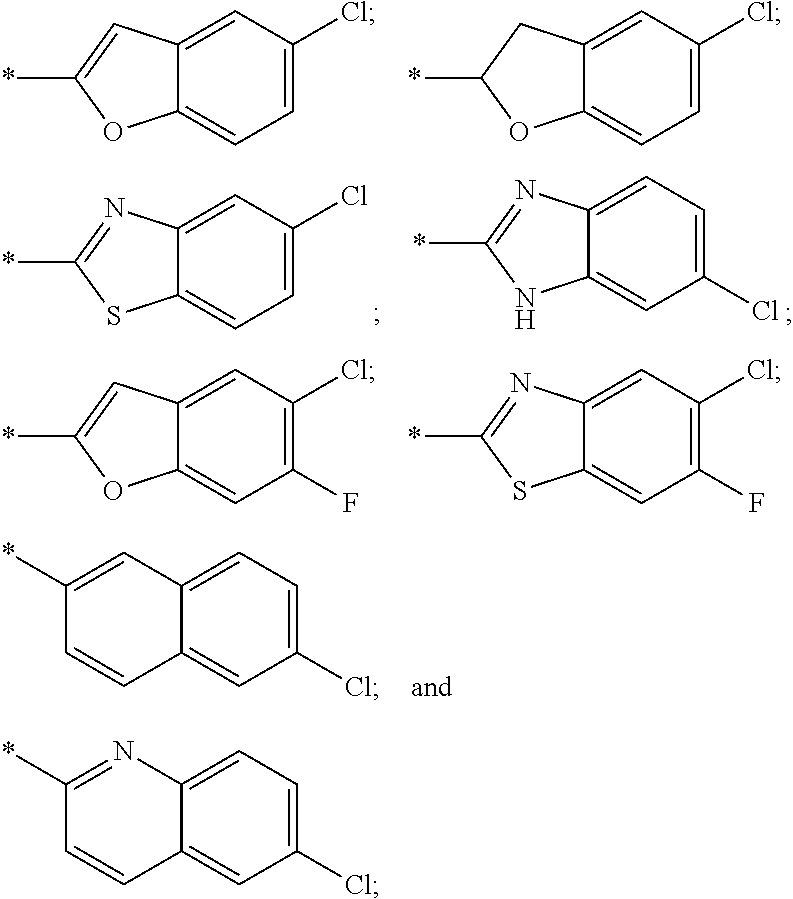
wherein the * represents the attachment point to the remainder of the molecule.

wherein the * represents the attachment point to the remainder of the molecule; and (A2-a) or (A2-b) is selected from the group consisting of:

wherein the * represents the attachment point to the remainder of the molecule.

wherein the * represents the attachment point to the remainder of the molecule; and (A2-a) or (A2-c) is selected from the group consisting of:

wherein the * represents the attachment point to the remainder of the molecule.

wherein the * represents the attachment point to the remainder of the molecule; and (A2-a) or (A2-b) is selected from the group consisting of:

wherein the * represents the attachment point to the remainder of the molecule.

wherein the * represents the attachment point to the remainder of the molecule; and (A2-a) or (A2-b) is selected from the group consisting of:

wherein the * represents the attachment point to the remainder of the molecule.

wherein the * represents the attachment point to the remainder of the molecule; and (A2-a) or (A2-c) is selected from the group consisting of:

wherein the * represents the attachment point to the remainder of the molecule.

or a pharmaceutically acceptable salt thereof;
wherein:
-
- A1 is a substituent of formula (A1-a)

-
- A2 is selected from the group consisting of:
- a substituent of formula (A2-a)
- A2 is selected from the group consisting of:

-
-
- C6-C10 aryl optionally substituted with one or more R16 substituents; and
- 5-10 membered heteroaryl optionally substituted with one or more R16 substituents;
-


wherein the * represents the attachment point to the remainder of the molecule. In some embodiments, (A1-a) or (A1-b) is selected from the group consisting of:

wherein the * represents the attachment point to the remainder of the molecule. In some embodiments, (A1-a) or (A1-b) is selected from the group consisting of:

wherein the * represents the attachment point to the remainder of the molecule. In some embodiments, (A1-a) or (A1-b) is selected from the group consisting of:

wherein the * represents the attachment point to the remainder of the molecule.

wherein the * represents the attachment point to the remainder of the molecule. In some embodiments, (A1-a) or (A1-c) is selected from the group consisting of:

wherein the * represents the attachment point to the remainder of the molecule.
-
- q2 is 1;
- R9a and R9b are taken together to form an oxo (═O) substituent or an imido (═NH) substituent, or alternatively, R9a and R9b are both hydrogen;
- R10a is selected from the group consisting of hydrogen, —OR10a-a, and —NR10a-bR10a-c; R10b is hydrogen;
- or alternatively, R10a and R10b are taken together to form a —CH2—O—CH2— moiety; and
- A2 is C6-C10 aryl optionally substituted with one or more R16 substituents, or 5-10 membered heteroaryl optionally substituted with one or more R16 substituents.
-
- R9a and R9b are taken together to form an oxo (═O) substituent or an imido (═NH) substituent;
- R10a is selected from the group consisting of hydrogen, —OR10a-a, and —NR10a-bR10a-c;
- R10b is hydrogen; and
- A2 is C6-C10 aryl optionally substituted with one or more R16 substituents, or 5-10 membered heteroaryl optionally substituted with one or more R16 substituents.
-
- R9a and R9b are both hydrogen; and
- R10a and R10b are taken together to form a —CH2—O—CH2— moiety.
-
- R9a and R9b are both hydrogen; and
- R10a and R10b are both hydrogen.
-
- X2 is CH;
- RY1 is hydrogen or C1-C6 alkyl;
- Y2 is selected from the group consisting of NRY2 and O;
- RY2 is hydrogen or C1-C6 alkyl;
- q2 is 1;
- r and s, independently of each other, are 0, 1, or 2;
- A1 is a substituent of formula (A1-a)

-
-
- wherein
- represents the attachment point to the remainder of the molecule; Z1 is selected from the group consisting of CRZ1-1RZ1-2, NRZ1-2, O, S, and —CRZ1-1═CRZ1-1—;
- wherein
R Z1_1 is H or R14; and RZ1-2 is H or R14;
- wherein
- Z2 is selected from the group consisting of CRZ2-1RZ2-2, NRZ2-2; O, S, and —CRZ2-1═CRZ2-1—;
- wherein RZ2-1 is H or R14; and RZ2-2 is H or R14;
- Z3, independently at each occurrence, is C or N, provided that at least one Z3 is C;
- R13 is hydrogen or R14, or R13 and RZ1-2 are taken together to form a double bond between the carbon atom bearing R13 and Z1, or R13 and RZ2-2 are taken together to form a double bond between the carbon atom bearing R13 and Z2; and
- x1 is 1, 2, 3, or 4, and at least one R14 is halogen;
- represents the attachment point to the remainder of the molecule; Z1 is selected from the group consisting of CRZ1-1RZ1-2, NRZ1-2, O, S, and —CRZ1-1═CRZ1-1—;
- wherein
- R14 is selected, independently at each occurrence, from the group consisting of halogen, C1-C6 alkyl, C1-C6 haloalkyl, —OH, —O(C1-C6 alkyl), —O(C1-C6 haloalkyl), —SH, —S(C1-C6 alkyl), —S(C1-C6 haloalkyl), —NH2, —NH(C1-C6 alkyl), —NH(C1-C6 haloalkyl), —N(C1-C6 alkyl)2, —N(C1-C6 haloalkyl)2, —NR14-aR14-b, —CN, —C(O)OH, —C(O)O(C1-C6 alkyl), —C(O)O(C1-C6 haloalkyl), —C(O)NH2, —C(O)NH(C1-C6 alkyl), —C(O)NH(C1-C6 haloalkyl), —C(O)N(C1-C6 alkyl)2, —C(O)N(C1-C6 haloalkyl)2, —C(O)NR14-aR14-b, —S(O)2OH, —S(O)2O(C1-C6 alkyl), —S(O)2O(C1-C6 haloalkyl), —S(O)2NH2, —S(O)2NH(C1-C6 alkyl), —S(O)2NH(C1-C6 haloalkyl), —S(O)2N(C1-C6 alkyl)2, —S(O)2N(C1-C6 haloalkyl)2, —S(O)2NR14-aR14-b, —OC(O)H, —OC(O)(C1-C6 alkyl), —OC(O)(C1-C6 haloalkyl), —N(H)C(O)H, —N(H)C(O)(C1-C6 alkyl), —N(H)C(O)(C1-C6 haloalkyl), —N(C1-C6 alkyl)C(O)H, —N(C1-C6 alkyl)C(O)(C1-C6 alkyl), —N(C1-C6 alkyl)C(O)(C1-C6 haloalkyl), —N(C1-C6 haloalkyl)C(O)H, —N(C1-C6 haloalkyl)C(O)(C1-C6 alkyl), —N(C1-C6 haloalkyl)C(O)(C1-C6 haloalkyl), —OS(O)2(C1-C6 alkyl), —OS(O)2(C1-C6 haloalkyl), —N(H)S(O)2(C1-C6 alkyl), —N(H)S(O)2(C1-C6 haloalkyl), —N(C1-C6 alkyl)S(O)2(C1-C6 alkyl), —N(C1-C6 alkyl)S(O)2(C1-C6 haloalkyl), —N(C1-C6 haloalkyl)S(O)2(C1-C6 alkyl), and —N(C1-C6 haloalkyl)S(O)2(C1-C6 haloalkyl);
- wherein R14-a and R14-b are taken together with the nitrogen atom which bears them to form a 3-10 membered heterocycle; A2 is C6-C10 aryl substituted by at least one halogen substituent and optionally further substituted with one or more R16 substituents, or 5-10 membered heteroaryl substituted by at least one halogen substituent and optionally further substituted with one or more R16 substituents;
- R16 is selected, independently at each occurrence, from the group consisting of halogen, C1-C6 alkyl, C1-C6 haloalkyl, —OH, —O(C1-C6 alkyl), —O(C1-C6 haloalkyl), —SH, —S(C1-C6 alkyl), —S(C1-C6 haloalkyl), —NH2, —NH(C1-C6 alkyl), —NH(C1-C6 haloalkyl), —N(C1-C6 alkyl)2, —N(C1-C6 haloalkyl)2, —NR16-aR16-b, —CN, —C(O)OH, —C(O)O(C1-C6 alkyl), —C(O)O(C1-C6 haloalkyl), —C(O)NH2, —C(O)NH(C1-C6 alkyl), —C(O)NH(C1-C6 haloalkyl), —C(O)N(C1-C6 alkyl)2, —C(O)N(C1-C6 haloalkyl)2, —C(O)NR16-aR16-b, —S(O)2OH, —S(O)2O(C1-C6 alkyl), —S(O)2O(C1-C6 haloalkyl), —S(O)2NH2, —S(O)2NH(C1-C6 alkyl), —S(O)2NH(C1-C6 haloalkyl), —S(O)2N(C1-C6 alkyl)2, —S(O)2N(C1-C6 haloalkyl)2, —S(O)2NR16-aR16-b, —OC(O)H, —OC(O)(C1-C6 alkyl), —OC(O)(C1-C6 haloalkyl), —N(H)C(O)H, —N(H)C(O)(C1-C6 alkyl), —N(H)C(O)(C1-C6 haloalkyl), —N(C1-C6 alkyl)C(O)H, —N(C1-C6 alkyl)C(O)(C1-C6 alkyl), —N(C1-C6 alkyl)C(O)(C1-C6 haloalkyl), —N(C1-C6 haloalkyl)C(O)H, —N(C1-C6 haloalkyl)C(O)(C1-C6 alkyl), —N(C1-C6 haloalkyl)C(O)(C1-C6 haloalkyl), —OS(O)2(C1-C6 alkyl), —OS(O)2(C1-C6 haloalkyl), —N(H)S(O)2(C1-C6 alkyl), —N(H)S(O)2(C1-C6 haloalkyl), —N(C1-C6 alkyl)S(O)2(C1-C6 alkyl), —N(C1-C6 alkyl)S(O)2(C1-C6 haloalkyl), —N(C1-C6 haloalkyl)S(O)2(C1-C6 alkyl), and —N(C1-C6 haloalkyl)S(O)2(C1-C6 haloalkyl);
- wherein R16-a and R16-b are taken together with the nitrogen atom which bears them to form a 3-10 membered heterocycle;
- R1a and R1b are independently selected from the group consisting of hydrogen, C1-C6 alkyl, and halogen;
- R2a and R2b are independently selected from the group consisting of hydrogen, C1-C6 alkyl, and halogen;
- when present, R3a and R3b are independently at each occurrence selected from the group consisting of hydrogen, C1-C6 alkyl, and halogen;
- when present, R4a and R4b are independently at each occurrence selected from the group consisting of hydrogen, C1-C6 alkyl, and halogen;
- or alternatively, R1a and R2a are taken together to form a C1-C6 alkylene moiety;
- or alternatively, R1a and an R3a moiety, when present, are taken together to form a C1-C6 alkylene moiety, and R1b and the R3b in the geminal position to the R3a taken together with R1a, are both hydrogen;
- or alternatively, an R3a moiety, when present, and an R4a moiety, when present, are taken together to form a C1-C6 alkylene moiety, and the R3b in the geminal position to the R3a taken together with the R4a moiety and the R4b in the geminal position to the R4a taken together with the R3a moiety, are both hydrogen;
- R9a and R9b are taken together to form an oxo (═O) substituent or an imido (═NH) substituent, or alternatively, R9a and R9b are both hydrogen;
- R10a is hydrogen; and
- R10b is hydrogen.
-


wherein the * represents the attachment point to the remainder of the molecule. In some embodiments x1 is 1, 2, 3, or 4, and at least one R14 is halogen. In some embodiments, x1 is 1 and R14 is halogen. In some embodiments, x1 is 2 and at least one R14 is halogen. In some embodiments, x1 is 3 and at least one R14 is halogen. In some embodiments, x1 is 4 and at least one R14 is halogen. In some embodiments, (A1-a) or (A1-b) is selected from the group consisting of:

wherein the * represents the attachment point to the remainder of the molecule. In some embodiments, (A1-a) or (A1-b) is selected from the group consisting of:

wherein the * represents the attachment point to the remainder of the molecule. In some embodiments x1 is 1, 2, 3, or 4, and at least one R14 is halogen. In some embodiments, x1 is 1 and R14 is halogen. In some embodiments, x1 is 2 and at least one R14 is halogen. In some embodiments, x1 is 3 and at least one R14 is halogen. In some embodiments, x1 is 4 and at least one R14 is halogen. In some embodiments, (A1-a) or (A1-b) is selected from the group consisting of:

wherein the * represents the attachment point to the remainder of the molecule.

wherein the * represents the attachment point to the remainder of the molecule. In some embodiments, (A1-a) or (A1-c) is selected from the group consisting of:

wherein the * represents the attachment point to the remainder of the molecule.

wherein the * represents the attachment point to the remainder of the molecule. In some embodiments, A2 is phenyl optionally substituted with one or more R16 substituents. In some embodiments, A2 is phenyl substituted by at least one halogen substituent and optionally further substituted with one or more R16 substituents. In some embodiments, A2 is selected from the group consisting of:

wherein the * represents the attachment point to the remainder of the molecule.

wherein the * represents the attachment point to the remainder of the molecule. In some embodiments, A2 is pyridyl optionally substituted with one or more R16 substituents. In some embodiments, A2 is pyridyl substituted by at least one halogen substituent and optionally further substituted with one or more R16 substituents. In some embodiments, A2 is

wherein the * represents the attachment point to the remainder of the molecule.
-
- q2 is 0;
- R9a and R9b are both hydrogen;
- R10a is —OR10a-a or —NR10a-bR10a-c; and
- R10b is hydrogen.
-
- R10a is —OR10a-a or —NR10a-bR10a-c; and
- A2 is a substituent of formula (A2-a)


wherein the * represents the attachment point to the remainder of the molecule. In some embodiments, (A2-a) or (A2-b) is selected from the group consisting of:

wherein the * represents the attachment point to the remainder of the molecule. In some embodiments, (A2-a) or (A2-b) is selected from the group consisting of:

wherein the * represents the attachment point to the remainder of the molecule. In some embodiments, (A2-a) or (A2-b) is selected from the group consisting of:

wherein the * represents the attachment point to the remainder of the molecule.

wherein the * represents the attachment point to the remainder of the molecule. In some embodiments, (A2-a) or (A2-c) is selected from the group consisting of:

wherein the * represents the attachment point to the remainder of the molecule.
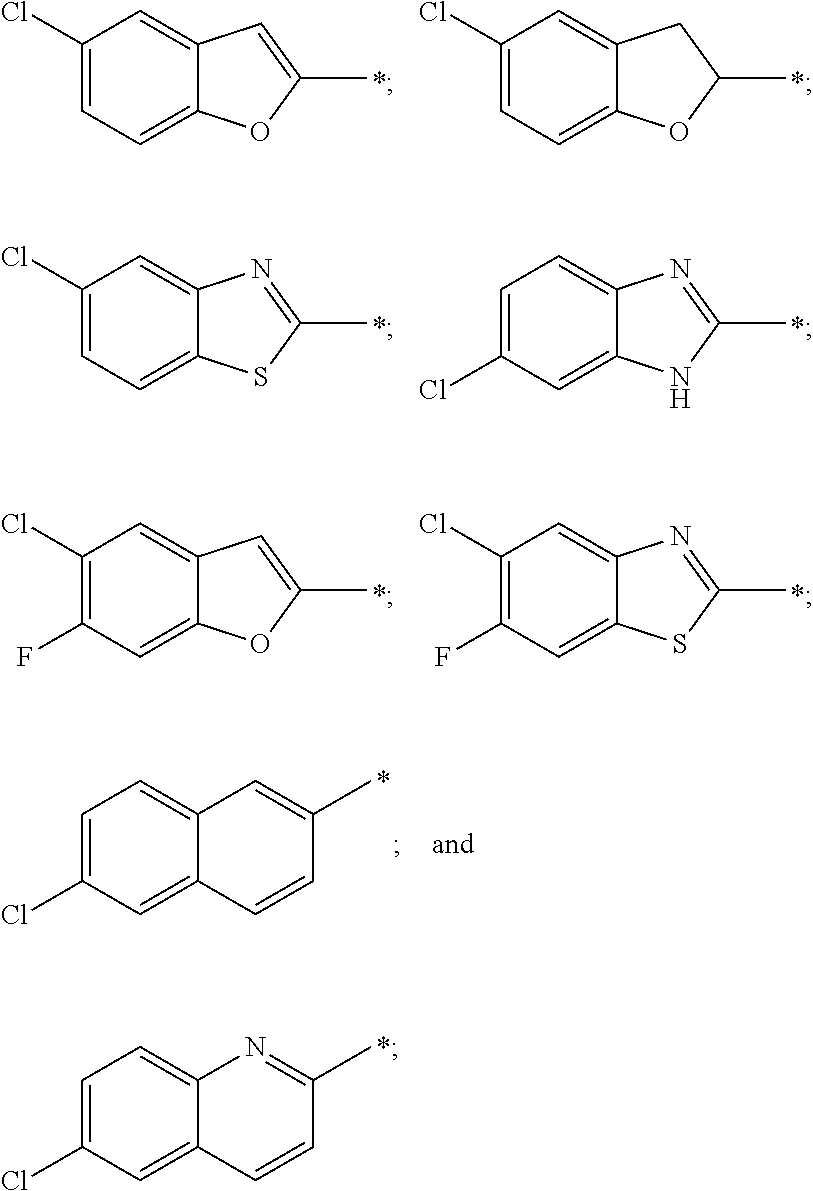
wherein the * represents the attachment point to the remainder of the molecule; and (A2-a) or (A2-b) is selected from the group consisting of:

wherein the * represents the attachment point to the remainder of the molecule.

wherein the * represents the attachment point to the remainder of the molecule; and (A2-a) or (A2-b) is selected from the group consisting of:

wherein the * represents the attachment point to the remainder of the molecule.

wherein the * represents the attachment point to the remainder of the molecule; and (A2-a) or (A2-c) is selected from the group consisting of:

wherein the * represents the attachment point to the remainder of the molecule.

wherein the * represents the attachment point to the remainder of the molecule; and (A2-a) or (A2-b) is selected from the group consisting of:

wherein the * represents the attachment point to the remainder of the molecule.

wherein the * represents the attachment point to the remainder of the molecule; and (A2-a) or (A2-b) is selected from the group consisting of:

wherein the * represents the attachment point to the remainder of the molecule.

wherein the * represents the attachment point to the remainder of the molecule; and (A2-a) or (A2-c) is selected from the group consisting of:

wherein the * represents the attachment point to the remainder of the molecule.

wherein the * represents the attachment point to the remainder of the molecule; and (A2-a) or (A2-b) is selected from the group consisting of:

wherein the * represents the attachment point to the remainder of the molecule.

wherein the * represents the attachment point to the remainder of the molecule; and (A2-a) or (A2-b) is selected from the group consisting of:

wherein the * represents the attachment point to the remainder of the molecule.

wherein the * represents the attachment point to the remainder of the molecule; and (A2-a) or (A2-c) is selected from the group consisting of:

wherein the * represents the attachment point to the remainder of the molecule.

wherein the * represents the attachment point to the remainder of the molecule; and A2 is selected from the group consisting of:

wherein the * represents the attachment point to the remainder of the molecule.

wherein the * represents the attachment point to the remainder of the molecule; and A2 is selected from the group consisting of:

wherein the * represents the attachment point to the remainder of the molecule.

wherein the * represents the attachment point to the remainder of the molecule; and A2 is selected from the group consisting of:

wherein the * represents the attachment point to the remainder of the molecule.

wherein the * represents the attachment point to the remainder of the molecule; and A2 is

C1; wherein the * represents the attachment point to the remainder of the molecule.

wherein the * represents the attachment point to the remainder of the molecule; and A2 is selected from the group consisting of:

wherein the * represents the attachment point to the remainder of the molecule.

wherein the * represents the attachment point to the remainder of the molecule; and A2 is selected from the group consisting of:

wherein the * represents the attachment point to the remainder of the molecule.

wherein the * represents the attachment point to the remainder of the molecule; and A2 is selected from the group consisting of:

wherein the * represents the attachment point to the remainder of the molecule.

Wherein the * represents the attachment point to the remainder of the molecule; and A2 is

wherein the * represents the attachment point to the remainder of the molecule.

wherein the * represents the attachment point to the remainder of the molecule; and A2 is selected from the group consisting of:

wherein the * represents the attachment point to the remainder of the molecule.

wherein the * represents the attachment point to the remainder of the molecule; and A2 is selected from the group consisting of:
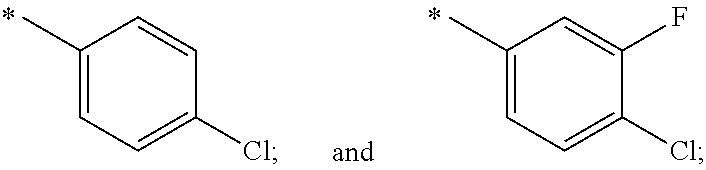
wherein the * represents the attachment point to the remainder of the molecule.

wherein the * represents the attachment point to the remainder of the molecule; and A2 is selected from the group consisting of:

wherein the * represents the attachment point to the remainder of the molecule.

wherein the * represents the attachment point to the remainder of the molecule; and A2 is

wherein the * represents the attachment point to the remainder of the molecule.

or a pharmaceutically acceptable salt thereof;
wherein:
-
- A1 is a substituent of formula (A1-a)

-
- A2 is C6-C10 aryl optionally substituted with one or more R16 substituents; or 5-10 membered heteroaryl optionally substituted with one or more R16 substituents;


wherein the * represents the attachment point to the remainder of the molecule. In some embodiments, (A1-a) or (A1-b) is selected from the group consisting of:

wherein the * represents the attachment point to the remainder of the molecule. In some embodiments, (A1-a) or (A1-b) is selected from the group consisting of:

wherein the * represents the attachment point to the remainder of the molecule. In some embodiments, (A1-a) or (A1-b) is selected from the group consisting of:

wherein the * represents the attachment point to the remainder of the molecule.

wherein the * represents the attachment point to the remainder of the molecule. In some embodiments, (A1-a) or (A1-c) is selected from the group consisting of:

wherein the * represents the attachment point to the remainder of the molecule.
-
- R9a and R9b are taken together to form an oxo (═O) substituent or an imido (═NH) substituent, or alternatively, R9a and R9b are both hydrogen;
- R10a is selected from the group consisting of hydrogen, —OR10a-a, and —NR10a-bR10a-c;
- R10b is hydrogen; and
- R12a and R12b are both hydrogen.
-
- X2 is CH or N;
- RY1 is hydrogen or C1-C6 alkyl;
- Y2 is selected from the group consisting of a bond, NRY2, and O; provided that when X2 is N, then Y2 is a bond;
- RY2 is hydrogen or C1-C6 alkyl;
- r and s, independently of each other, are 0, 1, or 2;
- A1 is selected from the group consisting of:
- a substituent of formula (A1-a)

-
-
-
- wherein
- represents the attachment point to the remainder of the molecule; Z1 is selected from the group consisting of CRZ1-1RZ1-2, NRZ1-2, O, S, and —CRZ1-1═CRZ1-1—;
- wherein
R Z1_1 is H or R14; and RZ1-2 is H or R14; - Z2 is selected from the group consisting of CRZ2-1RZ2-2, NRZ2-2; O, S, and —CRZ2-1═CRZ2-1—;
- wherein RZ2-1 is H or R14; and RZ2-2 is H or R14;
- Z3, independently at each occurrence, is C or N, provided that at least one Z3 is C;
- R13 is hydrogen or R14, or R13 and RZ1-2 are taken together to form a double bond between the carbon atom bearing R and Z, or R and R are taken together to form a double bond between the carbon atom bearing R13 and Z2; and
- x1 is 1, 2, 3, or 4, and at least one R14 is halogen;
- wherein
-
- R14 is selected, independently at each occurrence, from the group consisting of halogen, C1-C6 alkyl, C1-C6 haloalkyl, —OH, —O(C1-C6 alkyl), —O(C1-C6 haloalkyl), —SH, —S(C1-C6 alkyl), —S(C1-C6 haloalkyl), —NH2, —NH(C1-C6 alkyl), —NH(C1-C6 haloalkyl), —N(C1-C6 alkyl)2, —N(C1-C6 haloalkyl)2, —NR14-aR14-b, —CN, —C(O)OH, —C(O)O(C1-C6 alkyl), —C(O)O(C1-C6 haloalkyl), —C(O)NH2, —C(O)NH(C1-C6 alkyl), —C(O)NH(C1-C6 haloalkyl), —C(O)N(C1-C6 alkyl)2, —C(O)N(C1-C6 haloalkyl)2, —C(O)NR14-aR14-b, —S(O)2OH, —S(O)2O(C1-C6 alkyl), —S(O)2O(C1-C6 haloalkyl), —S(O)2NH2, —S(O)2NH(C1-C6 alkyl), —S(O)2NH(C1-C6 haloalkyl), —S(O)2N(C1-C6 alkyl)2, —S(O)2N(C1-C6 haloalkyl)2, —S(O)2NR14-aR14-b, —OC(O)H, —OC(O)(C1-C6 alkyl), —OC(O)(C1-C6 haloalkyl), —N(H)C(O)H, —N(H)C(O)(C1-C6 alkyl), —N(H)C(O)(C1-C6 haloalkyl), —N(C1-C6 alkyl)C(O)H, —N(C1-C6 alkyl)C(O)(C1-C6 alkyl), —N(C1-C6 alkyl)C(O)(C1-C6 haloalkyl), —N(C1-C6 haloalkyl)C(O)H, —N(C1-C6 haloalkyl)C(O)(C1-C6 alkyl), —N(C1-C6 haloalkyl)C(O)(C1-C6 haloalkyl), —OS(O)2(C1-C6 alkyl), —OS(O)2(C1-C6 haloalkyl), —N(H)S(O)2(C1-C6 alkyl), —N(H)S(O)2(C1-C6 haloalkyl), —N(C1-C6 alkyl)S(O)2(C1-C6 alkyl), —N(C1-C6 alkyl)S(O)2(C1-C6 haloalkyl), —N(C1-C6 haloalkyl)S(O)2(C1-C6 alkyl), and —N(C1-C6 haloalkyl)S(O)2(C1-C6 haloalkyl);
- wherein R14-a and R14-b are taken together with the nitrogen atom which bears them to form a 3-10 membered heterocycle;
- A2 is C6-C10 aryl substituted by at least one halogen substituent and optionally further substituted with one or more R16 substituents, or 5-10 membered heteroaryl substituted by at least one halogen substituent and optionally further substituted with one or more R16 substituents;
- R16 is selected, independently at each occurrence, from the group consisting of halogen, C1-C6 alkyl, C1-C6 haloalkyl, —OH, —O(C1-C6 alkyl), —O(C1-C6 haloalkyl), —SH, —S(C1-C6 alkyl), —S(C1-C6 haloalkyl), —NH2, —NH(C1-C6 alkyl), —NH(C1-C6 haloalkyl), —N(C1-C6 alkyl)2, —N(C1-C6 haloalkyl)2, —NR16-aR16-b, —CN, —C(O)OH, —C(O)O(C1-C6 alkyl), —C(O)O(C1-C6 haloalkyl), —C(O)NH2, —C(O)NH(C1-C6 alkyl), —C(O)NH(C1-C6 haloalkyl), —C(O)N(C1-C6 alkyl)2, —C(O)N(C1-C6 haloalkyl)2, —C(O)NR16aR16b, —S(O)2OH, —S(O)2O(C1-C6 alkyl), —S(O)2O(C1-C6 haloalkyl), —S(O)2NH2, —S(O)2NH(C1-C6 alkyl), —S(O)2NH(C1-C6 haloalkyl), —S(O)2N(C1-C6 alkyl)2, —S(O)2N(C1-C6 haloalkyl)2, —S(O)2NR16aR16b, —OC(O)H, —OC(O)(C1-C6 alkyl), —OC(O)(C1-C6 haloalkyl), —N(H)C(O)H, —N(H)C(O)(C1-C6 alkyl), —N(H)C(O)(C1-C6 haloalkyl), —N(C1-C6 alkyl)C(O)H, —N(C1-C6 alkyl)C(O)(C1-C6 alkyl), —N(C1-C6 alkyl)C(O)(C1-C6 haloalkyl), —N(C1-C6 haloalkyl)C(O)H, —N(C1-C6 haloalkyl)C(O)(C1-C6 alkyl), —N(C1-C6 haloalkyl)C(O)(C1-C6 haloalkyl), —OS(O)2(C1-C6 alkyl), —OS(O)2(C1-C6 haloalkyl), —N(H)S(O)2(C1-C6 alkyl), —N(H)S(O)2(C1-C6 haloalkyl), —N(C1-C6 alkyl)S(O)2(C1-C6 alkyl), —N(C1-C6 alkyl)S(O)2(C1-C6 haloalkyl), —N(C1-C6 haloalkyl)S(O)2(C1-C6 alkyl), and —N(C1-C6 haloalkyl)S(O)2(C1-C6 haloalkyl);
- wherein R16-a and R16-b are taken together with the nitrogen atom which bears them to form a 3-10 membered heterocycle;
- R1a and R1b are independently selected from the group consisting of hydrogen, C1-C6 alkyl, and halogen;
- R2a and R2b are independently selected from the group consisting of hydrogen, C1-C6 alkyl, and halogen;
- when present, R3a and R3b are independently at each occurrence selected from the group consisting of hydrogen, C1-C6 alkyl, and halogen;
- when present, R4a and R4b are independently at each occurrence selected from the group consisting of hydrogen, C1-C6 alkyl, and halogen;
- or alternatively, R1a and R2a are taken together to form a C1-C6 alkylene moiety;
- or alternatively, R1a and an R3a moiety, when present, are taken together to form a C1-C6 alkylene moiety, and R1b and the R3b in the geminal position to the R3a taken together with R1a, are both hydrogen;
- or alternatively, an R3a moiety, when present, and an R4a moiety, when present, are taken together to form a C1-C6 alkylene moiety, and the R3b in the geminal position to the R3a taken together with the R4a moiety and the R4b in the geminal position to the R4a taken together with the R3a moiety, are both hydrogen;
- R9a and R9b are taken together to form an oxo (═O) substituent or an imido (═NH) substituent, or alternatively, R9a and R9b are both hydrogen;
- R10a is selected from the group consisting of hydrogen, —OR10a-a, and —NR10a-bR10a-c;
- R10b is hydrogen;
- R12a and R12b are taken together to form an oxo (═O) substituent, or alternatively, R12a and R12b are both hydrogen;
- R10a-a is selected from the group consisting of hydrogen, C1-C6 alkyl, and C1-C6 haloalkyl;
- or R10a-a and RY2 may be taken together to form a carbonyl (C═O) moiety; and
- R10a-b and R10a-c, independently of each other, are selected from the group consisting of hydrogen, C1-C6 alkyl, and C1-C6 haloalkyl.
-
-
- X2 is CH;
- RY1 is hydrogen;
- Y2 is NRY2;
- RY2 is hydrogen;
- R9a and R9b are both hydrogen;
- R10a is —OR10a-a;
- R10a-a is hydrogen;
- R10b is hydrogen; and
- R12a and R12b are both hydrogen.
-
- X2 is CH;
- Y2 is NRY2;
- R9a and R9b are both hydrogen;
- R10a is —OR10a-a;
- R12a and R12b are both hydrogen; and
- R10a-a and RY2 are taken together to form a carbonyl (C═O) moiety.
-
- X2 is CH;
- RY1 is hydrogen;
- Y2 is NRY2;
- RY2 is hydrogen;
- R9a and R9b are both hydrogen;
- R10a is —OR10a-a;
- R10b is hydrogen;
- R12a and R12b are both hydrogen; and
- R10a-a and RY2 are taken together to form a carbonyl (C═O) moiety.
-
- X2 is CH;
- RY1 is hydrogen;
- Y2 is NRY2;
- RY2 is hydrogen;
- R9a and R9b are both hydrogen;
- R10a is hydrogen;
- R10b is hydrogen; and
- R12a and R12b are both hydrogen.
-
- X2 is N;
- RY1 is hydrogen;
- Y2 is a bond;
- R9a and R9b are both hydrogen;
- R10a is —OR10a-a;
- R10a-a is hydrogen;
- R10b is hydrogen; and
- R12a and R12b are both hydrogen.
-
- X2 is N;
- RY1 is hydrogen;
- Y2 is a bond;
- R9a and R9b are both hydrogen;
- R10a is hydrogen;
- R10b is hydrogen; and
- R12a and R12b are both hydrogen.
-
- X2 is CH;
- RY1 is hydrogen;
- Y2 is NRY2;
- RY2 is hydrogen;
- r and s are both 1;
- R9a and R9b are both hydrogen;
- R10a is —OR10a-a;
- R10a-a is hydrogen;
- R10b is hydrogen; and
- R12a and R12b are both hydrogen.
-
- X2 is CH;
- Y2 is NRY2;
- r and s are both 1;
- R9a and R9b are both hydrogen;
- R10a is —OR10a-a;
- R12a and R12b are both hydrogen; and
- R10a-a and RY2 are taken together to form a carbonyl (C═O) moiety.
-
- X2 is CH;
- RY1 is hydrogen;
- Y2 is NRY2;
- RY2 is hydrogen;
- r and s are both 1;
- R9a and R9b are both hydrogen;
- R10a is —OR10a-a;
- R10b is hydrogen;
- R12a and R12b are both hydrogen; and
- R10a-a and RY2 are taken together to form a carbonyl (C═O) moiety.
-
- X2 is CH;
- RY1 is hydrogen;
- Y2 is NRY2;
- RY2 is hydrogen;
- r and s are both 1;
- R9a and R9b are both hydrogen;
- R10a is hydrogen;
- R10b is hydrogen; and
- R12a and R12b are both hydrogen.
-
- X2 is N;
- RY1 is hydrogen;
- Y2 is a bond;
- r and s are both 1;
- R9a and R9b are both hydrogen;
- R10a is —OR10a-a;
- R10a-a is hydrogen;
- R10b is hydrogen; and
- R12a and R12b are both hydrogen.
-
- X2 is N;
- RY1 is hydrogen;
- Y2 is a bond;
- r and s are both 1;
- R9a and R9b are both hydrogen;
- R10a is hydrogen;
- R10b is hydrogen; and
- R12a and R12b are both hydrogen.

wherein the * represents the attachment point to the remainder of the molecule. In some embodiments, A2 is phenyl optionally substituted with one or more R16 substituents. In some embodiments, A2 is phenyl substituted by at least one halogen substituent and optionally further substituted with one or more R16 substituents. In some embodiments, A2 is selected from the group consisting of:

wherein the * represents the attachment point to the remainder of the molecule.
In some embodiments, A2 is 5-10 membered heteroaryl optionally substituted with one or more R16 substituents. In some embodiments, A2 is 5-10 membered heteroaryl substituted by at least one halogen substituent and optionally further substituted with one or more R16 substituents. In some embodiments. A2 is selected from the group consisting of:
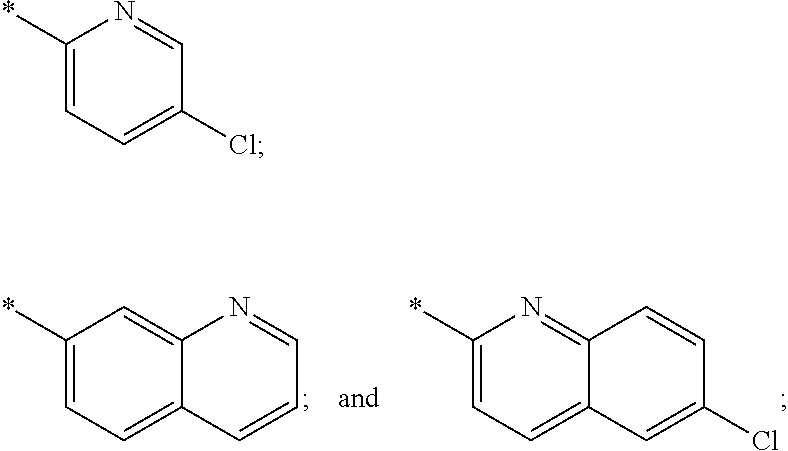
wherein the * represents the attachment point to the remainder of the molecule. In some embodiments, A2 is pyridyl optionally substituted with one or more R16 substituents. In some embodiments, A2 is pyridyl substituted by at least one halogen substituent and optionally further substituted with one or more R16 substituents. In some embodiments, A2 is

wherein the * represents the attachment point to the remainder of the molecule.

wherein the * represents the attachment point to the remainder of the molecule; and (A2-a) or (A2-b) is selected from the group consisting of:

wherein the * represents the attachment point to the remainder of the molecule.

wherein the * represents the attachment point to the remainder of the molecule; and (A2-a) or (A2-b) is selected from the group consisting of:

wherein the * represents the attachment point to the remainder of the molecule.

wherein the * represents the attachment point to the remainder of the molecule; and (A2-a) or (A2-c) is selected from the group consisting of:

wherein the * represents the attachment point to the remainder of the molecule.

wherein the * represents the attachment point to the remainder of the molecule; and (A2-a) or (A2-b) is selected from the group consisting of:

wherein the * represents the attachment point to the remainder of the molecule.

wherein the * represents the attachment point to the remainder of the molecule; and (A2-a) or (A2-b) is selected from the group consisting of:

wherein the * represents the attachment point to the remainder of the molecule.

wherein the * represents the attachment point to the remainder of the molecule; and (A2-a) or (A2-c) is selected from the group consisting of:

wherein the * represents the attachment point to the remainder of the molecule.

wherein the * represents the attachment point to the remainder of the molecule; and (A2-a) or (A2-b) is selected from the group consisting of:

wherein the * represents the attachment point to the remainder of the molecule.

wherein the * represents the attachment point to the remainder of the molecule; and (A2-a) or (A2-b) is selected from the group consisting of:

wherein the * represents the attachment point to the remainder of the molecule.

wherein the * represents the attachment point to the remainder of the molecule; and (A2-a) or (A2-c) is selected from the group consisting of:

wherein the * represents the attachment point to the remainder of the molecule.

wherein the * represents the attachment point to the remainder of the molecule; and A2 is selected from the group consisting of:

wherein the * represents the attachment point to the remainder of the molecule.

wherein the * represents the attachment point to the remainder of the molecule; and A2 is selected from the group consisting of:

wherein the * represents the attachment point to the remainder of the molecule.

wherein the * represents the attachment point to the remainder of the molecule; and A2 is selected from the group consisting of:

wherein the * represents the attachment point to the remainder of the molecule.

wherein the * represents the attachment point to the remainder of the molecule; and A2 is

wherein the * represents the attachment point to the remainder of the molecule.

wherein the * represents the attachment point to the remainder of the molecule; and A2 is selected from the group consisting of:

wherein the * represents the attachment point to the remainder of the molecule.

wherein the * represents the attachment point to the remainder of the molecule; and A2 is selected from the group consisting of:

wherein the * represents the attachment point to the remainder of the molecule.

wherein the * represents the attachment point to the remainder of the molecule; and A2 is selected from the group consisting of:

wherein the * represents the attachment point to the remainder of the molecule.

wherein the * represents the attachment point to the remainder of the molecule; and A2 is

wherein the * represents the attachment point to the remainder of the molecule.

wherein the * represents the attachment point to the remainder of the molecule: and A2 is selected from the group consisting of:

wherein the * represents the attachment point to the remainder of the molecule.

wherein the * represents the attachment point to the remainder of the molecule; and A2 is selected from the group consisting of:

wherein the * represents the attachment point to the remainder of the molecule.

wherein the * represents the attachment point to the remainder of the molecule; and A2 is selected from the group consisting of:

wherein the * represents the attachment point to the remainder of the molecule.

wherein the * represents the attachment point to the remainder of the molecule; and A2 is

wherein the * represents the attachment point to the remainder of the molecule.

or a pharmaceutically acceptable salt thereof;
wherein:
-
- A1 is a substituent of formula (A1-a)

-
- A2 is C6-C10 aryl optionally substituted with one or more R16 substituents; or 5-10 membered heteroaryl optionally substituted with one or more R16 substituents;
- R11a and R11b are both hydrogen;
- R12a and R12b are both hydrogen;
- and wherein X2, RY1, Y2, RY2, r, s, A1, Z1, RZ1-1, RZ1-2, Z2, RZ2-1, RZ2-2, Z3, x1, R1a, R1b, R2a, R2b, R3a, R3b, R4a, R4b, R13, R14, and R16 are as defined in compounds of formula (I).


wherein the * represents the attachment point to the remainder of the molecule. In some embodiments, (A1-a) or (A1-b) is selected from the group consisting of:

wherein the * represents the attachment point to the remainder of the molecule. In some embodiments, (A1-a) or (A1-b) is selected from the group consisting of:

wherein the * represents the attachment point to the remainder of the molecule. In some embodiments, (A1-a) or (A1-b) is selected from the group consisting of:

wherein the * represents the attachment point to the remainder of the molecule.

wherein the * represents the attachment point to the remainder of the molecule. In some embodiments, (A1-a) or (A1-c) is selected from the group consisting of:

wherein the * represents the attachment point to the remainder of the molecule.

wherein the * represents the attachment point to the remainder of the molecule. In some embodiments, A2 is phenyl optionally substituted with one or more R16 substituents. In some embodiments, A2 is selected from the group consisting of:

wherein the * represents the attachment point to the remainder of the molecule.

wherein the * represents the attachment point to the remainder of the molecule. In some embodiments, A2 is pyridyl optionally substituted with one or more R16 substituents. In some embodiments, A2 is

wherein the * represents the attachment point to the remainder of the molecule.

wherein the * represents the attachment point to the remainder of the molecule; and (A2-a) or (A2-b) is selected from the group consisting of:

wherein the * represents the attachment point to the remainder of the molecule.

wherein the * represents the attachment point to the remainder of the molecule; and (A2-a) or (A2-b) is selected from the group consisting of:

wherein the * represents the attachment point to the remainder of the molecule.

wherein the * represents the attachment point to the remainder of the molecule; and (A2-a) or (A2-c) is selected from the group consisting of:

wherein the * represents the attachment point to the remainder of the molecule.

wherein the * represents the attachment point to the remainder of the molecule; and (A2-a) or (A2-b) is selected from the group consisting of:

wherein the * represents the attachment point to the remainder of the molecule.

wherein the * represents the attachment point to the remainder of the molecule: and (A2-a) or (A2-b) is selected from the group consisting of:

wherein the * represents the attachment point to the remainder of the molecule.

wherein the * represents the attachment point to the remainder of the molecule; and (A2-a) or (A2-c) is selected from the group consisting of:

wherein the * represents the attachment point to the remainder of the molecule.

wherein the * represents the attachment point to the remainder of the molecule; and (A2-a) or (A2-b) is selected from the group consisting of:

wherein the * represents the attachment point to the remainder of the molecule.

wherein the * represents the attachment point to the remainder of the molecule; and (A2-a) or (A2-b) is selected from the group consisting of:

wherein the * represents the attachment point to the remainder of the molecule.

wherein the * represents the attachment point to the remainder of the molecule; and (A2-a) or (A2-c) is selected from the group consisting of:

wherein the * represents the attachment point to the remainder of the molecule.

wherein the * represents the attachment point to the remainder of the molecule; and A2 is selected from the group consisting of:

wherein the * represents the attachment point to the remainder of the molecule.

wherein the * represents the attachment point to the remainder of the molecule; and A2 is selected from the group consisting of:

wherein the * represents the attachment point to the remainder of the molecule.

wherein the * represents the attachment point to the remainder of the molecule; and A2 is selected from the group consisting of:

wherein the * represents the attachment point to the remainder of the molecule.

wherein the * represents the attachment point to the remainder of the molecule; and A2 is

wherein the * represents the attachment point to the remainder of the molecule.

wherein the * represents the attachment point to the remainder of the molecule; and A2 is selected from the group consisting of:

wherein the * represents the attachment point to the remainder of the molecule.

wherein the * represents the attachment point to the remainder of the molecule; and A2 is selected from the group consisting of:

wherein the * represents the attachment point to the remainder of the molecule.

wherein the * represents the attachment point to the remainder of the molecule; and A2 is selected from the group consisting of:

wherein the * represents the attachment point to the remainder of the molecule.

wherein the * represents the attachment point to the remainder of the molecule; and A2 is

wherein the * represents the attachment point to the remainder of the molecule.

wherein the * represents the attachment point to the remainder of the molecule; and A2 is selected from the group consisting of:

wherein the * represents the attachment point to the remainder of the molecule.

wherein the * represents the attachment point to the remainder of the molecule; and A2 is selected from the group consisting of:

wherein the * represents the attachment point to the remainder of the molecule.

wherein the * represents the attachment point to the remainder of the molecule; and A2 is selected from the group consisting of:

wherein the * represents the attachment point to the remainder of the molecule.

wherein the * represents the attachment point to the remainder of the molecule; and A2 is

wherein the * represents the attachment point to the remainder of the molecule.

or a pharmaceutically acceptable salt thereof;
wherein:
-
- A1 is selected from the group consisting of:
- a substituent of formula (A1-a)
- A1 is selected from the group consisting of:

-
-
- C6-C10 aryl optionally substituted with one or more R14 substituents; and
- 5-10 membered heteroaryl optionally substituted with one or more R14 substituents;
- A2 is selected from the group consisting of:
- a substituent of formula (A2-a)
-

-
-
- C6-C10 aryl optionally substituted with one or more R16 substituents; and
- 5-10 membered heteroaryl optionally substituted with one or more R16 substituents;
-
-
- q1 is 1;
- A1 is selected C6-C10 aryl optionally substituted with one or more R14 substituents; or 5-10 membered heteroaryl optionally substituted with one or more R14 substituents;
- A2 is selected from the group consisting of:
- a substituent of formula (A2-a)

-
-
- C6-C10 aryl optionally substituted with one or more R16 substituents; and
- 5-10 membered heteroaryl optionally substituted with one or more R16 substituents;
- R5a and R5b are taken together to form an oxo (═O) substituent or an imido (═NH) substituent, or alternatively, R5a and R5b are both hydrogen;
- R6a is selected from the group consisting of hydrogen, —OR6a-a, and —NR6a-bR6a-c; R6b is hydrogen;
- or alternatively, R6a and R6b are taken together to form a —CH2—O—CH2— moiety;
- R9a and R9b are both hydrogen;
- R10a is selected from the group consisting of —OR10a-a, and —NR10a-bR10a-c; and
- R10b is hydrogen;
- or alternatively, R10a and R10b are taken together to form a —CH2—O—CH2— moiety.
-
-
- R5a and R5b are taken together to form an oxo (═O) substituent;
- R6a is hydrogen;
- R6b is hydrogen;
- R9a and R9b are both hydrogen;
- R10a is selected from the group consisting of —OR10a-a, and —NR10a-bR10a-c; and
- R10b is hydrogen;
- or alternatively, R10a and R10b are taken together to form a —CH2—O—CH2— moiety.
-
- q is 1;
- A2 is C6-C10 aryl optionally substituted with one or more R16 substituents; or 5-10 membered heteroaryl optionally substituted with one or more R16 substituents; and
- R10a and R10b are taken together to form a —CH2—O—CH2— moiety.

wherein the * represents the attachment point to the remainder of the molecule. In some embodiments, A2 is phenyl optionally substituted with one or more R16 substituents. In some embodiments, A2 is selected from the group consisting of:

wherein the * represents the attachment point to the remainder of the molecule.

wherein the * represents the attachment point to the remainder of the molecule. In some embodiments, A2 is pyridyl optionally substituted with one or more R16 substituents. In some embodiments, A2 is

wherein the * represents the attachment point to the remainder of the molecule.
-
- q2 is 0;
- A2 is a substituent of formula (A2-a)

-
- R10a is —OR10a-a; and
- R10b is hydrogen.


wherein the * represents the attachment point to the remainder of the molecule. In some embodiments, (A2-a) or (A2-b) is selected from the group consisting of:

wherein the * represents the attachment point to the remainder of the molecule. In some embodiments, (A2-a) or (A2-b) is selected from the group consisting of:

wherein the * represents the attachment point to the remainder of the molecule. In some embodiments, (A2-a) or (A2-b) is selected from the group consisting of:

wherein the * represents the attachment point to the remainder of the molecule.

wherein the * represents the attachment point to the remainder of the molecule. In some embodiments, (A2-a) or (A2-c) is selected from the group consisting of:

wherein the * represents the attachment point to the remainder of the molecule.
-
- R5a and R5b are both hydrogen;
- R6a and R6b are taken together to form a —CH2—O—CH2— moiety;
- R10a is selected from the group consisting of —OR10a-a, and —NR10a-bR10a-c; and
- R10b is hydrogen;
- or alternatively, R10a and R10b are taken together to form a —CH2—O—CH2— moiety.
-
- q2 is 1;
- A2 is C6-C10 aryl optionally substituted with one or more R16 substituents; or 5-10 membered heteroaryl optionally substituted with one or more R16 substituents; and
- R10a and R10b are taken together to form a —CH2—O—CH2— moiety.

wherein the * represents the attachment point to the remainder of the molecule. In some embodiments, A2 is phenyl optionally substituted with one or more R16 substituents. In some embodiments, A2 is selected from the group consisting of:

wherein the * represents the attachment point to the remainder of the molecule.

wherein the * represents the attachment point to the remainder of the molecule. In some embodiments, A2 is pyridyl optionally substituted with one or more R16 substituents. In some embodiments, A2 is

wherein the * represents the attachment point to the remainder of the molecule.
-
- q2 is 0;
- A2 is a substituent of formula (A2-a)

-
- R10a is —OR10a-a; and
- R10b is hydrogen.

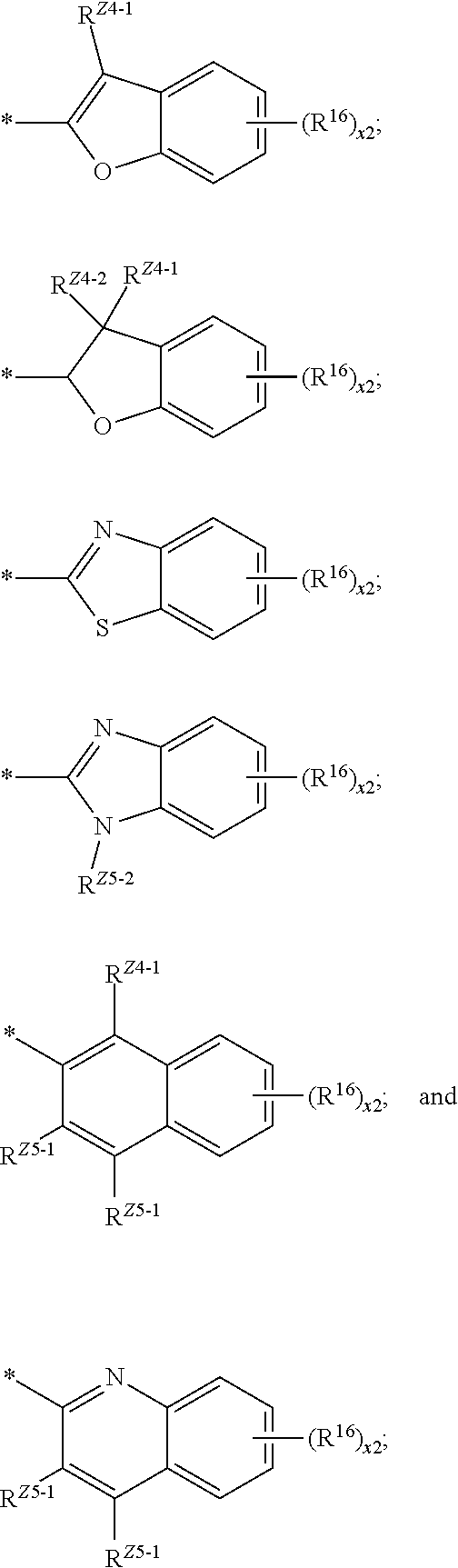
wherein the * represents the attachment point to the remainder of the molecule. In some embodiments, (A2-a) or (A2-b) is selected from the group consisting of:

wherein the * represents the attachment point to the remainder of the molecule. In some embodiments, (A2-a) or (A2-b) is selected from the group consisting of:

wherein the * represents the attachment point to the remainder of the molecule. In some embodiments, (A2-a) or (A2-b) is selected from the group consisting of:

wherein the * represents the attachment point to the remainder of the molecule.

wherein the * represents the attachment point to the remainder of the molecule. In some embodiments, (A2-a) or (A2-c) is selected from the group consisting of:

wherein the * represents the attachment point to the remainder of the molecule.

wherein the * represents the attachment point to the remainder of the molecule. In some embodiments, A1 is phenyl optionally substituted with one or more R14 substituents. In some embodiments, A1 is selected from the group consisting of:
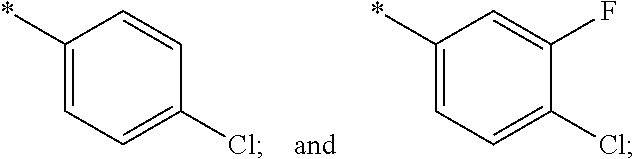
wherein the * represents the attachment point to the remainder of the molecule.

wherein the * represents the attachment point to the remainder of the molecule. In some embodiments, A1 is pyridyl optionally substituted with one or more R14 substituents. In some embodiments, A1 is

wherein the * represents the attachment point to the remainder of the molecule.

wherein the * represents the attachment point to the remainder of the molecule; and (A2-a) or (A2-b) is selected from the group consisting of:

wherein the * represents the attachment point to the remainder of the molecule.

wherein the * represents the attachment point to the remainder of the molecule; and (A2-a) or (A2-b) is selected from the group consisting of:

wherein the * represents the attachment point to the remainder of the molecule.

wherein the * represents the attachment point to the remainder of the molecule; and (A2-a) or (A2-c) is selected from the group consisting of:

wherein the * represents the attachment point to the remainder of the molecule.

wherein the * represents the attachment point to the remainder of the molecule; and (A2-a) or (A2-b) is selected from the group consisting of:

wherein the * represents the attachment point to the remainder of the molecule.

wherein the * represents the attachment point to the remainder of the molecule; and (A2-a) or (A2-b) is selected from the group consisting of:

wherein the * represents the attachment point to the remainder of the molecule.

wherein the * represents the attachment point to the remainder of the molecule; and (A2-a) or (A2-c) is selected from the group consisting of:

wherein the * represents the attachment point to the remainder of the molecule.

wherein the * represents the attachment point to the remainder of the molecule; and (A2-a) or (A2-b) is selected from the group consisting of:

wherein the * represents the attachment point to the remainder of the molecule.

wherein the * represents the attachment point to the remainder of the molecule; and (A2-a) or (A2-b) is selected from the group consisting of:

wherein the * represents the attachment point to the remainder of the molecule.

wherein the * represents the attachment point to the remainder of the molecule; and (A2-a) or (A2-c) is selected from the group consisting of:

wherein the * represents the attachment point to the remainder of the molecule.

wherein the * represents the attachment point to the remainder of the molecule; and A2 is selected from the group consisting of:

wherein the * represents the attachment point to the remainder of the molecule.

wherein the * represents the attachment point to the remainder of the molecule; and A2 is selected from the group consisting of:

wherein the * represents the attachment point to the remainder of the molecule.

wherein the * represents the attachment point to the remainder of the molecule; and A2 is selected from the group consisting of:

wherein the * represents the attachment point to the remainder of the molecule.

wherein the * represents the attachment point to the remainder of the molecule; and A2 is

wherein the * represents the attachment point to the remainder of the molecule.

wherein the * represents the attachment point to the remainder of the molecule; and A2 is selected from the group consisting of:

wherein the * represents the attachment point to the remainder of the molecule.

wherein the * represents the attachment point to the remainder of the molecule; and A2 is selected from the group consisting of:

wherein the * represents the attachment point to the remainder of the molecule.

wherein the * represents the attachment point to the remainder of the molecule; and A2 is selected from the group consisting of:

wherein the * represents the attachment point to the remainder of the molecule.

wherein the * represents the attachment point to the remainder of the molecule; and A2 is

wherein the * represents the attachment point to the remainder of the molecule.

wherein the * represents the attachment point to the remainder of the molecule; and A2 is selected from the group consisting of:

wherein the * represents the attachment point to the remainder of the molecule.

wherein the * represents the attachment point to the remainder of the molecule; and A2 is selected from the group consisting of:

wherein the * represents the attachment point to the remainder of the molecule.

wherein the * represents the attachment point to the remainder of the molecule; and A2 is selected from the group consisting of:

wherein the * represents the attachment point to the remainder of the molecule.

wherein the * represents the attachment point to the remainder of the molecule; and A2 is

wherein the * represents the attachment point to the remainder of the molecule.

wherein the * represents the attachment point to the remainder of the molecule; and (A2-a) or (A2-b) is selected from the group consisting of:

wherein the * represents the attachment point to the remainder of the molecule.

wherein the * represents the attachment point to the remainder of the molecule; and (A2-a) or (A2-b) is selected from the group consisting of:

wherein the * represents the attachment point to the remainder of the molecule.

wherein the * represents the attachment point to the remainder of the molecule; and (A1-a) or (A2-c) is selected from the group consisting of:

wherein the * represents the attachment point to the remainder of the molecule.

wherein the * represents the attachment point to the remainder of the molecule; and (A2-a) or (A2-b) is selected from the group consisting of:

wherein the * represents the attachment point to the remainder of the molecule.

wherein the * represents the attachment point to the remainder of the molecule; and (A2-a) or (A2-b) is selected from the group consisting of:

wherein the * represents the attachment point to the remainder of the molecule.

wherein the * represents the attachment point to the remainder of the molecule; and (A2-a) or (A2-c) is selected from the group consisting of:

wherein the * represents the attachment point to the remainder of the molecule.

wherein the * represents the attachment point to the remainder of the molecule; and (A2-a) or (A2-b) is selected from the group consisting of:

wherein the * represents the attachment point to the remainder of the molecule.

wherein the * represents the attachment point to the remainder of the molecule; and (A2-a) or (A2-b) is selected from the group consisting of:

wherein the * represents the attachment point to the remainder of the molecule.

wherein the * represents the attachment point to the remainder of the molecule; and (A2-a) or (A2-c) is selected from the group consisting of:

wherein the * represents the attachment point to the remainder of the molecule.

wherein the * represents the attachment point to the remainder of the molecule; and (A2-a) or (A2-b) is selected from the group consisting of:

wherein the * represents the attachment point to the remainder of the molecule.

wherein the * represents the attachment point to the remainder of the molecule; and (A2-a) or (A2-b) is selected from the group consisting of:

wherein the * represents the attachment point to the remainder of the molecule.

wherein the * represents the attachment point to the remainder of the molecule; and A2 is selected from the group consisting of:

wherein the * represents the attachment point to the remainder of the molecule.

wherein the * represents the attachment point to the remainder of the molecule; and A2 is selected from the group consisting of:

wherein the * represents the attachment point to the remainder of the molecule.

wherein the * represents the attachment point to the remainder of the molecule; and A2 is selected from the group consisting of:

wherein the * represents the attachment point to the remainder of the molecule.

wherein the * represents the attachment point to the remainder of the molecule; and A2 is

wherein the * represents the attachment point to the remainder of the molecule.

wherein the * represents the attachment point to the remainder of the molecule; and A2 is selected from the group consisting of:

wherein the * represents the attachment point to the remainder of the molecule.

wherein the * represents the attachment point to the remainder of the molecule; and A2 is selected from the group consisting of:

wherein the * represents the attachment point to the remainder of the molecule.

wherein the * represents the attachment point to the remainder of the molecule; A2 is selected from the group consisting of:

wherein the * represents the attachment point to the remainder of the molecule.

wherein the * represents the attachment point to the remainder of the molecule; and A2 is

wherein the * represents the attachment point to the remainder of the molecule.

wherein the * represents the attachment point to the remainder of the molecule; and A2 is selected from the group consisting of:

wherein the * represents the attachment point to the remainder of the molecule.

wherein the * represents the attachment point to the remainder of the molecule; and A2 is selected from the group consisting of:

wherein the * represents the attachment point to the remainder of the molecule.

wherein the * represents the attachment point to the remainder of the molecule; A2 is selected from the group consisting of:

wherein the * represents the attachment point to the remainder of the molecule.

wherein the * represents the attachment point to the remainder of the molecule; and A2 is

wherein the * represents the attachment point to the remainder of the molecule.

wherein the * represents the attachment point to the remainder of the molecule; and A2 is selected from the group consisting of:

wherein the * represents the attachment point to the remainder of the molecule.

wherein the * represents the attachment point to the remainder of the molecule; and A2 is selected from the group consisting of:

wherein the * represents the attachment point to the remainder of the molecule.

wherein the * represents the attachment point to the remainder of the molecule; and A2 is selected from the group consisting of:

wherein the * represents the attachment point to the remainder of the molecule.

wherein the * represents the attachment point to the remainder of the molecule; and A2 is

wherein the * represents the attachment point to the remainder of the molecule.

or a pharmaceutically acceptable salt thereof;
wherein:
-
- A1 is selected from the group consisting of:
- a substituent of formula (A1-a)
- A1 is selected from the group consisting of:

-
-
- C6-C10 aryl optionally substituted with one or more R14 substituents; and
- 5-10 membered heteroaryl optionally substituted with one or more R14 substituents;
- A2 is C6-C10 aryl optionally substituted with one or more R16 substituents; or 5-10 membered heteroaryl optionally substituted with one or more R16 substituents;
-
-
- q1 is 1;
- A1 is selected C6-C10 aryl optionally substituted with one or more R14 substituents; or 5-10 membered heteroaryl optionally substituted with one or more R14 substituents;
- A2 is C6-C10 aryl optionally substituted with one or more R16 substituents; or 5-10 membered heteroaryl optionally substituted with one or more R16 substituents;
- R5a and R5b are taken together to form an oxo (═O) substituent or an imido (═NH) substituent, or alternatively, R5a and R5b are both hydrogen;
- R6a is selected from the group consisting of hydrogen, —OR6a-a, and —NR6a-bR6a-c; and
- R6b is hydrogen;
- or alternatively, R6a and R6b are taken together to form a —CH2—O—CH2— moiety.
-
- R5a and R5b are taken together to form an oxo (═O) substituent;
- R6a is hydrogen; and
- R6b is hydrogen.
-
- R5a and R5b are both hydrogen; and
- R6a and R6b are taken together to form a —CH2—O—CH2— moiety.
-
- X1 and X2, independently of each other, are CH or N; provided that at least one of X1 and X2 is CH;
- Y1 is selected from the group consisting of a bond, NRY1, and O; provided that when X1 is N, then Y1 is a bond;
- RY1 is hydrogen or C1-C6 alkyl;
- Y2 is selected from the group consisting of a bond, NRY2, and O; provided that when X2 is N, then Y2 is a bond;
- RY2 is hydrogen or C1-C6 alkyl;
- q1 is 1;
- r and s, independently of each other, are 0, 1, or 2;
- A1 is C6-C10 aryl substituted by at least one halogen substituent and optionally further substituted with one or more R14 substituents, or 5-10 membered heteroaryl substituted by at least one halogen substituent and optionally further substituted with one or more R14 substituents;
- R14 is selected, independently at each occurrence, from the group consisting of halogen, C1-C6 alkyl, C1-C6 haloalkyl, —OH, —O(C1-C6 alkyl), —O(C1-C6 haloalkyl), —SH, —S(C1-C6 alkyl), —S(C1-C6 haloalkyl), —NH2, —NH(C1-C6 alkyl), —NH(C1-C6 haloalkyl), —N(C1-C6 alkyl)2, —N(C1-C6 haloalkyl)2, —NR14-aR14-b, —CN, —C(O)OH, —C(O)O(C1-C6 alkyl), —C(O)O(C1-C6 haloalkyl), —C(O)NH2, —C(O)NH(C1-C6 alkyl), —C(O)NH(C1-C6 haloalkyl), —C(O)N(C1-C6 alkyl)2, —C(O)N(C1-C6 haloalkyl)2, —C(O)NR14-aR14-b, —S(O)2OH, —S(O)2O(C1-C6 alkyl), —S(O)2O(C1-C6 haloalkyl), —S(O)2NH2, —S(O)2NH(C1-C6 alkyl), —S(O)2NH(C1-C6 haloalkyl), —S(O)2N(C1-C6 alkyl)2, —S(O)2N(C1-C6 haloalkyl)2, —S(O)2NR14-aR14-b, —OC(O)H, —OC(O)(C1-C6 alkyl), —OC(O)(C1-C6 haloalkyl), —N(H)C(O)H, —N(H)C(O)(C1-C6 alkyl), —N(H)C(O)(C1-C6 haloalkyl), —N(C1-C6 alkyl)C(O)H, —N(C1-C6 alkyl)C(O)(C1-C6 alkyl), —N(C1-C6 alkyl)C(O)(C1-C6 haloalkyl), —N(C1-C6 haloalkyl)C(O)H, —N(C1-C6 haloalkyl)C(O)(C1-C6 alkyl), —N(C1-C6 haloalkyl)C(O)(C1-C6 haloalkyl), —OS(O)2(C1-C6 alkyl), —OS(O)2(C1-C6 haloalkyl), —N(H)S(O)2(C1-C6 alkyl), —N(H)S(O)2(C1-C6 haloalkyl), —N(C1-C6 alkyl)S(O)2(C1-C6 alkyl), —N(C1-C6 alkyl)S(O)2(C1-C6 haloalkyl), —N(C1-C6 haloalkyl)S(O)2(C1-C6 alkyl), and —N(C1-C6 haloalkyl)S(O)2(C1-C6 haloalkyl);
- wherein R14-a and R14-b are taken together with the nitrogen atom which bears them to form a 3-10 membered heterocycle;
- A2 is C6-C10 aryl substituted by at least one halogen substituent and optionally further substituted with one or more R16 substituents, or 5-10 membered heteroaryl substituted by at least one halogen substituent and optionally further substituted with one or more R16 substituents;
- R16 is selected, independently at each occurrence, from the group consisting of halogen, C1-C6 alkyl, C1-C6 haloalkyl, —OH, —O(C1-C6 alkyl), —O(C1-C6 haloalkyl), —SH, —S(C1-C6 alkyl), —S(C1-C6 haloalkyl), —NH2, —NH(C1-C6 alkyl), —NH(C1-C6 haloalkyl), —N(C1-C6 alkyl)2, —N(C1-C6 haloalkyl)2, —NR16-aR16-b, —CN, —C(O)OH, —C(O)O(C1-C6 alkyl), —C(O)O(C1-C6 haloalkyl), —C(O)NH2, —C(O)NH(C1-C6 alkyl), —C(O)NH(C1-C6 haloalkyl), —C(O)N(C1-C6 alkyl)2, —C(O)N(C1-C6 haloalkyl)2, —C(O)NR16-aR16-b, —S(O)2OH, —S(O)2O(C1-C6 alkyl), —S(O)2O(C1-C6 haloalkyl), —S(O)2NH2, —S(O)2NH(C1-C6 alkyl), —S(O)2NH(C1-C6 haloalkyl), —S(O)2N(C1-C6 alkyl)2, —S(O)2N(C1-C6 haloalkyl)2, —S(O)2NR16aR16b, —OC(O)H, —OC(O)(C1-C6 alkyl), —OC(O)(C1-C6 haloalkyl), —N(H)C(O)H, —N(H)C(O)(C1-C6 alkyl), —N(H)C(O)(C1-C6 haloalkyl), —N(C1-C6 alkyl)C(O)H, —N(C1-C6 alkyl)C(O)(C1-C6 alkyl), —N(C1-C6 alkyl)C(O)(C1-C6 haloalkyl), —N(C1-C6 haloalkyl)C(O)H, —N(C1-C6 haloalkyl)C(O)(C1-C6 alkyl), —N(C1-C6 haloalkyl)C(O)(C1-C6 haloalkyl), —OS(O)2(C1-C6 alkyl), —OS(O)2(C1-C6 haloalkyl), —N(H)S(O)2(C1-C6 alkyl), —N(H)S(O)2(C1-C6 haloalkyl), —N(C1-C6 alkyl)S(O)2(C1-C6 alkyl), —N(C1-C6 alkyl)S(O)2(C1-C6 haloalkyl), —N(C1-C6 haloalkyl)S(O)2(C1-C6 alkyl), and —N(C1-C6 haloalkyl)S(O)2(C1-C6 haloalkyl);
- wherein R16-a and R16-b are taken together with the nitrogen atom which bears them to form a 3-10 membered heterocycle;
- R1a and R1b are independently selected from the group consisting of hydrogen, C1-C6 alkyl, and halogen;
- R2a and R2b are independently selected from the group consisting of hydrogen, C1-C6 alkyl, and halogen;
- when present, R3a and R3b are independently at each occurrence selected from the group consisting of hydrogen, C1-C6 alkyl, and halogen;
- when present, R4a and R4b are independently at each occurrence selected from the group consisting of hydrogen, C1-C6 alkyl, and halogen;
- or alternatively, R1a and R2a are taken together to form a C1-C6 alkylene moiety;
- or alternatively, R1a and an R3a moiety, when present, are taken together to form a C1-C6 alkylene moiety, and R1b and the R3b in the geminal position to the R3a taken together with R1a, are both hydrogen;
- or alternatively, an R3a moiety, when present, and an R4a moiety, when present, are taken together to form a C1-C6 alkylene moiety, and the R3b in the geminal position to the R3a taken together with the R4a moiety and the R4b in the geminal position to the R4a taken together with the R3a moiety, are both hydrogen;
- R5a and R5b are taken together to form an oxo (═O) substituent or an imido (═NH) substituent;
- R6a is hydrogen;
- R6b is hydrogen;
- R9a and R9b are taken together to form an oxo (═O) substituent or an imido (═NH) substituent, or alternatively, R9a and R9b are both hydrogen;
- R10a is selected from the group consisting of hydrogen, —OR10a-a, and —NR10a-bR10a-c;
- R10b is hydrogen;
- R12a and R12b are taken together to form an oxo (═O) substituent, or alternatively, R12a and R12b are both hydrogen;
- R10a-a is selected from the group consisting of hydrogen, C1-C6 alkyl, and C1-C6 haloalkyl;
- or R10a-a and RY2 may be taken together to form a carbonyl (C═O) moiety;
- R10a-b and R10a-c, independently of each other, are selected from the group consisting of hydrogen, C1-C6 alkyl, and C1-C6 haloalkyl; and
- provided that when X2 is N, then:
- A1 is C6-C10 aryl substituted by at least two halogen substituents and optionally further substituted with one or more R14 substituents, or 5-10 membered heteroaryl substituted by at least two halogen substituents and optionally further substituted with one or more R14 substituents; and
- A2 is C6-C10 aryl substituted by at least two halogen substituents and optionally further substituted with one or more R16 substituents, or 5-10 membered heteroaryl substituted by at least two halogen substituents and optionally further substituted with one or more R16 substituents.
-
- X1 is CH;
- X2 is CH;
- Y1 is selected from the group consisting of NRY1 and O;
- RY1 is hydrogen or C1-C6 alkyl;
- Y2 is selected from the group consisting of NRY2 and O;
- RY2 is hydrogen or C1-C6 alkyl;
- q1 and q2 are each 1; and
- r and s are both 1.
-
- X1 is CH;
- X2 is CH;
- Y1 is NRY1;
- Ry1 is hydrogen;
- Y2 is NRY2;
- RY2 is hydrogen;
- q1 is 1; and
- r and s are both 1.

wherein the * represents the attachment point to the remainder of the molecule. In some embodiments, A1 is phenyl optionally substituted with one or more R14 substituents. In some embodiments, A1 is phenyl substituted by at least one halogen substituent and optionally further substituted with one or more R14 substituents. In some embodiments, A1 is selected from the group consisting of:

wherein the * represents the attachment point to the remainder of the molecule.
In some embodiments, A1 is 5-10 membered heteroaryl optionally substituted with one or more R14 substituents. In some embodiments, A1 is 5-10 membered heteroaryl substituted by at least one halogen substituent and optionally further substituted with one or more R14 substituents. In some embodiments, A1 is selected from the group consisting of:

wherein the * represents the attachment point to the remainder of the molecule. In some embodiments, A1 is pyridyl optionally substituted with one or more R14 substituents. In some embodiments, A1 is pyridyl substituted by at least one halogen substituent and optionally further substituted with one or more R14 substituents. In some embodiments, A1 is

wherein the * represents the attachment point to the remainder of the molecule.

wherein the * represents the attachment point to the remainder of the molecule. In some embodiments, A2 is phenyl optionally substituted with one or more R16 substituents. In some embodiments, A2 is phenyl substituted by at least one halogen substituent and optionally further substituted with one or more R16 substituents. In some embodiments, A2 is selected from the group consisting of:

wherein the * represents the attachment point to the remainder of the molecule.
In some embodiments, A2 is 5-10 membered heteroaryl optionally substituted with one or more R16 substituents. In some embodiments, A2 is 5-10 membered heteroaryl substituted by at least one halogen substituent and optionally further substituted with one or more R16 substituents. In some embodiments, A2 is selected from the group consisting of:

wherein the * represents the attachment point to the remainder of the molecule. In some embodiments, A2 is pyridyl optionally substituted with one or more R16 substituents. In some embodiments, A2 is pyridyl substituted by at least one halogen substituent and optionally further substituted with one or more R16 substituents. In some embodiments, A2 is

wherein the * represents the attachment point to the remainder of the molecule.
-
- X1 is N;
- X2 is CH;
- Y1 is a bond;
- Y2 is selected from the group consisting of NRY2 and O;
- RY2 is hydrogen or C1-C6 alkyl;
- q1 is 1; and
- r and s are both 1.
-
- X1 is N;
- X2 is CH;
- Y1 is a bond;
- Y2 is NRY2;
- RY2 is hydrogen;
- q1 is 1; and
- r and s are both 1.

wherein the * represents the attachment point to the remainder of the molecule. In some embodiments, A1 is phenyl optionally substituted with one or more R14 substituents. In some embodiments, A1 is phenyl substituted by at least one halogen substituent and optionally further substituted with one or more R14 substituents. In some embodiments, A1 is selected from the group consisting of:

wherein the * represents the attachment point to the remainder of the molecule.
In some embodiments, A1 is 5-10 membered heteroaryl optionally substituted with one or more R14 substituents. In some embodiments, A1 is 5-10 membered heteroaryl substituted by at least one halogen substituent and optionally further substituted with one or more R14 substituents. In some embodiments, A1 is selected from the group consisting of:

wherein the * represents the attachment point to the remainder of the molecule. In some embodiments, A1 is pyridyl optionally substituted with one or more R14 substituents. In some embodiments, A1 is pyridyl substituted by at least one halogen substituent and optionally further substituted with one or more R14 substituents. In some embodiments, A1 is

wherein the * represents the attachment point to the remainder of the molecule.

wherein the * represents the attachment point to the remainder of the molecule. In some embodiments, A2 is phenyl optionally substituted with one or more R substituents. In some embodiments, A2 is phenyl substituted by at least one halogen substituent and optionally further substituted with one or more R16 substituents. In some embodiments, A2 is selected from the group consisting of:

wherein the * represents the attachment point to the remainder of the molecule.
In some embodiments, A2 is 5-10 membered heteroaryl optionally substituted with one or more R16 substituents. In some embodiments, A2 is 5-10 membered heteroaryl substituted by at least one halogen substituent and optionally further substituted with one or more R16 substituents. In some embodiments, A2 is selected from the group consisting of:

wherein the * represents the attachment point to the remainder of the molecule. In some embodiments, A2 is pyridyl optionally substituted with one or more R16 substituents. In some embodiments, A2 is pyridyl substituted by at least one halogen substituent and optionally further substituted with one or more R16 substituents. In some embodiments, A2 is

wherein the * represents the attachment point to the remainder of the molecule.
-
- X1 is CH;
- X2 is N;
- Y1 is selected from the group consisting of NRY1 and O;
- RY1 is hydrogen or C1-C6 alkyl;
- Y2 is a bond;
- q1 is 1;
- r and s are both 1;
- A1 is C6-C10 aryl substituted by at least two halogen substituents and optionally further substituted with one or more R14 substituents, or 5-10 membered heteroaryl substituted by at least two halogen substituents and optionally further substituted with one or more R14 substituents; and
- A2 is C6-C10 aryl substituted by at least two halogen substituents and optionally further substituted with one or more R16 substituents, or 5-10 membered heteroaryl substituted by at least two halogen substituents and optionally further substituted with one or more R16 substituents.
-
- X1 is CH;
- X2 is N;
- Y1 is NRY1;
- Ry1 is hydrogen;
- Y2 is a bond;
- q1 is 1;
- r and s are both 1;
- A1 is C6-C10 aryl substituted by at least two halogen substituents and optionally further substituted with one or more R14 substituents, or 5-10 membered heteroaryl substituted by at least two halogen substituents and optionally further substituted with one or more R14 substituents; and
- A2 is C6-C10 aryl substituted by at least two halogen substituents and optionally further substituted with one or more R16 substituents, or 5-10 membered heteroaryl substituted by at least two halogen substituents and optionally further substituted with one or more R16 substituents.

wherein the * represents the attachment point to the remainder of the molecule. In some embodiments, A1 is 5-10 membered heteroaryl substituted by at least two halogen substituents and optionally further substituted with one or more R14 substituents.

wherein the * represents the attachment point to the remainder of the molecule. In some embodiments, A2 is 5-10 membered heteroaryl substituted by at least two halogen substituent and optionally further substituted with one or more R16 substituents.

wherein the * represents the attachment point to the remainder of the molecule. In some embodiments, A1 is phenyl optionally substituted with one or more R14 substituents. In some embodiments, A1 is selected from the group consisting of:

wherein the * represents the attachment point to the remainder of the molecule.

wherein the * represents the attachment point to the remainder of the molecule. In some embodiments, A1 is pyridyl optionally substituted with one or more R14 substituents. In some embodiments, A1 is

wherein the * represents the attachment point to the remainder of the molecule.
-
- q1 is 0;
- A1 is a substituent of formula (A1-a)

-
- R6a is —OR6a-a; and
- R6b is hydrogen.
-
- R5a and R5b are taken together to form an oxo (═O) substituent;
- R6a is hydrogen; and
- R6b is hydrogen.


wherein the * represents the attachment point to the remainder of the molecule. In some embodiments. (A1-a) or (A1-b) is selected from the group consisting of:

wherein the * represents the attachment point to the remainder of the molecule. In some embodiments, (A1-a) or (A1-b) is selected from the group consisting of:

wherein the * represents the attachment point to the remainder of the molecule. In some embodiments, (A1-a) or (A1-b) is selected from the group consisting of:

wherein the * represents the attachment point to the remainder of the molecule.

wherein the * represents the attachment point to the remainder of the molecule. In some embodiments, (A1-a) or (A1-c) is selected from the group consisting of:

wherein the * represents the attachment point to the remainder of the molecule.
-
- R9a and R9b are taken together to form an oxo (═O) substituent or an imido (═NH) substituent, or alternatively, R9a and R9b are both hydrogen;
- R10a is selected from the group consisting of hydrogen, —OR10a-a, and —NR10a-bR10a-c;
- R10b is hydrogen; and
- R12a and R12b are both hydrogen.
-
- X2 is CH;
- Y2 is NRY2;
- R9a and R9b are both hydrogen;
- R10a is —OR10a-a;
- R12a and R12b are both hydrogen; and
- R10a-a and RY2 are taken together to form a carbonyl (C═O) moiety.

wherein the * represents the attachment point to the remainder of the molecule. In some embodiments, A2 is phenyl optionally substituted with one or more R16 substituents. In some embodiments, A2 is selected from the group consisting of:

wherein the * represents the attachment point to the remainder of the molecule.

wherein the * represents the attachment point to the remainder of the molecule. In some embodiments, A2 is pyridyl optionally substituted with one or more R16 substituents. In some embodiments, A2 is

wherein the * represents the attachment point to the remainder of the molecule.

wherein the * represents the attachment point to the remainder of the molecule; and (A2-a) or (A2-b) is selected from the group consisting of:
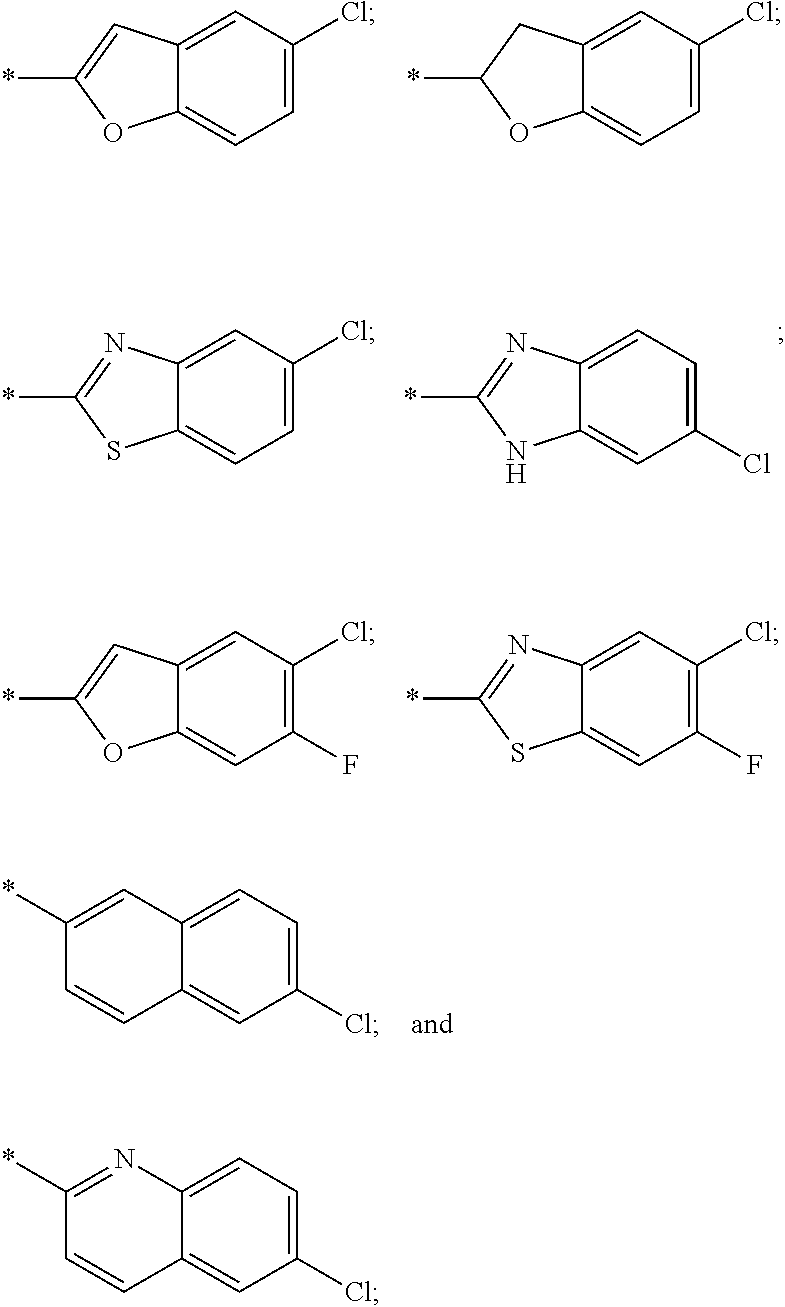
wherein the * represents the attachment point to the remainder of the molecule.

wherein the * represents the attachment point to the remainder of the molecule; and (A2-a) or (A2-b) is selected from the group consisting of:

wherein the * represents the attachment point to the remainder of the molecule.

wherein the * represents the attachment point to the remainder of the molecule; and (A2-a) or (A2-c) is selected from the group consisting of:

wherein the * represents the attachment point to the remainder of the molecule.

wherein the * represents the attachment point to the remainder of the molecule; and (A2-a) or (A2-b) is selected from the group consisting of:

wherein the * represents the attachment point to the remainder of the molecule.

wherein the * represents the attachment point to the remainder of the molecule; and (A2-a) or (A2-b) is selected from the group consisting of:

wherein the * represents the attachment point to the remainder of the molecule.

wherein the * represents the attachment point to the remainder of the molecule; and (A2-a) or (A2-c) is selected from the group consisting of:

wherein the * represents the attachment point to the remainder of the molecule.

wherein the * represents the attachment point to the remainder of the molecule: and (A2-a) or (A2-b) is selected from the group consisting of:

wherein the * represents the attachment point to the remainder of the molecule.

wherein the * represents the attachment point to the remainder of the molecule; and (A2-a) or (A2-b) is selected from the group consisting of:

wherein the * represents the attachment point to the remainder of the molecule.

wherein the * represents the attachment point to the remainder of the molecule; and (A2-a) or (A2-c) is selected from the group consisting of:

wherein the * represents the attachment point to the remainder of the molecule.

wherein the * represents the attachment point to the remainder of the molecule; and A2 is selected from the group consisting of:

wherein the * represents the attachment point to the remainder of the molecule.

wherein the * represents the attachment point to the remainder of the molecule; and A2 is selected from the group consisting of:

wherein the * represents the attachment point to the remainder of the molecule.

wherein the * represents the attachment point to the remainder of the molecule; and A2 is selected from the group consisting of:

wherein the * represents the attachment point to the remainder of the molecule.

wherein the * represents the attachment point to the remainder of the molecule; and A2 is

wherein the * represents the attachment point to the remainder of the molecule.

wherein the * represents the attachment point to the remainder of the molecule; and A2 is selected from the group consisting of:

wherein the * represents the attachment point to the remainder of the molecule.

wherein the * represents the attachment point to the remainder of the molecule; and A2 is selected from the group consisting of:

wherein the * represents the attachment point to the remainder of the molecule.

wherein the * represents the attachment point to the remainder of the molecule; and A2 is selected from the group consisting of:

wherein the * represents the attachment point to the remainder of the molecule.

wherein the * represents the attachment point to the remainder of the molecule; and A2 is

wherein the * represents the attachment point to the remainder of the molecule.

wherein the * represents the attachment point to the remainder of the molecule; and A2 is selected from the group consisting of:

wherein the * represents the attachment point to the remainder of the molecule.

wherein the * represents the attachment point to the remainder of the molecule; and A2 is selected from the group consisting of:

wherein the * represents the attachment point to the remainder of the molecule.

wherein the * represents the attachment point to the remainder of the molecule; and A2 is selected from the group consisting of:

wherein the * represents the attachment point to the remainder of the molecule.

wherein the * represents the attachment point to the remainder of the molecule; and A2 is

wherein the * represents the attachment point to the remainder of the molecule.

wherein the * represents the attachment point to the remainder of the molecule; and (A2-a) or (A2-b) is selected from the group consisting of:

wherein the * represents the attachment point to the remainder of the molecule.

wherein the * represents the attachment point to the remainder of the molecule; and (A1-a) or (A2-b) is selected from the group consisting of:

wherein the * represents the attachment point to the remainder of the molecule.

wherein the * represents the attachment point to the remainder of the molecule; and (A2-a) or (A2-c) is selected from the group consisting of:

wherein the * represents the attachment point to the remainder of the molecule.

wherein the * represents the attachment point to the remainder of the molecule; and (A2-a) or (A2-b) is selected from the group consisting of:

wherein the * represents the attachment point to the remainder of the molecule.

wherein the * represents the attachment point to the remainder of the molecule; and (A2-a) or (A2-b) is selected from the group consisting of:

wherein the * represents the attachment point to the remainder of the molecule.

wherein the * represents the attachment point to the remainder of the molecule; and (A2-a) or (A2-c) is selected from the group consisting of:

wherein the * represents the attachment point to the remainder of the molecule.

wherein the * represents the attachment point to the remainder of the molecule; and (A2-a) or (A2-b) is selected from the group consisting of:

wherein the * represents the attachment point to the remainder of the molecule.

wherein the * represents the attachment point to the remainder of the molecule; and (A2-a) or (A2-b) is selected from the group consisting of:

wherein the * represents the attachment point to the remainder of the molecule.

wherein the * represents the attachment point to the remainder of the molecule; and (A2-a) or (A2-c) is selected from the group consisting of:

wherein the * represents the attachment point to the remainder of the molecule.

wherein the * represents the attachment point to the remainder of the molecule; and (A2-a) or (A2-b) is selected from the group consisting of:

wherein the * represents the attachment point to the remainder of the molecule.

wherein the * represents the attachment point to the remainder of the molecule; and (A2-a) or (A2-b) is selected from the group consisting of:

wherein the * represents the attachment point to the remainder of the molecule.

wherein the * represents the attachment point to the remainder of the molecule; and A2 is selected from the group consisting of:

wherein the * represents the attachment point to the remainder of the molecule.

wherein the * represents the attachment point to the remainder of the molecule; and A2 is selected from the group consisting of:

wherein the * represents the attachment point to the remainder of the molecule.

wherein the * represents the attachment point to the remainder of the molecule; and A is selected from the group consisting of:

wherein the * represents the attachment point to the remainder of the molecule.

wherein the * represents the attachment point to the remainder of the molecule; and A2 is

wherein the * represents the attachment point to the remainder of the molecule.

wherein the * represents the attachment point to the remainder of the molecule; and A2 is selected from the group consisting of:
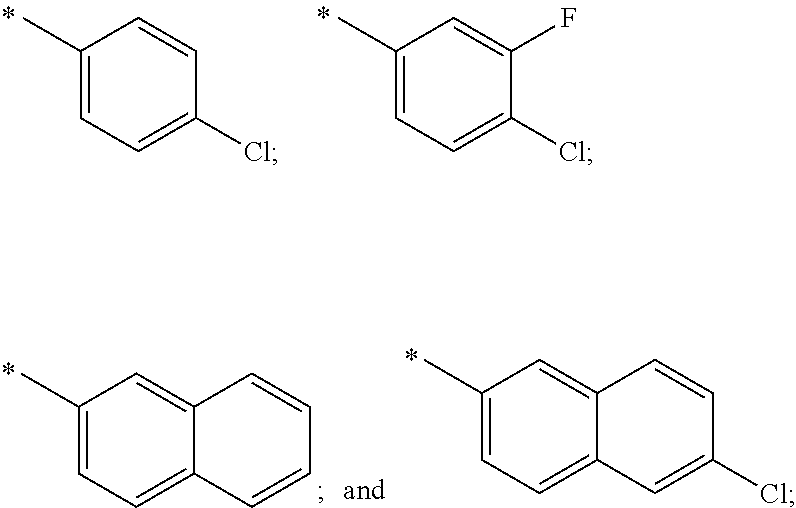
wherein the * represents the attachment point to the remainder of the molecule.

wherein the * represents the attachment point to the remainder of the molecule; and A2 is selected from the group consisting of:

wherein the * represents the attachment point to the remainder of the molecule.

wherein the * represents the attachment point to the remainder of the molecule; A2 is selected from the group consisting of:

wherein the * represents the attachment point to the remainder of the molecule.

wherein the * represents the attachment point to the remainder of the molecule; and A2 is

wherein the * represents the attachment point to the remainder of the molecule.

wherein the * represents the attachment point to the remainder of the molecule; and A2 is selected from the group consisting of:

wherein the * represents the attachment point to the remainder of the molecule.

wherein the * represents the attachment point to the remainder of the molecule; and A2 is selected from the group consisting of:

wherein the * represents the attachment point to the remainder of the molecule.

wherein the * represents the attachment point to the remainder of the molecule; A2 is selected from the group consisting of:

wherein the * represents the attachment point to the remainder of the molecule.

wherein the * represents the attachment point to the remainder of the molecule; and A2 is

wherein the * represents the attachment point to the remainder of the molecule.

wherein the * represents the attachment point to the remainder of the molecule; and A2 is selected from the group consisting of:

wherein the * represents the attachment point to the remainder of the molecule.

wherein the * represents the attachment point to the remainder of the molecule; and A2 is selected from the group consisting of:

wherein the * represents the attachment point to the remainder of the molecule.

wherein the * represents the attachment point to the remainder of the molecule; and A2 is selected from the group consisting of:

wherein the * represents the attachment point to the remainder of the molecule.

wherein the * represents the attachment point to the remainder of the molecule; and A2 is

wherein the * represents the attachment point to the remainder of the molecule.

or a pharmaceutically acceptable salt thereof;
wherein:
-
- A1 is selected from the group consisting of:
- a substituent of formula (A1-a)
- A1 is selected from the group consisting of:

-
-
- C6-C10 aryl optionally substituted with one or more R14 substituents; and
- 5-10 membered heteroaryl optionally substituted with one or more R14 substituents;
- A2 is C6-C10 aryl optionally substituted with one or more R16 substituents; or 5-10 membered heteroaryl optionally substituted with one or more R16 substituents;
- R11a and R11b are both hydrogen;
- R12a and R12b are both hydrogen;
- and wherein X1, X2, Y1, RY1, Y2, RY2, q1, r, s, Z1, RZ1-1, RZ1-2, Z2, RZ2-1, RZ2-2, Z3, x1, R1a, R1b, R2a, R2b, R3a, R3b, R4a, R4b, R5a, R5b, R6a, R6a-a, R6a-b, R6a-c, R6b, R13, R14, and R16 are as defined in compounds of formula (I).
-
-
- q1 is 1;
- A1 is selected C6-C10 aryl optionally substituted with one or more R14 substituents; or 5-10 membered heteroaryl optionally substituted with one or more R14 substituents;
- R5a and R5b are taken together to form an oxo (═O) substituent or an imido (═NH) substituent, or alternatively, R5a and R5b are both hydrogen;
- R6a is selected from the group consisting of hydrogen, —OR6a-a, and —NR6a-bR6a-c; and
- R6b is hydrogen;
- or alternatively, R6a and R6b are taken together to form a —CH2—O—CH2— moiety.

wherein the * represents the attachment point to the remainder of the molecule. In some embodiments, A1 is phenyl optionally substituted with one or more R14 substituents. In some embodiments, A1 is selected from the group consisting of:

wherein the * represents the attachment point to the remainder of the molecule.

wherein the * represents the attachment point to the remainder of the molecule. In some embodiments, A1 is pyridyl optionally substituted with one or more R14 substituents. In some embodiments, A1 is

wherein the * represents the attachment point to the remainder of the molecule.

wherein the * represents the attachment point to the remainder of the molecule. In some embodiments, A2 is phenyl optionally substituted with one or more R16 substituents. In some embodiments, A2 is selected from the group consisting of:

wherein the * represents the attachment point to the remainder of the molecule.

wherein the * represents the attachment point to the remainder of the molecule. In some embodiments, A2 is pyridyl optionally substituted with one or more R16 substituents. In some embodiments, A2 is

wherein the * represents the attachment point to the remainder of the molecule.

wherein the * represents the attachment point to the remainder of the molecule; and (A2-a) or (A2-b) is selected from the group consisting of:

wherein the * represents the attachment point to the remainder of the molecule.

wherein the * represents the attachment point to the remainder of the molecule; and (A2-a) or (A2-b) is selected from the group consisting of:

wherein the * represents the attachment point to the remainder of the molecule.

wherein the * represents the attachment point to the remainder of the molecule; and (A2-a) or (A2-c) is selected from the group consisting of:

wherein the * represents the attachment point to the remainder of the molecule.

wherein the * represents the attachment point to the remainder of the molecule; and (A1-a) or (A2-b) is selected from the group consisting of:

wherein the * represents the attachment point to the remainder of the molecule.

wherein the * represents the attachment point to the remainder of the molecule; and (A2-a) or (A2-b) is selected from the group consisting of:

wherein the * represents the attachment point to the remainder of the molecule.

wherein the * represents the attachment point to the remainder of the molecule; and (A2-a) or (A2-c) is selected from the group consisting of:

wherein the * represents the attachment point to the remainder of the molecule.

wherein the * represents the attachment point to the remainder of the molecule: and (A2-a) or (A2-b) is selected from the group consisting of:

wherein the * represents the attachment point to the remainder of the molecule.

wherein the * represents the attachment point to the remainder of the molecule; and (A2-a) or (A2-b) is selected from the group consisting of:

wherein the * represents the attachment point to the remainder of the molecule.

wherein the * represents the attachment point to the remainder of the molecule; and (A2-a) or (A2-c) is selected from the group consisting of:

wherein the * represents the attachment point to the remainder of the molecule.

wherein the * represents the attachment point to the remainder of the molecule; and A2 is selected from the group consisting of:

wherein the * represents the attachment point to the remainder of the molecule.

wherein the * represents the attachment point to the remainder of the molecule; and A2 is selected from the group consisting of:

wherein the * represents the attachment point to the remainder of the molecule.

wherein the * represents the attachment point to the remainder of the molecule; and A2 is selected from the group consisting of:

wherein the * represents the attachment point to the remainder of the molecule.

wherein the * represents the attachment point to the remainder of the molecule; and A2 is

wherein the * represents the attachment point to the remainder of the molecule.

wherein the * represents the attachment point to the remainder of the molecule; and A2 is selected from the group consisting of:

wherein the * represents the attachment point to the remainder of the molecule.

wherein the * represents the attachment point to the remainder of the molecule; and A2 is selected from the group consisting of:

wherein the * represents the attachment point to the remainder of the molecule.

wherein the * represents the attachment point to the remainder of the molecule; and A2 is selected from the group consisting of:

wherein the * represents the attachment point to the remainder of the molecule.

wherein the * represents the attachment point to the remainder of the molecule; and A2 is

wherein the * represents the attachment point to the remainder of the molecule.

wherein the * represents the attachment point to the remainder of the molecule; and A2 is selected from the group consisting of:

wherein the * represents the attachment point to the remainder of the molecule.

wherein the * represents the attachment point to the remainder of the molecule; and A2 is selected from the group consisting of:

wherein the * represents the attachment point to the remainder of the molecule.

wherein the * represents the attachment point to the remainder of the molecule; and A2 is selected from the group consisting of:

wherein the * represents the attachment point to the remainder of the molecule.

wherein the * represents the attachment point to the remainder of the molecule; and A2 is

wherein the * represents the attachment point to the remainder of the molecule.

wherein the * represents the attachment point to the remainder of the molecule; and (A2-a) or (A2-b) is selected from the group consisting of:

wherein the * represents the attachment point to the remainder of the molecule.

wherein the * represents the attachment point to the remainder of the molecule; and (A2-a) or (A2-b) is selected from the group consisting of:

wherein the * represents the attachment point to the remainder of the molecule.

wherein the * represents the attachment point to the remainder of the molecule; and (A1-a) or (A2-c) is selected from the group consisting of:

wherein the * represents the attachment point to the remainder of the molecule.

wherein the * represents the attachment point to the remainder of the molecule; and (A2-a) or (A2-b) is selected from the group consisting of:

wherein the * represents the attachment point to the remainder of the molecule.

wherein the * represents the attachment point to the remainder of the molecule; and (A2-a) or (A2-b) is selected from the group consisting of:

wherein the * represents the attachment point to the remainder of the molecule.

wherein the * represents the attachment point to the remainder of the molecule; and (A2-a) or (A2-c) is selected from the group consisting of:

wherein the * represents the attachment point to the remainder of the molecule.

wherein the * represents the attachment point to the remainder of the molecule; and (A2-a) or (A2-b) is selected from the group consisting of:

wherein the * represents the attachment point to the remainder of the molecule.

wherein the * represents the attachment point to the remainder of the molecule; and (A2-a) or (A2-b) is selected from the group consisting of:

wherein the * represents the attachment point to the remainder of the molecule.

wherein the * represents the attachment point to the remainder of the molecule; and (A2-a) or (A2-c) is selected from the group consisting of:

wherein the * represents the attachment point to the remainder of the molecule.

wherein the * represents the attachment point to the remainder of the molecule; and (A2-a) or (A2-b) is selected from the group consisting of:

wherein the * represents the attachment point to the remainder of the molecule.

wherein the * represents the attachment point to the remainder of the molecule; and (A2-a) or (A2-b) is selected from the group consisting of:

wherein the * represents the attachment point to the remainder of the molecule.

wherein the * represents the attachment point to the remainder of the molecule; and A2 is selected from the group consisting of:

wherein the * represents the attachment point to the remainder of the molecule.
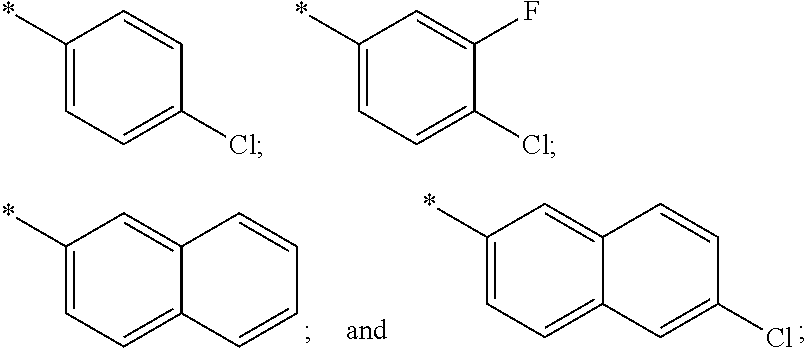
wherein the * represents the attachment point to the remainder of the molecule; and A2 is selected from the group consisting of:

wherein the * represents the attachment point to the remainder of the molecule.

wherein the * represents the attachment point to the remainder of the molecule; and A is selected from the group consisting of:

wherein the * represents the attachment point to the remainder of the molecule.

wherein the * represents the attachment point to the remainder of the molecule; and A2 is

wherein the * represents the attachment point to the remainder of the molecule.

wherein the * represents the attachment point to the remainder of the molecule; and A2 is selected from the group consisting of:

wherein the * represents the attachment point to the remainder of the molecule.

wherein the * represents the attachment point to the remainder of the molecule; and A2 is selected from the group consisting of:

wherein the * represents the attachment point to the remainder of the molecule.

wherein the * represents the attachment point to the remainder of the molecule; A2 is selected from the group consisting of:

wherein the * represents the attachment point to the remainder of the molecule.

wherein the * represents the attachment point to the remainder of the molecule; and A2 is

wherein the * represents the attachment point to the remainder of the molecule.

wherein the * represents the attachment point to the remainder of the molecule; and A2 is selected from the group consisting of:

wherein the * represents the attachment point to the remainder of the molecule.

wherein the * represents the attachment point to the remainder of the molecule; and A2 is selected from the group consisting of:

wherein the * represents the attachment point to the remainder of the molecule.

wherein the * represents the attachment point to the remainder of the molecule; A2 is selected from the group consisting of:

wherein the * represents the attachment point to the remainder of the molecule.

wherein the * represents the attachment point to the remainder of the molecule; and A2 is

wherein the * represents the attachment point to the remainder of the molecule.

wherein the * represents the attachment point to the remainder of the molecule; and A2 is selected from the group consisting of:

wherein the * represents the attachment point to the remainder of the molecule.

wherein the * represents the attachment point to the remainder of the molecule; and A2 is selected from the group consisting of:

wherein the * represents the attachment point to the remainder of the molecule.

wherein the * represents the attachment point to the remainder of the molecule; and A2 is selected from the group consisting of:

wherein the * represents the attachment point to the remainder of the molecule.

wherein the * represents the attachment point to the remainder of the molecule; and A2 is

wherein the * represents the attachment point to the remainder of the molecule.

or a pharmaceutically acceptable salt thereof;
wherein:
-
- A1 is C6-C10 aryl optionally substituted with one or more R14 substituents; or 5-10 membered heteroaryl optionally substituted with one or more R14 substituents;
- A2 is C6-C10 aryl optionally substituted with one or more R16 substituents; or 5-10 membered heteroaryl optionally substituted with one or more R16 substituents;
-
- R5a and R5b are taken together to form an oxo (═O) substituent or an imido (═NH) substituent, or alternatively, R5a and R5b are both hydrogen;
- R6a is selected from the group consisting of hydrogen, —OR6a-a, and —NR6a-bR6a-c;
- R10b is hydrogen; and
- R12a and R12b are both hydrogen.

wherein the * represents the attachment point to the remainder of the molecule. In some embodiments, A1 is phenyl optionally substituted with one or more R14 substituents. In some embodiments, A1 is selected from the group consisting of:

wherein the * represents the attachment point to the remainder of the molecule.

wherein the * represents the attachment point to the remainder of the molecule. In some embodiments, A1 is pyridyl optionally substituted with one or more R14 substituents. In some embodiments, A1 is

wherein the * represents the attachment point to the remainder of the molecule.
-
- X2 is CH;
- Y2 is NRY2;
- R9a and R9b are both hydrogen;
- R10a is —OR10a-a;
- R12a and R12b are both hydrogen; and
- R10a-a and RY2 are taken together to form a carbonyl (C═O) moiety.

wherein the * represents the attachment point to the remainder of the molecule. In some embodiments, A2 is phenyl optionally substituted with one or more R16 substituents. In some embodiments, A2 is selected from the group consisting of:

wherein the * represents the attachment point to the remainder of the molecule.

wherein the * represents the attachment point to the remainder of the molecule. In some embodiments, A2 is pyridyl optionally substituted with one or more R16 substituents. In some embodiments, A2 is
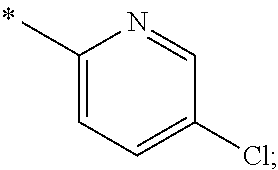
wherein the * represents the attachment point to the remainder of the molecule.

wherein the * represents the attachment point to the remainder of the molecule; and (A2-a) or (A2-b) is selected from the group consisting of:

wherein the * represents the attachment point to the remainder of the molecule.

wherein the * represents the attachment point to the remainder of the molecule; and (A2-a) or (A2-b) is selected from the group consisting of:

wherein the * represents the attachment point to the remainder of the molecule.

wherein the * represents the attachment point to the remainder of the molecule; and (A2-a) or (A2-c) is selected from the group consisting of:

wherein the * represents the attachment point to the remainder of the molecule.

wherein the * represents the attachment point to the remainder of the molecule; and (A2-a) or (A2-b) is selected from the group consisting of:

wherein the * represents the attachment point to the remainder of the molecule.

wherein the * represents the attachment point to the remainder of the molecule; and (A1-a) or (A2-b) is selected from the group consisting of:

wherein the * represents the attachment point to the remainder of the molecule.

wherein the * represents the attachment point to the remainder of the molecule; and (A2-a) or (A2-c) is selected from the group consisting of:

wherein the * represents the attachment point to the remainder of the molecule.

wherein the * represents the attachment point to the remainder of the molecule: and (A2-a) or (A2-b) is selected from the group consisting of:

wherein the * represents the attachment point to the remainder of the molecule.

wherein the * represents the attachment point to the remainder of the molecule; and (A2-a) or (A2-b) is selected from the group consisting of:

wherein the * represents the attachment point to the remainder of the molecule.

wherein the * represents the attachment point to the remainder of the molecule; and (A2-a) or (A2-c) is selected from the group consisting of:

wherein the * represents the attachment point to the remainder of the molecule.

wherein the * represents the attachment point to the remainder of the molecule; and A2 is selected from the group consisting of:

wherein the * represents the attachment point to the remainder of the molecule.

wherein the * represents the attachment point to the remainder of the molecule; and A2 is selected from the group consisting of:
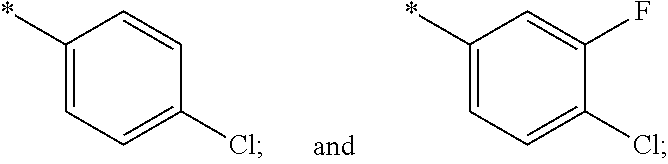
wherein the * represents the attachment point to the remainder of the molecule.

wherein the * represents the attachment point to the remainder of the molecule; and A2 is selected from the group consisting of:

wherein the * represents the attachment point to the remainder of the molecule.

wherein the * represents the attachment point to the remainder of the molecule; and A2 is

wherein the * represents the attachment point to the remainder of the molecule.

wherein the * represents the attachment point to the remainder of the molecule: and A2 is selected from the group consisting of:

wherein the * represents the attachment point to the remainder of the molecule.

wherein the * represents the attachment point to the remainder of the molecule; and A2 is selected from the group consisting of:

wherein the * represents the attachment point to the remainder of the molecule.

wherein the * represents the attachment point to the remainder of the molecule; and A2 is selected from the group consisting of:

wherein the * represents the attachment point to the remainder of the molecule.

wherein the * represents the attachment point to the remainder of the molecule; and A2 is

wherein the * represents the attachment point to the remainder of the molecule.

wherein the * represents the attachment point to the remainder of the molecule; and A2 is selected from the group consisting of:

wherein the * represents the attachment point to the remainder of the molecule.

wherein the * represents the attachment point to the remainder of the molecule; and A2 is selected from the group consisting of:

wherein the * represents the attachment point to the remainder of the molecule.

wherein the * represents the attachment point to the remainder of the molecule; and A2 is selected from the group consisting of:

wherein the * represents the attachment point to the remainder of the molecule.

wherein the * represents the attachment point to the remainder of the molecule; and A2 is

wherein the * represents the attachment point to the remainder of the molecule.

wherein the * represents the attachment point to the remainder of the molecule; and (A2-a) or (A2-b) is selected from the group consisting of:

wherein the * represents the attachment point to the remainder of the molecule.

wherein the * represents the attachment point to the remainder of the molecule; and (A2-a) or (A2-b) is selected from the group consisting of:

wherein the * represents the attachment point to the remainder of the molecule.

wherein the * represents the attachment point to the remainder of the molecule; and (A2-a) or (A2-c) is selected from the group consisting of:

wherein the * represents the attachment point to the remainder of the molecule.

wherein the * represents the attachment point to the remainder of the molecule; and (A2-a) or (A2-b) is selected from the group consisting of:

wherein the * represents the attachment point to the remainder of the molecule.

wherein the * represents the attachment point to the remainder of the molecule; and (A2-a) or (A2-b) is selected from the group consisting of:

wherein the * represents the attachment point to the remainder of the molecule.

wherein the * represents the attachment point to the remainder of the molecule; and (A2-a) or (A2-c) is selected from the group consisting of:

wherein the * represents the attachment point to the remainder of the molecule.

wherein the * represents the attachment point to the remainder of the molecule; and (A2-a) or (A2-b) is selected from the group consisting of:

wherein the * represents the attachment point to the remainder of the molecule.

wherein the * represents the attachment point to the remainder of the molecule; and (A2-a) or (A2-b) is selected from the group consisting of:

wherein the * represents the attachment point to the remainder of the molecule.

wherein the * represents the attachment point to the remainder of the molecule; and (A2-a) or (A2-c) is selected from the group consisting of:

wherein the * represents the attachment point to the remainder of the molecule.

wherein the * represents the attachment point to the remainder of the molecule; and (A2-a) or (A2-b) is selected from the group consisting of:

wherein the * represents the attachment point to the remainder of the molecule.

wherein the * represents the attachment point to the remainder of the molecule; and (A2-a) or (A2-b) is selected from the group consisting of:

wherein the * represents the attachment point to the remainder of the molecule.

wherein the * represents the attachment point to the remainder of the molecule; and A2 is selected from the group consisting of:
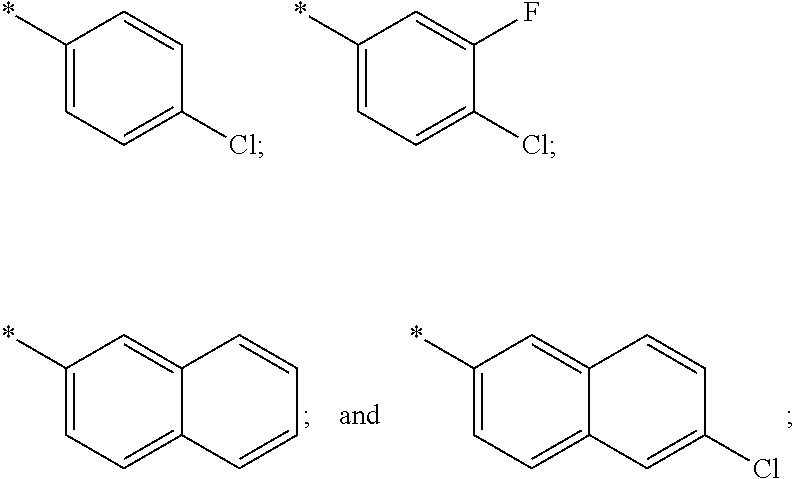
wherein the * represents the attachment point to the remainder of the molecule.

wherein the * represents the attachment point to the remainder of the molecule; and A2 is selected from the group consisting of:

wherein the * represents the attachment point to the remainder of the molecule.

wherein the * represents the attachment point to the remainder of the molecule; and A2 is selected from the group consisting of:

wherein the * represents the attachment point to the remainder of the molecule.

wherein the * represents the attachment point to the remainder of the molecule; and A2 is

wherein the * represents the attachment point to the remainder of the molecule.

wherein the * represents the attachment point to the remainder of the molecule; and A2 is selected from the group consisting of:

wherein the * represents the attachment point to the remainder of the molecule.

wherein the * represents the attachment point to the remainder of the molecule; and A2 is selected from the group consisting of:
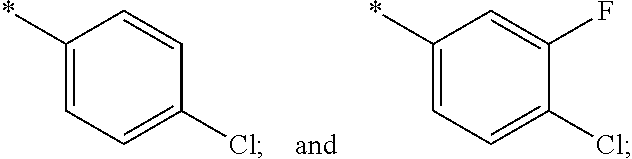
wherein the * represents the attachment point to the remainder of the molecule.

wherein the * represents the attachment point to the remainder of the molecule; A2 is selected from the group consisting of:

wherein the * represents the attachment point to the remainder of the molecule.

wherein the * represents the attachment point to the remainder of the molecule; and A2 is

wherein the * represents the attachment point to the remainder of the molecule.

wherein the * represents the attachment point to the remainder of the molecule; and A2 is selected from the group consisting of:

wherein the * represents the attachment point to the remainder of the molecule.

wherein the * represents the attachment point to the remainder of the molecule; and A2 is selected from the group consisting of:

wherein the * represents the attachment point to the remainder of the molecule.

wherein the * represents the attachment point to the remainder of the molecule; A2 is selected from the group consisting of:

wherein the * represents the attachment point to the remainder of the molecule.

wherein the * represents the attachment point to the remainder of the molecule; and A2 is

wherein the * represents the attachment point to the remainder of the molecule.

wherein the * represents the attachment point to the remainder of the molecule; and A2 is selected from the group consisting of:

wherein the * represents the attachment point to the remainder of the molecule.

wherein the * represents the attachment point to the remainder of the molecule; and A2 is selected from the group consisting of:

wherein the * represents the attachment point to the remainder of the molecule.

wherein the * represents the attachment point to the remainder of the molecule; and A2 is selected from the group consisting of:

wherein the * represents the attachment point to the remainder of the molecule.

wherein the * represents the attachment point to the remainder of the molecule; and A2 is

wherein the * represents the attachment point to the remainder of the molecule.

or a pharmaceutically acceptable salt thereof;
wherein:
-
- A1 is C6-C10 aryl optionally substituted with one or more R14 substituents; or 5-10 membered heteroaryl optionally substituted with one or more R14 substituents;
- A2 is C6-C10 aryl optionally substituted with one or more R16 substituents; or 5-10 membered heteroaryl optionally substituted with one or more R16 substituents;
- R11a and R11b are both hydrogen;
- R12a and R12b are both hydrogen;
- and wherein X1, X2, Y1, RY1, Y2, RY2, r, s, R1a, R1b, R2a, R2b, R3a, R3b, R4a, R4b, R5a, R5b, R6a, R6a-a, R6a-b, R6a-c, R6b, R8a, R8b, R14, and R16 are as defined in compounds of formula (I).
-
- R5a and R5b are taken together to form an oxo (═O) substituent or an imido (═NH) substituent, or alternatively, R5a and R5b are both hydrogen;
- R6a is selected from the group consisting of hydrogen, —OR6a-a, and NR6a-bR6a-c;
- R10b is hydrogen; and
- R12a and R12b are both hydrogen.
-
- X1 is CH;
- Y1 is NRY1;
- R5a and R5b are both hydrogen;
- R6a is —OR6a-a;
- R8a and R8b are both hydrogen; and
- R6a-a and RY1 are taken together to form a carbonyl (C═O) moiety.

wherein the * represents the attachment point to the remainder of the molecule. In some embodiments, A1 is phenyl optionally substituted with one or more R14 substituents. In some embodiments, A1 is selected from the group consisting of:

wherein the * represents the attachment point to the remainder of the molecule.

wherein the * represents the attachment point to the remainder of the molecule. In some embodiments, A1 is pyridyl optionally substituted with one or more R14 substituents. In some embodiments, A1 is

wherein the * represents the attachment point to the remainder of the molecule.

wherein the * represents the attachment point to the remainder of the molecule. In some embodiments, A2 is phenyl optionally substituted with one or more R16 substituents. In some embodiments, A2 is selected from the group consisting of:

wherein the * represents the attachment point to the remainder of the molecule.

wherein the * represents the attachment point to the remainder of the molecule. In some embodiments, A2 is pyridyl optionally substituted with one or more R16 substituents. In some embodiments, A2 is

wherein the * represents the attachment point to the remainder of the molecule.

wherein the * represents the attachment point to the remainder of the molecule; and (A2-a) or (A2-b) is selected from the group consisting of:

wherein the * represents the attachment point to the remainder of the molecule.

wherein the * represents the attachment point to the remainder of the molecule; and (A2-a) or (A2-b) is selected from the group consisting of:

wherein the * represents the attachment point to the remainder of the molecule.

wherein the * represents the attachment point to the remainder of the molecule; and (A2-a) or (A2-c) is selected from the group consisting of:

wherein the * represents the attachment point to the remainder of the molecule.

wherein the * represents the attachment point to the remainder of the molecule; and (A2-a) or (A2-b) is selected from the group consisting of:

wherein the * represents the attachment point to the remainder of the molecule.

wherein the * represents the attachment point to the remainder of the molecule; and (A2-a) or (A2-b) is selected from the group consisting of:

wherein the * represents the attachment point to the remainder of the molecule.

wherein the * represents the attachment point to the remainder of the molecule; and (A2-a) or (A2-c) is selected from the group consisting of:

wherein the * represents the attachment point to the remainder of the molecule.

wherein the * represents the attachment point to the remainder of the molecule: and (A2-a) or (A2-b) is selected from the group consisting of:

wherein the * represents the attachment point to the remainder of the molecule.

wherein the * represents the attachment point to the remainder of the molecule: and (A2-a) or (A2-b) is selected from the group consisting of:

wherein the * represents the attachment point to the remainder of the molecule.

wherein the * represents the attachment point to the remainder of the molecule; and (A2-a) or (A2-c) is selected from the group consisting of:

wherein the * represents the attachment point to the remainder of the molecule.

wherein the * represents the attachment point to the remainder of the molecule; and A2 is selected from the group consisting of:

wherein the * represents the attachment point to the remainder of the molecule.

wherein the * represents the attachment point to the remainder of the molecule; and A2 is selected from the group consisting of:

wherein the * represents the attachment point to the remainder of the molecule.

wherein the * represents the attachment point to the remainder of the molecule; and A2 is selected from the group consisting of:

wherein the * represents the attachment point to the remainder of the molecule.

wherein the * represents the attachment point to the remainder of the molecule; and A2 is

wherein the * represents the attachment point to the remainder of the molecule.

wherein the * represents the attachment point to the remainder of the molecule; and A2 is selected from the group consisting of:

wherein the * represents the attachment point to the remainder of the molecule.

wherein the * represents the attachment point to the remainder of the molecule: and A2 is selected from the group consisting of:

wherein the * represents the attachment point to the remainder of the molecule.

wherein the * represents the attachment point to the remainder of the molecule; and A2 is selected from the group consisting of:

wherein the * represents the attachment point to the remainder of the molecule.

wherein the * represents the attachment point to the remainder of the molecule; and A2 is

wherein the * represents the attachment point to the remainder of the molecule.

wherein the * represents the attachment point to the remainder of the molecule; and A2 is selected from the group consisting of:

wherein the * represents the attachment point to the remainder of the molecule.

wherein the * represents the attachment point to the remainder of the molecule; and A2 is selected from the group consisting of:

wherein the * represents the attachment point to the remainder of the molecule.

wherein the * represents the attachment point to the remainder of the molecule; and A2 is selected from the group consisting of:

wherein the * represents the attachment point to the remainder of the molecule.

wherein the * represents the attachment point to the remainder of the molecule; and A2 is

wherein the * represents the attachment point to the remainder of the molecule.

wherein the * represents the attachment point to the remainder of the molecule; and (A2-a) or (A2-b) is selected from the group consisting of:

wherein the * represents the attachment point to the remainder of the molecule.

wherein the * represents the attachment point to the remainder of the molecule; and (A2-a) or (A2-b) is selected from the group consisting of:

wherein the * represents the attachment point to the remainder of the molecule.

wherein the * represents the attachment point to the remainder of the molecule; and (A1-a) or (A2-c) is selected from the group consisting of:

wherein the * represents the attachment point to the remainder of the molecule.

wherein the * represents the attachment point to the remainder of the molecule; and (A2-a) or (A2-b) is selected from the group consisting of:

wherein the * represents the attachment point to the remainder of the molecule.

wherein the * represents the attachment point to the remainder of the molecule; and (A2-a) or (A2-b) is selected from the group consisting of:

wherein the * represents the attachment point to the remainder of the molecule.

wherein the * represents the attachment point to the remainder of the molecule; and (A2-a) or (A2-c) is selected from the group consisting of:

wherein the * represents the attachment point to the remainder of the molecule.

wherein the * represents the attachment point to the remainder of the molecule; and (A2-a) or (A2-b) is selected from the group consisting of:

wherein the * represents the attachment point to the remainder of the molecule.

wherein the * represents the attachment point to the remainder of the molecule; and (A2-a) or (A2-b) is selected from the group consisting of:

wherein the * represents the attachment point to the remainder of the molecule.

wherein the * represents the attachment point to the remainder of the molecule; and (A2-a) or (A2-c) is selected from the group consisting of:

wherein the * represents the attachment point to the remainder of the molecule.

wherein the * represents the attachment point to the remainder of the molecule; and (A2-a) or (A2-b) is selected from the group consisting of:

wherein the * represents the attachment point to the remainder of the molecule.

wherein the * represents the attachment point to the remainder of the molecule; and (A2-a) or (A2-b) is selected from the group consisting of:

wherein the * represents the attachment point to the remainder of the molecule.

wherein the * represents the attachment point to the remainder of the molecule; and A2 is selected from the group consisting of:

wherein the * represents the attachment point to the remainder of the molecule.

wherein the * represents the attachment point to the remainder of the molecule; and A2 is selected from the group consisting of:

wherein the * represents the attachment point to the remainder of the molecule.

wherein the * represents the attachment point to the remainder of the molecule; and A2 is selected from the group consisting of:

wherein the * represents the attachment point to the remainder of the molecule.

wherein the * represents the attachment point to the remainder of the molecule; and A2 is

wherein the * represents the attachment point to the remainder of the molecule.

wherein the * represents the attachment point to the remainder of the molecule; and A2 is selected from the group consisting of:

wherein the * represents the attachment point to the remainder of the molecule.

wherein the * represents the attachment point to the remainder of the molecule; and A2 is selected from the group consisting of:

wherein the * represents the attachment point to the remainder of the molecule.

wherein the * represents the attachment point to the remainder of the molecule; A2 is selected from the group consisting of:

wherein the * represents the attachment point to the remainder of the molecule.

wherein the * represents the attachment point to the remainder of the molecule; and A2 is

wherein the * represents the attachment point to the remainder of the molecule.

wherein the * represents the attachment point to the remainder of the molecule; and A2 is selected from the group consisting of:

wherein the * represents the attachment point to the remainder of the molecule.

wherein the * represents the attachment point to the remainder of the molecule; and A2 is selected from the group consisting of:

wherein the * represents the attachment point to the remainder of the molecule.

wherein the * represents the attachment point to the remainder of the molecule; A2 is selected from the group consisting of:

wherein the * represents the attachment point to the remainder of the molecule.

wherein the * represents the attachment point to the remainder of the molecule; and A2 is

wherein the * represents the attachment point to the remainder of the molecule.

wherein the * represents the attachment point to the remainder of the molecule; and A2 is selected from the group consisting of:

wherein the * represents the attachment point to the remainder of the molecule.

wherein the * represents the attachment point to the remainder of the molecule; and A2 is selected from the group consisting of:

wherein the * represents the attachment point to the remainder of the molecule.

wherein the * represents the attachment point to the remainder of the molecule; and A2 is selected from the group consisting of:

wherein the * represents the attachment point to the remainder of the molecule.

wherein the * represents the attachment point to the remainder of the molecule; and A2 is

wherein the * represents the attachment point to the remainder of the molecule.

or a pharmaceutically acceptable salt thereof;
wherein:
-
- A1 is C6-C10 aryl optionally substituted with one or more R14 substituents; or 5-10 membered heteroaryl optionally substituted with one or more R14 substituents;
- A2 is C6-C10 aryl optionally substituted with one or more R16 substituents; or 5-10 membered heteroaryl optionally substituted with one or more R16 substituents;
- R7a and R7b are both hydrogen;
- R8a and R8b are both hydrogen;
- R11a and R11b are both hydrogen;
- R12a and R12b are both hydrogen;
- and wherein X1, X2, Y1, RY1, Y2, RY2, r, s, R1a, R1b, R2a, R2b, R3a, R3b, R4a, R4b, R14, and R16 are as defined in compounds of formula (I).

wherein the * represents the attachment point to the remainder of the molecule. In some embodiments, A1 is phenyl optionally substituted with one or more R14 substituents. In some embodiments, A1 is selected from the group consisting of:

wherein the * represents the attachment point to the remainder of the molecule.

wherein the * represents the attachment point to the remainder of the molecule. In some embodiments, A1 is pyridyl optionally substituted with one or more R14 substituents. In some embodiments, A1 is

wherein the * represents the attachment point to the remainder of the molecule.

wherein the * represents the attachment point to the remainder of the molecule. In some embodiments, A2 is phenyl optionally substituted with one or more R16 substituents. In some embodiments, A2 is selected from the group consisting of:

wherein the * represents the attachment point to the remainder of the molecule.

wherein the * represents the attachment point to the remainder of the molecule. In some embodiments, A2 is pyridyl optionally substituted with one or more R16 substituents. In some embodiments, A2 is

wherein the * represents the attachment point to the remainder of the molecule.

wherein the * represents the attachment point to the remainder of the molecule; and (A2-a) or (A2-b) is selected from the group consisting of:

wherein the * represents the attachment point to the remainder of the molecule.

wherein the * represents the attachment point to the remainder of the molecule; and (A2-a) or (A2-b) is selected from the group consisting of:

wherein the * represents the attachment point to the remainder of the molecule.

wherein the * represents the attachment point to the remainder of the molecule; and (A2-a) or (A2-c) is selected from the group consisting of:

wherein the * represents the attachment point to the remainder of the molecule.

wherein the * represents the attachment point to the remainder of the molecule; and (A2-a) or (A2-b) is selected from the group consisting of:

wherein the * represents the attachment point to the remainder of the molecule.

wherein the * represents the attachment point to the remainder of the molecule; and (A2-a) or (A2-b) is selected from the group consisting of:

wherein the * represents the attachment point to the remainder of the molecule.

wherein the * represents the attachment point to the remainder of the molecule; and (A2-a) or (A2-c) is selected from the group consisting of:

wherein the * represents the attachment point to the remainder of the molecule.

wherein the * represents the attachment point to the remainder of the molecule; and (A2-a) or (A2-b) is selected from the group consisting of:

wherein the * represents the attachment point to the remainder of the molecule.

wherein the * represents the attachment point to the remainder of the molecule; and (A1-a) or (A2-b) is selected from the group consisting of:

wherein the * represents the attachment point to the remainder of the molecule.

wherein the * represents the attachment point to the remainder of the molecule; and (A2-a) or (A2-c) is selected from the group consisting of:

wherein the * represents the attachment point to the remainder of the molecule.

wherein the * represents the attachment point to the remainder of the molecule; and A2 is selected from the group consisting of:

wherein the * represents the attachment point to the remainder of the molecule;

wherein the * represents the attachment point to the remainder of the molecule; and A2 is selected from the group consisting of:

wherein the * represents the attachment point to the remainder of the molecule.

wherein the * represents the attachment point to the remainder of the molecule; and A2 is selected from the group consisting of:

wherein the * represents the attachment point to the remainder of the molecule.

wherein the * represents the attachment point to the remainder of the molecule; and A2 is

wherein the * represents the attachment point to the remainder of the molecule.

wherein the * represents the attachment point to the remainder of the molecule; and A2 is selected from the group consisting of:

wherein the * represents the attachment point to the remainder of the molecule.

wherein the * represents the attachment point to the remainder of the molecule; and A2 is selected from the group consisting of:

wherein the * represents the attachment point to the remainder of the molecule.

wherein the * represents the attachment point to the remainder of the molecule; and A2 is selected from the group consisting of:

wherein the * represents the attachment point to the remainder of the molecule.

wherein the * represents the attachment point to the remainder of the molecule; and A2 is

wherein the * represents the attachment point to the remainder of the molecule.

wherein the * represents the attachment point to the remainder of the molecule; and A2 is selected from the group consisting of:

wherein the * represents the attachment point to the remainder of the molecule.

wherein the * represents the attachment point to the remainder of the molecule; and A2 is selected from the group consisting of:

wherein the * represents the attachment point to the remainder of the molecule.

wherein the * represents the attachment point to the remainder of the molecule; and A2 is selected from the group consisting of:

wherein the * represents the attachment point to the remainder of the molecule.

wherein the * represents the attachment point to the remainder of the molecule; and A2 is

wherein the * represents the attachment point to the remainder of the molecule.

wherein the * represents the attachment point to the remainder of the molecule; and (A1-a) or (A2-b) is selected from the group consisting of:

wherein the * represents the attachment point to the remainder of the molecule.

wherein the * represents the attachment point to the remainder of the molecule; and (A2-a) or (A2-b) is selected from the group consisting of:

wherein the * represents the attachment point to the remainder of the molecule.

wherein the * represents the attachment point to the remainder of the molecule; and (A2-a) or (A2-c) is selected from the group consisting of:

wherein the * represents the attachment point to the remainder of the molecule.

wherein the * represents the attachment point to the remainder of the molecule; and (A2-a) or (A2-b) is selected from the group consisting of:

wherein the * represents the attachment point to the remainder of the molecule.

wherein the * represents the attachment point to the remainder of the molecule: and (A2-a) or (A2-b) is selected from the group consisting of:

wherein the * represents the attachment point to the remainder of the molecule.

wherein the * represents the attachment point to the remainder of the molecule; and (A2-a) or (A2-c) is selected from the group consisting of:

wherein the * represents the attachment point to the remainder of the molecule.

wherein the * represents the attachment point to the remainder of the molecule; and (A2-a) or (A2-b) is selected from the group consisting of:

wherein the * represents the attachment point to the remainder of the molecule.

wherein the * represents the attachment point to the remainder of the molecule; and (A2-a) or (A2-b) is selected from the group consisting of:

wherein the * represents the attachment point to the remainder of the molecule.

wherein the * represents the attachment point to the remainder of the molecule; and (A2-a) or (A2-c) is selected from the group consisting of:

wherein the * represents the attachment point to the remainder of the molecule.

wherein the * represents the attachment point to the remainder of the molecule; and (A2-a) or (A2-b) is selected from the group consisting of:

wherein the * represents the attachment point to the remainder of the molecule.

wherein the * represents the attachment point to the remainder of the molecule; and (A2-a) or (A2-b) is selected from the group consisting of:

wherein the * represents the attachment point to the remainder of the molecule.

wherein the * represents the attachment point to the remainder of the molecule; and A2 is selected from the group consisting of:

wherein the * represents the attachment point to the remainder of the molecule.

wherein the * represents the attachment point to the remainder of the molecule; and A is selected from the group consisting of:

wherein the * represents the attachment point to the remainder of the molecule.

wherein the * represents the attachment point to the remainder of the molecule; and A2 is selected from the group consisting of:

wherein the * represents the attachment point to the remainder of the molecule.

wherein the * represents the attachment point to the remainder of the molecule; and A2 is

wherein the * represents the attachment point to the remainder of the molecule.

wherein the * represents the attachment point to the remainder of the molecule; and A2 is selected from the group consisting of:

wherein the * represents the attachment point to the remainder of the molecule.

wherein the * represents the attachment point to the remainder of the molecule; and A2 is selected from the group consisting of:

wherein the * represents the attachment point to the remainder of the molecule.

wherein the * represents the attachment point to the remainder of the molecule; A2 is selected from the group consisting of:

wherein the * represents the attachment point to the remainder of the molecule.

wherein the * represents the attachment point to the remainder of the molecule; and A2 is

wherein the * represents the attachment point to the remainder of the molecule.

wherein the * represents the attachment point to the remainder of the molecule; and A2 is selected from the group consisting of:

wherein the * represents the attachment point to the remainder of the molecule.

wherein the * represents the attachment point to the remainder of the molecule; and A2 is selected from the group consisting of:

wherein the * represents the attachment point to the remainder of the molecule.

wherein the * represents the attachment point to the remainder of the molecule; A2 is selected from the group consisting of:

wherein the * represents the attachment point to the remainder of the molecule.

wherein the * represents the attachment point to the remainder of the molecule; and A2 is

wherein the * represents the attachment point to the remainder of the molecule.

wherein the * represents the attachment point to the remainder of the molecule; and A2 is selected from the group consisting of:

wherein the * represents the attachment point to the remainder of the molecule.

wherein the * represents the attachment point to the remainder of the molecule; and A2 is selected from the group consisting of:

wherein the * represents the attachment point to the remainder of the molecule.

wherein the * represents the attachment point to the remainder of the molecule; and A2 is selected from the group consisting of:

wherein the * represents the attachment point to the remainder of the molecule.

wherein the * represents the attachment point to the remainder of the molecule; and A2 is

wherein the * represents the attachment point to the remainder of the molecule.

or a pharmaceutically acceptable salt thereof;
wherein:
-
- m3 is 0 or 1;
- n3 is 0 or 1;
- r2 is 0, 1, or 2;
- s2 is 0, 1, or 2;
- X3 is CH or N;
- X4 is CH or N;
- provided that at least one of X3 and X4 is CH;
- Y3 is selected from the group consisting of a bond, NRY3, and O;
- wherein RY3 is hydrogen or C1-C6 alkyl;
- Y4 is selected from the group consisting of a bond, NRY4, and O;
- wherein RY4 is hydrogen or C1-C6 alkyl;
- provided that:
- when X3 is N, then Y3 is a bond and m3 is 1;
- when X4 is N, then Y4 is a bond and n3 is 1;
- A3 is selected from the group consisting of:
- a substituent of the formula (A3-a)

-
-
- wherein
- represents the attachment point to the remainder of the molecule; Z7 is selected from the group consisting of CRZ7-1RZ7-2, NRZ7-2, O, S, and —CRZ7-1═CRZ7-1—;
- wherein
- RZ7-1 is H or R27; and
- RZ7-2 is H or R27;
- Z8 is selected from the group consisting of CRZ8-1RZ8-2, NRZ8-2; O, S, and —CRZ8-1═CRZ8-1—;
- wherein
- RZ8-1 is H or R27; and
- RZ8-2 is H or R27;
- Z9, independently at each occurrence, is C or N, provided that at least one Z9 is C;
- R26 is hydrogen or R27, or R26 and RZ7-2 are taken together to form a double bond between the carbon atom bearing R26 and Z7; and x3 is 0, 1, 2, 3, or 4, provided than when one Z9 is N, then x3 is not 4;
- represents the attachment point to the remainder of the molecule; Z7 is selected from the group consisting of CRZ7-1RZ7-2, NRZ7-2, O, S, and —CRZ7-1═CRZ7-1—;
- C6-C10 aryl optionally substituted with one or more R27 substituent; and
- 5-10 membered heteroaryl optionally substituted with one or more R27 substituent; R27 is selected, independently at each occurrence, from the group consisting of halogen, C1-C6 alkyl, C1-C6 haloalkyl, —OH, —O(C1-C6 alkyl), —O(C1-C6 haloalkyl), —SH, —S(C1-C6 alkyl), —S(C1-C6 haloalkyl), —NH2, —NH(C1-C6 alkyl), —NH(C1-C6 haloalkyl), —N(C1-C6 alkyl)2, —N(C1-C6 haloalkyl)2, —NR27-aR27-b, —CN, —C(O)OH, —C(O)O(C1-C6 alkyl), —C(O)O(C1-C6 haloalkyl), —C(O)NH2, —C(O)NH(C1-C6 alkyl), —C(O)NH(C1-C6 haloalkyl), —C(O)N(C1-C6 alkyl)2, —C(O)N(C1-C6 haloalkyl)2, —C(O)NR27-aR27-b, —S(O)2OH, —S(O)2O(C1-C6 alkyl), —S(O)2O(C1-C6 haloalkyl), —S(O)2NH2, —S(O)2NH(C1-C6 alkyl), —S(O)2NH(C1-C6 haloalkyl), —S(O)2N(C1-C6 alkyl)2, —S(O)2N(C1-C6 haloalkyl)2, —S(O)2NR27-aR27-b, —OC(O)H, —OC(O)(C1-C6 alkyl), —OC(O)(C1-C6 haloalkyl), —N(H)C(O)H, —N(H)C(O)(C1-C6 alkyl), —N(H)C(O)(C1-C6 haloalkyl), —N(C1-C6 alkyl)C(O)H, —N(C1-C6 alkyl)C(O)(C1-C6 alkyl), —N(C1-C6 alkyl)C(O)(C1-C6 haloalkyl), —N(C1-C6 haloalkyl)C(O)H, —N(C1-C6 haloalkyl)C(O)(C1-C6 alkyl), —N(C1-C6 haloalkyl)C(O)(C1-C6 haloalkyl), —OS(O)2(C1-C6 alkyl), —OS(O)2(C1-C6 haloalkyl), —N(H)S(O)2(C1-C6 alkyl), —N(H)S(O)2(C1-C6 haloalkyl), —N(C1-C6 alkyl)S(O)2(C1-C6 alkyl), —N(C1-C6 alkyl)S(O)2(C1-C6 haloalkyl), —N(C1-C6 haloalkyl)S(O)2(C1-C6 alkyl), and —N(C1-C6 haloalkyl)S(O)2(C1-C6 haloalkyl);
- wherein R27-a and R27-b are taken together with the nitrogen atom which bears them to form a 3-10 membered heterocycle;
- wherein
- A4 is selected from the group consisting of:
- a substituent of the formula (A4-a)
-
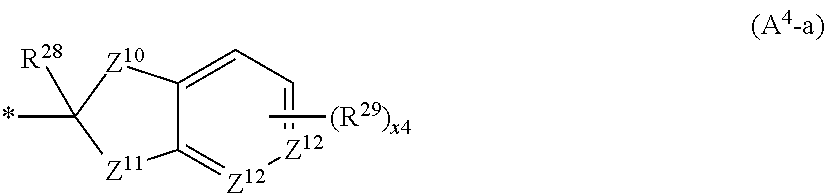
-
-
- wherein
- represents the attachment point to the remainder of the molecule;
- Z10 is selected from the group consisting of CRZ10-1RZ10-2, NRZ10-2, O, S, and —CRZ10-1═CRZ10-1—;
- wherein
- RZ10-1 is H or R29; and
- RZ10-2 is H or R29;
- Z11 is selected from the group consisting of CRZ11-1RZ11-2, NRZ11-2; O, S, and —CRZ11-1═CRZ11-1—;
- wherein
- RZ11-1 is H or R29; and
- RZ11-2 is H or R29;
- Z12, independently at each occurrence, is C or N, provided that at least one Z12 is C;
- R28 is hydrogen or R29, or R28 and RZ10-2 are taken together to form a double bond between the carbon atom bearing R28 and Z10; and x4 is 0, 1, 2, 3, or 4, provided than when one Z12 is N, then x4 is not 4;
- C6-C10 aryl optionally substituted with one or more R29 substituent; and
- 5-10 membered heteroaryl optionally substituted with one or more R29 substituent; R29 is selected, independently at each occurrence, from the group consisting of halogen, C1-C6 alkyl, C1-C6 haloalkyl, —OH, —O(C1-C6 alkyl), —O(C1-C6 haloalkyl), —SH, —S(C1-C6 alkyl), —S(C1-C6 haloalkyl), —NH2, —NH(C1-C6 alkyl), —NH(C1-C6 haloalkyl), —N(C1-C6 alkyl)2, —N(C1-C6 haloalkyl)2, —NR29-aR29-b, —CN, —C(O)OH, —C(O)O(C1-C6 alkyl), —C(O)O(C1-C6 haloalkyl), —C(O)NH2, —C(O)NH(C1-C6 alkyl), —C(O)NH(C1-C6 haloalkyl), —C(O)N(C1-C6 alkyl)2, —C(O)N(C1-C6 haloalkyl)2, —C(O)NR29-aR29-b, —S(O)2OH, —S(O)2O(C1-C6 alkyl), —S(O)2O(C1-C6 haloalkyl), —S(O)2NH2, —S(O)2NH(C1-C6 alkyl), —S(O)2NH(C1-C6 haloalkyl), —S(O)2N(C1-C6 alkyl)2, —S(O)2N(C1-C6 haloalkyl)2, —S(O)2NR29-aR29-b, —OC(O)H, —OC(O)(C1-C6 alkyl), —OC(O)(C1-C6 haloalkyl), —N(H)C(O)H, —N(H)C(O)(C1-C6 alkyl), —N(H)C(O)(C1-C6 haloalkyl), —N(C1-C6 alkyl)C(O)H, —N(C1-C6 alkyl)C(O)(C1-C6 alkyl), —N(C1-C6 alkyl)C(O)(C1-C6 haloalkyl), —N(C1-C6 haloalkyl)C(O)H, —N(C1-C6 haloalkyl)C(O)(C1-C6 alkyl), —N(C1-C6 haloalkyl)C(O)(C1-C6 haloalkyl), —OS(O)2(C1-C6 alkyl), —OS(O)2(C1-C6 haloalkyl), —N(H)S(O)2(C1-C6 alkyl), —N(H)S(O)2(C1-C6 haloalkyl), —N(C1-C6 alkyl)S(O)2(C1-C6 alkyl), —N(C1-C6 alkyl)S(O)2(C1-C6 haloalkyl), —N(C1-C6 haloalkyl)S(O)2(C1-C6 alkyl), and —N(C1-C6 haloalkyl)S(O)2(C1-C6 haloalkyl);
- wherein R29-a and R29-b are taken together with the nitrogen atom which bears them to form a 3-10 membered heterocycle;
- wherein
- R17a and R17b are independently selected from the group consisting of hydrogen, C1-C6 alkyl, and halogen;
- R18a and R18b are independently selected from the group consisting of hydrogen, C1-C6 alkyl, and halogen;
- when present, R19a and R19b are independently at each occurrence selected from the group consisting of hydrogen, C1-C6 alkyl, and halogen;
- when present, R20a and R20b are independently at each occurrence selected from the group consisting of hydrogen, C1-C6 alkyl, and halogen;
- or alternatively, R17a and R18a are taken together to form a C1-C6 alkylene moiety;
- or alternatively, R17a and an R19a moiety, when present, are taken together to form a C1-C6 alkylene moiety, and R17b and the R19b in the geminal position to the R19a taken together with R17a, are both hydrogen;
- or alternatively, an R19a moiety, when present, and an R20a moiety, when present, are taken together to form a C1-C6 alkylene moiety, and the R19b in the geminal position to the R19a taken together with the R20a moiety and the R20b in the geminal position to the R20a taken together with the R19a moiety, are both hydrogen;
- R21a and R21b are taken together to form an oxo (═O) substituent or an imido (═NH) substituent, or alternatively, R21a and R21b are both hydrogen;
- when present, R22a and R22b are both hydrogen;
- R23a and R23b are taken together to form an oxo (═O) substituent or an imido (═NH) substituent, or alternatively, R23a and R23b are both hydrogen;
- when present, R24a is selected from the group consisting of hydrogen, —OH, and —NH2;
- or alternatively, R24a and RY4 are taken together to form a #—C(═O)—O— group, wherein # represent the attachment point to the nitrogen atom bearing RY4;
- when present, R24b is hydrogen; and
- when present, R25a and R25b are both hydrogen;
- or alternatively, R25a, when present, and one R29 of A4 are taken together with the atoms connecting them to form a 5-6 membered heterocycloalkenyl optionally substituted with one or more R29 substituent, and R25b is H;
- or alternatively, R25a, when present, R25b, when present, and one R29 of A4 are taken together with the atoms connecting them to form a 5-6 membered heteroaryl optionally substituted with one or more R29 substituent;
- and further provided that one of (i), (ii), (iii) and (iv) applies:
- (i) when m3 is 0 and n3 is 0, then:
- X3 is CH and Y3 is NRY3;
- X4 is CH and Y4 is NRY4;
- R21a and R21b are taken together to form an oxo (═O) substituent;
- R23a and R23b are taken together to form an oxo (═O) substituent;
- A3 is a substituent of the formula (A3-a)
-

-
-
- wherein
- represents the attachment point to the remainder of the molecule;
- Z7 is selected from the group consisting of CRZ7-1RZ7-2, NRZ7-2, O, S, and —CRZ7-1═CRZ7-1—;
- wherein
- RZ7-1 is H or R27; and
- RZ7-2 is H or R27;
- Z8 is selected from the group consisting of CRZ8-1RZ8-2, NRZ8-2; O, S, and —CRZ8-1═CRZ8-1—;
- wherein
- RZ8-1 is H or R27; and
- RZ8-2 is H or R27;
- Z9, independently at each occurrence, is C or N, provided that at least one Z9 is C;
- R26 is hydrogen or R27, or R26 and RZ7-2 are taken together to form a double bond between the carbon atom bearing R26 and Z7;
- R27 is selected, independently at each occurrence, from the group consisting of halogen, C1-C6 alkyl, C1-C6 haloalkyl, —OH, —O(C1-C6 alkyl), —O(C1-C6 haloalkyl), —SH, —S(C1-C6 alkyl), —S(C1-C6 haloalkyl), —NH2, —NH(C1-C6 alkyl), —NH(C1-C6 haloalkyl), —N(C1-C6 alkyl)2, —N(C1-C6 haloalkyl)2, —NR27-aR27-b, —CN, —C(O)OH, —C(O)O(C1-C6 alkyl), —C(O)O(C1-C6 haloalkyl), —C(O)NH2, —C(O)NH(C1-C6 alkyl), —C(O)NH(C1-C6 haloalkyl), —C(O)N(C1-C6 alkyl)2, —C(O)N(C1-C6 haloalkyl)2, —C(O)NR27-aR27-b, —S(O)2OH, —S(O)2O(C1-C6 alkyl), —S(O)2O(C1-C6 haloalkyl), —S(O)2NH2, —S(O)2NH(C1-C6 alkyl), —S(O)2NH(C1-C6 haloalkyl), —S(O)2N(C1-C6 alkyl)2, —S(O)2N(C1-C6 haloalkyl)2, —S(O)2NR27-aR27-b, —OC(O)H, —OC(O)(C1-C6 alkyl), —OC(O)(C1-C6 haloalkyl), —N(H)C(O)H, —N(H)C(O)(C1-C6 alkyl), —N(H)C(O)(C1-C6 haloalkyl), —N(C1-C6 alkyl)C(O)H, —N(C1-C6 alkyl)C(O)(C1-C6 alkyl), —N(C1-C6 alkyl)C(O)(C1-C6 haloalkyl), —N(C1-C6 haloalkyl)C(O)H, —N(C1-C6 haloalkyl)C(O)(C1-C6 alkyl), —N(C1-C6 haloalkyl)C(O)(C1-C6 haloalkyl), —OS(O)2(C1-C6 alkyl), —OS(O)2(C1-C6 haloalkyl), —N(H)S(O)2(C1-C6 alkyl), —N(H)S(O)2(C1-C6 haloalkyl), —N(C1-C6 alkyl)S(O)2(C1-C6 alkyl), —N(C1-C6 alkyl)S(O)2(C1-C6 haloalkyl), —N(C1-C6 haloalkyl)S(O)2(C1-C6 alkyl), and —N(C1-C6 haloalkyl)S(O)2(C1-C6 haloalkyl);
- wherein R27-a and R27-b are taken together with the nitrogen atom which bears them to form a 3-10 membered heterocycle;
- x3 is 0, 1, 2, 3, or 4, provided than when one Z9 is N, then x3 is not 4;
- A4 is a substituent of the formula (A4-a)
- wherein
-

-
-
- wherein
- represents the attachment point to the remainder of the molecule;
- Z10 is selected from the group consisting of CRZ10-1RZ10-2, NRZ10-2, O, S, and —CRZ10-1═CRZ10-1—;
- wherein
- RZ10-1 is H or R29; and
- RZ10-2 is H or R29;
- Z11 is selected from the group consisting of CRZ11-1RZ11-2, NRZ11-2; O, S, and —CRZ11-1═CRZ11-1—;
- wherein
- RZ11-1 is H or R29; and
- RZ11-2 is H or R29;
- Z12, independently at each occurrence, is C or N, provided that at least one Z12 is C;
- R28 is hydrogen or R29, or R28 and RZ10-2 are taken together to form a double bond between the carbon atom bearing R28 and Z10;
- R29 is selected, independently at each occurrence, from the group consisting of halogen, C1-C6 alkyl, C1-C6 haloalkyl, —OH, —O(C1-C6 alkyl), —O(C1-C6 haloalkyl), —SH, —S(C1-C6 alkyl), —S(C1-C6 haloalkyl), —NH2, —NH(C1-C6 alkyl), —NH(C1-C6 haloalkyl), —N(C1-C6 alkyl)2, —N(C1-C6 haloalkyl)2, —NR29-aR29-b, —CN, —C(O)OH, —C(O)O(C1-C6 alkyl), —C(O)O(C1-C6 haloalkyl), —C(O)NH2, —C(O)NH(C1-C6 alkyl), —C(O)NH(C1-C6 haloalkyl), —C(O)N(C1-C6 alkyl)2, —C(O)N(C1-C6 haloalkyl)2, —C(O)NR29-aR29-b, —S(O)2OH, —S(O)2O(C1-C6 alkyl), —S(O)2O(C1-C6 haloalkyl), —S(O)2NH2, —S(O)2NH(C1-C6 alkyl), —S(O)2NH(C1-C6 haloalkyl), —S(O)2N(C1-C6 alkyl)2, —S(O)2N(C1-C6 haloalkyl)2, —S(O)2NR29-aR29-b, —OC(O)H, —OC(O)(C1-C6 alkyl), —OC(O)(C1-C6 haloalkyl), —N(H)C(O)H, —N(H)C(O)(C1-C6 alkyl), —N(H)C(O)(C1-C6 haloalkyl), —N(C1-C6 alkyl)C(O)H, —N(C1-C6 alkyl)C(O)(C1-C6 alkyl), —N(C1-C6 alkyl)C(O)(C1-C6 haloalkyl), —N(C1-C6 haloalkyl)C(O)H, —N(C1-C6 haloalkyl)C(O)(C1-C6 alkyl), —N(C1-C6 haloalkyl)C(O)(C1-C6 haloalkyl), —OS(O)2(C1-C6 alkyl), —OS(O)2(C1-C6 haloalkyl), —N(H)S(O)2(C1-C6 alkyl), —N(H)S(O)2(C1-C6 haloalkyl), —N(C1-C6 alkyl)S(O)2(C1-C6 alkyl), —N(C1-C6 alkyl)S(O)2(C1-C6 haloalkyl), —N(C1-C6 haloalkyl)S(O)2(C1-C6 alkyl), and —N(C1-C6 haloalkyl)S(O)2(C1-C6 haloalkyl);
- wherein R29-a and R29-b are taken together with the nitrogen atom which bears them to form a 3-10 membered heterocycle;
- x4 is 0, 1, 2, 3, or 4, provided than when one Z12 is N, then x4 is not 4; and
- provided that A3 and A4 are not both simultaneously a moiety selected from group consisting of:
- wherein
-

wherein the * represents the attachment point to the remainder of the molecule;
-
- (ii) when m3 is 0 and n3 is 1, then:
- r2 is 1 or 2;
- s2 is 1 or 2;
- X3 is CH and Y3 is NRY3;
- R21a and R21b are taken together to form an oxo (═O) substituent;
- R24a is selected from the group consisting of hydrogen, —OH, and —NH2;
- A3 is a substituent of the formula (A3-a)
- (ii) when m3 is 0 and n3 is 1, then:

-
-
- wherein
- represents the attachment point to the remainder of the molecule;
- Z7 is selected from the group consisting of CRZ7-1RZ7-2, NRZ7-2, O, S, and —CRZ7-1═CRZ7-1—;
- wherein
- RZ7-1 is H or R27; and
- RZ7-2 is H or R27;
- Z8 is selected from the group consisting of CRZ8-1RZ8-2, NRZ8-2; O, S, and —CRZ8-1═CRZ8-1—;
- wherein
- RZ8-1 is H or R27; and
- RZ8-2 is H or R27;
- Z9, independently at each occurrence, is C or N, provided that at least one Z9 is C;
- R26 is hydrogen or R27, or R26 and RZ7-2 are taken together to form a double bond between the carbon atom bearing R26 and Z7;
- R27 is selected, independently at each occurrence, from the group consisting of halogen, C1-C6 alkyl, C1-C6 haloalkyl, —OH, —O(C1-C6 alkyl), —O(C1-C6 haloalkyl), —SH, —S(C1-C6 alkyl), —S(C1-C6 haloalkyl), —NH2, —NH(C1-C6 alkyl), —NH(C1-C6 haloalkyl), —N(C1-C6 alkyl)2, —N(C1-C6 haloalkyl)2, —NR27-aR27-b, —CN, —C(O)OH, —C(O)O(C1-C6 alkyl), —C(O)O(C1-C6 haloalkyl), —C(O)NH2, —C(O)NH(C1-C6 alkyl), —C(O)NH(C1-C6 haloalkyl), —C(O)N(C1-C6 alkyl)2, —C(O)N(C1-C6 haloalkyl)2, —C(O)NR27-aR27-b, —S(O)2OH, —S(O)2O(C1-C6 alkyl), —S(O)2O(C1-C6 haloalkyl), —S(O)2NH2, —S(O)2NH(C1-C6 alkyl), —S(O)2NH(C1-C6 haloalkyl), —S(O)2N(C1-C6 alkyl)2, —S(O)2N(C1-C6 haloalkyl)2, —S(O)2NR27-aR27-b, —OC(O)H, —OC(O)(C1-C6 alkyl), —OC(O)(C1-C6 haloalkyl), —N(H)C(O)H, —N(H)C(O)(C1-C6 alkyl), —N(H)C(O)(C1-C6 haloalkyl), —N(C1-C6 alkyl)C(O)H, —N(C1-C6 alkyl)C(O)(C1-C6 alkyl), —N(C1-C6 alkyl)C(O)(C1-C6 haloalkyl), —N(C1-C6 haloalkyl)C(O)H, —N(C1-C6 haloalkyl)C(O)(C1-C6 alkyl), —N(C1-C6 haloalkyl)C(O)(C1-C6 haloalkyl), —OS(O)2(C1-C6 alkyl), —OS(O)2(C1-C6 haloalkyl), —N(H)S(O)2(C1-C6 alkyl), —N(H)S(O)2(C1-C6 haloalkyl), —N(C1-C6 alkyl)S(O)2(C1-C6 alkyl), —N(C1-C6 alkyl)S(O)2(C1-C6 haloalkyl), —N(C1-C6 haloalkyl)S(O)2(C1-C6 alkyl), and —N(C1-C6 haloalkyl)S(O)2(C1-C6 haloalkyl);
- wherein R27-a and R27-b are taken together with the nitrogen atom which bears them to form a 3-10 membered heterocycle;
- x3 is 0, 1, 2, 3, or 4, provided than when one Z9 is N, then x3 is not 4;
- A4 is C6-C10 aryl optionally substituted with one or more R29 substituent, or 5-10 membered heteroaryl optionally substituted with one or more R29 substituent;
- R29 is selected, independently at each occurrence, from the group consisting of halogen, C1-C6 alkyl, C1-C6 haloalkyl, —OH, —O(C1-C6 alkyl), —O(C1-C6 haloalkyl), —SH, —S(C1-C6 alkyl), —S(C1-C6 haloalkyl), —NH2, —NH(C1-C6 alkyl), —NH(C1-C6 haloalkyl), —N(C1-C6 alkyl)2, —N(C1-C6 haloalkyl)2, —NR29-aR29-b, —CN, —C(O)OH, —C(O)O(C1-C6 alkyl), —C(O)O(C1-C6 haloalkyl), —C(O)NH2, —C(O)NH(C1-C6 alkyl), —C(O)NH(C1-C6 haloalkyl), —C(O)N(C1-C6 alkyl)2, —C(O)N(C1-C6 haloalkyl)2, —C(O)NR29-aR29-b, —S(O)2OH, —S(O)2O(C1-C6 alkyl), —S(O)2O(C1-C6 haloalkyl), —S(O)2NH2, —S(O)2NH(C1-C6 alkyl), —S(O)2NH(C1-C6 haloalkyl), —S(O)2N(C1-C6 alkyl)2, —S(O)2N(C1-C6 haloalkyl)2, —S(O)2NR29-aR29-b, —OC(O)H, —OC(O)(C1-C6 alkyl), —OC(O)(C1-C6 haloalkyl), —N(H)C(O)H, —N(H)C(O)(C1-C6 alkyl), —N(H)C(O)(C1-C6 haloalkyl), —N(C1-C6 alkyl)C(O)H, —N(C1-C6 alkyl)C(O)(C1-C6 alkyl), —N(C1-C6 alkyl)C(O)(C1-C6 haloalkyl), —N(C1-C6 haloalkyl)C(O)H, —N(C1-C6 haloalkyl)C(O)(C1-C6 alkyl), —N(C1-C6 haloalkyl)C(O)(C1-C6 haloalkyl), —OS(O)2(C1-C6 alkyl), —OS(O)2(C1-C6 haloalkyl), —N(H)S(O)2(C1-C6 alkyl), —N(H)S(O)2(C1-C6 haloalkyl), —N(C1-C6 alkyl)S(O)2(C1-C6 alkyl), —N(C1-C6 alkyl)S(O)2(C1-C6 haloalkyl), —N(C1-C6 haloalkyl)S(O)2(C1-C6 alkyl), and —N(C1-C6 haloalkyl)S(O)2(C1-C6 haloalkyl);
- wherein R29-a and R29-b are taken together with the nitrogen atom which bears them to form a 3-10 membered heterocycle;
- R29 is selected, independently at each occurrence, from the group consisting of halogen, C1-C6 alkyl, C1-C6 haloalkyl, —OH, —O(C1-C6 alkyl), —O(C1-C6 haloalkyl), —SH, —S(C1-C6 alkyl), —S(C1-C6 haloalkyl), —NH2, —NH(C1-C6 alkyl), —NH(C1-C6 haloalkyl), —N(C1-C6 alkyl)2, —N(C1-C6 haloalkyl)2, —NR29-aR29-b, —CN, —C(O)OH, —C(O)O(C1-C6 alkyl), —C(O)O(C1-C6 haloalkyl), —C(O)NH2, —C(O)NH(C1-C6 alkyl), —C(O)NH(C1-C6 haloalkyl), —C(O)N(C1-C6 alkyl)2, —C(O)N(C1-C6 haloalkyl)2, —C(O)NR29-aR29-b, —S(O)2OH, —S(O)2O(C1-C6 alkyl), —S(O)2O(C1-C6 haloalkyl), —S(O)2NH2, —S(O)2NH(C1-C6 alkyl), —S(O)2NH(C1-C6 haloalkyl), —S(O)2N(C1-C6 alkyl)2, —S(O)2N(C1-C6 haloalkyl)2, —S(O)2NR29-aR29-b, —OC(O)H, —OC(O)(C1-C6 alkyl), —OC(O)(C1-C6 haloalkyl), —N(H)C(O)H, —N(H)C(O)(C1-C6 alkyl), —N(H)C(O)(C1-C6 haloalkyl), —N(C1-C6 alkyl)C(O)H, —N(C1-C6 alkyl)C(O)(C1-C6 alkyl), —N(C1-C6 alkyl)C(O)(C1-C6 haloalkyl), —N(C1-C6 haloalkyl)C(O)H, —N(C1-C6 haloalkyl)C(O)(C1-C6 alkyl), —N(C1-C6 haloalkyl)C(O)(C1-C6 haloalkyl), —OS(O)2(C1-C6 alkyl), —OS(O)2(C1-C6 haloalkyl), —N(H)S(O)2(C1-C6 alkyl), —N(H)S(O)2(C1-C6 haloalkyl), —N(C1-C6 alkyl)S(O)2(C1-C6 alkyl), —N(C1-C6 alkyl)S(O)2(C1-C6 haloalkyl), —N(C1-C6 haloalkyl)S(O)2(C1-C6 alkyl), and —N(C1-C6 haloalkyl)S(O)2(C1-C6 haloalkyl);
- provided that when R23a and R23b are taken together to form an oxo (═O) substituent, then R24a is —OH or —NH2;
- wherein
- (iii) when m3 is 1 and n3 is 0, then:
- X4 is CH and Y4 is NRY4;
- R21a and R21b are taken together to form an oxo (═O) substituent or an imido (═NH) substituent;
- R23a and R23b are taken together to form an oxo (═O) substituent;
- A3 is C6-C10 aryl optionally substituted with one or more R27 substituent, or 5-10 membered heteroaryl optionally substituted with one or more R27 substituent;
- R27 is selected, independently at each occurrence, from the group consisting of halogen, C1-C6 alkyl, C1-C6 haloalkyl, —OH, —O(C1-C6 alkyl), —O(C1-C6 haloalkyl), —SH, —S(C1-C6 alkyl), —S(C1-C6 haloalkyl), —NH2, —NH(C1-C6 alkyl), —NH(C1-C6 haloalkyl), —N(C1-C6 alkyl)2, —N(C1-C6 haloalkyl)2, —NR27-aR27-b, —CN, —C(O)OH, —C(O)O(C1-C6 alkyl), —C(O)O(C1-C6 haloalkyl), —C(O)NH2, —C(O)NH(C1-C6 alkyl), —C(O)NH(C1-C6 haloalkyl), —C(O)N(C1-C6 alkyl)2, —C(O)N(C1-C6 haloalkyl)2, —C(O)NR27-aR27-b, —S(O)2OH, —S(O)2O(C1-C6 alkyl), —S(O)2O(C1-C6 haloalkyl), —S(O)2NH2, —S(O)2NH(C1-C6 alkyl), —S(O)2NH(C1-C6 haloalkyl), —S(O)2N(C1-C6 alkyl)2, —S(O)2N(C1-C6 haloalkyl)2, —S(O)2NR27-aR27-b, —OC(O)H, —OC(O)(C1-C6 alkyl), —OC(O)(C1-C6 haloalkyl), —N(H)C(O)H, —N(H)C(O)(C1-C6 alkyl), —N(H)C(O)(C1-C6 haloalkyl), —N(C1-C6 alkyl)C(O)H, —N(C1-C6 alkyl)C(O)(C1-C6 alkyl), —N(C1-C6 alkyl)C(O)(C1-C6 haloalkyl), —N(C1-C6 haloalkyl)C(O)H, —N(C1-C6 haloalkyl)C(O)(C1-C6 alkyl), —N(C1-C6 haloalkyl)C(O)(C1-C6 haloalkyl), —OS(O)2(C1-C6 alkyl), —OS(O)2(C1-C6 haloalkyl), —N(H)S(O)2(C1-C6 alkyl), —N(H)S(O)2(C1-C6 haloalkyl), —N(C1-C6 alkyl)S(O)2(C1-C6 alkyl), —N(C1-C6 alkyl)S(O)2(C1-C6 haloalkyl), —N(C1-C6 haloalkyl)S(O)2(C1-C6 alkyl), and —N(C1-C6 haloalkyl)S(O)2(C1-C6 haloalkyl);
- wherein R27-a and R27-b are taken together with the nitrogen atom
- which bears them to form a 3-10 membered heterocycle;
- R27 is selected, independently at each occurrence, from the group consisting of halogen, C1-C6 alkyl, C1-C6 haloalkyl, —OH, —O(C1-C6 alkyl), —O(C1-C6 haloalkyl), —SH, —S(C1-C6 alkyl), —S(C1-C6 haloalkyl), —NH2, —NH(C1-C6 alkyl), —NH(C1-C6 haloalkyl), —N(C1-C6 alkyl)2, —N(C1-C6 haloalkyl)2, —NR27-aR27-b, —CN, —C(O)OH, —C(O)O(C1-C6 alkyl), —C(O)O(C1-C6 haloalkyl), —C(O)NH2, —C(O)NH(C1-C6 alkyl), —C(O)NH(C1-C6 haloalkyl), —C(O)N(C1-C6 alkyl)2, —C(O)N(C1-C6 haloalkyl)2, —C(O)NR27-aR27-b, —S(O)2OH, —S(O)2O(C1-C6 alkyl), —S(O)2O(C1-C6 haloalkyl), —S(O)2NH2, —S(O)2NH(C1-C6 alkyl), —S(O)2NH(C1-C6 haloalkyl), —S(O)2N(C1-C6 alkyl)2, —S(O)2N(C1-C6 haloalkyl)2, —S(O)2NR27-aR27-b, —OC(O)H, —OC(O)(C1-C6 alkyl), —OC(O)(C1-C6 haloalkyl), —N(H)C(O)H, —N(H)C(O)(C1-C6 alkyl), —N(H)C(O)(C1-C6 haloalkyl), —N(C1-C6 alkyl)C(O)H, —N(C1-C6 alkyl)C(O)(C1-C6 alkyl), —N(C1-C6 alkyl)C(O)(C1-C6 haloalkyl), —N(C1-C6 haloalkyl)C(O)H, —N(C1-C6 haloalkyl)C(O)(C1-C6 alkyl), —N(C1-C6 haloalkyl)C(O)(C1-C6 haloalkyl), —OS(O)2(C1-C6 alkyl), —OS(O)2(C1-C6 haloalkyl), —N(H)S(O)2(C1-C6 alkyl), —N(H)S(O)2(C1-C6 haloalkyl), —N(C1-C6 alkyl)S(O)2(C1-C6 alkyl), —N(C1-C6 alkyl)S(O)2(C1-C6 haloalkyl), —N(C1-C6 haloalkyl)S(O)2(C1-C6 alkyl), and —N(C1-C6 haloalkyl)S(O)2(C1-C6 haloalkyl);
- A4 is a substituent of the formula (A4-a)
-

-
-
- wherein
- represents the attachment point to the remainder of the molecule; Z10 is selected from the group consisting of CRZ10-1RZ10-2, NRZ10-2, O, S, and —CRZ10-1═CRZ10-1—;
- wherein
- RZ10-1 is H or R29; and
- RZ10-2 is H or R29;
- Z11 is selected from the group consisting of CRZ11-1RZ11-2, NRZ11-2; O, S, and —CRZ11-1═CRZ11-1—;
- wherein
- RZ11-1 is H or R29; and
- RZ11-2 is H or R29;
- Z12, independently at each occurrence, is C or N, provided that at least one Z12 is C;
- R28 is hydrogen or R29, or R28 and RZ10-2 are taken together to form a double bond between the carbon atom bearing R28 and Z10; R29 is selected, independently at each occurrence, from the group consisting of halogen, C1-C6 alkyl, C1-C6 haloalkyl, —OH, —O(C1-C6 alkyl), —O(C1-C6 haloalkyl), —SH, —S(C1-C6 alkyl), —S(C1-C6 haloalkyl), —NH2, —NH(C1-C6 alkyl), —NH(C1-C6 haloalkyl), —N(C1-C6 alkyl)2, —N(C1-C6 haloalkyl)2, —NR29-aR29-b, —CN, —C(O)OH, —C(O)O(C1-C6 alkyl), —C(O)O(C1-C6 haloalkyl), —C(O)NH2, —C(O)NH(C1-C6 alkyl), —C(O)NH(C1-C6 haloalkyl), —C(O)N(C1-C6 alkyl)2, —C(O)N(C1-C6 haloalkyl)2, —C(O)NR29-aR29-b, —S(O)2OH, —S(O)2O(C1-C6 alkyl), —S(O)2O(C1-C6 haloalkyl), —S(O)2NH2, —S(O)2NH(C1-C6 alkyl), —S(O)2NH(C1-C6 haloalkyl), —S(O)2N(C1-C6 alkyl)2, —S(O)2N(C1-C6 haloalkyl)2, —S(O)2NR29-aR29-b, —OC(O)H, —OC(O)(C1-C6 alkyl), —OC(O)(C1-C6 haloalkyl), —N(H)C(O)H, —N(H)C(O)(C1-C6 alkyl), —N(H)C(O)(C1-C6 haloalkyl), —N(C1-C6 alkyl)C(O)H, —N(C1-C6 alkyl)C(O)(C1-C6 alkyl), —N(C1-C6 alkyl)C(O)(C1-C6 haloalkyl), —N(C1-C6 haloalkyl)C(O)H, —N(C1-C6 haloalkyl)C(O)(C1-C6 alkyl), —N(C1-C6 haloalkyl)C(O)(C1-C6 haloalkyl), —OS(O)2(C1-C6 alkyl), —OS(O)2(C1-C6 haloalkyl), —N(H)S(O)2(C1-C6 alkyl), —N(H)S(O)2(C1-C6 haloalkyl), —N(C1-C6 alkyl)S(O)2(C1-C6 alkyl), —N(C1-C6 alkyl)S(O)2(C1-C6 haloalkyl), —N(C1-C6 haloalkyl)S(O)2(C1-C6 alkyl), and —N(C1-C6 haloalkyl)S(O)2(C1-C6 haloalkyl);
- wherein R29-a and R29-b are taken together with the nitrogen atom which bears them to form a 3-10 membered heterocycle;
- x4 is 0, 1, 2, 3, or 4, provided than when one Z12 is N, then x4 is not 4;
- represents the attachment point to the remainder of the molecule; Z10 is selected from the group consisting of CRZ10-1RZ10-2, NRZ10-2, O, S, and —CRZ10-1═CRZ10-1—;
- wherein
- (iv) when m3 is 1 and n3 is 1, then:
- R21a and R21b are taken together to form an oxo (═O) substituent or an imido (═NH) substituent;
- A3 is C6-C10 aryl optionally substituted with one or more R27 substituent, or 5-10 membered heteroaryl optionally substituted with one or more R27 substituent;
- R27 is selected, independently at each occurrence, from the group consisting of halogen, C1-C6 alkyl, C1-C6 haloalkyl, —OH, —O(C1-C6 alkyl), —O(C1-C6 haloalkyl), —SH, —S(C1-C6 alkyl), —S(C1-C6 haloalkyl), —NH2, —NH(C1-C6 alkyl), —NH(C1-C6 haloalkyl), —N(C1-C6 alkyl)2, —N(C1-C6 haloalkyl)2, —NR27-aR27-b, —CN, —C(O)OH, —C(O)O(C1-C6 alkyl), —C(O)O(C1-C6 haloalkyl), —C(O)NH2, —C(O)NH(C1-C6 alkyl), —C(O)NH(C1-C6 haloalkyl), —C(O)N(C1-C6 alkyl)2, —C(O)N(C1-C6 haloalkyl)2, —C(O)NR27-aR27-b, —S(O)2OH, —S(O)2O(C1-C6 alkyl), —S(O)2O(C1-C6 haloalkyl), —S(O)2NH2, —S(O)2NH(C1-C6 alkyl), —S(O)2NH(C1-C6 haloalkyl), —S(O)2N(C1-C6 alkyl)2, —S(O)2N(C1-C6 haloalkyl)2, —S(O)2NR27-aR27-b, —OC(O)H, —OC(O)(C1-C6 alkyl), —OC(O)(C1-C6 haloalkyl), —N(H)C(O)H, —N(H)C(O)(C1-C6 alkyl), —N(H)C(O)(C1-C6 haloalkyl), —N(C1-C6 alkyl)C(O)H, —N(C1-C6 alkyl)C(O)(C1-C6 alkyl), —N(C1-C6 alkyl)C(O)(C1-C6 haloalkyl), —N(C1-C6 haloalkyl)C(O)H, —N(C1-C6 haloalkyl)C(O)(C1-C6 alkyl), —N(C1-C6 haloalkyl)C(O)(C1-C6 haloalkyl), —OS(O)2(C1-C6 alkyl), —OS(O)2(C1-C6 haloalkyl), —N(H)S(O)2(C1-C6 alkyl), —N(H)S(O)2(C1-C6 haloalkyl), —N(C1-C6 alkyl)S(O)2(C1-C6 alkyl), —N(C1-C6 alkyl)S(O)2(C1-C6 haloalkyl), —N(C1-C6 haloalkyl)S(O)2(C1-C6 alkyl), and —N(C1-C6 haloalkyl)S(O)2(C1-C6 haloalkyl);
- wherein R27-a and R27-b are taken together with the nitrogen atom which bears them to form a 3-10 membered heterocycle;
- R27 is selected, independently at each occurrence, from the group consisting of halogen, C1-C6 alkyl, C1-C6 haloalkyl, —OH, —O(C1-C6 alkyl), —O(C1-C6 haloalkyl), —SH, —S(C1-C6 alkyl), —S(C1-C6 haloalkyl), —NH2, —NH(C1-C6 alkyl), —NH(C1-C6 haloalkyl), —N(C1-C6 alkyl)2, —N(C1-C6 haloalkyl)2, —NR27-aR27-b, —CN, —C(O)OH, —C(O)O(C1-C6 alkyl), —C(O)O(C1-C6 haloalkyl), —C(O)NH2, —C(O)NH(C1-C6 alkyl), —C(O)NH(C1-C6 haloalkyl), —C(O)N(C1-C6 alkyl)2, —C(O)N(C1-C6 haloalkyl)2, —C(O)NR27-aR27-b, —S(O)2OH, —S(O)2O(C1-C6 alkyl), —S(O)2O(C1-C6 haloalkyl), —S(O)2NH2, —S(O)2NH(C1-C6 alkyl), —S(O)2NH(C1-C6 haloalkyl), —S(O)2N(C1-C6 alkyl)2, —S(O)2N(C1-C6 haloalkyl)2, —S(O)2NR27-aR27-b, —OC(O)H, —OC(O)(C1-C6 alkyl), —OC(O)(C1-C6 haloalkyl), —N(H)C(O)H, —N(H)C(O)(C1-C6 alkyl), —N(H)C(O)(C1-C6 haloalkyl), —N(C1-C6 alkyl)C(O)H, —N(C1-C6 alkyl)C(O)(C1-C6 alkyl), —N(C1-C6 alkyl)C(O)(C1-C6 haloalkyl), —N(C1-C6 haloalkyl)C(O)H, —N(C1-C6 haloalkyl)C(O)(C1-C6 alkyl), —N(C1-C6 haloalkyl)C(O)(C1-C6 haloalkyl), —OS(O)2(C1-C6 alkyl), —OS(O)2(C1-C6 haloalkyl), —N(H)S(O)2(C1-C6 alkyl), —N(H)S(O)2(C1-C6 haloalkyl), —N(C1-C6 alkyl)S(O)2(C1-C6 alkyl), —N(C1-C6 alkyl)S(O)2(C1-C6 haloalkyl), —N(C1-C6 haloalkyl)S(O)2(C1-C6 alkyl), and —N(C1-C6 haloalkyl)S(O)2(C1-C6 haloalkyl);
- A4 is C6-C10 aryl optionally substituted with one or more R29 substituent, or 5-10 membered heteroaryl optionally substituted with one or more R29 substituent;
- R29 is selected, independently at each occurrence, from the group consisting of halogen, C1-C6 alkyl, C1-C6 haloalkyl, —OH, —O(C1-C6 alkyl), —O(C1-C6 haloalkyl), —SH, —S(C1-C6 alkyl), —S(C1-C6 haloalkyl), —NH2, —NH(C1-C6 alkyl), —NH(C1-C6 haloalkyl), —N(C1-C6 alkyl)2, —N(C1-C6 haloalkyl)2, —NR29-aR29-b, —CN, —C(O)OH, —C(O)O(C1-C6 alkyl), —C(O)O(C1-C6 haloalkyl), —C(O)NH2, —C(O)NH(C1-C6 alkyl), —C(O)NH(C1-C6 haloalkyl), —C(O)N(C1-C6 alkyl)2, —C(O)N(C1-C6 haloalkyl)2, —C(O)NR29-aR29-b, —S(O)2OH, —S(O)2O(C1-C6 alkyl), —S(O)2O(C1-C6 haloalkyl), —S(O)2NH2, —S(O)2NH(C1-C6 alkyl), —S(O)2NH(C1-C6 haloalkyl), —S(O)2N(C1-C6 alkyl)2, —S(O)2N(C1-C6 haloalkyl)2, —S(O)2NR29-aR29-b, —OC(O)H, —OC(O)(C1-C6 alkyl), —OC(O)(C1-C6 haloalkyl), —N(H)C(O)H, —N(H)C(O)(C1-C6 alkyl), —N(H)C(O)(C1-C6 haloalkyl), —N(C1-C6 alkyl)C(O)H, —N(C1-C6 alkyl)C(O)(C1-C6 alkyl), —N(C1-C6 alkyl)C(O)(C1-C6 haloalkyl), —N(C1-C6 haloalkyl)C(O)H, —N(C1-C6 haloalkyl)C(O)(C1-C6 alkyl), —N(C1-C6 haloalkyl)C(O)(C1-C6 haloalkyl), —OS(O)2(C1-C6 alkyl), —OS(O)2(C1-C6 haloalkyl), —N(H)S(O)2(C1-C6 alkyl), —N(H)S(O)2(C1-C6 haloalkyl), —N(C1-C6 alkyl)S(O)2(C1-C6 alkyl), —N(C1-C6 alkyl)S(O)2(C1-C6 haloalkyl), —N(C1-C6 haloalkyl)S(O)2(C1-C6 alkyl), and —N(C1-C6 haloalkyl)S(O)2(C1-C6 haloalkyl);
- wherein R29-a and R29-b are taken together with the nitrogen atom which bears them to form a 3-10 membered heterocycle;
- R29 is selected, independently at each occurrence, from the group consisting of halogen, C1-C6 alkyl, C1-C6 haloalkyl, —OH, —O(C1-C6 alkyl), —O(C1-C6 haloalkyl), —SH, —S(C1-C6 alkyl), —S(C1-C6 haloalkyl), —NH2, —NH(C1-C6 alkyl), —NH(C1-C6 haloalkyl), —N(C1-C6 alkyl)2, —N(C1-C6 haloalkyl)2, —NR29-aR29-b, —CN, —C(O)OH, —C(O)O(C1-C6 alkyl), —C(O)O(C1-C6 haloalkyl), —C(O)NH2, —C(O)NH(C1-C6 alkyl), —C(O)NH(C1-C6 haloalkyl), —C(O)N(C1-C6 alkyl)2, —C(O)N(C1-C6 haloalkyl)2, —C(O)NR29-aR29-b, —S(O)2OH, —S(O)2O(C1-C6 alkyl), —S(O)2O(C1-C6 haloalkyl), —S(O)2NH2, —S(O)2NH(C1-C6 alkyl), —S(O)2NH(C1-C6 haloalkyl), —S(O)2N(C1-C6 alkyl)2, —S(O)2N(C1-C6 haloalkyl)2, —S(O)2NR29-aR29-b, —OC(O)H, —OC(O)(C1-C6 alkyl), —OC(O)(C1-C6 haloalkyl), —N(H)C(O)H, —N(H)C(O)(C1-C6 alkyl), —N(H)C(O)(C1-C6 haloalkyl), —N(C1-C6 alkyl)C(O)H, —N(C1-C6 alkyl)C(O)(C1-C6 alkyl), —N(C1-C6 alkyl)C(O)(C1-C6 haloalkyl), —N(C1-C6 haloalkyl)C(O)H, —N(C1-C6 haloalkyl)C(O)(C1-C6 alkyl), —N(C1-C6 haloalkyl)C(O)(C1-C6 haloalkyl), —OS(O)2(C1-C6 alkyl), —OS(O)2(C1-C6 haloalkyl), —N(H)S(O)2(C1-C6 alkyl), —N(H)S(O)2(C1-C6 haloalkyl), —N(C1-C6 alkyl)S(O)2(C1-C6 alkyl), —N(C1-C6 alkyl)S(O)2(C1-C6 haloalkyl), —N(C1-C6 haloalkyl)S(O)2(C1-C6 alkyl), and —N(C1-C6 haloalkyl)S(O)2(C1-C6 haloalkyl);
- provided that:
- when one of X3 or X4 is N, then r2 is 1 or 2 and s2 is 1 or 2; and
- when R23a and R23b are taken together to form an oxo (═O) substituent,
- then R24a is —OH or —NH2.
-
-
- m3 is 0 or 1;
- n3 is 0 or 1;
- r2 is 0, 1, or 2;
- s2 is 0, 1, or 2;
- X3 is CH or N;
- X4 is CH or N;
- provided that at least one of X3 and X4 is CH;
- Y3 is selected from the group consisting of a bond, NRY3, and O;
- wherein RY3 is hydrogen or C1-C6 alkyl;
- Y4 is selected from the group consisting of a bond, NRY4, and O;
- wherein RY4 is hydrogen or C1-C6 alkyl;
- provided that:
- when X3 is N, then Y3 is a bond and m3 is 1;
- when X4 is N, then Y4 is a bond and n3 is 1;
- A3 is selected from the group consisting of:

-
-
- wherein
- represents the attachment point to the remainder of the molecule; Z7 is selected from the group consisting of CRZ7-1RZ7-2, NRZ7-2, O, S, and —CRZ7-1═CRZ7-1—;
- wherein
- RZ7-1 is H or R27; and
- RZ7-2 is H or R27;
- Z8 is selected from the group consisting of CRZ8-1RZ8-2, NRZ8-2; O, S, and —CRZ8-1═CRZ8-1—;
- wherein
- RZ8-1 is H or R27; and
- RZ8-2 is H or R27;
- R26 is hydrogen or R27, or R26 and RZ7-2 are taken together to form a double bond between the carbon atom bearing R26 and Z7; and x3 is 0, 1, 2, 3, or 4;
- represents the attachment point to the remainder of the molecule; Z7 is selected from the group consisting of CRZ7-1RZ7-2, NRZ7-2, O, S, and —CRZ7-1═CRZ7-1—;
- C6-C10 aryl optionally substituted with one or more R27 substituent; and
- 5-10 membered heteroaryl optionally substituted with one or more R27 substituent; R27 is selected, independently at each occurrence, from the group consisting of halogen, C1-C6 alkyl, C1-C6 haloalkyl, —OH, —O(C1-C6 alkyl), —O(C1-C6 haloalkyl), —SH, —S(C1-C6 alkyl), —S(C1-C6 haloalkyl), —NH2, —NH(C1-C6 alkyl), —NH(C1-C6 haloalkyl), —N(C1-C6 alkyl)2, —N(C1-C6 haloalkyl)2, —NR27-aR27-b, —CN, —C(O)OH, —C(O)O(C1-C6 alkyl), —C(O)O(C1-C6 haloalkyl), —C(O)NH2, —C(O)NH(C1-C6 alkyl), —C(O)NH(C1-C6 haloalkyl), —C(O)N(C1-C6 alkyl)2, —C(O)N(C1-C6 haloalkyl)2, —C(O)NR27-aR27-b, —S(O)2OH, —S(O)2O(C1-C6 alkyl), —S(O)2O(C1-C6 haloalkyl), —S(O)2NH2, —S(O)2NH(C1-C6 alkyl), —S(O)2NH(C1-C6 haloalkyl), —S(O)2N(C1-C6 alkyl)2, —S(O)2N(C1-C6 haloalkyl)2, —S(O)2NR27-aR27-b, —OC(O)H, —OC(O)(C1-C6 alkyl), —OC(O)(C1-C6 haloalkyl), —N(H)C(O)H, —N(H)C(O)(C1-C6 alkyl), —N(H)C(O)(C1-C6 haloalkyl), —N(C1-C6 alkyl)C(O)H, —N(C1-C6 alkyl)C(O)(C1-C6 alkyl), —N(C1-C6 alkyl)C(O)(C1-C6 haloalkyl), —N(C1-C6 haloalkyl)C(O)H, —N(C1-C6 haloalkyl)C(O)(C1-C6 alkyl), —N(C1-C6 haloalkyl)C(O)(C1-C6 haloalkyl), —OS(O)2(C1-C6 alkyl), —OS(O)2(C1-C6 haloalkyl), —N(H)S(O)2(C1-C6 alkyl), —N(H)S(O)2(C1-C6 haloalkyl), —N(C1-C6 alkyl)S(O)2(C1-C6 alkyl), —N(C1-C6 alkyl)S(O)2(C1-C6 haloalkyl), —N(C1-C6 haloalkyl)S(O)2(C1-C6 alkyl), and —N(C1-C6 haloalkyl)S(O)2(C1-C6 haloalkyl);
- wherein R27-a and R27-b are taken together with the nitrogen atom which bears them to form a 3-10 membered heterocycle;
- wherein
- A4 is selected from the group consisting of:
- a substituent of the formula (A4-b)
-
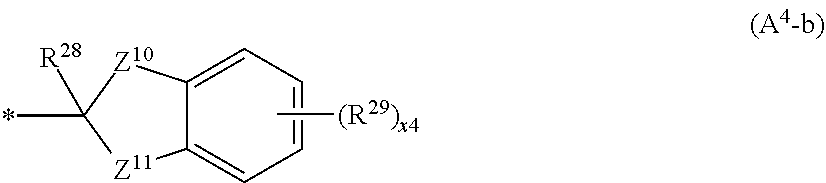
-
-
- wherein
- represents the attachment point to the remainder of the molecule; Z10 is selected from the group consisting of CRZ10-1RZ10-2, NRZ10-2, O, S, and —CRZ10-1═CRZ10-1—;
- wherein
- RZ10-1 is H or R29; and
- RZ10-2 is H or R29;
- Z11 is selected from the group consisting of CRZ11-1RZ11-2, NRZ11-2; O, S, and —CRZ11-1═CRZ11-1—;
- wherein
- RZ11-1 is H or R29; and
- RZ11-2 is H or R29;
- R28 is hydrogen or R29, or R28 and RZ10-2 are taken together to form a double bond between the carbon atom bearing R28 and Z10; and x4 is 0, 1, 2, 3, or 4;
- represents the attachment point to the remainder of the molecule; Z10 is selected from the group consisting of CRZ10-1RZ10-2, NRZ10-2, O, S, and —CRZ10-1═CRZ10-1—;
- C6-C10 aryl optionally substituted with one or more R29 substituent; and
- 5-10 membered heteroaryl optionally substituted with one or more R29 substituent;
- R29 is selected, independently at each occurrence, from the group consisting of halogen, C1-C6 alkyl, C1-C6 haloalkyl, —OH, —O(C1-C6 alkyl), —O(C1-C6 haloalkyl), —SH, —S(C1-C6 alkyl), —S(C1-C6 haloalkyl), —NH2, —NH(C1-C6 alkyl), —NH(C1-C6 haloalkyl), —N(C1-C6 alkyl)2, —N(C1-C6 haloalkyl)2, —NR29-aR29-b, —CN, —C(O)OH, —C(O)O(C1-C6 alkyl), —C(O)O(C1-C6 haloalkyl), —C(O)NH2, —C(O)NH(C1-C6 alkyl), —C(O)NH(C1-C6 haloalkyl), —C(O)N(C1-C6 alkyl)2, —C(O)N(C1-C6 haloalkyl)2, —C(O)NR29-aR29-b, —S(O)2OH, —S(O)2O(C1-C6 alkyl), —S(O)2O(C1-C6 haloalkyl), —S(O)2NH2, —S(O)2NH(C1-C6 alkyl), —S(O)2NH(C1-C6 haloalkyl), —S(O)2N(C1-C6 alkyl)2, —S(O)2N(C1-C6 haloalkyl)2, —S(O)2NR29-aR29-b, —OC(O)H, —OC(O)(C1-C6 alkyl), —OC(O)(C1-C6 haloalkyl), —N(H)C(O)H, —N(H)C(O)(C1-C6 alkyl), —N(H)C(O)(C1-C6 haloalkyl), —N(C1-C6 alkyl)C(O)H, —N(C1-C6 alkyl)C(O)(C1-C6 alkyl), —N(C1-C6 alkyl)C(O)(C1-C6 haloalkyl), —N(C1-C6 haloalkyl)C(O)H, —N(C1-C6 haloalkyl)C(O)(C1-C6 alkyl), —N(C1-C6 haloalkyl)C(O)(C1-C6 haloalkyl), —OS(O)2(C1-C6 alkyl), —OS(O)2(C1-C6 haloalkyl), —N(H)S(O)2(C1-C6 alkyl), —N(H)S(O)2(C1-C6 haloalkyl), —N(C1-C6 alkyl)S(O)2(C1-C6 alkyl), —N(C1-C6 alkyl)S(O)2(C1-C6 haloalkyl), —N(C1-C6 haloalkyl)S(O)2(C1-C6 alkyl), and —N(C1-C6 haloalkyl)S(O)2(C1-C6 haloalkyl);
- wherein R29-a and R29-b are taken together with the nitrogen atom which bears them to form a 3-10 membered heterocycle;
- R29 is selected, independently at each occurrence, from the group consisting of halogen, C1-C6 alkyl, C1-C6 haloalkyl, —OH, —O(C1-C6 alkyl), —O(C1-C6 haloalkyl), —SH, —S(C1-C6 alkyl), —S(C1-C6 haloalkyl), —NH2, —NH(C1-C6 alkyl), —NH(C1-C6 haloalkyl), —N(C1-C6 alkyl)2, —N(C1-C6 haloalkyl)2, —NR29-aR29-b, —CN, —C(O)OH, —C(O)O(C1-C6 alkyl), —C(O)O(C1-C6 haloalkyl), —C(O)NH2, —C(O)NH(C1-C6 alkyl), —C(O)NH(C1-C6 haloalkyl), —C(O)N(C1-C6 alkyl)2, —C(O)N(C1-C6 haloalkyl)2, —C(O)NR29-aR29-b, —S(O)2OH, —S(O)2O(C1-C6 alkyl), —S(O)2O(C1-C6 haloalkyl), —S(O)2NH2, —S(O)2NH(C1-C6 alkyl), —S(O)2NH(C1-C6 haloalkyl), —S(O)2N(C1-C6 alkyl)2, —S(O)2N(C1-C6 haloalkyl)2, —S(O)2NR29-aR29-b, —OC(O)H, —OC(O)(C1-C6 alkyl), —OC(O)(C1-C6 haloalkyl), —N(H)C(O)H, —N(H)C(O)(C1-C6 alkyl), —N(H)C(O)(C1-C6 haloalkyl), —N(C1-C6 alkyl)C(O)H, —N(C1-C6 alkyl)C(O)(C1-C6 alkyl), —N(C1-C6 alkyl)C(O)(C1-C6 haloalkyl), —N(C1-C6 haloalkyl)C(O)H, —N(C1-C6 haloalkyl)C(O)(C1-C6 alkyl), —N(C1-C6 haloalkyl)C(O)(C1-C6 haloalkyl), —OS(O)2(C1-C6 alkyl), —OS(O)2(C1-C6 haloalkyl), —N(H)S(O)2(C1-C6 alkyl), —N(H)S(O)2(C1-C6 haloalkyl), —N(C1-C6 alkyl)S(O)2(C1-C6 alkyl), —N(C1-C6 alkyl)S(O)2(C1-C6 haloalkyl), —N(C1-C6 haloalkyl)S(O)2(C1-C6 alkyl), and —N(C1-C6 haloalkyl)S(O)2(C1-C6 haloalkyl);
- wherein
- R17a and R17b are independently selected from the group consisting of hydrogen, C1-C6 alkyl, and halogen;
- R18a and R18b are independently selected from the group consisting of hydrogen, C1-C6 alkyl, and halogen;
- when present, R19a and R19b are independently at each occurrence selected from the group consisting of hydrogen, C1-C6 alkyl, and halogen;
- when present, R20a and R20b are independently at each occurrence selected from the group consisting of hydrogen, C1-C6 alkyl, and halogen;
- or alternatively, R17a and R18a are taken together to form a C1-C6 alkylene moiety;
- or alternatively, R17a and an R19a moiety, when present, are taken together to form a C1-C6 alkylene moiety, and R17b and the R19b in the geminal position to the R19a taken together with R17a, are both hydrogen;
- or alternatively, an R19a moiety, when present, and an R20a moiety, when present, are taken together to form a C1-C6 alkylene moiety, and the R19b in the geminal position to the R19a taken together with the R20a moiety and the R20b in the geminal position to the R20a taken together with the R19a moiety, are both hydrogen;
- R21a and R21b are taken together to form an oxo (═O) substituent or an imido (═NH) substituent, or alternatively, R21a and R21b are both hydrogen;
- when present, R22a and R22b are both hydrogen;
- R23a and R23b are taken together to form an oxo (═O) substituent or an imido (═NH) substituent, or alternatively, R23a and R23b are both hydrogen;
- when present, R24a is selected from the group consisting of hydrogen, —OH, and —NH2;
- or alternatively, R24a and RY4 are taken together to form a #—C(═O)—O— group, wherein # represent the attachment point to the nitrogen atom bearing RY4;
- when present, R24b is hydrogen; and
- when present, R25a and R25b are both hydrogen;
- or alternatively, R25a, when present, and one R29 of A4 are taken together with the atoms connecting them to form a 5-6 membered heterocycloalkenyl optionally substituted with one or more R29 substituent, and R25b is H;
- or alternatively, R25a, when present, R25b, when present, and one R29 of A4 are taken together with the atoms connecting them to form a 5-6 membered heteroaryl optionally substituted with one or more R29 substituent;
- and further provided that one of (i), (ii), (iii) and (iv) applies:
- (i) when m3 is 0 and n3 is 0, then:
- X3 is CH and Y3 is NRY3;
- X4 is CH and Y4 is NRY4;
- R21a and R21b are taken together to form an oxo (═O) substituent;
- R23a and R23b are taken together to form an oxo (═O) substituent;
- A3 is a substituent of the formula (A3-b)
-

-
-
- wherein
- represents the attachment point to the remainder of the molecule;
- Z7 is selected from the group consisting of CRZ7-1RZ7-2, NR27-2, O, S, and —CRZ7-1═CRZ7-1—;
- wherein
- RZ7-1 is H or R27; and
- RZ7-2 is H or R27;
- Z8 is selected from the group consisting of CRZ8-1RZ8-2, NR28-2; O, S, and —CRZ8-1═CRZ8-1—;
- wherein
- R28-1 is H or R27; and
- R28-2 is H or R27;
- R26 is hydrogen or R27, or R26 and R27-2 are taken together to form a double bond between the carbon atom bearing R26 and Z7;
- R27 is selected, independently at each occurrence, from the group consisting of halogen, C1-C6 alkyl, C1-C6 haloalkyl, —OH, —O(C1-C6 alkyl), —O(C1-C6 haloalkyl), —SH, —S(C1-C6 alkyl), —S(C1-C6 haloalkyl), —NH2, —NH(C1-C6 alkyl), —NH(C1-C6 haloalkyl), —N(C1-C6 alkyl)2, —N(C1-C6 haloalkyl)2, —NR27-aR27-b, —CN, —C(O)OH, —C(O)O(C1-C6 alkyl), —C(O)O(C1-C6 haloalkyl), —C(O)NH2, —C(O)NH(C1-C6 alkyl), —C(O)NH(C1-C6 haloalkyl), —C(O)N(C1-C6 alkyl)2, —C(O)N(C1-C6 haloalkyl)2, —C(O)NR27-aR27-b, —S(O)2OH, —S(O)2O(C1-C6 alkyl), —S(O)2O(C1-C6 haloalkyl), —S(O)2NH2, —S(O)2NH(C1-C6 alkyl), —S(O)2NH(C1-C6 haloalkyl), —S(O)2N(C1-C6 alkyl)2, —S(O)2N(C1-C6 haloalkyl)2, —S(O)2NR27-aR27-b, —OC(O)H, —OC(O)(C1-C6 alkyl), —OC(O)(C1-C6 haloalkyl), —N(H)C(O)H, —N(H)C(O)(C1-C6 alkyl), —N(H)C(O)(C1-C6 haloalkyl), —N(C1-C6 alkyl)C(O)H, —N(C1-C6 alkyl)C(O)(C1-C6 alkyl), —N(C1-C6 alkyl)C(O)(C1-C6 haloalkyl), —N(C1-C6 haloalkyl)C(O)H, —N(C1-C6 haloalkyl)C(O)(C1-C6 alkyl), —N(C1-C6 haloalkyl)C(O)(C1-C6 haloalkyl), —OS(O)2(C1-C6 alkyl), —OS(O)2(C1-C6 haloalkyl), —N(H)S(O)2(C1-C6 alkyl), —N(H)S(O)2(C1-C6 haloalkyl), —N(C1-C6 alkyl)S(O)2(C1-C6 alkyl), —N(C1-C6 alkyl)S(O)2(C1-C6 haloalkyl), —N(C1-C6 haloalkyl)S(O)2(C1-C6 alkyl), and —N(C1-C6 haloalkyl)S(O)2(C1-C6 haloalkyl);
- wherein R27-a and R27-b are taken together with the nitrogen atom which bears them to form a 3-10 membered heterocycle;
- x3 is 0, 1, 2, 3, or 4;
- A4 is a substituent of the formula (A4-b)
- wherein
-

-
-
- wherein
- represents the attachment point to the remainder of the molecule;
- Z10 is selected from the group consisting of CRZ10-1RZ10-2, NRZ10-2, O, S, and —CRZ10-1═CRZ10-1—;
- wherein
- RZ10-1 is H or R29; and
- RZ10-2 is H or R29;
- Z11 is selected from the group consisting of CRZ11-1RZ11-2, NRZ11-2; O, S, and —CRZ11-1═CRZ11-1—;
- wherein
- RZ11-1 is H or R29; and
- RZ11-2 is H or R29;
- R28 is hydrogen or R29, or R28 and RZ10-2 are taken together to form a double bond between the carbon atom bearing R28 and Z10;
- R29 is selected, independently at each occurrence, from the group consisting of halogen, C1-C6 alkyl, C1-C6 haloalkyl, —OH, —O(C1-C6 alkyl), —O(C1-C6 haloalkyl), —SH, —S(C1-C6 alkyl), —S(C1-C6 haloalkyl), —NH2, —NH(C1-C6 alkyl), —NH(C1-C6 haloalkyl), —N(C1-C6 alkyl)2, —N(C1-C6 haloalkyl)2, —NR29-aR29-b, —CN, —C(O)OH, —C(O)O(C1-C6 alkyl), —C(O)O(C1-C6 haloalkyl), —C(O)NH2, —C(O)NH(C1-C6 alkyl), —C(O)NH(C1-C6 haloalkyl), —C(O)N(C1-C6 alkyl)2, —C(O)N(C1-C6 haloalkyl)2, —C(O)NR29-aR29-b, —S(O)2OH, —S(O)2O(C1-C6 alkyl), —S(O)2O(C1-C6 haloalkyl), —S(O)2NH2, —S(O)2NH(C1-C6 alkyl), —S(O)2NH(C1-C6 haloalkyl), —S(O)2N(C1-C6 alkyl)2, —S(O)2N(C1-C6 haloalkyl)2, —S(O)2NR29-aR29-b, —OC(O)H, —OC(O)(C1-C6 alkyl), —OC(O)(C1-C6 haloalkyl), —N(H)C(O)H, —N(H)C(O)(C1-C6 alkyl), —N(H)C(O)(C1-C6 haloalkyl), —N(C1-C6 alkyl)C(O)H, —N(C1-C6 alkyl)C(O)(C1-C6 alkyl), —N(C1-C6 alkyl)C(O)(C1-C6 haloalkyl), —N(C1-C6 haloalkyl)C(O)H, —N(C1-C6 haloalkyl)C(O)(C1-C6 alkyl), —N(C1-C6 haloalkyl)C(O)(C1-C6 haloalkyl), —OS(O)2(C1-C6 alkyl), —OS(O)2(C1-C6 haloalkyl), —N(H)S(O)2(C1-C6 alkyl), —N(H)S(O)2(C1-C6 haloalkyl), —N(C1-C6 alkyl)S(O)2(C1-C6 alkyl), —N(C1-C6 alkyl)S(O)2(C1-C6 haloalkyl), —N(C1-C6 haloalkyl)S(O)2(C1-C6 alkyl), and —N(C1-C6 haloalkyl)S(O)2(C1-C6 haloalkyl);
- wherein R29-a and R29-b are taken together with the nitrogen atom which bears them to form a 3-10 membered heterocycle;
- x4 is 0, 1, 2, 3, or 4; and
- provided that A3 and A4 are not both simultaneously a moiety selected from group consisting of:
- wherein
-

wherein the * represents the attachment point to the remainder of the molecule;
-
- (ii) when m3 is 0 and n3 is 1, then:
- r2 is 1 or 2;
- s2 is 1 or 2;
- X3 is CH and Y3 is NRY3;
- R21a and R21b are taken together to form an oxo (═O) substituent;
- R24a is selected from the group consisting of hydrogen, —OH, and —NH2;
- A3 is a substituent of the formula (A3-b)
- (ii) when m3 is 0 and n3 is 1, then:

-
-
- wherein
- represents the attachment point to the remainder of the molecule;
- Z7 is selected from the group consisting of CRZ7-1RZ7-2, NRZ7-2, O, S, and —CRZ7-1═CRZ7-1—;
- wherein
- RZ7-1 is H or R27; and
- RZ7-2 is H or R27;
- Z8 is selected from the group consisting of CRZ8-1RZ8-2, NRZ8-2; O, S, and —CRZ8-1═CRZ8-1—;
- wherein
- RZ8-1 is H or R27; and
- RZ8-2 is H or R27;
- R26 is hydrogen or R27, or R26 and RZ7-2 are taken together to form a double bond between the carbon atom bearing R26 and Z7;
- R27 is selected, independently at each occurrence, from the group consisting of halogen, C1-C6 alkyl, C1-C6 haloalkyl, —OH, —O(C1-C6 alkyl), —O(C1-C6 haloalkyl), —SH, —S(C1-C6 alkyl), —S(C1-C6 haloalkyl), —NH2, —NH(C1-C6 alkyl), —NH(C1-C6 haloalkyl), —N(C1-C6 alkyl)2, —N(C1-C6 haloalkyl)2, —NR27-aR27-b, —CN, —C(O)OH, —C(O)O(C1-C6 alkyl), —C(O)O(C1-C6 haloalkyl), —C(O)NH2, —C(O)NH(C1-C6 alkyl), —C(O)NH(C1-C6 haloalkyl), —C(O)N(C1-C6 alkyl)2, —C(O)N(C1-C6 haloalkyl)2, —C(O)NR27-aR27-b, —S(O)2OH, —S(O)2O(C1-C6 alkyl), —S(O)2O(C1-C6 haloalkyl), —S(O)2NH2, —S(O)2NH(C1-C6 alkyl), —S(O)2NH(C1-C6 haloalkyl), —S(O)2N(C1-C6 alkyl)2, —S(O)2N(C1-C6 haloalkyl)2, —S(O)2NR27-aR27-b, —OC(O)H, —OC(O)(C1-C6 alkyl), —OC(O)(C1-C6 haloalkyl), —N(H)C(O)H, —N(H)C(O)(C1-C6 alkyl), —N(H)C(O)(C1-C6 haloalkyl), —N(C1-C6 alkyl)C(O)H, —N(C1-C6 alkyl)C(O)(C1-C6 alkyl), —N(C1-C6 alkyl)C(O)(C1-C6 haloalkyl), —N(C1-C6 haloalkyl)C(O)H, —N(C1-C6 haloalkyl)C(O)(C1-C6 alkyl), —N(C1-C6 haloalkyl)C(O)(C1-C6 haloalkyl), —OS(O)2(C1-C6 alkyl), —OS(O)2(C1-C6 haloalkyl), —N(H)S(O)2(C1-C6 alkyl), —N(H)S(O)2(C1-C6 haloalkyl), —N(C1-C6 alkyl)S(O)2(C1-C6 alkyl), —N(C1-C6 alkyl)S(O)2(C1-C6 haloalkyl), —N(C1-C6 haloalkyl)S(O)2(C1-C6 alkyl), and —N(C1-C6 haloalkyl)S(O)2(C1-C6 haloalkyl);
- wherein R27-a and R27-b are taken together with the nitrogen atom which bears them to form a 3-10 membered heterocycle;
- x3 is 0, 1, 2, 3, or 4;
- A4 is C6-C10 aryl optionally substituted with one or more R29 substituent, or 5-10 membered heteroaryl optionally substituted with one or more R29 substituent;
- R29 is selected, independently at each occurrence, from the group consisting of halogen, C1-C6 alkyl, C1-C6 haloalkyl, —OH, —O(C1-C6 alkyl), —O(C1-C6 haloalkyl), —SH, —S(C1-C6 alkyl), —S(C1-C6 haloalkyl), —NH2, —NH(C1-C6 alkyl), —NH(C1-C6 haloalkyl), —N(C1-C6 alkyl)2, —N(C1-C6 haloalkyl)2, —NR29-aR29-b, —CN, —C(O)OH, —C(O)O(C1-C6 alkyl), —C(O)O(C1-C6 haloalkyl), —C(O)NH2, —C(O)NH(C1-C6 alkyl), —C(O)NH(C1-C6 haloalkyl), —C(O)N(C1-C6 alkyl)2, —C(O)N(C1-C6 haloalkyl)2, —C(O)NR29-aR29-b, —S(O)2OH, —S(O)2O(C1-C6 alkyl), —S(O)2O(C1-C6 haloalkyl), —S(O)2NH2, —S(O)2NH(C1-C6 alkyl), —S(O)2NH(C1-C6 haloalkyl), —S(O)2N(C1-C6 alkyl)2, —S(O)2N(C1-C6 haloalkyl)2, —S(O)2NR29-aR29-b, —OC(O)H, —OC(O)(C1-C6 alkyl), —OC(O)(C1-C6 haloalkyl), —N(H)C(O)H, —N(H)C(O)(C1-C6 alkyl), —N(H)C(O)(C1-C6 haloalkyl), —N(C1-C6 alkyl)C(O)H, —N(C1-C6 alkyl)C(O)(C1-C6 alkyl), —N(C1-C6 alkyl)C(O)(C1-C6 haloalkyl), —N(C1-C6 haloalkyl)C(O)H, —N(C1-C6 haloalkyl)C(O)(C1-C6 alkyl), —N(C1-C6 haloalkyl)C(O)(C1-C6 haloalkyl), —OS(O)2(C1-C6 alkyl), —OS(O)2(C1-C6 haloalkyl), —N(H)S(O)2(C1-C6 alkyl), —N(H)S(O)2(C1-C6 haloalkyl), —N(C1-C6 alkyl)S(O)2(C1-C6 alkyl), —N(C1-C6 alkyl)S(O)2(C1-C6 haloalkyl), —N(C1-C6 haloalkyl)S(O)2(C1-C6 alkyl), and —N(C1-C6 haloalkyl)S(O)2(C1-C6 haloalkyl);
- wherein R29-a and R29-b are taken together with the nitrogen atom which bears them to form a 3-10 membered heterocycle;
- R29 is selected, independently at each occurrence, from the group consisting of halogen, C1-C6 alkyl, C1-C6 haloalkyl, —OH, —O(C1-C6 alkyl), —O(C1-C6 haloalkyl), —SH, —S(C1-C6 alkyl), —S(C1-C6 haloalkyl), —NH2, —NH(C1-C6 alkyl), —NH(C1-C6 haloalkyl), —N(C1-C6 alkyl)2, —N(C1-C6 haloalkyl)2, —NR29-aR29-b, —CN, —C(O)OH, —C(O)O(C1-C6 alkyl), —C(O)O(C1-C6 haloalkyl), —C(O)NH2, —C(O)NH(C1-C6 alkyl), —C(O)NH(C1-C6 haloalkyl), —C(O)N(C1-C6 alkyl)2, —C(O)N(C1-C6 haloalkyl)2, —C(O)NR29-aR29-b, —S(O)2OH, —S(O)2O(C1-C6 alkyl), —S(O)2O(C1-C6 haloalkyl), —S(O)2NH2, —S(O)2NH(C1-C6 alkyl), —S(O)2NH(C1-C6 haloalkyl), —S(O)2N(C1-C6 alkyl)2, —S(O)2N(C1-C6 haloalkyl)2, —S(O)2NR29-aR29-b, —OC(O)H, —OC(O)(C1-C6 alkyl), —OC(O)(C1-C6 haloalkyl), —N(H)C(O)H, —N(H)C(O)(C1-C6 alkyl), —N(H)C(O)(C1-C6 haloalkyl), —N(C1-C6 alkyl)C(O)H, —N(C1-C6 alkyl)C(O)(C1-C6 alkyl), —N(C1-C6 alkyl)C(O)(C1-C6 haloalkyl), —N(C1-C6 haloalkyl)C(O)H, —N(C1-C6 haloalkyl)C(O)(C1-C6 alkyl), —N(C1-C6 haloalkyl)C(O)(C1-C6 haloalkyl), —OS(O)2(C1-C6 alkyl), —OS(O)2(C1-C6 haloalkyl), —N(H)S(O)2(C1-C6 alkyl), —N(H)S(O)2(C1-C6 haloalkyl), —N(C1-C6 alkyl)S(O)2(C1-C6 alkyl), —N(C1-C6 alkyl)S(O)2(C1-C6 haloalkyl), —N(C1-C6 haloalkyl)S(O)2(C1-C6 alkyl), and —N(C1-C6 haloalkyl)S(O)2(C1-C6 haloalkyl);
- provided that when R23a and R23b are taken together to form an oxo (═O) substituent, then R24a is —OH or —NH2;
- wherein
- (iii) when m3 is 1 and n3 is 0, then:
- X4 is CH and Y4 is NRY4;
- R21a and R21b are taken together to form an oxo (═O) substituent or an imido (═NH) substituent;
- R23a and R23b are taken together to form an oxo (═O) substituent;
- A3 is C6-C10 aryl optionally substituted with one or more R27 substituent, or 5-10 membered heteroaryl optionally substituted with one or more R27 substituent;
- R27 is selected, independently at each occurrence, from the group consisting of halogen, C1-C6 alkyl, C1-C6 haloalkyl, —OH, —O(C1-C6 alkyl), —O(C1-C6 haloalkyl), —SH, —S(C1-C6 alkyl), —S(C1-C6 haloalkyl), —NH2, —NH(C1-C6 alkyl), —NH(C1-C6 haloalkyl), —N(C1-C6 alkyl)2, —N(C1-C6 haloalkyl)2, —NR27-aR27-b, —CN, —C(O)OH, —C(O)O(C1-C6 alkyl), —C(O)O(C1-C6 haloalkyl), —C(O)NH2, —C(O)NH(C1-C6 alkyl), —C(O)NH(C1-C6 haloalkyl), —C(O)N(C1-C6 alkyl)2, —C(O)N(C1-C6 haloalkyl)2, —C(O)NR27-aR27-b, —S(O)2OH, —S(O)2O(C1-C6 alkyl), —S(O)2O(C1-C6 haloalkyl), —S(O)2NH2, —S(O)2NH(C1-C6 alkyl), —S(O)2NH(C1-C6 haloalkyl), —S(O)2N(C1-C6 alkyl)2, —S(O)2N(C1-C6 haloalkyl)2, —S(O)2NR27-aR27-b, —OC(O)H, —OC(O)(C1-C6 alkyl), —OC(O)(C1-C6 haloalkyl), —N(H)C(O)H, —N(H)C(O)(C1-C6 alkyl), —N(H)C(O)(C1-C6 haloalkyl), —N(C1-C6 alkyl)C(O)H, —N(C1-C6 alkyl)C(O)(C1-C6 alkyl), —N(C1-C6 alkyl)C(O)(C1-C6 haloalkyl), —N(C1-C6 haloalkyl)C(O)H, —N(C1-C6 haloalkyl)C(O)(C1-C6 alkyl), —N(C1-C6 haloalkyl)C(O)(C1-C6 haloalkyl), —OS(O)2(C1-C6 alkyl), —OS(O)2(C1-C6 haloalkyl), —N(H)S(O)2(C1-C6 alkyl), —N(H)S(O)2(C1-C6 haloalkyl), —N(C1-C6 alkyl)S(O)2(C1-C6 alkyl), —N(C1-C6 alkyl)S(O)2(C1-C6 haloalkyl), —N(C1-C6 haloalkyl)S(O)2(C1-C6 alkyl), and —N(C1-C6 haloalkyl)S(O)2(C1-C6 haloalkyl);
- wherein R27-a and R27-b are taken together with the nitrogen atom which bears them to form a 3-10 membered heterocycle;
- R27 is selected, independently at each occurrence, from the group consisting of halogen, C1-C6 alkyl, C1-C6 haloalkyl, —OH, —O(C1-C6 alkyl), —O(C1-C6 haloalkyl), —SH, —S(C1-C6 alkyl), —S(C1-C6 haloalkyl), —NH2, —NH(C1-C6 alkyl), —NH(C1-C6 haloalkyl), —N(C1-C6 alkyl)2, —N(C1-C6 haloalkyl)2, —NR27-aR27-b, —CN, —C(O)OH, —C(O)O(C1-C6 alkyl), —C(O)O(C1-C6 haloalkyl), —C(O)NH2, —C(O)NH(C1-C6 alkyl), —C(O)NH(C1-C6 haloalkyl), —C(O)N(C1-C6 alkyl)2, —C(O)N(C1-C6 haloalkyl)2, —C(O)NR27-aR27-b, —S(O)2OH, —S(O)2O(C1-C6 alkyl), —S(O)2O(C1-C6 haloalkyl), —S(O)2NH2, —S(O)2NH(C1-C6 alkyl), —S(O)2NH(C1-C6 haloalkyl), —S(O)2N(C1-C6 alkyl)2, —S(O)2N(C1-C6 haloalkyl)2, —S(O)2NR27-aR27-b, —OC(O)H, —OC(O)(C1-C6 alkyl), —OC(O)(C1-C6 haloalkyl), —N(H)C(O)H, —N(H)C(O)(C1-C6 alkyl), —N(H)C(O)(C1-C6 haloalkyl), —N(C1-C6 alkyl)C(O)H, —N(C1-C6 alkyl)C(O)(C1-C6 alkyl), —N(C1-C6 alkyl)C(O)(C1-C6 haloalkyl), —N(C1-C6 haloalkyl)C(O)H, —N(C1-C6 haloalkyl)C(O)(C1-C6 alkyl), —N(C1-C6 haloalkyl)C(O)(C1-C6 haloalkyl), —OS(O)2(C1-C6 alkyl), —OS(O)2(C1-C6 haloalkyl), —N(H)S(O)2(C1-C6 alkyl), —N(H)S(O)2(C1-C6 haloalkyl), —N(C1-C6 alkyl)S(O)2(C1-C6 alkyl), —N(C1-C6 alkyl)S(O)2(C1-C6 haloalkyl), —N(C1-C6 haloalkyl)S(O)2(C1-C6 alkyl), and —N(C1-C6 haloalkyl)S(O)2(C1-C6 haloalkyl);
- A4 is a substituent of the formula (A4-b)
-

-
-
- wherein
- represents the attachment point to the remainder of the molecule;
- Z10 is selected from the group consisting of CRZ10-1RZ10-2, NRZ10-2, O, S, and —CRZ10-1═CRZ10-1—;
- wherein
- RZ10-1 is H or R29; and
- RZ10-2 is H or R29;
- Z11 is selected from the group consisting of CRZ11-1RZ11-2, NRZ11-2; O, S, and —CRZ11-1═CRZ11-1—;
- wherein
- RZ11-1 is H or R29; and
- RZ11-2 is H or R29;
- R28 is hydrogen or R29, or R28 and RZ10-2 are taken together to form a double bond between the carbon atom bearing R28 and Z10;
- R29 is selected, independently at each occurrence, from the group consisting of halogen, C1-C6 alkyl, C1-C6 haloalkyl, —OH, —O(C1-C6 alkyl), —O(C1-C6 haloalkyl), —SH, —S(C1-C6 alkyl), —S(C1-C6 haloalkyl), —NH2, —NH(C1-C6 alkyl), —NH(C1-C6 haloalkyl), —N(C1-C6 alkyl)2, —N(C1-C6 haloalkyl)2, —NR29-aR29-b, —CN, —C(O)OH, —C(O)O(C1-C6 alkyl), —C(O)O(C1-C6 haloalkyl), —C(O)NH2, —C(O)NH(C1-C6 alkyl), —C(O)NH(C1-C6 haloalkyl), —C(O)N(C1-C6 alkyl)2, —C(O)N(C1-C6 haloalkyl)2, —C(O)NR29-aR29-b, —S(O)2OH, —S(O)2O(C1-C6 alkyl), —S(O)2O(C1-C6 haloalkyl), —S(O)2NH2, —S(O)2NH(C1-C6 alkyl), —S(O)2NH(C1-C6 haloalkyl), —S(O)2N(C1-C6 alkyl)2, —S(O)2N(C1-C6 haloalkyl)2, —S(O)2NR29-aR29-b, —OC(O)H, —OC(O)(C1-C6 alkyl), —OC(O)(C1-C6 haloalkyl), —N(H)C(O)H, —N(H)C(O)(C1-C6 alkyl), —N(H)C(O)(C1-C6 haloalkyl), —N(C1-C6 alkyl)C(O)H, —N(C1-C6 alkyl)C(O)(C1-C6 alkyl), —N(C1-C6 alkyl)C(O)(C1-C6 haloalkyl), —N(C1-C6 haloalkyl)C(O)H, —N(C1-C6 haloalkyl)C(O)(C1-C6 alkyl), —N(C1-C6 haloalkyl)C(O)(C1-C6 haloalkyl), —OS(O)2(C1-C6 alkyl), —OS(O)2(C1-C6 haloalkyl), —N(H)S(O)2(C1-C6 alkyl), —N(H)S(O)2(C1-C6 haloalkyl), —N(C1-C6 alkyl)S(O)2(C1-C6 alkyl), —N(C1-C6 alkyl)S(O)2(C1-C6 haloalkyl), —N(C1-C6 haloalkyl)S(O)2(C1-C6 alkyl), and —N(C1-C6 haloalkyl)S(O)2(C1-C6 haloalkyl);
- wherein R29-a and R29-b are taken together with the nitrogen atom which bears them to form a 3-10 membered heterocycle;
- x4 is 0, 1, 2, 3, or 4;
- wherein
- (iv) when m3 is 1 and n3 is 1, then:
- R21a and R21b are taken together to form an oxo (═O) substituent or an imido (═NH) substituent;
- A3 is C6-C10 aryl optionally substituted with one or more R27 substituent, or 5-10 membered heteroaryl optionally substituted with one or more R27 substituent;
- R27 is selected, independently at each occurrence, from the group consisting Dihalogen, C1-C6 alkyl, C1-C6 haloalkyl, —OH, —O(C1-C6 alkyl), —O(C1-C6 haloalkyl), —SH, —S(C1-C6 alkyl), —S(C1-C6 haloalkyl), —NH2, —NH(C1-C6 alkyl), —NH(C1-C6 haloalkyl), —N(C1-C6 alkyl)2, —N(C1-C6 haloalkyl)2, —NR27-aR27-b, —CN, —C(O)OH, —C(O)O(C1-C6 alkyl), —C(O)O(C1-C6 haloalkyl), —C(O)NH2, —C(O)NH(C1-C6 alkyl), —C(O)NH(C1-C6 haloalkyl), —C(O)N(C1-C6 alkyl)2, —C(O)N(C1-C6 haloalkyl)2, —C(O)NR27-aR27-b, —S(O)2OH, —S(O)2O(C1-C6 alkyl), —S(O)2O(C1-C6 haloalkyl), —S(O)2NH2, —S(O)2NH(C1-C6 alkyl), —S(O)2NH(C1-C6 haloalkyl), —S(O)2N(C1-C6 alkyl)2, —S(O)2N(C1-C6 haloalkyl)2, —S(O)2NR27-aR27-b, —OC(O)H, —OC(O)(C1-C6 alkyl), —OC(O)(C1-C6 haloalkyl), —N(H)C(O)H, —N(H)C(O)(C1-C6 alkyl), —N(H)C(O)(C1-C6 haloalkyl), —N(C1-C6 alkyl)C(O)H, —N(C1-C6 alkyl)C(O)(C1-C6 alkyl), —N(C1-C6 alkyl)C(O)(C1-C6 haloalkyl), —N(C1-C6 haloalkyl)C(O)H, —N(C1-C6 haloalkyl)C(O)(C1-C6 alkyl), —N(C1-C6 haloalkyl)C(O)(C1-C6 haloalkyl), —OS(O)2(C1-C6 alkyl), —OS(O)2(C1-C6 haloalkyl), —N(H)S(O)2(C1-C6 alkyl), —N(H)S(O)2(C1-C6 haloalkyl), —N(C1-C6 alkyl)S(O)2(C1-C6 alkyl), —N(C1-C6 alkyl)S(O)2(C1-C6 haloalkyl), —N(C1-C6 haloalkyl)S(O)2(C1-C6 alkyl), and —N(C1-C6 haloalkyl)S(O)2(C1-C6 haloalkyl);
- wherein R27-a and R27-b are taken together with the nitrogen atom which bears them to form a 3-10 membered heterocycle;
- R27 is selected, independently at each occurrence, from the group consisting Dihalogen, C1-C6 alkyl, C1-C6 haloalkyl, —OH, —O(C1-C6 alkyl), —O(C1-C6 haloalkyl), —SH, —S(C1-C6 alkyl), —S(C1-C6 haloalkyl), —NH2, —NH(C1-C6 alkyl), —NH(C1-C6 haloalkyl), —N(C1-C6 alkyl)2, —N(C1-C6 haloalkyl)2, —NR27-aR27-b, —CN, —C(O)OH, —C(O)O(C1-C6 alkyl), —C(O)O(C1-C6 haloalkyl), —C(O)NH2, —C(O)NH(C1-C6 alkyl), —C(O)NH(C1-C6 haloalkyl), —C(O)N(C1-C6 alkyl)2, —C(O)N(C1-C6 haloalkyl)2, —C(O)NR27-aR27-b, —S(O)2OH, —S(O)2O(C1-C6 alkyl), —S(O)2O(C1-C6 haloalkyl), —S(O)2NH2, —S(O)2NH(C1-C6 alkyl), —S(O)2NH(C1-C6 haloalkyl), —S(O)2N(C1-C6 alkyl)2, —S(O)2N(C1-C6 haloalkyl)2, —S(O)2NR27-aR27-b, —OC(O)H, —OC(O)(C1-C6 alkyl), —OC(O)(C1-C6 haloalkyl), —N(H)C(O)H, —N(H)C(O)(C1-C6 alkyl), —N(H)C(O)(C1-C6 haloalkyl), —N(C1-C6 alkyl)C(O)H, —N(C1-C6 alkyl)C(O)(C1-C6 alkyl), —N(C1-C6 alkyl)C(O)(C1-C6 haloalkyl), —N(C1-C6 haloalkyl)C(O)H, —N(C1-C6 haloalkyl)C(O)(C1-C6 alkyl), —N(C1-C6 haloalkyl)C(O)(C1-C6 haloalkyl), —OS(O)2(C1-C6 alkyl), —OS(O)2(C1-C6 haloalkyl), —N(H)S(O)2(C1-C6 alkyl), —N(H)S(O)2(C1-C6 haloalkyl), —N(C1-C6 alkyl)S(O)2(C1-C6 alkyl), —N(C1-C6 alkyl)S(O)2(C1-C6 haloalkyl), —N(C1-C6 haloalkyl)S(O)2(C1-C6 alkyl), and —N(C1-C6 haloalkyl)S(O)2(C1-C6 haloalkyl);
- A4 is C6-C10 aryl optionally substituted with one or more R29 substituent, or 5-10 membered heteroaryl optionally substituted with one or more R29 substituent;
- R29 is selected, independently at each occurrence, from the group consisting of halogen, C1-C6 alkyl, C1-C6 haloalkyl, —OH, —O(C1-C6 alkyl), —O(C1-C6 haloalkyl), —SH, —S(C1-C6 alkyl), —S(C1-C6 haloalkyl), —NH2, —NH(C1-C6 alkyl), —NH(C1-C6 haloalkyl), —N(C1-C6 alkyl)2, —N(C1-C6 haloalkyl)2, —NR29-aR29-b, —CN, —C(O)OH, —C(O)O(C1-C6 alkyl), —C(O)O(C1-C6 haloalkyl), —C(O)NH2, —C(O)NH(C1-C6 alkyl), —C(O)NH(C1-C6 haloalkyl), —C(O)N(C1-C6 alkyl)2, —C(O)N(C1-C6 haloalkyl)2, —C(O)NR29-aR29-b, —S(O)2OH, —S(O)2O(C1-C6 alkyl), —S(O)2O(C1-C6 haloalkyl), —S(O)2NH2, —S(O)2NH(C1-C6 alkyl), —S(O)2NH(C1-C6 haloalkyl), —S(O)2N(C1-C6 alkyl)2, —S(O)2N(C1-C6 haloalkyl)2, —S(O)2NR29-aR29-b, —OC(O)H, —OC(O)(C1-C6 alkyl), —OC(O)(C1-C6 haloalkyl), —N(H)C(O)H, —N(H)C(O)(C1-C6 alkyl), —N(H)C(O)(C1-C6 haloalkyl), —N(C1-C6 alkyl)C(O)H, —N(C1-C6 alkyl)C(O)(C1-C6 alkyl), —N(C1-C6 alkyl)C(O)(C1-C6 haloalkyl), —N(C1-C6 haloalkyl)C(O)H, —N(C1-C6 haloalkyl)C(O)(C1-C6 alkyl), —N(C1-C6 haloalkyl)C(O)(C1-C6 haloalkyl), —OS(O)2(C1-C6 alkyl), —OS(O)2(C1-C6 haloalkyl), —N(H)S(O)2(C1-C6 alkyl), —N(H)S(O)2(C1-C6 haloalkyl), —N(C1-C6 alkyl)S(O)2(C1-C6 alkyl), —N(C1-C6 alkyl)S(O)2(C1-C6 haloalkyl), —N(C1-C6 haloalkyl)S(O)2(C1-C6 alkyl), and —N(C1-C6 haloalkyl)S(O)2(C1-C6 haloalkyl);
- wherein R29-a and R29-b are taken together with the nitrogen atom which bears them to form a 3-10 membered heterocycle;
- R29 is selected, independently at each occurrence, from the group consisting of halogen, C1-C6 alkyl, C1-C6 haloalkyl, —OH, —O(C1-C6 alkyl), —O(C1-C6 haloalkyl), —SH, —S(C1-C6 alkyl), —S(C1-C6 haloalkyl), —NH2, —NH(C1-C6 alkyl), —NH(C1-C6 haloalkyl), —N(C1-C6 alkyl)2, —N(C1-C6 haloalkyl)2, —NR29-aR29-b, —CN, —C(O)OH, —C(O)O(C1-C6 alkyl), —C(O)O(C1-C6 haloalkyl), —C(O)NH2, —C(O)NH(C1-C6 alkyl), —C(O)NH(C1-C6 haloalkyl), —C(O)N(C1-C6 alkyl)2, —C(O)N(C1-C6 haloalkyl)2, —C(O)NR29-aR29-b, —S(O)2OH, —S(O)2O(C1-C6 alkyl), —S(O)2O(C1-C6 haloalkyl), —S(O)2NH2, —S(O)2NH(C1-C6 alkyl), —S(O)2NH(C1-C6 haloalkyl), —S(O)2N(C1-C6 alkyl)2, —S(O)2N(C1-C6 haloalkyl)2, —S(O)2NR29-aR29-b, —OC(O)H, —OC(O)(C1-C6 alkyl), —OC(O)(C1-C6 haloalkyl), —N(H)C(O)H, —N(H)C(O)(C1-C6 alkyl), —N(H)C(O)(C1-C6 haloalkyl), —N(C1-C6 alkyl)C(O)H, —N(C1-C6 alkyl)C(O)(C1-C6 alkyl), —N(C1-C6 alkyl)C(O)(C1-C6 haloalkyl), —N(C1-C6 haloalkyl)C(O)H, —N(C1-C6 haloalkyl)C(O)(C1-C6 alkyl), —N(C1-C6 haloalkyl)C(O)(C1-C6 haloalkyl), —OS(O)2(C1-C6 alkyl), —OS(O)2(C1-C6 haloalkyl), —N(H)S(O)2(C1-C6 alkyl), —N(H)S(O)2(C1-C6 haloalkyl), —N(C1-C6 alkyl)S(O)2(C1-C6 alkyl), —N(C1-C6 alkyl)S(O)2(C1-C6 haloalkyl), —N(C1-C6 haloalkyl)S(O)2(C1-C6 alkyl), and —N(C1-C6 haloalkyl)S(O)2(C1-C6 haloalkyl);
- provided that:
- when one of X3 or X4 is N, then r2 is 1 or 2 and s2 is 1 or 2; and
- when R23a and R23b are taken together to form an oxo (═O) substituent, then R24a is —OH or —NH2.
-


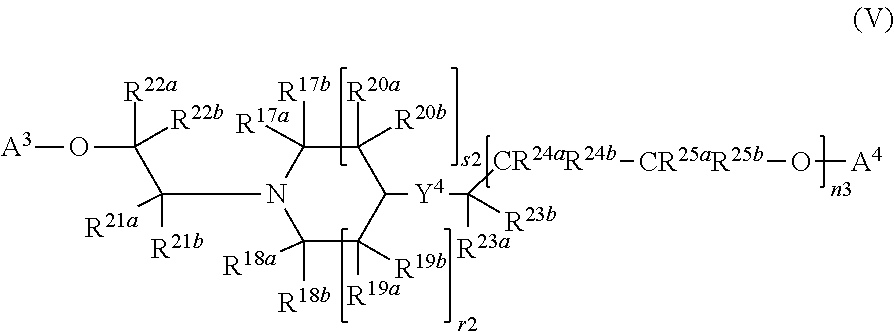
-
- m3 is 0 and n3 is 0;
- X3 is CH and Y3 is NRY3;
- X4 is CH and Y4 is NRY4;
- R21a and R21b are taken together to form an oxo (═O) substituent;
- R23a and R23b are taken together to form an oxo (═O) substituent;
- A3 is a substituent of the formula (A3-b)

-
-
- wherein
- represents the attachment point to the remainder of the molecule;
- Z7 is selected from the group consisting of CRZ7-1RZ7-2, NRZ7-2, O, S, and —CRZ7-1═CRZ7-1—;
- wherein
- RZ7-1 is H or R27; and
- RZ7-2 is H or R27;
- Z8 is selected from the group consisting of CRZ8-1RZ8-2, NRZ8-2; O, S, and —CRZ8-1═CRZ8-1—;
- wherein
- RZ8-1 is H or R27; and
- RZ8-2 is H or R27;
- R26 is hydrogen or R27, or R26 and RZ7-2 are taken together to form a double bond between the carbon atom bearing R26 and Z7;
- R27 is selected, independently at each occurrence, from the group consisting of halogen, C1-C6 alkyl, C1-C6 haloalkyl, —OH, —O(C1-C6 alkyl), —O(C1-C6 haloalkyl), —SH, —S(C1-C6 alkyl), —S(C1-C6 haloalkyl), —NH2, —NH(C1-C6 alkyl), —NH(C1-C6 haloalkyl), —N(C1-C6 alkyl)2, —N(C1-C6 haloalkyl)2, —NR27-aR27-b, —CN, —C(O)OH, —C(O)O(C1-C6 alkyl), —C(O)O(C1-C6 haloalkyl), —C(O)NH2, —C(O)NH(C1-C6 alkyl), —C(O)NH(C1-C6 haloalkyl), —C(O)N(C1-C6 alkyl)2, —C(O)N(C1-C6 haloalkyl)2, —C(O)NR27-aR27-b, —S(O)2OH, —S(O)2O(C1-C6 alkyl), —S(O)2O(C1-C6 haloalkyl), —S(O)2NH2, —S(O)2NH(C1-C6 alkyl), —S(O)2NH(C1-C6 haloalkyl), —S(O)2N(C1-C6 alkyl)2, —S(O)2N(C1-C6 haloalkyl)2, —S(O)2NR27-aR27-b, —OC(O)H, —OC(O)(C1-C6 alkyl), —OC(O)(C1-C6 haloalkyl), —N(H)C(O)H, —N(H)C(O)(C1-C6 alkyl), —N(H)C(O)(C1-C6 haloalkyl), —N(C1-C6 alkyl)C(O)H, —N(C1-C6 alkyl)C(O)(C1-C6 alkyl), —N(C1-C6 alkyl)C(O)(C1-C6 haloalkyl), —N(C1-C6 haloalkyl)C(O)H, —N(C1-C6 haloalkyl)C(O)(C1-C6 alkyl), —N(C1-C6 haloalkyl)C(O)(C1-C6 haloalkyl), —OS(O)2(C1-C6 alkyl), —OS(O)2(C1-C6 haloalkyl), —N(H)S(O)2(C1-C6 alkyl), —N(H)S(O)2(C1-C6 haloalkyl), —N(C1-C6 alkyl)S(O)2(C1-C6 alkyl), —N(C1-C6 alkyl)S(O)2(C1-C6 haloalkyl), —N(C1-C6 haloalkyl)S(O)2(C1-C6 alkyl), and —N(C1-C6 haloalkyl)S(O)2(C1-C6 haloalkyl);
- wherein R27-a and R27-b are taken together with the nitrogen atom which bears them to form a 3-10 membered heterocycle;
- x3 is 0, 1, 2, 3, or 4;
- wherein
- A4 is a substituent of the formula (A4-b)
-

-
-
- wherein
- represents the attachment point to the remainder of the molecule; Z10 is selected from the group consisting of CRZ10-1RZ10-2, NRZ10-2, O, S, and —CRZ10-1═CRZ10-1—;
- wherein
- RZ10-1 is H or R29; and
- RZ10-2 is H or R29;
- Z11 is selected from the group consisting of CRZ11-1RZ11-2, NRZ11-2; O, S, and —CRZ11-1═CRZ11-1—;
- wherein
- RZ11-1 is H or R29; and
- RZ11-2 is H or R29;
- R28 is hydrogen or R29, or R28 and RZ10-2 are taken together to form a double bond between the carbon atom bearing R28 and Z10;
- R29 is selected, independently at each occurrence, from the group consisting of halogen, C1-C6 alkyl, C1-C6 haloalkyl, —OH, —O(C1-C6 alkyl), —O(C1-C6 haloalkyl), —SH, —S(C1-C6 alkyl), —S(C1-C6 haloalkyl), —NH2, —NH(C1-C6 alkyl), —NH(C1-C6 haloalkyl), —N(C1-C6 alkyl)2, —N(C1-C6 haloalkyl)2, —NR29-aR29-b, —CN, —C(O)OH, —C(O)O(C1-C6 alkyl), —C(O)O(C1-C6 haloalkyl), —C(O)NH2, —C(O)NH(C1-C6 alkyl), —C(O)NH(C1-C6 haloalkyl), —C(O)N(C1-C6 alkyl)2, —C(O)N(C1-C6 haloalkyl)2, —C(O)NR29-aR29-b, —S(O)2OH, —S(O)2O(C1-C6 alkyl), —S(O)2O(C1-C6 haloalkyl), —S(O)2NH2, —S(O)2NH(C1-C6 alkyl), —S(O)2NH(C1-C6 haloalkyl), —S(O)2N(C1-C6 alkyl)2, —S(O)2N(C1-C6 haloalkyl)2, —S(O)2NR29-aR29-b, —OC(O)H, —OC(O)(C1-C6 alkyl), —OC(O)(C1-C6 haloalkyl), —N(H)C(O)H, —N(H)C(O)(C1-C6 alkyl), —N(H)C(O)(C1-C6 haloalkyl), —N(C1-C6 alkyl)C(O)H, —N(C1-C6 alkyl)C(O)(C1-C6 alkyl), —N(C1-C6 alkyl)C(O)(C1-C6 haloalkyl), —N(C1-C6 haloalkyl)C(O)H, —N(C1-C6 haloalkyl)C(O)(C1-C6 alkyl), —N(C1-C6 haloalkyl)C(O)(C1-C6 haloalkyl), —OS(O)2(C1-C6 alkyl), —OS(O)2(C1-C6 haloalkyl), —N(H)S(O)2(C1-C6 alkyl), —N(H)S(O)2(C1-C6 haloalkyl), —N(C1-C6 alkyl)S(O)2(C1-C6 alkyl), —N(C1-C6 alkyl)S(O)2(C1-C6 haloalkyl), —N(C1-C6 haloalkyl)S(O)2(C1-C6 alkyl), and —N(C1-C6 haloalkyl)S(O)2(C1-C6 haloalkyl);
- wherein R29-a and R29-b are taken together with the nitrogen atom which bears them to form a 3-10 membered heterocycle;
- x4 is 0, 1, 2, 3, or 4; and
- represents the attachment point to the remainder of the molecule; Z10 is selected from the group consisting of CRZ10-1RZ10-2, NRZ10-2, O, S, and —CRZ10-1═CRZ10-1—;
- wherein
-
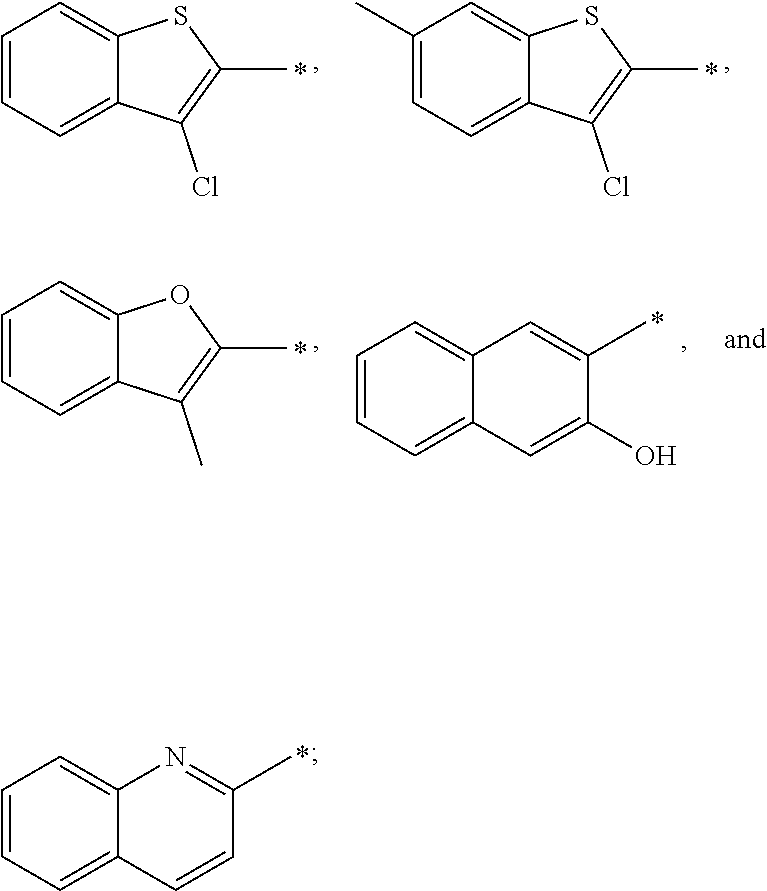
wherein the * represents the attachment point to the remainder of the molecule.

wherein the * represents the attachment point to the remainder of the molecule. In some embodiments, (A3-b) is selected from the group consisting of:

wherein the * represents the attachment point to the remainder of the molecule. In some embodiments, (A3-b) is selected from the group consisting of:

wherein the * represents the attachment point to the remainder of the molecule. In some embodiments, (A3-b) is selected from the group consisting of:

wherein the * represents the attachment point to the remainder of the molecule.

wherein the * represents the attachment point to the remainder of the molecule. In some embodiments, (A4-b) is selected from the group consisting of:

wherein the * represents the attachment point to the remainder of the molecule. In some embodiments, (A4-b) is selected from the group consisting of:

wherein the * represents the attachment point to the remainder of the molecule. In some embodiments, (A4-b) is selected from the group consisting of:

wherein the * represents the attachment point to the remainder of the molecule.
-
- m3 is 0 and n3 is 1;
- r2 is 1 or 2;
- s2 is 1 or 2;
- X3 is CH and Y3 is NRY3;
- R21a and R21b are taken together to form an oxo (═O) substituent;
- R24a is selected from the group consisting of hydrogen, —OH, and —NH2;
- R25a and R25b are both hydrogen;
- A3 is a substituent of the formula (A3-b)

-
-
- wherein
- represents the attachment point to the remainder of the molecule; Z7 is selected from the group consisting of CRZ7-1RZ7-2, NRZ7-2, O, S, and —CRZ7-1═CRZ7-1—;
- wherein
- RZ7-1 is H or R27; and
- RZ7-2 is H or R27;
- Z8 is selected from the group consisting of CRZ8-1RZ8-2, NRZ8-2; O, S, and —CRZ8-1═CRZ8-1—;
- wherein
- RZ8-1 is H or R27; and
- RZ8-2 is H or R27;
- R26 is hydrogen or R27, or R26 and RZ7-2 are taken together to form a double bond between the carbon atom bearing R26 and Z7;
- R27 is selected, independently at each occurrence, from the group consisting of halogen, C1-C6 alkyl, C1-C6 haloalkyl, —OH, —O(C1-C6 alkyl), —O(C1-C6 haloalkyl), —SH, —S(C1-C6 alkyl), —S(C1-C6 haloalkyl), —NH2, —NH(C1-C6 alkyl), —NH(C1-C6 haloalkyl), —N(C1-C6 alkyl)2, —N(C1-C6 haloalkyl)2, —NR27-aR27-b, —CN, —C(O)OH, —C(O)O(C1-C6 alkyl), —C(O)O(C1-C6 haloalkyl), —C(O)NH2, —C(O)NH(C1-C6 alkyl), —C(O)NH(C1-C6 haloalkyl), —C(O)N(C1-C6 alkyl)2, —C(O)N(C1-C6 haloalkyl)2, —C(O)NR27-aR27-b, —S(O)2OH, —S(O)2O(C1-C6 alkyl), —S(O)2O(C1-C6 haloalkyl), —S(O)2NH2, —S(O)2NH(C1-C6 alkyl), —S(O)2NH(C1-C6 haloalkyl), —S(O)2N(C1-C6 alkyl)2, —S(O)2N(C1-C6 haloalkyl)2, —S(O)2NR27-aR27-b, —OC(O)H, —OC(O)(C1-C6 alkyl), —OC(O)(C1-C6 haloalkyl), —N(H)C(O)H, —N(H)C(O)(C1-C6 alkyl), —N(H)C(O)(C1-C6 haloalkyl), —N(C1-C6 alkyl)C(O)H, —N(C1-C6 alkyl)C(O)(C1-C6 alkyl), —N(C1-C6 alkyl)C(O)(C1-C6 haloalkyl), —N(C1-C6 haloalkyl)C(O)H, —N(C1-C6 haloalkyl)C(O)(C1-C6 alkyl), —N(C1-C6 haloalkyl)C(O)(C1-C6 haloalkyl), —OS(O)2(C1-C6 alkyl), —OS(O)2(C1-C6 haloalkyl), —N(H)S(O)2(C1-C6 alkyl), —N(H)S(O)2(C1-C6 haloalkyl), —N(C1-C6 alkyl)S(O)2(C1-C6 alkyl), —N(C1-C6 alkyl)S(O)2(C1-C6 haloalkyl), —N(C1-C6 haloalkyl)S(O)2(C1-C6 alkyl), and —N(C1-C6 haloalkyl)S(O)2(C1-C6 haloalkyl);
- wherein R27-a and R27-b are taken together with the nitrogen atom which bears them to form a 3-10 membered heterocycle;
- x3 is 0, 1, 2, 3, or 4; and
- represents the attachment point to the remainder of the molecule; Z7 is selected from the group consisting of CRZ7-1RZ7-2, NRZ7-2, O, S, and —CRZ7-1═CRZ7-1—;
- wherein
- A4 is C6-C10 aryl optionally substituted with one or more R29 substituent, or 5-10 membered heteroaryl optionally substituted with one or more R29 substituent;
- R29 is selected, independently at each occurrence, from the group consisting of halogen, C1-C6 alkyl, C1-C6 haloalkyl, —OH, —O(C1-C6 alkyl), —O(C1-C6 haloalkyl), —SH, —S(C1-C6 alkyl), —S(C1-C6 haloalkyl), —NH2, —NH(C1-C6 alkyl), —NH(C1-C6 haloalkyl), —N(C1-C6 alkyl)2, —N(C1-C6 haloalkyl)2, —NR29-aR29-b, —CN, —C(O)OH, —C(O)O(C1-C6 alkyl), —C(O)O(C1-C6 haloalkyl), —C(O)NH2, —C(O)NH(C1-C6 alkyl), —C(O)NH(C1-C6 haloalkyl), —C(O)N(C1-C6 alkyl)2, —C(O)N(C1-C6 haloalkyl)2, —C(O)NR29-aR29-b, —S(O)2OH, —S(O)2O(C1-C6 alkyl), —S(O)2O(C1-C6 haloalkyl), —S(O)2NH2, —S(O)2NH(C1-C6 alkyl), —S(O)2NH(C1-C6 haloalkyl), —S(O)2N(C1-C6 alkyl)2, —S(O)2N(C1-C6 haloalkyl)2, —S(O)2NR29-aR29-b, —OC(O)H, —OC(O)(C1-C6 alkyl), —OC(O)(C1-C6 haloalkyl), —N(H)C(O)H, —N(H)C(O)(C1-C6 alkyl), —N(H)C(O)(C1-C6 haloalkyl), —N(C1-C6 alkyl)C(O)H, —N(C1-C6 alkyl)C(O)(C1-C6 alkyl), —N(C1-C6 alkyl)C(O)(C1-C6 haloalkyl), —N(C1-C6 haloalkyl)C(O)H, —N(C1-C6 haloalkyl)C(O)(C1-C6 alkyl), —N(C1-C6 haloalkyl)C(O)(C1-C6 haloalkyl), —OS(O)2(C1-C6 alkyl), —OS(O)2(C1-C6 haloalkyl), —N(H)S(O)2(C1-C6 alkyl), —N(H)S(O)2(C1-C6 haloalkyl), —N(C1-C6 alkyl)S(O)2(C1-C6 alkyl), —N(C1-C6 alkyl)S(O)2(C1-C6 haloalkyl), —N(C1-C6 haloalkyl)S(O)2(C1-C6 alkyl), and —N(C1-C6 haloalkyl)S(O)2(C1-C6 haloalkyl);
- wherein R29-a and R29-b are taken together with the nitrogen atom which bears them to form a 3-10 membered heterocycle.
- R29 is selected, independently at each occurrence, from the group consisting of halogen, C1-C6 alkyl, C1-C6 haloalkyl, —OH, —O(C1-C6 alkyl), —O(C1-C6 haloalkyl), —SH, —S(C1-C6 alkyl), —S(C1-C6 haloalkyl), —NH2, —NH(C1-C6 alkyl), —NH(C1-C6 haloalkyl), —N(C1-C6 alkyl)2, —N(C1-C6 haloalkyl)2, —NR29-aR29-b, —CN, —C(O)OH, —C(O)O(C1-C6 alkyl), —C(O)O(C1-C6 haloalkyl), —C(O)NH2, —C(O)NH(C1-C6 alkyl), —C(O)NH(C1-C6 haloalkyl), —C(O)N(C1-C6 alkyl)2, —C(O)N(C1-C6 haloalkyl)2, —C(O)NR29-aR29-b, —S(O)2OH, —S(O)2O(C1-C6 alkyl), —S(O)2O(C1-C6 haloalkyl), —S(O)2NH2, —S(O)2NH(C1-C6 alkyl), —S(O)2NH(C1-C6 haloalkyl), —S(O)2N(C1-C6 alkyl)2, —S(O)2N(C1-C6 haloalkyl)2, —S(O)2NR29-aR29-b, —OC(O)H, —OC(O)(C1-C6 alkyl), —OC(O)(C1-C6 haloalkyl), —N(H)C(O)H, —N(H)C(O)(C1-C6 alkyl), —N(H)C(O)(C1-C6 haloalkyl), —N(C1-C6 alkyl)C(O)H, —N(C1-C6 alkyl)C(O)(C1-C6 alkyl), —N(C1-C6 alkyl)C(O)(C1-C6 haloalkyl), —N(C1-C6 haloalkyl)C(O)H, —N(C1-C6 haloalkyl)C(O)(C1-C6 alkyl), —N(C1-C6 haloalkyl)C(O)(C1-C6 haloalkyl), —OS(O)2(C1-C6 alkyl), —OS(O)2(C1-C6 haloalkyl), —N(H)S(O)2(C1-C6 alkyl), —N(H)S(O)2(C1-C6 haloalkyl), —N(C1-C6 alkyl)S(O)2(C1-C6 alkyl), —N(C1-C6 alkyl)S(O)2(C1-C6 haloalkyl), —N(C1-C6 haloalkyl)S(O)2(C1-C6 alkyl), and —N(C1-C6 haloalkyl)S(O)2(C1-C6 haloalkyl);
-
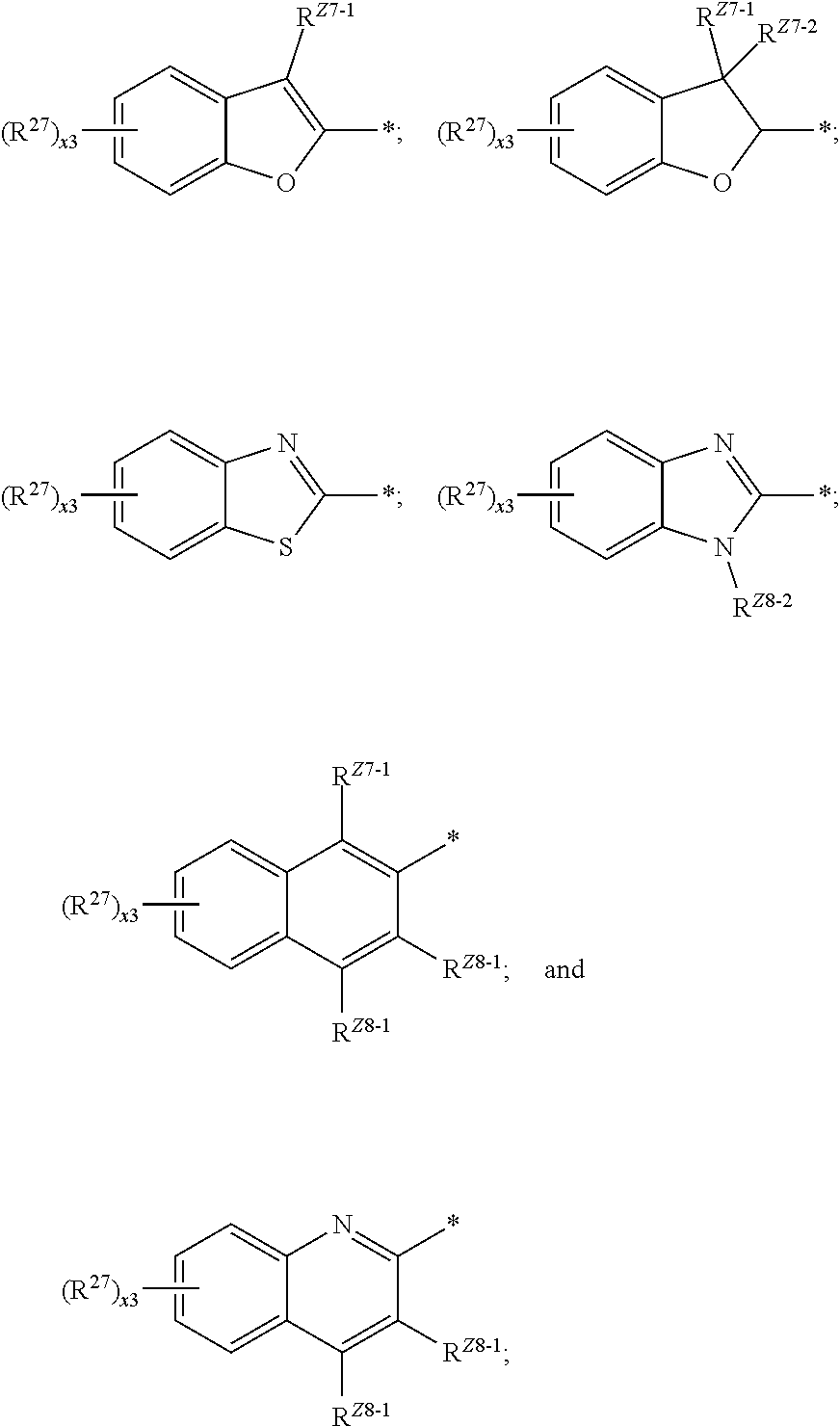
wherein the * represents the attachment point to the remainder of the molecule. In some embodiments, (A3-b) is selected from the group consisting of:

wherein the * represents the attachment point to the remainder of the molecule. In some embodiments, (A3-b) is selected from the group consisting of:

wherein the * represents the attachment point to the remainder of the molecule. In some embodiments, (A3-b) is selected from the group consisting of:

wherein the * represents the attachment point to the remainder of the molecule.

wherein the * represents the attachment point to the remainder of the molecule.

wherein the * represents the attachment point to the remainder of the molecule.
-
- m3 is 1 and n3 is 0;
- X4 is CH and Y4 is NRY4;
- R21a and R21b are taken together to form an oxo (═O) substituent or an imido (═NH) substituent;
- R23a and R23b are taken together to form an oxo (═O) substituent;
- A3 is C6-C10 aryl optionally substituted with one or more R27 substituent, or 5-10 membered heteroaryl optionally substituted with one or more R27 substituent;
- R27 is selected, independently at each occurrence, from the group consisting of halogen, C1-C6 alkyl, C1-C6 haloalkyl, —OH, —O(C1-C6 alkyl), —O(C1-C6 haloalkyl), —SH, —S(C1-C6 alkyl), —S(C1-C6 haloalkyl), —NH2, —NH(C1-C6 alkyl), —NH(C1-C6 haloalkyl), —N(C1-C6 alkyl)2, —N(C1-C6 haloalkyl)2, —NR27-aR27-b, —CN, —C(O)OH, —C(O)O(C1-C6 alkyl), —C(O)O(C1-C6 haloalkyl), —C(O)NH2, —C(O)NH(C1-C6 alkyl), —C(O)NH(C1-C6 haloalkyl), —C(O)N(C1-C6 alkyl)2, —C(O)N(C1-C6 haloalkyl)2, —C(O)NR27-aR27-b, —S(O)2OH, —S(O)2O(C1-C6 alkyl), —S(O)2O(C1-C6 haloalkyl), —S(O)2NH2, —S(O)2NH(C1-C6 alkyl), —S(O)2NH(C1-C6 haloalkyl), —S(O)2N(C1-C6 alkyl)2, —S(O)2N(C1-C6 haloalkyl)2, —S(O)2NR27-aR27-b, —OC(O)H, —OC(O)(C1-C6 alkyl), —OC(O)(C1-C6 haloalkyl), —N(H)C(O)H, —N(H)C(O)(C1-C6 alkyl), —N(H)C(O)(C1-C6 haloalkyl), —N(C1-C6 alkyl)C(O)H, —N(C1-C6 alkyl)C(O)(C1-C6 alkyl), —N(C1-C6 alkyl)C(O)(C1-C6 haloalkyl), —N(C1-C6 haloalkyl)C(O)H, —N(C1-C6 haloalkyl)C(O)(C1-C6 alkyl), —N(C1-C6 haloalkyl)C(O)(C1-C6 haloalkyl), —OS(O)2(C1-C6 alkyl), —OS(O)2(C1-C6 haloalkyl), —N(H)S(O)2(C1-C6 alkyl), —N(H)S(O)2(C1-C6 haloalkyl), —N(C1-C6 alkyl)S(O)2(C1-C6 alkyl), —N(C1-C6 alkyl)S(O)2(C1-C6 haloalkyl), —N(C1-C6 haloalkyl)S(O)2(C1-C6 alkyl), and —N(C1-C6 haloalkyl)S(O)2(C1-C6 haloalkyl);
- wherein R27-a and R27-b are taken together with the nitrogen atom which bears them to form a 3-10 membered heterocycle;
- R27 is selected, independently at each occurrence, from the group consisting of halogen, C1-C6 alkyl, C1-C6 haloalkyl, —OH, —O(C1-C6 alkyl), —O(C1-C6 haloalkyl), —SH, —S(C1-C6 alkyl), —S(C1-C6 haloalkyl), —NH2, —NH(C1-C6 alkyl), —NH(C1-C6 haloalkyl), —N(C1-C6 alkyl)2, —N(C1-C6 haloalkyl)2, —NR27-aR27-b, —CN, —C(O)OH, —C(O)O(C1-C6 alkyl), —C(O)O(C1-C6 haloalkyl), —C(O)NH2, —C(O)NH(C1-C6 alkyl), —C(O)NH(C1-C6 haloalkyl), —C(O)N(C1-C6 alkyl)2, —C(O)N(C1-C6 haloalkyl)2, —C(O)NR27-aR27-b, —S(O)2OH, —S(O)2O(C1-C6 alkyl), —S(O)2O(C1-C6 haloalkyl), —S(O)2NH2, —S(O)2NH(C1-C6 alkyl), —S(O)2NH(C1-C6 haloalkyl), —S(O)2N(C1-C6 alkyl)2, —S(O)2N(C1-C6 haloalkyl)2, —S(O)2NR27-aR27-b, —OC(O)H, —OC(O)(C1-C6 alkyl), —OC(O)(C1-C6 haloalkyl), —N(H)C(O)H, —N(H)C(O)(C1-C6 alkyl), —N(H)C(O)(C1-C6 haloalkyl), —N(C1-C6 alkyl)C(O)H, —N(C1-C6 alkyl)C(O)(C1-C6 alkyl), —N(C1-C6 alkyl)C(O)(C1-C6 haloalkyl), —N(C1-C6 haloalkyl)C(O)H, —N(C1-C6 haloalkyl)C(O)(C1-C6 alkyl), —N(C1-C6 haloalkyl)C(O)(C1-C6 haloalkyl), —OS(O)2(C1-C6 alkyl), —OS(O)2(C1-C6 haloalkyl), —N(H)S(O)2(C1-C6 alkyl), —N(H)S(O)2(C1-C6 haloalkyl), —N(C1-C6 alkyl)S(O)2(C1-C6 alkyl), —N(C1-C6 alkyl)S(O)2(C1-C6 haloalkyl), —N(C1-C6 haloalkyl)S(O)2(C1-C6 alkyl), and —N(C1-C6 haloalkyl)S(O)2(C1-C6 haloalkyl);
- A4 is a substituent of the formula (A4-b)

-
-
- wherein
- represents the attachment point to the remainder of the molecule; Z10 is selected from the group consisting of CRZ10-1RZ10-2, NRZ10-2, O, S, and —CRZ10-1═CRZ10-1—;
- wherein
- RZ10-1 is H or R29; and
- RZ10-2 is H or R29;
- Z11 is selected from the group consisting of CRZ11-1RZ11-2, NRZ11-2; O, S, and —CRZ11-1═CRZ11-1—;
- wherein
- RZ11-1 is H or R29; and
- RZ11-2 is H or R29;
- R28 is hydrogen or R29, or R28 and RZ10-2 are taken together to form a double bond between the carbon atom bearing R28 and Z10; R29 is selected, independently at each occurrence, from the group consisting of halogen, C1-C6 alkyl, C1-C6 haloalkyl, —OH, —O(C1-C6 alkyl), —O(C1-C6 haloalkyl), —SH, —S(C1-C6 alkyl), —S(C1-C6 haloalkyl), —NH2, —NH(C1-C6 alkyl), —NH(C1-C6 haloalkyl), —N(C1-C6 alkyl)2, —N(C1-C6 haloalkyl)2, —NR29-aR29-b, —CN, —C(O)OH, —C(O)O(C1-C6 alkyl), —C(O)O(C1-C6 haloalkyl), —C(O)NH2, —C(O)NH(C1-C6 alkyl), —C(O)NH(C1-C6 haloalkyl), —C(O)N(C1-C6 alkyl)2, —C(O)N(C1-C6 haloalkyl)2, —C(O)NR29-aR29-b, —S(O)2OH, —S(O)2O(C1-C6 alkyl), —S(O)2O(C1-C6 haloalkyl), —S(O)2NH2, —S(O)2NH(C1-C6 alkyl), —S(O)2NH(C1-C6 haloalkyl), —S(O)2N(C1-C6 alkyl)2, —S(O)2N(C1-C6 haloalkyl)2, —S(O)2NR29-aR29-b, —OC(O)H, —OC(O)(C1-C6 alkyl), —OC(O)(C1-C6 haloalkyl), —N(H)C(O)H, —N(H)C(O)(C1-C6 alkyl), —N(H)C(O)(C1-C6 haloalkyl), —N(C1-C6 alkyl)C(O)H, —N(C1-C6 alkyl)C(O)(C1-C6 alkyl), —N(C1-C6 alkyl)C(O)(C1-C6 haloalkyl), —N(C1-C6 haloalkyl)C(O)H, —N(C1-C6 haloalkyl)C(O)(C1-C6 alkyl), —N(C1-C6 haloalkyl)C(O)(C1-C6 haloalkyl), —OS(O)2(C1-C6 alkyl), —OS(O)2(C1-C6 haloalkyl), —N(H)S(O)2(C1-C6 alkyl), —N(H)S(O)2(C1-C6 haloalkyl), —N(C1-C6 alkyl)S(O)2(C1-C6 alkyl), —N(C1-C6 alkyl)S(O)2(C1-C6 haloalkyl), —N(C1-C6 haloalkyl)S(O)2(C1-C6 alkyl), and —N(C1-C6 haloalkyl)S(O)2(C1-C6 haloalkyl);
- wherein R29-a and R29-b are taken together with the nitrogen atom which bears them to form a 3-10 membered heterocycle;
- x4 is 0, 1, 2, 3, or 4.
- represents the attachment point to the remainder of the molecule; Z10 is selected from the group consisting of CRZ10-1RZ10-2, NRZ10-2, O, S, and —CRZ10-1═CRZ10-1—;
- wherein
-

wherein the * represents the attachment point to the remainder of the molecule.

wherein the * represents the attachment point to the remainder of the molecule.

wherein the * represents the attachment point to the remainder of the molecule. In some embodiments, (A4-b) is selected from the group consisting of:

wherein the * represents the attachment point to the remainder of the molecule. In some embodiments, (A4-b) is selected from the group consisting of:

wherein the * represents the attachment point to the remainder of the molecule. In some embodiments, (A4-b) is selected from the group consisting of:
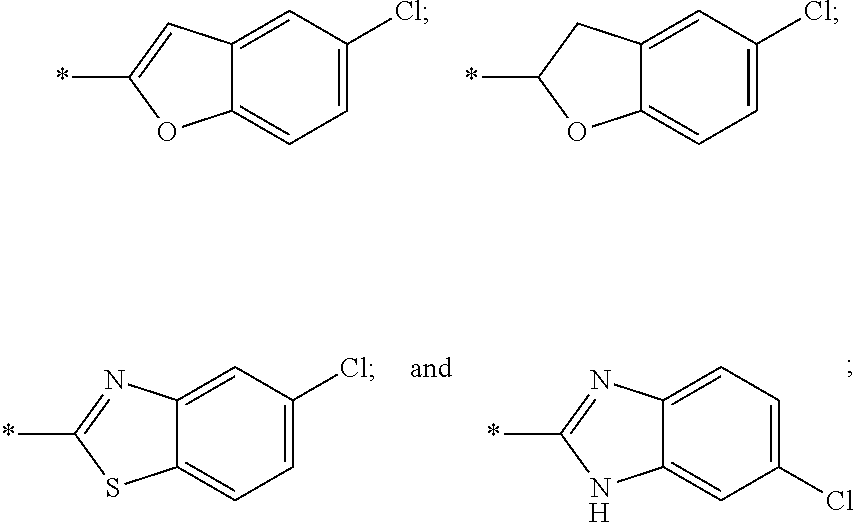
wherein the * represents the attachment point to the remainder of the molecule.
-
- m3 is 1 and n3 is 1;
- R21a and R21b are taken together to form an oxo (═O) substituent or an imido (═NH) substituent;
- A3 is C6-C10 aryl optionally substituted with one or more R27 substituent, or 5-10 membered heteroaryl optionally substituted with one or more R27 substituent;
- R27 is selected, independently at each occurrence, from the group consisting of halogen, C1-C6 alkyl, C1-C6 haloalkyl, —OH, —O(C1-C6 alkyl), —O(C1-C6 haloalkyl), —SH, —S(C1-C6 alkyl), —S(C1-C6 haloalkyl), —NH2, —NH(C1-C6 alkyl), —NH(C1-C6 haloalkyl), —N(C1-C6 alkyl)2, —N(C1-C6 haloalkyl)2, —NR27-aR27-b, —CN, —C(O)OH, —C(O)O(C1-C6 alkyl), —C(O)O(C1-C6 haloalkyl), —C(O)NH2, —C(O)NH(C1-C6 alkyl), —C(O)NH(C1-C6 haloalkyl), —C(O)N(C1-C6 alkyl)2, —C(O)N(C1-C6 haloalkyl)2, —C(O)NR27-aR27-b, —S(O)2OH, —S(O)2O(C1-C6 alkyl), —S(O)2O(C1-C6 haloalkyl), —S(O)2NH2, —S(O)2NH(C1-C6 alkyl), —S(O)2NH(C1-C6 haloalkyl), —S(O)2N(C1-C6 alkyl)2, —S(O)2N(C1-C6 haloalkyl)2, —S(O)2NR27-aR27-b, —OC(O)H, —OC(O)(C1-C6 alkyl), —OC(O)(C1-C6 haloalkyl), —N(H)C(O)H, —N(H)C(O)(C1-C6 alkyl), —N(H)C(O)(C1-C6 haloalkyl), —N(C1-C6 alkyl)C(O)H, —N(C1-C6 alkyl)C(O)(C1-C6 alkyl), —N(C1-C6 alkyl)C(O)(C1-C6 haloalkyl), —N(C1-C6 haloalkyl)C(O)H, —N(C1-C6 haloalkyl)C(O)(C1-C6 alkyl), —N(C1-C6 haloalkyl)C(O)(C1-C6 haloalkyl), —OS(O)2(C1-C6 alkyl), —OS(O)2(C1-C6 haloalkyl), —N(H)S(O)2(C1-C6 alkyl), —N(H)S(O)2(C1-C6 haloalkyl), —N(C1-C6 alkyl)S(O)2(C1-C6 alkyl), —N(C1-C6 alkyl)S(O)2(C1-C6 haloalkyl), —N(C1-C6 haloalkyl)S(O)2(C1-C6 alkyl), and —N(C1-C6 haloalkyl)S(O)2(C1-C6 haloalkyl);
- wherein R27-a and R27-b are taken together with the nitrogen atom which bears them to form a 3-10 membered heterocycle;
- R27 is selected, independently at each occurrence, from the group consisting of halogen, C1-C6 alkyl, C1-C6 haloalkyl, —OH, —O(C1-C6 alkyl), —O(C1-C6 haloalkyl), —SH, —S(C1-C6 alkyl), —S(C1-C6 haloalkyl), —NH2, —NH(C1-C6 alkyl), —NH(C1-C6 haloalkyl), —N(C1-C6 alkyl)2, —N(C1-C6 haloalkyl)2, —NR27-aR27-b, —CN, —C(O)OH, —C(O)O(C1-C6 alkyl), —C(O)O(C1-C6 haloalkyl), —C(O)NH2, —C(O)NH(C1-C6 alkyl), —C(O)NH(C1-C6 haloalkyl), —C(O)N(C1-C6 alkyl)2, —C(O)N(C1-C6 haloalkyl)2, —C(O)NR27-aR27-b, —S(O)2OH, —S(O)2O(C1-C6 alkyl), —S(O)2O(C1-C6 haloalkyl), —S(O)2NH2, —S(O)2NH(C1-C6 alkyl), —S(O)2NH(C1-C6 haloalkyl), —S(O)2N(C1-C6 alkyl)2, —S(O)2N(C1-C6 haloalkyl)2, —S(O)2NR27-aR27-b, —OC(O)H, —OC(O)(C1-C6 alkyl), —OC(O)(C1-C6 haloalkyl), —N(H)C(O)H, —N(H)C(O)(C1-C6 alkyl), —N(H)C(O)(C1-C6 haloalkyl), —N(C1-C6 alkyl)C(O)H, —N(C1-C6 alkyl)C(O)(C1-C6 alkyl), —N(C1-C6 alkyl)C(O)(C1-C6 haloalkyl), —N(C1-C6 haloalkyl)C(O)H, —N(C1-C6 haloalkyl)C(O)(C1-C6 alkyl), —N(C1-C6 haloalkyl)C(O)(C1-C6 haloalkyl), —OS(O)2(C1-C6 alkyl), —OS(O)2(C1-C6 haloalkyl), —N(H)S(O)2(C1-C6 alkyl), —N(H)S(O)2(C1-C6 haloalkyl), —N(C1-C6 alkyl)S(O)2(C1-C6 alkyl), —N(C1-C6 alkyl)S(O)2(C1-C6 haloalkyl), —N(C1-C6 haloalkyl)S(O)2(C1-C6 alkyl), and —N(C1-C6 haloalkyl)S(O)2(C1-C6 haloalkyl);
- A4 is C6-C10 aryl optionally substituted with one or more R29 substituent, or 5-10 membered heteroaryl optionally substituted with one or more R29 substituent;
- R29 is selected, independently at each occurrence, from the group consisting of halogen, C1-C6 alkyl, C1-C6 haloalkyl, —OH, —O(C1-C6 alkyl), —O(C1-C6 haloalkyl), —SH, —S(C1-C6 alkyl), —S(C1-C6 haloalkyl), —NH2, —NH(C1-C6 alkyl), —NH(C1-C6 haloalkyl), —N(C1-C6 alkyl)2, —N(C1-C6 haloalkyl)2, —NR29-aR29-b, —CN, —C(O)OH, —C(O)O(C1-C6 alkyl), —C(O)O(C1-C6 haloalkyl), —C(O)NH2, —C(O)NH(C1-C6 alkyl), —C(O)NH(C1-C6 haloalkyl), —C(O)N(C1-C6 alkyl)2, —C(O)N(C1-C6 haloalkyl)2, —C(O)NR29-aR29-b, —S(O)2OH, —S(O)2O(C1-C6 alkyl), —S(O)2O(C1-C6 haloalkyl), —S(O)2NH2, —S(O)2NH(C1-C6 alkyl), —S(O)2NH(C1-C6 haloalkyl), —S(O)2N(C1-C6 alkyl)2, —S(O)2N(C1-C6 haloalkyl)2, —S(O)2NR29-aR29-b, —OC(O)H, —OC(O)(C1-C6 alkyl), —OC(O)(C1-C6 haloalkyl), —N(H)C(O)H, —N(H)C(O)(C1-C6 alkyl), —N(H)C(O)(C1-C6 haloalkyl), —N(C1-C6 alkyl)C(O)H, —N(C1-C6 alkyl)C(O)(C1-C6 alkyl), —N(C1-C6 alkyl)C(O)(C1-C6 haloalkyl), —N(C1-C6 haloalkyl)C(O)H, —N(C1-C6 haloalkyl)C(O)(C1-C6 alkyl), —N(C1-C6 haloalkyl)C(O)(C1-C6 haloalkyl), —OS(O)2(C1-C6 alkyl), —OS(O)2(C1-C6 haloalkyl), —N(H)S(O)2(C1-C6 alkyl), —N(H)S(O)2(C1-C6 haloalkyl), —N(C1-C6 alkyl)S(O)2(C1-C6 alkyl), —N(C1-C6 alkyl)S(O)2(C1-C6 haloalkyl), —N(C1-C6 haloalkyl)S(O)2(C1-C6 alkyl), and —N(C1-C6 haloalkyl)S(O)2(C1-C6 haloalkyl);
- wherein R29-a and R29-b are taken together with the nitrogen atom which bears them to form a 3-10 membered heterocycle;
- R29 is selected, independently at each occurrence, from the group consisting of halogen, C1-C6 alkyl, C1-C6 haloalkyl, —OH, —O(C1-C6 alkyl), —O(C1-C6 haloalkyl), —SH, —S(C1-C6 alkyl), —S(C1-C6 haloalkyl), —NH2, —NH(C1-C6 alkyl), —NH(C1-C6 haloalkyl), —N(C1-C6 alkyl)2, —N(C1-C6 haloalkyl)2, —NR29-aR29-b, —CN, —C(O)OH, —C(O)O(C1-C6 alkyl), —C(O)O(C1-C6 haloalkyl), —C(O)NH2, —C(O)NH(C1-C6 alkyl), —C(O)NH(C1-C6 haloalkyl), —C(O)N(C1-C6 alkyl)2, —C(O)N(C1-C6 haloalkyl)2, —C(O)NR29-aR29-b, —S(O)2OH, —S(O)2O(C1-C6 alkyl), —S(O)2O(C1-C6 haloalkyl), —S(O)2NH2, —S(O)2NH(C1-C6 alkyl), —S(O)2NH(C1-C6 haloalkyl), —S(O)2N(C1-C6 alkyl)2, —S(O)2N(C1-C6 haloalkyl)2, —S(O)2NR29-aR29-b, —OC(O)H, —OC(O)(C1-C6 alkyl), —OC(O)(C1-C6 haloalkyl), —N(H)C(O)H, —N(H)C(O)(C1-C6 alkyl), —N(H)C(O)(C1-C6 haloalkyl), —N(C1-C6 alkyl)C(O)H, —N(C1-C6 alkyl)C(O)(C1-C6 alkyl), —N(C1-C6 alkyl)C(O)(C1-C6 haloalkyl), —N(C1-C6 haloalkyl)C(O)H, —N(C1-C6 haloalkyl)C(O)(C1-C6 alkyl), —N(C1-C6 haloalkyl)C(O)(C1-C6 haloalkyl), —OS(O)2(C1-C6 alkyl), —OS(O)2(C1-C6 haloalkyl), —N(H)S(O)2(C1-C6 alkyl), —N(H)S(O)2(C1-C6 haloalkyl), —N(C1-C6 alkyl)S(O)2(C1-C6 alkyl), —N(C1-C6 alkyl)S(O)2(C1-C6 haloalkyl), —N(C1-C6 haloalkyl)S(O)2(C1-C6 alkyl), and —N(C1-C6 haloalkyl)S(O)2(C1-C6 haloalkyl);
- provided that:
- when one of X3 or X4 is N, then r2 is 1 or 2 and s2 is 1 or 2; and
- when R23a and R23b are taken together to form an oxo (═O) substituent, then R24a is —OH or —NH2.

wherein the * represents the attachment point to the remainder of the molecule.

wherein the * represents the attachment point to the remainder of the molecule.

wherein the * represents the attachment point to the remainder of the molecule.

wherein the * represents the attachment point to the remainder of the molecule.

or a pharmaceutically acceptable salt thereof;
-
- wherein:
- R30 and R31 are, independently of each other and independently at each occurrence, halogen;
- x5 and x6 are independently of each other 0, 1, 2, 3, 4 or 5;
- Q1 is selected from the group consisting of:

-
- wherein * represents the point of attachment to the

moiety, and # represents the point of attachment to the

moiety; and
-
- R32 and R33 are both hydrogen, or R32 and R33 are taken together to form an oxo (═O) substituent.

and R32 and R33 are both hydrogen.

and R32 and R33 are taken together to form an oxo (═O) substituent.


or a pharmaceutically acceptable salt thereof;
-
- wherein:
- R34 and R35 are, independently of each other and independently at each occurrence, halogen;
- x7 and x8 are, independently of each other, 0, 1, 2, 3, 4, or 5;
- A5 is a 5-12 membered heteroaryl;
- Q2 is selected from the group consisting of:

wherein * represents the point of attachment to the

moiety, and # represents the point of attachment to the

moiety;
-
- R36 and R37 are both hydrogen, or R36 and R37 are taken together to form an oxo (═O) substituent;
- R38 and R39 are both hydrogen, or R38 and R39 are taken together to form a propylene (—CH2—CH2—CH2—) moiety; and
- T1 is —CR40R41— or S(═O)2—, wherein R40 is selected from the group consisting of hydrogen, —OH, and —NH2; and R41 is hydrogen.
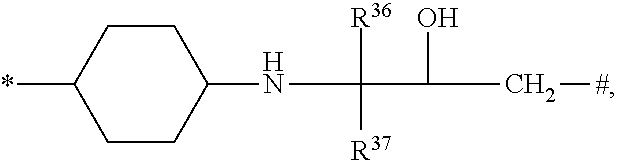
and R36 and R37 are both hydrogen.

and R36 and R37 are taken together to form an oxo (═O) substituent.

and R36 and R37 are both hydrogen.

and R36 and R37 are taken together to form an oxo (═O) substituent.

and R38 and R39 are both hydrogen. In some embodiments, T1 is —CR40R41—. In some embodiments, T1 is —CR40R41—, and R40 is selected from the group consisting of hydrogen, —OH, and —NH2; and R41 is hydrogen. In some embodiments, T1 is —CR40R41—, R40 is hydrogen and R41 is hydrogen. In some embodiments, T1 is —CR40R41—, R40 is —OH, and R41 is hydrogen. In some embodiments, T1 is —CR40R41—, R40 is —NH2, and R41 is hydrogen. In other embodiments, T1 is S(═O)2—.

and R38 and R39 are taken together to form a propylene (—CH2—CH2—CH2—) moiety. In some embodiments, T1 is —CR40R41—. In some embodiments, T1 is —CR40R41—, and R40 is selected from the group consisting of hydrogen, —OH, and —NH2; and R41 is hydrogen. In some embodiments, T1 is —CR40R41—, R40 is hydrogen and R41 is hydrogen. In some embodiments, T1 is —CR40R41—, R40 is —OH, and R41 is hydrogen. In some embodiments, T1 is —CR40R41—, R40 is —NH2, and R41 is hydrogen. In other embodiments, T1 is S(═O)2—.

or a pharmaceutically acceptable salt thereof;
-
- wherein:
- R42 and R43 are, independently of each other and independently at each occurrence, halogen;
- x9 and x10 are, independently of each other, 0, 1, 2, 3, 4, or 5;
- R44 and R45 are both hydrogen, or R44 and R45 are taken together to form an ethylene (—CH2—CH2—) moiety;
- A6 is a 5-12 membered heteroaryl;
- A7 is C6-C10 aryl or 5-12 membered heteroaryl;
- Q3 is selected from the group consisting of:

-
- wherein * represents the point of attachment to the

-
-
- moiety, and # represents the point of attachment to the
-

moiety; and
-
- provided that one of (i) or (ii) applies:
- (i) q3 is 0, Q3 is
- provided that one of (i) or (ii) applies:

and A7 is 5-12 membered heteroaryl;
-
- (ii) q3 is 1, Q3 is

and A7 is C6-C10 aryl.

and A7 is 5-12 membered heteroaryl.

and A7 is C6-C10 aryl. In some embodiments of the compounds of formula (X-3), q3 is 1, Q3 is

and A7 is C6-C10 aryl. In some embodiments of the compounds of formula (X-3), q3 is 1, Q3 is

and A7 is C6-C10 aryl. In some embodiments, A7 is phenyl.

or a pharmaceutically acceptable salt thereof;
-
- wherein:
- R46 and R47 are, independently of each other and independently at each occurrence, halogen;
- x11 and x12 are, independently of each other, 0, 1, 2, 3, 4, or 5;
- R48 is hydrogen or —OH;
- Q4 is selected from the group consisting of:

-
- wherein * represents the point of attachment to the

-
-
- moiety, and # represents the point of attachment to the
-

-
- R49, R50, R51, R52, R53, R54, R55, R56, R57, R58, R59, R60, R61, R62, R63, and R64 are, independently of each other, hydrogen or C1-C6 alkyl.

In some embodiments, R49 and R51 are both C1-C6 alkyl, and R50, R52, R53, R54, R55, and R56 are all hydrogen. In some embodiments, R49 and R51 are both methyl, and R50, R52, R53, R54, R55, and R56 are all hydrogen. In some embodiments, R53 and R55 are both C1-C6 alkyl, and R49, R50, R51, R52, R54, and R56 are all hydrogen. In some embodiments, R53 and R55 are both methyl, and R49, R50, R51, R52, R54, and R56 are all hydrogen. In some embodiments, R49, R50, R51, and R52 are all C1-C6 alkyl, R53, R54, R55, and R56 are all hydrogen. In some embodiments, R49, R50, R51, and R52 are all methyl, R53, R54, R55, and R56 are all hydrogen. In some embodiments, R49, R50, R51, and R52 are all hydrogen, R53, R54, R55, and R56 are all C1-C6 alkyl. In some embodiments, R49, R50, R51, and R52 are all hydrogen, R53, R54, R55, and R56 are all methyl. In some embodiments, R49, R50, R51, R52, R53, R54, R55, and R56 are all hydrogen.

In some embodiments, R57, R58, R59, and R60 are all C1-C6 alkyl. In some embodiments, R57, R58, R59, and R60 are all methyl. In some embodiments, R57 and R59 are both C1-C6 alkyl, and R58 and R60 are both hydrogen. In some embodiments, R57 and R59 are both methyl, and R58 and R60 are both hydrogen. In some embodiments, R57, R58, R59, and R60 are all hydrogen.

In some embodiments, R61, R62, R63, and R64 are all C1-C6 alkyl. In some embodiments, R61, R62, R63, and R64 are all methyl. In some embodiments, R61 and R63 are both C1-C6 alkyl, and R62 and R64 are both hydrogen. In some embodiments, R61 and R63 are both methyl, and R62 and R64 are both hydrogen. In some embodiments, R61, R62, R63, and R64 are all hydrogen.

or a pharmaceutically acceptable salt thereof;
-
- wherein:
- R65 and R66 are, independently of each other and independently at each occurrence, halogen;
- x13 and x14 are, independently of each other, 0, 1, 2, 3, 4, or 5;
- Q5 is selected from the group consisting of:

-
- wherein * represents the point of attachment to the

moiety, and # represents the point of attachment to the

moiety;
-
- R67 and R68 are both hydrogen, or R67 and R68 are taken together to form an imino (═NH) substituent; and
- R69 is hydrogen or —NH2.

In some embodiments of the compounds of formula (X-5), Q5 is

In some embodiments, R67 and R68 are both hydrogen, and R69 is hydrogen or —NH2. In some embodiments, R67 and R68 are both hydrogen, and R69 is hydrogen. In some embodiments, R67 and R68 are both hydrogen, and R69 is —NH2. In some embodiments, R67 and R68 are taken together to form an imino (═NH) substituent, and R69 is hydrogen or —NH2. In some embodiments, R67 and R68 are taken together to form an imino (═NH) substituent, and R69 is hydrogen. In some embodiments, R67 and R68 are taken together to form an imino (═NH) substituent, and R69 is-NH2.
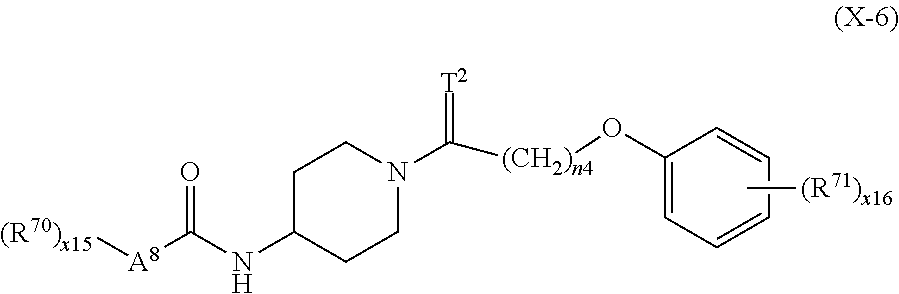
or a pharmaceutically acceptable salt thereof;
-
- wherein:
- R70 and R71 are, independently of each other and independently at each occurrence, halogen;
- x15 and x16 are, independently of each other, 0, 1, 2, 3, 4, or 5;
- n4 is 1 or 2;
- T2 is O or NH; and
- A8 is a 5-12 membered heteroaryl.

or a pharmaceutically acceptable salt thereof;
-
- wherein:
- R72 and R73 are, independently of each other and independently at each occurrence, halogen;
- x17 and x18 are, independently of each other, 0, 1, 2, 3, 4, or 5;
- A9 is a 5-12 membered heteroaryl; and
- A10 is a 5-12 membered heteroaryl;
- provided that A9 and A10 are not both simultaneously a moiety selected from group consisting of:

wherein the * represents the attachment point to the remainder of the molecule.

or a pharmaceutically acceptable salt thereof;
-
- wherein:
- R74 and R75 are, independently of each other and independently at each occurrence, halogen;
- x19 and x20 are, independently of each other, 0, 1, 2, 3, 4, or 5;
- A11 is C6-C10 aryl or 5-12 membered heteroaryl;
- Q6 is selected from the group consisting of:

-
- wherein * represents the point of attachment to the

-
-
- moiety, and # represents the point of attachment to the -A11-(R75)x20 moiety;
- T3 is O or NH;
- T4 is O or NH;
- R76 is selected from hydrogen, —OH, and —NH2;
- R77 is selected from hydrogen, —OH, and —NH2;
- R78 is hydrogen or —OH; and
- provided that one of (i) or (ii) applies:
- (i) when A11 is C6-C10 aryl, Q6 is selected from the group consisting of:
-

-
-
- (ii) when A is 5-12 membered heteroaryl, Q is
-


In some embodiments, A11 is phenyl.

In some embodiments, R76 is hydrogen. In some embodiments, R76 is —OH. In some embodiments, R76 is —NH2. In some embodiments, A11 is phenyl.

In some embodiments, A11 is phenyl.

In some embodiments, R77 is hydrogen. In some embodiments, R77 is —OH. In some embodiments, R77 is NH2. In some embodiments, A11 is phenyl.

In some embodiments, A11 is phenyl.

In some embodiments, T is O. In some embodiments, T is NH. In some embodiments, A11 is phenyl.


In some embodiments, R78 is hydrogen. In some embodiments, R78 is-OH.

or a pharmaceutically acceptable salt thereof;
-
- wherein:
- R79 and R80 are, independently of each other and independently at each occurrence, halogen;
- x21 and x22 are, independently of each other, 0, 1, 2, 3, 4, or 5;
- A12 is C6-C10 aryl or 5-12 membered heteroaryl;
- Q7 is selected from the group consisting of:

-
- wherein * represents the point of attachment to the

-
-
- moiety, and # represents the point of attachment to the -A12-(R80)x22 moiety;
- T5 is O or NH;
- T6 is O or NH;
- R81 is selected from hydrogen, —OH, and —NH2;
- R82 is selected from hydrogen, —OH, and —NH2;
- R83 is hydrogen or —OH; and
- provided that one of (i) or (ii) applies:
- (i) when A12 is C6-C10 aryl, Q7 is selected from the group consisting of:
-

-
-
- (ii) when A12 is 5-12 membered heteroaryl, Q7 is
-


In some embodiments, R81 is hydrogen. In some embodiments, R81 is selected from —OH. In some embodiments, R81 is selected from —NH2. In some embodiments, A12 is phenyl.

In some embodiments, R82 is hydrogen. In some embodiments, R82 is selected from —OH. In some embodiments, R82 is selected from —NH2. In some embodiments, A12 is phenyl.

In some embodiments, A12 is phenyl.

In some embodiments, T5 is O. In some embodiments, T5 is NH. In some embodiments, A12 is phenyl.

In some embodiments, T6 is O. In some embodiments, T6 is NH. In some embodiments, A12 is phenyl.
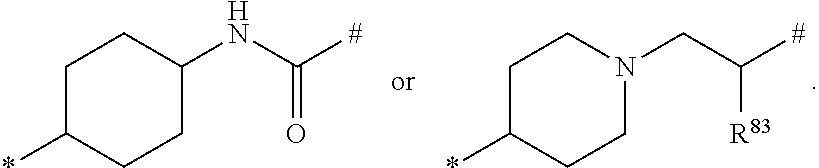


In some embodiments, R83 is hydrogen. In some embodiments, R83 is-OH.

or a pharmaceutically acceptable salt thereof;
wherein:
-
- X5 is CH or N;
- Y5 is selected from the group consisting of a bond, NRY5, and O; provided that when X5 is N, then Y5 is a bond;
- RY5 is hydrogen or C1-C6 alkyl;
- RN is hydrogen or C1-C6 alkyl;
- m4, n5, p3, and q4, independently of each other, are 0 or 1;
- r3 and s3, independently of each other, are 0, 1, or 2;
- A13 is selected from the group consisting of:
- C6-C10 aryl optionally substituted with one or more R95 substituents; and
- 5-10 membered heteroaryl optionally substituted with one or more R95 substituents;
- R95 is selected, independently at each occurrence, from the group consisting of halogen, C1-C6 alkyl, C1-C6 haloalkyl, —OH, —O(C1-C6 alkyl), —O(C1-C6 haloalkyl), —SH, —S(C1-C6 alkyl), —S(C1-C6 haloalkyl), —NH2, —NH(C1-C6 alkyl), —NH(C1-C6 haloalkyl), —N(C1-C6 alkyl)2, —N(C1-C6 haloalkyl)2, —NR95-aR95-b, —CN, —C(O)OH, —C(O)O(C1-C6 alkyl), —C(O)O(C1-C6 haloalkyl), —C(O)NH2, —C(O)NH(C1-C6 alkyl), —C(O)NH(C1-C6 haloalkyl), —C(O)N(C1-C6 alkyl)2, —C(O)N(C1-C6 haloalkyl)2, —C(O)NR95-aR95-b, —S(O)2OH, —S(O)2O(C1-C6 alkyl), —S(O)2O(C1-C6 haloalkyl), —S(O)2NH2, —S(O)2NH(C1-C6 alkyl), —S(O)2NH(C1-C6 haloalkyl), —S(O)2N(C1-C6 alkyl)2, —S(O)2N(C1-C6 haloalkyl)2, —S(O)2NR95aR95b, —OC(O)H, —OC(O)(C1-C6 alkyl), —OC(O)(C1-C6 haloalkyl), —N(H)C(O)H, —N(H)C(O)(C1-C6 alkyl), —N(H)C(O)(C1-C6 haloalkyl), —N(C1-C6 alkyl)C(O)H, —N(C1-C6 alkyl)C(O)(C1-C6 alkyl), —N(C1-C6 alkyl)C(O)(C1-C6 haloalkyl), —N(C1-C6 haloalkyl)C(O)H, —N(C1-C6 haloalkyl)C(O)(C1-C6 alkyl), —N(C1-C6 haloalkyl)C(O)(C1-C6 haloalkyl), —OS(O)2(C1-C6 alkyl), —OS(O)2(C1-C6 haloalkyl), —N(H)S(O)2(C1-C6 alkyl), —N(H)S(O)2(C1-C6 haloalkyl), —N(C1-C6 alkyl)S(O)2(C1-C6 alkyl), —N(C1-C6 alkyl)S(O)2(C1-C6 haloalkyl), —N(C1-C6 haloalkyl)S(O)2(C1-C6 alkyl), and —N(C1-C6 haloalkyl)S(O)2(C1-C6 haloalkyl);
- wherein R95-a and R95-b are taken together with the nitrogen atom which bears them to form a 3-10 membered heterocycle;
- R84a and R84b are independently selected from the group consisting of hydrogen, C1-C6 alkyl, and halogen;
- R85a and R85b are independently selected from the group consisting of hydrogen, C1-C6 alkyl, and halogen;
- when present, R86a and R86b are independently at each occurrence selected from the group consisting of hydrogen, C1-C6 alkyl, and halogen;
- when present, R87a and R87b are independently at each occurrence selected from the group consisting of hydrogen, C1-C6 alkyl, and halogen;
- or, R84a and R85a are taken together to form a C1-C6 alkylene moiety;
- or, R84a and an R86a moiety, when present, are taken together to form a C1-C6 alkylene moiety;
- or, an R86a moiety, when present, and an R87a moiety, when present, are taken together to form a C1-C6 alkylene moiety;
- R88 is selected from the group consisting of hydrogen, C1-C6 alkyl, C1-C6 haloalkyl, —C(O)(C1-C6 alkyl), —C(O)(C1-C6 haloalkyl), —C(O)OH, —C(O)O(C1-C6 alkyl), —C(O)O(C1-C6 haloalkyl), —C(O)NH2, —C(O)NH(C1-C6 alkyl), —C(O)NH(C1-C6 haloalkyl), —C(O)N(C1-C6 alkyl)2, —C(O)N(C1-C6 haloalkyl)2, —C(O)NR88-aR88-b, —S(O)2OH, —S(O)2O(C1-C6 alkyl), —S(O)2O(C1-C6 haloalkyl), —S(O)2NH2, —S(O)2NH(C1-C6 alkyl), —S(O)2NH(C1-C6 haloalkyl), —S(O)2N(C1-C6 alkyl)2, —S(O)2N(C1-C6 haloalkyl)2, and —S(O)2NR88-aR88-b; wherein R88-a and R88-b are taken together with the nitrogen atom which bears them to form a 3-10 membered heterocycle;
- R89 is selected, independently at each occurrence, from the group consisting of hydrogen, halogen, C1-C6 alkyl, C1-C6 haloalkyl, —OH, —O(C1-C6 alkyl), —O(C1-C6 haloalkyl), —SH, —S(C1-C6 alkyl), —S(C1-C6 haloalkyl), —NH2, —NH(C1-C6 alkyl), —NH(C1-C6 haloalkyl), —N(C1-C6 alkyl)2, —N(C1-C6 haloalkyl)2, —NR89-aR89-b, —CN, —C(O)OH, —C(O)O(C1-C6 alkyl), —C(O)O(C1-C6 haloalkyl), —C(O)NH2, —C(O)NH(C1-C6 alkyl), —C(O)NH(C1-C6 haloalkyl), —C(O)N(C1-C6 alkyl)2, —C(O)N(C1-C6 haloalkyl)2, —C(O)NR89-aR89-b, —S(O)2OH, —S(O)2O(C1-C6 alkyl), —S(O)2O(C1-C6 haloalkyl), —S(O)2NH2, —S(O)2NH(C1-C6 alkyl), —S(O)2NH(C1-C6 haloalkyl), —S(O)2N(C1-C6 alkyl)2, —S(O)2N(C1-C6 haloalkyl)2, —S(O)2NR89-aR89-b, —OC(O)H, —OC(O)(C1-C6 alkyl), —OC(O)(C1-C6 haloalkyl), —N(H)C(O)H, —N(H)C(O)(C1-C6 alkyl), —N(H)C(O)(C1-C6 haloalkyl), —N(C1-C6 alkyl)C(O)H, —N(C1-C6 alkyl)C(O)(C1-C6 alkyl), —N(C1-C6 alkyl)C(O)(C1-C6 haloalkyl), —N(C1-C6 haloalkyl)C(O)H, —N(C1-C6 haloalkyl)C(O)(C1-C6 alkyl), —N(C1-C6 haloalkyl)C(O)(C1-C6 haloalkyl), —OS(O)2(C1-C6 alkyl), —OS(O)2(C1-C6 haloalkyl), —N(H)S(O)2(C1-C6 alkyl), —N(H)S(O)2(C1-C6 haloalkyl), —N(C1-C6 alkyl)S(O)2(C1-C6 alkyl), —N(C1-C6 alkyl)S(O)2(C1-C6 haloalkyl), —N(C1-C6 haloalkyl)S(O)2(C1-C6 alkyl), and —N(C1-C6 haloalkyl)S(O)2(C1-C6 haloalkyl);
- wherein R89-a and R89-b are taken together with the nitrogen atom which bears them to form a 3-10 membered heterocycle;
- when present, R90a and R90b are taken together to form an oxo (═O) substituent or an imido (═NH) substituent, or alternatively, R90a and R90b are both hydrogen; when present, R91a is selected from the group consisting of hydrogen, —OR91a-a, and —NR91a-bR91a-c;
- when present, R91b is hydrogen;
- or alternatively, R91a and R91b are taken together to form a moiety selected from the group consisting of —O—CH2—CH2—, —CH2—O—CH2—, —CH2—CH2—O—, —O—CH2—CH2—CH2—, —CH2—O—CH2—CH2—, —CH2—CH2—O—CH2—, —CH2—CH2—CH2—O—, —O—CH2—CH2—CH2—CH2—, —CH2—O—CH2—CH2—CH2—, —CH2—CH2—O—CH2—CH2—, —CH2—CH2—CH2—O—CH2—, and —CH2—CH2—CH2—CH2—O—;
- when present, R92a and R92b are both hydrogen;
- when present, R93a and R93b are taken together to form an oxo (═O) substituent, or alternatively, R93a and R93b are both hydrogen; R91a-a is selected from the group consisting of hydrogen, C1-C6 alkyl, and C1-C6 haloalkyl; or R91a-a and RY5 may be taken together to form a carbonyl (C═O) moiety; and R91a-b and R91a-c, independently of each other, are selected from the group consisting of hydrogen, C1-C6 alkyl, and C1-C6 haloalkyl;
- provided that when m4 is 0, n5 is 0, and q4 is 0, then A13 is a substituent of formula (A13-a)

-
-
- wherein
- represents the attachment point to the remainder of the molecule; Z14 is selected from the group consisting of CRZ14-1RZ14-2, NRZ14-2, C(RZ14-1RZ14-2)N(RZ14-2), O, C(RZ14-1RZ14-2)O, S, C(RZ14-1RZ14-2)S, and —CRZ14-1═CRZ14-1—;
- wherein RZ14-1 is hydrogen or R16; and RZ14-2 is hydrogen or R95; Z15 is selected from the group consisting of CRZ15-1RZ15-2, NRZ15-2, C(RZ15-1RZ15-2)N(RZ15-2), O, C(RZ15-1RZ15-2)O, S, C(RZ15-1RZ15-2)S, and —CRZ15-1═CRZ15-1—;
- wherein RZ15-1 is hydrogen or R95; and RZ15-2 is hydrogen or R95;
- Z16, independently at each occurrence, is CH, CR95, or N; R94 is hydrogen or R95, or R94 and RZ14-2 are taken together to form a double bond between the carbon atom bearing R94 and Z14, or R94 and RZ15-2 are taken together to form a double bond between the carbon atom bearing R94 and Z15; and
- x23 is 0, 1, 2, 3, or 4.
- represents the attachment point to the remainder of the molecule; Z14 is selected from the group consisting of CRZ14-1RZ14-2, NRZ14-2, C(RZ14-1RZ14-2)N(RZ14-2), O, C(RZ14-1RZ14-2)O, S, C(RZ14-1RZ14-2)S, and —CRZ14-1═CRZ14-1—;
- wherein
-
-
- X5 is CH or N;
- Y5 is selected from the group consisting of a bond, NRY5, and O; provided that when X5 is N, then Y5 is a bond;
- RY5 is hydrogen or C1-C6 alkyl;
- RN is hydrogen or C1-C6 alkyl;
- m4, n5, p3, and q4, independently of each other, are 0 or 1;
- r3 and s3, independently of each other, are 0, 1, or 2;
- A13 is selected from the group consisting of:
- C6-C10 aryl optionally substituted with one or more R95 substituents; and
- 5-10 membered heteroaryl optionally substituted with one or more R95 substituents;
- R95 is selected, independently at each occurrence, from the group consisting of halogen, C1-C6 alkyl, C1-C6 haloalkyl, —OH, —O(C1-C6 alkyl), —O(C1-C6 haloalkyl), —SH, —S(C1-C6 alkyl), —S(C1-C6 haloalkyl), —NH2, —NH(C1-C6 alkyl), —NH(C1-C6 haloalkyl), —N(C1-C6 alkyl)2, —N(C1-C6 haloalkyl)2, —NR95-aR95-b, —CN, —C(O)OH, —C(O)O(C1-C6 alkyl), —C(O)O(C1-C6 haloalkyl), —C(O)NH2, —C(O)NH(C1-C6 alkyl), —C(O)NH(C1-C6 haloalkyl), —C(O)N(C1-C6 alkyl)2, —C(O)N(C1-C6 haloalkyl)2, —C(O)NR95aR95b, —S(O)2OH, —S(O)2O(C1-C6 alkyl), —S(O)2O(C1-C6 haloalkyl), —S(O)2NH2, —S(O)2NH(C1-C6 alkyl), —S(O)2NH(C1-C6 haloalkyl), —S(O)2N(C1-C6 alkyl)2, —S(O)2N(C1-C6 haloalkyl)2, —S(O)2NR95aR95b, —OC(O)H, —OC(O)(C1-C6 alkyl), —OC(O)(C1-C6 haloalkyl), —N(H)C(O)H, —N(H)C(O)(C1-C6 alkyl), —N(H)C(O)(C1-C6 haloalkyl), —N(C1-C6 alkyl)C(O)H, —N(C1-C6 alkyl)C(O)(C1-C6 alkyl), —N(C1-C6 alkyl)C(O)(C1-C6 haloalkyl), —N(C1-C6 haloalkyl)C(O)H, —N(C1-C6 haloalkyl)C(O)(C1-C6 alkyl), —N(C1-C6 haloalkyl)C(O)(C1-C6 haloalkyl), —OS(O)2(C1-C6 alkyl), —OS(O)2(C1-C6 haloalkyl), —N(H)S(O)2(C1-C6 alkyl), —N(H)S(O)2(C1-C6 haloalkyl), —N(C1-C6 alkyl)S(O)2(C1-C6 alkyl), —N(C1-C6 alkyl)S(O)2(C1-C6 haloalkyl), —N(C1-C6 haloalkyl)S(O)2(C1-C6 alkyl), and —N(C1-C6 haloalkyl)S(O)2(C1-C6 haloalkyl);
- wherein R95-a and R95-b are taken together with the nitrogen atom which bears them to form a 3-10 membered heterocycle;
- R84a and R84b are independently selected from the group consisting of hydrogen, C1-C6 alkyl, and halogen;
- R85a and R85b are independently selected from the group consisting of hydrogen, C1-C6 alkyl, and halogen;
- when present, R86a and R86b are independently at each occurrence selected from the group consisting of hydrogen, C1-C6 alkyl, and halogen;
- when present, R87a and R87b are independently at each occurrence selected from the group consisting of hydrogen, C1-C6 alkyl, and halogen;
- or, R84a and R85a are taken together to form a C1-C6 alkylene moiety;
- or, R84a and an R86a moiety, when present, are taken together to form a C1-C6 alkylene moiety;
- or, an R86a moiety, when present, and an R87a moiety, when present, are taken together to form a C1-C6 alkylene moiety;
- R88 is selected from the group consisting of hydrogen, C1-C6 alkyl, C1-C6 haloalkyl, —C(O)(C1-C6 alkyl), —C(O)(C1-C6 haloalkyl), —C(O)OH, —C(O)O(C1-C6 alkyl), —C(O)O(C1-C6 haloalkyl), —C(O)NH2, —C(O)NH(C1-C6 alkyl), —C(O)NH(C1-C6 haloalkyl), —C(O)N(C1-C6 alkyl)2, —C(O)N(C1-C6 haloalkyl)2, —C(O)NR88-aR88-b, —S(O)2OH, —S(O)2O(C1-C6 alkyl), —S(O)2O(C1-C6 haloalkyl), —S(O)2NH2, —S(O)2NH(C1-C6 alkyl), —S(O)2NH(C1-C6 haloalkyl), —S(O)2N(C1-C6 alkyl)2, —S(O)2N(C1-C6 haloalkyl)2, and —S(O)2NR88-aR88-b;
- wherein R88-a and R88-b are taken together with the nitrogen atom which bears them to form a 3-10 membered heterocycle;
- R89 is selected, independently at each occurrence, from the group consisting of hydrogen, halogen, C1-C6 alkyl, C1-C6 haloalkyl, —OH, —O(C1-C6 alkyl), —O(C1-C6 haloalkyl), —SH, —S(C1-C6 alkyl), —S(C1-C6 haloalkyl), —NH2, —NH(C1-C6 alkyl), —NH(C1-C6 haloalkyl), —N(C1-C6 alkyl)2, —N(C1-C6 haloalkyl)2, —NR89-aR89-b, —CN, —C(O)OH, —C(O)O(C1-C6 alkyl), —C(O)O(C1-C6 haloalkyl), —C(O)NH2, —C(O)NH(C1-C6 alkyl), —C(O)NH(C1-C6 haloalkyl), —C(O)N(C1-C6 alkyl)2, —C(O)N(C1-C6 haloalkyl)2, —C(O)NR89-aR89-b, —S(O)2OH, —S(O)2O(C1-C6 alkyl), —S(O)2O(C1-C6 haloalkyl), —S(O)2NH2, —S(O)2NH(C1-C6 alkyl), —S(O)2NH(C1-C6 haloalkyl), —S(O)2N(C1-C6 alkyl)2, —S(O)2N(C1-C6 haloalkyl)2, —S(O)2NR89-aR89-b, —OC(O)H, —OC(O)(C1-C6 alkyl), —OC(O)(C1-C6 haloalkyl), —N(H)C(O)H, —N(H)C(O)(C1-C6 alkyl), —N(H)C(O)(C1-C6 haloalkyl), —N(C1-C6 alkyl)C(O)H, —N(C1-C6 alkyl)C(O)(C1-C6 alkyl), —N(C1-C6 alkyl)C(O)(C1-C6 haloalkyl), —N(C1-C6 haloalkyl)C(O)H, —N(C1-C6 haloalkyl)C(O)(C1-C6 alkyl), —N(C1-C6 haloalkyl)C(O)(C1-C6 haloalkyl), —OS(O)2(C1-C6 alkyl), —OS(O)2(C1-C6 haloalkyl), —N(H)S(O)2(C1-C6 alkyl), —N(H)S(O)2(C1-C6 haloalkyl), —N(C1-C6 alkyl)S(O)2(C1-C6 alkyl), —N(C1-C6 alkyl)S(O)2(C1-C6 haloalkyl), —N(C1-C6 haloalkyl)S(O)2(C1-C6 alkyl), and —N(C1-C6 haloalkyl)S(O)2(C1-C6 haloalkyl); wherein R89-a and R89-b are taken together with the nitrogen atom which bears them to form a 3-10 membered heterocycle;
- when present, R90a and R90b are taken together to form an oxo (═O) substituent or an imido (═NH) substituent, or alternatively, R90a and R90b are both hydrogen;
- when present, R91a is selected from the group consisting of hydrogen, —OR91a-a, and —NR91a-bR91a-c;
- when present, R91b is hydrogen;
- or alternatively, R91a and R91b are taken together to form a moiety selected from the group consisting of —O—CH2—CH2—, —CH2—O—CH2—, —CH2—CH2—O—, —O—CH2—CH2—CH2—, —CH2—O—CH2—CH2—, —CH2—CH2—O—CH2—, —CH2—CH2—CH2—O—, —O—CH2—CH2—CH2—CH2—, —CH2—O—CH2—CH2—CH2—, —CH2—CH2—O—CH2—CH2—, —CH2—CH2—CH2—O—CH2—, and —CH2—CH2—CH2—CH2—O—;
- when present, R92a and R92b are both hydrogen;
- when present, R93a and R93b are taken together to form an oxo (═O) substituent, or alternatively, R93a and R93b are both hydrogen;
- R91a-a is selected from the group consisting of hydrogen, C1-C6 alkyl, and C1-C6 haloalkyl;
- or R91a-a and RY5 may be taken together to form a carbonyl (C═O) moiety; and
- R91a-b and R91a-c, independently of each other, are selected from the group consisting of hydrogen, C1-C6 alkyl, and C1-C6 haloalkyl;
- provided that when m4 is 0, n5 is 0, and q4 is 0, then p3 is 1 and A13 is a substituent of formula (A13-a)

-
-
- wherein
- represents the attachment point to the remainder of the molecule;
- Z14 is selected from the group consisting of CRZ14-1RZ14-2, NRZ14-2, C(RZ14-1RZ14-2)N(RZ14-2), O, C(RZ14-1RZ14-2)O, S, C(RZ14-1RZ14-2)S, and —CRZ14-1═CRz141—;
- wherein RZ14-1 is hydrogen or R16; and RZ14-2 is hydrogen or R95;
- Z15 is selected from the group consisting of CRZ15-1RZ15-2, NRZ15-2, C(RZ15-1RZ15-2)N(RZ15-2), O, C(RZ15-1RZ15-2)O, S, C(RZ15-1RZ15-2)S, and —CRZ15-1═CRZ15-1—;
- wherein RZ15-1 is hydrogen or R95; and RZ15-2 is hydrogen or R95;
- Z16, independently at each occurrence, is CH, CR95, or N;
- R94 is hydrogen or R95, or R94 and RZ14-2 are taken together to form a double bond between the carbon atom bearing R94 and Z14, or R94 and RZ15-2 are taken together to form a double bond between the carbon atom bearing R94 and Z15; and
- x23 is 0, 1, 2, 3, or 4.
- wherein
-

or a pharmaceutically acceptable salt thereof;
wherein RN, RY5, m4, n5, p3, q4, r3, s3, A13, R84a, R84b, R85a, R85b, R86a, R86b, R87a, R87b, R88, R89, R90a, R90b, R91a, R91b, R92a, R92b, R93a, and R93b are as defined for the compounds of formula (XX).

or a pharmaceutically acceptable salt thereof;
wherein RN, m4, n5, p3, q4, r3, s3, A13, R84a, R84b, R85a, R85b, R86a, R86b, R87a, R87b, R88, R89, R90a, R90b, R91a, R91b, R92a, R92b, R93a, and R93b are as defined for the compounds of formula (XX).

wherein # represents the attachment point to the remainder of the molecule, is

wherein # represents the attachment point to the remainder of the molecule.

or a pharmaceutically acceptable salt thereof;
-
- wherein RN, RY5, R88, R89, R93a, and R93b are as defined in the compounds of formula (XX), and wherein A13 is a substituent of formula (A13-a)

-
-
- wherein
- represents the attachment point to the remainder of the molecule; Z14 is selected from the group consisting of CRZ14-1RZ14-2, NRZ14-2, C(RZ14-1RZ14-2)N(RZ14-2), O, C(RZ14-1RZ14-2)O, S, C(RZ14-1RZ14-2)S, and —CRZ14-1═CRZ14-1—;
- wherein RZ14-1 is hydrogen or R16; and RZ14-2 is hydrogen or R95;
- Z15 is selected from the group consisting of CRZ15-1RZ15-2, NRZ15-2, C(RZ15-1RZ15-2)N(RZ15-2), O, C(RZ15-1RZ15-2)O, S, C(RZ15-1RZ15-2)S, and —CRZ15-1═CRz151—;
- wherein RZ15-1 is hydrogen or R95; and RZ15-2 is hydrogen or R95;
- Z16, independently at each occurrence, is CH, CR95, or N;
- R94 is hydrogen or R95, or R94 and RZ14-2 are taken together to form a double bond between the carbon atom bearing R94 and Z14, or R94 and RZ15-2 are taken together to form a double bond between the carbon atom bearing R94 and Z15;
- x23 is 0, 1, 2, 3, or 4; and
- R95 is selected, independently at each occurrence, from the group consisting of halogen, C1-C6 alkyl, C1-C6 haloalkyl, —OH, —O(C1-C6 alkyl), —O(C1-C6 haloalkyl), —SH, —S(C1-C6 alkyl), —S(C1-C6 haloalkyl), —NH2, —NH(C1-C6 alkyl), —NH(C1-C6 haloalkyl), —N(C1-C6 alkyl)2, —N(C1-C6 haloalkyl)2, —NR95-aR95-b, —CN, —C(O)OH, —C(O)O(C1-C6 alkyl), —C(O)O(C1-C6 haloalkyl), —C(O)NH2, —C(O)NH(C1-C6 alkyl), —C(O)NH(C1-C6 haloalkyl), —C(O)N(C1-C6 alkyl)2, —C(O)N(C1-C6 haloalkyl)2, —C(O)NR95-aR95-b, —S(O)2OH, —S(O)2O(C1-C6 alkyl), —S(O)2O(C1-C6 haloalkyl), —S(O)2NH2, —S(O)2NH(C1-C6 alkyl), —S(O)2NH(C1-C6 haloalkyl), —S(O)2N(C1-C6 alkyl)2, —S(O)2N(C1-C6 haloalkyl)2, —S(O)2NR95-aR95-b, —OC(O)H, —OC(O)(C1-C6 alkyl), —OC(O)(C1-C6 haloalkyl), —N(H)C(O)H, —N(H)C(O)(C1-C6 alkyl), —N(H)C(O)(C1-C6 haloalkyl), —N(C1-C6 alkyl)C(O)H, —N(C1-C6 alkyl)C(O)(C1-C6 alkyl), —N(C1-C6 alkyl)C(O)(C1-C6 haloalkyl), —N(C1-C6 haloalkyl)C(O)H, —N(C1-C6 haloalkyl)C(O)(C1-C6 alkyl), —N(C1-C6 haloalkyl)C(O)(C1-C6 haloalkyl), —OS(O)2(C1-C6 alkyl), —OS(O)2(C1-C6 haloalkyl), —N(H)S(O)2(C1-C6 alkyl), —N(H)S(O)2(C1-C6 haloalkyl), —N(C1-C6 alkyl)S(O)2(C1-C6 alkyl), —N(C1-C6 alkyl)S(O)2(C1-C6 haloalkyl), —N(C1-C6 haloalkyl)S(O)2(C1-C6 alkyl), and —N(C1-C6 haloalkyl)S(O)2(C1-C6 haloalkyl).
- represents the attachment point to the remainder of the molecule; Z14 is selected from the group consisting of CRZ14-1RZ14-2, NRZ14-2, C(RZ14-1RZ14-2)N(RZ14-2), O, C(RZ14-1RZ14-2)O, S, C(RZ14-1RZ14-2)S, and —CRZ14-1═CRZ14-1—;
- wherein
-

wherein the * represents the attachment point to the remainder of the molecule. In some embodiments, (A13-a) is selected from the group consisting of:

wherein the * represents the attachment point to the remainder of the molecule. In some embodiments, (A13-a) is selected from the group consisting of:

wherein the * represents the attachment point to the remainder of the molecule. In some embodiments, (A13-a) is

wherein the * represents the attachment point to the remainder of the molecule. In some embodiments, (A13-a) is

wherein the * represents the attachment point to the remainder of the molecule.

wherein # represents the attachment point to the remainder of the molecule, is

wherein # represents the attachment point to the remainder of the molecule.

or a pharmaceutically acceptable salt thereof;
wherein RN, RY5, A13, R88, and R89 are as defined in the compounds of formula (XX).

wherein the * represents the attachment point to the remainder of the molecule. In some embodiments, A13 is phenyl optionally substituted with one or more R95 substituents. In some embodiments, A13 is selected from the group consisting of

wherein the * represents the attachment point to the remainder of the molecule. In some embodiments, A13 is

wherein the * represents the attachment point to the remainder of the molecule. In some embodiments, A13 is

wherein the * represents the attachment point to the remainder of the molecule. In some embodiments, A13 is

wherein the * represents the attachment point to the remainder of the molecule. In some embodiments, A13 is naphthyl optionally substituted with one or more R95 substituents. In some embodiments, A13 is selected from the group consisting of

wherein the * represents the attachment point to the remainder of the molecule. In some embodiments, A13 is

wherein the * represents the attachment point to the remainder of the molecule. In some embodiments, A13 is

wherein the * represents the attachment point to the remainder of the molecule.

wherein the * represents the attachment point to the remainder of the molecule. In some embodiments, A13 is pyridyl optionally substituted with one or more R95 substituents. In some embodiments, A13 is

wherein the * represents the attachment point to the remainder of the molecule. In some embodiments, A13 is quinolinyl optionally substituted with one or more A13 substituents. In some embodiments, A is selected from the group consisting of

wherein the * represents the attachment point to the remainder of the molecule. In some embodiments, A13 is

wherein the * represents the attachment point to the remainder of the molecule. In some embodiments, A13 is and

wherein the * represents the attachment point to the remainder of the molecule.

wherein # represents the attachment point to the remainder of the molecule, is
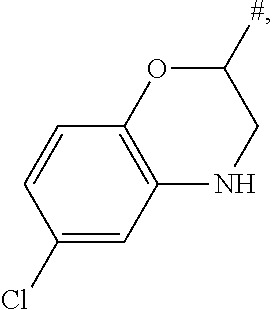
wherein # represents the attachment point to the remainder of the molecule.

or a pharmaceutically acceptable salt thereof;
wherein RN, RY5, A13, R88, and R89 are as defined in the compounds of formula (XX).

wherein the * represents the attachment point to the remainder of the molecule. In some embodiments, A13 is phenyl optionally substituted with one or more R95 substituents. In some embodiments, A13 is selected from the group consisting of

wherein the * represents the attachment point to the remainder of the molecule. In some embodiments, A13 is

wherein the * represents the attachment point to the remainder of the molecule. In some embodiments, A13 is

wherein the * represents the attachment point to the remainder of the molecule. In some embodiments, A is

wherein the * represents the attachment point to the remainder of the molecule. In some embodiments, A13 is naphthyl optionally substituted with one or more R95 substituents. In some embodiments, A13 is selected from the group consisting of

wherein the * represents the attachment point to the remainder of the molecule. In some embodiments, A13 is

wherein the * represents the attachment point to the remainder of the molecule. In some embodiments, A13 is

wherein the * represents the attachment point to the remainder of the molecule.

wherein the * represents the attachment point to the remainder of the molecule. In some embodiments, A13 is pyridyl optionally substituted with one or more R95 substituents. In some embodiments, A13 is

wherein the * represents the attachment point to the remainder of the molecule. In some embodiments, A13 is quinolinyl optionally substituted with one or more A13 substituents. In some embodiments, A13 is selected from the group consisting of

wherein the * represents the attachment point to the remainder of the molecule. In some embodiments, A13 is

wherein the * represents the attachment point to the remainder of the molecule. In some embodiments, A13 is and

wherein the * represents the attachment point to the remainder of the molecule.

wherein # represents the attachment point to the remainder of the molecule, is

wherein # represents the attachment point to the remainder of the molecule.

or a pharmaceutically acceptable salt thereof;
wherein RN, RY5, A13, R88, and R89 are as defined in the compounds of formula (XX);
-
- R91a is selected from the group consisting of hydrogen, —OR91a-a, and —NR91a-bR91a-c;
- R91a-a is selected from the group consisting of hydrogen, C1-C6 alkyl, and C1-C6 haloalkyl;
- or R91a-a and RY5 may be taken together to form a carbonyl (C═O) moiety; and
- R91a-b and R91a-c, independently of each other, are selected from the group consisting of hydrogen, C1-C6 alkyl, and C1-C6 haloalkyl.

wherein the * represents the attachment point to the remainder of the molecule. In some embodiments, A13 is phenyl optionally substituted with one or more R95 substituents. In some embodiments, A13 is selected from the group consisting of

wherein the * represents the attachment point to the remainder of the molecule. In some embodiments, A13 is

wherein the * represents the attachment point to the remainder of the molecule. In some embodiments, A13 is

wherein the * represents the attachment point to the remainder of the molecule. In some embodiments, A13 is

wherein the * represents the attachment point to the remainder of the molecule. In some embodiments, A13 is naphthyl optionally substituted with one or more R95 substituents. In some embodiments, A13 is selected from the group consisting of

wherein the * represents the attachment point to the remainder of the molecule. In some embodiments, A13 is

wherein the * represents the attachment point to the remainder of the molecule. In some embodiments, A13 is

wherein the * represents the attachment point to the remainder of the molecule.

wherein the * represents the attachment point to the remainder of the molecule. In some embodiments, A13 is pyridyl optionally substituted with one or more R95 substituents. In some embodiments, A13 is

wherein the * represents the attachment point to the remainder of the molecule. In some embodiments, A13 is quinolinyl optionally substituted with one or more A13 substituents. In some embodiments, A13 is selected from the group consisting of

wherein the * represents the attachment point to the remainder of the molecule. In some embodiments, A13 is

wherein the * represents the attachment point to the remainder of the molecule. In some embodiments, A13 is and

wherein the * represents the attachment point to the remainder of the molecule.

wherein # represents the attachment point to the remainder of the molecule, is

wherein # represents the attachment point to the remainder of the molecule.
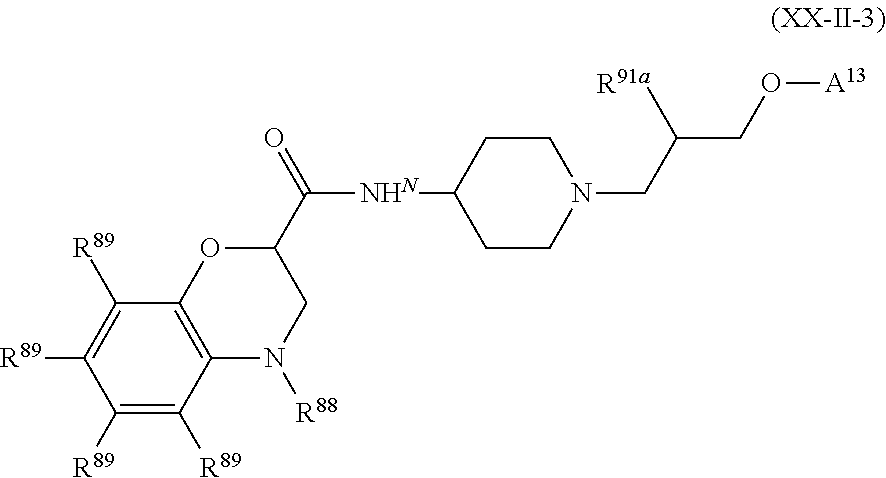
or a pharmaceutically acceptable salt thereof;
-
- wherein RN, RY5, A13, R88, and R89 are as defined in the compounds of formula (XX); R91a is selected from the group consisting of hydrogen, —OR91a-a, and —NR91a-bR91a-c; R91a-a is selected from the group consisting of hydrogen, C1-C6 alkyl, and C1-C6 haloalkyl; or R91a-a and RY5 may be taken together to form a carbonyl (C═O) moiety; and R91a-b and R91a-c, independently of each other, are selected from the group consisting of hydrogen, C1-C6 alkyl, and C1-C6 haloalkyl.

wherein the * represents the attachment point to the remainder of the molecule. In some embodiments, A13 is phenyl optionally substituted with one or more R95 substituents. In some embodiments, A13 is selected from the group consisting of
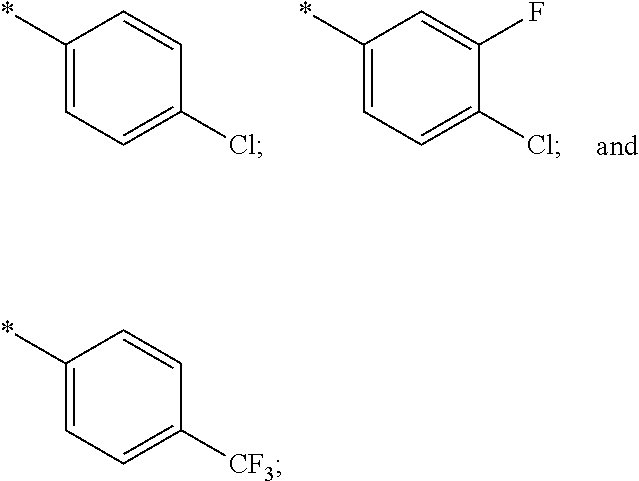
wherein the * represents the attachment point to the remainder of the molecule. In some embodiments, A13 is

wherein the * represents the attachment point to the remainder of the molecule. In some embodiments, A13 is

wherein the * represents the attachment point to the remainder of the molecule. In some embodiments, A13 is

wherein the * represents the attachment point to the remainder of the molecule. In some embodiments, A13 is naphthyl optionally substituted with one or more R95 substituents. In some embodiments, A13 is selected from the group consisting of

wherein the * represents the attachment point to the remainder of the molecule. In some embodiments, A13 is

wherein the * represents the attachment point to the remainder of the molecule. In some embodiments, A13 is

wherein the * represents the attachment point to the remainder of the molecule.

wherein the * represents the attachment point to the remainder of the molecule. In some embodiments, A13 is pyridyl optionally substituted with one or more R95 substituents. In some embodiments, A13 is

wherein the * represents the attachment point to the remainder of the molecule. In some embodiments, A13 is quinolinyl optionally substituted with one or more A13 substituents. In some embodiments, A13 is selected from the group consisting of

wherein the * represents the attachment point to the remainder of the molecule. In some embodiments, A13 is

wherein the * represents the attachment point to the remainder of the molecule. In some embodiments, A13 is and

wherein the * represents the attachment point to the remainder of the molecule.

wherein # represents the attachment point to the remainder of the molecule, is

wherein # represents the attachment point to the remainder of the molecule.
| TABLE 1 | |
| Compound | |
| No. | |
| 1 |
 |
| 2 |
 |
| 3 |
 |
| 4 |
 |
| 5 |
 |
| 6 |
 |
| 7 |
 |
| 8 |
 |
| 9 |
 |
| 10 |
 |
| 11 |
 |
| 12 |
 |
| 13 |
 |
| 14 |
 |
| 15 |
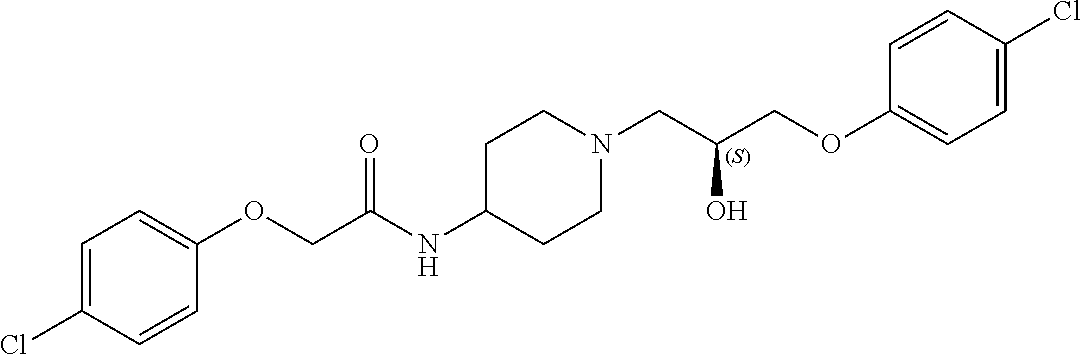 |
| 16 |
 |
| 17 |
 |
| 18 |
 |
| 19 |
 |
| 20 |
 |
| 21 |
 |
| 22 |
 |
| 23 |
 |
| 24 |
 |
| 25 |
 |
| 26 |
 |
| 27 |
 |
| 28 |
 |
| 29 |
 |
| 30 |
 |
| 31 |
 |
| 32 |
 |
| 33 |
 |
| 34 |
 |
| 35 |
 |
| 36 |
 |
| 37 |
 |
| 38 |
 |
| 39 |
 |
| 40 |
 |
| 41 |
 |
| 42 |
 |
| 43 |
 |
| 44 |
 |
| 45 |
 |
| 46 |
 |
| 47 |
 |
| 48 |
 |
| 49 |
 |
| 50 |
 |
| 51 |
 |
| 52 |
 |
| 53 |
 |
| 54 |
 |
| 55 |
 |
| 56 |
 |
| 57 |
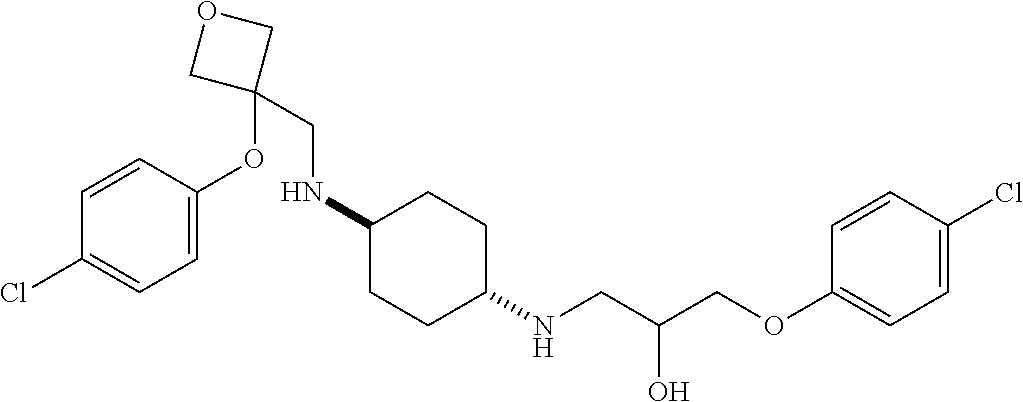 |
| 58 |
 |
| 59 |
 |
| 60 |
 |
| 61 |
 |
| 62 |
 |
| 63 |
 |
| 64 |
 |
| 65 |
 |
| 66 |
 |
| 67 |
 |
| 68 |
 |
| 69 |
 |
| 70 |
 |
| 71 |
 |
| 72 |
 |
| 73 |
 |
| 74 |
 |
| 75 |
 |
| 76 |
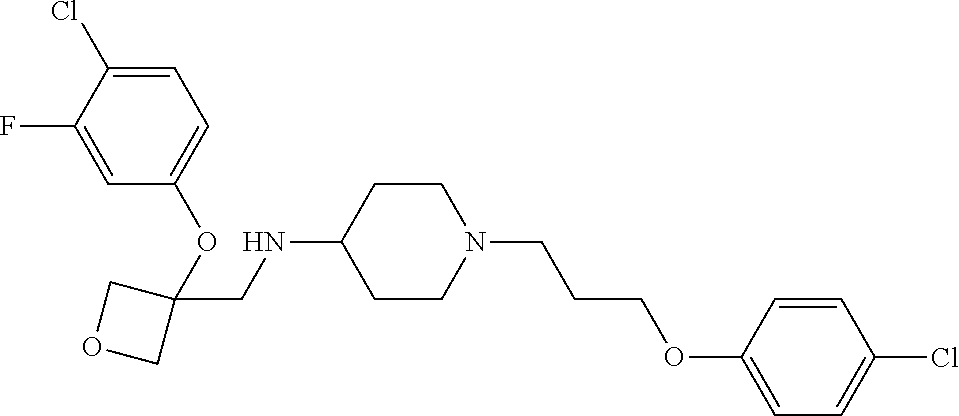 |
| 77 |
 |
| 78 |
 |
| 79 |
 |
| 80 |
 |
| 81 |
 |
| 82 |
 |
| 83 |
 |
| 84 |
 |
| 85 |
 |
| 86 |
 |
| 87 |
 |
| 88 |
 |
| 89 |
 |
| 90 |
 |
| 91 |
 |
| 92 |
 |
| 93 |
 |
| 94 |
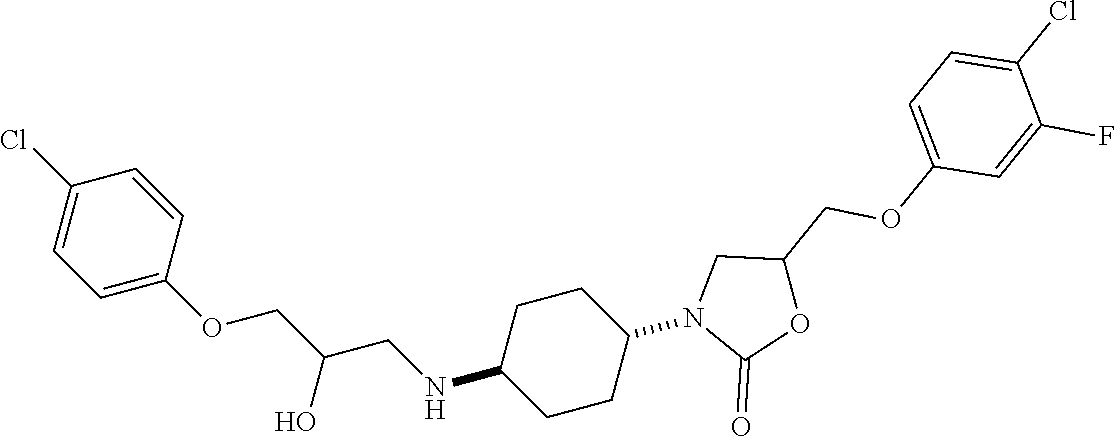 |
| 95 |
 |
| 96 |
 |
| 97 |
 |
| 98 |
 |
| 99 |
 |
| 100 |
 |
| 101 |
 |
| 102 |
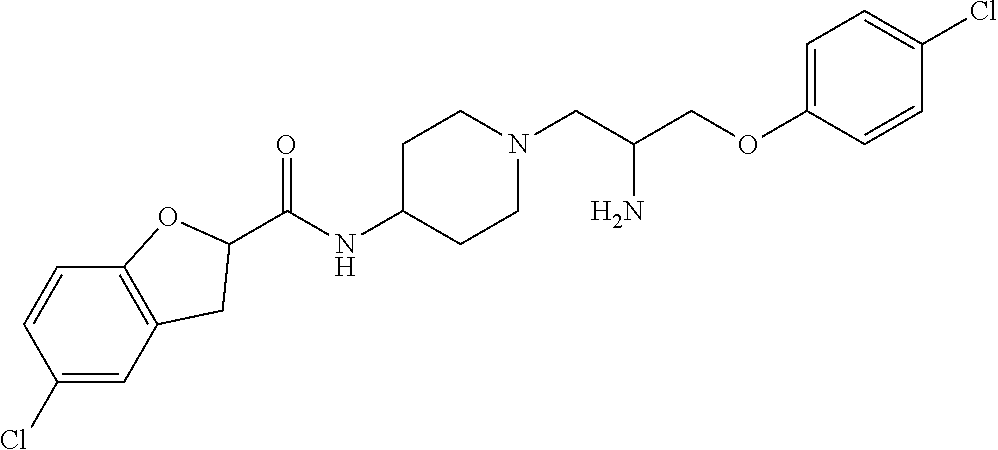 |
| 103 |
 |
| 104 |
 |
| 105 |
 |
| 106 |
 |
| 107 |
 |
| 108 |
 |
| 109 |
 |
| 110 |
 |
| 111 |
 |
| 112 |
 |
| 113 |
 |
| 114 |
 |
| 115 |
 |
| 116 |
 |
| 117 |
 |
| 118 |
 |
| 119 |
 |
| 120 |
 |
| 121 |
 |
| 122 |
 |
| 123 |
 |
| 124 |
 |
| 125 |
 |
| 126 |
 |
| 127 |
 |
| 128 |
 |
| 129 |
 |
| 130 |
 |
| 131 |
 |
| 132 |
 |
| 133 |
 |
| 134 |
 |
| 135 |
 |
| 136 |
 |
| 137 |
 |
| 138 |
 |
| 139 |
 |
| 140 |
 |
| 141 |
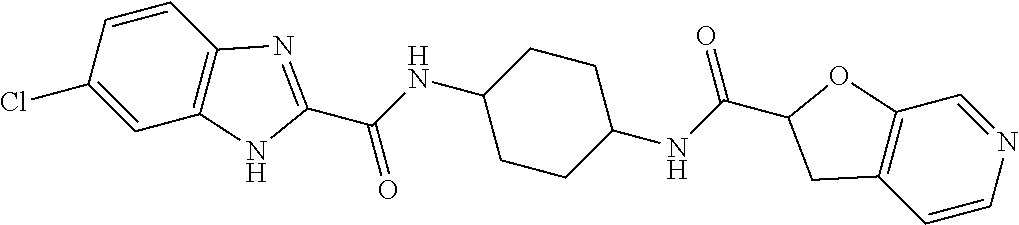 |
| 142 |
 |
| 143 |
 |
| 144 |
 |
| 145 |
 |
| 146 |
 |
| 147 |
 |
| 148 |
 |
| 149 |
 |
| 150 |
 |
| 151 |
 |
| 152 |
 |
| 153 |
 |
| 154 |
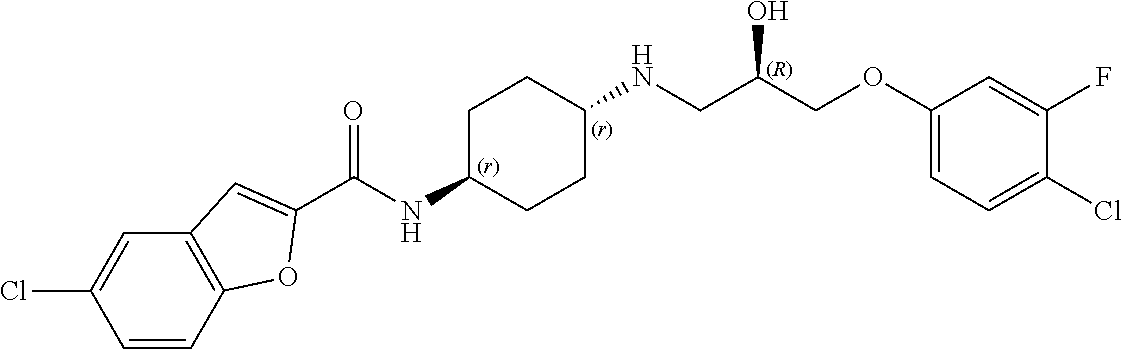 |
| 155 |
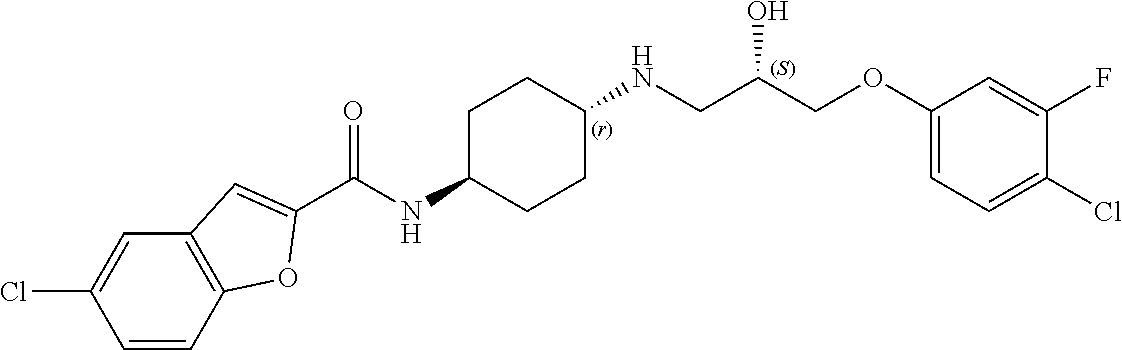 |
| 156 |
 |
| 157 |
 |
| 158 |
 |
| 159 |
 |
| 160 |
 |
| 161 |
 |
| 162 |
 |
| 163 |
 |
| 164 |
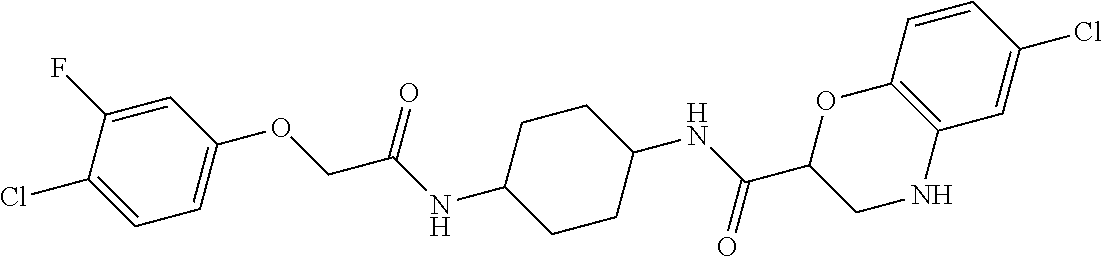 |
| 165 |
 |
| 166 |
 |


or a pharmaceutically acceptable salt thereof;
wherein:
-
- X1 and X2, independently of each other, are CH or N;
- Y1 is selected from the group consisting of a bond, NRY1, and O; provided that when X1 is N, then Y1 is a bond;
- RY1 is hydrogen or C1-C6 alkyl;
- Y2 is selected from the group consisting of a bond, NRY2, and O; provided that when X2 is N, then Y2 is a bond;
- RY2 is hydrogen or C1-C6 alkyl;
- m1, m2, n1, n2, p1, p2, q1, and q2, independently of each other, are 0 or 1;
- r and s, independently of each other, are 0, 1, or 2;
- A1 is selected from the group consisting of:
- a substituent of formula (A1-a)

-
-
-
- wherein
- represents the attachment point to the remainder of the molecule; Z1 is selected from the group consisting of CRZ1-1RZ1-2, NRZ1-2, O, S, and —CRZ1-1═CRZ1-1—;
- wherein
R Z1_1 is H or R14; and RZ1-2 is H or R14; - Z2 is selected from the group consisting of CRZ2-1RZ2-2, NRZ2-2; O, S, and —CRZ2-1═CRZ2-1—;
- wherein RZ2-1 is H or R14; and RZ2-2 is H or R14;
- Z3, independently at each occurrence, is C or N, provided that at least one Z3 is C;
- R13 is hydrogen or R14, or R13 and RZ1-2 are taken together to form a double bond between the carbon atom bearing R13 and Z1, or R13 and RZ2-2 are taken together to form a double bond between the carbon atom bearing R13 and Z2; and
- x1 is 0, 1, 2, 3, or 4, provided than when one Z3 is N, then x1 is not 4;
- wherein
- C6-C10 aryl optionally substituted with one or more R14 substituents; and
- 5-10 membered heteroaryl optionally substituted with one or more R14 substituents;
-
- R14 is selected, independently at each occurrence, from the group consisting of halogen, C1-C6 alkyl, C1-C6 haloalkyl, —OH, —O(C1-C6 alkyl), —O(C1-C6 haloalkyl), —SH, —S(C1-C6 alkyl), —S(C1-C6 haloalkyl), —NH2, —NH(C1-C6 alkyl), —NH(C1-C6 haloalkyl), —N(C1-C6 alkyl)2, —N(C1-C6 haloalkyl)2, —NR14-aR14-b, —CN, —C(O)OH, —C(O)O(C1-C6 alkyl), —C(O)O(C1-C6 haloalkyl), —C(O)NH2, —C(O)NH(C1-C6 alkyl), —C(O)NH(C1-C6 haloalkyl), —C(O)N(C1-C6 alkyl)2, —C(O)N(C1-C6 haloalkyl)2, —C(O)NR14-aR14-b, —S(O)2OH, —S(O)2O(C1-C6 alkyl), —S(O)2O(C1-C6 haloalkyl), —S(O)2NH2, —S(O)2NH(C1-C6 alkyl), —S(O)2NH(C1-C6 haloalkyl), —S(O)2N(C1-C6 alkyl)2, —S(O)2N(C1-C6 haloalkyl)2, —S(O)2NR14-aR14-b, —OC(O)H, —OC(O)(C1-C6 alkyl), —OC(O)(C1-C6 haloalkyl), —N(H)C(O)H, —N(H)C(O)(C1-C6 alkyl), —N(H)C(O)(C1-C6 haloalkyl), —N(C1-C6 alkyl)C(O)H, —N(C1-C6 alkyl)C(O)(C1-C6 alkyl), —N(C1-C6 alkyl)C(O)(C1-C6 haloalkyl), —N(C1-C6 haloalkyl)C(O)H, —N(C1-C6 haloalkyl)C(O)(C1-C6 alkyl), —N(C1-C6 haloalkyl)C(O)(C1-C6 haloalkyl), —OS(O)2(C1-C6 alkyl), —OS(O)2(C1-C6 haloalkyl), —N(H)S(O)2(C1-C6 alkyl), —N(H)S(O)2(C1-C6 haloalkyl), —N(C1-C6 alkyl)S(O)2(C1-C6 alkyl), —N(C1-C6 alkyl)S(O)2(C1-C6 haloalkyl), —N(C1-C6 haloalkyl)S(O)2(C1-C6 alkyl), and —N(C1-C6 haloalkyl)S(O)2(C1-C6 haloalkyl);
- wherein R14-a and R14-b are taken together with the nitrogen atom which bears them to form a 3-10 membered heterocycle;
- A2 is selected from the group consisting of:
- a substituent of formula (A2-a)
-

-
-
-
- wherein
- represents the attachment point to the remainder of the molecule;
- Z4 is selected from the group consisting of CRZ4-1RZ4-2, NRZ4-2, O, S, and —CRZ4-1═CRZ4-1—;
- wherein RZ4-1 is H or R16; and RZ4-2 is H or R16;
- Z5 is selected from the group consisting of CRZ5-1RZ5-2, NRZ5-2; O, S, and —CRZ5-1═CRZ5-1—;
- wherein RZ5-1 is H or R16; and RZ5-2 is H or R16;
- Z6, independently at each occurrence, is C or N, provided that at least one Z6 is C;
- R15 is hydrogen or R16, or R15 and RZ4-2 are taken together to form a double bond between the carbon atom bearing R15 and Z4, or R15 and RZ5-2 are taken together to form a double bond between the carbon atom bearing R15 and Z5; and
- x2 is 0, 1, 2, 3, or 4, provided than when one Z6 is N, then x2 is not 4;
- wherein
- C6-C10 aryl optionally substituted with one or more R16 substituents; and
- 5-10 membered heteroaryl optionally substituted with one or more R16 substituents;
-
- R16 is selected, independently at each occurrence, from the group consisting of halogen, C1-C6 alkyl, C1-C6 haloalkyl, —OH, —O(C1-C6 alkyl), —O(C1-C6 haloalkyl), —SH, —S(C1-C6 alkyl), —S(C1-C6 haloalkyl), —NH2, —NH(C1-C6 alkyl), —NH(C1-C6 haloalkyl), —N(C1-C6 alkyl)2, —N(C1-C6 haloalkyl)2, —NR16-aR16-b, —CN, —C(O)OH, —C(O)O(C1-C6 alkyl), —C(O)O(C1-C6 haloalkyl), —C(O)NH2, —C(O)NH(C1-C6 alkyl), —C(O)NH(C1-C6 haloalkyl), —C(O)N(C1-C6 alkyl)2, —C(O)N(C1-C6 haloalkyl)2, —C(O)NR16-aR16-b, —S(O)2OH, —S(O)2O(C1-C6 alkyl), —S(O)2O(C1-C6 haloalkyl), —S(O)2NH2, —S(O)2NH(C1-C6 alkyl), —S(O)2NH(C1-C6 haloalkyl), —S(O)2N(C1-C6 alkyl)2, —S(O)2N(C1-C6 haloalkyl)2, —S(O)2NR16-aR16-b, —OC(O)H, —OC(O)(C1-C6 alkyl), —OC(O)(C1-C6 haloalkyl), —N(H)C(O)H, —N(H)C(O)(C1-C6 alkyl), —N(H)C(O)(C1-C6 haloalkyl), —N(C1-C6 alkyl)C(O)H, —N(C1-C6 alkyl)C(O)(C1-C6 alkyl), —N(C1-C6 alkyl)C(O)(C1-C6 haloalkyl), —N(C1-C6 haloalkyl)C(O)H, —N(C1-C6 haloalkyl)C(O)(C1-C6 alkyl), —N(C1-C6 haloalkyl)C(O)(C1-C6 haloalkyl), —OS(O)2(C1-C6 alkyl), —OS(O)2(C1-C6 haloalkyl), —N(H)S(O)2(C1-C6 alkyl), —N(H)S(O)2(C1-C6 haloalkyl), —N(C1-C6 alkyl)S(O)2(C1-C6 alkyl), —N(C1-C6 alkyl)S(O)2(C1-C6 haloalkyl), —N(C1-C6 haloalkyl)S(O)2(C1-C6 alkyl), and —N(C1-C6 haloalkyl)S(O)2(C1-C6 haloalkyl);
- wherein R16-a and R16-b are taken together with the nitrogen atom which bears them to form a 3-10 membered heterocycle;
- R1a and R1b are independently selected from the group consisting of hydrogen, C1-C6 alkyl, and halogen;
- R2a and R2b are independently selected from the group consisting of hydrogen, C1-C6 alkyl, and halogen;
- when present, R3a and R3b are independently at each occurrence selected from the group consisting of hydrogen, C1-C6 alkyl, and halogen;
- when present, R4a and R4b are independently at each occurrence selected from the group consisting of hydrogen, C1-C6 alkyl, and halogen;
- or alternatively, R1a and R2a are taken together to form a C1-C6 alkylene moiety;
- or alternatively, R1a and an R3a moiety, when present, are taken together to form a C1-C6 alkylene moiety, and R1b and the R3b in the geminal position to the R3a taken together with R1a, are both hydrogen;
- or alternatively, an R3a moiety, when present, and an R4a moiety, when present, are taken together to form a C1-C6 alkylene moiety, and the R3b in the geminal position to the R3a taken together with the R4a moiety and the R4b in the geminal position to the R4a taken together with the R3a moiety, are both hydrogen;
- when present, R5a and R5b are taken together to form an oxo (═O) substituent or an imido (═NH) substituent, or alternatively, R5a and R5b are both hydrogen;
- when present, R6a is selected from the group consisting of hydrogen, —OR6a-a, and —NR6a-bR6a-c;
- when present, R6b is hydrogen;
- or alternatively, R6a and R6b are taken together to form a moiety selected from the group consisting of —O—CH2—CH2—, —CH2—O—CH2—, —CH2—CH2—O—, —O—CH2—CH2—CH2—, —CH2—O—CH2—CH2—, —CH2—CH2—O—CH2—, —CH2—CH2—CH2—O—, —O—CH2—CH2—CH2—CH2—, —CH2—O—CH2—CH2—CH2—, —CH2—CH2—O—CH2—CH2—, —CH2—CH2—CH2—O—CH2—, and —CH2—CH2—CH2—CH2—O—;
- when present, R7a and R7b are both hydrogen;
- when present, R8a and R8b are taken together to form an oxo (═O) substituent, or alternatively, R8a and R8b are both hydrogen;
- when present, R9a and R9b are taken together to form an oxo (═O) substituent or an imido (═NH) substituent, or alternatively, R9a and R9b are both hydrogen;
- when present, R10a is selected from the group consisting of hydrogen, —OR10a-a, and —NR10a-bR10a-c;
- when present, R10b is hydrogen;
- or alternatively, R10a and R10b are taken together to form a moiety selected from the group consisting of —O—CH2—CH2—, —CH2—O—CH2—, —CH2—CH2—O—, —O—CH2—CH2—CH2—, —CH2—O—CH2—CH2—, —CH2—CH2—O—CH2—, —CH2—CH2—CH2—O—, —O—CH2—CH2—CH2—CH2—, —CH2—O—CH2—CH2—CH2—, —CH2—CH2—O—CH2—CH2—, —CH2—CH2—CH2—O—CH2—, and —CH2—CH2—CH2—CH2—O—;
- when present, R11a and R11b are both hydrogen;
- when present, R12a and R12b are taken together to form an oxo (═O) substituent, or alternatively, R12a and R12b are both hydrogen;
- R6a-a is selected from the group consisting of hydrogen, C1-C6 alkyl, and C1-C6 haloalkyl;
- R10a-a is selected from the group consisting of hydrogen, C1-C6 alkyl, and C1-C6 haloalkyl;
- or R6a-a and RY1 may be taken together to form a carbonyl (C═O) moiety;
- or R10a-a and RY2 may be taken together to form a carbonyl (C═O) moiety;
- R6a-b and R6a-c, independently of each other, are selected from the group consisting of hydrogen, C1-C6 alkyl, and C1-C6 haloalkyl; and
- R10a-b and R10a-c, independently of each other, are selected from the group consisting of hydrogen, C1-C6 alkyl, and C1-C6 haloalkyl.
-

or a pharmaceutically acceptable salt thereof;
wherein:
-
- A1 is a substituent of formula (A1-a)
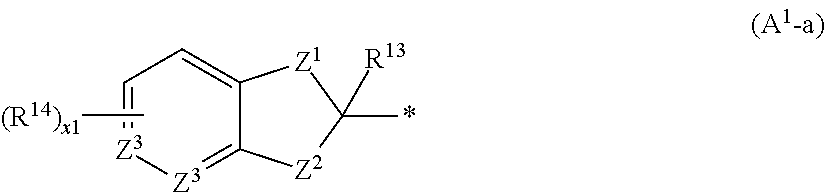
-
- and
- A2 is a substituent of formula (A2-a)


or a pharmaceutically acceptable salt thereof;
wherein:
-
- A1 is a substituent of formula (A1-a)

-
- and
- A2 is selected from the group consisting of:
- a substituent of formula (A2-a)

-
-
- C6-C10 aryl optionally substituted with one or more R16 substituents; and
- 5-10 membered heteroaryl optionally substituted with one or more R16 substituents.
-

or a pharmaceutically acceptable salt thereof;
wherein:
-
- A is a substituent of formula (A1-a)

-
- and
- A2 is C6-C10 aryl optionally substituted with one or more R16 substituents; or 5-10 membered heteroaryl optionally substituted with one or more R16 substituents.

or a pharmaceutically acceptable salt thereof;
wherein:
-
- A1 is a substituent of formula (A1-a)
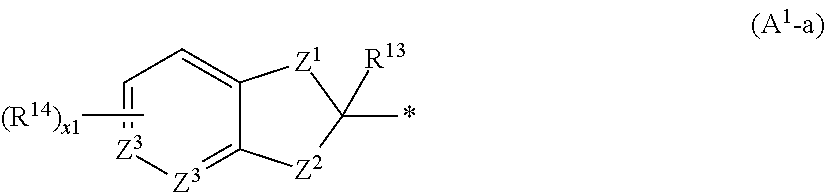
-
- A2 is C6-C10 aryl optionally substituted with one or more R16 substituents; or 5-10 membered heteroaryl optionally substituted with one or more R16 substituents;
- R11a and R11b are both hydrogen; and
- R12a and R12b are both hydrogen.

or a pharmaceutically acceptable salt thereof;
wherein:
-
- A1 is selected from the group consisting of:
- a substituent of formula (A1-a)
- A1 is selected from the group consisting of:

-
-
- C6-C10 aryl optionally substituted with one or more R14 substituents; and
- 5-10 membered heteroaryl optionally substituted with one or more R14 substituents;
- and
- A2 is selected from the group consisting of:
- a substituent of formula (A2-a)
-

-
-
- C6-C10 aryl optionally substituted with one or more R16 substituents; and
- 5-10 membered heteroaryl optionally substituted with one or more R16 substituents.
-
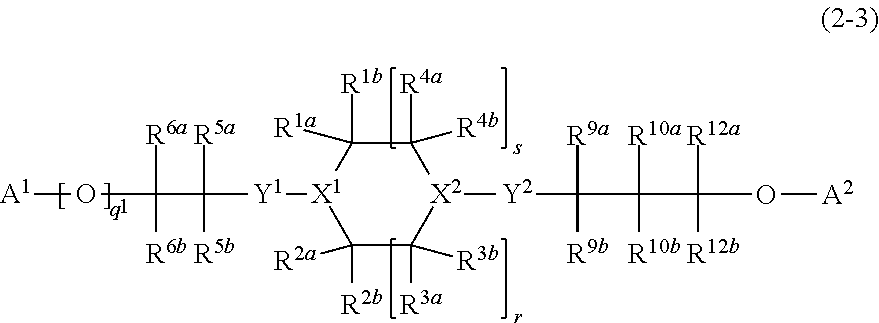
or a pharmaceutically acceptable salt thereof;
wherein:
-
- A1 is selected from the group consisting of:
- a substituent of formula (A1-a)
- A1 is selected from the group consisting of:

-
-
- C6-C10 aryl optionally substituted with one or more R14 substituents; and
- 5-10 membered heteroaryl optionally substituted with one or more R14 substituents;
- and
- A2 is C6-C10 aryl optionally substituted with one or more R16 substituents; or 5-10 membered heteroaryl optionally substituted with one or more R16 substituents.
-

or a pharmaceutically acceptable salt thereof;
wherein:
-
- A1 is selected from the group consisting of:
- a substituent of formula (A1-a)
- A1 is selected from the group consisting of:

-
-
- C6-C10 aryl optionally substituted with one or more R14 substituents; and
- 5-10 membered heteroaryl optionally substituted with one or more R14 substituents;
- A2 is C6-C10 aryl optionally substituted with one or more R16 substituents; or 5-10 membered heteroaryl optionally substituted with one or more R16 substituents;
- R11a and R11b are both hydrogen; and
- R12a and R12b are both hydrogen.
-

or a pharmaceutically acceptable salt thereof;
wherein:
-
- A1 is C6-C10 aryl optionally substituted with one or more R14 substituents; or 5-10 membered heteroaryl optionally substituted with one or more R14 substituents;
- and
- A2 is C6-C10 aryl optionally substituted with one or more R16 substituents; or 5-10 membered heteroaryl optionally substituted with one or more R16 substituents.

or a pharmaceutically acceptable salt thereof;
wherein:
-
- A1 is C6-C10 aryl optionally substituted with one or more R14 substituents; or 5-10 membered heteroaryl optionally substituted with one or more R14 substituents;
- A2 is C6-C10 aryl optionally substituted with one or more R16 substituents; or 5-10 membered heteroaryl optionally substituted with one or more R16 substituents;
- R11a and R11b are both hydrogen; and
- R12a and R12b are both hydrogen.

or a pharmaceutically acceptable salt thereof;
wherein:
-
- A1 is C6-C10 aryl optionally substituted with one or more R14 substituents; or 5-10 membered heteroaryl optionally substituted with one or more R14 substituents;
- A2 is C6-C10 aryl optionally substituted with one or more R16 substituents; or 5-10 membered heteroaryl optionally substituted with one or more R16 substituents;
- R7a and R7b are both hydrogen;
- R8a and R8b are both hydrogen;
- R11a and R11b are both hydrogen; and
- R12a and R12b are both hydrogen.

or a pharmaceutically acceptable salt thereof;
wherein:
-
- m3 is 0 or 1;
- n3 is 0 or 1;
- r2 is 0, 1, or 2;
- s2 is 0, 1, or 2;
- X3 is CH or N;
- X4 is CH or N;
- provided that at least one of X3 and X4 is CH;
- Y3 is selected from the group consisting of a bond, NRY3, and O;
- wherein RY3 is hydrogen or C1-C6 alkyl;
- Y4 is selected from the group consisting of a bond, NRY4, and O;
- wherein RY4 is hydrogen or C1-C6 alkyl;
- provided that:
- when X3 is N, then Y3 is a bond and m3 is 1;
- when X4 is N, then Y4 is a bond and n3 is 1;
- A3 is selected from the group consisting of:
- a substituent of the formula (A3-a)

-
-
- wherein
- represents the attachment point to the remainder of the molecule; Z7 is selected from the group consisting of CRZ7-1RZ7-2, NRZ7-2, O, S, and —CRZ7-1═CRZ7-1—;
- wherein
- RZ7-1 is H or R27; and
- RZ7-2 is H or R27;
- Z8 is selected from the group consisting of CRZ8-1RZ8-2, NRZ8-2; O, S, and —CRZ8-1═CRZ8-1—;
- wherein
- RZ8-1 is H or R27; and
- RZ8-2 is H or R27;
- Z9, independently at each occurrence, is C or N, provided that at least one Z9 is C;
- R26 is hydrogen or R27, or R26 and RZ7-2 are taken together to form a double bond between the carbon atom bearing R26 and Z7; and
- x3 is 0, 1, 2, 3, or 4, provided than when one Z9 is N, then x3 is not 4;
- represents the attachment point to the remainder of the molecule; Z7 is selected from the group consisting of CRZ7-1RZ7-2, NRZ7-2, O, S, and —CRZ7-1═CRZ7-1—;
- C6-C10 aryl optionally substituted with one or more R27 substituent; and
- 5-10 membered heteroaryl optionally substituted with one or more R27 substituent;
- R27 is selected, independently at each occurrence, from the group consisting of halogen, C1-C6 alkyl, C1-C6 haloalkyl, —OH, —O(C1-C6 alkyl), —O(C1-C6 haloalkyl), —SH, —S(C1-C6 alkyl), —S(C1-C6 haloalkyl), —NH2, —NH(C1-C6 alkyl), —NH(C1-C6 haloalkyl), —N(C1-C6 alkyl)2, —N(C1-C6 haloalkyl)2, —NR27-aR27-b, —CN, —C(O)OH, —C(O)O(C1-C6 alkyl), —C(O)O(C1-C6 haloalkyl), —C(O)NH2, —C(O)NH(C1-C6 alkyl), —C(O)NH(C1-C6 haloalkyl), —C(O)N(C1-C6 alkyl)2, —C(O)N(C1-C6 haloalkyl)2, —C(O)NR27-aR27-b, —S(O)2OH, —S(O)2O(C1-C6 alkyl), —S(O)2O(C1-C6 haloalkyl), —S(O)2NH2, —S(O)2NH(C1-C6 alkyl), —S(O)2NH(C1-C6 haloalkyl), —S(O)2N(C1-C6 alkyl)2, —S(O)2N(C1-C6 haloalkyl)2, —S(O)2NR27-aR27-b, —OC(O)H, —OC(O)(C1-C6 alkyl), —OC(O)(C1-C6 haloalkyl), —N(H)C(O)H, —N(H)C(O)(C1-C6 alkyl), —N(H)C(O)(C1-C6 haloalkyl), —N(C1-C6 alkyl)C(O)H, —N(C1-C6 alkyl)C(O)(C1-C6 alkyl), —N(C1-C6 alkyl)C(O)(C1-C6 haloalkyl), —N(C1-C6 haloalkyl)C(O)H, —N(C1-C6 haloalkyl)C(O)(C1-C6 alkyl), —N(C1-C6 haloalkyl)C(O)(C1-C6 haloalkyl), —OS(O)2(C1-C6 alkyl), —OS(O)2(C1-C6 haloalkyl), —N(H)S(O)2(C1-C6 alkyl), —N(H)S(O)2(C1-C6 haloalkyl), —N(C1-C6 alkyl)S(O)2(C1-C6 alkyl), —N(C1-C6 alkyl)S(O)2(C1-C6 haloalkyl), —N(C1-C6 haloalkyl)S(O)2(C1-C6 alkyl), and —N(C1-C6 haloalkyl)S(O)2(C1-C6 haloalkyl);
- wherein R27-a and R27-b are taken together with the nitrogen atom which bears them to form a 3-10 membered heterocycle;
- R27 is selected, independently at each occurrence, from the group consisting of halogen, C1-C6 alkyl, C1-C6 haloalkyl, —OH, —O(C1-C6 alkyl), —O(C1-C6 haloalkyl), —SH, —S(C1-C6 alkyl), —S(C1-C6 haloalkyl), —NH2, —NH(C1-C6 alkyl), —NH(C1-C6 haloalkyl), —N(C1-C6 alkyl)2, —N(C1-C6 haloalkyl)2, —NR27-aR27-b, —CN, —C(O)OH, —C(O)O(C1-C6 alkyl), —C(O)O(C1-C6 haloalkyl), —C(O)NH2, —C(O)NH(C1-C6 alkyl), —C(O)NH(C1-C6 haloalkyl), —C(O)N(C1-C6 alkyl)2, —C(O)N(C1-C6 haloalkyl)2, —C(O)NR27-aR27-b, —S(O)2OH, —S(O)2O(C1-C6 alkyl), —S(O)2O(C1-C6 haloalkyl), —S(O)2NH2, —S(O)2NH(C1-C6 alkyl), —S(O)2NH(C1-C6 haloalkyl), —S(O)2N(C1-C6 alkyl)2, —S(O)2N(C1-C6 haloalkyl)2, —S(O)2NR27-aR27-b, —OC(O)H, —OC(O)(C1-C6 alkyl), —OC(O)(C1-C6 haloalkyl), —N(H)C(O)H, —N(H)C(O)(C1-C6 alkyl), —N(H)C(O)(C1-C6 haloalkyl), —N(C1-C6 alkyl)C(O)H, —N(C1-C6 alkyl)C(O)(C1-C6 alkyl), —N(C1-C6 alkyl)C(O)(C1-C6 haloalkyl), —N(C1-C6 haloalkyl)C(O)H, —N(C1-C6 haloalkyl)C(O)(C1-C6 alkyl), —N(C1-C6 haloalkyl)C(O)(C1-C6 haloalkyl), —OS(O)2(C1-C6 alkyl), —OS(O)2(C1-C6 haloalkyl), —N(H)S(O)2(C1-C6 alkyl), —N(H)S(O)2(C1-C6 haloalkyl), —N(C1-C6 alkyl)S(O)2(C1-C6 alkyl), —N(C1-C6 alkyl)S(O)2(C1-C6 haloalkyl), —N(C1-C6 haloalkyl)S(O)2(C1-C6 alkyl), and —N(C1-C6 haloalkyl)S(O)2(C1-C6 haloalkyl);
- wherein
- A4 is selected from the group consisting of:
- a substituent of the formula (A4-a)
-

-
-
- wherein
- represents the attachment point to the remainder of the molecule;
- Z10 is selected from the group consisting of CRZ10-1RZ10-2, NRZ10-2, O, S,
- and —CRZ10-1═CRZ10-1—;
- wherein
- RZ10-1 is H or R29; and
- RZ10-2 is H or R29;
- Z11 is selected from the group consisting of CRZ11-1RZ11-2, NRZ11-2; O, S,
- and —CRZ11-1═CRZ11-1—;
- wherein
- RZ11-1 is H or R29; and
- RZ11-2 is H or R29;
- Z12, independently at each occurrence, is C or N, provided that at least one Z12 is C;
- R28 is hydrogen or R29, or R28 and RZ10-2 are taken together to form a double bond between the carbon atom bearing R28 and Z10; and
- x4 is 0, 1, 2, 3, or 4, provided than when one Z12 is N, then x4 is not 4;
- C6-C10 aryl optionally substituted with one or more R29 substituent; and
- 5-10 membered heteroaryl optionally substituted with one or more R29 substituent;
- R29 is selected, independently at each occurrence, from the group consisting of halogen, C1-C6 alkyl, C1-C6 haloalkyl, —OH, —O(C1-C6 alkyl), —O(C1-C6 haloalkyl), —SH, —S(C1-C6 alkyl), —S(C1-C6 haloalkyl), —NH2, —NH(C1-C6 alkyl), —NH(C1-C6 haloalkyl), —N(C1-C6 alkyl)2, —N(C1-C6 haloalkyl)2, —NR29-aR29-b, —CN, —C(O)OH, —C(O)O(C1-C6 alkyl), —C(O)O(C1-C6 haloalkyl), —C(O)NH2, —C(O)NH(C1-C6 alkyl), —C(O)NH(C1-C6 haloalkyl), —C(O)N(C1-C6 alkyl)2, —C(O)N(C1-C6 haloalkyl)2, —C(O)NR29-aR29-b, —S(O)2OH, —S(O)2O(C1-C6 alkyl), —S(O)2O(C1-C6 haloalkyl), —S(O)2NH2, —S(O)2NH(C1-C6 alkyl), —S(O)2NH(C1-C6 haloalkyl), —S(O)2N(C1-C6 alkyl)2, —S(O)2N(C1-C6 haloalkyl)2, —S(O)2NR29-aR29-b, —OC(O)H, —OC(O)(C1-C6 alkyl), —OC(O)(C1-C6 haloalkyl), —N(H)C(O)H, —N(H)C(O)(C1-C6 alkyl), —N(H)C(O)(C1-C6 haloalkyl), —N(C1-C6 alkyl)C(O)H, —N(C1-C6 alkyl)C(O)(C1-C6 alkyl), —N(C1-C6 alkyl)C(O)(C1-C6 haloalkyl), —N(C1-C6 haloalkyl)C(O)H, —N(C1-C6 haloalkyl)C(O)(C1-C6 alkyl), —N(C1-C6 haloalkyl)C(O)(C1-C6 haloalkyl), —OS(O)2(C1-C6 alkyl), —OS(O)2(C1-C6 haloalkyl), —N(H)S(O)2(C1-C6 alkyl), —N(H)S(O)2(C1-C6 haloalkyl), —N(C1-C6 alkyl)S(O)2(C1-C6 alkyl), —N(C1-C6 alkyl)S(O)2(C1-C6 haloalkyl), —N(C1-C6 haloalkyl)S(O)2(C1-C6 alkyl), and —N(C1-C6 haloalkyl)S(O)2(C1-C6 haloalkyl);
- wherein R29-a and R29-b are taken together with the nitrogen atom which bears them to form a 3-10 membered heterocycle;
- R29 is selected, independently at each occurrence, from the group consisting of halogen, C1-C6 alkyl, C1-C6 haloalkyl, —OH, —O(C1-C6 alkyl), —O(C1-C6 haloalkyl), —SH, —S(C1-C6 alkyl), —S(C1-C6 haloalkyl), —NH2, —NH(C1-C6 alkyl), —NH(C1-C6 haloalkyl), —N(C1-C6 alkyl)2, —N(C1-C6 haloalkyl)2, —NR29-aR29-b, —CN, —C(O)OH, —C(O)O(C1-C6 alkyl), —C(O)O(C1-C6 haloalkyl), —C(O)NH2, —C(O)NH(C1-C6 alkyl), —C(O)NH(C1-C6 haloalkyl), —C(O)N(C1-C6 alkyl)2, —C(O)N(C1-C6 haloalkyl)2, —C(O)NR29-aR29-b, —S(O)2OH, —S(O)2O(C1-C6 alkyl), —S(O)2O(C1-C6 haloalkyl), —S(O)2NH2, —S(O)2NH(C1-C6 alkyl), —S(O)2NH(C1-C6 haloalkyl), —S(O)2N(C1-C6 alkyl)2, —S(O)2N(C1-C6 haloalkyl)2, —S(O)2NR29-aR29-b, —OC(O)H, —OC(O)(C1-C6 alkyl), —OC(O)(C1-C6 haloalkyl), —N(H)C(O)H, —N(H)C(O)(C1-C6 alkyl), —N(H)C(O)(C1-C6 haloalkyl), —N(C1-C6 alkyl)C(O)H, —N(C1-C6 alkyl)C(O)(C1-C6 alkyl), —N(C1-C6 alkyl)C(O)(C1-C6 haloalkyl), —N(C1-C6 haloalkyl)C(O)H, —N(C1-C6 haloalkyl)C(O)(C1-C6 alkyl), —N(C1-C6 haloalkyl)C(O)(C1-C6 haloalkyl), —OS(O)2(C1-C6 alkyl), —OS(O)2(C1-C6 haloalkyl), —N(H)S(O)2(C1-C6 alkyl), —N(H)S(O)2(C1-C6 haloalkyl), —N(C1-C6 alkyl)S(O)2(C1-C6 alkyl), —N(C1-C6 alkyl)S(O)2(C1-C6 haloalkyl), —N(C1-C6 haloalkyl)S(O)2(C1-C6 alkyl), and —N(C1-C6 haloalkyl)S(O)2(C1-C6 haloalkyl);
- wherein
- R17a and R17b are independently selected from the group consisting of hydrogen, C1-C6 alkyl, and halogen;
- R18a and R18b are independently selected from the group consisting of hydrogen, C1-C6 alkyl, and halogen;
- when present, R19a and R19b are independently at each occurrence selected from the group consisting of hydrogen, C1-C6 alkyl, and halogen;
- when present, R20a and R20b are independently at each occurrence selected from the group consisting of hydrogen, C1-C6 alkyl, and halogen;
- or alternatively, R17a and R18a are taken together to form a C1-C6 alkylene moiety;
- or alternatively, R17a and an R19a moiety, when present, are taken together to form a C1-C6 alkylene moiety, and R17b and the R19b in the geminal position to the R19a taken together with R17a, are both hydrogen;
- or alternatively, an R19a moiety, when present, and an R20a moiety, when present, are taken together to form a C1-C6 alkylene moiety, and the R19b in the geminal position to the R19a taken together with the R20a moiety and the R20b in the geminal position to the R20a taken together with the R19a moiety, are both hydrogen;
- R21a and R21b are taken together to form an oxo (═O) substituent or an imido (═NH) substituent, or alternatively, R21a and R21b are both hydrogen;
- when present, R22a and R22b are both hydrogen;
- R23a and R23b are taken together to form an oxo (═O) substituent or an imido (═NH) substituent, or alternatively, R23a and R23b are both hydrogen;
- when present, R24a is selected from the group consisting of hydrogen, —OH, and —NH2;
- or alternatively, R24a and RY4 are taken together to form a #—C(═O)—O— group, wherein # represent the attachment point to the nitrogen atom bearing RY4;
- when present, R24b is hydrogen; and
- when present, R25a and R25b are both hydrogen;
- or alternatively, R25a, when present, and one R29 of A4 are taken together with the atoms connecting them to form a 5-6 membered heterocycloalkenyl optionally substituted with one or more R29 substituent, and R25b is H;
- or alternatively, R25a, when present, R25b, when present, and one R29 of A4 are taken together with the atoms connecting them to form a 5-6 membered heteroaryl optionally substituted with one or more R29 substituent;
- and further provided that one of (i), (ii), (iii) and (iv) applies:
- (i) when m3 is 0 and n3 is 0, then:
- X3 is CH and Y3 is NRY3;
- X4 is CH and Y4 is NRY4;
- R21a and R21b are taken together to form an oxo (═O) substituent;
- R23a and R23b are taken together to form an oxo (═O) substituent;
- A3 is a substituent of the formula (A3-a)
-

-
-
- wherein
- represents the attachment point to the remainder of the molecule;
- Z7 is selected from the group consisting of CRZ7-1RZ7-2, NRZ7-2, O, S,
- and —CRZ7-1═CRZ7-1—;
- wherein
- RZ7-1 is H or R27; and
- RZ7-2 is H or R27;
- Z8 is selected from the group consisting of CRZ8-1RZ8-2, NRZ8-2; O, S, and —CRZ8-1═CRZ8-1—;
- wherein
-
R Z8_1 is H or R27; and - RZ8-2 is H or R27;
- Z9, independently at each occurrence, is C or N, provided that at least one Z9 is C;
- R26 is hydrogen or R27, or R26 and RZ7-2 are taken together to form a double bond between the carbon atom bearing R26 and Z7;
- R27 is selected, independently at each occurrence, from the group consisting of halogen, C1-C6 alkyl, C1-C6 haloalkyl, —OH, —O(C1-C6 alkyl), —O(C1-C6 haloalkyl), —SH, —S(C1-C6 alkyl), —S(C1-C6 haloalkyl), —NH2, —NH(C1-C6 alkyl), —NH(C1-C6 haloalkyl), —N(C1-C6 alkyl)2, —N(C1-C6 haloalkyl)2, —NR27-aR27-b, —CN, —C(O)OH, —C(O)O(C1-C6 alkyl), —C(O)O(C1-C6 haloalkyl), —C(O)NH2, —C(O)NH(C1-C6 alkyl), —C(O)NH(C1-C6 haloalkyl), —C(O)N(C1-C6 alkyl)2, —C(O)N(C1-C6 haloalkyl)2, —C(O)NR27-aR27-b, —S(O)2OH, —S(O)2O(C1-C6 alkyl), —S(O)2O(C1-C6 haloalkyl), —S(O)2NH2, —S(O)2NH(C1-C6 alkyl), —S(O)2NH(C1-C6 haloalkyl), —S(O)2N(C1-C6 alkyl)2, —S(O)2N(C1-C6 haloalkyl)2, —S(O)2NR27-aR27-b, —OC(O)H, —OC(O)(C1-C6 alkyl), —OC(O)(C1-C6 haloalkyl), —N(H)C(O)H, —N(H)C(O)(C1-C6 alkyl), —N(H)C(O)(C1-C6 haloalkyl), —N(C1-C6 alkyl)C(O)H, —N(C1-C6 alkyl)C(O)(C1-C6 alkyl), —N(C1-C6 alkyl)C(O)(C1-C6 haloalkyl), —N(C1-C6 haloalkyl)C(O)H, —N(C1-C6 haloalkyl)C(O)(C1-C6 alkyl), —N(C1-C6 haloalkyl)C(O)(C1-C6 haloalkyl), —OS(O)2(C1-C6 alkyl), —OS(O)2(C1-C6 haloalkyl), —N(H)S(O)2(C1-C6 alkyl), —N(H)S(O)2(C1-C6 haloalkyl), —N(C1-C6 alkyl)S(O)2(C1-C6 alkyl), —N(C1-C6 alkyl)S(O)2(C1-C6 haloalkyl), —N(C1-C6 haloalkyl)S(O)2(C1-C6 alkyl), and —N(C1-C6 haloalkyl)S(O)2(C1-C6 haloalkyl);
- wherein R27-a and R27-b are taken together with the nitrogen atom which bears them to form a 3-10 membered heterocycle;
- x3 is 0, 1, 2, 3, or 4, provided than when one Z9 is N, then x3 is not 4;
- A4 is a substituent of the formula (A4-a)
- wherein
-

-
-
- wherein
- represents the attachment point to the remainder of the molecule; Z10 is selected from the group consisting of CRZ10-1RZ10-2, NRZ10-2, O, S, and —CRZ10-1═CRZ10-1—;
- wherein
- RZ10-1 is H or R29; and
- RZ10-2 is H or R29;
- Z11 is selected from the group consisting of CRZ11-1RZ11-2, NRZ11-2; O, S, and —CRZ11-1═CRZ11-1—;
- wherein
- RZ11-1 is H or R29; and
- RZ11-2 is H or R29;
- Z12, independently at each occurrence, is C or N, provided that at least one Z12 is C;
- R28 is hydrogen or R29, or R28 and RZ10-2 are taken together to form a double bond between the carbon atom bearing R28 and Z10;
- R29 is selected, independently at each occurrence, from the group consisting of halogen, C1-C6 alkyl, C1-C6 haloalkyl, —OH, —O(C1-C6 alkyl), —O(C1-C6 haloalkyl), —SH, —S(C1-C6 alkyl), —S(C1-C6 haloalkyl), —NH2, —NH(C1-C6 alkyl), —NH(C1-C6 haloalkyl), —N(C1-C6 alkyl)2, —N(C1-C6 haloalkyl)2, —NR29-aR29-b, —CN, —C(O)OH, —C(O)O(C1-C6 alkyl), —C(O)O(C1-C6 haloalkyl), —C(O)NH2, —C(O)NH(C1-C6 alkyl), —C(O)NH(C1-C6 haloalkyl), —C(O)N(C1-C6 alkyl)2, —C(O)N(C1-C6 haloalkyl)2, —C(O)NR29-aR29-b, —S(O)2OH, —S(O)2O(C1-C6 alkyl), —S(O)2O(C1-C6 haloalkyl), —S(O)2NH2, —S(O)2NH(C1-C6 alkyl), —S(O)2NH(C1-C6 haloalkyl), —S(O)2N(C1-C6 alkyl)2, —S(O)2N(C1-C6 haloalkyl)2, —S(O)2NR29-aR29-b, —OC(O)H, —OC(O)(C1-C6 alkyl), —OC(O)(C1-C6 haloalkyl), —N(H)C(O)H, —N(H)C(O)(C1-C6 alkyl), —N(H)C(O)(C1-C6 haloalkyl), —N(C1-C6 alkyl)C(O)H, —N(C1-C6 alkyl)C(O)(C1-C6 alkyl), —N(C1-C6 alkyl)C(O)(C1-C6 haloalkyl), —N(C1-C6 haloalkyl)C(O)H, —N(C1-C6 haloalkyl)C(O)(C1-C6 alkyl), —N(C1-C6 haloalkyl)C(O)(C1-C6 haloalkyl), —OS(O)2(C1-C6 alkyl), —OS(O)2(C1-C6 haloalkyl), —N(H)S(O)2(C1-C6 alkyl), —N(H)S(O)2(C1-C6 haloalkyl), —N(C1-C6 alkyl)S(O)2(C1-C6 alkyl), —N(C1-C6 alkyl)S(O)2(C1-C6 haloalkyl), —N(C1-C6 haloalkyl)S(O)2(C1-C6 alkyl), and —N(C1-C6 haloalkyl)S(O)2(C1-C6 haloalkyl);
- wherein R29-a and R29-b are taken together with the nitrogen atom which bears them to form a 3-10 membered heterocycle;
- x4 is 0, 1, 2, 3, or 4, provided than when one Z12 is N, then x4 is not 4; and
- represents the attachment point to the remainder of the molecule; Z10 is selected from the group consisting of CRZ10-1RZ10-2, NRZ10-2, O, S, and —CRZ10-1═CRZ10-1—;
- provided that A3 and A4 are not both simultaneously a moiety selected from group consisting of:
- wherein
-

wherein the * represents the attachment point to the remainder of the molecule;
-
- (ii) when m3 is 0 and n3 is 1, then:
- r2 is 1 or 2;
- s2 is 1 or 2;
- X3 is CH and Y3 is NRY3;
- R21a and R21b are taken together to form an oxo (═O) substituent;
- R24a is selected from the group consisting of hydrogen, —OH, and —NH2;
- A3 is a substituent of the formula (A3-a)
- (ii) when m3 is 0 and n3 is 1, then:

-
-
- wherein
- represents the attachment point to the remainder of the molecule;
- Z7 is selected from the group consisting of CRZ7-1RZ7-2, NRZ7-2, O, S,
- and —CRZ7-1═CRZ7-1—;
- wherein
- RZ7-1 is H or R27; and
- RZ7-2 is H or R27;
- Z8 is selected from the group consisting of CRZ8-1RZ8-2, NRZ8-2; O, S, and —CRZ8-1═CRZ8-1—;
- wherein
- RZ8-1 is H or R27; and
- RZ8-2 is H or R27;
- Z9, independently at each occurrence, is C or N, provided that at least one Z9 is C;
- R26 is hydrogen or R27, or R26 and RZ7-2 are taken together to form a double bond between the carbon atom bearing R26 and Z7;
- R27 is selected, independently at each occurrence, from the group consisting of halogen, C1-C6 alkyl, C1-C6 haloalkyl, —OH, —O(C1-C6 alkyl), —O(C1-C6 haloalkyl), —SH, —S(C1-C6 alkyl), —S(C1-C6 haloalkyl), —NH2, —NH(C1-C6 alkyl), —NH(C1-C6 haloalkyl), —N(C1-C6 alkyl)2, —N(C1-C6 haloalkyl)2, —NR27-aR27-b, —CN, —C(O)OH, —C(O)O(C1-C6 alkyl), —C(O)O(C1-C6 haloalkyl), —C(O)NH2, —C(O)NH(C1-C6 alkyl), —C(O)NH(C1-C6 haloalkyl), —C(O)N(C1-C6 alkyl)2, —C(O)N(C1-C6 haloalkyl)2, —C(O)NR27-aR27-b, —S(O)2OH, —S(O)2O(C1-C6 alkyl), —S(O)2O(C1-C6 haloalkyl), —S(O)2NH2, —S(O)2NH(C1-C6 alkyl), —S(O)2NH(C1-C6 haloalkyl), —S(O)2N(C1-C6 alkyl)2, —S(O)2N(C1-C6 haloalkyl)2, —S(O)2NR27-aR27-b, —OC(O)H, —OC(O)(C1-C6 alkyl), —OC(O)(C1-C6 haloalkyl), —N(H)C(O)H, —N(H)C(O)(C1-C6 alkyl), —N(H)C(O)(C1-C6 haloalkyl), —N(C1-C6 alkyl)C(O)H, —N(C1-C6 alkyl)C(O)(C1-C6 alkyl), —N(C1-C6 alkyl)C(O)(C1-C6 haloalkyl), —N(C1-C6 haloalkyl)C(O)H, —N(C1-C6 haloalkyl)C(O)(C1-C6 alkyl), —N(C1-C6 haloalkyl)C(O)(C1-C6 haloalkyl), —OS(O)2(C1-C6 alkyl), —OS(O)2(C1-C6 haloalkyl), —N(H)S(O)2(C1-C6 alkyl), —N(H)S(O)2(C1-C6 haloalkyl), —N(C1-C6 alkyl)S(O)2(C1-C6 alkyl), —N(C1-C6 alkyl)S(O)2(C1-C6 haloalkyl), —N(C1-C6 haloalkyl)S(O)2(C1-C6 alkyl), and —N(C1-C6 haloalkyl)S(O)2(C1-C6 haloalkyl);
- wherein R27-a and R27-b are taken together with the nitrogen atom which bears them to form a 3-10 membered heterocycle;
- x3 is 0, 1, 2, 3, or 4, provided than when one Z9 is N, then x3 is not 4;
- A4 is C6-C10 aryl optionally substituted with one or more R29 substituent, or 5-10 membered heteroaryl optionally substituted with one or more R29 substituent;
- R29 is selected, independently at each occurrence, from the group consisting of halogen, C1-C6 alkyl, C1-C6 haloalkyl, —OH, —O(C1-C6 alkyl), —O(C1-C6 haloalkyl), —SH, —S(C1-C6 alkyl), —S(C1-C6 haloalkyl), —NH2, —NH(C1-C6 alkyl), —NH(C1-C6 haloalkyl), —N(C1-C6 alkyl)2, —N(C1-C6 haloalkyl)2, —NR29-aR29-b, —CN, —C(O)OH, —C(O)O(C1-C6 alkyl), —C(O)O(C1-C6 haloalkyl), —C(O)NH2, —C(O)NH(C1-C6 alkyl), —C(O)NH(C1-C6 haloalkyl), —C(O)N(C1-C6 alkyl)2, —C(O)N(C1-C6 haloalkyl)2, —C(O)NR29-aR29-b, —S(O)2OH, —S(O)2O(C1-C6 alkyl), —S(O)2O(C1-C6 haloalkyl), —S(O)2NH2, —S(O)2NH(C1-C6 alkyl), —S(O)2NH(C1-C6 haloalkyl), —S(O)2N(C1-C6 alkyl)2, —S(O)2N(C1-C6 haloalkyl)2, —S(O)2NR29-aR29-b, —OC(O)H, —OC(O)(C1-C6 alkyl), —OC(O)(C1-C6 haloalkyl), —N(H)C(O)H, —N(H)C(O)(C1-C6 alkyl), —N(H)C(O)(C1-C6 haloalkyl), —N(C1-C6 alkyl)C(O)H, —N(C1-C6 alkyl)C(O)(C1-C6 alkyl), —N(C1-C6 alkyl)C(O)(C1-C6 haloalkyl), —N(C1-C6 haloalkyl)C(O)H, —N(C1-C6 haloalkyl)C(O)(C1-C6 alkyl), —N(C1-C6 haloalkyl)C(O)(C1-C6 haloalkyl), —OS(O)2(C1-C6 alkyl), —OS(O)2(C1-C6 haloalkyl), —N(H)S(O)2(C1-C6 alkyl), —N(H)S(O)2(C1-C6 haloalkyl), —N(C1-C6 alkyl)S(O)2(C1-C6 alkyl), —N(C1-C6 alkyl)S(O)2(C1-C6 haloalkyl), —N(C1-C6 haloalkyl)S(O)2(C1-C6 alkyl), and —N(C1-C6 haloalkyl)S(O)2(C1-C6 haloalkyl);
- wherein R29-a and R29-b are taken together with the nitrogen atom which bears them to form a 3-10 membered heterocycle;
- R29 is selected, independently at each occurrence, from the group consisting of halogen, C1-C6 alkyl, C1-C6 haloalkyl, —OH, —O(C1-C6 alkyl), —O(C1-C6 haloalkyl), —SH, —S(C1-C6 alkyl), —S(C1-C6 haloalkyl), —NH2, —NH(C1-C6 alkyl), —NH(C1-C6 haloalkyl), —N(C1-C6 alkyl)2, —N(C1-C6 haloalkyl)2, —NR29-aR29-b, —CN, —C(O)OH, —C(O)O(C1-C6 alkyl), —C(O)O(C1-C6 haloalkyl), —C(O)NH2, —C(O)NH(C1-C6 alkyl), —C(O)NH(C1-C6 haloalkyl), —C(O)N(C1-C6 alkyl)2, —C(O)N(C1-C6 haloalkyl)2, —C(O)NR29-aR29-b, —S(O)2OH, —S(O)2O(C1-C6 alkyl), —S(O)2O(C1-C6 haloalkyl), —S(O)2NH2, —S(O)2NH(C1-C6 alkyl), —S(O)2NH(C1-C6 haloalkyl), —S(O)2N(C1-C6 alkyl)2, —S(O)2N(C1-C6 haloalkyl)2, —S(O)2NR29-aR29-b, —OC(O)H, —OC(O)(C1-C6 alkyl), —OC(O)(C1-C6 haloalkyl), —N(H)C(O)H, —N(H)C(O)(C1-C6 alkyl), —N(H)C(O)(C1-C6 haloalkyl), —N(C1-C6 alkyl)C(O)H, —N(C1-C6 alkyl)C(O)(C1-C6 alkyl), —N(C1-C6 alkyl)C(O)(C1-C6 haloalkyl), —N(C1-C6 haloalkyl)C(O)H, —N(C1-C6 haloalkyl)C(O)(C1-C6 alkyl), —N(C1-C6 haloalkyl)C(O)(C1-C6 haloalkyl), —OS(O)2(C1-C6 alkyl), —OS(O)2(C1-C6 haloalkyl), —N(H)S(O)2(C1-C6 alkyl), —N(H)S(O)2(C1-C6 haloalkyl), —N(C1-C6 alkyl)S(O)2(C1-C6 alkyl), —N(C1-C6 alkyl)S(O)2(C1-C6 haloalkyl), —N(C1-C6 haloalkyl)S(O)2(C1-C6 alkyl), and —N(C1-C6 haloalkyl)S(O)2(C1-C6 haloalkyl);
- provided that when R23a and R23b are taken together to form an oxo (═O) substituent, then R24a is —OH or —NH2;
- wherein
- (iii) when m3 is 1 and n3 is 0, then:
- X4 is CH and Y4 is NRY4;
- R21a and R21b are taken together to form an oxo (═O) substituent or an imido (═NH) substituent;
- R23a and R23b are taken together to form an oxo (═O) substituent;
- A3 is C6-C10 aryl optionally substituted with one or more R27 substituent, or 5-10 membered heteroaryl optionally substituted with one or more R27 substituent;
- R27 is selected, independently at each occurrence, from the group consisting of halogen, C1-C6 alkyl, C1-C6 haloalkyl, —OH, —O(C1-C6 alkyl), —O(C1-C6 haloalkyl), —SH, —S(C1-C6 alkyl), —S(C1-C6 haloalkyl), —NH2, —NH(C1-C6 alkyl), —NH(C1-C6 haloalkyl), —N(C1-C6 alkyl)2, —N(C1-C6 haloalkyl)2, —NR27-aR27-b, —CN, —C(O)OH, —C(O)O(C1-C6 alkyl), —C(O)O(C1-C6 haloalkyl), —C(O)NH2, —C(O)NH(C1-C6 alkyl), —C(O)NH(C1-C6 haloalkyl), —C(O)N(C1-C6 alkyl)2, —C(O)N(C1-C6 haloalkyl)2, —C(O)NR27-aR27-b, —S(O)2OH, —S(O)2O(C1-C6 alkyl), —S(O)2O(C1-C6 haloalkyl), —S(O)2NH2, —S(O)2NH(C1-C6 alkyl), —S(O)2NH(C1-C6 haloalkyl), —S(O)2N(C1-C6 alkyl)2, —S(O)2N(C1-C6 haloalkyl)2, —S(O)2NR27-aR27-b, —OC(O)H, —OC(O)(C1-C6 alkyl), —OC(O)(C1-C6 haloalkyl), —N(H)C(O)H, —N(H)C(O)(C1-C6 alkyl), —N(H)C(O)(C1-C6 haloalkyl), —N(C1-C6 alkyl)C(O)H, —N(C1-C6 alkyl)C(O)(C1-C6 alkyl), —N(C1-C6 alkyl)C(O)(C1-C6 haloalkyl), —N(C1-C6 haloalkyl)C(O)H, —N(C1-C6 haloalkyl)C(O)(C1-C6 alkyl), —N(C1-C6 haloalkyl)C(O)(C1-C6 haloalkyl), —OS(O)2(C1-C6 alkyl), —OS(O)2(C1-C6 haloalkyl), —N(H)S(O)2(C1-C6 alkyl), —N(H)S(O)2(C1-C6 haloalkyl), —N(C1-C6 alkyl)S(O)2(C1-C6 alkyl), —N(C1-C6 alkyl)S(O)2(C1-C6 haloalkyl), —N(C1-C6 haloalkyl)S(O)2(C1-C6 alkyl), and —N(C1-C6 haloalkyl)S(O)2(C1-C6 haloalkyl);
- wherein R27-a and R27-b are taken together with the nitrogen atom which bears them to form a 3-10 membered heterocycle;
- R27 is selected, independently at each occurrence, from the group consisting of halogen, C1-C6 alkyl, C1-C6 haloalkyl, —OH, —O(C1-C6 alkyl), —O(C1-C6 haloalkyl), —SH, —S(C1-C6 alkyl), —S(C1-C6 haloalkyl), —NH2, —NH(C1-C6 alkyl), —NH(C1-C6 haloalkyl), —N(C1-C6 alkyl)2, —N(C1-C6 haloalkyl)2, —NR27-aR27-b, —CN, —C(O)OH, —C(O)O(C1-C6 alkyl), —C(O)O(C1-C6 haloalkyl), —C(O)NH2, —C(O)NH(C1-C6 alkyl), —C(O)NH(C1-C6 haloalkyl), —C(O)N(C1-C6 alkyl)2, —C(O)N(C1-C6 haloalkyl)2, —C(O)NR27-aR27-b, —S(O)2OH, —S(O)2O(C1-C6 alkyl), —S(O)2O(C1-C6 haloalkyl), —S(O)2NH2, —S(O)2NH(C1-C6 alkyl), —S(O)2NH(C1-C6 haloalkyl), —S(O)2N(C1-C6 alkyl)2, —S(O)2N(C1-C6 haloalkyl)2, —S(O)2NR27-aR27-b, —OC(O)H, —OC(O)(C1-C6 alkyl), —OC(O)(C1-C6 haloalkyl), —N(H)C(O)H, —N(H)C(O)(C1-C6 alkyl), —N(H)C(O)(C1-C6 haloalkyl), —N(C1-C6 alkyl)C(O)H, —N(C1-C6 alkyl)C(O)(C1-C6 alkyl), —N(C1-C6 alkyl)C(O)(C1-C6 haloalkyl), —N(C1-C6 haloalkyl)C(O)H, —N(C1-C6 haloalkyl)C(O)(C1-C6 alkyl), —N(C1-C6 haloalkyl)C(O)(C1-C6 haloalkyl), —OS(O)2(C1-C6 alkyl), —OS(O)2(C1-C6 haloalkyl), —N(H)S(O)2(C1-C6 alkyl), —N(H)S(O)2(C1-C6 haloalkyl), —N(C1-C6 alkyl)S(O)2(C1-C6 alkyl), —N(C1-C6 alkyl)S(O)2(C1-C6 haloalkyl), —N(C1-C6 haloalkyl)S(O)2(C1-C6 alkyl), and —N(C1-C6 haloalkyl)S(O)2(C1-C6 haloalkyl);
- A4 is a substituent of the formula (A4-a)
-

-
-
- wherein
- represents the attachment point to the remainder of the molecule; Z10 is selected from the group consisting of CRZ10-1RZ10-2, NRZ10-2, O, S, and —CRZ10-1═CRZ10-1—;
- wherein
- RZ10-1 is H or R29; and
- RZ10-2 is H or R29;
- Z11 is selected from the group consisting of CRZ11-1RZ11-2, NRZ11-2; O, S, and —CRZ11-1═CRZ11-1—;
- wherein
- RZ11-1 is H or R29; and
- RZ11-2 is H or R29;
- Z12, independently at each occurrence, is C or N, provided that at least one Z12 is C;
- R28 is hydrogen or R29, or R28 and RZ10-2 are taken together to form a double bond between the carbon atom bearing R28 and Z10; R29 is selected, independently at each occurrence, from the group consisting of halogen, C1-C6 alkyl, C1-C6 haloalkyl, —OH, —O(C1-C6 alkyl), —O(C1-C6 haloalkyl), —SH, —S(C1-C6 alkyl), —S(C1-C6 haloalkyl), —NH2, —NH(C1-C6 alkyl), —NH(C1-C6 haloalkyl), —N(C1-C6 alkyl)2, —N(C1-C6 haloalkyl)2, —NR29-aR29-b, —CN, —C(O)OH, —C(O)O(C1-C6 alkyl), —C(O)O(C1-C6 haloalkyl), —C(O)NH2, —C(O)NH(C1-C6 alkyl), —C(O)NH(C1-C6 haloalkyl), —C(O)N(C1-C6 alkyl)2, —C(O)N(C1-C6 haloalkyl)2, —C(O)NR29-aR29-b, —S(O)2OH, —S(O)2O(C1-C6 alkyl), —S(O)2O(C1-C6 haloalkyl), —S(O)2NH2, —S(O)2NH(C1-C6 alkyl), —S(O)2NH(C1-C6 haloalkyl), —S(O)2N(C1-C6 alkyl)2, —S(O)2N(C1-C6 haloalkyl)2, —S(O)2NR29-aR29-b, —OC(O)H, —OC(O)(C1-C6 alkyl), —OC(O)(C1-C6 haloalkyl), —N(H)C(O)H, —N(H)C(O)(C1-C6 alkyl), —N(H)C(O)(C1-C6 haloalkyl), —N(C1-C6 alkyl)C(O)H, —N(C1-C6 alkyl)C(O)(C1-C6 alkyl), —N(C1-C6 alkyl)C(O)(C1-C6 haloalkyl), —N(C1-C6 haloalkyl)C(O)H, —N(C1-C6 haloalkyl)C(O)(C1-C6 alkyl), —N(C1-C6 haloalkyl)C(O)(C1-C6 haloalkyl), —OS(O)2(C1-C6 alkyl), —OS(O)2(C1-C6 haloalkyl), —N(H)S(O)2(C1-C6 alkyl), —N(H)S(O)2(C1-C6 haloalkyl), —N(C1-C6 alkyl)S(O)2(C1-C6 alkyl), —N(C1-C6 alkyl)S(O)2(C1-C6 haloalkyl), —N(C1-C6 haloalkyl)S(O)2(C1-C6 alkyl), and —N(C1-C6 haloalkyl)S(O)2(C1-C6 haloalkyl);
- wherein R29-a and R29-b are taken together with the nitrogen atom which bears them to form a 3-10 membered heterocycle;
- x4 is 0, 1, 2, 3, or 4, provided than when one Z12 is N, then x4 is not 4;
- represents the attachment point to the remainder of the molecule; Z10 is selected from the group consisting of CRZ10-1RZ10-2, NRZ10-2, O, S, and —CRZ10-1═CRZ10-1—;
- wherein
- (iv) when m3 is 1 and n3 is 1, then:
- R21a and R21b are taken together to form an oxo (═O) substituent or an imido (═NH) substituent;
- A3 is C6-C10 aryl optionally substituted with one or more R27 substituent, or 5-10 membered heteroaryl optionally substituted with one or more R27 substituent;
- R27 is selected, independently at each occurrence, from the group consisting of halogen, C1-C6 alkyl, C1-C6 haloalkyl, —OH, —O(C1-C6 alkyl), —O(C1-C6 haloalkyl), —SH, —S(C1-C6 alkyl), —S(C1-C6 haloalkyl), —NH2, —NH(C1-C6 alkyl), —NH(C1-C6 haloalkyl), —N(C1-C6 alkyl)2, —N(C1-C6 haloalkyl)2, —NR27-aR27-b, —CN, —C(O)OH, —C(O)O(C1-C6 alkyl), —C(O)O(C1-C6 haloalkyl), —C(O)NH2, —C(O)NH(C1-C6 alkyl), —C(O)NH(C1-C6 haloalkyl), —C(O)N(C1-C6 alkyl)2, —C(O)N(C1-C6 haloalkyl)2, —C(O)NR27-aR27-b, —S(O)2OH, —S(O)2O(C1-C6 alkyl), —S(O)2O(C1-C6 haloalkyl), —S(O)2NH2, —S(O)2NH(C1-C6 alkyl), —S(O)2NH(C1-C6 haloalkyl), —S(O)2N(C1-C6 alkyl)2, —S(O)2N(C1-C6 haloalkyl)2, —S(O)2NR27-aR27-b, —OC(O)H, —OC(O)(C1-C6 alkyl), —OC(O)(C1-C6 haloalkyl), —N(H)C(O)H, —N(H)C(O)(C1-C6 alkyl), —N(H)C(O)(C1-C6 haloalkyl), —N(C1-C6 alkyl)C(O)H, —N(C1-C6 alkyl)C(O)(C1-C6 alkyl), —N(C1-C6 alkyl)C(O)(C1-C6 haloalkyl), —N(C1-C6 haloalkyl)C(O)H, —N(C1-C6 haloalkyl)C(O)(C1-C6 alkyl), —N(C1-C6 haloalkyl)C(O)(C1-C6 haloalkyl), —OS(O)2(C1-C6 alkyl), —OS(O)2(C1-C6 haloalkyl), —N(H)S(O)2(C1-C6 alkyl), —N(H)S(O)2(C1-C6 haloalkyl), —N(C1-C6 alkyl)S(O)2(C1-C6 alkyl), —N(C1-C6 alkyl)S(O)2(C1-C6 haloalkyl), —N(C1-C6 haloalkyl)S(O)2(C1-C6 alkyl), and —N(C1-C6 haloalkyl)S(O)2(C1-C6 haloalkyl);
- wherein R27-a and R27-b are taken together with the nitrogen atom which bears them to form a 3-10 membered heterocycle;
- R27 is selected, independently at each occurrence, from the group consisting of halogen, C1-C6 alkyl, C1-C6 haloalkyl, —OH, —O(C1-C6 alkyl), —O(C1-C6 haloalkyl), —SH, —S(C1-C6 alkyl), —S(C1-C6 haloalkyl), —NH2, —NH(C1-C6 alkyl), —NH(C1-C6 haloalkyl), —N(C1-C6 alkyl)2, —N(C1-C6 haloalkyl)2, —NR27-aR27-b, —CN, —C(O)OH, —C(O)O(C1-C6 alkyl), —C(O)O(C1-C6 haloalkyl), —C(O)NH2, —C(O)NH(C1-C6 alkyl), —C(O)NH(C1-C6 haloalkyl), —C(O)N(C1-C6 alkyl)2, —C(O)N(C1-C6 haloalkyl)2, —C(O)NR27-aR27-b, —S(O)2OH, —S(O)2O(C1-C6 alkyl), —S(O)2O(C1-C6 haloalkyl), —S(O)2NH2, —S(O)2NH(C1-C6 alkyl), —S(O)2NH(C1-C6 haloalkyl), —S(O)2N(C1-C6 alkyl)2, —S(O)2N(C1-C6 haloalkyl)2, —S(O)2NR27-aR27-b, —OC(O)H, —OC(O)(C1-C6 alkyl), —OC(O)(C1-C6 haloalkyl), —N(H)C(O)H, —N(H)C(O)(C1-C6 alkyl), —N(H)C(O)(C1-C6 haloalkyl), —N(C1-C6 alkyl)C(O)H, —N(C1-C6 alkyl)C(O)(C1-C6 alkyl), —N(C1-C6 alkyl)C(O)(C1-C6 haloalkyl), —N(C1-C6 haloalkyl)C(O)H, —N(C1-C6 haloalkyl)C(O)(C1-C6 alkyl), —N(C1-C6 haloalkyl)C(O)(C1-C6 haloalkyl), —OS(O)2(C1-C6 alkyl), —OS(O)2(C1-C6 haloalkyl), —N(H)S(O)2(C1-C6 alkyl), —N(H)S(O)2(C1-C6 haloalkyl), —N(C1-C6 alkyl)S(O)2(C1-C6 alkyl), —N(C1-C6 alkyl)S(O)2(C1-C6 haloalkyl), —N(C1-C6 haloalkyl)S(O)2(C1-C6 alkyl), and —N(C1-C6 haloalkyl)S(O)2(C1-C6 haloalkyl);
- A4 is C6-C10 aryl optionally substituted with one or more R29 substituent, or 5-10 membered heteroaryl optionally substituted with one or more R29 substituent;
- R29 is selected, independently at each occurrence, from the group consisting of halogen, C1-C6 alkyl, C1-C6 haloalkyl, —OH, —O(C1-C6 alkyl), —O(C1-C6 haloalkyl), —SH, —S(C1-C6 alkyl), —S(C1-C6 haloalkyl), —NH2, —NH(C1-C6 alkyl), —NH(C1-C6 haloalkyl), —N(C1-C6 alkyl)2, —N(C1-C6 haloalkyl)2, —NR29-aR29-b, —CN, —C(O)OH, —C(O)O(C1-C6 alkyl), —C(O)O(C1-C6 haloalkyl), —C(O)NH2, —C(O)NH(C1-C6 alkyl), —C(O)NH(C1-C6 haloalkyl), —C(O)N(C1-C6 alkyl)2, —C(O)N(C1-C6 haloalkyl)2, —C(O)NR29-aR29-b, —S(O)2OH, —S(O)2O(C1-C6 alkyl), —S(O)2O(C1-C6 haloalkyl), —S(O)2NH2, —S(O)2NH(C1-C6 alkyl), —S(O)2NH(C1-C6 haloalkyl), —S(O)2N(C1-C6 alkyl)2, —S(O)2N(C1-C6 haloalkyl)2, —S(O)2NR29-aR29-b, —OC(O)H, —OC(O)(C1-C6 alkyl), —OC(O)(C1-C6 haloalkyl), —N(H)C(O)H, —N(H)C(O)(C1-C6 alkyl), —N(H)C(O)(C1-C6 haloalkyl), —N(C1-C6 alkyl)C(O)H, —N(C1-C6 alkyl)C(O)(C1-C6 alkyl), —N(C1-C6 alkyl)C(O)(C1-C6 haloalkyl), —N(C1-C6 haloalkyl)C(O)H, —N(C1-C6 haloalkyl)C(O)(C1-C6 alkyl), —N(C1-C6 haloalkyl)C(O)(C1-C6 haloalkyl), —OS(O)2(C1-C6 alkyl), —OS(O)2(C1-C6 haloalkyl), —N(H)S(O)2(C1-C6 alkyl), —N(H)S(O)2(C1-C6 haloalkyl), —N(C1-C6 alkyl)S(O)2(C1-C6 alkyl), —N(C1-C6 alkyl)S(O)2(C1-C6 haloalkyl), —N(C1-C6 haloalkyl)S(O)2(C1-C6 alkyl), and —N(C1-C6 haloalkyl)S(O)2(C1-C6 haloalkyl);
- wherein R29-a and R29-b are taken together with the nitrogen atom which bears them to form a 3-10 membered heterocycle;
- R29 is selected, independently at each occurrence, from the group consisting of halogen, C1-C6 alkyl, C1-C6 haloalkyl, —OH, —O(C1-C6 alkyl), —O(C1-C6 haloalkyl), —SH, —S(C1-C6 alkyl), —S(C1-C6 haloalkyl), —NH2, —NH(C1-C6 alkyl), —NH(C1-C6 haloalkyl), —N(C1-C6 alkyl)2, —N(C1-C6 haloalkyl)2, —NR29-aR29-b, —CN, —C(O)OH, —C(O)O(C1-C6 alkyl), —C(O)O(C1-C6 haloalkyl), —C(O)NH2, —C(O)NH(C1-C6 alkyl), —C(O)NH(C1-C6 haloalkyl), —C(O)N(C1-C6 alkyl)2, —C(O)N(C1-C6 haloalkyl)2, —C(O)NR29-aR29-b, —S(O)2OH, —S(O)2O(C1-C6 alkyl), —S(O)2O(C1-C6 haloalkyl), —S(O)2NH2, —S(O)2NH(C1-C6 alkyl), —S(O)2NH(C1-C6 haloalkyl), —S(O)2N(C1-C6 alkyl)2, —S(O)2N(C1-C6 haloalkyl)2, —S(O)2NR29-aR29-b, —OC(O)H, —OC(O)(C1-C6 alkyl), —OC(O)(C1-C6 haloalkyl), —N(H)C(O)H, —N(H)C(O)(C1-C6 alkyl), —N(H)C(O)(C1-C6 haloalkyl), —N(C1-C6 alkyl)C(O)H, —N(C1-C6 alkyl)C(O)(C1-C6 alkyl), —N(C1-C6 alkyl)C(O)(C1-C6 haloalkyl), —N(C1-C6 haloalkyl)C(O)H, —N(C1-C6 haloalkyl)C(O)(C1-C6 alkyl), —N(C1-C6 haloalkyl)C(O)(C1-C6 haloalkyl), —OS(O)2(C1-C6 alkyl), —OS(O)2(C1-C6 haloalkyl), —N(H)S(O)2(C1-C6 alkyl), —N(H)S(O)2(C1-C6 haloalkyl), —N(C1-C6 alkyl)S(O)2(C1-C6 alkyl), —N(C1-C6 alkyl)S(O)2(C1-C6 haloalkyl), —N(C1-C6 haloalkyl)S(O)2(C1-C6 alkyl), and —N(C1-C6 haloalkyl)S(O)2(C1-C6 haloalkyl);
- provided that:
- when one of X3 or X4 is N, then r2 is 1 or 2 and s2 is 1 or 2; and
- when R23a and R23b are taken together to form an oxo (═O) substituent, then R24a is —OH or —NH2.
-
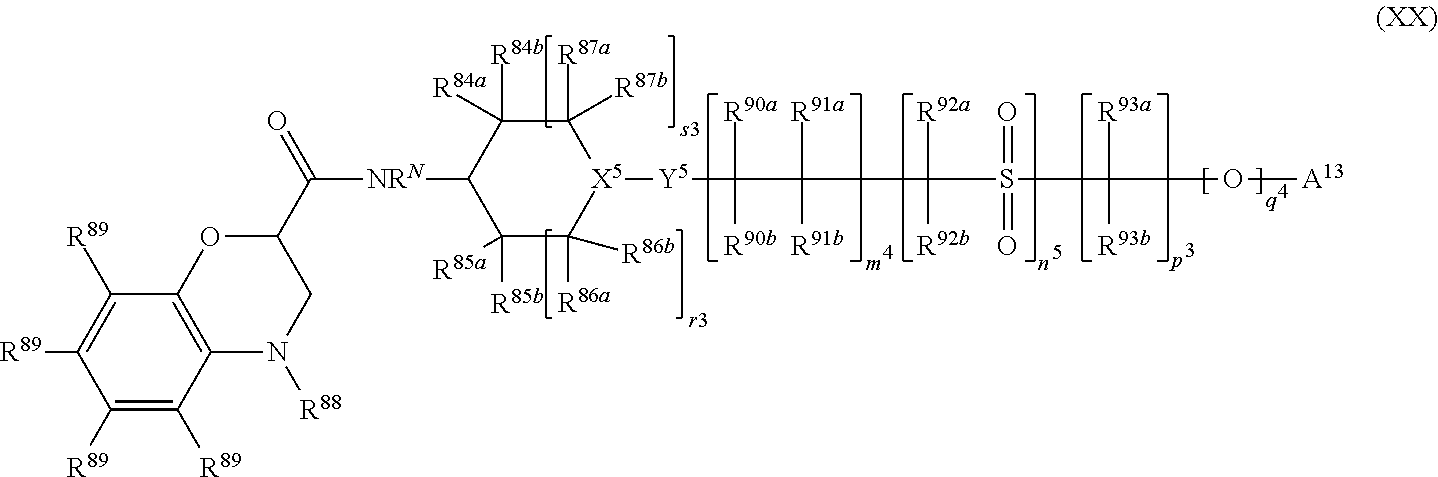
or a pharmaceutically acceptable salt thereof;
wherein:
-
- X5 is CH or N;
- Y5 is selected from the group consisting of a bond, NRY5, and O; provided that when X5 is N, then Y5 is a bond;
- RY5 is hydrogen or C1-C6 alkyl;
- RN is hydrogen or C1-C6 alkyl;
- m4, n5, p3, and q4, independently of each other, are 0 or 1;
- r3 and s3, independently of each other, are 0, 1, or 2;
- A13 is selected from the group consisting of:
- C6-C10 aryl optionally substituted with one or more R95 substituents; and
- 5-10 membered heteroaryl optionally substituted with one or more R95 substituents;
- R95 is selected, independently at each occurrence, from the group consisting of halogen, C1-C6 alkyl, C1-C6 haloalkyl, —OH, —O(C1-C6 alkyl), —O(C1-C6 haloalkyl), —SH, —S(C1-C6 alkyl), —S(C1-C6 haloalkyl), —NH2, —NH(C1-C6 alkyl), —NH(C1-C6 haloalkyl), —N(C1-C6 alkyl)2, —N(C1-C6 haloalkyl)2, —NR95-aR95-b, —CN, —C(O)OH, —C(O)O(C1-C6 alkyl), —C(O)O(C1-C6 haloalkyl), —C(O)NH2, —C(O)NH(C1-C6 alkyl), —C(O)NH(C1-C6 haloalkyl), —C(O)N(C1-C6 alkyl)2, —C(O)N(C1-C6 haloalkyl)2, —C(O)NR95aR95b, —S(O)2OH, —S(O)2O(C1-C6 alkyl), —S(O)2O(C1-C6 haloalkyl), —S(O)2NH2, —S(O)2NH(C1-C6 alkyl), —S(O)2NH(C1-C6 haloalkyl), —S(O)2N(C1-C6 alkyl)2, —S(O)2N(C1-C6 haloalkyl)2, —S(O)2NR95aR95b, —OC(O)H, —OC(O)(C1-C6 alkyl), —OC(O)(C1-C6 haloalkyl), —N(H)C(O)H, —N(H)C(O)(C1-C6 alkyl), —N(H)C(O)(C1-C6 haloalkyl), —N(C1-C6 alkyl)C(O)H, —N(C1-C6 alkyl)C(O)(C1-C6 alkyl), —N(C1-C6 alkyl)C(O)(C1-C6 haloalkyl), —N(C1-C6 haloalkyl)C(O)H, —N(C1-C6 haloalkyl)C(O)(C1-C6 alkyl), —N(C1-C6 haloalkyl)C(O)(C1-C6 haloalkyl), —OS(O)2(C1-C6 alkyl), —OS(O)2(C1-C6 haloalkyl), —N(H)S(O)2(C1-C6 alkyl), —N(H)S(O)2(C1-C6 haloalkyl), —N(C1-C6 alkyl)S(O)2(C1-C6 alkyl), —N(C1-C6 alkyl)S(O)2(C1-C6 haloalkyl), —N(C1-C6 haloalkyl)S(O)2(C1-C6 alkyl), and —N(C1-C6 haloalkyl)S(O)2(C1-C6 haloalkyl);
- wherein R95-a and R95-b are taken together with the nitrogen atom which bears them to form a 3-10 membered heterocycle;
- R84a and R84b are independently selected from the group consisting of hydrogen, C1-C6 alkyl, and halogen;
- R85a and R85b are independently selected from the group consisting of hydrogen, C1-C6 alkyl, and halogen;
- when present, R86a and R86b are independently at each occurrence selected from the group consisting of hydrogen, C1-C6 alkyl, and halogen;
- when present, R87a and R87b are independently at each occurrence selected from the group consisting of hydrogen, C1-C6 alkyl, and halogen;
- or, R84a and R85a are taken together to form a C1-C6 alkylene moiety;
- or, R84a and an R86a moiety, when present, are taken together to form a C1-C6 alkylene moiety;
- or, an R86a moiety, when present, and an R87a moiety, when present, are taken together to form a C1-C6 alkylene moiety;
- R88 is selected from the group consisting of hydrogen, C1-C6 alkyl, C1-C6 haloalkyl, —C(O)(C1-C6 alkyl), —C(O)(C1-C6 haloalkyl), —C(O)OH, —C(O)O(C1-C6 alkyl), —C(O)O(C1-C6 haloalkyl), —C(O)NH2, —C(O)NH(C1-C6 alkyl), —C(O)NH(C1-C6 haloalkyl), —C(O)N(C1-C6 alkyl)2, —C(O)N(C1-C6 haloalkyl)2, —C(O)NR88-aR88-b, —S(O)2OH, —S(O)2O(C1-C6 alkyl), —S(O)2O(C1-C6 haloalkyl), —S(O)2NH2, —S(O)2NH(C1-C6 alkyl), —S(O)2NH(C1-C6 haloalkyl), —S(O)2N(C1-C6 alkyl)2, —S(O)2N(C1-C6 haloalkyl)2, and —S(O)2NR88-aR88-b; wherein R88-a and R88-b are taken together with the nitrogen atom which bears them to form a 3-10 membered heterocycle;
- R89 is selected, independently at each occurrence, from the group consisting of hydrogen, halogen, C1-C6 alkyl, C1-C6 haloalkyl, —OH, —O(C1-C6 alkyl), —O(C1-C6 haloalkyl), —SH, —S(C1-C6 alkyl), —S(C1-C6 haloalkyl), —NH2, —NH(C1-C6 alkyl), —NH(C1-C6 haloalkyl), —N(C1-C6 alkyl)2, —N(C1-C6 haloalkyl)2, —NR89-aR89-b, —CN, —C(O)OH, —C(O)O(C1-C6 alkyl), —C(O)O(C1-C6 haloalkyl), —C(O)NH2, —C(O)NH(C1-C6 alkyl), —C(O)NH(C1-C6 haloalkyl), —C(O)N(C1-C6 alkyl)2, —C(O)N(C1-C6 haloalkyl)2, —C(O)NR89-aR89-b, —S(O)2OH, —S(O)2O(C1-C6 alkyl), —S(O)2O(C1-C6 haloalkyl), —S(O)2NH2, —S(O)2NH(C1-C6 alkyl), —S(O)2NH(C1-C6 haloalkyl), —S(O)2N(C1-C6 alkyl)2, —S(O)2N(C1-C6 haloalkyl)2, —S(O)2NR89-aR89-b, —OC(O)H, —OC(O)(C1-C6 alkyl), —OC(O)(C1-C6 haloalkyl), —N(H)C(O)H, —N(H)C(O)(C1-C6 alkyl), —N(H)C(O)(C1-C6 haloalkyl), —N(C1-C6 alkyl)C(O)H, —N(C1-C6 alkyl)C(O)(C1-C6 alkyl), —N(C1-C6 alkyl)C(O)(C1-C6 haloalkyl), —N(C1-C6 haloalkyl)C(O)H, —N(C1-C6 haloalkyl)C(O)(C1-C6 alkyl), —N(C1-C6 haloalkyl)C(O)(C1-C6 haloalkyl), —OS(O)2(C1-C6 alkyl), —OS(O)2(C1-C6 haloalkyl), —N(H)S(O)2(C1-C6 alkyl), —N(H)S(O)2(C1-C6 haloalkyl), —N(C1-C6 alkyl)S(O)2(C1-C6 alkyl), —N(C1-C6 alkyl)S(O)2(C1-C6 haloalkyl), —N(C1-C6 haloalkyl)S(O)2(C1-C6 alkyl), and —N(C1-C6 haloalkyl)S(O)2(C1-C6 haloalkyl);
- wherein R89-a and R89-b are taken together with the nitrogen atom which bears them to form a 3-10 membered heterocycle;
- when present, R90a and R90b are taken together to form an oxo (═O) substituent or an imido (═NH) substituent, or alternatively, R90a and R90b are both hydrogen; when present, R91a is selected from the group consisting of hydrogen, —OR91a-a, and —NR91a-bR91a-c;
- when present, R91b is hydrogen;
- or alternatively, R91a and R91b are taken together to form a moiety selected from the group consisting of —O—CH2—CH2—, —CH2—O—CH2—, —CH2—CH2—O—, —O—CH2—CH2—CH2—, —CH2—O—CH2—CH2—, —CH2—CH2—O—CH2—, —CH2—CH2—CH2—O—, —O—CH2—CH2—CH2—CH2—, —CH2—O—CH2—CH2—CH2—, —CH2—CH2—O—CH2—CH2—, —CH2—CH2—CH2—O—CH2—, and —CH2—CH2—CH2—CH2—O—;
- when present, R92a and R92b are both hydrogen;
- when present, R93a and R93b are taken together to form an oxo (═O) substituent, or alternatively, R93a and R93b are both hydrogen;
- R91a-a is selected from the group consisting of hydrogen, C1-C6 alkyl, and C1-C6 haloalkyl;
- or R91a-a and RY5 may be taken together to form a carbonyl (C═O) moiety; and
- R91a-b and R91a-c, independently of each other, are selected from the group consisting of hydrogen, C1-C6 alkyl, and C1-C6 haloalkyl;
- provided that when m4 is 0, n5 is 0, and q4 is 0, then p3 is 1 and A13 is a substituent of formula (A13-a)

-
-
- wherein
- represents the attachment point to the remainder of the molecule; Z14 is selected from the group consisting of CRZ14-1RZ14-2, NRZ14-2, C(RZ14-1RZ14-2)N(RZ14-2), O, C(RZ14-1RZ14-2)O, S, C(RZ14-1RZ14-2)S, and —CRZ14-1═CRZ14-1—;
- wherein RZ14-1 is hydrogen or R16; and RZ14-2 is hydrogen or R95;
- Z15 is selected from the group consisting of CRZ15-1RZ15-2, NRZ15-2, C(RZ15-1RZ15-2)N(RZ15-2), O, C(RZ15-1RZ15-2)O, S, C(RZ15-1RZ15-2)S, and —CRZ15-1═CRZ15-1—;
- wherein RZ15-1 is hydrogen or R95; and RZ15-2 is hydrogen or R95;
- Z16, independently at each occurrence, is CH, CR95, or N;
- R94 is hydrogen or R95, or R94 and RZ14-2 are taken together to form a double bond between the carbon atom bearing R94 and Z14, or R94 and RZ15-2 are taken together to form a double bond between the carbon atom bearing R94 and Z15; and
- x23 is 0, 1, 2, 3, or 4.
- represents the attachment point to the remainder of the molecule; Z14 is selected from the group consisting of CRZ14-1RZ14-2, NRZ14-2, C(RZ14-1RZ14-2)N(RZ14-2), O, C(RZ14-1RZ14-2)O, S, C(RZ14-1RZ14-2)S, and —CRZ14-1═CRZ14-1—;
- wherein
-

or a pharmaceutically acceptable salt thereof;
wherein:
-
- X2 is CH;
- RY1 is hydrogen or C1-C6 alkyl;
- Y2 is selected from the group consisting of NRY2 and O;
- RY2 is hydrogen or C1-C6 alkyl;
- q is 1;
- r and s, independently of each other, are 0, 1, or 2;
- A1 is a substituent of formula (A1-a)

-
-
- wherein
- represents the attachment point to the remainder of the molecule; Z1 is selected from the group consisting of CRZ1-1RZ1-2, NRZ1-2, O, S, and —CRZ1-1═CRZ1-1—;
- wherein
R Z1_1 is H or R14; and RZ1-2 is H or R14;
- wherein
- Z2 is selected from the group consisting of CRZ2-1RZ2-2, NRZ2-2; O, S, and —CRZ2-1═CRZ2-1—;
- wherein RZ2-1 is H or R14; and RZ2-2 is H or R14;
- Z3, independently at each occurrence, is C or N, provided that at least one Z3 is C;
- R13 is hydrogen or R14, or R13 and RZ1-2 are taken together to form a double bond between the carbon atom bearing R and Z, or R and R are taken together to form a double bond between the carbon atom bearing R13 and Z2; and
- x1 is 1, 2, 3, or 4, and at least one R14 is halogen;
- represents the attachment point to the remainder of the molecule; Z1 is selected from the group consisting of CRZ1-1RZ1-2, NRZ1-2, O, S, and —CRZ1-1═CRZ1-1—;
- wherein
- R14 is selected, independently at each occurrence, from the group consisting of halogen, C1-C6 alkyl, C1-C6 haloalkyl, —OH, —O(C1-C6 alkyl), —O(C1-C6 haloalkyl), —SH, —S(C1-C6 alkyl), —S(C1-C6 haloalkyl), —NH2, —NH(C1-C6 alkyl), —NH(C1-C6 haloalkyl), —N(C1-C6 alkyl)2, —N(C1-C6 haloalkyl)2, —NR14-aR14-b, —CN, —C(O)OH, —C(O)O(C1-C6 alkyl), —C(O)O(C1-C6 haloalkyl), —C(O)NH2, —C(O)NH(C1-C6 alkyl), —C(O)NH(C1-C6 haloalkyl), —C(O)N(C1-C6 alkyl)2, —C(O)N(C1-C6 haloalkyl)2, —C(O)NR14-aR14-b, —S(O)2OH, —S(O)2O(C1-C6 alkyl), —S(O)2O(C1-C6 haloalkyl), —S(O)2NH2, —S(O)2NH(C1-C6 alkyl), —S(O)2NH(C1-C6 haloalkyl), —S(O)2N(C1-C6 alkyl)2, —S(O)2N(C1-C6 haloalkyl)2, —S(O)2NR14-aR14-b, —OC(O)H, —OC(O)(C1-C6 alkyl), —OC(O)(C1-C6 haloalkyl), —N(H)C(O)H, —N(H)C(O)(C1-C6 alkyl), —N(H)C(O)(C1-C6 haloalkyl), —N(C1-C6 alkyl)C(O)H, —N(C1-C6 alkyl)C(O)(C1-C6 alkyl), —N(C1-C6 alkyl)C(O)(C1-C6 haloalkyl), —N(C1-C6 haloalkyl)C(O)H, —N(C1-C6 haloalkyl)C(O)(C1-C6 alkyl), —N(C1-C6 haloalkyl)C(O)(C1-C6 haloalkyl), —OS(O)2(C1-C6 alkyl), —OS(O)2(C1-C6 haloalkyl), —N(H)S(O)2(C1-C6 alkyl), —N(H)S(O)2(C1-C6 haloalkyl), —N(C1-C6 alkyl)S(O)2(C1-C6 alkyl), —N(C1-C6 alkyl)S(O)2(C1-C6 haloalkyl), —N(C1-C6 haloalkyl)S(O)2(C1-C6 alkyl), and —N(C1-C6 haloalkyl)S(O)2(C1-C6 haloalkyl);
- wherein R14-a and R14-b are taken together with the nitrogen atom which bears them to form a 3-10 membered heterocycle;
- A2 is C6-C10 aryl substituted by at least one halogen substituent and optionally further substituted with one or more R16 substituents, or 5-10 membered heteroaryl substituted by at least one halogen substituent and optionally further substituted with one or more R16 substituents;
- R16 is selected, independently at each occurrence, from the group consisting of halogen, C1-C6 alkyl, C1-C6 haloalkyl, —OH, —O(C1-C6 alkyl), —O(C1-C6 haloalkyl), —SH, —S(C1-C6 alkyl), —S(C1-C6 haloalkyl), —NH2, —NH(C1-C6 alkyl), —NH(C1-C6 haloalkyl), —N(C1-C6 alkyl)2, —N(C1-C6 haloalkyl)2, —NR16-aR16-b, —CN, —C(O)OH, —C(O)O(C1-C6 alkyl), —C(O)O(C1-C6 haloalkyl), —C(O)NH2, —C(O)NH(C1-C6 alkyl), —C(O)NH(C1-C6 haloalkyl), —C(O)N(C1-C6 alkyl)2, —C(O)N(C1-C6 haloalkyl)2, —C(O)NR16-aR16-b, —S(O)2OH, —S(O)2O(C1-C6 alkyl), —S(O)2O(C1-C6 haloalkyl), —S(O)2NH2, —S(O)2NH(C1-C6 alkyl), —S(O)2NH(C1-C6 haloalkyl), —S(O)2N(C1-C6 alkyl)2, —S(O)2N(C1-C6 haloalkyl)2, —S(O)2NR16aR16b, —OC(O)H, —OC(O)(C1-C6 alkyl), —OC(O)(C1-C6 haloalkyl), —N(H)C(O)H, —N(H)C(O)(C1-C6 alkyl), —N(H)C(O)(C1-C6 haloalkyl), —N(C1-C6 alkyl)C(O)H, —N(C1-C6 alkyl)C(O)(C1-C6 alkyl), —N(C1-C6 alkyl)C(O)(C1-C6 haloalkyl), —N(C1-C6 haloalkyl)C(O)H, —N(C1-C6 haloalkyl)C(O)(C1-C6 alkyl), —N(C1-C6 haloalkyl)C(O)(C1-C6 haloalkyl), —OS(O)2(C1-C6 alkyl), —OS(O)2(C1-C6 haloalkyl), —N(H)S(O)2(C1-C6 alkyl), —N(H)S(O)2(C1-C6 haloalkyl), —N(C1-C6 alkyl)S(O)2(C1-C6 alkyl), —N(C1-C6 alkyl)S(O)2(C1-C6 haloalkyl), —N(C1-C6 haloalkyl)S(O)2(C1-C6 alkyl), and —N(C1-C6 haloalkyl)S(O)2(C1-C6 haloalkyl);
- wherein R16-a and R16-b are taken together with the nitrogen atom which bears them to form a 3-10 membered heterocycle;
- R1a and R1b are independently selected from the group consisting of hydrogen, C1-C6 alkyl, and halogen;
- R2a and R2b are independently selected from the group consisting of hydrogen, C1-C6 alkyl, and halogen;
- when present, R3a and R3b are independently at each occurrence selected from the group consisting of hydrogen, C1-C6 alkyl, and halogen;
- when present, R4a and R4b are independently at each occurrence selected from the group consisting of hydrogen, C1-C6 alkyl, and halogen;
- or alternatively, R1a and R2a are taken together to form a C1-C6 alkylene moiety;
- or alternatively, R1a and an R3a moiety, when present, are taken together to form a C1-C6 alkylene moiety, and R1b and the R3b in the geminal position to the R3a taken together with R1a, are both hydrogen;
- or alternatively, an R3a moiety, when present, and an R4a moiety, when present, are taken together to form a C1-C6 alkylene moiety, and the R3b in the geminal position to the R3a taken together with the R4a moiety and the R4b in the geminal position to the R4a taken together with the R3a moiety, are both hydrogen;
- R9a and R9b are taken together to form an oxo (═O) substituent or an imido (═NH) substituent;
- R10a is hydrogen; and
- R10b is hydrogen.
-

or a pharmaceutically acceptable salt thereof;
wherein:
-
- X2 is CH or N;
- RY1 is hydrogen or C1-C6 alkyl;
- Y2 is selected from the group consisting of a bond, NRY2, and O; provided that when X2 is N, then Y2 is a bond;
- RY2 is hydrogen or C1-C6 alkyl;
- r and s, independently of each other, are 0, 1, or 2;
- A1 is selected from the group consisting of:
- a substituent of formula (A1-a)

-
-
-
- wherein
- represents the attachment point to the remainder of the molecule;
- Z1 is selected from the group consisting of CRZ1-1RZ1-2, NRZ1-2, O, S, and —CRZ1-1═CRZ1-1—;
- wherein
R Z1_1 is H or R14; and RZ1-2 is H or R14; - Z2 is selected from the group consisting of CRZ2-1RZ2-2, NRZ2-2; O, S, and —CRZ2-1═CRZ2-1—;
- wherein RZ2-1 is H or R14; and RZ2-2 is H or R14;
- Z3, independently at each occurrence, is C or N, provided that at least one Z3 is C;
- R13 is hydrogen or R14, or R13 and RZ1-2 are taken together to form a double bond between the carbon atom bearing R and Z, or R and R are taken together to form a double bond between the carbon atom bearing R13 and Z2; and
- x1 is 1, 2, 3, or 4, and at least one R14 is halogen;
- wherein
-
- R14 is selected, independently at each occurrence, from the group consisting of halogen, C1-C6 alkyl, C1-C6 haloalkyl, —OH, —O(C1-C6 alkyl), —O(C1-C6 haloalkyl), —SH, —S(C1-C6 alkyl), —S(C1-C6 haloalkyl), —NH2, —NH(C1-C6 alkyl), —NH(C1-C6 haloalkyl), —N(C1-C6 alkyl)2, —N(C1-C6 haloalkyl)2, —NR14-aR14-b, —CN, —C(O)OH, —C(O)O(C1-C6 alkyl), —C(O)O(C1-C6 haloalkyl), —C(O)NH2, —C(O)NH(C1-C6 alkyl), —C(O)NH(C1-C6 haloalkyl), —C(O)N(C1-C6 alkyl)2, —C(O)N(C1-C6 haloalkyl)2, —C(O)NR14-aR14-b, —S(O)2OH, —S(O)2O(C1-C6 alkyl), —S(O)2O(C1-C6 haloalkyl), —S(O)2NH2, —S(O)2NH(C1-C6 alkyl), —S(O)2NH(C1-C6 haloalkyl), —S(O)2N(C1-C6 alkyl)2, —S(O)2N(C1-C6 haloalkyl)2, —S(O)2NR14-aR14-b, —OC(O)H, —OC(O)(C1-C6 alkyl), —OC(O)(C1-C6 haloalkyl), —N(H)C(O)H, —N(H)C(O)(C1-C6 alkyl), —N(H)C(O)(C1-C6 haloalkyl), —N(C1-C6 alkyl)C(O)H, —N(C1-C6 alkyl)C(O)(C1-C6 alkyl), —N(C1-C6 alkyl)C(O)(C1-C6 haloalkyl), —N(C1-C6 haloalkyl)C(O)H, —N(C1-C6 haloalkyl)C(O)(C1-C6 alkyl), —N(C1-C6 haloalkyl)C(O)(C1-C6 haloalkyl), —OS(O)2(C1-C6 alkyl), —OS(O)2(C1-C6 haloalkyl), —N(H)S(O)2(C1-C6 alkyl), —N(H)S(O)2(C1-C6 haloalkyl), —N(C1-C6 alkyl)S(O)2(C1-C6 alkyl), —N(C1-C6 alkyl)S(O)2(C1-C6 haloalkyl), —N(C1-C6 haloalkyl)S(O)2(C1-C6 alkyl), and —N(C1-C6 haloalkyl)S(O)2(C1-C6 haloalkyl);
- wherein R14-a and R14-b are taken together with the nitrogen atom which bears them to form a 3-10 membered heterocycle;
- A2 is C6-C10 aryl substituted by at least one halogen substituent and optionally further substituted with one or more R16 substituents, or 5-10 membered heteroaryl substituted by at least one halogen substituent and optionally further substituted with one or more R16 substituents;
- R16 is selected, independently at each occurrence, from the group consisting of halogen, C1-C6 alkyl, C1-C6 haloalkyl, —OH, —O(C1-C6 alkyl), —O(C1-C6 haloalkyl), —SH, —S(C1-C6 alkyl), —S(C1-C6 haloalkyl), —NH2, —NH(C1-C6 alkyl), —NH(C1-C6 haloalkyl), —N(C1-C6 alkyl)2, —N(C1-C6 haloalkyl)2, —NR16-aR16-b, —CN, —C(O)OH, —C(O)O(C1-C6 alkyl), —C(O)O(C1-C6 haloalkyl), —C(O)NH2, —C(O)NH(C1-C6 alkyl), —C(O)NH(C1-C6 haloalkyl), —C(O)N(C1-C6 alkyl)2, —C(O)N(C1-C6 haloalkyl)2, —C(O)NR16-aR16-b, —S(O)2OH, —S(O)2O(C1-C6 alkyl), —S(O)2O(C1-C6 haloalkyl), —S(O)2NH2, —S(O)2NH(C1-C6 alkyl), —S(O)2NH(C1-C6 haloalkyl), —S(O)2N(C1-C6 alkyl)2, —S(O)2N(C1-C6 haloalkyl)2, —S(O)2NR16-aR16-b, —OC(O)H, —OC(O)(C1-C6 alkyl), —OC(O)(C1-C6 haloalkyl), —N(H)C(O)H, —N(H)C(O)(C1-C6 alkyl), —N(H)C(O)(C1-C6 haloalkyl), —N(C1-C6 alkyl)C(O)H, —N(C1-C6 alkyl)C(O)(C1-C6 alkyl), —N(C1-C6 alkyl)C(O)(C1-C6 haloalkyl), —N(C1-C6 haloalkyl)C(O)H, —N(C1-C6 haloalkyl)C(O)(C1-C6 alkyl), —N(C1-C6 haloalkyl)C(O)(C1-C6 haloalkyl), —OS(O)2(C1-C6 alkyl), —OS(O)2(C1-C6 haloalkyl), —N(H)S(O)2(C1-C6 alkyl), —N(H)S(O)2(C1-C6 haloalkyl), —N(C1-C6 alkyl)S(O)2(C1-C6 alkyl), —N(C1-C6 alkyl)S(O)2(C1-C6 haloalkyl), —N(C1-C6 haloalkyl)S(O)2(C1-C6 alkyl), and —N(C1-C6 haloalkyl)S(O)2(C1-C6 haloalkyl);
- wherein R16-a and R16-b are taken together with the nitrogen atom which bears them to form a 3-10 membered heterocycle;
- R1a and R1b are independently selected from the group consisting of hydrogen, C1-C6 alkyl, and halogen;
- R2a and R2b are independently selected from the group consisting of hydrogen, C1-C6 alkyl, and halogen;
- when present, R3a and R3b are independently at each occurrence selected from the group consisting of hydrogen, C1-C6 alkyl, and halogen;
- when present, R4a and R4b are independently at each occurrence selected from the group consisting of hydrogen, C1-C6 alkyl, and halogen;
- or alternatively, R1a and R2a are taken together to form a C1-C6 alkylene moiety;
- or alternatively, R1a and an R3a moiety, when present, are taken together to form a C1-C6 alkylene moiety, and R1b and the R3b in the geminal position to the R3a taken together with R1a, are both hydrogen;
- or alternatively, an R3a moiety, when present, and an R4a moiety, when present, are taken together to form a C1-C6 alkylene moiety, and the R3b in the geminal position to the R3a taken together with the R4a moiety and the R4b in the geminal position to the R4a taken together with the R3a moiety, are both hydrogen;
- R9a and R9b are taken together to form an oxo (═O) substituent or an imido (═NH) substituent, or alternatively, R9a and R9b are both hydrogen;
- R10a is selected from the group consisting of hydrogen, —OR10a-a, and —NR10a-bR10a-c;
- R10b is hydrogen;
- R12a and R12b are taken together to form an oxo (═O) substituent, or alternatively, R12a and R12b are both hydrogen;
- R10a-a is selected from the group consisting of hydrogen, C1-C6 alkyl, and C1-C6 haloalkyl;
- or R10a-a and RY2 may be taken together to form a carbonyl (C═O) moiety; and
- R10a-b and R10a-c, independently of each other, are selected from the group consisting of hydrogen, C1-C6 alkyl, and C1-C6 haloalkyl.
-

or a pharmaceutically acceptable salt thereof;
wherein:
-
- X1 and X2, independently of each other, are CH or N; provided that at least one of X1 and X2 is CH;
- Y1 is selected from the group consisting of a bond, NRY1, and O; provided that when X1 is N, then Y1 is a bond;
- RY1 is hydrogen or C1-C6 alkyl;
- Y2 is selected from the group consisting of a bond, NRY2, and O; provided that when X2 is N, then Y2 is a bond;
- RY2 is hydrogen or C1-C6 alkyl;
- q1 is 1;
- r and s, independently of each other, are 0, 1, or 2;
- A1 is C6-C10 aryl substituted by at least one halogen substituent and optionally further substituted with one or more R14 substituents, or 5-10 membered heteroaryl substituted by at least one halogen substituent and optionally further substituted with one or more R14 substituents;
- R14 is selected, independently at each occurrence, from the group consisting of halogen, C1-C6 alkyl, C1-C6 haloalkyl, —OH, —O(C1-C6 alkyl), —O(C1-C6 haloalkyl), —SH, —S(C1-C6 alkyl), —S(C1-C6 haloalkyl), —NH2, —NH(C1-C6 alkyl), —NH(C1-C6 haloalkyl), —N(C1-C6 alkyl)2, —N(C1-C6 haloalkyl)2, —NR14-aR14-b, —CN, —C(O)OH, —C(O)O(C1-C6 alkyl), —C(O)O(C1-C6 haloalkyl), —C(O)NH2, —C(O)NH(C1-C6 alkyl), —C(O)NH(C1-C6 haloalkyl), —C(O)N(C1-C6 alkyl)2, —C(O)N(C1-C6 haloalkyl)2, —C(O)NR14-aR14-b, —S(O)2OH, —S(O)2O(C1-C6 alkyl), —S(O)2O(C1-C6 haloalkyl), —S(O)2NH2, —S(O)2NH(C1-C6 alkyl), —S(O)2NH(C1-C6 haloalkyl), —S(O)2N(C1-C6 alkyl)2, —S(O)2N(C1-C6 haloalkyl)2, —S(O)2NR14-aR14-b, —OC(O)H, —OC(O)(C1-C6 alkyl), —OC(O)(C1-C6 haloalkyl), —N(H)C(O)H, —N(H)C(O)(C1-C6 alkyl), —N(H)C(O)(C1-C6 haloalkyl), —N(C1-C6 alkyl)C(O)H, —N(C1-C6 alkyl)C(O)(C1-C6 alkyl), —N(C1-C6 alkyl)C(O)(C1-C6 haloalkyl), —N(C1-C6 haloalkyl)C(O)H, —N(C1-C6 haloalkyl)C(O)(C1-C6 alkyl), —N(C1-C6 haloalkyl)C(O)(C1-C6 haloalkyl), —OS(O)2(C1-C6 alkyl), —OS(O)2(C1-C6 haloalkyl), —N(H)S(O)2(C1-C6 alkyl), —N(H)S(O)2(C1-C6 haloalkyl), —N(C1-C6 alkyl)S(O)2(C1-C6 alkyl), —N(C1-C6 alkyl)S(O)2(C1-C6 haloalkyl), —N(C1-C6 haloalkyl)S(O)2(C1-C6 alkyl), and —N(C1-C6 haloalkyl)S(O)2(C1-C6 haloalkyl);
- wherein R14-a and R14-b are taken together with the nitrogen atom which bears them to form a 3-10 membered heterocycle;
- A2 is C6-C10 aryl substituted by at least one halogen substituent and optionally further substituted with one or more R16 substituents, or 5-10 membered heteroaryl substituted by at least one halogen substituent and optionally further substituted with one or more R16 substituents;
- R16 is selected, independently at each occurrence, from the group consisting of halogen, C1-C6 alkyl, C1-C6 haloalkyl, —OH, —O(C1-C6 alkyl), —O(C1-C6 haloalkyl), —SH, —S(C1-C6 alkyl), —S(C1-C6 haloalkyl), —NH2, —NH(C1-C6 alkyl), —NH(C1-C6 haloalkyl), —N(C1-C6 alkyl)2, —N(C1-C6 haloalkyl)2, —NR16-aR16-b, —CN, —C(O)OH, —C(O)O(C1-C6 alkyl), —C(O)O(C1-C6 haloalkyl), —C(O)NH2, —C(O)NH(C1-C6 alkyl), —C(O)NH(C1-C6 haloalkyl), —C(O)N(C1-C6 alkyl)2, —C(O)N(C1-C6 haloalkyl)2, —C(O)NR16-aR16-b, —S(O)2OH, —S(O)2O(C1-C6 alkyl), —S(O)2O(C1-C6 haloalkyl), —S(O)2NH2, —S(O)2NH(C1-C6 alkyl), —S(O)2NH(C1-C6 haloalkyl), —S(O)2N(C1-C6 alkyl)2, —S(O)2N(C1-C6 haloalkyl)2, —S(O)2NR16-aR16-b, —OC(O)H, —OC(O)(C1-C6 alkyl), —OC(O)(C1-C6 haloalkyl), —N(H)C(O)H, —N(H)C(O)(C1-C6 alkyl), —N(H)C(O)(C1-C6 haloalkyl), —N(C1-C6 alkyl)C(O)H, —N(C1-C6 alkyl)C(O)(C1-C6 alkyl), —N(C1-C6 alkyl)C(O)(C1-C6 haloalkyl), —N(C1-C6 haloalkyl)C(O)H, —N(C1-C6 haloalkyl)C(O)(C1-C6 alkyl), —N(C1-C6 haloalkyl)C(O)(C1-C6 haloalkyl), —OS(O)2(C1-C6 alkyl), —OS(O)2(C1-C6 haloalkyl), —N(H)S(O)2(C1-C6 alkyl), —N(H)S(O)2(C1-C6 haloalkyl), —N(C1-C6 alkyl)S(O)2(C1-C6 alkyl), —N(C1-C6 alkyl)S(O)2(C1-C6 haloalkyl), —N(C1-C6 haloalkyl)S(O)2(C1-C6 alkyl), and —N(C1-C6 haloalkyl)S(O)2(C1-C6 haloalkyl);
- wherein R16-a and R16-b are taken together with the nitrogen atom which bears them to form a 3-10 membered heterocycle;
- R1a and R1b are independently selected from the group consisting of hydrogen, C1-C6 alkyl, and halogen;
- R2a and R2b are independently selected from the group consisting of hydrogen, C1-C6 alkyl, and halogen;
- when present, R3a and R3b are independently at each occurrence selected from the group consisting of hydrogen, C1-C6 alkyl, and halogen;
- when present, R4a and R4b are independently at each occurrence selected from the group consisting of hydrogen, C1-C6 alkyl, and halogen;
- or alternatively, R1a and R2a are taken together to form a C1-C6 alkylene moiety;
- or alternatively, R1a and an R3a moiety, when present, are taken together to form a C1-C6 alkylene moiety, and R1b and the R3b in the geminal position to the R3a taken together with R1a, are both hydrogen;
- or alternatively, an R3a moiety, when present, and an R4a moiety, when present, are taken together to form a C1-C6 alkylene moiety, and the R3b in the geminal position to the R3a taken together with the R4a moiety and the R4b in the geminal position to the R4a taken together with the R3a moiety, are both hydrogen;
- R5a and R5b are taken together to form an oxo (═O) substituent or an imido (═NH) substituent;
- R6a is hydrogen;
- R6b is hydrogen;
- R9a and R9b are taken together to form an oxo (═O) substituent or an imido (═NH) substituent, or alternatively, R9a and R9b are both hydrogen;
- R10a is selected from the group consisting of hydrogen, —OR10a-a, and —NR10a-bR10a-c;
- R10b is hydrogen;
- R12a and R12b are taken together to form an oxo (═O) substituent, or alternatively, R12a and R12b are both hydrogen;
- R10a-a is selected from the group consisting of hydrogen, C1-C6 alkyl, and C1-C6 haloalkyl;
- or R10a-a and RY2 may be taken together to form a carbonyl (C═O) moiety;
- R10a-b and R10a-c, independently of each other, are selected from the group consisting of hydrogen, C1-C6 alkyl, and C1-C6 haloalkyl; and
- provided that when X2 is N, then:
- A1 is C6-C10 aryl substituted by at least two halogen substituents and optionally further substituted with one or more R14 substituents, or 5-10 membered heteroaryl substituted by at least two halogen substituents and optionally further substituted with one or more R14 substituents; and
- A2 is C6-C10 aryl substituted by at least two halogen substituents and optionally further substituted with one or more R16 substituents, or 5-10 membered heteroaryl substituted by at least two halogen substituents and optionally further substituted with one or more R16 substituents.
-
- X1 is CH;
- X2 is N;
- A1 is C6-C10 aryl substituted by at least two halogen substituents and optionally further substituted with one or more R14 substituents, or 5-10 membered heteroaryl substituted by at least two halogen substituents and optionally further substituted with one or more R14 substituents; and
- A2 is C6-C10 aryl substituted by at least two halogen substituents and optionally further substituted with one or more R16 substituents, or 5-10 membered heteroaryl substituted by at least two halogen substituents and optionally further substituted with one or more R16 substituents.

or a pharmaceutically acceptable salt thereof;
wherein:
-
- X5 is CH or N;
- Y5 is selected from the group consisting of a bond, NRY5, and O; provided that when X5 is N, then Y5 is a bond;
- RY5 is hydrogen or C1-C6 alkyl;
- RN is hydrogen or C1-C6 alkyl;
- m4, n5, p3, and q4, independently of each other, are 0 or 1;
- r3 and s3, independently of each other, are 0, 1, or 2;
- A13 is selected from the group consisting of:
- C6-C10 aryl optionally substituted with one or more R95 substituents; and
- 5-10 membered heteroaryl optionally substituted with one or more R95 substituents;
- R95 is selected, independently at each occurrence, from the group consisting of halogen, C1-C6 alkyl, C1-C6 haloalkyl, —OH, —O(C1-C6 alkyl), —O(C1-C6 haloalkyl), —SH, —S(C1-C6 alkyl), —S(C1-C6 haloalkyl), —NH2, —NH(C1-C6 alkyl), —NH(C1-C6 haloalkyl), —N(C1-C6 alkyl)2, —N(C1-C6 haloalkyl)2, —NR95-aR95-b, —CN, —C(O)OH, —C(O)O(C1-C6 alkyl), —C(O)O(C1-C6 haloalkyl), —C(O)NH2, —C(O)NH(C1-C6 alkyl), —C(O)NH(C1-C6 haloalkyl), —C(O)N(C1-C6 alkyl)2, —C(O)N(C1-C6 haloalkyl)2, —C(O)NR95aR95b, —S(O)2OH, —S(O)2O(C1-C6 alkyl), —S(O)2O(C1-C6 haloalkyl), —S(O)2NH2, —S(O)2NH(C1-C6 alkyl), —S(O)2NH(C1-C6 haloalkyl), —S(O)2N(C1-C6 alkyl)2, —S(O)2N(C1-C6 haloalkyl)2, —S(O)2NR95aR95b, —OC(O)H, —OC(O)(C1-C6 alkyl), —OC(O)(C1-C6 haloalkyl), —N(H)C(O)H, —N(H)C(O)(C1-C6 alkyl), —N(H)C(O)(C1-C6 haloalkyl), —N(C1-C6 alkyl)C(O)H, —N(C1-C6 alkyl)C(O)(C1-C6 alkyl), —N(C1-C6 alkyl)C(O)(C1-C6 haloalkyl), —N(C1-C6 haloalkyl)C(O)H, —N(C1-C6 haloalkyl)C(O)(C1-C6 alkyl), —N(C1-C6 haloalkyl)C(O)(C1-C6 haloalkyl), —OS(O)2(C1-C6 alkyl), —OS(O)2(C1-C6 haloalkyl), —N(H)S(O)2(C1-C6 alkyl), —N(H)S(O)2(C1-C6 haloalkyl), —N(C1-C6 alkyl)S(O)2(C1-C6 alkyl), —N(C1-C6 alkyl)S(O)2(C1-C6 haloalkyl), —N(C1-C6 haloalkyl)S(O)2(C1-C6 alkyl), and —N(C1-C6 haloalkyl)S(O)2(C1-C6 haloalkyl);
- wherein R95-a and R95-b are taken together with the nitrogen atom which bears them to form a 3-10 membered heterocycle;
- R84a and R84b are independently selected from the group consisting of hydrogen, C1-C6 alkyl, and halogen;
- R85a and R85b are independently selected from the group consisting of hydrogen, C1-C6 alkyl, and halogen;
- when present, R86a and R86b are independently at each occurrence selected from the group consisting of hydrogen, C1-C6 alkyl, and halogen;
- when present, R87a and R87b are independently at each occurrence selected from the group consisting of hydrogen, C1-C6 alkyl, and halogen;
- or, R84a and R85a are taken together to form a C1-C6 alkylene moiety;
- or, R84a and an R86a moiety, when present, are taken together to form a C1-C6 alkylene moiety;
- or, an R86a moiety, when present, and an R87a moiety, when present, are taken together to form a C1-C6 alkylene moiety;
- R88 is selected from the group consisting of hydrogen, C1-C6 alkyl, C1-C6 haloalkyl, —C(O)(C1-C6 alkyl), —C(O)(C1-C6 haloalkyl), —C(O)OH, —C(O)O(C1-C6 alkyl), —C(O)O(C1-C6 haloalkyl), —C(O)NH2, —C(O)NH(C1-C6 alkyl), —C(O)NH(C1-C6 haloalkyl), —C(O)N(C1-C6 alkyl)2, —C(O)N(C1-C6 haloalkyl)2, —C(O)NR88-aR88-b, —S(O)2OH, —S(O)2O(C1-C6 alkyl), —S(O)2O(C1-C6 haloalkyl), —S(O)2NH2, —S(O)2NH(C1-C6 alkyl), —S(O)2NH(C1-C6 haloalkyl), —S(O)2N(C1-C6 alkyl)2, —S(O)2N(C1-C6 haloalkyl)2, and —S(O)2NR88-aR88-b; wherein R88-a and R88-b are taken together with the nitrogen atom which bears them to form a 3-10 membered heterocycle;
- R89 is selected, independently at each occurrence, from the group consisting of hydrogen, halogen, C1-C6 alkyl, C1-C6 haloalkyl, —OH, —O(C1-C6 alkyl), —O(C1-C6 haloalkyl), —SH, —S(C1-C6 alkyl), —S(C1-C6 haloalkyl), —NH2, —NH(C1-C6 alkyl), —NH(C1-C6 haloalkyl), —N(C1-C6 alkyl)2, —N(C1-C6 haloalkyl)2, —NR89-aR89-b, —CN, —C(O)OH, —C(O)O(C1-C6 alkyl), —C(O)O(C1-C6 haloalkyl), —C(O)NH2, —C(O)NH(C1-C6 alkyl), —C(O)NH(C1-C6 haloalkyl), —C(O)N(C1-C6 alkyl)2, —C(O)N(C1-C6 haloalkyl)2, —C(O)NR89-aR89-b, —S(O)2OH, —S(O)2O(C1-C6 alkyl), —S(O)2O(C1-C6 haloalkyl), —S(O)2NH2, —S(O)2NH(C1-C6 alkyl), —S(O)2NH(C1-C6 haloalkyl), —S(O)2N(C1-C6 alkyl)2, —S(O)2N(C1-C6 haloalkyl)2, —S(O)2NR89-aR89-b, —OC(O)H, —OC(O)(C1-C6 alkyl), —OC(O)(C1-C6 haloalkyl), —N(H)C(O)H, —N(H)C(O)(C1-C6 alkyl), —N(H)C(O)(C1-C6 haloalkyl), —N(C1-C6 alkyl)C(O)H, —N(C1-C6 alkyl)C(O)(C1-C6 alkyl), —N(C1-C6 alkyl)C(O)(C1-C6 haloalkyl), —N(C1-C6 haloalkyl)C(O)H, —N(C1-C6 haloalkyl)C(O)(C1-C6 alkyl), —N(C1-C6 haloalkyl)C(O)(C1-C6 haloalkyl), —OS(O)2(C1-C6 alkyl), —OS(O)2(C1-C6 haloalkyl), —N(H)S(O)2(C1-C6 alkyl), —N(H)S(O)2(C1-C6 haloalkyl), —N(C1-C6 alkyl)S(O)2(C1-C6 alkyl), —N(C1-C6 alkyl)S(O)2(C1-C6 haloalkyl), —N(C1-C6 haloalkyl)S(O)2(C1-C6 alkyl), and —N(C1-C6 haloalkyl)S(O)2(C1-C6 haloalkyl);
- wherein R89-a and R89-b are taken together with the nitrogen atom which bears them to form a 3-10 membered heterocycle;
- when present, R90a and R90b are taken together to form an oxo (═O) substituent or an imido (═NH) substituent, or alternatively, R90a and R90b are both hydrogen;
- when present, R91a is selected from the group consisting of hydrogen, —OR91a-a, and —NR91a-bR91a-c;
- when present, R91b is hydrogen;
- or alternatively, R91a and R91b are taken together to form a moiety selected from the group consisting of —O—CH2—CH2—, —CH2—O—CH2—, —CH2—CH2—O—, —O—CH2—CH2—CH2—, —CH2—O—CH2—CH2—, —CH2—CH2—O—CH2—, —CH2—CH2—CH2—O—, —O—CH2—CH2—CH2—CH2—, —CH2—O—CH2—CH2—CH2—, —CH2—CH2—O—CH2—CH2—, —CH2—CH2—CH2—O—CH2—, and —CH2—CH2—CH2—CH2—O—;
- when present, R92a and R92b are both hydrogen;
- when present, R93a and R93b are taken together to form an oxo (═O) substituent, or alternatively, R93a and R93b are both hydrogen;
- R91a-a is selected from the group consisting of hydrogen, C1-C6 alkyl, and C1-C6 haloalkyl;
- or R91a-a and RY5 may be taken together to form a carbonyl (C═O) moiety; and
- R91a-b and R91a-c, independently of each other, are selected from the group consisting of hydrogen, C1-C6 alkyl, and C1-C6 haloalkyl;
- provided that when m4 is 0, n5 is 0, and q4 is 0, then p3 is 1 and A13 is a substituent of formula (A13-a)

-
-
- wherein
- represents the attachment point to the remainder of the molecule;
- Z14 is selected from the group consisting of CRZ14-1RZ14-2, NRZ14-2, C(RZ14-1RZ14-2)N(RZ14-2), O, C(RZ14-1RZ14-2)O, S, C(RZ14-1RZ14-2)S, and —CRZ14-1═CRz141—;
- wherein RZ14-1 is hydrogen or R16; and RZ14-2 is hydrogen or R95;
- Z15 is selected from the group consisting of CRZ15-1RZ15-2, NRZ15-2, C(RZ15-1RZ15-2)N(RZ15-2), O, C(RZ15-1RZ15-2)O, S, C(RZ15-1RZ15-2)S, and —CRZ15-1═CRZ15-1—;
- wherein RZ15-1 is hydrogen or R95; and RZ15-2 is hydrogen or R95;
- Z16, independently at each occurrence, is CH, CR95, or N; R94 is hydrogen or R95, or R94 and RZ14-2 are taken together to form a double bond between the carbon atom bearing R94 and Z14, or R94 and RZ15-2 are taken together to form a double bond between the carbon atom bearing R94 and Z15; and
- x23 is 0, 1, 2, 3, or 4.
- wherein
-

or a pharmaceutically acceptable salt thereof.

or a pharmaceutically acceptable salt thereof;
-
- wherein RN, RY5, R88, R89, R93a, and R93b are as defined in the compounds of formula (XX), and wherein A13 is a substituent of formula (A13-a)

-
-
- wherein
- represents the attachment point to the remainder of the molecule;
- Z14 is selected from the group consisting of CRZ14-1RZ14-2, NRZ14-2, C(RZ14-1RZ14-2)N(RZ14-2), O, C(RZ14-1RZ14-2)O, S, C(RZ14-1RZ14-2)S, and —CRZ14-1═CRZ14-1—;
- wherein RZ14-1 is hydrogen or R16; and RZ14-2 is hydrogen or R95;
- Z15 is selected from the group consisting of CRZ15-1RZ15-2, NRZ15-2, C(RZ15-1RZ15-2)N(RZ15-2), O, C(RZ15-1RZ15-2)O, S, C(RZ15-1RZ15-2)S, and —CRZ15-1═CRz151—;
- wherein RZ15-1 is hydrogen or R95; and RZ15-2 is hydrogen or R95;
- Z16, independently at each occurrence, is CH, CR95, or N; R94 is hydrogen or R95, or R94 and RZ14-2 are taken together to form a double bond between the carbon atom bearing R94 and Z14, or R94 and RZ15-2 are taken together to form a double bond between the carbon atom bearing R94 and Z15;
- x23 is 0, 1, 2, 3, or 4; and
- R95 is selected, independently at each occurrence, from the group consisting of halogen, C1-C6 alkyl, C1-C6 haloalkyl, —OH, —O(C1-C6 alkyl), —O(C1-C6 haloalkyl), —SH, —S(C1-C6 alkyl), —S(C1-C6 haloalkyl), —NH2, —NH(C1-C6 alkyl), —NH(C1-C6 haloalkyl), —N(C1-C6 alkyl)2, —N(C1-C6 haloalkyl)2, —NR95-aR95-b, —CN, —C(O)OH, —C(O)O(C1-C6 alkyl), —C(O)O(C1-C6 haloalkyl), —C(O)NH2, —C(O)NH(C1-C6 alkyl), —C(O)NH(C1-C6 haloalkyl), —C(O)N(C1-C6 alkyl)2, —C(O)N(C1-C6 haloalkyl)2, —C(O)NR95-aR95-b, —S(O)2OH, —S(O)2O(C1-C6 alkyl), —S(O)2O(C1-C6 haloalkyl), —S(O)2NH2, —S(O)2NH(C1-C6 alkyl), —S(O)2NH(C1-C6 haloalkyl), —S(O)2N(C1-C6 alkyl)2, —S(O)2N(C1-C6 haloalkyl)2, —S(O)2NR95-aR95-b, —OC(O)H, —OC(O)(C1-C6 alkyl), —OC(O)(C1-C6 haloalkyl), —N(H)C(O)H, —N(H)C(O)(C1-C6 alkyl), —N(H)C(O)(C1-C6 haloalkyl), —N(C1-C6 alkyl)C(O)H, —N(C1-C6 alkyl)C(O)(C1-C6 alkyl), —N(C1-C6 alkyl)C(O)(C1-C6 haloalkyl), —N(C1-C6 haloalkyl)C(O)H, —N(C1-C6 haloalkyl)C(O)(C1-C6 alkyl), —N(C1-C6 haloalkyl)C(O)(C1-C6 haloalkyl), —OS(O)2(C1-C6 alkyl), —OS(O)2(C1-C6 haloalkyl), —N(H)S(O)2(C1-C6 alkyl), —N(H)S(O)2(C1-C6 haloalkyl), —N(C1-C6 alkyl)S(O)2(C1-C6 alkyl), —N(C1-C6 alkyl)S(O)2(C1-C6 haloalkyl), —N(C1-C6 haloalkyl)S(O)2(C1-C6 alkyl), and —N(C1-C6 haloalkyl)S(O)2(C1-C6 haloalkyl).
- wherein
-

or a pharmaceutically acceptable salt thereof.

or a pharmaceutically acceptable salt thereof.

or a pharmaceutically acceptable salt thereof.

or a pharmaceutically acceptable salt thereof.

or a pharmaceutically acceptable salt thereof.
-
- br. s. Broad singlet
- chloroform-d Deuterated chloroform
- methanol-d4 Deuterated methanol
- DIAD Diisopropyl azodicarboxylate
- DCM Dichloromethane
- DBA Diethylamine
- DIPEA Diisopropylethylamine
- DMF N,N-Dimethylformamide
- DMSO-d6 Deuterated dimethylsulfoxide
- d Doublet
- EDC.HCl l-Ethyl-3-(3-dimethylaminopropyl)carbodiimide hydrochloric acid
- EtOAc Ethyl acetate
- EtOH Ethanol
- g Gram
- HATU (0-(7-azabenzotriazol-1-yl)-N,N,N′,N′-tetramethyluronium hexafluorophosphate)
- HOBT Hydroxybenzotriazole
- HPLC High Performance Liquid Chromatography
- L Litre
- LCMS Liquid Chromatography Mass Spectrometry
- MeCN Acetonitrile
- MeOH Methanol
- mg Milligram
- mL Millilitre
- mmol Millimoles
- m multiplet
- NMR Nuclear Magnetic Resonance
- iPrOH Isopropanol
- q quartet
- RT Room temperature
- s singlet
- SFC Supercritical Fluid Chromatography
- TFA trifluoroacetic acid
- THF Tetrahydrofuran
- TLC Thin layer chromatography
- t triplet


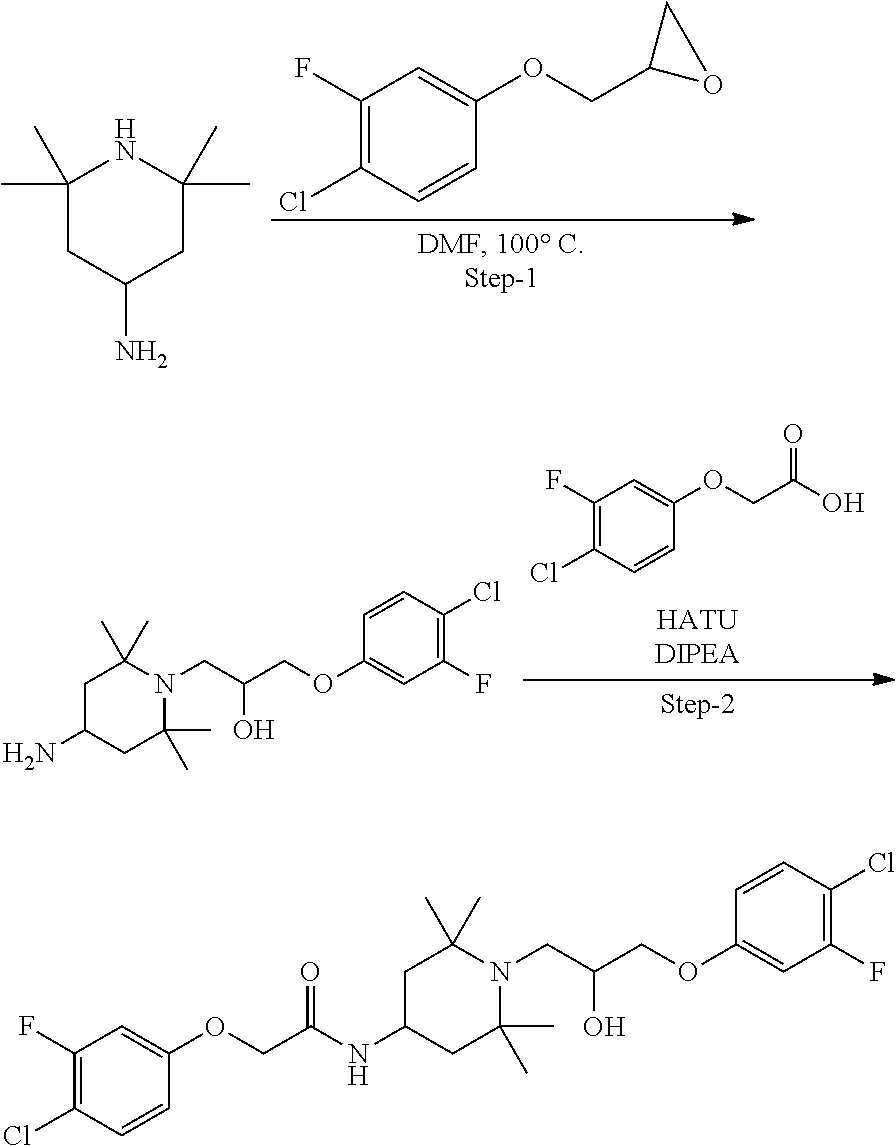


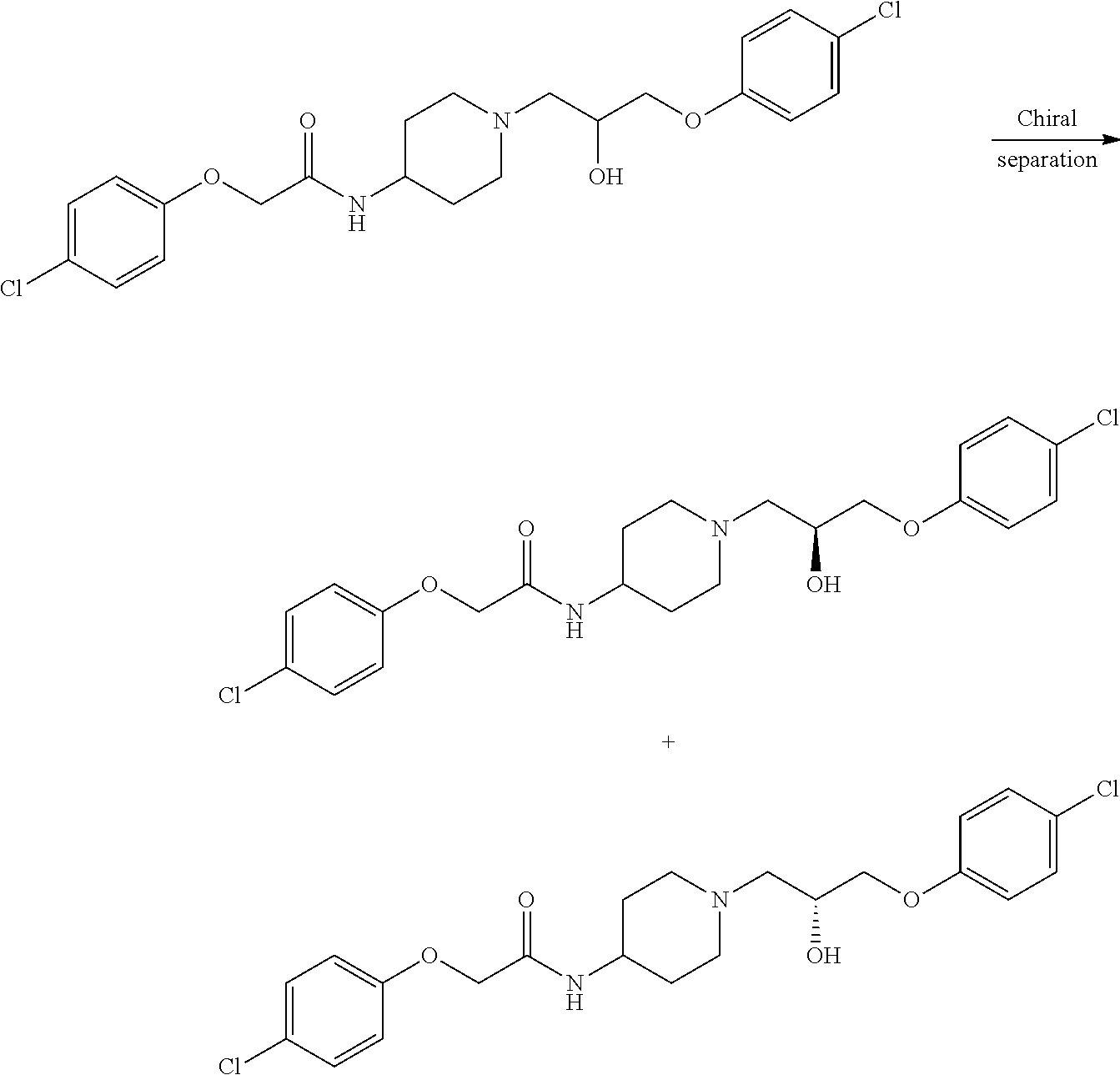


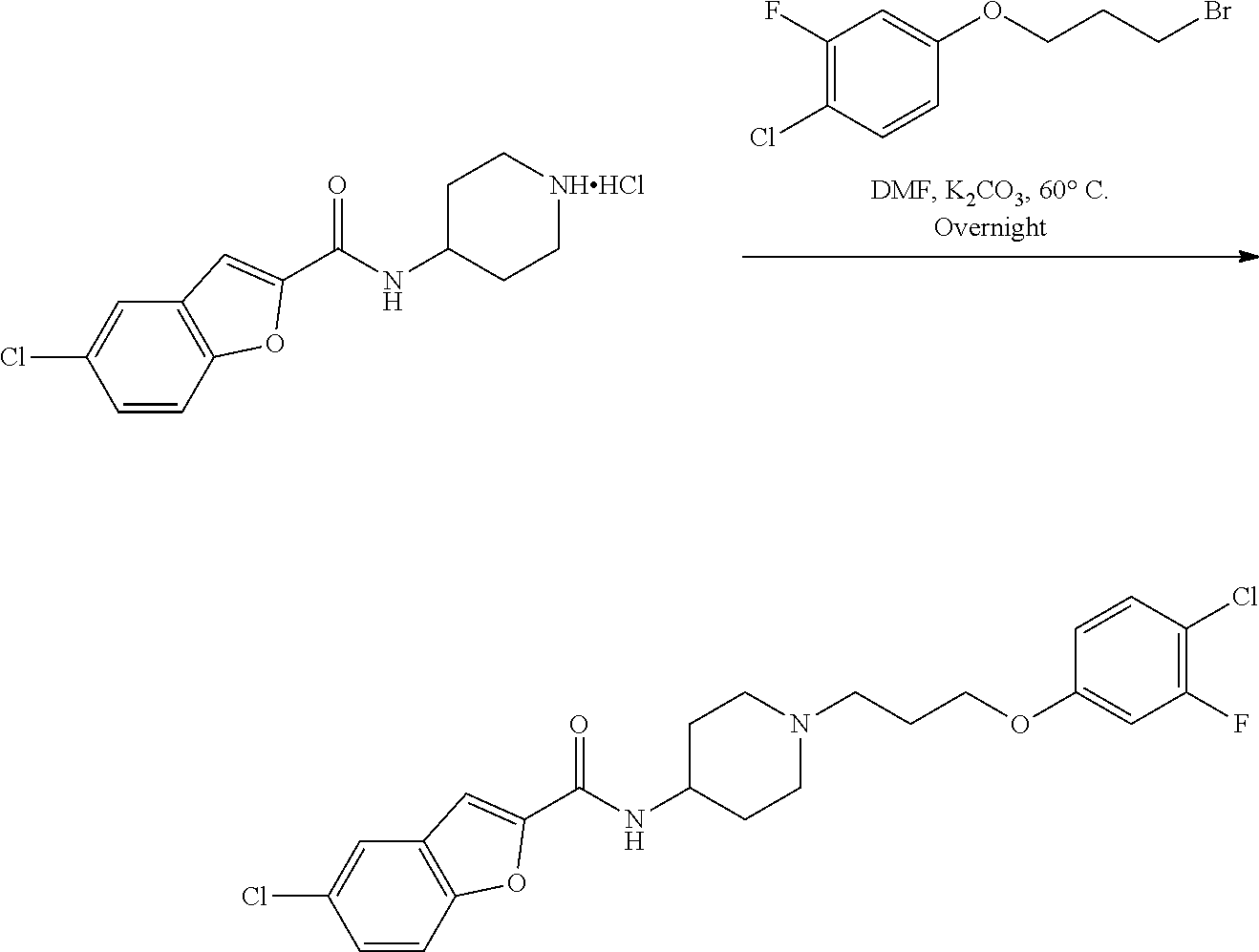


| TABLE 2 | |||
| % ATF4 | ATF4 inhibition | ||
| Compound | inhibition | % ATF4 inhibition | IC50 |
| No. | at 100 nM | at 1 μM | (nM) |
| 1 | 0 | 71 | 353.1 |
| 2 | 40 | 56 | 162.9 |
| 3 | 35 | 77 | 145 |
| 4 | 31 | 54 | n.d. |
| 5 | 42 | 94 | 169.7 |
| 6 | 52 | 83 | 82.82 |
| 7 | 0 | 0 | n.d. |
| 8 | 0 | 0 | n.d. |
| 9 | 12 | 20 | n.d. |
| 10 | 0 | 11 | n.d. |
| 11 | 0 | 0 | n.d. |
| 12 | 0 | 0 | n.d. |
| 13 | 57 | 93 | 57.22 |
| 14 | 0 | 0 | n.d. |
| 15 | 77 | 99 | 52.14 |
| 16 | 0 | 38 | n.d. |
| 17 | 95 | 98 | 9.52 |
| 18 | 96 | 98 | 34.14 |
| 19 | 94 | 100 | n.d. |
| 20 | 14 | 64 | n.d. |
| 21 | 54 | 78 | n.d. |
| 22 | 21 | 81 | 102.7 |
| 23 | 97 | 99 | 2.1 |
| 24 | 18 | 54 | n.d. |
| 25 | 0 | 0 | n.d. |
| 26 | 91 | 97 | 26.96 |
| 27 | 54 | 73 | n.d. |
| 28 | 88 | 97 | 25.83 |
| 29 | 87 | 95 | 51.81 |
| 30 | 35 | 35 | >3,000 |
| 31 | 41 | 93 | n.d. |
| 32 | 38 | 78 | n.d. |
| 145 | 97 | 97 | 17.05 |
| 146 | 88 | 100 | 49.93 |
| 147 | 95 | 100 | 33.09 |
| 148 | 30 | 90 | n.d. |
| 149 | 62 | 96 | 29.85 |
| 150 | 0 | 43 | n.d. |
| 151 | 10 | 67 | 90.72 |
| 152 | 86 | 91 | 49.02 |
| 153 | 0 | 0 | n.d. |
| 154 | 92 | 96 | 13.68 |
| 155 | 60 | 75 | n.d. |
| 156 | 94 | 97 | 15.98 |
| 157 | 96 | 100 | 23.8 |
| 158 | 96 | 96 | 9.1 |
| 159 | 52 | 84 | <100 |
| TABLE 3 | |||
| % Recovery of | |||
| % Recovery of | protein | ||
| protein expression | expression | % Protein expression | |
| Compound | (100 nM test | (1 μM test | relative to untreated |
| No. | compound) | compound) | (1 μM test compound) |
| 1 | 63.8 | 160.3 | 151.7 |
| 2 | 42.5 | 135.2 | 136.2 |
| 3 | 69.4 | 154.7 | 161.5 |
| 5 | 64.9 | 189.1 | 130.2 |
| 6 | 60.2 | 196.8 | 194.9 |
| 10 | 30.6 | 126.7 | n.d. |
| 13 | 49.6 | 159.2 | 94.0 |
| 15 | 35.6 | 159.2 | 68.3 |
| 17 | 87.0 | 172.5 | 93.2 |
| 18 | 38.0 | 138.0 | 107.0 |
| 19 | 14.1 | 115.5 | n.d. |
| 20 | 38.6 | 93.9 | n.d. |
| 21 | 70.5 | 182.0 | n.d. |
| 22 | 67.3 | 264.2 | 170.1 |
| 23 | 79.2 | 175.7 | 119.6 |
| 24 | 11.8 | 24.34 | n.d. |
| 25 | 11.4 | 22.9 | n.d. |
| 26 | 34.2 | 175.7 | 111.8 |
| 28 | 38.0 | 170.3 | 99.3 |
| 29 | 48.4 | 266.7 | 185.7 |
| 30 | 23.1 | 181.5 | 205.9 |
| 31 | 25.0 | 287.7 | 243.4 |
| 32 | 37.7 | 233.8 | 137.2 |
| 145 | 22.6 | 40.6 | 95.4 |
| 146 | 43.4 | 264.8 | 245.6 |
| 147 | 75.2 | 261.5 | 189.5 |
| 148 | 37.2 | 250.2 | 123.2 |
| 149 | 107.3 | 281.2 | 138.4 |
| 150 | 61.0 | 199.5 | 183.9 |
| 151 | 61.8 | 217.4 | 164.3 |
| 152 | 99.1 | 279.5 | 239.1 |
| 153 | 51.5 | 235.6 | 322.8 |
| 154 | 96.3 | 234.5 | 188.3 |
| 155 | 68.5 | 190.3 | 262.6 |
| 156 | 25.1 | 199.8 | 197.1 |
| 157 | 39.7 | 97.3 | 117.9 |
| 158 | 86.8 | 198.7 | 167.9 |
| 159 | 23.9 | 79.4 | n.d. |
Tumor volume (mm3)=(a×b 2)/2
where “a” is the largest perpendicular diameter and “b” is the smallest diameter. Animals were then sacrificed and tumors were extracted and weighed. The volumes and weight of the tumors of each animal are shown in
Claims (58)


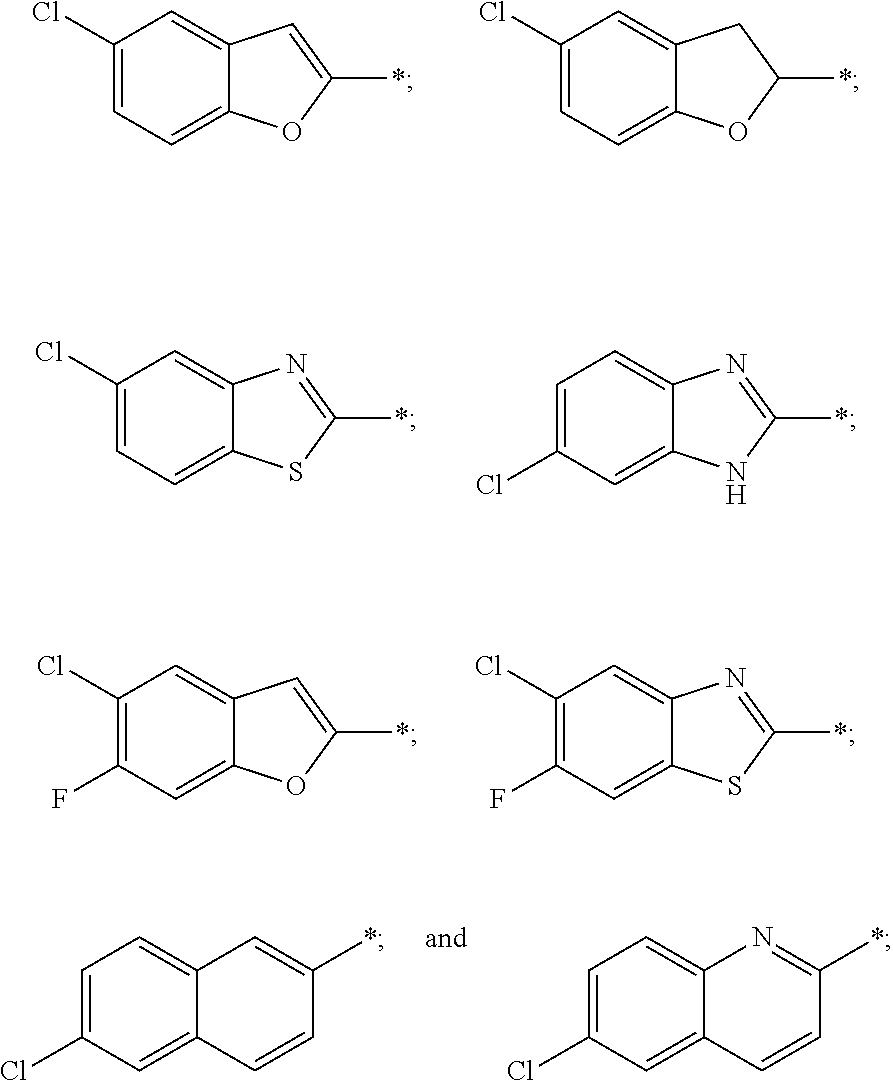


Priority Applications (2)
| Application Number | Priority Date | Filing Date | Title |
|---|---|---|---|
| US16/219,805 US11230542B2 (en) | 2017-12-13 | 2018-12-13 | Inhibitors of integrated stress response pathway |
| US17/398,862 US20230047589A1 (en) | 2017-12-13 | 2021-08-10 | Inhibitors of integrated stress response pathway |
Applications Claiming Priority (3)
| Application Number | Priority Date | Filing Date | Title |
|---|---|---|---|
| US201762598377P | 2017-12-13 | 2017-12-13 | |
| US201862690857P | 2018-06-27 | 2018-06-27 | |
| US16/219,805 US11230542B2 (en) | 2017-12-13 | 2018-12-13 | Inhibitors of integrated stress response pathway |
Related Child Applications (1)
| Application Number | Title | Priority Date | Filing Date |
|---|---|---|---|
| US17/398,862 Continuation US20230047589A1 (en) | 2017-12-13 | 2021-08-10 | Inhibitors of integrated stress response pathway |
Publications (2)
| Publication Number | Publication Date |
|---|---|
| US20190177310A1 US20190177310A1 (en) | 2019-06-13 |
| US11230542B2 true US11230542B2 (en) | 2022-01-25 |
Family
ID=66735135
Family Applications (2)
| Application Number | Title | Priority Date | Filing Date |
|---|---|---|---|
| US16/219,805 Expired - Fee Related US11230542B2 (en) | 2017-12-13 | 2018-12-13 | Inhibitors of integrated stress response pathway |
| US17/398,862 Abandoned US20230047589A1 (en) | 2017-12-13 | 2021-08-10 | Inhibitors of integrated stress response pathway |
Family Applications After (1)
| Application Number | Title | Priority Date | Filing Date |
|---|---|---|---|
| US17/398,862 Abandoned US20230047589A1 (en) | 2017-12-13 | 2021-08-10 | Inhibitors of integrated stress response pathway |
Country Status (13)
| Country | Link |
|---|---|
| US (2) | US11230542B2 (en) |
| EP (1) | EP3723762A4 (en) |
| JP (1) | JP2021508336A (en) |
| KR (1) | KR20200110650A (en) |
| CN (1) | CN111757739A (en) |
| AU (1) | AU2018383675A1 (en) |
| BR (1) | BR112020011914A2 (en) |
| CA (1) | CA3085132A1 (en) |
| IL (1) | IL275292A (en) |
| MX (1) | MX2020006115A (en) |
| RU (1) | RU2020122711A (en) |
| SG (1) | SG11202005561XA (en) |
| WO (1) | WO2019118785A2 (en) |
Families Citing this family (19)
| Publication number | Priority date | Publication date | Assignee | Title |
|---|---|---|---|---|
| CN118239937A (en) | 2017-08-09 | 2024-06-25 | 戴纳立制药公司 | Compounds, compositions, and methods |
| DK3676297T3 (en) | 2017-09-01 | 2023-08-14 | Denali Therapeutics Inc | COMPOUNDS, COMPOSITIONS AND METHODS |
| US11939320B2 (en) | 2017-11-02 | 2024-03-26 | Abbvie Inc. | Modulators of the integrated stress pathway |
| WO2019118785A2 (en) | 2017-12-13 | 2019-06-20 | Praxis Biotech LLC | Inhibitors of integrated stress response pathway |
| WO2019236710A1 (en) * | 2018-06-05 | 2019-12-12 | Praxis Biotech LLC | Inhibitors of integrated stress response pathway |
| MA54953A (en) | 2019-02-13 | 2021-12-22 | Denali Therapeutics Inc | COMPOUNDS, COMPOSITIONS AND METHODS |
| US12091392B2 (en) | 2019-02-13 | 2024-09-17 | Denali Therapeutics Inc. | Compounds, compositions and methods |
| MX2021012904A (en) | 2019-04-23 | 2022-01-18 | Evotec Int Gmbh | Modulators of the integrated stress response pathway. |
| CA3137213A1 (en) | 2019-04-23 | 2020-10-29 | Evotec International Gmbh | Modulators of the integrated stress response pathway |
| JP2022536663A (en) | 2019-06-12 | 2022-08-18 | プラクシス バイオテック エルエルシー | Modulators of integrated stress response pathways |
| CN110305143B (en) * | 2019-07-19 | 2021-03-09 | 济南新科医药科技有限公司 | Furan [2,3-c ] pyridine derivative and preparation method and application thereof |
| AU2021213289A1 (en) | 2020-01-28 | 2022-07-07 | Evotec International Gmbh | Modulators of the integrated stress response pathway |
| MX2022011143A (en) | 2020-03-11 | 2022-10-13 | Evotec Int Gmbh | Modulators of the integrated stress response pathway. |
| US20230391763A1 (en) | 2020-10-22 | 2023-12-07 | Evotec International Gmbh | Modulators of the integrated stress response pathway |
| JP2023546224A (en) * | 2020-10-22 | 2023-11-01 | エヴォテック・インターナショナル・ゲゼルシャフト・ミット・ベシュレンクテル・ハフツング | Modulators of integrated stress response pathways |
| MX2023004623A (en) | 2020-10-22 | 2023-05-12 | Evotec Int Gmbh | Modulators of the integrated stress response pathway. |
| IL302440A (en) * | 2020-10-30 | 2023-06-01 | Calico Life Sciences Llc | Modulators of the Integrated Stress Pathway |
| EP4001917A1 (en) | 2020-11-12 | 2022-05-25 | Deutsches Krebsforschungszentrum Stiftung des Öffentlichen Rechts | Inhibitors for use in treating liver disorders |
| WO2023014431A1 (en) * | 2021-08-02 | 2023-02-09 | The Regents Of The University Of Colorado | Bacterial efflux pump inhibitors and methods of use |
Citations (50)
| Publication number | Priority date | Publication date | Assignee | Title |
|---|---|---|---|---|
| US5096901A (en) | 1989-10-14 | 1992-03-17 | John Wyeth & Brother Limited | Pharmacologically active amides and esters containing an azabicycloalkane moiety |
| WO1999006387A2 (en) | 1997-07-31 | 1999-02-11 | F. Hoffmann-La Roche Ag | O-substituted hydroxycumaranone derivatives as antitumor and antimetastatic agents |
| US20040138286A1 (en) | 2001-06-12 | 2004-07-15 | Naonori Imazaki | Rho kinase inhibitors |
| US20050197350A1 (en) | 2003-03-31 | 2005-09-08 | Taisho Pharmaceutical Co., Ltd. | Novel quinoline, tetrahydroquinazoline, and pyrimidine derivatives and methods of treatment related to the use thereof |
| US20100035898A1 (en) | 2008-08-07 | 2010-02-11 | David Beattie | Organic compounds |
| WO2010068881A1 (en) | 2008-12-12 | 2010-06-17 | Forest Laboratories Holdings Limited | Novel benzodioxane and benzoxazine derivatives useful as cc chemokine receptor ligands |
| US20110039860A1 (en) | 2008-05-07 | 2011-02-17 | Cangming Yang | Soluble epoxide hydrolase inhibitors, compositions containing such compounds and methods of treatment |
| WO2011095450A1 (en) | 2010-02-02 | 2011-08-11 | Novartis Ag | Cyclohexyl amide derivatives as crf receptor antagonists |
| US20110300575A1 (en) | 2004-11-17 | 2011-12-08 | Riken | Cell-free system for synthesis of proteins derived from cultured mammalian cells |
| WO2014144952A2 (en) | 2013-03-15 | 2014-09-18 | Peter Walter | Modulators of the eif2alpha pathway |
| US20150314018A1 (en) | 2012-11-09 | 2015-11-05 | Biontech Ag | Method for cellular rna expression |
| US20160318931A1 (en) | 2004-06-24 | 2016-11-03 | Vertex Pharmaceuticals Incorporated | Modulators of atp-binding cassette transporters |
| WO2017193030A1 (en) | 2016-05-05 | 2017-11-09 | Calico Life Sciences | Modulators of the integrated stress pathway |
| WO2017193063A1 (en) | 2016-05-05 | 2017-11-09 | Calico Life Sciences | Modulators of the integrated stress pathway |
| WO2017193034A1 (en) | 2016-05-05 | 2017-11-09 | Calico Life Sciences | Modulators of the integrated stress pathway |
| WO2017193041A1 (en) | 2016-05-05 | 2017-11-09 | Calico Life Sciences | Modulators of the integrated stress pathway |
| WO2017212425A1 (en) | 2016-06-08 | 2017-12-14 | Glaxosmithkline Intellectual Property Development Limited | Chemical compounds as atf4 pathway inhibitors |
| WO2017212423A1 (en) | 2016-06-08 | 2017-12-14 | Glaxosmithkline Intellectual Property Development Limited | Chemcical compounds |
| WO2018225093A1 (en) | 2017-06-07 | 2018-12-13 | Glaxosmithkline Intellectual Property Development Limited | Chemical compounds as atf4 pathway inhibitors |
| WO2019008506A1 (en) | 2017-07-03 | 2019-01-10 | Glaxosmithkline Intellectual Property Development Limited | N-(3-(2-(4-chlorophenoxy)acetamido)bicyclo[1.1.1]pentan-1-yl)-2-cyclobutane-1-carboxamide derivatives and related compounds as atf4 inhibitors for treating cancer and other diseases |
| WO2019008507A1 (en) | 2017-07-03 | 2019-01-10 | Glaxosmithkline Intellectual Property Development Limited | 2-(4-chlorophenoxy)-n-((1 -(2-(4-chlorophenoxy)ethynazetidin-3-yl)methyl)acetamide derivatives and related compounds as atf4 inhibitors for treating cancer and other diseases |
| WO2019032743A1 (en) | 2017-08-09 | 2019-02-14 | Denali Therapeutics Inc. | Compounds, compositions and methods |
| WO2019046779A1 (en) | 2017-09-01 | 2019-03-07 | Denali Therapeutics Inc. | Compounds, compositions and methods |
| WO2019090090A1 (en) | 2017-11-02 | 2019-05-09 | Calico Life Sciences Llc | Modulators of the integrated stress pathway |
| WO2019090078A1 (en) | 2017-11-02 | 2019-05-09 | Calico Life Sciences Llc | Modulators of the integrated stress pathway |
| WO2019090074A1 (en) | 2017-11-02 | 2019-05-09 | Calico Life Sciences Llc | Modulators of the integrated stress pathway |
| WO2019090076A1 (en) | 2017-11-02 | 2019-05-09 | Calico Life Sciences Llc | Modulators of the integrated stress pathway |
| WO2019090069A1 (en) | 2017-11-02 | 2019-05-09 | Calico Life Sciences Llc | Modulators of the integrated stress pathway |
| WO2019090082A1 (en) | 2017-11-02 | 2019-05-09 | Calico Life Sciences Llc | Modulators of the integrated stress pathway |
| WO2019090081A1 (en) | 2017-11-02 | 2019-05-09 | Calico Life Sciences Llc | Modulators of the integrated stress pathway |
| WO2019090088A1 (en) | 2017-11-02 | 2019-05-09 | Calico Life Sciences Llc | Modulators of the integrated stress pathway |
| WO2019090085A1 (en) | 2017-11-02 | 2019-05-09 | Calico Life Sciences Llc | Modulators of the integrated stress pathway |
| US20190177310A1 (en) | 2017-12-13 | 2019-06-13 | Praxis Biotech LLC | Inhibitors of integrated stress response pathway |
| WO2019183589A1 (en) | 2018-03-23 | 2019-09-26 | Denali Therapeutics Inc. | Modulators of eukaryotic initiation factor 2 |
| WO2019193541A1 (en) | 2018-04-06 | 2019-10-10 | Glaxosmithkline Intellectual Property Development Limited | Bicyclic aromatic ring derivatives of formula (i) as atf4 inhibitors |
| WO2019193540A1 (en) | 2018-04-06 | 2019-10-10 | Glaxosmithkline Intellectual Property Development Limited | Heteroaryl derivatives of formula (i) as atf4 inhibitors |
| WO2020012339A1 (en) | 2018-07-09 | 2020-01-16 | Glaxosmithkline Intellectual Property Development Limited | Chemical compounds |
| WO2020031107A1 (en) | 2018-08-08 | 2020-02-13 | Glaxosmithkline Intellectual Property Development Limited | Chemical compounds |
| US20200101047A1 (en) | 2018-06-05 | 2020-04-02 | Praxis Biotech LLC | Inhibitors of integrated stress response pathway |
| WO2020077217A1 (en) | 2018-10-11 | 2020-04-16 | Calico Life Sciences Llc | Prodrug modulators of the integrated stress pathway |
| WO2020168011A1 (en) | 2019-02-13 | 2020-08-20 | Denali Therapeutics Inc. | Compounds, compositions and methods |
| WO2020167994A1 (en) | 2019-02-13 | 2020-08-20 | Denali Therapeutics Inc. | Compounds, compositions and methods |
| US20200270232A1 (en) | 2019-02-25 | 2020-08-27 | Praxis Biotech LLC | Inhibitors of integrated stress response pathway |
| WO2020181247A1 (en) | 2019-03-06 | 2020-09-10 | Denali Therapeutics Inc. | Compounds, compositions and methods |
| WO2020216766A1 (en) | 2019-04-23 | 2020-10-29 | Evotec International Gmbh | Modulators of the integrated stress response pathway |
| WO2020216764A1 (en) | 2019-04-23 | 2020-10-29 | Evotec International Gmbh | Modulators of the integrated stress response pathway |
| WO2020223538A1 (en) | 2019-04-30 | 2020-11-05 | Calico Life Sciences Llc | Substituted cycloalkyls as modulators of the integrated stress pathway |
| WO2020223536A1 (en) | 2019-04-30 | 2020-11-05 | Calico Life Sciences Llc | Substituted cyclolakyls as modulators of the integrated stress pathway |
| WO2020252205A1 (en) | 2019-06-12 | 2020-12-17 | Praxis Biotech LLC | Inhibitors of integrated stress response pathway |
| WO2020252207A1 (en) | 2019-06-12 | 2020-12-17 | Praxis Biotech LLC | Modulators of integrated stress response pathway |
Family Cites Families (1)
| Publication number | Priority date | Publication date | Assignee | Title |
|---|---|---|---|---|
| CN101300005B (en) * | 2004-08-30 | 2013-05-01 | 詹森药业有限公司 | N-2 adamantyl-2-phenoxy-acetamide derivatives as 11-beta hydroxysteroid dehydrogenase inhibitors |
-
2018
- 2018-12-13 WO PCT/US2018/065555 patent/WO2019118785A2/en not_active Ceased
- 2018-12-13 JP JP2020551782A patent/JP2021508336A/en active Pending
- 2018-12-13 MX MX2020006115A patent/MX2020006115A/en unknown
- 2018-12-13 EP EP18888654.3A patent/EP3723762A4/en not_active Withdrawn
- 2018-12-13 CN CN201880088798.6A patent/CN111757739A/en active Pending
- 2018-12-13 KR KR1020207020056A patent/KR20200110650A/en not_active Withdrawn
- 2018-12-13 AU AU2018383675A patent/AU2018383675A1/en not_active Abandoned
- 2018-12-13 BR BR112020011914-8A patent/BR112020011914A2/en not_active IP Right Cessation
- 2018-12-13 US US16/219,805 patent/US11230542B2/en not_active Expired - Fee Related
- 2018-12-13 CA CA3085132A patent/CA3085132A1/en active Pending
- 2018-12-13 SG SG11202005561XA patent/SG11202005561XA/en unknown
- 2018-12-13 RU RU2020122711A patent/RU2020122711A/en unknown
-
2020
- 2020-06-11 IL IL275292A patent/IL275292A/en unknown
-
2021
- 2021-08-10 US US17/398,862 patent/US20230047589A1/en not_active Abandoned
Patent Citations (54)
| Publication number | Priority date | Publication date | Assignee | Title |
|---|---|---|---|---|
| US5096901A (en) | 1989-10-14 | 1992-03-17 | John Wyeth & Brother Limited | Pharmacologically active amides and esters containing an azabicycloalkane moiety |
| WO1999006387A2 (en) | 1997-07-31 | 1999-02-11 | F. Hoffmann-La Roche Ag | O-substituted hydroxycumaranone derivatives as antitumor and antimetastatic agents |
| US20040138286A1 (en) | 2001-06-12 | 2004-07-15 | Naonori Imazaki | Rho kinase inhibitors |
| US20050197350A1 (en) | 2003-03-31 | 2005-09-08 | Taisho Pharmaceutical Co., Ltd. | Novel quinoline, tetrahydroquinazoline, and pyrimidine derivatives and methods of treatment related to the use thereof |
| US20160318931A1 (en) | 2004-06-24 | 2016-11-03 | Vertex Pharmaceuticals Incorporated | Modulators of atp-binding cassette transporters |
| US20110300575A1 (en) | 2004-11-17 | 2011-12-08 | Riken | Cell-free system for synthesis of proteins derived from cultured mammalian cells |
| US20110039860A1 (en) | 2008-05-07 | 2011-02-17 | Cangming Yang | Soluble epoxide hydrolase inhibitors, compositions containing such compounds and methods of treatment |
| US20100035898A1 (en) | 2008-08-07 | 2010-02-11 | David Beattie | Organic compounds |
| WO2010068881A1 (en) | 2008-12-12 | 2010-06-17 | Forest Laboratories Holdings Limited | Novel benzodioxane and benzoxazine derivatives useful as cc chemokine receptor ligands |
| WO2011095450A1 (en) | 2010-02-02 | 2011-08-11 | Novartis Ag | Cyclohexyl amide derivatives as crf receptor antagonists |
| US20150314018A1 (en) | 2012-11-09 | 2015-11-05 | Biontech Ag | Method for cellular rna expression |
| WO2014144952A2 (en) | 2013-03-15 | 2014-09-18 | Peter Walter | Modulators of the eif2alpha pathway |
| WO2014144952A3 (en) | 2013-03-15 | 2014-11-06 | Peter Walter | Modulators of the eif2alpha pathway |
| US20170342020A1 (en) | 2013-03-15 | 2017-11-30 | The Regents Of The University Of California | Modulators of the eif2alpha pathway |
| WO2017193030A1 (en) | 2016-05-05 | 2017-11-09 | Calico Life Sciences | Modulators of the integrated stress pathway |
| WO2017193063A1 (en) | 2016-05-05 | 2017-11-09 | Calico Life Sciences | Modulators of the integrated stress pathway |
| WO2017193034A1 (en) | 2016-05-05 | 2017-11-09 | Calico Life Sciences | Modulators of the integrated stress pathway |
| WO2017193041A1 (en) | 2016-05-05 | 2017-11-09 | Calico Life Sciences | Modulators of the integrated stress pathway |
| WO2017212425A1 (en) | 2016-06-08 | 2017-12-14 | Glaxosmithkline Intellectual Property Development Limited | Chemical compounds as atf4 pathway inhibitors |
| WO2017212423A1 (en) | 2016-06-08 | 2017-12-14 | Glaxosmithkline Intellectual Property Development Limited | Chemcical compounds |
| WO2018225093A1 (en) | 2017-06-07 | 2018-12-13 | Glaxosmithkline Intellectual Property Development Limited | Chemical compounds as atf4 pathway inhibitors |
| WO2019008506A1 (en) | 2017-07-03 | 2019-01-10 | Glaxosmithkline Intellectual Property Development Limited | N-(3-(2-(4-chlorophenoxy)acetamido)bicyclo[1.1.1]pentan-1-yl)-2-cyclobutane-1-carboxamide derivatives and related compounds as atf4 inhibitors for treating cancer and other diseases |
| WO2019008507A1 (en) | 2017-07-03 | 2019-01-10 | Glaxosmithkline Intellectual Property Development Limited | 2-(4-chlorophenoxy)-n-((1 -(2-(4-chlorophenoxy)ethynazetidin-3-yl)methyl)acetamide derivatives and related compounds as atf4 inhibitors for treating cancer and other diseases |
| WO2019032743A1 (en) | 2017-08-09 | 2019-02-14 | Denali Therapeutics Inc. | Compounds, compositions and methods |
| WO2019046779A1 (en) | 2017-09-01 | 2019-03-07 | Denali Therapeutics Inc. | Compounds, compositions and methods |
| WO2019090078A1 (en) | 2017-11-02 | 2019-05-09 | Calico Life Sciences Llc | Modulators of the integrated stress pathway |
| WO2019090088A1 (en) | 2017-11-02 | 2019-05-09 | Calico Life Sciences Llc | Modulators of the integrated stress pathway |
| WO2019090074A1 (en) | 2017-11-02 | 2019-05-09 | Calico Life Sciences Llc | Modulators of the integrated stress pathway |
| WO2019090076A1 (en) | 2017-11-02 | 2019-05-09 | Calico Life Sciences Llc | Modulators of the integrated stress pathway |
| WO2019090069A1 (en) | 2017-11-02 | 2019-05-09 | Calico Life Sciences Llc | Modulators of the integrated stress pathway |
| WO2019090082A1 (en) | 2017-11-02 | 2019-05-09 | Calico Life Sciences Llc | Modulators of the integrated stress pathway |
| WO2019090081A1 (en) | 2017-11-02 | 2019-05-09 | Calico Life Sciences Llc | Modulators of the integrated stress pathway |
| WO2019090090A1 (en) | 2017-11-02 | 2019-05-09 | Calico Life Sciences Llc | Modulators of the integrated stress pathway |
| WO2019090085A1 (en) | 2017-11-02 | 2019-05-09 | Calico Life Sciences Llc | Modulators of the integrated stress pathway |
| US20190177310A1 (en) | 2017-12-13 | 2019-06-13 | Praxis Biotech LLC | Inhibitors of integrated stress response pathway |
| WO2019118785A2 (en) | 2017-12-13 | 2019-06-20 | Praxis Biotech LLC | Inhibitors of integrated stress response pathway |
| WO2019183589A1 (en) | 2018-03-23 | 2019-09-26 | Denali Therapeutics Inc. | Modulators of eukaryotic initiation factor 2 |
| WO2019193541A1 (en) | 2018-04-06 | 2019-10-10 | Glaxosmithkline Intellectual Property Development Limited | Bicyclic aromatic ring derivatives of formula (i) as atf4 inhibitors |
| WO2019193540A1 (en) | 2018-04-06 | 2019-10-10 | Glaxosmithkline Intellectual Property Development Limited | Heteroaryl derivatives of formula (i) as atf4 inhibitors |
| US20200101047A1 (en) | 2018-06-05 | 2020-04-02 | Praxis Biotech LLC | Inhibitors of integrated stress response pathway |
| WO2020012339A1 (en) | 2018-07-09 | 2020-01-16 | Glaxosmithkline Intellectual Property Development Limited | Chemical compounds |
| WO2020031107A1 (en) | 2018-08-08 | 2020-02-13 | Glaxosmithkline Intellectual Property Development Limited | Chemical compounds |
| WO2020077217A1 (en) | 2018-10-11 | 2020-04-16 | Calico Life Sciences Llc | Prodrug modulators of the integrated stress pathway |
| WO2020168011A1 (en) | 2019-02-13 | 2020-08-20 | Denali Therapeutics Inc. | Compounds, compositions and methods |
| WO2020167994A1 (en) | 2019-02-13 | 2020-08-20 | Denali Therapeutics Inc. | Compounds, compositions and methods |
| US20200270232A1 (en) | 2019-02-25 | 2020-08-27 | Praxis Biotech LLC | Inhibitors of integrated stress response pathway |
| WO2020176428A1 (en) | 2019-02-25 | 2020-09-03 | Praxis Biotech LLC | Inhibitors of integrated stress response pathway |
| WO2020181247A1 (en) | 2019-03-06 | 2020-09-10 | Denali Therapeutics Inc. | Compounds, compositions and methods |
| WO2020216766A1 (en) | 2019-04-23 | 2020-10-29 | Evotec International Gmbh | Modulators of the integrated stress response pathway |
| WO2020216764A1 (en) | 2019-04-23 | 2020-10-29 | Evotec International Gmbh | Modulators of the integrated stress response pathway |
| WO2020223538A1 (en) | 2019-04-30 | 2020-11-05 | Calico Life Sciences Llc | Substituted cycloalkyls as modulators of the integrated stress pathway |
| WO2020223536A1 (en) | 2019-04-30 | 2020-11-05 | Calico Life Sciences Llc | Substituted cyclolakyls as modulators of the integrated stress pathway |
| WO2020252205A1 (en) | 2019-06-12 | 2020-12-17 | Praxis Biotech LLC | Inhibitors of integrated stress response pathway |
| WO2020252207A1 (en) | 2019-06-12 | 2020-12-17 | Praxis Biotech LLC | Modulators of integrated stress response pathway |
Non-Patent Citations (188)
Also Published As
| Publication number | Publication date |
|---|---|
| WO2019118785A2 (en) | 2019-06-20 |
| KR20200110650A (en) | 2020-09-24 |
| BR112020011914A2 (en) | 2020-11-24 |
| IL275292A (en) | 2020-07-30 |
| JP2021508336A (en) | 2021-03-04 |
| RU2020122711A3 (en) | 2022-01-27 |
| CN111757739A (en) | 2020-10-09 |
| EP3723762A4 (en) | 2021-12-08 |
| RU2020122711A (en) | 2022-01-17 |
| CA3085132A1 (en) | 2019-06-20 |
| MX2020006115A (en) | 2020-11-09 |
| WO2019118785A3 (en) | 2019-08-01 |
| EP3723762A2 (en) | 2020-10-21 |
| US20230047589A1 (en) | 2023-02-16 |
| AU2018383675A1 (en) | 2020-07-09 |
| US20190177310A1 (en) | 2019-06-13 |
| SG11202005561XA (en) | 2020-07-29 |
Similar Documents
| Publication | Publication Date | Title |
|---|---|---|
| US11230542B2 (en) | Inhibitors of integrated stress response pathway | |
| US11166942B2 (en) | Inhibitors of integrated stress response pathway | |
| US20200270232A1 (en) | Inhibitors of integrated stress response pathway | |
| US11318133B2 (en) | Modulators of integrated stress response pathway | |
| US20210317102A1 (en) | Inhibitors of integrated stress response pathway | |
| US20230083885A1 (en) | Modulators of integrated stress response pathway | |
| US9169271B2 (en) | BACE inhibitors | |
| US20230042881A1 (en) | Modulators of integrated stress response pathway | |
| HK40074323A (en) | Modulators of integrated stress response pathway |
Legal Events
| Date | Code | Title | Description |
|---|---|---|---|
| FEPP | Fee payment procedure |
Free format text: ENTITY STATUS SET TO UNDISCOUNTED (ORIGINAL EVENT CODE: BIG.); ENTITY STATUS OF PATENT OWNER: SMALL ENTITY |
|
| FEPP | Fee payment procedure |
Free format text: ENTITY STATUS SET TO SMALL (ORIGINAL EVENT CODE: SMAL); ENTITY STATUS OF PATENT OWNER: SMALL ENTITY |
|
| STPP | Information on status: patent application and granting procedure in general |
Free format text: NON FINAL ACTION MAILED |
|
| STPP | Information on status: patent application and granting procedure in general |
Free format text: RESPONSE TO NON-FINAL OFFICE ACTION ENTERED AND FORWARDED TO EXAMINER |
|
| STPP | Information on status: patent application and granting procedure in general |
Free format text: NON FINAL ACTION MAILED |
|
| AS | Assignment |
Owner name: MERKEN BIOTECH SPA, CHILE Free format text: ASSIGNMENT OF ASSIGNORS INTEREST;ASSIGNORS:DELGADO OYARZO, LUZ MARINA;NUNEZ VASQUEZ, GONZALO ESTEBAN;URETA DIAZ, GONZALO ANDRES;REEL/FRAME:051540/0026 Effective date: 20190128 Owner name: PRAXIS BIOTECH LLC, CALIFORNIA Free format text: ASSIGNMENT OF ASSIGNORS INTEREST;ASSIGNORS:BERNALES, SEBASTIAN;CHAKRAVARTY, SARVAJIT;REEL/FRAME:051540/0032 Effective date: 20190122 Owner name: PRAXIS BIOTECH LLC, CALIFORNIA Free format text: ASSIGNMENT OF ASSIGNORS INTEREST;ASSIGNOR:MERKEN BIOTECH SPA;REEL/FRAME:051540/0018 Effective date: 20190129 Owner name: PRAXIS BIOTECH LLC, CALIFORNIA Free format text: ASSIGNMENT OF ASSIGNORS INTEREST;ASSIGNOR:INTEGRAL BIOSCIENCES PVT. LTD.;REEL/FRAME:051539/0990 Effective date: 20190124 Owner name: INTEGRAL BIOSCIENCES PVT. LTD., INDIA Free format text: ASSIGNMENT OF ASSIGNORS INTEREST;ASSIGNORS:PUJALA, BRAHMAM;PANPATIL, DAYANAND;BHATT, BHAWANA;REEL/FRAME:051540/0021 Effective date: 20190124 |
|
| STPP | Information on status: patent application and granting procedure in general |
Free format text: NON FINAL ACTION MAILED |
|
| STPP | Information on status: patent application and granting procedure in general |
Free format text: NOTICE OF ALLOWANCE MAILED -- APPLICATION RECEIVED IN OFFICE OF PUBLICATIONS |
|
| STPP | Information on status: patent application and granting procedure in general |
Free format text: DOCKETED NEW CASE - READY FOR EXAMINATION |
|
| STPP | Information on status: patent application and granting procedure in general |
Free format text: NOTICE OF ALLOWANCE MAILED -- APPLICATION RECEIVED IN OFFICE OF PUBLICATIONS |
|
| STPP | Information on status: patent application and granting procedure in general |
Free format text: PUBLICATIONS -- ISSUE FEE PAYMENT VERIFIED |
|
| STPP | Information on status: patent application and granting procedure in general |
Free format text: AWAITING TC RESP, ISSUE FEE PAYMENT VERIFIED |
|
| STPP | Information on status: patent application and granting procedure in general |
Free format text: PUBLICATIONS -- ISSUE FEE PAYMENT VERIFIED |
|
| STPP | Information on status: patent application and granting procedure in general |
Free format text: AWAITING TC RESP, ISSUE FEE PAYMENT VERIFIED |
|
| STPP | Information on status: patent application and granting procedure in general |
Free format text: PUBLICATIONS -- ISSUE FEE PAYMENT VERIFIED |
|
| STCF | Information on status: patent grant |
Free format text: PATENTED CASE |
|
| STPP | Information on status: patent application and granting procedure in general |
Free format text: WITHDRAW FROM ISSUE AWAITING ACTION |
|
| STPP | Information on status: patent application and granting procedure in general |
Free format text: AWAITING TC RESP., ISSUE FEE NOT PAID |
|
| STPP | Information on status: patent application and granting procedure in general |
Free format text: PUBLICATIONS -- ISSUE FEE PAYMENT VERIFIED |
|
| STCF | Information on status: patent grant |
Free format text: PATENTED CASE |
|
| FEPP | Fee payment procedure |
Free format text: MAINTENANCE FEE REMINDER MAILED (ORIGINAL EVENT CODE: REM.); ENTITY STATUS OF PATENT OWNER: SMALL ENTITY |
|
| LAPS | Lapse for failure to pay maintenance fees |
Free format text: PATENT EXPIRED FOR FAILURE TO PAY MAINTENANCE FEES (ORIGINAL EVENT CODE: EXP.); ENTITY STATUS OF PATENT OWNER: SMALL ENTITY |
|
| STCH | Information on status: patent discontinuation |
Free format text: PATENT EXPIRED DUE TO NONPAYMENT OF MAINTENANCE FEES UNDER 37 CFR 1.362 |
|
| FP | Lapsed due to failure to pay maintenance fee |
Effective date: 20260125 |