US11230476B2 - Dissolved air flotation use with cationic metal processing fluids - Google Patents
Dissolved air flotation use with cationic metal processing fluids Download PDFInfo
- Publication number
- US11230476B2 US11230476B2 US15/108,348 US201415108348A US11230476B2 US 11230476 B2 US11230476 B2 US 11230476B2 US 201415108348 A US201415108348 A US 201415108348A US 11230476 B2 US11230476 B2 US 11230476B2
- Authority
- US
- United States
- Prior art keywords
- weight
- metal processing
- processing fluid
- cationic
- ester
- Prior art date
- Legal status (The legal status is an assumption and is not a legal conclusion. Google has not performed a legal analysis and makes no representation as to the accuracy of the status listed.)
- Active, expires
Links
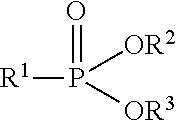
- 0 [1*]P(=O)(O[2*])O[3*] Chemical compound [1*]P(=O)(O[2*])O[3*] 0.000 description 2
Images


Classifications
-
- C—CHEMISTRY; METALLURGY
- C02—TREATMENT OF WATER, WASTE WATER, SEWAGE, OR SLUDGE
- C02F—TREATMENT OF WATER, WASTE WATER, SEWAGE, OR SLUDGE
- C02F1/00—Treatment of water, waste water, or sewage
- C02F1/24—Treatment of water, waste water, or sewage by flotation
-
- B—PERFORMING OPERATIONS; TRANSPORTING
- B03—SEPARATION OF SOLID MATERIALS USING LIQUIDS OR USING PNEUMATIC TABLES OR JIGS; MAGNETIC OR ELECTROSTATIC SEPARATION OF SOLID MATERIALS FROM SOLID MATERIALS OR FLUIDS; SEPARATION BY HIGH-VOLTAGE ELECTRIC FIELDS
- B03D—FLOTATION; DIFFERENTIAL SEDIMENTATION
- B03D1/00—Flotation
- B03D1/02—Froth-flotation processes
- B03D1/028—Control and monitoring of flotation processes; computer models therefor
-
- B—PERFORMING OPERATIONS; TRANSPORTING
- B03—SEPARATION OF SOLID MATERIALS USING LIQUIDS OR USING PNEUMATIC TABLES OR JIGS; MAGNETIC OR ELECTROSTATIC SEPARATION OF SOLID MATERIALS FROM SOLID MATERIALS OR FLUIDS; SEPARATION BY HIGH-VOLTAGE ELECTRIC FIELDS
- B03D—FLOTATION; DIFFERENTIAL SEDIMENTATION
- B03D1/00—Flotation
- B03D1/14—Flotation machines
- B03D1/1431—Dissolved air flotation machines
-
- B—PERFORMING OPERATIONS; TRANSPORTING
- B21—MECHANICAL METAL-WORKING WITHOUT ESSENTIALLY REMOVING MATERIAL; PUNCHING METAL
- B21D—WORKING OR PROCESSING OF SHEET METAL OR METAL TUBES, RODS OR PROFILES WITHOUT ESSENTIALLY REMOVING MATERIAL; PUNCHING METAL
- B21D37/00—Tools as parts of machines covered by this subclass
- B21D37/18—Lubricating, e.g. lubricating tool and workpiece simultaneously
-
- C—CHEMISTRY; METALLURGY
- C02—TREATMENT OF WATER, WASTE WATER, SEWAGE, OR SLUDGE
- C02F—TREATMENT OF WATER, WASTE WATER, SEWAGE, OR SLUDGE
- C02F2103/00—Nature of the water, waste water, sewage or sludge to be treated
- C02F2103/16—Nature of the water, waste water, sewage or sludge to be treated from metallurgical processes, i.e. from the production, refining or treatment of metals, e.g. galvanic wastes
Definitions
- compositions and their corresponding emulsion systems are used in metal deformation processes to provide a boundary layer which separates the metal work tool from the metal slabs being processed.
- Such compositions and emulsions facilitate the transport of water-insoluble materials contained therein to the metal work tool or metal slab in a uniform and consistent manner.
- the emulsion system provides cooling by evaporative water loss, heat removal from the system, through surface contact with the metal work tool and the metal slabs.
- anionic fatty acid chemistry i.e., anionic chemistry
- anionic chemistry which provides effective lubrication properties for both the work equipment and the metal article being deformed.
- problems include the formation of metallic soap particles which occur via reactions between the metal surfaces or dissolved multivalent ions and the fatty acid components utilized, emulsion stability issues when the emulsion systems become contaminated with metallic debris and fines, and issues with filtration processes employed to remove the metallic debris.
- DAF dissolved air floatation
- metal contaminants i.e., metal fines, dirt, and debris are generated.
- Metal particles and debris naturally form during the metal deformation process, and are carried away from the metal deformation work area and equipment by the emulsion fluid.
- Some of the generated metallic debris and fines are small enough that they pass through the filter media used in mechanical filtration processes. Frequently, these fine metal particles and debris are difficult to remove from the contaminated metal processing fluid.
- Filters may be utilized to remove some of these fine metal contaminants, but they typically do not perform efficiently and do not remove all of the contaminants. Furthermore, it is necessary to dispose of the contaminated filter paper, which is costly and environmentally unacceptable. If these fine metal contaminants are not removed and the metal processing fluid is re-used, the metal deformation process will eventually become inoperable, thereby requiring restarting the process with expensive and newly prepared metal processing fluid.
- Described herein are processes for removing contaminants from contaminated, cationic-based metal processing fluids without upsetting the emulsion environment of metal processing fluid.
- a process for cleaning a metal processing fluid which is substantially free of fatty acids includes treating the metal processing fluid with dissolved air floatation.
- a process for deforming a metal includes (i) deforming a first metal with a new metal processing fluid which is substantially free of fatty acids to provide a used metal processing fluid; (ii) treating the used metal processing fluid with dissolved air floatation; and (iii) deforming a second metal with the metal processing fluid from step (ii).
- a process for removing suspended foreign matter from a contaminated metal processing fluid which is substantially free of fatty acids includes (a) providing the contaminated metal processing fluid into a tank; (b) introducing a portion of the contaminated metal processing fluid from step tank into a vessel, wherein the vessel is pressurized to saturate the metal processing fluid; (c) introducing the saturated metal processing fluid into the tank; (d) mixing the saturated metal processing fluid with the contaminated metal processing fluid in the tank; (e) permitting the pressure in the tank to lessen to permit the formation of bubbles in the tank, wherein the bubbles adhere to and carry the suspended foreign matter from the contaminated metal processing fluid to the upper layer of the contaminated metal processing fluid; and (f) removing the suspended foreign matter from the upper layer; wherein the process is performed without removing the emulsion of the metal processing fluid.
- the process is performed in the absence of a filter.
- the process is performed in the absence of a filter which is capable of removing suspended foreign foreign
- the processes described herein remove suspended foreign matter from the metal processing fluid.
- the suspended foreign matter in the metal processing fluid cannot be removed using filtration.
- the processes described herein do not affect the balance of the chemicals in the metal processing fluid and/or emulsion.
- the processes described herein are performed in the absence of a flocculant.
- the processes described herein are performed in the absence of centrifugation.
- a device for removing suspended foreign matter from a contaminated metal processing fluid which is substantially free of fatty acids and lacks a filter.
- the device includes (a) a tank including a first conduit attached through one end to the lower portion of the tank for providing the contaminated metal processing fluid into the tank; (b) a vessel attached to the other end of the conduit and containing a second conduit for introducing air into the vessel; (c) a third conduit for removing clarified metal processing fluid from the tank; and (d) a fourth conduit for removing the suspended foreign matter.
- an improved process for cleaning a metal processing fluid which is substantially free of fatty acids and suspended metal particles is provided, where the improvement includes performing the process using dissolved air floatation in the absence of filtration.
- FIG. 1 is a side elevation view of a dissolved air floatation device.
- FIG. 2 is a side elevation view of a skimming device optionally for use in the dissolved air floatation device.
- FIG. 3 is a bar graph of the amount of aluminum reduction (%) of contaminated metal processing fluids treated using the processes described herein.
- FIG. 4 is a bar graph of the concentration of two (2) components of the contaminated metal processing fluids before and after treatment with dissolved air floatation as described herein.
- DAF Dissolved air floatation
- floatation may be utilized in clarifying the contaminated metal processing fluids.
- another type of floatation includes induced air flotation such as that described in U.S. Pat. No. 2,578,040, which is incorporated herein by reference.
- another type of floatation includes froth flotation such as that described in U.S. Pat. Nos. 2,153,449; 2,335,209; 2,347,147; 2,352,365; 2,274,658; and 2,578,040, which are incorporated herein by reference.
- the composition of the cationic metal processing fluid emulsion is not upset or altered using DAF.
- the cationic metal processing fluid emulsion remains stable and retains its chemical components, while the DAF process, at the same time, effectively removes the metallic debris. The retention of the chemical components, and the stabilized oil concentration of the metal processing fluid emulsion, provides a more consistent emulsion system which requires less make-up material to maintain the operational performance of the metal deformation process.
- the processes described herein are applied to contaminated metal processing fluids and thereby result in clarified metal processing fluid having good lubrication properties.
- the processes effectively clean or clarify contaminated metal processing fluids.
- the clarified metal processing fluids produced herein don't have the negative attributes of clarified metal processing fluids which are based on anionic fatty acid technology.
- these metal processing fluids clarified herein are substantially free of fatty acids.
- the processes do not affect the balance of the chemicals in the metal processing fluid.
- the processes described herein are performed in the absence of a filter.
- the processes described herein are performed in the absence of a flocculent, i.e., a reagent which agglomerate foreign matter in a metal processing fluid.
- a flocculent i.e., a reagent which agglomerate foreign matter in a metal processing fluid.
- the processes described herein are performed in the absence of centrifugation.
- the processes described herein are performed in the absence of foaming and the use of foaming techniques.
- the processes described herein are performed in the absence of frothing and/or frothing techniques.
- the processes described herein permit immediate re-use of the metal processing fluid emulsion without the need to utilize vigorous mixing techniques.
- the processes result in extending the working life of the metal processing fluid, thereby avoiding costly shutdown and maintenance requirements of the plant.
- fatty acid refers to non-oleic acids.
- phrase “substantially free of fatty acids” as used herein is meant to describe a composition having less than about 2% by weight fatty acids in the concentrate.
- the phrase “substantially free of fatty acids” describes a composition having about 0% to about 1.9% by weight fatty acids, i.e., about 0, 0.1, 0.2, 0.3, 0.4, 0.5, 0.6, 0.7, 0.8, 0.9, 1, 1.5, 1.6, 1.7, 1.8, 1.9 or fractions or ranges there between.
- metal deformation process as used herein is meant to describe processes which are performed to a metal article to alter its state or shape.
- the metal deformation processes include those processes where a metal surface or slab is deformed. Such processes can be performed at cold or hot temperature conditions and includes metal rolling, metal drawing, and metal forming operations.
- a number of types of process or press equipment known in the art can be utilized to deform metals and can be selected by those skilled in the art with regard to the metal being deformed and the product to be prepared therefrom.
- metal processing fluid as used herein is meant to describe fluids which are utilized to perform metal deformation.
- the metal processing fluid includes metal removal fluids, metal forming fluids, metal treating fluids, metal protecting fluids, or combinations thereof.
- metal as used herein is meant to describe metals that can be processed using deformation techniques known in the art and the methods and compositions described herein. Such “metals” include iron, aluminum, copper, magnesium, tin, and zinc. The term “metal” also includes alloys of the above-noted metals with other elements that produce a stable metal alloy. In one embodiment, the metal to be processed is in the form of a slab, sheet, rod, or any other form that may be processed using the metal deformation processes defined above.
- contaminated metal processing fluid refers to a metal processing fluid prior to treatment with DAF as described herein.
- the contaminant in the metal processing fluid is any solid material generated during the metal deformation process.
- the contaminant is suspended foreign matter.
- the contaminant is fine metal particles.
- the contaminant cannot be removed using filtration.
- clarified metal processing fluid refers to a metal processing fluid after treatment with DAF as described herein.
- uncontaminated metal processing fluid refers to fresh metal processing fluid which has not been utilized in metal processing, i.e., is new or fresh.
- Cationic compositions provide excellent lubrication properties when utilized in the metal deformation applications of both non-ferrous and ferrous metal alloys.
- One beneficial aspect is their enhanced emulsion stability and consistency of performance over the anionic metal processing fluids.
- These cationic metal processing fluid compositions contain several components. These cationic metal processing fluid compositions are concentrates and can be used by the customer as such or diluted as described below.
- the metal processing fluids contain a phosphonate ester, a lubricating ester, an emulsifier, a dispersant, or a combination thereof.
- These compositions can also include an antioxidant; a corrosion inhibitor; and an optional solubilizing carrier or an alkaline compound.
- the metal processing fluids contain one or more phosphonate ester.
- the phosphonate ester is an alkyl alkylphosphonate ester.
- the phase “alkyl alkylphosphonate ester” describes a phosphorus compound of the formula.
- R 1 is C 2 to C 20 alkyl, substituted C 2 to C 20 alkyl, C 2 to C 20 alkenyl, substituted C 2 to C 20 alkenyl, C 2 to C 20 alkynyl, substituted C 2 to C 20 alkynyl, C 6 to C 20 aryl, or C 6 to C 20 alkyl aryl.
- R 2 and R 3 are independently H, C 1 to C 8 alkyl, substituted C 1 to C 8 alkyl, C 2 to C 8 alkenyl, substituted C 2 to C 8 alkenyl, C 2 to C 8 alkynyl, substituted C 2 to C 8 alkynyl, C 6 to C 20 aryl, or C 6 to C 20 alkyl aryl.
- Tautomers or acceptable salts thereof of the above-noted formula can also be utilized.
- alkyl aryl as used herein describes an aryl group which is substituted with one or more alkyl groups and where the point of attachment of the “alkyl aryl” group is though the aryl group.
- R 1 , R 2 , and R 3 substituents noted above can be the same or can be different.
- R 1 is C 14 to C 18 alkyl and R 2 and R 3 are defined as noted above.
- R 2 is H or C 1 to C 4 alkyl and R 1 and R 3 are defined as noted above.
- R 3 is H or C 1 to C 4 alkyl and R 1 and R 2 are defined as noted above.
- R 2 and R 3 are the same.
- R 2 and R 3 are hydrogen, methyl, ethyl, or butyl groups.
- compositions may contain about 0.5% to about 12% by weight, i.e., 0.5, 1, 1.5, 2, 2.5, 3, 3.5, 4, 4.5, 5, 5.5, 6, 6.5, 7, 7.5, 8, 8.5, 9, 9.5, 10, 10.5, 11, 11.5, 12 or integers, fractions, or ranges there between, of a phosphonate ester.
- the composition contains about 2% to about 6% by weight of a phosphonate ester.
- the composition contains about 2% to about 4% by weight of a phosphonate ester.
- the composition contains about 3% by weight of a phosphonate ester.
- one or more of a lubricating agent is included as a second component in the compositions.
- a lubricating ester known in the art can be utilized and include, without limitation, polyol esters, trimer acid esters, or dimer acid esters. Suitable lubricating esters are commercially available from a number of manufacturers.
- the lubricating ester is a polyol ester. In another embodiment, the lubricating ester is a polyol ester which results from the reaction of a C 7 to C 20 fatty acid with a polyol alcohol.
- Polyol alcohols that can be utilized to form the polyol esters include, without limitation, pentaerythritol, trimethylolpropane, trimethyolethane, neopentylglycol, or neopentylglycol monohydroxy pivalate.
- the lubricating ester is a trimer or dimer acid ester of one or more of a monohydric alcohol.
- the trimer acid ester is the product resulting from the esterification of a polymerized unsaturated C 12 to C 24 fatty acid with one or more of a monohydric alkoxylated alcohol.
- the monohydric alkoxylated alcohol can be, without limitation, a C 1 to C 24 aliphatic saturated alcohol alkoxylated with about 2 to about 25 moles of a C 2 to C 5 alkylene oxide, a C 1 to C 4 terminated alkoxy polyalkylene glycol alkoxylated with about 2 to about 25 moles of a C 2 to C 5 alkylene oxide, or a combination thereof.
- the trimer acid ester is formed from the esterification of a polymerized unsaturated C 12 to C 24 fatty acid with one or more of a monohydric alkoxylated alcohol as described above, and an aliphatic C 1 to C 24 monohydric alcohol.
- combinations of the above-noted lubricating esters can be utilized in the compositions.
- the composition may contain about 4% to about 50% by weight, i.e., 4, 5, 10, 15, 20, 25, 30, 35, 40, 45, or 50 or integers, fractions, or ranges there between, of a lubricating ester or esters. In one embodiment, the composition contains about 10 to about 35% by weight of a lubricating ester or esters. In a further embodiment, the composition contains about 20 to about 30% by weight of a lubricating ester or esters. In another embodiment, the composition contains about 24% by weight of a lubricating ester or esters.
- An agent that provides stability to an emulsion or dispersion may also be included in the compositions.
- the agent may be an emulsifier or dispersant.
- one or more of an emulsifier or dispersant is included in the compositions.
- one or more of an emulsifier and one or more of a dispersant is included in the compositions.
- emulsifiers and dispersants are known in the art and are commercially available from numerous manufacturers. Such emulsifiers and dispersants include, without limitation, alkoxylated linear alcohols, alkoxylated secondary alcohols, alkoxylated alkylaryl alcohols, alkoxylated primary amines, alkoxylated amides, alkoxylated phosphate esters, alkoxylated acids, and sodium petroleum sulfonates, among others.
- the emulsifier is an alkoxylated primary amine or sodium petroleum sulfonate.
- compositions may contain about 0.5% to about 15% by weight, i.e., 0.5, 1, 1.5, 2, 2.5, 3, 3.5, 4, 4.5, 5, 5.5, 6, 6.5, 7, 7.5, 8, 8.5, 9, 9.5, 10, 10.5, 11, 11.5, 12, 12.5, 13, 13.5, 14, 14.5, or 15 or fractions or ranges there between, of an emulsifier, dispersant, or combination thereof.
- the composition contain about 0.5% to about 10% by weight of an emulsifier, dispersant, or combination thereof.
- the composition contains about 0.5% to about 6% by weight of an emulsifier, dispersant, or combination thereof.
- compositions may include as a further component one or more of an antioxidant which either retards or inhibits the oxidative deterioration of the compositions.
- an antioxidant which either retards or inhibits the oxidative deterioration of the compositions.
- suitable antioxidants include, without limitation, butylated hydroxytoluene, butylated hydroxyanisole, phosphites, phenolic antioxidants, and amine antioxidants, among others.
- the antioxidant is butylated hydroxytoluene, butylated hydroxyanisole, or phosphites.
- the antioxidant is butylated hydroxytoluene.
- the composition may contain about 0.1% to about 1% by weight, i.e., about 0.1, 0.2, 0.3, 0.4, 0.5, 0.6, 0.7, 0.8, 0.9, 1% or fractions or ranges there between, of an antioxidant. In one embodiment, the composition contains about 0.4% by weight of an antioxidant
- One or more of a corrosion inhibitor which prevents the corrosion of the process or press equipment, is optionally included as another component of the compositions.
- a number of corrosion inhibitors are known in the art and are commercially available from numerous manufacturers. Such corrosion inhibitors include benzotriazole, tolyltriazole, and petroleum sulfonates. In one embodiment, the corrosion inhibitor is tolyltriazole or petroleum sulfonates.
- compositions may contain about 0.1% to about 5% by weight, i.e., about 0.1, 0.5, 1, 1.5, 2, 2.5, 3, 3.5, 4, 4.5, or 6 or fractions or ranges there between, of a corrosion inhibitor. In one embodiment, a composition contains about 1% by weight of a corrosion inhibitor.
- compositions optionally include a solubilizing carrier which solubilizes one or more components of the compositions.
- the carrier is a reagent which does not react with the components of the compositions.
- the carrier has a viscosity of about 50 to about 3000, i.e., 50, 100, 200, 300, 400, 500, 600, 700, 800, 900, 1000, 1100, 1200, 1300, 1400, 1500, 1600, 1700, 1800, 1900, 2000, 2100, 2200, 2300, 2400, 2500, 2600, 2700, 2800, 2900, 3000 or integers, fractions or ranges there between, Saybolt Universal Seconds at 100° F.
- hydrocarbon oils can be a mineral oil, naphthenic hydrocarbon oil, paraffinic hydrocarbon oil, poly ⁇ -olefin, alkylbenzene, polyisobutylene, and polypropylene.
- the composition may contain at least about 50% by weight, i.e., at least about 50, 55, 60, 65, 70, 65, 70, 75, 80, 85, 90, 95% or integers, fractions or ranges there between, of a solubilizing carrier. In one embodiment, a composition contains about 50% to about 85% by weight of a carrier.
- compositions optionally include one or more of an alkaline compound.
- alkaline compound is meant to describe any chemical compound that when used in the composition maintains a pH of about 6.0 to about 6.5, i.e., about 6.0, 6.1, 6.2, 6.3, 6.4, 6.5, or fractions or ranges there between.
- the alkaline compound can also provide biostability to the compositions.
- alkaline compounds are known in the art and are commercially available from numerous manufacturers. Such alkaline compounds include, without limitation, alkanolamines, alkali hydroxides, alkylamines, and N-alkylalkanol amines, among others.
- the alkanolamine is monoethanolamine, triethanolamine, aminomethyl propanol, monoisopropanol amine, triisopropanol amine, or diglycolamine.
- the hydroxide reagent is sodium hydroxide or potassium hydroxide.
- the alkylamine is C 12 to C 14 t-alkylamine
- the composition contains about 0.1% to about 1% by weight, i.e., about 0.1, 0.2, 0.3, 0.4, 0.5, 0.6, 0.7, 0.8, 0.9, 1 or fractions or ranges there between, of the alkaline compound.
- optional reagents which do not affect the properties of, or react with, the above-listed components of the metal processing fluids can be added thereto.
- Such optional reagents include surfactants, coupling agents, anti-wear additives, thickening or bodying agents, antifoam agents, detergents, pour point depressors, viscosity index improvers, coloring agents, fungicides, biostability agents, anti-rust agents, and combinations thereof. See, Mortier et al., “Chemistry and Technology of Lubricants”, VCH Publisher, Inc., 1992, which is hereby incorporated by reference.
- a metal processing fluid which contains about 0.5% to about 12% by weight of a phosphonate ester; about 4% to about 50% by weight of a lubricating ester; about 0.5% to about 15% by weight of an emulsifier, dispersant, or combination thereof; about 0.1% to about 1% by weight of an antioxidant; and about 0.1% to about 5% by weight of a corrosion inhibitor.
- a metal processing fluid which is substantially free of fatty acids and contains about 0.5% to about 12% by weight of a phosphonate ester; about 4% to about 50% by weight of a lubricating ester; about 0.5% to about 15% by weight of an emulsifier, dispersant, or combination thereof; about 0.1% to about 1% by weight of an antioxidant; and about 0.1% to about 5% by weight of a corrosion inhibitor.
- a metal processing fluid which is substantially free of fatty acids and contains about 0.5% to about 12% by weight of a phosphonate ester; about 4% to about 50% by weight of a lubricating ester; about 0.5% to about 15% by weight of an emulsifier, dispersant, or combination thereof; about 0.1% to about 1% by weight of an antioxidant; about 0.1% to about 5% by weight of a corrosion inhibitor; and at least 50% by weight of a solubilizing carrier.
- a metal processing fluid which contains about 1% to about 10% by weight of a phosphonate ester; about 4% to about 50% by weight of a lubricating ester; about 1% to about 15% by weight of an emulsifier, dispersant, or combination thereof; about 0.1% to about 5% by weight of an alkaline compound; and about 50% to about 85% by weight of a solubilizing carrier.
- a metal processing fluid which contains about 0.5% to about 12% by weight of a phosphonate ester; about 4% to about 80% by weight of a lubricating ester; about 0.5% to about 15% by weight of an emulsifier, dispersant, or combination thereof; about 0.1% to about 1% by weight of an antioxidant; about 0.1% to about 5% by weight of a corrosion inhibitor; and at least 50% by weight of a solubilizing carrier.
- a metal processing fluid which contains about 1% to about 10% by weight of a phosphonate ester; about 4% to about 25% by weight of a trimer acid ester of a methoxypolyethylene glycol monohydric alcohol having an average molecular weight of about 350, a C 1 to C 9 aliphatic monohydric alcohol, or combinations thereof; about 1% to about 15% by weight of an emulsifier, dispersant, or combination thereof; about 0.1% to about 5% by weight of an alkaline compound; about 0.1% to about 1% by weight of an antioxidant; about 0.1% to about 5% by weight of a corrosion inhibitor; and about 50% to about 85% by weight of a hydrocarbon oil.
- a metal processing fluid which contains about 1% to about 10% by weight of a phosphonate ester; about 4% to about 25% by weight of a trimer acid ester of a methoxypolyethylene glycol monohydric alcohol having an average molecular weight of about 350, a C 1 to C 9 aliphatic monohydric alcohol, or combinations thereof; about 1% to about 15% by weight of an emulsifier, dispersant, or combination thereof; about 4% to about 20% by weight of a polyol ester of a C 12 to C 20 fatty acid; about 0.1% to about 1% by weight of an antioxidant; about 0.1% to about 5% by weight of a corrosion inhibitor; about 0.1% to about 5% by weight of an alkaline compound; and about 50% to about 85% by weight of a hydrocarbon oil.
- the metal processing fluid is the fluid described in U.S. Pat. No. 6,818,609, which is incorporated by reference herein.
- metal processing fluid emulsions which have desirable lubricating properties, but do not generate metallic soap particles during the metal deformation process.
- One of skill in the art would be able to generate the emulsions described herein using skill in the art and the teachings of the instant specification.
- oil-in-water emulsions can be prepared as described herein.
- the term “emulsion” as used herein is meant to describe a solution containing a heterogeneous mixture of two or more immiscible liquids where one liquid forms minute droplets which are suspended in the other liquid(s), i.e., an oil-in-water solution.
- the particles of the emulsion are about 1,000 ⁇ to about 500,000 ⁇ .
- the particles of the emulsion are about 5,000 ⁇ to about 100,000 ⁇ .
- the particles of the emulsion are about 5,000 ⁇ to about 50,000 ⁇ .
- the particles of the emulsion are about 20,000 ⁇ to about 200,000 ⁇ .
- a macro emulsion can be formed where the size of the minute droplet is about 5,000 ⁇ (0.5 ⁇ ) to about 100,000 ⁇ (10 ⁇ ).
- the size of the minute droplet may be about 5,000 ⁇ (0.5 ⁇ ) to about 50,000 ⁇ (5 ⁇ ).
- the size of the minute droplet may be about 20,000 ⁇ (2 ⁇ ) to about 200,000 ⁇ (20 ⁇ ).
- oil-in-water emulsion as used herein is meant to describe an emulsion having oil soluble and aqueous soluble components.
- oil-in-water emulsion can also describe an emulsion having an oil phase and a water phase, where the oil and water phases are thoroughly combined to form a meta-stable system where the water is the continuous phase.
- the cationic oil-in-water emulsions include about 1% to about 20% by weight of an oil phase and about 80% to about 99% by weight of an aqueous phase.
- the oil-in-water emulsions include about 2% to about 10% by weight of an oil phase.
- the oil-in-water emulsions include about 4% to about 8% by weight of an oil phase.
- the oil-in-water emulsions are prepared by combining water, a lubrication agent, and a solubilizing carrier. In one embodiment, the oil-in-water emulsions are prepared by diluting a metal processing fluid as described above with water.
- an oil-in-water emulsion includes about 1% to about 20% by weight of an oil phase which contains about 0.5% to about 20% by weight of lubrication components, at least 50% by weight of a solubilizing carrier, and an emulsifier package designed to provide a stable emulsion system having a pH between 5.8 and 6.7; and about 80% to about 99% by weight water.
- an oil-in-water emulsion in another embodiment, includes about 1% to about 20% by weight of an oil phase which contains about 10% to about 50% by weight of lubrication components, an emulsifier package designed to provide a stable emulsion system having a pH between 5.8 and 6.7, with the balance being a solubilizing carrier; and about 80% to about 99% by weight water.
- an oil-in-water emulsion includes (a) about 1% to about 20% by weight of an oil phase, comprising (i) about 0.5% to about 12% by weight of a phosphonate ester and (ii) at least 50% by weight of a solubilizing carrier; and (b) about 80% to about 99% by weight water.
- an oil-in-water emulsion includes (a) about 1% to about 20% by weight of an oil phase, comprising (i) about 1% to about 10% by weight of a phosphonate ester, (ii) about 1% to about 15% by weight of an emulsifier, dispersant, or combination thereof, (iii) about 4% to about 50% by weight of a lubricating ester, (iv) about 50% to about 85% by weight of a carrier and (v) about 0.1% to about 5% by weight of an alkaline compound; (b) about 80% to about 99% by weight water.
- an oil-in-water emulsion includes (a) about 1% to about 20% by weight of an oil phase, comprising (i) about 1 to about 10% by weight of a phosphonate ester, (ii) about 4 to about 25% by weight of a trimer acid ester of a methoxypolyethylene glycol monohydric alcohol having an average molecular weight of about 350, a C 1 to C 9 aliphatic monohydric alcohol, or combinations thereof, (iii) about 1% to about 15% by weight of an emulsifier, dispersant, or combination thereof; (iv) about 0.1% to about 1% by weight of an antioxidant, (v) about 0.1% to about 5% by weight of a corrosion inhibitor; (vi) about 50% to about 85% by weight of a hydrocarbon oil, and (vii) about 0.1% to about 5% by weight of an alkaline compound; (b) about 80% to about 99% by weight water.
- an oil phase comprising (i) about 1 to about 10% by weight of a phosphonate
- an oil-in-water emulsion includes (a) about 1% to about 20% by weight of an oil phase, comprising (i) about 1% to about 10% by weight of a phosphonate ester; (ii) about 4% to about 25% by weight of a trimer acid ester of a methoxypolyethylene glycol monohydric alcohol having an average molecular weight of about 350, a C 1 to C 9 aliphatic monohydric alcohol, or combinations thereof; (iii) about 4% to about 20% by weight of a polyol ester of a C 7 to C 20 fatty acid; (iv) about 1% to about 15% by weight of an emulsifier, dispersant, or combination thereof; (v) about 0.1% to about 5% by weight of a corrosion inhibitor; (vi) about 0.1% to about 1% by weight of an antioxidant; (vii) about 50% to about 85% by weight of a hydrocarbon oil; and (viii) about 0.1% to about 5% by weight of an alkaline compound; and
- the oil-in-water fluid includes the emulsion described in U.S. Pat. No. 6,818,609, which is incorporated by reference herein.
- compositions and/or emulsions can be applied to the process equipment and/or metal slabs using techniques known by those of skill in the art and include spraying, coating, flooding, and brushing.
- the compositions or emulsions may be applied such that a thin layer of the composition or emulsion is present on the surface.
- the amount of composition or emulsion applied to the process equipment or metal slab can be increased or decreased as determined by one skilled in the art. A number of factors can influence the amount of composition or emulsion applied to the metal slab or process equipment and include, without limitation, temperature, pressure, property of the metal, type of process, and/or property of the desired deformed metal.
- compositions or emulsions are applied to both the process equipment and metal slab to be deformed. In another embodiment, the compositions or emulsions can be applied to only the metal slab or process equipment as determined by one skilled in the art.
- a method of deforming a metal includes applying to the metal or equipment a composition described herein and deforming the metal.
- a method of deforming a metal includes applying to the metal or equipment an emulsion described herein and deforming the metal.
- a method of deforming a metal includes applying to the metal or process equipment, a composition described herein and deforming the metal.
- a method of deforming a metal includes applying to the metal or process equipment, an emulsion described herein and deforming the metal.
- a process for deforming a metal includes (i) deforming a first metal with a new metal processing fluid which is substantially free of fatty acids to provide a used metal processing fluid, (ii) treating the used metal processing fluid with dissolved air floatation; and (iii) deforming a second metal with the metal processing fluid from step (ii).
- dissolved air floatation refers to the process of dissolving air in contaminated and/or uncontaminated metal processing fluid to provide a pressured saturated dissolved air solution.
- DAF entails using pressurized metal processing fluid to remove contaminants from unpressurized metal processing fluid.
- Dissolved air floatation equipment is known in the art. Examples of such equipment includes, without limitation, those sold by Komline-Sanderson Company of Peapack, N.J. and those described in U.S. Pat. No. 4,492,636, which is incorporated by reference.
- the unpressurized contaminated metal processing fluid 14 is continuously fed into a tank 10 .
- the tank is round, rectangular, or another shaped selected by one skilled in the art.
- Tank 10 is connected through conduit 18 to vessel 12 .
- tank 10 includes reservoir 16 , i.e., a mixing zone, at the lower portion or region of tank 10 .
- Reservoir 16 is adjacent the inlets by means of baffle plate 52 .
- Reservoir 16 is adjacent conduit 18 , thereby permitting unpressurized contaminated metal processing fluid 14 to flow into vessel 12 through conduit 64 .
- the contaminated metal processing fluid flows continuously into tank 10 .
- the tank containing the contaminated metal processing fluid is adapted to enable the continuous flow of the metal processing fluid there through.
- contaminated metal processing fluid is added to tank 10 through conduit 22 .
- Conduit 22 is connected to conduit 18 .
- the pressured metal processing fluid is formed by pressurizing vessel 18 containing the metal processing fluid using at least one gas.
- the saturated dissolved air solution is prepared from an uncontaminated portion of the metal processing fluid being cleaned.
- the saturated dissolved air solution is prepared from the contaminated metal processing fluid 14 or a portion thereof.
- the saturated dissolved air solution is prepared using water.
- the dissolved air solution is prepared using another fluid which is compatible with the metal processing fluid and does not interfere with the quality and stability thereof.
- the saturated dissolved air solution is obtained by first portioning off some of the uncontaminated metal processing fluid to a pressure vessel at some suitable location in the recycling process, and then introducing pressurized air into the uncontaminated metal processing fluid in the pressure vessel until it becomes saturated and then conveying the resultant saturated dissolved air solution under pressure into the lower portion of a tank containing the contaminated metal processing fluid as previously described.
- DAF may be performed using other gases including, without limitation, nitrogen, argon, ozone, and/or carbon dioxide. These gases may be utilized alone or in combination with air. By doing so, the gas “dissolves” in the metal processing solution.
- the vessel is pressurized by flowing gas through conduit 26 .
- the flowing gas is sprayed into the space above the upper surface of the metal processing fluid in vessel 12 .
- the pressure sustained upon the saturated dissolved air solution should be sufficient to ensure that the gas remains dissolved and does not form into bubbles in the vessel.
- the pressure is optionally regulated by use of flow meter 62 .
- the pressure in the vessel is at least about 30 psig.
- the pressure in the vessel is about 40 to about 100 psig, i.e., 40, 50, 60, 70, 80, 90, 100 or integers, fractions, or ranges there between.
- the pressure in the vessel is about 40 to about 70 psig.
- the amount of contaminated metal processing fluid which must be pressurized may be selected by one skilled in the art. The selection of which depends on the amount of contaminants present in the fluid, components present in the metal processing fluid, conditions of the metal processing process, scale of the metal processing process, equipment utilized in the process, temperature of the fluid, viscosity of the fluid, specific gravity of the particles to be removed, among others. In one embodiment, about 10%, i.e., about 15, 20, 25, 30, 35, 40, 45, 50, 55, 60, 65, 70, 75, 80, 85, 90, or 95% or fractions, integers, or ranges there between, of the contaminated metal processing fluid is pressurized. In another embodiment, the contaminated metal processing fluid is retained in vessel 14 for at least about 2 min.
- the contaminated metal processing fluid is mixed in vessel 14 for a sufficient time to permit effective air or gas saturation in the vessel, as known to those skilled in the art.
- vessel 22 contains a float control 28 which maintains a desired level of the contaminated metal processing fluid within vessel 22 .
- Conduit 21 also is capable of rising vertically within vessel 22 to enable the metal processing fluid to be sprayed into the space above the upper surface of the metal processing fluid in vessel 22 .
- the pressurized saturated metal processing fluid 20 is then returned to tank 10 through conduit 18 into reservoir 16 .
- the mixing is performed quiescently, i.e., slowly.
- the mixing is performed at a velocity of about 10 ft/sec, i.e., 10, 9, 8, 7, 6, 5, 4, 3, 2, 1 or fractions or ranges there between, or less.
- the mixing is performed at a rate which does not initiate nucleation of the dissolved gas.
- the mixing is performed before the gas within the saturated solution 20 is able to nucleate and form bubbles.
- Bubbles then form in the reservoir 16 and begin to rise in fluid 10 .
- the “bubble” acts as a collection mechanism for the metal fines, allowing the metallic debris to float to the surface of the emulsion.
- the formed bubbles are less than about 1000 ⁇ . In another embodiment, the bubbles are less than about 60 ⁇ . In a further embodiment, the bubbles are about 60 to about 1000 ⁇ .
- the bubble has a slight electro-negative charge. Since the compositions described herein have a cationic charge, it was expected that the use of DAF on cationic based metal processing fluid emulsions would destroy the properties of the emulsion. However, the properties of the cationic metal processing fluid emulsions remained intact even after clarification by air floatation.
- the rising of the bubble push the contaminants/suspended foreign matter in the fluid 14 to the top of the tank 10 .
- These contaminants may be removed by skill in the art using standard techniques.
- the contaminants are removed using skimmer 30 .
- the skimmer 30 is an adjustable conveyer. In another embodiment, only an upper portion of the contaminated metal working fluid being clarified is removed.
- the penetration depth of the skimmer can be left unattended for long periods of time.
- the skimmer contains the components of FIG. 2 .
- rotating drums 32 drive the skimming device 36 .
- blades 34 Connected to skimming device at varying intervals are blades 34 which can be adjusted to skim contaminants from the top of tank 10 to a beach 40 .
- Beach 40 is directly adjacent to discharge conduit 38 for removal of the contaminants.
- the direction of skimming is in a direction opposite to the flow of the metal processing fluid through tank 10 .
- the depth of the blades of the skimmer in the contaminant layer is adjusted using skill in the art.
- the speed at which the blades traverse across the contaminant layer is adjusted using skill in the art.
- beach 19 is located at the same end and above the location at which the contaminated metal processing fluid enters tank 10 .
- tank 10 contains an outlet in the lower region of the tank 10 , at the opposite end of the inlet, so that clarified metal processing fluid is required to flow across the length of tank 10 to exit.
- clarified metal processing fluid exits tank 10 through conduit 20 .
- the clarified metal processing fluid exits tank 10 through conduit 11 .
- a pump 48 pumps the clarified metal processing fluid out of tank 10 .
- Conduit 11 optionally contains a valve for regulating the release of the clarified metal processing fluid.
- Tank 10 optionally contains check valve 54 , pump 56 driven by motor 58 through flow meter 60 into pipe 26 .
- the system as described above may contain other optional components which assist in the collection of clarified metal processing fluid. See, FIG. 1 .
- the tank includes a weir plate 42 near the outlet which directs the flow of clarified metal processing fluid out of conduit 11 .
- baffle 44 Prior to exiting conduit 11 , baffle 44 is optionally positioned adjacent thereto.
- the baffle 44 is an adjustable liquid level baffle.
- conduit 18 is optionally connected to conduit 22 through conduit 50 which contains valve 24 .
- Conduit 50 is located adjacent and above conduit 64 for the unpressurized contaminated metal processing fluid.
- conduit 50 is a diaphragm type valve which may be adjusted by from the exterior of tank 10 .
- Valve 24 permits the operator to adjust the flow of unpressurized contaminated metal processing fluid 14 or pressurized contaminated metal processing fluid 20 into the tank.
- valve 24 is controlled by suitable means from a location outside of the tank.
- valve 24 prevents the formation of air bubbles before the saturated metal processing fluid mixes thoroughly with the contaminated metal processing fluid.
- valve 24 is an air actuated elastomeric diaphragm type valve.
- valve 24 is a gate, ball, or plug.
- Tank 10 may also include a means for removing solid matter settled on the bottom of the tank.
- tank 10 includes a conveyor scraper at the bottom.
- a process for removing suspended foreign matter from a contaminated metal processing fluid which is substantially free of fatty acids includes providing the contaminated metal processing fluid into a tank. A portion of the contaminated metal processing fluid from the tank is introduced into a vessel, wherein the vessel is pressurized to saturate the metal processing fluid. The saturated metal processing fluid is introduced into the tank. The saturated metal processing fluid is mixed with the contaminated metal processing fluid in the tank. The pressure in the tank is permitted to lessen to permit the formation of bubbles in the tank, wherein the bubbles adhere to and carry the suspended foreign matter from the contaminated metal processing fluid to the upper layer of the contaminated metal processing fluid. Finally, the suspended foreign matter is removed from the upper layer. The process is performed without removing the emulsion of the metal processing fluid.
- a device for removing suspended foreign matter from contaminated metal processing fluid which is substantially free of fatty acids includes a tank which includes a first conduit attached through one end to the lower portion of the tank for providing the contaminated metal processing fluid into the tank.
- a vessel is attached to the other end of the first conduit and includes a second conduit for introducing air into the vessel.
- the device also includes a third conduit for removing clarified metal processing fluid from the tank and a fourth conduit for removing the suspended foreign matter.
- the device is constructed so as to lack a filter.
- the fourth conduit is optionally attached to the tank via a skimmer.
- an improved process for cleaning a metal processing fluid which is substantially free of fatty acids and suspended metal particles is provided.
- the improvement includes performing the process using dissolved air floatation in the absence of filtration.
- Ten gallons of the contaminated metal processing fluid was added to a 15 gallon test tank of a lab-scale dissolved air floatation device.
- the contaminated fluid was processed at a rate of 1 gallon/minute through the system for a total of 20 hours.
- the fluid was pumped from the test tank into a pressure chamber, through a needle valve, and back into the test tank.
- the pressure vessel was pressurized to 80 psig with compressed air.
- the internal volume of the pressure vessel was 4 gallons and the volume of liquid in the vessel was controlled to remain at 2 gallons with a float switch.
- the fluid retention time at 80 psig was for 2 minutes before the fluid depressurized as it passed through the needle valve and back to atmospheric pressure as it entered the sample tank.
- the dissolved air came out of solution in the form of tiny air bubbles that grew and then rose to the surface of the fluid in the test tank, thus causing a layer of foam of 1 ⁇ 4 inch to 1 inch thick to form on the surface.
- the top of the foam layer was skimmed off and removed from the system.
- Table 1 provides the components and amounts of the samples tested in the present example.
- Samples 1-4 represent cationic metal processing fluids and sample 5 represents an anionic metal processing fluid, all samples of which are then diluted with water to form the emulsion at the noted oil concentration i.e., 2 or 5% oil concentration. The emulsions were then processed as described herein.
- oil conc. oil conc. oil conc. oil conc. oil conc. oil conc. 1 pentaerythritol tetraoleate and neopentylglycol dioleate 2 tolyltriazole and sodium petroleum sulfonate 3 butylated hydroxytoluene 4 butylated hydroxytoluene derivative 5 ethoxylated tallow amine, oleyl alcohol ethoxylate, and oleyl alcohol ether carboxylate 6 propylene glycol, dipropylene glycol, tetrahydroxypropylethylenediamine
- Table 2 provides the reduction of aluminum contaminants and change in concentration present in clarified metal processing fluid after DAF.
- Table 3 provides the change of ester and emulsifier present in each sample of clarified metal processing fluid after DAF.
Landscapes
- Engineering & Computer Science (AREA)
- Life Sciences & Earth Sciences (AREA)
- Hydrology & Water Resources (AREA)
- Environmental & Geological Engineering (AREA)
- Water Supply & Treatment (AREA)
- Chemical & Material Sciences (AREA)
- Organic Chemistry (AREA)
- General Engineering & Computer Science (AREA)
- Biotechnology (AREA)
- Mechanical Engineering (AREA)
- Lubricants (AREA)
Abstract
Description
| TABLE 1 | |
| Sample | |
| Amount (%) | |
| |
1 | 2 | 3 | 4 | 5 |
| naphthenic | 71.49 | 56.52 | 68.29 | 0 | 79.10 |
| mineral oil | |||||
| paraffinic | 0 | 0 | 0 | 75.17 | 0 |
| mineral oil | |||||
| polyol ester1 | 18.00 | 35.00 | 18.00 | 10.00 | 0 |
| corrosion | 2.30 | 1.98 | 2.30 | 2.30 | 0 |
| inhibitor2 | |||||
| antioxidant | 0.403 | 0.403 | 0.604 | 0.404 | 0.204 |
| phosphonate | 0.50 | 0.50 | 0.50 | 1.00 | 0 |
| ester | |||||
| emulsifier5 | 5.26 | 3.55 | 8.26 | 6.50 | 0 |
| ricinoleic acid | 2.00 | 2.00 | 2.00 | 2.00 | 0 |
| aminomethyl | 0.05 | 0.05 | 0.05 | 0 | 0 |
| propanol | |||||
| coupler6 | 0 | 0 | 0 | 2.13 | 0 |
| trimer acid ester | 0 | 0 | 0 | 0 | 4.00 |
| glycerol ester | 0 | 0 | 0 | 0 | 8.00 |
| alkyl phosphate | 0 | 0 | 0 | 0 | 3.00 |
| ester | |||||
| oleic acid | 0 | 0 | 0 | 0 | 3.50 |
| triethanolamine | 0 | 0 | 0 | 0 | 0.80 |
| butylethanol- | 0 | 0 | 0 | 0 | 0.50 |
| amine | |||||
| biocide | 0 | 0 | 0 | 0.50 | 0.90 |
| pH | 6.7 at 5% | 6.6 at 5% | 6.1 at 2% | 6.2 at 5% | 8.3 at 5% |
| oil conc. | oil conc. | oil conc. | oil conc. | oil conc. | |
| 1pentaerythritol tetraoleate and neopentylglycol dioleate | |||||
| 2tolyltriazole and sodium petroleum sulfonate | |||||
| 3butylated hydroxytoluene | |||||
| 4butylated hydroxytoluene derivative | |||||
| 5ethoxylated tallow amine, oleyl alcohol ethoxylate, and oleyl alcohol ether carboxylate | |||||
| 6propylene glycol, dipropylene glycol, tetrahydroxypropylethylenediamine | |||||
| TABLE 2 | ||||||
| Al | Al | Al | Initial | Final | Conc. | |
| initial | final | reduction | conc. | conc. | change | |
| Sample | (mg/L) | (mg/L) | (%) | (%) | (%) | (%) |
| 1 | 6 | 4 | 33.3 | 3 | 2.6 | 0.4 |
| 2 | 74 | 42 | 43.2 | 3.8 | 3 | 0.8 |
| 2 | 46 | 36 | 21.7 | 2.2 | 2.2 | 0 |
| 2 | 75 | 38 | 49.3 | 3.2 | 2.6 | 0.6 |
| 3 | 42 | 24 | 42.9 | 2 | 2 | 0 |
| 1 | 10 | 4 | 60.0 | 3.2 | 2.6 | 0.6 |
| 4 | 28 | 16 | 42.9 | 2.6 | 1.4 | 1.2 |
| 5 | 59,568 | 10,518 | 82.3 | 13.5 | 11 | 2.5 |
| TABLE 3 | ||||||
| Initial | Final | Ester | Initial | Final | Emulsifier | |
| Ester | Ester | Change | Emulsifier | Emulsifier | Change | |
| Sample | (%) | (%) | (%) | (%) | (%) | (%) |
| 1 | 111.4 | 116.6 | 4.7 | 112.1 | 135.8 | 21.1 |
| 2 | 67.4 | 77.4 | 14.8 | 101.9 | 129.1 | 26.7 |
| 2 | 67.2 | 76.4 | 13.4 | 109.3 | 142.7 | 30.6 |
| 2 | 60.5 | 69.4 | 14.7 | 98.1 | 159.2 | 62.3 |
| 3 | 78.4 | 92.2 | 17.6 | 69.8 | 85.5 | 22.9 |
| 1 | 39.5 | 38.5 | −2.5 | 29.3 | 24.6 | −16.0 |
| 4 | 128.4 | 123.0 | −4.2 | n/d | n/d | n/d |
Claims (20)

Priority Applications (1)
| Application Number | Priority Date | Filing Date | Title |
|---|---|---|---|
| US15/108,348 US11230476B2 (en) | 2013-12-30 | 2014-12-29 | Dissolved air flotation use with cationic metal processing fluids |
Applications Claiming Priority (3)
| Application Number | Priority Date | Filing Date | Title |
|---|---|---|---|
| US201361921691P | 2013-12-30 | 2013-12-30 | |
| PCT/US2014/072470 WO2015103095A1 (en) | 2013-12-30 | 2014-12-29 | Dissolved air floatation use with cationic metal processing fluids |
| US15/108,348 US11230476B2 (en) | 2013-12-30 | 2014-12-29 | Dissolved air flotation use with cationic metal processing fluids |
Publications (2)
| Publication Number | Publication Date |
|---|---|
| US20160326017A1 US20160326017A1 (en) | 2016-11-10 |
| US11230476B2 true US11230476B2 (en) | 2022-01-25 |
Family
ID=53493941
Family Applications (1)
| Application Number | Title | Priority Date | Filing Date |
|---|---|---|---|
| US15/108,348 Active 2038-07-10 US11230476B2 (en) | 2013-12-30 | 2014-12-29 | Dissolved air flotation use with cationic metal processing fluids |
Country Status (2)
| Country | Link |
|---|---|
| US (1) | US11230476B2 (en) |
| WO (1) | WO2015103095A1 (en) |
Families Citing this family (4)
| Publication number | Priority date | Publication date | Assignee | Title |
|---|---|---|---|---|
| CA3160046A1 (en) * | 2019-12-13 | 2021-06-17 | Guillaume Jaunky | Release agent for improved removal of valuable material from the surface of an engineered collection media |
| US11802066B2 (en) * | 2021-08-04 | 2023-10-31 | Rickie Dale Grooms | Greywater treatment system |
| WO2023211463A1 (en) * | 2022-04-29 | 2023-11-02 | John Michael Burke | Systems and methods for removing micro-particles from a metalworking fluid |
| US12098349B2 (en) | 2022-04-29 | 2024-09-24 | Quaker Chemical Corporation | Systems and methods for removing micro-particles from a metalworking fluid |
Citations (5)
| Publication number | Priority date | Publication date | Assignee | Title |
|---|---|---|---|---|
| US4492636A (en) | 1983-02-11 | 1985-01-08 | Eaton Corporation | Process for cleaning metal working fluids for re-use |
| US5851434A (en) | 1995-05-12 | 1998-12-22 | Union Carbide Chemicals & Plastics Technology Corporation | Ketone-based surfactant and method for treating industrial, commercial, and institutional waste-water |
| WO2002031073A1 (en) | 2000-10-10 | 2002-04-18 | Alcoa Inc. | Acid pretreatment for adhesive |
| US20040038846A1 (en) | 2002-08-21 | 2004-02-26 | Houghton Technical Corp. | Metal deformation compositions and uses thereof |
| US7018959B2 (en) * | 2003-10-29 | 2006-03-28 | Miller Environmental | Water-based metal working fluid |
-
2014
- 2014-12-29 US US15/108,348 patent/US11230476B2/en active Active
- 2014-12-29 WO PCT/US2014/072470 patent/WO2015103095A1/en not_active Ceased
Patent Citations (6)
| Publication number | Priority date | Publication date | Assignee | Title |
|---|---|---|---|---|
| US4492636A (en) | 1983-02-11 | 1985-01-08 | Eaton Corporation | Process for cleaning metal working fluids for re-use |
| US5851434A (en) | 1995-05-12 | 1998-12-22 | Union Carbide Chemicals & Plastics Technology Corporation | Ketone-based surfactant and method for treating industrial, commercial, and institutional waste-water |
| WO2002031073A1 (en) | 2000-10-10 | 2002-04-18 | Alcoa Inc. | Acid pretreatment for adhesive |
| US20040038846A1 (en) | 2002-08-21 | 2004-02-26 | Houghton Technical Corp. | Metal deformation compositions and uses thereof |
| US6818609B2 (en) * | 2002-08-21 | 2004-11-16 | Houghton Technical Corp. | Metal deformation compositions and uses thereof |
| US7018959B2 (en) * | 2003-10-29 | 2006-03-28 | Miller Environmental | Water-based metal working fluid |
Non-Patent Citations (2)
| Title |
|---|
| International Search Report dated Apr. 30, 2015 in corresponding International Patent Application No. PCT/US2014/072470, filed Dec. 29, 2014. |
| Written Opinion dated Apr. 30, 2015 in corresponding International Patent Application No. PCT/US2014/072470, filed Dec. 29, 2014. |
Also Published As
| Publication number | Publication date |
|---|---|
| US20160326017A1 (en) | 2016-11-10 |
| WO2015103095A1 (en) | 2015-07-09 |
Similar Documents
| Publication | Publication Date | Title |
|---|---|---|
| US3409551A (en) | Lubricant-coolant emulsion | |
| JP5968428B2 (en) | Metalworking fluid without amines and VOCs | |
| US3750847A (en) | Method of supplying an aqueous cutting fluid to machine tools | |
| US20160326017A1 (en) | Dissolved air flotation use with cationic metal processing fluids | |
| US3518917A (en) | Method of supplying fluids to machine tools | |
| US4492636A (en) | Process for cleaning metal working fluids for re-use | |
| US9464259B2 (en) | Cleaning composition for metal surfaces | |
| EP2520639A1 (en) | Environmental friendly cutting fluid | |
| CN102144022A (en) | Emulsifiers for metal working fluids | |
| JP2015536379A (en) | Water-soluble cutting fluid composition | |
| US3505844A (en) | Rolling lubrication | |
| JP2021505374A (en) | Parts cleaning method | |
| SE1950147A1 (en) | A method and system for circular use of industrial oil | |
| US6705142B1 (en) | Metal shaping process using a novel two phase cooling lubricant system | |
| US4027512A (en) | Lubricant-coolant emulsion additive for metal working operations | |
| US12091632B2 (en) | Systems and methods for removing micro-particles from a metalworking fluid | |
| US9499662B2 (en) | Foam control compositions | |
| US6818609B2 (en) | Metal deformation compositions and uses thereof | |
| US20070179067A1 (en) | Water-based metalworking fluid incorporating polymeric boron materials | |
| JP2002249796A (en) | Water-soluble oil composition | |
| JP5043289B2 (en) | Metal deformation composition and use thereof | |
| JP4235020B2 (en) | Lubricant composition | |
| WO2023211463A1 (en) | Systems and methods for removing micro-particles from a metalworking fluid | |
| TW202610709A (en) | Metalworking process | |
| CN114317075A (en) | Cutting fluid and preparation method and application thereof |
Legal Events
| Date | Code | Title | Description |
|---|---|---|---|
| STPP | Information on status: patent application and granting procedure in general |
Free format text: DOCKETED NEW CASE - READY FOR EXAMINATION |
|
| AS | Assignment |
Owner name: HOUGHTON TECHNICAL CORP, DELAWARE Free format text: ASSIGNMENT OF ASSIGNORS INTEREST;ASSIGNORS:CROSS, ALAN E;BURKE, JOHN M;BLITHE, ROBERT L;SIGNING DATES FROM 20140324 TO 20140409;REEL/FRAME:041638/0614 |
|
| STPP | Information on status: patent application and granting procedure in general |
Free format text: NON FINAL ACTION MAILED |
|
| AS | Assignment |
Owner name: TOTAL MARKETING SERVICES, FRANCE Free format text: ASSIGNMENT OF ASSIGNORS INTEREST;ASSIGNOR:HOUGHTON TECHNICAL CORP.;REEL/FRAME:052304/0465 Effective date: 20190801 |
|
| STPP | Information on status: patent application and granting procedure in general |
Free format text: RESPONSE TO NON-FINAL OFFICE ACTION ENTERED AND FORWARDED TO EXAMINER |
|
| STPP | Information on status: patent application and granting procedure in general |
Free format text: ADVISORY ACTION MAILED |
|
| STPP | Information on status: patent application and granting procedure in general |
Free format text: DOCKETED NEW CASE - READY FOR EXAMINATION |
|
| STPP | Information on status: patent application and granting procedure in general |
Free format text: NON FINAL ACTION MAILED |
|
| STPP | Information on status: patent application and granting procedure in general |
Free format text: RESPONSE TO NON-FINAL OFFICE ACTION ENTERED AND FORWARDED TO EXAMINER |
|
| STPP | Information on status: patent application and granting procedure in general |
Free format text: NOTICE OF ALLOWANCE MAILED -- APPLICATION RECEIVED IN OFFICE OF PUBLICATIONS |
|
| STPP | Information on status: patent application and granting procedure in general |
Free format text: NOTICE OF ALLOWANCE MAILED -- APPLICATION RECEIVED IN OFFICE OF PUBLICATIONS |
|
| STPP | Information on status: patent application and granting procedure in general |
Free format text: PUBLICATIONS -- ISSUE FEE PAYMENT VERIFIED |
|
| STCF | Information on status: patent grant |
Free format text: PATENTED CASE |
|
| AS | Assignment |
Owner name: TOTALENERGIES ONETECH (PREVIOUSLY TOTALENERGIES ONE TECH), FRANCE Free format text: ASSIGNMENT OF ASSIGNORS INTEREST;ASSIGNOR:TOTALENERGIES MARKETING SERVICES (PREVIOUSLY TOTAL MARKETING SERVICES);REEL/FRAME:067096/0320 Effective date: 20231205 |
|
| AS | Assignment |
Owner name: TOTALENERGIES ONETECH, FRANCE Free format text: CORRECTIVE ASSIGNMENT TO CORRECT THE THE NAME OF THE ASSIGNEE PREVIOUSLY RECORDED AT REEL: 67096 FRAME: 320. ASSIGNOR(S) HEREBY CONFIRMS THE ASSIGNMENT;ASSIGNOR:TOTALENERGIES MARKETING SERVICES (PREVIOUSLY TOTAL MARKETING SERVICES);REEL/FRAME:067845/0906 Effective date: 20231205 |
|
| MAFP | Maintenance fee payment |
Free format text: PAYMENT OF MAINTENANCE FEE, 4TH YEAR, LARGE ENTITY (ORIGINAL EVENT CODE: M1551); ENTITY STATUS OF PATENT OWNER: LARGE ENTITY Year of fee payment: 4 |