US11230287B2 - Vehicle control device - Google Patents
Vehicle control device Download PDFInfo
- Publication number
- US11230287B2 US11230287B2 US16/549,034 US201916549034A US11230287B2 US 11230287 B2 US11230287 B2 US 11230287B2 US 201916549034 A US201916549034 A US 201916549034A US 11230287 B2 US11230287 B2 US 11230287B2
- Authority
- US
- United States
- Prior art keywords
- speed
- vehicle
- toll gate
- following vehicle
- road
- Prior art date
- Legal status (The legal status is an assumption and is not a legal conclusion. Google has not performed a legal analysis and makes no representation as to the accuracy of the status listed.)
- Expired - Fee Related, expires
Links
Images




Classifications
-
- B—PERFORMING OPERATIONS; TRANSPORTING
- B60—VEHICLES IN GENERAL
- B60W—CONJOINT CONTROL OF VEHICLE SUB-UNITS OF DIFFERENT TYPE OR DIFFERENT FUNCTION; CONTROL SYSTEMS SPECIALLY ADAPTED FOR HYBRID VEHICLES; ROAD VEHICLE DRIVE CONTROL SYSTEMS FOR PURPOSES NOT RELATED TO THE CONTROL OF A PARTICULAR SUB-UNIT
- B60W30/00—Purposes of road vehicle drive control systems not related to the control of a particular sub-unit, e.g. of systems using conjoint control of vehicle sub-units
- B60W30/14—Adaptive cruise control
- B60W30/143—Speed control
-
- B—PERFORMING OPERATIONS; TRANSPORTING
- B60—VEHICLES IN GENERAL
- B60W—CONJOINT CONTROL OF VEHICLE SUB-UNITS OF DIFFERENT TYPE OR DIFFERENT FUNCTION; CONTROL SYSTEMS SPECIALLY ADAPTED FOR HYBRID VEHICLES; ROAD VEHICLE DRIVE CONTROL SYSTEMS FOR PURPOSES NOT RELATED TO THE CONTROL OF A PARTICULAR SUB-UNIT
- B60W30/00—Purposes of road vehicle drive control systems not related to the control of a particular sub-unit, e.g. of systems using conjoint control of vehicle sub-units
- B60W30/18—Propelling the vehicle
- B60W30/18009—Propelling the vehicle related to particular drive situations
- B60W30/18154—Approaching an intersection
-
- B—PERFORMING OPERATIONS; TRANSPORTING
- B60—VEHICLES IN GENERAL
- B60W—CONJOINT CONTROL OF VEHICLE SUB-UNITS OF DIFFERENT TYPE OR DIFFERENT FUNCTION; CONTROL SYSTEMS SPECIALLY ADAPTED FOR HYBRID VEHICLES; ROAD VEHICLE DRIVE CONTROL SYSTEMS FOR PURPOSES NOT RELATED TO THE CONTROL OF A PARTICULAR SUB-UNIT
- B60W40/00—Estimation or calculation of non-directly measurable driving parameters for road vehicle drive control systems not related to the control of a particular sub unit, e.g. by using mathematical models
- B60W40/02—Estimation or calculation of non-directly measurable driving parameters for road vehicle drive control systems not related to the control of a particular sub unit, e.g. by using mathematical models related to ambient conditions
- B60W40/06—Road conditions
-
- B—PERFORMING OPERATIONS; TRANSPORTING
- B60—VEHICLES IN GENERAL
- B60W—CONJOINT CONTROL OF VEHICLE SUB-UNITS OF DIFFERENT TYPE OR DIFFERENT FUNCTION; CONTROL SYSTEMS SPECIALLY ADAPTED FOR HYBRID VEHICLES; ROAD VEHICLE DRIVE CONTROL SYSTEMS FOR PURPOSES NOT RELATED TO THE CONTROL OF A PARTICULAR SUB-UNIT
- B60W50/00—Details of control systems for road vehicle drive control not related to the control of a particular sub-unit, e.g. process diagnostic or vehicle driver interfaces
- B60W50/08—Interaction between the driver and the control system
-
- B—PERFORMING OPERATIONS; TRANSPORTING
- B60—VEHICLES IN GENERAL
- B60K—ARRANGEMENT OR MOUNTING OF PROPULSION UNITS OR OF TRANSMISSIONS IN VEHICLES; ARRANGEMENT OR MOUNTING OF PLURAL DIVERSE PRIME-MOVERS IN VEHICLES; AUXILIARY DRIVES FOR VEHICLES; INSTRUMENTATION OR DASHBOARDS FOR VEHICLES; ARRANGEMENTS IN CONNECTION WITH COOLING, AIR INTAKE, GAS EXHAUST OR FUEL SUPPLY OF PROPULSION UNITS IN VEHICLES
- B60K2310/00—Arrangements, adaptations or methods for cruise controls
- B60K2310/24—Speed setting methods
- B60K2310/246—Speed setting methods releasing speed control, e.g. inhibiting speed control if a brake pedal is depressed
-
- B—PERFORMING OPERATIONS; TRANSPORTING
- B60—VEHICLES IN GENERAL
- B60K—ARRANGEMENT OR MOUNTING OF PROPULSION UNITS OR OF TRANSMISSIONS IN VEHICLES; ARRANGEMENT OR MOUNTING OF PLURAL DIVERSE PRIME-MOVERS IN VEHICLES; AUXILIARY DRIVES FOR VEHICLES; INSTRUMENTATION OR DASHBOARDS FOR VEHICLES; ARRANGEMENTS IN CONNECTION WITH COOLING, AIR INTAKE, GAS EXHAUST OR FUEL SUPPLY OF PROPULSION UNITS IN VEHICLES
- B60K2310/00—Arrangements, adaptations or methods for cruise controls
- B60K2310/24—Speed setting methods
- B60K2310/248—Speed setting methods resuming speed control, e.g. returning to old target speed
-
- B—PERFORMING OPERATIONS; TRANSPORTING
- B60—VEHICLES IN GENERAL
- B60W—CONJOINT CONTROL OF VEHICLE SUB-UNITS OF DIFFERENT TYPE OR DIFFERENT FUNCTION; CONTROL SYSTEMS SPECIALLY ADAPTED FOR HYBRID VEHICLES; ROAD VEHICLE DRIVE CONTROL SYSTEMS FOR PURPOSES NOT RELATED TO THE CONTROL OF A PARTICULAR SUB-UNIT
- B60W50/00—Details of control systems for road vehicle drive control not related to the control of a particular sub-unit, e.g. process diagnostic or vehicle driver interfaces
- B60W2050/0062—Adapting control system settings
- B60W2050/007—Switching between manual and automatic parameter input, and vice versa
- B60W2050/0072—Controller asks driver to take over
-
- B—PERFORMING OPERATIONS; TRANSPORTING
- B60—VEHICLES IN GENERAL
- B60W—CONJOINT CONTROL OF VEHICLE SUB-UNITS OF DIFFERENT TYPE OR DIFFERENT FUNCTION; CONTROL SYSTEMS SPECIALLY ADAPTED FOR HYBRID VEHICLES; ROAD VEHICLE DRIVE CONTROL SYSTEMS FOR PURPOSES NOT RELATED TO THE CONTROL OF A PARTICULAR SUB-UNIT
- B60W2520/00—Input parameters relating to overall vehicle dynamics
- B60W2520/10—Longitudinal speed
-
- B—PERFORMING OPERATIONS; TRANSPORTING
- B60—VEHICLES IN GENERAL
- B60W—CONJOINT CONTROL OF VEHICLE SUB-UNITS OF DIFFERENT TYPE OR DIFFERENT FUNCTION; CONTROL SYSTEMS SPECIALLY ADAPTED FOR HYBRID VEHICLES; ROAD VEHICLE DRIVE CONTROL SYSTEMS FOR PURPOSES NOT RELATED TO THE CONTROL OF A PARTICULAR SUB-UNIT
- B60W2552/00—Input parameters relating to infrastructure
- B60W2552/05—Type of road, e.g. motorways, local streets, paved or unpaved roads
-
- B—PERFORMING OPERATIONS; TRANSPORTING
- B60—VEHICLES IN GENERAL
- B60W—CONJOINT CONTROL OF VEHICLE SUB-UNITS OF DIFFERENT TYPE OR DIFFERENT FUNCTION; CONTROL SYSTEMS SPECIALLY ADAPTED FOR HYBRID VEHICLES; ROAD VEHICLE DRIVE CONTROL SYSTEMS FOR PURPOSES NOT RELATED TO THE CONTROL OF A PARTICULAR SUB-UNIT
- B60W2552/00—Input parameters relating to infrastructure
- B60W2552/10—Number of lanes
-
- B—PERFORMING OPERATIONS; TRANSPORTING
- B60—VEHICLES IN GENERAL
- B60W—CONJOINT CONTROL OF VEHICLE SUB-UNITS OF DIFFERENT TYPE OR DIFFERENT FUNCTION; CONTROL SYSTEMS SPECIALLY ADAPTED FOR HYBRID VEHICLES; ROAD VEHICLE DRIVE CONTROL SYSTEMS FOR PURPOSES NOT RELATED TO THE CONTROL OF A PARTICULAR SUB-UNIT
- B60W2552/00—Input parameters relating to infrastructure
- B60W2552/50—Barriers
-
- B—PERFORMING OPERATIONS; TRANSPORTING
- B60—VEHICLES IN GENERAL
- B60W—CONJOINT CONTROL OF VEHICLE SUB-UNITS OF DIFFERENT TYPE OR DIFFERENT FUNCTION; CONTROL SYSTEMS SPECIALLY ADAPTED FOR HYBRID VEHICLES; ROAD VEHICLE DRIVE CONTROL SYSTEMS FOR PURPOSES NOT RELATED TO THE CONTROL OF A PARTICULAR SUB-UNIT
- B60W2554/00—Input parameters relating to objects
-
- B—PERFORMING OPERATIONS; TRANSPORTING
- B60—VEHICLES IN GENERAL
- B60W—CONJOINT CONTROL OF VEHICLE SUB-UNITS OF DIFFERENT TYPE OR DIFFERENT FUNCTION; CONTROL SYSTEMS SPECIALLY ADAPTED FOR HYBRID VEHICLES; ROAD VEHICLE DRIVE CONTROL SYSTEMS FOR PURPOSES NOT RELATED TO THE CONTROL OF A PARTICULAR SUB-UNIT
- B60W2555/00—Input parameters relating to exterior conditions, not covered by groups B60W2552/00, B60W2554/00
- B60W2555/60—Traffic rules, e.g. speed limits or right of way
-
- B—PERFORMING OPERATIONS; TRANSPORTING
- B60—VEHICLES IN GENERAL
- B60W—CONJOINT CONTROL OF VEHICLE SUB-UNITS OF DIFFERENT TYPE OR DIFFERENT FUNCTION; CONTROL SYSTEMS SPECIALLY ADAPTED FOR HYBRID VEHICLES; ROAD VEHICLE DRIVE CONTROL SYSTEMS FOR PURPOSES NOT RELATED TO THE CONTROL OF A PARTICULAR SUB-UNIT
- B60W2720/00—Output or target parameters relating to overall vehicle dynamics
- B60W2720/10—Longitudinal speed
- B60W2720/106—Longitudinal acceleration
Definitions
- the present disclosure relates to a vehicle control device including a cruise control device that causes a vehicle to travel at a constant speed.
- a vehicle control device disclosed in Patent Document 1 is configured such that, at an ETC toll gate that allows a transaction to be done without a vehicle stopping, a detection unit detects that the vehicle approaches a predetermined area existing near the ETC toll gate. When the detection unit detects that the vehicle has reached the predetermined area, a control unit controls the traveling speed of the vehicle so as to be able to pass through the ETC toll gate at 20 km/h which is recommended in an ETC system, for example.
- a vehicle driving assistance device disclosed in Patent Document 2 is configured such that, during traveling at a constant speed by a constant speed traveling device, when a vehicle has passed through a first gate provided just before an ETC toll gate, a first signal is received from the first gate and the vehicle is decelerated so that the vehicle can pass through the ETC toll gate at a speed not higher than a prescribed passing speed. Then, when a third signal indicating that a toll payment procedure is finished at the ETC toll gate is received, the vehicle is accelerated so that the speed of the vehicle becomes the speed just before passing through the first gate.
- Patent Document 1 Japanese Laid-Open Patent Publication No. 2004-355145
- Patent Document 2 Japanese Laid-Open Patent Publication No. 2000-168393
- the present disclosure has been made to solve the above problems and an object of the present disclosure is to provide a vehicle control device in which, during traveling at a constant speed by the cruise control device, when a vehicle approaches an ETC toll gate, control is performed with a speed suitable for passing through the ETC toll gate, and when the vehicle has passed through the ETC toll gate, control is performed with a speed in accordance with road information about a road after passing through the ETC toll gate, thereby enabling reduction of load on the driver.
- a vehicle control device includes: a cruise control unit configured to cause a vehicle to perform constant-speed traveling at a set speed; a detection unit configured to detect a position of an ETC toll gate and a route distance from a present position of the vehicle to the ETC toll gate, and determine whether or not the vehicle has passed through the ETC toll gate, on the basis of a result of the detection; a first control unit configured to control a speed of the vehicle in accordance with the route distance and the set speed until the detection unit determines that the vehicle has passed through the ETC toll gate, while the vehicle is performing the constant-speed traveling by the cruise control unit; a vehicle frontward detecting unit configured to detect road information about a road frontward of the vehicle; and a second control unit configured to change control content in the cruise control unit on the basis of a detection result from the vehicle frontward detecting unit, when the detection unit determines that the vehicle has passed through the ETC toll gate, while the vehicle is performing the constant-speed traveling by the cruise control unit.
- control during traveling at a constant speed by the cruise control unit, when a vehicle approaches an ETC toll gate, control can be performed with a speed suitable for passing through the ETC toll gate, and when the vehicle has passed through the ETC toll gate, control can be performed with a speed in accordance with road information about a road after passing through the ETC toll gate. Therefore, a driver need not control acceleration/deceleration of the vehicle by the driver's operation, and thus load on the driver can be reduced.
- FIG. 1 is a block diagram showing the configuration of a vehicle control device according to the first embodiment of the present disclosure
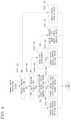
- FIG. 2 is a flowchart showing operation of the vehicle control device according to the first embodiment
- FIG. 3 is a flowchart showing operation of a target speed determining unit of the vehicle control device according to the first embodiment
- FIG. 4 is a block diagram showing the configuration of a vehicle control device according to the second embodiment of the present disclosure.
- FIG. 5 is a flowchart showing operation of a target speed determining unit of the vehicle control device according to the second embodiment
- FIG. 6 is a block diagram showing the configuration of a vehicle control device according to the third embodiment of the present disclosure.
- FIG. 7 is a flowchart showing operation of a target speed determining unit of the vehicle control device according to the third embodiment
- FIG. 8 is a block diagram showing the configuration of a vehicle control device according to a modification of the first embodiment
- FIG. 9 is a flowchart showing operation of a target speed determining unit of the vehicle control device according to the modification of the first embodiment
- FIG. 10 is a block diagram showing the configuration of a vehicle control device according to the fourth embodiment of the present disclosure.
- FIG. 11 is a flowchart showing operation of a target speed determining unit of the vehicle control device according to the fourth embodiment
- FIG. 12 is a block diagram showing the configuration of a vehicle control device according to the fifth embodiment of the present disclosure.
- FIG. 13 is a flowchart showing operation of a target speed determining unit of the vehicle control device according to the fifth embodiment
- FIG. 14 is a flowchart showing operation of a target speed determining unit of a vehicle control device according to a modification of the fifth embodiment
- FIG. 15 is a block diagram showing the configuration of a vehicle control device according to the sixth embodiment of the present disclosure.
- FIG. 16 is a flowchart showing operation of a target speed determining unit of the vehicle control device according to the sixth embodiment.
- FIG. 1 is a block diagram showing the configuration of the vehicle control device 1 A.
- a cruise control start request input unit 10 is a switch for inputting a request for starting cruise control from a driver of a vehicle.
- a cruise control setting speed input unit 20 is for inputting a cruise control setting speed desired by the driver.
- a vehicle position detection unit 30 detects the present position (latitude and longitude) of the vehicle provided with the vehicle control device 1 A, using positioning information from an artificial satellite such as a global navigation satellite system (GNSS).
- Toll gate position data 40 is data indicating the position (latitude and longitude) of an ETC toll gate.
- a correlation unit 50 includes a route distance calculation unit and a passing determination unit, has map information including road shapes and advancing directions, and is capable of calculating the route distance from the vehicle to an ETC toll gate. In addition, the correlation unit 50 is capable of determining whether or not the vehicle has passed through the ETC toll gate. If the correlation unit 50 determines that the vehicle has passed through the ETC toll gate, the correlation unit 50 turns on a toll gate passing flag.
- the correlation unit 50 determines that the vehicle has not passed through the ETC toll gate, the correlation unit 50 turns off the toll gate passing flag.
- the vehicle position detection unit 30 , the toll gate position data 40 , and the correlation unit 50 correspond to a detection unit in the claims.
- a toll gate deceleration target speed calculation unit 60 calculates, on the basis of the route distance from the present position of the vehicle to an ETC toll gate, a target speed (toll gate deceleration target speed) at the present position of the vehicle, in order for the vehicle to pass through the ETC toll gate at an appropriate speed (for example, 20 km/h).
- a road type storage unit 70 stores road types indicating whether roads are general roads or expressways, and outputs the type of a road after passing through the ETC toll gate, on the basis of the present position of the vehicle.
- the vehicle position detection unit 30 , the toll gate position data 40 , the correlation unit 50 , and the road type storage unit 70 are integrated in a car navigation device.
- the road type storage unit 70 corresponds to a vehicle frontward detecting unit in the claims.
- a target speed determining unit 80 A determines a cruise control mode ON/OFF signal and a final cruise control target speed on the basis of the cruise control start request, the cruise control setting speed, the toll gate deceleration target speed, the toll gate passing flag, and the road type after passing through the ETC toll gate.
- a speed control unit 90 issues a target acceleration/deceleration value to a throttle valve/brake 100 so as to cause the present speed of the vehicle to coincide with the cruise control target speed, thereby automatically adjusting the throttle valve/brake 100 and controlling the speed of the vehicle.
- the cruise control start request unit 10 , the cruise control setting speed input unit 20 , a part of the target speed determining unit 80 A, and the speed control unit 90 correspond to a cruise control unit in the claims, and the cruise control mode ON/OFF signal and the final cruise control target speed correspond to control content in the cruise control unit in the claims.
- the toll gate deceleration target speed calculation unit 60 , the target speed determining unit 80 A, and the speed control unit 90 correspond to a first control unit in the claims, and the target speed determining unit 80 A and the speed control unit 90 correspond to a second control unit in the claims. It is noted that, in the case where the cruise control mode ON/OFF signal is OFF, the vehicle is set to a manual traveling state that is based on an acceleration/brake operation by the driver.
- FIG. 2 is a flowchart showing operation of the vehicle control device 1 A.
- FIG. 3 is a flowchart showing the details of operation in step 110 in FIG. 2 . Operations in the flowcharts shown in FIG. 2 and FIG. 3 are repeatedly executed while an engine of the vehicle is ON.
- the operation in FIG. 2 will be described.
- the driver of the vehicle inputs a cruise control start request using the cruise control start request input unit 10 .
- the driver inputs a cruise control setting speed using the cruise control setting speed input unit 20 (step 10 ).
- the speed of the vehicle at the time when the cruise control start request is inputted is automatically inputted to the cruise control setting speed input unit 20 . Even if a cruise control start request is not inputted, the process proceeds to the next step.
- the vehicle position detection unit 30 detects the present position of the vehicle (step 20 ), and on the basis of the present position of the vehicle and the position of an ETC toll gate, the correlation unit 50 calculates the route distance from the present position of the vehicle to the ETC toll gate, and determines whether or not the vehicle has passed through the ETC toll gate (step 30 ). If the correlation unit 50 determines that the vehicle has passed through the ETC toll gate (step 40 ), the correlation unit 50 turns on the toll gate passing flag (step 50 ). If the correlation unit 50 determines that the vehicle has not passed through the ETC toll gate, the correlation unit 50 turns off the toll gate passing flag (step 60 ).
- the toll gate deceleration target speed calculation unit 60 calculates a toll gate deceleration target speed on the basis of the route distance from the present position of the vehicle to the ETC toll gate (step 70 ).
- a toll gate deceleration target speed V′ is calculated.
- along is a deceleration setting value set in advance
- Vref is a toll gate permissible speed for passing through the ETC toll gate appropriately
- D is the route distance from the vehicle to the ETC toll gate.
- the deceleration setting value along and the toll gate permissible speed Vref are constants, and the route distance D from the vehicle to the toll gate is a variable.
- Toll gate deceleration target speed V ′[ m/s ] ⁇ square root over (2 a long D+V ref 2 ) ⁇ [Mathematical 1]
- step 80 whether or not there is a cruise control start request is confirmed (step 80 ), and if there is a start request, the cruise control mode ON/OFF signal is turned on (step 90 ). If there is no start request, whether the cruise control mode ON/OFF signal was ON or OFF in the last-time execution of the flowchart is confirmed, and the cruise control mode ON/OFF signal is set to the same state as in the last-time execution of the flowchart (step 100 ). Then, target speed selection is performed (step 110 ). It is noted that the cruise control mode ON/OFF signal is reset to the initial value, i.e., OFF, when the engine is turned on, or by a driver's cancelation operation or an operation described below.
- target speed selection operation (step 110 ) will be described with reference to the flowchart shown in FIG. 3 .
- the cruise control mode ON/OFF signal (step 120 )
- the target speed is set to an invalid value, and the vehicle is switched to a manual traveling state that is based on an acceleration/brake operation by the driver (step 130 ).
- the cruise control mode ON/OFF signal is ON, next, the toll gate passing flag is referred to (step 140 ).
- the target speed determining unit 80 A refers to the road type storage unit 70 and determines whether or not a road after passing through the ETC toll gate is an expressway (step 150 ). If the road after passing through the ETC toll gate is an expressway, the target speed is set to the cruise control setting speed that has been set in the cruise control setting speed input unit 20 before passing through the ETC toll gate (step 160 ).
- the cruise control mode ON/OFF signal is switched to OFF, the target speed is set to an invalid value, and the vehicle is switched to a manual traveling state that is based on an acceleration/brake operation by the driver (step 170 ).
- the toll gate passing flag is OFF, the vehicle has not passed through the ETC toll gate yet, and in order to set the target speed in preparation for passing through the ETC toll gate hereafter, the magnitude relationship between the toll gate deceleration target speed and the cruise control setting speed is confirmed (step 180 ). If the toll gate deceleration target speed is higher than the cruise control setting speed, the target speed is set to the cruise control setting speed (step 190 ). If the toll gate deceleration target speed is lower than the cruise control setting speed, the target speed is set to the toll gate deceleration target speed (step 200 ). After the target speed is determined, the process proceeds to step 210 in FIG. 2 .
- the speed control unit 90 refers to the cruise control mode ON/OFF signal (step 210 ). If the cruise control mode ON/OFF signal is ON, a vehicle speed control acceleration/deceleration value for causing the present speed of the vehicle to coincide with the target speed is outputted as a target acceleration/deceleration value to the throttle valve/brake 100 (step 220 ). It is noted that the vehicle speed control acceleration/deceleration value is calculated from the target speed and the present speed, using, for example, PI control which is a general feedback control method. On the other hand, if the cruise control mode ON/OFF signal is OFF, the target acceleration/deceleration value set at an invalid value is outputted (step 230 ).
- the vehicle control device 1 A performs the following operation.
- the cruise control mode ON/OFF signal is ON
- constant-speed traveling at a cruise control setting speed and speed control in preparation for the ETC toll gate are performed.
- the toll gate passing flag is turned on, on the basis of the road type of a road after passing through the ETC toll gate, if the road after passing through the ETC toll gate is an expressway, the target speed is set to the cruise control setting speed so that, also after passing through the ETC toll gate, constant-speed traveling control is performed by the cruise control unit at the same speed as that before passing through the ETC toll gate.
- the target speed is set to an invalid value and the vehicle is switched to a manual traveling state that is based on an acceleration/brake operation by the driver.
- the vehicle control it is possible to perform the vehicle control in accordance with the type of the road after passing through the ETC toll gate.
- FIG. 4 is a block diagram showing the configuration of the vehicle control device 1 B.
- the components other than a target speed determining unit 80 B and a lane width calculation unit 110 are the same as those in the first embodiment and therefore the description thereof is omitted.
- the lane width calculation unit 110 corresponds to the vehicle frontward detecting unit in the claims, and detects and outputs the lane width of a road frontward of the vehicle. Examples of means for detecting the lane width of a road frontward of the vehicle include a car navigation system storing lane widths of roads, and a front camera.
- the target speed determining unit 80 B determines the cruise control mode ON/OFF signal and a final cruise control target speed on the basis of a cruise control start request, a cruise control setting speed, a toll gate deceleration target speed, the toll gate passing flag, and the lane width of a road after passing through an ETC toll gate.
- the cruise control start request unit 10 , the cruise control setting speed input unit 20 , a part of the target speed determining unit 80 B, and the speed control unit 90 correspond to the cruise control unit in the claims, and the cruise control mode ON/OFF signal and the final cruise control target speed correspond to the control content in the cruise control unit in the claims.
- the toll gate deceleration target speed calculation unit 60 , the target speed determining unit 80 B, and the speed control unit 90 correspond to the first control unit in the claims
- the target speed determining unit 80 B and the speed control unit 90 correspond to the second control unit in the claims. It is noted that, in the case where the cruise control mode ON/OFF signal is OFF, the vehicle is set to a manual traveling state that is based on an acceleration/brake operation by the driver.
- FIG. 5 shows the details of operation in step 110 in the second embodiment.
- the target speed determining unit 80 B refers to the lane width calculation unit 110 , and determines whether or not a difference between the lane width of a road after passing through an ETC toll gate and the width of the vehicle is equal to or greater than a predetermined value (step 150 B).
- the width of the vehicle is stored in advance in the target speed determining unit 80 B.
- the lane width of the road after passing through the ETC toll gate is determined to be wide, and the target speed is set to the cruise control setting speed that has been set in the cruise control setting speed input unit 20 before passing through the ETC toll gate (step 160 ). If the difference is smaller than the predetermined value, the lane width of the road after passing through the ETC toll gate is determined to be narrow, the cruise control mode ON/OFF signal is switched to OFF, the target speed is set to an invalid value, and the vehicle is switched to a manual traveling state that is based on an acceleration/brake operation by the driver (step 170 ).
- the target speed is set to the cruise control setting speed so that, also after passing through the ETC toll gate, constant-speed traveling control is performed by the cruise control unit at the same speed as that before passing through the ETC toll gate.
- the target speed is set to an invalid value and the vehicle is switched to a manual traveling state that is based on an acceleration/brake operation by the driver.
- the vehicle control device 1 B performs the following operation.
- the cruise control mode ON/OFF signal is ON
- constant-speed traveling at a cruise control setting speed and speed control in preparation for an ETC toll gate are performed.
- the toll gate passing flag is turned on, if the above difference is equal to or greater than the predetermined value, the target speed is set to the cruise control setting speed so that, also after passing through the ETC toll gate, constant-speed traveling control is performed by the cruise control unit at the same speed as that before passing through the ETC toll gate.
- the target speed is set to an invalid value and the vehicle is switched to a manual traveling state that is based on an acceleration/brake operation by the driver.
- the vehicle control it is possible to perform the vehicle control in accordance with the lane width of a road after passing through the ETC toll gate.
- step 150 B for determining whether the lane width of a road after passing through an ETC toll gate is wide or narrow the determination is performed on the basis of a difference between the lane width and the width of the vehicle. However, the determination may be performed in a simpler manner, i.e., on the basis of whether or not the lane width is equal to or greater than a predetermined value.
- FIG. 6 is a block diagram showing the configuration of the vehicle control device 1 C.
- the components other than a target speed determining unit 80 C and an intersection route distance calculation unit 120 are the same as those in the first and second embodiments and therefore the description thereof is omitted.
- the intersection route distance calculation unit 120 corresponds to the vehicle frontward detecting unit in the claims.
- the intersection route distance calculation unit 120 stores the positions (latitudes and longitudes) of intersections in advance, and calculates and outputs the route distance from an ETC toll gate to the next intersection on a road after passing through the ETC toll gate.
- Examples of means for calculating and outputting the route distance to the intersection include a car navigation system storing the toll gate position data 40 and the positions (latitudes and longitudes) of intersections.
- the target speed determining unit 80 C determines the cruise control mode ON/OFF signal and a final cruise control target speed on the basis of a cruise control start request, a cruise control setting speed, a toll gate deceleration target speed, the toll gate passing flag, and the route distance to the intersection.
- the cruise control start request unit 10 , the cruise control setting speed input unit 20 , a part of the target speed determining unit 80 C, and the speed control unit 90 correspond to the cruise control unit in the claims, and the cruise control mode ON/OFF signal and the final cruise control target speed correspond to the control content in the cruise control unit in the claims.
- the toll gate deceleration target speed calculation unit 60 , the target speed determining unit 80 C, and the speed control unit 90 correspond to the first control unit in the claims, and the target speed determining unit 80 C and the speed control unit 90 correspond to the second control unit in the claims. It is noted that, in the case where the cruise control mode ON/OFF signal is OFF, the vehicle is set to a manual traveling state that is based on an acceleration/brake operation by the driver.
- FIG. 7 shows the details of operation in step 110 in the third embodiment.
- the target speed determining unit 80 C refers to the intersection route distance calculation unit 120 , and determines whether or not the route distance to the intersection is equal to or greater than a predetermined value (step 150 C). If the route distance to the intersection is equal to or greater than the predetermined value, the target speed is set to the cruise control setting speed that has been set in the cruise control setting speed input unit 20 before passing through the ETC toll gate (step 160 ).
- the cruise control mode ON/OFF signal is switched to OFF, the target speed is set to an invalid value, and the vehicle is switched to a manual traveling state that is based on an acceleration/brake operation by the driver (step 170 ).
- the target speed is set to the cruise control setting speed so that, also after passing through the ETC toll gate, constant-speed traveling control is performed by the cruise control unit at the same speed as that before passing through the ETC toll gate.
- the target speed is set to an invalid value and the vehicle is switched to a manual traveling state that is based on an acceleration/brake operation by the driver.
- the vehicle control device 1 C performs the following operation.
- the cruise control mode ON/OFF signal is ON
- constant-speed traveling at a cruise control setting speed and speed control in preparation for the ETC toll gate are performed.
- the toll gate passing flag is turned on, if the route distance to the intersection is equal to or greater than the predetermined value, the target speed is set to the cruise control setting speed so that, also after passing through the ETC toll gate, constant-speed traveling control is performed by the cruise control unit at the same speed as that before passing through the ETC toll gate.
- the target speed is set to an invalid value and the vehicle is switched to a manual traveling state that is based on an acceleration/brake operation by the driver.
- the vehicle control in accordance with the route distance to the intersection. Therefore, in the case where the route distance to the intersection is equal to or greater than the predetermined value, constant-speed traveling at the cruise control setting speed is performed, so that the driver need not accelerate the vehicle by the driver's operation, and in the case where the route distance to the intersection is smaller than the predetermined value, switching to driver's manual traveling is performed, so that the vehicle will not be accelerated unnecessarily and the driver need not decelerate the vehicle by the driver's operation. Thus, load on the driver can be reduced.
- step 150 information about a road after passing through an ETC toll gate is detected, and in accordance with a result of the detection, control is performed in either of the following ways: the target speed is set to the cruise control setting speed so that, also after passing through the ETC toll gate, constant-speed traveling control is performed by the cruise control unit at the same speed as that before passing through the ETC toll gate; or the target speed is set to an invalid value and the vehicle is switched to a manual traveling state that is based on an acceleration/brake operation by the driver.
- FIG. 8 is a block diagram showing a modification of the vehicle control device 1 A.
- the components other than a following vehicle detecting unit 130 are the same as those in the vehicle control device 1 A and therefore the description thereof is omitted.
- the following vehicle detecting unit 130 determines whether or not there is a following vehicle after the vehicle. If there is a following vehicle, the following vehicle detecting unit 130 outputs a following vehicle detection signal accordingly, to the target speed determining unit 80 A.
- the vehicle is provided with a millimeter-wave radar, a sonar sensor (ultrasonic sensor), a camera, or the like, to determine whether or not there is a following vehicle after the vehicle.
- step 150 if the road type is a general road, whether or not the following vehicle detection signal is ON is determined (step 170 A). If the following vehicle detection signal is ON, i.e., if there is a following vehicle, the target speed is set to the cruise control setting speed that has been set in the cruise control setting speed input unit 20 before passing through the ETC toll gate (step 170 B).
- the cruise control mode ON/OFF signal is switched to off, the target speed is set to an invalid value, and the vehicle is switched to a manual traveling state that is based on an acceleration/brake operation by the driver (step 170 C).
- the following vehicle detecting unit 130 when, on the basis of a result of detection by the vehicle frontward detecting unit, changing the control content in the cruise control unit to an invalid value and switching to a manual traveling state that is based on an acceleration/brake operation by the driver, the following vehicle detecting unit 130 is referred to and if there is a following vehicle, the control content in the cruise control unit is changed to constant-speed traveling at the speed that has been set by the driver before passing through the ETC toll gate. If there is no following vehicle, the vehicle is switched to a manual traveling state that is based on an acceleration/brake operation by the driver.
- the same effects as in the first embodiment can be provided, and it is possible to reduce the possibility that the vehicle is rear-ended by a following vehicle after passing through the ETC toll gate.
- step 170 B in FIG. 9 the speed of a following vehicle may be detected using the following vehicle detecting unit 130 , and the target speed may be set to the same speed as that of the following vehicle.
- the cruise control setting speed is higher than the speed of the following vehicle, the vehicle is prevented from being accelerated to an unnecessarily high speed, while the possibility that the vehicle is rear-ended by the following vehicle is reduced.
- the vehicle control device 1 A described in the first embodiment has been described.
- the vehicle control device 1 B described in the second embodiment or the vehicle control device 1 C described in the third embodiment may be modified in the same manner, whereby the same effects can be provided.
- FIG. 10 is a block diagram showing the configuration of the vehicle control device 1 D.
- the components other than a target speed determining unit 80 D and a maximum speed storage unit 140 are the same as those in the first to third embodiments, and therefore the description thereof is omitted.
- the maximum speed storage unit 140 corresponds to the vehicle frontward detecting unit in the claims.
- the maximum speed storage unit 140 stores maximum speeds on roads, and on the basis of the present position of the vehicle, outputs the maximum speed at the present position of the vehicle. Examples of means for storing the maximum speeds on roads and outputting the maximum speed at the present position of the vehicle include a car navigation system.
- the target speed determining unit 80 D determines the cruise control mode ON/OFF signal and a final cruise control target speed on the basis of a cruise control start request, a cruise control setting speed, a toll gate deceleration target speed, the toll gate passing flag, and the maximum speed at the present position of the vehicle.
- the cruise control start request unit 10 , the cruise control setting speed input unit 20 , a part of the target speed determining unit 80 D, and the speed control unit 90 correspond to the cruise control unit in the claims, and the cruise control mode ON/OFF signal and the final cruise control target speed correspond to the control content in the cruise control unit in the claims.
- the toll gate deceleration target speed calculation unit 60 , the target speed determining unit 80 D, and the speed control unit 90 correspond to the first control unit in the claims
- the target speed determining unit 80 D and the speed control unit 90 correspond to the second control unit in the claims. It is noted that, in the case where the cruise control mode ON/OFF signal is OFF, the vehicle is set to a manual traveling state that is based on an acceleration/brake operation by the driver.
- FIG. 11 shows the details of operation in step 110 in the fourth embodiment.
- the vehicle control device 1 D does not perform processes corresponding to steps 160 and 170 described in the first to third embodiments.
- operations other than step 150 D are the same as those in the first to third embodiments and therefore the description thereof is omitted.
- the toll gate passing flag is referred to (step 140 ), and if the toll gate passing flag is ON, the maximum speed storage unit 140 is referred to, and the maximum speed at the present position of the vehicle, i.e., the maximum speed on a road after passing through the ETC toll gate, is set as the target speed (step 150 D).
- the vehicle control device 1 D performs the following operation.
- the cruise control mode ON/OFF signal is ON
- constant-speed traveling at a cruise control setting speed and speed control in preparation for the ETC toll gate are performed.
- the toll gate passing flag is turned on
- the target speed is set to the maximum speed on a road after passing through the ETC toll gate, so that, also after passing through the ETC toll gate, constant-speed traveling control is performed by the cruise control unit.
- the cruise control unit it is possible to perform the vehicle control in accordance with the maximum speed on the road after passing through the ETC toll gate. Therefore, the driver need not control acceleration/deceleration of the vehicle by the driver's operation, and load on the driver can be reduced.
- FIG. 12 is a block diagram showing the configuration of the vehicle control device 1 E.
- the components other than a target speed determining unit 80 E, the intersection route distance calculation unit 120 , and the maximum speed storage unit 140 are the same as those in the first to fourth embodiments, and therefore the description thereof is omitted.
- the intersection route distance calculation unit 120 and the maximum speed storage unit 140 correspond to the vehicle frontward detecting unit in the claims, the intersection route distance calculation unit 120 is the same as that in the third embodiment, and the maximum speed storage unit 140 is the same as that in the fourth embodiment. Therefore, the description thereof is omitted.
- the target speed determining unit 80 E determines the cruise control mode ON/OFF signal and a final cruise control target speed on the basis of a cruise control start request, a cruise control setting speed, a toll gate deceleration target speed, the toll gate passing flag, the maximum speed at the present position of the vehicle, and the route distance from an ETC toll gate to the next intersection on a road after passing through the ETC toll gate.
- the cruise control start request unit 10 , the cruise control setting speed input unit 20 , a part of the target speed determining unit 80 E, and the speed control unit 90 correspond to the cruise control unit in the claims, and the cruise control mode ON/OFF signal and the final cruise control target speed correspond to the control content in the cruise control unit in the claims.
- the toll gate deceleration target speed calculation unit 60 , the target speed determining unit 80 E, and the speed control unit 90 correspond to the first control unit in the claims
- the target speed determining unit 80 E and the speed control unit 90 correspond to the second control unit in the claims. It is noted that, in the case where the cruise control mode ON/OFF signal is OFF, the vehicle is set to a manual traveling state that is based on an acceleration/brake operation by the driver.
- FIG. 13 shows the details of operation in step 110 in the fifth embodiment.
- the target speed determining unit 80 E refers to the intersection route distance calculation unit 120 (step 150 C), and if the route distance to the intersection is equal to or greater than the predetermined value, the target speed determining unit 80 E sets the target speed to the maximum speed on a road after passing through the ETC toll gate (step 160 E). If the route distance to the intersection is smaller than the predetermined value, the target speed determining unit 80 E sets the target speed to be lower than the maximum speed on a road after passing through the ETC toll gate (step 170 E).
- the target speed is set to the maximum speed on a road after passing through the ETC toll gate.
- the target speed is set to be lower, by 10 km/h, than the maximum speed on a road after passing through the ETC toll gate.
- the vehicle control device 1 E performs the following operation.
- the cruise control mode ON/OFF signal is ON
- constant-speed traveling at a cruise control setting speed and speed control in preparation for the ETC toll gate are performed.
- the toll gate passing flag is turned on
- the target speed is set to the maximum speed on a road after passing through the ETC toll gate
- the route distance to the intersection is smaller than the predetermined value
- the target speed is set to be lower than the maximum speed on a road after passing through the ETC toll gate, whereby constant-speed traveling control is performed by the cruise control unit.
- FIG. 14 shows a modification of the flowchart shown in FIG. 13 .
- the target speed is set to be lower than the maximum speed on a road after passing through the ETC toll gate.
- the target speed may be set to an invalid value and the vehicle may be switched to a manual traveling state that is based on an acceleration/brake operation by the driver.
- the operation shown in the flowchart in FIG. 14 can provide the same effects as in FIG. 13 .
- FIG. 15 is a block diagram showing the configuration of the vehicle control device 1 F.
- the components other than a target speed determining unit 80 F, the following vehicle detecting unit 130 , and the maximum speed storage unit 140 are the same as those in the first to fifth embodiments, and therefore the description thereof is omitted.
- the maximum speed storage unit 140 corresponds to the vehicle frontward detecting unit in the claims.
- the following vehicle detecting unit 130 is the same as that shown in FIG. 8
- the maximum speed storage unit 130 is the same as that in the fourth and fifth embodiments. Therefore, the description thereof is omitted.
- the target speed determining unit 80 F determines the cruise control mode ON/OFF signal and a final cruise control target speed on the basis of a cruise control start request, a cruise control setting speed, a toll gate deceleration target speed, the toll gate passing flag, the maximum speed at the present position of the vehicle, and the following vehicle detection signal.
- the cruise control start request unit 10 , the cruise control setting speed input unit 20 , a part of the target speed determining unit 80 F, and the speed control unit 90 correspond to the cruise control unit in the claims, and the cruise control mode ON/OFF signal and the final cruise control target speed correspond to the control content in the cruise control unit in the claims.
- the toll gate deceleration target speed calculation unit 60 , the target speed determining unit 80 F, and the speed control unit 90 correspond to the first control unit in the claims
- the target speed determining unit 80 F and the speed control unit 90 correspond to the second control unit in the claims. It is noted that, in the case where the cruise control mode ON/OFF signal is OFF, the vehicle is set to a manual traveling state that is based on an acceleration/brake operation by the driver.
- FIG. 16 shows the details of operation in step 110 in the sixth embodiment.
- the target speed determining unit 80 F refers to the following vehicle detecting unit 130 (step 150 F), and if the following vehicle detection signal is ON, i.e., there is a following vehicle, the target speed determining unit 80 F confirms the magnitude relationship between the maximum speed on a road after passing through the ETC toll gate and the cruise control setting speed that has been set by the driver before passing through the ETC toll gate (step 160 F). If the maximum speed is higher than the cruise control setting speed, the target speed is set to the maximum speed (step 160 G).
- the target speed is set to the cruise control setting speed (step 160 H).
- constant-speed traveling control is performed by the cruise control unit also after passing through the ETC toll gate. It is noted that, in the case where the following vehicle detection signal is OFF, i.e., there is no following vehicle, the cruise control mode ON/OFF signal is turned off, the target speed is set to an invalid value, and the vehicle is switched to a manual traveling state that is based on an acceleration/brake operation by the driver (step 170 F).
- the vehicle control device 1 F performs the following operation.
- the cruise control mode ON/OFF signal is ON
- constant-speed traveling at a cruise control setting speed and speed control in preparation for the ETC toll gate are performed.
- the toll gate passing flag is turned on
- the following vehicle detection signal is ON, i.e., if there is a following vehicle
- the magnitude relationship between the maximum speed on a road after passing through the ETC toll gate and the cruise control setting speed that has been set by the driver before passing the ETC toll gate is confirmed.
- the higher one of both speeds is set as the target speed and constant-speed traveling control is performed by the cruise control unit.
- the vehicle is switched to a manual traveling state that is based on an acceleration/brake operation by the driver.
- the driver need not control acceleration/deceleration of the vehicle by the driver's operation, load on the driver can be reduced, and the possibility that the vehicle is rear-ended by the following vehicle can be reduced.
- the speed of a following vehicle is detected using the following vehicle detecting unit 130 , and as a result, if the speed of the following vehicle is lower than both of the maximum speed and the cruise control setting speed set by the driver, the magnitude relationship between the maximum speed and the cruise control setting speed set by the driver is confirmed, and the lower one of both speeds is set as the target speed, whereby constant-speed traveling control is performed by the cruise control unit.
- the cruise control unit it is possible to reduce the possibility that the vehicle is rear-ended by the following vehicle, and it is possible to travel at a speed that does not exceed the maximum speed on a road after passing through the ETC toll gate, or a speed in accordance with the driver's intention.
- the target speed is set to the maximum speed at the present position of the vehicle.
- the target speed may become lower than the maximum speed.
- the speed based on the maximum speed on a road after passing through the ETC toll gate is set as the target speed so as to enable constant-speed traveling control at a speed appropriate for the road after passing through the ETC toll gate.
Landscapes
- Engineering & Computer Science (AREA)
- Automation & Control Theory (AREA)
- Transportation (AREA)
- Mechanical Engineering (AREA)
- Human Computer Interaction (AREA)
- Physics & Mathematics (AREA)
- Mathematical Physics (AREA)
- Control Of Driving Devices And Active Controlling Of Vehicle (AREA)
- Controls For Constant Speed Travelling (AREA)
Abstract
Description
Toll gate deceleration target speed V′[m/s]=√{square root over (2a long D+V ref 2)} [Mathematical 1]
-
- 1A, 1B, 1C, 1D, 1E, 1F vehicle control device
- 10 cruise control start request input unit
- 20 cruise control setting speed input unit
- 30 vehicle position detection unit
- 40 toll gate position data
- 50 correlation unit
- 60 toll gate deceleration target speed calculation unit
- 70 road type storage unit
- 80A, 80B, 80C, 80D, 80E, 80F target speed determining unit
- 90 speed control unit
- 100 throttle valve/brake
- 110 lane width calculation unit
- 120 intersection route distance calculation unit
- 130 following vehicle detecting unit
- 140 maximum speed storage unit
Claims (13)
Applications Claiming Priority (3)
| Application Number | Priority Date | Filing Date | Title |
|---|---|---|---|
| JP2019044396A JP6695467B1 (en) | 2019-03-12 | 2019-03-12 | Vehicle control device |
| JPJP2019-044396 | 2019-03-12 | ||
| JP2019-044396 | 2019-03-12 |
Publications (2)
| Publication Number | Publication Date |
|---|---|
| US20200290612A1 US20200290612A1 (en) | 2020-09-17 |
| US11230287B2 true US11230287B2 (en) | 2022-01-25 |
Family
ID=70682352
Family Applications (1)
| Application Number | Title | Priority Date | Filing Date |
|---|---|---|---|
| US16/549,034 Expired - Fee Related US11230287B2 (en) | 2019-03-12 | 2019-08-23 | Vehicle control device |
Country Status (4)
| Country | Link |
|---|---|
| US (1) | US11230287B2 (en) |
| JP (1) | JP6695467B1 (en) |
| CN (1) | CN111688684B (en) |
| DE (1) | DE102019213415A1 (en) |
Families Citing this family (3)
| Publication number | Priority date | Publication date | Assignee | Title |
|---|---|---|---|---|
| US11577725B2 (en) * | 2020-09-02 | 2023-02-14 | Ford Global Technologies, Llc | Vehicle speed and steering control |
| US12128894B2 (en) * | 2021-11-16 | 2024-10-29 | Ford Global Technologies, Llc | Adaptive cruise control |
| JP7819150B2 (en) * | 2023-05-29 | 2026-02-24 | 三菱電機株式会社 | Vehicle control device |
Citations (16)
| Publication number | Priority date | Publication date | Assignee | Title |
|---|---|---|---|---|
| JP2000168393A (en) | 1998-12-09 | 2000-06-20 | Kansei Corp | Vehicle operation supporting device |
| US20040030483A1 (en) | 2002-08-02 | 2004-02-12 | Christian Muehlbauer | Method for controlling the speed of a vehicle |
| JP2004355145A (en) | 2003-05-27 | 2004-12-16 | Denso Corp | Vehicle control device |
| DE102004048468A1 (en) | 2004-10-05 | 2006-04-13 | Siemens Ag | System and method for setting the speed of a vehicle to a maximum permissible speed |
| US20170232967A1 (en) * | 2016-02-16 | 2017-08-17 | Toyota Jidosha Kabushiki Kaisha | Path determination apparatus |
| US20180128635A1 (en) * | 2016-11-08 | 2018-05-10 | Honda Motor Co., Ltd | Information display device, information display method, and information display program |
| WO2018142566A1 (en) * | 2017-02-03 | 2018-08-09 | 本田技研工業株式会社 | Passage gate determination device, vehicle control system, passage gate determination method, and program |
| US20180222482A1 (en) * | 2017-02-03 | 2018-08-09 | Honda Motor Co., Ltd. | Vehicle control apparatus, vehicle control method, and vehicle control program |
| WO2018142561A1 (en) * | 2017-02-03 | 2018-08-09 | 本田技研工業株式会社 | Vehicle control system, vehicle control method, and vehicle control program |
| WO2018142576A1 (en) * | 2017-02-03 | 2018-08-09 | 本田技研工業株式会社 | Passage-gate-deciding device, vehicle control system, passage-gate-deciding method, and program |
| WO2018142560A1 (en) * | 2017-02-03 | 2018-08-09 | 本田技研工業株式会社 | Vehicle control system, vehicle control method, and vehicle control program |
| US20190064827A1 (en) * | 2016-03-08 | 2019-02-28 | Aisin Aw Co., Ltd. | Self-driving assistance device and computer program |
| US20190077459A1 (en) * | 2017-09-11 | 2019-03-14 | Honda Motor Co., Ltd. | Vehicle control device, vehicle control method, and recording medium |
| US20190248368A1 (en) * | 2018-02-13 | 2019-08-15 | Suzuki Motor Corporation | Driving assistance device |
| KR20200036072A (en) * | 2018-09-17 | 2020-04-07 | 현대자동차주식회사 | Apparatus for controlling vehicle, system having the same and method thereof |
| KR102138497B1 (en) * | 2014-05-30 | 2020-07-28 | 현대모비스 주식회사 | Apparatus and method for controlling tollgate entry of vehicle |
Family Cites Families (11)
| Publication number | Priority date | Publication date | Assignee | Title |
|---|---|---|---|---|
| JPH11175897A (en) * | 1997-12-16 | 1999-07-02 | Hitachi Ltd | Cruise control device |
| JP2003039976A (en) * | 2001-07-26 | 2003-02-13 | Honda Motor Co Ltd | Travel control device |
| JP2003067896A (en) * | 2001-08-28 | 2003-03-07 | Hitachi Ltd | Vehicle control device |
| JP2006027457A (en) * | 2004-07-16 | 2006-02-02 | Nissan Motor Co Ltd | Vehicle travel control device |
| JP2009001076A (en) * | 2007-06-19 | 2009-01-08 | Toyota Motor Corp | Vehicle driving force control device |
| JP5061776B2 (en) * | 2007-08-03 | 2012-10-31 | 日産自動車株式会社 | Vehicle travel control device and vehicle travel control method |
| JP5124415B2 (en) * | 2008-10-10 | 2013-01-23 | 日立オートモティブシステムズ株式会社 | Travel control device |
| JP2010247617A (en) * | 2009-04-14 | 2010-11-04 | Hitachi Automotive Systems Ltd | Travel control device |
| JP6402538B2 (en) * | 2014-08-22 | 2018-10-10 | トヨタ自動車株式会社 | Vehicle speed control device |
| JP6464495B2 (en) * | 2017-02-10 | 2019-02-06 | 本田技研工業株式会社 | Vehicle system, vehicle control method, and vehicle control program |
| US10406917B2 (en) * | 2017-08-28 | 2019-09-10 | Ford Global Technologies, Llc | Systems and methods for vehicle cruise control smoothness adaptation |
-
2019
- 2019-03-12 JP JP2019044396A patent/JP6695467B1/en not_active Expired - Fee Related
- 2019-08-23 US US16/549,034 patent/US11230287B2/en not_active Expired - Fee Related
- 2019-09-04 DE DE102019213415.7A patent/DE102019213415A1/en not_active Ceased
-
2020
- 2020-03-06 CN CN202010150012.8A patent/CN111688684B/en active Active
Patent Citations (18)
| Publication number | Priority date | Publication date | Assignee | Title |
|---|---|---|---|---|
| JP2000168393A (en) | 1998-12-09 | 2000-06-20 | Kansei Corp | Vehicle operation supporting device |
| US20040030483A1 (en) | 2002-08-02 | 2004-02-12 | Christian Muehlbauer | Method for controlling the speed of a vehicle |
| DE10235363A1 (en) | 2002-08-02 | 2004-02-19 | Robert Bosch Gmbh | Method for regulating the speed of a vehicle |
| JP2004355145A (en) | 2003-05-27 | 2004-12-16 | Denso Corp | Vehicle control device |
| DE102004048468A1 (en) | 2004-10-05 | 2006-04-13 | Siemens Ag | System and method for setting the speed of a vehicle to a maximum permissible speed |
| KR102138497B1 (en) * | 2014-05-30 | 2020-07-28 | 현대모비스 주식회사 | Apparatus and method for controlling tollgate entry of vehicle |
| US20170232967A1 (en) * | 2016-02-16 | 2017-08-17 | Toyota Jidosha Kabushiki Kaisha | Path determination apparatus |
| US20190064827A1 (en) * | 2016-03-08 | 2019-02-28 | Aisin Aw Co., Ltd. | Self-driving assistance device and computer program |
| US20180128635A1 (en) * | 2016-11-08 | 2018-05-10 | Honda Motor Co., Ltd | Information display device, information display method, and information display program |
| US20180222482A1 (en) * | 2017-02-03 | 2018-08-09 | Honda Motor Co., Ltd. | Vehicle control apparatus, vehicle control method, and vehicle control program |
| WO2018142561A1 (en) * | 2017-02-03 | 2018-08-09 | 本田技研工業株式会社 | Vehicle control system, vehicle control method, and vehicle control program |
| WO2018142576A1 (en) * | 2017-02-03 | 2018-08-09 | 本田技研工業株式会社 | Passage-gate-deciding device, vehicle control system, passage-gate-deciding method, and program |
| WO2018142560A1 (en) * | 2017-02-03 | 2018-08-09 | 本田技研工業株式会社 | Vehicle control system, vehicle control method, and vehicle control program |
| WO2018142566A1 (en) * | 2017-02-03 | 2018-08-09 | 本田技研工業株式会社 | Passage gate determination device, vehicle control system, passage gate determination method, and program |
| US20190354107A1 (en) * | 2017-02-03 | 2019-11-21 | Honda Motor Co., Ltd. | Vehicle control system, vehicle control method, and vehicle control program |
| US20190077459A1 (en) * | 2017-09-11 | 2019-03-14 | Honda Motor Co., Ltd. | Vehicle control device, vehicle control method, and recording medium |
| US20190248368A1 (en) * | 2018-02-13 | 2019-08-15 | Suzuki Motor Corporation | Driving assistance device |
| KR20200036072A (en) * | 2018-09-17 | 2020-04-07 | 현대자동차주식회사 | Apparatus for controlling vehicle, system having the same and method thereof |
Non-Patent Citations (1)
| Title |
|---|
| Communication dated Aug. 26, 2021, from the German Patent and Trademark Office in application No. 102019213415.7. |
Also Published As
| Publication number | Publication date |
|---|---|
| JP2020147089A (en) | 2020-09-17 |
| US20200290612A1 (en) | 2020-09-17 |
| CN111688684A (en) | 2020-09-22 |
| DE102019213415A1 (en) | 2020-09-17 |
| CN111688684B (en) | 2023-09-26 |
| JP6695467B1 (en) | 2020-05-20 |
Similar Documents
| Publication | Publication Date | Title |
|---|---|---|
| CN112009474B (en) | Automatic driving assistance device | |
| US10435021B2 (en) | Vehicle control device | |
| US12036988B2 (en) | Method and control unit for operating an adaptive cruise controller | |
| US7650217B2 (en) | Adaptive cruise control system and navigation system's media with vehicle control information included | |
| US7317973B2 (en) | Automatic vehicle guidance method and system | |
| JP6490486B2 (en) | Route search apparatus and route search method | |
| US10173680B2 (en) | Vehicle speed control device | |
| US11269333B2 (en) | Automatic drive assist apparatus | |
| US20220073098A1 (en) | Method and apparatus for predicting lateral acceleration prior to an automated lane change | |
| US20240101121A1 (en) | Controlling driving modes and operations for vehicles | |
| JP2008261703A (en) | In-vehicle device function explanation device | |
| US12233870B2 (en) | Vehicle driving assistance apparatus | |
| JP2015217762A (en) | Fatigue level estimation device | |
| US20240383480A1 (en) | Method for Maneuvering a Vehicle on a Multi-Lane Road While Taking into Account a Gradient in a Region of an Exit of the Road, Driver Assistance System, and Vehicle | |
| US20200290612A1 (en) | Vehicle control device | |
| US20170103657A1 (en) | Drive assist apparatus and storage medium storing program for executing drive assist process | |
| CN115175838B (en) | Vehicle control method and vehicle control device | |
| JPH1044826A (en) | Following drive control device | |
| US12397789B2 (en) | Driving control method and driving control device | |
| US12103524B1 (en) | Driving control method and driving control device | |
| JP2009107451A (en) | Vehicle travel control device | |
| JP2734219B2 (en) | Vehicle control device | |
| JP2012043279A (en) | Vehicle information processor | |
| JPWO2023047453A5 (en) | ||
| US20260001553A1 (en) | Driving Control Method and Driving Control Device |
Legal Events
| Date | Code | Title | Description |
|---|---|---|---|
| AS | Assignment |
Owner name: MITSUBISHI ELECTRIC CORPORATION, JAPAN Free format text: ASSIGNMENT OF ASSIGNORS INTEREST;ASSIGNORS:YAMAGUCHI, SHINJI;SATAKE, TOSHIHIDE;SHIMIZU, YUJI;AND OTHERS;SIGNING DATES FROM 20190626 TO 20190704;REEL/FRAME:050145/0177 |
|
| FEPP | Fee payment procedure |
Free format text: ENTITY STATUS SET TO UNDISCOUNTED (ORIGINAL EVENT CODE: BIG.); ENTITY STATUS OF PATENT OWNER: LARGE ENTITY |
|
| STPP | Information on status: patent application and granting procedure in general |
Free format text: NON FINAL ACTION MAILED |
|
| STPP | Information on status: patent application and granting procedure in general |
Free format text: RESPONSE TO NON-FINAL OFFICE ACTION ENTERED AND FORWARDED TO EXAMINER |
|
| STPP | Information on status: patent application and granting procedure in general |
Free format text: NOTICE OF ALLOWANCE MAILED -- APPLICATION RECEIVED IN OFFICE OF PUBLICATIONS |
|
| STPP | Information on status: patent application and granting procedure in general |
Free format text: AWAITING TC RESP., ISSUE FEE NOT PAID |
|
| STPP | Information on status: patent application and granting procedure in general |
Free format text: NOTICE OF ALLOWANCE MAILED -- APPLICATION RECEIVED IN OFFICE OF PUBLICATIONS |
|
| STPP | Information on status: patent application and granting procedure in general |
Free format text: PUBLICATIONS -- ISSUE FEE PAYMENT VERIFIED |
|
| STCF | Information on status: patent grant |
Free format text: PATENTED CASE |
|
| FEPP | Fee payment procedure |
Free format text: MAINTENANCE FEE REMINDER MAILED (ORIGINAL EVENT CODE: REM.); ENTITY STATUS OF PATENT OWNER: LARGE ENTITY |
|
| LAPS | Lapse for failure to pay maintenance fees |
Free format text: PATENT EXPIRED FOR FAILURE TO PAY MAINTENANCE FEES (ORIGINAL EVENT CODE: EXP.); ENTITY STATUS OF PATENT OWNER: LARGE ENTITY |
|
| STCH | Information on status: patent discontinuation |
Free format text: PATENT EXPIRED DUE TO NONPAYMENT OF MAINTENANCE FEES UNDER 37 CFR 1.362 |
|
| FP | Lapsed due to failure to pay maintenance fee |
Effective date: 20260125 |