US11228829B2 - Regulating environmental conditions inside cups of headphones - Google Patents

Regulating environmental conditions inside cups of headphones Download PDF

Info

Publication number
US11228829B2
US11228829B2 US16/076,909 US201716076909A US11228829B2 US 11228829 B2 US11228829 B2 US 11228829B2 US 201716076909 A US201716076909 A US 201716076909A US 11228829 B2 US11228829 B2 US 11228829B2
Authority
US
United States
Prior art keywords
cups
environmental
headphones
thresholds
environmental conditions
Prior art date
Legal status (The legal status is an assumption and is not a legal conclusion. Google has not performed a legal analysis and makes no representation as to the accuracy of the status listed.)
Active, expires
Application number
US16/076,909
Other versions
US20210204051A1 (en
Inventor
David H. Hanes
Jon R. Dory
John Michael Main
Current Assignee (The listed assignees may be inaccurate. Google has not performed a legal analysis and makes no representation or warranty as to the accuracy of the list.)
Hewlett Packard Development Co LP
Original Assignee
Hewlett Packard Development Co LP
Priority date (The priority date is an assumption and is not a legal conclusion. Google has not performed a legal analysis and makes no representation as to the accuracy of the date listed.)
Filing date
Publication date
Application filed by Hewlett Packard Development Co LP filed Critical Hewlett Packard Development Co LP
Assigned to HEWLETT-PACKARD DEVELOPMENT COMPANY, L.P. reassignment HEWLETT-PACKARD DEVELOPMENT COMPANY, L.P. ASSIGNMENT OF ASSIGNORS INTEREST (SEE DOCUMENT FOR DETAILS). Assignors: DORY, JON R., HANES, DAVID H., MAIN, JOHN MICHAEL
Publication of US20210204051A1 publication Critical patent/US20210204051A1/en
Application granted granted Critical
Publication of US11228829B2 publication Critical patent/US11228829B2/en
Active legal-status Critical Current
Adjusted expiration legal-status Critical

Links

Images

Classifications

    • HELECTRICITY
    • H04ELECTRIC COMMUNICATION TECHNIQUE
    • H04RLOUDSPEAKERS, MICROPHONES, GRAMOPHONE PICK-UPS OR LIKE ACOUSTIC ELECTROMECHANICAL TRANSDUCERS; DEAF-AID SETS; PUBLIC ADDRESS SYSTEMS
    • H04R1/00Details of transducers, loudspeakers or microphones
    • H04R1/10Earpieces; Attachments therefor ; Earphones; Monophonic headphones
    • H04R1/1041Mechanical or electronic switches, or control elements
    • AHUMAN NECESSITIES
    • A61MEDICAL OR VETERINARY SCIENCE; HYGIENE
    • A61BDIAGNOSIS; SURGERY; IDENTIFICATION
    • A61B5/00Measuring for diagnostic purposes; Identification of persons
    • A61B5/01Measuring temperature of body parts ; Diagnostic temperature sensing, e.g. for malignant or inflamed tissue
    • AHUMAN NECESSITIES
    • A61MEDICAL OR VETERINARY SCIENCE; HYGIENE
    • A61BDIAGNOSIS; SURGERY; IDENTIFICATION
    • A61B5/00Measuring for diagnostic purposes; Identification of persons
    • A61B5/02Detecting, measuring or recording for evaluating the cardiovascular system, e.g. pulse, heart rate, blood pressure or blood flow
    • A61B5/024Measuring pulse rate or heart rate
    • A61B5/02438Measuring pulse rate or heart rate with portable devices, e.g. worn by the patient
    • AHUMAN NECESSITIES
    • A61MEDICAL OR VETERINARY SCIENCE; HYGIENE
    • A61BDIAGNOSIS; SURGERY; IDENTIFICATION
    • A61B5/00Measuring for diagnostic purposes; Identification of persons
    • A61B5/68Arrangements of detecting, measuring or recording means, e.g. sensors, in relation to patient
    • A61B5/6801Arrangements of detecting, measuring or recording means, e.g. sensors, in relation to patient specially adapted to be attached to or worn on the body surface
    • A61B5/6802Sensor mounted on worn items
    • A61B5/6803Head-worn items, e.g. helmets, masks, headphones or goggles
    • HELECTRICITY
    • H04ELECTRIC COMMUNICATION TECHNIQUE
    • H04RLOUDSPEAKERS, MICROPHONES, GRAMOPHONE PICK-UPS OR LIKE ACOUSTIC ELECTROMECHANICAL TRANSDUCERS; DEAF-AID SETS; PUBLIC ADDRESS SYSTEMS
    • H04R1/00Details of transducers, loudspeakers or microphones
    • H04R1/10Earpieces; Attachments therefor ; Earphones; Monophonic headphones
    • H04R1/1008Earpieces of the supra-aural or circum-aural type
    • HELECTRICITY
    • H04ELECTRIC COMMUNICATION TECHNIQUE
    • H04RLOUDSPEAKERS, MICROPHONES, GRAMOPHONE PICK-UPS OR LIKE ACOUSTIC ELECTROMECHANICAL TRANSDUCERS; DEAF-AID SETS; PUBLIC ADDRESS SYSTEMS
    • H04R1/00Details of transducers, loudspeakers or microphones
    • H04R1/10Earpieces; Attachments therefor ; Earphones; Monophonic headphones
    • H04R1/1058Manufacture or assembly
    • H04R1/1075Mountings of transducers in earphones or headphones
    • HELECTRICITY
    • H04ELECTRIC COMMUNICATION TECHNIQUE
    • H04RLOUDSPEAKERS, MICROPHONES, GRAMOPHONE PICK-UPS OR LIKE ACOUSTIC ELECTROMECHANICAL TRANSDUCERS; DEAF-AID SETS; PUBLIC ADDRESS SYSTEMS
    • H04R1/00Details of transducers, loudspeakers or microphones
    • H04R1/10Earpieces; Attachments therefor ; Earphones; Monophonic headphones
    • H04R1/1091Details not provided for in groups H04R1/1008 - H04R1/1083
    • AHUMAN NECESSITIES
    • A61MEDICAL OR VETERINARY SCIENCE; HYGIENE
    • A61BDIAGNOSIS; SURGERY; IDENTIFICATION
    • A61B2560/00Constructional details of operational features of apparatus; Accessories for medical measuring apparatus
    • A61B2560/02Operational features
    • A61B2560/0242Operational features adapted to measure environmental factors, e.g. temperature, pollution
    • AHUMAN NECESSITIES
    • A61MEDICAL OR VETERINARY SCIENCE; HYGIENE
    • A61BDIAGNOSIS; SURGERY; IDENTIFICATION
    • A61B5/00Measuring for diagnostic purposes; Identification of persons
    • A61B5/02Detecting, measuring or recording for evaluating the cardiovascular system, e.g. pulse, heart rate, blood pressure or blood flow
    • A61B5/0205Simultaneously evaluating both cardiovascular conditions and different types of body conditions, e.g. heart and respiratory condition
    • A61B5/02055Simultaneously evaluating both cardiovascular condition and temperature
    • AHUMAN NECESSITIES
    • A61MEDICAL OR VETERINARY SCIENCE; HYGIENE
    • A61BDIAGNOSIS; SURGERY; IDENTIFICATION
    • A61B5/00Measuring for diagnostic purposes; Identification of persons
    • A61B5/48Other medical applications
    • A61B5/4836Diagnosis combined with treatment in closed-loop systems or methods
    • AHUMAN NECESSITIES
    • A61MEDICAL OR VETERINARY SCIENCE; HYGIENE
    • A61FFILTERS IMPLANTABLE INTO BLOOD VESSELS; PROSTHESES; DEVICES PROVIDING PATENCY TO, OR PREVENTING COLLAPSING OF, TUBULAR STRUCTURES OF THE BODY, e.g. STENTS; ORTHOPAEDIC, NURSING OR CONTRACEPTIVE DEVICES; FOMENTATION; TREATMENT OR PROTECTION OF EYES OR EARS; BANDAGES, DRESSINGS OR ABSORBENT PADS; FIRST-AID KITS
    • A61F7/00Heating or cooling appliances for medical or therapeutic treatment of the human body
    • A61F2007/0059Heating or cooling appliances for medical or therapeutic treatment of the human body with an open fluid circuit
    • A61F2007/006Heating or cooling appliances for medical or therapeutic treatment of the human body with an open fluid circuit of gas
    • AHUMAN NECESSITIES
    • A61MEDICAL OR VETERINARY SCIENCE; HYGIENE
    • A61FFILTERS IMPLANTABLE INTO BLOOD VESSELS; PROSTHESES; DEVICES PROVIDING PATENCY TO, OR PREVENTING COLLAPSING OF, TUBULAR STRUCTURES OF THE BODY, e.g. STENTS; ORTHOPAEDIC, NURSING OR CONTRACEPTIVE DEVICES; FOMENTATION; TREATMENT OR PROTECTION OF EYES OR EARS; BANDAGES, DRESSINGS OR ABSORBENT PADS; FIRST-AID KITS
    • A61F7/00Heating or cooling appliances for medical or therapeutic treatment of the human body
    • A61F7/007Heating or cooling appliances for medical or therapeutic treatment of the human body characterised by electric heating
    • A61F2007/0075Heating or cooling appliances for medical or therapeutic treatment of the human body characterised by electric heating using a Peltier element, e.g. near the spot to be heated or cooled
    • AHUMAN NECESSITIES
    • A61MEDICAL OR VETERINARY SCIENCE; HYGIENE
    • A61FFILTERS IMPLANTABLE INTO BLOOD VESSELS; PROSTHESES; DEVICES PROVIDING PATENCY TO, OR PREVENTING COLLAPSING OF, TUBULAR STRUCTURES OF THE BODY, e.g. STENTS; ORTHOPAEDIC, NURSING OR CONTRACEPTIVE DEVICES; FOMENTATION; TREATMENT OR PROTECTION OF EYES OR EARS; BANDAGES, DRESSINGS OR ABSORBENT PADS; FIRST-AID KITS
    • A61F7/00Heating or cooling appliances for medical or therapeutic treatment of the human body
    • A61F2007/0086Heating or cooling appliances for medical or therapeutic treatment of the human body with a thermostat
    • AHUMAN NECESSITIES
    • A61MEDICAL OR VETERINARY SCIENCE; HYGIENE
    • A61FFILTERS IMPLANTABLE INTO BLOOD VESSELS; PROSTHESES; DEVICES PROVIDING PATENCY TO, OR PREVENTING COLLAPSING OF, TUBULAR STRUCTURES OF THE BODY, e.g. STENTS; ORTHOPAEDIC, NURSING OR CONTRACEPTIVE DEVICES; FOMENTATION; TREATMENT OR PROTECTION OF EYES OR EARS; BANDAGES, DRESSINGS OR ABSORBENT PADS; FIRST-AID KITS
    • A61F7/00Heating or cooling appliances for medical or therapeutic treatment of the human body
    • A61F2007/0093Heating or cooling appliances for medical or therapeutic treatment of the human body programmed
    • AHUMAN NECESSITIES
    • A61MEDICAL OR VETERINARY SCIENCE; HYGIENE
    • A61FFILTERS IMPLANTABLE INTO BLOOD VESSELS; PROSTHESES; DEVICES PROVIDING PATENCY TO, OR PREVENTING COLLAPSING OF, TUBULAR STRUCTURES OF THE BODY, e.g. STENTS; ORTHOPAEDIC, NURSING OR CONTRACEPTIVE DEVICES; FOMENTATION; TREATMENT OR PROTECTION OF EYES OR EARS; BANDAGES, DRESSINGS OR ABSORBENT PADS; FIRST-AID KITS
    • A61F7/00Heating or cooling appliances for medical or therapeutic treatment of the human body
    • A61F2007/0095Heating or cooling appliances for medical or therapeutic treatment of the human body with a temperature indicator
    • HELECTRICITY
    • H04ELECTRIC COMMUNICATION TECHNIQUE
    • H04RLOUDSPEAKERS, MICROPHONES, GRAMOPHONE PICK-UPS OR LIKE ACOUSTIC ELECTROMECHANICAL TRANSDUCERS; DEAF-AID SETS; PUBLIC ADDRESS SYSTEMS
    • H04R2460/00Details of hearing devices, i.e. of ear- or headphones covered by H04R1/10 or H04R5/033 but not provided for in any of their subgroups, or of hearing aids covered by H04R25/00 but not provided for in any of its subgroups
    • H04R2460/11Aspects relating to vents, e.g. shape, orientation, acoustic properties in ear tips of hearing devices to prevent occlusion

Definitions

  • a virtual reality (VR) system seeks to more completely immerse the user in audiovisual media.
  • a VR system includes a display and connects to other devices such as headphones.
  • the display presents the visual component of the audiovisual media.
  • the headphones present the audio. Headphones are designed to be worn on or around the head of the user and may fit over the user's ears. With headphones over the user's ears, ambient sound may be less perceptible to enhance the feeling of immersion in the VR media
  • FIG. 1A is a diagram of headphones for regulating environmental conditions inside cups of the headphones, according to one example of principles described herein.
  • FIG. 1B is a diagram of a system for regulating environmental conditions inside cups of headphones, according to one example of principles described herein.
  • FIG. 2 is a diagram of a system for regulating environmental conditions inside cups of headphones, according to one example of principles described herein.
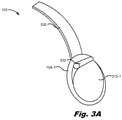
  • FIG. 3A is a diagram of a set of headphones with a member of the headphones in a closed position, according to one example of principles described herein.
  • FIG. 3B is a diagram of a set of headphones with a member of the headphones in an open position, according to one example of principles described herein.
  • FIG. 4A is a diagram of a set of headphones with a member of the headphones in a closed position, according to one example of principles described herein.
  • FIG. 4B is a diagram of a set of headphones with a member of the headphones in an open position, according to one example of principles described herein.
  • FIG. 5 is a diagram of a set of headphones with a fan coupled to a motor as a cooling mechanism, according to one example of principles described herein.
  • FIG. 6 is a diagram of a set of headphones with a semiconductor refrigeration chip as a cooling mechanism, according to one example of principles described herein.
  • FIG. 7 is a diagram of a set of headphones with an acoustic transducer as a cooling mechanism, according to one example of principles described herein.
  • FIG. 8 is a diagram of a table with a number of thresholds, according to one example of principles described herein.
  • FIG. 9 is a flowchart of a method for regulating environmental conditions inside cups of a headset, according to one example of principles described herein.
  • a device to immerse the user in audiovisual media, a device includes a display and connects to another device such as headphones.
  • These headphones are often designed to minimize or block out ambient sounds.
  • some headphones have large cups that surround the outer ear of the user. This allows the headphones to fully seal against the users head around the ears to attenuate perception of ambient sounds.
  • a set of headphones includes: a pair of cups, each housing a speaker to be positioned over an ear of a user; a processor; a cooling mechanism disposed within each of the cups to regulate environmental conditions inside of the cups to match environmental thresholds provided by a virtual reality device displaying a virtual reality environment to the user; and a temperature sensor and at least one additional environmental sensor disposed within each of the cups to monitor the environmental conditions inside the cups; the processor to subsequently analyze data associated with the sensors and compare the data to the environmental thresholds; and the processor to, in response to the data for all of the sensors indicating all of the environmental conditions exceed all the environmental thresholds, activate the cooling mechanism such that the cooling mechanism regulates the environmental conditions inside of cups of headphones until the data for each of the sensors indicates the environmental conditions match the environmental thresholds.
  • a system in another example, includes: a virtual reality device comprising an output to a virtual reality (VR) headset with headphones, the virtual reality device to provide the headset with environmental thresholds associated with a virtual reality environment being displayed to the user via the virtual reality device.
  • the VR headset with headphones includes: a pair of cups, each housing a speaker to be positioned over an ear of a user; a processor; a cooling mechanism disposed within each of the cups to regulate environmental conditions inside of the cups to match the environmental thresholds; and a temperature sensor and at least one additional environmental sensor disposed within each of the cups to monitor the environmental conditions inside the cups; the processor to subsequently analyze data associated with the sensors and compare the data to the environmental thresholds; and the processor to, in response to all of the sensors indicating all of the environmental conditions exceed the environmental thresholds, activate the cooling mechanism such that the cooling mechanism regulates the environmental conditions inside of cups of headphones until the data for each of the sensors indicates the environmental conditions do not exceed the environmental thresholds.
  • a method includes: receiving, via a virtual reality device, a number of thresholds associated with a virtual reality environment being displayed to a user; with a temperature sensor and at least one additional environmental sensor disposed within each of cups of headphones monitoring environmental conditions inside the cups; and activating, via a processor, the cooling mechanism in response to all of the sensors indicating all of the environmental conditions exceed the environmental thresholds such that the cooling mechanism regulates the environmental conditions inside of cups of headphones until the data for each of the sensors indicates the environmental conditions do not exceed the environmental thresholds.
  • FIG. 1A is a diagram of an example of headphones including a system for regulating environmental conditions inside the cups of the headphones.
  • the set of headphones ( 102 ) includes a pair of cups ( 104 ), each housing a speaker to be positioned over an ear of a user.
  • a cooling mechanism ( 110 ) is disposed within each of the cups ( 104 ) to regulate environmental conditions inside of the cups ( 104 ).
  • the headphones ( 102 ) also include a number of sensors ( 106 ) to detect environmental conditions inside the cups ( 104 ).
  • a temperature sensor ( 106 - 1 ) and at least one additional environmental sensor ( 106 - 2 ) are disposed within each of the cups ( 104 ) to monitor the environmental conditions inside the cups ( 104 ).
  • a processor ( 108 ) subsequently analyzes data output by the sensors ( 106 ) and compares the data to environmental thresholds.
  • environmental thresholds may be set by the user.
  • the environmental thresholds may be provided by a virtual reality device presenting a virtual reality environment to the user so that the environmental conditions inside the cups correspond to the virtual reality environment being presented.
  • the environmental thresholds could be provided by or derived from the file being used to generate and present the VR environment.
  • the processor ( 108 ) may access a file that tags one or more specified scenes in the VR with corresponding environmental thresholds. Consequently, when a specified scene is being presented by the VR system, the corresponding environmental thresholds from the file are used by the processor ( 108 ) as described herein.
  • users may create such files with specified environmental thresholds for identified scenes in the VR. Such filed might be uploaded to the Internet or other network to be shared for downloading and use by other users.
  • the processor ( 106 ) operates the cooling mechanism ( 110 ) to change the environmental conditions in the cups ( 104 ).
  • Different combinations of sensed environmental parameters compared to established thresholds may evoke different responses from, the processor ( 108 ).
  • the processor ( 108 ) may not activate the cooling mechanism ( 110 ) until all of multiple sensed environmental parameters in the cups ( 104 ) exceed corresponding and respective thresholds.
  • the processor ( 108 ) may activate the cooling mechanism ( 110 ) if any of multiple sensed environmental parameters in the cups ( 104 ) exceeds a corresponding threshold.
  • one of the environmental parameters may be designated as dominant.
  • the temperature may be considered the dominant environmental parameter.
  • the system may activate cooling.
  • the temperature drops to or below a lower threshold, even without the user's heartrate coming down, the system may deactivate the cooling because temperature is the dominant environmental parameter.
  • Any set of conditions relating the different environmental parameters and when to activate or deactivate cooling would be within examples of the system being described. For example, a two or three-dimensional table relating the different environmental parameters and the system's response to activate or deactivate cooling could be provided as a lookup for the processor ( 108 ).
  • the cooling mechanism ( 110 ) regulates the environmental conditions inside of cups ( 104 ) of headphones ( 102 ) until the data from the sensors ( 106 ) indicates the environmental condition or conditions that triggered activation of the cooling mechanism ( 110 ) no longer exceed(s) the established environmental thresholds.
  • FIG. 1B is a diagram of a system for regulating environmental conditions inside cups of the headphones, according to one example of principles described herein. As will be described below, this system is similar to that illustrated in FIG. 1A and described above, except that this system includes a virtual reality device ( 112 ) and the headphones are incorporated in a virtual reality headset ( 103 ).
  • this system includes a virtual reality device ( 112 ) and the headphones are incorporated in a virtual reality headset ( 103 ).
  • the virtual reality device ( 112 ) in communication with the virtual reality headset ( 103 ) with headphones ( 102 ) provides the headset ( 103 ) with environmental thresholds associated with a virtual reality. Consequently, the environmental thresholds applied by the processor ( 108 ) come from the virtual reality device and may coordinate the environmental conditions in the cups ( 104 ) with the virtual reality environment being presented. For example, if the virtual reality environment being presented is perceived as a relatively hot environment, a temperature threshold output by the virtual reality device ( 112 ) may be elevated. Similarly, if the virtual reality environment is a cold environment, a temperature threshold output by the virtual reality device ( 112 ) may be relative lower, perhaps lower than room temperature,
  • FIG. 2 is a diagram of system for regulating environmental conditions inside cups of headphones, according to one example of principles described herein.
  • system ( 200 ) includes a virtual reality device ( 112 ) and headphones ( 102 ).
  • the system ( 200 ) includes a virtual reality device ( 112 ) in communication with headphones ( 102 ) to provide the headphones ( 102 ) with environmental thresholds ( 218 ) associated with a virtual reality environment being displayed to the user via the virtual reality device ( 112 ).
  • the environmental thresholds ( 218 ) include a temperature threshold associated with a virtual reality environment being displayed to the user. For example, if the associated a virtual reality environment being displayed to the user is a beach, that temperature threshold may be 80 degrees. However, if the associated a virtual reality environment being displayed to the user is a snowstorm, that temperature threshold may be 32 degrees.
  • the environmental thresholds ( 218 ) include a humidity threshold associated with a virtual reality environment being displayed to the user. For example, if the associated a virtual reality environment being displayed to the user is a beach, that humidity threshold may be 76 percent humidity. However, if the associated a virtual reality environment being displayed to the user is a rainstorm, that humidity threshold may be 100 percent humidity.
  • the environmental thresholds ( 218 ) are determined by a user when the headphones ( 102 ) are not in communication with the virtual reality device ( 112 ). For example, a user input button allows the user to set a temperature threshold, a humidity level threshold and a heartrate threshold. More information about the environmental thresholds ( 218 ) will be described below.
  • the headphones ( 102 ) include a pair of cups ( 104 ).
  • the headphones ( 102 ) include cup A ( 104 - 1 ) and cup B ( 104 - 2 ).
  • the cups ( 104 ) include large pads that surround the outer ear of the user allowing the cups ( 104 ) of the headphones ( 102 ) to fully seal against the ears of the user.
  • cup A ( 104 - 1 ) surrounds the left ear of the user and cup B ( 104 - 2 ) surrounds the right ear of the user.
  • Each of the cups ( 104 ) house a speaker to be positioned over an ear of a user.
  • cup A ( 104 - 1 ) includes speaker A
  • cup B ( 104 - 2 ) includes speaker B.
  • the speakers are acoustical transducers that allow information to be presented to the user in an audio form.
  • the headphones ( 102 ) include a number of sensors ( 106 ) disposed within each of the cups ( 104 ) to monitor the environmental conditions inside the cups ( 104 ).
  • temperature sensor A ( 106 - 1 ) is disposed within cup A ( 104 - 1 ) to monitor the temperature inside the cup A ( 104 - 1 ).
  • temperature sensor B ( 106 - 4 ) is disposed within cup B ( 104 - 2 ) to monitor the temperature inside the cup B ( 104 - 2 ).
  • a cooling mechanism ( 110 ) is disposed within each of the cups ( 104 ) to regulate environmental conditions inside of the cups ( 104 ) to match established environmental thresholds.
  • cup A ( 104 - 1 ) includes cooling mechanism A ( 110 - 1 )
  • cup B ( 104 - 2 ) includes cooling mechanism B ( 110 - 2 ).
  • These cooling mechanisms ( 110 ) are controlled by the processor ( 108 ).
  • the temperature sensors ( 106 - 1 and 106 - 4 ) monitor a temperature level inside of the cups ( 104 ) of the headphones ( 102 ) such that when the temperature inside of the cups ( 104 ) of headphones ( 102 ) exceeds a temperature threshold as indicated by one of the environmental thresholds ( 218 ), the cooling mechanisms ( 110 ) are activated to regulate the temperature inside of the cups ( 104 ) of the headphones ( 102 ) until the temperature inside of the cups ( 104 ) matches that temperature threshold.
  • the cooling mechanisms ( 110 ) are activated to regulate the temperature inside of the cups ( 104 ) of the headphones ( 102 ) until the temperature inside of the cups ( 104 ) matches 75 degrees.
  • Humidity sensor A ( 106 - 2 ) is disposed within cup A ( 104 - 1 ) to monitor the humidity inside the cup A ( 104 - 1 ).
  • humidity sensor B ( 106 - 5 ) is disposed within cup B ( 104 - 2 ) to monitor the humidity inside the cup B ( 104 - 2 ).
  • the humidity sensors ( 106 - 2 and 106 - 5 ) monitor a humidity level inside of the cups ( 104 ) of the headphones ( 102 ) such that when the humidity level inside of the cups ( 104 ) of headphones ( 102 ) exceeds a humidity threshold as indicated by one of the environmental thresholds ( 218 ), the cooling mechanisms ( 110 ) are activated to regulate the humidity level inside of the cups ( 104 ) of the headphones ( 102 ) until the humidity level inside of the cups ( 104 ) matches that humidity threshold.
  • the cooling mechanisms ( 110 ) are activated to regulate the humidity level inside of the cups ( 104 ) of the headphones ( 102 ) until the humidity level inside of the cups ( 104 ) matches 50 percent.
  • Heartrate sensor A ( 106 - 3 ) is disposed within cup A ( 104 - 1 ) to monitor the user's heartrate at cup A ( 104 - 1 ).
  • heartrate sensor B ( 106 - 6 ) is disposed within cup 13 ( 104 - 2 ) to monitor the user's heartrate at cup B ( 104 - 2 ).
  • the heartrate sensors ( 106 - 3 and 106 - 6 ) monitoring a heartrate of the user wearing the headphones ( 102 ) such that when the users heartrate exceeds a heartrate threshold as indicated by one of the environmental thresholds, the cooling mechanisms ( 110 ) are activated to regulate the environmental conditions inside of the cups ( 104 ) of the headphones ( 102 ) to reduce the user's heartrate.
  • the cooling mechanisms ( 110 ) are activated to regulate environmental conditions of the cups ( 104 ) until the users heartrate is below 100 beats per minute.
  • the cooling mechanism ( 110 ) in each of the cups ( 104 ) may be one of a number of different cooling mechanism.
  • One example includes a motor rotatable coupled to a fan.
  • the cooling mechanism ( 110 ) in each of the cups ( 104 ) includes a refrigeration device based on a Peltier effect, for example, a semiconductor chip.
  • the cooling mechanism ( 110 ) in each of the cups ( 104 ) includes an acoustic transducer.
  • the cooling mechanism ( 110 ) in each of the cups ( 104 ) includes a member and an actuator, the member is pivotally connected to the cup via a hinge.
  • the cooling mechanism ( 110 ) in each of the cups ( 104 ) includes a member and an actuator, wherein the member is rotatably connected to the cup.
  • FIGS. 3A to 4B will describe a number of embodiments of the headphones ( 102 ) with different types of cooling mechanisms ( 110 ). While FIGS. 3A to 4B illustrate a portion of the headphones ( 102 ), it should be understood that the principles apply to both cups ( 104 ) and components thereof.
  • FIG. 3A is a diagram of a set of headphones with a member of the headphones in a closed position, according to one example of principles described herein.
  • the member ( 312 - 1 ) is pivotally connected to the cup ( 104 - 1 ) via a hinge ( 332 ).
  • the headphones ( 102 ) include a band ( 330 ).
  • the band ( 330 ) is placed over a top portion of the users head such that the cups ( 104 ) are positioned over the ears of the user.
  • the band may run behind the user's head between the ears or have some other configuration.
  • the headphones include the cup ( 104 - 1 ).
  • the portion of the cup ( 104 - 1 ) is connected to a portion of the band ( 330 ) as illustrated in FIG. 3A .
  • the headphones ( 102 ) include an additional cup as described above.
  • the cup ( 104 - 1 ) of the headphones is pivotally connected to the member ( 312 - 1 ) via the hinge ( 332 ). As illustrated in FIG. 3A , the member ( 312 - 1 ) is in a closed position.
  • FIG. 3B is a diagram of a set of headphones with a member of the headphones in an open position, according to one example of principles described herein.
  • the member ( 312 - 1 ) is pivotally connected to the cup ( 104 - 1 ) via a hinge ( 332 ).
  • the actuator pivots the member ( 312 - 1 ) as indicated by arrow 334 to open an aperture through the cup ( 104 ) such that air located inside of the cup ( 104 - 1 ) of the headphones ( 102 ) is exchanged with air located external to the cups ( 104 - 1 ) until the data for each of the sensors ( 106 ) indicates the environmental conditions match the environmental thresholds.
  • FIGS. 3A and 3B illustrate one of the members ( 312 - 1 ) of the cups ( 104 ) pivoting
  • the other members of the other cups ( 104 ) may pivot as well.
  • one or both of the members ( 312 ) for the cups ( 104 ) can pivot
  • FIG. 4A is a diagram of a set of headphones with a member of the headphones in a closed position, according to one example of principles described herein.
  • the member ( 312 - 1 ) is rotatably connected to the cup ( 104 - 1 ).
  • the cup ( 104 - 1 ) includes a number of cup apertures ( 336 ).
  • the member ( 312 - 1 ) includes a number of member apertures ( 338 ).
  • the member ( 312 - 1 ) is rotated such that cup apertures ( 336 ) do not line up with the member apertures ( 338 ).
  • the environmental conditional cannot be regulated.
  • the processor ( 108 ) selectively activates the actuator (not shown)
  • the member ( 312 - 1 ) rotates ( 340 ).
  • FIG. 46 is a diagram of a set of headphones with a member of the headphones in an open position, according to one example of principles described herein.
  • the cooling mechanisms ( 110 ) in each of the cups ( 104 ) includes a member ( 312 ) and a actuator,
  • the member ( 312 - 1 ) is rotatably connected to the cup ( 104 - 1 ) such that, when the processor ( 108 ) selectively activates the cooling mechanisms ( 110 ), the actuator rotates the member ( 312 - 1 ) relative to the cup ( 104 - 1 ) such that cup apertures ( 336 ) line up with the member apertures ( 338 ) to open an aperture through the cup ( 104 - 1 ) such that that air located inside of the cup ( 104 - 1 ) of the headphones is exchanged with air located external to the cups ( 104 ) until the data for each of the sensors ( 106 ) indicates the environmental conditions match the environmental thresholds.
  • FIG. 5 is a diagram of a set of headphones with a fan coupled to a motor as a cooling mechanism, according to one example of principles described herein.
  • the cooling mechanism ( 110 ) is a motor ( 518 ) rotatable coupled to a fan ( 520 ).
  • the cooling mechanism ( 110 ) in each of the cups ( 104 ) includes is a motor ( 518 ) rotatable coupled to a fan ( 520 ), the motor ( 518 ) rotating the fan ( 620 ) as instructed by the processor at a specified revolutions per minute (RPM) such that the fan ( 520 ) exchanges air located inside of the cups ( 104 ) of the headphones ( 102 ) with air located external to the cups ( 104 ) via an aperture in each of the cups ( 104 ) until the data for each of the sensors ( 106 ) indicates the environmental conditions match the environmental thresholds.
  • the RPM is between 10 to 30 RPM to reduce the noise generated by the fan ( 520 ) such that the noise does not interfere with the audio of the headphones ( 102 ).
  • FIG. 6 is a diagram of a set of headphones with a semiconductor refrigeration chip as a cooling mechanism, according to one example of principles described herein.
  • the cooling mechanism ( 110 ) is a semiconductor refrigeration chip ( 622 ).
  • the cooling mechanism ( 110 ) in each of the cups is a semiconductor refrigeration chip ( 622 ) based on a Peltier effect
  • the processor ( 108 ) activates a refrigeration state of the semiconductor refrigeration chip ( 622 ) to regulate the environmental conditions inside of the cups ( 104 ) of the headphones ( 102 ) until the data for each of the sensors ( 106 ) indicates the environmental conditions match the environmental thresholds.
  • the headphones might include a single Peltier refrigeration chip with a fan to deliver cool air from the single chip to both speaker cups,
  • FIG. 7 is a diagram of a set of headphones with an acoustic transducer as a cooling mechanism, according to one example of principles described herein.
  • the cooling mechanism ( 110 ) is an acoustic transducer ( 724 ).
  • the cooling mechanism ( 110 ) in each of the cups is an acoustic transducer ( 724 ), the processor ( 108 ) activates the acoustic transducer ( 724 ) such that the acoustic transducer ( 724 ) exchanges air located inside of the cups ( 104 ) of the headphones ( 102 ) with air located external to the cups ( 104 ) via an aperture ( 726 ) or a number of apertures in each of the cups ( 104 ) until the data for each of the sensors ( 106 ) indicates the environmental conditions match the environmental thresholds.
  • the speaker transducer in each cup may be used as an air pump, with an air intake aperture and an air outlet aperture provided in each cup.
  • the apertures may have valves that may be actuated by the motion (e.g., pressure) of the transducer.
  • FIG. 8 is a diagram of a table used to explain various possible operating conditions of the headphones described herein.
  • Each line of the table ( 800 ) includes environmental conditions ( 820 ), corresponding environmental thresholds ( 842 ) and a corresponding action with regard to activating the cooling mechanism(s) of the headphones.
  • Each set of environmental conditions ( 820 ) includes an existing temperature, humidity level and heartrate of the user as described above.
  • the corresponding environmental thresholds ( 842 ) including a threshold for each of these parameters that is set by the user or provided by the virtual reality device ( 112 ).
  • environmental condition A ( 820 - 1 )
  • the sensors ( 106 ) indicate the temperature inside both of the cups ( 104 ) is 95 degrees
  • the humidity level is 40 percent
  • the user's heartrate is 80 beats per minute.
  • environmental threshold A ( 842 - 1 ) indicates the temperature inside both of the cups ( 104 ) should be no more than 85 degrees
  • the humidity level no more than 30 percent
  • the user's heartrate no more than 70 beats per minute. Since all three types of sensors ( 106 ) indicate environmental threshold A ( 842 - 1 ) is exceeded, the cooling mechanism ( 110 ) in both cups ( 104 ) is activated (both 844 - 1 ).
  • environmental condition B ( 820 - 2 )
  • the sensors ( 106 ) indicate the temperature inside both of the cups ( 104 ) is 85 degrees, the humidity level is 40 percent and the user's heartrate is 90 beats per minute.
  • environmental threshold B ( 842 - 2 ) indicates the temperature inside both of the cups ( 104 ) should be no more than 90 degrees, the humidity level no more than 50 percent and the user's heartrate no more than 100 beats per minute. Since all three types of sensors ( 106 ) do not indicate environmental threshold B ( 842 - 1 ) is exceeded, the cooling mechanisms ( 110 ) in either of the cups ( 104 ) are not activated (no 844 - 2 ).
  • FIG. 9 is a flowchart of a method for regulating environmental conditions inside cups of a headset, according to one example of principles described herein.
  • the method ( 900 ) may be executed by the systems of FIGS. 1A to 7 .
  • the method ( 900 ) includes receiving ( 901 ), via a virtual reality device, a number of thresholds associated with a virtual reality environment being displayed to a user, with a temperature sensor and at least one additional environmental sensor disposed within each of cups of headphones, monitoring ( 902 ) environmental conditions inside the cups and activating ( 903 ), via a processor, the cooling mechanism in response to all of the sensors indicating all of the environmental conditions exceed the environmental thresholds such that the cooling mechanism regulates the environmental conditions inside of cups of headphones until the data for each of the sensors indicates the environmental conditions do not exceed the environmental thresholds.
  • the method ( 900 ) includes receiving ( 901 ), via a virtual reality device, a number of thresholds associated with a virtual reality environment being displayed to a user.
  • the thresholds associated with a virtual reality include a temperature threshold, a humidity threshold and a heartrate threshold.
  • the method ( 900 ) includes a temperature sensor and at least one additional environmental sensor disposed within each of cups of headphones monitoring ( 902 ) environmental conditions inside the cups.
  • the sensors include a temperature sensor, a humidity sensor, a heartrate sensor, or combinations thereof.
  • the method ( 900 ) includes activating ( 903 ), via a processor, the cooling mechanism in response to all of the sensors indicating all of the environmental conditions exceed the environmental thresholds such that the cooling mechanism regulates the environmental conditions inside of cups of headphones until the data for each of the sensors indicates the environmental conditions do not exceed the environmental thresholds.
  • the method ( 900 ) activates the cooling mechanism such that the cooling mechanism regulates the environmental conditions inside the cups of headphones until the data for that the sensor indicates that environmental condition no longer exceeds that environmental threshold.

Landscapes

  • Health & Medical Sciences (AREA)
  • Engineering & Computer Science (AREA)
  • Life Sciences & Earth Sciences (AREA)
  • Physics & Mathematics (AREA)
  • Acoustics & Sound (AREA)
  • Signal Processing (AREA)
  • Heart & Thoracic Surgery (AREA)
  • General Health & Medical Sciences (AREA)
  • Pathology (AREA)
  • Biomedical Technology (AREA)
  • Veterinary Medicine (AREA)
  • Medical Informatics (AREA)
  • Molecular Biology (AREA)
  • Surgery (AREA)
  • Animal Behavior & Ethology (AREA)
  • Biophysics (AREA)
  • Public Health (AREA)
  • Cardiology (AREA)
  • Manufacturing & Machinery (AREA)
  • Physiology (AREA)
  • Stereophonic System (AREA)
  • Headphones And Earphones (AREA)
  • Circuit For Audible Band Transducer (AREA)

Abstract

Headphones include a pair of cups, each housing a speaker to be positioned over an ear of a user, a processor, a cooling mechanism disposed within each of the cups to regulate environmental conditions inside of the cups to match environmental thresholds provided by a virtual reality device displaying a virtual reality environment to the user, a temperature sensor and at least one additional environmental sensor disposed within each of the cups to monitor the environmental conditions inside the cups, the processor to subsequently analyze data associated with the sensors and compare the data to the environmental thresholds and the processor to selectively activate the cooling mechanism based on the comparison.

Description

BACKGROUND
Many devices can be used to display audiovisual media including a smart phone, a tablet, an MP3 player, or a computer. A virtual reality (VR) system, however, seeks to more completely immerse the user in audiovisual media. To immerse the user in audiovisual media, a VR system includes a display and connects to other devices such as headphones. The display presents the visual component of the audiovisual media. The headphones present the audio. Headphones are designed to be worn on or around the head of the user and may fit over the user's ears. With headphones over the user's ears, ambient sound may be less perceptible to enhance the feeling of immersion in the VR media
BRIEF DESCRIPTION OF THE DRAWINGS
The accompanying drawings illustrate various examples of the principles described herein and are a part of the specification. The examples do not limit the scope of the claims.
FIG. 1A is a diagram of headphones for regulating environmental conditions inside cups of the headphones, according to one example of principles described herein.
FIG. 1B is a diagram of a system for regulating environmental conditions inside cups of headphones, according to one example of principles described herein.
FIG. 2 is a diagram of a system for regulating environmental conditions inside cups of headphones, according to one example of principles described herein.
FIG. 3A is a diagram of a set of headphones with a member of the headphones in a closed position, according to one example of principles described herein.
FIG. 3B is a diagram of a set of headphones with a member of the headphones in an open position, according to one example of principles described herein.
FIG. 4A is a diagram of a set of headphones with a member of the headphones in a closed position, according to one example of principles described herein.
FIG. 4B is a diagram of a set of headphones with a member of the headphones in an open position, according to one example of principles described herein.
FIG. 5 is a diagram of a set of headphones with a fan coupled to a motor as a cooling mechanism, according to one example of principles described herein.
FIG. 6 is a diagram of a set of headphones with a semiconductor refrigeration chip as a cooling mechanism, according to one example of principles described herein.
FIG. 7 is a diagram of a set of headphones with an acoustic transducer as a cooling mechanism, according to one example of principles described herein.
FIG. 8 is a diagram of a table with a number of thresholds, according to one example of principles described herein.
FIG. 9 is a flowchart of a method for regulating environmental conditions inside cups of a headset, according to one example of principles described herein.
Throughout the drawings, identical reference numbers designate similar, but not necessarily identical, elements.
DETAILED DESCRIPTION
As noted above, to immerse the user in audiovisual media, a device includes a display and connects to another device such as headphones. These headphones are often designed to minimize or block out ambient sounds. For example, some headphones have large cups that surround the outer ear of the user. This allows the headphones to fully seal against the users head around the ears to attenuate perception of ambient sounds.
However, during long periods of use, environmental conditions such as temperature and humidity inside of the cups tends to increase. This may cause the headphones to become uncomfortable to wear. As a result, the user physically removes the headphones to allow cooler air external to the cups of the headphones to circulate thus reducing the temperature and humidity inside of the cups. Once the temperature and humidity inside of the cups is reduced to the user's satisfaction, the user may replace the headphones. The manual removal and replacement of the headphones can be an annoyance and may interrupt the users immersion in the audiovisual media.
In one example described herein, a set of headphones includes: a pair of cups, each housing a speaker to be positioned over an ear of a user; a processor; a cooling mechanism disposed within each of the cups to regulate environmental conditions inside of the cups to match environmental thresholds provided by a virtual reality device displaying a virtual reality environment to the user; and a temperature sensor and at least one additional environmental sensor disposed within each of the cups to monitor the environmental conditions inside the cups; the processor to subsequently analyze data associated with the sensors and compare the data to the environmental thresholds; and the processor to, in response to the data for all of the sensors indicating all of the environmental conditions exceed all the environmental thresholds, activate the cooling mechanism such that the cooling mechanism regulates the environmental conditions inside of cups of headphones until the data for each of the sensors indicates the environmental conditions match the environmental thresholds.
In another example, a system includes: a virtual reality device comprising an output to a virtual reality (VR) headset with headphones, the virtual reality device to provide the headset with environmental thresholds associated with a virtual reality environment being displayed to the user via the virtual reality device. The VR headset with headphones includes: a pair of cups, each housing a speaker to be positioned over an ear of a user; a processor; a cooling mechanism disposed within each of the cups to regulate environmental conditions inside of the cups to match the environmental thresholds; and a temperature sensor and at least one additional environmental sensor disposed within each of the cups to monitor the environmental conditions inside the cups; the processor to subsequently analyze data associated with the sensors and compare the data to the environmental thresholds; and the processor to, in response to all of the sensors indicating all of the environmental conditions exceed the environmental thresholds, activate the cooling mechanism such that the cooling mechanism regulates the environmental conditions inside of cups of headphones until the data for each of the sensors indicates the environmental conditions do not exceed the environmental thresholds.
In another example, a method includes: receiving, via a virtual reality device, a number of thresholds associated with a virtual reality environment being displayed to a user; with a temperature sensor and at least one additional environmental sensor disposed within each of cups of headphones monitoring environmental conditions inside the cups; and activating, via a processor, the cooling mechanism in response to all of the sensors indicating all of the environmental conditions exceed the environmental thresholds such that the cooling mechanism regulates the environmental conditions inside of cups of headphones until the data for each of the sensors indicates the environmental conditions do not exceed the environmental thresholds.
Referring now to the figures, FIG. 1A is a diagram of an example of headphones including a system for regulating environmental conditions inside the cups of the headphones. As illustrated, the set of headphones (102) includes a pair of cups (104), each housing a speaker to be positioned over an ear of a user. A cooling mechanism (110) is disposed within each of the cups (104) to regulate environmental conditions inside of the cups (104).
The headphones (102) also include a number of sensors (106) to detect environmental conditions inside the cups (104). In the illustrated example, a temperature sensor (106-1) and at least one additional environmental sensor (106-2) are disposed within each of the cups (104) to monitor the environmental conditions inside the cups (104).
A processor (108) subsequently analyzes data output by the sensors (106) and compares the data to environmental thresholds. In some examples, environmental thresholds may be set by the user. In other examples, the environmental thresholds may be provided by a virtual reality device presenting a virtual reality environment to the user so that the environmental conditions inside the cups correspond to the virtual reality environment being presented. For example, the environmental thresholds could be provided by or derived from the file being used to generate and present the VR environment. Additionally, the processor (108) may access a file that tags one or more specified scenes in the VR with corresponding environmental thresholds. Consequently, when a specified scene is being presented by the VR system, the corresponding environmental thresholds from the file are used by the processor (108) as described herein. Additionally, users may create such files with specified environmental thresholds for identified scenes in the VR. Such filed might be uploaded to the Internet or other network to be shared for downloading and use by other users.
In response to the environmental conditions detected by the sensors (106) exceeding, in some way, the environmental thresholds, the processor (106) operates the cooling mechanism (110) to change the environmental conditions in the cups (104). Different combinations of sensed environmental parameters compared to established thresholds may evoke different responses from, the processor (108). For example, the processor (108) may not activate the cooling mechanism (110) until all of multiple sensed environmental parameters in the cups (104) exceed corresponding and respective thresholds. Alternatively, the processor (108) may activate the cooling mechanism (110) if any of multiple sensed environmental parameters in the cups (104) exceeds a corresponding threshold.
In other examples, one of the environmental parameters may be designated as dominant. For example, the temperature may be considered the dominant environmental parameter. In such a case, if the user's heartrate is too high, the system may activate cooling. However, if the temperature then drops to or below a lower threshold, even without the user's heartrate coming down, the system may deactivate the cooling because temperature is the dominant environmental parameter. Any set of conditions relating the different environmental parameters and when to activate or deactivate cooling would be within examples of the system being described. For example, a two or three-dimensional table relating the different environmental parameters and the system's response to activate or deactivate cooling could be provided as a lookup for the processor (108).
Once activated, the cooling mechanism (110) regulates the environmental conditions inside of cups (104) of headphones (102) until the data from the sensors (106) indicates the environmental condition or conditions that triggered activation of the cooling mechanism (110) no longer exceed(s) the established environmental thresholds.
FIG. 1B is a diagram of a system for regulating environmental conditions inside cups of the headphones, according to one example of principles described herein. As will be described below, this system is similar to that illustrated in FIG. 1A and described above, except that this system includes a virtual reality device (112) and the headphones are incorporated in a virtual reality headset (103).
The virtual reality device (112) in communication with the virtual reality headset (103) with headphones (102) provides the headset (103) with environmental thresholds associated with a virtual reality. Consequently, the environmental thresholds applied by the processor (108) come from the virtual reality device and may coordinate the environmental conditions in the cups (104) with the virtual reality environment being presented. For example, if the virtual reality environment being presented is perceived as a relatively hot environment, a temperature threshold output by the virtual reality device (112) may be elevated. Similarly, if the virtual reality environment is a cold environment, a temperature threshold output by the virtual reality device (112) may be relative lower, perhaps lower than room temperature,
FIG. 2 is a diagram of system for regulating environmental conditions inside cups of headphones, according to one example of principles described herein. As will be described below, system (200) includes a virtual reality device (112) and headphones (102).
As illustrated, the system (200) includes a virtual reality device (112) in communication with headphones (102) to provide the headphones (102) with environmental thresholds (218) associated with a virtual reality environment being displayed to the user via the virtual reality device (112). In an example, the environmental thresholds (218) include a temperature threshold associated with a virtual reality environment being displayed to the user. For example, if the associated a virtual reality environment being displayed to the user is a beach, that temperature threshold may be 80 degrees. However, if the associated a virtual reality environment being displayed to the user is a snowstorm, that temperature threshold may be 32 degrees.
In an example, the environmental thresholds (218) include a humidity threshold associated with a virtual reality environment being displayed to the user. For example, if the associated a virtual reality environment being displayed to the user is a beach, that humidity threshold may be 76 percent humidity. However, if the associated a virtual reality environment being displayed to the user is a rainstorm, that humidity threshold may be 100 percent humidity.
In some examples, the environmental thresholds (218) are determined by a user when the headphones (102) are not in communication with the virtual reality device (112). For example, a user input button allows the user to set a temperature threshold, a humidity level threshold and a heartrate threshold. More information about the environmental thresholds (218) will be described below.
As illustrated in FIG. 2, the headphones (102) include a pair of cups (104). For example, the headphones (102) include cup A (104-1) and cup B (104-2). The cups (104) include large pads that surround the outer ear of the user allowing the cups (104) of the headphones (102) to fully seal against the ears of the user. For example, cup A (104-1) surrounds the left ear of the user and cup B (104-2) surrounds the right ear of the user.
Each of the cups (104) house a speaker to be positioned over an ear of a user. For example, cup A (104-1) includes speaker A and cup B (104-2) includes speaker B. The speakers are acoustical transducers that allow information to be presented to the user in an audio form.
The headphones (102) include a number of sensors (106) disposed within each of the cups (104) to monitor the environmental conditions inside the cups (104). For example, temperature sensor A (106-1) is disposed within cup A (104-1) to monitor the temperature inside the cup A (104-1). Similarly, temperature sensor B (106-4) is disposed within cup B (104-2) to monitor the temperature inside the cup B (104-2).
As mentioned above, a cooling mechanism (110) is disposed within each of the cups (104) to regulate environmental conditions inside of the cups (104) to match established environmental thresholds. As illustrated, cup A (104-1) includes cooling mechanism A (110-1) and cup B (104-2) includes cooling mechanism B (110-2). These cooling mechanisms (110) are controlled by the processor (108).
In one example, the temperature sensors (106-1 and 106-4) monitor a temperature level inside of the cups (104) of the headphones (102) such that when the temperature inside of the cups (104) of headphones (102) exceeds a temperature threshold as indicated by one of the environmental thresholds (218), the cooling mechanisms (110) are activated to regulate the temperature inside of the cups (104) of the headphones (102) until the temperature inside of the cups (104) matches that temperature threshold. For example, if the temperature threshold for both cups (104) is 75 degrees and the temperature sensor A (106-1) and temperature sensor B (106-4) indicate the temperature inside of the cups are 80 degrees, the cooling mechanisms (110) are activated to regulate the temperature inside of the cups (104) of the headphones (102) until the temperature inside of the cups (104) matches 75 degrees.
Humidity sensor A (106-2) is disposed within cup A (104-1) to monitor the humidity inside the cup A (104-1). Similarly, humidity sensor B (106-5) is disposed within cup B (104-2) to monitor the humidity inside the cup B (104-2). In an example, the humidity sensors (106-2 and 106-5) monitor a humidity level inside of the cups (104) of the headphones (102) such that when the humidity level inside of the cups (104) of headphones (102) exceeds a humidity threshold as indicated by one of the environmental thresholds (218), the cooling mechanisms (110) are activated to regulate the humidity level inside of the cups (104) of the headphones (102) until the humidity level inside of the cups (104) matches that humidity threshold.
For example, if the humidity threshold for both cups (104) is 50 percent and the Humidity sensor A (106-2) and humidity sensor B (106-5) indicate the humidity level inside of the cups are 55 percent, the cooling mechanisms (110) are activated to regulate the humidity level inside of the cups (104) of the headphones (102) until the humidity level inside of the cups (104) matches 50 percent.
Heartrate sensor A (106-3) is disposed within cup A (104-1) to monitor the user's heartrate at cup A (104-1). Similarly, heartrate sensor B (106-6) is disposed within cup 13 (104-2) to monitor the user's heartrate at cup B (104-2). In an example, the heartrate sensors (106-3 and 106-6) monitoring a heartrate of the user wearing the headphones (102) such that when the users heartrate exceeds a heartrate threshold as indicated by one of the environmental thresholds, the cooling mechanisms (110) are activated to regulate the environmental conditions inside of the cups (104) of the headphones (102) to reduce the user's heartrate.
For example, if the heartrate threshold for the user is 100 beats per minute and the heartrate sensor A (106-3) and/or heartrate sensor B (106-6) indicates the user's heartrate is 120 beats per minute, the cooling mechanisms (110) are activated to regulate environmental conditions of the cups (104) until the users heartrate is below 100 beats per minute.
As will be described in subsequent figures, the cooling mechanism (110) in each of the cups (104) may be one of a number of different cooling mechanism. One example includes a motor rotatable coupled to a fan. In another example, the cooling mechanism (110) in each of the cups (104) includes a refrigeration device based on a Peltier effect, for example, a semiconductor chip. In yet another example, the cooling mechanism (110) in each of the cups (104) includes an acoustic transducer. In another example, the cooling mechanism (110) in each of the cups (104) includes a member and an actuator, the member is pivotally connected to the cup via a hinge. In another example, the cooling mechanism (110) in each of the cups (104) includes a member and an actuator, wherein the member is rotatably connected to the cup.
FIGS. 3A to 4B will describe a number of embodiments of the headphones (102) with different types of cooling mechanisms (110). While FIGS. 3A to 4B illustrate a portion of the headphones (102), it should be understood that the principles apply to both cups (104) and components thereof.
Turning specifically to FIG. 3A, FIG. 3A is a diagram of a set of headphones with a member of the headphones in a closed position, according to one example of principles described herein. As will be described below, the member (312-1) is pivotally connected to the cup (104-1) via a hinge (332).
As illustrated in FIG. 3A, the headphones (102) include a band (330). In some examples, the band (330) is placed over a top portion of the users head such that the cups (104) are positioned over the ears of the user. In other examples, the band may run behind the user's head between the ears or have some other configuration.
The headphones include the cup (104-1). The portion of the cup (104-1) is connected to a portion of the band (330) as illustrated in FIG. 3A. Again, although only one cup (104-1) is illustrated in FIG. 3A, the headphones (102) include an additional cup as described above.
The cup (104-1) of the headphones is pivotally connected to the member (312-1) via the hinge (332). As illustrated in FIG. 3A, the member (312-1) is in a closed position.
FIG. 3B is a diagram of a set of headphones with a member of the headphones in an open position, according to one example of principles described herein. As mentioned above, the member (312-1) is pivotally connected to the cup (104-1) via a hinge (332).
In an example, when the processor (108) selectively activates the cooling mechanisms (110), the actuator (not illustrated) pivots the member (312-1) as indicated by arrow 334 to open an aperture through the cup (104) such that air located inside of the cup (104-1) of the headphones (102) is exchanged with air located external to the cups (104-1) until the data for each of the sensors (106) indicates the environmental conditions match the environmental thresholds.
While the examples and drawings of FIGS. 3A and 3B illustrate one of the members (312-1) of the cups (104) pivoting, the other members of the other cups (104) may pivot as well. As a result, one or both of the members (312) for the cups (104) can pivot
FIG. 4A is a diagram of a set of headphones with a member of the headphones in a closed position, according to one example of principles described herein. As will be described below, the member (312-1) is rotatably connected to the cup (104-1).
In this example, the cup (104-1) includes a number of cup apertures (336). Further, the member (312-1) includes a number of member apertures (338). As illustrated in FIG. 4A, the member (312-1) is rotated such that cup apertures (336) do not line up with the member apertures (338). As a result, the environmental conditional cannot be regulated. As will be described in FIG. 4B, when the processor (108) selectively activates the actuator (not shown), the member (312-1) rotates (340).
FIG. 46 is a diagram of a set of headphones with a member of the headphones in an open position, according to one example of principles described herein. As mentioned adobe, the cooling mechanisms (110) in each of the cups (104) includes a member (312) and a actuator,
The member (312-1) is rotatably connected to the cup (104-1) such that, when the processor (108) selectively activates the cooling mechanisms (110), the actuator rotates the member (312-1) relative to the cup (104-1) such that cup apertures (336) line up with the member apertures (338) to open an aperture through the cup (104-1) such that that air located inside of the cup (104-1) of the headphones is exchanged with air located external to the cups (104) until the data for each of the sensors (106) indicates the environmental conditions match the environmental thresholds.
FIG. 5 is a diagram of a set of headphones with a fan coupled to a motor as a cooling mechanism, according to one example of principles described herein. As will be described below, the cooling mechanism (110) is a motor (518) rotatable coupled to a fan (520).
The cooling mechanism (110) in each of the cups (104) includes is a motor (518) rotatable coupled to a fan (520), the motor (518) rotating the fan (620) as instructed by the processor at a specified revolutions per minute (RPM) such that the fan (520) exchanges air located inside of the cups (104) of the headphones (102) with air located external to the cups (104) via an aperture in each of the cups (104) until the data for each of the sensors (106) indicates the environmental conditions match the environmental thresholds. In some examples, the RPM is between 10 to 30 RPM to reduce the noise generated by the fan (520) such that the noise does not interfere with the audio of the headphones (102).
FIG. 6 is a diagram of a set of headphones with a semiconductor refrigeration chip as a cooling mechanism, according to one example of principles described herein. As will be described below, the cooling mechanism (110) is a semiconductor refrigeration chip (622).
As illustrated, the cooling mechanism (110) in each of the cups is a semiconductor refrigeration chip (622) based on a Peltier effect, the processor (108) activates a refrigeration state of the semiconductor refrigeration chip (622) to regulate the environmental conditions inside of the cups (104) of the headphones (102) until the data for each of the sensors (106) indicates the environmental conditions match the environmental thresholds. In other examples, the headphones might include a single Peltier refrigeration chip with a fan to deliver cool air from the single chip to both speaker cups,
FIG. 7 is a diagram of a set of headphones with an acoustic transducer as a cooling mechanism, according to one example of principles described herein. As will be described below, the cooling mechanism (110) is an acoustic transducer (724).
As illustrated, the cooling mechanism (110) in each of the cups is an acoustic transducer (724), the processor (108) activates the acoustic transducer (724) such that the acoustic transducer (724) exchanges air located inside of the cups (104) of the headphones (102) with air located external to the cups (104) via an aperture (726) or a number of apertures in each of the cups (104) until the data for each of the sensors (106) indicates the environmental conditions match the environmental thresholds. In an example, the speaker transducer in each cup may be used as an air pump, with an air intake aperture and an air outlet aperture provided in each cup. In another example, the apertures may have valves that may be actuated by the motion (e.g., pressure) of the transducer.
FIG. 8 is a diagram of a table used to explain various possible operating conditions of the headphones described herein. Each line of the table (800) includes environmental conditions (820), corresponding environmental thresholds (842) and a corresponding action with regard to activating the cooling mechanism(s) of the headphones. Each set of environmental conditions (820) includes an existing temperature, humidity level and heartrate of the user as described above. The corresponding environmental thresholds (842) including a threshold for each of these parameters that is set by the user or provided by the virtual reality device (112).
In the first example, environmental condition A (820-1), the sensors (106) indicate the temperature inside both of the cups (104) is 95 degrees, the humidity level is 40 percent and the user's heartrate is 80 beats per minute. In this example, environmental threshold A (842-1) indicates the temperature inside both of the cups (104) should be no more than 85 degrees, the humidity level no more than 30 percent and the user's heartrate no more than 70 beats per minute. Since all three types of sensors (106) indicate environmental threshold A (842-1) is exceeded, the cooling mechanism (110) in both cups (104) is activated (both 844-1).
In environmental condition B (820-2), the sensors (106) indicate the temperature inside both of the cups (104) is 85 degrees, the humidity level is 40 percent and the user's heartrate is 90 beats per minute. In this example, environmental threshold B (842-2) indicates the temperature inside both of the cups (104) should be no more than 90 degrees, the humidity level no more than 50 percent and the user's heartrate no more than 100 beats per minute. Since all three types of sensors (106) do not indicate environmental threshold B (842-1) is exceeded, the cooling mechanisms (110) in either of the cups (104) are not activated (no 844-2).
Environmental condition C (820-3), as indicated by the sensors (106), includes the temperature inside the left cup (104) at 95 degrees and 70 degrees in the right cup. The humidity level in both cups is 40 percent and the user's heartrate is 90 beats per minute. In this example, environmental threshold C (842-3) indicates the temperature inside both of the cups (104) should be no more than 90 degrees, the humidity level no more than 20 percent and the user's heartrate no more than 70 beats per minute. Since all three types of sensors (106) indicate environmental threshold C (842-3) is exceeded for the left cup, the cooling mechanism (110) in only the left cup (104) are activated (left 844-3).
Environmental condition D (820-4), as indicated by the sensors (106), includes the temperature inside the left cup (104) is 70 degrees and 92 degrees in the right cup. The humidity level in both cups is 40 percent and the user's heartrate is 90 beats per minute. In this example, environmental threshold D (842-4) indicates the temperature inside both of the cups (104) should be no more than 90 degrees, the humidity level no more than 20 percent and the user's heartrate no more than 70 beats per minute. Since all three types of sensors (106) indicate environmental threshold D (842-4) is exceeded for the right cup, the cooling mechanism (110) in only the right cup (104) is activated (right 844-4).
FIG. 9 is a flowchart of a method for regulating environmental conditions inside cups of a headset, according to one example of principles described herein. In one example, the method (900) may be executed by the systems of FIGS. 1A to 7. In this example, the method (900) includes receiving (901), via a virtual reality device, a number of thresholds associated with a virtual reality environment being displayed to a user, with a temperature sensor and at least one additional environmental sensor disposed within each of cups of headphones, monitoring (902) environmental conditions inside the cups and activating (903), via a processor, the cooling mechanism in response to all of the sensors indicating all of the environmental conditions exceed the environmental thresholds such that the cooling mechanism regulates the environmental conditions inside of cups of headphones until the data for each of the sensors indicates the environmental conditions do not exceed the environmental thresholds.
As mentioned above, the method (900) includes receiving (901), via a virtual reality device, a number of thresholds associated with a virtual reality environment being displayed to a user. In an example, the thresholds associated with a virtual reality include a temperature threshold, a humidity threshold and a heartrate threshold.
As mentioned above, the method (900) includes a temperature sensor and at least one additional environmental sensor disposed within each of cups of headphones monitoring (902) environmental conditions inside the cups. In an example, the sensors include a temperature sensor, a humidity sensor, a heartrate sensor, or combinations thereof.
As mentioned above, the method (900) includes activating (903), via a processor, the cooling mechanism in response to all of the sensors indicating all of the environmental conditions exceed the environmental thresholds such that the cooling mechanism regulates the environmental conditions inside of cups of headphones until the data for each of the sensors indicates the environmental conditions do not exceed the environmental thresholds. In an example, if at least one of the sensors indicating at least one of the environmental conditions exceed one of the environmental thresholds, the method (900) activates the cooling mechanism such that the cooling mechanism regulates the environmental conditions inside the cups of headphones until the data for that the sensor indicates that environmental condition no longer exceeds that environmental threshold.
The preceding description has been presented to illustrate and describe examples of the principles described. This description is not intended to be exhaustive or to limit these principles to any precise form disclosed. Many modifications and variations are possible in light of the above teaching.

Claims (20)

What is claimed is:
1. A set of headphones comprising:
a pair of cups, each housing a speaker to be positioned over an ear of a user;
a processor;
a cooling mechanism disposed within each of the cups to regulate environmental conditions inside of the cups to match environmental thresholds provided by a virtual reality device displaying a virtual reality environment to the user; and
a temperature sensor and at least one additional environmental sensor disposed within each of the cups to monitor the environmental conditions inside the cups;
the processor to subsequently analyze data associated with the sensors and compare the data to the environmental thresholds; and
the processor to, in response to the data for all of the sensors indicating all of the environmental conditions exceed all the environmental thresholds, activate the cooling mechanism such that the cooling mechanism regulates the environmental conditions inside of cups of headphones until the data for each of the sensors indicates the environmental conditions match the environmental thresholds.
2. The headphones of claim 1, wherein the at least one additional environmental sensor comprises a humidity sensor, a heartrate sensor or combinations thereof.
3. The headphones of claim 1, wherein the at least one additional environmental sensor comprises a humidity sensor, the humidity sensor to monitor a humidity level inside of the cups of the headphones such that when the humidity level inside of the cups of headphones exceeds a humidity threshold as indicated by one of the environmental thresholds, the cooling mechanism is activated to regulate the humidity level inside of the cups of the headphones until the humidity level inside of the matches the humidity threshold.
4. The headphones of claim 1, wherein the at least one additional environmental sensor comprises a heartrate sensor, the heartrate sensor to monitor a heartrate of the user wearing the headphones such that when the user's heartrate exceeds a heartrate threshold as indicated by one of the environmental thresholds, the cooling mechanism is activated to regulate the environmental conditions inside of the cups of the headphones to reduce the user's heartrate.
5. The headphones of claim 1, wherein the cooling mechanism in each of the cups comprises a motor rotatable coupled to a fan, the motor rotating the fan as instructed by the processor at a specified revolutions per minute (RPM) such that the fan exchanges air located inside of the cups of the headphones with air located external to the cups via an aperture in each of the cups until the data for each of the sensors indicates the environmental conditions match the environmental thresholds.
6. The headphones of claim 1, wherein the cooling mechanism in each of the cups comprises a semiconductor refrigeration chip based on a Peltier effect, the processor activating a refrigeration state of the semiconductor refrigeration chip to regulate the environmental conditions inside of the cups of the headphones until the data for each of the sensors indicates the environmental conditions match the environmental thresholds.
7. The headphones of claim 1, wherein the cooling mechanism in each of the cups comprises an acoustic transducer, the processor activating the acoustic transducer such that the acoustic transducer exchanges air located inside of the cups of the headphones with air located external to the cups via an aperture in each of the cups until the data for each of the sensors indicates the environmental conditions match the environmental thresholds.
8. The headphones of claim 1, wherein the cooling mechanism in each of the cups comprises a member and a actuator, the member is pivotally connected to the cup via a hinge such that, when the processor selectively activates the cooling mechanism, the actuator pivots the member to open an aperture through the cup such that air located inside of the cup of the headphones is exchanged with air located external to the cups until the data for each of the sensors indicates the environmental conditions match the environmental thresholds.
9. The headphones of claim 1, wherein the cooling mechanism in each of the cups comprises a member and a actuator, wherein the member is rotatably connected to the cup such that, when the processor selectively activates the cooling mechanism, the actuator rotates the member relative to the cup to open an aperture through the cup such that that air located inside of the cup of the headphones is exchanged with air located external to the cups until the data for each of the sensors indicates the environmental conditions match the environmental thresholds.
10. The headphones of claim 1, the processor to, based on the environmental conditions and thresholds, selectively activate the cooling mechanism in one of the two cups and not in the other cup.
11. The headphones of claim 1, wherein the processor is to use the environmental thresholds so that the environmental conditions inside the cups correspond to the virtual reality environment being displayed by the virtual reality device to the user.
12. The headphones of claim 1, wherein the processor is to download a file that tags a scene in the virtual reality environment being displayed to the user, the file comprising the environmental thresholds corresponding to the scene.
13. The headphones of claim 1, wherein the processor is to recognize one of the environmental thresholds as dominant and match the environmental conditions to the environmental thresholds based on one of the environmental thresholds being dominant over others.
14. A system comprising:
a virtual reality device comprising an output to a virtual reality (VR) headset with headphones, the virtual reality device to provide the headset with environmental thresholds associated with a virtual reality environment being displayed to the user via the virtual reality device; and
the VR headset with headphones further comprising:
a pair of cups, each housing a speaker to be positioned over an ear of a user;
a processor;
a cooling mechanism disposed within each of the cups to regulate environmental conditions inside of the cups to match the environmental thresholds; and
a temperature sensor and at least one additional environmental sensor disposed within each of the cups to monitor the environmental conditions inside the cups;
the processor to subsequently analyze data associated with the sensors and compare the data to the environmental thresholds; and
the processor to, in response to all of the sensors indicating all of the environmental conditions exceed the environmental thresholds, activate the cooling mechanism such that the cooling mechanism regulates the environmental conditions inside of cups of headphones until the data for each of the sensors indicates the environmental conditions do not exceed the environmental thresholds.
15. The system of claim 14, wherein the environmental thresholds are determined by a user when the headphones are not in communication with the virtual reality device.
16. The system of claim 14, wherein the cooling mechanism in each of the cups comprises a member and a actuator, the member is pivotally connected to the cup via a hinge such that, when the processor selectively activates the cooling mechanism, the actuator pivots the member to open an aperture through the cup such that air located inside of the cup of the headphones is exchanged with air located external to the cups until the data for each of the sensors indicates the environmental conditions match the environmental thresholds.
17. A method comprising:
receiving, via a virtual reality device, a number of environmental thresholds associated with a virtual reality environment being displayed to a user;
with a temperature sensor and at least one additional environmental sensor disposed within each of cups of headphones, monitoring environmental conditions inside the cups; and
activating, via a processor, the cooling mechanism in response to all of the sensors indicating all of the environmental conditions exceed the environmental thresholds such that the cooling mechanism regulates the environmental conditions inside of cups of headphones until the data for each of the sensors indicates the environmental conditions do not exceed the environmental thresholds.
18. The method of claim 17, wherein the at least one additional environmental sensor comprises a humidity sensor.
19. The method of claim 17, wherein the at least one additional environmental sensor comprises a heartrate sensor.
20. The method of claim 17, further comprising:
recognizing, with the processor, that one of the environmental thresholds is dominant; and
matching the environmental conditions to the environmental thresholds based on one of the environmental thresholds being dominant over others.
US16/076,909 2017-07-14 2017-07-14 Regulating environmental conditions inside cups of headphones Active 2039-08-03 US11228829B2 (en)

Applications Claiming Priority (1)

Application Number Priority Date Filing Date Title
PCT/US2017/042167 WO2019013823A1 (en) 2017-07-14 2017-07-14 Regulating environmental conditions inside cups of headphones

Publications (2)

Publication Number Publication Date
US20210204051A1 US20210204051A1 (en) 2021-07-01
US11228829B2 true US11228829B2 (en) 2022-01-18

Family

ID=65002663

Family Applications (1)

Application Number Title Priority Date Filing Date
US16/076,909 Active 2039-08-03 US11228829B2 (en) 2017-07-14 2017-07-14 Regulating environmental conditions inside cups of headphones

Country Status (4)

Country Link
US (1) US11228829B2 (en)
EP (1) EP3563588B1 (en)
CN (1) CN110301138B (en)
WO (1) WO2019013823A1 (en)

Cited By (1)

* Cited by examiner, † Cited by third party
Publication number Priority date Publication date Assignee Title
US20230000685A1 (en) * 2019-11-27 2023-01-05 3M Innovative Properties Company Ear cushion system with fluid flow, ear cushion, fluid guide device, headset and headgear with such system

Families Citing this family (8)

* Cited by examiner, † Cited by third party
Publication number Priority date Publication date Assignee Title
CN112042208B (en) 2018-08-30 2022-10-28 惠普发展公司,有限责任合伙企业 Head-mounted temperature controlled unit
WO2020046322A1 (en) * 2018-08-30 2020-03-05 Hewlett-Packard Development Company, L.P. Condensation control headsets
CN110493677A (en) * 2019-07-10 2019-11-22 得胜电子科技(深圳)有限公司 A kind of headphone with refrigerating function
CN110401890A (en) * 2019-07-10 2019-11-01 得胜电子科技(深圳)有限公司 Headphone with cooling function and adjustable cooling temperature
CN113055775B (en) * 2021-03-10 2022-06-07 内蒙古民族大学 A hearing training device for English teaching
US11570539B2 (en) * 2021-03-20 2023-01-31 International Business Machines Corporation Safeguarding audio device based on detection of freefall or lost scenarios
WO2023076822A1 (en) * 2021-10-25 2023-05-04 Magic Leap, Inc. Active noise cancellation for wearable head device
CN115967888B (en) * 2022-12-02 2024-11-15 深圳市悦尔实业有限公司 Headphones with comfort adjustment function

Citations (36)

* Cited by examiner, † Cited by third party
Publication number Priority date Publication date Assignee Title
US5864989A (en) 1995-12-28 1999-02-02 Kabushiki Kaisha Nihon Sekkei Ventilating window
US20010045919A1 (en) 1997-09-04 2001-11-29 Takatoshi Ishikawa Display apparatus
US20010046304A1 (en) 2000-04-24 2001-11-29 Rast Rodger H. System and method for selective control of acoustic isolation in headsets
US20030215108A1 (en) 2002-05-15 2003-11-20 Shelley Kenneth Steven Air pump speaker
US20050105755A1 (en) 2003-11-17 2005-05-19 Wen Hsiang Yueh Modified earphone structure having closable opening
US20060017654A1 (en) 2004-07-23 2006-01-26 Romo Justin R Virtual reality interactivity system and method
CN201156817Y (en) 2008-01-25 2008-11-26 左崇彦 Stereo earphone cool in summer and warm in winter
CN101494811A (en) 2008-01-25 2009-07-29 左崇彦 Cool in summer and warm in winter type stereo earphone
CN101513083A (en) 2006-07-28 2009-08-19 詹姆斯·G·希尔德布兰特 Improvements in or relating to headsets
US20100095439A1 (en) 2008-10-16 2010-04-22 HaberVision LLC Actively ventilated helmet systems and methods
US20110268290A1 (en) 2010-04-30 2011-11-03 Steve Bac Lee Fan Cooled Headset
CN202261733U (en) 2011-09-02 2012-05-30 深圳市合智创盈电子有限公司 Earphone device capable of ventilating
US20120207320A1 (en) 2009-10-15 2012-08-16 Elad Avital earphone with toggle mechanism
CN102647640A (en) 2012-04-17 2012-08-22 李诺夫 Active heat radiation structure of illumination sound box
US20140079257A1 (en) 2012-09-14 2014-03-20 Matthew Neil Ruwe Powered Headset Accessory Devices
US20140169751A1 (en) * 2012-12-13 2014-06-19 John C. Weast Media device power management techniques
EP2851001A2 (en) 2014-12-03 2015-03-25 Sensirion AG Wearable electronic device
US20150281829A1 (en) 2014-03-26 2015-10-01 Bose Corporation Collaboratively Processing Audio between Headset and Source to Mask Distracting Noise
US20150302651A1 (en) 2014-04-18 2015-10-22 Sam Shpigelman System and method for augmented or virtual reality entertainment experience
WO2015163913A1 (en) 2014-04-25 2015-10-29 Nokia Technologies Oy Interaction between virtual reality entities and real entities
US9208769B2 (en) 2012-12-18 2015-12-08 Apple Inc. Hybrid adaptive headphone
WO2015192117A1 (en) 2014-06-14 2015-12-17 Magic Leap, Inc. Methods and systems for creating virtual and augmented reality
US9270244B2 (en) 2013-03-13 2016-02-23 Personics Holdings, Llc System and method to detect close voice sources and automatically enhance situation awareness
US20160192050A1 (en) 2014-10-30 2016-06-30 Smartear, Inc. Smart Flexible Interactive Earplug
CN205408108U (en) 2016-02-29 2016-07-27 罗锋 Headphone of built -in fan cooling
US20160243701A1 (en) * 2015-02-23 2016-08-25 Kindred Systems Inc. Facilitating device control
WO2016148316A1 (en) 2015-03-13 2016-09-22 오승 Headphone capable of measuring body temperature and controlling temperature
WO2016161450A1 (en) 2015-04-03 2016-10-06 Sonicsensory, Llc A modular system for building variable interactive platforms and enclosures for deep multisensory immersion into audio and audio-visual entertainment
EP3089474A1 (en) 2015-04-29 2016-11-02 Harman International Industries, Incorporated Adjustable opening headphones
US20160381415A1 (en) 2015-06-26 2016-12-29 Rovi Guides, Inc. System and methods for stimulating senses of users of a media guidance application
CN106445176A (en) 2016-12-06 2017-02-22 腾讯科技(深圳)有限公司 Man-machine interaction system and interaction method based on virtual reality technique
US20170049335A1 (en) 2015-08-19 2017-02-23 Logitech Europe, S.A. Earphones with biometric sensors
US20170099539A1 (en) * 2015-10-02 2017-04-06 Harman International Industries, Inc. Headphones with thermal control
US20170109131A1 (en) * 2015-10-20 2017-04-20 Bragi GmbH Earpiece 3D Sound Localization Using Mixed Sensor Array for Virtual Reality System and Method
US9664902B1 (en) 2014-02-05 2017-05-30 Google Inc. On-head detection for wearable computing device
US20180286080A1 (en) * 2017-03-31 2018-10-04 Intel Corporation Transition between virtual reality and real world

Patent Citations (41)

* Cited by examiner, † Cited by third party
Publication number Priority date Publication date Assignee Title
US5864989A (en) 1995-12-28 1999-02-02 Kabushiki Kaisha Nihon Sekkei Ventilating window
US20010045919A1 (en) 1997-09-04 2001-11-29 Takatoshi Ishikawa Display apparatus
US20010046304A1 (en) 2000-04-24 2001-11-29 Rast Rodger H. System and method for selective control of acoustic isolation in headsets
US20030215108A1 (en) 2002-05-15 2003-11-20 Shelley Kenneth Steven Air pump speaker
US20050105755A1 (en) 2003-11-17 2005-05-19 Wen Hsiang Yueh Modified earphone structure having closable opening
US20060017654A1 (en) 2004-07-23 2006-01-26 Romo Justin R Virtual reality interactivity system and method
CN101513083B (en) 2006-07-28 2011-09-07 詹姆斯·G·希尔德布兰特 Headphone Improvements
CN101513083A (en) 2006-07-28 2009-08-19 詹姆斯·G·希尔德布兰特 Improvements in or relating to headsets
CN101494811A (en) 2008-01-25 2009-07-29 左崇彦 Cool in summer and warm in winter type stereo earphone
CN201156817Y (en) 2008-01-25 2008-11-26 左崇彦 Stereo earphone cool in summer and warm in winter
US20100095439A1 (en) 2008-10-16 2010-04-22 HaberVision LLC Actively ventilated helmet systems and methods
US20120207320A1 (en) 2009-10-15 2012-08-16 Elad Avital earphone with toggle mechanism
US20110268290A1 (en) 2010-04-30 2011-11-03 Steve Bac Lee Fan Cooled Headset
CN202261733U (en) 2011-09-02 2012-05-30 深圳市合智创盈电子有限公司 Earphone device capable of ventilating
CN102647640A (en) 2012-04-17 2012-08-22 李诺夫 Active heat radiation structure of illumination sound box
US20140079257A1 (en) 2012-09-14 2014-03-20 Matthew Neil Ruwe Powered Headset Accessory Devices
US20140169751A1 (en) * 2012-12-13 2014-06-19 John C. Weast Media device power management techniques
US9208769B2 (en) 2012-12-18 2015-12-08 Apple Inc. Hybrid adaptive headphone
US9270244B2 (en) 2013-03-13 2016-02-23 Personics Holdings, Llc System and method to detect close voice sources and automatically enhance situation awareness
US9664902B1 (en) 2014-02-05 2017-05-30 Google Inc. On-head detection for wearable computing device
US20150281829A1 (en) 2014-03-26 2015-10-01 Bose Corporation Collaboratively Processing Audio between Headset and Source to Mask Distracting Noise
US20150302651A1 (en) 2014-04-18 2015-10-22 Sam Shpigelman System and method for augmented or virtual reality entertainment experience
WO2015163913A1 (en) 2014-04-25 2015-10-29 Nokia Technologies Oy Interaction between virtual reality entities and real entities
WO2015192117A1 (en) 2014-06-14 2015-12-17 Magic Leap, Inc. Methods and systems for creating virtual and augmented reality
US20160192050A1 (en) 2014-10-30 2016-06-30 Smartear, Inc. Smart Flexible Interactive Earplug
EP2851001A2 (en) 2014-12-03 2015-03-25 Sensirion AG Wearable electronic device
US20160243701A1 (en) * 2015-02-23 2016-08-25 Kindred Systems Inc. Facilitating device control
WO2016148316A1 (en) 2015-03-13 2016-09-22 오승 Headphone capable of measuring body temperature and controlling temperature
WO2016161450A1 (en) 2015-04-03 2016-10-06 Sonicsensory, Llc A modular system for building variable interactive platforms and enclosures for deep multisensory immersion into audio and audio-visual entertainment
EP3089474A1 (en) 2015-04-29 2016-11-02 Harman International Industries, Incorporated Adjustable opening headphones
US20160323664A1 (en) 2015-04-29 2016-11-03 Harman International Industries, Inc. Adjustable opening headphones
US20160381415A1 (en) 2015-06-26 2016-12-29 Rovi Guides, Inc. System and methods for stimulating senses of users of a media guidance application
US20170049335A1 (en) 2015-08-19 2017-02-23 Logitech Europe, S.A. Earphones with biometric sensors
US20170099539A1 (en) * 2015-10-02 2017-04-06 Harman International Industries, Inc. Headphones with thermal control
CN106851448A (en) 2015-10-02 2017-06-13 哈曼国际工业有限公司 Earphone with thermal control
US9942647B2 (en) 2015-10-02 2018-04-10 Harman International Industries, Incororated Headphones with thermal control
US20170109131A1 (en) * 2015-10-20 2017-04-20 Bragi GmbH Earpiece 3D Sound Localization Using Mixed Sensor Array for Virtual Reality System and Method
CN205408108U (en) 2016-02-29 2016-07-27 罗锋 Headphone of built -in fan cooling
CN106445176A (en) 2016-12-06 2017-02-22 腾讯科技(深圳)有限公司 Man-machine interaction system and interaction method based on virtual reality technique
CN106445176B (en) 2016-12-06 2018-10-23 腾讯科技(深圳)有限公司 Man-machine interactive system based on virtual reality technology and exchange method
US20180286080A1 (en) * 2017-03-31 2018-10-04 Intel Corporation Transition between virtual reality and real world

Non-Patent Citations (2)

* Cited by examiner, † Cited by third party
Title
Miletic, "Air-Cooled Gamers Headsets", Cyber Shack, Retrieved from Internet—http://www.cybershack.com.au/news/air-cooled-gamers-headsets, 2007, 4 Pages.
O'Kane, S., Smart Headphones with Voice Recognition Could Help You Miss Fewer Conversations, Dec. 5, 2016 <https://www.theverge.com/circuitbreaker/2016/12/5/1384-1776/stages-hero-headphones-noise-cancellation-augemented-sound>.

Cited By (2)

* Cited by examiner, † Cited by third party
Publication number Priority date Publication date Assignee Title
US20230000685A1 (en) * 2019-11-27 2023-01-05 3M Innovative Properties Company Ear cushion system with fluid flow, ear cushion, fluid guide device, headset and headgear with such system
US12102507B2 (en) * 2019-11-27 2024-10-01 3M Innovative Properties Company Ear cushion system with fluid flow, ear cushion, fluid guide device, headset and headgear with such system

Also Published As

Publication number Publication date
EP3563588A1 (en) 2019-11-06
CN110301138A (en) 2019-10-01
WO2019013823A1 (en) 2019-01-17
EP3563588B1 (en) 2022-08-31
US20210204051A1 (en) 2021-07-01
EP3563588A4 (en) 2020-08-19
CN110301138B (en) 2022-12-30

Similar Documents

Publication Publication Date Title
US11228829B2 (en) Regulating environmental conditions inside cups of headphones
JP7528308B2 (en) Display system having audio output device - Patents.com
US10492346B2 (en) Thermal regulation for head-mounted display
US11828940B2 (en) System and method for user alerts during an immersive computer-generated reality experience
CA3159895C (en) System and method for ambient noice detection, identification and management
US10845845B2 (en) Pressure sensing to identify fitness and comfort of virtual reality headset
US12422683B2 (en) Active cooling for head-mounted display
US11218824B1 (en) Cooling and noise control for head-mounted device
CN106851448A (en) Earphone with thermal control
JP2022549985A (en) Dynamic Customization of Head-Related Transfer Functions for Presentation of Audio Content
US20180270415A1 (en) Headset
CN105759944A (en) System, method and earphones for intelligently controlling playing of music and videos
US20220121237A1 (en) Fit adjustment of a head mounted display
US20210063971A1 (en) Information processing apparatus and non-transitory computer readable medium storing program
US20220417677A1 (en) Audio feedback for correcting sound degradation
US11402643B2 (en) Adjustable bone conduction speaker for head mounted display
US11736874B2 (en) Systems and methods for transmitting audio signals with varying delays
CN118675543A (en) Modifying audio data associated with a speaking user based on the field of view of a listening user in an artificial reality environment
JPWO2020129956A1 (en) Heat stroke prevention device, heat stroke prevention system, heat stroke prevention method and program
US20240205614A1 (en) Integrated camera and hearing interface device
US20250107726A1 (en) Ambient noise monitoring for hearing test
EP4312102A1 (en) Wear detection
EP4584756A1 (en) System and method for predicting a preference for fitting in-ear headphone(s)
CN119002629A (en) Device control method and device, head-mounted display device and storage medium
US20190294208A1 (en) Da&#39;cor Headdress with Display Unit

Legal Events

Date Code Title Description
FEPP Fee payment procedure

Free format text: ENTITY STATUS SET TO UNDISCOUNTED (ORIGINAL EVENT CODE: BIG.); ENTITY STATUS OF PATENT OWNER: LARGE ENTITY

AS Assignment

Owner name: HEWLETT-PACKARD DEVELOPMENT COMPANY, L.P., TEXAS

Free format text: ASSIGNMENT OF ASSIGNORS INTEREST;ASSIGNORS:HANES, DAVID H.;DORY, JON R.;MAIN, JOHN MICHAEL;REEL/FRAME:047298/0723

Effective date: 20170714

STPP Information on status: patent application and granting procedure in general

Free format text: RESPONSE TO NON-FINAL OFFICE ACTION ENTERED AND FORWARDED TO EXAMINER

STPP Information on status: patent application and granting procedure in general

Free format text: NOTICE OF ALLOWANCE MAILED -- APPLICATION RECEIVED IN OFFICE OF PUBLICATIONS

STPP Information on status: patent application and granting procedure in general

Free format text: PUBLICATIONS -- ISSUE FEE PAYMENT VERIFIED

STCF Information on status: patent grant

Free format text: PATENTED CASE

MAFP Maintenance fee payment

Free format text: PAYMENT OF MAINTENANCE FEE, 4TH YEAR, LARGE ENTITY (ORIGINAL EVENT CODE: M1551); ENTITY STATUS OF PATENT OWNER: LARGE ENTITY

Year of fee payment: 4