US11228581B2 - Secure delayed FIDO authentication - Google Patents
Secure delayed FIDO authentication Download PDFInfo
- Publication number
- US11228581B2 US11228581B2 US16/295,912 US201916295912A US11228581B2 US 11228581 B2 US11228581 B2 US 11228581B2 US 201916295912 A US201916295912 A US 201916295912A US 11228581 B2 US11228581 B2 US 11228581B2
- Authority
- US
- United States
- Prior art keywords
- user
- fido
- electronic device
- mobile electronic
- authentication
- Prior art date
- Legal status (The legal status is an assumption and is not a legal conclusion. Google has not performed a legal analysis and makes no representation as to the accuracy of the status listed.)
- Active, expires
Links
Images


Classifications
-
- H—ELECTRICITY
- H04—ELECTRIC COMMUNICATION TECHNIQUE
- H04W—WIRELESS COMMUNICATION NETWORKS
- H04W12/00—Security arrangements; Authentication; Protecting privacy or anonymity
- H04W12/06—Authentication
- H04W12/065—Continuous authentication
-
- H—ELECTRICITY
- H04—ELECTRIC COMMUNICATION TECHNIQUE
- H04L—TRANSMISSION OF DIGITAL INFORMATION, e.g. TELEGRAPHIC COMMUNICATION
- H04L63/00—Network architectures or network communication protocols for network security
- H04L63/08—Network architectures or network communication protocols for network security for authentication of entities
- H04L63/0823—Network architectures or network communication protocols for network security for authentication of entities using certificates
-
- H—ELECTRICITY
- H04—ELECTRIC COMMUNICATION TECHNIQUE
- H04L—TRANSMISSION OF DIGITAL INFORMATION, e.g. TELEGRAPHIC COMMUNICATION
- H04L63/00—Network architectures or network communication protocols for network security
- H04L63/08—Network architectures or network communication protocols for network security for authentication of entities
- H04L63/0861—Network architectures or network communication protocols for network security for authentication of entities using biometrical features, e.g. fingerprint, retina-scan
-
- H—ELECTRICITY
- H04—ELECTRIC COMMUNICATION TECHNIQUE
- H04L—TRANSMISSION OF DIGITAL INFORMATION, e.g. TELEGRAPHIC COMMUNICATION
- H04L63/00—Network architectures or network communication protocols for network security
- H04L63/08—Network architectures or network communication protocols for network security for authentication of entities
- H04L63/0892—Network architectures or network communication protocols for network security for authentication of entities by using authentication-authorization-accounting [AAA] servers or protocols
-
- H—ELECTRICITY
- H04—ELECTRIC COMMUNICATION TECHNIQUE
- H04L—TRANSMISSION OF DIGITAL INFORMATION, e.g. TELEGRAPHIC COMMUNICATION
- H04L63/00—Network architectures or network communication protocols for network security
- H04L63/10—Network architectures or network communication protocols for network security for controlling access to devices or network resources
- H04L63/102—Entity profiles
-
- H—ELECTRICITY
- H04—ELECTRIC COMMUNICATION TECHNIQUE
- H04L—TRANSMISSION OF DIGITAL INFORMATION, e.g. TELEGRAPHIC COMMUNICATION
- H04L63/00—Network architectures or network communication protocols for network security
- H04L63/14—Network architectures or network communication protocols for network security for detecting or protecting against malicious traffic
- H04L63/1408—Network architectures or network communication protocols for network security for detecting or protecting against malicious traffic by monitoring network traffic
Definitions
- the present disclosure is related generally to mobile electronic communications devices and, more particularly, to systems and methods for facilitating FIDO (Fast Identity Online) authentication with enhanced user detection and tracking for security.
- FIDO Fast Identity Online
- FIDO is a recent attempt to alleviate the problems associated with the lack of interoperability among strong authentication devices.
- FIDO supports a range of authentication technologies, including biometrics such as fingerprint and iris scanners, voice and facial recognition, and other existing solutions and standards, such as Trusted Platform Modules (TPM), USB security tokens, embedded Secure Elements (eSE), smart cards, and near field communication (NFC).
- TPM Trusted Platform Modules
- eSE embedded Secure Elements
- NFC near field communication
- FIG. 1 is a schematic representation of a mobile electronic device in which various embodiments of the disclosed principles may be implemented;
- FIG. 2 is a schematic diagram showing the primary components of an example computing environment within which various embodiments of the disclosed principles may be implemented;
- FIG. 3 is a flowchart showing an example process for implementing certain of the described principles within an environment similar to that shown in FIG. 2 ;
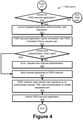
- FIG. 4 is a flowchart continuing the flowchart of FIG. 3 .
- an architecture which facilitates always-on FIDO level authentication via user authentication on a device.
- This enables a user to authenticate to their device and also seamlessly open a FIDO secured application (“app”) using cached authentication input.
- This is referred to herein as “secure delayed FIDO authentication.”
- the process remains secure by monitoring user continuity and may also time out if excess delay is encountered.
- FIG. 1 illustrates an example mobile electronic communications device with respect to which embodiments of the disclosed principles may be implemented
- device types including but not limited to laptop computers, tablet computers, and so on.
- additional or alternative components may be used in a given implementation depending upon user preference, component availability, price point and other considerations.
- the components of the user device 110 include a display screen 120 , applications (e.g., programs) 130 , a processor 140 , a memory 150 , one or more input components 160 such as RF input facilities or wired input facilities, including, for example, one or more antennas and associated circuitry and logic.
- the antennas and associated circuitry may support any number of protocols, e.g., WiFi, Bluetooth, cellular, etc.
- the device 110 as illustrated also includes one or more output components 170 such as RF (radio frequency) or wired output facilities.
- the RF output facilities may similarly support any number of protocols, e.g., WiFi, Bluetooth, cellular, etc., and may be the same as or overlapping with the associated input facilities. It will be appreciated that a single physical input may serve for both transmission and receipt.
- the processor 140 can be a microprocessor, microcomputer, application-specific integrated circuit, or other suitable integrated circuit.
- the processor 140 can be implemented via one or more microprocessors or controllers from any desired family or manufacturer.
- the memory 150 is a nontransitory media that may (but need not) reside on the same integrated circuit as the processor 140 .
- the memory 150 may be accessed via a network, e.g., via cloud-based storage.
- the memory 150 may include a random access memory (i.e., Synchronous Dynamic Random Access Memory (SDRAM), Dynamic Random Access Memory (DRAM), RAMBUS Dynamic Random Access Memory (RDRM) or any other type of random access memory device or system).
- the memory 150 may include a read-only memory (i.e., a hard drive, flash memory or any other desired type of memory device).
- the information that is stored by the memory 150 can include program code (e.g., applications 130 ) associated with one or more operating systems or applications as well as informational data, e.g., program parameters, process data, etc.
- the operating system and applications are typically implemented via executable instructions stored in a non-transitory computer readable medium (e.g., memory 150 ) to control basic functions of the electronic device 110 .
- Such functions may include, for example, interaction among various internal components and storage and retrieval of applications and data to and from the memory 150 .
- modules are software agents that include or interact with hardware components such as one or more sensors, and that manage the device 110 's operations and interactions with respect to the described embodiments.
- an always on authentication spotter 180 reads a thermal sensor on the surface of the device, as well as any secondary sensor, to provide touch detection to detect a user's finger near or on a lens of the thermal sensor.
- the thermal sensor and secondary sensor may be located anywhere on the outside of the device, e.g., in a location where a user's hand is expected to touch when the device is held.
- informational data e.g., program parameters and process data
- this non-executable information can be referenced, manipulated, or written by the operating system or an application.
- informational data can include, for example, data that are preprogrammed into the device during manufacture, data that are created by the device or added by the user, or any of a variety of types of information that are uploaded to, downloaded from, or otherwise accessed at servers or other devices with which the device is in communication during its ongoing operation.
- a power supply 190 such as a battery or fuel cell, is included for providing power to the device 110 and its components. Additionally or alternatively, the device 110 may be externally powered, e.g., by a vehicle battery, wall socket or other power source. In the illustrated example, all or some of the internal components communicate with one another by way of one or more shared or dedicated internal communication links 195 , such as an internal bus.
- the device 110 is programmed such that the processor 140 and memory 150 interact with the other components of the device 110 to perform a variety of functions.
- the processor 140 may include or implement various modules and execute programs for initiating different activities such as launching an application, transferring data and toggling through various graphical user interface objects (e.g., toggling through various display icons that are linked to executable applications).
- the device 110 may include one or more display screens 120 .
- FIG. 2 is a schematic diagram showing the primary components of an example computing environment within which various embodiments of the disclosed principles may be implemented.
- the illustrated environment 201 is implemented within a computing device such as the user device of FIG. 1 or otherwise.
- the illustrated environment 210 includes an application processor 220 , a continuous authentication subsystem 230 and a FIDO compliant authentication subsystem 240 .
- the application processor 220 further comprises a device lock service 221 , an always-on application launcher 223 and FIDO secured applications 225 .
- the continuous authentication subsystem 230 further includes a high confidence current user tracker 231 .
- the continuous authentication subsystem 230 reads a number of data sources, e.g., a camera 241 , which may be the device camera/IR camera/depth sensor array, a presence sensor 243 such as a device thermopile or IR proximity sensor, or ultrasound, motion enabled via accelerometer/gyro, capacitive touch, wearable sensor detection, and optionally other sensors 245 capable of providing data indicative of a user presence (beacons, RF communication, BT, etc.).
- this element further includes a FIDO matcher 231 and associated enrollment templates 233 as well as an always on authentication spotter 235 (see also element 180 , FIG. 1 ) and a delayed FIDO authentication module 237 .
- the FIDO compliant authentication subsystem 240 receives input via a secure authentication pipeline 239 from a number of authentication data sources. In the illustrated embodiment these include a voice data source 247 and a fingerprint data source 249 , as well as any other desired authentication data source or sources 251 .
- FIG. 3 is a flowchart showing an example process 300 for implementing the described principles, with reference to the example architecture of FIG. 2 .
- the always on authentication spotter 235 detects the start of an authentication attempt.
- the always on authentication spotter 235 selects the most viable of multiple possible authentication inputs, e.g., based on user-to-device distance. For example, if a user is too distant for image-based authentication to be viable, an audio authentication attempt may be valid and may thus be matched first (e.g., the depth sensor can be used to determine distance and thus to determine which sensor to start with for authentication). For a closer user, image-based and audio authentication may be viable. If the device is in the user's hand, then fingerprint scan (FPS), PIN entry, facial recognition, and voice authentication may all be viable. The authentication spotter 235 may then use authentication methods in a predetermined order or may use the first that becomes viable.
- FPS fingerprint scan
- the authentication spotter 235 notifies the continuous authentication subsystem 230 to begin to lock onto the current user of the device. Locking on may entail monitoring user credentials or otherwise determining that the authenticated user is the current user.
- the current user tracker 231 then begins at stage 305 to monitor the user for user ID purposes.
- the current user tracker 231 determines whether the current user has changed during the authentication session. A change in current user may be triggered by one or more others being detected by the device (e.g., the session is no longer private, or the authenticated user is no longer interacting with the device). In an embodiment, if authentication happens during device carry, then tracking is omitted until the device is placed down.
- an invalidate error is reported to the FIDO compliant authentication subsystem in stage 309 and any cached authentication signatures are flushed from the pipeline. Otherwise the process flows to stage 311 .
- An invalidation timer is also running within the FIDO compliant authentication subsystem 240 during the authenticated session. As such, the invalidation timer is checked at stage 311 , and if it has expired, any cached authentication signatures are flushed from the pipeline at stage 313 .
- the FIDO matcher 231 validates the input against the enrolled user (e.g., matching voice, facial scan and/or FPS data in enrolled templates 233 ) and may select which to try to match first based on presence indication or the other factors discussed above. If an attempt to validate using one input fails, the FIDO matcher 231 will then try one or more of the other authentication inputs.
- the enrolled user e.g., matching voice, facial scan and/or FPS data in enrolled templates 233
- the FIDO Compliant Tee 227 of the application processor 220 performs validation and certificate binding to unlock the device 110 .
- the flowchart of FIG. 3 continues in FIG. 4 .
- the always-on app launcher 223 of the application processor 220 determines if the unlock was to use a FIDO secured application 225 , e.g., a FIDO compliant banking application. If it is determined that the unlock was to use a FIDO secured application 225 , the targeted application is launched at stage 321 without further user interaction.
- Whether or not the unlock was to use a FIDO secured application 225 may be determined from the authentication input itself in an embodiment.
- a voice authentication input may state that the user desires to check their bank balance, in which case the targeted application would be the secure banking application on the device 110 .
- the now-open FIDO secured application 225 opens a connection at stage 323 with the FIDO Compliant Tee 227 to request a cert to use between the application 225 and its associated cloud services.
- the FIDO Compliant Tee 227 opens a connection to the FIDO compliant authentication subsystem 240 at stage 323 to request authentication.
- the delayed FIDO authentication system 237 verifies that the continuous authentication has been maintained (e.g., the device never left the control of the user following authentication because it never left the user hand after authentication or user is still authenticated via voice), and the timer is still valid for the cached signatures. If these criteria are met, the cached signatures are sent to the FDIO matcher 231 at stage 327 . Otherwise, an error is returned to request a new manual authentication at stage 329 .
- stage 327 the process 300 moves to stage 331 , wherein the FIDO matcher 231 uses the cached user signature to re-authenticate the request and the TEE uses the authentication to create the requested cert.
- stage 333 the FIDO secured application is unlocked.
Landscapes
- Engineering & Computer Science (AREA)
- Computer Security & Cryptography (AREA)
- Computer Networks & Wireless Communication (AREA)
- Signal Processing (AREA)
- Computer Hardware Design (AREA)
- Computing Systems (AREA)
- General Engineering & Computer Science (AREA)
- Business, Economics & Management (AREA)
- Accounting & Taxation (AREA)
- Health & Medical Sciences (AREA)
- Biomedical Technology (AREA)
- General Health & Medical Sciences (AREA)
- Telephone Function (AREA)
Abstract
Description
Claims (20)
Priority Applications (1)
| Application Number | Priority Date | Filing Date | Title |
|---|---|---|---|
| US16/295,912 US11228581B2 (en) | 2019-03-07 | 2019-03-07 | Secure delayed FIDO authentication |
Applications Claiming Priority (1)
| Application Number | Priority Date | Filing Date | Title |
|---|---|---|---|
| US16/295,912 US11228581B2 (en) | 2019-03-07 | 2019-03-07 | Secure delayed FIDO authentication |
Publications (2)
| Publication Number | Publication Date |
|---|---|
| US20200287889A1 US20200287889A1 (en) | 2020-09-10 |
| US11228581B2 true US11228581B2 (en) | 2022-01-18 |
Family
ID=72335832
Family Applications (1)
| Application Number | Title | Priority Date | Filing Date |
|---|---|---|---|
| US16/295,912 Active 2040-01-24 US11228581B2 (en) | 2019-03-07 | 2019-03-07 | Secure delayed FIDO authentication |
Country Status (1)
| Country | Link |
|---|---|
| US (1) | US11228581B2 (en) |
Citations (24)
| Publication number | Priority date | Publication date | Assignee | Title |
|---|---|---|---|---|
| US20030159044A1 (en) * | 2001-01-17 | 2003-08-21 | International Business Machines Corporation | Secure integrated device with secure, dynamically-selectable capabilities |
| US20110078773A1 (en) * | 2008-03-17 | 2011-03-31 | Jyoti Bhasin | Mobile terminal authorisation arrangements |
| US20130061303A1 (en) * | 2010-02-25 | 2013-03-07 | Idondemand, Inc. | Authentication System and Method in a Contactless Environment |
| US20130081118A1 (en) * | 2011-09-23 | 2013-03-28 | Canon U.S.A., Inc. | Method, system, and computer-readable storage medium for establishing a login session |
| US20150180869A1 (en) * | 2013-12-23 | 2015-06-25 | Samsung Electronics Company, Ltd. | Cloud-based scalable authentication for electronic devices |
| US20150350182A1 (en) * | 2013-01-15 | 2015-12-03 | Schneider Electric USA, Inc. | Systems and methods for securely accessing programmable devices |
| US9560143B2 (en) * | 2014-06-27 | 2017-01-31 | Intel Corporation | System and method for automatic session data transfer between computing devices based on zone transition detection |
| US20170091439A1 (en) * | 2015-09-30 | 2017-03-30 | Apple Inc. | System and Method for Person Reidentification |
| US9876788B1 (en) * | 2014-01-24 | 2018-01-23 | Microstrategy Incorporated | User enrollment and authentication |
| US20180115546A1 (en) * | 2016-10-24 | 2018-04-26 | Fujitsu Limited | Information processing device, information processing system, and information processing method |
| US20190075102A1 (en) * | 2017-09-04 | 2019-03-07 | Electronics And Telecommunications Research Institute | Terminal apparatus, server apparatus, blockchain and method for fido universal authentication using the same |
| US10231128B1 (en) * | 2016-02-08 | 2019-03-12 | Microstrategy Incorporated | Proximity-based device access |
| US20190124081A1 (en) * | 2017-10-19 | 2019-04-25 | Mastercard International Incorporated | Methods and systems for providing fido authentication services |
| US20190149542A1 (en) * | 2017-11-16 | 2019-05-16 | Bank Of America Corporation | Authenticating access to a computing resource using facial recognition based on involuntary facial movement |
| US20190182237A1 (en) * | 2016-09-13 | 2019-06-13 | Queralt, Inc. | Mobile Authentication And Registration For Digital Certificates |
| US20190222424A1 (en) * | 2018-01-12 | 2019-07-18 | Nok Nok Labs, Inc. | System and method for binding verifiable claims |
| US20190251561A1 (en) * | 2016-11-01 | 2019-08-15 | Entersekt International Limited | Verifying an association between a communication device and a user |
| US20190295203A1 (en) * | 2018-03-22 | 2019-09-26 | Samsung Electronics Co., Ltd. | Electronic device and authentication method thereof |
| US20190333054A1 (en) * | 2018-04-20 | 2019-10-31 | Infonetworks Llc | System for verification of pseudonymous credentials for digital identities with managed access to personal data on trust networks |
| US20200145219A1 (en) * | 2016-11-08 | 2020-05-07 | Aware, Inc. | Decentralized biometric identity authentication |
| US20200275274A1 (en) * | 2019-02-26 | 2020-08-27 | Samsung Electronics Co., Ltd. | Electronic device and method for storing user identification information |
| US20200287909A1 (en) * | 2019-03-07 | 2020-09-10 | Lookout, Inc. | Performing a security action in response to a determination that a computing device is lost or stolen |
| US10841316B2 (en) * | 2014-09-30 | 2020-11-17 | Citrix Systems, Inc. | Dynamic access control to network resources using federated full domain logon |
| US20200374284A1 (en) * | 2019-05-20 | 2020-11-26 | Citrix Systems, Inc. | Virtual delivery appliance and system with remote authentication and related methods |
-
2019
- 2019-03-07 US US16/295,912 patent/US11228581B2/en active Active
Patent Citations (24)
| Publication number | Priority date | Publication date | Assignee | Title |
|---|---|---|---|---|
| US20030159044A1 (en) * | 2001-01-17 | 2003-08-21 | International Business Machines Corporation | Secure integrated device with secure, dynamically-selectable capabilities |
| US20110078773A1 (en) * | 2008-03-17 | 2011-03-31 | Jyoti Bhasin | Mobile terminal authorisation arrangements |
| US20130061303A1 (en) * | 2010-02-25 | 2013-03-07 | Idondemand, Inc. | Authentication System and Method in a Contactless Environment |
| US20130081118A1 (en) * | 2011-09-23 | 2013-03-28 | Canon U.S.A., Inc. | Method, system, and computer-readable storage medium for establishing a login session |
| US20150350182A1 (en) * | 2013-01-15 | 2015-12-03 | Schneider Electric USA, Inc. | Systems and methods for securely accessing programmable devices |
| US20150180869A1 (en) * | 2013-12-23 | 2015-06-25 | Samsung Electronics Company, Ltd. | Cloud-based scalable authentication for electronic devices |
| US9876788B1 (en) * | 2014-01-24 | 2018-01-23 | Microstrategy Incorporated | User enrollment and authentication |
| US9560143B2 (en) * | 2014-06-27 | 2017-01-31 | Intel Corporation | System and method for automatic session data transfer between computing devices based on zone transition detection |
| US10841316B2 (en) * | 2014-09-30 | 2020-11-17 | Citrix Systems, Inc. | Dynamic access control to network resources using federated full domain logon |
| US20170091439A1 (en) * | 2015-09-30 | 2017-03-30 | Apple Inc. | System and Method for Person Reidentification |
| US10231128B1 (en) * | 2016-02-08 | 2019-03-12 | Microstrategy Incorporated | Proximity-based device access |
| US20190182237A1 (en) * | 2016-09-13 | 2019-06-13 | Queralt, Inc. | Mobile Authentication And Registration For Digital Certificates |
| US20180115546A1 (en) * | 2016-10-24 | 2018-04-26 | Fujitsu Limited | Information processing device, information processing system, and information processing method |
| US20190251561A1 (en) * | 2016-11-01 | 2019-08-15 | Entersekt International Limited | Verifying an association between a communication device and a user |
| US20200145219A1 (en) * | 2016-11-08 | 2020-05-07 | Aware, Inc. | Decentralized biometric identity authentication |
| US20190075102A1 (en) * | 2017-09-04 | 2019-03-07 | Electronics And Telecommunications Research Institute | Terminal apparatus, server apparatus, blockchain and method for fido universal authentication using the same |
| US20190124081A1 (en) * | 2017-10-19 | 2019-04-25 | Mastercard International Incorporated | Methods and systems for providing fido authentication services |
| US20190149542A1 (en) * | 2017-11-16 | 2019-05-16 | Bank Of America Corporation | Authenticating access to a computing resource using facial recognition based on involuntary facial movement |
| US20190222424A1 (en) * | 2018-01-12 | 2019-07-18 | Nok Nok Labs, Inc. | System and method for binding verifiable claims |
| US20190295203A1 (en) * | 2018-03-22 | 2019-09-26 | Samsung Electronics Co., Ltd. | Electronic device and authentication method thereof |
| US20190333054A1 (en) * | 2018-04-20 | 2019-10-31 | Infonetworks Llc | System for verification of pseudonymous credentials for digital identities with managed access to personal data on trust networks |
| US20200275274A1 (en) * | 2019-02-26 | 2020-08-27 | Samsung Electronics Co., Ltd. | Electronic device and method for storing user identification information |
| US20200287909A1 (en) * | 2019-03-07 | 2020-09-10 | Lookout, Inc. | Performing a security action in response to a determination that a computing device is lost or stolen |
| US20200374284A1 (en) * | 2019-05-20 | 2020-11-26 | Citrix Systems, Inc. | Virtual delivery appliance and system with remote authentication and related methods |
Also Published As
| Publication number | Publication date |
|---|---|
| US20200287889A1 (en) | 2020-09-10 |
Similar Documents
| Publication | Publication Date | Title |
|---|---|---|
| US11170592B2 (en) | Electronic access control system | |
| US8079079B2 (en) | Multimodal authentication | |
| US11516212B2 (en) | Multi-functional authentication apparatus and operating method for the same | |
| US10432620B2 (en) | Biometric authentication | |
| US20190044951A1 (en) | Surveillance-based relay attack prevention | |
| US20230267193A1 (en) | Verification application, method, electronic device and computer program | |
| EP3357210B1 (en) | System and method for person reidentification | |
| US11216540B2 (en) | Flexible security level for device interaction | |
| US11178142B2 (en) | Biometric data synchronization devices | |
| US10262165B2 (en) | Authentication of a smart pen and computing device | |
| US9923976B2 (en) | Control device and control method | |
| US20200287889A1 (en) | Secure delayed fido authentication | |
| KR102010764B1 (en) | Computer security system and method using authentication function in smart phone | |
| US11146565B2 (en) | Mobile electronic communications device having multiple device paths | |
| US11836279B2 (en) | Storage devices with secure power and data access | |
| WO2023162672A1 (en) | Information processing device, information processing method, and program | |
| KR20260034407A (en) | Method for access control using mobile devices |
Legal Events
| Date | Code | Title | Description |
|---|---|---|---|
| AS | Assignment |
Owner name: MOTOROLA MOBILITY LLC, ILLINOIS Free format text: ASSIGNMENT OF ASSIGNORS INTEREST;ASSIGNORS:SIMERSON, JARRETT;ALAMEH, RACHID;VOSS, JOEL;SIGNING DATES FROM 20190306 TO 20190307;REEL/FRAME:048534/0855 |
|
| FEPP | Fee payment procedure |
Free format text: ENTITY STATUS SET TO UNDISCOUNTED (ORIGINAL EVENT CODE: BIG.); ENTITY STATUS OF PATENT OWNER: LARGE ENTITY |
|
| STPP | Information on status: patent application and granting procedure in general |
Free format text: NON FINAL ACTION MAILED |
|
| STPP | Information on status: patent application and granting procedure in general |
Free format text: FINAL REJECTION MAILED |
|
| STPP | Information on status: patent application and granting procedure in general |
Free format text: RESPONSE AFTER FINAL ACTION FORWARDED TO EXAMINER |
|
| STPP | Information on status: patent application and granting procedure in general |
Free format text: NOTICE OF ALLOWANCE MAILED -- APPLICATION RECEIVED IN OFFICE OF PUBLICATIONS |
|
| STPP | Information on status: patent application and granting procedure in general |
Free format text: PUBLICATIONS -- ISSUE FEE PAYMENT RECEIVED |
|
| STPP | Information on status: patent application and granting procedure in general |
Free format text: PUBLICATIONS -- ISSUE FEE PAYMENT VERIFIED |
|
| STCF | Information on status: patent grant |
Free format text: PATENTED CASE |
|
| MAFP | Maintenance fee payment |
Free format text: PAYMENT OF MAINTENANCE FEE, 4TH YEAR, LARGE ENTITY (ORIGINAL EVENT CODE: M1551); ENTITY STATUS OF PATENT OWNER: LARGE ENTITY Year of fee payment: 4 |