US11226638B2 - Hauling vehicle administration with navigation - Google Patents
Hauling vehicle administration with navigation Download PDFInfo
- Publication number
- US11226638B2 US11226638B2 US16/217,011 US201816217011A US11226638B2 US 11226638 B2 US11226638 B2 US 11226638B2 US 201816217011 A US201816217011 A US 201816217011A US 11226638 B2 US11226638 B2 US 11226638B2
- Authority
- US
- United States
- Prior art keywords
- hauling
- digital
- ticket
- hauling vehicle
- site
- Prior art date
- Legal status (The legal status is an assumption and is not a legal conclusion. Google has not performed a legal analysis and makes no representation as to the accuracy of the status listed.)
- Active, expires
Links
Images


Classifications
-
- G—PHYSICS
- G05—CONTROLLING; REGULATING
- G05D—SYSTEMS FOR CONTROLLING OR REGULATING NON-ELECTRIC VARIABLES
- G05D1/00—Control of position, course, altitude or attitude of land, water, air or space vehicles, e.g. using automatic pilots
- G05D1/02—Control of position or course in two dimensions
- G05D1/021—Control of position or course in two dimensions specially adapted to land vehicles
- G05D1/0287—Control of position or course in two dimensions specially adapted to land vehicles involving a plurality of land vehicles, e.g. fleet or convoy travelling
- G05D1/0291—Fleet control
- G05D1/0297—Fleet control by controlling means in a control room
-
- G—PHYSICS
- G01—MEASURING; TESTING
- G01C—MEASURING DISTANCES, LEVELS OR BEARINGS; SURVEYING; NAVIGATION; GYROSCOPIC INSTRUMENTS; PHOTOGRAMMETRY OR VIDEOGRAMMETRY
- G01C21/00—Navigation; Navigational instruments not provided for in groups G01C1/00 - G01C19/00
- G01C21/26—Navigation; Navigational instruments not provided for in groups G01C1/00 - G01C19/00 specially adapted for navigation in a road network
- G01C21/34—Route searching; Route guidance
- G01C21/36—Input/output arrangements for on-board computers
- G01C21/3697—Output of additional, non-guidance related information, e.g. low fuel level
-
- G—PHYSICS
- G01—MEASURING; TESTING
- G01C—MEASURING DISTANCES, LEVELS OR BEARINGS; SURVEYING; NAVIGATION; GYROSCOPIC INSTRUMENTS; PHOTOGRAMMETRY OR VIDEOGRAMMETRY
- G01C21/00—Navigation; Navigational instruments not provided for in groups G01C1/00 - G01C19/00
- G01C21/26—Navigation; Navigational instruments not provided for in groups G01C1/00 - G01C19/00 specially adapted for navigation in a road network
- G01C21/34—Route searching; Route guidance
- G01C21/36—Input/output arrangements for on-board computers
- G01C21/3667—Display of a road map
- G01C21/3676—Overview of the route on the road map
-
- G05D2201/0202—
Definitions
- Hauling vehicles come in many forms and transport many types of materials that function in our day-to-day life. More particularly, hauling vehicles are essential in the transportation of materials required for both residential and commercial construction world-wide. Despite the essential nature of these hauling vehicles and their close ties to highly sophisticated companies and industries, tracking the pick-up and drop-off of the material transported by these vehicles is relatively archaic. The confirmation of the pick-up and the drop-off of materials transported by a hauling vehicle from a pick-up site to a drop-off site is typically administered by a paper-based physical ticketing system that is inaccurate, laborious, and inefficient.
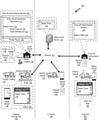
- FIG. 1 sets forth a system diagram illustrating an example networked system for hauling vehicle administration according to embodiments of the present invention.
- FIG. 2 sets forth a system diagram illustrating a networked system for hauling vehicle administration at a pick-up site according to embodiments of the present invention.
- FIG. 3 sets forth a system diagram illustrating a networked system for hauling vehicle administration in transit according to example embodiments of the present invention.
- FIG. 4 sets forth a system diagram illustrating a networked system for hauling vehicle administration at a drop-off according to example embodiments of the present invention.
- FIG. 5 sets forth a flowchart illustrating a method for hauling vehicle administration according to embodiments of the present invention.
- FIG. 6 sets forth a calling sequence diagram illustrating an example of hauling vehicle administration according to embodiments of the present invention.
- FIG. 7 sets forth a flowchart illustrating a method for hauling vehicle administration according to embodiments of the present invention.
- FIG. 8 sets forth a calling sequence diagram illustrating an example of hauling vehicle administration according to embodiments of the present invention.
- FIG. 1 sets forth a system diagram illustrating a networked system ( 100 ) for hauling vehicle ( 101 ) administration according to embodiments of the present invention.
- the example system of FIG. 1 operates generally to facilitate hauling vehicle administration from a material pick-up site ( 130 ) to a drop-off site ( 160 ) through the administration of a digital hauling confirmation ticket ( 118 ) administered in large part by a digital ticket server ( 118 ).
- Digital hauling confirmation tickets ( 118 ) and the infrastructures supporting such digital hauling confirmation tickets according to embodiments of the present invention improve the efficiency and accuracy of the administration of the transportation of material from a pick-up site ( 130 ) to a drop-off site ( 160 ).
- Such digital hauling confirmation tickets and their supporting infrastructures are useful for various hauling vehicles and various materials so transported.
- Digital hauling confirmation tickets ( 118 ) and their infrastructure provide an efficient and effective way of identifying what material is picked up at a pick-up site, at what time the pick-up is occurring, who is picking up the material, where the material is going, how it is getting there, what time the material is expected to be dropped off, and many other attributes of material transportation as will occur to those of skill in the art.
- the system of FIG. 1 operates generally to confirm, through data communications, between a mobile digital application ( 124 ) at the pick-up site ( 130 ) with the digital ticket server ( 118 ), that a particular hauling vehicle ( 101 ) is on a particular scale ( 128 ) operated by that material pick-up site ( 130 ) such that a single identifiable hauling vehicle weight can be attributed to a particular digital hauling confirmation ticket for that measured hauling vehicle.
- Alternative embodiments allow for multiple scales and multiple hauling vehicles to be weighted more or more scale houses or material pick-up sites.
- the system of FIG. 1 includes a pick-up administration module ( 102 ) that receives one or more attributes ( 122 ) associated with the material and the hauling vehicle ( 101 ) for inclusion in a digital hauling confirmation ticket.
- a pick-up administration module 102
- receives one or more attributes ( 122 ) associated with the material and the hauling vehicle ( 101 ) for inclusion in a digital hauling confirmation ticket are collected by a scale house operations application ( 112 ) from the scale upon which the hauling vehicle ( 101 ) is weighed.
- a digital hauling confirmation ticket ( 118 ) including one or more attributes ( 122 ) associated with the transportation of the material and transmits that digital hauling confirmation ticket ( 118 ) through a printer plug-in ( 142 ) and a network ( 103 ) to a digital ticket server ( 144 ).
- the digital ticket server ( 144 ) of FIG. 1 sends through the network ( 103 ) the digital hauling confirmation ticket ( 118 ) to the mobile digital application administered by a driver of the hauling vehicle ( 101 ).
- Hauling vehicles ( 101 ) are vehicles, often used in commercial endeavors such as material transportation for both commercial and residential construction sites, capable of transporting material from a pick-up material site to a drop-off site according to embodiments of the present invention.
- Examples of hauling vehicles useful in embodiments of the present invention include dump trucks, pickup trucks, large semi-trailer trucks, personal vehicles capable of carrying substantial material, trailers, and other vehicles as will occur to those of skill in the art.
- the example hauling vehicles are for explanation and not for limitations. Many other types of hauling vehicles may be useful for hauling vehicle administration according to embodiments of the present invention and all such vehicles are well within the scope of the present invention.
- a material pick up site ( 130 ) as that term is used in this specification is a location operated to dispense material transported by the hauling vehicle ( 101 ).
- Examples of material pick-up sites according to embodiments of the present invention include quarries, material sales sites, lumber yards, timber pick-up locations, construction sites, and others as will occur to those of skill in the art.
- Examples of material typically picked up at material pick-up sites according to embodiments of the present invention include gravel, asphalt, lime, stone, sand, bush, wood, timber, construction waste, supplies, and many others as will occur to those of skill in the art.
- the system of FIG. 1 also includes a drop-off site ( 160 ).
- the drop-off site ( 160 ) of FIG. 1 is a location for receiving the material transported by the hauling vehicle ( 101 ).
- Examples of drop-off sites ( 160 ) according to embodiments of the present invention include construction sites, landfills, infrastructure rebuilding and repair sites, project sites, short-term sites such as disaster recovery sites, music festivals and many others as will occur to those of skill in the art.
- drop-off sites often provide infrastructure for assisting in dropping off material and facilitating hauling vehicle administration.
- Such infrastructure typically includes data communications with a mobile digital application ( 124 ) or other application associated with the hauling vehicle ( 101 ) to confirm the hauling vehicle ( 101 ) transporting the material has arrived and performed the function of dropping off material.
- the mobile digital application ( 124 ) at the drop-off site is coupled for data communications with a digital ticket server ( 144 ) through network ( 103 ) data communications that administers the receipt, confirmation, validation, or other administrative functions associated with the digital hauling confirmation ticket representing the transportation of the material by the hauling vehicle.
- the example system of FIG. 1 is bi-directional. That is, in some situations, a site may be a material pick-up site and in other situations that same site may be a drop-off site. For example, a construction site may receive a drop-off of material and then be a material pick-up site for material to be transported to a landfill.
- This bi-directionality includes the entire system as designated in FIG. 1 .
- the example system of FIG. 1 operates generally for hauling administration from a pick-up site ( 130 ) to a drop off site ( 160 ).
- the system of FIG. 1 includes a pick-up administration module ( 102 ), a digital ticket server ( 144 ), a mobile driver application ( 124 ) and a drop-off administration module ( 104 ) all coupled for data communications through a network ( 103 ).
- the data communications in the example of FIG. 1 may operate in a typical first in first out (‘FIFO’) query from one object to the next. Intermittency is expected in situations of wireless connected networks. In such occasions that intermittency occurs the data is held at the corresponding module until such connection is restored.
- FIFO first in first out
- the system of FIG. 1 operates generally for hauling vehicle ( 101 ) administration by confirming, by the digital ticket server ( 144 ), in dependence upon data communications received from the mobile driver application ( 124 ) that the hauling vehicle associated with the mobile driver application ( 124 ) is the only vehicle on the scale administered by the scale house.
- the mobile driver application ( 124 ) of FIG. 1 communicates with one or more beacons ( 106 ) located at one or more particular locations ( 108 ) relative to a scale ( 128 ) and presents the beacon values to the mobile driver application that in turn transmits those values to the digital ticket server ( 144 ).
- the digital ticket server ( 144 ) of FIG. 1 receives the beacon values and calculates, based on a number of parameters, that one hauling vehicle—the hauling vehicle associated with the mobile driver application ( 124 )—is currently on a scale administered by the scale house of the material pick-up site. In some embodiments of the present invention, the digital ticket server ( 144 ) calculates that the hauling vehicle associated with the mobile driver application ( 124 ) by triangulating or trilaterating the position of the hauling vehicle in dependence upon the location of the one or more beacons ( 106 ) as discussed in more detail below with reference to FIG. 2 .
- Triangulation and trilateration are some of many forms of calculating that only one hauling vehicle is currently on the scale as will occur to those of skill in the art.
- the combination of trilateration and triangulation known as triangulateration is still another such method for further defining the location of the position of the hauling vehicle ( 101 ).
- Many other methods of position measurement are within the scope of the present invention.
- the system of FIG. 1 operates generally by receiving, by the scale house operations application ( 112 ) from a scale house operator through a user interface (‘UI’) ( 134 ) configured to receive hauling attributes ( 122 ) an identification of the hauling vehicle ( 101 ).
- UI user interface
- the hauling vehicle identification is simply displayed on the hauling vehicle itself and the scale house operator can simply provide the hauling vehicle identification through the UI ( 134 ).
- the hauling vehicle or mobile driver application may be configured to provide the identification of the hauling vehicle to the scale house operations application ( 112 ) without user intervention through, for example, a mobile driver application, a wireless connection with the hauling vehicle itself or any other method of providing a hauling vehicle identification that will occur to those of skill in the art.
- the scale house operation application ( 112 ) also receives hauling vehicle attributes from the scale through data communications between the scale house operations application and the scale itself or as direct input from the scale house operator.
- Hauling attributes are indicia describing the hauling of the material from the material pick-up site to the drop-off site. Examples of hauling attributes include weight, digital hauling confirmation ticket ID, driver ID, mobile driver application ID, job ID, current weight of the vehicle; material ID, drop-off site ID, drop-off site location, pick-up site ID, pick-up site location, date of pick-up, time of pickup and many others as will occur to those of skill in the art.
- the system of FIG. 1 also operates generally by receiving, through the UI from the scale house operator, one or more hauling vehicle attributes ( 122 ).
- a hauling vehicle attribute ( 122 ) is simply the identification of the hauling vehicle itself often displayed on that particular hauling vehicle.
- the scale house operator may be empowered to provide additional hauling attributes that are not provided directly from the scale through the UI to the scale house operations application ( 112 ) as will occur to those of skill in the art.
- a scale house operator is often an employee of the scale house who performs duties around the scale house such as administering the weighing of hauling vehicles, reviewing material dispensed at the scale house, and many other administrative functions of the scale house as will occur to those of skill in the art.
- the system of FIG. 1 also operates generally by creating, by the scale house operations application ( 112 ) through a printer plug-in and in dependence upon the hauling attributes ( 122 ), a digital hauling confirmation ticket ( 118 ).
- the digital hauling confirmation ticket ( 118 ) includes a plurality of hauling attributes ( 122 ) associated with the hauling vehicle ( 101 ).
- the digital hauling confirmation ticket ( 118 ) is created by the scale house operations application ( 112 ) and transmitted to a digital ticket server ( 144 ).
- the digital ticket server ( 144 ) operates as a network server storing the digital ticket ( 118 ) for each of the operational hauling vehicles.
- the digital hauling confirmation ticket ( 118 ) is implemented as an instance of a digital ticket—that is structured data with both form and in some embodiments function.
- a digital hauling confirmation ticket ( 118 ) may be implemented as structured data but may also include, in some embodiments, associated member methods to access one or more attributes in that structured data as will occur to those of skill in the art.
- the digital hauling confirmation ticket ( 118 ) has a defined data structure efficiently representing hauling attributes and their respective values associated with the hauling of the material from the pick-up site to the drop-off site.
- the digital hauling confirmation ticket ( 118 ) is implemented using a markup language such as the extensible markup language (“XML”).
- XML allows for encoding of documents in a format that is both human-readable and machine-readable.
- the XML format is default for many productivity tools including Microsoft OfficeTM, Open OfficeTM, and LibreOfficeTM.
- the communications and information stored in the digital ticket ( 118 ) and subsequently the data of the ticket attribute list ( 122 ) may be cross referenced with additional computing applications utilized in scale house administration.
- the digital hauling confirmation ticket ( 118 ) of FIG. 1 may also implement or be implemented by additional programming and markup languages including HyperText Markup Language (“HTML”), the Standard Generalized Markup Language (“SGML”), and Extensible HyperText Markup Language (“XHTML”).
- HTML HyperText Markup Language
- SGML Standard Generalized Markup Language
- XHTML Extensible HyperText Markup Language
- the digital hauling confirmation ticket ( 118 ) is created in its digitized and structured form through a printer plug-in ( 142 ) associated with a printer ( 138 ) adapted to print the physical confirmation ticket ( 140 ) commonly used in the industry.
- the the digital hauling confirmation ticket ( 118 ) so created includes one or more of the same attributes ( 122 ) of such a physical confirmation ticket printed by the printer ( 138 ) associated with the printer plug-in ( 142 ).
- a physical confirmation ticket printed by the printer provides a useful paper trail describing the hauling attributes associated with the transport of the material from material pick-up site to the drop-off site by the hauling vehicle. Paper confirmation tickets are often generated in multiple copies to enable administration of a paper ticket trail at the material pick-up site ( 130 ), with the hauling vehicle operator in transit ( 154 ), and upon receipt of the material at the drop-off site ( 160 ).
- the system of FIG. 1 also operates generally by transmitting, by the scale house operations application ( 112 ) through the plug-in to the digital ticket server ( 144 ), the digital hauling confirmation ticket ( 214 ).
- the digital hauling confirmation ticket is transmitted through the network ( 103 ).
- the network of FIG. 1 is often implemented through cellular standards such as 1GTM 2GTM, 3GTM, 4G LTETM and 5GTM. Additional communication protocols such as wireless LAN, wireless WAN, and SAN are also capable of transmission of data such as the digital ticket ( 118 ) through the network ( 103 ).
- Transmitting the digital ticket ( 118 ) to the digital ticket server ( 144 ) and to the mobile device ( 126 ) often occurs over several data communication protocols such as a cellular data transmission, WI-FITM transmission, transmission using BluetoothTM, and others as will occur to those of skill in the art in networking administration.
- the system of FIG. 1 also operates by transmitting, through the network, the digital hauling confirmation ticket from the digital ticket server ( 144 ) to the mobile driver application ( 124 ) associated with the hauling vehicle ( 101 ).
- the system of FIG. 1 also operates generally by confirming, by the digital ticket server ( 144 ), that the material was delivered to the drop-off site. As discussed below with reference to FIG. 4 , confirming that the hauling vehicle ( 101 ) arrived at the drop-off site may be carried out in a number of ways as will occur to those of skill in the art.
- FIG. 2 sets forth a system diagram illustrating a networked system ( 100 ) for hauling vehicle ( 101 ) administration at a pick-up site according to embodiments of the present invention.
- the system of FIG. 1 includes a pick-up administration module ( 102 ) installed at a material pick-up site ( 130 ).
- the pick-up administration module ( 102 ) of FIG. 2 is a module of automated computing machinery adapted to facilitate the administration of hauling vehicles at the pick-up site ( 130 ), including the administration of the receipt of attributes related to the material picked up by a hauling vehicle, and the creation of a digital hauling confirmation ticket ( 128 ) that includes those attributes and provides a useful vehicle for the confirmation of the transportation of that material.
- Automated computing machinery means a module, segment, or portion of code or other automated computing logic, hardware, software, firmware, and other logic, as well as the combination of any of the aforementioned, as will occur to those of skill in the art—both local and remote.
- Automated computing machinery is often implemented as executable instructions, physical units, or other computing logic for implementing the specified logical function(s) as will occur to those of skill in the art.
- such automated computing machinery implement logical units both local and remote and as such, often implement data communications across buses, networks, wired and wireless as will occur to those of skill in the art and all such data communications are well within the scope of the present invention.
- the pick-up administration module ( 102 ) is stored and executes in an automated computing environment that includes random access memory ( 202 ) with access through a system bus ( 208 ) to a processor ( 206 ), a communications adapter ( 204 ), and an Input/Output (“I/O”) Module ( 210 ).
- the pick-up administration module ( 102 ) of FIG. 2 also includes a scale house operations application ( 112 ).
- the scale house operations application ( 112 ) of FIG. 2 is a module of automated computing machinery facilitating the administration of a hauling vehicle ( 101 ) for a scale house at the material pick-up site according to embodiments of the present invention.
- the scale house ( 110 ) has installed one or more beacons ( 106 ) installed at a known distance from the scale ( 128 ).
- the example beacons ( 106 ) of FIG. 2 are implemented as BluetoothTM beacons used to confirm that a single hauling vehicle is on the scale ( 128 ).
- BluetoothTM beacons in the example of FIG. 2 , are typically small, low power, beacons commonly utilized to provide push notifications, information delivery, and presence detection.
- An example of BluetoothTM beacons useful in the example embodiment of FIG. 2 are EstimoteTM beacons, described in detail at https://estimote.com, incorporated by reference.
- Estimote'sTM beacons have a range of up to 200 meters and built in sensors to detect motion, temperature, ambient light, magnetometer, and pressure. EstimoteTM beacons detect location through auto mapping or manual mapping utilizing the EstimoteTM SDK to prepare devices for integration with the beacon technology. Estimote'sTM beacons further include technologies for mesh networking and programmable near field communications (“NFC”).
- NFC near field communications
- beacons may transmit, for example, a UUID, major or minor values of the beacon's namespace, and an identification as well as other information as will occur to those of skill in the art.
- the BluetoothTM beacons ( 108 ) transmit a beacon value for the hauling vehicle ( 101 ) on the scale ( 128 ) to the mobile device application ( 124 ).
- the BluetoothTM beacons are configured to communicate with mobile driver application ( 124 ) on the a mobile device ( 126 ) on the scale of the scale house.
- the beacons values are turned into real-world coordinates by assigning signal values through Received Signal Strength Indicator (“RSSI”).
- RSSI Received Signal Strength Indicator
- RSSI represents a value of a received radio signal, the longer the distance the device is from the beacon the lower the RSSI.
- RSSI is defined by the IEEE 802.11 system and forms arbitrary units based on the indication of power level being received by the antennae. The higher the RSSI value the stronger the signal and thus the closer the proximity the antennae or receiving device is to the radio transmitter. In some embodiments, there is no standardized relationship between any particular parameter and the RSSI reading. Furthermore, RSSI often does not have a relationship between the power level transmitted and the signal strength received.
- Received channel power indicator (“RCPI”) is another technology to measure the received radio frequency power in a selected channel over the preamble and the entire received frame of signal.
- the RCPI is a power level metric like RSSI and cannot measure the quality of the link of communication, rather it can measure the strength of the indicator.
- BluetoothTM beacons do not possesses directional antennas they can only receive an estimation of the distance a device is to the beacon.
- BluetoothTM beacons lack directional input as to the direction the device is located relative to the beacon.
- Trilateration provides a means for acquiring device directional and distance information relative to BluetoothTM beacons. Trilateration requires a minimum of three beacons positioned to compare the relative RSSI value between them. Additional elements such as Kalman filters, linear quadratic estimation, may be applied to BluetoothTM beacon technology to overcome unwanted noise or false positives with trilateration.
- a single BluetoothTM beacon can be utilized to determine whether the vehicle has entered the zone for measurement.
- the RSSI or RCPI is set to a threshold to determine whether the vehicle is within proximity to the zone of measurement.
- the zone of measurement is usually located where the scale ( 128 ) is located but there may also be a plurality of zones of measurements and scales ( 128 ).
- any combination of BluetoothTM beacons may be utilized to further increase the reliability of location sensing. With at least three BluetoothTM beacons the precision is increased through trilateration, triangulation and other location algorithms as will occur to those of skill in the art. Trilateration is the process of determining absolute or relative locations of points by measurement of distances from at least three beacons. Trilateration works by using geometry of circles, spheres, or other triangles.
- Triangulation is the process of determining location of a point by measuring only angles to it from known points at either end of a fixed baseline. Triangulation differs from trilateration as it measures angles rather than the distance to the point. GPS and BluetoothTM beacons commonly use trilateration to determine a device relative to the beacon. Additional embodiments may be utilized in the current embodiment including the use of indoor positioning systems (“IPS”) such as magnetic positioning, LiFi access points, or dead reckoning will be apparent to those of skill in the art. In some embodiments the example of FIG. 2 , a form of location algorithm may be used with only two beacons ( 106 A and 106 B) because the distance ( 202 ) from the scale house and the two beacons to the scale itself is known and fixed.
- IPS indoor positioning systems
- Beacons ( 106 ) may also be used to confirm that only one hauling vehicle is on a scale ( 128 ) by geo-fencing.
- a geo-fence is a virtual perimeter for a real-world geographic area. Geo-fences are typically dynamically generated, as a radius around a point or around a pre-defined location. In the present embodiment a geo-fence may be established to locate a hauling vehicle ( 101 ) within a pre-defined parameter.
- the scale house operations application ( 112 ) may then be triggered by the presence of the hauling vehicle ( 101 ) to automate the parameters such as beacon ID ( 114 ), beacon value ( 116 ), and digital ticket attributes ( 122 ).
- Geo-fencing could also be utilized in notification-based systems in the present embodiment as well as location-based logging and tracking of hauling vehicles ( 101 ).
- the pick-up administration module ( 102 ) may include peripherals to set up, operate, and process geo-fencing information and logs.
- the drop-off administration module ( 104 ) may be set up and equipped with a similar geo-fencing module in order to detect and log hauling vehicles ( 101 ) and the job site ( 160 ).
- the geo-fencing in the present embodiment may work by communicating with the hauling vehicle's mobile device ( 126 ) and through the mobile device application ( 124 ).
- triangulation trilateration
- geo-fencing are provided for explanation and not for limitation.
- other technologies may be used to identify that only one hauling vehicle is currently on the scale according to embodiments of the present invention including WiFiTM location sensing, RFID location technologies, and others as will occur to those of skill in the art.
- the mobile driver application ( 124 ) is adapted for data communications through a mobile device ( 126 ) with the beacons installed at the scale house.
- the mobile driver application ( 124 ) receives from each beacon a beacon ID and beacon value and provides the beacon IDs and beacon values to the digital ticket server ( 144 ) and often also provides identification of the hauling vehicle ( 101 ) utilizing the mobile driver application ( 124 ) and an identification of the scale house ( 110 ).
- the digital ticket server ( 144 ) Upon receiving the beacon ( 106 ) IDs and values the digital ticket server ( 144 ) determines that only the hauling vehicle associated with the digital hauling confirmation ticket ( 118 ) received from the scale house application ( 112 ) is on the scale. That is, the digital ticket server determines that the weight represented in the digital hauling confirmation ticket is not altered by having additional vehicles partially on the scale at the same time as the hauling vehicle associated with the digital hauling confirmation ticket.
- the digital ticket server of FIG. 2 determines that only one hauling vehicle ( 101 ) is on the scale in dependence upon the beacon IDs, the beacon values, and a known distance ( 202 ) between the scale and the beacons ( 106 A and 106 B).
- the scale house operations application ( 112 ) includes a user interface (‘UI’) ( 134 ) for presentation to a scale house operator and designed to receive, from the scale house operator, attributes of the hauling vehicle to be included in one or more digital hauling confirmation tickets according to embodiments of the present invention.
- the attributes in the digital hauling confirmation ticket ( 118 ) often include attributes associated with the transportation of the material from the material pick-up site ( 130 ) to the drop-off site, and in some embodiments, various attributes describing the hauling vehicle's in-transit operations from the pick-up site to the drop-off site as will occur to those of skill in the art.
- the user interface ( 134 ) includes UI widgets ( 176 , 136 , 122 ) provided by the scale house operations application to receive the ID ( 176 ) of the hauling vehicle ( 101 ). Such an identification is often displayed on the hauling vehicle itself.
- the scale house operations application of FIG. 2 is also includes a UI widget to receive the weight ( 136 ) of the hauling vehicle ( 101 ) on the scale ( 128 ) and provided to an operator through data communications with the scale ( 128 ) and other attributes ( 122 ) as will occur to those of skill in the art.
- a scale provides to the operator of the scale house ( 191 ) for inclusion in the digital confirmation ticket the weight of at least the vehicle with the material loaded.
- the scale of FIG. 2 is a weighting system capable of identifying at least the weight of the hauling vehicle set up on it.
- Examples of scales ( 128 ) useful according to embodiments of the present invention include the Trimble Loadrite 360TM, the Rinstrum AxleTM, WEIGHR In-Motion Truck ScaleTM, and others as will occur to those of skill in the art.
- Such example scales may be modified as will occur to those of skill in the art to provide additional or different hauling attributes according to embodiments of the present invention.
- hauling vehicles ( 101 ) are equipped with onboard scales.
- the onboard scale is used instead of the large standard scale and is coupled for data communication with the scale house application or with the mobile driver application and capable of transmitting to an operator the weight of the material loaded in the hauling vehicle.
- scales include Walz OnBoardTM, and other onboard scales as will occur to those of skill in the art.
- the UI ( 134 ) of FIG. 2 is provided for ease of explanation and not for limitation. In fact, in other embodiments many other fields may be represented by the UI ( 134 ) of FIG. 2 . These fields include other attributes that may be found in the digital hauling confirmation ticket, and of which are automatically populated through interactions with the scale ( 128 ) itself and other devices and systems in the scale house ( 110 ). All such embodiments are well within the scope of the present invention.
- printers ( 138 ) useful in printing physical tickets ( 140 ) are widely available and often already in use at scale houses.
- the system of FIG. 2 includes a software plug-in adapted to use with the print driver of the printer ( 138 ) to create the digital hauling confirmation ticket ( 118 ) and send it through the network ( 103 ) to the digital ticket server ( 144 ).
- Print driver's or print processors and print plug-ins are at the software layer of the OSI model and are utilized to communicate with operating system's and hardware layer devices.
- Print drivers allow applications to function as printers without being aware of the technical details of each printer model attached. Print drivers often operate over a network or networked devices and function as an application for detecting and delivering print functionality.
- the scale house operations application is associated with a printer ( 138 ) adapted to print a physical confirmation ticket ( 140 ).
- the physical confirmation ticket contains information that is also on the digital ticket ( 118 ).
- Print drivers and printer plugins are available on many computing systems.
- a modular Common Unix Printing System (“CUPS”) system allows a computer to act as a print server.
- a computer running CUPS is a host that can accept print jobs from client computers, processing the print jobs, and sending them to the appropriate printer or destination.
- CUPS consists of a print spooler and a scheduler, a filter system that converts the print data to a format that the printer can process, and a backend system that transmits data to the print device.
- print drivers are implemented as a subroutine or subroutines to a processing stream. The print driver will occupy the front-end printing system, while the printer and the spoolers constitute the back end of the printing functionality.
- IPP Internet Printing Protocol
- the IPP is a protocol is a communication between computers, print servers, and printers. IPP allows programs to send one or more print jobs to a printer or server and perform additional administrative tasks such as querying the status of the printer, obtaining the status of print jobs, or cancelling or otherwise managing print jobs.
- print drivers utilize the GDI or XPS application scripts. Programs can then use the standard API functionality to draw text and pictures both on screen and on paper.
- GDI printers are often also referred to as Winprinters and are often incompatible with other operating systems.
- the material pick-up site is illustrated as a platform or system that can be installed at locations by implementing the disclosed material. Therefore, the illustration of FIG. 2 is an embodiment that can be sold and installed as a package or kit for quick installation at a material pick-up site or material drop-off site.
- FIG. 3 sets forth a system diagram illustrating a networked system ( 100 ) for hauling vehicle ( 101 ) administration according to example embodiments of the present invention.
- FIG. 3 illustrates aspects of hauling vehicle administration according to embodiments of the present invention during the period of time that the hauling vehicle is in transit ( 154 ) between and material pick up site and a drop off site.
- the operator of the hauling vehicle ( 101 ) administers a mobile device ( 126 ) having installed upon it a mobile driver application ( 124 ) that is coupled for data communications with digital ticket server ( 144 ) and a navigation server ( 149 ) through a network.
- the digital ticket server ( 144 ) of FIG. 3 is a module of automated computing machinery that includes a digital ticket server application ( 310 ) coupled to a communications adapter ( 304 ), a processor ( 306 ) and an I/O Module ( 308 ) through a bus ( 302 ).
- a digital hauling confirmation ticket ( 118 ) from a scale house running and administration application augmented in accordance with the present invention with a printer driver plug-in and transmits the digital hauling confirmation ticket ( 118 ) to a mobile driver application ( 124 ), or in alternative embodiments receives digital hauling attributes through the printer driver plug-in separately and creates a digital hauling confirmation ticket and then transmits that ticket to the mobile driver application or applications administered at the drop-off site.
- digital hauling confirmation tickets ( 118 ) are often implemented as one or more instances of a digital ticket ( 118 ) having a defined data structure efficiently representing hauling attributes and their respective values of the hauling of the material from the pick-up site to the drop-off site.
- the digital hauling confirmation ticket ( 118 ) is implemented as a digital ticket stored and administered in memory on whatever device the ticket resides and includes a number of example hauling attributes.
- the example digital hauling confirmation ticket ( 118 ) of FIG. 3 includes a Digital Ticket ID ( 172 ) uniquely identifying the digital ticket itself.
- ⁇ 3 also includes a Driver ID ( 174 ) identifying the driver of the hauling vehicle; a MDAppID ( 176 ) identifying the mobile driver application ( 124 ) installed on a mobile device ( 126 ) administered by the driver of the hauling vehicle ( 101 ).
- the digital hauling confirmation ticket ( 118 ) of FIG. 3 also includes a Job ID ( 178 ) identifying a particular job associated with the transportation of the material being hauled by the hauling vehicle ( 101 ).
- the digital hauling confirmation ticket ( 118 ) of FIG. 3 includes a Weight ( 136 ). Such a weight may be the weight of the material being transported, the weight of the hauling vehicle after picking up the material being transported or an y other method of identifying the weight of the material being transported such that the delivery of the material may be confirmed as will occur to those of skill in the art.
- the digital hauling confirmation ticket ( 118 ) of FIG. 3 also includes a Material ID ( 180 ) identifying the material being transported by the hauling vehicle.
- Materials transported and administered according to embodiments of the present invention include gravel, asphalt, lime, stone, sand, bush, wood, timber, and many others as will occur to those of skill in the art.
- the digital hauling confirmation ticket ( 118 ) of FIG. 3 includes a Pick-up Site ID ( 181 ) identifying the pick site and also a Pick-up Site Location ( 183 ) identifying the location of that pick-up site.
- the digital hauling confirmation ticket ( 118 ) of FIG. 3 al includes a Drop-off Site ID ( 182 ) identifying the drop-off site and also Drop-off Location ID ( 184 ) identifying the location of that drop-off site.
- the digital hauling confirmation ticket ( 118 ) of FIG. 3 includes a Date ( 186 ) and Time ( 187 ). Such a date and time may represent the date and time of the pick-up of the material, the drop-off of the material, or any other date and time field that will occur to those of skill in the art. While only one date and time are depicted in the example of FIG. 3 , those of skill in the art will appreciate that this is for ease of explanation and not for limitation. Many dates and times representing dates and times of various aspects of the transportation of the material by the hauling vehicle may be included in a digital hauling confirmation ticket and all such dates and times are well within the scope of the present invention.
- the example hauling vehicle attributes of the digital hauling confirmation ticket ( 118 ) of FIG. 3 are for explanation and not for limitation. Many additional or alternative hauling attributes may be included in a digital hauling confirmation ticket ( 118 ) according to embodiments of the present invention as will occur to those of skill in the art and all such hauling attributes are well within the scope of the present invention.
- the mobile driver application ( 124 ) maintains the digital hauling confirmation ticket ( 118 ) but also has a navigation module ( 191 ).
- the navigation module ( 191 ) is a module of automated computing machinery that aids a driver of the hauling vehicle in the selection of routes between the material pick up site and the drop-off site. Typically, such routs are weight based such that the structural integrity of the roads being traversed by the hauling vehicle are sound and secure.
- the navigation server ( 149 ) and the digital ticket server ( 144 ) work provide weight based navigation information such that the navigation module ( 191 ) can provide that navigation information ( 150 ) in the form of a user-friendly route based navigation showing a route that is structurally sound and secure. That is, the route provided by the navigation module ( 191 ) is based first on safety of the hauling vehicle, the material transported by the hauling vehicle, and the driver of the hauling vehicle.
- the weight-based navigation module ( 191 ) of the mobile driver application adapted for data communications with a navigation server and configured to retrieve navigation information ( 150 ) from the navigation server and retrieve one or more routes identified by the navigation server ( 149 ).
- Navigation servers may be implemented as third-party service providers already with route and navigation information available through an application programming interface (‘API’) such as Google® Maps, WAZE, and others as will occur to those of skill in the art.
- API application programming interface
- the weight-based navigation module ( 191 ) of FIG. 3 confirms that all roads on the identified route conform to structural requirements for the current weight of the hauling vehicle identified in the digital ticket. In some embodiments, the weight-based navigation module ( 191 ) of FIG. 3 confirms that all roads on the identified route conform to structural requirements for the current weight of the hauling vehicle identified in the digital ticket by retrieving the route information from the navigation server and then retrieving from the digital ticket server publically available information regarding the structural integrity and soundness of roads, highways, streets and the other travel ways available to the hauling vehicle and tis driver.
- the navigation module ( 191 ) of FIG. 3 may also confirm that all roads on the identified route conform to structural requirements for the current weight of the hauling vehicle identified in the digital ticket by retrieving predefined structural information for each road on the identified route and comparing, for each road on the identified route, the retrieved structural information for each road with the current weight of the hauling vehicle.
- the weight-based navigation module ( 191 ) of FIG. 3 provides to the user, through the graphical user interface of the mobile driver application ( 124 ), an indication ( 152 ) of each road on the identified route that does not conform to the structural requirements for the current weight of the hauling vehicle.
- an indication ( 152 ) of each road on the identified route that does not conform to the structural requirements for the current weight of the hauling vehicle.
- the indication ( 152 ) of each road on the identified route that does not conform to the structural requirements for the current weight of the hauling vehicle is depicted as an “X” ( 152 ) indicating that a road that might otherwise be on the route of the hauling vehicle is not structurally sound and the driver may choose to avoid that portion of the route and use and other travel way.
- the navigation module works as an API layer with access to the navigation server ( 149 ) in order to provide updatable and rapidly deployed information.
- the driver of the hauling vehicle also maintains a physical ticket ( 140 ) that contains the hauling attributes.
- a physical ticket usefully provides a paper trail back-up to the digital hauling confirmation ticket ( 118 ) such that administration of the hauling vehicle is not disrupted and maximizes any available efficiencies.
- Additional embodiments do not include a paper ticket system and rely on a digital ticket ( 118 ) along with networked storage as a backup for hauling vehicle administration.
- FIG. 4 sets forth a system diagram illustrating a networked system for hauling vehicle ( 101 ) administration at a drop-off site ( 160 ) according to example embodiments of the present invention.
- FIG. 4 illustrates aspects of hauling vehicle administration according to embodiments of the present invention while the hauling vehicle is at drop-off site.
- the operator of the hauling vehicle ( 101 ) administers a mobile device ( 126 ) having installed upon it a mobile driver application ( 124 ) with the digital hauling confirmation ticket ( 118 ).
- the mobile driver application ( 124 ) of FIG. 4 is coupled for data communications with a drop-off administration module ( 402 ) through a network ( 103 ).
- the drop-off administration module ( 402 ) is a module of automated computing machinery that includes a drop-off administration application ( 104 ) depicted as executing in RAM ( 404 ) and coupled to a communications adapter ( 406 ), a processor ( 408 ) and an I/O Module ( 410 ) through a bus ( 412 ).
- the drop-off administration module ( 402 ) of FIG. 4 usefully confirms that the material being transported by the hauling vehicle was successfully delivered to the drop-off site.
- the drop-off administration module ( 402 ) communicates through the network with the navigation module or other functionality of the mobile driver application ( 124 ) confirming that the hauling vehicle ( 101 ) arrived at the drop-off site.
- successful drop-off of the material is inferred from the fact that the hauling vehicle arrived at the drop-off site
- the drop-off administration module ( 402 ) communicates through the network with the mobile driver application ( 124 ) and identifies that the bed of the hauling vehicle is in a drop-off position. In such embodiments, successful drop-off of the material is inferred from the fact that the hauling vehicle has lifted its bed and is in a drop-off position.
- the drop-off administration module ( 402 ) provides an interactive drop-off kiosk and the digital ticket administered by the digital mobile driver application is provided to the drop-off kiosk.
- a drop-off kiosk may be implemented as a computing device with data communications to receive a digital hauling confirmation ticket ( 118 ) from the mobile driver application ( 124 ) to confirm the drop off of the material.
- the drop-off kiosk is additionally equipped to communicate to the digital ticket server ( 144 ) through the network ( 103 ) to transmit receipt to the scale house administration application ( 104 ) as well as store attributes of the drop off.
- the drop off site ( 160 ) has an administrator ( 182 ) that maintains a drop off administration application on a mobile device.
- that application receives through the network ( 103 ) the digital hauling confirmation ticket ( 118 ) confirming that the material was successfully delivered to the drop-off site.
- the digital ticket server identifies through GPS or other location information of the mobile driver application that the hauling vehicle arrived at the drop off site ( 160 ). The identification that the hauling vehicle arrived at the drop-off site is used as confirmation that the material was successfully delivered to the drop-off site.
- FIG. 5 sets forth a flowchart illustrating a method for hauling vehicle ( 101 ) administration according to embodiments of the present invention.
- the method of FIG. 5 includes receiving ( 502 ), by a digital ticket server ( 144 ) from a scale house operations application ( 112 ) in dependence upon hauling parameters digital hauling confirmation ticket ( 118 ) including a plurality of hauling attributes associated with the hauling vehicle ( 101 ).
- the digital hauling confirmation ticket ( 118 ) includes a plurality of hauling attributes associated with the hauling vehicle ( 101 ) which are identified automatically by the scale itself and supplemented in necessary by a scale house operator.
- the digital hauling confirmation ticket ( 118 ) is then generated and transmitted to the digital ticket server through a printer plug-in associated with a printer adapted to print a physical confirmation ticket including the same or similar attributes.
- the method of FIG. 5 also includes confirming ( 504 ), by a digital ticket server ( 144 ), that only one hauling vehicle ( 101 ) is currently on the scale ( 128 ) associated with the scale house ( 110 ).
- the digital ticket server ( 144 ) receives from the mobile device application ( 124 ) a number of beacon IDs and beacon values associated with the beacons ( 106 ) at particular locations ( 108 ) associated with the scale ( 128 ) of the scale house.
- the digital ticket server ( 144 ) confirms based upon the beacon IDs, the beacon values, the scale house, the distance from the beacons to the scale, and other attributes presented in the digital hauling confirmation ticket that only the hauling vehicle associated with the digital ticket is or was on the scale at the time the digital hauling vehicle confirmation ticket is or was generated.
- confirming ( 504 ), by a digital ticket server ( 144 ), that only one hauling vehicle ( 101 ) is currently on the scale ( 128 ) associated with the scale house ( 110 ). may be carried out by triangulating the position of the hauling vehicle ( 101 ) in dependence upon the location of the one or more beacons ( 106 ). Such triangulation may triangulate the position of the of the mobile driver application ( 124 ) operated by the driver within the hauling vehicle ( 101 ) through the use of the beacons and infer the location of the hauling vehicle ( 101 ) from the triangulated position of the mobile driver application ( 124 ) installed on, for example, a mobile device operated by the driver of the hauling vehicle. In alternative embodiments, such an application may be installed directly into the hauling vehicle to administer the triangulation as will occur to those of skill in the art.
- the method of FIG. 5 also includes transmitting ( 506 ), by the digital ticket server ( 144 ) to the mobile driver application ( 124 ), the digital hauling confirmation ticket ( 214 ). Transmitting ( 506 ), by the digital ticket server ( 144 ) to the mobile driver application ( 124 ), the digital hauling confirmation ticket ( 214 ) may be carried out through networks coupling the digital ticket server and the mobile driver application for data communications any a number of ways as discussed above and as will occur to those of skill in the art.
- the method of FIG. 5 also includes confirming ( 508 ), by the digital ticket server ( 144 ), that the material was delivered to the drop-off site ( 160 ). Confirming ( 508 ), by the digital ticket server ( 144 ), that the material was delivered to the drop-off site ( 160 ) according to embodiments of the present invention be carried out by confirming, in dependence upon a navigation module associated with the mobile driver application ( 126 ), that that the material delivered by the hauling vehicle ( 101 ) arrived at the drop-off site.
- Confirming ( 508 ), by the digital ticket server ( 144 ), that the material was delivered to the drop-off site ( 160 ) according to the method of FIG. 5 may also be carried out by also identifying that the bed of the hauling vehicle is in a drop-off position.
- Confirming ( 218 ), by the digital ticket server ( 144 ), that the material was delivered to the drop-off site ( 160 ) according to the method of FIG. 5 may also be carried out confirming, in dependence upon a drop-off kiosk and the digital ticket administered by the digital mobile driver application one, that that the material delivered by the hauling vehicle ( 101 ) arrived at the drop-off site.
- FIG. 6 sets forth a calling sequence diagram illustrating an example of hauling vehicle administration according to embodiments of the present invention.
- the hauling vehicle arrives on a scale ( 128 ) at the scale house.
- the scale ( 128 ) itself provides to the scale house application ( 110 ) a number of hauling vehicle attributes ( 802 ) including at least the current weight of the vehicle and other attributes as will occur to those of skill in the art.
- the scale house application ( 110 ) sends ( 650 ) those attributes to a digital ticket server ( 144 ) through a printer plug-in for creation of a digital ticket.
- the mobile driver application ( 124 ) of FIG. 6 Upon arrival at the drop-off location, the mobile driver application ( 124 ) of FIG. 6 transmits ( 816 ) the digital hauling confirmation ticket to the drop-off administration module ( 402 ) confirming that the material was successfully delivered to the drop-off site.
- the drop off module ( 402 ) may also request ( 818 ) the digital ticket from the digital ticket server ( 144 ) and receive in response a digital ticket transmission ( 820 ) of the digital ticket.
- the drop-off administration module ( 402 ) confirms ( 824 ) that the material was successfully transported to the drop-off site.
- FIG. 7 sets forth a flowchart illustrating a method for hauling vehicle ( 101 ) administration according to embodiments of the present invention.
- the method of FIG. 5 includes confirming ( 204 ), by a scale house operations application ( 112 ) in dependence upon data communications received through one or more beacons ( 106 ) located at one or more particular locations ( 108 ) relative to a scale ( 128 ) administered by a scale house ( 110 ) of a material pick-up site, that only one hauling vehicle ( 101 ) is currently on the scale ( 128 ).
- confirming ( 204 ), by a scale house operations application ( 112 ) in dependence upon data communications received through one or more beacons ( 106 ) located at one or more particular locations ( 108 ) relative to a scale ( 128 ), that only one hauling vehicle is currently on a scale administered by the scale house of a material pick-up site may be carried out by triangulating the position of the hauling vehicle ( 101 ) in dependence upon the location of the one or more beacons ( 106 ).
- Such triangulation may triangulate the position of the of the mobile driver application ( 124 ) operated by the driver within the hauling vehicle ( 101 ) through the use of the beacons and infer the location of the hauling vehicle ( 101 ) from the triangulated position of the mobile driver application ( 124 ) installed on, for example, a mobile device operated by the driver of the hauling vehicle.
- such an application may be installed directly into the hauling vehicle to administer the triangulation as will occur to those of skill in the art.
- the method of FIG. 7 also includes receiving ( 206 ), by the scale house operations application ( 112 ) from a mobile driver application ( 124 ) associated with the hauling vehicle ( 101 ), an identification of the mobile driver application ( 132 ).
- mobile driver applications ( 124 ) are often installed on mobile devices ( 128 ) and administered by the driver of the hauling vehicle ( 101 ).
- the scale house operations application sends a request to the mobile driver application for its identification and receives a response containing the identification.
- the method of FIG. 7 also includes presenting ( 208 ), by the scale house operations application ( 112 ) to a scale house operator ( 210 ), a UI ( 134 ) configured to receive hauling attributes ( 176 , 136 , 122 ).
- Presenting ( 208 ), by the scale house operations application ( 112 ) to a scale house operator ( 210 ), a UI ( 134 ) configured to receive hauling attributes ( 176 , 136 , 122 ) includes displaying through an application window on a monitor the relevant hauling vehicle attributes, as well as allowing entry of the relevant hauling vehicle attributes. Additional embodiments provide automated entry of attributes such as hauling vehicle weight at the material pick-up site by the automated computing machinery working in coordination with the hauling vehicle administration application.
- the method of FIG. 7 also includes receiving ( 212 ), through the UI ( 134 ) from the scale house operator ( 210 ), the hauling attributes ( 176 , 136 , 122 ).
- receiving ( 212 ), through the UI ( 134 ) from the scale house operator ( 210 ), the hauling attributes ( 122 ) may be carried out by receiving from an operator of the scale house ( 110 ) hauling attributes ( 122 ) of the transportation of the material being loaded at the pick-up site ( 130 ) including one or more of a weight, digital ticket ID, driver ID, mobile driver application ID, job ID, current weight of the vehicle; material ID, drop-off site ID, drop-off site location, pick-up site ID, pick-up site location, date, time and other attributes as will occur to those of skill in the art.
- the method of FIG. 7 also includes creating ( 214 ), by the scale house operations application ( 112 ) in dependence upon the hauling parameters ( 176 , 136 , 122 ), a digital hauling confirmation ticket ( 118 ) including a plurality of hauling attributes ( 176 , 136 , 122 ) associated with the hauling vehicle ( 101 ).
- the digital hauling confirmation ticket ( 118 ) may be carried out by creating the digital hauling confirmation ticket ( 118 ) through a printer plug-in ( 142 ) associated with a printer ( 138 ) adapted to print a physical confirmation ticket ( 140 ) and wherein the digital hauling confirmation ticket ( 118 ) includes one or more attributes ( 122 ) of a physical confirmation ticket printed by the printer ( 138 ) associated with the printer plug-in ( 142 ).
- methods for hauling vehicle ( 101 ) administration also include providing attributes ( 122 ) to a printer ( 138 ) for physical printing of a physical hauling confirmation ticket ( 140 ) and wherein the physical confirmation ticket ( 140 ) includes one or more of the same hauling attributes ( 122 ) as the digital hauling confirmation ticket ( 118 ).
- a physical hauling confirmation ticket provides a physical back-up to the electronic administration of the digital hauling confirmation tickets according to embodiments of the present invention.
- the method of FIG. 7 also includes transmitting ( 214 ), by the scale house operations application ( 112 ) to a digital ticket server ( 144 ), the digital hauling confirmation ticket ( 118 ).
- the method of FIG. 7 also includes transmitting ( 216 ), by the scale house operations application ( 112 ) to the mobile driver application ( 124 ), the digital hauling confirmation ticket ( 214 ).
- methods for hauling vehicle ( 101 ) administration also include retrieving one or more routes identified by a weight based navigation server ( 149 ); confirming, in dependence upon the weight of the hauling vehicle, that all roads on the identified route conform to structural requirements for the current weight of the hauling vehicle.
- confirming that all roads on the identified route conform to structural requirements for the current weight of the hauling vehicle may be carried out by retrieving predefined structural information for each road on the identified route; comparing, for each road on the identified route, the retrieved structural information for each road with the current weight of the hauling vehicle; and providing to the user, through the graphical user interface of the mobile driver application ( 124 ), an indication ( 152 ) of each road on the identified route that does not conform to the structural requirements for the current weigh of the hauling vehicle.
- the method of FIG. 7 also includes confirming ( 218 ), by the digital ticket server ( 144 ), that the material was delivered to the drop-off site ( 160 ). Confirming ( 218 ), by the digital ticket server ( 144 ), that the material was delivered to the drop-off site ( 160 ) according to embodiments of the present invention may also be carried out by confirming, in dependence upon the navigation module, that that the material delivered by the hauling vehicle ( 101 ) arrived at the drop-off site.
- Confirming ( 218 ), by the digital ticket server ( 144 ), that the material was delivered to the drop-off site ( 160 ) according to the method of FIG. 7 may also be carried out by confirming, by a drop off administrator module in dependence upon the digital ticket ( 118 ) that the material delivered by the hauling vehicle ( 101 ) arrived at the drop-off site.
- Confirming ( 218 ), by the digital ticket server ( 144 ), that the material was delivered to the drop-off site ( 160 ) according to the method of FIG. 7 may also be carried out by also identifying that the bed of the hauling vehicle is in a drop-off position.
- Confirming ( 218 ), by the digital ticket server ( 144 ), that the material was delivered to the drop-off site ( 160 ) according to the method of FIG. 7 may also be carried out confirming, in dependence upon a drop-off kiosk and the digital ticket administered by the digital mobile driver application one, that that the material delivered by the hauling vehicle ( 101 ) arrived at the drop-off site.
- FIG. 8 sets forth a calling sequence diagram illustrating an example of hauling vehicle administration according to embodiments of the present invention.
- the vehicle arrives on scale ( 128 ) at a scale house.
- the scale house application ( 110 ) sends a request ( 650 ) for an identification of the mobile driver application to the mobile driver application ( 124 ) and receives a response ( 652 ) containing the ID of the mobile driver application.
- the scale house application ( 110 ) of FIG. 6 then sends request ( 660 ) for a value of one or more beacons located to confirm that only one hauling vehicle is on the scale.
- the one or more beacons ( 106 ) of FIG. 6 send a response ( 662 ) with beacon values to the scale house application ( 110 ).
- the scale house application ( 110 ) of FIG. 8 confirms ( 664 ) that only one vehicle is on the scale.
- the scale house application ( 110 ) of FIG. 8 also creates ( 666 ) a digital hauling confirmation ticket and transmits ( 670 ) that digital hauling confirmation ticket to the mobile driver application ( 124 ).
- the scale house application ( 110 ) of FIG. 6 also transmits ( 676 ) the digital hauling confirmation ticket to a digital ticket server ( 144 ).
- the mobile driver application ( 124 ) of FIG. 8 Upon arrival at the drop-off location, the mobile driver application ( 124 ) of FIG. 8 transmits the digital confirmation ticket to the drop-off administration module ( 402 ) confirming that the material was successfully delivered to the drop-off site.
- the drop off module ( 402 ) may also request ( 690 ) the digital ticket from the digital ticket server and receive in response a digital ticket a transmission ( 694 ) of the digital ticket. The drop-off administration module ( 402 ) then confirms that the material was successfully transported to the drop-off site.
Landscapes
- Engineering & Computer Science (AREA)
- Radar, Positioning & Navigation (AREA)
- Remote Sensing (AREA)
- Automation & Control Theory (AREA)
- Physics & Mathematics (AREA)
- General Physics & Mathematics (AREA)
- Aviation & Aerospace Engineering (AREA)
- Time Recorders, Dirve Recorders, Access Control (AREA)
Abstract
Description
Claims (18)
Priority Applications (1)
| Application Number | Priority Date | Filing Date | Title |
|---|---|---|---|
| US16/217,011 US11226638B2 (en) | 2018-12-11 | 2018-12-11 | Hauling vehicle administration with navigation |
Applications Claiming Priority (1)
| Application Number | Priority Date | Filing Date | Title |
|---|---|---|---|
| US16/217,011 US11226638B2 (en) | 2018-12-11 | 2018-12-11 | Hauling vehicle administration with navigation |
Publications (2)
| Publication Number | Publication Date |
|---|---|
| US20200183422A1 US20200183422A1 (en) | 2020-06-11 |
| US11226638B2 true US11226638B2 (en) | 2022-01-18 |
Family
ID=70970955
Family Applications (1)
| Application Number | Title | Priority Date | Filing Date |
|---|---|---|---|
| US16/217,011 Active 2039-10-27 US11226638B2 (en) | 2018-12-11 | 2018-12-11 | Hauling vehicle administration with navigation |
Country Status (1)
| Country | Link |
|---|---|
| US (1) | US11226638B2 (en) |
Families Citing this family (1)
| Publication number | Priority date | Publication date | Assignee | Title |
|---|---|---|---|---|
| CN117922308A (en) * | 2024-02-02 | 2024-04-26 | 中车长春轨道客车股份有限公司 | Rail vehicle traction power supply system and rail vehicle |
Citations (6)
| Publication number | Priority date | Publication date | Assignee | Title |
|---|---|---|---|---|
| US20030171939A1 (en) | 2002-01-23 | 2003-09-11 | Millennium Information Systems Llc | Method and apparatus for prescreening passengers |
| US20050080520A1 (en) * | 2003-09-22 | 2005-04-14 | Robert Kline | Waste recovery and material handling process to replace the traditional trash transfer station and landfil by extracting reusable material and energy from joined refuse streams to include; office waste, dry waste, wet garbage and the special hazardous material handling of biological, chemical, and nuclear waste |
| US20070241882A1 (en) | 2006-04-18 | 2007-10-18 | Sapias, Inc. | User Interface for Real-Time Management of Vehicles |
| US20120041675A1 (en) | 2010-08-10 | 2012-02-16 | Steven Juliver | Method and System for Coordinating Transportation Service |
| US20120253548A1 (en) | 2011-03-31 | 2012-10-04 | United Parcel Service Of America, Inc. | Systems and methods for segmenting operational data |
| US20130026819A1 (en) | 2011-07-28 | 2013-01-31 | Ati, Inc. | Track-Module Apparatus and Open Lightweight Drive Wheel Therefor |
-
2018
- 2018-12-11 US US16/217,011 patent/US11226638B2/en active Active
Patent Citations (6)
| Publication number | Priority date | Publication date | Assignee | Title |
|---|---|---|---|---|
| US20030171939A1 (en) | 2002-01-23 | 2003-09-11 | Millennium Information Systems Llc | Method and apparatus for prescreening passengers |
| US20050080520A1 (en) * | 2003-09-22 | 2005-04-14 | Robert Kline | Waste recovery and material handling process to replace the traditional trash transfer station and landfil by extracting reusable material and energy from joined refuse streams to include; office waste, dry waste, wet garbage and the special hazardous material handling of biological, chemical, and nuclear waste |
| US20070241882A1 (en) | 2006-04-18 | 2007-10-18 | Sapias, Inc. | User Interface for Real-Time Management of Vehicles |
| US20120041675A1 (en) | 2010-08-10 | 2012-02-16 | Steven Juliver | Method and System for Coordinating Transportation Service |
| US20120253548A1 (en) | 2011-03-31 | 2012-10-04 | United Parcel Service Of America, Inc. | Systems and methods for segmenting operational data |
| US20130026819A1 (en) | 2011-07-28 | 2013-01-31 | Ati, Inc. | Track-Module Apparatus and Open Lightweight Drive Wheel Therefor |
Non-Patent Citations (2)
| Title |
|---|
| International Search Report and Written Opinion dated Mar. 30, 2020 for related PCT/US2019/065543. |
| Office Action dated Apr. 6, 2020 for related U.S. Appl. No. 16/215,599. |
Also Published As
| Publication number | Publication date |
|---|---|
| US20200183422A1 (en) | 2020-06-11 |
Similar Documents
| Publication | Publication Date | Title |
|---|---|---|
| US10748107B2 (en) | Systems, methods, and apparatuses for managing aerial drone parcel transfers | |
| US11769107B1 (en) | Methods, apparatuses and computer program products for generating logistics zones | |
| US7911379B2 (en) | Construction equipment component location tracking | |
| US9217646B2 (en) | Semi-autonomous route compliance navigation system and method | |
| US8514058B2 (en) | Construction equipment component location tracking | |
| CA2682052C (en) | Systems, methods, and computer program products for generating reference geocodes for point addresses | |
| JP6514360B2 (en) | Vehicle logistics management system | |
| CN109961251A (en) | For the associated system and method for position sensor | |
| US20160335596A1 (en) | System and Method for Incident Reporting and Notification | |
| US20220129843A1 (en) | Carrier utilization tracking | |
| US11226638B2 (en) | Hauling vehicle administration with navigation | |
| US20200184414A1 (en) | Scale house administration of hauling vehicles | |
| US20200184409A1 (en) | Hauling vehicle administration | |
| JP3870417B2 (en) | Cargo delivery tracking system | |
| JP6505044B2 (en) | Dynamics management system, dynamics management method, and program | |
| JP2020181345A (en) | Past operation record analysis program, past operation record analysis method and past operation record analysis system | |
| US10789560B2 (en) | System for tracking hauling operations | |
| JP2019125181A (en) | Location management system, location management method, location management device, and program | |
| JP2006151658A (en) | Same-day delivery GPS | |
| JP6697915B2 (en) | Dynamic management monitoring area setting system, dynamic management monitoring area setting method, and program | |
| CN111582578A (en) | A segmented relay transportation system | |
| WO2020039647A1 (en) | Position information management apparatus, position information management system, conveyance apparatus, position information management method, and program | |
| US11436552B2 (en) | Short range digital radio location determination to facilitate petroleum transport | |
| JP2001163405A (en) | Waste transport monitoring method and system | |
| SE1550608A1 (en) | Method and control unit for planning a route |
Legal Events
| Date | Code | Title | Description |
|---|---|---|---|
| FEPP | Fee payment procedure |
Free format text: ENTITY STATUS SET TO UNDISCOUNTED (ORIGINAL EVENT CODE: BIG.); ENTITY STATUS OF PATENT OWNER: SMALL ENTITY |
|
| FEPP | Fee payment procedure |
Free format text: ENTITY STATUS SET TO SMALL (ORIGINAL EVENT CODE: SMAL); ENTITY STATUS OF PATENT OWNER: SMALL ENTITY |
|
| AS | Assignment |
Owner name: TRUCKIT, LLC, GEORGIA Free format text: ASSIGNMENT OF ASSIGNORS INTEREST;ASSIGNOR:DAVIS, PACE;REEL/FRAME:048827/0738 Effective date: 20190327 |
|
| AS | Assignment |
Owner name: VIKING VENTURE PARTNERS, LLC, DELAWARE Free format text: SECURITY INTEREST;ASSIGNOR:TRUCK IT APP, LLC;REEL/FRAME:050051/0507 Effective date: 20190731 |
|
| STPP | Information on status: patent application and granting procedure in general |
Free format text: NON FINAL ACTION MAILED |
|
| STPP | Information on status: patent application and granting procedure in general |
Free format text: RESPONSE TO NON-FINAL OFFICE ACTION ENTERED AND FORWARDED TO EXAMINER |
|
| STPP | Information on status: patent application and granting procedure in general |
Free format text: NOTICE OF ALLOWANCE MAILED -- APPLICATION RECEIVED IN OFFICE OF PUBLICATIONS |
|
| STPP | Information on status: patent application and granting procedure in general |
Free format text: PUBLICATIONS -- ISSUE FEE PAYMENT RECEIVED |
|
| STPP | Information on status: patent application and granting procedure in general |
Free format text: PUBLICATIONS -- ISSUE FEE PAYMENT VERIFIED |
|
| STCF | Information on status: patent grant |
Free format text: PATENTED CASE |
|
| MAFP | Maintenance fee payment |
Free format text: PAYMENT OF MAINTENANCE FEE, 4TH YR, SMALL ENTITY (ORIGINAL EVENT CODE: M2551); ENTITY STATUS OF PATENT OWNER: SMALL ENTITY Year of fee payment: 4 |