US11219944B2 - Casting method for forming screw hole on inclined plane of casting, and casting integrated with insert having screw thread - Google Patents

Casting method for forming screw hole on inclined plane of casting, and casting integrated with insert having screw thread Download PDF

Info

Publication number
US11219944B2
US11219944B2 US16/841,071 US202016841071A US11219944B2 US 11219944 B2 US11219944 B2 US 11219944B2 US 202016841071 A US202016841071 A US 202016841071A US 11219944 B2 US11219944 B2 US 11219944B2
Authority
US
United States
Prior art keywords
casting
plug
mold
body part
screw thread
Prior art date
Legal status (The legal status is an assumption and is not a legal conclusion. Google has not performed a legal analysis and makes no representation as to the accuracy of the status listed.)
Active
Application number
US16/841,071
Other versions
US20210213516A1 (en
Inventor
Cheol-Ung Lee
Yoon-Ki LEE
Jin-Yong Kim
Jae-Young An
Woo-Seok Jang
Current Assignee (The listed assignees may be inaccurate. Google has not performed a legal analysis and makes no representation or warranty as to the accuracy of the list.)
Jinhap Bollhoff Ltd
Hyundai Motor Co
Kia Corp
Original Assignee
Jinhap Bollhoff Ltd
Hyundai Motor Co
Kia Motors Corp
Priority date (The priority date is an assumption and is not a legal conclusion. Google has not performed a legal analysis and makes no representation as to the accuracy of the date listed.)
Filing date
Publication date
Application filed by Jinhap Bollhoff Ltd, Hyundai Motor Co, Kia Motors Corp filed Critical Jinhap Bollhoff Ltd
Assigned to KIA MOTORS CORPORATION, HYUNDAI MOTOR COMPANY, Jinhap Bollhoff Ltd. reassignment KIA MOTORS CORPORATION ASSIGNMENT OF ASSIGNORS INTEREST (SEE DOCUMENT FOR DETAILS). Assignors: JANG, WOO-SEOK, LEE, CHEOL-UNG, LEE, YOON-KI, AN, JAE-YOUNG, KIM, JIN-YONG
Publication of US20210213516A1 publication Critical patent/US20210213516A1/en
Application granted granted Critical
Publication of US11219944B2 publication Critical patent/US11219944B2/en
Active legal-status Critical Current
Anticipated expiration legal-status Critical

Links

Images

Classifications

    • BPERFORMING OPERATIONS; TRANSPORTING
    • B22CASTING; POWDER METALLURGY
    • B22DCASTING OF METALS; CASTING OF OTHER SUBSTANCES BY THE SAME PROCESSES OR DEVICES
    • B22D19/00Casting in, on, or around objects which form part of the product
    • B22D19/009Casting in, on, or around objects which form part of the product for casting objects the members of which can be separated afterwards
    • BPERFORMING OPERATIONS; TRANSPORTING
    • B22CASTING; POWDER METALLURGY
    • B22DCASTING OF METALS; CASTING OF OTHER SUBSTANCES BY THE SAME PROCESSES OR DEVICES
    • B22D17/00Pressure die casting or injection die casting, i.e. casting in which the metal is forced into a mould under high pressure
    • B22D17/002Pressure die casting or injection die casting, i.e. casting in which the metal is forced into a mould under high pressure using movable moulds
    • BPERFORMING OPERATIONS; TRANSPORTING
    • B22CASTING; POWDER METALLURGY
    • B22CFOUNDRY MOULDING
    • B22C9/00Moulds or cores; Moulding processes
    • B22C9/10Cores; Manufacture or installation of cores
    • BPERFORMING OPERATIONS; TRANSPORTING
    • B22CASTING; POWDER METALLURGY
    • B22DCASTING OF METALS; CASTING OF OTHER SUBSTANCES BY THE SAME PROCESSES OR DEVICES
    • B22D17/00Pressure die casting or injection die casting, i.e. casting in which the metal is forced into a mould under high pressure
    • B22D17/20Accessories: Details
    • B22D17/2015Means for forcing the molten metal into the die
    • B22D17/2061Means for forcing the molten metal into the die using screws
    • BPERFORMING OPERATIONS; TRANSPORTING
    • B22CASTING; POWDER METALLURGY
    • B22DCASTING OF METALS; CASTING OF OTHER SUBSTANCES BY THE SAME PROCESSES OR DEVICES
    • B22D19/00Casting in, on, or around objects which form part of the product
    • BPERFORMING OPERATIONS; TRANSPORTING
    • B22CASTING; POWDER METALLURGY
    • B22DCASTING OF METALS; CASTING OF OTHER SUBSTANCES BY THE SAME PROCESSES OR DEVICES
    • B22D19/00Casting in, on, or around objects which form part of the product
    • B22D19/0072Casting in, on, or around objects which form part of the product for making objects with integrated channels

Definitions

  • Exemplary embodiments of the present disclosure relate to a casting method for forming a fastening part on a casting, more particularly, to the casting method for forming a fastening hole on an inclined plane of the casting and a casting integrated with a screw thread insert.
  • a characteristic of being lightweight which may be achieved by changing steel components to aluminum or by weight loss of existing aluminum components, is important, but durability is critically necessary.
  • a method for inserting separate female screw thread hardware into an existing aluminum component has been developed.
  • a tapping nut 1 for compulsorily pressing a female screw nut as shown in FIG. 1 or a screw thread shape 2 as shown in FIG. 2 are processed and formed on an aluminum component, and then coil-shaped female screw hardware 3 is inserted into the processed aluminum component.
  • the related art as described above has problems in that a process for screw tap processing or separate hardware mount should be added after the product is casted, and thus interface bonding performance between hardware and an aluminum mother material is degraded to lower a fastening force. Further, the related art has the problem of weight increase due to the separate hardware.
  • Exemplary embodiments of the present disclosure overcome the above disadvantages and other disadvantages not described above, and an object of the present disclosure is to provide a casting method capable of mounting a plug for inserting a screw thread insert into a casting even on the casting having an inclined plane formed thereon, and the casting integrated with a screw thread insert.
  • a casting method for forming a fastening part on an inclined plane of a casting includes mounting a plug unit including a casting plug and a screw thread insert combined with the casting plug on a movable mold or a fixed mold; performing casting by moving and combining the movable mold with the fixed mold and injecting a molten metal into a cavity formed between the movable mold and the fixed mold; performing mold opening after the casting; and separating the casting plug from the screw thread insert, wherein when the plug unit is mounted on the mold, the screw thread insert is deployed in the cavity, and a mold plane on which the casting plug is mounted forms an inclined plane having an acute angle against a horizontal plane that is parallel to a movement direction of the movable mold.
  • screw thread insert is integrally combined with the casting.
  • the casting plug includes a truncated cone shaped plug body part; and a plug screw part projecting from a bottom plane of the plug body part and having male screw threads formed thereon, wherein the screw thread insert has female screw threads formed thereon corresponding to the male screw threads of the plug screw part, and the screw thread insert is combined with the plug screw part.
  • an angle of a side plane of the plug body part based on a height direction of the plug body part is greater than or equal to 30°.
  • the angle of the side plane of the plug body part based on the height direction of the plug body part is in a range of 30° to 35°.
  • the angle of the side plane of the plug body part based on the height direction of the plug body part is greater than or equal to 90° ⁇ (the acute angle of the inclined plane)°.
  • the angle of the side plane of the plug body part based on the height direction of the plug body part is in a range of 90° ⁇ (an acute angle of the inclined plane)° to 90° ⁇ (an acute angle of the inclined plane)°+5°.
  • a casting in which a fastening part is vertically formed on an inclined plane of the casting based on a movement direction of a mold, and a screw thread insert is integrally combined with the fastening part is provided.
  • the present disclosure it is possible to perform the casting by forming a screw thread combination hole even on the inclined plane of the casting through application of the developed plug unit. Accordingly, a separate pressing process is not required, the interface bonding between the screw thread insert and the casting is superior, and the weight increase can be minimized as compared with the existing casting.
  • boss part size can be reduced, and thus casting defects can be reduced or eliminated.
  • FIGS. 1 and 2 illustrate an example in which a fastening part is formed on a casting in the related art.
  • FIG. 3 illustrates a plug unit according to the present disclosure.
  • FIGS. 4A and 4B illustrate an example of a casting in which a fastening part is formed on an inclined plane.
  • FIG. 5 illustrates a state where a plug unit is mounted on a fastening part of FIGS. 4A and 4B .
  • FIG. 6A illustrates a state before a plug unit is removed after casting
  • FIG. 6B illustrates a state in which a casting plug of a plug unit is removed after casting.
  • FIG. 7A illustrates a plug application example in the related art
  • FIG. 7B illustrates an example in which a plug is applied to an inclined plane in the related art.
  • FIG. 8 is a diagram explaining a plug unit according to the present disclosure.
  • FIGS. 9A, 9B, and 9C illustrate the relationship between a plug unit and an inclined plane of a casting according to the present disclosure.
  • vehicle or “vehicular” or other similar term as used herein is inclusive of motor vehicles in general such as passenger automobiles including sports utility vehicles (SUV), buses, trucks, various commercial vehicles, watercraft including a variety of boats and ships, aircraft, and the like, and includes hybrid vehicles, electric vehicles, plug-in hybrid electric vehicles, hydrogen-powered vehicles and other alternative fuel vehicles (e.g. fuels derived from resources other than petroleum).
  • a hybrid vehicle is a vehicle that has two or more sources of power, for example both gasoline-powered and electric-powered vehicles.
  • control logic of the present disclosure may be embodied as non-transitory computer readable media on a computer readable medium containing executable program instructions executed by a processor, controller or the like.
  • Examples of computer readable media include, but are not limited to, ROM, RAM, compact disc (CD)-ROMs, magnetic tapes, floppy disks, flash drives, smart cards and optical data storage devices.
  • the computer readable medium can also be distributed in network coupled computer systems so that the computer readable media is stored and executed in a distributed fashion, e.g., by a telematics server or a Controller Area Network (CAN).
  • a telematics server or a Controller Area Network (CAN).
  • CAN Controller Area Network
  • FIG. 3 illustrates a plug unit according to the present disclosure.
  • FIGS. 4A and 4B illustrate an example of a casting in which a fastening part is formed on an inclined plane
  • FIG. 5 illustrates a state where a plug unit is mounted on a fastening part of FIGS. 4A and 4B
  • FIG. 6A illustrates a state before a plug unit is removed after casting
  • FIG. 6B illustrates a state in which a casting plug of a plug unit is removed after casting.
  • the present disclosure is provided so as to cast a casting (casted product) in which a fastening part is formed on an inclined plane of the casting.
  • a casting casted product
  • the casting is performed using a plug unit 100 , and thus it is possible to manufacture the casting in which a screw thread insert is integrally casted with the fastening part.
  • the plug unit 100 is prepared in a manner that a casting plug 110 and a screw thread insert 120 are manufactured and then are combined with each other.
  • the casting plug 110 includes a truncated cone shaped plug body part 111 , a plug screw part 112 projecting from a bottom plane of the plug body part 111 and having male screw threads formed thereon, and a planar multi-angle shaped plug head part 113 projecting from an upper plane of the plug body part 111 .
  • the screw thread insert 120 is a member on which female screw threads are formed corresponding to the male screw threads of the plug screw part 112 .
  • the fastening part is formed on the inclined plane of the casting P to be casted with reference to FIGS. 4 A and 4 B.
  • the fastening part may be a fastening hole h, and as can be seen from FIG. 4B and FIG. 5 illustrating portion A of FIG. 4B in an enlarged manner, the fastening hole h is formed on the inclined plane.
  • the inclined plane means a slanting plane having an acute angle against a horizontal plane that is parallel to a movement direction for combination of a movable mold and a fixed mold with each other.
  • the movable mold and the fixed mold are deployed on left and right sides, and the casting p is casted in the shape of a cavity formed through the combination of the movable and fixed molds.
  • a mold plane corresponding to the fastening hole h is also formed as an inclined plane, and in this case, the portion of the casting plug 110 of the plug unit 100 is inserted into the mold to form the mold plane corresponding to the fastening hole h.
  • screw thread insert 120 is inserted into the cavity and is integrally combined with the casting P to be casted.
  • the plug unit 100 mounted on the inclined plane of the mold forms an acute angle against the horizontal plane, the plug unit can be stably mounted to make the integrated casting possible.
  • the plug unit 100 that is combined with the casting P is separated from the mold, and if the casting plug 110 of the plug unit 100 is separated from the screw thread insert 120 , the screw thread insert 120 is integrally formed in the fastening hole of the casting P as shown in FIG. 6B .
  • the screw thread insert is inserted and integrally casted at high pressure, and thus post-process problems are originally solved. Further, only minimal hardware is used to form the screw threads on the casting, and thus the weight increase is minimized. Further, in the casting process, an aluminum mother material is closely combined with the hardware, and thus the interface bonding performance becomes prominent.
  • the plug should be mounted only in the direction that is parallel to the direction in which the molds m 1 and m 2 are opened and closed, and thus the mold design is restricted.
  • the casting becomes possible through inserting of the plug unit.
  • the plug body part 111 of the casting plug 110 has a truncated cone shape, and by setting an angle ⁇ of one side plane based on the height direction of the truncated cone shaped plug body part 111 , it is possible to perform the casting in a state where the plug unit 100 is mounted on the mold, and even in the case of the mold opening, it is possible to open the mold without hindering the plug unit 100 .
  • FIGS. 9A, 9B, and 9C illustrate angles of side planes of a plug body part 111 according to angles of ⁇ 1 , ⁇ 2 , and ⁇ 3 .
  • an angle of the inclined plane ⁇ 1 against the horizontal plane that is parallel to the movement direction of the mold as shown in FIG. 9A is greater than or equal to 60° and is less than or equal to 90°, it is preferable that an angle ⁇ 1 of one side plane based on the height direction of the plug body part 111 is set to be greater than or equal to 30°, and more preferably, the angle ⁇ 1 may be in the range of 30° to 35°.
  • the angle ⁇ 1 may be greater than or equal to 90° ⁇ ( ⁇ 1 )°, and in order to facilitate the assembly of the plug unit 100 in size and shape, it may be preferable that the angle ⁇ 1 is in the above-described range.
  • the mold opening may be hindered, and if the angle ⁇ 1 exceeds 35°, the mold opening is not hindered, but the volume of the plug body part 111 may be unnecessarily large.
  • the angle ⁇ 2 of the side plane of the plug body part 111 is set to be greater than or equal to 90° ⁇ ( ⁇ 2 )°.
  • the angle ⁇ 2 may be in the range of 90° ⁇ ( ⁇ 2 )° to 90° ⁇ ( ⁇ 2 )°+5°.
  • the mold opening may be hindered, and if the angle ⁇ 2 exceeds 90° ⁇ ( ⁇ 2 )°+5°, the mold opening is not hindered, but the volume of the plug body part 111 may be unnecessarily large.
  • the angle ⁇ 3 of the side plane of the plug body part 111 is set to be greater than or equal to 90° ⁇ ( ⁇ 3 )°.
  • the angle ⁇ 3 may be in the range of 90° ⁇ ( ⁇ 3 )° to 90° ⁇ ( ⁇ 3 )°+5°.
  • the mold opening may be hindered, and if the angle ⁇ 3 exceeds 90° ⁇ ( ⁇ 3 )°+5°, the mold opening is not hindered, but the volume of the plug body part 111 may be unnecessarily large.
  • the truncated cone shape of the plug body part 111 may be asymmetric.
  • both bodies of the plug body part 111 being divided into two based on the plane which crosses the horizontal plane being in parallel to the movement direction of the mold and on which a vertical line that is at right angles to the cross line is a segment in the length direction of the plug screw part 112 , may be asymmetric to each other.
  • the both bodies may be discriminated as an upper body and a lower body.
  • the both bodies of the plug body part 111 being divided into two by the above basis may be asymmetric, and may have different volumes, and thus it is not necessary that the angle ⁇ 4 of the side plane of the body having the smaller volume is greater than or equal to 90° ⁇ ( ⁇ 3 )°.
  • the angle ⁇ 4 of the side plane of the upper body having the smaller volume may be in the range of ( ⁇ 3 )° to ( ⁇ 3 +5)°.
  • the upper body may have the smaller volume
  • the lower body may have the smaller volume
  • the truncated cone shape of the plug unit may have an asymmetric structure, and in this case, one of the divided bodies may be formed to have a smaller volume than that of the other of the divided bodies.
  • the durability of the plug unit 100 mounted on the mold can be secured within the angle range of the side plane of the plug body part 111 , and the force acting on the plug unit 100 during the casting can be minimized. Further, the mold opening is not hindered.
  • the height of the plug body part 111 is set to be equal to the length of the plug screw part 112 or the screw thread insert 120 .

Landscapes

  • Engineering & Computer Science (AREA)
  • Mechanical Engineering (AREA)
  • Molds, Cores, And Manufacturing Methods Thereof (AREA)
  • Moulds For Moulding Plastics Or The Like (AREA)

Abstract

A casting method for forming a fastening part on an inclined plane of a casting may include mounting a plug unit including a casting plug and a screw thread insert combined with the casting plug on a movable mold or a fixed mold; performing casting by moving and combining the movable mold with the fixed mold and injecting a molten metal into a cavity formed between the movable mold and the fixed mold; performing mold opening after the casting; and separating the casting plug from the screw thread insert, wherein when the plug unit is mounted on the mold, the screw thread insert is deployed in the cavity, and a mold plane on which the casting plug is mounted forms an inclined plane having an acute angle against a horizontal plane that is parallel to a movement direction of the movable mold.

Description

CROSS-REFERENCE TO RELATED APPLICATION(S)
This application claims under 35 U.S.C. § 119(a) the benefit of Korean Patent Application No. 10-2020-0005167, filed on Jan. 15, 2020, the entire contents of which are incorporated herein by reference.
BACKGROUND (a) Technical Field
Exemplary embodiments of the present disclosure relate to a casting method for forming a fastening part on a casting, more particularly, to the casting method for forming a fastening hole on an inclined plane of the casting and a casting integrated with a screw thread insert.
(b) Description of the Related Art
In the case of vehicle chassis components, a characteristic of being lightweight, which may be achieved by changing steel components to aluminum or by weight loss of existing aluminum components, is important, but durability is critically necessary. In particular, in order to improve durability of a fastening part, a method for inserting separate female screw thread hardware into an existing aluminum component has been developed. In the related art, a tapping nut 1 for compulsorily pressing a female screw nut as shown in FIG. 1 or a screw thread shape 2 as shown in FIG. 2 are processed and formed on an aluminum component, and then coil-shaped female screw hardware 3 is inserted into the processed aluminum component.
The related art as described above has problems in that a process for screw tap processing or separate hardware mount should be added after the product is casted, and thus interface bonding performance between hardware and an aluminum mother material is degraded to lower a fastening force. Further, the related art has the problem of weight increase due to the separate hardware.
Accordingly, in order to minimize the weight increase and to make the interface bonding with aluminum superior without requiring a separate pressing process, there is a casting method for applying and mounting a plug for connecting a mold and hardware with each other on the mold. However, according to such a plug applying method, the plug should be mounted only in a direction that is horizontal to the direction in which the mold is opened or closed, and thus the product mold design is greatly restricted.
The foregoing description of the background technology is intended merely to help the understanding of the background of the present disclosure, and is not intended to mean that the present disclosure falls within the purview of the related art that is already known to those of ordinary skill in the art.
SUMMARY
Exemplary embodiments of the present disclosure overcome the above disadvantages and other disadvantages not described above, and an object of the present disclosure is to provide a casting method capable of mounting a plug for inserting a screw thread insert into a casting even on the casting having an inclined plane formed thereon, and the casting integrated with a screw thread insert.
Other objects and advantages of the present disclosure can be understood by the following description, and become apparent with reference to the embodiments of the present disclosure. Also, it is obvious to those skilled in the art to which the present disclosure pertains that the objects and advantages of the present disclosure can be realized by the means as claimed and combinations thereof.
In one aspect of the present disclosure, a casting method for forming a fastening part on an inclined plane of a casting includes mounting a plug unit including a casting plug and a screw thread insert combined with the casting plug on a movable mold or a fixed mold; performing casting by moving and combining the movable mold with the fixed mold and injecting a molten metal into a cavity formed between the movable mold and the fixed mold; performing mold opening after the casting; and separating the casting plug from the screw thread insert, wherein when the plug unit is mounted on the mold, the screw thread insert is deployed in the cavity, and a mold plane on which the casting plug is mounted forms an inclined plane having an acute angle against a horizontal plane that is parallel to a movement direction of the movable mold.
Further, the screw thread insert is integrally combined with the casting.
Here, the casting plug includes a truncated cone shaped plug body part; and a plug screw part projecting from a bottom plane of the plug body part and having male screw threads formed thereon, wherein the screw thread insert has female screw threads formed thereon corresponding to the male screw threads of the plug screw part, and the screw thread insert is combined with the plug screw part.
In particular, an angle of a side plane of the plug body part based on a height direction of the plug body part is greater than or equal to 30°.
Further, the angle of the side plane of the plug body part based on the height direction of the plug body part is in a range of 30° to 35°.
Further, the angle of the side plane of the plug body part based on the height direction of the plug body part is greater than or equal to 90°−(the acute angle of the inclined plane)°.
Further, the angle of the side plane of the plug body part based on the height direction of the plug body part is in a range of 90°−(an acute angle of the inclined plane)° to 90°−(an acute angle of the inclined plane)°+5°.
In another aspect of the present disclosure, a casting in which a fastening part is vertically formed on an inclined plane of the casting based on a movement direction of a mold, and a screw thread insert is integrally combined with the fastening part is provided.
According to the present disclosure, it is possible to perform the casting by forming a screw thread combination hole even on the inclined plane of the casting through application of the developed plug unit. Accordingly, a separate pressing process is not required, the interface bonding between the screw thread insert and the casting is superior, and the weight increase can be minimized as compared with the existing casting.
Further, the boss part size can be reduced, and thus casting defects can be reduced or eliminated.
It is to be understood that both the foregoing general description and the following detailed description of the present disclosure are exemplary and explanatory and are intended to provide further explanation of the disclosure as claimed.
BRIEF DESCRIPTION OF THE DRAWINGS
The above and other objects, features and other advantages of the present disclosure will be more clearly understood from the following detailed description taken in conjunction with the accompanying drawings, in which:
FIGS. 1 and 2 (RELATED ART) illustrate an example in which a fastening part is formed on a casting in the related art.
FIG. 3 illustrates a plug unit according to the present disclosure.
FIGS. 4A and 4B illustrate an example of a casting in which a fastening part is formed on an inclined plane.
FIG. 5 illustrates a state where a plug unit is mounted on a fastening part of FIGS. 4A and 4B.
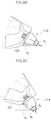
FIG. 6A illustrates a state before a plug unit is removed after casting, and FIG. 6B illustrates a state in which a casting plug of a plug unit is removed after casting.
FIG. 7A illustrates a plug application example in the related art, and FIG. 7B illustrates an example in which a plug is applied to an inclined plane in the related art.
FIG. 8 is a diagram explaining a plug unit according to the present disclosure.
FIGS. 9A, 9B, and 9C illustrate the relationship between a plug unit and an inclined plane of a casting according to the present disclosure.
DESCRIPTION OF SPECIFIC EMBODIMENTS
It is understood that the term “vehicle” or “vehicular” or other similar term as used herein is inclusive of motor vehicles in general such as passenger automobiles including sports utility vehicles (SUV), buses, trucks, various commercial vehicles, watercraft including a variety of boats and ships, aircraft, and the like, and includes hybrid vehicles, electric vehicles, plug-in hybrid electric vehicles, hydrogen-powered vehicles and other alternative fuel vehicles (e.g. fuels derived from resources other than petroleum). As referred to herein, a hybrid vehicle is a vehicle that has two or more sources of power, for example both gasoline-powered and electric-powered vehicles.
The terminology used herein is for the purpose of describing particular embodiments only and is not intended to be limiting of the disclosure. As used herein, the singular forms “a,” “an” and “the” are intended to include the plural forms as well, unless the context clearly indicates otherwise. It will be further understood that the terms “comprises” and/or “comprising,” when used in this specification, specify the presence of stated features, integers, steps, operations, elements, and/or components, but do not preclude the presence or addition of one or more other features, integers, steps, operations, elements, components, and/or groups thereof. As used herein, the term “and/or” includes any and all combinations of one or more of the associated listed items. Throughout the specification, unless explicitly described to the contrary, the word “comprise” and variations such as “comprises” or “comprising” will be understood to imply the inclusion of stated elements but not the exclusion of any other elements. In addition, the terms “unit”, “-er”, “-or”, and “module” described in the specification mean units for processing at least one function and operation, and can be implemented by hardware components or software components and combinations thereof.
Further, the control logic of the present disclosure may be embodied as non-transitory computer readable media on a computer readable medium containing executable program instructions executed by a processor, controller or the like. Examples of computer readable media include, but are not limited to, ROM, RAM, compact disc (CD)-ROMs, magnetic tapes, floppy disks, flash drives, smart cards and optical data storage devices. The computer readable medium can also be distributed in network coupled computer systems so that the computer readable media is stored and executed in a distributed fashion, e.g., by a telematics server or a Controller Area Network (CAN).
The above-described objects, features, and advantages of the present disclosure will be described in detail with reference to the accompanying drawings, and accordingly, those of ordinary skill in the art to which the present disclosure pertains will be able to fully understand and easily embody the technical concept of the present disclosure.
FIG. 3 illustrates a plug unit according to the present disclosure. FIGS. 4A and 4B illustrate an example of a casting in which a fastening part is formed on an inclined plane, and FIG. 5 illustrates a state where a plug unit is mounted on a fastening part of FIGS. 4A and 4B. FIG. 6A illustrates a state before a plug unit is removed after casting, and FIG. 6B illustrates a state in which a casting plug of a plug unit is removed after casting.
Hereinafter, with reference to FIGS. 3 to 6B, a casting method for forming a fastening part on an inclined plane of a casting and a casting integrated with a screw thread insert according to an embodiment of the present disclosure will be described.
The present disclosure is provided so as to cast a casting (casted product) in which a fastening part is formed on an inclined plane of the casting. In order to form the fastening part on the inclined plane, the casting is performed using a plug unit 100, and thus it is possible to manufacture the casting in which a screw thread insert is integrally casted with the fastening part.
First, with reference to FIG. 3, the plug unit 100 is prepared in a manner that a casting plug 110 and a screw thread insert 120 are manufactured and then are combined with each other.
The casting plug 110 includes a truncated cone shaped plug body part 111, a plug screw part 112 projecting from a bottom plane of the plug body part 111 and having male screw threads formed thereon, and a planar multi-angle shaped plug head part 113 projecting from an upper plane of the plug body part 111.
The screw thread insert 120 is a member on which female screw threads are formed corresponding to the male screw threads of the plug screw part 112.
According to the casting method of the present disclosure, the fastening part is formed on the inclined plane of the casting P to be casted with reference to FIGS. 4A and 4B.
The fastening part may be a fastening hole h, and as can be seen from FIG. 4B and FIG. 5 illustrating portion A of FIG. 4B in an enlarged manner, the fastening hole h is formed on the inclined plane.
With reference to FIG. 5, the inclined plane means a slanting plane having an acute angle against a horizontal plane that is parallel to a movement direction for combination of a movable mold and a fixed mold with each other.
As shown in FIG. 5, the movable mold and the fixed mold are deployed on left and right sides, and the casting p is casted in the shape of a cavity formed through the combination of the movable and fixed molds.
Accordingly, a mold plane corresponding to the fastening hole h is also formed as an inclined plane, and in this case, the portion of the casting plug 110 of the plug unit 100 is inserted into the mold to form the mold plane corresponding to the fastening hole h.
Further, the screw thread insert 120 is inserted into the cavity and is integrally combined with the casting P to be casted.
As described above, because the inclined plane of the plug unit 100 mounted on the inclined plane of the mold forms an acute angle against the horizontal plane, the plug unit can be stably mounted to make the integrated casting possible.
In the case of opening the mold after the casting, as shown in FIG. 6A, the plug unit 100 that is combined with the casting P is separated from the mold, and if the casting plug 110 of the plug unit 100 is separated from the screw thread insert 120, the screw thread insert 120 is integrally formed in the fastening hole of the casting P as shown in FIG. 6B.
As described above, in the case of performing the casting using the plug unit, the screw thread insert is inserted and integrally casted at high pressure, and thus post-process problems are originally solved. Further, only minimal hardware is used to form the screw threads on the casting, and thus the weight increase is minimized. Further, in the casting process, an aluminum mother material is closely combined with the hardware, and thus the interface bonding performance becomes prominent.
However, there may be limitations in mounting the hardware insert on the mold.
That is, if the length direction of the plug 110 a being inserted as shown in FIG. 7A is in parallel to the horizontal plane, it is possible to open the combined molds m1 and m2. However, if the plug 110 b is formed in an inclined direction with respect to the horizontal plane as shown in FIG. 7B, it is not possible to open the combined molds by the plug 110 b.
As a result, the plug should be mounted only in the direction that is parallel to the direction in which the molds m1 and m2 are opened and closed, and thus the mold design is restricted.
According to the present disclosure, even in the case where the fastening part is formed on the inclined plane of the casting, the casting becomes possible through inserting of the plug unit.
That is, as shown in FIG. 8, the plug body part 111 of the casting plug 110 has a truncated cone shape, and by setting an angle β of one side plane based on the height direction of the truncated cone shaped plug body part 111, it is possible to perform the casting in a state where the plug unit 100 is mounted on the mold, and even in the case of the mold opening, it is possible to open the mold without hindering the plug unit 100.
FIGS. 9A, 9B, and 9C illustrate angles of side planes of a plug body part 111 according to angles of α1, α2, and α3.
In particular, first, if an angle of the inclined plane α1 against the horizontal plane that is parallel to the movement direction of the mold as shown in FIG. 9A is greater than or equal to 60° and is less than or equal to 90°, it is preferable that an angle β1 of one side plane based on the height direction of the plug body part 111 is set to be greater than or equal to 30°, and more preferably, the angle β1 may be in the range of 30° to 35°.
That is, the angle β1 may be greater than or equal to 90°−(α1)°, and in order to facilitate the assembly of the plug unit 100 in size and shape, it may be preferable that the angle β1 is in the above-described range.
Accordingly, if the angle β1 is smaller than 30°, the mold opening may be hindered, and if the angle β1 exceeds 35°, the mold opening is not hindered, but the volume of the plug body part 111 may be unnecessarily large.
Next, if the angle of the inclined plane α2 is greater than or equal to 45° and is less than or equal to 60° as shown in FIG. 9B, the angle β2 of the side plane of the plug body part 111 is set to be greater than or equal to 90°−(α2)°.
More preferably, the angle β2 may be in the range of 90°−(α2)° to 90°−(α2)°+5°.
If the angle β2 is smaller than 90°−(α2)°, the mold opening may be hindered, and if the angle β2 exceeds 90°−(α2)°+5°, the mold opening is not hindered, but the volume of the plug body part 111 may be unnecessarily large.
Next, if the angle of the inclined plane α3 is smaller than 45° as shown in FIG. 9C, the angle β3 of the side plane of the plug body part 111 is set to be greater than or equal to 90°−(α3)°.
More preferably, the angle β3 may be in the range of 90°−(α3)° to 90°−(α3)°+5°.
If the angle β3 is smaller than 90°−(α3)°, the mold opening may be hindered, and if the angle β3 exceeds 90°−(α3)°+5°, the mold opening is not hindered, but the volume of the plug body part 111 may be unnecessarily large.
Meanwhile, if the angle of the inclined plane α3 is smaller than 45° as shown in FIG. 9C, the truncated cone shape of the plug body part 111 may be asymmetric.
That is, both bodies of the plug body part 111, being divided into two based on the plane which crosses the horizontal plane being in parallel to the movement direction of the mold and on which a vertical line that is at right angles to the cross line is a segment in the length direction of the plug screw part 112, may be asymmetric to each other. For convenience, the both bodies may be discriminated as an upper body and a lower body.
Accordingly, the both bodies of the plug body part 111 being divided into two by the above basis may be asymmetric, and may have different volumes, and thus it is not necessary that the angle β4 of the side plane of the body having the smaller volume is greater than or equal to 90°−(α3)°.
As a result, even if the angle is not greater than or equal to 90°−(α3)°, the mold opening is not hindered, and thus the angle β4 of the side plane of the upper body having the smaller volume may be in the range of (α3)° to (α3+5)°.
On the other hand, in the example of FIG. 9C in which the inclined plane of the product forms an acute angle against the horizontal plane that is parallel to the mold movement direction, the upper body may have the smaller volume, whereas in the case where the inclined plane of the product forms an obtuse angle against the horizontal plane that is parallel to the mold movement direction, the lower body may have the smaller volume.
As described above, if the plug unit is not hindered during the product mold opening, the truncated cone shape of the plug unit may have an asymmetric structure, and in this case, one of the divided bodies may be formed to have a smaller volume than that of the other of the divided bodies.
However, in the case of a symmetric structure, there is no directivity when being assembled in the mold, and thus the symmetric structure may be advantageous to the assembly.
As described above, the durability of the plug unit 100 mounted on the mold can be secured within the angle range of the side plane of the plug body part 111, and the force acting on the plug unit 100 during the casting can be minimized. Further, the mold opening is not hindered.
Further, in order to maintain the bonding force with the screw thread insert 120, it may be preferable that the height of the plug body part 111 is set to be equal to the length of the plug screw part 112 or the screw thread insert 120.
While the present disclosure has been described with reference to the exemplified drawings, it will be apparent to those of ordinary skill in the art that the present disclosure is not limited to the described embodiments, and various changes and modifications may be made without departing from the spirit and scope of the present disclosure. Accordingly, such changes and modifications should belong to the claims of the present disclosure, and the right of the present disclosure should be construed based on the appended claims.

Claims (7)

What is claimed is:
1. A casting method for forming a fastening part on an inclined plane of a casting, comprising:
mounting a plug unit including a casting plug and a screw thread insert combined with the casting plug on a movable mold or a fixed mold;
performing casting by moving and combining the movable mold with the fixed mold and injecting a molten metal into a cavity formed between the movable mold and the fixed mold;
performing mold opening after the casting; and
separating the casting plug from the screw thread insert,
wherein when the plug unit is mounted on the mold, the screw thread insert is deployed in the cavity, and a mold plane on which the casting plug is mounted forms an inclined plane having an acute angle against a horizontal plane that is parallel to a movement direction of the movable mold.
2. The casting method of claim 1, wherein the screw thread insert is integrally combined with the casting.
3. The casting method of claim 1, wherein the casting plug comprises:
a truncated cone shaped plug body part; and
a plug screw part projecting from a bottom plane of the plug body part and having male screw threads formed thereon,
wherein the screw thread insert has female screw threads formed thereon corresponding to the male screw threads of the plug screw part, and the screw thread insert is combined with the plug screw part.
4. The casting method of claim 3, wherein an angle of a side plane of the plug body part based on a height direction of the plug body part is greater than or equal to 30°.
5. The casting method of claim 4, wherein the angle of the side plane of the plug body part based on the height direction of the plug body part is in a range of 30° to 35°.
6. The casting method of claim 3, wherein an angle of a side plane of the plug body part based on a height direction of the plug body part is greater than or equal to: 90°−(the acute angle of the inclined plane)°.
7. The casting method of claim 6, wherein the angle of the side plane of the plug body part based on the height direction of the plug body part is in a range of 90°−(the acute angle of the inclined plane)° to 90°−(the acute angle of the inclined plane)°+5°.
US16/841,071 2020-01-15 2020-04-06 Casting method for forming screw hole on inclined plane of casting, and casting integrated with insert having screw thread Active US11219944B2 (en)

Applications Claiming Priority (2)

Application Number Priority Date Filing Date Title
KR1020200005167A KR102856511B1 (en) 2020-01-15 2020-01-15 Casting method for forming a screw hole on an inclined plane of a casting and the casting integrated an insert having screw thread
KR10-2020-0005167 2020-01-15

Publications (2)

Publication Number Publication Date
US20210213516A1 US20210213516A1 (en) 2021-07-15
US11219944B2 true US11219944B2 (en) 2022-01-11

Family

ID=76760942

Family Applications (1)

Application Number Title Priority Date Filing Date
US16/841,071 Active US11219944B2 (en) 2020-01-15 2020-04-06 Casting method for forming screw hole on inclined plane of casting, and casting integrated with insert having screw thread

Country Status (3)

Country Link
US (1) US11219944B2 (en)
KR (1) KR102856511B1 (en)
CN (1) CN113118418B (en)

Families Citing this family (1)

* Cited by examiner, † Cited by third party
Publication number Priority date Publication date Assignee Title
CN113619032A (en) * 2021-08-09 2021-11-09 苏州宥安骏精密科技有限公司 Take screw thread with mould of integrated into one piece product

Citations (1)

* Cited by examiner, † Cited by third party
Publication number Priority date Publication date Assignee Title
KR20190094752A (en) 2018-02-05 2019-08-14 엠에이치기술개발 주식회사 Hollow product manufacturing method and plug for hollow tube plug for the same

Family Cites Families (7)

* Cited by examiner, † Cited by third party
Publication number Priority date Publication date Assignee Title
DE4236084A1 (en) * 1992-10-26 1994-04-28 Halberg Maschbau Gmbh & Co Cast part prodn. with shape detail - formed by use of prefabricated insert for forming e.g. threaded bore with end sealing face in pump housing
JP2001030048A (en) * 1999-07-22 2001-02-06 Tokai Kogyo Co Ltd Metal molding, its molding method and molding die
JP4033147B2 (en) * 2004-02-24 2008-01-16 株式会社豊田自動織機 Casting method and casting for castings
KR101099504B1 (en) * 2009-10-14 2011-12-27 동남정밀 주식회사 Die casting mold
KR20110047297A (en) * 2009-10-30 2011-05-09 덕지산업주식회사 How to form boss part of casting
DE102010020682A1 (en) * 2010-05-15 2011-11-17 Dr. Ing. H.C. F. Porsche Aktiengesellschaft Metal casting and metal casting
EP3126116B1 (en) * 2014-03-31 2022-06-01 Böllhoff Verbindungstechnik GmbH Insert for a casting mold and a casting method

Patent Citations (1)

* Cited by examiner, † Cited by third party
Publication number Priority date Publication date Assignee Title
KR20190094752A (en) 2018-02-05 2019-08-14 엠에이치기술개발 주식회사 Hollow product manufacturing method and plug for hollow tube plug for the same

Also Published As

Publication number Publication date
KR20210091905A (en) 2021-07-23
US20210213516A1 (en) 2021-07-15
CN113118418A (en) 2021-07-16
CN113118418B (en) 2023-08-25
KR102856511B1 (en) 2025-09-10

Similar Documents

Publication Publication Date Title
CN107771134B (en) Air-conditioning systems for vehicles, in particular roof-mounted air-conditioning systems and vehicles with air-conditioning systems of this type
US9645051B2 (en) Automatic examination device of parts for vehicle and method
US11219944B2 (en) Casting method for forming screw hole on inclined plane of casting, and casting integrated with insert having screw thread
US6443831B2 (en) Transfer register
EP2945471B1 (en) Integrated power converting apparatus for vehicle
US20150183018A1 (en) Press apparatus for vehicle
US11529857B2 (en) Cover for door frame of vehicle
US9988088B2 (en) Structure for connecting strut bar for vehicle
US11241946B2 (en) Weather strip for vehicle
US11993316B2 (en) Vehicle body structure
US20220332375A1 (en) Connecting assembly, method for manufacturing a connecting assembly, vehicle body structure, and method for assembling a vehicle body structure
US20250276571A1 (en) Cooling panel for battery case
US11065679B2 (en) Vacuum system for die casting mold
US9937591B2 (en) Welding device and method of welding automobile parts
US9469205B2 (en) Female connector of high voltage junction box and method for assembling the same
CN113085769B (en) Millimeter wave radar installation fixing structure for automobile automatic driving test
US20240317035A1 (en) Sealing structure of active weather strip of vehicle and manufacturing method thereof
US20190184455A1 (en) Vacuum centrifugal casting apparatus
CN218362005U (en) Automobile-used aluminum alloy housing die casting die
US20230066335A1 (en) Separator integrated with gasket for fuel cell and method for manufacturing the same
US10625595B2 (en) Air guide structure of vehicle
US11820420B2 (en) Steering shaft temporary support structure of vehicle
CN217570812U (en) Upper die structure for automobile cover plate
CN204432786U (en) Transport trolley and vehicle frame thereof
CN209921200U (en) Air conditioning box and central control box front extension plate clamping structure and automobile

Legal Events

Date Code Title Description
AS Assignment

Owner name: HYUNDAI MOTOR COMPANY, KOREA, REPUBLIC OF

Free format text: ASSIGNMENT OF ASSIGNORS INTEREST;ASSIGNORS:LEE, CHEOL-UNG;LEE, YOON-KI;KIM, JIN-YONG;AND OTHERS;SIGNING DATES FROM 20200312 TO 20200316;REEL/FRAME:052322/0285

Owner name: KIA MOTORS CORPORATION, KOREA, REPUBLIC OF

Free format text: ASSIGNMENT OF ASSIGNORS INTEREST;ASSIGNORS:LEE, CHEOL-UNG;LEE, YOON-KI;KIM, JIN-YONG;AND OTHERS;SIGNING DATES FROM 20200312 TO 20200316;REEL/FRAME:052322/0285

Owner name: JINHAP BOLLHOFF LTD., KOREA, REPUBLIC OF

Free format text: ASSIGNMENT OF ASSIGNORS INTEREST;ASSIGNORS:LEE, CHEOL-UNG;LEE, YOON-KI;KIM, JIN-YONG;AND OTHERS;SIGNING DATES FROM 20200312 TO 20200316;REEL/FRAME:052322/0285

FEPP Fee payment procedure

Free format text: ENTITY STATUS SET TO UNDISCOUNTED (ORIGINAL EVENT CODE: BIG.); ENTITY STATUS OF PATENT OWNER: LARGE ENTITY

STPP Information on status: patent application and granting procedure in general

Free format text: RESPONSE TO NON-FINAL OFFICE ACTION ENTERED AND FORWARDED TO EXAMINER

STPP Information on status: patent application and granting procedure in general

Free format text: EX PARTE QUAYLE ACTION MAILED

STPP Information on status: patent application and granting procedure in general

Free format text: RESPONSE TO EX PARTE QUAYLE ACTION ENTERED AND FORWARDED TO EXAMINER

STPP Information on status: patent application and granting procedure in general

Free format text: NOTICE OF ALLOWANCE MAILED -- APPLICATION RECEIVED IN OFFICE OF PUBLICATIONS

STPP Information on status: patent application and granting procedure in general

Free format text: PUBLICATIONS -- ISSUE FEE PAYMENT VERIFIED

STCF Information on status: patent grant

Free format text: PATENTED CASE

MAFP Maintenance fee payment

Free format text: PAYMENT OF MAINTENANCE FEE, 4TH YEAR, LARGE ENTITY (ORIGINAL EVENT CODE: M1551); ENTITY STATUS OF PATENT OWNER: LARGE ENTITY

Year of fee payment: 4