US11218381B2 - Service tagging optimization for intent-based networking - Google Patents
Service tagging optimization for intent-based networking Download PDFInfo
- Publication number
- US11218381B2 US11218381B2 US16/592,872 US201916592872A US11218381B2 US 11218381 B2 US11218381 B2 US 11218381B2 US 201916592872 A US201916592872 A US 201916592872A US 11218381 B2 US11218381 B2 US 11218381B2
- Authority
- US
- United States
- Prior art keywords
- service
- subservice
- subservices
- metrics
- network
- Prior art date
- Legal status (The legal status is an assumption and is not a legal conclusion. Google has not performed a legal analysis and makes no representation as to the accuracy of the status listed.)
- Expired - Fee Related, expires
Links
Images


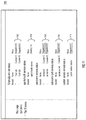


Classifications
-
- H—ELECTRICITY
- H04—ELECTRIC COMMUNICATION TECHNIQUE
- H04L—TRANSMISSION OF DIGITAL INFORMATION, e.g. TELEGRAPHIC COMMUNICATION
- H04L41/00—Arrangements for maintenance, administration or management of data switching networks, e.g. of packet switching networks
- H04L41/50—Network service management, e.g. ensuring proper service fulfilment according to agreements
- H04L41/5041—Network service management, e.g. ensuring proper service fulfilment according to agreements characterised by the time relationship between creation and deployment of a service
- H04L41/5045—Making service definitions prior to deployment
-
- H—ELECTRICITY
- H04—ELECTRIC COMMUNICATION TECHNIQUE
- H04L—TRANSMISSION OF DIGITAL INFORMATION, e.g. TELEGRAPHIC COMMUNICATION
- H04L41/00—Arrangements for maintenance, administration or management of data switching networks, e.g. of packet switching networks
- H04L41/50—Network service management, e.g. ensuring proper service fulfilment according to agreements
- H04L41/5003—Managing SLA; Interaction between SLA and QoS
- H04L41/5009—Determining service level performance parameters or violations of service level contracts, e.g. violations of agreed response time or mean time between failures [MTBF]
-
- H—ELECTRICITY
- H04—ELECTRIC COMMUNICATION TECHNIQUE
- H04L—TRANSMISSION OF DIGITAL INFORMATION, e.g. TELEGRAPHIC COMMUNICATION
- H04L41/00—Arrangements for maintenance, administration or management of data switching networks, e.g. of packet switching networks
- H04L41/08—Configuration management of networks or network elements
- H04L41/0803—Configuration setting
- H04L41/0813—Configuration setting characterised by the conditions triggering a change of settings
- H04L41/0816—Configuration setting characterised by the conditions triggering a change of settings the condition being an adaptation, e.g. in response to network events
-
- H—ELECTRICITY
- H04—ELECTRIC COMMUNICATION TECHNIQUE
- H04L—TRANSMISSION OF DIGITAL INFORMATION, e.g. TELEGRAPHIC COMMUNICATION
- H04L41/00—Arrangements for maintenance, administration or management of data switching networks, e.g. of packet switching networks
- H04L41/50—Network service management, e.g. ensuring proper service fulfilment according to agreements
- H04L41/5058—Service discovery by the service manager
-
- H—ELECTRICITY
- H04—ELECTRIC COMMUNICATION TECHNIQUE
- H04L—TRANSMISSION OF DIGITAL INFORMATION, e.g. TELEGRAPHIC COMMUNICATION
- H04L43/00—Arrangements for monitoring or testing data switching networks
- H04L43/06—Generation of reports
- H04L43/062—Generation of reports related to network traffic
-
- H—ELECTRICITY
- H04—ELECTRIC COMMUNICATION TECHNIQUE
- H04L—TRANSMISSION OF DIGITAL INFORMATION, e.g. TELEGRAPHIC COMMUNICATION
- H04L41/00—Arrangements for maintenance, administration or management of data switching networks, e.g. of packet switching networks
- H04L41/04—Network management architectures or arrangements
- H04L41/046—Network management architectures or arrangements comprising network management agents or mobile agents therefor
-
- H—ELECTRICITY
- H04—ELECTRIC COMMUNICATION TECHNIQUE
- H04L—TRANSMISSION OF DIGITAL INFORMATION, e.g. TELEGRAPHIC COMMUNICATION
- H04L41/00—Arrangements for maintenance, administration or management of data switching networks, e.g. of packet switching networks
- H04L41/22—Arrangements for maintenance, administration or management of data switching networks, e.g. of packet switching networks comprising specially adapted graphical user interfaces [GUI]
-
- H—ELECTRICITY
- H04—ELECTRIC COMMUNICATION TECHNIQUE
- H04L—TRANSMISSION OF DIGITAL INFORMATION, e.g. TELEGRAPHIC COMMUNICATION
- H04L43/00—Arrangements for monitoring or testing data switching networks
- H04L43/06—Generation of reports
-
- H—ELECTRICITY
- H04—ELECTRIC COMMUNICATION TECHNIQUE
- H04L—TRANSMISSION OF DIGITAL INFORMATION, e.g. TELEGRAPHIC COMMUNICATION
- H04L43/00—Arrangements for monitoring or testing data switching networks
- H04L43/08—Monitoring or testing based on specific metrics, e.g. QoS, energy consumption or environmental parameters
- H04L43/0805—Monitoring or testing based on specific metrics, e.g. QoS, energy consumption or environmental parameters by checking availability
- H04L43/0817—Monitoring or testing based on specific metrics, e.g. QoS, energy consumption or environmental parameters by checking availability by checking functioning
Definitions
- the present disclosure relates to assurance of services enabled on networks.
- a compulsory step for intent-based networking involves closing a loop with telemetry for service assurance.
- Discovering whether a service fulfills its service level agreement (SLA) is relatively easy when monitoring synthetic traffic mimicking the service.
- SLA service level agreement
- an over-the-top mechanism only provides SLA compliance results that considers a network on which the service is enabled as a “black box,” without knowledge of inner workings or low-level components of the service. Therefore, a network operator tasked with the monitoring of the service has limited or no insights on which specific degraded or faulty network components/features are responsible for service degradation. This issue is particularly difficult when the network is composed of heterogeneous network components.
- Telemetry exists today to report operational information, but an issue arises in that telemetry from network devices in the network does not provide service context information. Hence, troubleshooting the service based on the telemetry is very complex, with, on one side, the service information, and on another side, network device-specific telemetry information.
- FIG. 1 is a block diagram of a network service assurance system or architecture (also referred to as a “service assurance system”), according to an example embodiment.
- FIG. 2A is a block diagram that shows additional details of an assurance orchestrator, a representative assurance agent, and a representative network device of the service assurance system, according to an example embodiment.
- FIG. 2B is a block diagram that shows a distributed arrangement of assurance agents and network devices of the service assurance system, according to an example embodiment.
- FIG. 3 is an illustration of service configuration information for a first network device and an interface on the first network device for a specific service, according to an example embodiment.
- FIG. 4 is an illustration of service configuration information for a second network device and an interface on the second network device for the specific service, according to an example embodiment.
- FIG. 5 is an illustration of service configuration information for a first cross-connect (xconnect) associated with the second network device for the specific service, according to an example embodiment.
- FIG. 6 is an illustration of a subservice dependency graph, in an example form of a subservice dependency tree, for a service, according to an example embodiment.
- FIG. 7 is an illustration of a generalized heuristic package generated based on a subservice dependency graph, according to an example embodiment.
- FIG. 8 is an illustration of a heuristic package for a network device used by a service, according to an example embodiment.
- FIG. 9 is an illustration of a heuristic package for a network protocol implemented on a network device used for the service, according to an example embodiment.
- FIG. 10 is an illustration of a user interface (UI) generated for display by assurance collectors of the service assurance system based on an analysis of service-tagged subservice metrics belonging to a specific service, according to an example embodiment.
- UI user interface
- FIG. 11 is an illustration of UI generated for display by the assurance collectors based on an analysis of service-tagged subservice metrics for multiple services, according to an example embodiment.
- FIG. 12 is an illustration of a monitoring object used to configure a subservice of a service, according to an example embodiment.
- FIG. 13 is an illustration of a service-tagged subservice metrics in a form of a telemetry object corresponding to the monitoring object, according to an example embodiment.
- FIG. 14 is a flowchart of a method of performing assurance for a service enabled on a network, according to an example embodiment.
- FIG. 15 is a hardware block diagram of an example computer system of a network orchestrator and an assurance entity, representative of one or more of an assurance orchestrator, assurance agents, and assurance collectors of the service assurance system, according to an example embodiment.
- FIG. 16 is a block diagram of a network device on which a subservice may be implemented, according to an example embodiment.
- a method is performed at one or more entities configured to provide assurance for a service enabled on a network.
- a definition of the service is received.
- the definition includes a service type, a service instance, and configuration information used to enable the service.
- a service tag that is unique to the service is generated so as to distinguish the service from other services on the network.
- the service is decomposed into a subservice dependency graph of subservices and dependencies between the subservices that collectively enable the service.
- the subservices are configured to record and report subservice metrics indicative of health states of the subservices.
- the subservice metrics are obtained from the subservices.
- the service tag is applied to the subservice metrics to produce service-tagged subservice metrics.
- the service-tagged subservice metrics are analyzed to determine a health state of the service.
- Service assurance system 100 may provide service assurance for intent-based networking (SAIN), for example.
- SAIN intent-based networking
- the service assurance system 100 leverages programming capabilities of network devices in the intent-based network (also referred to as a “service network” or simply a “network”), and model/event driven metrics in telemetry obtained from the network devices, to deliver end-to-end service assurance for various services.
- Service assurance system 100 includes a network orchestrator (NO) 102 , service operators 104 to provide instructions to the network orchestrator 102 , an assurance orchestrator 106 that communicates with the network orchestrator 102 , assurance agents 108 ( 1 )- 108 (M) (collectively, “assurance agents” 108 ) that communicate with the assurance orchestrator 106 , assurance collectors 110 that communicate with the assurance agents 108 and the service operators 104 , and network devices 112 ( 1 )- 112 (N) (collectively, “network devices” 112 ) that communicate with the network orchestrator 102 and the assurance collectors 110 .
- NO network orchestrator
- Network orchestrator 102 configures network devices 112 ( 1 )- 112 (N) to implement an intent-based service network 113 enabled to provide a variety of services to end users.
- Network devices 112 may include routers, switches, gateways, and other network devices (physical or virtual).
- Assurance orchestrator 106 , assurance agents 108 , and assurance collectors 110 are generally referred to as one or more “assurance entities” (or simply “entities”) configured to provide assurance for services on a network.
- Network orchestrator 102 may include applications and/or services hosted on one or more server devices (more simply referred to as servers), for example, in a cloud-based data center.
- Assurance orchestrator 106 may also include applications and/or services hosted on one or more server devices, which may be the same as or different from the servers used by network orchestrator 102 .
- assurance collectors 110 may also include applications and/or services hosted on one or more servers, which may be the same as or different from the servers used by assurance orchestrator 106 .
- assurance collectors 110 are applications integrated into assurance orchestrator 106 .
- Assurance agents 108 ( 1 )- 108 (N) may each include applications and/or services hosted on one or more servers, and may be distributed geographically to be near respective ones of network devices 112 ( 1 )- 112 (N) enabled for services to be monitored under control of the assurance agents.
- Network orchestrator 102 , assurance orchestrator 106 , assurance agents 108 , assurance collectors 110 , and network devices 112 may communicate with each other over one or more communication networks, including one or more wide area networks (WANs), such as the Internet, and one or more local area networks (LANs).
- WANs wide area networks
- LANs local area networks
- service assurance system 100 supports multiple services, including service 1 and service 2 (collectively, “the services”).
- service operators 104 include a service 1 operator for service 1 and a service 2 operator for service 2
- assurance collectors 110 include a service 1 collector for service 1 and a service 2 collector for service 2 .
- Service operators 104 (e.g., service 1 operator and service 2 operator) provide to network orchestrator 102 network and service intent-based instructions to setup/configure the services (e.g., service 1 and service 2 ) for end users.
- Service operators 104 also receive requests for assurance (e.g., “get assurance” requests) for the services from assurance collectors 110 (e.g., service 1 collector and service 2 collector), and forward the requests to network orchestrator 102 .
- assurance collectors 110 e.g., service 1 collector and service 2 collector
- network orchestrator 102 Responsive to the aforementioned instructions and the requests sent by service operators 104 , network orchestrator 102 derives and sends to network devices 112 intent-based network device configuration information 114 to configure the network devices/service network 113 for the services (e.g., for service 1 and service 2 ). In addition, network orchestrator 102 derives and sends to assurance orchestrator 106 service configuration information 116 for providing assurance for the services (e.g., service 1 and service 2 ) enabled on service network 113 .
- assurance orchestrator 106 service configuration information 116 for providing assurance for the services (e.g., service 1 and service 2 ) enabled on service network 113 .
- Service configuration information 116 includes, for each service deployed or implemented on service network 113 , respectively, a definition of the service, including a service type (e.g., a type of network connectivity), a service instance (e.g., an identifier or name of the service), and configuration information that describes how the service is actually implemented of service network 113 . That is, the definition of the configuration of the service is reflective of how the service is instantiated as a collection of the subservices in service network 113 .
- a service type e.g., a type of network connectivity
- service instance e.g., an identifier or name of the service
- configuration information that describes how the service is actually implemented of service network 113 . That is, the definition of the configuration of the service is reflective of how the service is instantiated as a collection of the subservices in service network 113 .
- network orchestrator 102 may employ, for example, the Network Configuration Protocol (NETCONF) (or, similarly, Representational State Transfer (REST) Configuration (RESTCONF)) to push intent-based network device configuration objects, such as Yet Another Next Generation (YANG) models or objects, to network devices 112 .
- NETCONF Network Configuration Protocol
- RESTCONF Representational State Transfer
- YANG Yet Another Next Generation
- network orchestrator 102 may also employ, for example, NETCONF to push intent-based service configuration YANG objects to assurance orchestrator 106 .
- YANG is a data modeling language used to define data sent over a NETCONF compliant network to configure resources.
- NETCONF are used to install, manipulate, and delete configurations of the resources, while YANG is used to model both configuration and state data of the resources.
- YANG models/objects used to implement embodiments presented herein may include YANG models/objects extended to include service-specific metadata annotations in accordance with RFC 7952, for example, or any other format that may be the subject of a future standard.
- Assurance orchestrator 106 operates as a central controller for assurance of the services deployed on service network 113 . That is, assurance orchestrator 106 employs “service awareness” to control assurance for the services deployed on service network 113 . In this role, assurance orchestrator 106 performs several main operations. First, assurance orchestrator 106 generates, from the service type and the service instance in the definition of each service defined in service configuration information 116 , a unique service tag for the service.
- the service tag for a given service may be a tuple that includes the service type and the service instance from the definition of the given service. The service tag may be used to distinguish the service to which it pertains from all other services.
- assurance orchestrator 106 decomposes the definition of each service defined in service configuration information 116 into a respective subservice dependency graph of subservices and dependencies/interdependencies between the subservices that collectively (actually) implement the service on a network. That is, assurance orchestrator 106 dissects each service into the respective subservice dependency graph.
- the subservice dependency graph includes (subservice) nodes that represent the subservices and links between the nodes that represent the dependencies between the subservices.
- the subservice dependency graph may include the service type and the service instance (e.g., the service tag) for the service represented by the subservice dependency graph.
- assurance orchestrator 106 may poll or query various network devices identified in the definition to discover subservices, such as packet routing protocols, implemented on the network devices and that are to be incorporated into the subservice dependency graph.
- the subservice dependency graph includes a subservice dependency tree having a root node that represents the services, and nodes that represent the subservices and that have parent-child relationships (i.e., the dependencies) between the nodes/subservices that lead back to the root node.
- a subservice dependency tree is described below in connection with FIG. 6 .
- Other types of graph constructs/data structures may be used to represent the subservice dependency graph, as would be appreciated by one of ordinary skill in the art having read the present application.
- the heuristic packages (i) specify/define service-related metrics (i.e., subservice metrics) to be monitored/recorded and reported by the subservices, and that are indicative of health statuses/states of the subservices, i.e., that are indicators of health states of the subservices, (ii) include rules to determine/compute key performance (KPIs) including the health states of the subservices (also referred to individually as a “subservice health state,” and collectively as “subservice health states”) based on the subservice metrics as recorded and reported, and (iii) which sensor paths (i.e., telemetry paths) are to be enabled for reporting telemetry, i.e., to report the subservice metrics recorded by the subservices from the subservices.
- KPIs key performance
- the heuristic packages may also include or be associated with the service tag for the service to which the heuristic packages correspond.
- Assurance orchestrator 106 employs the heuristic packages to configure assurance agents 108 to monitor the subservices of the services, and to compute the health states of the subservices based on the monitoring, as described below.
- assurance orchestrator 106 provides to assurance agents 108 assurance agent configuration information 118 including the heuristic packages and their corresponding service tags in association with each other.
- Assurance orchestrator 106 may employ NETCONF to push the heuristic packages as YANG objects to assurance agents 108 .
- Assurance orchestrator 106 may also provide the subservice dependency graphs to assurance collectors 110 in assurance collector configuration information 119 .
- Assurance agents 108 act as intermediary assurance devices between network devices 112 , assurance collectors 110 , and assurance orchestrator 106 . More specifically, assurance agents 108 translate assurance agent configuration information 118 , including the heuristic packages, to telemetry configuration information 120 , and provide the telemetry configuration information to network devices 112 , to configure the network devices 112 to record and report the subservice metrics mentioned above. For example, assurance agents 108 generate monitoring objects that define the subservice metrics to be recorded and reported by the subservices, and provide the monitoring objects to the subservices in telemetry configuration information 120 , to configure the subservices to record and report the subservice metrics.
- Assurance agents 108 may maintain associations/bindings or mappings between the heuristic packages, the monitoring objects generated by the heuristic packages, and the services (e.g., service tags) to which the heuristic packages and the monitoring objects pertain.
- Assurance agents 108 may employ NETCONF (or RESTCONF), for example, to push YANG monitoring objects to network devices 112 .
- network devices 112 In response to receiving the monitoring objects in telemetry configuration information 120 , network devices 112 record the subservice metrics specified in the monitoring objects, and report the subservice metrics (labeled as “metrics” 122 in FIG. 1 ) back to assurance agents 108 in telemetry streams.
- the telemetry streams carry subservice metrics 122 in telemetry objects corresponding to the monitoring objects, as described below in connection with FIG. 2B .
- assurance agents 108 tag subservice metrics 122 with service tags to indicate which of the subservice metrics are associated with/belong to which of the services, to produce service-tagged subservice metrics 124 (labeled “tagged metrics” in FIG. 1 ).
- assurance agents 108 apply the service tags to the subservice metrics for the services to which the service tags belong.
- assurance agents 108 tag the telemetry objects with the service tag to produce service-tagged telemetry objects).
- the service tags provide service context to the subservice metrics.
- assurance agents 108 do not perform any specific analysis on the subservice metrics, leaving such analysis to assurance collectors 110 and/or assurance orchestrator 106 .
- assurance agents 108 perform analysis on subservice metrics 122 as instructed by the heuristic packages, to produce health states of the subservices (e.g., KPIs used as indicators of health states of the subservices) to which the subservice metrics pertain.
- Assurance agents 108 provide to assurance collectors 110 service-tagged subservice metrics 124 , along with health states of the subservices when computed by the assurance agents.
- assurance agents 108 provide flows of service-tagged subservice metrics tagged with service tag 1 to indicate service 1 to service 1 collector, and service-tagged subservice metrics tagged with service tag 2 to indicate service 2 to service 2 collector.
- Assurance agents 108 may also provide service-tagged subservice metrics 124 to assurance orchestrator 106 .
- Assurance collectors 110 receive/collect service-tagged subservice metrics 124 , and health states of the subservices when available, from assurance agents 108 for various services, as uniquely identified by the service tags with which the subservice metrics are tagged. Assurance collectors 110 associate service-tagged subservice metrics 124 with respective ones of the various services based on the service tags. Assurance collectors 110 determine a respective overall health state of each service based on the health states of the subservices of the service, as indicated by the service-tagged subservice metrics and their KPIs/health states.
- assurance collectors 110 compute the health states of the subservices from the service-tagged subservice metrics 124 as instructed by corresponding ones of the heuristic packages (e.g., by the heuristic packages tagged with the same service tag as the subservice metrics).
- FIG. 2A there is a block diagram that shows additional details of assurance orchestrator 106 , assurance collectors 110 , a representative assurance agent (e.g., assurance agent 108 ( 1 )), and a representative network device (e.g., network device 112 ( 1 )) from FIG. 1A .
- Assurance collector 110 includes pipeline analytics 202 to analyze service-tagged subservice metrics 124 including the KPIs (if any) from assurance agents 108 , to determine health states of the subservices and then service health states based on the health states of the subservices.
- Assurance agent 108 ( 1 ) includes a NETCONF agent 206 , a telemetry consumer 208 , a telemetry producer 210 , and plugins 211 .
- Plugins 211 provide various functional capabilities to assurance agent 108 ( 1 ) to assist with tasks/operations performed by the assurance agent, including communicating with entities external to the assurance agent.
- plugins 211 include, but are not limited to, one or more of the following: a command line interface (CLI) plugin P 1 ; a Simple Network Management Protocol (SNMP) plugin P 2 ; an Internet Protocol (IP) service-level agreement (SLA) plugin P 3 ; a NetFlowTM protocol plugin to communicate with NetFlow-enabled network devices P 4 ; an in-situ operations, administration, and maintenance (IOAM) plugin P 5 to provide real-time telemetry of individual data packets and flows; application programming interfaces (APIs) P 6 ; and Layer Independent OAM Management in the Multi-Layer Environment (LIME) P 7 .
- CLI command line interface
- SNMP Simple Network Management Protocol
- IP Internet Protocol
- SLA service-level agreement
- IOAM in-situ operations, administration, and maintenance
- APIs application programming interfaces
- LIME Layer Independent OAM Management in the Multi-Layer Environment
- NETCONF agent 206 digests heuristic packages 204 sent by assurance orchestrator 106 .
- NETCONF agent 206 generates monitoring objects (in telemetry configuration information 120 ) as network device configuration YANG objects based on the heuristic packages, and pushes the monitoring objects to network device 112 ( 1 ) to configure the network device for model-driven telemetry (MDT) used to report recorded subservice metrics.
- NETCONF agent 206 may include in the monitoring objects respective identifiers of the subservices to which the monitoring objects pertain (e.g., an identifier of network device 112 ( 1 ), since the network device is a subservice), and the service tag for the service to which the subservice pertains.
- Telemetry consumer 208 receives from network device 112 ( 1 ) subservice metrics 122 recorded in (model-driven) telemetry objects corresponding to the monitoring objects.
- the telemetry objects include the subservice metrics, the identifier of the subservice (e.g., the identifier of network device 112 ( 1 )) to which the subservice metrics pertain, and may also include the service tag copied from the corresponding monitoring object.
- Telemetry consumer 208 passes the (received) telemetry objects to telemetry producer 210 .
- Telemetry producer 210 tags the (received) telemetry objects with service tags, as mentioned above, and sends resulting service-tagged telemetry objects (representing service-tagged subservice metrics 124 ) to assurance pipeline analytics 202 of assurance collectors 110 , and optionally to assurance orchestrator 106 .
- Telemetry producer 210 may also copy into the service-tagged telemetry objects any KPIs/health states of subservices computed by assurance agent 108 ( 1 ) in the embodiment in which the assurance agent computes that information.
- Network device 112 ( 1 ) includes a NETCONF agent 220 and an MDT producer 222 .
- NETCONF agent 220 receives network device configuration information 114 from network orchestrator 102 and configures subservice(s) on network device 112 ( 1 ) based on the network device configuration information.
- NETCONF agent 220 also receives the monitoring objects from NETCONF agent 206 , and configures the network device, including MDT producer 222 , based on the monitoring objects.
- MDT producer 222 records its local subservice metrics and its subservice identifier in telemetry objects as instructed by the monitoring objects, and may optionally include the corresponding service tags in the telemetry objects, and reports the telemetry objects to telemetry consumer 208 .
- FIG. 2B there is a block diagram that shows an example of a distributed arrangement of assurance agents 108 and network devices 112 of service assurance system 100 .
- assurance agent 108 ( 1 ) is co-located with network devices 112 ( 1 )- 112 ( 3 ) at a first geographical location and assurance agent 108 ( 2 ) is co-located with network devices 112 ( 4 )- 112 ( 6 ) at a second geographical location separated from the first geographical location.
- Service 1 (see FIG. 1 ) may be implemented on network devices 112 ( 1 )- 112 ( 3 )
- Service 2 may be implemented on network devices 112 ( 4 )- 112 ( 6 ).
- Geographically distributed assurance agents 108 ( 1 ) and 108 ( 2 ) report their service-tagged telemetry objects to centralized assurance agent 108 ( 3 ), which forwards the service-tagged subservice metrics to assurance collector 110 .
- service configuration information 116 for a service instance “xyz” (e.g., for a customer xyz) of service type Layer 2 (L2) virtual private network (VPN) L2VPN, which is a peer-to-peer (p2p) connectivity type (i.e., L2VPN-p2p)
- L2VPN Layer 2
- p2p peer-to-peer
- FIGS. 3-5 the example service configuration information is represented as eXtensible Markup Language (XML) encoding of YANG models.
- XML eXtensible Markup Language
- first example service configuration information 300 for a first network device and an interface of service instance xyz. More specifically, lines 302 introduce a “GigabitEthernet” interface for/on a first provider edge (PE) network device “sain-pe-1” (e.g., a router) for service instance xyz of type “12vpn” indicated at line 304 . As indicated at lines 302 , first network device sain-pe-1 is running an XR operating system, by Cisco. Line 306 provides an identifier “0/0/0/3” for the GigabitEthernet interface. Line 308 defines a maximum transmission unit (MTU) for the interface. Groups of lines 310 and 312 define parameters for IPv4 and IPv6 addresses configured on the interface.
- PE provider edge
- MTU maximum transmission unit
- second example service configuration information 400 for a second network device of service instance xyz. More specifically, lines 402 introduce a second PE network device “sain-pe-2” (e.g., a router) for service instance xyz of type “12vpn” indicated at line 406 .
- Line 408 defines a Quality-of-Service (QoS) classification, as default, for traffic handled by the network device sain-pe-2.
- service configuration information 400 may define a Quality-of-Experience (QoE) classification.
- Lines 410 define a policy rate for network device sain-pe-2.
- An “xconnect” is a Layer-2 pseudowire (L2 PW) used to create Layer 2 VPNs (L2VPNs). Examples of xconnects are provided at https://www.amazon.com/Layer-VPN-Architectures-Networking-Technology-ebook/dp/B0051TM5BM, authored by C. Pignataro.
- xconnect refers to a syntax of a command used to realize the pseudowire in, for example, a Cisco internetwork operating system (IOS)-XR/IOS-XE operating system.
- Lines 502 associate second network device sain-pe-2 with service instance xyz.
- Lines 504 define the first xconnect, which is associated with a GigabitEthernet subinterface 0/0/0/2.600 at line 506 and with an IPv4 address 192.168.0.17 at line 508 .
- Subservice dependency tree 600 includes a service node A- 1 at a highest level of the tree.
- Service node A- 1 identifies/represents the service by a service tag tuple that includes service type and service instance, e.g., tuple ⁇ service type, service instance>.
- service node A- 1 represents service ⁇ L2VPN-p2p, xyz>.
- Lower levels of tree 600 are populated with subservice nodes (shown as boxes) that identify/represent respective subservices of the service ⁇ L2VPN-p2p, xyz>, and that connect back to service node A- 1 through subservice dependencies or parent-child links (shown as lines connecting boxes that depend on each other).
- Each of the subservice nodes includes an identifier (e.g., a plain text identifier, as depicted in FIG. 6 ) of the subservice represented by that subservice nodes.
- the lower levels of tree 600 include:
- service ⁇ L2VPN-p2p, xyz> depends on the subservice of subservice node B- 1 , which depends on the subservice of subservice node E- 1 , which depends on the subservice of subservice node F- 2 , and so on down the levels of the tree.
- a given subservice may depend on multiple other subservices.
- the subservices of service ⁇ L2VPN-p2p, xyz> include network xconnects on network devices (e.g., on sain-pe-1 and sain-pe-2), L3 network connectivity on the network devices (L2 network connectivity on the network devices may also be a subservice), routing protocols on the network devices, interfaces of the network devices, subinterfaces of the network devices, and the network devices themselves.
- the subservices include: xconnects on network devices; L1 (e.g., optical), L2, and L3 network connectivity on the network devices; routing protocols on the network devices; interfaces of the network devices; subinterfaces of the network devices; communication behavior of the interfaces and the subinterfaces; the network devices themselves and operations performed on/by the network devices.
- Subservices also include logical network functions and groupings of logical and physical elements, such as: ECMP/ECMP groups of network devices; network tunnels; link protection functions executing in a network; network device protection functions executing in a network; and logical overlays on a physical network.
- Logical overlays may include: link aggregation for a link aggregation group (LAG); Virtual Extensible (Vx) LAN (VxLAN); VxLAN-Generic Protocol Extension (GPE); Generic Routing Encapsulation (GRE); service function chaining (SFC) functionality including Network Service Header (NSH) implementation; and Multiprotocol Label Switching (MPLS); for example.
- the subservices may also include applications such as application categorization as per RFC 6759.
- the subservices may also include one or more multicast subnets on network devices.
- Heuristic package 700 includes a header 702 that identifies a subservice of the subservice dependency graph that is targeted by the heuristic package, and an overall function for which the heuristic package is to be used.
- header 702 may identify any specific one of xconnect, L3 connectivity, routing protocol, subinterface, interface, or network device, and the header may specify that the heuristic package is to be used to determine a health of the indicated subservice.
- Heuristic package 700 may include arguments 704 , which indicate various conditions under which the heuristic package is to be used, such as a time duration over which the subservice is to be monitored. Heuristic package 700 also includes expressions 706, which include measure 708 and compute 710 . Measure 708 specifies subservice metrics of the subservice that are to be recorded. For example, for a network device subservice, the subservice metrics may include central processor unit (CPU) usage, free memory, temperature, power, and the like. For an interface of the network device, the subservice metrics may include traffic rate, and so on. Compute 710 provides rules and/or instructions to compute KPIs based on the subservice metrics, and instructions to determine a health state for the subservice, such as thresholds against which computed values are to be compared to determine the health state.
- arguments 704 which indicate various conditions under which the heuristic package is to be used, such as a time duration over which the subservice is to be monitored.
- Heuristic package 700 also includes expressions 706, which include measure 7
- Compute 710 may include rules to compute a health state that is binary, i.e., a health state that indicates either a passing health state when the subservice is operating properly (e.g., meets a desired performance level) or a failing health state (which is a degraded health state) when the subservice is not operating properly (e.g., does not meet the desired performance level).
- a health state that is binary, i.e., a health state that indicates either a passing health state when the subservice is operating properly (e.g., meets a desired performance level) or a failing health state (which is a degraded health state) when the subservice is not operating properly (e.g., does not meet the desired performance level).
- the rules may compute a health state that is graded, i.e., a health state that indicates a health state within a range of possible health states from passing to failing, e.g., including a passing health state, a failing health state, and a degraded health state that is not a passing health state or a failing health state (in this case, degraded means between passing and failing).
- Heuristic package 800 includes header 802 and arguments 804 .
- Heuristic package 800 includes compute 806 a to compute health indicators (KPIs) for a flash disk, flash, a hard disk, and storage, generally.
- KPIs health indicators
- compute 806 a includes rules to set the health state to indicate a degraded health state if memory of a flash disk is full, and further rules to evaluate the following Boolean operation: flash_disk_free/flash_disk size >0.05, and so on.
- Heuristic package 800 includes measure 808 that lists power metrics to be measured (e.g., power demand), and compute 806 b to compute health states based on the power metrics.
- Heuristic package 800 also includes compute 806 c to compute an overall health state (KPI) for the network device based on values computed in prior computes 806 a and 806 b . That is, compute 806 c defines a rule expression to evaluate the overall health state of the subservice based on the subservice metrics and the computed (intermediate) values mentioned above.
- KPI overall health state
- Heuristic package 900 for a network protocol (e.g., IS-IS) subservice implemented on a network device.
- Heuristic package 900 includes header 902 and arguments 904 .
- Heuristic package 900 includes measure 906 to measure metrics associated with IS-IS, including to determine lists of valid IPv4 and IPv6 IS-IS routes on the network device (e.g., from a forwarding or routing table in the network device).
- Heuristic package 900 includes compute 908 to compute KPIs that include various counts and stabilities of the IPv4 and the IPv6 IS-IS routes based on the metrics from measure 906 , and to compute an overall health state 910 , which is also a KPI, for IS-IS based on previously computed values/KPIs.
- assurance collectors 110 receive/collect service-tagged subservice metrics 124 from assurance agents 108 for various services, subservice dependency graphs for the various services, and heuristic packages for the various services.
- the subservice dependency graphs each includes the service tag for the service to which the subservice dependency graph pertains.
- the heuristic packages each includes the service tag to which the heuristic package pertains.
- Assurance collectors 110 associate all service-tagged subservice metrics 124 (and health states of subservices when available) tagged with a given service tag to the subservice dependency graphs that includes the given service tag, and to the heuristic packages that include the given service tag.
- assurance collectors 110 associate all service-tagged metrics 124 (and health states of subservices), subservice dependency graphs, and heuristic packages that have a matching (i.e., the same) service tag to each other and to the service identified by that service tag.
- assurance collectors 110 may populate the subservice dependency graph with corresponding health states of the subservices of the subservice dependency graph as represented by the service-tagged subservice metrics. For example, assurance collectors 110 may populate the nodes of a subservice dependency tree for the service with the health states of the subservices represented by the nodes. In an embodiment in which assurance agents 108 provide the health states of the subservices along with the service-tagged subservice metrics to assurance collectors 110 , the assurance collectors may populate the subservice dependency tree with the provided health states. Alternatively, assurance collector 110 computes the health states of the subservices from the corresponding service-tagged metrics 124 in accordance with the corresponding heuristic packages, and then populates the subservice dependency tree with the health states as computed.
- the resulting subservice dependency graph, populated with health states of the subservices may be generated for display to an administrator in a graph form (e.g., tree) or otherwise, e.g., as a list of subservices for the service.
- assurance collectors 110 may determine an overall health state of the service based on the health states of the subservices of the service. For example, if all of the subservices have health states that indicate passing health states, assurance collectors 110 may set the overall health state to indicate a passing overall health state. Alternatively, if the health states of one or more of the subservices indicate failing health states, assurance collectors 110 may set the overall health state to indicate a failing overall health state.
- UI 1000 generated for display by assurance collectors 110 responsive to collecting and analyzing service-tagged subservice metrics for the service L2VPN-p2p, xyz.
- UI 1000 includes subservice dependency tree 600 for the service, as described above, but with various subservices highlighted (e.g., with shaded) to indicate degraded health states (which may mean a failing health state or, alternatively, a degraded health state between failing and passing).
- UI 1000 includes shading of subservices identified by subservice nodes E- 1 , F- 4 , and G- 2 , which indicates degraded health states for those subservices, i.e., assurance collectors 110 determined degraded health states of those subservices.
- UI 1000 includes shading of the service L2VPN-p2p, xyz identified by service node A- 1 , which indicates a degraded overall health state of the service, i.e., assurance collectors 110 determined the degraded overall health state of the service based on the degraded health states of its subservices.
- different colors may distinguish passing health states (e.g., green) and degraded health states (e.g., orange).
- UI 1000 also includes an information window or panel 1005 that provides health states and diagnostic information for the degraded subservices and the service.
- UI 1100 generated for display by assurance collectors 110 responsive to collecting and analyzing service-tagged subservice metrics for multiple services.
- UI 1100 includes a panel 1102 that shows health states for two L1VPN-p2p services including service instances Customer A and Customer B, both degraded.
- UI 1100 includes a panel 1104 that shows health states for assurance agents 108 .
- UI 1100 also includes a panel 1106 that indicates health states for Customer C and Customer D tunnel services, a panel 1108 that indicates a health state for a Customer E IPv6 service, and a panel 1110 that indicates a health state for a customer service.
- Monitoring object 1200 includes a subservice identifier (ID) 1202 and configuration information 1204 .
- Configuration information 1204 may include YANG network device configuration information, for example, and identifies subservice metrics to be recorded and reported, in accordance with a heuristic package.
- Configuration information 1204 may include one or more configuration code snippets to configure a subservice, e.g., a network device, to perform the recording/reporting of the subservice metrics.
- a heuristic package with instructions to monitor (memory) “space available” for MPLS in a network device running IOS-XR may result in the following command line interface (CLI) code snippet in a monitoring object destined for the network device:
- CLI command line interface
- the monitoring object may include a YANG object that performs the same function as the CLI code snippet.
- the monitoring object may include binary information such as a packet.
- Monitoring object 1200 may also include a service tag for the service to which the subservice identified by the subservice ID pertains.
- Service-tagged telemetry object 1300 includes a subservice identifier 1302 , a service tag 1304 , and information 1306 .
- Information 1306 includes recorded/reported subservice metrics, computed values, and KPIs (including a health state of a subservice) in accordance with a heuristic package from which a corresponding monitoring object was generated.
- Method 1400 may be performed by a system including one or more entities to provide assurance for the service on the network.
- the one or more entities may include one or more of assurance orchestrator 106 , assurance agents 108 , and assurance collectors 110 .
- a definition of a configuration of a service is received, e.g., by assurance orchestrator 106 .
- the definition includes a service type, a service instance, and configuration information used to enable or implement the service in the network.
- a service tag is generated from the service type and the service instance. For example, assurance orchestrator 106 generates the service tag.
- the service tag identifies the specific instantiation of the service in the network, and is unique so as to distinguish the service from other services.
- the service tag may be a tuple that includes the service type and the service instance.
- the service is decomposed into a graph of subservices and dependencies between the subservices that collectively actually implement the service in the network.
- the service tag is applied to the subservice dependency graph.
- assurance orchestrator 106 decomposes the service into the subservice dependency graph, and may provide the subservice dependency graph to assurance collectors 110 .
- the subservices are configured to record and report subservice metrics indicative of health states of the subservices (e.g., a respective health state of each of the subservices) based on the subservice dependency graph.
- the health states may respectively indicate either a passing health state or a failing health state.
- the health states may respectively indicate a health state within a range of health states including a passing health state, a failing health state, and a degraded health state that is not a passing health state or a failing health state.
- Operation 1408 may include the following further operations:
- the subservice metrics are obtained from the subservices. For example, responsive to the monitoring objects, the subservices record and then report to assurance agents 108 the subservice metrics in telemetry objects corresponding to the monitoring objects.
- the service tag is applied to the subservice metrics to produce service-tagged subservice metrics.
- assurance agents 108 receive the telemetry objects, insert the service tag into the telemetry objects, and then send the (resulting) service-tagged telemetry objects to assurance collectors 110 .
- assurance agents 108 also analyze the subservice metrics to compute health states of the subservices in accordance with the rules in the heuristic packages, and insert the health states into the service-tagged telemetry objects before sending them to assurance collectors 110 , which receive the service-tagged telemetry objects.
- the service-tagged subservice metrics are analyzed to determine a health state of the service.
- assurance collectors 110 associate the subservice metrics in the service-tagged telemetry objects with the service based of the service-tagged telemetry objects, (ii) analyze the subservice metrics to compute individual health states of the subservices (unless the health states are included with the service-tagged telemetry objects), e.g., one health state per subservice, based on the rules in the heuristic packages, and (iii) determine an overall health state of the service based on the individual health states of the subservices, which were associated with the service based on the service tags at (i).
- the overall health state may be set to indicate a passing overall health state.
- the overall health state may be set to indicate a failing overall health state.
- the overall health state may be set to indicate a degraded (not failing or passing) overall health state.
- assurance collectors 110 populate indications of the subservices in the subservice dependency graph with their respective health states, and generate for display the populated subservice dependency graph to provide visual feedback.
- operations performed by assurance collectors 110 as described above may be shared between the assurance collectors and assurance orchestrator 106 .
- assurance agents 108 send service-tagged subservice metrics (and health states) directly to assurance orchestrator 106 , and the assurance orchestrator performs all of the operations performed by the assurance collectors as described above. That is, assurance orchestrator 106 operates as the assurance orchestrator and assurance collectors 110 .
- method 1400 is performed for each service, by the one or more entities, to produce, for each service, respectively, a unique service tag, a subservice dependency graph, heuristic packages, monitoring objects, telemetry objects, tagged telemetry objects, health states of subservice, and an overall service health state.
- the one or more entities use the unique service tags to distinguish between the services and the aforementioned information generated for the services.
- Computer system 1505 includes one or more processors 1510 , a network interface unit (NIU) 1512 (or multiple such NIUs), and a memory 1514 .
- Memory 1514 stores control software 1516 (referred as “control logic”), that when executed by the processor(s) 1510 , causes the computer system to perform the various operations described herein for the service assurance entity and for network orchestrator 102 .
- the processor(s) 1510 may be a microprocessor or microcontroller (or multiple instances of such components).
- the NIU 1512 enables computer system 1505 to communicate over wired connections or wirelessly with a network.
- NIU 1512 may include, for example, an Ethernet card or other interface device having a connection port that enables computer system 1505 to communicate over the network via the connection port.
- NIU 1512 includes a wireless transceiver and an antenna to transmit and receive wireless communication signals to and from the network.
- the memory 1514 may include read only memory (ROM), random access memory (RAM), magnetic disk storage media devices, optical storage media devices, flash memory devices, electrical, optical, or other physically tangible (i.e., non-transitory) memory storage devices.
- the memory 1514 may comprise one or more tangible (non-transitory) computer readable storage media (e.g., memory device(s)) encoded with software or firmware that comprises computer executable instructions.
- control software 1516 includes logic to implement operations performed by one or more (or all) of assurance orchestrator 106 , assurance agents 108 , assurance collectors 110 , and network orchestrator 102 .
- control software 1516 implements the various methods/operations described above.
- Control software 1516 also includes logic to implement/generate for display graphical user interfaces (GUIs) or, more generally, UIs, as necessary in connection with the above described methods/operations.
- GUIs graphical user interfaces
- Memory 1514 also stores data 1518 generated and used by control software 1516 , including network configuration information and service tags, subservice dependency graphs, heuristic packages, monitoring and telemetry objects, subservice metrics and service-tagged subservice metrics, health states and other KPIs, and so on, mappings between the aforementioned parameters stored in memory, and so on.
- a user may interact with computer system 1505 , to receive reports, change algorithms, and so on, through GUIs by way of a user device 1520 (also referred to as a “network administration device”) that connects by way of a network with computer system 1505 .
- the user device 1520 may be a personal computer (laptop, desktop), tablet computer, SmartPhone, and the like, with user input and output devices, such as a display, keyboard, mouse, and so on.
- the functionality and a display associated with user device 1520 may be provided local to or integrated with computer system 1505 .
- the assurance entity may be implemented as one or more virtual machines (VMs) and or containers.
- VMs virtual machines
- Network device 1600 comprises a network interface unit having a plurality of network input/output (I/O) ports 1642 ( 1 )- 1642 (P) to send traffic to one or more networks and receive traffic from the networks, a packet forwarding/processing unit 1643 , a network processor 1644 (also referred to simply as “processor”), a management port 1645 to exchange control messages with other network devices and an administration function, and a memory 1646 .
- the packet forwarding/processing unit 1643 is, for example, one or more application specific integrated circuits (ASICs) that include packet buffers, packet queues, and other control logic for performing packet forwarding operations.
- ASICs application specific integrated circuits
- the processor 1644 may include multiple processors, which may be implemented as software or hardware processors.
- processor 1644 may include a microcontroller or microprocessor that is configured to perform higher level controls of network device 1600 .
- the memory 1646 stores software instructions that, when executed by the processor 1644 , cause the processor 1644 to perform a variety of operations including operations described herein.
- the memory 1646 stores instructions for control logic 1650 to perform operations described herein for recording and reporting of subservice metrics, and for configuring network device 1600 responsive to device configuration information 114 .
- Control logic 1650 may also include logic components in packet forwarding unit 1643 .
- Memory 1646 also stores data 1660 used and generated by logic 1650 . Such data may include subservice metrics and device configuration information, for example, as described above.
- service assurance for intent-based networking uses service tagging of subservice metrics recorded and reported by subservices of a service to help an assurance orchestrator/collector “find a needle in the haystack” with respect to identifying subservice problems that impact the service.
- This tagging helps the assurance orchestrator/collector assess all of the services that can be affected by particular telemetry data/sensor.
- the tagging facilitates specific export for data reduction, and filtering.
- the assurance orchestrator/collector can deterministically flag the services, including its subservices, which need user attention or can provide feedback for remediation.
- Example high-level operations include:
- a method comprising: at one or more entities configured to provide assurance for a service on a network: receiving a definition of the service, the definition including a service type, a service instance, and configuration information used to enable the service; generating from the service type and the service instance a service tag that is unique to the service so as to distinguish the service from other services on the network; based on the definition, decomposing the service into a subservice dependency graph of subservices and dependencies between the subservices that collectively enable the service; based on the subservice dependency graph, configuring the subservices to record and report subservice metrics indicative of health states of the subservices; obtaining the subservice metrics from the subservices; applying the service tag to the subservice metrics to produce service-tagged subservice metrics; and analyzing the service-tagged subservice metrics to determine a health state of the service.
- an apparatus/system comprising: one or more network interface units; and one or more processors coupled to the one or more network interface units and configured to provide assurance for a service on a network by: receiving a definition of the service, the definition including a service type, a service instance, and configuration information used to enable the service; generating from the service type and the service instance a service tag that is unique to the service so as to distinguish the service from other services on the network; based on the definition, decomposing the service into a subservice dependency graph of subservices and dependencies between the subservices that collectively enable the service; based on the subservice dependency graph, configuring the subservices to record and report subservice metrics indicative of health states of the subservices; obtaining the subservice metrics from the subservices; applying the service tag to the subservice metrics to produce service-tagged subservice metrics; and analyzing the service-tagged subservice metrics to determine a health state of the service.
- a computer readable medium stores instructions that, when executed by one or more processors coupled to one or more network interface units, cause the one or more processors to perform assurance for a service on a network by: receiving a definition of the service, the definition including a service type, a service instance, and configuration information used to enable the service; generating from the service type and the service instance a service tag that is unique to the service so as to distinguish the service from other services on the network; based on the definition, decomposing the service into a subservice dependency graph of subservices and dependencies between the subservices that collectively enable the service; based on the subservice dependency graph, configuring the subservices to record and report subservice metrics indicative of health states of the subservices; obtaining the subservice metrics from the subservices; applying the service tag to the subservice metrics to produce service-tagged subservice metrics; and analyzing the service-tagged subservice metrics to determine a health state of the service.
Landscapes
- Engineering & Computer Science (AREA)
- Computer Networks & Wireless Communication (AREA)
- Signal Processing (AREA)
- Data Exchanges In Wide-Area Networks (AREA)
Abstract
Description
-
- a. A second level that includes subservice nodes B-1 and B-2 for xconnect subservices implemented on network devices sain-pe-1 and sain-pe2;
- b. A third level that includes a subservice node C-1 for an L3 network connectivity subservice with components on network devices sain-pe-1 and sain-pe2.
- c. A fourth level that includes subservice nodes D-1 and D-2 for routing protocol subservices (e.g., Intermediate System to Intermediate System (IS-IS)) on network devices sain-pe-1 and sain-pe-2.
- d. A fifth level that includes subservice nodes E-1 and E-2 for subinterface subservices on network devices sain-pe-1 and sain-pe-2.
- e. A sixth level that includes subservice nodes F-1-F-8 for interface subservices on network devices sain-pe-1 or sain-pe-2, as indicated.
- f. A seventh level that includes subservice nodes G-1-G3 for network devices sain-pe-1 and sain-pe-2 as subservices as indicated.
-
- Command: show resource detail,
- regex_type: textfam,
- regex: ios_xr/show_oef_rsource_detail.txt,
- key: “space available”
- filter:
- “node”
- “mpls”
- postprocessing: convert2 byte (GetTuple (value, 0), GetTuple (value, 1)
-
- a. Based on the subservice dependency graph,
assurance orchestrator 106 generates heuristic packages, typically one per subservice, that specify the subservice metrics that the subservices are to record and report, and include rules to compute the health states of the subservices based on the subservice metrics.Assurance orchestrator 106 provides toassurance agents 108 the heuristic packages and the service tag. - b. Responsive to the heuristic packages,
assurance agents 108 generate from the heuristic packages monitoring objects that define the subservice metrics that the subservices are to record and report, and provide the monitoring objects to the subservices to configure the subservices to record and report the subservice metrics.
- a. Based on the subservice dependency graph,
-
- a. Get a service configuration from an assurance orchestrator. The service configuration includes a service type and a service instance.
- b. Create a specific service tag from the service configuration, e.g., <service type/service instance (e.g., identifier>tuple.
- c. Using the service configuration, an assurance platform, e.g., the assurance orchestrator, decomposes the service into a series of subservices for that specific service type/instance with rules of heuristic packages.
- d. Tag subservices metrics with the service tag.
- e. To monitor a specific customer service instance, request all tagged subservice metrics with the specific service tag.
- f. When determining service performance based on key performance indicators (KPIs), in case of service degradation/failure, identify the specific component(s)/subservices that has failed based on the service tag. Reconfigure the service (or network on which the service is enabled) to avoid the fault component.
Claims (20)
Priority Applications (1)
| Application Number | Priority Date | Filing Date | Title |
|---|---|---|---|
| US16/592,872 US11218381B2 (en) | 2019-10-04 | 2019-10-04 | Service tagging optimization for intent-based networking |
Applications Claiming Priority (1)
| Application Number | Priority Date | Filing Date | Title |
|---|---|---|---|
| US16/592,872 US11218381B2 (en) | 2019-10-04 | 2019-10-04 | Service tagging optimization for intent-based networking |
Publications (2)
| Publication Number | Publication Date |
|---|---|
| US20210105190A1 US20210105190A1 (en) | 2021-04-08 |
| US11218381B2 true US11218381B2 (en) | 2022-01-04 |
Family
ID=75275075
Family Applications (1)
| Application Number | Title | Priority Date | Filing Date |
|---|---|---|---|
| US16/592,872 Expired - Fee Related US11218381B2 (en) | 2019-10-04 | 2019-10-04 | Service tagging optimization for intent-based networking |
Country Status (1)
| Country | Link |
|---|---|
| US (1) | US11218381B2 (en) |
Families Citing this family (1)
| Publication number | Priority date | Publication date | Assignee | Title |
|---|---|---|---|---|
| US11886394B2 (en) * | 2020-08-25 | 2024-01-30 | Red Hat, Inc. | Composable query language gateway routing protocol |
Citations (60)
| Publication number | Priority date | Publication date | Assignee | Title |
|---|---|---|---|---|
| EP1206085A2 (en) | 2000-11-08 | 2002-05-15 | Infonet Services Corporation, A California Corporation | Method and apparatus for automated service level agreements |
| US20050181835A1 (en) | 2004-02-13 | 2005-08-18 | Richard Lau | Service impact analysis and alert handling in telecommunications systems |
| US20090094078A1 (en) | 2007-10-05 | 2009-04-09 | Jonathan David Kaehne | Environmental offsets for services |
| US20110261049A1 (en) | 2008-06-20 | 2011-10-27 | Business Intelligence Solutions Safe B.V. | Methods, apparatus and systems for data visualization and related applications |
| US20120106322A1 (en) | 2010-07-13 | 2012-05-03 | Gero Balazs Peter | Technique establishing a forwarding path in a network system |
| US20120209948A1 (en) | 2010-12-03 | 2012-08-16 | Salesforce.Com, Inc. | Method and system for providing information to a mobile handheld device from a database system |
| US20120215912A1 (en) | 2011-02-17 | 2012-08-23 | Zenoss, Inc. | Method and apparatus for event correlation related to service impact analysis in a virtualized environment |
| US20140219105A1 (en) | 2011-09-13 | 2014-08-07 | Alcatel-Lucent Usa Inc. | Method and apparatus for shortest path bridging of multicast traffic |
| US20150100371A1 (en) | 2013-04-03 | 2015-04-09 | Google Inc. | Detecting Closure of a Business |
| US9014013B2 (en) | 2012-03-16 | 2015-04-21 | Brocade Communications Systems, Inc. | Packet tracing through control and data plane operations using SNMP trap commands |
| US20150134788A1 (en) | 2013-11-13 | 2015-05-14 | International Business Machiness Corporation | Geospatial based management of configuration profiles |
| US20150143355A1 (en) | 2010-11-01 | 2015-05-21 | Architecture Technology Corporation | Service oriented architecture version and dependency control |
| US9059941B1 (en) | 2014-05-29 | 2015-06-16 | Amazon Technologies, Inc. | Providing router information according to a programmatic interface |
| US20160026675A1 (en) | 2013-03-28 | 2016-01-28 | Huawei Technologies Co., Ltd. | Data processing method, coordinator, and node device |
| US20160042014A1 (en) | 2012-09-25 | 2016-02-11 | A10 Networks, Inc. | Distributed database in software driven networks |
| US20160043944A1 (en) | 2014-08-05 | 2016-02-11 | Amdocs Software Systems Limited | System, method, and computer program for augmenting a physical system utilizing a network function virtualization orchestrator (nfv-o) |
| US9304815B1 (en) | 2013-06-13 | 2016-04-05 | Amazon Technologies, Inc. | Dynamic replica failure detection and healing |
| US20160127201A1 (en) | 2014-10-29 | 2016-05-05 | At&T Intellectual Property I, L.P. | Service Assurance Platform as a User-Defined Service |
| US20160142251A1 (en) | 2014-11-14 | 2016-05-19 | Telefonica, S.A. | Network controller and a computer implemented method for automatically define forwarding rules to configure a computer networking device |
| US20160182320A1 (en) | 2014-12-23 | 2016-06-23 | Intel Corporation | Techniques to generate a graph model for cloud infrastructure elements |
| WO2016119620A1 (en) | 2015-01-30 | 2016-08-04 | Huawei Technologies Co., Ltd. | Method for forwarding data packets in a network and programmable ingress and egress nodes therefore |
| US9444760B2 (en) * | 2012-06-27 | 2016-09-13 | International Business Machines Corporation | Allocating instantiated resources to an IT-service |
| US20160277287A1 (en) * | 2010-01-26 | 2016-09-22 | Ray W. Sanders | Apparatus and method for synchronized networks |
| US20160359878A1 (en) | 2015-06-05 | 2016-12-08 | Cisco Technology, Inc. | Synthetic data for determining health of a network security system |
| US9565092B2 (en) | 2010-05-21 | 2017-02-07 | Red Hat, Inc. | Enterprise service bus deployment at the level of individual services |
| US20170063599A1 (en) | 2015-09-01 | 2017-03-02 | At&T Intellectual Property I, L.P. | Service impact event analyzer for cloud sdn service assurance |
| US20170078176A1 (en) | 2015-09-11 | 2017-03-16 | Telefonaktiebolaget L M Ericsson (Publ) | Method and system for delay measurement of a traffic flow in a software-defined networking (sdn) system |
| US9660929B1 (en) | 2015-01-29 | 2017-05-23 | Amdocs Software Systems Limited | System, method, and computer program for segregated policy decision making in the context of network function virtualization orchestration in a communication network |
| US20170149637A1 (en) | 2015-11-23 | 2017-05-25 | International Business Machines Corporation | Scalable end-to-end quality of service monitoring and diagnosis in software defined networks |
| WO2017129248A1 (en) | 2016-01-28 | 2017-08-03 | Hewlett Packard Enterprise Development Lp | Service orchestration |
| US9774541B1 (en) | 2015-02-20 | 2017-09-26 | Amdocs Software Systems Limited | System, method, and computer program for generating an orchestration data tree utilizing a network function virtualization orchestrator (NFV-O) data model |
| US20170289060A1 (en) | 2016-04-04 | 2017-10-05 | At&T Intellectual Property I, L.P. | Model driven process for automated deployment of domain 2.0 virtualized services and applications on cloud infrastructure |
| US20170324768A1 (en) | 2015-10-28 | 2017-11-09 | Fractal Industries, Inc. | Advanced cybersecurity threat mitigation using behavioral and deep analytics |
| US9825865B1 (en) | 2015-03-25 | 2017-11-21 | Cisco Technology, Inc. | Statistical operations associated with network traffic forwarding |
| US9929923B2 (en) | 2006-08-22 | 2018-03-27 | Centurylink Intellectual Property Llc | System and method for provisioning resources of a packet network based on collected network performance information |
| US9992082B2 (en) | 2015-12-04 | 2018-06-05 | CENX, Inc. | Classifier based graph rendering for visualization of a telecommunications network topology |
| US20180309632A1 (en) | 2017-04-20 | 2018-10-25 | Cisco Technology, Inc. | Policy assurance for service chaining |
| US10158556B2 (en) | 2017-03-24 | 2018-12-18 | Cisco Technology, Inc. | Application-aware equal cost multipath discovery mechanism |
| US20190028909A1 (en) | 2017-07-20 | 2019-01-24 | Cisco Technology, Inc. | Adaptive health status scoring for network assurance |
| US20190081869A1 (en) | 2016-02-19 | 2019-03-14 | At&T Intellectual Property I, L.P. | Context-Aware Virtualized Control Decision Support System for Providing Quality of Experience Assurance for Internet Protocol Streaming Video Services |
| US20190098071A1 (en) | 2016-04-29 | 2019-03-28 | Splunk Inc. | Central repository for storing configuration files of a distributed computer system |
| US20190104019A1 (en) | 2017-10-04 | 2019-04-04 | Servicenow, Inc. | Systems and method for service mapping |
| US20190124555A1 (en) | 2016-04-04 | 2019-04-25 | Nokia Technologies Oy | Context aware qos/qoe policy provisioning and adaptation in 5g systems |
| US10277461B1 (en) | 2016-04-20 | 2019-04-30 | Juniper Networks, Inc. | Generating network service models |
| US20190132213A1 (en) | 2017-10-31 | 2019-05-02 | Electronics And Telecommunications Research Institute | Method and apparatus for modeling netconf-based network system instructions with yang language |
| US10372520B2 (en) | 2016-11-22 | 2019-08-06 | Cisco Technology, Inc. | Graphical user interface for visualizing a plurality of issues with an infrastructure |
| US20190253328A1 (en) | 2018-02-14 | 2019-08-15 | Cisco Technology, Inc. | Detecting bug patterns across evolving network software versions |
| US10467087B2 (en) | 2017-10-04 | 2019-11-05 | Airmagnet, Inc. | Plato anomaly detection |
| US20190363979A1 (en) | 2015-04-10 | 2019-11-28 | At&T Intellectual Property I, L.P. | Methods and apparatus to provide a consumer services cloud in a communications network |
| US10503613B1 (en) | 2017-04-21 | 2019-12-10 | Amazon Technologies, Inc. | Efficient serving of resources during server unavailability |
| US20190394283A1 (en) | 2018-06-21 | 2019-12-26 | Disney Enterprises, Inc. | Techniques for automatically interpreting metric values to evaluate the health of a computer-based service |
| US20200045116A1 (en) | 2018-07-31 | 2020-02-06 | Nutanix, Inc. | System and method for intent-based service deployment |
| US20200042426A1 (en) | 2018-08-03 | 2020-02-06 | Dynatrace Llc | Method And System For Automatic Real-Time Causality Analysis Of End User Impacting System Anomalies Using Causality Rules And Topological Understanding Of The System To Effectively Filter Relevant Monitoring Data |
| US20200050444A1 (en) | 2015-12-07 | 2020-02-13 | Microsoft Technology Licensing, Llc | Updating dependent services |
| US10630539B2 (en) | 2018-08-07 | 2020-04-21 | International Business Machines Corporation | Centralized rate limiters for services in cloud based computing environments |
| US10637744B2 (en) | 2017-04-12 | 2020-04-28 | Battelle Memorial Institute | Complementary workflows for identifying one-hop network behavior and multi-hop network dependencies |
| US20200133701A1 (en) | 2018-10-29 | 2020-04-30 | Nutanix, Inc. | Software service intervention in a computing system |
| US10650048B2 (en) | 2016-09-09 | 2020-05-12 | Baidu Usa Llc | Managing complex service dependencies in a data integration system |
| US20200169494A1 (en) | 2017-06-01 | 2020-05-28 | Telefonaktiebolaget Lm Ericsson (Publ) | Optimizing service node monitoring in sdn |
| US10778754B2 (en) | 2015-05-05 | 2020-09-15 | Telecom Italia S.P.A. | Subscriber session re-distribution in a communication network |
-
2019
- 2019-10-04 US US16/592,872 patent/US11218381B2/en not_active Expired - Fee Related
Patent Citations (62)
| Publication number | Priority date | Publication date | Assignee | Title |
|---|---|---|---|---|
| EP1206085A2 (en) | 2000-11-08 | 2002-05-15 | Infonet Services Corporation, A California Corporation | Method and apparatus for automated service level agreements |
| US20050181835A1 (en) | 2004-02-13 | 2005-08-18 | Richard Lau | Service impact analysis and alert handling in telecommunications systems |
| US9929923B2 (en) | 2006-08-22 | 2018-03-27 | Centurylink Intellectual Property Llc | System and method for provisioning resources of a packet network based on collected network performance information |
| US20090094078A1 (en) | 2007-10-05 | 2009-04-09 | Jonathan David Kaehne | Environmental offsets for services |
| US20110261049A1 (en) | 2008-06-20 | 2011-10-27 | Business Intelligence Solutions Safe B.V. | Methods, apparatus and systems for data visualization and related applications |
| US20160277287A1 (en) * | 2010-01-26 | 2016-09-22 | Ray W. Sanders | Apparatus and method for synchronized networks |
| US9565092B2 (en) | 2010-05-21 | 2017-02-07 | Red Hat, Inc. | Enterprise service bus deployment at the level of individual services |
| US20120106322A1 (en) | 2010-07-13 | 2012-05-03 | Gero Balazs Peter | Technique establishing a forwarding path in a network system |
| US20150143355A1 (en) | 2010-11-01 | 2015-05-21 | Architecture Technology Corporation | Service oriented architecture version and dependency control |
| US20120209948A1 (en) | 2010-12-03 | 2012-08-16 | Salesforce.Com, Inc. | Method and system for providing information to a mobile handheld device from a database system |
| US20120215912A1 (en) | 2011-02-17 | 2012-08-23 | Zenoss, Inc. | Method and apparatus for event correlation related to service impact analysis in a virtualized environment |
| US20140219105A1 (en) | 2011-09-13 | 2014-08-07 | Alcatel-Lucent Usa Inc. | Method and apparatus for shortest path bridging of multicast traffic |
| US9014013B2 (en) | 2012-03-16 | 2015-04-21 | Brocade Communications Systems, Inc. | Packet tracing through control and data plane operations using SNMP trap commands |
| US9444760B2 (en) * | 2012-06-27 | 2016-09-13 | International Business Machines Corporation | Allocating instantiated resources to an IT-service |
| US20160042014A1 (en) | 2012-09-25 | 2016-02-11 | A10 Networks, Inc. | Distributed database in software driven networks |
| US20160026675A1 (en) | 2013-03-28 | 2016-01-28 | Huawei Technologies Co., Ltd. | Data processing method, coordinator, and node device |
| US20150100371A1 (en) | 2013-04-03 | 2015-04-09 | Google Inc. | Detecting Closure of a Business |
| US9304815B1 (en) | 2013-06-13 | 2016-04-05 | Amazon Technologies, Inc. | Dynamic replica failure detection and healing |
| US20150134788A1 (en) | 2013-11-13 | 2015-05-14 | International Business Machiness Corporation | Geospatial based management of configuration profiles |
| US9059941B1 (en) | 2014-05-29 | 2015-06-16 | Amazon Technologies, Inc. | Providing router information according to a programmatic interface |
| US20160043944A1 (en) | 2014-08-05 | 2016-02-11 | Amdocs Software Systems Limited | System, method, and computer program for augmenting a physical system utilizing a network function virtualization orchestrator (nfv-o) |
| US20180152359A1 (en) | 2014-10-29 | 2018-05-31 | At&T Intellectual Property I, L.P. | Service Assurance Platform as a User-Defined Service |
| US20160127201A1 (en) | 2014-10-29 | 2016-05-05 | At&T Intellectual Property I, L.P. | Service Assurance Platform as a User-Defined Service |
| US20160142251A1 (en) | 2014-11-14 | 2016-05-19 | Telefonica, S.A. | Network controller and a computer implemented method for automatically define forwarding rules to configure a computer networking device |
| US20160182320A1 (en) | 2014-12-23 | 2016-06-23 | Intel Corporation | Techniques to generate a graph model for cloud infrastructure elements |
| US9660929B1 (en) | 2015-01-29 | 2017-05-23 | Amdocs Software Systems Limited | System, method, and computer program for segregated policy decision making in the context of network function virtualization orchestration in a communication network |
| WO2016119620A1 (en) | 2015-01-30 | 2016-08-04 | Huawei Technologies Co., Ltd. | Method for forwarding data packets in a network and programmable ingress and egress nodes therefore |
| US9774541B1 (en) | 2015-02-20 | 2017-09-26 | Amdocs Software Systems Limited | System, method, and computer program for generating an orchestration data tree utilizing a network function virtualization orchestrator (NFV-O) data model |
| US9825865B1 (en) | 2015-03-25 | 2017-11-21 | Cisco Technology, Inc. | Statistical operations associated with network traffic forwarding |
| US20190363979A1 (en) | 2015-04-10 | 2019-11-28 | At&T Intellectual Property I, L.P. | Methods and apparatus to provide a consumer services cloud in a communications network |
| US10778754B2 (en) | 2015-05-05 | 2020-09-15 | Telecom Italia S.P.A. | Subscriber session re-distribution in a communication network |
| US20160359878A1 (en) | 2015-06-05 | 2016-12-08 | Cisco Technology, Inc. | Synthetic data for determining health of a network security system |
| US20170063599A1 (en) | 2015-09-01 | 2017-03-02 | At&T Intellectual Property I, L.P. | Service impact event analyzer for cloud sdn service assurance |
| US20170078176A1 (en) | 2015-09-11 | 2017-03-16 | Telefonaktiebolaget L M Ericsson (Publ) | Method and system for delay measurement of a traffic flow in a software-defined networking (sdn) system |
| US20170324768A1 (en) | 2015-10-28 | 2017-11-09 | Fractal Industries, Inc. | Advanced cybersecurity threat mitigation using behavioral and deep analytics |
| US20170149637A1 (en) | 2015-11-23 | 2017-05-25 | International Business Machines Corporation | Scalable end-to-end quality of service monitoring and diagnosis in software defined networks |
| US9992082B2 (en) | 2015-12-04 | 2018-06-05 | CENX, Inc. | Classifier based graph rendering for visualization of a telecommunications network topology |
| US20200050444A1 (en) | 2015-12-07 | 2020-02-13 | Microsoft Technology Licensing, Llc | Updating dependent services |
| WO2017129248A1 (en) | 2016-01-28 | 2017-08-03 | Hewlett Packard Enterprise Development Lp | Service orchestration |
| US20190081869A1 (en) | 2016-02-19 | 2019-03-14 | At&T Intellectual Property I, L.P. | Context-Aware Virtualized Control Decision Support System for Providing Quality of Experience Assurance for Internet Protocol Streaming Video Services |
| US20170289060A1 (en) | 2016-04-04 | 2017-10-05 | At&T Intellectual Property I, L.P. | Model driven process for automated deployment of domain 2.0 virtualized services and applications on cloud infrastructure |
| US20190124555A1 (en) | 2016-04-04 | 2019-04-25 | Nokia Technologies Oy | Context aware qos/qoe policy provisioning and adaptation in 5g systems |
| US10277461B1 (en) | 2016-04-20 | 2019-04-30 | Juniper Networks, Inc. | Generating network service models |
| US20190098071A1 (en) | 2016-04-29 | 2019-03-28 | Splunk Inc. | Central repository for storing configuration files of a distributed computer system |
| US10650048B2 (en) | 2016-09-09 | 2020-05-12 | Baidu Usa Llc | Managing complex service dependencies in a data integration system |
| US10372520B2 (en) | 2016-11-22 | 2019-08-06 | Cisco Technology, Inc. | Graphical user interface for visualizing a plurality of issues with an infrastructure |
| US10158556B2 (en) | 2017-03-24 | 2018-12-18 | Cisco Technology, Inc. | Application-aware equal cost multipath discovery mechanism |
| US10637744B2 (en) | 2017-04-12 | 2020-04-28 | Battelle Memorial Institute | Complementary workflows for identifying one-hop network behavior and multi-hop network dependencies |
| US20180309632A1 (en) | 2017-04-20 | 2018-10-25 | Cisco Technology, Inc. | Policy assurance for service chaining |
| US10503613B1 (en) | 2017-04-21 | 2019-12-10 | Amazon Technologies, Inc. | Efficient serving of resources during server unavailability |
| US20200169494A1 (en) | 2017-06-01 | 2020-05-28 | Telefonaktiebolaget Lm Ericsson (Publ) | Optimizing service node monitoring in sdn |
| US20190028909A1 (en) | 2017-07-20 | 2019-01-24 | Cisco Technology, Inc. | Adaptive health status scoring for network assurance |
| US10467087B2 (en) | 2017-10-04 | 2019-11-05 | Airmagnet, Inc. | Plato anomaly detection |
| EP3467644A1 (en) | 2017-10-04 | 2019-04-10 | ServiceNow, Inc. | Systems and method for service mapping |
| US20190104019A1 (en) | 2017-10-04 | 2019-04-04 | Servicenow, Inc. | Systems and method for service mapping |
| US20190132213A1 (en) | 2017-10-31 | 2019-05-02 | Electronics And Telecommunications Research Institute | Method and apparatus for modeling netconf-based network system instructions with yang language |
| US20190253328A1 (en) | 2018-02-14 | 2019-08-15 | Cisco Technology, Inc. | Detecting bug patterns across evolving network software versions |
| US20190394283A1 (en) | 2018-06-21 | 2019-12-26 | Disney Enterprises, Inc. | Techniques for automatically interpreting metric values to evaluate the health of a computer-based service |
| US20200045116A1 (en) | 2018-07-31 | 2020-02-06 | Nutanix, Inc. | System and method for intent-based service deployment |
| US20200042426A1 (en) | 2018-08-03 | 2020-02-06 | Dynatrace Llc | Method And System For Automatic Real-Time Causality Analysis Of End User Impacting System Anomalies Using Causality Rules And Topological Understanding Of The System To Effectively Filter Relevant Monitoring Data |
| US10630539B2 (en) | 2018-08-07 | 2020-04-21 | International Business Machines Corporation | Centralized rate limiters for services in cloud based computing environments |
| US20200133701A1 (en) | 2018-10-29 | 2020-04-30 | Nutanix, Inc. | Software service intervention in a computing system |
Non-Patent Citations (8)
| Title |
|---|
| Cisco, "Intent-Based Networking", White paper Cisco public, Jan. 2018, 11 pages. |
| International Search Report and Written Opinion in International Application No. PCT/US2020/052645, dated Dec. 11, 2020, 15 pages. |
| International Search Report and Written Opinion in International Application No. PCT/US2020/062137, dated Mar. 5, 2021, 14 pages. |
| Iqbal, Faisal et al., "Data Plane Monitoring in Segment Routing Networks", downloaded Sep. 30, 2019, 18 pages. |
| Path Solutions, "Root-Cause Troubleshooting for Your Entire Network", Path Solutions Inc., 2019, 2 pages. |
| R. Geib, Ed. et al., "A Scalable and Topology-Aware MPLS Dataplane Monitoring System", draft-ietf-spring-oam-usecase-09, Jul. 25, 2017, 13 pages. |
| R. Geib, Ed. et al., "A Scalable and Topology-Aware MPLS Data-Plane Monitoring System", Internet Engineering Task Force (IETF), Request for Comments: 8403, Jul. 2018, 19 pages. |
| VMWare, "VMWare Smart Assurance", VMWare, Inc., Palo Alto, CA, 2019, 4 pages. |
Also Published As
| Publication number | Publication date |
|---|---|
| US20210105190A1 (en) | 2021-04-08 |
Similar Documents
| Publication | Publication Date | Title |
|---|---|---|
| US10938661B1 (en) | Service heatmap-based telemetry feedback loop | |
| US11228507B2 (en) | Baselining service-tagged data from subservices of a service for service assurance | |
| US11805029B2 (en) | Closed loop automation for intent-based networking | |
| US11201799B2 (en) | Intelligent selection of vantage points for monitoring subservices based on potential impact to services | |
| EP4007214B1 (en) | Software-defined network monitoring and fault localization | |
| US12289198B2 (en) | Network performance monitoring and fault management based on wide area network link health assessments | |
| US20250158907A1 (en) | Predicting network issues based on historical data | |
| US20210152460A1 (en) | Centralized error telemetry using segment routing header tunneling | |
| EP4080850B1 (en) | Onboarding virtualized network devices to cloud-based network assurance system | |
| US20250150930A1 (en) | Wireless signal strength-based detection of poor network link performance | |
| WO2015184740A1 (en) | Method and device for processing detection hierarchy information | |
| CN116346577B (en) | Cloud platform-based network operation and maintenance method and system and computing device cluster | |
| US12289220B1 (en) | Logical path down scope analysis | |
| US20210105190A1 (en) | Service tagging optimization for intent-based networking | |
| Wu et al. | A framework for automating service and network management with yang | |
| Toy | Future Directions in Cable Networks, Services and Management | |
| US20210111971A1 (en) | Service aware conditional path monitoring | |
| US20260095471A1 (en) | Identifying associated anomalies of a key anomaly in a network | |
| Lopez et al. | RFC 8969: A Framework for Automating Service and Network Management with YANG | |
| Singh | In-band Network Telemetry with Programmable Data Plane Research Review: Challenges and Future | |
| EP4544409A1 (en) | Replay of analytics for a network management system | |
| Argyropoulos et al. | Deliverable D13. 1 (DJ2. 1.1) Specialised Applications’ Support Utilising OpenFlow/SDN | |
| Clemm | Improving Manageability Through Network-Embedded Management |
Legal Events
| Date | Code | Title | Description |
|---|---|---|---|
| AS | Assignment |
Owner name: CISCO TECHNOLOGY, INC., CALIFORNIA Free format text: ASSIGNMENT OF ASSIGNORS INTEREST;ASSIGNORS:CLAISE, BENOIT;CLARKE, JOSEPH M.;VYNCKE, ERIC;AND OTHERS;SIGNING DATES FROM 20190918 TO 20190930;REEL/FRAME:050623/0971 |
|
| FEPP | Fee payment procedure |
Free format text: ENTITY STATUS SET TO UNDISCOUNTED (ORIGINAL EVENT CODE: BIG.); ENTITY STATUS OF PATENT OWNER: LARGE ENTITY |
|
| STPP | Information on status: patent application and granting procedure in general |
Free format text: NON FINAL ACTION MAILED |
|
| STPP | Information on status: patent application and granting procedure in general |
Free format text: RESPONSE TO NON-FINAL OFFICE ACTION ENTERED AND FORWARDED TO EXAMINER |
|
| STPP | Information on status: patent application and granting procedure in general |
Free format text: NOTICE OF ALLOWANCE MAILED -- APPLICATION RECEIVED IN OFFICE OF PUBLICATIONS |
|
| STPP | Information on status: patent application and granting procedure in general |
Free format text: PUBLICATIONS -- ISSUE FEE PAYMENT RECEIVED |
|
| STPP | Information on status: patent application and granting procedure in general |
Free format text: PUBLICATIONS -- ISSUE FEE PAYMENT VERIFIED |
|
| STCF | Information on status: patent grant |
Free format text: PATENTED CASE |
|
| CC | Certificate of correction | ||
| FEPP | Fee payment procedure |
Free format text: MAINTENANCE FEE REMINDER MAILED (ORIGINAL EVENT CODE: REM.); ENTITY STATUS OF PATENT OWNER: LARGE ENTITY |
|
| LAPS | Lapse for failure to pay maintenance fees |
Free format text: PATENT EXPIRED FOR FAILURE TO PAY MAINTENANCE FEES (ORIGINAL EVENT CODE: EXP.); ENTITY STATUS OF PATENT OWNER: LARGE ENTITY |
|
| STCH | Information on status: patent discontinuation |
Free format text: PATENT EXPIRED DUE TO NONPAYMENT OF MAINTENANCE FEES UNDER 37 CFR 1.362 |
|
| FP | Lapsed due to failure to pay maintenance fee |
Effective date: 20260104 |