US11216699B2 - System to mitigate against adversarial samples for ML and AI models - Google Patents
System to mitigate against adversarial samples for ML and AI models Download PDFInfo
- Publication number
- US11216699B2 US11216699B2 US16/440,962 US201916440962A US11216699B2 US 11216699 B2 US11216699 B2 US 11216699B2 US 201916440962 A US201916440962 A US 201916440962A US 11216699 B2 US11216699 B2 US 11216699B2
- Authority
- US
- United States
- Prior art keywords
- query
- model
- client
- adversarial
- queries
- Prior art date
- Legal status (The legal status is an assumption and is not a legal conclusion. Google has not performed a legal analysis and makes no representation as to the accuracy of the status listed.)
- Active, expires
Links
Images




Classifications
-
- G—PHYSICS
- G06—COMPUTING OR CALCULATING; COUNTING
- G06N—COMPUTING ARRANGEMENTS BASED ON SPECIFIC COMPUTATIONAL MODELS
- G06N3/00—Computing arrangements based on biological models
- G06N3/02—Neural networks
- G06N3/08—Learning methods
-
- G06K9/6262—
-
- G—PHYSICS
- G06—COMPUTING OR CALCULATING; COUNTING
- G06F—ELECTRIC DIGITAL DATA PROCESSING
- G06F21/00—Security arrangements for protecting computers, components thereof, programs or data against unauthorised activity
- G06F21/50—Monitoring users, programs or devices to maintain the integrity of platforms, e.g. of processors, firmware or operating systems
- G06F21/55—Detecting local intrusion or implementing counter-measures
- G06F21/56—Computer malware detection or handling, e.g. anti-virus arrangements
- G06F21/566—Dynamic detection, i.e. detection performed at run-time, e.g. emulation, suspicious activities
-
- G—PHYSICS
- G06—COMPUTING OR CALCULATING; COUNTING
- G06F—ELECTRIC DIGITAL DATA PROCESSING
- G06F16/00—Information retrieval; Database structures therefor; File system structures therefor
- G06F16/20—Information retrieval; Database structures therefor; File system structures therefor of structured data, e.g. relational data
- G06F16/24—Querying
- G06F16/245—Query processing
- G06F16/2453—Query optimisation
- G06F16/24534—Query rewriting; Transformation
- G06F16/24547—Optimisations to support specific applications; Extensibility of optimisers
-
- G—PHYSICS
- G06—COMPUTING OR CALCULATING; COUNTING
- G06F—ELECTRIC DIGITAL DATA PROCESSING
- G06F16/00—Information retrieval; Database structures therefor; File system structures therefor
- G06F16/50—Information retrieval; Database structures therefor; File system structures therefor of still image data
- G06F16/53—Querying
- G06F16/535—Filtering based on additional data, e.g. user or group profiles
-
- G—PHYSICS
- G06—COMPUTING OR CALCULATING; COUNTING
- G06F—ELECTRIC DIGITAL DATA PROCESSING
- G06F16/00—Information retrieval; Database structures therefor; File system structures therefor
- G06F16/50—Information retrieval; Database structures therefor; File system structures therefor of still image data
- G06F16/55—Clustering; Classification
-
- G—PHYSICS
- G06—COMPUTING OR CALCULATING; COUNTING
- G06F—ELECTRIC DIGITAL DATA PROCESSING
- G06F18/00—Pattern recognition
- G06F18/20—Analysing
- G06F18/21—Design or setup of recognition systems or techniques; Extraction of features in feature space; Blind source separation
- G06F18/217—Validation; Performance evaluation; Active pattern learning techniques
-
- G—PHYSICS
- G06—COMPUTING OR CALCULATING; COUNTING
- G06F—ELECTRIC DIGITAL DATA PROCESSING
- G06F18/00—Pattern recognition
- G06F18/20—Analysing
- G06F18/22—Matching criteria, e.g. proximity measures
-
- G—PHYSICS
- G06—COMPUTING OR CALCULATING; COUNTING
- G06F—ELECTRIC DIGITAL DATA PROCESSING
- G06F21/00—Security arrangements for protecting computers, components thereof, programs or data against unauthorised activity
- G06F21/10—Protecting distributed programs or content, e.g. vending or licensing of copyrighted material ; Digital rights management [DRM]
- G06F21/106—Enforcing content protection by specific content processing
- G06F21/1066—Hiding content
-
- G06K9/6215—
-
- G—PHYSICS
- G06—COMPUTING OR CALCULATING; COUNTING
- G06N—COMPUTING ARRANGEMENTS BASED ON SPECIFIC COMPUTATIONAL MODELS
- G06N20/00—Machine learning
-
- G—PHYSICS
- G06—COMPUTING OR CALCULATING; COUNTING
- G06N—COMPUTING ARRANGEMENTS BASED ON SPECIFIC COMPUTATIONAL MODELS
- G06N3/00—Computing arrangements based on biological models
- G06N3/02—Neural networks
- G06N3/04—Architecture, e.g. interconnection topology
- G06N3/045—Combinations of networks
-
- G—PHYSICS
- G06—COMPUTING OR CALCULATING; COUNTING
- G06N—COMPUTING ARRANGEMENTS BASED ON SPECIFIC COMPUTATIONAL MODELS
- G06N3/00—Computing arrangements based on biological models
- G06N3/02—Neural networks
- G06N3/04—Architecture, e.g. interconnection topology
- G06N3/0464—Convolutional networks [CNN, ConvNet]
-
- G—PHYSICS
- G06—COMPUTING OR CALCULATING; COUNTING
- G06F—ELECTRIC DIGITAL DATA PROCESSING
- G06F2221/00—Indexing scheme relating to security arrangements for protecting computers, components thereof, programs or data against unauthorised activity
- G06F2221/21—Indexing scheme relating to G06F21/00 and subgroups addressing additional information or applications relating to security arrangements for protecting computers, components thereof, programs or data against unauthorised activity
- G06F2221/2141—Access rights, e.g. capability lists, access control lists, access tables, access matrices
Definitions
- Embodiments of the invention relate generally to secure multiparty computing. More particularly, embodiments of the invention relate to a system to mitigate against adversarial samples for machine learning (ML) and artificial intelligence (AI) models.
- ML machine learning
- AI artificial intelligence
- ML and/or AI models can be provided through cloud APIs by cloud providers, which can be used by applications to censor/filter content, and classify/detect malwares/threats.
- cloud providers can be used by applications to censor/filter content, and classify/detect malwares/threats.
- adversaries can send continuous queries to probe a “blind spot” of the ML or AI models to generate “adversarial samples” to fool the ML or AI models.
- FIG. 1 is a block diagram illustrating a networked system according to one embodiment.
- FIG. 2 is a block diagram illustrating an example of a ML services module according to one embodiment.
- FIG. 3 is a block diagram illustrating a system providing ML services according to one embodiment.
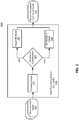
- FIG. 4 is a flow diagram illustrating a method according to one embodiment.
- FIG. 5 is a flow diagram illustrating a method according to one embodiment.
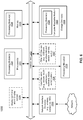
- FIG. 6 is a block diagram illustrating a data processing system according to one embodiment.
- Embodiments of the disclosure disclose a method and a system to mitigate “adversarial samples” that exploit “blind spots” of machine learning or artificial intelligence (ML/AI) models.
- a system receives a query from a client for an ML service.
- the system calculates a similarity score for the query based on a number of prior queries received from the client, the similarity score representing a similarity between the received query and the prior queries.
- the system determines that the query is an adversarial query in response to determining that the similarity score is above a predetermined threshold.
- FIG. 1 is a block diagram illustrating a networked system according to one embodiment.
- system configuration 100 includes, but is not limited to, one or more client devices 101 - 102 communicatively coupled to data processing server 104 over network 103 .
- Client devices 101 - 102 may be any type of client devices such as a personal computer (e.g., desktops, laptops, and tablets), a “thin” client, a personal digital assistant (PDA), a Web enabled appliance, a Smartwatch, or a mobile phone (e.g., Smartphone), etc.
- client devices 101 - 102 may be other servers.
- Network 103 may be any type of networks such as a local area network (LAN), a wide area network (WAN) such as the Internet, or a combination thereof, wired or wireless.
- LAN local area network
- WAN wide area network
- the communication between client devices 101 - 102 and data processing server 104 over network 103 can be secured, e.g., via TLS/SSL.
- Data processing server (e.g., host) 104 may be any kind of servers or a cluster of servers, such as Web or cloud servers, application servers, backend servers, or a combination thereof.
- Server 104 can include an interface to allow clients such as client devices 101 - 102 to access resources or services provided by server 104 .
- resources or services can include cloud AI services for content censoring/filtering, malware/threat classification/detection.
- the services can be performed using, statistical, machine learning (ML)/artificial intelligence (AI) algorithms and models.
- ML/AI models can include single layered or deep neural network models such as recurrent, reinforcement learning, convolutional neural network models, etc.
- Server 104 may be configured as a part of software-as-a-service (SaaS) or platform-as-a-service (PaaS) system over the cloud, which may be a private cloud, public cloud, or a hybrid cloud.
- the interface may include a Web interface, an application programming interface (API), and/or a command line interface (CLI).
- API application programming interface
- CLI command line interface
- Data processing server 104 can include query/input database 131 to store queries and/or input data sent by clients.
- Example of input data can include prior queries and input data for censoring/filtering and/or threat detection.
- Data processing server 104 can include machine learning (ML) services module 106 and one or more ML model family 108 - 109 .
- ML services module 106 can receive ML/AI services requests from clients 101 - 102 and return results to the requestor once the request has been fulfilled.
- ML model family 108 - 109 can include one or more families of ML models.
- the family of ML models can serve the same ML service but each returns a slightly different prediction score.
- the family of ML models is trained together but with different training parameters so that each ML model in the family outputs a different prediction outcome or confidence score.
- model/training parameters can include different epochs (number of passes through the training data), iterations to convergence, activation functions, dropout rate, (if the model is a neural network), etc.
- epochs number of passes through the training data
- iterations to convergence activation functions
- dropout rate dropout rate
- the model is a neural network
- These trained models would generate slightly different output results (e.g., probability/confidence score) but have the same inference (e.g., classification/threat detection).
- a content filtering query with the same input parameters can have three distinct outputs prediction (such as 0.90, 0.91, and 0.906) using the three ML models of the family, but result in the same inference (the image has obscene/explicit material).
- each family of ML models can designate a target ML model to service a request.
- a model in each family is randomly selected to service a request.
- the content filtering can identify obscene/explicit materials, malware/threat detection, or any other type of content in the input data but with a different confidence score each time.
- FIG. 2 is a block diagram illustrating an example of a ML services module according to one embodiment.
- ML services module 106 can generate an obfuscated confidence score for a client input for an ML/AI service.
- ML services module 106 includes submodules such as client inputs/queries receiver 201 , similarity check 203 , suspicious classification 205 , and ML model selector 207 .
- Client inputs/queries receiver 201 can receive client queries and/or client inputs associated with a client request.
- Client inputs/queries receiver 201 can further store the received information in a query/input database, such as query/input database 131 of FIG. 1 , for later retrieval.
- Similarity check 203 can generate a similarity score for a client input in comparison with a prior client input.
- Suspicious classification 205 can determine if a client input is suspicious/adversarial based on a similarity score for the client input.
- ML model selector 207 can select a ML model within a ML models family to service a client query. In one embodiment, the ML model is randomly selected from the ML model family using a random function.
- FIG. 3 is a block diagram illustrating a system providing ML services according to one embodiment.
- System 300 may represent system 100 of FIG. 1 .
- host 104 can receive client queries and/or input(s) 301 and return an obfuscated confidence score 311 to the requesting client.
- Client inputs can come from a program or application (app) that uses the cloud AI service.
- an app can use image censorship AI service provided by system 300 to detect and censor potential adult, obscene, or violent material in the image.
- the received client inputs are passes through similarity check 203 .
- Input similarity check 203 can generate a similarity score indicating how ‘similar’ the input in the query is compared with previous inputs of the same client.
- input similarity check 203 generates a similarity score for the input ⁇ in the query in comparison with previous inputs of all clients within a predetermined time span. The motivation is that in order to generate “adversarial samples”, an attacker needs to probe the AI models with a set of inputs each with a slightly different perturbation. The output confidence scores for each of these inputs with the slight variation can be used to probe and estimate gradient information of the ML model.
- the attacker can craft adversarial samples that reliably decrease the model output confidence scores, which increases the likelihood that adversarial samples would fool the AI models.
- an obfuscated confidence score it would be much harder for an attacker to estimate the gradient information and to find a direction of perturbation to decrease the model confidence score, since the confidence score is generated by randomly selected ML models of a ML model family.
- the similarity score can be implemented as a distance score between an input (e.g., x) and a prior input (e.g., x′).
- the distance score can be a combination of L0, L1, and L2, where L0 is calculated based on a count of the number of different pixels between x and x′, L1 is the sum of differences (e.g., x ⁇ x′) for all pixels, and L2 is the root mean square of differences (e.g., sqrt (x 2 ⁇ x′ 2 )) for all pixels.
- suspicious classification 205 can classify the client input data to be suspicious if the similarity score is above a predetermined threshold score, or classify the client input data as normal if the similarity score is lower than or equal to the predetermined threshold score.
- a target ML/AI model 207 can be selected to perform the prediction task based on the client input. If the input is classified as suspicious, a ML/AI model can be randomly selected from a collection of ML/AI models that are trained together with the target ML/AI model but with slightly different parameters (e.g., ML models family 209 ), to perform the prediction task based on the client input. Note that the purpose is to have alternate models that does not differ much from the target model in terms of prediction accuracy and yet yields the same inference results. The different prediction accuracy for the prediction task can generates an obfuscated confidence score 211 .
- the obfuscation confidence scores refer to varying probability/confidence scores when the same input sample is used as client inputs, where the differences in the confidence scores do not provide a clear pattern for adversarial input probing.
- the obfuscated confidence score then deters adversarial probing using adversarial samples.
- ML/AI models can have “blind spots” (resulting in an incorrect inference) due to various reasons such as overfitting, inadequate dataset during training or a shortcoming of the AI models.
- the “blind spots” allow adversaries to probe the AI model for a trend so to reliably craft input samples that triggers the “blind spots”.
- FIG. 4 is a flow diagram illustrating a method according to one embodiment.
- Process 400 may be performed by processing logic which may include software, hardware, or a combination thereof.
- processing logic may be performed by data processing server (e.g., host) 104 of FIG. 1 .
- processing logic receive a query from a client for a machine learning (ML) service.
- processing logic calculates a similarity score for the query based on a number of prior queries received from the client, the similarity score representing a similarity between the received query and the prior queries.
- processing logic determines that the query is an adversarial query in response to determining that the similarity score is above a predetermined threshold.
- ML machine learning
- FIG. 5 is a flow diagram illustrating a method according to one embodiment.
- Process 500 may be performed by processing logic which may include software, hardware, or a combination thereof.
- processing logic may be performed by data processing server (e.g., host) 104 of FIG. 1 .
- processing logic identifies the client associated with the adversarial query as an adversarial client.
- processing logic services subsequent queries of the adversarial client with an alternate ML model from a collection of ML models that are trained together with the target ML model, instead of the target ML model, to prevent exploration of a blind spot of the target ML model.
- the alternate ML model is randomly chosen from the collection of ML models for each of the subsequent queries to obfuscate a confidence score returned to the client by the randomly chosen ML model.
- processing logic further blocks additional queries from the adversarial client.
- the collection of ML models is trained together with the target ML model with a different parameter including a different epoch.
- the similarity score is calculated based on a distance between any two inputs for any two queries. In another embodiment, if the two inputs are images, the distance includes a count of different pixels between the two images. In another embodiment, the distance includes a sum of differences in pixels between the two images. In another embodiment, the distance includes a root mean square of differences in pixels between the two images.
- components as shown and described above may be implemented in software, hardware, or a combination thereof.
- such components can be implemented as software installed and stored in a persistent storage device, which can be loaded and executed in a memory by a processor (not shown) to carry out the processes or operations described throughout this application.
- such components can be implemented as executable code programmed or embedded into dedicated hardware such as an integrated circuit (e.g., an application specific IC or ASIC), a digital signal processor (DSP), or a field programmable gate array (FPGA), which can be accessed via a corresponding driver and/or operating system from an application.
- an integrated circuit e.g., an application specific IC or ASIC
- DSP digital signal processor
- FPGA field programmable gate array
- such components can be implemented as specific hardware logic in a processor or processor core as part of an instruction set accessible by a software component via one or more specific instructions.
- FIG. 6 is a block diagram illustrating an example of a data processing system which may be used with one embodiment of the invention.
- system 1500 may represent any of data processing systems described above performing any of the processes or methods described above, such as, for example, a client device or a server described above, such as, for example, clients 101 - 102 , and server 104 , as described above.
- System 1500 can include many different components. These components can be implemented as integrated circuits (ICs), portions thereof, discrete electronic devices, or other modules adapted to a circuit board such as a motherboard or add-in card of the computer system, or as components otherwise incorporated within a chassis of the computer system.
- ICs integrated circuits
- portions thereof discrete electronic devices
- modules adapted to a circuit board such as a motherboard or add-in card of the computer system, or as components otherwise incorporated within a chassis of the computer system.
- System 1500 is intended to show a high level view of many components of the computer system. However, it is to be understood that additional components may be present in certain implementations and furthermore, different arrangement of the components shown may occur in other implementations.
- System 1500 may represent a desktop, a laptop, a tablet, a server, a mobile phone, a media player, a personal digital assistant (PDA), a Smartwatch, a personal communicator, a gaming device, a network router or hub, a wireless access point (AP) or repeater, a set-top box, or a combination thereof.
- PDA personal digital assistant
- AP wireless access point
- system 1500 shall also be taken to include any collection of machines or systems that individually or jointly execute a set (or multiple sets) of instructions to perform any one or more of the methodologies discussed herein.
- system 1500 includes processor 1501 , memory 1503 , and devices 1505 - 1508 via a bus or an interconnect 1510 .
- Processor 1501 may represent a single processor or multiple processors with a single processor core or multiple processor cores included therein.
- Processor 1501 may represent one or more general-purpose processors such as a microprocessor, a central processing unit (CPU), or the like. More particularly, processor 1501 may be a complex instruction set computing (CISC) microprocessor, reduced instruction set computing (RISC) microprocessor, very long instruction word (VLIW) microprocessor, or processor implementing other instruction sets, or processors implementing a combination of instruction sets.
- CISC complex instruction set computing
- RISC reduced instruction set computing
- VLIW very long instruction word
- Processor 1501 may also be one or more special-purpose processors such as an application specific integrated circuit (ASIC), a cellular or baseband processor, a field programmable gate array (FPGA), a digital signal processor (DSP), a network processor, a graphics processor, a network processor, a communications processor, a cryptographic processor, a co-processor, an embedded processor, or any other type of logic capable of processing instructions.
- ASIC application specific integrated circuit
- FPGA field programmable gate array
- DSP digital signal processor
- network processor a graphics processor
- network processor a communications processor
- cryptographic processor a co-processor
- co-processor a co-processor
- embedded processor or any other type of logic capable of processing instructions.
- Processor 1501 which may be a low power multi-core processor socket such as an ultra-low voltage processor, may act as a main processing unit and central hub for communication with the various components of the system. Such processor can be implemented as a system on chip (SoC). Processor 1501 is configured to execute instructions for performing the operations and steps discussed herein.
- System 1500 may further include a graphics interface that communicates with optional graphics subsystem 1504 , which may include a display controller, a graphics processor, and/or a display device.
- graphics subsystem 1504 may include a display controller, a graphics processor, and/or a display device.
- Processor 1501 may communicate with memory 1503 , which in one embodiment can be implemented via multiple memory devices to provide for a given amount of system memory.
- Memory 1503 may include one or more volatile storage (or memory) devices such as random access memory (RAM), dynamic RAM (DRAM), synchronous DRAM (SDRAM), static RAM (SRAM), or other types of storage devices.
- RAM random access memory
- DRAM dynamic RAM
- SDRAM synchronous DRAM
- SRAM static RAM
- Memory 1503 may store information including sequences of instructions that are executed by processor 1501 , or any other device. For example, executable code and/or data of a variety of operating systems, device drivers, firmware (e.g., input output basic system or BIOS), and/or applications can be loaded in memory 1503 and executed by processor 1501 .
- BIOS input output basic system
- An operating system can be any kind of operating systems, such as, for example, Windows® operating system from Microsoft®, Mac OS®/iOS® from Apple, Android® from Google®, Linux®, Unix®, or other real-time or embedded operating systems such as VxWorks.
- System 1500 may further include IO devices such as devices 1505 - 1508 , including network interface device(s) 1505 , optional input device(s) 1506 , and other optional IO device(s) 1507 .
- Network interface device 1505 may include a wireless transceiver and/or a network interface card (NIC).
- the wireless transceiver may be a WiFi transceiver, an infrared transceiver, a Bluetooth transceiver, a WiMax transceiver, a wireless cellular telephony transceiver, a satellite transceiver (e.g., a global positioning system (GPS) transceiver), or other radio frequency (RF) transceivers, or a combination thereof.
- the NIC may be an Ethernet card.
- Input device(s) 1506 may include a mouse, a touch pad, a touch sensitive screen (which may be integrated with display device 1504 ), a pointer device such as a stylus, and/or a keyboard (e.g., physical keyboard or a virtual keyboard displayed as part of a touch sensitive screen).
- input device 1506 may include a touch screen controller coupled to a touch screen.
- the touch screen and touch screen controller can, for example, detect contact and movement or break thereof using any of a number of touch sensitivity technologies, including but not limited to capacitive, resistive, infrared, and surface acoustic wave technologies, as well as other proximity sensor arrays or other elements for determining one or more points of contact with the touch screen.
- IO devices 1507 may include an audio device.
- An audio device may include a speaker and/or a microphone to facilitate voice-enabled functions, such as voice recognition, voice replication, digital recording, and/or telephony functions.
- Other IO devices 1507 may further include universal serial bus (USB) port(s), parallel port(s), serial port(s), a printer, a network interface, a bus bridge (e.g., a PCI-PCI bridge), sensor(s) (e.g., a motion sensor such as an accelerometer, gyroscope, a magnetometer, a light sensor, compass, a proximity sensor, etc.), or a combination thereof.
- USB universal serial bus
- sensor(s) e.g., a motion sensor such as an accelerometer, gyroscope, a magnetometer, a light sensor, compass, a proximity sensor, etc.
- Devices 1507 may further include an imaging processing subsystem (e.g., a camera), which may include an optical sensor, such as a charged coupled device (CCD) or a complementary metal-oxide semiconductor (CMOS) optical sensor, utilized to facilitate camera functions, such as recording photographs and video clips.
- an imaging processing subsystem e.g., a camera
- an optical sensor such as a charged coupled device (CCD) or a complementary metal-oxide semiconductor (CMOS) optical sensor, utilized to facilitate camera functions, such as recording photographs and video clips.
- CCD charged coupled device
- CMOS complementary metal-oxide semiconductor
- Certain sensors may be coupled to interconnect 1510 via a sensor hub (not shown), while other devices such as a keyboard or thermal sensor may be controlled by an embedded controller (not shown), dependent upon the specific configuration or design of system 1500 .
- a mass storage may also couple to processor 1501 .
- this mass storage may be implemented via a solid state device (SSD).
- SSD solid state device
- the mass storage may primarily be implemented using a hard disk drive (HDD) with a smaller amount of SSD storage to act as a SSD cache to enable non-volatile storage of context state and other such information during power down events so that a fast power up can occur on re-initiation of system activities.
- a flash device may be coupled to processor 1501 , e.g., via a serial peripheral interface (SPI). This flash device may provide for non-volatile storage of system software, including a basic input/output software (BIOS) as well as other firmware of the system.
- BIOS basic input/output software
- Storage device 1508 may include computer-accessible storage medium 1509 (also known as a machine-readable storage medium or a computer-readable medium) on which is stored one or more sets of instructions or software (e.g., module, unit, and/or logic 1528 ) embodying any one or more of the methodologies or functions described herein.
- Processing module/unit/logic 1528 may represent any of the components described above, such as, for example, ML service module 106 or host server 104 of FIG. 1 .
- Processing module/unit/logic 1528 may also reside, completely or at least partially, within memory 1503 and/or within processor 1501 during execution thereof by data processing system 1500 , memory 1503 and processor 1501 also constituting machine-accessible storage media.
- Processing module/unit/logic 1528 may further be transmitted or received over a network via network interface device 1505 .
- Computer-readable storage medium 1509 may also be used to store the some software functionalities described above persistently. While computer-readable storage medium 1509 is shown in an exemplary embodiment to be a single medium, the term “computer-readable storage medium” should be taken to include a single medium or multiple media (e.g., a centralized or distributed database, and/or associated caches and servers) that store the one or more sets of instructions. The terms “computer-readable storage medium” shall also be taken to include any medium that is capable of storing or encoding a set of instructions for execution by the machine and that cause the machine to perform any one or more of the methodologies of the present invention. The term “computer-readable storage medium” shall accordingly be taken to include, but not be limited to, solid-state memories, and optical and magnetic media, or any other non-transitory machine-readable medium.
- Processing module/unit/logic 1528 can be implemented as discrete hardware components or integrated in the functionality of hardware components such as ASICS, FPGAs, DSPs or similar devices.
- processing module/unit/logic 1528 can be implemented as firmware or functional circuitry within hardware devices.
- processing module/unit/logic 1528 can be implemented in any combination hardware devices and software components.
- system 1500 is illustrated with various components of a data processing system, it is not intended to represent any particular architecture or manner of interconnecting the components; as such details are not germane to embodiments of the present invention. It will also be appreciated that network computers, handheld computers, mobile phones, servers, and/or other data processing systems which have fewer components or perhaps more components may also be used with embodiments of the invention.
- the techniques shown in the figures can be implemented using code and data stored and executed on one or more electronic devices.
- Such electronic devices store and communicate (internally and/or with other electronic devices over a network) code and data using computer-readable media, such as non-transitory computer-readable storage media (e.g., magnetic disks; optical disks; random access memory; read only memory; flash memory devices; phase-change memory) and transitory computer-readable transmission media (e.g., electrical, optical, acoustical or other form of propagated signals—such as carrier waves, infrared signals, digital signals).
- non-transitory computer-readable storage media e.g., magnetic disks; optical disks; random access memory; read only memory; flash memory devices; phase-change memory
- transitory computer-readable transmission media e.g., electrical, optical, acoustical or other form of propagated signals—such as carrier waves, infrared signals, digital signals.
- processing logic that comprises hardware (e.g. circuitry, dedicated logic, etc.), firmware, software (e.g., embodied on a non-transitory computer readable medium), or a combination of both.
- processing logic comprises hardware (e.g. circuitry, dedicated logic, etc.), firmware, software (e.g., embodied on a non-transitory computer readable medium), or a combination of both.
Landscapes
- Engineering & Computer Science (AREA)
- Theoretical Computer Science (AREA)
- Physics & Mathematics (AREA)
- General Engineering & Computer Science (AREA)
- General Physics & Mathematics (AREA)
- Data Mining & Analysis (AREA)
- Software Systems (AREA)
- Evolutionary Computation (AREA)
- Artificial Intelligence (AREA)
- Computing Systems (AREA)
- Mathematical Physics (AREA)
- Life Sciences & Earth Sciences (AREA)
- Computational Linguistics (AREA)
- General Health & Medical Sciences (AREA)
- Health & Medical Sciences (AREA)
- Biomedical Technology (AREA)
- Molecular Biology (AREA)
- Biophysics (AREA)
- Computer Security & Cryptography (AREA)
- Computer Vision & Pattern Recognition (AREA)
- Databases & Information Systems (AREA)
- Computer Hardware Design (AREA)
- Medical Informatics (AREA)
- Bioinformatics & Computational Biology (AREA)
- Evolutionary Biology (AREA)
- Bioinformatics & Cheminformatics (AREA)
- Virology (AREA)
- Multimedia (AREA)
- Technology Law (AREA)
- Information Retrieval, Db Structures And Fs Structures Therefor (AREA)
- User Interface Of Digital Computer (AREA)
- Image Analysis (AREA)
Abstract
Description
Claims (17)
Priority Applications (5)
| Application Number | Priority Date | Filing Date | Title |
|---|---|---|---|
| US16/440,962 US11216699B2 (en) | 2019-06-13 | 2019-06-13 | System to mitigate against adversarial samples for ML and AI models |
| CN202010187901.1A CN112085152B (en) | 2019-06-13 | 2020-03-17 | Systems to protect against adversarial examples against ML and AI models |
| EP20166406.7A EP3751476B1 (en) | 2019-06-13 | 2020-03-27 | A system to mitigate against adversarial samples for machine learning and artificial intelligence models |
| JP2020070928A JP7017600B2 (en) | 2019-06-13 | 2020-04-10 | System for mitigating hostile samples for ML and AI models |
| KR1020200054370A KR102346815B1 (en) | 2019-06-13 | 2020-05-07 | A system to mitigate against adversarial samples for ml and ai models |
Applications Claiming Priority (1)
| Application Number | Priority Date | Filing Date | Title |
|---|---|---|---|
| US16/440,962 US11216699B2 (en) | 2019-06-13 | 2019-06-13 | System to mitigate against adversarial samples for ML and AI models |
Publications (2)
| Publication Number | Publication Date |
|---|---|
| US20200394466A1 US20200394466A1 (en) | 2020-12-17 |
| US11216699B2 true US11216699B2 (en) | 2022-01-04 |
Family
ID=70056994
Family Applications (1)
| Application Number | Title | Priority Date | Filing Date |
|---|---|---|---|
| US16/440,962 Active 2039-12-24 US11216699B2 (en) | 2019-06-13 | 2019-06-13 | System to mitigate against adversarial samples for ML and AI models |
Country Status (5)
| Country | Link |
|---|---|
| US (1) | US11216699B2 (en) |
| EP (1) | EP3751476B1 (en) |
| JP (1) | JP7017600B2 (en) |
| KR (1) | KR102346815B1 (en) |
| CN (1) | CN112085152B (en) |
Families Citing this family (5)
| Publication number | Priority date | Publication date | Assignee | Title |
|---|---|---|---|---|
| EP4488931A4 (en) * | 2022-03-01 | 2025-04-09 | Fujitsu Limited | Evaluation method, evaluation program, and information processing apparatus |
| FR3134207B1 (en) * | 2022-03-29 | 2026-02-20 | Commissariat Energie Atomique | Method and electronic device for data processing by neural network(s) with improved resistance to adversarial attacks by gradient approximation, computer program and associated electronic object processing system(s) |
| TWI809874B (en) * | 2022-05-17 | 2023-07-21 | 華碩電腦股份有限公司 | Artificial intelligence model control system |
| CN115439377B (en) * | 2022-11-08 | 2023-03-24 | 电子科技大学 | Method for enhancing resistance to image sample migration attack |
| WO2025206420A1 (en) * | 2024-03-26 | 2025-10-02 | 주식회사 엔씨소프트 | Electronic device, method, and non-transitory computer-readable storage medium for training artificial intelligence model for responding to query |
Citations (5)
| Publication number | Priority date | Publication date | Assignee | Title |
|---|---|---|---|---|
| US20070019864A1 (en) * | 2005-07-21 | 2007-01-25 | Takahiro Koyama | Image search system, image search method, and storage medium |
| JP2015191293A (en) | 2014-03-27 | 2015-11-02 | キヤノン株式会社 | Image processing apparatus, image processing method, and program |
| EP3255565A1 (en) | 2016-06-07 | 2017-12-13 | Baidu USA LLC | Method and system for evaluating and ranking images with content based on similarity scores in response to a search query |
| US20180299841A1 (en) * | 2017-04-17 | 2018-10-18 | Intel Corporation | Autonomous vehicle neural network optimization |
| WO2019014487A1 (en) * | 2017-07-12 | 2019-01-17 | The Regents Of The University Of California | Detection and prevention of adversarial deep learning |
Family Cites Families (4)
| Publication number | Priority date | Publication date | Assignee | Title |
|---|---|---|---|---|
| US10176438B2 (en) * | 2015-06-19 | 2019-01-08 | Arizona Board Of Regents On Behalf Of Arizona State University | Systems and methods for data driven malware task identification |
| US9690938B1 (en) * | 2015-08-05 | 2017-06-27 | Invincea, Inc. | Methods and apparatus for machine learning based malware detection |
| CN108388795A (en) * | 2018-02-11 | 2018-08-10 | 浙江工业大学 | A kind of confrontation attack defense method based on LSTM detectors |
| CN108520268B (en) * | 2018-03-09 | 2021-05-18 | 浙江工业大学 | Black-box adversarial attack defense method based on sample selection and model evolution |
-
2019
- 2019-06-13 US US16/440,962 patent/US11216699B2/en active Active
-
2020
- 2020-03-17 CN CN202010187901.1A patent/CN112085152B/en active Active
- 2020-03-27 EP EP20166406.7A patent/EP3751476B1/en active Active
- 2020-04-10 JP JP2020070928A patent/JP7017600B2/en active Active
- 2020-05-07 KR KR1020200054370A patent/KR102346815B1/en active Active
Patent Citations (5)
| Publication number | Priority date | Publication date | Assignee | Title |
|---|---|---|---|---|
| US20070019864A1 (en) * | 2005-07-21 | 2007-01-25 | Takahiro Koyama | Image search system, image search method, and storage medium |
| JP2015191293A (en) | 2014-03-27 | 2015-11-02 | キヤノン株式会社 | Image processing apparatus, image processing method, and program |
| EP3255565A1 (en) | 2016-06-07 | 2017-12-13 | Baidu USA LLC | Method and system for evaluating and ranking images with content based on similarity scores in response to a search query |
| US20180299841A1 (en) * | 2017-04-17 | 2018-10-18 | Intel Corporation | Autonomous vehicle neural network optimization |
| WO2019014487A1 (en) * | 2017-07-12 | 2019-01-17 | The Regents Of The University Of California | Detection and prevention of adversarial deep learning |
Non-Patent Citations (2)
| Title |
|---|
| Kathrin Grosse et al: "On the (Statistical) Detection of Adversarial Examples", arxiv.org, Cornell University Library, 201 Olin Library Cornell University Ithaca, NY 14853, Feb. 21, 2017 (Feb. 21, 2017), 13 pages. |
| Nicolas Papernot et al: "Practical Black-Box Attacks against Deep Learning Systems using Adversarial Examples", arxiv.org, Cornell University Library, 201 Olin Library Cornell University Ithaca, NY 14853, Feb. 8, 2016 (Feb. 8, 2016), 16 pages. |
Also Published As
| Publication number | Publication date |
|---|---|
| EP3751476A1 (en) | 2020-12-16 |
| EP3751476B1 (en) | 2024-06-26 |
| KR102346815B1 (en) | 2022-01-03 |
| JP7017600B2 (en) | 2022-02-08 |
| US20200394466A1 (en) | 2020-12-17 |
| KR20200143241A (en) | 2020-12-23 |
| CN112085152A (en) | 2020-12-15 |
| CN112085152B (en) | 2024-08-13 |
| JP2020201939A (en) | 2020-12-17 |
Similar Documents
| Publication | Publication Date | Title |
|---|---|---|
| EP3751476B1 (en) | A system to mitigate against adversarial samples for machine learning and artificial intelligence models | |
| US9147072B2 (en) | Method and system for performing behavioral analysis operations in a mobile device based on application state | |
| US11431480B2 (en) | Smart compressor based on adaptive CPU/QAT scheduling method | |
| CN111510424B (en) | Secure multi-party computing framework using restricted operating environment with guest agent | |
| US20240249165A1 (en) | System and method for management of distributed inference model generation | |
| US11853187B1 (en) | System and method for remote management of data processing systems | |
| US20240356953A1 (en) | System and method for management of system vulnerabilities | |
| US20250077953A1 (en) | Managing evolving artificial intelligence models | |
| US20240248982A1 (en) | System and method for determining types of anomalies while performing memory-less anomaly detection | |
| US11593014B2 (en) | System and method for approximating replication completion time | |
| US12579261B2 (en) | Managing inference models in view of reconstructability of sensitive information | |
| US12326932B2 (en) | System and method for threat management in distributed systems | |
| US10817246B2 (en) | Deactivating a display of a smart display device based on a sound-based mechanism | |
| US20240121253A1 (en) | System and method for data drift detection while performing anomaly detection | |
| US12289340B2 (en) | System and method for threat detection through data storage analysis | |
| CN111510423B (en) | Token-based secure multi-party computing framework using restricted operating environments | |
| US11029741B2 (en) | Deactivating a display of a smart display device based on a vision-based mechanism | |
| US11151993B2 (en) | Activating voice commands of a smart display device based on a vision-based mechanism | |
| US12328585B2 (en) | Trust management in distributed systems | |
| US12625998B2 (en) | Managing storage space use in distributed systems | |
| US20260119148A1 (en) | Management of deployments using federated learning | |
| US20260127257A1 (en) | Contextual method for enabling passive listening engagement | |
| US20260119721A1 (en) | Managing data corroborated in a sandboxed environment | |
| US20240020213A1 (en) | System and method for managing data structure locking based security threats | |
| US12294587B2 (en) | System and method for enforcing a security framework for high-risk operations |
Legal Events
| Date | Code | Title | Description |
|---|---|---|---|
| FEPP | Fee payment procedure |
Free format text: ENTITY STATUS SET TO UNDISCOUNTED (ORIGINAL EVENT CODE: BIG.); ENTITY STATUS OF PATENT OWNER: LARGE ENTITY |
|
| AS | Assignment |
Owner name: BAIDU USA LLC, CALIFORNIA Free format text: ASSIGNMENT OF ASSIGNORS INTEREST;ASSIGNORS:JIA, YUNHAN;ZHONG, ZHENYU;ZHANG, YULONG;AND OTHERS;REEL/FRAME:049508/0742 Effective date: 20190605 |
|
| STPP | Information on status: patent application and granting procedure in general |
Free format text: NON FINAL ACTION MAILED |
|
| STPP | Information on status: patent application and granting procedure in general |
Free format text: RESPONSE TO NON-FINAL OFFICE ACTION ENTERED AND FORWARDED TO EXAMINER |
|
| STPP | Information on status: patent application and granting procedure in general |
Free format text: FINAL REJECTION MAILED |
|
| STPP | Information on status: patent application and granting procedure in general |
Free format text: RESPONSE AFTER FINAL ACTION FORWARDED TO EXAMINER |
|
| STPP | Information on status: patent application and granting procedure in general |
Free format text: NOTICE OF ALLOWANCE MAILED -- APPLICATION RECEIVED IN OFFICE OF PUBLICATIONS |
|
| STPP | Information on status: patent application and granting procedure in general |
Free format text: PUBLICATIONS -- ISSUE FEE PAYMENT VERIFIED |
|
| STCF | Information on status: patent grant |
Free format text: PATENTED CASE |
|
| MAFP | Maintenance fee payment |
Free format text: PAYMENT OF MAINTENANCE FEE, 4TH YEAR, LARGE ENTITY (ORIGINAL EVENT CODE: M1551); ENTITY STATUS OF PATENT OWNER: LARGE ENTITY Year of fee payment: 4 |