US11216504B2 - Document recommendation method and device based on semantic tag - Google Patents
Document recommendation method and device based on semantic tag Download PDFInfo
- Publication number
- US11216504B2 US11216504B2 US16/705,749 US201916705749A US11216504B2 US 11216504 B2 US11216504 B2 US 11216504B2 US 201916705749 A US201916705749 A US 201916705749A US 11216504 B2 US11216504 B2 US 11216504B2
- Authority
- US
- United States
- Prior art keywords
- document
- semantic
- candidate tag
- candidate
- set corresponding
- Prior art date
- Legal status (The legal status is an assumption and is not a legal conclusion. Google has not performed a legal analysis and makes no representation as to the accuracy of the status listed.)
- Active, expires
Links
Images




Classifications
-
- G—PHYSICS
- G06—COMPUTING OR CALCULATING; COUNTING
- G06F—ELECTRIC DIGITAL DATA PROCESSING
- G06F16/00—Information retrieval; Database structures therefor; File system structures therefor
- G06F16/30—Information retrieval; Database structures therefor; File system structures therefor of unstructured textual data
- G06F16/33—Querying
- G06F16/338—Presentation of query results
-
- G—PHYSICS
- G06—COMPUTING OR CALCULATING; COUNTING
- G06F—ELECTRIC DIGITAL DATA PROCESSING
- G06F16/00—Information retrieval; Database structures therefor; File system structures therefor
- G06F16/30—Information retrieval; Database structures therefor; File system structures therefor of unstructured textual data
- G06F16/36—Creation of semantic tools, e.g. ontology or thesauri
-
- G—PHYSICS
- G06—COMPUTING OR CALCULATING; COUNTING
- G06F—ELECTRIC DIGITAL DATA PROCESSING
- G06F40/00—Handling natural language data
- G06F40/20—Natural language analysis
- G06F40/279—Recognition of textual entities
- G06F40/289—Phrasal analysis, e.g. finite state techniques or chunking
- G06F40/295—Named entity recognition
-
- G—PHYSICS
- G06—COMPUTING OR CALCULATING; COUNTING
- G06F—ELECTRIC DIGITAL DATA PROCESSING
- G06F40/00—Handling natural language data
- G06F40/30—Semantic analysis
-
- G—PHYSICS
- G06—COMPUTING OR CALCULATING; COUNTING
- G06N—COMPUTING ARRANGEMENTS BASED ON SPECIFIC COMPUTATIONAL MODELS
- G06N3/00—Computing arrangements based on biological models
- G06N3/02—Neural networks
- G06N3/04—Architecture, e.g. interconnection topology
- G06N3/0499—Feedforward networks
-
- G—PHYSICS
- G06—COMPUTING OR CALCULATING; COUNTING
- G06N—COMPUTING ARRANGEMENTS BASED ON SPECIFIC COMPUTATIONAL MODELS
- G06N3/00—Computing arrangements based on biological models
- G06N3/02—Neural networks
- G06N3/08—Learning methods
- G06N3/09—Supervised learning
-
- G—PHYSICS
- G06—COMPUTING OR CALCULATING; COUNTING
- G06N—COMPUTING ARRANGEMENTS BASED ON SPECIFIC COMPUTATIONAL MODELS
- G06N3/00—Computing arrangements based on biological models
- G06N3/02—Neural networks
- G06N3/08—Learning methods
Definitions
- the present disclosure relates to a recommendation technology field, and more particularly, to a document recommendation method based on a semantic tag and a document recommendation method based on a semantic tag.
- the present disclosure aims to solve at least one of the above problems to at least some extent.
- embodiments of the present disclosure provide a document recommendation method based on a semantic tag, configured to solve a problem in the related art that the tags are not at a semantic level, which leads to serious ambiguity problems and causes low recommendation accuracy.
- embodiments of a first aspect of the present disclosure provide a document recommendation method based on a semantic tag, including: matching a plurality of documents by using a preset set of focus points so as to, for each document, obtain a first candidate tag set corresponding to the document; performing an expanding processing on each first candidate tag in the first candidate tag set corresponding to the document, to obtain a second candidate tag set corresponding to the document; performing a normalization processing on each second candidate tag in the second candidate tag set corresponding to the document by using a preset normalization dictionary to obtain a third candidate tag set corresponding to the document; performing an expanding processing on each third candidate tag in the third candidate tag set corresponding to the document by using a preset disambiguation dictionary to obtain a fourth candidate tag set corresponding to the document; acquiring a semantic matching degree between each fourth candidate tag in the fourth candidate tag set corresponding to the document and the document by using a semantic matching model, and taking the fourth candidate tag with the semantic matching degree greater than a preset matching threshold as the semantic tag of
- a plurality of documents are matched by using a preset set of focus points so as to, for each document, obtain a first candidate tag set corresponding to the document, an expanding processing is performed on each first candidate tag in the first candidate tag set corresponding to the document to obtain a second candidate tag set corresponding to the document, a normalization processing is performed on each second candidate tag in the second candidate tag set corresponding to the document by using a preset normalization dictionary to obtain a third candidate tag set corresponding to the document, an expanding processing is performed on each third candidate tag in the third candidate tag set corresponding to the document by using a preset disambiguation dictionary to obtain a fourth candidate tag set corresponding to the document, a semantic matching degree between each fourth candidate tag in the fourth candidate tag set corresponding to the document and the document is acquired by using a semantic matching model, and the fourth candidate tag with the semantic matching degree greater than a preset matching threshold is taken as the semantic tag of the document, to form a document library
- a document recommendation device based on a semantic tag, including: a matching module, configured to match a plurality of documents by using a preset set of focus points so as to, for each document, obtain a first candidate tag set corresponding to the document; a first expanding module, configured to perform an expanding processing on each first candidate tag in the first candidate tag set corresponding to the document, to obtain a second candidate tag set corresponding to the document; a normalization processing module, configured to perform a normalization processing on each second candidate tag in the second candidate tag set corresponding to the document by using a preset normalization dictionary to obtain a third candidate tag set corresponding to the document; a second expanding module, configured to perform an expanding processing on each third candidate tag in the third candidate tag set corresponding to the document by using a preset disambiguation dictionary to obtain a fourth candidate tag set corresponding to the document; a first processing module, configured to acquire a semantic matching degree between each fourth candidate tag in the fourth candidate tag set corresponding to the document;
- a plurality of documents are matched by using a preset set of focus points so as to, for each document, obtain a first candidate tag set corresponding to the document, an expanding processing is performed on each first candidate tag in the first candidate tag set corresponding to the document to obtain a second candidate tag set corresponding to the document, a normalization processing is performed on each second candidate tag in the second candidate tag set corresponding to the document by using a preset normalization dictionary to obtain a third candidate tag set corresponding to the document, an expanding processing is performed on each third candidate tag in the third candidate tag set corresponding to the document by using a preset disambiguation dictionary to obtain a fourth candidate tag set corresponding to the document, a semantic matching degree between each fourth candidate tag in the fourth candidate tag set corresponding to the document and the document is acquired by using a semantic matching model, and the fourth candidate tag with the semantic matching degree greater than a preset matching threshold is taken as the semantic tag of the document, to form a document
- embodiments of a third aspect of the present disclosure provide a computer device including a processor and a memory.
- the processor runs a program corresponding to an executable program code by reading the executable program code stored in the memory for implementing the document recommendation method based on a semantic tag as described in the embodiments of the first aspect.
- embodiments of a fourth aspect of the present disclosure provide a non-transitory computer readable storage medium having a computer program stored thereon.
- the program is executed by a processor, the document recommendation method based on a semantic tag as described in the embodiments of the first aspect is implemented.
- embodiments of a fifth aspect of the present disclosure provide a computer program product.
- the document recommendation method based on a semantic tag as described in the embodiments of the first aspect is implemented.
- FIG. 1 is a flow chart of a document recommendation method based on a semantic tag according to an embodiment of the present disclosure.
- FIG. 2 is a schematic diagram illustrating a tag normalization processing according to an embodiment of the present disclosure.
- FIG. 3 is a schematic diagram illustrating a tag disambiguation processing according to an embodiment of the present disclosure.
- FIG. 4 is a schematic diagram of establishing a semantic matching model according to an embodiment of the present disclosure.
- FIG. 5 is a block diagram of a document recommendation device based on a semantic tag according to an embodiment of the present disclosure.
- FIG. 6 is a block diagram of a document recommendation device based on a semantic tag according to another embodiment of the present disclosure.
- FIG. 7 is a block diagram of a document recommendation device based on a semantic tag according to a still embodiment of the present disclosure.
- FIG. 8 is a block diagram of a document recommendation device based on a semantic tag according to a further embodiment of the present disclosure.
- FIG. 9 is a block diagram of a computer device according to an embodiment of the present disclosure.
- tags in a document recommendation method based on a focus point are not at a semantic level, and there are serious ambiguity problems, resulting in low recommendation accuracy.
- an article about “Xiaomi phone” is tagged with “Xiaomi”, and an article about millet may also be tagged with “Xiaomi”.
- the tag “Xiaomi” itself is not a semantic tag, if the article about millet is recommended to people who have seen the Huawei phone relying on this tag, a problem of poor user experience may be caused.
- the embodiments of the present disclosure provide a document recommendation method based on a semantic tag, in which the semantic tag is non-repetitive and unambiguous, thereby making the document recommendation more precise and improving the user experience, for example, changing the above tags into “Xiaomi-food” and “Xiaomi-mobile phone brand”, and normalizing the tag “C Luo” into the tag “Cristiano Ronaldo”.
- FIG. 1 is a flow chart of a document recommendation method based on a semantic tag according to an embodiment of the present disclosure.
- the document recommendation method based on a semantic tag includes the following.
- a plurality of documents are matched by using a preset set of focus points so as to, for each document, obtain a first candidate tag set corresponding to the document.
- a semantic tag is calculated for each of the plurality of documents, each of the plurality of documents is tagged with the semantic tag, and a document recommendation is performed based on the semantic tag.
- the preset set of focus points is obtained in advance.
- a plurality of queries are acquired, and the plurality of queries are filtered to acquire the queries each with an event, a topic or an entity property as the preset set of focus points.
- the queries in the search engine are rich in variety, and the queries each with an event, a topic or an entity property may be acquired as the set of focus points by filtering out pornographic and/or reactionary contents and question type queries.
- the queries each containing pornographic and/or reactionary contents, which are not conducive to spread positive energy can be directly filtered out.
- the preset set of focus points contains “tofu”, “cooking method of tofu”, and “tomato”, by performing the full match and fuzzy match on a file containing a sentence “by adding those two, tofu can be fresh, tasty and calcium-rich, having rich nutrients which are easy to be absorbed, such that tofu can be popular in children's meals.”, the first candidate tag set containing “tofu” and “cooking method of tofu” can be obtained.
- an expanding processing is performed on each first candidate tag in the first candidate tag set corresponding to the document, to obtain a second candidate tag set corresponding to the document.
- tags each having a wider range and a strong correlation with the article but being not obvious in the article for example, the tag “Story of Yanxi Palace” can be extended to acquire the tag “court drama” can be acquired, after the tags are fused, a second candidate tag set corresponding to the document is acquired.
- a normalization processing is performed on each second candidate tag in the second candidate tag set corresponding to the document by using a preset normalization dictionary to obtain a third candidate tag set corresponding to the document.
- the normalization dictionary is generated in advance. As a possible implementation, a similarity between search results corresponding respectively to any two queries is obtained, and two queries corresponding to which the similarity is greater than the preset similarity threshold are used as candidate normalization queries, and the preset normalization dictionary is generated according to a plurality of candidate normalization queries.
- a query of a user used in the search engine and a result list selected by the user from the search results corresponding to the queries may be utilized to construct the preset normalization dictionary.
- the two queries i.e., query 1 and query 2
- the search query set at block S 201 if a high similarity between respective article lists is obtained at block S 202 (the similarity can be acquired by using a tf-idf (term frequency-inverse document frequency) technology, which is a commonly used weighting technique of information retrieval and data mining, on words in the result list to construct vectors or using word2vec (a set of related models used to generate word vectors) to calculate cosine distances
- the two queries can be determined as referring to the same object by comparing the similarity with the preset similarity threshold, and the normalization processing can be performed on the two queries.
- an expanding processing is performed on each third candidate tag in the third candidate tag set corresponding to the document by using a preset disambiguation dictionary to obtain a fourth candidate tag set corresponding to the document.
- the preset disambiguation dictionary is used to perform the expanding processing on each third candidate tag in the third candidate tag set corresponding to the document.
- This process is not for disambiguation, but aims to list all possible semantic tags to acquire the fourth candidate tag set corresponding to the document.
- the third candidate tags contain tag “Li na”, if the tag “Li na” corresponds to 10 semantic tags, such as “Li na_ Chinese women's tennis star” and “Li na_ Qingdao actress”, all the 10 semantic tags are added to the fourth candidate tag set corresponding to the document.
- a semantic item corresponding to each third candidate tag in the third candidate tag set corresponding to the document is queried in the candidate semantic item list, and a similarity between the document and the semantic item is calculated, a target semantic item is selected according to the similarity to expand the third candidate tag in the third candidate tag set corresponding to the document to obtain the fourth candidate tag set corresponding to the document.
- polysemous words in Baidu encyclopedia can be used to mine the candidate semantic item list to be disambiguated.
- Li Na's semantic items include “Li Na_ Chinese women's tennis star”, “Li Na_ Qingdao actress” and the like
- a description page of each of the disambiguated semantic items contains relevant Sbackground, reference materials, tags and some text descriptions, these contents can be used to construct display feature word vectors for the corresponding semantic item.
- the display feature word vectors for “Li Na_ Chinese women's tennis star” include 0.8 for tennis, 0.5 for competition, 0.3 for sports
- the display feature word vectors for “Li Na_ Qingdao actress” include 0.6 for host, 0.3 for art, 0.2 for actor.
- These feature word vectors can be used to calculate a similarity between the articles tagged “Li na” to obtain a real tag, as shown in FIG. 3 .
- a semantic matching degree between each fourth candidate tag in the fourth candidate tag set corresponding to the document and the document can be acquired by using a semantic matching model, and the fourth candidate tag with the semantic matching degree greater than a preset matching threshold is taken as the semantic tag of the document to form a document library having semantic tags.
- the semantic matching model is established in advance.
- a semantic tag corresponding to a training text is obtained, and the semantic matching model is established by training the training text and the semantic tag through a deep neural network.
- the semantic matching degree of the fourth candidate tag and the document is calculated.
- the tags are sorted according to the score of the semantic matching degree, and the tag with the maximum score can be selected as the semantic tag of the document.
- a positive sample is the semantic tag corresponding to the training text
- a negative sample is a random negative sampling tag sample.
- the deep neural network (DNN) can be used to model the semantics of the training text and the semantic tag, which may be respectively represented as semantic vectors, and to optimize the cosine similarity in whole.
- the process of establishing the semantic matching model is shown in FIG. 4 .
- the training text doc and the semantic tag are respectively input into the DNN for modeling, and optimizing the cosine similarity of cosine loss in whole.
- each document is tagged with a corresponding semantic tag to form a document library having semantic tags.
- historical behavior information of a user is acquired, and a historical semantic tag is acquired based on the historical behavior information, a target document obtained from the document library having semantic tags according to the historical semantic tag is recommended to the user.
- the historical behavior information may be operation behavior information such as a click operation, a search operation of the user.
- the corresponding historical semantic tag may be acquired, and the historical semantic tag is matched in the document library having semantic tags according to the historical semantic tag, to acquire corresponding target document to be recommended to the user.
- a plurality of documents are matched by using a preset set of focus points so as to, for each document, obtain a first candidate tag set corresponding to the document, an expanding processing is performed on each first candidate tag in the first candidate tag set corresponding to the document to obtain a second candidate tag set corresponding to the document, a normalization processing is performed on each second candidate tag in the second candidate tag set corresponding to the document by using a preset normalization dictionary to obtain a third candidate tag set corresponding to the document, an expanding processing is performed on each third candidate tag in the third candidate tag set corresponding to the document by using a preset disambiguation dictionary to obtain a fourth candidate tag set corresponding to the document, a semantic matching degree between each fourth candidate tag in the fourth candidate tag set corresponding to the document and the document is acquired by using a semantic matching model, and the fourth candidate tag with the semantic matching degree greater than a preset matching threshold is taken as the semantic tag of the document, to form a document
- the present disclosure also provides a document recommendation device based on a semantic tag.
- FIG. 5 is a block diagram of a document recommendation device based on a semantic tag according to an embodiment of the present disclosure.
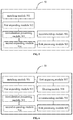
- the device 50 comprises: a matching module 501 , a first expanding module 502 , a normalization processing module 503 , a second expanding module 504 , a first processing module 505 , and a recommending module 506 .
- the matching module 501 is configured to match a plurality of documents by using a preset set of focus points to, for each document, obtain a first candidate tag set corresponding to the document.
- the first expanding module 502 is configured to perform an expanding processing on each first candidate tag in the first candidate tag set corresponding to the document, to obtain a second candidate tag set corresponding to the document.
- the normalization processing module 503 is configured to perform a normalization processing on each second candidate tag in the second candidate tag set corresponding to the document by using a preset normalization dictionary to obtain a third candidate tag set corresponding to the document.
- the second expanding module 504 is configured to perform an expanding processing on each third candidate tag in the third candidate tag set corresponding to the document by using a preset disambiguation dictionary to obtain a fourth candidate tag set corresponding to the document.
- the first processing module 505 is configured to acquire a semantic matching degree between each fourth candidate tag in the fourth candidate tag set corresponding to the document and the document by using a semantic matching model, and take the fourth candidate tags with the semantic matching degree greater than a preset matching threshold as the semantic tag of the document, to form a document library having semantic tags.
- the recommending module 506 is configured to acquire historical behavior information of a user, and acquire a historical semantic tag based on the historical behavior information of the user, and recommend a target document obtained from the document library having semantic tags based on the historical semantic tag to the user.
- the device 50 further comprises: a first acquiring module 507 and a filtering module 508 .
- the first acquiring module 507 is configured to acquire a plurality of queries.
- the filtering module 508 is configured to acquire the queries each with an event, a topic or of an entity property as the preset set of focus points by filtering the plurality of queries.
- the device 50 further comprises: a second acquiring module 509 , a second processing module 510 , and a generating module 511 .
- the second acquiring module 509 is configured to acquire a similarity between search results corresponding respectively to any two queries.
- the second processing module 510 is configured to take two queries with the similarity greater than a preset similarity threshold as candidate normalization queries.
- the generating module 511 is configured to generate the preset normalization dictionary according to the plurality of candidate normalization queries.
- the second expanding module 504 is configured to query in a candidate semantic item list, a semantic item corresponding to the third candidate tag in the third candidate tag set corresponding to the document, calculate a similarity between the document and the semantic item, and select a target semantic item according to the similarity to expand the third candidate tag in the third candidate tag set corresponding to the document to obtain the fourth candidate tag set corresponding to the document.
- the device 50 further comprises: a third acquiring module 512 and an establishing module 513 .
- the third acquiring module 512 is configured to acquire a semantic tag corresponding to a training text.
- the establishing module 513 is configured to establish the semantic matching model by training the training text and the semantic tag through a deep neural network.
- a plurality of documents are matched by using a preset set of focus points so as to, for each document, obtain a first candidate tag set corresponding to the document, an expanding processing is performed on each first candidate tag in the first candidate tag set corresponding to the document to obtain a second candidate tag set corresponding to the document, a normalization processing is performed on each second candidate tag in the second candidate tag set corresponding to the document by using a preset normalization dictionary to obtain a third candidate tag set corresponding to the document, an expanding processing is performed on each third candidate tag in the third candidate tag set corresponding to the document by using a preset disambiguation dictionary to obtain a fourth candidate tag set corresponding to the document, a semantic matching degree between each fourth candidate tag in the fourth candidate tag set corresponding to the document and the document is acquired by using a semantic matching model, and the fourth candidate tag with the semantic matching degree greater than a preset matching threshold is taken as the semantic tag of the document, to form a document
- the present disclosure further provides a computer device including: a processor and a memory.
- the processor runs a program corresponding to an executable program code by reading the executable program code stored in the memory for implementing the document recommendation method based on a semantic tag as described in the foregoing embodiments.
- FIG. 9 is a block diagram of a computer device according to embodiments of the present disclosure, which illustrates the structure of an exemplary computer device 90 suitable for implementing an embodiment of the present application.
- the computer device 90 shown in FIG. 9 is merely an example and should not impose any limitation on the function and scope of use of the embodiments of the present disclosure.
- the computer device 90 may be represented via a general computer device form.
- Components of the computer device 90 may include but be not limited to one or more processors or processing units 906 , a system memory 910 , a bus 908 connecting various system components including the system memory 910 and the processing units 906 .
- the bus 908 represents one or more of several types of bus structures, including a memory bus or a memory controller, a peripheral bus, a graphics acceleration port, a processor, or a local bus using any of a variety of bus structures.
- these architectures include, but are not limited to, an Industry Standard Architecture (hereinafter referred to as ISA) bus, a Micro Channel Architecture (hereinafter referred to as MAC) bus, an enhanced ISA bus, a Video Electronics Standards Association (hereinafter referred to as VESA) local bus and Peripheral Component Interconnection (PCI) bus.
- ISA Industry Standard Architecture
- MAC Micro Channel Architecture
- VESA Video Electronics Standards Association
- PCI Peripheral Component Interconnection
- the computer device 90 typically includes a variety of computer system readable media. These media may be any available media accessible by the computer device 90 and includes both volatile and non-volatile media, removable and non-removable media.
- the system memory 910 may include a computer system readable medium in the form of volatile memory, such as a random access memory (hereinafter referred to as RAM) 911 and/or a high speed cache memory 912 .
- the computer device 90 may further include other removable or non-removable, volatile or non-volatile computer system storage media.
- the storage system 913 may be configured to read and write a non-removable and non-volatile magnetic media (not shown in FIG. 9 , commonly referred to as a “hard drive”).
- a magnetic disk driver for reading from and writing to a removable and non-volatile magnetic disk (such as “floppy disk” and a disk driver for a removable and non-volatile optical disk (such as compact disk read only memory (hereinafter referred to as CD-ROM), Digital Video Disc Read Only Memory (hereinafter referred to as DVD-ROM) or other optical media) may be provided.
- each driver may be connected to the bus 908 via one or more data medium interfaces.
- the system memory 910 may include at least one program product.
- the program product has a set (such as, at least one) of program modules configured to perform the functions of various embodiments of the present disclosure.
- the computer readable signal medium may include a data signal propagating in baseband or as part of a carrier which carries computer readable program codes. Such propagated data signal may be in many forms, including but not limited to an electromagnetic signal, an optical signal, or any suitable combination thereof.
- the computer readable signal medium may also be any computer readable medium other than the computer readable storage medium, which may send, propagate, or transport programs used by an instruction executed system, apparatus or device, or a connection thereof.
- the program code stored on the computer readable medium may be transmitted using any appropriate medium, including but not limited to wireless, wireline, optical fiber cable, RF, or any suitable combination thereof.
- the computer program code for carrying out operations of embodiments of the present disclosure may be written in one or more programming languages.
- the programming language includes an object oriented programming language, such as Java, Smalltalk, C ++, as well as conventional procedural programming language, such as “C” language or similar programming language.
- the program code may be executed entirely on a user's computer, partly on the user's computer, as a separate software package, partly on the user's computer, partly on a remote computer, or entirely on the remote computer or server.
- a program/utility 914 having a set (at least one) of the program modules 9140 may be stored in, for example, the memory 910 .
- the program modules 9140 include but are not limited to, an operating system, one or more application programs, other programs modules, and program data. Each of these examples, or some combination thereof, may include an implementation of a network environment.
- the program modules 9140 generally perform the functions and/or methods in the embodiments described herein.
- the computer device 90 may also communicate with one or more external devices 10 (such as, a keyboard, a pointing device, a display 100 , etc.). Furthermore, the computer device 90 may also communicate with one or more communication devices enabling a user to interact with the computer device 90 and/or other devices (such as a network card, modem, etc.) enabling the computer device 12 to communicate with one or more computer devices. This communication can be performed via the input/output (I/O) interface 902 . Also, the computer device 90 may communicate with one or more networks (such as a local area network (hereafter referred to as LAN), a wide area network (hereafter referred to as WAN) and/or a public network such as an Internet) through a network adapter 900 .
- LAN local area network
- WAN wide area network
- Internet public network such as an Internet
- the network adapter 900 communicates with other modules of the computer device 90 over the bus 908 .
- the hardware and/or software includes, but is not limited to, microcode, device drivers, redundant processing units, external disk drive arrays, RAID systems, tap Drive and data backup storage system.
- the processing unit 906 is configured to execute various functional applications and data processing by running programs stored in the system memory 910 , for example, implementing the speech noise reduction method based on the semantic tag based method of recommending documents provided in embodiments of the present disclosure.
- the present disclosure provides a non-transitory computer readable storage medium having a computer program stored thereon.
- the program is executed by a processor, the document recommendation method based on a semantic tag as described in the embodiments is implemented.
- the present disclosure provide a computer program product, when the instructions in the computer program product are executed by a processor, the document recommendation method based on a semantic tag as described in the embodiments is implemented.
- Any procedure or method described in the flow charts or described in any other way herein may be understood to comprise one or more modules, portions or parts for storing executable codes that realize particular logic functions or procedures.
- advantageous embodiments of the present disclosure comprise other implementations in which the order of execution is different from that which is depicted or discussed, including executing functions in a substantially simultaneous manner or in an opposite order according to the related functions, which should be understood by those skilled in the art.
- the logic and/or step described in other manners herein or shown in the flow chart, for example, a particular sequence table of executable instructions for realizing the logical function may be specifically achieved in any computer readable medium to be used by the instruction execution system, device or equipment (such as the system based on computers, the system comprising processors or other systems capable of obtaining the instruction from the instruction execution system, device and equipment and executing the instruction), or to be used in combination with the instruction execution system, device and equipment.
- the computer readable medium may be any device adaptive for including, storing, communicating, propagating or transferring programs to be used by or in combination with the instruction execution system, device or equipment.
- the computer readable medium comprise but are not limited to: an electronic connection (an electronic device) with one or more wires, a portable computer enclosure (a magnetic device), a random access memory (RAM), a read only memory (ROM), an erasable programmable read-only memory (EPROM or a flash memory), an optical fiber device and a portable compact disk read-only memory (CDROM).
- the computer readable medium may even be a paper or other appropriate medium capable of printing programs thereon, this is because, for example, the paper or other appropriate medium may be optically scanned and then edited, decrypted or processed with other appropriate methods when necessary to obtain the programs in an electric manner, and then the programs may be stored in the computer memories.
- each part of the present disclosure may be realized by the hardware, software, firmware or their combination.
- a plurality of steps or methods may be realized by the software or firmware stored in the memory and executed by the appropriate instruction execution system.
- the steps or methods may be realized by one or a combination of the following techniques known in the art: a discrete logic circuit having a logic gate circuit for realizing a logic function of a data signal, an application-specific integrated circuit having an appropriate combination logic gate circuit, a programmable gate array (PGA), a field programmable gate array (FPGA), etc.
- each function cell of the embodiments of the present disclosure may be integrated in a processing module, or these cells may be separate physical existence, or two or more cells are integrated in a processing module.
- the integrated module may be realized in a form of hardware or in a form of software function modules. When the integrated module is realized in a form of software function module and is sold or used as a standalone product, the integrated module may be stored in a computer readable storage medium.
- the storage medium mentioned above may be read-only memories, magnetic disks, CD, etc.
Landscapes
- Engineering & Computer Science (AREA)
- Theoretical Computer Science (AREA)
- Physics & Mathematics (AREA)
- General Engineering & Computer Science (AREA)
- Computational Linguistics (AREA)
- General Physics & Mathematics (AREA)
- Health & Medical Sciences (AREA)
- Artificial Intelligence (AREA)
- General Health & Medical Sciences (AREA)
- Data Mining & Analysis (AREA)
- Audiology, Speech & Language Pathology (AREA)
- Biomedical Technology (AREA)
- Computing Systems (AREA)
- Molecular Biology (AREA)
- Evolutionary Computation (AREA)
- Mathematical Physics (AREA)
- Software Systems (AREA)
- Biophysics (AREA)
- Databases & Information Systems (AREA)
- Life Sciences & Earth Sciences (AREA)
- Information Retrieval, Db Structures And Fs Structures Therefor (AREA)
Abstract
Description
Claims (15)
Applications Claiming Priority (2)
| Application Number | Priority Date | Filing Date | Title |
|---|---|---|---|
| CN201811621674.8A CN109376309B (en) | 2018-12-28 | 2018-12-28 | Method and device for document recommendation based on semantic tags |
| CN201811621674.8 | 2018-12-28 |
Publications (2)
| Publication Number | Publication Date |
|---|---|
| US20200210468A1 US20200210468A1 (en) | 2020-07-02 |
| US11216504B2 true US11216504B2 (en) | 2022-01-04 |
Family
ID=65372143
Family Applications (1)
| Application Number | Title | Priority Date | Filing Date |
|---|---|---|---|
| US16/705,749 Active 2040-07-05 US11216504B2 (en) | 2018-12-28 | 2019-12-06 | Document recommendation method and device based on semantic tag |
Country Status (2)
| Country | Link |
|---|---|
| US (1) | US11216504B2 (en) |
| CN (1) | CN109376309B (en) |
Families Citing this family (35)
| Publication number | Priority date | Publication date | Assignee | Title |
|---|---|---|---|---|
| CN110059249B (en) * | 2019-04-03 | 2022-11-25 | 华为技术有限公司 | Personalized recommendation method, terminal device and system |
| CN111709247B (en) * | 2020-05-20 | 2023-04-07 | 北京百度网讯科技有限公司 | Data set processing method and device, electronic equipment and storage medium |
| CN111767439B (en) * | 2020-06-28 | 2023-12-15 | 百度在线网络技术(北京)有限公司 | Recommendation method, device and medium based on page classification labels |
| CN111967262B (en) * | 2020-06-30 | 2024-01-12 | 北京百度网讯科技有限公司 | Determination method and device for entity tag |
| CN111986765B (en) * | 2020-09-03 | 2023-11-21 | 深圳平安智慧医健科技有限公司 | Electronic case entity marking method, electronic case entity marking device, electronic case entity marking computer equipment and storage medium |
| US11551277B2 (en) * | 2020-09-11 | 2023-01-10 | Beijing Wodong Tianjun Information Technology Co., Ltd. | System and method for automatic generation of knowledge-powered content planning |
| CN112528146B (en) * | 2020-12-09 | 2022-05-27 | 北京百度网讯科技有限公司 | Content resource recommendation method and device, electronic equipment and storage medium |
| CN112528644B (en) * | 2020-12-24 | 2024-04-12 | 北京百度网讯科技有限公司 | Entity mounting method, device, equipment and storage medium |
| CN114817697B (en) * | 2021-01-29 | 2025-08-29 | 腾讯科技(深圳)有限公司 | Method, device, electronic device and storage medium for determining tag information |
| CN112925902B (en) * | 2021-02-22 | 2024-01-30 | 新智认知数据服务有限公司 | Method, system and electronic equipment for intelligently extracting text abstract from case text |
| CN113505192A (en) * | 2021-05-25 | 2021-10-15 | 平安银行股份有限公司 | Data tag library construction method and device, electronic equipment and computer storage medium |
| CN115408599A (en) * | 2021-05-27 | 2022-11-29 | 京东方科技集团股份有限公司 | Information recommendation method and device, electronic equipment and computer-readable storage medium |
| CN113377946A (en) * | 2021-06-24 | 2021-09-10 | 上海明略人工智能(集团)有限公司 | Document pushing method and device, storage medium and electronic equipment |
| CN113806558B (en) * | 2021-09-22 | 2024-03-26 | 湖北天天数链技术有限公司 | Question selection method, knowledge graph construction device and electronic equipment |
| CN113836413A (en) * | 2021-09-24 | 2021-12-24 | 北京爱奇艺科技有限公司 | A method, device, electronic device and storage medium for determining recommended information |
| CN114048376B (en) * | 2021-11-09 | 2026-02-06 | 北京百度网讯科技有限公司 | Advertisement business information mining method and device, electronic equipment and storage medium |
| CN114036397B (en) * | 2021-11-26 | 2023-08-01 | 北京百度网讯科技有限公司 | Data recommendation method, device, electronic equipment and medium |
| CN114138755B (en) * | 2022-02-07 | 2022-04-08 | 中国建筑第五工程局有限公司 | Material archive retrieval method aiming at supplier cooperation based on artificial intelligence |
| CN114461748A (en) * | 2022-02-14 | 2022-05-10 | 北京百度网讯科技有限公司 | Label extraction method, device, storage medium and electronic equipment |
| CN114647745A (en) * | 2022-03-22 | 2022-06-21 | 广东省电信规划设计院有限公司 | Label expanding method and device for document search and computer storage medium |
| CN114648004B (en) * | 2022-03-22 | 2025-01-03 | 广东省电信规划设计院有限公司 | A method, device and computer storage medium for intelligent association of document tags |
| CN114706938B (en) * | 2022-03-28 | 2026-04-14 | 北京明略昭辉科技有限公司 | Method and device for determining document tag, electronic equipment and storage medium |
| CN114637411B (en) * | 2022-04-07 | 2025-01-03 | 科大讯飞股份有限公司 | A whole sentence association method, device, equipment and storage medium |
| CN115293158B (en) * | 2022-06-30 | 2024-02-02 | 撼地数智(重庆)科技有限公司 | Label-assisted disambiguation method and device |
| CN115470198B (en) * | 2022-08-11 | 2023-09-22 | 北京百度网讯科技有限公司 | Information processing methods, devices, electronic equipment and storage media for databases |
| CN115687579B (en) * | 2022-09-22 | 2023-08-01 | 广州视嵘信息技术有限公司 | Document tag generation and matching method, device and computer equipment |
| CN115795023B (en) * | 2022-11-22 | 2024-01-05 | 百度时代网络技术(北京)有限公司 | Document recommendation method, device, equipment and storage medium |
| CN115757799B (en) * | 2022-12-02 | 2023-10-24 | 北京国联视讯信息技术股份有限公司 | Data storage method and system based on artificial intelligence and cloud platform |
| CN116467637B (en) * | 2023-03-28 | 2025-11-21 | 深圳市和讯华谷信息技术有限公司 | User tag missing data filling method and system |
| CN116010588B (en) * | 2023-03-28 | 2023-08-18 | 北京创新乐知网络技术有限公司 | Real-time and offline combined document recommendation method, device, equipment and medium |
| CN117708340B (en) * | 2024-02-06 | 2024-05-24 | 阿里健康科技(杭州)有限公司 | Label text determining method, model training and adjusting method, device and medium |
| CN118377904B (en) * | 2024-05-08 | 2025-03-28 | 奇点智保(北京)科技有限公司 | A system for obtaining labels corresponding to medical record text |
| CN118313837B (en) * | 2024-06-07 | 2024-08-20 | 青岛云创智通科技有限公司 | Customer relationship management system based on big data |
| CN119293812B (en) * | 2024-09-19 | 2025-11-25 | 中国建设银行股份有限公司 | Access control methods, devices, and equipment for a large-scale external knowledge base model |
| CN119441626B (en) * | 2025-01-09 | 2025-04-15 | 东方物通科技(北京)有限公司 | A user behavior data storage and analysis method based on big data |
Citations (16)
| Publication number | Priority date | Publication date | Assignee | Title |
|---|---|---|---|---|
| US20090210408A1 (en) * | 2008-02-19 | 2009-08-20 | International Business Machines Corporation | Method and system for role based situation aware software |
| US20090254540A1 (en) * | 2007-11-01 | 2009-10-08 | Textdigger, Inc. | Method and apparatus for automated tag generation for digital content |
| CN104199838A (en) | 2014-08-04 | 2014-12-10 | 浙江工商大学 | User model building method based on label disambiguation |
| CN104615783A (en) | 2015-03-02 | 2015-05-13 | 百度在线网络技术(北京)有限公司 | Information searching method and device |
| US20160012019A1 (en) * | 2014-07-10 | 2016-01-14 | International Business Machines Corporation | Group tagging of documents |
| US20160034512A1 (en) * | 2014-08-04 | 2016-02-04 | Regents Of The University Of Minnesota | Context-based metadata generation and automatic annotation of electronic media in a computer network |
| CN105653706A (en) | 2015-12-31 | 2016-06-08 | 北京理工大学 | Multilayer quotation recommendation method based on literature content mapping knowledge domain |
| CN106354860A (en) | 2016-09-06 | 2017-01-25 | 中国传媒大学 | Method for automatically labelling and pushing information resource based on label sets |
| CN106776881A (en) | 2016-11-28 | 2017-05-31 | 中国科学院软件研究所 | A kind of realm information commending system and method based on microblog |
| US20170235820A1 (en) * | 2016-01-29 | 2017-08-17 | Jack G. Conrad | System and engine for seeded clustering of news events |
| CN107122399A (en) | 2017-03-16 | 2017-09-01 | 中国科学院自动化研究所 | Combined recommendation system based on Public Culture knowledge mapping platform |
| CN107330023A (en) | 2017-06-21 | 2017-11-07 | 北京百度网讯科技有限公司 | Content of text based on focus recommends method and apparatus |
| US20180300315A1 (en) * | 2017-04-14 | 2018-10-18 | Novabase Business Solutions, S.A. | Systems and methods for document processing using machine learning |
| CN108829819A (en) | 2018-06-12 | 2018-11-16 | 上海智臻智能网络科技股份有限公司 | Personalized text recommended method and system, server, readable storage medium storing program for executing |
| CN108875059A (en) | 2018-06-29 | 2018-11-23 | 北京百度网讯科技有限公司 | For generating method, apparatus, electronic equipment and the storage medium of document label |
| CN108897871A (en) | 2018-06-29 | 2018-11-27 | 北京百度网讯科技有限公司 | Document recommendation method, device, equipment and computer-readable medium |
Family Cites Families (1)
| Publication number | Priority date | Publication date | Assignee | Title |
|---|---|---|---|---|
| US8943070B2 (en) * | 2010-07-16 | 2015-01-27 | International Business Machines Corporation | Adaptive and personalized tag recommendation |
-
2018
- 2018-12-28 CN CN201811621674.8A patent/CN109376309B/en active Active
-
2019
- 2019-12-06 US US16/705,749 patent/US11216504B2/en active Active
Patent Citations (16)
| Publication number | Priority date | Publication date | Assignee | Title |
|---|---|---|---|---|
| US20090254540A1 (en) * | 2007-11-01 | 2009-10-08 | Textdigger, Inc. | Method and apparatus for automated tag generation for digital content |
| US20090210408A1 (en) * | 2008-02-19 | 2009-08-20 | International Business Machines Corporation | Method and system for role based situation aware software |
| US20160012019A1 (en) * | 2014-07-10 | 2016-01-14 | International Business Machines Corporation | Group tagging of documents |
| CN104199838A (en) | 2014-08-04 | 2014-12-10 | 浙江工商大学 | User model building method based on label disambiguation |
| US20160034512A1 (en) * | 2014-08-04 | 2016-02-04 | Regents Of The University Of Minnesota | Context-based metadata generation and automatic annotation of electronic media in a computer network |
| CN104615783A (en) | 2015-03-02 | 2015-05-13 | 百度在线网络技术(北京)有限公司 | Information searching method and device |
| CN105653706A (en) | 2015-12-31 | 2016-06-08 | 北京理工大学 | Multilayer quotation recommendation method based on literature content mapping knowledge domain |
| US20170235820A1 (en) * | 2016-01-29 | 2017-08-17 | Jack G. Conrad | System and engine for seeded clustering of news events |
| CN106354860A (en) | 2016-09-06 | 2017-01-25 | 中国传媒大学 | Method for automatically labelling and pushing information resource based on label sets |
| CN106776881A (en) | 2016-11-28 | 2017-05-31 | 中国科学院软件研究所 | A kind of realm information commending system and method based on microblog |
| CN107122399A (en) | 2017-03-16 | 2017-09-01 | 中国科学院自动化研究所 | Combined recommendation system based on Public Culture knowledge mapping platform |
| US20180300315A1 (en) * | 2017-04-14 | 2018-10-18 | Novabase Business Solutions, S.A. | Systems and methods for document processing using machine learning |
| CN107330023A (en) | 2017-06-21 | 2017-11-07 | 北京百度网讯科技有限公司 | Content of text based on focus recommends method and apparatus |
| CN108829819A (en) | 2018-06-12 | 2018-11-16 | 上海智臻智能网络科技股份有限公司 | Personalized text recommended method and system, server, readable storage medium storing program for executing |
| CN108875059A (en) | 2018-06-29 | 2018-11-23 | 北京百度网讯科技有限公司 | For generating method, apparatus, electronic equipment and the storage medium of document label |
| CN108897871A (en) | 2018-06-29 | 2018-11-27 | 北京百度网讯科技有限公司 | Document recommendation method, device, equipment and computer-readable medium |
Non-Patent Citations (3)
| Title |
|---|
| Chen, J. "The Research of Several Key Technologies of Word Sense Disambiguation", Dissertation Submitted to Wuhan University, Oct. 2012, 134 pages. |
| Chinese Patent Application No. 201811621674.8 English translation of Office Action dated Aug. 3, 2021, 14 pages. |
| Chinese Patent Application No. 201811621674.8 Office Action dated Aug. 3, 2021, 10 pages. |
Also Published As
| Publication number | Publication date |
|---|---|
| CN109376309B (en) | 2022-05-17 |
| CN109376309A (en) | 2019-02-22 |
| US20200210468A1 (en) | 2020-07-02 |
Similar Documents
| Publication | Publication Date | Title |
|---|---|---|
| US20200210468A1 (en) | Document recommendation method and device based on semantic tag | |
| JP6643555B2 (en) | Text processing method and apparatus based on ambiguous entity words | |
| US11720572B2 (en) | Method and system for content recommendation | |
| US10657325B2 (en) | Method for parsing query based on artificial intelligence and computer device | |
| US11182445B2 (en) | Method, apparatus, server, and storage medium for recalling for search | |
| US11210468B2 (en) | System and method for comparing plurality of documents | |
| CN107330023B (en) | Text content recommendation method and device based on attention points | |
| CN107862027B (en) | Retrieval intent identification method, apparatus, electronic device and readable storage medium | |
| CN108334490B (en) | Keyword extraction method and keyword extraction device | |
| US9311823B2 (en) | Caching natural language questions and results in a question and answer system | |
| US10025819B2 (en) | Generating a query statement based on unstructured input | |
| US20130060769A1 (en) | System and method for identifying social media interactions | |
| CN110321537B (en) | Method and device for generating file | |
| CN108121697B (en) | Method, device and equipment for text rewriting and computer storage medium | |
| CN111539193A (en) | Ontology-based document analysis and annotation generation | |
| CN108460011A (en) | A kind of entitative concept mask method and system | |
| US11954097B2 (en) | Intelligent knowledge-learning and question-answering | |
| CN109656385B (en) | Input prediction method, device and electronic device based on knowledge map | |
| CN107861948B (en) | Label extraction method, device, equipment and medium | |
| CN111814481B (en) | Shopping intention recognition method, device, terminal equipment and storage medium | |
| CN109960721A (en) | Multi-compressed construct content based on source content | |
| CN111046662B (en) | Training method, device, system and storage medium of word segmentation model | |
| CN116595124B (en) | Cross-language implicit association knowledge discovery methods, devices, equipment and storage media | |
| CN119808778A (en) | Intelligent text segmentation method and system based on large language model | |
| Gong et al. | A semantic similarity language model to improve automatic image annotation |
Legal Events
| Date | Code | Title | Description |
|---|---|---|---|
| AS | Assignment |
Owner name: BEIJING BAIDU NETCOM SCIENCE AND TECHNOLOGY CO., LTD., CHINA Free format text: ASSIGNMENT OF ASSIGNORS INTEREST;ASSIGNORS:NIU, GUOCHENG;HE, BOLEI;LIU, CHENGXIANG;AND OTHERS;REEL/FRAME:051204/0307 Effective date: 20190115 |
|
| FEPP | Fee payment procedure |
Free format text: ENTITY STATUS SET TO UNDISCOUNTED (ORIGINAL EVENT CODE: BIG.); ENTITY STATUS OF PATENT OWNER: LARGE ENTITY |
|
| STPP | Information on status: patent application and granting procedure in general |
Free format text: DOCKETED NEW CASE - READY FOR EXAMINATION |
|
| STPP | Information on status: patent application and granting procedure in general |
Free format text: NOTICE OF ALLOWANCE MAILED -- APPLICATION RECEIVED IN OFFICE OF PUBLICATIONS |
|
| STPP | Information on status: patent application and granting procedure in general |
Free format text: AWAITING TC RESP., ISSUE FEE NOT PAID |
|
| STPP | Information on status: patent application and granting procedure in general |
Free format text: NOTICE OF ALLOWANCE MAILED -- APPLICATION RECEIVED IN OFFICE OF PUBLICATIONS |
|
| STPP | Information on status: patent application and granting procedure in general |
Free format text: PUBLICATIONS -- ISSUE FEE PAYMENT RECEIVED |
|
| STPP | Information on status: patent application and granting procedure in general |
Free format text: PUBLICATIONS -- ISSUE FEE PAYMENT VERIFIED |
|
| STCF | Information on status: patent grant |
Free format text: PATENTED CASE |
|
| MAFP | Maintenance fee payment |
Free format text: PAYMENT OF MAINTENANCE FEE, 4TH YEAR, LARGE ENTITY (ORIGINAL EVENT CODE: M1551); ENTITY STATUS OF PATENT OWNER: LARGE ENTITY Year of fee payment: 4 |