US11216319B2 - Intelligent real-time robot operating system architecture and operation method thereof - Google Patents
Intelligent real-time robot operating system architecture and operation method thereof Download PDFInfo
- Publication number
- US11216319B2 US11216319B2 US17/016,396 US202017016396A US11216319B2 US 11216319 B2 US11216319 B2 US 11216319B2 US 202017016396 A US202017016396 A US 202017016396A US 11216319 B2 US11216319 B2 US 11216319B2
- Authority
- US
- United States
- Prior art keywords
- real
- time
- ros
- kernel
- nodes
- Prior art date
- Legal status (The legal status is an assumption and is not a legal conclusion. Google has not performed a legal analysis and makes no representation as to the accuracy of the status listed.)
- Active
Links
Images




Classifications
-
- G—PHYSICS
- G06—COMPUTING OR CALCULATING; COUNTING
- G06F—ELECTRIC DIGITAL DATA PROCESSING
- G06F9/00—Arrangements for program control, e.g. control units
- G06F9/06—Arrangements for program control, e.g. control units using stored programs, i.e. using an internal store of processing equipment to receive or retain programs
- G06F9/46—Multiprogramming arrangements
- G06F9/54—Interprogram communication
-
- B—PERFORMING OPERATIONS; TRANSPORTING
- B25—HAND TOOLS; PORTABLE POWER-DRIVEN TOOLS; MANIPULATORS
- B25J—MANIPULATORS; CHAMBERS PROVIDED WITH MANIPULATION DEVICES
- B25J9/00—Program-controlled manipulators
- B25J9/16—Program controls
- B25J9/1602—Program controls characterised by the control system, structure, architecture
-
- G—PHYSICS
- G06—COMPUTING OR CALCULATING; COUNTING
- G06F—ELECTRIC DIGITAL DATA PROCESSING
- G06F9/00—Arrangements for program control, e.g. control units
- G06F9/06—Arrangements for program control, e.g. control units using stored programs, i.e. using an internal store of processing equipment to receive or retain programs
- G06F9/46—Multiprogramming arrangements
- G06F9/54—Interprogram communication
- G06F9/545—Interprogram communication where tasks reside in different layers, e.g. user- and kernel-space
-
- B—PERFORMING OPERATIONS; TRANSPORTING
- B25—HAND TOOLS; PORTABLE POWER-DRIVEN TOOLS; MANIPULATORS
- B25J—MANIPULATORS; CHAMBERS PROVIDED WITH MANIPULATION DEVICES
- B25J9/00—Program-controlled manipulators
- B25J9/16—Program controls
- B25J9/1656—Program controls characterised by programming, planning systems for manipulators
-
- G—PHYSICS
- G06—COMPUTING OR CALCULATING; COUNTING
- G06F—ELECTRIC DIGITAL DATA PROCESSING
- G06F9/00—Arrangements for program control, e.g. control units
- G06F9/06—Arrangements for program control, e.g. control units using stored programs, i.e. using an internal store of processing equipment to receive or retain programs
- G06F9/46—Multiprogramming arrangements
- G06F9/48—Program initiating; Program switching, e.g. by interrupt
- G06F9/4806—Task transfer initiation or dispatching
- G06F9/4812—Task transfer initiation or dispatching by interrupt, e.g. masked
-
- G—PHYSICS
- G06—COMPUTING OR CALCULATING; COUNTING
- G06F—ELECTRIC DIGITAL DATA PROCESSING
- G06F9/00—Arrangements for program control, e.g. control units
- G06F9/06—Arrangements for program control, e.g. control units using stored programs, i.e. using an internal store of processing equipment to receive or retain programs
- G06F9/46—Multiprogramming arrangements
- G06F9/54—Interprogram communication
- G06F9/544—Buffers; Shared memory; Pipes
Definitions
- the present invention relates to an intelligent real-time robot operating system (IRT-ROS) technical field, and more particularly to, a multi-core dual-system ROS implementing AMP architecture and an operation method thereof.
- IRT-ROS intelligent real-time robot operating system
- IRT-ROS Intelligent Real-Time Robot Operating System
- an object of the present invention to provide an IRT-ROS architecture and an operation method thereof.
- an IRT-ROS architecture includes a General-Purpose OS kernel, a Real-Time OS kernel, and an Inter-processor Interrupt interface.
- the General-Purpose OS kernel is configured to run a General-Purpose OS to execute a non-real-time process.
- the Real-Time OS kernel is configured to run a Real-Time OS to execute a real-time process.
- the IPI interface is connected between the General-Purpose OS kernel and the Real-Time OS kernel, and is configured to support communication between the non-real-time process and the real-time process.
- the IRT-ROS further includes an external I/O Advanced Programmable Interrupt Controller (I/O APIC).
- the General-Purpose OS kernel further includes a first Local Advanced Programmable Interrupt Controller (LAPIC), wherein the first LAPIC is connected to the external I/O APIC and configured to respond to an Interrupt Request (IRQ) of a non-real-time device via the external I/O APIC.
- the Real-Time OS kernel further includes a second LAPIC, wherein the second LAPIC is connected to the external I/O APIC and configured to respond to an IRQ of a real-time device via the external I/O APIC.
- the IRT-ROS architecture when all external devices connected to the IRT-ROS architecture are non-real-time devices, the IRT-ROS architecture is configured to block the IRQ from the real-time device in the Real-Time OS kernel, so that the General-Purpose OS kernel completely takes charge of an IRQ Line.
- the IRT-ROS architecture configures the external I/O APIC, so that the external I/O APIC is configured to statically send the IRQ to the Real-Time OS kernel by static distribution.
- the IRT-ROS architecture is configured to route all IRQs on the IRQ line to a same OS kernel, the OS kernel being the General-Purpose OS kernel or the Real-Time OS kernel.
- the General-Purpose OS is a Linux
- the Real-Time OS is a Real-Time Executive for Robotic Systems (RTERS).
- An IRT ROS architecture includes a General-Purpose OS kernel for running a General-Purpose OS and a Real-Time OS kernel for running a Real-Time OS.
- the operation method includes the following steps: communicating an RTROSCPP of the IRT-ROS architecture with ROS nodes, and respectively running the ROS nodes, core services and roslog topics on the General-Purpose OS kernel and the Real-Time OS kernel; publishing/subscribing messages between the ROS nodes via a Fast Real-Time Publish/Subscribe protocol (Fast-RTPS); and implementing the roslog topics at the RTROSCPP, and taking the roslog topics as standard outputs for the IRT-ROS architecture, such that all of the ROS nodes output information of the ROS nodes by invoking standard log services of the ROS nodes.
- Fast-RTPS Fast Real-Time Publish/Subscribe protocol
- the operation method further includes the following steps: when real-time nodes are started, communicating the real-time nodes, via a virtual network shared memory (VENT shared memory), with the ROS nodes run on the General-Purpose OS kernel.
- the communication scenario includes: when a real-time node is started and stopped, a state message is published to other ROS nodes on the General-Purpose OS kernel; and when a real-time node is communicated with a non-real-time node, topics are published/subscribed and messages are exchanged.
- the operation method further includes the following step: driving an RTERS virtual device.
- the step of driving an RTERS virtual device includes the following sub-steps: driving a character device pipeline driver that outputs RTERS state information under the General-Purpose OS; and driving a VENT shared memory for communication of application programs between the General-Purpose OS and the Real-Time OS.
- the operation method further includes the following step: transporting the ROS in the RTERS via the RTROSCPP.
- the step of transporting the ROS in the RTERS via the RTROSCPP includes the following sub-steps: providing, via the roscpp, ROS standard nodes communication interfaces to an application layer, including a standard NodeHandler object constructor and relevant functions, node message publisher/subscriber objects, node initialization, timing dormancy and other standard ROS function interface; deriving an Xmlrpc part from an Xmlrpc standard protocol code compiled based on a C++ language, so that real-time nodes establish network service nodes based on an Xmlrpc standard protocol; and a set of -common interface functions written by Network that combines the roscpp with the Xmlrpc allowing the Xmlrpc and the roscpp to use a standard network communication interface in a unified function call.
- the ROS node is used for managing nodes running on the IRT-ROS, including start registration of the nodes, node status, communication requests between the nodes, and node message routing; and the ROS node uses Xmlrpc standard protocol to communicate with other ROS nodes.
- the General-Purpose OS is a Linux
- the Real-Time OS is a Real-Time Executive for Robotic Systems (RTERS).
- the present invention has the following beneficial effects: the whole hardware platform resources are divided into kernels and partitions based on Asymmetric Multi-Processing (AMP); meanwhile, the stable and reliable communication between subsystems is supported; wherein one of the two sub-systems is Linux of a General-Purpose OS type, and the other of the two sub-systems is RTERS of an Real-Time OS type.
- AMP Asymmetric Multi-Processing
- Linux and RTERS can respectively execute the non-real-time process and the real-time process; Linux and RTERS can respectively respond the IRQ of the non-real-time device and the IRQ of the real-time device; communications between the non-real-time process and the real-time process are supported; and a variety of drives of Linux are integrated; and therefore, the workload for driving the general-purpose external devices is greatly reduced.
- FIG. 1 is a structural diagram of an IRT-ROS architecture according to an embodiment of the present invention.
- FIG. 2 is a schematic diagram of a communication framework of ROS nodes in an IRT-ROS according to an embodiment of the present invention.
- FIG. 3 is a schematic diagram for communication mode of real-time ROS nodes and the relationship between RTROSCPP classes according to an embodiment of the present invention.
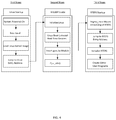
- FIG. 4 is a schematic diagram of a startup process of an IRT-ROS according to an embodiment of the present invention.
- FIG. 5 is a flowchart showing an operation method of an IRT-ROS according to an embodiment of the present invention.
- FIG. 6 is a flowchart for driving an RTERS virtual device according to an embodiment of the present invention.
- FIG. 7 is a flowchart for transporting an ROS in an RTERS via an RTROSCPP according to an embodiment of the present invention.
- first and second features are formed in direct contact
- additional features may be formed between the first and second features, such that the first and second features may not be in direct contact
- present invention may repeat reference numerals and/or letters in the various examples. This repetition is for the purpose of simplicity and clarity and does not in itself dictate a relationship between the various embodiments and/or configurations discussed.
- FIG. 1 is a structural diagram of an IRT-ROS architecture according to an embodiment of the present invention.
- the IRT-ROS architecture 10 includes a General-Purpose OS kernel 110 , a Real-Time OS kernel 120 and an IPI interface 130 .
- the General-Purpose OS kernel 110 is configured to run a General-Purpose OS to execute a non-real-time process.
- the Real-Time OS kernel 120 is configured to run a Real-Time OS to execute a real-time process.
- the IPI interface 130 is connected between the General-Purpose OS kernel 110 and the Real-Time OS kernel 120 , and is configured to support communication between the non-real-time process and the real-time process.
- the real-time process in the IRT-ROS architecture 10 has a strict deadline for the execution of the Real-Time OS kernel 120 and its algorithm, including: closed-loop control, interpolation solution, current control, and position control.
- the non-real-time process has no strict deadline for the execution of the General-Purpose OS kernel 110 and its algorithm, including: speech recognition, 3D modeling, object recognition, and graphic navigation.
- the General-Purpose OS kernel 110 is communicated with the Real-Time OS kernel 120 via the IPI interface 130 .
- the Real-Time OS kernel 120 When the Real-Time OS kernel 120 is to issue a message to the General-Purpose OS kernel 110 , the Real-Time OS kernel 120 initiates an IRQ through the IPI interface 130 , and the General-Purpose OS kernel 110 receives an interrupt signal and then processes the IRQ.
- the General-Purpose OS kernel 110 is to issue a message to the Real-Time OS kernel 120 , the General-Purpose OS kernel 110 initiates an IRQ through the IPI interface 130 , and the Real-Time OS kernel 120 receives an interrupt signal and processes the IRQ.
- Messages that require interaction between the Real-Time OS kernel 120 and the General-Purpose OS kernel 110 are written to a Virtual Network (VENT) shared memory 150 .
- the two inter-kernel communications are first interrupted by one kernel initiating an IPI to notify the other kernel of reading data in the VENT shared memory 150 , and then the other kernel reads the data in the VENT shared memory 150 .
- the IRT-ROS architecture 10 may further include an external I/O APIC (I/O Advanced Programmable Interrupt Controller) 140 .
- the General-Purpose OS kernel 110 further includes a first LAPIC (Local Advanced Programmable Interrupt Controller) 111 , which is connected to the external I/O APIC 140 and configured to respond to an IRQ of a non-real-time device 20 via the external I/O APIC 140 .
- the Real-Time OS kernel 120 further includes a second LAPIC 121 , which is connected to the external I/O APIC 140 and configured to respond to an IRQ of a real-time device 30 via the external I/O APIC 140 .
- real-time ROS nodes are connected to the real-time device 30 via a real-time bus.
- the ROS real-time nodes with different functions are operated according to different requirements of robot control, including position closed-loop control, current control, interpolation solution calculation, and so on.
- Standard ROS nodes run through various interfaces to various cameras or sensors on the robot, thus collecting information and performing functions such as object recognition and graphic navigation.
- Real-time nodes and non-real-time nodes can perform collaborative functions through interaction.
- the external I/O APIC 140 is introduced to control external devices.
- the external I/O APIC 140 is an interrupt router of a multi-kernel Central Processing Unit (CPU). Each of the kernels 110 / 120 has their own LAPICs 111 / 121 ; and all LAPICs 111 / 121 are connected to the external I/O APIC 140 to form a multi-APIC system.
- the main role of the external I/O APIC 140 is to allocate interrupt requests (IRQs) between external devices and kernels to a plurality of kernels.
- the IRT-ROS architecture 10 selects the following strategies according to different situations: 1) when all external devices connected to the IRT-ROS architecture 10 are non-real-time devices 20 , the IRT-ROS architecture 10 blocks the IRQ from the real-time device 30 in the Real-Time OS kernel 120 , so that the General-Purpose OS kernel 110 completely takes charge of the entire IRQ line; 2) when all external devices connected to the IRT-ROS architecture 10 are real-time devices 30 , the IRT-ROS architecture 10 configures the external I/O API 140 , so that the external I/O APIC 140 statically sends an IRQ to the Real-Time OS kernel 120 by static distribution; and 3) when a real-time IRQ and a non-real-time IRQ are simultaneously provided on the IRQ line, the IRT-ROS architecture 10 routes all IRQs on the IRQ line to a same OS kernel, the OS kernel being the General-Pur
- the General-Purpose OS is a Linux
- the Real-Time OS is a Real-Time Executive for Robotic Systems (RTERS).
- RTERS Real-Time Executive for Robotic Systems
- FIG. 2 is a schematic diagram of a communication framework of ROS nodes in an IRT-ROS according to an embodiment of the present invention.
- the communication framework of ROS nodes of RTROSCPP implemented in RTERS is described.
- the AIRT-ROS implements the RTROSCPP in RTERS, so that a robot control algorithm encapsulated in ROS may be conveniently invoked in an RTERS real-time system.
- the communication for the ROS nodes of the IRT-ROS has three scenarios: communication between standard ROS nodes, communication between real-time ROS nodes, and communication between standard ROS nodes and real-time ROS nodes.
- the goal of the IRT-ROS design is to complete all communications between all ROS nodes by using ROS and RTROSCPP. As shown in FIG.
- the real-time ROS node and the non-real-time ROS node in the AIRT-ROS establish contact with each other by focusing on Topic, publishing Topic via a Publisher, subscribing Topic via a Subscriber, writing a message to Topic via a data writer, and reading a message from Topic via a data reader.
- the communication between standard ROS nodes includes two parts: one is an XML-RPC communication protocol, and the other is a communication interface function encapsulated by roscpp and roscpplight core function packets. These two parts are independent from each other.
- the Fast-RTPS communication protocol is implemented on RTERS.
- RTERS By integrating a core function of XML-RPC into RTROSCPP, the standardized communication interface is implemented and run directly in the real-time system in the form of system calls.
- the RTERS supports message definition scripts to directly generate a C++ header file code.
- the real-time part of the AIRT-ROS message definition may also be performed in the standard ROS section, and then the resulting C++ header file code is placed directly in the real-time system section.
- FIG. 3 is a schematic diagram for communication mode of real-time ROS nodes and the relationship between RTROSCPP classes according to an embodiment of the present invention.
- the communication mode between real-time ROS nodes and standard ROS nodes is similar to that between standard ROS nodes: 1) Real-time nodes communicate with a main node running on a server by defining a NodeHandler type node object, which mainly aims to register necessary network information such as a node name, a network address, a domain name, a communication port and other necessary network information in the server. 2) Real-time nodes establish services by creating Publisher objects to provide a connection services to other nodes.
- Real-time nodes can also establish message receiving clients by establishing a Subscriber object, and receive specified Topic messages, sent from other external nodes in a network socket blocked manner.
- FIG. 4 is a schematic diagram of a startup process of an IRT-ROS according to an embodiment of the present invention.
- the startup process of the IRT-ROS may be divided into three stages, in which the first stage is to complete Linux startup, the second stage is to complete HRGMP guidance, and the third stage is to complete RTERS startup to start the IRT-ROS completely.
- the whole startup process is as shown in FIG. 4 .
- the system is powered on, Linux system is started, and Linux initializes all resources of the system.
- all hardware resources including all CPUs, memories and external devices, are managed by Linux system, and Linux initializes all devices.
- the startup process of the Linux OS further includes a Linux kernel, a software library and user interaction software, etc.
- the gpos.ko module of the IRT-ROS is started.
- the gpos.ko module exists under a bin directory of the IRT-ROS software package.
- the hybrid OS the gpos.ko module is started first to obtain all hardware resources, required by the real-time system, from the Linux. After the system is powered on, all hardware resources are managed by Linux.
- RTERS Real-Time OS
- the required resources of RTERS must be handed over to RTERS real-time system management.
- An independent physical address-continuous memory in the Linux kernel is used by the gpos.ko module, and Linux labels that this memory has been used.
- IRT-ROS VNET In order to allow real-time systems to communicate with non-real-time systems, a small segment of VENT shared memory is created, and such a small segment of VENT shared memory is called IRT-ROS VNET.
- the IRT-ROS VNET may access serial devices, block devices, pipelines, Ethernet ports, and the like as required.
- the gpos.ko module further calls a cpu_down( ) function to disable certain CPUs, merge tasks and interrupts that were originally running on them into other CPUs; and moreover, Linux will not give any new task to these CPUs later. Linux will continuously occupy the remaining CPUs to run programs.
- the Real-Time OS kernel of the RTERS is started, and the transported Real-Time OS kernel is compiled into an image; and during startup, a corresponding kernel image is mounted with an IRT-ROS rgmp_mount tool, so that the Real-Time OS of the RTERS may be loaded into a separate memory, and such a segment of memory will be managed by the real-time system.
- To-be-controlled hardware drivers are loaded by the Real-Time OS of the RTERS. Hence, the entire IRT-ROS startup process is complete.
- FIG. 5 is a flowchart showing an operation method of an IRT-ROS according to an embodiment of the present invention.
- An IRT-ROS architecture includes a General-Purpose OS kernel for running a General-Purpose OS and a Real-Time OS kernel for running a Real-Time OS.
- the operation method includes the following steps.
- Step S 510 An RTROSCPP of an IRT-ROS architecture is communicated with ROS nodes, and the ROS nodes, core services, and roslog topics are respectively run on the General-Purpose OS kernel and the Real-Time OS kernel.
- Step S 520 Messages are published/subscribed between the ROS nodes via a Fast Real-Time Publish/Subscribe protocol (Fast-RTPS).
- Fast-RTPS Fast Real-Time Publish/Subscribe protocol
- Step S 530 The roslog topics are implemented at the RTROSCPP, the roslog topics are taken as standard outputs for the IRT-ROS architecture, such that all of the ROS nodes may output information of the ROS nodes by invoking standard log services of the ROS nodes.
- Step S 540 When real-time nodes are started, the real-time nodes are communicated, via a virtual network shared memory (VENT shared memory), with the ROS nodes run on the General-Purpose OS kernel.
- VENT shared memory virtual network shared memory
- the communication scenario includes: when a real-time node is started and stopped, a state message is published to other ROS nodes on the General-Purpose OS kernel; and when a real-time node is communicated with a non-real-time node, topics are published/subscribed and messages are exchanged.
- the ROS nodes are configured to manage nodes run on the IRT-ROS, including startup registration of the nodes, node states, communication requests between the nodes, and message routing of the nodes; and the ROS nodes are communicated with other ROS nodes by using an XML-RPC protocol.
- the operation method further includes a step of driving an RTERS virtual device and a step of transporting ROS in the RTERS via the RTROSCPP.
- FIG. 6 is a flowchart for driving an RTERS virtual device according to an embodiment of the present invention.
- the step of driving the RTERS virtual device includes the following sub-steps.
- Step S 610 A character device pipeline driver that outputs RTERS state information under the General-Purpose OS is driven.
- Step S 620 A VENT shared memory for communication of application programs between the General-Purpose OS and the Real-Time OS is driven.
- FIG. 7 is a flowchart for transporting an ROS in an RTERS via an RTROSCPP according to an embodiment of the present invention.
- the method for transporting the ROS in the RTERS via the RTROSCPP includes the following sub-steps.
- Step S 710 The roscpp provides ROS standard nodes communication interfaces to an application layer, including a standard NodeHandler object constructor and relevant functions, node message publisher/subscriber objects, node initialization, timing dormancy and other standard ROS function interfaces.
- an application layer including a standard NodeHandler object constructor and relevant functions, node message publisher/subscriber objects, node initialization, timing dormancy and other standard ROS function interfaces.
- Step S 720 An Xmlrpc part is derived from an Xmlrpc standard protocol code compiled based on a C++ language, so that real-time nodes can establish network service nodes based on an Xmlrpc standard protocol.
- Step S 730 A set of common interface functions written by Network that combines the roscpp with the Xmlrpc allows the Xmlrpc and the roscpp to use a standard network communication interface in a unified function call.
- the present invention has the following beneficial effects: the whole hardware platform resources are divided into kernels and partitions based on Asymmetric Multi-Processing (AMP); meanwhile, the stable and reliable communication between subsystems is supported; wherein one of the two sub-systems is Linux of a General-Purpose OS type, and the other of the two sub-systems is RTERS of an Real-Time OS type.
- AMP Asymmetric Multi-Processing
- Linux and RTERS can respectively execute the non-real-time process and the real-time process; Linux and RTERS can respectively respond the IRQ of the non-real-time device and the IRQ of the real-time device; communications between the non-real-time process and the real-time process are supported; and a variety of drives of Linux are integrated; and therefore, the workload for driving the general-purpose external devices is greatly reduced.
Landscapes
- Engineering & Computer Science (AREA)
- Software Systems (AREA)
- Theoretical Computer Science (AREA)
- Physics & Mathematics (AREA)
- General Engineering & Computer Science (AREA)
- General Physics & Mathematics (AREA)
- Robotics (AREA)
- Mechanical Engineering (AREA)
- Automation & Control Theory (AREA)
- Manipulator (AREA)
- Debugging And Monitoring (AREA)
- Stored Programmes (AREA)
Abstract
Description
Claims (6)
Applications Claiming Priority (2)
| Application Number | Priority Date | Filing Date | Title |
|---|---|---|---|
| CN202010545552.6 | 2020-06-15 | ||
| CN202010545552.6A CN111745651B (en) | 2020-06-15 | 2020-06-15 | Intelligent robot operating system structure and operating method thereof |
Publications (2)
| Publication Number | Publication Date |
|---|---|
| US20200409774A1 US20200409774A1 (en) | 2020-12-31 |
| US11216319B2 true US11216319B2 (en) | 2022-01-04 |
Family
ID=72675221
Family Applications (1)
| Application Number | Title | Priority Date | Filing Date |
|---|---|---|---|
| US17/016,396 Active US11216319B2 (en) | 2020-06-15 | 2020-09-10 | Intelligent real-time robot operating system architecture and operation method thereof |
Country Status (2)
| Country | Link |
|---|---|
| US (1) | US11216319B2 (en) |
| CN (1) | CN111745651B (en) |
Cited By (1)
| Publication number | Priority date | Publication date | Assignee | Title |
|---|---|---|---|---|
| US20220220237A1 (en) * | 2019-04-30 | 2022-07-14 | Dow Global Technologies Llc | Ethylene/Propylene/Nonconjugated Diene Interpolymer Composition |
Families Citing this family (18)
| Publication number | Priority date | Publication date | Assignee | Title |
|---|---|---|---|---|
| CN112445728B (en) * | 2020-11-30 | 2023-07-21 | 中科院软件研究所南京软件技术研究院 | A robot development board ROS communication system that supports multiple hardware interfaces |
| CN112559190B (en) * | 2020-12-23 | 2022-01-11 | 科东(广州)软件科技有限公司 | Resource allocation method, system, device, equipment and medium among heterogeneous systems |
| CN112732183B (en) * | 2020-12-30 | 2022-01-11 | 科东(广州)软件科技有限公司 | Access method, device and equipment of heterogeneous system storage equipment and storage medium |
| CN112667420B (en) * | 2021-01-18 | 2022-03-25 | 科东(广州)软件科技有限公司 | Method, device, equipment and storage medium for realizing internal communication of heterogeneous system |
| CN112882987A (en) * | 2021-03-12 | 2021-06-01 | 北京小米移动软件有限公司 | Multi-core communication method and device, electronic equipment and storage medium |
| CN113391821B (en) * | 2021-05-11 | 2023-03-10 | 中国电力科学研究院有限公司 | An Asymmetric Multiprocessor Embedded Operating System |
| CN113867988B (en) * | 2021-09-29 | 2024-12-24 | 展讯通信(深圳)有限公司 | Universal remote communication calling system and method |
| CN113664839B (en) * | 2021-10-25 | 2022-01-18 | 武汉瀚迈科技有限公司 | Non-real-time and real-time mixed interpolation calculation method for industrial robot |
| CN114237221A (en) * | 2021-11-16 | 2022-03-25 | 山东大学 | A low-latency combined robot motion control system and method based on center mapping |
| CN114167719A (en) * | 2021-11-30 | 2022-03-11 | 广东亿嘉和科技有限公司 | Real-time control system of robot |
| CN114443428B (en) * | 2022-01-19 | 2024-08-30 | 山东新一代信息产业技术研究院有限公司 | Method and device for monitoring running state of program inside based on IROS |
| CN116795558A (en) * | 2022-03-17 | 2023-09-22 | 灵动科技(北京)有限公司 | Interface device and method for cross-platform communication |
| CN114706669A (en) * | 2022-04-15 | 2022-07-05 | 山东新一代信息产业技术研究院有限公司 | Intelligent robot real-time operation system |
| CN115473863B (en) * | 2022-07-25 | 2023-08-08 | 山东新一代信息产业技术研究院有限公司 | Message bridging method and system for ROS and IROS |
| CN115958600A (en) * | 2022-12-28 | 2023-04-14 | 上海新时达机器人有限公司 | A robot control system |
| CN116009954A (en) * | 2022-12-30 | 2023-04-25 | 麒麟软件有限公司 | Method of quickly porting Linux Uart driver to Xenomai3 real-time kernel |
| CN116244229B (en) * | 2023-05-12 | 2023-08-04 | 苏州浪潮智能科技有限公司 | Hardware controller access method, device, storage medium and electronic equipment |
| CN120729879B (en) * | 2025-08-28 | 2025-11-28 | 国讯芯微(苏州)科技有限公司 | Sensing and Execution Synchronization Method, Apparatus, Electronic Device and Storage Medium |
Citations (5)
| Publication number | Priority date | Publication date | Assignee | Title |
|---|---|---|---|---|
| US20020078121A1 (en) * | 2000-03-21 | 2002-06-20 | Joseph Ballantyne | Real-time scheduler |
| US20090157936A1 (en) * | 2007-12-13 | 2009-06-18 | Texas Instruments Incorporated | Interrupt morphing and configuration, circuits, systems, and processes |
| US20140082240A1 (en) * | 2012-03-29 | 2014-03-20 | James A. Coleman | Architecture and method for managing interrupts in a virtualized environment |
| US20170203436A1 (en) * | 2014-07-08 | 2017-07-20 | Hongxing Wei | Robotic hybrid system application framework based on multi-core processor architecture |
| US20200334065A1 (en) * | 2017-10-31 | 2020-10-22 | Nokia Solutions And Networks Oy | A method, apparatus and system for real-time virtual network function orchestration |
Family Cites Families (5)
| Publication number | Priority date | Publication date | Assignee | Title |
|---|---|---|---|---|
| US20050251806A1 (en) * | 2004-05-10 | 2005-11-10 | Auslander Marc A | Enhancement of real-time operating system functionality using a hypervisor |
| WO2009095812A1 (en) * | 2008-01-28 | 2009-08-06 | Nxp B.V. | Dual operating systems on a single processor |
| CN109344112A (en) * | 2014-07-08 | 2019-02-15 | 北京航空航天大学 | An application framework of robot hybrid system based on multi-core processor architecture |
| KR102235166B1 (en) * | 2015-09-21 | 2021-04-02 | 주식회사 레인보우로보틱스 | A realtime robot system, an appratus for controlling a robot system, and a method for controlling a robot system |
| CN109558174A (en) * | 2018-11-28 | 2019-04-02 | 江苏艾萨克机器人股份有限公司 | RTOS-GPOS dual operating systems robot controller based on ZYNQ dual core processor |
-
2020
- 2020-06-15 CN CN202010545552.6A patent/CN111745651B/en active Active
- 2020-09-10 US US17/016,396 patent/US11216319B2/en active Active
Patent Citations (5)
| Publication number | Priority date | Publication date | Assignee | Title |
|---|---|---|---|---|
| US20020078121A1 (en) * | 2000-03-21 | 2002-06-20 | Joseph Ballantyne | Real-time scheduler |
| US20090157936A1 (en) * | 2007-12-13 | 2009-06-18 | Texas Instruments Incorporated | Interrupt morphing and configuration, circuits, systems, and processes |
| US20140082240A1 (en) * | 2012-03-29 | 2014-03-20 | James A. Coleman | Architecture and method for managing interrupts in a virtualized environment |
| US20170203436A1 (en) * | 2014-07-08 | 2017-07-20 | Hongxing Wei | Robotic hybrid system application framework based on multi-core processor architecture |
| US20200334065A1 (en) * | 2017-10-31 | 2020-10-22 | Nokia Solutions And Networks Oy | A method, apparatus and system for real-time virtual network function orchestration |
Non-Patent Citations (2)
| Title |
|---|
| Hongxing Wei et al ("RGMP-ROS: a Real-time ROS Architecture of Hybrid RTOS and GPOS on Multi-core Processor", (Year: 2014). * |
| Tobias Simon et al. ("A Lightweight Message-based Inter-Component Communication Infrastructure" (Year: 2013). * |
Cited By (2)
| Publication number | Priority date | Publication date | Assignee | Title |
|---|---|---|---|---|
| US20220220237A1 (en) * | 2019-04-30 | 2022-07-14 | Dow Global Technologies Llc | Ethylene/Propylene/Nonconjugated Diene Interpolymer Composition |
| US11866530B2 (en) * | 2019-04-30 | 2024-01-09 | Dow Global Technologies Llc | Ethylene/propylene/nonconjugated diene interpolymer composition |
Also Published As
| Publication number | Publication date |
|---|---|
| CN111745651A (en) | 2020-10-09 |
| US20200409774A1 (en) | 2020-12-31 |
| CN111745651B (en) | 2022-04-05 |
Similar Documents
| Publication | Publication Date | Title |
|---|---|---|
| US20200409774A1 (en) | Intelligent real-time robot operating system architecture and operation method thereof | |
| US10862982B2 (en) | Cloud-scale heterogeneous datacenter management infrastructure | |
| US5528503A (en) | Integrated automation development system and method | |
| EP2831728B1 (en) | Architecture and method for managing interrupts in a virtualized environment | |
| CN110609730B (en) | Method and equipment for realizing interrupt transparent transmission between virtual processors | |
| WO2017177695A1 (en) | Method and system for development and integration of application in numerical control system | |
| WO2019041765A1 (en) | Method and apparatus for accessing desktop cloud virtual machine and desktop cloud controller | |
| WO2021000570A1 (en) | Model loading method and system, control node and execution node | |
| CN115827100A (en) | Method and system for merging industrial software microservice | |
| CN113296979B (en) | Data communication method for unreal engine and external program | |
| CN106444490A (en) | Robot operating system based on embedded real-time operating system | |
| CN119440734A (en) | A virtual machine cross-operating system communication method based on microkernel hypervisor | |
| US6052729A (en) | Event-reaction communication protocol in an object oriented processor array | |
| CN113467931B (en) | Processing method, device and system of calculation task | |
| EP4660794A1 (en) | Instance startup acceleration method and related apparatus | |
| CN117519908B (en) | Virtual machine thermomigration method, computer equipment and medium | |
| JP2001290665A (en) | Processor system | |
| US12204940B2 (en) | Transparent and remote kernel execution in a heterogeneous computing system | |
| CN118585356A (en) | A one-to-one deterministic message queue implementation method, device and medium between processes | |
| JP2022551454A (en) | Stored procedure execution method, device, database system and storage medium | |
| CN115794047A (en) | Cross-language platform communication method, system, equipment and medium based on PLC | |
| CN121116503B (en) | CPU running acceleration method and system for digital simulation | |
| US11606317B1 (en) | Table based multi-function virtualization | |
| US12095862B1 (en) | Data processing system and method | |
| Mason | Networks—Distributed Computing |
Legal Events
| Date | Code | Title | Description |
|---|---|---|---|
| FEPP | Fee payment procedure |
Free format text: ENTITY STATUS SET TO UNDISCOUNTED (ORIGINAL EVENT CODE: BIG.); ENTITY STATUS OF PATENT OWNER: SMALL ENTITY |
|
| FEPP | Fee payment procedure |
Free format text: ENTITY STATUS SET TO SMALL (ORIGINAL EVENT CODE: SMAL); ENTITY STATUS OF PATENT OWNER: SMALL ENTITY |
|
| AS | Assignment |
Owner name: HRG INTERNATIONAL INSTITUTE FOR RESEARCH & INNOVATION, CHINA Free format text: ASSIGNMENT OF ASSIGNORS INTEREST;ASSIGNORS:XIA, KERUI;DING, LIANG;LIU, PENGFEI;AND OTHERS;SIGNING DATES FROM 20200903 TO 20200904;REEL/FRAME:054133/0064 |
|
| STPP | Information on status: patent application and granting procedure in general |
Free format text: DOCKETED NEW CASE - READY FOR EXAMINATION |
|
| STPP | Information on status: patent application and granting procedure in general |
Free format text: NON FINAL ACTION MAILED |
|
| STPP | Information on status: patent application and granting procedure in general |
Free format text: RESPONSE TO NON-FINAL OFFICE ACTION ENTERED AND FORWARDED TO EXAMINER |
|
| STPP | Information on status: patent application and granting procedure in general |
Free format text: NOTICE OF ALLOWANCE MAILED -- APPLICATION RECEIVED IN OFFICE OF PUBLICATIONS |
|
| STPP | Information on status: patent application and granting procedure in general |
Free format text: PUBLICATIONS -- ISSUE FEE PAYMENT VERIFIED |
|
| STCF | Information on status: patent grant |
Free format text: PATENTED CASE |
|
| AS | Assignment |
Owner name: HEFEI HRG XUANYUAN INTELLIGENT TECHNOLOGY CO., LTD., CHINA Free format text: ASSIGNMENT OF ASSIGNORS INTEREST;ASSIGNOR:HRG INTERNATIONAL INSTITUTE FOR RESEARCH & INNOVATION;REEL/FRAME:061716/0743 Effective date: 20221108 |
|
| MAFP | Maintenance fee payment |
Free format text: PAYMENT OF MAINTENANCE FEE, 4TH YR, SMALL ENTITY (ORIGINAL EVENT CODE: M2551); ENTITY STATUS OF PATENT OWNER: SMALL ENTITY Year of fee payment: 4 |