US11215991B2 - Autonomous driving system and method for vehicles and vehicle including the same - Google Patents
Autonomous driving system and method for vehicles and vehicle including the same Download PDFInfo
- Publication number
- US11215991B2 US11215991B2 US16/427,174 US201916427174A US11215991B2 US 11215991 B2 US11215991 B2 US 11215991B2 US 201916427174 A US201916427174 A US 201916427174A US 11215991 B2 US11215991 B2 US 11215991B2
- Authority
- US
- United States
- Prior art keywords
- autonomous driving
- target vehicle
- information
- controller
- autonomous
- Prior art date
- Legal status (The legal status is an assumption and is not a legal conclusion. Google has not performed a legal analysis and makes no representation as to the accuracy of the status listed.)
- Active, expires
Links
Images




Classifications
-
- B—PERFORMING OPERATIONS; TRANSPORTING
- B60—VEHICLES IN GENERAL
- B60W—CONJOINT CONTROL OF VEHICLE SUB-UNITS OF DIFFERENT TYPE OR DIFFERENT FUNCTION; CONTROL SYSTEMS SPECIALLY ADAPTED FOR HYBRID VEHICLES; ROAD VEHICLE DRIVE CONTROL SYSTEMS FOR PURPOSES NOT RELATED TO THE CONTROL OF A PARTICULAR SUB-UNIT
- B60W60/00—Drive control systems specially adapted for autonomous road vehicles
- B60W60/001—Planning or execution of driving tasks
- B60W60/0015—Planning or execution of driving tasks specially adapted for safety
-
- H—ELECTRICITY
- H04—ELECTRIC COMMUNICATION TECHNIQUE
- H04W—WIRELESS COMMUNICATION NETWORKS
- H04W4/00—Services specially adapted for wireless communication networks; Facilities therefor
- H04W4/90—Services for handling of emergency or hazardous situations, e.g. earthquake and tsunami warning systems [ETWS]
-
- G—PHYSICS
- G05—CONTROLLING; REGULATING
- G05D—SYSTEMS FOR CONTROLLING OR REGULATING NON-ELECTRIC VARIABLES
- G05D1/00—Control of position, course, altitude or attitude of land, water, air or space vehicles, e.g. using automatic pilots
- G05D1/0055—Control of position, course, altitude or attitude of land, water, air or space vehicles, e.g. using automatic pilots with safety arrangements
- G05D1/0061—Control of position, course, altitude or attitude of land, water, air or space vehicles, e.g. using automatic pilots with safety arrangements for transition from automatic pilot to manual pilot and vice versa
-
- B—PERFORMING OPERATIONS; TRANSPORTING
- B60—VEHICLES IN GENERAL
- B60K—ARRANGEMENT OR MOUNTING OF PROPULSION UNITS OR OF TRANSMISSIONS IN VEHICLES; ARRANGEMENT OR MOUNTING OF PLURAL DIVERSE PRIME-MOVERS IN VEHICLES; AUXILIARY DRIVES FOR VEHICLES; INSTRUMENTATION OR DASHBOARDS FOR VEHICLES; ARRANGEMENTS IN CONNECTION WITH COOLING, AIR INTAKE, GAS EXHAUST OR FUEL SUPPLY OF PROPULSION UNITS IN VEHICLES
- B60K35/00—Instruments specially adapted for vehicles; Arrangement of instruments in or on vehicles
- B60K35/10—Input arrangements, i.e. from user to vehicle, associated with vehicle functions or specially adapted therefor
-
- B—PERFORMING OPERATIONS; TRANSPORTING
- B60—VEHICLES IN GENERAL
- B60W—CONJOINT CONTROL OF VEHICLE SUB-UNITS OF DIFFERENT TYPE OR DIFFERENT FUNCTION; CONTROL SYSTEMS SPECIALLY ADAPTED FOR HYBRID VEHICLES; ROAD VEHICLE DRIVE CONTROL SYSTEMS FOR PURPOSES NOT RELATED TO THE CONTROL OF A PARTICULAR SUB-UNIT
- B60W30/00—Purposes of road vehicle drive control systems not related to the control of a particular sub-unit, e.g. of systems using conjoint control of vehicle sub-units
- B60W30/14—Adaptive cruise control
-
- B—PERFORMING OPERATIONS; TRANSPORTING
- B60—VEHICLES IN GENERAL
- B60W—CONJOINT CONTROL OF VEHICLE SUB-UNITS OF DIFFERENT TYPE OR DIFFERENT FUNCTION; CONTROL SYSTEMS SPECIALLY ADAPTED FOR HYBRID VEHICLES; ROAD VEHICLE DRIVE CONTROL SYSTEMS FOR PURPOSES NOT RELATED TO THE CONTROL OF A PARTICULAR SUB-UNIT
- B60W30/00—Purposes of road vehicle drive control systems not related to the control of a particular sub-unit, e.g. of systems using conjoint control of vehicle sub-units
- B60W30/14—Adaptive cruise control
- B60W30/16—Control of distance between vehicles, e.g. keeping a distance to preceding vehicle
- B60W30/165—Automatically following the path of a preceding lead vehicle, e.g. "electronic tow-bar"
-
- B—PERFORMING OPERATIONS; TRANSPORTING
- B60—VEHICLES IN GENERAL
- B60W—CONJOINT CONTROL OF VEHICLE SUB-UNITS OF DIFFERENT TYPE OR DIFFERENT FUNCTION; CONTROL SYSTEMS SPECIALLY ADAPTED FOR HYBRID VEHICLES; ROAD VEHICLE DRIVE CONTROL SYSTEMS FOR PURPOSES NOT RELATED TO THE CONTROL OF A PARTICULAR SUB-UNIT
- B60W40/00—Estimation or calculation of non-directly measurable driving parameters for road vehicle drive control systems not related to the control of a particular sub unit, e.g. by using mathematical models
- B60W40/02—Estimation or calculation of non-directly measurable driving parameters for road vehicle drive control systems not related to the control of a particular sub unit, e.g. by using mathematical models related to ambient conditions
-
- B—PERFORMING OPERATIONS; TRANSPORTING
- B60—VEHICLES IN GENERAL
- B60W—CONJOINT CONTROL OF VEHICLE SUB-UNITS OF DIFFERENT TYPE OR DIFFERENT FUNCTION; CONTROL SYSTEMS SPECIALLY ADAPTED FOR HYBRID VEHICLES; ROAD VEHICLE DRIVE CONTROL SYSTEMS FOR PURPOSES NOT RELATED TO THE CONTROL OF A PARTICULAR SUB-UNIT
- B60W50/00—Details of control systems for road vehicle drive control not related to the control of a particular sub-unit, e.g. process diagnostic or vehicle driver interfaces
- B60W50/02—Ensuring safety in case of control system failures, e.g. by diagnosing, circumventing or fixing failures
- B60W50/029—Adapting to failures or work around with other constraints, e.g. circumvention by avoiding use of failed parts
-
- B—PERFORMING OPERATIONS; TRANSPORTING
- B60—VEHICLES IN GENERAL
- B60W—CONJOINT CONTROL OF VEHICLE SUB-UNITS OF DIFFERENT TYPE OR DIFFERENT FUNCTION; CONTROL SYSTEMS SPECIALLY ADAPTED FOR HYBRID VEHICLES; ROAD VEHICLE DRIVE CONTROL SYSTEMS FOR PURPOSES NOT RELATED TO THE CONTROL OF A PARTICULAR SUB-UNIT
- B60W50/00—Details of control systems for road vehicle drive control not related to the control of a particular sub-unit, e.g. process diagnostic or vehicle driver interfaces
- B60W50/08—Interaction between the driver and the control system
- B60W50/14—Means for informing the driver, warning the driver or prompting a driver intervention
-
- B—PERFORMING OPERATIONS; TRANSPORTING
- B60—VEHICLES IN GENERAL
- B60W—CONJOINT CONTROL OF VEHICLE SUB-UNITS OF DIFFERENT TYPE OR DIFFERENT FUNCTION; CONTROL SYSTEMS SPECIALLY ADAPTED FOR HYBRID VEHICLES; ROAD VEHICLE DRIVE CONTROL SYSTEMS FOR PURPOSES NOT RELATED TO THE CONTROL OF A PARTICULAR SUB-UNIT
- B60W60/00—Drive control systems specially adapted for autonomous road vehicles
- B60W60/001—Planning or execution of driving tasks
- B60W60/0015—Planning or execution of driving tasks specially adapted for safety
- B60W60/0018—Planning or execution of driving tasks specially adapted for safety by employing degraded modes, e.g. reducing speed, in response to suboptimal conditions
-
- B—PERFORMING OPERATIONS; TRANSPORTING
- B60—VEHICLES IN GENERAL
- B60W—CONJOINT CONTROL OF VEHICLE SUB-UNITS OF DIFFERENT TYPE OR DIFFERENT FUNCTION; CONTROL SYSTEMS SPECIALLY ADAPTED FOR HYBRID VEHICLES; ROAD VEHICLE DRIVE CONTROL SYSTEMS FOR PURPOSES NOT RELATED TO THE CONTROL OF A PARTICULAR SUB-UNIT
- B60W60/00—Drive control systems specially adapted for autonomous road vehicles
- B60W60/005—Handover processes
- B60W60/0053—Handover processes from vehicle to occupant
-
- G—PHYSICS
- G05—CONTROLLING; REGULATING
- G05D—SYSTEMS FOR CONTROLLING OR REGULATING NON-ELECTRIC VARIABLES
- G05D1/00—Control of position, course, altitude or attitude of land, water, air or space vehicles, e.g. using automatic pilots
- G05D1/0088—Control of position, course, altitude or attitude of land, water, air or space vehicles, e.g. using automatic pilots characterized by the autonomous decision making process, e.g. artificial intelligence, predefined behaviours
-
- H—ELECTRICITY
- H04—ELECTRIC COMMUNICATION TECHNIQUE
- H04W—WIRELESS COMMUNICATION NETWORKS
- H04W4/00—Services specially adapted for wireless communication networks; Facilities therefor
- H04W4/02—Services making use of location information
- H04W4/024—Guidance services
-
- H—ELECTRICITY
- H04—ELECTRIC COMMUNICATION TECHNIQUE
- H04W—WIRELESS COMMUNICATION NETWORKS
- H04W4/00—Services specially adapted for wireless communication networks; Facilities therefor
- H04W4/02—Services making use of location information
- H04W4/029—Location-based management or tracking services
-
- H—ELECTRICITY
- H04—ELECTRIC COMMUNICATION TECHNIQUE
- H04W—WIRELESS COMMUNICATION NETWORKS
- H04W4/00—Services specially adapted for wireless communication networks; Facilities therefor
- H04W4/30—Services specially adapted for particular environments, situations or purposes
- H04W4/40—Services specially adapted for particular environments, situations or purposes for vehicles, e.g. vehicle-to-pedestrians [V2P]
- H04W4/44—Services specially adapted for particular environments, situations or purposes for vehicles, e.g. vehicle-to-pedestrians [V2P] for communication between vehicles and infrastructures, e.g. vehicle-to-cloud [V2C] or vehicle-to-home [V2H]
-
- H—ELECTRICITY
- H04—ELECTRIC COMMUNICATION TECHNIQUE
- H04W—WIRELESS COMMUNICATION NETWORKS
- H04W4/00—Services specially adapted for wireless communication networks; Facilities therefor
- H04W4/30—Services specially adapted for particular environments, situations or purposes
- H04W4/40—Services specially adapted for particular environments, situations or purposes for vehicles, e.g. vehicle-to-pedestrians [V2P]
- H04W4/46—Services specially adapted for particular environments, situations or purposes for vehicles, e.g. vehicle-to-pedestrians [V2P] for vehicle-to-vehicle communication [V2V]
-
- B—PERFORMING OPERATIONS; TRANSPORTING
- B60—VEHICLES IN GENERAL
- B60W—CONJOINT CONTROL OF VEHICLE SUB-UNITS OF DIFFERENT TYPE OR DIFFERENT FUNCTION; CONTROL SYSTEMS SPECIALLY ADAPTED FOR HYBRID VEHICLES; ROAD VEHICLE DRIVE CONTROL SYSTEMS FOR PURPOSES NOT RELATED TO THE CONTROL OF A PARTICULAR SUB-UNIT
- B60W50/00—Details of control systems for road vehicle drive control not related to the control of a particular sub-unit, e.g. process diagnostic or vehicle driver interfaces
- B60W2050/0001—Details of the control system
- B60W2050/0002—Automatic control, details of type of controller or control system architecture
- B60W2050/0008—Feedback, closed loop systems or details of feedback error signal
-
- B—PERFORMING OPERATIONS; TRANSPORTING
- B60—VEHICLES IN GENERAL
- B60W—CONJOINT CONTROL OF VEHICLE SUB-UNITS OF DIFFERENT TYPE OR DIFFERENT FUNCTION; CONTROL SYSTEMS SPECIALLY ADAPTED FOR HYBRID VEHICLES; ROAD VEHICLE DRIVE CONTROL SYSTEMS FOR PURPOSES NOT RELATED TO THE CONTROL OF A PARTICULAR SUB-UNIT
- B60W50/00—Details of control systems for road vehicle drive control not related to the control of a particular sub-unit, e.g. process diagnostic or vehicle driver interfaces
- B60W50/08—Interaction between the driver and the control system
- B60W50/14—Means for informing the driver, warning the driver or prompting a driver intervention
- B60W2050/143—Alarm means
-
- B—PERFORMING OPERATIONS; TRANSPORTING
- B60—VEHICLES IN GENERAL
- B60W—CONJOINT CONTROL OF VEHICLE SUB-UNITS OF DIFFERENT TYPE OR DIFFERENT FUNCTION; CONTROL SYSTEMS SPECIALLY ADAPTED FOR HYBRID VEHICLES; ROAD VEHICLE DRIVE CONTROL SYSTEMS FOR PURPOSES NOT RELATED TO THE CONTROL OF A PARTICULAR SUB-UNIT
- B60W2554/00—Input parameters relating to objects
- B60W2554/80—Spatial relation or speed relative to objects
- B60W2554/801—Lateral distance
-
- B—PERFORMING OPERATIONS; TRANSPORTING
- B60—VEHICLES IN GENERAL
- B60W—CONJOINT CONTROL OF VEHICLE SUB-UNITS OF DIFFERENT TYPE OR DIFFERENT FUNCTION; CONTROL SYSTEMS SPECIALLY ADAPTED FOR HYBRID VEHICLES; ROAD VEHICLE DRIVE CONTROL SYSTEMS FOR PURPOSES NOT RELATED TO THE CONTROL OF A PARTICULAR SUB-UNIT
- B60W2554/00—Input parameters relating to objects
- B60W2554/80—Spatial relation or speed relative to objects
- B60W2554/802—Longitudinal distance
-
- B—PERFORMING OPERATIONS; TRANSPORTING
- B60—VEHICLES IN GENERAL
- B60W—CONJOINT CONTROL OF VEHICLE SUB-UNITS OF DIFFERENT TYPE OR DIFFERENT FUNCTION; CONTROL SYSTEMS SPECIALLY ADAPTED FOR HYBRID VEHICLES; ROAD VEHICLE DRIVE CONTROL SYSTEMS FOR PURPOSES NOT RELATED TO THE CONTROL OF A PARTICULAR SUB-UNIT
- B60W2556/00—Input parameters relating to data
- B60W2556/45—External transmission of data to or from the vehicle
-
- B—PERFORMING OPERATIONS; TRANSPORTING
- B60—VEHICLES IN GENERAL
- B60W—CONJOINT CONTROL OF VEHICLE SUB-UNITS OF DIFFERENT TYPE OR DIFFERENT FUNCTION; CONTROL SYSTEMS SPECIALLY ADAPTED FOR HYBRID VEHICLES; ROAD VEHICLE DRIVE CONTROL SYSTEMS FOR PURPOSES NOT RELATED TO THE CONTROL OF A PARTICULAR SUB-UNIT
- B60W2556/00—Input parameters relating to data
- B60W2556/45—External transmission of data to or from the vehicle
- B60W2556/65—Data transmitted between vehicles
-
- B—PERFORMING OPERATIONS; TRANSPORTING
- B60—VEHICLES IN GENERAL
- B60W—CONJOINT CONTROL OF VEHICLE SUB-UNITS OF DIFFERENT TYPE OR DIFFERENT FUNCTION; CONTROL SYSTEMS SPECIALLY ADAPTED FOR HYBRID VEHICLES; ROAD VEHICLE DRIVE CONTROL SYSTEMS FOR PURPOSES NOT RELATED TO THE CONTROL OF A PARTICULAR SUB-UNIT
- B60W60/00—Drive control systems specially adapted for autonomous road vehicles
- B60W60/005—Handover processes
-
- G05D2201/0213—
Definitions
- the present disclosure relates to an autonomous driving system and method for vehicles, and more particularly, to an autonomous driving system and method for vehicles, which may respond to failure in autonomous driving by following a preceding vehicle via vehicle-to-everything (V2X) communication, and a vehicle including the same.
- V2X vehicle-to-everything
- driving of a vehicle may signify an overall process from when a driver or a user starts an engine of the vehicle and continuing until the driver or the user turns off the engine of the vehicle.
- autonomous vehicle refers to a vehicle that can autonomously run toward a set destination by recognizing the peripheral environment, determining the driving conditions and controlling itself without driver intervention.
- Such an autonomous vehicle may reduce vehicular accidents, may increase transportation efficiency, may save fuel, and may drive autonomously, and thus is expected to serve as a future personal transportation device that may increase convenience in driving.
- the autonomous vehicle When running in such a fail-safe mode, the autonomous vehicle may follow a trajectory set before the failure. However, because running in the fail-safe mode in this way is not based on real-time information, there is an increased risk of an accident.
- V2X vehicle-to-everything
- the present disclosure is directed to an autonomous driving system and method for vehicles and a vehicle including the same that substantially obviate one or more problems due to limitations and disadvantages of the related art.
- An object of the present disclosure is to provide an autonomous driving system and method for vehicles, which may follow a preceding vehicle via vehicle-to-everything (V2X) communication in the event of failure in autonomous driving so that a host vehicle stably achieves autonomous driving using an autonomous driving controller, which requests warning and control handover upon determining that failure in autonomous driving of nearby vehicles running in the travel path ahead of the host vehicle has occurred, and a communication controller, which makes a request for warning and control handover and for a driving mode of following a selected emergency target vehicle upon receiving autonomous driving failure information from the autonomous driving controller, and to provide a vehicle including the same.
- V2X vehicle-to-everything
- an autonomous driving system for vehicles includes: an autonomous driving controller configured to control autonomous driving of a host vehicle based on information of nearby vehicles, the autonomous driving controller requesting warning and handover upon determining that failure in autonomous driving of the nearby vehicles running in a travel path ahead of the host vehicle has occurred; a communication controller configured to receive the information of the nearby vehicles and to transmit the information of the nearby vehicles to the autonomous driving controller, upon receiving autonomous driving failure information from the autonomous driving controller, the communication controller requesting warning and handover, selecting an emergency target vehicle, and requesting a driving mode of following the emergency target vehicle; a human-machine interface (HMI) device configured to output warning and handover information in response to the request of the autonomous driving controller and the communication controller; and a host vehicle driving controller configured to control driving of the host vehicle in response to the request of the autonomous driving controller and the communication controller.
- HMI human-machine interface
- an autonomous driving method using an autonomous driving system for vehicles includes: receiving, by the autonomous driving controller, information of nearby vehicles from the communication controller; controlling, by the autonomous driving controller, autonomous driving of a host vehicle based on the information of the nearby vehicles; determining, by the autonomous driving controller, whether a failure in autonomous driving of the nearby vehicles running in a travel path ahead of the host vehicle has occurred; upon determining that the failure in autonomous driving of the nearby vehicles has occurred, requesting, by the autonomous driving controller, warning and handover to the HMI device; and requesting, by the autonomous driving controller, the host vehicle driving controller to perform safe-mode driving.
- an autonomous driving method using an autonomous driving system for vehicles includes; receiving, by the communication controller, information of nearby vehicles; transmitting, by the communication controller, the information of the nearby vehicles to the autonomous driving controller; receiving, by the communication controller, autonomous driving failure information from the autonomous driving controller; requesting, by the communication controller, warning and handover to the HMI device; selecting, by the communication controller, an emergency target vehicle; and requesting, by the communication controller, the host vehicle driving controller to perform a driving mode of following the emergency target vehicle.
- FIGS. 1 to 4 are conceptual views showing an autonomous driving system for vehicles according to an exemplary embodiment of the present disclosure
- FIG. 5 is a block diagram showing the construction of the autonomous driving system for vehicles according to an exemplary embodiment of the present disclosure
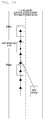
- FIGS. 6 to 8 are views showing the process of selecting a tracking target vehicle
- FIG. 9 is a view showing the driving process of a host vehicle in the event of failure in autonomous driving of a preceding autonomous vehicle
- FIG. 10 is a view showing the process of selecting an emergency target vehicle in the event of failure in autonomous driving of the host vehicle.
- FIGS. 11 and 12 are flowcharts showing an autonomous driving method of the autonomous driving system for vehicles according to an exemplary embodiment of the present disclosure.
- FIGS. 1 to 4 are conceptual views showing an autonomous driving system for vehicles according to an exemplary embodiment of the present disclosure.
- the autonomous driving system of the present disclosure may select a preceding vehicle traveling ahead of a host vehicle 10 as an emergency target vehicle 20 before the autonomous driving of the host vehicle 10 fails, may receive information of the selected emergency target vehicle 20 via vehicle-to-everything (V2X) communication, and may track the emergency target vehicle 20 .
- V2X vehicle-to-everything
- the autonomous driving system of the present disclosure may perform control such that the host vehicle 10 tracks the emergency target vehicle 20 along the path along which the emergency target vehicle 20 travels until normal autonomous driving of the host vehicle 10 is realized.
- the autonomous driving system of the present disclosure may select a preceding vehicle as an emergency target vehicle and may track the selected emergency target vehicle via V2X communication.
- the autonomous driving system of the present disclosure may give warning to the driver of the host vehicle 10 and may hand over control to the driver.
- the autonomous driving system receives information about failure in autonomous driving of the preceding autonomous vehicle via V2X communication and warns the driver of the host vehicle of the possibility of failure in autonomous driving based on the received information, it is possible to enable the driver to stably drive the vehicle by inducing handover of control to the driver before the driver is placed in danger.
- the autonomous driving system of the present disclosure may receive information about failure in autonomous driving of the preceding autonomous vehicle via vehicle-to-vehicle/vehicle-to-infrastructure (V2V/V2I) communication and may perform warning and handover of control to the driver of the host vehicle 10 .
- V2V/V2I vehicle-to-vehicle/vehicle-to-infrastructure
- the autonomous driving system of the present disclosure may receive driving information of nearby vehicles (V2V) and traffic information from infrastructure (V2I) via V2X communication, and in the event of failure in autonomous driving of the preceding vehicle, may immediately warn the driver and may enable handover of control to the driver.
- V2V nearby vehicles
- V2I infrastructure
- the autonomous driving system of the present disclosure may implement autonomous driving of the host vehicle based on path history (PH) information of nearby vehicles and map information of the host vehicle.
- the autonomous driving system of the present disclosure may determine a target vehicle, which is an emergency target vehicle that the host vehicle will follow, and may track the determined target vehicle.
- the autonomous driving system of the present disclosure may perform control such that the host vehicle follows the emergency target vehicle based on the real-time or stored travel path and speed of the emergency target vehicle until handover of control to the driver is performed or until the autonomous driving becomes normal.
- FIG. 5 is a block diagram showing the construction of the autonomous driving system for vehicles according to an exemplary embodiment of the present disclosure.
- the autonomous driving system of the present disclosure may include an autonomous driving controller 200 , a communication controller 100 , a human-machine interface (HMI) device 400 , and a host vehicle driving controller 300 .
- an autonomous driving controller 200 may include an autonomous driving controller 200 , a communication controller 100 , a human-machine interface (HMI) device 400 , and a host vehicle driving controller 300 .
- HMI human-machine interface
- the autonomous driving system of the present disclosure may further include a V2X antenna for receiving information of nearby vehicles.
- the autonomous driving controller 200 may control the autonomous driving of the host vehicle based on information of nearby vehicles received from the communication controller 100 , and upon determining that failure in autonomous driving of nearby vehicles running in the travel path ahead of the host vehicle has occurred, may make a request for warning and control handover through the HMI device 400 .
- the autonomous driving controller 200 may receive information of nearby vehicles, which includes driving information and infrastructure information, from the communication controller 100 .
- the driving information may include an ID of the nearby vehicle, GPS location information of the nearby vehicle, state information of the nearby vehicle, path history information of the nearby vehicle, and autonomous driving information of the nearby vehicle, without limitation thereto.
- the state information of the nearby vehicle may include speed information, heading information, brake operation information, and turn signal information, without limitation thereto.
- the autonomous driving information of the nearby vehicle may include information indicating whether autonomous driving or manual driving is being performed and flag information indicating whether control handover has occurred, without limitation thereto.
- the infrastructure information may include failure information of the nearby vehicle.
- the failure information of the nearby vehicle may include the GPS location and ID of the disabled vehicle, without limitation thereto.
- the autonomous driving controller 200 may determine failure in autonomous driving of the nearby vehicle based on the information of the nearby vehicle received from the communication controller 100 .
- the autonomous driving controller 200 may request the host vehicle driving controller 300 to perform safe-mode driving so that the host vehicle runs in a safe mode.
- the autonomous driving controller 200 may output a warning and a request for control handover to the driver through the HMI device 400 and may operate the autonomous driving system in a safe mode in consideration of the danger that may be caused by the preceding autonomous vehicle.
- the safe mode of the autonomous driving system may include speed reduction, a no-passing mode, defensive driving, and the like.
- the autonomous driving controller 200 may select a tracking target vehicle and may transmit information of the selected tracking target vehicle to the communication controller 100 .
- the autonomous driving controller 200 may extract path information of preceding vehicles from information of nearby vehicles, may extract an autonomous driving target path of the host vehicle from the map information of the host vehicle, may compare the extracted path information of the preceding vehicles with the extracted autonomous driving target path of the host vehicle, may classify preceding vehicles having the same path information as the autonomous driving target path of the host vehicle, and may select a tracking target vehicle from among the classified preceding vehicles.
- the autonomous driving controller 200 may select, from among the classified preceding vehicles, the vehicle running the closest distance from the host vehicle in the lane of the host vehicle.
- the autonomous driving controller 200 may determine whether the vehicle running the closest distance from the host vehicle in the lane of the host vehicle is an autonomous vehicle, and upon determining that the vehicle is an autonomous vehicle, may additionally select the non-autonomous vehicle running the closest distance from the host vehicle in the lane of the host vehicle.
- the autonomous driving controller 200 may select the vehicle running the closest distance from the host vehicle in an adjacent lane.
- the autonomous driving controller 200 may transmit information of the selected tracking target vehicle to the communication controller 100 at every calculation time point.
- the autonomous driving controller 200 may compare the path information of the preceding vehicles received from the communication controller 100 with the autonomous driving target path of the host vehicle received from the map information of the host vehicle and may classify preceding vehicles running in the same path as the host vehicle.
- the autonomous driving controller 200 may select one or two emergency target vehicles (ETVs) from among the classified vehicles at a prescribed period (e.g. about 100 msec) by combining the following conditions.
- ETVs emergency target vehicles
- the first condition may be to select the vehicle running the closest distance from the host vehicle in the lane of the host vehicle.
- the second condition may be to additionally select the non-autonomous vehicle running the closest distance from the host vehicle in the lane of the host vehicle.
- the third condition may be to select the vehicle running the closest distance from the host vehicle in an adjacent lane.
- the autonomous driving controller 200 may transmit the information of the emergency target vehicle to the communication controller 100 at every calculation time point, and the communication controller 100 may store an emergency target vehicle list in a memory provided therein.
- the communication controller 100 which is a V2X controller, may receive information of nearby vehicles through the V2X antenna 500 and may transmit the received information to the autonomous driving controller 200 .
- the communication controller 100 may make a request for warning and control handover, may select an emergency target vehicle, and may make a request for a driving mode of following the selected emergency target vehicle.
- the communication controller 100 may receive information of nearby vehicles (including autonomous driving failure information of autonomous vehicles), which are running ahead of the host vehicle, via V2V/V2I communication, may store the received information, and may transmit the information to the autonomous driving controller 200 at a prescribed period (e.g. about 100 msec).
- a prescribed period e.g. about 100 msec.
- the communication controller 100 may receive information of the tracking target vehicle from the autonomous driving controller 200 , may store the received information of the tracking target vehicle in a memory provided therein, and may generate an emergency target vehicle list.
- the communication controller 100 may extract information of the tracking target vehicle, which is selected as the emergency target vehicle, from the information of the nearby vehicles, may accumulate the extracted information of the tracking target vehicle to generate a history, and may store the generated history in a memory provided therein.
- the communication controller 100 may generate a history of the new tracking target vehicle based on the prestored information of the existing tracking target vehicle.
- the communication controller 100 may use the information of the existing tracking target vehicle up to the time point of generation of the history of the new tracking target vehicle.
- the communication controller 100 may effectively maintain the history information of the target vehicle located ahead of the host vehicle among the history information of the tracking target vehicle and may delete the history information of the target vehicle located at the rear of the host vehicle.
- the communication controller 100 may generate a history by accumulating the latest information of GPS locations, speeds, accelerations, steering angles and yaw rates of the emergency target vehicles, received via V2V communication, and may store the history in a memory.
- the communication controller 100 may generate a history of a new emergency target vehicle utilizing the information of the existing emergency target vehicle stored in the communication controller 100 . At this time, the communication controller 100 may use the history information of the existing emergency target vehicle so as to correspond to the history information of the new emergency target vehicle.
- the history information of an emergency target vehicle ahead of the host vehicle may be effectively maintained, but the history information of an emergency target vehicle at the rear of the host vehicle may be deleted from the memory.
- the communication controller 100 may receive an autonomous driving failure signal from the autonomous driving controller 200 .
- the communication controller 100 may determine that failure in autonomous driving has occurred.
- the communication controller 100 may make a request for a driving mode of following the selected emergency target vehicle until control handover is performed or until the autonomous driving of the host vehicle is performed.
- the communication controller 100 may make a request for a driving mode of following the emergency target vehicle running in a non-autonomous mode.
- the communication controller 100 may make a request for a driving mode of following the emergency target vehicle running in an autonomous mode, and in the event of failure in autonomous driving of the emergency target vehicle running in an autonomous mode, may make a request for a driving mode of following the emergency target vehicle running in a non-autonomous mode.
- the communication controller 100 may extract information of the selected emergency target vehicle from the received information of the nearby vehicles, may store the extracted information of the emergency target vehicle in the history of the emergency target vehicle, and may make a request for a driving mode of following the selected emergency target vehicle based on the stored history of the emergency target vehicle.
- the communication controller 100 may make a request for a driving mode of maintaining the current speed of the host vehicle.
- the communication controller 100 may warn the driver of control handover through the HMI device 400 .
- the communication controller 100 may select an emergency target vehicle and may perform control such that the host vehicle follows the selected emergency target vehicle until handover of control to the driver is performed or until the autonomous driving becomes normal.
- the communication controller 100 may select this non-autonomous emergency target vehicle as the emergency target vehicle that the host vehicle will follow.
- the communication controller 100 may select a non-autonomous emergency target vehicle as the emergency target vehicle that the host vehicle will follow.
- the communication controller 100 may immediately extract information of the selected emergency target vehicle from the information received via V2V communication and may store the extracted information in the history of the emergency target vehicle.
- the communication controller 100 may transmit a vehicle control command to the host vehicle driving controller 300 , which is a longitudinal/lateral direction controller, based on the history information of the emergency target vehicle so that the host vehicle follows the location and speed of the emergency target vehicle.
- the communication controller 100 may perform control such that the current speed of the host vehicle is maintained.
- the HMI device 400 may output warning and handover information in response to the request of the autonomous driving controller 200 and the communication controller 100 .
- the host vehicle driving controller 300 may include a longitudinal/lateral direction controller, an electronic stability controller (ESC), and a motor-driven power steering (MDPS) controller, and may control the driving of the host vehicle in response to the request of the autonomous driving controller 200 and the communication controller 100 .
- ESC electronic stability controller
- MDPS motor-driven power steering
- the autonomous driving system of the present disclosure may receive driving information of nearby vehicles (V2V) and traffic information from infrastructure (V2I) via V2X communication, and in the event of failure in autonomous driving of the preceding vehicle, may immediately warn the driver and may enable handover of control to the driver.
- V2V nearby vehicles
- V2I infrastructure
- the autonomous driving system of the present disclosure may implement the autonomous driving of the host vehicle based on the path history PH information of nearby vehicles and map information of the host vehicle.
- the autonomous driving system of the present disclosure may determine a target vehicle, which is an emergency target vehicle that the host vehicle will follow, and may track the determined target vehicle.
- the autonomous driving system of the present disclosure may perform control such that the host vehicle follows the emergency target vehicle based on the real-time or stored travel path and speed of the emergency target vehicle until handover of control to the driver is performed or until the autonomous driving becomes normal.
- the present disclosure makes it possible to follow a preceding vehicle via V2X communication in the event of failure in autonomous driving so that the host vehicle stably achieves autonomous driving using the autonomous driving controller, which requests warning and handover upon determining that failure in autonomous driving of nearby vehicles running in the travel path ahead of the host vehicle has occurred, and the communication controller, which makes a request for warning and handover and for a driving mode of following the selected emergency target vehicle upon receiving autonomous driving failure information from the autonomous driving controller.
- the present disclosure is capable of immediately receiving information of risk factors, such as failure in autonomous driving of other autonomous vehicles running in the travel path of the host vehicle, via V2X communication, thereby securing defensive driving of the driver and the autonomously running host vehicle and consequently increasing the safety of the autonomously running host vehicle.
- the V2X communication controller controls the vehicle such that the vehicle stably achieves autonomous driving, thereby increasing the safety of the vehicle.
- FIGS. 6 to 8 are views showing the process of selecting a tracking target vehicle.
- the autonomous driving controller may compare the path information of the preceding vehicles received from the communication controller with the autonomous driving target path of the host vehicle received from the map information of the host vehicle and may classify preceding vehicles running in the same path as the host vehicle.
- the autonomous driving controller may select one or two emergency target vehicles from among the classified vehicles at a prescribed period (e.g. about 100 msec) by combining the following conditions.
- a prescribed period e.g. about 100 msec
- the first condition may be to select the vehicle running the closest distance from the host vehicle in the lane of the host vehicle.
- the second condition may be to additionally select the non-autonomous vehicle running the closest distance from the host vehicle in the lane of the host vehicle.
- the third condition may be to select the vehicle running the closest distance from the host vehicle in an adjacent lane.
- the autonomous driving controller may transmit information of the selected emergency target vehicle to the communication controller at every calculation time point, and the communication controller may store an emergency target vehicle list in a memory provided therein.
- the communication controller may generate a history by accumulating the latest information of GPS locations, speeds, accelerations, steering angles and yaw rates of the emergency target vehicles, received via V2V communication and may store the history in a memory.
- the communication controller may generate a history of a new emergency target vehicle utilizing the information of the existing emergency target vehicle stored in the communication controller. At this time, the communication controller may use the history information of the existing emergency target vehicle so as to correspond to the history information of the new emergency target vehicle.
- the history information of an emergency target vehicle ahead of the host vehicle may be effectively maintained, but the history information of an emergency target vehicle at the rear of the host vehicle may be deleted from the memory.
- FIG. 9 is a view showing the driving process of the host vehicle in the event of failure in autonomous driving of a preceding autonomous vehicle.
- the autonomous driving controller may output a warning and a request for control handover to the driver through the HMI device and may operate the autonomous driving system in a safe mode in consideration of the danger that may be caused by the preceding autonomous vehicle.
- the safe mode of the autonomous driving system may include speed reduction, a no-passing mode, defensive driving, and the like.
- FIG. 10 is a view showing the process of selecting an emergency target vehicle in the event of failure in autonomous driving of the host vehicle.
- the communication controller may warn the driver of control handover through the HMI device.
- the communication controller may select an emergency target vehicle and may perform control such that the host vehicle follows the selected emergency target vehicle until handover of control to the driver is performed or until the autonomous driving becomes normal.
- the communication controller may select this non-autonomous emergency target vehicle as the emergency target vehicle that the host vehicle will follow.
- the communication controller may select a non-autonomous emergency target vehicle as the emergency target vehicle that the host vehicle will follow.
- FIGS. 11 and 12 are flowcharts showing the autonomous driving method of the autonomous driving system for vehicles according to an exemplary embodiment of the present disclosure.
- FIG. 11 is a flowchart showing the process of responding to reception of an autonomous driving failure signal of a preceding autonomous vehicle.
- the autonomous driving controller may receive information of nearby vehicles from the communication controller (S 10 ).
- the autonomous driving controller may receive information of nearby vehicles, which includes driving information and infrastructure information, from the communication controller.
- the driving information may include an ID of the nearby vehicle, GPS location information of the nearby vehicle, state information of the nearby vehicle, path history information of the nearby vehicle, and autonomous driving information of the nearby vehicle, without limitation thereto.
- the state information of the nearby vehicle may include speed information, heading information, brake operation information, and turn signal information, without limitation thereto.
- the autonomous driving information of the nearby vehicle may include information indicating whether autonomous driving or manual driving is being performed and flag information indicating whether control handover has occurred, without limitation thereto.
- the infrastructure information may include failure information of the nearby vehicle.
- the failure information of the nearby vehicle may include GPS location and ID of the disabled vehicle, without limitation thereto.
- the autonomous driving controller may control the autonomous driving of the host vehicle based on the information of the nearby vehicle (S 20 ).
- the autonomous driving controller may determine whether failure in autonomous driving of the nearby vehicle running in the travel path ahead of the host vehicle has occurred (S 30 ).
- the autonomous driving controller may determine failure in autonomous driving of the nearby vehicle based on the information of the nearby vehicle received from the communication controller.
- the autonomous driving controller may request warning and handover to the HMI device (S 40 ).
- the autonomous driving controller may request the host vehicle driving controller to perform safe-mode driving (S 50 ).
- the present disclosure may further include a step of selecting, by the autonomous driving controller, a tracking target vehicle and a step of transmitting, by the autonomous driving controller, information of the selected tracking target vehicle to the communication controller.
- the step of selecting the tracking target vehicle may include a step of extracting path information of preceding vehicles from information of nearby vehicles and extracting an autonomous driving target path of the host vehicle from the map information of the host vehicle, a step of comparing the extracted path information of the preceding vehicles with the extracted autonomous driving target path of the host vehicle, a step of classifying preceding vehicles having the same path information as the autonomous driving target path of the host vehicle, and a step of selecting a tracking target vehicle from among the classified preceding vehicles.
- the step of selecting a tracking target vehicle from among the classified preceding vehicles may include a step of selecting the vehicle running the closest distance from the host vehicle in the lane of the host vehicle from among the classified preceding vehicles.
- the step of selecting a tracking target vehicle from among the classified preceding vehicles may include a step of determining whether the vehicle running the closest distance from the host vehicle in the lane of the host vehicle is an autonomous vehicle, and upon determining that the vehicle is an autonomous vehicle, may further include a step of additionally selecting the non-autonomous vehicle running the closest distance from the host vehicle in the lane of the host vehicle.
- the step of selecting a tracking target vehicle from among the classified preceding vehicles may include a step of selecting the vehicle running the closest distance from the host vehicle in an adjacent lane.
- the step of transmitting information of the selected tracking target vehicle to the communication controller may include a step of transmitting information of the selected tracking target vehicle at every calculation time point.
- FIG. 12 is a flowchart showing the process of selecting an emergency target vehicle in the event of failure in autonomous driving of the host vehicle.
- the communication controller may receive information of nearby vehicles (S 110 ).
- the communication controller may extract information of the tracking target vehicle, which is selected as the emergency target vehicle, from the information of the nearby vehicles, may accumulate the extracted information of the tracking target vehicle to generate a history, and may store the generated history in a memory provided therein.
- the communication controller may generate a history of the new tracking target vehicle based on the prestored information of the existing tracking target vehicle.
- the step of generating the history of the new tracking target vehicle may include a step of using the information of the existing tracking target vehicle up to the time point of generation of the history of the new tracking target vehicle.
- the communication controller may effectively maintain the history information of the target vehicle located ahead of the host vehicle among the history information of the tracking target vehicle and may delete the history information of the target vehicle located at the rear of the host vehicle.
- the communication controller may receive information of the tracking target vehicle selected as the emergency target vehicle from the autonomous driving controller, may store the received information of the tracking target vehicle in a memory provided therein, and may generate an emergency target vehicle list.
- the communication controller may transmit the information of the nearby vehicles to the autonomous driving controller (S 120 ).
- the communication controller may receive autonomous driving failure information from the autonomous driving controller (S 130 ).
- the communication controller may determine that failure in autonomous driving has occurred upon receiving an autonomous driving failure signal from the autonomous driving controller or after not receiving a response signal from the autonomous driving controller within a prescribed time period.
- the communication controller may request warning and handover to the HMI device (S 140 ).
- the communication controller may select an emergency target vehicle (S 150 ).
- the communication controller may request the host vehicle driving controller to perform a driving mode of following the selected emergency target vehicle (S 160 ).
- the step of requesting a driving mode of following the selected emergency target vehicle may include a step of requesting a driving mode of following the selected emergency target vehicle until handover is performed or until the autonomous driving of the host vehicle becomes normal.
- the step of requesting a driving mode of following the selected emergency target vehicle may include, if only an emergency target vehicle running in a non-autonomous mode is present, requesting a driving mode of following the emergency target vehicle running in a non-autonomous mode.
- the step of requesting a driving mode of following the selected emergency target vehicle may include, if an emergency target vehicle running in a non-autonomous mode and an emergency target vehicle running in an autonomous mode are present, requesting a driving mode of following the emergency target vehicle running in an autonomous mode, and if the autonomous driving of the emergency target vehicle running in an autonomous mode fails, requesting a driving mode of following the emergency target vehicle running in a non-autonomous mode.
- the step of requesting a driving mode of following the selected emergency target vehicle may include a step of extracting information of the selected emergency target vehicle from the received information of the nearby vehicles, a step of storing the extracted information of the emergency target vehicle in the history of the emergency target vehicle, and a step of requesting a driving mode of following the selected emergency target vehicle based on the stored history of the emergency target vehicle.
- the step of requesting a driving mode of following the selected emergency target vehicle may further include, if the speed information in the history of the emergency target vehicle, which was stored at the location of the host vehicle, is higher than the speed of the host vehicle, requesting a driving mode of maintaining the current speed of the host vehicle.
- a computer-readable recording medium in which a program for implementing the autonomous driving method of the autonomous driving system for vehicles according to the present disclosure is recorded, and the computer-readable recording medium may perform the process provided by the autonomous driving method according to an exemplary embodiment of the present disclosure.
- a vehicle may include a plurality of control devices communicatively connected to each other, and an autonomous driving system configured to control autonomous driving to follow a preceding vehicle via communication with the plurality of control devices.
- the autonomous driving system may include an autonomous driving controller configured to control autonomous driving of a host vehicle based on information of nearby vehicles, the autonomous driving controller requesting warning and handover upon determining that failure in autonomous driving of nearby vehicles running in the travel path ahead of the host vehicle has occurred, a communication controller configured to receive the information of the nearby vehicles and to transmit the information of the nearby vehicles to the autonomous driving controller, upon receiving autonomous driving failure information from the autonomous driving controller, the communication controller requesting warning and handover, selecting an emergency target vehicle, and requesting a driving mode of following the selected emergency target vehicle, a human-machine interface (HMI) device configured to output warning and handover information in response to the request of the autonomous driving controller and the communication controller, and a host vehicle driving controller configured to control the driving of the host vehicle in response to the request of the autonomous driving controller and the communication controller
- HMI human-mach
- the autonomous driving system and method for vehicles and the vehicle including the same related to at least one embodiment of the present disclosure constructed as described above it is possible to follow a preceding vehicle via V2X communication in the event of failure in autonomous driving so that the host vehicle stably achieves autonomous driving using the autonomous driving controller, which requests warning and handover upon determining that failure in autonomous driving of nearby vehicles running in the travel path ahead of the host vehicle has occurred, and the communication controller, which makes a request for warning and handover and for a driving mode of following a selected emergency target vehicle upon receiving autonomous driving failure information from the autonomous driving controller.
- the present disclosure is capable of immediately receiving information of risk factors, such as failure in autonomous driving of other autonomous vehicles running in the travel path of the host vehicle, via V2X communication, thereby securing defensive driving of the driver and the autonomously running host vehicle and consequently increasing the safety of the autonomously running host vehicle.
- the V2X communication controller controls the vehicle such that the vehicle stably achieves autonomous driving, thereby increasing the safety of the vehicle.
- the present disclosure described above may be implemented as a computer-readable code of a computer-readable medium in which programs are recorded.
- the computer-readable medium includes all kinds of recording devices in which data that may be read by a computer system is stored. Examples of the computer-readable medium may include a hard disk drive (HDD), a solid-state disk (SSD), a silicon disk drive (SDD), ROM, RAM, a CD-ROM, a magnetic tape, a floppy disk, and an optical data storage device.
- the computer-readable recording medium includes a carrier wave (e.g. data transmission over the Internet).
Landscapes
- Engineering & Computer Science (AREA)
- Automation & Control Theory (AREA)
- Transportation (AREA)
- Mechanical Engineering (AREA)
- Human Computer Interaction (AREA)
- Computer Networks & Wireless Communication (AREA)
- Signal Processing (AREA)
- Physics & Mathematics (AREA)
- Aviation & Aerospace Engineering (AREA)
- General Physics & Mathematics (AREA)
- Remote Sensing (AREA)
- Radar, Positioning & Navigation (AREA)
- Business, Economics & Management (AREA)
- Health & Medical Sciences (AREA)
- Medical Informatics (AREA)
- Evolutionary Computation (AREA)
- Game Theory and Decision Science (AREA)
- Artificial Intelligence (AREA)
- Mathematical Physics (AREA)
- Public Health (AREA)
- Emergency Management (AREA)
- Environmental & Geological Engineering (AREA)
- Chemical & Material Sciences (AREA)
- Combustion & Propulsion (AREA)
- Traffic Control Systems (AREA)
Abstract
Description
Claims (16)
Applications Claiming Priority (2)
| Application Number | Priority Date | Filing Date | Title |
|---|---|---|---|
| KR1020180158237A KR102524297B1 (en) | 2018-12-10 | 2018-12-10 | Apparatus and method for controlling autonomous driving of vehicle and vehicle including the same |
| KR10-2018-0158237 | 2018-12-10 |
Publications (2)
| Publication Number | Publication Date |
|---|---|
| US20200183384A1 US20200183384A1 (en) | 2020-06-11 |
| US11215991B2 true US11215991B2 (en) | 2022-01-04 |
Family
ID=70776431
Family Applications (1)
| Application Number | Title | Priority Date | Filing Date |
|---|---|---|---|
| US16/427,174 Active 2040-02-11 US11215991B2 (en) | 2018-12-10 | 2019-05-30 | Autonomous driving system and method for vehicles and vehicle including the same |
Country Status (3)
| Country | Link |
|---|---|
| US (1) | US11215991B2 (en) |
| KR (1) | KR102524297B1 (en) |
| DE (1) | DE102019117493A1 (en) |
Families Citing this family (15)
| Publication number | Priority date | Publication date | Assignee | Title |
|---|---|---|---|---|
| JP7096783B2 (en) * | 2019-03-15 | 2022-07-06 | 本田技研工業株式会社 | Vehicle control devices, vehicle control methods, and programs |
| DE102019209619A1 (en) * | 2019-07-01 | 2021-01-07 | Hyundai Motor Company | METHOD FOR AUTONOMOUS VEHICLE OPERATION, CONTROL DEVICE FOR A VEHICLE AND VEHICLE |
| CN112124319B (en) * | 2020-08-28 | 2021-04-23 | 青岛慧拓智能机器有限公司 | an intelligent driving system |
| US11726475B2 (en) | 2020-11-30 | 2023-08-15 | At&T Intellectual Property I, L.P. | Autonomous aerial vehicle airspace claiming and announcing |
| US11443518B2 (en) | 2020-11-30 | 2022-09-13 | At&T Intellectual Property I, L.P. | Uncrewed aerial vehicle shared environment privacy and security |
| US12183110B2 (en) | 2020-11-30 | 2024-12-31 | At&T Intellectual Property I, L.P. | Autonomous aerial vehicle projection zone selection |
| US11797896B2 (en) | 2020-11-30 | 2023-10-24 | At&T Intellectual Property I, L.P. | Autonomous aerial vehicle assisted viewing location selection for event venue |
| US20220171385A1 (en) | 2020-11-30 | 2022-06-02 | At&T Intellectual Property I, L.P. | Competitive and collaborative autonomous vehicle task performance |
| CN114924554B (en) * | 2021-01-15 | 2025-10-31 | 希迪智驾科技股份有限公司 | Remote vehicle control method, vehicle, system, device, and computer storage medium |
| EP4186770B1 (en) * | 2021-11-30 | 2025-04-09 | Zenseact AB | Method for estimation of an operational design domain boundary, corresponding computer-readable storage medium and system |
| KR20230136794A (en) * | 2022-03-17 | 2023-09-27 | 현대자동차주식회사 | Apparatus and method for controlling autonomous driving vehicle |
| EP4613595A4 (en) * | 2022-12-09 | 2026-03-11 | Shenzhen Yinwang Intelligent Technology Co Ltd | COMMUNICATION METHOD AND DEVICE |
| CN116279469B (en) * | 2023-05-22 | 2023-09-22 | 安徽中科星驰自动驾驶技术有限公司 | Automatic driving vehicle following method and system |
| CN117360616B (en) * | 2023-11-14 | 2026-04-14 | 浙江极氪智能科技有限公司 | Vehicle, vehicle control system and control method |
| KR102736221B1 (en) * | 2024-03-12 | 2024-11-28 | 재단법인차세대융합기술연구원 | Control server moniotring autonomous vehicles on real roads |
Citations (6)
| Publication number | Priority date | Publication date | Assignee | Title |
|---|---|---|---|---|
| US8744666B2 (en) * | 2011-07-06 | 2014-06-03 | Peloton Technology, Inc. | Systems and methods for semi-autonomous vehicular convoys |
| US20150070160A1 (en) * | 2013-09-12 | 2015-03-12 | Volvo Car Corporation | Method and arrangement for handover warning in a vehicle having autonomous driving capabilities |
| US20170139411A1 (en) * | 2015-11-16 | 2017-05-18 | Polysync Technologies, Inc. | Autonomous Vehicle Platform and Safety Architecture |
| CN106873589A (en) * | 2017-02-16 | 2017-06-20 | 北理慧动(常熟)车辆科技有限公司 | A kind of autonomous follower method of intelligent vehicle |
| US20190056733A1 (en) * | 2017-07-28 | 2019-02-21 | Nuro, Inc. | Systems and methods for remote operation of robot vehicles |
| US20210075800A1 (en) * | 2017-12-15 | 2021-03-11 | GM Global Technology Operations LLC | Ethernet network-profiling intrusion detection control logic and architectures for in-vehicle controllers |
Family Cites Families (4)
| Publication number | Priority date | Publication date | Assignee | Title |
|---|---|---|---|---|
| JPH09282599A (en) * | 1996-04-17 | 1997-10-31 | Toyota Motor Corp | Vehicle drive controller |
| JP2011054082A (en) * | 2009-09-04 | 2011-03-17 | Hitachi Ltd | Autonomous moving apparatus |
| JP2015082306A (en) * | 2013-10-24 | 2015-04-27 | トヨタ自動車株式会社 | Communication system, in-vehicle device, center server, and control method |
| WO2018142568A1 (en) * | 2017-02-03 | 2018-08-09 | 本田技研工業株式会社 | Vehicle control system, vehicle control method, and vehicle control program |
-
2018
- 2018-12-10 KR KR1020180158237A patent/KR102524297B1/en active Active
-
2019
- 2019-05-30 US US16/427,174 patent/US11215991B2/en active Active
- 2019-06-28 DE DE102019117493.7A patent/DE102019117493A1/en active Pending
Patent Citations (7)
| Publication number | Priority date | Publication date | Assignee | Title |
|---|---|---|---|---|
| US8744666B2 (en) * | 2011-07-06 | 2014-06-03 | Peloton Technology, Inc. | Systems and methods for semi-autonomous vehicular convoys |
| US20150070160A1 (en) * | 2013-09-12 | 2015-03-12 | Volvo Car Corporation | Method and arrangement for handover warning in a vehicle having autonomous driving capabilities |
| US20170139411A1 (en) * | 2015-11-16 | 2017-05-18 | Polysync Technologies, Inc. | Autonomous Vehicle Platform and Safety Architecture |
| CN106873589A (en) * | 2017-02-16 | 2017-06-20 | 北理慧动(常熟)车辆科技有限公司 | A kind of autonomous follower method of intelligent vehicle |
| CN106873589B (en) * | 2017-02-16 | 2020-03-20 | 北理慧动(常熟)车辆科技有限公司 | Intelligent vehicle autonomous following method |
| US20190056733A1 (en) * | 2017-07-28 | 2019-02-21 | Nuro, Inc. | Systems and methods for remote operation of robot vehicles |
| US20210075800A1 (en) * | 2017-12-15 | 2021-03-11 | GM Global Technology Operations LLC | Ethernet network-profiling intrusion detection control logic and architectures for in-vehicle controllers |
Also Published As
| Publication number | Publication date |
|---|---|
| KR20200075920A (en) | 2020-06-29 |
| KR102524297B1 (en) | 2023-04-24 |
| DE102019117493A1 (en) | 2020-06-10 |
| US20200183384A1 (en) | 2020-06-11 |
Similar Documents
| Publication | Publication Date | Title |
|---|---|---|
| US20200183384A1 (en) | Autonomous driving system and method for vehicles and vehicle including the same | |
| KR102916267B1 (en) | Information processing device and information processing method, and program | |
| CN107767658B (en) | Team Autonomous Vehicle Navigation Sensor Swap | |
| EP3086990B1 (en) | Method and system for driver assistance for a vehicle | |
| US10121376B2 (en) | Vehicle assistance | |
| US9666069B2 (en) | Autonomous vehicle handling and performance adjustment | |
| US20190168748A1 (en) | Teleassistance data prioritization for self-driving vehicles | |
| KR20200081530A (en) | Safety control system and method of self-driving vehicles | |
| CN107021099A (en) | Autonomous vehicle emergency modes of operation | |
| US12214810B2 (en) | Autonomous driving system, autonomous driving control method, and nontransitory storage medium | |
| KR102524296B1 (en) | Vehicle control method and system according to detection of load falling | |
| US20220366788A1 (en) | Autonomous driving system, autonomous driving control method, and non-transitory storage medium | |
| US12202514B2 (en) | Method for evaluating route sections | |
| US20230365143A1 (en) | System and method for remote control guided autonomy for autonomous vehicles | |
| US11420640B2 (en) | Method for autonomously operating a vehicle, controller device for a vehicle, and vehicle | |
| JPWO2010092664A1 (en) | In-vehicle information processing apparatus, information providing apparatus, and vehicle information processing system | |
| EP3786012B1 (en) | Lane keeping for autonomous vehicles | |
| US20210078596A1 (en) | Safe trajectory tracking in uncertain environments | |
| CN112660155B (en) | Vehicle Control Systems | |
| KR20260045736A (en) | Vehicle and automatic driving system | |
| CN112677976B (en) | Vehicle driving method, device, vehicle and storage medium | |
| US20230027357A1 (en) | Vehicle control system, vehicle control method, and storage medium | |
| JP2024109442A (en) | Anomaly detection system and anomaly detection method | |
| US12168453B2 (en) | Vehicle control system | |
| US12222720B2 (en) | Dynamic tire rotation during collision |
Legal Events
| Date | Code | Title | Description |
|---|---|---|---|
| FEPP | Fee payment procedure |
Free format text: ENTITY STATUS SET TO UNDISCOUNTED (ORIGINAL EVENT CODE: BIG.); ENTITY STATUS OF PATENT OWNER: LARGE ENTITY |
|
| AS | Assignment |
Owner name: HYUNDAI MOTOR COMPANY, KOREA, REPUBLIC OF Free format text: ASSIGNMENT OF ASSIGNORS INTEREST;ASSIGNORS:NOH, HAHK REL;SUNG, SU LYUN;HWANG, DAE SUNG;AND OTHERS;REEL/FRAME:049327/0637 Effective date: 20190524 Owner name: KIA MOTORS CORPORATION, KOREA, REPUBLIC OF Free format text: ASSIGNMENT OF ASSIGNORS INTEREST;ASSIGNORS:NOH, HAHK REL;SUNG, SU LYUN;HWANG, DAE SUNG;AND OTHERS;REEL/FRAME:049327/0637 Effective date: 20190524 |
|
| STPP | Information on status: patent application and granting procedure in general |
Free format text: NON FINAL ACTION MAILED |
|
| STPP | Information on status: patent application and granting procedure in general |
Free format text: RESPONSE TO NON-FINAL OFFICE ACTION ENTERED AND FORWARDED TO EXAMINER |
|
| STPP | Information on status: patent application and granting procedure in general |
Free format text: FINAL REJECTION MAILED |
|
| STPP | Information on status: patent application and granting procedure in general |
Free format text: RESPONSE AFTER FINAL ACTION FORWARDED TO EXAMINER |
|
| STPP | Information on status: patent application and granting procedure in general |
Free format text: NOTICE OF ALLOWANCE MAILED -- APPLICATION RECEIVED IN OFFICE OF PUBLICATIONS |
|
| STPP | Information on status: patent application and granting procedure in general |
Free format text: PUBLICATIONS -- ISSUE FEE PAYMENT RECEIVED |
|
| STPP | Information on status: patent application and granting procedure in general |
Free format text: PUBLICATIONS -- ISSUE FEE PAYMENT VERIFIED |
|
| STCF | Information on status: patent grant |
Free format text: PATENTED CASE |
|
| MAFP | Maintenance fee payment |
Free format text: PAYMENT OF MAINTENANCE FEE, 4TH YEAR, LARGE ENTITY (ORIGINAL EVENT CODE: M1551); ENTITY STATUS OF PATENT OWNER: LARGE ENTITY Year of fee payment: 4 |