US11214918B2 - Nanowire structures and methods of manufacture thereof - Google Patents
Nanowire structures and methods of manufacture thereof Download PDFInfo
- Publication number
- US11214918B2 US11214918B2 US16/520,265 US201916520265A US11214918B2 US 11214918 B2 US11214918 B2 US 11214918B2 US 201916520265 A US201916520265 A US 201916520265A US 11214918 B2 US11214918 B2 US 11214918B2
- Authority
- US
- United States
- Prior art keywords
- metal
- nws
- organic
- nanowires
- nanofibers
- Prior art date
- Legal status (The legal status is an assumption and is not a legal conclusion. Google has not performed a legal analysis and makes no representation as to the accuracy of the status listed.)
- Active, expires
Links
Images




Classifications
-
- D—TEXTILES; PAPER
- D06—TREATMENT OF TEXTILES OR THE LIKE; LAUNDERING; FLEXIBLE MATERIALS NOT OTHERWISE PROVIDED FOR
- D06M—TREATMENT, NOT PROVIDED FOR ELSEWHERE IN CLASS D06, OF FIBRES, THREADS, YARNS, FABRICS, FEATHERS OR FIBROUS GOODS MADE FROM SUCH MATERIALS
- D06M11/00—Treating fibres, threads, yarns, fabrics or fibrous goods made from such materials, with inorganic substances or complexes thereof; Such treatment combined with mechanical treatment, e.g. mercerising
- D06M11/32—Treating fibres, threads, yarns, fabrics or fibrous goods made from such materials, with inorganic substances or complexes thereof; Such treatment combined with mechanical treatment, e.g. mercerising with oxygen, ozone, ozonides, oxides, hydroxides or percompounds; Salts derived from anions with an amphoteric element-oxygen bond
- D06M11/34—Treating fibres, threads, yarns, fabrics or fibrous goods made from such materials, with inorganic substances or complexes thereof; Such treatment combined with mechanical treatment, e.g. mercerising with oxygen, ozone, ozonides, oxides, hydroxides or percompounds; Salts derived from anions with an amphoteric element-oxygen bond with oxygen, ozone or ozonides
-
- H—ELECTRICITY
- H01—ELECTRIC ELEMENTS
- H01M—PROCESSES OR MEANS, e.g. BATTERIES, FOR THE DIRECT CONVERSION OF CHEMICAL ENERGY INTO ELECTRICAL ENERGY
- H01M50/00—Constructional details or processes of manufacture of the non-active parts of electrochemical cells other than fuel cells, e.g. hybrid cells
- H01M50/40—Separators; Membranes; Diaphragms; Spacing elements inside cells
- H01M50/409—Separators, membranes or diaphragms characterised by the material
- H01M50/44—Fibrous material
-
- H—ELECTRICITY
- H01—ELECTRIC ELEMENTS
- H01M—PROCESSES OR MEANS, e.g. BATTERIES, FOR THE DIRECT CONVERSION OF CHEMICAL ENERGY INTO ELECTRICAL ENERGY
- H01M10/00—Secondary cells; Manufacture thereof
- H01M10/05—Accumulators with non-aqueous electrolyte
- H01M10/052—Li-accumulators
- H01M10/0525—Rocking-chair batteries, i.e. batteries with lithium insertion or intercalation in both electrodes; Lithium-ion batteries
-
- H—ELECTRICITY
- H01—ELECTRIC ELEMENTS
- H01M—PROCESSES OR MEANS, e.g. BATTERIES, FOR THE DIRECT CONVERSION OF CHEMICAL ENERGY INTO ELECTRICAL ENERGY
- H01M50/00—Constructional details or processes of manufacture of the non-active parts of electrochemical cells other than fuel cells, e.g. hybrid cells
- H01M50/40—Separators; Membranes; Diaphragms; Spacing elements inside cells
- H01M50/403—Manufacturing processes of separators, membranes or diaphragms
-
- H—ELECTRICITY
- H01—ELECTRIC ELEMENTS
- H01M—PROCESSES OR MEANS, e.g. BATTERIES, FOR THE DIRECT CONVERSION OF CHEMICAL ENERGY INTO ELECTRICAL ENERGY
- H01M50/00—Constructional details or processes of manufacture of the non-active parts of electrochemical cells other than fuel cells, e.g. hybrid cells
- H01M50/40—Separators; Membranes; Diaphragms; Spacing elements inside cells
- H01M50/409—Separators, membranes or diaphragms characterised by the material
- H01M50/411—Organic material
-
- H—ELECTRICITY
- H01—ELECTRIC ELEMENTS
- H01M—PROCESSES OR MEANS, e.g. BATTERIES, FOR THE DIRECT CONVERSION OF CHEMICAL ENERGY INTO ELECTRICAL ENERGY
- H01M50/00—Constructional details or processes of manufacture of the non-active parts of electrochemical cells other than fuel cells, e.g. hybrid cells
- H01M50/40—Separators; Membranes; Diaphragms; Spacing elements inside cells
- H01M50/409—Separators, membranes or diaphragms characterised by the material
- H01M50/431—Inorganic material
- H01M50/434—Ceramics
-
- Y—GENERAL TAGGING OF NEW TECHNOLOGICAL DEVELOPMENTS; GENERAL TAGGING OF CROSS-SECTIONAL TECHNOLOGIES SPANNING OVER SEVERAL SECTIONS OF THE IPC; TECHNICAL SUBJECTS COVERED BY FORMER USPC CROSS-REFERENCE ART COLLECTIONS [XRACs] AND DIGESTS
- Y02—TECHNOLOGIES OR APPLICATIONS FOR MITIGATION OR ADAPTATION AGAINST CLIMATE CHANGE
- Y02E—REDUCTION OF GREENHOUSE GAS [GHG] EMISSIONS, RELATED TO ENERGY GENERATION, TRANSMISSION OR DISTRIBUTION
- Y02E60/00—Enabling technologies; Technologies with a potential or indirect contribution to GHG emissions mitigation
- Y02E60/10—Energy storage using batteries
Definitions
- the present disclosure relates generally to a nanowire structures and methods of manufacturing nanowire structures.
- One dimensional (1D) ceramic nanowires exhibit ultra-high stiffness and strength.
- 1D ceramic NWs can significantly improve the load-bearing characteristics of epoxy, metal, glass, and polymer composites.
- most conventional synthesis methods of ceramic NWs have proved to be difficult and not appropriate for low-cost industrial scale production.
- the high price of ceramic NWs is related to the use of expensive synthesis tools and precursors, corrosive and dangerous chemicals, and small throughput (mass of NWs produced in the reactors per unit reactor volume per unit time) using conventional techniques, such as various template-assisted approaches, chemical vapor deposition, and electrospinning.
- metal-organic nanowires or nanofibers comprising polymer chains with around 100 or more repeat units are synthesized.
- the metal-organic nanowires or nanofibers are exposed to a reactive gas at a temperature in excess of around 100° C. and at a pressure in the range from around 0.001 to around 100 atmospheres.
- FIGS. 1A-1D illustrate crystallographic characterizations of an Al—Li alloy produced with different Li content (16, 9 and 4 wt. %):
- FIG. 1A XRD;
- FIGS. 1B-D selected TEM micrographs of the Al—Li16, Al—Li-9, and Al—Li4 samples, respectively.
- FIGS. 2A-2I illustrates morphologies of Al—Li alloy produced with different Li content:
- FIGS. 2A-2C SEM image of grains of Al—Li16, Al—Li9, and Al—Li4 alloy;
- FIGS. 2D-2F SEM image of cross section of Al—Li16, Al—Li9, and Al—Li4 alloy and
- FIGS. 2G-2I EDS Al mapping of the regions shown above. Lighter parts of FIGS. 2G-2I correspond to Al.
- FIGS. 3A-3D illustrate the evolution of the NW growth.
- FIGS. 3A-3B illustrate low and high magnification SEM images, respectively, of grains of Al—Li16 alloy treated with ethanol for 10-20 min;
- FIGS. 3B and 3D illustrate corresponding EDS Al, O and C mappings of the regions shown beside in FIGS. 3A and 3C , respectively.
- FIGS. 4A-4D illustrate morphologies of ( FIG. 4A ) NW bundles, ( FIG. 4B ) separated NWs after 60 h treatment of the bundles in ethanol, ( FIG. 4C ) the degraded NWs formed after treatment in ethanol for 168 h, and ( FIG. 4D ) length/diameter (L/D) ratio of the NWs versus reaction time of NWs bundles with ethanol.
- FIGS. 5A-5D illustrate Al MAS NMR of the NWs bundles ( FIG. 5A ) and separated NWs ( FIG. 5B ).
- the degradation pathways of six-coordinated Al atoms with tightly packed ethoxide groups leads to the less hindered four- and five-coordinated Al atoms.
- FIG. 6 illustrates a schematic representation and molecular mechanism of the formation of polymer ethoxide NWs as a result of exposure of the Al—Li alloys to anhydrous ethanol.
- individual NWs are represented by single chains.
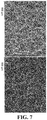
- FIG. 7 illustrates an SEM image of grains of Al—Li16 alloy treated with ethanol for 1-5 min.
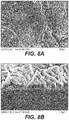
- FIGS. 8A-8B illustrate SEM images of Al—Li16 alloy treated with ethanol for 10 min.
- FIG. 9 illustrates a thermogravimetric analysis of the NWs bundles (14.6 wt. %), separated NWs at 60 h of swelling (66.5 wt. %), and an intermediate between them at 3 h of swelling (37.5 wt. %).
- FIG. 10 illustrates a 700 MHz 13C NMR of NW bundles in CDCl 3 .
- FIG. 11 illustrates a 400 MHz 1 H NMR of NW bundles in CDCl 3 .
- FIG. 12 illustrates a 700 MHz 1 H NMR of separated NWs in CDCl 3 .
- FIG. 13 illustrates a 700 MHz 13 C NMR of separated NWs in CDCl 3 .
- FIG. 14 illustrates an Al MAS NMR of degraded NWs.
- FIG. 15 illustrates an example (e.g., Li-ion or Na-ion, etc.) battery in which the components, materials, methods, and other techniques described herein, or combinations thereof, may be applied according to various embodiments.
- an example e.g., Li-ion or Na-ion, etc.
- FIG. 16 illustrates a process of manufacturing nanowires (specifically, metal-organic nanowires) in accordance with an embodiment of the disclosure.
- FIG. 17 illustrates an example implementation of part of the process of FIG. 16 in accordance with an embodiment of the disclosure.
- FIG. 18 illustrates an example implementation of the process of FIG. 17 in accordance with an embodiment of the disclosure.
- any numerical range described herein with respect to any embodiment of the present invention is intended not only to define the upper and lower bounds of the associated numerical range, but also as an implicit disclosure of each discrete value within that range in units or increments that are consistent with the level of precision by which the upper and lower bounds are characterized.
- a numerical distance range from 50 ⁇ m to 1200 ⁇ m i.e., a level of precision in units or increments of ones
- a numerical percentage range from 0.01% to 10.00% encompasses (in %) a set of [0.01, 0.02, 0.03, . . . , 9.99, 10.00], as if the intervening numbers between 0.02 and 9.99 in units or increments of hundredths were expressly disclosed.
- any of the intervening numbers encompassed by any disclosed numerical range are intended to be interpreted as if those intervening numbers had been disclosed expressly, and any such intervening number may thereby constitute its own upper and/or lower bound of a sub-range that falls inside of the broader range.
- Each sub-range e.g., each range that includes at least one intervening number from the broader range as an upper and/or lower bound
- compositions such as other single metal or mixed metal oxides as well as single metal (or mixed metal(s)) oxyfluorides, single metal (or mixed metal(s)) fluorides, single metal (or mixed metal(s)) oxynitrides, single metal (or mixed metal(s)) nitrides, single metal (or mixed metal(s)) oxyhydroxides, single metal (or mixed metal(s)) sulfides or selenides, single metal (or mixed metal(s)) carbides, single metal (or mixed metal(s)) oxycarbides, single metal (or mixed metal(s)) carbonitrides, single metal (or mixed metal(s)
- suitable metal (or semimetal) atoms for such compositions may include (but not limited to) at least one of the following (depending on the particular application) or their combination: Al, Li, Mg, Ti, Ta, Li, Sc, Cu, Fe, Na, K, Cs, Ba, Be, C, Zn, Cr, Zr, Y, La, Ce, Sn, Sb, Si, Sm, Mo, Nb, Ta, W, Ag, Au, Pt, U, to name a few.
- such metals may not form carbides or other ceramic compounds, as known in state of the art.
- nanowires or whiskers, nanofibers, nanoribbons or other elongated particles with aspect ratio in the range from around 5 to around 100,000,000, more commonly in the range from around 20 to around 50,000
- a single metal for example, just Al or just Mg
- various aspects may be applicable to compositions that comprise two, three or more metals.
- Al may be used in combination with Li, Mg, Si, Cu, Zn, Zr, Ti, Ta, Cr, La (or Ln in general), Y, Sc, and many other metals to form oxide, oxyfluorides, fluorides, oxynitrides, nitrides, oxyhydroxides, sulfides, selenides and various other ceramic compositions of interest.
- Mg and other metals may be used in combination with Li, Al, Si, Zn, Zr, Ti, Ta, Cr, La (or Ln in general), Y, Sc, and many other metals to form oxide, oxyfluorides, fluorides, oxynitrides, nitrides, oxyhydroxides, sulfides, selenides and various other ceramic compositions of interest.
- compositions may contain alkoxide and some fraction of alkoxide adjacent species, such as hydroxide, oxide, nitride, oxynitride, fluoride, oxyfluoride or many others.
- the structure of pure alkoxide may contain bridging alkoxide groups (where oxygen of alkoxide is bonded to two or more metal atoms) and terminal alkoxide groups (where oxygen of alkoxide is bonded to one metal atom).
- compositions that may contain both alkoxide and one or more other species (such as hydroxy-alkoxides, carboxy-alkoxide, oxy-alkoxide, nitrido-alkoxides, among many others), either the alkoxide or the other group(s) may occupy bridging or terminal positions.
- the coordination number for metal atoms in such compositions may vary from that of the pure alkoxides and the ratio of the alkoxide groups (—RO) to metal atoms may vary from that of the pure alkoxides.
- the aluminum (Al) atoms may not be 6-coordinated (as expected for pure Al(EtO) 3 ), but may, for example, comprise 6-coordinated, 5-coordinated, 4-coordinated and 3-coordinated Al atoms.
- the molar ratio of ethoxide groups (-EtO) to Al atom may not be 3 (as expected for pure Al(EtO) 3 ), but may, for example, range from as high as around 10 to as low as around 0.1.
- Al ethoxide can comprise ethoxy, hydroxy, oxy and ethanol ligands, such as Al(EtO) 3 ⁇ (x+y+z) (OH) x (EtOH) y (O) z , where x, y and z range from as high as 3 to as low as 0.001.
- ethoxy, hydroxy, oxy and ethanol ligands can occupy bridging or terminal positions.
- compositions that may contain oligomeric and polymeric alkoxides than may contain from about 2 to about 1,000,000,000 repeat units.
- alkoxides may include aluminum ethoxide compositions such as [Al(EtO) 3 ⁇ (x+y+z) (OH) x (EtOH) y (O) z ] n , where x, y and z may range from as high as 3 to as low as 0.001 and n may range from about 1 to about 1,000,000,000.
- monomer units in oligomers and polymers may comprise chemically different units, where ligand positions may be different.
- monomer units in oligomers and polymers may comprise 6-coordinated, 5-coordinated, 4-coordinated and 3-coordinated Al atoms.
- oligomeric and polymeric alkoxides may each exhibit a different tacticity, molecular weight and/or polydispersity index.
- metal-organic e.g., alkoxide, such as ethoxide, n-propoxide, iso-propoxide and others
- oxide NWs by heating in air (or, more generally, oxygen-containing gas or water vapor-containing gas or in some designs, inert gas)
- various aspects may be applicable to the formation of ceramic NWs by treatment of the metal-organic NWs in other controlled environments (e.g., in ammonia solution or gas comprising ammonia vapors or nitrogen plasma for the formation of nitrides or oxynitrides or, more generally, nitrogen-doped or nitrogen-containing ceramics; methane, ethylene, acetylene, propylene or other hydrocarbon-containing gases or their mixtures for the formation of carbides or oxycarbides or carbo-nitrides or carbon-doped or more generally carbon-containing ceramics; gases comprising sulfur vapors or hydrogen
- metal-organic e.g., alkoxide, such as ethoxide or propoxide and others
- ceramic e.g., oxide
- alcohol reagents e.g., ethanol, methanol, iso-propanol, n-propanol, tert-butanol, and others
- ROH general formula ROH in which R can be hydrogen, NH 2 , OH, alkyl, C n H 2n+1 , hydroxyalkyl, aminoalkyl, carboxyalkyl, cycloalkyl, alkenyl, alkynyl, aryl, phenyl (C 6 H 5 ), naphtyl, heteroaryl, alkylphenyl, cyclohexyl, RC 6 H 4 — (where R is C n H 2n+1 , hydroxyalkyl, aminoalkyl, carboxyalkyl, aryl, phenyl (C 6 H 5 ), naphtyl, hetero
- R can be hydrogen, NH 2 , OH, alkyl, C n H 2n+1 , hydroxyalkyl, aminoalkyl, carboxyalkyl, cycloalkyl, alkenyl, alkynyl, aryl, phenyl (C 6 H 5 ), naphtyl, heteroaryl, alkylphenyl, cyclohexyl, RC 6 H 4 — (where R is C n H 2n+1 , hydroxyalkyl, aminoalkyl, carboxyalkyl, aryl, phenyl (C 6 H 5 ), naphtyl, heteroaryl, alkylphenyl, OH, NH 2 , SO 3 H), polycyclic aryl,
- alcohol reagents e.g., ethanol, methanol, iso-propanol, n-propanol or others
- alcohol reagents e.g., ethanol, methanol, iso-propanol, n-propanol or others
- Al ethoxide NWs aluminum (Al) ethoxide NWs as exemplary illustrations of metal alkoxide (or, more generally, metal-organic) NW formation, but it will be appreciated that embodiments of the present disclosure are not limited to Al ethoxide NWs.
- An embodiment is directed to directly converting certain bulk bimetallic alloys to metal-organic NWs at ambient temperature and pressure.
- suitable anhydrous alcohols ethanol, iso-propanol, n-propanol, or tert-butanol
- NWs 5-100 ⁇ m long Al alkoxide nanowires
- this transformation of alkoxide to ceramic oxide NWs is based on the fact that most metal-organic compounds (including alkoxides) feature strong bonds between metal and organic ligands (e.g. O, OH, OR, NR 2 , etc.) and can be used as precursors for synthesis of various ceramic materials with controlled shape and dimensions. This is because of the covalent bonding maintained in various substitution, oxidation, or hydrolysis reaction pathways accompanying metal-organic to ceramic transformations. For certain applications, the simplicity of above-noted procedure and the flexibility to control the NW dimensions by the synthesis conditions and size of AlLi alloy grains are more advantageous than other reported procedures of NWs synthesis.
- metal-organic compounds including alkoxides
- metal and organic ligands e.g. O, OH, OR, NR 2 , etc.
- NMR nuclear magnetic resonance
- intermolecular polymer bonds it might be highly preferable for the intermolecular polymer bonds to comprise coordination bonds, donor-acceptor bonds, hydrogen bonds or van-der-Waals bonds.
- the ability to form long polymeric chains may be critical for efficient NW synthesis as these enable significant deformations within the NWs without causing their pulverization (e.g., during synthesis or follow-up treatments).
- the polymer chains may comprise at least about 2-10, but preferably at least about 100 and even more preferably somewhere in the range of about 1000-100,000,000 or more repeat units (mers) per average polymeric chain (depending on the NW size, the arrangement of the chains within individual NWs and bonds between the chains).
- formation of intramolecular bonds between the individual polymeric chains may also be critically important as these greatly enhance mechanical integrity of the individual NWs.
- the intramolecular polymer bonds may comprise coordination bonds, donor-acceptor bonds, hydrogen bonds or van-der-Waals bonds.
- the intramolecular polymer bonds may comprise trapped molecules, such as alcohols, ethers, lithium alkoxide, aluminum alkoxide.
- the type of inter- and intramolecular bonds affects mechanical properties of the NWs in longitudinal and transverse directions and their shrinkage during conversion to ceramic NWs.
- the inventors also found that such bonds may also bond individual NWs together in bundles. As such, in some designs, it may be preferable to break some of such bonds in order to separate bundles into individual NWs, while preserving other bonds in order to maintain a high aspect ratio of the NWs.
- Formation of individual grains and higher concentration of the reactive metal of the alloy (e.g., Li in case of Li—Al or Li—Mg alloys) in the grain boundaries may be beneficial in some designs. Faster dissolution of such grain boundaries may greatly enhance alloy-to-NW conversion rate.
- the presence of the described above polymeric chains and intermolecular bonds between the chains in the metal-organic NWs may be very important for their successful conversion to ceramic NWs. This is because shrinkage and the associated stresses accompanied such transformation may otherwise induce pulverization or other undesirable damages of the NWs.
- the inventors were able to substantially reduce the Li content in the LixAl1 ⁇ x alloys used for NWs synthesis, which may lead to a marked cost reduction for large-scale fabrication of certain NWs.
- this new understanding provided guidance for the formation of metal-organic NWs comprising other metals and organic ligands and their subsequent successful conversion to ceramic NWs of the desired dimensions and individuality. This work advances the mechanistic understanding of large-scale, low-cost conversion of bulk alloys into metal-organic NWs.
- composition of the synthesized alloys was predicted in accordance with the Al—Li phase diagram found in “Aluminum-lithium alloys: processing, properties, and applications” by Prasad, N. E., Gokhale, A. and Wanhill, R. and hereby incorporated herein by reference in its entirety, and confirmed by X-ray diffraction (XRD) analyses.
- XRD X-ray diffraction
- Al—Li16 the ⁇ and ⁇ phases are dominant, whereas Al—Li9 can be characterized as a mixture of ⁇ , ⁇ ′, and ⁇ phases (with a small fraction of the ⁇ ′).
- the ⁇ phase dominates as expected due to a small Li fraction in the Al—Li4 sample.
- High-resolution transmission electron microscopy (TEM) studies have also revealed the crystallographic spacing expected for the presence of ⁇ , ⁇ ′, and ⁇ phases in the corresponding Al—Li16, Al—Li9, and Al—Li4 alloys (e.g., see FIGS. 1B-1D , respectively).
- the alloy grain size may control the maximum length of the NWs for some applications.
- the inventors conducted careful analysis of the grain size of each studied alloy sample.
- FIGS. 2A-2I illustrates morphologies of Al—Li alloy produced with different Li content: ( FIGS. 2A-2C ) scanning electron microscopy (SEM) image of grains of Al—Li16, Al—Li9, and Al—Li4 alloy; ( FIGS. 2D-2F ) SEM image of cross section of Al—Li16, Al—Li9, and Al—Li4 alloy and ( FIGS. 2G-2I ) EDS Al mapping of the regions shown above. Lighter parts of FIGS. 2G-2I correspond to Al.
- the AlLi-9 alloy showed a mixture of smaller (e.g., about 20-50 ⁇ m) ellipsoidal grains and regions of elongated (e.g., about 0.9-1 um in width and up to about 100 ⁇ m in length) grains, likely formed upon spinodal decomposition and the formation of crystalline ⁇ ′Al 3 Li precipitates (lighter regions in FIG. 2E , darker regions in FIG. 2H ) in a more disordered (as in FIG. 1C ) ⁇ AlLi alloy matrix (darker regions in FIG. 2E , lighter regions in FIG. 2H ), as previously demonstrated in Al—Li alloys of similar compositions.
- smaller (e.g., about 20-50 ⁇ m) ellipsoidal grains and regions of elongated (e.g., about 0.9-1 um in width and up to about 100 ⁇ m in length) grains likely formed upon spinodal decomposition and the formation of crystalline ⁇ ′Al 3 Li precipitates (lighter regions in FIG.
- suitable temperatures may range from around ⁇ 98° C. to around +160.0° C., depending on the alloy composition, freezing temperature of the solvent, condensation temperature of the solvent, reaction pressure, reaction time, composition of the organic solvents and/or other factors. Too high temperature, however, may reduce or prevent formation of the NWs or may induce damages in the NW structure (e.g., pulverization or even complete dissolution of NWs).
- the utilization of low temperatures e.g., below room temperature
- too low temperature may make the process too slow or make the metal-organic NWs too brittle and prone to fracturing.
- a suitable pressure may range from around 0.1 atm. to around 1,000 atm., depending on the alloy composition, reaction temperature, reaction time, composition of the organic solvents and/or other factors. Too high pressure, however, may prevent formation of the NWs or may induce damages in the NW structure (e.g., pulverization or even complete dissolution of NWs).
- a pure ⁇ (fcc Al-rich) solid phase likely forms with no Li-rich phases (such as ⁇ AlLi or ⁇ ′Al 3 Li) remaining in the grain boundary regions if the amount of Li is significantly below 4 wt. %.
- the absence of such Li-rich phases in the grain boundary is likely responsible for the extremely low reactivity of the alloys at room temperature and atmospheric pressure.
- a smaller wt. % of Li may be acceptable (e.g., 2 about wt. %).
- a smaller wt. % of Li may also be acceptable in some designs (e.g., about 0.5-1 wt. % or more).
- FIGS. 3A-3D illustrate the evolution of the NW growth.
- FIGS. 3A-3B illustrate low and high magnification SEM images, respectively, of grains of Al—Li16 alloy treated with ethanol for 10-20 min;
- FIGS. 3B and 3D illustrate corresponding EDS Al, O and C mappings of the regions shown beside in FIGS. 3A and 3C , respectively.
- FIG. 7 illustrates an SEM image of grains of Al—Li16 alloy treated with ethanol for 1-5 min.
- FIGS. 8A-8B illustrate SEM images of Al—Li16 alloy treated with ethanol for 10 min.
- Stage I of the de-alloying reaction e.g., about 1-5 min
- the alcohol molecules preferentially react with the Li-rich grain boundaries, forming short (e.g., about 1 ⁇ m) NWs which separate grains from each other (e.g., see FIGS. 8-9B ).
- ethanol initiates reactions with Al-rich phases and the length of the NWs increases (e.g., to about 5-10 ⁇ m), as seen in SEM micrographs and corresponding EDS mappings (e.g., see FIGS. 3A-3D ).
- the bundles (C in the EDS maps of FIGS. 3B and 3D ) are homogenously formed around the Al-rich core.
- the cracks on the surface seen in FIGS. 3A-3B may be caused by the drying of the sample during the SEM preparation. The drying process may also cause slight detachment of the NWs bundles from the surface of the grain.
- the starting bundles may be washed by fresh ethanol to completely remove Li ethoxide prior to this stage.
- over-exposure of the samples to ethanol induces degradation of the separated NWs, which break into shorter pieces and start re-fusing together (Stage III of degradation, FIG. 4C ).
- the inventors estimate the average aspect ratio of the NW bundles as a function of the treatment time in ethanol (e.g., see FIG. 4D ).
- the “optimal” time for the splitting of NW bundles in ethanol was found to be ⁇ 60 hours ( ⁇ 3 days) in this particular experiment.
- the inventors used Al magic-angle spinning (MAS) solid-state NMR and 1 H/ 13 C solution NMR spectroscopy to gain insights into the chemical transformations as bundles gradually transformed to separated NWs and finally to degraded NWs. These NMR studies were particularly useful for understanding how aluminum ethoxide polymer networks form and evolve.
- the Al MAS solid-state NMR revealed that, in the bundles, the Al atoms are largely present in the six-coordinated state (Al VI ) with a very characteristic isotropic chemical shift at ⁇ 40-0 ppm (e.g., see FIG. 5A ).
- FIG. 9 illustrates a thermogravimetric analysis of the NWs bundles (14.6 wt. %), separated NWs at 60 h of swelling (66.5 wt. %), and an intermediate between them at 3 h of swelling (37.5 wt. %).
- the TGA revealed significantly higher weight losses of bundles upon their conversion to Al 2 O 3 as compared to the weight losses of separated NWs (e.g., see FIG. 9 ).
- the inventors estimate that the molar ratio of EtOH to Al atoms changes from nearly 6.2 to 1 in the case of bundles to 0.4 to 1 in the case of separated NWs, respectively (e.g., note: the ratio of EtO to Al is 3 to 1 in case of monomeric Al(EtO) 3 ).
- the molar ratio of EtOH to Al atoms may range from 0.01-to-1 to 10-to-1 in NW bundles, respectively, and from 0.01-to-1 to 5-to-1 in the separated NWs, respectively.
- the intermediate sample between the NWs and bundles e.g., about 3 h splitting in ethanol at about 60° C.
- FIG. 10 illustrates a 700 MHz 13C NMR of NW bundles in CDCl 3 .
- FIG. 11 illustrates a 400 MHz 1 H NMR of the NW bundles in CDCl 3 .
- FIG. 12 illustrates a 700 MHz 1 H NMR of separated NWs in CDCl 3 .
- FIG. 13 illustrates a 700 MHz 13 C NMR of separated NWs in CDCl 3 .
- FIG. 14 illustrates an Al MAS NMR of degraded NWs.
- the 13 C NMR spectrum of the bundles is characterized by multiple resonances (e.g., see FIG. 10 ).
- Such complexity of the 13 C NMR of the bundles indicates a hindered environment around the Al atoms. Similar to the steric hindrance in polyethyleneglycol as explained in “Macromolecules” (1990) by Harada, A. and Kamachi, M, the hindered Et groups in bundles, although being chemically equivalent, are not equivalent in NMR due to the limited degree of freedom. The precise assignment of all the peaks in 13 C NMR is challenging and beyond the scope of this work. Analogous to the 13 C NMR spectrum, multiple complex resonances are seen in 1 H NMR (e.g., see FIG. 11 ). Based on the analysis of integral intensity of OH groups in the 1 H NMR and TGA, the inventors conclude the presence of a large amount of ethanol which is in accordance with the TGA of the bundles.
- the inventors can assume that the main building block of NWs involves O (oxy, ⁇ -O) and ROH groups which are linked to Al VI (e.g., see FIG. 5C ).
- O oxy, ⁇ -O
- ROH groups which are linked to Al VI
- EtOH ratio per 1 mol of Al
- 4 to 5 EtOH molecules can participate in the H-bonding between the polymer chains per 1 Al atom (e.g., see FIG. 5C ).
- the Al atoms in the mostly individualized Al alkoxide NWs (60 h splitting, FIG. 4B ) exhibit mainly coordination numbers of four and five (Al IV and Al V ), while the presence of Al VI is almost negligible.
- the 13 C and 1H NMR spectra of the separated NWs support our assumption that the result of the disproportionation is a less hindered environment for Al atoms (e.g., see FIGS. 12-13 ).
- FIGS. 5C-5D show the schematic illustration of changes of chemical composition in the corresponding NWs structures.
- the inventors used just two representative polymer chains (perfectly straight for simplicity) in bundles and separated NWs to explain how the coordination number of Al as well as the functional moieties change during Stage II of splitting.
- the key process involves the desaturation of 6-coordinated Al to a lower coordination number Al atom, loss of ethanol associates and H-bonding.
- the inventors utilized the 27 Al MAS NMR to track changes in the coordination number of Al that take place during over-exposure of NWs in ethanol at 60° C. (e.g., see FIG. 3D ).
- the results indicate that degraded NWs exhibit only Al VI (e.g., see FIG. 14 ), whereas Al V is absent. This observation suggests that the presence of Al V is critical for maintaining bridges between individual chains, so as to keep structural integrity and adequate mechanical properties of the NWs.
- FIG. 6 shows an expanded molecular model depicting the critical stages of NW formation upon exposure of AlLi alloys to anhydrous ethanol in accordance with an embodiment of the disclosure and based on the SEM, EDS, NMR and TGA studies discussed above.
- Stage I of de-alloying exposure of the pellet results in the diffusion of ethanol molecules into Li-rich grain boundaries.
- Fresh Al is activated to react with ethanol whereas the continuous supply of Al atoms from the bulk grain towards the surface results in the formation of bundles consisting of inter-connected long polymer chains.
- the formation of polymer chains is highly dependent on the ability of the oxygen-donor atoms to form stable bonds with Al.
- the final length of the NWs may be controlled by the number of Al atoms in the Al—Li alloy grain and thus the grain diameter, while the diameter of the NWs may be controlled by the chemomechanical effects.
- the aspect ratio of the NW may thus be tunable and optimized for specific applications. In some designs, a suitable aspect ratio may range from around 10 to around 10,000,000 (e.g., most commonly—from around 50 to around 10,000).
- Stage I de-alloying
- the ethanol solvent molecules first etch through the Li-rich grain boundaries in the AlLi alloy forming soluble Li ethoxides. Consequently, the ethanol reacts with the surface of each grain, forming Al ethoxides in the shape of the NWs, whose growth is directed towards the center of each grain. Therefore, the length of the NWs is proportional to the length of the AlLi alloy grains.
- the de-alloying stage is seen throughout the AlLi alloy with as little as 4 wt. % of Li in the alloy.
- the NWs initially form tightly linked bundles, which could be transformed into individually separated NWs by simply heating them in ethanol (Stage II, the splitting process). This process changes the coordination number of Al atoms from VI to V and IV, triggers the release of ethanol molecules and leads to the eventual disappearance of H-bonds that hold Al ethoxide chains.
- lithium foil Battery grade, 0.75 mm, Sigma Aldrich
- Aluminum pellets (3-12 mm, 99.99% trace metals basis, Sigma Aldrich)
- Ethyl Alcohol Pure, 200 proof, anhydrous, >99.5%, Sigma Aldrich
- Al—Li alloy synthesis three different Al—Li alloys were synthesized following our previous strategy.
- Al and Li were rapidly heated to 750° C. ( ⁇ 895° C./min) in a graphite crucible with an induction heater. The heating was stopped once reaching about 750° C. and allowed to cool in Ar (cooling rate of ⁇ 150° C./min).
- an alloy pellet was placed in ⁇ 30 mL of anhydrous ethanol for different time (ca. ⁇ 24 h for Al—Li16, ca. ⁇ 150 h for Al—Li9, and ca. ⁇ 340 h for Al—Li4) without stirring/agitation. After initial reaction, the pellet transformed into soluble Li alkoxides, while Al alkoxide do not dissolve and form in the shape of NWs (often, bundled NWs). Then, the delithiated sample was washed with an extra 20 mL of anhydrous solvent at least 3 times to remove soluble Li alkoxides. Subsequently, Al alkoxide bundles were immersed into 15 mL anhydrous ethyl alcohol.
- Li-based compounds such as lithium oxide, lithium aluminate, lithium hydroxyde or lithium carbonate
- Li-based compound such as lithium oxide, lithium aluminate, lithium hydroxyde or lithium carbonate
- Li content in the NWs may be varied from 0.01 wt.
- lithium aluminates LiAlO 2
- mixed lithium aluminate/aluminum oxide LiAlO 2 —Al 2 O 3
- mixed lithium aluminate/lithium oxide/aluminum oxide NWs may be formed.
- individual Al alkoxides NWs may be produced from Al alkoxide NW bundles, by heating Al alkoxide NW bundles immersed in dry ethanol up to about 60° C. After about 60 h the NW bundles were observed to be completely converted into the individualized NWs under Argon protection in one example.
- NW bundles may be treated in a gaseous phase (e.g., alcohol vapors instead of liquid alcohol).
- the pressure may be different than atmospheric—for example, be either above or below the atmospheric pressure.
- treatment temperature may be below about 60° C. (e.g., in the range from about 20.0° C. to about 60.0° C.), particularly if treatment is conducted at elevated pressures or for a prolonged time.
- treatment temperature may be above 60° C. (e.g., in the range from about 60.0° C. to about 160.0° C.).
- care must be taken in identification of suitable treatment conditions. Too high temperature in combination with too high pressure may induce undesirable damages and disintegration of the NWs.
- a higher pressure may generally require shorter time and lower partial pressure of alcohols during splitting the bundles into the individual NWs.
- NW bundles can be separated into individual NWs using sonication or agitation conditions (e.g., in an organic solvent, such as alcohols or others).
- nucleophilic agents such as alcohols or amines of a general formula ROH and RNH 2 (in which R can be hydrogen, NH 2 , OH, alkyl, C n H 2n+1 , hydroxyalkyl, aminoalkyl, carboxyalkyl, cycloalkyl, alkenyl, alkynyl, aryl, phenyl (C 6 H 5 ), naphtyl, heteroaryl, alkylphenyl, cyclohexyl, polycyclic aryl), respectively, may be used effectively to enable splitting bundles into separated individual NWs.
- ROH and RNH 2 in which R can be hydrogen, NH 2 , OH, alkyl, C n H 2n+1 , hydroxyalkyl, aminoalkyl, carboxyalkyl, cycloalkyl, alkenyl, alkynyl, aryl, phenyl (C 6 H 5 ), naphtyl, heteroaryl, alkylphenyl
- FIG. 15 illustrates an example metal-ion (e.g., Li-ion) battery in which the components, materials, methods, and other techniques described herein, or combinations thereof, may be applied according to various embodiments.
- a cylindrical battery is shown here for illustration purposes, but other types of arrangements, including prismatic or pouch (laminate-type) or flexible or coin-type batteries, may also be used as desired.
- the example battery 1500 includes a negative anode 1502 , a positive cathode 1503 , a separator 1504 interposed between the anode 1502 and the cathode 1503 , an electrolyte (not shown) impregnating the separator 1504 , a battery case 1505 , and a sealing member 1506 sealing the battery case 1505 .
- the separator 1504 may comprise ceramic NWs (e.g., MgO NWs, Al 2 O 3 NWs, mixed Al—Mg—O NWs, lithiated aluminum oxide or aluminum oxyfluoride NWs, etc.), which may be produced according to some embodiments of the present disclosure.
- ceramic NWs e.g., MgO NWs, Al 2 O 3 NWs, mixed Al—Mg—O NWs, lithiated aluminum oxide or aluminum oxyfluoride NWs, etc.
- FIG. 16 illustrates a process of manufacturing nanowires (specifically, metal-organic nanowires) in accordance with an embodiment of the disclosure.
- metal-organic nanowires or nanofibers comprising polymer chains with around 100 or more repeat units are synthesized.
- the metal-organic nanowires or nanofibers are exposed to a reactive gas at a temperature in excess of around 100° C. and at a pressure in the range from around 0.001 to around 100 atmospheres.
- one or more of the polymer chains within the metal-organic nanowires or nanofibers are linked to a group of nearest neighbor polymer chains with intermolecular bonds.
- the intermolecular bonds comprise coordination bonds, donor-acceptor bonds, hydrogen bonds, van-der-Waals bonds, or a combination thereof.
- an average aspect ratio of the metal-organic nanowires or nanofibers exceeds about 100.
- the metal-organic nanowires or nanofibers comprise metal alkoxide nanowires or nanofibers.
- the metal-organic nanowires or nanofibers comprise metal alkoxide nanowires or nanofibers.
- the metal-organic nanowires or nanofibers comprise one or more of aluminum (Al), magnesium (Mg) and lithium (Li) metals.
- the metal-organic nanowires or nanofibers are oxide, nitride, oxynitride, fluoride or oxyfluoride nanowires or nanofibers.
- the oxide, nitride, oxynitride, fluoride or oxyfluoride nanowires or nanofibers are amorphous or nanocrystalline with an average grain size below about 100 nm.
- the reactive gas comprises oxygen (O) molecules.
- the reactive gas comprises air, and the exposure to the reactive gas at 1602 takes place at an ambient pressure (e.g., around 1 atm. or slightly higher).
- the reactive gas comprises oxygen (O) atoms in its chemical composition.
- the nanowires or nanofibers produced in accordance with the process of FIG. 16 may be integrated into a membrane or composite composition (e.g., a separator membrane, such as the separator 1504 of FIG. 15 ).
- the membrane or composite composition may further be incorporated, for example, into a Li-ion battery composition.
- individual (e.g., ceramic) NWs, membranes or composite compositions may be incorporated into gas or liquid filters (e.g., purifiers), including HEPA filters.
- the individual (e.g., ceramic) NWs, membranes or composite compositions may be used as/in structural components (e.g., auto or aero body parts or structural components also comprising metals or polymers or glass), including, in some designs, transparent or semi-transparent membranes or components.
- the individual (e.g., ceramic) NWs or membranes or composite compositions may be used as components of concretes.
- FIG. 17 illustrates an example implementation of 1600 of FIG. 16 in accordance with an embodiment of the disclosure.
- metal-organic nanowires or nanofibers are synthesized by immersing a bimetallic alloy in at least one solvent. Accordingly, the immersion of 1700 of FIG. 7 is one example of how the metal-organic nanowires or nanofibers may be synthesized at 1600 of FIG. 16 .
- the bimetallic alloy (prior to the immersion) is in the form of a ground powder with an average volume of individual particles or pellets below around 1 cm 3 (in some designs, below about 10 mm 3 ).
- the bimetallic alloy is an Al—Li or Mg—Li alloy with a content of Li in the range from around 4 wt. % to around 50 wt. %.
- At least part of the synthesis of 1600 or 1700 may occur at room temperature or at near room temperature or at moderately elevated temperature (e.g., between about 0° C. to around 100° C.) and at ambient pressure in some designs (e.g., at our around 1 atm. or slightly higher).
- the metal-organic NWs are Al alkoxide NWs
- the at least one solvent includes one or more anhydrous alcohols
- the bimetallic alloy is an Al—Li alloy with a content of Li at about 2-4 wt. % or more.
- elevated pressures e.g., up to around 1000 atm. may be utilized).
- FIG. 18 illustrates an example implementation of the process 1700 in accordance with an embodiment of the disclosure.
- a first synthesis stage is implemented whereby the bimetallic alloy is immersed in a first solvent at a first temperature to produce a set of metal-organic nanowire bundles.
- a second synthesis stage is implemented whereby the set of metal-organic NW bundles is immersed in a second solvent (e.g., which may be the same or different than the first solvent) at a second temperature to separate individual metal-organic nanowires from the set of metal-organic nanowire bundles.
- the NW bundles may be exposed to vapors of the second solvent.
- the first and second solvents each may include one or more anhydrous alcohols, and wherein the second temperature (e.g., about 60° C.) is higher than the first temperature (e.g., between about 0° C. to 50° C.).
- the metal-organic NWs are further heated in a controlled environment (e.g., air or water vapors/oxygen containing gas or, in some design, in an inert gas) to convert the metal-organic nanowires into ceramic oxide nanowires (e.g., Al 2 O 3 nanowires).
- a controlled environment e.g., air or water vapors/oxygen containing gas or, in some design, in an inert gas
- the metal-organic NWs may be thoroughly dried from the organic solvent prior to heating, which may be helpful to minimize changes in the NW morphology.
- the (e.g., dried) metal-organic NWs may be exposed to moisture prior to heating, which may be helpful to form stronger intermolecular bonds between the chains or, more generally, to significantly enhance yield of the ceramic NW synthesis (for example, prevent metal-organic decomposition and evaporation prior to converting to the ceramic NWs).
- the disclosed metal-organic NWs may advantageously (for applications or future conversion to ceramic NWs) comprise versatile surface groups on their surface, examples of which may include but are not limited to oxy, hydroxy, or alkoxy.
- surface groups onto the metal-organic NWs may be redesigned by exposing produced metal-organic NWs to alcohol reagents, such as methanol or ethanol or others.
- alcohol reagents such as methanol or ethanol or others.
- such other reagents may represent alcohols of a general formula ROH (in which R may be hydrogen, NH 2 , OH, alkyl, C n H 2n+1 , hydroxyalkyl, aminoalkyl, carboxyalkyl, cycloalkyl, alkenyl, alkynyl, aryl, phenyl (C 6 H 5 ), naphtyl, heteroaryl, alkylphenyl, cyclohexyl, polycyclic aryl, to name a few).
- oxy, hydroxy, or alkoxy ligands which comprise the NWs may be advantageously be exchanged with other ligands.
- such ligands may represent oxy, hydroxy, alkoxy, RO, ROH, RNH or RNH 2 groups, in which R may be hydrogen, NH 2 , OH, alkyl, C n H 2n+1 , hydroxyalkyl, aminoalkyl, carboxyalkyl, cycloalkyl, alkenyl, alkynyl, aryl, phenyl (C 6 H 5 ), naphtyl, heteroaryl, alkylphenyl, cyclohexyl, polycyclic aryl or others.
- oxy, hydroxy, or alkoxy ligands which present within the NWs may be exchanged by fluorine containing ligands, such as F, difluoromethyl or trifluoromethyl or others.
- fluorine containing ligands such as F, difluoromethyl or trifluoromethyl or others.
- fluorine containing ligands such as F, difluoromethyl or trifluoromethyl or others.
- fluorination agents as DAST, Deoxo-Fluor®, Selectfluor®, NFSI, or Baran DFMS may be used.
- the metal-organic NWs may be treated (e.g., heat-treated) in reactive gases, such as oxygen-containing gases (meaning gases that comprise oxygen atoms in the composition of at least some individual gas molecules), nitrogen-containing gases, fluorine-containing gases, sulfur-containing gases or carbon-containing gases, among others.
- oxygen-containing gases meaning gases that comprise oxygen atoms in the composition of at least some individual gas molecules
- nitrogen-containing gases meaning gases that comprise oxygen atoms in the composition of at least some individual gas molecules
- fluorine-containing gases nitrogen-containing gases
- sulfur-containing gases or carbon-containing gases among others.
- the treatment temperature may range from around ⁇ 70° C. to around +1000° C. (in some designs, from 100° C. to around 800° C.; the optimal temperature may depend on the gas and metal-organic NW composition).
- the NWs treated in one type of the reactive gases may be additionally heat-treated in another type of reactive gas(es) or in inert gas or vacuum (e.g., after the treatment in the first reactive gas or reactive gas mixture).
- the partial pressure of water vapors during such exposures may range from around 0.000005 atm. to around 0.5 atm.
- the exposure time may range from around 0.001 hour to around 1000 hours.
- the exposure temperature may range from around ⁇ 70° C. to around +300° C.
- the metal-organic NWs may be heat-treated in reactive oxygen-containing gases, such as oxygen or oxygen-containing gases, in order to induce or accelerate formation of the oxygen-containing ceramic NWs of the desired composition.
- reactive oxygen-containing gases such as oxygen or oxygen-containing gases
- such reactive gases may be represented by but not limited to oxygen, air, ozone, hydrogen peroxide and water vapors.
- at least some of the reactive gases may be at least partially ionized (e.g. be in the form of plasma) at least in one stage of the reaction process.
- the metal-organic nanowires may be heat-treated in nitrogen-containing reactive gases in order to produce nitrogen-containing or nitrogen-doped ceramic NWs (e.g., nitrides or oxy-nitrides) of the desired composition.
- nitrogen-containing or nitrogen-doped ceramic NWs e.g., nitrides or oxy-nitrides
- such gases may comprise but not limited to ammonia, hydrazine, hydroxylamine, alkyl amines, benzylamines, or other ammonia derivatives, in case of nitridation reaction in order to form the desired NWs.
- N content in the desired NWs can be varied from 0.01 to 40 wt. %.
- metal nitrides, metal oxy-nitrides, or mixed metal nitrides/metal oxy-nitrides, mixed metal nitrides/metal oxides, mixed metal oxy-nitrides/metal oxides, mixed metal nitrides/metal oxy-nitrides/metal oxides NWs may be formed.
- at least some of reactive gases may be at least partially ionized (e.g. be in the form of plasma) at least in one stage of the reaction process.
- the metal-organic nanowires may be heat-treated in reactive fluorine-containing gases in order to produce fluorine-containing or fluorine-doped ceramic NWs (e.g., fluorides or oxy-fluorides) ceramic nanowires of the desired composition.
- reactive fluorine-containing gases may comprise nitrogen fluoride, fluorine, fluorine-nitrogen mixtures in order to induce fluorination and produce fluorine-containing ceramics (e.g., fluoride or oxy-fluoride).
- such a reactive gas may comprise oxygen-fluorine mixtures to synthesize oxy-fluoride NWs.
- mixed metal fluorides/metal oxides may be formed.
- at least some of the reactive gases may be at least partially ionized (e.g. be in the form of plasma) at least in one stage of the reaction process.
- the metal-organic NWs may be heat-treated in reactive carbon-containing gases in order to produce carbon-containing or carbon-doped ceramic NWs (e.g., carbides, oxy-carbides or carbonitrides) ceramic NWs of the desired composition.
- reactive carbon-containing gases may comprise methane, acetylene, ethylene, propylene, among others, or their various mixtures (in some designs with nitrogen plasma or ammonia), in order to induce carbonization or carbonitridization and produce carbon-containing ceramics (e.g., carbides, oxy-carbides or carbonitrides).
- at least some of the reactive gases may be at least partially ionized (e.g. be in the form of plasma) at least in one stage of the reaction process.
- the metal-organic NWs may be heat-treated in sulfur-containing reactive gases in order to produce sulfur-containing or sulfur-doped ceramic NWs (e.g., sulfides or oxysulfides) of the desired composition.
- sulfur-containing or sulfur-doped ceramic NWs e.g., sulfides or oxysulfides
- such gases may comprise sulfur vapor, hydrogen sulfide, sulfur dioxide, sulfur trioxide among others in order to induce sulfurization or oxo-sulfurization and produce sulfur-containing ceramics.
- at least some of the reactive gases may be at least partially ionized (e.g. be in the form of plasma) at least in one stage of the reaction process.
- the ceramic NWs may be heat-treated in reactive, chemically reducing gases in order to produce all-metallic (or mostly metallic) NWs of the desired composition.
- gases may comprise hydrogen, methane, natural gas, acetylene, ethylene, propylene, cyclic hydrocarbons such as benzene and others, other hydrocarbons, carbon monoxide, calcium vapors, magnesium vapors, among other commonly used reducing agents, in order to produce all metallic NWs.
- reactive gases may be diluted in relatively inert gases (e.g., nitrogen or argon or helium, etc.).
- at least some of the reactive gases e.g., hydrogen
- the temperature of the chemical reduction process may range from around 250 K to around 1000 K, depending on the melting point of the corresponding metal (it may preferably not exceed 70% of the melting point in kelvin).
- the pressure of the chemical reduction process may range from around 0.01 Torr (approximately 10 ⁇ 5 atm.) to around 1000 atm. In some designs (e.g., to reduce costs or provide other benefits) it may be advantageous for the chemical reduction process pressure to be around 1 atm. or at least in a more narrow range (e.g., from around 0.002 atm to around 2 atm.).
- suitable temperature for the oxidation, nitridation, sulfurization, carbonization, reduction and fluorination reactions may range from around room temperature to around 1000° C.
- the particular optimal treatment temperature may depend on the particular chemistry and dimensions of NWs as too low temperature may be insufficient to induce the needed reaction, but too high temperature may induce undesirable sintering or even material decomposition.
- the pressure of the chemical reaction process may range from around 0.01 Torr (approximately 10 ⁇ 5 atm.) to around 1000 atm. In some designs (e.g., to reduce costs or provide other benefits) it may be advantageous for the chemical reaction process pressure to be around 1 atm. or at least in a more narrow range (e.g., from around 0.002 atm to around 2 atm.).
Landscapes
- Chemical & Material Sciences (AREA)
- Engineering & Computer Science (AREA)
- Chemical Kinetics & Catalysis (AREA)
- Electrochemistry (AREA)
- General Chemical & Material Sciences (AREA)
- Ceramic Engineering (AREA)
- Inorganic Chemistry (AREA)
- Manufacturing & Machinery (AREA)
- Materials Engineering (AREA)
- Textile Engineering (AREA)
- Powder Metallurgy (AREA)
- Manufacture Of Metal Powder And Suspensions Thereof (AREA)
Abstract
Description
Claims (18)
Priority Applications (3)
| Application Number | Priority Date | Filing Date | Title |
|---|---|---|---|
| US16/520,265 US11214918B2 (en) | 2018-07-23 | 2019-07-23 | Nanowire structures and methods of manufacture thereof |
| US17/646,275 US12060676B2 (en) | 2018-07-23 | 2021-12-28 | Nanowire structures and methods of manufacture thereof |
| US18/793,385 US20250012006A1 (en) | 2018-07-23 | 2024-08-02 | Nanowire structures and methods of manufacture thereof |
Applications Claiming Priority (2)
| Application Number | Priority Date | Filing Date | Title |
|---|---|---|---|
| US201862702234P | 2018-07-23 | 2018-07-23 | |
| US16/520,265 US11214918B2 (en) | 2018-07-23 | 2019-07-23 | Nanowire structures and methods of manufacture thereof |
Related Child Applications (1)
| Application Number | Title | Priority Date | Filing Date |
|---|---|---|---|
| US17/646,275 Continuation US12060676B2 (en) | 2018-07-23 | 2021-12-28 | Nanowire structures and methods of manufacture thereof |
Publications (2)
| Publication Number | Publication Date |
|---|---|
| US20200024796A1 US20200024796A1 (en) | 2020-01-23 |
| US11214918B2 true US11214918B2 (en) | 2022-01-04 |
Family
ID=69162850
Family Applications (3)
| Application Number | Title | Priority Date | Filing Date |
|---|---|---|---|
| US16/520,265 Active 2039-12-14 US11214918B2 (en) | 2018-07-23 | 2019-07-23 | Nanowire structures and methods of manufacture thereof |
| US17/646,275 Active 2039-11-01 US12060676B2 (en) | 2018-07-23 | 2021-12-28 | Nanowire structures and methods of manufacture thereof |
| US18/793,385 Pending US20250012006A1 (en) | 2018-07-23 | 2024-08-02 | Nanowire structures and methods of manufacture thereof |
Family Applications After (2)
| Application Number | Title | Priority Date | Filing Date |
|---|---|---|---|
| US17/646,275 Active 2039-11-01 US12060676B2 (en) | 2018-07-23 | 2021-12-28 | Nanowire structures and methods of manufacture thereof |
| US18/793,385 Pending US20250012006A1 (en) | 2018-07-23 | 2024-08-02 | Nanowire structures and methods of manufacture thereof |
Country Status (1)
| Country | Link |
|---|---|
| US (3) | US11214918B2 (en) |
Cited By (1)
| Publication number | Priority date | Publication date | Assignee | Title |
|---|---|---|---|---|
| US20220162796A1 (en) * | 2018-07-23 | 2022-05-26 | Georgia Tech Research Corporation | Nanowire structures and methods of manufacture thereof |
Families Citing this family (5)
| Publication number | Priority date | Publication date | Assignee | Title |
|---|---|---|---|---|
| CN114639818B (en) | 2019-02-27 | 2025-02-07 | 亚斯朋空气凝胶公司 | Carbon aerogel-based electrode material and method for making the same |
| BR112021018814A2 (en) | 2019-03-22 | 2021-11-30 | Aspen Aerogels Inc | Carbon Airgel Based Cathodes for Lithium Sulfur Batteries |
| SG11202110262RA (en) | 2019-03-22 | 2021-10-28 | Aspen Aerogels Inc | Carbon aerogel-based cathodes for lithium-air batteries |
| US12381221B2 (en) | 2020-12-30 | 2025-08-05 | Aspen Aerogels, Inc. | Fibrous carbon aerogels coated with nano-thin silicon as lithium battery anodes |
| CN116332725B (en) * | 2023-01-19 | 2024-12-17 | 哈尔滨理工大学威海研究院 | Magnesium aluminum alkoxide nanowire and preparation method and application thereof |
Citations (1)
| Publication number | Priority date | Publication date | Assignee | Title |
|---|---|---|---|---|
| US20160248118A1 (en) * | 2013-09-11 | 2016-08-25 | Candace Chan | Nanowire-based solid electrolytes and lithium-ion batteries including the same |
Family Cites Families (1)
| Publication number | Priority date | Publication date | Assignee | Title |
|---|---|---|---|---|
| US11214918B2 (en) * | 2018-07-23 | 2022-01-04 | Sila Nanotechnologies, Inc. | Nanowire structures and methods of manufacture thereof |
-
2019
- 2019-07-23 US US16/520,265 patent/US11214918B2/en active Active
-
2021
- 2021-12-28 US US17/646,275 patent/US12060676B2/en active Active
-
2024
- 2024-08-02 US US18/793,385 patent/US20250012006A1/en active Pending
Patent Citations (1)
| Publication number | Priority date | Publication date | Assignee | Title |
|---|---|---|---|---|
| US20160248118A1 (en) * | 2013-09-11 | 2016-08-25 | Candace Chan | Nanowire-based solid electrolytes and lithium-ion batteries including the same |
Cited By (2)
| Publication number | Priority date | Publication date | Assignee | Title |
|---|---|---|---|---|
| US20220162796A1 (en) * | 2018-07-23 | 2022-05-26 | Georgia Tech Research Corporation | Nanowire structures and methods of manufacture thereof |
| US12060676B2 (en) * | 2018-07-23 | 2024-08-13 | Sila Nanotechnologies, Inc. | Nanowire structures and methods of manufacture thereof |
Also Published As
| Publication number | Publication date |
|---|---|
| US20220162796A1 (en) | 2022-05-26 |
| US20200024796A1 (en) | 2020-01-23 |
| US12060676B2 (en) | 2024-08-13 |
| US20250012006A1 (en) | 2025-01-09 |
Similar Documents
| Publication | Publication Date | Title |
|---|---|---|
| US12060676B2 (en) | Nanowire structures and methods of manufacture thereof | |
| Weber et al. | Surface Modification Strategies for Improving the Cycling Performance of Ni‐Rich Cathode Materials | |
| US11542204B2 (en) | Method for producing non-oxide ceramic powders | |
| US11802350B2 (en) | Layered GaAs, method of preparing same, and GaAs nanosheet exfoliated from same | |
| JP6657429B2 (en) | Method for producing boron nitride nanomaterial | |
| US8414855B2 (en) | Spherical boron nitride nanoparticles and synthetic method thereof | |
| JP6565950B2 (en) | Method for producing garnet-type oxide solid electrolyte | |
| EP2423164A1 (en) | General synthesis of metal borides in liquid salt melts | |
| WO2017044262A1 (en) | Improved routes to mx-ene carbides | |
| US11819702B2 (en) | Perovskite materials and methods of making and use thereof | |
| Yin et al. | A Two‐Stage Route to Coaxial Cubic‐Aluminum‐Nitride–Boron‐Nitride Composite Nanotubes | |
| Zhou et al. | Uniform NH 4 TiOF 3 mesocrystals prepared by an ambient temperature self-assembly process and their topotaxial conversion to anatase | |
| US9246173B2 (en) | Process for synthesis of hybrid siloxy derived resins and crosslinked networks therefrom | |
| US20230322572A1 (en) | Fabrication of porous aluminum and its transformation to aluminum-based nanowires and aerogels | |
| CN121127437A (en) | Method for preparing lithium sulfide powder | |
| Marshenya et al. | NaZr 2 (PO 4) 3–a cubic langbeinite-type sodium-ion solid conductor | |
| Tang et al. | Single-source precursor for chemical vapour deposition of collapsed boron nitride nanotubes | |
| Mazumder et al. | Use of low temperature solvothermal reactions in the synthesis of nanocrystalline tantalum nitrides including nanorods | |
| US8168342B2 (en) | Method of producing (NH2(R2)) and/or hydrogen | |
| Trusty et al. | Synthesis of sinteractive single-phase microstructure yttrium disilicate precursor powder using hydrothermal processing | |
| US11931810B2 (en) | Metallic nanowires and methods thereof | |
| Westin et al. | Preparation and studies of ZnO: Al films and powders | |
| EP3877334B1 (en) | Method for the preparation and purification of borate salts | |
| Hubert-Pfalzgraf et al. | From molecules to materials: some examples in yttrium and lanthanide chemistry | |
| Ferrari et al. | Thermal and structural investigation of Er: YAl 3 (BO 3) 4 nanocrystalline powders |
Legal Events
| Date | Code | Title | Description |
|---|---|---|---|
| FEPP | Fee payment procedure |
Free format text: ENTITY STATUS SET TO UNDISCOUNTED (ORIGINAL EVENT CODE: BIG.); ENTITY STATUS OF PATENT OWNER: SMALL ENTITY |
|
| FEPP | Fee payment procedure |
Free format text: ENTITY STATUS SET TO SMALL (ORIGINAL EVENT CODE: SMAL); ENTITY STATUS OF PATENT OWNER: SMALL ENTITY |
|
| STPP | Information on status: patent application and granting procedure in general |
Free format text: APPLICATION DISPATCHED FROM PREEXAM, NOT YET DOCKETED |
|
| STPP | Information on status: patent application and granting procedure in general |
Free format text: DOCKETED NEW CASE - READY FOR EXAMINATION |
|
| FEPP | Fee payment procedure |
Free format text: PETITION RELATED TO MAINTENANCE FEES GRANTED (ORIGINAL EVENT CODE: PTGR); ENTITY STATUS OF PATENT OWNER: SMALL ENTITY |
|
| FEPP | Fee payment procedure |
Free format text: PETITION RELATED TO MAINTENANCE FEES GRANTED (ORIGINAL EVENT CODE: PTGR); ENTITY STATUS OF PATENT OWNER: SMALL ENTITY |
|
| AS | Assignment |
Owner name: SILA NANOTECHNOLOGIES, INC., CALIFORNIA Free format text: ASSIGNMENT OF ASSIGNORS INTEREST;ASSIGNOR:YUSHIN, GLEB;REEL/FRAME:052760/0558 Effective date: 20200522 |
|
| AS | Assignment |
Owner name: GEORGIA TECH RESEARCH CORPORATION, GEORGIA Free format text: ASSIGNMENT OF ASSIGNORS INTEREST;ASSIGNORS:TURCHENIUK, KOSTIANTYN;WANG, FUJIA;REEL/FRAME:054562/0156 Effective date: 20201120 |
|
| STPP | Information on status: patent application and granting procedure in general |
Free format text: NON FINAL ACTION MAILED |
|
| STPP | Information on status: patent application and granting procedure in general |
Free format text: RESPONSE TO NON-FINAL OFFICE ACTION ENTERED AND FORWARDED TO EXAMINER |
|
| STPP | Information on status: patent application and granting procedure in general |
Free format text: NOTICE OF ALLOWANCE MAILED -- APPLICATION RECEIVED IN OFFICE OF PUBLICATIONS |
|
| STPP | Information on status: patent application and granting procedure in general |
Free format text: PUBLICATIONS -- ISSUE FEE PAYMENT RECEIVED |
|
| STPP | Information on status: patent application and granting procedure in general |
Free format text: AWAITING TC RESP, ISSUE FEE PAYMENT VERIFIED |
|
| STPP | Information on status: patent application and granting procedure in general |
Free format text: PUBLICATIONS -- ISSUE FEE PAYMENT VERIFIED |
|
| STCF | Information on status: patent grant |
Free format text: PATENTED CASE |
|
| MAFP | Maintenance fee payment |
Free format text: PAYMENT OF MAINTENANCE FEE, 4TH YR, SMALL ENTITY (ORIGINAL EVENT CODE: M2551); ENTITY STATUS OF PATENT OWNER: SMALL ENTITY Year of fee payment: 4 |