US11214737B2 - Chiral polymer microspheres with porous structures and manufacturing method thereof - Google Patents
Chiral polymer microspheres with porous structures and manufacturing method thereof Download PDFInfo
- Publication number
- US11214737B2 US11214737B2 US17/272,037 US201917272037A US11214737B2 US 11214737 B2 US11214737 B2 US 11214737B2 US 201917272037 A US201917272037 A US 201917272037A US 11214737 B2 US11214737 B2 US 11214737B2
- Authority
- US
- United States
- Prior art keywords
- liquid crystal
- chiral
- polymer microspheres
- chiral polymer
- microspheres
- Prior art date
- Legal status (The legal status is an assumption and is not a legal conclusion. Google has not performed a legal analysis and makes no representation as to the accuracy of the status listed.)
- Active
Links
- 239000004005 microsphere Substances 0.000 title claims abstract description 76
- 229920000642 polymer Polymers 0.000 title claims abstract description 71
- 238000004519 manufacturing process Methods 0.000 title description 4
- 239000004973 liquid crystal related substance Substances 0.000 claims abstract description 101
- 239000000203 mixture Substances 0.000 claims abstract description 30
- 239000000654 additive Substances 0.000 claims abstract description 28
- 238000000034 method Methods 0.000 claims abstract description 28
- 230000000996 additive effect Effects 0.000 claims abstract description 25
- 230000003287 optical effect Effects 0.000 claims abstract description 22
- 238000004945 emulsification Methods 0.000 claims abstract description 13
- 230000008569 process Effects 0.000 claims abstract description 11
- 230000000379 polymerizing effect Effects 0.000 claims abstract description 6
- 230000008961 swelling Effects 0.000 claims abstract description 6
- LFQSCWFLJHTTHZ-UHFFFAOYSA-N Ethanol Chemical compound CCO LFQSCWFLJHTTHZ-UHFFFAOYSA-N 0.000 claims description 36
- 239000012528 membrane Substances 0.000 claims description 21
- 238000006116 polymerization reaction Methods 0.000 claims description 16
- 239000003505 polymerization initiator Substances 0.000 claims description 11
- 239000003381 stabilizer Substances 0.000 claims description 8
- 239000004988 Nematic liquid crystal Substances 0.000 claims description 6
- 239000002245 particle Substances 0.000 claims description 6
- 239000002904 solvent Substances 0.000 claims description 6
- 230000005855 radiation Effects 0.000 claims description 4
- 239000004094 surface-active agent Substances 0.000 claims description 4
- 238000012719 thermal polymerization Methods 0.000 claims description 3
- 238000000926 separation method Methods 0.000 abstract description 12
- 230000005526 G1 to G0 transition Effects 0.000 abstract description 7
- XLYOFNOQVPJJNP-UHFFFAOYSA-N water Substances O XLYOFNOQVPJJNP-UHFFFAOYSA-N 0.000 description 16
- WYURNTSHIVDZCO-UHFFFAOYSA-N Tetrahydrofuran Chemical compound C1CCOC1 WYURNTSHIVDZCO-UHFFFAOYSA-N 0.000 description 8
- 239000011148 porous material Substances 0.000 description 8
- 239000004986 Cholesteric liquid crystals (ChLC) Substances 0.000 description 7
- CSCPPACGZOOCGX-UHFFFAOYSA-N Acetone Chemical compound CC(C)=O CSCPPACGZOOCGX-UHFFFAOYSA-N 0.000 description 6
- ZMXDDKWLCZADIW-UHFFFAOYSA-N N,N-Dimethylformamide Chemical compound CN(C)C=O ZMXDDKWLCZADIW-UHFFFAOYSA-N 0.000 description 6
- YXFVVABEGXRONW-UHFFFAOYSA-N Toluene Chemical compound CC1=CC=CC=C1 YXFVVABEGXRONW-UHFFFAOYSA-N 0.000 description 6
- 238000001000 micrograph Methods 0.000 description 6
- 238000001142 circular dichroism spectrum Methods 0.000 description 5
- 239000000126 substance Substances 0.000 description 5
- 239000011248 coating agent Substances 0.000 description 4
- 238000000576 coating method Methods 0.000 description 4
- 239000003995 emulsifying agent Substances 0.000 description 4
- 238000002360 preparation method Methods 0.000 description 4
- YLQBMQCUIZJEEH-UHFFFAOYSA-N tetrahydrofuran Natural products C=1C=COC=1 YLQBMQCUIZJEEH-UHFFFAOYSA-N 0.000 description 4
- 230000008901 benefit Effects 0.000 description 3
- 238000006243 chemical reaction Methods 0.000 description 3
- 239000007788 liquid Substances 0.000 description 3
- 239000000463 material Substances 0.000 description 3
- 239000011859 microparticle Substances 0.000 description 3
- 238000003756 stirring Methods 0.000 description 3
- PEDCQBHIVMGVHV-UHFFFAOYSA-N Glycerine Chemical compound OCC(O)CO PEDCQBHIVMGVHV-UHFFFAOYSA-N 0.000 description 2
- 238000001816 cooling Methods 0.000 description 2
- 239000008367 deionised water Substances 0.000 description 2
- 229910021641 deionized water Inorganic materials 0.000 description 2
- 238000009826 distribution Methods 0.000 description 2
- 239000000839 emulsion Substances 0.000 description 2
- 238000003821 enantio-separation Methods 0.000 description 2
- 238000005516 engineering process Methods 0.000 description 2
- 238000011049 filling Methods 0.000 description 2
- 150000004676 glycans Chemical class 0.000 description 2
- 238000002156 mixing Methods 0.000 description 2
- 238000012986 modification Methods 0.000 description 2
- 230000004048 modification Effects 0.000 description 2
- 239000003960 organic solvent Substances 0.000 description 2
- 229920001282 polysaccharide Polymers 0.000 description 2
- 239000005017 polysaccharide Substances 0.000 description 2
- 238000001878 scanning electron micrograph Methods 0.000 description 2
- 238000002371 ultraviolet--visible spectrum Methods 0.000 description 2
- 125000003903 2-propenyl group Chemical group [H]C([*])([H])C([H])=C([H])[H] 0.000 description 1
- NIXOWILDQLNWCW-UHFFFAOYSA-M Acrylate Chemical compound [O-]C(=O)C=C NIXOWILDQLNWCW-UHFFFAOYSA-M 0.000 description 1
- XOROJKXYTVBGHC-UHFFFAOYSA-N BBB(B(B)B)C(B(B)B)(B(B)B)B(B)B.C=CC(=O)OCCCOC1=CC=C(C(=O)OC2=CC=C(OC(=O)C3=CC=C(OCCCOC(=O)C=C)C=C3)C(C)=C2)C=C1.CCC(C)CC1=CC=C(C2=CC=C(C#N)C=C2)C=C1.CCCC1CCC(C2COC3=CC=C4C=CC=CC4=C3C3=C(C=CC4=CC=CC=C43)OC2)CC1.CCCCCC1=CC=C(C2=CC=C(C#N)C=C2)C=C1.COC(CO)(C(=O)C1=CC=CC=C1)C1=CC=CC=C1 Chemical compound BBB(B(B)B)C(B(B)B)(B(B)B)B(B)B.C=CC(=O)OCCCOC1=CC=C(C(=O)OC2=CC=C(OC(=O)C3=CC=C(OCCCOC(=O)C=C)C=C3)C(C)=C2)C=C1.CCC(C)CC1=CC=C(C2=CC=C(C#N)C=C2)C=C1.CCCC1CCC(C2COC3=CC=C4C=CC=CC4=C3C3=C(C=CC4=CC=CC=C43)OC2)CC1.CCCCCC1=CC=C(C2=CC=C(C#N)C=C2)C=C1.COC(CO)(C(=O)C1=CC=CC=C1)C1=CC=CC=C1 XOROJKXYTVBGHC-UHFFFAOYSA-N 0.000 description 1
- CERQOIWHTDAKMF-UHFFFAOYSA-M Methacrylate Chemical compound CC(=C)C([O-])=O CERQOIWHTDAKMF-UHFFFAOYSA-M 0.000 description 1
- 238000000862 absorption spectrum Methods 0.000 description 1
- 238000004873 anchoring Methods 0.000 description 1
- 230000001580 bacterial effect Effects 0.000 description 1
- 238000006555 catalytic reaction Methods 0.000 description 1
- 238000005557 chiral recognition Methods 0.000 description 1
- 238000005090 crystal field Methods 0.000 description 1
- 238000001514 detection method Methods 0.000 description 1
- 238000010586 diagram Methods 0.000 description 1
- 239000006185 dispersion Substances 0.000 description 1
- 239000003814 drug Substances 0.000 description 1
- 229940079593 drug Drugs 0.000 description 1
- 230000000694 effects Effects 0.000 description 1
- 235000011187 glycerol Nutrition 0.000 description 1
- 238000010438 heat treatment Methods 0.000 description 1
- 230000001939 inductive effect Effects 0.000 description 1
- 239000002563 ionic surfactant Substances 0.000 description 1
- 239000002736 nonionic surfactant Substances 0.000 description 1
- 229920001983 poloxamer Polymers 0.000 description 1
- 230000035484 reaction time Effects 0.000 description 1
- 238000001179 sorption measurement Methods 0.000 description 1
- 235000015096 spirit Nutrition 0.000 description 1
- 239000006228 supernatant Substances 0.000 description 1
- 239000002562 thickening agent Substances 0.000 description 1
- 238000009827 uniform distribution Methods 0.000 description 1
- 238000005406 washing Methods 0.000 description 1
Images






Classifications
-
- C—CHEMISTRY; METALLURGY
- C09—DYES; PAINTS; POLISHES; NATURAL RESINS; ADHESIVES; COMPOSITIONS NOT OTHERWISE PROVIDED FOR; APPLICATIONS OF MATERIALS NOT OTHERWISE PROVIDED FOR
- C09K—MATERIALS FOR MISCELLANEOUS APPLICATIONS, NOT PROVIDED FOR ELSEWHERE
- C09K19/00—Liquid crystal materials
- C09K19/52—Liquid crystal materials characterised by components which are not liquid crystals, e.g. additives with special physical aspect: solvents, solid particles
- C09K19/58—Dopants or charge transfer agents
- C09K19/586—Optically active dopants; chiral dopants
-
- B—PERFORMING OPERATIONS; TRANSPORTING
- B01—PHYSICAL OR CHEMICAL PROCESSES OR APPARATUS IN GENERAL
- B01D—SEPARATION
- B01D15/00—Separating processes involving the treatment of liquids with solid sorbents; Apparatus therefor
- B01D15/08—Selective adsorption, e.g. chromatography
- B01D15/26—Selective adsorption, e.g. chromatography characterised by the separation mechanism
- B01D15/38—Selective adsorption, e.g. chromatography characterised by the separation mechanism involving specific interaction not covered by one or more of groups B01D15/265 and B01D15/30 - B01D15/36, e.g. affinity, ligand exchange or chiral chromatography
- B01D15/3833—Chiral chromatography
-
- B—PERFORMING OPERATIONS; TRANSPORTING
- B01—PHYSICAL OR CHEMICAL PROCESSES OR APPARATUS IN GENERAL
- B01J—CHEMICAL OR PHYSICAL PROCESSES, e.g. CATALYSIS OR COLLOID CHEMISTRY; THEIR RELEVANT APPARATUS
- B01J20/00—Solid sorbent compositions or filter aid compositions; Sorbents for chromatography; Processes for preparing, regenerating or reactivating thereof
- B01J20/281—Sorbents specially adapted for preparative, analytical or investigative chromatography
- B01J20/29—Chiral phases
-
- C—CHEMISTRY; METALLURGY
- C08—ORGANIC MACROMOLECULAR COMPOUNDS; THEIR PREPARATION OR CHEMICAL WORKING-UP; COMPOSITIONS BASED THEREON
- C08F—MACROMOLECULAR COMPOUNDS OBTAINED BY REACTIONS ONLY INVOLVING CARBON-TO-CARBON UNSATURATED BONDS
- C08F122/00—Homopolymers of compounds having one or more unsaturated aliphatic radicals each having only one carbon-to-carbon double bond, and at least one being terminated by a carboxyl radical and containing at least one other carboxyl radical in the molecule; Salts, anhydrides, esters, amides, imides or nitriles thereof
- C08F122/10—Esters
- C08F122/12—Esters of phenols or saturated alcohols
- C08F122/20—Esters containing oxygen in addition to the carboxy oxygen
-
- C—CHEMISTRY; METALLURGY
- C09—DYES; PAINTS; POLISHES; NATURAL RESINS; ADHESIVES; COMPOSITIONS NOT OTHERWISE PROVIDED FOR; APPLICATIONS OF MATERIALS NOT OTHERWISE PROVIDED FOR
- C09K—MATERIALS FOR MISCELLANEOUS APPLICATIONS, NOT PROVIDED FOR ELSEWHERE
- C09K19/00—Liquid crystal materials
- C09K19/04—Liquid crystal materials characterised by the chemical structure of the liquid crystal components, e.g. by a specific unit
- C09K19/06—Non-steroidal liquid crystal compounds
- C09K19/08—Non-steroidal liquid crystal compounds containing at least two non-condensed rings
- C09K19/10—Non-steroidal liquid crystal compounds containing at least two non-condensed rings containing at least two benzene rings
- C09K19/12—Non-steroidal liquid crystal compounds containing at least two non-condensed rings containing at least two benzene rings at least two benzene rings directly linked, e.g. biphenyls
-
- C—CHEMISTRY; METALLURGY
- C09—DYES; PAINTS; POLISHES; NATURAL RESINS; ADHESIVES; COMPOSITIONS NOT OTHERWISE PROVIDED FOR; APPLICATIONS OF MATERIALS NOT OTHERWISE PROVIDED FOR
- C09K—MATERIALS FOR MISCELLANEOUS APPLICATIONS, NOT PROVIDED FOR ELSEWHERE
- C09K19/00—Liquid crystal materials
- C09K19/04—Liquid crystal materials characterised by the chemical structure of the liquid crystal components, e.g. by a specific unit
- C09K19/06—Non-steroidal liquid crystal compounds
- C09K19/08—Non-steroidal liquid crystal compounds containing at least two non-condensed rings
- C09K19/10—Non-steroidal liquid crystal compounds containing at least two non-condensed rings containing at least two benzene rings
- C09K19/20—Non-steroidal liquid crystal compounds containing at least two non-condensed rings containing at least two benzene rings linked by a chain containing carbon and oxygen atoms as chain links, e.g. esters or ethers
-
- C—CHEMISTRY; METALLURGY
- C09—DYES; PAINTS; POLISHES; NATURAL RESINS; ADHESIVES; COMPOSITIONS NOT OTHERWISE PROVIDED FOR; APPLICATIONS OF MATERIALS NOT OTHERWISE PROVIDED FOR
- C09K—MATERIALS FOR MISCELLANEOUS APPLICATIONS, NOT PROVIDED FOR ELSEWHERE
- C09K19/00—Liquid crystal materials
- C09K19/52—Liquid crystal materials characterised by components which are not liquid crystals, e.g. additives with special physical aspect: solvents, solid particles
-
- C—CHEMISTRY; METALLURGY
- C09—DYES; PAINTS; POLISHES; NATURAL RESINS; ADHESIVES; COMPOSITIONS NOT OTHERWISE PROVIDED FOR; APPLICATIONS OF MATERIALS NOT OTHERWISE PROVIDED FOR
- C09K—MATERIALS FOR MISCELLANEOUS APPLICATIONS, NOT PROVIDED FOR ELSEWHERE
- C09K19/00—Liquid crystal materials
- C09K19/52—Liquid crystal materials characterised by components which are not liquid crystals, e.g. additives with special physical aspect: solvents, solid particles
- C09K19/54—Additives having no specific mesophase characterised by their chemical composition
- C09K19/56—Aligning agents
-
- G—PHYSICS
- G02—OPTICS
- G02F—OPTICAL DEVICES OR ARRANGEMENTS FOR THE CONTROL OF LIGHT BY MODIFICATION OF THE OPTICAL PROPERTIES OF THE MEDIA OF THE ELEMENTS INVOLVED THEREIN; NON-LINEAR OPTICS; FREQUENCY-CHANGING OF LIGHT; OPTICAL LOGIC ELEMENTS; OPTICAL ANALOGUE/DIGITAL CONVERTERS
- G02F1/00—Devices or arrangements for the control of the intensity, colour, phase, polarisation or direction of light arriving from an independent light source, e.g. switching, gating or modulating; Non-linear optics
- G02F1/01—Devices or arrangements for the control of the intensity, colour, phase, polarisation or direction of light arriving from an independent light source, e.g. switching, gating or modulating; Non-linear optics for the control of the intensity, phase, polarisation or colour
- G02F1/13—Devices or arrangements for the control of the intensity, colour, phase, polarisation or direction of light arriving from an independent light source, e.g. switching, gating or modulating; Non-linear optics for the control of the intensity, phase, polarisation or colour based on liquid crystals, e.g. single liquid crystal display cells
- G02F1/133—Constructional arrangements; Operation of liquid crystal cells; Circuit arrangements
- G02F1/1333—Constructional arrangements; Manufacturing methods
- G02F1/1335—Structural association of cells with optical devices, e.g. polarisers or reflectors
- G02F1/133528—Polarisers
- G02F1/133531—Polarisers characterised by the arrangement of polariser or analyser axes
-
- C—CHEMISTRY; METALLURGY
- C08—ORGANIC MACROMOLECULAR COMPOUNDS; THEIR PREPARATION OR CHEMICAL WORKING-UP; COMPOSITIONS BASED THEREON
- C08J—WORKING-UP; GENERAL PROCESSES OF COMPOUNDING; AFTER-TREATMENT NOT COVERED BY SUBCLASSES C08B, C08C, C08F, C08G or C08H
- C08J2201/00—Foams characterised by the foaming process
- C08J2201/04—Foams characterised by the foaming process characterised by the elimination of a liquid or solid component, e.g. precipitation, leaching out, evaporation
- C08J2201/042—Elimination of an organic solid phase
-
- C—CHEMISTRY; METALLURGY
- C08—ORGANIC MACROMOLECULAR COMPOUNDS; THEIR PREPARATION OR CHEMICAL WORKING-UP; COMPOSITIONS BASED THEREON
- C08J—WORKING-UP; GENERAL PROCESSES OF COMPOUNDING; AFTER-TREATMENT NOT COVERED BY SUBCLASSES C08B, C08C, C08F, C08G or C08H
- C08J2201/00—Foams characterised by the foaming process
- C08J2201/04—Foams characterised by the foaming process characterised by the elimination of a liquid or solid component, e.g. precipitation, leaching out, evaporation
- C08J2201/042—Elimination of an organic solid phase
- C08J2201/0422—Elimination of an organic solid phase containing oxygen atoms, e.g. saccharose
-
- C—CHEMISTRY; METALLURGY
- C08—ORGANIC MACROMOLECULAR COMPOUNDS; THEIR PREPARATION OR CHEMICAL WORKING-UP; COMPOSITIONS BASED THEREON
- C08J—WORKING-UP; GENERAL PROCESSES OF COMPOUNDING; AFTER-TREATMENT NOT COVERED BY SUBCLASSES C08B, C08C, C08F, C08G or C08H
- C08J2201/00—Foams characterised by the foaming process
- C08J2201/04—Foams characterised by the foaming process characterised by the elimination of a liquid or solid component, e.g. precipitation, leaching out, evaporation
- C08J2201/042—Elimination of an organic solid phase
- C08J2201/0424—Elimination of an organic solid phase containing halogen, nitrogen, sulphur or phosphorus atoms
-
- C—CHEMISTRY; METALLURGY
- C08—ORGANIC MACROMOLECULAR COMPOUNDS; THEIR PREPARATION OR CHEMICAL WORKING-UP; COMPOSITIONS BASED THEREON
- C08J—WORKING-UP; GENERAL PROCESSES OF COMPOUNDING; AFTER-TREATMENT NOT COVERED BY SUBCLASSES C08B, C08C, C08F, C08G or C08H
- C08J9/00—Working-up of macromolecular substances to porous or cellular articles or materials; After-treatment thereof
- C08J9/26—Working-up of macromolecular substances to porous or cellular articles or materials; After-treatment thereof by elimination of a solid phase from a macromolecular composition or article, e.g. leaching out
-
- C—CHEMISTRY; METALLURGY
- C09—DYES; PAINTS; POLISHES; NATURAL RESINS; ADHESIVES; COMPOSITIONS NOT OTHERWISE PROVIDED FOR; APPLICATIONS OF MATERIALS NOT OTHERWISE PROVIDED FOR
- C09K—MATERIALS FOR MISCELLANEOUS APPLICATIONS, NOT PROVIDED FOR ELSEWHERE
- C09K19/00—Liquid crystal materials
- C09K19/04—Liquid crystal materials characterised by the chemical structure of the liquid crystal components, e.g. by a specific unit
- C09K2019/0444—Liquid crystal materials characterised by the chemical structure of the liquid crystal components, e.g. by a specific unit characterized by a linking chain between rings or ring systems, a bridging chain between extensive mesogenic moieties or an end chain group
- C09K2019/0448—Liquid crystal materials characterised by the chemical structure of the liquid crystal components, e.g. by a specific unit characterized by a linking chain between rings or ring systems, a bridging chain between extensive mesogenic moieties or an end chain group the end chain group being a polymerizable end group, e.g. -Sp-P or acrylate
-
- C—CHEMISTRY; METALLURGY
- C09—DYES; PAINTS; POLISHES; NATURAL RESINS; ADHESIVES; COMPOSITIONS NOT OTHERWISE PROVIDED FOR; APPLICATIONS OF MATERIALS NOT OTHERWISE PROVIDED FOR
- C09K—MATERIALS FOR MISCELLANEOUS APPLICATIONS, NOT PROVIDED FOR ELSEWHERE
- C09K19/00—Liquid crystal materials
- C09K19/04—Liquid crystal materials characterised by the chemical structure of the liquid crystal components, e.g. by a specific unit
- C09K19/06—Non-steroidal liquid crystal compounds
- C09K19/08—Non-steroidal liquid crystal compounds containing at least two non-condensed rings
- C09K19/10—Non-steroidal liquid crystal compounds containing at least two non-condensed rings containing at least two benzene rings
- C09K19/12—Non-steroidal liquid crystal compounds containing at least two non-condensed rings containing at least two benzene rings at least two benzene rings directly linked, e.g. biphenyls
- C09K2019/121—Compounds containing phenylene-1,4-diyl (-Ph-)
- C09K2019/122—Ph-Ph
-
- C—CHEMISTRY; METALLURGY
- C09—DYES; PAINTS; POLISHES; NATURAL RESINS; ADHESIVES; COMPOSITIONS NOT OTHERWISE PROVIDED FOR; APPLICATIONS OF MATERIALS NOT OTHERWISE PROVIDED FOR
- C09K—MATERIALS FOR MISCELLANEOUS APPLICATIONS, NOT PROVIDED FOR ELSEWHERE
- C09K19/00—Liquid crystal materials
- C09K19/04—Liquid crystal materials characterised by the chemical structure of the liquid crystal components, e.g. by a specific unit
- C09K19/06—Non-steroidal liquid crystal compounds
- C09K19/08—Non-steroidal liquid crystal compounds containing at least two non-condensed rings
- C09K19/10—Non-steroidal liquid crystal compounds containing at least two non-condensed rings containing at least two benzene rings
- C09K19/20—Non-steroidal liquid crystal compounds containing at least two non-condensed rings containing at least two benzene rings linked by a chain containing carbon and oxygen atoms as chain links, e.g. esters or ethers
- C09K19/2007—Non-steroidal liquid crystal compounds containing at least two non-condensed rings containing at least two benzene rings linked by a chain containing carbon and oxygen atoms as chain links, e.g. esters or ethers the chain containing -COO- or -OCO- groups
- C09K2019/2078—Ph-COO-Ph-COO-Ph
-
- C—CHEMISTRY; METALLURGY
- C09—DYES; PAINTS; POLISHES; NATURAL RESINS; ADHESIVES; COMPOSITIONS NOT OTHERWISE PROVIDED FOR; APPLICATIONS OF MATERIALS NOT OTHERWISE PROVIDED FOR
- C09K—MATERIALS FOR MISCELLANEOUS APPLICATIONS, NOT PROVIDED FOR ELSEWHERE
- C09K19/00—Liquid crystal materials
- C09K19/52—Liquid crystal materials characterised by components which are not liquid crystals, e.g. additives with special physical aspect: solvents, solid particles
- C09K2019/525—Solvents
Definitions
- the present invention relates to polymer microspheres. More particularly, the invention relates to chiral polymer microspheres with a porous structure and their manufacturing method.
- chirality is an important characteristic of the materials, with the development of life science, the demand for optically pure substances keeps increasing, and thus the interest for chiral separation attracts more and more attention. While significant advancement has been made in technologies to separate chiral molecules as well as their identifications, there remains growing interest to separate a broader range of chiral molecules and more rapid identification of such molecules.
- the common method for chiral separation is mainly chiral chromatography. By introducing a chiral environment into the chromatographic column, the adsorption of optical isomers in the column will be different, resulting in the separation of the optical isomers.
- Polymer microparticles are widely used in biochemical separation, reaction catalysis, bacterial detection and drug releasing due to their controllable size, shape and large specific surface area.
- biochemical separation as stationary phases of the chromatographic column, polymer microspheres have the advantages of good mechanical stability, high separation capacity, easy preparation and low production cost.
- a chiral stationary phase a chiral environment is formed on the surface of polymer microspheres through chiral groups bonding, filling or coating chiral materials, which also have disadvantages of a uniform distribution of chiral points and weak bearing capacity of chiral separation.
- one objective of the present invention is to provide chiral polymer microspheres having a porous structure, which consist of a concentric multi-shell structure, wherein each layer of the multi-shell structure is optically and structurally anisotropic, the optical axes of adjacent layers have a sequential slight twist, all layers of the multi-shell structure generate a helical configuration between each other, and the chiral polymer microspheres are optically active.
- the chiral polymer microspheres have various swelling statuses while dispersed in different solvents.
- the solvents include water and organic solvents, such as tetrahydrofuran, toluene, ethanol, acetone, N,N-dimethylformamide.
- the average particle size of the chiral polymer microspheres in ethanol is 10 ⁇ m-150 ⁇ m.
- Another objective of the present invention is to provide a method for preparing the chiral polymer microspheres, comprising:
- liquid crystal mixture comprises at least one reactive liquid crystal, at least one non-reactive liquid crystal, at least one chiral additive and at least one polymerization initiator;
- the emulsification process is a membrane emulsification process.
- the continuous phase contains at least one liquid-crystal-droplets stabilizer.
- the liquid-crystal-droplets stabilizer is a surfactant.
- the way of polymerizing includes photo polymerization, thermal polymerization and radiation polymerization. In a preferred embodiment, the way of polymerizing is photo polymerization.
- the reactive liquid crystal is 5%-55% by weight of the liquid crystal mixture. In some embodiments, the chiral additive is 0.5%-3.5% by weight of the liquid crystal mixture.
- the non-reactive liquid crystal is a nematic liquid crystal.
- the present invention discloses chiral polymer microspheres having a porous structure and an ability to swell in solvents, which make them as the stationary phase of chiral chromatography. Meanwhile, due to the special helical configuration of their structure, the chiral polymer microspheres generates optical activity not only on the surface but on the whole, thus increasing the number of chiral points, making them more stable and finally improving the results of chiral separation.
- FIG. 1 is a schematic, illustrative view of a membrane emulsification technology for preparing liquid crystal droplets
- FIG. 2 is a schematic, illustrative view of the multi-layer structures of (a) a liquid crystal droplet and (b) cholesteric liquid crystals;
- FIG. 3 is parallel polars (upper) and cross polars (lower) microscope images of chiral polymer microspheres in ethanol prepared with different chiral additives (a) R5011 and (b) S5011 (same scale bar for all images);
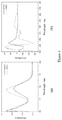
- FIG. 4 is (a) UV-visible spectra and (b) circular dichroism spectra of chiral polymer microspheres prepared according to an embodiment of the present invention
- FIG. 5 is parallel polars (upper) and cross polars (lower) microscope images of chiral polymer microspheres in ethanol prepared with a membrane emulsification device of different pore sizes: (a) 2.8 ⁇ m, (b) 10 ⁇ m and (c) 20 ⁇ m (same scale bar for all images);
- FIG. 6 is a circular dichroism spectrum of chiral polymer microspheres prepared according to an embodiment of the present invention.
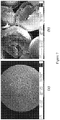
- FIG. 7 is SEM images of (a) surface and (b) interior of a chiral polymer microsphere prepared according to an embodiment of the present invention.
- FIG. 8 is parallel polars microscope images of polymer microspheres in (a) dry condition, (b) deionized water, (c) ethanol and (d) tetrahydrofuran (same scale bar for all images);
- FIG. 9 is parallel polars microscope images of polymer microspheres prepared with different mass percentages of RM257: (a) 9.9%, (b) 29.7% and (c) 49.5% (same scale bar for all images);
- FIG. 10 is (a) parallel polars and (b) cross polars microscope images of chiral polymer microspheres in ethanol prepared according to an embodiment of the present invention (same scale bar for all images).
- the present invention discloses chiral polymer microspheres having a porous structure, which consist of a concentric multi-shell structure.
- Each layer of the multi-shell structure is optically and structurally anisotropic and there is a sequential slight twist between the optical axes of adjacent layers, finally forming a helical configuration.
- the helical configuration is a single-direction helix (left-handed or right-handed) which generates optical activity in the whole structure of the chiral polymer microsphere.
- the chiral polymer microspheres have a porous structure both in interior and in exterior, providing them characteristic of gel and various swelling statuses when dispersed in different solvents.
- the average particle size of the chiral polymer microspheres in ethanol is 10 ⁇ m-150 ⁇ m.
- the chiral polymer microspheres with a porous structure can be prepared by a liquid-crystal-assisted template polymerization method, including the following steps:
- At least one reactive liquid crystal, at least one non-reactive liquid crystal, at least one chiral additive and at least one polymerization initiator are mixed in a certain ratio to form a uniform liquid crystal mixture.
- the reactive liquid crystal contains polymerizable groups and can be further polymerized in the presence of polymerization initiators, such as acrylate type liquid crystals (RM257), methacrylate type liquid crystals (HCM062), allyl type liquid crystals (HCM126) and so on.
- the mass percentage of the reactive liquid crystal to the liquid crystal mixture is 5% ⁇ 55%.
- the non-reactive liquid crystal does not have polymerizable groups to further polymerize.
- the non-reactive liquid crystal may contain at least one nematic liquid crystal, such as a nematic liquid crystal 5CB or a nematic liquid crystals mixture E7.
- the chiral additive will induce helical twisting of nematic liquid crystals to form chiral nematic liquid crystals (cholesteric liquid crystals).
- the chiral additive is those normally used in the liquid crystal field, such as CB15, R811, R1011, S1011 and R5011.
- the mass percentage of the chiral additive to the liquid crystal mixture is 0.5% ⁇ 3.5%.
- the liquid crystal mixture is dispersed into a continuous phase to form liquid crystal droplets through an emulsification process, where the liquid crystal droplets include the liquid crystal mixture.
- the continuous phase can be water.
- the method of the emulsification process includes stirring, shaking, ultrasonic and membrane emulsification.
- the membrane emulsification is used, where the liquid crystal mixture is pushing into a continuous phase to form monodispersed liquid crystal droplets through a membrane emulsifier device.
- the principle of the membrane emulsifier device is shown in FIG. 1 , which mainly uses a membrane-based dispersion technique to achieve the preparation of monodisperse liquid crystal droplets.
- the liquid crystal mixture as a dispersed phase is slowly passed through a micro porous inorganic membrane, and the liquid crystal mixture is extruded from the micropores of the inorganic membrane to form liquid crystal droplets dispersed into the continuous phase, thereby forming a dispersing system with the liquid crystal droplets as the disperse phase.
- the size of the liquid crystal droplets can be controlled by the pore size of the inorganic membrane to finally control the particle size of the chiral polymer microspheres.
- the continuous phase contains a liquid-crystal-droplets stabilizer, assisting the liquid crystal droplets better dispersing and maintaining in the continuous phase.
- the liquid-crystal-droplets stabilizer may be a surfactant, such as an ionic surfactant: SDS, a nonionic surfactant: PVP, PVA, PEG or Pluronic.
- the liquid-crystal-droplets stabilizer may also be a thickening agent miscible with water, for example, glycerin.
- the liquid-crystal-droplets stabilizer is PVA, whose mass concentration in the continuous phase is 0.5% ⁇ 10%.
- the reactive liquid crystals in the liquid crystal droplets are polymerized to form intermediate microspheres containing the unreacted non-reactive liquid crystals.
- liquid crystal molecules 11 in the liquid crystal droplets including the reactive liquid crystals and the non-reactive liquid crystals
- chiral nematic liquid crystals cholesteric liquid crystals
- cholesteric liquid crystal molecules are elongated rod-like and tend to form parallel layers, where the molecules are aligned parallel to each other and parallel to the plane of the layers.
- the chiral nematic liquid crystals are aligned to form helical layers in same way, but the helical axes tent to be perpendicular to the surface of the liquid crystal droplets due to surface anchoring energy, resulting in multiply concentric layers 12 .
- the reactive liquid crystals in the concentric layers 12 are polymerized to generate a concentric multi-shell structure which maintains the helical configuration, finally forming intermediate microspheres with a helical configuration in the whole.
- the polymerization method may be photo polymerization, thermal polymerization or radiation polymerization. In the following examples, photo polymerization is preferably.
- chiral polymer microparticles with a porous structure are further formed by removing the unreacted chemicals including the non-reactive liquid crystal and the chiral additive. Even thought the chiral additive is removed, the chiral polymer microparticles still maintain the whole helical structure and the optical activity of the intermediate microspheres. Meanwhile, since the non-reactive liquid crystals do not participate in the polymerization reaction, removing of the non-reactive liquid crystals forms micropores inside the chiral polymer microspheres, whose distribution is influenced by the alignment of the liquid crystal molecules and tends to have a helical configuration.
- the prepared chiral polymer microspheres have various swelling statues when dispersed in different solvents, which include water and organic solvents, such as tetrahydrofuran, toluene, ethanol, acetone, N,N-dimethylformamide.
- the steps of preparing the liquid crystal mixture include: mixing the reactive liquid crystal, the non-reactive liquid crystal, the chiral additive and the polymerization initiator according to a certain ratio, heating the mixture above the clearing point of the liquid crystals to form a uniform liquid, mixing the liquid well and then slowly cooling it to room temperature to form a homogeneous liquid crystal mixture. If photo polymerization is adopted, since the photo polymerization initiator is sensitive to light, the liquid must be kept in dark during the cooling process.
- the steps of preparing polymer microspheres includes: slowly and smoothly passing the homogeneous liquid crystal mixture through a SPG membrane emulsifier device and dispersing it into a continuous phase containing a surfactant where the stirring speed is 300 r/min, to finally form a emulsion of monodispersed liquid crystal droplets; placing the emulsion under a UV light source (the center wavelength is 365 nm) to process polymerization with continuous stirring, where the radiation intensity was 2.5 mW/cm 2 and the reaction time was 30 minutes; after polymerization, washing the reaction solution with ethanol 3 times, centrifuging it and removing the supernatant to obtain chiral polymer microspheres without the unreacted chemicals.
- a UV light source the center wavelength is 365 nm
- a liquid crystal mixture containing 3 g of a reactive liquid crystal RM257, 6.9 g of a nonreactive liquid crystal E7, 0.1 g of a chiral additive and 0.1 g of a photo polymerization initiator DMPAP (the percentage of the reactive liquid crystal is 29.7%) were prepared and then polymer microspheres were prepared according to above steps, where the pore diameter of the SPG membrane is 10 ⁇ m, the continuous phase is water and the mass percentage of PVA in water is 3.0%.
- the chiral additive is R5011 or S5011, where R5011 and S5011 have a similar molecule structure but opposite optical activities. As shown in FIG. 3 , two prepared polymer microspheres have an average size of 40 ⁇ m when dispersed in ethanol.
- the polymer microspheres Since the concentric shells of the polymer microspheres are arranged along the radial direction, the polymer microspheres show a radial optical anisotropy (Maltese Black Cross) as well as the internal multi-layer structure. After that, their UV-visible spectra and circular dichroism (CD) spectra had been measured, as shown in FIGS. 4( a ) and 4( b ) .
- their absorbance spectra are mainly similar, but their CD spectra are totally reversed. The results indicate the prepared polymer microspheres not only have optical activity (chirality), but also have a single-direction helix (left-handed or right-handed), which can be adjusted during the preparation by adding chiral additives of different optical activities.
- a liquid crystal mixture containing 3 g of a reactive liquid crystal RM257, 6.67 g of a nonreactive liquid crystal E7, 0.33 g of a chiral additive CB15 and 0.1 g of a photo polymerization initiator DMPAP (the percentage of the reactive liquid crystal is 29.7%) were prepared and then polymer microspheres were prepared according to above steps, where the pore diameter of the SPG membrane is 10 ⁇ m, the continuous phase is water and the mass percentage of PVA in water is 3.3%.
- the prepared polymer microspheres have an average size of 40 ⁇ m when dispersed in ethanol.
- the microscope images ( FIG. 5( b ) ) and CD spectrum ( FIG. 6 ) indicate the concentric shells structure and the optical activity of right-handed. Meanwhile, as shown in FIG. 7 , the SEM images show the porous and multi-layer structure.
- FIG. 5( a ) and FIG. 5( c ) indicate the same optical activity and structure as the chiral polymer microspheres with an average size of 40 ⁇ m.
- a liquid crystal mixture containing 3 g of a reactive liquid crystal RM257, 6.9 g of a nonreactive liquid crystal E7, 0.1 g of a chiral additive CB15 and 0.1 g of a photo polymerization initiator DMPAP (the percentage of the reactive liquid crystal is 29.7%) were prepared and then polymer microspheres were prepared according to above steps, where the pore diameter of the SPG membrane is 10 ⁇ m, the continuous phase is water and the mass percentage of PVA in water is 3.0%.
- the prepared polymer microspheres have an average size of 40 ⁇ m when dispersed in ethanol. Since using same chiral additive as example 2, the prepared chiral polymer microspheres have small optical activity of right-handed.
- the polymer microspheres were dispersed in deionized water, ethanol and tetrahydrofuran. As shown in FIG. 8 , the chiral polymer microspheres show different swelling statuses but same spherical shape, indicting the porous and concentric multi-shell structure which keeps spherical shape.
- a liquid crystal mixture containing a reactive liquid crystal RM257, a nonreactive liquid crystal E7, 0.1 g of a chiral additive CB15 and 0.1 g of a photo polymerization initiator DMPAP (total mass of RM257 and 5CB is 10 g and the mass percentage of RM257 to the total mass is 10%, 30% and 50%, in other word, the percentage of the reactive liquid crystal is 9.9%, 29.7% and 49.5%) were prepared and then polymer microspheres were prepared according to above steps, where the pore diameter of the SPG membrane is 10 ⁇ m, the continuous phase is water and the mass percentage of PVA in water is 3.0%.
- the prepared polymer microspheres have an average size of 40 ⁇ m when dispersed in ethanol, as shown in FIG. 9 . Since using same chiral additive as example 2, the prepared chiral polymer microspheres have small optical activity of right-handed.
- a liquid crystal mixture containing 5 g of a reactive liquid crystal RM257, 4.9 g of a nonreactive liquid crystal E7, 0.1 g of a chiral additive CB15 and 0.1 g of a photo polymerization initiator DMPAP (the percentage of the reactive liquid crystal is 49.5%) were prepared and then polymer microspheres were prepared according to above steps, where the pore diameter of the SPG membrane is 50 ⁇ m, the continuous phase is water and the mass percentage of PVA in water is 3.0%.
- the prepared polymer microspheres have an average size of 120 ⁇ m when dispersed in ethanol, as shown in FIG. 10 . Since using same chiral additive as example 2, the prepared chiral polymer microspheres have small optical activity of right-handed.
- the method of the present invention can be applied to the field of polymer.
Landscapes
- Chemical & Material Sciences (AREA)
- Organic Chemistry (AREA)
- Crystallography & Structural Chemistry (AREA)
- Engineering & Computer Science (AREA)
- Materials Engineering (AREA)
- Chemical Kinetics & Catalysis (AREA)
- Physics & Mathematics (AREA)
- Analytical Chemistry (AREA)
- Health & Medical Sciences (AREA)
- Medicinal Chemistry (AREA)
- Polymers & Plastics (AREA)
- Nonlinear Science (AREA)
- General Physics & Mathematics (AREA)
- Optics & Photonics (AREA)
- Mathematical Physics (AREA)
- Manufacture Of Porous Articles, And Recovery And Treatment Of Waste Products (AREA)
- Manufacturing Of Micro-Capsules (AREA)
Abstract
Description

Claims (11)
Applications Claiming Priority (3)
| Application Number | Priority Date | Filing Date | Title |
|---|---|---|---|
| CN201811149089.2 | 2018-09-29 | ||
| CN201811149089.2A CN110964142B (en) | 2018-09-29 | 2018-09-29 | Chiral polymer microsphere with porous structure and preparation method thereof |
| PCT/CN2019/106727 WO2020063447A1 (en) | 2018-09-29 | 2019-09-19 | Chiral polymer microspheres with porous structures and manufacturing method thereof |
Publications (2)
| Publication Number | Publication Date |
|---|---|
| US20210309916A1 US20210309916A1 (en) | 2021-10-07 |
| US11214737B2 true US11214737B2 (en) | 2022-01-04 |
Family
ID=69949735
Family Applications (1)
| Application Number | Title | Priority Date | Filing Date |
|---|---|---|---|
| US17/272,037 Active US11214737B2 (en) | 2018-09-29 | 2019-09-19 | Chiral polymer microspheres with porous structures and manufacturing method thereof |
Country Status (3)
| Country | Link |
|---|---|
| US (1) | US11214737B2 (en) |
| CN (1) | CN110964142B (en) |
| WO (1) | WO2020063447A1 (en) |
Families Citing this family (4)
| Publication number | Priority date | Publication date | Assignee | Title |
|---|---|---|---|---|
| CN115011359B (en) * | 2021-03-05 | 2023-07-07 | 中国科学院理化技术研究所 | Cholesteric liquid crystal droplet with adjustable bandgap based on molecular extraction and solvent swelling and its preparation method and application |
| CN114800926B (en) * | 2022-04-29 | 2023-07-18 | 中国兵器科学研究院宁波分院 | Method for processing polymer microsphere by ion beam |
| CN114702732B (en) * | 2022-06-07 | 2022-08-26 | 江苏集萃智能液晶科技有限公司 | Polymer particle with double-size pore channel and preparation method thereof |
| CN116251546B (en) * | 2023-02-08 | 2025-12-23 | 成都迪康中科生物医学材料有限公司 | Multichannel emulsified microsphere preparation equipment |
Citations (3)
| Publication number | Priority date | Publication date | Assignee | Title |
|---|---|---|---|---|
| DE4236935A1 (en) | 1992-11-02 | 1994-05-05 | Bayer Ag | Anisotropic porous network with accurately controlled pore size - contg. acryloyl:oxy-benzoyloxy-phenyl acrylate and liquid crystalline cpds., useful in liquid chromatography and membrane prodn. |
| WO2011123939A1 (en) | 2010-04-08 | 2011-10-13 | Marvel Innovations Inc. | Handles for starter pull cords |
| US8623237B2 (en) * | 2010-04-09 | 2014-01-07 | University Of British Columbia | Inorganic mesoporous materials with chiral nematic structures and preparation method thereof |
Family Cites Families (7)
| Publication number | Priority date | Publication date | Assignee | Title |
|---|---|---|---|---|
| SI23567B (en) * | 2010-11-10 | 2019-07-31 | Institut "JoĹľef Stefan" | Spherical liquid crystal laser |
| CN103547655B (en) * | 2011-05-09 | 2015-06-03 | 默克专利有限公司 | Reactive mesogen based polymer particles |
| KR20130038455A (en) * | 2011-10-10 | 2013-04-18 | 이미지랩(주) | Method for manufacturing microcapsule for display having uniform particle size |
| CN104624124B (en) * | 2013-11-07 | 2017-02-08 | 中国科学院化学研究所 | Liquid crystal microcapsule and preparation method thereof |
| KR101825597B1 (en) * | 2017-02-28 | 2018-02-05 | 경북대학교 산학협력단 | manufacturing method for solid-state helical photonic crystal structure and photonic crystal prepared thereby |
| CN107017549B (en) * | 2017-05-25 | 2019-07-16 | 哈尔滨工程大学 | Liquid crystal photon crystal optical fiber random laser device and preparation method thereof |
| CN107797324B (en) * | 2017-11-20 | 2020-06-05 | 山东蓝贝易书信息科技有限公司 | Photothermal erasing liquid crystal writing board and preparation method thereof |
-
2018
- 2018-09-29 CN CN201811149089.2A patent/CN110964142B/en active Active
-
2019
- 2019-09-19 WO PCT/CN2019/106727 patent/WO2020063447A1/en not_active Ceased
- 2019-09-19 US US17/272,037 patent/US11214737B2/en active Active
Patent Citations (3)
| Publication number | Priority date | Publication date | Assignee | Title |
|---|---|---|---|---|
| DE4236935A1 (en) | 1992-11-02 | 1994-05-05 | Bayer Ag | Anisotropic porous network with accurately controlled pore size - contg. acryloyl:oxy-benzoyloxy-phenyl acrylate and liquid crystalline cpds., useful in liquid chromatography and membrane prodn. |
| WO2011123939A1 (en) | 2010-04-08 | 2011-10-13 | Marvel Innovations Inc. | Handles for starter pull cords |
| US8623237B2 (en) * | 2010-04-09 | 2014-01-07 | University Of British Columbia | Inorganic mesoporous materials with chiral nematic structures and preparation method thereof |
Non-Patent Citations (1)
| Title |
|---|
| PCT Written Opinion, Application No. PCT/CN2019/106727, dated Dec. 17, 2019, 3 pages. |
Also Published As
| Publication number | Publication date |
|---|---|
| CN110964142A (en) | 2020-04-07 |
| US20210309916A1 (en) | 2021-10-07 |
| WO2020063447A1 (en) | 2020-04-02 |
| CN110964142B (en) | 2020-12-15 |
Similar Documents
| Publication | Publication Date | Title |
|---|---|---|
| US20210309916A1 (en) | Chiral polymer microspheres with porous structures and manufacturing method thereof | |
| Nayani et al. | Spontaneous emergence of chirality in achiral lyotropic chromonic liquid crystals confined to cylinders | |
| Urbanski et al. | Liquid crystals in micron-scale droplets, shells and fibers | |
| Wang et al. | Optically reconfigurable chiral microspheres of self-organized helical superstructures with handedness inversion | |
| JP4898701B2 (en) | Reflective display based on liquid crystal materials | |
| Ailincai et al. | Multiple bio-responsive polymer dispersed liquid crystal composites for sensing applications | |
| Jeong et al. | Liquid crystal Janus emulsion droplets: preparation, tumbling, and swimming | |
| Wang et al. | Morphology tuning of electrospun liquid crystal/polymer fibers | |
| Fleischmann et al. | Liquid‐Crystalline Elastomer Fibers Prepared in a Microfluidic Device | |
| Concellón | Liquid crystal emulsions: a versatile platform for photonics, sensing, and active matter | |
| Liu et al. | Liquid‐crystalline polymer particles prepared by classical polymerization techniques | |
| WO2020143570A1 (en) | Porous silica microspheres, manufacturing method and uses thereof | |
| Sharma et al. | Realignment of liquid crystal shells driven by temperature-dependent surfactant solubility | |
| CN104624124A (en) | Liquid crystal microcapsule and preparation method thereof | |
| WO2019037613A1 (en) | A method for preparing monodispersed polymer microparticles | |
| Ansell et al. | Threading the spindle: A geometric study of chiral liquid crystal polymer microparticles | |
| US20200306715A1 (en) | Porous polymer microspheres with optical anisotropy, method of manufacturing the same and application of the same | |
| Kocaman et al. | Optically responsive dry cholesteric liquid crystal marbles | |
| Ramou et al. | Textural landscapes of VOC-sensitive chiral liquid crystal-based materials | |
| WO2023236487A1 (en) | Polymeric microparticle having pore channels of two sizes and preparation method therefor | |
| Oyamada et al. | Lyotropic liquid crystallinity of amylose tris (alkylcarbamates): cholesteric and smectic phase formation in different solvents | |
| Zhang et al. | Stabilizing liquid crystal droplets with hydrogel films and its application in monitoring adenosine triphosphate | |
| Lydon | Chromonic liquid crystals | |
| WO2019154173A1 (en) | A method for preparing porous functional polymer microspheres | |
| CN115011359A (en) | Band gap-adjustable cholesteric liquid crystal microdroplet based on simultaneous action of molecular extraction and solvent swelling and preparation method and application thereof |
Legal Events
| Date | Code | Title | Description |
|---|---|---|---|
| FEPP | Fee payment procedure |
Free format text: ENTITY STATUS SET TO UNDISCOUNTED (ORIGINAL EVENT CODE: BIG.); ENTITY STATUS OF PATENT OWNER: SMALL ENTITY |
|
| FEPP | Fee payment procedure |
Free format text: ENTITY STATUS SET TO SMALL (ORIGINAL EVENT CODE: SMAL); ENTITY STATUS OF PATENT OWNER: SMALL ENTITY |
|
| AS | Assignment |
Owner name: SMART LIQUID CRYSTAL TECHNOLOGIES CO., LTD., CHINA Free format text: ASSIGNMENT OF ASSIGNORS INTEREST;ASSIGNORS:LI, ANG;LU, JIAWEI;ABBOTT, NICHOLAS L.;REEL/FRAME:055535/0110 Effective date: 20210205 |
|
| STPP | Information on status: patent application and granting procedure in general |
Free format text: NON FINAL ACTION MAILED |
|
| STPP | Information on status: patent application and granting procedure in general |
Free format text: RESPONSE TO NON-FINAL OFFICE ACTION ENTERED AND FORWARDED TO EXAMINER |
|
| STPP | Information on status: patent application and granting procedure in general |
Free format text: NOTICE OF ALLOWANCE MAILED -- APPLICATION RECEIVED IN OFFICE OF PUBLICATIONS |
|
| STPP | Information on status: patent application and granting procedure in general |
Free format text: PUBLICATIONS -- ISSUE FEE PAYMENT VERIFIED |
|
| STCF | Information on status: patent grant |
Free format text: PATENTED CASE |
|
| MAFP | Maintenance fee payment |
Free format text: PAYMENT OF MAINTENANCE FEE, 4TH YR, SMALL ENTITY (ORIGINAL EVENT CODE: M2551); ENTITY STATUS OF PATENT OWNER: SMALL ENTITY Year of fee payment: 4 |