US11207461B2 - Drug delivery system and method for controlled and continuous delivery of drugs into the brain by bypassing the blood brain barrier - Google Patents
Drug delivery system and method for controlled and continuous delivery of drugs into the brain by bypassing the blood brain barrier Download PDFInfo
- Publication number
- US11207461B2 US11207461B2 US15/177,347 US201615177347A US11207461B2 US 11207461 B2 US11207461 B2 US 11207461B2 US 201615177347 A US201615177347 A US 201615177347A US 11207461 B2 US11207461 B2 US 11207461B2
- Authority
- US
- United States
- Prior art keywords
- implantable device
- biocompatible implantable
- drug
- external
- drug delivery
- Prior art date
- Legal status (The legal status is an assumption and is not a legal conclusion. Google has not performed a legal analysis and makes no representation as to the accuracy of the status listed.)
- Active
Links
- 239000003814 drug Substances 0.000 title claims abstract description 229
- 229940079593 drug Drugs 0.000 title claims abstract description 220
- 238000012377 drug delivery Methods 0.000 title claims abstract description 180
- 210000004556 brain Anatomy 0.000 title claims abstract description 71
- 238000000034 method Methods 0.000 title claims abstract description 34
- 230000008499 blood brain barrier function Effects 0.000 title claims abstract description 30
- 210000001218 blood-brain barrier Anatomy 0.000 title claims abstract description 30
- 210000001533 respiratory mucosa Anatomy 0.000 claims abstract description 90
- 210000004086 maxillary sinus Anatomy 0.000 claims abstract description 78
- 210000000988 bone and bone Anatomy 0.000 claims abstract description 69
- 210000004877 mucosa Anatomy 0.000 claims abstract description 30
- 239000013583 drug formulation Substances 0.000 claims abstract description 3
- 239000007943 implant Substances 0.000 claims description 109
- 230000004888 barrier function Effects 0.000 claims description 46
- 238000001802 infusion Methods 0.000 claims description 34
- 210000002808 connective tissue Anatomy 0.000 claims description 31
- 230000000241 respiratory effect Effects 0.000 claims description 18
- 239000004053 dental implant Substances 0.000 claims description 17
- 210000003128 head Anatomy 0.000 claims description 16
- 210000003928 nasal cavity Anatomy 0.000 claims description 16
- 230000014759 maintenance of location Effects 0.000 claims description 13
- 230000037361 pathway Effects 0.000 claims description 12
- 238000010521 absorption reaction Methods 0.000 claims description 10
- 230000001926 lymphatic effect Effects 0.000 claims description 10
- 210000001706 olfactory mucosa Anatomy 0.000 claims description 10
- 230000001537 neural effect Effects 0.000 claims description 9
- 230000002792 vascular Effects 0.000 claims description 9
- 210000003097 mucus Anatomy 0.000 claims description 8
- 210000004872 soft tissue Anatomy 0.000 claims description 8
- 210000002175 goblet cell Anatomy 0.000 claims description 7
- 230000000420 mucociliary effect Effects 0.000 claims description 7
- 210000002200 mouth mucosa Anatomy 0.000 claims description 5
- 210000000711 cavernous sinus Anatomy 0.000 claims description 4
- 210000005081 epithelial layer Anatomy 0.000 claims description 4
- 230000000717 retained effect Effects 0.000 claims description 4
- 230000009885 systemic effect Effects 0.000 claims description 4
- 238000012546 transfer Methods 0.000 claims description 3
- 210000000981 epithelium Anatomy 0.000 claims description 2
- 230000035876 healing Effects 0.000 claims description 2
- 230000007246 mechanism Effects 0.000 claims description 2
- 230000003028 elevating effect Effects 0.000 claims 6
- 230000008878 coupling Effects 0.000 claims 3
- 238000010168 coupling process Methods 0.000 claims 3
- 238000005859 coupling reaction Methods 0.000 claims 3
- 230000001650 transport into the brain Effects 0.000 claims 2
- 210000002919 epithelial cell Anatomy 0.000 claims 1
- 238000009472 formulation Methods 0.000 claims 1
- 239000000203 mixture Substances 0.000 claims 1
- 239000000599 controlled substance Substances 0.000 abstract description 4
- 230000003836 peripheral circulation Effects 0.000 abstract description 4
- VYFYYTLLBUKUHU-UHFFFAOYSA-N dopamine Chemical compound NCCC1=CC=C(O)C(O)=C1 VYFYYTLLBUKUHU-UHFFFAOYSA-N 0.000 description 24
- 229960003638 dopamine Drugs 0.000 description 12
- 239000008280 blood Substances 0.000 description 11
- 210000004369 blood Anatomy 0.000 description 11
- 241000283973 Oryctolagus cuniculus Species 0.000 description 10
- 239000000560 biocompatible material Substances 0.000 description 10
- 238000004128 high performance liquid chromatography Methods 0.000 description 9
- NNJVILVZKWQKPM-UHFFFAOYSA-N Lidocaine Chemical compound CCN(CC)CC(=O)NC1=C(C)C=CC=C1C NNJVILVZKWQKPM-UHFFFAOYSA-N 0.000 description 8
- 229960004194 lidocaine Drugs 0.000 description 8
- 229940124597 therapeutic agent Drugs 0.000 description 8
- 238000001727 in vivo Methods 0.000 description 7
- 230000003204 osmotic effect Effects 0.000 description 6
- 210000001909 alveolar process Anatomy 0.000 description 5
- 210000004262 dental pulp cavity Anatomy 0.000 description 5
- 238000006073 displacement reaction Methods 0.000 description 5
- 239000002904 solvent Substances 0.000 description 5
- 238000007906 compression Methods 0.000 description 4
- 230000006835 compression Effects 0.000 description 4
- 230000001404 mediated effect Effects 0.000 description 4
- 210000004379 membrane Anatomy 0.000 description 4
- 239000012528 membrane Substances 0.000 description 4
- 238000012986 modification Methods 0.000 description 3
- 230000004048 modification Effects 0.000 description 3
- 210000000214 mouth Anatomy 0.000 description 3
- 239000002357 osmotic agent Substances 0.000 description 3
- 210000003695 paranasal sinus Anatomy 0.000 description 3
- 230000008569 process Effects 0.000 description 3
- 230000001225 therapeutic effect Effects 0.000 description 3
- 241001465754 Metazoa Species 0.000 description 2
- 208000002193 Pain Diseases 0.000 description 2
- RTAQQCXQSZGOHL-UHFFFAOYSA-N Titanium Chemical compound [Ti] RTAQQCXQSZGOHL-UHFFFAOYSA-N 0.000 description 2
- 210000004204 blood vessel Anatomy 0.000 description 2
- 230000004087 circulation Effects 0.000 description 2
- 210000000078 claw Anatomy 0.000 description 2
- 206010013663 drug dependence Diseases 0.000 description 2
- 210000001983 hard palate Anatomy 0.000 description 2
- 201000000615 hard palate cancer Diseases 0.000 description 2
- 208000015181 infectious disease Diseases 0.000 description 2
- 238000001361 intraarterial administration Methods 0.000 description 2
- 238000007726 management method Methods 0.000 description 2
- 210000002050 maxilla Anatomy 0.000 description 2
- 230000010412 perfusion Effects 0.000 description 2
- 230000002093 peripheral effect Effects 0.000 description 2
- 230000002572 peristaltic effect Effects 0.000 description 2
- 230000000144 pharmacologic effect Effects 0.000 description 2
- 239000002504 physiological saline solution Substances 0.000 description 2
- 108090000623 proteins and genes Proteins 0.000 description 2
- 238000010079 rubber tapping Methods 0.000 description 2
- 230000028327 secretion Effects 0.000 description 2
- 239000000126 substance Substances 0.000 description 2
- 208000011117 substance-related disease Diseases 0.000 description 2
- 231100000057 systemic toxicity Toxicity 0.000 description 2
- 210000001519 tissue Anatomy 0.000 description 2
- 229910052719 titanium Inorganic materials 0.000 description 2
- 239000010936 titanium Substances 0.000 description 2
- 102000040650 (ribonucleotides)n+m Human genes 0.000 description 1
- 241000282461 Canis lupus Species 0.000 description 1
- 241000282412 Homo Species 0.000 description 1
- 208000034800 Leukoencephalopathies Diseases 0.000 description 1
- 206010028980 Neoplasm Diseases 0.000 description 1
- 229910001069 Ti alloy Inorganic materials 0.000 description 1
- 102000000591 Tight Junction Proteins Human genes 0.000 description 1
- 108010002321 Tight Junction Proteins Proteins 0.000 description 1
- 230000006978 adaptation Effects 0.000 description 1
- 230000036770 blood supply Effects 0.000 description 1
- 210000000133 brain stem Anatomy 0.000 description 1
- 201000011510 cancer Diseases 0.000 description 1
- 210000004027 cell Anatomy 0.000 description 1
- 239000004568 cement Substances 0.000 description 1
- 210000003169 central nervous system Anatomy 0.000 description 1
- 230000002490 cerebral effect Effects 0.000 description 1
- 210000001175 cerebrospinal fluid Anatomy 0.000 description 1
- 230000008859 change Effects 0.000 description 1
- 239000003795 chemical substances by application Substances 0.000 description 1
- 230000000052 comparative effect Effects 0.000 description 1
- 238000011161 development Methods 0.000 description 1
- 229940039227 diagnostic agent Drugs 0.000 description 1
- 239000000032 diagnostic agent Substances 0.000 description 1
- 210000002451 diencephalon Anatomy 0.000 description 1
- 201000010099 disease Diseases 0.000 description 1
- 208000037265 diseases, disorders, signs and symptoms Diseases 0.000 description 1
- 210000002889 endothelial cell Anatomy 0.000 description 1
- 230000007515 enzymatic degradation Effects 0.000 description 1
- 206010015037 epilepsy Diseases 0.000 description 1
- 230000008713 feedback mechanism Effects 0.000 description 1
- 238000001415 gene therapy Methods 0.000 description 1
- 210000004195 gingiva Anatomy 0.000 description 1
- 239000011796 hollow space material Substances 0.000 description 1
- 238000003384 imaging method Methods 0.000 description 1
- 238000002513 implantation Methods 0.000 description 1
- 238000000338 in vitro Methods 0.000 description 1
- 238000001990 intravenous administration Methods 0.000 description 1
- 239000000463 material Substances 0.000 description 1
- 239000002547 new drug Substances 0.000 description 1
- 210000001331 nose Anatomy 0.000 description 1
- 210000000056 organ Anatomy 0.000 description 1
- 238000010883 osseointegration Methods 0.000 description 1
- 230000011164 ossification Effects 0.000 description 1
- 102000004169 proteins and genes Human genes 0.000 description 1
- 239000012858 resilient material Substances 0.000 description 1
- 230000004044 response Effects 0.000 description 1
- 238000007789 sealing Methods 0.000 description 1
- 210000000130 stem cell Anatomy 0.000 description 1
- 238000001356 surgical procedure Methods 0.000 description 1
- 210000001578 tight junction Anatomy 0.000 description 1
- 230000032258 transport Effects 0.000 description 1
- 230000007723 transport mechanism Effects 0.000 description 1
- 230000003144 traumatizing effect Effects 0.000 description 1
- 210000003901 trigeminal nerve Anatomy 0.000 description 1
- 210000005166 vasculature Anatomy 0.000 description 1
- 210000003462 vein Anatomy 0.000 description 1
- 230000003612 virological effect Effects 0.000 description 1
Images




Classifications
-
- A—HUMAN NECESSITIES
- A61—MEDICAL OR VETERINARY SCIENCE; HYGIENE
- A61M—DEVICES FOR INTRODUCING MEDIA INTO, OR ONTO, THE BODY; DEVICES FOR TRANSDUCING BODY MEDIA OR FOR TAKING MEDIA FROM THE BODY; DEVICES FOR PRODUCING OR ENDING SLEEP OR STUPOR
- A61M5/00—Devices for bringing media into the body in a subcutaneous, intra-vascular or intramuscular way; Accessories therefor, e.g. filling or cleaning devices, arm-rests
- A61M5/14—Infusion devices, e.g. infusing by gravity; Blood infusion; Accessories therefor
- A61M5/142—Pressure infusion, e.g. using pumps
- A61M5/14244—Pressure infusion, e.g. using pumps adapted to be carried by the patient, e.g. portable on the body
- A61M5/14276—Pressure infusion, e.g. using pumps adapted to be carried by the patient, e.g. portable on the body specially adapted for implantation
-
- A—HUMAN NECESSITIES
- A61—MEDICAL OR VETERINARY SCIENCE; HYGIENE
- A61C—DENTISTRY; APPARATUS OR METHODS FOR ORAL OR DENTAL HYGIENE
- A61C8/00—Means to be fixed to the jaw-bone for consolidating natural teeth or for fixing dental prostheses thereon; Dental implants; Implanting tools
- A61C8/0018—Means to be fixed to the jaw-bone for consolidating natural teeth or for fixing dental prostheses thereon; Dental implants; Implanting tools characterised by the shape
- A61C8/0037—Details of the shape
- A61C8/0039—Details of the shape in the form of hollow cylinder with an open bottom
-
- A—HUMAN NECESSITIES
- A61—MEDICAL OR VETERINARY SCIENCE; HYGIENE
- A61C—DENTISTRY; APPARATUS OR METHODS FOR ORAL OR DENTAL HYGIENE
- A61C8/00—Means to be fixed to the jaw-bone for consolidating natural teeth or for fixing dental prostheses thereon; Dental implants; Implanting tools
- A61C8/0089—Implanting tools or instruments
- A61C8/0092—Implanting tools or instruments for sinus lifting
-
- A—HUMAN NECESSITIES
- A61—MEDICAL OR VETERINARY SCIENCE; HYGIENE
- A61K—PREPARATIONS FOR MEDICAL, DENTAL OR TOILETRY PURPOSES
- A61K31/00—Medicinal preparations containing organic active ingredients
- A61K31/13—Amines
- A61K31/135—Amines having aromatic rings, e.g. ketamine, nortriptyline
- A61K31/137—Arylalkylamines, e.g. amphetamine, epinephrine, salbutamol, ephedrine or methadone
-
- A—HUMAN NECESSITIES
- A61—MEDICAL OR VETERINARY SCIENCE; HYGIENE
- A61K—PREPARATIONS FOR MEDICAL, DENTAL OR TOILETRY PURPOSES
- A61K31/00—Medicinal preparations containing organic active ingredients
- A61K31/16—Amides, e.g. hydroxamic acids
- A61K31/165—Amides, e.g. hydroxamic acids having aromatic rings, e.g. colchicine, atenolol, progabide
- A61K31/167—Amides, e.g. hydroxamic acids having aromatic rings, e.g. colchicine, atenolol, progabide having the nitrogen of a carboxamide group directly attached to the aromatic ring, e.g. lidocaine, paracetamol
-
- A—HUMAN NECESSITIES
- A61—MEDICAL OR VETERINARY SCIENCE; HYGIENE
- A61K—PREPARATIONS FOR MEDICAL, DENTAL OR TOILETRY PURPOSES
- A61K9/00—Medicinal preparations characterised by special physical form
- A61K9/0012—Galenical forms characterised by the site of application
- A61K9/0019—Injectable compositions; Intramuscular, intravenous, arterial, subcutaneous administration; Compositions to be administered through the skin in an invasive manner
- A61K9/0024—Solid, semi-solid or solidifying implants, which are implanted or injected in body tissue
-
- A—HUMAN NECESSITIES
- A61—MEDICAL OR VETERINARY SCIENCE; HYGIENE
- A61K—PREPARATIONS FOR MEDICAL, DENTAL OR TOILETRY PURPOSES
- A61K9/00—Medicinal preparations characterised by special physical form
- A61K9/0002—Galenical forms characterised by the drug release technique; Application systems commanded by energy
- A61K9/0004—Osmotic delivery systems; Sustained release driven by osmosis, thermal energy or gas
-
- A—HUMAN NECESSITIES
- A61—MEDICAL OR VETERINARY SCIENCE; HYGIENE
- A61M—DEVICES FOR INTRODUCING MEDIA INTO, OR ONTO, THE BODY; DEVICES FOR TRANSDUCING BODY MEDIA OR FOR TAKING MEDIA FROM THE BODY; DEVICES FOR PRODUCING OR ENDING SLEEP OR STUPOR
- A61M5/00—Devices for bringing media into the body in a subcutaneous, intra-vascular or intramuscular way; Accessories therefor, e.g. filling or cleaning devices, arm-rests
- A61M5/14—Infusion devices, e.g. infusing by gravity; Blood infusion; Accessories therefor
- A61M5/142—Pressure infusion, e.g. using pumps
- A61M5/145—Pressure infusion, e.g. using pumps using pressurised reservoirs, e.g. pressurised by means of pistons
- A61M2005/14513—Pressure infusion, e.g. using pumps using pressurised reservoirs, e.g. pressurised by means of pistons with secondary fluid driving or regulating the infusion
-
- A—HUMAN NECESSITIES
- A61—MEDICAL OR VETERINARY SCIENCE; HYGIENE
- A61M—DEVICES FOR INTRODUCING MEDIA INTO, OR ONTO, THE BODY; DEVICES FOR TRANSDUCING BODY MEDIA OR FOR TAKING MEDIA FROM THE BODY; DEVICES FOR PRODUCING OR ENDING SLEEP OR STUPOR
- A61M2210/00—Anatomical parts of the body
- A61M2210/06—Head
- A61M2210/0687—Skull, cranium
Definitions
- the present invention relates to devices, systems and methods for controlled and continuous delivery of drugs into the brain by bypassing the blood brain barrier, without the need for any surgical manipulation of the brain.
- the drug is delivered using an implantable device either beneath or above the respiratory mucosa, by surgically creating a window on the bone overlying the respiratory mucosa and accessing the connective tissue side of the respiratory mucosal lining from the oral or maxillofacial region.
- the locally delivered drug can be transported through the neural, vascular or lymphatic routes or a combination of these routes and delivered into the brain by bypassing the blood brain barrier in human or animal patients. Accordingly, the present invention relates to the fields of drug delivery and medicine especially Oral and Maxillofacial Surgery, Neuroanatomy and Neurology.
- the present invention relates to implantable devices, systems and methods for controlled and continuous delivery of drugs into the brain by bypassing the blood brain barrier, without the need for any surgical manipulation of the brain
- the brain has good blood supply.
- the cells lining the blood vessels in the brain are tightly arranged without any spaces between them to form a natural barrier called as the blood brain barrier.
- This blood brain barrier prevents entry of any foreign substance into the brain and thereby protects the brain.
- drugs present in the circulating blood from entering into the brain.
- the methods available today for delivering drugs directly into the brain are mostly invasive.
- the methods include placement of micro-catheters or implants into the brain or use of various techniques to open the blood brain barrier. These techniques however make the brain also prone to infection as the brain gets exposed to the external environment.
- Advancement in the field of proteomics and genomics has led to discovery of therapeutic targets at the level of molecules or genes in the brain, leading to development of newer drugs. But these drugs also get destroyed when given orally.
- alternative routes for drug delivery are the need of the hour.
- the nasal route can be used as anon-invasive route to deliver the drugs directly to the brain. But this route has limitations because controlled and continuous delivery of drugs at predetermined rates has not yet been achieved.
- the drugs also have to withstand mucociliary clearance, local enzymatic degradation and cross the epithelial layer before they reach the underlying connective tissue for further absorption. Hence only a smaller quantity of the total drug that is delivered, is finally absorbed.
- Drugs modified for endogenous transport mediated delivery across the blood brain barrier, using the naturally occurring molecular transport mechanisms at the endothelial cell have been developed for a few medical conditions. Yet the concentration of the drug delivered across the blood brain barrier using this technique is not predictable. Protein mediated drug delivery and viral mediated gene therapy can induce immune mediated complications.
- Trigeminal nerve supplies the nasal respiratory mucosa and the maxillary sinuses and relays at the nuclei in the brainstem. Cerebrospinal fluid has also been found to drain through nasal lymphatics.
- the nasal lymphatic channels are free of valves and can hence be used for drug delivery.
- Blood vessels in the nasal and maxillary sinus region can also transfer the drugs to the brain.
- the veins from the maxillary sinus and the nasal region drain into the pterygoid venous plexus which is further connected to the cavernous sinus. Therefore, the drugs delivered locally in these regions can drain into the pterygoid venous plexus and be further transferred into the cavernous sinus.
- the drugs can then enter the cerebral circulation at higher concentration without causing systemic toxicity either through the counter current mechanism at the cavernous sinus or through the perivascular pathways.
- the drug delivered locally beneath the respiratory mucosa can be transported from the nasal and maxillary sinus region through the neural, lymphatic and the vascular routes into the brain by bypassing the blood brain barrier.
- the air circulation in the maxillary sinus is unique.
- the maxillary sinus fills with air during expiration and is emptied of air during inspiration.
- a drug delivered into the maxillary sinus by perforating the sinus lining mucosa from the connective tissue side can be easily inhaled when the air inside the maxillary sinus is emptied during inspiration.
- the drug can further come in contact with the nasal respiratory and olfactory mucosa for absorption.
- the mucus on the maxillary sinus lining mucosa is moved towards the ostium opening and into the middle meatus of nose because of the muco-ciliary action.
- the drug delivered on the maxillary sinus lining mucosa can also be transported by the muco-ciliary action through the ostial opening into the middle meatus and onto the nasal respiratory mucosa. Because of the increased retention time of the drug on the mucosal surface, higher quantity of the drug can be inhaled and be deposited on the nasal respiratory and olfactory mucosa for further absorption into the underlying connective tissue.
- Goblet cells in the maxillary sinus lining mucosa secrete mucus secrete mucus.
- Drugs can be engineered for uptake from the connective tissue into the goblet cells, for further secretion along with mucus by the goblet cells. This can result in mucus loaded with high concentration of drug molecule for inhalation.
- the inhaled drug can be deposited on the nasal respiratory mucosa and olfactory mucosa for further absorption.
- the present invention provides a drug delivery system for delivering drugs into the brain, by bypassing the blood brain barrier.
- the drug delivery system comprises an implantable hollow device made of titanium or any other biocompatible material, that is placed into the bone overlying the respiratory mucosa of the maxillary sinus or the nasal cavity and a drug delivery tubing made of a biocompatible material that transfers therapeutic agents from an external drug reservoir into the central lumen of the implantable hollow device.
- An external drug infusion pump is used for providing continuous and controlled delivery of therapeutic agents from the external drug reservoir into the central lumen of the implantable hollow device.
- a method of drug delivery into the brain by bypassing the blood brain barrier using the drug delivery system is described.
- the device is used to deposit the drug beneath the respiratory mucosa, by surgically creating a bone window on the overlying bone and accessing the connective tissue side of the respiratory mucosal lining from the oral or maxillofacial region.
- the drug delivered locally beneath the respiratory mucosa can be transported from the nasal and maxillary sinus region through the neural, lymphatic and the vascular routes into the brain by bypassing the blood brain barrier.
- Another method of drug delivery into the brain by bypassing the blood brain barrier is described wherein the tip of the drug delivery device is placed into the maxillary sinus and above the level of the epithelial lining of the respiratory mucosa, by surgically creating a bone window on the overlying bone and perforating the underlying respiratory mucosa from the connective tissue side.
- the mucosa is perforated by removing the circumscribed bone with the trephine drill along with the underlying respiratory mucosa attached to the bone.
- the drug delivered into the maxillary sinus can be easily inhaled during inspiration and can be deposited at the nasal respiratory and olfactory mucosa for further absorption.
- the drug can also be transported through the ostial opening into the middle meatus and onto the nasal respiratory mucosa by muco-ciliary action. This results in increased retention time of the drug on the mucosal surface and so higher quantity of the drug can be absorbed into the connective tissue vasculature at the respiratory mucosa and the olfactory mucosa.
- Drug molecules that are engineered for uptake into the goblet cells of the maxillary sinus lining epithelium, from the underlying connective tissue for further secretion by the goblet cells along with mucus are described. This can result in mucus loaded with high concentration of drug molecule for inhalation, which can be deposited on the nasal respiratory mucosa and the olfactory mucosa for further absorption.
- Drug molecules that are engineered for affinity to specific sites of the brain are described. This provides the required concentration of the drug in the targeted anatomical site in the brain.
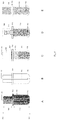
- FIG. 1 shows the isometric side view (A), longitudinal sectional view (B) and three-dimensional view (C) of the single unit device.
- FIG. 2 shows the isometric side view (A), longitudinal sectional view (B), and three-dimensional view (C, D), of a multi-unit device comprising a device with a central tubular inlet with external threads ( 205 ), a drug delivery assembly ( 206 ) and a retention cap ( 209 ).
- FIG. 3 shows the isometric side view (A), longitudinal sectional view (B) and three-dimensional view (C, D) of a multiunit device comprising a device with a completely open second end ( 312 ) with smooth and rounded margin ( 301 ).
- FIG. 4 shows the isometric side view (A) and three-dimensional view (B) of a multiunit device comprising a device with a central tubular inlet with internal threads ( 405 ) at the cervical third and a drug delivery assembly ( 406 ) with external threads ( 414 ) at its cervical part.
- FIG. 5 shows the placement and removal tools ( 501 , 503 , 505 , 507 , 509 , 511 ) for use with the device.
- FIG. 6 shows the device in the form of a dental implant ( 619 ) with an internal spline ( 618 ) in the internal wall of body of the implant.
- FIG. 7 shows an abutment in the form of a drug infusion source comprising a miniaturized internal drug infusion pump ( 710 ) and an internal drug reservoir ( 709 ) that is placed into the device in the form of a dental implant.
- FIG. 8 shows the surgical placement of the device in the form of a dental implant ( 805 ) in the maxillary alveolar ridge ( 803 ), along with the placement and removal tools ( 806 , 811 , 815 ).
- FIG. 9 shows a mini plate (A, B, C) with a central reservoir dial ( 902 ) comprising internal threads and a porous apical wall ( 903 ) which is closed with a cap (D) with external threads ( 907 ).
- FIG. 10 shows a mini plate (A, B, C, D) with a reservoir dial comprising an angulated upper body ( 1002 ) for ease of access.
- FIG. 11 shows the device with the porous apical wall ( 1102 ) located beneath the respiratory mucosa ( 1101 ).
- FIG. 12 shows the device with the porous apical wall ( 1202 ) located above the level of the respiratory mucosa ( 1201 ).
- FIG. 13 shows the device ( 1302 ) placed on the anterior wall of the maxillary sinus with the drug delivery tubing ( 1303 ) extending into the buccal sulcus.
- the drug delivery tubing is connected to a drug infusion source comprising an external drug infusion pump ( 1305 ) and an external drug reservoir for continuous and controlled drug delivery.
- FIG. 14 shows the device in the form of a prosthetic crown ( 1410 ) that is secured to a root canal treated tooth ( 1408 ) whose apex ( 1402 ) is in contact with the respiratory mucosa ( 1401 ).
- FIG. 15 shows the brain values of dopamine in a rabbit obtained using High performance Liquid Chromatography, after in vivo drug delivery of dopamine from beneath the respiratory mucosa.
- FIG. 16 shows the blood values of dopamine in a rabbit obtained using High performance Liquid Chromatography, after in vivo drug delivery of dopamine from beneath the respiratory mucosa.
- FIG. 17 shows the brain values of lignocaine in a rabbit obtained using High performance Liquid Chromatography, after in vivo drug delivery of lignocaine into the maxillarv sinus and on the epithelial surface of maxillary sinus mucosa by perforating the lining mucosa from the connective tissue side.
- FIG. 18 shows the blood values of lignocaine in a rabbit obtained using High performance Liquid Chromatography, after in vivo drug delivery of lignocaine into the maxillary sinus and on the epithelia surface of maxillary sinus mucosa by perforating the lining mucosa from the connective tissue side.
- first end As used herein, “first end,” “coronal end,” “top end” and “upper end” ( 111 , 211 , 311 , 411 ) may be used interchangeably to refer to the end of the device that is present above the level of the ring and remains above the bone when implanted into the surgical site.
- first part may be used interchangeably to refer to the part of the body of the device that projects above the level of the ring and remains above the bone when implanted into the surgical site.
- second end As used herein. “second end,” “apical end,” “bottom end” and “lower end” ( 112 , 212 , 312 , 412 ) may be used interchangeably to refer to the end of the device that is present below the level of the ring and remains below the bone, in contact with the respiratory mucosa when implanted into the surgical site.
- second part may be used interchangeably to refer to the part of the body of the device that projects below the level of the ring and remains within the bone when implanted into the surgical site
- proximal part and “mesial part” may be used interchangeably to refer to the part which is nearest to the point of reference or the part that is closest to the median plane of the device.
- distal part refers to the part which is away from the point of reference or the part that is farther away from the median plane of the device.
- cervical third refers to the upper third part of the lower part of the body of the device that extends from below the level of the ring, or to the upper third part of the body of the device in the form of a dental implant, wherein the body is divided horizontally by imaginary lines into three equal parts
- middle third refers to the middle third part of the lower part of the body of the device that extends from below the level of the ring, or to the middle third part of the body of the device in the form of a dental implant, wherein the body is divided horizontally by imaginary lines into three equal parts
- cylindrical third refers to the lower third part of the lower part of the body of the device that extends from below the level of the ring, or to the lower third part of the body of the device in the form of a dental implant, wherein the body is divided horizontally by imaginary lines into three equal parts.
- “superior surface” may be used to refer to the upper surface of a flat or similar shaped embodiment.
- inferior surface may be used to refer to the lower surface of a flat or similar shaped embodiment.
- outlet may be used interchangeably to refer to the part of the device that is tubular in shape and is located on the upper part of the device, to which a drug delivery tubing can be attached for drug delivery into the device.
- central lumen and “central vent” may be used interchangeably to refer to the central hollow space within the body of the device, which further opens to the outside through the inlet on the coronal end and through multiple holes at the apical end.
- apical wall may be used to refer to the wall comprising the rounded apical end and part of the apical third of the lower part of the device.
- slot and “cleft” may be used interchangeably to refer to a vertical opening in the upper end of the inlet into which the drug delivery tubing is placed.
- drug delivery assembly refers to a hollow tubing comprising a vertical part that is placed into the device and a lateral tube extending from the side of the vertical part, wherein the mesial part of the tube is placed into the slot of an inlet present on the device.
- implant part refers to the vertical part of the drug delivery assembly that is placed into the device.
- external drug delivery tubing or “external tubing” may be used interchangeably to refer to the tube extending from the side of the vertical part of the drug delivery assembly that is placed into the slot of an inlet of the device.
- tubing As used herein, “tubing,” and “drug delivery tubing” may be used interchangeably to refer to the tube attached to the inlet of the device.
- intra oral part refers to the part projecting into or the part facing the oral cavity.
- intra bony part refers to the part within the bone or below the level of the bone.
- intra-pulpal part refers to the part that is within the pulp cavity of the tooth.
- osteointegration refers to the process of bone formation around the implant and on the surface of the device facing the bone.
- abutment refers to the removable part that can be placed into the device which is in the form of a dental implant. It can be in the form of a drug delivery assembly or can comprise an internal a drug reservoir with an in-built internal drug infusion pump.
- external involute spline refers to an involute spline whose tip surface is located on the external surface of the body of the embodiment.
- internal involute spline refers to an involute spline whose tip surface is located on the internal surface of the body of the embodiment.
- claw refers to the curved part of the tool that is used for holding a retention cap by its margin.
- shaft refers to the part of the instrument, present between the head and the handle.
- reservoir and “drug reservoir” may be used interchangeably to refer to a body comprising a cavity that holds a therapeutic agent.
- the therapeutic agent may be in a form in which it can be easily transferred from the reservoir into the device in a controlled and continuous manner.
- external drug reservoir refers to a reservoir which is present outside the patient. It is connected to the device in the patient by a tubing whenever drug delivery is required.
- internal drug reservoir refers to a reservoir which is present within the implant. It may be in the form of a cavity within the abutment.
- infusion pump and “drug infusion pump” may be used interchangeably to refer to the device that can move the therapeutic agent from the reservoir to the inside of the device in a controlled and continuous manner.
- therapeutic agent and “drug” may be used interchangeably to refer to an agent or substance that can produce a pharmacologic effect in a human or animal patient when administered into the patient or that is useful as a diagnostic agent when administered in a patient.
- the single unit implantable device ( FIG. 1 : A, B, C) has a hollow, cylindrical or tapered body which is closed at both the ends.
- the body comprises an upper, first part ( 1 A) and a lower, second part ( 1 B). with a barrier ring ( 103 ) located on the outer surface of the body between the two parts.
- the outer surface of the second part ( 1 B) of the body of the device that is located below the circular barrier ring comprises threads ( 102 ) from the cervical third to the middle third.
- the apical part is smooth and has a plurality of holes ( 101 ) through the apical wall.
- the holes are configured in the form of macro-holes, micro-holes, nano-holes or a combination.
- a central lumen ( 108 ) is present within the body.
- the central lumen extends from the first part ( 1 A) of the body to the second part of the body ( 13 ) and is defined by the internal wall of the device.
- the porous apical wall is placed either in contact ( FIG. 11 ) with the connective tissue of the respiratory mucosa or above the level of the epithelial lining ( FIG. 12 ) of the respiratory mucosa.
- the first closed ( 111 ) end of the device has an external hex ( 107 ) for holding and placement of the device.
- a drug delivery inlet ( 104 ) is present below the level of the external hex on the side of the first part ( 1 A) of the body of the device for the attachment of a drug delivery tubing ( 105 ).
- the inlet ( 104 ) is configured in the form of an opening with or without internal threads or in the form of a tubular projection.
- the tubular inlet comprises of either a smooth external surface or a surface with external or internal threads.
- the tubular inlet is either perpendicular to the external surface of the body of the device or angulated towards the coronal end.
- the inlet ( 104 ) opens into the central lumen ( 108 ) present within the body of the device.
- the central lumen ( 108 ) further opens to the exterior through the plurality of holes ( 101 ) at the apical wall.
- a drug delivery tubing ( 105 ) is removably secured to the inlet ( 104 ).
- the free, second open end ( 106 ) of the drug delivery tubing is connected to a drug infusion source comprising an external drug reservoir attached to an external a drug infusion pump for controlled drug delivery.
- the circular barrier ring ( 103 ) is present below the inlet and prevents the accidental inward displacement of the device into the maxillary sinus or into the nasal cavity.
- the device is made of titanium or any other biocompatible material.
- the tubing is also made of a resilient and biocompatible material that allows good soft tissue adaptation. The device is manufactured in varying diameters and lengths to suit the different clinical requirements.
- the device delivers one or more drugs in a controlled and continuous manner, locally at the surgical site in the respiratory mucosal region.
- the drugs can then be transported by neural, vascular, lymphatic or inhalation routes or by a combination of these routes into the brain by bypassing the blood brain barrier.
- FIG. 1-18 Exemplary, non-limiting embodiments of the brain drug delivery device are illustrated in FIG. 1-18 . These figures illustrate variations of the drug delivery device and the methods for use.
- FIG. 1 refers to the isometric side view of the single unit device.
- 101 refers to a plurality of holes through the apical wall of the body of the device that is placed either beneath or above the respiratory mucosa.
- 102 refers to the threads on the outer surface of the device located at the cervical third and middle third of the second part of the body of the device.
- 103 refers to the barrier ring that prevents the unintentional inward displacement of the implant into the maxillary sinus or the nasal cavity.
- 104 refers to the inlet.
- 105 refers to the drug delivery tubing. The first open end of the tubing is either friction fit or threaded onto or into the inlet ( 104 ).
- the second open end ( 106 ) of the tubing is free.
- 110 refers to a temporary cap removably coupled to the free second open end of the drug delivery tubing.
- the second open end can be placed in the buccal sulcus overlying the mucosa, in the buccal gingival sulcus or in the palatal gingival sulcus.
- 107 refers to the external hex of the device which removably secures to a holding device and thereby assists in holding and placement of the device into the surgical site.
- 111 refers to the first closed end of the device.
- 112 refers to the second end of the device.
- 1 A refers to the first part of the device. 1 B.
- Fig: B refers to the longitudinal sectional view of the device.
- 101 refers to a plurality of holes through the apical wall of the device.
- 102 refers to the threads on the outer surface of the second part of the device.
- 103 refers to the barrier ring.
- 104 refers to the inlet to which the drug delivery tubing is connected.
- 107 refers to the external hex.
- 108 refers to the central lumen.
- 109 refers to the external threads on the inlet.
- Fig: C refers to the 3D rendered view of Fig: A.
- FIG. 2 An alternative embodiment is illustrated in FIG. 2 .
- the alternative embodiment is a multiunit device comprising an inlet ( 205 ) located centrally at the first end ( 211 ) of the body of the device.
- the inlet further comprises external threads at its cervical third and a vertical slot extending from its tip to its middle third.
- the drug delivery assembly comprises an intra implant part ( 206 ) and an external tubing ( 207 ).
- the intra implant part is tapering in shape and comprises a central lumen ( 214 ) within the body and a plurality of holes ( 210 ) through the apical wall.
- the external tubing ( 207 ) is tubular in shape and comprises a central lumen. It extends from the side of the intra-implant part.
- the central lumen of the intra implant part and that of the external tubing are continuous with each other.
- the mesial part of the external tubing removably adapts to the vertical slot on the side of the inlet.
- a cap ( 209 ) is threaded onto the external threads on the inlet of the device. The cap covers the slot and extends till the surface of the tubing. The cap retains the intra-implant part within the device.
- An external hex ( 204 ) is present below the inlet. It helps in holding and placing the device.
- a circular ring ( 203 ) is present below the external hex. It prevents the accidental inward displacement of the device into the maxillary sinus or into the nasal cavity.
- Fig: A refers to an isometric side view of a multi-unit drug delivery device.
- 211 refers to the first open end of the device.
- 212 refers to the second end of the device.
- 2 A refers to the first part of the device.
- 2 B refers to the second part of the device.
- 201 refers to the plurality of holes through the apical wall of the body of the device that is placed either beneath or above the respiratory mucosa.
- 202 refers to the threads on the outer surface of the device located at the cervical third and middle third of the second part of the device body.
- 203 Refers to the barrier ring.
- 204 Refers to the external hex.
- 205 Refers to the tubular inlet with external threads.
- 206 Refers to the intra implant part of the drug delivery assembly.
- ( 215 ) refers to the first closed end of the intra-implant part of the drug delivery assembly.
- 210 refers to the plurality of holes at the apical wall of the intra implant part of the drug delivery assembly.
- 207 refers to the external tubing of the drug delivery assembly.
- 208 refers to the open end of the external tubing of the drug delivery assembly 213
- the cap removably coupled to the open end of the external tubing of the drug delivery assembly 209 .
- Fig: B is a longitudinal sectional view of the second part of the device and the components comprised within. 201 .
- Refers to the external tubing of the drug delivery assembly. 208 refers to the open end of the external tubing of the drug delivery assembly 213 Refers to the cap removably coupled to the open end of the external tubing of the drug delivery assembly 209 .
- Fig: C is a 3D rendered view of Fig A.
- Fig: D is a 3D rendered view of Fig B.
- FIG. 3 Another alternative embodiment is illustrated in FIG. 3 .
- the alternative embodiment is a multiunit device comprising a completely open second end ( 312 ) with a beveled and outwardly flaring internal wall that forms a smooth and rounded margin ( 301 ) and a tubular inlet ( 305 ) located centrally at the first end ( 311 ) of the body of the device.
- the inlet further comprises external threads at its cervical third and a vertical slot extending from its tip to its middle third.
- the drug delivery assembly comprises an intra implant part ( 306 ) and an external tubing ( 307 ).
- the intra implant part is tapering in shape and comprises a central lumen ( 314 ) within the body and a plurality of holes ( 310 ) through the apical wall.
- the external drug delivery tubing ( 307 ) is tubular in shape and comprises a central lumen. It extends from the side of the intra-implant part.
- the central lumen of the intra implant part and that of the external drug delivery tubing are continuous with each other.
- the mesial part of the external tubing removably adapts to the vertical slot on the side of the inlet.
- the tip of the intra-implant part ( 30 ) is positioned at the apical opening of the central lumen and is located below the level of the rounded apical margin ( 301 ).
- a cap ( 309 ) is threaded onto the external threads on the inlet of the device.
- Fig: A refers to an isometric side view of a multi-unit implant with a completely open apex 311 refers to the first open end of the device. 312 refers to the second open end of the device. 3 A refers to the first part of the device. 3 B refers to the second part of the device. 301 .
- 305 Refers to the tubular inlet with external threads.
- 306 Refers to the intra implant part of the drug delivery assembly. ( 315 ) refers to the first closed end of the intra-implant part of the drug delivery assembly. 310 refers to the plurality of holes at the apical wall of the intra implant part of the drug delivery assembly.
- 307 Refers to the external tubing of the drug delivery assembly.
- 308 refers to the open end of the external tubing of the drug delivery assembly.
- FIG. 313 Refers to the cap removably coupled to the open end of the external tubing of the drug delivery assembly. 309 .
- Fig: B is a longitudinal sectional view of the second part of the implant body and the components comprised within. 301 .
- Fig: C is a 3D rendered view of Fig A.
- Fig: D is a 3D rendered view of Fig B.
- FIG. 4 An alternative embodiment is illustrated in FIG. 4 .
- the alternative embodiment is a multi-unit implantable device with a hollow cylindrical body comprising an upper, first open end ( 411 ) and a closed second or apical end ( 412 ).
- the second or apical end is rounded with a plurality of holes ( 401 ) through the apical wall and the first or upper end comprises an inlet 405 ) with internal threads at its cervical third.
- a barrier ring ( 403 ) is present between the inlet ( 405 ) and the plurality of the holes ( 401 ) on the external surface of the body of the device and comprises a convex and smooth upper surface and a flat and smooth undersurface facing the bone.
- the external surface of the first or upper part ( 4 A) of the body further comprises an external hex ( 404 ) disposed between the drug delivery inlet ( 405 ) and the barrier ring ( 403 ).
- a central lumen is present within the body of the device and is defined by the tapering internal wall of the body of the device. The central lumen extends from the inlet ( 405 ) at the upper, first end to the plurality of holes ( 401 ) in the apical wall. Threads ( 402 ) are present on the external surface of the second or lower part ( 4 A) of the body at the cervical third, below the level of the ring.
- the drug delivery assembly comprises a tapered intra-implant part ( 46 with external threads ( 414 ) at its upper part and an external drug delivery tubing ( 407 ) attached to the first end ( 415 ) of the intra-implant part.
- the intra-implant part ( 406 ) of the drug delivery assembly is threaded into the inlet ( 405 ) of the device wherein the external walls of the intra implant part adapt tightly to the internal walls of the device except at the apical third.
- a space is present at the apical third between the internal wall of the device and the external wall of the intra-implant part, wherein the drug is initially delivered.
- the drug further moves out through the holes ( 401 ) at the apical wall of the device. Referring to FIG.
- Fig: A refers to an isometric side view of a multi-unit device with the tubular central inlet with internal threads at the first end.
- 411 refers to the first open end of the device.
- 412 refers to the second end of the device.
- 4 A refers to the first part of the device.
- 4 B refers to the second part of the device.
- 401 Refers to the porous apical wall of the device. 402 .
- Refers to the external hex. 405 Refers to the tubular inlet with internal threads.
- 406 Refers to the intra implant part of the drug delivery assembly.
- ( 415 ) refers to the first end of the intra implant part of the drug delivery assembly.
- 407 refers to the external tubing of the drug delivery assembly.
- 408 refers to the open end of the external tubing of the drug delivery assembly.
- 413 Refers to the cap removably coupled to the open end of the external tubing of the drug delivery assembly.
- 409 refers to the external hex at the first end of the intra implant part 410 .
- 414 Refers to the external threads on the intra-implant part of the drug delivery assembly. The intra-implant part is threaded into the inlet of the device.
- Fig: B is a 3D rendered view of Fig A.
- the drug delivery device is held and placed in the surgical site using specialized holding devices because of the limited anatomical space available for use and the need for sterilized instruments.
- the instruments are configured as hand held or as motor driven rotary instruments.
- the hand held instruments can be in the form of ratchets or spanners of varying sizes and length.
- the holding devices basically consist of a head and a handle.
- the head adapts to the external hex present on the drug delivery device or on the retention cap.
- the head can be of varying diameters.
- the handle can be of varying lengths and angulations.
- the handle can be hand held or be attached to a low-speed motor driven rotary handpiece.
- the embodiments are illustrated in FIG. 5 . Referring to FIG.
- 5X refers to the external hex on the device
- Fig: A Refers to the spanner for placement and removal. 501 .
- Fig: B Refers to an angulated spanner. 503 .
- Fig: C refers to the hand-held ratchet. 505 .
- Fig: D refers to an angulated hand-held ratchet. 507 .
- Fig: E refers to a hand-held rotating placement and removal tool. 509 .
- Fig: F refers to a motor driven rotary placement and removal tool. 511 .
- the device is in the form of a hollow dental implant made of titanium alloy or any other biocompatible material.
- the implant comprises external threads ( 602 ) on the body.
- the implant has micro holes ( 601 ) at the apical part of the implant body.
- the central lumen ( 619 ) of the implant is defined by the internal surface of the implant and communicates with the nasal respiratory mucosa or the maxillary sinus lining mucosa through the holes ( 601 ) at the apical part of the body of the implant.
- the implant has an internal involute spline ( 618 ) within the implant body.
- the implant has internal threads ( 617 ) at the cervical end.
- the disposable abutment made of a bio-compatible material has a body comprising an intra-oral part ( 607 ) and an intra-implant part ( 605 ) with a barrier ring ( 606 ) disposed on the external surface between the two parts.
- the external surface of the intra-implant part of the abutment has an external involute spline ( 623 ) and a micro-porous apical wall ( 604 ).
- the abutment further comprises a central lumen that communicates to the exterior through an external drug delivery tubing ( 611 ) that extends from the first end ( 624 ) of the abutment.
- the external involute spline ( 623 ) of the abutment fits into internal involute spline ( 618 ) of the dental implant.
- the plurality of holes ( 604 ) at the apical wall of the abutment is in alignment and in line with the plurality of holes ( 601 ) at the apical wall of the implant.
- a cap ( 609 ) comprising an external hex ( 610 ) with a central hole at the upper first part and external threads ( 608 ) at the lower second part is slid from the top of the abutment and threaded into the inner threads ( 617 ) at the cervical part of the implant.
- the inner aspect of the cap adapts closely and tightly to the outer surface of the abutment to form a tight junction without any micro-leakage.
- the cap ( 609 ) of the device can be of variable heights depending on the soft tissue requirements and is well adapted to the wall of the abutment on tightening.
- the drug is delivered into the central lumen of the abutment through the external drug delivery tubing ( 611 ) extending from the first end of the abutment.
- Fig: A refers to the isometric side view of the dental implant 601 refers to the holes in the apical wall of the implant.
- 602 refers to the external threads on the implant.
- 603 refers to the smooth cervical end.
- 604 refers to the holes in the apical wall of the abutment.
- 605 refers to the intra implant part.
- 623 refers to the external involute spline on the abutment.
- 606 refers to the barrier ring.
- 607 refers to the intra-oral part of the abutment.
- 608 refers to the external threads on the cap.
- 609 refers to the cap.
- 610 refers to the external hex on the cap.
- 624 refers to the first end of the abutment.
- 611 refers to the external drug delivery tubing.
- 612 refers to the distal free end of the external drug delivery tubing.
- 622 refers to the cap removably coupled to the open end of the external drug delivery tubing.
- 620 refers to the first open end of the device. 621 refers to the second end of the device.
- Fig: B refers to the 3 D rendered view of Fig A.
- Fig: C refers to the isometric side view of the dental implant and the placement tool.
- 601 refers to the holes in the apical wall of the implant.
- 602 refers to the external threads on the implant.
- 603 refers to the smooth cervical end.
- 613 refers to the external involute spline on the placement tool.
- 614 refers to the barrier ring on the placement tool.
- 615 refers to the shank of the placement tool.
- 616 refers to the external hex on the hand-held placement tool.
- Fig: D refers to the 3 D rendered view of Fig C.
- 613 refers to the external involute spline on the placement tool.
- 614 refers to the barrier ring on the placement tool.
- 615 refers to the shank of the placement tool.
- 616 refers to the external hex on the hand-held placement tool.
- 617 refers to the internal cervical threads at the first open end of the implant.
- 618 refers to the internal spline within the implant.
- 619 refers to the central lumen within the implant.
- FIG. 7 Alternative embodiments of the abutment, for use with the device in the form of a dental implant are illustrated in FIG. 7 .
- Fig A is a 3D rendered view of the abutment.
- 711 refers to the first end of the abutment.
- 712 refers to the second end of the abutment.
- 702 refers to the first part or the intra-oral part of the abutment.
- 713 refers to the second part or the intra-implant part of the abutment.
- 701 refers to the inlet in the first end of the abutment.
- a drug delivery tubing is removably secured to the inlet.
- 703 refers to the barrier ring.
- 704 refers to the external involute spline.
- Fig B is the longitudinal section of Fig A. 706 refers to the central lumen within the body of the implant.
- specially designed abutments in the form of drug reservoirs comprising in-built, miniature, osmotically or electronically controlled infusion pumps are used for drug delivery with the device.
- Fig C refers to the abutment comprising a drug reservoir in the second part, a space to hold an injected osmotic solvent in the first part and an osmotic compartment holding the osmotic agent disposed between the first and the second part.
- a semipermeable membrane separates the osmotic agent from the space in the first part.
- 701 refers to the inlet in the first end of the abutment through which the osmotic solvent is delivered.
- 702 refers to the intra-oral part of the abutment that holds the osmotic solvent.
- 703 refers to the barrier ring.
- 705 refers to the openings in the apical wall.
- 707 refers to the semipermeable membrane separating the osmotic agent from the space in the first part of the abutment.
- 708 refers to the osmotic compartment.
- Fig D refers to the abutment comprising a drug reservoir in the second part and an electronic drug infusion pump in the first part.
- 702 refers to the intra-oral part of the abutment that holds the electronic drug infusion pump.
- 703 refers to the barrier ring.
- 705 refers to the openings in the apical wall.
- 709 refers to the drug reservoir.
- 710 refers to the electronic drug infusion pump.
- the abutment can also be used as a drug reservoir for continuous drug delivery, by modifying the size of the plurality of holes at the apical part of the abutment into holes that equal the size of the drug molecule. This results in delivery of the drug molecules at a pre-determined rate.
- Fig E refers to the abutment used as an internal drug reservoir.
- 702 refers to the first part or the intra-oral part of the abutment.
- 703 refers to the barrier ring.
- 705 refers to the openings in the apical wall.
- 709 refers to the drug reservoir compartment extending from the first part to the second part of the abutment.
- the intra oral part of the abutment can be angulated above the level of the cervical ring ( 809 ).
- the inlet on the abutment can also be in the form of an opening with internal threads and located on the side of the intra-oral part.
- an osteotomy dental drill of appropriate length and diameter is used.
- the osteotomy is stopped short by 1 mm of the maxillary sinus lining mucosa or the nasal respiratory mucosa.
- the apical 1 mm of bone is gently broken with a bone compression tool or with an elevator by gentle tapping. Care is taken not to tear the respiratory mucosa in the nasal or the maxillary sinus region.
- Placement of the device in the form of a dental implant into the alveolar bone using the required instruments is illustrated in FIG. 8, 801 . Refers to the ratchet for holding the bone compression tool.
- 802 refers to the bone compression tool being used for enlarging the soft osteotomy site and for breaking the apical wall to access the respiratory mucosa.
- 803 refers to the osteotomy site in the maxillary region underlying the respiratory mucosa.
- 804 refers to the holes in the apical wall of the implant.
- 805 refers to the body of the implant being placed into the osteotomy site.
- 806 refers to the placement tool used for placing the device into the osteotomy.
- 807 refers to the ratchet for holding the placement tool.
- 808 shows the abutment placed into the device.
- 809 shows the cervical retention cap comprising a central hole being placed across the intra oral part of the abutment.
- the cap further comprises a plurality of holes disposed on the superior surface of the upper part.
- 810 refers to the projections at the tip of the placement tool that removably secure to the holes on the superior surface of the upper part of the cap.
- 811 refers to the body of the placement tool.
- 812 refers to the rotating finger rest on the placement tool.
- 813 refers to the claw of the removal tool.
- 814 refers to the handle of the removal tool.
- 815 Refers to the vertically moveable shank of the device.
- 816 refers to the rotating finger rest on the removal tool.
- 817 refers to the inlet in the upper end of the abutment.
- 818 refers to the maxillary sinus or the nasal cavity comprising respiratory lining mucosa.
- FIG. 9 Another embodiment illustrated in FIG. 9 . is an implantable drug delivery device that comprises a mini plate with a central drug reservoir dial, wherein the reservoir has a porous base, a body with parallel walls, external or internal threads at the top part of the dial wall and a cap with complimentary internal or external threads made of a resilient, biocompatible material that self-seals whenever penetrated by a needle.
- the porous base of the drug reservoir dial comprises macro holes, micro holes or nano holes and is placed beneath or above the respiratory mucosa.
- the drug is delivered into the drug reservoir dial using a needle that is connected to a syringe or an external drug infusion pump. The needle penetrates the cap and deposits the drug into the drug reservoir dial.
- a reservoir containing a drug with a rate limiting membrane at the base can also be placed into the dial.
- the drug reaches the respiratory mucosa through the holes in the base of the drug reservoir dial.
- the mini plate is secured to the bone by screws.
- FIG. 9 Fig A shows the top view of a mini plate that comprises a central drug reservoir dial with a microporous or nanoporous apical wall at the second end and straight limbs.
- 901 refers to the straight limb with screw holes.
- 902 refers to the inlet at the first open end of the central drug reservoir dial with internal or external threads.
- a cap ( 906 ) with complimentary threads is secured to the inlet of the drug reservoir dial.
- 903 refers to the micro-porous or nanoporous apical wall at the second end of the drug reservoir dial.
- the drug is deposited into the dial.
- 908 refers to the retention screw.
- Fig B shows a top view of the mini plate that comprises a central drug reservoir dial with a microporous or nanoporous apical wall at the second end and a left L shaped limb.
- 901 refers to the straight limb with screw holes.
- 902 refers to the inlet at the first open end of the central drug reservoir dial with internal or external threads.
- a cap with complimentary threads is secured to the inlet at the first open end of the drug reservoir dial 903 refers to the micro-porous or nanoporous apical wall at the second end of the drug reservoir dial.
- the drug is deposited into the dial.
- 904 refers to the left L shaped limb with screw holes.
- Fig C shows the top view of a mini plate that comprises a central drug reservoir dial with a microporous or nanoporous apical wall at the second end and a right L shaped limb.
- 901 refers to the straight limb with screw holes.
- 902 refers to the inlet at the first open end of the central drug reservoir dial with internal or external threads.
- a cap with complimentary threads is secured to the inlet at the first open end of the drug reservoir dial
- 903 refers to the micro-porous or nanoporous apical wall at the second end of the drug reservoir dial.
- the drug is deposited into the dial.
- 904 refers to the right L shaped limb with screw holes.
- Fig D shows the cap made of a resilient, biocompatible material that self-seals whenever penetrated by a needle.
- 905 refers to the holes used for holding the cap while threading it onto the reservoir dial.
- 906 refers to the self-sealing part of the cap into which needles can be inserted.
- 907 refers to the threads on the cap. The threads can be external or internal.
- An alternative embodiment comprises a mini plate with a central reservoir dial wherein the reservoir has a porous base, an angulated body and a cap made of a resilient, biocompatible material that self-seals whenever penetrated by a needle.
- the upper end of the cap has an external hex and the lower part of the cap has internal or external threads. The angulation helps in ease of placing the needle tip into the reservoir for drug delivery from the oral cavity, when the mini plate is located on concave surfaces like the anterior wall of the maxillary sinus.
- the alternative embodiment is herein illustrated in FIG. 10 . Referring to FIG.
- FIG. 10 shows the side view of a mini plate with a central drug reservoir dial, comprising a hollow body with an angulated first part and a perpendicular second part, a straight limb and an L shaped limb between the two parts of the dial.
- 1001 refers to the straight limb with screw holes.
- 1002 refers to angulated part of the central drug reservoir dial comprising an inlet with internal or external threads at the first open end.
- 1003 refers to the cap with threads
- 1004 refers to the perpendicular second part of the reservoir dial comprising a micro-porous or nanoporous apical wall at the second end that is placed below the respiratory mucosa.
- 1006 refers to the retention screw.
- Fig B shows the top view of a mini plate with a central drug reservoir dial, comprising a hollow body with an angulated first part and a perpendicular second part with straight limbs between the two parts of the dial
- 1001 refers to the straight limb with screw holes.
- 1002 refers to angulated part of the central drug reservoir dial comprising an inlet with internal or external threads at the first open end.
- 1003 refers to the cap with threads.
- 1006 refers to the retention screw.
- Fig C and D show the top view of a mini plate with a central angulated drug reservoir dial comprising a straight limb and an L shaped limb.
- 1001 refers to the straight limb with screw holes.
- 1002 refers to angulated part of the central drug reservoir dial comprising an inlet with internal or external threads at the first open end.
- 1003 refers to the cap with threads 1005 refers to the L shaped limb. It can point either to the right or to the left.
- 1006 refers to the retention screw.
- a full thickness buccal or palatal mucoperiosteal flap is elevated.
- a bone window is marked on the bone overlying the respiratory mucosa using a bone trephine drill of appropriate length and diameter.
- the bone window can be surgically prepared at a number of anatomical sites which also include the hard palate forming the floor of the maxillary sinus or the nasal cavity, anterior wall of the maxillary sinus or the zygomatic process of the maxilla.
- the bone window can be gently pried out with the rotating trephine drill without damaging the underlying respiratory mucosa.
- the circumscribed bone can be removed gently without damaging the underlying mucosa using a piezo instrument.
- the respiratory mucosa is gently released and elevated from the surrounding bone margins without tearing the respiratory mucosa by using a soft tissue elevator of appropriate diameter.
- an osteotomy dental drill 802 of appropriate length and diameter is used.
- the osteotomy ( 803 ) is stopped short by 1 mm of the maxillary sinus lining mucosa or the nasal respiratory mucosa.
- the apical 1 mm of bone is gently broken with a bone compression tool or with an elevator by gentle tapping. Care is taken not to tear the respiratory mucosa in the nasal or the maxillary sinus region.
- a ratchet or implant placement tool ( FIG. 5 : A. B, C, D, E, F) which fits onto the external hex ( 1110 ; 1210 ) on the implant is used to hold and place the implant.
- the implant of the correct diameter and length is gently threaded into the prepared osteotomy site using a hand-held ratchet or a rotary placement tool. Alternatively, the implant can be gently press fit into the osteotomy hole.
- the barrier ring 1107 ; 1207 ) prevents the accidental displacement of the implant into the maxillary sinus or the nasal cavity.
- the respiratory lining mucosa ( 1101 ) is further elevated by the smooth apical end of the implant.
- the porous apical part ( 1102 ) of the hollow implant is thus in contact with the connective tissue base of the respiratory lining mucosa.
- the drug delivery assembly or the delivery tubing ( 1108 ) is attached to the implant at the inlet.
- the elevated soft tissue flap is placed back in position and sutures are placed.
- the surgical site is allowed to heal.
- the second open end of the drug delivery tubing can be placed in the buccal sulcus overlying the oral mucosa, in the buccal gingival sulcus or in the palatal gingival sulcus.
- the second open end of the tubing 1109 ) can be closed with a temporary cap ( 1111 ). After adequate healing of the surgical site, whenever drug delivery is required the can is removed and the second open end of the tubing can be attached to a drug infusion source comprising an external drug infusion pump ( 1305 ) and an external drug reservoir for controlled drug delivery.
- the porous apical wall of the device can be surgically placed beneath the intact respiratory mucosa at a number of anatomical sites which also include the maxillary sinus, hard palate forming the floor of the nasal cavity or maxillary sinus, the zygomatic process of the maxilla or the nasopalatine foramen.
- the drug can be delivered in a continuous and controlled manner into the connective tissue side of the respiratory mucosa, through the plurality of holes in the apical wall of the hollow device, by connecting the drug delivery tubing of the device to an external drug reservoir that is attached to a drug infusion pump.
- the drug distributes into the brain by bypassing the blood brain barrier from the delivery site without increasing the concentration of the drug in the peripheral circulation.
- the drug delivery route into the brain can either be through the neural, lymphatic or the vascular route or a combination of all the routes. This is useful for drugs which need to be given in precise concentrations and in low volumes. Drugs can thus be delivered into the brain by bypassing the blood brain barrier.
- Fig: A refers to the isometric view of the maxillofacial implantable drug delivery device placed beneath the nasal respiratory mucosa or the maxillary sinus lining mucosa.
- 1101 refers to the respiratory mucosal lining.
- 1102 refers to the smooth porous apical wall of the device.
- 1103 refers to the drug delivered under the respiratory mucosa.
- 1104 refers to the surrounding alveolar bone.
- 1105 refers to the overlying oral mucosa.
- 1106 refers to the threads on the outer surface of the device.
- 1107 refers to the barrier ring.
- 1108 refers to the drug delivery tubing.
- 1109 refers to the second open end of the drug delivery tubing.
- 1110 refers to the external hex.
- 1111 refers to the can.
- Fig B is a 3D rendered view of Fig A.
- the porous apical tip of the device can also be placed into the maxillary sinus and above the level of the epithelial lining of the respiratory mucosa by perforating the respiratory mucosa from underneath or the connective tissue side.
- the drug can be delivered from an external drug reservoir into the maxillary sinus and onto the epithelial surface of the mucosal lining, in a continuous and controlled manner through the plurality of holes at the apical wall of the device by using an external drug infusion pump.
- the drug can then be easily inhaled during inspiration since the air in the normal maxillary sinus empties during routine inspiration and fills with air during expiration.
- the inhaled drug can be further deposited on the nasal respiratory and olfactory mucosa for absorption.
- the drug can also be transported from the maxillary sinus onto the nasal respiratory mucosa through the ostial opening at the middle meatus. This drug can be further be inhaled to reach the olfactory mucosa also. Because of the extra time taken for muco ciliary clearance from the maxillary sinus to the nasal respiratory mucosa, the retention time of the drug on the mucosal surface is increased, resulting in absorption of higher quantity of the drug. This route is useful for drug formulations that are inhalable and can be given in larger volumes without causing systemic or local complications.
- Fig: A refers to the isometric view of the maxillofacial implantable drug delivery device placed into the maxillary sinus with the tip above the level of the epithelial lining of the lining respiratory mucosa.
- 1201 refers to the respiratory mucosal lining.
- 1202 refers to the smooth microporous apical wall of the device.
- 1203 refers to the drug delivered above the respiratory mucosa.
- 1204 refers to the surrounding alveolar bone.
- 1205 refers to the overlying oral mucosa.
- 1206 refers to the threads on the outer surface of the device.
- 1207 refers to the barrier ring.
- 1208 refers to the drug delivery tubing.
- 1209 refers to the second open end of the drug delivery tubing.
- 1210 refers to the external hex. 1211 refers to the can.
- Fig B is a 3D rendered view of Fig A.
- the second open end of the drug delivery tubing which is located over the oral mucosa in the buccal sulcus, at the buccal gingival sulcus or the palatal gingival sulcus is connected to a drug infusion source comprising an external reservoir attached to an external drug infusion pump.
- the external electronically controlled infusion pump provides a continuous and controlled rate of delivery of drugs at the range of milliliters, microliters or nanoliters into the implant. This is essential to provide drug delivery without traumatizing the respiratory mucosa, to prevent backflow of drug from the device due to high rate of drug inflow and to prevent leakage or overflow of the drug across the mucosal delivery site due to high rate and large volume of drug delivery at the implant-mucosal interface.
- FIG. 13 The preferred method is illustrated in FIG. 13 .
- Fig A shows the device placed at the anterior wall of the maxillary sinus. 1301 refers to the barrier ring. 1302 refers to the external hex. 1303 refers to the drug delivery tubing. 1304 refers to the cap Fig B shows the device connected to an external drug reservoir attached to an external drug infusion pump. 1305 refers to the external drug infusion pump comprising an external drug reservoir that is attached to the second oven end of the drug delivery tubing of the device.
- an abutment comprising an internal drug reservoir ( 709 ) at the intra-implant part ( 713 ) which is controlled by a miniature drug infusion pump ( 710 ) located in the intra-oral part ( 702 ), can be used with the device in the form of a dental implant ( 805 ) for controlled and continuous drug delivery.
- This system can be used when the device is placed into the alveolar ridge ( 803 ), small quantity of drug has to be delivered over a period of time, and access is available to change the abutment after the drug is delivered.
- FIG. 7 Alternatively, as in FIG.
- the abutment can be used as a drug reservoir 709 ) for continuous drug delivery, by modifying the plurality of holes ( 705 ) at the apical part of the abutment into holes that equal the size of the drug molecule. This results in delivery of the drug molecules at a pre-determined rate.
- the drug can be directly delivered beneath the respiratory mucosa on the connective tissue side using the drug delivery assembly which is connected to an external drug reservoir attached to an external drug infusion pump.
- a biocompatible cement can be applied to the undersurface of the barrier ring of the implant to fix the barrier ring to the underlying bone. This retains the implant in position and prevents movement during immediate drug delivery.
- the barrier ring of the device can also be configured with screw holes at the periphery or with retentive limbs containing screw holes. Mini screws can be placed in the holes to secure the device to the bone.
- a device in the form of a prosthetic crown ( 1410 ) secured to a root canal treated tooth ( 1408 ) whose apex ( 1402 ) is in contact with the respiratory mucosa ( 1401 ) is used as a drug delivery device.
- the coronal part of the tooth ( 1408 ) is prepared for the crown.
- An additional vertical slot ( 1407 ) is prepared on the tooth extending from the occlusal surface to the middle part of buccal or palatal wall.
- a crown ( 1410 ) is made using a biocompatible material.
- a cylindrical tube open at both the ends is included as a part in the crown at the middle third of the palatal or buccal wall, further wherein the intra oral end of the tube ( 1409 ) that opens into the oral cavity at the buccal or palatal side has internal threads and the intra pulpal end of the tube that opens into the pulp chamber is smooth with a straight or an apically curved end.
- the part of the crown with the cylindrical tube is slid into the vertical slot ( 1407 ) in the coronal part of the tooth during the cementation of the crown.
- a drug delivery tubing is threaded into the open end ( 1409 ) of the inlet tube on the buccal or palatal side for drug delivery.
- the opening is closed with a disposable cap ( 1413 ) when not in use.
- 14 shows an upper molar with its root tips in close proximity to the overlying maxillary sinus lining mucosa.
- 1401 refers to the maxillary sinus lining.
- 1402 refers to the opening at the root apex.
- 1403 refers to the enlarged and debrided pulp canal.
- 1404 refers to the alveolar bone.
- 1405 refers to the gingiva.
- 1406 refers to the pulp chamber.
- 1407 refers to the vertical slot on the buccal wall.
- 1408 refers to the coronal part of the tooth prepared for receiving the prosthetic crown.
- 1409 refers to the drug delivery inlet on the prosthetic crown.
- 1410 refers to the body of the prosthetic crown.
- 1411 refers to the first end of the crown.
- 1412 refers to the second end of the crown.
- 1413 refers to the disposable cap.
- a dental crown with a buccal or palatal inlet is used with an abutment that also has a corresponding inlet opening on the side of the intra-oral part.
- Drug is delivered into the implant through the inlet in the abutment which in turn is accessed through the inlet in the buccal or palatal wall of the crown.
- the inlet opening in the crown is closed with a screw when not in use for drug delivery.
- mini plates FIG. 9 : A, B, C; FIG. 10 : A, B, C, D
- drug reservoir dials 902 , 1002
- a full thickness mucosal flap is elevated.
- Appropriate diameter of bone is removed with a bur or a piezo instrument, without damaging the overlying respiratory epithelium.
- the dial is placed into the osteotomy with its porous base ( 903 , 1004 ) in contact with the respiratory mucosa.
- the mini plate is fixed to the bone by mini screws ( 908 , 1006 ).
- the top of the dial is closed with a threaded cap ( 906 , 1003 ) which is biocompatible and self-seals when penetrated by a needle.
- the flap is replaced over the reservoir and allowed to heal.
- Drug can be injected into the reservoir dial space using a needle from the overlying anaesthetized mucosa whenever needed.
- the brain drug delivery implant can be used for a single dose of drug delivery and then removed or can be retained at the anatomical site for a longer period of time if multiple doses of the drug are required.
- a single drug or a combination of drugs can be delivered.
- Stem cells and small interference RNAs can also be delivered into the brain using this device and the methods.
- this device and the methods can be used to deliver the drugs into the brain bypassing the blood brain barrier in patients with Alzheimer, Parkinson, Drug addiction, Cancer, White matter disease, Pain management, Brain infections, Psychiatric conditions and a myriad of other relevant medical conditions.
- the brain drug delivery device and the methods of drug delivery thereof will be further understood by reference to the following non-limiting examples.
- the device was surgically placed in a rabbit in the maxillary sinus region by removing the bone overlying the respiratory mucosa.
- the tip of the device was placed beneath the maxillary sinus lining mucosa in contact with the connective tissue side of the mucosa.
- Dopamine was infused in a controlled and continuous manner under the maxillary sinus mucosa of the rabbit for twenty minutes at the rate of 1 milliliter per hour by using an external drug infusion pump connected to the implanted device.
- Whole body perfusion was done using a peristaltic pump with warm physiological saline for 20 minutes at a controlled rate.
- the perfused brain was then resected at the end one hour from the start of the procedure.
- FIG. 15 refers to the comparative brain values of dopamine using High Performance Liquid Chromatography, between the control and the rabbit in which dopamine was delivered in vivo in a continuous and controlled manner under the maxillary sinus mucosa using the drug delivery system. During the procedure, a blood sample was collected before drug delivery. Three blood samples were then collected at intervals of 10, 20 and 30 minutes respectively following start of drug delivery. The samples were analyzed using High Performance Liquid Chromatography.
- FIG. 16 refers to blood values of dopamine in the rabbit after in vivo delivery of dopamine under the maxillary sinus mucosa using the device. This shows that dopamine delivered using the device had reached the brain by bypassing the blood brain barrier and may have effected a low dopamine peripheral response by a feedback mechanism in the brain during drug delivery. The peripheral value would have increased after the central negative feedback control had ceased once the drug delivery was stopped. Moreover, there was no increase of the drug in peripheral circulation during drug delivery.
- the device was placed into the maxillary sinus of a rabbit by perforating the maxillary sinus mucosa from the connective tissue side and placing the implant tip into the sinus cavity and above the epithelial layer.
- Lignocaine was infused in a controlled and continuous manner for twenty minutes at the rate of 1.5 milliliter per hour by using an external drug infusion pump connected to the implanted device.
- Whole body perfusion was done using a peristaltic pump with warm physiological saline for 20 minutes at a controlled rate.
- the perfused brain was then resected at the end one hour from the start of the procedure. Brain samples from different parts of the brain was analyzed using High Performance Liquid Chromatography. There was an increased concentration of Lignocaine in some parts of the brain as shown in the FIG.
- FIG. 18 refers to the blood values of Lignocaine in the rabbit after the in vivo delivery of Lignocaine into the maxillary sinus cavity and onto the epithelial surface of the maxillary sinus mucosa using the device
Landscapes
- Health & Medical Sciences (AREA)
- Life Sciences & Earth Sciences (AREA)
- Animal Behavior & Ethology (AREA)
- General Health & Medical Sciences (AREA)
- Public Health (AREA)
- Veterinary Medicine (AREA)
- Epidemiology (AREA)
- Chemical & Material Sciences (AREA)
- Medicinal Chemistry (AREA)
- Pharmacology & Pharmacy (AREA)
- Engineering & Computer Science (AREA)
- Oral & Maxillofacial Surgery (AREA)
- Orthopedic Medicine & Surgery (AREA)
- Dentistry (AREA)
- Biomedical Technology (AREA)
- Vascular Medicine (AREA)
- Hematology (AREA)
- Heart & Thoracic Surgery (AREA)
- Anesthesiology (AREA)
- Emergency Medicine (AREA)
- Dermatology (AREA)
- Neurosurgery (AREA)
- Otolaryngology (AREA)
- Pain & Pain Management (AREA)
- Infusion, Injection, And Reservoir Apparatuses (AREA)
- Bioinformatics & Cheminformatics (AREA)
- Medicinal Preparation (AREA)
Abstract
Description
| U.S.PATENT DOCUMENTS |
| 9,216,161 | B2 | December 2015 | Frey, II et al | |
| 9,211,273 | B2 | December 2015 | Frey, II et al | |
| 9,211,272 | B2 | December 2015 | Frey, II et al | |
| 9,205,066 | B2 | December 2015 | Hanson II et al | |
| 8,622,993 | B2 | January 2014 | Frey, II et al. | |
| 8,501,691 | B2 | August 2013 | Yeomans et al. | |
| 8,258,096 | B2 | September 2012 | Yeomans et al | |
| 9,249,424 | B2 | February 2016 | Wolf et al | |
| 9,302,124 | B2 | April 2016 | Konafagu et al | |
| 9,221,867 | B2 | December 2015 | Beliveau et al | |
| 8,858,950 | B2 | October 2014 | Pardridge et al | |
| 8,733,342 | B2 | May 2014 | Giroux et al | |
| 8,715,659 | B2 | May 2014 | Muruganandam et al | |
| 8,629,114 | B2 | January 2014 | Walz | |
| 8,497,246 | B2 | July 2013 | Pardridge et al | |
| 8,415,319 | B2 | April 2013 | Kaemmerer | |
| 8,288,444 | B2 | October 2012 | Lilienfeld et al | |
| 8,119,611 | B2 | February 2012 | Kaemmerer | |
| 8,058,251 | B2 | November 2011 | Kaemmerer | |
| 7,981,417 | B2 | July 2011 | Shusta et al | |
| 7,972,308 | B2 | July 2011 | Putz | |
| 7,905,229 | B2 | March 2011 | Giroux et al | |
| 7,803,400 | B2 | September 2010 | Nelson et al | |
| 7,744,879 | B2 | June 2010 | Shusta et al | |
| 7,682,627 | B2 | March 2010 | Nelson et al | |
| 7,618,948 | B2 | November 2009 | Kaemmerer | |
| 7,388,079 | B2 | June 2008 | Pardridge et al | |
| 7,358,068 | B2 | April 2008 | Vaillant et al | |
Claims (20)
Priority Applications (6)
| Application Number | Priority Date | Filing Date | Title |
|---|---|---|---|
| PCT/IB2016/053899 WO2017017543A1 (en) | 2015-07-30 | 2016-06-29 | Drug delivery system and method for controlled and continuous delivery of drugs into the brain by bypassing the blood brain barrier |
| EP25182157.5A EP4606401A3 (en) | 2015-07-30 | 2016-06-29 | Drug delivery system and method for controlled and continuous delivery of drugs into the brain by bypassing the blood brain barrier |
| EP16741684.1A EP3359221B1 (en) | 2015-07-30 | 2016-06-29 | Drug delivery system and method for controlled and continuous delivery of drugs into the brain by bypassing the blood brain barrier |
| AU2016300184A AU2016300184C1 (en) | 2015-07-30 | 2016-06-29 | Drug delivery system and method for controlled and continuous delivery of drugs into the brain by bypassing the blood brain barrier |
| CA2994251A CA2994251A1 (en) | 2015-07-30 | 2016-06-29 | Drug delivery system and method for controlled and continuous delivery of drugs into the brain by bypassing the blood brain barrier |
| US17/520,667 US20220096739A1 (en) | 2015-07-30 | 2021-11-06 | Drug delivery system and method for controlled and continuous delivery of drugs into the brain by bypassing the blood brain barrier. |
Applications Claiming Priority (4)
| Application Number | Priority Date | Filing Date | Title |
|---|---|---|---|
| IN3904/CHE/2015 | 2015-07-30 | ||
| IN201641014398 | 2016-04-26 | ||
| IN201641014398 | 2016-04-26 | ||
| IN3904CH2015 IN2015CH03904A (en) | 2015-07-30 | 2016-06-29 |
Related Child Applications (1)
| Application Number | Title | Priority Date | Filing Date |
|---|---|---|---|
| US17/520,667 Continuation US20220096739A1 (en) | 2015-07-30 | 2021-11-06 | Drug delivery system and method for controlled and continuous delivery of drugs into the brain by bypassing the blood brain barrier. |
Publications (2)
| Publication Number | Publication Date |
|---|---|
| US20170028127A1 US20170028127A1 (en) | 2017-02-02 |
| US11207461B2 true US11207461B2 (en) | 2021-12-28 |
Family
ID=57885801
Family Applications (1)
| Application Number | Title | Priority Date | Filing Date |
|---|---|---|---|
| US15/177,347 Active US11207461B2 (en) | 2015-07-30 | 2016-06-09 | Drug delivery system and method for controlled and continuous delivery of drugs into the brain by bypassing the blood brain barrier |
Country Status (4)
| Country | Link |
|---|---|
| US (1) | US11207461B2 (en) |
| EP (2) | EP3359221B1 (en) |
| AU (1) | AU2016300184C1 (en) |
| CA (1) | CA2994251A1 (en) |
Families Citing this family (3)
| Publication number | Priority date | Publication date | Assignee | Title |
|---|---|---|---|---|
| US12310854B2 (en) * | 2019-07-31 | 2025-05-27 | The Johns Hopkins University | Orthopaedic implant to administer a medical substance |
| US20240382290A1 (en) * | 2021-09-27 | 2024-11-21 | Ohio State Innovation Foundation | Inner porous screw type implant |
| CN116808415B (en) * | 2023-08-28 | 2023-11-07 | 四川省医学科学院·四川省人民医院 | Cavity medicine supply device |
Citations (25)
| Publication number | Priority date | Publication date | Assignee | Title |
|---|---|---|---|---|
| US20050245906A1 (en) * | 2004-04-21 | 2005-11-03 | Exploramed Nc1, Inc. | Implantable device and methods for delivering drugs and other substances to treat sinusitis and other disorders |
| US20060084034A1 (en) * | 2004-10-15 | 2006-04-20 | Hochman Mark N | Method and apparatus for performing maxillary sinus elevation |
| US7358068B2 (en) | 2002-09-13 | 2008-04-15 | Replicor, Inc. | Antiviral oligonucleotides |
| US7388079B2 (en) | 2002-11-27 | 2008-06-17 | The Regents Of The University Of California | Delivery of pharmaceutical agents via the human insulin receptor |
| US7618948B2 (en) | 2002-11-26 | 2009-11-17 | Medtronic, Inc. | Devices, systems and methods for improving and/or cognitive function through brain delivery of siRNA |
| US7682627B2 (en) | 2002-12-03 | 2010-03-23 | Blanchette Rockefeller Neurosciences Institute | Artificial low-density lipoprotein carriers for transport of substances across the blood-brain barrier |
| US20100081111A1 (en) * | 2008-09-29 | 2010-04-01 | Maxillent Ltd. | Sinus lift implant |
| US7744879B2 (en) | 2006-06-07 | 2010-06-29 | Wisconsin Alumni Research Foundation | Blood-brain barrier targeting antibodies |
| US7803400B2 (en) | 2002-12-03 | 2010-09-28 | Blanchette Rockefeller Neurosciences Institute | Artificial low-density lipoprotein carriers for transport of substances across the blood-brain barrier |
| US7905229B2 (en) | 2006-08-30 | 2011-03-15 | Kurve Technology, Inc. | Aerosol generating and delivery device |
| US7972308B2 (en) | 2003-04-25 | 2011-07-05 | Ad-Tech Medical Instrument Corp. | Intracranial catheter assembly for precise treatment of brain tissue |
| US7981417B2 (en) | 2006-06-07 | 2011-07-19 | Wisconsin Alumni Research Foundation | Blood-brain barrier targeting anti-bodies |
| WO2011098768A1 (en) * | 2010-02-12 | 2011-08-18 | Renishaw (Ireland) Limited | Implantable fluid router |
| US8119611B2 (en) | 2002-11-26 | 2012-02-21 | Medtronic, Inc. | Treatment of neurodegenerative disease through intracranial delivery of SIRNA |
| US8258096B2 (en) | 2005-08-26 | 2012-09-04 | The Board Of Trustees Of The Leland Stanford Junior University | Therapy procedure for drug delivery for trigeminal pain |
| US8288444B2 (en) | 2008-06-27 | 2012-10-16 | Codman & Shurtleff, Inc. | Iontophoretic delivery of curcumin and curcumin analogs for the treatment of Alzheimer's disease |
| US8497246B2 (en) | 2006-08-18 | 2013-07-30 | Armagen Technologies, Inc. | Methods for diagnosing and treating CNS disorders by trans-blood-brain barrier delivery of protein compositions |
| US8622993B2 (en) | 2009-12-18 | 2014-01-07 | Healthpartners Research Foundation | Device and method for delivering therapeutic substances to the maxillary sinus of a patient |
| US8629114B2 (en) | 2011-06-03 | 2014-01-14 | Ophidion Inc. | Compositions and methods for transport across the blood brain barrier |
| US8715659B2 (en) | 2000-05-26 | 2014-05-06 | National Research Council Of Canada | Single domain brain-targeting antibody fragments derived from llama antibodies |
| US9205066B2 (en) | 2004-08-13 | 2015-12-08 | Healthpartners Research Foundation | Method of treating parkinson's disease comprising administering deferoxamine (DFO) to the upper one-third of the nasal cavity |
| US9216161B2 (en) | 2004-08-13 | 2015-12-22 | Healthpartners Research Foundation | Methods of treating Huntington's disease comprising administering metal chelators to the upper one-third of the nasal cavity |
| US9221867B2 (en) | 2003-01-06 | 2015-12-29 | Angiochem Inc. | Method for transporting a compound across the blood-brain barrier |
| US9249424B2 (en) | 2011-05-10 | 2016-02-02 | Regents Of The University Of Minnesota | Intranasal delivery of AAV encoding therapeutic enzymes to the central nervous system for the treatment of lysosomal storage diseases |
| US9302124B2 (en) | 2008-09-10 | 2016-04-05 | The Trustees Of Columbia University In The City Of New York | Systems and methods for opening a tissue |
Family Cites Families (6)
| Publication number | Priority date | Publication date | Assignee | Title |
|---|---|---|---|---|
| US7033598B2 (en) * | 1996-11-19 | 2006-04-25 | Intrabrain International N.V. | Methods and apparatus for enhanced and controlled delivery of a biologically active agent into the central nervous system of a mammal |
| US6200289B1 (en) * | 1998-04-10 | 2001-03-13 | Milestone Scientific, Inc. | Pressure/force computer controlled drug delivery system and the like |
| ATE289800T1 (en) * | 1998-12-09 | 2005-03-15 | Chiron Corp | USE OF A NEUROLOGICAL ACTIVE SUBSTANCE FOR THE PRODUCTION OF A MEDICATION FOR THE TREATMENT OF DISEASES OF THE CENTRAL NERVOUS SYSTEM |
| US8267905B2 (en) | 2006-05-01 | 2012-09-18 | Neurosystec Corporation | Apparatus and method for delivery of therapeutic and other types of agents |
| US8662891B2 (en) * | 2008-09-29 | 2014-03-04 | Maxillent Ltd. | Implants, tools, and methods for sinus lift and lateral ridge augmentation |
| IN2014CH01430A (en) * | 2014-03-19 | 2014-04-04 | U.R. Anoop |
-
2016
- 2016-06-09 US US15/177,347 patent/US11207461B2/en active Active
- 2016-06-29 EP EP16741684.1A patent/EP3359221B1/en active Active
- 2016-06-29 AU AU2016300184A patent/AU2016300184C1/en active Active
- 2016-06-29 CA CA2994251A patent/CA2994251A1/en active Pending
- 2016-06-29 EP EP25182157.5A patent/EP4606401A3/en active Pending
Patent Citations (34)
| Publication number | Priority date | Publication date | Assignee | Title |
|---|---|---|---|---|
| US8715659B2 (en) | 2000-05-26 | 2014-05-06 | National Research Council Of Canada | Single domain brain-targeting antibody fragments derived from llama antibodies |
| US7358068B2 (en) | 2002-09-13 | 2008-04-15 | Replicor, Inc. | Antiviral oligonucleotides |
| US8119611B2 (en) | 2002-11-26 | 2012-02-21 | Medtronic, Inc. | Treatment of neurodegenerative disease through intracranial delivery of SIRNA |
| US7618948B2 (en) | 2002-11-26 | 2009-11-17 | Medtronic, Inc. | Devices, systems and methods for improving and/or cognitive function through brain delivery of siRNA |
| US8415319B2 (en) | 2002-11-26 | 2013-04-09 | Medtronic, Inc. | Devices, systems and methods for improving memory and/or cognitive function through brain delivery of siRNA |
| US8058251B2 (en) | 2002-11-26 | 2011-11-15 | Kaemmerer William F | Devices, systems and methods for improving memory and/or cognitive function through brain delivery of siRNA |
| US7388079B2 (en) | 2002-11-27 | 2008-06-17 | The Regents Of The University Of California | Delivery of pharmaceutical agents via the human insulin receptor |
| US8858950B2 (en) | 2002-11-27 | 2014-10-14 | The Regents Of The University Of California | Delivery of pharmaceutical agents via the human insulin receptor |
| US7682627B2 (en) | 2002-12-03 | 2010-03-23 | Blanchette Rockefeller Neurosciences Institute | Artificial low-density lipoprotein carriers for transport of substances across the blood-brain barrier |
| US7803400B2 (en) | 2002-12-03 | 2010-09-28 | Blanchette Rockefeller Neurosciences Institute | Artificial low-density lipoprotein carriers for transport of substances across the blood-brain barrier |
| US9221867B2 (en) | 2003-01-06 | 2015-12-29 | Angiochem Inc. | Method for transporting a compound across the blood-brain barrier |
| US7972308B2 (en) | 2003-04-25 | 2011-07-05 | Ad-Tech Medical Instrument Corp. | Intracranial catheter assembly for precise treatment of brain tissue |
| US20050245906A1 (en) * | 2004-04-21 | 2005-11-03 | Exploramed Nc1, Inc. | Implantable device and methods for delivering drugs and other substances to treat sinusitis and other disorders |
| US9039680B2 (en) * | 2004-08-04 | 2015-05-26 | Acclarent, Inc. | Implantable devices and methods for delivering drugs and other substances to treat sinusitis and other disorders |
| US9211272B2 (en) | 2004-08-13 | 2015-12-15 | Healthpartners Research Foundation | Method of treating lewy body syndrome comprising administering metal chelators to the upper one-third of the nasal cavity |
| US9211273B2 (en) | 2004-08-13 | 2015-12-15 | Healthpartners Research Foundation | Methods of treating neurodegeneration caused by iron accumulation in the brain comprising administering metal chelators to the upper one-third of the nasal cavity |
| US9216161B2 (en) | 2004-08-13 | 2015-12-22 | Healthpartners Research Foundation | Methods of treating Huntington's disease comprising administering metal chelators to the upper one-third of the nasal cavity |
| US9205066B2 (en) | 2004-08-13 | 2015-12-08 | Healthpartners Research Foundation | Method of treating parkinson's disease comprising administering deferoxamine (DFO) to the upper one-third of the nasal cavity |
| US20060084034A1 (en) * | 2004-10-15 | 2006-04-20 | Hochman Mark N | Method and apparatus for performing maxillary sinus elevation |
| US7510397B2 (en) * | 2004-10-15 | 2009-03-31 | Hochman Mark N | Method and apparatus for performing maxillary sinus elevation |
| US8258096B2 (en) | 2005-08-26 | 2012-09-04 | The Board Of Trustees Of The Leland Stanford Junior University | Therapy procedure for drug delivery for trigeminal pain |
| US8501691B2 (en) | 2005-08-26 | 2013-08-06 | The Board Of Trustees Of The Leland Stanford Junior University | Methods for treatment of headaches by administration of oxytocin |
| US7744879B2 (en) | 2006-06-07 | 2010-06-29 | Wisconsin Alumni Research Foundation | Blood-brain barrier targeting antibodies |
| US7981417B2 (en) | 2006-06-07 | 2011-07-19 | Wisconsin Alumni Research Foundation | Blood-brain barrier targeting anti-bodies |
| US8497246B2 (en) | 2006-08-18 | 2013-07-30 | Armagen Technologies, Inc. | Methods for diagnosing and treating CNS disorders by trans-blood-brain barrier delivery of protein compositions |
| US8733342B2 (en) | 2006-08-30 | 2014-05-27 | Kurve Technology, Inc. | Aerosol generating and delivery device |
| US7905229B2 (en) | 2006-08-30 | 2011-03-15 | Kurve Technology, Inc. | Aerosol generating and delivery device |
| US8288444B2 (en) | 2008-06-27 | 2012-10-16 | Codman & Shurtleff, Inc. | Iontophoretic delivery of curcumin and curcumin analogs for the treatment of Alzheimer's disease |
| US9302124B2 (en) | 2008-09-10 | 2016-04-05 | The Trustees Of Columbia University In The City Of New York | Systems and methods for opening a tissue |
| US20100081111A1 (en) * | 2008-09-29 | 2010-04-01 | Maxillent Ltd. | Sinus lift implant |
| US8622993B2 (en) | 2009-12-18 | 2014-01-07 | Healthpartners Research Foundation | Device and method for delivering therapeutic substances to the maxillary sinus of a patient |
| WO2011098768A1 (en) * | 2010-02-12 | 2011-08-18 | Renishaw (Ireland) Limited | Implantable fluid router |
| US9249424B2 (en) | 2011-05-10 | 2016-02-02 | Regents Of The University Of Minnesota | Intranasal delivery of AAV encoding therapeutic enzymes to the central nervous system for the treatment of lysosomal storage diseases |
| US8629114B2 (en) | 2011-06-03 | 2014-01-14 | Ophidion Inc. | Compositions and methods for transport across the blood brain barrier |
Non-Patent Citations (2)
| Title |
|---|
| Joo H. Kim, A review of the maxillary sinus, Sep. 12, 2012, https://www.perioimplantadvisory.com/clinical-tips/surgical-techniques/article/16412132/a-review-of-the-maxillary-sinus#:˜:text=The%20membrane%20that%20lines%20the,vascular%20connective%20tissue%20and%20periosteum (Year: 2012) (Year: 2012). * |
| Joo H. Kim, A review of the maxillary sinus, Sep. 12, 2012, https://www.perioimplantadvisory.com/clinical-tips/surgical-techniques/article/16412132/a-review-of-the-maxillary-sinus#:˜:text=The%20membrane%20that%20lines%20the,vascular%20connective%20tissue%20and%20periosteum (Year: 2012). * |
Also Published As
| Publication number | Publication date |
|---|---|
| EP4606401A2 (en) | 2025-08-27 |
| AU2016300184A1 (en) | 2018-03-15 |
| EP3359221B1 (en) | 2025-09-03 |
| AU2016300184C1 (en) | 2020-09-10 |
| US20170028127A1 (en) | 2017-02-02 |
| EP3359221A1 (en) | 2018-08-15 |
| EP3359221C0 (en) | 2025-09-03 |
| AU2016300184B2 (en) | 2020-01-16 |
| EP4606401A3 (en) | 2025-10-29 |
| CA2994251A1 (en) | 2017-02-02 |
Similar Documents
| Publication | Publication Date | Title |
|---|---|---|
| JP5914497B2 (en) | Implant devices, tools and methods for treatment of sinuses | |
| CN106388964B (en) | Artificial tooth socket for slowly releasing medicament form | |
| WO2019155321A1 (en) | Implant capable of releasing drug, and manufacturing and usage methods therefor | |
| Lopez et al. | Clinical outcome of 215 transmucosal implants with a conical connection: a retrospective study after 5-year follow-up | |
| US11207461B2 (en) | Drug delivery system and method for controlled and continuous delivery of drugs into the brain by bypassing the blood brain barrier | |
| Park et al. | Modified titanium implant as a gateway to the human body: the implant mediated drug delivery system | |
| TW201707658A (en) | Dental implant which is firm, hard to loose, easy to operate and low in cost | |
| US6139529A (en) | Advanced anesthetic method | |
| Somanathan | Soft tissue esthetics in implant dentistry | |
| US20220096739A1 (en) | Drug delivery system and method for controlled and continuous delivery of drugs into the brain by bypassing the blood brain barrier. | |
| WO2017017543A1 (en) | Drug delivery system and method for controlled and continuous delivery of drugs into the brain by bypassing the blood brain barrier | |
| JP2003532488A (en) | Equipment for storage of drugs in the oral cavity | |
| Dixon | Complications of equine cheek teeth extractions | |
| Li et al. | An intra-oral drug delivery system design for painless, long-term and continuous drug release | |
| Solomon et al. | " ALL-ON-6", ADVANTAGES AND DISADVANTAGES OF THIS MODERN DENTAL RESTORATION SOLUTION. | |
| Cleary et al. | Purulent dacryocystitis (nasolacrimal duct drainage) secondary to periapical tooth root infection in a donkey | |
| Yu | Pain Management and Comfortable Treatment in Micro Prosthodontics | |
| RU2061421C1 (en) | Method for treating acute odontogenic maxillary sinusitis | |
| Kim et al. | Diagnosis and treatment of maxillary sinusitis after implant placement | |
| Dacre et al. | Oral extraction of cheek teeth in the standing horse: indications and techniques. | |
| RU2254827C1 (en) | Device for removing exudate from a tooth in treating periodontitis cases | |
| Khorguani et al. | AssessMent oF MoMetAsone FURoAte eFFeCtIVeness FoR PReVentIon oF InFLAMMAtoRY CoMPLICAtIons AFteR sInUs LIFt sURGeRY | |
| RU2600867C1 (en) | Method for local immune correction in dental implantation combined with closed sinus lifting | |
| Prakosa et al. | Effectiveness of Atraumatic Tooth Extraction in Minimizing Trauma and Pain: A Case Report | |
| Dixon | Surgery of the paranasal sinuses: surgical removal of the cheek teeth and management of orosinus fistulae |
Legal Events
| Date | Code | Title | Description |
|---|---|---|---|
| STPP | Information on status: patent application and granting procedure in general |
Free format text: NON FINAL ACTION MAILED |
|
| STPP | Information on status: patent application and granting procedure in general |
Free format text: RESPONSE TO NON-FINAL OFFICE ACTION ENTERED AND FORWARDED TO EXAMINER |
|
| STPP | Information on status: patent application and granting procedure in general |
Free format text: FINAL REJECTION MAILED |
|
| STPP | Information on status: patent application and granting procedure in general |
Free format text: DOCKETED NEW CASE - READY FOR EXAMINATION |
|
| STPP | Information on status: patent application and granting procedure in general |
Free format text: AWAITING RESPONSE FOR INFORMALITY, FEE DEFICIENCY OR CRF ACTION |
|
| STPP | Information on status: patent application and granting procedure in general |
Free format text: NON FINAL ACTION MAILED |
|
| STPP | Information on status: patent application and granting procedure in general |
Free format text: RESPONSE TO NON-FINAL OFFICE ACTION ENTERED AND FORWARDED TO EXAMINER |
|
| STPP | Information on status: patent application and granting procedure in general |
Free format text: FINAL REJECTION MAILED |
|
| STPP | Information on status: patent application and granting procedure in general |
Free format text: DOCKETED NEW CASE - READY FOR EXAMINATION |
|
| STPP | Information on status: patent application and granting procedure in general |
Free format text: NON FINAL ACTION MAILED |
|
| STPP | Information on status: patent application and granting procedure in general |
Free format text: RESPONSE TO NON-FINAL OFFICE ACTION ENTERED AND FORWARDED TO EXAMINER |
|
| STPP | Information on status: patent application and granting procedure in general |
Free format text: NOTICE OF ALLOWANCE MAILED -- APPLICATION RECEIVED IN OFFICE OF PUBLICATIONS |
|
| STPP | Information on status: patent application and granting procedure in general |
Free format text: PUBLICATIONS -- ISSUE FEE PAYMENT RECEIVED |
|
| STPP | Information on status: patent application and granting procedure in general |
Free format text: PUBLICATIONS -- ISSUE FEE PAYMENT VERIFIED |
|
| STCF | Information on status: patent grant |
Free format text: PATENTED CASE |
|
| MAFP | Maintenance fee payment |
Free format text: PAYMENT OF MAINTENANCE FEE, 4TH YEAR, MICRO ENTITY (ORIGINAL EVENT CODE: M3551); ENTITY STATUS OF PATENT OWNER: MICROENTITY Year of fee payment: 4 |