US11196475B2 - Device-specific beam management of a wireless device - Google Patents
Device-specific beam management of a wireless device Download PDFInfo
- Publication number
- US11196475B2 US11196475B2 US15/523,146 US201715523146A US11196475B2 US 11196475 B2 US11196475 B2 US 11196475B2 US 201715523146 A US201715523146 A US 201715523146A US 11196475 B2 US11196475 B2 US 11196475B2
- Authority
- US
- United States
- Prior art keywords
- wireless device
- carriers
- reference signals
- sub
- network node
- Prior art date
- Legal status (The legal status is an assumption and is not a legal conclusion. Google has not performed a legal analysis and makes no representation as to the accuracy of the status listed.)
- Active, expires
Links
Images




Classifications
-
- H—ELECTRICITY
- H04—ELECTRIC COMMUNICATION TECHNIQUE
- H04B—TRANSMISSION
- H04B7/00—Radio transmission systems, i.e. using radiation field
- H04B7/02—Diversity systems; Multi-antenna system, i.e. transmission or reception using multiple antennas
- H04B7/04—Diversity systems; Multi-antenna system, i.e. transmission or reception using multiple antennas using two or more spaced independent antennas
- H04B7/06—Diversity systems; Multi-antenna system, i.e. transmission or reception using multiple antennas using two or more spaced independent antennas at the transmitting station
- H04B7/0686—Hybrid systems, i.e. switching and simultaneous transmission
- H04B7/0695—Hybrid systems, i.e. switching and simultaneous transmission using beam selection
-
- H—ELECTRICITY
- H04—ELECTRIC COMMUNICATION TECHNIQUE
- H04B—TRANSMISSION
- H04B7/00—Radio transmission systems, i.e. using radiation field
- H04B7/02—Diversity systems; Multi-antenna system, i.e. transmission or reception using multiple antennas
- H04B7/04—Diversity systems; Multi-antenna system, i.e. transmission or reception using multiple antennas using two or more spaced independent antennas
- H04B7/06—Diversity systems; Multi-antenna system, i.e. transmission or reception using multiple antennas using two or more spaced independent antennas at the transmitting station
- H04B7/0686—Hybrid systems, i.e. switching and simultaneous transmission
- H04B7/0695—Hybrid systems, i.e. switching and simultaneous transmission using beam selection
- H04B7/06952—Selecting one or more beams from a plurality of beams, e.g. beam training, management or sweeping
-
- H—ELECTRICITY
- H04—ELECTRIC COMMUNICATION TECHNIQUE
- H04B—TRANSMISSION
- H04B7/00—Radio transmission systems, i.e. using radiation field
- H04B7/02—Diversity systems; Multi-antenna system, i.e. transmission or reception using multiple antennas
- H04B7/04—Diversity systems; Multi-antenna system, i.e. transmission or reception using multiple antennas using two or more spaced independent antennas
- H04B7/0408—Diversity systems; Multi-antenna system, i.e. transmission or reception using multiple antennas using two or more spaced independent antennas using two or more beams, i.e. beam diversity
-
- H—ELECTRICITY
- H04—ELECTRIC COMMUNICATION TECHNIQUE
- H04B—TRANSMISSION
- H04B7/00—Radio transmission systems, i.e. using radiation field
- H04B7/02—Diversity systems; Multi-antenna system, i.e. transmission or reception using multiple antennas
- H04B7/04—Diversity systems; Multi-antenna system, i.e. transmission or reception using multiple antennas using two or more spaced independent antennas
- H04B7/06—Diversity systems; Multi-antenna system, i.e. transmission or reception using multiple antennas using two or more spaced independent antennas at the transmitting station
- H04B7/0613—Diversity systems; Multi-antenna system, i.e. transmission or reception using multiple antennas using two or more spaced independent antennas at the transmitting station using simultaneous transmission
- H04B7/0615—Diversity systems; Multi-antenna system, i.e. transmission or reception using multiple antennas using two or more spaced independent antennas at the transmitting station using simultaneous transmission of weighted versions of same signal
- H04B7/0617—Diversity systems; Multi-antenna system, i.e. transmission or reception using multiple antennas using two or more spaced independent antennas at the transmitting station using simultaneous transmission of weighted versions of same signal for beam forming
-
- H—ELECTRICITY
- H04—ELECTRIC COMMUNICATION TECHNIQUE
- H04B—TRANSMISSION
- H04B7/00—Radio transmission systems, i.e. using radiation field
- H04B7/02—Diversity systems; Multi-antenna system, i.e. transmission or reception using multiple antennas
- H04B7/04—Diversity systems; Multi-antenna system, i.e. transmission or reception using multiple antennas using two or more spaced independent antennas
- H04B7/06—Diversity systems; Multi-antenna system, i.e. transmission or reception using multiple antennas using two or more spaced independent antennas at the transmitting station
- H04B7/0613—Diversity systems; Multi-antenna system, i.e. transmission or reception using multiple antennas using two or more spaced independent antennas at the transmitting station using simultaneous transmission
- H04B7/0615—Diversity systems; Multi-antenna system, i.e. transmission or reception using multiple antennas using two or more spaced independent antennas at the transmitting station using simultaneous transmission of weighted versions of same signal
- H04B7/0619—Diversity systems; Multi-antenna system, i.e. transmission or reception using multiple antennas using two or more spaced independent antennas at the transmitting station using simultaneous transmission of weighted versions of same signal using feedback from receiving side
-
- H—ELECTRICITY
- H04—ELECTRIC COMMUNICATION TECHNIQUE
- H04B—TRANSMISSION
- H04B7/00—Radio transmission systems, i.e. using radiation field
- H04B7/02—Diversity systems; Multi-antenna system, i.e. transmission or reception using multiple antennas
- H04B7/04—Diversity systems; Multi-antenna system, i.e. transmission or reception using multiple antennas using two or more spaced independent antennas
- H04B7/08—Diversity systems; Multi-antenna system, i.e. transmission or reception using multiple antennas using two or more spaced independent antennas at the receiving station
- H04B7/0868—Hybrid systems, i.e. switching and combining
- H04B7/088—Hybrid systems, i.e. switching and combining using beam selection
-
- H—ELECTRICITY
- H04—ELECTRIC COMMUNICATION TECHNIQUE
- H04L—TRANSMISSION OF DIGITAL INFORMATION, e.g. TELEGRAPHIC COMMUNICATION
- H04L5/00—Arrangements affording multiple use of the transmission path
- H04L5/003—Arrangements for allocating sub-channels of the transmission path
- H04L5/0048—Allocation of pilot signals, i.e. of signals known to the receiver
-
- H—ELECTRICITY
- H04—ELECTRIC COMMUNICATION TECHNIQUE
- H04L—TRANSMISSION OF DIGITAL INFORMATION, e.g. TELEGRAPHIC COMMUNICATION
- H04L5/00—Arrangements affording multiple use of the transmission path
- H04L5/003—Arrangements for allocating sub-channels of the transmission path
- H04L5/0048—Allocation of pilot signals, i.e. of signals known to the receiver
- H04L5/0051—Allocation of pilot signals, i.e. of signals known to the receiver of dedicated pilots, i.e. pilots destined for a single user or terminal
-
- H—ELECTRICITY
- H04—ELECTRIC COMMUNICATION TECHNIQUE
- H04W—WIRELESS COMMUNICATION NETWORKS
- H04W16/00—Network planning, e.g. coverage or traffic planning tools; Network deployment, e.g. resource partitioning or cells structures
- H04W16/24—Cell structures
- H04W16/28—Cell structures using beam steering
-
- H—ELECTRICITY
- H04—ELECTRIC COMMUNICATION TECHNIQUE
- H04W—WIRELESS COMMUNICATION NETWORKS
- H04W24/00—Supervisory, monitoring or testing arrangements
- H04W24/10—Scheduling measurement reports ; Arrangements for measurement reports
-
- H—ELECTRICITY
- H04—ELECTRIC COMMUNICATION TECHNIQUE
- H04W—WIRELESS COMMUNICATION NETWORKS
- H04W72/00—Local resource management
- H04W72/04—Wireless resource allocation
- H04W72/044—Wireless resource allocation based on the type of the allocated resource
- H04W72/0446—Resources in time domain, e.g. slots or frames
-
- H—ELECTRICITY
- H04—ELECTRIC COMMUNICATION TECHNIQUE
- H04L—TRANSMISSION OF DIGITAL INFORMATION, e.g. TELEGRAPHIC COMMUNICATION
- H04L5/00—Arrangements affording multiple use of the transmission path
- H04L5/0001—Arrangements for dividing the transmission path
- H04L5/0003—Two-dimensional division
- H04L5/0005—Time-frequency
- H04L5/0007—Time-frequency the frequencies being orthogonal, e.g. OFDM(A) or DMT
Definitions
- Embodiments presented herein relate to methods, a network node, a wireless device, computer programs, and a computer program product for device-specific beam management of a wireless device in a communications system.
- communications networks there may be a challenge to obtain good performance and capacity for a given communications protocol, its parameters and the physical environment in which the communications network is deployed.
- transmission and reception schemes based on using narrow beam transmission and reception might be needed at comparatively high carrier frequencies to compensate for comparatively high propagation losses that might be present for transmission and reception using such high carrier frequencies.
- TRP transmission and reception point
- one of the narrow transmission beams is assumed to be discovered and monitored for each served wireless device at the user side. This process of discovering and monitoring is referred to as beam management.
- the network node uses measurements, as obtained and reported by the served wireless devices, on downlink reference signals such as channel state information reference signals (CSI-RS).
- CSI-RS channel state information reference signals
- the reference signals are commonly transmitted such that they span the entire system bandwidth.
- the reference signals can be transmitted periodically, semi-persistently or aperiodically (such as when being event triggered) and they can be either shared between multiple wireless devices (users) or be user-specific.
- the network node could transmit CSI-RS in different transmission beams on which the wireless device performs measurements and reports back the N ⁇ 1 best transmission beams (where the value of N can be configured by the network node). Furthermore, the CSI-RS transmission in a given transmission beam can be repeated to allow the wireless device to evaluate suitable reception beam as used by the wireless device.
- a beam pair is defined by a transmission beam at the transmitting end (such as at the TRP) and a corresponding reception beam at the receiving end (such as at the wireless device), where the transmission beam and the reception beam are selected from sets of available candidate beams so as to maximize a quality criterion (such as highest received reference signal power) for transmission from the transmitting end to the receiving end.
- the beam management procedure thus involves to discover and maintain beam pair links.
- the beam pair link found from downlink reference signals can be applied also for uplink data transmission.
- An object of embodiments herein is to provide efficient device-specific beam management.
- a method for device-specific beam management of a wireless device in a communications system having a system bandwidth is performed by a network node.
- the method comprises estimating frequency scheduling of the wireless device.
- the frequency scheduling is to be used for data communications with the wireless device.
- the method comprises determining which frequency resources to use for transmission of reference signals to the wireless device.
- the frequency resources match the estimated frequency scheduling and span less than the entire system bandwidth.
- the method comprises transmitting the reference signals in the determined frequency resources as part of device-specific beam management of the wireless device.
- a network node for device-specific beam management of a wireless device in a communications system having a system bandwidth.
- the network node comprises processing circuitry.
- the processing circuitry is configured to cause the network node to estimate frequency scheduling of the wireless device.
- the frequency scheduling is to be used for data communications with the wireless device.
- the processing circuitry is configured to cause the network node to determine which frequency resources to use for transmission of reference signals to the wireless device.
- the frequency resources match the estimated frequency scheduling and span less than the entire system bandwidth.
- the processing circuitry is configured to cause the network node to transmit the reference signals in the determined frequency resources as part of device-specific beam management of the wireless device.
- a network node for device-specific beam management of a wireless device in a communications system having a system bandwidth.
- the network node comprises processing circuitry and a storage medium.
- the storage medium stores instructions that, when executed by the processing circuitry, cause the network node to perform operations, or steps.
- the operations, or steps, cause the network node to estimate frequency scheduling of the wireless device.
- the frequency scheduling is to be used for data communications with the wireless device.
- the operations, or steps cause the network node to determine which frequency resources to use for transmission of reference signals to the wireless device.
- the frequency resources match the estimated frequency scheduling and span less than the entire system bandwidth.
- the operations, or steps cause the network node to transmit the reference signals in the determined frequency resources as part of device-specific beam management of the wireless device.
- a network node for device-specific beam management of a wireless device in a communications system having a system bandwidth.
- the network node comprises an estimate module configured to estimate frequency scheduling of the wireless device.
- the frequency scheduling is to be used for data communications with the wireless device.
- the network node comprises a determine module configured to determine which frequency resources to use for transmission of reference signals to the wireless device.
- the frequency resources match the estimated frequency scheduling and span less than the entire system bandwidth.
- the network node comprises a transmit module configured to transmit the reference signals in the determined frequency resources as part of device-specific beam management of the wireless device.
- a computer program for device-specific beam management of a wireless device in a communications system having a system bandwidth comprises computer program code which, when run on processing circuitry of a network node, causes the network node to perform a method according to the first aspect.
- a method for device-specific beam management of a wireless device in a communications system having a system bandwidth is performed by the wireless device.
- the method comprises receiving reference signals from a network node as part of device-specific beam management of the wireless device.
- the reference signals only are received in frequency resources that span less than the entire system bandwidth and match an estimated frequency scheduling of the wireless device for data communications with the network node.
- a wireless device for device-specific beam management of the wireless device in a communications system having a system bandwidth.
- the wireless device comprises processing circuitry.
- the processing circuitry is configured to cause the wireless device to receive reference signals from a network node as part of device-specific beam management of the wireless device.
- the reference signals only are received in frequency resources that span less than the entire system bandwidth and match an estimated frequency scheduling of the wireless device for data communications with the network node.
- a wireless device for device-specific beam management of the wireless device in a communications system having a system bandwidth.
- the wireless device comprises processing circuitry and a storage medium.
- the storage medium stores instructions that, when executed by the processing circuitry, cause the wireless device to perform operations, or steps.
- the operations, or steps, cause the wireless device to receive reference signals from a network node as part of device-specific beam management of the wireless device.
- the reference signals only are received in frequency resources that span less than the entire system bandwidth and match an estimated frequency scheduling of the wireless device for data communications with the network node.
- a wireless device for device-specific beam management of the wireless device in a communications system having a system bandwidth.
- the wireless device comprises a receive module configured to receive reference signals from a network node as part of device-specific beam management of the wireless device.
- the reference signals only are received in frequency resources that span less than the entire system bandwidth and match an estimated frequency scheduling of the wireless device for data communications with the network node.
- a computer program for device-specific beam management of a wireless device in a communications system having a system bandwidth comprising computer program code which, when run on processing circuitry of the wireless device, causes the wireless device to perform a method according to the sixth aspect.
- a computer program product comprising a computer program according to at least one of the fifth aspect and the tenth aspect and a computer readable storage medium on which the computer program is stored.
- the computer readable storage medium could be a non-transitory computer readable storage medium.
- these methods enable accurate beams to be found at both the network node and the wireless device in both downlink and uplink for the expected scheduled frequency band.
- these network nodes, these wireless devices, and these computer programs either enable a reduction in generated network interference (assuming that the outputted power for the actual frequency resources used for the reference signals is not changed) or enable an improvement in link budget and thus improves the channel estimation as performed by the wireless device (assuming that the total outputted power is concentrated only to the frequency resources that are actually used for the reference signals).
- FIG. 1 is a schematic diagram illustrating a communication system according to embodiments
- FIG. 2 is a schematic illustration of allocation of reference signals in a time/frequency grid according to state of the art
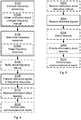
- FIGS. 3, 4, 5, and 6 are flowcharts of methods according to embodiments
- FIG. 7 is a schematic illustration of frequency allocation of reference signals according to embodiments.
- FIG. 8 is a signalling diagram according to an embodiment
- FIG. 9 is a schematic diagram showing functional units of a network node according to an embodiment.
- FIG. 10 is a schematic diagram showing functional modules of a network node according to an embodiment
- FIG. 11 is a schematic diagram showing functional units of a wireless device according to an embodiment
- FIG. 12 is a schematic diagram showing functional modules of a wireless device according to an embodiment.
- FIG. 13 shows one example of a computer program product comprising computer readable means according to an embodiment.
- FIG. 1 is a schematic diagram illustrating a communications system 100 where embodiments presented herein can be applied.
- the communications system 100 could be a third generation (3G) telecommunications system, a fourth generation (4G) telecommunications system, or a fifth (5G) telecommunications system and support any 3GPP telecommunications standard.
- 3G third generation
- 4G fourth generation
- 5G fifth
- the communications system 100 comprises at least one network node 200 configured to provide network access to wireless devices 300 a, 300 b in a radio access network 110 .
- the network node 200 provides network access in the radio access network 110 by transmitting signals to, and receiving signals from, the wireless devices 300 a, 300 b.
- the signals could be transmitted from, and received by, a TRP 205 at the network node 200 .
- the TRP 205 could form an integral part of the network node 200 or be physically separated from the network node 200 .
- Examples of network nodes 200 include, but are not limited to, radio base stations, base transceiver stations, Node Bs, evolved Node Bs, gigabit Node Bs, access points, and access nodes.
- Examples of wireless devices 300 a, 300 b include, but are not limited to, mobile stations, mobile phones, handsets, wireless local loop phones, user equipment (UE), smartphones, laptop computers, tablet computers, sensors, modems, and network equipped vehicles, such as drones (or other aircrafts), land vehicles, and sea vessels.
- the communications system 100 may comprise a plurality of network nodes 200 , each providing network access, via one or more TRPs 205 , to a plurality of wireless devices 300 a, 300 b.
- the herein disclosed embodiments are not limited to any particular number of network nodes 200 or wireless devices 300 a, 300 b.
- the network node 200 could implement beamforming by means of analog beamforming, digital beamforming, or hybrid beamforming.
- Each implementation has its advantages and disadvantages.
- a digital beamforming implementation is the most flexible implementation of the three but also the costliest due to the large number of required radio chains and baseband chains.
- An analog beamforming implementation is the least flexible but cheaper to manufacture due to a reduced number of radio chains and baseband chains compared to the digital beamforming implementation.
- a hybrid beamforming implementation is a compromise between the analog and the digital beamforming implementations. As the skilled person understands, depending on cost and performance requirements of different wireless devices, different implementations will be needed.
- One drawback with an analog beamforming implementation is that transmission and reception can only be performed in one beam at a time.
- the network node 200 is configured to, via the TRP 205 , transmit signals to, and receive signals from, the wireless devices 300 a, 300 b using beams 140 .
- beam 140 represents a narrow, user-covering, beam.
- a user-covering beam covers only a fraction of a cell-covering beam, where the cell-covering beam covers at least a sector of the radio access network 110 .
- the network node 200 could be configured to, via the TRP 205 transmit signals to, and receive signals from, the wireless devices 300 a, 300 b using either narrow or wide beams, depending on the need.
- the network node 200 is therefore assumed to be configured to perform beam management.
- FIG. 2 schematically illustrates allocation of reference signals in a time/frequency grid 250 according to state of the art.
- FIG. 2 illustrates in which resource elements of a subframe covering two slots certain downlink reference signals (i.e., reference signals as transmitted from the network node 200 to the wireless devices 300 a, 300 b ) are located.
- Each resource element spans a frequency interval of 15 kHz, corresponding to one sub-carrier, and a time interval of 0.5 ms, corresponding to one orthogonal frequency-division multiplexing (OFDM) symbol.
- a resource block is 180 kHz wide in frequency (thus corresponding to 12 sub-carriers) and 1 slot long in time.
- PSS primary synchronization signal
- SSS secondary synchronization signal
- CRS cell-specific reference signal
- PRS positioning reference signal
- CSI-RS channel state information reference signal
- DMRS demodulation reference signal
- the optimal beam might be different for different parts of the frequency band, and thus be different for different parts of the system bandwidth.
- the optimal beam as selected based on reference signals transmitted over the entire system bandwidth and received by a particular wireless device 300 a, 300 b might be different compared to the optimal beam for the frequency band in which the particular wireless device 300 a, 300 b will be scheduled for data transmission.
- the beam selected based on reference signals transmitted over the entire system bandwidth will not work at all for the frequency band in which the particular wireless device 300 a, 300 b is actually scheduled.
- the embodiments disclosed herein therefore relate to mechanisms for device-specific beam management of a wireless device 300 a in a communications system 100 and device-specific beam management of a wireless device 300 a in a communications system 100 .
- a network node 200 a method performed by the network node 200 , a computer program product comprising code, for example in the form of a computer program, that when run on processing circuitry of the network node 200 , causes the network node 200 to perform the method.
- a wireless device 300 a, 300 b In order to obtain such mechanisms there is further provided a wireless device 300 a, 300 b, a method performed by the wireless device 300 a, 300 b, and a computer program product comprising code, for example in the form of a computer program, that when run on processing circuitry of the wireless device 300 a, 300 b, causes the wireless device 300 a, 300 b to perform the method.
- FIGS. 3 and 4 are flowcharts illustrating embodiments of methods for device-specific beam management of a wireless device 300 a in a communications system 100 as performed by the network node 200 .
- FIGS. 5 and 6 are flowcharts illustrating embodiments of methods for device-specific beam management of a wireless device 300 a in a communications system 100 as performed by the wireless device 300 a, 300 b.
- the methods are advantageously provided as computer programs 1320 a, 1320 b.
- FIG. 3 illustrating a method for device-specific beam management of a wireless device 300 a in a communications system 100 as performed by the network node 200 according to an embodiment.
- the communications system 100 has a system bandwidth.
- the network node 200 is configured to adapt the frequency allocation of reference signals used for beam management based on the expected frequency scheduling for coming data transmissions. Hence, the network node 200 is configured to perform step S 102 :
- the network node 200 estimates frequency scheduling of the wireless device 300 a.
- the frequency scheduling is to be used for data communications with the wireless device 300 a.
- the frequency scheduling relates to scheduling of resources in the frequency domain.
- the network node 200 thus estimates a frequency band in which the wireless device 300 a is to be scheduled, wherein the frequency band is to be used for data communications with the wireless device 300 a.
- the network node 200 determines frequency resources to use for transmission of reference signals. Particularly, the network node 200 is configured to perform step S 104 :
- the network node 200 determines which frequency resources to use for transmission of reference signals to the wireless device 300 a.
- the frequency resources match the estimated frequency scheduling and span less than the entire system bandwidth.
- a separate frequency scheduling and/or determination of frequency resource may be needed for each individual wireless device 300 a, 300 b.
- the reference signals are transmitted as part of device-specific beam management.
- the network node 200 is configured to perform step S 108 :
- the network node 200 transmits the reference signals in the determined frequency resources as part of device-specific beam management of the wireless device 300 a.
- Embodiments relating to further details of device-specific beam management of a wireless device 300 a in a communications system 100 as performed by the network node 200 will now be disclosed.
- reference signals there could be different examples of reference signals.
- Examples of reference signals that could be transmitted in step S 108 include, but are not limited to, PSS, SSS, CRS, PRS, CSI-RS, DMRS, synchronization signals (SS) for new radio (or 5G) telecommunications systems, and SS block.
- the network node 200 could transmit the reference signals in step S 108 , such as with or without repetition.
- the reference signals are transmitted in a set of transmit beams. That is, the network node 200 could thus be configured to perform a transmit beam sweep at the TRP 205 as part of the beam management procedure. Further, each of the reference signals could be transmitted multiple times in each transmit beam. That is, the wireless device 300 a could thus be configured to perform a reception beam sweep as part of the beam management procedure. Further details related thereto will be disclosed below.
- the frequency scheduling could relate to upcoming communications in either downlink or uplink.
- the frequency scheduling pertains to which frequency resources to use for at least one of downlink and uplink communications with the wireless device 300 a.
- the frequency scheduling could pertains to which frequency resources to use for either only downlink communications, only uplink communications, or both downlink and uplink communications with the wireless device 300 a.
- the frequency resources are determined so as to span the frequency interval in which the wireless device 300 a is scheduled. That is, according to an embodiment the frequency resources are determined so as to cover a frequency interval in which the wireless device 300 a is scheduled for data communications. Further aspect related thereto will be disclosed below with reference to FIG. 7 .
- the estimation could be based on the amount of buffered data for the wireless device 300 a, the amount of buffered data for other wireless devices 300 b, previous channel estimations, and/or latency requirements.
- the frequency scheduling is estimated based current buffer lengths at wireless devices 300 a, 300 b served by the network node 200 , latency requirements for the wireless devices 300 a, 300 b served by the network node 200 , and/or previously made channel estimations.
- the network node 200 is triggered to perform the device-specific beam management of the wireless device 300 a upon occurrence of an event, semi-persistently, or periodically.
- the network node 200 could set up an aperiodic event triggered device-specific beam management procedure for the wireless device 300 a.
- a semi-persistent or periodic device-specific beam management procedure is already initiated for the wireless device 300 a.
- one way to adaptation the transmission of the reference signals according to the estimated frequency scheduling in step S 102 is to null the output power of the unwanted sub-carriers.
- the network node 200 is configured to nulling sub-carriers outside a frequency interval defined by the frequency scheduling.
- FIG. 4 illustrating methods for device-specific beam management of a wireless device 300 a in a communications system 100 as performed by the network node 200 according to further embodiments. It is assumed that steps S 102 , S 104 , S 108 are performed as described above with reference to FIG. 3 and a thus repeated description thereof is therefore omitted.
- the reference signals are transmitted in beams according to a transmission beam sweep.
- the wireless device 300 a could then identify which of the transmit beams that best fulfils a quality criterion.
- the device-specific beam management comprises the network node 200 to transmit the reference signals in a set of transmit beams in step S 108 and the network node 200 is configured to perform step S 110 :
- the network node 200 receives, from the wireless device 300 a, information identifying at least one of the beams in the set of transmit beams. This at least one of the transmit beams is by the wireless device 300 a selected as best fulfilling a quality criterion at the wireless device 300 a. Further details relating thereto will be disclosed below.
- the network node 200 could then communicate with the wireless device 300 a using the transmit beam as selected by the wireless device 300 a.
- the network node 200 is configured to perform step S 112 :
- the network node 200 performs data communication with the wireless device 300 a using one of the at least one of the transmit beams.
- the network node 200 does not have to explicitly inform the wireless device 300 a about the frequency allocation of the reference signals due to the fact that the wireless device 300 a will just regard any unused frequency sub-carriers (or, generally, frequency sub-bands) as out of coverage (due to fading, for example). However, in other aspects the network node 200 explicitly informs the wireless device 300 a about the frequency allocation of the reference signals.
- the network node 200 is configured to perform step S 106 :
- the network node 200 notifies, before transmitting the reference signals in step S 108 , the wireless device 300 a about a frequency interval defined by the frequency scheduling and in which the reference signals are to be transmitted.
- the network node 200 is configured to perform steps S 102 a as part of step S 102 and S 104 a as part of step S 104 :
- the network node 200 obtains an indication of changed frequency scheduling of the wireless device 300 a.
- the indication could be based on the same factors that influence the estimated frequency scheduling in step S 102 . That is, the indication could be based on updated buffer lengths at wireless devices 300 a, 300 b served by the network node 200 , updated latency requirements for the wireless devices 300 a, 300 b served by the network node 200 , and/or updates of previously made channel estimations.
- step S 104 a The network node 200 adapts the frequency resources to use for transmission of reference signals to the wireless device 300 a in accordance with the indication of changed frequency scheduling.
- step S 104 a is similar to step S 104 .
- FIG. 5 illustrating a method for device-specific beam management of a wireless device 300 a in a communications system 100 as performed by the wireless device 300 a according to an embodiment.
- the communications system 100 has a system bandwidth.
- the network node 200 in step S 108 transmits reference signals to the wireless device 300 a. It is assumed that the wireless device 300 a receives the reference signals. Hence, the wireless device 300 a is configured to perform step S 204 :
- the wireless device 300 a receives reference signals from the network node 200 as part of device-specific beam management of the wireless device 300 a.
- the reference signals are only received in frequency resources that span less than the entire system bandwidth.
- the frequency resources match an estimated frequency scheduling of the wireless device 300 a for data communications with the network node 200 .
- Embodiments relating to further details of device-specific beam management of a wireless device 300 a in a communications system 100 as performed by the wireless device 300 a, 300 b will now be disclosed.
- FIG. 6 illustrating methods for device-specific beam management of a wireless device 300 a in a communications system 100 as performed by the wireless device 300 a according to further embodiments. It is assumed that step S 204 is performed as described above with reference to FIG. 5 and a thus repeated description thereof is therefore omitted.
- the reference signals could by the network node 200 be transmitted in a set of transmit beams and the wireless device 300 a could report back the best transmit beam.
- This allows the wireless device 300 a to indicate which one of the transmit beams for the network node 200 to use for future data communications with the wireless device 300 a.
- the wireless device 300 a is configured to perform steps S 206 and S 208 :
- the wireless device 300 a selects which at least one of the transmit beams that best fulfils a quality criterion based on the reference signals as received for each of the transmit beams.
- the wireless device 300 a provides information identifying this at least one of the transmit beams to the network node 200 .
- the criterion used in step S 206 could be based on the type of reference signal that is received. Typical examples of quality criterions are based on maximizing the throughput or data rate for the data communications between the network node 200 and the wireless device 300 a, such as highest reference signal received power and highest reference signal received quality.
- each of the reference signals could be transmitted multiple times in each transmit beam.
- the device-specific beam management could comprises the wireless device 300 a to receive the reference signals in a set of receive beams. The wireless device 300 a could then receive the reference signals at least one time in each receive beam for each transmit beam. This enables the wireless device 300 a to receive the reference signals transmitted in each transmit beam multiple times and thereby allows the wireless device 300 a to receive the reference signals transmitted in each transmit beam in multiple receive beams. The wireless device 300 a could then select the best receive beams similar as in step S 206 .
- the determined best transmit beam (and the best receive beam) could then be used for data transmission.
- the wireless device 300 a is configured to perform step S 210 :
- the wireless device 300 a performs data communication with the network node 200 towards one of the at least one of the transmit beams.
- the network node 200 explicitly informs the wireless device 300 a about the frequency allocation of the reference signals.
- the wireless device 300 a is configured to perform step S 202 :
- the wireless device 300 a receives, from the network node 200 and before receiving the reference signals in step S 204 , a notification about a frequency interval defined by the frequency scheduling and in which the reference signals are to be transmitted.
- FIG. 7 at (a) and (b) schematically illustrates two examples of frequency allocation of reference signals in accordance with the herein disclosed embodiments.
- the allocation of frequency resources for different type of scheduled communications between the network node 200 and the wireless device 300 a are indicated along the entire system bandwidth (iv).
- the frequency resources for downlink data communications span a frequency band denoted (i)
- the frequency resources for uplink data communications span a frequency band denoted (ii)
- the frequency resources for transmission of reference signals span a frequency band denoted (iii) in FIG. 7( a ) and two frequency bands denoted (iiia) and (iiib) in FIG. 7( b ) .
- the frequency resources for transmission of reference signals span the frequency resources for downlink and uplink data communications but no other frequency resources.
- the frequency resources for transmission of reference signals span less than the entire system bandwidth (iv).
- Each block of frequency resources for transmission of reference signals could potentially comprise any of the types of reference signals shown in FIG. 2 .
- One particular embodiment for device-specific beam management of a wireless device 300 a in a communications system 100 as performed by the network node 200 and the wireless device 300 a based on at least some of the above disclosed embodiments will now be disclosed in detail with reference to the signalling diagram of FIG. 8 .
- step S 301 The network node 200 estimates the frequency scheduling for upcoming data transmission both in downlink and uplink for a targeted wireless device 300 a.
- One way to implement step S 301 is to perform any of step S 102 and step S 102 a.
- step S 302 The network node 200 determines which frequency resources to be allocated for the reference signals to be used during the beam management procedure based on the estimated frequency scheduling for the upcoming data transmission in downlink and uplink for the wireless device 300 a.
- One way to implement step S 302 is to perform any of step S 104 and step S 104 a.
- step S 303 The network node 200 transmits the reference signals using the frequency resources.
- the reference signals are received by the wireless device 300 a.
- One way to implement step S 303 is to perform step S 108 and step S 204 .
- step S 304 The wireless device 300 a performs measurements on the received reference signals.
- the wireless device 300 a determines the best transmit beam (if a transmit beam sweep was included in the beam management procedure) and/or the best receive beam (if a receive beam sweep was included in the beam management procedure) based on the measurements.
- One way to implement step S 304 is to perform step S 206 .
- step S 305 The wireless device 300 a reports back the best transmit beam (if a transmit beam sweep was included in the beam management procedure). The report is received by the network node 200 .
- One way to implement step S 305 is to perform step S 110 and step S 208 .
- step S 306 The network node 200 and the wireless device 300 a use the determined best transmit beam (at the network node 200 ) and/or best receive beam (at the wireless device 300 a ) for data communications in downlink and/or uplink between the network node 200 and the wireless device 300 a.
- One way to implement step S 306 is to perform step S 112 and step S 210 .
- FIG. 9 schematically illustrates, in terms of a number of functional units, the components of a network node 200 according to an embodiment.
- Processing circuitry 210 is provided using any combination of one or more of a suitable central processing unit (CPU), multiprocessor, microcontroller, digital signal processor (DSP), etc., capable of executing software instructions stored in a computer program product 1310 a (as in FIG. 13 ), e.g. in the form of a storage medium 230 .
- the processing circuitry 210 may further be provided as at least one application specific integrated circuit (ASIC), or field programmable gate array (FPGA).
- ASIC application specific integrated circuit
- FPGA field programmable gate array
- the processing circuitry 210 is configured to cause the network node 200 to perform a set of operations, or steps, S 102 -S 112 , as disclosed above.
- the storage medium 230 may store the set of operations
- the processing circuitry 210 may be configured to retrieve the set of operations from the storage medium 230 to cause the network node 200 to perform the set of operations.
- the set of operations may be provided as a set of executable instructions.
- the processing circuitry 210 is thereby arranged to execute methods as herein disclosed.
- the storage medium 230 may also comprise persistent storage, which, for example, can be any single one or combination of magnetic memory, optical memory, solid state memory or even remotely mounted memory.
- the network node 200 may further comprise a communications interface 220 for communications with other entities, nodes, and devices of the communications system 100 , and particular with the wireless devices 300 a, 300 b.
- the communications interface 220 may comprise one or more transmitters and receivers, comprising analogue and digital components.
- the processing circuitry 210 controls the general operation of the network node 200 e.g. by sending data and control signals to the communications interface 220 and the storage medium 230 , by receiving data and reports from the communications interface 220 , and by retrieving data and instructions from the storage medium 230 .
- Other components, as well as the related functionality, of the network node 200 are omitted in order not to obscure the concepts presented herein.
- FIG. 10 schematically illustrates, in terms of a number of functional modules, the components of a network node 200 according to an embodiment.
- the network node 200 of FIG. 10 comprises a number of functional modules; an estimate module 210 a configured to perform step S 102 , a determine module 210 C configured to perform step S 104 , and a transmit module 210 f configured to perform step S 108 .
- the network node 200 of FIG. 10 comprises a number of functional modules; an estimate module 210 a configured to perform step S 102 , a determine module 210 C configured to perform step S 104 , and a transmit module 210 f configured to perform step S 108 .
- each functional module 210 a - 210 h may be implemented in hardware or in software.
- one or more or all functional modules 210 a - 210 h may be implemented by the processing circuitry 210 , possibly in cooperation with the communications interface 220 and/or the storage medium 230 .
- the processing circuitry 210 may thus be arranged to from the storage medium 230 fetch instructions as provided by a functional module 210 a - 210 h and to execute these instructions, thereby performing any steps of the network node 200 as disclosed herein.
- the network node 200 may be provided as a standalone device or as a part of at least one further device.
- the network node 200 may be provided in a node of the radio access network no or in a node of the core network 120 .
- functionality of the network node 200 may be distributed between at least two devices, or nodes. These at least two nodes, or devices, may either be part of the same network part (such as the radio access network no or the core network 120 ) or may be spread between at least two such network parts.
- a first portion of the instructions performed by the network node 200 may be executed in a first device, and a second portion of the of the instructions performed by the network node 200 may be executed in a second device; the herein disclosed embodiments are not limited to any particular number of devices on which the instructions performed by the network node 200 may be executed.
- the methods according to the herein disclosed embodiments are suitable to be performed by a network node 200 residing in a cloud computational environment. Therefore, although a single processing circuitry 210 is illustrated in FIG. 9 the processing circuitry 210 may be distributed among a plurality of devices, or nodes. The same applies to the functional modules 210 a - 210 h of FIG. 10 and the computer program 1320 a of FIG. 13 (see below).
- FIG. 11 schematically illustrates, in terms of a number of functional units, the components of a wireless device 300 a, 300 b according to an embodiment.
- Processing circuitry 310 is provided using any combination of one or more of a suitable central processing unit (CPU), multiprocessor, microcontroller, digital signal processor (DSP), etc., capable of executing software instructions stored in a computer program product 1310 b (as in FIG. 13 ), e.g. in the form of a storage medium 330 .
- the processing circuitry 310 may further be provided as at least one application specific integrated circuit (ASIC), or field programmable gate array (FPGA).
- ASIC application specific integrated circuit
- FPGA field programmable gate array
- the processing circuitry 310 is configured to cause the wireless device 300 a, 300 b to perform a set of operations, or steps, S 202 -S 210 , as disclosed above.
- the storage medium 330 may store the set of operations
- the processing circuitry 310 may be configured to retrieve the set of operations from the storage medium 330 to cause the wireless device 300 a, 300 b to perform the set of operations.
- the set of operations may be provided as a set of executable instructions.
- the processing circuitry 310 is thereby arranged to execute methods as herein disclosed.
- the storage medium 330 may also comprise persistent storage, which, for example, can be any single one or combination of magnetic memory, optical memory, solid state memory or even remotely mounted memory.
- the wireless device 300 a, 300 b may further comprise a communications interface 320 for communications with other entities, nodes, and devices of the communications system 100 , and particular with the network node 200 .
- the communications interface 320 may comprise one or more transmitters and receivers, comprising analogue and digital components.
- the processing circuitry 310 controls the general operation of the wireless device 300 a, 300 b e.g. by sending data and control signals to the communications interface 320 and the storage medium 330 , by receiving data and reports from the communications interface 320 , and by retrieving data and instructions from the storage medium 330 .
- Other components, as well as the related functionality, of the wireless device 300 a, 300 b are omitted in order not to obscure the concepts presented herein.
- FIG. 12 schematically illustrates, in terms of a number of functional modules, the components of a wireless device 300 a, 300 b according to an embodiment.
- the wireless device 300 a, 300 b of FIG. 12 comprises a receive module 310 b configured to perform step S 204 .
- the wireless device 300 a, 300 b of FIG. 12 may further comprise a number of optional functional modules, such as any of a receive module 310 a configured to perform step S 202 , a select module 310 c configured to perform step S 206 , a provide module 310 d configured to perform step S 208 , and a communications module 310 e configured to perform step S 210 .
- each functional module 310 a - 310 e may be implemented in hardware or in software.
- one or more or all functional modules 310 a - 310 e may be implemented by the processing circuitry 310 , possibly in cooperation with the communications interface 320 and/or the storage medium 330 .
- the processing circuitry 310 may thus be arranged to from the storage medium 330 fetch instructions as provided by a functional module 310 a - 310 e and to execute these instructions, thereby performing any steps of the wireless device 300 a, 300 b as disclosed herein.
- FIG. 13 shows one example of a computer program product 1310 a, 1310 b comprising computer readable means 1330 .
- a computer program 1320 a can be stored, which computer program 1320 a can cause the processing circuitry 210 and thereto operatively coupled entities and devices, such as the communications interface 220 and the storage medium 230 , to execute methods according to embodiments described herein.
- the computer program 1320 a and/or computer program product 1310 a may thus provide means for performing any steps of the network node 200 as herein disclosed.
- a computer program 1320 b can be stored, which computer program 1320 b can cause the processing circuitry 310 and thereto operatively coupled entities and devices, such as the communications interface 320 and the storage medium 330 , to execute methods according to embodiments described herein.
- the computer program 1320 b and/or computer program product 1310 b may thus provide means for performing any steps of the wireless device 300 a, 300 b as herein disclosed.
- the computer program product 1310 a, 1310 b is illustrated as an optical disc, such as a CD (compact disc) or a DVD (digital versatile disc) or a Blu-Ray disc.
- the computer program product 1310 a, 1310 b could also be embodied as a memory, such as a random access memory (RAM), a read-only memory (ROM), an erasable programmable read-only memory (EPROM), or an electrically erasable programmable read-only memory (EEPROM) and more particularly as a non-volatile storage medium of a device in an external memory such as a USB (Universal Serial Bus) memory or a Flash memory, such as a compact Flash memory.
- RAM random access memory
- ROM read-only memory
- EPROM erasable programmable read-only memory
- EEPROM electrically erasable programmable read-only memory
- the computer program 1320 a, 1320 b is here schematically shown as a track on the depicted optical disk, the computer program 1320 a, 1320 b can be stored in any way which is suitable for the computer program product 1310 a, 1310 b.
Landscapes
- Engineering & Computer Science (AREA)
- Signal Processing (AREA)
- Computer Networks & Wireless Communication (AREA)
- Mobile Radio Communication Systems (AREA)
Abstract
Description
Claims (24)
Applications Claiming Priority (1)
| Application Number | Priority Date | Filing Date | Title |
|---|---|---|---|
| PCT/EP2017/058518 WO2018188718A1 (en) | 2017-04-10 | 2017-04-10 | Device-specific beam management of a wireless device |
Publications (2)
| Publication Number | Publication Date |
|---|---|
| US20180294863A1 US20180294863A1 (en) | 2018-10-11 |
| US11196475B2 true US11196475B2 (en) | 2021-12-07 |
Family
ID=58609370
Family Applications (1)
| Application Number | Title | Priority Date | Filing Date |
|---|---|---|---|
| US15/523,146 Active 2037-05-27 US11196475B2 (en) | 2017-04-10 | 2017-04-10 | Device-specific beam management of a wireless device |
Country Status (4)
| Country | Link |
|---|---|
| US (1) | US11196475B2 (en) |
| EP (1) | EP3596839A1 (en) |
| CN (1) | CN110521133A (en) |
| WO (1) | WO2018188718A1 (en) |
Cited By (1)
| Publication number | Priority date | Publication date | Assignee | Title |
|---|---|---|---|---|
| US20210352593A1 (en) * | 2018-02-02 | 2021-11-11 | Sony Group Corporation | Apparatus and method in wireless communication system, and computer readable storage medium |
Families Citing this family (4)
| Publication number | Priority date | Publication date | Assignee | Title |
|---|---|---|---|---|
| WO2018228687A1 (en) * | 2017-06-14 | 2018-12-20 | Sony Mobile Communications Inc. | Operating a terminal device and a base station in a wireless mimo system |
| US11271619B2 (en) * | 2018-09-07 | 2022-03-08 | Lg Electronics Inc. | Method for managing beam considering characteristics of THz antenna |
| US11019627B2 (en) | 2018-09-28 | 2021-05-25 | At&T Intellectual Property I, L.P. | Facilitation of signal alignment for 5G or other next generation network |
| US11924862B2 (en) * | 2021-04-21 | 2024-03-05 | Qualcomm Incorporated | SSB, coreset, SIB signal block for initial access information |
Citations (23)
| Publication number | Priority date | Publication date | Assignee | Title |
|---|---|---|---|---|
| US20070142067A1 (en) * | 2005-12-20 | 2007-06-21 | Lucent Technologies, Inc. | Resource allocation based on interference mitigation in a wireless communication system |
| US20120182895A1 (en) * | 2011-01-13 | 2012-07-19 | Electronics And Telecommunications Research Institute | Apparatus and method for transmitting and receiving channel state information |
| US20130064119A1 (en) * | 2011-09-13 | 2013-03-14 | Qualcomm Incorporated | Narrow Bandwidth Operation in LTE |
| US20130156120A1 (en) * | 2011-12-19 | 2013-06-20 | Samsung Electronics Co., Ltd | Apparatus and method for reference symbol transmission in an ofdm system |
| US20150289281A1 (en) * | 2013-01-28 | 2015-10-08 | Samsung Electronics Co., Ltd | Apparatus and method for transmission/reception in radio communication system |
| US20150341097A1 (en) * | 2012-10-19 | 2015-11-26 | Weidong Yang | CSI Feedback with Elevation Beamforming |
| US20160029238A1 (en) * | 2013-03-08 | 2016-01-28 | Zte Corporation | Method and Device for Determining Indication Signalling of Pilot Signal for Channel Measurement and Method and Device for Feeding Back CSI |
| US20160028448A1 (en) * | 2013-07-29 | 2016-01-28 | Lg Electronics Inc. | Method and device for performing nib comp transmission in wireless communication system |
| US20160088594A1 (en) * | 2014-09-18 | 2016-03-24 | Gang Xiong | Device and method of supporting reduced data transmission bandwidth |
| WO2017014572A1 (en) | 2015-07-21 | 2017-01-26 | Samsung Electronics Co., Ltd. | Method and apparatus for beam-level radio resource management and mobility in cellular network |
| US20170063436A1 (en) * | 2014-05-16 | 2017-03-02 | Huawei Technologies Co., Ltd. | Information Processing Method, Base Station, and User Equipment |
| WO2017034445A1 (en) | 2015-08-25 | 2017-03-02 | Telefonaktiebolaget Lm Ericsson (Publ) | Uplink pilot reference signals |
| US20170257884A1 (en) * | 2016-03-01 | 2017-09-07 | Samsung Electronics Co., Ltd | Partial port hybrid csi feedback for mimo wireless communication systems |
| US20170295508A1 (en) * | 2016-04-06 | 2017-10-12 | Futurewei Technologies, Inc. | System and Method for Millimeter Wave Communications |
| US20170302352A1 (en) * | 2016-04-18 | 2017-10-19 | Qualcomm Incorporated | Channel state information estimation and channel information reporting |
| US20170303263A1 (en) * | 2016-04-19 | 2017-10-19 | Qualcomm Incorporated | Beam reference signal based narrowband channel measurement and cqi reporting |
| US20170353254A1 (en) * | 2016-06-01 | 2017-12-07 | Qualcomm Incorporated | Time division multiplexing of synchronization channels |
| US20180041319A1 (en) * | 2016-08-08 | 2018-02-08 | Futurewei Technologies, Inc. | Systems and Methods for UE-Specific Beam Management for High Frequency Wireless Communication |
| US20180063868A1 (en) * | 2016-08-25 | 2018-03-01 | Qualcomm Incorporated | Initial access procedure using preconfigured resources |
| US20180212666A1 (en) * | 2015-09-11 | 2018-07-26 | Lg Electronics Inc. | Method for reporting beam index for 3d mimo transmission in wireless communication system, and device therefor |
| US20180220398A1 (en) * | 2017-01-27 | 2018-08-02 | Qualcomm Incorporated | Multi-link new radio (nr)-physical downlink control channel (pdcch) design |
| US20180270700A1 (en) * | 2017-03-16 | 2018-09-20 | Ofinno Technologies, Llc | Buffer Status Report Control |
| US20180287683A1 (en) * | 2017-04-04 | 2018-10-04 | Qualcomm Incorporation | Beam management using synchronization signals through channel feedback framework |
-
2017
- 2017-04-10 WO PCT/EP2017/058518 patent/WO2018188718A1/en not_active Ceased
- 2017-04-10 CN CN201780089418.6A patent/CN110521133A/en not_active Withdrawn
- 2017-04-10 EP EP17716095.9A patent/EP3596839A1/en not_active Withdrawn
- 2017-04-10 US US15/523,146 patent/US11196475B2/en active Active
Patent Citations (23)
| Publication number | Priority date | Publication date | Assignee | Title |
|---|---|---|---|---|
| US20070142067A1 (en) * | 2005-12-20 | 2007-06-21 | Lucent Technologies, Inc. | Resource allocation based on interference mitigation in a wireless communication system |
| US20120182895A1 (en) * | 2011-01-13 | 2012-07-19 | Electronics And Telecommunications Research Institute | Apparatus and method for transmitting and receiving channel state information |
| US20130064119A1 (en) * | 2011-09-13 | 2013-03-14 | Qualcomm Incorporated | Narrow Bandwidth Operation in LTE |
| US20130156120A1 (en) * | 2011-12-19 | 2013-06-20 | Samsung Electronics Co., Ltd | Apparatus and method for reference symbol transmission in an ofdm system |
| US20150341097A1 (en) * | 2012-10-19 | 2015-11-26 | Weidong Yang | CSI Feedback with Elevation Beamforming |
| US20150289281A1 (en) * | 2013-01-28 | 2015-10-08 | Samsung Electronics Co., Ltd | Apparatus and method for transmission/reception in radio communication system |
| US20160029238A1 (en) * | 2013-03-08 | 2016-01-28 | Zte Corporation | Method and Device for Determining Indication Signalling of Pilot Signal for Channel Measurement and Method and Device for Feeding Back CSI |
| US20160028448A1 (en) * | 2013-07-29 | 2016-01-28 | Lg Electronics Inc. | Method and device for performing nib comp transmission in wireless communication system |
| US20170063436A1 (en) * | 2014-05-16 | 2017-03-02 | Huawei Technologies Co., Ltd. | Information Processing Method, Base Station, and User Equipment |
| US20160088594A1 (en) * | 2014-09-18 | 2016-03-24 | Gang Xiong | Device and method of supporting reduced data transmission bandwidth |
| WO2017014572A1 (en) | 2015-07-21 | 2017-01-26 | Samsung Electronics Co., Ltd. | Method and apparatus for beam-level radio resource management and mobility in cellular network |
| WO2017034445A1 (en) | 2015-08-25 | 2017-03-02 | Telefonaktiebolaget Lm Ericsson (Publ) | Uplink pilot reference signals |
| US20180212666A1 (en) * | 2015-09-11 | 2018-07-26 | Lg Electronics Inc. | Method for reporting beam index for 3d mimo transmission in wireless communication system, and device therefor |
| US20170257884A1 (en) * | 2016-03-01 | 2017-09-07 | Samsung Electronics Co., Ltd | Partial port hybrid csi feedback for mimo wireless communication systems |
| US20170295508A1 (en) * | 2016-04-06 | 2017-10-12 | Futurewei Technologies, Inc. | System and Method for Millimeter Wave Communications |
| US20170302352A1 (en) * | 2016-04-18 | 2017-10-19 | Qualcomm Incorporated | Channel state information estimation and channel information reporting |
| US20170303263A1 (en) * | 2016-04-19 | 2017-10-19 | Qualcomm Incorporated | Beam reference signal based narrowband channel measurement and cqi reporting |
| US20170353254A1 (en) * | 2016-06-01 | 2017-12-07 | Qualcomm Incorporated | Time division multiplexing of synchronization channels |
| US20180041319A1 (en) * | 2016-08-08 | 2018-02-08 | Futurewei Technologies, Inc. | Systems and Methods for UE-Specific Beam Management for High Frequency Wireless Communication |
| US20180063868A1 (en) * | 2016-08-25 | 2018-03-01 | Qualcomm Incorporated | Initial access procedure using preconfigured resources |
| US20180220398A1 (en) * | 2017-01-27 | 2018-08-02 | Qualcomm Incorporated | Multi-link new radio (nr)-physical downlink control channel (pdcch) design |
| US20180270700A1 (en) * | 2017-03-16 | 2018-09-20 | Ofinno Technologies, Llc | Buffer Status Report Control |
| US20180287683A1 (en) * | 2017-04-04 | 2018-10-04 | Qualcomm Incorporation | Beam management using synchronization signals through channel feedback framework |
Non-Patent Citations (2)
| Title |
|---|
| Huawei, et al., "CSI-RS design for beam management", 3GPP TSG RAN WG1 Meeting #88bis, RI-1704235, Spokane, USA, Apr. 3-7, 2017, 9 pages. |
| International Search Report and Written Opinion issued in International Application No. PCT/EP2017/058518, dated Dec. 18, 2017, 15 pages. |
Cited By (3)
| Publication number | Priority date | Publication date | Assignee | Title |
|---|---|---|---|---|
| US20210352593A1 (en) * | 2018-02-02 | 2021-11-11 | Sony Group Corporation | Apparatus and method in wireless communication system, and computer readable storage medium |
| US20230156617A1 (en) * | 2018-02-02 | 2023-05-18 | Sony Group Corporation | Apparatus and method in wireless communication system, and computer readable storage medium |
| US11871357B2 (en) * | 2018-02-02 | 2024-01-09 | Sony Group Corporation | Apparatus and method in wireless communication system, and computer readable storage medium |
Also Published As
| Publication number | Publication date |
|---|---|
| EP3596839A1 (en) | 2020-01-22 |
| CN110521133A (en) | 2019-11-29 |
| US20180294863A1 (en) | 2018-10-11 |
| WO2018188718A1 (en) | 2018-10-18 |
Similar Documents
| Publication | Publication Date | Title |
|---|---|---|
| US12483992B2 (en) | Channel configuration method and apparatus, power control method and apparatus, user equipment, base station and storage medium | |
| EP4618673A2 (en) | Systems and methods of indicating a transmitter configuration for a wireless device | |
| US11196475B2 (en) | Device-specific beam management of a wireless device | |
| US10673587B2 (en) | Beam management for a radio transceiver device | |
| US11849403B2 (en) | Transmission of uplink reference signals | |
| US11265067B2 (en) | Beam training of a radio transceiver device | |
| US10165570B2 (en) | Adaptive beamforming | |
| US10382114B2 (en) | Configuration of reception of beam reports | |
| US10389413B2 (en) | Configuration of beamforming settings | |
| JP7095080B2 (en) | Packet transmission considering interference | |
| US10219268B2 (en) | Beam finding procedure | |
| US10375720B2 (en) | Beam management of a radio transceiver device | |
| US10326570B2 (en) | Frequency selective scheduling | |
| US12513534B2 (en) | Transmission of reference signal resources and configuration thereof | |
| CN109076471B (en) | Method and apparatus for operating with sporadically transmitted fine timing reference signals |
Legal Events
| Date | Code | Title | Description |
|---|---|---|---|
| AS | Assignment |
Owner name: TELEFONAKTIEBOLAGET LM ERICSSON (PUBL), SWEDEN Free format text: ASSIGNMENT OF ASSIGNORS INTEREST;ASSIGNOR:NILSSON, ANDREAS;REEL/FRAME:047149/0338 Effective date: 20170411 |
|
| STPP | Information on status: patent application and granting procedure in general |
Free format text: FINAL REJECTION MAILED |
|
| STPP | Information on status: patent application and granting procedure in general |
Free format text: RESPONSE AFTER FINAL ACTION FORWARDED TO EXAMINER |
|
| STPP | Information on status: patent application and granting procedure in general |
Free format text: NON FINAL ACTION MAILED |
|
| STPP | Information on status: patent application and granting procedure in general |
Free format text: RESPONSE TO NON-FINAL OFFICE ACTION ENTERED AND FORWARDED TO EXAMINER |
|
| STPP | Information on status: patent application and granting procedure in general |
Free format text: FINAL REJECTION MAILED |
|
| STPP | Information on status: patent application and granting procedure in general |
Free format text: ADVISORY ACTION MAILED |
|
| STPP | Information on status: patent application and granting procedure in general |
Free format text: NON FINAL ACTION MAILED |
|
| STPP | Information on status: patent application and granting procedure in general |
Free format text: RESPONSE TO NON-FINAL OFFICE ACTION ENTERED AND FORWARDED TO EXAMINER |
|
| STPP | Information on status: patent application and granting procedure in general |
Free format text: RESPONSE AFTER FINAL ACTION FORWARDED TO EXAMINER |
|
| STPP | Information on status: patent application and granting procedure in general |
Free format text: ADVISORY ACTION MAILED |
|
| STCV | Information on status: appeal procedure |
Free format text: NOTICE OF APPEAL FILED |
|
| STCV | Information on status: appeal procedure |
Free format text: APPEAL BRIEF (OR SUPPLEMENTAL BRIEF) ENTERED AND FORWARDED TO EXAMINER |
|
| STPP | Information on status: patent application and granting procedure in general |
Free format text: NOTICE OF ALLOWANCE MAILED -- APPLICATION RECEIVED IN OFFICE OF PUBLICATIONS |
|
| STPP | Information on status: patent application and granting procedure in general |
Free format text: AWAITING TC RESP., ISSUE FEE NOT PAID |
|
| STPP | Information on status: patent application and granting procedure in general |
Free format text: NOTICE OF ALLOWANCE MAILED -- APPLICATION RECEIVED IN OFFICE OF PUBLICATIONS |
|
| STPP | Information on status: patent application and granting procedure in general |
Free format text: PUBLICATIONS -- ISSUE FEE PAYMENT VERIFIED |
|
| STCF | Information on status: patent grant |
Free format text: PATENTED CASE |
|
| MAFP | Maintenance fee payment |
Free format text: PAYMENT OF MAINTENANCE FEE, 4TH YEAR, LARGE ENTITY (ORIGINAL EVENT CODE: M1551); ENTITY STATUS OF PATENT OWNER: LARGE ENTITY Year of fee payment: 4 |