US11168050B2 - Efficient synthesis of amines and amides from alcohols and aldehydes by using cascade catalysis - Google Patents
Efficient synthesis of amines and amides from alcohols and aldehydes by using cascade catalysis Download PDFInfo
- Publication number
- US11168050B2 US11168050B2 US15/129,424 US201515129424A US11168050B2 US 11168050 B2 US11168050 B2 US 11168050B2 US 201515129424 A US201515129424 A US 201515129424A US 11168050 B2 US11168050 B2 US 11168050B2
- Authority
- US
- United States
- Prior art keywords
- formula
- compound
- group
- amine
- aldehyde
- Prior art date
- Legal status (The legal status is an assumption and is not a legal conclusion. Google has not performed a legal analysis and makes no representation as to the accuracy of the status listed.)
- Active
Links
- 150000001412 amines Chemical class 0.000 title claims abstract description 83
- 150000001299 aldehydes Chemical class 0.000 title claims abstract description 65
- 150000001408 amides Chemical class 0.000 title claims abstract description 29
- 238000003786 synthesis reaction Methods 0.000 title abstract description 21
- 230000015572 biosynthetic process Effects 0.000 title abstract description 20
- 150000001298 alcohols Chemical class 0.000 title abstract description 8
- 238000006555 catalytic reaction Methods 0.000 title description 5
- 238000006243 chemical reaction Methods 0.000 claims abstract description 108
- 238000000034 method Methods 0.000 claims abstract description 65
- YKPUWZUDDOIDPM-SOFGYWHQSA-N capsaicin Chemical compound COC1=CC(CNC(=O)CCCC\C=C\C(C)C)=CC=C1O YKPUWZUDDOIDPM-SOFGYWHQSA-N 0.000 claims abstract description 59
- 108090000790 Enzymes Proteins 0.000 claims abstract description 46
- 102000004190 Enzymes Human genes 0.000 claims abstract description 46
- ZENOXNGFMSCLLL-UHFFFAOYSA-N vanillyl alcohol Chemical compound COC1=CC(CO)=CC=C1O ZENOXNGFMSCLLL-UHFFFAOYSA-N 0.000 claims abstract description 41
- 239000003054 catalyst Substances 0.000 claims abstract description 23
- 150000001875 compounds Chemical class 0.000 claims description 84
- MWOOGOJBHIARFG-UHFFFAOYSA-N vanillin Chemical group COC1=CC(C=O)=CC=C1O MWOOGOJBHIARFG-UHFFFAOYSA-N 0.000 claims description 48
- 229960003767 alanine Drugs 0.000 claims description 46
- QNAYBMKLOCPYGJ-UHFFFAOYSA-N D-alpha-Ala Natural products CC([NH3+])C([O-])=O QNAYBMKLOCPYGJ-UHFFFAOYSA-N 0.000 claims description 45
- QNAYBMKLOCPYGJ-REOHCLBHSA-N L-alanine Chemical compound C[C@H](N)C(O)=O QNAYBMKLOCPYGJ-REOHCLBHSA-N 0.000 claims description 45
- 235000012141 vanillin Nutrition 0.000 claims description 41
- FGQOOHJZONJGDT-UHFFFAOYSA-N vanillin Natural products COC1=CC(O)=CC(C=O)=C1 FGQOOHJZONJGDT-UHFFFAOYSA-N 0.000 claims description 41
- QNAYBMKLOCPYGJ-UWTATZPHSA-N L-Alanine Natural products C[C@@H](N)C(O)=O QNAYBMKLOCPYGJ-UWTATZPHSA-N 0.000 claims description 39
- WRPWWVNUCXQDQV-UHFFFAOYSA-N vanillylamine Chemical group COC1=CC(CN)=CC=C1O WRPWWVNUCXQDQV-UHFFFAOYSA-N 0.000 claims description 38
- LFQSCWFLJHTTHZ-UHFFFAOYSA-N Ethanol Chemical compound CCO LFQSCWFLJHTTHZ-UHFFFAOYSA-N 0.000 claims description 32
- 229930027945 nicotinamide-adenine dinucleotide Natural products 0.000 claims description 30
- BOPGDPNILDQYTO-NNYOXOHSSA-N nicotinamide-adenine dinucleotide Chemical compound C1=CCC(C(=O)N)=CN1[C@H]1[C@H](O)[C@H](O)[C@@H](COP(O)(=O)OP(O)(=O)OC[C@@H]2[C@H]([C@@H](O)[C@@H](O2)N2C3=NC=NC(N)=C3N=C2)O)O1 BOPGDPNILDQYTO-NNYOXOHSSA-N 0.000 claims description 30
- 229940053939 vanillylamine Drugs 0.000 claims description 30
- 125000000217 alkyl group Chemical group 0.000 claims description 27
- HSJKGGMUJITCBW-UHFFFAOYSA-N 3-hydroxybutanal Chemical compound CC(O)CC=O HSJKGGMUJITCBW-UHFFFAOYSA-N 0.000 claims description 26
- RGOVYLWUIBMPGK-UHFFFAOYSA-N nonivamide Chemical compound CCCCCCCCC(=O)NCC1=CC=C(O)C(OC)=C1 RGOVYLWUIBMPGK-UHFFFAOYSA-N 0.000 claims description 26
- WQZGKKKJIJFFOK-GASJEMHNSA-N Glucose Natural products OC[C@H]1OC(O)[C@H](O)[C@@H](O)[C@@H]1O WQZGKKKJIJFFOK-GASJEMHNSA-N 0.000 claims description 25
- 108010050375 Glucose 1-Dehydrogenase Proteins 0.000 claims description 25
- WQZGKKKJIJFFOK-VFUOTHLCSA-N beta-D-glucose Chemical compound OC[C@H]1O[C@@H](O)[C@H](O)[C@@H](O)[C@@H]1O WQZGKKKJIJFFOK-VFUOTHLCSA-N 0.000 claims description 25
- 125000003118 aryl group Chemical group 0.000 claims description 24
- 150000003138 primary alcohols Chemical class 0.000 claims description 22
- 150000002576 ketones Chemical class 0.000 claims description 18
- 108010031025 Alanine Dehydrogenase Proteins 0.000 claims description 17
- -1 cinnamyl alcohols Chemical class 0.000 claims description 16
- 125000000623 heterocyclic group Chemical group 0.000 claims description 14
- 239000002105 nanoparticle Substances 0.000 claims description 14
- 238000005580 one pot reaction Methods 0.000 claims description 14
- 125000000490 cinnamyl group Chemical group C(C=CC1=CC=CC=C1)* 0.000 claims description 13
- 229960004036 nonivamide Drugs 0.000 claims description 12
- 235000017663 capsaicin Nutrition 0.000 claims description 11
- 229960002504 capsaicin Drugs 0.000 claims description 11
- 239000003795 chemical substances by application Substances 0.000 claims description 11
- 239000002253 acid Substances 0.000 claims description 8
- 235000004279 alanine Nutrition 0.000 claims description 7
- 229920005610 lignin Polymers 0.000 claims description 7
- 238000000746 purification Methods 0.000 claims description 7
- QGZKDVFQNNGYKY-UHFFFAOYSA-N Ammonia Chemical compound N QGZKDVFQNNGYKY-UHFFFAOYSA-N 0.000 claims description 6
- 108090000340 Transaminases Proteins 0.000 claims description 6
- 102000003929 Transaminases Human genes 0.000 claims description 6
- 239000000543 intermediate Substances 0.000 claims description 6
- JJWLVOIRVHMVIS-UHFFFAOYSA-N isopropylamine Chemical compound CC(C)N JJWLVOIRVHMVIS-UHFFFAOYSA-N 0.000 claims description 6
- 229910052763 palladium Inorganic materials 0.000 claims description 6
- 241000588879 Chromobacterium violaceum Species 0.000 claims description 4
- 125000002252 acyl group Chemical group 0.000 claims description 4
- 235000019445 benzyl alcohol Nutrition 0.000 claims description 3
- 150000003938 benzyl alcohols Chemical class 0.000 claims description 3
- RIWRFSMVIUAEBX-UHFFFAOYSA-N n-methyl-1-phenylmethanamine Chemical compound CNCC1=CC=CC=C1 RIWRFSMVIUAEBX-UHFFFAOYSA-N 0.000 claims description 3
- 102000006746 NADH Dehydrogenase Human genes 0.000 claims description 2
- 102000007698 Alcohol dehydrogenase Human genes 0.000 claims 4
- 108010021809 Alcohol dehydrogenase Proteins 0.000 claims 4
- 229940125898 compound 5 Drugs 0.000 claims 2
- 238000006362 organocatalysis Methods 0.000 abstract description 2
- IAZDPXIOMUYVGZ-UHFFFAOYSA-N Dimethylsulphoxide Chemical compound CS(C)=O IAZDPXIOMUYVGZ-UHFFFAOYSA-N 0.000 description 60
- NLXLAEXVIDQMFP-UHFFFAOYSA-N Ammonia chloride Chemical compound [NH4+].[Cl-] NLXLAEXVIDQMFP-UHFFFAOYSA-N 0.000 description 45
- YXFVVABEGXRONW-UHFFFAOYSA-N Toluene Chemical compound CC1=CC=CC=C1 YXFVVABEGXRONW-UHFFFAOYSA-N 0.000 description 33
- 0 *C([1*])=O.*C([1*])N.*C([1*])NC([3*])=O.*C([1*])O Chemical compound *C([1*])=O.*C([1*])N.*C([1*])NC([3*])=O.*C([1*])O 0.000 description 30
- HEDRZPFGACZZDS-MICDWDOJSA-N Trichloro(2H)methane Chemical compound [2H]C(Cl)(Cl)Cl HEDRZPFGACZZDS-MICDWDOJSA-N 0.000 description 26
- 239000000243 solution Substances 0.000 description 23
- 235000019270 ammonium chloride Nutrition 0.000 description 22
- JKMHFZQWWAIEOD-UHFFFAOYSA-N 2-[4-(2-hydroxyethyl)piperazin-1-yl]ethanesulfonic acid Chemical compound OCC[NH+]1CCN(CCS([O-])(=O)=O)CC1 JKMHFZQWWAIEOD-UHFFFAOYSA-N 0.000 description 20
- 239000007995 HEPES buffer Substances 0.000 description 20
- KDLHZDBZIXYQEI-UHFFFAOYSA-N palladium Substances [Pd] KDLHZDBZIXYQEI-UHFFFAOYSA-N 0.000 description 20
- HEMHJVSKTPXQMS-UHFFFAOYSA-M Sodium hydroxide Chemical compound [OH-].[Na+] HEMHJVSKTPXQMS-UHFFFAOYSA-M 0.000 description 18
- 238000004128 high performance liquid chromatography Methods 0.000 description 16
- HUMNYLRZRPPJDN-UHFFFAOYSA-N benzaldehyde Chemical compound O=CC1=CC=CC=C1 HUMNYLRZRPPJDN-UHFFFAOYSA-N 0.000 description 15
- DXIJHCSGLOHNES-MDZDMXLPSA-N CC(C)(C)/C=C/C1=CC=CC=C1 Chemical compound CC(C)(C)/C=C/C1=CC=CC=C1 DXIJHCSGLOHNES-MDZDMXLPSA-N 0.000 description 14
- YTZKOQUCBOVLHL-UHFFFAOYSA-N CC(C)(C)C1=CC=CC=C1 Chemical compound CC(C)(C)C1=CC=CC=C1 YTZKOQUCBOVLHL-UHFFFAOYSA-N 0.000 description 14
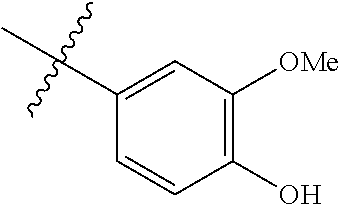
- SERZNTMEVJWJSA-UHFFFAOYSA-N COC1=C(O)C=CC(C(C)(C)C)=C1 Chemical compound COC1=C(O)C=CC(C(C)(C)C)=C1 SERZNTMEVJWJSA-UHFFFAOYSA-N 0.000 description 14
- 239000000203 mixture Substances 0.000 description 14
- HEDRZPFGACZZDS-UHFFFAOYSA-N Chloroform Chemical compound ClC(Cl)Cl HEDRZPFGACZZDS-UHFFFAOYSA-N 0.000 description 12
- 125000001424 substituent group Chemical group 0.000 description 12
- 238000003756 stirring Methods 0.000 description 10
- XEKOWRVHYACXOJ-UHFFFAOYSA-N Ethyl acetate Chemical compound CCOC(C)=O XEKOWRVHYACXOJ-UHFFFAOYSA-N 0.000 description 9
- 238000004519 manufacturing process Methods 0.000 description 9
- 125000004093 cyano group Chemical group *C#N 0.000 description 8
- 229910052736 halogen Inorganic materials 0.000 description 8
- 150000002367 halogens Chemical class 0.000 description 8
- 125000002887 hydroxy group Chemical group [H]O* 0.000 description 8
- 125000000449 nitro group Chemical group [O-][N+](*)=O 0.000 description 8
- 125000001997 phenyl group Chemical group [H]C1=C([H])C([H])=C(*)C([H])=C1[H] 0.000 description 8
- XLYOFNOQVPJJNP-UHFFFAOYSA-N water Chemical compound O XLYOFNOQVPJJNP-UHFFFAOYSA-N 0.000 description 8
- UKKFXHJXBZRXHB-VOTSOKGWSA-N CC(C)/C=C/CC(C)(C)C Chemical compound CC(C)/C=C/CC(C)(C)C UKKFXHJXBZRXHB-VOTSOKGWSA-N 0.000 description 7
- PSABUFWDVWCFDP-UHFFFAOYSA-N CCCCCC(C)(C)C Chemical compound CCCCCC(C)(C)C PSABUFWDVWCFDP-UHFFFAOYSA-N 0.000 description 7
- 239000013058 crude material Substances 0.000 description 7
- 239000002184 metal Substances 0.000 description 7
- 229910052751 metal Inorganic materials 0.000 description 7
- QNGNSVIICDLXHT-UHFFFAOYSA-N para-ethylbenzaldehyde Natural products CCC1=CC=C(C=O)C=C1 QNGNSVIICDLXHT-UHFFFAOYSA-N 0.000 description 7
- 239000000047 product Substances 0.000 description 7
- 238000005160 1H NMR spectroscopy Methods 0.000 description 6
- MSXVEPNJUHWQHW-UHFFFAOYSA-N 2-methylbutan-2-ol Chemical compound CCC(C)(C)O MSXVEPNJUHWQHW-UHFFFAOYSA-N 0.000 description 6
- CSCPPACGZOOCGX-UHFFFAOYSA-N Acetone Chemical compound CC(C)=O CSCPPACGZOOCGX-UHFFFAOYSA-N 0.000 description 6
- OKKJLVBELUTLKV-UHFFFAOYSA-N Methanol Chemical compound OC OKKJLVBELUTLKV-UHFFFAOYSA-N 0.000 description 6
- FAPWRFPIFSIZLT-UHFFFAOYSA-M Sodium chloride Chemical compound [Na+].[Cl-] FAPWRFPIFSIZLT-UHFFFAOYSA-M 0.000 description 6
- 238000005575 aldol reaction Methods 0.000 description 6
- 125000003545 alkoxy group Chemical group 0.000 description 6
- 239000000872 buffer Substances 0.000 description 6
- 238000004587 chromatography analysis Methods 0.000 description 6
- 229940126214 compound 3 Drugs 0.000 description 6
- 239000011541 reaction mixture Substances 0.000 description 6
- 238000001644 13C nuclear magnetic resonance spectroscopy Methods 0.000 description 5
- 125000001495 ethyl group Chemical group [H]C([H])([H])C([H])([H])* 0.000 description 5
- 238000002474 experimental method Methods 0.000 description 5
- 125000002496 methyl group Chemical group [H]C([H])([H])* 0.000 description 5
- 239000003921 oil Substances 0.000 description 5
- 239000012044 organic layer Substances 0.000 description 5
- 230000003647 oxidation Effects 0.000 description 5
- 238000007254 oxidation reaction Methods 0.000 description 5
- 239000002904 solvent Substances 0.000 description 5
- 239000007858 starting material Substances 0.000 description 5
- 235000002566 Capsicum Nutrition 0.000 description 4
- 229910021591 Copper(I) chloride Inorganic materials 0.000 description 4
- MYMOFIZGZYHOMD-UHFFFAOYSA-N Dioxygen Chemical compound O=O MYMOFIZGZYHOMD-UHFFFAOYSA-N 0.000 description 4
- 239000007832 Na2SO4 Substances 0.000 description 4
- PMZURENOXWZQFD-UHFFFAOYSA-L Sodium Sulfate Chemical compound [Na+].[Na+].[O-]S([O-])(=O)=O PMZURENOXWZQFD-UHFFFAOYSA-L 0.000 description 4
- UIIMBOGNXHQVGW-UHFFFAOYSA-M Sodium bicarbonate Chemical compound [Na+].OC([O-])=O UIIMBOGNXHQVGW-UHFFFAOYSA-M 0.000 description 4
- WGQKYBSKWIADBV-UHFFFAOYSA-N benzylamine Chemical compound NCC1=CC=CC=C1 WGQKYBSKWIADBV-UHFFFAOYSA-N 0.000 description 4
- 238000005119 centrifugation Methods 0.000 description 4
- OXBLHERUFWYNTN-UHFFFAOYSA-M copper(I) chloride Chemical compound [Cu]Cl OXBLHERUFWYNTN-UHFFFAOYSA-M 0.000 description 4
- 229910001882 dioxygen Inorganic materials 0.000 description 4
- GDOPTJXRTPNYNR-UHFFFAOYSA-N methyl-cyclopentane Natural products CC1CCCC1 GDOPTJXRTPNYNR-UHFFFAOYSA-N 0.000 description 4
- 229910052938 sodium sulfate Inorganic materials 0.000 description 4
- 239000000126 substance Substances 0.000 description 4
- 238000004809 thin layer chromatography Methods 0.000 description 4
- FYSNRJHAOHDILO-UHFFFAOYSA-N thionyl chloride Chemical compound ClS(Cl)=O FYSNRJHAOHDILO-UHFFFAOYSA-N 0.000 description 4
- OXPQXCWBBDMQRS-UHFFFAOYSA-N 7-phenylhept-6-ynoic acid Chemical compound OC(=O)CCCCC#CC1=CC=CC=C1 OXPQXCWBBDMQRS-UHFFFAOYSA-N 0.000 description 3
- ROFVEXUMMXZLPA-UHFFFAOYSA-N Bipyridyl Chemical group N1=CC=CC=C1C1=CC=CC=N1 ROFVEXUMMXZLPA-UHFFFAOYSA-N 0.000 description 3
- UAQGNQXBJDFXEI-UHFFFAOYSA-N CC(C)C(C)c(cc1OC)ccc1O Chemical compound CC(C)C(C)c(cc1OC)ccc1O UAQGNQXBJDFXEI-UHFFFAOYSA-N 0.000 description 3
- ONIBWKKTOPOVIA-BYPYZUCNSA-N L-Proline Chemical compound OC(=O)[C@@H]1CCCN1 ONIBWKKTOPOVIA-BYPYZUCNSA-N 0.000 description 3
- ZMANZCXQSJIPKH-UHFFFAOYSA-N Triethylamine Chemical compound CCN(CC)CC ZMANZCXQSJIPKH-UHFFFAOYSA-N 0.000 description 3
- 239000012267 brine Substances 0.000 description 3
- 230000003197 catalytic effect Effects 0.000 description 3
- 229950010030 dl-alanine Drugs 0.000 description 3
- 238000001035 drying Methods 0.000 description 3
- RAXXELZNTBOGNW-UHFFFAOYSA-N imidazole Natural products C1=CNC=N1 RAXXELZNTBOGNW-UHFFFAOYSA-N 0.000 description 3
- 239000011943 nanocatalyst Substances 0.000 description 3
- 230000001590 oxidative effect Effects 0.000 description 3
- 229960002429 proline Drugs 0.000 description 3
- 239000011780 sodium chloride Substances 0.000 description 3
- HPALAKNZSZLMCH-UHFFFAOYSA-M sodium;chloride;hydrate Chemical compound O.[Na+].[Cl-] HPALAKNZSZLMCH-UHFFFAOYSA-M 0.000 description 3
- 238000006257 total synthesis reaction Methods 0.000 description 3
- 102100021935 C-C motif chemokine 26 Human genes 0.000 description 2
- 241000208293 Capsicum Species 0.000 description 2
- OKTJSMMVPCPJKN-UHFFFAOYSA-N Carbon Chemical group [C] OKTJSMMVPCPJKN-UHFFFAOYSA-N 0.000 description 2
- 101000897493 Homo sapiens C-C motif chemokine 26 Proteins 0.000 description 2
- MHAJPDPJQMAIIY-UHFFFAOYSA-N Hydrogen peroxide Chemical compound OO MHAJPDPJQMAIIY-UHFFFAOYSA-N 0.000 description 2
- 102000004882 Lipase Human genes 0.000 description 2
- 108090001060 Lipase Proteins 0.000 description 2
- 239000004367 Lipase Substances 0.000 description 2
- 229910019093 NaOCl Inorganic materials 0.000 description 2
- 239000006002 Pepper Substances 0.000 description 2
- 241000722363 Piper Species 0.000 description 2
- 235000016761 Piper aduncum Nutrition 0.000 description 2
- 235000017804 Piper guineense Nutrition 0.000 description 2
- 235000008184 Piper nigrum Nutrition 0.000 description 2
- ONIBWKKTOPOVIA-UHFFFAOYSA-N Proline Natural products OC(=O)C1CCCN1 ONIBWKKTOPOVIA-UHFFFAOYSA-N 0.000 description 2
- VYPSYNLAJGMNEJ-UHFFFAOYSA-N Silicium dioxide Chemical compound O=[Si]=O VYPSYNLAJGMNEJ-UHFFFAOYSA-N 0.000 description 2
- 150000001263 acyl chlorides Chemical class 0.000 description 2
- 125000001931 aliphatic group Chemical group 0.000 description 2
- 238000013459 approach Methods 0.000 description 2
- WPYMKLBDIGXBTP-UHFFFAOYSA-N benzoic acid Chemical compound OC(=O)C1=CC=CC=C1 WPYMKLBDIGXBTP-UHFFFAOYSA-N 0.000 description 2
- 239000012148 binding buffer Substances 0.000 description 2
- 239000001390 capsicum minimum Substances 0.000 description 2
- 239000003153 chemical reaction reagent Substances 0.000 description 2
- BNIILDVGGAEEIG-UHFFFAOYSA-L disodium hydrogen phosphate Chemical compound [Na+].[Na+].OP([O-])([O-])=O BNIILDVGGAEEIG-UHFFFAOYSA-L 0.000 description 2
- 229910000397 disodium phosphate Inorganic materials 0.000 description 2
- 235000013399 edible fruits Nutrition 0.000 description 2
- 230000000694 effects Effects 0.000 description 2
- 230000002255 enzymatic effect Effects 0.000 description 2
- HHLFWLYXYJOTON-UHFFFAOYSA-N glyoxylic acid Chemical compound OC(=O)C=O HHLFWLYXYJOTON-UHFFFAOYSA-N 0.000 description 2
- LHGVFZTZFXWLCP-UHFFFAOYSA-N guaiacol Chemical compound COC1=CC=CC=C1O LHGVFZTZFXWLCP-UHFFFAOYSA-N 0.000 description 2
- SBUJHOSQTJFQJX-NOAMYHISSA-N kanamycin Chemical compound O[C@@H]1[C@@H](O)[C@H](O)[C@@H](CN)O[C@@H]1O[C@H]1[C@H](O)[C@@H](O[C@@H]2[C@@H]([C@@H](N)[C@H](O)[C@@H](CO)O2)O)[C@H](N)C[C@@H]1N SBUJHOSQTJFQJX-NOAMYHISSA-N 0.000 description 2
- 229930027917 kanamycin Natural products 0.000 description 2
- 229960000318 kanamycin Drugs 0.000 description 2
- 229930182823 kanamycin A Natural products 0.000 description 2
- 239000010410 layer Substances 0.000 description 2
- 235000019421 lipase Nutrition 0.000 description 2
- 238000002156 mixing Methods 0.000 description 2
- 239000012071 phase Substances 0.000 description 2
- 239000013612 plasmid Substances 0.000 description 2
- 238000002360 preparation method Methods 0.000 description 2
- 108090000623 proteins and genes Proteins 0.000 description 2
- NGVDGCNFYWLIFO-UHFFFAOYSA-N pyridoxal 5'-phosphate Chemical compound CC1=NC=C(COP(O)(O)=O)C(C=O)=C1O NGVDGCNFYWLIFO-UHFFFAOYSA-N 0.000 description 2
- 235000007682 pyridoxal 5'-phosphate Nutrition 0.000 description 2
- 239000011589 pyridoxal 5'-phosphate Substances 0.000 description 2
- 238000006268 reductive amination reaction Methods 0.000 description 2
- 230000002829 reductive effect Effects 0.000 description 2
- 230000008929 regeneration Effects 0.000 description 2
- 238000011069 regeneration method Methods 0.000 description 2
- 150000003333 secondary alcohols Chemical class 0.000 description 2
- 239000000741 silica gel Substances 0.000 description 2
- 229910002027 silica gel Inorganic materials 0.000 description 2
- 229910000030 sodium bicarbonate Inorganic materials 0.000 description 2
- SUKJFIGYRHOWBL-UHFFFAOYSA-N sodium hypochlorite Chemical compound [Na+].Cl[O-] SUKJFIGYRHOWBL-UHFFFAOYSA-N 0.000 description 2
- 239000000758 substrate Substances 0.000 description 2
- 230000002194 synthesizing effect Effects 0.000 description 2
- CZDYPVPMEAXLPK-UHFFFAOYSA-N tetramethylsilane Chemical compound C[Si](C)(C)C CZDYPVPMEAXLPK-UHFFFAOYSA-N 0.000 description 2
- 125000000923 (C1-C30) alkyl group Chemical group 0.000 description 1
- KJPRLNWUNMBNBZ-QPJJXVBHSA-N (E)-cinnamaldehyde Chemical compound O=C\C=C\C1=CC=CC=C1 KJPRLNWUNMBNBZ-QPJJXVBHSA-N 0.000 description 1
- AMLDZYCRKRBTAA-UHFFFAOYSA-N 10,29-diphenyl-12,15,18,21,24,27-hexaoxapentacyclo[26.8.0.02,11.03,8.031,36]hexatriaconta-1(28),2(11),3,5,7,9,29,31,33,35-decaene Chemical compound O1CCOCCOCCOCCOCCOC2=C(C=3C=CC=CC=3)C=C3C=CC=CC3=C2C(C2=CC=CC=C2C=2)=C1C=2C1=CC=CC=C1 AMLDZYCRKRBTAA-UHFFFAOYSA-N 0.000 description 1
- HQAYTVADCVBACX-UHFFFAOYSA-N 2-(4-hydroxy-3-methoxyphenyl)-2-oxoacetic acid Chemical compound COC1=CC(C(=O)C(O)=O)=CC=C1O HQAYTVADCVBACX-UHFFFAOYSA-N 0.000 description 1
- RJJVVYVLHWMYAA-UITAMQMPSA-N 4-[(Z)-hydroxyiminomethyl]-2-methoxyphenol Chemical compound COC1=CC(\C=N/O)=CC=C1O RJJVVYVLHWMYAA-UITAMQMPSA-N 0.000 description 1
- OFCPMJGTZUVUSM-UHFFFAOYSA-N 6-heptynoic acid Chemical compound OC(=O)CCCCC#C OFCPMJGTZUVUSM-UHFFFAOYSA-N 0.000 description 1
- KYANYGKXMNYFBX-UHFFFAOYSA-N 7-[2-methoxy-6-[(4-methylpyridin-2-yl)methoxy]phenyl]-2,3,4,5-tetrahydro-1h-3-benzazepine Chemical compound C=1C=C2CCNCCC2=CC=1C=1C(OC)=CC=CC=1OCC1=CC(C)=CC=N1 KYANYGKXMNYFBX-UHFFFAOYSA-N 0.000 description 1
- 241000193755 Bacillus cereus Species 0.000 description 1
- 239000005711 Benzoic acid Substances 0.000 description 1
- VVWQXQXDCINUTE-RRABGKBLSA-N CC(C)(C)/C=C/C1=CC=CC=C1.CC(C)(C)C1=CC=CC=C1 Chemical compound CC(C)(C)/C=C/C1=CC=CC=C1.CC(C)(C)C1=CC=CC=C1 VVWQXQXDCINUTE-RRABGKBLSA-N 0.000 description 1
- GHDNIWLUIWWGKV-UHFFFAOYSA-N CC(C)(C)C1=CC=CC=C1.COC1=CC(C(C)(C)C)=CC=C1O Chemical compound CC(C)(C)C1=CC=CC=C1.COC1=CC(C(C)(C)C)=CC=C1O GHDNIWLUIWWGKV-UHFFFAOYSA-N 0.000 description 1
- DSWDZTJMUZLDQU-UHDJGPCESA-N CC(C)/C=C/CC(C)(C)C.CCCCCC(C)(C)C Chemical compound CC(C)/C=C/CC(C)(C)C.CCCCCC(C)(C)C DSWDZTJMUZLDQU-UHDJGPCESA-N 0.000 description 1
- XGISHOFUAFNYQF-UHFFFAOYSA-N CCCCC(=O)Cl Chemical compound CCCCC(=O)Cl XGISHOFUAFNYQF-UHFFFAOYSA-N 0.000 description 1
- 240000004160 Capsicum annuum Species 0.000 description 1
- 235000008534 Capsicum annuum var annuum Nutrition 0.000 description 1
- 235000007862 Capsicum baccatum Nutrition 0.000 description 1
- YZCKVEUIGOORGS-OUBTZVSYSA-N Deuterium Chemical compound [2H] YZCKVEUIGOORGS-OUBTZVSYSA-N 0.000 description 1
- 241000196324 Embryophyta Species 0.000 description 1
- 241001198387 Escherichia coli BL21(DE3) Species 0.000 description 1
- 238000005033 Fourier transform infrared spectroscopy Methods 0.000 description 1
- 208000037309 Hypomyelination of early myelinating structures Diseases 0.000 description 1
- 125000003412 L-alanyl group Chemical group [H]N([H])[C@@](C([H])([H])[H])(C(=O)[*])[H] 0.000 description 1
- 229930182821 L-proline Natural products 0.000 description 1
- TZYWCYJVHRLUCT-VABKMULXSA-N N-benzyloxycarbonyl-L-leucyl-L-leucyl-L-leucinal Chemical compound CC(C)C[C@@H](C=O)NC(=O)[C@H](CC(C)C)NC(=O)[C@H](CC(C)C)NC(=O)OCC1=CC=CC=C1 TZYWCYJVHRLUCT-VABKMULXSA-N 0.000 description 1
- 206010028980 Neoplasm Diseases 0.000 description 1
- NFHFRUOZVGFOOS-UHFFFAOYSA-N Pd(PPh3)4 Substances [Pd].C1=CC=CC=C1P(C=1C=CC=CC=1)C1=CC=CC=C1.C1=CC=CC=C1P(C=1C=CC=CC=1)C1=CC=CC=C1.C1=CC=CC=C1P(C=1C=CC=CC=1)C1=CC=CC=C1.C1=CC=CC=C1P(C=1C=CC=CC=1)C1=CC=CC=C1 NFHFRUOZVGFOOS-UHFFFAOYSA-N 0.000 description 1
- 241000589774 Pseudomonas sp. Species 0.000 description 1
- QAOWNCQODCNURD-UHFFFAOYSA-N Sulfuric acid Chemical compound OS(O)(=O)=O QAOWNCQODCNURD-UHFFFAOYSA-N 0.000 description 1
- 241000400688 Symmetrischema capsicum Species 0.000 description 1
- CGQCWMIAEPEHNQ-UHFFFAOYSA-N Vanillylmandelic acid Chemical compound COC1=CC(C(O)C(O)=O)=CC=C1O CGQCWMIAEPEHNQ-UHFFFAOYSA-N 0.000 description 1
- 238000002835 absorbance Methods 0.000 description 1
- 238000009825 accumulation Methods 0.000 description 1
- 230000002378 acidificating effect Effects 0.000 description 1
- 150000007513 acids Chemical class 0.000 description 1
- 230000004913 activation Effects 0.000 description 1
- 210000000577 adipose tissue Anatomy 0.000 description 1
- 230000001919 adrenal effect Effects 0.000 description 1
- 239000003570 air Substances 0.000 description 1
- 150000001336 alkenes Chemical class 0.000 description 1
- 150000001345 alkine derivatives Chemical class 0.000 description 1
- 229910052782 aluminium Inorganic materials 0.000 description 1
- XAGFODPZIPBFFR-UHFFFAOYSA-N aluminium Chemical compound [Al] XAGFODPZIPBFFR-UHFFFAOYSA-N 0.000 description 1
- 230000009435 amidation Effects 0.000 description 1
- 238000007112 amidation reaction Methods 0.000 description 1
- 238000010976 amide bond formation reaction Methods 0.000 description 1
- 238000005576 amination reaction Methods 0.000 description 1
- VZTDIZULWFCMLS-UHFFFAOYSA-N ammonium formate Chemical compound [NH4+].[O-]C=O VZTDIZULWFCMLS-UHFFFAOYSA-N 0.000 description 1
- 229940035676 analgesics Drugs 0.000 description 1
- 238000004458 analytical method Methods 0.000 description 1
- 150000008064 anhydrides Chemical class 0.000 description 1
- 239000000730 antalgic agent Substances 0.000 description 1
- 229940053200 antiepileptics fatty acid derivative Drugs 0.000 description 1
- QVGXLLKOCUKJST-UHFFFAOYSA-N atomic oxygen Chemical compound [O] QVGXLLKOCUKJST-UHFFFAOYSA-N 0.000 description 1
- 150000003935 benzaldehydes Chemical class 0.000 description 1
- 235000010233 benzoic acid Nutrition 0.000 description 1
- 230000008033 biological extinction Effects 0.000 description 1
- 239000006227 byproduct Substances 0.000 description 1
- 201000011510 cancer Diseases 0.000 description 1
- 229940041514 candida albicans extract Drugs 0.000 description 1
- 239000001728 capsicum frutescens Substances 0.000 description 1
- 125000004432 carbon atom Chemical group C* 0.000 description 1
- 238000001460 carbon-13 nuclear magnetic resonance spectrum Methods 0.000 description 1
- 238000010523 cascade reaction Methods 0.000 description 1
- 230000015556 catabolic process Effects 0.000 description 1
- 150000003943 catecholamines Chemical class 0.000 description 1
- 229910000355 cerium(IV) sulfate Inorganic materials 0.000 description 1
- 239000007806 chemical reaction intermediate Substances 0.000 description 1
- 150000001805 chlorine compounds Chemical class 0.000 description 1
- 229940117916 cinnamic aldehyde Drugs 0.000 description 1
- KJPRLNWUNMBNBZ-UHFFFAOYSA-N cinnamic aldehyde Natural products O=CC=CC1=CC=CC=C1 KJPRLNWUNMBNBZ-UHFFFAOYSA-N 0.000 description 1
- 238000010367 cloning Methods 0.000 description 1
- 230000008878 coupling Effects 0.000 description 1
- 238000010168 coupling process Methods 0.000 description 1
- 238000005859 coupling reaction Methods 0.000 description 1
- 239000012045 crude solution Substances 0.000 description 1
- QQODLKZGRKWIFG-UHFFFAOYSA-N cyfluthrin Chemical compound CC1(C)C(C=C(Cl)Cl)C1C(=O)OC(C#N)C1=CC=C(F)C(OC=2C=CC=CC=2)=C1 QQODLKZGRKWIFG-UHFFFAOYSA-N 0.000 description 1
- 238000006731 degradation reaction Methods 0.000 description 1
- 230000018044 dehydration Effects 0.000 description 1
- 238000006297 dehydration reaction Methods 0.000 description 1
- 238000011033 desalting Methods 0.000 description 1
- 229910052805 deuterium Inorganic materials 0.000 description 1
- 239000012973 diazabicyclooctane Substances 0.000 description 1
- XJQPQKLURWNAAH-UHFFFAOYSA-N dihydrocapsaicin Chemical compound COC1=CC(CNC(=O)CCCCCCC(C)C)=CC=C1O XJQPQKLURWNAAH-UHFFFAOYSA-N 0.000 description 1
- RBCYRZPENADQGZ-UHFFFAOYSA-N dihydrocapsaicin Natural products COC1=CC(COC(=O)CCCCCCC(C)C)=CC=C1O RBCYRZPENADQGZ-UHFFFAOYSA-N 0.000 description 1
- 239000012153 distilled water Substances 0.000 description 1
- 239000003814 drug Substances 0.000 description 1
- 238000007345 electrophilic aromatic substitution reaction Methods 0.000 description 1
- 239000012149 elution buffer Substances 0.000 description 1
- 230000007613 environmental effect Effects 0.000 description 1
- 238000000855 fermentation Methods 0.000 description 1
- 230000004151 fermentation Effects 0.000 description 1
- 239000012847 fine chemical Substances 0.000 description 1
- 238000003818 flash chromatography Methods 0.000 description 1
- 229960001867 guaiacol Drugs 0.000 description 1
- 230000036541 health Effects 0.000 description 1
- 238000010438 heat treatment Methods 0.000 description 1
- 238000004896 high resolution mass spectrometry Methods 0.000 description 1
- 235000019604 hot taste sensations Nutrition 0.000 description 1
- 238000010348 incorporation Methods 0.000 description 1
- 238000013383 initial experiment Methods 0.000 description 1
- 230000010354 integration Effects 0.000 description 1
- SNHMUERNLJLMHN-UHFFFAOYSA-N iodobenzene Chemical compound IC1=CC=CC=C1 SNHMUERNLJLMHN-UHFFFAOYSA-N 0.000 description 1
- 238000002955 isolation Methods 0.000 description 1
- BPHPUYQFMNQIOC-NXRLNHOXSA-N isopropyl beta-D-thiogalactopyranoside Chemical compound CC(C)S[C@@H]1O[C@H](CO)[C@H](O)[C@H](O)[C@H]1O BPHPUYQFMNQIOC-NXRLNHOXSA-N 0.000 description 1
- 238000004895 liquid chromatography mass spectrometry Methods 0.000 description 1
- 239000000463 material Substances 0.000 description 1
- 150000002739 metals Chemical class 0.000 description 1
- IYSNYCQLARBERC-UHFFFAOYSA-N methylsulfinylmethane;toluene Chemical compound CS(C)=O.CC1=CC=CC=C1 IYSNYCQLARBERC-UHFFFAOYSA-N 0.000 description 1
- 238000000655 nuclear magnetic resonance spectrum Methods 0.000 description 1
- 239000012074 organic phase Substances 0.000 description 1
- 125000002524 organometallic group Chemical group 0.000 description 1
- 239000007800 oxidant agent Substances 0.000 description 1
- 238000005895 oxidative decarboxylation reaction Methods 0.000 description 1
- 239000001301 oxygen Substances 0.000 description 1
- 229910052760 oxygen Inorganic materials 0.000 description 1
- 239000002245 particle Substances 0.000 description 1
- VLTRZXGMWDSKGL-UHFFFAOYSA-N perchloric acid Chemical compound OCl(=O)(=O)=O VLTRZXGMWDSKGL-UHFFFAOYSA-N 0.000 description 1
- 239000003208 petroleum Substances 0.000 description 1
- DHRLEVQXOMLTIM-UHFFFAOYSA-N phosphoric acid;trioxomolybdenum Chemical compound O=[Mo](=O)=O.O=[Mo](=O)=O.O=[Mo](=O)=O.O=[Mo](=O)=O.O=[Mo](=O)=O.O=[Mo](=O)=O.O=[Mo](=O)=O.O=[Mo](=O)=O.O=[Mo](=O)=O.O=[Mo](=O)=O.O=[Mo](=O)=O.O=[Mo](=O)=O.OP(O)(O)=O DHRLEVQXOMLTIM-UHFFFAOYSA-N 0.000 description 1
- 230000001766 physiological effect Effects 0.000 description 1
- 230000008569 process Effects 0.000 description 1
- 102000004169 proteins and genes Human genes 0.000 description 1
- 239000002994 raw material Substances 0.000 description 1
- 238000010992 reflux Methods 0.000 description 1
- 238000012552 review Methods 0.000 description 1
- 238000013341 scale-up Methods 0.000 description 1
- 239000007787 solid Substances 0.000 description 1
- 238000000527 sonication Methods 0.000 description 1
- 238000001228 spectrum Methods 0.000 description 1
- 235000021259 spicy food Nutrition 0.000 description 1
- 235000019654 spicy taste Nutrition 0.000 description 1
- 230000002269 spontaneous effect Effects 0.000 description 1
- 239000007921 spray Substances 0.000 description 1
- 238000010561 standard procedure Methods 0.000 description 1
- 230000001629 suppression Effects 0.000 description 1
- 238000005891 transamination reaction Methods 0.000 description 1
- 230000009466 transformation Effects 0.000 description 1
- IMNIMPAHZVJRPE-UHFFFAOYSA-N triethylenediamine Chemical compound C1CN2CCN1CC2 IMNIMPAHZVJRPE-UHFFFAOYSA-N 0.000 description 1
- 239000012137 tryptone Substances 0.000 description 1
- 239000002699 waste material Substances 0.000 description 1
- 239000002023 wood Substances 0.000 description 1
- 239000012138 yeast extract Substances 0.000 description 1
- 229940112501 zostrix Drugs 0.000 description 1
Classifications
-
- C—CHEMISTRY; METALLURGY
- C07—ORGANIC CHEMISTRY
- C07C—ACYCLIC OR CARBOCYCLIC COMPOUNDS
- C07C233/00—Carboxylic acid amides
- C07C233/01—Carboxylic acid amides having carbon atoms of carboxamide groups bound to hydrogen atoms or to acyclic carbon atoms
- C07C233/16—Carboxylic acid amides having carbon atoms of carboxamide groups bound to hydrogen atoms or to acyclic carbon atoms having the nitrogen atom of at least one of the carboxamide groups bound to a carbon atom of a hydrocarbon radical substituted by singly-bound oxygen atoms
- C07C233/24—Carboxylic acid amides having carbon atoms of carboxamide groups bound to hydrogen atoms or to acyclic carbon atoms having the nitrogen atom of at least one of the carboxamide groups bound to a carbon atom of a hydrocarbon radical substituted by singly-bound oxygen atoms with the substituted hydrocarbon radical bound to the nitrogen atom of the carboxamide group by a carbon atom of a six-membered aromatic ring
- C07C233/27—Carboxylic acid amides having carbon atoms of carboxamide groups bound to hydrogen atoms or to acyclic carbon atoms having the nitrogen atom of at least one of the carboxamide groups bound to a carbon atom of a hydrocarbon radical substituted by singly-bound oxygen atoms with the substituted hydrocarbon radical bound to the nitrogen atom of the carboxamide group by a carbon atom of a six-membered aromatic ring having the carbon atom of the carboxamide group bound to a carbon atom of an acyclic unsaturated carbon skeleton
-
- C—CHEMISTRY; METALLURGY
- C07—ORGANIC CHEMISTRY
- C07C—ACYCLIC OR CARBOCYCLIC COMPOUNDS
- C07C231/00—Preparation of carboxylic acid amides
- C07C231/02—Preparation of carboxylic acid amides from carboxylic acids or from esters, anhydrides, or halides thereof by reaction with ammonia or amines
-
- C—CHEMISTRY; METALLURGY
- C07—ORGANIC CHEMISTRY
- C07C—ACYCLIC OR CARBOCYCLIC COMPOUNDS
- C07C231/00—Preparation of carboxylic acid amides
- C07C231/10—Preparation of carboxylic acid amides from compounds not provided for in groups C07C231/02 - C07C231/08
-
- C—CHEMISTRY; METALLURGY
- C07—ORGANIC CHEMISTRY
- C07C—ACYCLIC OR CARBOCYCLIC COMPOUNDS
- C07C233/00—Carboxylic acid amides
- C07C233/01—Carboxylic acid amides having carbon atoms of carboxamide groups bound to hydrogen atoms or to acyclic carbon atoms
- C07C233/16—Carboxylic acid amides having carbon atoms of carboxamide groups bound to hydrogen atoms or to acyclic carbon atoms having the nitrogen atom of at least one of the carboxamide groups bound to a carbon atom of a hydrocarbon radical substituted by singly-bound oxygen atoms
- C07C233/17—Carboxylic acid amides having carbon atoms of carboxamide groups bound to hydrogen atoms or to acyclic carbon atoms having the nitrogen atom of at least one of the carboxamide groups bound to a carbon atom of a hydrocarbon radical substituted by singly-bound oxygen atoms with the substituted hydrocarbon radical bound to the nitrogen atom of the carboxamide group by an acyclic carbon atom
- C07C233/18—Carboxylic acid amides having carbon atoms of carboxamide groups bound to hydrogen atoms or to acyclic carbon atoms having the nitrogen atom of at least one of the carboxamide groups bound to a carbon atom of a hydrocarbon radical substituted by singly-bound oxygen atoms with the substituted hydrocarbon radical bound to the nitrogen atom of the carboxamide group by an acyclic carbon atom having the carbon atom of the carboxamide group bound to a hydrogen atom or to a carbon atom of an acyclic saturated carbon skeleton
-
- C—CHEMISTRY; METALLURGY
- C07—ORGANIC CHEMISTRY
- C07C—ACYCLIC OR CARBOCYCLIC COMPOUNDS
- C07C233/00—Carboxylic acid amides
- C07C233/01—Carboxylic acid amides having carbon atoms of carboxamide groups bound to hydrogen atoms or to acyclic carbon atoms
- C07C233/16—Carboxylic acid amides having carbon atoms of carboxamide groups bound to hydrogen atoms or to acyclic carbon atoms having the nitrogen atom of at least one of the carboxamide groups bound to a carbon atom of a hydrocarbon radical substituted by singly-bound oxygen atoms
- C07C233/17—Carboxylic acid amides having carbon atoms of carboxamide groups bound to hydrogen atoms or to acyclic carbon atoms having the nitrogen atom of at least one of the carboxamide groups bound to a carbon atom of a hydrocarbon radical substituted by singly-bound oxygen atoms with the substituted hydrocarbon radical bound to the nitrogen atom of the carboxamide group by an acyclic carbon atom
- C07C233/20—Carboxylic acid amides having carbon atoms of carboxamide groups bound to hydrogen atoms or to acyclic carbon atoms having the nitrogen atom of at least one of the carboxamide groups bound to a carbon atom of a hydrocarbon radical substituted by singly-bound oxygen atoms with the substituted hydrocarbon radical bound to the nitrogen atom of the carboxamide group by an acyclic carbon atom having the carbon atom of the carboxamide group bound to a carbon atom of an acyclic unsaturated carbon skeleton
-
- C—CHEMISTRY; METALLURGY
- C07—ORGANIC CHEMISTRY
- C07C—ACYCLIC OR CARBOCYCLIC COMPOUNDS
- C07C233/00—Carboxylic acid amides
- C07C233/01—Carboxylic acid amides having carbon atoms of carboxamide groups bound to hydrogen atoms or to acyclic carbon atoms
- C07C233/16—Carboxylic acid amides having carbon atoms of carboxamide groups bound to hydrogen atoms or to acyclic carbon atoms having the nitrogen atom of at least one of the carboxamide groups bound to a carbon atom of a hydrocarbon radical substituted by singly-bound oxygen atoms
- C07C233/24—Carboxylic acid amides having carbon atoms of carboxamide groups bound to hydrogen atoms or to acyclic carbon atoms having the nitrogen atom of at least one of the carboxamide groups bound to a carbon atom of a hydrocarbon radical substituted by singly-bound oxygen atoms with the substituted hydrocarbon radical bound to the nitrogen atom of the carboxamide group by a carbon atom of a six-membered aromatic ring
- C07C233/25—Carboxylic acid amides having carbon atoms of carboxamide groups bound to hydrogen atoms or to acyclic carbon atoms having the nitrogen atom of at least one of the carboxamide groups bound to a carbon atom of a hydrocarbon radical substituted by singly-bound oxygen atoms with the substituted hydrocarbon radical bound to the nitrogen atom of the carboxamide group by a carbon atom of a six-membered aromatic ring having the carbon atom of the carboxamide group bound to a hydrogen atom or to a carbon atom of an acyclic saturated carbon skeleton
-
- C—CHEMISTRY; METALLURGY
- C12—BIOCHEMISTRY; BEER; SPIRITS; WINE; VINEGAR; MICROBIOLOGY; ENZYMOLOGY; MUTATION OR GENETIC ENGINEERING
- C12P—FERMENTATION OR ENZYME-USING PROCESSES TO SYNTHESISE A DESIRED CHEMICAL COMPOUND OR COMPOSITION OR TO SEPARATE OPTICAL ISOMERS FROM A RACEMIC MIXTURE
- C12P13/00—Preparation of nitrogen-containing organic compounds
- C12P13/001—Amines; Imines
-
- C—CHEMISTRY; METALLURGY
- C12—BIOCHEMISTRY; BEER; SPIRITS; WINE; VINEGAR; MICROBIOLOGY; ENZYMOLOGY; MUTATION OR GENETIC ENGINEERING
- C12P—FERMENTATION OR ENZYME-USING PROCESSES TO SYNTHESISE A DESIRED CHEMICAL COMPOUND OR COMPOSITION OR TO SEPARATE OPTICAL ISOMERS FROM A RACEMIC MIXTURE
- C12P13/00—Preparation of nitrogen-containing organic compounds
- C12P13/02—Amides, e.g. chloramphenicol or polyamides; Imides or polyimides; Urethanes, i.e. compounds comprising N-C=O structural element or polyurethanes
Definitions
- the present invention relates generally to eco-friendly methodology for the conversion of alcohols and aldehydes to amines and amides using an integrated enzyme cascade system with metal- and organocatalysis. More specifically, the present invention relates to synthesis of capsaicinoids starting from vanillin alcohol and using a combination of an enzyme cascade system and catalysts.
- Capsaicin (7a) is a pungent compound found in Capsicum spp, and is responsible for the hot and spicy taste of the red pepper fruits of these plants.
- capsaicin analogues 7 or capsaicinoids can also be found in Capsicum spp, but capsaicin is one of the most commonly occurring and also the first one to be isolated and have its structure determined.
- Applications of capsaicinoids include spicy foods, self-defense weapons (such as pepper spray) and analgesics such as Zostrix and Axsain.
- Capsaicinoids have also been shown to have a variety of other physiological effects, for example activation of both heat loss and heat productions, increase of adrenal catecholamine secretion 6,7 and suppression of body fat accumulation 7,8 . Capsaicinoids also show cancer-suppressing properties (see 9-11 for reviews on the subject).
- Capsaicinoids (7) can be isolated from natural sources (e.g. Capsicum spp pepper fruits), but this gives predominantly capsaicin (7a) and dihydrocapsaicin since many of the other capsaicinoids are present only in trace amounts. 3,4 Chemical synthesis is thus useful to obtain the more uncommon capsaicinoids such as nonivamide (7b), and for making non-natural capsaicinoids. 12
- Capsaicinoids can be prepared from vanillin (2) by first reducing vanillin oxime using a mixture of an excess of metal (Zn) and ammonium formate in MeOH under reflux to obtain vanillylamine (4). 13 Next, 4 can be further reacted with acyl chlorides (6) to form the final products (7). 12,14-16 Alternatively, the amide bond-formation can be accomplished by an enzyme-catalysed transformation between 4 and different fatty acid derivatives. 17-20
- Lignin derived from wood is a natural source for the production of vanillyl alcohol (1) and vanillin (2), 21 and it is therefore a possible raw material for the synthesis of capsaicinoids (7). Lignin is especially interesting since it is renewable, available in large quantities in Nature and currently only used for a limited number of applications. 21,22 Vanillin can also be synthesized from guaiacol by reacting it with glyoxylic acid by electrophilic aromatic substitution. The resulting vanillylmandelic acid is next converted via 4-Hydroxy-3-methoxyphenylglyoxylic acid to vanillin (2) by oxidative decarboxylation. 23
- a further object of the invention is to provide a method of synthesis of amines and amides that is advantageous from an environmental and health standpoint.
- a further object of the invention is to provide a more sustainable process for the manufacture of amides.
- a further object of the invention is to perform the synthesis in one pot.
- a further object of the invention is to eliminate the need for isolation of intermediates.
- a further object of the invention is to reduce the amount of waste formed in the synthesis.
- a further object of the invention is to use an enzymatic approach to prepare the intermediate vanillylamine (4a) in order to eliminate the need to use metal for the reductive amination step.
- the objects of the invention are attained by using a multi-catalytic cascade relay sequence involving an enzyme cascade system that when integrated with other catalytic systems, such as heterogeneous metal catalysts and organic catalysts, converts an alcohol to an amine and amide in sequence or in one-pot, respectively.
- Embodiments of the present invention are illustrated in Scheme 1, wherein (i) R is preferably selected from aliphatic, aryl, 4-hydroxy-3-methoxy-C 6 H 3 , and 4-hydroxy-3-ethoxy-C 6 H 3 , (ii) R 1 is preferably is selected from H, methyl and ethyl, and (iii) R 3 is preferably selected from alky and aryl.
- embodiments relate to a method for conversion of an alcohol comprising the steps of (a) converting said alcohol to an aldehyde or a ketone, (b) converting said aldehyde or ketone to an amine, wherein the conversion of said aldehyde or ketone to amine is catalyzed by an enzyme cascade system, and (c) converting said amine to said amide.
- the described embodiments relate to an environmentally benign method for conversion of an alcohol wherein the method comprises the steps of converting an alcohol to an aldehyde or ketone, converting the aldehyde or ketone to an amine, and then converting the amine to an amide.
- the conversion of the aldehyde to an amine is catalyzed by an enzyme cascade system.
- An alcohol which is used for preparing the aldehyde may be selected from a primary alcohol.
- the oxidation of the primary alcohol results in an aldehyde which comprises an R group where R is chosen from alkyl, aryl, cinnamyl and heterocyclic.
- the conversion of the aldehyde to an amine by the enzyme cascade system results in an amine comprising an R group where R is chosen from alkyl, aryl, cinnamyl and heterocyclic.
- the amine which is subjected to an acylating agent yields an amide having an R group wherein R is chosen from alkyl, aryl, cinnamyl and heterocyclic, as well as an acyl group (COR 3 ) wherein R 3 is chosen from alkyl and aryl.
- a secondary alcohol may be used for preparing the ketone.
- the oxidation of the secondary alcohol results in a ketone keto-group comprising an R group wherein R is chosen from alkyl and aryl, as well as an R 1 group wherein R 1 is chosen from methyl and ethyl.
- the conversion of the ketone to an amine by the enzyme cascade system results in an amine comprising an R group wherein R is chosen from alkyl and aryl, as well as, an R 1 group wherein R 1 is chosen from methyl and ethyl.
- the amine which is subjected to an acylating agent yields an amide having (i) an R group wherein R is chosen from alkyl and aryl, (ii) an R 1 group wherein R 1 is chosen from methyl and ethyl, and (iii) acyl (COR 3 ) wherein R 3 is chosen from alkyl and aryl.
- the alcohol is converted to the aldehyde by a suitable catalyst depending on the nature of the reactive molecule.
- the catalyst is selected from a heterogeneous (supported) metal catalyst, homogeneous metal catalyst (such as homogeneous organometallic complex), a metal-free catalyst (mediator) or an oxidizing enzyme (such as oxidizing enzyme EC 1:10:3:2).
- a suitable oxidant depending on the nature of the reactive molecule, is selected from oxygen, air, hydrogen peroxide and NaOCl.
- An alcohol which is used for preparing the aldehyde may be selected from an aldol.
- the degradation of the aldol results in an aldehyde which comprises an R group where R is chosen from alkyl, aryl, cinnamyl and heterocyclic.
- the conversion of the aldehyde to an amine by the enzyme cascade system results in an amine comprising an R group where R is chosen from alkyl, aryl, cinnamyl and heterocyclic.
- the amine which is subjected to an acylating agent yields an amide having an R group wherein R is chosen from alkyl, aryl, cinnamyl and heterocyclic, as well as an acyl group (COR 3 ) wherein R 3 is chosen from alkyl and aryl.
- the enzyme cascade system which converts the aldehyde to its corresponding amine comprises Amine Transaminase (ATA) which may be combined with an organic catalyst such as an amine donor selected from alanine, IPA (isopropylamine) and methylbenzyl amine.
- ATA Amine Transaminase
- the preferred amine donor is L-alanine and preferred ATA is EC 2.6.1.18.
- NH 3 for example in the form as ammonium chloride
- L-alanine dehydrogenase and NADH increases the yield of the amide.
- the yield of the amide may be further increased by also including of D-Glucose and glucose dehydrogenase in the enzyme cascade system.
- an optimal conversion involves the use of an enzyme cascade system comprising ATA, L-alanine, NH 3 , L-alanine dehydrogenase, NADH, D-Glucose, glucose dehydrogenase.
- the conversion of the amine to its corresponding amide is achieved by acylating the amine with an acylating agent (i.e. amidation agent) selected from acids, alkyl ketene dimers, acid chlorides and anhydrides.
- an acylating agent i.e. amidation agent
- catalytic methods involving for example organocatalysts and lipases may also be used.
- vanillin (2a) is be prepared either from vanillyl alcohol (1a) or the aldol of formula 3.
- vanillin is converted to its corresponding amine vanillylamine (4a) by the enzyme cascade system.
- the capsaicinoids of formula 7a and 7b may be prepared by two different routes. The first route involves the reaction of vanillylamine with compound of formula 5a or 5b while the second route instead involves the reaction of vanillylamine with compound of formula 6a or 6b.
- derivatives of 1a, 2a and/or 3a may be used for manufacturing phenylcapsaicin as well as natural and non-natural capsaicinoids.
- acylating gents 5a, 5b, 6a and 6d may be replaced by 7-phenylhept-6-yonic acid and compounds of formula
- R group is selected from (i) alkyl, (ii) aryl and (iii) heterocyclic.
- the preferred embodiments of the present invention utilize a renewable compound such as lignin as a source of vanillyl alcohol. Moreover, the preferred embodiments of the invention is performed in one pot without any purification of intermediates.
- renewable compounds an enzyme cascade system without metals catalysis and one pot synthesis renders the present invention sustainable and environmentally benign.
- benzyl alcohols, cinnamyl alcohols, and hydroxyl-, methoxy- and ethoxybenzyl alcohols may be used as starting compounds.
- Specific embodiments involve the use of alcohols with formula RCHOHR1 wherein R is selected from aliphatic, aryl, 4-hydroxy-3-methoxy-C 6 H 3 , and 4-hydroxy-3-ethoxy-C 6 H 3 , and wherein R 1 is selected from H, methyl and ethyl.
- preferred embodiments may involve the use of aldehydes and ketones as starting compounds wherein benzaldehydes and arylmethyl ketones are some examples.
- the starting alcohols, aldehydes and ketones may have been obtained from petroleum based or renewable resources.
- Alkyl is in the present invention a straight or branched carbon chain of between 1 and 30 carbon atoms (C1-30) in length, wherein said carbon chain may be optionally unsaturated, thus including alkenes and alkynes.
- Said C1-30 alkyl group may be optionally substituted with from 1-3 substituents, wherein said substituents are selected from alkoxy (C1-30 straight or branched), halogen, hydroxyl, nitro, cyano, and phenyl (wherein said phenyl is optionally substituted with from 1-3 substituents selected independently from the group consisting of alkyl, alkoxy (C1-30 straight or branched), halogen, hydroxyl, cyano and nitro).
- Aryl is in the present invention an aromatic group which may be optionally substituted with from 1-3 substituents, wherein said substituents are selected from alkyl, alkoxy (C1-30 straight or branched), halogen, hydroxyl, nitro, cyano, and phenyl (wherein said phenyl is optionally substituted with from 1-3 substituents selected independently from the group consisting of alkyl, (C1-30 straight or branched), halogen, hydroxyl, cyano and nitro).
- Cinnamyl is in the present invention a cinnamyl group which may be optionally substituted with from 1-3 substituents, wherein said substituents are selected from alkyl, alkoxy (C1-30 straight or branched), halogen, hydroxyl, nitro, cyano, and phenyl (wherein said phenyl is optionally substituted with from 1-3 substituents selected independently from the group consisting of alkyl, halogen, hydroxyl, cyano and nitro).
- Heterocyclic is in the present invention a heterocyclic group which may be optionally substituted with from 1-3 substituents, wherein said substituents are selected from alkyl, alkoxy (C1-30 straight or branched), halogen, hydroxyl, nitro, cyano, and phenyl (wherein said phenyl is optionally substituted with from 1-3 substituents selected independently from the group consisting of alkyl, alkoxy (C1-30 straight or branched), halogen, hydroxyl, cyano and nitro).
- Chemicals and solvents were either purchased puriss p. A. from commercial suppliers or were purified by standard techniques. Commercial reagents were used as purchased without any further purification.
- Chromobacterium violaceum amine transaminase was produced by fermentation.
- L-alanine dehydrogenase (L-ADH, from Bacillus cereus, ⁇ 350 U/mL, product number 79848) and glucose dehydrogenase (GDH, from Pseudomonas sp., ⁇ 200 U/mg, product number 19359) were purchased from Sigma-Aldrich.
- Aluminum sheet silica gel plates (Fluka 60 F254) were used for thin-layer chromatography (TLC), and the compounds were visualized by irradiation with UV light (254 nm) or by treatment with a solution of phosphomolybdic acid (25 g), Ce(SO 4 ) 2 .H 2 O (10 g), conc. H 2 SO 4 (60 mL), and H 2 O (940 mL), followed by heating. Purification of the product was carried out by flash column chromatography using silica gel (Fluka 60, particle size 0.040-0.063 mm).
- HPLC analysis was performed with a 1100 series HPLC system (Agilent) using a Crownpak CR(+) column (Daicel) and a UV detector (254 nm). An acidic mobile phase with pH 1.6 (HClO 4 ) and 10% v/v methanol was used. Conversions were determined by measuring the formed product and comparing it to a standard curve, using benzoic acid as internal standard.
- IR Infrared
- FT-IR FT-IR spectrometer
- ⁇ max in cm ⁇ 1 Bands are characterized as broad (br), strong (s), medium (m), or weak (w).
- NMR spectra were recorded on a Bruker Avance (500 MHz or 400 MHz) spectrometer. Chemical shifts are reported in ppm from tetramethylsilane with the solvent resonance resulting from incomplete deuterium incorporation as the internal standard (CDCl 3 : ⁇ 7.26 ppm).
- ATA Chromobacterium violaceum amine transaminase
- Protein expression was performed by mixing six of these overnight cultures with 1080 mL LB medium and 50 mg/L kanamycin in a baffled flask, in 25° C. and 120 rpm. The culture was induced by addition of 0.4 mM IPTG and incubated for 24 h. The cells were then harvested and separated from the medium by centrifugation. The cells were resuspended in IMAC binding buffer consisting of 20 mM Na 2 HPO 4 and 500 mM NaCl, pH 7.4, and disrupted by sonication. Cell debris was removed by centrifugation and the crude enzyme solution was filtered (0.45 ⁇ m) and purified with an AKTA FPLC system using a HisTrap HP 5 mL column (GE Healthcare).
- Binding buffer was used to wash the column, and the enzyme was then eluted with an IMAC elution buffer consisting of 20 mM Na 2 HPO 4 , 500 mM imidazole and 500 mM NaCl, pH 7.4.
- the enzyme solution was incubated with 1 mM pyridoxal-5′-phosphate (PLP) for 20 minutes with gentle mixing.
- the buffer was then changed to HEPES 50 mM pH 8.2 using a PD10 desalting column (GE Healthcare).
- the enzyme was stored overnight before being used for reactions. The enzyme was stored in darkness and 4° C.
- ATA concentration was determined by measuring the absorbance at 395 nm, with an extinction coefficient of 8.1 mM ⁇ 1 cm ⁇ 1 , as described by Cassimjee et. al. 24
- the reaction composition was 250 mM L-alanine, 5 mM vanillin, too mM ammonium chloride and to mM NADH in HEPES buffer 50 mM pH 8.2, together with 0.2 mg/mL ATA and 7 U/mL L-alanine dehydrogenase. This resulted in a conversion of 70% after 23 h.
- the experiment was then repeated with the addition of glucose dehydrogenase to regenerate NADH. With the presence of the regeneration system, NADH concentration in the reaction was changed from excess to a catalytic amount.
- the reaction composition was 250 mM L-alanine, 5 mM vanillin, too mM ammonium chloride, too mM D-glucose and 1 mM NADH in HEPES buffer 50 mM pH 8.2, together with 0.2 mg/mL ATA, 7 U/mL L-alanine dehydrogenase and to U/mL glucose dehydrogenase. In 23 h, this system resulted in a conversion of >99%.
- Vanillin (2a) was first dissolved in DMSO and then mixed with D-glucose, ammonium chloride and L-alanine in HEPES buffer 50 mM.
- the pH was adjusted to 8.2 (1 M NaOH) and the solution was mixed with NADH and the enzymes in an eppendorf tube to give the final concentrations 250 mM L-alanine, 50 mM vanillin, 150 mM ammonium chloride, 150 mM D-glucose, 1 mM NADH and to % DMSO v/v, together with 0.9 mg/mL ATA, 7 U/mL L-alanine dehydrogenase and to U/mL glucose dehydrogenase. This resulted in a conversion of 95% after 17 h.
- reaction compositions were 250 mM L-alanine, 5 mM aldehyde (2b or 2c), 150 mM ammonium chloride, 150 mM D-glucose and 1 mM NADH v/v in HEPES buffer (45 mM, pH 8.2 at 37° C.), with 10% DMSO v/v, together with 1 mg/mL ATA, 7 U/mL L-ADH and 10 U/mL GDH.
- 4b was obtained with a conversion of 89%
- 4c was obtained with a conversion of 76%.
- Step 1 A solution of the acid 5a or 5b (19.0 mmol, 1.0 equiv.) and thionyl chloride (9.04 g, 76.0 mmol, 4.0 equiv.) was refluxed for 4 h. The excess thionyl chloride was removed by rotary evaporator and the residual were removed under high vacuum to yield the acyl chloride 6a or 6b as light yellow. 25 The material was used in the next step without further purification.
- Step 2 To a vial (8-mL) containing vanillylamine (4) (81.1 mg, 0.53 mmol, 1.00 equiv.) and NaHCO 3 (145.6 mg, 1.73 mmol, 3.27 equiv.) was added 1-120 (1.5 mL) and stirred for 30 minutes at r.t., followed by addition of CHCl 3 (2 mL) and the reaction kept stirring at r.t. for 15 minutes. Next, a solution of 6a or 6b (0.61 mmol, 1.16 equiv.) in CHCl 3 (0.5 mL) was added drop wise and the reaction stirred at r.t. for additional 30 minutes. Afterwards the reaction was heated to 40° C.
- Step 1 50 mM vanillin (2a) was used in a 13.06 mL scale, which would give 100 mg vanillylamine (4a) if the conversion is too %. Vanillin was first dissolved in DMSO and then mixed with D-glucose, ammonium chloride and L-alanine in HEPES buffer 50 mM.
- the pH was adjusted to 8.2 (1 M NaOH) and the solution was mixed with NADH and the enzymes in a 50 mL falcon tube to give the final concentrations 250 mM L-alanine, 50 mM vanillin, 150 mM ammonium chloride, 150 mM D-glucose, 1 mM NADH and 10% DMSO v/v, together with 1.6 mg/mL ATA, 7 U/mL L-alanine dehydrogenase and to U/mL glucose dehydrogenase.
- the reaction was performed in 37° C. and darkness with no stirring. After 19 h the conversion had reached >99% as determined by HPLC analysis.
- the solution was stored in ⁇ 80° C. (total volume 13.01 mL after removal of sample for HPLC) until the second step was performed.
- Step 2a To a flask containing crude reaction mixture from previous enzyme cascade reaction step (volume 13.01 mL, containing vanillylamine (99.6 mg, 0.65 mmol, 1.00 equiv.) was added NaHCO 3 (178.9 mg, 2.13 mmol, 3.27 equiv.) and stirred for 30 minutes at r.t., followed by addition of CHCl 3 (20 mL) and the reaction kept stirring at r.t. for 15 minutes. Next, a solution of 6b (132.1 mg, 0.75 mmol, 1.16 equiv.) in CHCl 3 (5.0 mL) was added drop wise and the reaction stirred at r.t. for additional 30 minutes.
- NaHCO 3 178.9 mg, 2.13 mmol, 3.27 equiv.
- Step 2b The dried crude reaction mixture from the previous step (containing vanillylamine 94 mg, 0.62 mmol, 1.00 equiv.) was dissolved in 2-methyl-2-butanol (31 mL, 20 mM). To the reaction was added Ms 4 ⁇ (2 g), compound 5b (98.7 mg, 0.62 mmol, 1.00 equiv.) and lipase (1.9 g, 20 mg/mL). The reaction was stirred at 45° C. for 48 h. Afterwards the reaction was cooled to room temperature and filtered. The solvent was removed under reduced pressure and the crude material was purified by chromatography to afford nonivamide (7b) (isolated yield 52%) as light yellow oil.
- Step 1 An oven dried Microwave vial was loaded with vanillyl alcohol (1a) (46.3 mg, 0.3 mmol, 1.0 equiv.) and Pd(0)-Nanocatalyst (Pd(0)-AmP-MFC, 20.1 mg, 0.015 mmol, 8 wt %) 27 or (Pd(0)-CPG, 500 ⁇ , 90.0 mg, 0.015 mmol, 166 ⁇ mol/g, 2 wt %) followed by addition of toluene (0.6 mL). Next, the mixture was sealed and a balloon filled with 02 was connected to the vial and the reaction stirred at 70° C. After 3 h (when Pd(0)-AmP-MFC was used) or 2 h (when Pd(0)-CPG, 500 ⁇ was used) conversion had reached >99% to vanillin (2a).
- Step 2 A few drops of the crude mixture from the previous step, still containing Pd nanoparticles, was transferred to an eppendorf tube and mixed with 200 ⁇ L distilled water. To determine the concentration of vanillin in this solution a sample was taken, the Pd nanoparticles in the sample were removed by centrifugation (4000 rpm for 15 min) and HPLC analysis was performed. D-glucose, ammonium chloride and L-alanine were dissolved in HEPES buffer 50 mM, the pH was adjusted to 8.2 (1 M NaOH) and the solution was mixed with NADH and the enzymes and added directly to the tube containing the crude vanillin solution (100 ⁇ L).
- the final reaction volume was 1 mL with concentrations of 250 mM L-alanine, 1.5064 mM vanillin from crude solution, 150 mM ammonium chloride, 150 mM D-glucose, 1 mM NADH, together with 1 mg/mL ATA, 7 U/mL L-alanine dehydrogenase and to U/mL glucose dehydrogenase.
- the reaction was performed in 37° C. and darkness with no stirring. Before HPLC analysis, any Pd nanoparticles in the sample were removed by centrifugation (4000 rpm for 15 min). After 44 h the reaction had completed and vanillylamine (4a) was obtained with a conversion of 87% as determined by HPLC analysis. This gives an overall conversion of vanillyl alcohol (1a) to vanillylamine (4a) of 87%.
- Vanillin (2a) was prepared from the lignin model 3 by a retro-aldol reaction catalysed by alanine. Since this system was to be used with the enzyme cascade system in one pot for the synthesis of vanillylamine (4a), the conditions used for initial experiments on the retro aldol-reaction were the same as the conditions used for the previous synthesis of vanillylamine. HPLC was used for analysis.
- L-alanine is a chiral catalyst and the compound 3 used is racemic.
- Experiments were made to investigate the use of DL-alanine as catalyst for racemic 3, and the use of L-alanine as a catalyst for (S)-3.
- a control reaction with L-alanine as catalyst for racemic 3 was also performed for comparison. All reactions were run as previously in 1 mL volume with 45 mM HEPES pH 8.2, DMSO 10% v/v and 2.5 mM of compound 3. 250 mM L-alanine or 500 mM DL-alanine was used as catalyst. After 116 h in room temperature, vanillin was obtained with a conversion of 24% in the control reaction, 30% with the racemic catalyst and 19% with (S)-3 as substrate. These results are summarized in table 1.
- D-glucose, ammonium chloride and L-alanine were dissolved in HEPES buffer 50 mM and the pH was adjusted to 8.2 (1 M NaOH).
- the lignin model 3 was dissolved in DMSO and then added to the solution together with NADH and the enzymes to give the final volume 1 mL and concentrations 250 mM L-alanine, 2.5 mM of compound 3, 150 mM ammonium chloride, 150 mM D-glucose, 1 mM NADH and 10% DMSO v/v, together with 1 mg/mL ATA, 7 U/mL L-alanine dehydrogenase and 10 U/mL glucose dehydrogenase.
- the reaction was performed in 37° C. and darkness with no stirring. This resulted in a conversion to vanillylamine (4a) of 25% after 92 h as determined by HPLC analysis.
- the pH was adjusted to 8.2 (1 M NaOH) and the solution was mixed with NADH and the enzymes in an eppendorf tube to give the final volume 1 mL and concentrations 250 mM L-alanine, 50 mM vanillin, 150 mM ammonium chloride, 150 mM D-glucose, 1 mM NADH and to % DMSO v/v, together with 0.9 mg/mL ATA, 7 U/mL L-alanine dehydrogenase and to U/mL glucose dehydrogenase.
- the reaction was performed in 37° C. and darkness with no stirring. This resulted in the reaction ending after 18 h, with a conversion of vanillin to vanillylamine of only 77%. Since conversions of 95% (small scale) and >99% (scale-up) were obtained with the same system with a lower buffer concentration, it was decided to not work further with the too mM buffer concentration.
- a microwave-vial containing a solution of CuCl (0.495 mg, 0.05 mmol, 5 mol %) and DABCO (0.56 mg, 0.05 mmol, 5 mol %) in toluene (0.25 mL) was stirred at RT for to min. Afterwards, TEMPO (0.78 mg, 0.015 mmol, 5 mol %) was added to the reaction mixture and stirred for 5 min. Then, alcohol (0.1 mmol) was added and a balloon containing oxygen gas was connected to the vial. The mixture was heated to too ° C. and stirred for 2 hours at this temperature.
- Alcohol (0.1 mmol) was added to a microwave-vial containing Pd(0)-Nanocatalyst (Pd(0)-AmP-MFC, 6.7 mg, 0.05 mmol, 8 wt %, 5 mol %) in toluene (0.35 mL) and a balloon containing oxygen gas was connected to the vial. The mixture was heated to 70° C. and stirred for 16 hours at this temperature.
- DMSO was added to the vial.
- L-Alanine, ammonium chloride and D-glucose were dissolved in 50 mM HEPES buffer, the pH was adjusted to 8.2 at 37° C. and the solution was added to the reaction vial.
- NADH, GDH, L-ADH and ATA were dissolved in HEPES buffer (50 mM, pH 8.2 at 37° C.) and added to the reaction vial to give final concentrations of 250 mM L-alanine, 150 mM ammonium chloride, 150 mM D-glucose, 1 mM NADH, 7 U/mL L-ADH, to U/mL GDH and 2 mg/mL ATA.
- NADH, GDH, L-ADH and ATA were dissolved in HEPES buffer (50 mM, pH 8.2 at 37° C.) and added to the reaction tubes to give final concentrations of 20 mM benzaldehyde, 250 mM L-alanine, 150 mM ammonium chloride, 150 mM D-glucose, 1 mM NADH, 7 U/mL L-ADH, to U/mL GDH and 1 mg/mL ATA.
- the total volume of each reaction was 1 mL, where 10% v/v was the DMSO/toluene mixture. Reactions were kept in 37° C. and darkness with no stirring. Conversions were determined by HPLC after 1, 2, 4, 6 and 24 hours. All reactions had finished after 4 hours, and the results are summarized in table 3.
- NADH, GDH, L-ADH and ATA were dissolved in HEPES buffer (50 mM, pH 8.2 at 37° C.) and added to the reaction tubes to give final concentrations of 5 mM benzaldehyde, 250 mM L-alanine, 150 mM ammonium chloride, 150 mM D-glucose, 1 mM NADH, 7 U/mL L-ADH, to U/mL GDH and 1 mg/mL ATA.
- the total volume of each reaction was 1 mL with 10% v/v DMSO. Reactions were kept in 37° C. and darkness with no stirring. Conversions were determined by HPLC after 1, 2, 4, 6 and 24 hours. All reactions had finished after 4 hours, and the results are summarized in table 4.
Landscapes
- Chemical & Material Sciences (AREA)
- Organic Chemistry (AREA)
- Life Sciences & Earth Sciences (AREA)
- Engineering & Computer Science (AREA)
- Zoology (AREA)
- Wood Science & Technology (AREA)
- Chemical Kinetics & Catalysis (AREA)
- Microbiology (AREA)
- General Chemical & Material Sciences (AREA)
- Biotechnology (AREA)
- Health & Medical Sciences (AREA)
- Biochemistry (AREA)
- Bioinformatics & Cheminformatics (AREA)
- General Engineering & Computer Science (AREA)
- General Health & Medical Sciences (AREA)
- Genetics & Genomics (AREA)
- Proteomics, Peptides & Aminoacids (AREA)
- Preparation Of Compounds By Using Micro-Organisms (AREA)
- Organic Low-Molecular-Weight Compounds And Preparation Thereof (AREA)
Abstract
Description


-
- Synthesizing amines and amides from alcohols using multi-catalytic cascade relay sequences.
- Synthesizing amines and amides from aldehydes using multi-catalytic cascade relay sequences.
- Performing the total synthesis of capsaicinoids starting from vanillin and its derivatives using multi-catalytic cascade relay sequences.
- Performing the total synthesis of capsaicinoids starting from vanillyl alcohol and its derivatives using multi-catalytic cascade relay sequences.

wherein the R group is selected from (i) alkyl, (ii) aryl and (iii) heterocyclic.


| TABLE 1 |
| Summary of the alanine-catalysed retro-aldol reactions performed. |
| Substrate | Temp | Time | Conversion to | ||
| (2.5 mM) | Catalyst | pH | (° C.) | (h) | vanillin (%) |
| Racemic 3 | 250 mM L-alanine | 8.2 | 37 | 70 | 38 |
| Racemic 3 | none | 8.2 | 37 | 70 | 5.3 |
| Racemic 3 | 250 mM L-alanine | 7 | 37 | 70 | 19 |
| Racemic 3 | 250 mM L-alanine | 8.2 | r.t | 116 | 24 |
| Racemic 3 | 500 mM DL-alanine | 8.2 | r.t | 116 | 30 |
| (S)-3 | 250 mM L-alanine | 8.2 | r.t | 116 | 19 |
Procedure for Synthesis of Vanillylamine by a Retro-Aldol Reaction Followed by Transamination in One Pot
| TABLE 2 |
 |
 |
| Buffer | DMSO | Toluene | ||||
| Entry | Aldehyde | Oxidation catalyst[b] | solution (mL) | (mL) | (mL) | Product |
| 1 | 2a, 0.1 mmol, | CuCl, bipyridyl, | 4.7 | 0.30 | 0.20 | 3a, c = 33% |
| 20 mM | TEMPO | |||||
| 2 | 2a, 0.1 mmol, | Pd(0)-MCF | 6.7 | 0.37 | 0.33 | 3a, c = 46% |
| 14 mM | ||||||
| 3 | 2b, 0.1 mmol, | CuCl, bipyridyl, | 4.7 | 0.30 | 0.20 | 3b, c = 32% |
| 20 mM | TEMPO | |||||
| 4 | 2b, 0.1 mmol, | Pd(0)-MCF | 7.8 | 0.50 | 0.33 | 3b, c = 20% |
| 12 mM | ||||||
| [a]ATA, L-ADH, GDH, L-alanine, ammonium chloride, D-glucose, NADH, HEPES, DMSO, H2O. | ||||||
| [b]These compounds were left in the vial from the previous oxidation step. | ||||||
Influence of Toluene
| TABLE 3 | ||
| Entry | Toluene (% v/v)[a] | Conversion (%)[b] |
| 1 | 0 | 90 |
| 2 | 0.5 | 88 |
| 3 | 1 | 78 |
| 4 | 2 | 72 |
| 5 | 5 | 72 |
| [a]% v/v total reaction volume. | ||
| [b]Determined by HPLC after 4 h. | ||
Influence of Pd(0)-MCF
| TABLE 4 | ||
| Entry | Pd(O)-MCF (mg/mL) | Conversion (%)[a] |
| 1 | 0 | 88 |
| 2 | 0 | 83 |
| 3 | 0.1 | 85 |
| 4 | 0.6 | 83 |
| 5 | 1.1 | 78 |
| 6 | 2 | 79 |
| [a]Determined by HPLC after 4 h. | ||
- 1. E. K. Nelson, J. Am. Chem. Soc., 1919, 41, 1115-1121.
- 2. D. J. Bennett and G. W. Kirby, J. Chem. Soc. C, 1968, 442-446.
- 3. K. Iwai, T. Suzuki and H. Fujiwake, Agric. Biol. Chem., 1979, 43, 2493-2498.
- 4. T. Kawada, T. Watanabe, K. Katsura, H. Takami and K. Iwai, J. Chromatogr., 1985, 329, 99-105.
- 5. A. Kobayashi, T. Osaka, Y. Namba, S. Inoue, T. H. Lee and S. Kimura, Am. J. Physiol. Regul. Integr. Comp. Physiol., 1998, 275, R92-R98
- 6. T. Watanabe, T. Kawada, T. Kato, T. Harada and K. Iwai, Life Sciences, 1994, 54, 369-374.
- 7. K. Kim, T. Kawada, K. Ishihara, K. Inoue and T. Fushiki, Biosci. Biotechnol. Biochem., 1997, 61, 1718-1723.
- 8. T. Kawada, K. Hagihara and K. Iwai, J. Nutr., 1986, 116, 1272-1278
- 9. K. Bley, G. Boorman, B. Mohammad, D. McKenzie and S. Babbar, Toxicol. Pathol., 2012, 40, 847-873.
- 10. Y. Surh, J. Natl. Cancer Inst., 2002, 94, 1263-1265.
- 11. A. Oyagbemi, A. Saba, O. Azeez, Indian J. Cancer, 2010, 47, 53-58
- 12. E. K. Nelson, J. Am. Chem. Soc., 1919, 41, 2121-2130.
- 13. K. Abiraj and D. C. Gowda, J. Chem. Res. (S), 2003, 6, 332-334
- 14. P. M. Gannett, D. L. Nagel, P. J. Reilly, T. Lawson, J. Sharpe and B. Toth, J. Org. Chem., 1988, 53, 1064-1071.
- 15.11 Kaga, M. Miura and K. Orito, J. Org. Chem., 1989, 54, 3477-3478.
- 16. B. Wang, F. Yang, Y. Shan, W. Qiu and J. Tang, Tetrahedron, 2009, 65, 5409-5412.
- 17. K. Kobata, K. Yoshikawa, M. Kohashi and T. Watanabe, Tetrahedron lett., 1996, 37, 2789-2790.
- 18. K. Kobata, M. Toyoshima, M. Kawamura and T. Watanabe, Biotechnol. Lett., 1998, 20, 781-783.
- 19. M. Koreishi, D. Zhang, H. Imanaka, K. Imamura, S. Adachi, R. Matsuno and K. Nakanishi, J. Agric. Food. Chem., 2006, 54, 72-78.
- 20. E. Castillo, A. Torres-Gavilan, P. Severiano, N. Arturo and A. López-Munguía, Food Chem., 2007, 100, 1202-1208.
- 21. Vannillin is produced from wood in 1,500 tonnes every year by Borregaard. Life-Cycle Assessment proves that wood derived vanillin has a 90% smaller CO2-footprint as compared to mineral oil-based vanillin. (http://sustainableifra.wordpress.com/2012/06/11/vanillin-extracted-from-wood-at-borregaard/)
- 22. S. R. Collinson and W. Thielemans, Coord. Chem. Rev., 2010, 254, 1854-1870.
- 23. Esposito, Lawrence J.; K. Formanek, G. Mentz, F. Mauger, V. Maureaux, G. Robert, and F. Truchet (1997). “Vanillin”. Kirk-Othmer Encyclopedia of Chemical Technology, 4th edition
- 24. New York: John Wiley & Sons. pp. 812-825.
- 24. K. E. Cassimjee, M. S. Humble, V. Miceli, C. G. Colomina and P. Berglund, ACS Catal., 2011, 1, 1051-1055.
- 25. J. Zhao, T. D. Gover, S. Muralidharan, D. A. Auston, D. Weinreich and J. P. Y. Kao, Bio-chemistry. 2006, 45, 4915-4926
- 26. B. Wang, F. Yang, Y. Shan, W. Qiu, J. Tang, Tetrahedron, 2009, 65, 5409-5412
- 27. 27a) E. W. Ping, R. Wallace, J. Pierson, T. F. Fuller and C. W. Jones, Micropor. Mesopor. Mater., 2010, 132, 174-180 27 b) M. Shakeri, C. Tai, E. Göthelid, S. Oscarsson and J. Bäckvall, Chem. Eur. J., 2011, 17, 13269-13273. 27c) E. V. Johnston, O. Verho, M. D. Kärkäs, M. Shakeri, C. Tai, P. Palmgren, K. Eriksson, S. Oscarsson and J. Backvall, Chem. Eur. J., 2012, 18, 12202-12206 27d) L. Deiana, S. Afewerki, C. Palo-Nieto, O. Verho, E. V. Johnston and A. Cordova, Sci. Rep., 2012, 2, 851.; DOI:10.1038/srepoo851
- 28. M. Edin, J. Bäckvall and A. Córdova, Tetrahedron Lett., 2004, 45, 7697-7701
- 29. T. Patil, N.; Huo, Z.; B. Bajracharya, G.; Yamamoto, Y., J. Org. Chem. 2006, 71, 3612.
Claims (35)







Priority Applications (1)
| Application Number | Priority Date | Filing Date | Title |
|---|---|---|---|
| US15/129,424 US11168050B2 (en) | 2014-03-27 | 2015-03-27 | Efficient synthesis of amines and amides from alcohols and aldehydes by using cascade catalysis |
Applications Claiming Priority (3)
| Application Number | Priority Date | Filing Date | Title |
|---|---|---|---|
| US201461971106P | 2014-03-27 | 2014-03-27 | |
| US15/129,424 US11168050B2 (en) | 2014-03-27 | 2015-03-27 | Efficient synthesis of amines and amides from alcohols and aldehydes by using cascade catalysis |
| PCT/EP2015/056776 WO2015144902A1 (en) | 2014-03-27 | 2015-03-27 | Efficient synthesis of amines and amides from alcohols and aldehydes by using cascade catalysis |
Publications (2)
| Publication Number | Publication Date |
|---|---|
| US20170174618A1 US20170174618A1 (en) | 2017-06-22 |
| US11168050B2 true US11168050B2 (en) | 2021-11-09 |
Family
ID=52785072
Family Applications (1)
| Application Number | Title | Priority Date | Filing Date |
|---|---|---|---|
| US15/129,424 Active US11168050B2 (en) | 2014-03-27 | 2015-03-27 | Efficient synthesis of amines and amides from alcohols and aldehydes by using cascade catalysis |
Country Status (10)
| Country | Link |
|---|---|
| US (1) | US11168050B2 (en) |
| EP (1) | EP3122715B1 (en) |
| JP (1) | JP2017514892A (en) |
| CN (1) | CN106458854A (en) |
| BR (1) | BR112016022247A2 (en) |
| CA (1) | CA2943677C (en) |
| DK (1) | DK3122715T3 (en) |
| ES (1) | ES2738902T3 (en) |
| PL (1) | PL3122715T3 (en) |
| WO (1) | WO2015144902A1 (en) |
Families Citing this family (8)
| Publication number | Priority date | Publication date | Assignee | Title |
|---|---|---|---|---|
| CA2969562C (en) | 2014-12-15 | 2019-07-02 | Carlos PALO-NIETO | Synthesis of amides and amines from aldehydes or ketones by heterogeneous metal catalysis |
| US11512305B2 (en) | 2016-12-15 | 2022-11-29 | The Government Of The United States Of America, As Represented By The Secretary Of The Navy | Nanoparticle-attached enzyme cascades for accelerated multistep biocatalysis |
| EP3415630A1 (en) * | 2017-06-14 | 2018-12-19 | EntreChem, S.L. | Method for one-pot production of a primary amine from an alcohol |
| CN109810002A (en) * | 2019-02-14 | 2019-05-28 | 安徽泰格生物技术股份有限公司 | A kind of method that useless bromobenzyl prepares benzylamine |
| NO345530B1 (en) | 2020-03-20 | 2021-03-29 | Axichem As | Synthesis of capsaicin derivatives |
| WO2022229314A1 (en) | 2021-04-30 | 2022-11-03 | Xp Chemistries Ab | A process for enzymatic synthesis of amides from amines and carboxylic acids or esters |
| WO2023215742A2 (en) * | 2022-05-02 | 2023-11-09 | Aditya Kunjapur | Enzymatic reduction or reductive amination of aryl and heterocyclic carboxylic acids and aldehydes |
| CN116003276A (en) * | 2022-12-22 | 2023-04-25 | 上海化学试剂研究所有限公司 | Method for synthesizing capsaicin by utilizing micro-reaction chip |
Citations (2)
| Publication number | Priority date | Publication date | Assignee | Title |
|---|---|---|---|---|
| WO2006038049A1 (en) | 2004-10-01 | 2006-04-13 | Council Of Scientific And Industrial Research | A spray formulation for pungency enhancement in capsicum |
| WO2012000287A1 (en) * | 2010-06-30 | 2012-01-05 | Zhang forward | Pressing and stripping apparatus for punch die and push rod thereof |
Family Cites Families (2)
| Publication number | Priority date | Publication date | Assignee | Title |
|---|---|---|---|---|
| NO20034069L (en) * | 2003-09-12 | 2005-03-14 | Aximed As | Preparation and use of capsaicin derivatives |
| CN107217078A (en) * | 2011-07-20 | 2017-09-29 | 赢创德固赛有限公司 | Oxidation and amination of primary alcohols |
-
2015
- 2015-03-27 CN CN201580022979.5A patent/CN106458854A/en active Pending
- 2015-03-27 WO PCT/EP2015/056776 patent/WO2015144902A1/en not_active Ceased
- 2015-03-27 JP JP2017501497A patent/JP2017514892A/en not_active Ceased
- 2015-03-27 US US15/129,424 patent/US11168050B2/en active Active
- 2015-03-27 BR BR112016022247A patent/BR112016022247A2/en not_active Application Discontinuation
- 2015-03-27 DK DK15712386.0T patent/DK3122715T3/en active
- 2015-03-27 ES ES15712386T patent/ES2738902T3/en active Active
- 2015-03-27 EP EP15712386.0A patent/EP3122715B1/en active Active
- 2015-03-27 PL PL15712386T patent/PL3122715T3/en unknown
- 2015-03-27 CA CA2943677A patent/CA2943677C/en active Active
Patent Citations (2)
| Publication number | Priority date | Publication date | Assignee | Title |
|---|---|---|---|---|
| WO2006038049A1 (en) | 2004-10-01 | 2006-04-13 | Council Of Scientific And Industrial Research | A spray formulation for pungency enhancement in capsicum |
| WO2012000287A1 (en) * | 2010-06-30 | 2012-01-05 | Zhang forward | Pressing and stripping apparatus for punch die and push rod thereof |
Non-Patent Citations (26)
| Title |
|---|
| A Lerchner et al., "Coupled Enzymatic Alcohol-to-Amine Conversion of Isosorbide using Engineered Transaminases and Dehydrogenases", vol. 5, Issue 11, CHEMCATCHEM, pp. 3374-3383, Aug. 16, 2013. |
| C. Palo-Nieto et al., "Integrated Heterogeneous Metal/Enzymatic Multiple Relay Catalysis for Eco-Friendly and Asymmetric Synthesis", vol. 6, ACS CATAL., pp. 3932-3940, May 16, 2016. |
| Chinese Office Action and Translation Application No. 201580022979.5 dated Dec. 4, 2017 23 pages. |
| Chinese Office Action w/ translation Application No. 201580022979.5 dated Sep. 6, 2018 22 pages. |
| Chowdhury et al. ( Ind Eng Chem Res. 2009, 48, 9471-9478. * |
| Devos et al., (Proteins: Structure, Function and Genetics, 2000, vol. 41: 98-107. * |
| Gannet et al. J. Org. Chem. 1988, 53, p. 1064-1071. * |
| Garade et al. Appld clay sci 2011, 53, pp. 157-163). * |
| J. H. Sattler, et al., "Redox Self-Sufficient Biocatalyst Network for the Amination of Primary Alcohols", vol. 51, Issue 36, Angew. Chem., Int. Ed., pp. 9156-9159, Sep. 3, 2012. |
| K. Tauber et al., "Artificial Multi-Enzyme Networks for the Asymmetric Amination of sec-Alcohols", vol. 19, Issue 12, CHEM.—EUR.J., pp. 4030-4035, Jan. 22, 2013. |
| Kenji Kobata et al., "Enzymatic Synthesis of Capsaicin Analogs with Liver Acetone Powder," Tetrahedron Letters, Apr. 15, 1996, pp. 2789-2790, vol. 37, No. 16. |
| Kisselev L., (Structure, 2002, vol. 10: 8-9. * |
| Kobata et al. (Biotech 1998, 20, pp. 451-454. * |
| M. Anderson et al., "Total Synthesis of Capsaicin Analogues from Lignin-Derived Compounds by Combined Heterogeneous Metal, Organocatalytic and Enzymatic Cascades in One Pot", vol. 356, Issue 9, Adv. Synth. Catal., pp. 2113-2118, Jun. 16, 2014. |
| M. Fuchs et al., "Amination of Benzylic and Cinnamic Alcohols via a Biocatalytic, Aerobic, Oxidation-Transamination Cascade", vol. 2, RSC ADV., pp. 6262-6265, Jun. 12, 2012. |
| M. Pickl et al., "Amination of ?-Functional Aliphatic Primary Alcohols by a Biocatalytic Oxidation-Transamination Cascade", vol. 7, Issue 19, CHEMCATCHEM, pp. 3121-3124, Oct. 5, 2015. |
| Montallbetti Etal. Tetrahedron report 2005, 61, pp. 10827-10852. * |
| Nelson et al. JACS, 1919, 41, pp. 2121-2130. * |
| Office Action from Canada Application No. 2,943,677 dated Sep. 19, 2018. |
| Peter M. Gannett et al., "The Capsaicinoids: Their Separation, Synthesis, and Mutagenicity," The Journal of Organic Chemistry, American Chemical Society, Jan. 1, 1988, pp. 1064-1071, vol. 53, No. 5. |
| Samridhi Lal. PhD thesis Apr. 2014, University of central lanshire UK. * |
| Shin et al. JACS. 2002, pp. 2848-2853. * |
| Vasant R. Choudhary, et al. "Oxidation of Benzyl Alcohol to Benzaldehyde by tert-Butyl Hydroperoxide over Nanogold Supported on TiO2 and other Transition and Rare-Earth Metal Oxides", Industrial & Engineering Chemistry Research, Nov. 2009 48 (21), pp. 9471-9478. |
| Whisstock et al., (Quarterly Reviews of Biophysics 2003, vol. 36 (3): 307-340. * |
| Witkowski et al., (Biochemistry 38:11643-11650, 1999. * |
| Zhu et al. J. Phy. Chem.2011,pp. 24743-24749. * |
Also Published As
| Publication number | Publication date |
|---|---|
| EP3122715B1 (en) | 2019-05-01 |
| EP3122715A1 (en) | 2017-02-01 |
| WO2015144902A1 (en) | 2015-10-01 |
| CA2943677C (en) | 2022-07-05 |
| CA2943677A1 (en) | 2015-10-01 |
| DK3122715T3 (en) | 2019-07-15 |
| US20170174618A1 (en) | 2017-06-22 |
| JP2017514892A (en) | 2017-06-08 |
| CN106458854A (en) | 2017-02-22 |
| ES2738902T3 (en) | 2020-01-27 |
| PL3122715T3 (en) | 2019-10-31 |
| BR112016022247A2 (en) | 2017-08-15 |
Similar Documents
| Publication | Publication Date | Title |
|---|---|---|
| US11168050B2 (en) | Efficient synthesis of amines and amides from alcohols and aldehydes by using cascade catalysis | |
| Reddy et al. | Catalytic oxidative conversion of alcohols, aldehydes and amines into nitriles using KI/I2–TBHP system | |
| US10308588B2 (en) | Synthesis of amides and amines from aldehydes or ketones by heterogeneous metal catalysis | |
| KR101910259B1 (en) | Transaminase and use thereof | |
| Guizzetti et al. | Chiral Lewis base promoted trichlorosilane reduction of ketimines. An enantioselective organocatalytic synthesis of chiral amines | |
| Chen et al. | Bicyclic guanidinium-catalyzed enantioselective phase-transfer alkylation: direct access to pyrroloindolines and furoindolines | |
| Martínez-Castañeda et al. | Highly enantioselective synthesis of α-azido-β-hydroxy methyl ketones catalyzed by a cooperative proline–guanidinium salt system | |
| Lu et al. | New stereoselective synthesis of thiamphenicol and florfenicol from enantiomerically pure cyanohydrin: a chemo-enzymatic approach | |
| Jiang et al. | An efficient and eco-friendly process for the conversion of carbon dioxide into oxazolones and oxazolidinones under supercritical conditions | |
| CN110041223B (en) | Method for oxidative synthesis of azo compounds using hydrazine compounds as raw materials | |
| Gao et al. | Copper-catalyzed decarboxylative cross-coupling of cinnamic acids and ACCN via single electron transfer | |
| Liu et al. | Synthesis of enantiopure glycidol derivatives via a one-pot two-step enzymatic cascade | |
| Khan et al. | Formation of unexpected α-amino amidine through three-component ‘UGI condensation reaction’ | |
| Narina et al. | Enantioselective synthesis of (−)-cytoxazone and (+)-epi-cytoxazone via Rh-catalyzed diastereoselective oxidative C–H aminations | |
| Damian et al. | Amide and Thioester Synthesis Via Oxidative Coupling of Alcohols with Amines or Thiols Using Alcohol Dehydrogenases | |
| Paul et al. | Expanding the regioselective enzymatic repertoire: oxidative mono-cleavage of dialkenes catalyzed by Trametes hirsuta | |
| WO2022106522A1 (en) | Enzymatic monocyclization of acyclic monoterpenoids | |
| Sasikumar et al. | A convenient synthesis of enantiomerically pure (R)-mexiletine using hydrolytic kinetic resolution method | |
| HK1233617A1 (en) | Efficient synthsis of amines and amides from alcohols and aldehydes by using cascade catalysis | |
| Heravi et al. | FeCl3: Highly efficient catalyst for synthesis of α‐amino nitriles | |
| Kamlar et al. | Highly enantioselective organocatalytic α-selenylation of aldehydes using hypervalent iodine compounds | |
| Sun et al. | Manganese‐Catalyzed Synthesis of Tetrahydropyridines via Borrowing Hydrogen Strategy | |
| Venkatachalapathy et al. | A Clean Clay Catalysed Synthesis of á, N-Diarylnitrones | |
| Wang et al. | Selective conversion of aldehydes into nitriles and primary amides in aqueous media | |
| Cha et al. | Preparation of chromane derivatives via indium-mediated intramolecular allylation reactions |
Legal Events
| Date | Code | Title | Description |
|---|---|---|---|
| AS | Assignment |
Owner name: ORGANOFUEL SWEDEN AB, SWEDEN Free format text: ASSIGNMENT OF ASSIGNORS INTEREST;ASSIGNORS:CORDOVA, ARMANDO;BERGLUND, PER;ANDERSON, MATTIAS;AND OTHERS;REEL/FRAME:040265/0897 Effective date: 20161025 |
|
| STPP | Information on status: patent application and granting procedure in general |
Free format text: NON FINAL ACTION MAILED |
|
| STPP | Information on status: patent application and granting procedure in general |
Free format text: RESPONSE TO NON-FINAL OFFICE ACTION ENTERED AND FORWARDED TO EXAMINER |
|
| STPP | Information on status: patent application and granting procedure in general |
Free format text: FINAL REJECTION MAILED |
|
| STCB | Information on status: application discontinuation |
Free format text: ABANDONED -- FAILURE TO RESPOND TO AN OFFICE ACTION |
|
| STCC | Information on status: application revival |
Free format text: WITHDRAWN ABANDONMENT, AWAITING EXAMINER ACTION |
|
| STPP | Information on status: patent application and granting procedure in general |
Free format text: DOCKETED NEW CASE - READY FOR EXAMINATION |
|
| STPP | Information on status: patent application and granting procedure in general |
Free format text: NON FINAL ACTION MAILED |
|
| STPP | Information on status: patent application and granting procedure in general |
Free format text: RESPONSE TO NON-FINAL OFFICE ACTION ENTERED AND FORWARDED TO EXAMINER |
|
| AS | Assignment |
Owner name: XP CHEMISTRIES AB, SWEDEN Free format text: ASSIGNMENT OF ASSIGNORS INTEREST;ASSIGNOR:ORGANOFUEL SWEDEN AB;REEL/FRAME:056763/0207 Effective date: 20210507 |
|
| STPP | Information on status: patent application and granting procedure in general |
Free format text: NOTICE OF ALLOWANCE MAILED -- APPLICATION RECEIVED IN OFFICE OF PUBLICATIONS |
|
| STPP | Information on status: patent application and granting procedure in general |
Free format text: PUBLICATIONS -- ISSUE FEE PAYMENT RECEIVED |
|
| STPP | Information on status: patent application and granting procedure in general |
Free format text: PUBLICATIONS -- ISSUE FEE PAYMENT VERIFIED |
|
| STCF | Information on status: patent grant |
Free format text: PATENTED CASE |
|
| MAFP | Maintenance fee payment |
Free format text: PAYMENT OF MAINTENANCE FEE, 4TH YR, SMALL ENTITY (ORIGINAL EVENT CODE: M2551); ENTITY STATUS OF PATENT OWNER: SMALL ENTITY Year of fee payment: 4 |