US11167036B2 - Techniques for enhancing the selectivity and efficacy of antimicrobial and anticancer polymer agents - Google Patents
Techniques for enhancing the selectivity and efficacy of antimicrobial and anticancer polymer agents Download PDFInfo
- Publication number
- US11167036B2 US11167036B2 US16/201,155 US201816201155A US11167036B2 US 11167036 B2 US11167036 B2 US 11167036B2 US 201816201155 A US201816201155 A US 201816201155A US 11167036 B2 US11167036 B2 US 11167036B2
- Authority
- US
- United States
- Prior art keywords
- polymer
- therapeutic
- complex
- biotin
- functional group
- Prior art date
- Legal status (The legal status is an assumption and is not a legal conclusion. Google has not performed a legal analysis and makes no representation as to the accuracy of the status listed.)
- Expired - Fee Related, expires
Links
- 0 [1*]OC(=O)OCC(C)(CO[H])C(=O)O[2*]NC(=C)N Chemical compound [1*]OC(=O)OCC(C)(CO[H])C(=O)O[2*]NC(=C)N 0.000 description 7
- SMVXXSICBURLAO-TVISWJTBSA-N [H]OCC(C)(COC(=O)OCCCCC[C@@H]1SC[C@]2([H])NC(=O)N[C@]12[H])C(=O)OCCNC(=C)N Chemical compound [H]OCC(C)(COC(=O)OCCCCC[C@@H]1SC[C@]2([H])NC(=O)N[C@]12[H])C(=O)OCCNC(=C)N SMVXXSICBURLAO-TVISWJTBSA-N 0.000 description 2
- ZSMIKFOBSFMMEW-VMEGXIPPSA-N [H]OCC(C)(COC(=O)OC1O[C@H]([C@H](O)CO)[C@H](O)[C@@H]1O)C(=O)OCCNC(=N)N.[H]OCC(C)(COC(=O)OCC(C)(COC(=O)OCC1=CC=C(C)C=C1)C(=O)OCCNC(=N)N)C(=O)OCCNC(=O)NC1=CC=CC=C1.[H]OCC(C)(COC(=O)OCC(C)(COC(=O)OCCNS(=O)(=O)C1=C2C=CC=C(N(C)C)C2=CC=C1)C(=O)OCCNC(=N)N)C(=O)OCCNC(=O)NC1=CC=CC=C1.[H]OCC(C)(COC(=O)OCC1=CC=C(C)C=C1)C(=O)OCCNC(=N)N.[H]OCC(C)(COC(=O)OCCCS(=O)(=O)C1=C2C=CC=C(N(C)C)C2=CC=C1)C(=O)OCCNC(=N)N Chemical compound [H]OCC(C)(COC(=O)OC1O[C@H]([C@H](O)CO)[C@H](O)[C@@H]1O)C(=O)OCCNC(=N)N.[H]OCC(C)(COC(=O)OCC(C)(COC(=O)OCC1=CC=C(C)C=C1)C(=O)OCCNC(=N)N)C(=O)OCCNC(=O)NC1=CC=CC=C1.[H]OCC(C)(COC(=O)OCC(C)(COC(=O)OCCNS(=O)(=O)C1=C2C=CC=C(N(C)C)C2=CC=C1)C(=O)OCCNC(=N)N)C(=O)OCCNC(=O)NC1=CC=CC=C1.[H]OCC(C)(COC(=O)OCC1=CC=C(C)C=C1)C(=O)OCCNC(=N)N.[H]OCC(C)(COC(=O)OCCCS(=O)(=O)C1=C2C=CC=C(N(C)C)C2=CC=C1)C(=O)OCCNC(=N)N ZSMIKFOBSFMMEW-VMEGXIPPSA-N 0.000 description 1
- SHAIHXFZUDWNJH-DYNLCLGVSA-N [H]OCC(C)(COC(=O)OCC(C)(COC(=O)OC1O[C@H]([C@H](O)CO)[C@H](O)[C@@H]1O)C(=O)OCCNC(=N)N)C(=O)OCCNC(=O)NC1=CC=CC=C1.[H]OCC(C)(COC(=O)OCCOC)C(=O)OCCS(=O)(=O)O Chemical compound [H]OCC(C)(COC(=O)OCC(C)(COC(=O)OC1O[C@H]([C@H](O)CO)[C@H](O)[C@@H]1O)C(=O)OCCNC(=N)N)C(=O)OCCNC(=O)NC1=CC=CC=C1.[H]OCC(C)(COC(=O)OCCOC)C(=O)OCCS(=O)(=O)O SHAIHXFZUDWNJH-DYNLCLGVSA-N 0.000 description 1
- HVCVKOZTOGNYTF-IVAODDCVSA-N [H]OCC(C)(COC(=O)OCCCCC[C@@H]1SC[C@]2([H])NC(=O)N[C@]12[H])C(=O)OCCNC(=N)N Chemical compound [H]OCC(C)(COC(=O)OCCCCC[C@@H]1SC[C@]2([H])NC(=O)N[C@]12[H])C(=O)OCCNC(=N)N HVCVKOZTOGNYTF-IVAODDCVSA-N 0.000 description 1
- OUYIPJCNBIPYES-UHFFFAOYSA-N [H]OCC(C)(COC(=O)OCCCS(=O)(=O)C1=C2C=CC=C(N(C)C)C2=CC=C1)C(=O)OCCCCNC(=N)N Chemical compound [H]OCC(C)(COC(=O)OCCCS(=O)(=O)C1=C2C=CC=C(N(C)C)C2=CC=C1)C(=O)OCCCCNC(=N)N OUYIPJCNBIPYES-UHFFFAOYSA-N 0.000 description 1
- RYTKTVPNEIMLRF-ADULVCHNSA-N [H]OCC(C)(COC(=O)OCCOCCNC(=O)CCCC[C@@H]1SC[C@]2([H])NC(=O)N[C@]12[H])C(=O)OCC(=O)O.[H]OCC(C)(COC(=O)OCCONC(=O)CCCC[C@@H]1SC[C@]2([H])NC(=O)N[C@]12[H])C(=O)OCCS(=O)(=O)O Chemical compound [H]OCC(C)(COC(=O)OCCOCCNC(=O)CCCC[C@@H]1SC[C@]2([H])NC(=O)N[C@]12[H])C(=O)OCC(=O)O.[H]OCC(C)(COC(=O)OCCONC(=O)CCCC[C@@H]1SC[C@]2([H])NC(=O)N[C@]12[H])C(=O)OCCS(=O)(=O)O RYTKTVPNEIMLRF-ADULVCHNSA-N 0.000 description 1
- ORTQPRXZIAFKPU-UHFFFAOYSA-N [H]OCC(C)(COC(=O)OCCOCCOC)C(=O)OCC(=O)O Chemical compound [H]OCC(C)(COC(=O)OCCOCCOC)C(=O)OCC(=O)O ORTQPRXZIAFKPU-UHFFFAOYSA-N 0.000 description 1
Images




Classifications
-
- A—HUMAN NECESSITIES
- A61—MEDICAL OR VETERINARY SCIENCE; HYGIENE
- A61K—PREPARATIONS FOR MEDICAL, DENTAL OR TOILETRY PURPOSES
- A61K47/00—Medicinal preparations characterised by the non-active ingredients used, e.g. carriers or inert additives; Targeting or modifying agents chemically bound to the active ingredient
- A61K47/50—Medicinal preparations characterised by the non-active ingredients used, e.g. carriers or inert additives; Targeting or modifying agents chemically bound to the active ingredient the non-active ingredient being chemically bound to the active ingredient, e.g. polymer-drug conjugates
- A61K47/51—Medicinal preparations characterised by the non-active ingredients used, e.g. carriers or inert additives; Targeting or modifying agents chemically bound to the active ingredient the non-active ingredient being chemically bound to the active ingredient, e.g. polymer-drug conjugates the non-active ingredient being a modifying agent
- A61K47/56—Medicinal preparations characterised by the non-active ingredients used, e.g. carriers or inert additives; Targeting or modifying agents chemically bound to the active ingredient the non-active ingredient being chemically bound to the active ingredient, e.g. polymer-drug conjugates the non-active ingredient being a modifying agent the modifying agent being an organic macromolecular compound, e.g. an oligomeric, polymeric or dendrimeric molecule
- A61K47/59—Medicinal preparations characterised by the non-active ingredients used, e.g. carriers or inert additives; Targeting or modifying agents chemically bound to the active ingredient the non-active ingredient being chemically bound to the active ingredient, e.g. polymer-drug conjugates the non-active ingredient being a modifying agent the modifying agent being an organic macromolecular compound, e.g. an oligomeric, polymeric or dendrimeric molecule obtained otherwise than by reactions only involving carbon-to-carbon unsaturated bonds, e.g. polyureas or polyurethanes
-
- A—HUMAN NECESSITIES
- A61—MEDICAL OR VETERINARY SCIENCE; HYGIENE
- A61K—PREPARATIONS FOR MEDICAL, DENTAL OR TOILETRY PURPOSES
- A61K31/00—Medicinal preparations containing organic active ingredients
- A61K31/13—Amines
- A61K31/155—Amidines (), e.g. guanidine (H2N—C(=NH)—NH2), isourea (N=C(OH)—NH2), isothiourea (—N=C(SH)—NH2)
-
- A—HUMAN NECESSITIES
- A61—MEDICAL OR VETERINARY SCIENCE; HYGIENE
- A61K—PREPARATIONS FOR MEDICAL, DENTAL OR TOILETRY PURPOSES
- A61K31/00—Medicinal preparations containing organic active ingredients
- A61K31/33—Heterocyclic compounds
- A61K31/395—Heterocyclic compounds having nitrogen as a ring hetero atom, e.g. guanethidine or rifamycins
- A61K31/41—Heterocyclic compounds having nitrogen as a ring hetero atom, e.g. guanethidine or rifamycins having five-membered rings with two or more ring hetero atoms, at least one of which being nitrogen, e.g. tetrazole
- A61K31/4164—1,3-Diazoles
- A61K31/4188—1,3-Diazoles condensed with other heterocyclic ring systems, e.g. biotin, sorbinil
-
- A—HUMAN NECESSITIES
- A61—MEDICAL OR VETERINARY SCIENCE; HYGIENE
- A61K—PREPARATIONS FOR MEDICAL, DENTAL OR TOILETRY PURPOSES
- A61K47/00—Medicinal preparations characterised by the non-active ingredients used, e.g. carriers or inert additives; Targeting or modifying agents chemically bound to the active ingredient
- A61K47/50—Medicinal preparations characterised by the non-active ingredients used, e.g. carriers or inert additives; Targeting or modifying agents chemically bound to the active ingredient the non-active ingredient being chemically bound to the active ingredient, e.g. polymer-drug conjugates
- A61K47/51—Medicinal preparations characterised by the non-active ingredients used, e.g. carriers or inert additives; Targeting or modifying agents chemically bound to the active ingredient the non-active ingredient being chemically bound to the active ingredient, e.g. polymer-drug conjugates the non-active ingredient being a modifying agent
- A61K47/54—Medicinal preparations characterised by the non-active ingredients used, e.g. carriers or inert additives; Targeting or modifying agents chemically bound to the active ingredient the non-active ingredient being chemically bound to the active ingredient, e.g. polymer-drug conjugates the non-active ingredient being a modifying agent the modifying agent being an organic compound
- A61K47/55—Medicinal preparations characterised by the non-active ingredients used, e.g. carriers or inert additives; Targeting or modifying agents chemically bound to the active ingredient the non-active ingredient being chemically bound to the active ingredient, e.g. polymer-drug conjugates the non-active ingredient being a modifying agent the modifying agent being an organic compound the modifying agent being also a pharmacologically or therapeutically active agent, i.e. the entire conjugate being a codrug, i.e. a dimer, oligomer or polymer of pharmacologically or therapeutically active compounds
-
- A—HUMAN NECESSITIES
- A61—MEDICAL OR VETERINARY SCIENCE; HYGIENE
- A61K—PREPARATIONS FOR MEDICAL, DENTAL OR TOILETRY PURPOSES
- A61K47/00—Medicinal preparations characterised by the non-active ingredients used, e.g. carriers or inert additives; Targeting or modifying agents chemically bound to the active ingredient
- A61K47/50—Medicinal preparations characterised by the non-active ingredients used, e.g. carriers or inert additives; Targeting or modifying agents chemically bound to the active ingredient the non-active ingredient being chemically bound to the active ingredient, e.g. polymer-drug conjugates
- A61K47/51—Medicinal preparations characterised by the non-active ingredients used, e.g. carriers or inert additives; Targeting or modifying agents chemically bound to the active ingredient the non-active ingredient being chemically bound to the active ingredient, e.g. polymer-drug conjugates the non-active ingredient being a modifying agent
- A61K47/54—Medicinal preparations characterised by the non-active ingredients used, e.g. carriers or inert additives; Targeting or modifying agents chemically bound to the active ingredient the non-active ingredient being chemically bound to the active ingredient, e.g. polymer-drug conjugates the non-active ingredient being a modifying agent the modifying agent being an organic compound
- A61K47/55—Medicinal preparations characterised by the non-active ingredients used, e.g. carriers or inert additives; Targeting or modifying agents chemically bound to the active ingredient the non-active ingredient being chemically bound to the active ingredient, e.g. polymer-drug conjugates the non-active ingredient being a modifying agent the modifying agent being an organic compound the modifying agent being also a pharmacologically or therapeutically active agent, i.e. the entire conjugate being a codrug, i.e. a dimer, oligomer or polymer of pharmacologically or therapeutically active compounds
- A61K47/551—Medicinal preparations characterised by the non-active ingredients used, e.g. carriers or inert additives; Targeting or modifying agents chemically bound to the active ingredient the non-active ingredient being chemically bound to the active ingredient, e.g. polymer-drug conjugates the non-active ingredient being a modifying agent the modifying agent being an organic compound the modifying agent being also a pharmacologically or therapeutically active agent, i.e. the entire conjugate being a codrug, i.e. a dimer, oligomer or polymer of pharmacologically or therapeutically active compounds one of the codrug's components being a vitamin, e.g. niacinamide, vitamin B3, cobalamin, vitamin B12, folate, vitamin A or retinoic acid
-
- A—HUMAN NECESSITIES
- A61—MEDICAL OR VETERINARY SCIENCE; HYGIENE
- A61K—PREPARATIONS FOR MEDICAL, DENTAL OR TOILETRY PURPOSES
- A61K47/00—Medicinal preparations characterised by the non-active ingredients used, e.g. carriers or inert additives; Targeting or modifying agents chemically bound to the active ingredient
- A61K47/50—Medicinal preparations characterised by the non-active ingredients used, e.g. carriers or inert additives; Targeting or modifying agents chemically bound to the active ingredient the non-active ingredient being chemically bound to the active ingredient, e.g. polymer-drug conjugates
- A61K47/51—Medicinal preparations characterised by the non-active ingredients used, e.g. carriers or inert additives; Targeting or modifying agents chemically bound to the active ingredient the non-active ingredient being chemically bound to the active ingredient, e.g. polymer-drug conjugates the non-active ingredient being a modifying agent
- A61K47/56—Medicinal preparations characterised by the non-active ingredients used, e.g. carriers or inert additives; Targeting or modifying agents chemically bound to the active ingredient the non-active ingredient being chemically bound to the active ingredient, e.g. polymer-drug conjugates the non-active ingredient being a modifying agent the modifying agent being an organic macromolecular compound, e.g. an oligomeric, polymeric or dendrimeric molecule
- A61K47/59—Medicinal preparations characterised by the non-active ingredients used, e.g. carriers or inert additives; Targeting or modifying agents chemically bound to the active ingredient the non-active ingredient being chemically bound to the active ingredient, e.g. polymer-drug conjugates the non-active ingredient being a modifying agent the modifying agent being an organic macromolecular compound, e.g. an oligomeric, polymeric or dendrimeric molecule obtained otherwise than by reactions only involving carbon-to-carbon unsaturated bonds, e.g. polyureas or polyurethanes
- A61K47/593—Polyesters, e.g. PLGA or polylactide-co-glycolide
Definitions
- This application generally relates to techniques for enhancing the selectivity and efficacy of therapeutic polymers against a broad spectrum of pathogens and cancer cell lines.
- Pseudomonas aeruginosa P. aeruginosa
- P. aeruginosa infections have high adaptability and strong antibiotics resistance.
- these bacteria have the ability to form biofilms, which further increases its resistance to a broad spectrum of antibiotics.
- hospital acquired P. aeruginosa infections account for high morbidity rates.
- P. aeruginosa infections are also the most commonly acquired infection among patients with cystic fibrosis and chronic obstructive pulmonary disease (COPD).
- COPD chronic obstructive pulmonary disease
- Phagocytes such as neutrophils and macrophages are responsible for eradicating intracellular bacteria via acidic/oxidative stresses, build-up of metal in the phagolysosome, limiting its availability of key nutrients (fatty acids and iron) to phagocytosed bacteria.
- P. aeruginosa has devised mechanisms to evade the innate immune system and ingestion by macrophages. To compound the problem, P. aeruginosa was recently shown to survive and thrive within the macrophages by employing various gene mutations that prevent elimination within the hostile environment during phagocytosis.
- An example is the inhibitory effect of MgtC on adenosine triphosphate (ATP) synthase activity, enabling P.
- ATP adenosine triphosphate
- P. aeruginosa to withstand metabolic dysregulation during the acidification of the phagosome.
- the outer membrane protein of P. aeruginosa plays a critical role for its survival within the macrophage.
- P. aeruginosa have also been found within phagocytic cells (alveolar macrophages) of infected mice. Incomplete clearance of P. aeruginosa from these infected phagocytic cells will ultimately lead to infection of other cell types, starting with dissemination from the original site of infection, affecting especially immunocompromised patients.
- P. aeruginosa was shown to recruit extracellular deoxyribonucleic acid (DNA) and migratory inhibition factors from neutrophils, promoting the growth of biofilm.
- the biofilm is an extracellular matrix for the bacteria to reside within, shielding the colonies from antibiotics and causing chronic infections.
- polyguanidines with transmembrane and highly effective antimicrobial properties have been employed to treat P. aeruginosa infection.
- the polyguanidiniums are cationic polymers which possess amphiphilicity (balance between hydrophobicity and soluble positive charges).
- the polyguanidiniums damage microbes via membrane lysis resulting from electrostatic attraction between positive polymer charges and negative membrane surface of microbes or via trans-location across the membrane leading to cytosol precipitation.
- polymers with varying non-degradable backbones such as polyethylenimines polyacrylates, polynorbornene, polyarylamides and metallopolymers have been reported and studied for their antimicrobial properties.
- non-degradability properties of these polymers pose an issue of low selectivity and high hemotoxicity to mammalian cells.
- antimicrobial peptides degradable polypeptide backbone
- cytotoxicity cytotoxicity
- enzymatic degradation high production cost.
- an organocatalytic ring opening polymerization (OROP) technique has been employed to attain aliphatic polycarbonates that possess low toxicity and biocompatibility.
- OROP organocatalytic ring opening polymerization
- monomers of various functionalities can be easily incorporated into synthesis of these antimicrobial polycarbonates and are well characterized due to the precise control of the OROP.
- increasing the hydrophobicity on the “same centered” guanidinium-functionalized polycarbonates did not significantly improve antimicrobial activity and reduced selectively in certain instances.
- a method comprises forming a therapeutic polymer based on polymerization of a plurality of therapeutic monomers, wherein the therapeutic polymer provides a therapeutic functionality.
- the method further comprises attaching biotin to the therapeutic polymer, resulting in a biotin-functionalized therapeutic polymer, wherein the biotin-functionalized therapeutic polymer provides greater therapeutic efficacy relative to the therapeutic polymer.
- the biotin-functionalized therapeutic polymer provides the greater therapeutic efficacy based on increased uptake of the biotin-functionalized therapeutic polymer by pathogens or cancer cells relative to the therapeutic polymer.
- the biotin-functionalized therapeutic polymer can provide the greater therapeutic efficacy based on reduced toxicity of the therapeutic polymer toward mammalian cells relative to the therapeutic polymer.
- the therapeutic functionality comprises an anticancer functionality.
- the therapeutic functionality comprises an antimicrobial functionality.
- the therapeutic polymer comprises polyguanidinium.
- the techniques for attaching the biotin can vary.
- the attaching comprises performing the polymerization of the plurality of therapeutic monomers in presence of biotinol, resulting in formation of the biotin-functionalized therapeutic polymer with the biotin bound to an end of the polymer backbone.
- the biotin can be attached via post polymerization modification.
- a therapeutic is polymer comprising a polymer backbone, therapeutic functional groups bound to the polymer backbone, and a biotin-based functional group bound to an end of the polymer backbone.
- the biotin-based functional group can comprise biotinol.
- the therapeutic functional groups comprise guanidinium moieties.
- the therapeutic polymer facilitates necrosis of bacteria cells. In other implementations, the therapeutic polymer facilitates autophagy of cancer cells.
- the therapeutic polymer has a chemical structure characterized by Formula I:
- n an integer between 10 and 50
- R 1 comprises the biotin-based functional group
- R 2 comprises a spacer group.
- the therapeutic polymer has a chemical structure characterized by Formula II:
- n an integer between 10 and 50
- the therapeutic polymer has a chemical structure characterized by Formula III:
- n an integer between 10 and 50
- m represents an integer between 1.0 and 10
- R 1 comprises the biotin-based functional group.
- the therapeutic polymer has a chemical structure characterized by Formula IV:
- n an integer between 10 and 50
- R 1 comprises a functional group
- R 2 comprises the biotin-based functional group.
- a therapeutic polymer that has a chemical structure characterized by Formula I:
- n an integer between 10 and 50
- R 1 comprises the biotin-based functional group
- R 2 comprises a spacer group.
- the therapeutic polymer is an anticancer agent. In other implementations, the therapeutic polymer is an antimicrobial agent.
- an anticancer agent that has a chemical structure characterized by Formula I:
- n an integer between 10 and 50
- the anticancer agent is effective against a plurality of different cancer cell lines.
- the plurality of different cancer cell lines comprises cancer cell line BT-474.
- One or more additional embodiments are directed to a method that comprises polymerizing guanidinium-functionalized cyclic carbonate monomers via a ring opening polymerization reaction using biotinol as an initiator. The method further comprises forming a biotinylated polyguanidinium macromolecule based on the polymerizing.
- the biotinylated polyguanidinium provides antimicrobial and anticancer functionality.
- FIG. 1 presents an example synthesis route 100 for generating a biotinylated polyguanidinium in accordance with various embodiments described herein.
- FIG. 2 presents another example synthesis route 200 for generating a biotinylated therapeutic polymer in accordance with various embodiments described herein
- FIG. 3 presents transmission electron microscopy (TEM) micrograph images of a cancer cell before and after treatment with a biotinylated polyguanidinium based anticancer agent in accordance with various embodiments described herein.
- TEM transmission electron microscopy
- FIGS. 4A and 4B present charts illustrating the in vitro efficacy of a biotinylated polymer and a non-biotinylated polymer against cancer cell line BT-474 (a human ductal carcinoma cell line) in accordance with various embodiments described herein.
- FIG. 5 presents a chart illustrating the cytotoxicity of a biotinylated polymer against healthy non-cancerous mammalian cell line HEK293 in accordance with various embodiments described herein.
- FIG. 6 presents a high-level flow diagram of an example method for enhancing the selectivity and efficacy of therapeutic polymers against a broad spectrum of pathogens and cancer cell lines via the introduction of biotin in accordance with various embodiments described herein.
- FIG. 7 presents an example synthesis route 600 for forming a therapeutic coacervate in accordance with various embodiments described herein.
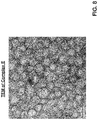
- FIG. 8 provides a transmission electron microscopy (TEM) image of Complex E in accordance with various embodiments described herein.
- TEM transmission electron microscopy
- FIG. 9A presents an example synthesis route for forming Polymer A in accordance with various embodiments described herein. In the embodiment shown,
- FIG. 9B presents an example synthesis route for forming Polymer A′ in accordance with various embodiments described herein.
- FIG. 9C presents an example synthesis route for forming Polymer J in accordance with various embodiments described herein. In the embodiment shown,
- FIG. 9D presents an example synthesis route for forming Polymer J′ in accordance with various embodiments described herein.
- FIG. 10 presents example synthesis routes for forming functional guanidinium cationic homopolymers in accordance with various embodiments described herein.
- FIG. 11 presents example synthesis routes for forming functional guanidinium cationic copolymers in accordance with various embodiments described herein.
- FIG. 12 provides a table identifying characteristics of example therapeutic coacervates in accordance with various embodiments described herein.
- FIGS. 13A and 13B present graphs illustrating the kinetic stability characteristics of example coacervates in accordance with various embodiments described herein.
- FIG. 14 presents a graph illustrating the in vitro release profile of cationic polymers from some example coacervates in accordance with various embodiments described herein.
- FIG. 15A presents a graph illustrating the antimicrobial selectivity and efficacy of example therapeutic polymers and coacervate complexes against Pseudomonas aeruginosa ( P. aeruginosa ) in accordance with various embodiments described herein.
- FIG. 15B provides a table illustrating the antimicrobial selectivity and efficacy of example therapeutic polymers and coacervate complexes against P. aeruginosa in accordance with various embodiments described herein.
- FIG. 16 presents a table illustrating characteristics of example coacervate Complexes HJ with varying degrees of polymerization (DP) in accordance with various embodiments described herein.
- FIG. 17 presents is a graph illustrating the biocompatibility/toxicity of various therapeutic polymers and coacervate complexes with mammalian cells in accordance with various embodiments described herein
- FIG. 18 provides a graph illustrating the cell viability of mammalian cells with Polymyxin B (PolyB) and a coacervate form of PolyB in accordance with various embodiments described herein.
- PolyB Polymyxin B
- FIG. 19 presents a graph illustrating the intracellular P. aeruginosa infection clearance using various coacervate embodiments described herein.
- FIGS. 20A and 20B present graphs illustrating the intracellular infection clearance of Complex E with P. aeruginosa in accordance with various embodiments described herein.
- FIGS. 21A and 21B provide tables illustrating the in vivo toxicity and antimicrobial efficacy of coacervate complexes in accordance with various embodiments described herein.
- FIG. 22 provides a graph demonstrating the efficacy of various coacervate complexes against BT-474 cancer cells in accordance with various embodiments described herein.
- FIG. 23 provides a graph demonstrating the efficacy of various coacervate complexes with urea against BT-474 cancer cells in accordance with various embodiments described herein.
- FIG. 24 presents a chart illustrating the cytotoxicity of a coacervate Complex D against healthy non-cancerous mammalian cell line HEK293 in accordance with various embodiments described herein.
- FIG. 25 presents a high-level flow diagram of an example method for enhancing the selectivity and efficacy of therapeutic polymers against a broad spectrum of pathogens and cancer cell lines using a coacervate complex in accordance with various embodiments described herein.
- FIG. 26 presents a high-level flow diagram of an example method for enhancing the selectivity and efficacy of therapeutic polymers against a broad spectrum of pathogens and cancer cell lines using a coacervate complex comprising a biotinylated anionic polymer in accordance with various embodiments described herein.
- FIG. 27 provides a diagram illustrating fluorescence based coacervate diagnostics in accordance with various embodiments described herein.
- FIG. 28 presents a graph illustrating the fluorescence quenching characteristics of diagnostic coacervate complexes in accordance with various embodiments described herein.
- FIG. 29 presents a high-level flow diagram of an example method for diagnosing a disease or condition using a fluorescence based coacervate assay in accordance with various embodiments described herein.
- FIG. 30 presents a table illustrating the composition of various example coacervate complexes in accordance with one or more embodiments described herein.
- the subject disclosure provides techniques for enhancing the antimicrobial selectivity and efficacy of aliphatic polymers, such as guanidinium-functionalized polycarbonates, against a broad spectrum of bacterial pathogens, including P. aeruginosa .
- aliphatic polymers such as guanidinium-functionalized polycarbonates
- Various embodiments of the disclosed techniques for enhancing the selectivity and efficacy of antimicrobial polymers are further extended to anticancer block polymers, providing techniques for enhancing the selectivity and efficacy of anticancer block polymers for a wide array of cancer cell lines.
- the disclosed techniques take advantage of natural molecular trafficking mechanisms in cancer and pathogen derived diseases to enhance the efficacy of macromolecular therapeutics.
- the disclosed techniques employ unique methods to modify antimicrobial and anticancer polymers to target a broad spectrum of both pathogens and cancer cell lines and enhance the transport of the respective polymers through the bacterial cell and/or the cancer cell membrane.
- similar materials/mechanisms can be used to modify both antimicrobial and anticancer polymers to enhance the selective uptake of these polymers into the bacteria and/or cancer cell and thereafter cause the respective cells to undergo necrosis or autophagy.
- the bacterial cells in response to ingestion of the disclosed modified antimicrobial polymers by bacterial cells, the bacterial cells activate reactive oxygen species (ROS) which cause cellular necrosis.
- ROS reactive oxygen species
- anticancer cells in response to ingestion of the disclosed modified anticancer polymers by cancer cells, the anticancer polymers activate autophagy, thereby eliminating the exposed cancer cells.
- the uptake of polymer therapeutics in a broad spectrum of pathogens and cancer cells is enhanced via the introduction of biotin.
- the added biotin can also enhance the therapeutic activity of the polymers.
- the selectivity of antimicrobial and anticancer polymers can be significantly enhanced by the introduction of an anionic polymer in combination with the cationic therapeutic polymer to form a coacervate.
- an anionic polymer (optionally with functional groups) can be combined with the cationic therapeutic polymer to generate an electrostatic coacervate complex that is neutral and shields the toxic antimicrobial/anticancer cationic polymer when the complex circulates throughout the body, thereby reducing the toxicity of the cationic polymer to mammalian cells.
- coacervate complexes are well-defined nanocomplexes that are highly modular with tunable particle size and neutral charge and remain stable under physiological conditions even in the presence of serum proteins.
- the anionic polymer and/or the cationic polymer can be functionalized with biotin to further increase the uptake of the coacervate complex by the pathogen and/or cancer cells.
- these coacervate complexes can be used for diagnostic purposes.
- the cationic polymer can be calibrated to target a specific pathogen or cancer cell type, and the anionic polymer and/or the cationic polymer can be functionalized with a fluorescent dye that illuminates in response to reaction of the coacervate with the specific pathogen or cancer cell type.
- antimicrobial and anticancer therapeutic polymers can be modified via functionalization with biotin (vitamin H) to facilitate the transport of these polymers through protein-based channels that traffic vitamins into bacteria as well as most cancer cell lines that over express such channels.
- biotin vitamin H
- bacteria and cancer cells readily accept biotin as a source of food/fuel.
- biotin By attaching biotin onto the therapeutic polymer, the bacteria/cancer cells are essentially enticed by the biotin and ingest the entire polymer via their normal protein-based channels. Once inside the cell, these antimicrobial/anticancer polymers initiate and/or facilitate killing of the cell.
- biotinylated refers to functionalization of a molecule, macromolecule, polymer, etc., with a biotin or biotin based functional group.
- the antimicrobial and/or anticancer therapeutic polymers that are biotinylated in accordance with the disclosed techniques can include functional guanidinium polymers, referred to herein as polyguanidiniums. These polyguanidiniums can be formed using a controlled ROP of various cyclic carbonate monomers incorporating different antimicrobial and/or anticancer functionalities.
- polyguanidiniums can comprise a hydrophobic polymer backbone consisting of one or more covalently bonded polymer units, wherein at least some (one or more) of the polymer units comprise a cationic (positively charged) guanidine-based functional group extending therefrom and covalently bonded to one or more atoms of the polymer unit via a spacer group.
- the polymer backbone can comprise one or more repeat monomer units that are respectively functionalized with a cationic, guanidine-based antimicrobial/anticancer moiety.
- These monomers are referred to herein as guanidinium functionalized monomers.
- the polyguanidiniums can be biotinylated via the attachment of biotin or a biotin based functional group (e.g., biotinol) to one or more ends or side chains of the polymer backbone.
- a polyguanidinium comprising a biotin or biotin based functional group is referred to herein as a biotinylated polyguanidinium (BG).
- BG biotinylated polyguanidinium
- the biotin can be attached during ROP of the monomer used to generate the biotinylated polyguanidinium.
- the biotin can be attached via post-polymerization modification of the biotinylated therapeutic polymer.
- the subject biotinylated polyguanidiniums can facilitate killing bacterial cells and/or cancer cells via membrane translocation facilitated in part by the cationic guanidinium-moiety and further enhanced by the biotin functional group.
- the cationic guanidinium moieties can bind with the anionic (negatively charged) phosphate groups on the bacterial cell membrane surface and a counterion exchange occurs between the guanidinium and the phosphate groups.
- the polymer becomes neutrally charged, allowing the polymer to translocate through the lipid bilayer of the bacterial membrane (e.g., as a non-polar species).
- the polymer is then released through the membrane leading to cytosol material precipitation and subsequent cell necrosis.
- release of the polymer into the bacteria cytosol cause precipitation of the biomacromolecules inside the cell of the bacteria, including ribonucleic acid (RNA), deoxyribonucleic acid (DNA), proteins, enzymes, etc. and the cell begins to kill itself by generating reactive oxygen species (ROS) which cause cellular necrosis.
- ROS reactive oxygen species
- the disclosed biotinylated polyguanidinium can perform a same or similar translocation mechanism attributed in part to the cationic guanidinium moiety to facilitate entry of the polymer into cancer cells.
- the anticancer polymers activate autophagy, thereby eliminating the exposed cancer cells.
- the biotin or biotin based functional group can further facilitate the translocation of the biotinylated polyguanidinium into the bacteria cell and/or cancer cell by taking advantage of natural molecular trafficking mechanisms in cancer and pathogen derived diseases.
- the biotin functional group opens up pore channels in both bacterial and cancer cells to facilitate increased uptake of the biotinylated polyguanidinium into the cell.
- the biotin can in part serve as a molecular transporter. Based in the increased intracellular uptake of the biotinylated polyguanidiniums, the therapeutic activity and resistance prevention of the biotinylated polyguanidiniums are significantly enhanced.
- the antimicrobial and/or anticancer therapeutic polymers that are biotinylated in accordance with the disclosed techniques can include polyguanidiniums having chemical Formula 1 below, wherein R 1 comprises biotin or a biotin based functional group.
- the biotinylated polyguanidinium comprises a number “n” of repeating monomer units, (referred to herein as guanidinium functionalized monomer units or the monomer units).
- Each (or in some embodiments one or more) of the monomer units can comprise a polycarbonate group and a cationic guanidinium moiety attached to the polycarbonate a spacer group R 2 .
- the spacer group R 2 can vary and can be adapted to facilitate a specific function or antimicrobial/antibacterial property of the polymer.
- the spacer group R 2 can be selected/adapted to target a specific pathogen or cancer cell type.
- the spacer group R 2 can comprise a group that causes the entire polymer to self-assemble into a micelle structure, wherein the cationic guanidinium portion of the polymer becomes shielded within the micelle structure.
- One suitable functional group that can facilitate this self-assembly can include a butyl group.
- Other suitable functional groups that can be employed for R 2 can include but are not limited to: an alkyl group, an ethyl group, an isopropyl group, a propyl group, a pentyl group, a cyclohexyl group, a phenyl group, and a benzyl group.
- the disclosed antimicrobial/anticancer biotinylated polyguanidiniums having Formula 1 can be or include a biotinylated polyguanidinium having Formula 2.
- R 2 an alkyl group
- R 1 comprises biotinol.
- the chemical name for the polymer represented by Formula 2 is Biotinol-[C2Gua] 17 .
- the disclosed antimicrobial/anticancer biotinylated polyguanidiniums can include block copolymers.
- the number “n” and/or “m” of repeating and connected/bonded guanidinium functionalized monomer units can vary.
- the number “n” of repeating monomer units can be one or more and one thousand or less.
- the number “n” of repeating monomer units can be less than 50 and more preferably less than 40 to reduce the particle size of the polymer which facilitates better circulation and update in-vivo.
- the number “n” can be between 10 and 40 units.
- the number “n” can be between 10 and 40 units.
- the number “m” can be less than the number “n”.
- the number “m” can be between 1.0 and 10.
- the number “n” of repeating monomer units can be tailored to balance the hydrophobicity of the polymer backbone group and the spacer group R 2 relative to the hydrophilicity of the guanidinium moiety.
- R 2 comprises a butyl group
- the number “n” of repeating monomer units can be tailored to facilitate formation of the subject biotinylated polyguanidinium into protected micelle nanostructures in aqueous solution to facilitate the self-assembly of the subject polymers into the protected micelle nanostructures, wherein the guanidinium moieties are exposed on the outside of the micelle on the out and the hydrophobic residuals are internalized within a micelle.
- one or more polymers having Formula 1 can be configured to self-assemble into the protected micelle nanostructures when R 2 comprises a butyl group and “n” is between 10 and 50, and more preferably between 20 and 40.
- FIG. 1 presents an example synthesis route 100 for generating a biotinylated polyguanidinium having chemical Formula 2 in accordance with various embodiments described herein.
- Synthesis route 100 facilitates the attachment of biotin to therapeutic polymers via the modification of biotin into an alcohol form, which is then repurposed as a polymerization initiator.
- synthesis route 100 facilitates the attachment of a biotin or biotin based functional group to the therapeutic monomer in association with the ROP to form the polymer.
- synthesis route 100 is divided into a two-part process, wherein biotinol 108 is generated in accordance with synthesis route 100 A, and thereafter in accordance with synthesis route 100 B, the biotinol 108 is attached to the polyguanidinium in association with the ROP of the cyclic guanidinium monomer 110 .
- a biotin monomer 102 can be reacted with oxalyl chloride 104 at room temperature (r.t.) to modify the biotin monomer 102 into compound 106 .
- Compound 106 can further be reduced at r.t.
- biotinol 108 which is a modified alcohol form of the biotin monomer comprising a hydroxyl group side chain.
- this biotinol 108 can be used as an initiator of a ROP of the cyclic guanidinium monomer 110 in association with reagents/catalysts including 1,8-Diazabicyclo[5.4.0]undec-7-ene/thiourea (DBU/TU) and methylene chloride (CH 2 CL 2 ) to form protected biotinylated polyguanidinium 114 .
- DBU/TU 1,8-Diazabicyclo[5.4.0]undec-7-ene/thiourea
- CH 2 CL 2 methylene chloride
- the protected biotinylated polyguanidinium 114 can then be deprotected using reagents/catalysts trifluoroacetic acid (TFA) and dichloromethane (DCM) in r.t. overnight to form the biotinylated polyguanidinium 116 (BG) having Formula 2.
- TFA trifluoroacetic acid
- DCM dichloromethane
- synthesis route 100 B is demonstrated using a single, cyclic guanidinium monomer 110 having an alkyl spacer group
- synthesis route 100 B can be extended to other biotinylated polyguanidiniums.
- synthesis route 100 B can be used to attach biotin to various biotinylated polyguanidinium monomer and copolymer variations (e.g., with different spacer groups for R 2 , biotinylated polyguanidinium having Formula 3, and the like) using biotinol 108 as the initiator for the ROP of the cyclic guanidinium monomer.
- the disclosed techniques for enhancing update of therapeutic polymers via the attachment of a biotin or biotin based functional group thereto can be applied to anticancer and antimicrobial peptides.
- the disclosed biotinylated therapeutic polymers are not limited to polyguanidinium polymers.
- an anticancer and antimicrobial quaternary ammonium functional block copolymer can be biotinylated (e.g., in accordance with synthesis route 100 or synthesis route 200 described below) to further enhance the update of these polymers into tumor cells.
- FIG. 2 presents another example synthesis route 200 for generating a biotinylated therapeutic polymer in accordance with various embodiments described herein.
- Synthesis route 200 facilitates the attachment of biotin to a therapeutic polymer via post-polymerization modification.
- functionality can be introduced to the disclosed therapeutic macromolecules via post polymerization modification.
- the functionality can include a biotin based functional group, a guanidinium based functional group, a sugar based functional group, and the like.
- Post polymerization modification provides an efficient and straightforward manufacturing process that can be used to synthesize functionalized therapeutics macromolecules with significant diversity.
- synthesis route 200 can be used to form a therapeutic polymer having chemical formula 4 below, wherein R 1 can comprise a variety of functional groups that can be used as the initiator of the ROP of the polymer, and R 2 comprises biotin or a biotin based functional group.
- R 1 can comprise a benzyl alcohol, a disaccharide (a sugar), a dansyl amid (a reactive fluorescent dye), or another suitable hydroxyl ROP initiator.
- the therapeutic polymer 202 comprises a perfluoro amine functional group as opposed to guanidinium.
- the perfluoro amine can be cationic and provide same or similar cell translocation functionalities (e.g., via ion exchange) as the guanidinium moiety.
- a guanidinium moiety can be used instead of the perfluoro amine.
- a thiol such as tetramethylsilane (TMSS) can be installed onto the biotin R 2 to generate the modified biotin 204 .
- the modified biotin 204 can then be used to perform a nucleophilic aromatic substitution on the cationic moiety (e.g., the perfluoro amine or in some cases a guanidinium moiety or the like) to generate the biotinylated therapeutic polymer 206 having chemical formula 4.
- the cationic moiety e.g., the perfluoro amine or in some cases a guanidinium moiety or the like
- the polymer backbone comprises polycarbonate.
- other hydrophobic polymers can be employed as the polymer backbone.
- the polymer backbone can comprise polylysine, polyionene, polyethylenimine and the like.
- no restriction is placed on the polymer skeletal structure of the skeletal backbone.
- Exemplary non-limiting polymer skeletal structures can include linear polymers, branched polymers, star polymers, mykto-arm star polymers, latter polymers, cyclic polymers, and graft polymers.
- the forgoing polymer types can comprise a homopolymer, a random copolymer, or a block copolymer chain.
- the biotinylated polyguanidinium is a linear polymer comprising a plurality of covalently bonded guanidinium functionalized monomer units.
- a linear polymer has one branch having two peripheral ends (i.e., dangling ends, as the two ends of a segment of a rope).
- the one branch can comprise one or more polymer chain segments covalently linked together at respective polymer chain ends by way of any suitable linking group, which can include a single bond.
- Each polymer chain segment of a linear polymer can comprise a homopolymer, random copolymer, or block copolymer chain comprising one or more repeat units.
- At least one of the polymer chain segments comprises one or more repeat units of a monomer comprising a cationic functional group, such as guanidinium functionalized monomer, perfluoro amine monomer, or the like.
- biotinylated therapeutic polymers having chemical formulas 1-4 discussed above have demonstrated strong, broad-spectrum, antimicrobial selectivity and efficacy toward a variety of gram-negative and gram-positive bacteria types, including p. aeruginosa .
- the antimicrobial efficacy and/or specificity (or the degree of selectivity toward microbial cells as opposed to mammalian cells) of the biotinylated form of these polymers relative to the same polymers without biotin was further increased.
- the biotinylated therapeutic polymers having chemical formulas 1-4 have also demonstrated strong, broad-spectrum selectivity and efficacy against many different cancer cell lines.
- the antimicrobial efficacy and the degree of selectivity toward cancer cells as opposed to mammalian cells of the biotinylated form of these polymers relative to the same polymers without biotin was further increased.
- FIG. 3 presents transmission electron microscopy (TEM) micrograph images of a cancer cell before and after treatment with a biotinylated polyguanidinium based anticancer agent in accordance with various embodiments described herein.
- the anticancer agent used comprised a block copolymer formed with guanidinium monomers (e.g., having chemical Formula 3 or the like).
- guanidinium monomers e.g., having chemical Formula 3 or the like.
- these polymers self-assemble into micelles.
- these polymers Upon interaction with cancer cells, these polymers translocate though the cancer cell membrane as facilitated by the micelle structure, the guanidinium moiety and the biotin group, and accumulate within the cancer cell. Once inside, the accumulated polymers kill the cancer cell quite dramatically.
- the left TEM image depicts a cancer cell prior to treatment with the polyguanidinium block copolymer
- the TEM image on the right depicts the same cancer cell post treatment.
- the polymers translocate into the cancer cell and cause autophagy via vacuolization.
- the polymer causes the cancer cell to form holes or vacuoles 303 as a result of the cell essentially destructing itself from the inside out.
- FIGS. 4A and 4B present charts illustrating the in vitro efficacy of a biotinylated polymer and a non-biotinylated polymer against cancer cell line BT-474 (a human ductal carcinoma cell line) in accordance with various embodiments described herein.
- the biotinylated polymer tested comprised a biotinylated polyguanidinium having chemical Formula 2 (BG).
- the non-biotinylated polymer tested for comparison comprised a polyguanidinium referred to herein in as Polymer B or 4m-[C2Gua] 17 .
- the chemical structure for Polymer B is shown in the upper righthand corner of FIG. 4A with reference to arrow 400 .
- FIG. 4A presents a Chart 401 demonstrating the results after 1 day (24 hours) and FIG. 4B presents a Chart 402 demonstrating the results after 2 days (48 hours).
- MTT 3-(4,5-dimethylthiazol-2-yl)-2,5-diphenyltetrazolium bromide
- the BG biologically active polyguanidinium
- the IC50 value is half that of m4 which is 250 ⁇ g/ml.
- FIG. 5 presents a Chart 500 illustrating the cytotoxicity of a biotinylated polymer against healthy non-cancerous mammalian cell line HEK293 in accordance with various embodiments described herein.
- the biotinylated polymer tested comprised a biotinylated polyguanidinium having chemical Formula 2 (BG).
- BG biotinylated polyguanidinium having chemical Formula 2
- the cytotoxicity of BG against HEK293 was tested as a function of cell viability using an MTT assay. As shown in Chart 500 , almost 100% of the HEK293 cells survived at concentrations of BG up to about 31 ⁇ g/ml.
- BG further showed a high IC50 value at about 125 ⁇ g/ml, rending the selectivity of BG toward HEK293 125/31 or 4 ⁇ g/ml.
- FIG. 6 presents a high-level flow diagram of an example method 600 for enhancing the selectivity and efficacy of therapeutic polymers against a broad spectrum of pathogens and cancer cell lines via the introduction of biotin in accordance with various embodiments described herein. Repetitive description of like elements employed in respective embodiments is omitted for sake of brevity.
- a therapeutic polymer can be formed based on polymerization of a plurality of therapeutic monomers (e.g., cyclic carbonate guanidinium functionalized monomers), wherein the therapeutic polymer provides a therapeutic functionality (e.g., an antimicrobial and/or anticancer functionality).
- biotin can be attached to the therapeutic polymer, resulting in a biotin-functionalized therapeutic polymer (e.g., BG), wherein the biotin-functionalized therapeutic polymer provides greater therapeutic efficacy relative to the therapeutic polymer.
- the biotin can be attached via synthesis route 100 . In other embodiments, the biotin can be attached via synthesis route 200 .
- an anionic carrier to deliver the antimicrobial and/or anticancer polymers in the form a coacervate.
- Coacervation is a phenomenon in which cationic and anionic water-soluble polymers interact in fluid (e.g., water, serum, etc.) to form a liquid, polymer-rich phase complex held together by electrostatic forces.
- fluid e.g., water, serum, etc.
- coacervate is used herein to refer to the complex formed between two polymers as a result of coacervation.
- a coacervate can be formed between a cationic antimicrobial polymer and an anionic carrier polymer.
- the coacervate complex shields the cationic therapeutic polymer in a loose particle structure based on the dynamic electrostatic interaction between the cationic polymer and the anionic polymer, thereby reducing toxicity of the cationic therapeutic polymer mammalian cells.
- the coacervate complexes disclosed herein are relatively loose particle structures held together by electrostatic forces.
- the coacervate complexes are further neutral in charge as a result of charge cancelation between the anionic and cationic polymer.
- the anionic polymer and the cationic therapeutic polymer remain in a dynamic equilibrium when suspended in solution.
- the coacervate complex interacts with the negatively charged surface the cellular membrane of a bacteria cell or cancer cell, the coacervate complex opens up to expose the cationic therapeutic polymer because the cationic therapeutic polymer is more attracted to the bacteria or cancer cell membrane relative to the anionic carrier polymer.
- the cationic therapeutic polymer is released from the coacervate complex and an ion exchange occurs between the cationic therapeutic polymer and the anionic surface of the bacteria or cancer cell.
- This ion exchange neutralizes the cationic polymer and facilitates translocation of the cationic polymer through the bacteria or cancer cell membrane.
- the cationic polymer induces necrosis by the bacterial cell or autophagy by the cancer cell, respectively.
- FIG. 7 presents an example synthesis route 700 for forming a therapeutic coacervate in accordance with various embodiments described herein.
- an anionic polymer 702 can be combined with a therapeutic cationic polymer 704 in solution (e.g., water, DI water, serum, bodily fluids, etc.) to form coacervate complex 706 .
- the anionic polymer 702 comprises a sulfonate functional polycarbonate having chemical Formula 5 below and referred to herein as Polymer A.
- the therapeutic cationic polymer 704 comprises a functional guanidinium cationic copolymer having chemical Formula 6 below and referred to herein as Polymer E.
- the coacervate complex 706 formed between anionic Polymer A and cationic Polymer E is referred to herein as Complex E.
- the anionic polymer 702 can comprise an anionic polymer backbone 710 and a relative neutral polyethylene glycol (PEG) tail 708 extending therefrom.
- the PEG is more specifically methoxy polyethylene glycol (MPEG).
- the PEG tail 708 can comprise MPEG or PEG.
- the combined anionic polymer and cationic polymer self-assemble into coacervate complex 706 having a relatively circular/spherical particle structure.
- the structure of the coacervate complex 706 shields the cationic portion 712 of the cationic polymer within an internal region of the particle, surrounded and protected by the neutral, PEG tail 708 portion of the anionic polymer 702 .
- FIG. 8 provides a transmission electron microscopy (TEM) image of Complex E in accordance with various embodiments described herein.
- TEM transmission electron microscopy
- the coacervate complexes 706 have a relatively circular or spherical structure around 100 nm in diameter.
- the PEG tail 708 facilitates shielding the cationic portion 712 of the therapeutic cationic polymer 704 within the formed coacervate complex.
- the PEG tail 708 also facilitates circulation of the coacervate complex 706 in solution (e.g., within the body) and minimizing the toxicity of the coacervate complex 706 toward mammalian cells.
- PEG is water soluble and the human body doesn't really recognize PEG.
- the anionic polymer 702 and the therapeutic cationic polymer 704 assemble into the coacervate nanoparticles, the PEG presents itself on the outside.
- macrophages and biomolecules that normally sequester particles recognize the coacervate complex 706 only as water.
- immune cells don't sequester the coacervate complex or try kill it.
- the number “m” of PEG units and the number “n” of polymer units that make up the polymer backbone of Polymer A can vary.
- the PEG tail 708 is identified as MPEG 10K, which denotes a mixture of PEG molecules (about 195-265 PEG molecules) having an average MW of 10,000 g/mol.
- the value of m can be between about 195 and 265.
- m can be between 40 and 500.
- the value of “n” for Polymer A can be between 10 and 100, more preferably between 20 and 80, and even more preferably between 30 and 50.
- the value of “n” for Polymer A is 40.
- n and m with respect to Polymer E can also vary.
- the value of n for Polymer E can be less than 50 and more preferably less than 41, and in one embodiment, the value of n in for Polymer E is 11.
- the value of m for Polymer E can be less than 10 and more preferably less than 5. In various embodiments, the value of m for Polymer E can be 2.
- Complex E provides one example coacervate complex that provides both antimicrobial and anticancer functionality with higher efficacy and/or selectivity relative to the cationic Polymer E alone.
- Various additional antimicrobial and anticancer coacervates can be formed in accordance with synthesis route 700 using other anionic polymers in combination with Polymer E, as well as other therapeutic cationic polymers.
- some additional anionic polymers that can be used instead of Polymer A to form a therapeutic coacervate complex in combination with Polymer E or another therapeutic cationic polymer can include acid-functionalized polycarbonates such a carboxylic acid-functionalized polymer, a phosphoric acid-functionalized polymer, or the like.
- one example acid-functionalized polymer that can be used as the anionic polymer instead of Polymer A can include a diblock carboxylic acid functionalized copolymer having chemical Formula 7 below and referred to herein as Polymer J:
- the number “m” of PEG units and the number “n” of polymer units that make up the polymer backbone of Polymer J can vary.
- the value of m can be between about 195 and 265.
- m can be between 40 and 500.
- m can be 113.
- the value of “n” for Polymer J can be between 10 and 100, more preferably between 20 and 80, and even more preferably between 30 and 50.
- the value of “n” for Polymer J is 40.
- biotin ligands can be installed on one or more chain ends of the anionic polymer 702 and/or the therapeutic cationic polymer 704 to enhance the targeting selectivity of the resulting coacervate complex.
- Polymer E can be replaced with the polymer having chemical Formula 2 (also referred to herein as Polymer BG).
- the anionic e.g., Polymer A, Polymer J, and the like
- the anionic can be biotinylated via the attachment of a biotin group to one or more ends of the polymer backbone and/or a side chain extending from the polymer backbone.
- the biotinylated form of Polymer A is referred to herein as Polymer A′ and has chemical Formula 8 below
- the biotinylated form of Polymer J is referred to herein as Polymer J′ and has chemical Formula 9 below.
- Polymer A′ can comprise a same or similar structure as Polymer A with the addition of a biotinol functional group to an end of the polymer backbone.
- “m” and “n” can be the same values in Formula 8 as those used for Formula 5. In some embodiments however, the values for “m” and “n” for Polymer A′ can be different than those used for Polymer A.
- Polymer J′ can comprise a same or similar structure as Polymer J with the addition of a biotinol functional group to an end of the polymer backbone. In this regard, in some embodiments, “m” and “n” can be the same values in Formula 9 as those used for Formula 7. In some embodiments however, the values for “m” and “n” for Polymer J′ can be different than those used for Polymer J.
- Polymer E can include but are not limited to Polymer B, Polymer C, Polymer F, Polymer D, Polymer G and Polymer H, respectively having chemical Formulas 10, 11, 12, 13, 14 and 15 as follows:
- n and “m” with respect to the cationic polymers having Formulas 10-15 can vary. In one or more embodiments, with respect to Formula 10 (Polymer B), n can be less than 60 and more preferably less than 45. In one embodiment, the value of n in Formula 10 can be 16. Similarly, with respect to Formula 11 (Polymer C), n can be less than 60 and more preferably less than 45, and in one embodiment, the value of n in Formula 11 can be 16. With respect to Formulas 12 and 15 (Polymer F and Polymer H, respectively) can be less than 60 and more preferably less than 45, and in one embodiment, the value of n in Formula 12 can 19 and the value of n in Formula 15 can be 20.
- n can be less than 60 and more preferably less than 45, and in one embodiment, the value of n in Formulas 13 and 14 can be 16.
- the value of m in Formulas 13 and 14 can be less than 10 and more preferably less than 5. In various embodiments, the value of m in Formulas 13 and 14 can be 2.
- antimicrobial and/or anticancer coacervate complexes can be formed using a combination of an anionic polymer such as Polymer A, Polymer A′, Polymer J, Polymer J′ or the like, with a cationic polymer, wherein the cationic polymer can include but is not limited to, one of: Polymer B, Polymer C, Polymer D, Polymer E, Polymer F, Polymer G, Polymer H and Polymer BG (wherein Polymer BG has chemical Formula 2 supra).
- the resulting coacervate complexes are respectively referred to herein as identified in Table 1, shown in FIG. 30 .
- FIG. 9A presents an example synthesis route 900 for forming Polymer A in accordance with various embodiments described herein.
- a tritol (Tr) protected thiol monomer 902 can be reacted with reactants 904 including MPEG 10K, DBU/TU and CH 2 CL 2 to form the block copolymer 906 .
- reactants 904 including MPEG 10K, DBU/TU and CH 2 CL 2
- a ROP of the cyclic carbonate of protected thiol monomer 902 can be performed to generate the block copolymer 906 including the protected thiol with the Tr group.
- Tr represents three phenyl groups. These phenyl groups can be deprotected resulting in an unprotected sulfur-hydrogen (SH) thiol.
- SH sulfur-hydrogen
- the block copolymer 906 can further be reacted with reactants 910 , including triisopropylsilane (TIPS), meta-chloroperoxybenzoic acid (MCPBA) and TFA at r.t., to deprotect the Tr group and cause an oxidation of the thiol to generate the sulfonate polymer 912 , referred to herein as Polymer A.
- reactants 910 including triisopropylsilane (TIPS), meta-chloroperoxybenzoic acid (MCPBA) and TFA at r.t.
- FIG. 9B presents an example synthesis route 901 for forming Polymer A′ in accordance with various embodiments described herein.
- Synthesis route 901 is similar to synthesis route 900 with the addition of a biotin functional group to the PEG 10K used for the ROP of the protected thiol monomer 902 . Repetitive description of like elements employed in respective embodiments is omitted for sake of brevity.
- the Tr, protected thiol monomer 902 can be reacted with reactants 914 including biotinylated PEG, DBU/TU and CH 2 CL 2 to form the block copolymer 916 .
- a ROP of the cyclic carbonate of protected thiol monomer 902 can be performed to generate block copolymer 916 including the Tr group and the biotinol functional group bound to an end of the block copolymer 916 .
- the block copolymer 916 can further be reacted with reactants 910 , including TIPS, MCPBA and TFA at r.t., to deprotect the Tr group and cause an oxidation of the thiol to generate the biotinylated sulfonate polymer 918 , referred to herein as Polymer A′.
- FIG. 9C presents an example synthesis route 903 for forming Polymer J in accordance with various embodiments described herein.
- Synthesis route 903 is described as a two-part reaction including route 903 A followed by route 903 B.
- a protected cyclic carboxylic acid monomer 920 can be reacted with reactants 922 including PEG, DBU/TU and CH 2 CL 2 to form block copolymer 924 with a protected carboxylic acid group.
- reactants 922 including PEG, DBU/TU and CH 2 CL 2
- a ROP of the protected cyclic carboxylic acid monomer 920 can be performed to generate the block copolymer 924 including a protected carboxylic acid group.
- the block copolymer 924 can further be reacted with reactants 926 , including CF 3 COOH (trifluoroacetic acid) and CH 2 Cl 2 at r.t., to deprotect the carboxylic acid group to generate the diblock acid functionalized polycarbonate referred to herein as Polymer J.
- reactants 926 including CF 3 COOH (trifluoroacetic acid) and CH 2 Cl 2 at r.t., to deprotect the carboxylic acid group to generate the diblock acid functionalized polycarbonate referred to herein as Polymer J.
- FIG. 9D presents an example synthesis route 905 for forming Polymer J′ in accordance with various embodiments described herein.
- Synthesis route 905 is described as a two-part reaction including route 905 A followed by route 905 B.
- Synthesis route 905 is similar to synthesis route 903 with the addition of a biotin functional group to the PEG used for the ROP of the protected carboxylic acid monomer 920 .
- Repetitive description of like elements employed in respective embodiments is omitted for sake of brevity.
- the protected carboxylic acid monomer 920 can be reacted with reactants 930 including biotinylated PEG, DBU/TU and CH 2 CL 2 at r.t.
- a ROP of the protected cyclic carboxylic acid monomer 920 can be performed to generate the block copolymer 922 including a protected carboxylic acid group and a biotinol group.
- the block copolymer 923 can further be reacted with reactants 926 , including CF 3 COOH (trifluoroacetic acid) and CH 2 Cl 2 at r.t., to deprotect the carboxylic acid group to generate the biotinylated diblock acid functionalized polycarbonate referred to herein as Polymer J′.
- FIG. 10 presents example synthesis routes for forming functional guanidinium cationic homopolymers Polymer B, Polymer C and Polymer F in accordance with various embodiments described herein.
- the respective synthesis routes are identified as route 1000 A, route 1000 B and route 1000 C.
- Route 1000 A can be used to form Polymer B
- route 1000 B can be used to form polymer C
- route 1000 C can be used to form Polymer F.
- Each of these routes involve a ROP of guanidinium monomer 1002 with a different chemical initiator (and catalysts DBU, TU and solvent CH 2 CL 2 ) to generate the corresponding protected homopolymers 1004 , 1006 and 1008 .
- the initiator used with route 1000 A comprises benzyl alcohol
- the initiator used with route 1000 B comprises a disaccharide (e.g., mannose)
- the initiator used with route 1000 C comprises a dansyl amid (a reactive fluorescent dye).
- the protected homopolymers 1004 , 1006 and 1008 respectively can subsequently be deprotected using TFA and DCM to generate the corresponding functional guanidinium cationic homopolymers including Polymer B, Polymer C and Polymer F, respectively.
- FIG. 11 presents example synthesis routes for forming functional guanidinium cationic copolymers, Polymer D, Polymer E and Polymer G, in accordance with various embodiments described herein. Repetitive description of like elements employed in respective embodiments is omitted for sake of brevity.
- the respective synthesis routes are identified as route 1100 A, route 11001 B and route 1100 C.
- Route 1100 A can be used to form Polymer D 1104
- route 11001 B can be used to form polymer E 1106
- route 1000 C can be used to form Polymer G 1108 .
- Routes 1100 A, 1100 B, and 1100 C are similar to routes 1000 A, 1000 B and 1000 C, respectively, with the addition of a urea monomer 1102 with the guanidinium monomer 1002 .
- the urea monomer 1102 comprises a urea group (NH-carbonyl-NH).
- the urea monomer 1102 enhances the kinetic stability of the resulting functional guanidinium cationic copolymers (e.g., Polymer D, Polymer E, and Polymer G, respectively) and the subsequent coacervates that are formed when the cationic polymers are combined with an anionic polymer.
- the amount of urea monomer used can be less than the amount of guanidinium monomer used to form the respective polymers.
- the respective polymers can include 11 or 16 guanidinium monomer units and only 2 urea monomer units.
- FIG. 12 provides a Table 1200 identifying physical characteristics of example therapeutic coacervate complexes in accordance with various embodiments described herein.
- Table 1200 identifies the particle size, the polydispersity index (PDI) and the zeta potential of various antimicrobials, including Complexes B, C, D, E and E′. Repetitive description of like elements employed in respective embodiments is omitted for sake of brevity.
- PDI polydispersity index
- coacervates formed between one or more of the disclosed cationic therapeutic polymers and anionic carriers are well-defined complexes having a particle size less than 200 nm, 150 nm or 100 nm.
- the coacervate complexes disclosed herein can be characterized as a nanocomplex or nanoplex.
- Complex B exhibits a particle size at or near 132.0 f 1 nm
- Complex C exhibits a particle size at or near 117.0 t 1 nm
- Complex D exhibits a particle size at or near 138.0 f 1 nm
- Complex E exhibits a particle size at or near 82.0 f 1 nm
- Complex E′ exhibits a particle size at or near 71.0 f 1 nm.
- the small particle size of the subject coacervate complexes facilitates circulation of the coacervates and inhibits sequestering by mammalian cells in vivo.
- the small particle size further facilitates uptake of the complexes by cancer cells via the enhanced permeation retention effect (EPR).
- EPR enhanced permeation retention effect
- the vascular around the tumor opens up, leaving holes that the small coacervates having a size less than 200 nm can fall into. Accordingly, the nanoparticle size of the subject coacervate complexes facilitates the transport of the polymer complex into the cancer/tumor cell for intracellular killing.
- the respective complexes further exhibit low PDI.
- Complex E and E′ demonstrate a very narrow size distribution with a PDI of about 0.08 f 0.02 nm.
- Complexes B, C and D also exhibit low PDIs.
- the polydispersity index (PDI) (or more recently referred to as dispersity index), provides a measure of the distribution of molecular mass in a given polymer sample of the particles sizes. The lower the PDI, the more uniform the distribution of the particle size.
- a low PDI facilitates the antimicrobial and/or anticancer efficacy and/or selectivity of the subject coacervate complexes.
- high PDI reflects a mixture of particles with vast size variation (some very large, some very small), which weakens the rate of update or permeation of the complexes intracellularly.
- the zeta potential is a measure of electric charge associated with a molecule or macromolecule. The closer the zeta potential to zero, the more neutrally charged the complex, thereby promoting better circulation, and inhibiting in vivo sequestering by macrophages and biomolecules. Accordingly, a zeta potential close to zero is preferred. As shown in Table 1200 , the subject Complexes respectively demonstrate relatively neutral zeta potentials, with Complex E and Complex E′ demonstrating the lowest.
- Complex E and Complex E′ are highlighted in Table 1200 because these particular Complexes demonstrate higher overall physical characteristics relative the other coacervate Complexes.
- complex E exhibits a particle size at or near 82.0 ⁇ 1 nm, with a very narrow size distribution or PDI of about 0.08 ⁇ 0.02, and a Zeta potential that is substantially zero, a ⁇ 0.01 ⁇ 0.3 mV.
- lyophilized Complex E gave similar size (97 ⁇ 4 nm) to its aqueous dispersion form (82 ⁇ 1 nm), and was able to re-disperse in water easily without using cryoprotectants.
- Complex E′ exhibits similar PDI and Zeta potential characteristics as Complex E, with an even smaller particle size, at or near 72.0 ⁇ 1.
- Complex E and Complex E′ are highly promising targets for antimicrobial and/or anticancer agents.
- Several example experiments described infra evaluating the selectivity and efficacy of the subject coacervate Complexes use Complex E and/or Complex E′ as a primary example based in part on the superior physical properties exhibited by these complexes.
- the coacervate complexes demonstrate strong kinetic stability under physiological conditions even in the presence of serum proteins.
- FIGS. 13A and 13B present graphs illustrating the kinetic stability of example coacervates in accordance with various embodiments described herein.
- the coacervates measured in graphs shown in FIGS. 13A and 13B include coacervates formed with anionic Polymer A, and respective cationic polymers B, C, D and E when mixed in a solution comprising deionized water (DI) with 10% fetal bovine serum.
- the coacervates formed are respectively include Complex B, Complex C, Complex D, and complex E. Repetitive description of like elements employed in respective embodiments is omitted for sake of brevity.
- FIG. 13A presents a Graph 1301 demonstrating the change in coacervate size over time after the respective complexes are initially formed in the solution.
- the size of the respective coacervates remained below 210 nm over a 24-hour period. This indicates that the respective complexes did not interact with and/or were not disrupted by biomolecules present in the fetal bovine serum.
- the respective coacervates demonstrate strong kinetic stability within serum without sequestering or interaction with serum proteins.
- FIG. 13B presents a Graph 1302 demonstrating the change in scattered light intensity over time measured after addition of Triton-X to the DI water in which the respective coacervates are formed.
- the Triton-X is used to intentionally stress or destabilize the complexes to test their stability as a function of resistance to the Triton-X over time.
- addition of the Triton-X to the DI water after formation of the complexes therein emulates the in vivo environment the complexes would encounter when injected into a mammalian model (e.g., from a solution into the body, a phenomenon referred to as infinite dilution).
- all of the measured coacervates e.g., Complex B, Complex C, Complex D and Complex E
- remained intact or substantially intact e.g., did not disassemble
- This simulated experiment indicates that the disclosed coacervate complexes demonstrate strong kinetic stability in an in vitro environment.
- FIG. 14 presents a Graph 1400 illustrating the in vitro release profile of cationic polymers from some example coacervates in accordance with various embodiments described herein.
- Graph 1400 depicts the results of an experiment in which coacervates including Complex F and Complex G were mixed in a phosphate buffered-saline (PBS) solution at 7.4 pH and 5.8 pH under simulated shaking conditions at 37° Celsius (C.). This experiment tests the release of polymer F and G from the respective coacervates Complexes F and G as a function of time.
- PBS phosphate buffered-saline
- the various coacervate complexes disclosed herein have demonstrated strong selectivity and antimicrobial efficacy and specificity toward a variety of bacteria types including p. aeruginosa .
- the antimicrobial efficacy and/or specificity (or the degree of selectivity toward bacteria cells as opposed to mammalian cells) of the coacervate form of the various cationic therapeutic polyguanidiniums e.g., Polymer B, Polymer C, Polymer D, Polymer, E, Polymer F, Polymer G, Polymer H and Polymer BG
- an anionic Polymer e.g., Polymer A, Polymer A′, Polymer J, Polymer J′ and the like
- the coacervate complexes identified in Table 1 and variations thereof have also demonstrated strong specificity and efficacy as an anticancer agent for many different cancer cell lines. Similarly, the degree of selectivity of the coacervates toward cancer cells as opposed to mammalian cells and the degree of efficacy of the coacervates against cancer cells relative to their corresponding cationic polymers alone was further increased.
- FIGS. 15A-23 provide evidence-based data demonstrating these therapeutic properties and the disclosed coacervate complexes.
- FIG. 15A presents a Graph 1500 illustrating the antimicrobial selectivity and efficacy of example therapeutic polymers and coacervate complexes against P. aeruginosa in accordance with various embodiments described herein.
- individual polymers including Polymer A, Polymer B, Polymer C, Polymer D along with coacervates including Complex B, Complex C, Complex D and Complex E were tested for efficacy against P. aeruginosa .
- the tested efficacy is based on their respective minimal inhibitory concentrations (MICs) toward P. aeruginosa .
- MICs minimal inhibitory concentrations
- HC 50 or HC50 hemolysis concentration
- Complex X is used herein to refer to a coacervate complex formed with Polymer A in combination with PolyB (as opposed to Polymer A and the disclosed therapeutic polyguanidinium based Polymers).
- FIG. 15B provides a corresponding Table 1501 for Graph 1500 .
- Table 1501 In addition to the MIC and HC50 values reflected in Graph 1500 , Table 1501 also identifies the therapeutic index (SI) of the respective polymers and corresponding coacervate complexes. Repetitive description of like elements employed in respective embodiments is omitted for sake of brevity.
- SI therapeutic index
- Polymer E alone (not in coacervate form) has an efficacy 15.6 ⁇ g/mL MIC, which is relatively higher compared to PolyB, which has an MIC of only 0.5 ⁇ g/mL.
- Polymer E also has a relatively low selectivity/toxicity toward RBCs represented by an HC50 value of 500 ⁇ g/mL.
- the selectivity substantially increases relative to Polymer E alone.
- the HC50 value for Complex E skyrockets to beyond 2500 ⁇ g/mL.
- FIG. 16 presents Table 1600 illustrating characteristics of example coacervate Complexes HJ with varying degrees of polymerization (DP). MIC values were obtained in K. pneumoniae (ATCC 700603).
- the coacervate Complexes shown in Table 1600 respectively include coacervate complexes formed with cationic Polymer H (cationic dansylated polyguanidinium having chemical Formula 15), and anionic Polymer J with a DP of 10, 20 and 30. Similar to the other coacervate complexes described herein, Complex HJ also demonstrates excellent physical characteristics for usage as an antimicrobial/anticancer agent.
- the complex has a size near 32 nm, a PDI of about 0.07 ⁇ 0.04 and a close to neutral surface (zeta potential: near ⁇ 2.5 ⁇ 2.4 mV) when the acid/guanidinium molar ratio is 1:1.
- Complex HJ also has comparable antimicrobial activity against K.
- FIG. 17 presents a Graph 1700 illustrating the biocompatibility/toxicity of various therapeutic polymers and coacervate complexes with mammalian cells in accordance with various embodiments described herein. More particularly, Graph 1700 reflects the biocompatibility/toxicity of the various therapeutic polymers and coacervate complexes with THP-1 cells (a human monocytic cell line) as a function of cell viability at incrementally increased dosages. In accordance with the data reflected in Graph 1700 , different dosages (e.g., from 2 ppm to 1000 ppm in ⁇ g/mL) of the respective polymers and coacervate complexes were incubated with the THP-1 cells for 24 hours at 37° C.
- THP-1 cells a human monocytic cell line
- the polymers tested include Polymer A, Polymer B, Polymer C, Polymer D, and Polymer E.
- the coacervates tested include Complex B, Complex C, Complex D, and Complex E.
- the percent cell viability detected at concentrations less than 63 ppm were substantially the same as those shown for 63 ppm, and thus are not depicted to minimize the complexity of the visualization.
- FIG. 18 provides a Graph 1800 illustrating the cell viability of THP-1 with PolyB and a coacervate complex formed with PolyB and Polymer A, referred to herein as Complex H.
- Complex H a coacervate complex formed with PolyB and Polymer A
- PolyB demonstrates high toxicity toward mammalian cells, with a 50% cell viability at about 250 ppm, and about a 30% cell viability at about 500 ppm, dropping to below 20% at 1000 ppm.
- the integration PolyB with Polymer A into the coacervate Complex H did not substantially mitigate the toxicity of PolyB at 500 ppm or greater.
- Complex X was unable to mitigate the toxicity of the corresponding cationic antimicrobial polymer alone high concentrations (e.g., 500 ppm or greater).
- FIG. 19 presents a graph 1900 illustrating the intracellular infection clearance of example coacervates with P. aeruginosa in accordance with various embodiments described herein. Not all bacteria cells are floating freely within an infected body. Many bacterial infections involve intracellular infections, wherein bacteria cells translocate into other cells and macrophages. In order to combat intracellular bacterial infections, the antibacterial agent must possess an ability to kill intracellular bacteria cells.
- Graph 1900 demonstrates the results of an experiment in which Complex B, Complex C, Complex D and Complex E were respectively incubated with a sample comprising intracellular P. aeruginosa for a period of 1 hour. As shown in Graph 1900 , each of these respective complexes successfully eradicated 99% of intracellular P. aeruginosa after incubation for only 1 hour. Thus, as exemplified with reference to Graph 1900 , Complex B, Complex C, Complex D and Complex E demonstrate strong antimicrobial efficacy against intracellular bacterial infections, including P. aeruginosa.
- FIGS. 20A and 20B present graphs further illustrating the intracellular infection clearance of Complex E with P. aeruginosa in accordance with various embodiments described herein.
- FIG. 20A presents a Graph 2001 demonstrating incubation of Complex E with samples comprising cells with intracellular P. aeruginosa at different dosages of 5 ⁇ MIC over a period of 24 hours.
- a first sample of intracellular P. aeruginosa was given a single dose (S.D.) of Complex E and incubated for 24 hours.
- a second sample of intracellular P. aeruginosa was given double doses (D.D.) of Complex E, at 5 ⁇ MIC.
- FIG. 20B presents a Graph 2002 demonstrating incubation of Complex E with samples comprising cells with intracellular P. aeruginosa with double dosages of 5 ⁇ , 10 ⁇ and 15 ⁇ MIC over a period of 24 hours.
- the first dose was administered at time 0 hours and the second dose was administered two hours later.
- FIGS. 21A and 21B provides tables illustrating the in vivo toxicity and antimicrobial efficacy of coacervate complexes in accordance with various embodiments described herein.
- FIG. 21A provides a Table 2101 demonstrating the in-vivo toxicity in mice
- FIG. 21B provides a Table 2102 demonstrating the in-vivo antimicrobial efficacy.
- the data presented in both tables 2101 and 2102 reflect testing using a mouse model.
- the in vivo toxicity of different antimicrobials was measured as a function of the lethal dose 50 (LD50) values (which is the amount of antimicrobial that kills 50% of the tested population).
- LD50 lethal dose 50
- the commercial antimicrobial PolyB exhibits extremely high toxicity with an LD50 value of 5.4 milligrams per kilogram (mg/kg). This high toxicity level does not change when PolyB is administered in a coacervate complex with Polymer A.
- Polymer E alone provides a much better toxicity level relative to PolyB, with an LD50 value between 17.5 and 50 mg/kg, which is below the therapeutic does. However, this does not compare to toxicity level of Complex E.
- Complex E has an LD50 value that goes beyond 175 mg/kg. In fact, the LD50 level of Complex E is so high that is cannot be measured. This demonstrates that Complex E is an extremely safe and non-toxic to mammals. This in-vivo toxicity data is further commensurate with the in vitro toxicity data and in vitro hemolysis data discussed above.
- the data in Table 2102 reflect treatment of a blood infected mouse model with Complex E and Complex E′.
- Complex E demonstrate impressive in vitro antibacterial efficacy, when used in vivo, Complex E′ proved to be more effective in vivo.
- the mice treated with Complex E were unable to survive the infection with a dose of 42.2 mg/kg.
- mice treated with Complex E′ were effectively cured with a dose of 42.2 mg/kg.
- FIGS. 22-24 demonstrate some example anticancer properties of various coacervates in accordance with one or more embodiments described herein. Repetitive description of like elements employed in respective embodiments is omitted for sake of brevity.
- FIG. 22 provides a Graph 2200 demonstrating the efficacy of various coacervate complexes against BT-474 cancer cells in accordance with various embodiments described herein.
- the coacervate complexes tested include Complex B′, Complex C′, Complex BG′, Complex B, Complex C, and Complex BG.
- the anticancer efficacy of the respective coacervates was tested as a function of cell viability using an MTT assay. As shown in Graph 2200 , all of the tested coacervate complexes demonstrated strong anticancer efficacy with IC50 concentrations between 63 and 125 ⁇ g/mL.
- the respective complexes further substantially eradicate the diseased cells at concentrations greater than 125 ⁇ g/mL ppm.
- the relative amount of active agent represented in the 63 to 125 ⁇ g/mL is less than half.
- the relative amount of toxic active agent included in the dosage amount required to eradicate the cancer cells is substantially less than 63 to 125 ⁇ g/mL.
- the toxicity of the example coacervates remains low even at high concentrations (e.g., concentrations greater than a LD50 value of 175 mg/kg).
- FIG. 23 provides a Graph 2300 demonstrating the efficacy of coacervate complexes with urea against BT-474 cancer cells in accordance with various embodiments described herein.
- Graph 2300 demonstrates the efficacy of Complex D and Complex D′ (which respectively include a small amount of urea), and Complex E and Complex E′ (which respectively include a small amount of urea and mannose).
- Complex D demonstrated high efficacy against BT-474 with a 50% cell viability at only 31 ⁇ g/mL and less than 20% cell viability at 63 ⁇ g/mL or greater.
- Complex D′ with the added biotin only demonstrated significant efficacy at much high concentrations (e.g., 500 to 1000).
- FIG. 24 presents a Chart 2400 illustrating the cytotoxicity of a coacervate Complex D against healthy non-cancerous mammalian cell line HEK293 in accordance with various embodiments described herein.
- the cytotoxicity of Complex D against HEK293 was tested as a function of polymer concentration using an MTT assay.
- FIG. 25 presents a high-level flow diagram of an example method 2500 for enhancing the selectivity and efficacy of therapeutic polymers against a broad spectrum of pathogens and cancer cell lines using a coacervate complex in accordance with various embodiments described herein. Repetitive description of like elements employed in respective embodiments is omitted for sake of brevity.
- a cationic therapeutic polymer e.g., Polymer E, Polymer B, Polymer C, Polymer F, Polymer D, Polymer G, BG and the like
- an anionic polymer e.g., Polymer A, Polymer A′ and the like
- a coacervate complex can be formed between the cationic therapeutic polymer and the anionic polymer as a result of the mixing, wherein the coacervate provides antimicrobial functionality or anticancer functionality.
- FIG. 26 presents a high-level flow diagram of an example method 2600 for enhancing the selectivity and efficacy of therapeutic polymers against a broad spectrum of pathogens and cancer cell lines using a coacervate complex comprising a biotinylated anionic polymer in accordance with various embodiments described herein. Repetitive description of like elements employed in respective embodiments is omitted for sake of brevity.
- an anionic polymer can be formed comprising a biotin functional group bound to an end of a molecular backbone of the anionic polymer (e.g., Polymer A′ or the like).
- a cationic therapeutic polymer e.g., Polymer E, Polymer B, Polymer C, Polymer F, Polymer D, Polymer G, and the like
- an anionic polymer in solution wherein based on the mixing, the anionic polymer and the cationic therapeutic polymer form a coacervate complex that provides one or more therapeutic functionalities selected from a group consisting of an antimicrobial functionality and an anticancer functionality
- a fluorescent dye functional group can be attached to the aniconic polymer and combined with a cationic polymer to form a coacervate complex in solution (e.g., DI water).
- the cationic polymer can be calibrated to target or react with a specific pathogen and/or cancer cell type.
- the fluorescent properties of the dye are quenched as a result of the formation of the coacervate complex when the functionalized anionic polymer is combined with the cationic polymer.
- the coacervate opens up as a result of interaction between the cationic polymer with the target pathogen or cancer cell type, the anionic polymer is released and the fluorescent dye illuminates.
- a fluid sample e.g., urine, saliva, etc.
- FIG. 27 provides a diagram illustrating a fluorescence based coacervate diagnostic process 2700 in accordance with various embodiments described herein. Repetitive description of like elements employed in respective embodiments is omitted for sake of brevity.
- an anionic polymer such as Polymer A, Polymer A′ or the like, can be labeled with a fluorescent die to form fluorescent anionic polymer 2702 comprising fluorescent functional groups 2704 .
- the fluorescent anionic polymer 2702 can further be combined with selective cationic polymer 2706 that has been calibrated or tailored to only react with a specific target biomarker, such as a specific type of bacteria and/or bacteria strain, a specific type of cancer cell, or the like.
- the selective cationic polymer 2706 can comprises a functional guanidinium cationic homopolymer (e.g., Polymer B, Polymer C, Polymer BG, etc.), a functional guanidinium cationic copolymer (e.g., Polymer D, Polymer E, etc.), a block copolymer or the like.
- a functional guanidinium cationic homopolymer e.g., Polymer B, Polymer C, Polymer BG, etc.
- a functional guanidinium cationic copolymer e.g., Polymer D, Polymer E, etc.
- the fluorescent functional groups 2704 can be configured to illuminate.
- the fluorescent anionic polymer 2702 and the selective cationic polymer 2706 self-assemble into a coacervate complex 2708 , the fluorescent functional groups 2704 become quenched and an unable to emit light (as indicated by the change from the fluorescent functional groups 2704 to the quenched state 2704 ′).
- This quenched form of coacervate complex 2708 can further be mixed with a clinical sample of comprising biological fluid (e.g., urine, saliva, interocular fluid, blood, etc.) to facilitate detecting presence of the target biomarker.
- biological fluid e.g., urine, saliva, interocular fluid, blood, etc.
- the biomarker e.g., the specific target bacteria type/strain, the specific cancer cell type, etc.
- the selective cationic polymer with interact with the target biomarker, resulting in the release of the fluorescent anionic polymer 2702 therefrom and the unquenching of the fluorescent functional groups.
- the functional groups will emit light.
- the selective cationic polymer 2706 can interact with the anionic surface of the bacterial membrane 2710 (or the cancer cell membrane) and perform an ion exchange therewith, causing the fluorescent anionic polymer 2702 to be released.
- the presence and/or amount of the target biomarker present in the clinical sample can be determined based on detection of light/photon emission and/or an amount of light/photons emitted from the clinical sample.
- a fluorometer or another suitable instrument can be used to detect and measure the fluorescent light/photon emission. The amount of light/photons emitted can thus be correlated to a specific target biomarker which can further be correlated to a specific infection, disease, condition, etc.
- FIG. 28 presents a Graph 2800 illustrating the fluorescence quenching characteristics of diagnostic coacervate complexes in accordance with various embodiments described herein. As shown in Graph 2800 , the free floating, fluorescent anionic polymer 2702 emits a significantly higher wavelength relative to the quenched coacervate complexes.
- FIG. 29 presents a high-level flow diagram of an example method 2900 for diagnosing a disease or condition using a fluorescence based coacervate assay in accordance with various embodiments described herein. Repetitive description of like elements employed in respective embodiments is omitted for sake of brevity.
- an anionic polymer can be formed comprising a fluorescent functional group bound to an end of a molecular backbone of the anionic polymer.
- the anionic polymer can be mixed with cationic polymer in solution, wherein based on the mixing, the anionic polymer and cationic polymer form a coacervate complex that quenches light emission of the fluorescent functional group, and wherein the cationic polymer reacts with a known biomarker.
- the coacervate complex can be mixed with a biological fluid sample, and at 2908 , presence of the known biomarker can be detected in the biological fluid sample based on an amount of the light emission detected after the mixing of the coacervate complex with the biological fluid sample.
- example or “exemplary” are used in this disclosure to mean serving as an example, instance, or illustration. Any aspect or design described in this disclosure as “exemplary” is not necessarily to be construed as preferred or advantageous over other aspects or designs. Rather, use of the words “example” or “exemplary” is intended to present concepts in a concrete fashion.
- the term “or” is intended to mean an inclusive “or” rather than an exclusive “or”. That is, unless specified otherwise, or clear from context, “X employs A or B” is intended to mean any of the natural inclusive permutations.
Landscapes
- Health & Medical Sciences (AREA)
- Engineering & Computer Science (AREA)
- Bioinformatics & Cheminformatics (AREA)
- Epidemiology (AREA)
- Medicinal Chemistry (AREA)
- Pharmacology & Pharmacy (AREA)
- Chemical & Material Sciences (AREA)
- Life Sciences & Earth Sciences (AREA)
- Animal Behavior & Ethology (AREA)
- General Health & Medical Sciences (AREA)
- Public Health (AREA)
- Veterinary Medicine (AREA)
- Medicinal Preparation (AREA)
- Pharmaceuticals Containing Other Organic And Inorganic Compounds (AREA)
Abstract
Description


Claims (8)
Priority Applications (2)
| Application Number | Priority Date | Filing Date | Title |
|---|---|---|---|
| US16/201,155 US11167036B2 (en) | 2018-11-27 | 2018-11-27 | Techniques for enhancing the selectivity and efficacy of antimicrobial and anticancer polymer agents |
| US17/470,121 US20210401995A1 (en) | 2018-11-27 | 2021-09-09 | Techniques for enhancing the selectivity and efficacy of antimicrobial and anticancer polymer agents |
Applications Claiming Priority (1)
| Application Number | Priority Date | Filing Date | Title |
|---|---|---|---|
| US16/201,155 US11167036B2 (en) | 2018-11-27 | 2018-11-27 | Techniques for enhancing the selectivity and efficacy of antimicrobial and anticancer polymer agents |
Related Child Applications (1)
| Application Number | Title | Priority Date | Filing Date |
|---|---|---|---|
| US17/470,121 Division US20210401995A1 (en) | 2018-11-27 | 2021-09-09 | Techniques for enhancing the selectivity and efficacy of antimicrobial and anticancer polymer agents |
Publications (2)
| Publication Number | Publication Date |
|---|---|
| US20200164080A1 US20200164080A1 (en) | 2020-05-28 |
| US11167036B2 true US11167036B2 (en) | 2021-11-09 |
Family
ID=70771272
Family Applications (2)
| Application Number | Title | Priority Date | Filing Date |
|---|---|---|---|
| US16/201,155 Expired - Fee Related US11167036B2 (en) | 2018-11-27 | 2018-11-27 | Techniques for enhancing the selectivity and efficacy of antimicrobial and anticancer polymer agents |
| US17/470,121 Pending US20210401995A1 (en) | 2018-11-27 | 2021-09-09 | Techniques for enhancing the selectivity and efficacy of antimicrobial and anticancer polymer agents |
Family Applications After (1)
| Application Number | Title | Priority Date | Filing Date |
|---|---|---|---|
| US17/470,121 Pending US20210401995A1 (en) | 2018-11-27 | 2021-09-09 | Techniques for enhancing the selectivity and efficacy of antimicrobial and anticancer polymer agents |
Country Status (1)
| Country | Link |
|---|---|
| US (2) | US11167036B2 (en) |
Families Citing this family (1)
| Publication number | Priority date | Publication date | Assignee | Title |
|---|---|---|---|---|
| DE112008001301T5 (en) | 2007-05-14 | 2010-04-29 | Reserach Foundation Of State University Of New York | Induction of a physiological dispersion response in bacterial cells in a biofilm |
Citations (6)
| Publication number | Priority date | Publication date | Assignee | Title |
|---|---|---|---|---|
| US20050059031A1 (en) | 2000-10-06 | 2005-03-17 | Quantum Dot Corporation | Method for enhancing transport of semiconductor nanocrystals across biological membranes |
| WO2006023207A2 (en) | 2004-08-19 | 2006-03-02 | The United States Of America As Represented By The Secretary Of Health And Human Services, Nih | Coacervate of anionic and cationic polymer forming microparticles for the sustained release of therapeutic agents |
| US20070053934A1 (en) | 2005-08-26 | 2007-03-08 | Neville Kallenbach | Polyvalent multimeric composition containing active polypeptides, pharmaceutical compositions and methods of using the same |
| US7329638B2 (en) | 2003-04-30 | 2008-02-12 | The Regents Of The University Of Michigan | Drug delivery compositions |
| US8709483B2 (en) | 2006-03-31 | 2014-04-29 | Massachusetts Institute Of Technology | System for targeted delivery of therapeutic agents |
| US20140301968A1 (en) * | 2013-04-09 | 2014-10-09 | Agency For Science, Technology And Research | Antimicrobial cationic polycarbonates |
Family Cites Families (3)
| Publication number | Priority date | Publication date | Assignee | Title |
|---|---|---|---|---|
| US7939621B2 (en) * | 2009-04-30 | 2011-05-10 | International Business Machines Corporation | Oligocarbonate molecular transporters |
| US9854806B2 (en) * | 2015-05-19 | 2018-01-02 | International Business Machines Corporation | Antimicrobial guanidinium and thiouronium functionalized polymers |
| US11007216B2 (en) * | 2019-08-05 | 2021-05-18 | International Business Machines Corporation | Combination therapy to achieve enhanced antimicrobial activity |
-
2018
- 2018-11-27 US US16/201,155 patent/US11167036B2/en not_active Expired - Fee Related
-
2021
- 2021-09-09 US US17/470,121 patent/US20210401995A1/en active Pending
Patent Citations (6)
| Publication number | Priority date | Publication date | Assignee | Title |
|---|---|---|---|---|
| US20050059031A1 (en) | 2000-10-06 | 2005-03-17 | Quantum Dot Corporation | Method for enhancing transport of semiconductor nanocrystals across biological membranes |
| US7329638B2 (en) | 2003-04-30 | 2008-02-12 | The Regents Of The University Of Michigan | Drug delivery compositions |
| WO2006023207A2 (en) | 2004-08-19 | 2006-03-02 | The United States Of America As Represented By The Secretary Of Health And Human Services, Nih | Coacervate of anionic and cationic polymer forming microparticles for the sustained release of therapeutic agents |
| US20070053934A1 (en) | 2005-08-26 | 2007-03-08 | Neville Kallenbach | Polyvalent multimeric composition containing active polypeptides, pharmaceutical compositions and methods of using the same |
| US8709483B2 (en) | 2006-03-31 | 2014-04-29 | Massachusetts Institute Of Technology | System for targeted delivery of therapeutic agents |
| US20140301968A1 (en) * | 2013-04-09 | 2014-10-09 | Agency For Science, Technology And Research | Antimicrobial cationic polycarbonates |
Non-Patent Citations (57)
Also Published As
| Publication number | Publication date |
|---|---|
| US20200164080A1 (en) | 2020-05-28 |
| US20210401995A1 (en) | 2021-12-30 |
Similar Documents
| Publication | Publication Date | Title |
|---|---|---|
| Ndayishimiye et al. | Nanomaterials: the new antimicrobial magic bullet | |
| Ding et al. | Biodegradable antibacterial polymeric nanosystems: a new hope to cope with multidrug‐resistant bacteria | |
| Sims et al. | Enhanced design and formulation of nanoparticles for anti-biofilm drug delivery | |
| Sahiner et al. | Degradable tannic acid/polyethyleneimine polyplex particles with highly antioxidant and antimicrobial effects | |
| Hae Cho et al. | Molecular weight and charge density effects of guanidinylated biodegradable polycarbonates on antimicrobial activity and selectivity | |
| Taresco et al. | Antimicrobial and antioxidant amphiphilic random copolymers to address medical device-centered infections | |
| Xu et al. | Synthesis of antibacterial glycosylated polycaprolactones bearing imidazoliums with reduced hemolytic activity | |
| US20150374634A1 (en) | Nanoparticles for Controlled Release of Anti-Biofilm Agents and Methods of Use | |
| Oz et al. | Biodegradable poly (lactic acid) stabilized nanoemulsions for the treatment of multidrug-resistant bacterial biofilms | |
| Wang et al. | Peptide decoration of nanovehicles to achieve active targeting and pathology-responsive cellular uptake for bone metastasis chemotherapy | |
| Dey et al. | Macromolecular nanotherapeutics and antibiotic adjuvants to tackle bacterial and fungal infections | |
| Montefusco-Pereira et al. | Coupling quaternary ammonium surfactants to the surface of liposomes improves both antibacterial efficacy and host cell biocompatibility | |
| Rauschenbach et al. | Antimicrobial hyperbranched polymer–usnic acid complexes through a combined ROP‐RAFT strategy | |
| Prasad et al. | Nanobioconjugates: weapons against antibacterial resistance | |
| Liu et al. | Surface charge switchable nanoparticles capable of controlled nitric oxide release for the treatment of acidity-associated bacterial infections | |
| Hassani et al. | Biomaterials coated with zwitterionic polymer brush demonstrated significant resistance to bacterial adhesion and biofilm formation in comparison to brush coatings incorporated with antibiotics | |
| Chauhan | Biocidal polymers | |
| Yang et al. | Antimicrobial polypeptides capable of membrane translocation for treatment of MRSA wound infection in vivo | |
| Ezeh et al. | Anti-biofilm, drug delivery and cytotoxicity properties of dendrimers | |
| US20210401995A1 (en) | Techniques for enhancing the selectivity and efficacy of antimicrobial and anticancer polymer agents | |
| Harini et al. | Polymer-based antimicrobial peptide mimetics for treating multi-drug resistant infections: therapy and toxicity evaluation | |
| Merli et al. | Carboxymethylinulin–chitosan nanoparticles for the delivery of antineoplastic mitoxantrone | |
| CN112004848B (en) | Block copolymers and self-assembled nanoparticles formed therefrom | |
| Zhang et al. | Simple and cost-effective polycondensation routes to antimicrobial consumer products | |
| Mahjoub et al. | Preparation and optimization of controlled release nanoparticles containing cefixime using central composite design: an attempt to enrich its antimicrobial activity |
Legal Events
| Date | Code | Title | Description |
|---|---|---|---|
| AS | Assignment |
Owner name: AGENCY FOR SCIENCE, TECHNOLOGY AND RESEARCH, SINGAPORE Free format text: ASSIGNMENT OF ASSIGNORS INTEREST;ASSIGNORS:YANG, YI YAN;VOO, ZHI XIANG;REEL/FRAME:047592/0266 Effective date: 20181121 Owner name: INTERNATIONAL BUSINESS MACHINES CORPORATION, NEW YORK Free format text: ASSIGNMENT OF ASSIGNORS INTEREST;ASSIGNORS:HEDRICK, JAMES L.;PARK, NATHANIEL H.;SIGNING DATES FROM 20181119 TO 20181120;REEL/FRAME:047648/0515 |
|
| FEPP | Fee payment procedure |
Free format text: ENTITY STATUS SET TO UNDISCOUNTED (ORIGINAL EVENT CODE: BIG.); ENTITY STATUS OF PATENT OWNER: LARGE ENTITY |
|
| STPP | Information on status: patent application and granting procedure in general |
Free format text: NON FINAL ACTION MAILED |
|
| STPP | Information on status: patent application and granting procedure in general |
Free format text: RESPONSE TO NON-FINAL OFFICE ACTION ENTERED AND FORWARDED TO EXAMINER |
|
| STPP | Information on status: patent application and granting procedure in general |
Free format text: NOTICE OF ALLOWANCE MAILED -- APPLICATION RECEIVED IN OFFICE OF PUBLICATIONS |
|
| STPP | Information on status: patent application and granting procedure in general |
Free format text: PUBLICATIONS -- ISSUE FEE PAYMENT RECEIVED |
|
| STPP | Information on status: patent application and granting procedure in general |
Free format text: PUBLICATIONS -- ISSUE FEE PAYMENT VERIFIED |
|
| STCF | Information on status: patent grant |
Free format text: PATENTED CASE |
|
| FEPP | Fee payment procedure |
Free format text: MAINTENANCE FEE REMINDER MAILED (ORIGINAL EVENT CODE: REM.); ENTITY STATUS OF PATENT OWNER: LARGE ENTITY |
|
| LAPS | Lapse for failure to pay maintenance fees |
Free format text: PATENT EXPIRED FOR FAILURE TO PAY MAINTENANCE FEES (ORIGINAL EVENT CODE: EXP.); ENTITY STATUS OF PATENT OWNER: LARGE ENTITY |
|
| STCH | Information on status: patent discontinuation |
Free format text: PATENT EXPIRED DUE TO NONPAYMENT OF MAINTENANCE FEES UNDER 37 CFR 1.362 |
|
| FP | Lapsed due to failure to pay maintenance fee |
Effective date: 20251109 |