US11163707B2 - Virtualization in hierarchical cortical emulation frameworks - Google Patents
Virtualization in hierarchical cortical emulation frameworks Download PDFInfo
- Publication number
- US11163707B2 US11163707B2 US15/959,551 US201815959551A US11163707B2 US 11163707 B2 US11163707 B2 US 11163707B2 US 201815959551 A US201815959551 A US 201815959551A US 11163707 B2 US11163707 B2 US 11163707B2
- Authority
- US
- United States
- Prior art keywords
- memory
- hierarchical
- neuron
- hierarchical level
- level
- Prior art date
- Legal status (The legal status is an assumption and is not a legal conclusion. Google has not performed a legal analysis and makes no representation as to the accuracy of the status listed.)
- Expired - Fee Related, expires
Links
Images




Classifications
-
- G—PHYSICS
- G06—COMPUTING OR CALCULATING; COUNTING
- G06F—ELECTRIC DIGITAL DATA PROCESSING
- G06F13/00—Interconnection of, or transfer of information or other signals between, memories, input/output devices or central processing units
- G06F13/14—Handling requests for interconnection or transfer
- G06F13/16—Handling requests for interconnection or transfer for access to memory bus
- G06F13/1668—Details of memory controller
- G06F13/1694—Configuration of memory controller to different memory types
-
- G—PHYSICS
- G06—COMPUTING OR CALCULATING; COUNTING
- G06F—ELECTRIC DIGITAL DATA PROCESSING
- G06F12/00—Accessing, addressing or allocating within memory systems or architectures
- G06F12/02—Addressing or allocation; Relocation
- G06F12/0223—User address space allocation, e.g. contiguous or non contiguous base addressing
- G06F12/023—Free address space management
- G06F12/0238—Memory management in non-volatile memory, e.g. resistive RAM or ferroelectric memory
-
- G—PHYSICS
- G06—COMPUTING OR CALCULATING; COUNTING
- G06F—ELECTRIC DIGITAL DATA PROCESSING
- G06F17/00—Digital computing or data processing equipment or methods, specially adapted for specific functions
- G06F17/10—Complex mathematical operations
-
- G—PHYSICS
- G06—COMPUTING OR CALCULATING; COUNTING
- G06F—ELECTRIC DIGITAL DATA PROCESSING
- G06F9/00—Arrangements for program control, e.g. control units
- G06F9/06—Arrangements for program control, e.g. control units using stored programs, i.e. using an internal store of processing equipment to receive or retain programs
- G06F9/44—Arrangements for executing specific programs
- G06F9/455—Emulation; Interpretation; Software simulation, e.g. virtualisation or emulation of application or operating system execution engines
-
- G—PHYSICS
- G06—COMPUTING OR CALCULATING; COUNTING
- G06N—COMPUTING ARRANGEMENTS BASED ON SPECIFIC COMPUTATIONAL MODELS
- G06N3/00—Computing arrangements based on biological models
- G06N3/02—Neural networks
- G06N3/04—Architecture, e.g. interconnection topology
- G06N3/045—Combinations of networks
-
- G—PHYSICS
- G06—COMPUTING OR CALCULATING; COUNTING
- G06N—COMPUTING ARRANGEMENTS BASED ON SPECIFIC COMPUTATIONAL MODELS
- G06N3/00—Computing arrangements based on biological models
- G06N3/02—Neural networks
- G06N3/04—Architecture, e.g. interconnection topology
- G06N3/049—Temporal neural networks, e.g. delay elements, oscillating neurons or pulsed inputs
-
- G—PHYSICS
- G06—COMPUTING OR CALCULATING; COUNTING
- G06N—COMPUTING ARRANGEMENTS BASED ON SPECIFIC COMPUTATIONAL MODELS
- G06N3/00—Computing arrangements based on biological models
- G06N3/02—Neural networks
- G06N3/04—Architecture, e.g. interconnection topology
- G06N3/0495—Quantised networks; Sparse networks; Compressed networks
-
- G—PHYSICS
- G06—COMPUTING OR CALCULATING; COUNTING
- G06N—COMPUTING ARRANGEMENTS BASED ON SPECIFIC COMPUTATIONAL MODELS
- G06N3/00—Computing arrangements based on biological models
- G06N3/02—Neural networks
- G06N3/06—Physical realisation, i.e. hardware implementation of neural networks, neurons or parts of neurons
- G06N3/063—Physical realisation, i.e. hardware implementation of neural networks, neurons or parts of neurons using electronic means
-
- G—PHYSICS
- G06—COMPUTING OR CALCULATING; COUNTING
- G06N—COMPUTING ARRANGEMENTS BASED ON SPECIFIC COMPUTATIONAL MODELS
- G06N3/00—Computing arrangements based on biological models
- G06N3/02—Neural networks
- G06N3/08—Learning methods
- G06N3/082—Learning methods modifying the architecture, e.g. adding, deleting or silencing nodes or connections
-
- G—PHYSICS
- G06—COMPUTING OR CALCULATING; COUNTING
- G06N—COMPUTING ARRANGEMENTS BASED ON SPECIFIC COMPUTATIONAL MODELS
- G06N3/00—Computing arrangements based on biological models
- G06N3/02—Neural networks
- G06N3/08—Learning methods
- G06N3/084—Backpropagation, e.g. using gradient descent
Definitions
- the present invention generally relates to neuromorphic and synaptronic computation, and in particular to virtualization in a hierarchical cortical system.
- Neuromorphic and synaptronic computation systems also referred to as artificial neural networks, are computational systems that permit electronic systems to function in a manner analogous to that of biological brains.
- Neuromorphic and synaptronic computation systems do not generally utilize the traditional digital model of manipulating 0s and 1s. Instead, neuromorphic and synaptronic computation systems create connections between processing elements that are functionally equivalent to neurons of a biological brain.
- Neuromorphic and synaptronic computation systems include various electronic circuits that are modeled on biological neurons.
- the point of contact between an axon of a neural module and a dendrite on another neuron is called a synapse, and with respect to the synapse, the two neurons are respectively called pre-synaptic and post-synaptic.
- the essence of individual experiences is stored in conductance of the synapses.
- Hierarchical Temporal Memory is one example of a model of a cortical system used for implementing machine intelligence.
- training data comprising temporal sequences of patterns are presented to a network of nodes.
- the HTM network then builds a model of the statistical structure inherent to the patterns and sequences in the training data, and thereby learns the underlying ‘causes’ of the temporal sequences of patterns and sequences in the training data.
- the hierarchical structures of the HTM network facilitates building models of very high dimensional input spaces.
- a hierarchical cortical emulation system includes a neural network device having a plurality of processors.
- the hierarchical cortical emulation system further includes a memory controller communicatively coupled with the neural network device.
- the hierarchical cortical emulation system further includes a scratchpad memory device communicatively coupled to the memory controller.
- the hierarchical cortical emulation system further includes a storage class memory device communicatively coupled to the memory controller.
- the scratchpad memory device is partitioned into a first subset of memory locations and a second subset of memory locations.
- a processor from the neural network device is assigned a first memory portion from the first subset of memory locations, a second memory portion from the second subset of memory locations, and a third memory portion from the storage class memory device.
- the neural network device and the memory controller perform a compute cycle for a hierarchical level k from the hierarchical cortical emulation that contains n levels, 1 ⁇ k ⁇ n.
- the compute cycle includes performing, by the processor, computations for a neuron from the level k using neuron data for the hierarchical level k stored in the first memory portion, and, in parallel, copying by the memory controller, the neuron data for a hierarchical level k+1 from the third memory portion to the second memory portion.
- a computer-implemented method includes partitioning, by a memory controller, a scratchpad memory device into a first subset of memory locations and a second subset of memory locations.
- the method further includes assigning, by a controller, a processor, from multiple processors of a neural network device, a first memory portion from the first subset of memory locations, a second memory portion from the second subset of memory locations, and a third memory portion from a storage class memory device.
- the method further includes performing, by the neural network device and the memory controller, a compute cycle k for a hierarchical level k from a hierarchical cortical emulation that contains n levels, 1 ⁇ k ⁇ n.
- the compute cycle k includes performing, by the processor, computations for a neuron from the hierarchical level k using neuron data for the hierarchical level k stored in the first memory portion, and, in parallel, copying by the memory controller, the neuron data for a hierarchical level k+1 from the third memory portion to the second memory portion.
- a computer program product has a computer readable storage medium having program instructions embodied therewith, the program instructions being executable by a processing circuit to cause the processing circuit to perform a hierarchical cortical emulation.
- the hierarchical cortical emulation includes partitioning a scratchpad memory device into a first subset of memory locations and a second subset of memory locations.
- the hierarchical cortical emulation further includes assigning a processor, from multiple processors of a neural network device, a first memory portion from the first subset of memory locations, a second memory portion from the second subset of memory locations, and a third memory portion from a storage class memory device.
- the hierarchical cortical emulation further includes performing, by the neural network device and a memory controller, a compute cycle k for a hierarchical level k from a hierarchical cortical emulation that contains n levels, 1 ⁇ k ⁇ n.
- the compute cycle k includes performing, by the processor, computations for a neuron from the hierarchical level k using neuron data for the hierarchical level k stored in the first memory portion, and, in parallel, copying by the memory controller, the neuron data for a hierarchical level k+1 from the third memory portion to the second memory portion.
- FIG. 1 is a block diagram illustrating a cortical emulation framework according to one or more embodiments of the present invention
- FIG. 2 is a block diagram illustrating a neural network with reciprocal connectivity between neurons in accordance with embodiments of the invention
- FIG. 3A depicts an example HTM according to one or more embodiments of the present invention
- FIG. 3B depicts a representation of a hierarchical model of visual processing example scenario
- FIG. 4 depicts mapping the hierarchical model of visual processing to a digital cortical system according to one or more embodiments of the present invention
- FIG. 5 depicts a block diagram of a hierarchical cortical system according to one or more embodiments of the present invention
- FIG. 6 depicts a block diagram of a portion of a hierarchical cortical system according to one or more embodiments of the present invention
- FIG. 7 depicts a block diagram of a compute cycle of a hierarchical cortical system according to one or more embodiments of the present invention.
- FIG. 8 depicts a flowchart of a method for virtualizing resources for the operation of the hierarchical cortical system according to one or more embodiments of the present invention.
- FIG. 9 depicts a block diagram for pipelining the operations of a hierarchical cortical system according to one or more embodiments of the present invention.
- Described herein are embodiments of the present invention for memory and processor virtualization in a hierarchical cortical system.
- compositions comprising, “comprising,” “includes,” “including,” “has,” “having,” “contains” or “containing,” or any other variation thereof, are intended to cover a non-exclusive inclusion.
- a composition, a mixture, process, method, article, or apparatus that comprises a list of elements is not necessarily limited to only those elements but can include other elements not expressly listed or inherent to such composition, mixture, process, method, article, or apparatus.
- exemplary is used herein to mean “serving as an example, instance or illustration.” Any embodiment or design described herein as “exemplary” is not necessarily to be construed as preferred or advantageous over other embodiments or designs.
- the terms “at least one” and “one or more” can be understood to include any integer number greater than or equal to one, i.e. one, two, three, four, etc.
- the terms “a plurality” can be understood to include any integer number greater than or equal to two, i.e. two, three, four, five, etc.
- connection can include both an indirect “connection” and a direct “connection.”
- One of the technical challenges relates to the number of neurons in cortical systems. The total number of neurons in the human brain is very large, studies suggest it is greater than 10 billion. Each neuron is like a small distributed computing element; replicating so many elements in a VLSI system demands very high form factor and power.
- Another technical challenge is the interconnectivity. Each of the neurons in biological systems are able to connect to 1000-10000 other neurons at junctions called synapses. A neuron can in principle connect to any other neuron. This is much higher than the connectivity of VLSI systems.
- a technical challenge implementing electronic versions of biological systems includes representing in electronic components the plasticity of biological connections. As learning proceeds, new synapses are plastically formed and removed. Dynamically creating and destroying physical connections in a VLSI system is not practical. This capability is important for scaling up to large systems for machine intelligence.
- SCM Storage Class Memory
- Embodiments of the present invention facilitate using SCM devices in a cortical system while mitigating the technical challenges with the SCM devices.
- SCM devices used in the one or more embodiments of the present invention include Non-Volatile Dual Inline Memory Module (NVDIMM), 3DXP, or any other types of SCM devices.
- NVDIMM Non-Volatile Dual Inline Memory Module
- Embodiments of the present invention therefore facilitate much greater storage than possible with conventional DRAM.
- SCM devices can be used for resource virtualization, substantially reducing the number of resources, such as processors and memory devices, required in a hierarchical cortical system.
- Embodiments of the present invention use SCM devices combined with a low-latency scratchpad such as DRAM devices to address the technical challenges described herein.
- the high density of SCM devices enables the storage of many more connections than possible using a main memory (low latency) technology such as DRAM.
- a main memory low latency
- embodiments of the present invention facilitate using same processing units to be re-used at different levels in the hierarchy, because the relevant data for the level of hierarchy being processed are in a local memory scratchpad and quickly accessible by the processor. Accordingly, the number of processing units in the cortical system can be greatly reduced—i.e., processing can be virtualized.
- Cortical emulation is an essential component in computational neuroscience.
- a cortical or neural network system can be implemented using a computer system including multiple processors. Each processor can have rapid access to a block of main memory assigned to said processor. Each processor is configured to compute the entire state of one or more neurons. Information pertaining to the one or more neurons is stored on the block of main memory block assigned to said processor, thereby enabling rapid access to said information.
- FIG. 1 is a block diagram illustrating a cortical emulation framework 50 , according to one or more embodiments of the present invention.
- the framework 50 includes a plurality of processors 10 , such as processors p 1 and p 2 .
- Each processor 10 includes one or more neuron groups 12 , wherein each neuron group 12 includes at least one neuron 11 .
- the processor p 1 includes a neuron n 0 in a neuron group NG 0
- the processor p 2 includes a neuron n 1 in a neuron group NG 1 .
- the framework 50 allows for bidirectional delivery of information (e.g., spikes, aggregated synaptic weights) between neurons 11 on different processors 10 .
- the framework 50 further includes multiple reciprocal communication pathways 5 and at least one Ineuron module 13 .
- the reciprocal communication pathways 5 provide inter-processor connectivity as well as intra-processor connectivity.
- Each Ineuron module 13 is an efficient scalable communication infrastructure that facilitates bidirectional delivery of information (e.g., spikes) between a pair of processors 10 .
- each neuron group 12 can also be connected to external spiking systems such as motor modules 2 and sensory modules 3 .
- a motor module 2 represents a motor control system configured to provide motor output.
- a sensory module 3 represents a sensory transducer configured to provide sensory input.
- the framework 50 further includes a control module (“controller”) 6 that is connected to a clock 9 .
- the clock 9 produces clock signals used by the controller 6 to generate time-steps.
- the controller 6 divides each time-step into operational phases in the framework 50 for neuron updates, etc.
- each processor 10 has its own controller 6 and clock 9 .
- FIG. 2 is a block diagram illustrating a neural network 100 with reciprocal connectivity between neurons 11 , in accordance with an embodiment of the invention.
- the neural network 100 includes multiple neurons 11 , multiple synapses 31 , and multiple reciprocal communication pathways 5 .
- the neural network 100 further includes multiple Ineuron modules 13 that facilitate bidirectional communication between the neurons 11 .
- Each reciprocal communication pathway 5 can be classified one of the following: a forward communication pathway 5 F, or a backward communication pathway 5 B.
- Information e.g., spikes
- forward direction a first direction
- backward direction a second direction opposite of the forward direction
- backward communication pathways 5 B backward communication pathways 5 B.
- a source neuron 11 is a neuron 11 that generates a spike.
- a target neuron 11 is a neuron 11 that receives a spike from a source neuron 11 .
- spikes generated by said source neuron 11 are delivered to a corresponding Ineuron module 13 in the forward direction.
- Each Ineuron module 13 has a corresponding synapse 31 having a synaptic weight.
- Each Ineuron module 13 distributes the spikes received from a source neuron 11 to a target neuron 11 in the forward direction.
- Each spike distributed by each Ineuron module 13 in the forward direction is assigned a synaptic weight that equals the synaptic weight of a synapse 31 corresponding to said Ineuron module 13 .
- Each synapse 31 is reconfigurable for learning rules such as Hebbian, anti-Hebbian, spike-timing-dependent-plasticity (STDP), or anti-STDP.
- a target neuron 11 can generate a spike when its membrane potential reaches a spiking threshold.
- the target neuron 11 delivers the spikes generated to the source neuron 11 in the backward direction.
- Each spike generated by a target neuron 11 is assigned the same synaptic weight as the synaptic weight assigned to spikes received by the target neuron 11 .
- the synaptic weight of a synapse 31 interconnecting two neurons 11 is shared between the two neurons 11 in both the forward direction and the backward direction.
- the cortical framework 50 can be used to implement a simulated biological cortical system, such as to implement functions like visual recognition, speech analysis, and the like, in a manner in which biological brains perform the operations, using hierarchical models implemented by the neural network 100 with a layered topology.
- a simulated biological cortical system such as to implement functions like visual recognition, speech analysis, and the like
- the receptive fields of units i.e., the region of the visual space that units respond to
- the receptive fields of units i.e., the region of the visual space that units respond to
- small receptive fields tuned to simple stimuli get combined to form larger receptive fields tuned to more complex stimuli.
- Such anatomical and functional hierarchical architecture is a hallmark of the organization of the visual system, and other operational subsystems of biological brains.
- HTM hierarchical temporal memory
- An HTM is a hierarchical network of interconnected nodes that individually and collectively (i) learn, over space and time, one or more causes of sensed input data and (ii) determine, dependent on learned causes, likely causes of novel sensed input data. HTMs, in accordance with one or more embodiments of the present invention, are further described.
- FIG. 3A depicts an example HTM according to one or more embodiments of the present invention.
- An HTM 200 has several levels of nodes.
- the illustrated HTM 200 has three levels L1, L2, L3, with level L1 being the lowest level, level L3 being the highest level, and level L2 being between levels L1 and L3.
- Level L1 has nodes 212 , 214 , 216 , and 218 ;
- level L2 has nodes 224 , 226 ; and level L3 has node 232 .
- the nodes 212 , 214 , 216 , 218 , 224 , 226 , and 232 are hierarchically connected in a tree-like structure such that each node may have several children nodes (i.e., nodes connected at a lower level) and one parent node (i.e., node connected at a higher level).
- Each node 212 , 214 , 216 , 218 , 224 , 226 , and 232 may have or be associated with a capacity to store and process information.
- each node 212 , 214 , 216 , 218 , 224 , 226 , and 232 may store sensed input data (e.g., sequences of patterns) associated with particular causes.
- each node 212 , 214 , 216 , 218 , 224 , 226 , and 232 may be arranged to (i) propagate information “forward” (i.e., “up” an HTM hierarchy) to any connected parent node and/or (ii) propagate information “back” (i.e., “down an HTM hierarchy) to any connected children nodes.
- Inputs to the HTM 200 from a sensory system are supplied to the level L1 nodes 212 , 214 , 216 , and 218 .
- a sensory system through which sensed input data is supplied to level L1 nodes 212 , 214 , 216 , and 218 may relate to typical human senses (e.g., touch, sight, sound) or other human or non-human senses.
- An input can be received, for example, as a data file, or any other electronic data that is computer readable, such as an image file, or any other data type.
- a data file can be any set or collection of data.
- HTM 200 is shown as having three levels, an HTM in accordance with one or more embodiments of the present invention may have any number of levels.
- the hierarchical structure of an HTM may be different than that shown.
- an HTM may be structured such that one or more parent nodes have three children nodes as opposed to two children nodes like that shown.
- an HTM may be structured such that a parent node in one level of the HTM has a different number of children nodes than a parent node in the same or another level of the HTM.
- an HTM may be structured such that a parent node receives input from children nodes in multiple levels of the HTM.
- FIG. 3A there are various and numerous ways to structure an HTM other than as shown in FIG. 3A .
- the HTM 200 discovers one or more causes in its world from sensory input data received by the HTM.
- an HTM does not necessarily have a sense particular to each of the types of causes being sensed; instead, an HTM may discover from raw sensed input data that causes such as cars and words exist. In such a manner, an HTM is able to learn and form representations of causes existing in its world.
- an “object” being learned by the HTM 200 has persistent structure.
- the persistent structure causes persistent patterns to be sensed by an HTM.
- Each sensed input pattern has a spatial attribute.
- each sensed input pattern may be thought of as being represented as a particular set of bits.
- a node in an HTM “learns,” i.e., stores and associates with a common cause, sensed input patterns by determining “coincidences” of sensed input patterns in its input.
- Determining coincidences of sensed input patterns involves determining which sensed input patterns are active at the same time at a rate statistically greater than what would be expected based on mere chance. For example, if an HTM node having one hundred inputs has seven inputs that become active together at some statistically significant rate, then the HTM node learns the sensed input patterns at those seven inputs.
- the HTM node learns common sequences of those learned sensed input patterns.
- a particular sequence of learned sensed input patterns may be learned by recognizing that the sequence occurs at a rate statistically greater than what would be expected based on mere chance. For example, if of fifty sensed input patterns learned by an HTM node, three occur in a particular order at some statistically significant rate, then the HTM node may learn that sequence of sensed input patterns.
- the sequences learned by an HTM node may each be represented by a variable. As each learned sequence is associated with a particular cause, each variable accordingly represents a different cause.
- the HTM node may pass each of its variables up to a parent node via a vector containing probabilities as to the likelihood that each of its learned sequences is active at its input at a given time.
- the parent node may then (i) determine coincidences of its sensed input patterns (i.e., the variables received from its child node), (ii) learn sensed input patterns as described above, and (iii) learn sequences of learned sensed input patterns (i.e., learn sequences of variables representing sequences learned by its child node).
- FIG. 3B depicts a representation of a hierarchical model of visual processing example scenario.
- the example scenario depicts visual processing by a brain to identify an input shape 305 .
- different hierarchical levels 315 such as V1, V2 and V4 correspond to primary, second and fourth visual areas, PIT and AIT to posterior and anterior inferotemporal areas (or regions), respectively of the brain.
- the visual processing model depicted in FIG. 3B uses two types of computations: a max-like operation 310 (shown in dash circles) over similar features at different position and scale to gradually build tolerance to position and scale and a bell-shaped tuning operation 320 (shown in plain circle) over multiple features to increase the complexity of the underlying representation.
- Each hierarchical level 315 combines stimuli that is received to construct a more complex stimuli that is forwarded to a next hierarchical level 315 , until an nth level classifies the combined stimuli into an output (recognized) shape 325 from a set of known predetermined shapes 330 .
- the depicted illustration is exemplary, and that in one or more embodiments of the present invention the model can include a different number of hierarchical levels 315 than those shown. It is also understood that in other embodiments of the present invention, different operations are used for the visual processing, and further a different model can be used for the visual processing. Further, it is understood that in other embodiments of the present invention different operations of the brain, such as speech processing, motor functions, or any other such operations can be performed and that the visual processing depicted herein is just exemplary.
- FIG. 4 depicts mapping the hierarchical model of visual processing to a digital cortical system according to one or more embodiments of the present invention.
- the visual processing, or any other operation of the brain is mapped to the digital cortical system by implementing the neural network 100 that includes the multiple hierarchical levels 315 .
- Each hierarchical level 315 from the brain is mapped to a respective collection of neurons 415 , each collection including multiple neurons 11 .
- the hierarchical models of the visual system are characterized by multiple levels of processing whereby neurons 11 in one level 415 (i.e. hierarchical level), say level k+1, pool the response of neurons 11 from the previous level 415 , level k.
- Individual level 415 contain multiple feature maps, which can be organized according to spatial location and/or scale.
- a hypercolumn can contains all possible features from all feature maps for that location. Hence each level 415 can be thought of as containing hypercolumns replicated at all positions and scales.
- a neuron 11 from a level k is interconnected with one or more other neurons 11 from that level k itself, as well as with one or more neurons 11 from level k+1 via forward path(s) 5 F. Further, a neuron 11 from the level k+1 is connected with one or more neurons 11 from the previous level k via backward path(s) 5 B.
- implementing a hierarchical cortical system requires a large number of neurons 11 for each level 415 , and as the number of levels 415 increases, the number of neurons 11 also increases.
- the resources required to implement the neurons 11 and corresponding synapses, weight storage elements, and other such computational resources thus limit the implementation of the hierarchical cortical system.
- the embodiments of the present invention address such technical challenges and improve the implementation of the hierarchical cortical system by facilitating virtualization of the computational resources using a combination of SCM devices and scratchpad memory devices.
- the embodiments of the present invention accordingly address a technical challenge in, and/or provide an improvement to a technical solution to a technical challenge that is rooted in computing technology, particularly implementing a hierarchical cortical system.
- FIG. 5 depicts a block diagram of a hierarchical cortical system according to one or more embodiments of the present invention.
- a hierarchical cortical system 500 includes a neural network 100 that includes multiple processors 10 that can be used to implement the neurons 11 .
- the neural network 100 can be a chip or wafer, or any other implementation of a neural network that includes two or more interconnected processors 10 that operate as neurons of the neural network 100 .
- the hierarchical cortical system 500 further includes a scratchpad memory device 520 and a storage class memory (SCM) device 530 coupled with the neural network 100 via a memory controller 510 .
- SCM storage class memory
- the SCM device 530 has a first latency (time to access memory) that is (substantially) larger than a second latency of the scratchpad memory device 520 .
- the SCM device 530 is a NVDIMM type memory device
- the scratchpad memory device 520 is a DRAM type memory device. It is understood that in other embodiments of the present invention, the memory devices can be of different type(s).
- the scratchpad memory device 520 is divided into multiple portions, with a first subset of portions 522 assigned to even numbered levels in the cortical system 500 , and a second subset of portions 523 assigned to odd numbered levels.
- the portions can all be of the same size (capacity) or different sizes, the sizes being predetermined sizes.
- FIG. 6 depicts a block diagram of a portion of the hierarchical cortical system 500 according to one or more embodiments of the present invention.
- each processor 10 has a first assigned portion 524 of private memory in the first subset of portions 522 (even partition) and a second assigned portion 525 of private memory in the second subset of portions 523 (odd partition) in the scratchpad memory device 520 .
- the processor 10 has a third assigned portion 535 of private memory in the SCM device 530 .
- the third assigned portion 535 on the SCM device 530 contains all the connections that the processor 10 uses (when operating as a neuron 11 from different levels 415 ), while the first and/or second assigned portions 524 / 525 on the scratchpad memory device 520 contain only the connections for the current level k that the processor 10 is processing and the next level k+1 that the processor 10 will process in the next compute cycle.
- FIG. 7 depicts a block diagram of a compute cycle of the hierarchical cortical system according to one or more embodiments of the present invention.
- the hierarchical cortical system 500 performs operations of a hierarchical level 415 .
- the hierarchical cortical system 500 performs operations of the level k.
- the operations for the level k include performing the calculations to update states of the neurons 11 for the layer k by the processors 10 , at 712 . These calculations can include forward pass, backward pass, and/or weight update, or any other computations for the neurons 11 of the level k. In case of HTM implementation, the calculations can include a permanence update for the neurons 11 . Based on these computations, the connections of the neurons 11 of the level k are updated. Alternatively, or in addition, the computations can cause the weights of the neurons 11 of the level k to be updated.
- the compute cycle k 710 also includes, copying (or moving) by the memory controller 510 , connectivity data for layer (k+1) from the SCM device 520 to the scratchpad memory device 520 , at 714 .
- the copying includes selecting, from the third assigned portion 535 of a processor 10 , the connection data corresponding to the neuron 11 from level (k+1) that is executed by the processor 10 .
- the selected connections for the level (k+1) are copied to the first assigned portion 524 if (k+1) is even, and to the second assigned portion 525 if (k+1) is odd.
- the connection data can include forward and backward communication paths for the neuron 11 .
- the compute cycle k 710 includes writing back any connectivity data changes caused by the computations by the processors 10 to the SCM device 530 .
- the memory controller 510 writes back the changes for a processor 10 into the third assigned portion 535 for the processor 10 .
- the hierarchical cortical system 500 performs the neuron update communications for the level (k+1) using the processors 10 , at 722 . Further, during the compute cycle (k+1) 720 , the hierarchical cortical system 500 copies connectivity data for level (k+2) from the SCM device 530 to the scratchpad memory device 520 , at 724 . Further yet, after completion of the computations by the processors 10 , the updates to the neurons 11 of the level (k+2) are written back to the SCM device 530 .
- connection data for the current level is already loaded from the SCM device 530 to the scratchpad memory device 520 and used by the processors 10 to execute the neurons 11 of the current level. While the processors 10 are computing and executing the neurons 11 of the current level, in parallel the connection data for the next level is moved from the SCM device 530 into the designated areas of the scratchpad memory device 520 by the memory controller 510 .
- the hierarchical cortical system 500 by executing the computations by the processors 10 in parallel with the data transfer from the SCM device 530 to the scratchpad memory device 520 , hides the higher read latency of the SCM device 530 by the compute cycle of the processors 10 . Further, once the computation cycle of the current level is completed, the same set of processors 10 begin processing on the next level in the hierarchy, thus facilitating virtualization of the resources for multiple levels.
- any changes in connectivity found during the current compute cycle are updated in the SCM device 530 without high latency because of the sparsity principle.
- the sparsity principle only the active neurons (typically 1-2% of all neurons) are updated, and hence, the number of writes to the SCM device 530 are small, mitigating any endurance issues with the SCM device 530 .
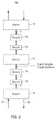
- FIG. 8 depicts a flowchart of a method for virtualizing resources for the operation of the hierarchical cortical system according to one or more embodiments of the present invention.
- the method includes partitioning the scratchpad memory device 520 into two sections, one for the current level of the hierarchy and one for the next level, at 805 .
- the partitioning divides the scratchpad memory device 520 among the first subset 522 for even numbered levels and the second subset 523 for off numbered levels.
- the method further includes assigning each processor 10 in the neural network 100 the corresponding first portion 524 , the corresponding second portion 525 , and the corresponding third portion 535 , at 810 .
- the first portion 524 is one or more memory locations from the first subset 522
- the second portion 525 is one or more memory locations from the second subset 523
- the third portion 535 is one or more memory locations from the SCM device 530 .
- the neural network 100 is initialized by assigning each processor 10 to execute one or more neurons 11 from each level 415 of the hierarchical cortical system 500 , at 815 .
- a first processor 10 is assigned to be a first neuron 11 from a level k, and a second neuron 11 from a level (k+1), and so on.
- the SCM device 530 is initialized by storing the initial neuron data for the neurons 11 in the hierarchical cortical system 500 , at 820 .
- the neuron data includes connection data and weight data for each neuron 11 .
- the initialization includes storing, at the third portion 535 assigned to the first processor 10 , the neuron data for all the neurons 11 that the first processor 10 is assigned from each of the hierarchical levels 415 .
- the neuron data is stored using a database, a lookup table, or any other data structure that can be accessed using a level number.
- the third portion 535 assigned to the first processor 10 stores neuron data for the first neuron 11 from the level k, and the neuron data for the second neuron 11 from the level (k+1).
- the same first processor 10 executes different neuron operations corresponding to different neurons from different hierarchical levels from the hierarchical cortical system 500 .
- the method further includes copying, by the memory controller 510 , data from the SCM device 530 to the scratchpad memory device 520 , at 825 .
- the neuron data for the current level that is being computed by the processors 10 is loaded from the SCM device 530 to the scratchpad memory device 520 into the corresponding subset based on the level number, for example.
- the method further includes starting the compute cycles (see FIG. 7 ), at 830 .
- a compute cycle k 710 includes the processors 10 performing the computations for the current level, say level k, using the neuron data from the scratchpad memory device 520 , at 832 .
- Each processor 10 accesses corresponding neuron data from the assigned memory portion from the scratchpad memory device 520 for performing the computations.
- the compute cycle k 710 includes, while the processors 10 are computing, in parallel, copying the neuron data for the next level (k+1) from the SCM device 530 into the designated area of the scratchpad memory device 520 by the memory controller, at 834 .
- the compute cycle k 710 includes updating the neuron data in the SCM device 530 for the neurons 11 in which the connection data/weight data is updated by the computations, at 836 .
- the update is performed by updating the third portion 535 of a processor 10 that has updated neuron data. Due to sparsity principle in which only the active neurons (typically 1-2% of all neurons) need to be updated, the number of writes to the SCM device 530 are small (below a predetermined threshold), mitigating endurance issues with the SCM device 530 .
- Updating the connectivity changes in the SCM device 530 can include creation or removal of a connection, or a change in the data associated with the connection, such as a permanence or strength. This can be a mathematical change such as adding or subtracting a certain value for the changed connections.
- the memory controller 510 performs the mathematical operation as the connection is being written into the SCM device 530 , freeing up the processors 10 and reducing traffic to the neural network 100 .
- the method includes performing n compute cycles, in this manner, each compute cycle for a respective hierarchical level, n being the total number of levels in the hierarchical cortical system 500 , at 840 . Once all levels are processed, the result from the last level is output, at 845 .
- the method facilitates the hierarchical cortical system 500 to hide higher read latency of the SCM device 530 by the compute cycle of the processors 10 . Further, the method facilitates resource virtualization, as the same processor 10 and corresponding assigned memory portions can be used to execute neurons from different levels.
- the embodiments of the present invention further facilitate providing pipelining using the hierarchical cortical system 500 .
- Pipelining requires that each processor 10 plays the same role for different incoming data. Less processing is required at the upper levels of the hierarchy because representations and feature maps are more stable and changes are slower in the upper levels of the hierarchy compared to the lower levels.
- FIG. 9 depicts a block diagram for pipelining the operations of the hierarchical cortical system 500 according to one or more embodiments of the present invention.
- processing at Level 2 is twice as fast as at Level 1
- Level 3 is twice as fast as Level 2 .
- each neuron 11 (or a set of predetermined number of neurons) in Level 1 can require that its processing is performed by an assigned processor 10 , but those in Level 2 could be shared 2 ⁇ in the same cycle, and those in Level 3 could be shared 4 ⁇ in the same cycle.
- a processor 10 can be assigned to more number of neurons 11 in the higher levels than a number of neurons 11 in the lower levels.
- the net savings would be the use of 7 processors 10 (PU1-PU7) instead of 12.
- PU5 can process both regions R 5 and R 6 in the time it takes PU1 to process R 1 ;
- PU7 can process R 9 , R 10 , R 11 , R 12 in the same time.
- the embodiments of the present invention can be used to perform hierarchical temporal memory (HTM) emulations, or any other type of hierarchical cortical system emulations.
- HTM hierarchical temporal memory
- the HTM emulations performed in a typical range of 50-200 ms per iteration (level), depending on the number of synapses, which changes as the emulation proceeds.
- level ms per iteration
- the results can vary based on the setup, such as depending on frequency, type of processors, type of SCM device, type of scratchpad memory device, and the like.
- the embodiments of the present invention accordingly provide a method to enable higher storage of connectivity information in a cortical system using SCM.
- the embodiments of the present invention also provide a method to hide the read latency penalty of SCM behind the compute cycles in a cortical emulation.
- the embodiments of the present invention provide a method to mitigate the limited write endurance of SCM by writing back only changes in connectivity at each cycle.
- the embodiments of the present invention provide a method of resource virtualization in a hierarchical cortical system, allowing much lower processing and memory resource requirements for large-scale systems.
- the embodiments of the present invention also provide a method of near memory processing for connectivity information updates by enabling the memory controller to write updated data into the SCM reducing computation by the processors.
- the present invention may be a system, a method, and/or a computer program product at any possible technical detail level of integration
- the computer program product may include a computer readable storage medium (or media) having computer readable program instructions thereon for causing a processor to carry out aspects of the present invention
- the computer readable storage medium can be a tangible device that can retain and store instructions for use by an instruction execution device.
- the computer readable storage medium may be, for example, but is not limited to, an electronic storage device, a magnetic storage device, an optical storage device, an electromagnetic storage device, a semiconductor storage device, or any suitable combination of the foregoing.
- a non-exhaustive list of more specific examples of the computer readable storage medium includes the following: a portable computer diskette, a hard disk, a random access memory (RAM), a read-only memory (ROM), an erasable programmable read-only memory (EPROM or Flash memory), a static random access memory (SRAM), a portable compact disc read-only memory (CD-ROM), a digital versatile disk (DVD), a memory stick, a floppy disk, a mechanically encoded device such as punch-cards or raised structures in a groove having instructions recorded thereon, and any suitable combination of the foregoing.
- RAM random access memory
- ROM read-only memory
- EPROM or Flash memory erasable programmable read-only memory
- SRAM static random access memory
- CD-ROM compact disc read-only memory
- DVD digital versatile disk
- memory stick a floppy disk
- a mechanically encoded device such as punch-cards or raised structures in a groove having instructions recorded thereon
- a computer readable storage medium is not to be construed as being transitory signals per se, such as radio waves or other freely propagating electromagnetic waves, electromagnetic waves propagating through a waveguide or other transmission media (e.g., light pulses passing through a fiber-optic cable), or electrical signals transmitted through a wire.
- Computer readable program instructions described herein can be downloaded to respective computing/processing devices from a computer readable storage medium or to an external computer or external storage device via a network, for example, the Internet, a local area network, a wide area network and/or a wireless network.
- the network may comprise copper transmission cables, optical transmission fibers, wireless transmission, routers, firewalls, switches, gateway computers and/or edge servers.
- a network adapter card or network interface in each computing/processing device receives computer readable program instructions from the network and forwards the computer readable program instructions for storage in a computer readable storage medium within the respective computing/processing device.
- Computer readable program instructions for carrying out operations of the present invention may be assembler instructions, instruction-set-architecture (ISA) instructions, machine instructions, machine dependent instructions, microcode, firmware instructions, state-setting data, configuration data for integrated circuitry, or either source code or object code written in any combination of one or more programming languages, including an object oriented programming language such as Smalltalk, C++, or the like, and procedural programming languages, such as the “C” programming language or similar programming languages.
- the computer readable program instructions may execute entirely on the user's computer, partly on the user's computer, as a stand-alone software package, partly on the user's computer and partly on a remote computer or entirely on the remote computer or server.
- the remote computer may be connected to the user's computer through any type of network, including a local area network (LAN) or a wide area network (WAN), or the connection may be made to an external computer (for example, through the Internet using an Internet Service Provider).
- electronic circuitry including, for example, programmable logic circuitry, field-programmable gate arrays (FPGA), or programmable logic arrays (PLA) may execute the computer readable program instruction by utilizing state information of the computer readable program instructions to personalize the electronic circuitry, in order to perform aspects of the present invention.
- These computer readable program instructions may be provided to a processor of a general purpose computer, special purpose computer, or other programmable data processing apparatus to produce a machine, such that the instructions, which execute via the processor of the computer or other programmable data processing apparatus, create means for implementing the functions/acts specified in the flowchart and/or block diagram block or blocks.
- These computer readable program instructions may also be stored in a computer readable storage medium that can direct a computer, a programmable data processing apparatus, and/or other devices to function in a particular manner, such that the computer readable storage medium having instructions stored therein comprises an article of manufacture including instructions which implement aspects of the function/act specified in the flowchart and/or block diagram block or blocks.
- the computer readable program instructions may also be loaded onto a computer, other programmable data processing apparatus, or other device to cause a series of operational steps to be performed on the computer, other programmable apparatus or other device to produce a computer implemented process, such that the instructions which execute on the computer, other programmable apparatus, or other device implement the functions/acts specified in the flowchart and/or block diagram block or blocks.
- each block in the flowchart or block diagrams may represent a module, segment, or portion of instructions, which comprises one or more executable instructions for implementing the specified logical function(s).
- the functions noted in the blocks may occur out of the order noted in the Figures.
- two blocks shown in succession may, in fact, be executed substantially concurrently, or the blocks may sometimes be executed in the reverse order, depending upon the functionality involved.
Landscapes
- Engineering & Computer Science (AREA)
- Theoretical Computer Science (AREA)
- Physics & Mathematics (AREA)
- General Physics & Mathematics (AREA)
- Software Systems (AREA)
- General Engineering & Computer Science (AREA)
- Data Mining & Analysis (AREA)
- Mathematical Physics (AREA)
- Health & Medical Sciences (AREA)
- Life Sciences & Earth Sciences (AREA)
- Biomedical Technology (AREA)
- Biophysics (AREA)
- Computing Systems (AREA)
- Molecular Biology (AREA)
- General Health & Medical Sciences (AREA)
- Evolutionary Computation (AREA)
- Computational Linguistics (AREA)
- Artificial Intelligence (AREA)
- Neurology (AREA)
- Algebra (AREA)
- Computational Mathematics (AREA)
- Mathematical Analysis (AREA)
- Mathematical Optimization (AREA)
- Pure & Applied Mathematics (AREA)
- Databases & Information Systems (AREA)
- Image Processing (AREA)
Abstract
Description
Claims (17)
Priority Applications (1)
| Application Number | Priority Date | Filing Date | Title |
|---|---|---|---|
| US15/959,551 US11163707B2 (en) | 2018-04-23 | 2018-04-23 | Virtualization in hierarchical cortical emulation frameworks |
Applications Claiming Priority (1)
| Application Number | Priority Date | Filing Date | Title |
|---|---|---|---|
| US15/959,551 US11163707B2 (en) | 2018-04-23 | 2018-04-23 | Virtualization in hierarchical cortical emulation frameworks |
Publications (2)
| Publication Number | Publication Date |
|---|---|
| US20190324929A1 US20190324929A1 (en) | 2019-10-24 |
| US11163707B2 true US11163707B2 (en) | 2021-11-02 |
Family
ID=68236889
Family Applications (1)
| Application Number | Title | Priority Date | Filing Date |
|---|---|---|---|
| US15/959,551 Expired - Fee Related US11163707B2 (en) | 2018-04-23 | 2018-04-23 | Virtualization in hierarchical cortical emulation frameworks |
Country Status (1)
| Country | Link |
|---|---|
| US (1) | US11163707B2 (en) |
Families Citing this family (1)
| Publication number | Priority date | Publication date | Assignee | Title |
|---|---|---|---|---|
| US11824725B2 (en) * | 2020-03-17 | 2023-11-21 | Rebaca Technologies | State machine emulation using domain-specific language constructs |
Citations (26)
| Publication number | Priority date | Publication date | Assignee | Title |
|---|---|---|---|---|
| US5469530A (en) * | 1991-05-24 | 1995-11-21 | U.S. Philips Corporation | Unsupervised training method for a neural net and a neural net classifier device |
| US8521673B2 (en) * | 2008-01-25 | 2013-08-27 | Seiko Epson Corporation | Parallel processing device and parallel processing method |
| US9064211B2 (en) * | 2004-01-06 | 2015-06-23 | Neuric Technologies, Llc | Method for determining relationships through use of an ordered list between processing nodes in an emulated human brain |
| US9256215B2 (en) | 2012-07-27 | 2016-02-09 | Brain Corporation | Apparatus and methods for generalized state-dependent learning in spiking neuron networks |
| US20160055408A1 (en) | 2014-08-25 | 2016-02-25 | International Business Machines Corporation | Peripheral device interconnections for neurosynaptic systems |
| US9311596B2 (en) | 2011-09-21 | 2016-04-12 | Qualcomm Technologies Inc. | Methods for memory management in parallel networks |
| US9317429B2 (en) | 2011-09-30 | 2016-04-19 | Intel Corporation | Apparatus and method for implementing a multi-level memory hierarchy over common memory channels |
| EP3035249A1 (en) | 2014-12-19 | 2016-06-22 | Intel Corporation | Method and apparatus for distributed and cooperative computation in artificial neural networks |
| US9524461B1 (en) * | 2014-09-30 | 2016-12-20 | Steven T. Huynh | Conceptual computation system using a hierarchical network of modules |
| US9563843B2 (en) * | 2012-05-10 | 2017-02-07 | Yan M. Yufik | Systems and methods for a computer understanding of multi modal data streams |
| US20180121120A1 (en) * | 2016-10-27 | 2018-05-03 | Samsung Electronics Co., Ltd. | Scaling out architecture for dram-based processing unit (dpu) |
| US20180173572A1 (en) * | 2016-02-05 | 2018-06-21 | Sas Institute Inc. | Automated transfer of neural network definitions among federated areas |
| US20180189631A1 (en) * | 2016-12-30 | 2018-07-05 | Intel Corporation | Neural network with reconfigurable sparse connectivity and online learning |
| US20180307968A1 (en) * | 2017-04-21 | 2018-10-25 | International Business Machines Corporation | Parameter criticality-aware resilience |
| US20190065935A1 (en) * | 2017-08-30 | 2019-02-28 | International Business Machines Corporation | Computational method for feedback in a hierarchical neural network |
| US20190073127A1 (en) * | 2018-11-05 | 2019-03-07 | Rapt.ai Inc. | Byte addressable memory system for a neural network and method thereof |
| US20190187963A1 (en) * | 2017-12-19 | 2019-06-20 | Canon Kabushiki Kaisha | Memory access optimisation using per-layer computational mapping and memory allocation for cnn application |
| US20190340526A1 (en) * | 2016-11-07 | 2019-11-07 | Equifax Inc. | Optimizing automated modeling algorithms for risk assessment and generation of explanatory data |
| US20190339687A1 (en) * | 2016-05-09 | 2019-11-07 | Strong Force Iot Portfolio 2016, Llc | Methods and systems for data collection, learning, and streaming of machine signals for analytics and maintenance using the industrial internet of things |
| US20190361811A1 (en) * | 2018-05-24 | 2019-11-28 | Hitachi, Ltd. | Data processing apparatus and prefetch method |
| US20200348662A1 (en) * | 2016-05-09 | 2020-11-05 | Strong Force Iot Portfolio 2016, Llc | Platform for facilitating development of intelligence in an industrial internet of things system |
| US20200394495A1 (en) * | 2017-12-04 | 2020-12-17 | Optimum Semiconductor Technologies Inc. | System and architecture of neural network accelerator |
| US10878313B2 (en) * | 2017-05-02 | 2020-12-29 | Intel Corporation | Post synaptic potential-based learning rule |
| US20210012182A1 (en) * | 2019-07-11 | 2021-01-14 | Capital One Services, Llc | Memory management in memory augmented deep neural networks |
| US10956584B1 (en) * | 2018-09-25 | 2021-03-23 | Amazon Technologies, Inc. | Secure data processing |
| US10984054B2 (en) * | 2017-07-27 | 2021-04-20 | Robert Bosch Gmbh | Visual analytics system for convolutional neural network based classifiers |
-
2018
- 2018-04-23 US US15/959,551 patent/US11163707B2/en not_active Expired - Fee Related
Patent Citations (26)
| Publication number | Priority date | Publication date | Assignee | Title |
|---|---|---|---|---|
| US5469530A (en) * | 1991-05-24 | 1995-11-21 | U.S. Philips Corporation | Unsupervised training method for a neural net and a neural net classifier device |
| US9064211B2 (en) * | 2004-01-06 | 2015-06-23 | Neuric Technologies, Llc | Method for determining relationships through use of an ordered list between processing nodes in an emulated human brain |
| US8521673B2 (en) * | 2008-01-25 | 2013-08-27 | Seiko Epson Corporation | Parallel processing device and parallel processing method |
| US9311596B2 (en) | 2011-09-21 | 2016-04-12 | Qualcomm Technologies Inc. | Methods for memory management in parallel networks |
| US9317429B2 (en) | 2011-09-30 | 2016-04-19 | Intel Corporation | Apparatus and method for implementing a multi-level memory hierarchy over common memory channels |
| US9563843B2 (en) * | 2012-05-10 | 2017-02-07 | Yan M. Yufik | Systems and methods for a computer understanding of multi modal data streams |
| US9256215B2 (en) | 2012-07-27 | 2016-02-09 | Brain Corporation | Apparatus and methods for generalized state-dependent learning in spiking neuron networks |
| US20160055408A1 (en) | 2014-08-25 | 2016-02-25 | International Business Machines Corporation | Peripheral device interconnections for neurosynaptic systems |
| US9524461B1 (en) * | 2014-09-30 | 2016-12-20 | Steven T. Huynh | Conceptual computation system using a hierarchical network of modules |
| EP3035249A1 (en) | 2014-12-19 | 2016-06-22 | Intel Corporation | Method and apparatus for distributed and cooperative computation in artificial neural networks |
| US20180173572A1 (en) * | 2016-02-05 | 2018-06-21 | Sas Institute Inc. | Automated transfer of neural network definitions among federated areas |
| US20190339687A1 (en) * | 2016-05-09 | 2019-11-07 | Strong Force Iot Portfolio 2016, Llc | Methods and systems for data collection, learning, and streaming of machine signals for analytics and maintenance using the industrial internet of things |
| US20200348662A1 (en) * | 2016-05-09 | 2020-11-05 | Strong Force Iot Portfolio 2016, Llc | Platform for facilitating development of intelligence in an industrial internet of things system |
| US20180121120A1 (en) * | 2016-10-27 | 2018-05-03 | Samsung Electronics Co., Ltd. | Scaling out architecture for dram-based processing unit (dpu) |
| US20190340526A1 (en) * | 2016-11-07 | 2019-11-07 | Equifax Inc. | Optimizing automated modeling algorithms for risk assessment and generation of explanatory data |
| US20180189631A1 (en) * | 2016-12-30 | 2018-07-05 | Intel Corporation | Neural network with reconfigurable sparse connectivity and online learning |
| US20180307968A1 (en) * | 2017-04-21 | 2018-10-25 | International Business Machines Corporation | Parameter criticality-aware resilience |
| US10878313B2 (en) * | 2017-05-02 | 2020-12-29 | Intel Corporation | Post synaptic potential-based learning rule |
| US10984054B2 (en) * | 2017-07-27 | 2021-04-20 | Robert Bosch Gmbh | Visual analytics system for convolutional neural network based classifiers |
| US20190065935A1 (en) * | 2017-08-30 | 2019-02-28 | International Business Machines Corporation | Computational method for feedback in a hierarchical neural network |
| US20200394495A1 (en) * | 2017-12-04 | 2020-12-17 | Optimum Semiconductor Technologies Inc. | System and architecture of neural network accelerator |
| US20190187963A1 (en) * | 2017-12-19 | 2019-06-20 | Canon Kabushiki Kaisha | Memory access optimisation using per-layer computational mapping and memory allocation for cnn application |
| US20190361811A1 (en) * | 2018-05-24 | 2019-11-28 | Hitachi, Ltd. | Data processing apparatus and prefetch method |
| US10956584B1 (en) * | 2018-09-25 | 2021-03-23 | Amazon Technologies, Inc. | Secure data processing |
| US20190073127A1 (en) * | 2018-11-05 | 2019-03-07 | Rapt.ai Inc. | Byte addressable memory system for a neural network and method thereof |
| US20210012182A1 (en) * | 2019-07-11 | 2021-01-14 | Capital One Services, Llc | Memory management in memory augmented deep neural networks |
Non-Patent Citations (4)
| Title |
|---|
| Lloyd et.al., "Evaluating the Feasibility of Storage Class Memory as Main Memory," MEMSYS 2016, The International Symposium on Memory System, LLNL-CONF-687015, Mar. 29, 2016, pp. 1-7. |
| Rodriguez et al., "Volatile STT-RAM Scratchpad Design and Data Allocation for Low Energy," ACM Transactions on Architecture and Code Optimization (TACO) TACO vol. 11, 2014, pp. 1-20. |
| Young et al.; "An approach to enlarge learning space coverage for robot learning control"; IEEE Transactions on Fuzzy Systems Year: 1997 | vol. 5, Issue: 4 | Journal Article | Publisher: IEEE; Cited by: Papers (11) (Year: 1997). * |
| Zaveri, Mazad S., and Dan Hammerstrom. "Performance/price estimates for cortex-scale hardware: a design space exploration." Neural Networks 24.3 (2011): 291-304. |
Also Published As
| Publication number | Publication date |
|---|---|
| US20190324929A1 (en) | 2019-10-24 |
Similar Documents
| Publication | Publication Date | Title |
|---|---|---|
| Yu et al. | An overview of neuromorphic computing for artificial intelligence enabled hardware-based hopfield neural network | |
| US11164080B2 (en) | Unsupervised, supervised and reinforced learning via spiking computation | |
| US10832125B2 (en) | Implementing a neural network algorithm on a neurosynaptic substrate based on metadata associated with the neural network algorithm | |
| US8515885B2 (en) | Neuromorphic and synaptronic spiking neural network with synaptic weights learned using simulation | |
| EP3070649B1 (en) | Implementing a neural network algorithm on a neurosynaptic substrate based on criteria related to the neurosynaptic substrate | |
| US9292788B2 (en) | Event-driven universal neural network circuit | |
| CN107924227A (en) | Resistance processing unit | |
| CN118451423A (en) | Optimal knowledge distillation scheme | |
| US20220188641A1 (en) | Reinforcement testing of a neural network | |
| WO2020263587A1 (en) | Neural network operation reordering for parallel execution | |
| Sun et al. | Analysis and optimization of network properties for bionic topology hopfield neural network using gaussian-distributed small-world rewiring method | |
| Feng et al. | Power law in deep neural networks: Sparse network generation and continual learning with preferential attachment | |
| CN105659260B (en) | Dynamically assign and check synaptic delay | |
| CN117786412A (en) | Flexible training methods, cluster systems, products and media for large language models | |
| US11163707B2 (en) | Virtualization in hierarchical cortical emulation frameworks | |
| Nayak et al. | Optimizing a higher order neural network through teaching learning based optimization algorithm | |
| Plagge et al. | Expressive dendrites in spiking networks | |
| KR20230029759A (en) | Generating sparse modifiable bit length determination pulses to update analog crossbar arrays | |
| CN117532885A (en) | Intelligent auxiliary system, method and storage medium for 3D printing | |
| Gautam et al. | NeuroCoreX: An Open-Source FPGA-Based Spiking Neural Network Emulator with On-Chip Learning | |
| Yang et al. | Exploration of a mechanism to form bionic, self-growing and self-organizing neural network | |
| Feng et al. | Brainqn: Enhancing the robustness of deep reinforcement learning with spiking neural networks | |
| US20210142153A1 (en) | Resistive processing unit scalable execution | |
| CN116134415A (en) | Pulse generation for updating the crossbar array | |
| Amer | Modularity in artificial neural networks |
Legal Events
| Date | Code | Title | Description |
|---|---|---|---|
| AS | Assignment |
Owner name: INTERNATIONAL BUSINESS MACHINES CORPORATION, NEW YORK Free format text: ASSIGNMENT OF ASSIGNORS INTEREST;ASSIGNORS:KUMAR, ARVIND;OZCAN, AHMET S.;SCOTT, J. CAMPBELL;SIGNING DATES FROM 20180404 TO 20180417;REEL/FRAME:045610/0089 Owner name: INTERNATIONAL BUSINESS MACHINES CORPORATION, NEW Y Free format text: ASSIGNMENT OF ASSIGNORS INTEREST;ASSIGNORS:KUMAR, ARVIND;OZCAN, AHMET S.;SCOTT, J. CAMPBELL;SIGNING DATES FROM 20180404 TO 20180417;REEL/FRAME:045610/0089 |
|
| FEPP | Fee payment procedure |
Free format text: ENTITY STATUS SET TO UNDISCOUNTED (ORIGINAL EVENT CODE: BIG.); ENTITY STATUS OF PATENT OWNER: LARGE ENTITY |
|
| STPP | Information on status: patent application and granting procedure in general |
Free format text: NON FINAL ACTION MAILED |
|
| STPP | Information on status: patent application and granting procedure in general |
Free format text: NOTICE OF ALLOWANCE MAILED -- APPLICATION RECEIVED IN OFFICE OF PUBLICATIONS |
|
| STPP | Information on status: patent application and granting procedure in general |
Free format text: PUBLICATIONS -- ISSUE FEE PAYMENT RECEIVED |
|
| STPP | Information on status: patent application and granting procedure in general |
Free format text: PUBLICATIONS -- ISSUE FEE PAYMENT VERIFIED |
|
| STCF | Information on status: patent grant |
Free format text: PATENTED CASE |
|
| FEPP | Fee payment procedure |
Free format text: MAINTENANCE FEE REMINDER MAILED (ORIGINAL EVENT CODE: REM.); ENTITY STATUS OF PATENT OWNER: LARGE ENTITY |
|
| LAPS | Lapse for failure to pay maintenance fees |
Free format text: PATENT EXPIRED FOR FAILURE TO PAY MAINTENANCE FEES (ORIGINAL EVENT CODE: EXP.); ENTITY STATUS OF PATENT OWNER: LARGE ENTITY |
|
| STCH | Information on status: patent discontinuation |
Free format text: PATENT EXPIRED DUE TO NONPAYMENT OF MAINTENANCE FEES UNDER 37 CFR 1.362 |
|
| FP | Lapsed due to failure to pay maintenance fee |
Effective date: 20251102 |