US11143789B2 - Static engine and neural network for a cognitive reservoir system - Google Patents
Static engine and neural network for a cognitive reservoir system Download PDFInfo
- Publication number
- US11143789B2 US11143789B2 US16/157,732 US201816157732A US11143789B2 US 11143789 B2 US11143789 B2 US 11143789B2 US 201816157732 A US201816157732 A US 201816157732A US 11143789 B2 US11143789 B2 US 11143789B2
- Authority
- US
- United States
- Prior art keywords
- reservoir
- static
- volume
- data
- log
- Prior art date
- Legal status (The legal status is an assumption and is not a legal conclusion. Google has not performed a legal analysis and makes no representation as to the accuracy of the status listed.)
- Active - Reinstated, expires
Links
Images



Classifications
-
- G—PHYSICS
- G01—MEASURING; TESTING
- G01V—GEOPHYSICS; GRAVITATIONAL MEASUREMENTS; DETECTING MASSES OR OBJECTS; TAGS
- G01V20/00—Geomodelling in general
-
- G01V99/005—
-
- G—PHYSICS
- G06—COMPUTING OR CALCULATING; COUNTING
- G06F—ELECTRIC DIGITAL DATA PROCESSING
- G06F30/00—Computer-aided design [CAD]
- G06F30/20—Design optimisation, verification or simulation
-
- G—PHYSICS
- G06—COMPUTING OR CALCULATING; COUNTING
- G06N—COMPUTING ARRANGEMENTS BASED ON SPECIFIC COMPUTATIONAL MODELS
- G06N3/00—Computing arrangements based on biological models
- G06N3/02—Neural networks
- G06N3/04—Architecture, e.g. interconnection topology
-
- G—PHYSICS
- G06—COMPUTING OR CALCULATING; COUNTING
- G06N—COMPUTING ARRANGEMENTS BASED ON SPECIFIC COMPUTATIONAL MODELS
- G06N3/00—Computing arrangements based on biological models
- G06N3/02—Neural networks
- G06N3/04—Architecture, e.g. interconnection topology
- G06N3/043—Architecture, e.g. interconnection topology based on fuzzy logic, fuzzy membership or fuzzy inference, e.g. adaptive neuro-fuzzy inference systems [ANFIS]
-
- G06N3/0436—
-
- G06N3/0454—
-
- G—PHYSICS
- G06—COMPUTING OR CALCULATING; COUNTING
- G06N—COMPUTING ARRANGEMENTS BASED ON SPECIFIC COMPUTATIONAL MODELS
- G06N3/00—Computing arrangements based on biological models
- G06N3/02—Neural networks
- G06N3/04—Architecture, e.g. interconnection topology
- G06N3/0499—Feedforward networks
-
- G—PHYSICS
- G06—COMPUTING OR CALCULATING; COUNTING
- G06N—COMPUTING ARRANGEMENTS BASED ON SPECIFIC COMPUTATIONAL MODELS
- G06N3/00—Computing arrangements based on biological models
- G06N3/02—Neural networks
- G06N3/08—Learning methods
-
- G—PHYSICS
- G06—COMPUTING OR CALCULATING; COUNTING
- G06N—COMPUTING ARRANGEMENTS BASED ON SPECIFIC COMPUTATIONAL MODELS
- G06N3/00—Computing arrangements based on biological models
- G06N3/02—Neural networks
- G06N3/08—Learning methods
- G06N3/088—Non-supervised learning, e.g. competitive learning
-
- G—PHYSICS
- G06—COMPUTING OR CALCULATING; COUNTING
- G06N—COMPUTING ARRANGEMENTS BASED ON SPECIFIC COMPUTATIONAL MODELS
- G06N3/00—Computing arrangements based on biological models
- G06N3/02—Neural networks
- G06N3/08—Learning methods
- G06N3/09—Supervised learning
Definitions
- aspects of the present disclosure relate to exploration, evaluation, and production of a reservoir, and more particularly to systems and methods for static modeling of the reservoir using data driven techniques including supervised methods, such as a neural network and k-nearest neighbor regression, and unsupervised algorithms, such as k-means clustering.
- supervised methods such as a neural network and k-nearest neighbor regression
- unsupervised algorithms such as k-means clustering.
- a reservoir is subsurface porous pool of a natural resource, such as oil and/or gas, contained within rock formations, which have varying levels of porosity and permeability.
- the porosity is dictated by a volume of the natural resource and the pore volume of the rock, while the permeability relates to the ability of the rock to allow the natural resource to flow through for collection.
- Reservoirs are identified using hydrocarbon exploration techniques that involve drilling along a well trajectory.
- Well logs are a concise, detailed plot of formation parameters versus depth that are captured using logging tools deployed along the well trajectory. Using the well logs, professionals may identify lithologies, differentiate between porous and nonporous rock, and identify payzones in the subsurface rock formations where the natural resource exists in exploitable quantities.
- reservoir modeling is utilized to estimate the petraphysics for use in decision making regarding field development, future production prediction, well placement, and other reservoir production activities.
- a suite of professionals are involved in gathering the data, generating the models, and employing the models in decision making. Each of these professionals is typically utilizing a discrete tool that outputs results dictated by underlying assumptions by the professional and handing off the results to another professional to use in the next step.
- static data is received at a neural network.
- the static data includes a set of observed data points in a reservoir volume along a well trajectory and well logs corresponding to the set of observed data points.
- a set of feature vectors is generated to feed the neural network.
- the set of feature vectors is defined based on a distance between each of the observed data points and a set of randomly selected points in the reservoir volume.
- a three-dimensional populated log is generated using the neural network by propagating well log values of the set of feature vectors across the reservoir volume. Uncertainty is quantified using the neural network by generating a plurality of realizations including the three-dimensional populated log.
- Each of the plurality of realizations is different and equally probable.
- the plurality of realizations corresponding to each static log data are generated using neural networks, and a low dimensional model of the reservoir is generated by clustering the sub-regions of the reservoir volume into one or more rock types.
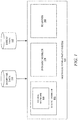
- FIG. 1 illustrates an example reservoir development system including a static modeler, a dynamic modeler, and a reasoner.
- FIG. 2 illustrates an example static modeler of the reservoir development system.
- FIG. 3A depicts example well trajectories in three-dimensional space.
- FIG. 3B shows random points generated in the three-dimensional space.
- FIG. 3C illustrates features vectors defined in the three-dimensional space.
- FIG. 4 shows a plurality of realizations of three-dimensional populated logs.
- FIG. 5A illustrates a static model of a reservoir having a plurality of clusters.
- FIG. 5B depicts a fault imposed on the static model.
- FIG. 5C shows the static model defined as a graph.
- FIG. 5D illustrates the graph with points of the fault collapsed into a vertex.
- FIG. 6 illustrates example operations for reservoir development.
- FIG. 7 shows an example network environment that may implement various systems and methods discussed herein.
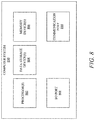
- FIG. 8 is an example computing system that may implement various systems and methods discussed herein.
- a reservoir development system is an end to end automated system permitting local expertise to be injected into a series of modular processes with a handoff between the modular processes conducted through a common integration platform.
- the reservoir development system thus provides an integration platform for numerous data-driven, physics-based, expertise and policy elements to determine where to drill in the reservoir with a justification for which the underlying reasoning may be traced.
- the reservoir development system generates a static model comprising a geological representation of the reservoir.
- the reservoir development system quantifies uncertainty in the static model and considers risk in the reasoning.
- the reservoir development system From the static model, the reservoir development system generates a dynamic model of the reservoir, which analyzes the aspects of the reservoir that change over time through a graph representation. Using the dynamic model, the reservoir development system provides a ranking of target volumes for drilling with supporting information in relative and absolute terms detailing how the ranking was produced. If any of the underlying information changes, the reservoir development system may provide real time reranking. Overall, the reservoir development system reduces human bias and error, provides a consistent workflow, facilitates handoffs, retains alternative opinions and supporting information, addresses uncertainty, and accommodates changes to the supporting information.
- the reservoir development system 100 incorporates data into an integrated model of a probable, true state of a reservoir and provides an assessment of one or more target regions of the reservoir having a high probability of production.
- the reservoir development system 100 expedites multi-disciplinary collaboration in an integrated platform. More particularly, the reservoir development system 100 integrates multi-physics data, diverse-expertise input and policies. Using various machine learning techniques, the reservoir development system 100 quantifies uncertainty and provides an automatic configuration and reconfiguration of plumbing of the reservoir.
- the reservoir development system 100 generates a model of the reservoir and reduces the model and underlying data to symptoms for one or more target regions of the reservoir.
- a ranking of these target regions is output by the reservoir development system 100 to a user device for interaction by a user via a user interface.
- An explanation of the rankings and decisions made during the process forming the basis of the rankings may be provided via the user interface.
- the reservoir development system 100 provides an expedited testing and analysis of hypotheses to identify target regions.
- the reservoir development system 100 includes a static modeler 102 , a dynamic modeler 104 , and a reasoner 106 .
- the static modeler 102 generates a static model of the reservoir using a neural network 108 while quantifying uncertainty.
- the static modeler 102 uses the neural network 108 to generate log data in a 3D volume.
- a clustering algorithm such as a k-means clustering algorithm, is learned and applied to divide the 3D volume into clusters.
- the static modeler 102 uses a k-nearest neighbor algorithm to generate 3D values, such as permeability, porosity, and saturation by regression over log attributes.
- the dynamic modeler 104 generates a dynamic model of the reservoir using the static model and dynamic data, such as pressure.
- the reasoner 106 Based on the dynamic model, the reasoner 106 generates a ranking of target regions for drilling with supporting information in relative and absolute terms detailing how the ranking was produced.
- the reservoir development system 100 receives and digests data from one or more sources.
- the data includes reservoir data 110 captured using one or more measuring tools deployed at a reservoir and expert data 112 including reservoir data having one or more attributes expertly labeled by a professional. Any changes to the expert labels of the same attribute may be retained and stored in a database for subsequent access and analysis.
- the reservoir data 110 includes, without limitation, field data and well data.
- the field data may include four-dimensional (4D) seismic data, which incorporates a plurality of time-lapsed three-dimensional (3D) subsurface images portraying changes in the reservoir over time.
- the well data includes various information captured about one or more wells at the reservoir and may include, without limitation, well name, well trajectories, well logs, core data, completions, production, pressure, and/or the like. Each of the well trajectories is a path along which a well is drilled at the reservoir.
- Well logs are a concise, detailed plot of formation parameters versus depth that are captured using logging tools deployed along the well trajectory.
- the well logs may include gamma ray (GR), neutron porosity sandstone matrix (NPSS), bulk density (RhoB), deep resistivity (RDEEP), and/or the like.
- the core data such as permeability and water saturation, are typically obtained by conducting laboratory experiments on core samples extracted long the well trajectory.
- the completions may include perforation intervals, and the production may include oil production, gas production, and/or water production.
- the pressure may include buildup.
- the expert data 112 may include, without limitation, expertly labeled seismic data, expertly labeled well logs, OWCS, and/or the like.
- the expertly labeled seismic data may include fault data and/or surface data
- the expertly labeled well logs may include permeability, porosity, and/or the like.
- the expert data 112 may include the same data labeled by a plurality of experts with commonalities and differences of attributes labeled by the experts tracked and stored.
- the static modeler 102 receives static data of the reservoir data 110 and the expert data 112 , and utilizing a chain of supervised and unsupervised machine learning algorithms, the static modeler 102 realizes a static characterization of the reservoir while quantifying uncertainty.
- the static modeler 102 receives static log data, such as GR, NPSS, and/or the like, along a well trajectory. Each static log data is collected on the measured locations along the well trajectory.
- neural networks 108 are learned by fitting feature vectors to observed log data. In each of the neural networks 108 , the feature vectors vary as a result of different sets of randomly selected points.
- the static modeler 102 applies the learned neural networks 108 to predict log data in the 3D reservoir volume.
- N realizations of each static log data are obtained.
- An unlabeled dataset is obtained by collecting the samples that all the log attributes are measured and available. Stated differently, if the attributes are GR, NPSS, RhoB, RDEEP, etc., then all the samples along the well trajectory with available (GR, NPSS, RhoB, RDEEP, etc.) are collected.
- the static modeler 102 learns a clustering model by fitting a k-means clustering algorithm to the generated unlabeled dataset. After learning the clustering model, random samples of GR, NPSS, RhoB, RDEEP, etc., are selected from the populated 3D log data. The learned k-means clustering algorithm, alongside the randomly selected 3D log data, is used by the static modeler 102 to cluster the reservoir domain.
- a labeled dataset is obtained corresponding to each core data, including permeability, porosity, water saturation, and/or the like.
- the feature vectors are log attributes, such as GR, NPSS, RhoB, RDEEP, etc., and the labels are the core data.
- the static modeler 102 adopts a k-nearest neighbor algorithm to learn the relationship between each core data and log attributes. The learned k-nearest neighbor algorithm alongside the 3D populated log data in the reservoir volume are used by the static modeler 102 to estimate the core data in the reservoir 3D volume.
- the static modeler 102 obtained M number of geo-models (herein also called static models), where each geo-model contains a random sample of populated log attributes (selected from the N realizations obtained from the neural networks 108 ) in the 3D reservoir domain, such as GR, NPSS, RhoB, RDEEP, etc., a clustered 3D volume, and 3D volumes of core data, including permeability, porosity, and water saturation.
- static models M number of geo-models (herein also called static models), where each geo-model contains a random sample of populated log attributes (selected from the N realizations obtained from the neural networks 108 ) in the 3D reservoir domain, such as GR, NPSS, RhoB, RDEEP, etc., a clustered 3D volume, and 3D volumes of core data, including permeability, porosity, and water saturation.
- the static modeler 102 receives well logs 202 along a well trajectory and well trajectory data 200 , including a set of observed data points (with x, y, and z coordinates for each measurement) in a volume along the well trajectory.
- the neural network 108 of the static modeler 102 uses the well logs 202 and the well trajectory data 200 to generate 3D populated logs across a volume of the reservoir.
- the static modeler 102 quantifies uncertainty using a 3D populated log, resulted by the neural networks 108 .
- the static modeler 102 generates n random points in 3D space. For each of the observed data points in the well trajectory data 200 , the static modeler 102 generates a set of feature vectors based on a distance between the observed data point and each of the random points. Each feature vector includes corresponding log values from the well logs 202 . For each configuration of random points, one of the neural networks 108 is trained with the feature vectors, and it propagates the values across the volume of the reservoir to generate a 3D populated log.
- the source of the uncertainty is the n random points.
- the static modeler 102 changes the random points, which changes the training data for the neural network 108 and thus the 3D populated log generated by the neural network 108 .
- the neural network 108 generates a plurality of 3D populated log realizations 204 that are each different and equally probable.
- the static modeler 102 generates core values 206 , including permeability, porosity, initial water saturation, and/or the like, from the 3D populated log realizations 204 . More particularly, the core values 206 are generated using a k-nearest neighbors algorithm. In one implementation, the static modeler 102 takes advantage of core data, including permeability, porosity, water saturation, and/or the like, along the well trajectory to build regression models, using a k-nearest neighbors algorithm, that relate log data to core data to obtain the core values 206 . The input features to these regression models are log data, and the output features of the regression models are core data.
- the regression models are applied on the 3D log data in the reservoir domain to populate the core data in the 3D reservoir volume as the core values 206 .
- the k-nearest neighbors algorithm is thus performed over many instances for each of NPSS, RhoB, GR, and RDEEP.
- Petrophysicist assigned rock properties, including porosity and permeability, may further be utilized.
- the static modeler 102 From the core values 206 , the static modeler 102 generates a static model 212 of the reservoir by clustering the reservoir into one or more rock types. More particularly, each sub-region of the reservoir is assigned into one cluster. For example, if there are 20 clusters, it is an indication that there are 20 different rock types. As another example, if the reservoir is divided into 2000 sub-regions, then each region is assigned a label in the range 1, 2, 3, . . . , 20. Therefore, there may exist several sub-regions of the reservoir with one label (e.g., label 5), which indicates the regions with almost similar rock type (e.g., regions having a rock type with an index 5).
- label 5 e.g., label 5
- the static model 212 is generated through k-means clustering, which partitions n observations into k clusters in which each observation belongs to the cluster with the nearest mean.
- the clusters of the static model 212 obtained through the k-means clustering includes NPSS, RhoB, GR, and RDEEP values at each voxel of the 3D representation.
- the static modeler 102 receives seismic data 208 , which may be expertly labeled and include surfaces of one or more layers of the reservoir (e.g., three different layers) and fault data, including fault polygons. From the seismic data 208 , the static modeler 102 generates fault planes 210 through 3D plane fitting to add faults to the clusters of the static model 212 .
- the static model 212 is thus a static characterization of the reservoir that quantifies uncertainty.
- the dynamic modeler 104 receives the static model 212 from the static modeler 102 and time dependent data for the reservoir.
- the dynamic modeler 104 utilizes semi-supervised artificial intelligence to build higher order connectivity relationships among static regions according to applied physics.
- the dynamic modeler 104 represents the static model 212 as a graph and enables integration of different data-driven attributes as well as fundamental physics of flow in porous media through the obtained graph.
- the dynamic modeler 104 receives clusters of rock types from the static model 212 and constructs a reservoir graph representing the clusters as graph vertices.
- the vertex properties of graph representation of the static model 212 includes location (x, y, z), porosity, pore volume, permeability, and initial oil saturation. Each vertex is defined to contain a spatially continuous voxel set.
- the dynamic model 104 defines graph connectivity through nodal connectivity of neighboring clusters. The graph may be updated automatically with new fault planes, which act as nodes with zero or reduced permeability. The faults change the connectivity across the domain. Low confidence faults that are identified a number of times below a threshold may be removed.
- the dynamic modeler 104 transforms the static model 212 into nodes including fault effects and defines the connectivity.
- the dynamic modeler 104 estimates pressure using the connectivity.
- the nodes with high connectivity are more likely to have similar pressures.
- Continuity in reservoir fluids allows for propagating pressure from observation points across the 3D network.
- the areas with no connectivity to the observation points are considered uncertain in pressure values.
- the dynamic modeler 104 propagates the new pressure point across the volume, as it might represent an isolated section of the reservoir.
- the dynamic modeler 104 utilizes the connectivity in the 3D structure to propagate pressure observations.
- the dynamic modeler 104 receives 4D seismic data from which the dynamic modeler 104 determines fluid saturation across the reservoir. From the static model 212 , the pressure, and the fluid saturation, the dynamic modeler 104 generates a dynamic model of the reservoir.
- the dynamic model may be augmented with additional data sources and updated over time, for example, as the pressure and/or the saturation changes. Further, modular properties may be ascribed to the dynamic model for interpretation by the reasoner 106 .
- the static modeler 102 and the dynamic modeler 104 reduce integration time between static and dynamic data, facilitate assimilation of pressure and saturation observations, and expedite construction of 3D plumbing of the reservoir.
- the reasoner 106 utilizes the reservoir model, including the static model and/or the dynamic model, to rank sub-volumes of the reservoir as potential target regions for drilling.
- the reasoner 106 includes a fuzzy inference engine that generates a recommendation by reasoning over the underlying reservoir model and evaluating target volumes against a set of one or more rules.
- the fuzzy inference engine may perform one or more stages of fuzzy inference.
- the reasoner 106 may generate a set of one or more features computable from the static model 212 and the dynamic model.
- the set of features may include 24 features, such as a distance to aquifer, short term connected oil volume, long term accessible energy, and/or the like.
- the reasoner 106 utilizes the set of rules relating the values of the set of features to a drilling attractiveness of a node.
- drilling attractiveness is high.
- short term accessible energy is high and medium term accessible energy is high and long term accessible energy is high, then energy is high.
- distance to aquifer is high then drilling attractiveness is high.
- the recommendation generated by the reasoner 106 includes ranked volumes where potential target regions for drillings are ranked in a list. For each of the rankings, the reasoner 106 provides an audit trail detailing, in relative and/or absolute terms, how the ranking was produced. The reasoner 106 further monitors the static modeler 102 and the dynamic modeler 104 for updates, including new inputs and/or changes. If the reasoner 106 detects any updates, the reasoner 106 generates a reranking of the target regions in real time.
- the reasoner 106 executes a policy of the set of rules defining desirable and undesirable volume features, and the reasoner 106 combines values for different categories hierarchically to produce an aggregate score for each of the volumes.
- the ranked volumes includes each of the target regions ranked in a list according to the aggregate scores.
- the ranked volumes are quantitative ratings, which are output as a user interface that a user may interact with using a user device to inspect the underlying rationale of the rankings to identify target regions for drilling.
- the static modeler 102 generates a neural network based population of static data with learned features as inputs and a specific type of static data, such as gamma ray, output in the static model 212 .
- a first representation 300 of a 3D volume of space which includes one or more well trajectories having a set of one or more observed data points, is obtained by the static modeler 102 .
- the static modeler 102 generates n random points in the 3D volume of space to obtain a second representation 302 .
- the static modeler 102 calculates the Euclidean distance from each of the n random points for each observed data point at well locations to obtain input feature vectors, illustrated in a third representation 304 .
- the neural network 108 is trained for each of the well log properties. For example for gamma ray, the training data for the neural network 108 may be defined as: ⁇ (input 1, GR 1), (input 2, GR 2), (input 3, GR 3), . . . , (input n, GR n) ⁇ .
- the neural network 108 generates the same length-n feature vectors for every location in the 3D volume of space.
- input [distance 1, distance 2, distance 3, . . . , distance n].
- the trained neural network 108 predicts the value of the static log data to populate the static log data for the entire field, thereby obtaining 3D populated logs.
- the source of uncertainty in the 3D populated logs is the n random points, such that changing the random points results in different training data for the neural network 108 .
- the neural network 108 is capable of matching the training data outputs.
- the neural network 108 generates a realization set 400 of a plurality of K realizations 402 - 406 of the 3D populated logs. Each of the realizations 402 - 406 is different and equally probable.
- Random realizations of the different log data such as GR, NPSS, and/or the like, are selected and the learned k-means regression is applied on the selected realizations of the realization set 400 to generate core values, such as porosity, permeability, and water saturation in the 3D reservoir volume.
- the static modeler 102 uses these values to generate a static model 500 having a plurality of clusters of rock types, as shown in FIG. 5A .
- a fault plane is imposed on the matrix of clusters, which results in further division of the clusters.
- the fault as shown in updated static model 502 in FIG. 5B , redefines the boundaries in the system.
- V is thus the set of vertices and E is the set of edges for the graph.
- the vertex v i is the centroid of cluster i.
- the reservoir graph 504 may be constructed.
- the raw static cluster outputs of the reservoir model 500 are further divided in constructing the reservoir graph 504 , such that: each cluster has at most one pressure observation point; only one well passes through the cluster; and each cluster contains a spatially continuous voxel set only.
- a post-processing on the clusters may break discontinuous clusters into blobs.
- a smoothing algorithm may be applied to dissolve very small clusters in the reservoir graph 504 .
- a fault plane is imposed on the matrix of clusters, resulting in further division of the clusters.
- the fault redefines the boundaries of the system.
- the points of a fault as collapsed into a vertex For example, the vertex v i has properties, including, but not limited to, location, porosity, pore volume, permeability, initial oil saturation, passing well name, fault, and/or the like.
- the location (x i , y i , z i ) is a center of mass for a set of connected voxels in the cluster i.
- the porosity ⁇ i is an average porosity for voxels in the cluster i, and pore volume is PV vi : ⁇ vi N V n ⁇ n , where N is a number of voxels in the cluster i and V n and ⁇ n respectively, are a volume and a porosity of voxel n in the cluster i.
- the permeability K i is an average permeability of the cluster i.
- the clusters and permeability are defined using log values, it is assumed the permeability is continuous in the cluster i. Stated differently, there should be no flow barrier (high permeability contrast) with the cluster itself, and permeability anisotropy is minimal. As such, directional permeability may be disregarded.
- the clusters are analyzed to ensure there is no flow barrier, however narrow, that can block an entire cross section in a given direction. Heterogeneity in permeability may be tolerated where it is dispersed in the space, and to account for this, directional permeability may be calculated for each of the clusters using a flow simulation or approximation.
- the initial oil saturation S oi is an average initial saturation for voxels in the cluster i. A continuity for the initial oil saturation may be assured similar to the permeability.
- the passing well name is the name of the well passing through the cluster i.
- the vertex With respect to fault, if the vertex represents a fault, the value is true. Otherwise, the value is false.
- the vertex if the vertex is a fault, its permeability is zero.
- the permeability may be manually or otherwise automatically specified based on the reservoir data 110 and/or the expert data 112 . The edges may be detected and weighted for the reservoir graphs 504 and/or 506 .
- the reservoir graphs 504 and/or 506 may have various nodal properties, graph traversal attributes, and/or the like.
- the nodal properties may include, without limitation, vertex, vertex location, porosity, pore volume, permeability, vertex height, water saturation, static uncertainty, list perforations, fault, fault confidence, shale, aquifer, adjacent vertices, edge weights, time distance, boundary central voxel, shared area neighbors, pressure, and/or the like.
- the graph traversal attributes may include, without limitation, sorted path index, sorted path time, distance to aquifer, transmissibility, short term connected oil volume, cumulative production of short term interfering wells, short term accessible energy, short term connected water volume, short term connected oil volume uncertainty, medium term connected oil volume, cumulative productions of medium term interfering wells, medium term accessible energy, medium term connected water volume, medium term connected oil volume uncertainty, long term connected oil volume, cumulative production of long term interfering wells, long term accessible energy, long term connected water volume, long term connected oil volume uncertainty, number of nearby faults, average connectivity of nearby faults, average confidence of nearby faults, number of midway faults, average connectivity of midway faults, average confidence of midway faults, number of distant faults, average connectivity of distant faults, average confidence of distant faults, and/or the like.
- the reasoner 106 may utilize these attributes in generating the ranked volumes.
- an operation 602 receives static data at a neural network.
- the static data includes a set of observed data points in a volume along a well trajectory and well logs corresponding to the set of observed data points.
- An operation 604 generates a set of feature vectors to feed the neural network.
- the set of feature vectors defined based on a distance between each of the observed data points and a set of randomly generated points in the volume.
- An operation 606 generates a 3D populated log using the neural network by propagating well log values of the set of feature vectors across the volume.
- An operation 608 quantifies uncertainty by generating a plurality of realizations including the 3D populated log using the neural network, with each of the plurality of realizations being different and equally probable.
- An operation 610 generates core values from the plurality of realizations, and an operation 612 generates a static model of the reservoir by clustering the volume into one or more rock types based on the log values.
- a user accesses and interacts with a reservoir development system 702 using a user device 706 to access, generate, or otherwise interact with reservoir models, recommendations, underlying data, and/or other information via a network 704 .
- the reservoir development system 702 may incorporate some or all or some of the features of the reservoir development system 100 described herein.
- the user device 706 is generally any form of computing device capable of interacting with the network 704 , such as a personal computer, terminal, workstation, desktop computer, portable computer, mobile device, smartphone, tablet, multimedia console, etc.
- the network 704 is used by one or more computing or data storage devices (e.g., one or more databases 710 or other computing units described herein) for implementing the reservoir development system 702 and other services, applications, or modules in the network environment 700 .
- the reservoir data, the expert data, rules, features, reservoir models, recommendations, software, and other information utilized by the reservoir development system 702 may be stored in and accessed from the one or more databases 710 .
- the network environment 700 includes at least one server 708 hosting a website or an application that the user may visit to access the reservoir development system 702 and/or other network components.
- the server 708 may be a single server, a plurality of servers with each such server being a physical server or a virtual machine, or a collection of both physical servers and virtual machines.
- a cloud hosts one or more components of the network environment 700 .
- the user devices 706 , the server 708 , and other resources connected to the network 704 may access one or more other servers to access to one or more websites, applications, web services interfaces, storage devices, computing devices, or the like that are used for reservoir characterization, exploration, development, and production.
- the server 708 may also host a search engine that the reservoir development system 702 uses for accessing, searching for, and modifying reservoir models, recommendations, underlying data, and other data, as well as for providing reservoir characterization, exploration, development, and production services, as described herein.
- the computing system 800 may be applicable to the reservoir development system 100 , the static modeler 102 , the dynamic modeler 104 , the reasoner 106 , the user devices 706 , the reservoir development system 702 , and other computing or network devices. It will be appreciated that specific implementations of these devices may be of differing possible specific computing architectures not all of which are specifically discussed herein but will be understood by those of ordinary skill in the art.
- the computer system 800 may be a computing system is capable of executing a computer program product to execute a computer process. Data and program files may be input to the computer system 800 , which reads the files and executes the programs therein. Some of the elements of the computer system 800 are shown in FIG. 8 , including one or more hardware processors 802 , one or more data storage devices 804 , one or more memory devices 808 , and/or one or more ports 808 - 810 . Additionally, other elements that will be recognized by those skilled in the art may be included in the computing system 800 but are not explicitly depicted in FIG. 8 or discussed further herein. Various elements of the computer system 800 may communicate with one another by way of one or more communication buses, point-to-point communication paths, or other communication means not explicitly depicted in FIG. 8 .
- the processor 802 may include, for example, a central processing unit (CPU), a microprocessor, a microcontroller, a digital signal processor (DSP), and/or one or more internal levels of cache. There may be one or more processors 802 , such that the processor 802 comprises a single central-processing unit, or a plurality of processing units capable of executing instructions and performing operations in parallel with each other, commonly referred to as a parallel processing environment.
- CPU central processing unit
- DSP digital signal processor
- the computer system 800 may be a conventional computer, a distributed computer, or any other type of computer, such as one or more external computers made available via a cloud computing architecture.
- the presently described technology is optionally implemented in software stored on the data stored device(s) 804 , stored on the memory device(s) 806 , and/or communicated via one or more of the ports 808 - 810 , thereby transforming the computer system 800 in FIG. 8 to a special purpose machine for implementing the operations described herein.
- Examples of the computer system 800 include personal computers, terminals, workstations, mobile phones, tablets, laptops, personal computers, multimedia consoles, gaming consoles, set top boxes, and the like.
- the one or more data storage devices 804 may include any non-volatile data storage device capable of storing data generated or employed within the computing system 800 , such as computer executable instructions for performing a computer process, which may include instructions of both application programs and an operating system (OS) that manages the various components of the computing system 800 .
- the data storage devices 804 may include, without limitation, magnetic disk drives, optical disk drives, solid state drives (SSDs), flash drives, and the like.
- the data storage devices 804 may include removable data storage media, non-removable data storage media, and/or external storage devices made available via a wired or wireless network architecture with such computer program products, including one or more database management products, web server products, application server products, and/or other additional software components.
- the one or more memory devices 806 may include volatile memory (e.g., dynamic random access memory (DRAM), static random access memory (SRAM), etc.) and/or non-volatile memory (e.g., read-only memory (ROM), flash memory, etc.).
- volatile memory e.g., dynamic random access memory (DRAM), static random access memory (SRAM), etc.
- non-volatile memory e.g., read-only memory (ROM), flash memory, etc.
- Machine-readable media may include any tangible non-transitory medium that is capable of storing or encoding instructions to perform any one or more of the operations of the present disclosure for execution by a machine or that is capable of storing or encoding data structures and/or modules utilized by or associated with such instructions.
- Machine-readable media may include a single medium or multiple media (e.g., a centralized or distributed database, and/or associated caches and servers) that store the one or more executable instructions or data structures.
- the computer system 800 includes one or more ports, such as an input/output (I/O) port 808 and a communication port 810 , for communicating with other computing, network, or vehicle devices. It will be appreciated that the ports 808 - 810 may be combined or separate and that more or fewer ports may be included in the computer system 800 .
- I/O input/output
- the ports 808 - 810 may be combined or separate and that more or fewer ports may be included in the computer system 800 .
- the I/O port 808 may be connected to an I/O device, or other device, by which information is input to or output from the computing system 800 .
- I/O devices may include, without limitation, one or more input devices, output devices, and/or environment transducer devices.
- the input devices convert a human-generated signal, such as, human voice, physical movement, physical touch or pressure, and/or the like, into electrical signals as input data into the computing system 800 via the I/O port 808 .
- the output devices may convert electrical signals received from computing system 800 via the I/O port 808 into signals that may be sensed as output by a human, such as sound, light, and/or touch.
- the input device may be an alphanumeric input device, including alphanumeric and other keys for communicating information and/or command selections to the processor 802 via the I/O port 808 .
- the input device may be another type of user input device including, but not limited to: direction and selection control devices, such as a mouse, a trackball, cursor direction keys, a joystick, and/or a wheel; one or more sensors, such as a camera, a microphone, a positional sensor, an orientation sensor, a gravitational sensor, an inertial sensor, and/or an accelerometer; and/or a touch-sensitive display screen (“touchscreen”).
- the output devices may include, without limitation, a display, a touchscreen, a speaker, a tactile and/or haptic output device, and/or the like. In some implementations, the input device and the output device may be the same device, for example, in the case of a touchscreen.
- the environment transducer devices convert one form of energy or signal into another for input into or output from the computing system 800 via the I/O port 808 .
- an electrical signal generated within the computing system 800 may be converted to another type of signal, and/or vice-versa.
- the environment transducer devices sense characteristics or aspects of an environment local to or remote from the computing device 800 , such as, light, sound, temperature, pressure, magnetic field, electric field, chemical properties, physical movement, orientation, acceleration, gravity, and/or the like.
- the environment transducer devices may generate signals to impose some effect on the environment either local to or remote from the example computing device 800 , such as, physical movement of some object (e.g., a mechanical actuator), heating or cooling of a substance, adding a chemical substance, and/or the like.
- some object e.g., a mechanical actuator
- heating or cooling of a substance e.g., heating or cooling of a substance, adding a chemical substance, and/or the like.
- a communication port 810 is connected to a network by way of which the computer system 800 may receive network data useful in executing the methods and systems set out herein as well as transmitting information and network configuration changes determined thereby.
- the communication port 810 connects the computer system 800 to one or more communication interface devices configured to transmit and/or receive information between the computing system 800 and other devices by way of one or more wired or wireless communication networks or connections. Examples of such networks or connections include, without limitation, Universal Serial Bus (USB), Ethernet, Wi-Fi, Bluetooth®, Near Field Communication (NFC), Long-Term Evolution (LTE), and so on.
- One or more such communication interface devices may be utilized via the communication port 810 to communicate one or more other machines, either directly over a point-to-point communication path, over a wide area network (WAN) (e.g., the Internet), over a local area network (LAN), over a cellular (e.g., third generation (3G) or fourth generation (4G)) network, or over another communication means.
- WAN wide area network
- LAN local area network
- cellular e.g., third generation (3G) or fourth generation (4G) network
- the communication port 810 may communicate with an antenna or other link for electromagnetic signal transmission and/or reception.
- reservoir data, expert data, rules, features, reservoir models, recommendations, audit trails, software and other modules and services may be embodied by instructions stored on the data storage devices 804 and/or the memory devices 806 and executed by the processor 802 .
- FIG. 8 is but one possible example of a computer system that may employ or be configured in accordance with aspects of the present disclosure. It will be appreciated that other non-transitory tangible computer-readable storage media storing computer-executable instructions for implementing the presently disclosed technology on a computing system may be utilized.
- the methods disclosed may be implemented as sets of instructions or software readable by a device. Further, it is understood that the specific order or hierarchy of steps in the methods disclosed are instances of example approaches. Based upon design preferences, it is understood that the specific order or hierarchy of steps in the method can be rearranged while remaining within the disclosed subject matter.
- the accompanying method claims present elements of the various steps in a sample order, and are not necessarily meant to be limited to the specific order or hierarchy presented.
- the described disclosure may be provided as a computer program product, or software, that may include a non-transitory machine-readable medium having stored thereon instructions, which may be used to program a computer system (or other electronic devices) to perform a process according to the present disclosure.
- a machine-readable medium includes any mechanism for storing information in a form (e.g., software, processing application) readable by a machine (e.g., a computer).
- the machine-readable medium may include, but is not limited to, magnetic storage medium, optical storage medium; magneto-optical storage medium, read only memory (ROM); random access memory (RAM); erasable programmable memory (e.g., EPROM and EEPROM); flash memory; or other types of medium suitable for storing electronic instructions.
Landscapes
- Engineering & Computer Science (AREA)
- Physics & Mathematics (AREA)
- Theoretical Computer Science (AREA)
- General Physics & Mathematics (AREA)
- Evolutionary Computation (AREA)
- General Engineering & Computer Science (AREA)
- Software Systems (AREA)
- Life Sciences & Earth Sciences (AREA)
- Computational Linguistics (AREA)
- Data Mining & Analysis (AREA)
- General Health & Medical Sciences (AREA)
- Molecular Biology (AREA)
- Computing Systems (AREA)
- Biophysics (AREA)
- Biomedical Technology (AREA)
- Mathematical Physics (AREA)
- Artificial Intelligence (AREA)
- Health & Medical Sciences (AREA)
- Computer Hardware Design (AREA)
- Geometry (AREA)
- Computational Mathematics (AREA)
- Fuzzy Systems (AREA)
- Mathematical Analysis (AREA)
- Mathematical Optimization (AREA)
- Pure & Applied Mathematics (AREA)
- Automation & Control Theory (AREA)
- General Life Sciences & Earth Sciences (AREA)
- Geophysics (AREA)
- Management, Administration, Business Operations System, And Electronic Commerce (AREA)
- Geophysics And Detection Of Objects (AREA)
Abstract
Description
G R=(V,E), where V={v 1 ,v 2 , . . . ,v j , . . . ,v n} and E={ . . . ,(v i ,v j), . . . }
Claims (20)
Priority Applications (3)
| Application Number | Priority Date | Filing Date | Title |
|---|---|---|---|
| US16/157,732 US11143789B2 (en) | 2017-10-11 | 2018-10-11 | Static engine and neural network for a cognitive reservoir system |
| US17/497,477 US11852778B2 (en) | 2017-10-11 | 2021-10-08 | Static engine and neural network for a cognitive reservoir system |
| US18/380,304 US20240036231A1 (en) | 2017-10-11 | 2023-10-16 | Static engine and neural network for a cognitive reservoir system |
Applications Claiming Priority (2)
| Application Number | Priority Date | Filing Date | Title |
|---|---|---|---|
| US201762571150P | 2017-10-11 | 2017-10-11 | |
| US16/157,732 US11143789B2 (en) | 2017-10-11 | 2018-10-11 | Static engine and neural network for a cognitive reservoir system |
Related Child Applications (1)
| Application Number | Title | Priority Date | Filing Date |
|---|---|---|---|
| US17/497,477 Continuation US11852778B2 (en) | 2017-10-11 | 2021-10-08 | Static engine and neural network for a cognitive reservoir system |
Publications (2)
| Publication Number | Publication Date |
|---|---|
| US20190107643A1 US20190107643A1 (en) | 2019-04-11 |
| US11143789B2 true US11143789B2 (en) | 2021-10-12 |
Family
ID=65992573
Family Applications (10)
| Application Number | Title | Priority Date | Filing Date |
|---|---|---|---|
| US16/157,716 Active 2040-10-06 US11422284B2 (en) | 2017-10-11 | 2018-10-11 | System for improved reservoir exploration and production |
| US16/157,732 Active - Reinstated 2039-10-21 US11143789B2 (en) | 2017-10-11 | 2018-10-11 | Static engine and neural network for a cognitive reservoir system |
| US16/157,764 Active 2041-02-07 US11454738B2 (en) | 2017-10-11 | 2018-10-11 | Recommendation engine for a cognitive reservoir system |
| US16/157,757 Active 2041-06-24 US11579332B2 (en) | 2017-10-11 | 2018-10-11 | Dynamic engine for a cognitive reservoir system |
| US17/497,477 Active 2038-11-04 US11852778B2 (en) | 2017-10-11 | 2021-10-08 | Static engine and neural network for a cognitive reservoir system |
| US17/880,298 Active 2038-11-13 US12055673B2 (en) | 2017-10-11 | 2022-08-03 | System for improved reservoir exploration and production |
| US17/901,629 Active US12461275B2 (en) | 2017-10-11 | 2022-09-01 | Identifying target regions in a cognitive reservoir system |
| US18/106,187 Pending US20230184993A1 (en) | 2017-10-11 | 2023-02-06 | Dynamic engine for a cognitive reservoir system |
| US18/380,304 Pending US20240036231A1 (en) | 2017-10-11 | 2023-10-16 | Static engine and neural network for a cognitive reservoir system |
| US18/795,613 Pending US20250216579A1 (en) | 2017-10-11 | 2024-08-06 | System for improved reservoir exploration and production |
Family Applications Before (1)
| Application Number | Title | Priority Date | Filing Date |
|---|---|---|---|
| US16/157,716 Active 2040-10-06 US11422284B2 (en) | 2017-10-11 | 2018-10-11 | System for improved reservoir exploration and production |
Family Applications After (8)
| Application Number | Title | Priority Date | Filing Date |
|---|---|---|---|
| US16/157,764 Active 2041-02-07 US11454738B2 (en) | 2017-10-11 | 2018-10-11 | Recommendation engine for a cognitive reservoir system |
| US16/157,757 Active 2041-06-24 US11579332B2 (en) | 2017-10-11 | 2018-10-11 | Dynamic engine for a cognitive reservoir system |
| US17/497,477 Active 2038-11-04 US11852778B2 (en) | 2017-10-11 | 2021-10-08 | Static engine and neural network for a cognitive reservoir system |
| US17/880,298 Active 2038-11-13 US12055673B2 (en) | 2017-10-11 | 2022-08-03 | System for improved reservoir exploration and production |
| US17/901,629 Active US12461275B2 (en) | 2017-10-11 | 2022-09-01 | Identifying target regions in a cognitive reservoir system |
| US18/106,187 Pending US20230184993A1 (en) | 2017-10-11 | 2023-02-06 | Dynamic engine for a cognitive reservoir system |
| US18/380,304 Pending US20240036231A1 (en) | 2017-10-11 | 2023-10-16 | Static engine and neural network for a cognitive reservoir system |
| US18/795,613 Pending US20250216579A1 (en) | 2017-10-11 | 2024-08-06 | System for improved reservoir exploration and production |
Country Status (2)
| Country | Link |
|---|---|
| US (10) | US11422284B2 (en) |
| WO (4) | WO2019075242A1 (en) |
Cited By (1)
| Publication number | Priority date | Publication date | Assignee | Title |
|---|---|---|---|---|
| US11422284B2 (en) | 2017-10-11 | 2022-08-23 | Beyond Limits, Inc. | System for improved reservoir exploration and production |
Families Citing this family (47)
| Publication number | Priority date | Publication date | Assignee | Title |
|---|---|---|---|---|
| DE102019124928A1 (en) | 2018-09-28 | 2020-04-02 | Taiwan Semiconductor Manufacturing Company, Ltd. | INTEGRATED CIRCUIT DESIGN USING FUZZY MACHINE LEARNERS |
| US11392748B2 (en) * | 2018-09-28 | 2022-07-19 | Taiwan Semiconductor Manufacturing Company, Ltd. | Integrated circuit design using fuzzy machine learning |
| US11210554B2 (en) | 2019-03-21 | 2021-12-28 | Illumina, Inc. | Artificial intelligence-based generation of sequencing metadata |
| US11676685B2 (en) | 2019-03-21 | 2023-06-13 | Illumina, Inc. | Artificial intelligence-based quality scoring |
| CN110070121B (en) * | 2019-04-15 | 2021-08-10 | 西北工业大学 | Rapid approximate K nearest neighbor method based on tree strategy and balanced K mean clustering |
| WO2020227327A1 (en) * | 2019-05-06 | 2020-11-12 | RS Energy Group Topco, Inc. CA | System and method for well interference detection and prediction |
| US11423306B2 (en) | 2019-05-16 | 2022-08-23 | Illumina, Inc. | Systems and devices for characterization and performance analysis of pixel-based sequencing |
| US11593649B2 (en) | 2019-05-16 | 2023-02-28 | Illumina, Inc. | Base calling using convolutions |
| EP3745310B1 (en) * | 2019-05-28 | 2025-04-23 | Robert Bosch GmbH | Method for calibrating a multi-sensor system using an artificial neural network |
| CN112114357B (en) * | 2019-06-19 | 2023-06-30 | 中国石油天然气股份有限公司 | Fracture-cavity type reservoir connectivity prediction method and device |
| CN112147679B (en) * | 2019-06-26 | 2024-04-16 | 中国石油化工股份有限公司 | Lithology prediction method and device based on elastic parameters under fuzzy logic framework |
| US11934440B2 (en) | 2019-08-07 | 2024-03-19 | Saudi Arabian Oil Company | Aggregation functions for nodes in ontological frameworks in representation learning for massive petroleum network systems |
| US11551106B2 (en) * | 2019-08-07 | 2023-01-10 | Saudi Arabian Oil Company | Representation learning in massive petroleum network systems |
| CN111209674B (en) * | 2020-01-09 | 2023-04-11 | 长江大学 | River channel sand modeling method and device and readable storage medium |
| US20230041525A1 (en) * | 2020-01-25 | 2023-02-09 | Schlumberger Technology Corporation | Automatic model selection through machine learning |
| US12354008B2 (en) | 2020-02-20 | 2025-07-08 | Illumina, Inc. | Knowledge distillation and gradient pruning-based compression of artificial intelligence-based base caller |
| CN115136244B (en) | 2020-02-20 | 2025-09-30 | 因美纳有限公司 | Many-to-many base interpretation based on artificial intelligence |
| US20210265016A1 (en) | 2020-02-20 | 2021-08-26 | Illumina, Inc. | Data Compression for Artificial Intelligence-Based Base Calling |
| CN111582536B (en) * | 2020-03-23 | 2024-01-30 | 中国矿业大学(北京) | Feature learning-based hidden fault prediction method, device, equipment and medium |
| US11248455B2 (en) | 2020-04-02 | 2022-02-15 | Saudi Arabian Oil Company | Acoustic geosteering in directional drilling |
| US11614557B2 (en) * | 2020-04-07 | 2023-03-28 | Landmark Graphics Corporation | Data-driven domain conversion using machine learning techniques |
| US11693140B2 (en) | 2020-04-09 | 2023-07-04 | Saudi Arabian Oil Company | Identifying hydrocarbon reserves of a subterranean region using a reservoir earth model that models characteristics of the region |
| US11815650B2 (en) | 2020-04-09 | 2023-11-14 | Saudi Arabian Oil Company | Optimization of well-planning process for identifying hydrocarbon reserves using an integrated multi-dimensional geological model |
| US11486230B2 (en) | 2020-04-09 | 2022-11-01 | Saudi Arabian Oil Company | Allocating resources for implementing a well-planning process |
| WO2021226612A1 (en) * | 2020-05-06 | 2021-11-11 | Exxonmobil Upstream Research Company | Geological reasoning with graph networks for hydrocarbon identification |
| CA3177867A1 (en) * | 2020-05-06 | 2021-11-11 | Exxonmobil Upstream Research Company | Structured representations of subsurface features for hydrocarbon system and geological reasoning |
| WO2021240195A1 (en) | 2020-05-26 | 2021-12-02 | Saudi Arabian Oil Company | Instrumented mandrel for coiled tubing drilling |
| EP4158154A1 (en) | 2020-05-26 | 2023-04-05 | Saudi Arabian Oil Company | Water detection for geosteering in directional drilling |
| EP4158144A1 (en) | 2020-05-26 | 2023-04-05 | Saudi Arabian Oil Company | Geosteering in directional drilling |
| WO2021252460A1 (en) | 2020-06-09 | 2021-12-16 | Schlumberger Technology Corporation | Analogue identification and evaluation for field development and planning |
| US11409015B2 (en) | 2020-06-12 | 2022-08-09 | Saudi Arabian Oil Company | Methods and systems for generating graph neural networks for reservoir grid models |
| CN112476703B (en) * | 2020-11-04 | 2021-08-31 | 东北大学 | An intelligent 3D printing method for large-scale three-dimensional deep complex engineering geological models |
| CN112433248B (en) * | 2020-11-10 | 2022-09-30 | 成都理工大学 | Method for detecting hidden reservoir stratum in carbonate rock deposition environment |
| WO2022192858A1 (en) * | 2021-03-08 | 2022-09-15 | Mine Vision Systems, Inc. | System and method for collecting and georeferencing 3d geometric data associated with a gps-denied environment |
| US20220301657A1 (en) | 2021-03-16 | 2022-09-22 | Illumina, Inc. | Tile location and/or cycle based weight set selection for base calling |
| US12217829B2 (en) | 2021-04-15 | 2025-02-04 | Illumina, Inc. | Artificial intelligence-based analysis of protein three-dimensional (3D) structures |
| US20220336057A1 (en) | 2021-04-15 | 2022-10-20 | Illumina, Inc. | Efficient voxelization for deep learning |
| CN113255131B (en) * | 2021-05-25 | 2023-02-28 | 中国石油大学(华东) | A new well target well location recommendation method based on cognitive computing |
| US12530882B2 (en) | 2021-07-01 | 2026-01-20 | Illumina, Inc. | Efficient artificial intelligence-based base calling of index sequences |
| CN114331752B (en) * | 2022-01-06 | 2024-04-09 | 西南石油大学 | A method for wellbore trajectory optimization and risk prevention |
| CN114547978B (en) * | 2022-02-22 | 2025-03-14 | 中国石油大学(华东) | Multi-layer system water injection volume splitting method and system based on heterogeneous graph neural network |
| CN114998537B (en) * | 2022-06-07 | 2025-07-08 | 国家石油天然气管网集团有限公司 | Three-dimensional geological modeling method |
| CN114972658B (en) * | 2022-07-27 | 2022-10-25 | 浙江中测新图地理信息技术有限公司 | Data-driven three-dimensional scene dynamic model mapping method and device |
| CN115640526B (en) * | 2022-09-08 | 2026-02-03 | 中国石油天然气集团有限公司 | Drilling risk identification model, establishment method, identification method and computer equipment |
| CN115587542B (en) * | 2022-11-02 | 2023-06-16 | 四川奥凸水处理系统工程有限公司 | Groundwater inversion simulation method, system, equipment and medium based on reinforcement learning |
| WO2025096985A1 (en) * | 2023-11-01 | 2025-05-08 | Schlumberger Technology Corporation | Drilling data analytics tool |
| WO2025117412A1 (en) * | 2023-11-30 | 2025-06-05 | Conocophillips Company | Systems and methods of predictive decline modeling based on time-dependent depletion function |
Citations (19)
| Publication number | Priority date | Publication date | Assignee | Title |
|---|---|---|---|---|
| US20040133531A1 (en) | 2003-01-06 | 2004-07-08 | Dingding Chen | Neural network training data selection using memory reduced cluster analysis for field model development |
| US20060285436A1 (en) | 2005-06-06 | 2006-12-21 | Rene Virgillo Mayorga Lopez | Intelligent system for use in subterranean drilling applications |
| US20090020284A1 (en) * | 2007-07-20 | 2009-01-22 | Schlumberger Technology Corporation | Apparatus, method and system for stochastic workflow in oilfield operations |
| US20090119018A1 (en) * | 2007-11-07 | 2009-05-07 | Schlumberger Technology Corporation | Subterranean formation properties prediction |
| US20100235154A1 (en) | 2008-01-22 | 2010-09-16 | Mary Ellen Meurer | Dynamic Connectivity Analysis |
| US20110002194A1 (en) | 2008-05-22 | 2011-01-06 | Matthias Imhof | Method For Geophysical and Geological Interpretation of Seismic Volumes In The Domains of Depth, Time, and Age |
| US20120203525A1 (en) | 2011-02-08 | 2012-08-09 | Adrian Rodriguez Herrera | Three-dimensional modeling of parameters for oilfield drilling |
| US20120221306A1 (en) * | 2009-04-08 | 2012-08-30 | Schlumberger Technology Corporation | Multiscale digital rock modeling for reservoir simulation |
| US20130124171A1 (en) | 2010-07-30 | 2013-05-16 | John F. Schuette | Systems and methods for predicting well performance |
| US20150066460A1 (en) | 2013-08-30 | 2015-03-05 | Jimmy Klinger | Stratigraphic function |
| US20150300151A1 (en) | 2014-02-13 | 2015-10-22 | Shahab D. Mohaghegh | System and method providing real-time assistance to drilling operation |
| US20150347898A1 (en) | 2014-06-03 | 2015-12-03 | Saudi Arabian Oil Company | Predicting Well Markers from Artificial Neural-Network-Predicted Lithostratigraphic Facies |
| US20160078345A1 (en) | 2014-09-12 | 2016-03-17 | Chevron U.S.A. Inc. | Linguistic Goal Oriented Decision Making |
| WO2016140645A1 (en) | 2015-03-02 | 2016-09-09 | Landmark Graphics Corporation | Selecting potential well locations in a reservoir grid model |
| WO2017079178A1 (en) | 2015-11-02 | 2017-05-11 | Schlumberger Technology Corporation | Cloud-based digital rock analysis and database services |
| US20170336811A1 (en) | 2016-05-17 | 2017-11-23 | Schlumberger Technology Corporation | Flow control device design for well completions in an oilfield |
| US20180188403A1 (en) | 2016-12-29 | 2018-07-05 | Thomas C. Halsey | Method and System for Regression and Classification in Subsurface Models to Support Decision Making for Hydrocarbon Operations |
| US20180321421A1 (en) * | 2015-10-27 | 2018-11-08 | Schlumberger Technology Corporation | Optimization under Uncertainty for Integrated Models |
| US20190107644A1 (en) | 2017-10-11 | 2019-04-11 | Beyond Limits, Inc. | Dynamic engine for a cognitive reservoir system |
Family Cites Families (10)
| Publication number | Priority date | Publication date | Assignee | Title |
|---|---|---|---|---|
| US5371832A (en) | 1992-06-12 | 1994-12-06 | Siemens Aktiengesellschaft | Fuzzy logic controller having high processing speed |
| US6983227B1 (en) * | 1995-01-17 | 2006-01-03 | Intertech Ventures, Ltd. | Virtual models of complex systems |
| DE69628177D1 (en) | 1996-12-27 | 2003-06-18 | St Microelectronics Srl | Coding and storage method for fuzzy logic rules and circuit architecture for processing such rules |
| US6295504B1 (en) * | 1999-10-25 | 2001-09-25 | Halliburton Energy Services, Inc. | Multi-resolution graph-based clustering |
| US7373669B2 (en) | 2003-08-13 | 2008-05-13 | The 41St Parameter, Inc. | Method and system for determining presence of probable error or fraud in a data set by linking common data values or elements |
| EP1938281B1 (en) * | 2004-09-10 | 2015-01-21 | ExxonMobil Upstream Research Company | Geologic models of subsurface sedimentray volumes |
| RU2015123454A (en) * | 2012-12-13 | 2017-01-16 | Лэндмарк Графикс Корпорейшн | SYSTEM, METHOD AND COMPUTER SOFTWARE PRODUCT FOR EVALUATION AND CLASSIFICATION OF GEOLOGICAL BODIES USING EULER CHARACTERISTICS |
| AU2014402325B2 (en) | 2014-08-01 | 2018-02-01 | Landmark Graphics Corporation | Estimating well production performance in fractured reservoir systems |
| EP3465283B1 (en) * | 2016-05-27 | 2024-12-04 | TotalEnergies OneTech | Method for providing a calibrated rock-physics model of a subsoil |
| HUE064459T2 (en) * | 2016-12-23 | 2024-03-28 | Exxonmobil Technology & Engineering Company | Method and system for stable and efficient reservoir simulation using stability proxies |
-
2018
- 2018-10-11 WO PCT/US2018/055471 patent/WO2019075242A1/en not_active Ceased
- 2018-10-11 US US16/157,716 patent/US11422284B2/en active Active
- 2018-10-11 WO PCT/US2018/055475 patent/WO2019075245A1/en not_active Ceased
- 2018-10-11 US US16/157,732 patent/US11143789B2/en active Active - Reinstated
- 2018-10-11 WO PCT/US2018/055477 patent/WO2019075247A1/en not_active Ceased
- 2018-10-11 US US16/157,764 patent/US11454738B2/en active Active
- 2018-10-11 WO PCT/US2018/055480 patent/WO2019075250A1/en not_active Ceased
- 2018-10-11 US US16/157,757 patent/US11579332B2/en active Active
-
2021
- 2021-10-08 US US17/497,477 patent/US11852778B2/en active Active
-
2022
- 2022-08-03 US US17/880,298 patent/US12055673B2/en active Active
- 2022-09-01 US US17/901,629 patent/US12461275B2/en active Active
-
2023
- 2023-02-06 US US18/106,187 patent/US20230184993A1/en active Pending
- 2023-10-16 US US18/380,304 patent/US20240036231A1/en active Pending
-
2024
- 2024-08-06 US US18/795,613 patent/US20250216579A1/en active Pending
Patent Citations (25)
| Publication number | Priority date | Publication date | Assignee | Title |
|---|---|---|---|---|
| US20040133531A1 (en) | 2003-01-06 | 2004-07-08 | Dingding Chen | Neural network training data selection using memory reduced cluster analysis for field model development |
| US20060285436A1 (en) | 2005-06-06 | 2006-12-21 | Rene Virgillo Mayorga Lopez | Intelligent system for use in subterranean drilling applications |
| US20090020284A1 (en) * | 2007-07-20 | 2009-01-22 | Schlumberger Technology Corporation | Apparatus, method and system for stochastic workflow in oilfield operations |
| US20090119018A1 (en) * | 2007-11-07 | 2009-05-07 | Schlumberger Technology Corporation | Subterranean formation properties prediction |
| US20100235154A1 (en) | 2008-01-22 | 2010-09-16 | Mary Ellen Meurer | Dynamic Connectivity Analysis |
| US20110002194A1 (en) | 2008-05-22 | 2011-01-06 | Matthias Imhof | Method For Geophysical and Geological Interpretation of Seismic Volumes In The Domains of Depth, Time, and Age |
| US20120221306A1 (en) * | 2009-04-08 | 2012-08-30 | Schlumberger Technology Corporation | Multiscale digital rock modeling for reservoir simulation |
| US20130124171A1 (en) | 2010-07-30 | 2013-05-16 | John F. Schuette | Systems and methods for predicting well performance |
| US20120203525A1 (en) | 2011-02-08 | 2012-08-09 | Adrian Rodriguez Herrera | Three-dimensional modeling of parameters for oilfield drilling |
| US20150066460A1 (en) | 2013-08-30 | 2015-03-05 | Jimmy Klinger | Stratigraphic function |
| US20150300151A1 (en) | 2014-02-13 | 2015-10-22 | Shahab D. Mohaghegh | System and method providing real-time assistance to drilling operation |
| US20150347898A1 (en) | 2014-06-03 | 2015-12-03 | Saudi Arabian Oil Company | Predicting Well Markers from Artificial Neural-Network-Predicted Lithostratigraphic Facies |
| US20160078345A1 (en) | 2014-09-12 | 2016-03-17 | Chevron U.S.A. Inc. | Linguistic Goal Oriented Decision Making |
| WO2016140645A1 (en) | 2015-03-02 | 2016-09-09 | Landmark Graphics Corporation | Selecting potential well locations in a reservoir grid model |
| US20180321421A1 (en) * | 2015-10-27 | 2018-11-08 | Schlumberger Technology Corporation | Optimization under Uncertainty for Integrated Models |
| WO2017079178A1 (en) | 2015-11-02 | 2017-05-11 | Schlumberger Technology Corporation | Cloud-based digital rock analysis and database services |
| US20170336811A1 (en) | 2016-05-17 | 2017-11-23 | Schlumberger Technology Corporation | Flow control device design for well completions in an oilfield |
| US20180188403A1 (en) | 2016-12-29 | 2018-07-05 | Thomas C. Halsey | Method and System for Regression and Classification in Subsurface Models to Support Decision Making for Hydrocarbon Operations |
| US20190107644A1 (en) | 2017-10-11 | 2019-04-11 | Beyond Limits, Inc. | Dynamic engine for a cognitive reservoir system |
| US20190107645A1 (en) | 2017-10-11 | 2019-04-11 | Beyond Limits, Inc. | Recommendation engine for a cognitive reservoir system |
| US20190107642A1 (en) | 2017-10-11 | 2019-04-11 | Beyond Limits, Inc. | System for improved reservoir exploration and production |
| WO2019075245A1 (en) | 2017-10-11 | 2019-04-18 | Beyond Limits, Inc. | Static engine and neural network for a cognitive reservoir system |
| WO2019075242A1 (en) | 2017-10-11 | 2019-04-18 | Beyond Limits, Inc. | System for improved reservoir exploration and production |
| WO2019075247A1 (en) | 2017-10-11 | 2019-04-18 | Beyond Limits, Inc. | Dynamic engine for a cognitive reservoir system |
| WO2019075250A1 (en) | 2017-10-11 | 2019-04-18 | Beyond Limits, Inc. | Recommendation engine for a cognitive reservoir system |
Non-Patent Citations (17)
| Title |
|---|
| Application No. PCT/US2018/055471 International Preliminary Report on Patentability dated Apr. 14, 2020. |
| Application No. PCT/US2018/055475 International Preliminary Report on Patentability dated Apr. 14, 2020. |
| Application No. PCT/US2018/055477 International Preliminary Report on Patentability dated Apr. 14, 2020. |
| Application No. PCT/US2018/055480 International Preliminary Report on Patentability dated Apr. 14, 2020. |
| PCT Application No. PCT/US2018/055471 International Search Report and Written Opinion dated Jan. 7, 2019. |
| PCT Application No. PCT/US2018/055475 International Search Report and Written Opinion dated Feb. 15, 2019. |
| PCT Application No. PCT/US2018/055477 International Search Report and Written Opinion dated Jan. 7, 2019. |
| PCT Application No. PCT/US2018/055480 International Search Report and Written Opinion dated Dec. 31, 2018. |
| PCT/US18/55471, System for Improved Reservoir Exploration and Production, Oct. 11, 2018. |
| PCT/US18/55475, Static Engine and Neural Network for a Cognitive Reservoir System, Oct. 11, 2018. |
| PCT/US18/55477, Dynamic Engine for a Cognitive Reservoir System, Oct. 11, 2018. |
| PCT/US18/55480, Recommendation Engine for a Cognitive Reservoir System, Oct. 11, 2018. |
| U.S. Appl. No. 16/157,716 Office Action dated Jul. 14, 2021. |
| U.S. Appl. No. 16/157,716, Shahram F. Nia, System for Improved Reservoir Exploration and Production, filed Oct. 11, 2018. |
| U.S. Appl. No. 16/157,757, Shahram F. Nia, Dynamic Engine for a Cognitive Reservoir System, filed Oct. 11, 2018. |
| U.S. Appl. No. 16/157,764 Office Action dated Aug. 25, 2021. |
| U.S. Appl. No. 16/157,764, Zackary H. Nolan, Recommendation Engine for a Cognitive Reservoir System, filed Oct. 11, 2018. |
Cited By (6)
| Publication number | Priority date | Publication date | Assignee | Title |
|---|---|---|---|---|
| US11422284B2 (en) | 2017-10-11 | 2022-08-23 | Beyond Limits, Inc. | System for improved reservoir exploration and production |
| US11454738B2 (en) | 2017-10-11 | 2022-09-27 | Beyond Limits, Inc. | Recommendation engine for a cognitive reservoir system |
| US11579332B2 (en) | 2017-10-11 | 2023-02-14 | Beyond Limits, Inc. | Dynamic engine for a cognitive reservoir system |
| US11852778B2 (en) | 2017-10-11 | 2023-12-26 | Beyond Limits, Inc. | Static engine and neural network for a cognitive reservoir system |
| US12055673B2 (en) | 2017-10-11 | 2024-08-06 | Beyond Limits, Inc. | System for improved reservoir exploration and production |
| US12461275B2 (en) | 2017-10-11 | 2025-11-04 | Beyond Limits, Inc. | Identifying target regions in a cognitive reservoir system |
Also Published As
| Publication number | Publication date |
|---|---|
| US11422284B2 (en) | 2022-08-23 |
| US20250216579A1 (en) | 2025-07-03 |
| US20220413182A1 (en) | 2022-12-29 |
| US20190107645A1 (en) | 2019-04-11 |
| WO2019075247A1 (en) | 2019-04-18 |
| US12461275B2 (en) | 2025-11-04 |
| US20190107644A1 (en) | 2019-04-11 |
| US20190107643A1 (en) | 2019-04-11 |
| US11454738B2 (en) | 2022-09-27 |
| US12055673B2 (en) | 2024-08-06 |
| US20240036231A1 (en) | 2024-02-01 |
| US11852778B2 (en) | 2023-12-26 |
| WO2019075245A1 (en) | 2019-04-18 |
| US20220381948A1 (en) | 2022-12-01 |
| WO2019075242A1 (en) | 2019-04-18 |
| WO2019075250A1 (en) | 2019-04-18 |
| US20220026598A1 (en) | 2022-01-27 |
| US11579332B2 (en) | 2023-02-14 |
| US20230184993A1 (en) | 2023-06-15 |
| US20190107642A1 (en) | 2019-04-11 |
Similar Documents
| Publication | Publication Date | Title |
|---|---|---|
| US11852778B2 (en) | Static engine and neural network for a cognitive reservoir system | |
| Miranda et al. | Geomechanical characterization of volcanic rocks using empirical systems and data mining techniques | |
| US20220404515A1 (en) | Systems and methods for mapping seismic data to reservoir properties for reservoir modeling | |
| US20230141334A1 (en) | Systems and methods of modeling geological facies for well development | |
| US20230140905A1 (en) | Systems and methods for completion optimization for waterflood assets | |
| Almutary et al. | Placement Quality Index to Enhance Proppant Placement—Part I: The Machine-Learning Model | |
| Parashar et al. | Dynamic data-driven application systems for reservoir simulation-based optimization: lessons learned and future trends | |
| Chaki et al. | A Proxy Flow Modelling Workflow to Estimate Gridded Dynamic Properties and Well Production Rates by Deep Learning Algorithms | |
| Hu et al. | Identifying Types and Key Features of Typical Production Performance of Coalbed Methane with Interpretable Residual Graph Convolutional Model: Y. Hu et al. | |
| US12361188B2 (en) | Systems, methods, and graphical user interfaces for adaptive design exploration and model management | |
| US20220351111A1 (en) | Systems and methods for predictive reservoir development | |
| Li et al. | Optimisation of Well Location for Water Gas Alternating Flooding in Deepwater Carbonate Reservoirs Based on Artificial Intelligence | |
| CA3240526A1 (en) | Automated tools recommender system for well completion | |
| CN120744406A (en) | Mechanical drilling speed prediction method and device based on seismic frequency division attribute, electronic equipment and storage medium | |
| Juliana et al. | Exploring the Landscape: Unveiling Dominant Approaches, Benefits and Potential Pitfalls in Utilizing Diverse Machine Learning Methods for Facies Classification–A Review | |
| Rezazadeh et al. | Synergetic Use of Cluster Analysis and Artificial Intelligence Techniques to Improve Reservoir Upscaling |
Legal Events
| Date | Code | Title | Description |
|---|---|---|---|
| FEPP | Fee payment procedure |
Free format text: ENTITY STATUS SET TO UNDISCOUNTED (ORIGINAL EVENT CODE: BIG.); ENTITY STATUS OF PATENT OWNER: SMALL ENTITY |
|
| FEPP | Fee payment procedure |
Free format text: ENTITY STATUS SET TO SMALL (ORIGINAL EVENT CODE: SMAL); ENTITY STATUS OF PATENT OWNER: SMALL ENTITY |
|
| AS | Assignment |
Owner name: BEYOND LIMITS, INC., CALIFORNIA Free format text: ASSIGNMENT OF ASSIGNORS INTEREST;ASSIGNORS:GOLMOHAMMADIZANGABAD, AZARANG;NIA, SHAHRAM FARHADI;REEL/FRAME:048066/0701 Effective date: 20190107 |
|
| STPP | Information on status: patent application and granting procedure in general |
Free format text: DOCKETED NEW CASE - READY FOR EXAMINATION |
|
| STPP | Information on status: patent application and granting procedure in general |
Free format text: NON FINAL ACTION MAILED |
|
| STPP | Information on status: patent application and granting procedure in general |
Free format text: RESPONSE TO NON-FINAL OFFICE ACTION ENTERED AND FORWARDED TO EXAMINER |
|
| STPP | Information on status: patent application and granting procedure in general |
Free format text: NOTICE OF ALLOWANCE MAILED -- APPLICATION RECEIVED IN OFFICE OF PUBLICATIONS |
|
| STPP | Information on status: patent application and granting procedure in general |
Free format text: AWAITING TC RESP, ISSUE FEE PAYMENT VERIFIED |
|
| STCF | Information on status: patent grant |
Free format text: PATENTED CASE |
|
| FEPP | Fee payment procedure |
Free format text: MAINTENANCE FEE REMINDER MAILED (ORIGINAL EVENT CODE: REM.); ENTITY STATUS OF PATENT OWNER: SMALL ENTITY |
|
| AS | Assignment |
Owner name: OCEAN II PLO LLC, CALIFORNIA Free format text: SECURITY INTEREST;ASSIGNOR:BEYOND LIMITS, INC.;REEL/FRAME:071991/0800 Effective date: 20250808 |
|
| LAPS | Lapse for failure to pay maintenance fees |
Free format text: PATENT EXPIRED FOR FAILURE TO PAY MAINTENANCE FEES (ORIGINAL EVENT CODE: EXP.); ENTITY STATUS OF PATENT OWNER: SMALL ENTITY |
|
| STCH | Information on status: patent discontinuation |
Free format text: PATENT EXPIRED DUE TO NONPAYMENT OF MAINTENANCE FEES UNDER 37 CFR 1.362 |
|
| PRDP | Patent reinstated due to the acceptance of a late maintenance fee |
Effective date: 20251204 |
|
| FEPP | Fee payment procedure |
Free format text: SURCHARGE, PETITION TO ACCEPT PYMT AFTER EXP, UNINTENTIONAL. (ORIGINAL EVENT CODE: M2558); ENTITY STATUS OF PATENT OWNER: SMALL ENTITY Free format text: PETITION RELATED TO MAINTENANCE FEES GRANTED (ORIGINAL EVENT CODE: PMFG); ENTITY STATUS OF PATENT OWNER: SMALL ENTITY Free format text: PETITION RELATED TO MAINTENANCE FEES FILED (ORIGINAL EVENT CODE: PMFP); ENTITY STATUS OF PATENT OWNER: SMALL ENTITY |
|
| MAFP | Maintenance fee payment |
Free format text: PAYMENT OF MAINTENANCE FEE, 4TH YR, SMALL ENTITY (ORIGINAL EVENT CODE: M2551); ENTITY STATUS OF PATENT OWNER: SMALL ENTITY Year of fee payment: 4 |
|
| STCF | Information on status: patent grant |
Free format text: PATENTED CASE |
|
| FP | Lapsed due to failure to pay maintenance fee |
Effective date: 20251012 |