US11142460B2 - Graphene powder and method for repairing defect of graphene - Google Patents
Graphene powder and method for repairing defect of graphene Download PDFInfo
- Publication number
- US11142460B2 US11142460B2 US16/412,582 US201916412582A US11142460B2 US 11142460 B2 US11142460 B2 US 11142460B2 US 201916412582 A US201916412582 A US 201916412582A US 11142460 B2 US11142460 B2 US 11142460B2
- Authority
- US
- United States
- Prior art keywords
- graphene
- graphene powder
- reactor
- composite fluid
- fluid
- Prior art date
- Legal status (The legal status is an assumption and is not a legal conclusion. Google has not performed a legal analysis and makes no representation as to the accuracy of the status listed.)
- Active, expires
Links
- OKTJSMMVPCPJKN-UHFFFAOYSA-N Carbon Chemical compound [C] OKTJSMMVPCPJKN-UHFFFAOYSA-N 0.000 title claims abstract description 219
- 229910021389 graphene Inorganic materials 0.000 title claims abstract description 212
- 239000000843 powder Substances 0.000 title claims abstract description 114
- 238000000034 method Methods 0.000 title claims abstract description 55
- 230000007547 defect Effects 0.000 title claims abstract description 52
- 239000012530 fluid Substances 0.000 claims abstract description 104
- 239000002131 composite material Substances 0.000 claims abstract description 58
- 150000001875 compounds Chemical class 0.000 claims abstract description 46
- URGAHOPLAPQHLN-UHFFFAOYSA-N sodium aluminosilicate Chemical compound [Na+].[Al+3].[O-][Si]([O-])=O.[O-][Si]([O-])=O URGAHOPLAPQHLN-UHFFFAOYSA-N 0.000 claims abstract description 27
- 239000002808 molecular sieve Substances 0.000 claims abstract description 21
- IJGRMHOSHXDMSA-UHFFFAOYSA-N Atomic nitrogen Chemical compound N#N IJGRMHOSHXDMSA-UHFFFAOYSA-N 0.000 claims abstract description 18
- 229910052757 nitrogen Inorganic materials 0.000 claims abstract description 12
- 230000008439 repair process Effects 0.000 claims abstract description 12
- 229910052739 hydrogen Inorganic materials 0.000 claims abstract description 11
- 229910052760 oxygen Inorganic materials 0.000 claims abstract description 11
- QVGXLLKOCUKJST-UHFFFAOYSA-N atomic oxygen Chemical compound [O] QVGXLLKOCUKJST-UHFFFAOYSA-N 0.000 claims abstract description 8
- 239000001257 hydrogen Substances 0.000 claims abstract description 8
- 239000001301 oxygen Substances 0.000 claims abstract description 8
- XUIMIQQOPSSXEZ-UHFFFAOYSA-N Silicon Chemical compound [Si] XUIMIQQOPSSXEZ-UHFFFAOYSA-N 0.000 claims abstract description 7
- 229910052799 carbon Inorganic materials 0.000 claims abstract description 7
- 229910052710 silicon Inorganic materials 0.000 claims abstract description 7
- 239000010703 silicon Substances 0.000 claims abstract description 7
- 125000004435 hydrogen atom Chemical class [H]* 0.000 claims abstract 2
- CURLTUGMZLYLDI-UHFFFAOYSA-N Carbon dioxide Chemical compound O=C=O CURLTUGMZLYLDI-UHFFFAOYSA-N 0.000 claims description 24
- 238000001069 Raman spectroscopy Methods 0.000 claims description 23
- 238000000926 separation method Methods 0.000 claims description 14
- 229910002092 carbon dioxide Inorganic materials 0.000 claims description 12
- 239000001569 carbon dioxide Substances 0.000 claims description 12
- XLYOFNOQVPJJNP-UHFFFAOYSA-N water Substances O XLYOFNOQVPJJNP-UHFFFAOYSA-N 0.000 claims description 11
- QGZKDVFQNNGYKY-UHFFFAOYSA-N Ammonia Chemical compound N QGZKDVFQNNGYKY-UHFFFAOYSA-N 0.000 claims description 10
- 239000007770 graphite material Substances 0.000 claims description 9
- 230000000717 retained effect Effects 0.000 claims description 9
- 239000000126 substance Substances 0.000 claims description 7
- -1 silane compound Chemical class 0.000 claims description 6
- 229910021529 ammonia Inorganic materials 0.000 claims description 5
- 230000032798 delamination Effects 0.000 claims description 5
- 239000011148 porous material Substances 0.000 claims description 5
- 229910000077 silane Inorganic materials 0.000 claims description 5
- VGGSQFUCUMXWEO-UHFFFAOYSA-N Ethene Chemical compound C=C VGGSQFUCUMXWEO-UHFFFAOYSA-N 0.000 claims description 4
- 239000005977 Ethylene Substances 0.000 claims description 4
- ATUOYWHBWRKTHZ-UHFFFAOYSA-N Propane Chemical compound CCC ATUOYWHBWRKTHZ-UHFFFAOYSA-N 0.000 claims description 4
- HSFWRNGVRCDJHI-UHFFFAOYSA-N alpha-acetylene Natural products C#C HSFWRNGVRCDJHI-UHFFFAOYSA-N 0.000 claims description 4
- 125000002534 ethynyl group Chemical group [H]C#C* 0.000 claims description 4
- VNWKTOKETHGBQD-UHFFFAOYSA-N methane Chemical compound C VNWKTOKETHGBQD-UHFFFAOYSA-N 0.000 claims description 4
- 229910021419 crystalline silicon Inorganic materials 0.000 claims description 3
- 238000001914 filtration Methods 0.000 claims description 3
- 238000000227 grinding Methods 0.000 claims description 3
- 238000002360 preparation method Methods 0.000 claims description 3
- 238000010992 reflux Methods 0.000 claims description 3
- BLRPTPMANUNPDV-UHFFFAOYSA-N Silane Chemical compound [SiH4] BLRPTPMANUNPDV-UHFFFAOYSA-N 0.000 claims description 2
- 150000001335 aliphatic alkanes Chemical class 0.000 claims description 2
- 150000001336 alkenes Chemical class 0.000 claims description 2
- 150000001345 alkine derivatives Chemical class 0.000 claims description 2
- XLYOFNOQVPJJNP-UHFFFAOYSA-M hydroxide Chemical compound [OH-] XLYOFNOQVPJJNP-UHFFFAOYSA-M 0.000 claims description 2
- UIUXUFNYAYAMOE-UHFFFAOYSA-N methylsilane Chemical compound [SiH3]C UIUXUFNYAYAMOE-UHFFFAOYSA-N 0.000 claims description 2
- 150000007530 organic bases Chemical class 0.000 claims description 2
- 239000001294 propane Substances 0.000 claims description 2
- QQONPFPTGQHPMA-UHFFFAOYSA-N propylene Natural products CC=C QQONPFPTGQHPMA-UHFFFAOYSA-N 0.000 claims description 2
- 125000004805 propylene group Chemical group [H]C([H])([H])C([H])([*:1])C([H])([H])[*:2] 0.000 claims description 2
- 150000003377 silicon compounds Chemical class 0.000 claims description 2
- 239000010410 layer Substances 0.000 description 26
- 238000002156 mixing Methods 0.000 description 11
- 230000008569 process Effects 0.000 description 9
- 238000006243 chemical reaction Methods 0.000 description 8
- 238000004458 analytical method Methods 0.000 description 7
- 230000000694 effects Effects 0.000 description 7
- 239000002904 solvent Substances 0.000 description 7
- 230000000052 comparative effect Effects 0.000 description 6
- 238000000576 coating method Methods 0.000 description 5
- 150000002431 hydrogen Chemical class 0.000 description 5
- 238000005470 impregnation Methods 0.000 description 5
- 238000001237 Raman spectrum Methods 0.000 description 4
- 239000000203 mixture Substances 0.000 description 4
- 238000010998 test method Methods 0.000 description 4
- QTBSBXVTEAMEQO-UHFFFAOYSA-N Acetic acid Chemical compound CC(O)=O QTBSBXVTEAMEQO-UHFFFAOYSA-N 0.000 description 3
- WEVYAHXRMPXWCK-UHFFFAOYSA-N Acetonitrile Chemical compound CC#N WEVYAHXRMPXWCK-UHFFFAOYSA-N 0.000 description 3
- UHOVQNZJYSORNB-UHFFFAOYSA-N Benzene Chemical compound C1=CC=CC=C1 UHOVQNZJYSORNB-UHFFFAOYSA-N 0.000 description 3
- YMWUJEATGCHHMB-UHFFFAOYSA-N Dichloromethane Chemical compound ClCCl YMWUJEATGCHHMB-UHFFFAOYSA-N 0.000 description 3
- RTZKZFJDLAIYFH-UHFFFAOYSA-N Diethyl ether Chemical compound CCOCC RTZKZFJDLAIYFH-UHFFFAOYSA-N 0.000 description 3
- LFQSCWFLJHTTHZ-UHFFFAOYSA-N Ethanol Chemical compound CCO LFQSCWFLJHTTHZ-UHFFFAOYSA-N 0.000 description 3
- XEKOWRVHYACXOJ-UHFFFAOYSA-N Ethyl acetate Chemical compound CCOC(C)=O XEKOWRVHYACXOJ-UHFFFAOYSA-N 0.000 description 3
- OKKJLVBELUTLKV-UHFFFAOYSA-N Methanol Chemical compound OC OKKJLVBELUTLKV-UHFFFAOYSA-N 0.000 description 3
- ZMXDDKWLCZADIW-UHFFFAOYSA-N N,N-Dimethylformamide Chemical compound CN(C)C=O ZMXDDKWLCZADIW-UHFFFAOYSA-N 0.000 description 3
- YXFVVABEGXRONW-UHFFFAOYSA-N Toluene Chemical compound CC1=CC=CC=C1 YXFVVABEGXRONW-UHFFFAOYSA-N 0.000 description 3
- ZMANZCXQSJIPKH-UHFFFAOYSA-N Triethylamine Chemical compound CCN(CC)CC ZMANZCXQSJIPKH-UHFFFAOYSA-N 0.000 description 3
- 239000011248 coating agent Substances 0.000 description 3
- VLKZOEOYAKHREP-UHFFFAOYSA-N n-Hexane Chemical compound CCCCCC VLKZOEOYAKHREP-UHFFFAOYSA-N 0.000 description 3
- ZWEHNKRNPOVVGH-UHFFFAOYSA-N 2-Butanone Chemical compound CCC(C)=O ZWEHNKRNPOVVGH-UHFFFAOYSA-N 0.000 description 2
- CSCPPACGZOOCGX-UHFFFAOYSA-N Acetone Chemical compound CC(C)=O CSCPPACGZOOCGX-UHFFFAOYSA-N 0.000 description 2
- HEDRZPFGACZZDS-UHFFFAOYSA-N Chloroform Chemical compound ClC(Cl)Cl HEDRZPFGACZZDS-UHFFFAOYSA-N 0.000 description 2
- IAZDPXIOMUYVGZ-UHFFFAOYSA-N Dimethylsulphoxide Chemical compound CS(C)=O IAZDPXIOMUYVGZ-UHFFFAOYSA-N 0.000 description 2
- ZHNUHDYFZUAESO-UHFFFAOYSA-N Formamide Chemical compound NC=O ZHNUHDYFZUAESO-UHFFFAOYSA-N 0.000 description 2
- XEEYBQQBJWHFJM-UHFFFAOYSA-N Iron Chemical compound [Fe] XEEYBQQBJWHFJM-UHFFFAOYSA-N 0.000 description 2
- KFZMGEQAYNKOFK-UHFFFAOYSA-N Isopropanol Chemical compound CC(C)O KFZMGEQAYNKOFK-UHFFFAOYSA-N 0.000 description 2
- LRHPLDYGYMQRHN-UHFFFAOYSA-N N-Butanol Chemical compound CCCCO LRHPLDYGYMQRHN-UHFFFAOYSA-N 0.000 description 2
- JUJWROOIHBZHMG-UHFFFAOYSA-N Pyridine Chemical compound C1=CC=NC=C1 JUJWROOIHBZHMG-UHFFFAOYSA-N 0.000 description 2
- WYURNTSHIVDZCO-UHFFFAOYSA-N Tetrahydrofuran Chemical compound C1CCOC1 WYURNTSHIVDZCO-UHFFFAOYSA-N 0.000 description 2
- DTQVDTLACAAQTR-UHFFFAOYSA-N Trifluoroacetic acid Chemical compound OC(=O)C(F)(F)F DTQVDTLACAAQTR-UHFFFAOYSA-N 0.000 description 2
- 230000004888 barrier function Effects 0.000 description 2
- 238000002485 combustion reaction Methods 0.000 description 2
- 239000012535 impurity Substances 0.000 description 2
- 238000002347 injection Methods 0.000 description 2
- 239000007924 injection Substances 0.000 description 2
- 239000007788 liquid Substances 0.000 description 2
- TZIHFWKZFHZASV-UHFFFAOYSA-N methyl formate Chemical compound COC=O TZIHFWKZFHZASV-UHFFFAOYSA-N 0.000 description 2
- 238000012986 modification Methods 0.000 description 2
- 230000004048 modification Effects 0.000 description 2
- 239000002245 particle Substances 0.000 description 2
- 230000000704 physical effect Effects 0.000 description 2
- 238000003860 storage Methods 0.000 description 2
- VZGDMQKNWNREIO-UHFFFAOYSA-N tetrachloromethane Chemical compound ClC(Cl)(Cl)Cl VZGDMQKNWNREIO-UHFFFAOYSA-N 0.000 description 2
- SCYULBFZEHDVBN-UHFFFAOYSA-N 1,1-Dichloroethane Chemical compound CC(Cl)Cl SCYULBFZEHDVBN-UHFFFAOYSA-N 0.000 description 1
- RYHBNJHYFVUHQT-UHFFFAOYSA-N 1,4-Dioxane Chemical compound C1COCCO1 RYHBNJHYFVUHQT-UHFFFAOYSA-N 0.000 description 1
- DURPTKYDGMDSBL-UHFFFAOYSA-N 1-butoxybutane Chemical compound CCCCOCCCC DURPTKYDGMDSBL-UHFFFAOYSA-N 0.000 description 1
- XFJQZJBQLJFFRR-UHFFFAOYSA-N 2,3,4-trichloro-5,6-dihydrobenzo[b][1]benzoxepine Chemical compound ClC=1C(=C(C2=C(C1)OC1=C(C=CC=C1)CC2)Cl)Cl XFJQZJBQLJFFRR-UHFFFAOYSA-N 0.000 description 1
- XDTMQSROBMDMFD-UHFFFAOYSA-N Cyclohexane Chemical compound C1CCCCC1 XDTMQSROBMDMFD-UHFFFAOYSA-N 0.000 description 1
- ZAFNJMIOTHYJRJ-UHFFFAOYSA-N Diisopropyl ether Chemical compound CC(C)OC(C)C ZAFNJMIOTHYJRJ-UHFFFAOYSA-N 0.000 description 1
- UFHFLCQGNIYNRP-UHFFFAOYSA-N Hydrogen Chemical compound [H][H] UFHFLCQGNIYNRP-UHFFFAOYSA-N 0.000 description 1
- WHXSMMKQMYFTQS-UHFFFAOYSA-N Lithium Chemical compound [Li] WHXSMMKQMYFTQS-UHFFFAOYSA-N 0.000 description 1
- KWYHDKDOAIKMQN-UHFFFAOYSA-N N,N,N',N'-tetramethylethylenediamine Chemical compound CN(C)CCN(C)C KWYHDKDOAIKMQN-UHFFFAOYSA-N 0.000 description 1
- 238000010504 bond cleavage reaction Methods 0.000 description 1
- 125000004432 carbon atom Chemical group C* 0.000 description 1
- QGJOPFRUJISHPQ-NJFSPNSNSA-N carbon disulfide-14c Chemical compound S=[14C]=S QGJOPFRUJISHPQ-NJFSPNSNSA-N 0.000 description 1
- 239000003575 carbonaceous material Substances 0.000 description 1
- 230000007797 corrosion Effects 0.000 description 1
- 238000005260 corrosion Methods 0.000 description 1
- 238000009792 diffusion process Methods 0.000 description 1
- IEJIGPNLZYLLBP-UHFFFAOYSA-N dimethyl carbonate Chemical compound COC(=O)OC IEJIGPNLZYLLBP-UHFFFAOYSA-N 0.000 description 1
- UBHZUDXTHNMNLD-UHFFFAOYSA-N dimethylsilane Chemical compound C[SiH2]C UBHZUDXTHNMNLD-UHFFFAOYSA-N 0.000 description 1
- 239000006185 dispersion Substances 0.000 description 1
- 230000005611 electricity Effects 0.000 description 1
- 238000004146 energy storage Methods 0.000 description 1
- 238000009472 formulation Methods 0.000 description 1
- 239000012767 functional filler Substances 0.000 description 1
- 125000000524 functional group Chemical group 0.000 description 1
- 230000017525 heat dissipation Effects 0.000 description 1
- GNOIPBMMFNIUFM-UHFFFAOYSA-N hexamethylphosphoric triamide Chemical compound CN(C)P(=O)(N(C)C)N(C)C GNOIPBMMFNIUFM-UHFFFAOYSA-N 0.000 description 1
- 239000000976 ink Substances 0.000 description 1
- 239000011229 interlayer Substances 0.000 description 1
- 229910052742 iron Inorganic materials 0.000 description 1
- 239000003350 kerosene Substances 0.000 description 1
- 229910052744 lithium Inorganic materials 0.000 description 1
- 238000004519 manufacturing process Methods 0.000 description 1
- 239000000463 material Substances 0.000 description 1
- VUZPPFZMUPKLLV-UHFFFAOYSA-N methane;hydrate Chemical compound C.O VUZPPFZMUPKLLV-UHFFFAOYSA-N 0.000 description 1
- XTAZYLNFDRKIHJ-UHFFFAOYSA-N n,n-dioctyloctan-1-amine Chemical compound CCCCCCCCN(CCCCCCCC)CCCCCCCC XTAZYLNFDRKIHJ-UHFFFAOYSA-N 0.000 description 1
- 239000002086 nanomaterial Substances 0.000 description 1
- 239000012454 non-polar solvent Substances 0.000 description 1
- 230000035515 penetration Effects 0.000 description 1
- 239000002798 polar solvent Substances 0.000 description 1
- UMJSCPRVCHMLSP-UHFFFAOYSA-N pyridine Natural products COC1=CC=CN=C1 UMJSCPRVCHMLSP-UHFFFAOYSA-N 0.000 description 1
- 239000002096 quantum dot Substances 0.000 description 1
- 239000002356 single layer Substances 0.000 description 1
- 239000007787 solid Substances 0.000 description 1
- 238000001179 sorption measurement Methods 0.000 description 1
- 238000003756 stirring Methods 0.000 description 1
- YLQBMQCUIZJEEH-UHFFFAOYSA-N tetrahydrofuran Natural products C=1C=COC=1 YLQBMQCUIZJEEH-UHFFFAOYSA-N 0.000 description 1
- 150000003568 thioethers Chemical class 0.000 description 1
- 238000002834 transmittance Methods 0.000 description 1
- IMFACGCPASFAPR-UHFFFAOYSA-N tributylamine Chemical compound CCCCN(CCCC)CCCC IMFACGCPASFAPR-UHFFFAOYSA-N 0.000 description 1
- 239000002699 waste material Substances 0.000 description 1
Images


Classifications
-
- C—CHEMISTRY; METALLURGY
- C01—INORGANIC CHEMISTRY
- C01B—NON-METALLIC ELEMENTS; COMPOUNDS THEREOF; METALLOIDS OR COMPOUNDS THEREOF NOT COVERED BY SUBCLASS C01C
- C01B32/00—Carbon; Compounds thereof
- C01B32/15—Nano-sized carbon materials
- C01B32/182—Graphene
- C01B32/194—After-treatment
-
- C—CHEMISTRY; METALLURGY
- C01—INORGANIC CHEMISTRY
- C01B—NON-METALLIC ELEMENTS; COMPOUNDS THEREOF; METALLOIDS OR COMPOUNDS THEREOF NOT COVERED BY SUBCLASS C01C
- C01B32/00—Carbon; Compounds thereof
- C01B32/15—Nano-sized carbon materials
- C01B32/182—Graphene
- C01B32/184—Preparation
- C01B32/19—Preparation by exfoliation
-
- C—CHEMISTRY; METALLURGY
- C01—INORGANIC CHEMISTRY
- C01B—NON-METALLIC ELEMENTS; COMPOUNDS THEREOF; METALLOIDS OR COMPOUNDS THEREOF NOT COVERED BY SUBCLASS C01C
- C01B32/00—Carbon; Compounds thereof
- C01B32/15—Nano-sized carbon materials
- C01B32/182—Graphene
- C01B32/194—After-treatment
- C01B32/196—Purification
-
- B—PERFORMING OPERATIONS; TRANSPORTING
- B82—NANOTECHNOLOGY
- B82Y—SPECIFIC USES OR APPLICATIONS OF NANOSTRUCTURES; MEASUREMENT OR ANALYSIS OF NANOSTRUCTURES; MANUFACTURE OR TREATMENT OF NANOSTRUCTURES
- B82Y30/00—Nanotechnology for materials or surface science, e.g. nanocomposites
-
- B—PERFORMING OPERATIONS; TRANSPORTING
- B82—NANOTECHNOLOGY
- B82Y—SPECIFIC USES OR APPLICATIONS OF NANOSTRUCTURES; MEASUREMENT OR ANALYSIS OF NANOSTRUCTURES; MANUFACTURE OR TREATMENT OF NANOSTRUCTURES
- B82Y40/00—Manufacture or treatment of nanostructures
-
- C—CHEMISTRY; METALLURGY
- C01—INORGANIC CHEMISTRY
- C01B—NON-METALLIC ELEMENTS; COMPOUNDS THEREOF; METALLOIDS OR COMPOUNDS THEREOF NOT COVERED BY SUBCLASS C01C
- C01B2204/00—Structure or properties of graphene
- C01B2204/20—Graphene characterized by its properties
-
- C—CHEMISTRY; METALLURGY
- C01—INORGANIC CHEMISTRY
- C01B—NON-METALLIC ELEMENTS; COMPOUNDS THEREOF; METALLOIDS OR COMPOUNDS THEREOF NOT COVERED BY SUBCLASS C01C
- C01B2204/00—Structure or properties of graphene
- C01B2204/20—Graphene characterized by its properties
- C01B2204/22—Electronic properties
-
- C—CHEMISTRY; METALLURGY
- C01—INORGANIC CHEMISTRY
- C01B—NON-METALLIC ELEMENTS; COMPOUNDS THEREOF; METALLOIDS OR COMPOUNDS THEREOF NOT COVERED BY SUBCLASS C01C
- C01B2204/00—Structure or properties of graphene
- C01B2204/20—Graphene characterized by its properties
- C01B2204/24—Thermal properties
-
- C—CHEMISTRY; METALLURGY
- C01—INORGANIC CHEMISTRY
- C01P—INDEXING SCHEME RELATING TO STRUCTURAL AND PHYSICAL ASPECTS OF SOLID INORGANIC COMPOUNDS
- C01P2002/00—Crystal-structural characteristics
- C01P2002/80—Crystal-structural characteristics defined by measured data other than those specified in group C01P2002/70
- C01P2002/82—Crystal-structural characteristics defined by measured data other than those specified in group C01P2002/70 by IR- or Raman-data
-
- C—CHEMISTRY; METALLURGY
- C01—INORGANIC CHEMISTRY
- C01P—INDEXING SCHEME RELATING TO STRUCTURAL AND PHYSICAL ASPECTS OF SOLID INORGANIC COMPOUNDS
- C01P2006/00—Physical properties of inorganic compounds
- C01P2006/32—Thermal properties
-
- C—CHEMISTRY; METALLURGY
- C01—INORGANIC CHEMISTRY
- C01P—INDEXING SCHEME RELATING TO STRUCTURAL AND PHYSICAL ASPECTS OF SOLID INORGANIC COMPOUNDS
- C01P2006/00—Physical properties of inorganic compounds
- C01P2006/40—Electric properties
-
- Y—GENERAL TAGGING OF NEW TECHNOLOGICAL DEVELOPMENTS; GENERAL TAGGING OF CROSS-SECTIONAL TECHNOLOGIES SPANNING OVER SEVERAL SECTIONS OF THE IPC; TECHNICAL SUBJECTS COVERED BY FORMER USPC CROSS-REFERENCE ART COLLECTIONS [XRACs] AND DIGESTS
- Y02—TECHNOLOGIES OR APPLICATIONS FOR MITIGATION OR ADAPTATION AGAINST CLIMATE CHANGE
- Y02P—CLIMATE CHANGE MITIGATION TECHNOLOGIES IN THE PRODUCTION OR PROCESSING OF GOODS
- Y02P20/00—Technologies relating to chemical industry
- Y02P20/50—Improvements relating to the production of bulk chemicals
- Y02P20/54—Improvements relating to the production of bulk chemicals using solvents, e.g. supercritical solvents or ionic liquids
Definitions
- the present disclosure relates to a method for repairing defects of graphene, and more particularly to a method for repairing defects of graphene by using a composite fluid having a reactive compound and a supercritical fluid.
- Graphene is a two-dimensional honeycomb-like carbonaceous material composed of a single layer of carbon atoms. It is one of the thinnest and strongest nanomaterials.
- the graphene has excellent electrical conductivity, thermal conductivity, mechanical and barrier properties, thermal stability, light transmittance and corrosion resistance, so it can be applied to various fields as the functional filler in, for example, electronic components, light-emitting components, electromagnetic shielding, lithium battery electrodes, solar cells, conductive coatings, heat-dissipating materials, conductive inks and biological sensors.
- the main methods for preparing graphene include: physical delamination, redox, frying, acetylene combustion, but the above methods all easily lead the graphene to produce many defects, which are caused by covalent bond cleavage at grain boundaries to form dangling bonds. If such defects are not repaired, they would affect the electrical properties, physical properties and chemical properties of graphene, and further limits its application fields. Therefore, repairing the graphene defect is an urgent problem to be solved in this technical field.
- the prior art mainly uses a wet chemical reaction method by bonding an element such as hydrogen or oxygen to repair the graphene defect, but the wet chemical reaction is carried out at room temperature, limiting the effect of passivating defects, so that the characteristics of the graphene are not completely repaired.
- the elements of the wet chemical reaction process are difficult to penetrate into the multilayer graphene layers and the interior thereof, and the graphene layers of the double layers or more cannot be completely repaired; and steps of the wet chemical reaction process are complicated and costly, and the waste liquid formed by the process is a hidden concern for the future environment, and it has become one of the obstacles for quantifying the production of graphene.
- the present disclosure provides a method for repairing defects of graphene, comprising steps of: introducing and subjecting a composite fluid having a reactive compound and a supercritical fluid to impregnate a graphene powder therewith in a reactor containing the graphene powder and conforming to a supercritical fluid environment, wherein the reactive compound is a compound comprising an element of carbon, hydrogen, nitrogen, silicon or oxygen to passivate and repair the defects of the graphene powder; and separating the composite fluid and the graphene powder, and adsorbing the graphene powder retained in the composite fluid by a molecular sieve.
- the present disclosure further provides a graphene having at least one chemical bond selected from the group consisting of N—H, C—H, C—O, C—N, and C—Si, and a number of layers of the graphene is 20 or less, wherein the graphene powder has a 2D/G value of 0.3 to 0.6, and the graphene powder has a G/D value of 2.0 to 4.0, and wherein the 2D/G value and the G/D value are obtained from an intensity ratio of a Raman shift 1351 wavenumber (D band), a Raman shift 1587 wavenumber (G band), and a Raman shift 2687 wavenumber (2D band) analyzed by a Raman spectroscopy.
- D band Raman shift 1351 wavenumber
- G band Raman shift 1587 wavenumber
- 2D band Raman shift 2687 wavenumber
- the ratio of defects of graphene can be effectively reduced, and the composition content of graphene can be effectively increased. Also, the number of layers of graphene can be effectively reduced. In addition, the graphene powder with good thermal conductivity and electrical conductivity can be provided. Therefore, the present disclosure can provide a simple process and low process cost without any pollution problem, and have wide application prospects.
- FIG. 1 is a flow chart of a first embodiment of a graphene defect repairing processing apparatus
- FIG. 2 is a schematic view of apparatus of a reactor
- FIG. 3 is a flow chart showing a second embodiment of the graphene defect repairing processing apparatus
- FIG. 4 is a flow chart showing a third embodiment of the graphene defect repairing processing apparatus
- FIG. 5 is a flow chart showing a fourth embodiment of the graphene defect repairing processing apparatus
- FIG. 6 is a flow chart showing a fifth embodiment of the graphene defect repairing processing apparatus
- FIG. 7 is a Raman spectrum of a graphene powder of an embodiment
- FIG. 8 is a Raman spectrum of unrepaired graphene powder.
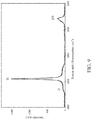
- FIG. 9 is a Raman spectrum of graphene powder repaired by wet chemical reaction.
- a method for repairing defects of graphene comprises steps of: introducing and letting a composite fluid having a reactive compound and a supercritical fluid impregnate a graphene powder therewith in a reactor containing the graphene powder and conforming to a supercritical fluid environment, wherein the reactive compound is a compound comprising an element of carbon, hydrogen, nitrogen, silicon or oxygen to passivate and repair the defects of the graphene powder; and separating the composite fluid and the graphene powder, and adsorbing the graphene powder retained in the composite fluid by molecular sieves.
- the graphene powder without any repair treatment, is a graphene having 30 or less layers, in particular, 20 or less layers, or 10 or less layers of graphene.
- the present disclosure utilizes the solubility and diffusion capacity of the supercritical fluid to make the supercritical fluid as a carrier or solvent of the reactive compound, and when the supercritical fluid penetrates into the layered structure of the graphene, the reactive compound simultaneously passivate and repair the position of grapheme defects. After the repair is completed, the solvent thereof can be completely separated. Since the solvent is a supercritical fluid, which is a dry repair process, it solves the problem that the solvent retains on the graphene and affects performance In addition, by the penetration of the supercritical fluid, the interlayer force between layers of the graphene can be effectively reduced.
- the graphene can be further delaminated to reduce a number of layers of the graphene, and the yield of graphene can be increased, and thus improve the performance of graphene powder.
- the supercritical fluid includes carbon dioxide, nitrogen, ethylene, propane, propylene or water.
- the supercritical fluid is carbon dioxide or water.
- the reactive compound is a compound including an element of carbon, hydrogen, nitrogen, silicon or oxygen, and the reactive compound can convert into an ionic state in the supercritical fluid environment, so as to react with dangling bonds in the graphene layers structure to form bonding having elements such as carbon, hydrogen, nitrogen, silicon or oxygen. It has purpose of passivating and modifying the surface functional groups of graphene to improve the processability of the back end application.
- the reactive compound selected as the solute may be in any form including a solid state, a liquid state or a gaseous state, wherein the reactive compound is particularly preferably in a gaseous state, and a substance which does not react with the supercritical fluid and a compound which has good solubility with the supercritical fluid is considered.
- the molecular weight of the reactive compound is preferably not more than 200 g/mol, and the adsorption between the reactive compound and the graphene dangling bond is also particularly important.
- the reactive compound comprises at least one selected from the group consisting of an organic silicon compound, an alkane, an alkene, an alkyne, an ammonia molecule and a derivative thereof, a hydroxide, and an organic base.
- the reactive compound comprises one selected from the group consisting of a silane compound, ethylene, methane, acetylene, ammonia, and water, wherein the silane compound comprises silicane, methylsilane or dimethylsilane.
- the reactive compound when the supercritical fluid is carbon dioxide, the reactive compound is water, ammonia or a silane compound.
- the method for repairing defects of graphene of the present disclosure further comprises steps of: prior to the introduction of the composite fluid having the reactive compound and the supercritical fluid, letting the fluid in the mixing tank to a preset temperature and pressure value in a supercritical state with a high pressure injection pump and a heater; then, injecting the reactive compound into the mixing tank for 5 to 10 minutes to dissolve the reactive compound in the supercritical fluid to form a composite fluid having the reactive compound and the supercritical fluid.
- the volume ratio of the reactive compound to the supercritical fluid is from 1:1 to 1:10.
- the volume ratio of the reactive compound to the supercritical fluid is from 1:1 to 1:2.
- FIG. 1 shows a graphene defect improving treatment apparatus of the present disclosure, and the apparatus includes a supercritical fluid storage tank 12 , a reactive compound storage tank 13 , a mixing tank 1 , a reactor 2 , and a pump 14 , respectively.
- the reactor 2 includes a container 22 and molecular sieves 21 , and the molecular sieves 21 can be formed to a layer.
- the operation process includes: placing the graphene powder 11 in the container 22 of high pressure resistant reactor 2 ; introducing a composite fluid, which is composed of a reactive compound and a supercritical fluid, sufficiently dissolving in the mixing tank 1 , after the reactor reaches a preset temperature and pressure value and conforms to the supercritical fluid environment; high pressure impregnating the graphene powder in the reactor 2 for a preset time to passivate and repair the defects of the graphene; finally, after completely separating the repaired graphene powder and the composite fluid with the pump 14 , returning the reactor to normal temperature and pressure, and retrieving the repaired graphene powder 11 ′.
- the molecular sieves 21 can adsorb the graphene powder retained in the composite fluid in the separation process.
- the graphene powder retained on the molecular sieves can also be used as a back end application.
- the reactor 2 is further provided with a stirring device 23 for mechanically or magnetically controlling the graphene powder 11 in the container 22 , so as to improve the impregnation efficiency of the composite fluid having the reactive compound and the supercritical fluid in the graphene powder.
- the graphene powder is directly placed in a reactor in which no container is disposed.
- the pressure of the reactor is from 50 to 100 standard atmospheric pressure, and the temperature of the reactor is from 25 to 400° C.
- the pressure of the reactor is 62 to 82 standard atmospheric pressures, and the temperature of the reactor is 28 to 40° C.
- the impregnation time is from 2 to 60 minutes.
- the impregnation time is from 10 to 30 minutes.
- the volume ratio of the graphene powder to the composite fluid in the reactor is from 0.01 to 1000.
- the supercritical fluid has the effect of extracting impurities such as sulfides, phosphides, iron-containing substances and the like in the graphene, after the impregnation treatment it requires complete separation of the composite fluid having the reactive compound and supercritical fluid to prevent the impurities retaining on the surface of the graphene, affecting the efficacy of the product.
- the pore size of the molecular sieve is mainly less than 50 micrometers, and the molecular sieve pore size is selected according to the back end application of the graphene: if the back end application is in the heat dissipation field, the molecular sieves is selected to have a pore size of 30 to 50 micrometers; while in the field of batteries, the molecular sieves are selected to have a pore size of less than 5 microns.
- the step of separating the composite fluid and the graphene powder comprises feeding the composite fluid into a separation tank independent of the reactor.
- the method for improving the graphene defect further comprises a step of preparing a graphite material into a graphene powder prior to or simultaneously with the introduction of the composite fluid.
- an embodiment of a method for repairing graphene defects is carried out by preparing a graphite material into a graphene powder in a preparation tank 20 independent of the reactor prior to the introduction of the composite fluid into the reactor 2 .
- the method for preparing graphene powder includes physical delamination, redox, frying or acetylene combustion; after being prepared, the graphene powder is transferred to a container 22 in the reactor 2 for high pressure impregnation treatment.
- the operation process comprises steps of: after preparing the graphite material 10 into the graphene powder in the preparation tank 20 , transferring the graphene powder to the container 22 of the reactor 2 ; when the reactor 2 reaches a preset temperature and pressure value, introducing a composite fluid, which is composed of a reactive compound and a supercritical fluid, sufficiently dissolving in the mixing tank 1 ; high pressure impregnating the graphene powder in the reactor 2 for a preset time to passivate and repair the defects of the graphene; finally, completely separating the composite fluid and the repaired graphene powder with the pump 14 , then returning the reactor to normal temperature and normal pressure, and retrieving the repaired graphene powder 11 ′.
- the molecular sieves 21 can adsorb the graphene powder retaining in the composite fluid in the separation process, and the graphene powder retained on the molecular sieves can also be used as a back end application.
- the graphite material is selected to have a particle size of less than 10 microns and a graphene content of greater than 95%.
- the method for repairing defects of graphene is to form a graphite material into graphene powder in the reactor when the composite fluid is introduced.
- an embodiment of preparing a graphene powder simultaneously with the introduction of the composite fluid wherein the reactor 2 is further provided with a grinding device 24 for preparing the graphene powder from the graphite material 10 by physical delamination.
- the graphene powder is simultaneously impregnated with a composite fluid having a reactive compound and a supercritical fluid at a preset temperature and pressure value in accordance with a supercritical fluid environment for a preset time to have effects of passivating and repairing its defects; after impregnating the graphene powder, stand still for at least 30 minutes to settle the repaired graphene powder in the grinding device 24 ; then, after completely separating the composite fluid and the repaired graphene powder, returning the tank to normal temperature and pressure, and retrieving the repaired graphene powder 11 ′, wherein the separation process further includes a step of introducing the composite fluid separated from the reactor into a separation tank 3 with the pump 14 , and the temperature and pressure of the separation tank 3 are also in a supercritical fluid environment to maintain the solvent
- the method for repairing defects of graphene of the present disclosure further comprises a step of after separating the composite fluid and the graphene powder, filtering the composite fluid having the reactive compound and the supercritical fluid through the filtration device 15 , and refluxing the composite fluid into the reactor 2 to recycle.
- the proportion of the refluxed composite fluid having the reactive compound and the supercritical fluid is 5 to 20%.
- the method for repairing defects of graphene of the present disclosure further comprises a step of connecting the reactor 2 and the separation tank 3 with a pipeline 25 having a diameter of less than 1 mm, and a composite fluid flow rate of the pipeline 25 is at least 400 m/s, which is different from the general connecting line with a diameter of at least 2 to 3 cm.
- the pressure difference between the reactor and the separation tank, and the impact force of the composite fluid in the narrow tube wall are used to prepare the repaired graphene powder 11 ′ having a diameter of less than 10 nm, or even the graphene powder having a particle diameter of less than 5 nm. It is a graphene quantum dot with a quantum confinement effect and a boundary effect, being used in solar photovoltaic devices, biomedicine, light-emitting diodes and sensors.
- the present disclosure further provides a graphene powder prepared by the above method, comprising: graphene having at least one chemical bond selected from the group consisting of N—H, C—H, C—O, C—N, and C—Si, and a number of the graphene layers is 20 or less; wherein the graphene powder has a 2D/G value of 0.3 to 0.6, and the graphene powder has a G/D value of 2.0 to 4.0, and the 2D/G value and the G/D value is obtained by a Raman spectroscopy.
- FIG. 7 shows a Raman spectrum of a graphene powder of an embodiment.
- Raman spectrometer uses a laser wavelength of 400 to 550 nm, and has a Raman shift 1351 wavenumber as the D band, a Raman shift 1587 wavenumber as the G band, and a Raman shift 2687 wavenumber as the 2D band.
- the 2D/G value and the G/D value are obtained from ratios of the intensity of each band.
- the 2D/G value indicates a number of layers of the graphene of the graphene powder, and the low 2D/G value means that the number of layers of the graphene is more.
- the 2D/G value of the graphene powder of the present disclosure indicates that the graphene powder has layers of less than 15; further, the G/D value represents the proportion of defects inside the graphene, and the high G/D value indicates the lower defect ratio of the graphene.
- the graphene powder prepared by the method for repairing defects of graphene according to the present disclosure has a resistance of 1.0 to 10.0 ⁇ 10 ⁇ 6 ohm-cm and a thermal conductivity of 1,500 to 4,000 W/m ⁇ K, and can greatly improve the conductivity and thermal conductivity of the graphene powder.
- the graphene content of the graphene powder repaired by the above method can be increased from less than 80.0% to 80.0% to 99.95%.
- the graphene powder provided by the above method can be applied to the field of coatings and films, and the repaired graphene powder has elements of carbon, hydrogen, nitrogen, silicon or oxygen which contribute to the dispersion of graphene in polar or non-polar solvents.
- the stability of the coating and the film formulation can be improved.
- the solvent compatible with the repaired graphene powder includes: water, formamide, trifluoroacetic acid, dimethyl sulfoxide, acetonitrile, dimethylformamide, hexamethylphosphoramide, methanol, ethanol, acetic acid, isopropanol, pyridine, tetramethylethylenediamine, acetone, triethylamine, n-butanol, dioxane, tetrahydrofuran, methyl formate, tributylamine, butanone, ethyl acetate, trioctylamine, dimethyl carbonate, diethyl ether, diisopropyl ether, n-butyl ether, trichloroethylene, diphenyl ether, dichloromethane, chloroform, dichloroethane, toluene, benzene, carbon tetrachloride, carbon disulfide, cyclohexane, hexane or
- the ratio of defects of graphene can be effectively reduced, the composition content of graphene can be effectively increased, and the number of layers of graphene can be effectively reduced. Also, the graphene powder with good thermal conductivity and electrical conductivity can be provided. Therefore, the present disclosure has the advantages of simple process and low process cost without any pollution problem, and has wide application prospects.
- a mixing fluid containing water as a reactive compound and supercritical carbon dioxide as a solvent was disposed in the mixing tank, and a volume ratio of water to carbon dioxide was 1:1.
- the carbon dioxide was injected into the mixing tank by a high pressure injection pump, and the temperature reaches 31° C. and the pressure reaches 80 standard atmospheric pressure inside the mixing tank by a heater, so that the carbon dioxide fluid was in a supercritical state, and then the water was injected into the mixing tank to mix for 5 to 10 minutes to fully dissolve the water and the supercritical carbon dioxide to form a composite fluid.
- the graphene powder to be treated was placed in a container in the reactor, wherein the graphene powder has a graphene layer number of about 15 to 20. After the temperature reaches 31° C., and the pressure reaches 80 standard atmospheric pressure and conforming to the supercritical fluid environment in the reactor, introducing the composite fluid sufficiently dissolved in the mixing tank, and the volume ratio of the graphene powder to the composite fluid in the reactor was 100. High pressure impregnating the graphene powder in the reactor for about 30 minutes to passivate and repair of the defects of the graphene. Finally, completely separating the composite fluid and the repaired graphene powder by the pump and the molecular sieves simultaneously adsorbs the graphene powder retained in the composite fluid.
- the Raman spectrometer uses a laser wavelength of 532 nm, and has a Raman shift of 1351 wavenumber as a D band, a Raman shift of 1587 wavenumber as a G band, and a Raman shift of 2687 wavenumber as a 2D band.
- the 2D/G value and the G/D value were ratios obtained by the intensity of each frequency band, wherein the 2D/G value represents the number of graphene layers of the graphene powder, and the low 2D/G value means that the graphene layer number was more; the G/D value indicates the defect ratio of graphene, and the higher G/D value means the lower the defect ratio of graphene.
- Example 1 Except that the graphene powder to be treated in Example 1 was replaced with graphene powder containing about 6 to 10 layers of graphene, the remaining graphene defect improving method and test method were the same as those in Example 1.
- the graphene powder prepared by physical delamination and unrepaired graphene powder was subjected to Raman spectrometer analysis, and the test method was the same as that in Example 1, and the analysis results were as shown in FIG. 8 and Table 1.
- a graphene powder was repaired by a wet chemical reaction method, wherein the graphene powder to be treated contains about 10 to 15 layers of graphene; and then the graphene powder repaired by the wet chemically was subjected to Raman spectrometry analysis.
- the test method was the same as that in Example 1, and the analysis results were shown in FIG. 9 and Table 1.
- the graphene powder prepared by the method for repairing graphene defects of the present disclosure significantly increases the 2D/G value and the G/D value, and indeed brings about the effect of reducing the number of layers of the graphene and reducing the defect ratio of the graphene.
- the graphene powder produced by the present disclosure cannot provide a graphene having a very low defect ratio such as a wet chemical reaction method.
- the graphene powder prepared by the disclosure can effectively reduce the number of graphene layers, and can also improve the electrical, chemical and physical properties of the graphene product accordingly.
- the method for repairing defects of graphene of the present disclosure can effectively reduce the defect ratio of graphene, increase the composition content of graphene, and reduce the number of layers of graphene, and can provide graphene powder with good thermal conductivity and electrical conductivity.
- the present disclosure has the advantages of simple process and low process cost without any pollution problem, and has wide application prospects.
Landscapes
- Chemical & Material Sciences (AREA)
- Organic Chemistry (AREA)
- Engineering & Computer Science (AREA)
- Materials Engineering (AREA)
- Nanotechnology (AREA)
- Inorganic Chemistry (AREA)
- Carbon And Carbon Compounds (AREA)
- Battery Electrode And Active Subsutance (AREA)
Abstract
Description
| Manufacturer and model | HORIBA HR800 |
| Laser source | 633 nm |
| Objective lens | IR lens (50 times) working |
| range (600 to 1300 nm) | |
| Detector | CCD working range (200 to 1050 nm) |
| resolution (1024*512 pixels) | |
| Grating | 1800 working range (300 to 700 nm) |
| Filter | Laser POWER attenuation |
| (D0.3, D0.6, D1, D2, D03, D4) | |
| TABLE 1 | |||||
| Comparative | Comparative | ||||
| Example 1 | Example 2 | Example 1 | Example 2 | ||
| Number of layers | 15-20 | 6-10 | N/A | 10-15 |
| of graphene to | ||||
| be treated | ||||
| 2D/G value | 0.44 | 0.37 | 0.31 | 0.13 |
| G/D value | 2.21 | 3.03 | 1.34 | 25.42 |
Claims (18)
Applications Claiming Priority (2)
| Application Number | Priority Date | Filing Date | Title |
|---|---|---|---|
| TW107116597 | 2018-05-16 | ||
| TW107116597A TWI665161B (en) | 2018-05-16 | 2018-05-16 | Graphene powder and method for repairing defect of graphene |
Publications (2)
| Publication Number | Publication Date |
|---|---|
| US20190352187A1 US20190352187A1 (en) | 2019-11-21 |
| US11142460B2 true US11142460B2 (en) | 2021-10-12 |
Family
ID=66554283
Family Applications (1)
| Application Number | Title | Priority Date | Filing Date |
|---|---|---|---|
| US16/412,582 Active 2040-04-10 US11142460B2 (en) | 2018-05-16 | 2019-05-15 | Graphene powder and method for repairing defect of graphene |
Country Status (4)
| Country | Link |
|---|---|
| US (1) | US11142460B2 (en) |
| EP (1) | EP3569572A1 (en) |
| JP (1) | JP2019199398A (en) |
| TW (1) | TWI665161B (en) |
Families Citing this family (7)
| Publication number | Priority date | Publication date | Assignee | Title |
|---|---|---|---|---|
| CN110550625B (en) * | 2019-10-24 | 2020-12-25 | 宁波石墨烯创新中心有限公司 | Graphene film repairing solution, repairing method and repairing film |
| CN113735133B (en) * | 2020-05-29 | 2023-03-24 | 中国石油化工股份有限公司 | Modified nano carbon material and preparation method and application thereof |
| CN113104843B (en) * | 2021-04-20 | 2022-10-11 | 雷索新材料(苏州)有限公司 | Graphene and preparation method thereof |
| JP7822982B2 (en) * | 2023-02-15 | 2026-03-03 | 日清紡ホールディングス株式会社 | Carbon supports, metal-supported catalysts, electrodes and batteries |
| JP2024115732A (en) * | 2023-02-15 | 2024-08-27 | 日清紡ホールディングス株式会社 | Carbon supports, metal-supported catalysts, electrodes and batteries |
| JP2024115734A (en) * | 2023-02-15 | 2024-08-27 | 日清紡ホールディングス株式会社 | Carbon supports, metal-supported catalysts, electrodes and fuel cells |
| CN120553729B (en) * | 2025-07-31 | 2025-10-10 | 洛阳新翎微纳新材料有限公司 | Preparation method and application of X-type oxygen-generating molecular sieve |
Citations (2)
| Publication number | Priority date | Publication date | Assignee | Title |
|---|---|---|---|---|
| US20160176714A1 (en) * | 2013-08-21 | 2016-06-23 | Hanwha Chemical Corporation | Method and apparatus for modifying graphene |
| US20160272583A1 (en) * | 2013-11-19 | 2016-09-22 | Hanwha Chemical Corporation | Method and apparatus for preparing functionalized graphene and functionalized graphene |
Family Cites Families (3)
| Publication number | Priority date | Publication date | Assignee | Title |
|---|---|---|---|---|
| CN103896254A (en) * | 2012-12-26 | 2014-07-02 | 海洋王照明科技股份有限公司 | Preparation method of nitrogen-doped graphene |
| EP3085666B1 (en) * | 2014-01-17 | 2018-03-21 | Shenzhen Cantonnet Energy Services Co. , Ltd. | Method for repairing reduced graphene oxide |
| CN104777207B (en) * | 2015-04-10 | 2017-11-28 | 武汉大学 | A kind of three-dimensional nitrogen-doped graphene composite and its preparation method and application |
-
2018
- 2018-05-16 TW TW107116597A patent/TWI665161B/en active
-
2019
- 2019-05-15 JP JP2019092394A patent/JP2019199398A/en active Pending
- 2019-05-15 EP EP19174674.2A patent/EP3569572A1/en not_active Withdrawn
- 2019-05-15 US US16/412,582 patent/US11142460B2/en active Active
Patent Citations (2)
| Publication number | Priority date | Publication date | Assignee | Title |
|---|---|---|---|---|
| US20160176714A1 (en) * | 2013-08-21 | 2016-06-23 | Hanwha Chemical Corporation | Method and apparatus for modifying graphene |
| US20160272583A1 (en) * | 2013-11-19 | 2016-09-22 | Hanwha Chemical Corporation | Method and apparatus for preparing functionalized graphene and functionalized graphene |
Non-Patent Citations (3)
| Title |
|---|
| Qian, et al., Facile Preparation of Nitrogen-Doped Few-Layer Graphene via Supercritical Reaction, ACS Appl. Mater. Interfaces 2011; 3: 2259-2264 (Year: 2011). * |
| Sasikala, et al., Simultaneous Graphite Exfoliation and N Doping in Supercritical Ammonia, ACS Appl. Mater. Interfaces 2016; 8: 30964-30971 (Year: 2016). * |
| Zhou, et al., One-pot synthesis of B-doped three-dimensional reduced graphene oxide via supercritical fluid for oxygen reduction reaction, Green Chem 2015; 17: 3552-3560 (Year: 2015). * |
Also Published As
| Publication number | Publication date |
|---|---|
| US20190352187A1 (en) | 2019-11-21 |
| EP3569572A1 (en) | 2019-11-20 |
| TWI665161B (en) | 2019-07-11 |
| TW201946872A (en) | 2019-12-16 |
| JP2019199398A (en) | 2019-11-21 |
Similar Documents
| Publication | Publication Date | Title |
|---|---|---|
| US11142460B2 (en) | Graphene powder and method for repairing defect of graphene | |
| Zhan et al. | Mixed-dimensional assembly strategy to construct reduced graphene oxide/carbon foams heterostructures for microwave absorption, anti-corrosion and thermal insulation | |
| Wu et al. | Robust and stable Cu nanowire@ graphene core–shell aerogels for ultraeffective electromagnetic interference shielding | |
| Zhang et al. | An air‐stable densely packed phosphorene–graphene composite toward advanced lithium storage properties | |
| Ye et al. | A high performance flexible cotton-based supercapacitor prepared by in-situ polyaniline and MXene coating | |
| RU2578664C2 (en) | Transparent conducting large-area coatings, including doped carbon nanotubes and nano-wire composite materials, and methods for obtaining thereof | |
| CN104995332B (en) | Graphene-based electrodes and their applications | |
| US10068716B2 (en) | Graphene-ionic liquid composites | |
| Cho et al. | High-voltage and green-emitting perovskite quantum dot solar cells via solvent miscibility-induced solid-state ligand exchange | |
| Chen et al. | An efficient trap passivator for perovskite solar cells: poly (propylene glycol) bis (2-aminopropyl ether) | |
| Tang et al. | In Situ Growth Mechanism for High‐Quality Hybrid Perovskite Single‐Crystal Thin Films with High Area to Thickness Ratio: Looking for the Sweet Spot | |
| Mishra et al. | Plasma enhanced synthesis of N doped vertically aligned carbon nanofibers on 3D graphene | |
| GakáKim | One-step synthesis of carbon nanosheets converted from a polycyclic compound and their direct use as transparent electrodes of ITO-free organic solar cells | |
| Feng et al. | N‐Enriched Porous Carbon/SiO2 Composites Derived from Biomass Rice Husks for Boosting Li‐Ion Storage: Insight into the Effect of N‐Doping | |
| Gao et al. | Three-dimensional perovskite modulated by two-dimensional homologue as light-absorbing materials for efficient solar cells | |
| Wang et al. | 3D cathodes of cupric oxide nanosheets coated onto macroporous antimony‐doped tin oxide for photoelectrochemical water splitting | |
| Acharya et al. | Fabrication of Multiwalled Carbon Nanotubes (MWCNT) and Reduced Graphene Oxide (rGO)‐based thermoplastic polyurethane and polypyrrole nanocomposites for electromagnetic wave absorption application with a low reflection | |
| Zhang et al. | Ti3C2Tx/g‐C3N4/CNTs ternary hybrid film for all‐solid flexible supercapacitors and superb bandwidth electromagnetic wave absorber | |
| Ahmad et al. | Newly formed carbon nanotubes as counter electrodes for wire-shaped dye-sensitized solar cells (WDSSCs) | |
| Khoa et al. | Facile fabrication of thermally reduced graphene oxide–platinum nanohybrids and their application in catalytic reduction and dye-sensitized solar cells | |
| Yang et al. | Environmentally friendly flexible perovskite solar cells with promoted thermal diffusivity and suppressed lead leakage | |
| Quaranta et al. | Biochar-polymer composites and thin films: Characterizations and applications | |
| Wuttke et al. | Direct Metal‐Free Chemical Vapor Deposition of Graphene Films on Insulating Substrates for Micro‐Supercapacitors with High Volumetric Capacitance | |
| Li et al. | Mechanical Compression‐Enabled Carbon‐Based Perovskite Solar Cells with Enhanced Efficiency and Stability | |
| Chandel et al. | Improvement of interfacial contact for efficient PCBM/MAPbI3 planar heterojunction solar cells with a binary antisolvent mixture treatment |
Legal Events
| Date | Code | Title | Description |
|---|---|---|---|
| AS | Assignment |
Owner name: XSENSE TECHNOLOGY CORPORATION, VIRGIN ISLANDS, BRITISH Free format text: ASSIGNMENT OF ASSIGNORS INTEREST;ASSIGNORS:LI, ZHEN-YU;TU, PO-MIN;CHEN, CHIA-JUNG;AND OTHERS;SIGNING DATES FROM 20190508 TO 20190509;REEL/FRAME:049182/0036 Owner name: XSENSE TECHNOLOGY CORPORATION, VIRGIN ISLANDS, BRI Free format text: ASSIGNMENT OF ASSIGNORS INTEREST;ASSIGNORS:LI, ZHEN-YU;TU, PO-MIN;CHEN, CHIA-JUNG;AND OTHERS;SIGNING DATES FROM 20190508 TO 20190509;REEL/FRAME:049182/0036 |
|
| FEPP | Fee payment procedure |
Free format text: ENTITY STATUS SET TO UNDISCOUNTED (ORIGINAL EVENT CODE: BIG.); ENTITY STATUS OF PATENT OWNER: SMALL ENTITY |
|
| FEPP | Fee payment procedure |
Free format text: ENTITY STATUS SET TO SMALL (ORIGINAL EVENT CODE: SMAL); ENTITY STATUS OF PATENT OWNER: SMALL ENTITY |
|
| STPP | Information on status: patent application and granting procedure in general |
Free format text: APPLICATION DISPATCHED FROM PREEXAM, NOT YET DOCKETED |
|
| STPP | Information on status: patent application and granting procedure in general |
Free format text: DOCKETED NEW CASE - READY FOR EXAMINATION |
|
| AS | Assignment |
Owner name: XSENSE TECHNOLOGY CORPORATION, TAIWAN Free format text: ASSIGNMENT OF ASSIGNORS INTEREST;ASSIGNOR:XSENSE TECHNOLOGY CORPORATION;REEL/FRAME:056165/0731 Effective date: 20210422 |
|
| STPP | Information on status: patent application and granting procedure in general |
Free format text: NOTICE OF ALLOWANCE MAILED -- APPLICATION RECEIVED IN OFFICE OF PUBLICATIONS |
|
| STPP | Information on status: patent application and granting procedure in general |
Free format text: PUBLICATIONS -- ISSUE FEE PAYMENT VERIFIED |
|
| STCF | Information on status: patent grant |
Free format text: PATENTED CASE |
|
| MAFP | Maintenance fee payment |
Free format text: PAYMENT OF MAINTENANCE FEE, 4TH YR, SMALL ENTITY (ORIGINAL EVENT CODE: M2551); ENTITY STATUS OF PATENT OWNER: SMALL ENTITY Year of fee payment: 4 |