US11136284B2 - Process for hydrogenation of phthalate compound - Google Patents
Process for hydrogenation of phthalate compound Download PDFInfo
- Publication number
- US11136284B2 US11136284B2 US16/763,665 US201816763665A US11136284B2 US 11136284 B2 US11136284 B2 US 11136284B2 US 201816763665 A US201816763665 A US 201816763665A US 11136284 B2 US11136284 B2 US 11136284B2
- Authority
- US
- United States
- Prior art keywords
- hydrogenation
- raw material
- phthalate
- phthalate compound
- reactor
- Prior art date
- Legal status (The legal status is an assumption and is not a legal conclusion. Google has not performed a legal analysis and makes no representation as to the accuracy of the status listed.)
- Active
Links
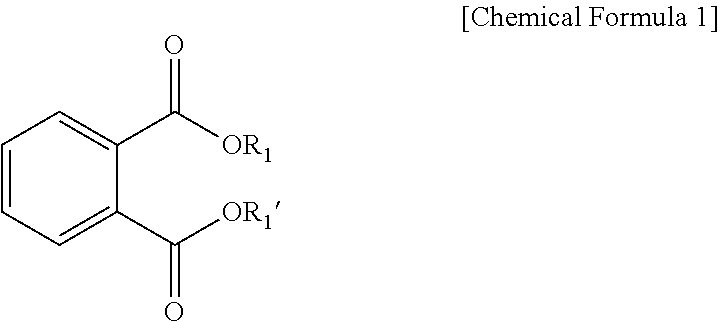
- 0 [1*]OC(=O)C1=CC=CC=C1C(C)=O Chemical compound [1*]OC(=O)C1=CC=CC=C1C(C)=O 0.000 description 3
Images

Classifications
-
- C—CHEMISTRY; METALLURGY
- C07—ORGANIC CHEMISTRY
- C07C—ACYCLIC OR CARBOCYCLIC COMPOUNDS
- C07C51/00—Preparation of carboxylic acids or their salts, halides or anhydrides
- C07C51/347—Preparation of carboxylic acids or their salts, halides or anhydrides by reactions not involving formation of carboxyl groups
- C07C51/36—Preparation of carboxylic acids or their salts, halides or anhydrides by reactions not involving formation of carboxyl groups by hydrogenation of carbon-to-carbon unsaturated bonds
-
- C—CHEMISTRY; METALLURGY
- C07—ORGANIC CHEMISTRY
- C07C—ACYCLIC OR CARBOCYCLIC COMPOUNDS
- C07C67/00—Preparation of carboxylic acid esters
- C07C67/30—Preparation of carboxylic acid esters by modifying the acid moiety of the ester, such modification not being an introduction of an ester group
- C07C67/303—Preparation of carboxylic acid esters by modifying the acid moiety of the ester, such modification not being an introduction of an ester group by hydrogenation of unsaturated carbon-to-carbon bonds
-
- B—PERFORMING OPERATIONS; TRANSPORTING
- B01—PHYSICAL OR CHEMICAL PROCESSES OR APPARATUS IN GENERAL
- B01J—CHEMICAL OR PHYSICAL PROCESSES, e.g. CATALYSIS OR COLLOID CHEMISTRY; THEIR RELEVANT APPARATUS
- B01J23/00—Catalysts comprising metals or metal oxides or hydroxides, not provided for in group B01J21/00
- B01J23/38—Catalysts comprising metals or metal oxides or hydroxides, not provided for in group B01J21/00 of noble metals
- B01J23/40—Catalysts comprising metals or metal oxides or hydroxides, not provided for in group B01J21/00 of noble metals of the platinum group metals
- B01J23/46—Ruthenium, rhodium, osmium or iridium
- B01J23/462—Ruthenium
-
- C—CHEMISTRY; METALLURGY
- C07—ORGANIC CHEMISTRY
- C07C—ACYCLIC OR CARBOCYCLIC COMPOUNDS
- C07C69/00—Esters of carboxylic acids; Esters of carbonic or haloformic acids
- C07C69/74—Esters of carboxylic acids having an esterified carboxyl group bound to a carbon atom of a ring other than a six-membered aromatic ring
- C07C69/75—Esters of carboxylic acids having an esterified carboxyl group bound to a carbon atom of a ring other than a six-membered aromatic ring of acids with a six-membered ring
-
- C—CHEMISTRY; METALLURGY
- C08—ORGANIC MACROMOLECULAR COMPOUNDS; THEIR PREPARATION OR CHEMICAL WORKING-UP; COMPOSITIONS BASED THEREON
- C08K—Use of inorganic or non-macromolecular organic substances as compounding ingredients
- C08K5/00—Use of organic ingredients
- C08K5/04—Oxygen-containing compounds
- C08K5/10—Esters; Ether-esters
- C08K5/101—Esters; Ether-esters of monocarboxylic acids
-
- C—CHEMISTRY; METALLURGY
- C08—ORGANIC MACROMOLECULAR COMPOUNDS; THEIR PREPARATION OR CHEMICAL WORKING-UP; COMPOSITIONS BASED THEREON
- C08K—Use of inorganic or non-macromolecular organic substances as compounding ingredients
- C08K5/00—Use of organic ingredients
- C08K5/04—Oxygen-containing compounds
- C08K5/10—Esters; Ether-esters
- C08K5/12—Esters; Ether-esters of cyclic polycarboxylic acids
-
- C—CHEMISTRY; METALLURGY
- C08—ORGANIC MACROMOLECULAR COMPOUNDS; THEIR PREPARATION OR CHEMICAL WORKING-UP; COMPOSITIONS BASED THEREON
- C08L—COMPOSITIONS OF MACROMOLECULAR COMPOUNDS
- C08L101/00—Compositions of unspecified macromolecular compounds
-
- C—CHEMISTRY; METALLURGY
- C07—ORGANIC CHEMISTRY
- C07C—ACYCLIC OR CARBOCYCLIC COMPOUNDS
- C07C2601/00—Systems containing only non-condensed rings
- C07C2601/12—Systems containing only non-condensed rings with a six-membered ring
- C07C2601/14—The ring being saturated
-
- C—CHEMISTRY; METALLURGY
- C08—ORGANIC MACROMOLECULAR COMPOUNDS; THEIR PREPARATION OR CHEMICAL WORKING-UP; COMPOSITIONS BASED THEREON
- C08K—Use of inorganic or non-macromolecular organic substances as compounding ingredients
- C08K5/00—Use of organic ingredients
- C08K5/0008—Organic ingredients according to more than one of the "one dot" groups of C08K5/01 - C08K5/59
- C08K5/0016—Plasticisers
Definitions
- the present invention relates to a hydrogenation method of a phthalate compound.
- the present invention relates to a hydrogenation method of a phthalate compound, the method capable of increasing the content of a cis-isomer in a hydrogenation product by increasing stereoselectivity of the reaction.
- Phthalate-based compounds are materials widely used as plasticizers for plastics, particularly, polyvinyl chloride (PVC).
- PVC polyvinyl chloride
- phthalate-based compounds may be used in a wide variety of applications such as electrical and electronic products, medicines, paint pigments, lubricants, binders, surfactants, adhesives, tiles, food containers, package materials, etc.
- phthalate-based plasticizers some products such as di(2-ethylhexyl) phthalate (DEHP), butyl benzyl phthalate (BBP), and di-n-butyl phthalate (DBP) are suspected to be environmental hormones, that is, endocrine disruptors inhibiting or disrupting hormone actions in the human body, such that there is a trend toward regulation on these products.
- DEHP di(2-ethylhexyl) phthalate
- BBP butyl benzyl phthalate
- DBP di-n-butyl phthalate
- Korean Patent No. 1556340 discloses a hydrogenation method of reacting a phthalate compound with hydrogen in the presence of a hydrogenation catalyst and an alcohol, whereby performance and life-time of the catalyst are improved.
- the hydrogenation reaction entails side reactions.
- the manufactured product becomes acidic. If an acid value of the product exceeds a certain level, an odor is produced and purity decreases, resulting in generation of quality problems as a plasticizer.
- the by-products also lower activity of the hydrogenation catalyst, and accordingly, there is a need for a novel hydrogenation method of a phthalate compound capable of suppressing generation of by-products in order to improve productivity and economic efficiency of the process and to improve quality of the product.
- Patent Document 1 Korean Patent No. 1556340, “Hydrogenation method of phthalate compound”
- the present invention has been made to solve the above problems, and an object of the present invention is to provide a hydrogenation method of a phthalate compound, the method being capable of increasing the content of a cis-isomer in a hydrogenation product.
- a hydrogenation method of a phthalate compound including the steps of introducing a gas-phase raw material including hydrogen and a liquid-phase raw material including the phthalate compound into a reactor and allowing a reaction of the hydrogen and the phthalate compound in the presence of a hydrogenation catalyst,
- Reynold' s number of the liquid-phase raw material is 1 to 100, and the content of a cis isomer in a hydrogenation product separated after the reaction is 70% or more.
- the amount of hydrogen introduced into the reactor may be 3 mol to 300 mol with respect to 1 mol of the phthalate compound.
- the phthalate compound may be one or more selected from the group consisting of phthalate, terephthalate, isophthalate, and carboxylic acid compounds thereof.
- the gas-phase raw material may be fed into an upper portion or a lower portion of the reactor, and the liquid-phase raw material may be fed into an upper portion of the reactor.
- the active ingredient of the hydrogenation catalyst may be one or more selected from the group consisting of ruthenium (Ru), rhodium (Rh), palladium (Pd), and platinum (Pt).
- the hydrogenation catalyst may include 3% by weight or less of the catalyst active ingredient with respect to 100% by weight of a support.
- the hydrogenated phthalate or terephthalate compound may be used as a plasticizer.
- a resin composition including the plasticizer; and a resin selected from ethylene vinyl acetate, polyethylene, polypropylene, polyvinyl chloride, polystyrene, polyurethane, polybutadiene, silicone, thermoplastic elastomers, and copolymers thereof.
- stereoselectivity of the hydrogenation reaction may be increased, and thus the content of a cis isomer in a product may be increased.
- quality of the hydrogenation product as a plasticizer may be improved.
- the drawing is a schematic illustration of a hydrogenation reaction apparatus used in a hydrogenation method of the present invention.
- the present invention may be variously modified and have various embodiments, and specific embodiments will be exemplified and described in detail. However, the present invention is not limited to the exemplary embodiments described herein, but all of the modifications, equivalents, and substitutions within the spirit and scope of the present invention are also included in the present invention. Further, when it is determined that the detailed description of the known art related to the present invention may obscure the gist of the present invention, the detailed description thereof will be omitted.
- first, second, or the like may be used to describe various components. However, these components are not limited to these terms. The terms are only used to differentiate one component from other components.
- the ‘first’ component may be named the ‘second’ component and the ‘second’ component may also be similarly named the ‘first’ component, without departing from the scope of the present invention.
- a hydrogenation method of a phthalate compound including the steps of introducing a gas-phase raw material including hydrogen and a liquid-phase raw material including the phthalate compound into a reactor and allowing a reaction of the hydrogen and the phthalate compound in the presence of a hydrogenation catalyst,
- Reynold' s number of the liquid-phase raw material is 1 to 100, and the content of a cis isomer in a hydrogenation product separated after the reaction is 70% or more.
- stereoselectivity of the hydrogenation reaction of the phthalate compound may be increased by operating while controlling the Reynold' s number of the liquid-phase raw material within a specific numerical range.
- the hydrogenation product has a high cis isomer content of 70% or more, and such the hydrogenation product may exhibit excellent plasticizing efficiency for PVC resins, a high absorption rate, and product transparency after solidification, and has excellent properties as a plastic plasticizer due to low leaching from the product surface even after long-term use thereof. Therefore, the present invention may be applied to the production of a high-quality plasticizer.
- a reaction target of the hydrogenation method of the present invention is a phthalate compound, and hydrogen is added to a benzene ring of the phthalate compound by the hydrogenation, thereby being converted into a cyclohexane dicarboxylate compound corresponding to the phthalate compound.
- the phthalate compound may be one or more selected from phthalate, terephthalate, isophthalate, and a carboxylic acid compound corresponding thereto.
- the phthalate compound may be represented by the following Chemical Formula 1:
- R1 and R1′ are each independently the same as or different from each other, and are hydrogen, or a straight- or branched-chain alkyl group having 1 to 20 carbon atoms, preferably 4 to 20 carbon atoms, more preferably 5 to 20 carbon atoms, and most preferably 5 to 10 carbon atoms.
- the phthalate compound may include dibutyl phthalate (DBP), dihexyl phthalate (DHP), dioctyl phthalate (DOP), di-n-octyl phthalate (DnOP), diisononyl phthalate, diisodecyl phthalate (DIDP), etc., but are not limited thereto. These compounds may be used alone or in a mixture.
- the terephthalate compound may be represented by the following Chemical Formula 2:
- R2 and R2′ are each independently the same as or different from each other, and are hydrogen, or a straight- or branched-chain alkyl group having 1 to 20 carbon atoms, preferably 4 to 20 carbon atoms, more preferably 5 to 20 carbon atoms, and most preferably 5 to 10 carbon atoms.
- terephthalate compound may include dibutyl terephthalate (DBTP), dioctyl terephthalate (DOTP), diisononyl terephthalate (DINTP), or diisodecyl terephthalate (DIDTP), but are not limited thereto. These compounds may be used alone or in a mixture.
- DBTP dibutyl terephthalate
- DDP dioctyl terephthalate
- DINTP diisononyl terephthalate
- IDTP diisodecyl terephthalate
- the isophthalate compound may be represented by the following Chemical Formula 3:
- R3 and R3′ are each independently the same as or different from each other, and are hydrogen, or a straight- or branched-chain alkyl group having 1 to 20 carbon atoms, preferably 4 to 20 carbon atoms, more preferably 5 to 20 carbon atoms, and most preferably 5 to 10 carbon atoms.
- isophthalate compound may include dibutyl isophthalate (DBIP), dioctyl isophthalate (DOIP), diisononyl isophthalate (DINIP), diisodecyl isophthalate (DIDIP), etc., but are not limited thereto. These compounds may be used alone or in a mixture.
- DBIP dibutyl isophthalate
- DOIP dioctyl isophthalate
- DIIP diisononyl isophthalate
- IDIP diisodecyl isophthalate
- dioctyl terephthalate may be used as the phthalate compound.
- Purity of the phthalate compound may be about 99% or more, preferably about 99.5% or more, and more preferably about 98% or more, but is not limited thereto. Any phthalate compound with commercially available quality and purity may be used.
- the hydrogenation process of the phthalate compound may be carried out in a liquid phase or in a gas phase.
- the phthalate compound is included in the liquid-phase raw material and hydrogen is included in the gas-phase raw material, which are introduced into a reactor filled with a hydrogenation catalyst.
- the Reynold's number of the liquid-phase raw material introduced into the reactor may be 1 to 100.
- N RE The Reynold's number (N RE ) is a ratio of “inertial forces” to “viscous forces” of a fluid, and represented by the following Equation 1:
- the Reynold's number is a value used to determine whether a flow in a pipe is a laminar flow or a turbulent flow. When the Reynold's number is about 2000 or less, it is determined as the laminar flow, and when the Reynold' s number is more than 2000, it is determined as the turbulent flow. In other words, the lower Reynold's number of the fluid indicates that the flow is steady without turbulence.
- the Reynold's number of the liquid-phase raw material may be 1 or more, or 5 or more, or 10 or more, or 20 or more, and 100 or less, or 90 or less, or 80 or less, or 50 or less, or 30 or less.
- the Reynold' s number of the liquid-phase raw material is as excessively low as less than 1, axial linear velocity is too low or viscosity is too high, and thus distribution of the liquid phase may not normally occur.
- the Reynold' s number is as excessively high as more than 100, the turbulent flow that randomly moves becomes strong, and with departing from formation of a stable trickle flow, reactivity may be deteriorated. In this point of view, it is preferable that the Reynold's number of the liquid-phase raw material is within the above-described range.
- the present inventors While studying a method of increasing the content of a cis isomer in the product during the hydrogenation process of a phthalate compound, the present inventors found that the Reynold's number of the liquid-phase raw material affects stereoselectivity of the reaction. In other words, as the Reynold' s number of the liquid-phase raw material is lower, the content of the cis isomer becomes higher, which is likely to be attributed to an increased rate of concurrent addition of hydrogen to the benzene ring of the phthalate compound due to improved flowability of the raw material on the surface of the catalyst.
- the temperature and pressure conditions of the gas-phase raw material and the liquid-phase raw material introduced into the reactor are not particularly limited.
- the raw materials to be introduced may have generally the same pressure as the hydrogenation conditions, and with regard to the temperature condition, the raw materials may have preferably the same temperature as the hydrogenation conditions.
- the raw materials having a lower temperature than the hydrogenation conditions may be introduced into the reactor in order to control heat generation in the reactor.
- a method of controlling the Reynold's number of the liquid-phase raw material introduced into the reactor is not particularly limited.
- the Reynold's number of the liquid-phase raw material may be controlled by the temperature, the catalyst size, the reactor diameter, the amount of the liquid-phase raw material passing through the cross-sectional area, etc.
- the Reynold's number may be controlled by changing the reactor diameter, flow rate, etc., after determining the catalyst size, but the present invention is not limited thereto.
- the amount of hydrogen introduced into the reactor may be 3 mol or more, or 4 mol or more, or 7 mol or more, and 300 mol or less, or 100 mol or less, or 50 mol or less, or 30 mol or less with respect to 1 mol of the phthalate compound. If the amount of hydrogen is as too small as less than 3 mol with respect to 1 mol of the phthalate compound, the reactivity decreases to a level lower than the equivalent ratio. If the amount is as too large as more than 300 mol, the size of the reactor, back-end gas phase process facility, and instrumentation becomes excessively large, and thus the facility costs may increase. In this point of view, it is preferable that the amount of hydrogen is within the above-described range.
- the hydrogenation catalyst may include a transition metal as an active ingredient, and may preferably include one or more selected from the group consisting of ruthenium (Ru), palladium (Pd), rhodium (Rh), and platinum (Pt).
- ruthenium Ru
- Pd palladium
- Rh rhodium
- Pt platinum
- the hydrogenation catalyst may be used after being supported on a support.
- a support any support known in the art may be used without limitation. Specifically, a support such as zirconia (ZrO 2 ), titania (TiO 2 ), alumina (Al 2 O 3 ), silica (SiO 2 ), etc. may be used.
- the amount of the active ingredient of the hydrogenation catalyst may be preferably 3% by weight or less, 2% by weight or less, or 1% by weight or less, and 0.1% by weight or more, or 0.3% by weight or more with respect to 100% by weight of the support. If the amount of the hydrogenation catalyst is more than 3% by weight with respect to 100% by weight of the support, the reaction rapidly occurs on the catalyst surface, and during this process, side reactions also increase, which may cause a problem that the amount of by-products rapidly increases. If the amount is less than 0.1% by weight, the yield of the hydrogenation reaction may decrease due to the insufficient amount of the catalyst. Therefore, the above range is preferred.
- the hydrogenation reaction conditions are not particularly limited.
- a reaction pressure may be, for example, 50 bar or more, or 100 bar or more, or 130 bar or more, and 200 bar or less, or 180 bar or less, or 150 bar or less. If the reaction pressure is less than 50 bar, there are various problems in that the solubility of hydrogen in the liquid is too low, and thus reactivity may decrease. If the reaction pressure exceeds 200 bar, the size of the facility may be increased due to high pressure, and thus there is a problem in that the facility costs may be increased. Therefore, the above range is preferred.
- the reaction temperature may be 100° C. or higher, or 120° C. or higher, or 130° C. or higher, and 300° C. or lower, or 250° C. or lower, or 200° C. or lower. If the reaction temperature is lower than 100° C., there is a problem in that the reactivity may deteriorate due to the low temperature. If the reaction temperature is higher than 300° C., there is a problem in that by-products are increased due to decomposition, etc.
- an aromatic ring of the phthalate compound is hydrogenated to be converted into the cyclohexane dicarboxylate compound corresponding thereto.
- the produced liquid-phase hydrogenation product and unreacted gas-phase raw material are separated from each other.
- the separated gas-phase raw material may be recirculated in the hydrogenation process. Further, the recovered hydrogenation product may be finally separated through a decompression and cooling process.
- the hydrogenation method of the present invention in which the gas-phase and liquid-phase raw materials are introduced into the reactor by controlling their Reynold's number, stereoselectivity of the hydrogenation reaction is improved, and the content of cis isomer in the product is as high as 70% or more, and more preferably 80% or more.
- the hydrogenation product prepared by the present invention may exhibit excellent plasticizing efficiency, a high absorption rate, and excellent product transparency after solidification, and has excellent properties as a plastic plasticizer due to low leaching from the product surface even after long-term use thereof.
- the drawing illustrates a hydrogenation reaction apparatus used in the hydrogenation method of the present invention.
- the hydrogenation reaction apparatus may be composed of heat exchangers A and B, a reactor C, and a gas-liquid separator D, etc.
- the heat exchangers A and B function to heat a gas-phase raw material 1 and a liquid-phase raw material 3 before introducing them into the reactor C, and may be omitted, as needed.
- the gas-phase raw material 2 and the liquid-phase raw material 4 passed through the heat exchangers are introduced into a pipe-type reactor C, of which interior is filled with a hydrogenation catalyst, and the hydrogenation reaction proceeds.
- the reactor may further include an outer jacket for heat removal in order to control the reaction heat.
- the gas-phase raw material 2 may be fed into an upper portion or a lower portion of the reactor, and the liquid-phase raw material 4 may be fed into the upper portion of the reactor.
- the liquid raw material flows on the catalyst by gravity from the upper portion to the lower portion of the reactor, and exhibits a trickle flow according to the Reynold's number, and thus hydrogenation proceeds with efficient reactivity.
- a reaction mixture 5 discharged from the reactor C is transferred to the gas-liquid separator D, wherein a liquid-phase reaction product 7 and an unreacted gas-phase 6 are separated from each other.
- the separated reaction product 7 may be recovered and further subjected to a purification process, and the unreacted gas-phase 6 is circulated in order to be discharged or recycled.
- the hydrogenation method according to the present invention is not limited to the apparatus and the process sequence shown in the drawing.
- stereoselectivity of the hydrogenation reaction is improved, thereby obtaining a reaction product having the cis isomer content of 70% or more.
- the product exhibits excellent plasticizing efficiency, a high absorption rate, and excellent product transparency after solidification, and has excellent properties as a plastic plasticizer due to low leaching from the product surface even after long-term use thereof.
- the hydrogenated phthalate or terephthalate compound prepared as above may be usefully applied as a plasticizer.
- a plasticizer including the phthalate or terephthalate compound may be applied to products such as stabilizers, paints, inks, liquid-phase blowing agents (Masterbatches), adhesives, etc.
- the hydrogenated phthalate or terephthalate compound prepared according to the present invention has excellent purity and the high content of cis isomer, and thus its quality as a plasticizer is excellent. Therefore, it may be suitably used as a plasticizer for a resin selected from ethylene vinyl acetate, polyethylene, polypropylene, polyvinyl chloride, polystyrene, polyurethane, polybutadiene, silicone, thermoplastic elastomers, and copolymers thereof.
- a resin composition including the phthalate or terephthalate compound prepared according to the present invention as a plasticizer and the above-described resin may be used in a variety of products.
- the resin composition may be used in the preparation of food packaging film (e.g., wrap), industrial film, compounds, deco sheets, deco tiles, soft sheets, hard sheets, wires and cables, wallpaper, foam mats, leathers, flooring materials, tarpaulin, gloves, sealants, refrigerator gaskets, hoses, medical devices, geogrids, mesh tarpaulins, toys, stationery, insulating tapes, clothing coatings, PVC labels used for clothing or stationery, bottle cap liners, stoppers for industrial or other purposes, artificial baits, parts (e.g., sleeves) in electronic devices, automobile interior materials, adhesives, coating agents, but is not limited thereto.
- Dioctyl terephthalate (DOTP) with purity of 99% as a liquid-phase raw material and hydrogen as a gas-phase raw material were introduced into a reactor, and hydrogenation was allowed at a reaction pressure of 150 bar and a reaction temperature of 150° C.
- the Reynold's number of the liquid-phase raw material was set to 17.1, followed by operating.
- the Reynold's number is a value calculated by the following Equation 1:
- the hydrogen and DOTP were introduced at a hydrogen/DOTP molar ratio of 10, and the gas-phase and liquid-phase raw materials were introduced in the same manner as the hydrogenation conditions.
- the reactor was in the form of a single tube, and a length of a portion of the tube filled with the catalyst was a total of 3 m.
- a hydrogenation reaction was performed while circulating the same heating oil as the reaction temperature in the outer jacket.
- the catalyst used in the reactor was a ruthenium (Ru) catalyst, which was prepared by using 0.5% by weight of ruthenium with respect to 100% by weight of an alumina support, and the reactor was a cylinder type with a diameter of 3 mm and a height of 3 mm.
- ruthenium (Ru) catalyst which was prepared by using 0.5% by weight of ruthenium with respect to 100% by weight of an alumina support
- the reactor was a cylinder type with a diameter of 3 mm and a height of 3 mm.
- the hydrogenation reaction was performed in the same manner as in Example 1, except that the Reynold's number of the liquid-phase raw material was 4.9.
- the hydrogenation reaction was performed in the same manner as in Example 1, except that the Reynold's number of the liquid-phase raw material was 40.3.
- the hydrogenation reaction was performed in the same manner as in Example 1, except that the Reynold's number of the liquid-phase raw material was 110.2.
- Example 2 Example 3
- Example 1 Reynold's number 17.1 4.9 40.3 110.2 of liquid-phase raw material Catalyst (wt %) Ru 0.5 Ru 0.5 Ru 0.5 Ru 0.5 Conversion rate (%) 99.7 99.5 99.7 99.9 Content of cis 81 86.9 79.1 68.0 isomer (%)
Landscapes
- Chemical & Material Sciences (AREA)
- Organic Chemistry (AREA)
- Chemical Kinetics & Catalysis (AREA)
- Health & Medical Sciences (AREA)
- Medicinal Chemistry (AREA)
- Polymers & Plastics (AREA)
- Engineering & Computer Science (AREA)
- Materials Engineering (AREA)
- Oil, Petroleum & Natural Gas (AREA)
- Organic Low-Molecular-Weight Compounds And Preparation Thereof (AREA)
- Low-Molecular Organic Synthesis Reactions Using Catalysts (AREA)
- Compositions Of Macromolecular Compounds (AREA)
Abstract
Description


| TABLE 1 | |||||
| Comparative | |||||
| Example 1 | Example 2 | Example 3 | Example 1 | ||
| Reynold's number | 17.1 | 4.9 | 40.3 | 110.2 |
| of liquid-phase | ||||
| raw material | ||||
| Catalyst (wt %) | Ru 0.5 | Ru 0.5 | Ru 0.5 | Ru 0.5 |
| Conversion rate (%) | 99.7 | 99.5 | 99.7 | 99.9 |
| Content of cis | 81 | 86.9 | 79.1 | 68.0 |
| isomer (%) | ||||
Claims (4)
Applications Claiming Priority (3)
| Application Number | Priority Date | Filing Date | Title |
|---|---|---|---|
| KR10-2017-0161950 | 2017-11-29 | ||
| KR1020170161950A KR102496349B1 (en) | 2017-11-29 | 2017-11-29 | Process for hydrogenation of phthalate compound |
| PCT/KR2018/013195 WO2019107771A1 (en) | 2017-11-29 | 2018-11-01 | Method for hydrogenation of phthalate compound |
Publications (2)
| Publication Number | Publication Date |
|---|---|
| US20200361846A1 US20200361846A1 (en) | 2020-11-19 |
| US11136284B2 true US11136284B2 (en) | 2021-10-05 |
Family
ID=66665090
Family Applications (1)
| Application Number | Title | Priority Date | Filing Date |
|---|---|---|---|
| US16/763,665 Active US11136284B2 (en) | 2017-11-29 | 2018-11-01 | Process for hydrogenation of phthalate compound |
Country Status (6)
| Country | Link |
|---|---|
| US (1) | US11136284B2 (en) |
| EP (1) | EP3718997A4 (en) |
| JP (1) | JP7167152B2 (en) |
| KR (1) | KR102496349B1 (en) |
| CN (1) | CN111406043A (en) |
| WO (1) | WO2019107771A1 (en) |
Families Citing this family (3)
| Publication number | Priority date | Publication date | Assignee | Title |
|---|---|---|---|---|
| KR102458721B1 (en) * | 2017-11-29 | 2022-10-26 | 한화솔루션 주식회사 | Process for hydrogenation of phthalate compound |
| KR102490098B1 (en) * | 2019-10-14 | 2023-01-18 | 한화솔루션 주식회사 | Process for hydrogenation of phthalate compound |
| KR102702920B1 (en) * | 2020-12-23 | 2024-09-03 | 한화솔루션 주식회사 | Process for hydrogenation of phthalate compound |
Citations (16)
| Publication number | Priority date | Publication date | Assignee | Title |
|---|---|---|---|---|
| US2743302A (en) * | 1950-05-25 | 1956-04-24 | Gulf Research Development Co | Production of alcohols by oxo process |
| US6437170B1 (en) * | 1999-04-21 | 2002-08-20 | Basf Aktiengesellschaft | Mixture of diesters of adipic or phthalic acid with isomers of nonanols |
| US20060161017A1 (en) * | 2004-12-31 | 2006-07-20 | Degussa Ag | Method for continuous catalytic hydrogenation |
| US7361714B2 (en) * | 2002-06-10 | 2008-04-22 | Oxeno Olefinchemie Gmbh | Catalyst and method for hydrogenating aromatic compounds |
| US7435848B2 (en) * | 2004-12-31 | 2008-10-14 | Oxeno Olefinchemie Gmbh | Method for preparing alicyclic carboxylic acids and their esters |
| US7683204B2 (en) | 2001-09-24 | 2010-03-23 | Oxeno Olefinchemie Gmbh | Mixture of alicyclic polycarboxylic acid esters having high cis isomer content |
| KR20120092197A (en) | 2009-12-15 | 2012-08-20 | 바스프 에스이 | Catalyst and method for hydrogenating aromatics |
| CN103130648A (en) * | 2013-01-16 | 2013-06-05 | 宁波东来化工有限公司 | Device and method for preparing 1, 4-cyclohexane dioctyl phthalate |
| US8946467B2 (en) * | 2010-09-20 | 2015-02-03 | Exxonmobil Chemical Patents Inc. | Process for liquid phase hydrogenation of phthalates |
| KR101556340B1 (en) | 2013-12-19 | 2015-09-30 | 한화케미칼 주식회사 | Method for hydrogenation of phthalate compound |
| CN105037161A (en) * | 2015-07-08 | 2015-11-11 | 中山联成化学工业有限公司 | A kind of continuous method for synthesizing cyclohexane polyacid ester |
| KR20160118010A (en) | 2015-04-01 | 2016-10-11 | 한화케미칼 주식회사 | Method for regenerating hydrogenation catalyst of phthalate compound |
| EP3085686A1 (en) | 2013-12-19 | 2016-10-26 | Hanwha Chemical Corporation | Hydrogenation method of phthalate compound |
| KR101797220B1 (en) | 2015-08-27 | 2017-11-13 | 한화케미칼 주식회사 | Method for hydrogenation of phthalate compound |
| US20190048167A1 (en) * | 2016-09-07 | 2019-02-14 | Lg Chem, Ltd. | Plasticizer composition and resin composition including the same |
| US20200299222A1 (en) * | 2017-11-29 | 2020-09-24 | Hanwha Solutions Corporation | Process for hydrogenation of phthalate compound |
Family Cites Families (9)
| Publication number | Priority date | Publication date | Assignee | Title |
|---|---|---|---|---|
| US4938931A (en) * | 1987-05-26 | 1990-07-03 | Hoechst Celanese Corporation | Microporous membrane trickle bed reactor |
| JP2979399B2 (en) * | 1997-08-11 | 1999-11-15 | 花王株式会社 | Method for producing alkylene oxide adduct |
| KR101550765B1 (en) * | 2014-09-03 | 2015-09-18 | 한화케미칼 주식회사 | Method for hydrogenation of phthalate compound |
| JP6451358B2 (en) * | 2015-02-02 | 2019-01-16 | 新日本理化株式会社 | Plasticizer for vinyl chloride resin comprising cyclohexanedicarboxylic acid diester |
| JP6461542B2 (en) * | 2014-10-01 | 2019-01-30 | リケンテクノス株式会社 | Vinyl chloride resin composition |
| KR20160076320A (en) * | 2014-12-22 | 2016-06-30 | 한화케미칼 주식회사 | Method and appratus for hydrogenation of phthalate compound |
| CN106552618A (en) * | 2015-09-25 | 2017-04-05 | 上海华谊能源化工有限公司 | A kind of catalyst of aromatic carboxylic acid esters' phenyl ring selective hydrogenation and its preparation method and application |
| CN106554278B (en) * | 2015-09-29 | 2019-05-21 | 湖南长岭石化科技开发有限公司 | A kind of preparation method of hexamethylene -1,2- cyclohexanedimethanodibasic dibasic ester |
| KR102458721B1 (en) | 2017-11-29 | 2022-10-26 | 한화솔루션 주식회사 | Process for hydrogenation of phthalate compound |
-
2017
- 2017-11-29 KR KR1020170161950A patent/KR102496349B1/en active Active
-
2018
- 2018-11-01 EP EP18882595.4A patent/EP3718997A4/en active Pending
- 2018-11-01 CN CN201880076641.1A patent/CN111406043A/en active Pending
- 2018-11-01 US US16/763,665 patent/US11136284B2/en active Active
- 2018-11-01 WO PCT/KR2018/013195 patent/WO2019107771A1/en not_active Ceased
- 2018-11-01 JP JP2020529167A patent/JP7167152B2/en active Active
Patent Citations (18)
| Publication number | Priority date | Publication date | Assignee | Title |
|---|---|---|---|---|
| US2743302A (en) * | 1950-05-25 | 1956-04-24 | Gulf Research Development Co | Production of alcohols by oxo process |
| US6437170B1 (en) * | 1999-04-21 | 2002-08-20 | Basf Aktiengesellschaft | Mixture of diesters of adipic or phthalic acid with isomers of nonanols |
| US7683204B2 (en) | 2001-09-24 | 2010-03-23 | Oxeno Olefinchemie Gmbh | Mixture of alicyclic polycarboxylic acid esters having high cis isomer content |
| US7361714B2 (en) * | 2002-06-10 | 2008-04-22 | Oxeno Olefinchemie Gmbh | Catalyst and method for hydrogenating aromatic compounds |
| US20060161017A1 (en) * | 2004-12-31 | 2006-07-20 | Degussa Ag | Method for continuous catalytic hydrogenation |
| US7435848B2 (en) * | 2004-12-31 | 2008-10-14 | Oxeno Olefinchemie Gmbh | Method for preparing alicyclic carboxylic acids and their esters |
| KR20120092197A (en) | 2009-12-15 | 2012-08-20 | 바스프 에스이 | Catalyst and method for hydrogenating aromatics |
| US20120296111A1 (en) * | 2009-12-15 | 2012-11-22 | Basf Se | Catalyst and process for hydrogenating aromatics |
| US8946467B2 (en) * | 2010-09-20 | 2015-02-03 | Exxonmobil Chemical Patents Inc. | Process for liquid phase hydrogenation of phthalates |
| CN103130648A (en) * | 2013-01-16 | 2013-06-05 | 宁波东来化工有限公司 | Device and method for preparing 1, 4-cyclohexane dioctyl phthalate |
| KR101556340B1 (en) | 2013-12-19 | 2015-09-30 | 한화케미칼 주식회사 | Method for hydrogenation of phthalate compound |
| EP3085686A1 (en) | 2013-12-19 | 2016-10-26 | Hanwha Chemical Corporation | Hydrogenation method of phthalate compound |
| KR20160118010A (en) | 2015-04-01 | 2016-10-11 | 한화케미칼 주식회사 | Method for regenerating hydrogenation catalyst of phthalate compound |
| US20180015450A1 (en) | 2015-04-01 | 2018-01-18 | Hanwha Chemical Corporation | Method for regenerating hydrogenation catalyst for phthalate compound |
| CN105037161A (en) * | 2015-07-08 | 2015-11-11 | 中山联成化学工业有限公司 | A kind of continuous method for synthesizing cyclohexane polyacid ester |
| KR101797220B1 (en) | 2015-08-27 | 2017-11-13 | 한화케미칼 주식회사 | Method for hydrogenation of phthalate compound |
| US20190048167A1 (en) * | 2016-09-07 | 2019-02-14 | Lg Chem, Ltd. | Plasticizer composition and resin composition including the same |
| US20200299222A1 (en) * | 2017-11-29 | 2020-09-24 | Hanwha Solutions Corporation | Process for hydrogenation of phthalate compound |
Non-Patent Citations (6)
| Title |
|---|
| D. Hlushkou et al., Journal of Chromatography A, 70-85 (2006) (Year: 2006). * |
| EPO, Extended European Search Report of EP 18882595.4 dated Aug. 12, 2021. |
| Henryetai, Industrial & Engineering Chemistry Process Design and Development, Scale Up of Pilot Plant Data for Catalytic Hydroprocessing, 1973, 12(3), pp. 328-334. (Year: 1973). * |
| KIPO, PCT Search Report & Written Opinion of PCT/KR2018/013195 dated Apr. 18, 2019. |
| P. de Souza Mendes, 147 Journal of Non-Newtonian Fluid Mechanics, 109-116 (2007) (Year: 2007). * |
| R. Pfeffer et al., A.ICh.E. Journal (1964) (Year: 1964). * |
Also Published As
| Publication number | Publication date |
|---|---|
| JP7167152B2 (en) | 2022-11-08 |
| EP3718997A4 (en) | 2021-09-15 |
| JP2021511287A (en) | 2021-05-06 |
| WO2019107771A1 (en) | 2019-06-06 |
| CN111406043A (en) | 2020-07-10 |
| KR102496349B1 (en) | 2023-02-03 |
| EP3718997A1 (en) | 2020-10-07 |
| KR20190063105A (en) | 2019-06-07 |
| KR102496349B9 (en) | 2024-11-27 |
| US20200361846A1 (en) | 2020-11-19 |
Similar Documents
| Publication | Publication Date | Title |
|---|---|---|
| US11192845B2 (en) | Process for hydrogenation of phthalate compound | |
| KR102465863B1 (en) | Process for hydrogenation of phthalate compound | |
| US20200361846A1 (en) | Process for hydrogenation of phthalate compound | |
| US20200369589A1 (en) | Process for hydrogenation of phthalate compound | |
| US20160280629A1 (en) | Hydrogenation method of phthalate compound | |
| US20220033618A1 (en) | Process for preparing dialkyl 1,4-cyclohexanedicarboxylates | |
| TWI747441B (en) | Process for hydrogenation of phthalate compound | |
| US12577192B2 (en) | Process for hydrogenation of phthalate based compound | |
| TW202112732A (en) | Process for hydrogenation of phthalate compound |
Legal Events
| Date | Code | Title | Description |
|---|---|---|---|
| AS | Assignment |
Owner name: HANWHA SOLUTIONS CORPORATION, KOREA, REPUBLIC OF Free format text: ASSIGNMENT OF ASSIGNORS INTEREST;ASSIGNORS:KIM, HYO SUK;JUNG, KI TAEG;PARK, SEONG MIN;AND OTHERS;REEL/FRAME:052648/0553 Effective date: 20200424 |
|
| FEPP | Fee payment procedure |
Free format text: ENTITY STATUS SET TO UNDISCOUNTED (ORIGINAL EVENT CODE: BIG.); ENTITY STATUS OF PATENT OWNER: LARGE ENTITY |
|
| STPP | Information on status: patent application and granting procedure in general |
Free format text: RESPONSE TO NON-FINAL OFFICE ACTION ENTERED AND FORWARDED TO EXAMINER |
|
| STPP | Information on status: patent application and granting procedure in general |
Free format text: FINAL REJECTION MAILED |
|
| STPP | Information on status: patent application and granting procedure in general |
Free format text: RESPONSE AFTER FINAL ACTION FORWARDED TO EXAMINER |
|
| STPP | Information on status: patent application and granting procedure in general |
Free format text: NOTICE OF ALLOWANCE MAILED -- APPLICATION RECEIVED IN OFFICE OF PUBLICATIONS |
|
| STCF | Information on status: patent grant |
Free format text: PATENTED CASE |
|
| STPP | Information on status: patent application and granting procedure in general |
Free format text: AWAITING TC RESP., ISSUE FEE NOT PAID |
|
| STPP | Information on status: patent application and granting procedure in general |
Free format text: PUBLICATIONS -- ISSUE FEE PAYMENT VERIFIED |
|
| STCF | Information on status: patent grant |
Free format text: PATENTED CASE |
|
| FEPP | Fee payment procedure |
Free format text: PETITION RELATED TO MAINTENANCE FEES GRANTED (ORIGINAL EVENT CODE: PTGR); ENTITY STATUS OF PATENT OWNER: LARGE ENTITY |
|
| MAFP | Maintenance fee payment |
Free format text: PAYMENT OF MAINTENANCE FEE, 4TH YEAR, LARGE ENTITY (ORIGINAL EVENT CODE: M1551); ENTITY STATUS OF PATENT OWNER: LARGE ENTITY Year of fee payment: 4 |