US11117893B2 - Methods for preparation of substituted pyridines and related novel compounds - Google Patents
Methods for preparation of substituted pyridines and related novel compounds Download PDFInfo
- Publication number
- US11117893B2 US11117893B2 US16/580,138 US201916580138A US11117893B2 US 11117893 B2 US11117893 B2 US 11117893B2 US 201916580138 A US201916580138 A US 201916580138A US 11117893 B2 US11117893 B2 US 11117893B2
- Authority
- US
- United States
- Prior art keywords
- alkyl
- mmol
- nmr
- mhz
- group
- Prior art date
- Legal status (The legal status is an assumption and is not a legal conclusion. Google has not performed a legal analysis and makes no representation as to the accuracy of the status listed.)
- Active
Links
- 0 [1*]C1=C([2*])C([3*])=C[Y]=C1C[4*] Chemical compound [1*]C1=C([2*])C([3*])=C[Y]=C1C[4*] 0.000 description 25
- CHMIXFPIFJFLST-UHFFFAOYSA-N BrC1=CC=C2C(=C1)NC1=C2C=NC=C1CC1=CC=CC=C1 Chemical compound BrC1=CC=C2C(=C1)NC1=C2C=NC=C1CC1=CC=CC=C1 CHMIXFPIFJFLST-UHFFFAOYSA-N 0.000 description 2
- LLJUYXMABJWQLV-LUFYHCEDSA-N BrC1=CC=C2C(=C1)NC1=C2C=NC=C1CC1=CC=CC=C1.C#CC/N=C/C1=CC2=CC=CC=C2N1C.C1=CC=C(CC2=CN=CC3=C2C2=CC=CC=C2N3C2=CC=CC=C2)C=C1.C1=CC=C(CC2=CN=CC3=C2C2=CC=CC=C2O3)C=C1.C1=CC=C(CC2=CN=CC3=C2C2=CC=CC=C2S3)C=C1.C1=CC=C(CC2=CN=CC3=C2C=CC2=CC=CC=C23)C=C1.C1=CC=C(CC2=CN=CC3=C2C=CS3)C=C1.C1=CC=C(CC2=CN=CC3=C2NC2=CC=CC=C23)C=C1.CC(C)(C)OC(=O)N1C2=NC=CC=C2C2=C1C(CC1=CC=CC=C1)=CN=C2.CC1=C(C)C2=C(C=N1)N(C)C1=CC=CC=C12.CC1=C(CC2=CC=CC=C2)C2=C(C=N1)N(C)C1=CC=CC=C12.CC1=CC2=C(C=NC=C2CC2=CC=CC=C2)O1.CC1=CN=CC2=C1C1=C(C=CC=C1)C1=CC=CC=C12.CC1=CN=CC2=C1C=CC1=CC=CN=C12.CC1=CN=CC2=C1NC1=C3CCCC3=CC=C21.CN1C=CC2=C1C=NC=C2CC1=CC=CC=C1.N#CC1=CC=C2NC3=C(C=NC=C3CC3=CC=CC=C3)C2=C1 Chemical compound BrC1=CC=C2C(=C1)NC1=C2C=NC=C1CC1=CC=CC=C1.C#CC/N=C/C1=CC2=CC=CC=C2N1C.C1=CC=C(CC2=CN=CC3=C2C2=CC=CC=C2N3C2=CC=CC=C2)C=C1.C1=CC=C(CC2=CN=CC3=C2C2=CC=CC=C2O3)C=C1.C1=CC=C(CC2=CN=CC3=C2C2=CC=CC=C2S3)C=C1.C1=CC=C(CC2=CN=CC3=C2C=CC2=CC=CC=C23)C=C1.C1=CC=C(CC2=CN=CC3=C2C=CS3)C=C1.C1=CC=C(CC2=CN=CC3=C2NC2=CC=CC=C23)C=C1.CC(C)(C)OC(=O)N1C2=NC=CC=C2C2=C1C(CC1=CC=CC=C1)=CN=C2.CC1=C(C)C2=C(C=N1)N(C)C1=CC=CC=C12.CC1=C(CC2=CC=CC=C2)C2=C(C=N1)N(C)C1=CC=CC=C12.CC1=CC2=C(C=NC=C2CC2=CC=CC=C2)O1.CC1=CN=CC2=C1C1=C(C=CC=C1)C1=CC=CC=C12.CC1=CN=CC2=C1C=CC1=CC=CN=C12.CC1=CN=CC2=C1NC1=C3CCCC3=CC=C21.CN1C=CC2=C1C=NC=C2CC1=CC=CC=C1.N#CC1=CC=C2NC3=C(C=NC=C3CC3=CC=CC=C3)C2=C1 LLJUYXMABJWQLV-LUFYHCEDSA-N 0.000 description 2
- KTDIGDOFLDPOKA-FGPAYBOZSA-N C1=CC=C(CC2=CC=CC3=C2C2=CC=CC=C2N3)C=C1.CC1=C(C)C(C)=C(C)N=C1.CC1=C(C)C=NC=C1.CC1=C(C2=CC=C(Cl)C=C2)C=CN=C1.CC1=C(C2=CC=CC=C2)C=CN=C1.CC1=CC(C2=CC=CC=C2)=C(C)C=N1.CC1=CC=CC2=C1C1=CC=CC=C1N2.CC1=CC=CC2=C1C1=CC=CC=C1N2C.CC1=CC=CC2=C1CC[C@@H]2C.CC1=CN=CC(C)=C1C.CC1=CN=CC(C)=C1C1=CC=CC=C1.CC1=CN=CC2=C1C=CC1=CC=CC=C12.CCC1=C(C2=CC=CC=C2)C=CN=C1.COC1=CC=C(C2=C(C)C=NC=C2)C=C1.COCN1C2=CC=CC=C2C2=C1C=CC=C2C Chemical compound C1=CC=C(CC2=CC=CC3=C2C2=CC=CC=C2N3)C=C1.CC1=C(C)C(C)=C(C)N=C1.CC1=C(C)C=NC=C1.CC1=C(C2=CC=C(Cl)C=C2)C=CN=C1.CC1=C(C2=CC=CC=C2)C=CN=C1.CC1=CC(C2=CC=CC=C2)=C(C)C=N1.CC1=CC=CC2=C1C1=CC=CC=C1N2.CC1=CC=CC2=C1C1=CC=CC=C1N2C.CC1=CC=CC2=C1CC[C@@H]2C.CC1=CN=CC(C)=C1C.CC1=CN=CC(C)=C1C1=CC=CC=C1.CC1=CN=CC2=C1C=CC1=CC=CC=C12.CCC1=C(C2=CC=CC=C2)C=CN=C1.COC1=CC=C(C2=C(C)C=NC=C2)C=C1.COCN1C2=CC=CC=C2C2=C1C=CC=C2C KTDIGDOFLDPOKA-FGPAYBOZSA-N 0.000 description 2
- FGGAONQLORSQNM-UHFFFAOYSA-N C1=CC=C(CC2=CN=CC3=C2C2=CC=CC=C2N3CC2=CC=CC=C2)C=C1.CC(=O)C1=CC=C(CC2=CN=CC3=C2C2=CC=CC=C2N3C)C=C1.CC(C)(C)OC(=O)N1C2=CC=CC=C2C2=C1C=NC=C2CC1=CC=CC=C1.CC1=CC=C(S(=O)(=O)N2C3=CC=CC=C3C3=C2C=NC=C3CC2=CC=CC=C2)C=C1.CN1C2=CC=CC=C2C2=C1C(CC1=CC=CC=C1)=CN=C2.CN1C2=CC=CC=C2C2=C1C=NC=C2CC1=C2C=CC=CC2=CC=C1.CN1C2=CC=CC=C2C2=C1C=NC=C2CC1=CC=C(C#N)C=C1.CN1C2=CC=CC=C2C2=C1C=NC=C2CC1=CC=C(C(F)(F)F)C=C1.CN1C2=CC=CC=C2C2=C1C=NC=C2CC1=CC=C([N+](=O)[O-])C=C1.CN1C2=CC=CC=C2C2=C1C=NC=C2CC1=CC=CC=C1.CN1C2=CC=CC=C2C2=C1C=NC=C2CC1=CC=CS1.COC1=CC=C(CC2=CN=CC3=C2C2=CC=CC=C2N3C)C=C1 Chemical compound C1=CC=C(CC2=CN=CC3=C2C2=CC=CC=C2N3CC2=CC=CC=C2)C=C1.CC(=O)C1=CC=C(CC2=CN=CC3=C2C2=CC=CC=C2N3C)C=C1.CC(C)(C)OC(=O)N1C2=CC=CC=C2C2=C1C=NC=C2CC1=CC=CC=C1.CC1=CC=C(S(=O)(=O)N2C3=CC=CC=C3C3=C2C=NC=C3CC2=CC=CC=C2)C=C1.CN1C2=CC=CC=C2C2=C1C(CC1=CC=CC=C1)=CN=C2.CN1C2=CC=CC=C2C2=C1C=NC=C2CC1=C2C=CC=CC2=CC=C1.CN1C2=CC=CC=C2C2=C1C=NC=C2CC1=CC=C(C#N)C=C1.CN1C2=CC=CC=C2C2=C1C=NC=C2CC1=CC=C(C(F)(F)F)C=C1.CN1C2=CC=CC=C2C2=C1C=NC=C2CC1=CC=C([N+](=O)[O-])C=C1.CN1C2=CC=CC=C2C2=C1C=NC=C2CC1=CC=CC=C1.CN1C2=CC=CC=C2C2=C1C=NC=C2CC1=CC=CS1.COC1=CC=C(CC2=CN=CC3=C2C2=CC=CC=C2N3C)C=C1 FGGAONQLORSQNM-UHFFFAOYSA-N 0.000 description 2
- UKMAMOMPPJTQPV-UHFFFAOYSA-N C1=CC=C(CC2=CN=CC3=C2C2=CC=CC=C2O3)C=C1 Chemical compound C1=CC=C(CC2=CN=CC3=C2C2=CC=CC=C2O3)C=C1 UKMAMOMPPJTQPV-UHFFFAOYSA-N 0.000 description 2
- FJIFEVTZJBOODH-UHFFFAOYSA-N C1=CC=C(CC2=CN=CC3=C2C=CC2=CC=CN=C23)C=C1.CC1=C2C(=CC=C1)C1=C(C=NC=C1CC1=CC=CC=C1)N2C.CC1=CC=C2C(=C1)C1=C(C=NC=C1CC1=CC=CC=C1)N2C.CC1=CC=CC=C1CC1=CN=CC2=C1C1=CC=CC=C1N2C.CC1=CC=CC=C1CC1=CN=CC2=C1C1=CC=CC=C1N2C.CCC1=CN=CC2=C1C1=C(C=CC=C1)C1=CC=CC=C12.CN1C2=CC=CC=C2C2=C1C=NC=C2CC1=C(F)C(F)=C(F)C(F)=C1F.COC1=C2C(=CC=C1)N(C)C1=C2C(CC2=CC=CC=C2)=CN=C1.COC1=CC=CC(CC2=CN=CC3=C2C2=CC=CC=C2N3C)=C1 Chemical compound C1=CC=C(CC2=CN=CC3=C2C=CC2=CC=CN=C23)C=C1.CC1=C2C(=CC=C1)C1=C(C=NC=C1CC1=CC=CC=C1)N2C.CC1=CC=C2C(=C1)C1=C(C=NC=C1CC1=CC=CC=C1)N2C.CC1=CC=CC=C1CC1=CN=CC2=C1C1=CC=CC=C1N2C.CC1=CC=CC=C1CC1=CN=CC2=C1C1=CC=CC=C1N2C.CCC1=CN=CC2=C1C1=C(C=CC=C1)C1=CC=CC=C12.CN1C2=CC=CC=C2C2=C1C=NC=C2CC1=C(F)C(F)=C(F)C(F)=C1F.COC1=C2C(=CC=C1)N(C)C1=C2C(CC2=CC=CC=C2)=CN=C1.COC1=CC=CC(CC2=CN=CC3=C2C2=CC=CC=C2N3C)=C1 FJIFEVTZJBOODH-UHFFFAOYSA-N 0.000 description 2
- YKEKWUSTGRCLOA-UHFFFAOYSA-N C1=CC=C(CC2=CN=CC3=C2NC2=CC=CC=C23)C=C1 Chemical compound C1=CC=C(CC2=CN=CC3=C2NC2=CC=CC=C23)C=C1 YKEKWUSTGRCLOA-UHFFFAOYSA-N 0.000 description 2
- ORBCCPZGOPITFZ-XFJSLJKFSA-N C=C(C)[C@H]1CCC2=C(C1)C(C)=CN=C2.CC(=O)C1=CC=C(CC2=C(C)C(C)=CN=C2)C=C1.CC1=C2C[C@H]3C[C@@H](C2=CN=C1)C3(C)C.CC1=CC=C(CC2=CN=CC3=C2C2=CC=CC=C2N3C)C=C1.CC1=CN=C(C)C2=C1CCC2.CC1=CN=CC(CC2=CC([N+](=O)[O-])=CC=C2)=C1C.CC1=CN=CC(CC2=CC=C(C#N)C=C2)=C1C.CC1=CN=CC(CC2=CC=CS2)=C1C.CN1C2=CC=CC=C2C2=C1/C=N\C=C/2CC1=CC=C(Br)C=C1.CN1C2=CC=CC=C2C2=C1/C=N\C=C/2CC1=CC=C(Cl)C=C1.CN1C2=CC=CC=C2C2=C1C=NC=C2CC1=CC(C(F)(F)F)=CC=C1.CN1C2=CC=CC=C2C2=C1C=NC=C2CC1=CC([N+](=O)[O-])=CC=C1 Chemical compound C=C(C)[C@H]1CCC2=C(C1)C(C)=CN=C2.CC(=O)C1=CC=C(CC2=C(C)C(C)=CN=C2)C=C1.CC1=C2C[C@H]3C[C@@H](C2=CN=C1)C3(C)C.CC1=CC=C(CC2=CN=CC3=C2C2=CC=CC=C2N3C)C=C1.CC1=CN=C(C)C2=C1CCC2.CC1=CN=CC(CC2=CC([N+](=O)[O-])=CC=C2)=C1C.CC1=CN=CC(CC2=CC=C(C#N)C=C2)=C1C.CC1=CN=CC(CC2=CC=CS2)=C1C.CN1C2=CC=CC=C2C2=C1/C=N\C=C/2CC1=CC=C(Br)C=C1.CN1C2=CC=CC=C2C2=C1/C=N\C=C/2CC1=CC=C(Cl)C=C1.CN1C2=CC=CC=C2C2=C1C=NC=C2CC1=CC(C(F)(F)F)=CC=C1.CN1C2=CC=CC=C2C2=C1C=NC=C2CC1=CC([N+](=O)[O-])=CC=C1 ORBCCPZGOPITFZ-XFJSLJKFSA-N 0.000 description 2
- GAFBDJXWQLXAJB-YIUCNVPLSA-N C=CC1=CN=CC2=C1C1=CC=CC=C1N2C.CC(C)=CCCC(C)C1=CN=CC(C)=C1.CC1=C(C2=CC3=C(C=CC=C3)N2C)C=CN=C1.CC1=C(C2=CC=C([N+](=O)[O-])C=C2)C=CN=C1.CC1=C(C2=CC=CO2)C=CN=C1.CC1=CN=C(C(=O)CC(C)C)C2=C1C1=CC=CC=C1N2C.CC1=CN=CC(CC2=CC=C(Br)C=C2)=C1C.CC1=CN=CC(CC2=CC=C(C(F)(F)F)C=C2)=C1C.CC1=CN=CC(CC2=CC=C([N+](=O)[O-])C=C2)=C1C.CC1=CN=CC(CC2=CC=CC3=C2C=CC=C3)=C1C.CC1=CN=CC(CC2=CC=CC=C2)=C1C.CC1=CN=CC2=C1CCCC2.CCCCC/C=C/C1=C(C)C=NC=C1.CCCCCC1=CN=CC(C)=C1C1=CC=CC=C1.CN1C2=CC=CC=C2C2=C1C=NC=C2CC(O)C1=CC2=C(C=CC=C2)N1C Chemical compound C=CC1=CN=CC2=C1C1=CC=CC=C1N2C.CC(C)=CCCC(C)C1=CN=CC(C)=C1.CC1=C(C2=CC3=C(C=CC=C3)N2C)C=CN=C1.CC1=C(C2=CC=C([N+](=O)[O-])C=C2)C=CN=C1.CC1=C(C2=CC=CO2)C=CN=C1.CC1=CN=C(C(=O)CC(C)C)C2=C1C1=CC=CC=C1N2C.CC1=CN=CC(CC2=CC=C(Br)C=C2)=C1C.CC1=CN=CC(CC2=CC=C(C(F)(F)F)C=C2)=C1C.CC1=CN=CC(CC2=CC=C([N+](=O)[O-])C=C2)=C1C.CC1=CN=CC(CC2=CC=CC3=C2C=CC=C3)=C1C.CC1=CN=CC(CC2=CC=CC=C2)=C1C.CC1=CN=CC2=C1CCCC2.CCCCC/C=C/C1=C(C)C=NC=C1.CCCCCC1=CN=CC(C)=C1C1=CC=CC=C1.CN1C2=CC=CC=C2C2=C1C=NC=C2CC(O)C1=CC2=C(C=CC=C2)N1C GAFBDJXWQLXAJB-YIUCNVPLSA-N 0.000 description 2
- RZUHSRAKAFYVFA-UHFFFAOYSA-N CC1=C(C2=CC=CC=C2)C=CN=C1 Chemical compound CC1=C(C2=CC=CC=C2)C=CN=C1 RZUHSRAKAFYVFA-UHFFFAOYSA-N 0.000 description 2
- NYJMYLHWYQVDSF-UHFFFAOYSA-N CC1=CC=C2C(=C1)C1=C(C=NC=C1C)N2C Chemical compound CC1=CC=C2C(=C1)C1=C(C=NC=C1C)N2C NYJMYLHWYQVDSF-UHFFFAOYSA-N 0.000 description 2
- ZMYDEFXTWNFXSP-UHFFFAOYSA-N CC1=CN=CC(CC2=CC=C(C#N)C=C2)=C1C Chemical compound CC1=CN=CC(CC2=CC=C(C#N)C=C2)=C1C ZMYDEFXTWNFXSP-UHFFFAOYSA-N 0.000 description 2
- XSBNLRBWCNXVDQ-UHFFFAOYSA-N Cl.NCC#CC1=CC=CS1 Chemical compound Cl.NCC#CC1=CC=CS1 XSBNLRBWCNXVDQ-UHFFFAOYSA-N 0.000 description 2
- LIDILFTYUZASLV-UHFFFAOYSA-N BrC1=CC=C2C(=C1)NC1=C2C=NC=C1CC1=CC=CC=C1.C1=CC=C(CC2=CN=CC3=C2C2=CC=CC=C2N3C2=CC=CC=C2)C=C1.C1=CC=C(CC2=CN=CC3=C2C2=CC=CC=C2O3)C=C1.C1=CC=C(CC2=CN=CC3=C2C2=CC=CC=C2S3)C=C1.C1=CC=C(CC2=CN=CC3=C2C=CC2=CC=CC=C23)C=C1.C1=CC=C(CC2=CN=CC3=C2C=CS3)C=C1.C1=CC=C(CC2=CN=CC3=C2NC2=CC=CC=C23)C=C1.CC(C)(C)OC(=O)N1C2=CC=CC=C2C2=C1C=NC=C2CC1=CC=CC=C1.CC(C)(C)OC(=O)N1C2=NC=CC=C2C2=C1C(CC1=CC=CC=C1)=CN=C2.CC1=CC2=C(C=NC=C2CC2=CC=CC=C2)O1.CC1=CC=C(S(=O)(=O)N2C3=CC=CC=C3C3=C2C=NC=C3CC2=CC=CC=C2)C=C1.CC1=CN=CC2=C1C1=C(C=CC=C1)C1=CC=CC=C12.CC1=CN=CC2=C1C=CC1=CC=CC=C12.CC1=CN=CC2=C1C=CC1=CC=CN=C12.CC1=CN=CC2=C1N(C)C1=CC=CC=C12.CC1=CN=CC2=C1NC1=C3CCCC3=CC=C21.CN1C2=CC=CC=C2C2=C1C(CC1=CC=CC=C1)=CN=C2.CN1C=CC2=C1C=NC=C2CC1=CC=CC=C1.[C-]#[N+]C1=CC=C2NC3=C(C=NC=C3CC3=CC=CC=C3)C2=C1 Chemical compound BrC1=CC=C2C(=C1)NC1=C2C=NC=C1CC1=CC=CC=C1.C1=CC=C(CC2=CN=CC3=C2C2=CC=CC=C2N3C2=CC=CC=C2)C=C1.C1=CC=C(CC2=CN=CC3=C2C2=CC=CC=C2O3)C=C1.C1=CC=C(CC2=CN=CC3=C2C2=CC=CC=C2S3)C=C1.C1=CC=C(CC2=CN=CC3=C2C=CC2=CC=CC=C23)C=C1.C1=CC=C(CC2=CN=CC3=C2C=CS3)C=C1.C1=CC=C(CC2=CN=CC3=C2NC2=CC=CC=C23)C=C1.CC(C)(C)OC(=O)N1C2=CC=CC=C2C2=C1C=NC=C2CC1=CC=CC=C1.CC(C)(C)OC(=O)N1C2=NC=CC=C2C2=C1C(CC1=CC=CC=C1)=CN=C2.CC1=CC2=C(C=NC=C2CC2=CC=CC=C2)O1.CC1=CC=C(S(=O)(=O)N2C3=CC=CC=C3C3=C2C=NC=C3CC2=CC=CC=C2)C=C1.CC1=CN=CC2=C1C1=C(C=CC=C1)C1=CC=CC=C12.CC1=CN=CC2=C1C=CC1=CC=CC=C12.CC1=CN=CC2=C1C=CC1=CC=CN=C12.CC1=CN=CC2=C1N(C)C1=CC=CC=C12.CC1=CN=CC2=C1NC1=C3CCCC3=CC=C21.CN1C2=CC=CC=C2C2=C1C(CC1=CC=CC=C1)=CN=C2.CN1C=CC2=C1C=NC=C2CC1=CC=CC=C1.[C-]#[N+]C1=CC=C2NC3=C(C=NC=C3CC3=CC=CC=C3)C2=C1 LIDILFTYUZASLV-UHFFFAOYSA-N 0.000 description 1
- PUEJZTAIGQJIRY-UHFFFAOYSA-N C#CC(C)N.CC(N)C#CC1=CC=CC=C1.Cl.Cl.Cl.NCC#CCCl Chemical compound C#CC(C)N.CC(N)C#CC1=CC=CC=C1.Cl.Cl.Cl.NCC#CCCl PUEJZTAIGQJIRY-UHFFFAOYSA-N 0.000 description 1
- HCRJHKDDZZESOT-GXDHUFHOSA-N C#CC/N=C/C1=CC2=CC=CC=C2N1C Chemical compound C#CC/N=C/C1=CC2=CC=CC=C2N1C HCRJHKDDZZESOT-GXDHUFHOSA-N 0.000 description 1
- CYQYJXXUEIYIMN-FIMYAVQNSA-N C#CC/N=C/C1=CC2=CC=CC=C2N1C.C=CC1=CN=CC2=C1C1=CC=CC=C1N2C.CC1=C(C)C2=C(C=N1)N(C)C1=CC=CC=C12.CC1=C(C)C=NC=C1.CC1=C(C2=CC3=C(C=CC=C3)N2C)C=CN=C1.CC1=C(C2=CC=C(Cl)C=C2)C=CN=C1.CC1=C(C2=CC=C([N+](=O)[O-])C=C2)C=CN=C1.CC1=C(C2=CC=CC=C2)C=CN=C1.CC1=C(C2=CC=CO2)C=CN=C1.CC1=C(CC2=CC=CC=C2)C2=C(C=N1)N(C)C1=CC=CC=C12.CC1=CN=C(C(=O)CC(C)C)C2=C1C1=CC=CC=C1N2C.CC1=CN=CC(C)=C1C.CCCCC/C=C/C1=C(C)C=NC=C1.CN1C2=CC=CC=C2C2=C1C=NC=C2CC(O)C1=CC2=C(C=CC=C2)N1C.COC1=CC=C(C2=C(C)C=NC=C2)C=C1.COCN1C2=CC=CC=C2C2=C1C=NC=C2C Chemical compound C#CC/N=C/C1=CC2=CC=CC=C2N1C.C=CC1=CN=CC2=C1C1=CC=CC=C1N2C.CC1=C(C)C2=C(C=N1)N(C)C1=CC=CC=C12.CC1=C(C)C=NC=C1.CC1=C(C2=CC3=C(C=CC=C3)N2C)C=CN=C1.CC1=C(C2=CC=C(Cl)C=C2)C=CN=C1.CC1=C(C2=CC=C([N+](=O)[O-])C=C2)C=CN=C1.CC1=C(C2=CC=CC=C2)C=CN=C1.CC1=C(C2=CC=CO2)C=CN=C1.CC1=C(CC2=CC=CC=C2)C2=C(C=N1)N(C)C1=CC=CC=C12.CC1=CN=C(C(=O)CC(C)C)C2=C1C1=CC=CC=C1N2C.CC1=CN=CC(C)=C1C.CCCCC/C=C/C1=C(C)C=NC=C1.CN1C2=CC=CC=C2C2=C1C=NC=C2CC(O)C1=CC2=C(C=CC=C2)N1C.COC1=CC=C(C2=C(C)C=NC=C2)C=C1.COCN1C2=CC=CC=C2C2=C1C=NC=C2C CYQYJXXUEIYIMN-FIMYAVQNSA-N 0.000 description 1
- AWXNPUGFSBLGQU-KCGQVOQMSA-N C#CC/N=C\C(C)=C\C Chemical compound C#CC/N=C\C(C)=C\C AWXNPUGFSBLGQU-KCGQVOQMSA-N 0.000 description 1
- HETKIJKUGICVCG-KEZXNURTSA-L C#CCN.C=C=C/N=C\C(C)=C\C.CC1=CN=CC(C)=C1C.O.O=COO[Na].O=COO[Na].[H]C(=N/CC#C)/C(C)=C/C.[H]C(=O)/C(C)=C/C.[H]C1(C)C(=C)C=NC=C1C Chemical compound C#CCN.C=C=C/N=C\C(C)=C\C.CC1=CN=CC(C)=C1C.O.O=COO[Na].O=COO[Na].[H]C(=N/CC#C)/C(C)=C/C.[H]C(=O)/C(C)=C/C.[H]C1(C)C(=C)C=NC=C1C HETKIJKUGICVCG-KEZXNURTSA-L 0.000 description 1
- VGFBJJJNFWXNMO-UHFFFAOYSA-N C#CCN.CC(=O)C1=CC=C(C#CCN)C=C1.CC1=CC=C(C#CCN)C=C1.CC1=CC=C(C#CCN)C=C1.Cl.Cl.Cl.Cl.Cl.Cl.Cl.Cl.NCC#CC1=C2C=CC=CC2=CC=C1.NCC#CC1=CC=C([N+](=O)[O-])C=C1.NCC#CC1=CC=CC=C1.NCC#CC1=CC=CS1.[C-]#[N+]C1=CC=C(C#CCN)C=C1 Chemical compound C#CCN.CC(=O)C1=CC=C(C#CCN)C=C1.CC1=CC=C(C#CCN)C=C1.CC1=CC=C(C#CCN)C=C1.Cl.Cl.Cl.Cl.Cl.Cl.Cl.Cl.NCC#CC1=C2C=CC=CC2=CC=C1.NCC#CC1=CC=C([N+](=O)[O-])C=C1.NCC#CC1=CC=CC=C1.NCC#CC1=CC=CS1.[C-]#[N+]C1=CC=C(C#CCN)C=C1 VGFBJJJNFWXNMO-UHFFFAOYSA-N 0.000 description 1
- ZZTRBWBWRSYQBG-UHFFFAOYSA-N C#CCN.CC(=O)C1=CC=C(C#CCN)C=C1.CC1=CC=C(C#CCN)C=C1.Cl.Cl.Cl.Cl.Cl.Cl.Cl.Cl.NCC#CC1=C2C=CC=CC2=CC=C1.NCC#CC1=CC=C(Br)C=C1.NCC#CC1=CC=C([N+](=O)[O-])C=C1.NCC#CC1=CC=CC([N+](=O)[O-])=C1.NCC#CC1=CC=CC=C1.[C-]#[N+]C1=CC=C(C#CCN)C=C1 Chemical compound C#CCN.CC(=O)C1=CC=C(C#CCN)C=C1.CC1=CC=C(C#CCN)C=C1.Cl.Cl.Cl.Cl.Cl.Cl.Cl.Cl.NCC#CC1=C2C=CC=CC2=CC=C1.NCC#CC1=CC=C(Br)C=C1.NCC#CC1=CC=C([N+](=O)[O-])C=C1.NCC#CC1=CC=CC([N+](=O)[O-])=C1.NCC#CC1=CC=CC=C1.[C-]#[N+]C1=CC=C(C#CCN)C=C1 ZZTRBWBWRSYQBG-UHFFFAOYSA-N 0.000 description 1
- DPGNFSMEXAZMJD-UHFFFAOYSA-N C#CCN.CC1=CN=CC2=C1C1=CC=CC=C1N2C.[H]C(=O)C1=CC2=CC=CC=C2N1C Chemical compound C#CCN.CC1=CN=CC2=C1C1=CC=CC=C1N2C.[H]C(=O)C1=CC2=CC=CC=C2N1C DPGNFSMEXAZMJD-UHFFFAOYSA-N 0.000 description 1
- YCFFOOYUNMUCRG-KLQZWBKISA-N C/C(C=O)=C\C1=CC=CC=C1.C/C=C(\C)C=O.C/C=C/C=O.C=C(C=O)C(C)CC=C(C)C.CC1=CC=C(/C=C/C=O)C=C1.CCCCC/C(C=O)=C\C1=CC=CC=C1.CCCCC/C=C/C=C/C=O.CN1C(/C=C/C=O)=CC2=C1C=CC=C2.O=C/C=C/C1=CC=C(Cl)C=C1.O=C/C=C/C1=CC=C([N+](=O)[O-])C=C1.O=C/C=C/C1=CC=CC=C1.O=C/C=C/C1=CC=CO1.O=CC1=CCCCC1 Chemical compound C/C(C=O)=C\C1=CC=CC=C1.C/C=C(\C)C=O.C/C=C/C=O.C=C(C=O)C(C)CC=C(C)C.CC1=CC=C(/C=C/C=O)C=C1.CCCCC/C(C=O)=C\C1=CC=CC=C1.CCCCC/C=C/C=C/C=O.CN1C(/C=C/C=O)=CC2=C1C=CC=C2.O=C/C=C/C1=CC=C(Cl)C=C1.O=C/C=C/C1=CC=C([N+](=O)[O-])C=C1.O=C/C=C/C1=CC=CC=C1.O=C/C=C/C1=CC=CO1.O=CC1=CCCCC1 YCFFOOYUNMUCRG-KLQZWBKISA-N 0.000 description 1
- ZISRSFOZNFKADD-FLPRFVHMSA-N C/C=C(\C)C(C)=O.C=C(C)[C@@H]1CC=C(C=O)CC1.CC(=O)/C=C/C1=CC=CC=C1.CC(=O)C1=CCCC1.CC1(C)[C@H]2CC=C(C=O)[C@@H]1C2.C[C@H]1CCC=C1C=O Chemical compound C/C=C(\C)C(C)=O.C=C(C)[C@@H]1CC=C(C=O)CC1.CC(=O)/C=C/C1=CC=CC=C1.CC(=O)C1=CCCC1.CC1(C)[C@H]2CC=C(C=O)[C@@H]1C2.C[C@H]1CCC=C1C=O ZISRSFOZNFKADD-FLPRFVHMSA-N 0.000 description 1
- IHRDXEDCFHAODG-UHFFFAOYSA-N C1=CC=C(CC2=C(C3=CC=CC=C3)C=CN=C2)C=C1 Chemical compound C1=CC=C(CC2=C(C3=CC=CC=C3)C=CN=C2)C=C1 IHRDXEDCFHAODG-UHFFFAOYSA-N 0.000 description 1
- IVVFWLORWNLKLF-ZPYKEPNSSA-N C1=CC=C(CC2=C(C3=CC=CC=C3)C=CN=C2)C=C1.CC(=O)C1=CC=C(CC2=C(C)C(C)=CN=C2)C=C1.CC(C)=CCCC(C)C1=CN=CC(C)=C1.CC1=C(C)C(C)=C(C)N=C1.CC1=C2C[C@H]3C[C@@H](C2=CN=C1)C3(C)C.CC1=CC(C2=CC=CC=C2)=C(C)C=N1.CC1=CN=C(C)C2=C1CCC2.CC1=CN=CC(C)=C1C1=CC=CC=C1.CC1=CN=CC(CC2=CC([N+](=O)[O-])=CC=C2)=C1C.CC1=CN=CC(CC2=CC=C(Br)C=C2)=C1C.CC1=CN=CC(CC2=CC=C(C#N)C=C2)=C1C.CC1=CN=CC(CC2=CC=C(C(F)(F)F)C=C2)=C1C.CC1=CN=CC(CC2=CC=C([N+](=O)[O-])C=C2)=C1C.CC1=CN=CC(CC2=CC=CC3=C2C=CC=C3)=C1C.CC1=CN=CC(CC2=CC=CC=C2)=C1C.CC1=CN=CC(CC2=CC=CS2)=C1C.CC1=CN=CC2=C1CCCC2.CC1=CN=CC2=C1CC[C@@H]2C.CCCCCC1=CN=CC(C)=C1C1=CC=CC=C1 Chemical compound C1=CC=C(CC2=C(C3=CC=CC=C3)C=CN=C2)C=C1.CC(=O)C1=CC=C(CC2=C(C)C(C)=CN=C2)C=C1.CC(C)=CCCC(C)C1=CN=CC(C)=C1.CC1=C(C)C(C)=C(C)N=C1.CC1=C2C[C@H]3C[C@@H](C2=CN=C1)C3(C)C.CC1=CC(C2=CC=CC=C2)=C(C)C=N1.CC1=CN=C(C)C2=C1CCC2.CC1=CN=CC(C)=C1C1=CC=CC=C1.CC1=CN=CC(CC2=CC([N+](=O)[O-])=CC=C2)=C1C.CC1=CN=CC(CC2=CC=C(Br)C=C2)=C1C.CC1=CN=CC(CC2=CC=C(C#N)C=C2)=C1C.CC1=CN=CC(CC2=CC=C(C(F)(F)F)C=C2)=C1C.CC1=CN=CC(CC2=CC=C([N+](=O)[O-])C=C2)=C1C.CC1=CN=CC(CC2=CC=CC3=C2C=CC=C3)=C1C.CC1=CN=CC(CC2=CC=CC=C2)=C1C.CC1=CN=CC(CC2=CC=CS2)=C1C.CC1=CN=CC2=C1CCCC2.CC1=CN=CC2=C1CC[C@@H]2C.CCCCCC1=CN=CC(C)=C1C1=CC=CC=C1 IVVFWLORWNLKLF-ZPYKEPNSSA-N 0.000 description 1
- VZWKGHZWVSRLPM-HCGWQOGXSA-N C1=CC=C(CC2=CN=CC3=C2C2=C(C=CC=C2)C2=CC=CC=C23)C=C1.C1=CC=C(CC2=CN=CC3=C2C=CC2=CC=CN=C23)C=C1.C=C(C)[C@H]1CCC2=C(C1)C(C)=CN=C2.CC1=C2C(=CC=C1)C1=C(C=NC=C1CC1=CC=CC=C1)N2C.CC1=CC=C(CC2=CN=CC3=C2C2=CC=CC=C2N3C)C=C1.CC1=CC=C2C(=C1)C1=C(C=NC=C1CC1=CC=CC=C1)N2C.CC1=CC=CC=C1CC1=CN=CC2=C1C1=CC=CC=C1N2C.CN1C2=CC=CC=C2C2=C1/C=N\C=C/2CC1=CC=C(Br)C=C1.CN1C2=CC=CC=C2C2=C1/C=N\C=C/2CC1=CC=C(Cl)C=C1.CN1C2=CC=CC=C2C2=C1C=NC=C2CC1=CC(C(F)(F)F)=CC=C1.CN1C2=CC=CC=C2C2=C1C=NC=C2CC1=CC([N+](=O)[O-])=CC=C1.COC1=C2C(=CC=C1)N(C)C1=C2C(CC2=CC=CC=C2)=CN=C1 Chemical compound C1=CC=C(CC2=CN=CC3=C2C2=C(C=CC=C2)C2=CC=CC=C23)C=C1.C1=CC=C(CC2=CN=CC3=C2C=CC2=CC=CN=C23)C=C1.C=C(C)[C@H]1CCC2=C(C1)C(C)=CN=C2.CC1=C2C(=CC=C1)C1=C(C=NC=C1CC1=CC=CC=C1)N2C.CC1=CC=C(CC2=CN=CC3=C2C2=CC=CC=C2N3C)C=C1.CC1=CC=C2C(=C1)C1=C(C=NC=C1CC1=CC=CC=C1)N2C.CC1=CC=CC=C1CC1=CN=CC2=C1C1=CC=CC=C1N2C.CN1C2=CC=CC=C2C2=C1/C=N\C=C/2CC1=CC=C(Br)C=C1.CN1C2=CC=CC=C2C2=C1/C=N\C=C/2CC1=CC=C(Cl)C=C1.CN1C2=CC=CC=C2C2=C1C=NC=C2CC1=CC(C(F)(F)F)=CC=C1.CN1C2=CC=CC=C2C2=C1C=NC=C2CC1=CC([N+](=O)[O-])=CC=C1.COC1=C2C(=CC=C1)N(C)C1=C2C(CC2=CC=CC=C2)=CN=C1 VZWKGHZWVSRLPM-HCGWQOGXSA-N 0.000 description 1
- CPQIVJOVMGDKOR-UHFFFAOYSA-N C1=CC=C(CC2=CN=CC3=C2C2=CC=CC=C2N3)C=C1 Chemical compound C1=CC=C(CC2=CN=CC3=C2C2=CC=CC=C2N3)C=C1 CPQIVJOVMGDKOR-UHFFFAOYSA-N 0.000 description 1
- OTTJMSMXOMXTOA-UHFFFAOYSA-N C1=CC=C(CC2=CN=CC3=C2C2=CC=CC=C2N3)C=C1.C1=CC=C(CC2=CN=CC3=C2C2=CC=CC=C2N3CC2=CC=CC=C2)C=C1.CC(=O)C1=CC=C(CC2=CN=CC3=C2C2=CC=CC=C2N3C)C=C1.CC1=CN=CC2=C1C1=CC=CC=C1N2.CC1=CN=CC2=C1C1=CC=CC=C1N2C.CN1C2=CC=CC=C2C2=C1C=NC=C2CC1=C2C=CC=CC2=CC=C1.CN1C2=CC=CC=C2C2=C1C=NC=C2CC1=CC=C(C#N)C=C1.CN1C2=CC=CC=C2C2=C1C=NC=C2CC1=CC=C(C(F)(F)F)C=C1.CN1C2=CC=CC=C2C2=C1C=NC=C2CC1=CC=C([N+](=O)[O-])C=C1.CN1C2=CC=CC=C2C2=C1C=NC=C2CC1=CC=CC=C1.CN1C2=CC=CC=C2C2=C1C=NC=C2CC1=CC=CS1.COC1=CC=C(CC2=CN=CC3=C2C2=CC=CC=C2N3C)C=C1 Chemical compound C1=CC=C(CC2=CN=CC3=C2C2=CC=CC=C2N3)C=C1.C1=CC=C(CC2=CN=CC3=C2C2=CC=CC=C2N3CC2=CC=CC=C2)C=C1.CC(=O)C1=CC=C(CC2=CN=CC3=C2C2=CC=CC=C2N3C)C=C1.CC1=CN=CC2=C1C1=CC=CC=C1N2.CC1=CN=CC2=C1C1=CC=CC=C1N2C.CN1C2=CC=CC=C2C2=C1C=NC=C2CC1=C2C=CC=CC2=CC=C1.CN1C2=CC=CC=C2C2=C1C=NC=C2CC1=CC=C(C#N)C=C1.CN1C2=CC=CC=C2C2=C1C=NC=C2CC1=CC=C(C(F)(F)F)C=C1.CN1C2=CC=CC=C2C2=C1C=NC=C2CC1=CC=C([N+](=O)[O-])C=C1.CN1C2=CC=CC=C2C2=C1C=NC=C2CC1=CC=CC=C1.CN1C2=CC=CC=C2C2=C1C=NC=C2CC1=CC=CS1.COC1=CC=C(CC2=CN=CC3=C2C2=CC=CC=C2N3C)C=C1 OTTJMSMXOMXTOA-UHFFFAOYSA-N 0.000 description 1
- QLDSPFFEROVUKE-UHFFFAOYSA-N C1=CC=C(CC2=CN=CC3=C2C2=CC=CC=C2N3C2=CC=CC=C2)C=C1 Chemical compound C1=CC=C(CC2=CN=CC3=C2C2=CC=CC=C2N3C2=CC=CC=C2)C=C1 QLDSPFFEROVUKE-UHFFFAOYSA-N 0.000 description 1
- TWVYYAVUGUUTPB-UHFFFAOYSA-N C1=CC=C(CC2=CN=CC3=C2C2=CC=CC=C2N3CC2=CC=CC=C2)C=C1 Chemical compound C1=CC=C(CC2=CN=CC3=C2C2=CC=CC=C2N3CC2=CC=CC=C2)C=C1 TWVYYAVUGUUTPB-UHFFFAOYSA-N 0.000 description 1
- LMBWEBUEGLONBV-UHFFFAOYSA-N C1=CC=C(CC2=CN=CC3=C2C2=CC=CC=C2S3)C=C1 Chemical compound C1=CC=C(CC2=CN=CC3=C2C2=CC=CC=C2S3)C=C1 LMBWEBUEGLONBV-UHFFFAOYSA-N 0.000 description 1
- MDLDFVAVUODMDM-UHFFFAOYSA-N C1=CC=C(CC2=CN=CC3=C2C=CC2=CC=CC=C23)C=C1 Chemical compound C1=CC=C(CC2=CN=CC3=C2C=CC2=CC=CC=C23)C=C1 MDLDFVAVUODMDM-UHFFFAOYSA-N 0.000 description 1
- VNIGYYGYBKXLKA-UHFFFAOYSA-N C1=CC=C(CC2=CN=CC3=C2C=CS3)C=C1 Chemical compound C1=CC=C(CC2=CN=CC3=C2C=CS3)C=C1 VNIGYYGYBKXLKA-UHFFFAOYSA-N 0.000 description 1
- YGQUYPUPNOSJNO-WBHGHRBQSA-N C=C(C)CCCC(C)C1=CN=CC(C)=C1.CC1=C(C)C(C)=C(C)N=C1.CC1=CC=CC2=C1CCCC2.CC1=CN=C(C)C2=C1CCC2.CC1=CN=CC(C)=C1C1=CC=CC=C1.CCC1=C(C2=CC=CC=C2)C=CN=C1.CCCCC/C=C/C1=C(C)C=NC=C1.CCCCCC1=CN=CC(C)=C1C1=CC=CC=C1 Chemical compound C=C(C)CCCC(C)C1=CN=CC(C)=C1.CC1=C(C)C(C)=C(C)N=C1.CC1=CC=CC2=C1CCCC2.CC1=CN=C(C)C2=C1CCC2.CC1=CN=CC(C)=C1C1=CC=CC=C1.CCC1=C(C2=CC=CC=C2)C=CN=C1.CCCCC/C=C/C1=C(C)C=NC=C1.CCCCCC1=CN=CC(C)=C1C1=CC=CC=C1 YGQUYPUPNOSJNO-WBHGHRBQSA-N 0.000 description 1
- RMWSGYNLPMHATC-QYUABNPZSA-N C=C(C)[C@H]1CCC2=C(C1)C(C)=CC=C2.CC1=C2CC3CC(C2=CC=C1)C3(C)C.CC1=CN=CC2=C1CC[C@H]2C Chemical compound C=C(C)[C@H]1CCC2=C(C1)C(C)=CC=C2.CC1=C2CC3CC(C2=CC=C1)C3(C)C.CC1=CN=CC2=C1CC[C@H]2C RMWSGYNLPMHATC-QYUABNPZSA-N 0.000 description 1
- TUKVHKMLZLZLIV-NSHDSACASA-N C=C(C)[C@H]1CCC2=C(C1)C(C)=CN=C2 Chemical compound C=C(C)[C@H]1CCC2=C(C1)C(C)=CN=C2 TUKVHKMLZLZLIV-NSHDSACASA-N 0.000 description 1
- ZVDVMMWTSMALMM-UHFFFAOYSA-N C=CC1=CN=CC2=C1C1=CC=CC=C1N2C Chemical compound C=CC1=CN=CC2=C1C1=CC=CC=C1N2C ZVDVMMWTSMALMM-UHFFFAOYSA-N 0.000 description 1
- CFUBKTPFXGGJAL-UHFFFAOYSA-N CC(=O)C1=CC=C(C#CCN)C=C1.Cl Chemical compound CC(=O)C1=CC=C(C#CCN)C=C1.Cl CFUBKTPFXGGJAL-UHFFFAOYSA-N 0.000 description 1
- UUEKCSUHYRYYGJ-UHFFFAOYSA-N CC(=O)C1=CC=C(CC2=C(C)C(C)=CN=C2)C=C1 Chemical compound CC(=O)C1=CC=C(CC2=C(C)C(C)=CN=C2)C=C1 UUEKCSUHYRYYGJ-UHFFFAOYSA-N 0.000 description 1
- ZYITTZGEBVMKER-UHFFFAOYSA-N CC(=O)C1=CC=C(CC2=CN=CC3=C2C2=CC=CC=C2N3C)C=C1 Chemical compound CC(=O)C1=CC=C(CC2=CN=CC3=C2C2=CC=CC=C2N3C)C=C1 ZYITTZGEBVMKER-UHFFFAOYSA-N 0.000 description 1
- UZRQWECLWCYBJZ-UHFFFAOYSA-N CC(C)(C)OC(=O)N1C(C=O)=CC2=CC=CC=C21.CC1=C2C(=CC=C1)C=C(C=O)N2C.CC1=CC=C(S(=O)(=O)N2C(C=O)=CC3=CC=CC=C32)C=C1.CC1=CC=C2C(=C1)C=C(C=O)N2C.CN1C(C=O)=CC2=CC(Br)=CC=C21.CN1C(C=O)=CC2=CC=CC=C21.COC1=C2C=C(C=O)N(C)C2=CC=C1.O=CC1=CC2=CC=CC=C2N1.O=CC1=CC2=CC=CC=C2N1C1=CC=CC=C1.O=CC1=CC2=CC=CC=C2N1CC1=CC=CC=C1 Chemical compound CC(C)(C)OC(=O)N1C(C=O)=CC2=CC=CC=C21.CC1=C2C(=CC=C1)C=C(C=O)N2C.CC1=CC=C(S(=O)(=O)N2C(C=O)=CC3=CC=CC=C32)C=C1.CC1=CC=C2C(=C1)C=C(C=O)N2C.CN1C(C=O)=CC2=CC(Br)=CC=C21.CN1C(C=O)=CC2=CC=CC=C21.COC1=C2C=C(C=O)N(C)C2=CC=C1.O=CC1=CC2=CC=CC=C2N1.O=CC1=CC2=CC=CC=C2N1C1=CC=CC=C1.O=CC1=CC2=CC=CC=C2N1CC1=CC=CC=C1 UZRQWECLWCYBJZ-UHFFFAOYSA-N 0.000 description 1
- QBRQVSJRHMZBLX-UHFFFAOYSA-N CC(C)(C)OC(=O)N1C2=CC=CC=C2C2=C1C=NC=C2CC1=CC=CC=C1 Chemical compound CC(C)(C)OC(=O)N1C2=CC=CC=C2C2=C1C=NC=C2CC1=CC=CC=C1 QBRQVSJRHMZBLX-UHFFFAOYSA-N 0.000 description 1
- MSSYNOYGNHKKKJ-UHFFFAOYSA-N CC(C)(C)OC(=O)N1C2=NC=CC=C2C2=C1C(CC1=CC=CC=C1)=CN=C2 Chemical compound CC(C)(C)OC(=O)N1C2=NC=CC=C2C2=C1C(CC1=CC=CC=C1)=CN=C2 MSSYNOYGNHKKKJ-UHFFFAOYSA-N 0.000 description 1
- PWLPTQCSTIECLF-UHFFFAOYSA-N CC(C)(C)OC(=O)N1C=C(C=O)C2=CC=CN=C21.CC1=C(C=O)N(C)C2=CC=CC=C21.CN1C=C(C=O)C2=CC=CC=C21.CN1C=CC=C1C=O.O=CC1=CC2=CC=CC=C2O1.O=CC1=CC2=CC=CC=C2S1.O=CC1=CNC2=C3CCCC3=CC=C12.O=CC1=CNC2=CC(Br)=CC=C12.O=CC1=CNC2=CC=CC=C12.[C-]#[N+]C1=CC=C2NC=C(C=O)C2=C1 Chemical compound CC(C)(C)OC(=O)N1C=C(C=O)C2=CC=CN=C21.CC1=C(C=O)N(C)C2=CC=CC=C21.CN1C=C(C=O)C2=CC=CC=C21.CN1C=CC=C1C=O.O=CC1=CC2=CC=CC=C2O1.O=CC1=CC2=CC=CC=C2S1.O=CC1=CNC2=C3CCCC3=CC=C12.O=CC1=CNC2=CC(Br)=CC=C12.O=CC1=CNC2=CC=CC=C12.[C-]#[N+]C1=CC=C2NC=C(C=O)C2=C1 PWLPTQCSTIECLF-UHFFFAOYSA-N 0.000 description 1
- CZTLQZDCXFGMQU-UHFFFAOYSA-N CC(C)=CCCC(C)C1=CN=CC(C)=C1 Chemical compound CC(C)=CCCC(C)C1=CN=CC(C)=C1 CZTLQZDCXFGMQU-UHFFFAOYSA-N 0.000 description 1
- BKCIQPUIDHPJSI-UHFFFAOYSA-N CC1=C(C)C(C)=C(C)N=C1 Chemical compound CC1=C(C)C(C)=C(C)N=C1 BKCIQPUIDHPJSI-UHFFFAOYSA-N 0.000 description 1
- LXYADHJKWUXTFI-UHFFFAOYSA-N CC1=C(C)C2=C(C=N1)N(C)C1=CC=CC=C12 Chemical compound CC1=C(C)C2=C(C=N1)N(C)C1=CC=CC=C12 LXYADHJKWUXTFI-UHFFFAOYSA-N 0.000 description 1
- NURQLCJSMXZBPC-UHFFFAOYSA-N CC1=C(C)C=NC=C1 Chemical compound CC1=C(C)C=NC=C1 NURQLCJSMXZBPC-UHFFFAOYSA-N 0.000 description 1
- RPVCTWUDASGABA-UHFFFAOYSA-N CC1=C(C)C=NC=C1.CC1=C(C2=C(C)C=NC=C2)C=CC=C1.CC1=C(C2=CC=C(Cl)C=C2)C=CN=C1.CC1=C(C2=CC=CC=C2)C=CN=C1.CC1=C(C2=CC=CO2)C=CN=C1.CC1=CN=C(C)C(C)=C1C.CC1=CN=CC(CC2=CC=CS2)=C1C Chemical compound CC1=C(C)C=NC=C1.CC1=C(C2=C(C)C=NC=C2)C=CC=C1.CC1=C(C2=CC=C(Cl)C=C2)C=CN=C1.CC1=C(C2=CC=CC=C2)C=CN=C1.CC1=C(C2=CC=CO2)C=CN=C1.CC1=CN=C(C)C(C)=C1C.CC1=CN=CC(CC2=CC=CS2)=C1C RPVCTWUDASGABA-UHFFFAOYSA-N 0.000 description 1
- SEONHICTWVLVRR-UHFFFAOYSA-N CC1=C(C2=CC3=C(C=CC=C3)N2C)C=CN=C1 Chemical compound CC1=C(C2=CC3=C(C=CC=C3)N2C)C=CN=C1 SEONHICTWVLVRR-UHFFFAOYSA-N 0.000 description 1
- FSHPKAGPDCXLMB-UHFFFAOYSA-N CC1=C(C2=CC=C(Cl)C=C2)C=CN=C1 Chemical compound CC1=C(C2=CC=C(Cl)C=C2)C=CN=C1 FSHPKAGPDCXLMB-UHFFFAOYSA-N 0.000 description 1
- VQIULPHPBKAKOG-UHFFFAOYSA-N CC1=C(C2=CC=C([N+](=O)[O-])C=C2)C=CN=C1 Chemical compound CC1=C(C2=CC=C([N+](=O)[O-])C=C2)C=CN=C1 VQIULPHPBKAKOG-UHFFFAOYSA-N 0.000 description 1
- YZVIEXWYWZUELH-UHFFFAOYSA-N CC1=C(C2=CC=CO2)C=CN=C1 Chemical compound CC1=C(C2=CC=CO2)C=CN=C1 YZVIEXWYWZUELH-UHFFFAOYSA-N 0.000 description 1
- NMJPFNXNWMAUCG-UHFFFAOYSA-N CC1=C(CC2=CC=CC=C2)C2=C(C=N1)N(C)C1=CC=CC=C12 Chemical compound CC1=C(CC2=CC=CC=C2)C2=C(C=N1)N(C)C1=CC=CC=C12 NMJPFNXNWMAUCG-UHFFFAOYSA-N 0.000 description 1
- IWCWBVBDTPCLGY-CABZTGNLSA-N CC1=C2\C[C@H]3C[C@@H](\C2=C/N=C/1)C3(C)C Chemical compound CC1=C2\C[C@H]3C[C@@H](\C2=C/N=C/1)C3(C)C IWCWBVBDTPCLGY-CABZTGNLSA-N 0.000 description 1
- FLUUXYWRWDICST-UHFFFAOYSA-N CC1=CC(C2=CC=CC=C2)=C(C)C=N1 Chemical compound CC1=CC(C2=CC=CC=C2)=C(C)C=N1 FLUUXYWRWDICST-UHFFFAOYSA-N 0.000 description 1
- UWRAKYKNOVDZMS-UHFFFAOYSA-N CC1=CC2=C(C=NC=C2CC2=CC=CC=C2)O1 Chemical compound CC1=CC2=C(C=NC=C2CC2=CC=CC=C2)O1 UWRAKYKNOVDZMS-UHFFFAOYSA-N 0.000 description 1
- QZEGAMBZENMETP-UHFFFAOYSA-N CC1=CC=C(C#CCN)C=C1.Cl Chemical compound CC1=CC=C(C#CCN)C=C1.Cl QZEGAMBZENMETP-UHFFFAOYSA-N 0.000 description 1
- RZKXRZIKGMOBGX-UHFFFAOYSA-N CC1=CC=C(C=O)O1.COCN1C(C=O)=CC2=CC=CC=C21.O=CC1=CC2=C(C=CC=C2)C2=CC=CC=C12.O=CC1=CC=CC2=CC=CC=C12.O=CC1=CC=CC2=CC=CN=C12.O=CC1=CC=CS1 Chemical compound CC1=CC=C(C=O)O1.COCN1C(C=O)=CC2=CC=CC=C21.O=CC1=CC2=C(C=CC=C2)C2=CC=CC=C12.O=CC1=CC=CC2=CC=CC=C12.O=CC1=CC=CC2=CC=CN=C12.O=CC1=CC=CS1 RZKXRZIKGMOBGX-UHFFFAOYSA-N 0.000 description 1
- RVFFFTWSUAEADO-UHFFFAOYSA-N CC1=CC=C(CC2=C(C)C(C)=CN=C2)C=C1.CC1=CC=C(CC2=C(C)C(C)=CN=C2)C=C1.CC1=CC=C(CC2=C(C)C(C)=CN=C2)C=C1.CC1=CC=C(CC2=C(C)C(C)=CN=C2)C=C1.CC1=CC=C(CC2=C(C)C(C)=CN=C2)C=C1.CC1=CN=CC(C)=C1C.CC1=CN=CC(CC2=CC([N+](=O)[O-])=CC=C2)=C1C.CC1=CN=CC(CC2=CC=CC3=C2C=CC=C3)=C1C.CCC1=C(C)C(C)=CN=C1 Chemical compound CC1=CC=C(CC2=C(C)C(C)=CN=C2)C=C1.CC1=CC=C(CC2=C(C)C(C)=CN=C2)C=C1.CC1=CC=C(CC2=C(C)C(C)=CN=C2)C=C1.CC1=CC=C(CC2=C(C)C(C)=CN=C2)C=C1.CC1=CC=C(CC2=C(C)C(C)=CN=C2)C=C1.CC1=CN=CC(C)=C1C.CC1=CN=CC(CC2=CC([N+](=O)[O-])=CC=C2)=C1C.CC1=CN=CC(CC2=CC=CC3=C2C=CC=C3)=C1C.CCC1=C(C)C(C)=CN=C1 RVFFFTWSUAEADO-UHFFFAOYSA-N 0.000 description 1
- PCXIDVIPFITUSH-UHFFFAOYSA-N CC1=CC=C(S(=O)(=O)N2C3=CC=CC=C3C3=C2C=NC=C3CC2=CC=CC=C2)C=C1 Chemical compound CC1=CC=C(S(=O)(=O)N2C3=CC=CC=C3C3=C2C=NC=C3CC2=CC=CC=C2)C=C1 PCXIDVIPFITUSH-UHFFFAOYSA-N 0.000 description 1
- VYHNGLSQDYRJTL-UHFFFAOYSA-N CC1=CC=CC=C1CC1=CN=CC2=C1C1=CC=CC=C1N2C.CN1C2=CC=CC=C2C2=C1C=NC=C2CC1=C(F)C(F)=C(F)C(F)=C1F.COC1=CC=CC(CC2=CN=CC3=C2C2=CC=CC=C2N3C)=C1 Chemical compound CC1=CC=CC=C1CC1=CN=CC2=C1C1=CC=CC=C1N2C.CN1C2=CC=CC=C2C2=C1C=NC=C2CC1=C(F)C(F)=C(F)C(F)=C1F.COC1=CC=CC(CC2=CN=CC3=C2C2=CC=CC=C2N3C)=C1 VYHNGLSQDYRJTL-UHFFFAOYSA-N 0.000 description 1
- AUROMBOKIMYKFB-UHFFFAOYSA-N CC1=CN=C(C(=O)CC(C)C)C2=C1C1=CC=CC=C1N2C Chemical compound CC1=CN=C(C(=O)CC(C)C)C2=C1C1=CC=CC=C1N2C AUROMBOKIMYKFB-UHFFFAOYSA-N 0.000 description 1
- CWPTZIFBPDRFSG-UHFFFAOYSA-N CC1=CN=C(C)C2=C1CCC2 Chemical compound CC1=CN=C(C)C2=C1CCC2 CWPTZIFBPDRFSG-UHFFFAOYSA-N 0.000 description 1
- VCMUWBCBVPWJPS-UHFFFAOYSA-N CC1=CN=CC(C)=C1C Chemical compound CC1=CN=CC(C)=C1C VCMUWBCBVPWJPS-UHFFFAOYSA-N 0.000 description 1
- VLHIDEWBPIFGKH-UHFFFAOYSA-N CC1=CN=CC(C)=C1C1=CC=CC=C1 Chemical compound CC1=CN=CC(C)=C1C1=CC=CC=C1 VLHIDEWBPIFGKH-UHFFFAOYSA-N 0.000 description 1
- QZFGPXZTPJBNGD-UHFFFAOYSA-N CC1=CN=CC(CC2=CC([N+](=O)[O-])=CC=C2)=C1C Chemical compound CC1=CN=CC(CC2=CC([N+](=O)[O-])=CC=C2)=C1C QZFGPXZTPJBNGD-UHFFFAOYSA-N 0.000 description 1
- FPUORFWOHABVKM-UHFFFAOYSA-N CC1=CN=CC(CC2=CC=C(Br)C=C2)=C1C Chemical compound CC1=CN=CC(CC2=CC=C(Br)C=C2)=C1C FPUORFWOHABVKM-UHFFFAOYSA-N 0.000 description 1
- AXIXFFOMQIYURF-UHFFFAOYSA-N CC1=CN=CC(CC2=CC=C(C(F)(F)F)C=C2)=C1C Chemical compound CC1=CN=CC(CC2=CC=C(C(F)(F)F)C=C2)=C1C AXIXFFOMQIYURF-UHFFFAOYSA-N 0.000 description 1
- QPJCZHGFFZLXFA-UHFFFAOYSA-N CC1=CN=CC(CC2=CC=C([N+](=O)[O-])C=C2)=C1C Chemical compound CC1=CN=CC(CC2=CC=C([N+](=O)[O-])C=C2)=C1C QPJCZHGFFZLXFA-UHFFFAOYSA-N 0.000 description 1
- UYJJPNXXDXVVTM-UHFFFAOYSA-N CC1=CN=CC(CC2=CC=CC3=C2C=CC=C3)=C1C Chemical compound CC1=CN=CC(CC2=CC=CC3=C2C=CC=C3)=C1C UYJJPNXXDXVVTM-UHFFFAOYSA-N 0.000 description 1
- MXQDBLDZSLBBIK-UHFFFAOYSA-N CC1=CN=CC(CC2=CC=CC=C2)=C1C Chemical compound CC1=CN=CC(CC2=CC=CC=C2)=C1C MXQDBLDZSLBBIK-UHFFFAOYSA-N 0.000 description 1
- UBKXHKZWWFMXQB-UHFFFAOYSA-N CC1=CN=CC(CC2=CC=CS2)=C1C Chemical compound CC1=CN=CC(CC2=CC=CS2)=C1C UBKXHKZWWFMXQB-UHFFFAOYSA-N 0.000 description 1
- IWQVKNHOWOWOFT-UHFFFAOYSA-N CC1=CN=CC2=C1C1=C(C=CC=C1)C1=CC=CC=C12 Chemical compound CC1=CN=CC2=C1C1=C(C=CC=C1)C1=CC=CC=C12 IWQVKNHOWOWOFT-UHFFFAOYSA-N 0.000 description 1
- OIVZLGRXNZZBOZ-UHFFFAOYSA-N CC1=CN=CC2=C1C1=CC(Br)=CC=C1N2C Chemical compound CC1=CN=CC2=C1C1=CC(Br)=CC=C1N2C OIVZLGRXNZZBOZ-UHFFFAOYSA-N 0.000 description 1
- RMLOYCHAXOXTIH-UHFFFAOYSA-N CC1=CN=CC2=C1C1=CC=CC(C)=C1N2C Chemical compound CC1=CN=CC2=C1C1=CC=CC(C)=C1N2C RMLOYCHAXOXTIH-UHFFFAOYSA-N 0.000 description 1
- DKEYKFSKWICGPE-UHFFFAOYSA-N CC1=CN=CC2=C1C1=CC=CC=C1N2 Chemical compound CC1=CN=CC2=C1C1=CC=CC=C1N2 DKEYKFSKWICGPE-UHFFFAOYSA-N 0.000 description 1
- IMYUDZIIHOUFGD-UHFFFAOYSA-N CC1=CN=CC2=C1C1=CC=CC=C1N2C Chemical compound CC1=CN=CC2=C1C1=CC=CC=C1N2C IMYUDZIIHOUFGD-UHFFFAOYSA-N 0.000 description 1
- HHSSOVJTIDJKJJ-UHFFFAOYSA-N CC1=CN=CC2=C1C=CC1=CC=CC=C12 Chemical compound CC1=CN=CC2=C1C=CC1=CC=CC=C12 HHSSOVJTIDJKJJ-UHFFFAOYSA-N 0.000 description 1
- HMSRTSWGJHTQBO-UHFFFAOYSA-N CC1=CN=CC2=C1C=CC1=CC=CN=C12 Chemical compound CC1=CN=CC2=C1C=CC1=CC=CN=C12 HMSRTSWGJHTQBO-UHFFFAOYSA-N 0.000 description 1
- UMZQJLLAMXBGJG-UHFFFAOYSA-N CC1=CN=CC2=C1CCCC2 Chemical compound CC1=CN=CC2=C1CCCC2 UMZQJLLAMXBGJG-UHFFFAOYSA-N 0.000 description 1
- ZHQQRIUYLMXDPP-ZETCQYMHSA-N CC1=CN=CC2=C1CC[C@@H]2C Chemical compound CC1=CN=CC2=C1CC[C@@H]2C ZHQQRIUYLMXDPP-ZETCQYMHSA-N 0.000 description 1
- FJNFILGVQRWUJE-UHFFFAOYSA-N CC1=CN=CC2=C1N(C)C1=CC=CC=C12 Chemical compound CC1=CN=CC2=C1N(C)C1=CC=CC=C12 FJNFILGVQRWUJE-UHFFFAOYSA-N 0.000 description 1
- GTCOATJWPNVFGM-UHFFFAOYSA-N CC1=CN=CC2=C1NC1=C3CCCC3=CC=C21 Chemical compound CC1=CN=CC2=C1NC1=C3CCCC3=CC=C21 GTCOATJWPNVFGM-UHFFFAOYSA-N 0.000 description 1
- BUOFJFXDRUSURT-BQYQJAHWSA-N CCCCC/C=C/C1=C(C)C=NC=C1 Chemical compound CCCCC/C=C/C1=C(C)C=NC=C1 BUOFJFXDRUSURT-BQYQJAHWSA-N 0.000 description 1
- IVBLTCUIUSZSGL-UHFFFAOYSA-N CCCCCC1=CN=CC(C)=C1C1=CC=CC=C1 Chemical compound CCCCCC1=CN=CC(C)=C1C1=CC=CC=C1 IVBLTCUIUSZSGL-UHFFFAOYSA-N 0.000 description 1
- YHAWBBRWCRTFKR-UHFFFAOYSA-N CN1C2=CC=CC=C2C2=C1C(CC1=CC=CC=C1)=CN=C2 Chemical compound CN1C2=CC=CC=C2C2=C1C(CC1=CC=CC=C1)=CN=C2 YHAWBBRWCRTFKR-UHFFFAOYSA-N 0.000 description 1
- LXTSRRYUCZHYRZ-UHFFFAOYSA-N CN1C2=CC=CC=C2C2=C1C=NC=C2CC1=C2C=CC=CC2=CC=C1 Chemical compound CN1C2=CC=CC=C2C2=C1C=NC=C2CC1=C2C=CC=CC2=CC=C1 LXTSRRYUCZHYRZ-UHFFFAOYSA-N 0.000 description 1
- FJRFNHRHFLEXLX-UHFFFAOYSA-N CN1C2=CC=CC=C2C2=C1C=NC=C2CC1=CC=C(C#N)C=C1 Chemical compound CN1C2=CC=CC=C2C2=C1C=NC=C2CC1=CC=C(C#N)C=C1 FJRFNHRHFLEXLX-UHFFFAOYSA-N 0.000 description 1
- WVOVNLOMFMGBEU-UHFFFAOYSA-N CN1C2=CC=CC=C2C2=C1C=NC=C2CC1=CC=C(C(F)(F)F)C=C1 Chemical compound CN1C2=CC=CC=C2C2=C1C=NC=C2CC1=CC=C(C(F)(F)F)C=C1 WVOVNLOMFMGBEU-UHFFFAOYSA-N 0.000 description 1
- IPMDRBKJFFWEDL-UHFFFAOYSA-N CN1C2=CC=CC=C2C2=C1C=NC=C2CC1=CC=C([N+](=O)[O-])C=C1 Chemical compound CN1C2=CC=CC=C2C2=C1C=NC=C2CC1=CC=C([N+](=O)[O-])C=C1 IPMDRBKJFFWEDL-UHFFFAOYSA-N 0.000 description 1
- BBNLNMDEJIFGSE-UHFFFAOYSA-N CN1C2=CC=CC=C2C2=C1C=NC=C2CC1=CC=CC=C1 Chemical compound CN1C2=CC=CC=C2C2=C1C=NC=C2CC1=CC=CC=C1 BBNLNMDEJIFGSE-UHFFFAOYSA-N 0.000 description 1
- XRWCTWUOWVKNGI-UHFFFAOYSA-N CN1C2=CC=CC=C2C2=C1C=NC=C2CC1=CC=CS1 Chemical compound CN1C2=CC=CC=C2C2=C1C=NC=C2CC1=CC=CS1 XRWCTWUOWVKNGI-UHFFFAOYSA-N 0.000 description 1
- AVZRNUFEOOQESN-UHFFFAOYSA-N CN1C=CC2=C1C=NC=C2CC1=CC=CC=C1 Chemical compound CN1C=CC2=C1C=NC=C2CC1=CC=CC=C1 AVZRNUFEOOQESN-UHFFFAOYSA-N 0.000 description 1
- MCGPGUAIZRLTMI-UHFFFAOYSA-N COC1=C2C(=CC=C1)N(C)C1=C2C(C)=CN=C1 Chemical compound COC1=C2C(=CC=C1)N(C)C1=C2C(C)=CN=C1 MCGPGUAIZRLTMI-UHFFFAOYSA-N 0.000 description 1
- IOUVDIZKMHABPO-UHFFFAOYSA-N COC1=CC=C(C2=C(C)C=NC=C2)C=C1 Chemical compound COC1=CC=C(C2=C(C)C=NC=C2)C=C1 IOUVDIZKMHABPO-UHFFFAOYSA-N 0.000 description 1
- JETAFYRPKRXUBN-UHFFFAOYSA-N COC1=CC=C(CC2=CN=CC3=C2C2=CC=CC=C2N3C)C=C1 Chemical compound COC1=CC=C(CC2=CN=CC3=C2C2=CC=CC=C2N3C)C=C1 JETAFYRPKRXUBN-UHFFFAOYSA-N 0.000 description 1
- APEOWJFGTNQHGV-UHFFFAOYSA-N COCN1C2=CC=CC=C2C2=C1C=NC=C2C Chemical compound COCN1C2=CC=CC=C2C2=C1C=NC=C2C APEOWJFGTNQHGV-UHFFFAOYSA-N 0.000 description 1
- CJKPXFQBURJJHU-UHFFFAOYSA-N C[n](c1c2cccc1)c1c2c(Cc(cccc2)c2OC)cnc1 Chemical compound C[n](c1c2cccc1)c1c2c(Cc(cccc2)c2OC)cnc1 CJKPXFQBURJJHU-UHFFFAOYSA-N 0.000 description 1
- WFTIMTIURIDGDI-UHFFFAOYSA-N C[n](c1c2cccc1)c1c2c(Cc2cccc(OC)c2)cnc1 Chemical compound C[n](c1c2cccc1)c1c2c(Cc2cccc(OC)c2)cnc1 WFTIMTIURIDGDI-UHFFFAOYSA-N 0.000 description 1
- PLXAEIIYWIXYDM-UHFFFAOYSA-N C[n]1c2cncc(Cc(c(F)c(c(F)c3F)F)c3F)c2c2ccccc12 Chemical compound C[n]1c2cncc(Cc(c(F)c(c(F)c3F)F)c3F)c2c2ccccc12 PLXAEIIYWIXYDM-UHFFFAOYSA-N 0.000 description 1
- RWIHWGPOWNNRQS-UHFFFAOYSA-N Cl.NCC#CC1=C2/C=C\C=C/C2=CC=C1 Chemical compound Cl.NCC#CC1=C2/C=C\C=C/C2=CC=C1 RWIHWGPOWNNRQS-UHFFFAOYSA-N 0.000 description 1
- RILNDOLMVPZNPW-UHFFFAOYSA-N Cl.NCC#CC1=CC=C(Br)C=C1 Chemical compound Cl.NCC#CC1=CC=C(Br)C=C1 RILNDOLMVPZNPW-UHFFFAOYSA-N 0.000 description 1
- ANUZQOQFFWENHS-UHFFFAOYSA-N Cl.NCC#CC1=CC=C([N+](=O)[O-])C=C1 Chemical compound Cl.NCC#CC1=CC=C([N+](=O)[O-])C=C1 ANUZQOQFFWENHS-UHFFFAOYSA-N 0.000 description 1
- CIVCCSVRDQXMFF-UHFFFAOYSA-N Cl.NCC#CC1=CC=CC([N+](=O)[O-])=C1 Chemical compound Cl.NCC#CC1=CC=CC([N+](=O)[O-])=C1 CIVCCSVRDQXMFF-UHFFFAOYSA-N 0.000 description 1
- LIWRBOAAECXSQS-UHFFFAOYSA-N Cl.[C-]#[N+]C1=CC=C(C#CCN)C=C1 Chemical compound Cl.[C-]#[N+]C1=CC=C(C#CCN)C=C1 LIWRBOAAECXSQS-UHFFFAOYSA-N 0.000 description 1
- WLSNIMPRFGWULJ-UHFFFAOYSA-N [C-]#[N+]C1=CC=C2NC3=C(C=NC=C3CC3=CC=CC=C3)C2=C1 Chemical compound [C-]#[N+]C1=CC=C2NC3=C(C=NC=C3CC3=CC=CC=C3)C2=C1 WLSNIMPRFGWULJ-UHFFFAOYSA-N 0.000 description 1
Classifications
-
- C—CHEMISTRY; METALLURGY
- C07—ORGANIC CHEMISTRY
- C07D—HETEROCYCLIC COMPOUNDS
- C07D213/00—Heterocyclic compounds containing six-membered rings, not condensed with other rings, with one nitrogen atom as the only ring hetero atom and three or more double bonds between ring members or between ring members and non-ring members
- C07D213/02—Heterocyclic compounds containing six-membered rings, not condensed with other rings, with one nitrogen atom as the only ring hetero atom and three or more double bonds between ring members or between ring members and non-ring members having three double bonds between ring members or between ring members and non-ring members
- C07D213/04—Heterocyclic compounds containing six-membered rings, not condensed with other rings, with one nitrogen atom as the only ring hetero atom and three or more double bonds between ring members or between ring members and non-ring members having three double bonds between ring members or between ring members and non-ring members having no bond between the ring nitrogen atom and a non-ring member or having only hydrogen or carbon atoms directly attached to the ring nitrogen atom
- C07D213/06—Heterocyclic compounds containing six-membered rings, not condensed with other rings, with one nitrogen atom as the only ring hetero atom and three or more double bonds between ring members or between ring members and non-ring members having three double bonds between ring members or between ring members and non-ring members having no bond between the ring nitrogen atom and a non-ring member or having only hydrogen or carbon atoms directly attached to the ring nitrogen atom containing only hydrogen and carbon atoms in addition to the ring nitrogen atom
-
- C—CHEMISTRY; METALLURGY
- C07—ORGANIC CHEMISTRY
- C07D—HETEROCYCLIC COMPOUNDS
- C07D217/00—Heterocyclic compounds containing isoquinoline or hydrogenated isoquinoline ring systems
- C07D217/02—Heterocyclic compounds containing isoquinoline or hydrogenated isoquinoline ring systems with only hydrogen atoms or radicals containing only carbon and hydrogen atoms, directly attached to carbon atoms of the nitrogen-containing ring; Alkylene-bis-isoquinolines
- C07D217/04—Heterocyclic compounds containing isoquinoline or hydrogenated isoquinoline ring systems with only hydrogen atoms or radicals containing only carbon and hydrogen atoms, directly attached to carbon atoms of the nitrogen-containing ring; Alkylene-bis-isoquinolines with hydrocarbon or substituted hydrocarbon radicals attached to the ring nitrogen atom
-
- C—CHEMISTRY; METALLURGY
- C07—ORGANIC CHEMISTRY
- C07D—HETEROCYCLIC COMPOUNDS
- C07D221/00—Heterocyclic compounds containing six-membered rings having one nitrogen atom as the only ring hetero atom, not provided for by groups C07D211/00 - C07D219/00
- C07D221/02—Heterocyclic compounds containing six-membered rings having one nitrogen atom as the only ring hetero atom, not provided for by groups C07D211/00 - C07D219/00 condensed with carbocyclic rings or ring systems
- C07D221/04—Ortho- or peri-condensed ring systems
- C07D221/06—Ring systems of three rings
-
- C—CHEMISTRY; METALLURGY
- C07—ORGANIC CHEMISTRY
- C07D—HETEROCYCLIC COMPOUNDS
- C07D401/00—Heterocyclic compounds containing two or more hetero rings, having nitrogen atoms as the only ring hetero atoms, at least one ring being a six-membered ring with only one nitrogen atom
- C07D401/02—Heterocyclic compounds containing two or more hetero rings, having nitrogen atoms as the only ring hetero atoms, at least one ring being a six-membered ring with only one nitrogen atom containing two hetero rings
- C07D401/04—Heterocyclic compounds containing two or more hetero rings, having nitrogen atoms as the only ring hetero atoms, at least one ring being a six-membered ring with only one nitrogen atom containing two hetero rings directly linked by a ring-member-to-ring-member bond
-
- C—CHEMISTRY; METALLURGY
- C07—ORGANIC CHEMISTRY
- C07D—HETEROCYCLIC COMPOUNDS
- C07D405/00—Heterocyclic compounds containing both one or more hetero rings having oxygen atoms as the only ring hetero atoms, and one or more rings having nitrogen as the only ring hetero atom
- C07D405/02—Heterocyclic compounds containing both one or more hetero rings having oxygen atoms as the only ring hetero atoms, and one or more rings having nitrogen as the only ring hetero atom containing two hetero rings
- C07D405/04—Heterocyclic compounds containing both one or more hetero rings having oxygen atoms as the only ring hetero atoms, and one or more rings having nitrogen as the only ring hetero atom containing two hetero rings directly linked by a ring-member-to-ring-member bond
-
- C—CHEMISTRY; METALLURGY
- C07—ORGANIC CHEMISTRY
- C07D—HETEROCYCLIC COMPOUNDS
- C07D409/00—Heterocyclic compounds containing two or more hetero rings, at least one ring having sulfur atoms as the only ring hetero atoms
- C07D409/02—Heterocyclic compounds containing two or more hetero rings, at least one ring having sulfur atoms as the only ring hetero atoms containing two hetero rings
- C07D409/06—Heterocyclic compounds containing two or more hetero rings, at least one ring having sulfur atoms as the only ring hetero atoms containing two hetero rings linked by a carbon chain containing only aliphatic carbon atoms
-
- C—CHEMISTRY; METALLURGY
- C07—ORGANIC CHEMISTRY
- C07D—HETEROCYCLIC COMPOUNDS
- C07D471/00—Heterocyclic compounds containing nitrogen atoms as the only ring hetero atoms in the condensed system, at least one ring being a six-membered ring with one nitrogen atom, not provided for by groups C07D451/00 - C07D463/00
- C07D471/02—Heterocyclic compounds containing nitrogen atoms as the only ring hetero atoms in the condensed system, at least one ring being a six-membered ring with one nitrogen atom, not provided for by groups C07D451/00 - C07D463/00 in which the condensed system contains two hetero rings
- C07D471/04—Ortho-condensed systems
-
- C—CHEMISTRY; METALLURGY
- C07—ORGANIC CHEMISTRY
- C07D—HETEROCYCLIC COMPOUNDS
- C07D471/00—Heterocyclic compounds containing nitrogen atoms as the only ring hetero atoms in the condensed system, at least one ring being a six-membered ring with one nitrogen atom, not provided for by groups C07D451/00 - C07D463/00
- C07D471/12—Heterocyclic compounds containing nitrogen atoms as the only ring hetero atoms in the condensed system, at least one ring being a six-membered ring with one nitrogen atom, not provided for by groups C07D451/00 - C07D463/00 in which the condensed system contains three hetero rings
- C07D471/14—Ortho-condensed systems
-
- C—CHEMISTRY; METALLURGY
- C07—ORGANIC CHEMISTRY
- C07D—HETEROCYCLIC COMPOUNDS
- C07D491/00—Heterocyclic compounds containing in the condensed ring system both one or more rings having oxygen atoms as the only ring hetero atoms and one or more rings having nitrogen atoms as the only ring hetero atoms, not provided for by groups C07D451/00 - C07D459/00, C07D463/00, C07D477/00 or C07D489/00
- C07D491/02—Heterocyclic compounds containing in the condensed ring system both one or more rings having oxygen atoms as the only ring hetero atoms and one or more rings having nitrogen atoms as the only ring hetero atoms, not provided for by groups C07D451/00 - C07D459/00, C07D463/00, C07D477/00 or C07D489/00 in which the condensed system contains two hetero rings
- C07D491/04—Ortho-condensed systems
- C07D491/044—Ortho-condensed systems with only one oxygen atom as ring hetero atom in the oxygen-containing ring
- C07D491/048—Ortho-condensed systems with only one oxygen atom as ring hetero atom in the oxygen-containing ring the oxygen-containing ring being five-membered
-
- C—CHEMISTRY; METALLURGY
- C07—ORGANIC CHEMISTRY
- C07D—HETEROCYCLIC COMPOUNDS
- C07D495/00—Heterocyclic compounds containing in the condensed system at least one hetero ring having sulfur atoms as the only ring hetero atoms
- C07D495/02—Heterocyclic compounds containing in the condensed system at least one hetero ring having sulfur atoms as the only ring hetero atoms in which the condensed system contains two hetero rings
- C07D495/04—Ortho-condensed systems
Definitions
- Pyridines are scaffolds found in numerous natural products and biologically active molecules, and are ubiquitous in pharmaceuticals, agrochemicals and in advanced organic materials such as OLEDs and fluorescent sensors. Pyridine and its derivatives have significant applications as organic bases, ligands, catalysts and directing groups in C—H activation reactions. Further, fused-pyridine heterocycles, including carbolines, are also ubiquitous structural motifs prevalent in natural products, pharmaceuticals, agrochemicals, materials and ligand scaffolds among other examples; thus highlighting the significance of such structures. Among the isomeric ⁇ —, ⁇ - , ⁇ —, and ⁇ -carbolines, the most abundant framework in nature is ⁇ -carboline.
- ⁇ -Carbolines possess a wide array of pharmacological properties, including anti-inflammatory, anti-Alzheimer, antimalarial, antibacterial, antitumor, anti-HIV activities and others.
- the structural similarity of C 1 -substituted ⁇ -carboline alkaloids with 2-substituted pyridines revealed their potential as directing groups for C—H functionalization reactions.
- the development of efficient methodologies for the construction of the carboline skeleton has attracted substantial attention in synthetic chemistry.
- the augmentation of processes that tease new reactivity out of easily accessible precursors continues to spur the chemistry community toward pioneering methodologies that provide rapid access to nitrogen-containing heterocycles.
- the present invention is directed to novel methods of preparation of substituted pyridines and the compounds produced therefrom.
- the present invention provides efficient methods for the construction of diversely substituted pyridines, with varying substitution patterns under simple and metal-free conditions with high atom- and pot-economy and excellent functional group tolerance, and which are useful for the synthesis of natural products.
- one aspect of the invention provides a method of preparation of a substituted pyridine of formula I:
- Another aspect of the present invention provides a compound of formula (I)
- R 1 is selected from the group consisting of H, (C 1 -C 4 )alkyl (e.g., methyl), (C 1 -C 10 )alkenyl (e.g., ethylene), phenyl, indolylalkyl (e.g., 2-hydroxy-2-(1-methyl-1H-indol-3-yl)ethyl), aryl (e.g., phenyl or napthyl), and heteroaryl (e.g., thiophenyl or furanyl), each of which may be optionally substituted with 1 to 5 substituents selected from the group consisting of (C 1 -C 4 )haloalkyl (e.g., CF 3 ), (C 1 -C 4 )alkoxy (e.g., —OCH 3 ), —CN, halogen (e.g., F, Br, Cl), NO 2 , (C 1 -C 4 )alkyl (e.g.,
- R 2 is selected from the group consisting of H and (C 1 -C 4 )alkyl (e.g., methyl); or R 1 and R 2 may be taken together with the carbons to which they are attached to form a ring structure selected from the group consisting of cycloalkyl, heterocyclyl, aryl, and heteroaryl (e.g., each of which monocyclic or polycyclic that may be fused or bridged), each of which may be optionally substituted with 1 to 3 substituents selected from the group consisting of (C 1 -C 4 )haloalkyl (e.g., CF 3 ), (C 1 -C 4 )alkoxy (e.g., —OCH 3 ), —CN, halogen (e.g., Br), NO 2 , (C 1 -C 4 )alkyl (e.g., methyl), (C 1 -C 4 )alkenyl (e.g., propenyl), and OH;
- R 3 is selected from the group consisting of H, (C 1 -C 4 )alkyl (e.g., methyl), (C 1 -C 6 )alkylcarbonyl (e.g., 3-methylbutanoyl), and benzyl;
- R 4 is selected from the group consisting of H, —CH 2 , (C 1 -C 10 )alkyl (e.g., straight or branched (C 1 -C 10 )alkyl (e.g., CH 3 )), (C 1 -C 10 )alkenyl (e.g., straight or branched (C 1 -C 10 )alkenyl (e.g., heptenyl or octenyl)), each of which is optionally substituted with 1 to 4 substituents selected from the group consisting of (C 1 -C 4 )alkyl (e.g., methyl), halogen (e.g., Br), —CN, —C(O)O—(C 1 -C 4 )alkyl (e.g., —C(O)OCH 3 ), —O—(C 1 -C 4 )alkyl (e.g., —OCH 3 ); and
- X and Y are independently selected from N and CR 5 , wherein R 5 is H or (C 1 -C 4 )alkyl (e.g., CH 3 ), and wherein one of X or Y is N and the other is CR 5 .
- Another aspect of the present invention provides a compound selected from the following:
- the present invention provides a single-phase synthesis of diversely substituted pyridines from readily available ⁇ , ⁇ -unsaturated carbonyl compounds and propargylic amines. This provides broad substrate scope and allows access to multi-substituted pyridines with select control of the substitution pattern under mild and metal-free conditions.
- the methodology provided herein provides a novel strategy for the synthesis of substituted pyridines, ⁇ -carbolines, ⁇ -carbolines, and fused aromatic aza heterocycles.
- the present protocol has a broad substrate scope and is applicable to late stage derivatizations of natural products and key intermediates.
- the present invention is directed to novel methods of preparation of substituted pyridines and the compounds produced therefrom.
- the present invention provides efficient methods for the construction of diversely substituted pyridines, with varying substitution patterns under simple and metal-free conditions with high atom- and pot-economy and excellent functional group tolerance, and which are useful for the synthesis of natural products.
- alkyl refers to a linear or branched saturated or unsaturated aliphatic C 1 -C 6 hydrocarbon, unless some other number of carbon atoms is specified. Unsaturation in the form of a double (i.e., an “alkenyl”) or triple (i.e., an “alkynyl”) carbon-carbon bond may be internal or terminally located and, in the case of a double bond, both cis and trans isomers are included.
- an optionally substituted alkyl can be independently substituted with one or more substituents selected from oxo, (C 3 -C 6 )cycloalkyloxy, (C 1 -C 4 )alkylthio, (C 3 -C 6 )cycloalkylthio-, —C(O)NH 2 , —C(O)NH(C 1 -C 4 )alkyl, —C(O)N[(C 1 -C 4 )alkyl(C 1 -C 4 )alkyl], (C 1 -C 4 alkyl)-C(O)—, (C 1 -C 4 )alkylsulfonyl-, —S(O) 2 NH 2 , —S(O) 2 NH(C 1 -C 4 )alkyl, —S(O) 2 N[(C 1 -C 4 )alkyl(C 1 -C 4 )alkyl], (C 1 -C
- alkyl groups include, but are not limited to, methyl, ethyl, n-propyl, isopropyl, t-butyl, n-pentyl, n-hexyl, isobutyl, neopentyl, cis- and trans-2-butenyl, isobutenyl and propargyl.
- C 1 -C 4 alkyl is the subset of alkyl limited to a total of up to 4 carbon atoms.
- C x -C y includes all subsets, e.g., C 1 -C 4 includes C 1 -C 2 , C 2 -C 4 , and C 1 -C 3 as well as C 1 , C 2 , C 3 and C 4 .
- alkoxy refers to an alkyl-O— group wherein alkyl is as defined above.
- C 1 -C 6 alkoxy is the subset of alkyl-O— where the subset of alkyl is limited to a total of up to 6 carbon atoms.
- alkoxy groups include methoxy, trifluoromethoxy, ethoxy, trifluoroethoxy, and propoxy.
- alkylthio refers to an alkyl—S— group wherein alkyl is as defined above.
- C 1 -C 6 alkylthio is the subset of alkyl—S— where the subset of alkyl is limited to a total of up to 6 carbon atoms.
- alkylamino refers to alkyl—NH— wherein alkyl is as defined above.
- aryl means a mono- or polycyclic hydrocarbon, containing from 6 to 15 carbon atoms, in which at least one ring is aromatic.
- suitable aryl groups include, but are not limited to, phenyl, tolyl, anthracenyl, fluorenyl, indenyl, azulenyl, and naphthyl 1H-phenalenyl as well as benzo-fused carbocyclic moieties such as 5,6,7,8-tetrahydronaphthyl.
- Aryl groups included in compounds of this invention may be optionally substituted with one or more substituents.
- the aryl group is a monocyclic ring, wherein the ring comprises 6 carbon atoms.
- An optionally substituted aryl can be independently substituted with one or more substituents selected from (C 1 -C 4 )haloalkyl (e.g., CF 3 ), (C 1 -C 4 )alkoxy (e.g., —OCH 3 ), —CN, halogen (e.g., Br), NO 2 , (C 1 -C 4 )alkyl (e.g., methyl), (C 1 -C 4 )alkenyl (e.g., propenyl), OH, (C 1 -C 4 )alkylthio, (C 3 -C 7 )cycloalkylthio, (C 3 -C 7 )cycloalkyloxy, aryloxy, (C 1 -C 4 )alkoxy(C 1 -C 4 )alkyloxy, hetero(C 3 -C
- an optionally substituted aryl can be independently substituted with one or more substituents selected from halogen CF 3 , CN, (C 1 -C 6 )alkyl, (C 3 -C 7 )cycloalkyl, (C 1 -C 4 )alkoxy, (C 3 -C 7 )cycloalkylthio, (C 3 -C 7 )cycloalkyloxy, hetero(C 3 -C 7 )cycloalkyl, C(O)NH 2 , —C(O)NHR a , —C(O)N(R a )(R b ) wherein R a and R b are defined as above.
- an optionally substituted aryl can be independently substituted with one or more substituents selected from halogen CF 3 , CN, (C 1 -C 6 )alkyl, (C 3 -C 7 )cycloalkyl, (C 3 -C 7 )cycloalkyloxy, and hetero(C 3 -C 7 )cycloalkyl.
- cycloalkyl is a C 3 -C 8 cyclic non-aromatic hydrocarbon which may contain a single double bond.
- An optionally substituted cycloalkyl can be independently substituted with one or more substituents selected from oxo, —(C 3 -C 7 )cycloalkyl, (C 3 -C 7 )cycloalkylalkyl, (C 3 -C 7 )cycloalkyloxy, (C 1 -C 4 )alkylthio, (C 3 -C 6 )cycloalkylthio-, —C(O)NH 2 , —C(O)NH(C 1 -C 4 )alkyl, —C(O)N[(C 1 -C 4 )alkyl(C 1 -C 4 )alkyl], (C 1 -C 4 alkyl)-C(O)—, (C 1 -C 4 )alkylsulfonyl-,
- an optionally substituted cycloalkyl can be independently substituted with one or more substituents selected from F, oxo, (C 1 -C 4 )alkoxy, (C 3 -C 7 )cycloalkyl, —C(O)NH(C 1 -C 4 )alkyl, —C(O)N[(C 1 -C 4 )alkyl(C 1 -C 4 )alkyl], (C 1 -C 4 alkyl)-C(O)—, (C 1 -C 4 )alkylsulfonyl-, —S(O) 2 NH(C 1 -C 4 )alkyl, —S(O) 2 N[(C 1 -C 4 )alkyl(C 1 -C 4 )alkyl].
- an optionally substituted cycloalkyl can be independently substituted with one substituent selected from oxo, OH, (C 1 -C 6 )alkyl, (C 1 -C 4 )alkoxy, (C 3 -C 7 )cycloalkylalkyl, (C 3 -C 7 )cycloalkyloxy, (C 1 -C 4 )alkylthio, (C 3 -C 6 )cycloalkylthio-, —C(O)NH 2 , —C(O)NH(C 1 -C 4 )alkyl, —C(O)N[(C 1 -C 4 )alkyl(C 1 -C 4 )alkyl], (C 1 -C 4 alkyl)-C(O)—, (C 1 -C 4 )alkylsulfonyl-, —S(O) 2 NH 2 , —S(O) 2 NH(C 1 -C 4 )
- halogen refers to F, Cl, Br or I. In particular embodiments, halogens are F, Cl and Br.
- halo-substituted alkyl or “haloalkyl” refers to an alkyl as defined herein which is substituted by one or more halogen atoms, or halo groups as defined herein.
- the haloalkyl can be monohaloalkyl, dihaloalkyl, polyhaloalkyl, or perhaloalkyl.
- a monohaloalkyl contains one iodo, bromo, chloro or fluoro within the alkyl group.
- the halo atoms may be the same or a combination of different halo groups within the alkyl.
- the polyhaloalkyl contains up to 6, or 4, or 3, or 2 halo groups.
- halo-substituted alkyl groups have about 1 to 6 carbons, or 1-3 carbons.
- Non-limiting examples of haloalkyl include fluoromethyl, difluoromethyl, trifluoromethyl, chloromethyl, dichloromethyl, trichloromethyl, pentafluoroethyl, difluorochloromethyl, dichlorofluoromethyl, difluoroethyl, difluoropropyl, dichloroethyl and dichloropropyl.
- a perhaloalkyl refers to an alkyl having all hydrogen atoms replaced with halo atoms.
- heteroaryl refers to a 5-14 membered monocyclic- or polycyclic (e.g., bicyclic- or tricyclic-aromatic) ring system, having 1 to 8 heteroatoms selected from N, O or S.
- the heteroaryl is a 5-10 membered ring system (e.g., 5-7 membered monocycle or an 8-10 membered bicycle).
- a 5-7 membered monocyclic ring system preferably contains 1 to 3 heteroatoms each independently selected from O, N, or S.
- heteroaryl groups include, but are not limited to indolyl, quinolonyl, 2- or 3-thienyl, 2- or 3-furyl, 2- or 3-pyrrolyl, 2-, 4-, or 5-imidazolyl, 3-, 4-, or 5-pyrazolyl, 2-, 4-, or 5-thiazolyl, 3-, 4-, or 5-isothiazolyl, 2-, 4-, or 5-oxazolyl, 3-, 4-, or 5-isoxazolyl, 3- or 5-1,2,4-triazolyl, 4- or 5-1,2,3-triazolyl, tetrazolyl, 2-, 3-, or 4-pyridyl, 3- or 4-pyridazinyl, 3-, 4-, or 5-pyrazinyl, 2-pyrazinyl, and 2-, 4-, or 5-pyrimidinyl.
- heterocyclyl means a monocyclic or a polycyclic, saturated or unsaturated, non-aromatic ring or ring system which typically contains 5- to 20-members and at least one heteroatom.
- a heterocyclic ring system can contain saturated ring(s) or unsaturated non-aromatic ring(s), or a mixture thereof.
- a 3- to 10-membered heterocycle can contain up to 5 heteroatoms, and a 7- to 20-membered heterocycle can contain up to 7 heteroatoms.
- a heterocycle has at least one carbon atom ring member.
- Each heteroatom is independently selected from nitrogen, which can be oxidized (e.g., N(O)) or quaternized, oxygen and sulfur, including sulfoxide and sulfone.
- the heterocycle may be attached via any heteroatom or carbon atom.
- heterocycles include morpholinyl, thiomorpholinyl, pyrrolidinonyl, pyrrolidinyl, piperidinyl, piperazinyl, hydantoinyl, valerolactamyl, oxiranyl, oxetanyl, tetrahydrofuranyl, tetrahydropyranyl, tetrahydropyrindinyl, tetrahydropyrimidinyl, tetrahydrothiophenyl, tetrahydrothiopyranyl, and the like.
- a heteroatom may be substituted with a protecting group known to those of ordinary skill in the art, for example, a nitrogen atom may be substituted with a tert-butoxycarbonyl group.
- the heterocyclyl included in compounds of this invention may be optionally substituted with one or more substituents. Only stable isomers of such substituted heterocyclic groups are contemplated in this definition.
- MFC metal-free conditions
- dose is the amount of active pharmaceutical ingredient (API) administered to a subject.
- API active pharmaceutical ingredient
- 1 mg means 1 mg of API was orally administered to each subject each day.
- single phase as used herein to describe a one pot synthetic scheme that does not require prior steps for pre-synthetic preparation of reaction intermediates.
- single phase addition of the present invention is distinct from prior methods that require a pre-step preparation of a phosphorus ylide.
- the terms “subject”, and “patient” are used interchangeably.
- the terms “subject” and “patient” refer to an animal (e.g., a bird such as a chicken, quail or turkey) or a mammal including non-primates (e.g., a cow, pig, horse, sheep, rabbit, guinea pig, rat, cat, dog, and mouse) and primates (e.g., a monkey, chimpanzee and a human).
- the subject is a human.
- treating covers the treatment of a disease-state (i.e., disorder, symptom, or condition) in an animal, and includes at least one of: (i) preventing the disease-state from occurring, in particular, when such animal is predisposed to the disease-state but has not yet developed symptoms of having it; (ii) inhibiting the disease-state, i.e., partially or completely arresting its development; (iii) relieving the disease-state, i.e., causing regression of symptoms of the disease-state, or ameliorating a symptom of the disease-state; and (iv) reversal or regression of the disease-state, preferably eliminating or curing of the disease-state.
- a disease-state i.e., disorder, symptom, or condition
- the terms “treating”, “treatment”, or the like covers the treatment of a disease-state in an animal and includes at least one of (ii), (iii) and (iv) above.
- the animal is a mammal, preferably a primate, more preferably a human.
- adjustments for systemic versus localized delivery, age, body weight, general health, sex, diet, time of administration, drug interaction and the severity of the condition may be necessary, and will be ascertainable with routine experimentation by one of ordinary skill in the art.
- therapeutically effective describes amounts or doses of a compound useful for improving or treating of a disorder or symptom, alone or in combination with other compounds/compositions, which are therapeutically effective for the purpose for which they were intended and achieve a therapeutic effect.
- doses or amounts are provided by a well-regulated or well-designed regimen of administration.
- therapeutically effective amounts or doses include amounts or doses that would not otherwise be therapeutically effective alone (i.e., in the absence of the combinations of the present invention), or what might otherwise be referred to as a subclinical dose.
- the amount needed to elicit the therapeutic response can be determined based on the age, health, size and sex of the patient.
- Optimal amounts can also be determined based on monitoring of the patient's response to treatment.
- Administration may be by any route, including, without limitation, parenteral, oral, sublingual, transdermal, topical, intranasal, intratracheal, or intrarectal.
- administration of the compounds may be by the oral route.
- the present invention provides a commercially viable mild method for the preparation of substituted or fused pyridines from single phase addition of a substituted or unsubstituted ⁇ , ⁇ -unsaturated carbonyl to a substituted or unsubstituted propargyl amine, under metal-free conditions (MFC). Additionally, the method does not suffer from electronic effects or regioselectivity issues like many of the previously existing methods. Moreover, it allows for broad substrate scope and functional group compatibility. Advantageously, the method is environmentally benign and high yielding, given the elimination of the harsh reaction conditions known for existing reactions.
- R 1 and R 2 may be taken together with the pyridine to form a substituted or unsubstituted cyclic ring selected from the group consisting of an indole (e.g., forming a carboline with the pyridine ring), naphthalene, 1H-phenalene, thiophene, furan, imidazole, pyridine, anthracene, and quinolone.
- an indole e.g., forming a carboline with the pyridine ring
- naphthalene 1H-phenalene
- thiophene thiophene
- furan imidazole
- imidazole imidazole
- pyridine imidazole
- anthracene quinolone
- the metal-free conditions (MFC) comprises single phase addition in a polar solvent (e.g., such as N,N—dimethylformamide (DMF), ethyl acetate, or methanol) and a weak base (e.g., K 2 CO 3 , NaHCO 3 , NaOAc, CsCO 3 , K 2 HPO 4 , and DBU) under heating.
- a polar solvent e.g., such as N,N—dimethylformamide (DMF), ethyl acetate, or methanol
- a weak base e.g., K 2 CO 3 , NaHCO 3 , NaOAc, CsCO 3 , K 2 HPO 4 , and DBU
- a mild base e.g., K 2 CO 3 , NaHCO 3 , NaOAc, CsCO 3 , K 2 HPO 4 , and DBU held at less than or equal to 100° C.
- the metal-free conditions comprise a mild base (e.g., K 2 CO 3 , NaHCO 3 , NaOAc, CsCO 3 , K 2 HPO 4 , and DBU) held at less than or equal to 80° C.
- a mild base e.g., K 2 CO 3 , NaHCO 3 , NaOAc, CsCO 3 , K 2 HPO 4 , and DBU
- the metal-free conditions comprises single phase addition in a polar solvent (e.g., such as N,N—dimethylformamide (DMF), ethyl acetate, or methanol) and a weak base (e.g., K 2 CO 3 , NaHCO 3 , NaOAc, CsCO 3 , K 2 HPO 4 , and DBU) under heating for less than 10 hours.
- a polar solvent e.g., such as N,N—dimethylformamide (DMF), ethyl acetate, or methanol
- a weak base e.g., K 2 CO 3 , NaHCO 3 , NaOAc, CsCO 3 , K 2 HPO 4 , and DBU
- the mild base is selected from the group consisting of K 2 CO 3 , NaHCO 3 , NaOAc, CsCO 3 , K 2 HPO 4 , and DBU.
- the mild base is NaHCO 3 .
- the method produces yields of greater than 80%.
- the mild base addition is performed in DMF.
- the substituted or unsubstituted ⁇ , ⁇ -unsaturated carbonyl is a compound of formula II:
- R 1 is selected from the group consisting of H, (C 1 -C 4 )alkyl (e.g., methyl), (C 1 -C 10 )alkenyl (e.g., ethylene), phenyl, indolylalkyl (e.g., 2-hydroxy-2-(1-methyl-1H-indol-3-yl)ethyl), aryl (e.g., phenyl or napthyl), and heteroaryl (e.g., thiophenyl or furanyl), each of which may be optionally substituted with 1 to 5 substituents selected from the group consisting of (C 1 -C 4 )haloalkyl (e.g., CF 3 ), (C 1 -C 4 )alkoxy (e.g., —OCH 3 ), —CN, halogen (e.g., F, Br, Cl), NO 2 , (C 1 -C 4 )alkyl (e.g.,
- R 2 is selected from the group consisting of H and (C 1 -C 4 )alkyl (e.g., methyl); or R 1 and R 2 may be taken together with the carbons to which they are attached to form a ring structure selected from the group consisting of cycloalkyl, heterocyclyl, aryl, and heteroaryl (e.g., each of which monocyclic or polycyclic that may be fused or bridged), each of which may be optionally substituted with 1 to 3 substituents selected from the group consisting of (C 1 -C 4 )haloalkyl (e.g., CF 3 ), (C 1 -C 4 )alkoxy (e.g., —OCH 3 ), —CN, halogen (e.g., Br), NO 2 , (C 1 -C 4 )alkyl (e.g., methyl), (C 1 -C 4 )alkenyl (e.g., propenyl), and OH; and
- R 3 is selected from the group consisting of H, (C 1 -C 4 )alkyl (e.g., methyl), (C 1 -C 6 )alkylcarbonyl (e.g., 3-methylbutanoyl), and benzyl.
- the substituted or unsubstituted propargyl amine is a compound of formula III:
- the compound of formula (I) is selected from a compound of formula (IV):
- the compound of formula (I) is selected from a compound of formula (V):
- Z is selected from the group consisting of —O—, —S—, —N(R 6 )—, wherein R 6 is H, (C 1 -C 4 )alkyl (e.g., methyl), tosyl, benzyl, phenyl, tert-butyloxycarbonyl,
- the compound of formula (I) is selected from a compound of formula (VI):
- Z is selected from the group consisting of —O—, —S—, —N(R 6 )—, wherein R 6 is H, (C 1 -C 4 )alkyl (e.g., methyl), tosyl, benzyl, phenyl, tert-butyloxycarbonyl; and
- R 7 and R 8 are each independently selected from the group consisting of H, (C 1 -C 4 )haloalkyl (e.g., CF 3 ), (C 1 -C 4 )alkoxy (e.g., —OCH 3 ), —CN, halogen (e.g., Br), NO 2 , (C 1 -C 4 )alkyl (e.g., methyl), (C 1 -C 4 )alkenyl (e.g., propenyl), and OH.
- C 1 -C 4 )haloalkyl e.g., CF 3
- C 1 -C 4 )alkoxy e.g., —OCH 3
- —CN halogen (e.g., Br)
- NO 2 e.g., NO 2
- the compound of formula (I) is selected from
- the method comprises a one-step synthesis of the natural product, ( ⁇ )-actinidine.
- Compounds of the present invention may be prepared by the methods of the present invention.
- the compounds of the invention useful in the methods described herein may be selected from a compound of formula (I), or a salt, e.g., pharmaceutically acceptable salt, thereof.
- one embodiment of the present invention is a compound of formula (I)
- the compound of formula (I) is a compound of formula (IV):
- the compound of formula (I) is a compound of formula (V):
- Z is selected from the group consisting of —O—, —S—, —N(R 6 )—, wherein R 6 is H, (C 1 -C 4 )alkyl (e.g., methyl), tosyl, benzyl, phenyl, tert-butyloxycarbonyl,
- the compound of formula (I) is a compound of formula (VI):
- Z is selected from the group consisting of —O—, —S—, —N(R 6 )—, wherein R 6 is H, (C 1 -C 4 )alkyl (e.g., methyl), tosyl, benzyl, phenyl, tert-butyloxycarbonyl; and
- R 7 and R 8 are each independently selected from the group consisting of H, (C 1 -C 4 )haloalkyl (e.g., CF 3 ), (C 1 -C 4 )alkoxy (e.g., —OCH 3 ), —CN, halogen (e.g., Br), NO 2 , (C 1 -C 4 )alkyl (e.g., methyl), (C 1 -C 4 )alkenyl (e.g., propenyl), and OH.
- C 1 -C 4 )haloalkyl e.g., CF 3
- C 1 -C 4 )alkoxy e.g., —OCH 3
- —CN halogen (e.g., Br)
- NO 2 e.g., NO 2
- Certain embodiments of formula (I) may contain asymmetric centers and exist as different enantiomers or diastereomers.
- Some compounds of the disclosure may have one or more chiral centers and/or geometric isomeric centers (E- and Z-isomers), and it is to be understood that the present disclosure encompasses all such optical, diastereoisomers and geometric isomers.
- the disclosure also comprises all tautomeric forms of the compounds disclosed herein. All enantiomers or diastereomeric forms are intended to be included within the scope of the present invention.
- the compounds of the invention may be racemic, or in a single enantiomer form
- compounds in the disclosure may be in the form of pharmaceutically acceptable salts.
- pharmaceutically acceptable refers to salts prepared from pharmaceutically acceptable non-toxic bases and acids, including inorganic and organic bases and inorganic and organic acids.
- Salts derived from inorganic bases include lithium, sodium, potassium, magnesium, calcium and zinc.
- Salts derived from organic bases include ammonia, primary (e.g. Tromethamine), secondary and tertiary amines, and amino acids (e.g. Lysine).
- Salts derived from inorganic acids include sulfuric, hydrochloric, phosphoric, methanesulphonic, hydrobromic.
- Salts derived from organic acids include C 1-6 alkyl carboxylic acids, di-carboxylic acids and tricarboxylic acids such as acetic acid, propionic acid, fumaric acid, maleic acid, succinic acid, tartaric acid, adipic acid and citric acid, and alkylsulfonic acids such as methanesulphonic, and aryl sulfonic acids such as para-toluene sulfonic acid and benzene sulfonic acid.
- alkylsulfonic acids such as methanesulphonic
- aryl sulfonic acids such as para-toluene sulfonic acid and benzene sulfonic acid.
- Compounds and pharmaceutically acceptable salts thereof may be in the form of a solvate. This occurs when a compound of the invention crystallizes in a manner that it incorporates solvent molecules into the crystal lattice.
- solvents forming solvates are water (hydrates), MeOH, EtOH, iPrOH, and acetone.
- Compounds of the invention described herein cover all solvates of the depicted compounds.
- Compounds in the disclosure may exist in different crystal forms known as polymorphs.
- tetrazole may exist in two tautomeric forms, 1-H tetrazole and a 2-H tetrazole. This is depicted in FIG. below. This example is not meant to be limiting in the scope of tautomeric forms.
- the compounds of the present invention may be useful as pharmaceuticals (e.g., for the therapeutically effective treatment of a disease or disorder), agrochemicals, in advanced organic materials such as OLEDs and fluorescent sensors.
- the compounds of the present invention may be used in pharmaceutical compositions.
- a pharmaceutical composition can take the form of solutions, suspensions, tablets, pills, capsules, powders, and the like.
- Tablets containing various excipients such as sodium citrate, calcium carbonate and calcium phosphate are employed along with various disintegrants such as starch and preferably potato or tapioca starch and certain complex silicates, together with binding agents such as polyvinylpyrrolidone, sucrose, gelatin and acacia.
- binding agents such as polyvinylpyrrolidone, sucrose, gelatin and acacia.
- lubricating agents such as magnesium stearate, sodium lauryl sulfate and talc are often very useful for tabletting purposes.
- Solid compositions of a similar type are also employed as fillers in soft and hard-filled gelatin capsules; in particular embodiments, such materials also include lactose or milk sugar as well as high molecular weight polyethylene glycols.
- aqueous suspensions and/or elixirs are desired for oral administration, the compounds/components of this invention can be combined with various sweetening agents, flavoring agents, coloring agents, emulsifying agents and/or suspending agents, as well as such diluents as water, ethanol, propylene glycol, glycerin and various like combinations thereof.
- solutions in sesame or peanut oil or in aqueous propylene glycol can be employed, as well as sterile aqueous solutions of the corresponding water-soluble salts.
- aqueous solutions may be suitably buffered, if necessary, and the liquid diluent first rendered isotonic with sufficient saline or glucose.
- aqueous solutions are especially suitable for intravenous, intramuscular, subcutaneous and intraperitoneal injection purposes.
- the sterile aqueous media employed are all readily obtainable by standard techniques well-known to those skilled in the art.
- dilute sterile, aqueous or partially aqueous solutions (usually in about 0.1% to 5% concentration), otherwise similar to the above parenteral solutions, may be prepared.
- 1-methyl-1H-indole-2-carbaldehyde (1a) was chosen as a model substrate in combination with propargylamine (2a).
- the imine formation and cyclization reaction proceeded, and the corresponding ⁇ -carboline 3a was obtained in 15% yield using 2 mol % [Cp*RhCl 2 ] 2 and sodium acetate under an argon atmosphere in methanol at 60° C. for 24 h (Table 1, entry 1).
- various solvents were screened, including toluene, DCE, HFIP and DMF.
- 1,7-Dimethyl-1H-indole-2-carbaldehyde (1h, 103 mg, 0.60 mmol), propargylamine (2a, 49.5 mg, 0.90 mmol) and NaHCO 3 (101 mg, 1.20 mmol) in DMF (3 mL) were stirred for 3 h at room temperature followed by 6 h at 80° C. After column chromatography (gradient: CH 2 Cl 2 /MeOH 100:0 to 99:1) 105 mg (83%) of a pale, yellow solid was obtained.
- 6-Bromo-1H-indole-3-carbaldehyde (1n, 133 mg, 0.60 mmol), 3-phenylprop-2-yn-1-amine hydrochloride (2b, 150 mg, 0.90 mmol) and NaHCO 3 (151 mg, 1.80 mmol) in DMF (3 mL) were stirred for 3 h at room temperature followed by 21 h at 80° C. After column chromatography (CH 2 Cl 2 /MeOH 100:0 to 99:1), 151 mg (75%) of a yellow solid was obtained.
- Phenanthrene-9-carbaldehyde (1y, 123 mg, 0.60 mmol), propargylamine (2a, 49.5 mg, 0.90 mmol) and NaHCO 3 (101 mg, 1.20 mmol) in DMF (3 mL) were stirred for 3 h at room temperature followed by 6 h at 80° C. After column chromatography (CH 2 Cl 2 /MeOH 100:0 to 99:1), 123 mg (85%) of a white solid was obtained.
- aldehydes (1a-h and 1 k-r) and propargylic amines (2a and 2b) were used without further purification. All remaining starting aldehydes (1i and 1j, 1s) and propargylic amines (2e, 2h, 2f, and 2j) were synthesized according to literature procedures.
- Crotonaldehyde (1b, 42 mg, 0.60 mmol), propargylamine (2a, 49.5 mg, 0.90 mmol) and NaHCO 3 (101 mg, 1.20 mmol) in DMF (3 mL) were stirred for 3 h at room temperature followed by 12 h at 80° C. After column chromatography (Et 2 O/hexanes 5:95 to 30:70), 46 mg (72%) of a pale yellow liquid was obtained.
- trans-Cinnamaldehyde (1d, 80 mg, 0.60 mmol), propargylamine (2a, 49.5 mg, 0.90 mmol) and NaHCO 3 (101 mg, 1.20 mmol) in DMF (3 mL) were stirred for 3 h at room temperature followed by 12 h at 80° C. After column chromatography (Et 2 O/hexanes 5:95 to 20:80), 90 mg (89%) of a pale, yellow liquid was obtained.
- trans-p-Methoxycinnamaldehyde (1e, 97 mg, 0.60 mmol), propargylamine (2a, 49.5 mg, 0.90 mmol) and NaHCO 3 (101 mg, 1.20 mmol) in DMF (3 mL) were stirred for 3 h at room temperature followed by 12 h at 80° C. After column chromatography (EtOAc/hexanes 5:95 to 20:80), 107 mg (90%) of a pale, yellow solid was obtained.
- trans-Cinnamaldehyde (1d, 80 mg, 0.60 mmol), 3-phenylprop-2-yn-1-amine hydrochloride (2b, 150 mg, 0.90 mmol) and NaHCO 3 (151 mg, 1.80 mmol) in DMF (3 mL) were stirred for 3 h at room temperature followed by 12 h at 80° C. After column chromatography (EtOAc/hexanes 5:95 to 30:70), 117 mg (80%) of a pale, yellow semi-solid was obtained.
- any numerical or alphabetical ranges provided herein are intended to include both the upper and lower value of those ranges.
- any listing or grouping is intended, at least in one embodiment, to represent a shorthand or convenient manner of listing independent embodiments; as such, each member of the list should be considered a separate embodiment.
Landscapes
- Chemical & Material Sciences (AREA)
- Organic Chemistry (AREA)
- Pharmaceuticals Containing Other Organic And Inorganic Compounds (AREA)
- Nitrogen Condensed Heterocyclic Rings (AREA)
Abstract
Description

-
- wherein
- R1 is selected from the group consisting of H, (C1-C4)alkyl (e.g., methyl), (C1-C10)alkenyl (e.g., ethylene), phenyl, indolylalkyl (e.g., 2-hydroxy-2-(1-methyl-1H-indol-3-yl)ethyl), aryl (e.g., phenyl or napthyl), and heteroaryl (e.g., thiophenyl or furanyl), each of which may be optionally substituted with 1 to 5 substituents selected from the group consisting of (C1-C4)haloalkyl (e.g., CF3), (C1-C4)alkoxy (e.g., —OCH3), —CN, halogen (e.g., F, Br, Cl), NO2, (C1-C4)alkyl (e.g., methyl) and OH;
- R2 is selected from the group consisting of H and (C1-C4)alkyl (e.g., methyl);
- or R1 and R2 may be taken together with the carbons to which they are attached to form a ring structure selected from the group consisting of cycloalkyl, heterocyclyl, aryl, and heteroaryl (e.g., each of which monocyclic or polycyclic that may be fused or bridged), each of which may be optionally substituted with 1 to 3 substituents selected from the group consisting of (C1-C4)haloalkyl (e.g., CF3), (C1-C4)alkoxy (e.g., —OCH3), —CN, halogen (e.g., Br), NO2, (C1-C4)alkyl (e.g., methyl), (C1-C4)alkenyl (e.g., propenyl), and OH;
- R3 is selected from the group consisting of H, (C1-C4)alkyl (e.g., methyl), (C1-C6)alkylcarbonyl (e.g., 3-methylbutanoyl), and benzyl;
- R4 is selected from the group consisting of H, —CH2, (C1-C10)alkyl (e.g., straight or branched (C1-C10)alkyl (e.g., CH3)), (C1-C10)alkenyl (e.g., straight or branched (C1-C10)alkenyl (e.g., heptenyl or octenyl)), each of which is optionally substituted with 1 to 4 substituents selected from the group consisting of (C1-C4)alkyl (e.g., methyl), halogen (e.g., Br), —CN, —C(O)O—(C1-C4)alkyl (e.g., —C(O)OCH3), —O—(C1-C4)alkyl (e.g., —OCH3); and
- X and Y are independently selected from N and CR5, wherein R5 is H or (C1-C4)alkyl (e.g., CH3), and wherein one of X or Y is N and the other is CR5,
comprising the step of single phase addition of a substituted or unsubstituted α,β-unsaturated carbonyl to a substituted or unsubstituted propargyl amine under metal-free conditions (MFC).
- wherein

wherein


-
- wherein
- R1 is selected from the group consisting of H, (C1-C4)alkyl (e.g., methyl), (C1-C10)alkenyl (e.g., ethylene), phenyl, indolylalkyl (e.g., 2-hydroxy-2-(1-methyl-1H-indol-3-yl)ethyl), aryl (e.g., phenyl or napthyl), and heteroaryl (e.g., thiophenyl or furanyl), each of which may be optionally substituted with 1 to 5 substituents (e.g., 1 to 3 substituents) selected from the group consisting of (C1-C4)haloalkyl (e.g., CF3), (C1-C4)alkoxy (e.g., —OCH3), —CN, halogen (e.g., F, Br, Cl), NO2, (C1-C4)alkyl (e.g., methyl) and OH;
- R2 is selected from the group consisting of H and (C1-C4)alkyl (e.g., methyl);
- or R1 and R2 may be taken together with the carbons to which they are attached to form a ring structure selected from the group consisting of cycloalkyl, heterocyclyl, aryl, and heteroaryl (e.g., each of which monocyclic or polycyclic that may be fused or bridged), each of which may be optionally substituted with 1 to 3 substituents selected from the group consisting of (C1-C4)haloalkyl (e.g., CF3), (C1-C4)alkoxy (e.g., —OCH3), —CN, halogen (e.g., Br), NO2, (C1-C4)alkyl (e.g., methyl), (C1-C4)alkenyl (e.g., propenyl), and OH;
- R3 is selected from the group consisting of H, (C1-C4)alkyl (e.g., methyl), (C1-C6)alkylcarbonyl (e.g., 3-methylbutanoyl), and benzyl;
- R4 is selected from the group consisting of H, —CH2, (C1-C10)alkyl (e.g., straight or branched (C1-C10)alkyl (e.g., CH3)), (C1-C10)alkenyl (e.g., straight or branched (C1-C10)alkenyl (e.g., heptenyl or octenyl)), each of which is optionally substituted with 1 to 4 substituents selected from the group consisting of (C1-C4)alkyl (e.g., methyl), halogen (e.g., Br), —CN, —C(O)O—(C1-C4)alkyl (e.g., —C(O)OCH3), —O—(C1-C4)alkyl (e.g., —OCH3); and
- X and Y are independently selected from N and CR5, wherein R5 is H or (C1-C4)alkyl (e.g., CH3), and wherein one of X or Y is N and the other is CR5,
comprising the step of single phase addition of a substituted or unsubstituted α,β-unsaturated carbonyl to a substituted or unsubstituted propargyl amine under metal-free conditions (MFC).
- wherein

wherein

wherein
-
- R4 is selected from the group consisting of H, —CH2, (C1-C10)alkyl (e.g., straight or branched (C1-C10)alkyl (e.g., CH3)), (C1-C10)alkenyl (e.g., straight or branched (C1-C10)alkenyl (e.g., heptenyl or octenyl)), each of which is optionally substituted with 1 to 4 substituents selected from the group consisting of (C1-C4)alkyl (e.g., methyl), halogen (e.g., Br), —CN, —C(O)O—(C1-C4)alkyl (e.g., —C(O)OCH3), —O—(C1-C4)alkyl (e.g., —OCH3); and
- R5 is H or (C1-C4)alkyl (e.g., CH3).


wherein

wherein


-
- wherein
- R1 is selected from the group consisting of H, (C1-C4)alkyl (e.g., methyl), (C1-C10)alkenyl (e.g., ethylene), phenyl, indolylalkyl (e.g., 2-hydroxy-2-(1-methyl-1H-indol-3-yl)ethyl), aryl (e.g., phenyl or napthyl), and heteroaryl (e.g., thiophenyl or furanyl), each of which may be optionally substituted with 1 to 5 substituents selected from the group consisting of (C1-C4)haloalkyl (e.g., CF3), (C1-C4)alkoxy (e.g., —OCH3), —CN, halogen (e.g., F, Br, Cl), NO2, (C1-C4)alkyl (e.g., methyl) and OH;
- R2 is selected from the group consisting of H and (C1-C4)alkyl (e.g., methyl);
- or R1 and R2 may be taken together with the carbons to which they are attached to form a ring structure selected from the group consisting of cycloalkyl, heterocyclyl, aryl, and heteroaryl (e.g., each of which monocyclic or polycyclic that may be fused or bridged), each of which may be optionally substituted with 1 to 3 substituents selected from the group consisting of (C1-C4)haloalkyl (e.g., CF3), (C1-C4)alkoxy (e.g., —OCH3), —CN, halogen (e.g., Br), NO2, (C1-C4)alkyl (e.g., methyl), (C1-C4)alkenyl (e.g., propenyl), and OH;
- R3 is selected from the group consisting of H, (C1-C4)alkyl (e.g., methyl), (C1-C6)alkylcarbonyl (e.g., 3-methylbutanoyl), and benzyl;
- R4 is selected from the group consisting of H, —CH2, (C1-C10)alkyl (e.g., straight or branched (C1-C10)alkyl (e.g., CH3)), (C1-C10)alkenyl (e.g., straight or branched (C1-C10)alkenyl (e.g., heptenyl or octenyl)), each of which is optionally substituted with 1 to 4 substituents selected from the group consisting of (C1-C4)alkyl (e.g., methyl), halogen (e.g., Br), —CN, —C(O)O—(C1-C4)alkyl (e.g., —C(O)OCH3), —O—(C1-C4)alkyl (e.g., —OCH3); and
- X and Y are independently selected from N and CR5, wherein R5 is H or (C1-C4)alkyl (e.g., CH3), and wherein one of X or Y is N and the other is CR5.
with the proviso that the compound of formula (I) is not:
- wherein


wherein

wherein


Additional Compound Forms:


| TABLE 1 |
| Optimization of reaction parameters.a |
 |
| temp | time | yield | ||||
| entry | catalyst | base | solvent | (° C.) | (h) | (%)b |
| 1 | [Cp * RhCl2]2 | NaOAc | MeOH | 60 | 24 | 15 |
| 2 | [Cp * RhCl2]2 | NaOAc | toluene | 100 | 24 | 30 |
| 3 | [Cp * RhCl2]2 | NaOAc | DCE | 80 | 24 | 30 |
| 4 | [Cp * RhCl2]2 | NaOAc | HFIP | 80 | 24 | 45 |
| 5 | [Cp * RhCl2]2 | NaOAc | DMF | 80 | 24 | 48 |
| 6 | Pd(OAc)2 | NaOAc | DMF | 80 | 24 | 50 |
| 7 | Pd(OAc)2 | NaHCO3 | DMF | 80 | 9 | 80 |
| 8 | Pd(OAc)2 | CsCO3 | DMF | 80 | 24 | 47 |
| 9 | Pd(OAc)2 | K2HPO4 | DMF | 80 | 24 | 25 |
| 10 | Cu(OAc)2 | NaHCO3 | DMF | 80 | 9 | 84 |
| 11 | Cu(OAc)2 | Na2CO3 | DMF | 80 | 9 | 63 |
| 12 | Cu(OAc)2 | K2CO3 | DMF | 80 | 9 | 67 |
| 13 | Cu(OAc)2 | CsCO3 | DMF | 80 | 9 | 63 |
| 14 | — | NaHCO3 | DMF | 80 | 9 | 86 |
| 15 | Cu(OAc)2 | — | DMF | 80 | 24 | 23 |
| 16c | — | — | DMF | 80 | 24 | 0 |
| aReaction conditions: 1a (0.6 mmol), 2a (0.9 mmol) and base (1.2 mmol); [Cp * RhCl2]2 (2 mol %), Pd (OAc)2 (5 mol %), Cu (OAc)2 (10 mol %); | ||||||
| bisolated yield; | ||||||
| cImine 3aa was isolated (85%). | ||||||
Oxopropalines D And G


Structures of Representative Propargylic Amines (2a-l):


4,9-Dimethyl-9H-pyrido[3,4-b]indole (3a)


Structures of Propargylic Amines (2a-j):


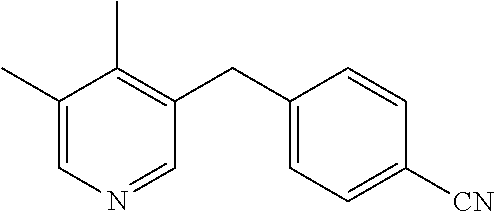


- 1. Baiceanu, E.; Nguyen, K. A.; Gonzalez-Lobato, L.; Nasr, R.; Baubichon-Cortay, H.; Loghin, F.; Le Borgne, M.; Chow, L.; Boumendjel, A.; Peuchmaur, M.; Falson, P., Eur. J. Med. Chem. 2016, 122, 408-418.
- 2. Lu, W.; Xin, X.; Yuanhong, L., Angew. Chem. Int. Ed. 2013, 52, 13302-13306.
- 3. Carlier, P. R.; Lam, P. C. H.; Wong, D. M., J. Org. Chem. 2002, 67, 6256-6259.
- 4. Zhang, Y. Y.; Wei, Y.; Tang, X. Y.; Shi, M., Chem. Comm. 2017, 53, 5966-5969.
- 5. (a) Jouha, J.; Buttard, F.; Lorion, M.; Berthonneau, C.; Khouili, M.; Hiebel, M. A.; Guillaumet, G.; Brière, J. F.; Suzenet, F., Org. Lett. 2017, 19, 4770-4773; (b) Qiaoyi, W.; E., M. S.; G., A. N.; L., P. J.; Xiaodong, S., Angew. Chem. Int. Ed. 2014, 53, 5418-5422.
- 6. Shanmugam, S.; Ashish, S.; Rengarajan, B., Eur. J. Org. Chem. 2017, 2017, 3941-3946.
- 7. Song, H.; Liu, Y.; Wang, Q., Org. Lett. 2013, 15, 3274-3277.
- 8. Kolleth, A.; Christoph, S.; Arseniyadis, S.; Cossy, J., Chem. Comm. 2012, 48, 10511-10513.
- 9. Kiran, M.; P., A. A., Angew. Chem. Int. Ed. 2013, 52, 2082-2086.
- 10. T. T. Wang, L. Zhao, Y. J. Zhang and W. W. Liao, Org Lett, 2016, 18, 5002-5005.
- 11. L. Candish and D. W. Lupton, Org Biomol Chem, 2011, 9, 8182-8189.
- 12. (a) J. Jouha, F. Buttard, M. Lorion, C. Berthonneau, M. Khouili, M. A. Hiebel, G. Guillaumet, J. F. Brière and F. Suzenet, Org Lett, 2017, 19, 4770-4773; (b) Q. Wang, S. E. Motika, N. G. Akhmedov, J. L. Petersen and X. Shi, Angew Chem Int Ed Engl, 2014, 53, 5418-5422.
- 13. X. Zhou, Z. Jiang, L. Xue, P. Lu and Y. Wang, E J Org Chem, 2015, 2015, 5789-5797.
- 14. S. Sakthivel, A. Sharma and R. Balamurugan, E J Org Chem, 2017, 2017, 3941-3946.
- 15. Y. Fukumoto, M. Hirano and N. Chatani, ACS Catalysis, 2017, 7, 3152-3156.
- 16. M. Boruah and D. Konwar, Synlett, 2001, 2001, 0795-0796.
- 17. S. Chiba, Y. J. Xu and Y. F. Wang, J Am Chem Soc, 2009, 131, 12886-12887.
- 18. D. Xue, Z. H. Jia, C. J. Zhao, Y. Y. Zhang, C. Wang and J. Xiao, Chem Eur J, 2014, 20, 2960-2965.
- 19. M. J. Shiao, C. J. Peng, J. S. Wang and Y. T. Ma, J Chin Chem Soc, 1992, 39, 173-176.
- 20. C. Siv, G. Vernin and J. Metzger, Helv Chim Acta, 1979, 62, 1570-1585.
- 21. D. A. Colby, R. G. Bergman and J. A. Ellman, J Am Chem Soc, 2008, 130, 3645-3651.
- 22. H. Wei, Y. Li, K. Xiao, B. Cheng, H. Wang, L. Hu and H. Zhai, Org Lett, 2015, 17, 5974-5977.
- 23. J. S. Beckett, J. D. Beckett and J. E. Hofferberth, Org Lett, 2010, 12, 1408-1411.
Claims (11)


Priority Applications (2)
| Application Number | Priority Date | Filing Date | Title |
|---|---|---|---|
| US16/580,138 US11117893B2 (en) | 2018-09-24 | 2019-09-24 | Methods for preparation of substituted pyridines and related novel compounds |
| US17/467,413 US20210403470A1 (en) | 2018-09-24 | 2021-09-06 | Novel methods for preparation of substituted pyridines and related novel compounds |
Applications Claiming Priority (2)
| Application Number | Priority Date | Filing Date | Title |
|---|---|---|---|
| US201862735517P | 2018-09-24 | 2018-09-24 | |
| US16/580,138 US11117893B2 (en) | 2018-09-24 | 2019-09-24 | Methods for preparation of substituted pyridines and related novel compounds |
Related Child Applications (1)
| Application Number | Title | Priority Date | Filing Date |
|---|---|---|---|
| US17/467,413 Division US20210403470A1 (en) | 2018-09-24 | 2021-09-06 | Novel methods for preparation of substituted pyridines and related novel compounds |
Publications (2)
| Publication Number | Publication Date |
|---|---|
| US20200095245A1 US20200095245A1 (en) | 2020-03-26 |
| US11117893B2 true US11117893B2 (en) | 2021-09-14 |
Family
ID=69885307
Family Applications (2)
| Application Number | Title | Priority Date | Filing Date |
|---|---|---|---|
| US16/580,138 Active US11117893B2 (en) | 2018-09-24 | 2019-09-24 | Methods for preparation of substituted pyridines and related novel compounds |
| US17/467,413 Pending US20210403470A1 (en) | 2018-09-24 | 2021-09-06 | Novel methods for preparation of substituted pyridines and related novel compounds |
Family Applications After (1)
| Application Number | Title | Priority Date | Filing Date |
|---|---|---|---|
| US17/467,413 Pending US20210403470A1 (en) | 2018-09-24 | 2021-09-06 | Novel methods for preparation of substituted pyridines and related novel compounds |
Country Status (1)
| Country | Link |
|---|---|
| US (2) | US11117893B2 (en) |
Families Citing this family (1)
| Publication number | Priority date | Publication date | Assignee | Title |
|---|---|---|---|---|
| US11773092B1 (en) | 2023-03-27 | 2023-10-03 | King Faisal University | Pyrido[3,4-b]indol-1-one compounds as antibacterial agents |
Citations (1)
| Publication number | Priority date | Publication date | Assignee | Title |
|---|---|---|---|---|
| CN108358834A (en) | 2018-01-17 | 2018-08-03 | 兰州大学 | A kind of polysubstituted pyridine derivative and preparation method thereof |
Family Cites Families (3)
| Publication number | Priority date | Publication date | Assignee | Title |
|---|---|---|---|---|
| DE3240514A1 (en) * | 1982-10-29 | 1984-05-03 | Schering AG, 1000 Berlin und 4709 Bergkamen | SS-CARBOLINE, METHOD FOR THE PRODUCTION THEREOF AND PHARMACEUTICAL PREPARATIONS CONTAINING THE SAME |
| JP2000516231A (en) * | 1996-08-09 | 2000-12-05 | ベーリンガー インゲルハイム ファーマシューティカルズ インコーポレイテッド | 4-Substituted β-carbolines as immunomodulators |
| EP2206713A1 (en) * | 2004-04-09 | 2010-07-14 | Millennium Pharmaceuticals, Inc. | Beta-carbolines useful for treating inflammatory disease |
-
2019
- 2019-09-24 US US16/580,138 patent/US11117893B2/en active Active
-
2021
- 2021-09-06 US US17/467,413 patent/US20210403470A1/en active Pending
Patent Citations (1)
| Publication number | Priority date | Publication date | Assignee | Title |
|---|---|---|---|---|
| CN108358834A (en) | 2018-01-17 | 2018-08-03 | 兰州大学 | A kind of polysubstituted pyridine derivative and preparation method thereof |
Non-Patent Citations (3)
| Title |
|---|
| Engelbert Ciganek et al. Intramolecular diels-alder reactions. 4 . Additions to naphthalene. Journal of Heterocyclic Chemistry 1994, 31 (5) , 1251-1257. |
| Song et al, Organic Letters, 15(13), 3274-3277 (Year: 2013). * |
| Wei et al, Organic Letters, 17(24), 5974-5977 (Year: 2015). * |
Also Published As
| Publication number | Publication date |
|---|---|
| US20210403470A1 (en) | 2021-12-30 |
| US20200095245A1 (en) | 2020-03-26 |
Similar Documents
| Publication | Publication Date | Title |
|---|---|---|
| US7361671B2 (en) | Substituted heteroarylalkanoic acids | |
| JP6903731B2 (en) | Lactam, cyclic urea, and carbamate as potent and selective ROCK inhibitors, and triazolone derivatives | |
| DE3887615T2 (en) | Alpha, alpha-disubstituted aromatics and heteroaromatics as perceptual enhancers. | |
| US8163732B2 (en) | Tricyclic heteroaryl compounds useful as inhibitors of Janus kinase | |
| JP5208239B2 (en) | Novel production method of anticancer active tricyclic compounds by alkyne coupling | |
| US20090036443A1 (en) | Thienopyrroles as antiviral agents | |
| Vivekanand et al. | Highly efficient regioselective synthesis of pyrroles via a tandem enamine formation–Michael addition–cyclization sequence under catalyst-and solvent-free conditions | |
| BG65925B1 (en) | Substituted pyrrolopyridinone derivatives useful as phosphodiesterase inhibitors | |
| CN101400678A (en) | Thiophene amides useful as protein kinase inhibitors | |
| US10246414B2 (en) | Allosteric modulators of CB1 cannabinoid receptors | |
| KR20060028773A (en) | 5HT2C receptor agonists for the treatment of diabetes and obesity | |
| JP2017506251A (en) | 5-Benzylisoquinoline derivatives for the treatment of cardiovascular diseases | |
| EP1177175A2 (en) | Heterosubstituted pyridine derivatives as pde 4 inhibitors | |
| AU629578B2 (en) | 11-amino-1,2,3,4-tetrahydro-6H-quinindolin-1-one and its pre paration and use | |
| AU732406B2 (en) | Aryl thiophene derivatives as PDE IV inhibitors | |
| US20210403470A1 (en) | Novel methods for preparation of substituted pyridines and related novel compounds | |
| SK2498A3 (en) | Heterocyclylcarboxamide derivatives and their use as therapeutic agents | |
| JPS60188385A (en) | Substituted hexahydroarylquinolidines | |
| Khajuria et al. | One-pot, solvent-free cascade Michael-reductive cyclization reaction for the synthesis of ethyl 3, 5-disubstituted-1H-pyrrole-2-carboxylates under microwave irradiation | |
| KR101286617B1 (en) | Method for preparing [1,2,3]-oxathiazolidine-2,2-dioxide or [1,2,5]-thiadiazolidine-1,1-dioxide derivatives | |
| FR2912404A1 (en) | New azabicycloalkyl pyridine derivatives useful as nicotinic receptor ligands, e.g. for treating cognitive dysfunction, attention deficit disorders and functional disorders associated with Alzheimer's disease | |
| CA2565689A1 (en) | Substituted pyrrolidine-2-ones | |
| FI86174B (en) | ANALOGIFICANT FARING FOR THE PREPARATION OF THERAPEUTIC ANALYZED AMINOPROPANOLDERIVAT AV SUBSTITUERADE 2 -HYDROXIPROPIOFENONER. | |
| WO2000066124A1 (en) | Preventive or inhibitory agents for hepatopathy | |
| CN100355730C (en) | Process for preparing nicotine aldehyde |
Legal Events
| Date | Code | Title | Description |
|---|---|---|---|
| FEPP | Fee payment procedure |
Free format text: ENTITY STATUS SET TO UNDISCOUNTED (ORIGINAL EVENT CODE: BIG.); ENTITY STATUS OF PATENT OWNER: SMALL ENTITY |
|
| FEPP | Fee payment procedure |
Free format text: ENTITY STATUS SET TO SMALL (ORIGINAL EVENT CODE: SMAL); ENTITY STATUS OF PATENT OWNER: SMALL ENTITY |
|
| STPP | Information on status: patent application and granting procedure in general |
Free format text: NON FINAL ACTION MAILED |
|
| STPP | Information on status: patent application and granting procedure in general |
Free format text: RESPONSE TO NON-FINAL OFFICE ACTION ENTERED AND FORWARDED TO EXAMINER |
|
| STPP | Information on status: patent application and granting procedure in general |
Free format text: NON FINAL ACTION MAILED |
|
| STPP | Information on status: patent application and granting procedure in general |
Free format text: RESPONSE TO NON-FINAL OFFICE ACTION ENTERED AND FORWARDED TO EXAMINER |
|
| STPP | Information on status: patent application and granting procedure in general |
Free format text: NOTICE OF ALLOWANCE MAILED -- APPLICATION RECEIVED IN OFFICE OF PUBLICATIONS |
|
| AS | Assignment |
Owner name: UNION UNIVERSITY, TENNESSEE Free format text: ASSIGNMENT OF ASSIGNORS INTEREST;ASSIGNORS:MOTATI, DAMODER REDDY;UREDI, DILIPKUMAR;WATKINS, EDMOND BLAKE;REEL/FRAME:057140/0691 Effective date: 20210810 |
|
| STPP | Information on status: patent application and granting procedure in general |
Free format text: PUBLICATIONS -- ISSUE FEE PAYMENT VERIFIED |
|
| STCF | Information on status: patent grant |
Free format text: PATENTED CASE |
|
| FEPP | Fee payment procedure |
Free format text: MAINTENANCE FEE REMINDER MAILED (ORIGINAL EVENT CODE: REM.); ENTITY STATUS OF PATENT OWNER: SMALL ENTITY |
|
| FEPP | Fee payment procedure |
Free format text: SURCHARGE FOR LATE PAYMENT, SMALL ENTITY (ORIGINAL EVENT CODE: M2554); ENTITY STATUS OF PATENT OWNER: SMALL ENTITY |
|
| MAFP | Maintenance fee payment |
Free format text: PAYMENT OF MAINTENANCE FEE, 4TH YR, SMALL ENTITY (ORIGINAL EVENT CODE: M2551); ENTITY STATUS OF PATENT OWNER: SMALL ENTITY Year of fee payment: 4 |